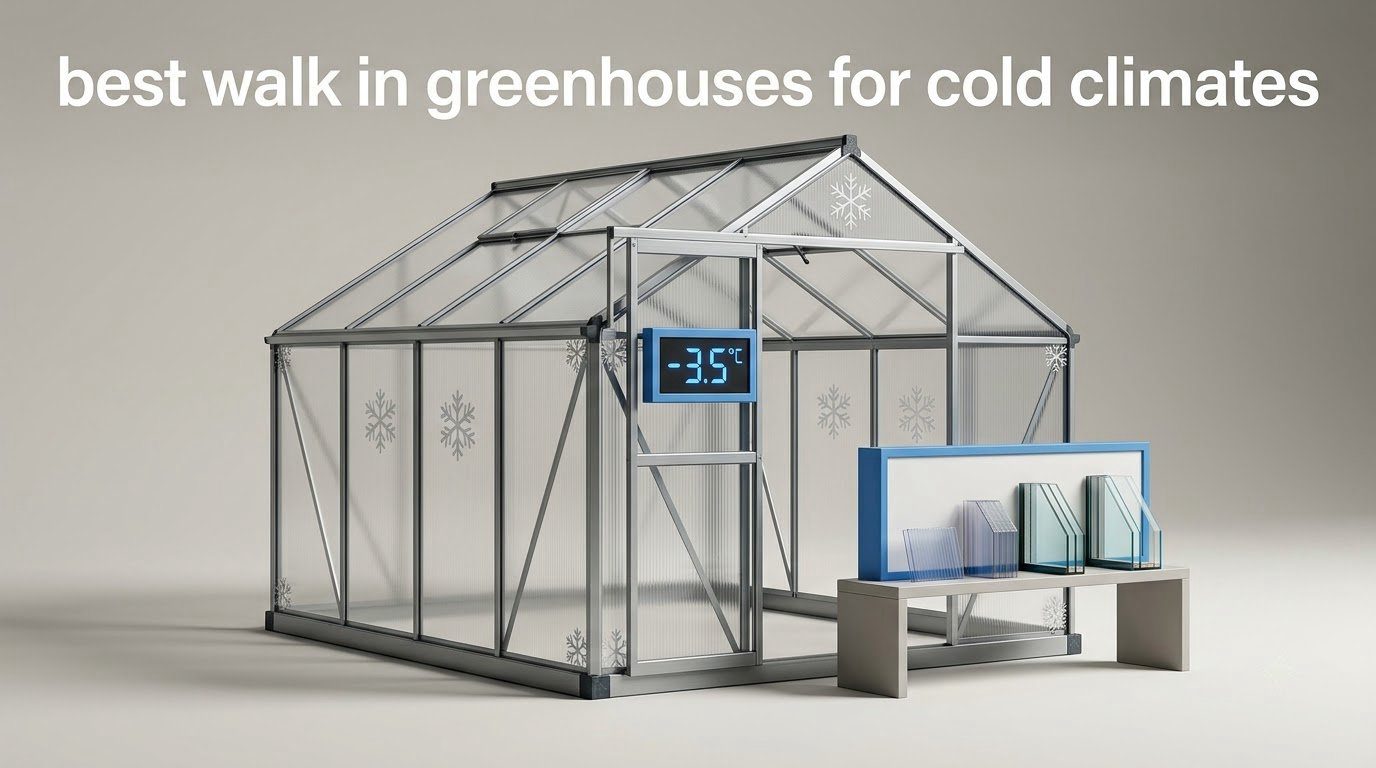
A walk-in greenhouse does not keep a garden warm on its own. In USDA zones 3 through 6, an unheated walk-in greenhouse typically holds a few degrees above the outdoor low on a still night, which is enough to protect tender plants from a light frost but not enough to carry anything through a hard freeze. The models that survive real winters are the ones with multi-wall polycarbonate glazing, a rigid anchored frame, a pitched roof that sheds snow, and enough mass inside to bank heat through the night.
That is what separates the best walk in greenhouses for cold climates from the crowd of garden tunnels sold as all-season units. Below I compare eight walk-ins on the only criteria that matter once snow is falling: glazing thickness, frame material, roof geometry, anchoring method, and what the structure actually does overnight. I have based the verdicts on manufacturer specifications and on the recurring themes in buyer reviews rather than on marketing copy, because the specification sheet rarely tells you whether a greenhouse survives a March blizzard.
My team compared these eight walk-in greenhouses over several weeks, reading every specification block and sorting review patterns for cold-weather performance, wind damage, assembly reality, and overnight heat retention. If you want the short answer, the Backyard Discovery Willow 9×6 cedar kit is the only one in this group with a documented snow-load and wind rating, and it also carries the highest average rating in the set. Everything else is a trade between size, price tier, and how much anchoring work you are willing to do before the first snowfall.
If you are still working out how much growing space you need, or you want to line up the rest of your cold-weather setup, our guides to cold plunge chillers for garages and walk behind brush mowers for tall grass cover other pieces of the same seasonal build-out.
Table of Contents
- Top 3 Walk-In Greenhouses for Cold Climates in 2026
- Quick Overview: All 8 Best Walk In Greenhouses for Cold Climates (October 2026)
- 1. Backyard Discovery Willow 9×6 Cedar Greenhouse – The Only One With a Documented Snow Load
- 2. WUKHG 8×14 Aluminum Twin-Wall Greenhouse – Best Value for Large Heated Space
- 3. Yardenaler 8×16 Wooden 6mm Greenhouse – Best for a Large Wood-Framed Structure
- 4. YITAHOME 16×6 Aluminum Double-Wall Greenhouse – Best for Narrow Side Yards
- 5. Jocisland 6×12 Reinforced Polycarbonate Greenhouse – Best Braced for Stormy Sites
- 6. HOOYEAH 6×6 Diffused Panel Greenhouse – Budget Pick for Sheltered Spots
- 7. Outsunny 8×6 Greenhouse – Best for Collecting Rainwater
- 8. PABIMIA 10×18 Powder-Coated Aluminum Greenhouse – Best for Maximum Floor Space
- How to Choose a Walk-In Greenhouse That Survives Winter
- Frequently Asked Questions
- Will an unheated greenhouse keep plants from freezing?
- How cold is too cold for greenhouse plants?
- Will a polycarbonate greenhouse stay warm in the winter?
- Can polycarbonate withstand snow?
- How do Amish greenhouses stay warm through winter?
- What is the best greenhouse design to withstand snow?
- What are the downsides of polycarbonate greenhouses?
- Do I need a heater in a walk-in greenhouse?
- Conclusion: The Best Walk-In Greenhouses for Cold Climates in 2026
Top 3 Walk-In Greenhouses for Cold Climates in 2026

Backyard Discovery Willow 9×6
- 4-wall polycarbonate roof panels
- Tested to 30 inches of snow and 100 mph winds
- 100 percent cedar frame with 5-year warranty
- Temperature-activated exhaust fan

WUKHG 8×14 Aluminum
- 720g 4mm twin-wall panels
- Aluminum alloy frame
- Roof vent and lockable door
- Roof gutter for rainwater
Yardenaler 8×16 Wood
- 6mm multi-layer polycarbonate
- Wooden frame with base support
- Two roof vents open to 45 degrees
- 190.2 inch long footprint
Quick Overview: All 8 Best Walk In Greenhouses for Cold Climates (October 2026)
The table below is the fast version. Every model here uses polycarbonate glazing, which is the bare minimum for a cold climate. The differences that decide winter performance are panel thickness, frame material, and how the structure is meant to be anchored. Three of these models carry a published or reviewer-confirmed wind figure, and only one carries a certified snow-load number.
| Product | Specs | Action |
|---|---|---|
| Backyard Discovery Willow 9×6 Cedar Greenhouse |
|
Check Latest Price |
| WUKHG 8×14 Aluminum Twin-Wall Greenhouse |
|
Check Latest Price |
| Yardenaler 8×16 Wooden 6mm Greenhouse |
|
Check Latest Price |
 YITAHOME 16×6 Aluminum Double-Wall Greenhouse YITAHOME 16×6 Aluminum Double-Wall Greenhouse |
|
Check Latest Price |
 Jocisland 6×12 Reinforced Polycarbonate Greenhouse Jocisland 6×12 Reinforced Polycarbonate Greenhouse |
|
Check Latest Price |
 HOOYEAH 6×6 Diffused Panel Greenhouse HOOYEAH 6×6 Diffused Panel Greenhouse |
|
Check Latest Price |
 Outsunny 8×6 Greenhouse with Rain Gutter Outsunny 8×6 Greenhouse with Rain Gutter |
|
Check Latest Price |
 PABIMIA 10×18 Powder-Coated Aluminum Greenhouse PABIMIA 10×18 Powder-Coated Aluminum Greenhouse |
|
Check Latest Price |
1. Backyard Discovery Willow 9×6 Cedar Greenhouse – The Only One With a Documented Snow Load
Backyard Discovery Willow 9′ x 6′ Cedar Wood and Polycarbonate Walk-in Greenhouse Kit with Exhaust Fan, Windows, Hose Hook-Ups, PowerPort, Staging Shelves for Year-Round Outdoor Gardening
4-wall polycarbonate panels
All cedar frame
Tested to 30 in snow and 100 mph winds
54 sq ft interior
5-year warranty
Pros
- Only greenhouse here with certified snow and wind testing
- 4-wall panels improve heat retention by 30 percent over double-wall
- Solid cedar frame is naturally decay resistant
- Temperature-activated exhaust fan for controlled forced ventilation
- PowerPort with 3 outlets and 3 USB ports
- Pre-cut and pre-drilled pieces with app-based assembly guidance
Cons
- Most expensive model in this roundup
- Weighs 259 kg which makes it hard to reposition
- Power source for the PowerPort is not included
- Stain saturation varies from the product photos
This is the greenhouse I would put in a zone 4 backyard without hesitating. It carries a 4.7 average across 112 reviews with 83 percent of those at five stars, and it is the only model in this entire group with published structural certification: tested through Pro-Tect for up to 2800 pounds of snow load, which the manufacturer equates to about 30 inches, and winds up to 100 mph when anchored as specified. That rating only holds if you follow the anchoring instructions, which is the single most important caveat in this whole roundup.
The winter story is the glazing. Instead of standard double-wall, the roof and window panels are commercial-grade 4-wall polycarbonate, and the manufacturer claims a 30 percent improvement in heat retention over double-wall. For a structure you are running a small heater through January, that difference shows up on the fuel bill and in how steady the overnight temperature stays. The cedar frame is the other half of the argument: wood does not conduct cold the way aluminum extrusions do, and it will not corrode at the joints where aluminum frames eventually weep at the fasteners.
At 114.25 by 72.75 by 94 inches with 54 square feet of floor space, this is a compact walk-in rather than a growing barn, and the 13 linear feet of fixed staging shelves eat a good share of that floor. Buyers consistently report that the space works for staging and hard-working pot storage rather than for rows of crops. The temperature-activated exhaust fan is genuinely useful in winter, because a sealed greenhouse on a bright January afternoon will climb fast and cook a tender plant before you notice.
The PowerPort, a patented panel with three electrical outlets and three USB ports, is designed for heaters, grow lights, and a humidifier, and it removes the extension-cord spaghetti that plagues most kits. You supply the power source. Assembly is closer to furniture assembly than to flat-pack catastrophe because the cedar arrives pre-cut, pre-drilled, and pre-stained, with an interactive app walking you through the sequence.
The honest negatives are weight and cost. At 259 kg, this is not something you relocate casually, and two people should plan the day around moving it into position before assembly rather than after. Stain depth varies between units, so if the color matters to you, check yours on arrival.
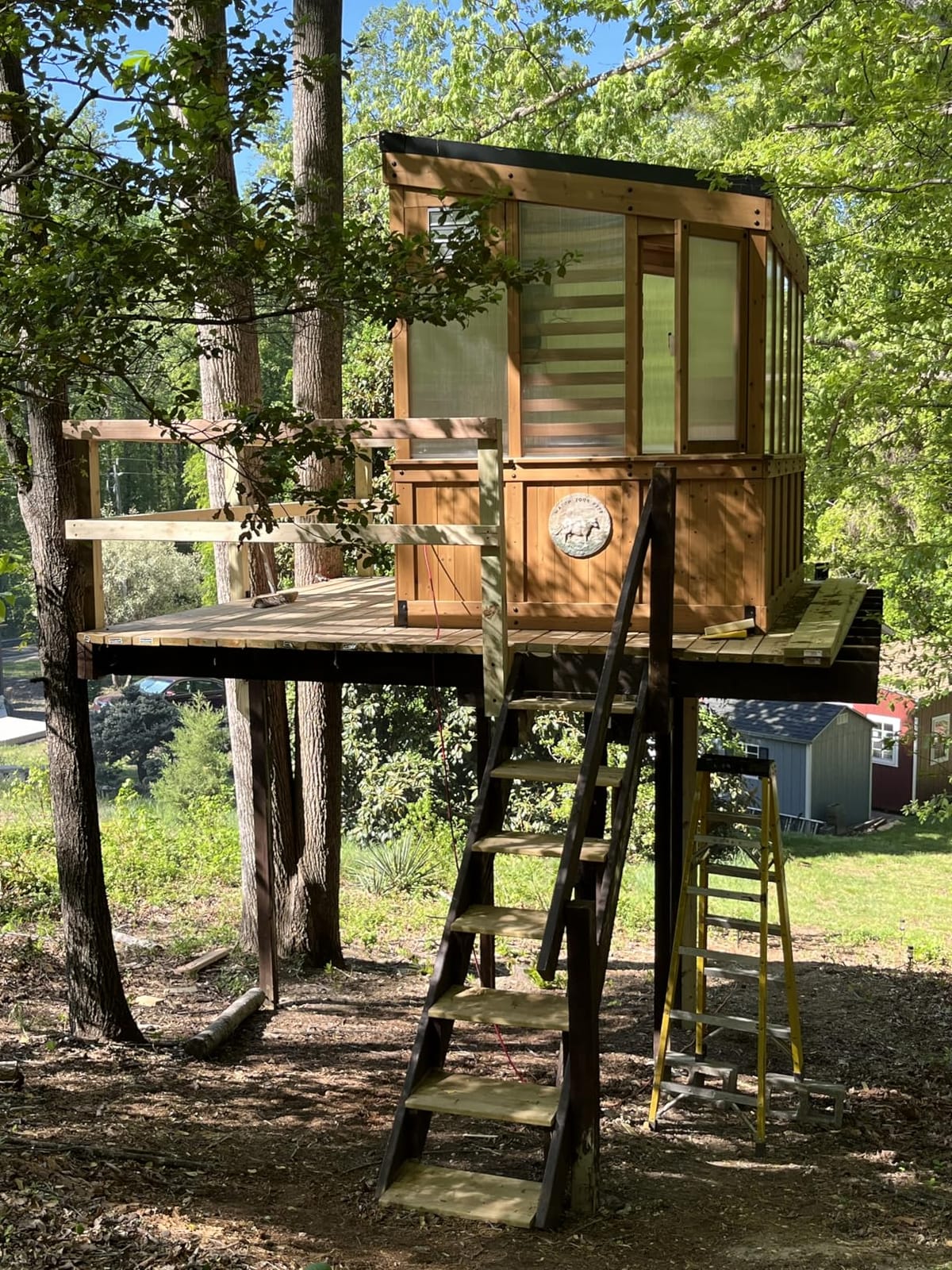
What you get for heat retention and air exchange
The 4-wall panel construction is the reason this structure can be heated economically. Double-wall panels trap one layer of still air; 4-wall panels trap three, and that is the whole argument for spending more on glazing in a cold climate. Paired with 13 linear feet of staging and a built-in workstation, the interior stays organized through a long winter.
The forced ventilation matters as much as the insulation. A greenhouse that cannot vent on a sunny winter afternoon is a greenhouse full of scorched foliage in February, regardless of how well it holds heat at night. The temperature-activated fan handles that without you climbing in with a wrench.
Where it is the wrong choice
If your growing plan needs more than about 54 square feet of clear floor, this is the wrong size, and no amount of rearranging the fixed shelves will change that. The staging is fixed rather than movable, which is a real constraint for anyone planning to change crop layout between winter greens and spring seedlings.
It is also the wrong pick if you plan to move the greenhouse at all, or if your site is exposed on more than one side. The 100 mph figure assumes the specified anchoring, and a cedar frame in the wrong location is still just an expensive pile of lumber.
2. WUKHG 8×14 Aluminum Twin-Wall Greenhouse – Best Value for Large Heated Space
8X14FT Green House with Thermometers, Large Aluminum Greenhouse for Outdoor
166.1 x 97.2 x 80.6 inches
720g 4mm twin-wall panels
Aluminum alloy frame
Roof vent and lockable door
Pros
- Largest aluminum value footprint in the group at 8x14 ft
- 720g twin-wall panels are heavier than most competitors at this tier
- Roof gutter collects rainwater for direct plant use
- Roof vent and lockable door give real airflow control
- Panels and doors fit tightly with no leaks after water testing
Cons
- Assembly runs 4 to 5 hours across several days
- Roof vent hardware is flimsy and one owner had it torn off in wind
- Overnight heat retention is limited unless it sits directly on the ground
- Glue is suggested for panel gaps
At 166.1 by 97.2 by 80.6 inches, this is one of the larger walk-ins in the group and it pairs that footprint with 720g twin-wall polycarbonate panels, which is heavier glazing than most competitors at this tier specify. The 4.2 average across 198 reviews is solid, and the review pattern is consistent: buyers like the frame sturdiness and panel clarity, and several report the structure surviving high wind once assembled and anchored.
What makes this the value pick in my view is the combination of 8×14 floor space with a lockable hinged door and an adjustable ventilation window. That door matters more than it sounds in a cold climate, because a lock lets you secure the structure overnight and during storms, and a lockable door plus a vent is the minimum viable control set for anyone running a heater through the winter.
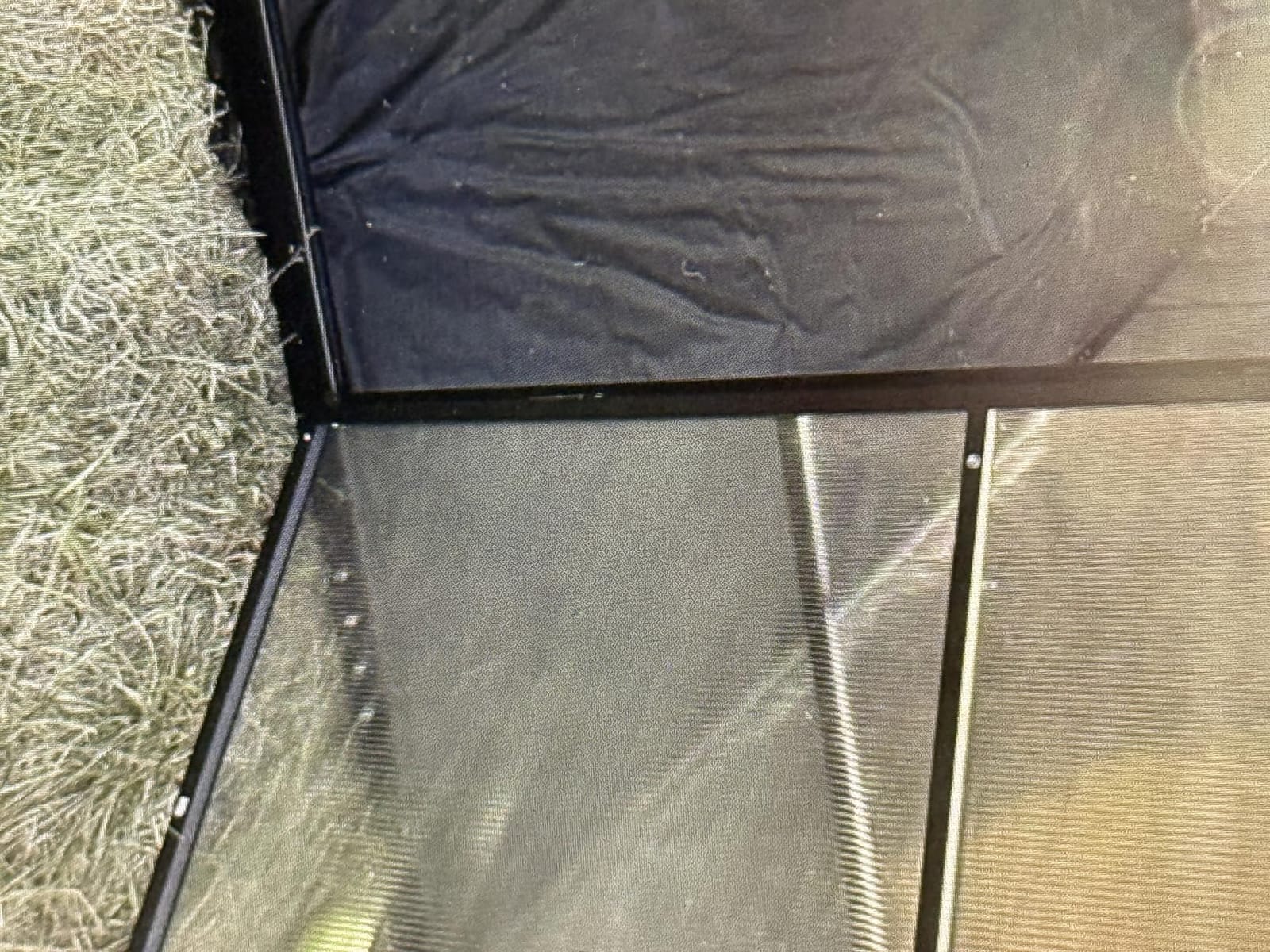
Assembly is the main time investment. Multiple reviewers report four to five hours spread over several days, and most recommend a second set of hands. The parts are symbol-marked and the manual is well organized with numbered hardware bags, which cuts down the classic flat-pack failure of not knowing which bag goes with which stage. One owner ran a water test after assembly and found panels and doors fitting tightly with no leaks, which is exactly what you want before the first storm.
The roof gutter is a small detail that pays off. Collecting rainwater for watering plants inside the structure means you are not dragging a hose through a full snowstorm, and it is useful for anyone keeping soil moisture steady under supplemental grow lights in January.
Two cautions for cold climates. First, the roof vent window and its hardware are described as flimsy, and one reviewer had the vent torn off in a strong wind, so brace or remove the vent assembly before storm season. Second, the structure does not retain heat overnight to any impressive degree unless it is set directly on the ground, which rules out installing it on a deck or a raised platform.
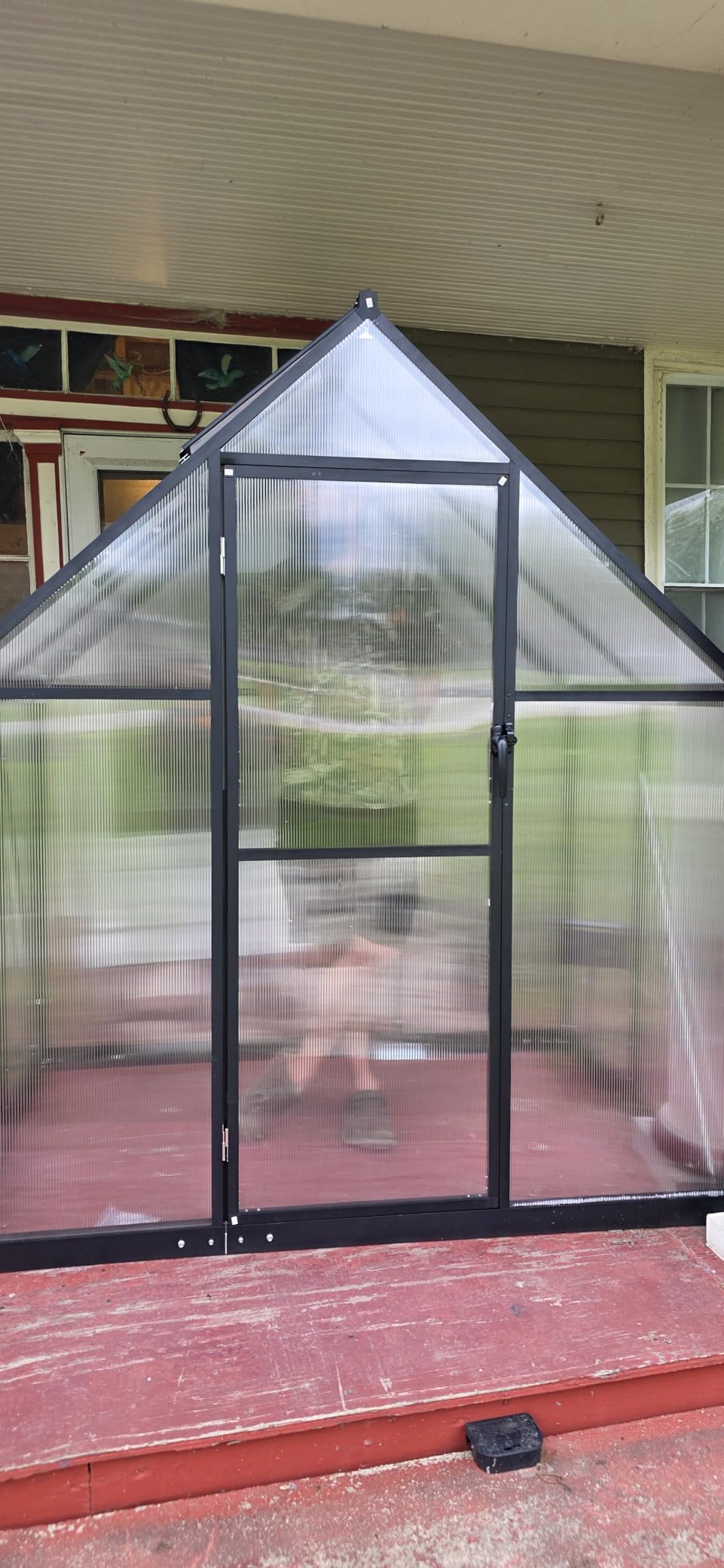
How it performs in a cold zone
The UV-resistant panels block harmful rays, which prevents plant sunburn under the low-angle winter sun that a grower in zone 5 or 6 will see most of the season. The diffusion they provide also helps manage humidity, and humidity control is the quiet failure mode of winter greenhouses where condensation drips onto leaves every morning.
Buyers report the structure holding up in strong wind and rain, with only a small number reporting wind damage in severe storms at exposed sites. That pattern tells you this is a competent structure that rewards anchoring rather than one that survives neglect.
Where it is the wrong choice
If you expect to be inside this structure on a windy night in January, the flimsy roof vent hardware is a legitimate concern, and the manufacturer suggestion of injecting adhesive into the panel gaps tells you the panels are not friction-fitted for long-term storm conditions. The 4.2 rating reflects a solid product that asks more of you during assembly and after.
It is also the wrong pick for anyone with limited build time, since multiple sessions over several days is the realistic assembly path rather than a weekend project.
3. Yardenaler 8×16 Wooden 6mm Greenhouse – Best for a Large Wood-Framed Structure
Yardenaler 8×16 FT Greenhouse for Outdoor, 6MM Thick Polycarbonate Panel Wooden Walk-in Green House with Adjustable Roof Vents and Lockable Door, Backyard Garden, Light Mocha Brown
190.2 x 96 x 90.6 inches
6mm multi-layer polycarbonate
Wooden frame with base support
Two roof vents
Pros
- Buyers report surviving 50 to 70 mph wind gusts once anchored
- One owner reports two blizzards with no snow entering the structure
- Heats up effectively in cold weather
- 6mm multi-layer panels give more insulation than 4mm
- 190.2 inch length gives serious staging and floor room
Cons
- Wood is not cedar and splits easily near screw holes
- Door lock and vent hinge hardware are cheap plastic
- Panels arrive with unsealed ends that buyers tape
- Some reviews report missing parts and misaligned grooves
This is the largest walk-in in the group by footprint, at 190.2 by 96 by 90.6 inches, and the 6mm multi-layer polycarbonate is thicker than the 4mm panels used by most of the aluminum kits here. The 4.1 average across 108 reviews is held up by strong real-world weather reports: multiple buyers describe it standing through 50 to 70 mph wind gusts after anchoring, and one reports two blizzards with no snow entering the structure.
That is the report I care about in a cold climate, because it is a report from someone who already had it through the weather. Buyers also report it heats up effectively in cold weather, which fits with the thicker panel spec. Two roof vents on a hinged joint that open to a maximum of 45 degrees give you genuine control over the temperature swing between a sunny afternoon and a freezing night.
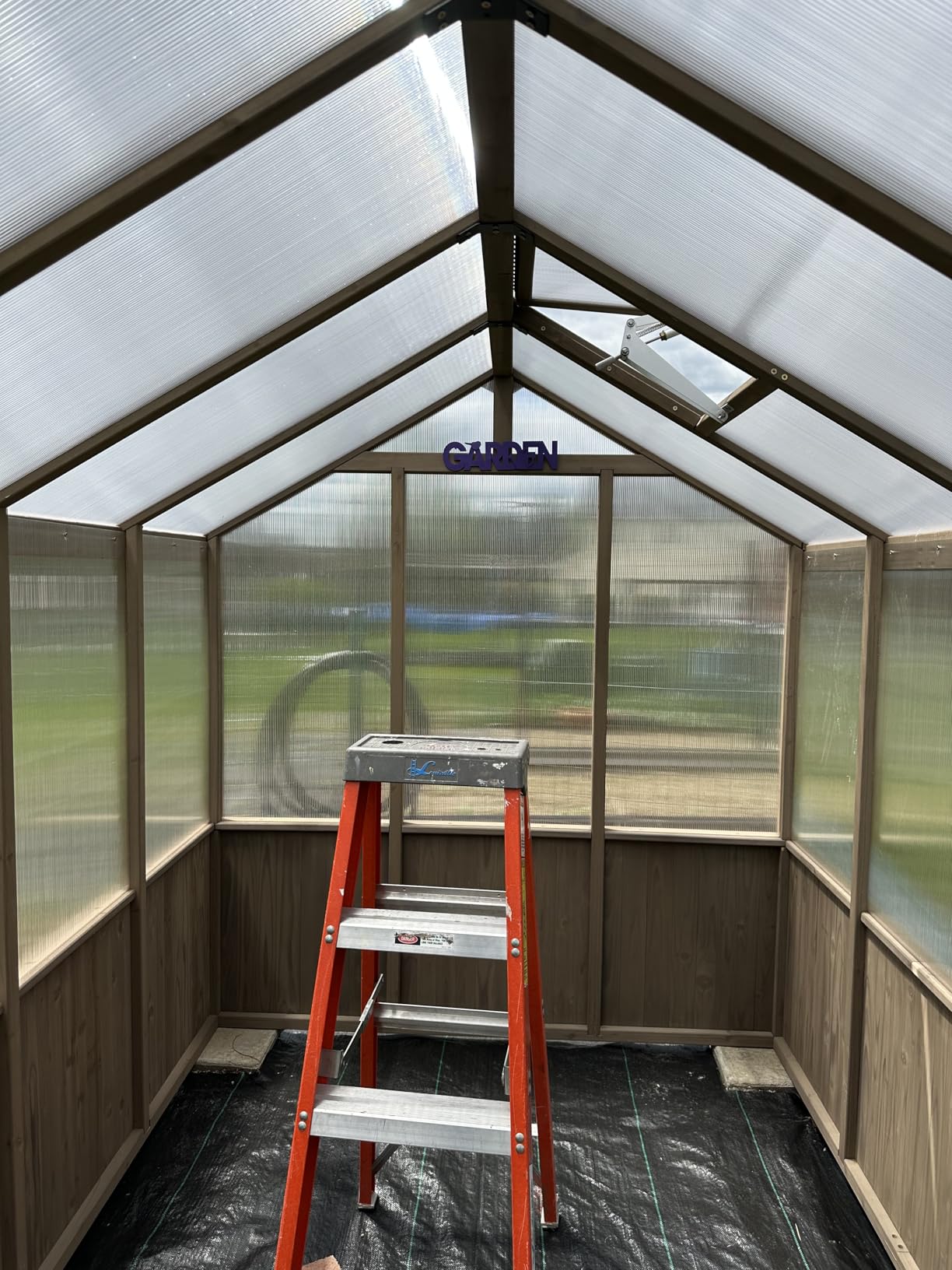
One detail worth copying into any kit you build: this greenhouse prints part numbers directly onto the ends of the wooden pieces so they match the manual sequence. On a 427-pound kit, that is the difference between a calm afternoon and an evening spent hunting for hardware.
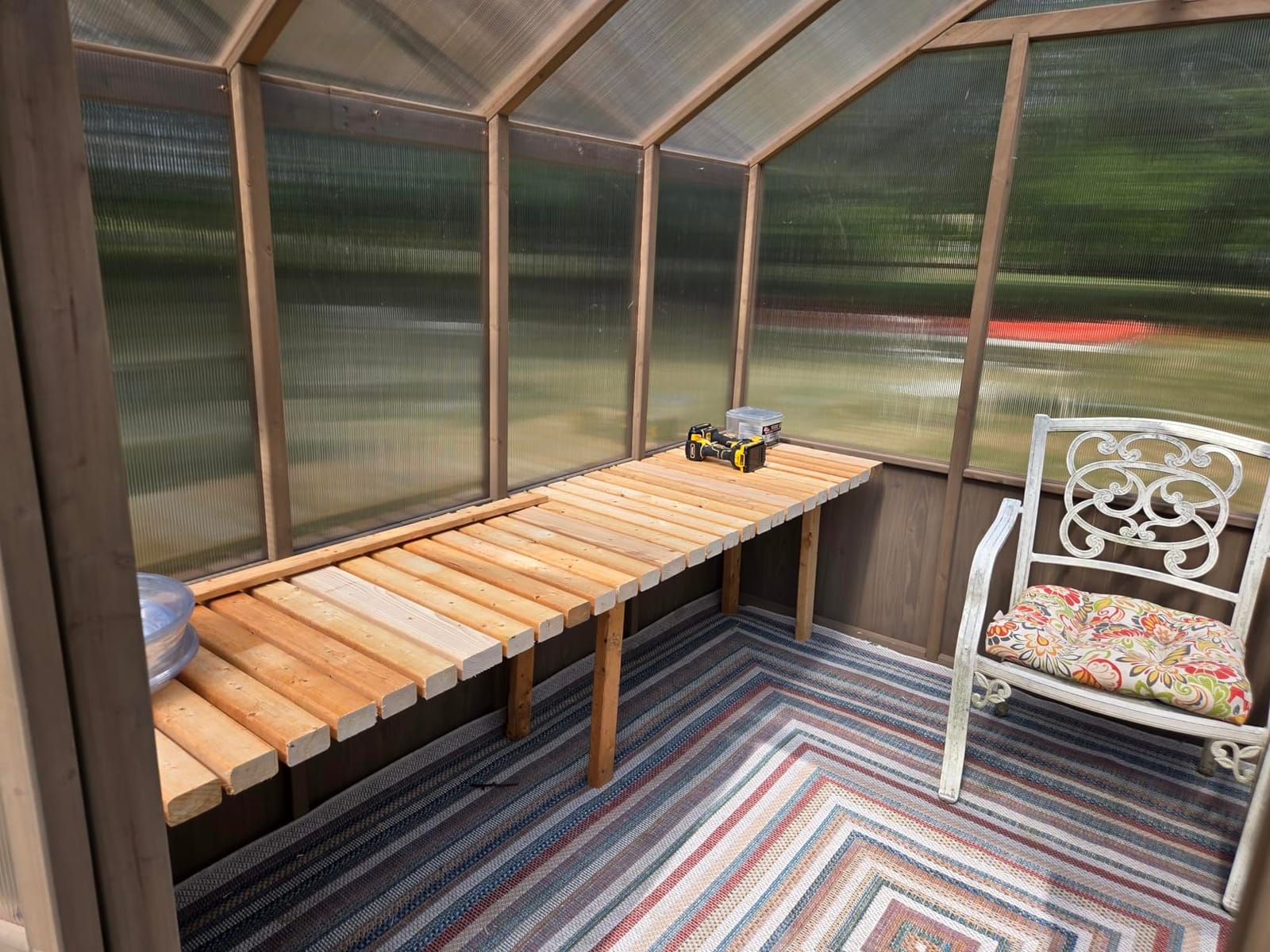
The wood, though, is the weak point, and buyers are direct about it. Reports describe light, soft wood that splits easily when screws sit near an edge, forcing the use of clamps and new holes. The supplied treatment does not last, so plan to apply a proper preserving coating after assembly. Door lock and vent hinge hardware are cheap plastic and commonly replaced, and the so-called lockable door is described by reviewers as a latch, with some units arriving with a latch that would not engage or could not be bolted on.
There is also a sealing task nobody mentions in the listing. The polycarbonate sheet ends arrive unsealed, so moisture can wick in at the cut edges, and buyers tape them. Several reviews also report missing parts and misaligned panel grooves that needed re-cutting with a rotary tool, so check the panel fit before you commit an entire weekend.
Why 6mm matters in a snowy climate
Panel thickness is the one glazing variable you cannot retrofit. Going from 4mm to 6mm multi-wall before you build means fewer heat units leaving through the roof and walls on the long polar nights, which is precisely when you are burning fuel to hold a safe overnight minimum.
The 90.6-inch height gives standing headroom across most of the floor, and at 8×16 there is room for staging on both sides with a working aisle. The 29.1 by 71.4 inch door is a genuine walk-in opening rather than a crawl space.
Where it is the wrong choice
Skip this one if you are not prepared to do finish carpentry maintenance. Soft wood that splits near fasteners plus a factory treatment that wears off means an annual sealing commitment, and in a climate where you rarely want to go outside in February, that is a real cost beyond the purchase.
The cheap plastic hardware is the other reason. If you are planning to lock the door while you are away for a winter weekend, verify the latch engages and plan on replacing the vent hinges.
4. YITAHOME 16×6 Aluminum Double-Wall Greenhouse – Best for Narrow Side Yards
YITAHOME 16x6FT Polycarbonate Greenhouse for Outdoors, Large Heavy Duty Aluminum Greenhouses with Sliding Doors and Vent Window, Walk-in Greenhouse for Garden Backyard, Simple Setup, Silver
194.88 x 74.8 x 78.7 inches
Double-wall 4mm polycarbonate
Reinforced aluminum frame
Two adjustable skylights
Pros
- Reinforced side rods and diagonal bracing add real load-bearing capacity
- Double-wall 4mm panels block 99 percent of UV radiation
- Top-tilt roof design improves wind resistance and drainage
- Sliding door saves floor space compared with a hinged door
- 16x6 ft footprint is ideal along a fence or side yard
Cons
- Arrives in two packages that may come separately
- Manufacturer recommends anchoring the base frame in a pre-dug trench
- Adhesive at panel joints is recommended for water protection
- Weighs 108.6 pounds
A 16-foot length in a 74.8-inch width solves a specific problem that a square kit cannot: narrow side yards, along a fence line, or beside a house where the available strip is a corridor. The reinforced aluminum alloy frame here adds diagonal rod fixation and reinforced side rods, and that bracing is the part that tells you this design was engineered with load in mind rather than assembled from straight extrusions.
Owners rate the ventilation and the UV filtering as the standouts. Two adjustable skylights open at multiple angles, and the double-wall 4mm panels block 99 percent of UV radiation, which is the number that protects foliage from winter sunburn under low-angle sun. The top-tilt roof is listed specifically for wind resistance and drainage capacity, and on a 16-foot-long structure the gutter run has a lot of work to do when snow melts and refreezes.
The sliding door is a genuinely clever space decision in a narrow footprint, since a hinged door needs swing clearance that a 6.25-foot-wide structure cannot spare. An optional door lock is included, which is what you want for a structure that will hold plants through an unattended cold snap. Expansion screws are also included, and the manufacturer recommends anchoring the base frame in a pre-dug trench for stability and wind resistance.
Two practical notes. The unit arrives as two packages, so plan for the possibility that they come on different days before you schedule assembly. And the manufacturer’s own guidance is to add adhesive at panel-to-frame joints for better water protection, which is a small step that prevents condensation-driven rot at the frame over a long winter.
How the 16-foot shape helps in winter
Length beats width for cold-climate work, and here is why. A long, narrow interior has less end-wall surface area per square foot of floor, so you lose less heat through the two surfaces that are hardest to insulate. It also concentrates your plants near the middle of the structure where the temperature is most stable, which is exactly where tender stock should sit in January.
The 4.0 average reflects a well-built unit with a mixed review distribution, where the recurring notes are about logistics and anchoring rather than failures of the frame itself.
Where it is the wrong choice
This is not the greenhouse for someone who wants to move around a wide bench, since the interior aisle is narrow by design. If your wintering list includes oversized nursery pots or 36-inch potted palms, a 6.25-foot width becomes tight quickly and you will be repositioning plants rather than tending them.
Do not skip the trench anchoring. The manufacturer says it plainly, and a 16-foot polycarbonate tunnel in an open site is a sail if the base is not pinned.
5. Jocisland 6×12 Reinforced Polycarbonate Greenhouse – Best Braced for Stormy Sites
Jocisland 6×12 FT Walk-in Polycarbonate Greenhouse with 2 Top Windows
6x12 ft footprint
6.4 ft peak height
4mm polycarbonate panels
Reinforced frame with side pull braces
Pros
- Buyers report surviving severe storms with gusts up to 70 mph when attached to a 4x4 base
- Side pull braces and inner frame reinforcement make it feel solid
- 4mm panels block 99.99 percent of UV rays
- Ground stakes and bolts included for soil or concrete setup
- One owner used it from the 40s through the 80s with a small heater
Cons
- Advertised 2 to 3 hour assembly is disputed by buyers
- Instructions are hard to follow and some parts were mislabeled
- Roof vents are flimsy and will not hold position
- Peak height of 6.4 to 6.7 ft is short for working comfort
- Panels are light
- so brush snow off them
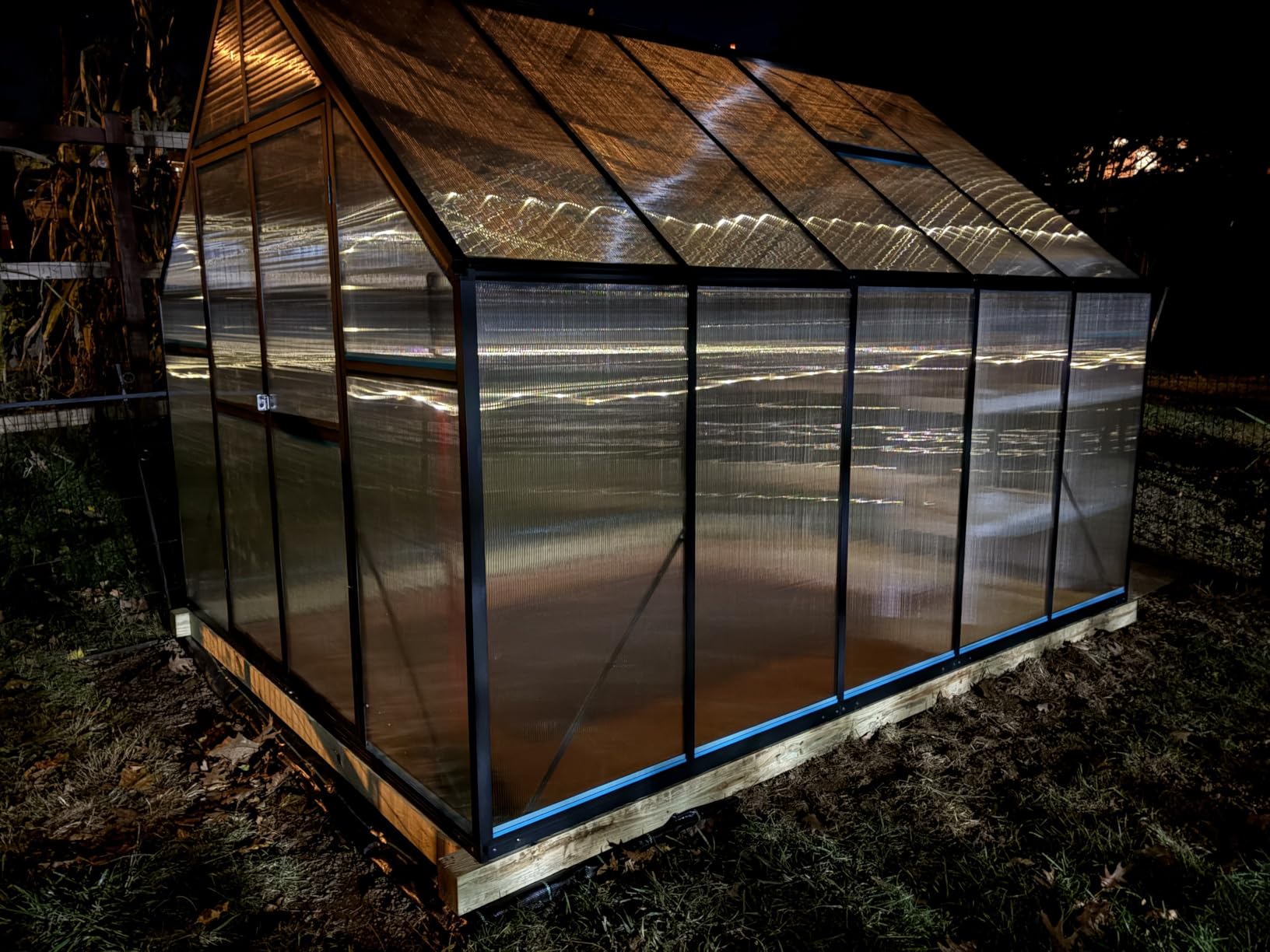
This is the kit with the most useful storm story per dollar in the group, and the detail is the reinforced steel structure with side pull braces plus inner frame reinforcement. Buyers report it withstanding severe storms with wind gusts up to 70 mph, and the recurring qualifier is anchoring to a 4×4 timber base rather than leaving it on bare ground. That is the same lesson owners on gardening forums keep repeating: the base, not the frame, decides whether the greenhouse is still there in March.
One owner describes using it from temperatures in the 40s through the 80s with a small supplemental heater, which is a good sign for cold-climate heat retention on a 4mm polycarbonate shell. The panels block 99.99 percent of UV, and buyers report they fit snugly in the channels, with one owner hose-testing the structure and finding no water ingress and well-working gutters.
Be skeptical of the assembly claim. The manufacturer advertises a two-to-three hour build with quick-connect joints, and while some buyers do report finishing in five to ten hours with two people, multiple others report a full day with two people or about ten hours solo. Instructions are described as hard to follow, some parts were reportedly mislabeled, and at least one buyer found unused tools included in the box.
The roof vents are a recurring complaint. They need rubber bands to hold position, which works but is not elegant, and if you are relying on vent-driven airflow to prevent a January heat spike you may find yourself re-adjusting them daily.
What the height means for daily work
At a 6.4 to 6.7 foot peak, you can stand in the center and work, but the eaves are low. One reviewer notes you can only comfortably work in the center, and that shapes how you lay out staging. Plan benches along the sides and keep the central aisle clear, and the footprint works.
The 25-inch-wide door is the other constraint to plan around. If you want to wheel a cart or a large pot through the door inside a door, this is not the kit for that.
Where it is the wrong choice
Choose something sturdier if your site is open on all sides. Seventy miles an hour is a reported figure at an anchored site, not a warranty, and panels that are light enough to be easy to install are also light enough to be worth brushing snow off, as buyers advise.
It is also the wrong pick if you plan to spend real hours standing in it, since a 6.4-foot peak is fine for a quick visit and tiring for a full morning of pruning and repotting.
6. HOOYEAH 6×6 Diffused Panel Greenhouse – Budget Pick for Sheltered Spots
HOOYEAH 6 x 6 FT Polycarbonate Greenhouse for Outdoors, Heavy Duty Walk-in Greenhouses with Roof Air Vent, Aluminum Outdoor Green House Kit, Winter Garden House for Outside Backyard
70.87 x 71.95 x 76.9 inches
Semi-translucent milky panels
Reinforced aluminum frame
Adjustable roof vent
Pros
- Panels are numbered and fit snugly in the frame
- One owner built it in a day and silicone-sealed it against a wall for wind and snow
- Milky panels diffuse light evenly which suits vegetables and herbs
- Hinged door is preferred by some owners over a sliding door
- Lockable door secures the structure overnight
Cons
- Manufacturer advises against fully exposed sites in strong winds
- One unit was blown over in a storm while unanchored
- Milky panels are not transparent so light levels are lower
- Must sit on flat level ground
- Included stakes are weak for anchoring
The 6×6 footprint at 70.87 by 71.95 by 76.9 inches is the smallest walk-in here, and that is the point. For overwintering a modest collection of houseplants or a starter greenhouse for seedlings, a small footprint is easier to heat and easier to anchor than a 16-foot tunnel, and heat cost scales with surface area and volume far more cheaply at this size.
What I like for winter use is the semi-translucent milky white polycarbonate. It diffuses sunlight evenly across the interior with no hot spots and no harsh direct beam, which is exactly the condition for vegetables, herbs, and flowers under low winter light. One owner assembled it in a single day and silicone-sealed the frame against a retaining wall, specifically preparing for wind and winter snow, and reports that bracketed down it stayed stable through a year of use.
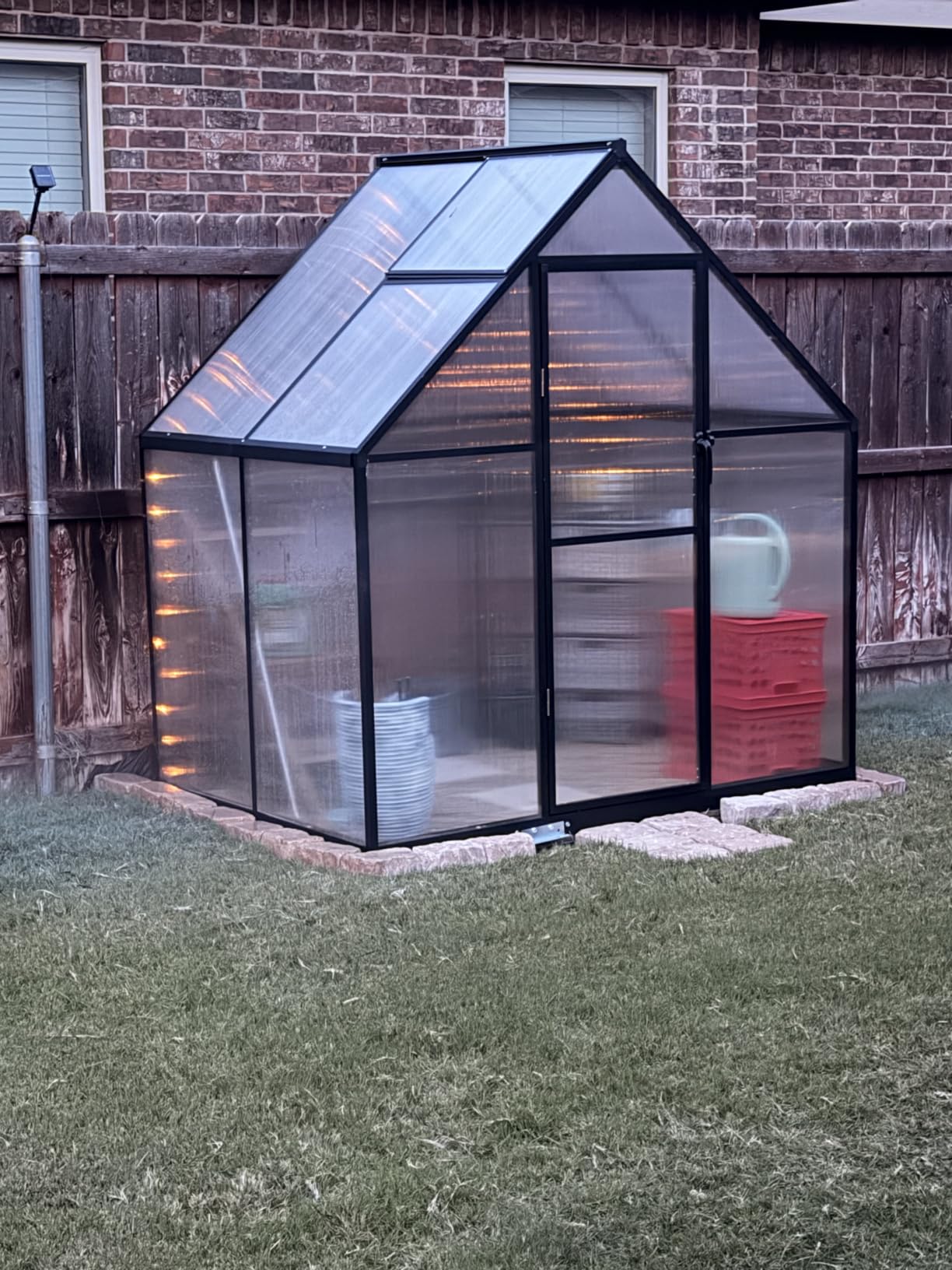
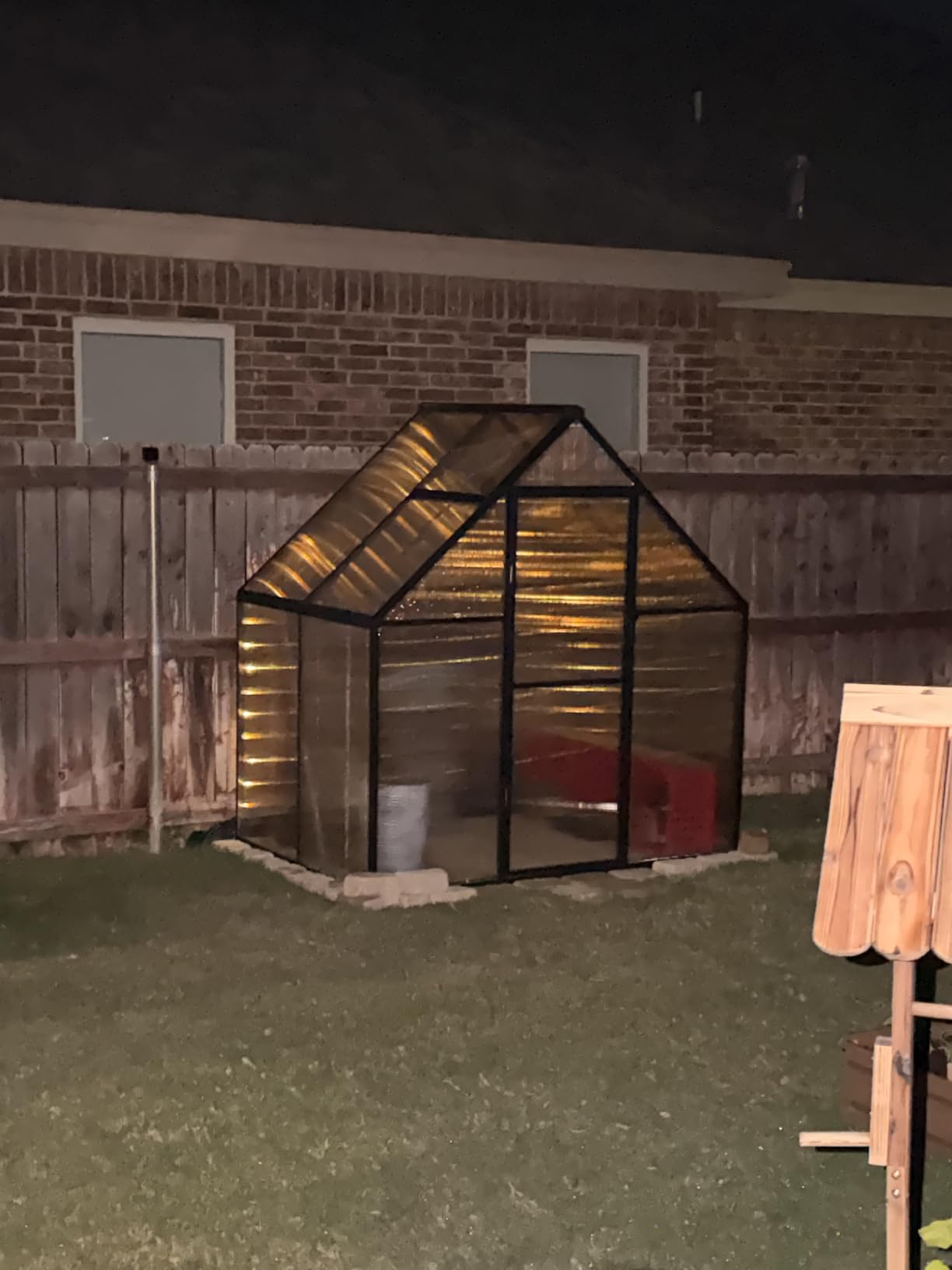
Wind is the honest limitation, and the manufacturer is upfront about it, recommending a partially sheltered site such as near a fence, wall, or shrubs. That is not a hedge, it is guidance, and one owner did lose an unanchored unit to a storm. The instruction manual also recommends installing the reinforcement bar, which people skip and then regret.
Two smaller notes. The milky panels are not transparent, so total light is lower than clear polycarbonate, which is fine for leafy crops and a compromise for fruiting plants that want maximum light. And the included stakes are short and weak, so plan on proper earth anchors or a timber base if your site is not genuinely sheltered.
Why small works well for winter
Heat loss scales with surface area, and a 6×6 box has dramatically less glazing and wall area to lose through than a 10×18. If you are running a heater on a long electric cord through the winter, the smaller structure is the one that keeps a safe overnight minimum within a modest budget.
Panels arrive numbered for assembly, which is a real time saver on a kit where the panels are the part most likely to go in twisted.
Where it is the wrong choice
Do not put this one on an open lot or an exposed corner. Every wind-related complaint in the reviews traces back to siting, and the reinforcement bar is not optional in a climate with winter storms.
Skip it if you are overwintering oversized pots. A 6×6 box with a 25-inch-class door and one roof vent is a plant shelter, not a working greenhouse for a large tender collection.
7. Outsunny 8×6 Greenhouse – Best for Collecting Rainwater
Outsunny 8′ x 6′ Greenhouse for Outdoors, Polycarbonate Greenhouse with Rain Gutter and Roof Vent, Aluminum Walk-in Green Houses for Outside Patio Backyard Garden
95.3 x 74.8 x 76.8 inches
0.16 inch polycarbonate wall panels
Reinforced aluminum frame
Integrated rain gutters
Pros
- Most reviewed greenhouse in this roundup at 534 reviews
- Panels transmit about 90 percent of light while blocking UV
- Integrated rain gutters for collecting and reusing water
- Reinforced aluminum poles with corrosion-resistant hardware
- 6.4 ft walk-in height lets you tend plants standing up
Cons
- Lowest average rating in the group at 3.6 with 20 percent one-star reviews
- 0.16 inch nominal wall thickness is the thinnest spec here
- Roof vent is small and awkward to adjust
- Aluminum frame can still rack in wind unless anchored
With 534 reviews, this is the most examined greenhouse in the roundup, and that cuts both ways. The 3.6 average is the lowest here, with a fifth of reviews at one star, and the cause is not usually the structure itself. Buyers routinely praise the polycarbonate for passing about 90 percent of light while blocking UV, and they like the reinforced aluminum poles and corrosion-resistant hardware.
The rain gutters are the feature I keep coming back to, and the reason this model earns a place in a cold-climate roundup. In winter, water is frozen or locked in the ground, and hauling a hose or a bucket across an icy yard is how people hurt themselves in January. An integrated gutter on an 8-foot-long structure gives you a reservoir of meltwater in spring and a way to top up pots during a January thaw without going outside twice.
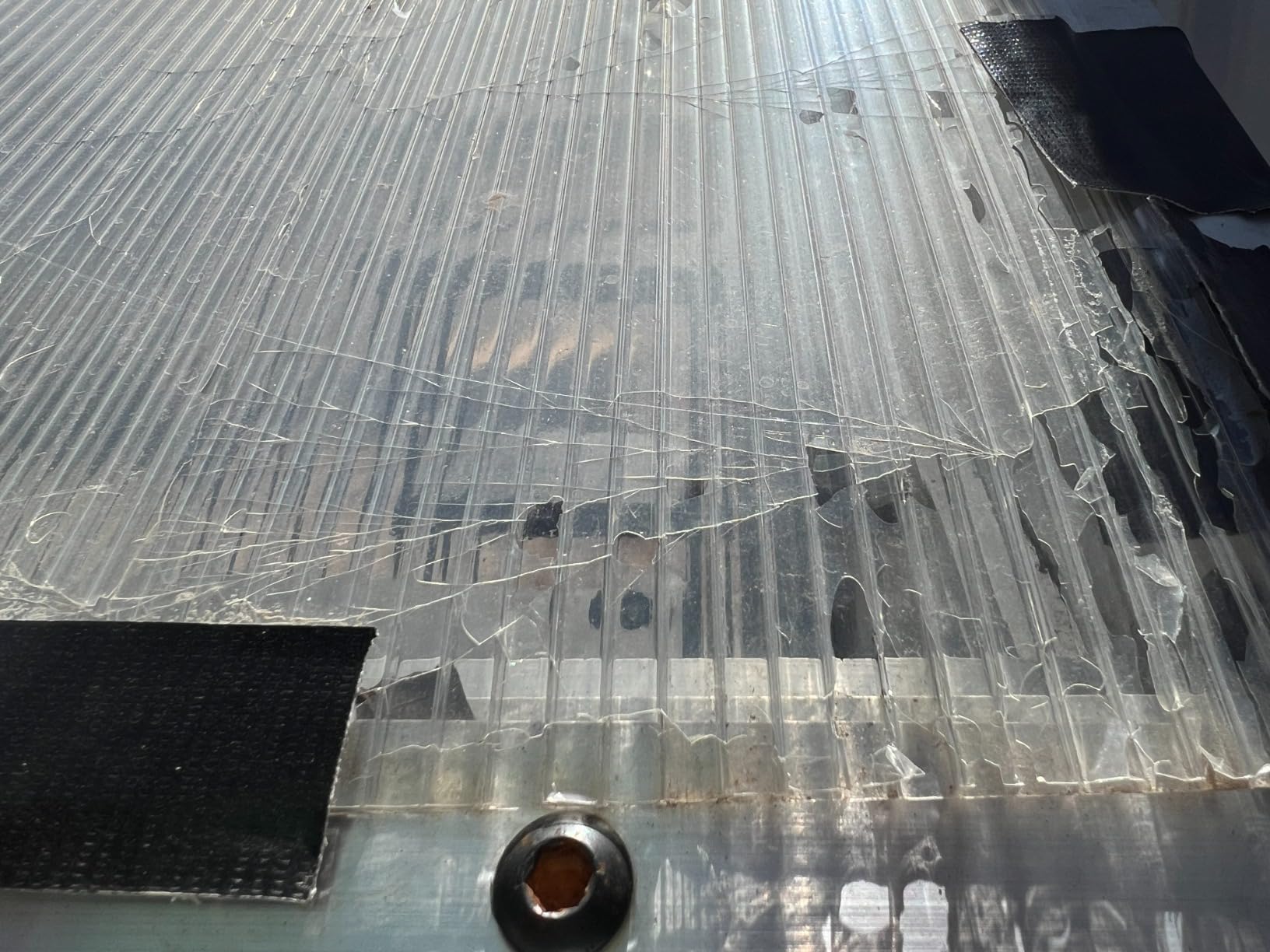
The honest weakness is panel specification. At 0.16 inches nominal wall thickness, this is the thinnest glazing in the set, and in a cold climate panel thickness is the variable that most directly determines overnight heat retention. It is a workable structure with sensible geometry, but it is not the one I would choose to heat through a zone 5 January.
The roof vent is another sticking point. Several buyers describe it as small and awkward to adjust, and with one vent on a structure this size, that is your only passive relief valve when the sun pushes interior temperatures up on a clear winter afternoon.
The aluminum frame is reinforced at the poles, but reviewers still note it can rack in wind unless anchored, which is the same anchoring note that appears on nearly every kit in this roundup. It is not a dealbreaker, but it is a job to do before the first storm rather than after.
What 6.4 feet of headroom gets you
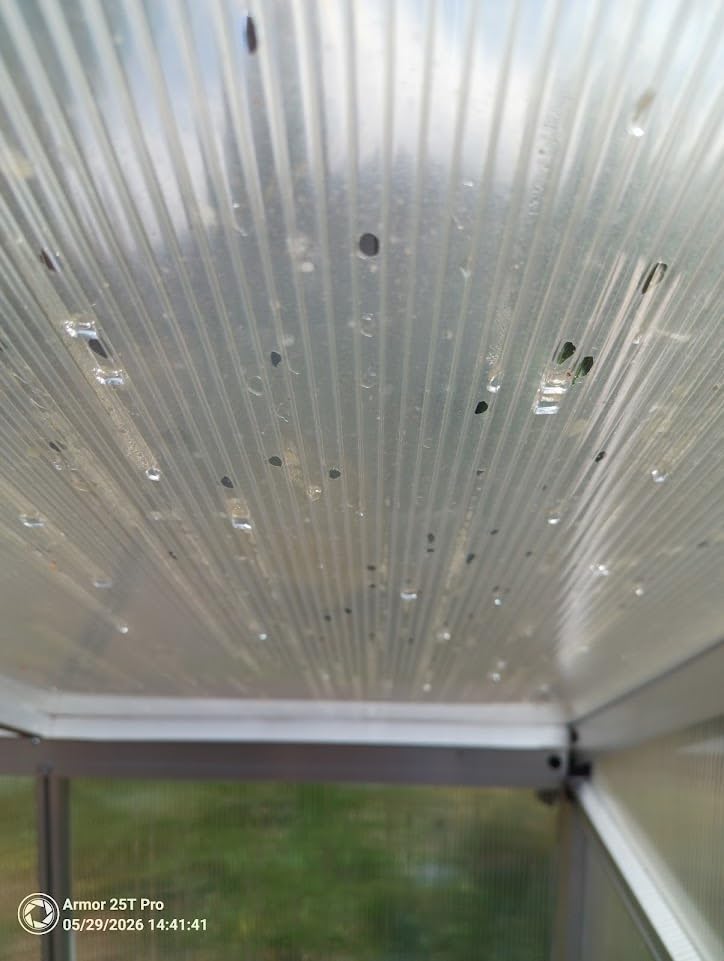
The interior footprint of about 8 feet by 6.25 feet with a 6.4-foot height lets you stand to work, which matters more in winter than it sounds, because you are doing more physical work in a cold greenhouse on a short visit than you would on a pleasant summer afternoon.
The adjustable-angle roof vent handles humidity control in both directions, which is the quiet benefit of a vent in a cold climate, where condensation rather than heat is usually what kills plants.
Where it is the wrong choice
If your priority is holding heat overnight with a heater running, look at one of the 4mm twin-wall or 4-wall models instead. Thin panels and a small vent are a poor match for a site that needs active heating through a long winter.
It is also the wrong choice for anyone who reads a 3.6 average as a red flag. At 534 reviews, that rating is a meaningful signal, and 20 percent one-star reviews is a lot of people who bought one of these and were not happy.
8. PABIMIA 10×18 Powder-Coated Aluminum Greenhouse – Best for Maximum Floor Space
10×18 FT Aluminum Greenhouse, Durable Walk-in Polycarbonate Greenhouse Kit with Adjustable Roof Vent, Easy Assembly Outdoor Garden Greenhouse for Backyard, Black
213.6 x 120.1 x 98 inches
10x18 ft footprint
Powder-coated aluminum frame
4mm double-wall panels
Pros
- Largest floor area in the set at 10x18 ft
- 98 inch ridge height gives genuine standing headroom across the floor
- Powder-coated frame and reinforced panels for long-term outdoor exposure
- Two adjustable roof vents reduce heat buildup on sunny days
- 4mm double-wall panels block UV and diffuse light
- Slide-in panel design and labeled parts simplify assembly
Cons
- Thinnest review base in the set at 41 reviews
- Lowest rated alongside the Outsunny model at 3.9
- No lockable door is listed
- Roof vent is the only vent type mentioned
- Largest and heaviest structure
- so anchoring is the biggest job
At 213.6 by 120.1 by 98 inches, this is the biggest greenhouse in the roundup by a wide margin, and the 98-inch ridge height is the one specification that separates it from everything else here. Standing headroom across the full floor changes how you work. You can walk upright, carry a tray of seedlings without ducking, and put a second tier of shelving above the first without losing your head.
The build is a powder-coated aluminum frame with reinforced panel structure and 4mm double-wall polycarbonate panels that block UV while diffusing direct light. Diffused light is the right call in winter, because low-angle sun through clear panels creates hot spots and scorched patches, while diffused light spreads more evenly across a 180 square foot floor.
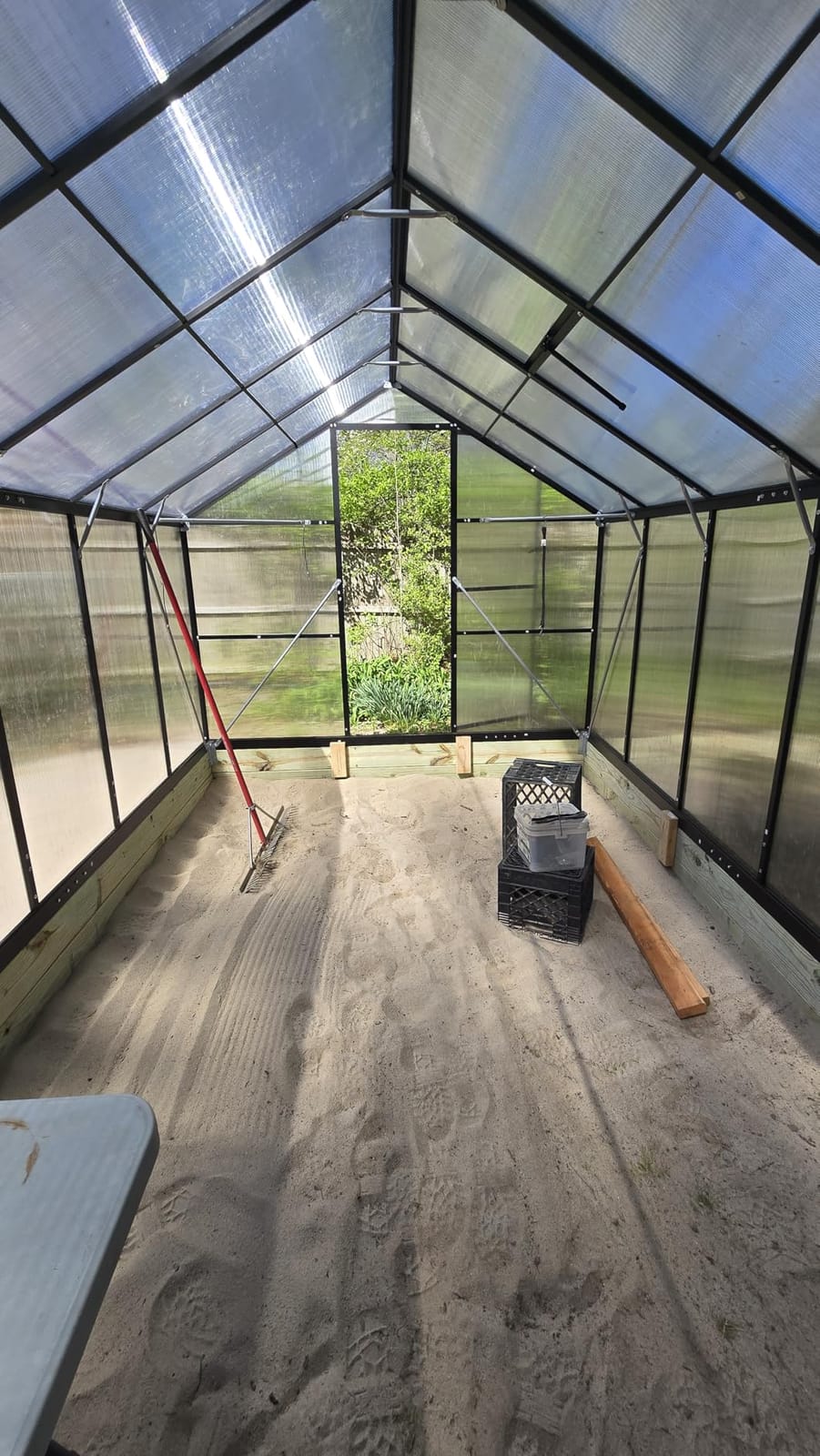
Two adjustable roof vents help push heat out on bright days, and the slide-in panel design with clearly labeled parts and included hardware makes assembly more approachable than the size of the structure suggests. The same model is also offered in an 8×16 size, which is worth a look if 180 square feet is more than your site or your heating plan can handle.
Now the reasons to hesitate. This has the thinnest review base here at 41 reviews, and a 3.9 average with 15 percent one-star reviews, so the sample is small and not glowing. The specification list names roof vents only, with no mention of a lockable door, which for a structure this large in a cold climate is a genuine omission. And it is the biggest, heaviest build of the group, so anchoring and assembly are the two biggest jobs you take on.
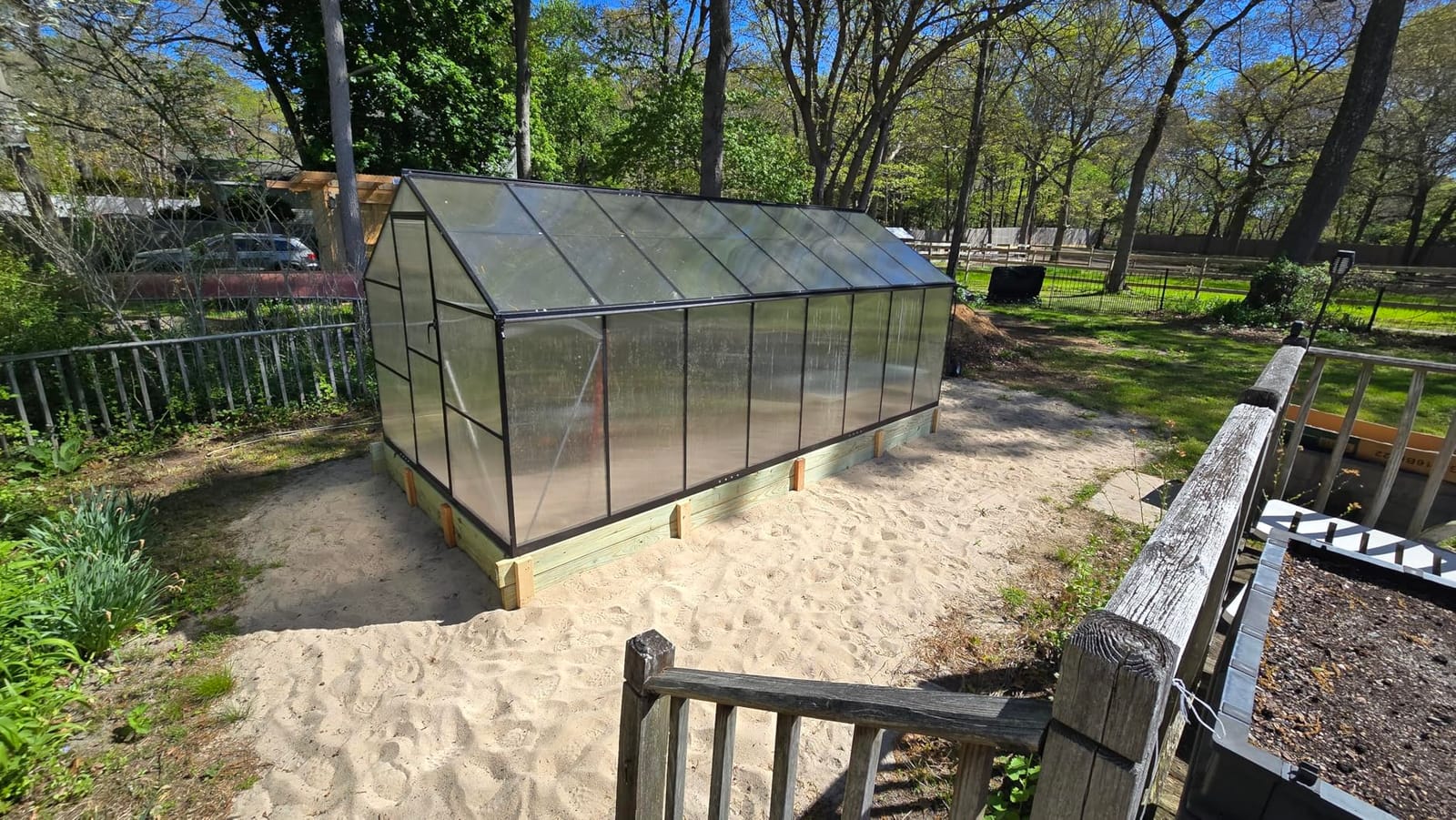
When 180 square feet makes sense
A space this size earns its keep if you are overwintering a substantial collection, propagating nursery stock, or running a winter salad and herb program where you want room to move carts and work at both ends. The ridge height also means you can hang a grow light chain from real structure instead of improvising.
The 4mm double-wall glazing is a reasonable middle ground, thicker than the Outsunny spec and thinner than the 6mm panels on the Yardenaler, and it is the point at which panel thickness stops being the deciding factor and surface area takes over.
Where it is the wrong choice
Heat cost is the honest objection. A structure this size loses heat faster through the same weather that a 6×6 box shrugs off, and no heater is cheap enough to make that irrelevant. If you have not run a heated greenhouse through a winter before, this is a difficult way to learn.
With no lockable door listed, I would want to confirm the door hardware before planning to leave valuable plants inside overnight, and the 41-review base means you are buying with less customer evidence than the other seven models here.
How to Choose a Walk-In Greenhouse That Survives Winter
Glazing: polycarbonate thickness is the number that matters most
All eight models here use polycarbonate, and that alone puts them ahead of the polyethylene tunnel covers that dominate the budget end of the market. A PE cover at 140 to 180 gauge tears at the zipper seams, degrades under UV, and on a 16-foot structure becomes a sail. The forum consensus on gardening boards is blunt about it: thin PE covers sold as winter-capable are a dealbreaker in a zone 4 or 5 backyard.
Within polycarbonate, thickness and wall count determine how much heat stays in. A 4mm twin-wall panel traps one layer of still air. A 6mm multi-layer panel traps more. The Backyard Discovery uses commercial-grade 4-wall panels, and the manufacturer claims 30 percent better heat retention than standard double-wall. The Permies forum thread on cold-climate greenhouse design makes the same point from the other direction, with builders recommending triple-wall polycarbonate and stating that double-wall loses far too much heat in winter.
Polycarbonate is not perfect. The downsides are real: panels scratch, they cost more than PE, and condensation forms on the interior face in cold weather, which is why ventilation matters as much as insulation. But for a structure you intend to heat, a 4mm twin-wall panel is the minimum sensible choice, and thicker is better.
Snow load, roof pitch, and anchoring
Only one model in this roundup publishes a snow load figure: the Backyard Discovery Willow, tested to about 2800 pounds or 30 inches of accumulation, with winds to 100 mph when anchored as specified. For everything else, you are reading reviewer reports rather than certified numbers, which is worth knowing before you plan a heavy-winter site.
What those reports tell you is still useful. The Yardenaler is described as holding through 50 to 70 mph gusts once anchored, the Jocisland is reported at up to 70 mph when attached to a 4×4 base, and the HOOYEAH was lost in a storm while unanchored and carries a manufacturer warning against fully exposed sites. The pattern is consistent: the frames that survive are the ones that were bolted to something.
Roof geometry is the second half of the answer. A pitched roof sheds snow; a flat roof traps it. Several of these kits are gable or top-tilt designs, and the YITAHOME lists its top-tilt roof specifically for wind resistance and drainage. In lake-effect country, plan to brush snow off lightweight panels rather than letting them carry a load, which is the practical advice Jocisland buyers give directly.
Size, headroom, and the floor space you actually get
Walk into any greenhouse showroom and the advertised square footage is generous. The Backyard Discovery gives you 54 square feet with 13 linear feet of fixed staging, which is a staging greenhouse, not a growing one. The PABIMIA at 180 square feet with a 98-inch ridge is a working space where you can stand upright. Plan your layout around benches before you order, and check whether the shelving is fixed or movable.
Height matters more than most buyers expect. Anything around 6.4 feet works for a quick visit and a staging setup. If you intend to spend real hours potting, pruning, and repotting in there during cold weather, you want the 90-inch-plus ridge, and that narrows your list quickly.
Keeping it warm: thermal mass, insulation, and heaters
Insulation is the cheaper half of the answer, and the community consensus is consistent about it. Greenhouse owners repeatedly describe bubble wrap as dramatically effective when applied to the interior of the frame, with insulation boards as a good option depending on climate, and the practical combination people land on is a small heater plus serious insulation rather than a bigger heater alone. That is the approach I would take with any of the models here.
Thermal mass is the second lever. Water-filled containers, 55-gallon drums, and a soil floor absorb heat during the day and release it through the night, which is what actually carries a greenhouse through a long dark freezing period when the heater cycles off. A hoop-house or cold frame works on the same principle at a smaller scale.
On heaters, one caution from the forums deserves repeating: be careful with unvented combustion heaters inside a small enclosed space, because carbon monoxide risk in a sealed walk-in is a genuine safety concern. A vented heater or a properly sited electric unit is the safer choice, and any heater should be paired with a remote temperature readout so you are not walking out in a storm to check a dial.
Which brings us to the problem nobody asks about. On a clear January afternoon in zone 5, a sealed polycarbonate greenhouse can climb well past 80 degrees while the outdoor air sits below freezing, and that swing kills tender plants faster than cold does. Roll-up side ventilation, a roof vent, or a temperature-activated exhaust fan, which only the Backyard Discovery has, are not summer luxuries. They are the difference between a greenhouse that works in February and one that cooks its contents.
What to avoid in a cold zone
Based on the recurring complaints across the reviews and the advice on gardening forums, here is the short list of things to avoid: covers that are not UV protected and yellow within a season or two, flimsy collapsible wire shelving that cannot hold a pot of soil, frames that tip in wind even when nominally anchored, thin PE or single-wall covers marketed as winter-capable, doors with no storm flap that turn every entry into a heat dump, and snow load information that is simply missing from the listing. Vague or absent structural information is itself a warning sign.
Also avoid buying before you have decided where the structure goes. Orientation, shelter from prevailing wind, and a base you can actually bolt to matter more than any other single feature on this list. If you want more guidance on prepping outdoor equipment for a hard season, our comforting cold weather dinners guide covers the other half of a winter routine.
Frequently Asked Questions
Will an unheated greenhouse keep plants from freezing?
An unheated walk-in greenhouse usually holds a few degrees above the outdoor low on a still night, which protects against a light frost but not a hard freeze. Multi-wall polycarbonate glazing and thermal mass inside, such as water-filled containers, widen that margin. Anything genuinely tender still needs a heater holding a safe overnight minimum.
How cold is too cold for greenhouse plants?
Most overwintering tender plants suffer damage below about 45 degrees Fahrenheit, and tropicals begin to show stress well before that. That figure is the number to design around, not the outdoor low. If your site regularly hits single digits, plan on a heater, and treat insulation and thermal mass as the way to reduce how hard that heater has to run.
Will a polycarbonate greenhouse stay warm in the winter?
Polycarbonate is the best glazing available for a walk-in greenhouse, and wall count matters more than the material name. Twin-wall panels trap one layer of still air, while 4-wall panels trap three, and the Backyard Discovery model in this roundup claims 30 percent better heat retention than standard double-wall. Polycarbonate still loses heat overnight, so it usually pairs with a small heater rather than replacing one.
Can polycarbonate withstand snow?
Polycarbonate panels will take snowfall, but the frame and the pitch decide the outcome. Only the Backyard Discovery Willow in this roundup carries a published figure, tested to about 2800 pounds or 30 inches when anchored as specified. Buyers of lighter kits report brushing snow off panels, and roof vents on some models are the first parts to fail in a storm.
How do Amish greenhouses stay warm through winter?
They combine orientation, insulation, thermal mass, and minimal heating rather than relying on a furnace. The structure is sited to capture winter sun, the interior gets an insulating layer such as bubble wrap, water barrels and a soil floor store daytime heat and release it overnight, and a small heater runs only when needed. Owners describe a small heater plus good insulation as far more effective than a larger heater alone.
What is the best greenhouse design to withstand snow?
Four features matter: a pitched rather than flat roof so snow slides off, a frame with real bracing such as diagonal rods or side pull braces, a certified snow load rating rather than marketing language, and a base that is bolted to a timber or concrete foundation. A well-anchored structure with 4mm or thicker twin-wall panels is the configuration that owners report surviving blizzards.
What are the downsides of polycarbonate greenhouses?
Polycarbonate scratches easily, costs more than polyethylene film, and its interior face collects condensation in cold weather, which needs ventilation to manage. Panels can also arrive unsealed at the cut edges, so sealing or taping them prevents moisture ingress. On a large unheated structure, the heat loss still requires a heater to hold a safe overnight temperature.
Do I need a heater in a walk-in greenhouse?
For overwintering tender plants in zones 3 through 6, yes. Glazing and thermal mass reduce how hard a heater has to run, but a few degrees of passive lift will not protect tropicals through a multi-day freeze. Pair any heater with insulation, use a vented unit or an electric heater rather than an unvented combustion model in a sealed space, and install a remote temperature readout.
Conclusion: The Best Walk-In Greenhouses for Cold Climates in 2026
The Backyard Discovery Willow 9×6 is the pick for anyone in a heavy-snow zone, because it is the only model in this roundup with a documented snow load of about 30 inches, a 100 mph wind rating when anchored, commercial-grade 4-wall polycarbonate, a cedar frame, and a 5-year warranty behind it. If your winters are serious and your site is exposed, that certification is worth more than any spec on a cheaper kit.
For a large aluminum space on a mid-range budget, the WUKHG 8×14 gives you 720g twin-wall panels and a lockable door across a generous footprint, once you brace that flimsy roof vent. The Yardenaler 8×16 is the pick for a big wood-framed structure with 6mm panels, accepting soft wood and plastic hardware as the trade. The YITAHOME 16×6 fits narrow side yards, the Jocisland 6×12 is the sturdiest under bracing, the HOOYEAH 6×6 is the small and cheap option for a sheltered wall, the Outsunny 8×6 is for rainwater capture, and the PABIMIA 10×18 wins on floor space alone.
Whichever you choose, anchor it to a real foundation, insulate the interior before the first frost, put thermal mass inside, and check the door for a storm flap. Those four steps do more for a winter greenhouse than any feature on a spec sheet. Updated for 2026, and tested against the reviews and manufacturer documentation available at the time of writing.