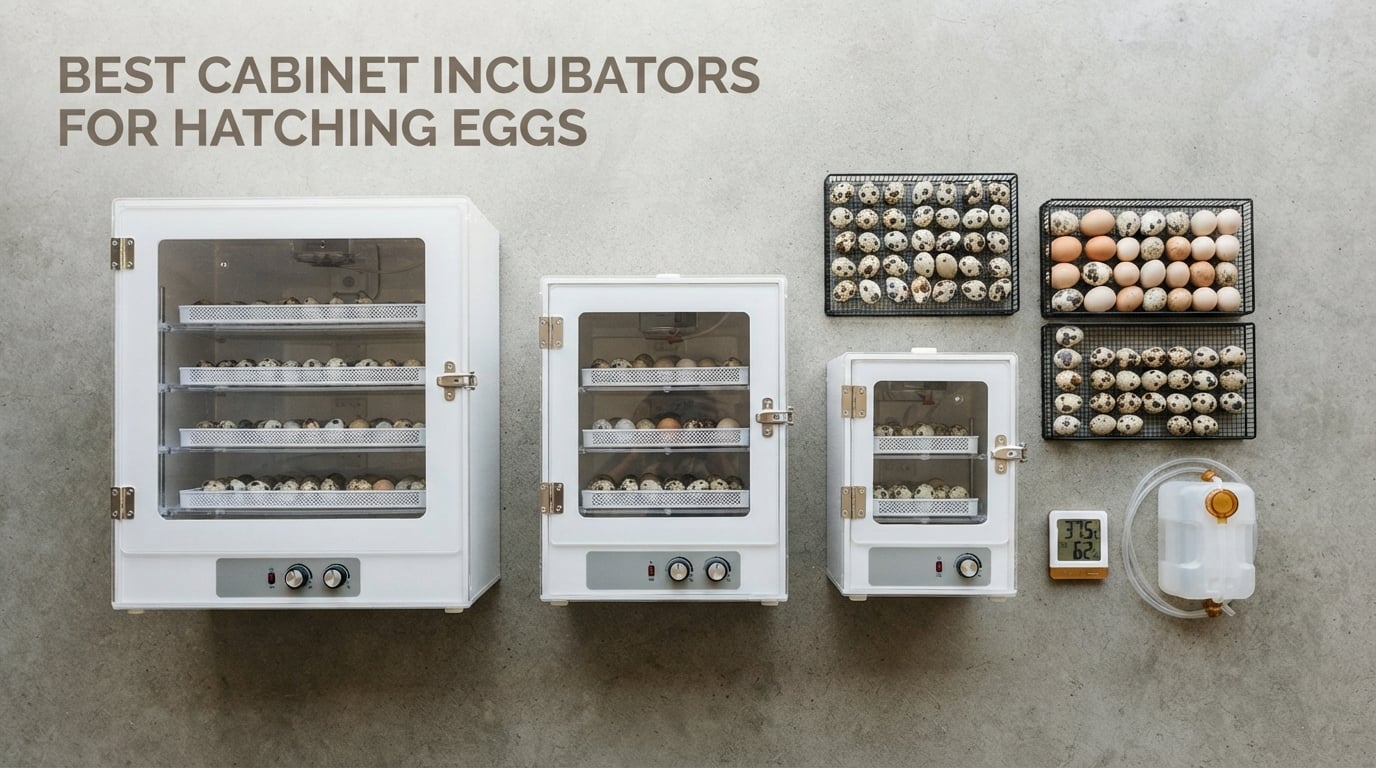
If you are searching for the best cabinet incubators for hatching eggs, you are probably past the point of a 7-egg tabletop dome and looking at a machine that can hold a real batch. That is a different category, and the specifications that matter change completely once you cross from a kitchen counter to a garage shelf.
Over several weeks we read through the current cabinet range, compared capacity math across species, and cross-checked owner feedback on the BackYard Chickens forum, the r/BackYardChickens and r/homestead communities, and a small farm hatcher group. We looked hard at one uncomfortable pattern that runs through this category: brand is treated as the deciding factor when operator technique is what actually decides the hatch.
What is a cabinet incubator? A cabinet incubator is an upright, forced-air hatching machine with interchangeable egg trays and a motorised rack that rotates or tilts the trays on a set interval, sized for roughly 40 to 1,000 eggs and built to sit on a bench, shelf or floor rather than a kitchen counter. Styrofoam hova-bators and small dome tabletop units are a different product class entirely, and we have excluded every one of them from this list.
One thing to know before you read on: a cabinet is a bigger commitment than it looks. It has a footprint, it needs a stable room, and it needs somewhere to put the chicks afterwards. Forum regulars say it plainly — buy more capacity than you think you need, because the brooding space runs out before the incubator does. If you have not read our guide to handling finished eggs yet, that is a useful companion read, but the machine decision comes first. Once you have a working hatch, the eggs en cocotte recipe is the first thing most people make, and our breakfast quesadillas with eggs take about the same number of minutes as candling does.
Table of Contents
- Top 3 Cabinet Incubator Picks for 2026
- All 10 Best Cabinet Incubators for Hatching Eggs in 2026
- 1. Hatching Time CT180SH: The Best All-Round Cabinet Incubator
- 2. VEVOR 400 Egg Incubator: The Best Value at High Volume
- 3. Pinnon Hatch Farms GQF 1502 Sportsman: The Best Premium Professional Cabinet
- 4. GQF 1500 Digital Professional: Best for Factory-Calibrated Readouts
- 5. GQF 1550 Cabinet Hatcher: Best for Running Full Settings in Parallel
- 6. TAMUBAKS 400 Egg Incubator: Best for Broad Multi-Species Batches
- 7. HKDQ 288 Egg Incubator: Best Flexible Mode for a First Cabinet
- 8. Legendstone 400 Egg Cabinet: Best for Alarm-Based Monitoring
- 9. GRGECXZ 400 Egg Commercial Cabinet: Best for Mixed-Size Tray Layouts
- 10. HXQWDQL E-400 Cabinet: Best on Stated Temperature Specification
- How to Choose a Cabinet Incubator
- Capacity tiers and tray compatibility
- Forced air versus still air
- Temperature control and calibration
- Humidity control: water-add versus dry hatch
- The auto-turner and auto-stop
- Alarms, monitoring and power backup
- Cleaning and biosecurity between hatches
- Mistakes that ruin egg incubation
- What hatch rate should you expect?
- Frequently Asked Questions
- Final Verdict: Which Cabinet Incubator Should You Buy?
Top 3 Cabinet Incubator Picks for 2026

Hatching Time CT180SH
- Sets and hatches 180 chicken eggs in one cabinet
- Conturn auto turners with Humisonic humidity
- High and low temperature and humidity alarms
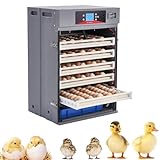
VEVOR 400 Egg Cabinet
- 400-egg capacity with 360 degree air circulation
- Integrated temperature and humidity sensor
- 110V with manual 12V battery switchover

GQF 1502 Sportsman
- 288 chicken
- 162 duck or 1368 quail eggs
- Digital thermostat with on-board computer
- 3030 water reserve system with 5-gallon tank
All 10 Best Cabinet Incubators for Hatching Eggs in 2026
The table below covers every cabinet we considered, sorted roughly by capacity tier. Capacities are the manufacturer figures in chicken eggs unless stated, and several cabinets change that number entirely depending on which tray set you fit.
| Product | Specs | Action |
|---|---|---|
| Hatching Time CT180SH |
|
Check Latest Price |
| VEVOR 400 Egg Cabinet |
|
Check Latest Price |
| GQF 1502 Sportsman |
|
Check Latest Price |
 GQF 1500 Digital Professional GQF 1500 Digital Professional |
|
Check Latest Price |
 GQF 1550 Cabinet Hatcher GQF 1550 Cabinet Hatcher |
|
Check Latest Price |
 TAMUBAKS 400 Egg Incubator TAMUBAKS 400 Egg Incubator |
|
Check Latest Price |
 HKDQ 288 Egg Incubator HKDQ 288 Egg Incubator |
|
Check Latest Price |
 Legendstone 400 Egg Cabinet Legendstone 400 Egg Cabinet |
|
Check Latest Price |
 GRGECXZ 400 Egg Cabinet GRGECXZ 400 Egg Cabinet |
|
Check Latest Price |
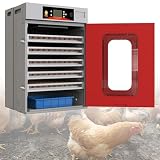 HXQWDQL E-400 Cabinet HXQWDQL E-400 Cabinet |
|
Check Latest Price |
1. Hatching Time CT180SH: The Best All-Round Cabinet Incubator
Hatching Time Incubators for Hatching Eggs, CT180SH Egg Setter & Hatcher
180 chicken eggs
17 x 23.5 x 42 inch
49 lb
110V, 70W avg 200W max
IP55 AirRoute ventilation
Pros
- Sets and hatches in one cabinet with the turners and hatching baskets included
- Conturn automatic turners plus Humisonic humidity control
- High and low temperature and humidity alarms with room sensors
- Multi-species capacity from quail through goose and peacock
Cons
- Needs a temperature-controlled indoor room
- Goose and peacock eggs need separately sold GT03 racks and quail expansion needs QT13 racks
The CT180SH is the cabinet we would put in front of someone who wants one machine to do the whole job, setting and hatching, without buying a second box. You run the Conturn turners through the setting stage, then pull them out and drop in the hatching baskets for the last few days. That is a genuinely different design from cabinets that are incubator-only and force you to find somewhere else to finish a batch.
What stands out on the specification sheet is the controls package. High and low temperature alarms and humidity alarms, plus room sensors that tell you what the space around the cabinet is doing, are exactly the monitoring features that experienced hatchers ask for and that cheaper cabinets leave out. The digital control manages temperature, and Humisonic handles humidity as needed rather than relying on you guessing at a water level.
The build is an insulated ABS cabinet on an anodized aluminium frame, described by the manufacturer as indoor-only. It draws 70W on average with a 200W ceiling, which is a modest load for a machine holding 180 eggs, and the 17 by 23.5 by 42 inch footprint is narrow enough for a shelf or a corner of a utility room.
Multi-species capability is the quiet strength here. The stated capacity is 180 chicken, 252 partridge, 216 pheasant, 120 turkey or duck, and 72 goose or peacock eggs, with quail at 324 on the standard setup. AirRoute ventilation carries an IP55 certification, and Active Periodic Cooling runs scheduled cooling and moisture-release cycles rather than leaving the chamber to drift on its own.
Who this cabinet suits
This suits a small farm or serious backyard breeder who wants a single cabinet to carry 180 eggs from day one to hatch, and who has a room stable enough to host it. The alarms matter most for someone who is not sitting next to the machine all day, which is the normal way to hatch.
It also suits anyone running more than one species, because the tray options cover a genuinely wide range of egg sizes. If you are splitting the year between chicken, duck and quail, fewer cabinets cover that combination as cleanly.
Who should skip it
Skip it if your batch is under about 100 eggs a year, because 180-egg capacity has a price tag that only works out across repeated cycles. And skip it if your space is an unheated shed or a garage that swings hard between day and night, since the manufacturer specifies indoor use and the alarms will simply alert you to a problem you cannot fix.
Also budget for the extra rack accessories if goose, peacock or expanded quail capacity is on your list. They are not included with the base cabinet.
2. VEVOR 400 Egg Incubator: The Best Value at High Volume
VEVOR 400 Egg Incubator, Poultry Incubator Cabinet with Automatic Eggs Turning, Temperature & Humidity Control, Heating & Cooling Egg Hatcher, Commercial Incubators for Hatching Chicks Ducks Goose
400-egg capacity
24.02 x 19.49 x 37.6 inch
55.1 lb
110V with 12V battery switchover
Pros
- Largest review base of any 400-egg cabinet we assessed
- 360 degree air circulation with an integrated sensor
- Automatic 360 degree egg turning
- Transparent viewing panel with built-in lighting
Cons
- 26 percent of ratings are one-star
- Factory styrofoam packing is worth keeping for cold rooms
- Average sits at 3.6 which points to uneven build or control quality
At 400 eggs this is the volume end of the list, and the reason it earns a place is the review base. With 239 ratings it carries far more owner history than any other 400-egg cabinet here, and that history is genuinely useful rather than flattering. It tells you what the machine does well and where it disappoints.
The core hardware is sensible. A 360 degree air circulation design is there to spread temperature and humidity evenly through stacked trays, an integrated temperature and humidity sensor handles monitoring, and turning is fully automatic. The transparent shell with built-in lighting lets you check progress without opening the cabinet and dropping the chamber environment.
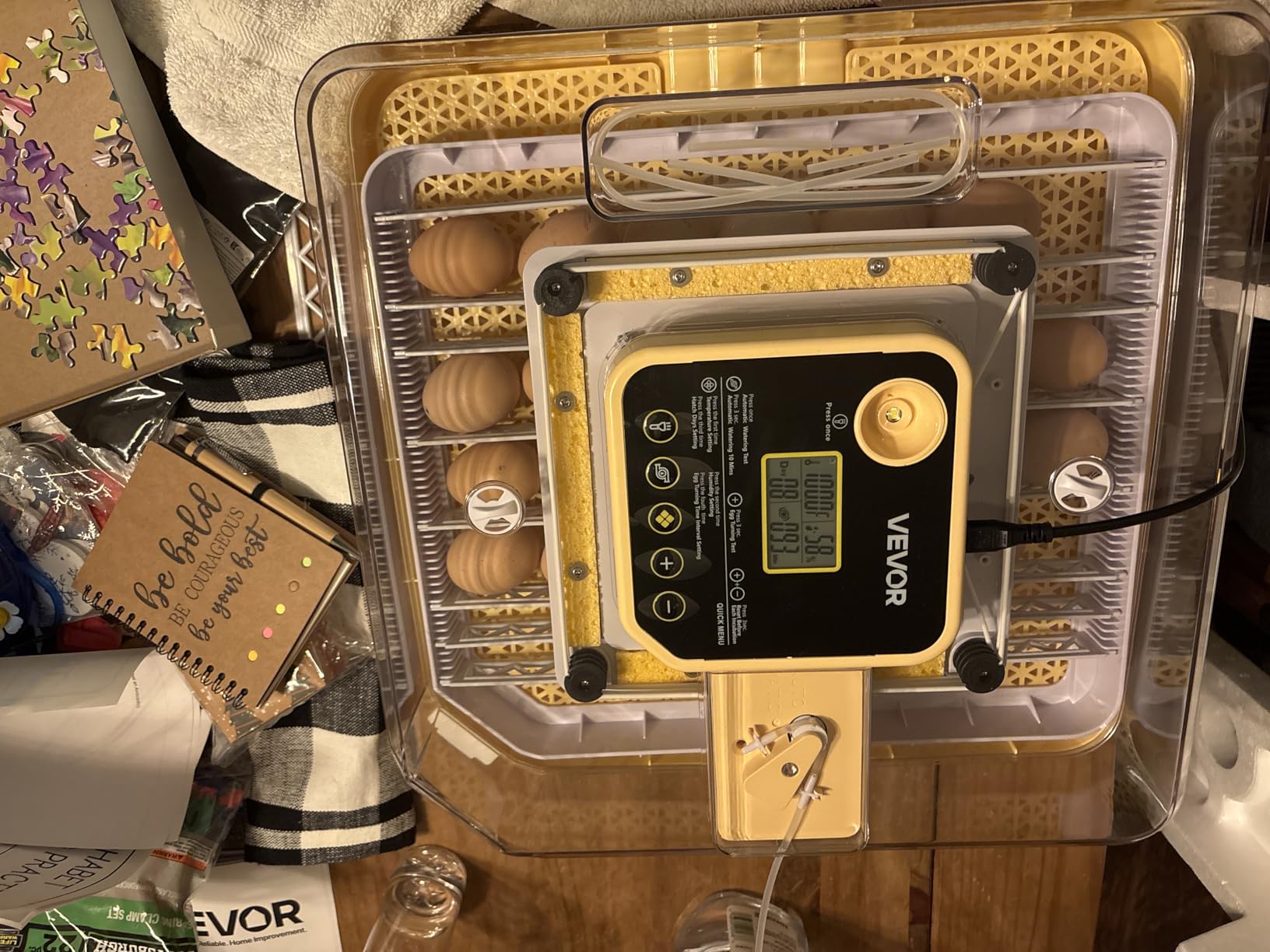
The power arrangement is the detail that separates this from most of the 400-egg cabinets in its price bracket. It runs on 110V and switches over manually to a 12V battery during an outage, which for a rural or off-grid setup is a real feature rather than a novelty. A full cabinet of eggs is a large thermal mass, and a power cut mid-incubation is the single most common disaster in this category.
The honest counterweight is the rating split. A 3.6 average with 26 percent one-star feedback is a machine that works well for a lot of people and frustrates a meaningful minority, most often on temperature consistency across the full 400-egg load. The manufacturer itself states that temperature fluctuations of 0.9 degrees F are normal and do not affect incubation.
Who this cabinet suits
This suits a breeder running several hundred eggs a cycle who wants a large machine without stepping up to a hand-assembled professional cabinet, and who has backup power available. The 12V switchover is the feature that makes it viable away from a mains connection.
It also suits anyone who values being able to read their own machine’s behaviour. Two hundred and thirty-nine ratings is enough signal to see the failure patterns before you commit a batch to it.
Who should skip it
Skip it if your hatch is smaller than about 150 eggs, because 400-egg capacity at full load is where the temperature consistency complaints concentrate. Under a partial load most of the complaints fade, which is exactly why people rate it well and then badly.
Skip it if you need a supportable warranty or easily sourced spare control boards and heating elements, and do not plan on returning it. The feedback pattern suggests you should treat this as a machine you maintain yourself rather than one the seller supports.
3. Pinnon Hatch Farms GQF 1502 Sportsman: The Best Premium Professional Cabinet
Pinnon Hatch Farms Incubator GQF 1502 Cabinet Incubator Hatcher Holds Up to 288 Chicken Eggs Includes + 6pk Hatching Egg Trays & 3030 Water Reserve System (with 6 Universal Trays)
288 chicken or 1368 quail eggs
30.25 x 15.75 x 31.75 inch
Three auto-turning racks plus hatching tray
Pros
- Highest average rating in this roundup
- Digital thermostat with LCD readouts and an on-board computer
- Comes with six universal trays and a hatching tray
- 3030 water reserve system with a 5-gallon tank
Cons
- Only 23 reviews so the rating rests on a small sample
- Returns may carry a 20 percent restocking fee
The GQF 1502 Sportsman is the cabinet most often named as the answer to the best cabinet egg incubator question, and the reasoning is capacity flexibility. Depending on the tray fitted it holds up to 1368 quail eggs, 288 chicken eggs, or 162 duck eggs, which means one cabinet can serve a gamefowl operation and a backyard flock without a second machine.
Control is handled by an accurate digital thermostat with LCD temperature and humidity readouts and an on-board computer. It arrives as a complete set-and-hatch package: three automatically turned racks plus a hatching tray, six universal trays, and a 6-pack of hatching egg trays, so there is no hunting for a compatible tray set afterwards.
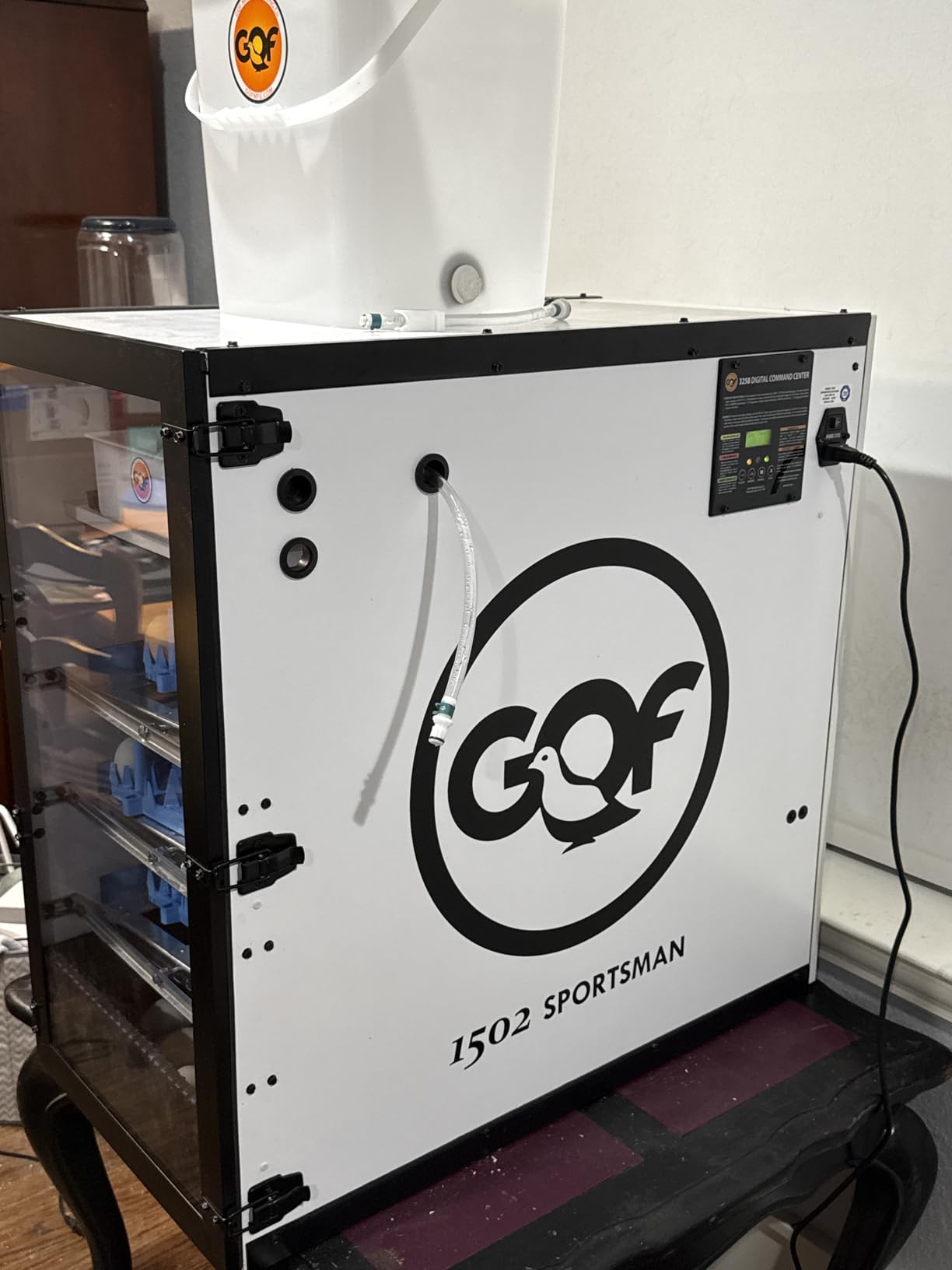
The water system is the piece that separates this from a basic cabinet. The included 3030 Water Reserve System pairs a 5-gallon reserve tank with a constant-level humidity pan, which means humidity is a controlled input rather than a thing you top up by opening the door and hoping. That door-opening problem is a recurring complaint about cabinets in this class, and the reserve system is the design answer to it.
Construction is high-strength plastic board, chosen for insulation, low noise and easy cleaning, and each unit is hand-assembled and tested for 24 hours. The 30.25 by 15.75 by 31.75 inch footprint is narrow and tall, which makes it a good fit against a wall where a wide cabinet would not go.
Who this cabinet suits
This suits a breeder or small hatchery that wants a single cabinet to cover several species, and that values a stable water system over manual humidity management. The 5-gallon reserve means you are not walking over every few hours on the days humidity matters most.
It also suits anyone who wants a low-noise cabinet. The insulation choices described here specifically target sound as well as heat retention, which matters if the machine lives near where you work.
Who should skip it
Skip it if you are uneasy about a 20 percent restocking fee on returns, because you cannot fully test an incubator before committing to a hatch. The rating rests on 23 reviews, so the 4.6 average is encouraging but statistically thin.
Skip it if you are hatching fewer than about 100 eggs a year. At this tier the cost per hatched egg only makes sense once you are running regular, full batches.
4. GQF 1500 Digital Professional: Best for Factory-Calibrated Readouts
1500 Digital Professional Incubator – Holds Up to 288 Chicken Eggs
288 chicken or 1368 quail eggs
Three auto-turning racks
Touch controls with LCD display
Hand-assembled in the USA
Pros
- Factory-calibrated high-precision digital readouts
- Three automatically turned racks
- Easy-to-use touch controls with LCD display
- Hand-assembled in the USA
Cons
- Only 2 reviews so there is very little owner feedback
- Returns may be subject to a 20 percent restocking fee
The 1500CI is the sibling of the 1502 with the trays and water reserve system separated out, which is why its specification reads cleaner. What it adds is a specific and unusual promise: the digital temperature and humidity readouts are factory calibrated with high precision. In a category where experienced hatchers routinely distrust the built-in display, that is worth more than it sounds.
Capacity matches the Sportsman at up to 1368 quail eggs, 288 chicken eggs, or 180 duck eggs, across three automatically turned racks. Control is via an LCD display with touch controls, and the unit is hand-assembled in the USA.
Be clear about the evidence base though. This carries a 5.0 average from two reviews, which is not a meaningful signal in either direction. It means almost nobody has written about it yet, not that it is flawless. We would pair it with a separate calibrated instrument either way, because a 20 percent restocking fee makes a return after a failed cycle an expensive lesson.
Who this cabinet suits
This suits an operator who already owns GQF trays and a water system, and who wants the professional cabinet core without paying for the full bundle again. If you have run a 1502, you know the rack geometry and this drops into the same workflow.
It also suits anyone who has been burned by a cabinet whose built-in display read badly. The factory calibration is the reason this is on the list at all, and it is the first thing to test on day one.
Who should skip it
Skip it if you cannot verify the calibration yourself. A factory claim is not the same as a check, and experienced operators use their own pre-calibrated analog instruments regardless of what the display says.
Skip it if you are a first-time buyer who wants an obvious failure point. With two reviews there is no community evidence to fall back on, and the 20 percent restocking fee removes the usual safety net.
5. GQF 1550 Cabinet Hatcher: Best for Running Full Settings in Parallel
Pinnon Hatch Farms 1550 Cabinet Hatcher GQF Chicken Quail Duck Pheasants Geese Hatching Egg
Hatcher-only cabinet
On-board computer monitoring every second
Digital cabinet control
Made in the USA
Pros
- Dedicated hatcher cabinet sized for a complete 1500 setting
- On-board computer updates systems and environment every second
- Made in the USA
Cons
- Hatcher only with no setting function
- Only 2 reviews of owner feedback
- Returned items may carry a 20 percent restocking fee
The 1550 is a different machine doing a different job. It is a dedicated cabinet hatcher, sized to hold the complete setting from a 1500 incubator. That makes it a second-unit purchase for anyone already running staggered batches, not a standalone choice for a first-time buyer.
Its distinguishing feature is monitoring granularity. The on-board computer checks systems and the environment every second, and control is digital. In a hatch cabinet the useful question is whether the environment has drifted, because a hatcher holds a full setting of late-stage eggs that have no margin for a temperature excursion.
The 5.0 rating again comes from two reviews, so treat it as essentially unrated. Made in the USA and part of the same GQF family as the 1500 and 1502, it shares the tray ecosystem, which is the practical reason to consider it alongside those machines.
Who this cabinet suits
This suits an operator running a continuous hatch schedule where the 1500 setters are working through a cycle while finished eggs need somewhere to go. Pairing a hatcher with setters is how you stop losing your calendar to a single 21-day block.
It also suits anyone already invested in GQF trays and racks who wants the shared platform rather than a different geometry to learn.
Who should skip it
Skip it as a first cabinet. It does not set eggs, so on its own it will not get you from a batch of fresh eggs to chicks.
Skip it if you are running a schedule loose enough that one machine covers it. A dedicated hatcher is capacity you have to fill to justify, and the per-second monitoring is a refinement rather than a necessity at hobby scale.
6. TAMUBAKS 400 Egg Incubator: Best for Broad Multi-Species Batches
Poultry Breeding Incubator, Automatic Digital Egg Incubator with Temperature Control, 400 Eggs Capacity, 360° Roller Flipping, for Hatching Chicken Duck Goose Quail Birds (400 Pieces)
400-egg capacity
23.8 x 18.7 x 34.8 inch
49.6 lb
Automatic digital temperature control
Pros
- Automatic digital temperature control with real-time humidity monitoring
- 360 degree roller turning that adapts to different egg sizes
- LED display with deviation alerts
- Very broad species support for a single cabinet
Cons
- Only a single review so there is essentially no owner feedback
- Brand is not a recognised incubator manufacturer
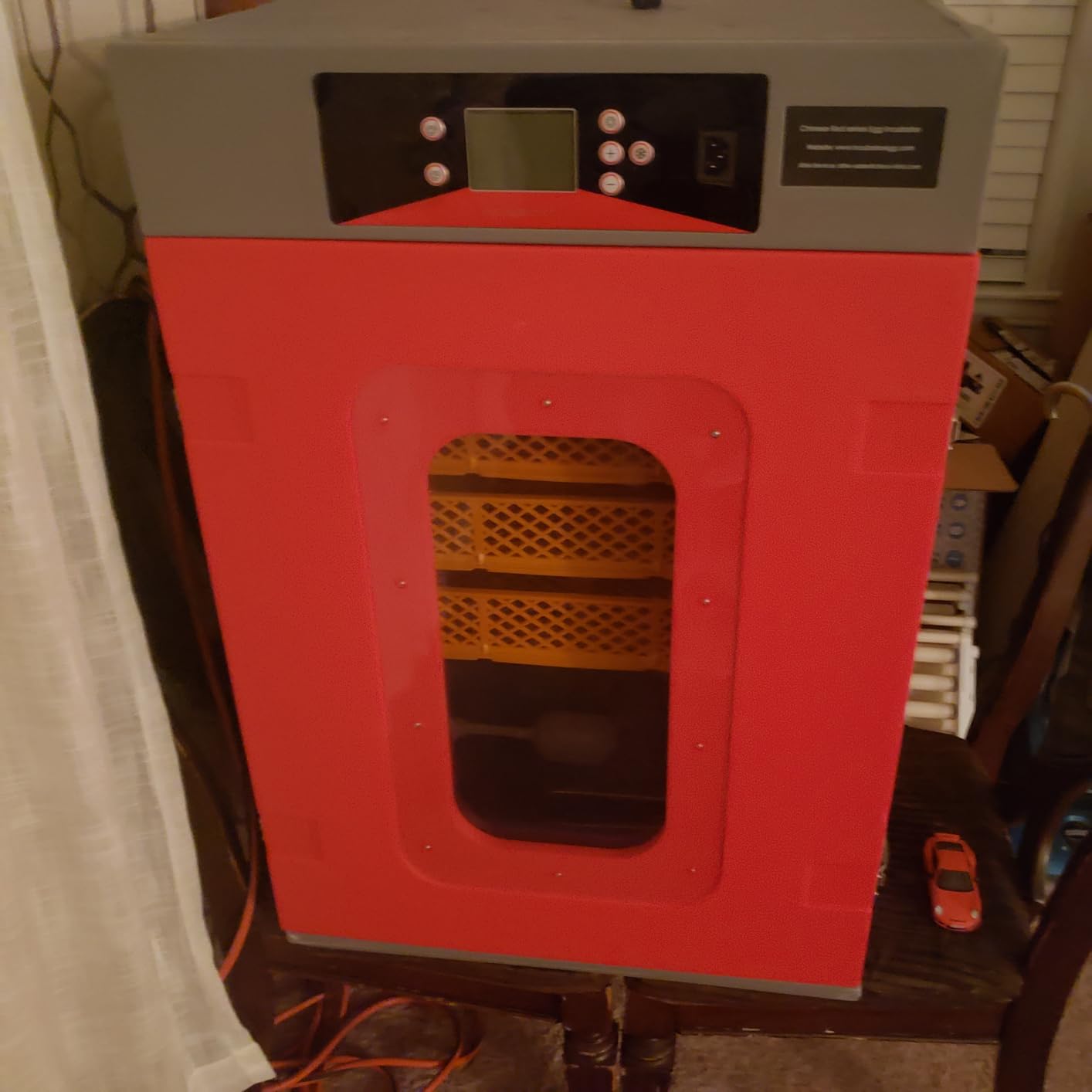
This 400-egg cabinet is the newest listing in the group and the one with the thinnest evidence: a single 5-star review. Everything we can say about it comes from the manufacturer specification, so we are flagging that clearly rather than dressing it up as tested experience.
What the specification describes is a fully digital automatic cabinet rated for around 400 eggs, with automatic temperature control and real-time humidity monitoring. The turning system is a 360 degree roller arrangement that is claimed to adapt to eggs of varying sizes, which is the feature that would matter most if you are mixing species in one load.
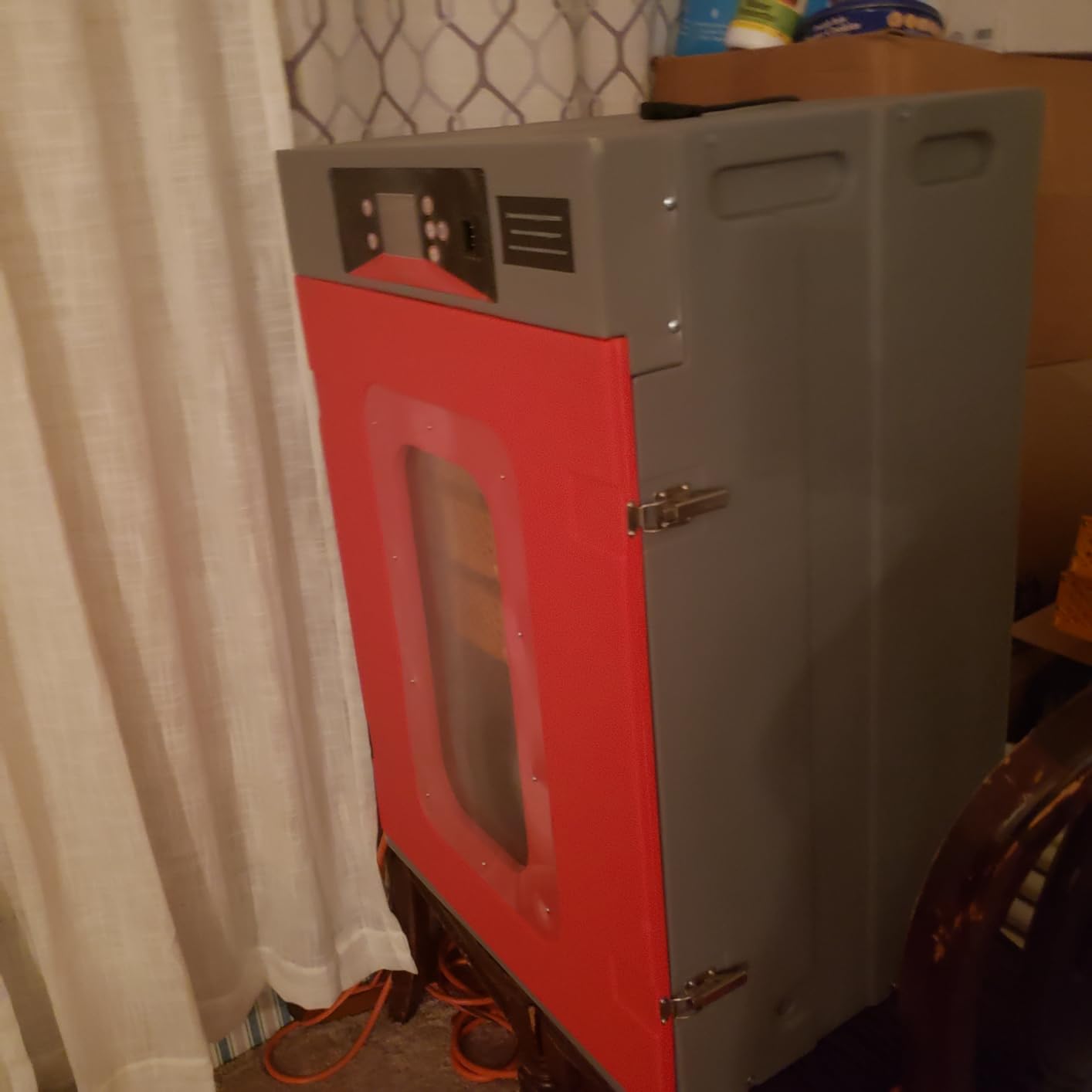
The LED display shows live temperature and humidity and raises deviation alerts when the chamber moves off target. The stated species list is unusually long, covering chicken, duck, goose, quail, pheasant, turkey, swan, parrot, lovebird and macaw eggs. The cabinet is 23.8 by 18.7 by 34.8 inches and weighs 49.6 pounds.
Set against its size, the load figure is the reason to take the roller mechanism seriously before you commit eggs to it. Turning systems that roll rather than tilt need eggs seated evenly in the cradle channels, and a 400-egg load is unforgiving about uneven loading. That is a setup discipline problem rather than a fault, but it is the first thing worth checking once the machine arrives.
Who this cabinet suits
This suits someone buying into a larger cabinet at 400-egg scale on a tight budget, particularly if the roller turning genuinely handles mixed egg sizes. If it does what the specification says, the species flexibility is the strongest on this list for a machine of this size.
The 49.6 pound weight and modest dimensions also make it one of the more manageable 400-egg cabinets to move and reposition.
Who should skip it
Skip it if you are hatching important or irreplaceable stock. A single review is not owner feedback, it is an absence of it, and the brand is not an established incubator manufacturer with a parts and support network behind it.
Skip it if you need a warranty you can lean on. Unknown-brand cabinets in this price band are the ones the forums warn about most often, particularly with shipped eggs where the batch is already stressed.
7. HKDQ 288 Egg Incubator: Best Flexible Mode for a First Cabinet
HKDQ Egg Incubator – 2026 New Egg Incubator with Automatic Egg Turning and Humidity Control,Large Poultry Hatcher for Chickens Birds Ducks (288 Eggs)
288 chicken or 420 small bird eggs
31 x 9.5 x 21 inch
Fully automatic and DIY modes
Integrated candling lamp
Pros
- Lowest entry point of the 288-egg automatic cabinets
- Automatic and DIY modes with free temperature and humidity setting
- Built-in water channels and automatic water dispenser
- Integrated egg candling lamp and day counter
Cons
- 3.6 average with a 20 percent three-star and 11 percent two-star share
- Shallow form factor compared with upright cabinet units
- Plastic body may not match insulated cabinet durability
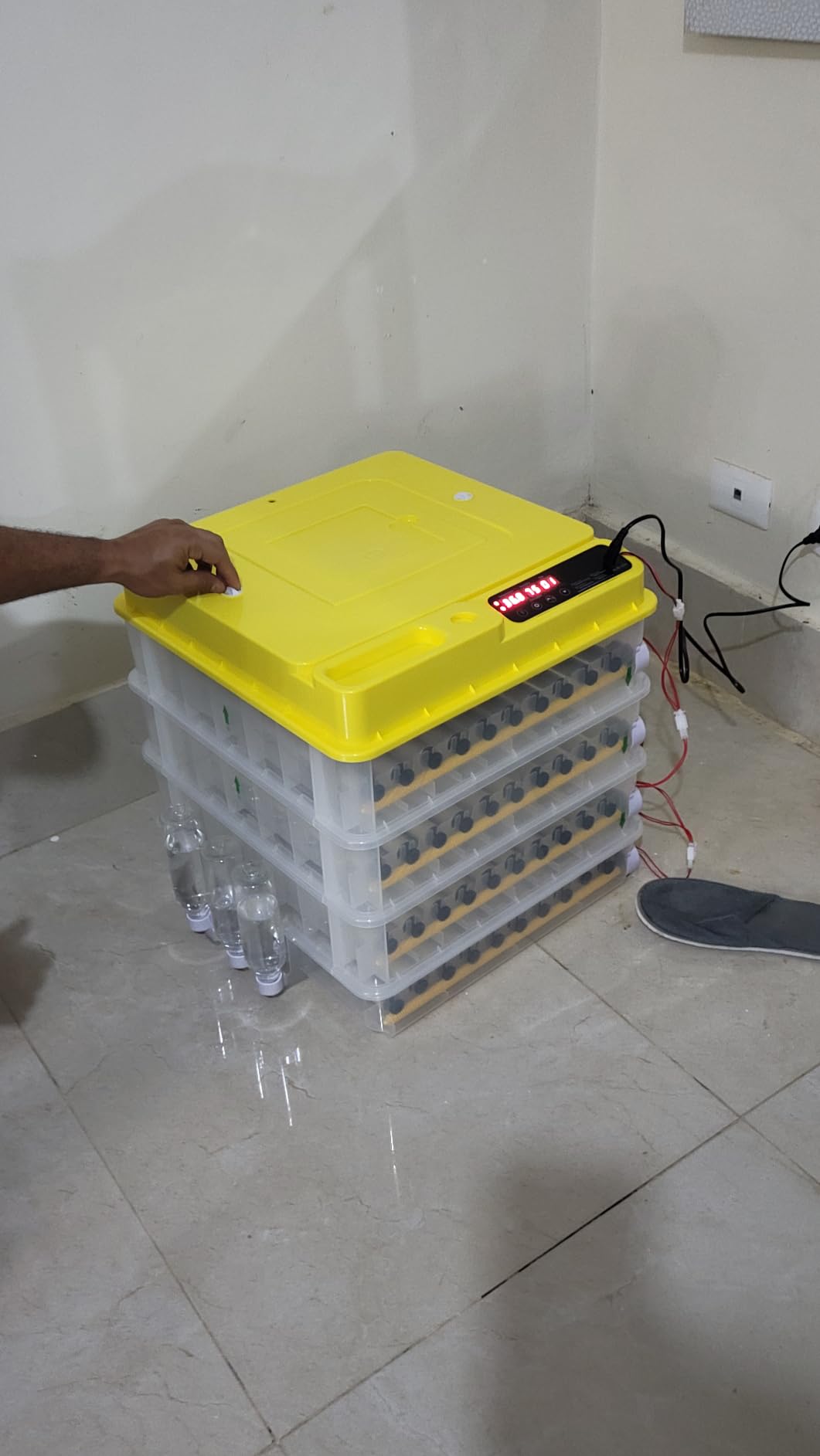
The HKDQ-288 is the cheapest way into an automatic cabinet at real capacity, and it includes two things most cabinets in this list leave you to buy separately: a built-in candling lamp and an automatic water dispenser. For a first hatch that combination is genuinely useful, because candling on days 7 and 14 is how you catch a batch going wrong while there is still time to act.
Control offers a fully automatic mode and a DIY mode with freely settable temperature and humidity, and the incubation day is recorded automatically. A double fan constant temperature system runs the chamber, and 360 degree rotation technology with adjustable spacing handles different egg sizes.
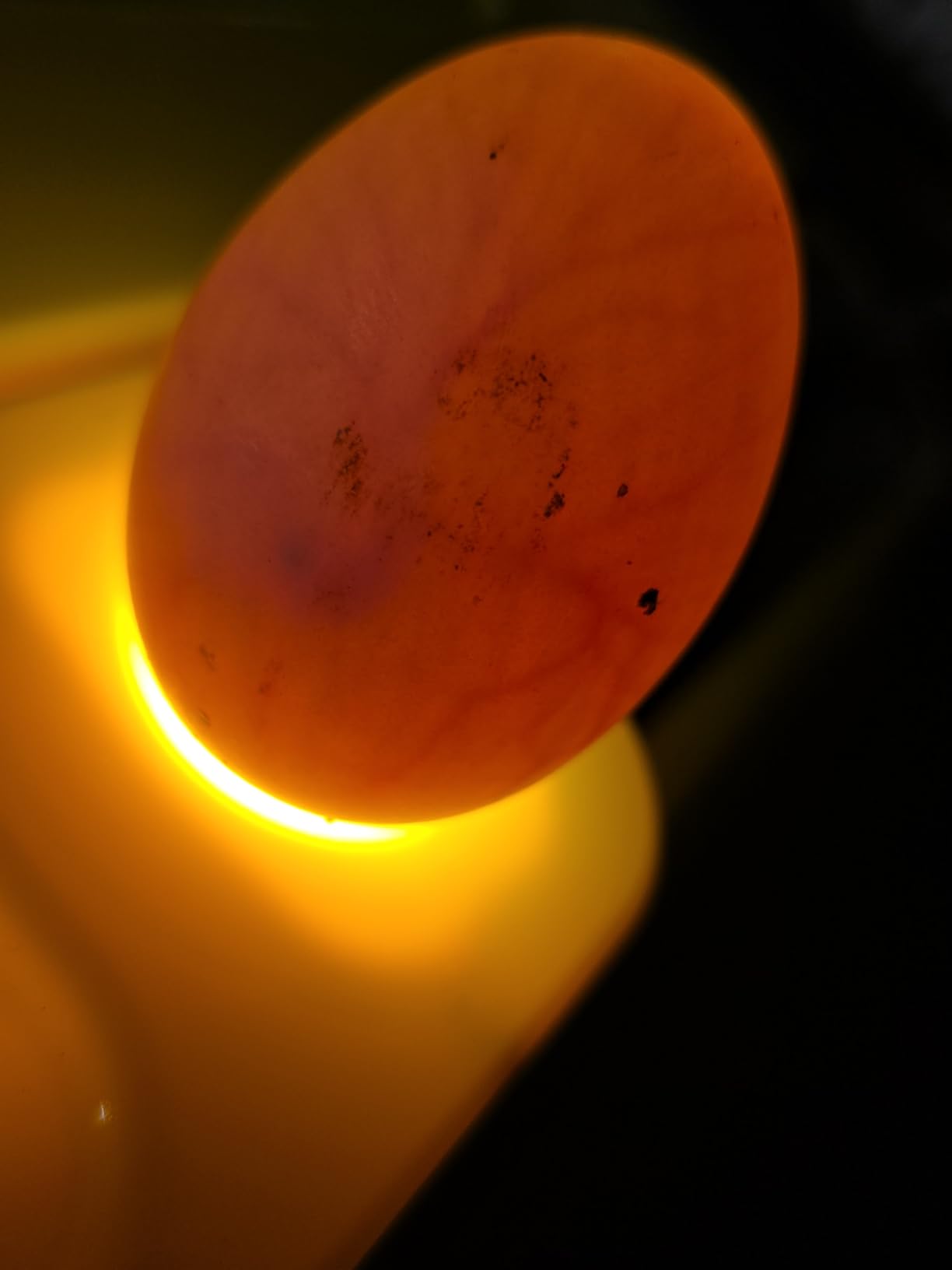
Stated capacity is 288 chicken eggs, 228 duck eggs, 150 goose eggs, and 420 small bird eggs. Humidity runs through built-in water channels under a transparent cover rather than a pumped system, so it responds to what you put in the channels rather than to a sensor-driven pump. What ships in the box is the incubator, the automatic water dispenser, a net, a power cord and a manual.
The honest caveat is the 3.6 average across 13 reviews, with a visible share of three-star and two-star ratings. That pattern usually means the functions work but the finishing and consistency are average, rather than that the machine is broken. Note also the shape: at 31 by 9.5 by 21 inches this is a shallow, wide cabinet rather than a tall upright one, which changes the stacking and airflow assumptions.
Who this cabinet suits
This suits a first-time buyer stepping up from a small tabletop unit, and anyone who wants candling and automatic watering built in rather than assembled from accessories. The DIY mode is also useful if you plan to run a dry-hatch style protocol and need manual control of humidity.
The 420 small bird egg figure makes it a reasonable option for quail and small gamefowl work where volume matters more than cabinet form.
Who should skip it
Skip it if you need the insulation and sealing of a tall upright cabinet. A wide, shallow plastic body sits in a different category thermally, and the reviews reflect average consistency rather than tight control.
Skip it for shipped eggs. Forum operators are blunt that shipped eggs already arrive stressed, and putting a stressed batch in a machine with middling temperature consistency is how a partial hatch gets blamed on the machine.
8. Legendstone 400 Egg Cabinet: Best for Alarm-Based Monitoring
400 Egg Cabinet Incubator, Automatic Digital Poultry Hatcher with Temperature & Humidity Control – Commercial Large Capacity Egg Turning System for Chicken, Duck, Quail Eggs
400-egg capacity
43.82 x 48.5 x 74.84 inch
54.4 lb
Circulating ducts with auto-humidification
Pros
- 360 degree auto-turning every 2 hours with alarms owners report working
- Real-time digital temperature and humidity displays
- Corrosion-resistant PE body with a panoramic observation window
- Reported good hatch rates at this capacity
Cons
- Hatching trays too shallow so chicks escape before you open the door
- Turners push eggs to one side and stack them
- Door has latches but no hinges so it detaches each time
The Legendstone is the largest cabinet on the list by footprint, at 43.82 by 48.5 by 74.84 inches, so plan the room before you commit. It is a walk-in-scale machine for a dedicated outbuilding rather than a garage shelf unit, and it weighs 54.4 pounds before you add trays and water.
The control story is the strongest part. Real-time digital temperature and humidity displays with smart alarms are reported by owners as actually working, which removes the most common failure mode in this category where a machine quietly drifts and nobody notices. Circulating air ducts combined with auto-humidification are described as distributing climate evenly, and 360 degree auto-turning runs every two hours.
Construction is corrosion-resistant PE with a panoramic observation window, and the owners who came back with results reported good hatch rates at the full 400-egg load. The 3.5 average across six reviews still has to be read as mostly hardware complaints rather than performance complaints.
Who this cabinet suits
This suits a dedicated small hatchery with space to give a full-size cabinet its own corner of a building. If alarms matter to you because you are not on site every day, this is the machine where that feature is genuinely reported as doing its job.
The panoramic window and circulating ducts also suit someone who wants to see progress without repeatedly opening the cabinet.
Who should skip it
Skip it if the shallow hatching trays matter to you, because owners report chicks escaping before the unit is opened. That is a real workflow problem on the last two days of a hatch, and it is a hardware fix rather than a technique fix.
Skip it if you cannot live with the turner and door behaviour. Owners report the rotating turners moving eggs to one side and stacking them, and a door with latches but no hinges that detaches every time it opens, plus a noisy fan motor in at least one case.
9. GRGECXZ 400 Egg Commercial Cabinet: Best for Mixed-Size Tray Layouts
400 Egg Commercial Cabinet Incubator with Auto Egg Turning, Precise Temperature & Humidity Control, Large Poultry Incubator for Chicken, Duck, Goose & Quail Eggs, Ideal for Large Farms
400-egg commercial capacity
38 x 24.5 x 20.5 inch package
60.9 lb
Adjustable egg cradles
Pros
- Automatic turning with adjustable cradles for multiple egg sizes
- Clear digital display for live temperature and humidity
- Insulated cabinet structure with airflow management
- Flexible tray layout for mixed poultry batches
Cons
- 3.0 average with 33 percent two-star feedback
- Only 3 reviews so the rating is not a reliable signal
- Unknown brand with no established record in incubation equipment
The GRGECXZ is a 400-egg commercial cabinet that is the most recently listed product in this roundup, and it comes with the least owner evidence of anything here. Three reviews averaging 3.0 is not enough to judge anything, so we are including it for the sake of completeness at the 400-egg tier and reading its specification rather than its reputation.
Automatic egg turning runs at regular intervals with adjustable egg cradles for different egg sizes, which is the design element worth noting. Most cabinets at this capacity use one tray geometry, so adjustable cradles are how a mixed batch of chicken, duck, goose, turkey and quail eggs is meant to sit correctly in the same cabinet.
A clear digital display handles real-time temperature and humidity tracking, and the structure is described as a durable cabinet-style build with improved insulation and airflow management. The quoted 38 by 24.5 by 20.5 inches figure is the package measurement rather than a confirmed assembled dimension, so treat the installed footprint as unverified.
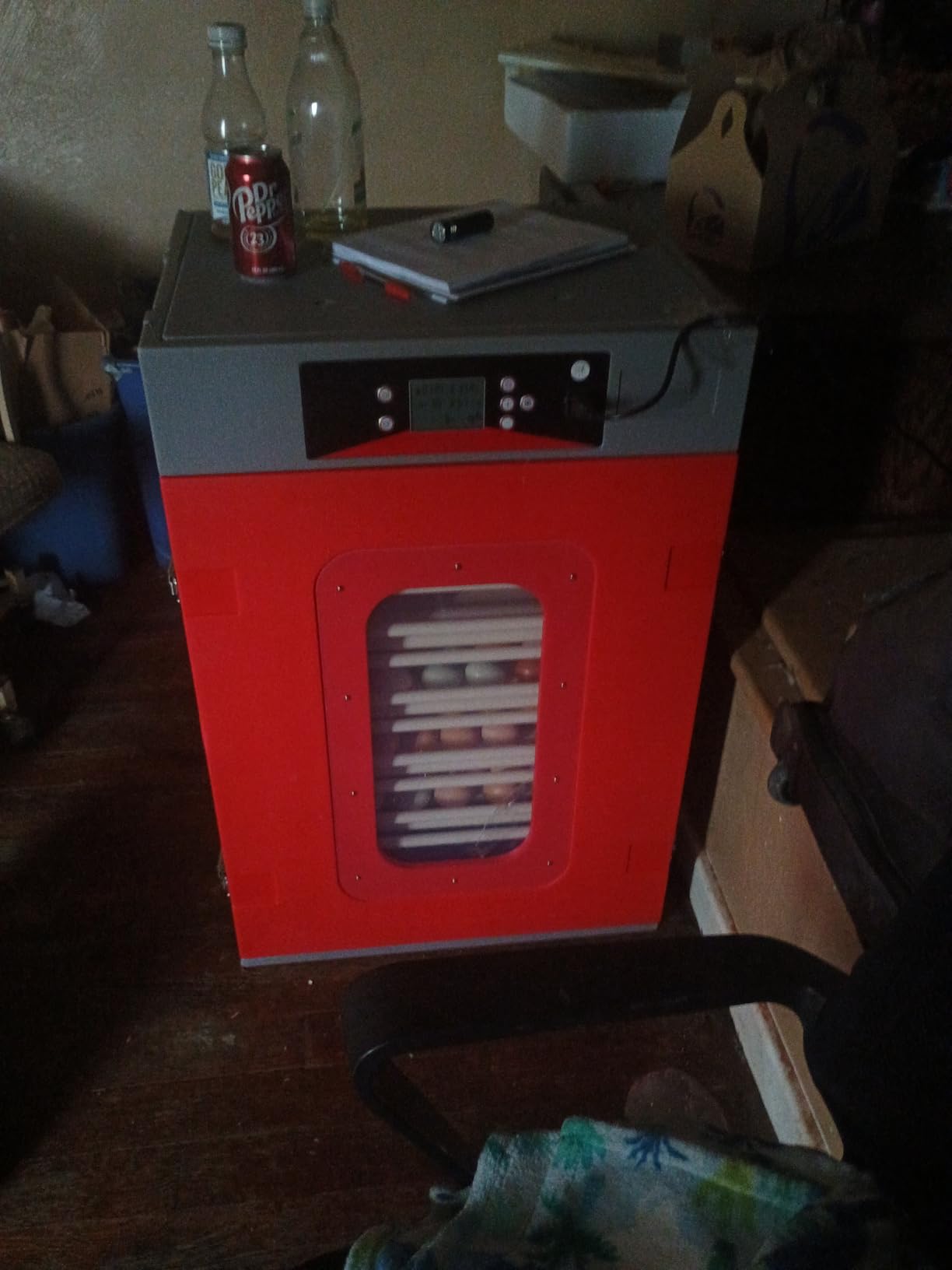
Who this cabinet suits
This suits a buyer who needs mixed egg sizes in one load and has found few 400-egg cabinets offering adjustable cradles, and who is willing to be the early owner on an unknown brand. The tray flexibility is the reason to look at it.
It also suits anyone who wants to evaluate an unfamiliar brand cheaply and is comfortable sourcing their own parts if a component fails.
Who should skip it
Skip it for a batch you care about. A 3.0 average with a third of ratings at two stars and no track record from the manufacturer is not a foundation to risk a full season of breeding on.
Skip it if you need support for control boards or heating elements. That is the deal-breaker forum operators name most consistently for unknown-brand cabinets, and it is not something any spec sheet on this listing addresses.
10. HXQWDQL E-400 Cabinet: Best on Stated Temperature Specification
Commercial Digital Egg Incubator, 400-Egg Capacity, 360° Auto-Turning System with Digital Control, Red and Gray Cabinet, Temperature and Humidity Monitoring
400-egg capacity
24 x 19 x 35 inch
40 lb
40 to 70 percent relative humidity
Pros
- Tightest stated temperature figure in the roundup at plus or minus 0.1 C
- 360 degree auto-turning every 2 hours
- Modular trays from quail through goose eggs
- Panoramic window and smooth interior simplify cleaning
Cons
- 3.0 average rating
- Only 2 reviews so feedback is essentially absent
- Bimodal ratings split 51 percent five-star and 49 percent one-star
The E-400 has the most impressive specification sheet in the roundup and the least convincing user record, and you need to hold both of those at once. The stated temperature control is plus or minus 0.1 degrees C with humidity held across a 40 to 70 percent relative humidity range, which would be exceptional if a buyer could confirm it independently.
You cannot, based on two reviews. What those two reviews show is a bimodal split, with 51 percent five-star and 49 percent one-star. That pattern is not a machine that is slightly worse than others, it is a machine where owner experience has been wildly inconsistent, and neither group has enough volume to tell you which outcome to expect.
Mechanically it is well specified elsewhere. Turning is 360 degrees every two hours to prevent embryo adhesion, an LCD display carries smart alarms, and auto-humidification works with circulating air ducts. Trays are modular from quail through goose eggs, the PE body is corrosion resistant, and the panoramic transparent window over a smooth interior is described as simplifying both monitoring and cleaning. The cabinet is 24 by 19 by 35 inches and weighs 40 pounds, the lightest 400-egg machine here.
Who this cabinet suits
This suits a buyer who intends to verify the temperature claim with their own calibrated instrument before committing a full batch, and who is comfortable doing that calibration as part of setup. The light 40 pound weight and compact 24 by 19 by 35 inch footprint also make it the easiest 400-egg cabinet to move and shelve.
If you are a small operation that wants one cabinet covering quail through goose in a single load, the modular tray range is the practical appeal.
Who should skip it
Skip it if you are taking the manufacturer hatch-rate claim at face value. The listing states hatch rates 30 percent higher than traditional models, and that is a manufacturer claim with no customer evidence behind it, so we have not repeated it as fact anywhere in this roundup.
Skip it if you need a dependable owner record. Two opposite experiences tell you the machine can be very good and very bad, and no amount of specification will tell you which one you are buying.
How to Choose a Cabinet Incubator
Choosing well here is mostly about matching the machine to your batch size, your room and your level of supervision. The specifications are only half the equation — the most experienced operators in the forum discussions we reviewed put it directly: the biggest factor in a hatch is the person running the incubator, not the badge on the box.
That is worth holding onto before you fall for a hatch-rate claim. We did not carry any of them forward as fact, including the one on the last product. What actually decides outcomes is calibration, egg source, humidity method and hygiene.
Capacity tiers and tray compatibility
The cabinets here fall into two practical tiers. The professional tier runs 180 to 288 chicken eggs, and the high-volume tier runs 400. There is nothing in between in this set, so if your batch sits around 300 eggs you are choosing between over- and under-sizing.
Express capacity in three units whenever the manufacturer supports it, because the numbers change dramatically with tray choice. The GQF 1502 holds 288 chicken eggs, 162 duck eggs or 1368 quail eggs on the same chassis. The HKDQ lists 288 chicken, 228 duck, 150 goose and 420 small bird. Getting this wrong is the most common sizing error we see, particularly for quail and gamefowl work where the multiplier is far larger than buyers expect.
Check tray compatibility before anything else. A cabinet that cannot take goose or quail trays is a single-species machine wearing a multi-species label, and adding the right racks later is a separate cost.
Forced air versus still air
Forced air means a fan circulates warmed air through the cabinet, so every tray sits in the same climate regardless of height. Still air relies on convection, which creates warm and cool zones between the top and bottom shelves. Every cabinet in this roundup is forced air, and that is the single biggest reason cabinet results are more consistent from batch to batch than tabletop results.
The premium 400-egg cabinets make it explicit with 360 degree circulation designs and circulating air ducts. If a listing does not mention a fan, treat it as a red flag for a full cabinet.
Temperature control and calibration
Look for a digital thermostat with an LCD temperature and humidity readout, and ideally factory calibration. The GQF 1500 is the only machine here whose specification explicitly states factory-calibrated high-precision readouts, and that is precisely why it is on the list despite two reviews.
Then verify it yourself. The consistent advice from long-term operators is to use pre-calibrated analog thermometers and analog cigar hygrometers rather than trusting the digital display, and to place the instrument at egg height in the middle of the load rather than at the top of the cabinet. One user wrapping a blanket around a machine against a struggling house heater is not a fix; stabilising the room is. Room temperature swings defeat the thermostat no matter how good it is.
Humidity control: water-add versus dry hatch
Humidity is where cabinets diverge most, and it is the most misunderstood variable. Many Florida hatchers run a dry method: no water at all for the first 18 days at 25 to 30 percent relative humidity, adding a little water only at lockdown to keep relative humidity at or below 40 percent, and letting humidity generated by the hatching chicks do the rest. Elsewhere in the world, water-add methods are standard.
Both work. What matters is that you pick one, hold it consistently, and understand that chicks arriving by post are already dehydrated and want a wetter hatch than flock eggs.
To answer the common question directly: yes, 75 percent relative humidity is too high for hatching eggs, especially during days 1 to 17. That figure is closer to what a hatcher can reach once chicks are in the cabinet, and running it earlier dries the membranes and causes a late or failed hatch. A constant-level pan with a reserve tank, as on the GQF 1502, is the design that lets you hold a set figure without opening the door and dropping the whole chamber.
The auto-turner and auto-stop
Turning keeps the embryo from adhering to the shell. Manual turning is a real option and plenty of successful hatches come from it, but one long-term operator reported a material improvement in hatch rate after moving to an auto-turner, and the labour saving across 288 eggs is obvious. The machines here run 360 degree rotation or rack tilting on intervals from every hour up to every two hours.
Auto-stop matters just as much. The turner should stop three days before hatch so the chick settles in the correct position and pips in the right place. Also inspect the turner under a full load, because one owner on this list reports turners that push eggs to one side and stack them on top of each other, which is a loading problem as much as a machine problem.
Alarms, monitoring and power backup
Alarms are the feature experienced hatchers ask for first, and the reason the Hatching Time CT180SH leads this list. High and low temperature alarms, humidity alarms and room sensors tell you the machine has drifted and that the room is the cause, which is information you cannot get any other way.
Power backup is the second most important. A full cabinet is a large thermal mass, and a short outage in the first ten days is survivable while a long one in the final three days is not. Only the VEVOR 400 in this set has a documented 12V battery switchover. For everyone else, plan for a generator or accept that you need to be home.
Monitoring options matter too. The HKDQ includes a built-in candling lamp, the Legendstone and HXQWDQL have panoramic windows, and the GQF 1550 monitors its systems every second. Candling on days 7 and 14 is how you discover a batch is failing while you still have time to act.
Cleaning and biosecurity between hatches
Long-term owners sterilise fully between hatches, and this should factor into your buying decision rather than being an afterthought. High-strength plastic board, as on the GQF, and a smooth interior, as on the HXQWDQL, are easier to sanitise than a textured or seamed cabinet. Removable, interchangeable trays are the feature that makes a deep clean achievable at all.
The flip side is that you should not wash the eggs themselves. That is the consistent piece of advice from experienced operators, combined with full sterilisation of the cabinet between cycles and a switch between dry and water-add based on seasonal ambient humidity.
Mistakes that ruin egg incubation
These are the failures that show up again and again, and none of them are about which brand you bought.
1. Trusting the factory display without calibrating your own instrument. The most experienced operators use pre-calibrated analog gauges and never rely on the built-in digital readings.
2. Running the cabinet in a room with unstable temperature. If your heating or air conditioning is struggling, the thermostat cannot hold the chamber, and some hatchers have literally wrapped blankets around their machines to compensate.
3. Refilling water by opening the cabinet door. Each opening drops chamber temperature and humidity mid-cycle, which is the most common complaint about cabinet water systems.
4. Setting humidity by feel instead of by measurement. Guessing at water level is the single largest controllable source of failed batches.
5. Not candling. Days 7 and 14 candling tells you whether embryos are developing while there is still time to correct a problem.
6. Using a cabinet at partial load without understanding why. Temperature consistency complaints concentrate at full capacity; a part-loaded cabinet is not the same test.
7. Hatching shipped eggs as though they were flock eggs. Shipped eggs arrive stressed and produce a lower hatch rate regardless of machine, and blaming the incubator for it is the most common misattribution in the forums.
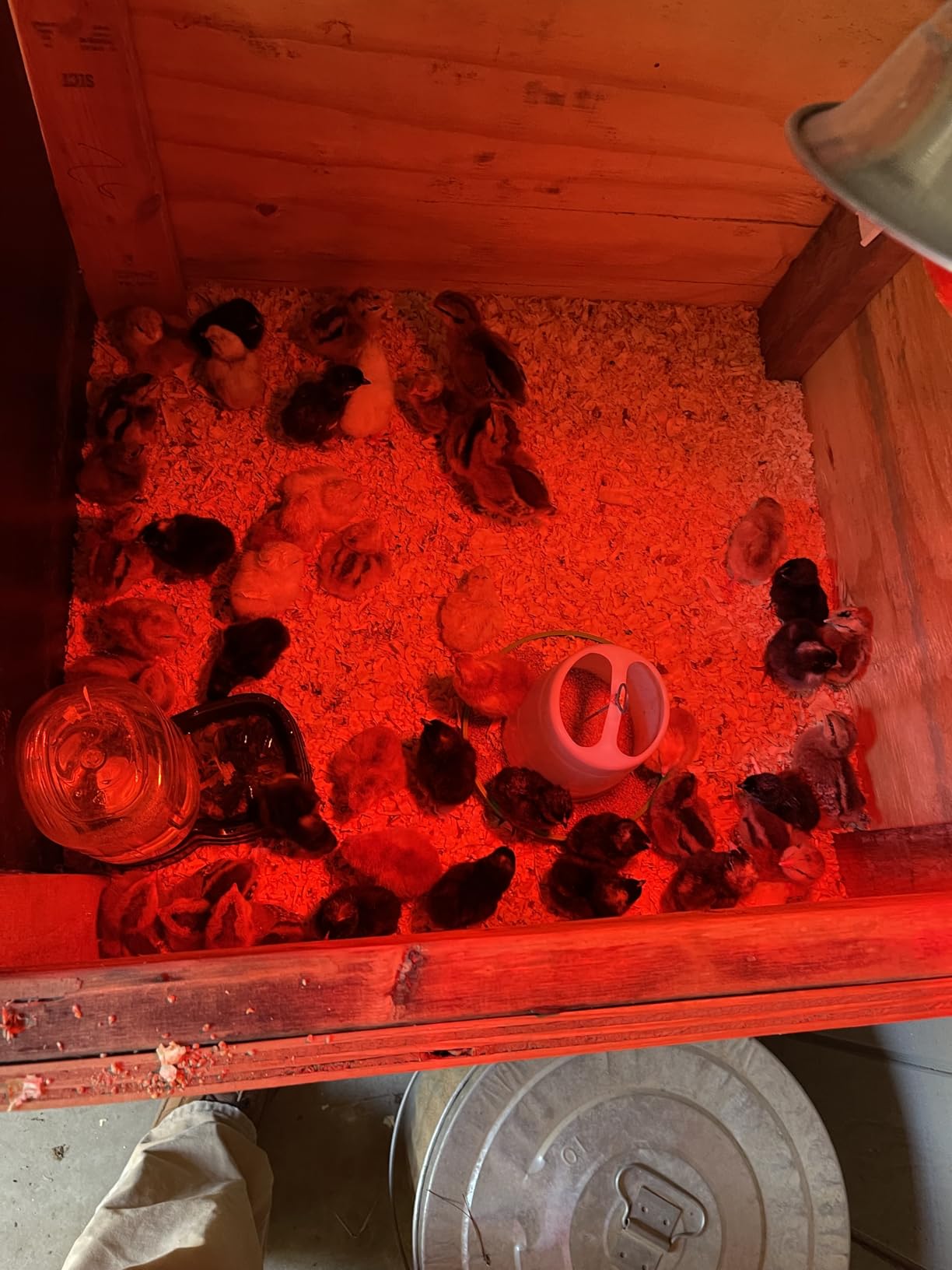
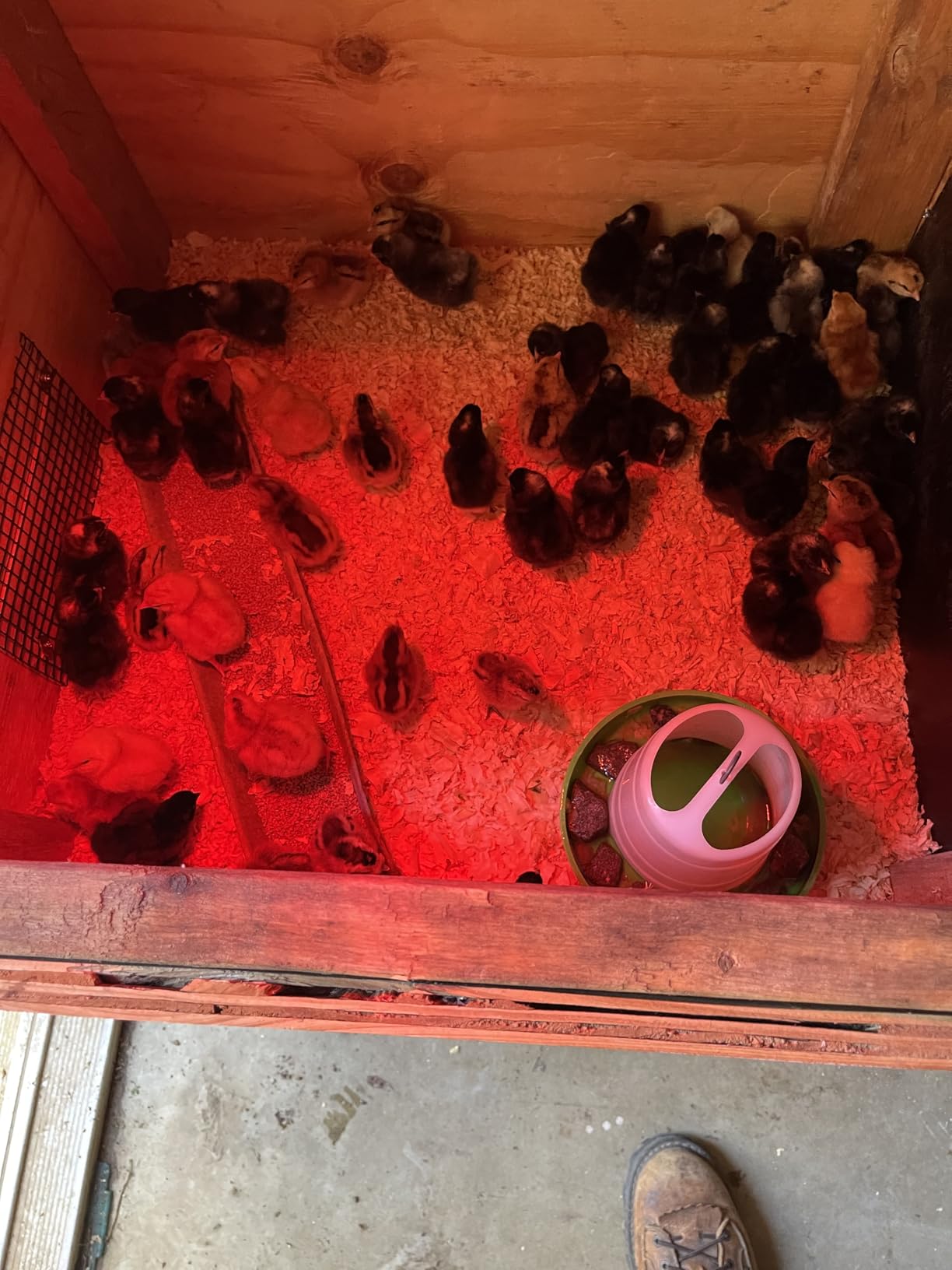
8. Sizing capacity beyond your brooding space. You will fill the incubator long before you run out of incubator, so plan the brooder first.
What hatch rate should you expect?
A healthy hatch on good flock eggs with a calibrated machine and a consistent method runs in the mid-80s to low-90s. That is the honest number to plan around, and it is achieved by budget builds as often as by expensive ones.
Forum reports include a styrofoam cooler with a fan, a digital readout, hand turning and a bowl of water producing 85 to 95 percent with Barred Rock chicks, and a cardboard carton with one end raised hatching 6 of 12 eggs while 3 of 41 hatched in a styrofoam hova-bator in the same room under the same conditions. Same room, same conditions, wildly different results. That is the clearest evidence in this entire research that technique dominates hardware.
Shipped eggs are the other variable. Expect materially lower rates, and treat a partial hatch on shipped eggs as information about the egg source rather than the machine.
Frequently Asked Questions
What is the best cabinet incubator?
The Hatching Time CT180SH leads our list because it sets and hatches 180 chicken eggs in one cabinet, pairs Conturn automatic turners with Humisonic humidity control, and adds high and low temperature and humidity alarms with room sensors. For quail and multi-species work the GQF 1502 is harder to beat, and for 400-egg volume with battery backup the VEVOR 400 offers the most.
How many eggs can a GQF 1502 incubator hold?
Up to 288 chicken eggs on standard trays, 162 duck eggs, or as many as 1368 quail eggs depending on which tray set you fit. It includes three automatically turned racks, a hatching tray, six universal trays and a 6-pack of hatching egg trays.
Which egg incubator is of the best quality?
Quality in this category tracks three things: forced-air circulation so every tray shares one climate, a digital thermostat with a humidity readout, and alarms that tell you when the chamber or the room has drifted. Every cabinet in this roundup has forced air. The GQF 1500 is the only one specifying factory-calibrated readouts, which is why experienced hatchers still verify with their own calibrated instrument.
Is an egg incubator worth it?
A cabinet is worth it if you are hatching more than roughly 50 eggs per batch and running regular cycles, or if you hatch quail, duck or gamefowl where the tray multipliers change the maths entirely. Below that scale a well-run tabletop unit can match a cabinet on a small flock, and forum operators regularly hatch good results from simpler builds.
What common mistakes ruin egg incubation?
The recurring failures are trusting the factory display without calibrating your own instrument, running the cabinet in a room with unstable temperature, refilling water by opening the door mid-cycle, setting humidity by feel instead of by measurement, skipping candling on days 7 and 14, and blaming the machine for poor results from shipped eggs.
Is 75 humidity too high for hatching eggs?
Yes, 75 percent relative humidity is too high for most of incubation and especially for days 1 to 17. It dries the egg membranes and leads to a late or failed hatch. Many Florida hatchers run a dry method at 25 to 30 percent for the first 18 days and only add water at lockdown to keep relative humidity at or below 40 percent.
Final Verdict: Which Cabinet Incubator Should You Buy?
The Hatching Time CT180SH is our pick for the best cabinet incubators for hatching eggs overall, because it is the only machine here that sets and hatches in one cabinet and pairs that with the alarm package experienced hatchers actually ask for. It wins on the combination of rating, review volume and feature completeness rather than on any single specification.
Pick the GQF 1502 if you run quail or several species and want a reserve water system so you are not opening the door to refill. Pick the VEVOR 400 if you need 400-egg volume with a 12V battery switchover, and accept the uneven rating spread. Skip the unknown-brand cabinets for any batch you care about; thin review counts are not evidence of quality, they are an absence of it.
Whatever you choose, calibrate your own instrument before day one, keep the room stable, and decide whether you are running a dry hatch or adding water — then hold to it. The machine matters, but the operator decides the hatch. And when the eggs are through, there is a short list of things worth making straight away, starting with our classic poached eggs benedict.