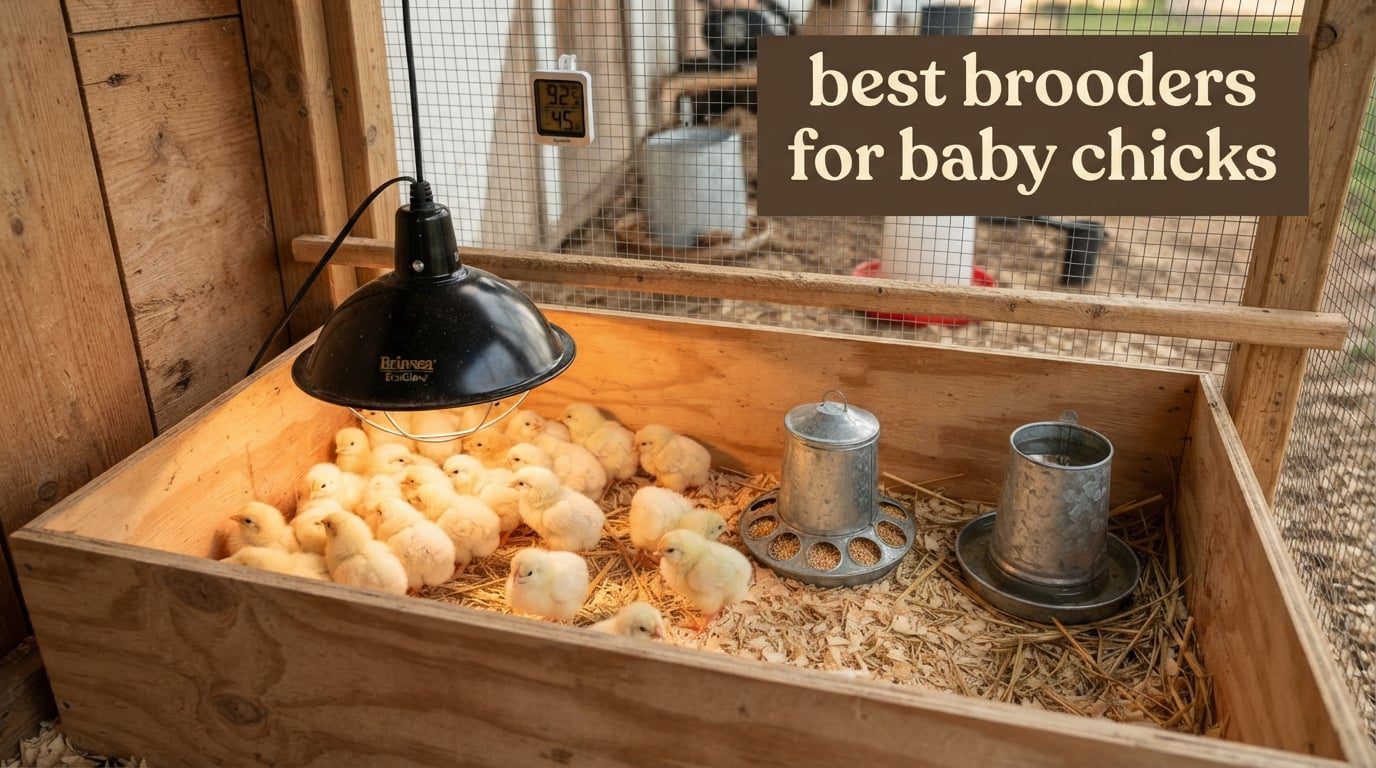
A brooder is the one piece of equipment that decides whether your first batch of chicks makes it to week six. Day-old chicks cannot regulate their own body temperature for roughly the first two weeks of life, so the enclosure has to hold steady warmth, dry bedding and clean air at the same time. Miss any one of those and you end up with chilled chicks, a damp floor, pasty vents or a loss you think about all season.
Quick answer: the best brooders for baby chicks are rigid-sided boxes or pop-up pens paired with a low-voltage radiant heat plate, sized at 0.5 square feet per chick for the first two weeks and 1 square foot per chick by week four. A heat plate warms chicks from above without the glare or fire risk of a bulb, and a free-choice setup lets the birds walk out to cooler air when they want to.
We ran two broods of chicks through the enclosures and heat sources below and cross-checked every claim against thousands of customer reviews, so each pick comes with the limitation its own owners report. The short version: the box matters less than people think, and the heat source matters more than most product pages admit.
Table of Contents
- Top 3 Brooder Picks for Baby Chicks 2026
- Top Best Brooders for Baby Chicks (October 2026)
- 1. Pawaboo Chick Brooder Box – Best All-in-One Starter Kit
- 2. Brinsea Ecoglow Safety 600 – Best Rated Heat Plate
- 3. Sindarhor Chick Brooder Heater Plate – Best for Closed-House Warmth
- 4. Tetuga Brooder Box with 10×12 Plate – Best Value Complete Kit
- 5. NUGRIART 10×10 Heating Plate – Best for Lowest Power Use
- 6. Chickcozy Smart 200W Heater – Best for Set-and-Forget Heat
- 7. ZenxyHoC 12×12 Plate with Anti-Roost Cone – Best Anti-Roost Design
- 8. Shaledig 12×16 Plate for 40 Chicks – Best for 30-Plus Chicks
- 9. TharroCotte Dual Door Brooder Pen – Best for Easy Access
- 10. Phoncoo Brooder Starter Kit – Best for Wide Heat Adjustment
- 11. RentACoop Little Red Barn Brooder – Best for Cleaning and Reuse
- 12. Kculehtlla All-in-One Kit with 75W Lamp – Best Budget Starting Point
- How to Choose a Brooder for Baby Chicks
- Essential Setup Tips
- Frequently Asked Questions
- Final Verdict
Top 3 Brooder Picks for Baby Chicks 2026

Pawaboo Chick Brooder Box
- Complete 5-in-1 kit with perch
- feeders and waterer
- Waterproof polyester taffeta and breathable mesh
- Holds a small first brood through feather-out

Brinsea Ecoglow Safety 600
- 12W low-voltage radiant plate with no glowing element
- Adjustable screw-on legs
- Clear cover for quick cleaning
Tetuga Brooder Box Kit
- Pen
- plate
- feeder
- waterer
- pad and bag in one bundle
- Pop-up frame needs no tools
- Overheat cutoff at 167F
Top Best Brooders for Baby Chicks (October 2026)
The table below lists every brooder and brooder heat source we tested against the same criteria: how the chick is warmed, how much room each bird really gets, and how hard the unit is to clean. Ratings and review counts are the live customer figures for each listing, so you can see the depth of experience behind every pick.
| Product | Specs | Action |
|---|---|---|
| Pawaboo Chick Brooder Box |
|
Check Latest Price |
| Brinsea Ecoglow Safety 600 |
|
Check Latest Price |
 Sindarhor Chick Brooder Heater Plate Sindarhor Chick Brooder Heater Plate |
|
Check Latest Price |
| Tetuga Brooder Box with 10×12 Plate |
|
Check Latest Price |
 NUGRIART 10×10 Heating Plate NUGRIART 10×10 Heating Plate |
|
Check Latest Price |
 Chickcozy Smart 200W Heater Chickcozy Smart 200W Heater |
|
Check Latest Price |
 ZenxyHoC 12×12 Plate with Anti-Roost Cone ZenxyHoC 12×12 Plate with Anti-Roost Cone |
|
Check Latest Price |
 Shaledig 12×16 Plate for 40 Chicks Shaledig 12×16 Plate for 40 Chicks |
|
Check Latest Price |
 TharroCotte Dual Door Brooder Pen TharroCotte Dual Door Brooder Pen |
|
Check Latest Price |
 Phoncoo Brooder Starter Kit Phoncoo Brooder Starter Kit |
|
Check Latest Price |
 RentACoop Little Red Barn Brooder RentACoop Little Red Barn Brooder |
|
Check Latest Price |
 Kculehtlla All-in-One Kit with Lamp Kculehtlla All-in-One Kit with Lamp |
|
Check Latest Price |
1. Pawaboo Chick Brooder Box – Best All-in-One Starter Kit
Pawaboo Chick Brooder Box for Chick Starter Kit, Red+Black
5-in-1 kit for small broods
Perch, two feeders and 1.1L waterer
Waterproof taffeta and mesh
Pros
- Everything needed in one box including perch
- feeders and waterer
- Waterproof polyester taffeta with breathable mesh panels
- Feeding holes cut down floor mess and food competition
- All parts detach for washing
Cons
- Needs screwdriver assembly when it arrives
- Small footprint gets snug as chicks grow
This is the box we keep coming back to for a first batch. It measures about 14.37 by 10.63 by 6.69 inches, weighs 2.84 pounds and folds into a shape you can actually stash between broods. With 7809 reviews behind it, almost every failure mode people complain about has already been solved by a later production run.
What makes it work is that the feeding hardware is already the right shape. The two feeders carry nine feeding holes each, enough for up to 18 chicks, and the 1.1L waterer detaches for a proper rinse. That matters more than it sounds, because the most common brooder disaster in the first week is a flooding waterer that soaks the bedding and chills everything around it.
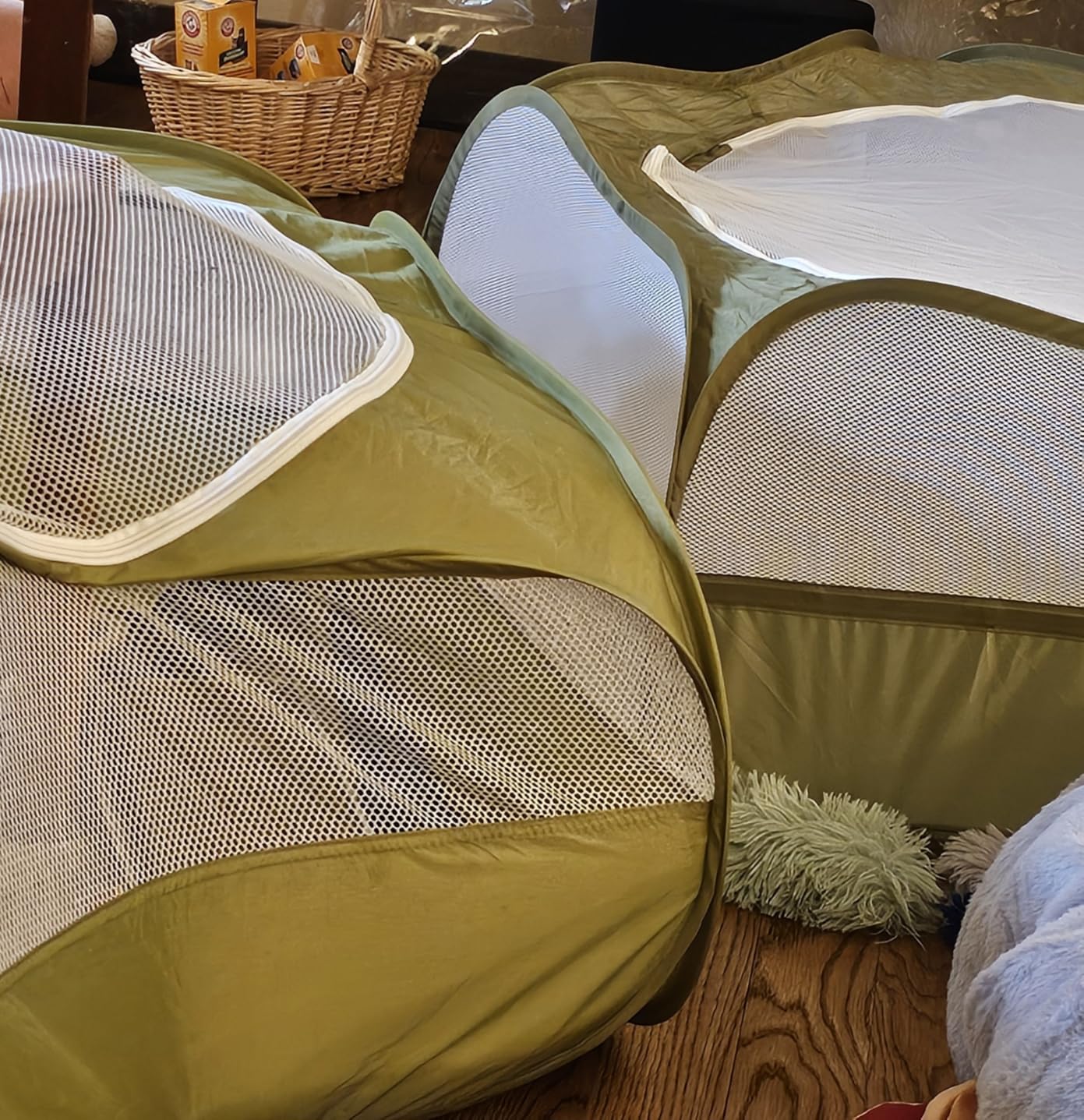
The perch is the part reviewers mention most. Chicks that have something low to stand and settle on sleep better than chicks on bare floor, and the mesh side panels ventilate well without leaving a gap a day-old chick can squeeze through. The waterproof polyester taffeta also wipes down instead of soaking in, which is why the box still looks clean at the end of week three.
Its real limit is floor space. This is a starter habitat, not a grow-out pen, and once your birds reach feathering age the footprint becomes the deciding factor. Plan on moving them to a larger box, a playpen or the coop at around four to five weeks rather than stretching this one.
Best choice for a first brood of 15 or fewer
If this is your first time raising chicks and you are brooding a small group, the completeness is worth more than any single spec. You open one box and you have a habitat, a feeder, a waterer and a perch, with no separate shopping list to get wrong in a hurry.
Because the parts detach, cleaning takes a couple of minutes rather than a whole evening. That is the difference between a brooder that stays sanitary and one that quietly accumulates ammonia in a corner.
Watch out for the screwdriver assembly and the snug footprint
Assembly takes a few minutes with the included Phillips screwdriver and 16 screws, so set aside ten minutes before the chicks arrive. It is not a pop-up design, and owners who expected a one-piece kit tend to be disappointed for an hour rather than a season.
The second thing to watch is crowding. The feeders cover 18 birds, but the floor area does not comfortably hold 18 birds past the first week. If you are hatching more than a dozen, budget for a larger enclosure and use this box as the hatch-and-settle space for the first several days.
2. Brinsea Ecoglow Safety 600 – Best Rated Heat Plate
Brinsea Ecoglow Safety 600 Chick or Duckling Brooder, Up to 20 Chicks
12W low-voltage radiant plate
For up to 20 newborn chicks
Adjustable legs, 3-year warranty
Pros
- Low-voltage panel with no glowing element
- Silent operation calms chicks compared with lamps
- Adjustable screw-on legs change height and angle
- Clear top cover wipes clean
- Resumes heating after power interruptions
Cons
- Stated 20-chick capacity is optimistic as birds grow
- Height must be managed manually with a thermometer
- Indoor use only
This is the plate most experienced keepers point new growers toward, and at 4.5 stars across 3087 reviews it is the highest-rated heat source in our set. It runs on 12 watts of low-voltage power and has no bulb at all, so there is no glare keeping chicks awake and no mains-voltage element near bedding.
The metal plate spreads warmth evenly, which is the detail that matters most. Heat lamps throw a hot spot directly under the bulb and a cold edge, so chicks pile into the hot spot and huddle. Under a flat plate, the warm area is wide and the birds distribute themselves across it instead of stacking.
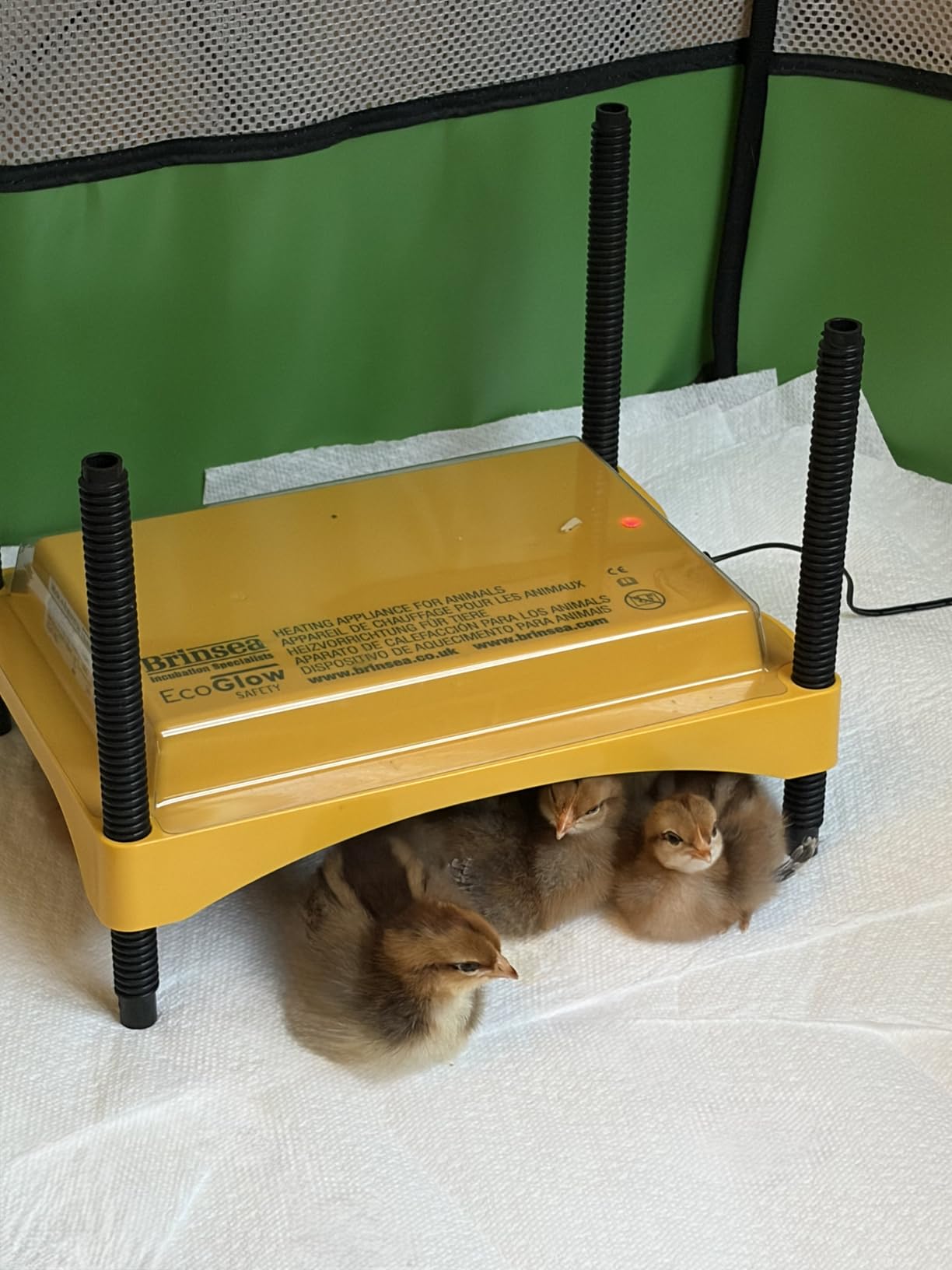
Owners consistently report calmer broods than they had under lamps, with noticeably less crowding behaviour and fewer pasty vents. The screw-on legs let you change both height and angle, so you can start low for hatchlings and raise the plate as they grow without buying another unit.
The clear protective top lifts off for cleaning, which matters more than it looks once you are on week two and droppings are accumulating. There is an indicator light and a 10-foot cord, and it is backed by a 3-year warranty, which is longer than anything else here.
Best for keepers nervous about lamp fire risk
If your brooding space is a plastic tote, a prefab coop or anywhere with combustible bedding, this is the safest mainstream choice. There is no bulb to fall, no glass to break and no exposed mains element, and the low-voltage panel removes the fire pathway entirely.
It is also quiet, which is worth more than most first-time keepers expect. Chicks under a radiant plate settle and sleep, and the steady chirping that fills a lamp-lit brooder drops noticeably.
Watch out for capacity claims and manual heat management
The advertised rating of 20 newborn chicks is optimistic once they grow. Multiple reviews put the comfortable number nearer 12 to 15 as birds feather out, so size the brooder box for the birds at week three rather than the birds on day one.
There is no thermostat, so height and angle are yours to manage with a thermometer at chick level. If you travel for work or lose power overnight, this plate needs a plan, and the 110V version is not the right choice everywhere without a converter.
3. Sindarhor Chick Brooder Heater Plate – Best for Closed-House Warmth
Sindarhor Chick Brooder Heater Plate for Baby Chicks, Ducklings & Poultry
Three settings at 131F, 149F, 167F
Enclosed 8.67 x 10.63 inch surface
Waterproof ABS housing
Pros
- Enclosed housing feels safer than an exposed lamp
- Three selectable temperature settings
- Surface reads warm rather than dangerously hot
- Wipes clean with a damp cloth
- Feather attachment settles chicks
Cons
- Height clamps can sag once chicks perch on top
- Minimum height suits no very small birds
The distinguishing feature here is the enclosed house structure. Instead of a bare plate, the heating surface sits inside a walled housing with dual side panels, so heat loss drops and the top surface stays warm rather than scorching. Owners consistently describe chicks that look and behave calmer under it.
Three temperature settings at 131F, 149F and 167F let you match the plate to your room instead of fighting it. That is genuinely useful in a cold garage or a warm mudroom, where the same plate at one setting is either wasteful or not enough.
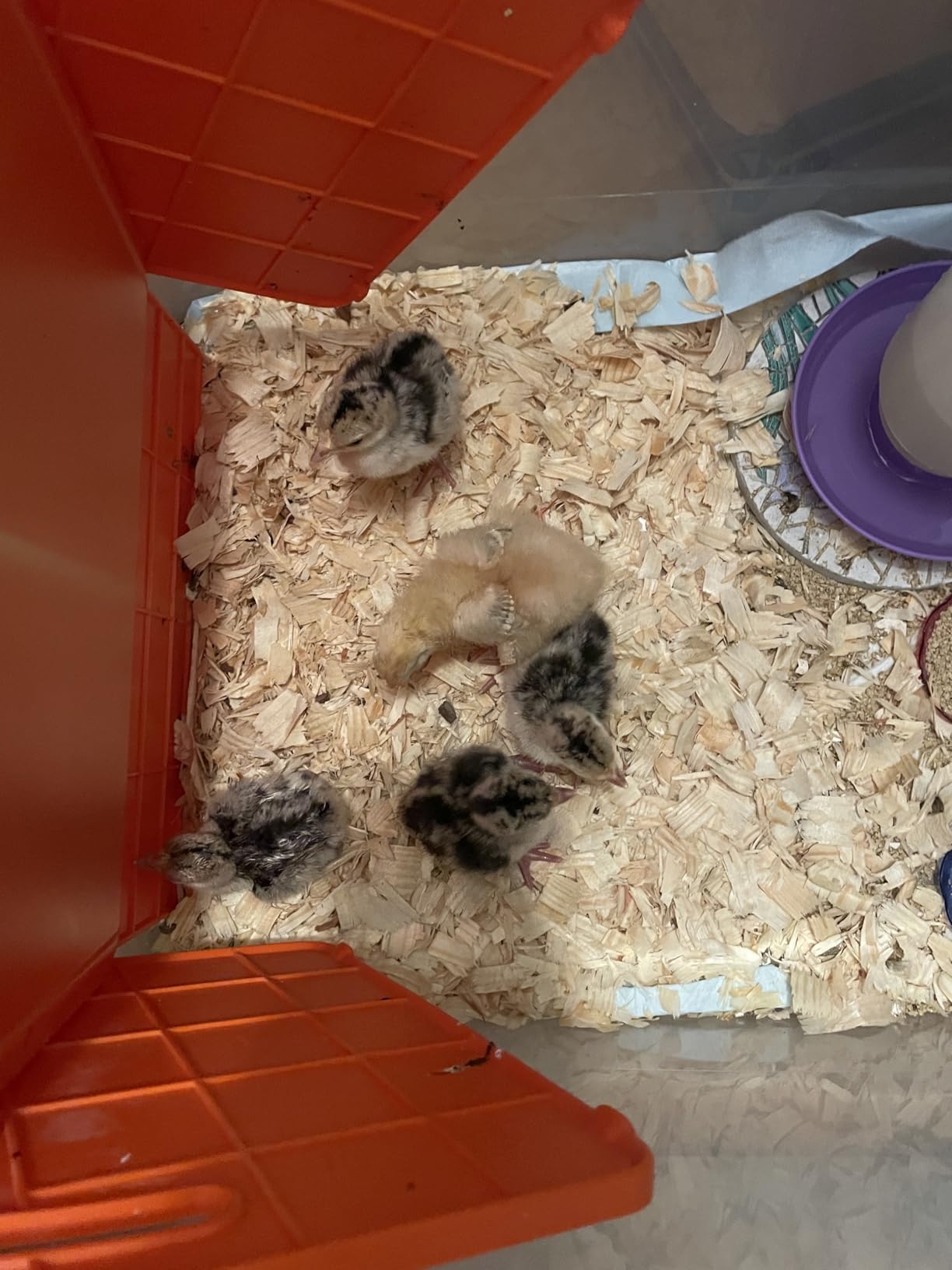
Everything is waterproof ABS plastic that wipes clean in seconds, and there is an optional feather attachment that mimics the warmth of a sitting hen. Several buyers buy a second unit so a new brood and an older group can be warmed at different levels, which is a smart move for anyone raising batches on consecutive weeks.
The heated panel measures 8.67 by 10.63 inches inside an 8.7 by 9.8 by 13 inch housing at 3.06 pounds, so it is compact and easy to move between broods.
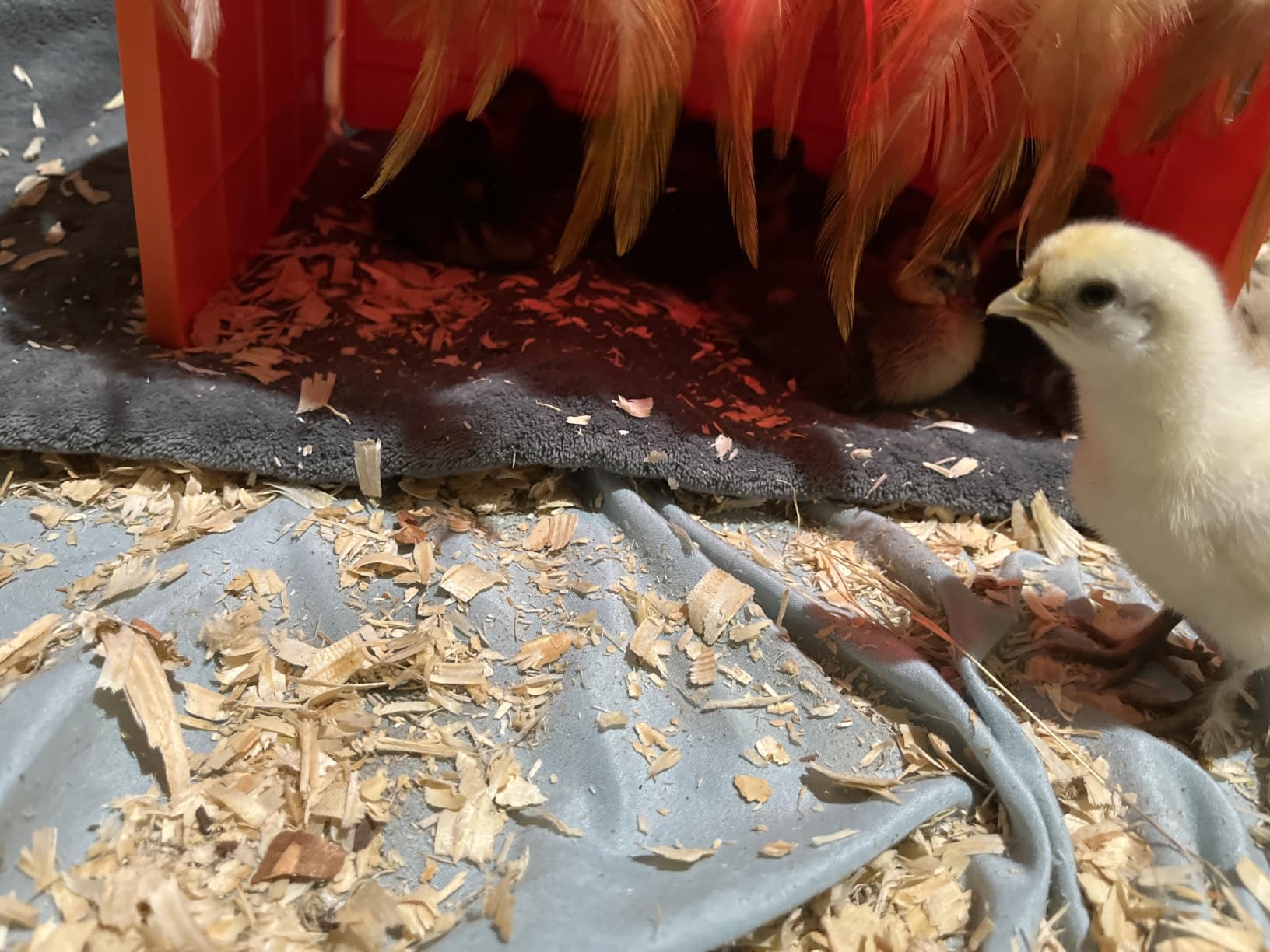
Best for chicks that pile up and huddle hard
The enclosed design means less heat bleeding off the edges, so you get a warm zone the chicks can sit under without compressing the whole group into one spot. For keepers whose chicks constantly clumped under a lamp, the change in spacing is obvious within a day or two.
It is also the pick for a brooding space that cannot be kept warm. Because the housing resists heat loss, it holds its setting better in a cold room than an open plate does.
Watch out for the height clamps and the high minimum setting
The most common complaint is mechanical. The height adjustment clamps do not hold friction against the plastic, so the plate slides down once chicks are big enough to perch on top, and you can end up with birds trapped underneath. Check the height twice a day for the first two weeks.
The minimum height of roughly 4 inches is also too tall for button quail, and the inline on/off switch on the cord sits where a curious chick can bump it. The plate can be assembled upside-down without any obvious error, so confirm which surface heats before you put chicks under it.
4. Tetuga Brooder Box with 10×12 Plate – Best Value Complete Kit
Tetuga Brooder Box for Chick Starter Kit with 10x 12” Brooder Heating Plate
Pen, plate, feeder, waterer and bag
Washable Oxford cloth
Pop-up frame, overheat protector
Pros
- Bundle costs less than many standalone heating plates
- Pop-up frame springs open in seconds
- Mesh windows and roof zipper move plenty of air
- Hoses off and folds flat for next season
Cons
- Soft frame collapses if a cat climbs on top
- Included feeder and waterer outgrow the birds by week two
- Heating plate is not manually adjustable
At 4.5 stars across 671 reviews, this is the kit that quietly outperforms its category. You get the pop-up pen, an adjustable heating plate, a feeder, a waterer, a pad, three ground stakes and a storage bag in one box, and the whole bundle costs less than many people pay for a heating plate on its own.
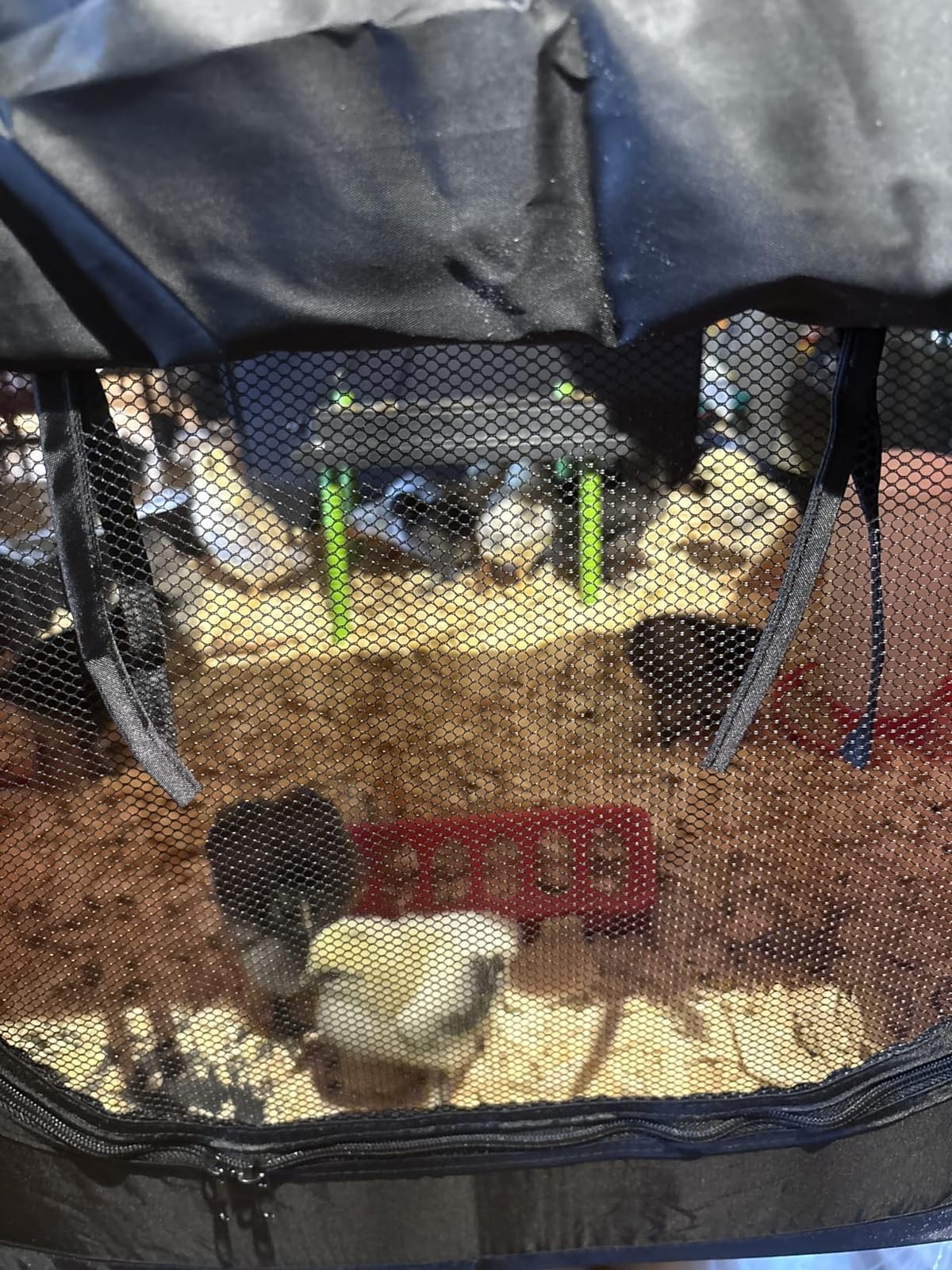
The pop-up frame is the part you will notice most. No tools, no screws, no half-finished assembly at midnight before hatch day. It springs open in seconds and folds flat into the included bag, which matters if you brood once a year and want the pen back in the closet by June.
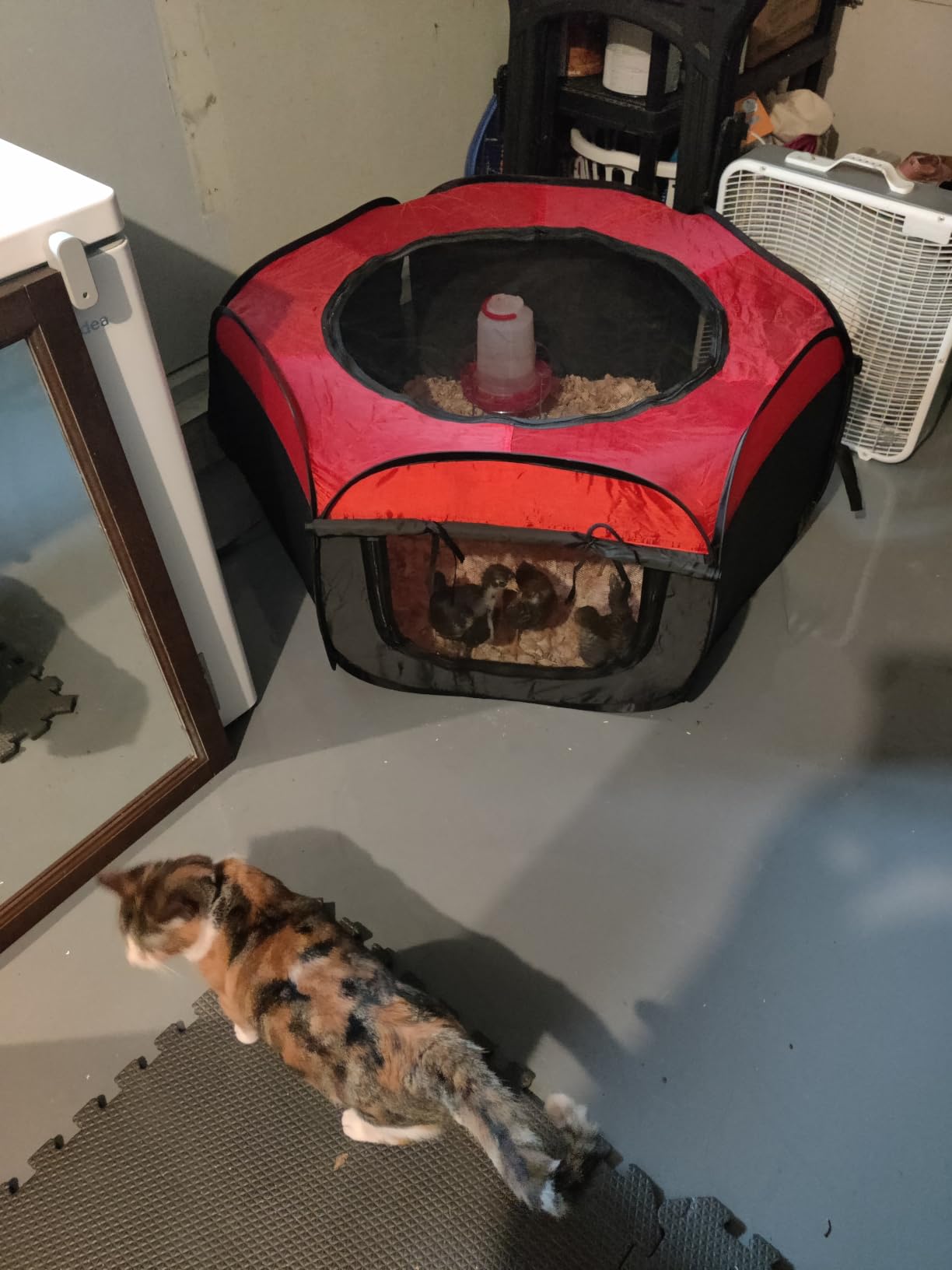
Heat management is handled by a built-in overheat protector that cuts heating at 167F and restarts at 140F. Chicks settle without a red light overhead, and the three-sided mesh plus roof zipper gives good airflow that cuts down the ammonia smell you normally fight in a closed brooder.
The washable Oxford cloth with a removable floor mat hoses off easily, which is a real advantage over cardboard and plywood builds. Ground stakes and insulated warm curtains mean it can go outdoors in mild weather, and it works for ducklings and goslings too.
Best for one or two broods a year on a budget
If you raise a small flock once or twice a season, buying a premium plate plus a separate box is money you will not spend again for years. This bundle does the whole job in one purchase and stores flat in the meantime, so it is rarely a bad first brooder.
The no-red-light operation also makes it easier to sleep in the same room as the brooder, which matters when your first brood is set up in a spare bedroom.
Watch out for cats, small dishes and fixed heat
The soft-sided frame has no rigid shell, so a cat that jumps on top can collapse the pen. Keep the brooder in a closed room and never in a coop with predators, and never leave it unattended with other pets in the space.
The supplied feeder and waterer are sized for the first week or two and need replacing as birds grow, and the heating plate itself is not manually adjustable, so some owners add an external thermostat for finer control. Budget roughly 6 to 10 chicks as the comfortable number and plan a move at the five to six week mark.
5. NUGRIART 10×10 Heating Plate – Best for Lowest Power Use
NUGRIART Brooder Heater for Chicks, 10″ x 10″ for 15 Chicks Heating Plate with Adjustable Height and Angle 15W Chicken Brooder Warm Like Mother Hen
10 x 10 inch plate, 15W draw
Reaches about 115F in an hour
Up to 15 chicks
Pros
- Uses a fraction of the power a heat lamp needs
- Snap-and-leg height and angle adjustment is simple
- Acrylic top wipes clean in seconds
- Quiet with no red light at night
Cons
- No thermostat readout to check against
- Some owners only reach the upper 80s
- Plate runs hot to the touch
This plate draws 15 watts where a comparable heat lamp can pull up to 250 watts, and that difference compounds across a six-week brood. If you brood several batches a year in an unheated garage, the running cost is one of the smaller but real reasons to move off bulbs.
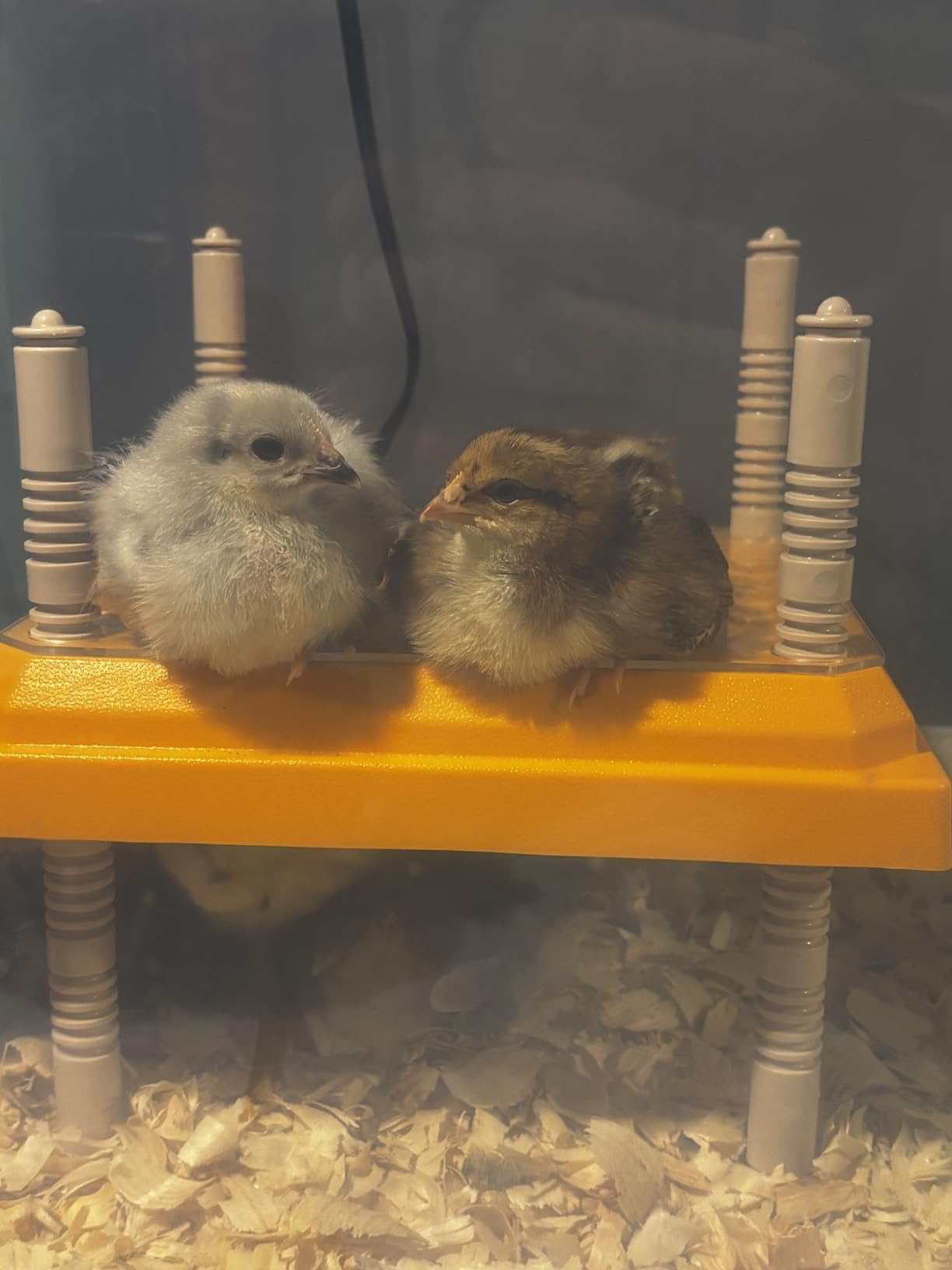
The 10 by 10 inch aluminum plate is sized for up to 15 chicks and reaches roughly 115F in about an hour. The aluminum base evens out and stabilises surface temperature, so you get a broad warm area rather than one hot circle under a bulb.
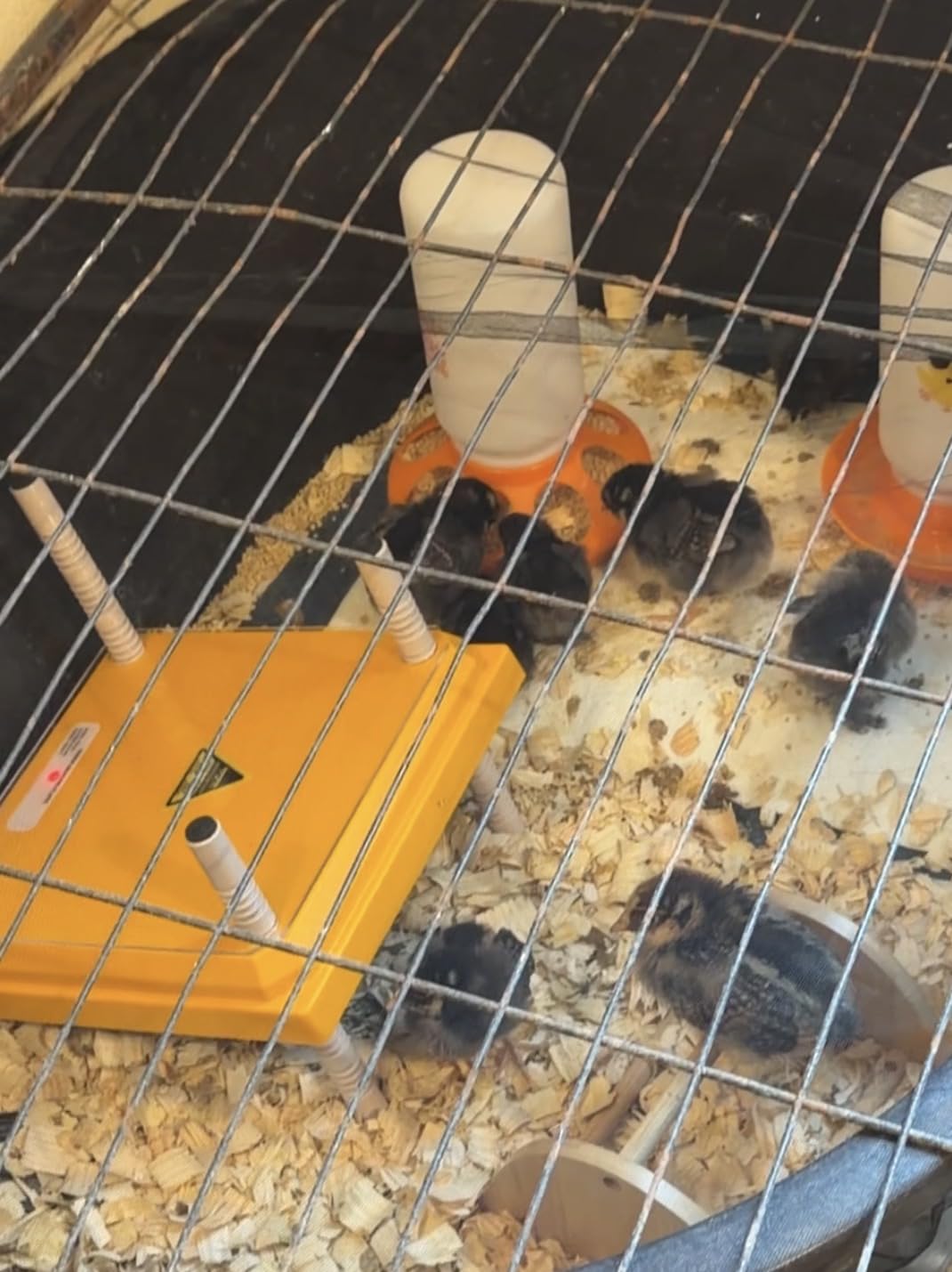
Safety hardware is unusually thorough for the price. The shell is flame retardant, and there are two fuses, a 10-amp resistance fuse and a 120C/250F temperature fuse, so a fault shuts the unit down rather than letting it run. The removable acrylic top plate lifts off for cleaning, and the snap-and-leg design gives several heights and angles without tools.
Owners who switched from lamps report no losses with brand-new hatchlings, which is the outcome that matters most. The whole unit weighs 2.73 pounds, so it moves between broods easily.
Best for a cold garage with a limited power circuit
Where a 250W lamp on a long extension cord into a detached building is a real concern, 15W changes the conversation. You can run this plate on a normal household circuit without thinking about load, and leave it on through a cold night without a spike.
It is also a good match for anyone raising more than one age group, since you can run two plates on one circuit and still have headroom for a heat lamp elsewhere if you need one.
Watch out for a cooler plate than advertised
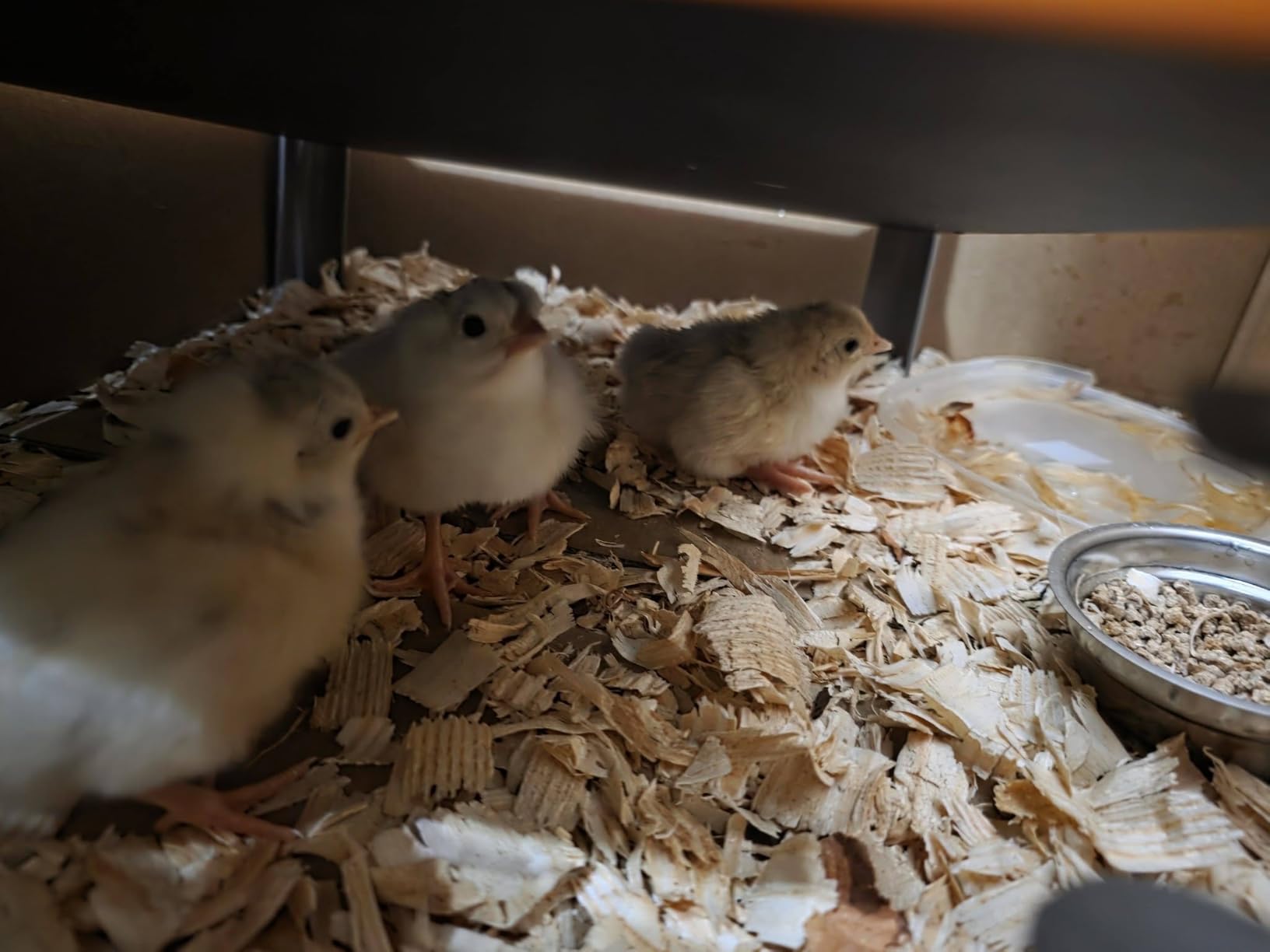
There is no built-in thermometer or display, so the only real check is your own probe at chick level. A minority of owners report reaching only the upper 80s, which is why several use it as supplemental heat or for older birds rather than day-old hatchlings.
The advertised 15-chick capacity also assumes small birds. Plan on fewer as they feather out, and expect the underside to be hot to the touch even though the shell is flame retardant, so keep the legs set higher than instinct suggests for the first few days.
6. Chickcozy Smart 200W Heater – Best for Set-and-Forget Heat
Smart Chicken Coop Heater, 200W Radiant Heat Panel with Temperature Sensor
200W panel with a temperature sensor
70F to 190F adjustable
Freestanding or wall-mounted
Pros
- Real thermostat that holds a set temperature
- Doubles as a wall-mounted coop heater for adult birds
- Four-leg base resists tipping with active chicks
- Anti-dirt top cover cleans up droppings fast
Cons
- Warms one zone rather than a whole coop
- No cover for the top edge when wall-mounted
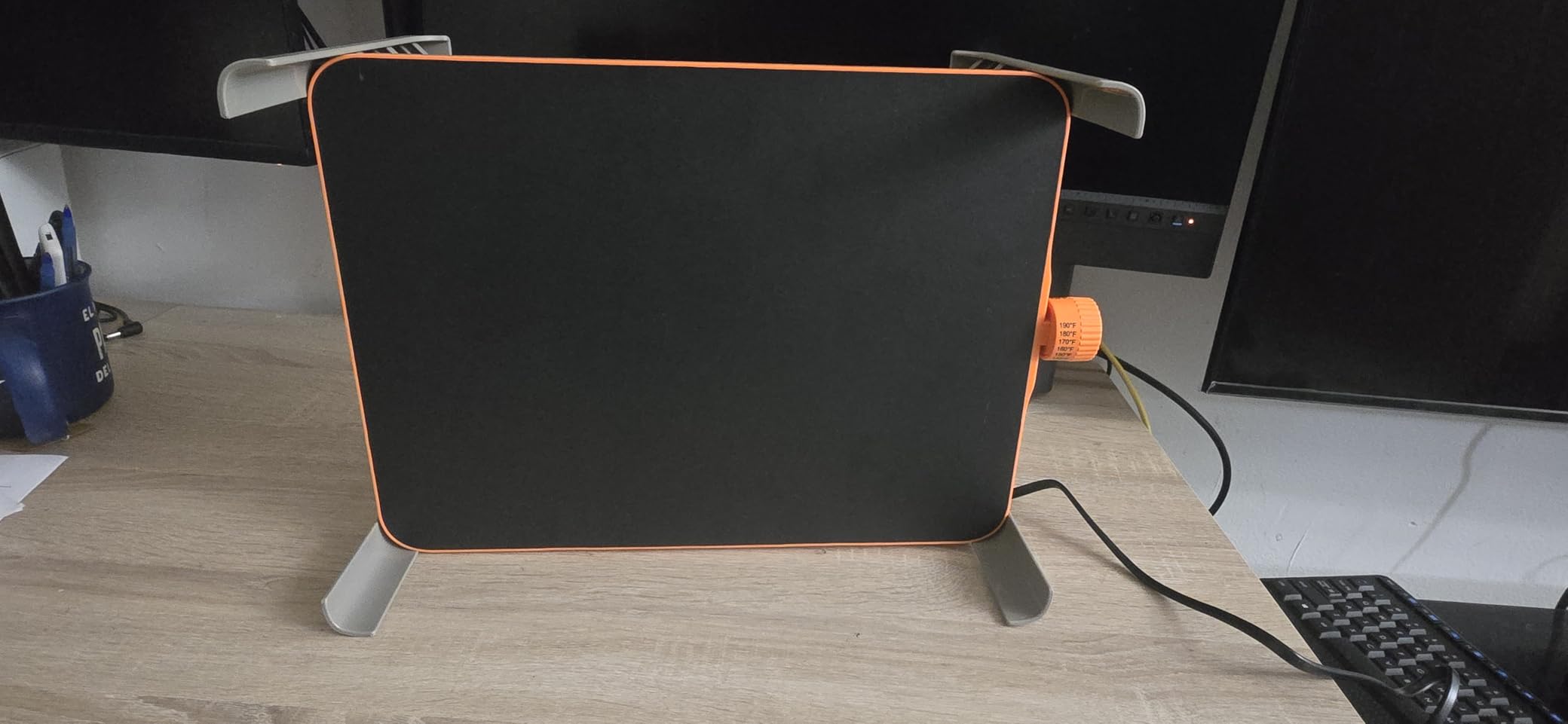
Most plates in this category are on or off, which means the chicks decide when they are warm enough by moving in and out of the zone. This one has an actual sensor that modulates power to hold a target temperature between 70F and 190F, and owners who verified it with an external thermometer found it accurate.
That matters most if you work irregular hours. Set the temperature once and the plate holds it through a cold night, a door left open or a power flicker, which removes the most common brooder failure of a warm brooder quietly going cold while you sleep.
It is also a two-season tool. The same unit that broods chicks flat on the floor later goes up on the wall of a coop to keep adult hens comfortable through winter, with a target range of 100 to 120F recommended for grown birds. The 16 by 11 inch panel comes with four legs, an anti-dirt top cover and drywall anchors, and it is UL and NCC certified.
At 5.28 pounds with a sturdy four-leg base, it stays planted even with active chicks moving underneath it, and it works with timers and external controllers if you want to layer control.
Best for keepers who are away during the day
If your brood is in a garage, shed or coop and you cannot check it every few hours, a real thermostat is worth more than a cheaper on-and-off plate. There is also compatibility with timers and external temperature controllers, so you can cap the hours it runs in a warmer season.
The dual use through winter is the quiet bonus. Most people buy a coop heater in autumn anyway, and this covers that need as well as the six weeks of brooding.
Watch out for the scope of what it heats
This warms a localised zone, not a whole building. In a large open coop in deep cold you would want more than one, and it is not a substitute for a rated space heater in an uninsulated structure.
In wall-mounted mode there is no cover over the exposed upper edge, and a few reviewers report the dial reading drifting from the temperature actually delivered under the plate. Verify with your own thermometer at chick level for the first two days, then trust it.
7. ZenxyHoC 12×12 Plate with Anti-Roost Cone – Best Anti-Roost Design
Chick Brooder Heater with Anti-Roost Cone & Constant Temp Red 12″ x 12″
12 x 12 inch radiant surface
Includes an anti-roost cone
Up to 20-25 chicks
Pros
- No glowing element to start a fire or burn chicks
- Anti-roost cone keeps chicks off the plate and keeps it clean
- Four-leg frame stays put with chicks underneath
- Even surface temperature without hot spots
Cons
- Height must be adjusted by hand as chicks grow
- Capacity depends on room temperature
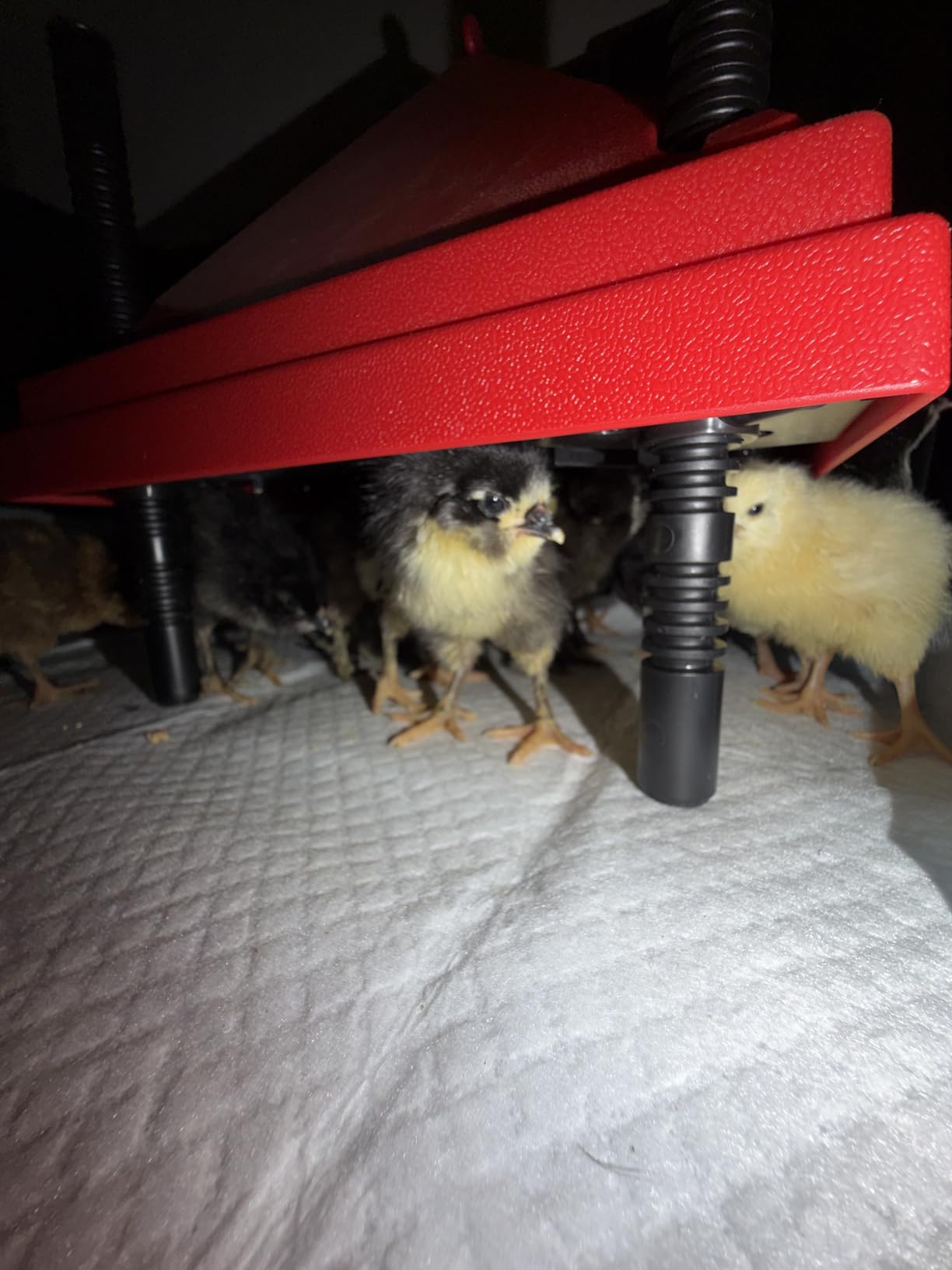
The anti-roost cone is the feature that sets this one apart. Chicks naturally try to sit on a warm flat surface, and once they start perching they foul the plate, block the heat and can be caught underneath it. The cone removes the perch and the problem mostly disappears.
Underneath, the 12 by 12 inch low-wattage radiant element has no glowing parts at all. There is no bulb, no glare and no red light turning the brooder into a night-light, and the surface holds an even temperature across the whole plate with no hot or cold spots.
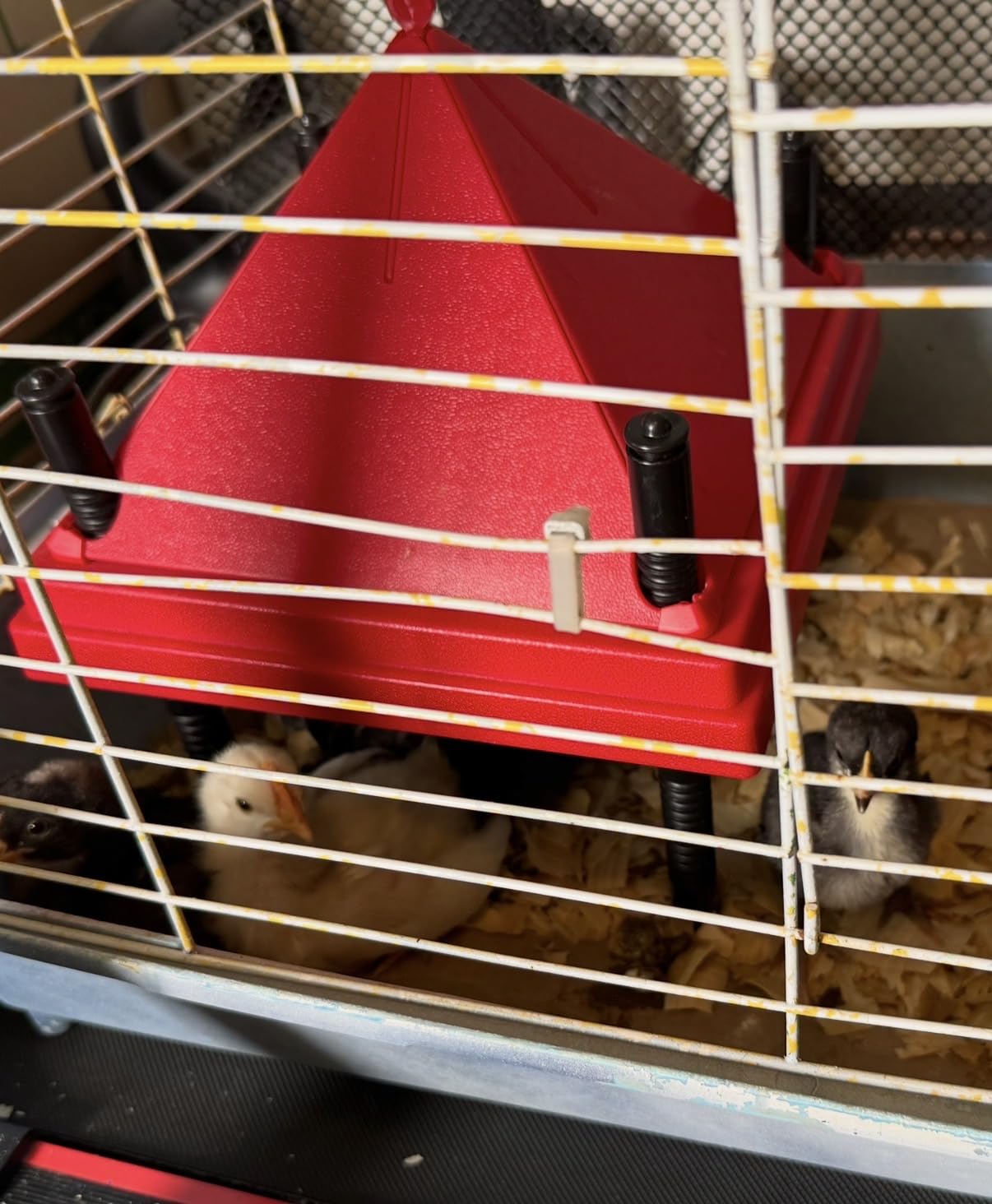
The four sturdy legs give multiple height settings and resist tipping or shifting, which is a genuine advantage in a box where chicks bump into things constantly. At 3.62 pounds it is portable without being flimsy, and low wattage keeps the running cost for a full brooding period low.
A 10 by 10 inch version is also available if your brood is smaller, and buyers report the surface being easy to wipe when a bedding change is needed.
Best when chicks try to climb onto the plate
Some broods ignore the warm zone and immediately try to sit on it. If yours do that, the cone stops the behaviour before it becomes a fouled plate or a trapped bird, and it removes the most common reason keepers move the plate height constantly.
It is also a good pick for anyone who wants to remove lamp fire risk from the equation without moving up to a thermostatically controlled panel.
Watch out for the manual height changes
There is no thermostat, so the plate runs on its own temperature and you change height by hand as the birds grow. Put a reminder in your phone for the first three weeks, because this is the adjustment that gets forgotten and leads to chicks crowding under a plate they have outgrown.
The advertised 20 to 25 chick capacity assumes comfortable room temperature and depends heavily on conditions, so verify with a thermometer at chick level and be prepared to add a second source in a cold space.
8. Shaledig 12×16 Plate for 40 Chicks – Best for 30-Plus Chicks
Shaledig 12″ x 16″ Chick Brooder Heater Plate for 40 Baby Chicks Ducks
12 x 16 inch surface for up to 40
Automatic overheat limiter
30W, height 2.56 to 7.09 inches
Pros
- Largest heated surface in the set for bigger broods
- Very low 30W power draw
- Overheat limiter cycles the heat automatically
- Stable four-leg frame
- Height range covers hatchlings to larger birds
Cons
- Temperature is not user-adjustable
- Surface heat depends on room temperature
Most plates here are built for a handful of chicks. This 12 by 16 inch surface is the one to look at if you are brooding 30 or 40 birds, because a small plate under that many chicks becomes a single pile rather than a warm zone with a cool edge.
It runs at 30 watts on 110V, with a built-in temperature limiter that stops heating at 167F and restarts at 131F. The cycle handles the high and low points on its own, so there is no manual switching and no glowing element other than a small side indicator light.
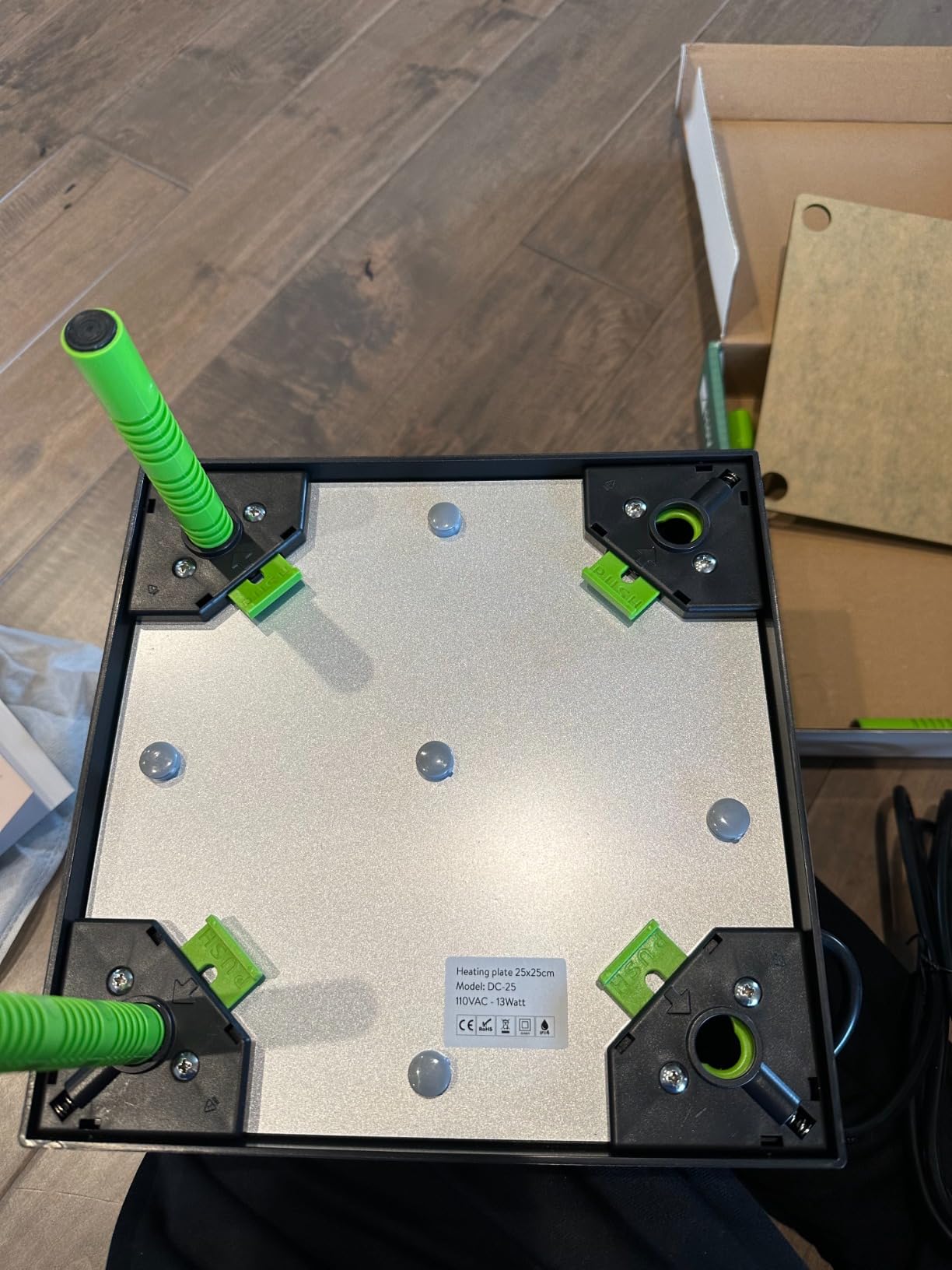
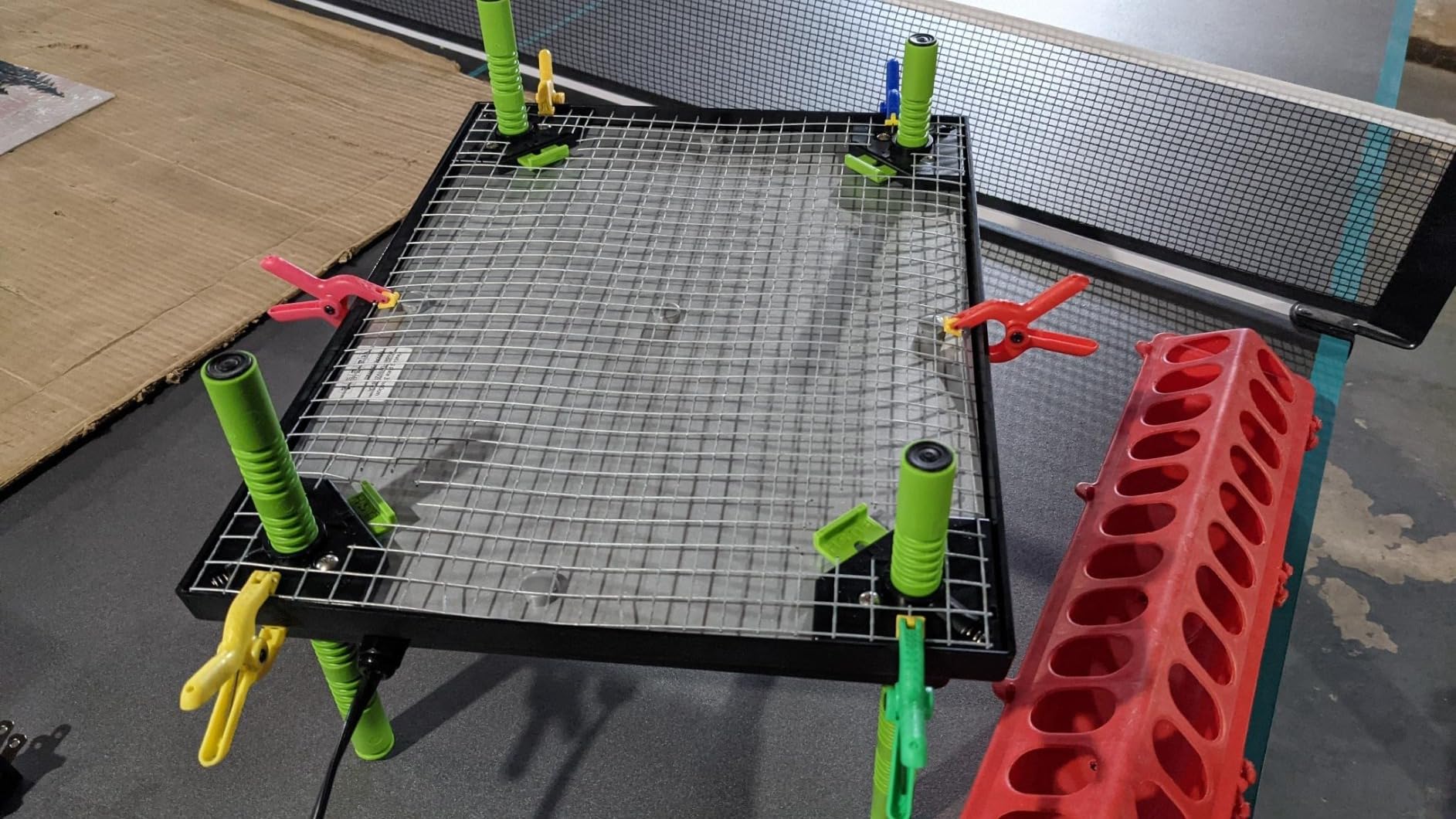
The height range from 2.56 to 7.09 inches covers the entire growth arc, which is where most keepers buy one plate and keep it. Four heavy-duty legs assemble in four steps with no tools, and the frame stays stable when birds are active underneath.
Buyers choosing this plate tend to be brooding chicks and ducklings together, and the wide surface handles the larger, wetter birds that a small plate cannot comfortably cover.
Best for a big brood or a mixed species batch
For 30-plus chicks, plate area is the constraint that actually decides your losses. A wide plate lets birds spread out and self-regulate, which cuts huddling, uneven feathering and the injuries that come from a chick being stepped on in a dense pile.
It is also the right call for ducklings and goslings, which grow faster and stay larger for longer than chicks do.
Watch out for the fixed temperature and the room you brood in
There is no user-facing dial, so the achieved surface temperature is set by the built-in limiter and by how warm the surrounding room is. It holds a panel surface of 122F to 149F when the room sits between 50F and 86F, so a very cold space will not get the same result.
Verify the temperature at chick level with your own probe every week as the birds grow, because a plate that was right in week one is usually not right in week four.
9. TharroCotte Dual Door Brooder Pen – Best for Easy Access
Brooder Box for Chick Starter Kit – 2026 Upgrade Dual Door Chicken Brooder Pen/Playpen/Tent with 10*10 in Brooder Heating Plate,Nesting Pad,Chicks Feeder&Waterer,Chick Perch Up to 15 Chicks,Duck,Quail
Pop-up pen with a 10 inch plate
Dual ventilation doors
Includes pads, perch, cover and bag
Pros
- Very complete kit with plate
- feeders
- perch
- pads
- cover
- stakes and bag
- Pop-up frame sets up in seconds with no tools
- Dual doors make it easy to reach in and lift chicks out
- Washable fabric rinses clean and dries fast
Cons
- Soft-sided fabric has no rigid frame and can collapse
- Included feeders and waterers outgrow the birds
- Bottom pad does not fully block bedding underneath
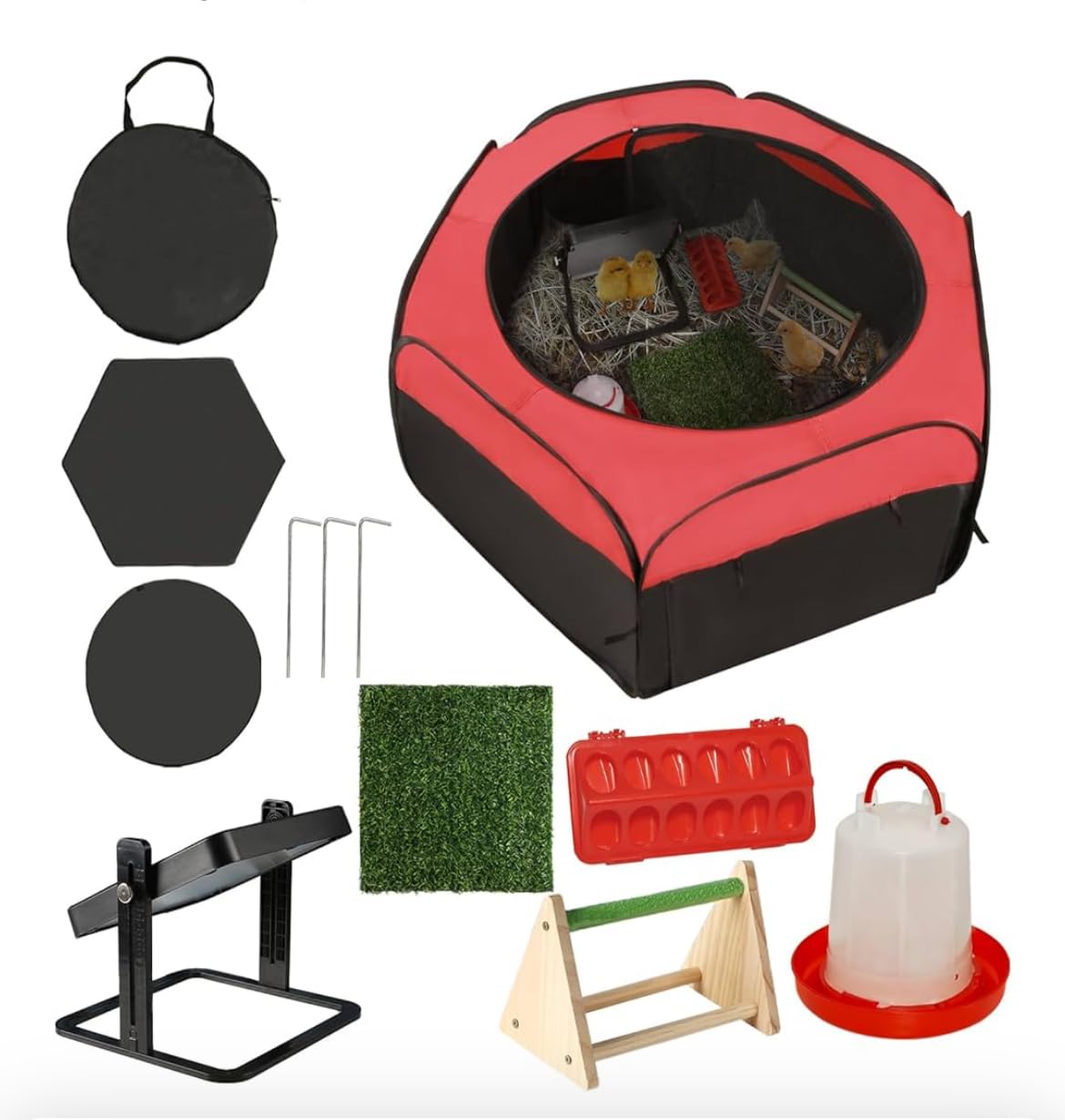
The dual doors are the reason this pen made the list. Every other fabric brooder in this group gives you a single opening or a roof zip, and reaching into a single-door pen to catch one chick means dismantling half the brooder. Here you can open a front door and lift birds out in seconds.
Everything else in the box is standard for the category: a pop-up frame that needs no tools, washable fast-drying Oxford fabric with a removable bottom pad, warm curtains and a top cover for cold weather, breathable mesh for summer, three ground stakes and a storage bag.
The included 10 by 10 inch brooder heating plate is the weak point of the bundle, and we would replace it on a cold-brooding schedule. The pen itself, the access and the fabric are what make this kit worth buying.
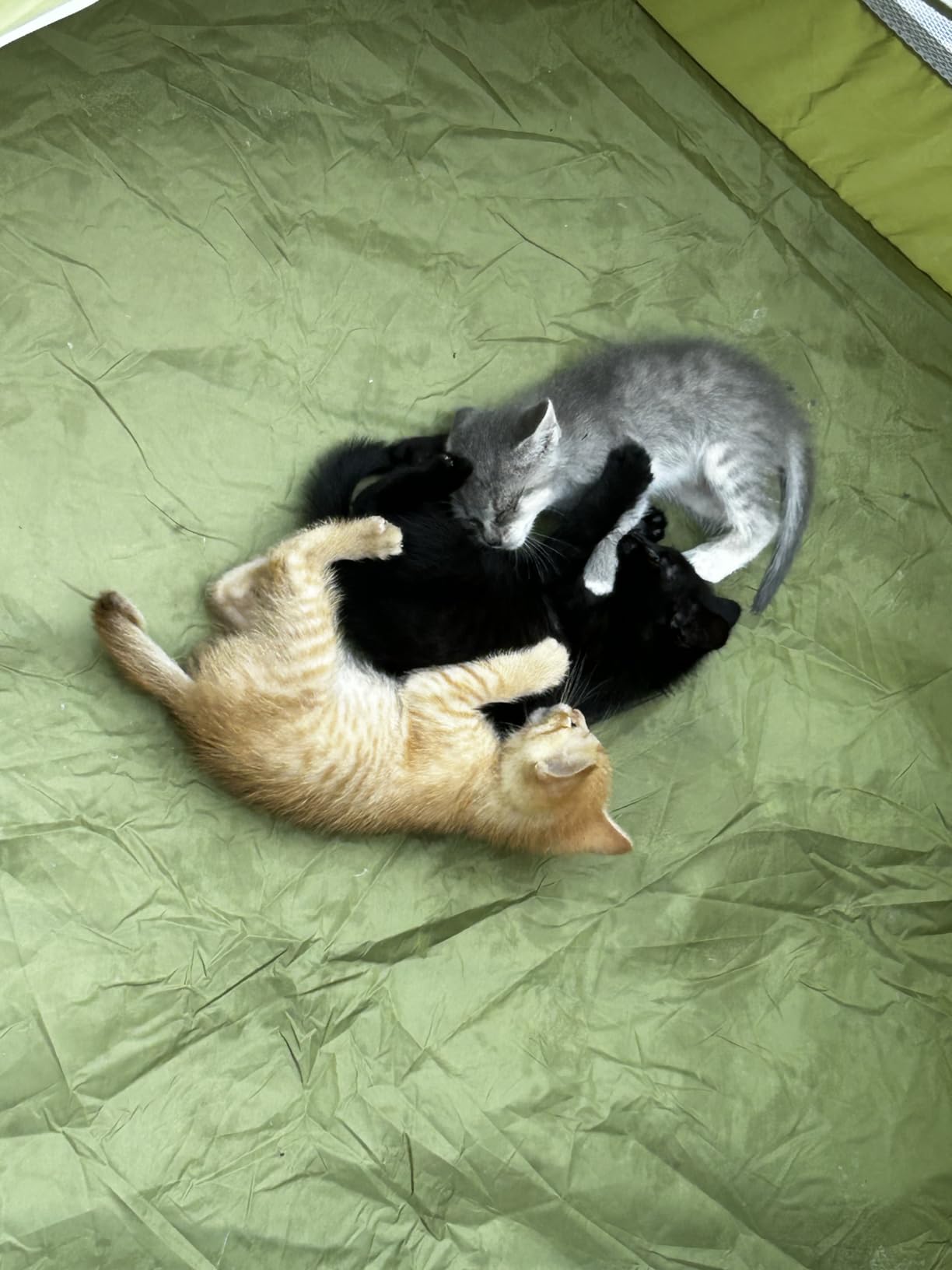
Owners also use it for ducklings, goslings, kittens and puppies, which tells you something about how much general-purpose value the frame has beyond one short chick season.
Best for checking and treating individual chicks
When you are hand-feeding a weaker bird, trimming a foot, or moving one chick out for warmth, the second door is worth more than it costs in the purchase. You can get in without folding the pen down or lifting chicks out over a wall.
It is equally good for keepers who want to interact with the brood daily, since reaching in does not mean dismantling anything.
Watch out for the soft frame and the small dishes
There is no rigid frame, so a cat or a dog that climbs on top can fold the pen and crush chicks. This is a supervised, indoor-only brooder. Never place it in a coop or any space where predators can reach it.
The included feeders and waterers need supplementing as birds grow, and the bottom pad slows seepage rather than stopping it, so bedding still works underneath if you are not careful when mucking out.
10. Phoncoo Brooder Starter Kit – Best for Wide Heat Adjustment
Phoncoo Brooder Box for Chick, Chick Starter Kit with Brooder Heating Plate
Plate adjustable 50F to 158F
45 x 23 x 20.5 inch pen
Removable mesh top, dual zip doors
Pros
- Widest temperature range of any plate here
- Spacious 45 inch pen for a larger brood
- Removable mesh top plus dual zipper doors for full cleaning
- Bottom mat stops liquid soaking through
Cons
- Dial reading does not match a real thermometer
- Soft frame can collapse if a cat climbs on
- Zippers can pop open on their own
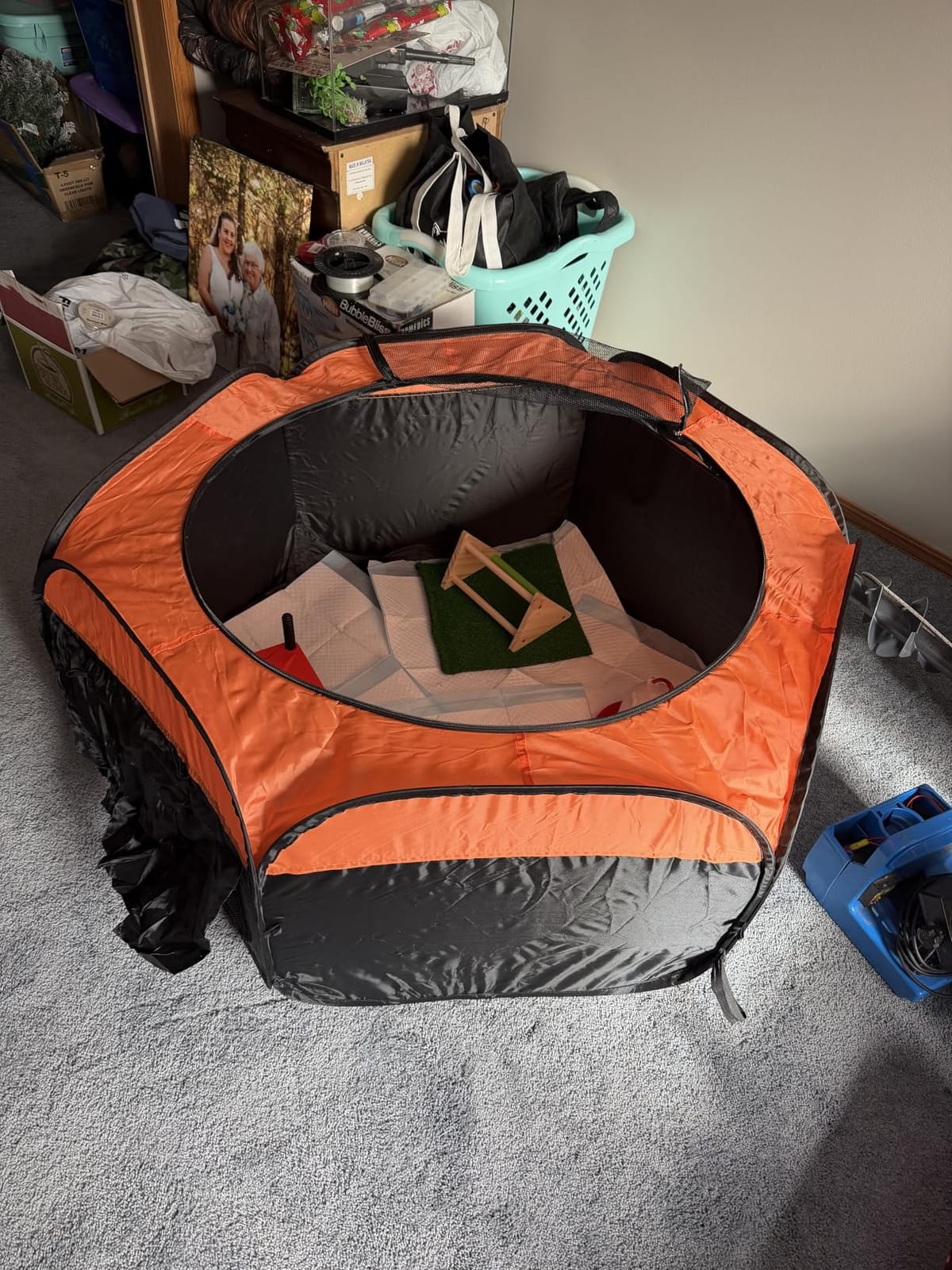
This kit stands out for two numbers: a 45 by 23 by 20.5 inch pen and a heating plate that adjusts from 50F all the way to 158F. That lower end means the same plate can finish a brood or warm a coop in cool weather, which shortens the useful life of the purchase considerably.
Owners like the size for the money and report that it sets up in about 15 minutes including the perch and heater. The removable mesh top plus dual zipper doors give you full access to every corner, which is the best cleaning arrangement of any fabric pen here.
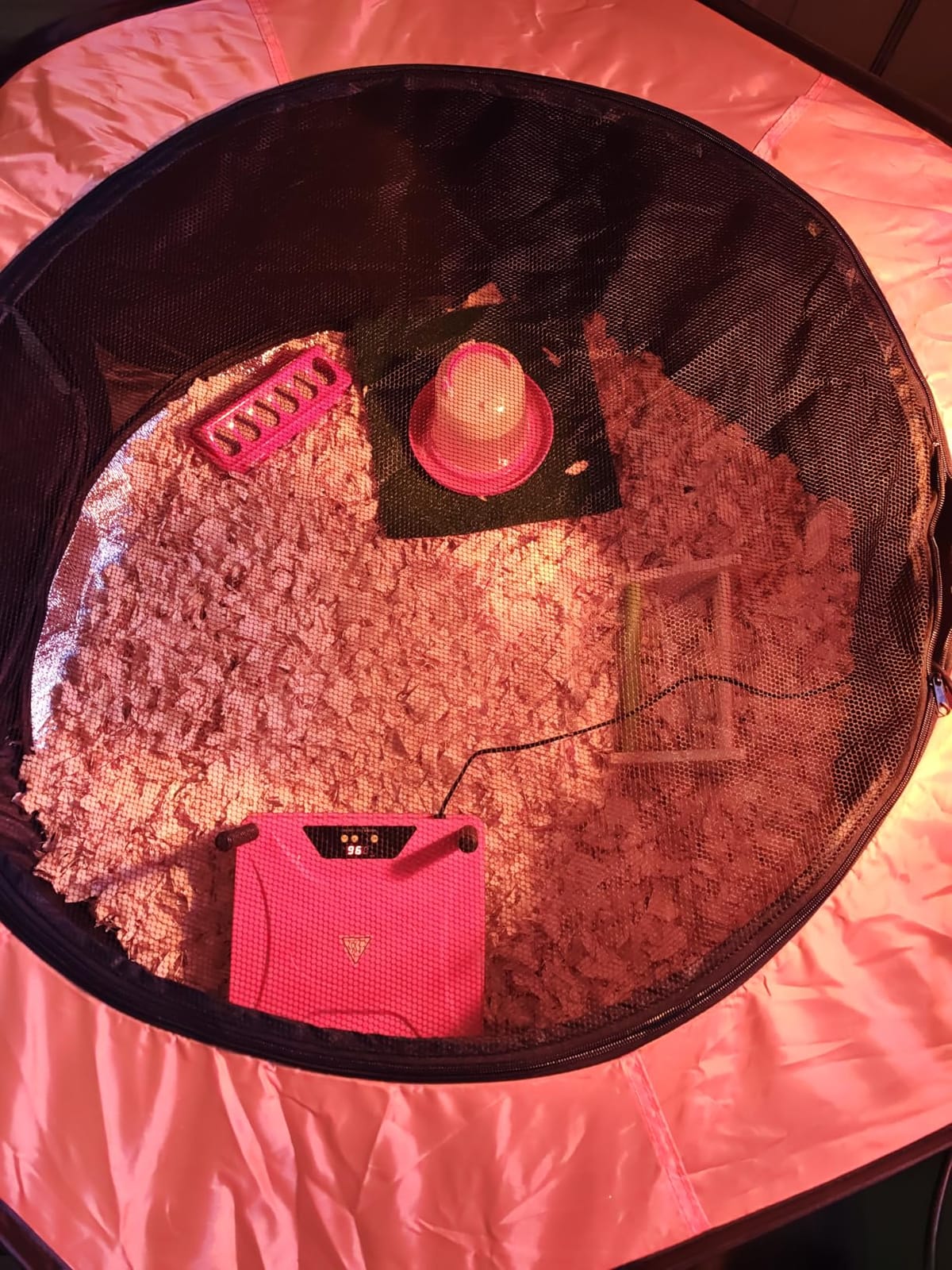
The bottom mat stops dirty liquid soaking through to the floor and rinses clean, and the whole thing folds flat into a bag between batches. The feeder and waterer are well made and are frequently called out as better quality than the dishes that ship with cheaper kits.
It is also not only for chicks. Owners use the same pen for ducklings, bunnies, kittens and puppies, and clip-on insulated curtains add warmth in colder months.
Best for a brood you expect to grow into the pen
The floor area here is genuinely larger than the other fabric kits, so it holds its usefulness longer as birds grow. If you are brooding toward the upper teens or into the twenties, this is the fabric option that delays the day you need a second enclosure.
The broad temperature range also makes it a reasonable one-plate answer if you want to brood and then keep using the heat source for older birds.
Watch out for the thermostat reading
The most serious complaint is that the dial does not match what a real thermometer reads under the plate, with reported gaps of around 20F. One reviewer says that mismatch cost them chicks in the first two days. Verify at chick level and adjust accordingly rather than trusting the dial.
The soft frame collapses if a cat climbs on, the zippers can pop open on their own, and the roosting bar seats only two or three chicks at a time. Treat this as an indoor, supervised brooder.
11. RentACoop Little Red Barn Brooder – Best for Cleaning and Reuse
RentACoop Little Red Barn Chick Brooder
Tool-free foldable plastic for 10+ chicks
32 x 17 x 20 inches
LED light, no heat source
Pros
- Non-absorbent plastic wipes clean in seconds
- Folds flat and reuses across many batches
- Clear doors let you watch and handle chicks
- Keeps curious cats out
- Stage-specific hatchling and jute liners
Cons
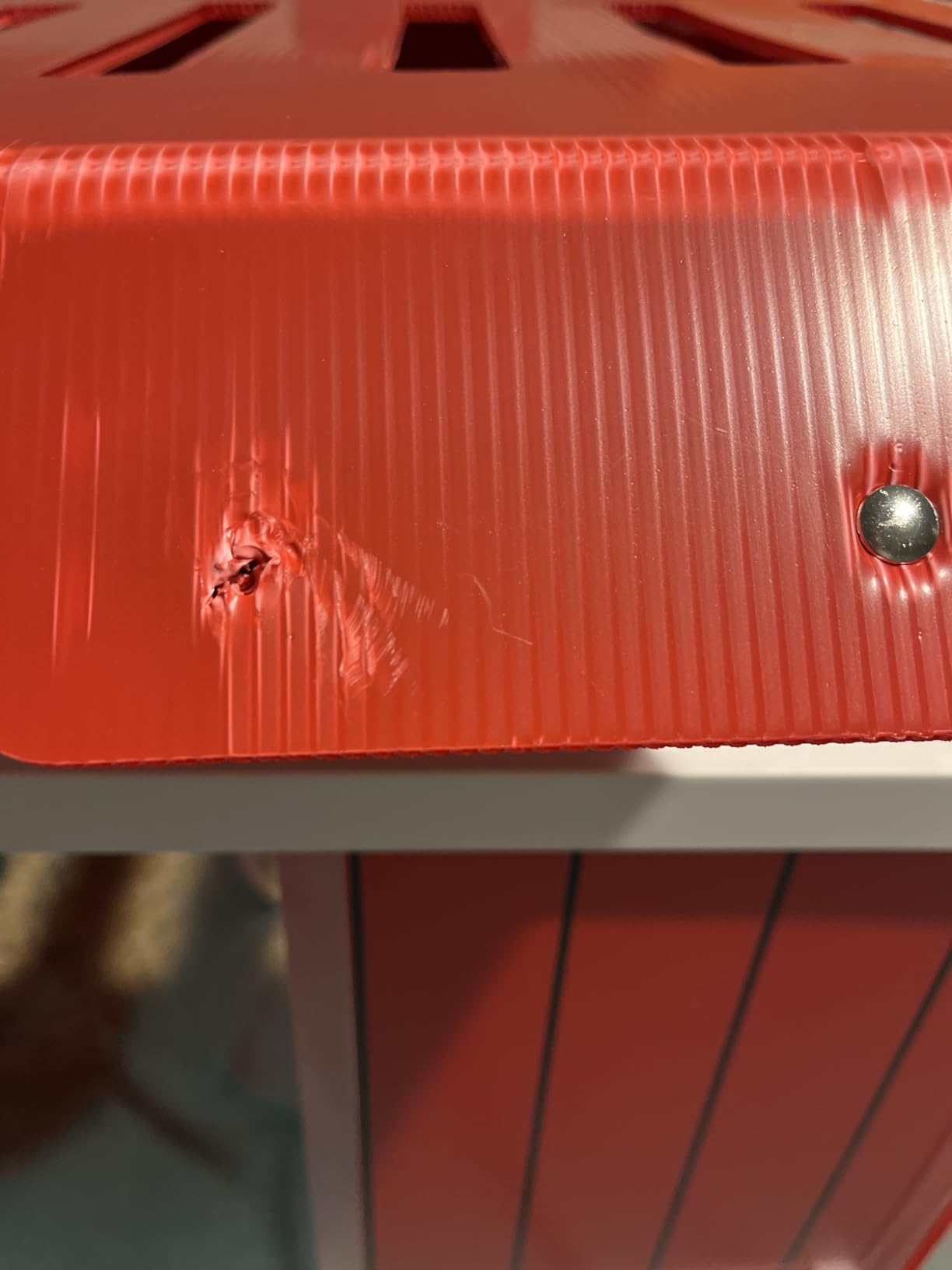
- Interior surface traps droppings in small holes
- LED light gives light but no heat
- Real capacity closer to 4 to 8 chicks
This is the odd one out in the list, and that is exactly why it earns a place. It is a housing unit, not a heater. The LED light has three colour settings and illuminates the brooder, but it produces no warmth, so you still need a plate or lamp inside it.
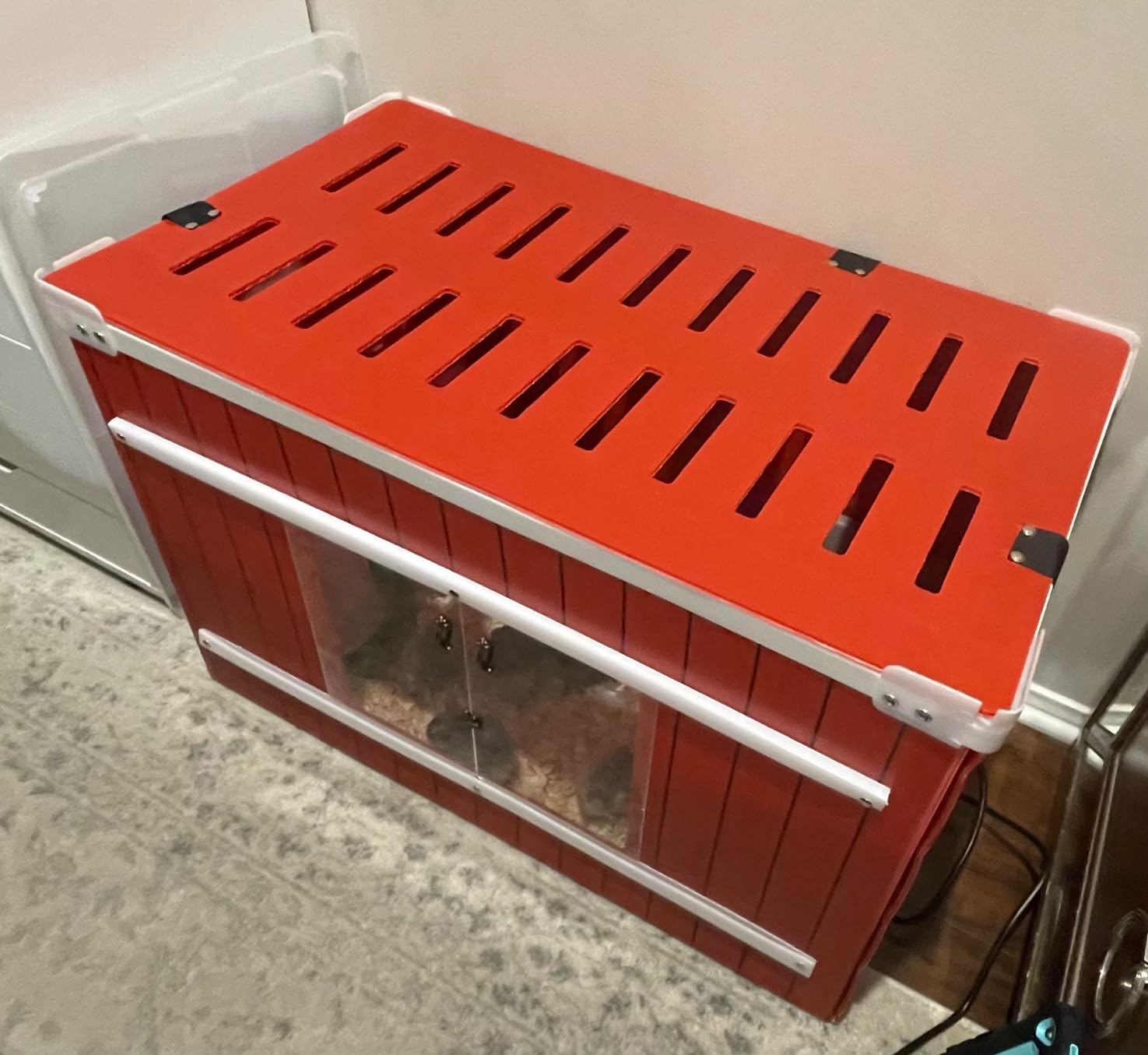
What you get in exchange is a rigid plastic shell that wipes clean in seconds and does not absorb droppings the way fabric or cardboard does. For a small brood, or for a recovery unit for an injured or orphaned chick, that is a genuinely useful box that will outlive a fabric pen.
It assembles tool-free from three pieces in under a minute, has clear-view doors on the front and a lid that flips up completely, and includes a security latch. Stage-specific liners come too, four hatchling liners for the first three weeks plus a jute liner after that, so footing matches growth.
Owners reuse it as a transport crate, a quarantine pen, an emergency hospital crate or a nursery for a broody hen, and it works for turkey poults, ducklings and quail as well as chicks.
Best as a second box you will actually reuse
Placing a heat plate in here gives you a heat source you can raise and lower plus a washable plastic floor, which is a strong pairing for anyone who broods more than once a year. It also works well as a hospital crate for a single chick you are nursing separately from the flock.
The clear doors mean you can watch birds without opening anything, and the plastic shell keeps curious cats out in a way no fabric brooder can.
Watch out for the holes in the floor and the real capacity
The interior surface is described as cardboard-like with small holes that trap droppings and bedding and cannot be fully rinsed. That is the one flaw that matters, because trapped manure is where ammonia starts.
The box is also smaller than buyers expect at 32 by 17 by 20 inches, holding comfortably around 4 to 8 chicks rather than 10 or more, and the door latch can work poorly over time and need tying closed. Plan on it as a first-week and recovery box, not a six-week home.
12. Kculehtlla All-in-One Kit with 75W Lamp – Best Budget Starting Point
All-in-One Chick Brooder Kit with 75W Adjustable Heat Lamp, Spill-Proof Feeder & Waterer, and Rust-Proof Perch Stand for 5–15 Chicks
75W ceramic lamp kit for 5-15 chicks
Feeder, waterer and perch stand
Tool-free snap-together build
Pros
- Lowest entry cost with lamp
- feeder
- waterer and perch included
- Tool-free snap-together assembly in minutes
- Feeder and waterer are food-grade and dishwasher safe
- Powder-coated steel perch resists rust
Cons
- Heat lamp brings glare and greater fire risk than a plate
- Lamp runs warm for such a small brooder area
- Lowest average rating in the set at 3.9
This is the one heat lamp kit in the group, and we include it because it is the cheapest complete way to start. A 75W ceramic socket lamp, a spill-proof feeder, a waterer and a powder-coated steel perch stand arrive in one snap-together package for five to 15 chicks.
The lamp has a cool-touch exterior and tip-over protection, which are meaningful improvements over the bare bulbs most people reach for. The perch is powder-coated steel and resists rust indoors or out, and the plastic feeding pieces are food-grade and dishwasher safe.
At 3.9 stars from 353 reviews, it has the lowest average in this set and a visibly higher share of one-star reviews than the plates above. The complaints cluster on the lamp and the overall build, not on the feeding equipment, which owners generally like.
If you do go with a lamp, mount it on a proper fixture rather than a flimsy tripod, keep it well clear of bedding and fabric, and use a ceramic socket rated for the wattage. Never hang one over a plastic tote or inside a prefab coop.
Best only if the purchase cost is the deciding factor
It does what the job needs on paper: heat, feed, water and a perch, in one box, assembled with no tools. For a first batch of a handful of chicks in a supervised indoor space, it will get you through the first weeks.
The modular design also lets you add a second lamp or larger feeders later, so it is not a dead end if your flock grows.
Watch out for glare, heat and the fire question
A 250W-class lamp and a 75W ceramic lamp both deliver constant light, and chicks under constant light do not settle into a normal day and night cycle as well as chicks under a plate. The lamp also runs noticeably warm for a brooder area this small, so you will be trimming the height constantly.
Large numbers of reviewers have moved off lamps specifically because of fire and burn risk around bedding and plastic. If you can stretch to a radiant plate, you get safer, quieter, cheaper brooding. If you cannot, mount this one carefully and never leave it unattended.
How to Choose a Brooder for Baby Chicks
Heat source first, box second. A radiant heat plate beats a heat lamp on almost every axis that matters: no glare, no fire pathway, lower running cost, and an even warm area instead of a hot spot. Its one real drawback is that most plates have no thermostat, so you manage heat with height and a thermometer instead of a dial. If you cannot check a brooder regularly or travel for work, a panel with a built-in sensor is worth the extra spend.
Size by the chick at week four, not the chick on day one. Allow 0.5 square feet per chick for the first two weeks and 1 square foot per chick by week four. A more conservative plan uses 2 square feet per chick for the whole brooding period. Worked examples: five chicks need 2.5 square feet early and 5 square feet by week four, so roughly a 2 by 2.5 foot area. Ten chicks need 5 and then 10 square feet, about 2.5 by 4 feet. Twenty-five chicks need 12.5 and then 25 square feet, about 4 by 6 feet. Fifty chicks need 25 and then 50 square feet, about 5 by 10 feet. Always give yourself a free-choice zone with cooler air on one side.
Treat advertised capacity as optimistic. This is the most consistent complaint in the reviews. A box or plate advertised for 15 or 20 birds is realistically comfortable for 6 to 8 once they are two weeks old, because a manufacturer counts the hatchlings, not the growth arc. Plan for half the advertised number when you are choosing.
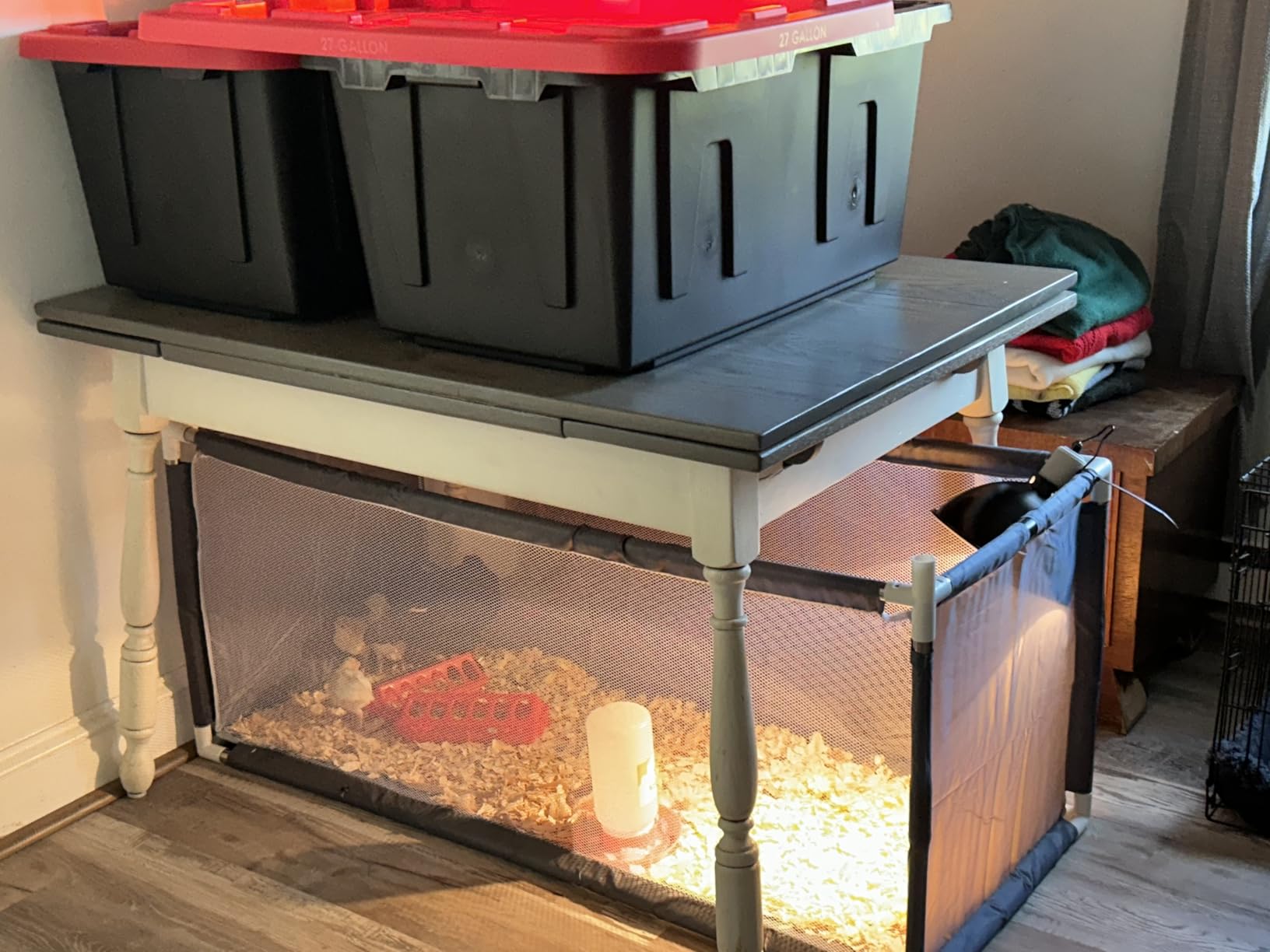
Rigid plastic, plywood or DIY beat fabric for safety. The most common real setup we see, and the one recommended on BackYardChickens and backyardchickens.com threads, is a 50 to 100 gallon plastic storage tote with a large square cut in the lid covered by hardware cloth, plus a radiant plate. A plywood box of roughly 4 by 2 feet is the most common homemade build and lasts for years. A puppy playpen or kiddie pool works if you want to reach in and handle chicks. Do not put a heat lamp in any of them.
Fabric pens are indoor and supervised only. Pop-up brooders with mesh and Oxford cloth are convenient and cheap, but a cat can collapse a soft-sided frame in a second, and raccoons will go through mesh tops. Keep them in a closed room, out of reach of pets, and never in a coop.
Buy the floor system, not just the box. A removable waterproof mat, a rinseable floor and a leak-resistant base decide how you will handle wet bedding. That is what keeps ammonia down, and dry air is what prevents pasty vents.
Essential Setup Tips
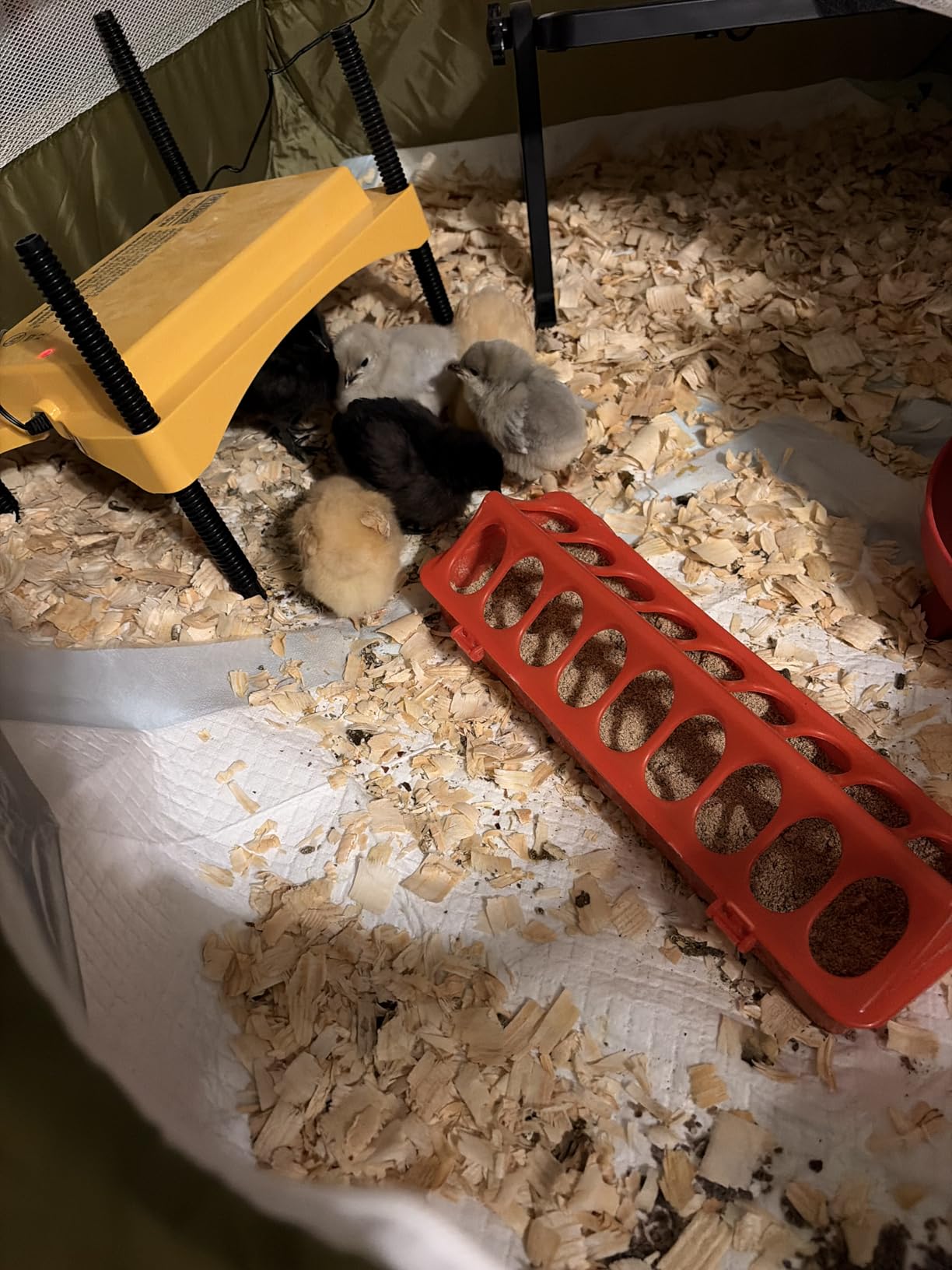
Bed the floor in two stages. Start with puppy pads or paper liners for the first three to five days, because day-old chicks slip on hard surfaces and splayed legs are difficult to correct once they set. Switch to dry pine shavings once the chicks are steady on their feet, and never use cedar, which is aromatic and toxic to chicks.
Drop the temperature five degrees a week. Start at 95F for week one, then 90F, 85F, 80F, 75F and around 70F by week six. Check it with a digital thermometer at chick level, not at the top of the box, and change height or setting weekly rather than daily. Chicks that are too cold huddle and squeak; chicks that are too hot scatter, pant and stay away from the plate.
Give them a free-choice zone. Put the heat source at one end and leave genuinely cooler space at the other. Chicks that can self-regulate crowd less, develop feathers more evenly and suffer fewer injuries, and you stop guessing at the right temperature.
Plan for a power cut before it happens. Keep a second heat source and a thermometer you can read by flashlight in the same room, and know where the nearest outlet is. A brooder that loses power in January is an emergency, and a low-voltage plate that resumes on its own is one more reason plates outrank lamps.
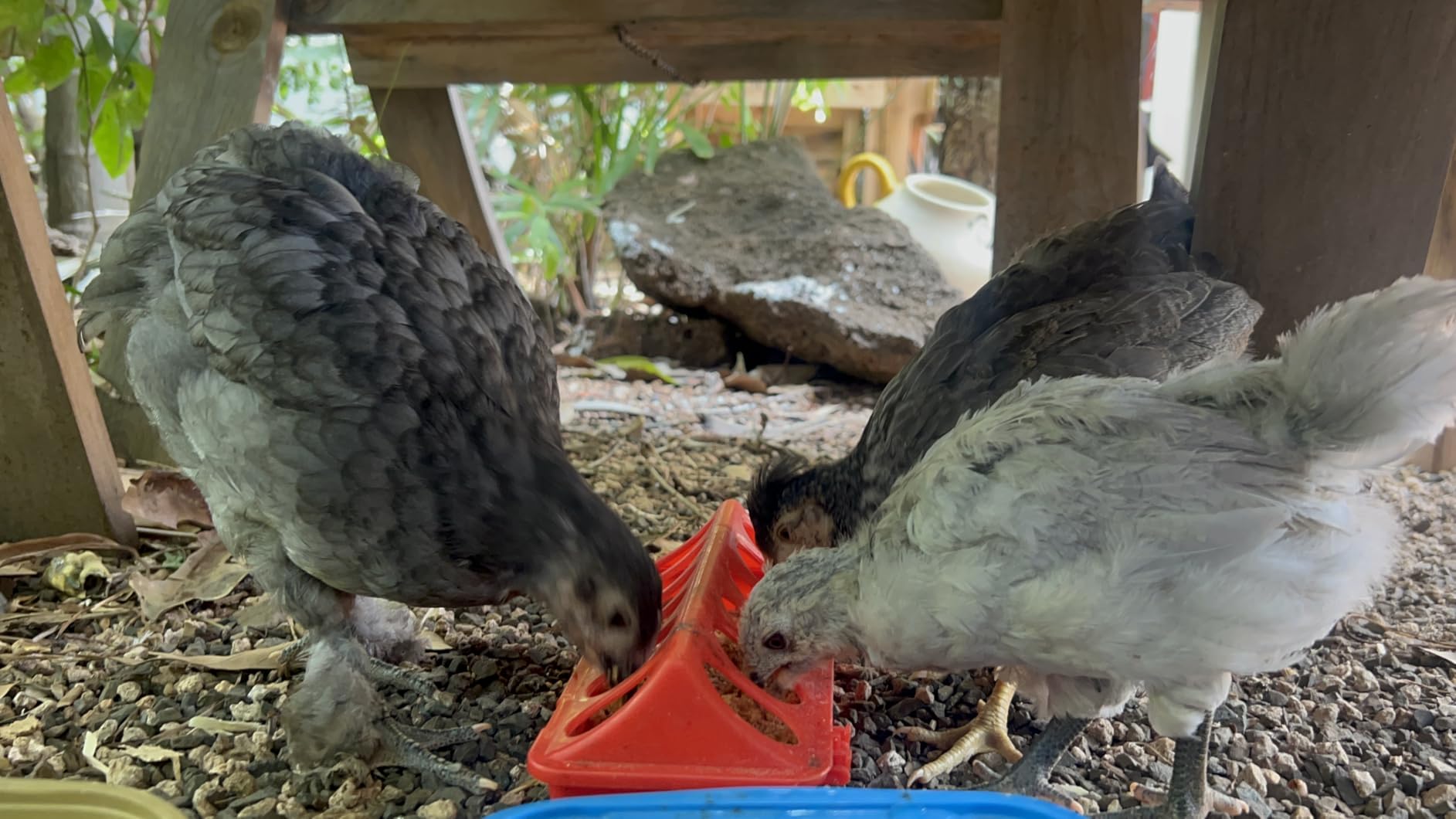
Fix the feeders in the first week. Gravity waterers flood brooders fast. Check the waterer and feeder height twice a day for the first ten days, keep waterers off the sleeping area, and replace undersized dishes as soon as birds outgrow them, usually in week two or three.
Know when they leave. Chicks are ready to leave the brooder when they are fully feathered, usually around six weeks, when the outdoor temperature holds above 60F, and when you can harden them off over several days of increasing outdoor time. By week four most chicks only need a plate or lamp for part of the day, and at eight weeks almost none need one at all.
Frequently Asked Questions
How long should chicks stay in a brooder?
Most chicks stay in a brooder for six to eight weeks. They are ready to leave when they are fully feathered, when the outdoor temperature holds above 60F, and after a gradual harden-off of increasing outdoor time. By week four they usually need heat for only part of the day.
Is a brooder plate better than a heat lamp?
For almost every home flock, yes. A radiant plate gives even warmth with no glare, no hot spot and a much lower fire risk than a bulb, and it uses a fraction of the electricity. The main disadvantage is that most plates have no thermostat, so you control heat by adjusting height and checking a thermometer at chick level.
What is the best type of heat source for a chicken brooder?
A low-voltage radiant heat plate is the best general choice because chicks warm evenly from above and self-regulate by moving in and out of the zone. Choose a larger plate for bigger broods, one with a temperature sensor if you cannot check the brooder daily, and a plate with adjustable height so one unit covers the whole growth arc.
What are the disadvantages of chick heat plates?
Most plates have no built-in thermostat, so you manage temperature by changing height and watching a thermometer. Advertised chick capacity is usually optimistic once birds feather out, some plates run cooler than stated in a cold room, and height adjustment hardware can slip under the weight of perching chicks.
How many chicks can a brooder hold?
Plan on half the advertised number for comfort. A unit marketed for 15 to 20 chicks is realistically comfortable for 6 to 8 as birds grow, and space matters more than heat once they are past the first week. Use 0.5 square feet per chick for the first two weeks and 1 square foot per chick by week four.
Final Verdict
For most people buying the best brooders for baby chicks, the answer is a complete kit with a radiant plate rather than a lamp. The Pawaboo box is the strongest all-in-one start for a small first brood, the Brinsea plate is the safest and best rated heat source, and the Tetuga bundle is the most complete package for the money if you want one purchase to cover the whole season.
Buy the box for the number of chicks you will have in week four, not week one, and put your budget into the heat source. Then check the notes on this page about bedding, the thermometer at chick level and the free-choice zone, because those three habits do more for your birds than any single product. Keep the brooder out of the kitchen while it runs, and put the waiting time to good use with our baby potato and leek soup, a roasted baby potato and vegetable medley on hatch day, or our baby potato gnocchi with tomato sauce for the night the brooder comes down.