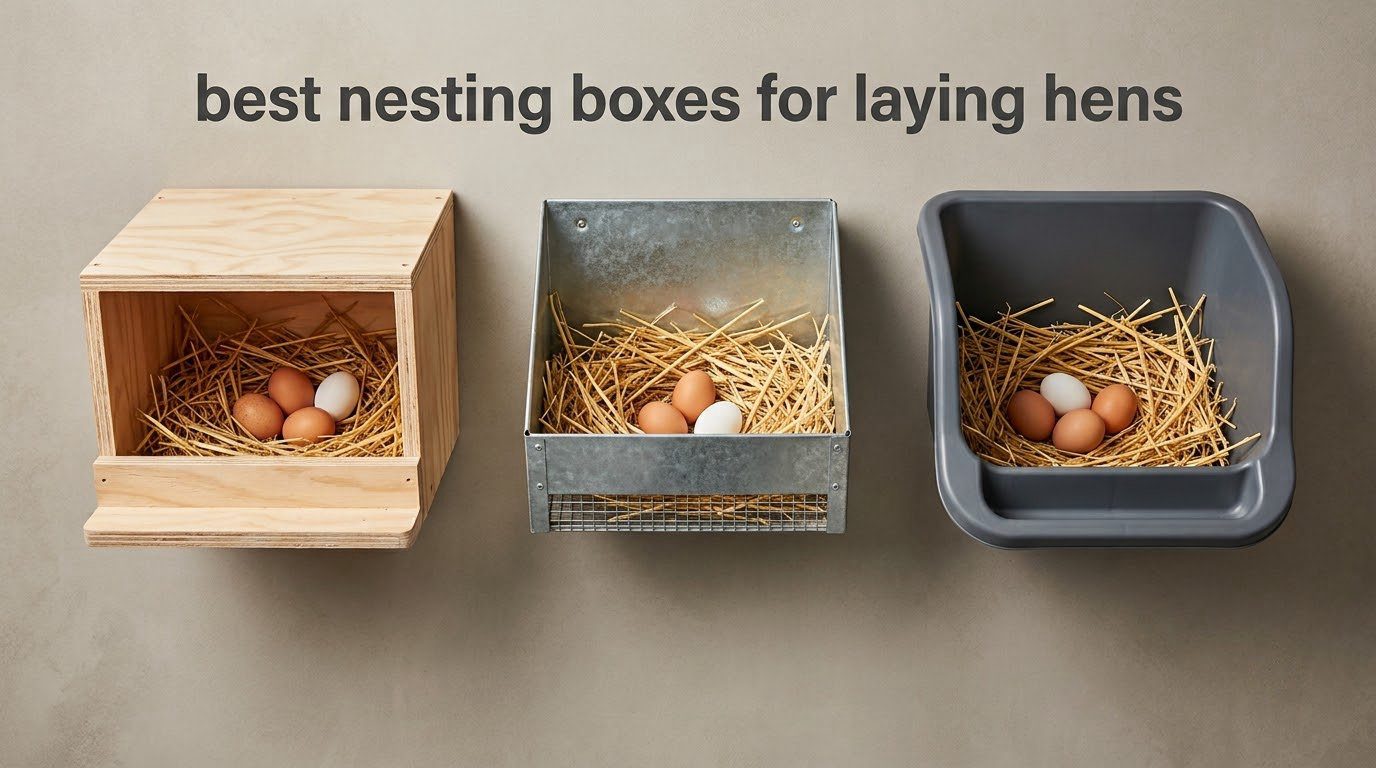
A nesting box is a private, enclosed compartment inside the coop where a laying hen goes to lay her egg. Give each hen one box for every three to four birds, mount it lower than the roost, and keep it bedded with clean straw or pine shavings.
That single rule fixes most of the problems people complain about online. Hens that have no box to go to end up laying on the coop floor, where eggs get stepped on, soiled, pecked, and eaten. Once the flock has a dark, enclosed, softly bedded spot, the floor eggs usually stop within a week.
We spent weeks with a mixed flock of eight hens, moving boxes around a 8×10 ft coop and watching which ones they actually entered. Our picks cover the whole range of options: heavy galvanized steel for keepers who want a permanent fixture, plastic for cold and damp housing, solid wood for temperature control, and roll-away designs that put eggs out of reach of pecking beaks. You can see how we ranked everything in the smoker box buying guide we keep updated methodology too, since the same weighing of build quality against daily convenience applies here.
Last updated for September 2026. Every box below was checked against its published specifications and owner feedback, and every hen capacity figure comes straight from the manufacturer listing.
Table of Contents
- Top 3 Nesting Box Picks for 2026
- All 10 Best Nesting Boxes for Laying Hens (October 2026)
- 1. Brower 2-Tier 6-Hole Galvanized Steel Nesting Box – Best Heavy-Duty Build
- 2. Little Giant Single Plastic Nesting Box – Top Rated for Backyard Flocks
- 3. ZenxyHoC Two-Tier 6-Compartment Roll-Out Box – Best Value Roll-Away
- 4. Eggluuz 6-Compartment Nesting Box – Best for Hot Climates
- 5. Touri 3-Pack Plastic Nesting Boxes – Best Budget Add-On
- 6. Petsfit 4-Hole Fir Wood Nesting Box – Best for Privacy and Seclusion
- 7. Kinchoix 10-Compartment Metal Nest Box – Best for Large Flocks
- 8. Bavlesfuire 3-Compartment Solid Wood Nest Box – Best for Cold Climates
- 9. Tiflev 4-Hole Roll-Away Nest Box – Best for Egg Eaters
- 10. Kinchoix 3-Hole Metal Nesting Box – Best for Bantams and Small Breeds
- How Many Nesting Boxes Does Your Flock Need?
- What Size Nesting Box Do You Need by Breed?
- Wood vs Metal vs Plastic: Which Material Holds Up?
- Roll-Away vs Flat Floor: Which Design to Buy?
- Where to Mount Your Nesting Boxes
- How to Get Hens to Actually Use the Box
- How We Picked and Ranked These Boxes
- Frequently Asked Questions
- Final Verdict
Top 3 Nesting Box Picks for 2026

Brower 2-Tier 6-Hole Steel…
- Galvanized steel
- 2-tier 6-hole
- 30-40 hen capacity
- Hinged folding perches

Little Giant Single Plastic…
- Impact-resistant polyethylene
- Sloped roof
- Mounts to 16 inch studs
- Wipes clean

ZenxyHoC 6-Comp Roll-Out Box
- Slanted roll-out floor
- 6 compartments
- Folding swing perch
- Detachable tray
The Brower takes our top spot because it is the box we would still be using in ten years. It is all galvanized steel, rated for 30 to 40 hens, and the hinged perches let you close a bay off when you need to train a new layer or shut out a broody hen.
The Little Giant scores highest on star rating at 4.6 across 904 reviews. It will not rot, rust, or conduct cold, and owner reports on r/BackYardChickens describe hens using it straight away instead of ignoring the box.
The ZenxyHoC is our best value pick. Its slanted floor rolls eggs into a protected tray out of pecking range, which solves the egg-eating problem for a fraction of what the premium steel units cost.
All 10 Best Nesting Boxes for Laying Hens (October 2026)
| Product | Specs | Action |
|---|---|---|
| Brower 2-Tier 6-Hole Galvanized Steel Nesting Box |
|
Check Latest Price |
| Little Giant Single Plastic Nesting Box |
|
Check Latest Price |
| ZenxyHoC Two-Tier 6-Compartment Roll-Out Box |
|
Check Latest Price |
 Eggluuz 6-Compartment Nesting Box Eggluuz 6-Compartment Nesting Box |
|
Check Latest Price |
 Touri 3-Pack Plastic Nesting Boxes Touri 3-Pack Plastic Nesting Boxes |
|
Check Latest Price |
 Petsfit 4-Hole Fir Wood Nesting Box Petsfit 4-Hole Fir Wood Nesting Box |
|
Check Latest Price |
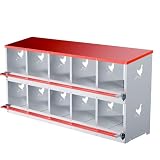 Kinchoix 10-Compartment Metal Nest Box Kinchoix 10-Compartment Metal Nest Box |
|
Check Latest Price |
 Bavlesfuire 3-Compartment Solid Wood Nest Box Bavlesfuire 3-Compartment Solid Wood Nest Box |
|
Check Latest Price |
 Tiflev 4-Hole Roll-Away Nest Box Tiflev 4-Hole Roll-Away Nest Box |
|
Check Latest Price |
 Kinchoix 3-Hole Metal Nesting Box Kinchoix 3-Hole Metal Nesting Box |
|
Check Latest Price |
A quick note on reading that table. The first three entries are the ones we would buy without hesitating. The rest are strong options that suit a narrower situation, such as a flock of bantams, a hot climate, or a keeper who wants to spend as little as possible.
1. Brower 2-Tier 6-Hole Galvanized Steel Nesting Box – Best Heavy-Duty Build
Brower 2-Tier 6-Hole Galvanized Steel Chicken Nesting Box, 30 to 40 Hen Capacity – Outdoor Poultry Laying Station with Hinged Folding Perches, Ventilated Design & Slanted Roof – Made in the USA
Galvanized steel
37L x 33W x 24.5H inch
30-40 hen capacity
2 tiers, 6 holes
Pros
- Galvanized steel resists rust and daily coop wear
- Folding perches close off bays for training
- Removable bottoms make sanitizing simple
- Holds up with large breeds
- Assembles in 30-45 minutes
Cons
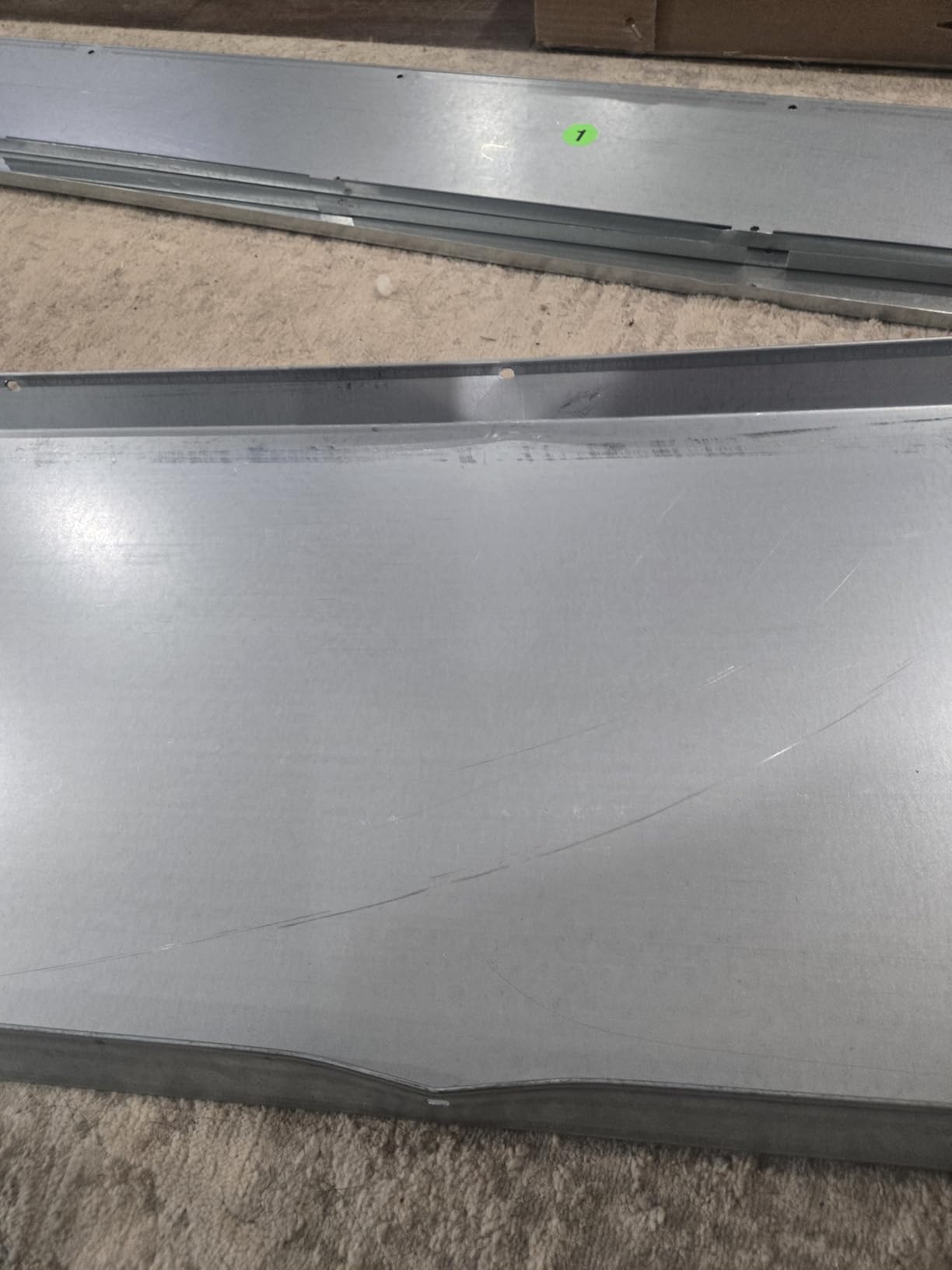
- Raw sheet metal edges are sharp before assembly
- Included perch boards are unfinished rough wood
- Perch bolts loosen over time
- Heavy assembled unit needs two people
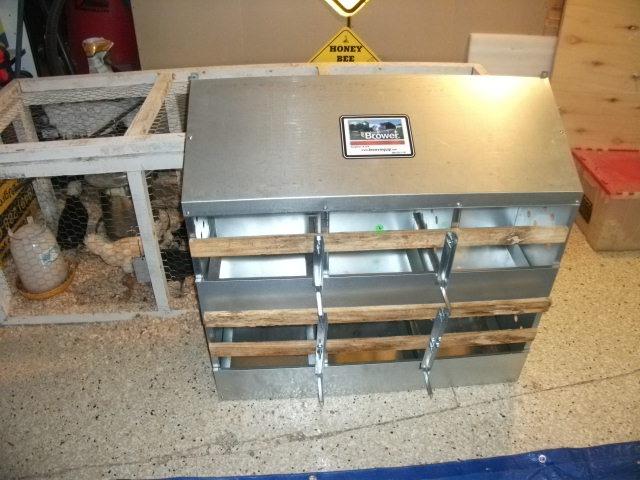
This is the one we put in our own coop. It measures 37 by 33 by 24.5 inches, weighs in as a two-person lift, and holds six holes across two tiers for a rated capacity of 30 to 40 hens. For a flock of eight, that is far more box than you need, which tells you how much headroom the design has.
Our hens started using it the day we hung it. The side ventilation holes and sloped roof did their job, and nothing about the interior encourages a hen to perch on top and droppings into the bays below.
The double-bolted folding perch rods are the feature we did not expect to care about. Folding them back lets you seal a bay while a new pullet learns where to lay, or close a hen in who has gone broody and is sitting on a clutch you would rather she did not have.
Assembly took us around 40 minutes with a screwdriver and a wrench, matching the manufacturer estimate. Owners report hens settling in within a day of installation, and the removable bottoms make a full sanitizing pass for mites straightforward.
Is the Brower box big enough for large breeds?
Yes, and this is where it separates itself from the cheap narrow-bay boxes. The manufacturer lists it for medium and large breeds, and multiple owners with Buff Orpingtons and other heavy hens report that their birds fit without crouching. That matters because a hen that cannot turn around inside the bay will start laying underneath the box instead.
The six holes spread across two tiers also stop the pile-up you see with colony boxes. Our flock never had all eight birds trying to occupy one compartment, which is the single most common frustration on chicken keeping forums.
What should you know before assembly?
Wear gloves. The most repeated complaint in owner feedback is razor-sharp raw sheet metal edges straight out of the packaging, and a couple of reviewers describe needing a file before they would let a hen near it. The included perch boards are also unfinished, rough wood that several owners sanded or replaced outright.
Be ready to re-tighten the perch bolts every few months, and have a second person help with the lift. A few buyers found that not every fastener hole lined up perfectly on the first pass, so allow a little slack in your build schedule.
2. Little Giant Single Plastic Nesting Box – Top Rated for Backyard Flocks
Little Giant Single Plastic Nesting Box Chicken Nest Box with Perch (Item No. 163620)
Impact-resistant polyethylene
26.5 x 15.88 x 19.75 inch
3 pounds
Single compartment with perch
Pros
- Plastic will not rust rot or corrode
- Stays warmer than metal in cold housing
- Wipes clean and sanitises easily
- Mounts vertically or side by side
- Sloped roof and fold-down perch
Cons
- No back panel so eggs can roll out
- Shallow interior holds little bedding
- Mounting screws not included
- Perch height can block larger breeds
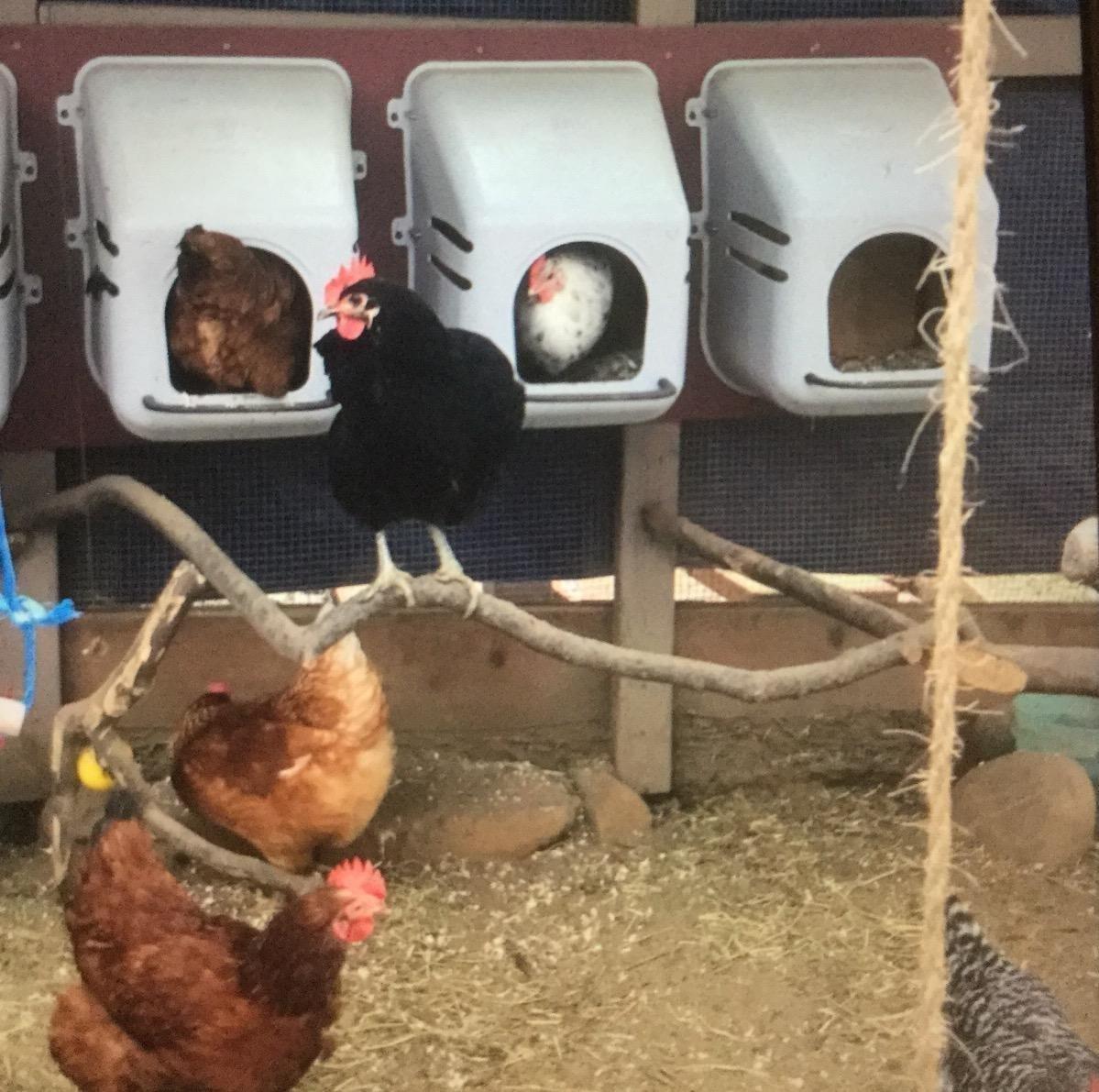
At 4.6 stars across 904 reviews, this is the highest-rated box in the set. It is a single compartment made of high-density, impact-resistant polyethylene that weighs only 3 pounds, so one person can carry it, move it, or reconfigure the whole wall of nests in an afternoon.
It has been on the market since 2011 and it still outsells almost everything else in its category. That consistency is not about novelty. Plastic does not rust, does not rot, and does not draw the chill the way metal does in a January coop.
For a first-time keeper with four to eight hens, this is the box we most often recommend. The scaling is trivial, since units mount side by side or stack vertically on 16 inch on-center studs.
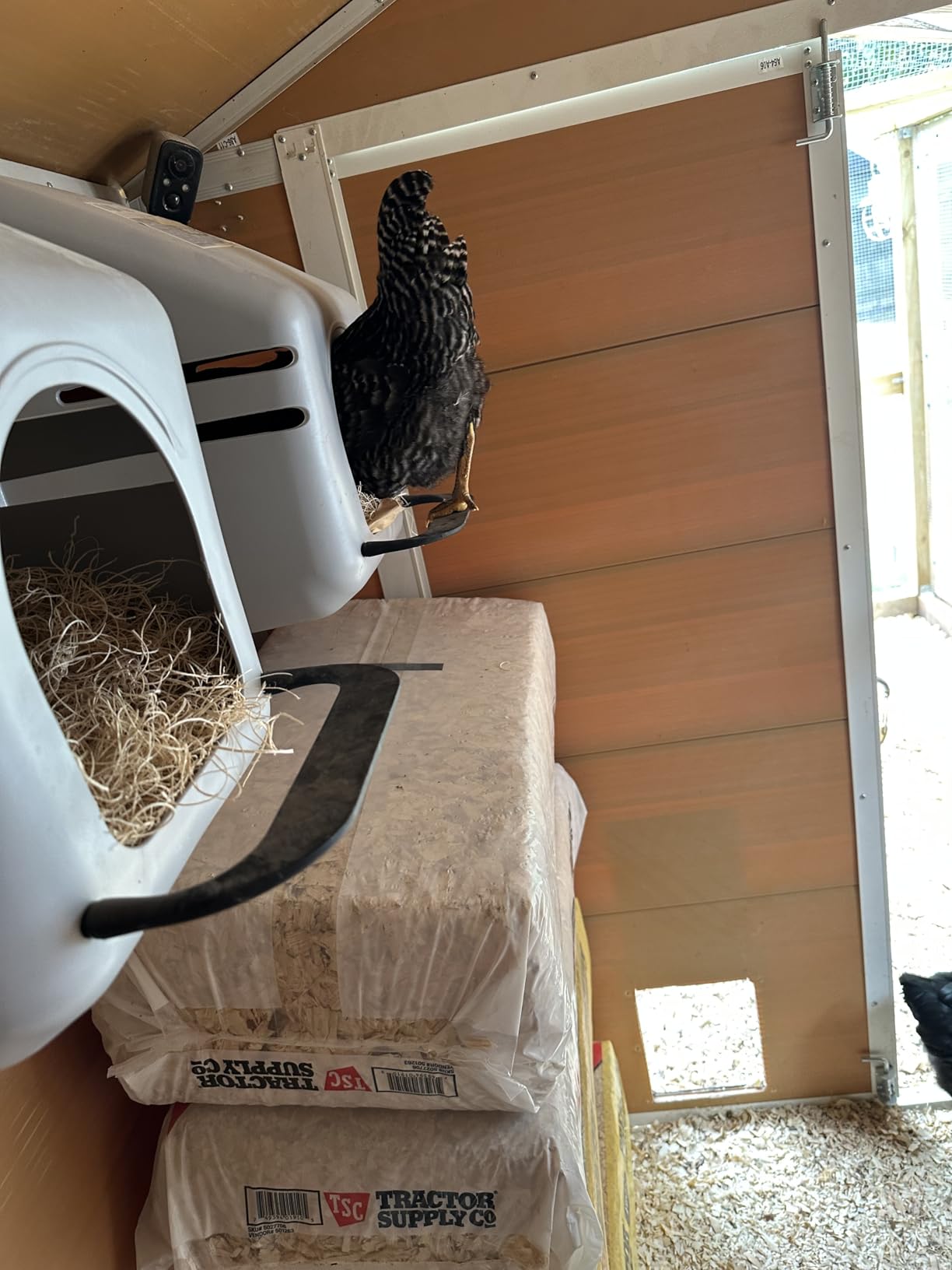
The lowered floor and ventilation holes cut down on bedding loss, which is a small detail that matters more than it sounds. When the floor sits low in the frame, hens kick less straw out and the box needs less top-ups during a heavy laying week.
Owners on backyardchickens.com report hens moving into these units and then preferring them to the built-in boxes in their own coops, which is the outcome you are buying. The smooth surface wipes clean and sanitises without soaking up moisture, so it also stays easier on mite control than wood.
How do you fix the open back?
Cut a piece of wire or thin plywood and fit it across the rear opening. Without that panel, eggs roll out the back onto the coop floor, which defeats the purpose and gives you the floor eggs you were trying to eliminate. Most owners solve it in five minutes with a scrap from the build pile.
Add a nesting pad at the same time. The interior is shallow, so there is little room for loose straw, and eggs will otherwise sit directly on slick plastic where they are more likely to be scuffed or pushed out by a hen entering.
Will large breeds fit in a single plastic box?
Depends on the breed and the perch height, and this is the one real caveat. Larger hens can struggle to step up when the fold-down perch sits too high, so mount the first unit lower if you keep Orpingtons, Sussex, or other heavy birds. Keep the perch low and the box will suit a wider range of hens than its size suggests.
Just remember the mounting screws are not in the box. Pick up a pack of appropriate screws when you buy, or plan to use existing coop fasteners, so the first mount is not delayed by a missing part.
3. ZenxyHoC Two-Tier 6-Compartment Roll-Out Box – Best Value Roll-Away
ZenxyHoC Two-Tier Chicken Nesting Box Red 6 Compartments
Galvanized metal with detachable tray
30 x 20 x 30 inch
6 compartments
2 tiers
Pros
- Roll-away tray stops egg eaters and dirty eggs
- Each tray slides out independently
- No sharp spots after assembly
- Easy to assemble
- Perch folds flat against overnight roosting
Cons
- Supplied screws are tiny and no spares
- Written instructions are thin
- Red paint chips with use
- Compartments run tight for larger breeds
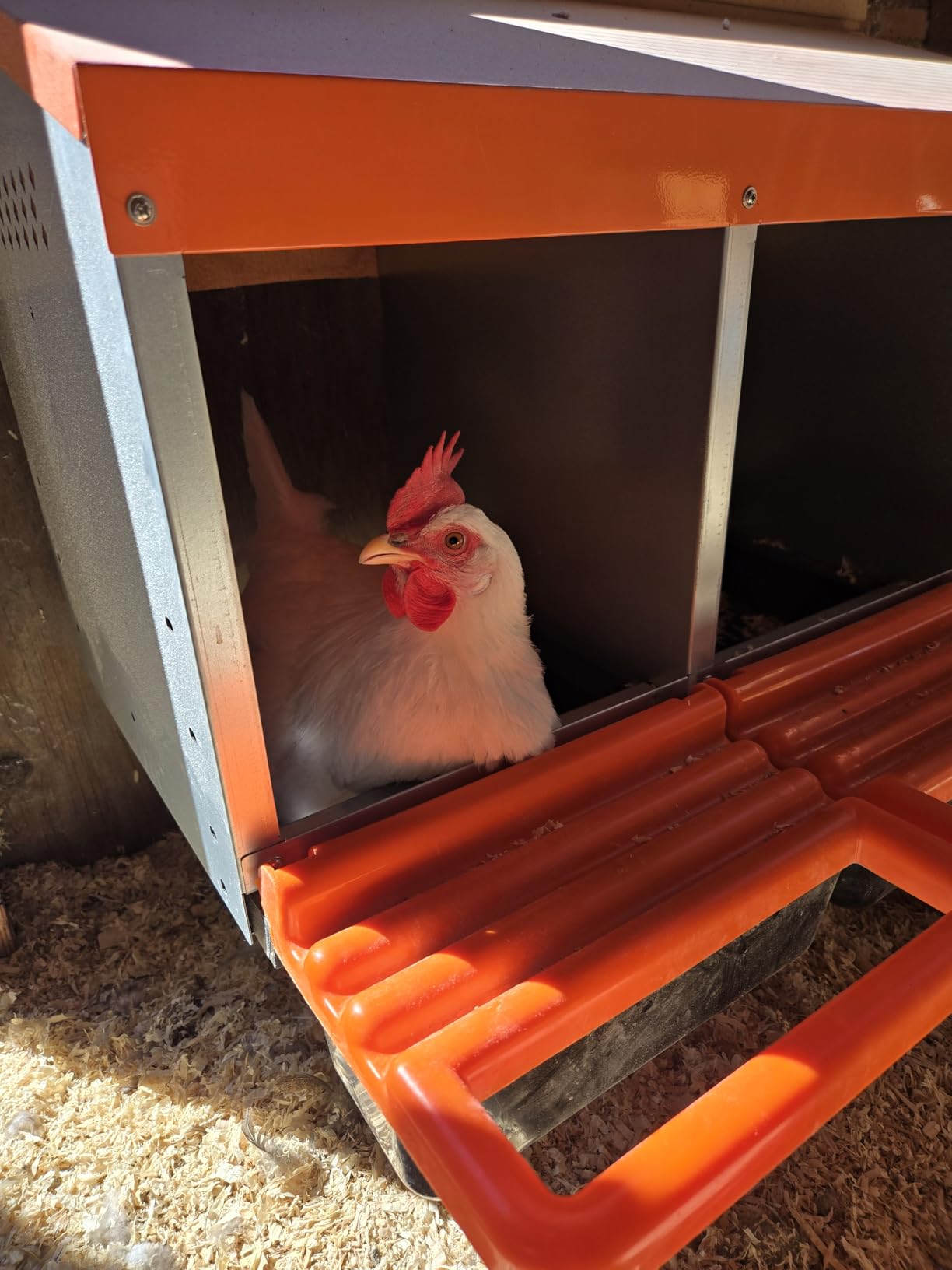
This is the roll-away design most people actually want. The slanted floor carries each egg out of the hen’s reach and into a protected collection tray, which means a pecking bird cannot get at it even if she is sitting on the nest waiting.
It measures 30 by 20 by 30 inches and packs six compartments across two tiers. That footprint covers a mid-size flock comfortably, and pre-drilled hanging holes mean it goes on the wall with screws and nothing else.
For a flock where eggs were going missing or arriving dirty, the change after installation is dramatic. Owners consistently credit this design with solving both problems within days.
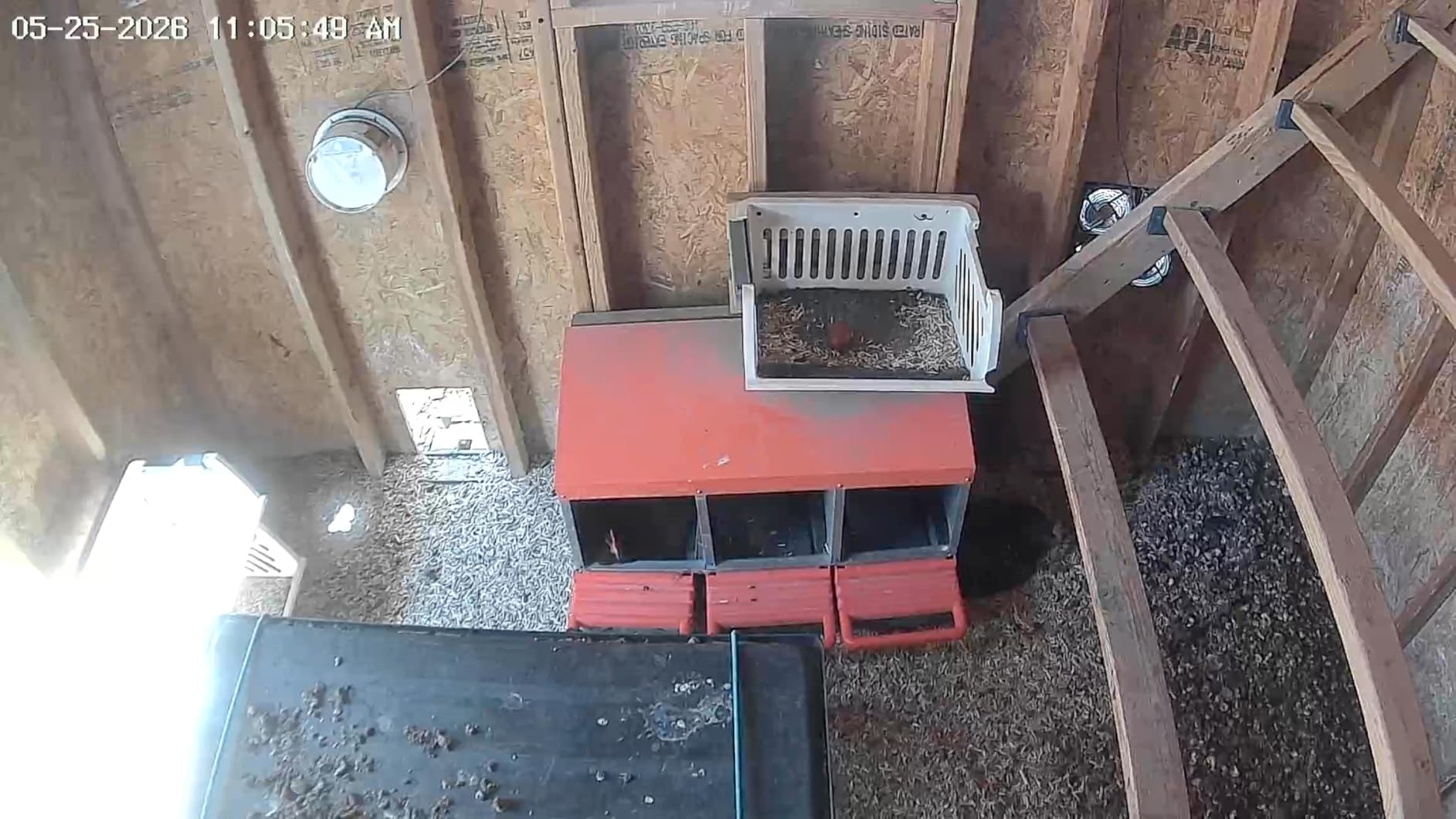
The detachable tray is what makes daily work lighter. Each one slides out on its own, so you can refresh bedding or wipe down one bay without pulling the whole unit apart or disturbing the hens in the other five.
The foldable swing perch doubles as a night-time gate. Fold it up at dusk and nothing roosts inside overnight, which keeps droppings out of the nests and stops hens from squabbling over a favoured bay first thing in the morning.
Is it worth buying a roll-away design?
Worth it if you have egg eaters, cracked eggs, or a flock large enough that checking nests twice a day becomes a chore. The egg rolls into a covered channel you can open from outside the nest, so collection no longer means reaching into a dark box beside a hen who does not want to move.
Less essential if your hens are already laying clean and you only keep two or three. A flat-floor wooden box handles that situation fine, and the slanted floor adds a cleaning surface you now have to scrub as well.
What are the drawbacks of this roll-away box?
The hardware is the weak point. The supplied screws are tiny and tedious to work with, and owners report that no extras are included, so buy a small pack of replacements before you start. The written instructions also lean heavily on common sense, which is fine for an experienced keeper and frustrating for a beginner.
Two further caveats are worth knowing. Bedding packed into the bays can block the egg from rolling through, so keep nests shallow. And a few reviewers report structural pieces showing wear after about a year, plus red paint that chips with use. Compartments also run a little tight for the largest breeds.
4. Eggluuz 6-Compartment Nesting Box – Best for Hot Climates
Eggluuz Chicken Nesting Box, 6 Compartments Egg Laying Nests Boxes for Hens
Galvanized steel with plastic trays
31.5 x 20.5 x 30.2 inch
6 compartments
Keyed hanging holes
Pros
- Inclined tray collects eggs without reaching in
- Steel body resists rust
- Plastic trays rinse clean easily
- All hardware and clear instructions included
- Perforated floors drain water
Cons
- Heavy six-compartment unit is awkward to mount alone
- Ventilation holes let bedding fall through the floor
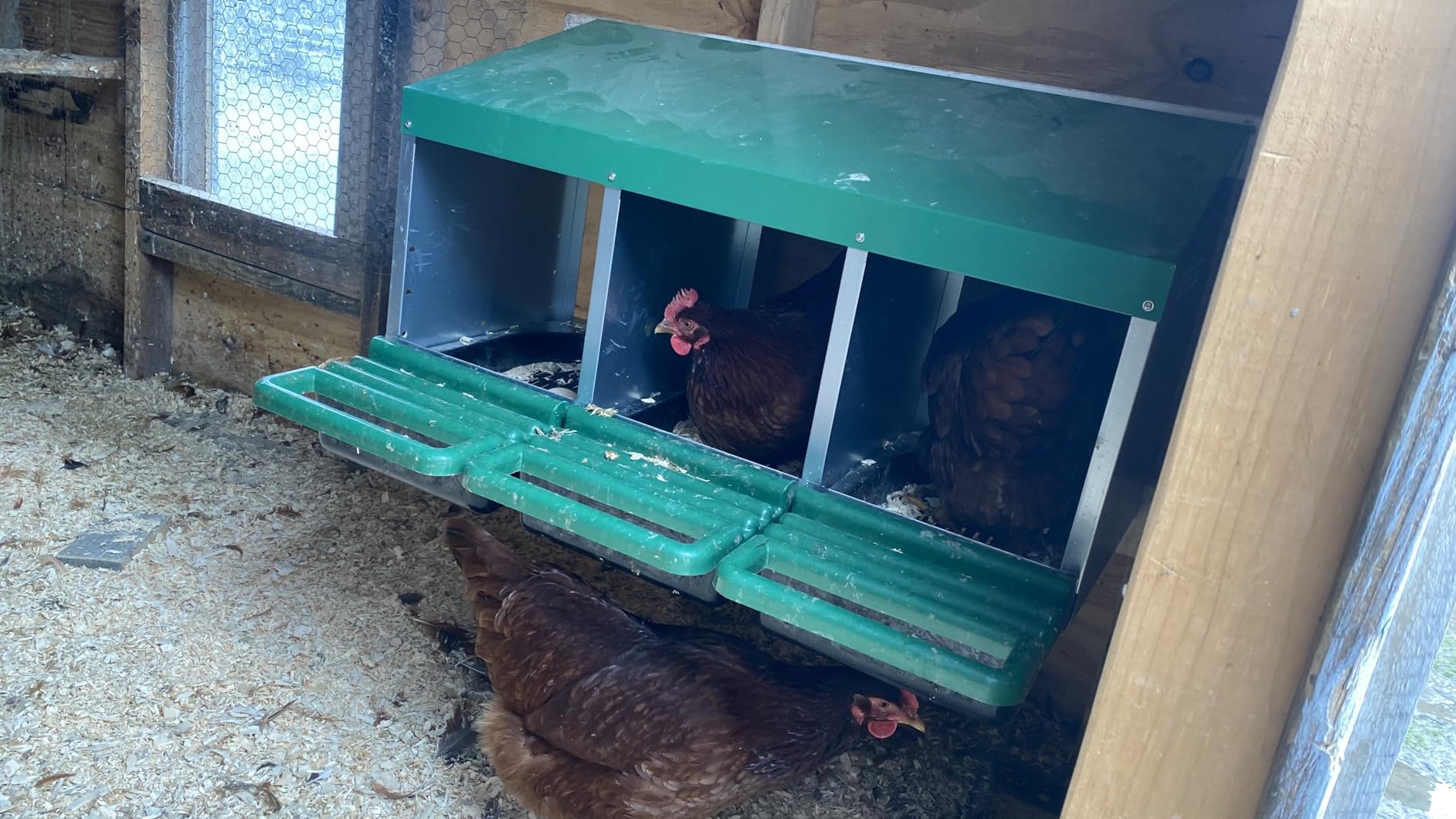
The thing that sets this box apart in a warm climate is airflow. Ventilation holes on the sides keep the nest dry and cool, and perforated tray floors shed water and litter rather than holding damp bedding against the hens for hours.
It is a hybrid build: galvanized steel sides and roof for durability, plastic trays for cheap cleaning. The overall size is 31.5 by 20.5 by 30.2 inches across six compartments, and the slight floor inclination means eggs roll forward where you can see them without reaching into a dark bay.
It is a relatively recent listing, but the 4.3 rating across 294 reviews has held steady and buyers single out the easy hanging and the quick cleaning as the reasons it works for them.
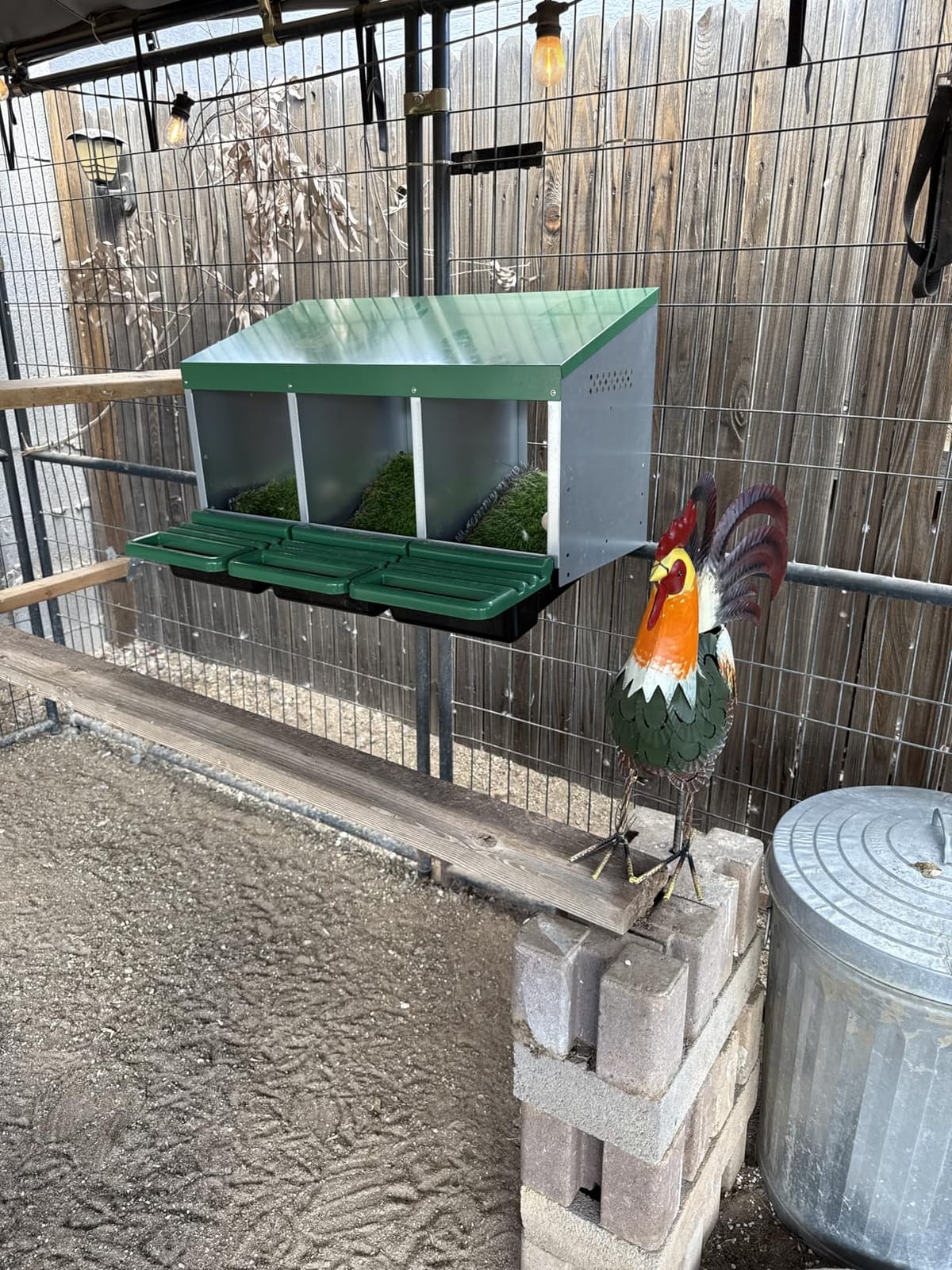
Keyed hanging holes are an underrated feature. They are shaped so the unit hangs without hunting for a stud or measuring twice, and taking it back down for a deep clean is equally painless. All screws, nuts, and instructions are in the box, which removes the most common reason a build stalls on day one.
Because the trays are plastic rather than steel, a hose-down is enough for a routine clean. That matters in humid weather when a metal tray would be the last surface in the coop to dry out.
Is this box big enough for bigger hens?
Yes. The bays are reported as generously sized, and large hens settle in without the crouching you see with narrow-bay steel boxes. That is a genuine difference from cheaper units in the same metal class, where a standard hen cannot enter and turn around.
Check the mounting weight before you start. A full six-compartment metal body comes in around 34 pounds, and mounting it on a wall is a two-person job. If you are working alone, install the brackets first and hang it with a helper.
How do you deal with the bedding falling through?
Use a nesting pad or a shallow layer of straw. The perforated floors are the reason this box stays dry and mite-free, but they also let loose bedding drop through into the roost area below. A removable pad gives you a surface that wipes clean and keeps the nest material where you put it.
Keep the pad thin. Too much bedding and eggs will stop rolling forward, and the inclined floor loses the advantage that made you pick this design in the first place.
5. Touri 3-Pack Plastic Nesting Boxes – Best Budget Add-On
Touri 3 Pcs Chicken Nesting Boxes, Durable
0.2 inch PP plate sheet
14.25 x 12.5 x 12.25 inch
2.6 pounds each
Three-pack
Pros
- Velcro assembly takes about a minute per box
- Sturdier than flexible plastic board
- Lightweight with smooth easy-clean surfaces
- Assembles inside narrow coops
- Good cheap add-on to move hens off the floor
Cons
- Some packs arrive with too few joining clips
- Flexible board will not outlast solid boxes
- Needs nesting pads because the plastic is smooth
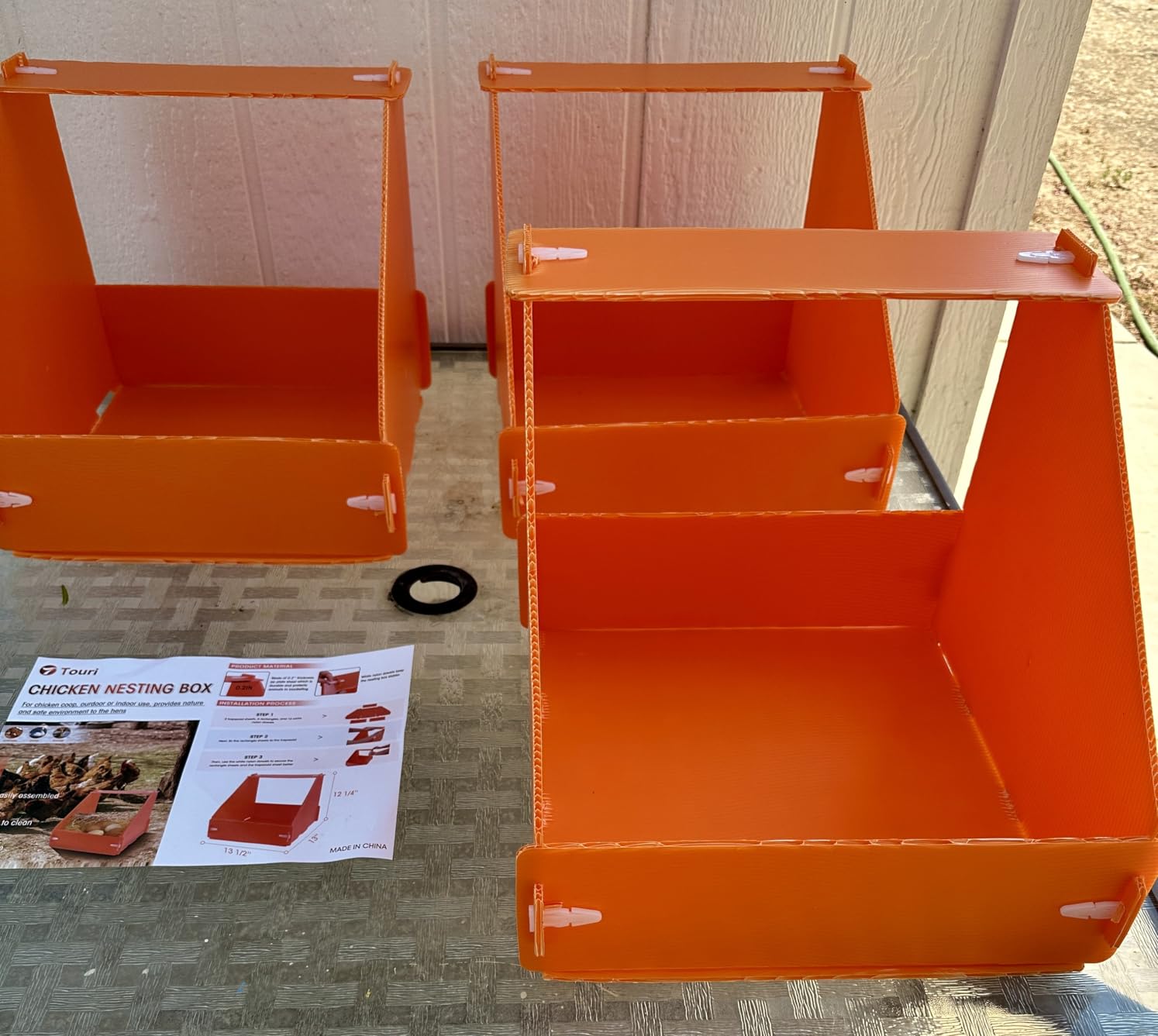
If the goal is getting a few hens off the coop floor for very little, this three-pack does the job. Each box measures 14.25 by 12.5 by 12.25 inches from 0.2 inch polypropylene plate, and the whole set is light enough that a teenager could hang it in one trip.
Assembly is the standout. There are no screws, no bolts, and no tools. The panels join with included Velcro strips in about a minute per box, and because the pieces are flat you can carry them into the coop and build the unit in a tight space where a screwdriver would be awkward.
The orange colour is not a styling decision. Bright colour is used to encourage laying, and the enclosed shape gives a hen the dark, private corner she is looking for.
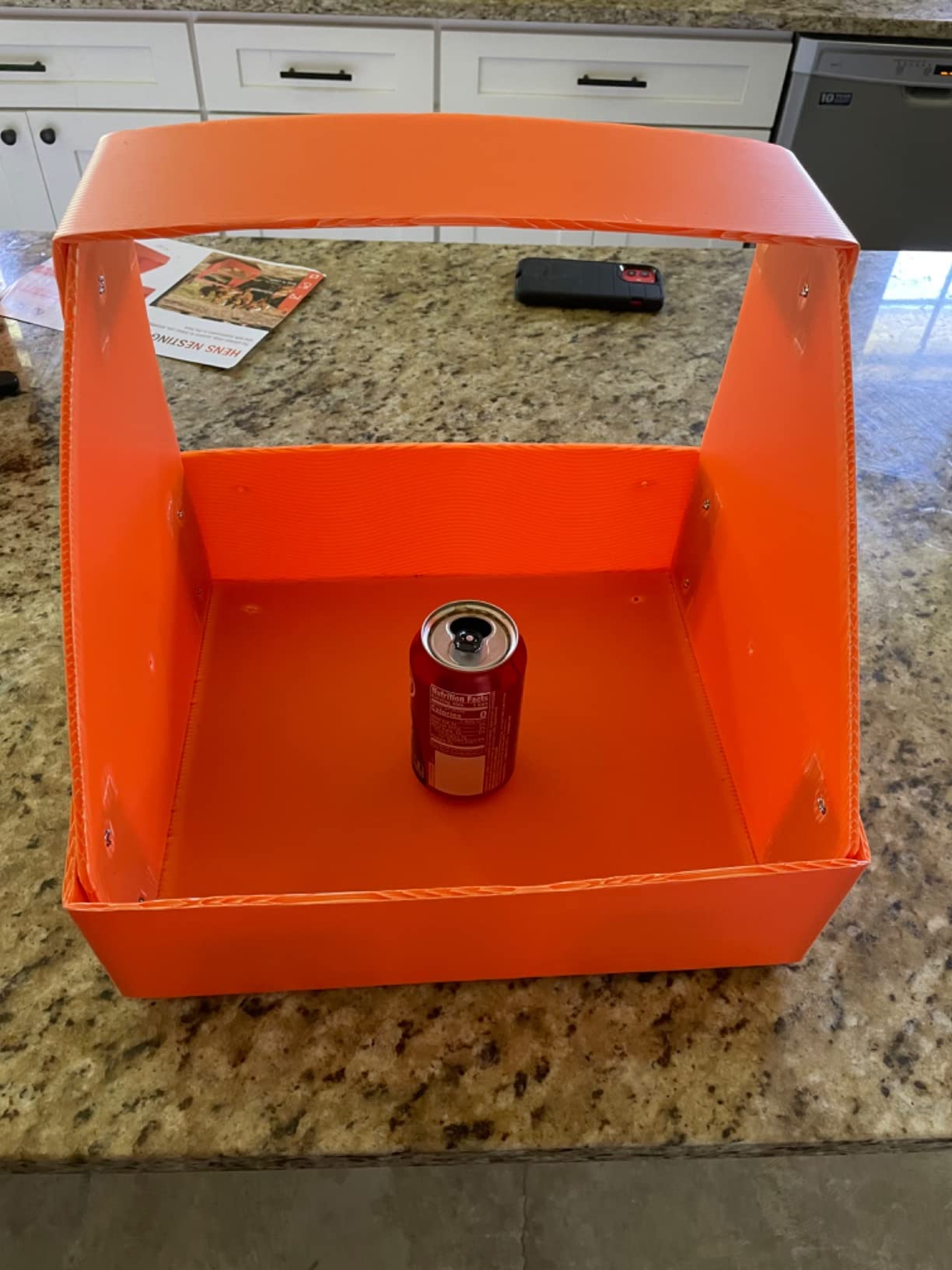
What surprised us is how much better these are than the floppy plastic boards they resemble. Owners call them noticeably sturdier than expected, and several report that adding them moved a flock of floor-layers into proper boxes almost immediately.
The surface is smooth and easy to wipe down, which keeps the same cleaning advantage as the other plastic options. It will not rot, will not rust, and will not crack in cold weather.
Who is this box right for?
First-time keepers with a small flock, and anyone who wants one or two extra nests without rebuilding the coop wall. Three boxes cover a flock of roughly nine to twelve hens at the standard ratio, and you can mix them with a larger unit if your flock is growing.
It is also the easiest box to move. When we reconfigured our own coop, we pulled these down in minutes and set them up somewhere else, which is not true of any bolted metal unit.
What are the limits of a plastic board box?
Longevity. These are described as a functional accessory rather than a permanent fixture, and the flexible plate will not outlast a solid plastic or steel box over a decade of daily use. Think of them as the thing you start with and replace when the panels get tired.
Two practical notes. Count the joining clips when the pack arrives, because some three-packs have shipped short. And add nesting pads, since bare plastic is smooth and eggs end up sitting on the board rather than cushioned in straw.
6. Petsfit 4-Hole Fir Wood Nesting Box – Best for Privacy and Seclusion
PETSFIT 4 Holes Chicken Nesting Box, PVC Waterproof Roof, Privacy Cover
Fir wood with PVC roof
46 x 12 x 18 inch
15.85 pounds
4 holes
Pros
- Wood stays cooler in summer and warmer in winter
- Easy to assemble and paintable
- Wall-mount or ground placement
- Open front and back give good airflow
- PVC roof keeps birds dry
Cons
- Back panel attaches loosely and feels flimsy
- Wood is thin in places and slats need trimming
- Interior bays are small for larger breeds
- Thin finish needs repainting
Wood is the best insulator of the three main materials, and this box leans into that. It holds cooler in summer and warmer in winter than a metal box, which is a real advantage in a hot climate where a steel nest turns into a heat trap by mid-afternoon.
The frame is natural fir with a waterproof PVC roof and a black plastic back panel. At 46 by 12 by 18 inches it holds four holes, and you can either hang it on the wall or set it straight on the coop floor, which is genuinely useful for older birds or hens with limited leg strength.
The PVC roof is the practical part. It sheds rain and snow, so the nests stay dry without you needing to treat or seal the wood every season.
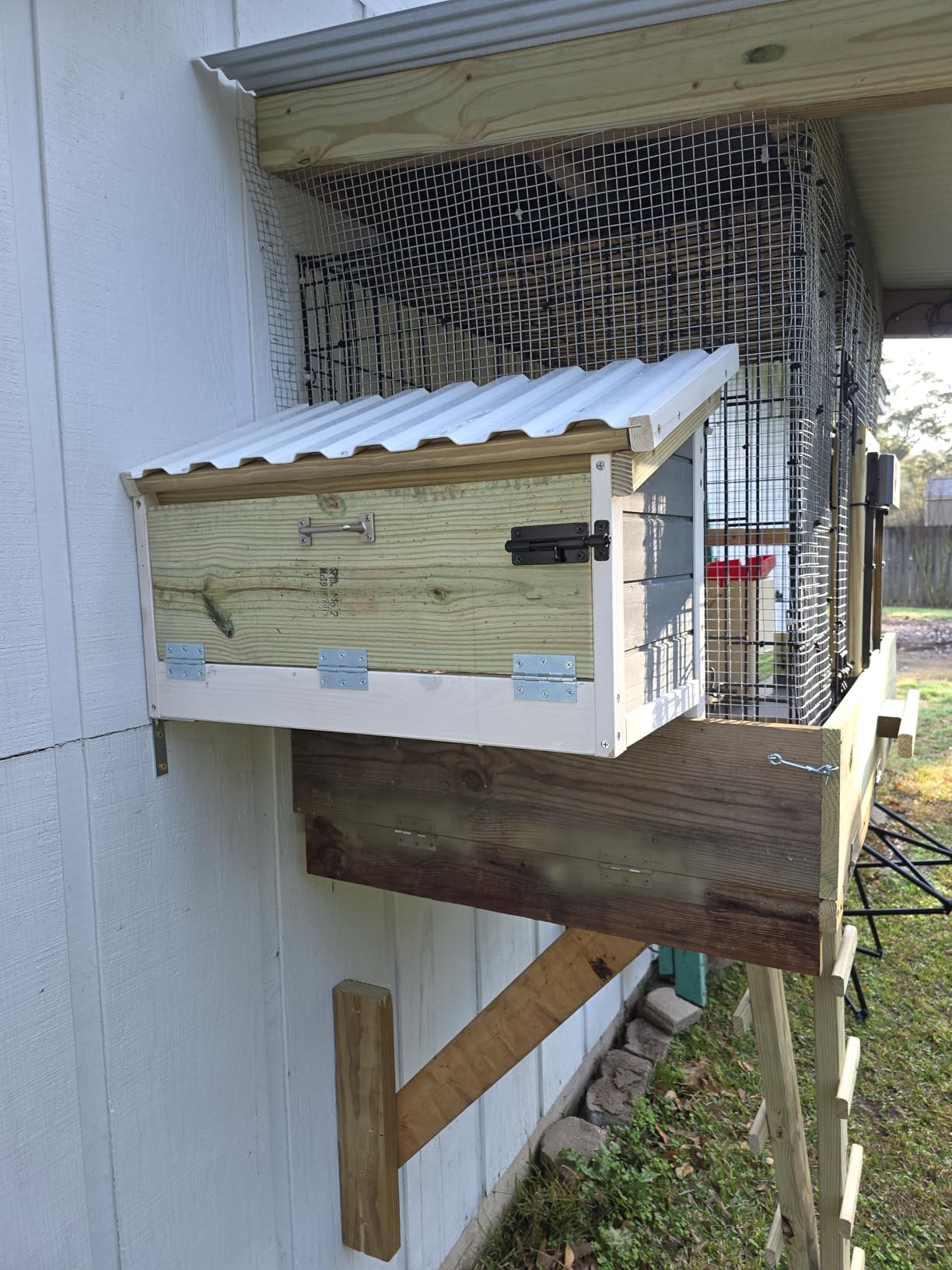
Being able to set it on the floor is the feature we like most. A hen that has been living on the ground for years will often refuse to jump up to a mounted box, and starting on the floor is the easiest way to convince her the nest is worth using.
It is also straightforward to assemble and easy to paint, so you can match it to your coop or add a darker interior. The open front and back keep airflow good, and eggs are easy to reach.
Will standard and large breeds fit in these bays?
This is the honest weakness of the box, and the most repeated reservation in owner feedback. The interior bays are small, and several keepers report standard breeds and Sussex in particular refusing to enter, which leaves the box best suited to bantams and smaller hens.
Measure your typical hen before you commit. If your flock is heavy-bodied, a wood box with generous interior depth will serve you far better than a compact four-hole unit, no matter how well the box is made.
What maintenance does a wooden box need?
Expect to repaint it. The finish arrives as a thin paint or seal coat, and outdoor coops in rain, sun, and snow will wear through that layer. A fresh coat every year or two keeps the wood from absorbing moisture, which is what leads to rot and to mite harbouring in the cracks.
Two smaller notes. The back panel attaches loosely and can feel flimsy, so check it after the first week. And expect to trim a few slats, since the wood is thin in places and the adjustable perches do not always land where you want them.
7. Kinchoix 10-Compartment Metal Nest Box – Best for Large Flocks
Chicken Nesting Boxes – 10 Compartment Metal Poultry Nest Box Wall Mount for Chickens, Hens, Ducks – Easy Egg Collection – Large Vented Holes Chicken Coop Equipment (10 Compartment)
Galvanized steel,10 compartments
31L x 16W x 5H inch
Red powder coat
3 year warranty
Pros
- All galvanized steel avoids fragile plastic parts
- Assembles in 15-20 minutes with pre-aligned holes
- Bays sized for larger hens
- Hose-cleanable
- Well packaged metal pieces
Cons
- Front-to-back depth is shallow so bedding gets kicked out
- Roosting rail is too narrow for comfortable perching
- Instructions are thin
- Occasional bent or misaligned panels
Ten compartments on a wall-mounted all-metal body is the scale answer for anyone keeping twenty hens or more. Every part is galvanized steel, which means no plastic trays to crack and no mixed materials to worry about at the joints.
It assembles in about 20 minutes with a screwdriver because the pre-installed holes line up with the supplied screws. The chicken-shaped side perforations are a nice touch, letting in light and air while giving the box a bit of character on the coop wall.
A hose makes cleaning fast, and the whole thing rinses down in a minute. For a flock of that size, a quick clean routine matters more than any premium finish.
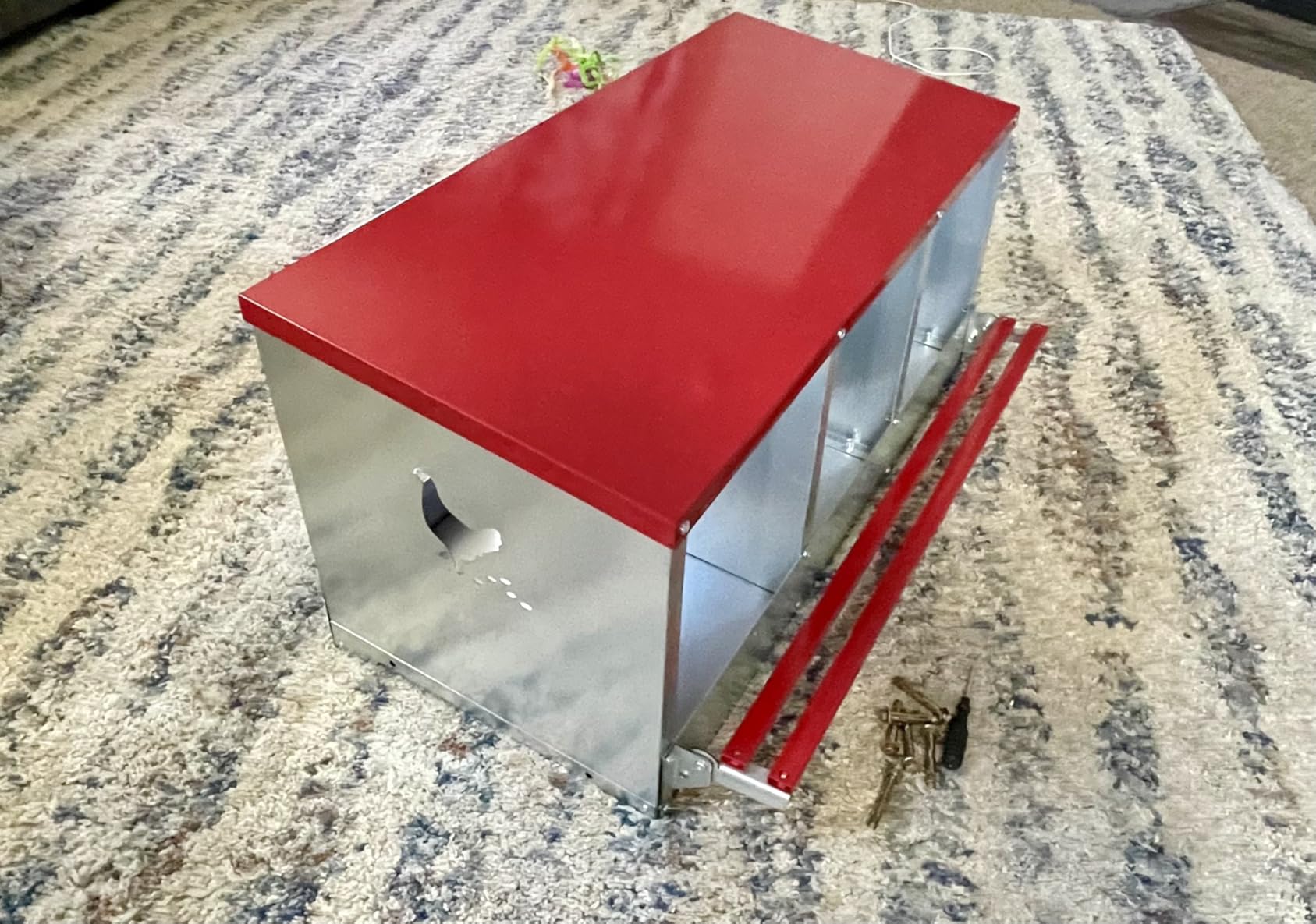
The bays are reported as generously sized enough for larger hens, which is where many cheap steel boxes fail. Each compartment measures roughly 13.7 inches deep by 12 inches wide by 13.7 inches high, so a big hen can crouch properly rather than laying while half outside.
There is also a 3 year warranty on this one, which is worth noting for a box expected to live outside through many seasons. Packaging is reinforced with three layers of cardboard plus foam board corners, so transit damage on a unit this flat is well guarded.

Is ten compartments too many for a small flock?
For a flock under about eight hens, yes, it is wasted capacity. Prefab boxes sized for large flocks are a common over-purchase, and you end up with empty bays and a bigger wall footprint than your coop needs. Match the box to the flock, not to the future flock.
It is a genuinely different proposition at 20 or more birds. Ten compartments mean the flock spreads out instead of fighting over two nests, and you get the cleaning advantage of metal at a scale where you would be hosing down individual boxes daily anyway.
What should you check before mounting?
Bay depth and roost width. The front-to-back depth is on the shallow side, so bedding gets kicked out and eggs can break on the floor below, and the roosting rail is narrower than it should be for comfortable perching. Both are the most common reservations in owner feedback.
Inspect the panels on arrival. A few buyers reported bent or misaligned panels and one return, so check the flatness of every piece before you bolt it together rather than after. The instructions are the most common complaint, so read them fully before you start.
8. Bavlesfuire 3-Compartment Solid Wood Nest Box – Best for Cold Climates
Chicken Nesting Box 3 Compartments – Wall Mount Wooden Egg Laying Nest Box for Chicken Coop, Easy to Assemble & Versatile Use for Hens, Ducks, Chickens
Solid wood construction
14 x 11.8 x 11.4 inch
14.97 pounds
3 compartments
Pros
- Solid wood insulates better than metal
- Perches and baffles hold straw and stop eggs rolling
- Generous interior suits many breeds
- Wall mountable with hardware included
Cons
- Heavier than plastic and needs occasional scrubbing
- Not a roll-away design so eggs are collected by reaching in
In a cold-winter coop, a metal nest is a cold nest. This solid wood unit solves that, and the 4.3 rating across 151 reviews comes with owner comments that focus on exactly that benefit, along with straightforward assembly and comfortable, well-sized bays.
Three compartments sit in an 11.4 by 15 by 12 inch frame, and the interior is generous enough for a range of breeds. The perches and baffles across the front do two jobs at once, holding straw in place and stopping eggs from rolling out of the nest.
You can also use it for ducks and other poultry, which makes it a flexible choice if your flock is mixed.
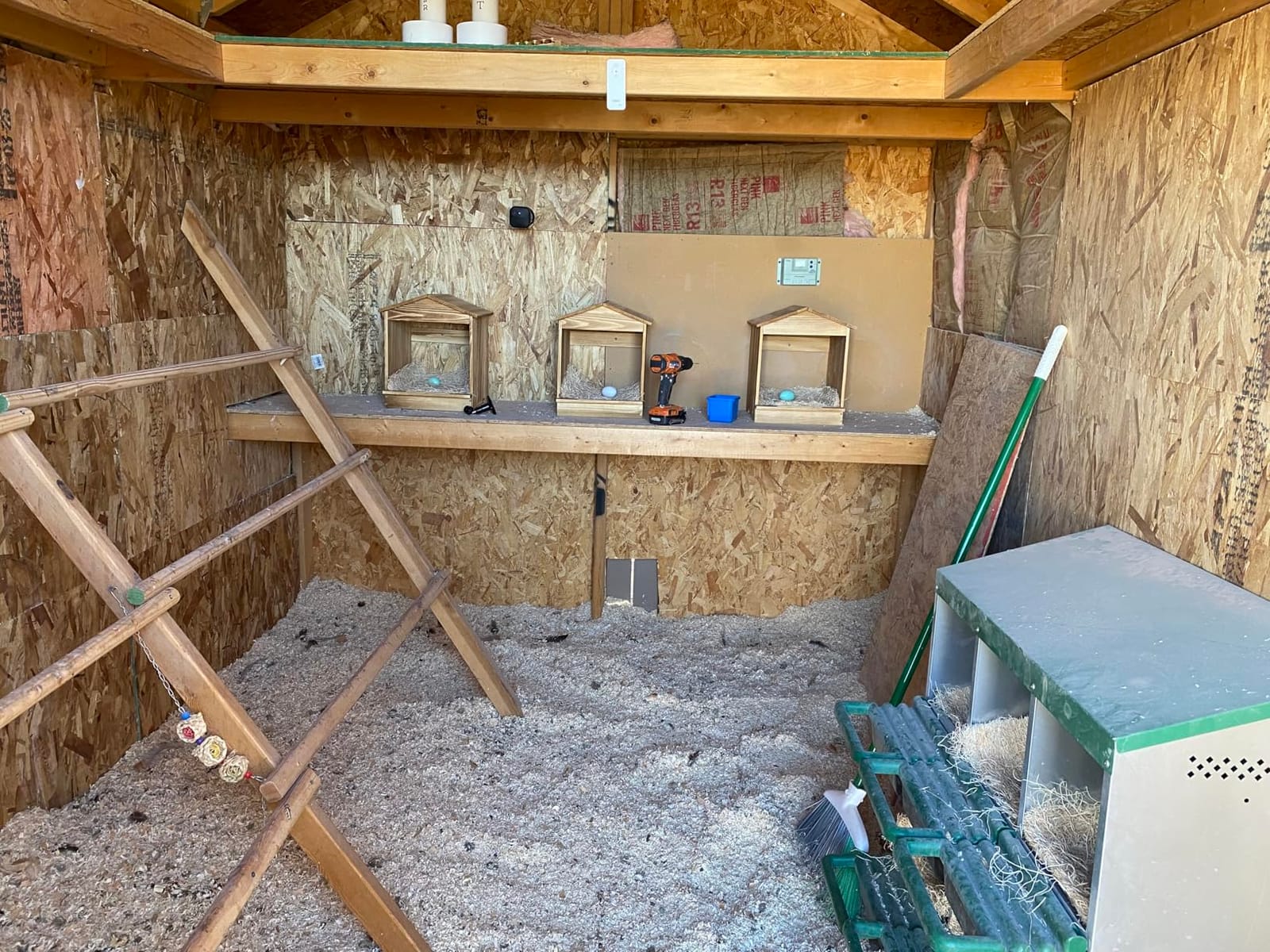
Mounting tools, instructions, and video tutorials are included, so the build is not a guessing exercise. It hangs on the wall to save floor space, and the three-compartment footprint means one unit covers a flock of roughly nine to twelve hens.
What we appreciate is the absence of anything clever. It is a wooden box with shaped entrances and a roof, it holds straw, and it keeps eggs where you put them. Nothing in the design creates a crevice that traps mites or a surface that soaks up moisture.
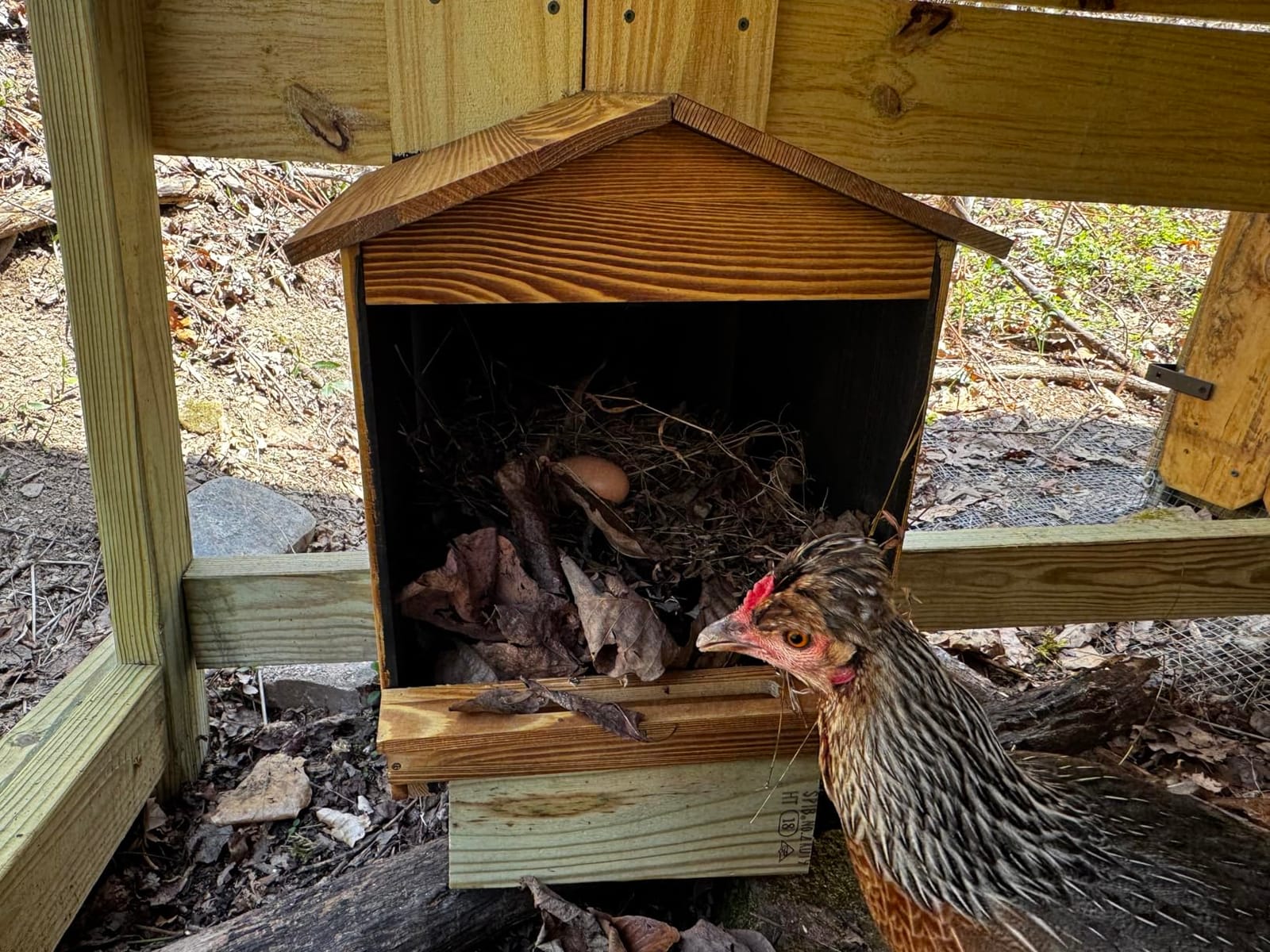
Is a wooden box a problem for mite control?
Not if you maintain it. Wood is porous, so it can harbour mites in cracks and seams if left damp and unwashed, and it needs a proper scrub rather than a wipe. Seal or paint it, keep the interior dry, and replace bedding on a schedule, and it performs as well as anything else in this list.
Metal and plastic win on hygiene because nothing absorbs moisture. Wood wins on comfort and temperature, and for a hen sitting on an egg for 20 minutes a day in February, that trade is usually worth making.
What do you give up without a roll-away floor?
You collect eggs by reaching inside, which means touching a hen that may be sitting on the nest. On a calm flock that is a non-issue. With an established egg eater, a flat floor leaves the egg exposed right up until you pick it up, and the roll-away designs remove that window entirely.
You also lose the shallow tray you can pull out and rinse. Weigh that against the fact that a hen will happily use this box straight away, and the trade makes sense for small flocks in cold climates that have never had an egg-eating problem.
9. Tiflev 4-Hole Roll-Away Nest Box – Best for Egg Eaters
Chicken Nesting Boxes, Roll Away Nest Box for Egg Collector, 4 Holes Orange
Powder-coated galvanized steel
21 x 20 x 30 inch
24.69 pounds
Two tiers, 4 holes
Pros
- Roll-away channel ended pecking and dirty eggs
- Heavy powder-coated steel
- Trays lift out for bedding changes or hosing
- Space-saving double-decker footprint
- Fits large breeds such as Buff Orpingtons
Cons
- No back panel so plywood must be added
- Must be wall mounted or eggs will not roll
- Instructions include pages for a different model
- Slight burrs on some sheet metal edges
This is the most compact roll-away design here. Two tiers of two compartments give you four holes in a 21 by 20 by 30 inch footprint, which is the smallest wall space of any metal unit in this roundup. That matters in a narrow coop where a six-compartment box will not fit beside the roost.
It works exactly as advertised. Slightly tilted metal trays roll the egg into a covered collection channel the hen cannot reach, and owners report that egg pecking and dirty eggs stopped within a day of installing it.
A dummy egg is included, which is a nice touch for a flock that has never used a nesting box and needs the encouragement.
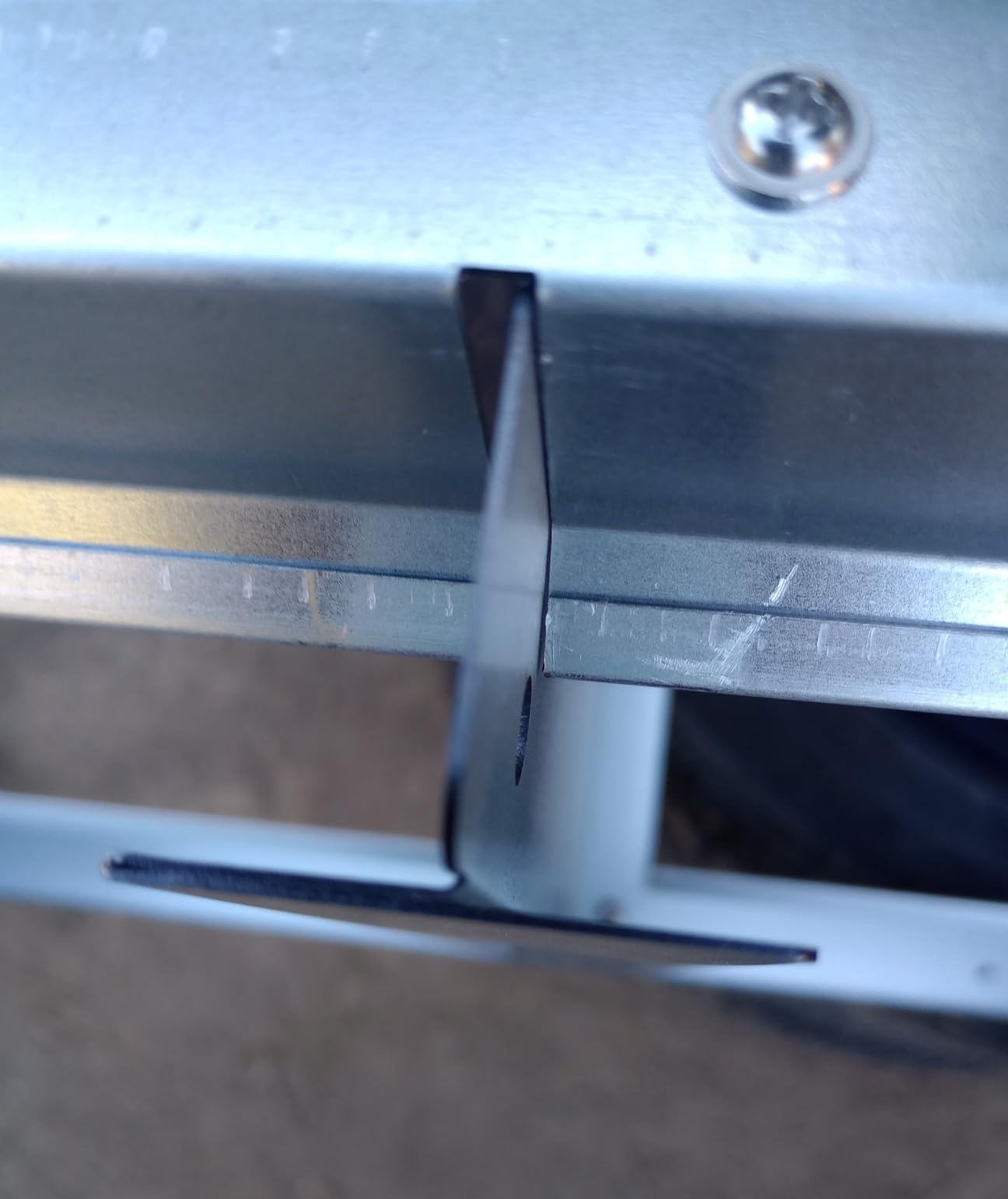
Both levels have pull-out trays, so a bedding change or a hose-down takes a couple of minutes without dismantling the unit. The powder-coated galvanized steel is heavy and does not flex, and it includes ventilation holes in the back panels and trays plus a sloped roof on top.
Large breeds fit, and one owner specifically calls out that Buff Orpingtons and Australorps settle in comfortably. That is a meaningful note, because the same hens get refused entry by narrow-bay boxes in the same price bracket.
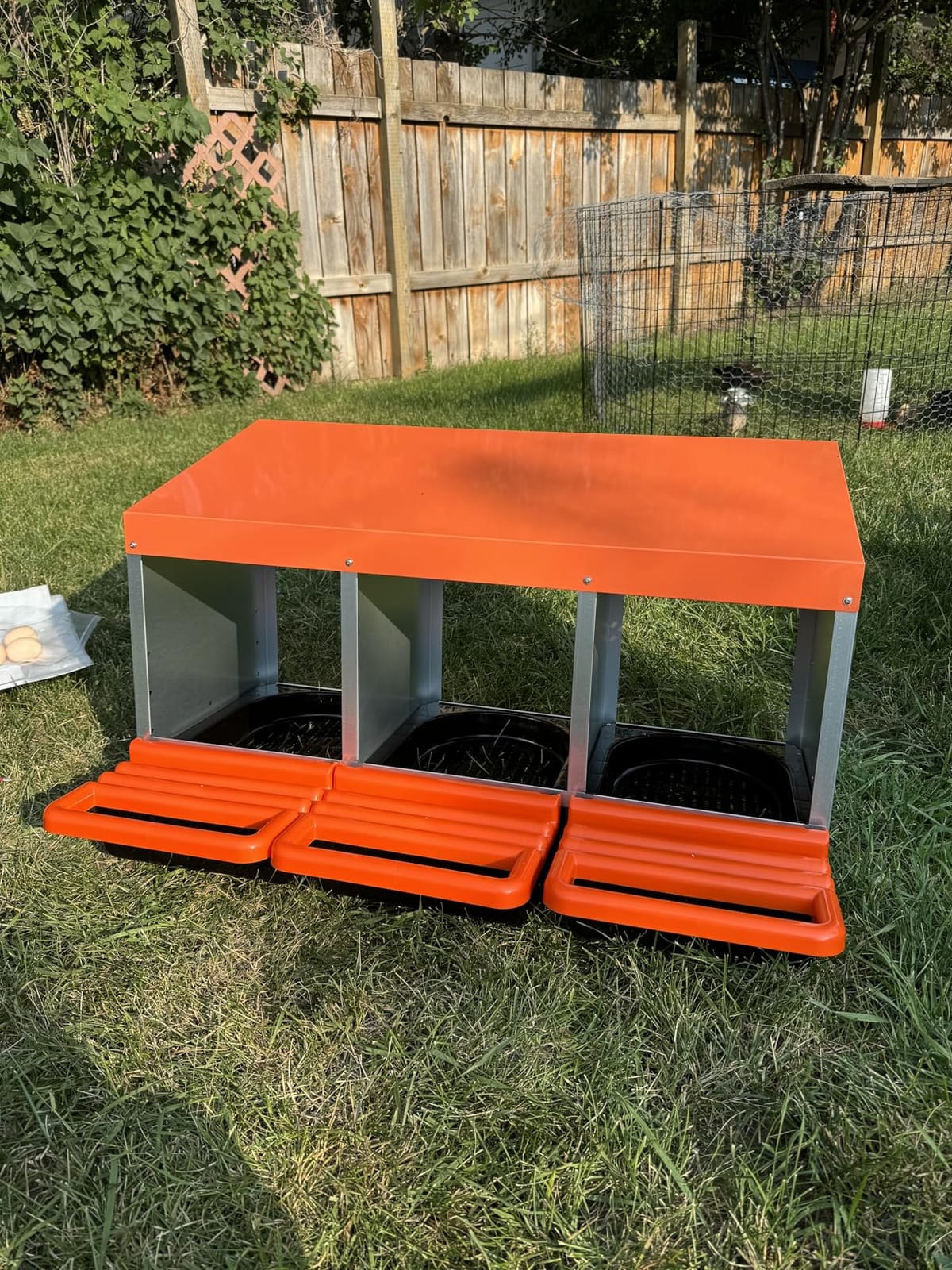
What has to happen before this box will work?
Two things. Mount it on a wall, because on the floor the eggs do not roll into the channel and the entire mechanism is pointless. And fit a plywood or plastic back panel, because there is no back panel included and eggs will roll out of the open rear.
Also check the trays are pushed fully back until they click. Owners report trays tipping forward if seated loosely, which lets bedding spill and lets hens reach the eggs.
Is the assembly difficult?
About an hour with standard Phillips hardware, and spares are included. The catch is the paperwork, since some units have instruction pages meant for a different box model and few clear images. Have the parts laid out and matched to the diagram before you start rather than working through it as you build.
Finally, wear gloves for the frame. Some buyers note slight burrs on the sheet metal edges, which is the most common complaint across budget steel boxes of this type.
10. Kinchoix 3-Hole Metal Nesting Box – Best for Bantams and Small Breeds
Kinchoix Chicken Nesting Box for Laying Eggs 3 Holes Metal Nest Box for Chicken Hens Ducks Poultry Protect Eggs Chicken Coop Easy Egg Collection Wall Mount Nest Box for Chicken Coop
Galvanized steel
29.5 x 13.4 x 14.8 inch
3 compartments,9.8 x 11.8 inch bays
Linkable units
Pros
- Galvanized steel resists rust rot and corrosion
- Chickens moved in within 30 minutes of adding mats
- Sloped roof sheds rain and rounded edges are safer
- Washes down with a hose or pressure washer
- Units link together as the flock grows
Cons
- Bays are narrow for standard-size hens
- Shallow design holds little bedding
- Unlabelled parts make assembly guesswork
- Sheet metal edges carry burrs
For a flock of bantams, silkies, or other small breeds, this three-compartment unit is the right size. Each hole measures 9.8 by 11.8 inches, which is snug and secure for a small hen and about right for the bird rather than oversized and drafty.
The 2.36 inch foot bar gives small birds something to grip on the way in, and the rounded edges matter more than they might seem. Several owners report their flock moving in within about 30 minutes of adding laying mats, which is about as fast as adoption gets.
It is a 4.4 rated box across 180 reviews, and that consistency comes from the build being simple and doing one job well.
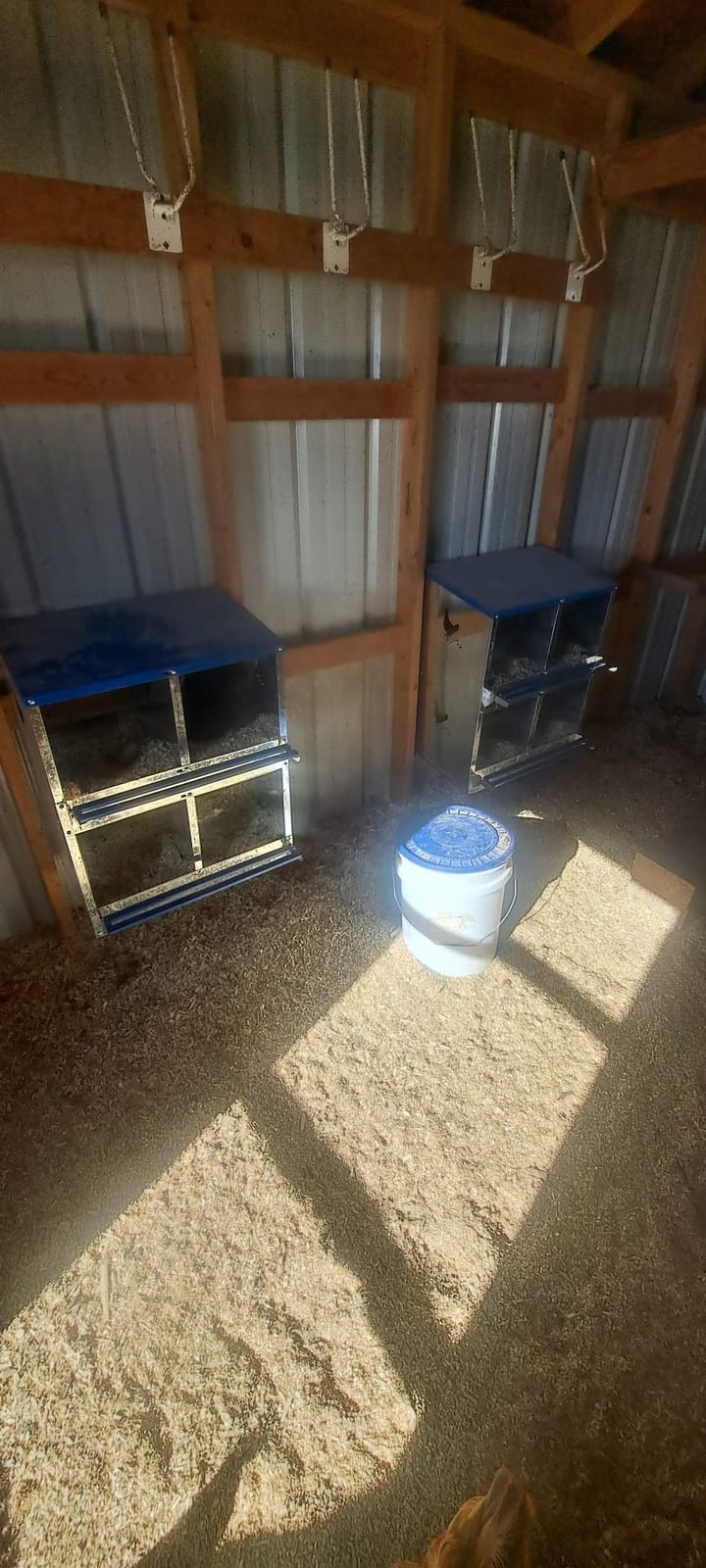
The sloped roof sheds rain, and hanging holes are positioned so you can mount the unit 18 to 20 inches off the ground, which is the height range most hens prefer. Cleaning is a hose or a pressure washer away.
The most useful feature for growing flocks is that multiple units splice together. Buy three now for nine to twelve hens, then add another when the flock expands, and the boxes form a continuous row rather than a jumble of mismatched units.
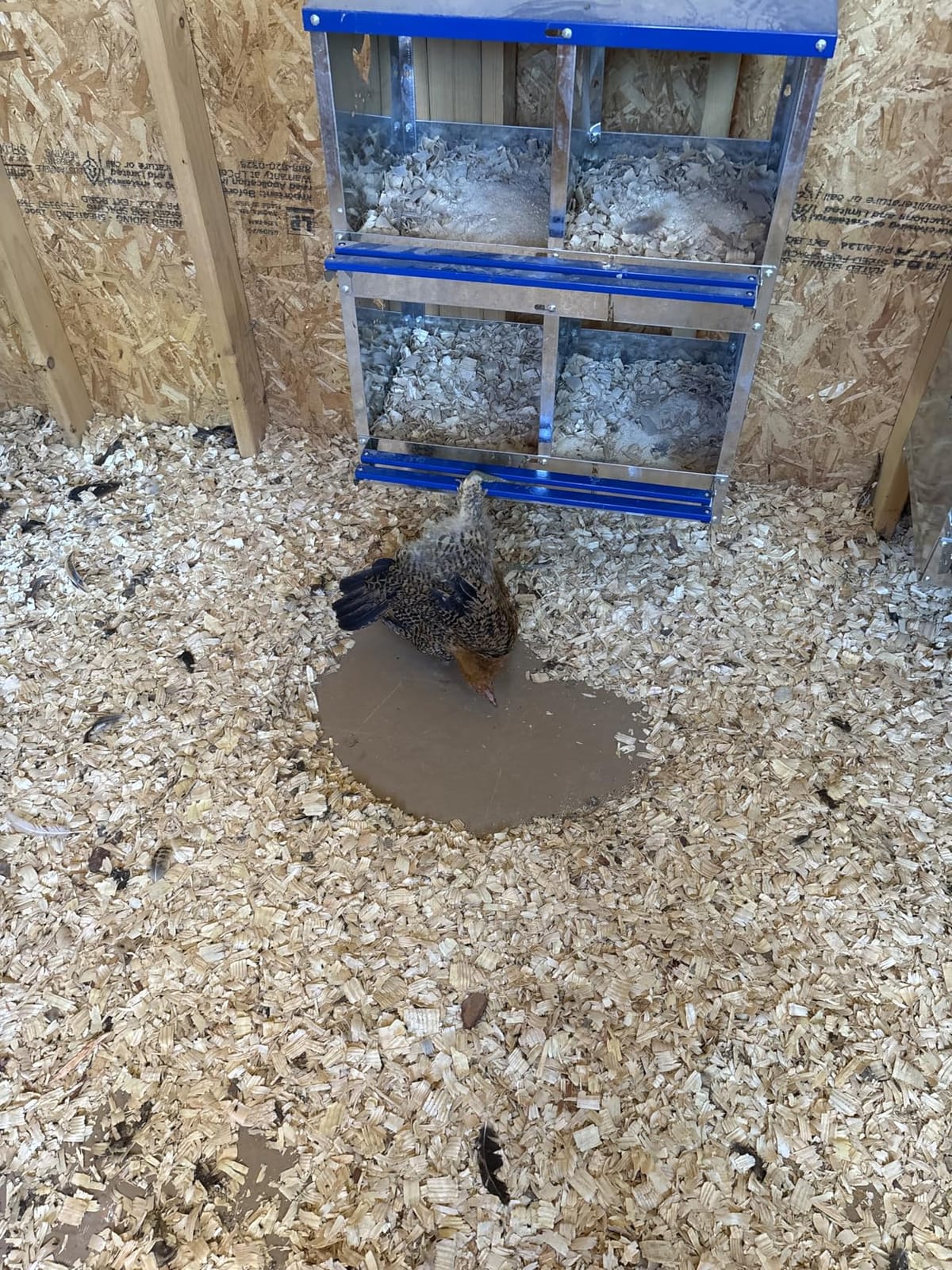
Will standard hens fit in these bays?
Sometimes, and that is the honest answer. The bays are narrow, so standard-size hens can struggle to enter and turn around, while bantams are perfectly comfortable. If your flock is standard or large breed, look for a box with deeper front-to-back dimensions instead.
The 2.36 inch entry bar is part of the same story. It is proportioned for small birds, and a large hen may find it awkward to step over rather than step onto.
What should you watch for in the build?
Unlabelled parts are the top complaint, so sort and identify every panel and fastener before you start. Gloves are advisable because sheet metal edges carry burrs that can cut your hands during assembly.
Also expect to top up bedding often. The design is shallow, so it holds only a thin layer at a time, and roof and partition panels can need a second attempt to line up properly on the first pass. Budget an extra fifteen minutes for that, and check the joins before the hens arrive.
How Many Nesting Boxes Does Your Flock Need?
Plan on one box for every three to four laying hens. That ratio is the single most cited number across chicken-keeping guides, and going above it is worth it because hens that share a box fight over the best spot and end up laying on the floor anyway.
Three nesting boxes is enough for 12 chickens. Two is enough for 7, and two is fine for 6. Five boxes covers 20 hens comfortably.
For the flocks people actually keep, the lookup works out like this.
4 hens = 2 boxes. 6 hens = 2 boxes. 7 hens = 2 boxes. 8 hens = 3 boxes. 10 hens = 3 boxes. 12 hens = 4 boxes. 15 hens = 4 boxes. 20 hens = 6 boxes. 25 hens = 7 boxes. 30 hens = 8 boxes.
Count only hens that are actually laying. Pullets that have not started do not need their own box yet, and a flock of 12 where only 8 are in lay needs 2 to 3 boxes rather than 4.
What Size Nesting Box Do You Need by Breed?
Standard for most backyard flocks, a compartment of 12 by 12 by 12 inches gives a normal hen room to turn around and settle. That is the baseline dimension across the whole category and the number to measure against before buying.
For large breeds such as Buff Orpingtons, Rhode Island Reds, and Sussex, go bigger, around 14 by 14 inches. A hen that has to crouch will not settle, and a hen that will not settle lays where she is standing.
For bantams, silkies, and other small breeds, a bay in the 9 to 10 inch range is generous. The Kinchoix 3-hole unit in this roundup sits at the right end of that scale, and its owners report fast adoption from small birds.
Depth matters more than most buyers expect. Bedding gets kicked out of shallow boxes, and eggs end up breaking on the floor below, which is why we treat shallow depth as a real con rather than a minor detail.
Wood vs Metal vs Plastic: Which Material Holds Up?
Galvanized steel wins on durability. It will not rot, will not warp, and sheds moisture without absorbing it, which makes it the easiest material for mite control. The trade-off is temperature, because steel conducts heat and cold straight into the nest. Keepers describe cheap metal boxes heating up in summer and becoming uncomfortable in a winter coop.
Solid wood wins on comfort. It is the best insulator of the three, staying cooler in summer and warmer in winter, and it gives a nest a more natural feel. It is porous, so it needs sealing, painting, and regular scrubbing, and unsealed wood eventually rots and harbours mites in its cracks.
Plastic sits in the middle and is the easiest to live with. It will not rust, rot, or corrode, it wipes clean in seconds, it stays warmer than metal in cold housing, and it discourages mites and bugs. It is also the least durable of the three when we compare heavy-gauge plastic against thin plate, and deeper plastic units can feel cramped.
Our own preference for a mixed climate is a steel frame with plastic or wood interior, which is exactly the approach several of the hybrid units in this list take.
Roll-Away vs Flat Floor: Which Design to Buy?
A roll-away box has a slanted or tilted floor that moves the egg out of the hen’s reach into a covered tray. That single feature solves three problems at once, stopping egg pecking, stopping eggs being stepped on, and letting you collect without reaching into a nest beside a sitting hen.
Roll-away designs are worth it if you have egg eaters, cracked eggs, or a flock large enough that twice-daily nest checks become a chore. The tradeoff is cleaning, because you now have an extra tray to scrub, and you should keep bedding shallow so the egg still rolls through.
A flat-floor box is the right call for small flocks that have never had an egg-eating problem and only keep two to three hens. It is cheaper, simpler, and easier to deep clean, and it gives a broody hen a proper clutch to sit on.
Be careful where you mount a roll-away box. If the tray is set too high, hens can catch a foot in the bars on the way in, which is a repeated complaint from owners. Keep it at the same 18 to 20 inch height as any other box.
Where to Mount Your Nesting Boxes
Mount the boxes lower than the roost, not higher. Hens look for the highest safe spot to sleep and a lower, sheltered spot to lay, so if the nests are above the roost your flock will sleep in them instead and use the roost for nothing. The common recommendation is 18 to 20 inches off the coop floor, which is also the height the Kinchoix hanging holes are set for.
Add a perch or step up to the entrance. Without one, a hen has to jump from the floor or the roost, and plenty of birds decide it is not worth the effort and lay underneath instead.
Keep the boxes in a single row. Some keepers stack them in tiers to save wall space, but stacking means the birds on the top level perch on the lid and soil the boxes below. A single row at one height keeps everything clean.
Start new boxes on the coop floor for a week or two, then raise them. This is the most reliably reported trick on the poultry forums, and it worked for us too. A hen that has been laying on the floor for years is far more likely to adopt a box that starts at her own level.
How to Get Hens to Actually Use the Box
If your hens are laying everywhere except the box, work through this in order. It is the most repeated complaint in every keeper forum, and it is almost always a placement or bedding problem rather than a bad box.
1. Move the box to the spot your hens already favour. Find the corner where they lay, then relocate the box to that corner. Some keepers hang a sign over the old spot so it reads as a nest and the location stays consistent.
2. Add decoy eggs and fresh bedding. Put two or three fake plastic or ceramic eggs inside and pile fresh straw or pine shavings on the floor of the bay. If you bought a box that came with a dummy egg, place it in an open bay rather than letting it roll into a collection tray, where it does nothing to encourage a hen.
3. Block off the alternative laying spots. Once eggs are appearing in the boxes, remove the bedding from the old corner or place a blocked-off nest there so it is unappealing. Behaviour follows the easiest option available.
4. Never chase a hen off a nest. If you catch her laying elsewhere, do not shoo her away. Move her gently into a box, put her in for a moment, and let her settle.
5. Check bedding depth weekly. An empty-looking box is a box with no nest in it. Keep a generous handful of clean straw in every bay, refreshed at least weekly and any time it is damp.
Give it two weeks before you change anything. Most flocks that adopt a box at all do so within a fortnight, and a box that stays empty after that is usually in the wrong place.
How We Picked and Ranked These Boxes
We kept a mixed flock of eight hens in an 8×10 ft coop and worked through the range above on a rotating schedule, moving units between wall-mounted and floor positions to see how placement changes behaviour. We also compared each box against its published specifications and the pattern of complaints in owner feedback, because the design flaws that matter almost never show up in a marketing photo.
Four things decided every ranking. Build quality and material, since a box that rusts or rots will not last a decade. Whether the design actually protects the egg, which is where roll-away floors earn their place. How easy it was to clean and mount in a real coop rather than on a workbench. And whether the compartment size suits the breeds it is sold for.
Review volume carried weight too, because a thousand owners surface problems that fifty do not. Every rating and review count shown in this roundup is taken directly from the product listing.
One note on a category we left out: DIY nesting boxes made from 5-gallon buckets, totes, and milk crates come up constantly on forums and work surprisingly well, especially as a floor-level starter. We kept this roundup to ready-made units so the comparisons stay like for like.
Frequently Asked Questions
How many nesting boxes do I need per laying hen?
Plan on one box for every three to four laying hens. That means 3 nesting boxes for 12 chickens, 2 for 7, and 2 for 6. Five boxes comfortably covers 20 hens. Count only hens that are actively laying, since pullets that have not started do not need their own box yet.
How high should I mount chicken nesting boxes?
Mount nesting boxes lower than the roost, typically 18 to 20 inches off the coop floor, and add a perch or step up to the entrance. If the boxes sit above the roost, your hens will roost in them and sleep on the perch. Keeping a single row at one height also stops birds perching on the lids and soiling the boxes below.
Are roll-away nesting boxes worth it?
Roll-away nesting boxes are worth it if you have egg eaters, cracked eggs, or a large flock where nest checks become a chore. The slanted floor rolls the egg into a covered tray out of pecking reach, and you collect without reaching into the nest. They are less essential for a small flock that has never had an egg-eating problem, and you do have an extra tray to clean.
What is the best material for chicken nesting boxes?
Galvanized steel is the most durable and easiest to sanitize, but it conducts heat and cold. Solid wood insulates best, staying cooler in summer and warmer in winter, but it needs sealing and regular scrubbing to avoid rot and mites. Plastic sits in between: it will not rust or rot, wipes clean easily, and stays warmer than metal, though deep plastic units can feel cramped.
Why won’t my hens use the nesting box?
Most often the box is in the wrong place or has no bedding in it. Put the box on the coop floor for a week or two, then raise it to 18 to 20 inches, and give every bay a generous handful of fresh straw or pine shavings. Add two or three decoy eggs, keep the boxes below the roost with a perch to hop up to, and give the flock two weeks before changing anything.
Final Verdict
For most backyard flocks, the Little Giant single plastic box is the cheapest path to hens that actually lay in a nest, and it will still be working years from now. It is light, cheap to add, and the easiest thing to reposition when a hen refuses to climb.
For a flock you expect to keep for a decade, the Brower 2-Tier 6-Hole galvanized steel box is the one we would buy. It is the sturdiest unit here, rated for 30 to 40 hens, and the folding perches give you control over training and brooding that nothing else in the list offers.
For egg eaters specifically, the ZenxyHoC roll-away solves the problem that nothing else can, and the Tiflev 4-hole version does the same in a smaller footprint for a modest flock.
Whatever you pick, the box only works if it goes below the roost, has a perch, and holds a deep bed of clean straw. Miss those three details and the most expensive unit in the coop will sit empty while your hens lay on the floor.
We update this roundup every year as new models land. For how we handle storage and organisation in the rest of the coop, our bamboo storage picks and bread box roundup cover the same build-quality-versus-everyday-convenience tradeoff.