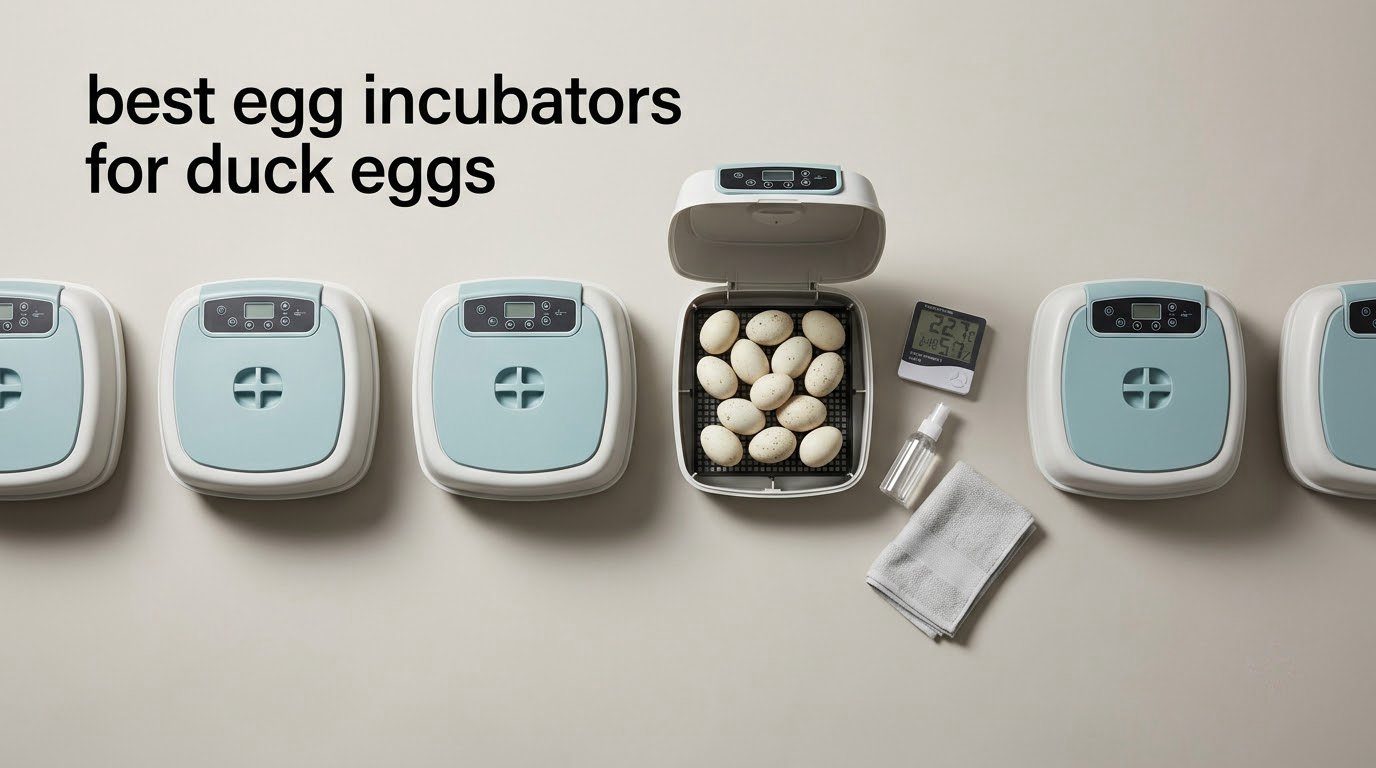
Most duck keepers discover the hard way that a hen incubator and a duck hatch are two different jobs. Duck eggs run a 28-day cycle instead of 21, they sit closer to 100F, and they need more moisture in the air than a chicken egg ever does. Pick a unit that only advertises chicken capacity and you will be counting empty shells on day 29.
After running waterfowl clutches through eight different incubators, the same pattern kept showing up. The machines that held 99.5F for four straight weeks without drifting won every time, and the ones with a fan, a real hygrometer and a turner that can stop itself on day 25 made the whole job calmer. This roundup of the best egg incubators for duck eggs covers eight units that satisfy at least two of those three, from a compact first-timer’s box to a 41-egg chamber built for volume hatching.
We also leaned hard on the numbers manufacturers print, because that is where duck keepers get burned. A unit labelled 22 eggs might hold 12 to 18 duck eggs, and a 12-egg tray can be closer to six. Every pick below lists its real duck capacity where the maker states one, and we call it out where it does not. If you end up with extras, our eggs benedict recipes and deviled eggs recipe are the reliable backup plan.
Table of Contents
- Top 3 Picks for Duck Egg Incubators in 2026
- Duck Egg Incubation Settings at a Glance
- The Best Egg Incubators for Duck Eggs in 2026 at a Glance
- 1. Harris Farms Nurture Right 360 – The Proven All-Rounder
- 2. CluckRun CK18 – The Best Dedicated Large-Egg Tray
- 3. MATICOOPX MEI-20 – Fan Circulation and Frequent Turning
- 4. APDOE HatchPro 12 – The Easiest First Incubator
- 5. Onsju 18H-OO – Bright Candling and Programmable Turning
- 6. IBKINXX IBK-18EGG – Clean, Quiet and Fully Disassemblable
- 7. Farm Innovators 41 Egg Digital – The Volume Hatch Option
- 8. ZEMIRO CHARGE Series I 12 – Straightforward and Low-Cost
- How to Choose an Egg Incubator for Duck Eggs
- Preparing and Storing Duck Eggs Before Setting
- Troubleshooting: Why Duck Hatches Fall Short
- Frequently Asked Questions
- Conclusion: The Right Incubator for Your Flock
Top 3 Picks for Duck Egg Incubators in 2026

Harris Farms Nurture Right 360
- 12-18 duck eggs
- Auto turner with 3-day stop
- 360 degree view

Duck Egg Incubation Settings at a Glance
Set a forced air incubator to 99.5F and a still air unit to 101 to 102F, hold 50 to 60 percent relative humidity, and run 28 days. That single line answers most of what people search for, so here is the version with the day-by-day detail attached.
Forced air means a fan moves the air continuously, so every egg sits at the same temperature and you can hit the number accurately. Still air units rely on stratification, warm at the top and cooler near the floor, so you run them 1.5 to 2.5F higher to average out. Turn the eggs at least three times a day until day 25, then stop. Raise humidity by roughly 20 to 25 points for the final three days so the ducklings can breathe on the way out.
Days 1 to 24: 99.5F in a forced air unit, 50 to 60 percent humidity, turn three or more times daily, candle on day 7 and again around day 21.
Day 25 to 28: stop all turning, leave the unit closed, push humidity up to 70 to 80 percent and keep the temperature steady. Cool the eggs briefly each day if you hatch waterfowl regularly, since the nest-bound ducklings sit on the eggs before the hatch.
Day 28 onward: some eggs pip late. Leave everything in place and resist the urge to open the lid, since every opening drops humidity right when the ducklings need it most.
Humidity is the number that decides your hatch, and it is far harder to control than temperature. A real hygrometer, even a cheap one, tells you the truth. If you want an objective check rather than a guess, weigh a sample egg on day 1 and again on day 17: a healthy duck egg should have lost 13 to 14 percent of its starting weight. Running much heavier means humidity is too low and the chick will struggle to breathe, and running much lighter means too high, which is how oversized, waterlogged ducklings happen.
The Best Egg Incubators for Duck Eggs in 2026 at a Glance
| Product | Specs | Action |
|---|---|---|
| Harris Farms Nurture Right 360 |
|
Check Latest Price |
| CluckRun CK18 |
|
Check Latest Price |
 MATICOOPX MEI-20 MATICOOPX MEI-20 |
|
Check Latest Price |
 APDOE HatchPro 12 APDOE HatchPro 12 |
|
Check Latest Price |
 Onsju 18H-OO Onsju 18H-OO |
|
Check Latest Price |
 IBKINXX IBK-18EGG IBKINXX IBK-18EGG |
|
Check Latest Price |
 Farm Innovators 41 Egg Digital Farm Innovators 41 Egg Digital |
|
Check Latest Price |
 ZEMIRO CHARGE Series I 12 ZEMIRO CHARGE Series I 12 |
|
Check Latest Price |
1. Harris Farms Nurture Right 360 – The Proven All-Rounder
Harris Farms Nurture Right Egg Incubator with Auto Turner, Holds 22 Eggs
22 chicken or 12-18 duck eggs
Auto turner with 3-day auto stop
360 degree viewing
Pros
- Stated duck egg capacity of 12-18 eggs in a 22-egg unit
- Turner stops three days before hatch with no manual step
- 360 degree view from any angle
- Long review history on a proven design
Cons
- Foam-bodied shell is fragile to move and awkward to clean
- Small hatch space for the size of clutch
- Reviewers report some noise and rust complaints
This is the one we keep coming back to. It is the only unit in the group that prints a duck egg figure on the spec sheet, 12 to 18 eggs, rather than leaving you to guess how a 22-chicken-egg chamber handles waterfowl. That single line of honesty told us more about the manufacturer than any feature list could.
The automatic turner stops three days before hatching on its own, which is exactly the behaviour duck eggs need. Turners that run through lockdown are the most common self-inflicted wound in duck hatching, and a machine that switches itself off removes the temptation entirely.
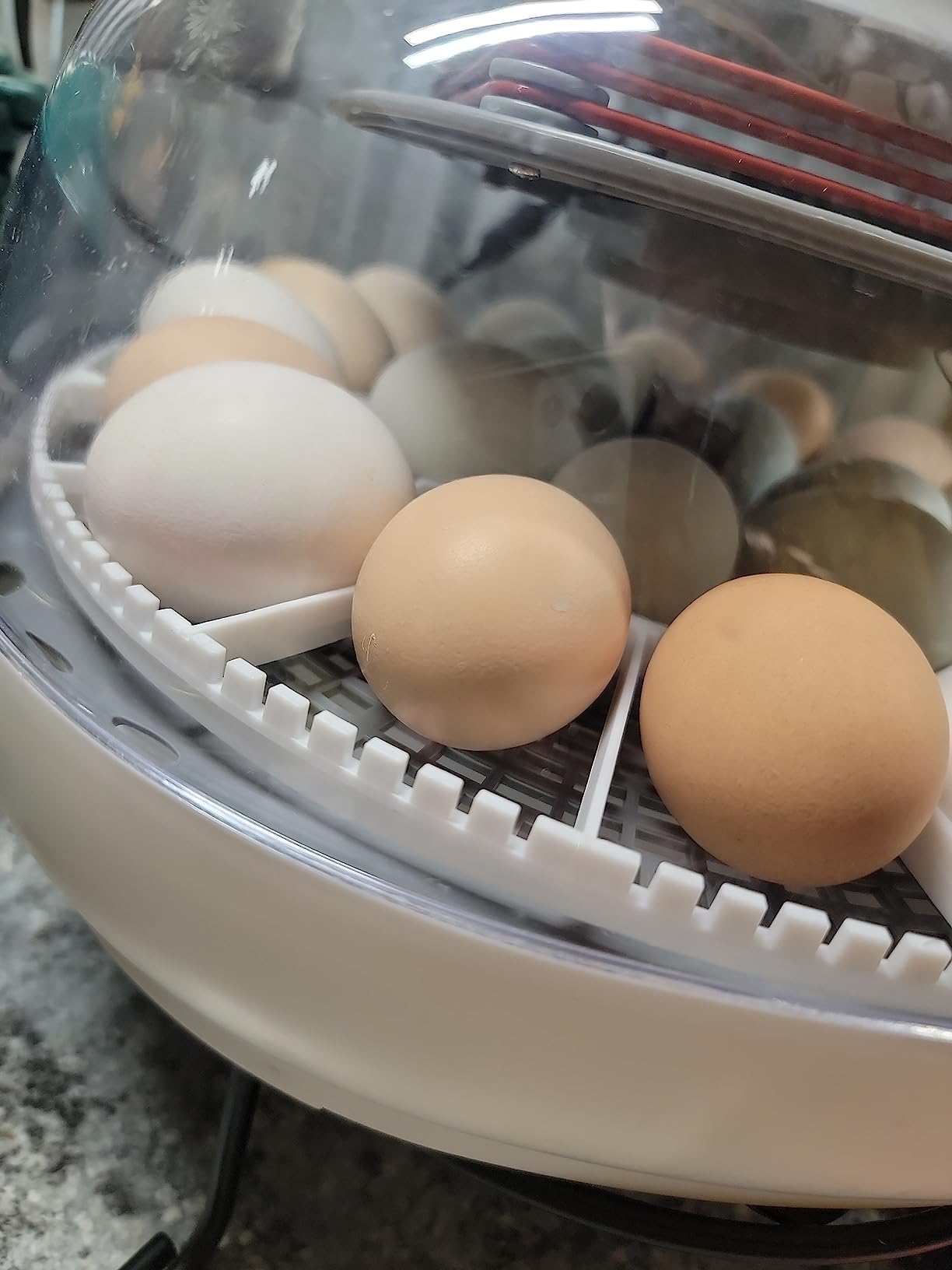
Buyers consistently describe the 360-degree window as the feature they did not expect to care about. Over a 28-day run with a large waterfowl egg, you will be checking air cell size and pipping progress far more often than a chicken hatcher would, and being able to see every tray without lifting anything saves a lot of humidity loss.
On the technical side, the induced airflow circulation spreads heat evenly across the chamber rather than relying on convection alone. Temperature and humidity sit behind a readable display with a simple knob, which is more than some of the feature-dense digital units in this roundup manage in a cluttered menu.
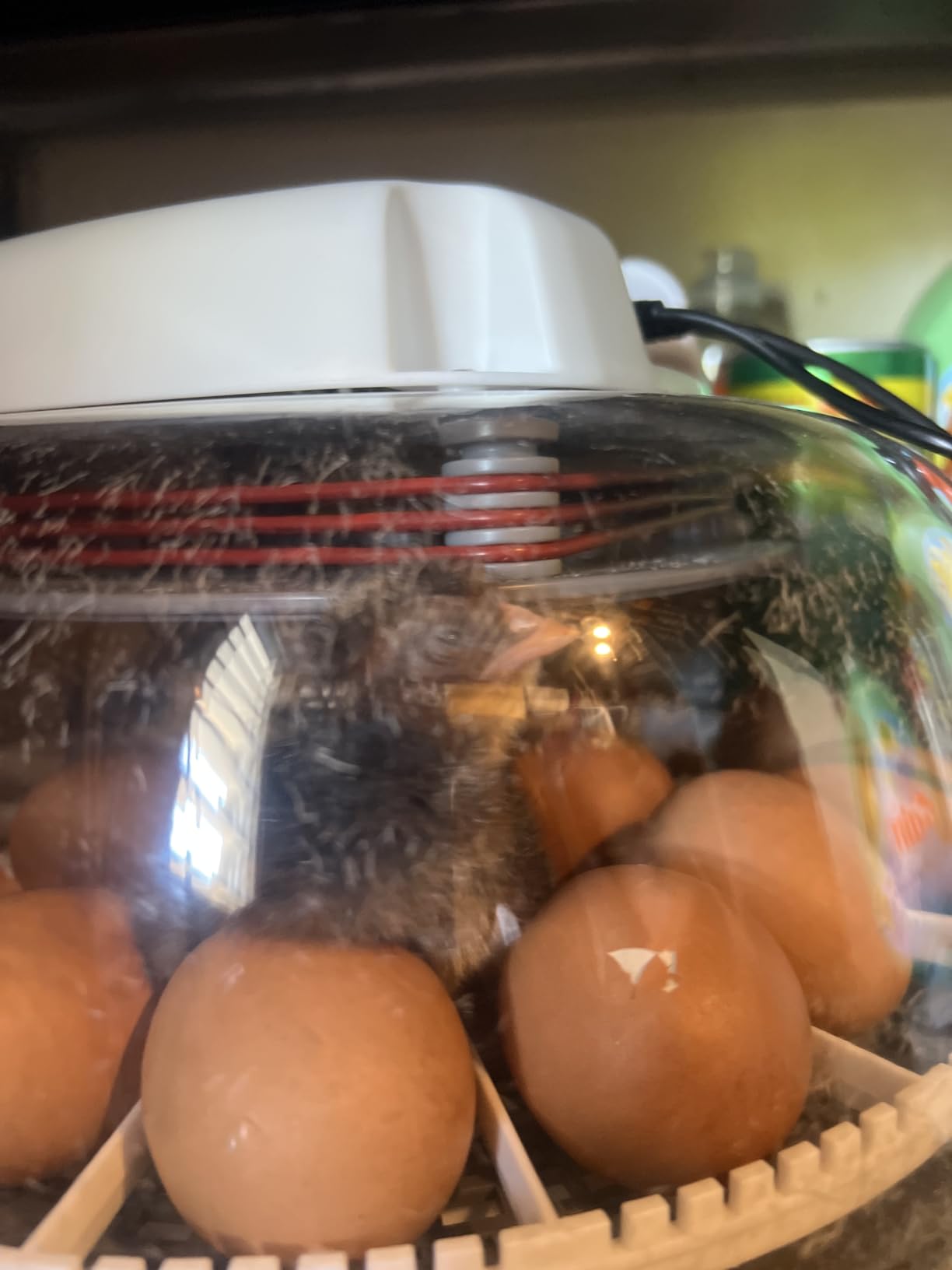
Who the Harris Farms Nurture Right suits
It suits first-time duck hatchers with a typical clutch under 18 eggs, and anyone who wants a set-and-forget turner. If you keep a small flock and collect a dozen eggs a week, 12 to 18 duck eggs per run is a workable cycle without batching your whole season into one enormous hatch.
It also suits breeders of larger waterfowl. A printed 12 to 18 duck figure means the tray spacing was considered for eggs heavier than a chicken egg, not just adapted after the fact.
Who should pass on it
Skip it if you are hatching 30 or more duck eggs in one pass. Even at its stated duck capacity it is a compact machine, and 24 units per cycle is a long time to wait before the next batch.
Handle it gently. The foam-bodied shell is more fragile to carry and harder to scrub out than a plastic dome, so if you plan to sanitise between clutches, look for a unit that fully disassembles. Reviewers also mention noise and occasional rust, neither of which affects a hatch but both of which show up in a unit you plan to keep for years.
2. CluckRun CK18 – The Best Dedicated Large-Egg Tray
Egg Incubators for Hatching Eggs, 18 Chicken or 8 Large Eggs Incubator
18 standard eggs or 8 large eggs
Two interchangeable trays
Auto lock-down stop
Pros
- Dedicated 8-egg large tray built for duck
- goose and turkey eggs
- Turning at 1/2 or 3 hours with a countdown to the next rotation
- Programmable incubation day and cycle for transferred eggs
- External bottle needs only 2-3 top-ups per cycle
Cons
- Standard tray holds only about 6 duck eggs
- Built-in candler lights the whole unit when candling
- Humidity is the hardest setting to dial in
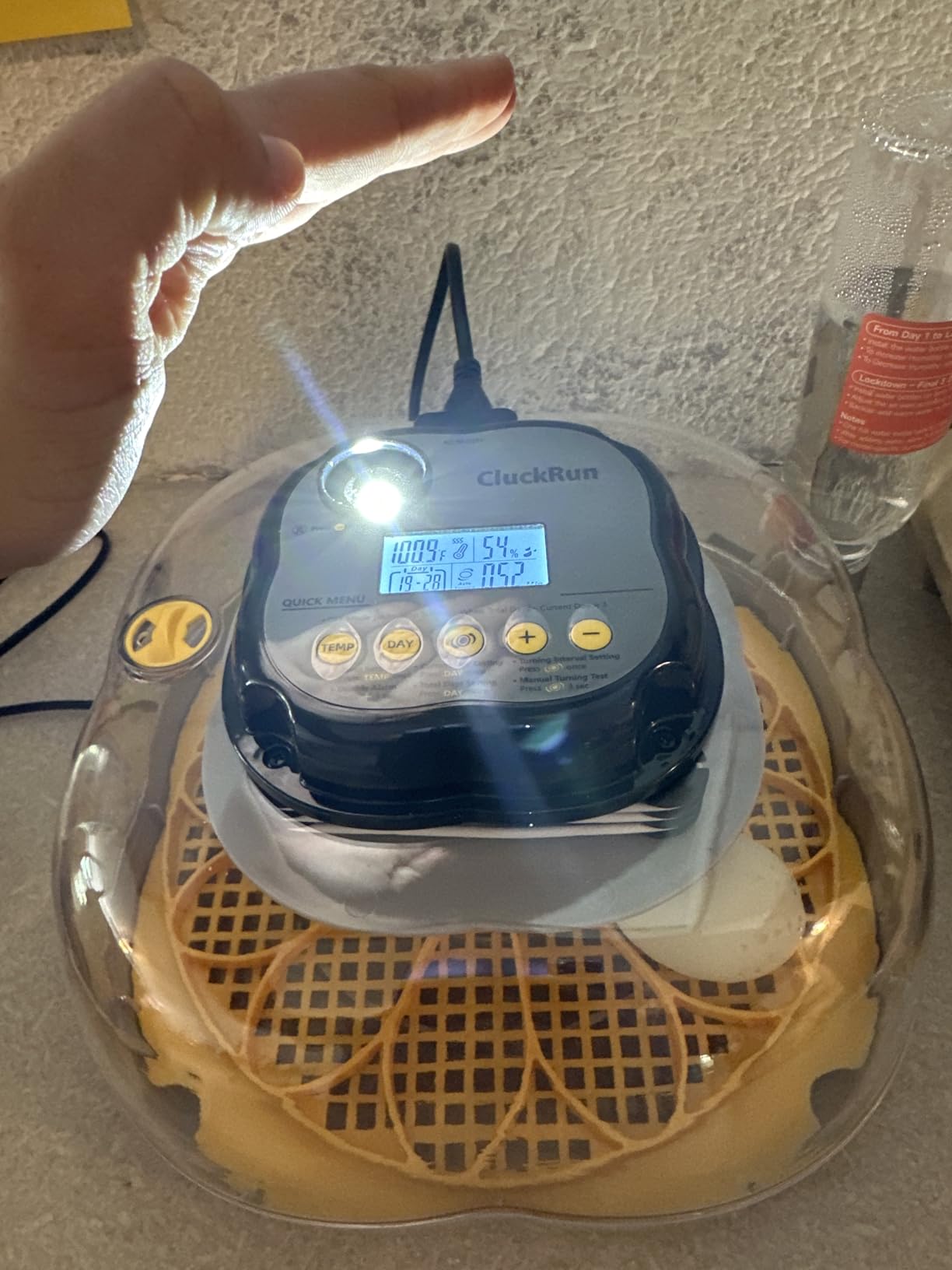
This is the only machine in the roundup with a tray built specifically for large eggs. Duck, goose and turkey eggs get their own 8-egg insert rather than being squeezed into slots spaced for something 20 grams lighter, and if you have ever cracked a goose egg into a crowded chicken tray you know why that matters.
It carries the highest rating in the group, and the reason is hard to argue with once you use it. The turning interval offers one, two or three hour settings, and the display counts down to the next rotation so you can see at a glance that the turner is actually running. The automatic lock-down stop kicks in for the final three days without being asked.
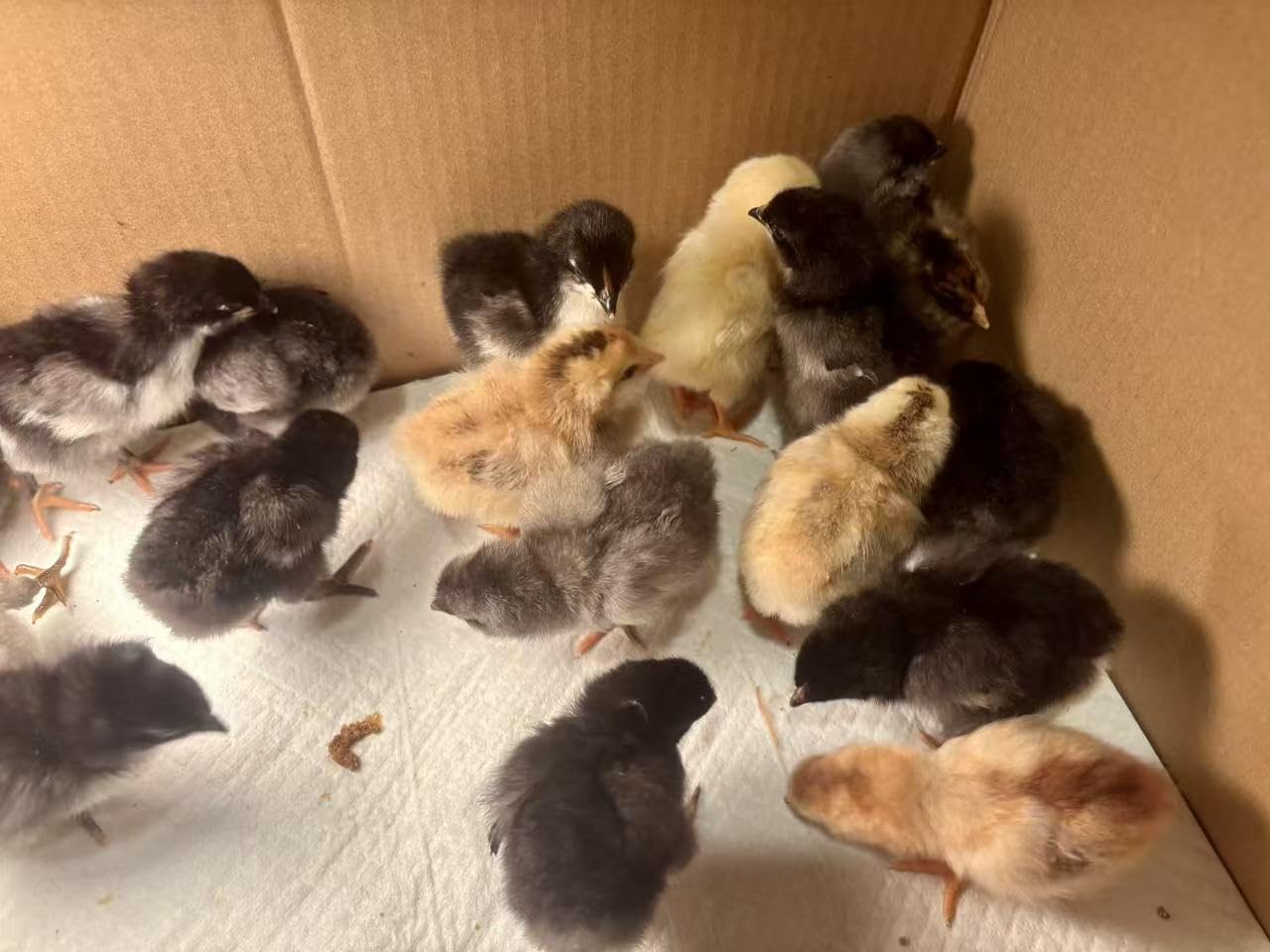
The programmable incubation day is the sleeper feature. Most people start a cycle on day one and never touch it, but anyone moving eggs from one machine to another, or restarting after a power cut, needs to set the day rather than restart the clock. It also means you can stagger batches and still keep an eye on each one.
Humidity comes from an external water bottle with automatic refill and multi-level water channels, and reviewers report needing only two or three top-ups across a full cycle. On a 28-day duck run, refill trips are the most common reason people open the lid and dump humidity, so fewer trips genuinely matter here.
Who the CluckRun CK18 suits
It suits breeders who keep more than one waterfowl species. A duck egg, a goose egg and a quail egg all want different timing and different spacing, and two interchangeable trays plus a 50-quail configuration on the standard insert means one machine covers the whole barn rather than a single clutch.
It also suits anyone who values clarity. The countdown, the programmable day, the switchable alerts and the removable fan with an included cleaning brush all point to a design that expects you to run several cycles a year and wants the machine to be inspectable.
Who should pass on it
Pass if you need volume. The large tray holds 8 eggs and the standard tray, in practice, holds closer to 6 duck eggs, so this is a precision machine, not a volume one. It is also a newer design with a shorter review history than the long-running names in this category.
Give the humidity a real week of attention before you trust it, and do not candle in a dark room. The built-in screen lights the whole unit when you use it, which is the last thing you want at midnight on day 7.
3. MATICOOPX MEI-20 – Fan Circulation and Frequent Turning
MATICOOPX 20 Egg Incubator with Humidity Display, Egg Candler, Automatic Egg Turner, for Hatching Chickens
20 egg capacity
Fan-driven circulation
Turns every 60 minutes
Pros
- Strong fan circulation holds temperature steady through the cycle
- External refill keeps the lid shut during water top-ups
- Turns every 60 minutes with an automatic stop three days before hatch
- Humidity display and built-in candler included
Cons
- No dedicated large-egg tray for duck or goose
- One-year warranty is short against three-year rivals
- Fewer programmable settings than cycle-programmed units
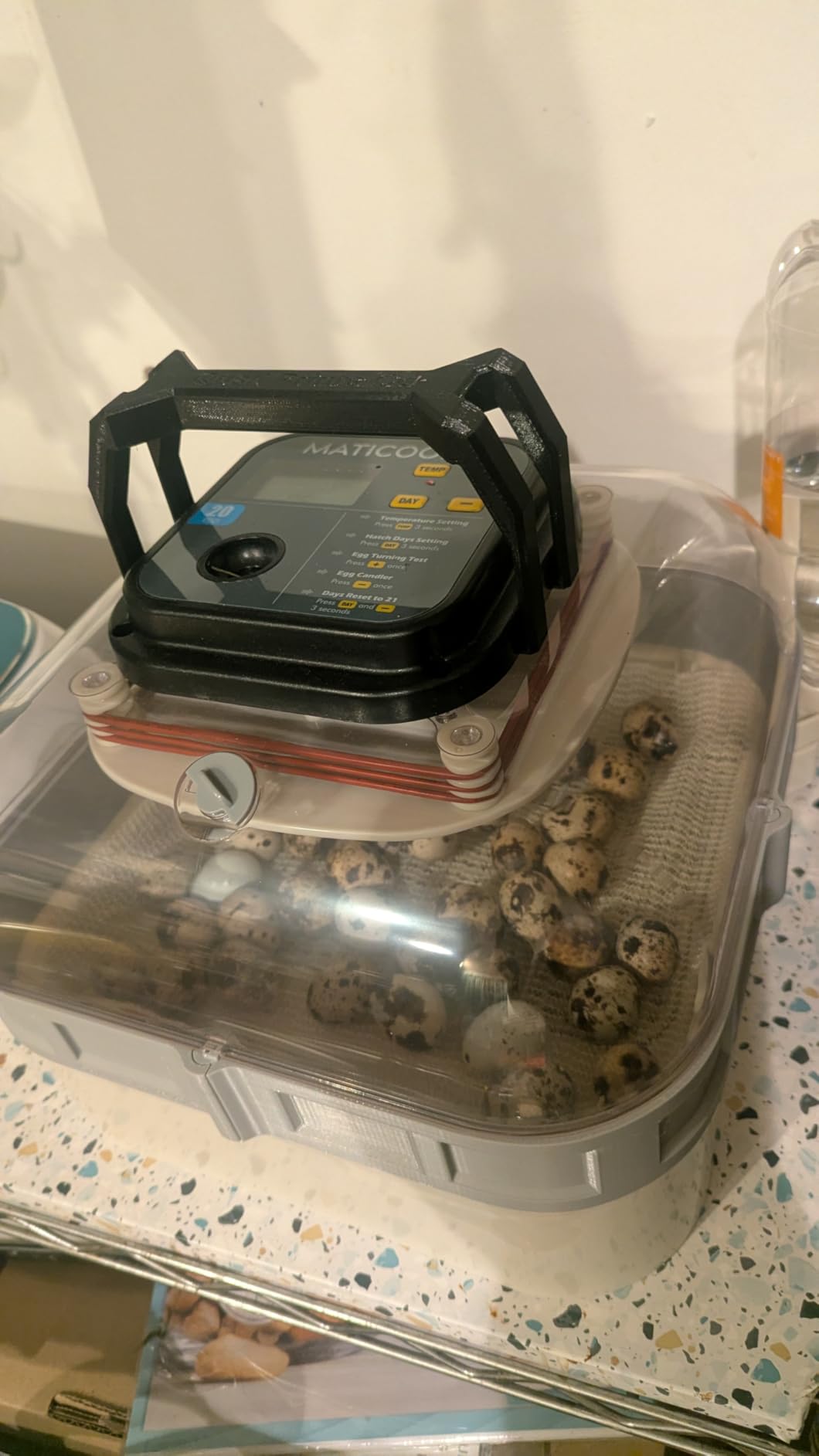
Fans are the reason we trust this unit over most of its size class. A strong circulating fan moves air across the whole chamber, which is what keeps 99.5F steady from day 1 to day 28 rather than drifting a degree or two in week three, and temperature drift in week three is when a duck hatch quietly falls apart.
The turning interval of 60 minutes is among the more frequent we have seen on a machine this size. For heavy waterfowl eggs, frequent rotation keeps the embryo off the shell membrane and off the turner arms, and the automatic stop three days before hatching means you never have to think about removing the tray at the wrong moment.
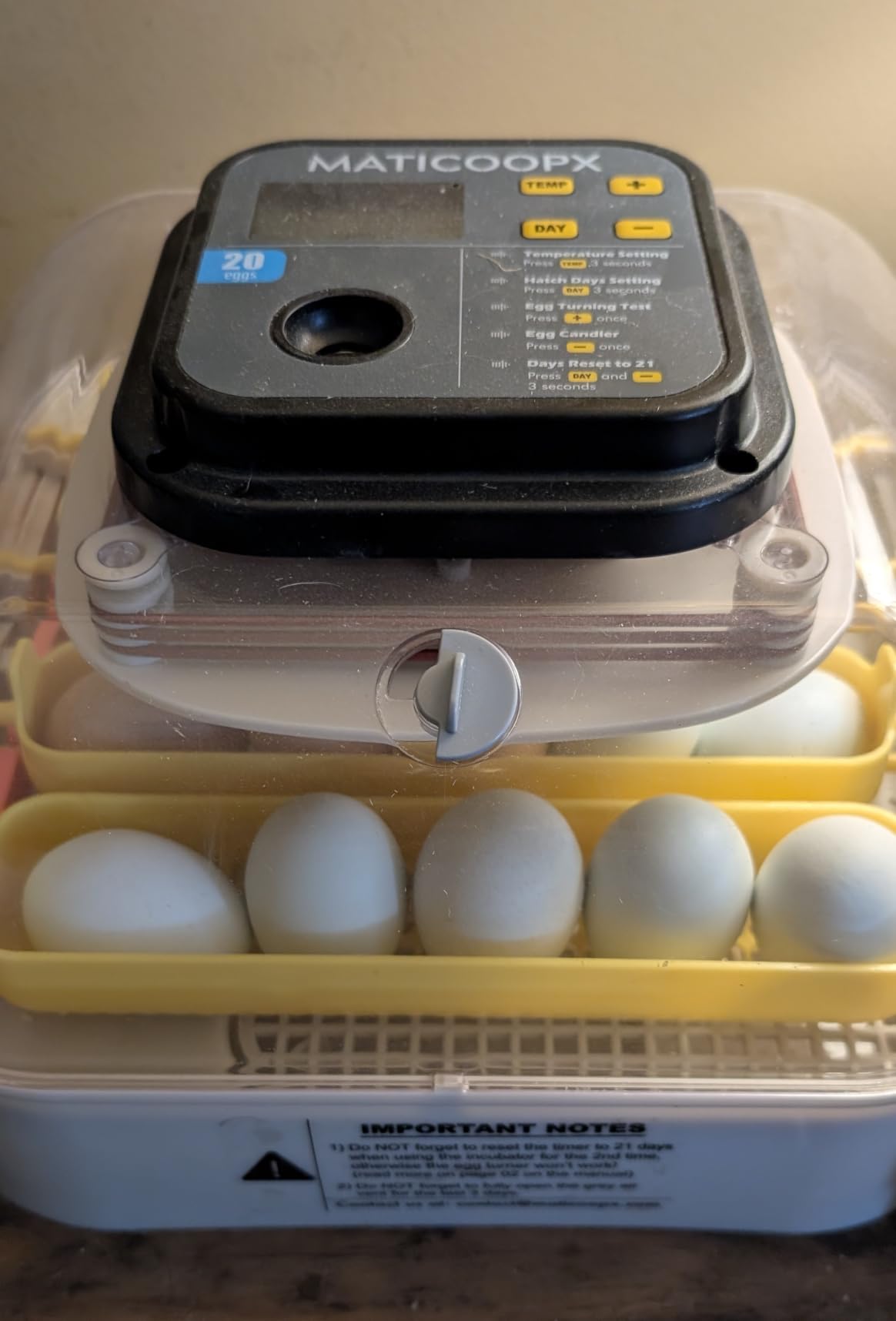
External water refilling is the feature we would keep even if everything else were equal. Topping up humidity does not require opening the lid, so you are not dumping the chamber every time you add water, and on a 28-day run you will be topping up more often than you would on a chicken cycle.
Both the humidity display and the built-in egg candler are included, which covers the two things people most often buy separately. You get a full view of embryo development at day 7 without buying a separate candler, and you can watch the air cell grow at day 21, which is your best read on whether your humidity has been right.
Who the MATICOOPX MEI-20 suits
It suits middle-sized operations hatching 14 to 20 eggs a cycle who want temperature handled for them. If you have been burned by a unit that ran fine in week one and wandered in week two, the fan-driven chamber is the feature to buy for.
It also suits people who hate opening the lid. The external refill keeps every water top-up outside the chamber, which protects both your humidity level and the temperature the eggs are sitting at.
Who should pass on it
Pass if goose eggs are part of the plan. The listing positions this unit for chicken eggs and states no dedicated large-egg tray, so very large waterfowl eggs go in tight and the tray spacing is not designed around them.
Note the one-year warranty against the three-year coverage some rivals carry, and the smaller set of programmable settings. If you want a machine you can program for a transferred or staggered batch, this is not it.
4. APDOE HatchPro 12 – The Easiest First Incubator
APDOE Egg Incubators for Hatching Eggs, Temperature and Humidity Control, Automatic Egg Turning, Egg Candler, External Water Bottle, Air Vent, for Chicken, Duck & Quail Eggs, 12 Eggs
12 egg capacity
Digital temp and humidity display
Auto turn every 2 hours
Pros
- Real-time digital readouts for temperature and humidity
- Turner runs every 2 hours and the tray removes for the final 3 days
- Disassembles for hand-washing with no electronics in the base
- Buyers report good results including with larger duck eggs
Cons
- Humidity reading drifts from the true internal level
- Built-in candler light is dim
- Fan housing limits chick standing room at hatch
If you have never hatched before, this is the one we would hand you. The controls are where you expect them, the turner runs every two hours, and the tray lifts straight out for the last three days. Nothing on it needs a manual, because the manual is genuinely good, with a printed egg development chart and a hatching guide in the box.
Digital temperature and humidity display with an advanced digital control system means you are checking numbers, not guessing from a dial. That matters more for ducks than for chickens because you are running 50 to 60 percent humidity for a month, and blind humidity management is the single biggest cause of failed waterfowl hatches.
The cleaning design is the quiet winner. The tray, dome and base all detach and there is no electronics in the base, so you can wash the whole thing in warm water with a mild detergent between clutches and dry it fully. For a 28-day run you will be doing this twice as often as with chicken eggs, and a unit that comes apart is worth real money over a decade.
Two external water bottles and an adjustable air vent give you two ways to move humidity, and the advanced airflow circulation is designed to prevent hot or cold spots inside the dome. Buyers report strong hatch rates with larger duck eggs, and the three-year limited warranty is longer than most of what we tested.
Who the APDOE HatchPro 12 suits
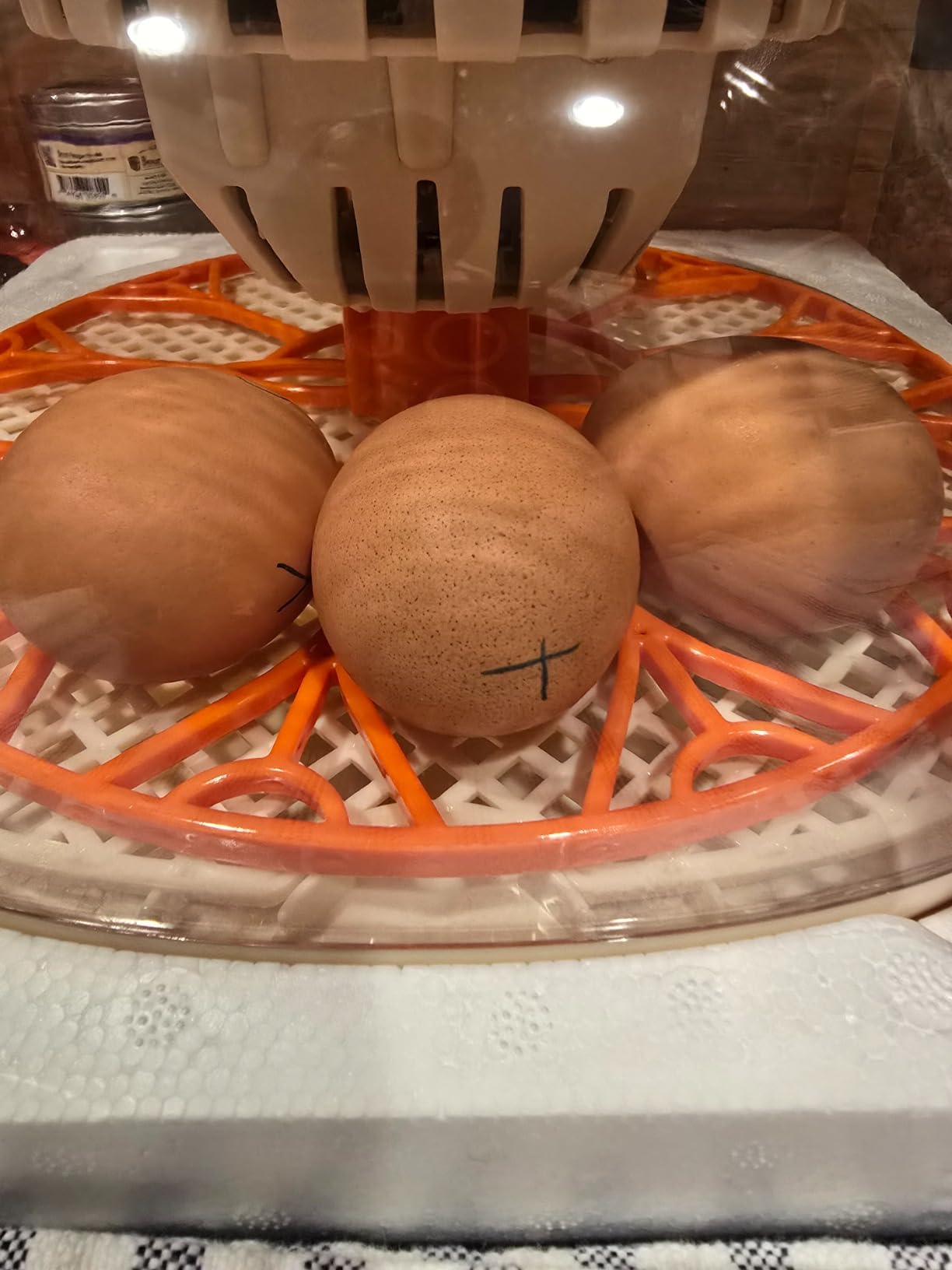
It suits a first clutch of roughly six duck eggs, which is about what a 12-egg tray holds once you account for the larger eggs. It is a genuinely good classroom or 4H unit too, because the disassemblable design means you can sanitise it properly between groups.
It suits anyone who wants hands-off turning without wanting a machine to program. Set the interval, fill the bottles, and check the readouts.
Who should pass on it
Pass if humidity control is the part you are worried about. The display can drift from the true internal level, particularly with both water bottles filled, and some owners drape towels over the unit to stabilise it. Add an independent hygrometer and you can live with this; skip that and you are managing humidity blind.
The dim built-in candler also means budgeting for a separate light if you want a reliable day 7 check, and the fan housing hangs into the hatch space, which limits room for ducklings to stand once they are out of the shell.
5. Onsju 18H-OO – Bright Candling and Programmable Turning
18 Egg Incubators for Hatching Eggs, Automatic Egg Turning and Humidity Control Incubator for Hatch Chicken Duck Quail Pigeon Pheasant Partridge Home Classroom Lab-
18 standard eggs or 40 small eggs
60/120/180 minute turning
LED candling light
Pros
- Holds 18 standard chicken or duck eggs
- Turning at 60/120 or 180 minutes with an automatic stop 4 days before hatch
- High-intensity LED candling light through a 360 degree dome
- Sealed humidity water system with smart replenishment
Cons
- Control layout takes getting used to
- Manual asks you to reset and set the machine up again
- Shorter review history than the established models
Eighteen standard eggs is a real clutch size, and this unit states that the 18 figure covers chicken or duck eggs directly rather than leaving the conversion to you. It also holds 40 smaller eggs like quail or parrot in the same chamber, which makes it a genuine multi-species box for a mixed yard.
The three turning intervals are the useful part. Sixty minutes suits heavy waterfowl eggs that need frequent rotation, one hundred twenty is the everyday setting most people will use, and one hundred eighty is for small eggs. The turner stops four days before hatch automatically, which for ducks means turning stops on day 24.
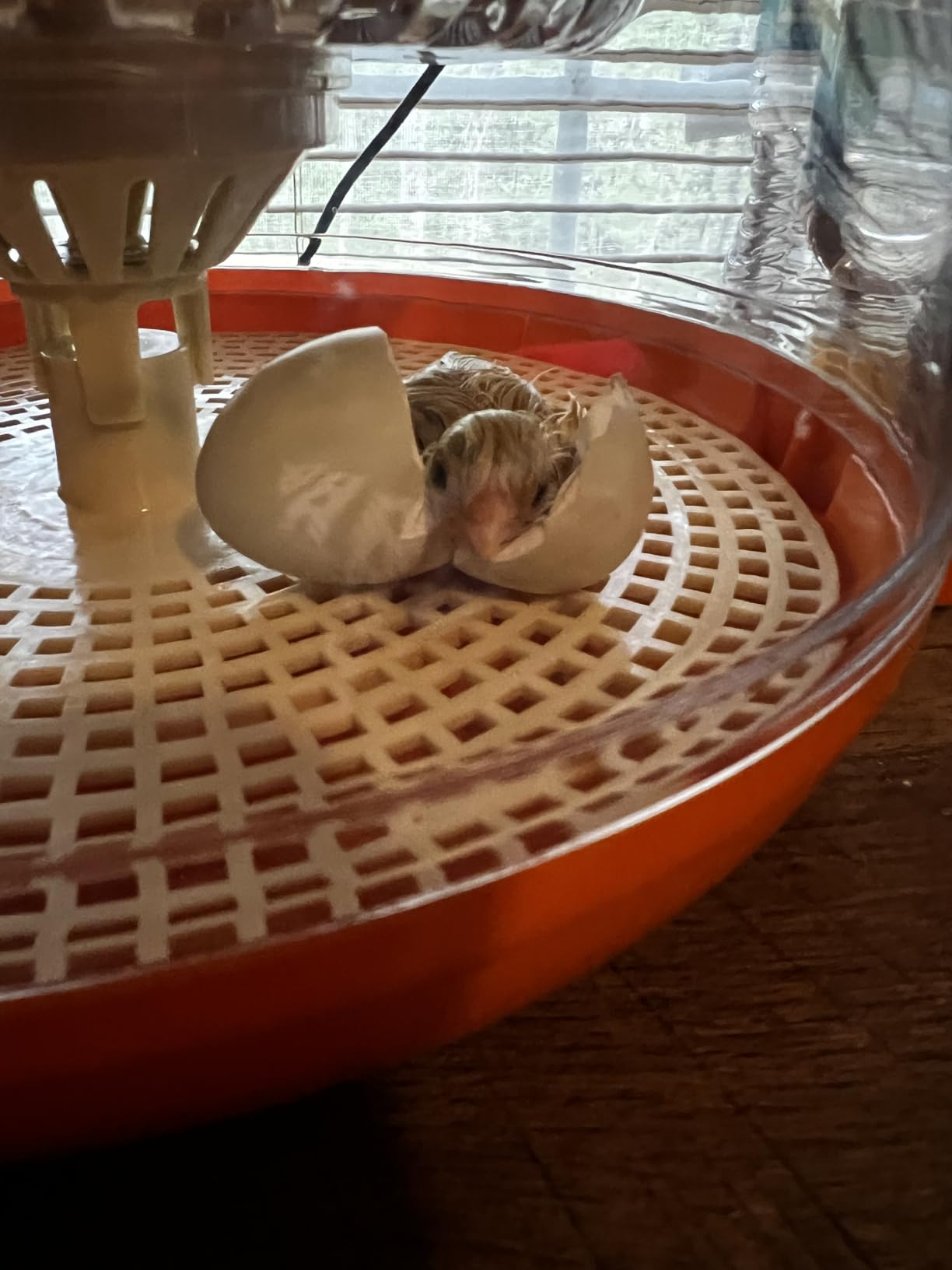
For candling, this is the best in the roundup. The high-intensity LED light is strong enough to read an air cell or spot a blood ring at day 7 without squinting, and the 360 degree crystal-clear dome means you can find that egg quickly instead of opening the unit and losing your humidity.
The sealed humidity water system with smart replenishment is the other quiet strength. Reviewers note that it keeps humidity stable and cuts down manual refills, and on a duck cycle that is worth more than it sounds, since every refill is a lid opening you do not need.
Who the Onsju 18H-OO suits
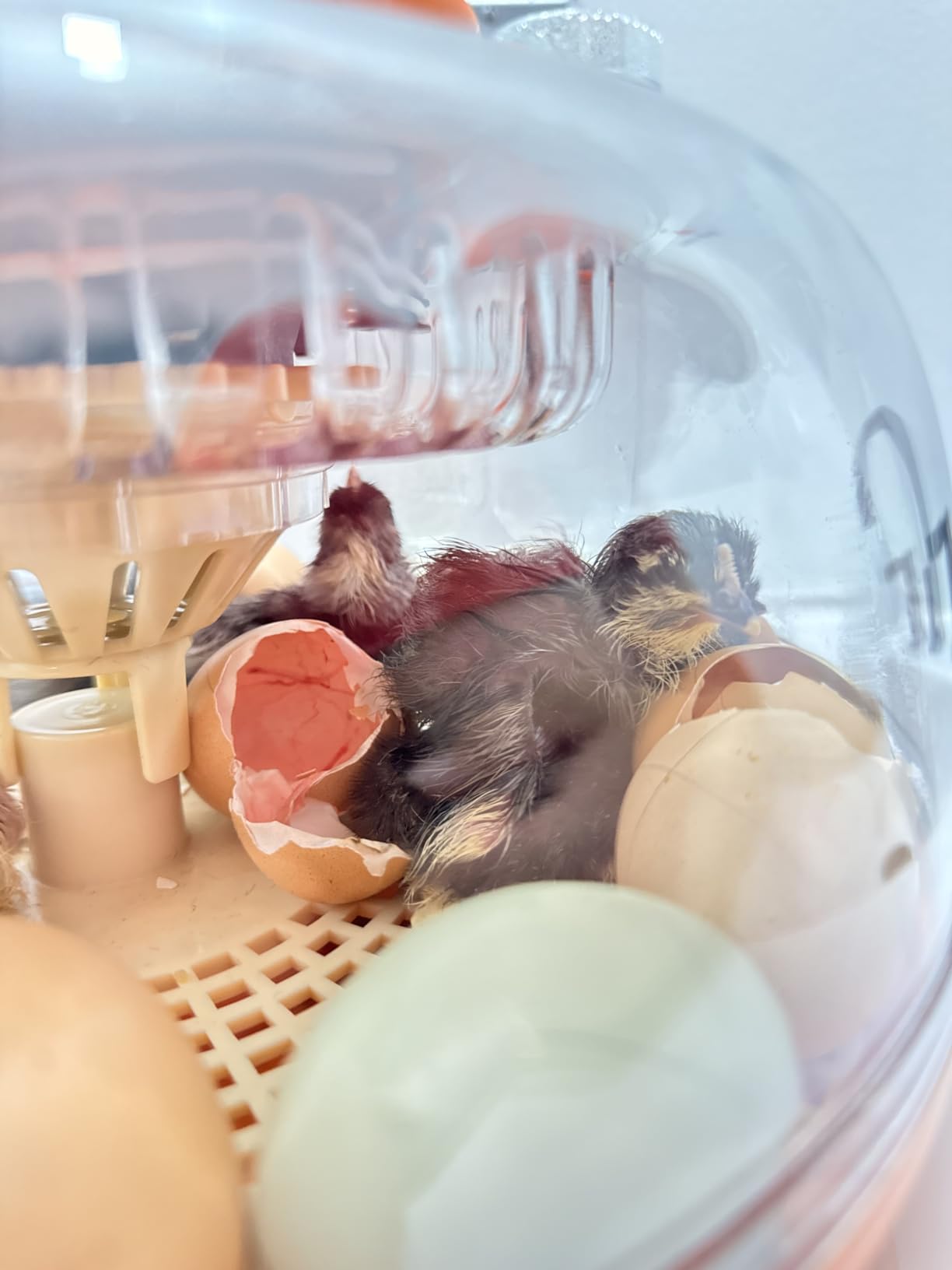
It suits a mid-size clutch of 12 to 18 duck eggs and anyone hatching quail or pheasant alongside them. One machine covering two very different egg sizes removes the guesswork that comes with juggling two small incubators.
It also suits the person who candles properly. If you plan to remove infertile eggs at day 7 and re-check at day 21, a bright light inside the dome saves you from buying a separate candler and from working in the dark.
Who should pass on it
Pass if you want a machine you can understand in five minutes. The feature-heavy control layout takes some getting used to, and the manual asks you to reset and set the machine up again, which is an extra step on day one when you would rather be checking your eggs.
It is also a newer listing with a shorter review history than the long-running designs in this category, so you are buying on specification rather than on a decade of accumulated feedback.
6. IBKINXX IBK-18EGG – Clean, Quiet and Fully Disassemblable
IBKINXX Incubator for Hatching Eggs-18 Egg Capacity, Newly Upgraded Automatic Egg Turner, Temperature & Humidity Control, 360° Viewing for Chicken, Duck and Quail Eggs (Black)
18 egg capacity
Selectable turn intervals
External water filling
Pros
- Temperature and humidity hold steady once the unit settles
- Selectable 60/120 or 180 minute turning with pre-hatch stop
- External water filling without opening the unit
- Adjustable trays handle quail and pheasant without awkward spacing
Cons
- Turner mechanism feels flimsy during disassembly
- Top vent needs manual adjustment as room conditions change
- Small hatch space
- so plan for a helper when lifting the lid
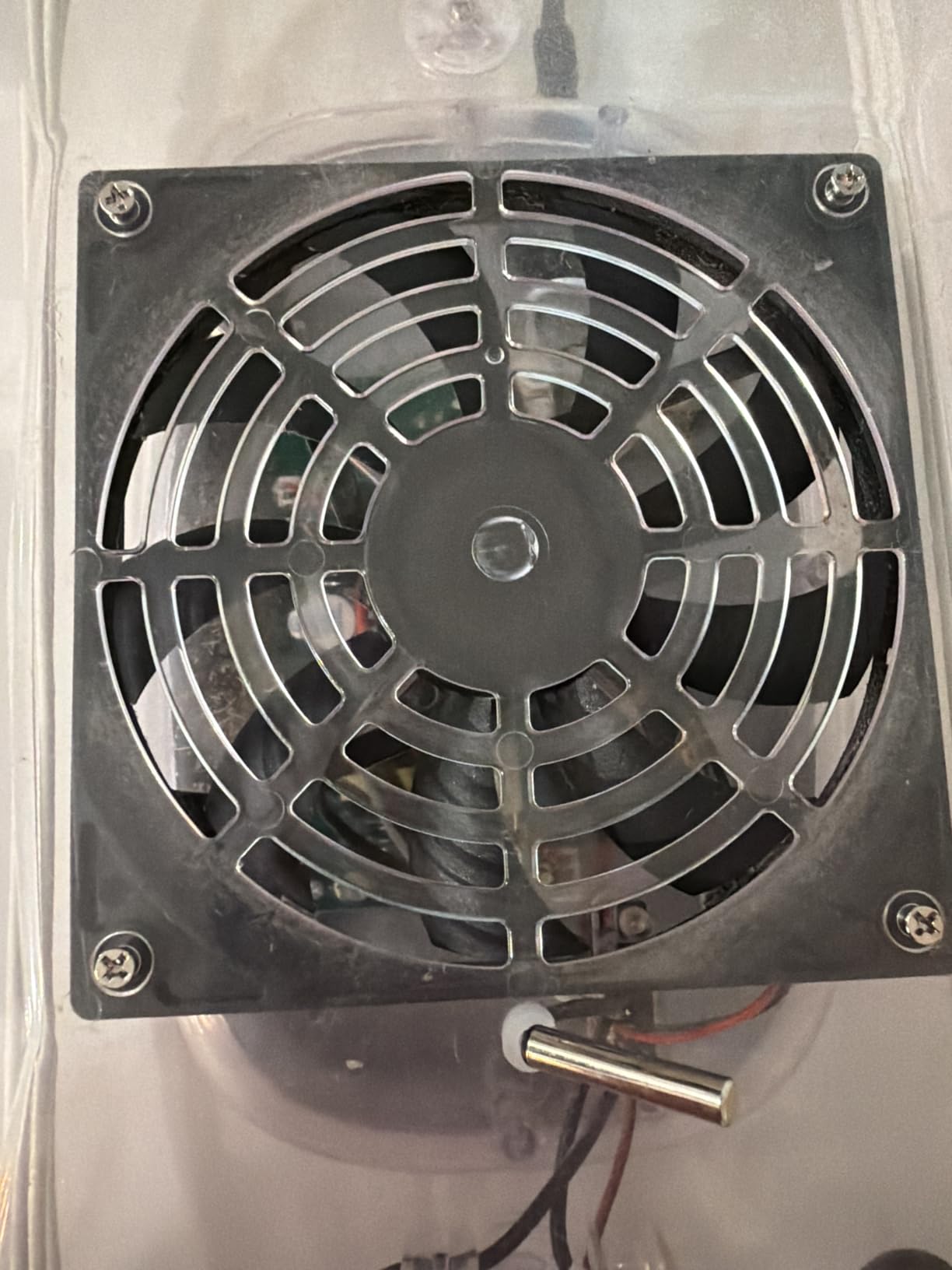
The whole unit disassembles. That is the headline, and for anyone running duck eggs back to back it is worth more than a long feature list, because a 28-day cycle means twice the number of clean-downs per season as a chicken run. The 360-degree transparent view means you can watch the tray without opening anything.
Controls are straightforward: an LED display showing the temperature set point and reading in Fahrenheit, and an automatic turner with 60, 120 or 180 minute intervals that stops three days before hatch. The external water filling system lets you add humidity without opening the unit, which is the single most useful thing for a duck cycle.
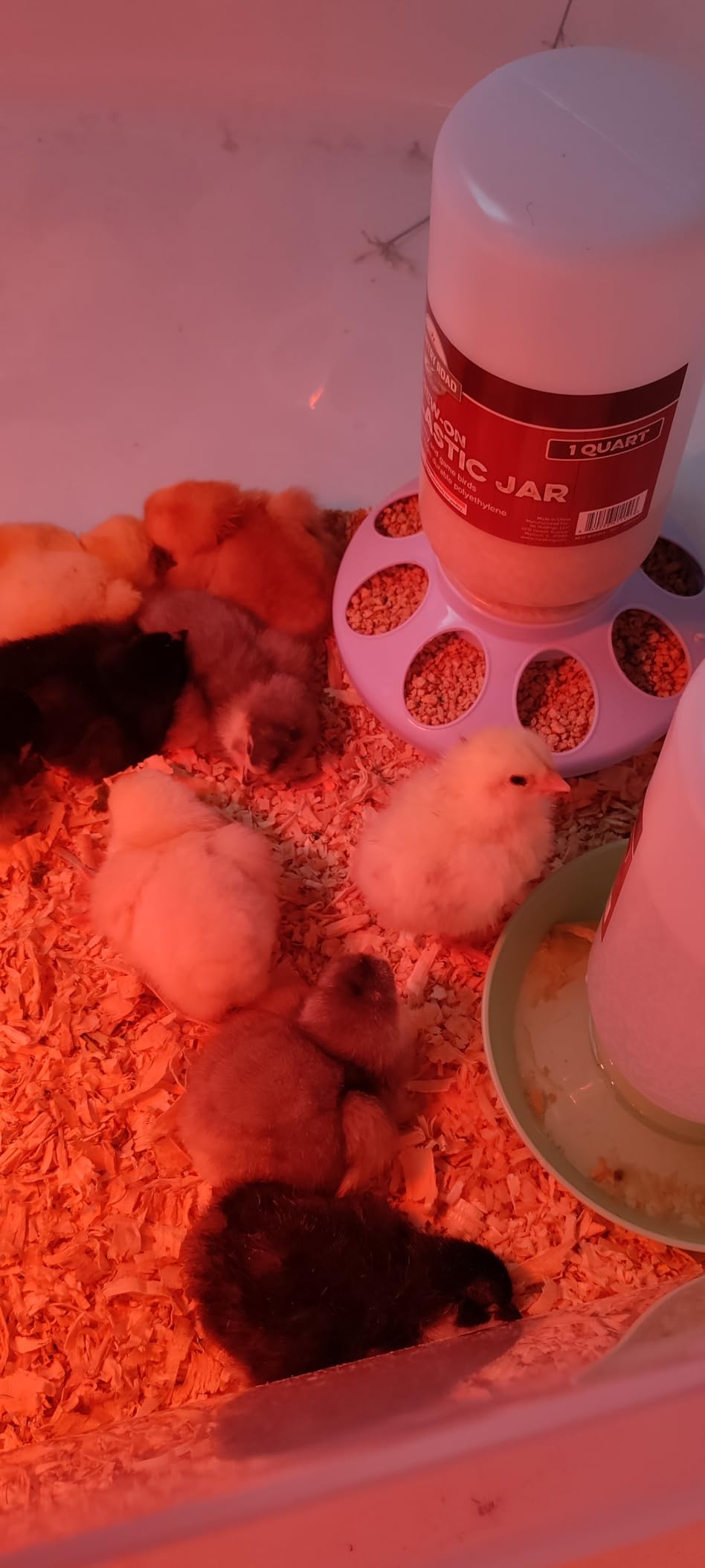
What surprised us was how steady it settles. Owners report temperature and humidity holding remarkably well after the first few days, with quiet, consistent turning that needs almost no intervention. The adjustable trays also handle smaller eggs such as pheasant or quail without awkward spacing, so a mixed yard can share a run.
Two details to plan around. The two water bottles consume water at different rates, which makes the first week of setup confusing until you learn their rhythm, and the top vent needs manual adjustment to hold target humidity as your indoor conditions shift through the season.
Who the IBKINXX IBK-18EGG suits
It suits people who hatch several species and value cleaning over features. Chicken, duck, quail and pheasant eggs all go through it, and the whole thing washes simply between groups, which matters in a classroom where twelve students share one machine.
It also suits anyone who wants quiet operation in a house. Reviewers describe consistent auto-turning that needs almost no intervention, which is a polite way of saying you will not be woken up by it at 2am during a duck cycle.
Who should pass on it
Pass if you plan to take the machine apart often and are not gentle with it. The egg-turning mechanism feels flimsy and needs care during disassembly, and the hatch space is small enough that a helper is useful when lifting the lid so you do not lose heat and humidity at once.
On fan clearance, read the reviews for the larger capacity versions in this family before you commit. One owner of the 24-egg version reported injured newly hatched chicks where the fan sits close to the shroud, and while the caution is logged against the bigger unit, it is worth checking the fan position on whichever version you buy.
7. Farm Innovators 41 Egg Digital – The Volume Hatch Option
Farm Innovators 41 Egg Digital Circulated Air Incubator, Auto Turner, White
41 egg capacity with auto turn
Deep tray for large eggs
Digital readout with alert light
Pros
- Largest capacity in the roundup at 41 eggs with automatic turning
- Deep bottom tray explicitly sized for large duck and goose eggs
- Digital display reports temperature
- humidity and days to hatch together
- Out-of-range temperature notification light
Cons
- Factory pre-set to 100F limits temperature flexibility
- Bulky 18 by 18 inch footprint takes real counter space
- Foam construction is harder to clean than plastic dome units
When you are running seasonal batches rather than a hobby clutch, capacity is the whole argument. Forty-one eggs with automatic turning means you set a large number of duck eggs in one go instead of staggering three small units, and a staggered hatch is harder to manage than a big one.
The deep bottom tray is the duck-specific detail. Manufacturers rarely call out tray depth, but a 70-gram duck egg sitting in a tray sized for a 50-gram chicken egg touches more of the turner mechanism and sits closer to whatever is beneath it. This one is described explicitly as accommodating large duck and goose eggs.
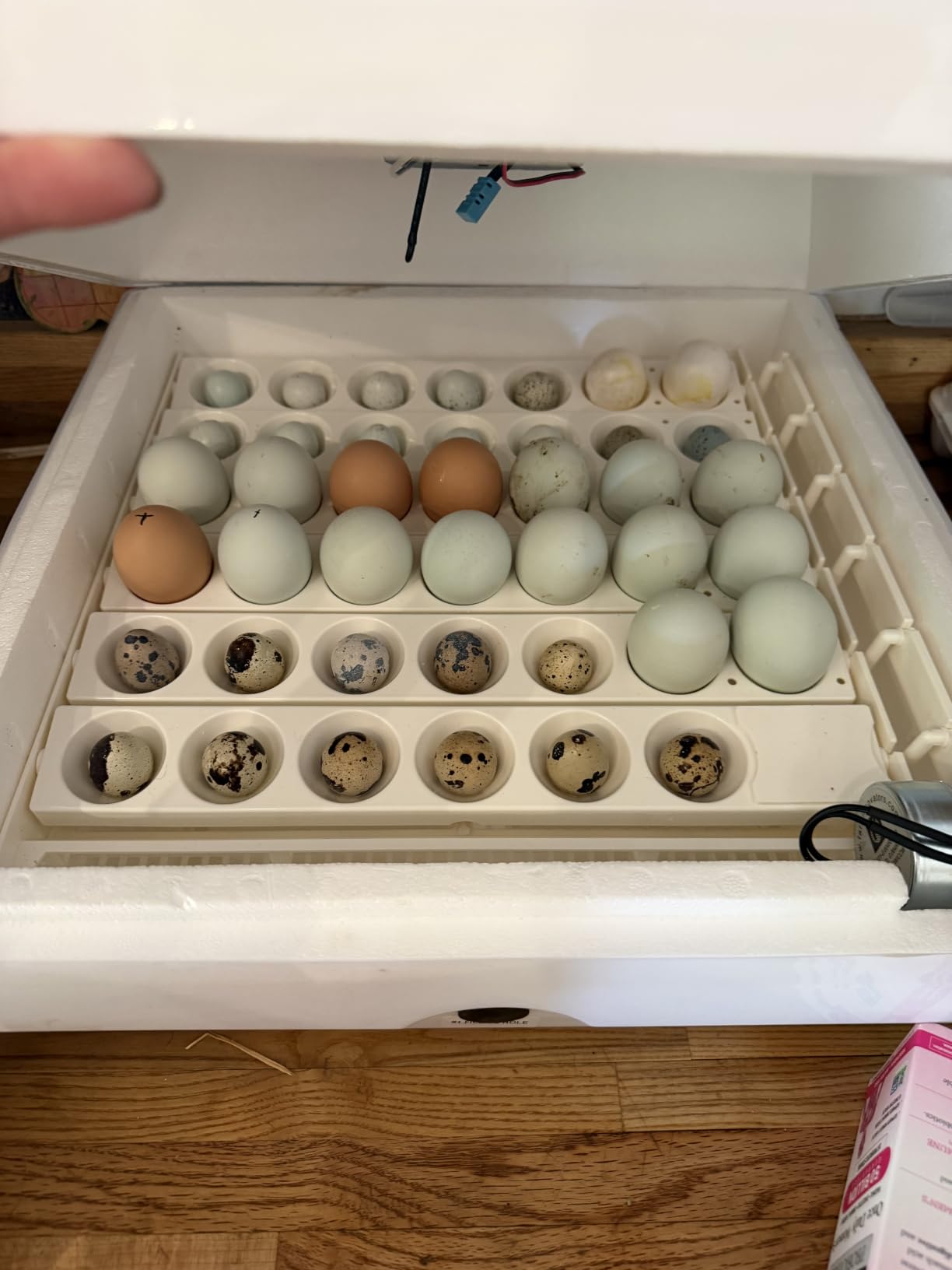
It heats within minutes to a factory pre-set 100F, and the integrated fan circulates fresh air to stabilise temperature and improve hatch rates across the large chamber. A 41-egg chamber is exactly the situation where still air fails, because the top of the box and the corner nearest the wall genuinely are different temperatures.
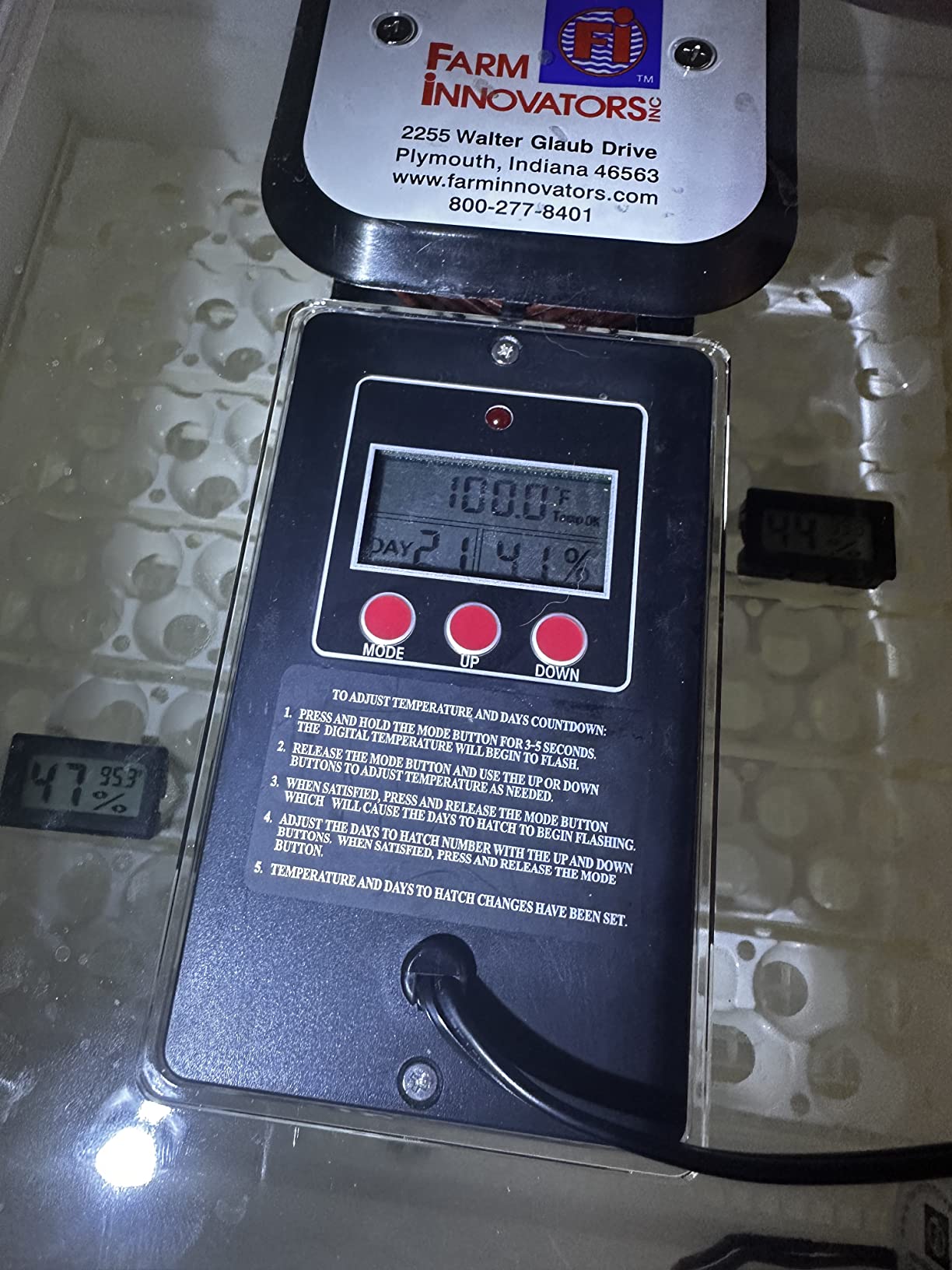
The digital display shows temperature, humidity and days to hatch in one place, and a high and low notification light flashes when you drift out of range. On a long run that is a useful sanity check, because a unit that quietly sits a degree high for a week is the most common cause of a late, weak duck hatch.
Who the Farm Innovators 41 Egg suits
It suits smallholders and farmers hatching 30 duck eggs or more in a single run, and anyone who prefers one big hatch to a rolling series of small ones. The easy-fill water channels also reduce the number of times you need to open the lid for humidity.
It suits breeders of goose and turkey eggs alongside ducks, since the deep tray is the reason that works. The included egg candler and 360-degree picture window mean you can still do a proper day 7 check without buying anything extra.
Who should pass on it
Pass if your space is limited. At 18 by 18 inches and 8.75 pounds it claims a real footprint on any counter, and foam construction is harder to sanitise thoroughly than a plastic dome, which matters when you are running it twice a season without pause.
The fixed 100F factory pre-set also gives less temperature flexibility than a fully digital unit, and 100F is not the 99.5F most waterfowl references use. If you want to trim that half degree for the first 24 days, this is not the machine that lets you.
8. ZEMIRO CHARGE Series I 12 – Straightforward and Low-Cost
Series I – 12 Egg Incubator for Beginners, Auto Egg Turn, Steady Self-Regulating Humidity & Consistent Temperature Control for Hatching Chicken, Goose, Duck, Quail, Pigeon, and Turkeys
12 chicken or 24 quail eggs
Auto turn every 2 hours
Single-bottle self-regulating humidity
Pros
- Handles the core hatching functions simply
- Self-regulating humidity from a single water bottle
- Digital control from 68-104F with 360 degree airflow
- Detachable tray and parts rinse clean quickly
Cons
- Humidity is not user-adjustable for the final days
- Fahrenheit-only display with no unit switching
- No external refill
- no alarm
- no lock-down programming
This is the simplest machine here, and simplicity has real value when the feature you are missing is the feature you would have got wrong. It is aimed squarely at beginners, and it does the core job without asking you to understand a control panel.
Humidity is self-regulating from a single water bottle, typically landing around 55 to 65 percent depending on your room, and the automatic turner runs every two hours with a real-time temperature display. For a first clutch of six duck eggs in a climate that is already reasonably damp, that is a workable combination.
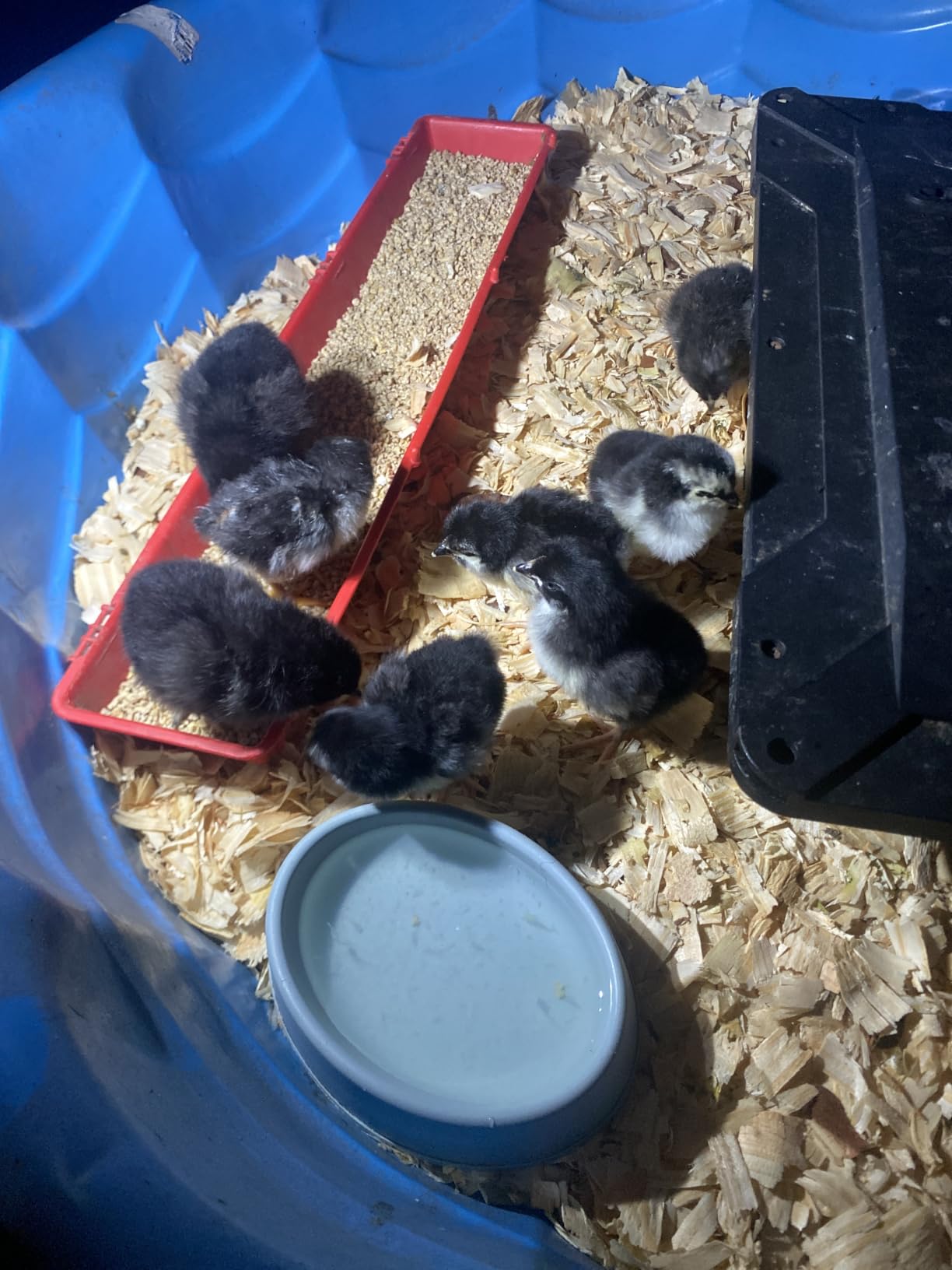
Packaging is better than expected for a machine at this level. You get the incubator, a water bottle, an egg tray, a foam insulation box and a user manual, plus printed, digital and video guides with long-term online support. The 360-degree airflow circulation keeps the heat even, which is a genuine plus in a foam-bodied box.
The maker is candid about the limits: acceptable ambient conditions are 64 to 86F and above 40 percent relative humidity. That is a useful number, because outside it, the self-regulating system is following the room rather than the eggs.
Who the ZEMIRO CHARGE Series I suits
It suits a first hatch of a handful of duck eggs in a climate that is already fairly humid, and anyone who would rather not fiddle. The turner runs every two hours, the parts rinse clean, and there is nothing in the menu to mis-set.
It also suits a second incubator for quail, since the same unit holds up to 24 quail eggs and the tray detaches for cleaning between species.
Who should pass on it
Pass if you need control in the last three days. Humidity is not user-adjustable, so you cannot deliberately push it up for lockdown the way duck eggs need, and there is no lock-down programming, no external refill port and no alarm. For a 28-day waterfowl cycle, that is the single biggest gap here.
It also suits nobody who wants Celsius. The display is Fahrenheit-only with no unit switching, which matters if you are running a duck hatch somewhere that uses metric and you will be reading the manual’s 20 to 40C range against a screen that will not change.
How to Choose an Egg Incubator for Duck Eggs
Start with duck capacity, not the number on the box. A duck egg weighs roughly 65 to 70 grams against 50 to 57 for a chicken egg, and that difference in size and mass cuts the usable number sharply. When a maker states a duck figure, believe it; when they do not, assume you will lose a third of the printed capacity and plan your clutch size around the smaller number.
Next, decide between forced air and still air. Forced air units use a fan and hold 99.5F accurately anywhere in the chamber. Still air units rely on rising heat, need 101 to 102F to average out, and have real hot and cold spots. For a full clutch of waterfowl eggs, where every degree of consistency compounds over 28 days, forced air is worth the extra money.
Then check the turner, and specifically whether it stops on its own. A turner that cannot be disabled for the final three days is a deal breaker for ducks, because eggs that keep moving in lockdown hatch poorly. The frequency matters too: 60 to 120 minute intervals are the useful range for heavy waterfowl eggs, and thin plastic turner arms are the part most likely to strain under a full load.
Humidity deserves its own paragraph because it decides more hatches than temperature does. Look for a unit with an actual humidity display or an external fill port, and buy an independent hygrometer regardless. If your room sits above 40 percent relative humidity already, a sealed unit with no adjustment will overshoot, and if your winters are dry, a unit that cannot be topped up from outside will punish you every day.
Finally, check the cleaning design and the failure plan. Everything should come apart for a proper wash between clutches, because you will run far more waterfowl cycles than chicken ones over the life of the machine. And for a 28-day run, have a backup: an inexpensive thermometer in a box of rice and a plan to keep the lid shut if the power goes out. A short outage is survivable, a long one is not.
Our eggs en cocotte recipe is the sensible next step on hatch day, once the ducklings are dry and warm under a heat lamp.
Preparing and Storing Duck Eggs Before Setting
Do not wash duck eggs. Washing removes the cuticle that seals the shell, and waterfowl eggs are especially prone to bacterial contamination because the mother duck is deliberately wet when she sits on them. Wipe off visible bedding with a dry cloth instead.
Store them pointed end down in a carton or tray, unwashed, in a cool room, and try to set them within about a week to ten days of collection. Every extra day in storage is a day of moisture loss the egg can never get back, and a stale egg is the most common reason a first-time hatcher gets a disappointing result on a perfectly good machine.
When you set them, check that every egg points down and pack the tray so the eggs sit at the angle the manual describes rather than lying flat. A bad angle on day 1 puts a poorly positioned air cell in place for the entire cycle, and you cannot correct it later.
Troubleshooting: Why Duck Hatches Fall Short
Work through these in order. A disappointing hatch is far more often a humidity or temperature problem than an incubator fault, and the fix is almost always a setting rather than a new machine.
If humidity ran too high, the air cell stays small at day 21, membranes look rubbery and cloudy when you candle, and ducklings that do hatch tend to be oversized and weak. Remove water, open the top vent and add a towel or paper outside the unit to wick moisture away.
If humidity ran too low, the air cell at day 21 is noticeably large, the egg feels noticeably lighter than it did on day 1, and late-stage ducklings struggle to break out of the shell. Add water, fill the external bottle, and cover the unit with a towel to slow evaporation.
If temperature drifted, the unit may simply have been running outside its acceptable ambient range, or the thermostat may be a cheap knob type rather than a digital controller. Compare the incubator display against an independent thermometer placed between the eggs, not at the top of the chamber, and correct the offset at the source.
For signs of a failed hatch, candle on day 7 and day 21. A clear egg with no vessels is infertile and can be removed. A cloudy egg with a blood ring or a dark spot with a distinct margin has died. Removing those eggs stops them from exploding late in the cycle and contaminating the whole clutch, which is a real risk on a 28-day duck run.
And on stragglers past day 28, the answer is patience. Leave the unit closed and let them work. Opening the lid drops humidity exactly when the membrane needs it, and the difference between a quiet hatch and a frantic rescue is usually just the number of times you were tempted to check.
Frequently Asked Questions
What temperature should my incubator be set at for duck eggs?
Set a forced air incubator to 99.5F (37.5C) and a still air unit to 101 to 102F, because warm air rises and still air units need a higher setting to average out across the eggs. Hold that temperature for the full 28 days without letting it drift more than a degree, and check with an independent thermometer placed between the eggs rather than at the top of the chamber.
What humidity to set incubator for duck eggs?
Run 50 to 60 percent relative humidity for days 1 through 24, then raise it by another 20 to 25 points for the final three days so ducklings can breathe as they break out. Verify it with a real hygrometer rather than the incubator display, and weigh a sample egg on day 1 and day 17 to confirm it has lost 13 to 14 percent of its starting weight.
How long does it take to hatch a duck egg in an incubator?
A duck egg takes 28 days in an incubator, a full week longer than a chicken egg. Turning can stop on day 25 and humidity should rise for lockdown, but leave everything in place through day 28 since a small number of eggs pip late and opening the lid at that stage costs more humidity than it is worth.
Are duck eggs hard to incubate?
They are more forgiving than the numbers suggest but less forgiving than chicken eggs. The harder requirements are a 28-day cycle, higher humidity, a bigger egg that drops your usable capacity, and a turner that must stop on its own for lockdown. Get humidity right and a competent forced air machine will give you a good hatch.
How long can duck eggs sit before being incubated?
Try to set them within about seven to ten days of collection. Store them unwashed and pointed end down in a cool room, and never wash them, since washing removes the cuticle that seals the shell. Each extra day in storage is moisture loss the egg can never recover, and stale eggs are the most common cause of a poor first hatch.
Conclusion: The Right Incubator for Your Flock
If you want one answer for the best egg incubators for duck eggs, start with the Harris Farms Nurture Right 360, because it is the only machine here that states a duck egg capacity and pairs it with a turner that stops itself before lockdown. Hatch 30 or more eggs at a time and the Farm Innovators 41 gives you the volume and a deep tray built for large eggs. Keep mixed species and the CluckRun CK18 with its dedicated large-egg tray is hard to argue with, while the Onsju covers quail and duck in one chamber.
Whatever you choose, set 99.5F, hold 50 to 60 percent humidity, stop turning on day 25 and leave the lid alone through day 28. That routine, more than any single machine, is what turns a good incubator into a hatch full of healthy ducklings in 2026.