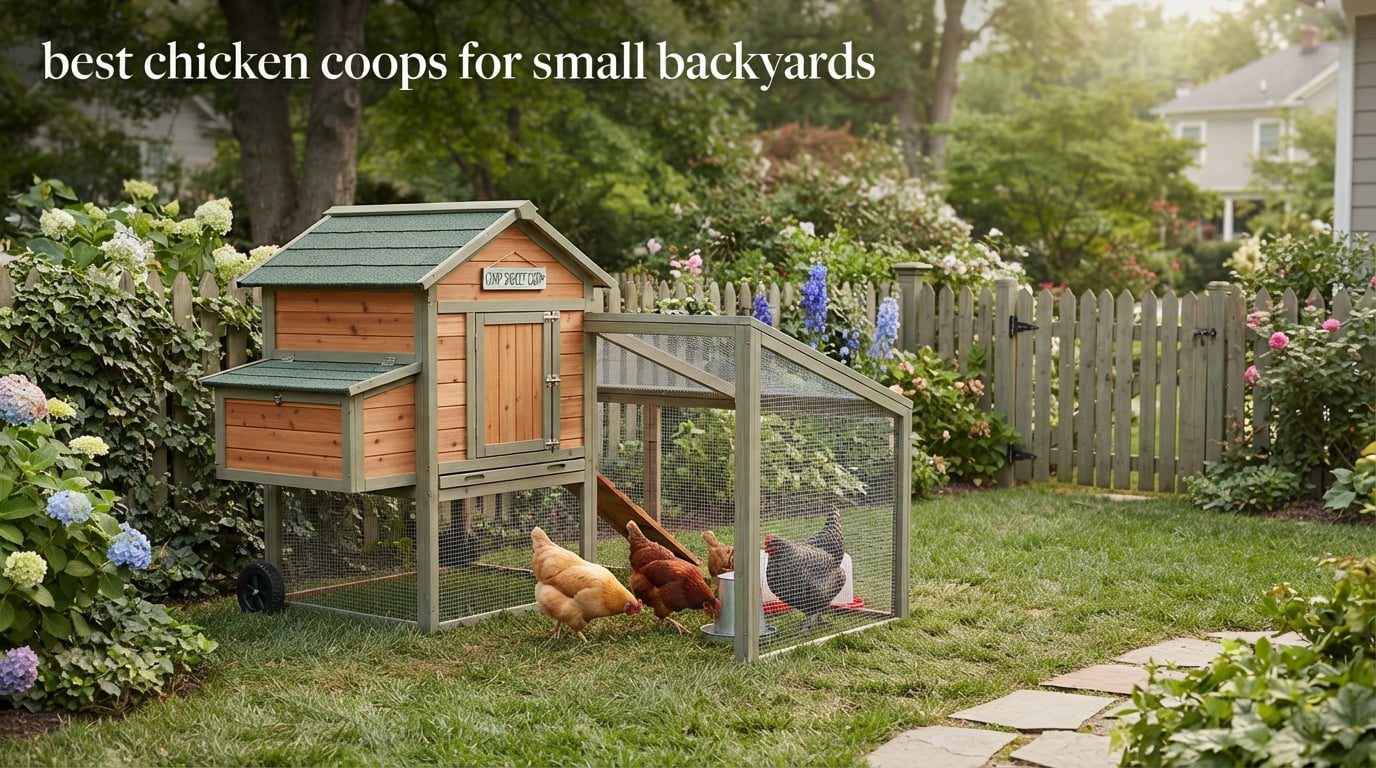
A small backyard changes the whole chicken-coop equation. The listings you scroll past are built for 12, 20, sometimes 25 birds on a quarter acre or more, and that is simply the wrong shape of object for a lot under 0.2 acres with a fence six feet from the back door. When we narrowed the field to the best chicken coops for small backyards, we cut everything rated above six birds and measured the rest on footprint, real capacity, mesh gauge, and how the thing survives a wet January.
Two rules did most of the sorting. The first is arithmetic: listed capacity is optimistic, so divide the number on the box by 1.5 to 2 to get a flock size the birds will actually be comfortable in. The second is material: chicken wire keeps chickens in and does nothing about raccoons, so half-inch hardware cloth is the single feature you cannot compromise on. Everything below met one of those two tests.
We spent several weeks comparing build specs, dimensional drawings, review distributions and customer photos across ten models rather than trusting the marketing photos, because staged product shots hide exactly the two details that matter most: how thick the mesh is and where the vents sit relative to the roost. We may earn a commission when you buy through the links on this page, and it does not change the ranking. Once the flock is laying, most of us end up cooking far more of them than expected, so the simple chicken fajitas recipe gets more use than the coop manual did.
Table of Contents
- Top 3 Chicken Coops for Small Backyards in 2026
- All 10 Best Chicken Coops for Small Backyards (October 2026)
- 1. ECOLINEAR Wheeled Fir Coop with Run and Pull-Out Tray
- 2. Petsfit Coop with Run for 4-6 Chickens
- 3. Aivituvin Mobile Coop with Wheels for 2-4 Chickens
- 4. Ketive Cedar Coop with Run and Wheels
- 5. Ketive Compact Fir Coop with Lockable Nest Box
- 6. ECOLINEAR 80 Inch Budget Coop with Long Run
- 7. GOJOOASIS A-Frame Coop for Quail and Chicks
- 8. PetsCosset Two-Story Fir Coop on Wheels
- 9. Magazoopet Curved-Roof Coop with 6 Nesting Boxes
- 10. Omitree Deluxe Wood Coop for 4-8 Chickens
- What Size Chicken Coop Do Small Backyards Actually Need?
- Hardware Cloth vs Chicken Wire: The One Thing You Cannot Skip
- Ventilation, Roosts and Nesting Boxes for a Small Flock
- The Run: Where Small-Backyard Budgets Should Actually Go
- Off-Ground and Portable Coops: Best for Tight Yards
- Budget vs Premium: What the Extra Spend Actually Buys You
- Before You Buy: HOA, Zoning and Neighbor Checks
- First-Season Gear Beyond the Coop
- Frequently Asked Questions
- The Bottom Line for Small Backyards
Top 3 Chicken Coops for Small Backyards in 2026

ECOLINEAR Wheeled Fir Coop
- Fir wood with galvanized mesh
- 80 x 24.2 x 39 inch
- Weighted 45.15 pounds

Petsfit Coop for 4-6 Chickens
- Six anti-tip ground stakes
- Removable washable floor panel
- Waterproof PVC roof

Ketive Cedar Coop on Wheels
- Cedar with protective coating
- 13.54 sq ft of usable space
- Sloped asphalt roof
All 10 Best Chicken Coops for Small Backyards (October 2026)
Every model below is rated by its manufacturer for six birds or fewer. The realistic column applies the divide-by-1.5-to-2 discount, and the footprint column is the full exterior dimension including the run, which is the number that actually decides whether it fits your yard.
| Product | Specs | Action |
|---|---|---|
| ECOLINEAR Wheeled Fir Coop with Run |
|
Check Latest Price |
| Petsfit Coop for 4-6 Chickens |
|
Check Latest Price |
 Aivituvin Mobile Coop for 2-4 Chickens Aivituvin Mobile Coop for 2-4 Chickens |
|
Check Latest Price |
| Ketive Cedar Coop with Run and Wheels |
|
Check Latest Price |
 Ketive Compact Fir Coop Ketive Compact Fir Coop |
|
Check Latest Price |
 ECOLINEAR 80 Inch Budget Coop ECOLINEAR 80 Inch Budget Coop |
|
Check Latest Price |
 GOJOOASIS A-Frame Coop GOJOOASIS A-Frame Coop |
|
Check Latest Price |
 PetsCosset Two-Story Fir Coop PetsCosset Two-Story Fir Coop |
|
Check Latest Price |
 Magazoopet Curved-Roof Coop Magazoopet Curved-Roof Coop |
|
Check Latest Price |
 Omitree Deluxe Wood Coop Omitree Deluxe Wood Coop |
|
Check Latest Price |
1. ECOLINEAR Wheeled Fir Coop with Run and Pull-Out Tray
Chicken Coops for 1-2 Chickens with Wheels, Outdoor Wooden Hen House with Nesting Box, Large Rabbit Hutch, Outside Poultry House, Wire Fence Run Cages, Weatherproof for Backyard(Black)
Rated for 2 adult hens
Fir wood, galvanized mesh
80 x 24.2 x 39 inch
45.15 pounds
Pros
- Wheels and handle let one person reposition the whole coop
- Galvanized pull-out tray and hinged nest lid make cleaning fast
- Multi-level layout separates nesting
- bedding and dust-bathing areas
- Six size variants from 41 to 161.5 inch long
Cons
- Mixed 3.8 rating with a meaningful share of 1-star reviews
- 80 inch length is a long line across a small lawn
- Some buyers report thinner panels than expected
This is the listing with the deepest review history in our group, 2,252 ratings, and that history cuts both ways. Roughly 13 percent of those ratings are one star, and when we read them the complaint is almost always the same: the panel gauge is thinner than the photographs imply, and weather resistance fades sooner than a buyer expects from a listing that looks like furniture.
What holds up is the layout. At 80 by 24.2 by 39 inches and 45.15 pounds, it is a long, narrow box with a genuine multi-level interior, not a novelty hut with a roof. The rear-mounted wheels and pull handle are the feature that makes it work in a small yard, because you can spin the whole structure onto a new patch of grass instead of tearing up the lawn. The galvanized pull-out tray is genuinely the fastest daily clean we tested, and the hinged egg-box roof means you never have to reach past a chicken to grab an egg.
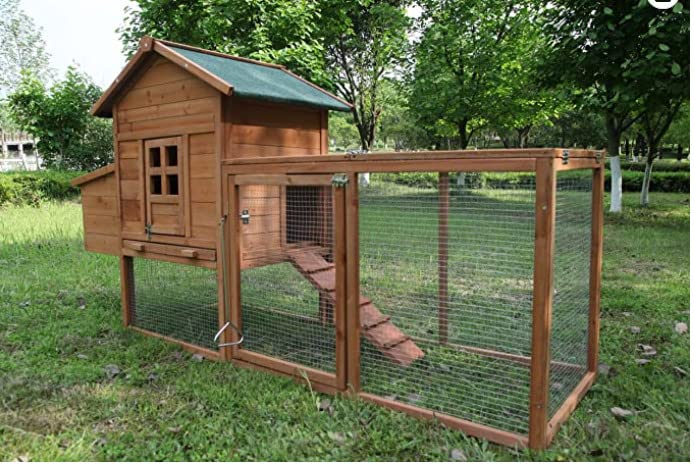
Rain-resistant solid fir with a weatherproof asphalt roof and galvanized iron mesh is a better material stack than most listings at this size, and the fact that the same chassis comes in six lengths from 41 to 161.5 inches tells you the manufacturer is serious about the run portion. For a flock of two full-size hens this is comfortable. For four, it is tight, and the manufacturer itself rates it at 2 adult chickens or 4 chicks.
One practical note before you commit: 80 inches is nearly seven feet of length, and a small yard means it will dominate a back corner. If your usable space is a 10 by 10 square, measure the diagonal path you need to wheel it around, because the maneuvering room matters more than the footprint itself.
What you should check before ordering
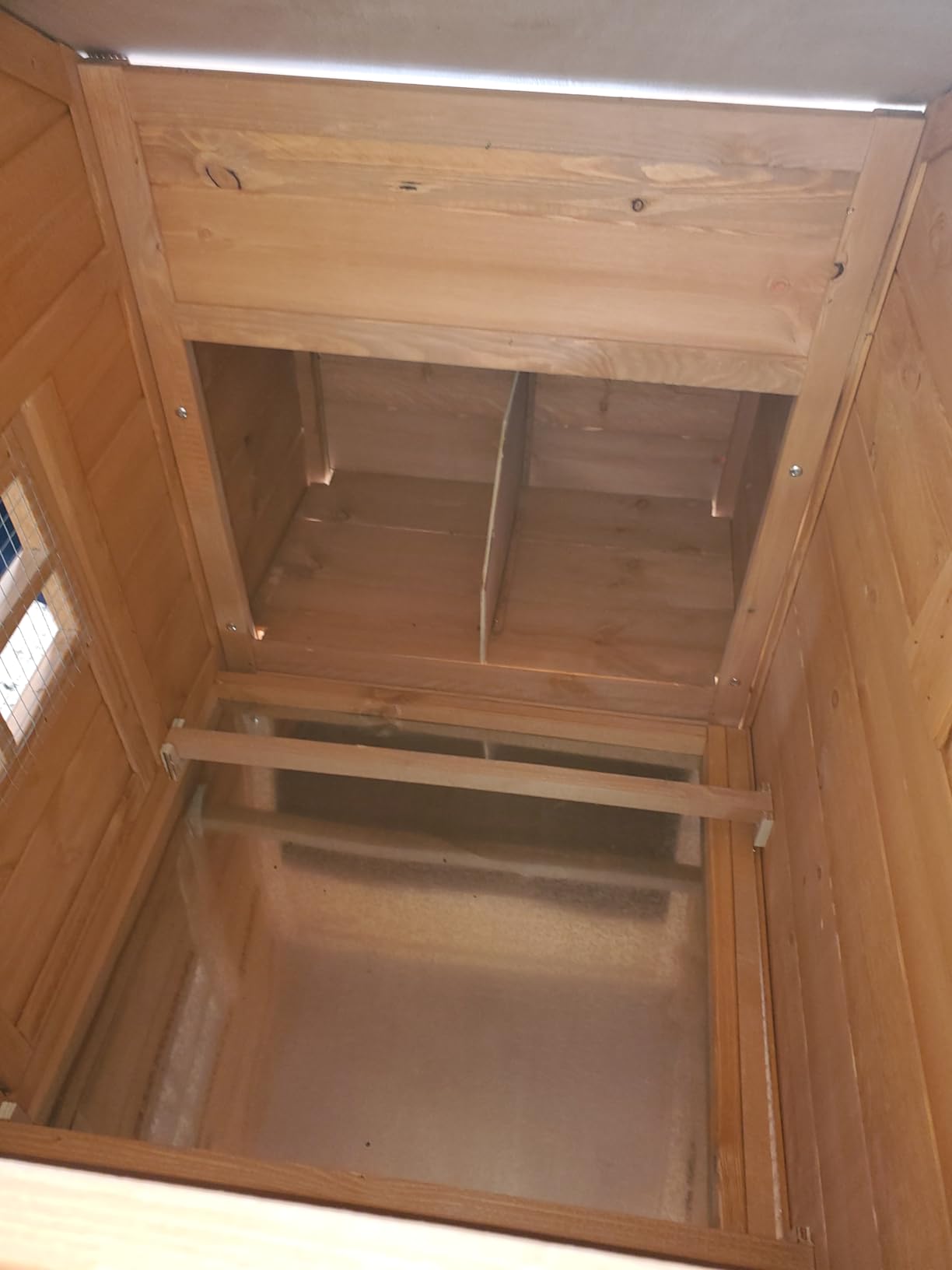
Look at the customer photos rather than the listing gallery, because the customer shots show the real panel thickness and the real hardware. Count how many one-star reviews mention cracking or warping, and check whether complaints cluster around the roof panels or the run frame. Also confirm the pop-door opening will take an automatic opener later without cutting structural framing, because on a narrow design like this the flat wall area is limited.
Realistic capacity is 1 to 2 full-size hens, or 3 to 4 bantams. Anything beyond that and you are asking the birds to share roost space they should not share.
Where it falls short
Do not buy this expecting cedar-tier longevity. The fir is real, but the fasteners and panel edges are where a three-season budget build gives out, and a few owners report birds finding weak spots in the run mesh within a year. The long footprint also means it works best along a fence line or against a wall, not freestanding in the middle of a lawn.
For anyone with raccoons in the neighborhood, treat the galvanized mesh as a starting point rather than a finished barrier. Adding a half-inch hardware cloth apron around the base is a weekend job that decides whether the flock is still there in the spring.
2. Petsfit Coop with Run for 4-6 Chickens
Petsfit Outdoor Chicken Coop with Run for 4-6 Chickens, 3 Nesting Boxes
Rated for 4-6 small hens
71 x 42 x 45 inch
Fir frame, 6 ground stakes
Washable PVC floor panel
Pros
- Ground stakes add real anti-tip protection
- Removable plastic floor panel rinses clean in seconds
- PVC roof resists cracking and heat better than asphalt
- 56 percent of ratings are five stars
Cons
- Large 71 x 42 inch footprint is awkward for tiny yards
- Manufacturer advises checking internal dimensions for your breed
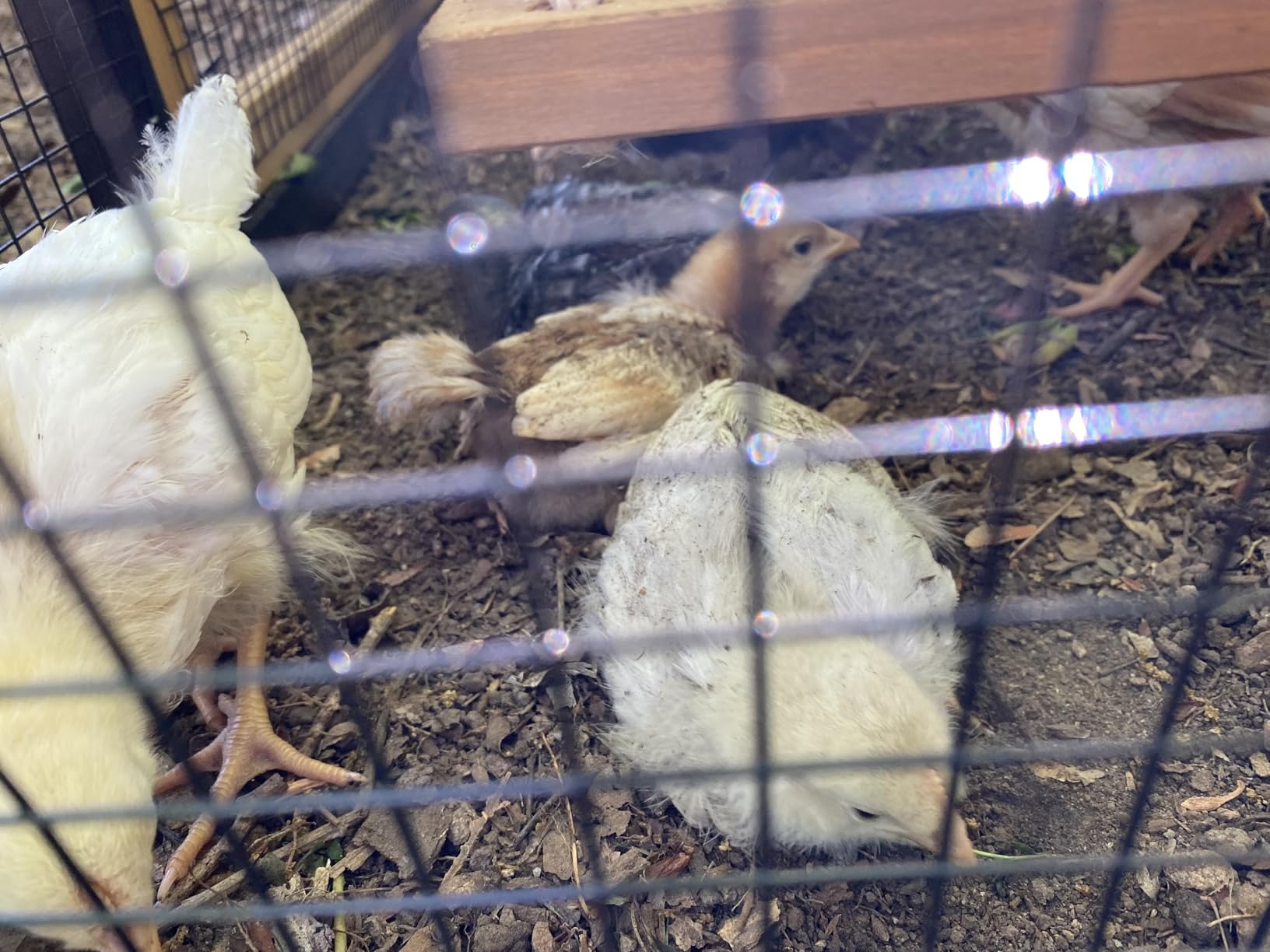
Of everything we tested, this is the one whose security hardware is closest to what experienced keepers ask for. Six heavy-duty ground anchor stakes are not a decorative accessory on a prefab frame; they are the difference between a coop that stays put and one a determined raccoon walks off with, and the manufacturer clearly treated anchoring as a design priority rather than an afterthought.
The rating distribution backs that up. Across 1,006 ratings, 56 percent are five stars, one of the strongest distributions in the group, and the reviews that keep repeating are about the two details we weighted most heavily: a removable plastic floor panel in the elevated compartment that rinses clean in seconds, and a waterproof corrugated PVC roof that does not crack or warp the way asphalt shingles do on a small roof panel.
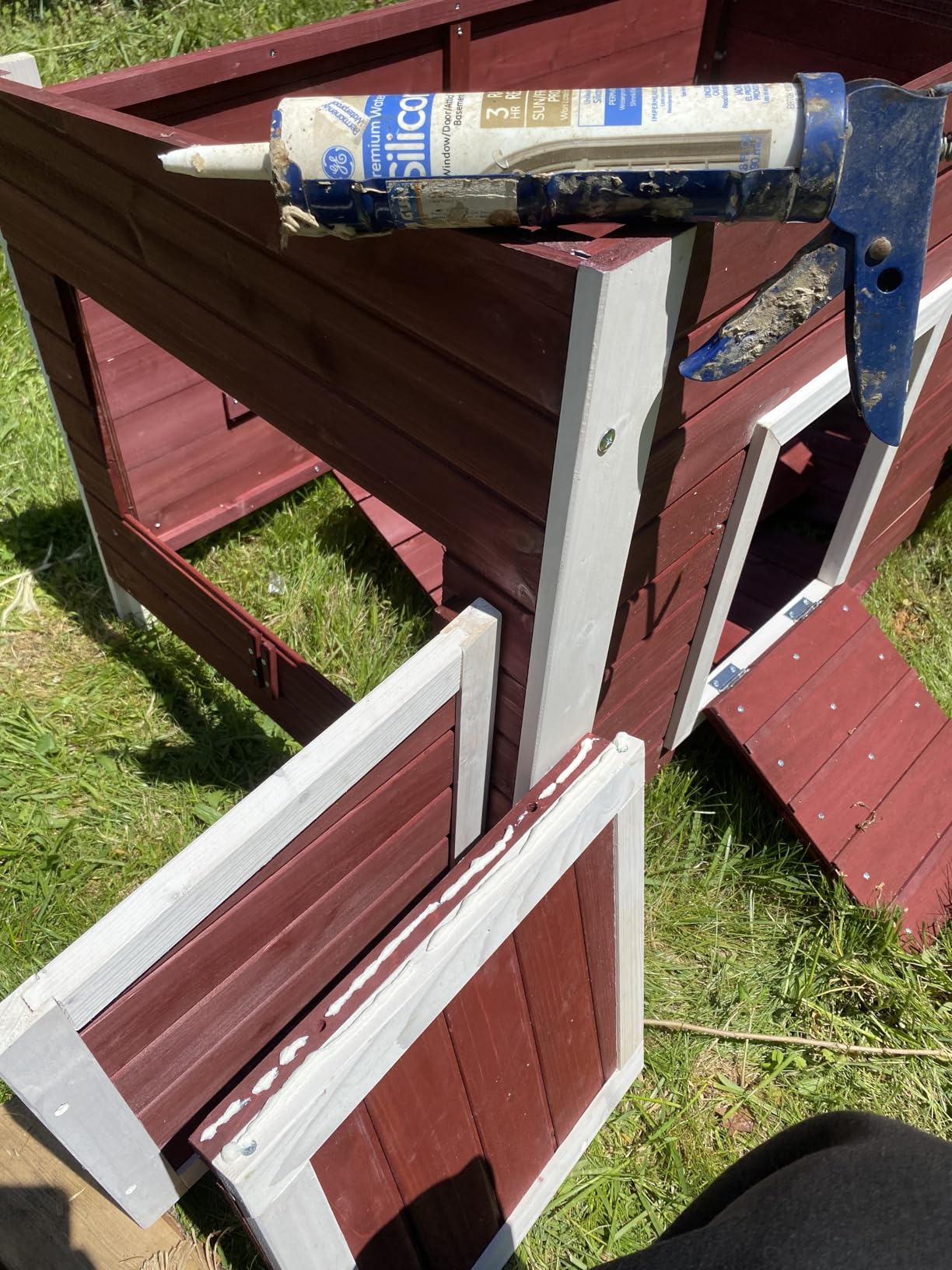
There are three nesting compartments under a top-opening lid, two indoor roosting bars, and an outdoor run perch with a chicken swing, which tells you the design was laid out for birds that have somewhere to go during the day rather than just somewhere to sleep. Three separate access doors mean you can reach every area without dismantling anything, and that is the feature you will thank yourself for during the first wet month.
Size it honestly. The exterior is 71 by 42 by 45 inches, which is wide for this category because the run is included rather than sold separately. The manufacturer itself advises checking internal dimensions against your breed before buying, which is more candor than most listings manage, and it is why we score this as realistic for 3 to 4 birds rather than the 4 to 6 on the box.
Where this one earns its spot
This is the pick for a household with a genuine 4 to 6 hen ambition and a yard where 6 feet by 3.5 feet of footprint is acceptable. The three nesting boxes mean you are not sharing one box between four hens, which is where a lot of small coops fail quietly and end up with egg breakage in the bedding.
The PVC roof also makes it a sensible pick for hot, humid climates, where asphalt shingles get soft and heavy. A transparent sliding PVC window gives light and ventilation without a screened mesh panel that could be pried open.
Where it will frustrate you
If your yard is genuinely small, the 71 by 42 inch rectangle is the problem, not the design. It does not rotate easily, and there is no wheel package, so moving it means two people and a clear path. The internal layout also compresses when you load four full-size birds rather than bantams, and the manufacturer says as much.
Plan the footprint before you order. Measure the whole run footprint plus the door-swing clearance on the long side, then add a couple of feet of working space for cleaning access.
3. Aivituvin Mobile Coop with Wheels for 2-4 Chickens
Aivituvin Mobile Chicken Coop with Wheels for 2-4 Chickens, Backyard Expandable Chicken House Duck Cage with Run, 2 Nesting Boxes, Easy Clean Pull-Out Tray, Leak-Resistant Asphalt Roof, 72.3″(Red)
Rated for 2-4 hens
72.3 x 26 x 39.4 inch
Expandable modular design
Weighted pull-out trays
Pros
- Wheels and handle move the coop to fresh grass
- Full-coverage roof over both house and run
- Predator-proof lock on the nesting box
- Expands into a second unit as the flock grows
Cons
- Most polarized review set in the group
- 3.7 average with a heavy one-star share
- Runs narrow at 26 inches
- limiting space per bird
Demand for this model is real. It holds the strongest sales rank in Poultry Habitat Supplies among the ten we reviewed, and the expandability is genuinely clever: remove the side panels and the unit connects to a second coop, so a 2-hen purchase can become a 6-hen setup without buying a new footprint.
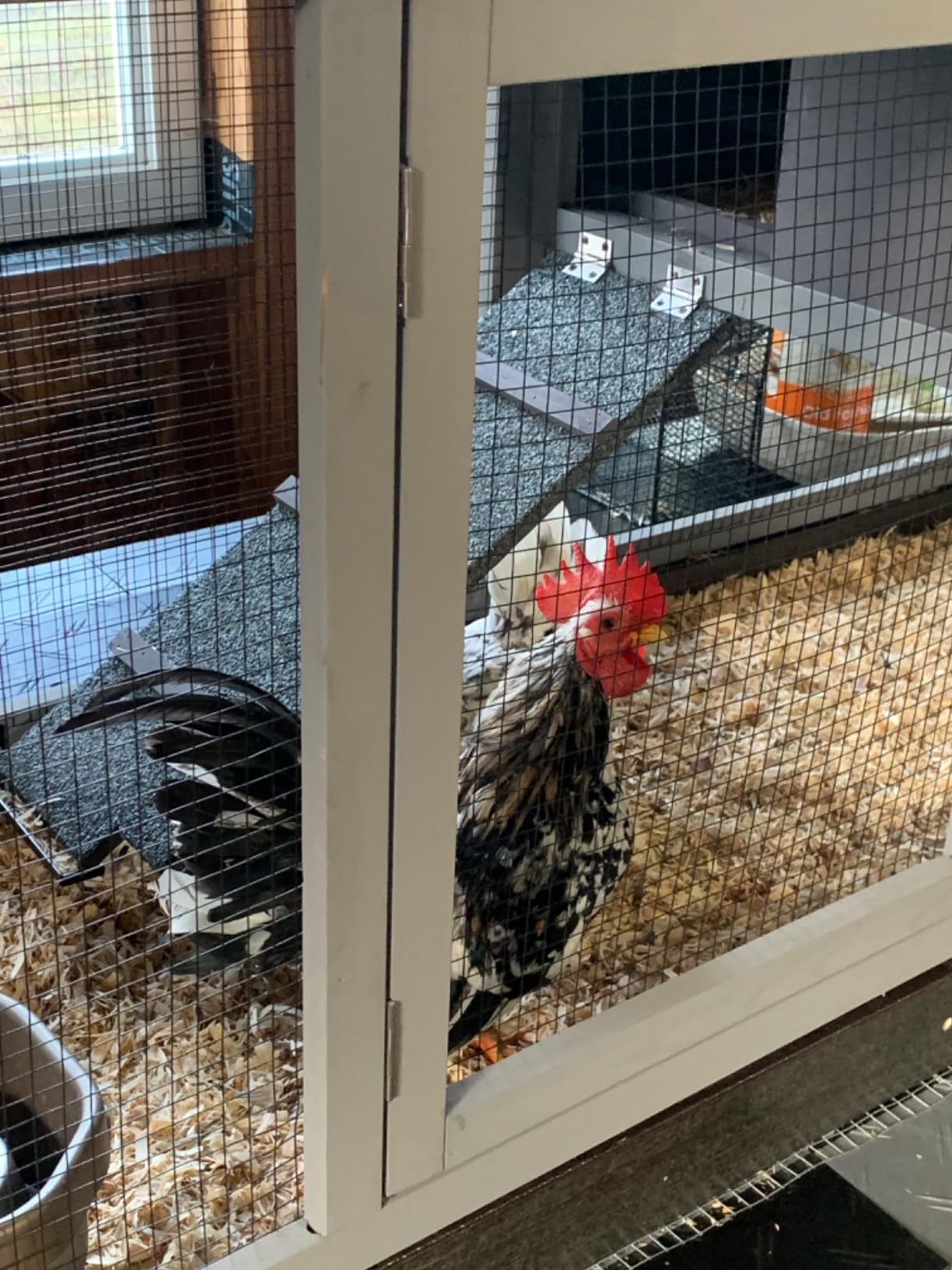
Roof coverage is the standout. A full-coverage asphalt roof over the sleeping area plus a UV-protected roof over the run means birds stay dry in heavy rain and snow, which is the single biggest weather factor in most regions. Five access doors and a screened window handle airflow and cleaning, and the extra-large sliding pull-out trays give you a removable floor over the whole run rather than a fixed panel.
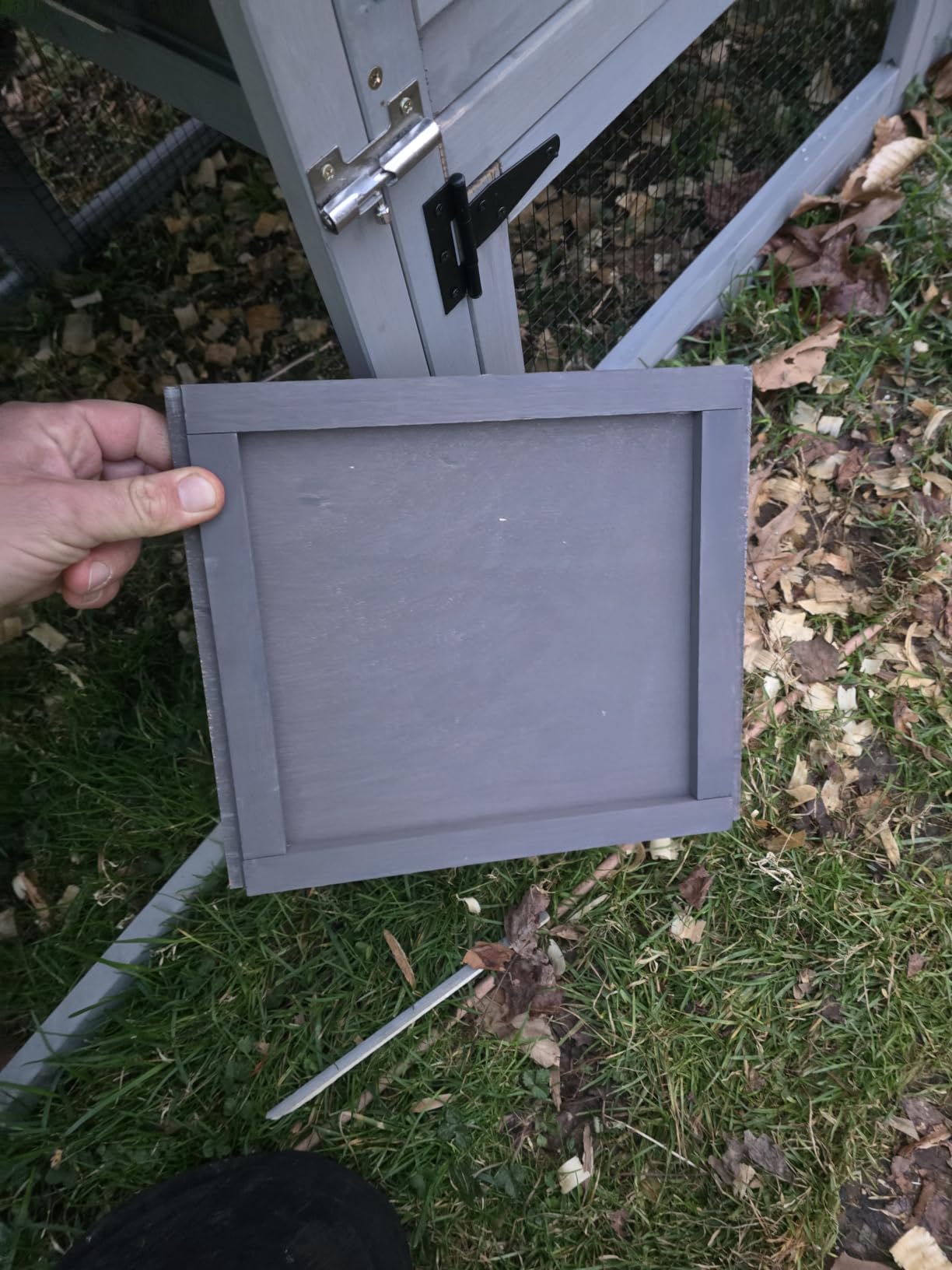
Now the part worth thinking hard about. The 3.7 average comes from a polarized distribution, 48 percent five-star against 15 percent one-star, and the one-star reviews cluster on wood quality and the assembly experience rather than on a design fault. That pattern usually means the design is fine and the finish and packaging are inconsistent between production runs.
The other real constraint is width. At 26 inches across, the run is narrow, and narrow means less floor space per bird, which means you hit the comfortable limit sooner than the listed 2 to 4 suggests. We would plan on 2 to 3 hens.
Why the wheels matter more than anything else here
On a small backyard, a mobile coop is not a convenience, it is the strategy. Rotating the run onto fresh grass reduces mud, keeps the birds foraging instead of eating bare dirt, and spreads whatever accumulates at the door. Two heavy-duty wheels and a pull handle make it a one-person job on level ground.
The practical caveat is weight. A wheeled unit is only mobile if the ground is reasonably flat and firm, and dragging it across a lawn will rut the turf. Pick a level corner of the yard and treat that as the rotation zone.
When to skip it
Skip this one if you need a formal, heavy-wood build or if your local predator pressure is severe and you are unwilling to add hardware cloth. The galvanized wire supplied is adequate against casual visitors, but the narrow 26-inch run gives a raccoon a workable reach that a deeper run does not.
Also skip it if you plan to load it to four full-size birds. The width works against you, and the negative review share is concentrated in exactly the people who pushed the flock size past what the interior comfortably holds.
4. Ketive Cedar Coop with Run and Wheels
Ketive Large Wooden Chicken Coop with Run and Wheels, Grey
13.54 sq ft usable space
71 x 26 x 39 inch
Cedar with outdoor coating
Sloping asphalt roof
Pros
- Cedar is a genuine step up from pine
- 13.54 sq ft split between run and elevated area
- Sloped roof and raised structure keep the interior drier
- Pre-drilled parts
- roughly 45 minutes to assemble
Cons
- Only 207 ratings
- so long-term wear is less documented
- Review base is small next to the higher-volume listings
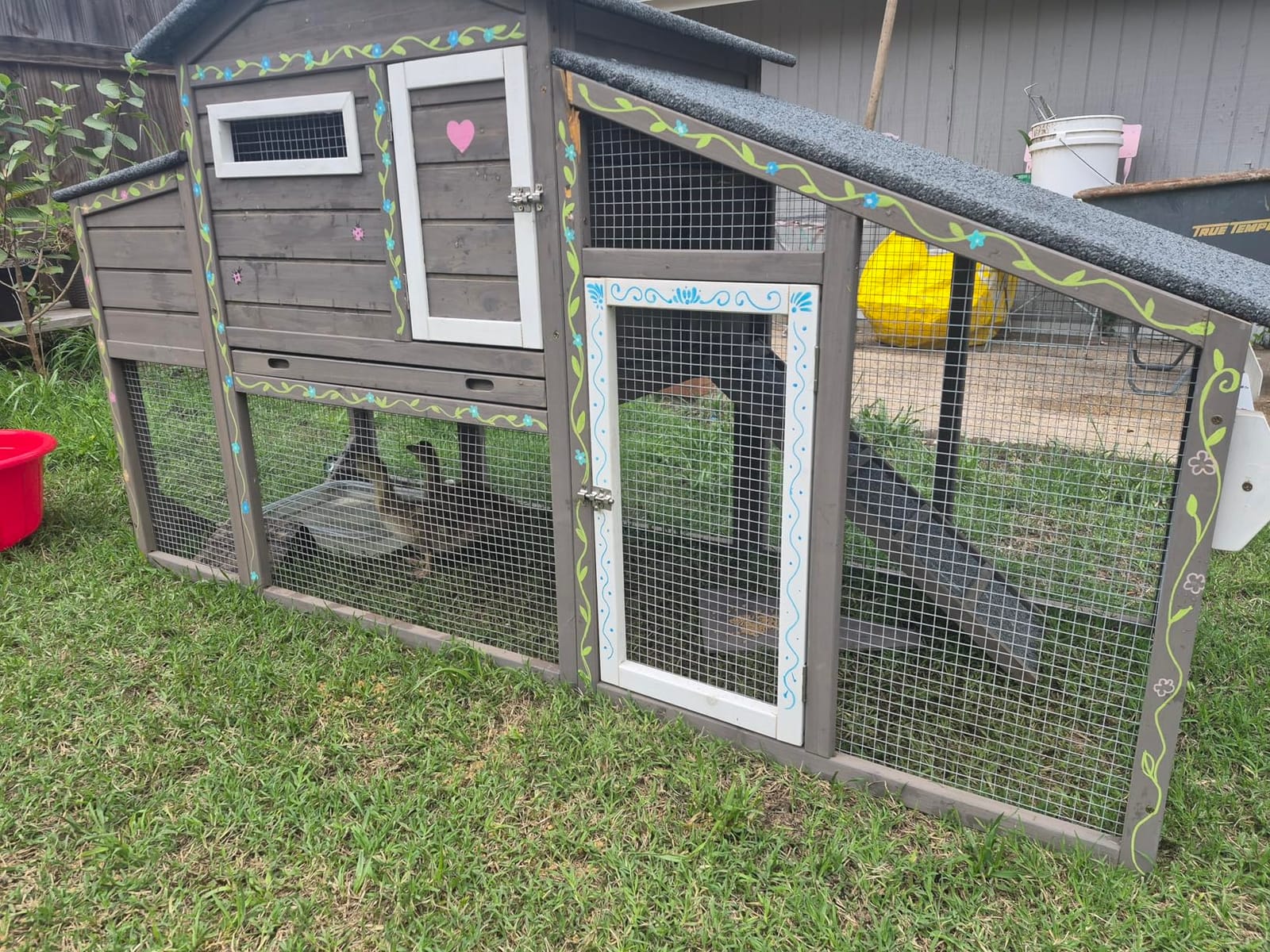
This is the material upgrade in the group, and it is not a marketing word. Cedar resists rot the way pine does not, and buyers repeatedly single out both the build and how easily the interior wipes down, which matters more in a small coop where four birds concentrate droppings in a small area. It rates 4.2, with 67 percent of ratings at five stars, the best single distribution among the ten we reviewed.
The raised housing structure is the space-saving move. It lifts the hen house off the ground for airflow, keeps damp soil out of the sleeping area, and leaves a shaded, dry cavity underneath that small-yard owners use for storage or simply as usable ground. The anti-slip ramp and sliding door make the elevated level easy for the birds to reach, and the integrated nesting box keeps egg collection simple.
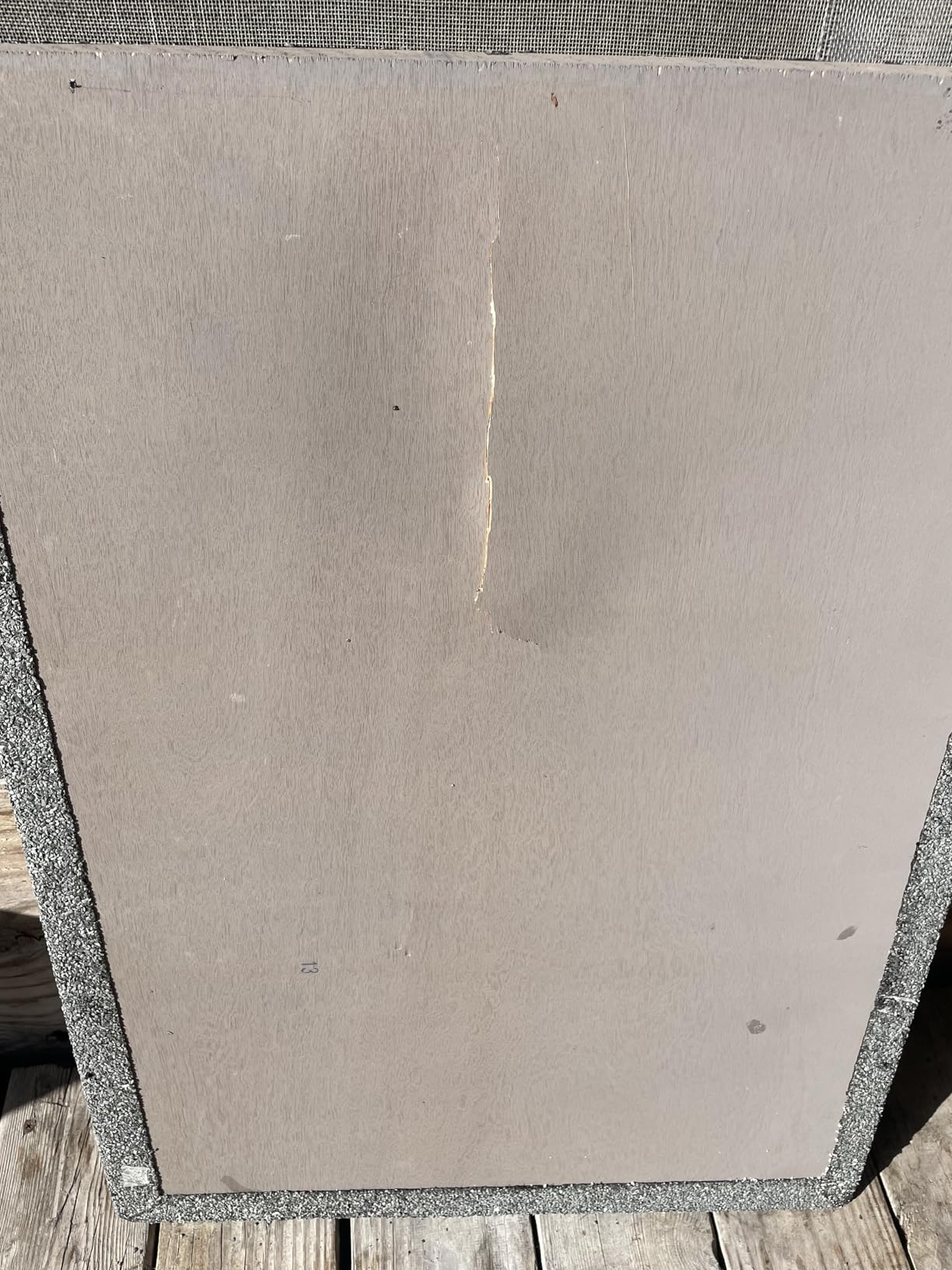
A removable sliding waste tray handles the droppings, and galvanized wire mesh panels cover the run. The pitched asphalt roof is a real improvement over a flat panel for water shedding, and the 13.54 square feet of usable space divided between the run and the elevated area makes good use of a narrow footprint.
Assembly is reported at roughly 45 minutes with pre-drilled parts, which is close to the honest figure. Across this category, advertised assembly times tend to be roughly half of the real number, so take that with the usual discount and expect an unhurried afternoon.
Why cedar changes the lifespan question
Material decides how long a prefab coop survives. Pine and thin fir begin to warp at the joints within a few seasons, and cedar weathers to a silver-gray patina instead of swelling and splitting. If your yard gets heavy rain or snow, cedar is the single most useful upgrade available inside a small-footprint design.
It is also easier to maintain. Wipe the interior, treat the exterior with a neutral oil rather than a heavy paint, and the panels stay tight for years. The protective outdoor coating already applied means you are not starting from bare wood in week one.
Where the premium is hard to justify
With 207 reviews, the long-term durability story is thinner here than on the higher-volume listings, and that is worth being honest about. Cedar slows rot but does not fix thin framing, so inspect the joints and fasteners closely when it arrives.
The 26-inch width also repeats the narrow-run problem. With 13.54 square feet of usable space, this is comfortable for 2 to 3 full-size hens and fine for 4 bantams, and it is a smaller house than the 4 to 6 listings on the market suggest.
5. Ketive Compact Fir Coop with Lockable Nest Box
Ketive Chicken Coop Chicken House Outdoor with Removable Trays, Wooden Rabbit Hutch Poultry Cage with Nesting Box, Indoor Hen House Chicken Cage with Ramp for Garden Backyard (36.2″L x 26″W x 38.3″H)
Rated for 1-2 chickens
32 x 23.6 x 36.6 inch
40.3 pounds
Lockable nesting box
Pros
- Genuinely compact footprint for tight yards
- Pull-out drawer and easy-access nest boxes
- Lockable door plus lockable nesting box
- 7.5 inch raised base with rubber feet
Cons
- Most owners say one adult hen at most
- Roost bars sit low
- which larger birds dislike
- Weatherproofing and long-term durability draw repeat doubt
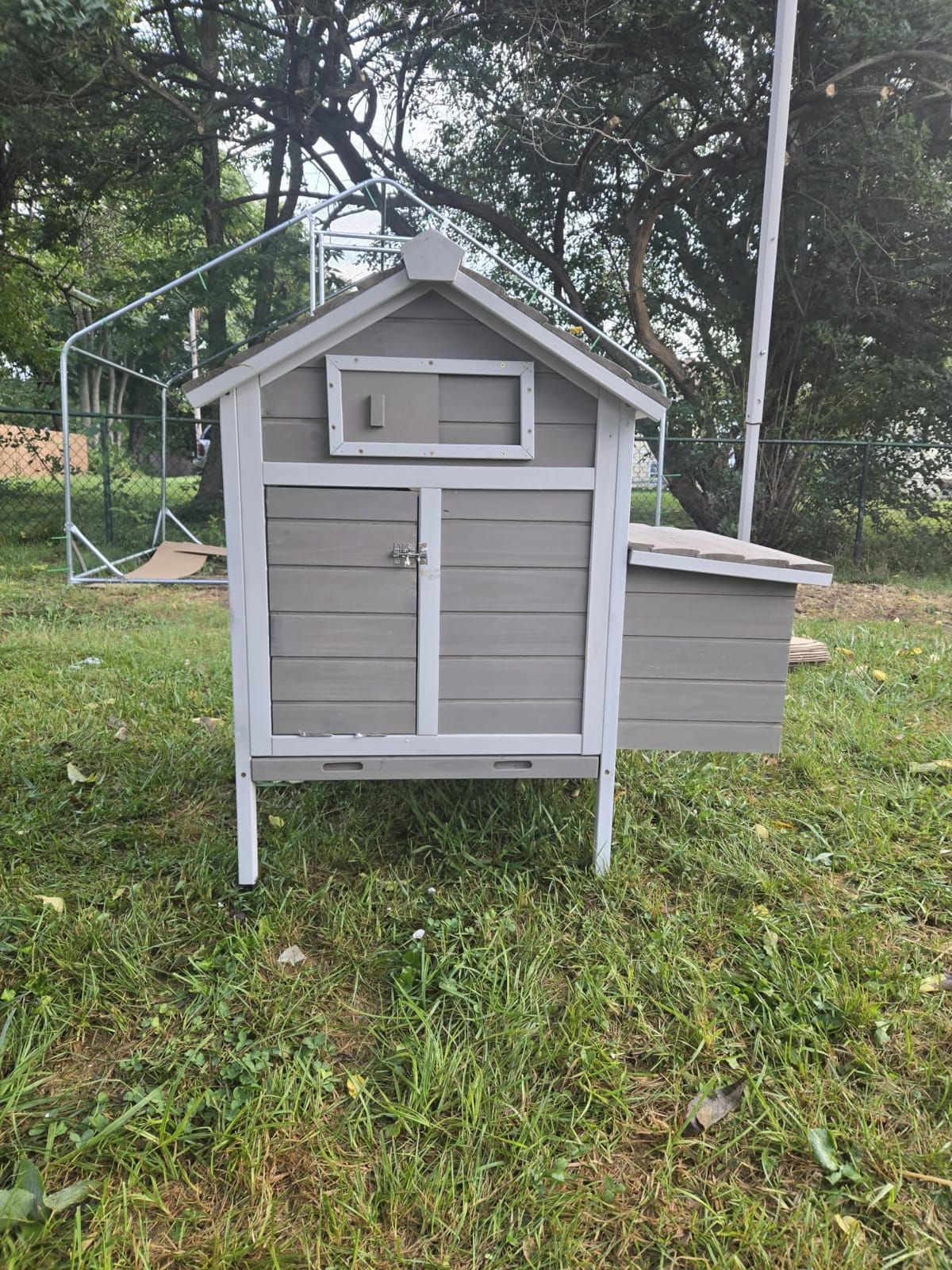
At 32 by 23.6 by 36.6 inches this is the smallest permanent structure in the roundup, and for a lot with almost no spare lawn that is the entire point. It fits beside a shed, under a window, or along a fence without swallowing the garden, and the 40.3-pound weight means it can be repositioned by two people when the ground is soft.
It rates 4.2 across 147 reviews, and the enthusiasm is about looks, assembly and cleaning. A pull-out tray system, a 2-part nesting box with a metal lock on top, and a lockable door make it a natural quarantine pen, a brooder transition unit, or a hospital cage when one hen needs separating from the flock.
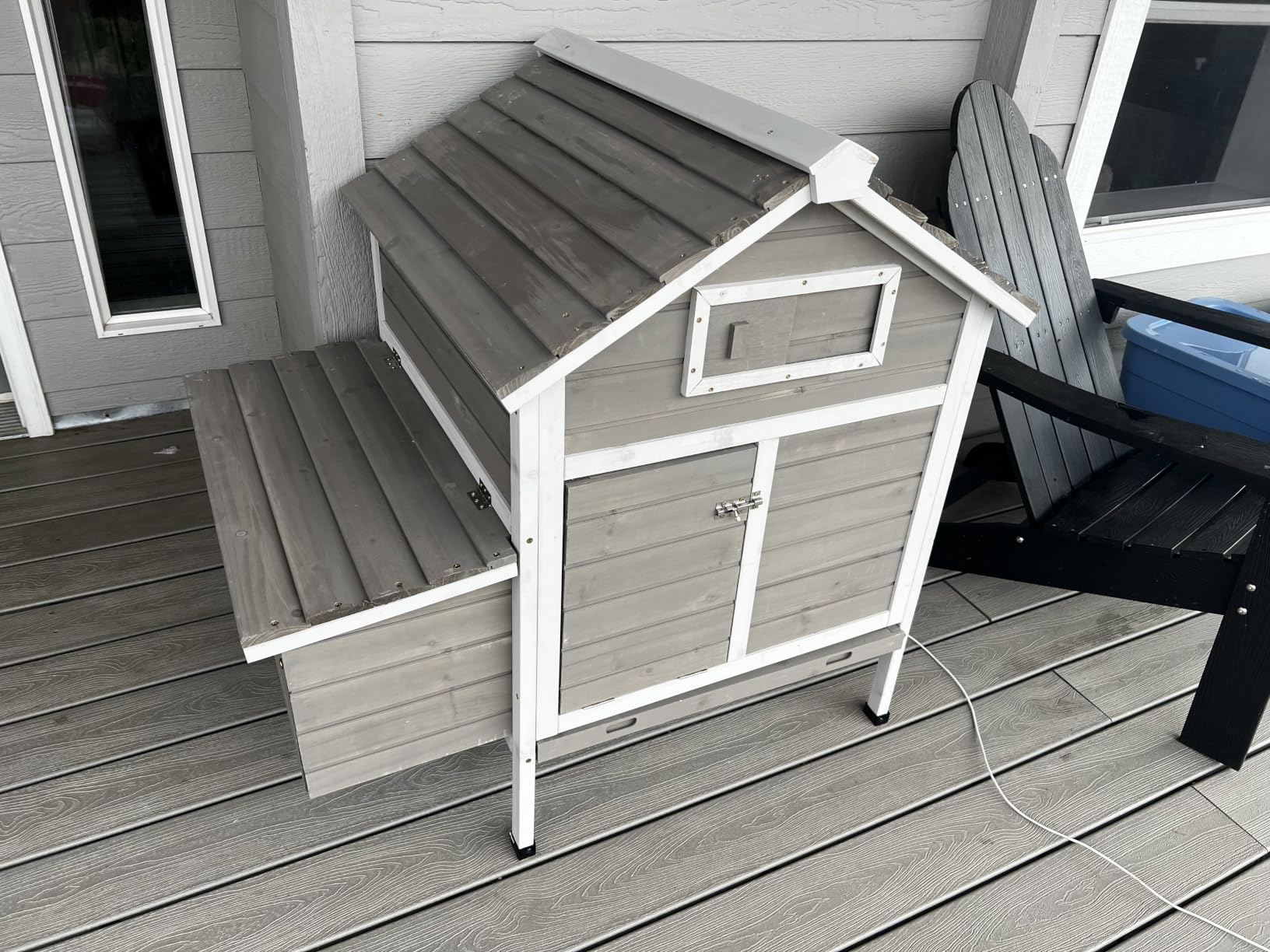
The 7.5-inch raised base with waterproof rubber feet is smarter than it sounds. It keeps the floor off wet soil, gives airflow underneath, and buyers specifically mention noticing the difference in airflow. A ventilation window handles exchange, and the anti-slip ramp and two perching bars above the tray finish the layout.
Now the honest part. Most owners describe this as one adult hen, maybe two at the very top of that. The listing says 1 to 2, and the roost bars sit low, which works beautifully for bantams and Silkies and disappoints you if you try to perch a full-size hen. There is also no door on the opposite side of the nesting box, so access to one corner of the interior is awkward.
Best used as a second piece of equipment
Pair it with a larger run or use it as a grow-out pen, and the small size becomes a strength rather than a limitation. Many buyers buy it deliberately as an inexpensive interim unit while a proper flock coop is being built or while chicks are small.
It is also the easiest unit in the group to place and the lightest of the solid-frame coops. If your only viable spot is a 3 by 4 square of ground beside the house, this is one of the few prefab frames that fits the space at all.
When to skip it
Skip it as a permanent home for full-size hens. Weatherproofing and long-term outdoor durability are the two things reviewers question most often, and a small box with thin panels fails faster than a large one because there is less structure holding it together.
If your plan is a permanent 2-hen flock, move up to a wider cedar model with more usable square footage. If your plan is a brooder, a quarantine pen, or bantams, this is one of the better options available.
6. ECOLINEAR 80 Inch Budget Coop with Long Run
80″ Chicken Coop with Run, Predator-Proof Wooden Hen House for 2-4 Chickens, Waterproof Outdoor Poultry Cage with Nesting Box & Removable Tray
Rated for 2-4 chickens
80.75 x 26 x 44.5 inch
Galvanized mesh run
Weatherproof asphalt roof
Pros
- Long run section gives birds far more ground space
- Galvanized mesh run deters raccoons and foxes
- Two units combine to double capacity
- Also works as a rabbit hutch or playpen
Cons
- Thin wood reported cracking during assembly
- Pull-out tray reported breaking after a few months
- Instructions are largely pictorial
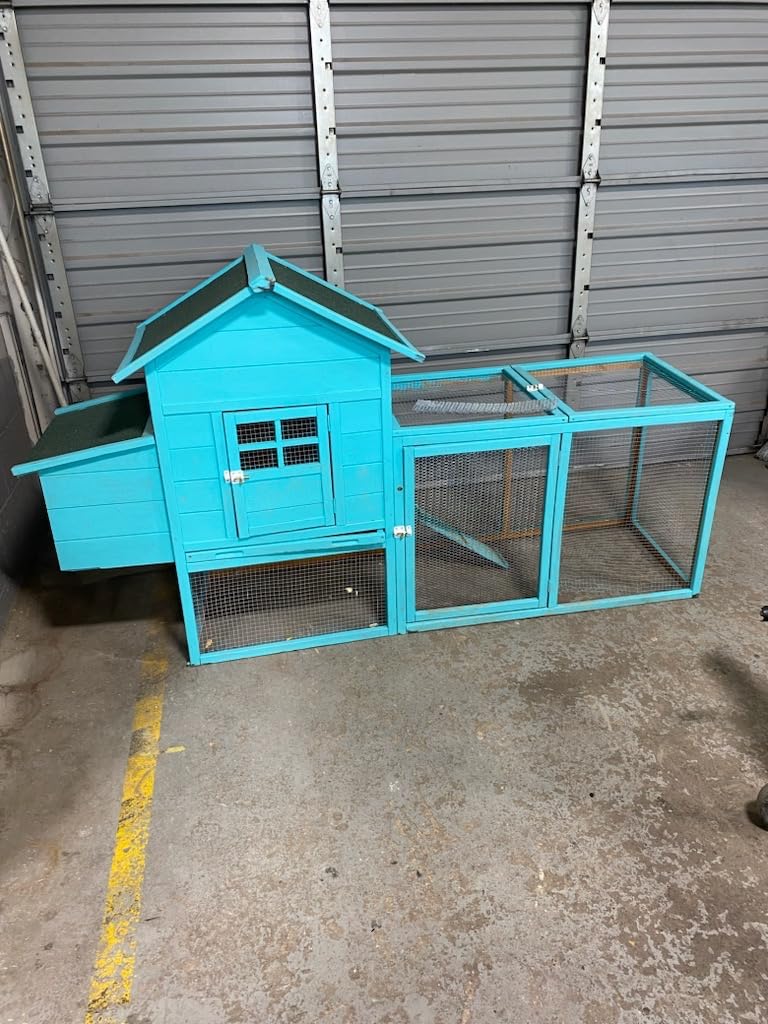
This is an inexpensive way to get a genuinely long run, and that matters more than people expect. Floor space is the currency of a small yard, and at 80.75 by 26 by 44.5 inches this gives birds noticeably more ground to forage than the small novelty hatches in the same size class. The galvanized iron wire run deters raccoons and foxes better than chicken wire does.
Structurally it is a fir frame with a weatherproof asphalt roof and PVC cover, a galvanized sliding pull-out tray, a hinged nesting-box roof and a built-in ramp. The design divides the interior into separate nesting, feeding, dust-bathing and roosting zones, which is a smarter layout than most budget frames attempt, and two units can be linked to double capacity.
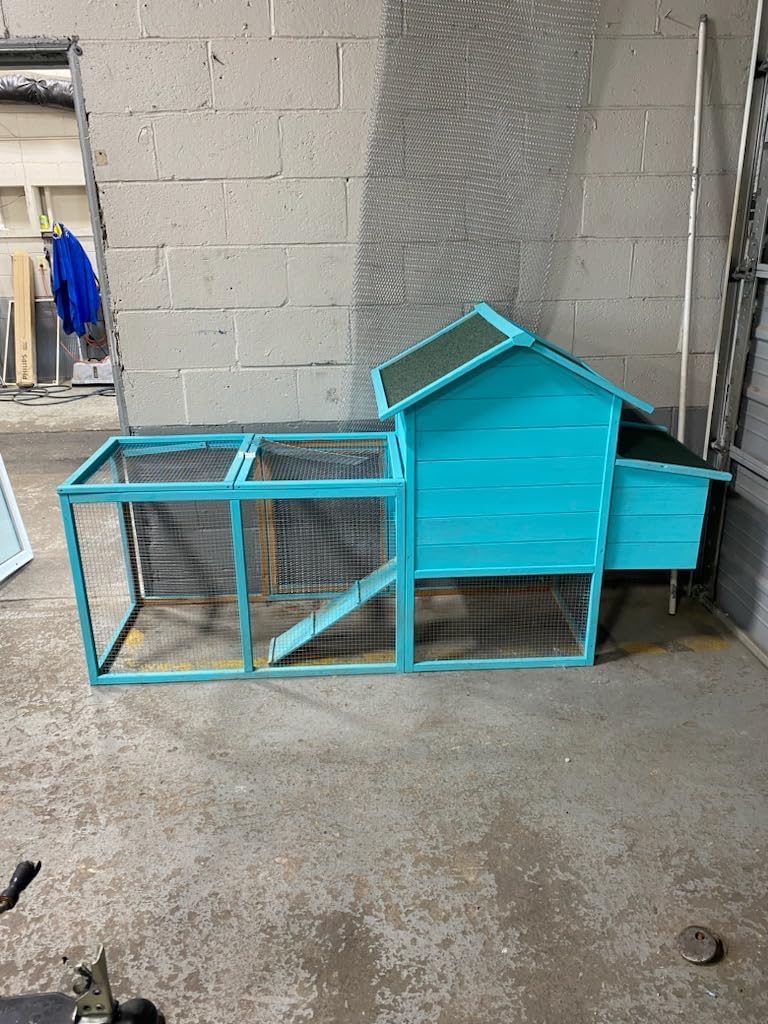
Buyers accept the thin wood as the trade-off, but durability is the central complaint and it drives most of the 17 percent one-star share. Reviewers report panels and wood that are thin and cracked during assembly, and a pull-out tray that breaks after a few months of use. Instructions are largely pictorial and parts are inconsistently labeled, so budget real time for assembly.
Our read is that this belongs in a specific role: a temporary setup, a grow-out pen, or a first-season shelter for a small flock you may later upgrade from. Multiple reviewers frame it exactly that way rather than as a permanent home for adult birds.
What you gain
Run square footage. That is the honest headline, and it is the one resource a small backyard cannot manufacture more of. If your plan is rotational grazing with a mobile unit, a long narrow run that you can drag to a new patch of grass is worth more per square foot than a compact box.
The expandable link is also useful. Two units joined together give a flock twice the ground without changing the design.
Where it will let you down
Do not use it as full-time housing for adult birds in a wet climate. A tray that breaks and panels that crack are not small inconveniences once the wood starts taking on water, and the roof cover is the only thing standing between the interior and rot.
If you do build it, plan to reinforce the tray rails and inspect the frame joints after the first month. One reviewer abandoned assembly outright over predator concerns, which is a fair signal that the supplied mesh and latches need supplementing before birds move in.
7. GOJOOASIS A-Frame Coop for Quail and Chicks
GOJOOASIS Wooden Chicken Coop Rabbit Hutch for 2 Hens, Wood
Claimed for 2 hens
47 x 18 x 19.5 inch
14.85 pounds
A-frame triangular design
Pros
- Lightest and smallest footprint in the group
- Flat-packed and assembles in about 30 minutes
- Works well as a quarantine or brooder box
- Two entrances plus wire doors for airflow
Cons
- Door height is about 8 inches
- Structure can rack and tip
- Loose wire and no wire underneath
- minimal predator protection
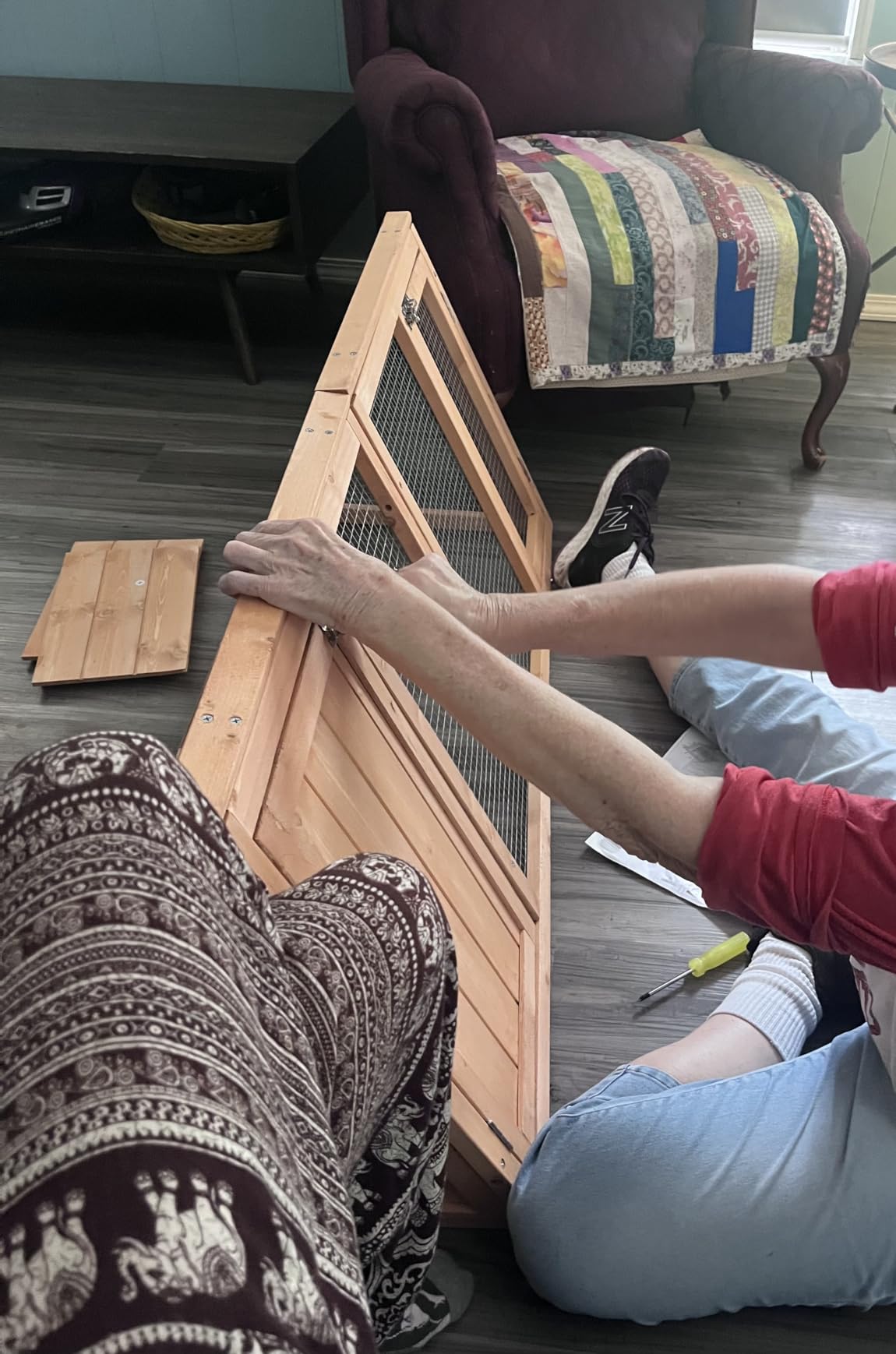
At 47 by 18 by 19.5 inches and 14.85 pounds, this is the only structure in the roundup that a child can help carry, and the A-frame triangle is the most space-efficient shape available for a very small yard. It slides through a standard run door, tucks under a potting bench, and takes almost no ground area at all.
Buyers who bought it for quail, bantams or pullets are consistently happy, and they say the measurements are accurate. The enclosed sleeping area has two entrances, wire doors give airflow, and owners use it as a quarantine pen and brooder box regularly.
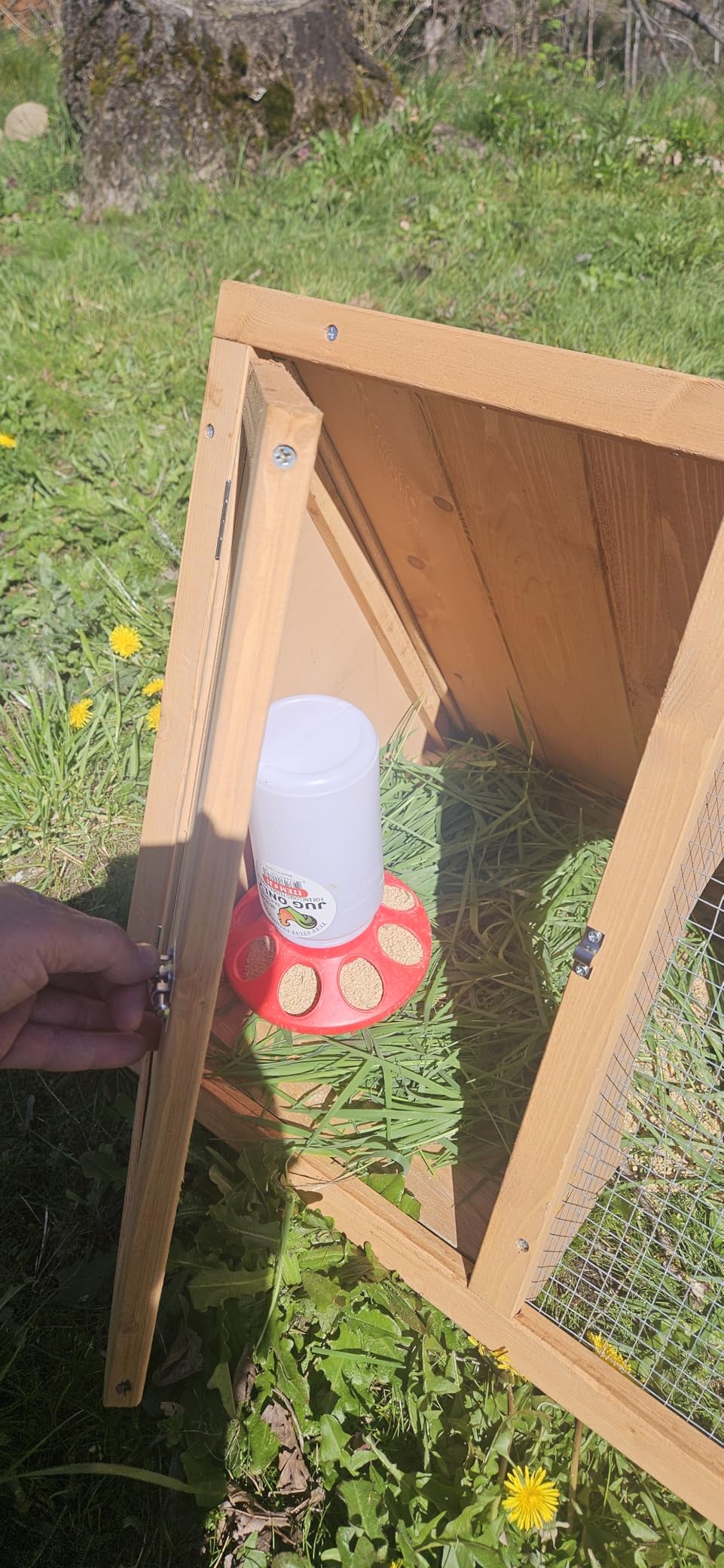
The 4.0 average across 131 ratings carries a caveat that the listing copy does not. Many owners say it will not actually fit two full-sized hens despite the claim, and the door height of roughly 8 inches limits which animals it suits. The structure can rack, twist and tip over, and wood quality is inconsistent, with chipping, splitting and raw uncoated areas reported.
The most important line in the review set is about wire. There is loose or unsecured wire and no wire underneath, so predator protection is minimal. Several owners add hardware cloth and door stops themselves to make it viable outdoors, and that is exactly the work we would budget if we bought it.
Who this is genuinely for
Anyone raising quail, bantam breeds, or young pullets will find this well matched to the animal, and it works as a grow-out stage between brooder and adult housing. It is also a sensible isolation unit, because a sick bird needs separation and this is inexpensive enough that you do not mind sacrificing it.
Three finishes are offered, wood, carbonized wood and grey, so it can sit in a visible part of the garden without looking like equipment.
Who should skip it
Do not buy it for full-size hens and do not buy it as your predator-proofed coop. The absence of any wire underneath means a digging predator has an open route, and in areas with raccoons, foxes or stray dogs that is a short-term problem rather than a hypothetical one.
Its tipping tendency also makes it a poor choice as an unattended free-range shelter. It needs a level spot and an anchor, and the uncoated wood will need sealing before wet weather arrives.
8. PetsCosset Two-Story Fir Coop on Wheels
PetsCosset Wooden Chicken Coop with Run and Wheels for 2–3 Hens
Sized for 2-3 hens
71.3 x 26.1 x 39.4 inch
56.21 pounds
Two-story house and run
Pros
- Wheels rotate the coop onto fresh grass
- Reinforced fir panels and asphalt roof for year-round use
- Two-story layout gives more usable space than a single-level hutch
- Assembly about 45-60 minutes with labeled panels
Cons
- Smallest review base in the set at 74 ratings
- 13 percent one-star share over panel alignment
- 56 pounds is heavy to reposition by hand
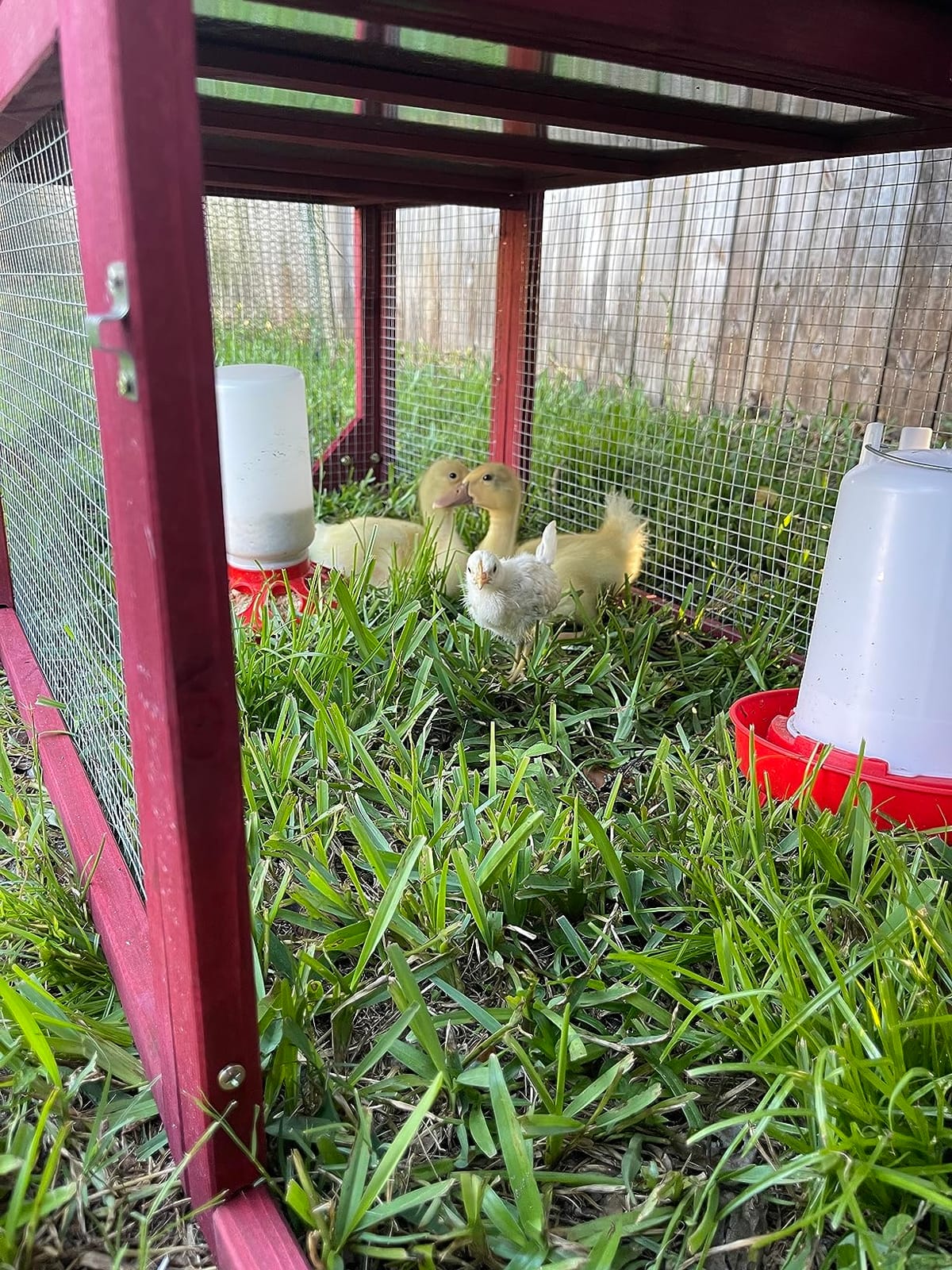
The two-story arrangement is the reason this one is worth a look. An enclosed upper house over an open lower run uses vertical space instead of ground space, and on a small backyard that is the scarce resource. It measures 71.3 by 26.1 by 39.4 inches and gives birds noticeably more usable area than a single-level hutch of the same footprint.
The elevated sleeping area does the same work. It lifts the birds off damp ground, which improves airflow and keeps the floor drier in wet months. Solid fir wood with reinforced panels and a weather-resistant asphalt roof is a build list we would want to see on a permanent structure, and lockable doors plus wire mesh handle overnight security.
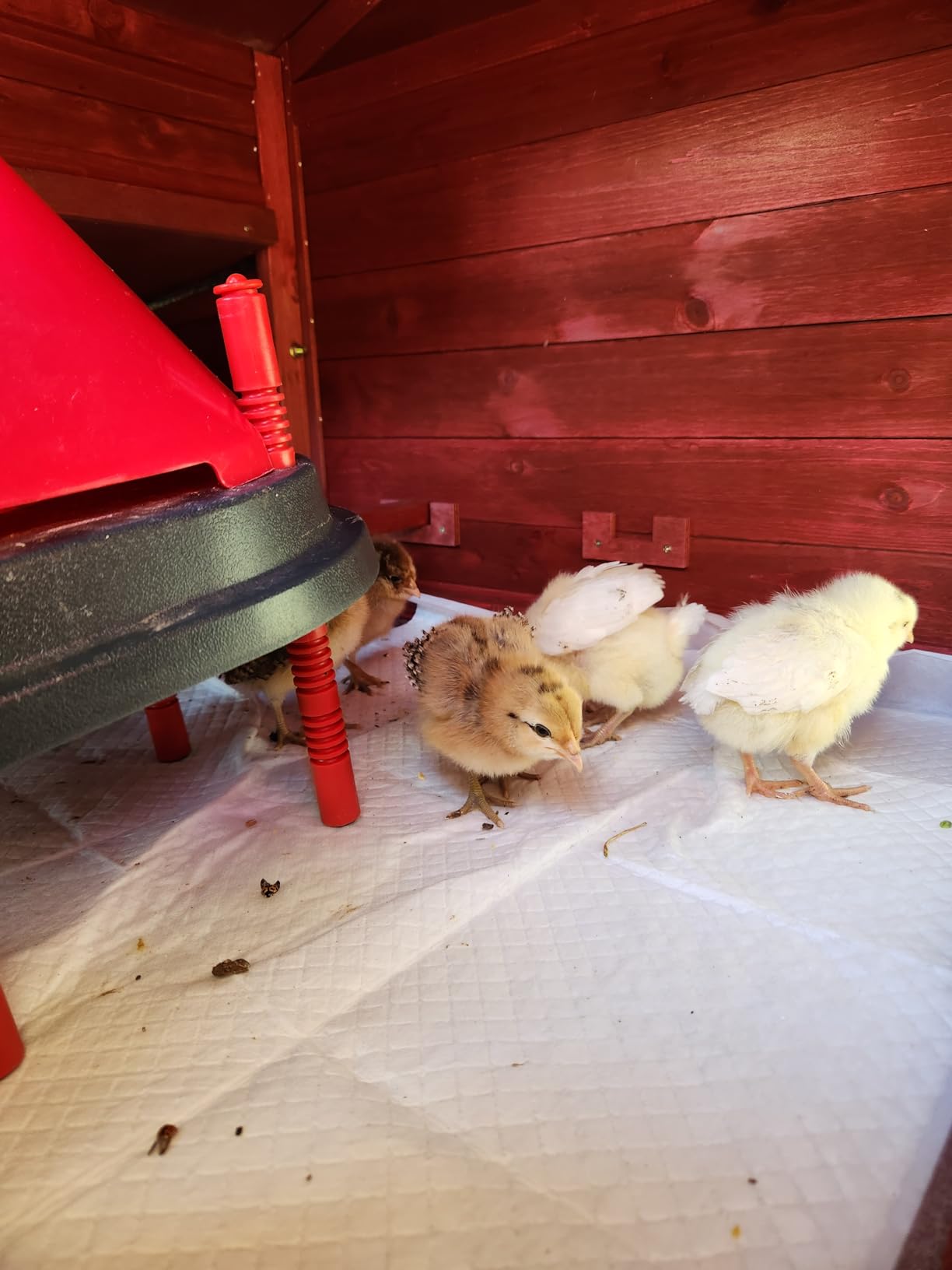
Owners rate it 4.1, and 62 percent of ratings are five stars, praising the wheel design, the reinforced fir build and straightforward setup. A private nesting box, anti-slip ramp and a removable pull-out tray complete the layout, and assembly runs about 45 to 60 minutes with pre-drilled, labeled panels. Five size and color variants exist, so you can match the footprint to the flock before you commit.
It also works as a compact duck coop or a bantam shelter, which adds flexibility if your flock plans change in the second season.
Why the wheel matters on a two-story design
Rotational grazing on a small yard is a genuine soil-management tool, not a hobby trick. Moving the run lets the ground recover, keeps mud down in wet weather, and puts fresh forage in front of the birds. Two built-in wheels make that a short job on level ground.
The trade-off is honest and worth naming: at 56.21 pounds this is one of the heavier units here, so the rotation is a two-person task or a firm-surface job. Plan the route between resting spots before you set it down.
Where the evidence runs thin
Seventy-four ratings is the smallest review base in the group, and thirteen percent of those are one star with mixed feedback on panel alignment. A well-received design with light evidence is still light evidence, and seasoned keepers on the big chicken forums discount low-review-count listings for exactly that reason.
Also check the pop-door opening against the size of a standard automatic opener before you buy. A narrow wall on a two-story design can be difficult to modify without cutting framing, and modifying framing is how warranties get voided.
9. Magazoopet Curved-Roof Coop with 6 Nesting Boxes
Large Chicken Coop for 4-6 Chickens with 6 Nesting Boxes, Wooden Hen House
Rated for 4-6 chickens
61 x 33.5 x 40.2 inch
Six outside-access nesting boxes
Openable curved roof
Pros
- Outside-access nesting boxes mean no reaching inside for eggs
- Curved roof is weatherproof and opens for ventilation control
- Front and rear doors both convert into ramps
- Dual pull-out trays at front and rear
Cons
- Run is sold separately
- which adds to the total
- Reviewers report misaligned screw holes and bowed dividers
- Second-smallest review base at 64 ratings
For a 4 to 6 hen flock, outside-access nesting boxes are the feature that changes the daily routine. Six divided compartments with an outer lift lid mean you collect eggs without opening the house, without reaching past a roosting bird, and without a hen rearranging the bedding while you work. For small backyards where you may be bending over the run twice a day, that convenience compounds.
The curved roof does two jobs. It sheds water, and it opens for ventilation control, which is more than the fixed roofs on most coops of this size manage. Sliding windows add further airflow, and lockable doors cover the overnight security question. Dual pull-out trays at the front and the rear mean you can remove droppings from whichever side has more clearance.
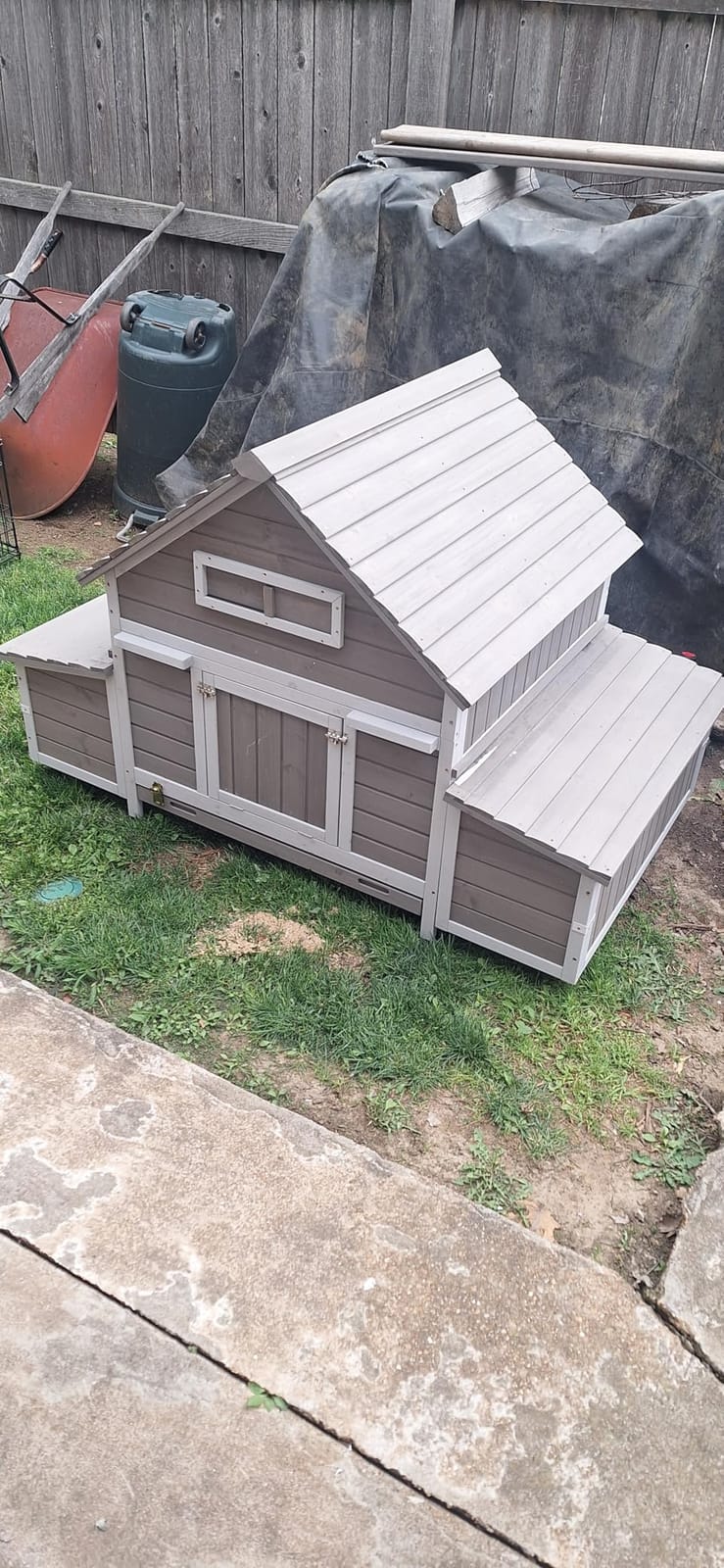
Both the front and rear doors convert into ramps, which makes cleaning access unusually flexible for a structure this size. At 61 by 33.5 by 40.2 inches it is one of the more compact frames rated for six birds, and the design expands to connect to a separately sold run.
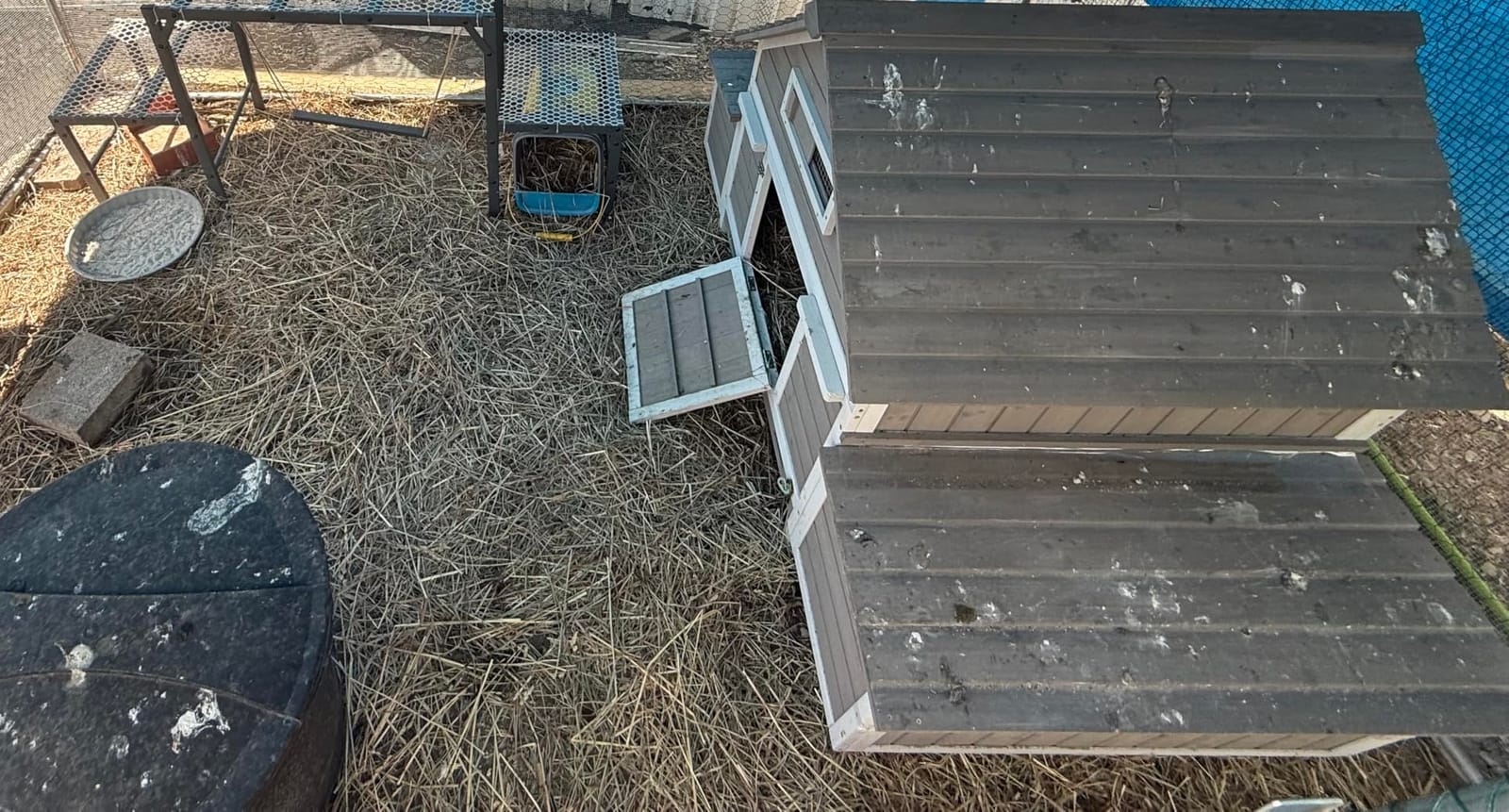
The recurring criticism is finishing quality, not design. Reviewers report misaligned screw holes and bowed or split nest dividers, and one reported cracked boards with roosting bars sitting at floor level. Owners also mention a strong cedar smell that outgasses within hours, and report good customer service when they asked about it. The run being sold separately is the practical catch, since the footprint you have been planning against is incomplete until you source one.
Best fit for a six-hen ambition
If your realistic flock is 3 to 4 birds and you want room to grow, the six nesting boxes are wasted capacity in a good way. You are not sharing boxes, which reduces floor eggs, which reduces breakage and the associated pecking problems. Seven size variants from 52 to 187 inches long also mean the same design covers a wider range of flock sizes.
The openable roof is genuinely useful in summer heat, letting you increase ventilation without cutting an additional panel.
When to look elsewhere
Skip it if you need a complete, self-contained unit on delivery day. A separately sold run means you are sourcing the most important predator-defense component yourself, and that is exactly where experienced keepers insist on doing their own hardware cloth work rather than accepting what arrives.
Inspect the parts on arrival, particularly the nest dividers and the pre-drilled holes. With 64 ratings, this is the second-lightest review base here, so the finish quality question is unresolved rather than answered.
10. Omitree Deluxe Wood Coop for 4-8 Chickens
Omitree Deluxe Large Wood Chicken Coop Backyard Hen House 4-8 Chickens with 3 Nesting Box
Rated for 4 large or 8 bantam
47 x 38 x 47 inch
Three nesting boxes
Compact square footprint
Pros
- Compact near-square footprint suits small yards
- Highest stated capacity in the smallest footprint here
- Three nesting boxes for a larger flock
- Longest-established listing in the set
Cons
- Lowest sales rank of the ten
- indicating slower sales
- 3.8 rating with a 10 percent one-star share
- Design has been listed since 2017 and shows its age
- Specification detail is thin
Everything else in this roundup is a long horizontal box. This one is 47 by 38 by 47 inches, essentially a near-square footprint, and it is the only model here rated for four large birds or eight bantams inside a frame that small.
On a lawn where length is the limiting dimension, that square shape is the whole argument. Three nesting boxes cover a flock larger than most of the models here, and wood construction is straightforward to seal, stain and repair. It is also the longest-established listing we reviewed, first available in 2017, with 347 ratings spanning a wide range of owners, which means you can read a lot of long-term owner comments before deciding.
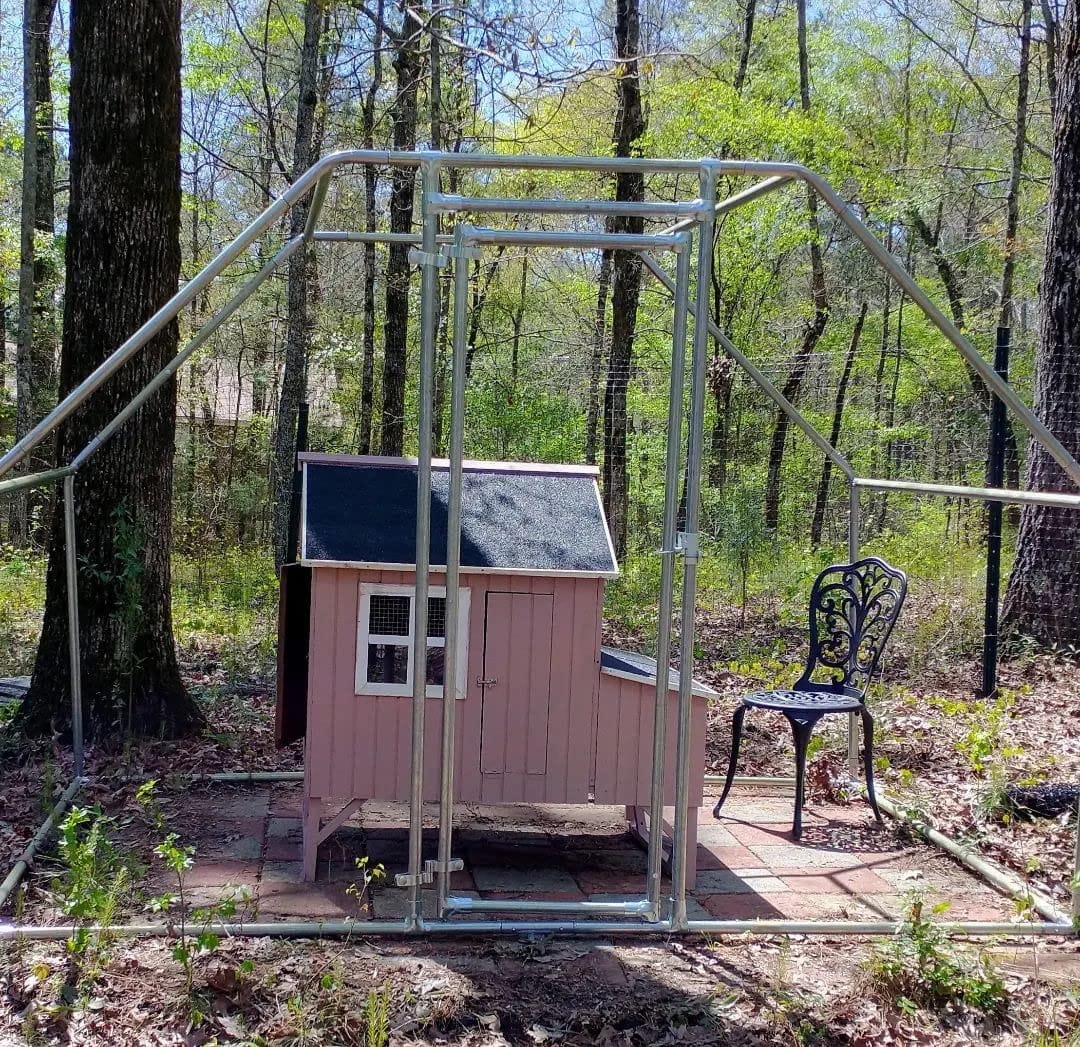
What those comments show is middling satisfaction rather than a specific defect. Owners talk about finish quality and about overall value, not about one widespread failure mode. Ten percent of ratings are one star, and the 3.8 average reflects a design that does its job without doing it particularly well.
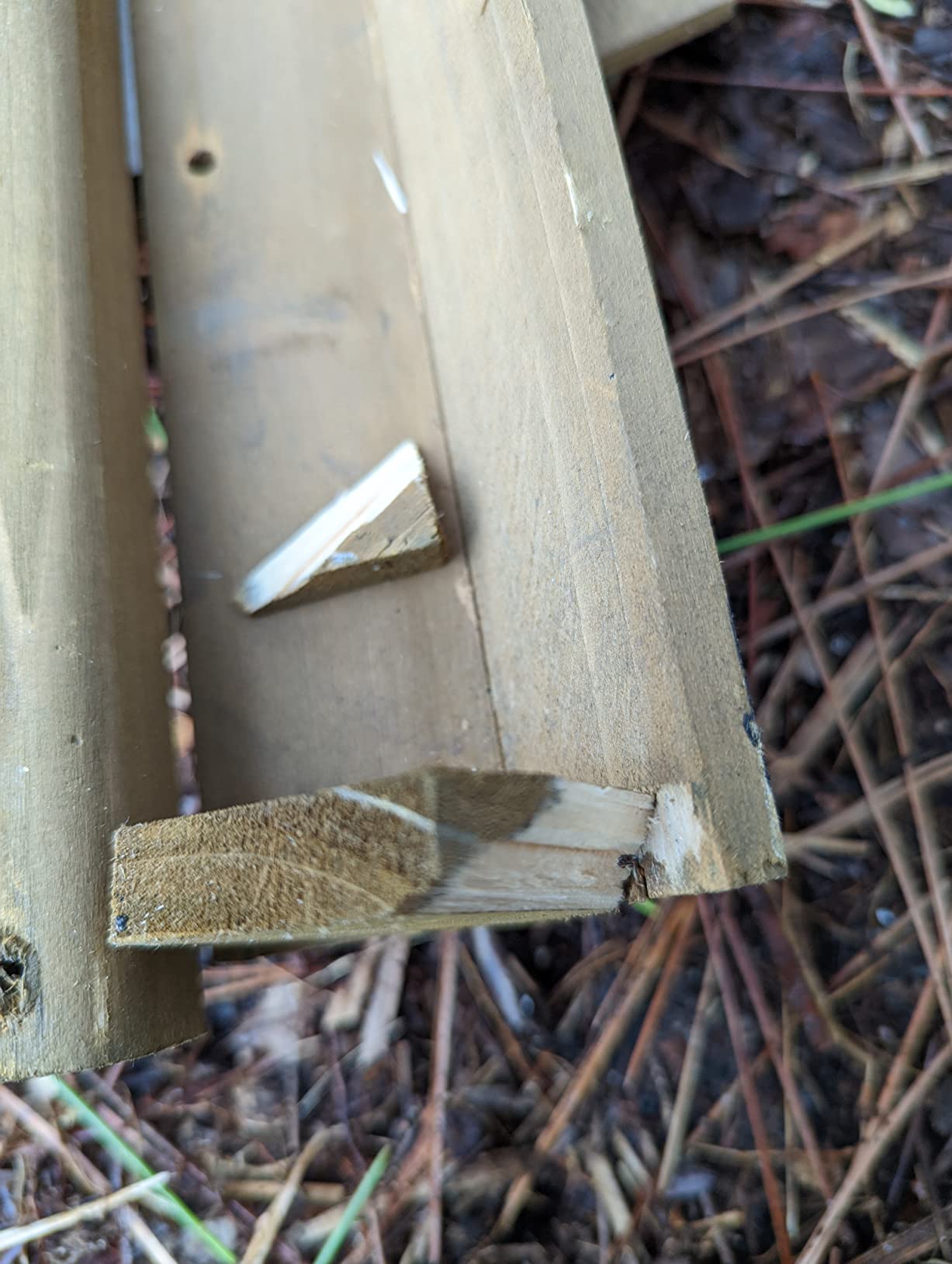
The thin specification detail is the practical issue. Beyond the exterior dimensions, the nesting count and the capacity claim, the listing tells you very little about mesh type, latch hardware or roof construction, and those are exactly the details that decide predator safety.
Why the square shape is worth understanding
Small yards are usually constrained by one dimension rather than by total area, typically the strip between the house and a fence. A square 47-inch footprint uses that strip far more efficiently than an 80-inch rectangle, and it leaves the remaining length free for the run or for garden beds.
The capacity claim also deserves the standard discount. Rated for 4 large birds, we would plan on 2 to 3 full-size hens in this frame, and 4 to 6 bantams, given that roost and nest space is shared across a smaller interior.
When to skip it
Skip it if you need published technical data before buying. On a category where the difference between half-inch hardware cloth and chicken wire is the difference between keeping your flock and losing it, buying from a listing that does not state its mesh gauge is a gamble.
It is also the least thoroughly documented listing in the group, and a design listed since 2017 is not going to include the ventilation refinement or latch hardware improvements that newer frames have adopted. Buy it for the shape, and confirm the barrier materials yourself before the birds arrive.
What Size Chicken Coop Do Small Backyards Actually Need?
For a small backyard, plan on 4 square feet of indoor space and 8 to 10 square feet of run per hen, so a 4 by 6 coop with a 4 by 8 run comfortably houses 4 to 6 birds. That single calculation settles most sizing arguments, because it converts a marketing number into a footprint you can measure against your actual lawn.
Apply the discount before you shop. Listed capacity assumes a flock that never enters the coop together, never roosts shoulder to shoulder, and never spends a wet week standing in the doorway. Divide the number on the box by 1.5 to 2 and you get a flock size that stays comfortable year-round.
The six hard criteria below are the ones experienced keepers check, and they are worth more than any brand name on a listing.
Half-inch hardware cloth on every opening, including the run, rather than hexagonal chicken wire.
Ventilation openings placed above roost height so cold air settles low and passes under the birds.
External-access nesting boxes, so egg collection does not mean reaching into a dark space full of roosting birds.
A realistic capacity figure that you have already discounted by 1.5 to 2 from the listed number.
A pull-out tray or floor panel that lets you remove bedding without dismantling the frame.
A pop door wide enough to accept a standard automatic opener without cutting structural framing.
One more practical step before you buy anything: walk the site. A coop that is fine in a catalogue becomes a problem when the only level ground is under a tree that drops fruit, or the low spot that floods every third storm. Predator pressure varies street to street, and it is worth asking the neighbours which animals have been visiting before you choose a level of hardware protection.
Hardware Cloth vs Chicken Wire: The One Thing You Cannot Skip
Raccoons are the most reported predator of backyard chickens, followed by foxes, opossums, dogs and hawks, and a raccoon will take an entire small flock in a single night. Chicken wire is the single most common buyer mistake in this category because hexagonal mesh keeps chickens in and does almost nothing to keep predators out, while many listings still advertise it as predator-proof.
Half-inch hardware cloth is the practical standard, and quarter-inch mesh is the choice if you are dealing with mice or weasels or if your flock includes chicks. The difference in cost between the two is small compared with the cost of replacing a flock, which is why it is the first spec we check on any listing.
Forums are blunt about this. A recurring theme on BackYardChickens and r/BackYardChickens is that a coop is a predator-resistant box or it is a box with chickens in it, and that owners who upgraded their mesh rarely go back. The same threads consistently raise three further points: bury a wire skirt or add a dig apron around the perimeter, latch doors with a carabiner hasp on top of the barrel latch, and never rely on a run roof as a security feature.
Expect to do this work on at least one budget model in this roundup, because several use galvanized or welded wire that is adequate but not half-inch hardware cloth. Adding a hardware cloth skin and a buried skirt is a weekend project and it is the difference between a coop and a secure coop.
Ventilation, Roosts and Nesting Boxes for a Small Flock
Chickens prefer smooth, round-edged perches roughly 2 to 3 inches wide, with 8 to 10 inches of roost length per bird, and rounded edges reduce footpad injuries compared with sharp square-cut boards. Position the roosts above the nesting boxes rather than below them, so nesting material stays clean and droppings land on a bar you can wipe down.
Ventilation is the spec that saves the most birds and the one that photographs tell you nothing about. The requirement is cross-ventilation placed above roost height. A vent at floor level or at roost level creates a draft directly on birds that are stationary all night, and that is the most common reason small flocks fall ill in their first winter. A high vent on opposite walls lets warm, moist air escape while cold air settles below the roosting birds.
Nesting boxes have a simple rule for small flocks: one box per two hens, minimum. Four birds want two boxes, and six want three, so that birds choosing a laying spot are not forced into a queue. External access, hinged or lift lids, is what makes the difference between a 20-second egg collection and a two-minute one involving a flashlight.
Check the roost bar placement on any model you consider. Bars at floor level, or bars that overlap so a bird can soil the one below it, show up repeatedly in owner reviews of prefab coops and are cheap to fix with a screw and a length of wood.
The Run: Where Small-Backyard Budgets Should Actually Go
Build the run yourself rather than buying the bundled one. The core materials are one 100-foot roll of half-inch hardware cloth, a few corrugated roof panels, and a handful of pressure-treated 4×4 posts, which for a properly built covered run comes to well under half of what a retail bundled run asks and gives you a better frame.
The reason is structural. A retail run is usually framed from the same thin, pre-drilled panels as the coop, with the same mesh and the same barrel latches, and it is sold at a premium because it is convenient. A run you build can have a deeper dig apron, hardware cloth buried at the base, a properly sloped roof that sheds snow load, and a door wide enough to walk through with a wheelbarrow.
Snow is worth planning for. A foot of settled snow weighs roughly 20 pounds per square foot, which is more than most prefab run roofs are engineered for. A sloped corrugated roof sheds it. A flat or open-top run accumulates it until the frame bows.
The trade-off is labour. A first run build is an afternoon of measuring and a weekend of work, and it is the part of a small-backyard setup that pays back longest. If you enjoy the build, this is where the satisfaction is. If you do not, buy a coop with a solid run attached and put the saved effort into hardware cloth, which is the part that actually matters for survival.
Off-Ground and Portable Coops: Best for Tight Yards
Off-ground designs solve the small-backyard problem in two ways at once. Raising the hen house on legs or wheels keeps the interior dry and improves airflow, and it frees the space beneath the structure so that footprint is used twice rather than wasted.
Wheeled units add rotational grazing, which is the most useful thing you can do with a small lawn. Moving the run onto fresh grass spreads mud, restores the ground, and keeps birds foraging instead of eating bare dirt. Four of the ten models here carry wheels or a wheel package, and for a lot under a quarter acre we would make that a hard requirement.
Check the weight honestly. The two-story PetsCosset model at 56.21 pounds and the wheeled ECOLINEAR at 45.15 pounds are one-person jobs on firm level ground and two-person jobs on soft turf. The GOJOOASIS A-frame at 14.85 pounds is the outlier that any single person can move without planning, which matters if you intend to rotate it weekly.
Rotational setups also fail when the ground is uneven. A wheel-based unit tips if the run sits on a slope, and the internal trays and roost bars shift out of alignment, so pick a flat zone and keep the rotation route short.
Budget vs Premium: What the Extra Spend Actually Buys You
The spend above the budget tier buys material and hardware, and nothing else. Budget pine and thin fir with chicken wire tends to last 18 to 30 months, mid-range fir with galvanized mesh runs 5 to 7 years, and cedar or HDPE construction runs 10 to 15 years, and those figures drop by roughly a third to 40 percent in heavy rain or snow climates.
Within this roundup, the budget end is the two ECOLINEAR builds and the GOJOOASIS A-frame, and their common failure is identical: thin panels and a roof that stops shedding water. The mid-range fir coops, the Petsfit and PetsCosset models, add real hardware such as ground stakes, lockable doors and washable floor panels, and those details decide whether a flock survives a determined raccoon.
Cedar is the one material upgrade that visibly changes the longevity math, because it resists rot rather than merely slowing it, and it wipes down cleanly. HDPE plastic, which none of these ten listings offer, is the other durable option, since it cannot rot or warp and does not host red mites.
Warranty length is where budget listings mislead most. A one-year limited warranty covers manufacturing defects and nothing about weather or predator damage, and a few brands extend coverage when you register the product, which takes a few minutes and is worth doing on arrival. Read the terms rather than the headline number.
Before You Buy: HOA, Zoning and Neighbor Checks
Check your local rules before you buy a coop, because this is the one hard blocker that can end the project after the money is spent. Many municipal ordinances restrict the number of poultry animals on a residential lot, or set setback distances from property lines, and HOA covenants frequently prohibit any structure or any animal that is not on the approved list.
Three things to check specifically: the maximum number of birds allowed on your lot, the minimum distance a structure must sit from a property line, and whether a coop counts as an accessory structure against your building coverage allowance. In dense neighborhoods, the setback requirement alone can rule out the corner of the yard that was the only viable spot.
Then talk to your immediate neighbours. Predators follow food, and a coop that draws raccoons into a shared fence line creates a problem that is genuinely their problem too. Most of the disagreements we hear about in chicken forums are neighbourly, not regulatory, and a conversation before delivery is far cheaper than a fence dispute after it.
One more check that is easy to skip: confirm that your run door and wheel path do not block a shared side gate or a utility access panel. Moving a 45-pound wheeled coop across a lawn is a two-person, thirty-minute job you will not enjoy doing again.
First-Season Gear Beyond the Coop
Most first-time keepers underestimate the total startup list, and the coop is a minority of it. A first season needs a brooder for the days the chicks are small, a feeder and a waterer sized so the flock cannot waste or foul them, bedding material, a dust bath container, grit, a first-aid kit, and a plan for winter water that does not freeze.
Match the breed to the coop before the birds arrive, because it changes the sizing. Smaller-bodied, high-production breeds such as Australorp, Orpington, Plymouth Rock, Wyandotte and Easter Eggers fit a 4 by 6 coop comfortably, while Silkies and other bantams need less space but also lay fewer eggs. Our chicken tenders recipe is more useful once you know how many eggs you are actually collecting.
Bedding choice has a second-order effect. Pine shavings are the default and are fine, but keep the coop dry and consider the deep litter method, where you add bedding rather than remove it, only if you are certain you can maintain airflow in a small enclosed space. Bedding packed around a roost in a coop with vents below roost height is a respiratory problem waiting to happen.
Add the dust bath early. A box of dry sand, soil and wood ash in a sheltered corner prevents feather damage and is a five-minute build. Chickens that have no dust bath dust their own housing instead, and you will find out how fast that fills a small run.
Once eggs start arriving, the practical part of the hobby quickly becomes cooking rather than coop maintenance, and having a few dependable recipes lined up saves the daily scramble. The homemade chicken noodle soup is the one we make first, the chicken parmesan with spaghetti handles a weeknight rush, and the crispy chicken and waffles is how a first-season surplus gets used.
Frequently Asked Questions
Is a 4×8 coop big enough for 12 chickens?
No. A 4×8 coop gives 32 square feet of indoor space, which is roughly 8 birds at the 4 square feet per hen standard, and that is already at the limit before you account for roost and nest space. Twelve birds would also need a run of 96 to 120 square feet, which exceeds most small backyards. For a small yard, 4 to 6 hens is the realistic ceiling.
How many chickens can go in a 10×10 run?
A 100 square foot run supports 10 to 12 birds on its own, but only if the attached coop provides 4 square feet of indoor space per bird. For a small backyard flock, a 10×10 run is generous and pairs well with a 4×6 or 4×8 coop. Remember that a 10×10 run alone is not a coop: birds still need a dry, secure, well-ventilated sleeping space.
Do chickens prefer round or flat roosts?
Chickens prefer smooth, round-edged perches about 2 to 3 inches wide, with 8 to 10 inches of roost length per bird, because rounded edges reduce footpad injuries. Position roosts above the nesting boxes so nesting material stays clean, and keep the bars spaced far enough apart that a bird cannot soil the one below it.
What is the number one predator of chickens?
Raccoons are the most reported predator of backyard chickens, followed by foxes, opossums, dogs and hawks. That ranking is why half-inch hardware cloth is the one material you should not compromise on: hexagonal chicken wire keeps chickens in but does not keep predators out. Add a buried wire skirt or dig apron and a second latch hasp on every door.
What are the best breeds of chickens for a small backyard?
Smaller-bodied, high-production breeds such as Australorp, Orpington, Plymouth Rock, Wyandotte and Easter Eggers fit a 4 by 6 coop comfortably and still give you a reliable egg supply. Silkies and other bantams need even less space but lay fewer eggs. Choose the breed first, then size the coop, since full-size birds need the full 4 square feet per hen.
Is it cheaper to build or buy a chicken coop?
It is cheaper to build the run yourself. The core materials are a 100-foot roll of half-inch hardware cloth, a few corrugated roof panels, and a pressure-treated 4×4 post for every corner and every 6 feet of side, and a properly built covered run lands at well under half the cost of a retail bundled one. Retail runs also use thinner framing and the same mesh as the coop itself.
The Bottom Line for Small Backyards
The best chicken coops for small backyards are the ones whose realistic capacity matches your lawn, not the ones with the largest number on the box. Measure your available footprint, divide the listed capacity by two, and choose the narrow, wheeled, cedar or ground-anchored model that fits without argument.
Our pick for most small yards is the ECOLINEAR wheeled fir coop, the Petsfit is the strongest value if your four to six hen plan is realistic, and the Ketive cedar model is the one worth paying up for if your yard gets wet. On every one of them, add half-inch hardware cloth before the birds arrive.