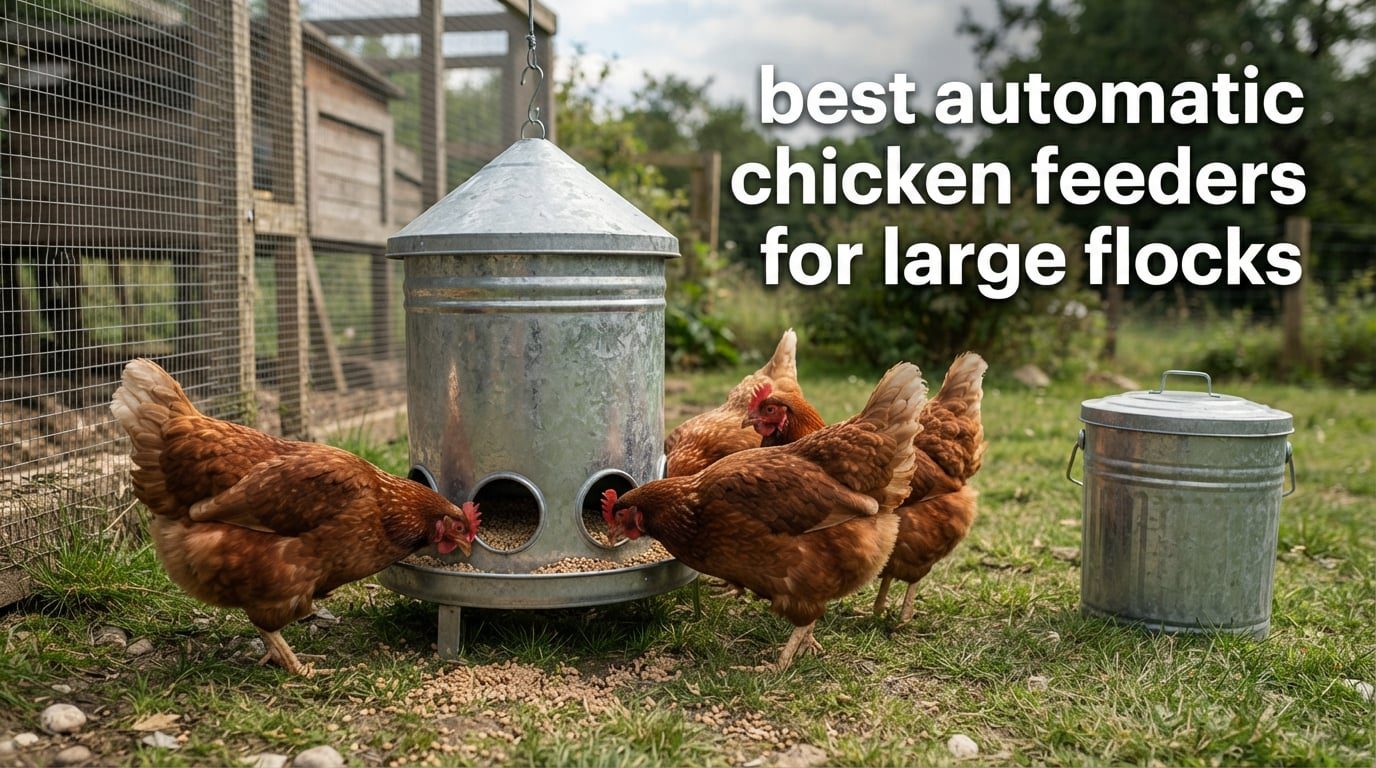
If you keep more than about 25 birds, the best automatic chicken feeders for large flocks stop being a convenience purchase and become the only realistic way to get feed in front of the whole flock. Hand-scattering grain twice a day works for a dozen hens. It does not work for sixty, especially when one rooster decides every feeding is a contest he has to win.
We spent weeks comparing hopper capacity, port count, sealing, materials and refill intervals across eight feeders, from a 40 lb galvanized treadle up to an 85 lb metal silo. What we kept coming back to is that a large flock is not a capacity problem solved by one giant feeder. It is a capacity problem solved by two or three feeders, positioned so the birds are not fighting over the same port.
This guide covers the eight automatic chicken feeders worth buying for large flocks in 2026, with the refill math worked out for real flock sizes, honest notes on what breaks, and a clear line on who should skip each one. We also include a sizing section that tells you how many feeders your flock actually needs before you spend anything.
If you also cook with your birds, our simple chicken fajitas and homemade chicken noodle soup are useful for turning cooked chicken scraps into high-value training rewards.
Table of Contents
- Top 3 Automatic Chicken Feeders for Large Flocks in 2026
- All 8 Best Automatic Chicken Feeders for Large Flocks (October 2026)
- 1. OverEZ 50 lb Feeder: Best Overall for Large Flocks
- 2. Grandpa’s 40 lb Treadle Feeder: Best Pest Protection
- 3. RentACoop 50 lb Trough Feeder: Most Versatile for Mixed-Species Flocks
- 4. Little Giant 60 lb Dome Feeder: Best for Bulk Storage in Small Footprints
- 5. TGEYD 50 lb 8-Port Feeder: Budget Pick With the Most Ports
- 6. Pawaboo 55 lb Feeder: Best for Tool-Free Height Adjustment
- 7. GADFISH 55 lb Feeder: Best for Muddy Runs and Soft Ground
- 8. Dogetgd 85 lb Metal Feeder: Highest Capacity for the Longest Refill Interval
- How We Picked These 8 Feeders
- How Many Feeders Do You Actually Need?
- Frequently Asked Questions
- Our Verdict for Large Flock Keepers in 2026
Top 3 Automatic Chicken Feeders for Large Flocks in 2026

OverEZ 50 lb Feeder
- 50 lb hopper
- Three no-waste ports
- Rainproof recessed channel
- Ground-level refilling

Grandpa’s 40 lb Treadle
- Treadle-operated lid
- Anti-flick grill
- Rodent-proof coverage
- Galvanized steel
RentACoop 50 lb Trough
- 50 lb galvanized trough
- Clippable grate
- Magnetic lid
- Feed-level window
All 8 Best Automatic Chicken Feeders for Large Flocks (October 2026)
| Product | Specs | Action |
|---|---|---|
| OverEZ 50 lb Feeder |
|
Check Latest Price |
| Grandpa’s 40 lb Treadle |
|
Check Latest Price |
| RentACoop 50 lb Trough |
|
Check Latest Price |
 Little Giant 60 lb Dome Little Giant 60 lb Dome |
|
Check Latest Price |
 TGEYD 50 lb 8-Port TGEYD 50 lb 8-Port |
|
Check Latest Price |
 Pawaboo 55 lb 7-Port Pawaboo 55 lb 7-Port |
|
Check Latest Price |
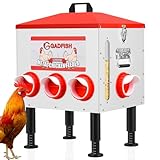 GADFISH 55 lb 8-Port GADFISH 55 lb 8-Port |
|
Check Latest Price |
 Dogetgd 85 lb Metal Feeder Dogetgd 85 lb Metal Feeder |
|
Check Latest Price |
1. OverEZ 50 lb Feeder: Best Overall for Large Flocks
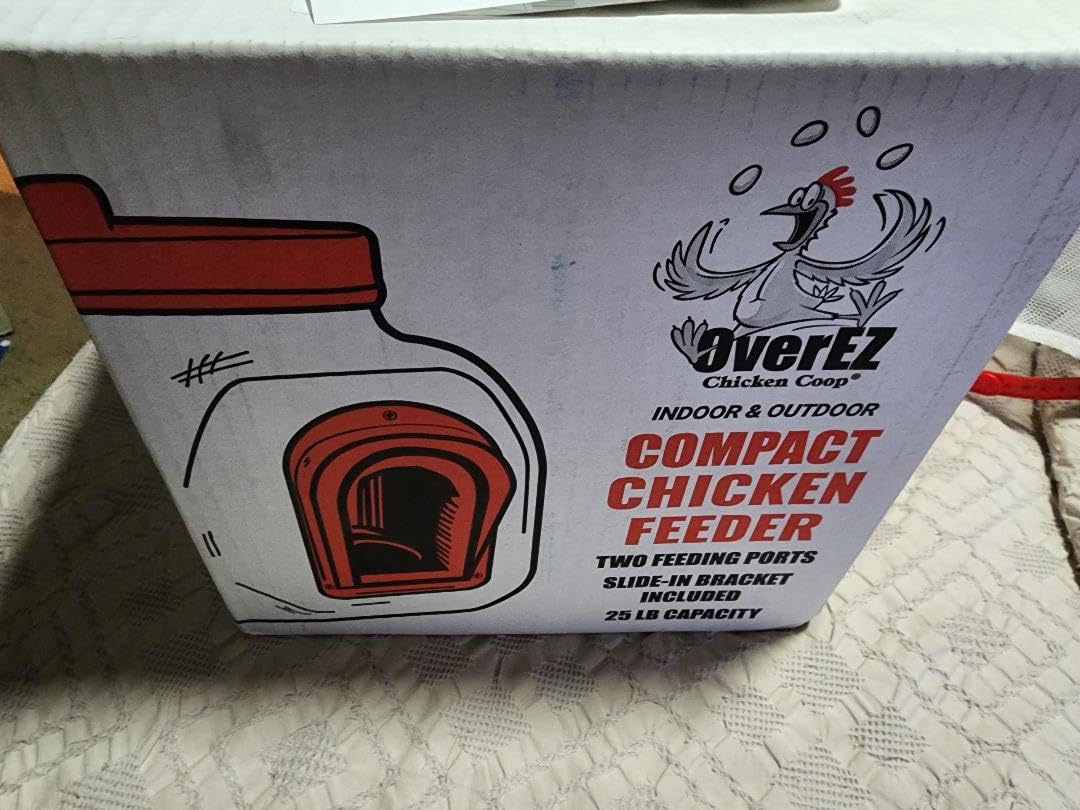
OverEZ Chicken Feeder – Holds 50 Pounds of Feed – Inside or Outside Hen Coop – Large Gravity Fed Automatic Poultry Dispenser – No Waste Rainproof Design
Capacity: 50 lb
Ports: 3
Material: UV-protected plastic
Pros
- 50 lb hopper cuts refill trips sharply
- No-waste ports keep feed dry in rain
- Wide mouth refills and cleans on the ground
- Works indoors and outdoors
Cons
- Only three feeding ports for the capacity
- Plastic body can be scratched and chewed
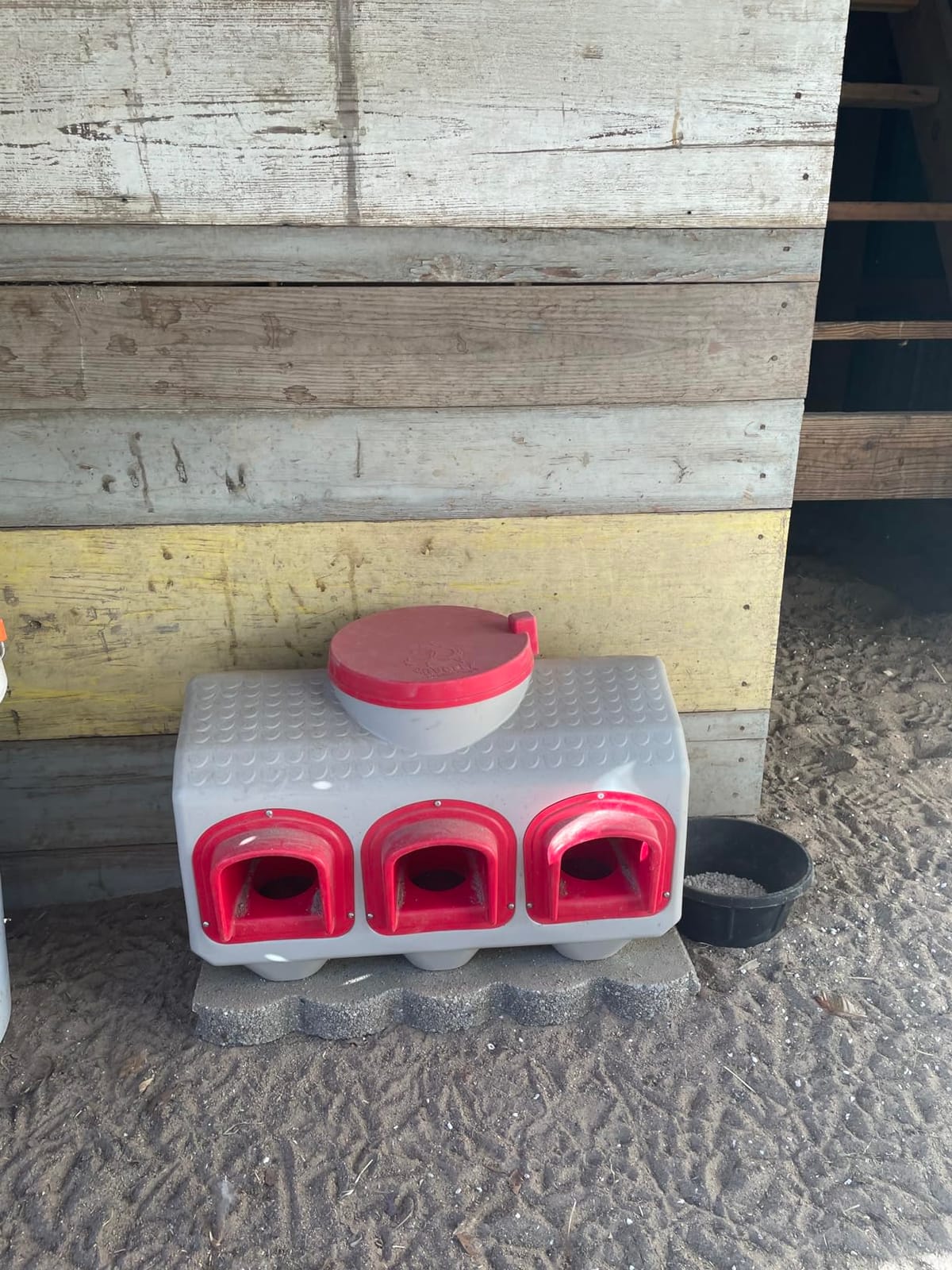
The OverEZ is the unit we keep coming back to for medium and large flocks because the numbers are generous and the design is unfussy. Fifty pounds of feed, three smart-feeding ports, a freestanding footprint and a listed item weight of 5.4 pounds, which matters when you are pouring a bag into it alone.
The port engineering is the part that surprised us. A recessed channel and port overhang keep runoff water from reaching the feed, and the angled body lets feed flow straight down to a shallow base so birds can reach the last of it. In practice, a 15-hen flock goes a week to two between fills, and reviewers report the same for flocks of 6 to 11.
It is a gravity feeder, not a treadle. That means the lid is closed and the feed is protected from rain, but nothing physically stops a determined rat at a level where the manufacturer does not claim total exclusion. If your run has serious rodent pressure, this is where a treadle wins and the OverEZ does not.
Three ports is the real limitation at scale. A 40-bird flock on one OverEZ will queue, and the birds at the back of that queue are the ones pecking at the plastic or scratching spilled feed out from under the ports. Buy this as one feeder in a two-feeder setup rather than as the only feeder in the run.
Who the OverEZ suits best
Keepers who want long intervals between fills, minimal assembly, and a feeder light enough to move for cleaning on your own. It also works well indoors in a closed run where rain is not a factor but floor space and cleanability are.
It is a good fit for mixed-species housing in a mild climate, provided the birds are not chicks. The wide-mouth opening is what makes weekly cleaning realistic, and the shallow base means birds do not have to reach over feed that has been sitting for a week.
Who should skip the OverEZ
If rats are a recurring problem, a gravity hopper with a fitted lid is a compromise you will live with rather than a fix. And if you are running 40 birds or more, three ports is not enough, so budget for a second feeder or move to an 8-port model.
Skip it too if your birds are chewers. The body is UV-protected, food-safe, recyclable plastic, which holds up well outdoors, but it will not survive a flock that treats plastic as a toy the way an aluminum-coated galvanized shell does.
2. Grandpa’s 40 lb Treadle Feeder: Best Pest Protection
Grandpas Feeders Automatic Chicken Feeder – 40 lbs No Waste Poultry Feeder, Rat Proof & Rodent Proof Treadle Chicken Feeder, Galvanized Steel with Lid, Feeds 6-12 Chickens up to 10 Days
Capacity: 40 lb
Material: Galvanized steel
Mechanism: Treadle
Pros
- Treadle lid shuts out rats and wild birds
- Anti-flick grill cuts scattered feed
- Side guards stop injury pecking
- Steel body built for years
Cons
- Needs a multi-week training window
- Weight threshold locks out bantams and pullets
This is the only treadle feeder in the group, and for a large flock that fact alone changes the math on rodents. The lid opens when a bird steps on the weighted pedal and closes the moment the bird steps off, so there is no window in which feed is exposed overnight, which is when rats do most of their damage.
Capacity is 40 lb, and the manufacturer rates it at 6 to 12 chickens for up to 10 days. That works out to roughly a third of a pound per bird per day, which is the consumption figure we use throughout this guide because it is the number the refill intervals across these products imply. A 30-bird flock needs three of these, not one.
The anti-flick grill and the built-in side guards are what owners notice first. Chickens on r/BackYardChickens describe it in a sentence: the birds open it whenever they want, rats cannot. Another recurring comment is that the flock size option matters more than the brand, so match the model to the flock rather than assuming the biggest is best.
On r/chickens, the consensus on treadles is strongly positive, with keepers reporting the waste drop and the rodent losses disappearing once the flock is trained. On r/BackYardChickens, the practical advice is to put a camera on the feeder for a day to confirm the birds are actually working the pedal, because a flock that has not learned yet will look identical to a flock that never will.
What training actually involves
Start by propping the lid open with a stick and scattering feed in the trough so birds learn where the food is, then let the lid rest part-open for a couple of days before going fully closed. Most flocks are working it within three to seven days, but owners using treats report a few days and keepers without treats report several weeks.
Expect some noise. Reviewers cite a metallic closing sound that startles birds, and that is the single most common reason a flock refuses the feeder outright. If your birds are easily spooked, leave the unit in a low-traffic corner for the first week.
What breaks and who should skip it
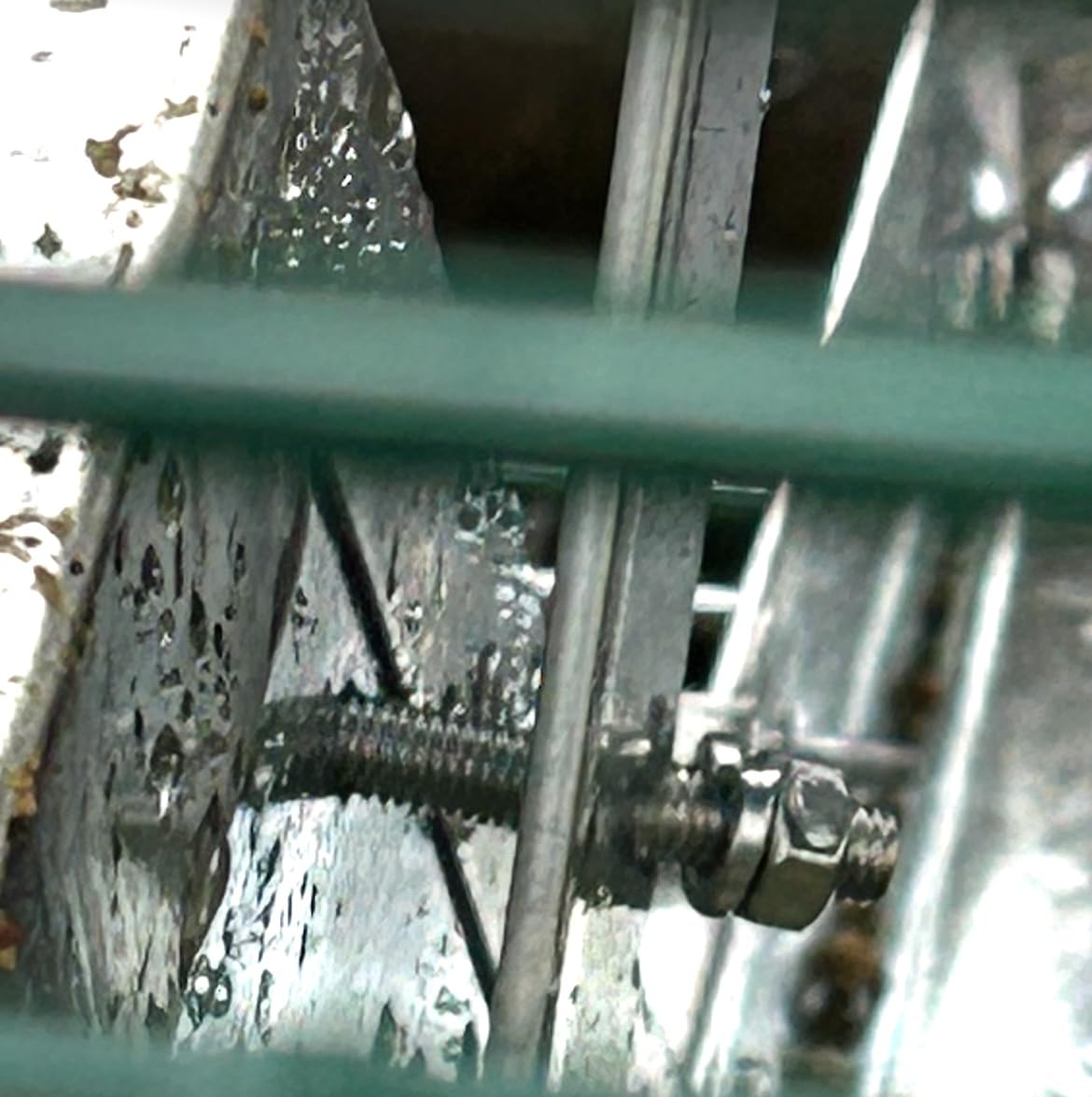
The recurring maintenance items are frame bolts that loosen with constant stepping and need re-tightening, and crumbles that bridge in the trough and stop feeding until you shake the unit. The flat lid top also invites roosting, which fouls the feed and means somebody has to clean the top every week or two.
Skip it if your flock includes bantams or pullets under the pedal activation weight, because they physically cannot open the lid and will be shut out entirely. At 23 pounds it is also the second-heaviest unit here, so plan your fill spot before you lift it.
3. RentACoop 50 lb Trough Feeder: Most Versatile for Mixed-Species Flocks
RentACoop 50lb Gravity-Fed Metal Trough Feeder with Lid & Rain Cover
Capacity: 50 lb
Material: Galvanized sheet metal
Ports: Open trough
Pros
- Clippable grate opens up for ducks and waterfowl
- Feed-level window
- Stainless steel screws and removable rain hood
- Magnetic lid holds without tools
Cons
- Not suitable for chicks
- Open trough still loses scratched feed
- Needs mounting to stay put
The RentACoop is a trough rather than a ported hopper, and that design choice is exactly what makes it the best of this group for ducks, geese and other waterfowl. The interior grate clips up for cleaning or to give bigger birds a lower, wider feeding surface, which a chicken never needs and a Muscovy duck does.
Fifty pounds of galvanized sheet metal with stainless steel screws, a removable rain hood, a magnetic lid and a side window for checking the feed level without lifting anything. It can mount inside the coop or outside in the run, and it is also made in 10 lb and 25 lb sizes if you want a matching set across the property.
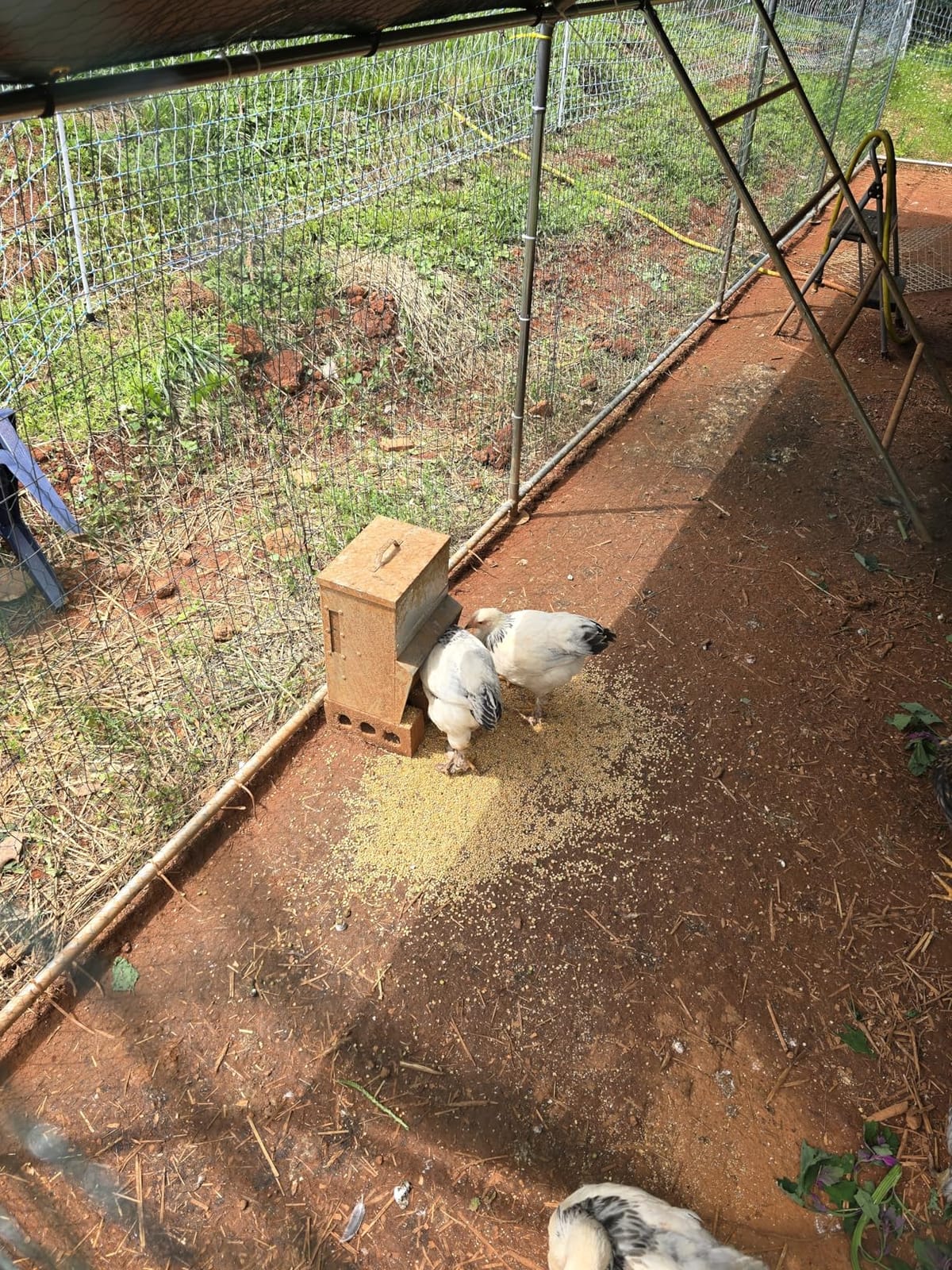
The honest weakness is waste. An open trough means a bird can stand in the feed and scratch it onto the ground, and no port design will fix that. If feed waste is the reason you are shopping, a ported or treadle feeder will beat it. If waterfowl access and durability are the reason, nothing else in this list matches it.
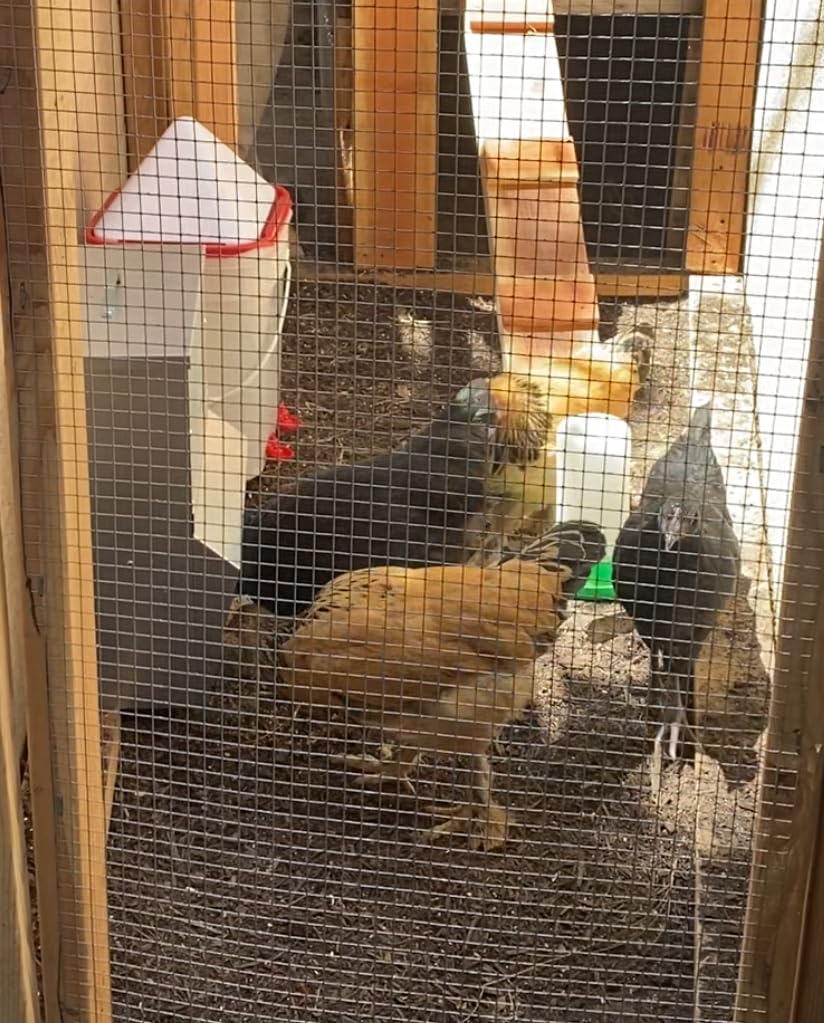
Reviewers are consistent about the two things that matter here: the galvanized interior is smooth and wipes clean, and the rain hood genuinely keeps feed dry. The 50 lb fill rate for a large flock is strong, though a trough does need mounting hardware to stay where you put it.
Where this one earns its place
It is the pick for a mixed-species run where ducks and geese share space with chickens, and for anyone keeping birds in a muddy winter run who wants a metal body that shrugs off weather. The stainless steel screws are the detail that separates it from sheet-metal feeders that end up streaked with rust at the seams.
The feed-level window is more useful than it sounds. On a 50 lb fill you are checking levels every few days, and a window saves crouching down and lifting a full lid in the rain.
Where it falls short
It is not for chicks, full stop, and it is a poor choice as the only feeder in a large flock of chickens because of the scratch-out waste. Chicks also cannot be excluded from a trough the way they can be from a ported feeder, so plan on a separate brooder setup.
Budget time for mounting. Outdoors it wants a screwed-down post, and shifting with the wind or with a flock leaning on it is a common complaint in reviews.
4. Little Giant 60 lb Dome Feeder: Best for Bulk Storage in Small Footprints
Little Giant® Plastic Dome Feeder | Heavy Duty Plastic Gravity Fed Poultry Feed Container Tank | Backyard Poultry for Hobbyists, Farmers and Ranchers | 60 LB
Capacity: 60 lb
Material: Heavy duty plastic
Flow: Gravity trough
Pros
- 60 lb capacity in one compact unit
- Transparent jar shows feed level
- Feed Saver ring cuts spillage
- Base comes apart for cleaning
Cons
- No rodent-secure lid
- Gravity trough invites scratch-out waste
- Three legs need level ground
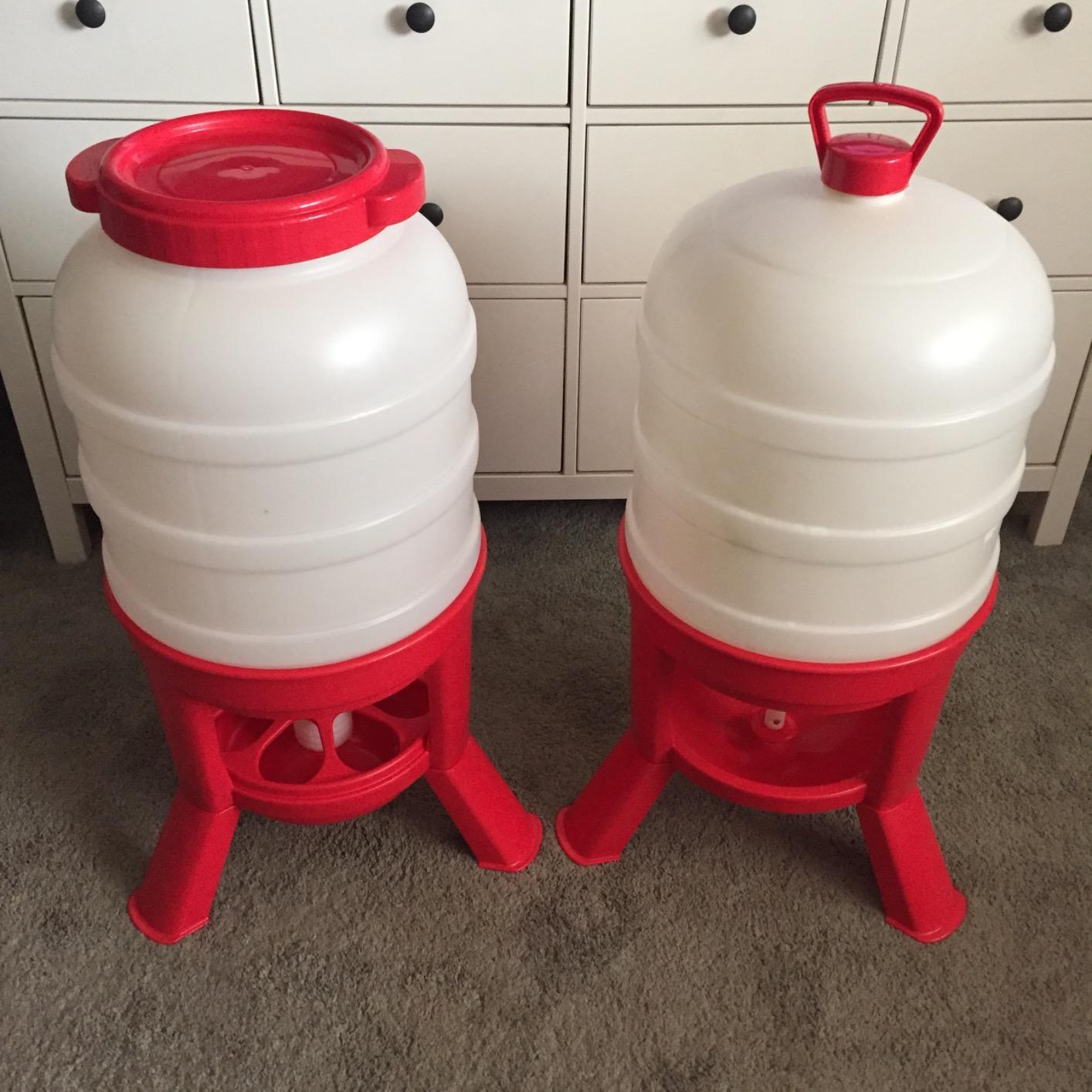
The Little Giant dome is a space-efficient way to store a lot of feed in a small run. Sixty pounds in a 30.75 inch by 18.25 inch footprint, top-filled, gravity-fed, and the transparent molded jar means you can see the feed level from a distance without opening anything.
Three legs lift the feeder off the ground, which protects the base from mud and makes the underside easier to inspect. The removable Feed Saver ring controls where feed drops and is the single feature reviewers credit most for reduced spillage, and the base assembles and disassembles for a proper deep clean.
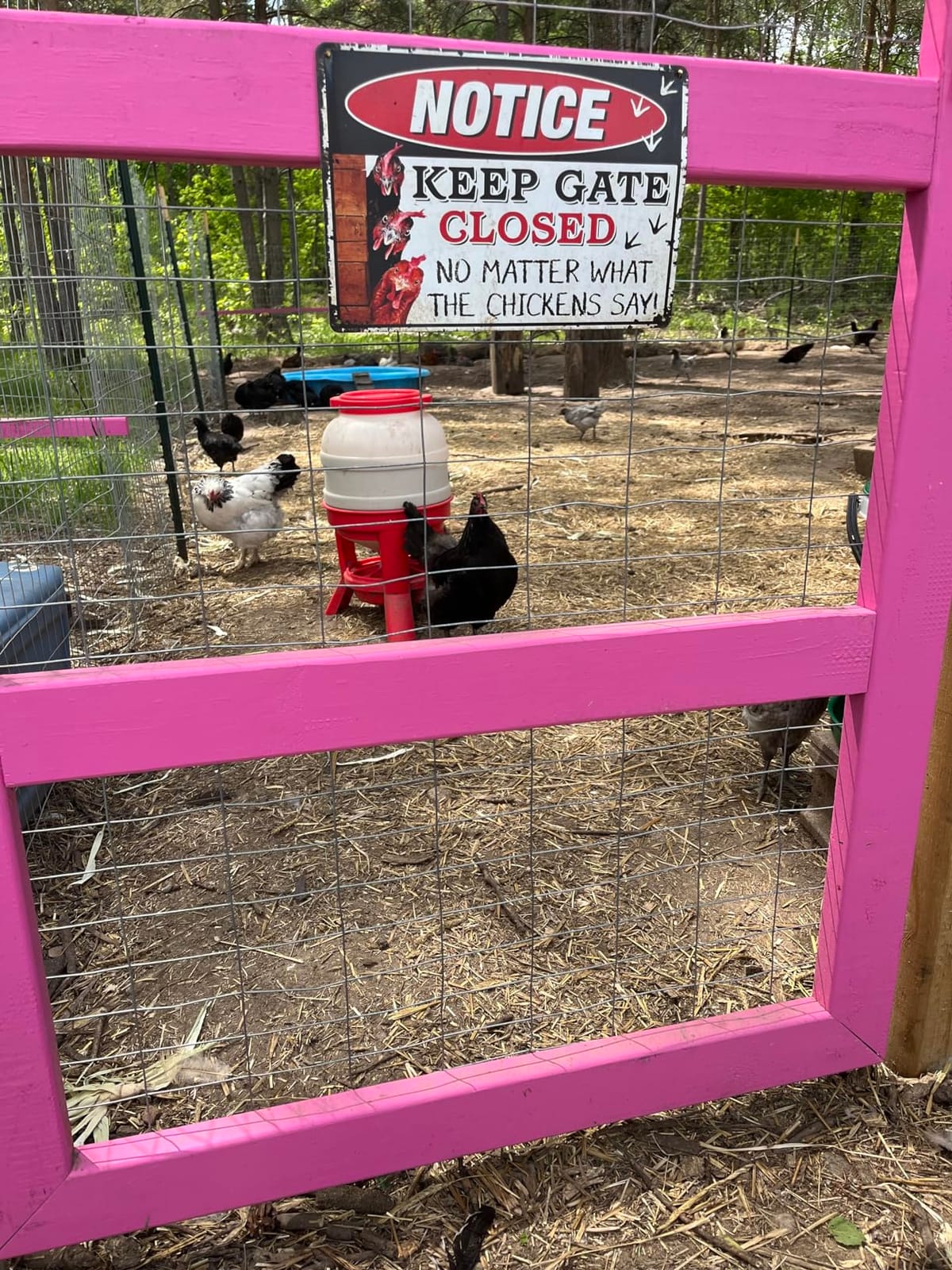
This is the unit hobbyists and small farmers gravitate to for long intervals, and reviewers with 5 to 15 birds report refills measured in weeks. It is also made in 35 lb and 45 lb sizes, so it scales down if your flock is smaller than you thought when you ordered.
Be clear-eyed about what it is: a bulk storage container with an open gravity trough. There is no locking lid and no rodent exclusion, so in a run where rats are established, this feeder becomes an open buffet. Heavy-duty plastic tolerates heat and cold without cracking, but it will not deter chewing.
Why keepers buy it
The answer is capacity per unit of space, and the transparency. A flock of 25 birds at roughly a third of a pound a day eats about eight pounds a day, so a single 60 lb fill covers the better part of a week with the fill trips already behind you.
It also suits barns, pastures and any setup where you want feed stored near the birds rather than carried from a house each morning. The visible level means you can walk the fence line and know instantly which feeder needs attention.
Where it will disappoint you
Skip it in any run with rats, mice or persistent wild bird pressure, because there is no mechanical exclusion. An open gravity trough also means scratch-out waste, which is precisely the problem a treadle or deep-port feeder is bought to solve.
It also needs reasonably level ground. Three legs on a slope leave the feeder rocking and uneven, and a dome feeder that rocks tips over sooner than you would like with sixty pounds inside it.
5. TGEYD 50 lb 8-Port Feeder: Budget Pick With the Most Ports
TGEYD 50LB Large Automatic Chicken Feeder – 8 Feeding Ports, No-Waste Poultry Feeder, with Adjustable Legs & Locking Lid
Capacity: 50 lb
Ports: 8
Material: Galvanized steel
Pros
- Locking lid deters rats and skunks
- Metal resists chewing
- Eight ports spread out the flock
- Adjustable legs set easily
Cons
- Not truly no-waste
- Feed spills on the ground
- Screw seams lack a gasket
Eight feeding ports on a 50 lb galvanized steel hopper is a combination you rarely see, and at this price it is the value pick of the list. The deep ports are designed to make it hard for a bird to rake feed back out, and adjustable height legs keep the feed off dirt and moisture.
The locking lid is the feature owners write about most. Multiple buyers report it ending nightly losses to skunks, opossums and rats, and several mention that their previous plastic feeders were destroyed by chewing, which the metal body solves.
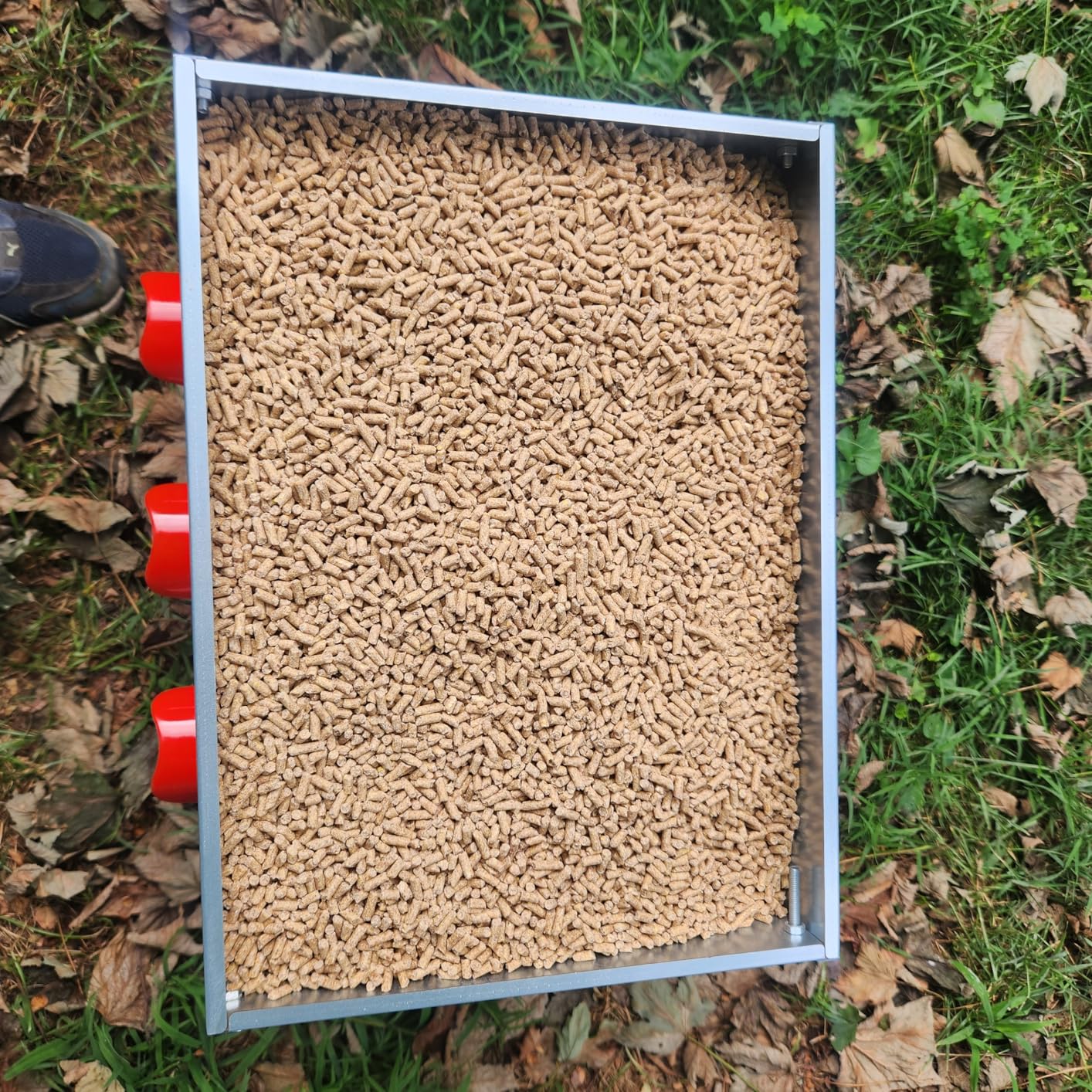
The no-waste claim is where the four-star rating comes from. Owners report real spillage, feed on the ground, and the need to sweep the area. It is a big improvement on a traditional open feeder, but it is not a ported feeder that keeps feed inside.
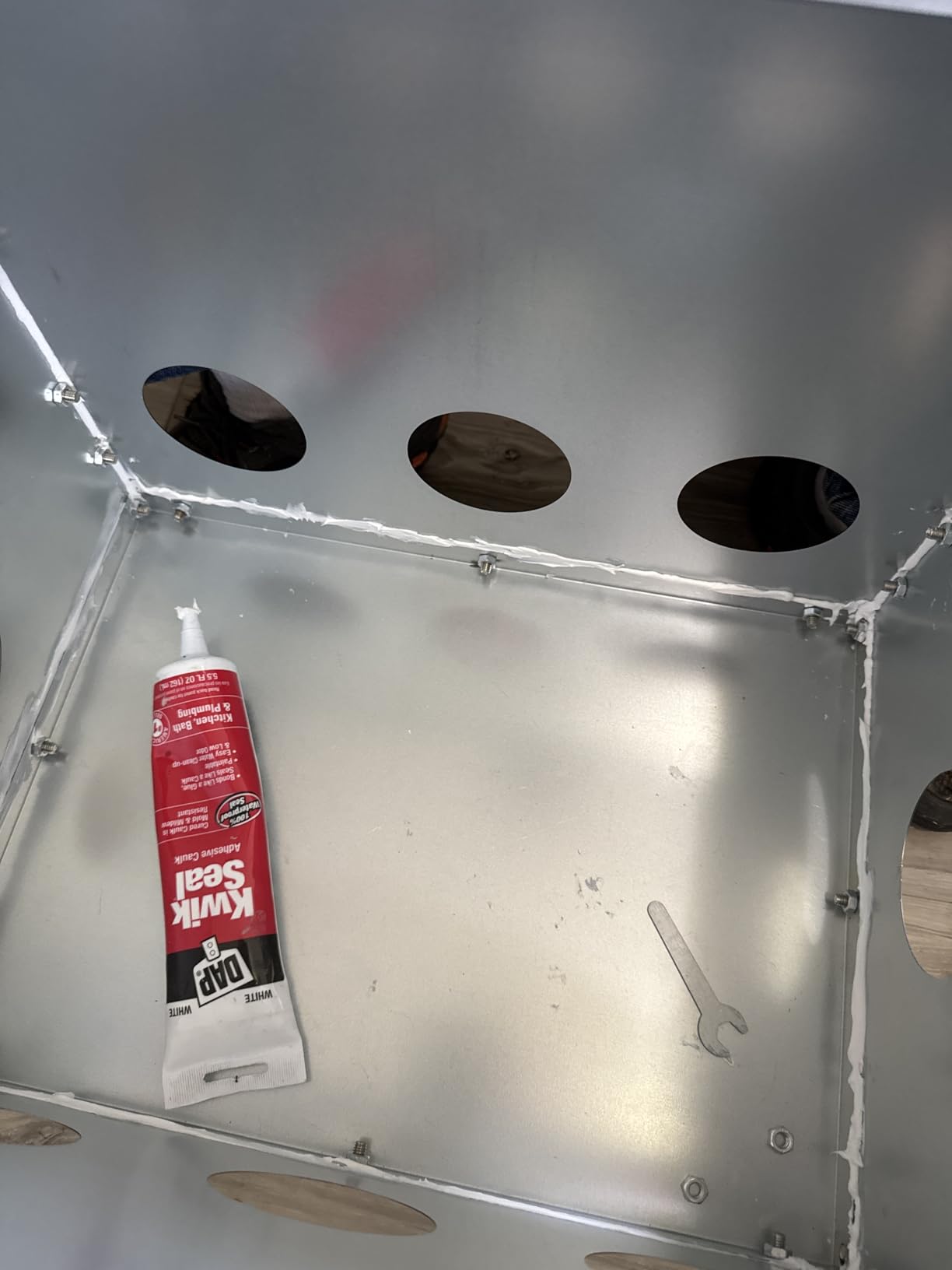
Two practical notes. The screw seams have no gasket, so water can seep in during heavy rain and start clumping the feed, and the unit arrives needing assembly rather than ready to fill. Reviewers also mention adjusting the leg height more than once to suit different bird sizes.
Why it earns a spot on a large-flock list
Port count is the reason. Eight ports means eight birds can eat at the same time, which is what actually reduces crowding and bullying at the feeder, and most large-capacity competitors in this list manage five to seven. On a 30-bird flock, that difference shows up every feeding.
The locking lid also makes it a reasonable second-line defense against rodents when you are not ready to train a flock onto a treadle, and the galvanized steel is the right material for a feeder that lives outdoors in mud.
Who should skip it
If you are in a high-rain area, the ungasketed seams are the reason to look elsewhere. Feed that takes on moisture sours quickly, and a 50 lb hopper holds a lot of feed to spoil.
It is also the lowest-rated unit here, and the twelve percent one-star share is mostly durability and leakage complaints. If you want a feeder to last a decade rather than a few seasons, the galvanized treadle or a heavier metal build is a better bet.
6. Pawaboo 55 lb Feeder: Best for Tool-Free Height Adjustment
Pawaboo 55LBS Large Capacity Automatic Chicken Feeder
Capacity: 55 lb
Ports: 7
Material: Coated galvanized steel
Pros
- Legs adjust tool-free from 5.9 to 10.6 inches
- Sealed waterproof ports keep feed dry
- Lockable lid
- External spill trays catch dropped feed
Cons
- Seven ports is modest for the capacity
- Heavy to reposition for cleaning
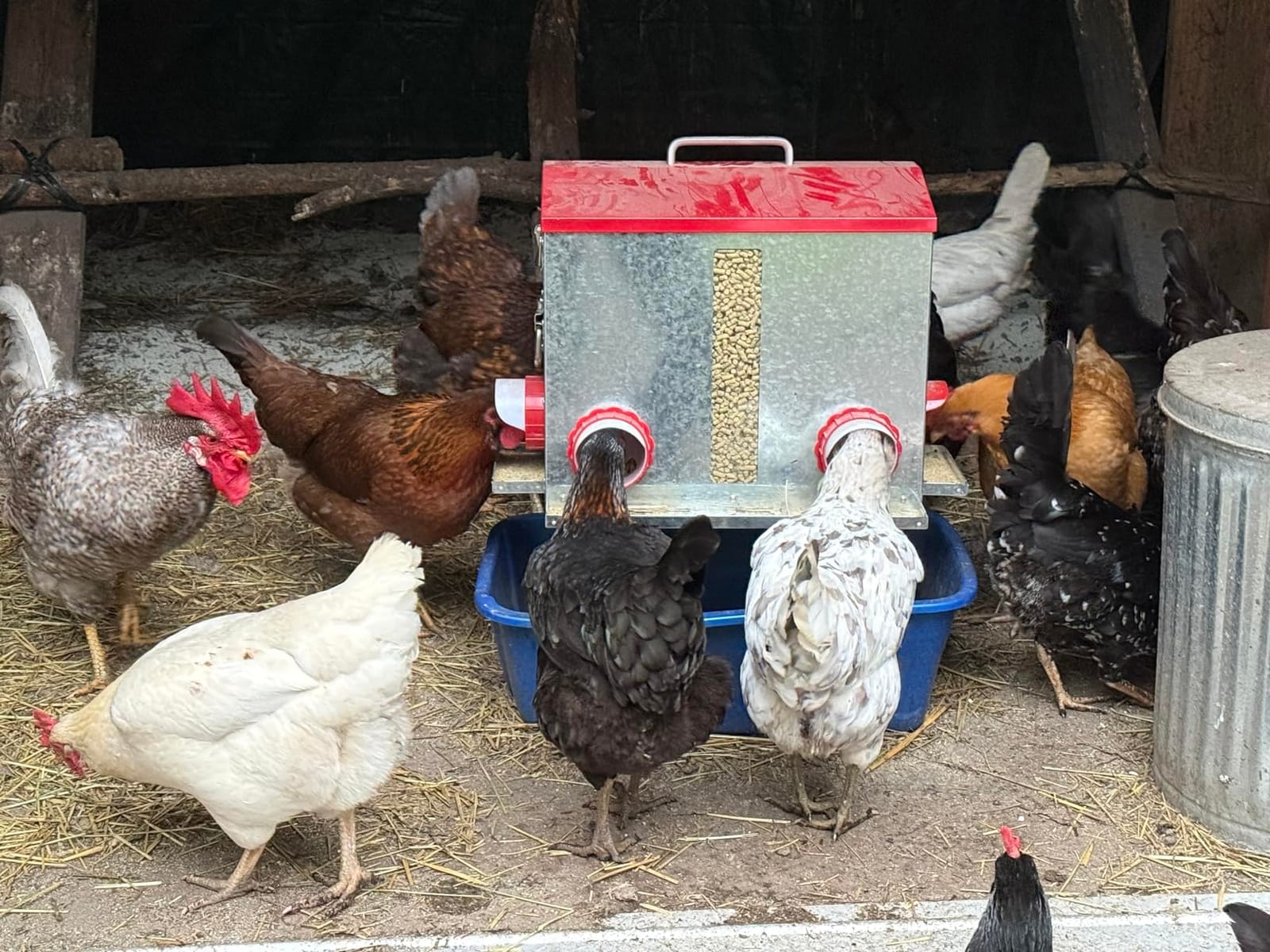
The Pawaboo solves a problem most large hoppers ignore: height. The legs adjust tool-free across a 5.9 to 10.6 inch range, so the same feeder suits young pullets and full-size adults as the flock ages. In a multi-age large flock, that is worth more than an extra port.
Capacity is 55 lb, or 36 liters, with a viewing window so you can time refills. The sloped top drains rainwater and discourages perching, sealed ports block moisture, and the lockable lid keeps rodents and pests out of the stored feed.
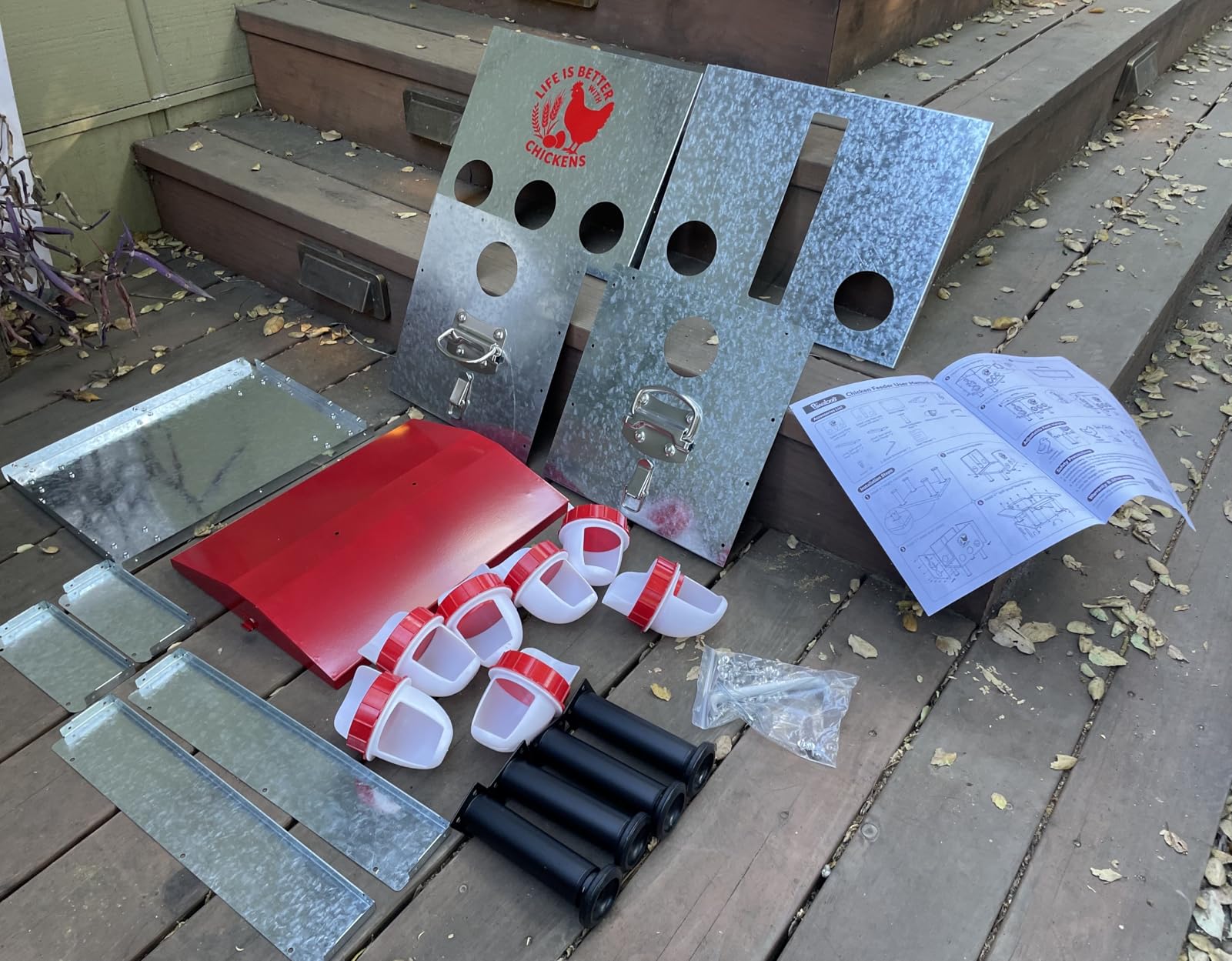
External spill trays below each port are the quiet winner here. Feed that misses the port is caught instead of landing on the ground, which reviewers credit with a real drop in waste around the feeder base.
The build is aluminum-coated galvanized steel at 14.77 pounds. That weight is a fair trade for durability, but it is enough that you will think twice before lifting it out for cleaning, particularly if it is full.
Where it fits best
It is built for a run with ducks or mixed poultry, since multiple birds can eat at once and the sealed ports handle wet conditions. The tool-free leg adjustment also makes it the pick if your flock ages through a season and you want one feeder to cover pullets and adults.
Owners rate the viewing window highly for a simple reason: with 55 lb inside, you do not want to open the lid and spill feed just to check. That is a small feature that saves a real annoyance twice a week.
Where it falls short
Seven ports against a 55 lb hopper is a slightly awkward ratio. On a flock of 35 or more you will want a second feeder rather than pushing this one, and a dedicated 8-port model serves the same price band.
Skip it if you need to move feeders often. At roughly 15 pounds empty, cleaning is a two-person job once you factor in the fill level, so plan the location before you fill it.
7. GADFISH 55 lb Feeder: Best for Muddy Runs and Soft Ground
GADFISH 55 lbs Large Capacity Automatic Chicken Feeder – 8 Feeding Ports, No Waste Chicken Feeder, Height-Adjustable Legs & Secure Locking Lid for Chickens, Ducks & Poultry
Capacity: 55 lb
Ports: 8
Material: Coated galvanized sheet
Pros
- Rotating legs adjust height with no tools
- Wide base stays stable in mud
- Conical lid sheds water and stops perching
- Extended ports cut spillage
Cons
- Higher one-star share than similar models
- Some pests still reach the feed
- Heavy to move
Where the Pawaboo focuses on leg range, the GADFISH focuses on base contact. The rotating legs increase the area touching the ground, which is the difference between a feeder that stays level in a wet winter run and one that tips and spills half its contents.
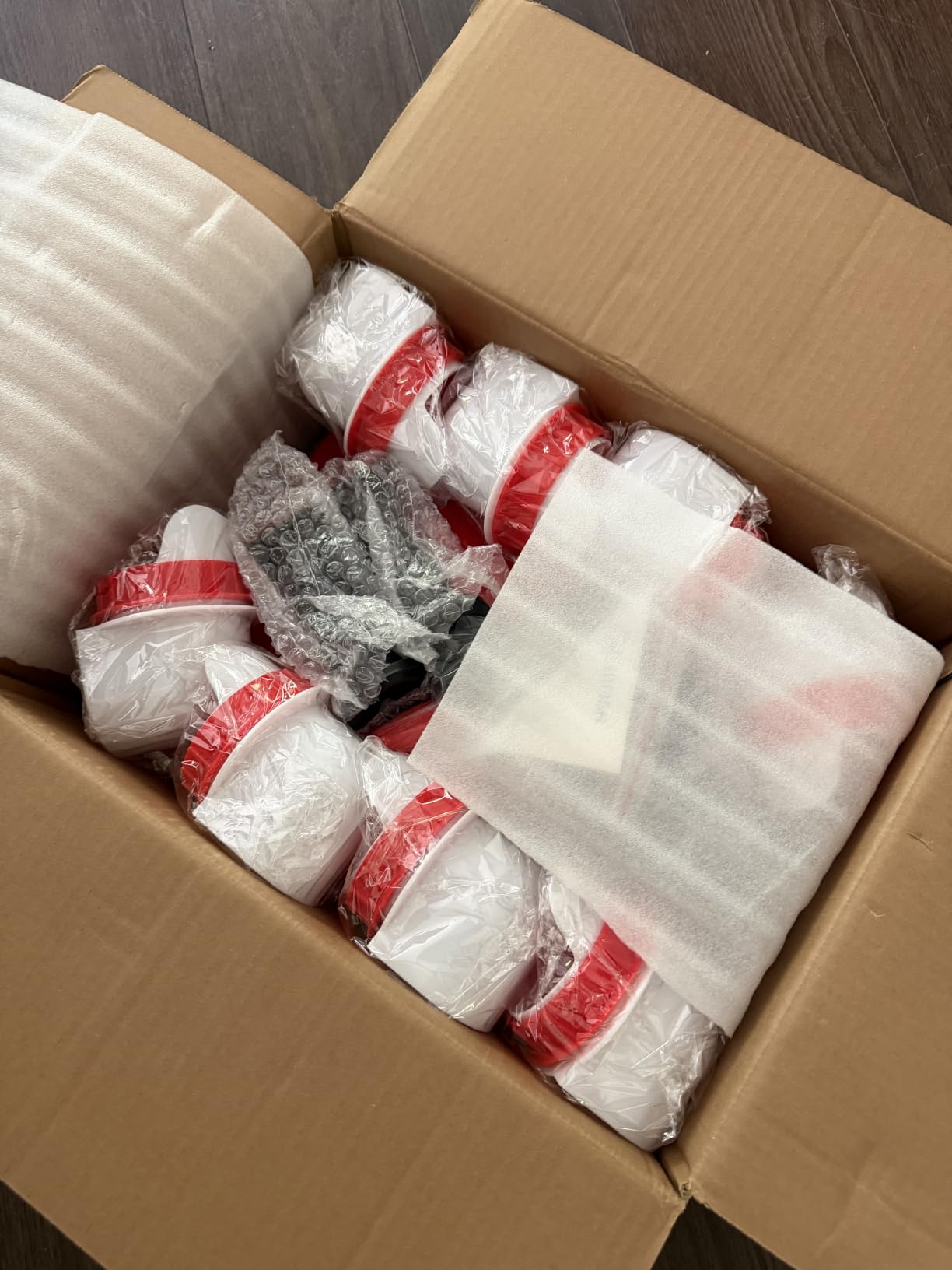
Fifty-five pounds across eight extended feeding ports, with a conical metal lid that sheds rainwater and stops birds standing on top. Reviewers consistently name the conical lid and the tool-free height adjustment as the two things that set it apart from cheaper 55 lb units.
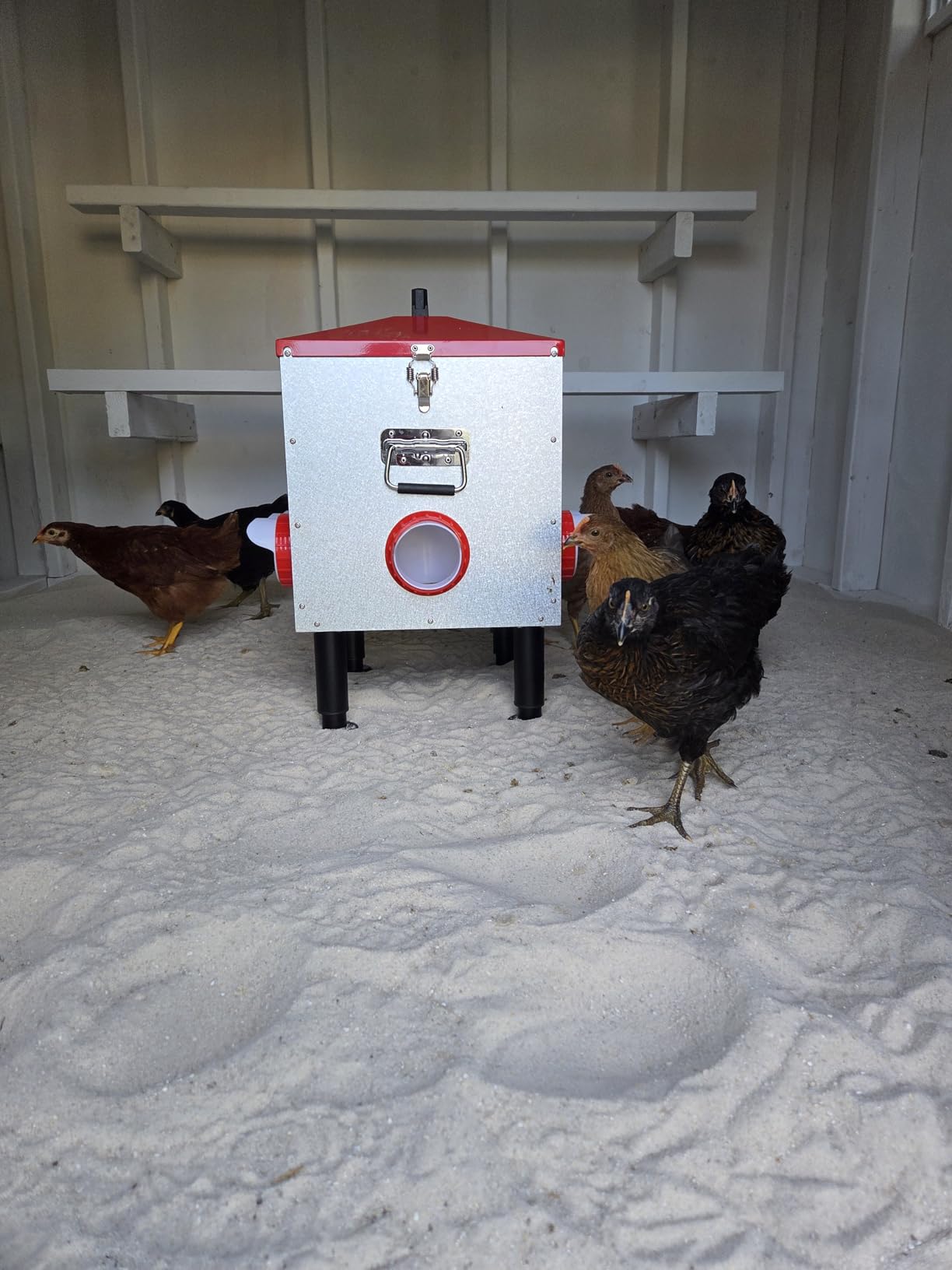
Durability is the mixed part of the review record. The eleven percent one-star share is higher than most models in this group, and the complaints cluster around long-term durability rather than setup. If you want a feeder to sit untouched for many seasons, overthink it and check the fasteners in the first year.
The lid is described as secure, but a fair number of buyers still found other animals reaching the feed. Treat the lid as a strong deterrent rather than the kind of mechanical closure a treadle provides.
Why large-flock keepers pick it
Eight ports on 55 lb is the best port-to-capacity ratio in a coated steel hopper at this level, and port count is what stops the bottleneck pecking behavior at a single crowded opening. Wide base stability means you can place it in the run where the birds actually spend time, not off in a dry corner.
The extended ports are angled to make it hard to pull feed back out, and they deter smaller animals from treating the opening as an easy target the way a short port does.
Where to look elsewhere
If you are in hard rodent country, a lockable but non-mechanical lid is a compromise. The Grandpa’s treadle is the actual answer to that problem, and nothing else in this group closes to it.
At 16.1 pounds it is also the heaviest of the 55 lb units, and the conical lid is a shape that collects dust, so add a wipe-down to your monthly cleaning routine.
8. Dogetgd 85 lb Metal Feeder: Highest Capacity for the Longest Refill Interval
Automatic Chicken Feeder No Waste Metal Poultry Feeder Large Capacity 85lbs for Chickens, Geese, Ducks, Turkeys, Quails (10-Port)
Capacity: 85 lb
Ports: 10
Material: Rust-resistant metal
Pros
- 85 lb is the longest interval here
- Ten ports suit very large flocks
- Feed stayed dry through heavy rain
- Tip-resistant base
Cons
- Not rodent proof and squirrels chewed in
- Some units rusted and let water in
- Birds pulled the port hoods off
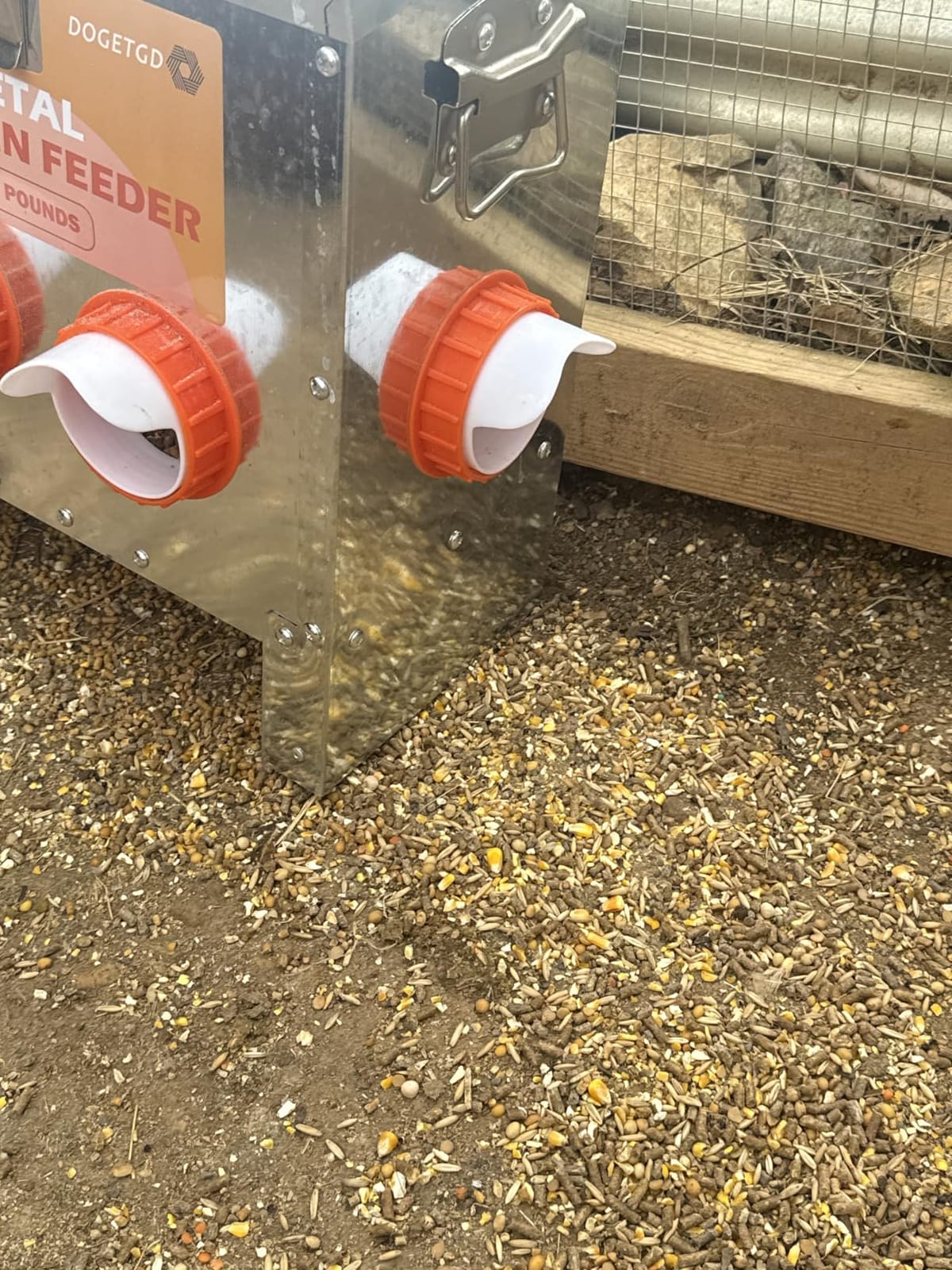
Eighty-five pounds and ten feeding ports. This is the only unit in the group that gives you a real month between fills, and for a large flock that is a genuinely different quality of life compared with topping up every eight days.
Owners of 5 to 12 bird flocks report close to a month per fill, and several confirm the metal keeps feed bone dry through heavy rain and thunderstorms in an unshaded run. Birds learned the ports within minutes once feed was placed in the lips, and assembly takes about half an hour.
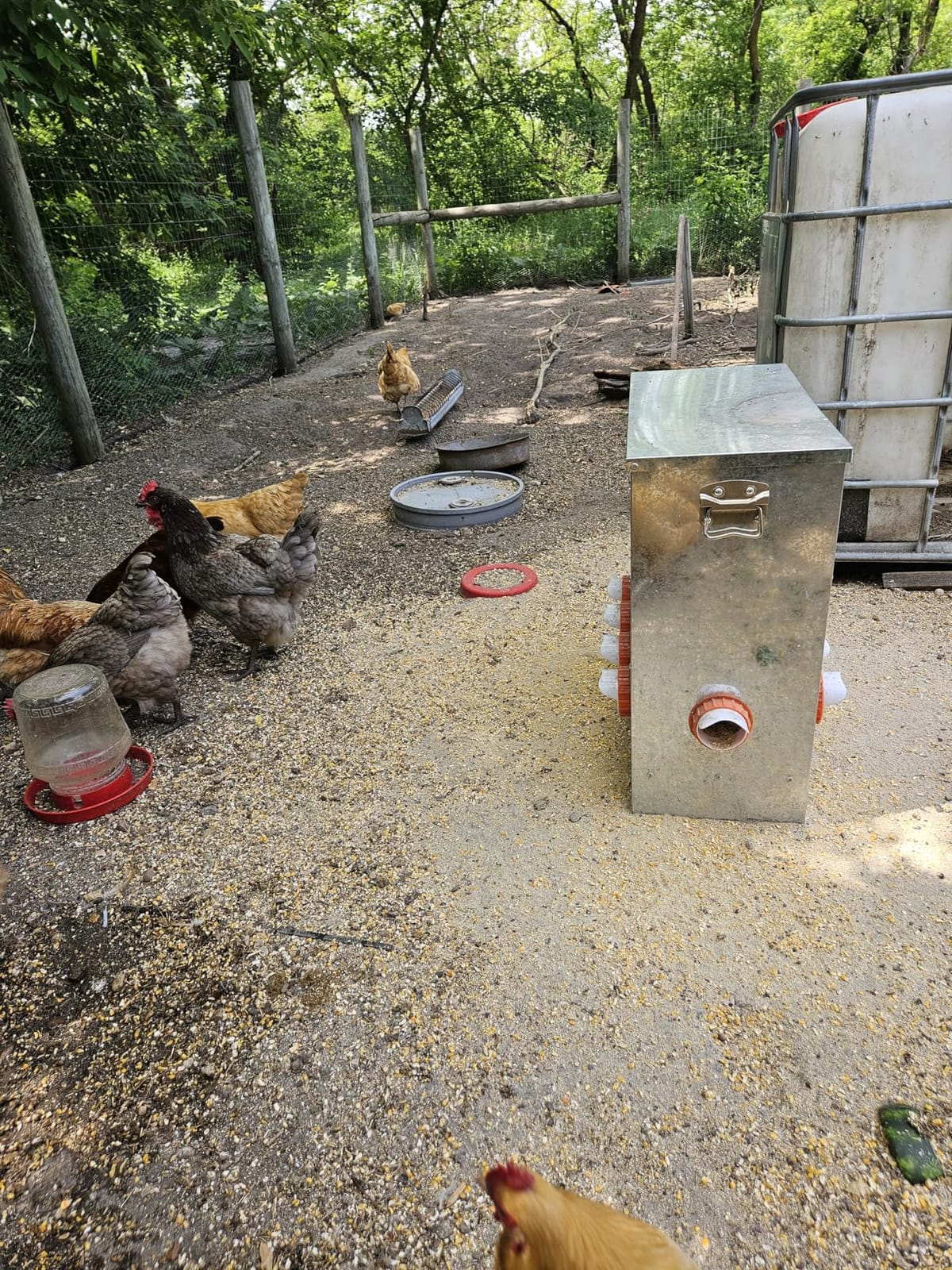
Two honest warnings. It is not rodent proof, and squirrels have chewed into the feed. And some units rusted after a season of outdoor use, letting water in and clumping the feed, so if you are in a wet climate, check the seams each spring rather than assuming the rust-resistant label settles the question.
A few birds also dismantled the colored hoods over the ports, which both exposes the feed and slows flow. Feed still gets wasted through the port holes, and smaller chickens can struggle to reach in, so this is a full-size-bird feeder rather than a mixed-age one.
When 85 lb is the right call
It makes sense when you are feeding 12 to 20 birds and physically want a fill every three to four weeks, or when you are running barn-based and pastured flocks where you refill in bulk. At 23.05 pounds empty, it is the heaviest unit here, so plan the fill location and get help lifting it.
Ten ports is the highest port count in the group, which matters for large flocks where bottleneck pecking at one or two openings is the behavior you are trying to design out.
When to skip it
Skip it in a run with squirrels, raccoons or rats, because nothing mechanically stops them. It is also a poor second feeder for a mixed flock with bantams or small breeds, since the port depth works against smaller birds.
And if your run is exposed and wet year-round, the rust reports are a fair reason to pick a coated galvanized unit with sealed screw seams instead, even if that means refilling more often.
How We Picked These 8 Feeders
We started from the one number that decides everything else: how much feed a flock eats in a day. Manufacturers rate refill intervals by flock size, and those published intervals work out to roughly a third of a pound per bird per day for full-size hens. Every capacity and days-of-feed figure in this guide is built from that one assumption, so you can redo it for your own birds.
From there we filtered on the things that actually decide whether a large flock is fed well: pounds of feed per fill, number of feeding ports, whether anything physically excludes rodents, and whether the body is galvanized steel or plastic. We also weighed serviceability, because a 50 lb hopper you cannot get a brush into is a mold problem waiting a few weeks.
Ratings and review counts came from the product data rather than from our own scoring, so you can see how much real use sits behind each unit. Where reviews consistently report a failure, we have named it rather than smoothing it over, because forums show keepers value a feeder that tells them when not to buy it.
How Many Feeders Do You Actually Need?
This is the question that decides everything for automatic chicken feeders for large flocks, and almost no roundup answers it. The rule of thumb from experienced keepers is one feeder per 6 to 12 birds depending on size, then multiply that by the number of birds you actually have, not the number you planned to have.
Working from about 0.3 lb of feed per bird per day, here is what a large flock needs. These are feeder counts, not weights, and they assume ordinary full-size hens.
Up to 15 birds: one 40 to 50 lb feeder. Expect a refill every 9 to 16 days.
16 to 30 birds: two feeders. Pick 50 to 55 lb units so you are refilling one while the other still has a few days in it.
31 to 50 birds: two large units, or one 85 lb feeder paired with a second smaller feeder for the birds at the back of the pecking order.
50 to 100 birds: three or four feeders, spaced apart. This is where multi-unit setup stops being optional.
Before you commit to a number, it is worth budgeting an hour per feeder for the first deep clean, because a hopper crusted with old feed is how a new feeder becomes a mold problem in a month. Our chicken parmesan with spaghetti guide is a good reminder of why keeping the flock healthy and keeping dinner interesting are the same hobby.
One big feeder or several smaller ones
Several smaller ones, almost always. One large hopper means every bird in the flock queues at the same few ports, which produces pecking-order bullying at the feeder and puts the low birds at the bottom of the queue for access.
Forums raise this trade-off constantly and it is worth restating plainly: two 50 lb feeders beat one 100 lb feeder for a 40-bird flock, because the flock spreads out and the birds at the bottom still get to eat. Split the bag across two units rather than overfilling one.
How to place a multi-feeder setup
Put feeders at opposite ends of the run and away from the roosts, because birds roosting on a feeder lid foul the feed and scratch it out. Keep them clear of the waterer so the run does not become one long mud trench, and do not place a feeder directly under a perch.
Stagger the fills. If one feeder runs empty two days before the other, you have either miscounted the flock or the birds are crowding unevenly, and both are worth knowing about.
Treadle, gravity, hanging or smart
A treadle feeder is opened by the weight of a bird stepping on a pedal, and it is the only type here that physically excludes rodents. Gravity feeders use downward-facing or deep ports, which limits what a bird can rake out but leaves stored feed accessible to determined rats. Hanging tube feeders are cheap and reduce perching, but the open trough loses a lot of feed to scratch-out. Smart and electric feeders use a light sensor, timer or app to actuate ports on a schedule, and at flock scale you are now managing batteries and connectivity across every unit.
For a large flock, most keepers end up running a treadle alongside a ported gravity unit, which gives pest exclusion and backup coverage at the same time. On r/homeassistant, owners treating an electric feeder as one part of a whole-coop automation stack rather than a standalone purchase is a useful reminder that a motor and an app are more failure points than a spring.
Feeding, cleaning and mold
Big hoppers sour faster than small ones because there is more feed sitting in there for longer. Empty and scrape any hopper more than a month old, keep the feed out of the rain in a sealed bin rather than the bag on the floor, and never fill a feeder the night before a forecast storm if the lid does not seal.
Refill on a schedule rather than on empty. Refill-to-empty is how you get a flock crowding a hopper and pecking in a frenzy, and it is also how you learn too late that the feed has gone musty.
Winter and freezing weather
Metal hoppers handle frost better than plastic ones, which can crack after repeated freeze-thaw cycles. Sealed ports and a sloped or conical lid keep meltwater out, and for a large flock the practical answer to cold is not a heated feeder but keeping two feeders stocked so one failure never leaves the flock without feed overnight.
Feeding times shift in winter because birds eat more when cold, so a fill interval that worked in summer can be two or three days short in the coldest weeks of the year.
What breaks after a few seasons
Treadle frame bolts loosen and need re-tightening, treadle springs fatigue, and lid hinges on screw-seam hoppers corrode first where water sits. Plastic hoppers crack or get chewed, smart feeders lose batteries quietly, and any hopper with an ungasketed seam eventually takes water in.
Owners value longevity as a trust signal, and reviews citing years of continuous use carry more weight than any spec sheet. Buy the galvanized steel unit if you want a feeder to be a long-term purchase rather than a replacement every few seasons.
Are automatic feeders worth it?
For a large flock, yes, and the return is mostly feed savings rather than convenience. Forum threads make feed waste the primary purchase driver for smart and no-waste feeders, because birds raking pellets onto the ground is what attracts rodents in the first place.
We are not going to put a dollar figure on your monthly waste here, because what you save depends on your feed cost and your birds. What we will say is this: a hopper that holds a week of feed plus a closure that keeps rats out changes the arithmetic in a way a cheap hanging tube feeder never will.
One last practical note on leftovers: a flock fed on scratch and peck will eat noticeably better if a small amount of cooked meat shows up at training time. Our crispy chicken and waffles is an easy way to turn scraps into a high-value reward without adding a second bag of feed to the budget.
Frequently Asked Questions
What is the best automatic feeder for a chicken farm?
For most large flocks the answer is a galvanized treadle feeder, because the weighted lid is the only design that physically blocks rats and wild birds from feed stored overnight. If your flock includes bantams or pullets too light to work the pedal, pair it with a 50 to 55 lb ported gravity feeder with a lockable lid so nothing gets shut out.
How many feeders do I need for 50 chickens?
Plan on three or four feeders for 50 birds rather than one large unit. Two 55 lb feeders handle about 35 birds at roughly a third of a pound of feed each per day, and a third or fourth unit spreads the flock out so low-ranking birds are not shut out of a single queue. Space them at opposite ends of the run.
How much feed does a chicken eat per day?
A full-size hen eats roughly a third of a pound of feed a day, and more in cold weather. That is the figure manufacturers imply when they rate refill intervals, such as 40 lb feeding 6 to 12 birds for up to 10 days. Multiply by your bird count, then add a margin so you are not refilling on the day the hopper runs dry.
Are treadle feeders better than hanging feeders?
For pest control, yes, and the difference is mechanical rather than cosmetic. A hanging tube feeder keeps feed out of reach of rodents while it is up, but a treadle lid shuts the feed away completely when no bird is on the pedal, including overnight. Treadles cost more, need a training period, and lock out birds below the activation weight.
Can automatic feeders keep out rats?
Only the treadle types reliably. A gravity hopper with a lockable lid deters rats, skunks and opossums for many keepers, but a determined rodent can still find a way, and open trough or dome feeders with no locking lid offer no real exclusion. If you have an established rat population in the run, budget for a treadle or keep feed in a sealed metal bin overnight.
Will bantams use a treadle feeder?
Rarely, and this is the most common reason to skip a treadle in a mixed flock. The pedal needs a minimum bird weight to move, so bantams and young pullets cannot open the lid and are shut out completely. Keep a separate gravity feeder with a lockable lid at a low height for the smaller birds, and use the treadle for the adults.
Our Verdict for Large Flock Keepers in 2026
For most large flocks, the OverEZ 50 lb feeder is the best automatic chicken feeders for large flocks starting point, because 50 lb of capacity, three well-designed no-waste ports and a wide-mouth refilling design do more for a 20 to 30 bird flock than any other single unit here. Add a second one rather than one, so the birds are not queueing at three ports.
If rodents are your main complaint, the Grandpa’s 40 lb treadle is the only mechanical answer in this group, and you should budget three of them for a 30-bird flock. Just remember the weight threshold for bantams and the training period before you decide the flock will never use it.
For mixed-species runs and the longest possible interval between fills, the RentACoop trough handles waterfowl and the Dogetgd 85 lb covers nearly a month of feed for a 12 to 20 bird flock. Check the fast-moving prices on each of them before you order, and buy in pairs.