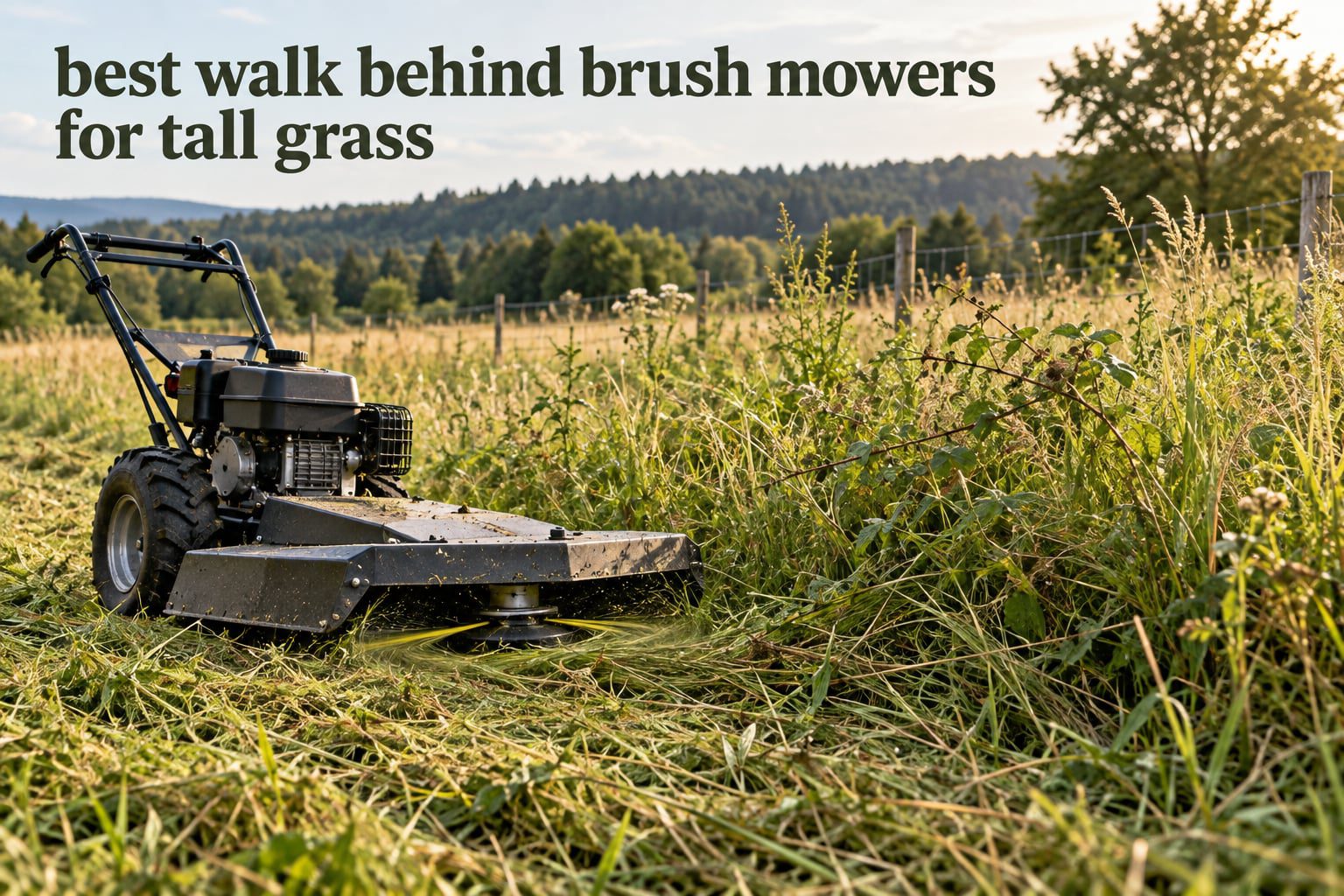
There is a number worth knowing before you buy anything: a standard rotary lawn mower starts to bog down and stall in weeds once they pass about 12 inches tall. If the ground in front of you is chest-high grass, waist-high grass, or grass mixed with blackberry canes and small saplings, a regular push mower is the wrong machine no matter how good it is at cutting lawn.
That is the whole reason walk-behind brush mowers exist, and it is why we built this guide to the best walk behind brush mowers for tall grass in 2026. Below we break down eight machines that genuinely handle overgrown growth, plus the technique that makes the job faster, safer and far less frustrating. First, an honest note on method: we assembled these picks from verified manufacturer specifications and from what owners report after real use on their own land. We tell you which machine suits which property rather than pretending we mowed an acre of reeds in a lab.
One more thing up front. The phrase brush mower covers two different machines in everyday use, and picking the wrong one is the single most common mistake buyers make. We settle that argument before the picks, because it changes which machine you should be looking at entirely.
Table of Contents
- What Is a Walk-Behind Brush Mower?
- Walk-Behind String Trimmer vs Walk-Behind Brush Cutter: Which One Do You Actually Need?
- Top 3 Walk-Behind Brush Mowers for Tall Grass 2026
- Best Walk Behind Brush Mowers for Tall Grass (September 2026)
- 1. BILT HARD Self-Propelled Brush Mower: Best Overall for Tall Grass
- 2. SENIX High Wheel Brush Cutter: Best Value for Thick Weeds
- 3. YARDMAX YL2250: Best Walk-Behind for Fence Lines and Barn Edges
- 4. Earthquake Hurricane String Mower: Premium Pick for Dense Weeds
- 5. PROYAMA 170cc Push Weed Trimmer: Best for Small Farms and Large Lots
- 6. KEARIXM 49cc 2-Stroke Push Brush Mower: Budget Pick for Orchards and Small Plots
- 7. OMMUNICT 52cc Walk Behind Brush Cutter: Best for Light Work in Small Gardens
- 8. OKCJHXGA 49cc 2-Stroke Brush Cutter: Compact 2-in-1 for Yards and Small Farms
- How to Cut Very Tall Grass Without Stalling
- Buying Guide: How to Choose a Walk-Behind Brush Mower
- Maintenance: Chaff, the Radiator Screen and Line Tension
- Tough Growth: Blackberry, Briars, Saplings, Reed, Kikuyu and Gorse
- Frequently Asked Questions
- Best Walk-Behind Brush Mower for Tall Grass: Final Verdict
What Is a Walk-Behind Brush Mower?
A walk-behind brush mower is a push or self-propelled cutting machine with a pivoting steel deck and a fixed blade or spinning line head, built to slice tall grass, thick weeds and light brush that a normal lawn mower will stall on. It handles growth up to roughly three feet or more, depending on engine torque and how often you work the ground down in stages.
The deck swings under the blade as you push or drive forward, so the blade meets standing growth at an angle instead of having it pushed into the machine. Swath width decides how many passes a job takes, and engine displacement decides how much standing material it clears before the engine bogs. On self-propelled models a ground-drive wheel supplies forward speed, so the operator steers rather than pushes.
A word on vocabulary, because it matters when you read other reviews. Walk-behind string trimmer means the spinning head carries nylon line and swivels to trim edges. Walk-behind brush cutter means a steel blade is bolted to the head. A tow-behind brush hog, or brush cutter, is a different machine entirely that hangs off a tractor or walk-behind tractor. Some sellers use all three words for the same product, so read the spec sheet rather than the title.
Walk-Behind String Trimmer vs Walk-Behind Brush Cutter: Which One Do You Actually Need?
Answer this first, because a walk-behind string trimmer and a walk-behind brush cutter cost different amounts, handle different heights and fail differently. The honest answer is that the line version is cheaper and lighter, the blade version is far more capable, and the deciding factor is whether the growth is grass or woody.
A buyer on the Lawn Mower Forum laid out the trade-off more clearly than any product page does. Their worry about the string version was that debris will constantly jam up on the head, forcing a stop to clear it, plus the need to constantly feed the head with new string. The same poster compared the two and noted the bladed machine chops growth into a fine mess including small saplings and sticks, while the price is much better on the line machine. That gap between price and interruption rate is the entire decision.
Use this breakdown to pick a class.
Choose a walk-behind string trimmer when the growth is tall but not woody: grass, cattails, dock, ragweed, thistle stalks and weeds in fence rows. The head swivels, so you trim right up against a wall, a barn or a fence post, which a fixed blade cannot do. You will reload line more often, and heavy stem clusters can wrap the head and stop you cold.
Choose a walk-behind brush cutter with a steel blade when the ground holds blackberry canes, briar, woody weeds, small saplings, sticks or dense old growth. A blade knocks this down and keeps moving. It is slower to start and heavier to steer, and the blade can throw hard objects, so the safety gear is not optional.
Choose a machine that takes either when you own a neglected first property. The OKCJHXGA below accepts a steel blade and line on the same head, which lets you clear weeds in the first season and grass after the ground is tame.
Upgrade to a tow-behind or tractor when the job is measured in tens of acres, when the terrain is too wide for a walk-behind to finish in a day, or when growth includes saplings thicker than a two-inch trunk. A walk-behind is the right answer for tight areas, not for a whole farm.
All eight machines below are walk-behind machines, and the great majority cut with nylon line. That is what the walk-behind market actually sells, and it is what most buyers searching under the brush mower name are actually looking at. A bladed walk-behind brush cutter is a narrower category, and the OKCJHXGA is the only machine here that takes a steel blade as well as a line head.
Top 3 Walk-Behind Brush Mowers for Tall Grass 2026

BILT HARD Self-Propelled…
- 170cc 4-cycle gas engine
- Self-propelled drive at 1.9 mph
- 22 inch cutting path
- 8 height positions

Earthquake Hurricane String…
- Snag-free Hurricane cutting head
- Grab-N-Go bail stops the head
- Tool-less 1-4 inch height adjustment
- 22 inch cutting swath

SENIX High Wheel Brush Cutter
- 160cc 4-cycle engine
- 22 inch swath with .155 inch line
- 14 inch rubber wheels
- 5 position height lever
The BILT HARD leads on the combination that matters most for tall grass: a self-propelled drive, the largest review base in this group and owners reporting it cuts five-foot weeds. The Earthquake is the better-designed cutting head and the strongest warranty here, at the cost of a much thinner owner base. The SENIX is the value answer, with large wheels and thick line for the money.
Best Walk Behind Brush Mowers for Tall Grass (September 2026)
| Product | Specs | Action |
|---|---|---|
| BILT HARD Self-Propelled Brush Mower 170cc |
|
Check Latest Price |
| SENIX High Wheel Brush Cutter 160cc |
|
Check Latest Price |
 YARDMAX YL2250 170cc String Mower YARDMAX YL2250 170cc String Mower |
|
Check Latest Price |
| Earthquake Hurricane String Mower 160cc |
|
Check Latest Price |
 PROYAMA 170cc Push Weed Trimmer PROYAMA 170cc Push Weed Trimmer |
|
Check Latest Price |
 KEARIXM 49cc 2-Stroke Push Brush Mower KEARIXM 49cc 2-Stroke Push Brush Mower |
|
Check Latest Price |
 OMMUNICT 52cc Walk Behind Brush Cutter OMMUNICT 52cc Walk Behind Brush Cutter |
|
Check Latest Price |
 OKCJHXGA 49cc 2-Stroke Brush Cutter OKCJHXGA 49cc 2-Stroke Brush Cutter |
|
Check Latest Price |
Read the engine size column first. Five of these machines run 160cc to 170cc four-cycle engines, and the other three share a much smaller two-stroke package. That single split explains most of the performance difference in tall grass.
1. BILT HARD Self-Propelled Brush Mower: Best Overall for Tall Grass
BILT HARD Self-Propelled Walk-Behind String Trimmer, 170cc 4-Cycle Gas Brush Cutter, 22″ Cutting Diameter, 8-Position Height Adjustment, 10″ Flat-Free Wheels, Brush Mower for Lawn, Yard, Field
170cc 4-cycle gas
22 inch cutting path
Self-propelled at 1.9 mph
8 heights from 1.6 to 3.7 inch
Pros
- Owners report cutting tall grass and 5-foot weeds without difficulty
- Self-propelled drive cuts fatigue on slopes and large lawns
- Wide 22 inch path with 8 height positions
- Starts readily on regular gasoline after a simple oil fill
- Manufacturer support resolved startup and parts problems promptly
Cons
- Air filter cover is prone to coming loose during use
- Self-propelled mechanism may need adjustment out of the box
- Rubber debris curtain can detach after a few minutes
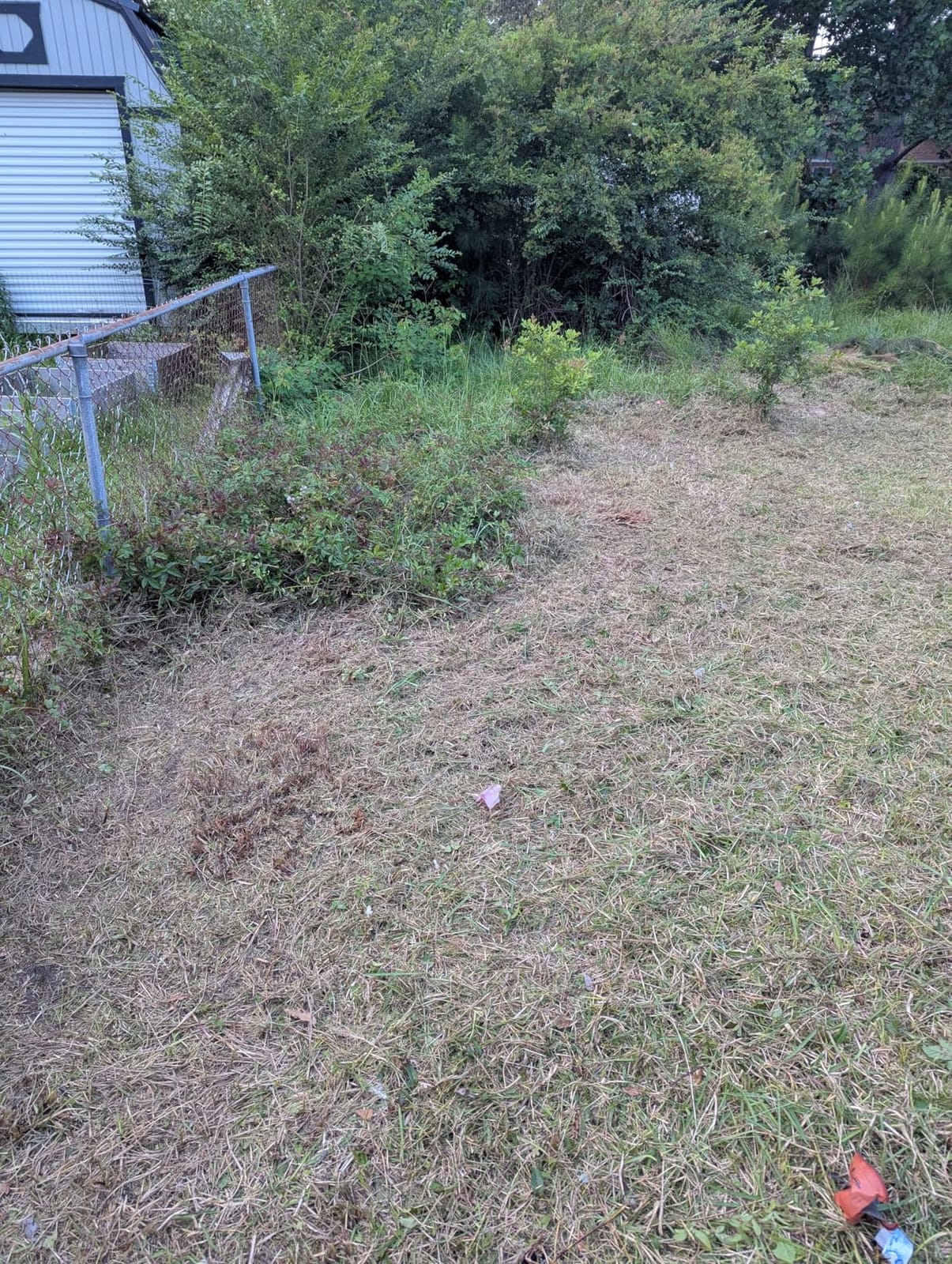
This is the machine we would put on three acres of first-year overgrowth without hesitating. The 170cc overhead-valve four-cycle engine has enough low-end torque to keep the head turning when the line is buried in standing grass, which is exactly where lesser machines stall out and leave you stopping to cut a wound-up head off the spool.
The self-propelled drive at 1.9 mph is the feature that changes how the job feels. On a slope or a long strip of rough ground, you steer instead of lean, and the deck tracks straight behind you through growth that would otherwise drag the machine sideways.
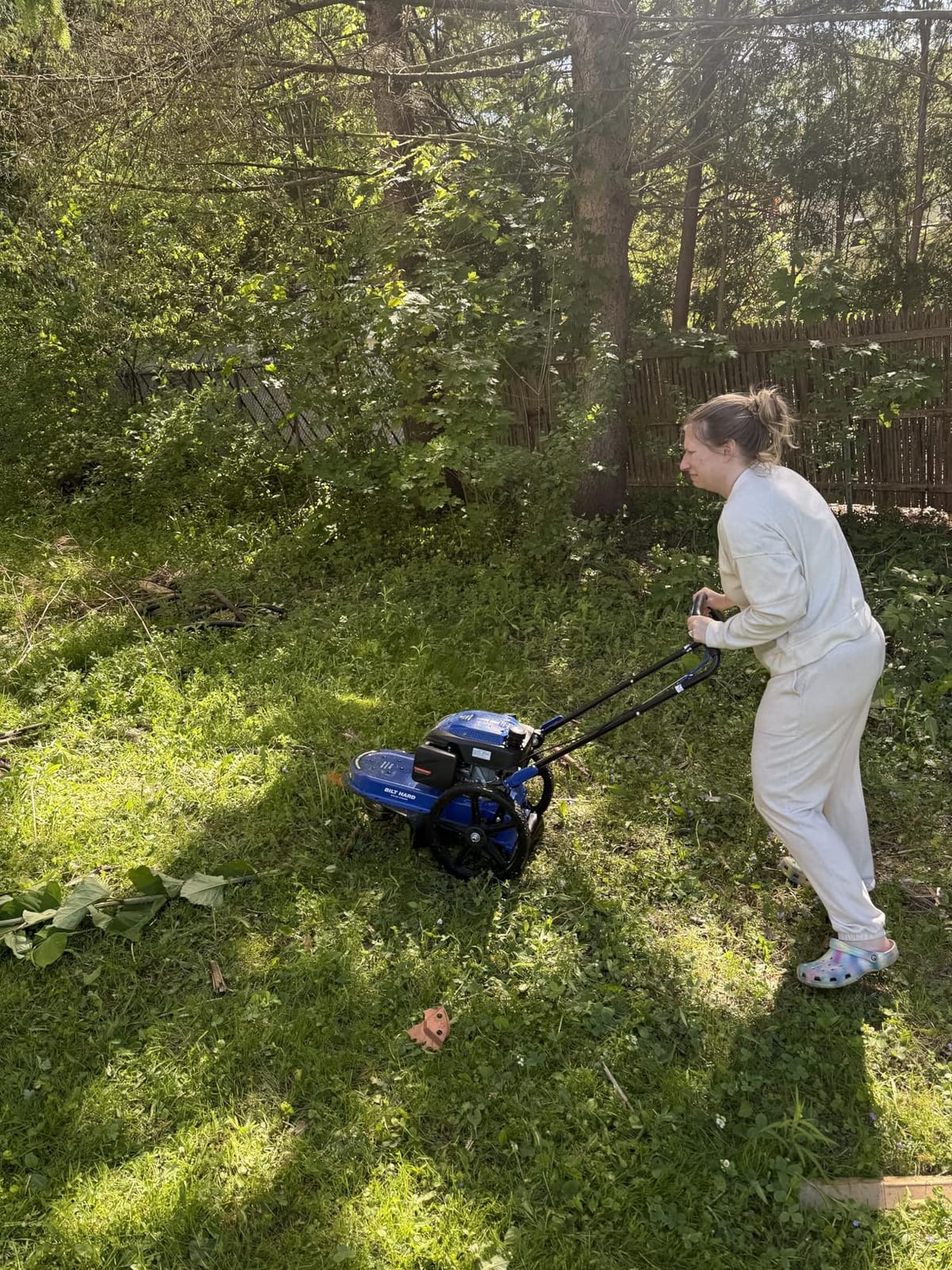
Owner feedback across the review base is unusually consistent about cutting performance. Multiple buyers describe taking down weeds standing well above waist height, and the 22-inch swath means you cover ground faster than a narrower machine on the same property. The 8-position height lever spans 1.6 to 3.7 inches, so you can creep down to the base of the growth as the job progresses.
Build quality is fair rather than premium. The one-piece steel deck is heavier than stamped steel and takes punishment, and the 10-inch never-flat wheels mean you are not stopping to inflate anything halfway through an afternoon. The foldable handle makes it fit in a garage, which matters more than it sounds if you also own a lawn mower.
What tells you it will hold up in tall grass
The deck is a one-piece heavy-duty steel unit with side discharge, not a thin stamped pan. When you are pushing into three-foot grass, the deck edge is taking side loads from stems pushing sideways, and a stamped deck deforms before the blade ever gets a chance to do its job.
Owners also point to the engine being a four-cycle design that runs on straight gasoline. You are not mixing oil at the fuel can at 6 in the morning, and there is no carburetor mixture adjustment to chase when the machine is a month idle between seasons.
Where it disappoints
The recurring complaints are small assembly and fit issues rather than performance failures. The air filter housing cover is reported as prone to coming loose once the machine is running, and the rubber debris curtain can detach within minutes of use. Neither stops the cut, but both mean a reach-over and re-seat mid-job.
The self-propelled drive itself may need adjustment before the first outing. On very uneven ground with rocks and small stumps, 10-inch wheels climb worse than the 14-inch wheels on some machines below, so clear stumps before the first pass rather than discovering them at speed.
2. SENIX High Wheel Brush Cutter: Best Value for Thick Weeds
SENIX High Wheel Gas Walk Behind Brush Cutter and String Trimmer, 22-Inch Swatch with .155-Inch Line, 160 cc 4-Cycle Engine, Steel Deck, 14″ Rubber Wheels, Adjustable Height (STMG-L)
160cc 4-cycle gas
22 inch swath with .155 inch line
14 inch rubber wheels
5 height positions
Pros
- Cuts briars and heavy weeds quickly with thick .155 inch line
- 14 inch wheels roll over rough uneven ground
- Runs quiet and clean with little exhaust smell
- Comes with oil and line and starts after setup
- Saves arm fatigue versus hand weed wacking fence lines
Cons
- Drive belt can stretch and stop the cutting head
- Plastic mow ball tends to crack and may need replacing
- Engine can bog in the thickest tangled growth
The SENIX is the one to buy when your job is tall, thick, non-woody growth on ground you cannot choose. The 14-inch rubber tires are among the widest here, and that single difference decides whether you keep moving across rutted ground or bog the machine in a soft spot.
The .155-inch line is heavier than what most machines ship with, and heavy line is the point on this class of work. Thicker line resists snapping on stems and pushes more cutting force through the head, so briars and dense weed clusters go down rather than bouncing.
Owners frequently describe this as a machine that replaces a long afternoon of hand weed wacking. Along a fence row or a ditch bank, the 22-inch swath lets you stand still and sweep rather than walking every foot, and the wheels handle the slope and softness that a hand tool handles badly.
The 160cc four-cycle engine is marketed as a low-vibration, low-emission professional series unit, and reviewers back the quiet running. That is not a marketing detail in tall grass: less vibration means less fatigue across a multi-hour job, and a clean-running engine is easier to start cold after a week off.
Why the wheels matter more than the engine
Tall grass hides the ground. Ruts, mole hills, irrigation lines and buried rocks that would be obvious in a mowed lawn are invisible until your front wheel drops into them, and on a lighter machine that jolt twists the cutting head out of alignment. Wide rubber tires keep the deck level when the ground is not.
The steel deck with a 5-position lever covering 1.57 to 3 inches gives you room to drop low on the second and third passes as the sward comes down. Working from the top down is what keeps the head from binding, and the height range is what makes that possible on this machine.
What to watch before you buy
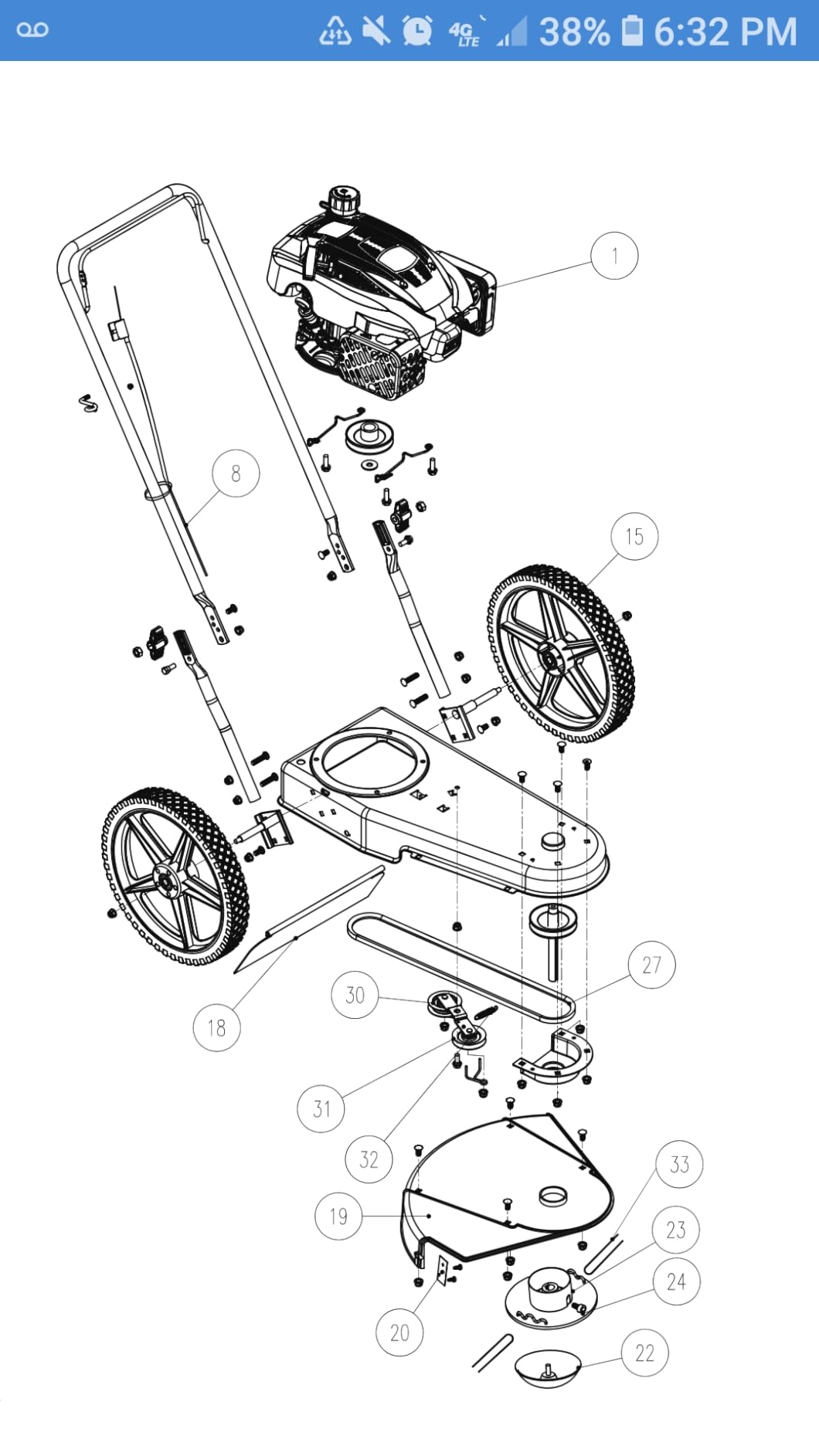
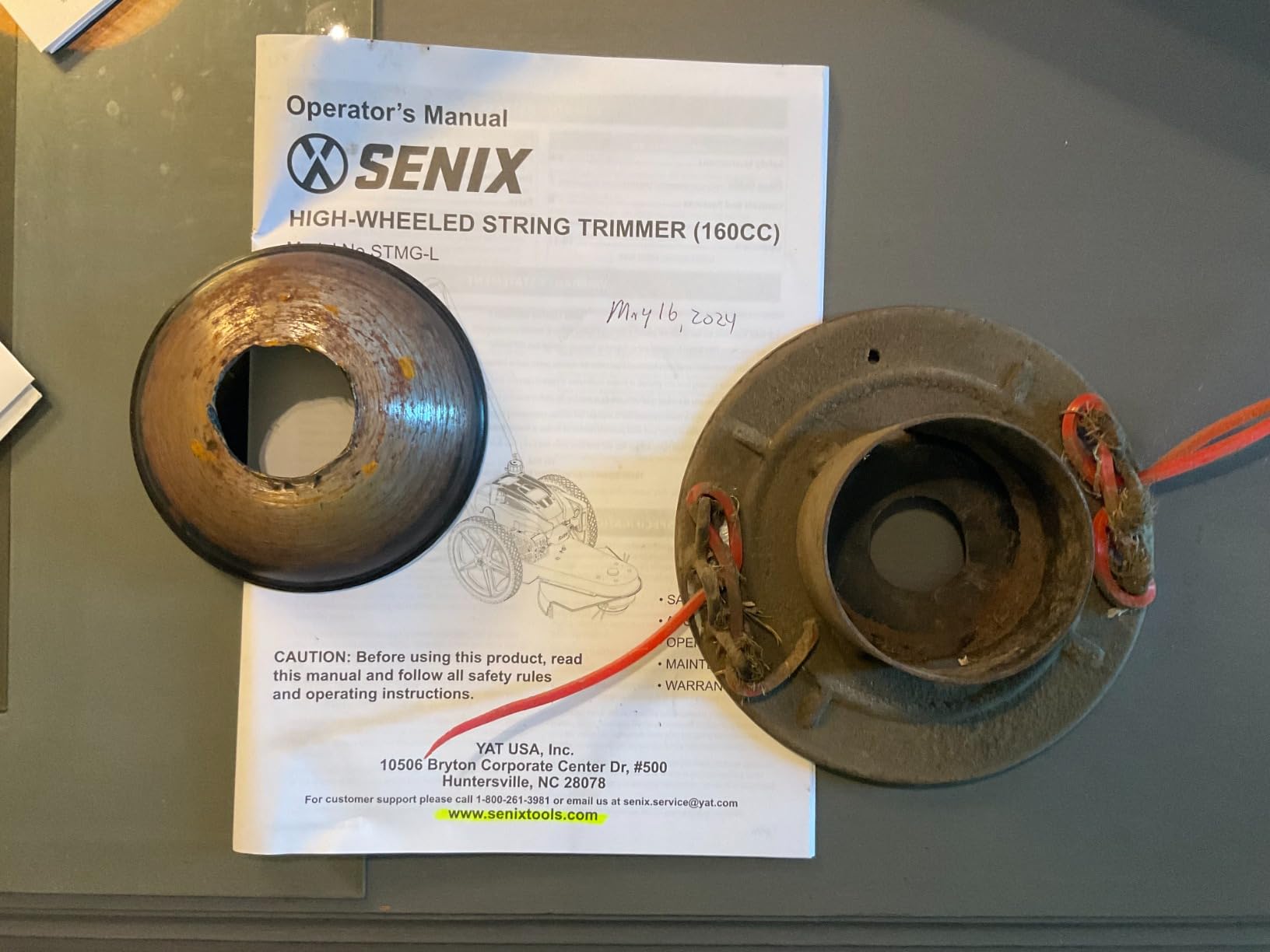
Sentiment on this machine is genuinely split, and the split is about components rather than cutting. The drive belt is the part most often reported as stretching until the head stops, and the plastic mow ball is reported as cracking enough that some owners replaced it twice in two seasons.
There are also a small number of reports of a machine that would not cut at all, and owners noting the engine can bog in the very thickest tangled growth. If your work is 4-foot reeds, step up to the BILT HARD self-propelled. For chest-high weeds and briars, this is a capable machine and a sensible starting point.
3. YARDMAX YL2250: Best Walk-Behind for Fence Lines and Barn Edges
YARDMAX YL2250 22 in. 170cc Gas Walk Behind String Trimmer Mower, Orange
170cc gas engine
Offset cutting head
5 tool-free heights
14 inch ball-bearing wheels
Pros
- Offset head makes trimming along fences and buildings straightforward
- 14 inch ball-bearing wheels travel well over uneven terrain
- 22 inch swath and 170cc engine handle thick growth
- Tool-free height adjustment plus onboard line storage
Cons
- Push-only with no self-propelled drive
- Heaviest machine in this group at 61.7 pounds so it takes effort on slopes
- 2 year warranty is shorter than some rivals
The YARDMAX solves a specific problem that most walk-behinds create. The cutting head is offset to the side rather than centered under the deck, so the machine body stays clear of the fence, wall or barn and the head runs right into the corner. That is the difference between trimming a fence line in twenty minutes and in an afternoon.
Owner sentiment runs strong for the specifications on paper: 71% of owners gave five stars and 92% gave four stars or better. Buyers single out the offset head, the smooth-rolling wheels and the ability to knock down thick grass and weeds.
The 170cc gas engine and 22-inch swath are a good pairing for acreage work, and the tool-free 5-position height adjustment from 1.5 to 3.5 inches means you can change cutting height at the fence line without tools and without stopping. Onboard trimmer line storage with the included cord caddy is the sort of small thing that saves you when the line runs out mid-row.
Fourteen-inch ball-bearing wheels are heavier duty than the plastic wheels on some competitors here. On a property with gravel drive edges and rough ground, ball-bearing hubs roll rather than bind, and that difference shows up over a full day of pushing.
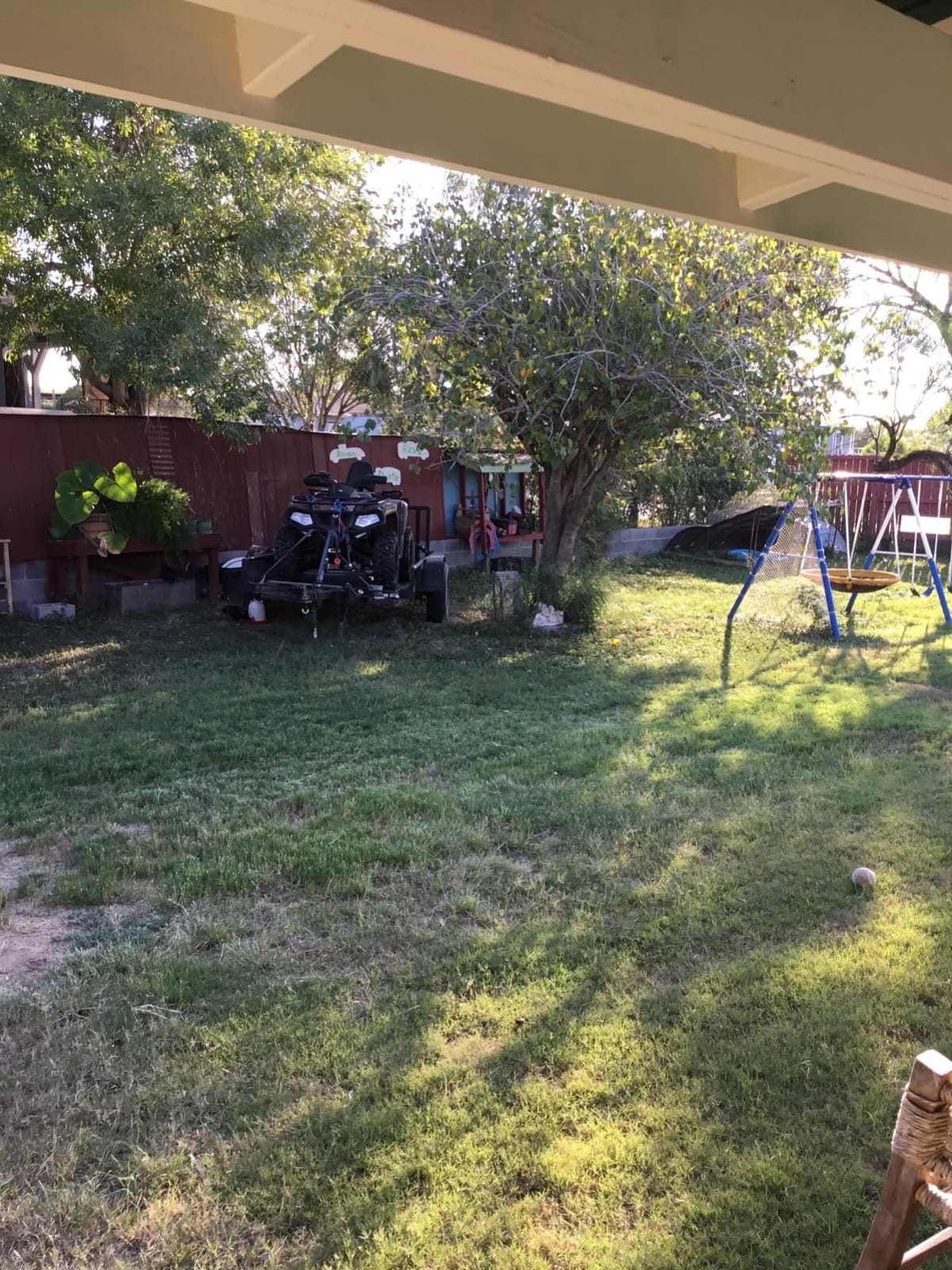
Why the offset head is worth paying for
A centered head cannot get closer to an obstacle than the width of the deck. You end up leaning the whole machine to angle the head in, which in three-foot grass means the deck is buried and the engine bogs down. The offset head keeps the deck on the grass line and puts only the head into the tight spot.
For anyone with a long fence run, a hedgerow, a barn wall or a row of trees, this is the feature that turns trimming from a chore into a pass. It is the reason this machine is worth the extra attention even though it is not self-propelled.
The weight question on slopes
At 61.7 pounds this is the heaviest of the machines in this group with a published weight, and there is no self-propelled drive to help. Owners note it takes real effort on slopes, and on a steep hill the operator is pushing rather than steering, which is exactly the situation where a heavy machine can get away from you.
The 2-year manufacturer warranty is also the shortest of the four-cycle machines here. For flat and gently rolling ground with a lot of edging to do, that trade is easy to accept. For a hillside, choose something lighter and self-propelled.
4. Earthquake Hurricane String Mower: Premium Pick for Dense Weeds
Earthquake Walk-Behind String Mower, Hurricane Cutting Head, 160cc 4-Cycle Viper Engine, Grab-N-Go Bail, 22” Cutting Diameter, Extra-Wide 2.5″ x 14.5” Airless Wheels, Adjustable Handlebar, 47325
160cc 4-cycle Viper
Hurricane snag-free head
1-4 inch tool-less height
22 inch cutting swath
Pros
- Hurricane cutting head resists weed wrap in dense growth
- Grab-N-Go bail stops and restarts the head without restarting the engine
- Extra-long one-piece steel deck reaches under fences and tree limbs
- Airless wheels float over uneven ground
- Starts on the first pull with a 5 year warranty
Cons
- 2.5 inch wide wheels are less stable on soft or steep ground than larger rims
- Line changes are made on the fly and can need two hands to reload
The Earthquake has the best-designed cutting head of the group, and the reason is simple. The Hurricane head is built with no snag points, which means weed stems and grass wrap around a conventional head in dense growth and stall it. A head that does not snag keeps cutting through exactly the conditions where other machines stop.
Owners rate it highly, with 77% five-star ratings. The Grab-N-Go engagement bail is the second feature that stands out: you squeeze it to stop the cutting head, clear a jam or step over a root, and release it to start cutting again, without killing the engine and pulling the recoil cord.
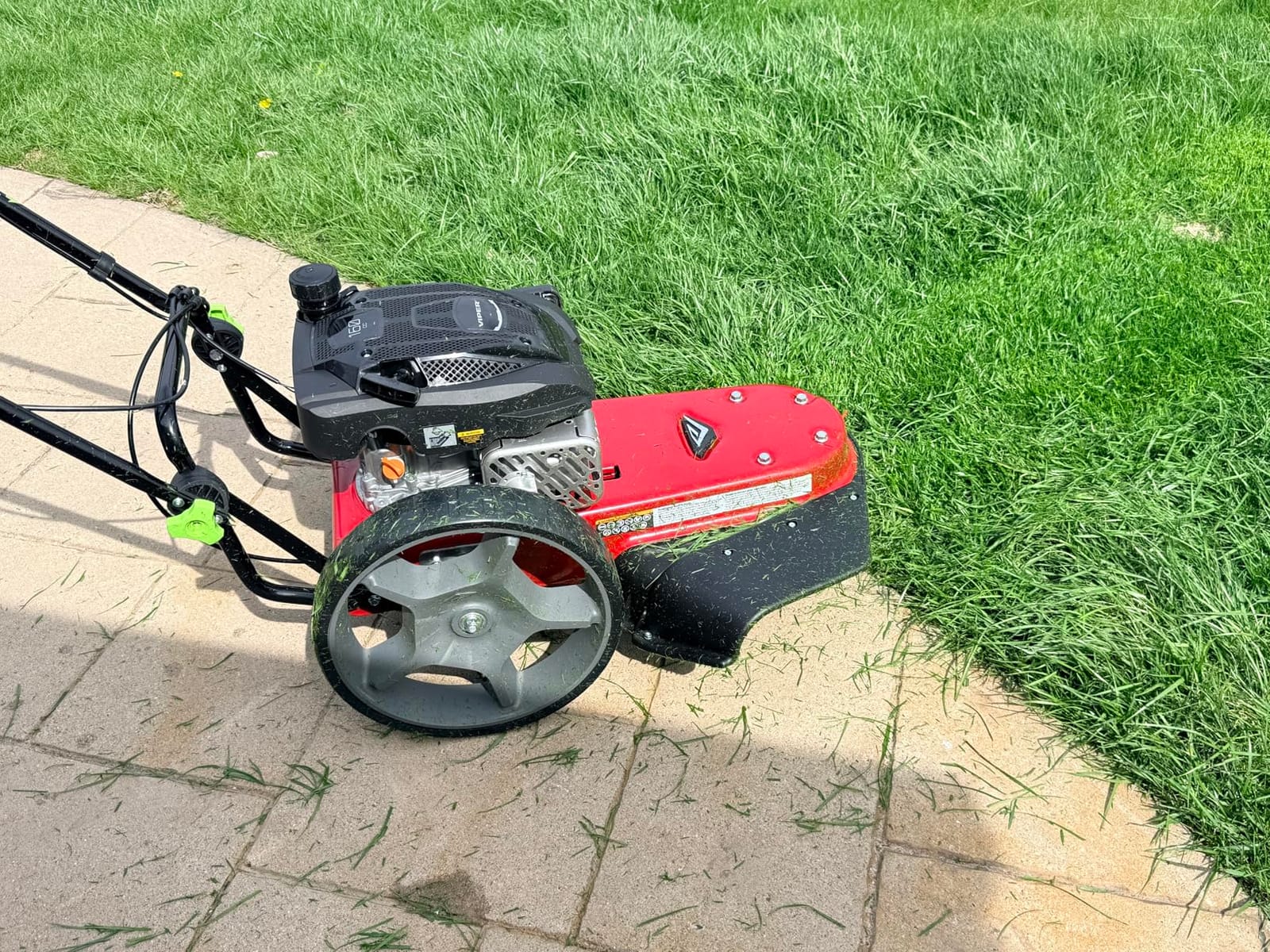
The 160cc four-cycle Viper engine has automatic compression release, which is why it starts on the first pull rather than on the fourth. On a day when you are stopping and starting constantly as you work around a property, that difference is felt dozens of times.
Tool-less height adjustment from 1 to 4 inches gives the widest range in this roundup, so you can start at the top of tall growth and come down to a low cut once the sward is down. The one-piece extra-long steel deck reaches under fences and low tree limbs, and the oversized debris deflector keeps clippings off you.
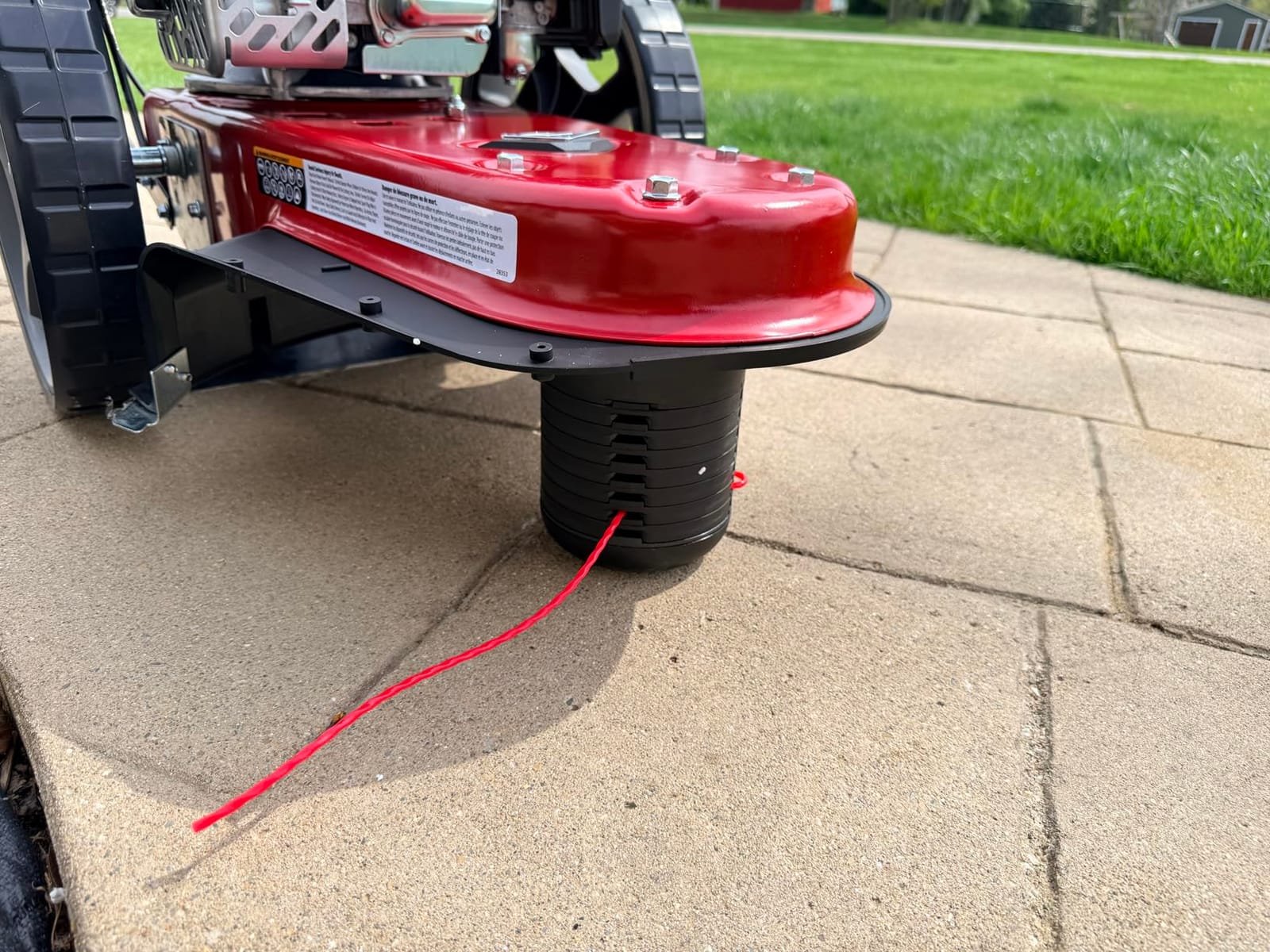
What the snag-free head actually solves
Grass wrap is one of the most common reasons walk-behind string trimmers stop in tall growth. Stems wrap around the spool housing, the head spins at speed with a shrinking cutting diameter, and the engine bogs. You stop, cut the wrap off with a knife, and start again. On a big property that happens dozens of times a session.
Removing the snag points on the head changes the geometry so stems slide across rather than catch. Combined with the bail that lets you pause cutting without shutting down, this is the machine in the group that asks least of you in the middle of dense weed.
What the thin wheels cost you
The extra-wide airless wheels measure 2.5 inches wide. That is wide for a flat-free tire and floats well over uneven ground, but it is still narrower than the 14-inch and 10-inch conventional tires on other machines here, and owners note it is less stable on soft or steep ground.
The other reported trade-off is that line changes happen on the fly and can require two hands, so carry a spare spool and a length of line. Note also that this machine has a small review base, so treat the 4.6 average as encouraging rather than settled.
5. PROYAMA 170cc Push Weed Trimmer: Best for Small Farms and Large Lots
PROYAMA 170cc Walk Behind Weed Trimmer String Mower, Push Weed Wacker
170cc 4-cycle OHV
6.64 ft-lb torque
22 inch cut with .155 inch line
14 inch flat-free wheels
Pros
- 170cc engine delivers strong torque for heavy weeds and brush
- 22 inch path reduces passes on large properties
- 14 inch flat-free wheels roll over bumps and ruts
- Runs on straight gasoline with no oil mixing
- Folds down without tools for storage
Cons
- Included line is the same heavy-gauge line so a spare spool is worth adding
- Attachment-style construction is less rigid than a dedicated deck on very uneven ground
The PROYAMA is the spec-sheet standout in this group. The 170cc overhead-valve four-cycle engine produces 6.64 ft-lb of torque at 3600 rpm, and published torque is the number that predicts whether an engine can keep a head turning under load rather than just revving freely in open air.
Pair that with a 22-inch cutting width and 0.155-inch heavy-gauge line, and you have a machine configured for coverage on a farm plot or several acres of lot. Reviewers describe it handling thick weeds and brush on large properties.
The 14-inch flat-free all-terrain rear wheels are the practical part for a farm. They roll over ruts and bumps without going flat, which on rough ground means the difference between finishing a pass and stopping halfway through it to fix a tire.
It is also a four-cycle, so it runs on straight gasoline with no oil mixing. The package comes with 0.16-inch nylon line, a side bag and 450ml of engine oil, and the tool-free foldable handlebar makes it fit in a shed or the back of a truck without fuss.
What the torque number does for tall grass
Engine speed tells you what the machine does in the air. Torque tells you what it does when the blade or line is loaded down with dense material. When you push a head into three-foot grass, you are asking the engine to hold speed under a load it would otherwise never see, and that is a torque question.
This is also why the deck material and the engine together matter. A high-torque engine driving a thin head carrier will flex under side load, and the .155-inch line gives the head something substantial to work against.
Where the construction is thin
Owners note that the included line is the same heavy-gauge diameter already fitted, so the spare you need is another spool of the same line rather than something smaller. That is a good thing, but it is not a free accessory if the head eats line on brambles.
The second limitation is structural: this is attachment-style construction, and reviewers describe it as less rigid than a dedicated walk-behind mower deck on very uneven ground. If your ground is flat or gently rolling, that is a non-issue. If it is rutted, rocky or full of stumps, expect more flex in the handle under load.
6. KEARIXM 49cc 2-Stroke Push Brush Mower: Budget Pick for Orchards and Small Plots
KEARIXM 49CC Gas Walk Behind Brush Cutter, 2-Stroke Push Brush Mower with Air-Cooled System, Brush Hog for Yard and Field, Walk Behind Weed Eater for Grass and Weeds, Gas Brush Cutter for Farm
49cc air-cooled 2-stroke
Up to 7000 RPM
2-in-1 mowing and loosening blades
0.18 gal/h fuel use
Pros
- Entry-level option for a walk-behind brush cutter
- 2-in-1 design handles mowing and light soil loosening
- Light pull-start and large wheels make it easy to move
- Low fuel use of about 0.18 gal/h extends run time
- Suitable for orchards hills and small farm plots
Cons
- 49cc 2-stroke engine is far less powerful than 160-170cc 4-cycle machines
- 11 inch cutting width means far more passes
- Only six customer reviews so durability is not well established
This machine exists because a surprising number of jobs do not need 170cc. Orchard rows, a garden plot, a strip of rough ground beside a shed: a 49cc two-stroke with an 11-inch cut will handle those, and owners describe it working on overgrown fields, weeds and light brush.
The 2-in-1 design is the differentiator. Two loosening blades are included alongside the cutting setup, so the same machine can scarify and break up surface soil after the vegetation is gone. That is a genuinely useful second job for anyone prepping a bed or a path.
Fuel consumption of about 0.18 gal/h is genuinely low, and a light pull-start plus large wheels means a small operator or an older user can move it without a struggle. Foldable auxiliary wheels add a third contact point when the machine is loaded.
What an 11-inch cut really means for your afternoon
An 11-inch cutting width is roughly half the 22 inches on the four-cycle machines here. On a quarter acre of waist-high grass, that is not a small difference, it is a second full session. Budget your time accordingly, and treat this as a machine for small areas rather than acreage.
Engine class matters just as much as width. A 49cc two-stroke produces a fraction of the torque of a 170cc four-cycle, so in genuinely tall dense growth the head slows and you make a second pass rather than pushing through. In weeds that are tall but open, it copes well.
Honest limits before you commit
Two-stroke means mixing oil with the fuel, which adds a step and produces more exhaust than a four-cycle. There is no fuel tank line to a separate oil reservoir, so the mix ratio has to be right.
Most important, this product has only six customer reviews, so long-term durability is not established. At this end of the market that is normal. Use it to start a job rather than to clear a farm, and decide from that.
7. OMMUNICT 52cc Walk Behind Brush Cutter: Best for Light Work in Small Gardens
OMMUNICT 52CC Walk Behind Brush Cutter, 2 Stroke Gasoline Lawn Mower Trimmer, Air-Cooled Walk Behind String Trimmer w/Fuel Tank Gasoline Engine for Home Yards Gardens, 6500-7000R/Min
52cc 2-stroke air-cooled
6500-7000 RPM
33.1 pound frame
2-in-1 mowing blades
Pros
- Light 33.1 pound frame is easy to push and steer
- Dual mowing and soil loosening blades cover more than one job
- Economical fuel use of about 0.18 gal/h for long sessions
- Iron construction resists deformation wear and impact
- Foldable auxiliary wheels help in tight garden spaces
Cons
- 52cc 2-stroke engine has far less power than 160-170cc 4-cycle models
- 2-stroke operation requires mixing oil with fuel
- Only a 90 day manufacturer warranty
The OMMUNICT is the pick when the operator matters as much as the engine. At 33.1 pounds it is the lightest machine in this group with a published weight, and on a small garden or a confined space that weight is the whole experience.
Owners report it handling weed removal in home yards, gardens and small farms, and they like the low weight and the multi-function blade set. The premium iron construction with a spray molding process is intended to resist deformation, wear and impact, which is a sensible choice on a machine that will hit stones in a garden bed.
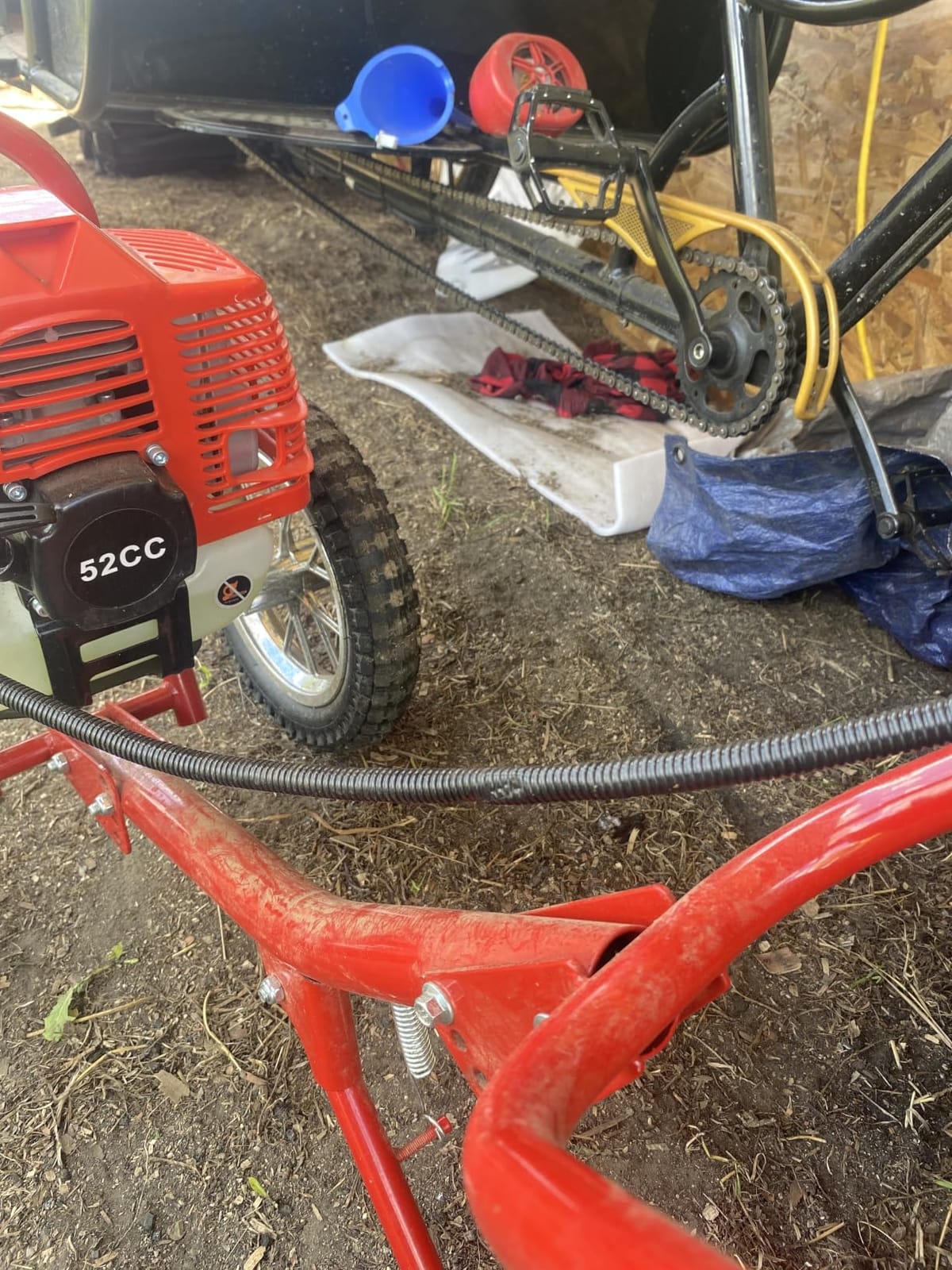
The 52cc air-cooled two-stroke engine runs at 6500 to 7000 rpm and uses about 0.18 gal/h. Lightweight frame, large wheelset and foldable auxiliary wheels together make it easy to maneuver in a confined garden, where a heavier deck simply will not turn.
Something worth knowing before you take it to a hard job: the 90-day warranty on this machine is the shortest in the group, and the 52cc engine has no reserve for stem density. The one-star ratings in the review set reflect limited cutting capacity relative to larger gas units, while buyers working ordinary garden weeds are satisfied. Match the machine to the growth.
When 52cc is genuinely the right answer
Small enclosed gardens, paths between raised beds, a yard edge that has been ignored for a season, a plot where a full-size machine cannot be turned around. In those spaces, engine displacement barely matters because the work area is measured in square yards rather than acres.
Being lighter also makes this a reasonable choice on uneven ground where a heavier machine becomes a handful. The trade-off is honest: you will re-fuel more often and cover less ground per pass, and the engine will not power through stem density the way a 170cc will.
The warranty is the warning sign
This machine carries a 90-day manufacturer warranty, the shortest in the group by a wide margin. On a small machine for light duty that is less alarming, but it is a signal about expected service life that you should factor into the decision.
Review sentiment is mixed but positive overall, with 61% five-star ratings. The one-star reports reflect cutting capacity relative to larger gas units rather than failure, so set expectations: this clears tall garden weeds, not field-height growth. For a bigger job, move up to the PROYAMA or the BILT HARD.
8. OKCJHXGA 49cc 2-Stroke Brush Cutter: Compact 2-in-1 for Yards and Small Farms
49CC 2-Stroke Walk Behind Brush Cutter, Gas Powered Hand Push Lawn Mower String Trimmer, 2-in-1 Gasoline Brush Mower Weed Trimmer for Yard Garden Small Farms
49cc two-stroke gas
11 inch cutting width
2-in-1 mowing and blades
Optimized pull-start
Pros
- String head handles tall grass and the steel blade chews through brambles
- Entry-level route into brush cutting
- 2-in-1 design handles mowing and light soil loosening
- Large diameter plus foldable wheels make it easy to push
- Light pull-start mechanism
Cons
- Only one customer review so there is very little reliability data
- Narrow 11 inch width requires more passes than wider machines
- 2-stroke engine requires fuel and oil mixing and is less powerful than 4-cycle
This is the only machine here that covers both halves of the string-versus-blade question in one body. It carries a string head suited to tall grass and a steel blade that cuts through brambles, so you start on line for the open growth and swap to the blade for the woody patches. Most properties with a real overgrowth problem have both.
The verified buyer reports that the string head is well suited to tall grass and that the steel blade cuts through thick brambles, recommending it for small farm chores. The 2-in-1 design also handles mowing and light soil loosening with two included blades.
Large diameter wheels plus foldable auxiliary wheels make it easy to push and steer, and the optimized pull-start mechanism keeps starting light for a small two-stroke engine.
Why the dual head is the point
Owning one machine that takes both a line head and a steel blade solves a problem most buyers hit in year two. Tall grass wants line, because line flexes and forgives when it meets a stem, and a fixed blade on soft ground digs in and stalls. Brambles want a blade, because line wraps and breaks.
Having the conversion built in means you are not buying a second machine or a separate handheld brush cutter to finish the job. For a small farm plot with mixed growth, that versatility is worth more than a wider cut.
Read the single review for what it is
There is exactly one customer review behind the 5.0 rating, and the data notes it should be treated as a single data point rather than a reliable signal. That is the honest position: the machine looks competently built and specified for its size, and nobody has yet reported whether it still runs after three seasons.
The 11-inch cutting width means more passes than the 22-inch machines, and the two-stroke engine requires mixing oil with fuel. If your job is a few hundred square yards of garden edge, this is a capable and inexpensive tool. If it is an acre of chest-high grass, this is the wrong class of machine.
How to Cut Very Tall Grass Without Stalling
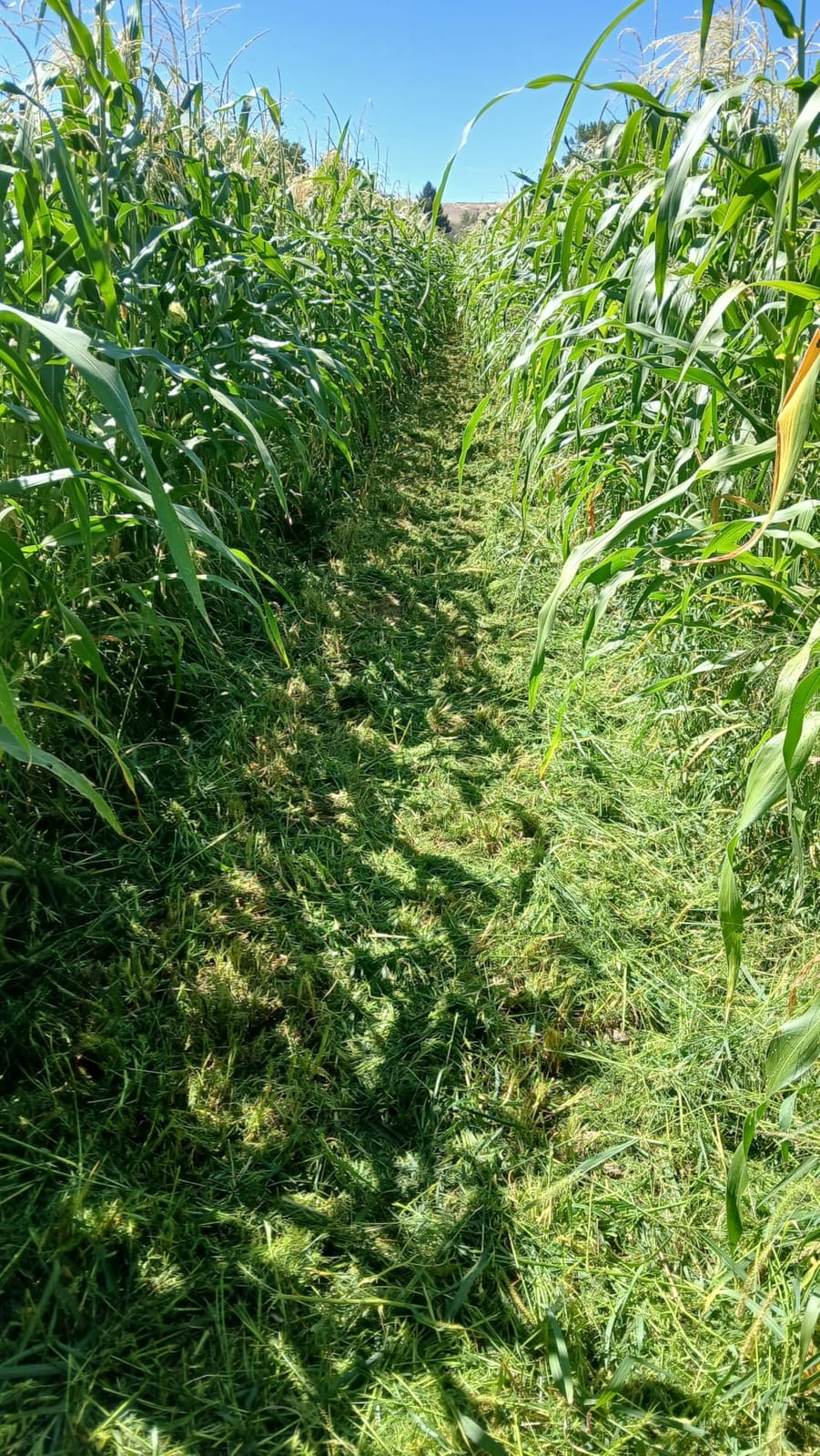
Cut tall grass in stages, starting at the top. Hold the cutting head higher than feels natural and take off the top third of the growth first, then come down a head height and repeat, working toward the base across two or three passes. This single change makes the difference between a job that goes smoothly and one that turns into a frustrating afternoon of stopping.
Here is the order of attack we recommend for a neglected property.
1. Walk the ground first. Before you start the engine, look for stumps, rocks, wire, irrigation lines and holes. Tall grass hides all of them, and a walk-behind machine finds them with a wheel at speed.
2. Clear the edges. Start at the fence lines, ditches and corners, where you will need to maneuver rather than run. Working the perimeter first gives you somewhere to turn at the end of each pass instead of reversing into a corner.
3. Take the top third. Raise the head and cut only the upper growth. This sounds backwards but it is what makes the rest work. The standing material is lighter, the head does not bind, and the cut material falls as short clippings rather than tangling around the head.
4. Drop one setting and repeat. Come down a head height and make the same passes. The height ranges on these machines, from 1 to 4 inches on the Earthquake and 1.6 to 3.7 inches on the BILT HARD, are designed for exactly this.
5. Finish low once you are at ground level. The final pass at the lowest setting is what leaves you a mowable surface rather than a mat of stems.
6. Clear the cuttings, then mow normally. Rake or blow off the debris before running a lawn mower over it, and a regular mower will handle the sward from then on.
The same advice appears in user discussion in a slightly different form: sometimes with tall weeds you need to start near the top, quite literally, hold the string trimmer higher and cut off the top third. It is a simple technique and it is the thing most newcomers skip.
On safety, wear eye and ear protection, keep everyone else out of the cutting path, and never clear a jam or pick up debris with the engine running. If a blade is fitted, treat it the way you would treat a chainsaw: aware of kickback, aware of what is in front of the machine, and never in reach while the engine turns.
Buying Guide: How to Choose a Walk-Behind Brush Mower
Choose by grass height and growth type first, engine second, and features last. Most buyers pick backwards, buying the machine with the biggest specification sheet and then discovering the cutting head is the part that actually matters.
Engine size. The split in this roundup is stark and it is the single most useful thing to understand. A 49cc to 52cc two-stroke is a light-duty machine for gardens and small plots. A 160cc to 170cc four-cycle is the class that handles tall weeds and light brush on a real property. There is no useful middle ground here, and 6.64 ft-lb of published torque is the kind of number worth looking for because torque is what holds speed under load.
Four-cycle engines run on straight gasoline and are easier to start, quieter and lower on maintenance. Two-stroke engines are lighter and cheaper, and they require you to mix oil with fuel every time you fill the tank.
Cutting width versus property size. A 22-inch swath covers twice the ground of an 11-inch one per pass. On a quarter acre that is the difference between one session and two. On a garden bed it makes no difference at all, and a narrow machine is easier to store and maneuver.
Blade versus line. Nylon line handles tall grass and stems, and it is the right choice for the bulk of overgrown-grass work. A steel blade handles blackberry, briar, small saplings, sticks and woody weeds, and it is the only safe way to cut woody growth on a walk-behind. If your ground has both, buy a machine with an interchangeable head.
Drive type. Self-propelled machines supply their own forward speed, which reduces fatigue on long jobs and keeps the deck tracking straight on a slope. Push-only machines are cheaper and lighter and are perfectly adequate on flat ground. If your property has any incline, self-propelled earns its extra cost quickly.
Wheels and slope handling. Wide wheels roll over ruts and soft ground without burying the deck. Narrow wheels are more stable in a straight line but get stuck. On slopes, a long straight shaft transfers engine torque directly to the cutting head with less kickback risk than a curved shaft, which is why experienced operators consistently recommend the straight-shaft design on rough ground.
Warranty. The range here runs from 90 days to five years, and warranty length is a decent proxy for how long the manufacturer expects the machine to last. Where a 5-year warranty sits alongside an air-cooled four-cycle engine, that is a stronger signal than a large engine number on a 90-day warranty.
On property size, the decision is straightforward: under half an acre, any of the 22-inch four-cycle machines will finish in an afternoon. Between one and three acres, self-propelled and a 22-inch swath matter, and budget a full day rather than an hour. Above three acres of tall growth, you are looking at a self-propelled commercial unit or a tow-behind brush hog, and a walk-behind becomes a finishing tool rather than the primary machine.
Maintenance: Chaff, the Radiator Screen and Line Tension
Check the cooling screen after every tall-grass session. This is the maintenance item that catches new owners out, and it comes from user experience rather than a manual: a loader helps keep chaff away from the radiator screen when mowing high weeds. Tall dry grass throws fine chopped material that packs against a cooling screen, the engine runs hotter than it should, and the failure mode is a head gasket or a warped cylinder years later.
So: stop with the engine off, brush the screen and any cooling fins clean, and do it while the machine is still warm and the chaff is dry. It takes two minutes and it is the cheapest maintenance on the machine.
Two more things matter on this kind of work. Keep the line correctly wound and evenly tensioned, because an unevenly wound spool is the usual reason a head binds under load in thick grass. And on machines with a belt drive, check belt tension after the first few hours, because a new belt stretches and a stretched belt slips at exactly the moment you are buried in growth.
Finally, clean the cutting head and the underside of the deck. Caked material under a deck holds moisture against steel, and a line head packed with old clippings loses diameter and stops cutting cleanly no matter how much engine you have.
One more piece of advice that costs nothing: note the belt and line condition at the end of every session, while you are still standing next to the machine. A loose belt or a stripped spool is a two-minute fix immediately and a weekend trip to a parts counter three weeks later.
Tough Growth: Blackberry, Briars, Saplings, Reed, Kikuyu and Gorse
The hardest growth to clear is not always the tallest. Height is a power problem; woody growth is a machine-type problem, and no walk-behind will cut what it is not built to cut.
Blackberry and briar. These are the most common complaint from people clearing a first property. Briars are flexible and thick, and line will break or wrap on them. A steel blade is the correct tool, and you will need more than one pass because canes spring back from the base.
Small saplings. A bladed walk-behind brush cutter chops small saplings and sticks into a fine mess. Past roughly a two-inch trunk you are into territory where a saw, a lopper or a chainsaw is the correct tool, and forcing a mower into it is how people get hurt.
Reed and cattail. Reeds are dense and grow in standing water at the edge. A walk-behind is useful here because a tractor will not fit, and the wide wheels on the SENIX handle the soft ground better than a narrow machine. Cut from the dry side back toward the water.
Kikuyu and gorse. Kikuyu forms a dense mat that smothers anything underneath and recovers fast, so it takes repeated cutting rather than one pass. Gorse is woody and thorny and behaves like a sapling, meaning a blade and a serious eye and hand protection. Australian and New Zealand operators searching by species name are often looking at exactly this problem.
For ground that is mostly woody, buy the blade. For ground that is mostly tall grass, buy the line and the width. For mixed ground on a property you will own for years, the OKCJHXGA dual-head machine or a handheld brush cutter alongside a walk-behind is the honest answer.
Frequently Asked Questions
What is the best cutter for tall grass?
For grass alone, a walk-behind string trimmer with a 160cc to 170cc four-cycle engine and a 22 inch swath is the best cutter, and the BILT HARD self-propelled model is the strongest all-round pick. Use a bladed brush cutter instead when the growth includes blackberry, briars or small saplings.
What is the best brush cutter for long grass?
The best brush cutter for long grass pairs a four-cycle engine with a swiveling cutting head and a 22 inch swath. The head should run .095 or .155 inch line, the deck should be one-piece steel, and the height adjustment should reach at least 3.5 inches so you can stage down through the growth.
How to cut very tall weeds?
Cut in stages starting at the top. Set the head high and take off the top third of the growth, then drop one setting and repeat across two or three passes until you are at ground level. Staging keeps the head from binding, stops cut material tangling around it, and is far faster than forcing a machine through standing grass in one pass.
What is the best tool for cutting tall, thick weeds?
For tall thick weeds, a walk-behind string trimmer mower with heavy-gauge .155 inch line and a four-cycle engine between 160cc and 170cc is the right tool. Add a bladed walk-behind brush cutter for woody growth and you cover the whole property. A regular lawn mower stalls in weeds over roughly 12 inches tall.
What are the hardest weeds to get rid of?
The hardest weeds are the woody and mat-forming ones rather than the tallest. Blackberry, briar and gorse regrow from the root crown and need repeated cutting with a steel blade. Kikuyu and similar tropical grasses form dense mats that recover fast. Reed and cattail are hard only because of the wet ground they grow in.
Best Walk-Behind Brush Mower for Tall Grass: Final Verdict
The BILT HARD self-propelled walk-behind brush mower is the pick for most people buying the best walk behind brush mowers for tall grass in 2026. It has the largest owner base in the group, a self-propelled drive that takes the strain out of long jobs, and consistent reports of cutting growth standing well above waist height. For three or more acres of first-year overgrowth, it is the machine we would buy first.
Match the machine to the ground instead. The Earthquake Hurricane string mower has the best cutting head design and a five-year warranty if you can accept a narrower wheel and a thinner owner base. The YARDMAX YL2250 is the one for fence lines, posts and building edges because of its offset head. The PROYAMA covers large farm lots with the most published torque in the roundup. The SENIX is the value answer with the widest tires for rough and soft ground. The OKCJHXGA is worth a look if you need both a line head and a steel blade in one machine, and the two small two-stroke machines are fair for gardens and small plots rather than fields.
Whatever you buy, cut in stages from the top down, keep the cooling screen clear of chaff, and wear eye and ear protection every time the engine is running. A walk-behind is also the right answer where a tractor is unsafe or will not fit, which is why these machines remain the practical choice on steep hills, creek edges and tight access that no larger machine can work.