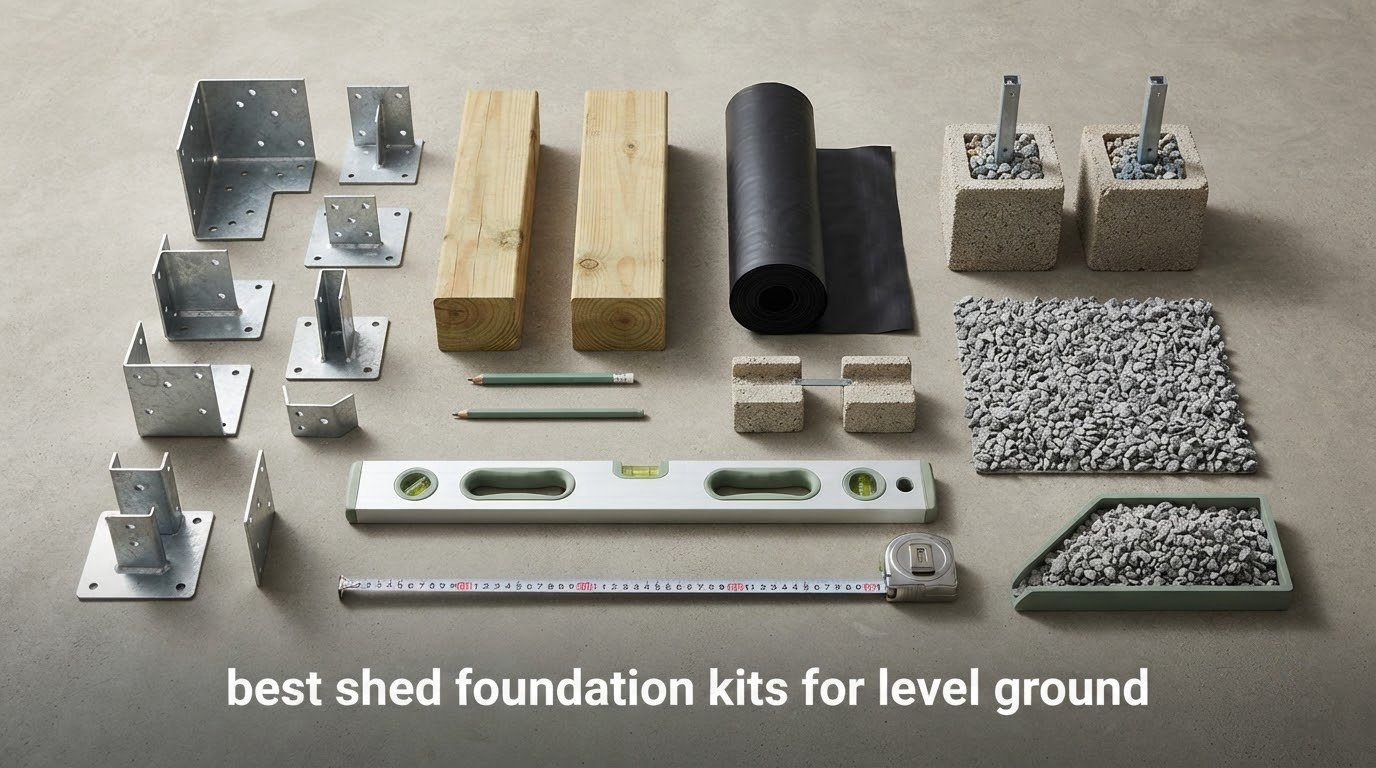
A shed foundation kit is a pre-measured, modular base – a steel frame, an interlocking plastic grid, or a pressure-treated wood floor platform – that you level and square on site so a shed sits flat and stays out of damp soil, without pouring a permanent concrete slab. That is the short answer, and it is the same framing search engines use when they answer this query directly.
Our team has been sorting through shed base kits for weeks, and the honest headline is this: if your ground is already flat, a kit is the fastest route to a shed that actually works. The hard part of a shed build is almost never the shed. It is getting a level, compacted base under it, and that is exactly the problem these products are sold to solve.
Flat ground does not mean finished ground. It means the pad you prepare has to end up level within about an inch across the whole shed footprint, firm enough that a level resting on it does not rock, and crowned or sloped a touch so water runs off rather than pooling against the floor framing. Ten kits below handle that job in different ways, from a set of composite shims to 4-inch-deep geocells that compact nearly like concrete.
What almost every kit leaves out is the same short list: exterior-grade plywood or other decking, the gravel fill or concrete, landscape fabric, and anchor hardware. Our reviews of the best shed foundation kits for level ground tell you exactly what arrives in the box for each one, so the only surprise left in the project is the amount of gravel you need.
Table of Contents
- Top 3 Shed Foundation Kits for Level Ground 2026
- All 10 Best Shed Foundation Kits for Level Ground (October 2026)
- Three Kit Types and Which One Fits a Flat Site
- 1. PHYXOLOGY SUPPLY Pro-Grade Composite Shims – the leveling piece most kits leave out
- 2. Vodaland Permeable HexPave – tool-free grid with a 27,000 lb rating
- 3. TRUEGRID PRO LITE – the highest stated load class here
- 4. Vodaland EasyPave – 2 inch cells that actually confine gravel
- 5. VEVOR Ground Grid – the lowest cost per square foot
- 6. BGTLGIO Adjustable Pedestals – the fix for a pad that is not quite flat
- 7. VIVOSUN 4 in Ground Grid – the deepest cells in the roundup
- 8. Arrow FDN109 – a steel base kit built for one shed brand
- 9. Arrow FDN1014 – a steel frame that doubles as a concrete form
- 10. LXVOOEE Gravel Grid – the only one with staples and clips in the box
- How to Level a Site for a Shed Foundation Kit
- What to Check Before You Buy a Shed Base Kit
- Kit vs Building Your Own: The Real Cost Difference
- Who Should Skip a Kit and Use Piers or a Slab
- Frequently Asked Questions
- Final Pick for Your Flat Site
Top 3 Shed Foundation Kits for Level Ground 2026
PHYXOLOGY Composite Shims,…
- Pro-grade composite plastic
- Never rots or warps
- Snaps to size
- Indoor and outdoor

Vodaland HexPave 65 sq ft Grid
- Tool-free interlocking cells
- Handles 27000 lbs when filled
- 1 inch cell depth
- Permeable drainage
TRUEGRID PRO LITE 72 sq ft
- 120000 lb load class
- 24 x 24 inch pavers
- Saw cuttable
- Made in the USA
All 10 Best Shed Foundation Kits for Level Ground (October 2026)
| Product | Specs | Action |
|---|---|---|
| PHYXOLOGY Pro-Grade Composite Shims |
|
Check Latest Price |
| Vodaland HexPave 65 sq ft |
|
Check Latest Price |
| TRUEGRID PRO LITE 72 sq ft |
|
Check Latest Price |
 Vodaland EasyPave 35 sq ft Vodaland EasyPave 35 sq ft |
|
Check Latest Price |
 VEVOR Ground Grid 27 x 4 ft VEVOR Ground Grid 27 x 4 ft |
|
Check Latest Price |
 BGTLGIO Adjustable Pedestals 12 pk BGTLGIO Adjustable Pedestals 12 pk |
|
Check Latest Price |
 VIVOSUN 4 in Ground Grid 9 x 17 ft VIVOSUN 4 in Ground Grid 9 x 17 ft |
|
Check Latest Price |
 Arrow FDN109 Steel Base Kit Arrow FDN109 Steel Base Kit |
|
Check Latest Price |
 Arrow FDN1014 Steel Base Kit Arrow FDN1014 Steel Base Kit |
|
Check Latest Price |
 LXVOOEE Gravel Grid 4.4 x 33 ft LXVOOEE Gravel Grid 4.4 x 33 ft |
|
Check Latest Price |
One more note before the reviews, since it drives how you read the table above. Every one of these products is sold on a stated load figure, and every one of those figures assumes a properly compacted and filled base. A grid rated for thousands of pounds per square foot sitting on soft uncompacted soil will still settle, because the rating describes the finished assembly, not the packaging.
Three Kit Types and Which One Fits a Flat Site
Search engines group shed foundation kits into three buckets, and the split is genuinely useful once you understand what each one is solving. Metal frame kits are structural. Interlocking plastic grids are confinement systems. Wood floor kits are finished floors that happen to be a foundation too.
1. Metal frame kits are a welded or bolted perimeter of galvanized steel that the shed bolts onto, lifting the floor frame clear of the ground. Arrow’s FDN109 and FDN1014 are the classic examples, and both are model-specific. They are the fastest route to a truly level, truly square base, and they are the right pick when your shed brand already has a kit designed for its floor joist spacing. What they do not include is a floor: you supply plywood, gravel, or concrete.
2. Plastic grid bases – the paver and geocell systems – do not hold the shed up so much as they hold the ground up. Interlocking cells are laid over a graded pad, staked at the edges, and filled with crushed stone. The stone cannot migrate, so the pad stays put. The HexPave, EasyPave, PRO LITE, and the 2, 3, and 4 inch ground grids all fall here, and the main variable between them is cell depth.
3. Wood or timber floor kits arrive as pre-cut pressure-treated runners, joists, and decking, so the shed goes up on a finished floor instead of a frame you clad later. This is the most complete option and usually the most expensive per square foot, and for a level site it works well because the whole platform is trued on the ground.
Shallow 1 inch cells are fine on firm, well-drained ground. Deeper 2 to 4 inch cells are what you want if the soil is soft, if you plan to drive anything over the pad, or if drainage is a worry, because depth is what confines the stone vertically. And none of the three types eliminates the need to grade the site first.
1. PHYXOLOGY SUPPLY Pro-Grade Composite Shims – the leveling piece most kits leave out
Pro-Grade Composite Shims for Heavy Duty Leveling. 24 pk 7.75 Inch, Never Rot, Easy Snap, Level Wedges. Water, Weather Resistant for Toilets, Doors, Windows, Sheds. Support Appliances and Furniture
24 composite plastic shims
7.75 inch length by 0.26 inch thick
Recycled plastic that will not rot
Pros
- Never rots
- warps or splits
- Snaps cleanly to size with pre-scored lines
- Stackable for a range of heights
- Works indoors and outdoors
Cons
- Needs careful stacking on soft soil to avoid rocking
- Fixed 7.75 inch length may not suit narrow joist spacing
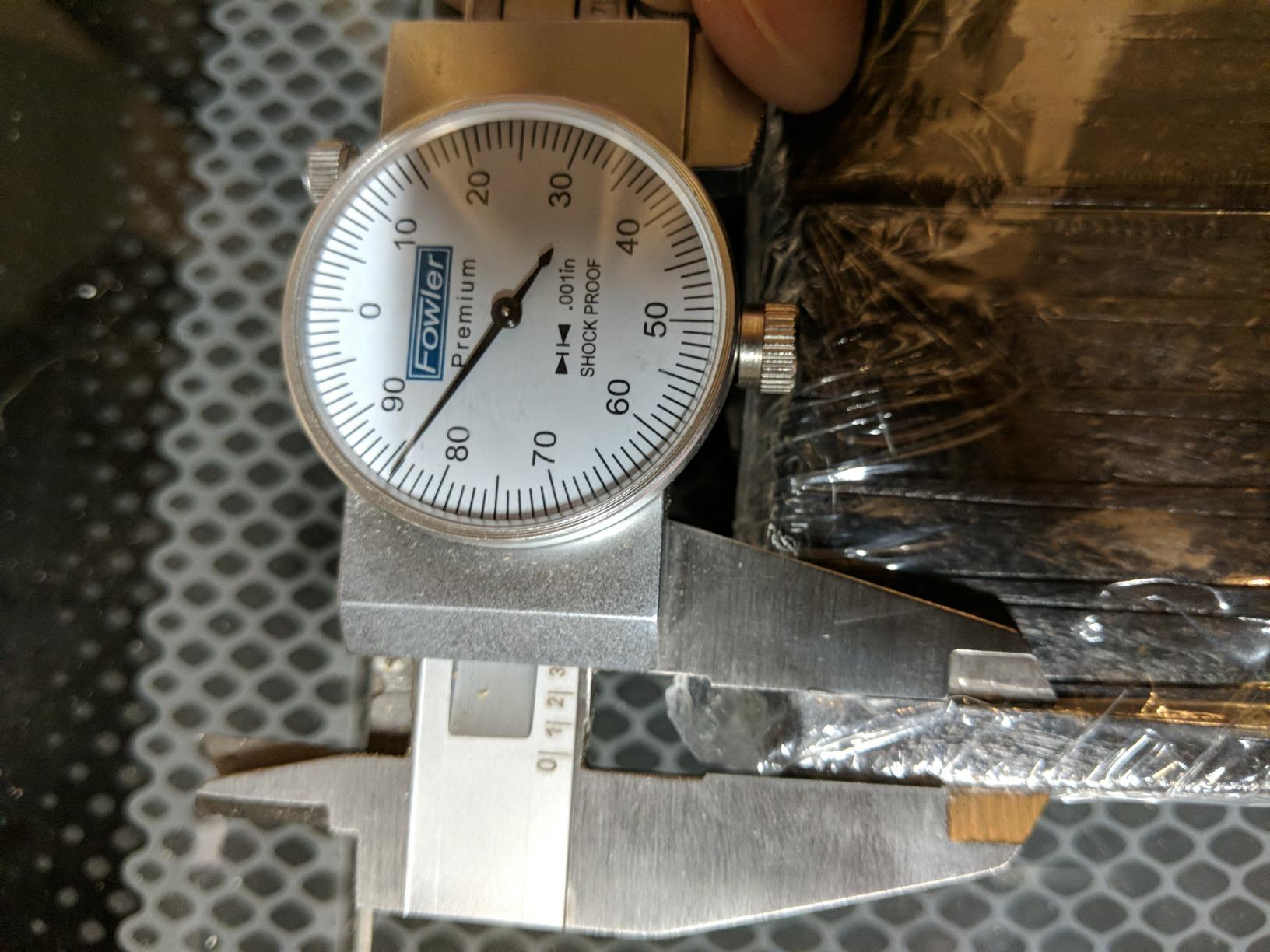
Our pick for most people is not a base at all. It is a pack of 24 composite shims, because leveling is the step that derails shed projects and wood shims are the reason they get derailed. These are 7.75 inches long, 0.26 inches thick, and rated commercial grade, and they snap cleanly along pre-scored lines instead of being split with a hammer.
Reviewers consistently single out the durability. The material is 100 percent recycled composite plastic, and the claim is that it carries about 30 percent more load support than wooden shims of the same size. With 2,223 reviews averaging 4.6 stars, that claim has been tested about as hard as anything in this roundup.
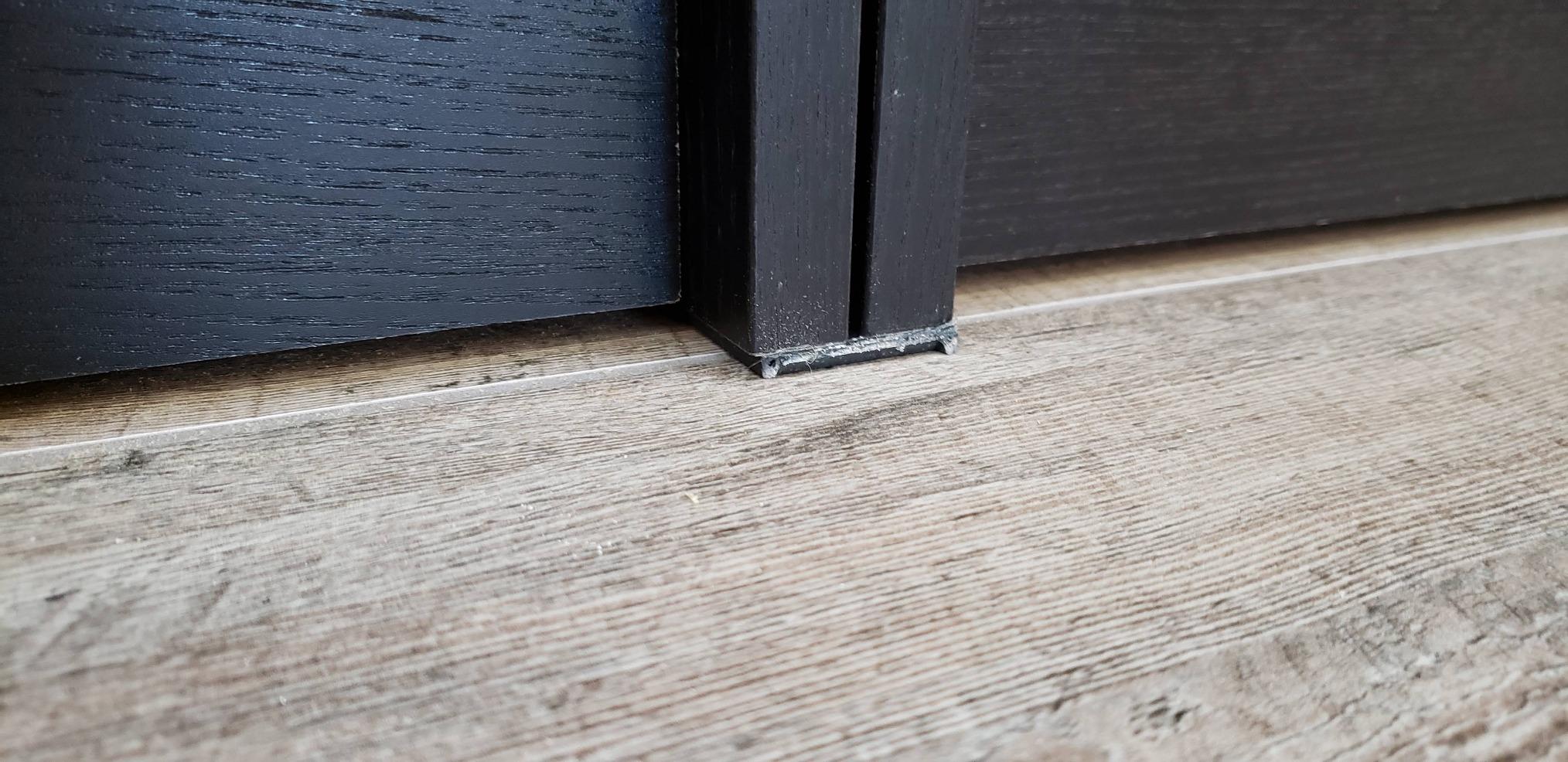
The practical use is this: assemble your steel frame kit or your skids, set the frame on the pad, check it with a level, and shim the corners until the reading holds across the full diagonal. Because the wedges are stackable, a small gap and a large gap use the same product, which is not something fixed-thickness wood shims can do.
We also use these on door jambs and window frames now, which is not what the listing pushes but is exactly what the material allows. For a shed build specifically, treat them as insurance: a 24-pack covers the corners of anything up to about 12 feet by 12 feet with room to spare.
What makes these the right first purchase
They solve the part of the job that has no forgiveness. If your frame is out of square by a quarter inch at one corner, the shed doors will not close properly, and no amount of careful gravel work fixes that later. Shimming is the cheapest correction you can make and the only one you can still make after the frame is down.
Because they are plastic, they will not rot, swell, or split in a wet pad, which is the standard failure of wooden shims in ground-contact work. The only thing to watch is that sharp wedge edges can crack if you snap them against concrete or stone, so break them by hand over a soft surface.
Where they fall short
The fixed 7.75 inch length is a real limitation if your floor joists or skids are spaced closer than that. And on soft or uneven soil, stacked composite wedges can rock rather than settle, so they will not rescue a pad that was never compacted. They adjust a frame, they do not fix a foundation.
One more practical warning: do not treat shims as a substitute for anchoring. They hold a frame in plane while you bolt it together, and they are not designed to resist wind uplift on the finished building.
2. Vodaland Permeable HexPave – tool-free grid with a 27,000 lb rating
Vodaland Permeable HexPave System – Grass & Gravel Pavers – 100% Recycled PPE Plastic, Handles 27,000 lbs, 1″ Depth, 65 s.f / 22 Units
22 recycled plastic pavers covering 65 square feet
1 inch chamber depth
Handles 27000 lbs when filled
Pros
- Tool-free interlocking connection
- Drains far better than a poured slab
- Stabilizes gravel and stops erosion
- Handles 27000 lbs when filled
Cons
- 1 inch cells give less confinement on soft ground
- Fixed pack sizes may force ordering two packs
- Saw cutting adds install time around corners
The HexPave is the product we would hand someone who wants a proper pad under a 6×8 or 8×10 shed without hiring anyone. Each unit measures about 22 7/8 by 19 7/8 by 1 1/8 inches, twenty-two of them cover 65 square feet, and they connect to their neighbours by pressing together. No tools, no fasteners, no digging.
With 910 reviews averaging 4.6 stars, the pattern is consistent: people install it expecting a toy and end up with a base that outlasts their shed. The drainage story is the part that surprises buyers. Because the cells are permeable and the surface is not sealed, rainwater infiltrates instead of sitting against the floor framing, which is the main reason shed floors rot from underneath.
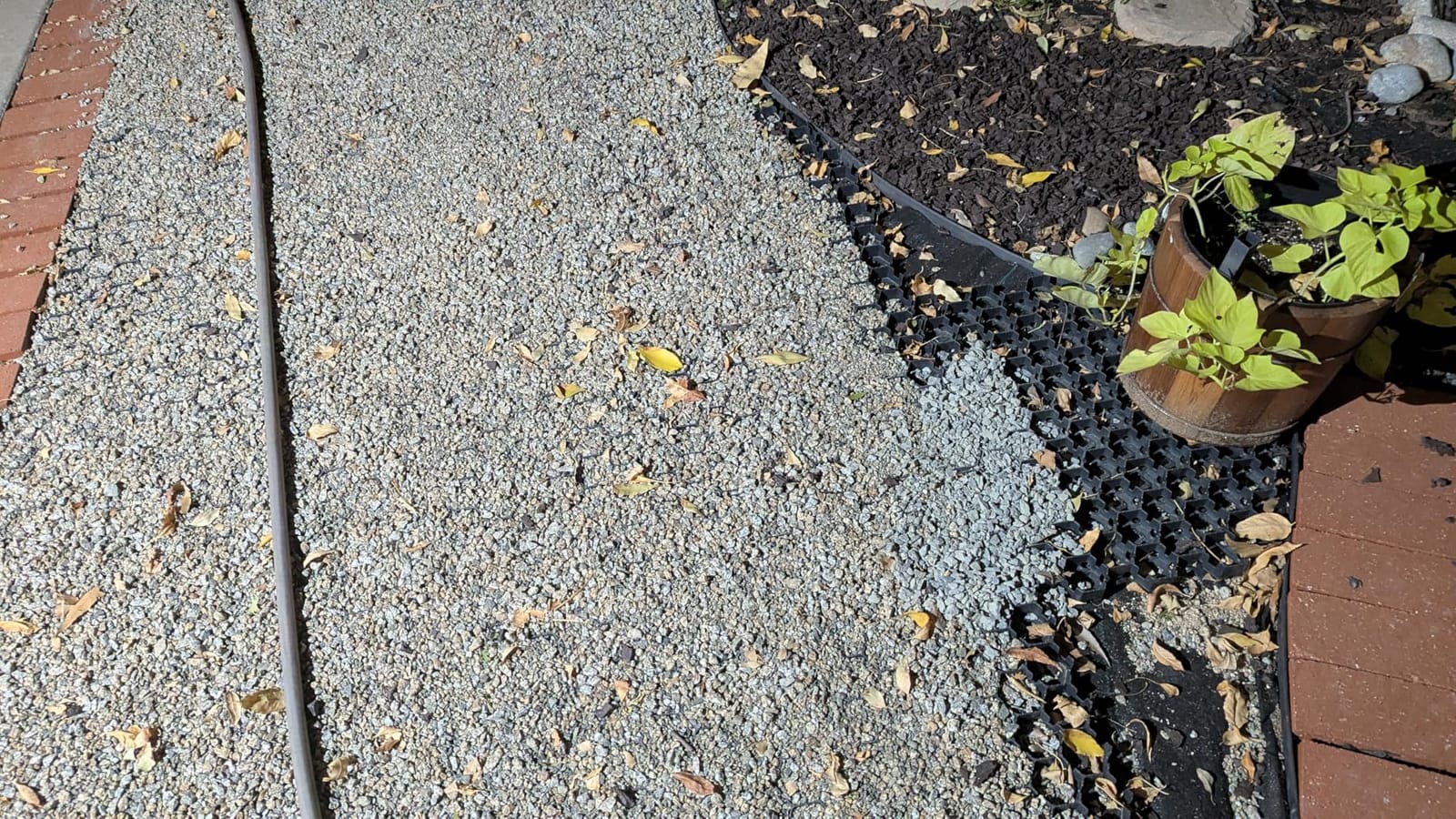
Load handling is the other headline. The stated capacity is up to 27,000 lbs depending on base preparation and fill, which covers a shed storing a riding mower, stacked paint cans, or a workbench with no concern at all. The whole 65 square foot pack weighs about 45 pounds, so it is a two-person lift rather than a delivery you need a forklift for.
We like it for level sites because it doubles as a finished surface. Fill the cells with crushed stone and you have a hard, weed-free pad you can walk a wheelbarrow across. Leave the grass growing in and you have a permeable patio that still sheds water. Same kit, two outcomes.
Why this one is the best value in the roundup
For a level site that is already firm, the whole job is: roll out landscape fabric, snap the cells together, edge them, pour stone in, and compact. Nothing in that sequence needs a power tool beyond the compactor, which is why it completes in a day. It also happens to be the mid-priced option in a category that runs from cheap rolls to fixed-heavy-duty paver systems, so the money left over in your budget usually covers the fill.
It also solves the erosion problem that shows up two years later on ungridded pads, where rain ruts a gravel pad into channels. The cells hold the stone laterally, so the surface stays flat through a couple of seasons of rain. Buyers in dog-heavy yards report the same effect, which tells you how well the confinement works.
What to watch before you buy
One inch is shallow. On firm, well-drained ground that is exactly right, but on soft or wet soil you want a deeper cell, and the difference shows up after a winter of freeze-thaw. Also note the pack sizes: 65, 145, 325, 975, and 4,350 square feet are the offerings, so a 10×12 footprint of 120 square feet means ordering more than one pack and trimming the excess.
Trimming is not difficult with a saw, but budget twenty minutes for it. Corners are where the time goes, and the cells are rigid, so cutting a clean edge takes a couple of passes rather than one.
3. TRUEGRID PRO LITE – the highest stated load class here
TRUEGRID | PRO LITE Permeable Paver | Driveway, Grass, Shed Base, Patio, RV Pad, Gravel, DIY Outdoor | 120,000 lb Load Class | All-Weather | Easy Install | Pack of 18 (72 Square Feet)
18 pavers covering 72 square feet
24 x 24 x 1 inch recycled HDPE
120000 lb load class
Pros
- Made in the USA from recycled HDPE
- Drains instantly with no puddles
- Light enough for one-person installation
- Can be saw cut for a custom fit
Cons
- Heavier cost per square foot than generic grids
- Needs a compacted base and fabric to avoid washout
- Not rated for full vehicle traffic at this level
If your shed is going to hold something genuinely heavy, this is the grid that carries the highest stated load class in the roundup at 120,000 lbs. Eighteen pavers at 24 by 24 inches cover 72 square feet, which is more than an 8×8 footprint and enough for a 6×8 with room around it.
The material is 100 percent post-consumer recycled HDPE made in the USA, and each paver weighs about 2.5 pounds. That matters more than it sounds: you can carry a full pack in from a truck bed yourself and have the whole pad down in an afternoon without recruiting help.
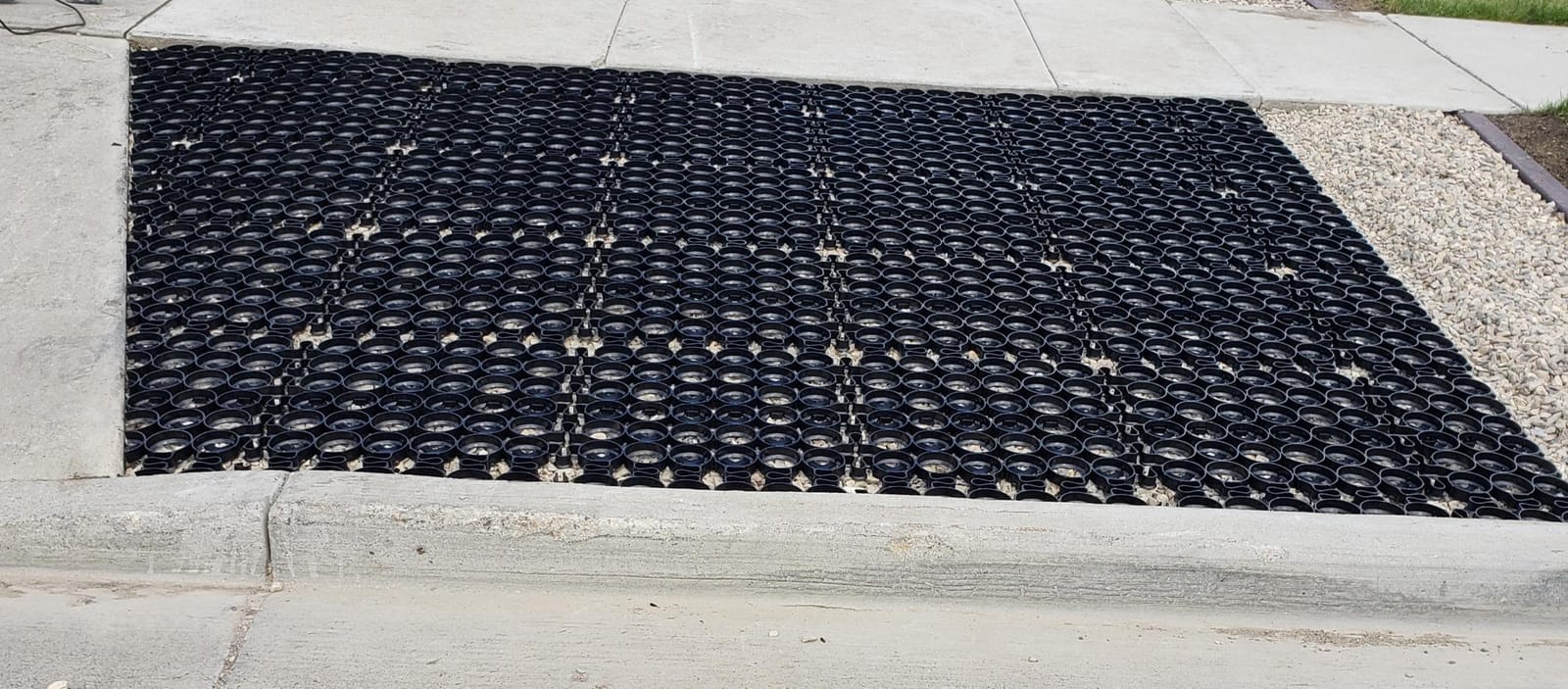
With 873 reviews at 4.6 stars, the praise concentrates on three things: it drains instantly, it installs without experience, and it does not shed mud the way a loose gravel pad does after rain. Reviewers also mention that it is snow plow friendly and rated for all weather, which is a real consideration if you are in a climate that sees real winters.
What earns it the premium slot over the cheaper grids is the combination of a five-year manufacturer defect warranty, saw-cuttable edges, and a load class high enough that you are not quietly hoping the thing holds. It is also made in the USA, which buyers who asked specifically about recycled domestic material appreciated.
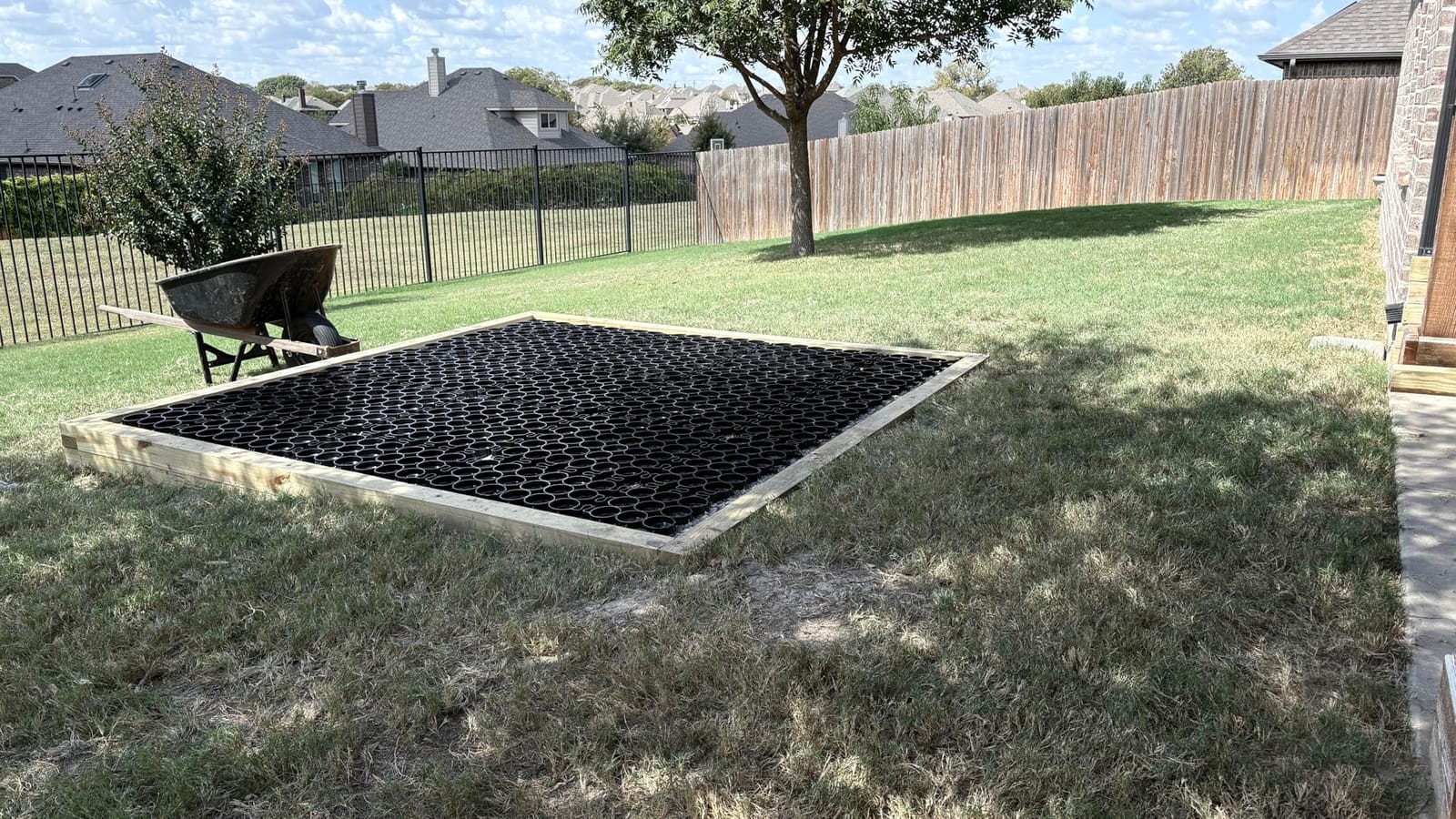
When this is the right call over a cheaper grid
Pick the PRO LITE when the shed becomes a workshop, when you are storing heavy equipment, or when the pad sits in a low spot where water lingers. Instant drainage in a low spot is worth the extra spend, because standing water under a shed floor is what kills the floor, not the weather.
It also works well as a driveway surface for lighter vehicles, which lets you do one purchase for two jobs. Just be aware that at the PRO LITE level it is not rated for full vehicle traffic, so a work truck parked on it every day is outside what the load class promises.
What the extra money buys and what it does not
You are paying a premium per square foot over generic grids, and part of that is warranty and part is domestic manufacturing. You are not paying for deeper cells – it is a 1 inch product, the same as the HexPave, so it belongs on firm ground rather than soft soil.
The requirement that catches people is base preparation. Without landscape fabric and compaction, washout under the pavers is the most common complaint in the reviews. Spend the extra day on the pad and this product behaves like a paved surface for years.
4. Vodaland EasyPave – 2 inch cells that actually confine gravel
Standartpark Vodaland Permeable Pavers – EasyPave Grass & Gravel Driveway Grid – Load Class A-D, 100% Recycled PPE Plastic Pavers, 2″ Depth, 35 Sq Ft/ 14 Units, Black
14 units covering 35 square feet
2 inch depth wave design
Up to 80000 lb load class
Pros
- 2 inch cells give real lateral confinement
- True Lock connection on all four sides
- High stated load class
- Tapered edges add strength
Cons
- Only 35 square feet per pack
- Costs more per square foot than generic geocells
- Anchors must be bought separately
EasyPave is the answer when the HexPave’s 1 inch depth makes you nervous about your soil. Each unit is 24 by 16 inches at 2 inches deep, and fourteen of them make up the 35 square foot pack. The cell design is wave-type with tapered edges, which is a strength detail rather than a styling choice – tapered walls resist folding outward under load.
The connection system is the differentiator. True Lock fastens on all four sides, so cells do not walk apart when you drive across the finished pad. Buyers in the 259 reviews at 4.4 stars mention this specifically once the pad is finished, which is the point of the design.
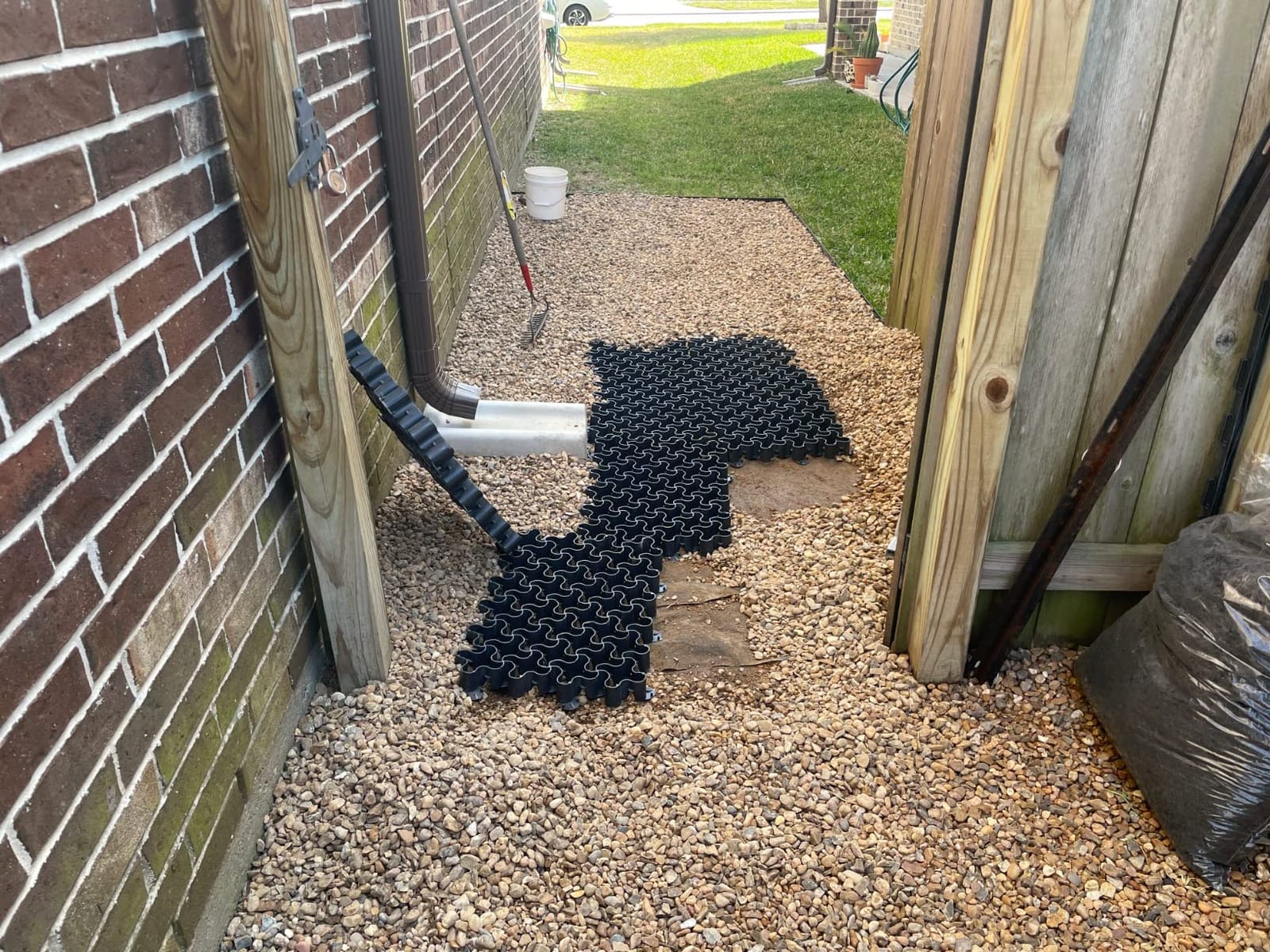
Stated load class runs up to 80,000 lbs depending on base and fill, so it clears the bar for a shed holding a mower, a small ATV, or stacked shelving. Being permeable, it also lets rainwater filter down and recharge the ground rather than running off your yard.
Compared with the PRO LITE, this is the option for a site that is firm but not perfect. Extra depth means better vertical confinement of the fill, so a pad built on slightly imperfect ground still behaves well after a winter.
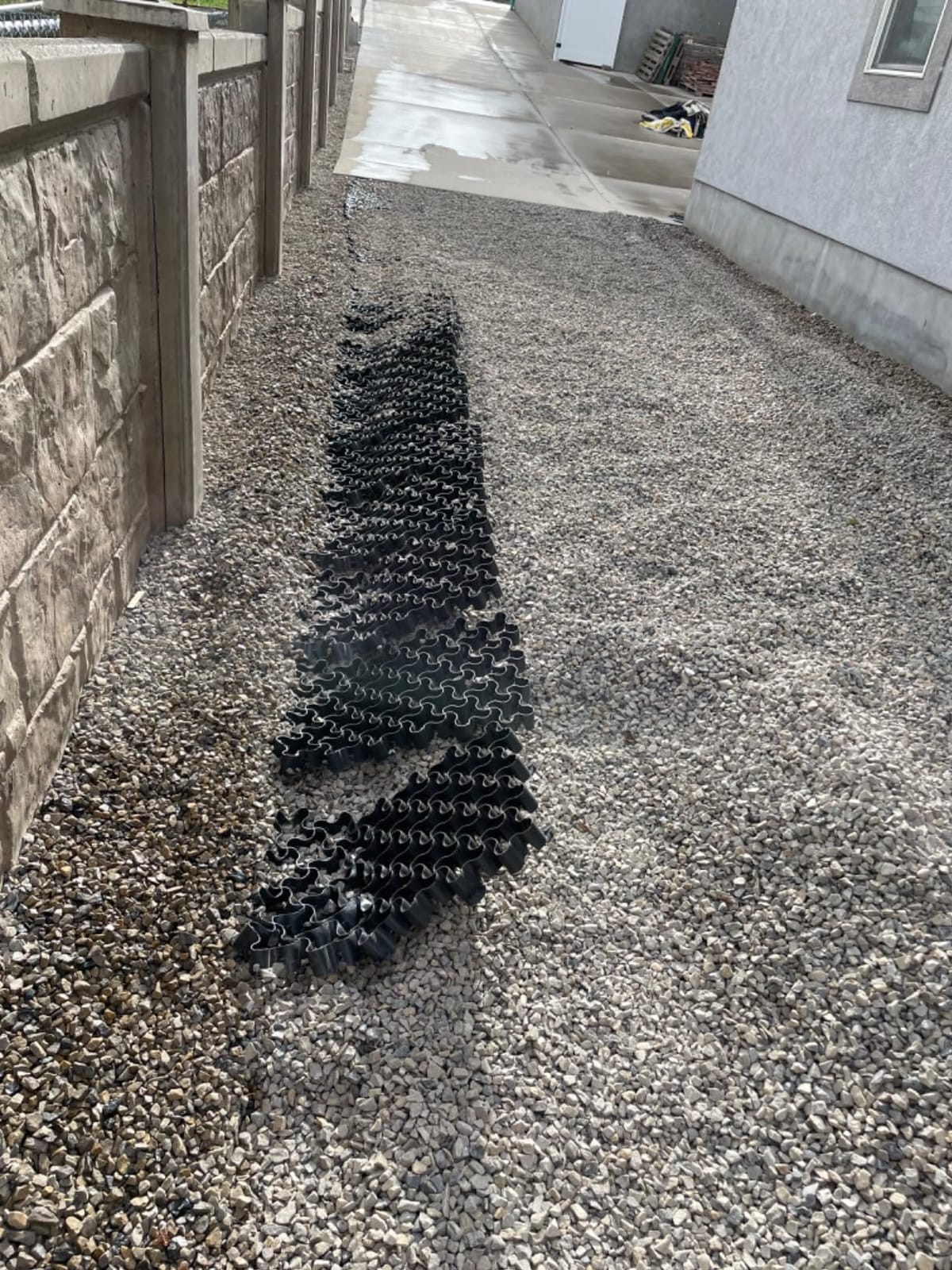
Why cell depth matters more than brand
Depth is the single most useful spec to compare across plastic grids, and it is the one most listings bury. A 1 inch cell mostly stops stones from moving sideways at the surface. A 2 inch cell stops them from moving sideways and downward, which is what keeps a pad from developing potholes where vehicles turn.
That is why this is the pick for a driveway-adjacent pad or a shed that also serves as a workshop with a wheelbarrow running in and out. If your ground is good and your loads are light, the shallower grids are fine and cheaper. If either of those conditions is not true, spend the depth.
Where the packaging works against you
Thirty-five square feet per pack is the frustrating part. A 10×12 shed needs 120 square feet, which means four packs for the footprint alone, and you pay for a full pack for the last few cells that hang over the edge. Coverage is also offered at 165, 315, 825, 1,650, and 4,950 square feet if you want to plan further ahead.
Anchors are a separate purchase and reviewers treat them as effectively required. Buy your own landscape staples or the edges will lift the first time water runs along the perimeter. Beyond that, install is straightforward: expand, lock, stake, fill, compact.
5. VEVOR Ground Grid – the lowest cost per square foot
VEVOR Ground Grid 27 ft x 4 ft, 1885 lbs per Sq Ft Load Geo Grid, 2″ Depth Permeable Stabilization System for DIY Patio, Walkway, Shed Base, Light Vehicle Driveway, Parking Lot, Grass, and Gravel
27 x 4 ft roll covering 108 square feet
2 inch depth at 0.05 in HDPE
Supports 1885 lbs per square foot
Pros
- Lowest cost per square foot in the roundup
- Lightweight HDPE that folds flat
- Holds gravel and soil on soft ground
- Take foot traffic right after filling
Cons
- Thin 0.05 in walls are fragile under heavy equipment
- Needs anchors or staples while filling
- Narrow 4 ft width means more seams
This is the budget answer and it is genuinely useful, not a filler. A single roll covers 27 feet by 4 feet, which is 108 square feet, so most 6×8 and 8×8 footprints come out of one roll with a little offcut. At 2 inches deep with 7.9 inch cells, the confinement is deeper than the paver systems at half the coverage per piece.
The material is 0.05 inch HDPE, and the stated capacity is 1,885 lbs per square foot once filled. It weighs about 17 pounds for the whole roll and folds flat, which means it stores in a garage between projects instead of occupying floor space.
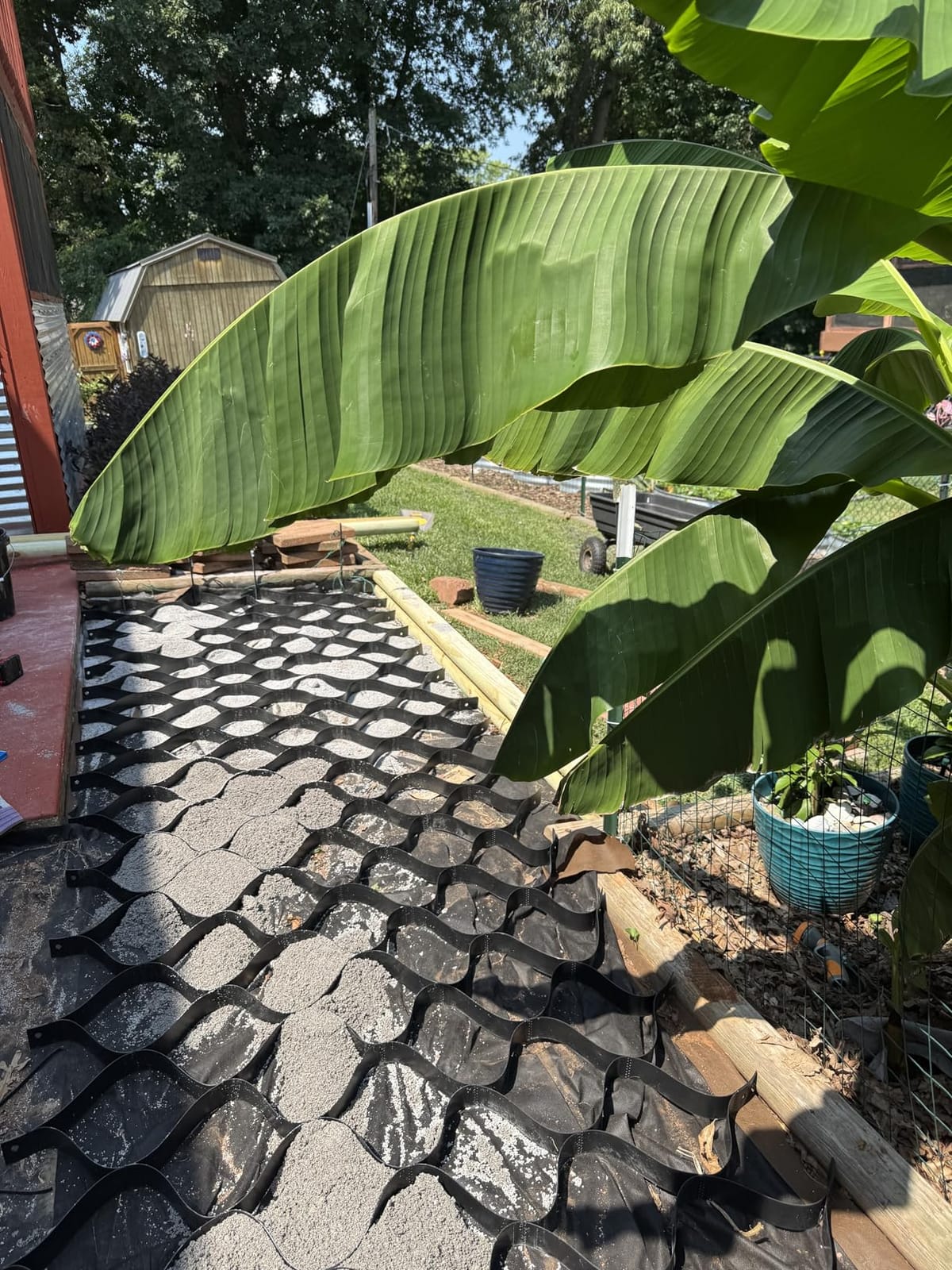
Buyers like that you can trim it to anything with a utility knife and that the finished pad takes foot traffic immediately after filling. With 371 reviews at 4.2 stars, the ratings trail the paver systems, and the reason is consistent: this is a light-duty grid that stabilizes ground rather than carrying heavy concentrated loads.
It also resists photooxidation, acids, and alkalis, so it holds up in varied soils and climates without degrading the way untreated polymers can. A 25 by 9.5 foot version exists if you need to reduce seam count on a wide pad.
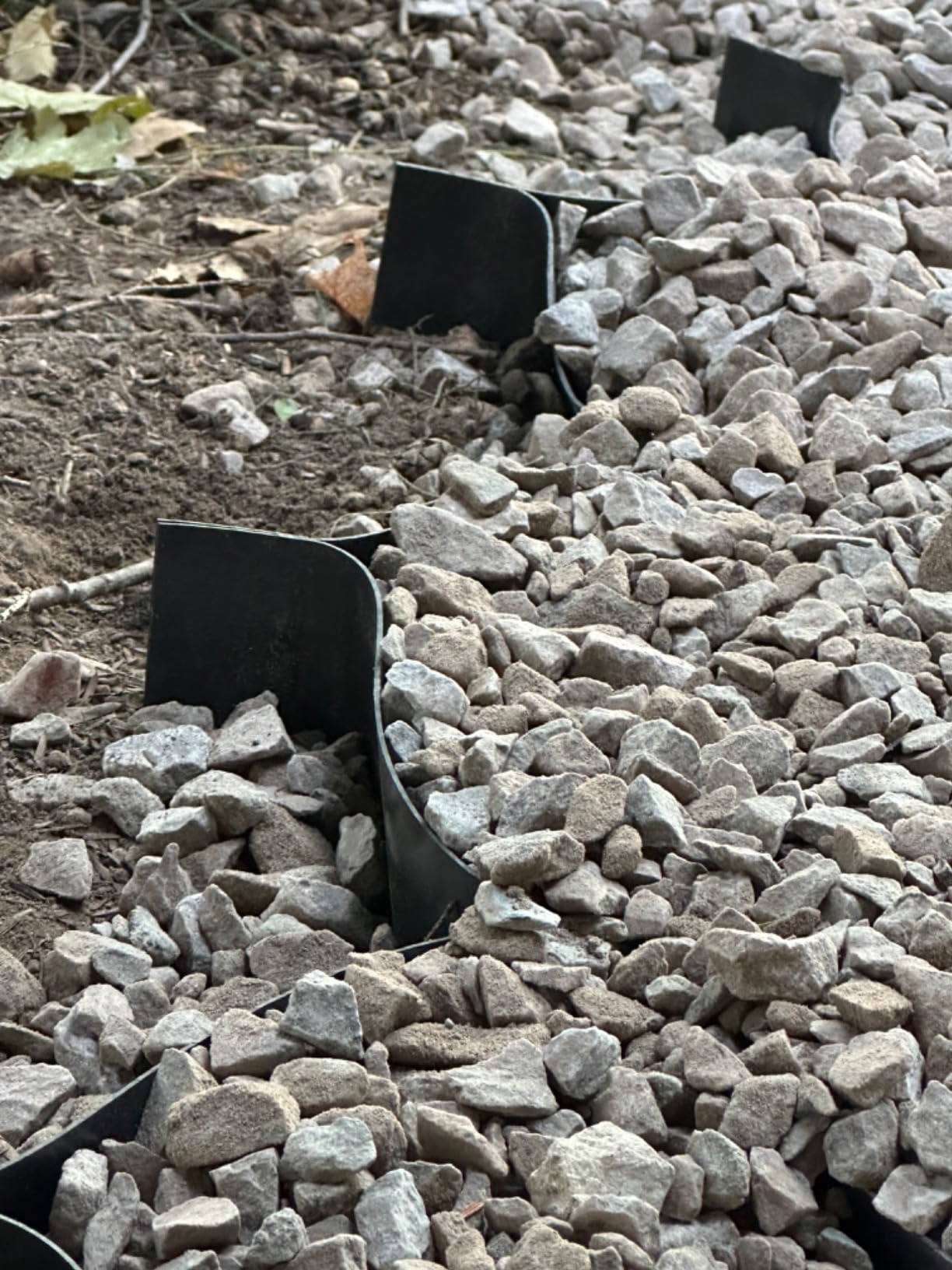
What you get for the money
More square feet per dollar than anything else here, and enough depth to do the job on a normal yard. For a small tool shed on a level site, this is genuinely all you need. The 1,885 lbs per square foot figure comfortably handles shed loads, shelving, and a mower.
It is also cuttable and foldable, so a leftover section from a 10×12 project becomes a walkway or a patio extension. That reuse is part of why the per-square-foot maths works out so well against the fixed-pack paver systems.
Where it will disappoint you
At 0.05 inch, the walls are thin. Reviewers report tearing when a skid steer or a turning vehicle wheel catches an edge, so keep heavy equipment off the finished surface or accept occasional damage. It is also purely functional in appearance, with no decorative finish at all.
Two installation notes: stake the edges before you fill, or the grid lifts as you pour stone in, and note the 4 foot width means more seams and more clips across a shed footprint than a wider roll would. The reviews also flag that the stated load assumes proper fill and compaction, which is true of every grid in this roundup.
6. BGTLGIO Adjustable Pedestals – the fix for a pad that is not quite flat
12Pack Adjustable Support Pedestal Foundation Base for Floating Deck Platform Floor – Height Adjustment Raising From 2-3/8″ to 5-1/2″, Black
12 pedestals adjusting 2-3/8 to 5-1/2 inches
2000 lbs at quarter position
All hardware included
Pros
- Fine incremental height adjustment
- Lightweight plastic replaces concrete footings
- Hardware included
- UV stable and corrosion resistant
Cons
- Adjustment threads can back off under foot traffic
- Twelve pedestals cover only about 48 sq ft
- Maximum height of 5-1/2 inches limits steep slopes
Everything else in this roundup assumes your pad is flat. These pedestals exist for the case where it is nearly flat, which is far more common than people expect once you measure a yard. Each one adjusts from 2-3/8 inches to 5-1/2 inches through two holes, so you can bring a frame into level in quarter-inch-ish steps without any excavating.
Construction is anti-UV polypropylene with a powder-coated finish, and all the hardware is in the box. There is no concrete mixing, which is the entire appeal. Buyers report real-world use holding both an 8×8 shed and a 240 square foot deck, which is the range that matters for this category.
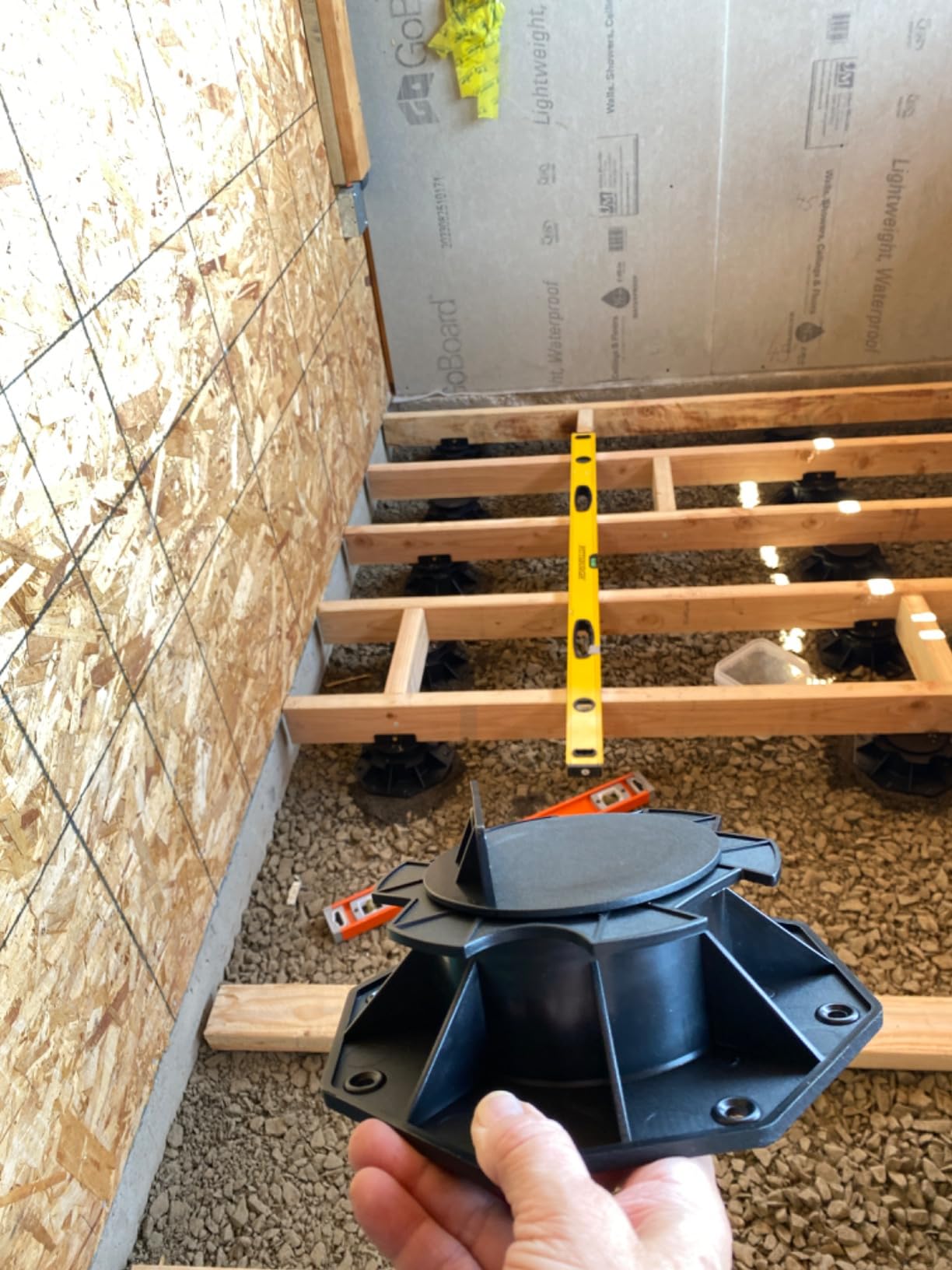
Load figures scale with extension: 2,000 lbs at the quarter position and 4,600 lbs at full height. That is the trade-off to understand. The taller you run a pedestal, the less it holds, so level sites should keep them low and take the strength.
With 336 reviews at 4.3 stars, the most common owner story is leveling a floating deck or a shed on a slope that a gravel pad alone would have defeated. Several buyers in the reviews mention using them for exactly the slightly-uneven-yard problem this roundup is about.
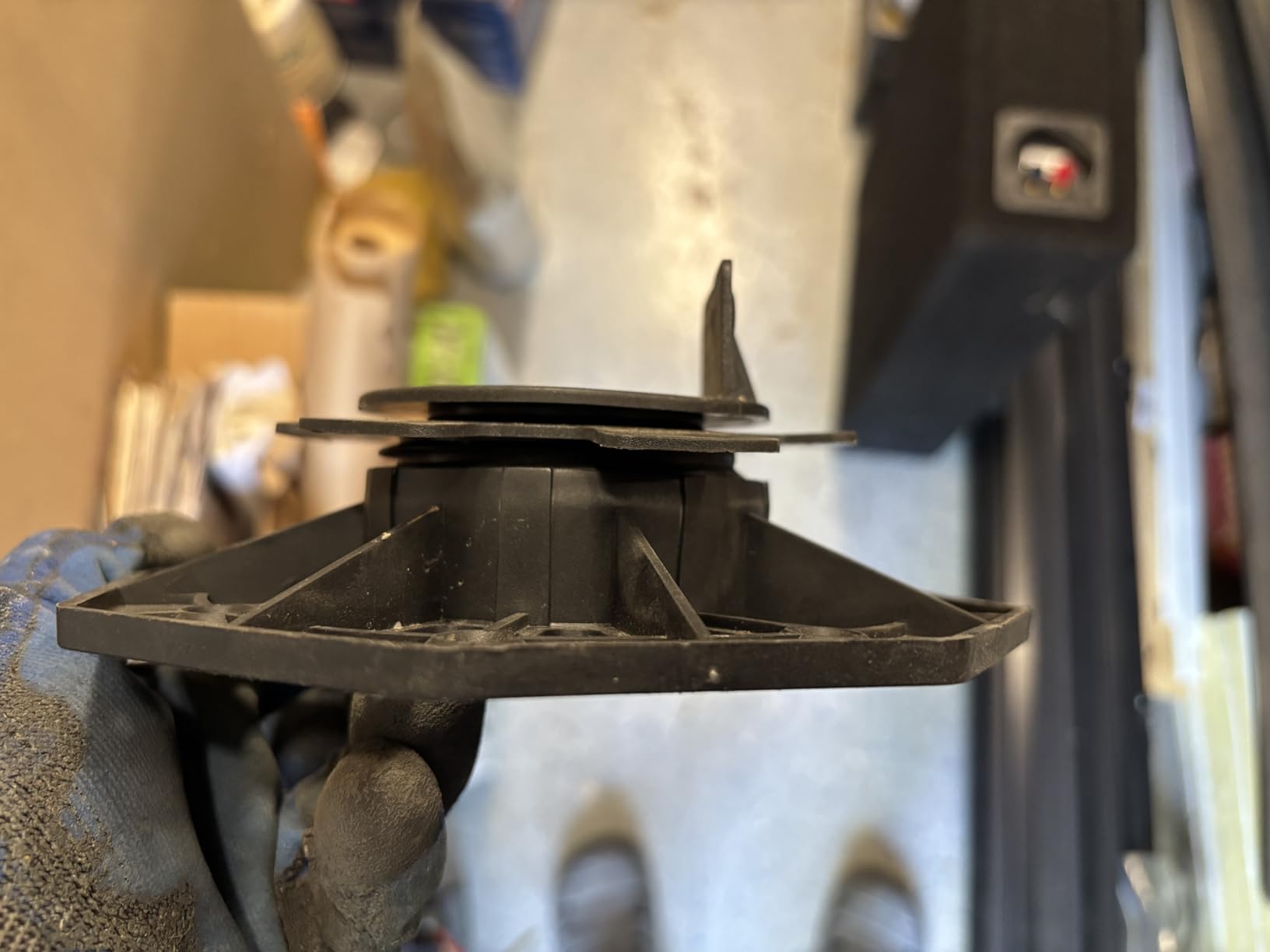
When a pedestal system beats grading
Use pedestals when the fall across your site is more than a couple of inches, or when you have hard ground you would rather not excavate. A 5-1/2 inch range covers a surprising amount of slope across a 10 foot shed if the high and low corners are not too far apart.
They are also the right call when the shed is a kit with a finished floor and the floor frame is the thing you need to hold up. Set a pedestal under each corner and under mid-span supports, level the frame once, and everything bolted to it inherits that level.
What to watch out for
Threaded plastic adjustment can back off under repeated foot traffic. Reviewers fix this by pinning or drilling through the setting once it is at the right height, and we would do the same from day one rather than discovering the problem a year later.
Count before you buy: twelve pedestals cover roughly 48 square feet at typical spacing, so a 10×12 footprint needs more than one pack. And for anything steeper, or for very heavy loads over long spans, the height ceiling of 5-1/2 inches is the limit – beyond that you are into pier territory.
7. VIVOSUN 4 in Ground Grid – the deepest cells in the roundup
VIVOSUN 4” Depth Ground Grid, 9×17 ft, High-Density HDPE Geo Cell
4 inch cells covering 153 square feet
9 by 17 ft single panel
Distributes 1885 lbs per square foot
Pros
- Deepest confinement of any grid here
- Compacts to a nearly concrete-like surface
- Holds rock dust and road base in place
- Cuts with a sharp knife
Cons
- Landscape staples are not included
- Deep cells need a lot of fill material
- Can be torn by skid steers and turning wheels
When depth is the deciding factor, this is the deepest option: a single 9 by 17 foot panel of 4 inch cells covering 153 square feet, which is enough for a 10×12 shed plus generous working room around it. One panel means no seams across the middle of your pad, and seams are where grids fail first.
The stated capacity matches the 2 inch grids at 1,885 lbs per square foot, but the way that load is distributed is different. Deep cells turn loose fill into a single stiff mat, and buyers describe the compacted result as nearly concrete-like. That is why this is the one we would put under a workshop.
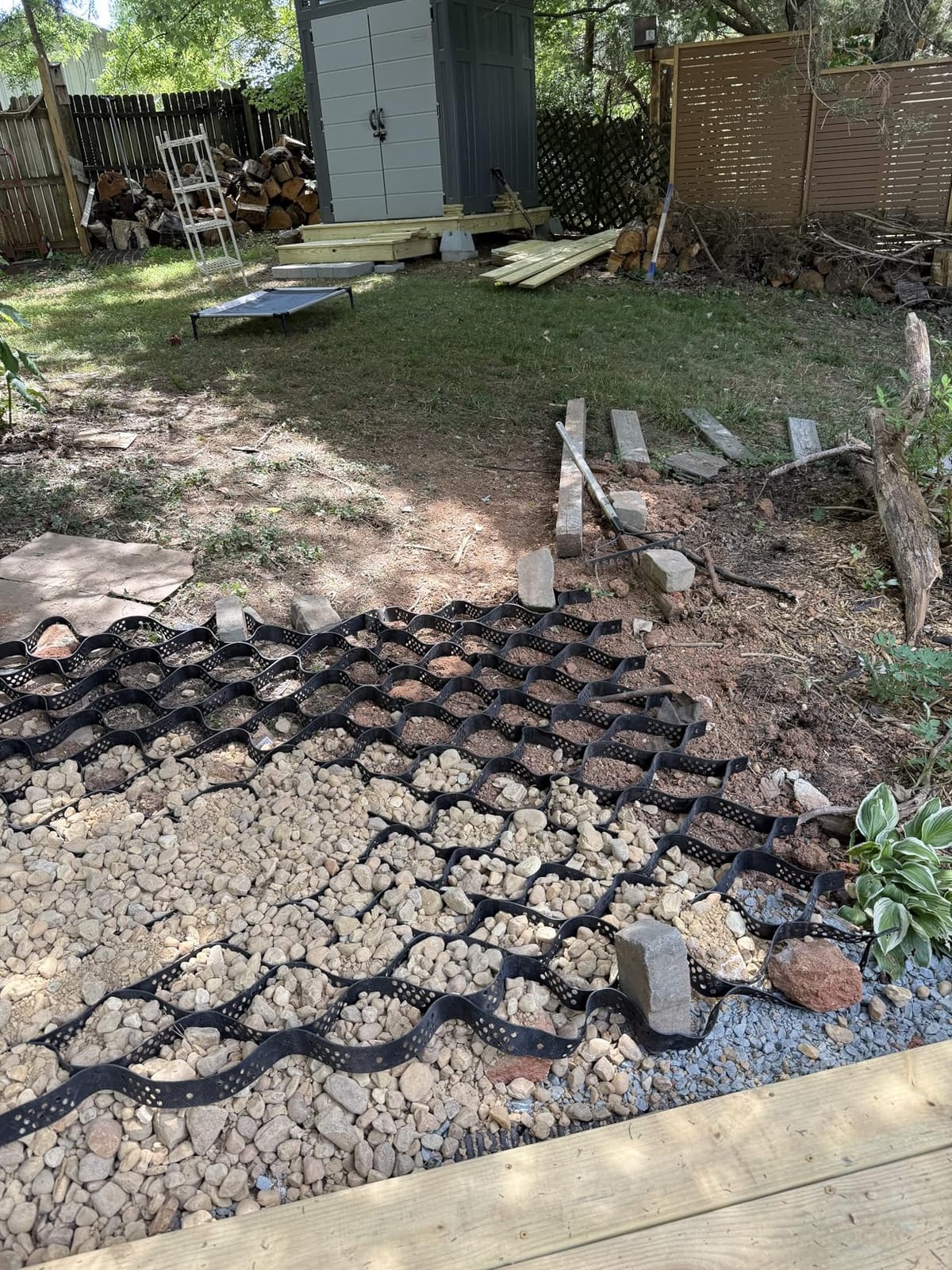
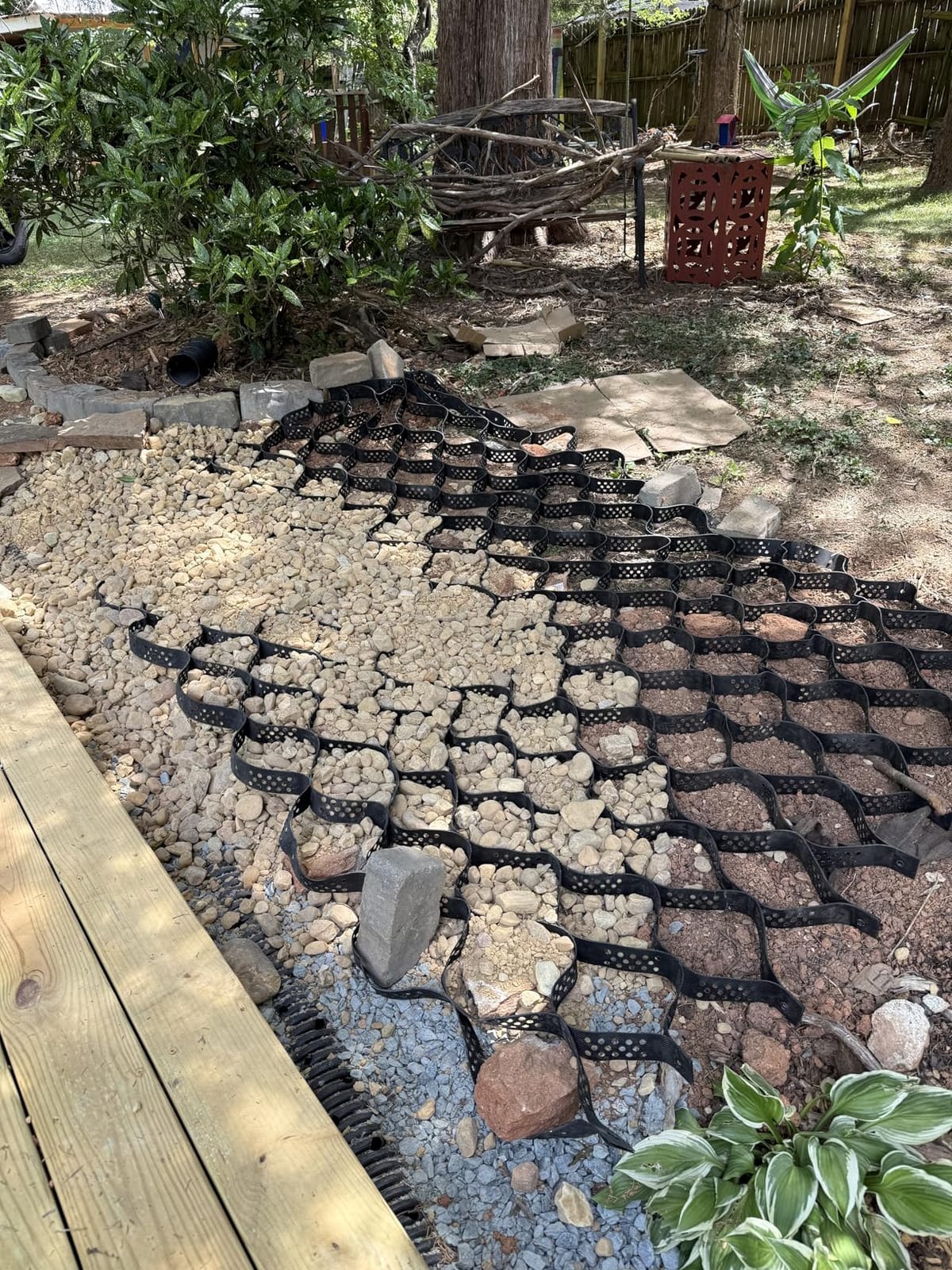
Construction is HDPE resistant to photooxidation, wear, and corrosion, joined by ultrasonic welding into a water-permeable honeycomb. It cuts with ordinary scissors or a sharp knife, and it works on sloped and uneven ground as well as flat, which makes it a reasonable hedge if you are not fully certain your site is finished.
With 175 reviews at 4.3 stars, enthusiasm is high on the 4 inch depth, and so is the recurring complaint about installation day. Buyers note the cell count in that rating – this is a large panel with a lot of open cells to fill.
What 4 inches of depth actually buys you
Three things. It confines fill vertically, so the pad resists rutting under turning wheels. It lets you build up more fill in the same footprint if you need extra bearing on soft soil. And it survives repeated freeze-thaw cycles, because the cells flex with the ground instead of cracking.
It is also the best choice here for horse runs, driveways, and any area with high-dog-traffic lawns, since the deep honeycomb holds stone in place through abuse. One 9 by 17 panel is genuinely convenient compared with assembling many small pavers.
The trade-off is fill and staples
Deep cells need considerably more fill material, so your total project cost climbs even though the panel is not expensive. Add the fill to your budget before committing, not after. Two other notes from the reviews: landscape staples are not included and are effectively required, and the folded shipping box is hard to reopen and keep open, so have a helper when you unfold it.
One more honest limitation: it can be ripped out of the gravel by skid steers and turning vehicle wheels, same as the shallower grids. Deep helps a lot, but it is not indestructible under tracked equipment.
8. Arrow FDN109 – a steel base kit built for one shed brand
Arrow FDN109 Storage Shed with Floor Base Kit for 8’x8′, 10’x8′ & 10’x9′ Arrow sheds
Fits 8x8, 10x8 and 10x9 ft Arrow sheds
Hot-dipped electro-galvanized steel
32 lb frame, all hardware included
Pros
- Keeps the shed floor and contents off the ground
- Self-squares the building during assembly
- All hardware included
- Hot-dipped galvanizing resists rust
Cons
- Plywood and finish materials are not included
- Not compatible with Arrow Elite or Ezee lines
- Fixed sizes limit other brands
This is the oldest kind of shed base kit and the one that does the job most directly. The FDN109 is a hot-dipped electro-galvanized steel frame sized for 8×8, 10×8, and 10×9 foot Arrow sheds. You level the frame on a prepared surface, bolt it together, and bolt the shed to it.
The feature we like most is that it self-squares the building during assembly. The frame holds the corners at a fixed relationship while you work, so the shed goes up square without you chasing alignment with a tape measure. That solves the same problem the composite shims solve, but before the frame exists rather than after.
Hot-dipped galvanizing is the finish to look for on any steel shed base, because it is the layer that decides whether the frame survives a wet pad over decades. The frame weighs 32 pounds, which is a genuine two-person lift for the longer sections, and measures about 104.1 by 120.1 by 2 inches.
With 125 reviews at 4.1 stars, buyers are satisfied with the frame and unsatisfied with the box. Sixty-one percent of reviews are five-star and nine percent are one-star, and the one-star cluster is almost entirely about what is missing or about fit rather than about the steel itself.
Because it is a perimeter frame rather than a floor system, the shed’s own joists span from frame to frame. That is a lighter build than a full floor platform, which is why the frame is enough for a shed that stores tools and lawn equipment but is a different question for a workshop with a bench full of weight across the span.
Why fitment is the whole story with this kit
Check your model before anything else. This frame fits 8×8, 10×8, and 10×9 Arrow sheds and explicitly does not fit Arrow Elite or Ezee lines or buildings with swing doors. Buyers who checked first rate it well; buyers who assumed rate it poorly. The 4.1 average reflects a fitment problem far more than a quality problem.
It is also the only choice here that guarantees joist spacing compatibility with the shed it was designed for, because it is the same manufacturer. If you already own or have already chosen an Arrow shed in one of those three sizes, this is the shortest path to a correctly framed base.
What you have to add yourself
Read this line before you order: plywood floor and finishing materials are not included. You are buying a frame, not a floor. Budget exterior-grade plywood or plan to fill with gravel, and remember that the same moisture that drives floor rot is what a raised steel frame is designed to keep away.
Two other requirements. It has to go on a properly prepared level surface, or it will not sit square – the frame does not correct a bad pad. And the fixed size options mean this is not a general-purpose kit; it is a specific match for specific sheds, so measure your floor footprint before ordering.
9. Arrow FDN1014 – a steel frame that doubles as a concrete form
Arrow FDN1014 Storage Shed Base Kit for 10’x12′, 10’x13′ & 10’x14′ Arrow sheds
Fits 10x12, 10x13 and 10x14 ft buildings
43 lb hot-dip galvanized frame
Doubles as a pour form
Pros
- Self-squares the shed during assembly
- Doubles as a concrete pour form
- Works as a gravel or plywood base
- Heavy frame holds larger footprints rigid
Cons
- Lowest rating in the group at 3.8 stars
- Not compatible with swing-door buildings
- Frame only with no flooring material
- Heavy at 43 pounds
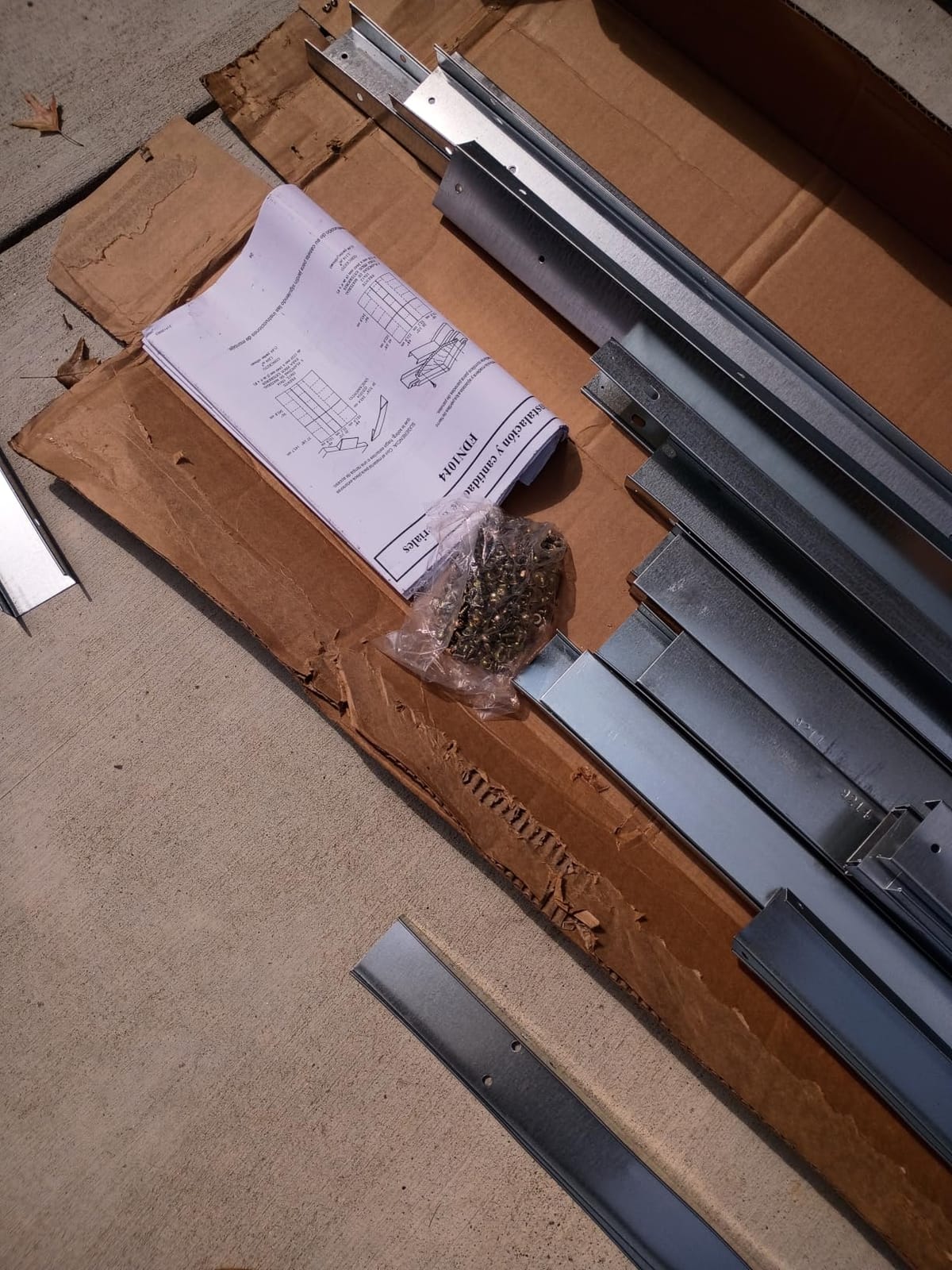
The FDN1014 is the larger Arrow kit, sized for 10×12, 10×13, and 10×14 foot Arrow and Storboss buildings. It weighs 43 pounds and measures about 142.3 by 120.1 by 2 inches, and it is the only kit here that doubles as a form for pouring a concrete slab.
That dual purpose is the reason to buy it. Start with the frame for a gravel or plywood base, and if you decide later that you want a permanent slab, the same steel perimeter becomes the form. One purchase, two end states, and the frame is already sized and squared for your shed.
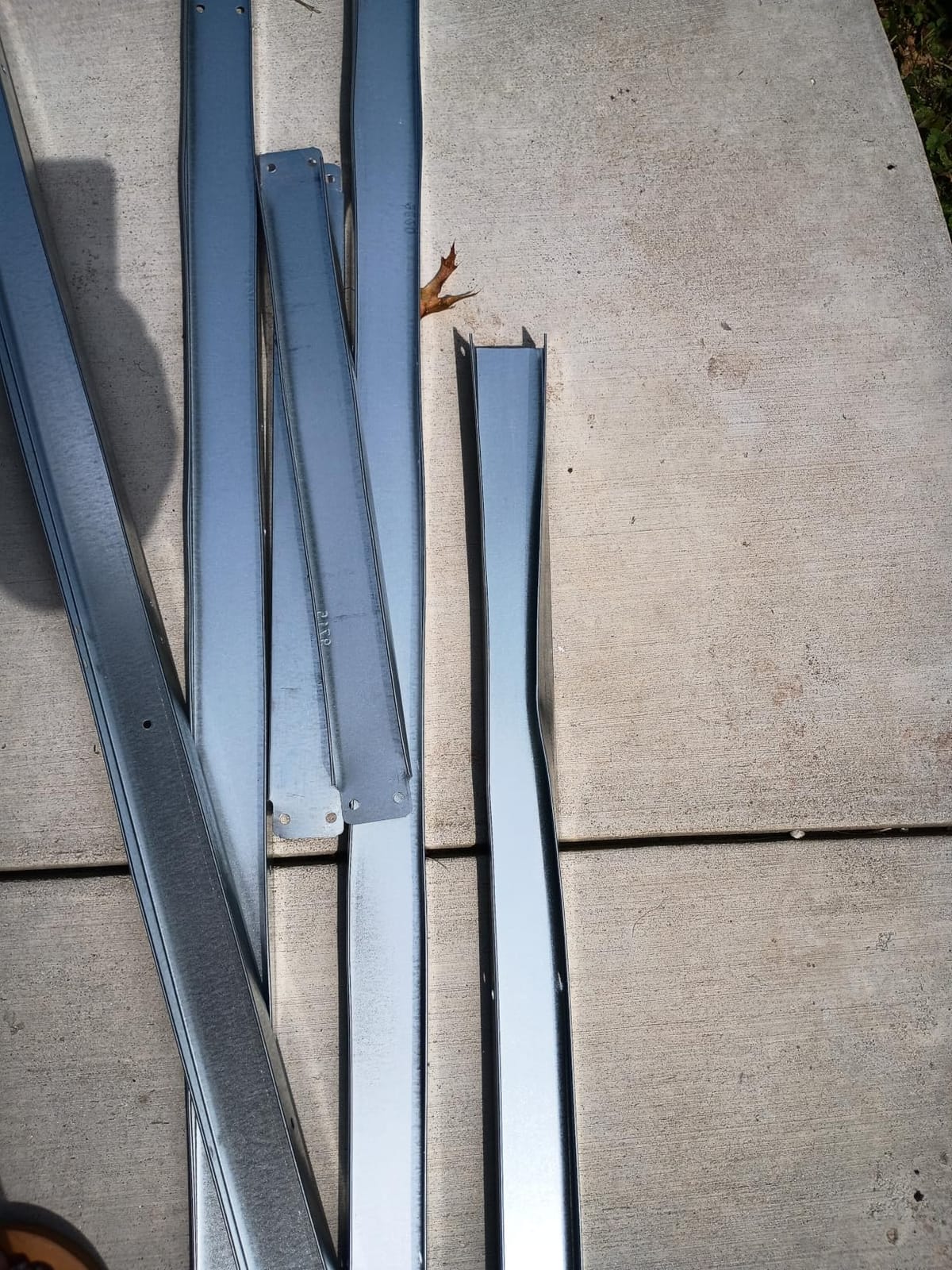
Like the smaller Arrow kit, it self-squares the storage building before finishing assembly. On a big footprint that matters more than on a small one, because 10 foot of accumulated error across a 14 foot span is what ends with doors that will not close.
At 3.8 stars from 110 reviews, this is the lowest-rated product in the roundup, and the review distribution explains why: only 49 percent five-star with 13 percent one-star. The criticism is not about the steel, it is about the swing-door incompatibility and the fact that no flooring comes in the box.
When the concrete-form option changes the decision
If you are already leaning toward a slab for permanence, this kit gets you the form you would otherwise have to build out of your own lumber. That is real value, because a form that is square and the right size is the fiddly part of a small pour, and the frame is already trued.
It is also the right frame when you want a large, rigid perimeter for a 10×12 or larger. Reviewers who treated it as a substructure and finished it with concrete or gravel report good results; the 3.8 average comes largely from people who expected a floor.
The honest problems with this kit
It does not work with buildings that have swing doors, so verify your shed model first. It is frame only, and flooring material has to be sourced separately, which is the single most common complaint. And at 43 pounds the sections are genuinely awkward to move solo – plan for two people or break the carry into stages.
One more: on uneven ground the frame may need additional leveling before assembly. Bring your composite shims or your leveling equipment to the site, because the kit does not adjust for you.
10. LXVOOEE Gravel Grid – the only one with staples and clips in the box
Gravel Grid 4.4×33 FT with 20Pcs Landscape Staples, 3” Thick Geogrid Ground Grid 2200 lbs per Sq Ft Erosion Control Geo Grid for Driveway, Walkway, Horse Paddock, Patio, Parking Lot, Slope
4.4 by 33 ft roll covering 145 square feet
3 inch depth at 0.06 in HDPE
Includes 20 staples and 35 clips
Pros
- Staples and clips included
- 3 inch depth works for shed pads
- Double-row ultrasonic welding adds strength
- Narrow roll is easy to maneuver
Cons
- 4.4 ft width means more seams and clips
- Needs an excavated or leveled base to sit flush
- Long narrow roll is awkward to transport
Every other grid in this roundup expects you to buy your own anchors, and the reviews keep mentioning it as a stumbling block. This one arrives with 20 landscape staples and 35 clips in the bundle, which for most people is the difference between an afternoon job and a second trip to the store.
Coverage is 145 square feet from a 4.4 by 33 foot roll, at 3 inches deep with 8.9 inch cells. The material is 0.06 inch HDPE with double-row supersonic welding, which is a stronger joint pattern than the single-row designs common in this price range, and the stated rating is 1,903 lbs per square foot when filled.
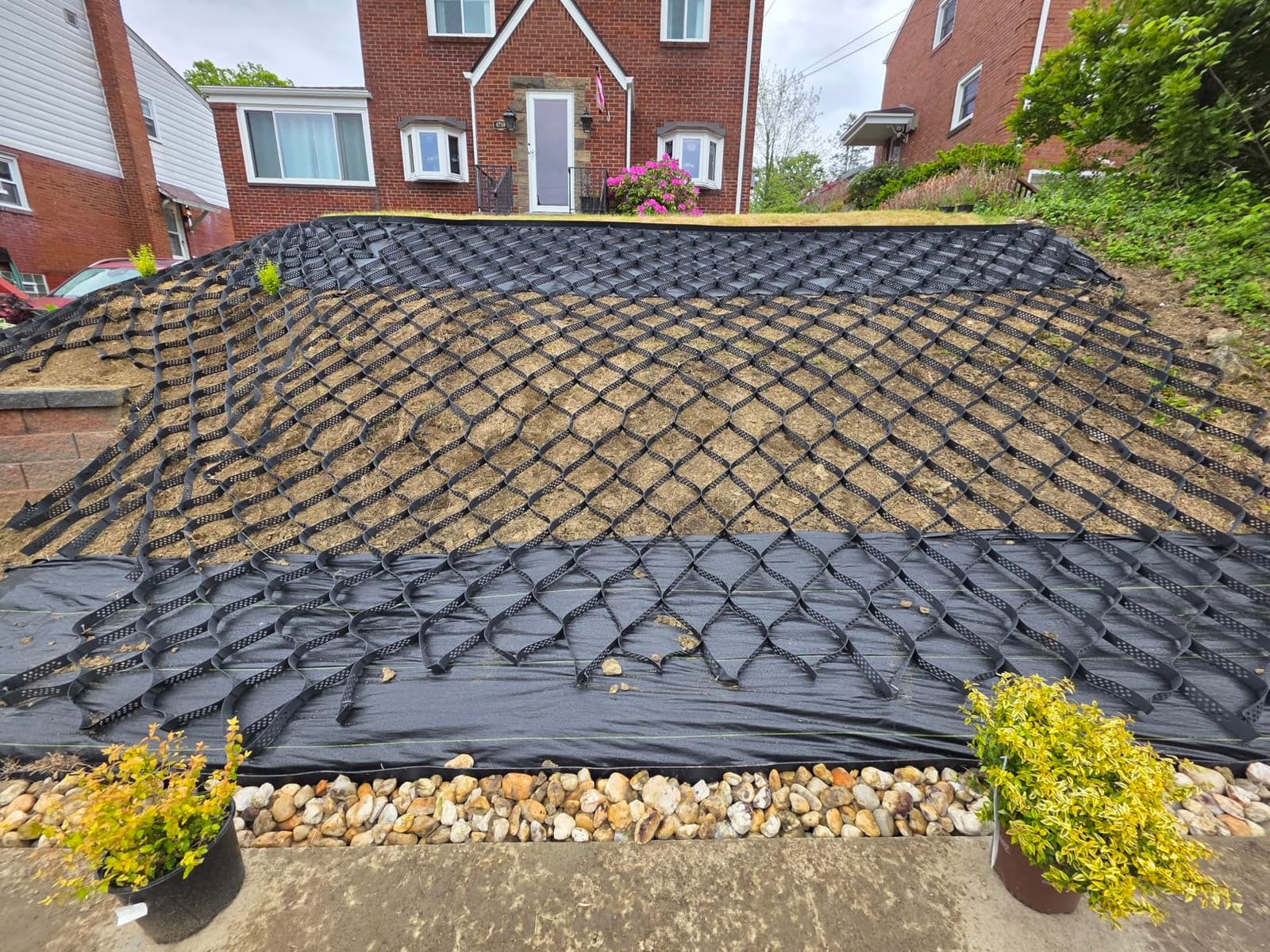
That 3 inch depth on a light-gauge grid is the interesting part. It gives you vertical confinement for slope control and erosion control without the fill cost of a 4 inch cell, and it resists photooxidation and acid or alkali erosion in any weather, which matters on the acidic soils some of us have.
With 82 reviews at 4.1 stars, the sample is smaller but the sentiment is concentrated on the included hardware and the depth. Buyers also like that it can be trimmed and joined in any direction to fit an awkward site shape, which is exactly the situation a fixed grid is supposed to solve.
Why erosion control is the reason to choose this one
If your yard has ever washed out a gravel pad, the problem is almost always lateral movement. This grid’s job is to stop the stone from migrating, and at 3 inches deep it does that without the fill volume of the deepest cells. On a slope at the edge of a site, that is the reason it earns its place here.
It is also useful where water runs. A 3 inch permeable cell lets rainfall infiltrate rather than sheet across your yard, so a shed pad on a slight grade can double as part of your drainage plan. Other depths in the same 4.4 foot width are offered at 2 and 4 inches, plus wider rolls.
What the narrow roll costs you
A 4.4 foot width means more seams across a shed footprint than a wider roll, and every seam is a line of clips and a place the grid can lift. On a 12 foot width you are dealing with three bands rather than one, so the included clips go quickly and you may want more.
Two practical warnings from the reviews. The grid needs an excavated or leveled base to sit flush, so it does not save you the grading step. And the long narrow roll is hard to transport and unroll solo, so have a second person available when it arrives. The stated load rating also assumes proper fill and compaction, not just placement.
How to Level a Site for a Shed Foundation Kit
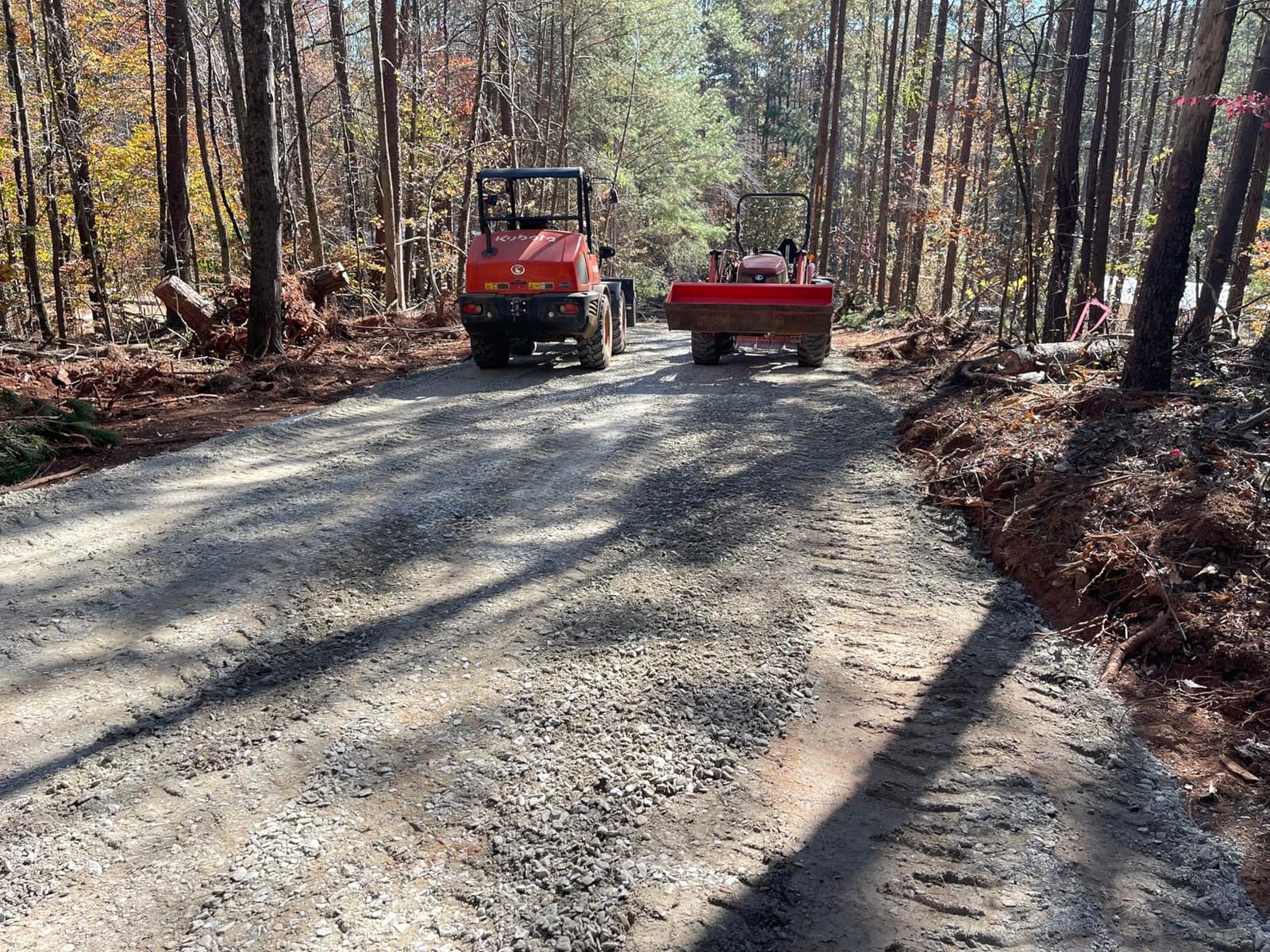
Level ground is the requirement, and “level” here means within about an inch across the entire footprint with a surface that does not rock. Most failed shed bases are not failed because the wrong product was chosen; they are failed because the pad underneath was never actually built.
Here is the sequence we use, and it takes most of a weekend for a 10×12.
Mark the footprint and add clearance. Stake out the shed plus about a foot on each side, because you need room to work and room to anchor.
Strip organic matter. Remove sod, roots, and topsoil from the buildable area. Roots left under fill are the number one cause of later settlement.
Grade toward drainage. Aim for a fall of about a quarter inch per foot away from the shed, so water never sits against the floor framing.
Lay landscape fabric. Under the gravel, not over it. It stops the fill washing into the soil and stops weeds, and reviews across this roundup repeatedly flag washout as the top complaint when it is skipped.
Build fill in lifts. Add crushed stone about 3 inches at a time and compact each lift before the next. Building 6 inches in one pour is the most common shortcut and it settles unevenly.
Check level and square. Use a long straightedge and a level across both diagonals. Target under an inch of variation. This is the step most people skip and the one that determines whether doors will close.
Assemble the kit and shim. Set the steel frame or the pedestal feet, then correct with composite shims or the pedestal adjustment range. Re-check the diagonals after every adjustment.
Fill and anchor. Fill grid cells with crushed stone, top off, anchor the shed with tie-down hardware, and re-check level after the first heavy rain.
On gravel grade, the recurring forum advice is that the type matters. One r/shedditors user put it plainly: “I used #57 gravel which I gathered is important because it packs well besides draining well.” Angular crushed stone interlocks and compacts into a stiff pad, while rounded pea gravel drains but stays loose under load.
One more forum note worth repeating, because it is the fear that stops people: leveling a gravel pad is genuinely the hard part. One r/shedditors user spent months failing to level a bed for a playhouse – “I couldn’t get the gravel level. The boards kept rocking, and it was a huge pain” – and eventually buried nine 4×4 posts instead. The techniques above shorten that path, but the difficulty is real and worth budgeting for.
What to Check Before You Buy a Shed Base Kit
Five checks will eliminate almost every return in this category, and the first one alone prevents most problems.
1. Does it match your shed? Steel frame kits are model-specific. The Arrow FDN109 fits 8×8, 10×8, and 10×9 foot Arrow sheds and does not fit Arrow Elite or Ezee lines or swing-door buildings. Check the model number of the shed you own, not the brand.
2. What is in the box? Metal frame kits almost never include a floor. The Arrow kits explicitly state that plywood and finishing materials are not included. Plastic grids almost never include anchors, with the LXVOOEE bundle being the exception. Write the add-on list before you order.
3. What load will it actually hold? Every stated rating assumes a compacted, filled base. Grid ratings in this roundup range from 1,885 to 120,000 lbs per square foot, and the pedestal system scales from 2,000 lbs at quarter extension to 4,600 lbs at full height. A riding mower is well inside any of these, but only on a properly compacted pad.
4. Material and depth. For steel, look for hot-dipped or hot-dipped electro-galvanized rather than light electro-galvanizing. For plastic, compare cell depth, since 1 inch is for firm ground and 3 to 4 inches is for soft ground, slopes, or heavy loads. Galvanized steel frames rust eventually; 4 inch HDPE cells do not corrode at all.
5. Parts, warranty, and shims. The Arrow kits include all hardware. The BGTLGIO pedestals include all hardware. The VIVOSUN grid explicitly does not include landscape staples, and the EasyPave needs separate anchors. Check warranty terms too – the TRUEGRID carries five years against manufacturer defects. And buy a pack of composite shims regardless, because that is the adjustment tool you will reach for on day one.
Also budget the things nobody mentions. Permit and zoning thresholds vary, and in many jurisdictions a shed under a certain square footage on a level base does not trigger a permit, but confirm with your local building department before you start.
Kit vs Building Your Own: The Real Cost Difference
The most common objection to these products comes from forums, and it is a fair one. On garagejournal, a poster put it as: “A wood shed kit is a waste of money, you are paying someone to gather a material list and possibly cut them to size.” On r/shedditors, the framing question is blunt: “Or could I do better buying and cutting everything myself?”
That criticism is largely accurate, and we would rather say so than pretend otherwise. A steel frame kit is a pre-cut, pre-drilled, pre-listed set of steel. A wood floor kit is a material list with the measuring and cutting removed. You are paying for the parts plus a few hours of your own Saturday.
What the kit genuinely removes is three things people underestimate. Joist spacing and hanger layout, which is where self-built floors usually go wrong. Squaring, because a fixed perimeter frame holds square during assembly in a way free-form studs do not. And the time cost of building the pad itself, which is the real labor in any shed project.
Build your own if you are genuinely handy, have a weekend free, and want a floor design that is yours. Buy the kit if your site is flat but your time is not, or if fitment to a specific shed model matters more than saving a few hours. One r/DIY user reported successfully running an 8×8 gravel foundation under a 6×6 shed, and that worked because the site was flat and the pad was compacted properly.
Who Should Skip a Kit and Use Piers or a Slab
Three situations where a shed base kit is the wrong tool, and choosing wrong here is what turns a weekend into a month.
A site with real slope. Beyond a few inches of fall across the footprint, a surface foundation forces you to either excavate a level bench or stack shims. A 4 inch slab on grade or helical piers handles slope without fighting it. The adjustable pedestals here cover the in-between case up to 5-1/2 inches, and no further.
Soft or wet soil. If water stands on the site after rain, a gravel-filled grid will hold the water rather than solve it. Grading and drainage come first, and until that is fixed, no base product will settle correctly. This is the case where a slab on grade with perimeter hold-down bolts, which comes up repeatedly in forum threads, is the better answer.
Very heavy or concentrated loads. Threaded plastic pedestals have a modest height ceiling and their load rating drops as you extend them. Steel jacks and piers exist for a reason. If you are storing a tractor, a full-height jack or a screw pile is not a luxury.
On permanence, forum owners are genuinely split and the split is instructive. For a 12×16 in the Northeast doubling as office and workshop, some owners went with nine concrete piers for permanence while others chose a gravel pad for speed. The pad is the faster answer. The piers are the answer that is still fine in twenty years.
One recurring worry that deserves a straight answer: is it bad to put pressure-treated lumber directly on the ground? A r/HomeImprovement poster asked exactly this about a previous shed’s foundation. The consensus is that ground contact shortens the life of any wood member, which is the whole reason a raised steel frame or a filled grid exists. The standard prefab pattern – 2×4 floor at 24 inches on center over two 4×4 skids on leveled gravel or concrete – works, but only with a genuinely compacted and level surface underneath.
Frequently Asked Questions
What is the easiest foundation to build for a shed?
For a level site, a compacted crushed-stone pad with an interlocking plastic grid on top is the easiest foundation to build. You grade the ground, lay landscape fabric, spread about 4 inches of crushed stone in compacted lifts, set the grid, fill the cells, and anchor the shed. No concrete pour, no form work, and everything can be done with a shovel, a compactor, and a level over a weekend.
Are shed base kits any good?
Yes, with one caveat. A shed base kit is a pre-measured modular frame or grid that handles squaring, joist spacing, and holding the floor off damp soil, and it reliably saves a full weekend of measuring and leveling. The caveat is that nearly every kit excludes the things you still have to buy: exterior-grade plywood or another floor material, the gravel or concrete fill, and anchor hardware. Judge the kit on fitment for your shed model, not on price.
What is the best type of foundation for a shed?
It depends on your site and load. On level, firm ground, a compacted crushed-stone pad with an interlocking plastic grid is the best balance of cost, drainage, and install speed. On a slightly sloped site, adjustable pedestals let you level a frame without excavating. For permanent structures or heavy equipment, a concrete slab on grade or helical piers outlast everything. A galvanized steel frame kit is best when it matches your shed model exactly.
How deep should a foundation be for a shed?
For a gravel pad, about 4 inches of compacted crushed stone is the standard, and it works best when built in two or three lifts of roughly 3 inches that are compacted separately before the next is added. Plastic grid cells are filled level with or slightly proud of the top of the grid. In frost-heavy regions, keep the finished surface above the local frost depth or use a slab or piers instead of a shallow gravel pad.
How much gravel does a shed foundation need?
Multiply the shed footprint by the pad depth. A 10×12 shed is 120 square feet, and at 4 inches deep that is about 1.6 cubic yards before you allow extra for grading and compaction. A 6×8 shed at 80 square feet needs roughly 1 cubic yard, and a 12×16 at 192 square feet needs around 2.6. Buy in whole yard increments and add 10 percent for compaction losses, especially if you are also filling grid cells.
Final Pick for Your Flat Site
If your ground is flat and you are starting from scratch, the PHYXOLOGY composite shims are the most useful thing you can buy first, and we use them on every base we build. They are the correction tool for the step that goes wrong most often, and with 2,223 reviews at 4.6 stars they are the most proven item in this roundup.
For the base itself on level, firm ground, the Vodaland HexPave is our pick: tool-free assembly, real drainage, and the best coverage per purchase in the group. If your soil is soft or your loads are heavy, move up to the 2 inch EasyPave or the 4 inch VIVOSUN grid, and if you own an Arrow shed in a listed size, the matching steel frame kit is the shortest path to a correctly framed base.
Whichever route you take, build the pad before the kit and check the diagonals after every adjustment. Get the ground right and any of these ten will hold a shed for decades. Get the ground wrong and none of them will. More of our kitchen planning happens around the long Sunday meals anyway – if you need those, we have ground turkey recipes and a healthy ground beef dinner list ready for the week the pad is curing. When the shed is finished and the pad has cured, a quick ground beef dinner takes about as much planning as the pour did.