Most backyard growers underestimate the greenhouse until the first cold snap kills a tray of tomato seedlings. A framed, glazed structure traps solar heat, so you can start seeds weeks before the last frost, push salad greens through shoulder season, and carry citrus and peppers over winter instead of losing them. That is the whole promise of the best greenhouses for backyard gardening, and it is a promise that some kits keep and others quietly break after one season.
We spent weeks reading owner reviews on ten widely purchased backyard greenhouses, comparing frame material, glazing, roof venting, and the small hardware details that decide whether a structure still stands after three winters. The differences are large. Some units here are genuine walk-ins with twin-wall polycarbonate panels and rigid aluminum frames. Others are fabric-covered steel hoops that need cinder blocks to stay put in a breeze.
Below you will find ten picks ranked by how well they hold up in real yards, plus a buying guide that covers sizing, glazing, summer heat, anchoring, and the extra costs nobody mentions on the box. If you are new to this, start with the quick overview table, then jump to the section that matches your space and your winters.
Table of Contents
- Top 3 Picks for the Best Greenhouses for Backyard Gardening 2026
- Quick Overview: 10 Best Greenhouses for Backyard Gardening (October 2026)
- What Is the Best Greenhouse for a Backyard?
- 1. EAGLE PEAK 8×6 Pop-Up Greenhouse: Best Overall Backyard Greenhouse
- 2. KING BIRD 20×10 Walk-In Greenhouse: Best Value for Maximum Floor Space
- 3. Greengro 57 x 57 x 76 Inch Greenhouse: Best for Patios and Balconies
- 4. SUNGIFT 57 x 61 x 80 Inch Walk-In Greenhouse: Best for Seed Starting
- 5. CROWN SHADES 12×8 Pop-Up Walk-In Greenhouse: Best Budget Walk-In
- 6. WUKHG 8×14 Aluminum Twin-Wall Polycarbonate Greenhouse: Best for First-Time Rigid-Frame Builders
- 7. Backyard Discovery Willow 9×6 Cedar Greenhouse: Best for Year-Round Use
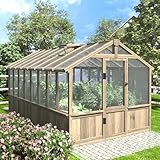
- 8. Yardenaler 8×16 Wooden Polycarbonate Greenhouse: Best for Windy Yards
- 9. CDCASA 12x10x10 Polycarbonate Greenhouse: Best as a Patio Sunroom
- 10. PABIMIA 10×18 Aluminum Walk-In Greenhouse: Best for Large Rigid Builds
- How to Choose a Backyard Greenhouse
- How We Picked
- Frequently Asked Questions
- Final Verdict: Which Backyard Greenhouse Should You Buy?
Top 3 Picks for the Best Greenhouses for Backyard Gardening 2026

EAGLE PEAK 8×6 Pop-Up
- One-person tool-free pop-up setup
- Reinforced steel frame
- Zippered roll-up doors and mesh windows
- Wind ropes and stakes included

KING BIRD 20×10 Walk-In
- 20x10 walk-in footprint
- Galvanized steel frame with stiffeners
- Eight roll-up screen windows
- 24 stakes and 4 ropes included

CROWN SHADES 12×8 Pop-Up
- One-push CenterLock hub
- Internal support pole for frame stiffness
- Three adjustable height levels
- Heavy-duty steel frame
Quick Overview: 10 Best Greenhouses for Backyard Gardening (October 2026)
| Product | Specs | Action |
|---|---|---|
| EAGLE PEAK 8×6 Pop-Up Greenhouse |
|
Check Latest Price |
| KING BIRD 20×10 Walk-In Greenhouse |
|
Check Latest Price |
 Greengro 57 x 57 x 76 Inch Greenhouse Greengro 57 x 57 x 76 Inch Greenhouse |
|
Check Latest Price |
 SUNGIFT 57 x 61 x 80 Inch Walk-In SUNGIFT 57 x 61 x 80 Inch Walk-In |
|
Check Latest Price |
| CROWN SHADES 12×8 Pop-Up Greenhouse |
|
Check Latest Price |
 WUKHG 8×14 Aluminum Greenhouse WUKHG 8×14 Aluminum Greenhouse |
|
Check Latest Price |
 Backyard Discovery Willow 9×6 Cedar Backyard Discovery Willow 9×6 Cedar |
|
Check Latest Price |
 Yardenaler 8×16 Wooden Greenhouse Yardenaler 8×16 Wooden Greenhouse |
|
Check Latest Price |
 CDCASA 12x10x10 Greenhouse CDCASA 12x10x10 Greenhouse |
|
Check Latest Price |
 PABIMIA 10×18 Aluminum Greenhouse PABIMIA 10×18 Aluminum Greenhouse |
|
Check Latest Price |
One quick note on reading the table: the first five picks are fabric-covered PE houses that trade insulation for price, while the last five use rigid polycarbonate panels. That single difference explains most of the gap in weight, assembly time, and how each one handles wind and snow.
What Is the Best Greenhouse for a Backyard?
For most yards, the best backyard greenhouse is a walk-in structure between 8×8 and 8×12 feet with a rigid aluminum or wood frame and twin-wall polycarbonate panels, plus at least two roof vents. Buy smaller if you only need seed starting and patio space. Buy larger only if you already know you will fill the floor, because empty greenhouse space is wasted floor you pay to heat.
1. EAGLE PEAK 8×6 Pop-Up Greenhouse: Best Overall Backyard Greenhouse
EAGLE PEAK 8×6 Easy Setup Pop Up Greenhouse, Clear/Green
8x6 footprint
Polyethylene cover over alloy steel
98.4 in L x 70.9 in W x 91.7 in H
37.3 lb
Pros
- Sets up in seconds with no tools
- Reinforced powder-coated steel frame
- Stacks for off-season storage
- Best reviewed of any pick here
Cons
- PE seams and zippers fail within a year or two
- Runs hot without constant ventilation
- Must be anchored or it moves in wind
The EAGLE PEAK 8×6 is the one we kept coming back to, and the reason is boring but important: it has 5012 reviews averaging 4.3 stars, by a wide margin the most owner history in this group. A structure that many people have run for several seasons tells you more than a spec sheet does.
Setup is the story here. A patented center-lock hub and a pre-assembled frame mean one person can pop it up without reaching for a toolbox, then collapse it in a few minutes when the season ends. Reviewers report setting it up on a patio, carrying it to a better spot in the yard, and repeating the process a season later.
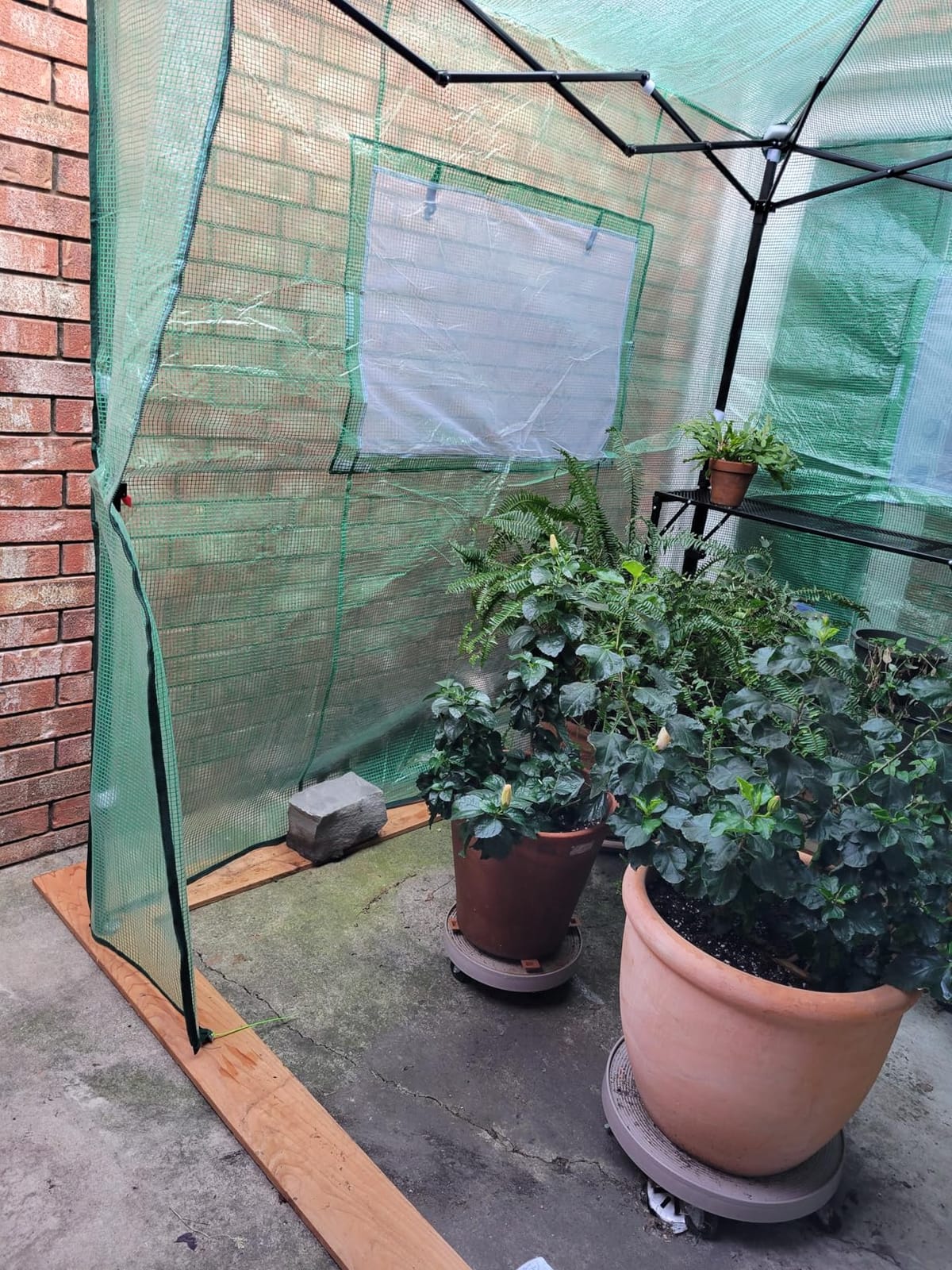
The frame is a reinforced, powder-coated steel with wind ropes and ground stakes in the box, and it is heavier than most competitors in this list at 37.3 pounds. That weight is the feature. Owners use it to overwinter citrus and tender vegetables, and the frame keeps its shape while the plastic around it does not always.
That plastic is the caveat. The PE cover is UV-resistant and water-resistant, but reviewers report zippers sticking, seams splitting, and thinning plastic after one or two seasons outdoors. The limitation is simple: treat the cover as a consumable and expect to replace it, because replacement covers cost more relative to this frame than most people expect.
Where the 8×6 EAGLE PEAK works best
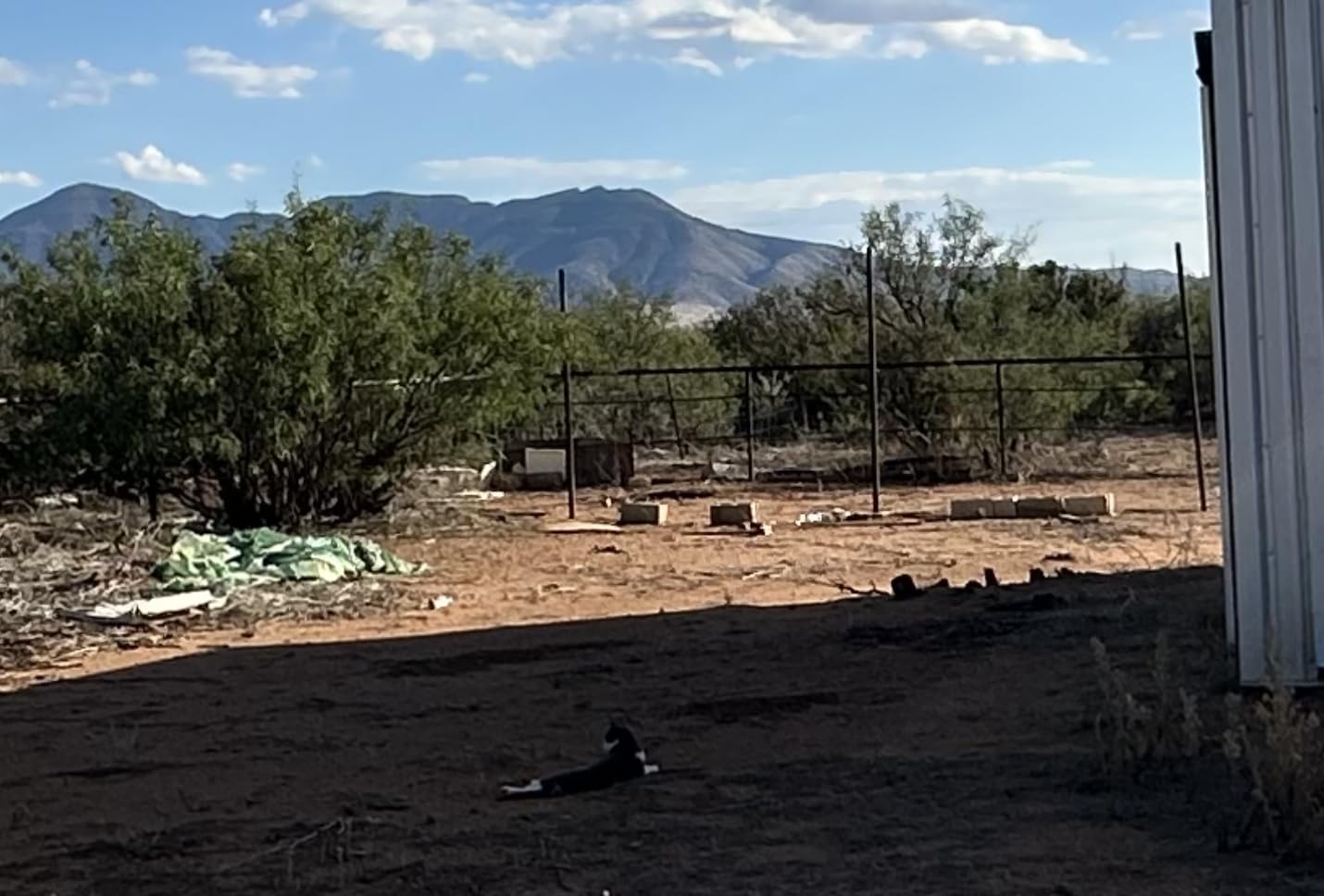
This is a shoulder-season and overwintering house, not a full-year greenhouse. At 8×6 it fits beside a house or along a fence, holds tomato and pepper plants, a bench of seedlings, and a few containers, and gives you a working height of about 91.7 inches at the peak.
Because it stores flat between seasons, it also suits renters and anyone who does not want a permanent structure sitting in the yard. Gardeners who also maintain larger plots may want to see how we handle the mowing side in our lawn tractor picks before the season starts.
Where the 8×6 EAGLE PEAK falls short
There is no real insulation. PE fabric holds humidity and blocks wind, but it does not give you the temperature buffer that twin-wall polycarbonate provides on a freezing night. In a hard-winter climate this is a summer-through-autumn structure unless you add a heater.
Ventilation is the other weak point. The two roll-up side windows and zippered doors work, but you will open them daily in summer. Owners in hot regions add a small fan and a thermometer, and anyone who skips that step can cook their plants in an afternoon.
2. KING BIRD 20×10 Walk-In Greenhouse: Best Value for Maximum Floor Space
KING BIRD Premium 20x10x6.6FT Greenhouse for Outdoors Large Walk-in House
20 x 10 x 6.6 ft footprint
150g/sqm UV-protected PE cover
Galvanized steel frame
78.1 lb
Pros
- Huge 20x10 footprint for the money
- Eight roll-up windows plus two mesh doors
- Labeled parts make assembly manageable
- Stiffeners keep the frame square
Cons
- Cover seams tear near Velcro points
- Only four straps hold the cover
- Screen zippers fail before the main ones
- Needs extra bracing in wind
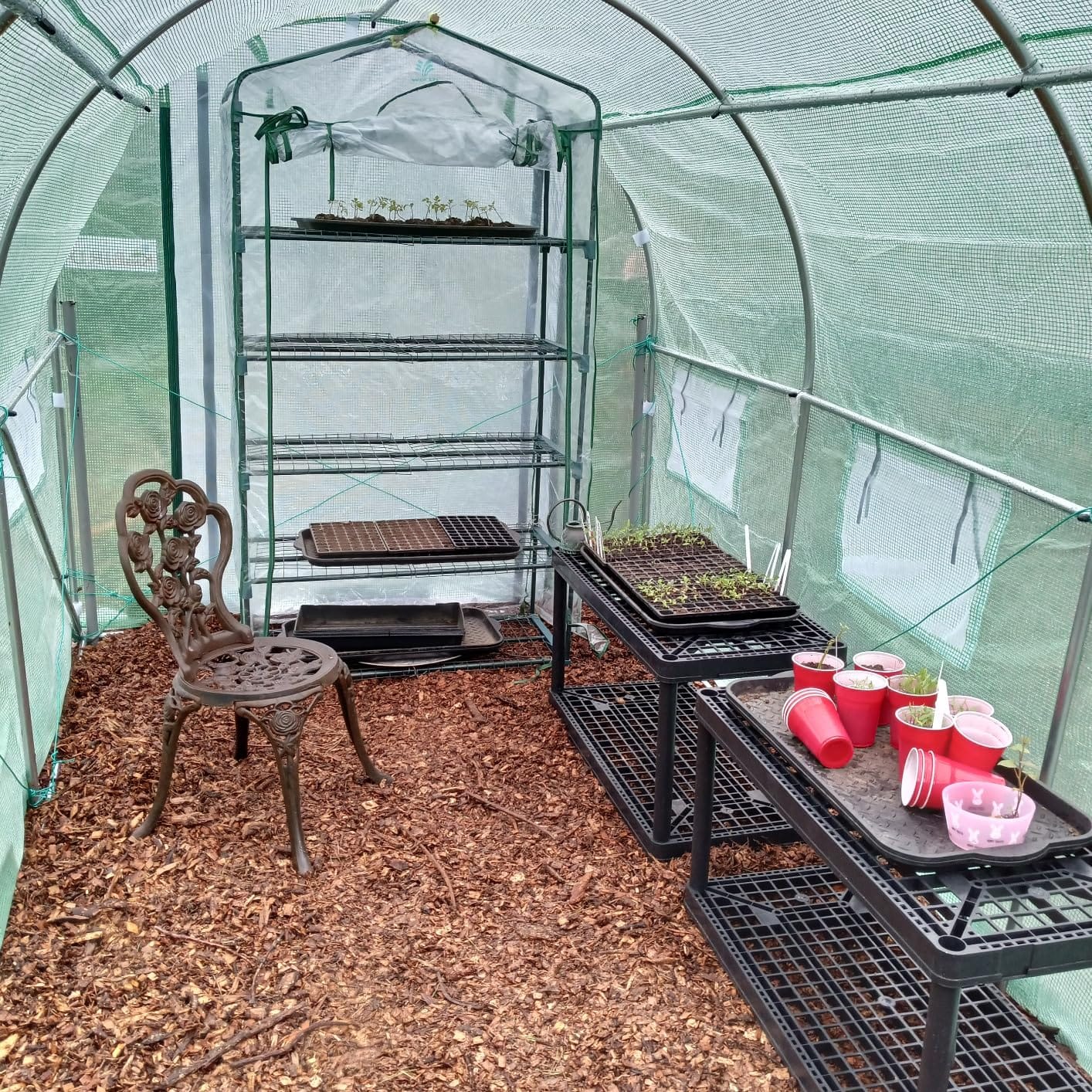
The KING BIRD 20×10 answers a question most roundups skip: how much usable floor can you get for very little money. At 20 feet by 10 feet with a 6.6 foot peak, this is a genuine walk-in, and it is the largest structure in this group by a wide margin.
The frame is galvanized steel with three top crossbars, two diagonal poles, ten vertical base poles, and two added stiffeners. That is more bracing than most budget walk-ins ship with, and it matters more than the marketing does. The cover is a 150g/sqm UV Index 6 protected PE grid, which is a heavier fabric than the lightweight film on most competitors.
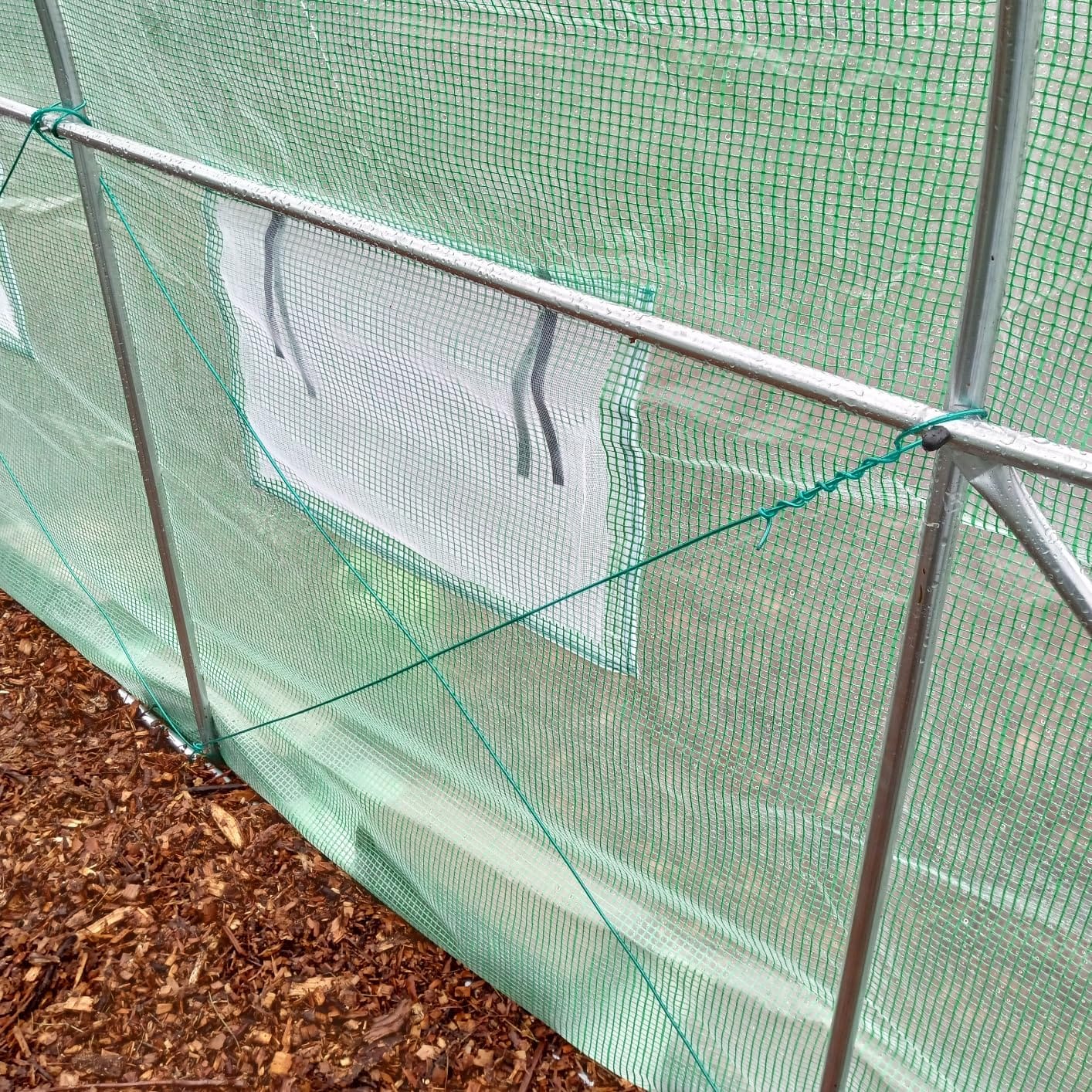
Ventilation is the standout feature. Eight roll-up screen windows along the sides plus mesh-netted doors at both ends give you more adjustable airflow than anything else in this roundup, and the dual-layer doors combine PE and mesh with double-stitched seams.
Twenty-four stakes and four tie ropes are included, and the manufacturer has been praised for shipping replacement covers proactively. The limitation is in the cover attachment: only four Velcro straps secure it, with no interior ties to the frame, so seams near those points can tear in light wind.
Who should buy the 20×10 KING BIRD
This one suits a grower who wants real row space for tomatoes, peppers, and onions and has a flat, open patch of yard to put it on. Two people can work inside it at once, which is exactly what a grower house should allow.
Owners who mount the frame on a 2×4 base, add wired diagonals, and use heavy tie-downs report it surviving serious wind. That is the single most useful piece of advice in the reviews, and it applies to every walk-in in this list.
Who should skip the 20×10 KING BIRD
If your yard is small or sloped, a 20×10 footprint will dominate it. A structure that big with a fabric cover also needs more anchoring attention than a small pop-up, because the sail area is far greater.
Screen-door zippers and window Velcro fail sooner than the main door zippers, and replacement parts are not always in the box. Budget for a full cover refresh after a few seasons rather than treating it as a permanent skin.
3. Greengro 57 x 57 x 76 Inch Greenhouse: Best for Patios and Balconies
Greengro Greenhouse, 57 × 57 × 76″ Portable Green House for Outdoor Indoor
57 x 57 x 76 inch footprint
High-tensile grid PE cover
6.2 ft interior height
20.9 lb
Pros
- Assembles in about an hour with no tools
- Fits a patio while still walk-in
- Shelves rated to 22 lbs
- Wind rated to 45 mph
Cons
- Side panels flap because they are not tied down
- Velcro windows do not fully close
- Plastic connectors bend under strain
- Shelves sometimes missing from the box
Not everyone has yard. The Greengro is a walk-in greenhouse sized for a patio, balcony, or porch corner, and at 20.9 pounds one person can carry it to a new spot when the sun moves.
The cover is a high-tensile grid PE with double-stranded edge banding, rated by the manufacturer for winds up to 45 mph. That rating is only meaningful with proper anchoring, but the material itself is heavier than the flimsy film used in the cheapest kits.
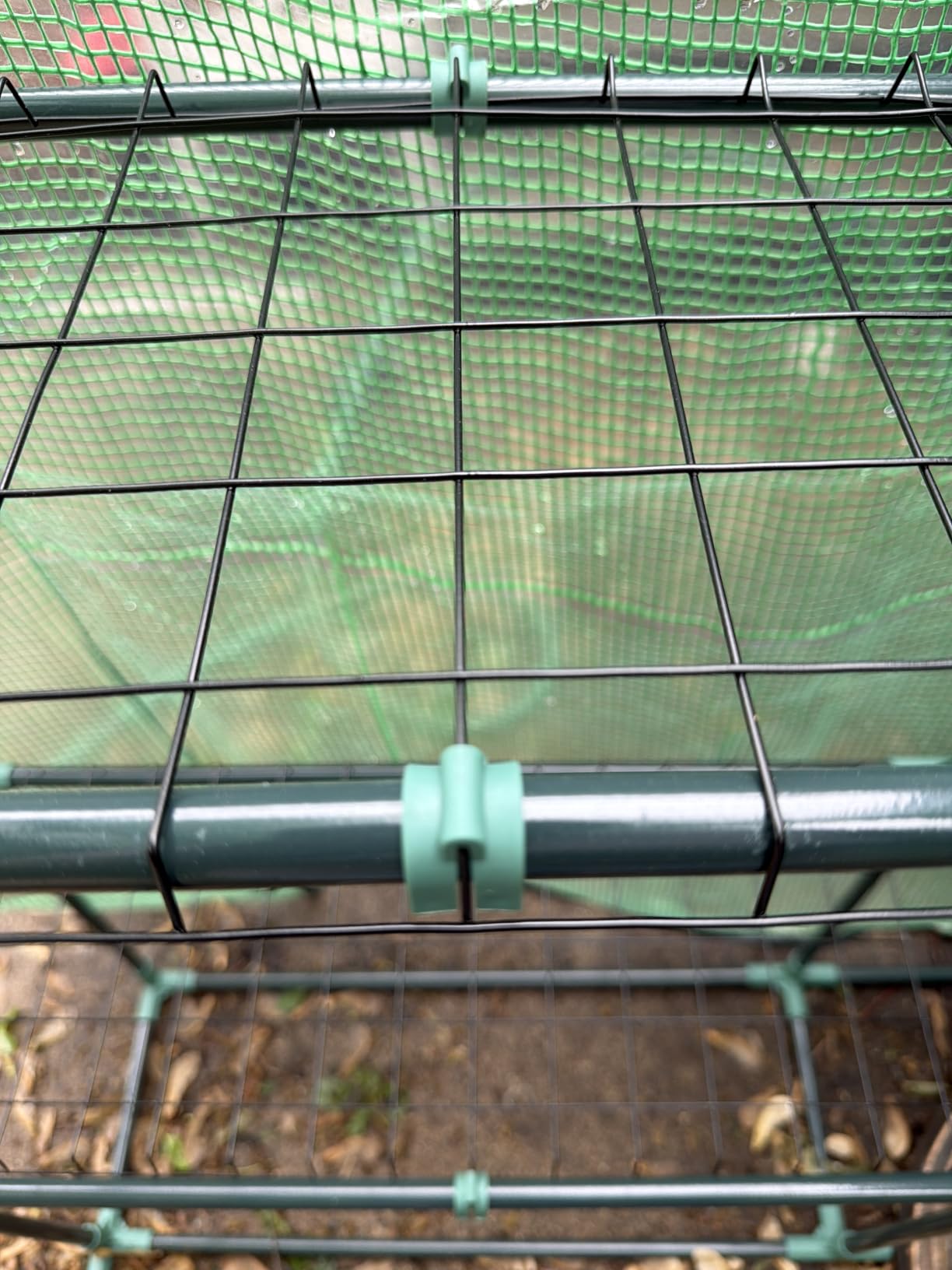
Three tiers of shelving hold up to 22 lbs, which is enough for seed trays and pot storage, and the 6.2 foot interior height means an average adult can stand up and work rather than crouch. The base is 16mm thick with sturdy connectors, which is heavier than most units in this class.
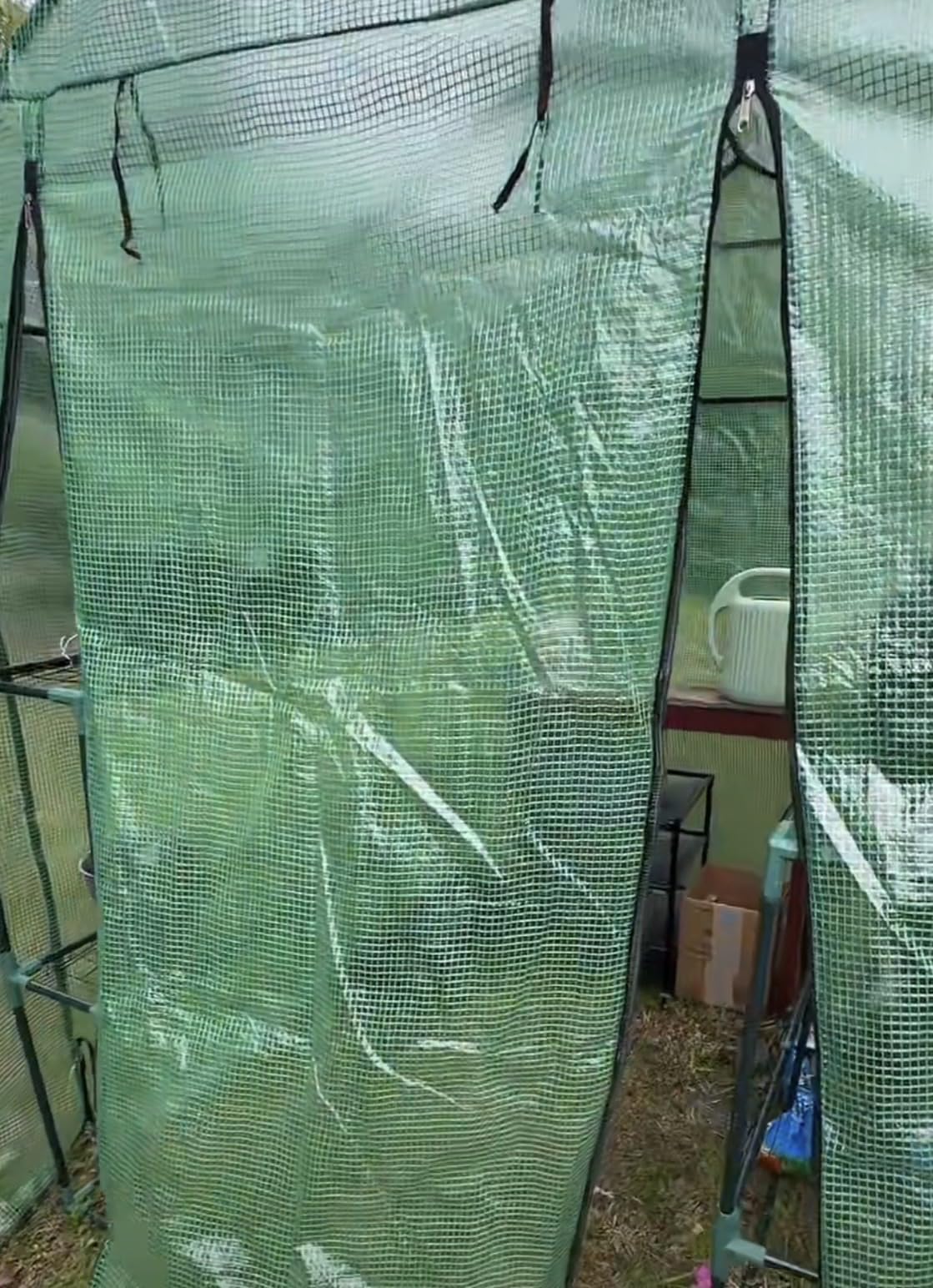
Owners treat this as a starter house and pair it with a thermometer, a small fan, and a heater for cold nights. The limitation is the flap: side panels are not tied to the door frame, and the Velcro side windows do not seal completely, so plants near those panels get cold air in winter.
What the Greengro is genuinely good at
Seed starting, overwintering a few container plants, and hardening off seedlings before they go outside. It screens out insects and rodents while holding warmth and humidity, and the zippered door plus a screened observation window give you enough control for a small space.
Reviewers who anchor it with cords and weight the base with blocks report it lasting for years. Parents looking for a first garden project with kids may also like our kids gardening kit picks to run alongside it.
What the Greengro cannot do
It will not hold harvest-stage crops through a hard winter without a heater, and the 4.1 star rating reflects that. Shelf parts are occasionally missing from the box, and the manufacturer is described as hard to reach when that happens.
Lightweight tubing and plastic connectors bend or snap under strain, so treat it as a seasonal structure you move rather than a permanent one you plant in place.
4. SUNGIFT 57 x 61 x 80 Inch Walk-In Greenhouse: Best for Seed Starting
SUNGIFT Walk-in Greenhouse, 57 x 61 x 80 in, 3 Tiers 10 Shelves
57 x 61 x 80 inch footprint
PE cover over powder-coated steel
3 tiers and 10 shelves
Zippered roll-up door
Pros
- Ten shelves across three tiers
- Single-person setup in under an hour
- Comfortable walk-in space for an adult
- Takes down flat for storage
Cons
- Very light frame that lifts in wind
- Included tie-downs do not work
- Plastic shelf hooks release under load
- Cover binding separates within a season
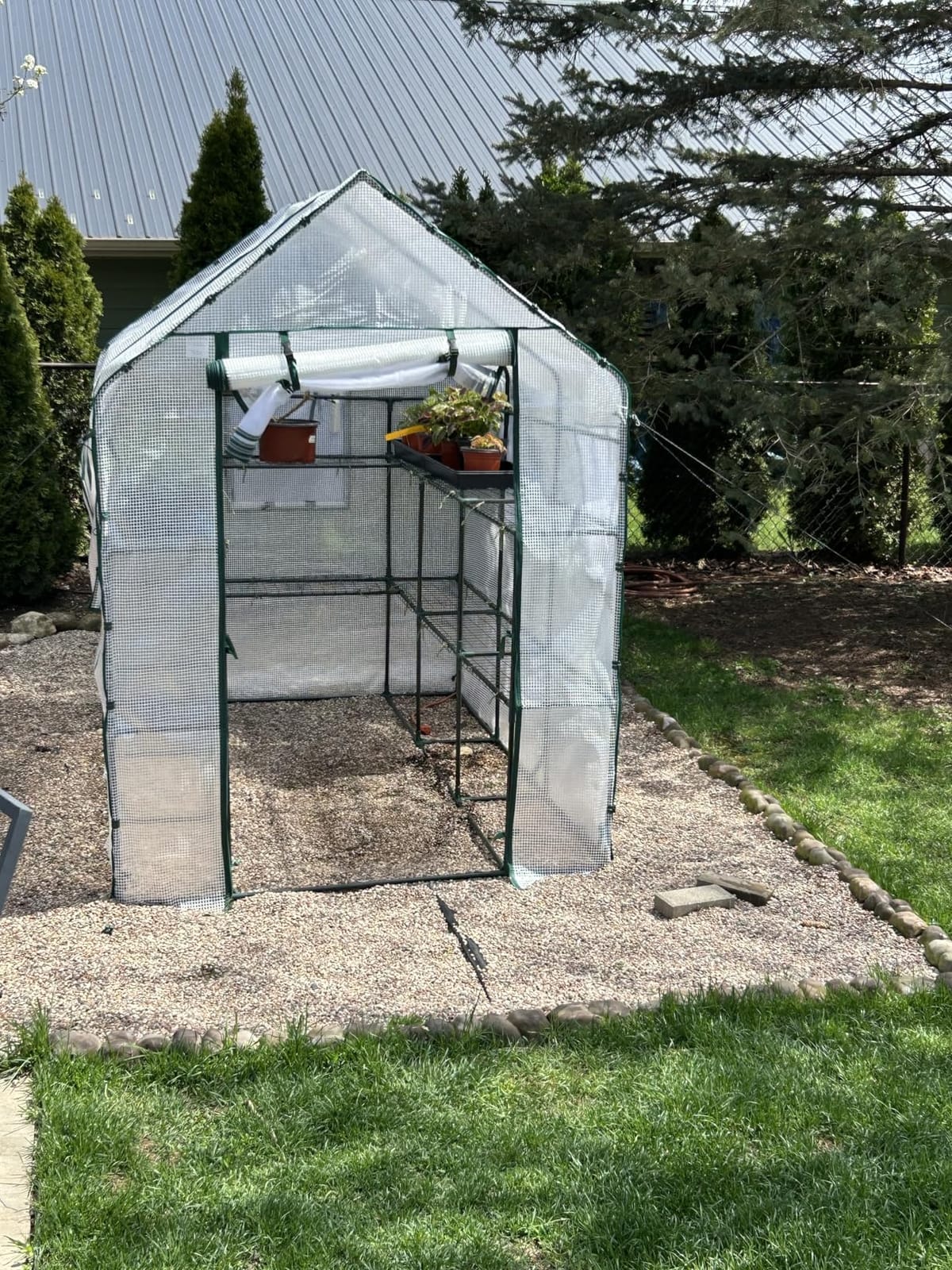
The SUNGIFT is a shelving-first design, and for anyone starting thousands of seedlings that is the point. Ten shelves total sit across three tiers, four per side plus two larger shelves at the front, all on a powder-coated steel pipe frame.
At 80 inches tall it gives you genuine standing room, and the roll-up zippered door plus two side observation windows add enough airflow for spring and fall. Most owners assemble it alone in under an hour with no tools.
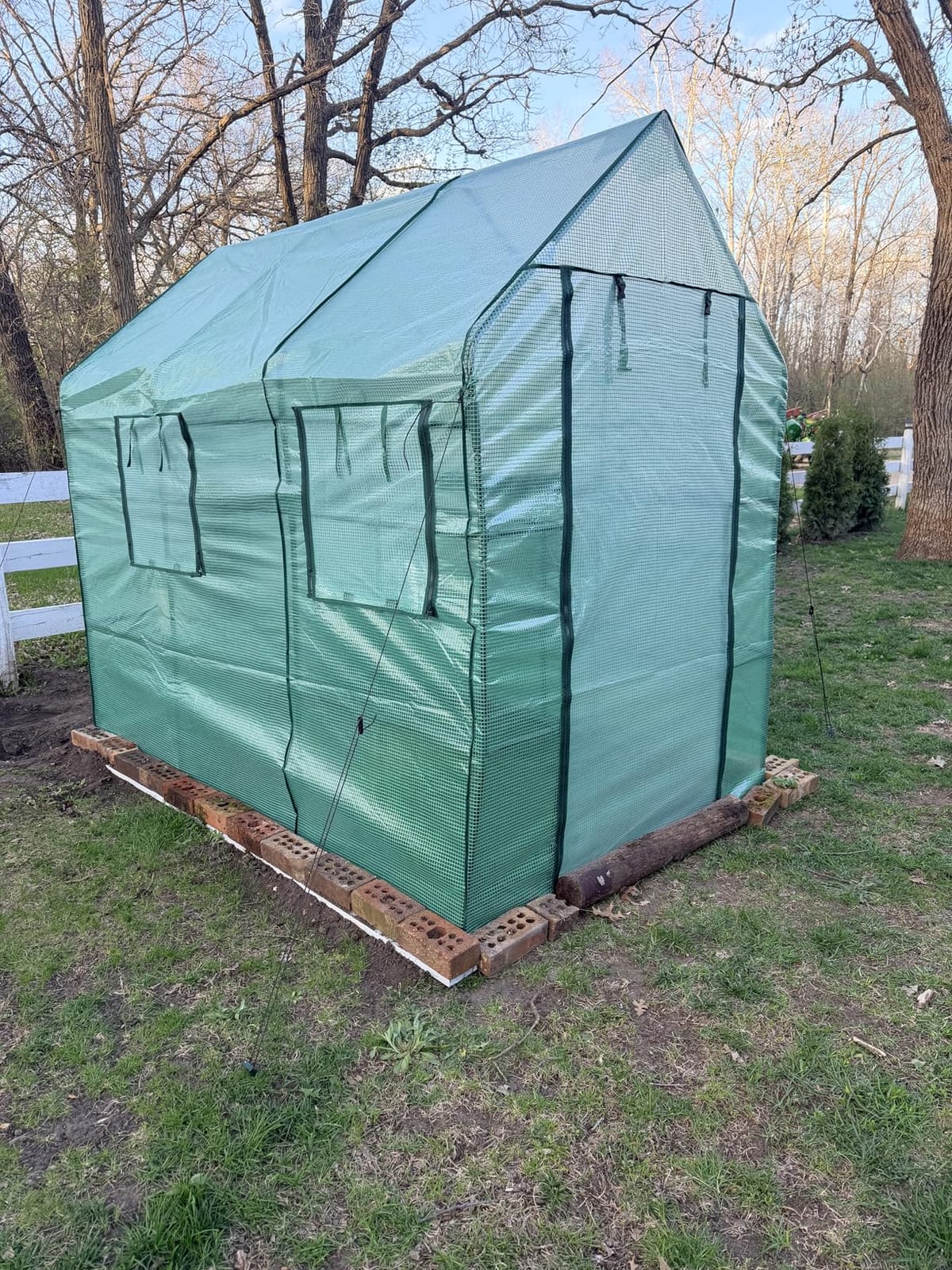
The honest weakness is the frame weight. Reviewers nearly universally warn that the structure is too light to stand up to wind without cinder blocks or proper ground stakes, and the rope toggles and thin anchors supplied in the box are described as ineffective.
The second weakness is hardware. Shelf attachment points use plastic hooks that stretch and release under load, dumping plants onto the shelf below. The cover binding and seams also tend to separate within a season, and one owner reported a zipper coming apart within months.
Why seed starters like the SUNGIFT
Ten shelves is a lot of propagation capacity in a footprint that fits beside a house, and the no-tool takedown means you can store it in a shed between seasons instead of losing yard space all winter. The two side windows help prevent the damp, stagnant conditions that cause damping-off in dense seedling racks.
It is also the least expensive walk-in format in this roundup, which matters if you are starting with a limited budget and want to see whether greenhouse growing suits you before committing to a rigid structure.
Where the SUNGIFT will frustrate you
Do not buy it for a windy or exposed yard without buying real stakes and a ballast plan. The included tie-downs will not do the job, and a 6×8-class fabric house that lifts in a gust can take plants with it.
The PE cover here is described by the manufacturer as seasonal frost and UV protection rather than permanent shelter, so plan on replacing it every one to three seasons depending on your sun exposure.
5. CROWN SHADES 12×8 Pop-Up Walk-In Greenhouse: Best Budget Walk-In
CROWN SHADES 12X8 Pop Up Outdoor Walk-in Portable Greenhouse,Green
12x8 ft walk-in footprint
PE cover over rust-resistant steel
CenterLock one-push hub
3 adjustable height levels
Pros
- Fastest pop-up design in this roundup
- Internal support pole stiffens the hub
- Roomy 12x8 interior for working
- Three height settings fit different crops
Cons
- PE cover life is limited
- Needs added anchoring in gusty locations
- Heat builds fast without constant venting
- Anti-aging cover still fades under UV
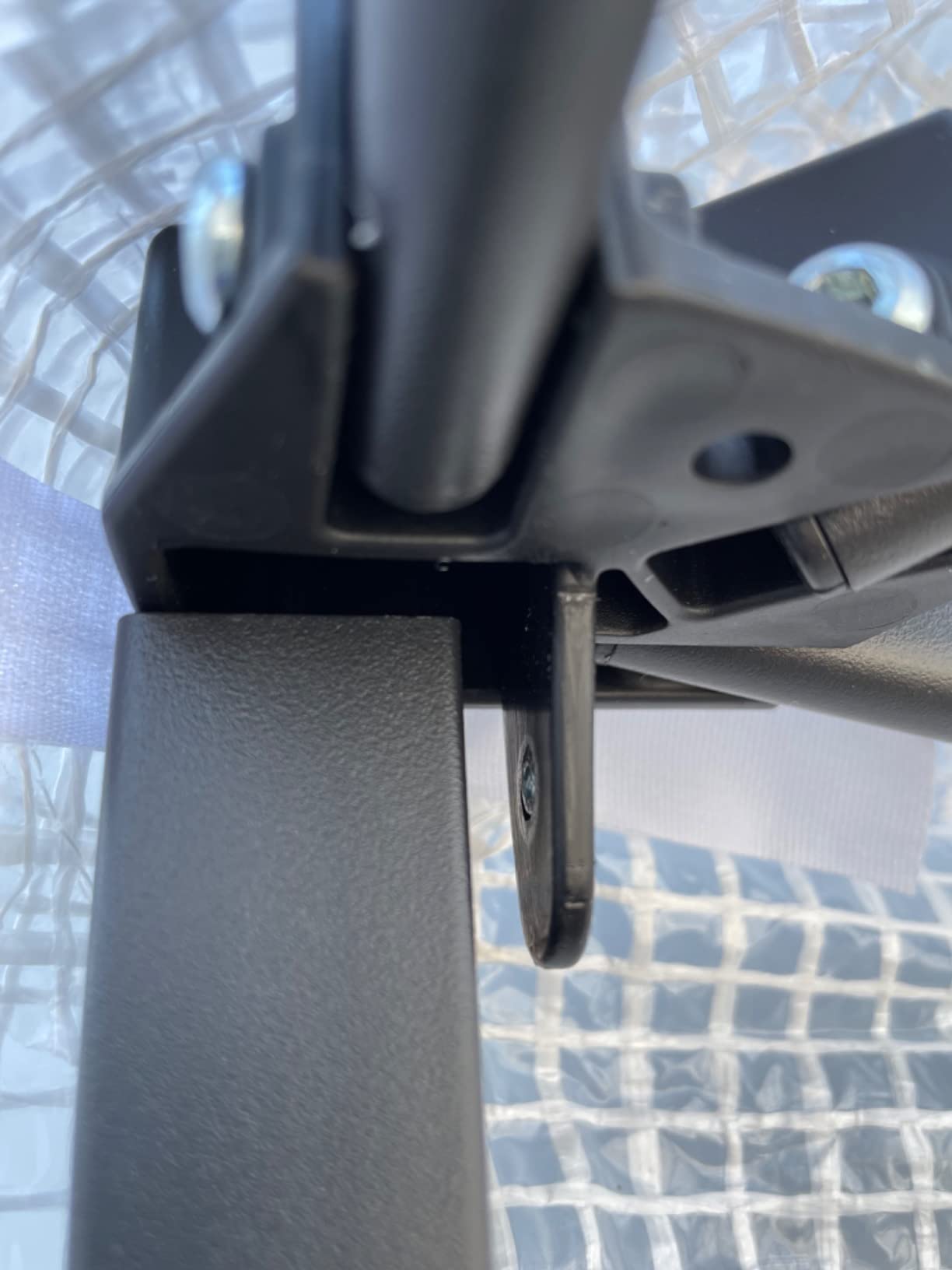
At 12 by 8 feet, the CROWN SHADES gives you more floor area than most walk-ins on the list while keeping the tool-free convenience of a pop-up. Setup takes seconds with the patented one-push CenterLock hub, which has an internal support pole underneath for extra frame stability.
That internal pole is the detail that separates it from a basic pop-up. Owners report the frame holding together better than cheaper designs, and the heavy-duty rust-resistant steel frame comes with wind ropes and stakes included.
Three adjustable height levels let you raise or lower the frame for seedling trays, mid-growth plants, or mature stock, which is genuinely useful when one structure serves the whole season. The upgraded anti-aging PE cover is described as creating a humid microclimate.
The limitation: the included ropes and stakes are considered adequate only for calm yards, and anyone in an exposed or breezy location is advised to add extra anchoring. Ventilation through the roll-up zippered door and mesh windows is described as necessary in warm weather rather than optional.
Who the 12×8 CROWN SHADES suits
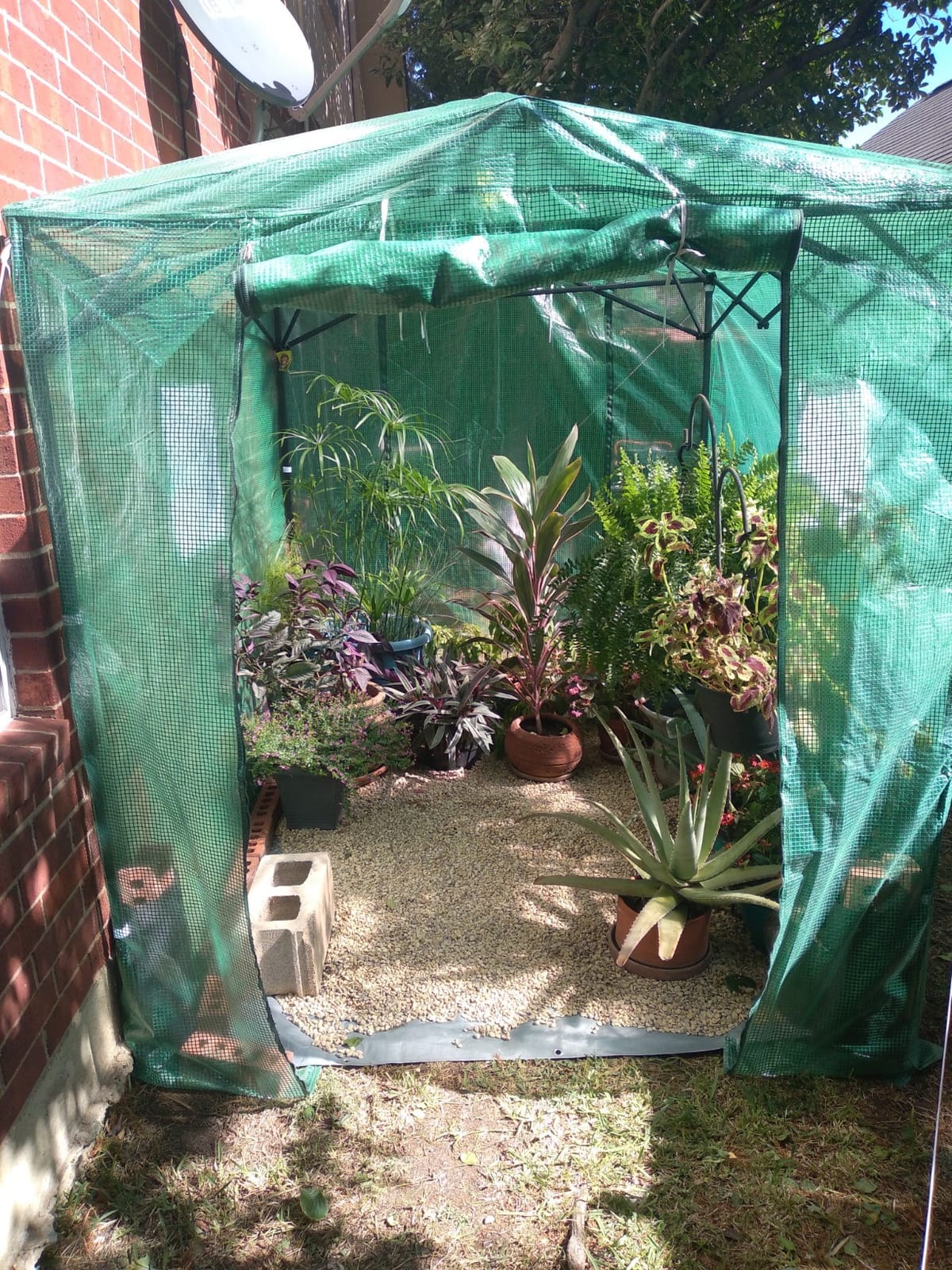
Gardeners who want walk-in space and fast setup without spending a full weekend on assembly. If you move it around, follow the sun, or only need it for part of the year, the pop-and-collapse design is a real advantage over a rigid kit.
It also works as a plant room during winter, holding tender pots above freezing in a way a fabric cover cannot in a mild climate, as long as you keep a heater within reach and the door zipped.
Where it falls down
It is still a fabric-covered house. The anti-aging cover slows UV degradation but does not stop it, and reviewers expect to replace the skin well before they replace the frame.
Ventilation is manual, and the mesh windows are small for a 96 square foot floor. In a hot summer you will be opening the door and sides constantly, which is a daily chore rather than a one-time setup cost.
6. WUKHG 8×14 Aluminum Twin-Wall Polycarbonate Greenhouse: Best for First-Time Rigid-Frame Builders
8X14FT Green House with Thermometers, Large Aluminum Greenhouse for Outdoor
8x14 ft aluminum frame
4mm twin-wall polycarbonate roof
70% light transmission
166.1 in L x 97.2 in W x 80.6 in H
Pros
- Rigid aluminum frame and panels hold up in wind
- Best written instructions in this roundup
- Tight seals keep water out
- Roof gutter collects rainwater
Cons
- Roof vent hardware feels flimsy and can blow off
- Assembly takes many hours
- Panel film must be peeled off first
- Runs hot on sunny days
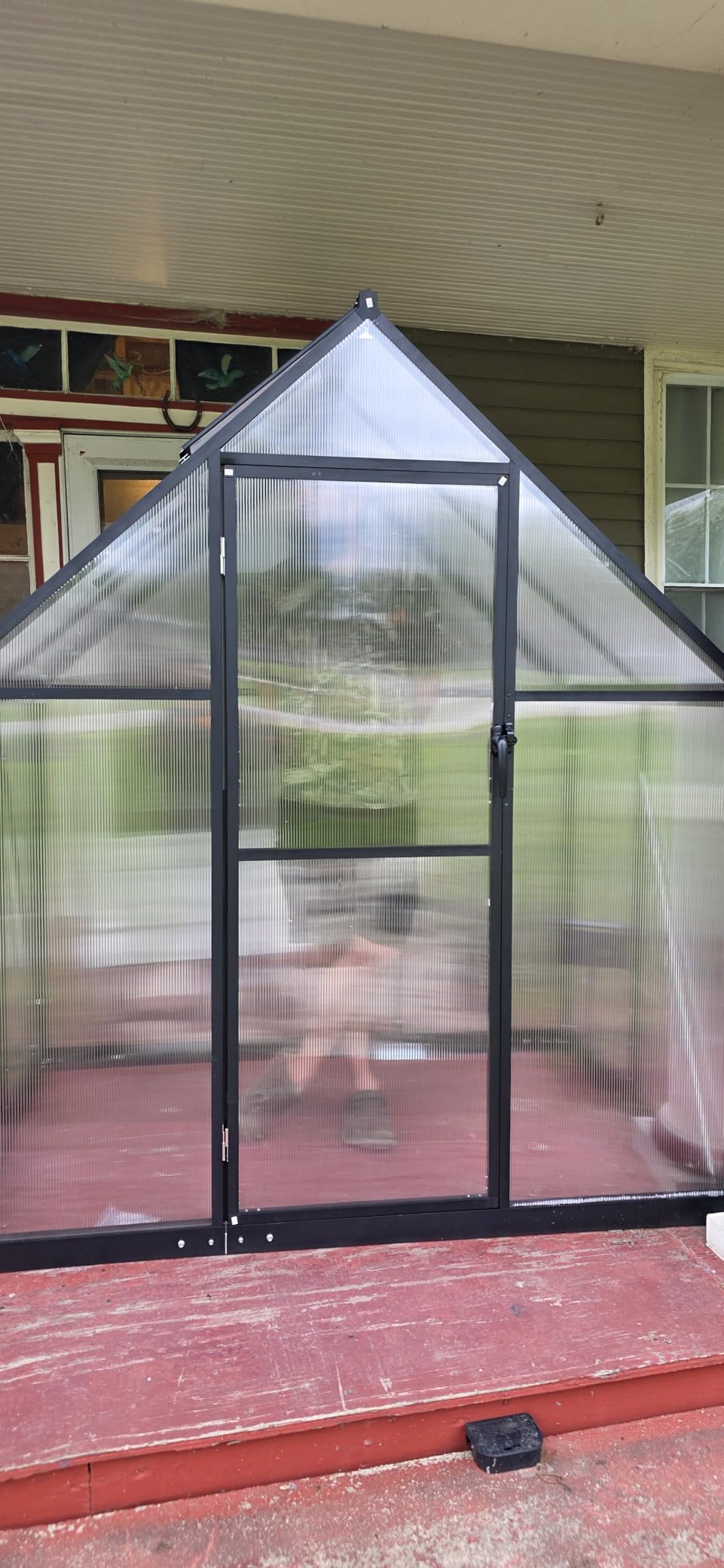
The WUKHG is where the material conversation changes. Instead of fabric, you get an aluminum alloy frame with 720g twin-wall 4mm polycarbonate roof panels that block UV while transmitting roughly 70% of light. That is a structure you can leave standing all year.
Owners consistently describe it as noticeably more durable than fabric-covered houses, with panels that slide into place precisely and doors and windows that seal tightly enough to keep water out. The roof gutter system for rainwater collection and drainage is a nice touch that most kits at this size skip.
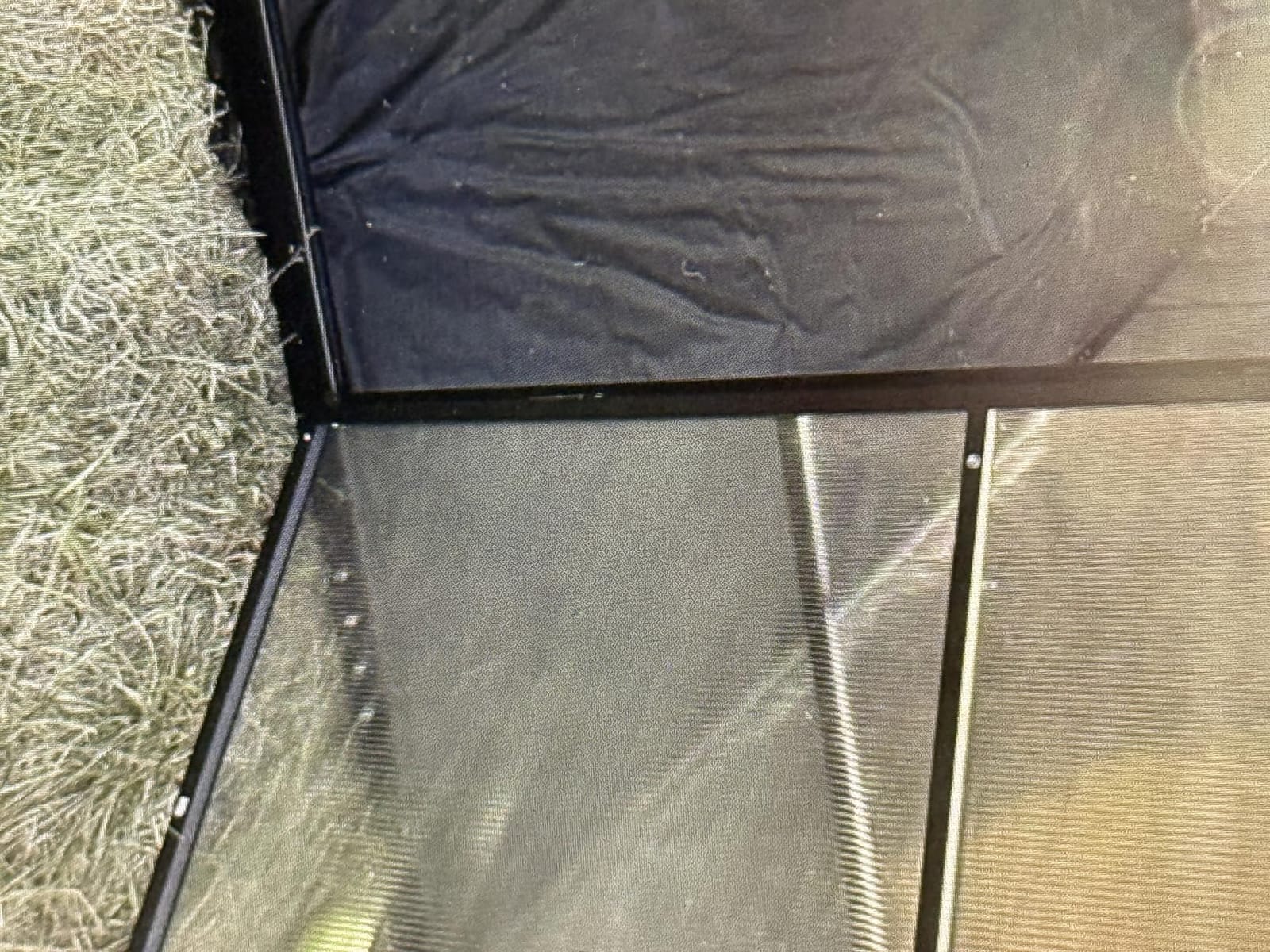
What sets it apart for a first-time builder is the documentation. Parts are numbered, the written instructions walk through each step with per-step hardware bags, and the panels can be silicone-glued at the joints for added rigidity if you want a stiffer frame later.
The limitation is honest: roof vent hardware and struts feel flimsy, and one owner had the vent torn off in a gust. Assembly is a multi-hour job, realistically with a second person, and the protective film has to come off every panel before installation or the glazing will haze.
What changes when you move to polycarbonate
Twin-wall panels trap an air gap between layers, so the interior holds heat noticeably better than PE film on a cold night. The diffused light they produce also reduces harsh sun scorch on seedling leaves, which is why propagation-focused growers like this style.
They are heavier and more permanent than fabric. That is the point, and it also means you are committing to a foundation or anchor plan rather than a seasonal pop-up.
When to pass on the WUKHG
If you want a structure you can carry to a new location, this is not it. An 8×14 aluminum and polycarbonate build is a fixed installation, and while only 198 owners have reviewed it, the long-term picture is still forming.
Upgrade the roof vent hardware early if you buy this. Owners in gusty locations report adding their own struts as the first modification, and it runs hot inside without active ventilation on bright days.
7. Backyard Discovery Willow 9×6 Cedar Greenhouse: Best for Year-Round Use
Backyard Discovery Willow 9′ x 6′ Cedar Wood and Polycarbonate Walk-in Greenhouse Kit with Exhaust Fan, Windows, Hose Hook-Ups, PowerPort, Staging Shelves for Year-Round Outdoor Gardening
9x6 ft cedar frame
Commercial-grade 4-wall polycarbonate
54 sq ft interior
2,800 lb snow load rating
Pros
- Highest rating of any pick here
- Real cedar frame with natural decay resistance
- 4-wall panels retain more heat than twin-wall
- Power outlets and staging shelves built in
Cons
- Serious assembly effort
- Wind ratings depend on exact anchoring
- Power source for fan and outlets not included
- Stain coverage varies between units
The Backyard Discovery Willow is the only cedar structure here and the highest rated at 4.7 stars. It is also the only one that a buyer can reasonably call a workshop rather than a plant cover, and that is the reason it earns this spot.
Inside 54 square feet you get a built-in workstation, 13 linear feet of fixed staging shelves, interior and exterior hose hook-ups, and a patented PowerPort with three electrical outlets and three USB ports. A temperature-activated exhaust fan handles heat and assists pollination, and the power source for it is not included.
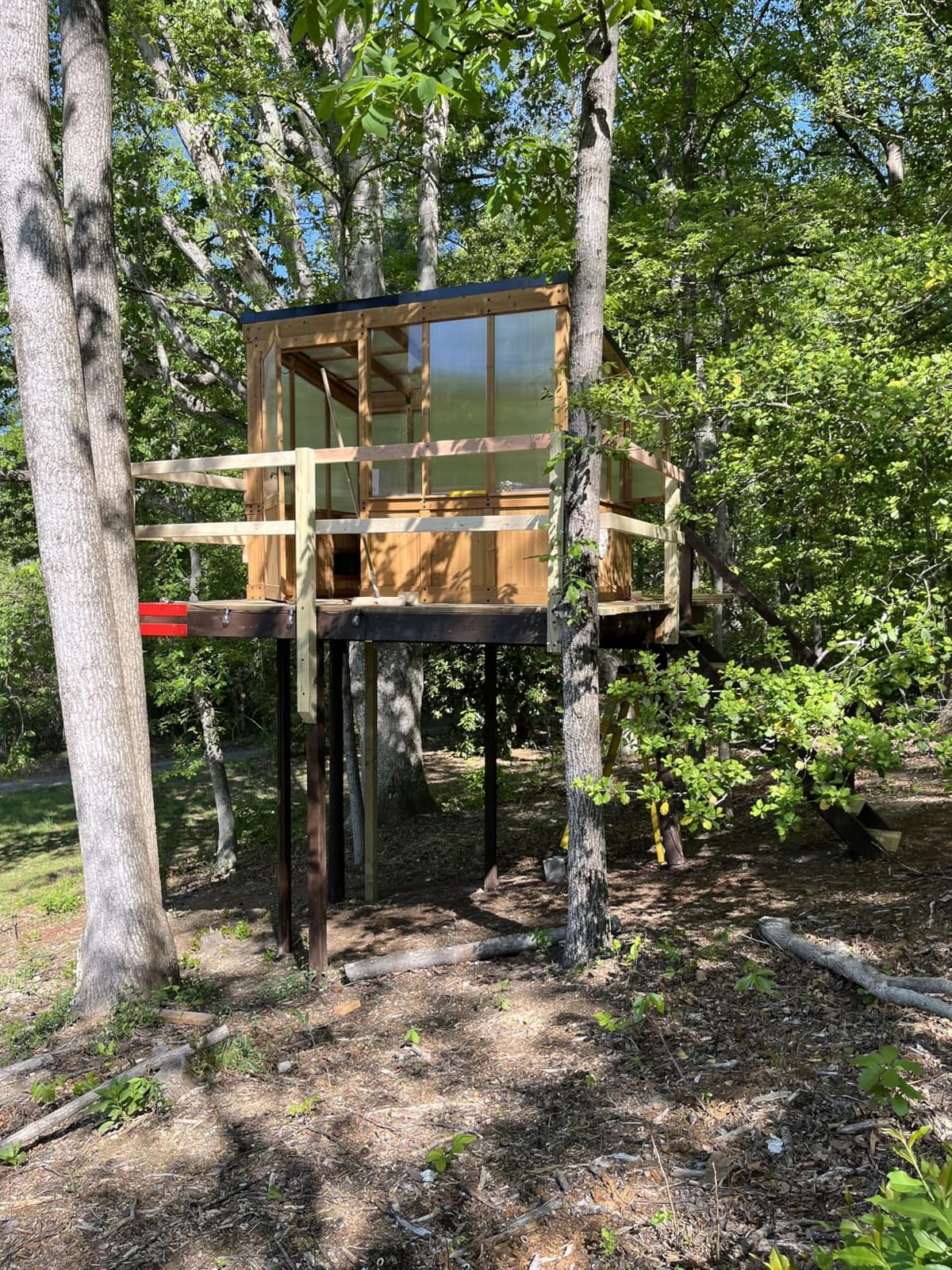
The engineering is what justifies the cedar price. The frame is 100 percent cedar with natural decay resistance, the roof and window panels are commercial-grade 4-wall polycarbonate claimed to hold 30 percent more heat than double-wall, and the structure is Pro-Tect tested to a 2,800 pound snow load and winds up to 100 mph when anchored as specified.
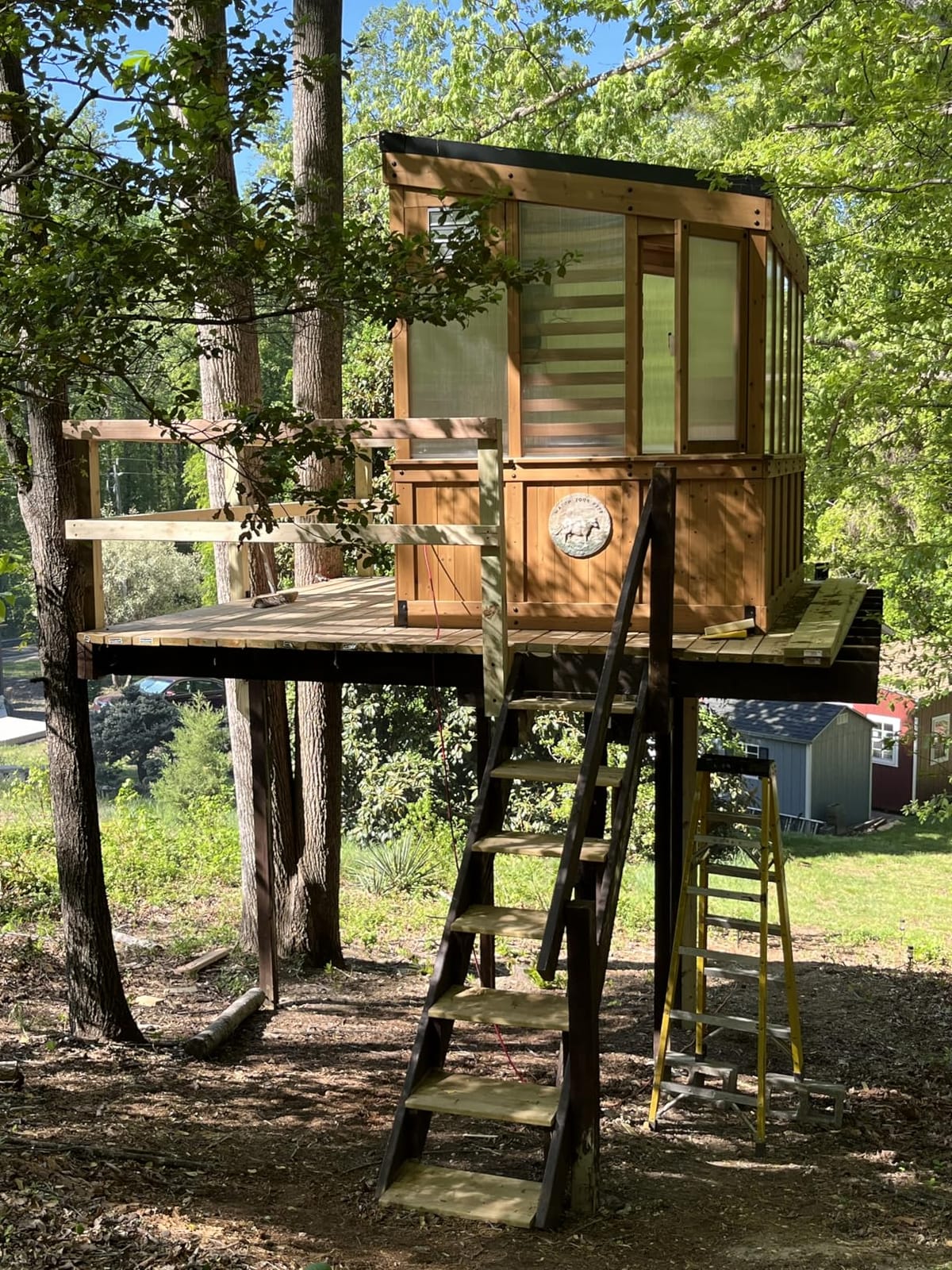
Pieces arrive pre-cut, pre-drilled, and pre-stained with app-based instructions and a 5-year warranty. Owners note the modern stained finish looks good in a yard instead of reading as a plastic tunnel, which matters if it stays up year-round.
Why this one earns the year-round recommendation
It is the only structure here with a stated snow load rating, a temperature-activated fan, and usable electrical service. That combination is what lets you grow through winter rather than simply protecting plants for a few cold weeks, and the 4-wall panels insulate better than anything else in the roundup.
Owners describe using it as a real workspace in spring, with the staging, power, and hose hook-ups making potting, propagation, and tool storage all possible in one place.
What to know before ordering
Assembly is a serious project for a kit of this size and weight at 259 kilograms, and it often needs a second pair of hands. The published wind ratings hold only if you anchor it exactly as the manual specifies.
With 112 reviews the owner history is thinner than the fabric kits, and stain saturation can vary between units. Plan the power source for the fan and outlets before the build, not after.
8. Yardenaler 8×16 Wooden Polycarbonate Greenhouse: Best for Windy Yards
Yardenaler 8×16 FT Greenhouse for Outdoor, 6MM Thick Polycarbonate Panel Wooden Walk-in Green House with Adjustable Roof Vents and Lockable Door, Backyard Garden, Light Mocha Brown
8x16 ft wooden frame
6mm multi-layer polycarbonate
190.2 in L x 96 in W x 90.6 in H
427 lb
Pros
- Survives 50+ mph gusts and blizzards
- Multi-layer panels keep warmth in and weather out
- Looks far better than a plastic dome
- Part numbers printed on the piece ends
Cons
- Softwood splits near predrilled holes
- Door lock and vent hinges are cheap plastic
- Assembly is slow and parts go missing
- Unsealed panel edges need caulking
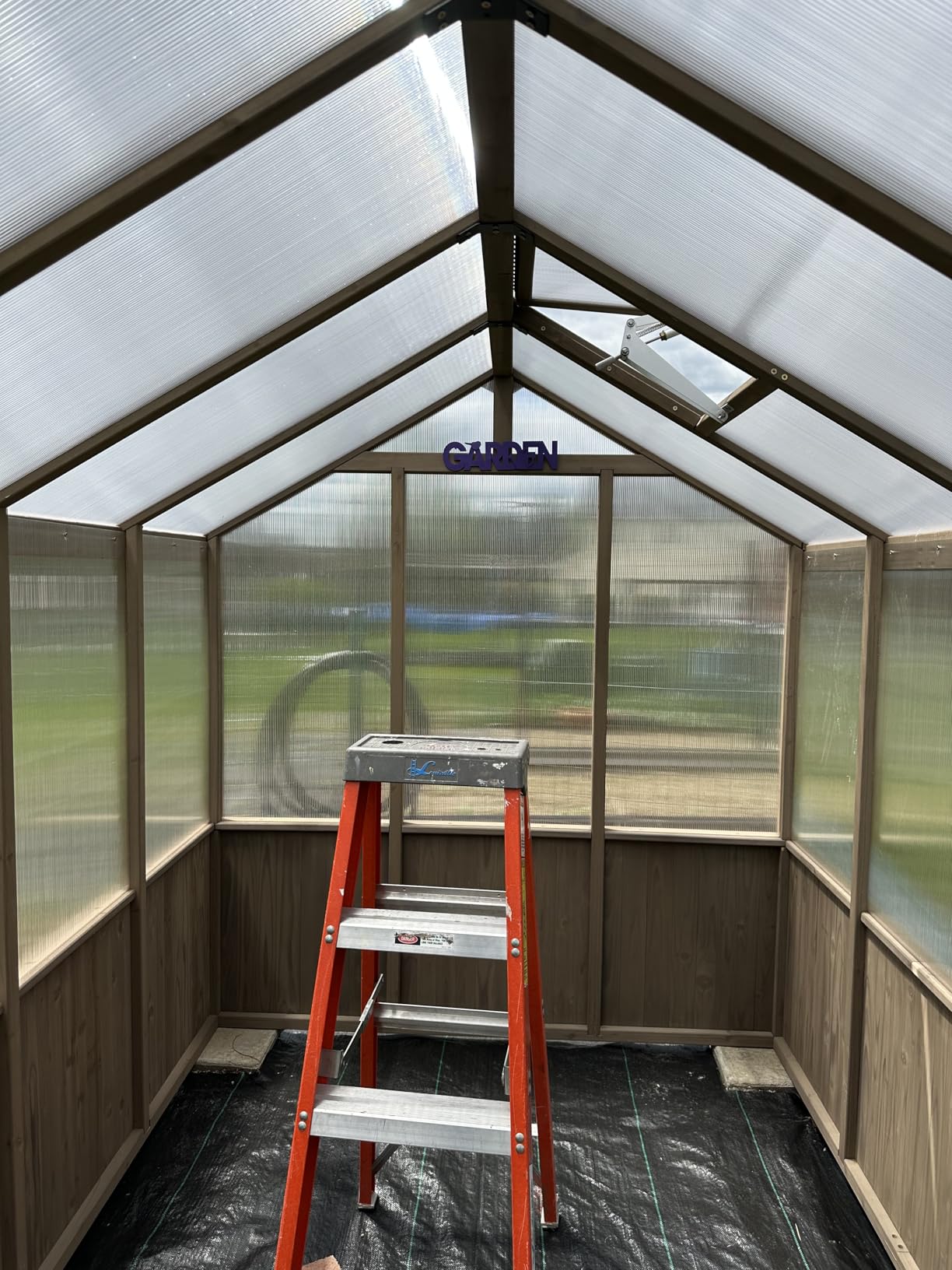
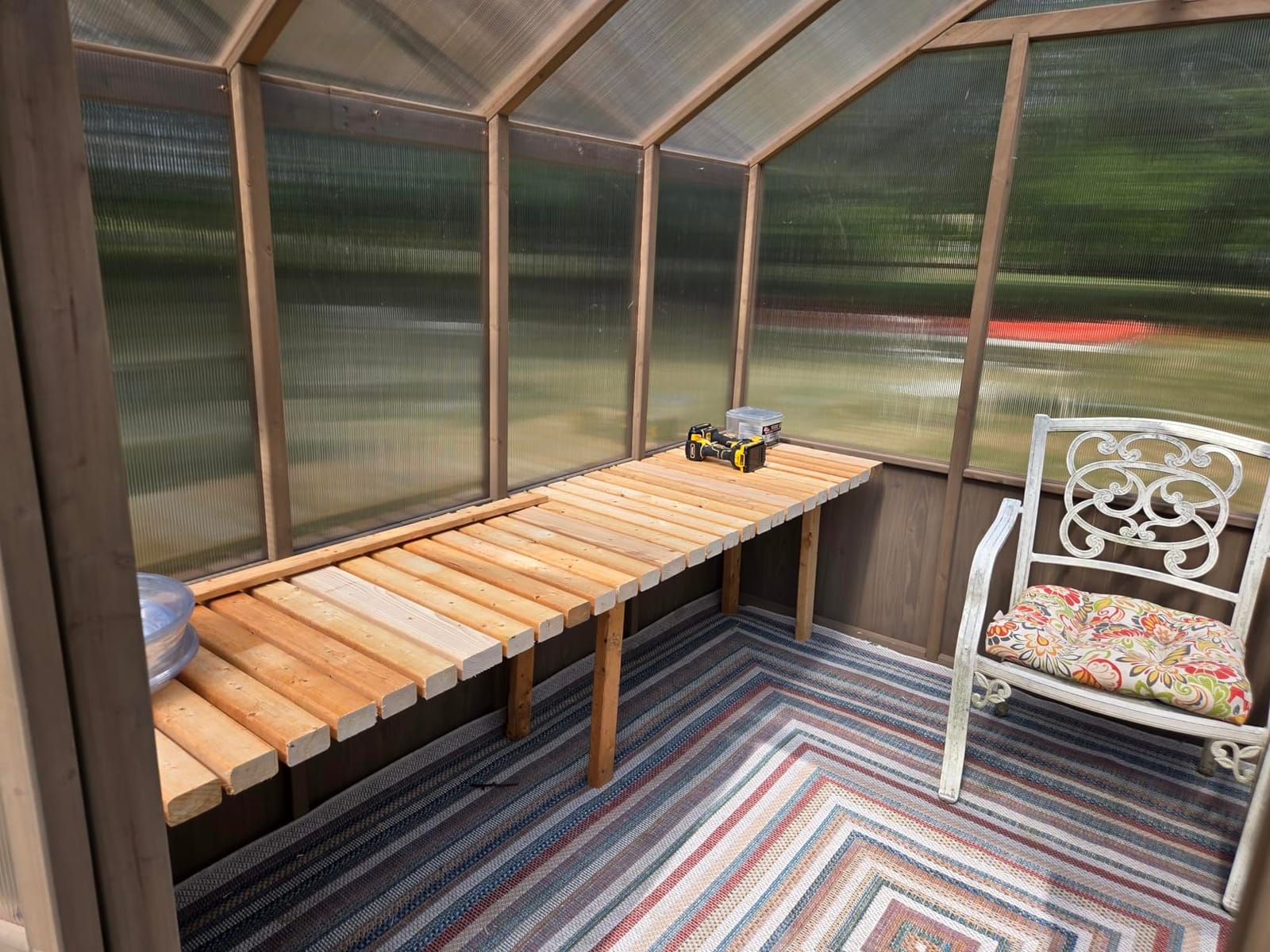
The Yardenaler is the most convincing answer to the question gardeners ask most in forums: which greenhouse is actually sturdy enough for a real backyard. Owners in exposed locations report it holding together through 50+ mph gusts and blizzards, and 427 pounds of structure has a lot to do with that.
At 8×16 with 6mm multi-layer polycarbonate panels, it gives you a generous footprint for row crops and serious overwintering. The roof hinges open to a maximum 45 degree angle, and there are two roof vents plus a hinged door.
One small detail that tells you about the manufacturer: part numbers are printed on the ends of the pieces, so labels do not fall off and get lost in the grass. That saves real time on a build this size.
The limitation is the wood species. This is a light softwood, not cedar, and it splits near the predrilled holes. The door lock and vent hinges are cheap plastic parts that need replacing, and panel edges arrive unsealed, so caulking seams is a required step rather than an optional upgrade.
Why windy sites suit the 8×16 Yardenaler
Polycarbonate panels are far less prone to panel failure in wind than fabric, and the wooden frame gives you solid surfaces to bolt down. Owners in genuinely exposed yards are the ones writing the most positive reviews, which is a useful signal when your lot sits in an open area.
The finished structure also looks far better in a garden than a fabric dome does, and 8×16 is a workable size for someone who wants real growing space without the jump to a commercial footprint.
What you will be fixing on day one
Plan on caulking panel edges, replacing the door latch and vent hinges with better hardware, and treating the predrilled holes in softwood with sealant before assembly. Owners also report occasional missing parts and misaligned panel grooves.
Assembly is slow, so budget the time honestly and check the parts inventory the day the crate arrives rather than discovering a gap midway through the frame.
9. CDCASA 12x10x10 Polycarbonate Greenhouse: Best as a Patio Sunroom
CDCASA 12x10x10 FT Polycarbonate Greenhouse for Outdoors w/2 Windows
12x10x10 ft aluminum frame
4mm twin-wall polycarbonate
70% light transmission
240 lb
Pros
- Frame feels genuinely sturdy in 20-25 mph winds
- Good light with over 99.9% UV blocking
- Two labeled boxes with extra hardware
- Works as a sunroom or seating area
Cons
- Instructions are pictures with little explanation
- Roof vent blows off and is hard to refit
- Some nuts and bolts are not included
- Loose slats need silicone sealing
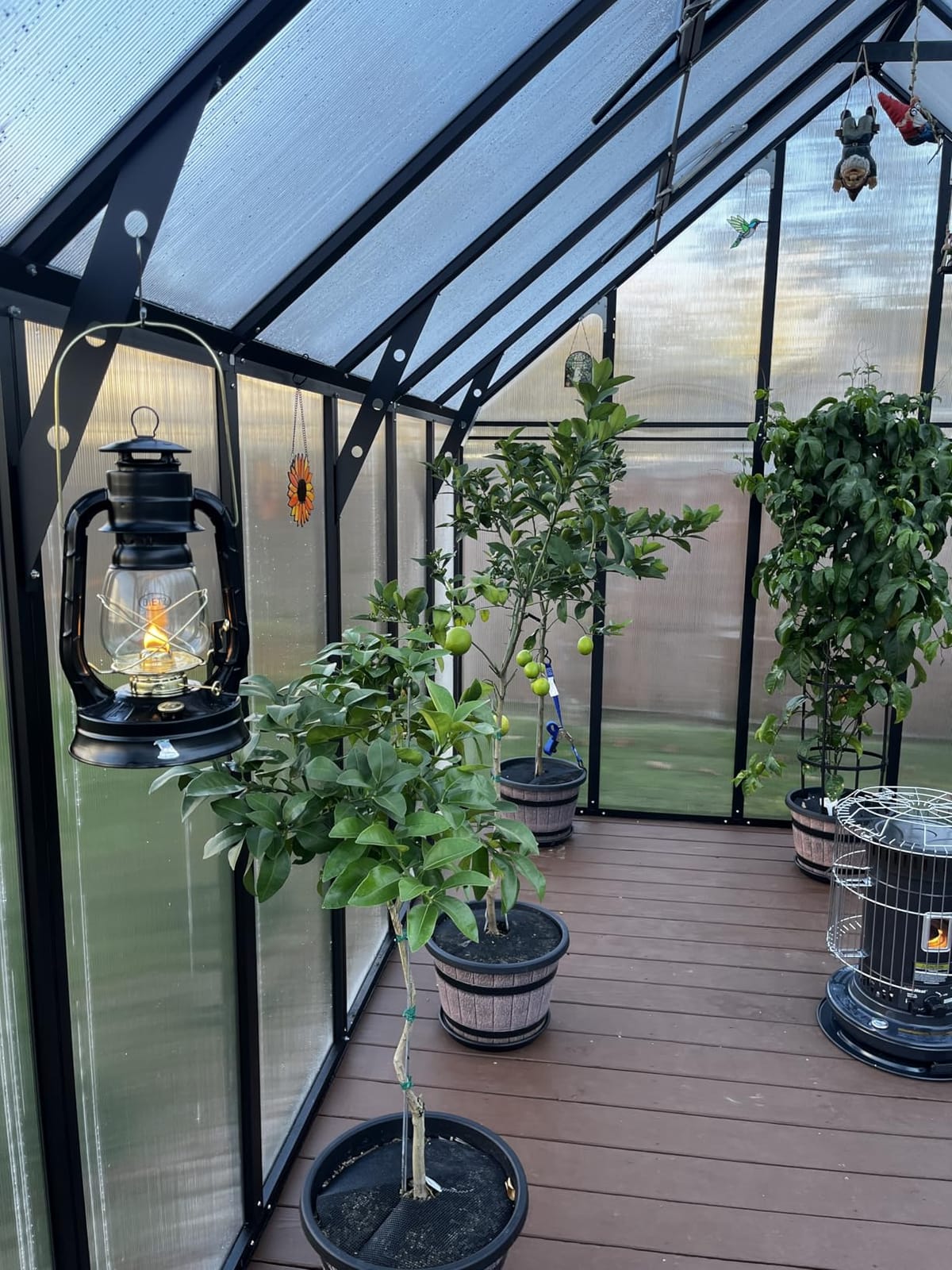
The CDCASA is the tallest structure in this roundup at 10 feet, and that extra height is what turns it from a plant shelter into usable living space. Owners use it as a sunroom or seating area, not just a growing box.
The build uses a rust-resistant aluminum frame with a patented Quick Connect push and locking screw system that the manufacturer says cuts assembly time roughly in half. Parts arrive in two well-labeled boxes with extra nuts and bolts in the kit, and the stated ratings are 20 PSF snow load and 56 mph wind resistance.
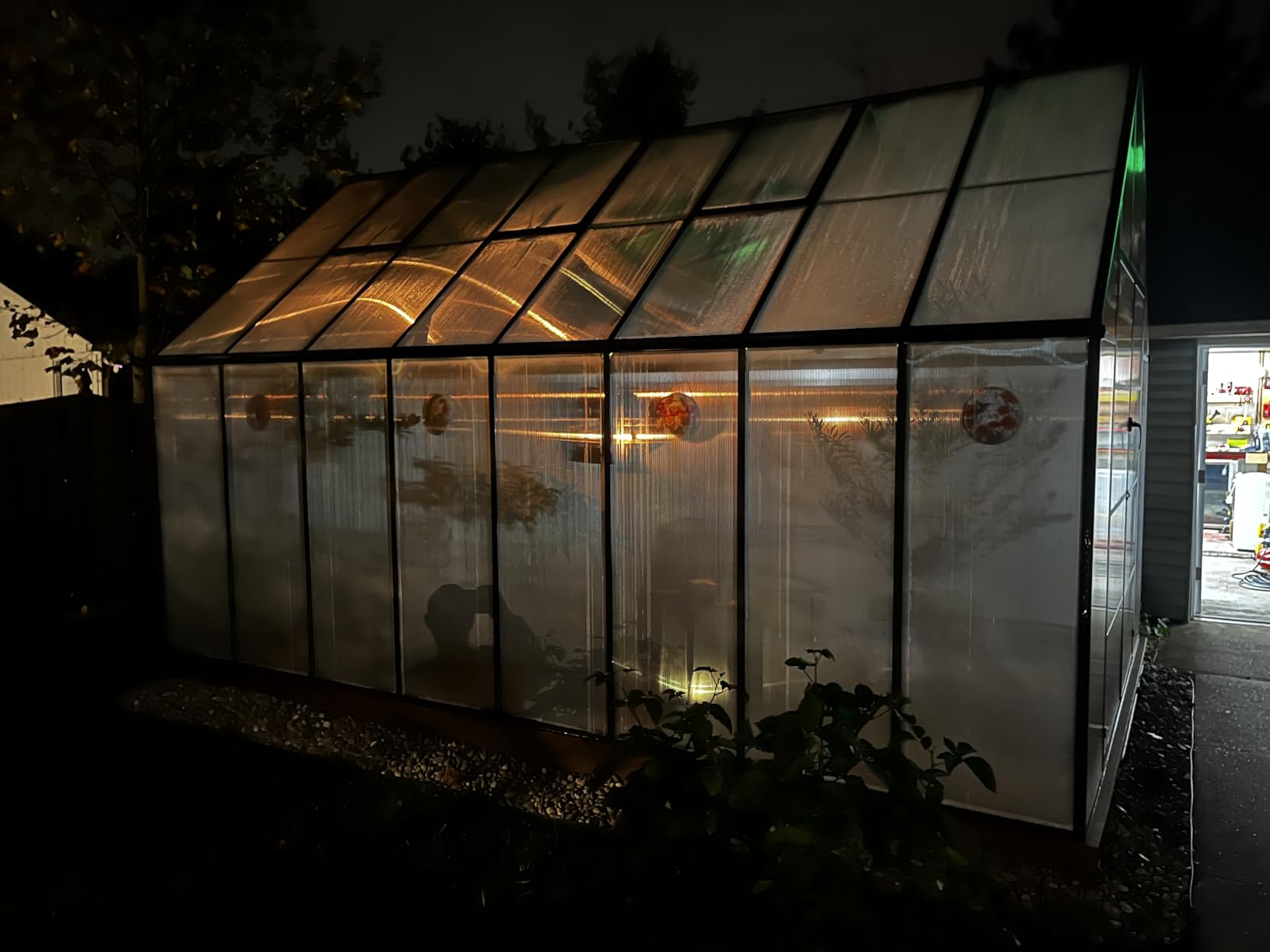
Glazing is 4mm twin-wall polycarbonate with about 70% light transmission and over 99.9% UV blocking. Two swing doors with snap-on handles, rain gutters on both sides, and vents with five adjustable angles give you plenty of ways to move air.
Buyers who finish the build rate the result very highly, describing it as sturdier than expected and able to keep plants above freezing. The problem is documentation: the manual is essentially unlabeled pictures, and even experienced builders report needing 10 to 12 hours, several restarts, and a proper Allen key.
Why this works beyond the garden
A 10 foot peak height means an adult can stand, walk, and comfortably work inside, and the swing doors are wide enough to move furniture. Owners describe using it as a sunroom attached to a patio, which extends the season for people as well as plants.
You also get flexible base options: the base can be buried in soil or concrete, or screwed to a board for extra stability. That matters for a 240 pound structure that has to resist wind.
What to fix before the first windy day
Replace or reinforce the roof vent. Owners report it blowing off in wind, and refitting it can require partial disassembly, which is frustrating enough to do proactively.
Pick up the missing fasteners at a hardware store before you start, because not every nut and bolt needed is included in the box. Some slats and crossbars fit loosely and need silicone sealing once the frame is up.
10. PABIMIA 10×18 Aluminum Walk-In Greenhouse: Best for Large Rigid Builds
10×18 FT Aluminum Greenhouse, Durable Walk-in Polycarbonate Greenhouse Kit with Adjustable Roof Vent, Easy Assembly Outdoor Garden Greenhouse for Backyard, Black
10x18 ft walk-in footprint
Powder-coated aluminum frame
4mm double-wall polycarbonate
213.6 in L x 120.1 in W x 98 in H
Pros
- Very large footprint for the category
- Aluminum frame feels rigid and durable
- Double-wall panels diffuse light and block UV
- Slide-in panels simplify installation
Cons
- Lowest average rating in this roundup
- Roof vent hardware draws the most complaints
- Small review base means durability is unproven
- Two vents listed but only one is detailed
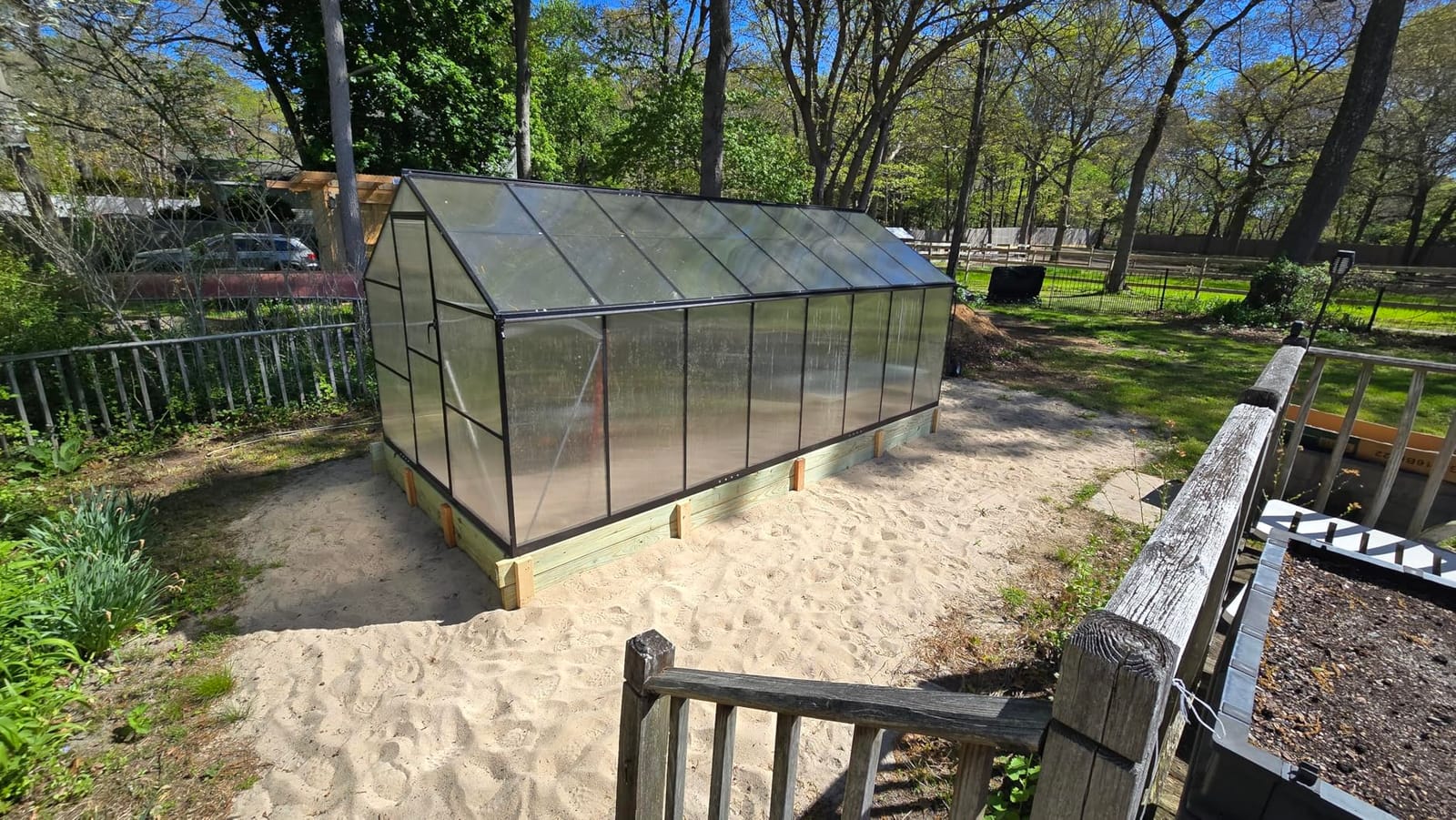
The PABIMIA 10×18 is the largest polycarbonate structure here and the one to consider if your goal is a real growing room rather than a protected corner. At 180 square feet, two people can work on opposite benches without getting in each other’s way.
The frame is powder-coated aluminum with reinforced panel structure, and the 4mm double-wall polycarbonate diffuses direct sunlight so leaves do not scorch under hot midday sun. Two adjustable roof vents and a slide-in panel design make airflow control and installation straightforward.
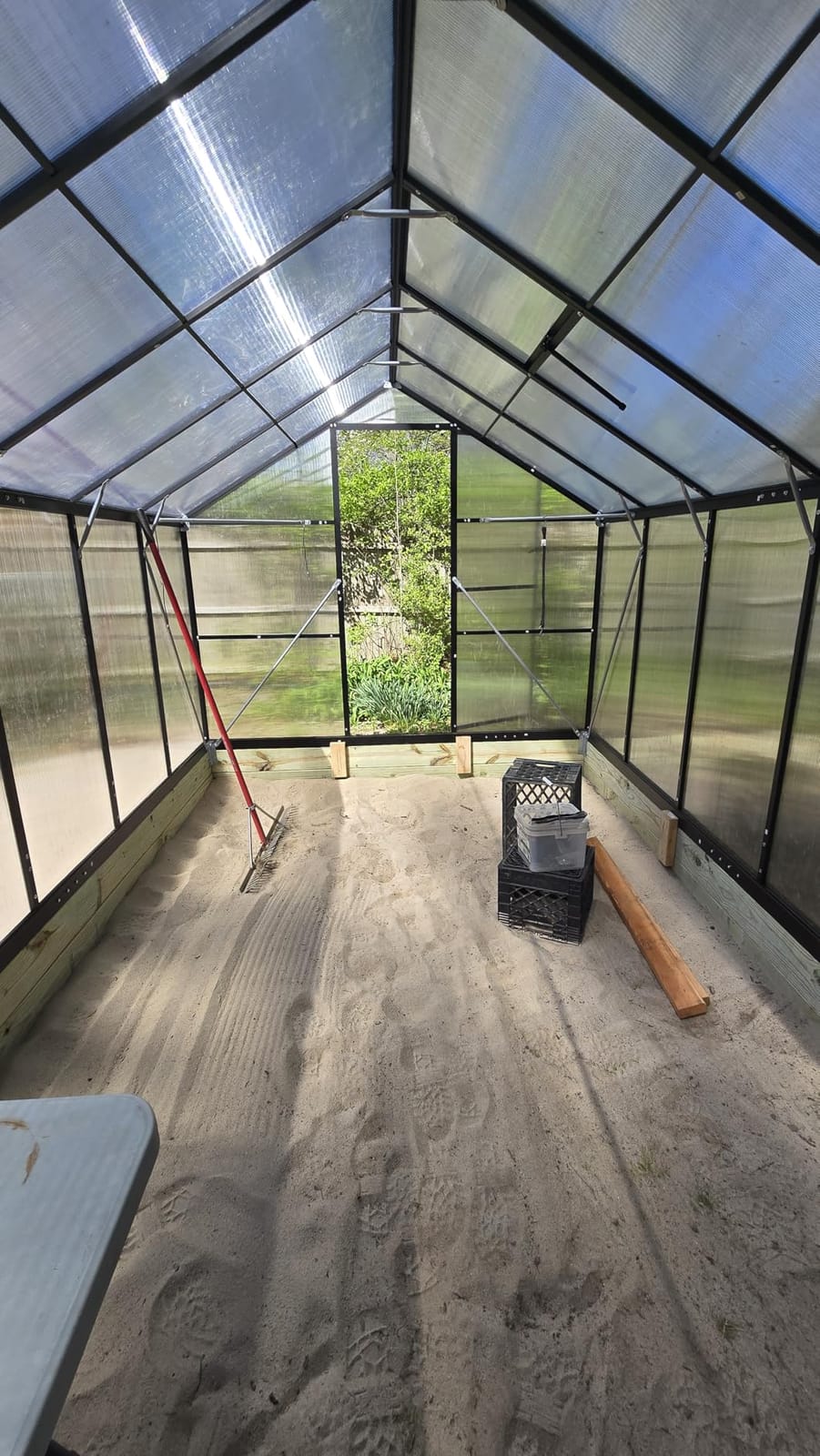
Parts are clearly labeled, a detailed instruction manual is included, and the hardware comes in the box, which puts it ahead of several competitors on documentation. An 8×16 version exists too, which is a sensible alternative if 10×18 overwhelms the site.
Be clear about the caveat: at 3.9 stars across 41 reviews, this is the lowest-rated and least-reviewed pick in the roundup, with a 15 percent one-star share. The roof vent hardware is the component reviewers criticize most, and with a small review base the long-term durability picture is genuinely unproven.
When the 10×18 footprint is worth it
If you already know you will fill it, the square footage pays for itself. This is the structure to grow tomatoes, cucumbers, and succession salad crops in rows, and the 98 inch height gives you standing room across most of the floor.
It also suits anyone moving from a small fabric house to rigid panels and wanting a jump in size and insulation at the same time, since the double-wall glazing handles heat better than any PE cover here.
Reasons to look at the alternatives first
With 41 reviews, you are relying more on specifications than on owner history. Buyers who assembled it tend to focus on size and frame rigidity, while complaints center on the roof vent and on assembly complexity.
Consider the 8×16 size or a better-reviewed alternative with similar footprint if you want more evidence before committing. For a 10×18 build, plan the base and anchoring first, because an aluminum frame at this length is only as strong as what holds it down.
How to Choose a Backyard Greenhouse
Most buyers regret the wrong size or the wrong cover material, not the brand. Work through these decisions in order and the specific model stops mattering as much as you think it will.
Pick your size class first
Under 4×4 feet is a seed-starting cabinet for a patio. A 4×6 to 6×8 walk-in is the first real step up, enough for a bench of trays and a few containers. The 8×8 to 8×12 range is the most commonly recommended starting point for a backyard, large enough to walk in and hold tomatoes, brassicas, onions, peppers, and carrots while staying out of the way of the rest of the yard. Anything at 10×20 or larger is a grower’s structure that you should only buy if you already have a plan to fill it.
Measure the site before you measure the greenhouse, and leave working room around the walls for ventilation, anchoring, and access. Forum discussions about backyard greenhouses consistently show buyers overestimating what a small house can hold, so count your plant space in square feet rather than by wishful thinking.
Choose glazing: polycarbonate or PE cover
Polyethylene cover is the budget option. It blocks wind, holds humidity, and costs little, but it degrades under UV and rarely insulates. Expect to replace it every one to three seasons, which is why PE houses are best treated as seasonal structures with a frame worth keeping.
Twin-wall polycarbonate adds an air gap between layers and holds heat noticeably better, and its diffused light reduces scorch on seedlings. Triple-wall and 4-wall panels insulate further and suit colder winters. The trade-off is weight, cost, and permanence: a polycarbonate greenhouse is a fixed installation, and the heat retention gains come with real material specifications. The main downside to polycarbonate is lower light transmission than clear glass, which matters most for high-light crops grown in a dim spot.
Frame material decides how long it lasts
Light-gauge steel tube with plastic connectors is what the cheapest fabric kits use, and it is the first thing to fail. Galvanized or powder-coated steel with mechanical joints holds much better, and the KING BIRD and CROWN SHADES both add extra crossbars and stiffeners for rigidity.
Aluminum extrusions will not rust and slide together with locking screws, which is why the WUKHG and CDCASA feel solid. Cedar is the strongest and most attractive option for a year-round structure, and the Backyard Discovery Willow is the clearest example. Softwood frames cost less than cedar but split near predrilled holes, which is a recurring complaint on the Yardenaler.
Five ways to keep a greenhouse cool in summer
Summer heat is a bigger practical problem than winter cold for most backyard growers, and none of the structures we studied treat it seriously. Work down this list: roof vents on both ends, roll-up side panels that remove the wall rather than just opening a flap, external shade cloth over the roof, a circulation fan for air movement, and finally a thermometer inside so you are reacting to numbers rather than to a guess.
Ventilation matters more than insulation for most crops. A well-vented PE house in a hot climate can outperform a sealed polycarbonate house, and owners of the fabric kits here consistently report needing the door and windows open daily in summer.
Siting, anchoring, and permits
Put the greenhouse on a level pad with a frame or base kit rather than bare soil where it can settle and rack. Anchor it properly: the high wind failure in reviews almost always traces back to unanchored fabric houses, and the pop-up kits are the most vulnerable because they weigh the least. Keep it clear of large trees for both shade and falling limb risk, and orient the ridge east-west so the glazed sides rather than the end walls face the sun.
Check zoning and HOA rules before you buy. Structures above a certain size or with a foundation may require a permit even when they are unconditioned, and sight lines matter in neighborhoods where a 20×10 house in full view of the street can cause friction.
What a greenhouse really costs beyond the kit
Anchoring hardware, base kits, and even thermometers are frequently sold separately, which is the most common surprise cost in this category. Add a heater if you want winter production, a fan and shade cloth for summer, and budget for a cover replacement every few seasons on any PE house. Glass and heavy polycarbonate units also cost more to transport, and that shows up in the delivered total long before assembly.
How We Picked
Every greenhouse in this roundup was assessed on the same four things: owner review volume and rating, frame material and bracing, glazing type and thickness, and whether ventilation and anchoring hardware are included. We weighted real multi-season durability over first impressions, and every pick carries an explicit limitation so you can see where it gives way before you buy.
Frequently Asked Questions
Are backyard greenhouses worth it?
For most home gardeners, yes. A greenhouse lets you start seeds weeks before the last frost, protect tender crops from wind and cold, overwinter plants you would otherwise lose, and grow in a space you can control. The value drops sharply if you buy a large structure you cannot fill, so match the footprint to what you actually plan to grow rather than to the available yard space.
What are the downsides of a polycarbonate greenhouse?
Three come up most often. Polycarbonate transmits less light than glass, which can matter for high-light crops in a dim location. It is heavier and more expensive than a PE cover, so the structure is a permanent installation rather than something you move. The roof vent hardware on cheaper models is also the most failure-prone part, and panels can arrive with unsealed edges that need caulking.
Do greenhouses stay cool in summer?
Not on their own. A closed greenhouse can exceed outdoor temperatures quickly because the glazing traps solar heat. You need roof vents at both ends, roll-up side panels, shade cloth over the roof, and a circulation fan. Ventilation matters more than insulation for most crops, and budget models in particular need daily opening of the door and side windows.
What size greenhouse do I need?
Most backyard growers are best served by an 8×8 to 8×12 walk-in, which is large enough to hold tomatoes, brassicas, onions, peppers, and carrots while staying out of the way of the rest of the yard. Go smaller for seed starting and patio use, and go to 10×20 or larger only if you already have a growing plan that fills the floor.
Do I need a permit to build a greenhouse?
It depends on your municipality and HOA. Structures above a certain footprint or height, or anything on a permanent foundation, may need a permit even if the greenhouse is unconditioned. HOA rules are often stricter, particularly around sight lines and setbacks. Check both before you order, because moving a 20×10 walk-in is far harder than choosing a smaller one.
Final Verdict: Which Backyard Greenhouse Should You Buy?
For most yards, the EAGLE PEAK 8×6 is the best greenhouses for backyard gardening choice that balances owner track record, easy storage, and a frame that survives real winters. If you want maximum floor space for the money, the KING BIRD 20×10 is hard to argue with. If you are staying all year, the Backyard Discovery Willow is the only structure here built for that, and if you have never assembled a rigid greenhouse, the WUKHG 8×14 is the gentlest place to start. Whichever you pick, anchor it properly and open the vents in July.
Before the season gets going, you may also want to cover the yard around it properly, and we have tested the air fryer toaster ovens for backyard cooking for the harvest weekends that follow.