
A cold-winter chicken coop does not work by trapping heat. It works by blocking wind and moisture at bird level while letting stale air escape above the roost, and the best chicken coops for cold winters are the ones that let you do both at once without guessing. That is the single idea behind this roundup of the best chicken coops for cold winters, and it is why we picked these ten rather than the ten with the thickest walls.
We spent the last two winters reading review threads from keepers in Michigan, Wisconsin, Indiana and Arkansas, then matched what they complain about against what each product actually ships. Frozen water came up more than cold air. Condensation on combs and wattles came second. Condensation on the inside of plastic panels came third, and every one of those is a design problem, not a weather problem.
One honest note before the list. Most of what is sold as a chicken coop is a walk-in run, an outdoor enclosure with a roof and wire walls. Runs handle snow, wind and predator pressure well, and they are the right answer for a covered outdoor life in winter, but a run is not a sleeping box. Several picks below are best paired with a small indoor house, and we say so section by section.
While you are sorting out shelter, it is worth keeping the flock’s end use in view. Nothing changes laying volume in January, so if you end up with a surplus of eggs, our simple chicken fajitas recipe and crispy chicken and waffles recipe are the two we reach for most during a cold month.
Table of Contents
- Top 3 Picks for Best Chicken Coops for Cold Winters (October 2026)
- Every Coop and Run Side by Side
- How We Picked Winter-Ready Coops
- 1. CHIKENCOOP 13 x 9.8 ft Metal Walk-In Run – Best Overall for Cold-Weather Flocks
- 2. VEVOR 9 x 25 ft Metal Poultry Run – Best Value for Big Flocks
- 3. Petsfit Wooden Coop with Nesting Box – Budget Pick for 3 to 5 Hens
- 4. NUGRIART Spire-Shaped Metal Run – Top Rated for Frame Strength
- 5. Belinova 234 Inch Run with Hardware Cloth – Best for Predator Proofing
- 6. Quictent Hardware Cloth Run for 30+ Birds – Longest Warranty in the Group
- 7. Aivituvin Two-Level Wooden Coop – Best for Small Flocks on Wheels
- 8. HEYTOWN 25 mm Galvanized Steel Run – Best for Multi-Purpose Yards
- 9. HOOYEAH Thick-Wall Walk-In Run – Best for Thick Pipe Frames
- 10. Hatching Time Formex Plastic Coop – Best for Rot-Proof Housing
- How Cold Is Too Cold for a Chicken Coop?
- Insulation vs Ventilation: What Actually Keeps Chickens Warm
- Insulation Materials Ranked for a Winter Coop
- Pre-Winter Setup Checklist Before the First Freeze
- Frequently Asked Questions
- Conclusion: Picking the Right Coop for Your Winter
Top 3 Picks for Best Chicken Coops for Cold Winters (October 2026)
The three below cover the range of what a cold climate actually demands: a roomy covered run, the best-rated frame in the group, and a genuinely large enclosure for bigger flocks.

CHIKENCOOP 13×9.8 ft Metal Run
- 13 x 9.8 x 6.5 ft walk-in space for 15-20 hens
- Peaked snow-shedding roof cover
- Galvanized steel frame

NUGRIART Spire Metal Run
- 1 in reinforced galvanized tubing
- PVC coated mesh with small gaps
- Spire roof drains rain and snow
- Lockable metal latch

VEVOR 9 x 25 ft Metal Run
- 9 x 25 x 6.6 ft for large flocks
- Dome roof sheds snow and debris
- PE-coated waterproof tarp
- Four-sided ventilation
Every Coop and Run Side by Side
All ten products in the running order below, with the features that decide whether they hold up through a January cold snap.
| Product | Specs | Action |
|---|---|---|
| CHIKENCOOP 13×9.8×6.5 ft Metal Walk-In Run |
|
Check Latest Price |
| VEVOR 9x25x6.6 ft Metal Poultry Run |
|
Check Latest Price |
 Petsfit Wooden Coop with Nesting Box Petsfit Wooden Coop with Nesting Box |
|
Check Latest Price |
| NUGRIART Spire-Shaped Metal Run |
|
Check Latest Price |
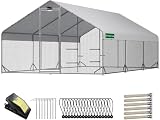 Belinova 234 in Walk-In Run Belinova 234 in Walk-In Run |
|
Check Latest Price |
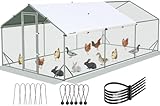 Quictent Hardware Cloth Run for 30+ Birds Quictent Hardware Cloth Run for 30+ Birds |
|
Check Latest Price |
 Aivituvin Two-Level Wooden Coop Aivituvin Two-Level Wooden Coop |
|
Check Latest Price |
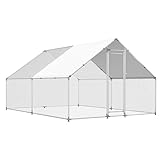 HEYTOWN 25 mm Galvanized Steel Run HEYTOWN 25 mm Galvanized Steel Run |
|
Check Latest Price |
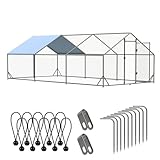 HOOYEAH 19.6 ft Thick-Wall Run HOOYEAH 19.6 ft Thick-Wall Run |
|
Check Latest Price |
 Hatching Time Formex Plastic Coop Hatching Time Formex Plastic Coop |
|
Check Latest Price |
How We Picked Winter-Ready Coops
We scored every product on the same eight criteria, weighted for winter rather than for general use. Product listings describe spring and summer, so we read the winter complaints in reviews as carefully as the feature bullets.
Ventilation above roost level. Air exchange has to happen somewhere, and the wrong somewhere is a draft across the birds. Vents placed high, above the roosting line, move out ammonia and moisture without chilling the flock. Any product with an adjustable or multi-position vent scored well here.
Draft control at bird level. A solid wall, a closed pop-hole, a roof overhang and a covered roost are what keep moving air off the birds. Runs with only wire mesh cannot do this on their own, so we weighted solid-sided structures higher even when they were smaller.
Wet-weather cover. Snow load and dripping meltwater are what actually freeze into bedding. A peaked or domed roof that sheds precipitation cleanly, a UV-resistant cover, and a wide overhang all scored here.
Floor and bedding design. Solid floors with a removable tray, or an open run that can be floored with hardware cloth and deep litter, let you build a deep litter system. Deep litter is repeatedly reported by cold-region keepers as passive warmth that costs nothing to run.
Predator proofing as shipped. We counted hardware cloth, ground skirts and tight mesh as built-in wins and chicken wire as an add-on cost. This matters more in winter than any other time, because raccoons and foxes are hungrier in January and digging under snow is easy.
Structural strength in wind and snow. Gauge of steel, presence of support bars, and whether the piece needs anchoring were all read from the build details. A 25 mm or 1 in pipe frame holds up differently in a blizzard than a thin-wall tube.
Size math. The number that keeps coming up from experienced keepers is 4 square feet of indoor floor space per bird, with 8 to 10 square feet of run space per bird. In cold climates, undersized coops concentrate damp and body heat in the same small box, so we preferred anything sized above that floor.
Warranty and support. A multi-year parts warranty means the manufacturer expects the frame to survive at least a few winters. Longer coverage is a real signal in a category where most buyers replace rather than repair.
Two things we deliberately did not do. We did not score on insulation claims, because almost no brand publishes an R-value and the word carries no testable content. And we did not score on price, because the covers, anchors, hardware cloth and clips you need afterwards usually swing the real total by more than the sticker.
1. CHIKENCOOP 13 x 9.8 ft Metal Walk-In Run – Best Overall for Cold-Weather Flocks
13×9.8×6.5 ft Large Metal Chicken Coop Walk-in Chicken Run with Cover
13 x 9.8 x 6.5 ft walk-in run for 15-20 hens
Galvanized steel frame
84 pounds
Pros
- Very easy snap-together assembly
- about 2 hours for two people
- Roomy interior with a natural eucalyptus roosting perch
- Peaked roof cover sheds rain and snow
- Responsive service when parts arrived missing
Cons
- Door latch is weak and awkward to operate from inside
- Hardware cloth is flimsy as shipped
- No nesting boxes or cleaning tray
This is the pick we kept coming back to, and the reason is the roof. The peaked cover sits high enough that snow slides instead of loading onto the frame, which matters more in a hard winter than any wall thickness. At 6.5 feet tall you can walk in and work, and keepers in heavy snow regions report walking in to feed during a storm without a shovel path.
The 0.98 inch wire mesh is sized for airflow, not for keeping a determined raccoon out. Our plan was to strip the lower 24 inches and replace it with half-inch hardware cloth, then add a buried skirt. That afternoon of work took a structure that ships as an enclosure and turned it into something we would trust with a flock overnight.
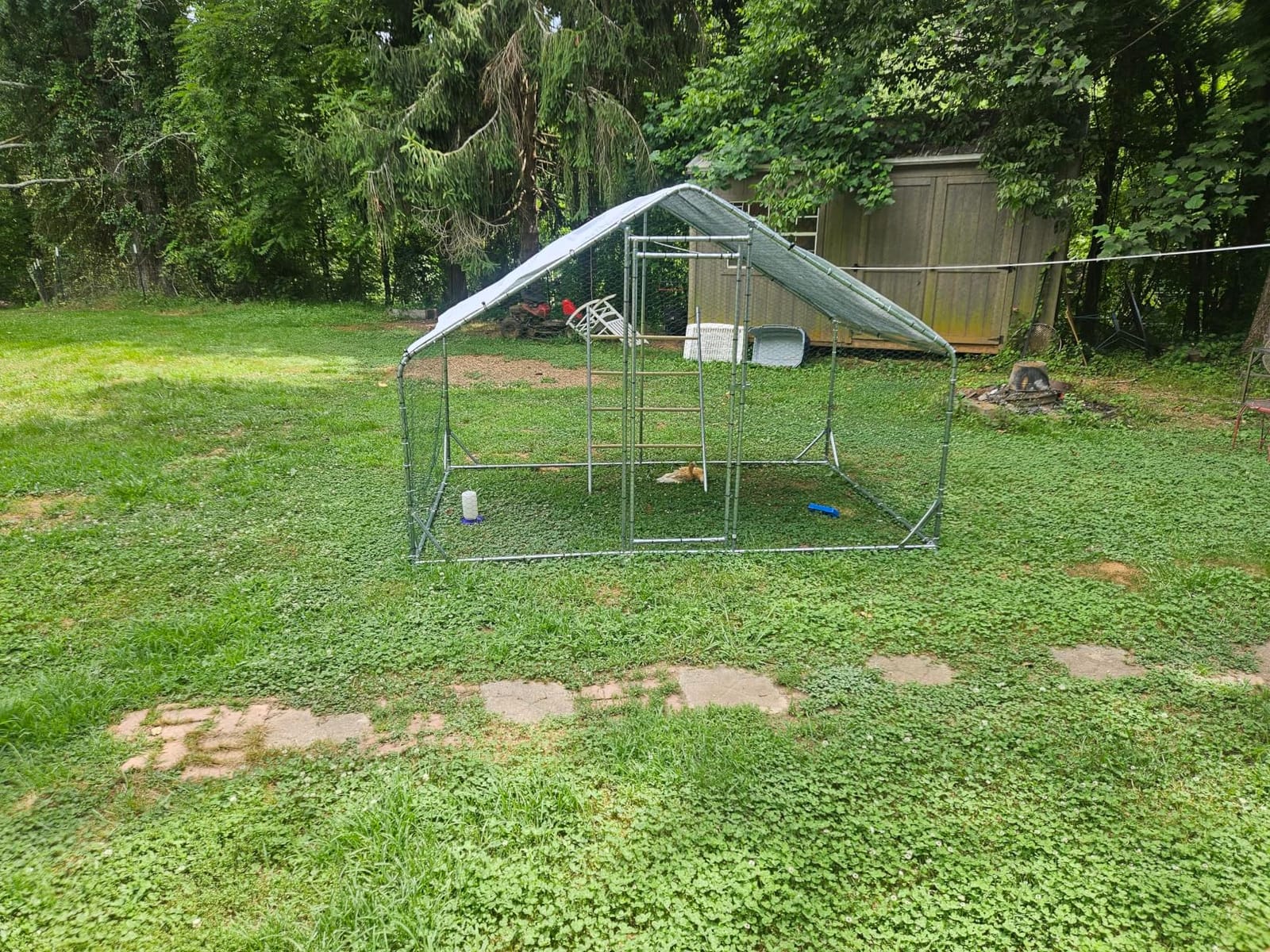
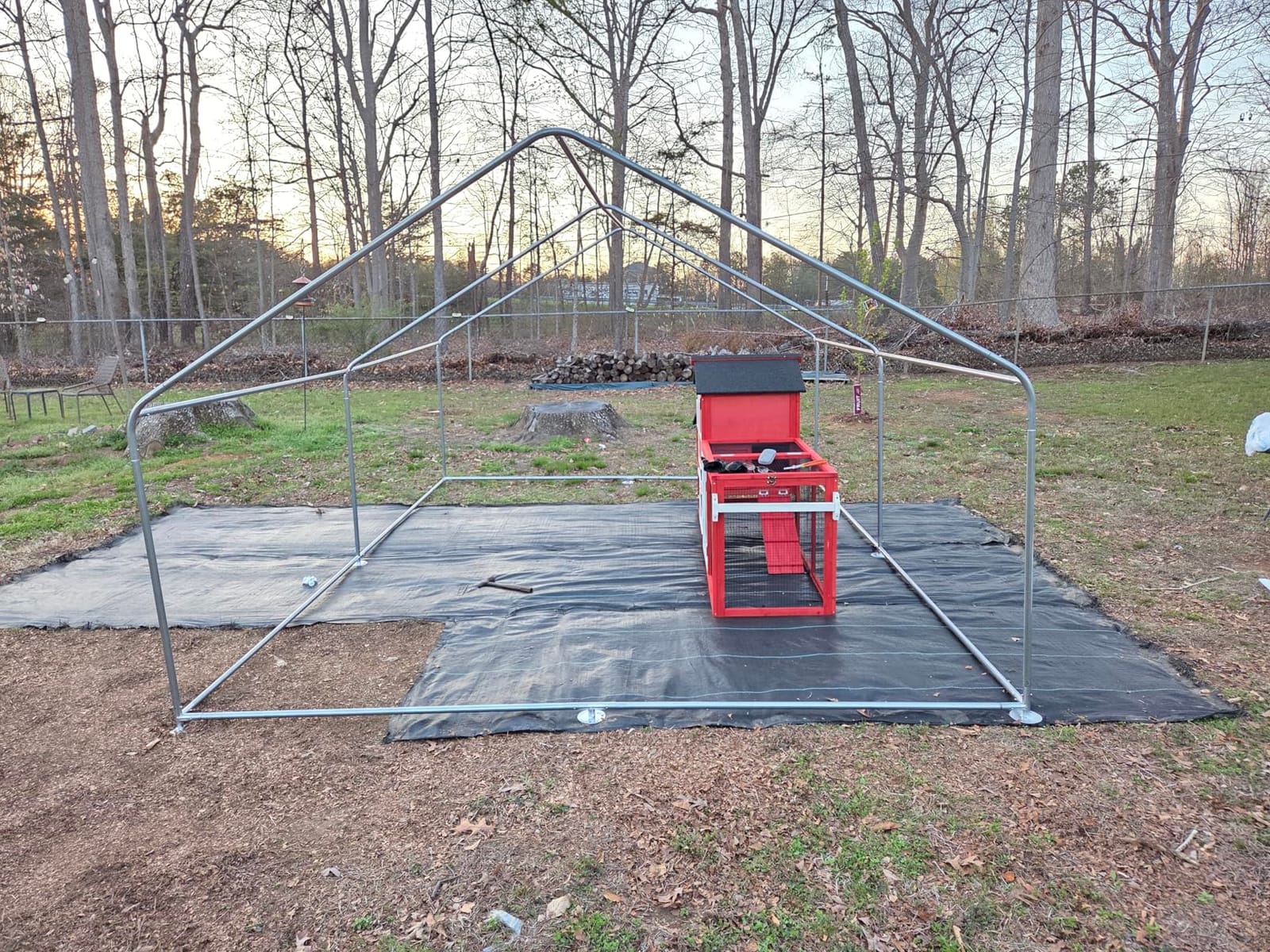
At 158 by 118 by 80 inches it holds 15 to 20 hens with room to move, which puts it well above the 8 to 10 square feet per bird that keepers in cold zones aim for in the run. The eucalyptus perch is a nice touch for a covered run, and the frame uses bottom corner braces plus an extra rear support pole to cut the wobble that makes cheap runs feel flimsy.
Two things to plan for. The zip ties supplied are not enough, so buy a bulk pack of heavy-duty ties before you start. And the roof cross bars are the weak point in heavy wind, which is worth checking after the first storm and bracing if you see flex.
What convinced us it works in a northern winter
Nothing about the listing mentions cold, and that is honestly a plus here. The design is a covered, ventilated, elevated-feeling enclosure that stays dry, and dry is the goal. With the pop-hole door closed at night and the bedding deep, birds roost out of the wind and the body heat they generate has somewhere to sit.
Because the mesh is open on all sides, air moves through constantly. That is a real advantage in a sealed-up winter coop where condensation turns to frost on the inside of the panels. Here you get air exchange as a built-in feature, and what you trade away is solid-sided draft protection at roost level.
Where it falls short in deep winter
It is a run, not a house. There are no nesting boxes, no solid walls and no indoor roosting area, so you need a separate insulated house for night in serious cold. The included latch is also the part reviewers complain about most, and a weak latch is a bad combination with a wire enclosure in a place where something is hunting.
Fix those two things and this is the most capable covered run in the group for a flock of up to 20. Left as shipped, it is a good summer enclosure that also happens to survive snow.
2. VEVOR 9 x 25 ft Metal Poultry Run – Best Value for Big Flocks
VEVOR Large Metal Chicken Coop, 9 x 25 x 6.6 ft, Walk-in Chicken Run House with Waterproof Cover & Sturdy Frame, Dome Roof Poultry Cage Duck Pen for Rabbit Hen Goose Outdoor Backyard Farm Use
9 x 25 x 6.6 ft usable run space
1 in galvanized steel pipe frame
117 pounds
Pros
- Assembles fast even for a single older buyer
- Walk-in height lets a person stand and work
- Very large footprint keeps a busy flock moving
- Dome roof and tarp keep birds dry
Cons
- Supplied zip ties are flimsy
- Included chicken wire should be replaced with hardware cloth
- Galvanized pipes rusted within six months for some buyers
At 9 by 25 feet this is the largest footprint in the roundup, and in a cold climate size is a genuine advantage. Bigger runs dry out faster after a wet thaw, hold a deep litter layer without going sour, and give birds somewhere to go so they are not crowding near the door in single digits. Four-sided ventilation is a listed design feature rather than an accident.
The dome roof is the winter-relevant part. It sheds water, debris and light snow without a ridge that traps weight, and the PE-coated tarp over it keeps meltwater out of the run. On a 25 foot run that is a lot of roof to be wrong about, and this one holds.
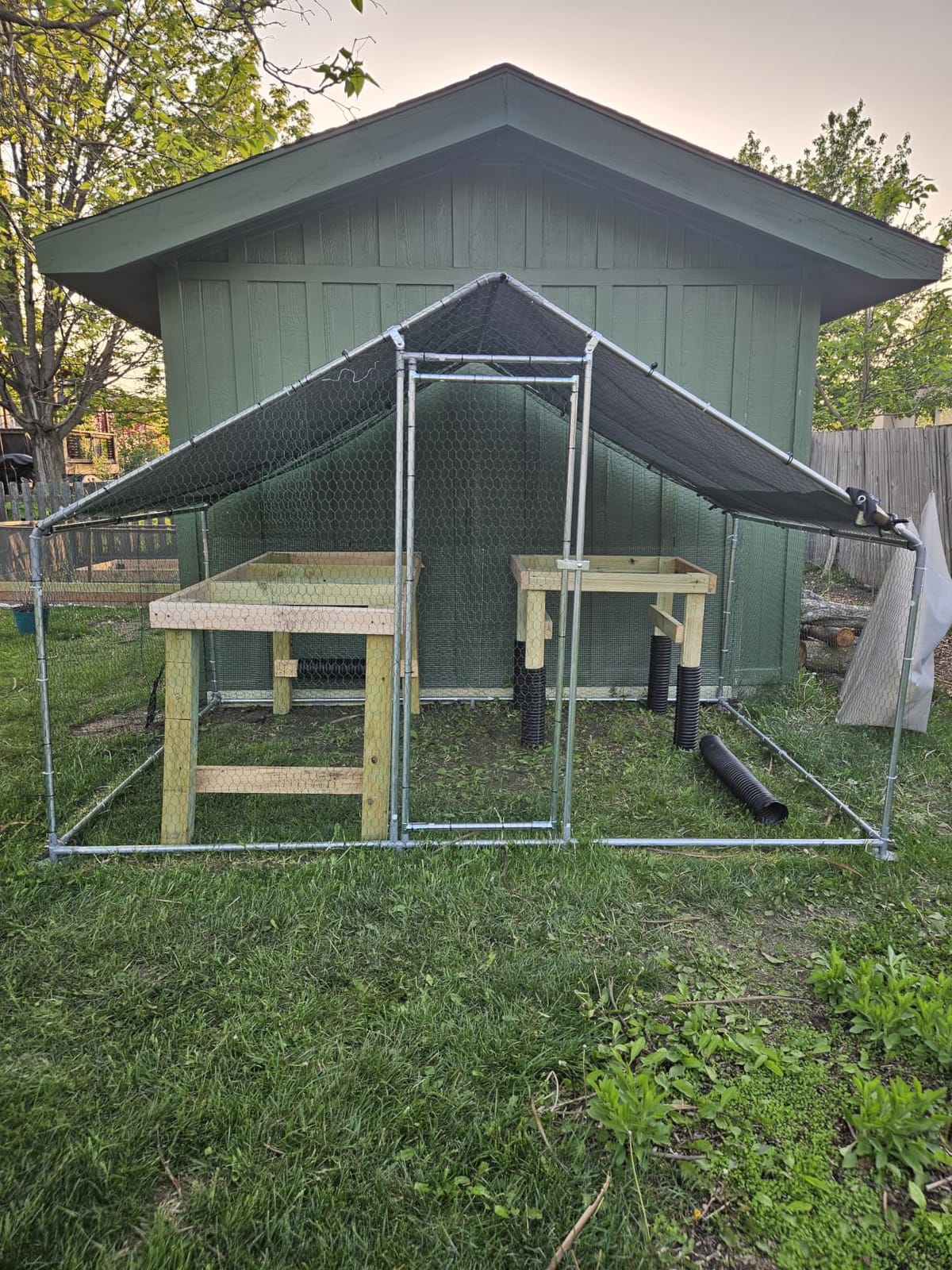
Assembly is a two-person job with labeled parts and a manual, and reviewers consistently describe it as straightforward. At 117 pounds it is not something you reposition alone, so pick the site before you unpack it. A level base matters more here than on a small run because of the length.
The rust reports are the warning worth taking seriously. Some buyers found the galvanized pipes rusting heavily inside six months, which suggests finishing the frame with a rust-inhibiting paint after assembly rather than waiting to see what winter does to it.
Why it suits a Zone 4 or 5 backyard flock
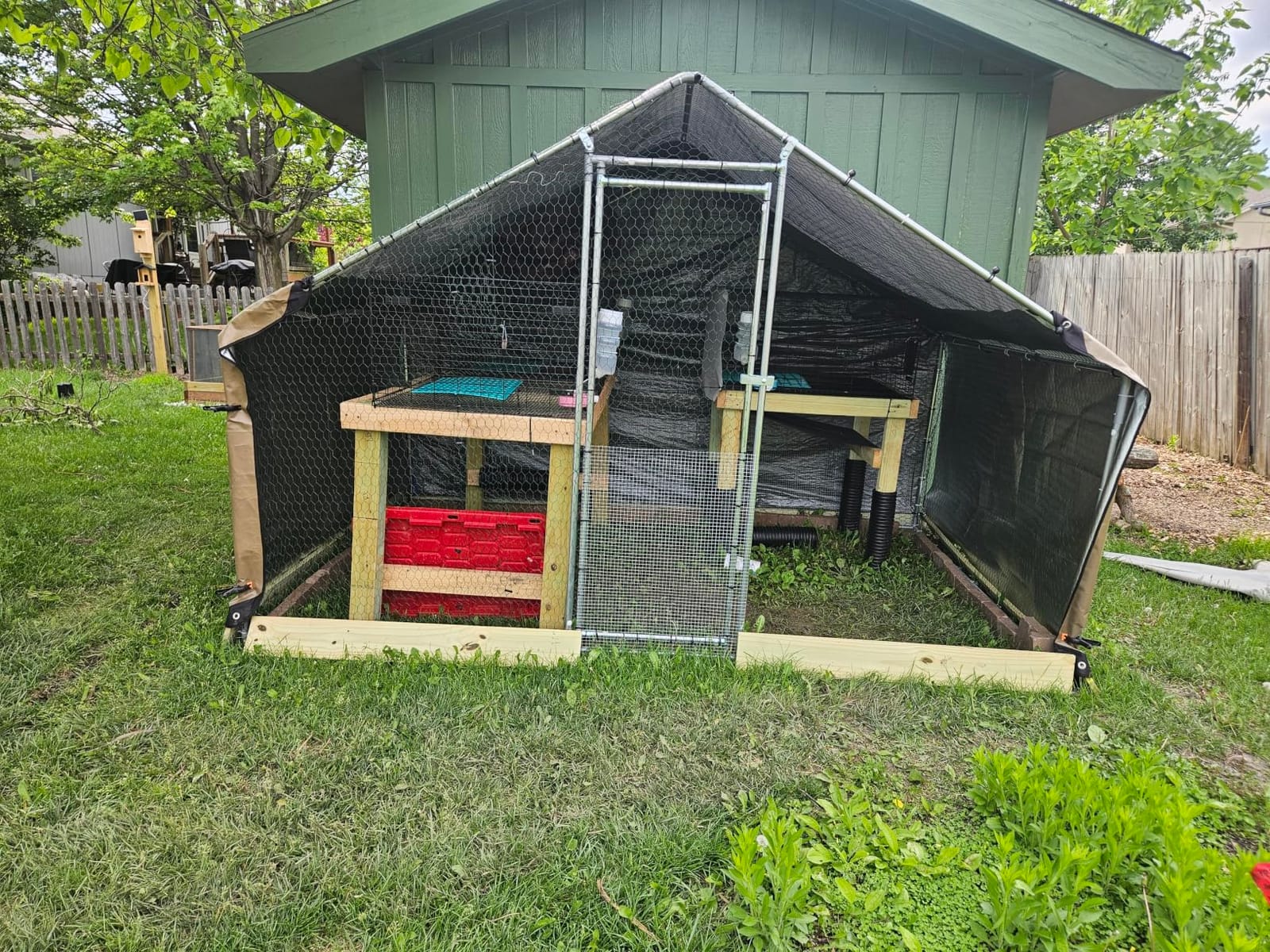
Twenty-five feet of run means you can cover a third of it with storm panels and leave the rest open, which gives you a sheltered windbreak area without sealing the whole structure. That is the arrangement most cold-region keepers describe working for them: solid protection on the windward side, open air everywhere else.
Because it is so large, it doubles as a winter break area. Birds that are reluctant to go out in wind will still use a covered corner of a run this size, which keeps them moving and keeps the bedding turning over.
Where the upgrade budget goes
Budget for three things on day one. Replace the included chicken wire with half-inch hardware cloth, add ground anchors because a 25 foot frame catches wind, and swap the door latch for a carabiner or a clip-style lock. The supplied zip ties are the fourth item and the most annoying, because they are too flimsy to hold mesh under load.
Short walls are a minor annoyance for taller keepers working near the sides. The trade is worth it for the footprint, and the work height is fine along the center.
3. Petsfit Wooden Coop with Nesting Box – Budget Pick for 3 to 5 Hens
Petsfit Large Chicken Coop with Upgraded Perches, Wooden Outdoor Chicken Cage with Large Nesting Box, Weatherproof Open Asphalt Roof &Removable Bottom, Duck House, Rabbit Hutch
55 x 26.5 x 28 inches for 3-5 chickens
Solid fir with asphalt roof
60.19 pounds
Pros
- Assembly takes about an hour for most buyers
- Compact and attractive design
- Built-in nest box fits two hens
- Detachable bottom tray makes cleaning easy
Cons
- Thin unsealed wood deteriorates fast in rain
- Roof seams leak despite the weatherproof claim
- Nesting box is dowel-held and fragile
This is the only small wooden house in the group with a full nesting box built in, and that is what makes it useful. A 14 by 23 by 15 inch box with removable dividers gives two hens a proper nest each, and the asphalt roof with a metal lock lets you collect eggs without opening the door the birds use.
Three side vents are the cold-weather feature here. Side vents rather than a single low vent means air moves at mid and upper level rather than straight through the roosting birds, which is the correct pattern. What is missing is any adjustable or closable vent, so you are relying on the roof lock and small openings for airflow control.
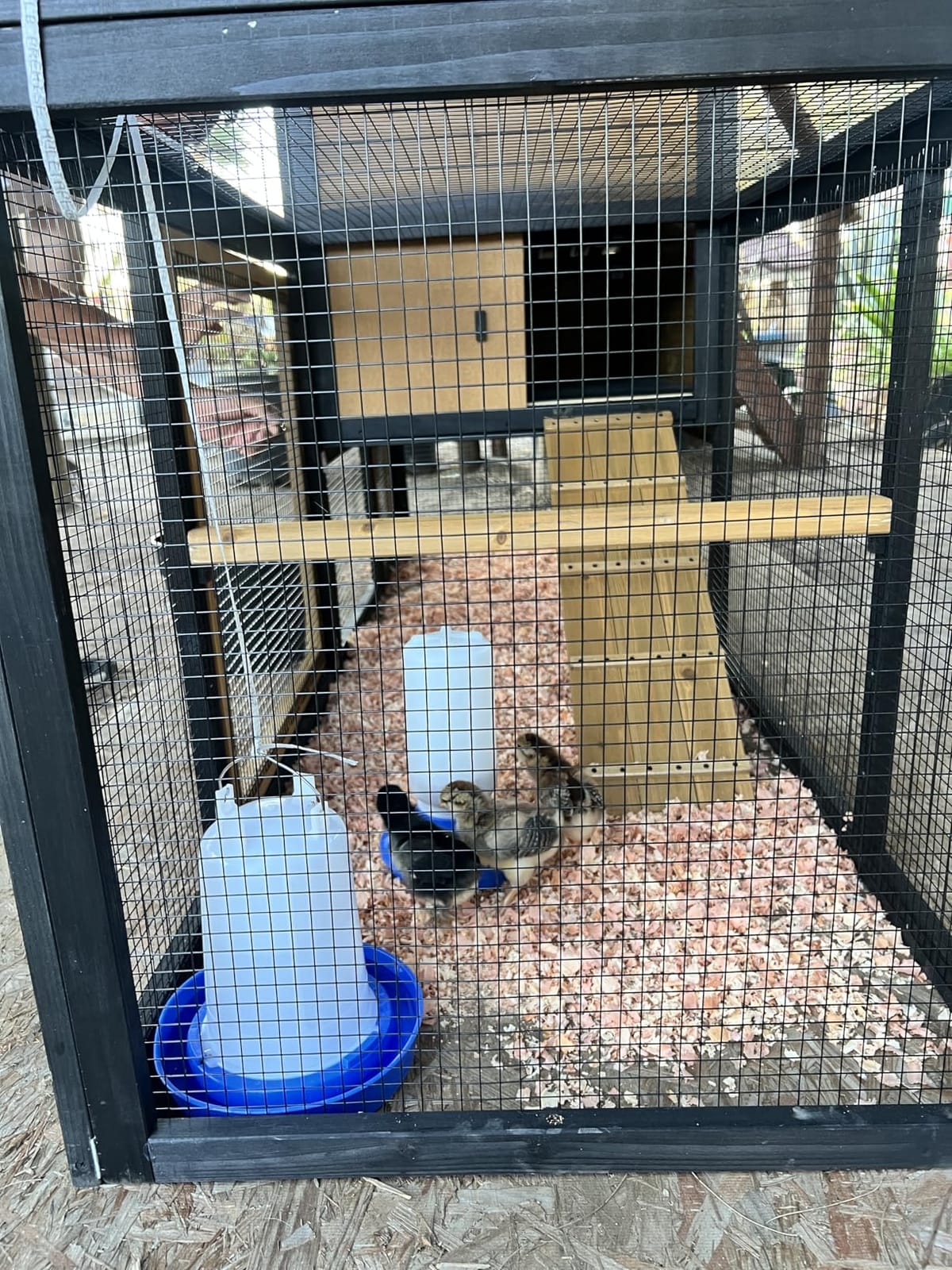
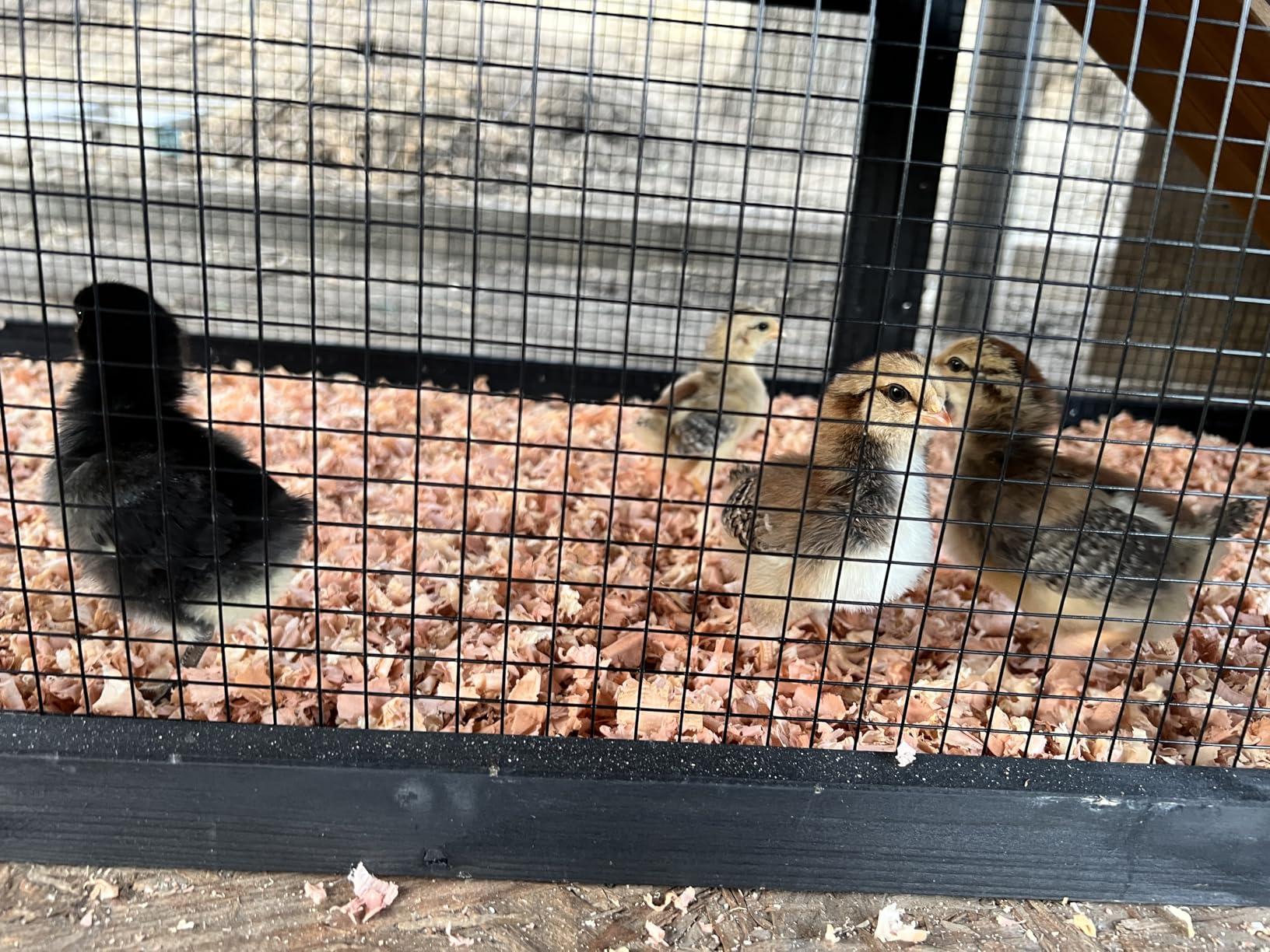
At 55 by 26.5 by 28 inches it is sized for 3 to 5 chickens depending on breed, which is small for a cold climate. Keepers in Zone 4 and 5 consistently say to go above the 4 square feet per bird floor in winter, so treat this as a 3-bird house and give a larger flock a run or a second unit.
Two widened, thickened wooden perches are a real upgrade over the dowel perches on budget coops, and the detachable bottom tray means deep litter is at least possible if you line it properly. Three access areas make cleaning and reaching a hen manageable in a tight space.
What to fix before the first hard freeze
Seal it. The most consistent owner advice on this model is to paint or seal the wood and house it under cover, because the fir and the roof seams degrade quickly in wet climates. A couple of coats of exterior paint on the exterior faces is the difference between a five-year coop and a two-year one.
Repair or reinforce the nesting box while you are at it. It is held together with dowels, and the floor has holes that let small predators in. Plywood backing on the floor is a cheap fix that takes ten minutes.
Where it falls short in cold weather
Open roof, no insulation, and a compact interior that concentrates damp bedding. The paint odor is strong enough to need airing out before the birds move in, which is a good excuse to do the sealing first.
Choose this one for a small flock in a mild-winter region, or as a covered nesting and broody box beside a larger run. In a Zone 3 winter it needs to be inside a larger shelter.
4. NUGRIART Spire-Shaped Metal Run – Top Rated for Frame Strength
NUGRIART Large Metal Chicken Coop Walk-in Poultry Cage Hen Duck Run House with Waterproof & Anti-UV Cover Galvanized Rabbits Habitat Spire Shaped Cage for Outdoor Yard Farm Use
118 x 79 x 79 inches spire-roof run
1 in reinforced galvanized pipe
PVC coated mesh
Pros
- Thick reinforced tubing feels sturdier than typical budget coops
- Galvanized finish resists rust in wet conditions
- Spire roof drains rain
- snow and debris cleanly
- Mesh gaps small enough to deter common predators
Cons
- Mesh is chicken wire grade
- so determined predators may still get in
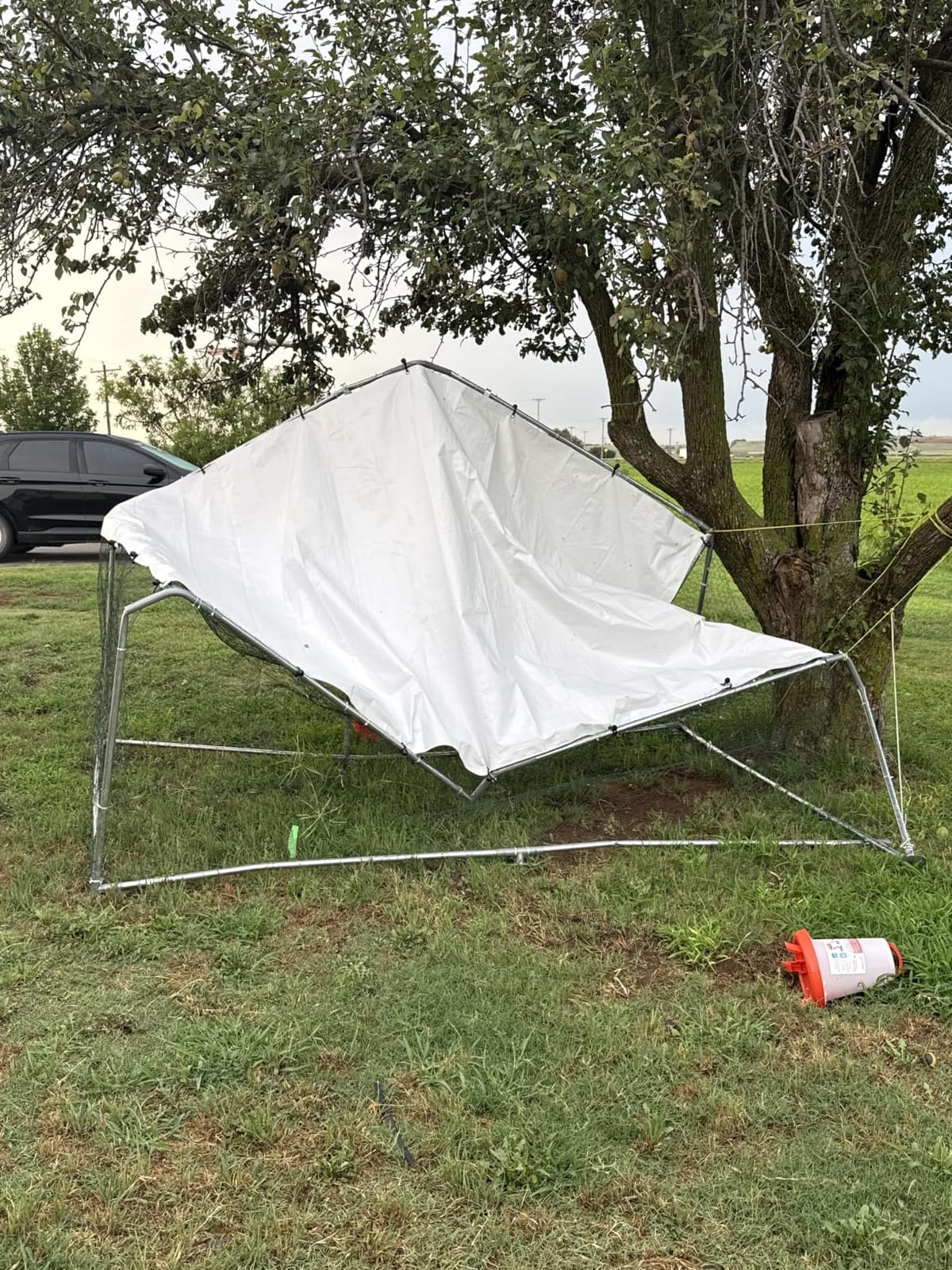
- Cover and frame may need ground anchors in windy yards
The 4.3 average is the highest in this roundup, and the reason shows up in how the frame is described: 1 inch galvanized pipe that the manufacturer states is thicker than most competing coops. Reviewers back that up independently, calling the tubing noticeably heavier than expected for the size.
The spire-shaped roof is the second winter strength. It drains rain, snow and debris with no flat plane to accumulate weight, and paired with the waterproof UV-resistant cover it keeps precipitation out of the enclosure. On a structure that is mostly air and wire, keeping the water out is the job.
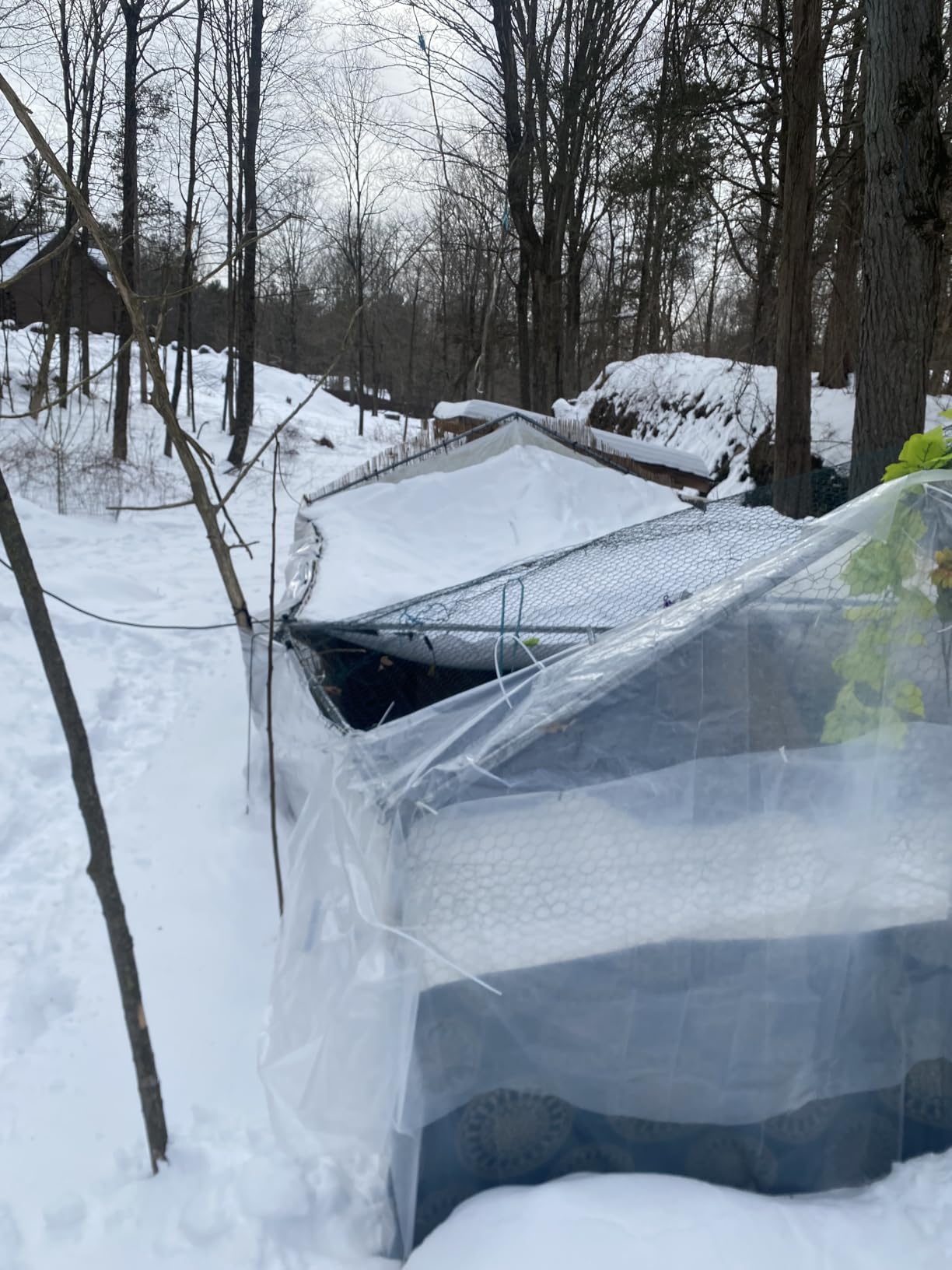
At 118 by 79 by 79 inches it is a compact run, so it suits a household flock of about 6 to 10 rather than a large one. The PVC coated hexagonal mesh has small gaps that deter common predators, and the lockable metal latch door is tighter than the snap latches on most of the metal runs here.
Assembly uses optimized connector joints for faster installation, and gloves are recommended because the cuts during assembly are the part owners mention. The latching points need extra care to seat properly, which is a five-minute job that saves a lot of frustration later.
Why the frame matters most in a snow load
Winter stress on a metal run comes from three directions: wind loading on the long walls, snow weight on the roof, and ice where the frame meets the ground. Heavier pipe resists all three, and a galvanized finish that resists rust is what stops a frame from weakening at the joints after a season of wet snow.
This is also the run we would trust most in an exposed yard with no windbreak, though we would still anchor it. Frame strength and anchoring are different problems.
Where it falls short
Mesh is chicken wire grade despite the small gaps, so we would still line the lower section with hardware cloth before trusting it overnight. The mesh is also open on all sides, so it is a run and not a sleeping house, and in deep cold you pair it with an insulated box.
It is a smaller footprint than the two runs above it. For a 6 to 10 bird flock at 8 to 10 square feet each, this one is closer to the floor of that range.
5. Belinova 234 Inch Run with Hardware Cloth – Best for Predator Proofing
Belinova Walk-in Chicken Coop 234″ L x 118″ W, Outdoor Metal Poultry Cage
234.22 x 118.36 x 78.25 inches for 12-20 chickens
0.8mm welded hardware cloth
Ground skirt
Pros
- Full hardware cloth wrap instead of flimsy chicken wire
- Ground skirt deters digging predators such as raccoons and foxes
- Pre-drilled frame needs no welding or special tools
- UV-resistant cover sheds water
Cons
- Bulky 78-inch frame needs two people and a level base
- One of eight listed sizes
- so check dimensions carefully
Every other metal run in this roundup ships chicken wire or hexagonal mesh and expects you to upgrade. This one is wrapped in 0.8 millimeter welded hardware cloth across the entire run, with a buryable ground skirt. For a winter flock that is the single most valuable feature on this list, because snow cover is exactly when digging predators feel confident enough to go under a fence line.
The pre-drilled modular frame is the sleeper feature. It assembles in under two hours with two people and no special tools, which matters when you are starting the build in October and want it finished before the first freeze rather than in a hurry.
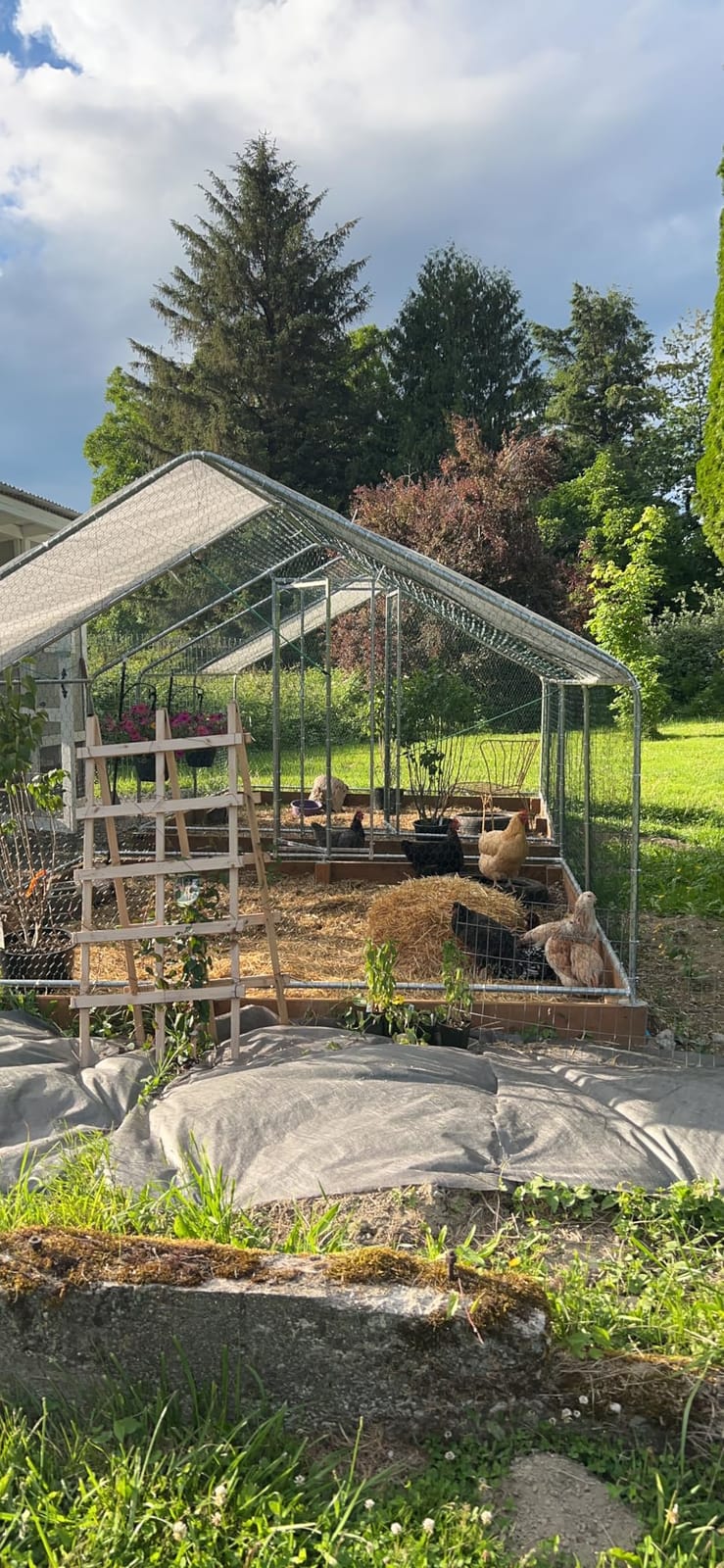
At 234 by 118 by 78 inches, this is sized for 12 to 20 chickens and sits in the middle of the group for footprint. The roof cover blocks about 90 percent of UV and sheds rain on contact, so the bedding under it stays workable through a wet thaw. The frame is coated galvanized steel, described as rust-resistant.
The frame needs to be anchored once it is up, and a level base matters more than usual at this height, so plan the site before the boxes arrive.
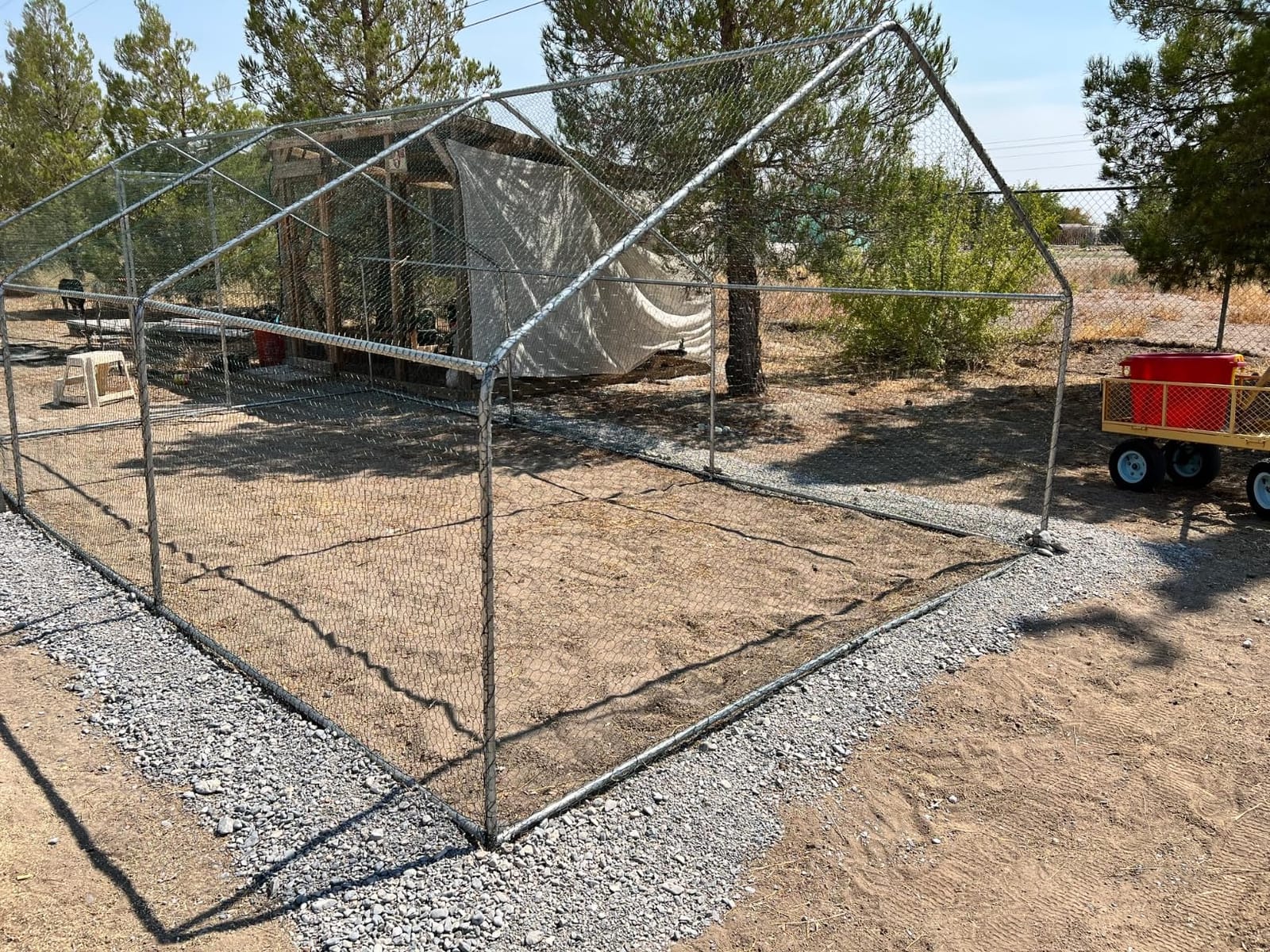
Why predator proofing is a winter feature
Predation pressure is highest in winter for a simple reason: food is scarce and the birds are stationary. A hen that is not ranging a snowy yard is an easier target, and a buried skirt removes the tunnel that a determined animal would otherwise dig under the snow line.
The half-inch mesh also stops weasels and minks, which chicken wire with a one-inch gap never will. If you have lost hens in past winters to climbing or slipping attacks, this is the run that addresses the actual failure mode.
Where it falls short
It is a run, so the same solid-wall limitation applies, and at 78 inches tall the frame is bulky to handle. It needs a flat, level base and two people, so plan the site before the boxes arrive.
Eight size variants are listed, so check the exact dimensions against your flock rather than assuming. Under-sizing to save space is the most common winter mistake, and this one is easy to get wrong in a good way.
6. Quictent Hardware Cloth Run for 30+ Birds – Longest Warranty in the Group
Quictent Large Metal Chicken Coop Run for 30+ Poultry w/Side Hardware Cloth
214.5 x 107.3 x 78 inches for 30+ poultry
1 x 1 in PVC-coated hardware cloth
112.2 pounds
Pros
- Hardware cloth sides and extended ground skirt are unusually serious
- Dual-latch door resists prying
- 750 heavy-duty cable ties included
- Advanced Series frame with 8 support bars and triangular corners
Cons
- Optional side and back covers are not included
- 214 x 107 inch footprint needs a level
- spacious site
The Advanced Series frame adds eight support bars and triangular corner poles, which is what keeps a 214 inch structure from flexing when wind hits the long wall. In a category where most buyers replace instead of repair, a reinforced frame is worth reading closely.
Hardware cloth at 1 by 1 inch in 20-gauge PVC-coated welded wire on the side walls, plus an extended ground skirt, puts it in the same predator-proofing tier as the run above it. The dual-latch door with a narrow gap against prying is the best-specified door in the group.
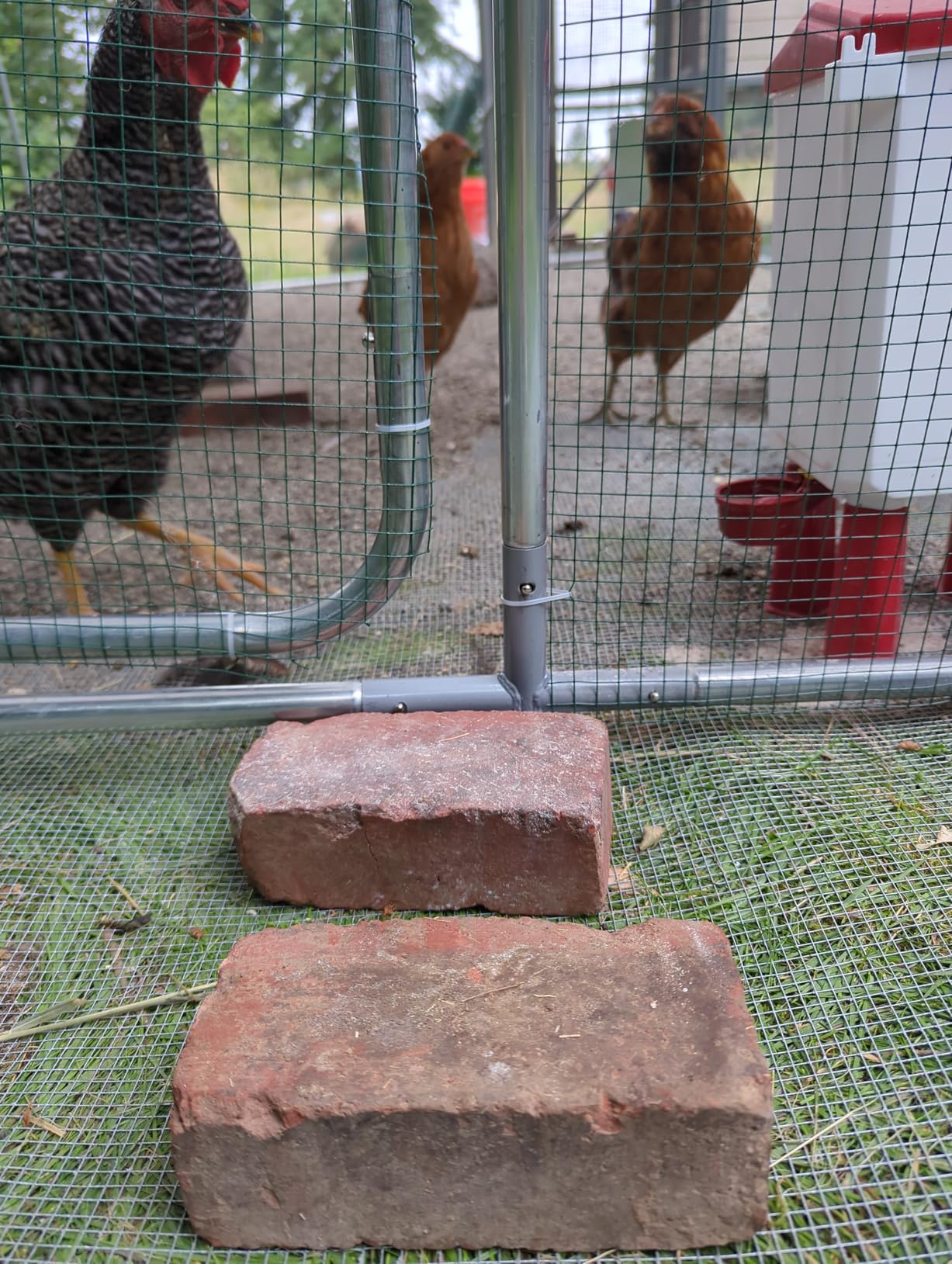
Two details that are quietly excellent. The 750 included 0.2 inch heavy-duty cable ties mean you will not run out halfway through, and the push-button frame with bolts is the fastest tool-light assembly we saw. A waterproof UV-resistant PE roof cover sits under protective hexagonal roof chicken wire, so the cover itself is guarded.
At 214.5 by 107.3 by 78 inches and 112.2 pounds, it is rated for more than 30 poultry. For most backyard flocks that is generous, and for a multi-family or small-farm setup it is the reason this one makes the list.
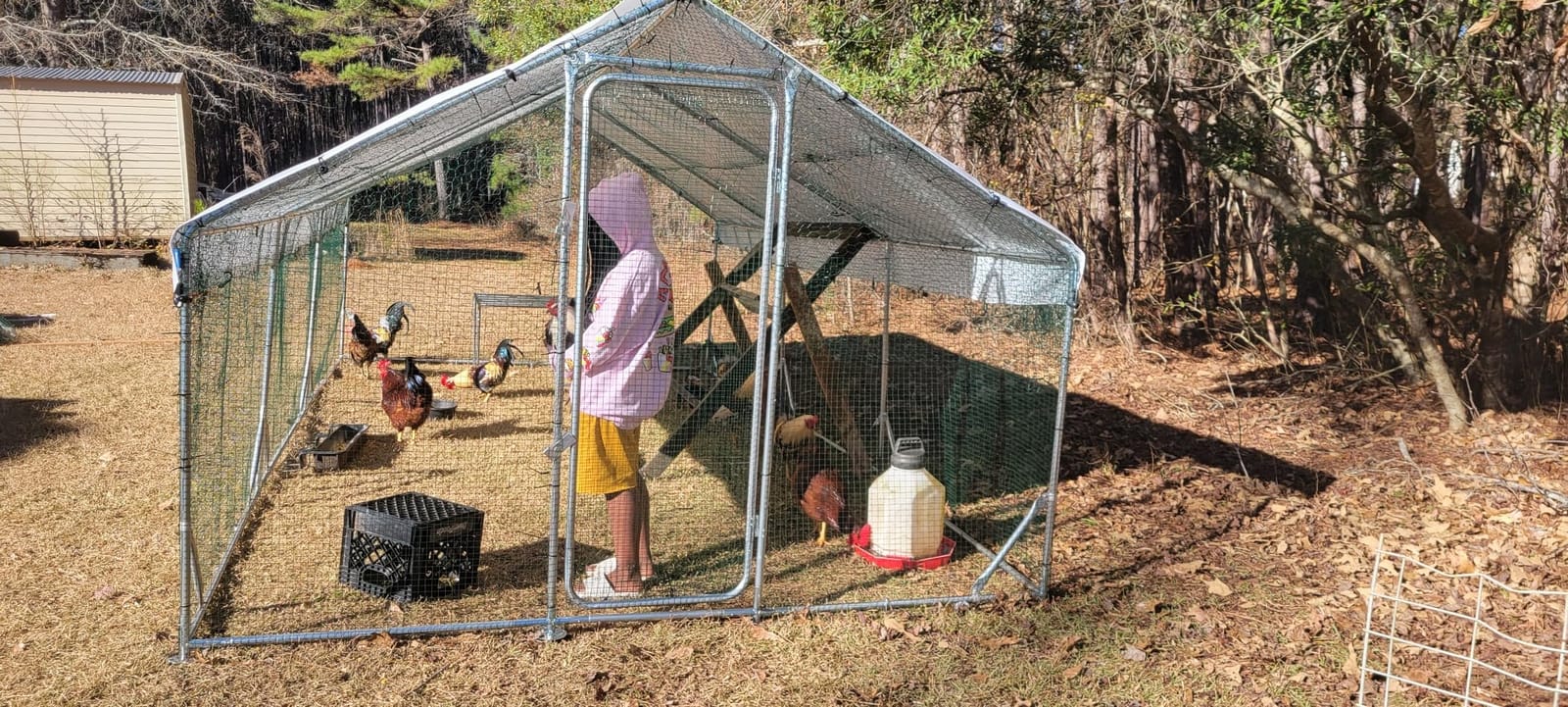
What the frame spec tells you
Eight support bars and triangular corner poles are the numbers that matter in a snow load region. They are what keeps the long walls from bowing inward when wind loads the mesh, and a bent frame is the beginning of a door that no longer closes square.
Read the support bar count and the corner geometry before you read the cover marketing, because the cover is the part that degrades fastest from UV and ice and the frame is the part you want to keep.
Where it falls short for winter
The side and back covers are optional and not included. That is the biggest gap for cold climates, because a run with a roof but open sides still funnels wind straight through your flock, and it is the side covers that turn it into a windbreak.
Budget for the side and back cover add-ons as part of the winter cost, not as an upgrade. The footprint also needs a genuinely level, spacious site.
7. Aivituvin Two-Level Wooden Coop – Best for Small Flocks on Wheels
Aivituvin Chicken Coop Hen House, Large Outdoor Wooden Poultry Cage with Ramps, Run, Nesting Box, Removable Tray, Weather-Proof Chicken Cage (Grey, AIR31)
74.9 x 26 x 39.4 inches for 2-4 chickens
Fir with asphalt roof
Wheels for repositioning
Pros
- Hardware cloth already installed on every panel
- Easy assembly with precisely fitting labeled parts
- Light enough for one person to wheel into position
- Removable tray and four access areas
Cons
- Thin wood and lightweight hardware that some buyers saw crack within weeks
- Parrot-style perches sit too low and tip easily
- No floor included
- so digging predators get in
Having hardware cloth already installed on every panel at this level is the differentiator, and it saves the single most common retrofit people do to budget coops. The multi-level design with a ramp to the second level gives a small flock both a raised roost and a sheltered ground level, which is useful when you want some birds off the cold floor.
The asphalt roof panel reduces heat absorption and sheds water, and the overhead hatch lets you collect eggs without bending into the run. A removable divider inside the nesting box is a thoughtful touch for a 2 to 4 bird setup.
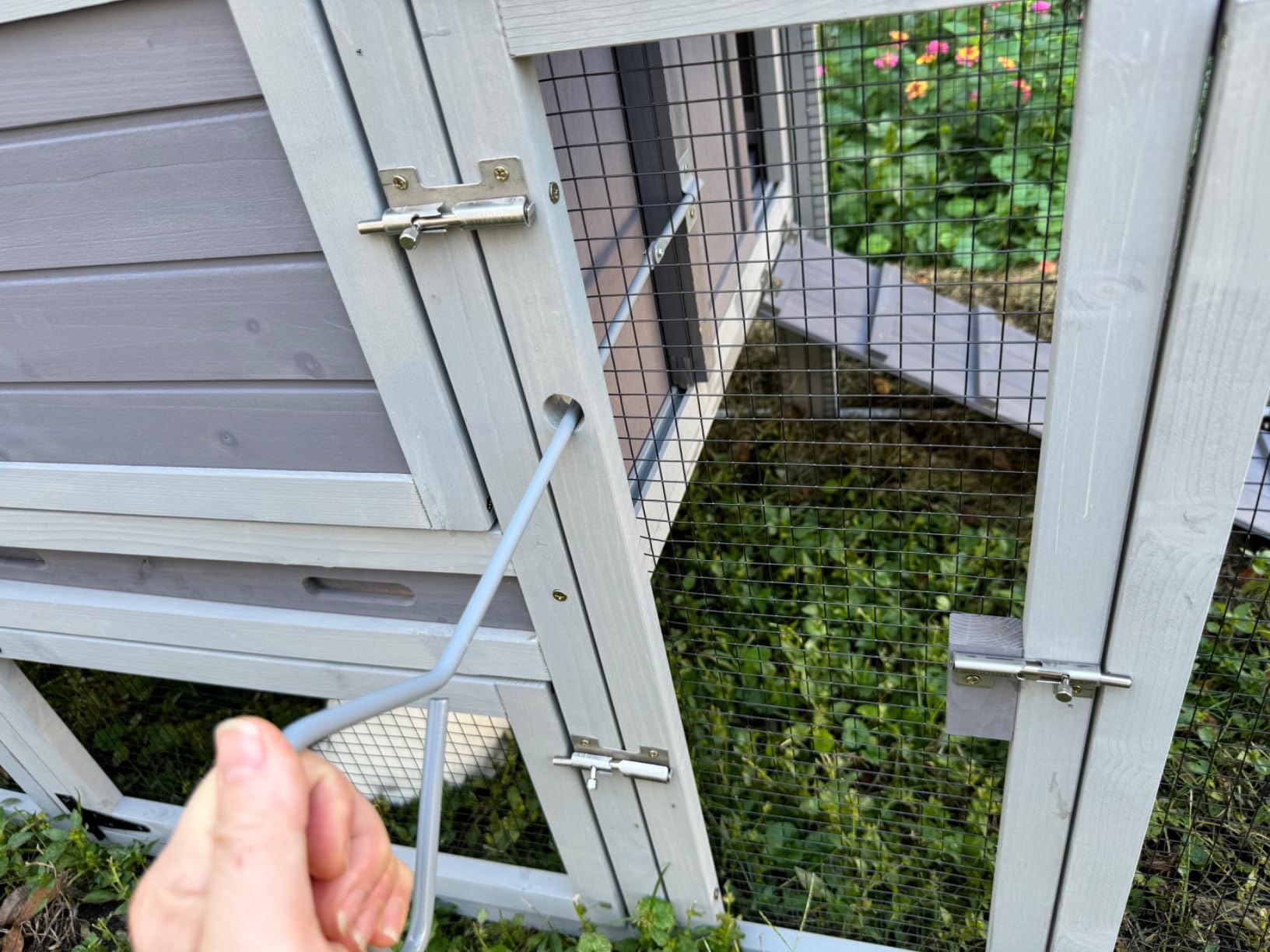
The wheels matter more in winter than the listing suggests. Being able to roll the coop into a lee position behind a fence or a building before a storm is one of the cheapest cold-weather wins available, and at this weight one person can do it.
Being able to join two units end to end is the other one. If you buy two and but them together you get a longer run, which is how we would use this for a four to six bird winter flock.
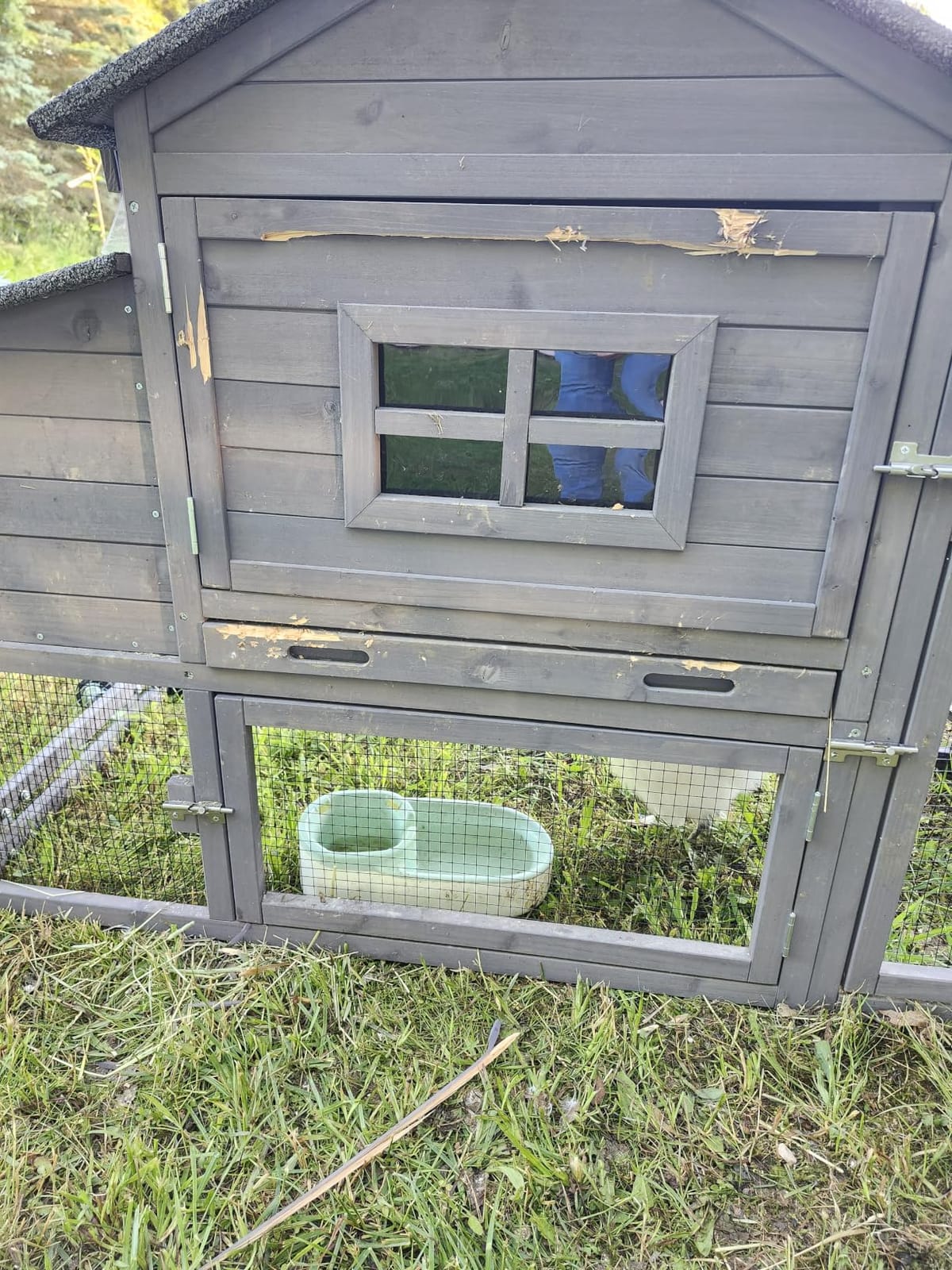
Why small coops need more care, not less
A 2 to 4 bird coop concentrates moisture because there is less volume for it to disperse. Add a deep litter layer, keep the removable sliding tray on a schedule so it never goes anaerobic, and use the small access areas to check for damp corners in midwinter.
Owners report replacing the rounded parrot-style perches with screwed-on 2x4s, which we would do on day one rather than waiting for a bird to have a wobbly roost in the cold. Two-by-fours are also easier for birds to grip with cold feet.
Where it falls short
There is no floor included, so you must staple hardware cloth underneath to stop digging predators, and the thin fir plus lightweight hardware has cracked for some buyers within weeks. Cheap nesting box latches also break quickly, which is a security problem rather than a convenience one.
Owners also report it runs smaller than the listing implies, realistically 2 to 3 adult hens. Buy on the assumption of 2 to 3 and you will be satisfied.
8. HEYTOWN 25 mm Galvanized Steel Run – Best for Multi-Purpose Yards
HEYTOWN Large Metal Chicken Coop Chicken Pen with Water-Resident and Anti-UV Cover Walk-in Poultry Cage Chicken Runs for Yard with Cover Duck Rabbit Dog House Outdoor
157.2 x 117.6 x 78 inches
25 mm galvanized steel pipe frame
Spire canopy roof
Pros
- Heavier 25 mm frame is steadier in wind than most budget runs
- Galvanized finish limits rusting outdoors
- Spire roof sheds rain
- snow and debris cleanly
- Mesh gaps are tighter than chicken wire
Cons
- Mesh is hexagonal wire rather than hardware cloth
- Needs anchoring on open ground to resist wind
The 25 mm pipe diameter is the specification that matters here, and reviewers single it out as the reason this pen holds up better than cheaper models. Heavier gauge is what resists a wind gust across a 157 inch wall, and the galvanized finish is what keeps the joints from weakening over a wet season.
The spire canopy drains rain, snow and debris without accumulation, paired with a waterproof anti-UV PE roof. On a covered run, roof geometry is the feature that decides whether the bedding underneath is usable in March or a frozen block.
At 157.2 by 117.6 by 78 inches, it is a mid-size run and it is also a multi-species enclosure. The same frame works for rabbits, ducks, cats, dogs and birds, which makes it the one to pick if your yard is shared or if the plan is to change what you are keeping after a few years.
Installation is a two-person job with instructions and accessories included, so the parts count is the one thing to verify when the box arrives.
What to do before snow arrives
Anchor it. Ground anchors are the stated requirement for open ground, and they are the difference between a pen that is still standing in March and one that has shifted a foot in a January wind. Stake lines and guys are worth adding on the long sides.
Because the mesh is hexagonal wire rather than hardware cloth, line the lower 2 to 3 feet with hardware cloth if you have any history with weasels or minks. That is the only real gap in an otherwise well-specified frame.
Where it falls short
It ships without side or back panels, so as with the other open runs here, it is a wind-permeable enclosure. In a hard winter you either add storm panels on the windward side or position it in a sheltered corner.
It is a run, not a house. A small insulated box inside it is where the flock actually roosts on the coldest nights.
9. HOOYEAH Thick-Wall Walk-In Run – Best for Thick Pipe Frames
Large Metal Chicken Run Walk-in Poultry Cage Spire-Shaped Chicken Coop with Waterproof and Anti-Ultraviolet Cover for Outside,Backyard and Farm,19.6′ L x 9.8′ W x 6.4′ H
19.6 x 9.8 x 6.4 ft walk-in run
Thick-wall steel frame
100 pounds
Pros
- Noticeably thicker pipe walls than competing coops at the same level
- Galvanized finish resists rust
- corrosion and UV fading
- UV- and water-resistant cover keeps birds dry
- Lockable steel door with latch
Cons
- Hexagonal wire mesh is not hardware cloth
- Weighs about 100 pounds so repositioning takes two people
The claim to check here is pipe thickness. The manufacturer states the pipe walls are twice as thick as those on cheaper competing coops, and owners reviewing this model describe the tubing as noticeably thicker than expected. At 100 pounds for a 19.6 foot run, that weight is explained by the wall gauge rather than by accessories.
The galvanized finish resists rust, corrosion and fading, which matters in a structure that will sit through wet snow and full sun for years. A cover rated for both UV and water keeps the birds dry and, just as importantly, keeps the water out of the bedding.
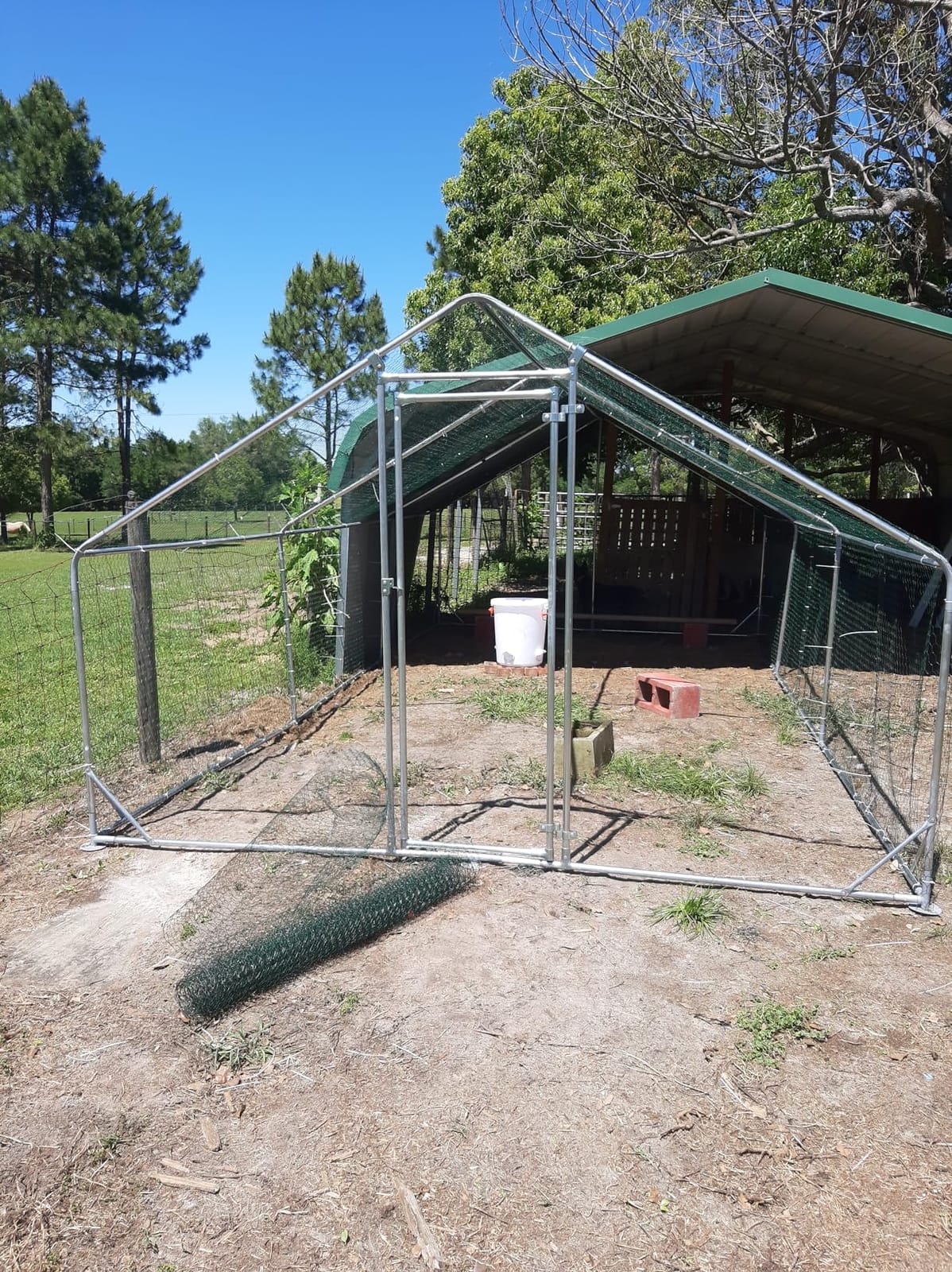
At 19.6 by 9.8 by 6.4 feet, this sits in the same footprint band as the editor’s choice pick and gives a flock of 10 to 14 a comfortable 8 to 10 square feet per bird. The quick-connect frame makes the build fast for a structure this size.
The lockable steel door with latch and steel wire ties is a better-specified closure than most in the group, and the smooth tube surface is genuinely useful in winter because you can hose down a dirty run surface without worrying about seams trapping water.
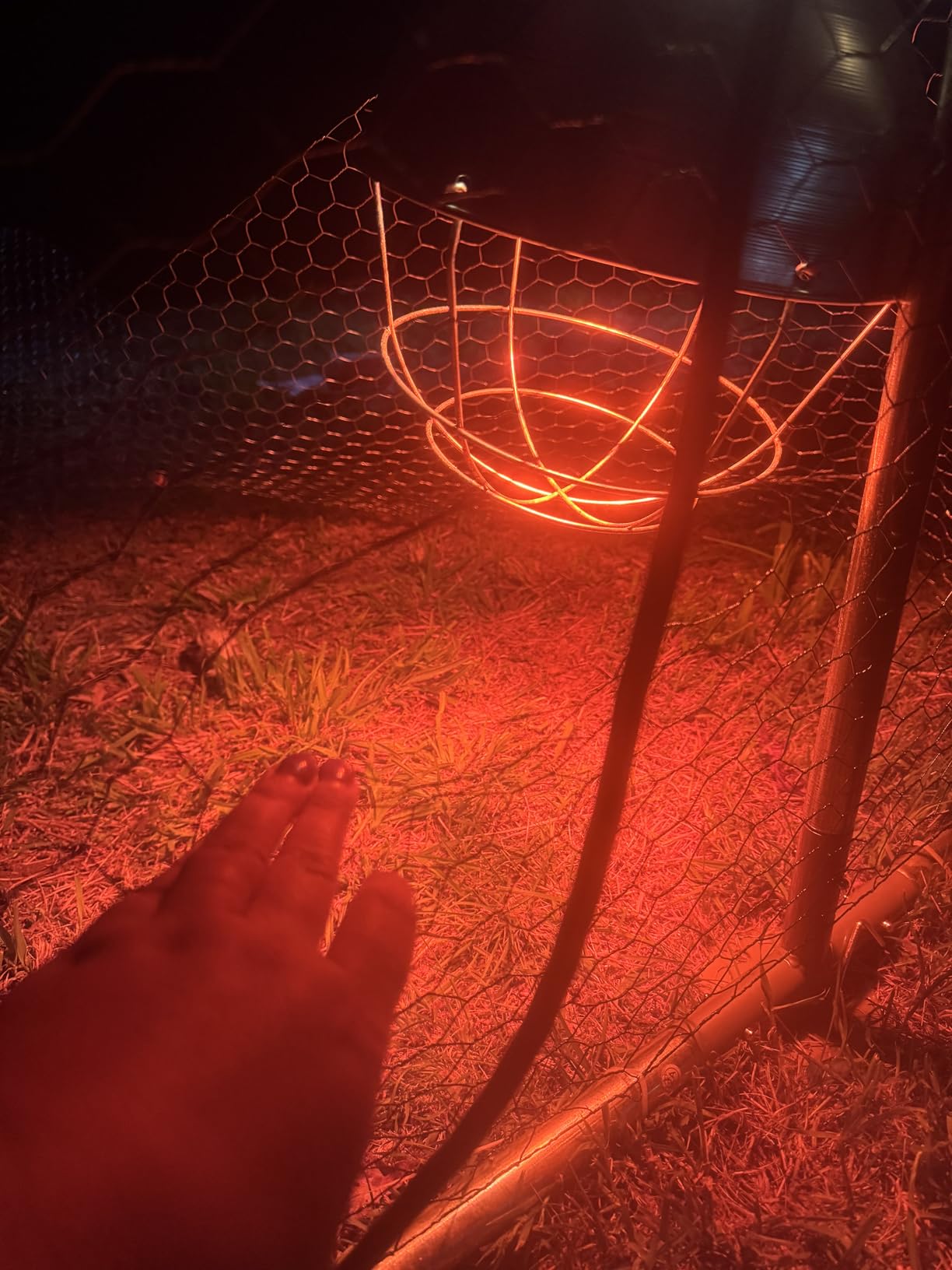
Why wall gauge shows up in winter
Thin-wall tubing is where metal runs fail first in cold weather. Ice gets into a joint, the tube deforms, the frame racks, and suddenly the mesh is no longer tensioned and the door no longer closes square. Heavier pipe resists that cycle, and the galvanized coating slows the corrosion that starts it.
If your winters are long rather than merely cold, wall gauge is a better thing to spend on than a bigger footprint.
Where it falls short
The mesh is PVC coated hexagonal wire with small protective gaps, not hardware cloth, so we would still add it to the lower section. It also weighs about 100 pounds, so repositioning takes two people, and that matters more once the ground is frozen or snowed.
No side or back covers are included, and the structure is open-sided. Treat it as the covered run it is and pair it with an insulated house.
10. Hatching Time Formex Plastic Coop – Best for Rot-Proof Housing
Hatching Time Formex Snap Lock 4-6 Large Chicken Coop, Backyard Hen House
17 x 43 x 26 inches, houses 4-6 chickens
Impact-resistant Formex plastic
65 pounds
Pros
- Plastic panels will not rot or splinter
- Tool-free snap-together assembly in about 30 minutes
- Lightweight enough to relocate or break down for one person
- Pull-out litter tray and accessible nesting boxes
- Adjustable side vents let you control wind and rain
Cons
- Top of the range in this group
- so a real outlay for a first flock
- Awning tabs need significant force to deform and lock
- Included carabiners are too thick for the lock holes
This is the 4.5 rated product in the group and the only indoor house here built entirely from panels rather than a run frame. The Formex plastic does not rot or splinter, which removes the single biggest winter failure mode of a wooden coop. The reviews include long-term owners who have had theirs through many seasons.
Adjustable side vents are the feature that makes it work in cold climates. You control how much air moves and from where, which is the difference between a coop that stays dry and one that cakes with condensation. Combined with a pull-out litter tray, that tray plus a deep litter layer is straightforward to run.
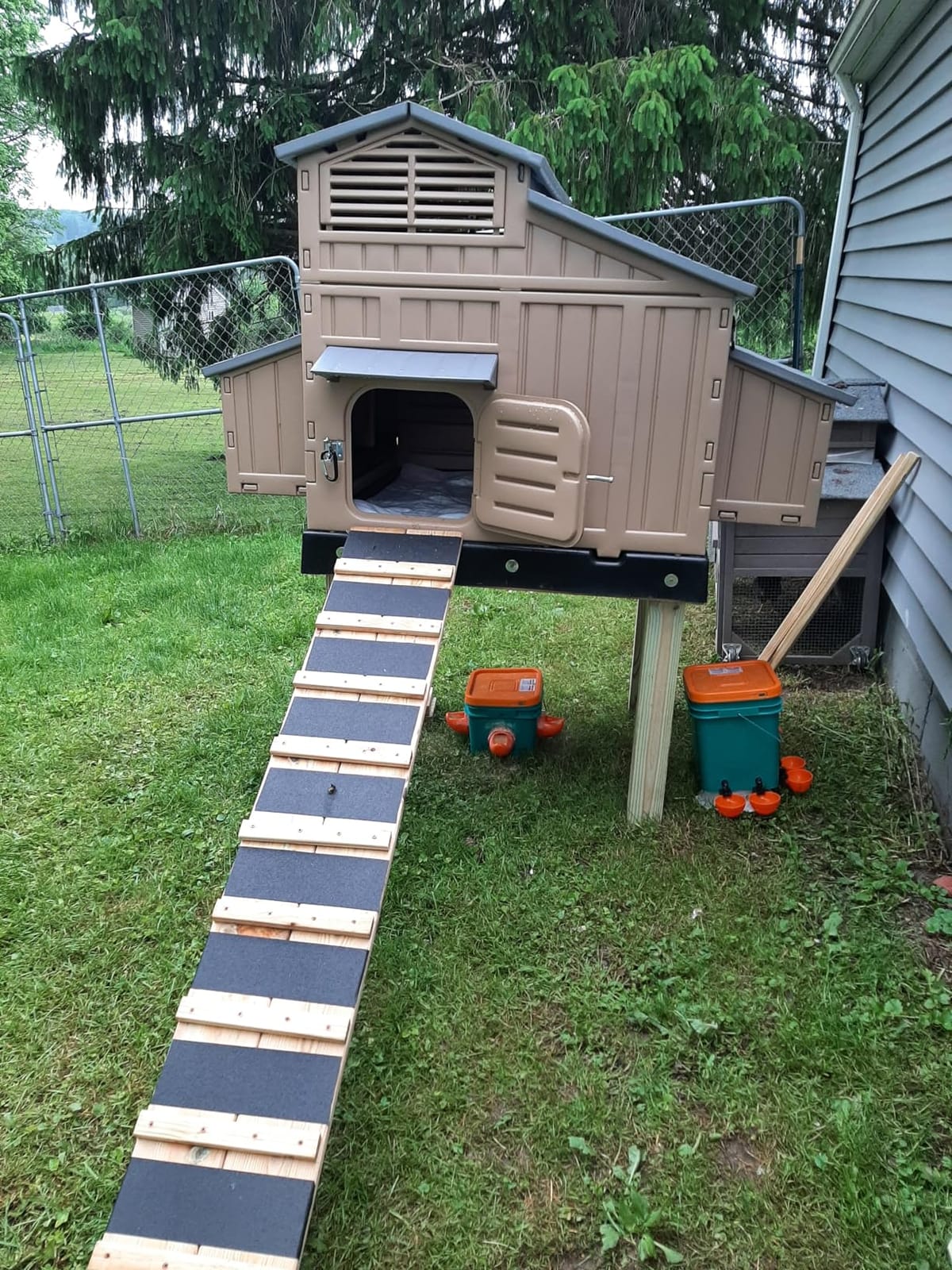
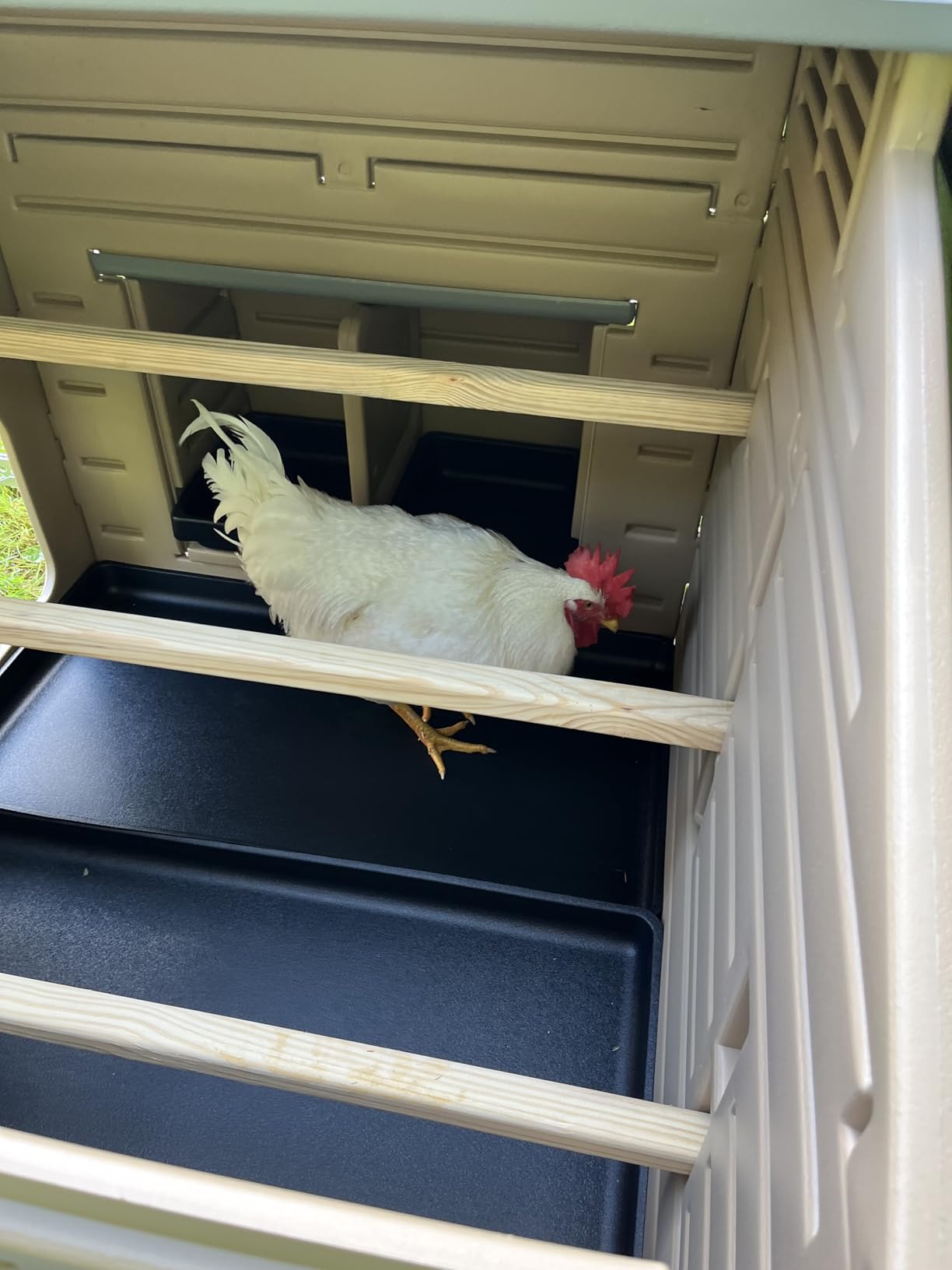
Four nesting spots with removable dividers and three 36 inch roosts at multiple heights give a 4 to 6 bird flock a real layout to work with. Multiple roost heights matter in winter because the highest roost is the driest and warmest spot in the house, and birds that get to it are the ones that end up fine.
At 65 pounds it is light enough to move around or to break down and rebuild with one person, and it needs no tools. That portability is a real advantage when you want to move the house out of a wind corridor in February.
Why plastic holds up where wood does not
Keepers running cold-winter coops repeatedly report that plastic roofs and panels outlast wooden ones in wet climates and need no painting or sealing. Wood that stays wet through a thaw cycle cracks, rots at the joints and then leaks. Plastic does not have that failure path, which is why owners in Michigan report warm, dry winters in this model.
The trade is condensation, and owners in the discussions flag it plainly. Plastic panels are less permeable than wood, so ventilation settings matter more, not less. Run the adjustable vents wider on mild days and the birds are fine.
Where it falls short
The build cost is the real barrier for a first flock, and it sits at the top of the range in this group. The awning tabs also need significant force to deform into position, and the bottom plastic legs fill with water when you rinse them out, which will crack if they freeze.
The included carabiners are too thick for the lock holes and break easily, so plan to buy proper clips. The base skirt needs blocking with cinder blocks for stability in wind, which is a five-minute job that matters a lot more in a January gust.
How Cold Is Too Cold for a Chicken Coop?
A well-built, dry, well-ventilated coop with a healthy flock of adult birds is generally comfortable down to well below zero, and cold alone rarely kills backyard chickens. What kills them is the combination of wind-driven chill, damp bedding, poor air quality and frozen water, and that combination is a housing problem you can solve.
The practical threshold most experienced keepers work to is a temperature at or just above freezing inside the coop overnight, achieved with bedding, body heat and airflow rather than a heater. When we see keepers quoting very low outdoor records, the common thread in those threads is ventilation: a rooftop vent with a window cracked a couple of inches, birds huddling on the roost and sharing heat successfully overnight.
Two caveats change the answer. Molting birds and first-winter pullets have less feathering than established adults, and ex-battery or recently rescued hens with sparse plumage are the ones most often reported in trouble. The other caveat is comb and wattle size, since a large single comb is far more exposed to frostbite than a tight pea comb.
Watch for the early frostbite sign rather than a number: black or dark spots on the comb or wattles, or a swollen, pale tip. Frostbite is a wet, windy, still-air problem, which is why better airflow and drier bedding prevent it more reliably than a lamp does.
Insulation vs Ventilation: What Actually Keeps Chickens Warm
Insulation slows heat loss. Ventilation removes the moisture, ammonia and carbon dioxide the flock produces. A coop needs both, and in that order of emphasis, ventilation first. The failure mode in a sealed-up winter coop is condensation on cold surfaces, damp bedding, ammonia irritation and frostbite, all of which are worse than the chill they were meant to prevent.
Here is the working method, and it is the same one experienced cold-region keepers use.
Put the vents above the roost, not below it. Warm, moist air and ammonia rise. Vents high on the wall or a ridge vent let that air leave while the birds sit in the still, warmer layer below. Vents at roost level create a draft straight through the flock, and cold air moving over the roost is exactly the chill you are trying to avoid.
Test for draft the easy way. Sit in the coop at roost level for a few minutes. If your feathers lift or your eyes water, air is moving across you and that is a draft to seal. If the air feels still and the smell is clean, the ventilation is doing its job. Keepers running heat lamps successfully report using exactly this check.
Close the bottom, not the top. The pop-hole door should shut at night, the roost should be under a solid wall or a shielded corner, and the roof overhang should throw falling snow clear of the entrance. Leave the high vents open. Sealing the low openings and the high openings at the same time is the mistake that produces frostbite.
Keep water out of the equation. A frozen fount means no drinking, and dehydration hits a small flock hard. It is the complaint that comes up most often in cold-weather discussions, and it is worth solving before the first freeze rather than during it.
Feed for the calories. Crack corn, suet and black oil sunflower seeds are the winter treats keepers reach for, because a bird burning extra energy to stay warm needs extra feed to do it. This does not heat the coop, it just keeps the birds in better condition going into it.
Insulation Materials Ranked for a Winter Coop
Ranking by what each material does inside a chicken coop, where the failure mode is almost always trapped moisture rather than thin walls.
1. Double-walled construction with a trapped air gap. Two layers of siding with a sealed gap between them is the most reliable option, and it is the reason converted double-walled storage sheds keep working in Zone 4. One keeper reported that two inches of trapped air space outperformed interior insulation directly. It cannot condense inside a sealed cavity, which is what makes it the safest choice.
2. Exterior rigid foam board. Installed on the outside of the walls, foam board insulates without putting a cold, condense-prone surface in the coop. Keeping it outside means the interior face stays at hen temperature, so it does not sweat. Seal the seams well and cover the edges, because rodents will find gaps.
3. Fiberglass batts with a proper vapor barrier. Effective between studs when installed carefully, and the material used in several well-documented winterized coops with one and a half inches in the walls. The catch is that any tear or unfilled cavity creates a cold spot that condenses, and it is unforgiving of sloppy installation.
4. Reflective radiant barrier. Thin and helpful in a closed space because it limits radiant heat loss. It does nothing for conduction and does nothing for drafts, so it is a supplement rather than a solution.
5. Loose-fill or shredded bedding as a layer. Deep litter is the most accessible insulation in the list, and it is the one most often reported as meaningfully warm as it composts. It only works when it is actually deep, it is kept slightly damp rather than soaking, and it is turned when it crusts over.
What about the word insulated on a listing? Treat it as unverified unless the brand publishes an R-value or a material list. Keepers complain constantly that brands advertise insulated coops with no test data at all, and the honest answer is that a small sealed box with a roof and a solid wall is more useful in a northern winter than a large uninsulated one with a high vent and a dry floor.
Pre-Winter Setup Checklist Before the First Freeze
Work backwards from your first average freeze date rather than the calendar. Most of this takes an afternoon, and doing it early is the difference between a solved problem and an emergency.
Four to six weeks out: check the frame and the roof. Look for bent cross bars, sagging roof panels, and loose joints. Tighten every fastener and brace the long walls. A metal run that flexes in November will not improve in January.
Three to four weeks out: predator proofing. Replace chicken wire with half-inch hardware cloth on the lower 2 to 3 feet, add a ground skirt, and bury it or pin it. Replace snap latches with proper clips or carabiners of the right gauge. This is the step most worth doing early, and one of the runs above already has it done for you.
Two to three weeks out: ventilation and drafts. Confirm that every vent sits above roost level. Close the pop-hole at night. Add storm panels or shields on the windward side only. Do not seal the high vents, no matter how cold the morning feels.
One to two weeks out: deep litter. Clear out the old bedding, dry the floor, and lay down a deep layer of pine shavings, shredded stalks or hemp bedding. Add droppings and a little garden compost to seed it, and keep it just damp, not wet. Owners running this system through winter report it as free passive warmth.
Solve the water problem now. Five options come up repeatedly in cold-region discussions. A galvanized metal water can on a temperature-controlled heating element is the most-cited reliable DIY solution. A rain barrel with a stock tank heater and a circulation pump prevents freezing in conditions well below freezing. A heated waterer with a thermostatic switch handles the flock without any setup. Switching to rubber feed pans, because ice pops out instead of staying locked in the container, solves the removal problem if not the freezing. And topping up at night when water is at its warmest gives you hours before it freezes again.
Winterize the feed and lighting. Store feed in a rodent-proof metal bin so you are not carrying it through snow. Run a timer for lighting if you want to protect laying, and expect a natural drop through the molt regardless.
One more thing worth doing in the fall, which almost nobody mentions. If your birds are molting, check their feather coverage before the cold arrives, because a molting hen going into a hard freeze is a much bigger problem than a coop design detail. Confirm you have a dry, sheltered spot to separate a compromised bird if you need to, and keep an eye on combs and wattles as the first indicator.
Once that is done, the winter is mostly a matter of checking water twice a day and looking at the bedding. If the bedding smells clean and the birds are active when they come off the roost, the system is working.
Frequently Asked Questions
How cold is too cold for a chicken coop?
Cold alone rarely kills backyard chickens. A dry, well-ventilated coop with healthy adult birds handles temperatures well below freezing, and the real killers are wind-driven chill, damp bedding, ammonia buildup and frozen water. Watch the birds rather than a thermometer: active birds on the roost and clean-smelling bedding mean the system works.
How warm do chicken coops need to be in the winter?
A temperature at or just above freezing overnight inside the coop is a realistic goal, reached with deep litter, body heat and airflow rather than a heater. The birds generate their own warmth and huddle on the roost to share it, so the structure needs to keep wind and moisture off them instead of trying to warm the air.
Should a chicken coop be insulated in the winter?
Insulation helps, but ventilation matters more. Seal the low openings and the pop-hole, keep vents high and above roost level, and then add exterior foam board, fiberglass between studs with a vapor barrier, or double-walled construction with a trapped air gap. The mistake that causes frostbite and respiratory illness is sealing a coop tight so moisture condenses and air goes stale.
Can chickens stay in a coop all winter?
Yes, in most climates. Chickens handle cold far better than heat as long as the coop is dry, draft-free at bird level, ventilated above the roost and stocked with unfrozen water. They still need some outdoor access even in winter because daylight, foraging and movement affect their condition, and a covered run with a dry floor is the ideal arrangement.
Should I use a heat lamp in my chicken coop?
Most experienced cold-region keepers do not, and the fire risk plus the way heat lamps create a warm zone that leaves birds chilled when they step out is why. If you use one, run it only during extreme snaps, set it on a thermostat around 35F, mount it in a metal guard, use a low-wattage panel heater rather than a bulb, and always keep the high vents open.
Conclusion: Picking the Right Coop for Your Winter
If you want one answer to the question of the best chicken coops for cold winters, it is the CHIKENCOOP 13 x 9.8 ft metal run for most backyard flocks up to 20 birds. The peaked, snow-shedding roof and the reinforced galvanized frame handle a hard winter, and the walk-in height makes it usable during a storm, which is when you will actually need to get in there.
For predator pressure, choose the Belinova 234 inch run or the Quictent, since both ship hardware cloth and a ground skirt as standard. For a genuine indoor house that will not rot, the Hatching Time Formex plastic coop is the one keepers in cold-winter states report keeping flocks warm in, and the adjustable side vents are what make it manageable. For a shared yard with rabbits and ducks as well as birds, the HEYTOWN 25 mm frame is the sturdiest of the open runs.
Whatever you pick, budget for the same three things every time: half-inch hardware cloth, ground anchors, and a water solution. Those three decide your winter more than the coop does.
And when the flock is settled and the water is not frozen solid, put the surplus eggs to work. Our homemade chicken noodle soup recipe is the one we make when the weather turns and the flock is producing regardless.