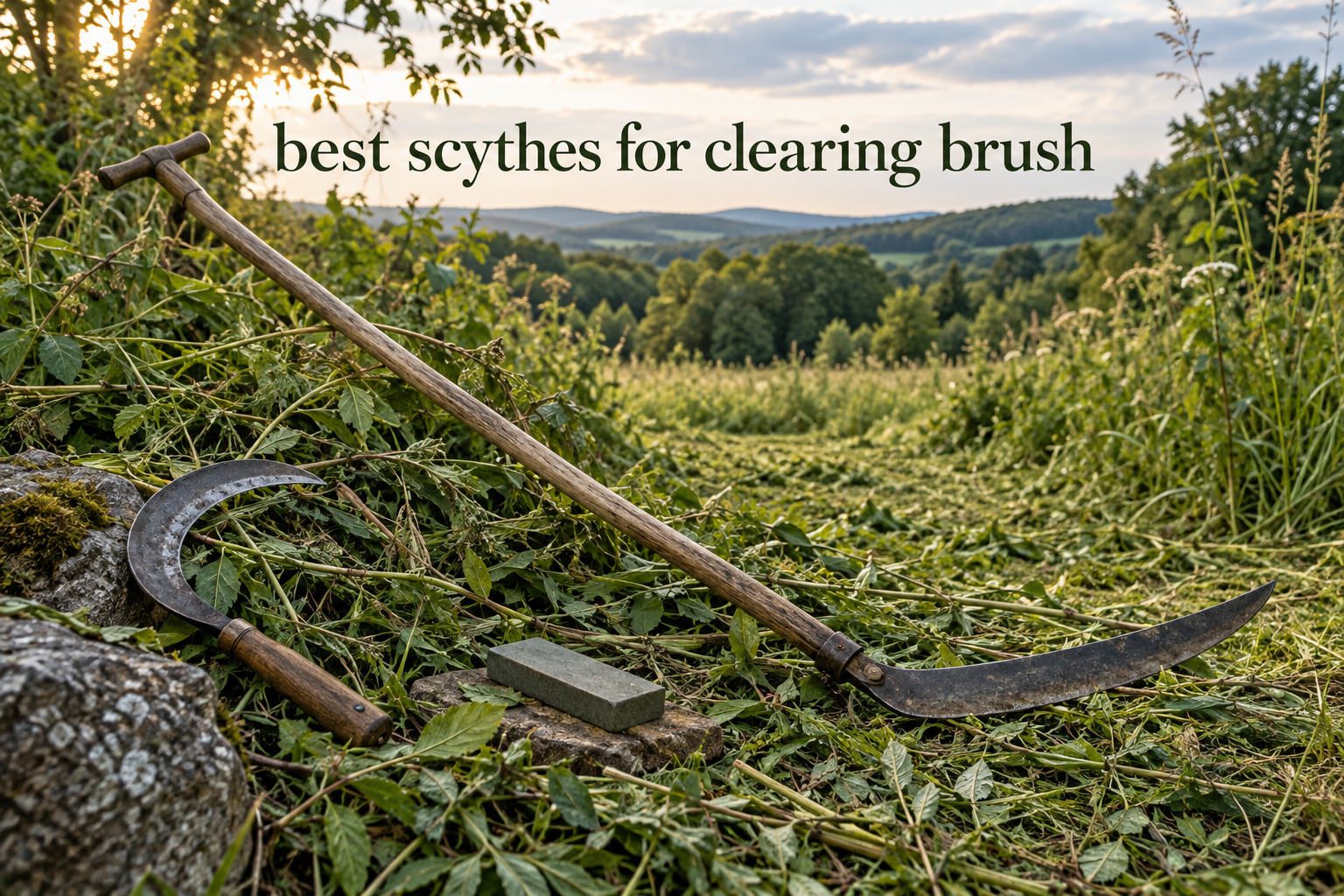
Most of what gets sold online as a scythe is not a scythe at all. It is a hand sickle, a grass whip or a short billhook, and once you understand that distinction, picking the right one for your land becomes a thirty minute job instead of a gamble.
For the best scythes for clearing brush, we picked the Zenport K310 Hand Sickle as the best overall, the AMES True Temper Grass Whip for the longest reach on ditches and fence lines, and the MASAKIYO Japanese Weeding Sickle as the sharpest and best reviewed. All three cut soft stems, weeds and light vine growth without fuel, cord or exhaust.
A true European scythe has a curved steel blade hafted at a right angle to a long wooden snath, and short bush or ditch blades in the 40 to 60 centimeter range are the ones built for woody growth. Long grass blades of 70 centimeters and up are mowing tools for open meadow. None of those long scythes are in this roundup, because the search results for brush clearing are almost entirely filled with compact hand tools, and those are what a typical homeowner can actually buy, store and use.
We compared eight of them across blade length, steel type, edge geometry, handle length and measured weight, then read the buyer feedback on each for edge retention, handle durability and real clearing capacity. What follows is the honest version, including where each tool stops working.
Table of Contents
- Top 3 Picks for Best Scythes for Clearing Brush (October 2026)
- Quick Comparison of All 8 Picks in 2026
- 1. Zenport K310 Hand Sickle – Best Overall for Brush Clearing
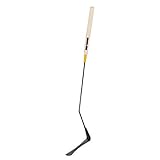
- 2. AMES True Temper Grass Whip – Best Reach for Ditches and Fence Lines
- 3. MASAKIYO Japanese Weeding Sickle – Top Rated for Precision Work
- 4. KEYI Steel Grass Sickle – Best for Small Stems and Vines
- 5. YEELOR Adjustable Long Handle Sickle – Best for Upright Stalky Weeds
- 6. Z and G Billhook Sickle – Best for Stubborn Growth and Leverage
- 7. Truper 16 Inch Serrated Grass Sickle – Best for Harvesting and Crop Work
- 8. HACHIEMON Nejiri-Gama Weeder – Best for Tight Beds and Ditches
- How to Choose a Cutting Blade for Brush Clearing
- Scythe vs String Trimmer vs Brush Cutter vs Machete: Honest Limits
- Sharpening, Honing and Edge Care Between Sessions
- Snath Sizing and Handle Fit for Your Height
- Safety When Clearing Brush by Hand
- Frequently Asked Questions
- Which Scythe Should You Buy?
Top 3 Picks for Best Scythes for Clearing Brush (October 2026)

Zenport K310 Sickle
- SK5 Japanese carbon steel
- 9 inch hooked blade
- 12.8 ounce aluminum handle
Two of these three are compact hand tools and one is a long-handled whip, and that spread matters. If your brush is knee-high weeds in a garden bed, the short Japanese blades are faster and more precise. If it is chest-high growth along a ditch bank, the longer whip covers ground per swing that the small sickles cannot reach.
Quick Comparison of All 8 Picks in 2026
| Product | Specs | Action |
|---|---|---|
| Zenport K310 Hand Sickle |
|
Check Latest Price |
 AMES True Temper Grass Whip AMES True Temper Grass Whip |
|
Check Latest Price |
 MASAKIYO Weeding Sickle MASAKIYO Weeding Sickle |
|
Check Latest Price |
 KEYI Steel Grass Sickle KEYI Steel Grass Sickle |
|
Check Latest Price |
 YEELOR Adjustable Long Handle YEELOR Adjustable Long Handle |
|
Check Latest Price |
 Z and G Billhook Sickle Z and G Billhook Sickle |
|
Check Latest Price |
 Truper 16 Inch Serrated Sickle Truper 16 Inch Serrated Sickle |
|
Check Latest Price |
 HACHIEMON Nejiri-Gama Weeder HACHIEMON Nejiri-Gama Weeder |
|
Check Latest Price |
Read that table as a shape rather than a ranking. The five tools under 13 ounces are close work tools for beds, paths and edges. The three heavier ones cover more ground per swing and are what you reach for when the growth is chest high and you want to finish before the sun goes down.
1. Zenport K310 Hand Sickle – Best Overall for Brush Clearing
Zenport K310 Brush Clearing Hand Sickle 9 Inch Steel Scythe Garden Machete
SK5 Japanese high-carbon steel
9 inch straight hooked edge
12.8 ounces, 18 x 6 x 1 inches
Pros
- Slices dense vegetation
- thick vines and small saplings
- Lightweight aluminum handle with soft rubber grip
- Precise straight hooked edge for clean cuts
- Well balanced for a hand sickle
- 4.5 stars from 3835 reviews
Cons
- Needs a free swinging arm so it suits open ground
- No sheath included
- Short 9 inch reach versus long whips
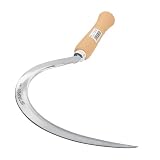
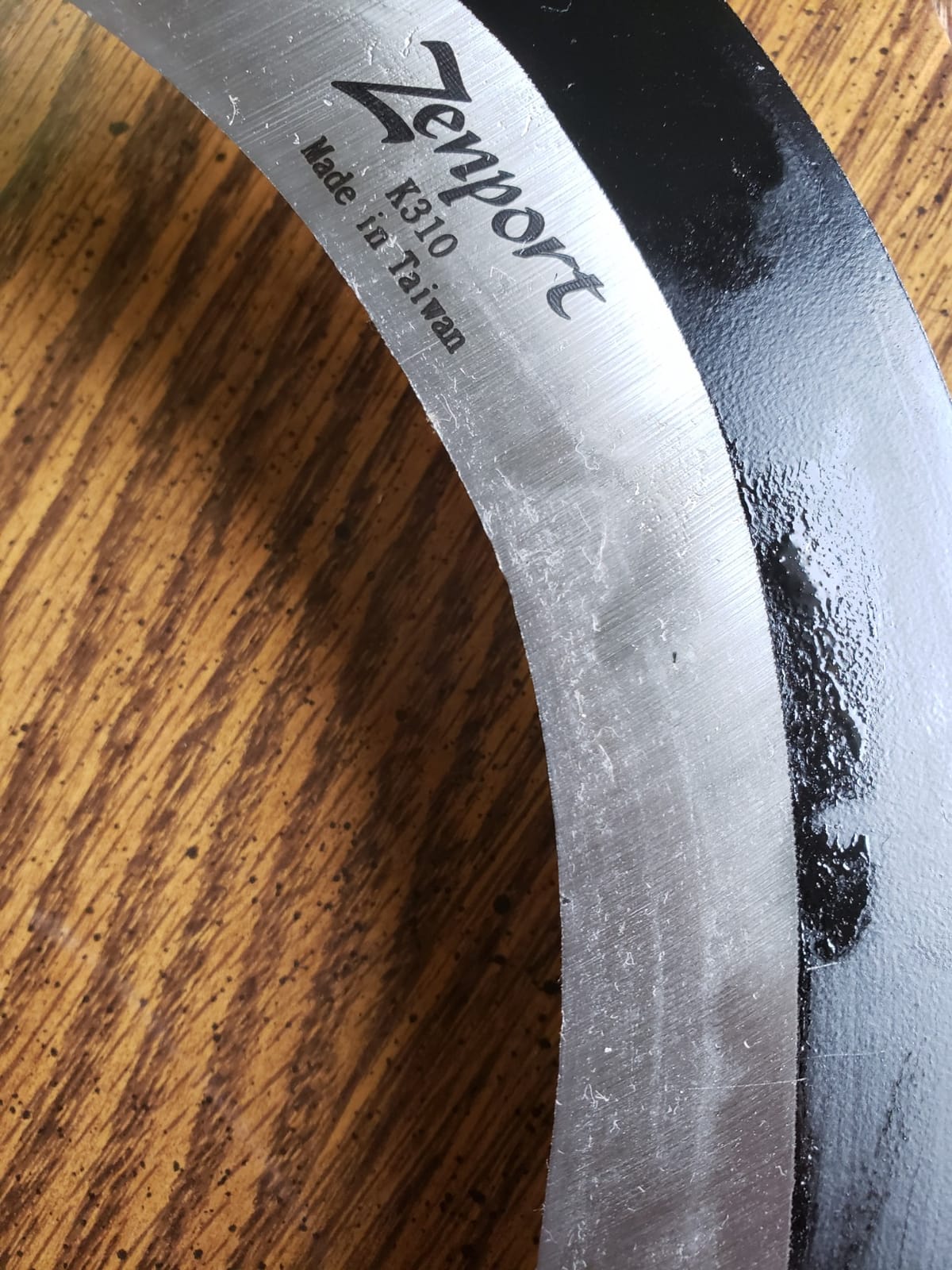
This is the tool I would hand someone who has an overgrown half acre of mixed weeds and light vine growth and wants one implement that handles all of it. The blade is SK5 Japanese high carbon steel, a steel grade that holds an edge well past the point where cheaper high carbon steel starts to roll, and at 9 inches with a straight hooked edge it makes clean through-cut slices rather than tearing stems apart.
What stands out is the balance. At 12.8 ounces the aluminum handle with its soft black rubber grip keeps a full session comfortable, and the open head design means you can see the blade and place the cut precisely instead of guessing around shrubs.
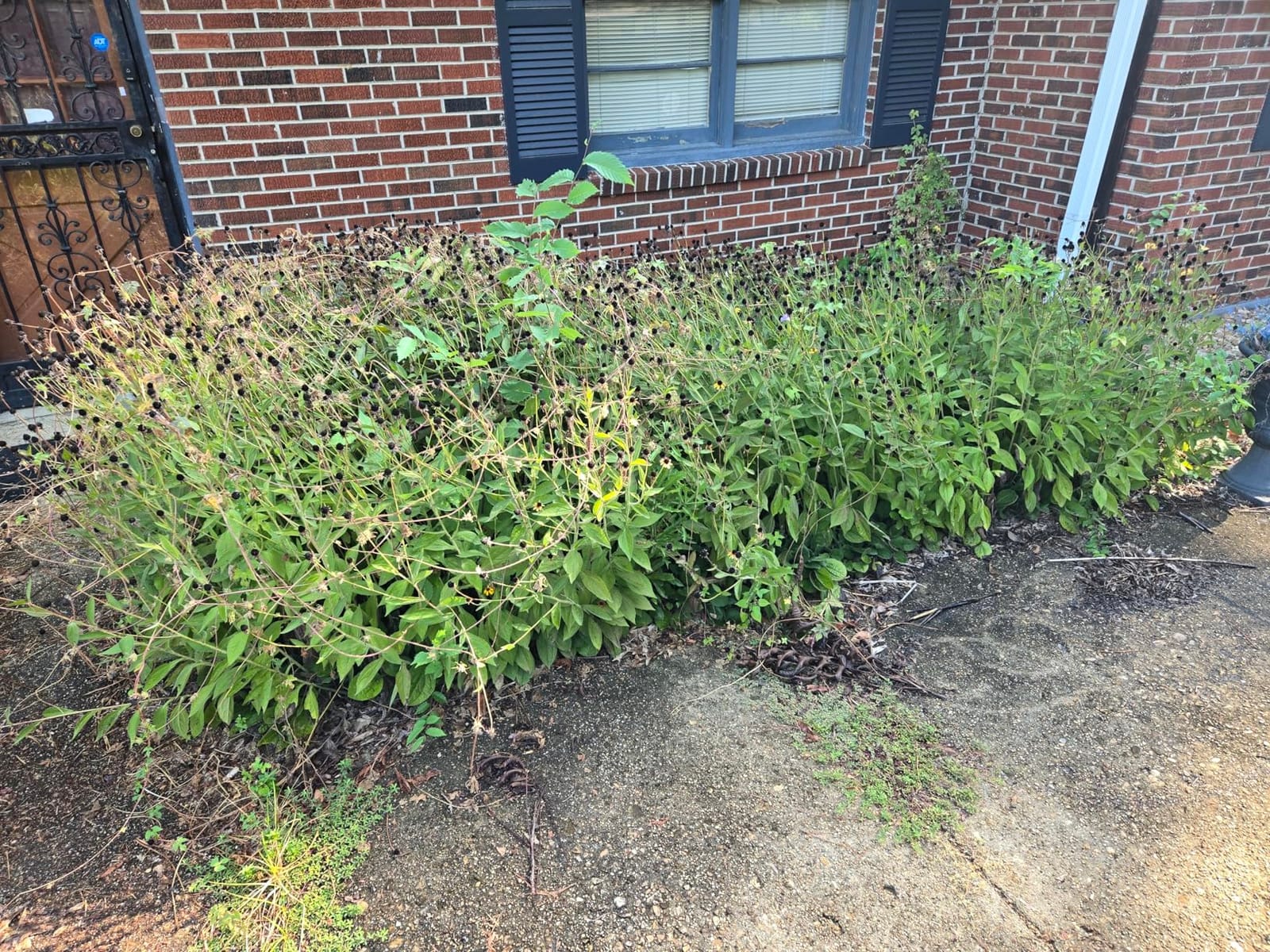
Buyer feedback lines up with our read. Owners point to the blade arriving sharp, the handle staying comfortable over long sessions, and the tool handling everything from lawn fringe cleanup to thicker vines without a second implement. The distribution of ratings is heavy at the top, with 74 percent five star and 16 percent four star.
It is worth being clear about the class of cutting here. The 9 inch edge is a slicing edge, not a chopping edge, and it is happiest on stems in roughly the finger to thumb range. Push it into anything genuinely woody and you will just add another file to the list of things you own.
What job it fits best
This is the sickle for a lot that has gone to seed, a garden that got away, or a fence line where bramble and bindweed have climbed to knee height. Because it weighs under 13 ounces you can swing it for an hour without the arm fatigue that heavier choppers cause, which matters more than raw power in vegetation this size.
It also suits smaller hands and shorter operators better than most long-handled options, because there is no long shaft to lever against and no balance point to fight.
Where it will let you down
The open head needs room to swing. Working in a narrow corridor between two shrubs, you will be repositioning more than cutting, and a long-handled whip will simply pass where this one cannot.
There is also no sheath in the box, so a tip-first drawer or a truck-bed toolbox is exactly how a nine inch open blade gets chipped. Hang it on a wall hook instead.
2. AMES True Temper Grass Whip – Best Reach for Ditches and Fence Lines
True Temper 2942600 Grass Whip with Double-Edged Serrated Steel Blade and 22 in. Hardwood Handle
Double-edged serrated steel
41 inch hardwood handle
1.4 pounds overall
Pros
- Serrated edges cut tall grass with less force per swing
- Well balanced and swings one-handed
- 41 inch handle reaches ditches and field edges
- Light for long work sessions
- Hanging hole for storage
Cons
- Edge can arrive dull or coated
- Handle shape suits right handers mainly
- Narrow cutting width means many passes
A grass whip is the opposite trade from the Zenport: less precision, far more reach. At 41 inches long and 1.4 pounds, this one lets you cut standing growth in a ditch, along a woodland edge or at the base of a fence without walking into the vegetation you are cutting.
The double-edged serrated steel is the interesting part. Serration gives it bite on tall stemmy grass, so it works with less swing speed and less arm strength than a plain smooth edge would demand. It is also why this tool will not chew through woody brush, and why the edge is described in buyer reviews as effective on weeds and light meadow growth rather than brambles.
Buyer feedback describes it as sturdy, familiar and well balanced, with the most common complaint being that the edge sometimes arrives dull or factory coated and needs a file before the first pass. The second recurring note is that the handle is not shaped for left-handers.
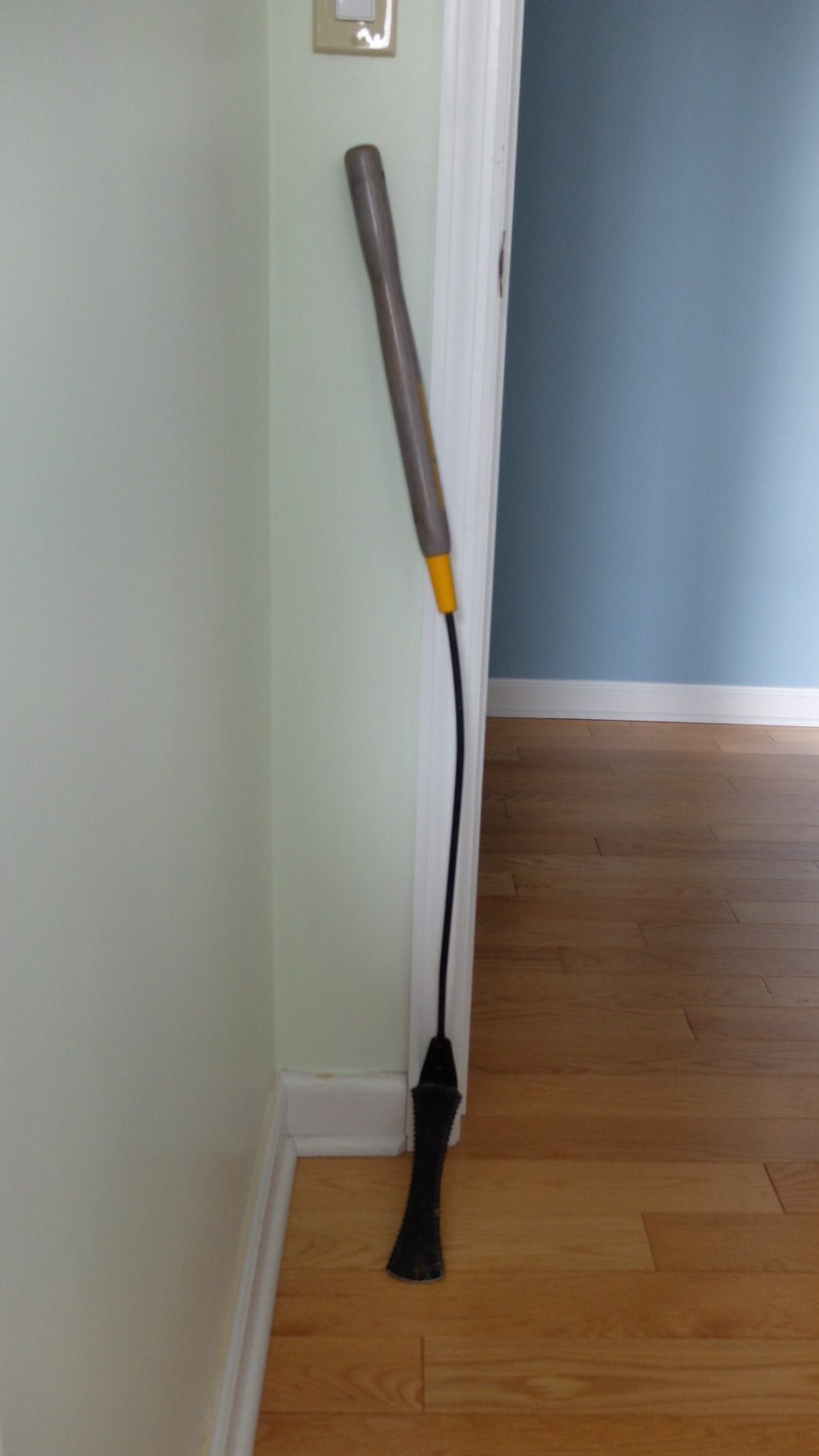
On balance this is the pick for anyone working a boundary rather than a bed. Fence lines, ditch banks, the ragged strip where lawn meets roadside, the edges of an orchard row: all of these reward a long shaft more than they reward a sharp short blade.
The hanging hole in the handle is a small thing that you will appreciate more than you expect, because this is a tool that lives on a shed wall between uses rather than in a drawer.
What job it fits best
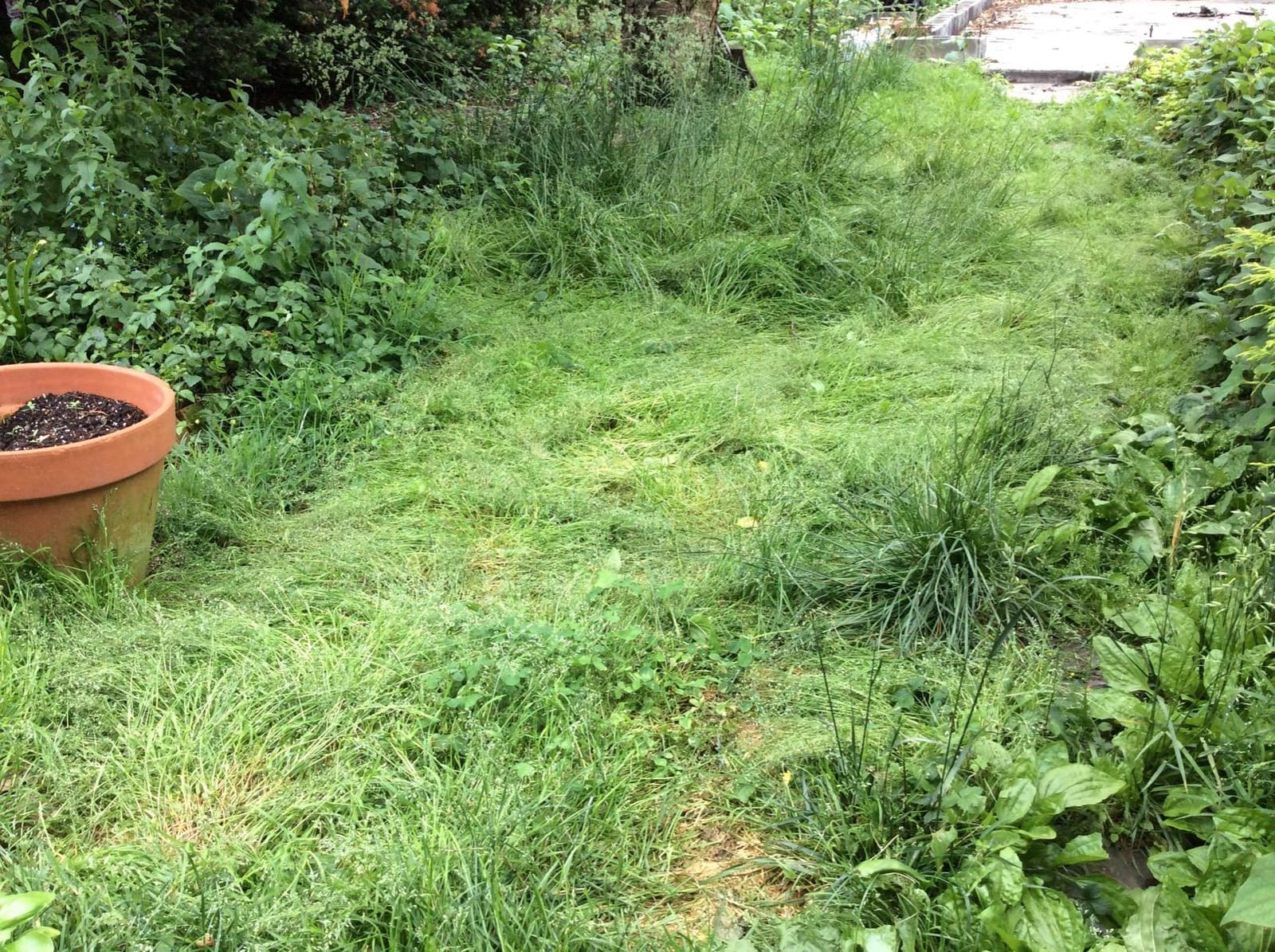
Ditch edges, pond margins, stream banks and any place where the ground is uneven or you would rather not step into the weeds. The long shaft keeps your boots on dry ground and your body out of the swing arc, which is a genuine safety gain on unstable terrain.
It is also the quiet option. There is no engine note, no exhaust and nothing for a neighbour to complain about at seven in the morning.
Where it will let you down
The cutting width is modest, so an open half acre means a lot of passes. If your job is volume, this loses to anything with a wider head, and it is not a substitute for a powered brush cutter on ground you can drive across.
Buy a file or a coarse stone with it. A serrated edge that starts dull stays dull, and reviewers consistently report extra swings on the first outing until it is sharpened.
3. MASAKIYO Japanese Weeding Sickle – Top Rated for Precision Work
Japanese Weeding Sickle Very Sharp Edge Quick Work (Full Size)
High carbon steel,hand forged in Japan
5 inch blade, D-grip wood handle
5.9 ounces, 9.98 x 2 x 2.7 inches
Pros
- Highest rated at 4.7 stars from 6522 reviews
- 85 percent of buyers give five stars
- Edge holds far longer than cheaper steel
- Hand made by a specialist Japanese maker
- Weighs under 6 ounces for long sessions
Cons
- Short 5 inch blade limits reach into deep growth
- Very sharp
- needs careful handling
- Not built for thick woody stems
This is the highest rated tool in the roundup by a clear margin, with 4.7 stars across 6522 reviews and 85 percent of those reviews at five stars. The blade is high carbon steel, hand made one at a time by a specialist Japanese maker, and the D-grip wooden handle keeps it at 5.9 ounces.
Edge retention is the reason to choose it. High carbon steel at this quality level holds a working edge through a whole session of cutting wet stems and soil, which means fewer stops to sharpen and less frustration on the first project when you are still learning the rhythm.
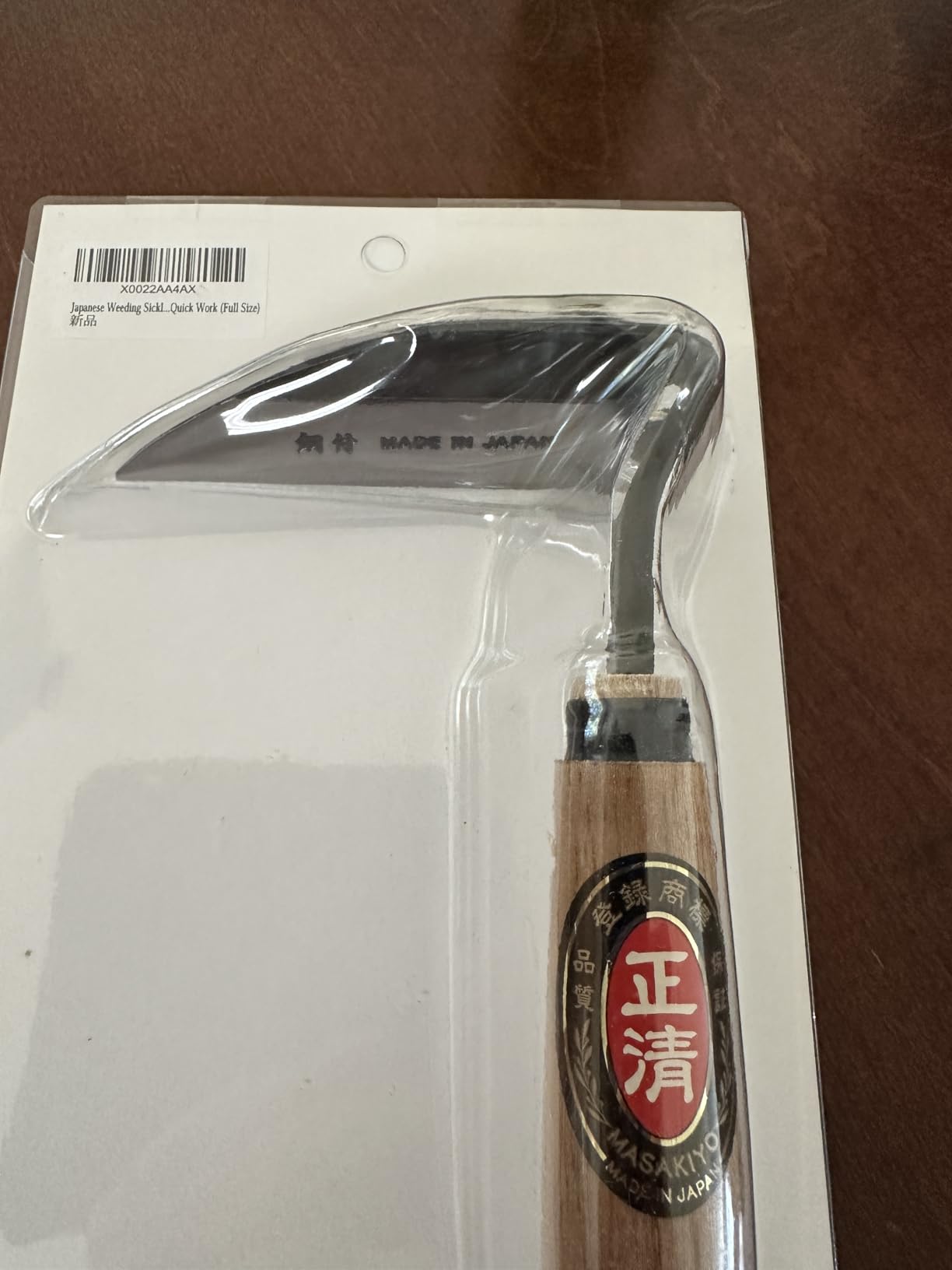
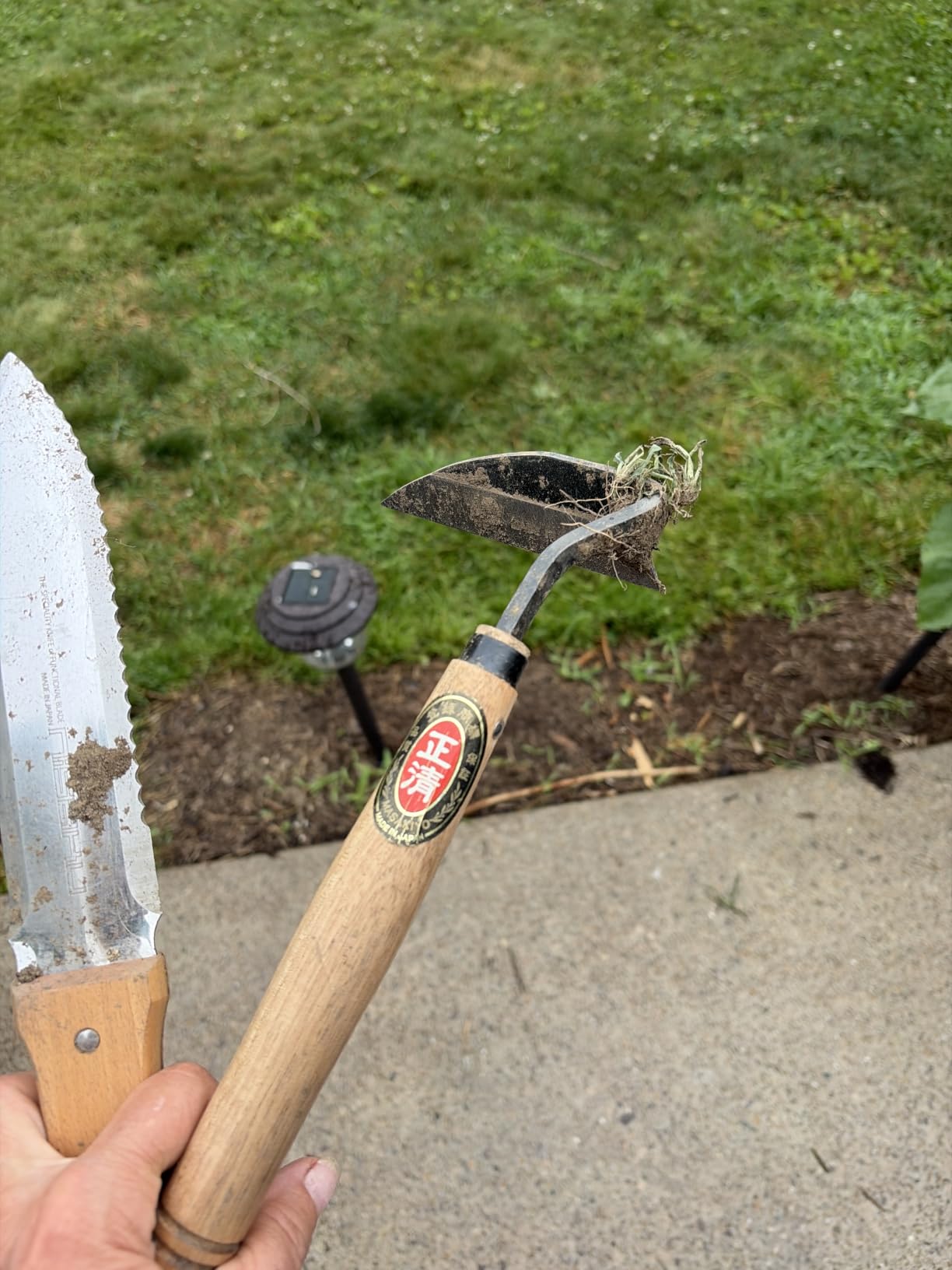
Owners consistently treat this as a precision weeding and trimming instrument rather than a brush cutter, and that framing is accurate. The 5 inch blade is sized for cutting at the base of individual plants, clearing a bed edge, or getting under the canopy of something without disturbing the soil around it.
The D-grip is unusual if you have only ever used a straight-handled sickle, and it takes a session to adjust to. In exchange you get a closed grip you can apply real pressure with, which matters when the blade is down at soil level among stones.
What job it fits best
Perennial beds, vegetable plots, paths and any job where the goal is a clean cut at ground level rather than a swath. At under 6 ounces it is the least tiring option here, which makes it the one to hand a beginner.
It is also the sensible second purchase. Whatever broad tool you use to knock down the tall stuff, this is what finishes the corners.
Where it will let you down
Five inches of blade has no reach. If you cannot get your body next to the plant you cannot cut it, and in chest-high growth that is every plant.
Be aware that it ships very sharp and stays that way, so keep it out of reach of anyone who will grab it without thinking, and oil the blade if it sits in a damp shed.
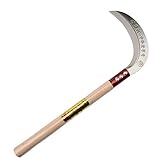
4. KEYI Steel Grass Sickle – Best for Small Stems and Vines
Steel Grass Sickle,Clearing Sickle,Manganese Steel Blade/Hardwood Handle Hand held Sickle Tool – Multipurpose Gardening Weeding Grass Sickle and Farming Portable Safety Sickle
Manganese steel with quenching
18 inch listed length, 200 grams
9.1 ounces
Pros
- Arrives sharp and easy to put an edge on
- Slices soft grasses
- tree sprouts and small branches
- Finger grooves in the handle reduce slippage
- Lightweight for close work around trees
- Good value for the money
Cons
- Soft steel dulls quickly in use
- Untreated hardwood handle can snap
- Bending the tip is easy on a hidden obstacle
- Awkward curve to sharpen by hand
This is the tool for the pile of vine, weed tops and small branches that builds up when you cut back a hedge or clear a fence line by hand. Manganese steel with a quenching process gives an edge that arrives sharp and responds quickly to a file or a scythe stone, and at 200 grams the whole thing stays out of the way.
The hardwood handle is grooved for the fingers, which stops the tool rotating in your hand at the exact moment you are pulling through a tangle. That detail matters more in practice than it sounds like it should.
Buyer feedback praises the out-of-the-box sharpness and the way it handles soft grasses, sprouts and small branches. The consistent complaints are durability rather than function: soft steel that dulls in a session, and an untreated wood handle that some owners report snapping mid-job.
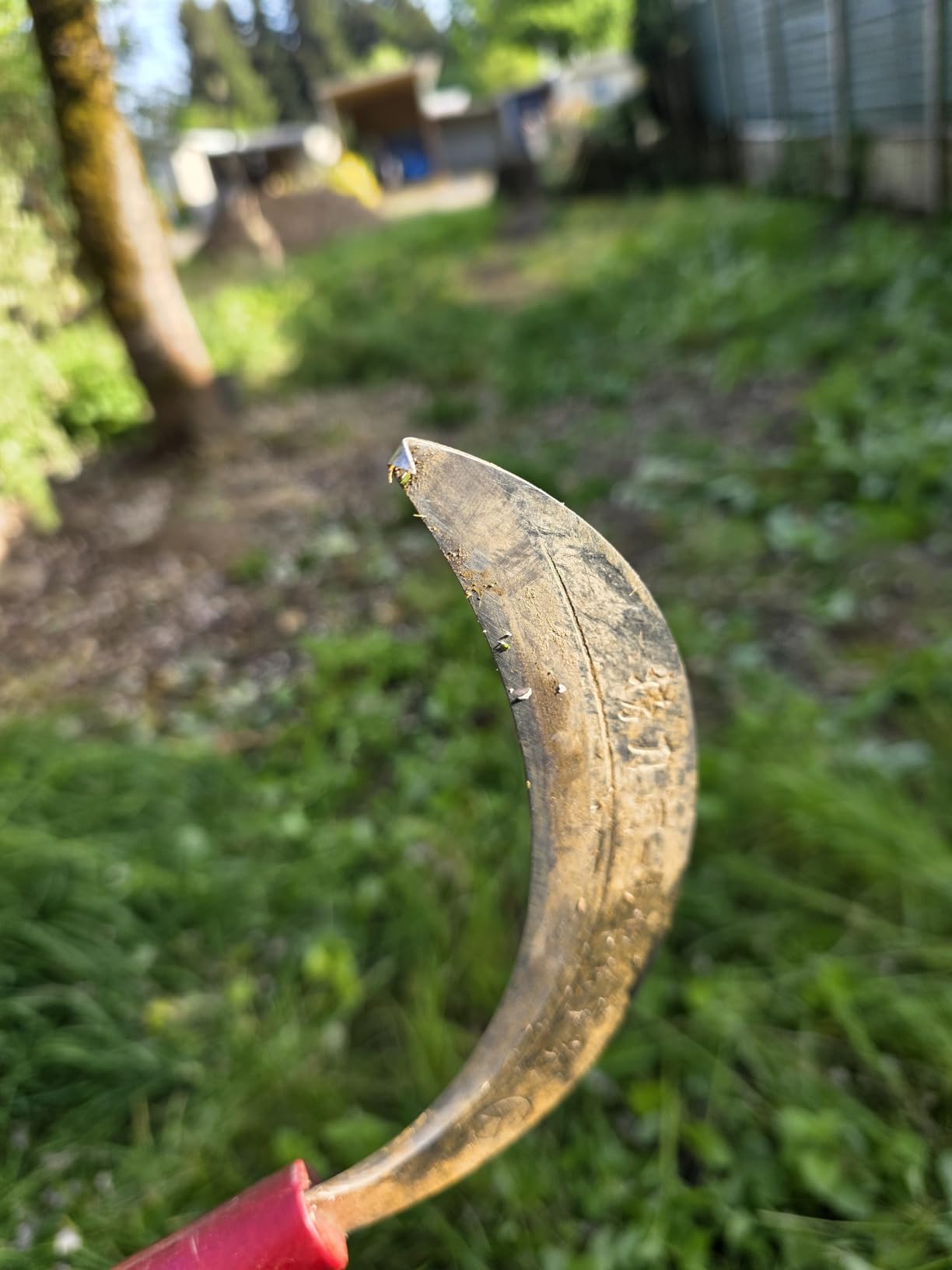
It also registers well as a two-handed tool at close to 18 inches, which gives it a little more mechanical advantage than a short sickle when you are pulling stems out of a dense mat rather than cutting free-standing ones.
Wooden handles on tools at this level are a normal compromise. Expect to oil it once a season, and if the grain starts to feel soft or the tool bounces at the strike, stop using it rather than waiting for it to fail.
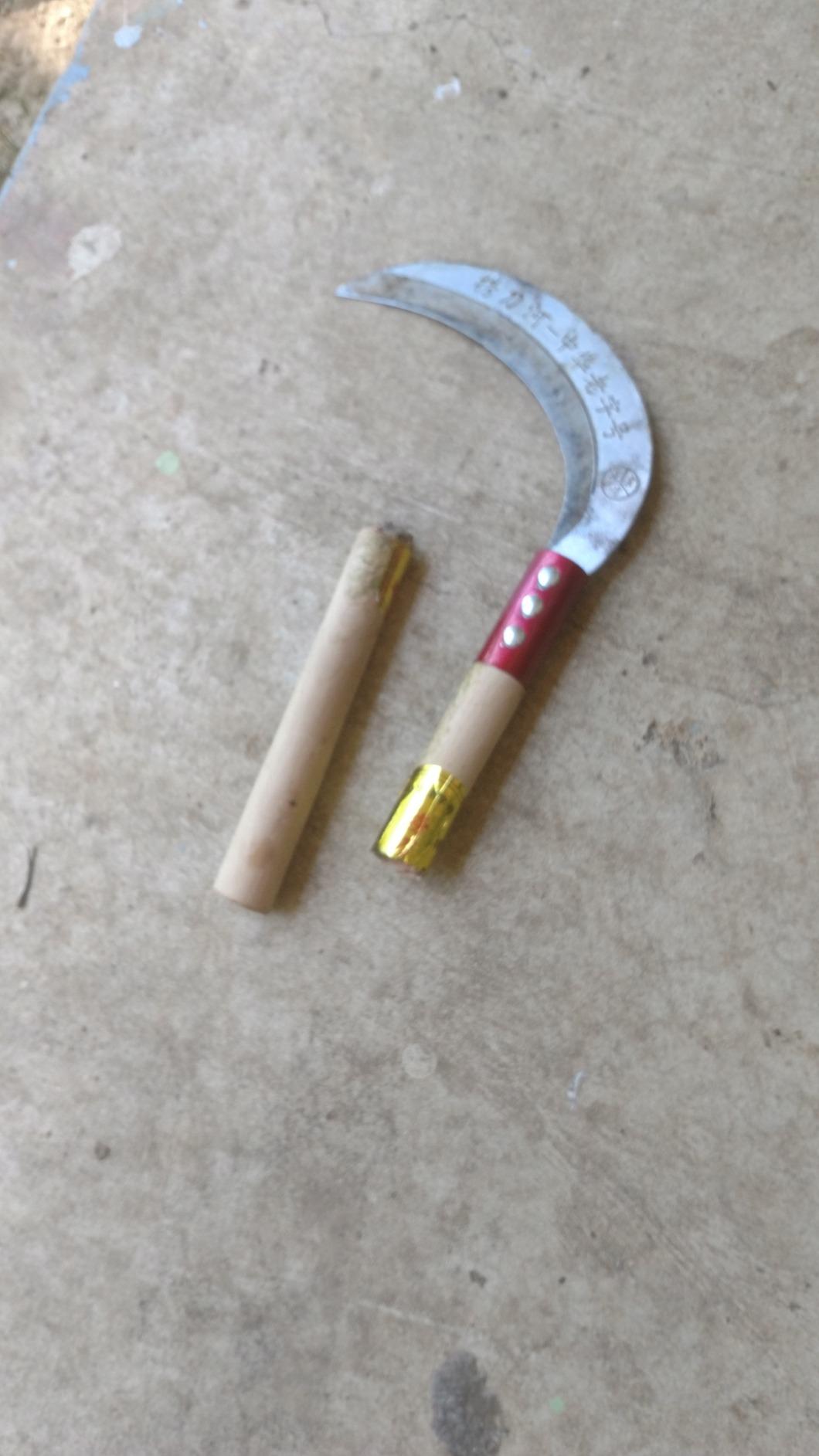
What job it fits best
Clipping back vine and bramble growth that has already fallen, cutting sprouts and small branches around trees, and general tidy-up where a full scythe would be too much tool to manoeuvre. The weight makes it easy to work low to the ground for a long stretch.
For a first hand tool on a smallholding this is a capable and forgiving place to start, because there is very little technique required to get a usable result.
Where it will let you down
Soft steel is the honest limit. Reviewers report it dulling faster than the Japanese and European steels in this roundup, so plan on touching it up with a stone partway through a job rather than at the end.
The curve of the blade is also awkward for beginners to sharpen, and the tip will bend if it catches dirt or an unseen root. Work visible ground until you have the feel of it.
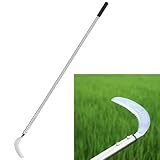
5. YEELOR Adjustable Long Handle Sickle – Best for Upright Stalky Weeds
YEELOR Weeding Sickle, 51-Inch Adjustable Long Handle
Stainless steel shaft and blade
3 length settings, 21.5 to 51.7 inch
1.6 pounds
Pros
- Works upright and saves lower back strain
- Three length settings for yard
- garden or flower bed
- Only 1.6 pounds with no fuel or cord
- Stainless shaft resists rust and bending
- Quiet operation with nothing to shred afterwards
Cons
- Handle sections loosen during use
- Hollow ground blade dulls on fibrous grass
- Blade can chip on large dead woody weeds
- Blade assembly loosens with every strike
This is the one on the list that solves a back problem. At 51.7 inches at full extension, and adjustable down to 37.3 or 21.5 inches, it lets you work standing up on thistle, reed and stalky weed stands instead of crouching with a short sickle.
The blade is described as a two-in-one design with a straight edge for soft weeds, a wavy edge for tougher stems and a sharp tip for root pulling. It is mounted roughly parallel to the ground so the swing motion stays beginner friendly, which is the main appeal if you have never used a swinging tool.
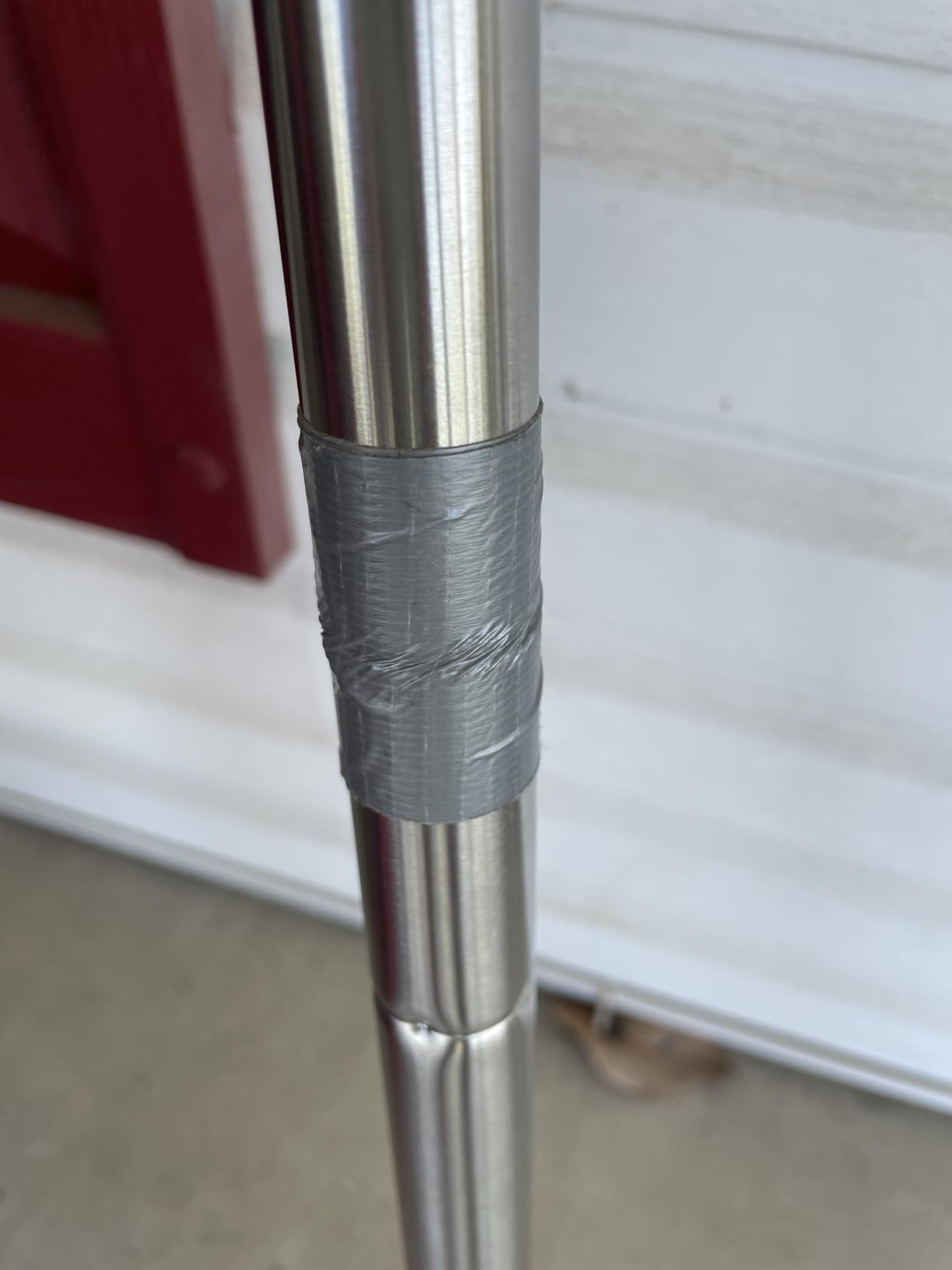
Owners credit it with clearing thistle stands, ditch weeds and overgrown bushes without the noise and fumes of a gas brush cutter. The recurring complaint is the screw-together handle: it loosens during use and needs re-tightening, and the blade assembly can work loose on repeated strikes.
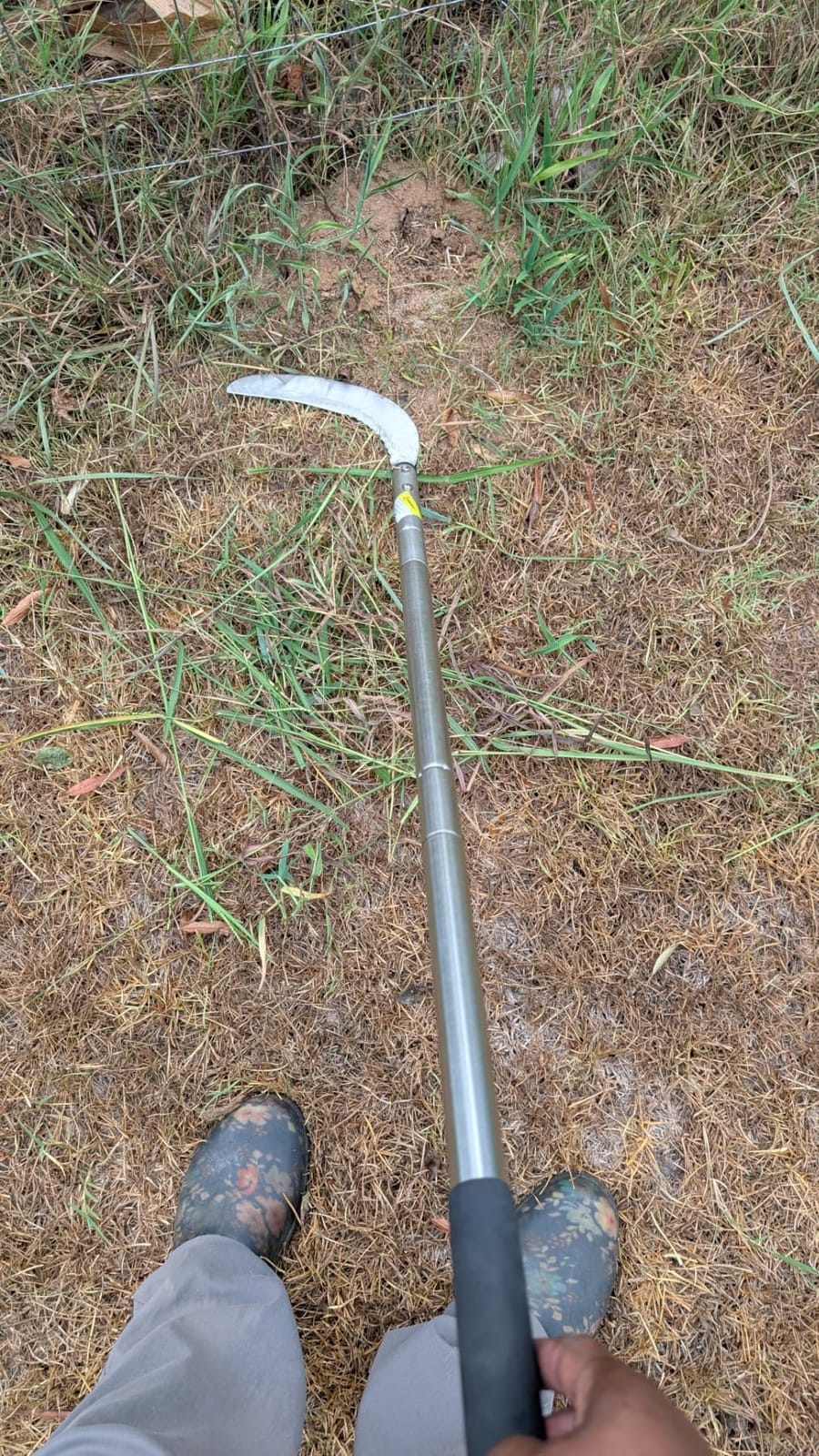
It is also the quietest useful option for a residential lot, and it leaves no shredded debris to rake up, which is a real advantage next to a string trimmer on a garden edge or a path.
If you take one thing from the buyer feedback, take this: check the fittings after the first few minutes, and again after the first hour. It is a five second task that prevents the tool from working itself apart.
What job it fits best
Upright stalky weeds, thistle patches, reed edges, ditches and anywhere you would rather not spend the afternoon bent double. The three length settings mean one tool covers flower beds, garden rows and a full yard edge.
It is a genuinely good first brush tool for someone who is worried about technique, because the parallel blade angle removes most of the geometry you would otherwise have to learn.
Where it will let you down
It is not a scythe and does not pretend to be one. A single narrow blade head covers very little ground per swing, so a large open area of tall grass is a poor match.
Reviewers also report the hollow ground blade dulling on fibrous grasses and chipping on large dead woody weeds, so it is at its best on live, upright, non-woody growth.
6. Z and G Billhook Sickle – Best for Stubborn Growth and Leverage
Billhook Sickle Garden Tools Machete Knife Brush Clearing Sickle Machete with Carbon Steel Blade Sickle Knife Billhook Machete Sickle for Grass, Harvest, Weeding Sickle Machete
Carbon steel billhook blade,5 inch
14 inch overall, alloy steel handle
0.31 kg
Pros
- Machete style leverage in a hand tool
- Carbon steel rated heavy duty for grass and weeding
- Sits in the top ten of its category
- 4.5 stars from 401 reviews
- Ambidextrous and carries a one year warranty
Cons
- Compact 5 inch blade limits reach
- Machete style blade needs controlled technique
- Small grip will not suit large hands
This is the hybrid in the roundup: a hand sickle that borrows the geometry of a small machete. The 14 inch overall length with a 5 inch carbon steel billhook blade gives you more force behind the cut than a curved sickle, which is what you want when the growth is matted, cold-damp and refusing to slice cleanly.
It is listed as ambidextrous and carries a one year warranty, two things you rarely get together on a hand cutting tool. It also ranks in the top ten of its category, which tells you it is a configuration people actually buy rather than an accident of a listing.
Buyer feedback is positive at 4.5 stars with 76 percent five star, and owners treat it as the tool for grass, harvesting and light brush where a longer blade would feel unwieldy in close quarters.
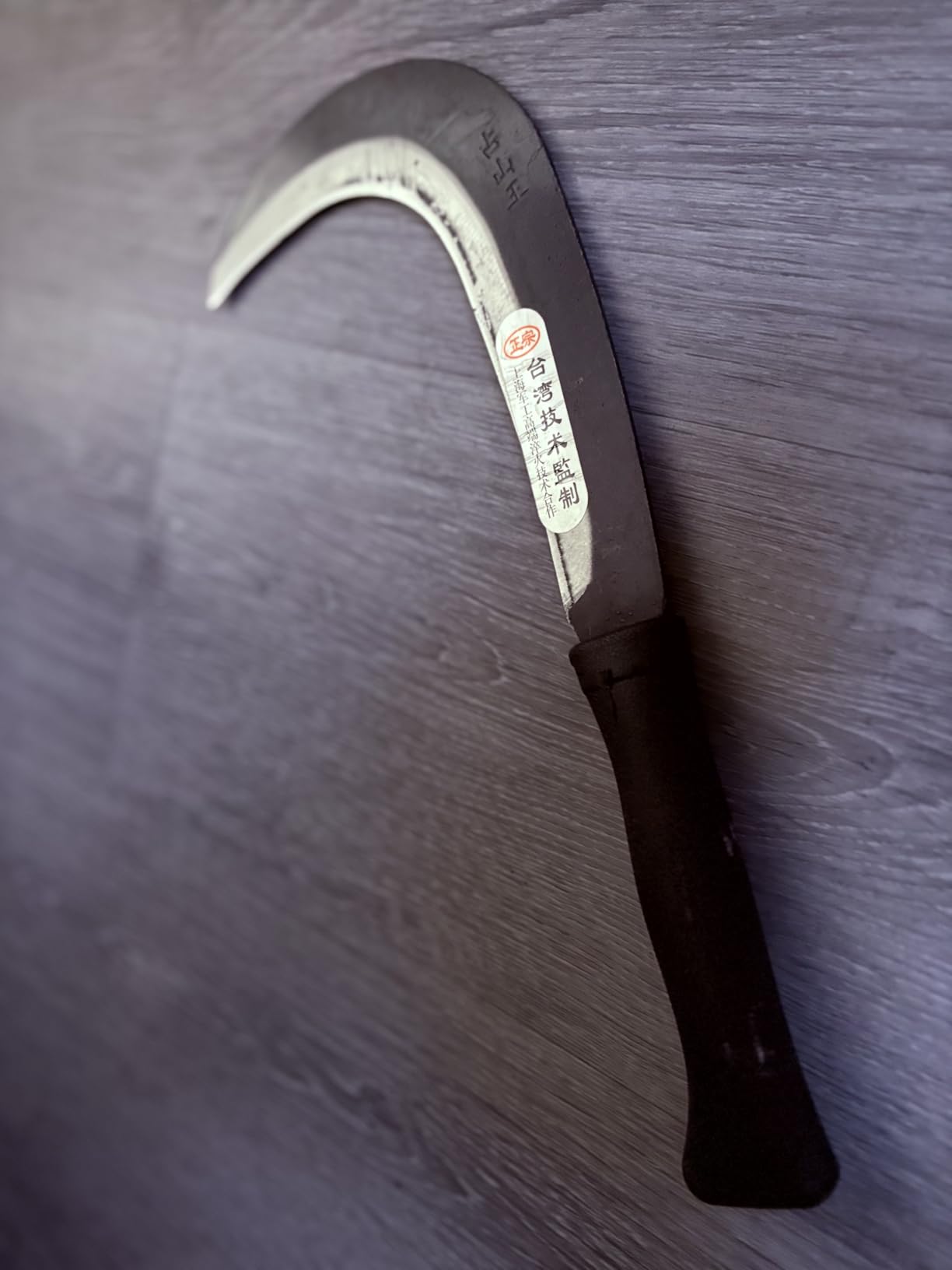
There is a technique consideration worth naming. A billhook shape rewards a controlled draw cut rather than a swinging chop, and pushing it hard into the ground is how you put a nick in a carbon steel edge. Treat it as a pulling tool and it behaves well.
Because it sits between a sickle and a machete, it is a sensible bridge purchase for someone who wants more authority than a weeding blade gives but does not want to manage a full machete length.
What job it fits best
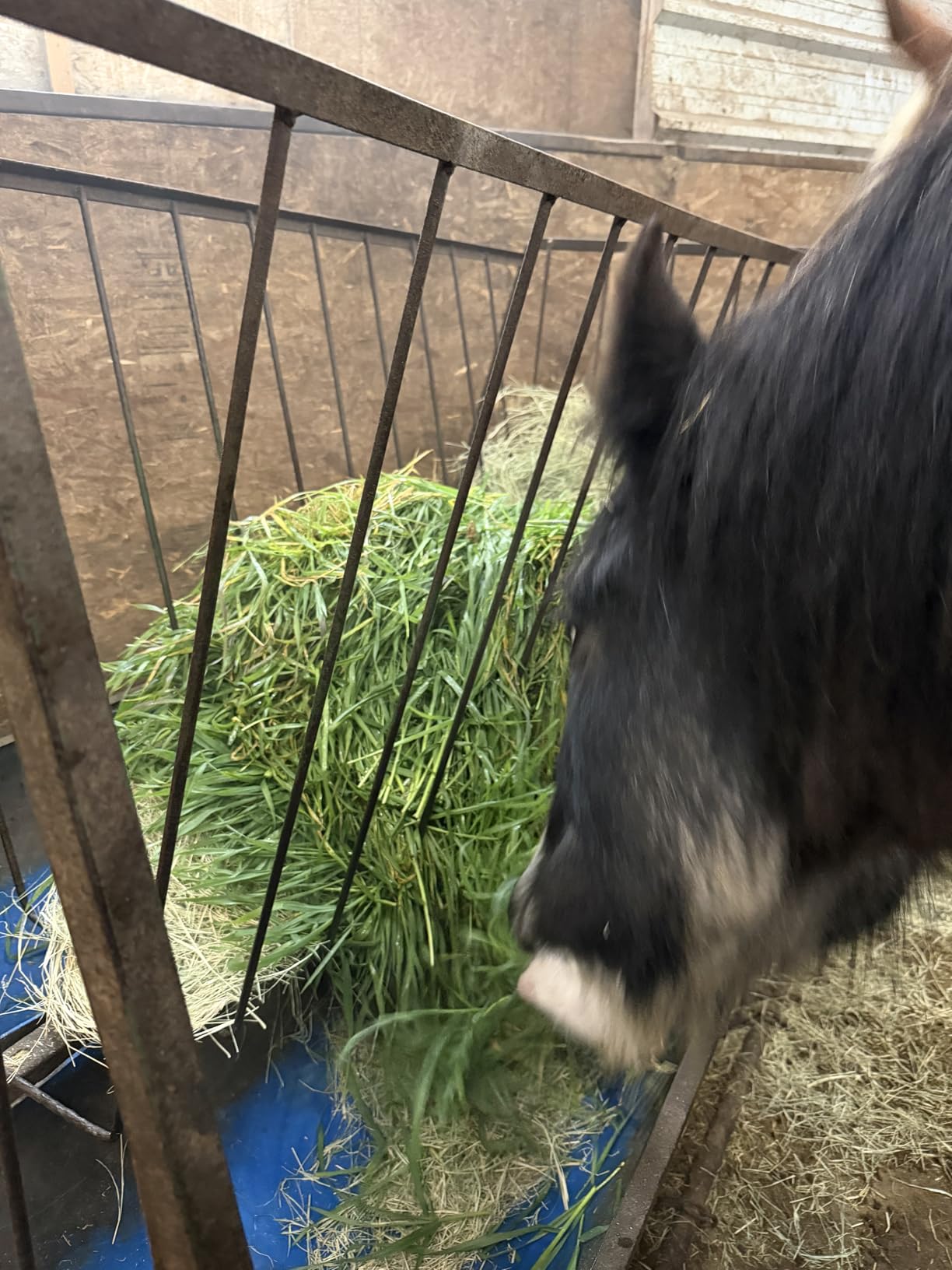
Harvesting thick stalks, cutting down old growth at the base of a hedge, and clearing matted weeds in a confined bed. It is a good tool for older, tougher material than a Japanese weeper handles comfortably.
If you already own a good fine weeder, this is the tool that covers the category the weeder refuses, and you will not need to jump straight to a machete.
Where it will let you down
Five inches of blade is a short reach, and the small grip size is worth checking against your hand before you commit. Neither is a problem if the work is close, and both are if the job is spread out.
A blade this size should be treated as a working tool. Wear a glove, keep the arc away from anyone standing alongside you, and expect to dress the edge a few times a season.
7. Truper 16 Inch Serrated Grass Sickle – Best for Harvesting and Crop Work
Truper Serrated Grass Sickle 16″, High-Carbon Steel Blade, Lightweight Wooden Handle, Hand Scythe for Manual Harvesting and Weed Clearing (Model 15120)
Forged heat-treated high-carbon steel
16 inch serrated blade
Natural wood handle, curved point
Pros
- Serrated edge bites into tall grass and standing crops
- Heat-treated forged steel holds its edge
- Lightweight wood handle gives control in tight spots
- Reaches where machinery cannot
- 16 inch blade gives good coverage per pass
Cons
- Wood handle can swell
- crack or loosen over time
- Serrations are harder to sharpen than a straight bevel
- Fixed bow suits crops better than dense brush
Truper built this one for harvest work rather than for tangled brush, and the 16 inch forged, heat-treated high carbon steel blade with a precision serrated edge shows it. Serrations are aggressive on standing stems, which is exactly what grain, grass seed and leafy crops present.
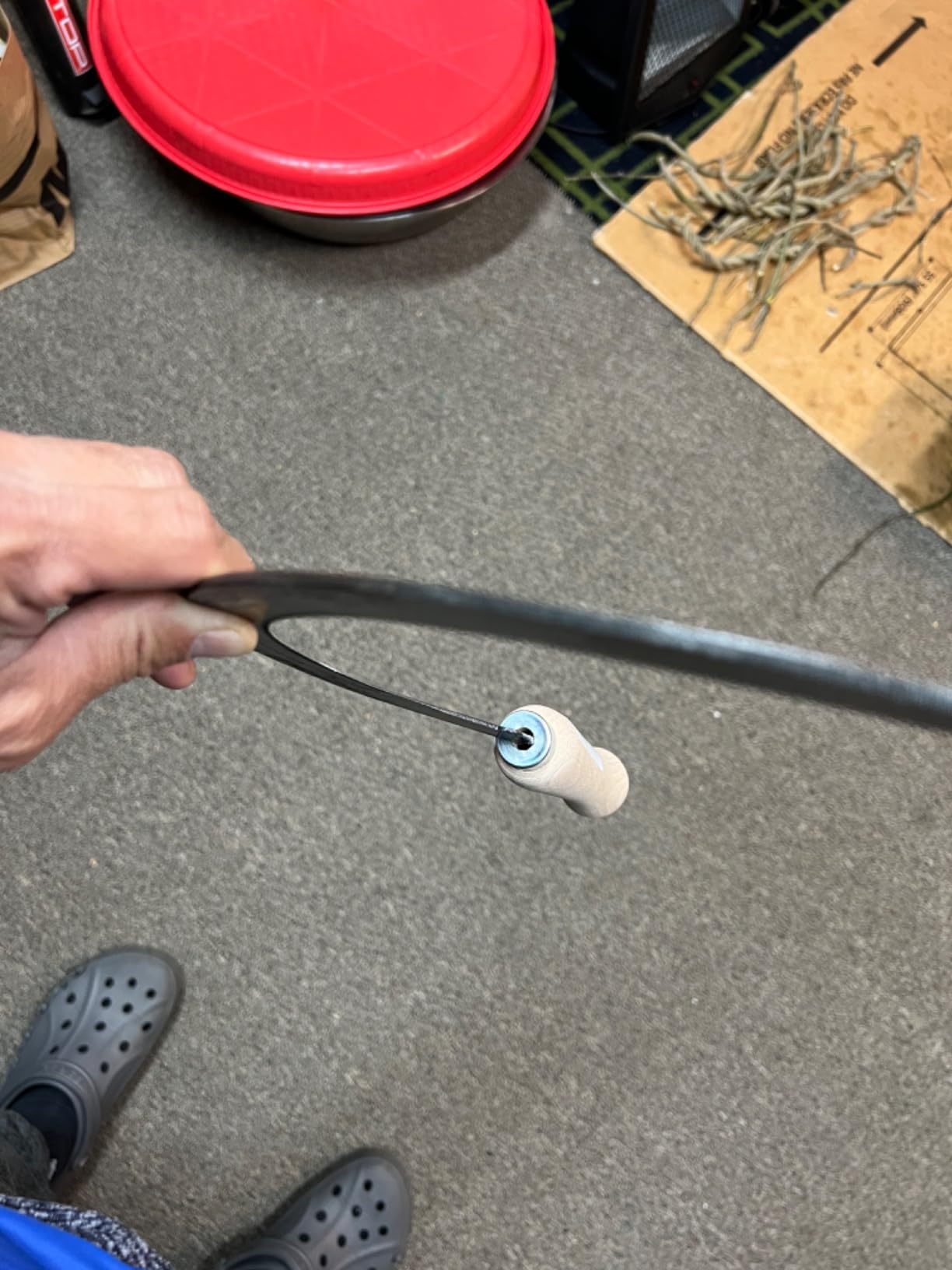
At 16 inches it is longer than the short sickles in this roundup while staying short enough to work in a bed or a row. The natural wood handle is shaped for control, and the curved point helps you get under a plant without a wide swing.
Buyer feedback is favourable at 4.3 stars, with owners describing it as useful where mechanical equipment cannot reach. The recurring negatives are a traditional wooden handle that can swell or need re-seating, and the general difficulty of sharpening a serrated edge by hand.
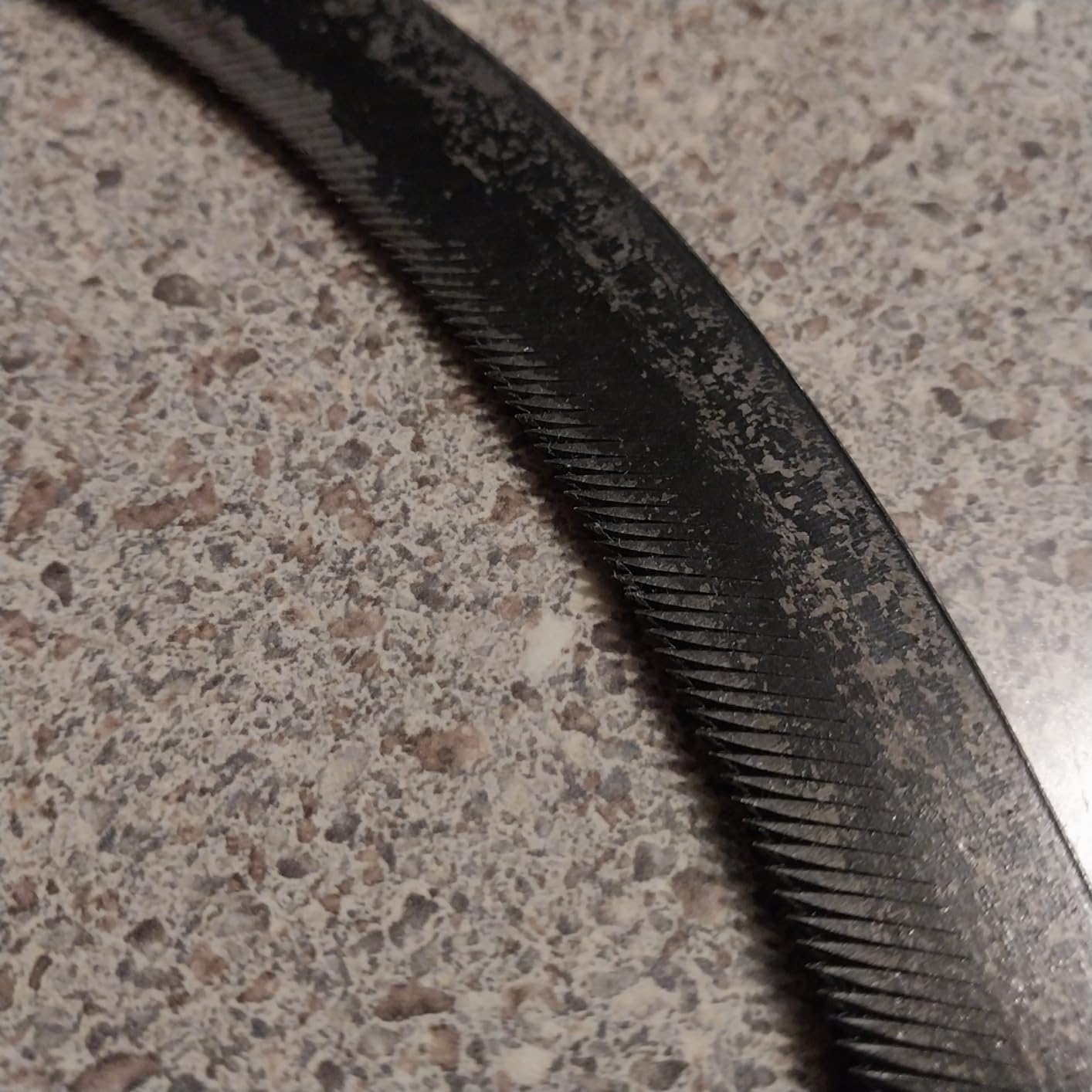
It comes in a 10 inch bow aperture in this configuration, and the fixed bow is the real design trade. A bow sickle gathers a defined curve of material, which is useful for crops and short of what you want in dense, irregular brush.
There is a larger lesson here for anyone choosing a hand tool for mixed work. A serrated blade is a poor compromise if half your job is brush, because you give up smooth sharpening and edge control to gain bite you only need on standing stems.
What job it fits best
Harvesting, cutting standing grass seed, working in vegetable rows and clearing paths where you want a long reach but a light tool. It is also the pick here for anyone who cuts crops by hand and needs a second function from the same tool.
Buyers with small gardens and smallholding plots tend to end up with this as their year-round hand tool, because it is light, curved and versatile enough for most soft jobs.
Where it will let you down
Serrated edges are genuinely harder to sharpen than a straight bevel, and you will need a proper file or a diamond stone rather than a quick swipe on a kitchen knife sharpener.
For dense, curved, woody brush the fixed bow is the wrong shape. If that is your actual job, a hooked blade like the Zenport K310 will serve you better.
8. HACHIEMON Nejiri-Gama Weeder – Best for Tight Beds and Ditches
HACHIEMON Japanese Weeding Tool Very Sharp Edge Nejiri-Gama Long Type – Made in Japan
Forge-welded steel composite,4.8 inch blade
10.2 inch handle, 17.3 inch total
10.2 ounces
Pros
- 4.6 stars with 77 percent five star feedback
- Forged Japanese steel holds its edge after dirt and sand
- Long handle and stalk let you see the blade end
- Pointed tip digs out taproots
- Owners with decades of tool experience rate it as near indestructible
Cons
- Right-handed model only
- Needs regular oiling to avoid rust
- Very sharp and not a casual-user tool
- Short blade is close work only
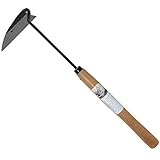
The nejiri-gama is the Japanese weeding knife rather than a sickle, and that is the point of it. At 4.8 inches of blade on a 10.2 inch metal stalk, the long narrow handle keeps your hand clear of what you are cutting and lets you see the blade end as you work into a dense clump.
Construction is what separates it. The blade is a specially formulated steel composite with forge-welded construction, made in Japan, and buyer feedback from people with long tool experience describes forged Japanese steel that holds an edge even after being driven into dirt, sand and stones.
The pointed tip also digs, so it pulls taproots and cuts small weeds in the same pass, which no straight-edged sickle in this roundup does as well. Owners with decades of experience describe it as close to indestructible.
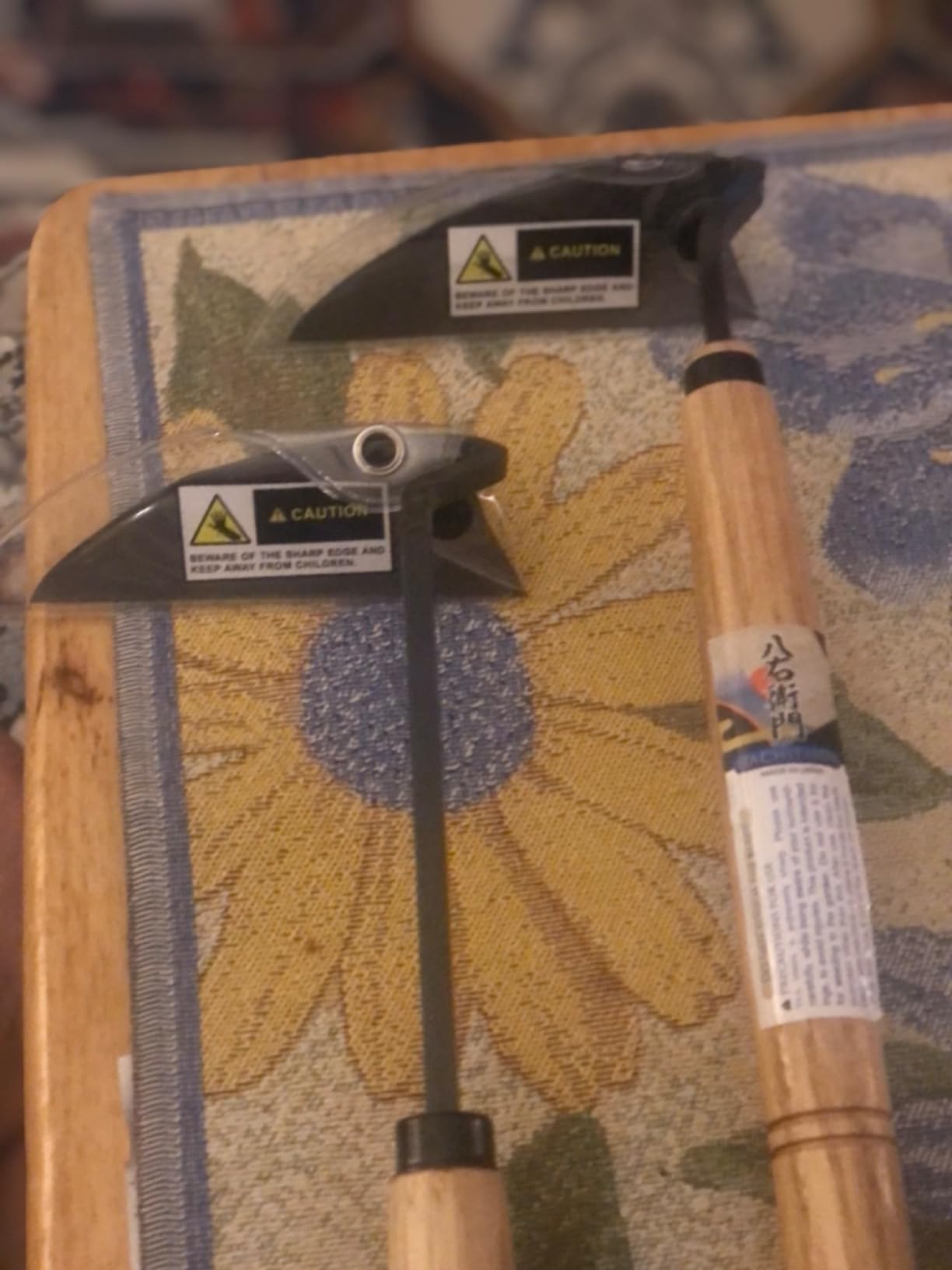
At 4.6 stars with 77 percent five star feedback, the ratings reflect a tool that suits a particular job extremely well. It is a precision instrument for working soil level, in a bed, between rows or along a ditch where the blade needs to be seen.
The ten ounce weight is a good compromise. Heavier than a Japanese weeding sickle, lighter than any long-handled option here, and the steel stalk does not flex, so the blade goes where you point it.
What job it fits best
Close work in beds and between rows, cutting at the base of weeds without disturbing neighbours, and ditch or edge work where visibility on the blade is the whole problem. It is also the choice for taproot and deep-rooted weeds.
Anyone who already has a decent weeding sickle and wants to upgrade the steel should look here first.
Where it will let you down
It is a right-handed model, and the mirrored version is a separate product, so check which hand you actually use before ordering. Buying a tool you will use back-to-front is an expensive waste of a good blade.
Two further cautions. The steel will rust if it sits damp, so oil it after use, and it is very sharp by design and not a tool to leave within reach of a child or hand it to someone casually.
How to Choose a Cutting Blade for Brush Clearing
Start with the vegetation, not the tool. Growth in the finger to thumb diameter range is handled well by any of the eight picks here. Stems that are as thick as a pencil are where hand tools begin to fail, and anything larger needs a lopper, a machete or a powered cutter.
Then match blade length to reach. A blade under 6 inches is a close work tool for beds and edges. A 9 inch hooked blade handles knee-high mixed growth. A 16 inch or 41 inch shaft is for boundary work where you cannot step into the vegetation.
Next, think about edge type. Serration gives bite on standing stems and costs you easy sharpening. A smooth bevel is easier to keep sharp and is the better choice for mixed, dirty work where you will be resetting the edge often.
Finally, weigh steel against price. High carbon and Japanese forge-welded steels hold an edge and resist rolling. Manganese and hollow-ground steels are cheaper and lighter but dull sooner, and owners say so plainly in the reviews for both tools in this roundup that use them.
Handle length and fit deserve the same attention people give the blade. Our guide to scythes for cutting hay covers the snath sizing question in more detail for anyone stepping up to a true long scythe.
Scythe vs String Trimmer vs Brush Cutter vs Machete: Honest Limits
Hand tools win in three places: cost of operation, noise and safety on uneven ground. A scythe or sickle has no fuel, no cord, no spark plug and no exhaust, and its low moving mass makes it far less dangerous than a spinning line around rocks and stumps.
They lose on speed, plainly. Forum accounts describe a realistic rate of about an acre a day for a competent scyther on open ground, with that figure roughly halving around obstacles such as rocks, shrubs and fencing. Other long-time users in the same discussions report one scyther working at about the pace of a small crew with strimmers, including the people holding boards against flying debris.
For genuinely heavy brush, a walk-behind brush mower covers ground in a fraction of the time. Our roundup of the best walk-behind brush mowers for tall grass is worth reading if your property is drivable and your time is the constraint.
Where a hand tool genuinely stops is diameter. Stems thicker than roughly three eighths of an inch, roots, stumps, wire and stone are a job for a machete, a lopper or a powered cutter, and the honest thing is to switch tools rather than to blame the scythe.
Sharpening, Honing and Edge Care Between Sessions
A dull blade is the number one reason people conclude a hand scythe does not work. It snags instead of cutting, it tears stems rather than slicing them, and it doubles the force you have to apply, which is exactly when technique breaks down and the swing gets dangerous.
Owners in the enthusiast forums share one habit: touch the edge up with a stone every ten minutes or so while working. That sounds excessive and it is not. A few strokes every few minutes keeps the bevel where you want it, and a full session at the start is the alternative.
Match the tool to the method. A file or a coarse whetstone resets a smooth bevel in seconds. Serrated edges need a proper serration file or a diamond stone and take longer. Japanese forged steel responds well to a few careful strokes on a hard stone.
After use, wipe the blade dry, remove soil from the edge and lay it flat or hang it where it will not get knocked. A thin film of oil on the steel parts costs nothing and prevents the pitting you see on tools stored damp.
Snath Sizing and Handle Fit for Your Height
If you are buying a true scythe rather than a sickle, the snath matters more than the blade. A snath that is the wrong length for your height causes back and shoulder strain, and it is one of the most common reasons beginners give up scything after a single session.
Measure for it. Stand upright, bend slightly at the hips, and the snath should reach from your hands to about your hip bone with a comfortable bend in the elbow. A bent snath suits most operators, while a straight snath is often easier to control in tight or heavy work.
Be realistic about the commitment. A snath and a long blade is a two-handed tool with a real learning curve, and most people spend the first session working out the swing geometry before they cut anything efficiently. The eight hand tools above have none of that barrier, which is why they suit a one-afternoon job so much better.
Safety When Clearing Brush by Hand
The real hazard with a hand scythe is not the blade edge, it is a hidden stone or root stopping the swing while your body keeps moving. Inspect ground before cutting, especially on reclaimed lots, and learn to drop the tool and step aside rather than forcing a blocked cut.
Cut away from yourself and away from anyone standing alongside you. Keep both hands on the handle, keep the swing arc low, and never try to catch a falling tool. Wear gloves and eye protection, and closed shoes are not optional on ground you have not walked through before.
Brush jobs carry their own hazards. Poison ivy, briar and unstable wet ground are reasons to clear the area in stages, wearing long sleeves, and washing hands and forearms afterwards. Cut the standing growth first, come back for the light woody growth, and leave stumps and roots to a different tool.
Storage is the last safety point. Several of these tools have no sheath, and a loose open blade in a drawer or a truck bed is how edges get dull and fingers get hurt. Hang them on a wall hook, out of reach of anyone who will grab without thinking.
Frequently Asked Questions
What is the best tool for clearing tall grass?
For knee-high weeds and grass, the Zenport K310 hand sickle is the strongest all-round choice in our testing, with a 9 inch SK5 high-carbon steel blade that stays sharp. For taller growth along ditches or fence lines, reach for the AMES True Temper grass whip, whose 41 inch hardwood handle keeps the blade out of the vegetation. For close work in beds, the MASAKIYO Japanese weeding sickle is lighter and sharper.
Which scythe grass cutter is the best?
It depends on the growth. A long-handled grass whip covers the most ground per swing on open ground and boundary work, but the narrow head means many passes. A hand sickle is faster in close quarters and around shrubs, where a long shaft has nowhere to swing. There is no single winner for every job, which is why this roundup covers eight options across three distinct classes of tool.
Can you buy a real scythe?
Yes, but expect to buy it as a two-part outfit. A real European scythe consists of a long wooden snath and a separate steel blade hafted into it at a set angle, and most vendors sell the blade and snath independently so you can size the handle to your height. Specialty scythe sellers and traditional tool retailers carry these, while general marketplaces mostly stock hand sickles and grass whips instead.
What is the best equipment for clearing heavy brush?
For genuinely heavy brush, a powered walk-behind brush mower is the right answer, because hand tools stop being practical past stems of about three eighths of an inch. A scythe or sickle is the right answer for everything below that threshold, and for terrain that is too steep, wet or rocky to drive a machine across. Match the tool to the stem diameter, not to the area of the job.
Which brush cutter or machete is best for heavy brush?
A machete or billhook handles woody stems a scythe will only snag on, and the Z and G billhook in this roundup is a compact way to get that geometry in a hand tool. For thick stems, roots and stumps, a full-length machete with two hands gives you far more force than any blade under 10 inches. Loppers are the right answer for anything you would rather not swing at, and a powered brush cutter for volume work on drivable ground.
How long does it take to cut an acre of grass with a scythe?
About a day is the realistic figure for a competent operator on open ground, and productivity roughly halves when you are cutting around rocks, shrubs and fencing. Experienced users in scything discussions put a good scyther at around one acre a day, and compare that to a small crew with strimmers moving at similar pace. Windrow and clear as you go, because stopping to deal with cut material cuts into that figure fast.
Which Scythe Should You Buy?
The Zenport K310 hand sickle is the best scythe for clearing brush overall, because a 9 inch SK5 high-carbon steel blade at 12.8 ounces handles vines, weeds and light stems without tiring you out, and it holds its edge better than anything cheaper in this roundup. If your ground is out of reach, the AMES True Temper grass whip covers ditches and fence lines from a standing position.
For close work in beds, buy the MASAKIYO Japanese weeding sickle for value and edge retention, or the HACHIEMON nejiri-gama if you need a tip that digs taproots. For stalky weeds and a tired back, the YEELOR adjustable handle is the one to buy, and check its fittings periodically.
And set a boundary before you start. Anything thicker than about three eighths of an inch belongs to a machete or a lopper, and open ground you can drive across belongs to a brush mower. Check the current price for each pick below, and sharpen whatever you buy before the first swing.