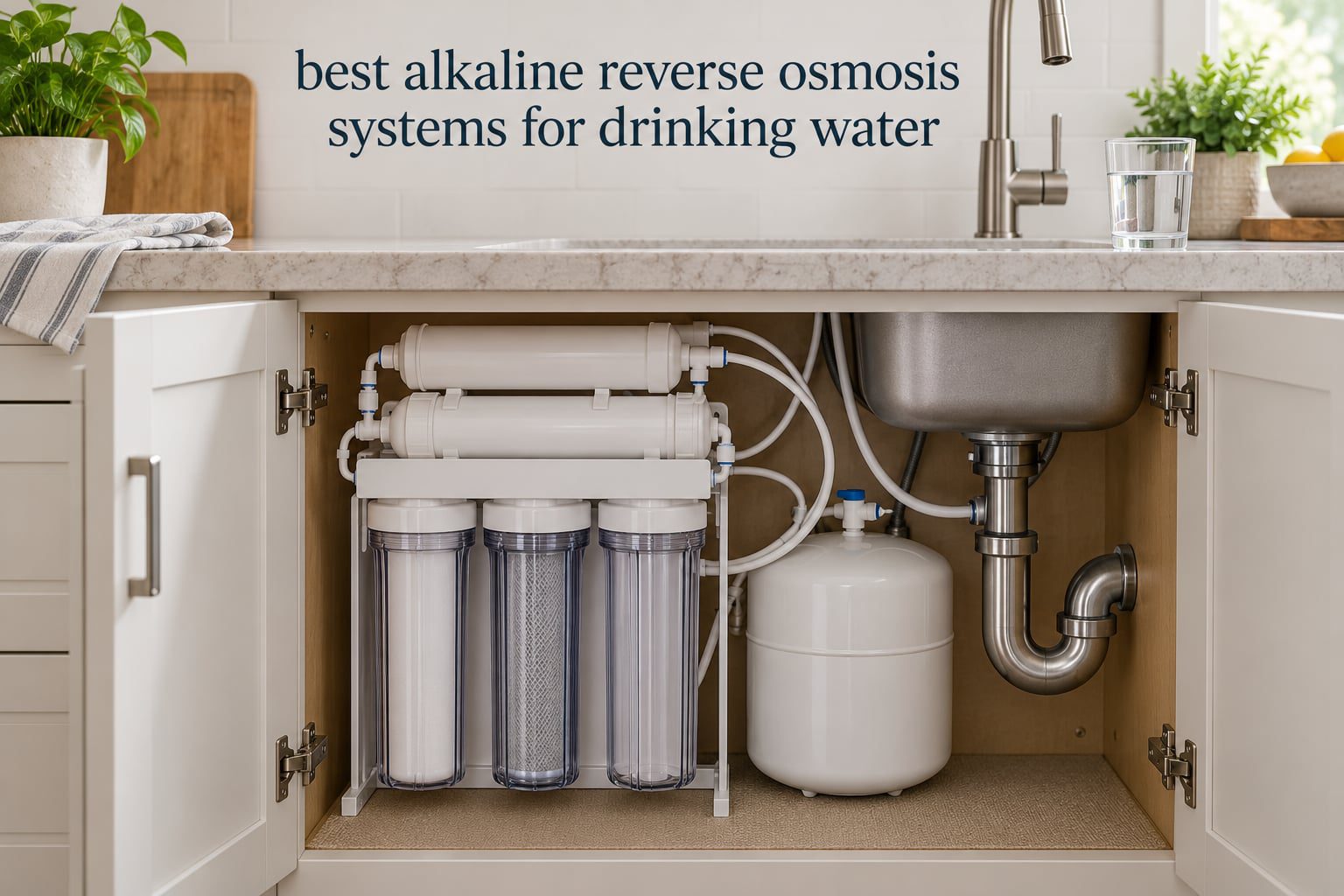
Plain reverse osmosis strips your water down to almost nothing, and a lot of people discover that the result tastes flat and slightly acidic. An alkaline RO system adds one extra stage after the membrane that puts a small amount of calcium, magnesium, potassium and sodium back in, nudging the pH upward so the water tastes closer to spring water. That is the entire idea behind every model on this list.
We spent weeks reading specifications, drilling into review patterns and comparing the numbers that actually matter when you are choosing the best alkaline reverse osmosis systems for drinking water: gallons per day, drain ratio, certification, warranty length and filter replacement intervals. Every pick below is an under-sink system with a built-in alkaline remineralization stage, so you are not hunting down a separate add-on cartridge later.
If you want the short version: the iSpring RCC7AK-BN is the pick most households should buy. It has the deepest review history in the group, whole-system NSF/ANSI 58 certification, no power or outlet required and a transparent first stage so you can actually see what the pre-filter is catching. Read on for the honest take on whether alkaline water is worth anything beyond taste, and for the systems built for specific problems like low water pressure, small cabinet spaces or very large homes.
Last updated for 2026. We base every spec on the manufacturer listing and on what buyers report back, and we call out where a spec sheet is optimistic rather than repeating it as fact.
Table of Contents
- Quick Answer: Best Alkaline Reverse Osmosis Systems by Category
- Top 3 Picks for the Best Alkaline Reverse Osmosis Systems in 2026
- Best Alkaline Reverse Osmosis Systems in 2026
- 1. iSpring RCC7AK-BN Review: The Best Overall Alkaline RO System
- 2. APEC ROES-PH75 Review: The Budget Pick for First-Time Buyers
- 3. Frizzlife PD600-TAM3 Review: Best Value for High Tankless Output
- 4. iSpring RCC7P-AK Review: Best for Low Water Pressure Homes
- 5. iSpring RO500AK Review: Best Tankless Output for Medium Households
- 6. Waterdrop WD-T4-A Review: Best for Choosing Plain or Alkaline Water
- 7. SimPure T1-400ALK Review: Best for the Least Water Waste
- 8. Home Master TMAFC Review: Best Warranty and Fastest Fill Time
- 9. Waterdrop X8-WAN Review: Best Smart Faucet Display
- 10. Waterdrop X12 Review: Best for Very Large Households
- Is Alkaline Water Actually Better for You?
- How to Choose the Best Alkaline Reverse Osmosis System
- Tank vs tankless: which design fits your kitchen
- How to size GPD for your household
- Certifications that actually matter
- What alkaline remineralization really does
- Water waste and the pure-to-drain ratio
- Filter replacement and long-term cost
- Installation: DIY or plumber
- Test your own water before you choose
- Frequently Asked Questions
- Is it better to drink alkaline water or reverse osmosis water?
- Is alkaline reverse osmosis water good for you?
- What are the downsides of using an alkaline water purifier?
- Does an RO system remove minerals from water?
- Which reverse osmosis filter is best for drinking water?
- Do alkaline RO systems waste water?
- Which Alkaline Reverse Osmosis System Should You Buy?
Quick Answer: Best Alkaline Reverse Osmosis Systems by Category
Best overall: iSpring RCC7AK-BN, the most reviewed and best certified all-tank system we found.
Best for low water pressure: iSpring RCC7P-AK, built around an electric booster pump.
Best value at high capacity: Frizzlife PD600-TAM3, 600 GPD tankless with a live TDS panel.
Best for fast dispensing: Home Master TMAFC, a 4.5 second fill time and a five-year parts warranty.
Best tankless output: iSpring RO500AK, 500 GPD at 0.4 gpm in a narrow cabinet footprint.
Best for the least water waste: SimPure T1-400ALK, a 1.5:1 pure-to-drain ratio plus a UV stage.
Best for households of five or more: Waterdrop X12, the highest capacity system we reviewed.
Top 3 Picks for the Best Alkaline Reverse Osmosis Systems in 2026

Best Alkaline Reverse Osmosis Systems in 2026
| Product | Specs | Action |
|---|---|---|
 iSpring RCC7AK-BN 75 GPD 6-Stage iSpring RCC7AK-BN 75 GPD 6-Stage |
|
Check Latest Price |
 APEC ROES-PH75 75 GPD 6-Stage APEC ROES-PH75 75 GPD 6-Stage |
|
Check Latest Price |
 Frizzlife PD600-TAM3 600 GPD Tankless Frizzlife PD600-TAM3 600 GPD Tankless |
|
Check Latest Price |
| iSpring RCC7P-AK 75 GPD with Pump |
|
Check Latest Price |
 iSpring RO500AK 500 GPD Tankless iSpring RO500AK 500 GPD Tankless |
|
Check Latest Price |
 Waterdrop WD-T4-A 450 GPD Dual Flow Waterdrop WD-T4-A 450 GPD Dual Flow |
|
Check Latest Price |
 SimPure T1-400ALK 400 GPD UV SimPure T1-400ALK 400 GPD UV |
|
Check Latest Price |
 Home Master TMAFC 7-Stage 50 GPD Home Master TMAFC 7-Stage 50 GPD |
|
Check Latest Price |
 Waterdrop X8-WAN 800 GPD Tankless Waterdrop X8-WAN 800 GPD Tankless |
|
Check Latest Price |
 Waterdrop X12 1200 GPD Tankless Waterdrop X12 1200 GPD Tankless |
|
Check Latest Price |
1. iSpring RCC7AK-BN Review: The Best Overall Alkaline RO System
iSpring RCC7AK-BN NSF Certified, 75 GPD, Alkaline 6-Stage Reverse Osmosis System, pH+ Remineralization RO Water Filter System Under Sink Patented Top-Mounted Faucet Design for Easy Installation
75 GPD
6 stages
No power needed
NSF/ANSI 58 system
12.5 kg
Pros
- Whole-system NSF/ANSI 58 rather than membrane-only claims
- Deepest review base in the group at more than 21000 ratings
- Transparent first stage so you can see fouling
- No outlet or electrical connection required
- Top-mounted fastener installs from above the counter
Cons
- Storage tank eats under-sink cabinet space
- 75 GPD is modest for a busy kitchen
- Filter sets need periodic purchasing
This is the model we kept coming back to while comparing the list. It runs at 75 GPD, or about 284 liters per day, through a six-stage layout with the 0.0001 micron membrane in the middle and the alkaline pH+ cartridge as the final stage. Because there is no pump, there is nothing to plug in and nothing to listen to while you fill a glass.
The certification detail is what convinced us. The listing states NSF/ANSI 58 certification for the complete system, not just the membrane inside it, and the manufacturer publishes specific reduction figures: TDS 93 to 98 percent, PFAS 96 to 99 percent, chlorine 95 to 99 percent, lead above 98.9 percent and fluoride above 97.4 percent. Buyers on r/HomeImprovement care far more about verifiable system-level claims than about vague marketing language, and this is one of the few listings in the category where the badge covers the whole assembly.
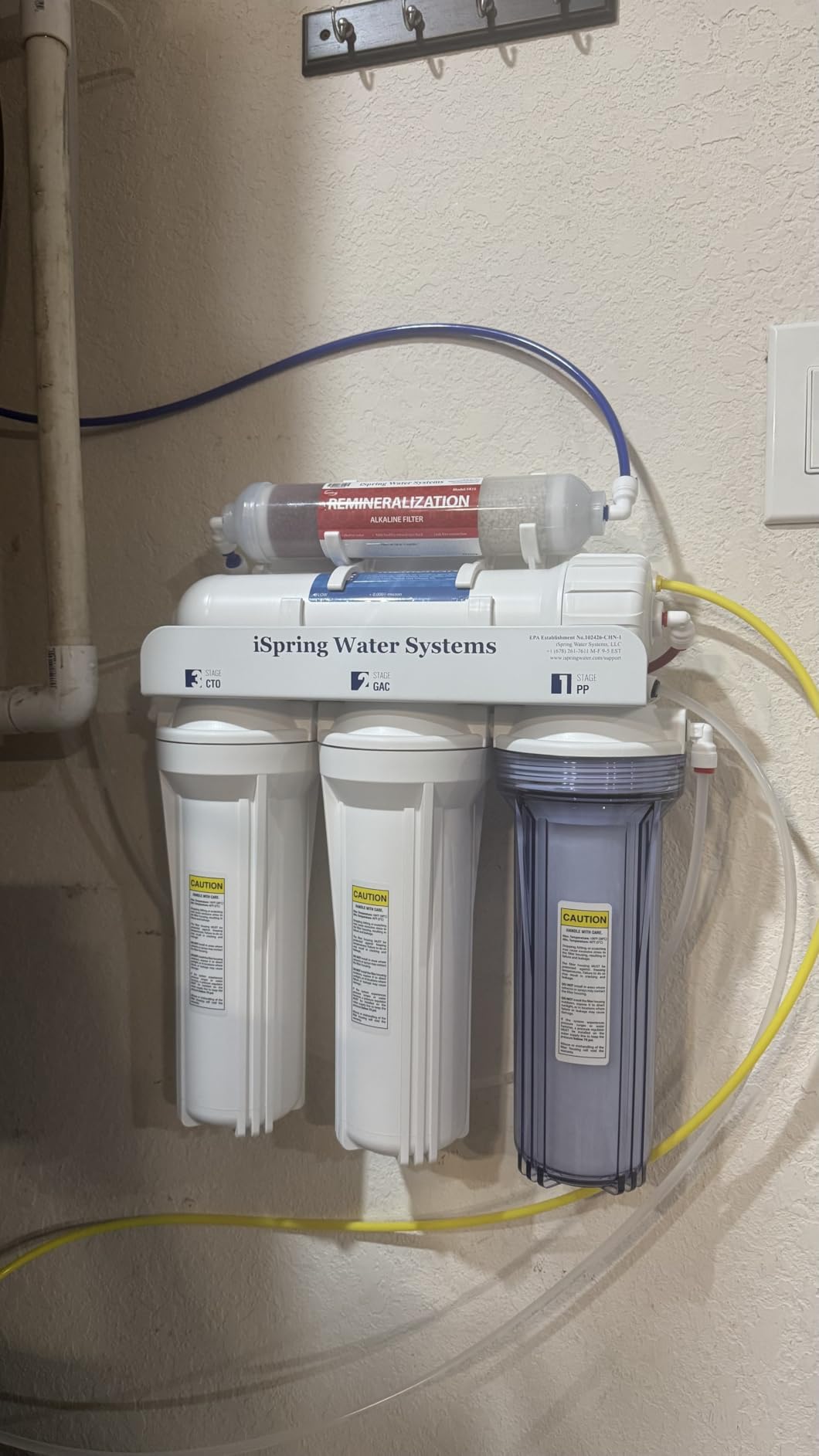
What stands out in the reviews is how ordinary the ownership experience is. Owners mention the transparent first-stage housing most often, because you can see the sediment and carbon collecting instead of wondering whether the filter is actually doing anything. The taste difference from the mineral AK stage is the other recurring theme, described in several buyer comments as closer to bottled water than to laboratory-purified water.
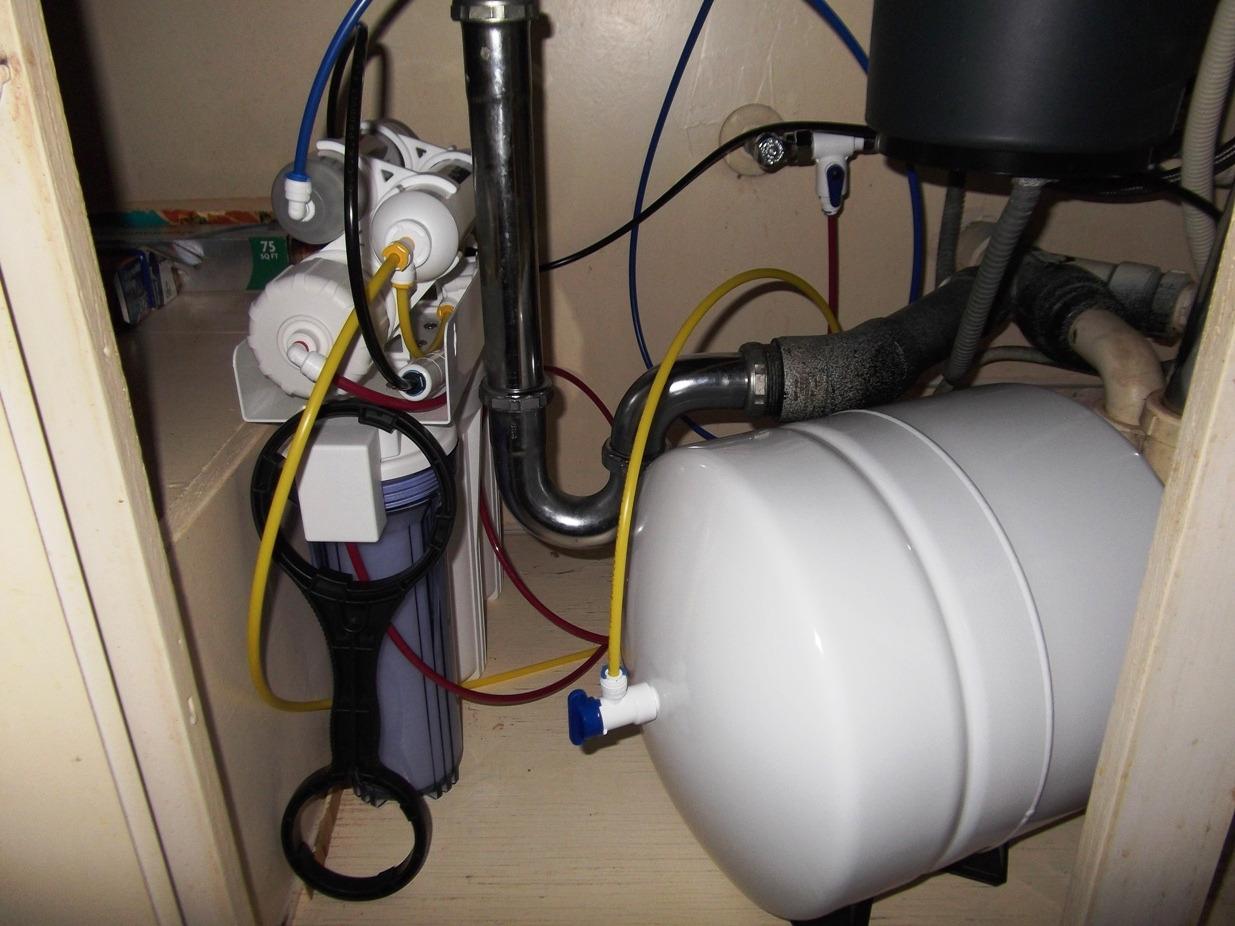
The honest caveat is that this is a tank system. The storage tank and the three inline housings together need real cabinet depth, and in a small kitchen where the sink already shares space with a waste disposal, space is the constraint that decides whether a system is practical. Buyers also flag that replacement filter sets are an ongoing cost you should budget for rather than a one-time purchase.
What you should know before you buy
The system is rated to a maximum feed TDS of 750 ppm and operates at around 70 psi, so homes on very hard or high-mineral well water may be pushing its limits. iSpring lists compatible filter sets in four intervals, from a six-month set to a three-year set, and longer intervals are easier to live with than you would think because the membrane is not the component you change most often.
Support is handled out of Atlanta, Georgia, and that US-based phone and email contact comes up repeatedly as a reason people recommend the brand to friends. If you want to see the certification yourself rather than take our word for it, search the model in the IAPMO product database before you order.
Who should buy and who should skip it
Buy this one if you have normal municipal water pressure, want the strongest certification story at a mid-range price, and would rather not deal with an electrical outlet under the sink. It is also a sensible first RO system for anyone who has never owned one, because there is no pump to fail and no display to reset.
Skip it if your cabinet is genuinely tight, if you need more than about a gallon of drinking water a day for a household of four, or if you dislike the mineral flavor entirely. People who want a flat, neutral taste after the membrane simply prefer a standard system without the alkaline stage.
2. APEC ROES-PH75 Review: The Budget Pick for First-Time Buyers
APEC Water ROES-PH75, 6-Stage Under Sink RO System, Alkaline, 75 GPD
75 GPD
0.05 gpm
WQA and NSF 372 certified
1.41 kg
Pros
- Lowest entry point among full-tank alkaline RO systems here
- Long-established brand with roughly two decades in filtration
- Complete install kit includes tank faucet tubing drain saddle and wrenches
- Premium calcium post-filter raises pH and improves taste
Cons
- Slowest listed flow rate in the group at 0.05 gpm
- Tank footprint takes more cabinet space than tankless rivals
- Needs at least 40 psi feed pressure to perform well
APEC built this as a straightforward entry into alkaline RO and it shows. The six-stage configuration uses a premium-grade calcium post-filter as its final stage rather than a multi-mineral cartridge, and the whole unit is certified to WQA with NSF/ANSI 372 and 58 for material safety and structural integrity. It also accepts feed water up to 2000 ppm TDS, the highest ceiling in this group.
The catch is speed. At a listed maximum flow of 0.05 gpm this is the slowest dispenser here, and reviewers consistently describe dispensing as taking noticeably longer than on higher-GPD systems. For one or two people filling a glass at a time, that hardly matters. For a household cooking dinner and running the coffee maker at the same time, it becomes the thing you notice every day.
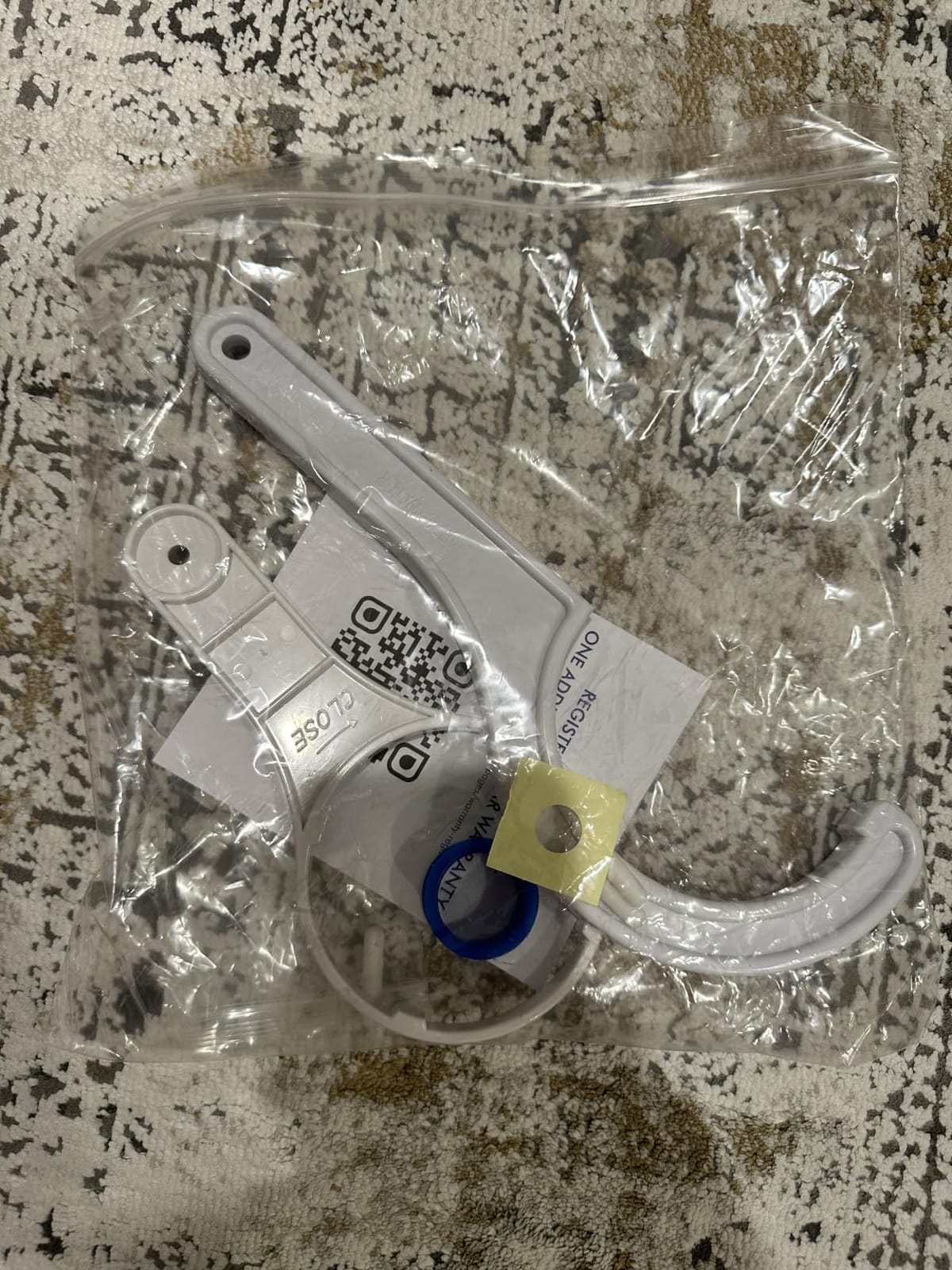
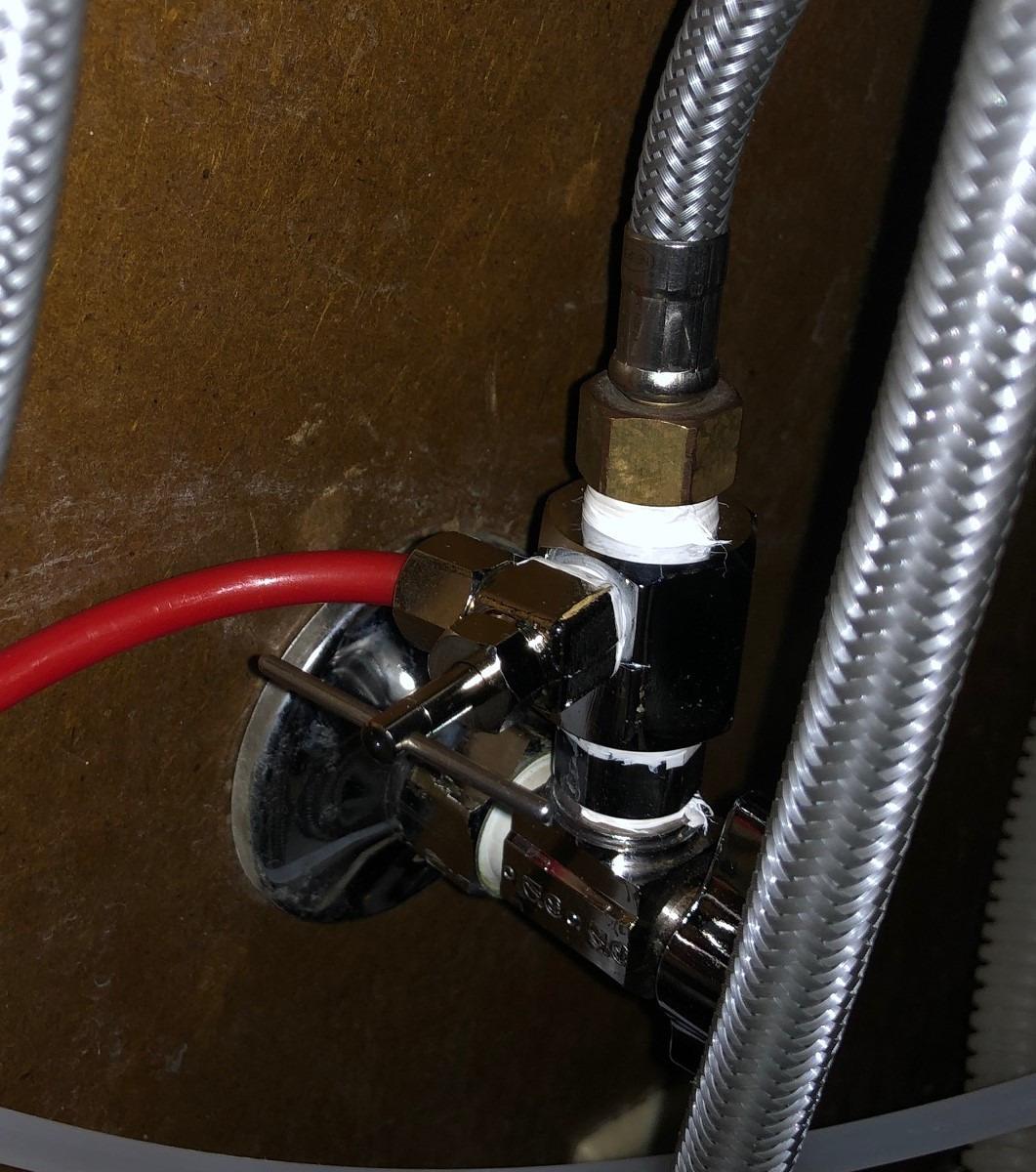
Everything needed for installation comes in the box: filter set, storage tank, faucet, tubing, drain saddle, feed water adapter and wrenches. You do not need to hunt down extra parts, and the brand sells a wide range of stage and configuration variants, which makes it easy to upgrade or rebuy the same model later if your household needs change.
One thing this system does not have is any kind of feedback. There is no smart TDS readout, no filter-change indicator and no buzzer. Nothing on the cabinet tells you when the membrane is spent, so pair it with a cheap TDS meter and a calendar reminder or you will run it long past the useful stage.
What you should know before you buy
The 40 to 85 psi operating window is the specification to check against your own line pressure. If your home sits near the bottom of that range, output will drop and you may end up wishing you had bought a pumped model. Measuring pressure takes a minute with a gauge at the cold tap and it is the cheapest insurance in this whole guide.
The unit weighs about 1.41 kg and measures roughly 15.5 by 5.25 by 17.5 inches, so it is physically one of the easier systems to maneuver into a cabinet compared with the heavy pumped and tankless models further down this list.
Who should buy and who should skip it
Buy it if you are a couple or a single-person household, you are new to filtration, and you want a certified system without paying for a pump, a display or a large footprint. It is also the natural choice if you want something simple you can install yourself with no electrical work.
Skip it if you want instant dispensing, if you are filtering for four or more people daily, or if your water comes from a well with high mineral content and you plan to run it hard. In those cases the flow rate becomes a daily annoyance rather than a minor detail.
3. Frizzlife PD600-TAM3 Review: Best Value for High Tankless Output
Frizzlife Reverse Osmosis Water Filter – Alkaline Mineral pH+, NSF/ANSI 58&53&42&372 Standard, 600GPD Tankless RO Reverse Osmosis System, Under Sink, 2:1 Pure to Drain, Reduce FPAS/PFOA, PD600-TAM3
600 GPD tankless
0.41 gpm
2:1 drain ratio
Corded electric
Pros
- Most gallons per dollar among the systems reviewed
- Live TDS and per-filter life readouts on the smart LED panel
- 2:1 pure-to-drain ratio uses far less water than conventional RO
- Tankless layout removes the secondary contamination risk of a tank
Cons
- Requires an electrical outlet under the sink
- Electric pump can hum while dispensing
- Listed item weight figure looks inconsistent with the real unit
The PD600-TAM3 is the arithmetic winner in this roundup. You get 600 GPD of tankless output at a listed maximum flow of 0.41 gpm, which fills a 330 ml cup in about ten seconds, and the third stage is an alkaline remineralization filter that adjusts pH above 7.5 while restoring calcium and magnesium. That combination of capacity and speed at this price point is why it keeps showing up in forum recommendations.
It carries certification to NSF/ANSI 58, 53, 42 and 372, which is a broader set than most competitors claim and covers both contaminant reduction and material safety. The 2:1 pure-to-drain ratio is the other headline number, and it matters more than buyers expect: it means two gallons go down the drain for every gallon you drink rather than three or four.
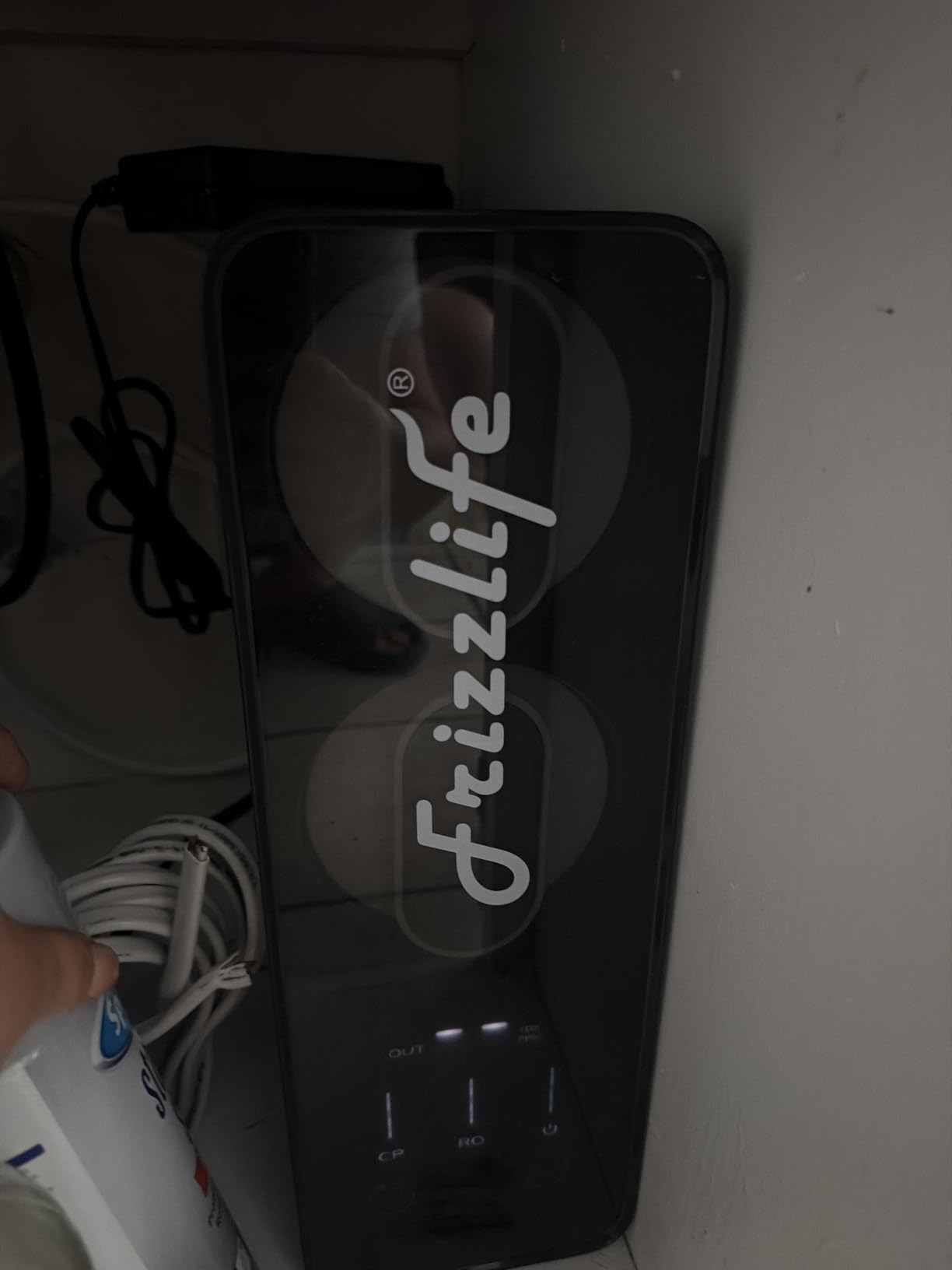
Two details make daily use easier. The LED panel reports live TDS as well as remaining life for each cartridge, so you can see at a glance whether the membrane is still performing, and the color-coded change-filter indicator tells you which stage to swap next. Reviewers single out both features as the reasons the system feels manageable rather than fiddly.
Because the design is tankless, there is no storage reservoir sitting in the cabinet and no risk of bacteria colonizing a tank that only gets used occasionally. The trade is that it needs a power outlet and it makes noise while it runs, which is the most common minor complaint in reviews about the pump.
What you should know before you buy
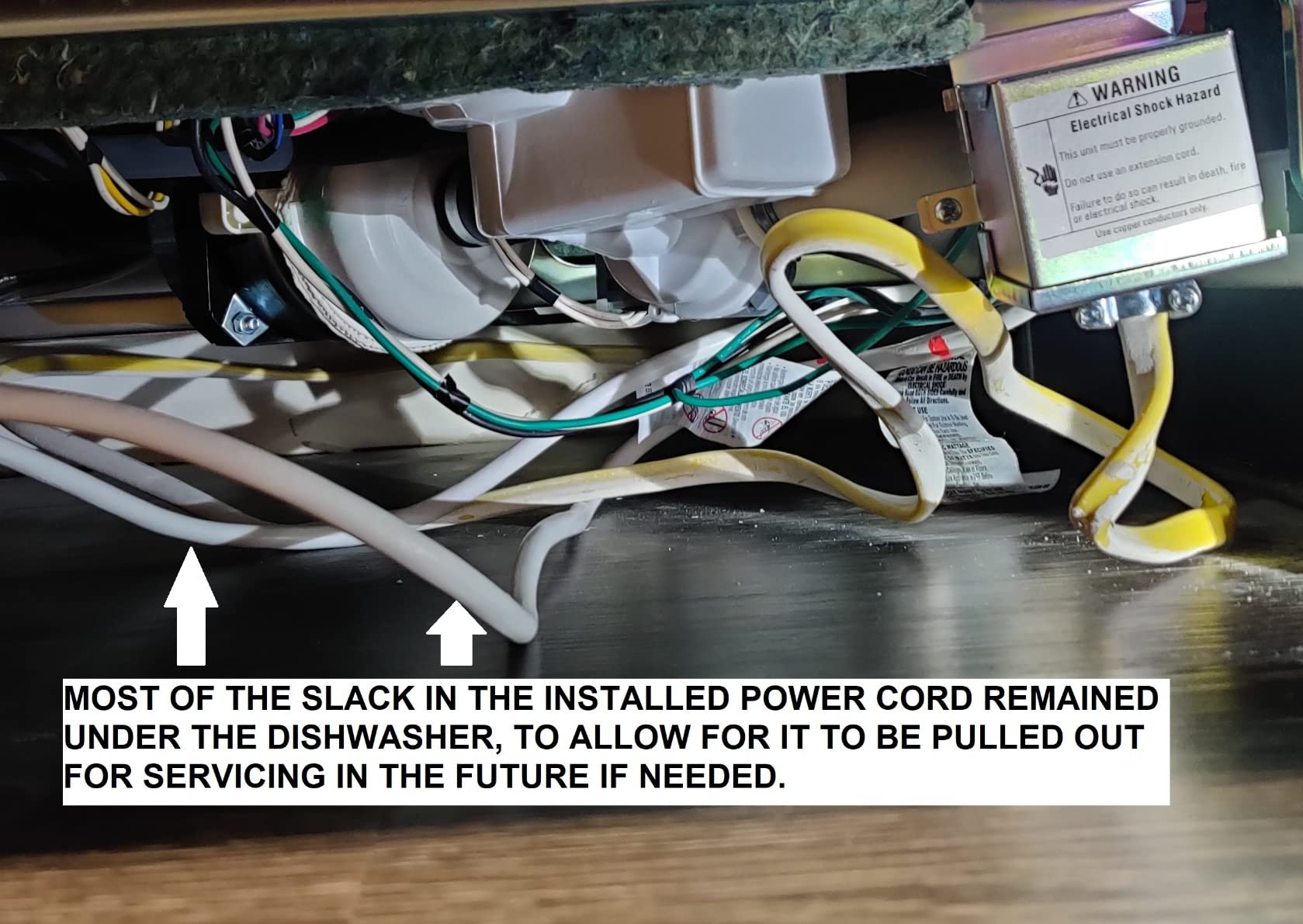
This is an electric system, so plan the install location around a GFCI outlet rather than assuming one is nearby. It works down to 38 degrees Fahrenheit and is rated up to 100 degrees, which covers most climate-controlled cabinets without concern. Note that the published weight figure on the listing does not match what buyers report carrying, so give yourself room to maneuver it into place.
The 2:1 ratio is a real efficiency gain, but it is not the best in this list. If water conservation is your primary concern, the SimPure further down runs at 1.5:1 and halves the difference again. For most people 2:1 is already a large improvement over conventional systems and the extra saving is not worth changing your shopping shortlist over.
Who should buy and who should skip it
Buy it if you want serious throughput, prefer not to juggle a storage tank, and have an outlet you can use. It suits households of four or five, people who brew coffee constantly, and anyone who wants to see TDS numbers instead of guessing.
Skip it if drilling for a faucet is not on your list, if you need a system that runs with no power at all, or if pump noise during dispensing bothers you. If your water is well water with sediment, the sediment pre-filter will need attention on a shorter cycle than municipal water would require.
4. iSpring RCC7P-AK Review: Best for Low Water Pressure Homes
iSpring RCC7P-AK, 6-Stage Reverse Osmosis System Under Sink Alkaline Water Filter and Pump, RO Drinking Water Filtration System, Patented Top-Mounted Faucet Design for Easy Installation
75 GPD
6 stages
Booster pump
100-240V adapter
Pros
- Highest average rating in the group at 4.7 stars
- Booster pump holds output up where line pressure is weak
- Reduces up to 99 percent of more than 1000 contaminants
- Universal 100-240V pump adapter suits varied electrical standards
Cons
- Heaviest tank-style option at 20 pounds to maneuver
- Needs an electrical outlet and adds pump noise
- Costs more than the non-pumped sibling model
If your home runs on weak line pressure, this is the system to look at. The electric booster pump takes whatever the household supply provides and drives enough force through the membrane to maintain filtration performance, and it does so while reducing wastewater compared with an unpumped membrane working at a disadvantage. The sixth stage is the alkaline remineralization cartridge that raises pH and improves taste over plain five-stage output.
It is also the highest rated product we reviewed, at 4.7 stars across more than 1,600 ratings with 88 percent five-star, which is a meaningful gap above the roundup average. Buyers describe the pump as the feature that solved a specific problem rather than as a gimmick, which is how you can tell a feature is earning its place.
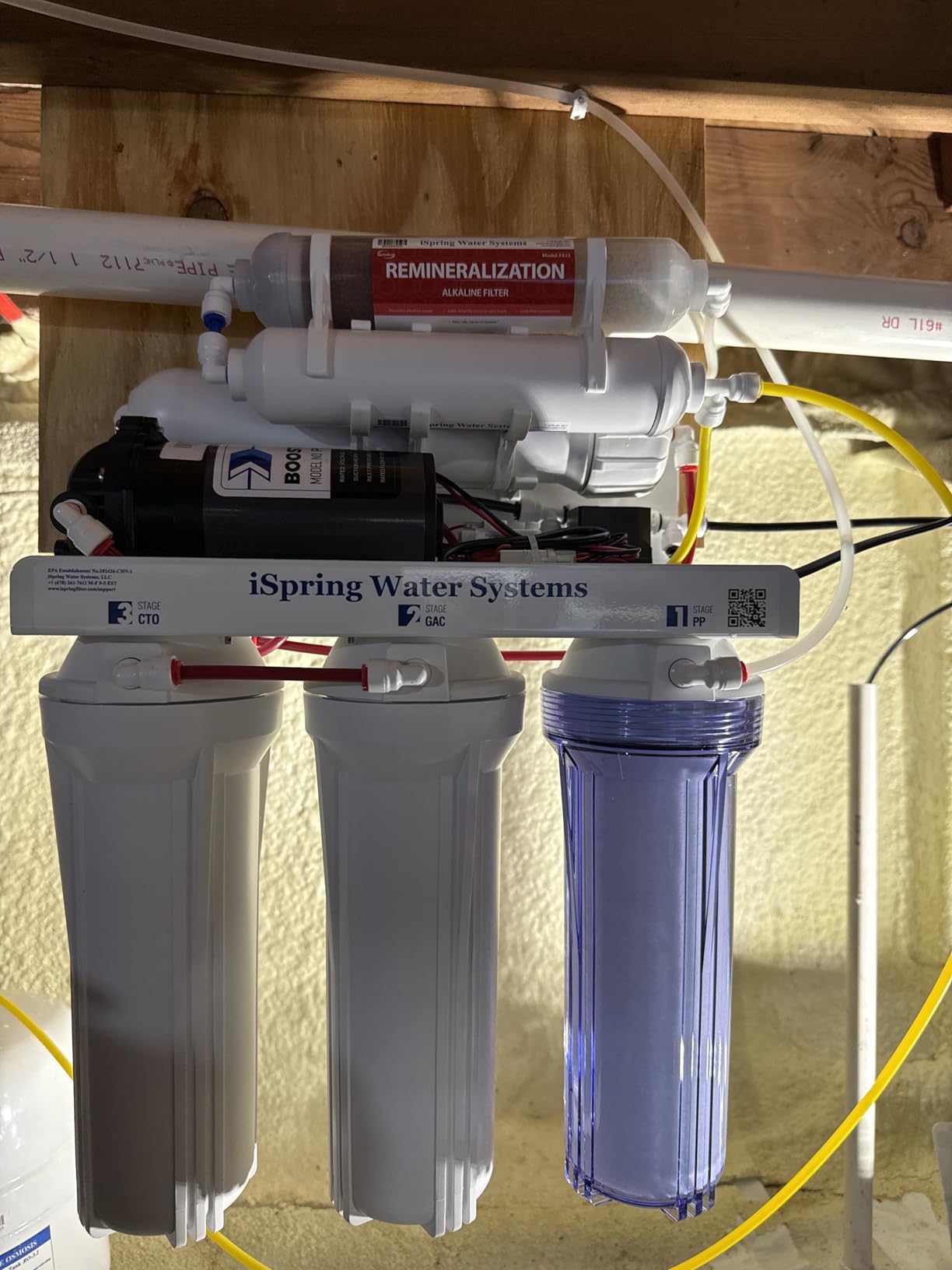
The 100-240V 50/60Hz power adapter means the pump works across different household electrical standards, a small thing that avoids a frustrating return. The transparent first-stage housing appears here too, letting you monitor pre-filter fouling visually, and the manufacturer states reduction of up to 99 percent of more than 1,000 contaminants including lead, chlorine, fluoride, arsenic and PFAS.
Maximum feed TDS is 2000 ppm, so this system tolerates harder feed water than the 750 ppm rated model from the same brand. The catch on handling is weight: at 20 pounds this is the heaviest tank-style option here and it is the drawback reviewers mention most often, particularly for anyone mounting it high in a cabinet.
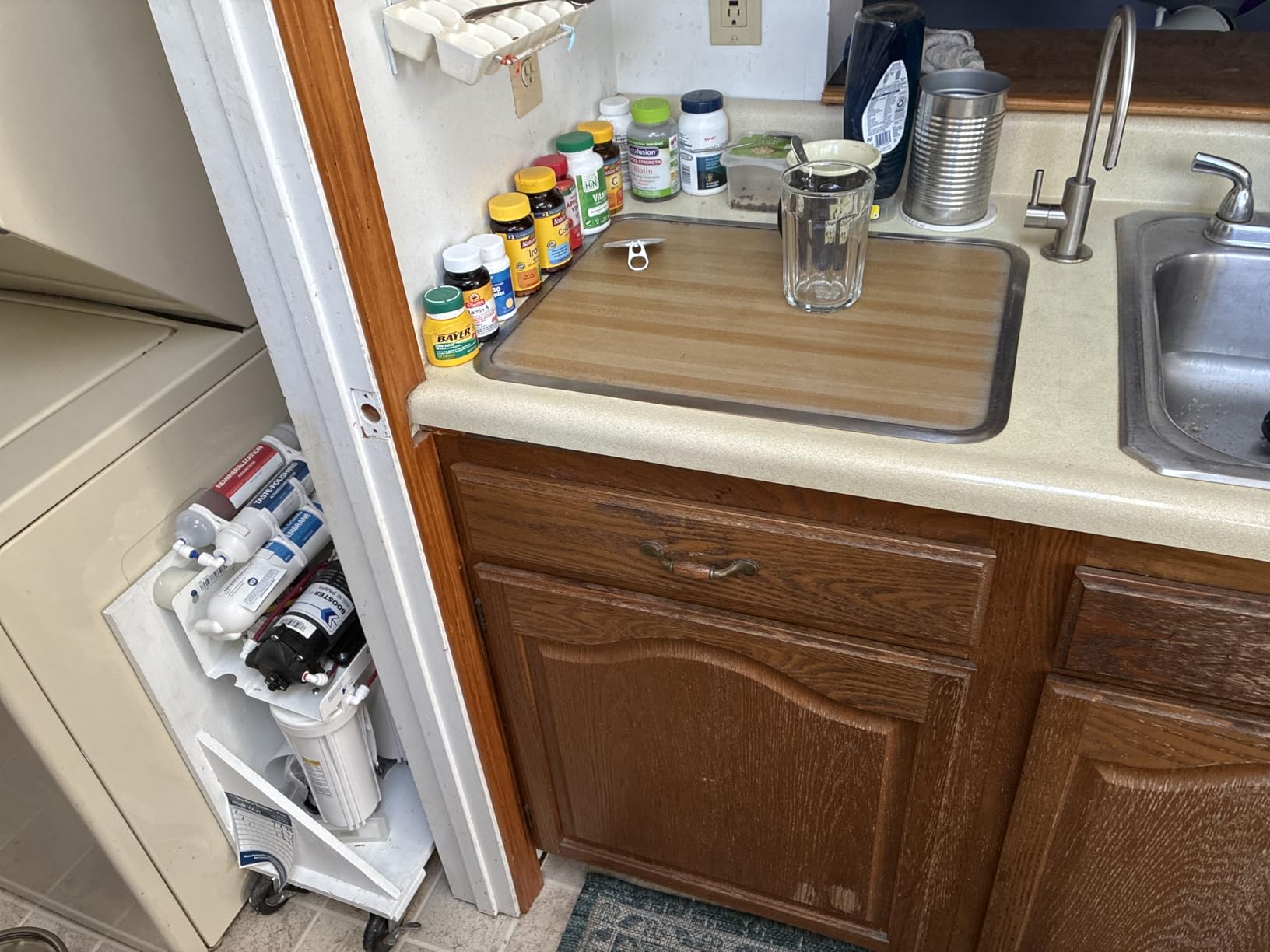
What you should know before you buy
You are paying more than the non-pumped version, and you are buying an outlet, a power supply and a motor that can eventually fail. If your pressure is comfortably in the normal range, the simpler system gives you most of the outcome for less money and fewer failure points. A quick pressure reading at the cold tap decides this question in about a minute.
Warranty coverage is one year and requires registration, so do that when the unit arrives. Replacement stages are sold under the same naming scheme across the range, which is useful if you already own a system from this brand and want to standardize on one cartridge family.
Who should buy and who should skip it
Buy it if your line pressure is marginal, if you have hard feed water with a high TDS reading, or if you simply want the highest-rated unit in this roundup. It also works well for households with a lot of cooking water demand because the pump keeps flow steady.
Skip it if you have good pressure and no outlet under the sink, or if you want the smallest and lightest system possible. Anyone renting and expecting to move the system to a new kitchen should weigh the pump and its power supply before committing.
5. iSpring RO500AK Review: Best Tankless Output for Medium Households
iSpring RO500AK Alkaline Reverse Osmosis System, NSF 58 Certified, 500 GPD
500 GPD tankless
0.4 gpm
2:1 drain
21 pounds
Pros
- Fills an 8 oz cup in about 10 seconds at 0.4 gpm
- Auto-flush after 24 hours idle protects the membrane
- Tankless layout frees a large share of under-sink space
- Front-panel lights and buzzer flag each filter change precisely
Cons
- Requires electrical power at the install location
- One of the heavier systems here at 21 pounds
- Maximum feed TDS ceiling of 1000 ppm
This is the middle ground between a small tank system and a full high-output tankless unit. It delivers 500 GPD at a listed 0.4 gpm, which fills an 8 oz cup in roughly ten seconds, and it runs at a 2:1 pure-to-drain ratio. For a household of three or four that wants fast dispensing without the footprint of a 1200 GPD machine, that is a sensible middle.
The certification here is unusually well documented for the category. The unit carries complete-system NSF/ANSI 58 certification verifiable by QR code, and the membrane claims up to 99 percent reduction of lead, PFAS, TDS, chromium, radium, fluoride, arsenic and chlorine. System-level certification with a lookup code is exactly the distinction buyers ask about and rarely get.
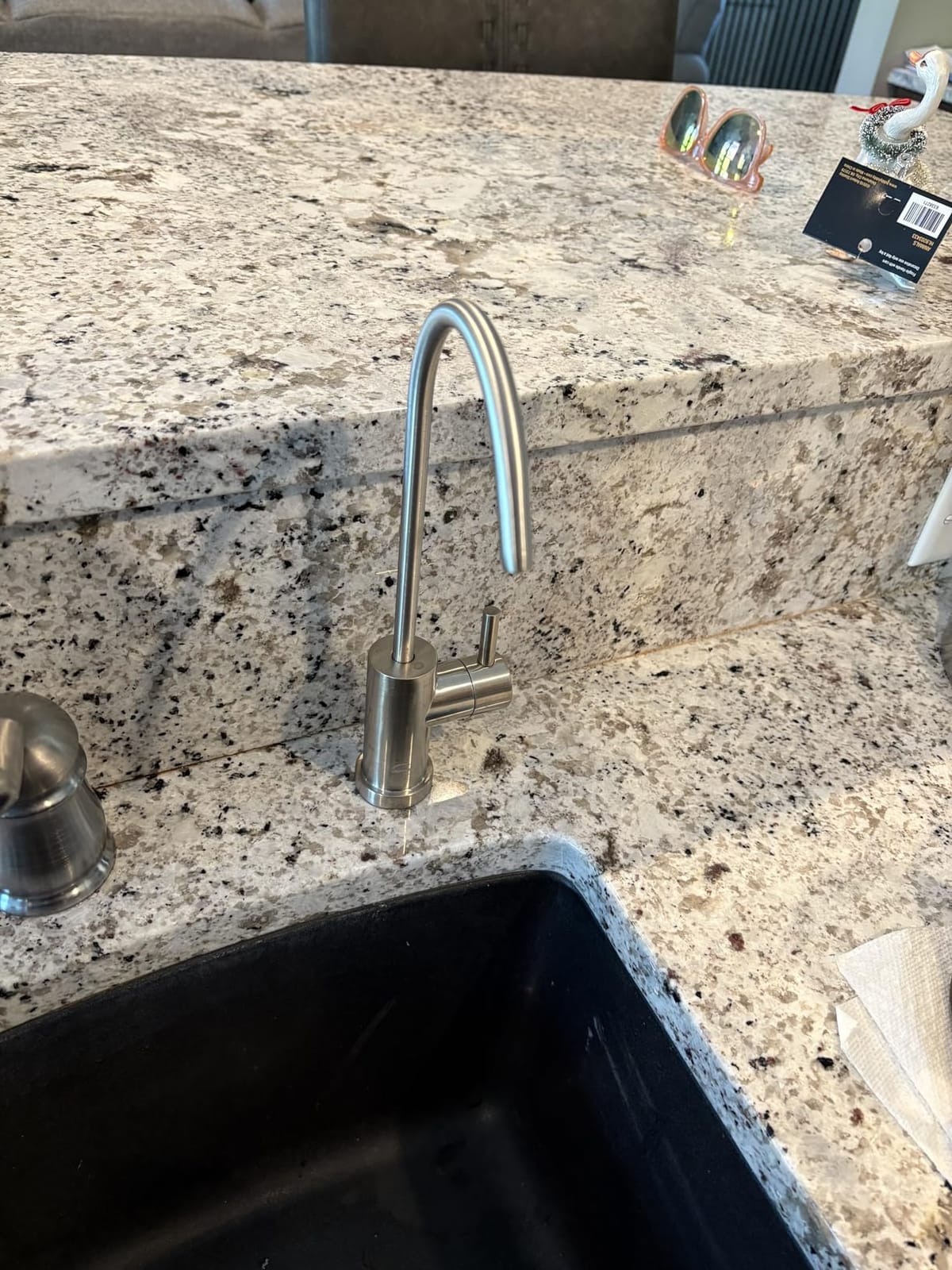
Two features handle the annoyance that kills most RO ownership. Auto-flush runs after 24 hours of non-use, which pushes water through the membrane and is the design answer to the stale first-draw problem that plain tank systems develop after a weekend away. Front-panel lights plus a buzzer tell you exactly which cartridge is due rather than making you guess at a monthly schedule.
Quick-connect fittings accept both half-inch and three-eighths inch connections, which removes one of the most common reasons an install gets delayed on a first attempt. Filter life is listed at two years, so the replacement cadence is measured in years rather than months.
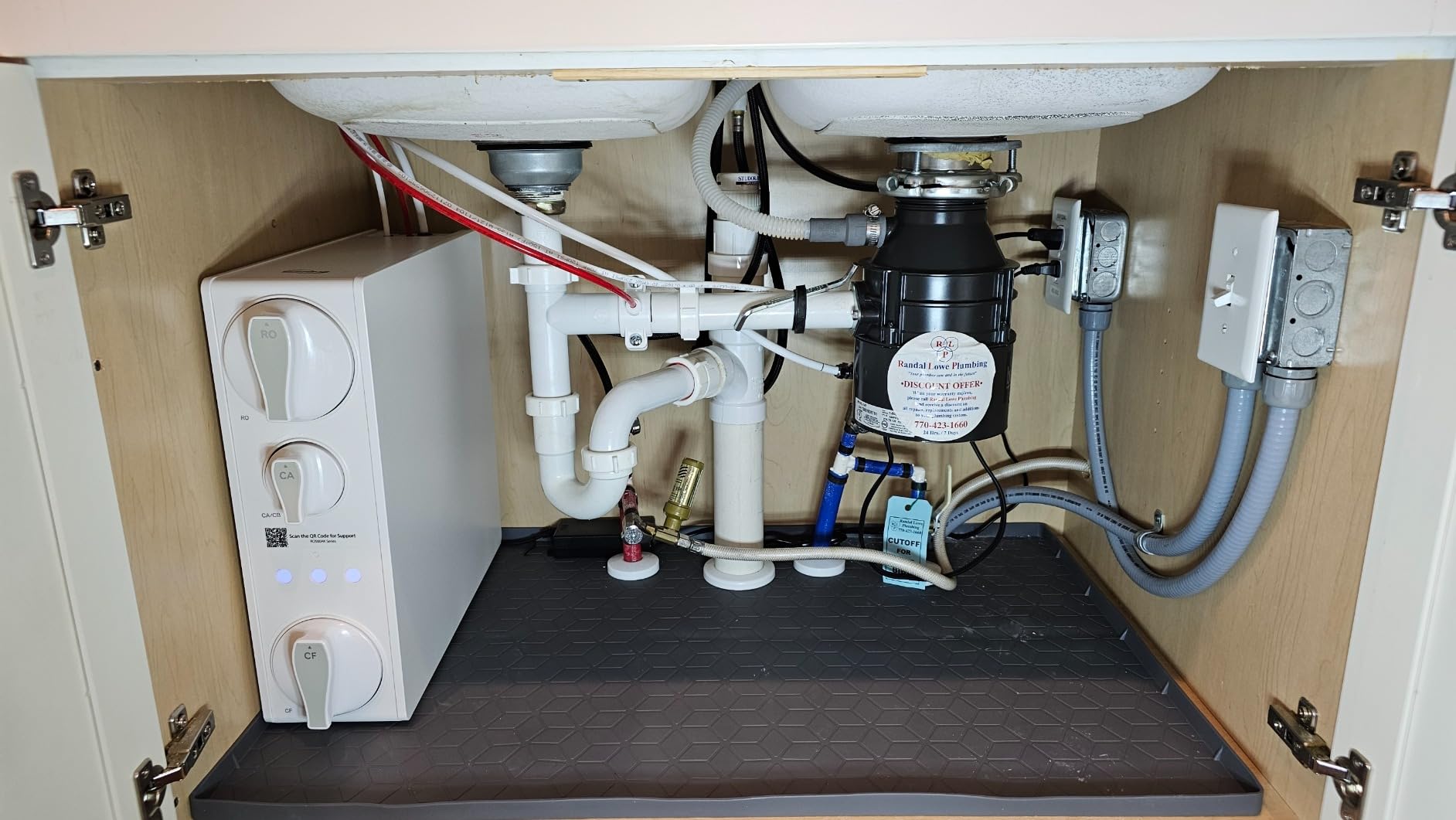
What you should know before you buy
The operating pressure range is listed as 15 to 70 psi, which is wide on the low end and gives you room in older homes, but it also means the system will not deliver its rated output if your supply sits above that. The 1000 ppm maximum feed TDS ceiling is lower than the 2000 ppm systems here, so check your water if you are on a private well.
Weight is 21 pounds and the body measures roughly 17.5 by 5.2 by 16.25 inches. The narrow profile is what recovers cabinet space, but plan the install so you can lift it into position rather than sliding it in sideways.
Who should buy and who should skip it
Buy it if you want fast dispensing, a verifiable system-level certification, and alerts that keep you on schedule with filter changes. It suits households of three or four and anyone who travels enough that the auto-flush feature earns its place.
Skip it if you have feed water above 1000 ppm TDS, if you have no outlet available, or if you want the lowest possible purchase outlay. A couple who drinks one glass a day will get identical results from a smaller and cheaper system.
6. Waterdrop WD-T4-A Review: Best for Choosing Plain or Alkaline Water
[Dual Flow] Waterdrop WD-T4-A Alkaline pH+ Reverse Osmosis Water Filter, NSF/ANSI 372 Certified, 10-Stage, 450GPD Tankless Undersink RO Filtration System, 2:1 Pure to Drain, BPA Free, Plug-in required
450 GPD tankless
10 stages
Dual flow
Plug-in required
Pros
- Two independent outlets let you pick plain RO or mineral-enhanced water
- A 2:1 pure-to-drain ratio at 450 GPD capacity
- Filter-life indicator lights plus buzzer alerts
- BPA-free construction and NSF/ANSI 372 certification
Cons
- Faucet installation requires drilling the countertop
- Needs an electrical connection beneath the sink
- Alkaline stream taste is distinctive and not universally liked
This is the most interesting idea in the roundup. Instead of one faucet, the WD-T4-A has two independent outlets: a standard RO-purified stream and a separate mineral-enhanced alkaline stream. You can drink straight RO water for cooking or formula and draw the mineralized stream when you want the fuller taste, which sidesteps the whole argument about whether you like alkaline flavor.
Underneath it is a 10-stage configuration at 450 GPD with a 2:1 water-saving ratio, and the alkaline mineralizer is a separate replaceable cartridge on a 12-month interval. The stated replacement schedule is six months for the CF filter, 24 months for the RO membrane, 12 months for the carbon block and 12 months for the alkaline mineralizer, so you are budgeting for one cartridge a year rather than several.
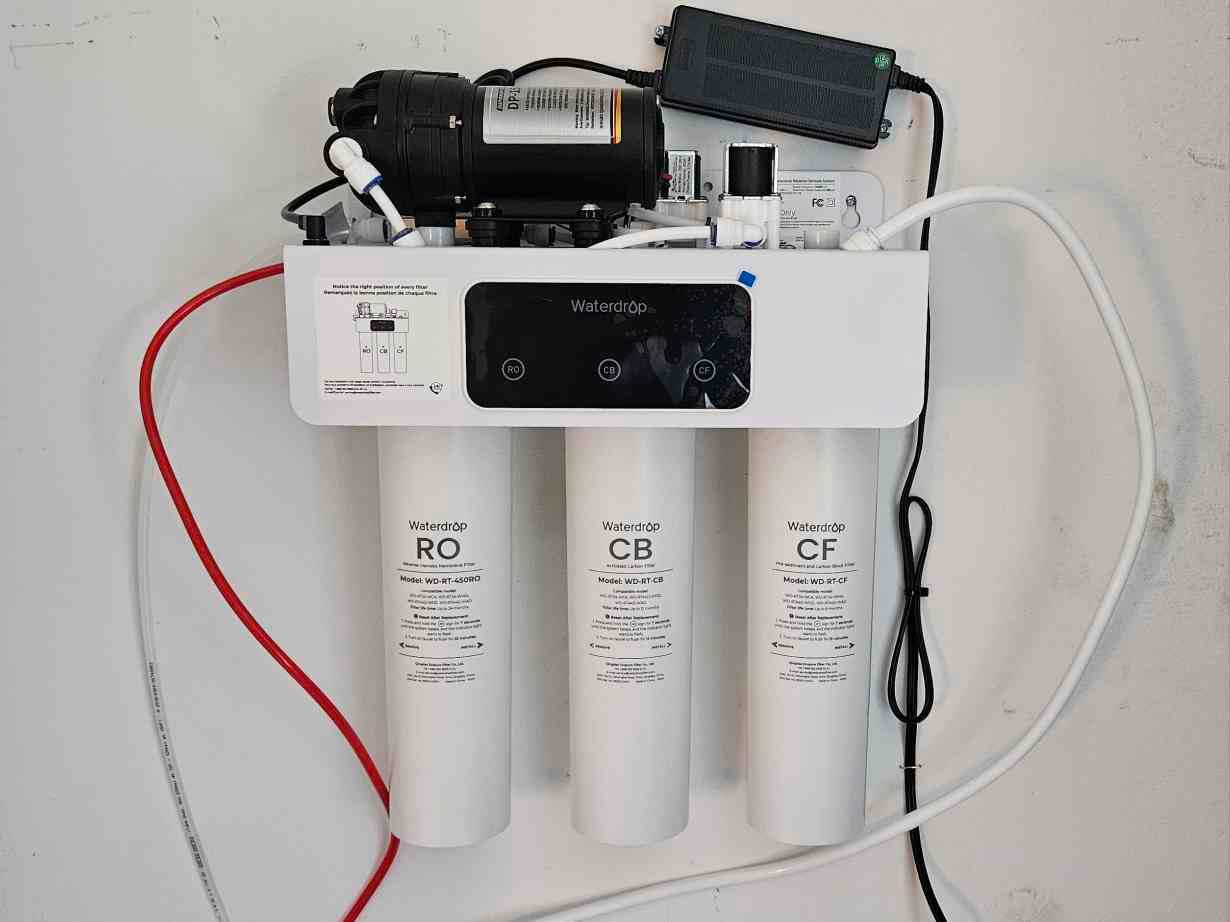
Buyers consistently describe the taste favorably, with several comparisons to bottled water in the reviews, and the tankless form frees roughly 70 percent more under-sink space than a storage-tank layout. Indicator lights and a buzzer cover the filter schedule, which is the feature that keeps a system from quietly running past the point of useful performance.
The installation requirement is the important trade-off. The faucet needs a hole drilled in the countertop, and the system needs a plug-in power connection under the sink. If you rent, or if you would rather not cut stone or laminate, this is not the model for you no matter how well it performs.
What you should know before you buy
Reviewers mention that the alkaline stream has a flavor some people find off-putting at first, and that the pump occasionally keeps running until you cycle the faucet. Neither is a defect, but both are worth knowing about before you commit to a dual-output design whose entire purpose is taste variety.
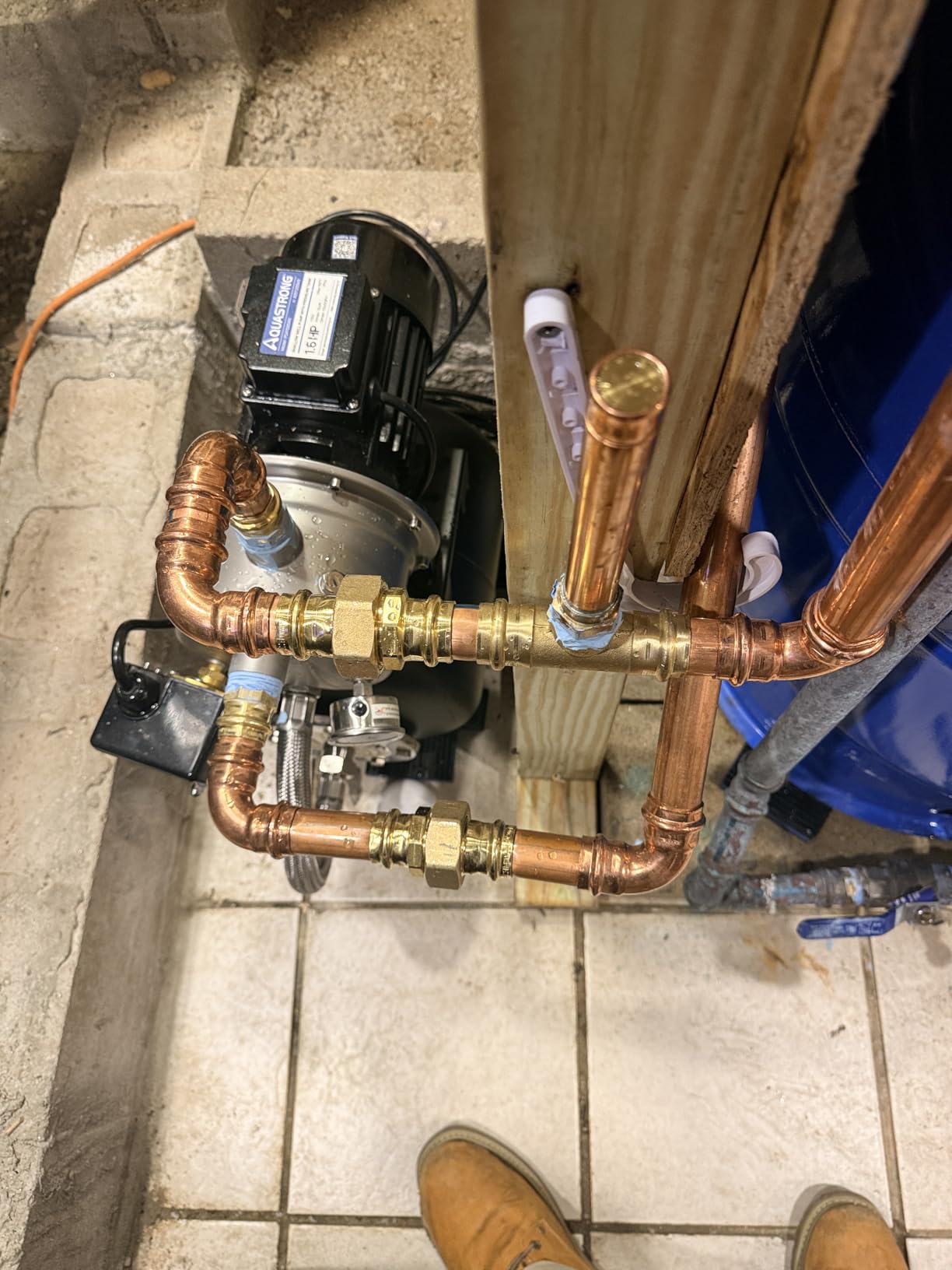
Actual flow rate runs below the spec-sheet expectation for some owners, so treat the 450 GPD rating as a ceiling rather than a promise. Buying a 10.98 kg system is also a two-person job in a tight cabinet, so measure the opening before the box arrives.
Who should buy and who should skip it
Buy it if you genuinely cannot decide whether you prefer alkaline or straight RO water, or if you use water for two different purposes such as cooking and drinking. It also suits anyone who wants high capacity and clear filter reminders without a large storage tank.
Skip it if you cannot drill a countertop, if you have no outlet, or if you want a single straightforward faucet and simple plumbing. Households that already know they prefer mineralized water will get the same result from a cheaper single-output system.
7. SimPure T1-400ALK Review: Best for the Least Water Waste
SimPure T1-400ALK Tankless Alkaline Reverse Osmosis Water Filter 400 GPD
400 GPD tankless
1.5:1 drain ratio
UV stage
8 kg
Pros
- Best pure-to-drain ratio in the group at 1.5:1
- Built-in UV stage adds disinfection on top of RO
- Lightest system here at 8 kg which eases installation
- Filter set covers about 1057 gallons of purified water
Cons
- Lowest average rating in the group at 4.2 stars
- Alkaline stage means TDS will not read near zero
- UV stage adds another serviceable component
- Maximum feed TDS listed at 500 ppm
If water waste is the thing you care about most, this is the model. A 1.5:1 pure-to-drain ratio means one and a half gallons go to the drain for every gallon you drink, the lowest figure in this roundup and a meaningful improvement over the 3:1 and 4:1 ratios people assume every RO system shares. On a household drinking several gallons a day, that difference compounds quickly.
It also adds a UV purification stage that switches on automatically based on water flow pressure, so disinfection happens without you thinking about it. The alkaline filter uses natural mineral material adding calcium, magnesium and potassium, which is the standard remineralization approach rather than an ionizer. Testing is reported as independent SGS testing against the NSF/ANSI 58 standard.
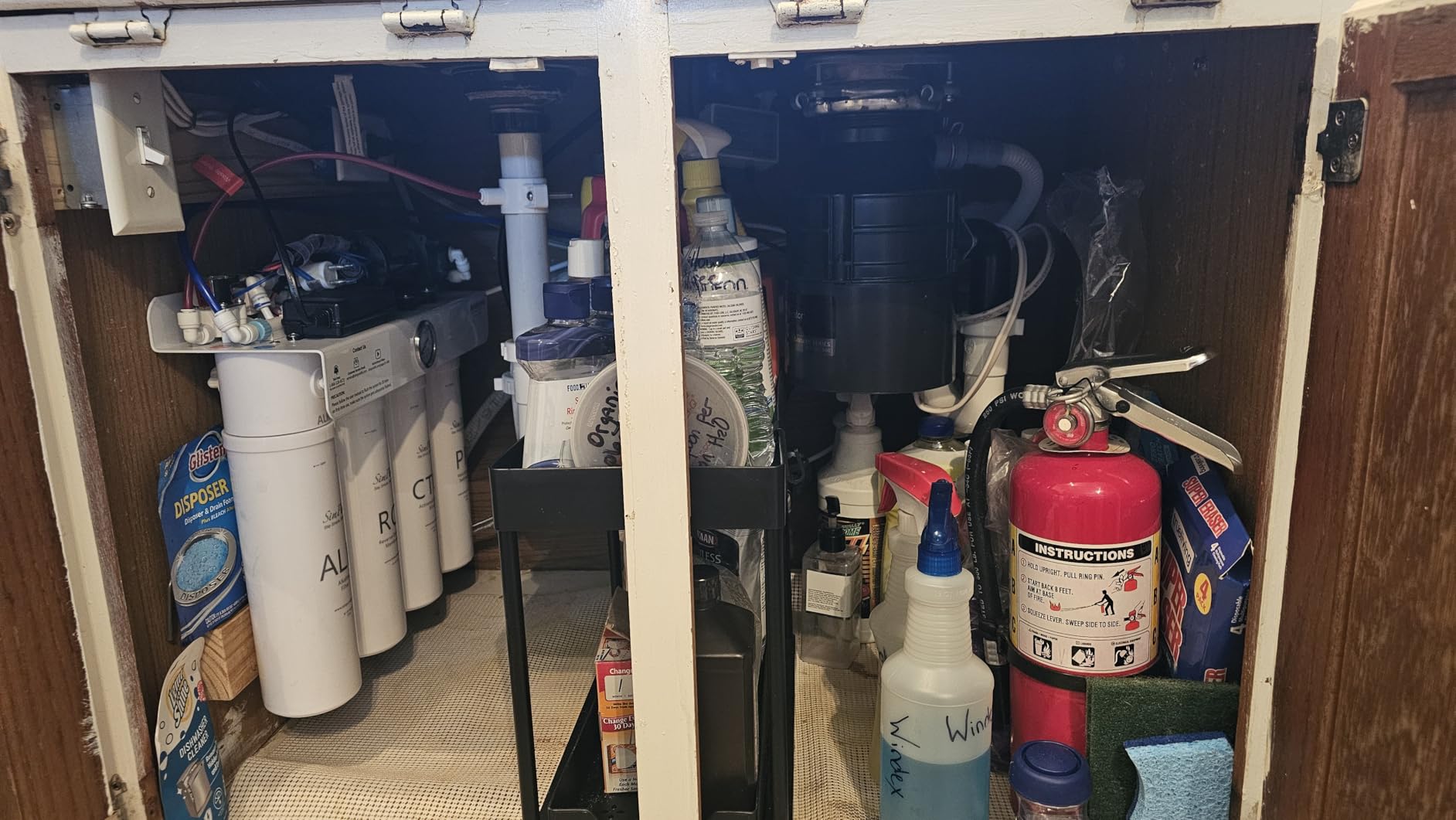
The lighter build has a practical upside. At 8 kg this is the easiest system in the list to lift into an under-sink cabinet, and combined with the tankless footprint it suits small kitchens better than most. The 0.4 gpm flow rate holds up for everyday filling, and the quick-change twist cartridges are advertised as yielding about 1057 gallons, which the manufacturer frames as the equivalent of several thousand bottles.
We want to be straight about the weak spot. At 4.2 stars this is the lowest-rated product in the roundup, with 12 percent one-star reviews, and the critical reviews concentrate on installation friction and confusion about post-alkaline TDS readings. Expect more support questions if you pick it.
What you should know before you buy
The 500 ppm maximum feed TDS is the lowest ceiling among the systems here. If your municipal water already runs 500 ppm or above, this model is operating outside its range and you should look at a system rated for 1000 to 2000 ppm instead. Measure before you buy, not after.
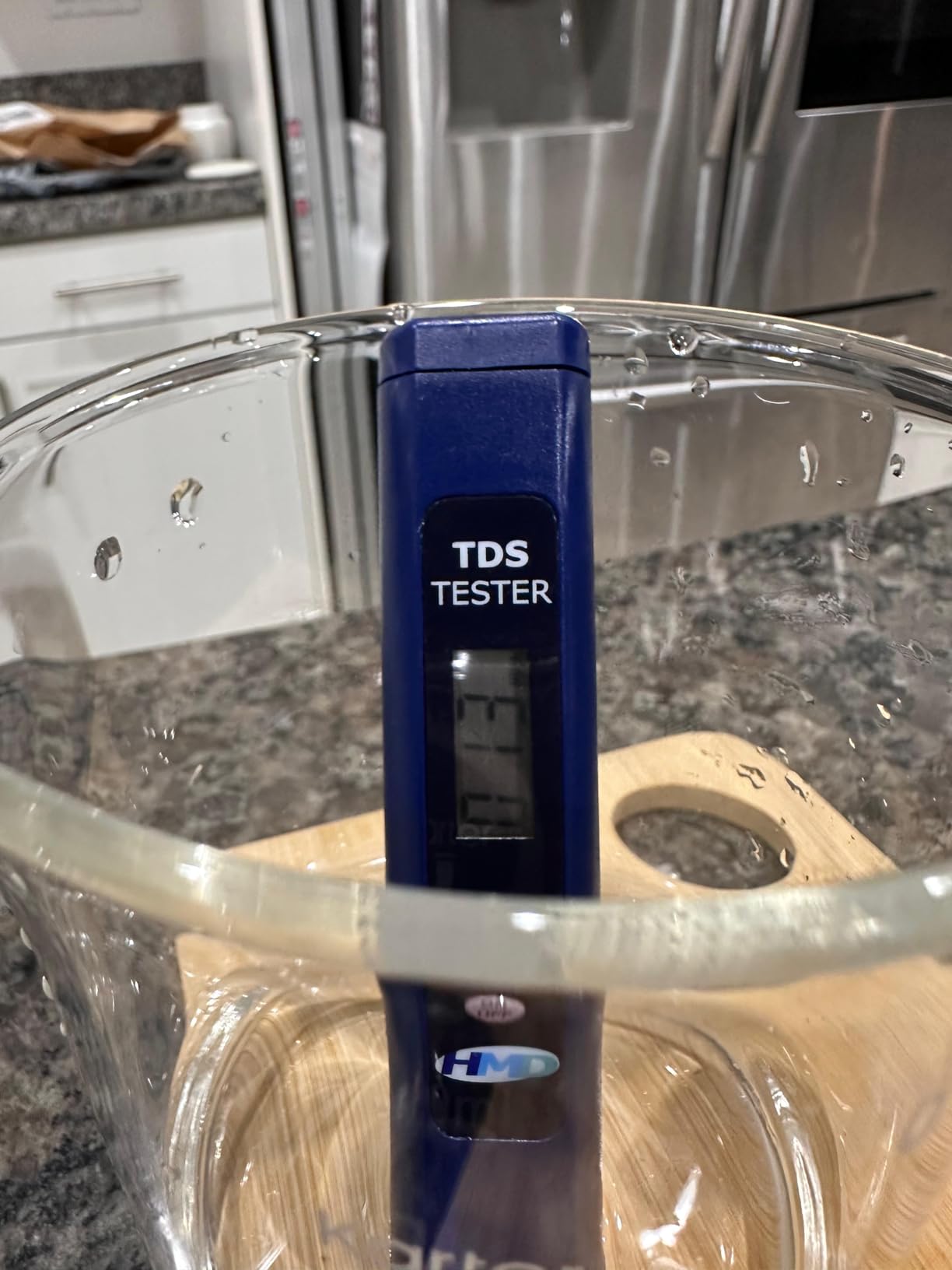
Adding minerals back means your TDS meter will read higher than a non-alkaline system even when the membrane is working perfectly. Buyers who expect a near-zero reading and do not get one often assume something is wrong. A rising TDS number is normal on this type of system.
Who should buy and who should skip it
Buy it if you live somewhere with metered or restricted water, if you want UV disinfection alongside RO, or if cabinet space and weight are your binding constraints. It is a sensible pick for a couple in a small kitchen.
Skip it if you have hard feed water, if you want a pristine support record from the brand, or if you are easily bothered by an extra stage you have to keep serviced. The UV bulb is another consumable and another interval to track.
8. Home Master TMAFC Review: Best Warranty and Fastest Fill Time
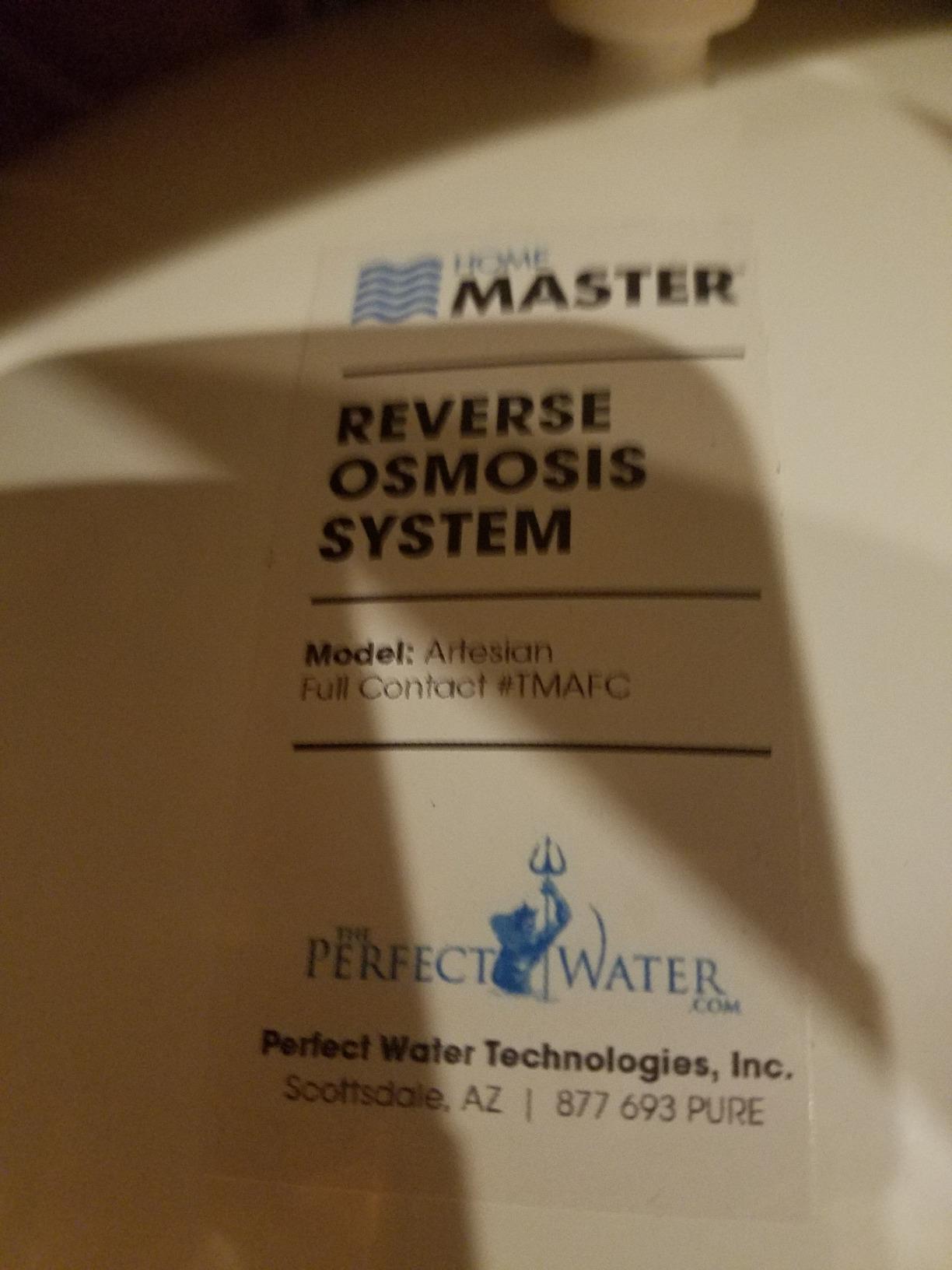
Home Master TMAFC Artesian Full Contact Reverse Osmosis System, 7-stages, Patented 2-Pass Alkaline Remineralization, Fast 4.5s Fill Rate, 8.5” catalytic carbon, 5-year limited parts
50 GPD
7 stages
4.5 second fill
5-year parts warranty
Pros
- Only system here with a five-year limited parts warranty
- Fastest fill time in the group at 4.5 seconds for an 8 oz glass
- Patented two-pass remineralization adds minerals twice during filtration
- Made in the USA by an NSF-listed manufacturer
Cons
- Lowest membrane capacity at 50 GPD
- Largest footprint at 20 x 13 x 16 inches including the tank
- Higher cost per gallon of daily capacity than most rivals
This system is built differently from the rest. It uses a 0.0001 micron DOW thin-film composite membrane across seven stages, with 8.5 inches of catalytic carbon contact per pass, and it fills an 8 oz glass in 4.5 seconds. That fill rate is the fastest in the roundup and it comes from oversized fittings and tubing rather than from raw membrane capacity.
Two things justify the premium. The first is the warranty: five years of limited parts coverage, double the one-year baseline almost every competitor offers, and the manufacturer lists spare part availability out to five years, which is the cartridge-continuity question people raise in forums. The second is the patented two-pass remineralization, which adds calcium and magnesium at two points during purification rather than once at the end.
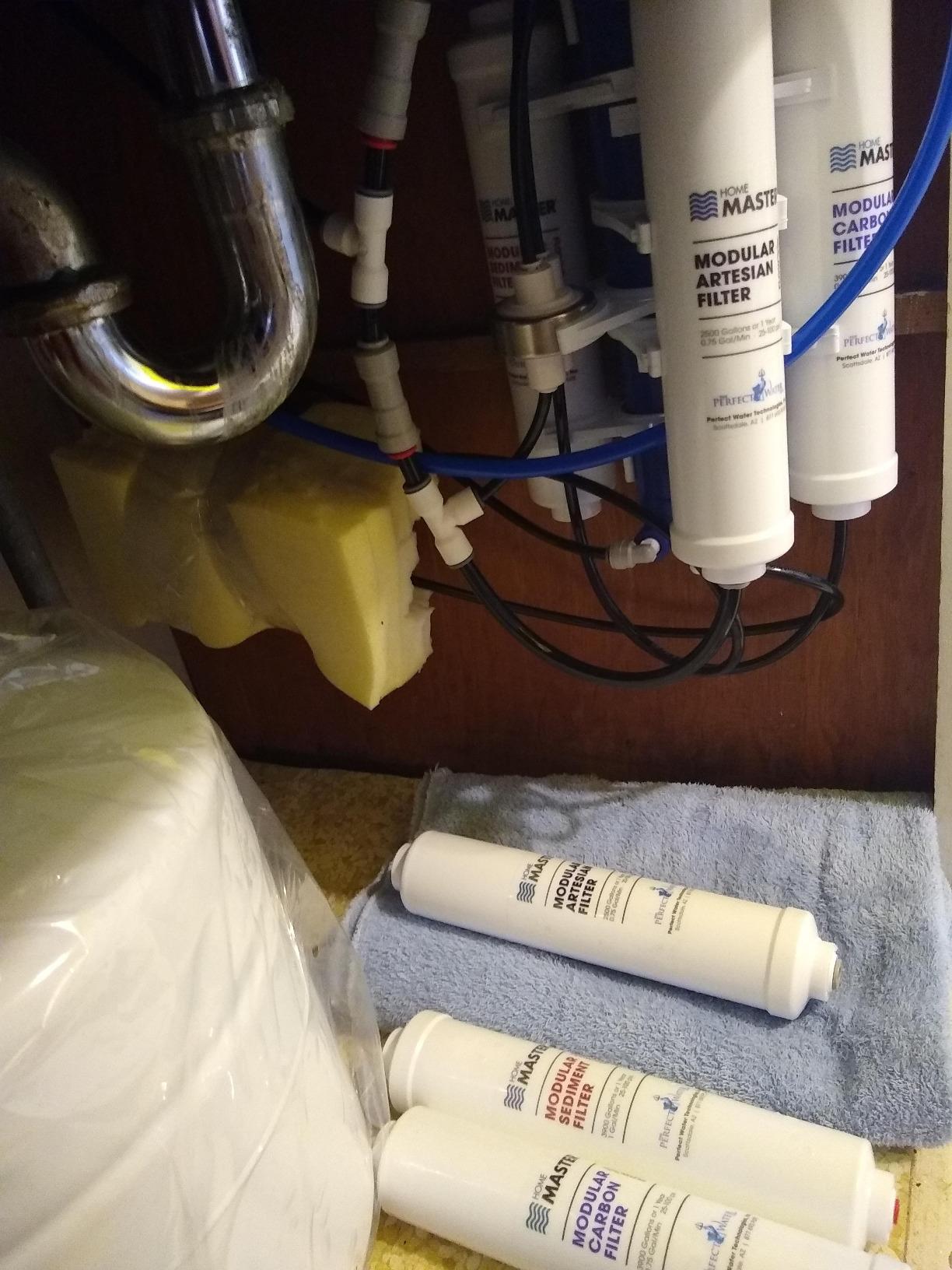
Buyers praise the taste difference from the two-pass design more than anything else, and the tool-free annual filter replacement is a real convenience when you are standing at the sink with wet hands. The unit is made in the USA by an NSF-listed manufacturer, and it arrives fully assembled as a purification cluster, tank, adapter, faucet and fittings.
The honest drawback is capacity. At 50 GPD the membrane produces roughly half what a typical 75 to 100 GPD tank system delivers, and the full assembly including the tank measures 20 by 13 by 16 inches, the largest footprint here. Fast filling and low daily output are not contradictory, but you should understand both before buying.
What you should know before you buy
The operating range is 40 to 95 psi, so it needs reasonably healthy line pressure. Filter life is listed annually and the replacement is tool-free, which makes servicing straightforward but also means a yearly appointment in your calendar that some people put off longer than they should.
The 1 gpm maximum flow figure and the 4.5 second fill claim are the numbers buyers report back, and they hold up in reviews. If your household only needs a couple of glasses a day, this system will serve you well and quietly for years. If you are filling pots and coffee carafes in the morning, it will feel slower in volume even though each glass arrives quickly.
Who should buy and who should skip it
Buy it if you want the longest warranty coverage in the category, you prefer buying from a US-based manufacturer with a parts guarantee, and your daily water volume is modest. It is a strong choice for people who want one system that stays supported for a long time.
Skip it if your cabinet is small, if you want high daily output, or if you want to compare cost per gallon of capacity. Buyers who assumed a larger tank and a higher GPD figure tend to be the ones who end up disappointed.
9. Waterdrop X8-WAN Review: Best Smart Faucet Display
Waterdrop X8-WAN Alkaline Mineral Tankless Reverse Osmosis System Undersink
800 GPD tankless
16-layer membrane
Smart faucet
NSF/ANSI 42 58 and 372
Pros
- Smart digital faucet shows output volume TDS and filter life at the sink
- 800 GPD in a compact tankless body
- SGS-tested 0.0001 micron 16-layer membrane
- Three filters pre-installed to cut setup time
Cons
- Countertop drilling required for the faucet
- Highest one-star share in the roundup at 9 percent
- Replacement cartridges are costly
- Audible motor hum and periodic purge cycles
The X8-WAN is the one to buy if you want to stop guessing. The smart digital faucet displays quantitative output, live TDS and remaining filter life, so you can watch the number move when the membrane wears down instead of assuming everything is fine. For a system rated at 800 GPD, that feedback is genuinely useful rather than a gimmick.
Filtration is 0.0001 micron across a 16-layer membrane tested by SGS, with alkaline mineralization adding calcium, magnesium, sodium and potassium ions after the membrane stage. It carries NSF/ANSI 42, 58 and 372 certification and is BPA-free, and the 2:1 pure-to-drain ratio sits in the efficient middle of this group.
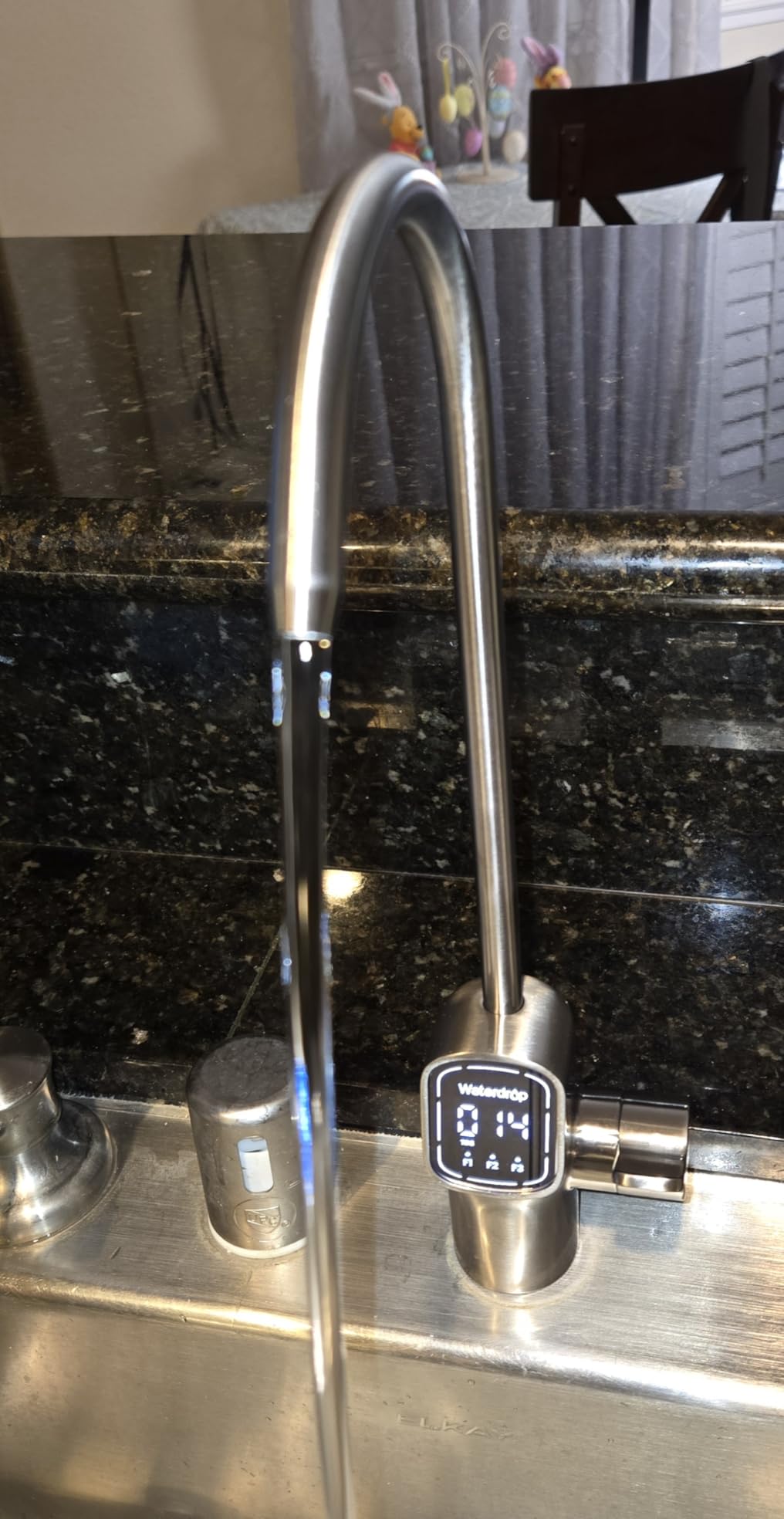
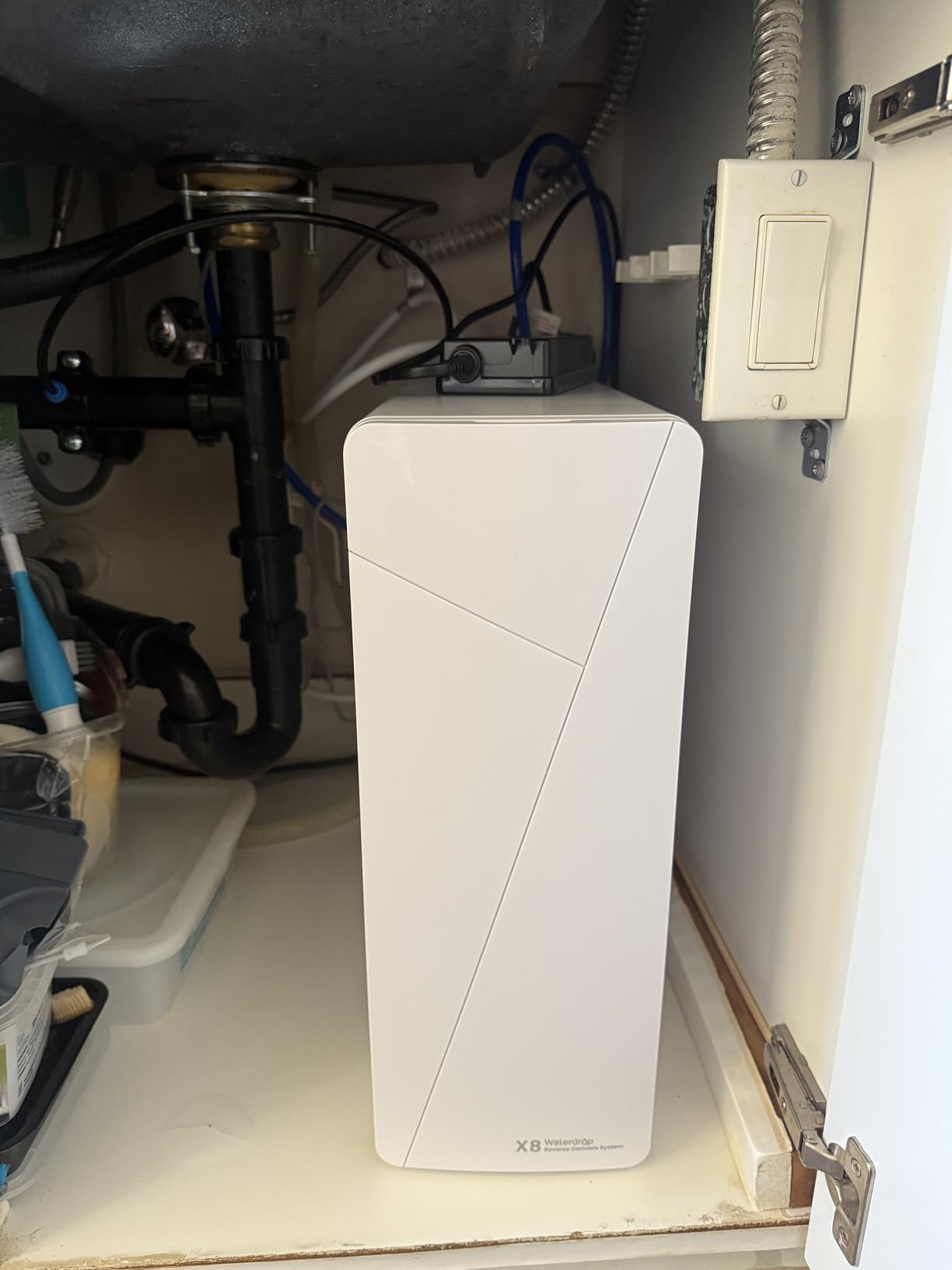
Three filters arrive pre-installed, which removes the most tedious part of setting up a new system. Reviewers report clean, good-tasting water and steady flow, and Waterdrop customer support comes up repeatedly as a positive. The membrane is listed at a 24-month replacement interval, the longest in this roundup alongside the X12.
Criticism concentrates in two places. The one-star share is the highest here at 9 percent, and the recurring complaint is a TDS display that stops reading correctly, followed by support loops that take several attempts to resolve. Motor hum and periodic purge cycles are audible if you are standing at the sink.
What you should know before you buy
There is a countertop drilling requirement for the faucet, so this is not a renter-friendly install. The system also needs a corded power connection. Reviewers also flag replacement cartridge cost as a meaningful ongoing expense, which is worth including in any long-term comparison you do.
With 281 ratings this is the thinnest review record in the roundup, so you are relying more heavily on manufacturer specifications than on a long public history. That is not a dealbreaker, but it is a reason to check the certification lookup yourself in the IAPMO database rather than trusting the listing copy.
Who should buy and who should skip it
Buy it if you want live data at the tap, if your household drinks a lot of water daily, and if you are comfortable drilling for a faucet. The display alone changes how you maintain the system over five years.
Skip it if you want the strongest public review history, if drilling is off the table, or if cartridge cost matters more to you than display features. Anyone who dislikes a faucet with an illuminated panel will find the same output from a simpler model.
10. Waterdrop X12 Review: Best for Very Large Households
Waterdrop X12 Alkaline Mineral Reverse Osmosis System, 1200 GPD, Under-Sink
1200 GPD tankless
11 stages
3:1 drain ratio
IAPMO certified
Pros
- Highest capacity in the roundup at 1200 GPD for large households
- Eleven stages with a 16-layer 0.0001 micron membrane
- IAPMO R&T certified to NSF/ANSI 42 58 and 372 plus SGS testing
- 24-month RO filter life reduces replacement frequency
Cons
- Most expensive system in the comparison by a wide margin
- Weakest water-saving ratio here at 3:1 pure-to-drain
- F1A replacement filter carries an alkaline stage that nudges TDS upward
- Heavy chassis for the output it provides
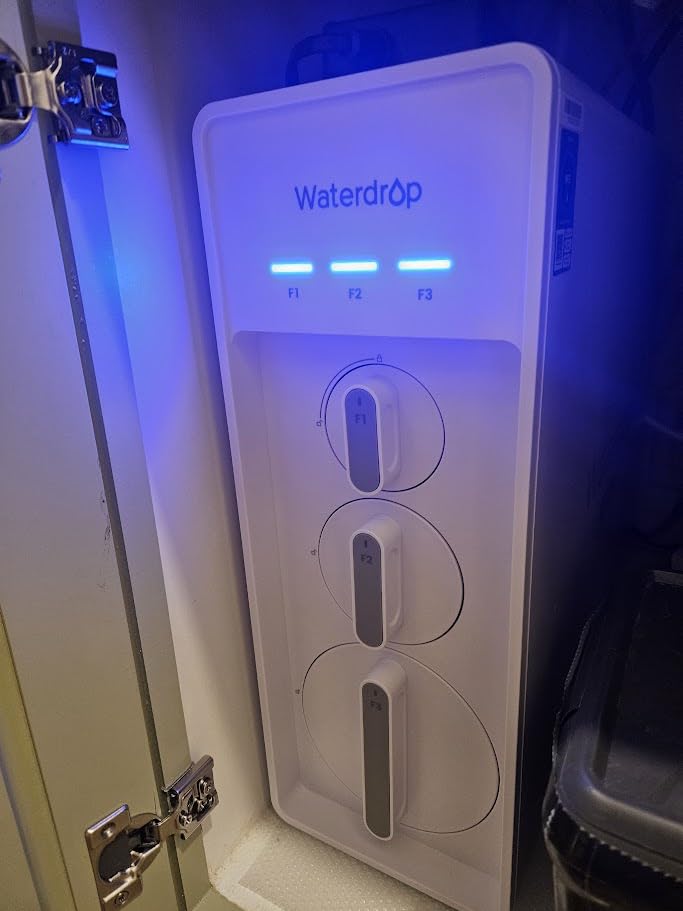
The X12 exists for one situation: a large household where everyone drinks filtered water throughout the day. At 1200 GPD of tankless output it out-produces every other system in this guide, and it does so through eleven stages built around a 16-layer 0.0001 micron membrane that SGS has tested against TDS, PFOA, PFOS, chlorine, fluoride, arsenic and lead.
Certification is handled through IAPMO R&T to NSF/ANSI 42, 58 and 372, which puts it among the more thoroughly certified options here. The alkaline mineral boost adds calcium and magnesium for taste, and the smart digital faucet reports quantitative output, TDS and filter life. Maximum feed TDS is listed at 1000 ppm.
The 24-month RO filter life is the practical advantage for a household consuming this much water, since it halves the replacement frequency compared with systems on a 12-month cycle. Buyers single out the capacity and the faucet interface as the two reasons to spend more, and the general tone in reviews is that the output removes any doubt about running dry.
There is a real cost to that capacity. The 3:1 pure-to-drain ratio is the weakest in this roundup, meaning three gallons go to the drain for every gallon you drink, and at 1200 GPD of potential output that adds up fast in a large home. Buyers also note the F1A replacement filter includes an alkaline mineralized stage that can nudge the TDS reading slightly upward.
What you should know before you buy
This is the priciest system in the comparison by a wide margin, and you should only move up to it when you genuinely exceed what a 500 to 600 GPD tankless unit delivers. A family of six drinking heavily all day is the use case. A family of six where two people drink filtered water is overbuying.
The chassis measures 18.2 by 6.25 by 16.72 inches, so plan cabinet clearance carefully even though the tankless design still frees space relative to a storage tank. It also needs electrical power at the install point.
Who should buy and who should skip it
Buy it if you have five or more people drinking filtered water daily, or if you run a small office or a busy home kitchen where volume matters more than conservation. The 24-month membrane interval pays off at that consumption level.
Skip it if water efficiency is your priority, since the 3:1 ratio is the worst performing here. It is also the wrong choice for households with feed TDS above 1000 ppm, for renters who cannot drill, and for anyone who does not want the highest ongoing outlay of the group.
Is Alkaline Water Actually Better for You?
Here is the honest answer, and it is not the one most alkaline RO pages give. The mineral cartridge adds a small amount of calcium, magnesium, potassium and sodium to water that the membrane just stripped of everything. That dose is nutritionally trivial. You are not going to meet a meaningful share of your daily calcium or magnesium requirement from a cartridge, and anyone who tells you otherwise is selling a feeling rather than a fact.
That is not the same as saying the stage is useless. RO output has almost no buffering capacity, which is exactly why so many people describe it as flat or faintly acidic, and the alkaline cartridge corrects that sensory problem. The people who switch to alkaline RO almost always describe the taste change as the reason they stayed. The taste is real. The health claim is not something the mineral dose can support.
Forum sentiment reflects the same split. In water treatment discussions the most common objection is that the alkaline stage is largely a taste purchase dressed up as a wellness one, and a long-running skeptical thread on r/IsItBullshit concluded that RO clearly strips contaminants but that the healthier framing remains unproven. Our take lines up: buy for taste and pH preference, not as a health intervention.
On the minerals question specifically, the counterweight is worth stating plainly. Removing calcium and magnesium from drinking water is a genuine downside in the sense that it makes the water less pleasant and removes contributions to your intake, but most people get the overwhelming majority of those minerals from food. If mineral content is your priority, mineral water or a remineralizing filter sized for minerals rather than for taste is a more direct route. You can also compare options in our kitchen reverse osmosis guide.
Where alkaline RO is unambiguously worth it is contaminant reduction. Systems certified to NSF/ANSI 58 at the system level reduce lead, PFAS, arsenic, fluoride, chlorine and dissolved solids by meaningful margins, and that is the reason to own any RO system at all. The alkaline cartridge is the finishing touch on top of that.
How to Choose the Best Alkaline Reverse Osmosis System
Tank vs tankless: which design fits your kitchen
A tank system stores filtered water in a pressurized reservoir, so dispensing is instant even when the membrane is producing slowly, and it needs no power. The cost is cabinet space and the small risk of bacteria in a reservoir that sits untouched between uses. Every tank option in this roundup sits between 50 and 75 GPD.
A tankless system filters on demand as you open the faucet. You recover most of the under-sink space, you avoid the stagnant-water question entirely, and you get far higher flow rates, but you need an electrical outlet and you accept pump noise and a slightly faster dispense cycle. Tankless units here run from 400 to 1200 GPD. If your cabinet is tight, tankless is the only real answer.
How to size GPD for your household
One person drinking a glass or two a day is comfortably served by a 75 GPD tank system. A family of two to three who also cooks with filtered water fits a 75 to 100 GPD tank unit. Three to five people who drink filtered water throughout the day want 400 to 600 GPD tankless, and households above five should look at the 800 to 1200 GPD range.
Be skeptical of the headline figure. Rated GPD assumes ideal conditions and steady household use, and real output varies with feed pressure and temperature. Treat the number as a ceiling and judge the system by its listed flow rate in gallons per minute, which is what you feel at the tap.
Certifications that actually matter
NSF/ANSI 58 is the drinking-water standard and the one that matters most for RO. NSF/ANSI 42 covers aesthetic claims such as taste and odor, 53 covers health-contaminant reduction claims, and 372 covers lead-free materials. WQA Gold Seal certification is a parallel scheme that carries similar weight.
The distinction buyers miss is system-level versus component-level. A membrane can be certified while the housing, tubing and fittings around it are not, so a full unit may make claims the certification does not back. This is why the iSpring RCC7AK-BN and the RO500AK, both listed as complete-system certified, rank ahead of products that only describe membrane testing. You can check any claim yourself by searching the model in the IAPMO or WQA product directory before you buy.
What alkaline remineralization really does
It adds minerals back and raises pH, typically into the 7.5 to 9 range, which is where the improved mouthfeel and fuller taste come from. It does not raise the purity of the water, and it does not add nutrients in any quantity that matters nutritionally.
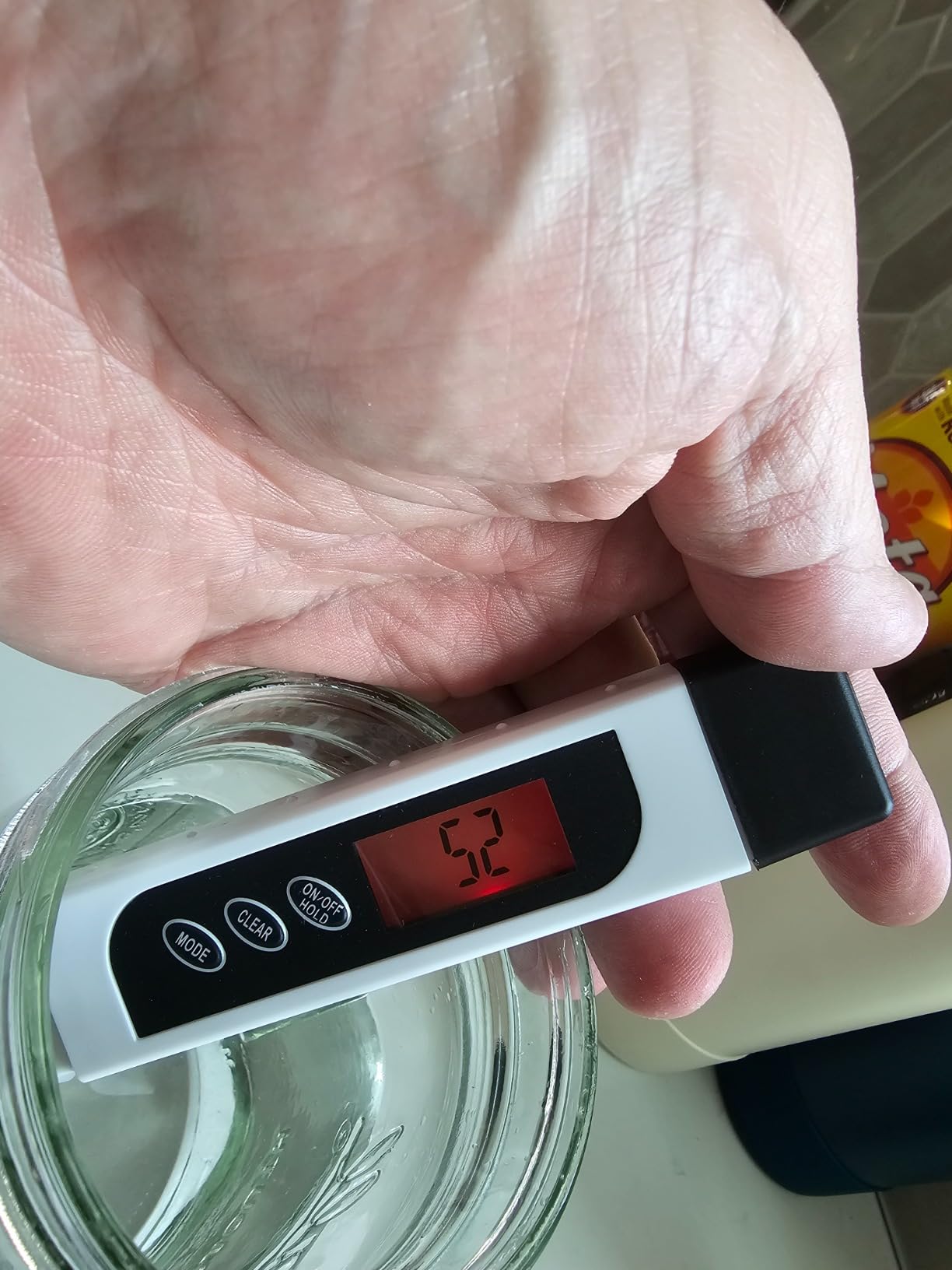
It also has a side effect that surprises people: your TDS meter will read higher than on a system without the alkaline stage. A number in the 20 to 40 ppm range after filtration is normal for a remineralized system and is not a sign that the membrane has failed.
Water waste and the pure-to-drain ratio
The ratio tells you how many gallons go down the drain for every gallon you drink. Conventional RO sits around 3:1 to 4:1. Several systems here run at 2:1, which roughly halves waste, and the SimPure T1-400ALK runs at 1.5:1, the best in this roundup.
Translate it before you decide. At 2:1, a household drinking 3 gallons a day sends 6 gallons down the drain daily, or about 2,190 gallons over a year. That number surprises most people, and it is the single clearest argument for choosing an efficient model even when the upfront specification looks similar.
Filter replacement and long-term cost
Pre-filters and carbon blocks are consumed on a six to twelve month cycle, membranes typically run 24 months, and the alkaline cartridge is usually on a 12-month interval. Budget for the cartridges as an annual line item rather than a surprise, because that recurring cost does more to determine value than the original purchase outlay does.
Also check that replacement cartridges for your chosen model will still be sold years from now. Brands that publish spare part availability, and systems with longer warranty terms, reduce the risk of owning a unit whose filters disappear. Our under-sink filter comparison covers the cheaper filter categories if you also want sink-mounted carbon and sediment options.
Installation: DIY or plumber
All ten systems here are under-sink installs. You will drill one countertop hole for the faucet, attach a feed adapter to the cold water line, run a drain line to the waste pipe and connect the faucet, which is a one to two hour job for a careful first-timer with the manufacturer’s instructions open. A plumber is worth it if you have never done plumbing work or if your cabinet has an unusual layout.
Check two things before you order. Tankless and pumped models need a GFCI outlet within reach under the sink, and if your water heater is directly beneath the sink you may need an air gap fitting to prevent backflow. Unpumped tank systems skip the electrical requirement entirely, which is one reason they remain popular.
Test your own water before you choose
You can do this in an afternoon without laboratory testing. Buy a TDS meter and measure the water at your cold tap, then measure it again after a glass of your current drinking water. A pH strip tells you whether your supply is already acidic or already alkaline, which changes whether the remineralization stage is doing visible work for you.
Then measure line pressure at the cold tap with a simple gauge. If it sits under 40 psi, skip the unpumped models and go straight to a booster pump design. If your feed TDS exceeds 500 ppm, avoid the SimPure, and above 1000 ppm you want one of the 2000 ppm rated systems. Finally, look up the exact model number in the IAPMO or WQA directory and confirm the certification yourself rather than trusting the product page.
Frequently Asked Questions
Is it better to drink alkaline water or reverse osmosis water?
Standard reverse osmosis strips water down to almost nothing, which leaves it tasting flat and slightly acidic. Alkaline RO adds a final cartridge that puts calcium, magnesium, potassium and sodium back in and raises pH into roughly the 7.5 to 9 range. The measurable difference is mineral content and pH, not purity, and the added minerals are too small a dose to matter nutritionally. Choose alkaline if you prefer the taste and want less acidic water; choose plain RO if you want the most neutral profile.
Is alkaline reverse osmosis water good for you?
It is good drinking water in the sense that the RO membrane removes lead, PFAS, arsenic, fluoride, chlorine and dissolved solids, and the alkaline stage makes it more pleasant to drink than flat-tasting RO output. It is not a health treatment. The minerals the cartridge adds are a tiny fraction of daily requirements, so the honest reasons to buy one are contaminant reduction, taste preference and drinking water that is not acidic. Anyone claiming nutritional benefits from the mineral cartridge is overselling it.
What are the downsides of using an alkaline water purifier?
The main downsides are that the added minerals make the TDS reading higher than a non-alkaline system, the water tastes distinctly mineralized, and the cartridge is a recurring consumable cost. Some buyers also dislike that pH rises, which can affect brewing and certain specialty applications. On the RO side, most units waste between 1.5 and 3 gallons per gallon produced, tank systems occupy cabinet space, and pumped tankless models need an electrical outlet. None of these are dealbreakers, but they are trade-offs worth pricing in.
Does an RO system remove minerals from water?
Yes. The 0.0001 micron membrane in a reverse osmosis system removes the great majority of dissolved solids, including calcium, magnesium, sodium, sulfate and trace metals. That is the trade-off the alkaline remineralization stage exists to soften: it adds a small amount of calcium, magnesium and potassium back after the membrane so the finished water tastes less flat. If you take minerals seriously in your diet, remember that food supplies the overwhelming majority of them.
Which reverse osmosis filter is best for drinking water?
For most households, a 75 GPD under-sink tank system with whole-system NSF/ANSI 58 certification and no electrical requirement is the best balance of reliability and simplicity. Choose a 400 to 600 GPD tankless unit if you want fast dispensing and little cabinet space, and add a booster pump if your line pressure is below 40 psi. Whatever you pick, check that the certification covers the complete system rather than only the membrane, and confirm the model in the IAPMO or WQA directory.
Do alkaline RO systems waste water?
Every reverse osmosis system sends some water to the drain, because the membrane needs a steady rinse to prevent fouling. Conventional systems run around 3:1 to 4:1, while efficient models in our roundup run at 2:1 and the best one at 1.5:1. At 2:1 a household drinking 3 gallons a day wastes about 6 gallons daily. More efficient ratios matter most in metered homes, in areas with water restrictions, and in any household consuming a high daily volume.
Which Alkaline Reverse Osmosis System Should You Buy?
If you want one answer, take the iSpring RCC7AK-BN. It has the deepest public record in this category, whole-system NSF/ANSI 58 certification, a transparent pre-filter housing and no power requirement, which means fewer things that can go wrong over five years. Our runners-up cover specific problems: the Frizzlife PD600-TAM3 if you want 600 GPD tankless output with live TDS, the iSpring RCC7P-AK if your line pressure is weak, and the Home Master TMAFC if warranty length matters more than daily capacity.
Measure your pressure and your feed TDS before you order, confirm the certification in the IAPMO directory, and remember that the alkaline stage is a taste purchase rather than a health one. If you are still weighing the format, our kitchen sink filter guide covers the broader category, and if you are on a private well our well water filtration picks handle the sediment and mineral load that RO alone was never designed to address.