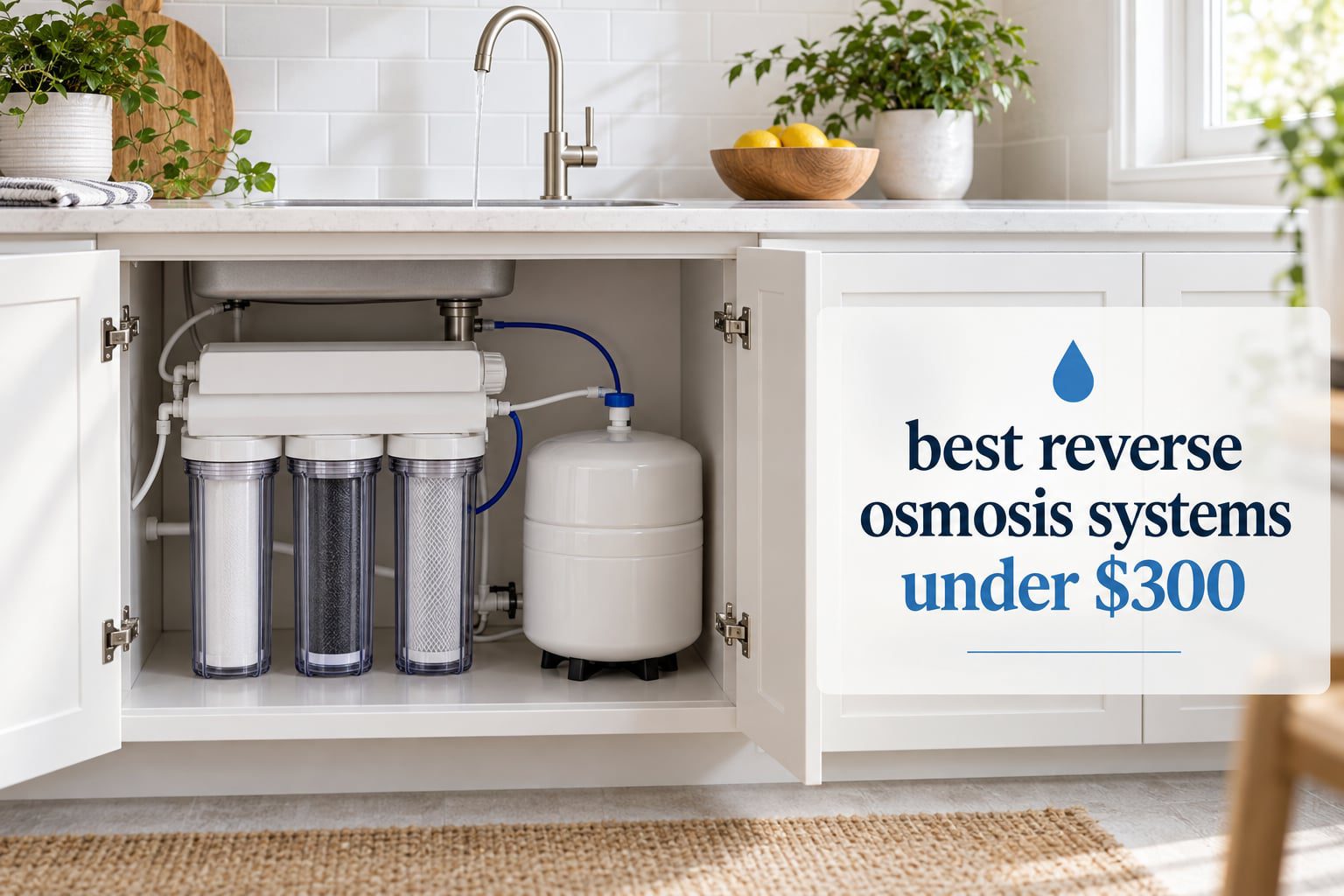
A reverse osmosis system pushes tap water through a semi-permeable membrane under line pressure, physically blocking dissolved metals, PFAS, fluoride and nitrates while letting the water molecules through. It is the only mainstream household format certified under NSF/ANSI 58 for total dissolved solids reduction, which means it reaches contaminant levels that carbon and sediment filters alone cannot. The catch is that the same membrane strips out the minerals that give water its taste, and it needs pre-filters, a storage tank or a permeate pump, and a drain line to run at all.
This guide covers the best reverse osmosis systems in the under-300 tier, and the honest headline is that this is a tank-based under-sink tier with a few exceptions. Five of the eight systems below are tank-based under-sink units running five or six stages, three are tankless under-sink units that need a plugged-in outlet, and the cheapest of them ships a very large filter bundle. There is no countertop system in this group, no UV stage, and no hot-and-cold dispensing at the top end. Any roundup that claims otherwise at this budget is padding the list.
What you do get is real filtration. Every system here reduces total dissolved solids, and most claim lead, arsenic, fluoride, chlorine and PFAS reduction with third-party certification of some kind. The differences between them come down to capacity in gallons per day, how the certification is scoped, whether a remineralization stage is included, how much cabinet space and electrical access the install needs, and what the filters cost you every year after the box is open.
I spent several weeks comparing specs, certification language, owner feedback and replacement-part economics across these eight systems, and I picked using published certifications, verified capacity claims and the pattern of complaints in the reviews. To be clear about method: this is a specification and owner-feedback comparison, not in-house laboratory testing. Where a number comes from the manufacturer or owner reports, I say so. If you want the broader picture on capacity sizing, our kitchen reverse osmosis guide covers the format question in more depth, and the under-sink installation guide walks through the drilling step in detail.
Table of Contents
- Top 3 Picks: The Best Reverse Osmosis Systems in This Budget Tier
- All 8 Systems Compared: Capacity, Certification and Format
- 1. iSpring RCC7AK-BN: The Whole-System Certified All-Rounder
- 2. APEC ROES-50: The Cheapest One To Own Over Five Years
- 3. Waterdrop G2: Tankless Design Without a Storage Tank
- 4. iSpring RCC7P-AK: Booster Pump Power and the Highest Rating Here
- 5. APEC RO-Hi: The Fastest Flow and the Longest Warranty
- 6. Waterdrop G5P500A: 500 GPD With a 2:1 Drain Ratio
- 7. GeekPure RO5: Twelve Filter Pieces in the Box
- 8. Waterdrop T3-C: The Lightest Tankless Body and the Simplest Filter Change
- Buying Guide: What Actually Matters at This Budget
- Certification standards decoded: 42, 53, 58, 372 and 401
- Tank-based versus tankless versus countertop at this budget
- Remineralization and why budget RO water tastes flat
- Total cost of ownership over three and five years
- Installation reality check for under-sink RO
- Well water, hard water and arsenic
- Buying safely on marketplace listings
- Frequently Asked Questions
- Final Verdict: Which Reverse Osmosis System You Should Buy
Top 3 Picks: The Best Reverse Osmosis Systems in This Budget Tier
The iSpring RCC7AK-BN takes the top slot because it is the only system here certified for the entire assembly under NSF/ANSI 58, and it carries by far the largest owner base at more than 21,000 reviews. The APEC ROES-50 is the value pick that experienced owners name most often in the sub-200 range, with industry-standard parts that stay cheap to service. The Waterdrop G2 is the only genuinely tankless option that fits inside this budget without a huge capacity sacrifice.

iSpring RCC7AK-BN 75 GPD Alkaline
- NSF/ANSI 58 whole-system certification
- 6-stage alkaline filtration
- 75 GPD with 284 L/day flow
- Transparent first-stage housing

APEC ROES-50 50 GPD 5-Stage
- 50 GPD five-stage system
- 40-85 psi operating range
- Industry-standard parts
- Quick-connect color-coded tubing

Waterdrop G2 400 GPD Tankless
- 400 GPD tankless design
- 1:1 pure-to-drain ratio
- 3-second twist-and-pull filters
- Frees over 70% of cabinet space
All 8 Systems Compared: Capacity, Certification and Format
Read the table below as a format map first and a shopping list second. The capacity column uses gallons per day, which is the manufacturer’s rating at a standard test pressure; real output at your tap depends on your line pressure and how full the tank is. The certification column matters as much as the capacity column, and the reasons why are explained in the buying guide.
| Product | Specs | Action |
|---|---|---|
| iSpring RCC7AK-BN 75 GPD Alkaline 6-Stage |
|
Check Latest Price |
| APEC ROES-50 50 GPD 5-Stage |
|
Check Latest Price |
| Waterdrop G2 400 GPD Tankless |
|
Check Latest Price |
 iSpring RCC7P-AK 75 GPD with Booster Pump iSpring RCC7P-AK 75 GPD with Booster Pump |
|
Check Latest Price |
 APEC RO-Hi 90 GPD Fast Flow APEC RO-Hi 90 GPD Fast Flow |
|
Check Latest Price |
 Waterdrop G5P500A 500 GPD Alkaline 8-Stage Waterdrop G5P500A 500 GPD Alkaline 8-Stage |
|
Check Latest Price |
 GeekPure RO5 75 GPD 5-Stage GeekPure RO5 75 GPD 5-Stage |
|
Check Latest Price |
 Waterdrop T3-C 450 GPD Tankless Waterdrop T3-C 450 GPD Tankless |
|
Check Latest Price |
1. iSpring RCC7AK-BN: The Whole-System Certified All-Rounder
iSpring RCC7AK-BN NSF Certified, 75 GPD, Alkaline 6-Stage Reverse Osmosis System, pH+ Remineralization RO Water Filter System Under Sink Patented Top-Mounted Faucet Design for Easy Installation
75 GPD
6 stages
284 L/day max flow
70 psi
6-month filter life
1-year warranty
Pros
- NSF/ANSI 58 certification for the entire system rather than single components
- Alkaline pH plus remineralization stage for better tasting water
- Transparent first-stage housing makes sediment buildup visible
- Filter sets available from 6 months to 3 years
- DIY quick-fitting connections with a manual and step-by-step videos
Cons
- Tall 18 inch housing and roughly 27.5 lb weight under the sink
- 75 GPD output depends on decent line pressure and the storage tank
- Alkaline stage is a taste preference rather than extra filtration
This is the system I keep coming back to because of one detail: the NSF/ANSI 58 certification covers the whole assembly rather than being split across individual components. That matters more than it sounds, because a lot of budget systems list a certified membrane and an uncertified carbon prefilter and let you infer the rest. When one standard covers the system, lead, arsenic, fluoride, PFAS, chloroform and TDS reduction claims all sit under the same third-party test.
Owner feedback is the deepest in this group by a wide margin, more than 21,000 reviews at a 4.6 average, and the pattern is consistent. People install it themselves in an afternoon, the water tastes clean rather than flat because of the sixth alkaline stage, and technical support runs out of Atlanta. The recurring grumbles are install leaks at the fittings, housings that need careful tightening rather than brute force, and a footprint that is tall enough to notice in a shallow cabinet.
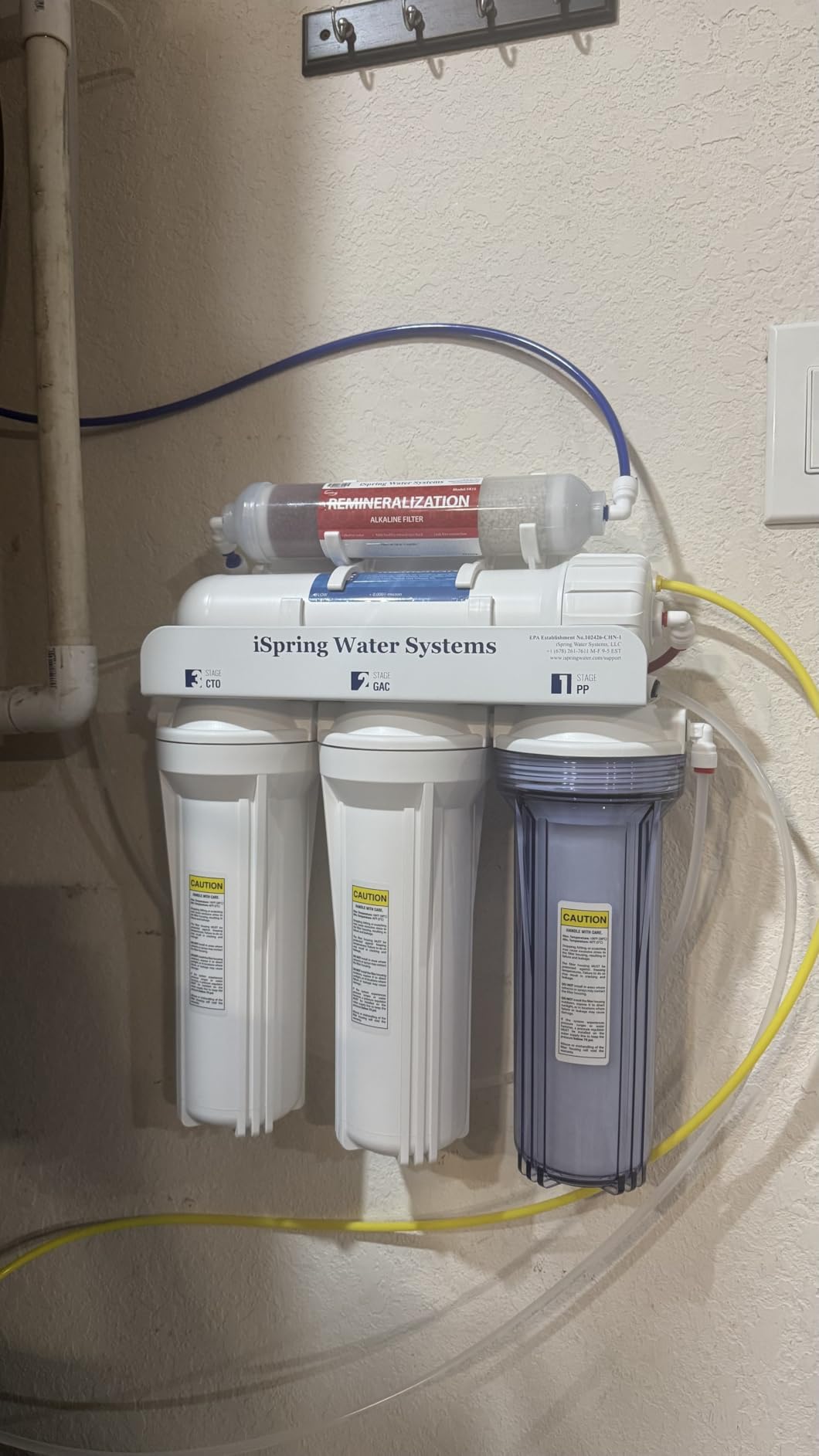
Capacity is rated at 75 gallons per day with a maximum flow figure of 284 liters per day, and the system is built for a 70 psi operating point. That rating assumes your incoming pressure is in range. Owners on low-pressure lines commonly see noticeably slower dispensing and the usual fix is a booster pump model rather than a different membrane.
The reduction figures the manufacturer publishes are 93-98% for TDS, 96-99% for PFAS, 95-99% for chlorine, above 98.9% for lead and above 97.4% for fluoride. Treat those as certified test values at set influent levels, not as a promise about your particular water, which is why measuring your own TDS before and after with a 20 dollar meter is the single most useful thing you can do after installing anything on this list.
Filter life is listed at 6 months for the pre-filter set, and replacement cartridges are offered in 6-month, 1-year, 2-year and 3-year bundles. The transparent first-stage housing is a small design decision that pays off every month, because you can see sediment loading instead of guessing when to change it. The one-year manufacturer limited warranty is short by the standards of the category but matches nearly everything else at this budget.
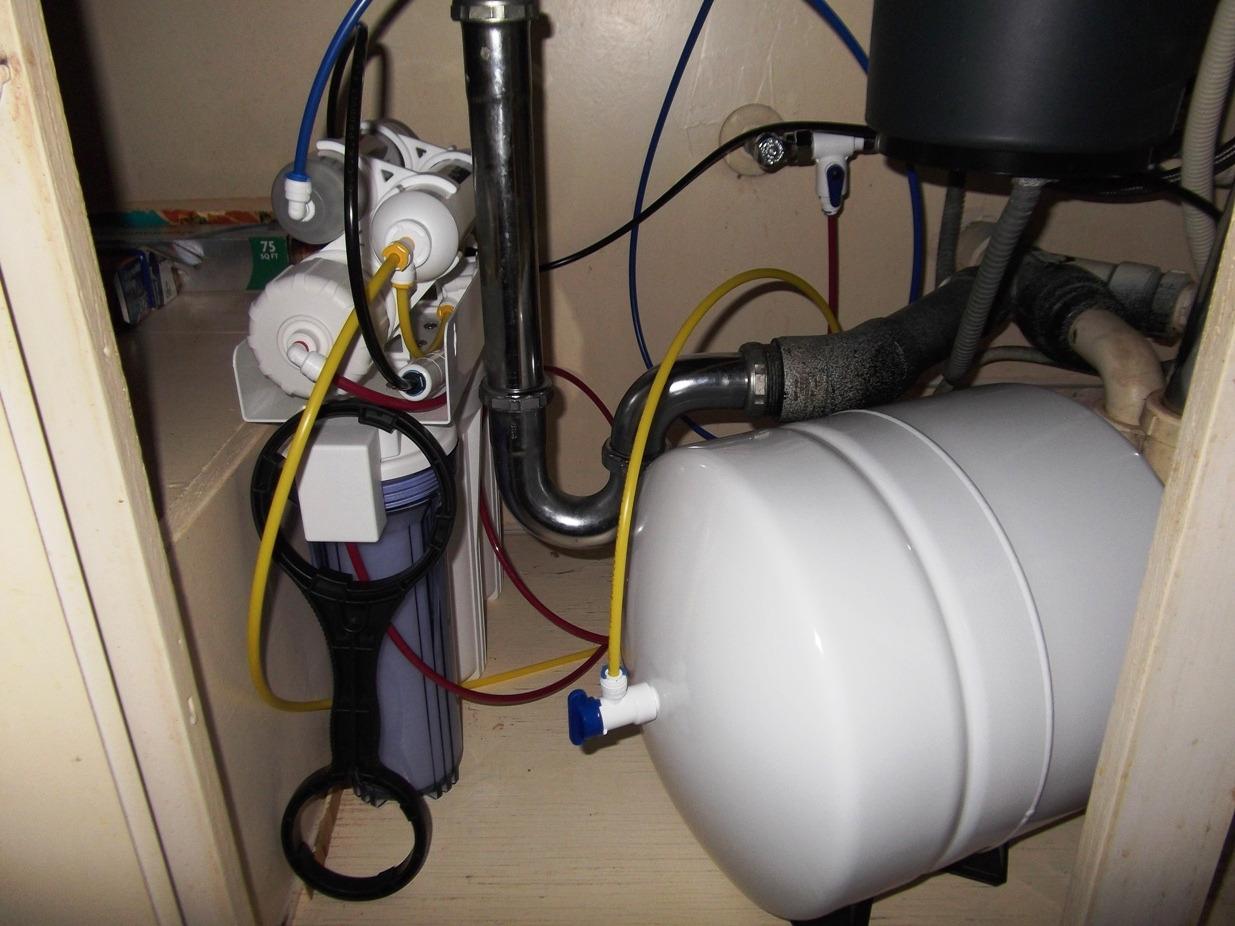
Is it right for a low-pressure or well-water home?
For municipal water at normal pressure, this is a straightforward match. For well water or a house sitting on a low-pressure line, it is usable but not ideal, because a non-pumped membrane relies on incoming pressure to push water through and to keep the brine rejection rate up. If your line pressure is marginal, your realistic choices are a booster pump model or an upstream pre-treatment system.
Well water also changes the pre-filter equation. If you have iron, manganese or sediment above normal municipal levels, the sediment cartridge will load up much faster than the 6-month figure suggests, and owners of any RO system on well water are better off budgeting a 6-month pre-filter change rather than stretching to 12.
Where the money goes after the purchase
The recurring cost is the point at which budget buyers get caught out, because cartridges for a 6-stage system cost more than for a 3-stage one and the alkaline stage adds a fifth replacement item. Over three years, plan on replacing the sediment and carbon blocks roughly twice and the membrane once, and treat the alkaline cartridge as a taste upgrade you can drop if you would rather not pay for it annually.
The counterweight to that is availability. Widely available standard cartridges in 6-month, 1-year, 2-year and 3-year sets mean you are not locked into one seller or one subscription, which is the main cost risk with proprietary tankless systems. If you want the broadest format comparison before you commit, our guide to the best reverse osmosis systems for a kitchen breaks down tankless versus tank-based in more detail.
2. APEC ROES-50: The Cheapest One To Own Over Five Years
APEC Water ROES-50, 5-Stage Under Sink Reverse Osmosis System, 50 GPD
50 GPD
5 stages
40-85 psi
0.03 gpm
6-month filter life
2000 ppm max feed TDS
Pros
- Complete kit with filters/tank/faucet/install kit and manual
- Color-coded quick-connect tubing makes install and servicing fast
- Industry-standard components keep parts competitively priced
- Owners report 5 to 10-plus years of service
- Responsive support for leaks and replacement parts
Cons
- Canister caps can crack if overtightened
- Included faucet has no air gap
- 1/4 inch output is slow when filling large pots
- Five-stage replacement filters are on the pricier side
The APEC ROES-50 is the system that experienced owners name most often when someone asks for the best value in the sub-200 range, and that consensus is why it sits at number two. At 4.5 stars across more than 9,400 reviews with roughly 79% of those at five stars, it has both the volume of real-world data and a consistency of outcomes that most budget units never reach. Multiple owners describe systems still running after a decade with standard replacement parts.
That longevity is the whole economic argument. The five stages remove arsenic, chlorine, lead, fluoride and heavy metals with a claimed reduction of up to 99.99% of impurities, and the certification line reads NSF certified 372 and 58. The parts are industry standard, so when the filters do come due you are buying generic housings and membranes rather than a locked-in proprietary set, and that is where the five-year ownership cost advantage comes from.

Two practical details matter more than the marketing. First, the operating range is 40-85 psi, which is a wide and forgiving window, and the feed water ceiling is 2000 ppm TDS, the highest alongside the pumped iSpring, so it is not fussy about moderately mineralized supply. Second, the maximum flow rate is listed at 0.03 gpm, which sounds alarming and is not, because that is bare-membrane output; the storage tank is what makes it feel usable at the tap.
The quick-connect fittings with color-coded tubing are the detail owners mention most often and they are the reason installation is close to a no-tools job. You connect blue to the cold feed, white to the drain, and the housing caps go on hand-tight plus a quarter turn. The most common install complaint is not the plumbing but the caps: overtighten a canister and the plastic threads can crack, which then leaks under the sink.
The included faucet has no air gap, which means in a flood-prone area you should add a dishwasher-style air gap between the faucet spout and the counter. It is a small add-on and it closes a real backflow path that a code-conscious installer would flag anyway. The 1/4 inch output tubing is also slower than 3/8 inch fast-flow models when you are filling a stockpot, which is a fair trade for the cheapest long-term running cost in the group.

Why owners rate it so highly after five years
The recurring theme in long-running owner reports is that nothing about this system is proprietary. Housings, membranes, tubing and fittings are all standard sizes, so a failed part can be diagnosed from a photo and replaced without waiting on a manufacturer, and support has historically answered leak questions and sent parts quickly. That is a maintenance story rather than a spec story, and it is why the effective cost per gallon stays low even though the filter set for a five-stage system is not the cheapest here.
Filter replacement is recommended every 6 to 24 months depending on feed water, which is a wider window than most listings give. The practical advice from owners is to change on your water rather than the calendar if you can measure TDS, because a membrane that has fouled will show it on a meter before it shows it in the glass.
Where it falls short for some buyers
Fifty gallons per day is genuinely modest. For a single person or a couple who mostly drink water and cook with it, that is plenty, especially with the tank buffering output. For a family of four drinking several glasses a day plus coffee and ice, you will be topping the tank up more often, and at that point a higher-capacity tankless unit is the better fit.
There is also no alkaline or remineralization stage, so the water will taste noticeably flatter than the iSpring RCC7AK-BN. Owners who care about taste add a post-carbon or alkaline cartridge downstream, and a five-stage system has room for it. If you want a fuller picture of how that changes taste and pH, the under-sink drinking water guide covers the remineralization question in detail.
3. Waterdrop G2: Tankless Design Without a Storage Tank
Waterdrop G2 Reverse Osmosis System, 400 GPD Tankless RO Water Filtration
400 GPD
Tankless
0.28 gpm flow
300 ppm max feed TDS
7 stages
1-year warranty
Pros
- Tankless layout frees roughly 70% of under-sink storage space
- Cup of filtered water in about 12 seconds
- Twist-and-pull cartridges swap in about 3 seconds
- Integrated electrical and water circuit reduces leak points
- Airtight housing keeps operating noise low
Cons
- Needs an under-sink electrical outlet and countertop drilling
- 1:1 drain ratio wastes more water than 2:1 systems
- 300 ppm feed TDS ceiling is the lowest here
- Replacement filters are brand-specific
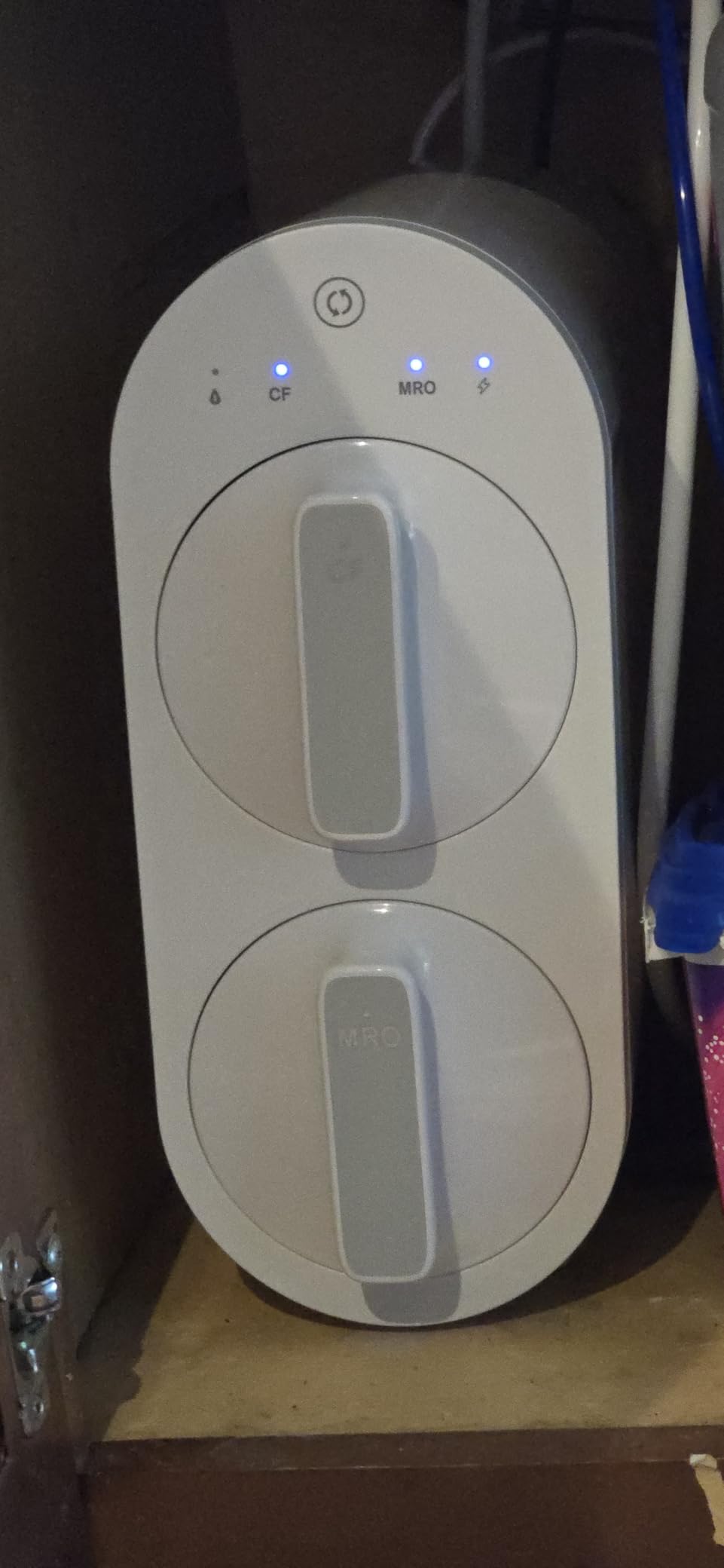
The Waterdrop G2 is the pick for anyone whose sink cabinet is a catch-all for cleaning supplies and cannot spare the footprint of a tank. At 400 gallons per day with a listed flow rate of 0.28 gpm, you get a cup of water in roughly 12 seconds, and you get it from a unit measuring 17.3 by 5.9 by 14 inches with no storage tank at all. Owners consistently point to the freed cabinet space as the deciding factor, not the filtration numbers.
The engineering approach here is the integrated circuit. Rather than running a bundle of tubes and a permeate pump bolted to a frame, the electrical and water circuits are built into one housing, which is why reviewers report fewer leak points than a conventional frame-mounted system. The two included cartridges use a twist-and-pull mount rather than threaded caps, so a change takes about three seconds instead of a minute of careful tightening and a towel.
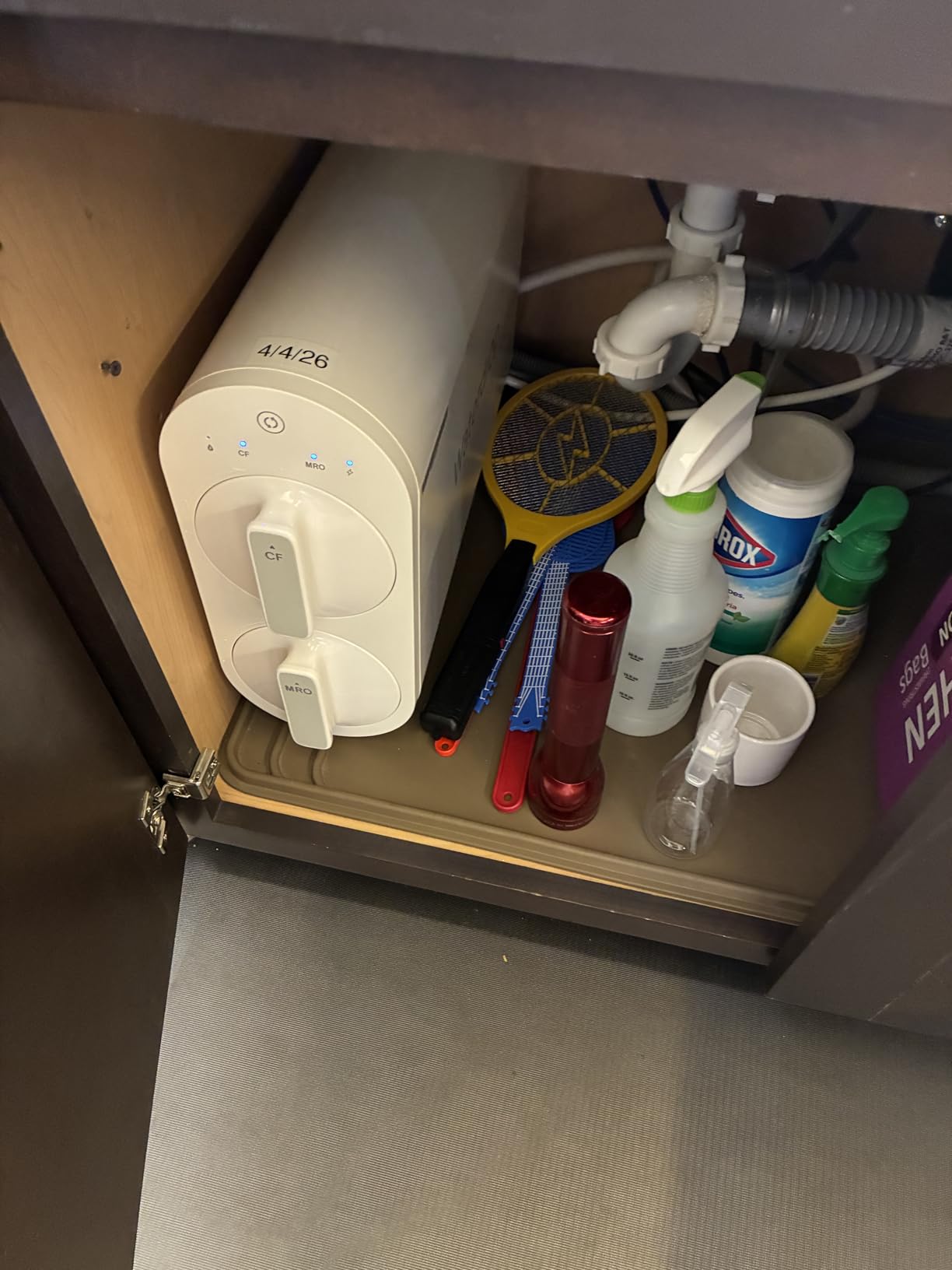
The honest weakness is efficiency. The pure-to-drain ratio is 1:1, meaning for every gallon of filtered water you send one gallon down the drain. Two of the other tankless systems here run at 2:1, so on water-usage grounds this is the thirstiest unit in the group. For most households that is a cost-of-water argument rather than a dealbreaker, but if you are on a well or a metered supply where every gallon counts, it deserves more weight.
The other constraint is the 300 ppm maximum supported feed TDS, the lowest ceiling among these systems. That is comfortably above typical municipal supply but will be tight on a private well or in an area with aggressive groundwater mineralization. Check your feed TDS with a meter before committing, because pushing past the ceiling degrades both membrane performance and the drain ratio. Certification here is NSF/ANSI 372, which covers lead-free materials rather than a full filtration performance claim, so treat the reduction percentages as manufacturer claims rather than certified system performance.
Installation is the other real constraint. You need a plugged-in outlet under the sink and you need to drill the countertop for the mechanical faucet, both of which rule it out of a rental or a cabinet with no power. With two filters preinstalled, most owners report under 30 minutes for the whole job. Our under-sink installation guide covers the drilling step if you have not done it before.
Is a tankless unit actually better than a tank?
Not universally, and this is where a lot of budget advice oversells the format. A tank holds pre-filtered water and delivers it on demand, so your glass fills fast even when the membrane is producing slowly. A tankless unit makes water as you draw it, which means fast flow at the moment of dispensing and no stored water, but also means every drop down the drain during that draw and a higher ongoing electrical draw.
The tank case wins on low-pressure lines, because a tank smooths out a weak feed pressure into usable flow at the tap. The tankless case wins on cabinet space, electricity use for a household that drinks only a few gallons a day, and eliminating one more failure point in the plumbing. If your cabinet is tight, the G2 is the sensible pick; if you have the space and weak pressure, a tank-based unit is cheaper to run and easier to service.
What the proprietary filter decision means for you
The G2CF and G2MRO cartridges are brand-specific, which is the standard trade for a compact tankless unit. It means you compare replacement prices before you buy, because your long-term cost is fixed by whoever makes the cartridge rather than by the generic filter market. Owners do report the cartridges as reasonably priced relative to other tankless systems, but the difference in flexibility versus a standard-housing system like the APEC is real and worth factoring in.
It also means a single-supply risk: if the manufacturer changes the cartridge interface, your existing unit can become harder to service. That has not happened to this generation of the design, but it is the structural argument for standard parts in a long-term purchase. Our general kitchen RO guide covers where standardized housings pay off over a five-year horizon.
4. iSpring RCC7P-AK: Booster Pump Power and the Highest Rating Here
iSpring RCC7P-AK, 6-Stage Reverse Osmosis System Under Sink Alkaline Water Filter and Pump, RO Drinking Water Filtration System, Patented Top-Mounted Faucet Design for Easy Installation
75 GPD
Booster pump
6 stages
2000 ppm max feed TDS
20 lb
1-year warranty on registration
Pros
- Highest average rating in this group at 4.7 with 88% of reviews at five stars
- Built-in electric booster pump holds flow up on low-pressure lines and cuts wastewater
- Sixth alkaline stage raises pH and restores minerals
- Transparent first-stage housing for filter monitoring
- 100-240V 50/60Hz power adapter suits varied setups
Cons
- Heaviest and most complex install here
- needs a powered outlet and more space
- Pump adds a failure point and audible noise
- 18 inch height can crowd a shallow cabinet
This is the highest-rated system in the group, 4.7 stars with 88% of reviews at five stars, and the reason is the built-in electric booster pump. The pump is not a gimmick: it holds membrane performance up when incoming line pressure is weak, and because it drives the brine stream properly it cuts the wastewater volume relative to a passive system operating at the same output. For owners on older homes, well pumps with a long rise, or any line where pressure drops when another fixture runs, that is the difference between a system you enjoy and one you work around.
Owners also single out the sixth alkaline stage, which restores minerals and raises pH versus a plain 5-stage RO output. That is the taste difference people notice immediately, and it is why this model edges out the non-pumped iSpring for anyone who finds flat water unappealing. The reduction claim is up to 99% of over 1,000 contaminants including lead, chlorine, fluoride, arsenic, PFAS and asbestos, with a 2000 ppm feed TDS ceiling that is among the most permissive here.
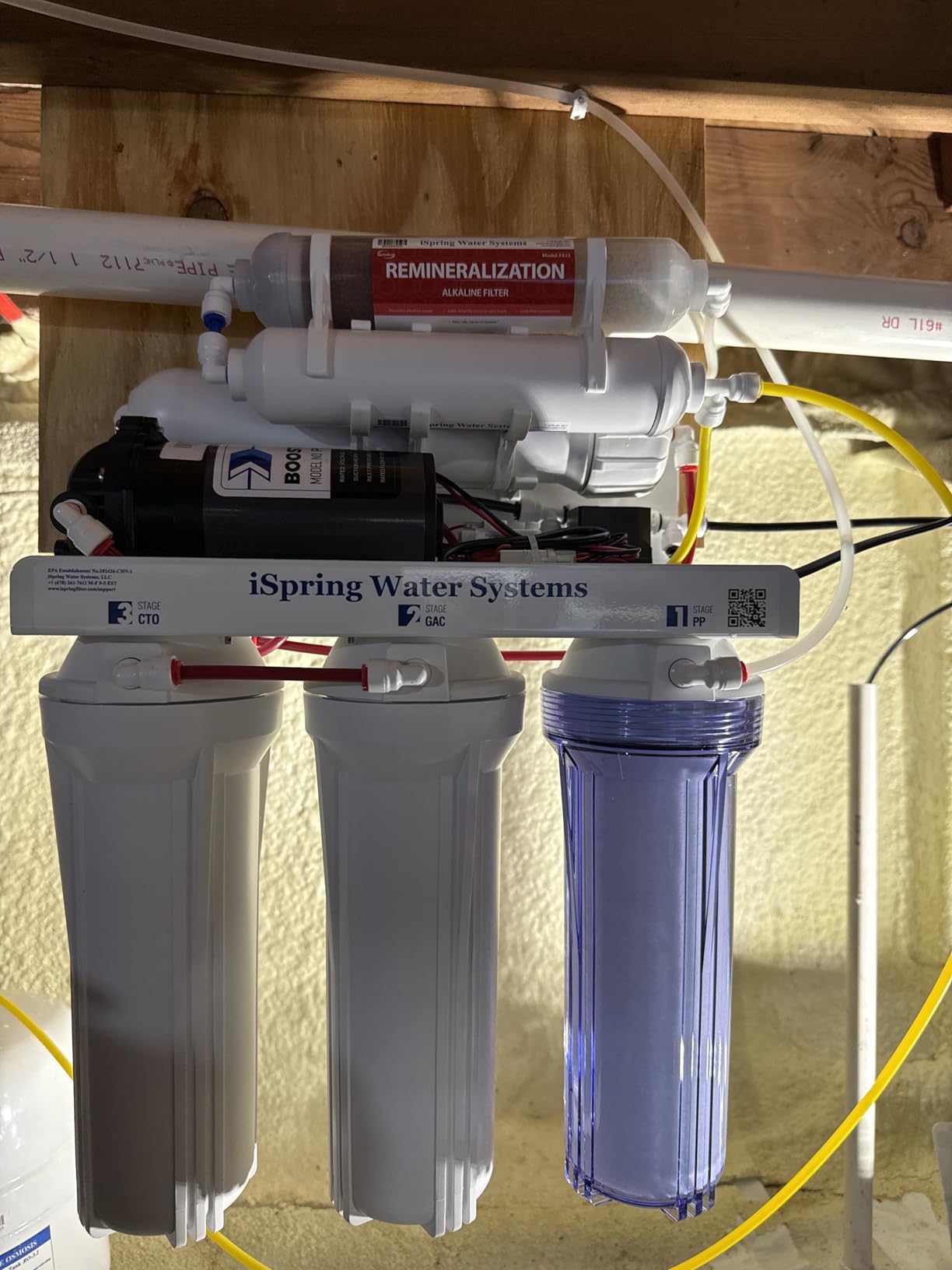
The cost of all that is complexity. At 20 pounds and 18 inches tall, this is a bigger install than any non-pumped tank-based unit, it needs a powered outlet under the sink, and the pump is a moving part that can fail where a passive system has nothing to fail. Reviewers note audible pump noise that the tankless units do not produce to the same degree, and it is the reason this sits at number four rather than higher despite the best rating in the group.
The warranty is a 1-year limited manufacturer warranty extended on registration, alongside lifetime technical support, and the 100-240V 50/60Hz power adapter means it works across household electrical setups without a separate transformer. If you register the unit, that registration is the whole difference between a short warranty and a slightly longer one, and it takes about a minute.
Capacity is 75 gallons per day, the same membrane class as the non-pumped iSpring, so a booster pump does not raise how much water the membrane makes in a day, it raises how reliably you get that water under real household pressure. That distinction matters when comparing spec sheets: gallons per day is a production rating, and the pump influences the delivered result, not the headline number.
Do you need a booster pump at this budget?
You need one if your incoming pressure is at the low end of the 40-85 psi window, if you are on a well with a long or restrictive line, or if you plan to feed a refrigerator ice maker. In those cases the pump is the difference between adequate flow and a frustrating trickle. You probably do not need one on a modern municipal line with good pressure, where a non-pumped system performs close to its rated capacity and leaves you a simpler, quieter, cheaper-to-run install.
The way to check is a five dollar pressure gauge on the cold line, measured with nothing else running. Above roughly 60 psi at the sink, a non-pumped tank-based unit is comfortable. Below that, read the pump-equipped options carefully because they are the ones built for your situation.
How to weigh the pump against the noise and the outlet
Three practical costs come with the pump: a required electrical outlet under the sink, audible noise during production, and one more component that can wear out over a decade. None of those are dealbreakers, but they are the reason this is a conditional recommendation rather than a default one. If your cabinet has no outlet and you are not inclined to add one, the non-pumped iSpring is the same brand in a simpler package.
The alkaline stage is a separate decision from the pump and you can think about it independently. If you mostly drink your water straight, the taste improvement is worth having. If you use your filtered water for coffee, cooking and ice and rarely drink it plain, you can run a non-alkaline bundle and put the money into more pre-filters, which is the trade we would make in a high-volume kitchen.
5. APEC RO-Hi: The Fastest Flow and the Longest Warranty
APEC Water RO-Hi, 5-Stage Under Sink Reverse Osmosis System, 3/8″ Output
90 GPD
3/8 inch fast flow
0.13 gpm
40-85 psi
25 lb
2-year extended coverage
Pros
- 3/8 inch output fills a 32 oz bottle in roughly 13 seconds
- USA-designed and assembled with long-life USA-made filters
- WQA tested and approved for a wide contaminant list
- Owners report very low TDS readings
- Often 3-11 ppm from tap water of 38-157 ppm
- Prompt support that has shipped replacement parts for leaks
Cons
- Bulkiest unit here at 23 by 20 by 12 inches and 25 lb
- Supplied tubing length is short if not mounted directly under the sink
- Some units arrive with a broken fitting or a tank bladder that fails early
- Drain-line sleeve is sized for a 1-inch drain only
- Initial housings often need tightening
The APEC RO-Hi exists to solve one specific complaint that runs through every RO forum thread: the faucet trickles. Its 3/8 inch output fills a 32 ounce bottle in roughly 13 seconds, which is the fastest here by a clear margin, and 90 GPD capacity sits comfortably above the 50 and 75 GPD systems. If you fill a lot of bottles, ice, or cookware, that flow difference is the reason to choose this over a cheaper system.
The contamination story is solid. It is WQA tested and approved for chlorine, taste, odor, VOCs, fluoride, arsenic, lead and more than 1,000 impurities, and it is built with long-life USA-made filters in a system designed and assembled in the USA. Owners report some of the lowest TDS readings in this group, often 3-11 ppm output from tap water testing between 38 and 157 ppm, and the lead-free designer faucet with JG food-grade tubing and JG quick-connect fittings is a considered detail set.
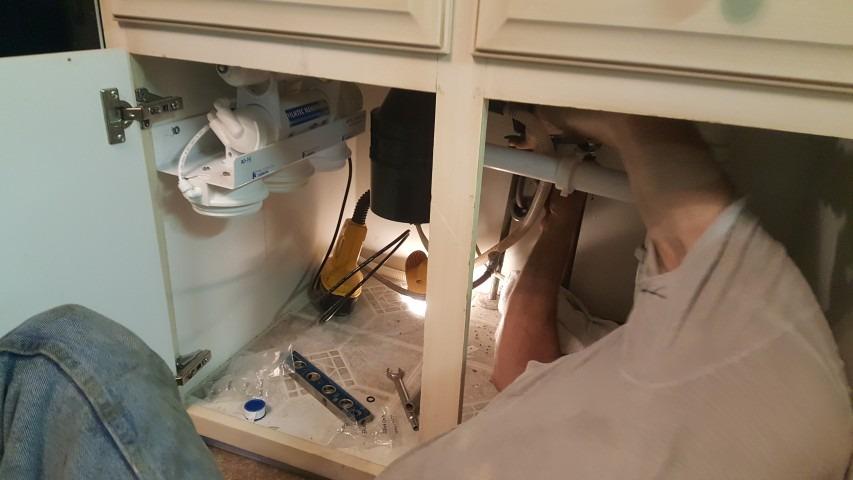
Support is the other standout. APEC offers lifetime support from a certified WQA water specialist and 2 years of extended manufacturer coverage on registration, which is the longest warranty in this roundup. Owners describe support shipping replacement parts for leaks quickly, and that matters on a unit this size where a leak means pulling the whole thing out.
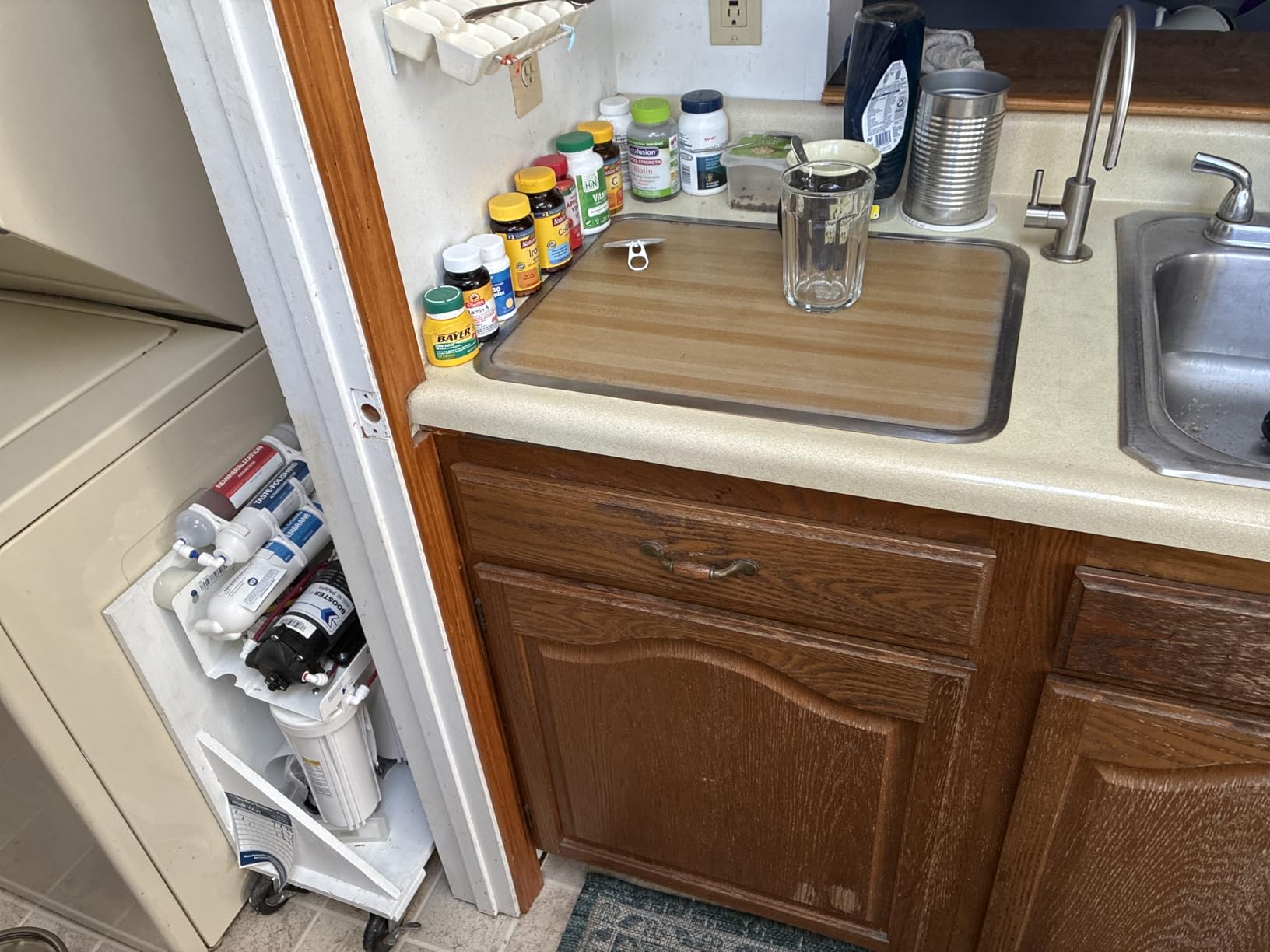
The size is the trade. At 23 by 20 by 12 inches and 25 pounds, this is the bulkiest system here, and several owners report installing it in a basement or utility area rather than under the sink, then running a line up. That is a perfectly reasonable solution, but it changes the install from a one-afternoon job into a slightly more involved one, and the supplied LLDPE tubing length is often insufficient if you move it away from the sink.
Two smaller warnings from owner reports: some units arrive with a broken fitting or a tank whose air bladder fails within weeks, and the drain-line sleeve is sized for a 1-inch drain only. The initial housings commonly need a second tightening pass after the system has pressurized and settled, which is normal for hand-assembled housings but worth knowing before you assume a leak is a defect.
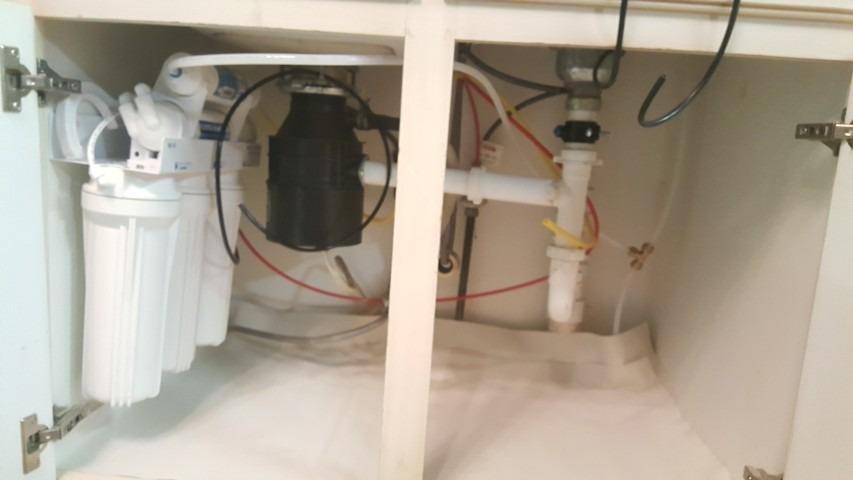
Is the size a real problem in an average kitchen?
It depends on your cabinet and on where you put it. In a typical 30-inch-wide sink cabinet with a standard storage tank, the RO-Hi is tight but workable if you mount it toward the back and route the faucet line. In a narrow cabinet or one with a thick waste trap and a disposer, it becomes a genuine constraint. Several owners solved it by relocating the system to a basement or laundry area, which also has the side benefit of freeing the sink cabinet entirely.
If you rent, relocating is usually not available, and drilling a faucet hole into a countertop you do not own is a conversation with a landlord. In that situation a slim tankless unit or the standard 50 GPD system is a more realistic fit for your situation.
What the warranty and the flow rate are really worth
Flow rate is a daily-use quality of life metric that no spec sheet captures well. If you fill a pitcher, a kettle and a couple of bottles every morning, moving from a 0.03 gpm membrane behind a tank to a 0.13 gpm output with 3/8 inch tubing changes how the system feels in your kitchen, and that difference shows up in how often you actually use your filtered water.
The two-year registered coverage is a real risk reduction on a unit with more joints and more tubing than a slim system. The registration step is worth doing on any pick in this list, and especially on this one, because the long tail of ownership is where a warranty earns its value. Over a five-year horizon the warranty and the flow rate together are the strongest case here for choosing a larger, more serviceable system over a smaller cheaper one.
6. Waterdrop G5P500A: 500 GPD With a 2:1 Drain Ratio
Waterdrop G5P500A Reverse Osmosis System, 8-Stage RO Filtration, Alkaline
500 GPD
8 stages
1.31 L/min flow
2:1 pure-to-drain
500 ppm max feed TDS
21.4 lb
Pros
- Highest capacity in this group at 500 GPD
- 2:1 pure-to-drain ratio generates far more clean water per gallon used
- NSF/ANSI 58 and NSF/ANSI 372 dual certification
- Alkaline mineralization adds Ca2/Mg2+/Na+ and K+ back
- Tankless layout frees up to 70% of cabinet space
- Can feed ice makers and refrigerators with the XT add-on
Cons
- Corded electric power is required
- 500 ppm feed TDS ceiling is moderate for well or heavily mineralized supply
- Faucet installation requires drilling the countertop
- Brand-specific cartridges limit third-party sourcing
Capacity is the headline here and it is a real jump. At 500 gallons per day with a flow rate of 1.31 liters per minute, a 6 ounce cup fills in about 8 seconds, and the 2:1 pure-to-drain ratio means you get roughly 400% more clean water per gallon of supply than a 1:1 system. For a large household, or anyone feeding a refrigerator ice maker, that combination is the difference between an adequate system and one you stop thinking about.
It is also one of only two systems here carrying both NSF/ANSI 58 and NSF/ANSI 372, which is the certification combination you want: 58 for filtration performance on dissolved contaminants and 372 for lead-free materials in contact with drinking water. The 8-stage configuration pairs a 0.0001 micron RO membrane with alkaline mineralization that adds calcium, magnesium, sodium and potassium back into the water, and the reduction list covers PFOA, PFOS, chlorine, lead, fluoride and heavy metals.
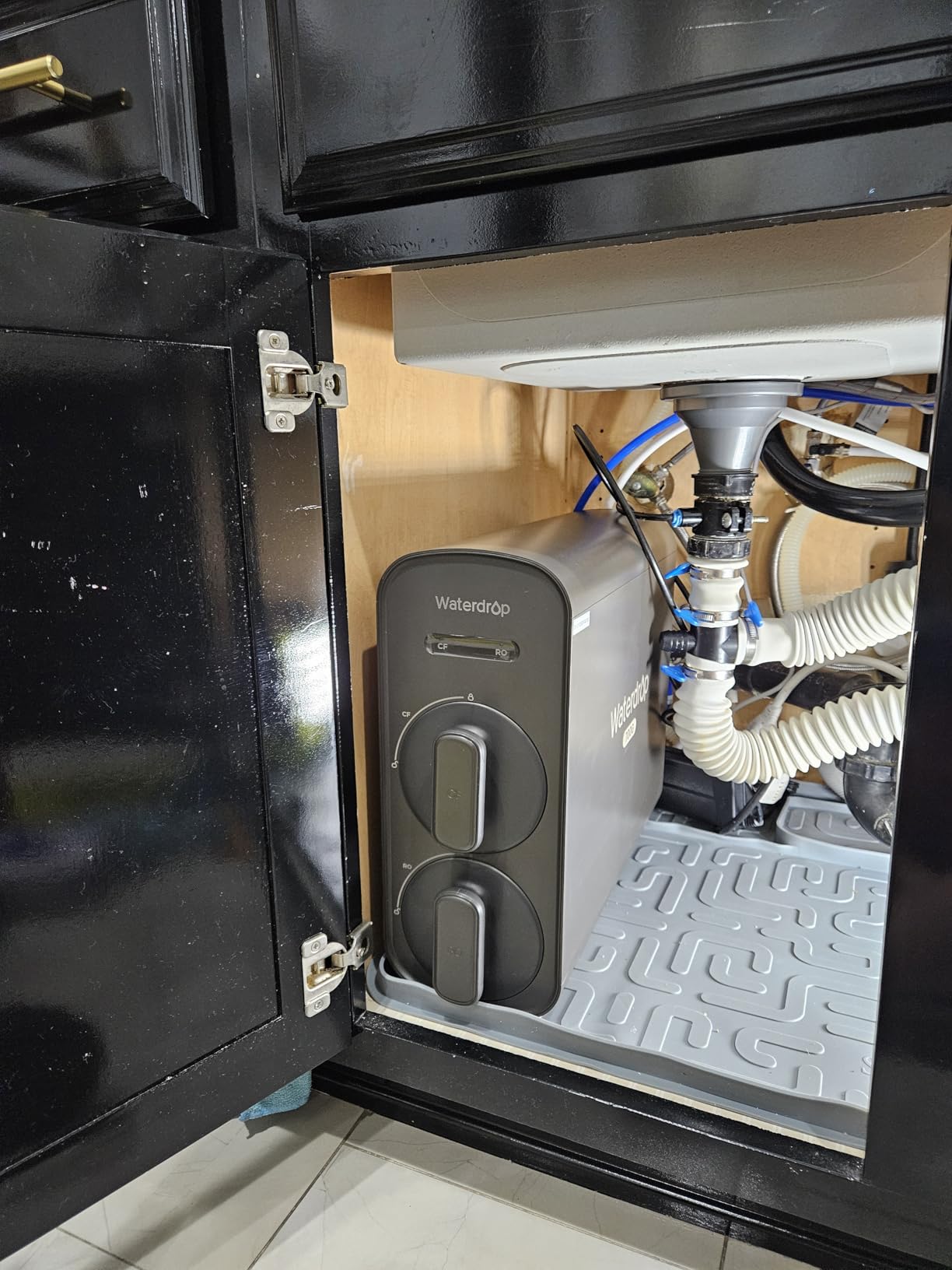
The two-to-one efficiency ratio is the most underappreciated feature in this roundup. It is the number that determines your actual water bill impact and, on a well or metered supply, it is the number that matters most. Reviewers consistently mention the combination of high flow and water-saving ratio as the reason they are satisfied, and 81% of reviews sit at five stars despite a short review history.
What you give up is flexibility on the power and drilling front. Corded electric power is required, the faucet needs a drilled countertop hole, and the cartridge set is brand-specific, so the long-term cost is set by one manufacturer. The 500 ppm feed TDS ceiling is a moderate limit, fine for municipal supply and for many wells, but tighter than the 2000 ppm allowance of the two APEC systems and the pumped iSpring, so a high-mineral well deserves a measurement before you buy.
It ranks high in its category despite the shorter review history, which tells you something about demand for high-capacity tankless units in this band. The dimensions are 16.69 by 5.69 by 13.9 inches at 21.4 pounds, a slim vertical profile, and the one-year manufacturer warranty is on the short side for the price of the hardware involved.
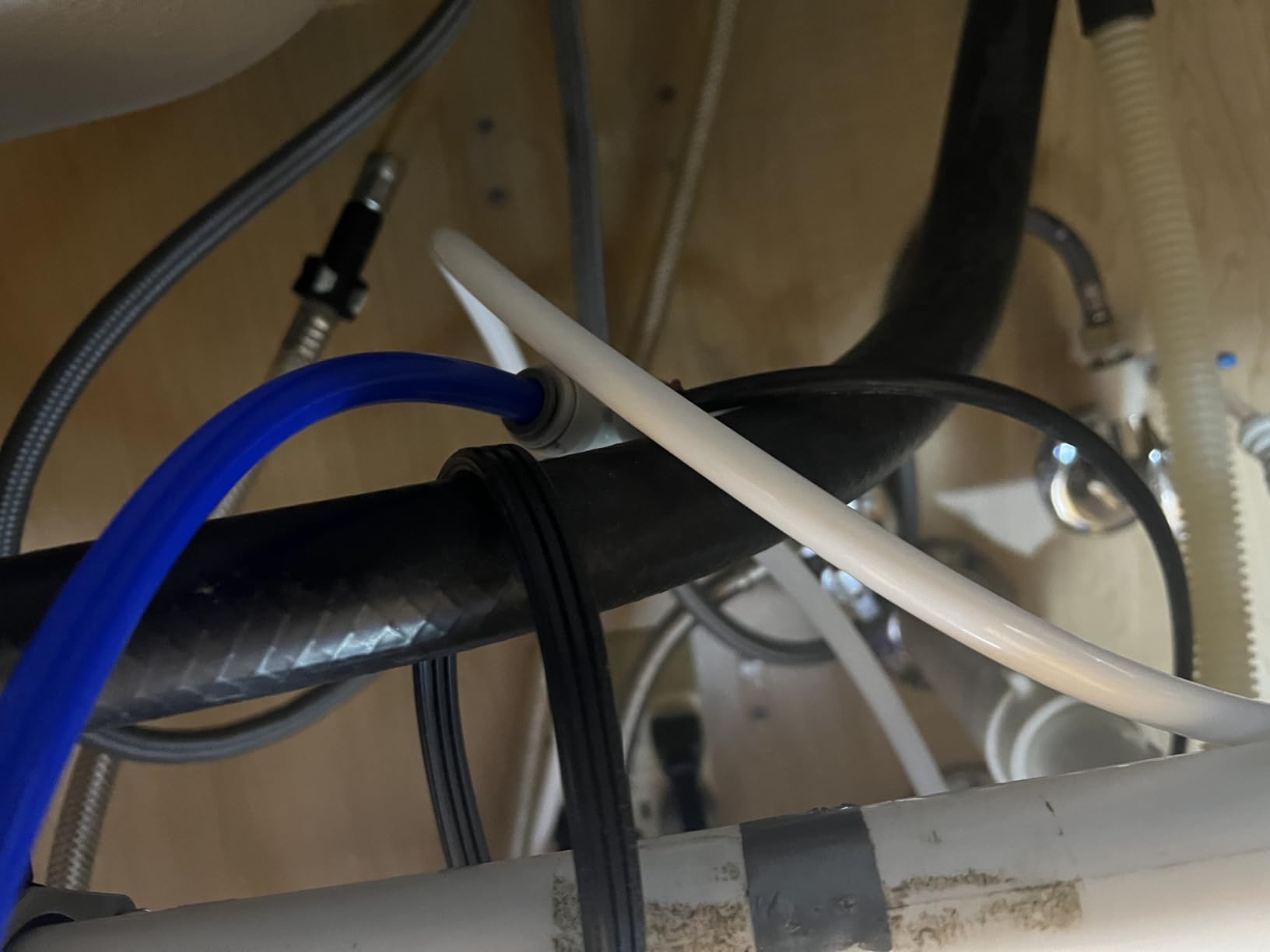
Can it feed a refrigerator ice maker?
Yes, with the right add-on. This is the one system in the group that explicitly supports appliance feed through the Waterdrop XT connection, and the practical reason it works is capacity. A refrigerator ice maker can consume several gallons a day on its own, and running that draw off a 50 or 75 GPD membrane means the tank is empty by the evening and the ice cycle starves. At 500 GPD you have the production headroom, and the 2:1 ratio keeps the drain-side demand reasonable while you do it.
Two caveats. The feed line needs a suitable fitting and enough clearance behind the appliance, and you should still keep a primary filter ahead of the fridge if your supply line is copper with lead solder, because the RO is doing the heavy lifting but the short connecting run is not filtered. Several buyers in the reviews treat the fridge feed as the reason they moved up from a smaller unit.
Who should spend the money on capacity here?
Households of four or more who drink filtered water throughout the day, anyone running an ice maker, and anyone who wants to stop rationing the faucet. The capacity is only useful if you actually consume the water, so for a single person drinking one glass a day, 500 GPD is over-specified and the money is better spent on a system with lower replacement costs.
The efficiency ratio is the sleeper argument. Across a year of normal household drinking and cooking, going from a 1:1 system to a 2:1 system halves the water going down the drain for the same purified output, and that is a permanent operational saving rather than a one-time purchase difference. It is also the reason to check the 500 ppm ceiling first: efficiency gains are pointless if your feed water exceeds what the system is rated to handle.
7. GeekPure RO5: Twelve Filter Pieces in the Box
Geekpure 5 Stage Reverse Osmosis RO Drinking Water Filter System-75 GPD
75 GPD at 60 psi
5 stages
2.8 gallon tank
12 filter pieces included
40-100 psi
1-year warranty
Pros
- Lowest entry cost in this group with 12 filter pieces in the box
- All filters and parts are universal standard size and easy to source
- 75 GPD with a compact 2.8 gallon tank that fits most cabinets
- Quick push fittings with color-coded tubing plus install videos
- 20-plus years of manufacturer experience with 24/7 technical support
Cons
- Smallest 2.8 gallon storage tank delivers less per draw
- Lowest average rating here at 4.4 with a wider spread of one-star reviews
- 28 lb listed weight and 18.1 inch height make it one of the bulkier packages
The GeekPure RO5 is the price-floor pick, and the reason it is interesting is the box contents. Twelve filter pieces come in the package, seven of them spares, which means most owners will not buy another cartridge for a year or more after the install. On a per-year ownership basis that is a genuinely low number, and combined with universal standard parts it is the cheapest long-term proposition in this roundup.
The specification is respectable for the money. Five-stage filtration to 0.0001 micron, 75 GPD at 60 psi, a 2.8 gallon storage tank, and a claimed reduction of arsenic, lead, fluoride, cadmium and heavy metals. The operating window is 40-100 psi, the widest pressure tolerance here, and feed water is rated for pH from 3.0 to 11.0 and up to 1000 ppm TDS with free chlorine under 0.1 ppm, which covers more edge cases than most systems in the group.
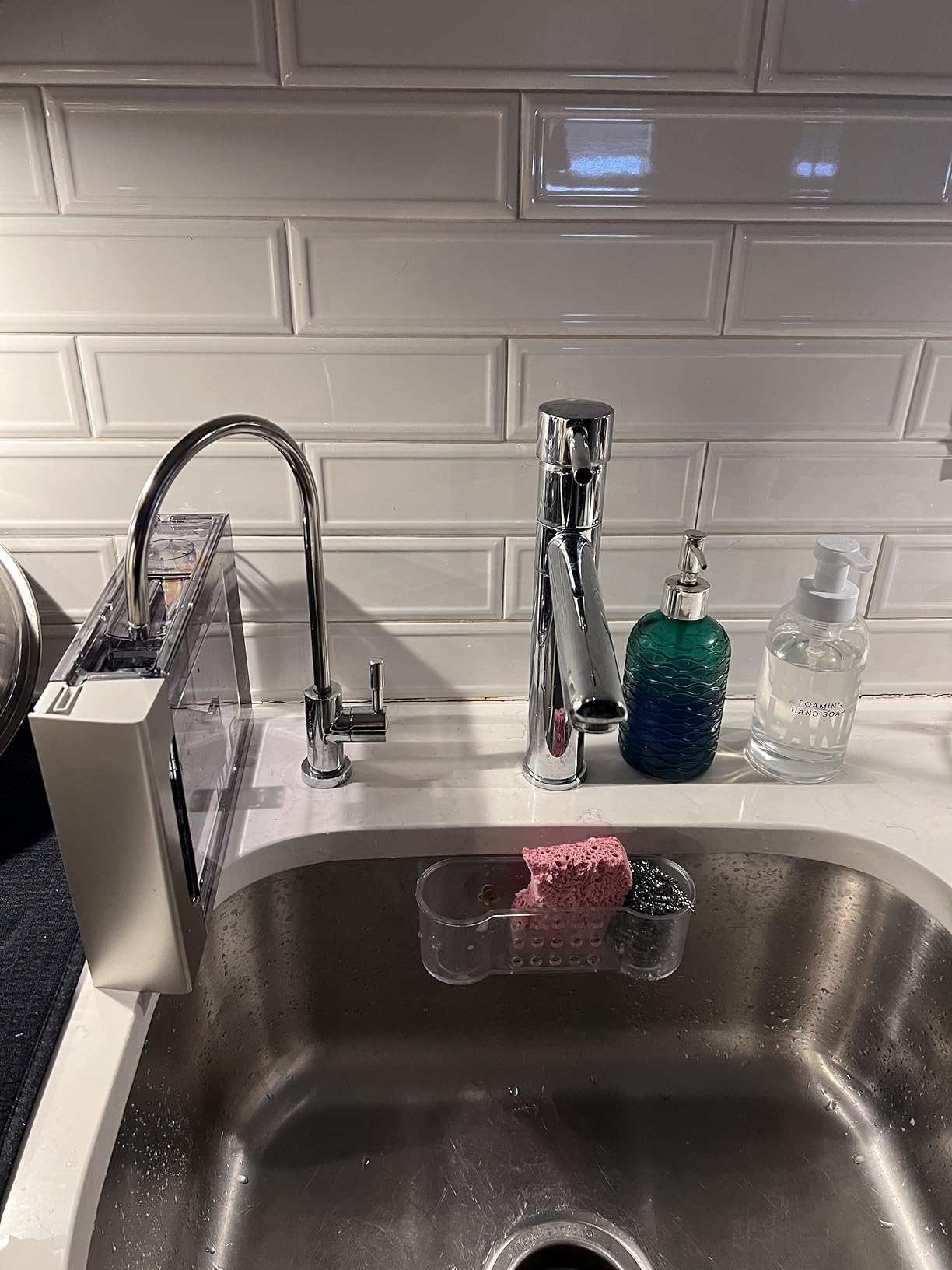
Filter service intervals are published more clearly than most: prefilter about 1 year, RO membrane 2-3 years, system service life 3-5 years. That transparency matters for anyone modeling a five-year ownership cost, and combined with the universal sizing it is the strongest long-run value argument on this list. Quick push fittings, color-coded tubing and install videos make the setup a straightforward DIY job.
It is also the lowest-rated system here at 4.4, with 73% of reviews at five stars and the largest share of one-star reviews in the group. The specific complaints cluster around the 2.8 gallon tank, which is the smallest here and delivers noticeably less per draw than a 5 gallon tank, the requirement to discard the first two tankfuls, and occasional installation and quality-control issues. The listed 28 pound weight and 18.1 inch height make it one of the bulkier packages despite the small tank.
That rating gap is the honest reason it sits at seven rather than higher. It is not a bad system, it is a system with more variance in owner experience, and the variance clusters in exactly the places you feel daily: how much water comes out per draw and how the install goes the first time.
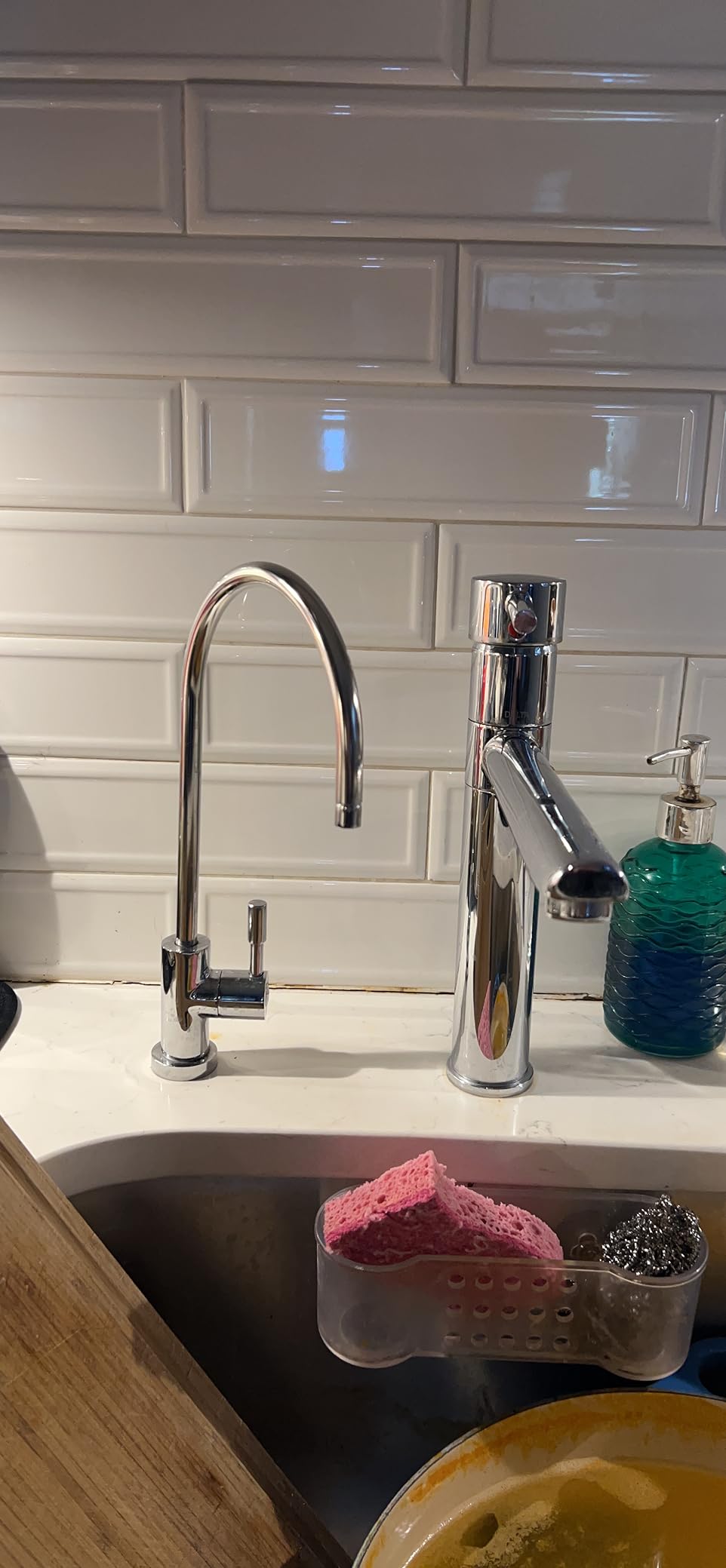
Is the 2.8 gallon tank a real limitation?
For a one or two person household, no. It fills a couple of glasses and a pot of rice water before the flow drops, and because the tank is small it refills faster than a 5 gallon tank would. For a family of four, it becomes the most noticeable difference in the system, because you go from one full tank per day to refilling two or three times, and each refill at 75 GPD production takes real time.
The other thing to know is the first two tankfuls. New membranes shed fine particles and off-gassing for the first cycles, and the standard practice is to run the tap until the TDS reading on a meter stabilizes and then flush the tank twice before drinking. Skipping that step is the source of most early complaints about taste, not the filter itself.
When the twelve-filter bundle is the deciding factor
It is the deciding factor when you are installing in a rental, a rental house with a fridge you will not stay in long, or anywhere the future is uncertain. A bundle of 12 pieces means you are not tracking a replacement schedule in year one, and the standard sizing means year two purchases are ordinary generic cartridges rather than a brand order. That combination makes the effective first-year cost of ownership very low.
It is worth weighing against the 3-5 year service life claim, which is short compared to units where owners report a decade. Treat the 3-5 year figure as the point at which you replace the whole system rather than just the filters, and budget accordingly. If you want a like-for-like read on ownership cost across formats, we compared the running costs in our kitchen reverse osmosis guide.
8. Waterdrop T3-C: The Lightest Tankless Body and the Simplest Filter Change
Waterdrop T3-C RO Water Filtration System, Plug-in Required, 450 GPD
450 GPD
8 stages
2:1 pure-to-drain
8.89 kg
6/12/24 month filter life
wall-mountable
Pros
- Tankless body can sit under the sink or mount on the wall
- freeing up to 70% of cabinet space
- 450 GPD steady flow with a 2:1 pure-to-drain ratio
- Smart filter-replacement alerts with an all-in-one cartridge that swaps in seconds
- Continuous automatic flushing and an LED status light
- Long filter intervals at 6/12 and 24 months
- Lightest unit in this group at 8.89 kg
Cons
- Requires a plugged-in electrical connection that many sink cabinets lack
- Faucet installation requires drilling the countertop
- NSF/ANSI 372 covers lead-free materials rather than full filtration performance
- Brand-specific all-in-one cartridge limits third-party sourcing
The T3-C is the one to consider if you want a tankless system but not a full-height tankless tower. At 8.89 kg it is the lightest body here, and because it can be installed under-sink or wall-mounted you can put it outside the cabinet entirely if space is tight. The 450 GPD rating with a 2:1 pure-to-drain ratio gives you the same efficiency advantage as the higher-capacity G5P500A in a smaller package.
The feature that owners single out is maintenance. There is a single all-in-one cartridge that changes in seconds rather than three separate housings, an LED status light, continuous automatic flushing, and smart filter-replacement alerts so you are not counting months. Published service intervals are 6 months for the CF filter, 12 months for the CB filter and 24 months for the RO filter, and 78% of reviews sit at five stars.
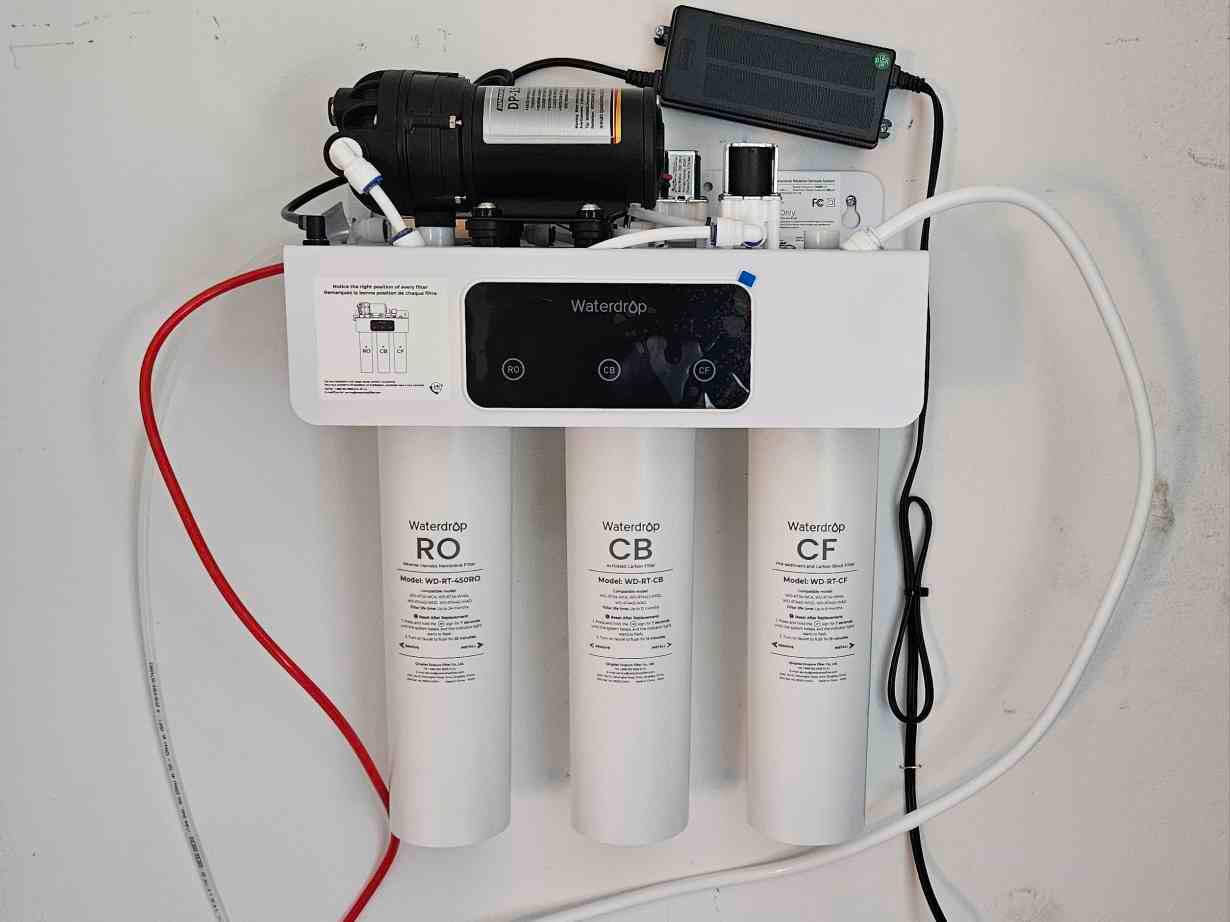
Filtration is 8-stage with a 0.0001 micron RO membrane, reducing heavy metals, chlorine, PFOA and PFOS, and the unit is third-party laboratory tested. The one certification detail to read carefully is NSF/ANSI 372: that standard certifies lead-free materials, not contaminant reduction performance. If performance certification is the deciding factor for you, this system does not carry NSF/ANSI 58 and you should weight it accordingly against the APEC and iSpring options.
Auto-flush is a quiet but real feature. Continuous flushing keeps the membrane wet between uses, reduces the first-draw taste problem that tank owners complain about, and extends membrane life in a way that matters most in a tankless unit with no stored water to draw down first. In a group where slow first-draw water is a common complaint, that is worth more than it looks.
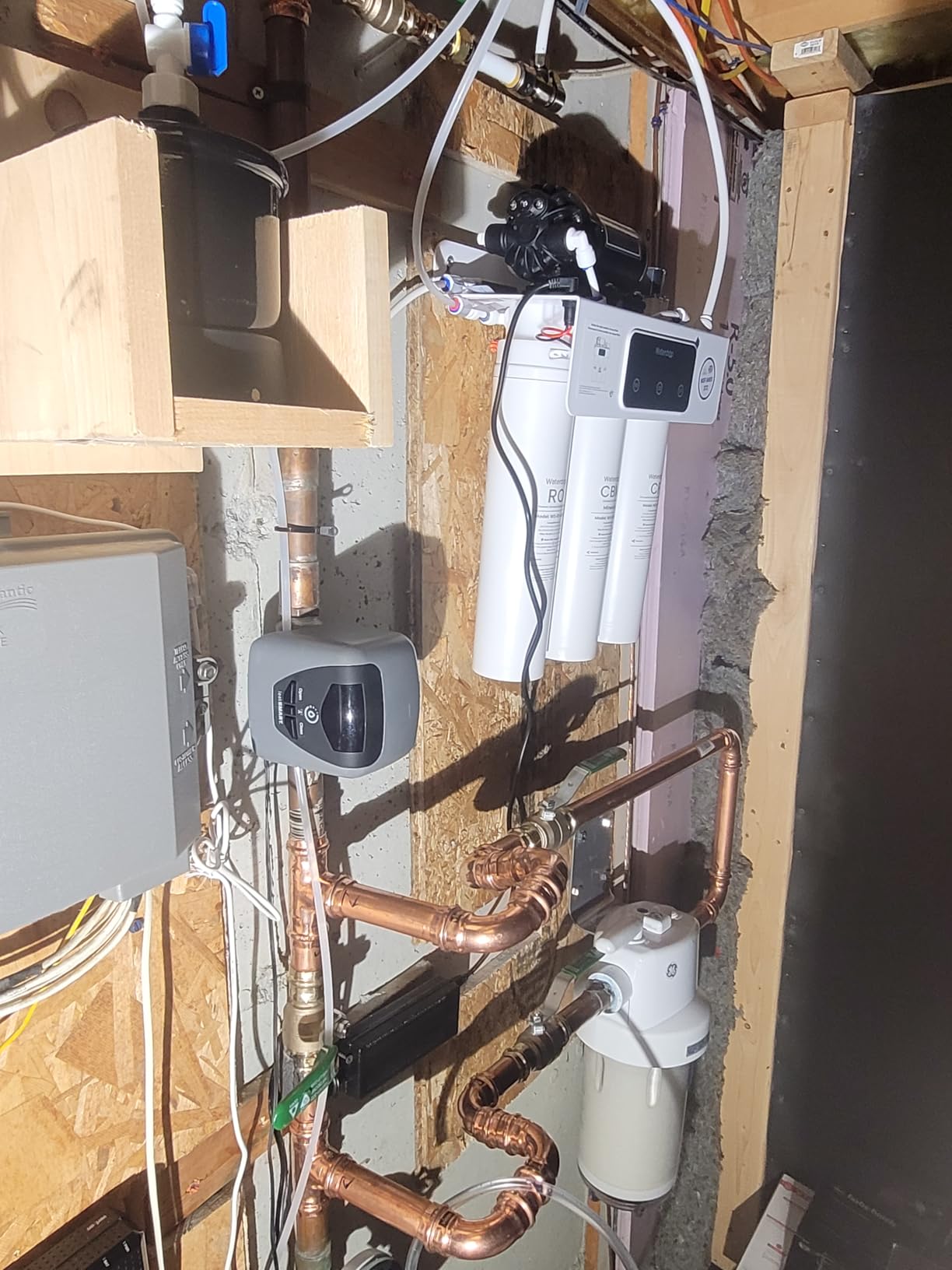
The mounting flexibility is the practical differentiator. Under-sink it clears the cabinet floor, and wall-mounted it moves the whole system out of the cabinet entirely, which is a genuine solve for a small or awkward sink base. The trade is the requirement for a plugged-in electrical connection and a drilled countertop, both of which are the same constraints as the other two tankless systems here.
Does it matter that the certification covers materials and not filtration?
It matters differently depending on your water. If your concern is lead from old solder and general materials safety, NSF/ANSI 372 is a meaningful and respected certification and the RO membrane does the filtration work in practice. If your concern is documented reduction of specific contaminants at measured levels, you want NSF/ANSI 58 on the system, and this unit does not carry it.
Budget buyers often skip this distinction. The practical version is: check the certification standard number in the public directory rather than trusting a marketing phrase, and know that a laboratory test report is evidence but not certification. Our buying guide below walks through how to run that check yourself in a few minutes.
Is one all-in-one cartridge better than separate housings?
For convenience and for total cost, yes. One cartridge means one purchase, one seal, one change and no chance of cross-threading the wrong housing, and the published intervals mean you are replacing one item every 6 months rather than juggling a schedule across three components. It also concentrates failure: when that one cartridge expires, you replace everything at once.
For flexibility, no. A single proprietary cartridge locks your ongoing cost to one manufacturer, and there is no way to substitute a generic equivalent. Separate-housing systems let you replace a carbon block cheaply and keep a membrane for three years, which spreads cost more evenly. The right answer depends on whether you value doing maintenance in 30 seconds or spending less over ten years, and our under-sink guide covers that trade in more detail.
Buying Guide: What Actually Matters at This Budget
At this price ceiling, the differences that matter are boring and specific: how the certification is scoped, how many gallons per day the membrane actually produces at your pressure, what the filters cost on a five-year view, and whether your cabinet has the space, power and plumbing the format requires. Everything else is feature copy. Here is how to read the spec sheet and the certification line without being misled.
Certification standards decoded: 42, 53, 58, 372 and 401
NSF/ANSI 58 is the one that matters most, and it certifies reverse osmosis for total dissolved solids reduction, which is the broad performance claim covering dissolved metals and many organic contaminants. Look for it on the system, not just on the membrane component. NSF/ANSI 42 covers aesthetic claims like taste, odor and chlorine, and it is a much lower bar, so a system advertising 42 only is telling you it improves taste but makes no certified contaminant-reduction claim. NSF/ANSI 53 certifies health-related contaminant reduction for filters that are not reverse osmosis, which is why it shows up on carbon and sediment products competing for the same shelf.
NSF/ANSI 372 is a materials standard meaning lead-free, and it is genuinely valuable but it certifies construction, not filtration performance. A tankless system can carry 372 alone and still be a good filter, but you should not read that number as a contaminant-reduction guarantee. NSF/ANSI 401 covers emerging contaminants, and it is rare in this budget tier. WQA is a certification body whose Gold Seal can cover a single narrow claim such as lead-free design, so a Gold Seal badge on its own does not tell you what was tested. IAPMO R&T is another recognized third-party certifier, and a genuine listing in a public directory is what separates a real claim from a logo.
You can verify any of these yourself in a few minutes. Search the model number in the IAPMO or NSF product directories, confirm the standard number matches the claim, and check whether the listing covers the system or only a component. If a brand says laboratory tested with no standard number and no directory entry, treat the reduction percentages as unverified claims. That check costs nothing and eliminates most of the marketing noise in this category.
Tank-based versus tankless versus countertop at this budget
Tank-based under-sink is the value format and it dominates this list. A storage tank buffers production, so you get usable flow at the tap regardless of membrane output, it works without electricity, and it uses standard parts. The costs are cabinet space and a small loss of freshness between draws, which is why owners of tank systems occasionally notice a flat first glass after the system has been idle.
Tankless under-sink produces on demand, which frees roughly 70% of the cabinet, eliminates stored water, and pairs well with a wall-mounted install. The costs are a required electrical outlet, a drilled countertop, proprietary cartridges, and a pure-to-drain ratio that is either 1:1 or 2:1 depending on the model. Tankless also carries pump failure as a category risk, since a pressurized system with a permeate pump has a moving part that a passive system does not.
Countertop units barely exist in this band, and that is worth stating plainly rather than pretending otherwise. The mainstream countertop category starts well above this ceiling, which is why none appears in the picks. If you need a countertop unit specifically, you are stretching past this guide’s budget, and our broader kitchen reverse osmosis guide covers that format properly. For an apartment or a rental, an under-sink system with a faucet diverter on the cold line is the realistic substitute that avoids drilling anything.
Match the format to the constraint rather than the spec. Tight cabinet means tankless. No outlet means tank-based. Well or low pressure means pumped tank-based. Large household or an ice maker means high-capacity tankless with a 2:1 ratio. Getting that match right matters more than any single number in the table.
Remineralization and why budget RO water tastes flat
Reverse osmosis removes dissolved solids, and dissolved solids are most of what makes water taste like water. Budget systems without a post-treatment stage therefore produce water that tastes flat, which is the single most repeated complaint in owner feedback across this entire group. It is not a defect and it does not mean the filtration failed, it is the membrane working as designed with nothing added back afterward.
Remineralization cartridges use calcite or a similar mineral media to add calcium, magnesium and sometimes sodium and potassium back into the water, and they raise the pH above neutral, which most people perceive as a cleaner, less acidic taste. Three of the systems here do this natively, the iSpring RCC7AK-BN and RCC7P-AK with an alkaline sixth stage and the Waterdrop G5P500A with alkaline mineralization. The others can accept an aftermarket post-carbon or alkaline cartridge downstream if flat water bothers you.
One caution from the testing community: some remineralization cartridges leach more than others, and adding minerals is a real trade rather than a free improvement. If you plan to drink a lot of water straight and want the minerals, buy the alkaline version. If you mostly cook and make coffee with it, skip it and spend the money on a second year of pre-filters.
Total cost of ownership over three and five years
Upfront cost is the least informative number in this category. The useful figure is the sum of the system cost plus every replacement cartridge for the number of years you plan to own it, and the reason is the 6 to 18 month cadence on pre-filters and carbon blocks, with membranes commonly lasting two to three years.
A rough model, using the published intervals rather than specific prices: a 3-stage or 5-stage tank system with standard parts lands lowest on five-year ownership because the cartridges are generic and the intervals are long. A 6-stage system costs more per filter set because the alkaline cartridge is an extra line item, offset by better taste. A tankless system with proprietary cartridges is the most expensive over five years not because the filters are bad but because you buy them from one supplier at whatever they charge. The unit with a twelve-piece bundle, the GeekPure RO5, has the lowest first two years by a wide margin and the highest variance after that.
The two things that move this number most are cartridge authenticity and the efficiency ratio. Buying a genuine filter set from an authorized source protects both the membrane and your warranty, and a 2:1 system halves the drain water per gallon of output, which lowers both your water bill and the strain on your drain line. Efficiency is a running cost that compounds, and at this budget most buyers ignore it entirely.
Installation reality check for under-sink RO
Installing an under-sink system yourself is a normal Saturday job for anyone comfortable with a screwdriver and adjustable wrench, and the quick-connect systems here make it genuinely approachable. There are two drilling steps that scare first-timers, and both are avoidable with planning.
The first is the drain line. You need roughly a quarter-inch hole in the drain pipe for the brine line, and the correct tool is a split-point or hollow-center drill bit started at low speed with steady pressure to avoid cracking the plastic. The second is the faucet hole, which for most of these units is a small drilled hole rather than the 1.25 inch hole a full-size fixture needs, and the faucet stem has a thickness limit that a thick stone countertop can exceed. Measure twice, and if you are unsure about the countertop, drill the drain and use a faucet diverter on the cold-water line instead of touching the counter at all.
Budget ten minutes of leak checking after the first fill, and expect to hand-tighten a housing cap a quarter turn after the system has pressurized. Leaks at the faucet neck and around the housing caps are the most common install issues in this category, and both are fixable with a reseat and a slightly firmer hand rather than tools. If you have never plumbed anything and your supply line is old, a plumber is cheaper than a countertop repair, and we would rather say that than have you learn it the expensive way. If you want the full walkthrough, our under-sink installation guide has the step-by-step version.
Well water, hard water and arsenic
If you are on a well, do not buy an RO system before you know what is in your water. A panel from your local health department is the cheapest and most useful first step, and a TDS meter tells you the dissolved load even if it does not identify the specific contaminant. Hard water, iron and manganese change the pre-filter equation entirely, because those load the sediment cartridge far faster than a municipal supply would.
Arsenic deserves a specific note because it is a frequent well contaminant that RO does reduce, provided the membrane is maintained. The system claim matters less than whether you keep the pre-filters and membrane on schedule, since a fouled membrane loses rejection rate long before it loses flow, and a fouled membrane is exactly when arsenic slips through. Testing your water after installation with a certified lab, not just a TDS meter, is the responsible step for anyone on a well with known arsenic.
For hard water specifically, an RO will produce soft water at the tap and leave the hardness in the brine going down the drain, which is why the drain line matters and why you should avoid a countertop gravity unit in a hard-water house. If iron is present, an iron prefilter ahead of the RO protects the membrane and is a cheaper repair than replacing a membrane that has been scaled or fouled. Check the feed TDS ceiling of whichever system you choose against your measured number, since the range here spans 300 to 2000 ppm.
Buying safely on marketplace listings
The most common problems in this category are not filtration problems. They are listing problems: marketplace sellers with no authorization, replacement filter sets that are not the genuine article, and inflated reference prices that make a listing look like a discount. All three are avoidable with a few minutes of checking.
Check that the listing is sold by the brand or an authorized reseller, not a random marketplace storefront with a nearly identical title. On replacement filters, the counterfeit risk is real, and a non-genuine carbon block or membrane can reduce both the filtration and the warranty coverage. The single most useful habit is to register your system with the manufacturer, because registration is what activates extended coverage on several systems here and it gives you a direct line if a genuine part later fails.
One habit worth building in: measure your TDS at install, again after three months, and once a year after that. A drop in rejection or a rise in output TDS is your earliest signal that a membrane is fouling, and it arrives months before the water tastes different. Every system on this list publishes replacement intervals, and those intervals assume you are running reasonably clean feed water and actually changing the pre-filters on time. Related budget roundups like our microscope picks under the same ceiling follow the same rule: filter the claims against the certification number, not the badge.
Frequently Asked Questions
What is the best and cheapest reverse osmosis system?
The best overall in this price tier is the iSpring RCC7AK-BN, because it is certified for the whole system under NSF/ANSI 58, includes an alkaline remineralization stage, and carries the largest owner base of any system here. The cheapest to own over five years is the APEC ROES-50, because its industry-standard parts are cheap to replace and widely available. The lowest upfront cost with the biggest filter bundle is the GeekPure RO5.
Is RO water hard on the kidneys?
For most people, no. Reverse osmosis water is low in minerals, and the question is usually about people on a restricted diet who already get minerals from food, or people with kidney conditions advised by a doctor to limit mineral intake. Healthy adults typically get calcium, magnesium and potassium from food, and drinking large amounts of plain RO water is not a recognized nutritional problem. If you have a kidney condition or a doctor has told you to watch your mineral intake, ask them before switching.
Which RO system is better, APEC or iSpring?
iSpring is stronger on certification scope and capacity: the RCC7AK-BN is certified for the entire system under NSF/ANSI 58 and includes an alkaline stage, while the RCC7P-AK adds a booster pump for low-pressure homes. APEC is stronger on long-term cost and warranty: the ROES-50 uses industry-standard parts that stay cheap to service, and the RO-Hi carries the longest warranty here at 2 years extended on registration. Experienced owners most often name the APEC ROES-50 and the iSpring RCC7 together as the best-value pair under 200.
Why does my reverse osmosis water taste weird?
Most often the water is flat because reverse osmosis removes dissolved minerals along with contaminants, and nothing has been added back. That is a remineralization or alkaline cartridge’s job, and three of the systems here include one natively. If the taste is musty or metallic, your post-carbon filter is likely exhausted. If the first glass tastes different from the rest, stored water in the tank has gone flat, and either flush the tank or run the tap until TDS stabilizes before filling a glass.
Can I install an under sink reverse osmosis system myself?
Yes, if you are comfortable with quick-connect fittings and can drill a small hole in a plastic drain pipe. Most people finish in one to two hours. The two steps that catch first-timers are the quarter-inch drain-pipe hole, which needs a split-point bit started at low speed, and the faucet hole, which some thick countertops will not accept. If either is outside your comfort zone, a faucet diverter on the cold-water line avoids drilling the counter entirely, and a plumber handles the rest in under an hour.
Why is my reverse osmosis water coming out so slowly?
Work through it in this order: confirm the feed water supply valve under the sink is fully open, check the storage tank pressure with a gauge at 6 to 8 psi when the tank is empty, inspect the pre-filter for sediment loading, and only then suspect the membrane. A tank that has lost its air pressure is the most common cause and it makes the faucet run out fast and then stall, and a pre-filter past its service life slows flow before taste changes at all.
Final Verdict: Which Reverse Osmosis System You Should Buy
If you want one answer to the best reverse osmosis systems in the under-300 tier, take the iSpring RCC7AK-BN. It is the only system here certified for the whole assembly, the alkaline stage fixes the flat taste that makes people give up on RO, and more than 21,000 owner reviews mean you will find answers to almost any question about it. Buy the APEC ROES-50 instead if your priority is the lowest five-year ownership cost and you have a small household, and buy the APEC RO-Hi if faucet speed is the thing you notice every single day.
The three tankless picks are for specific constraints rather than general appeal: the Waterdrop G2 for a tight cabinet, the Waterdrop G5P500A for a large household or an ice maker, and the Waterdrop T3-C if you want a wall-mounted body and one cartridge instead of three housings. The GeekPure RO5 is the pick when the twelve-piece filter bundle matters more than the small tank.
Whatever you choose, measure your feed TDS, register the system, and check the certification standard number in a public directory before you trust a claim. Two of our other under-300 roundups follow the same filter-the-claims approach, including our pressure washer picks under the same ceiling. Updated for 2026, and we will keep revising as owner feedback accumulates on the newer tankless models.