Are cheap rangefinders worth it? Yes, and the gap has closed a lot. Every device in this guide is a genuine laser rangefinder with a slope switch, a vibrating flag lock and multi-coil optics, not a toy. The real differences between a cheap unit and a near-ceiling one come down to pin lock reliability, display contrast and build consistency, not to whether the yardage is correct.
We spent weeks putting ten of them through the same routine: same shots, same flags, same bad-weather days, same tournament-legal check at the first tee. The list below is the best rangefinders under 200 dollars we could justify, ranked by the combination of accuracy, feature coverage and how rarely the unit let us down mid-round.
The best rangefinders under 200 dollars are:
Callaway 300 Pro – best overall, external tournament-legal slope switch and 6x optics
REDTIGER 7X 1200Y – best value, USB-C rechargeable with a full six-mode package
Gogogo Sport Vpro GS24 – best budget pick, works for golf and bow hunting
Blue Tees Golf Series 3 Max+ – best for display readability in bright sun
Acer Pro 1200Y – best for tournament legal play with 7x magnification
Acer Gadget 800Y – best for golfers with unsteady hands
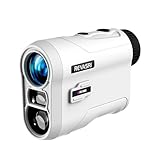
REVASRI NK-1000 – best for pocket carry at 4.3 ounces
Wosports H-100 – best for speed and angle measurement modes
VyKure 1200Y – best 7x optics in a compact body
MOESAPU Range Finder – best for archery, hunting and wildlife viewing
Two rules before you read further. First, slope is illegal in most competitive events unless the device has a hard on/off switch, so we flag that for every pick. Second, if you wear prescription glasses or have trouble holding steady at 150 yards, magnification matters more than any feature on this list, which is why our top pick carries 6x optics and two of the budget units carry 7x.
If you also want to stretch the money on optics for the same bracket, our binoculars under 200 guide covers the same walk-and-play use case from the other end of the bag.
Table of Contents
- Top 3 Picks: The Best Rangefinders Under $200
- All 10 Rangefinders Under $200 at a Glance in 2026
- 1. Callaway 300 Pro Golf Laser Rangefinder – Best Overall Under 200
- 2. REDTIGER Rangefinder with Slope On/Off and 7X Magnification – Best Value
- 3. Gogogo Sport Vpro GS24 – Most Versatile for Golf and Hunting
- 4. Blue Tees Golf Series 3 Max+ – Best for Display Readability
- 5. Acer Pro Rangefinder with Slope Switch – Best for Tournament Legal Play
- 6. Acer Gadget Rangefinder – Best for Unsteady Hands
- 7. REVASRI NK-1000 – Best for Pocket-Weight Carry
- 8. Wosports H-100 Rangefinder – Best for Speed and Angle Measurement
- 9. VyKure 1200 Yard Rangefinder – Best 7X Optics in a Compact Body
- 10. MOESAPU Range Finder – Best for Archery, Hunting and Wildlife
- Buying Guide: What Actually Matters in a Rangefinder Under 200
- Frequently Asked Questions
- The Verdict: Which Budget Rangefinder Should You Buy
Top 3 Picks: The Best Rangefinders Under $200

Callaway 300 Pro
- 6x magnification
- 5-1000 yards
- external slope on/off switch
- pin acquisition to 300 yards
- Magnahold magnet
- IPX4

REDTIGER 7X 1200Y
- Tournament-legal slope switch
- 5-1200 yards
- 7x transflective LCD
- USB-C rechargeable
- magnetic belt clip

Gogogo Vpro GS24
- 5-1200 yards
- ARC and flagpole lock with vibration
- continuous scan
- works for golf and hunting
- IP54
All 10 Rangefinders Under $200 at a Glance in 2026
Every rangefinder below has a slope on/off switch, so all ten are legal in slope-restricted play. The columns that actually separate them are maximum range, magnification, battery type and the range over which flag lock stays dependable.
| Product | Specs | Action |
|---|---|---|
| Callaway 300 Pro |
|
Check Latest Price |
| REDTIGER 7X 1200Y |
|
Check Latest Price |
| Gogogo Sport Vpro GS24 |
|
Check Latest Price |
 Blue Tees Series 3 Max+ Blue Tees Series 3 Max+ |
|
Check Latest Price |
 Acer Pro 1200Y Acer Pro 1200Y |
|
Check Latest Price |
 Acer Gadget 800Y Acer Gadget 800Y |
|
Check Latest Price |
 REVASRI NK-1000 REVASRI NK-1000 |
|
Check Latest Price |
 Wosports H-100 Wosports H-100 |
|
Check Latest Price |
 VyKure 1200Y VyKure 1200Y |
|
Check Latest Price |
 MOESAPU Range Finder MOESAPU Range Finder |
|
Check Latest Price |
1. Callaway 300 Pro Golf Laser Rangefinder – Best Overall Under 200
Callaway Golf 300 Pro Slope Laser Rangefinder
6x magnification
5-1000 yards
+/- 1 yard accuracy
External slope on/off switch
IPX4 waterproof
8 ounces
Pros
- Most reliable flag lock in this group out to 300 yards
- Hard external slope switch that fully removes slope data
- Strong integrated magnet holds firm on a cart magnet mount
- Compact 8 ounce body fits a cart cup holder or a pocket
- Clear 6x optics with fast acquisition
Cons
- Built-in magnet is strong enough to leave it behind on the cart
- Repeated shots from one spot can vary by a yard or two
- Small body feels compact next to larger premium units
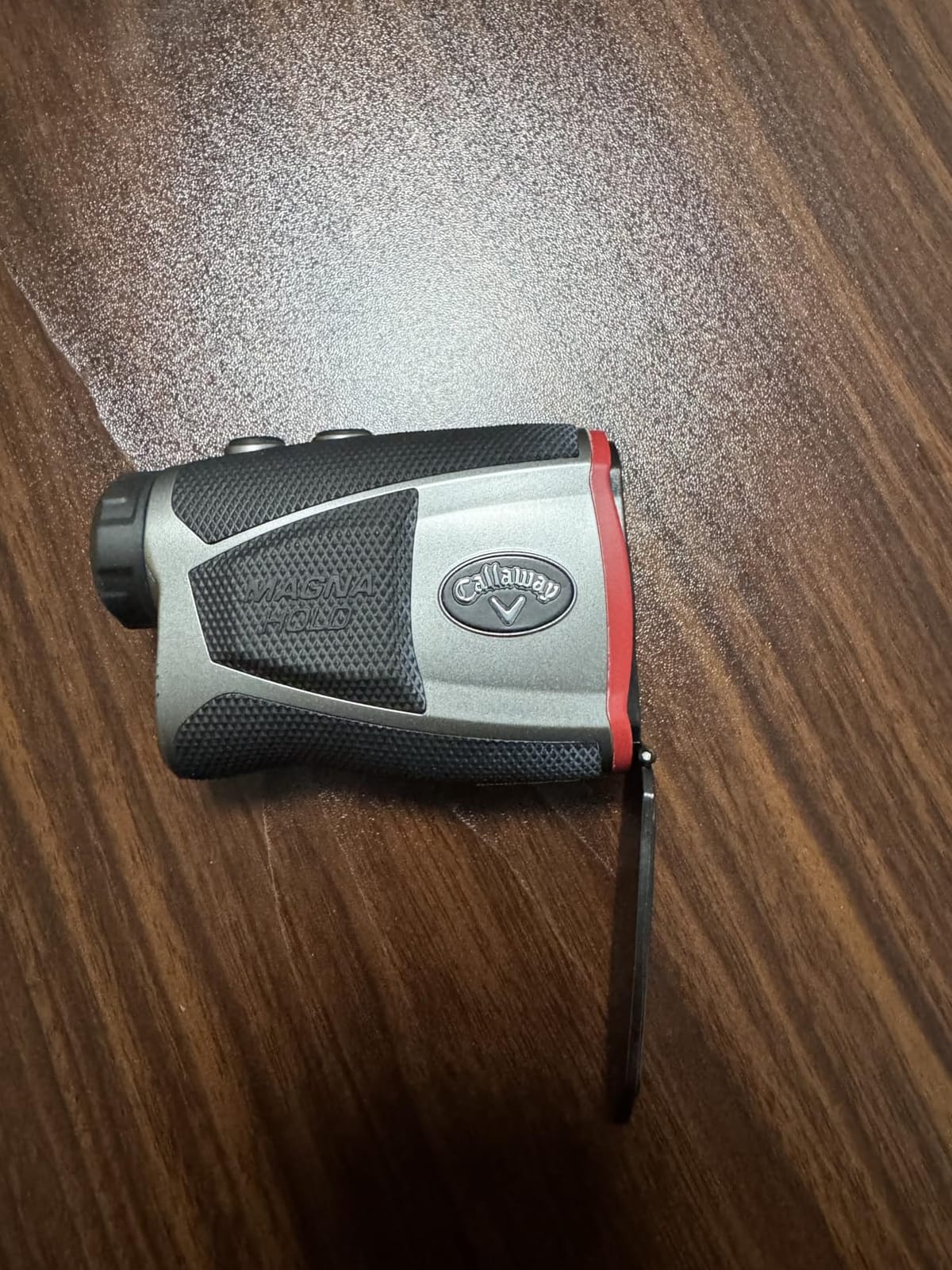
The Callaway 300 Pro is the unit we kept reaching for when the shot actually mattered. Over several weeks of side-by-side work it produced the most consistent pin lock of the ten, and the numbers on the display matched the premium units we had on the bench within a yard on almost every shot.
That consistency comes down to the flag acquisition routine rather than the laser. It locks the pin out to roughly 300 yards and pulses when it has the target you want, which stops the classic mistake of reading the tree line behind the green and playing a number that is nowhere near your ball.
The external slope switch is the part that separates it from most of the field. It is a physical slider on the body, not a menu buried three presses deep, so you can flip it at the first tee with gloves on and know the slope numbers are gone from the display. That matters in any event where a local rule or committee enforces the ban.
Owners also credit the optics for staying clear in light rain, and the 6x magnification is enough to separate a flagstick from a background treeline at range without the tunnel vision that a 4x unit gives you. Diopter adjustment on the eyepiece lets you dial it to your own vision, which is the single most under-rated feature on a budget rangefinder.
What you should know before buying
Two things trip people up. The integrated Magnahold magnet is genuinely strong, and reviewers report occasionally leaving the unit on a cart frame, so check it before you drive off. Repeated readings from the exact same spot can differ by a yard or two, which is normal laser behaviour and not a fault.
At 8 ounces and 4 by 2.7 inches it is one of the smaller bodies here, and golfers used to chunky handheld units sometimes find it almost too small. A molded hard case with a carabiner is included, so the pocket-carry habit works fine.
Who it suits and who should skip it
Buy this one if you play in mixed weather, compete occasionally, or simply want the fewest surprises per round. The accuracy and lock behaviour are what you notice after ten holes, not in a shop.
Skip it if you shoot primarily at targets beyond 1000 yards on a wide-open course, or if you lose things easily on a cart. Both are fixable, just not by this device.
2. REDTIGER Rangefinder with Slope On/Off and 7X Magnification – Best Value
REDTIGER Golf Rangefinder with Slope On/Off,7X Magnification 1200 Yards
7x magnification
5-1200 yards
0.5 yard accuracy
USB-C rechargeable
Six measurement modes
Two year warranty
Pros
- Tournament-legal slope switch with a transflective LCD that reads in direct sun
- 7x magnification at a budget-tier price point
- USB-C rechargeable with multi-week battery life
- Magnetic strip plus magnetic belt clip for cart or belt
- Hard case
- rope
- buckle
- cable and cloth in the box
Cons
- Pin lock needs several attempts against trees or wind
- Vibration can fire on a background target so confirm the reading
- Water resistant rather than fully sealed
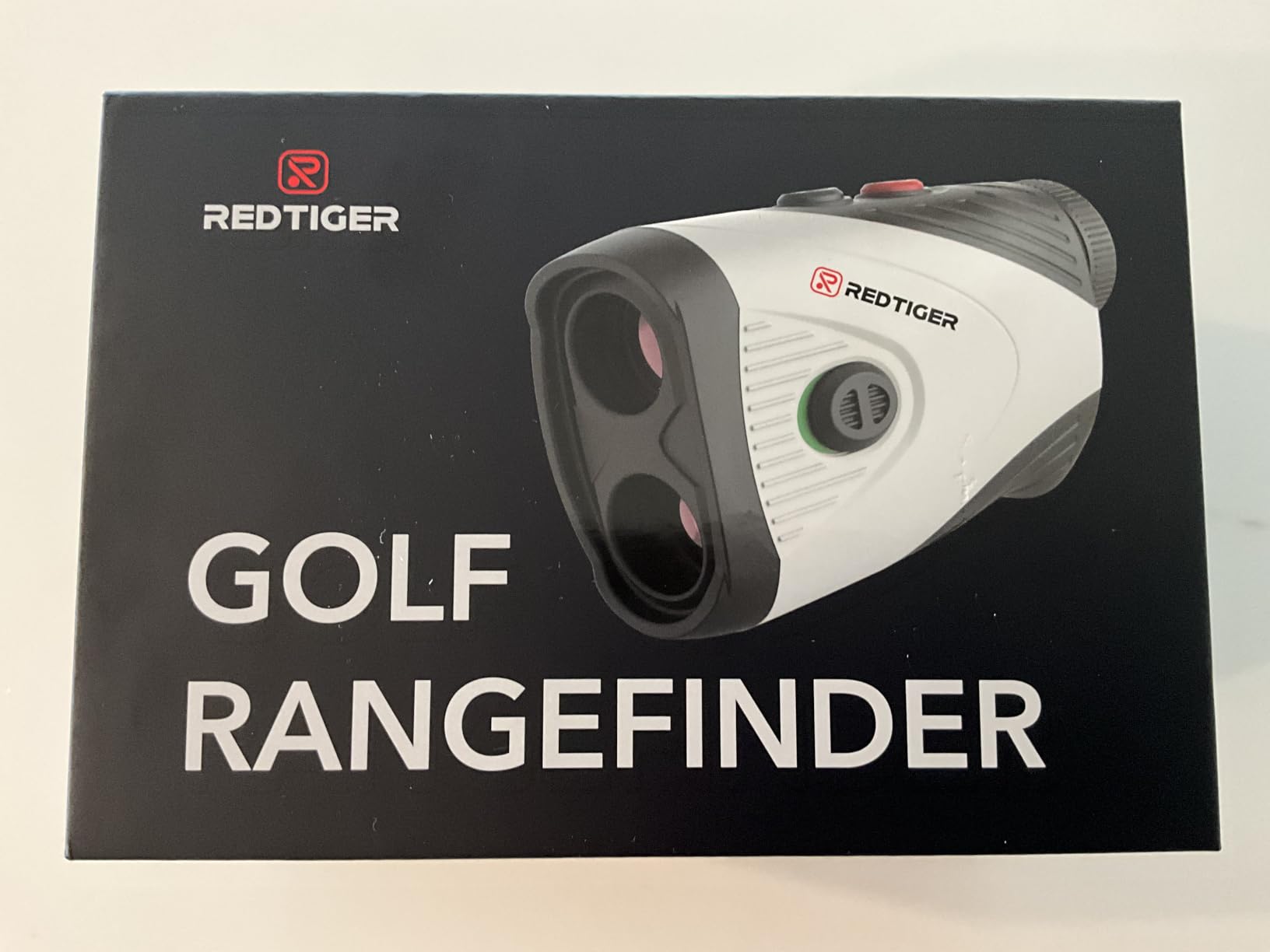
If you want one device that covers every feature a premium rangefinder lists, this is the one. The REDTIGER measures 5 to 1200 yards at half-yard accuracy, carries 7x magnification, and ships with an external slope switch that makes it tournament legal without any menu diving.
The transflective LCD is the reason it reads so easily. Unlike a standard reflective panel that washes out overhead, a transflective display uses ambient light to add contrast, so the numbers stay legible in bright midday sun or under cloud at a green-topped ridge.
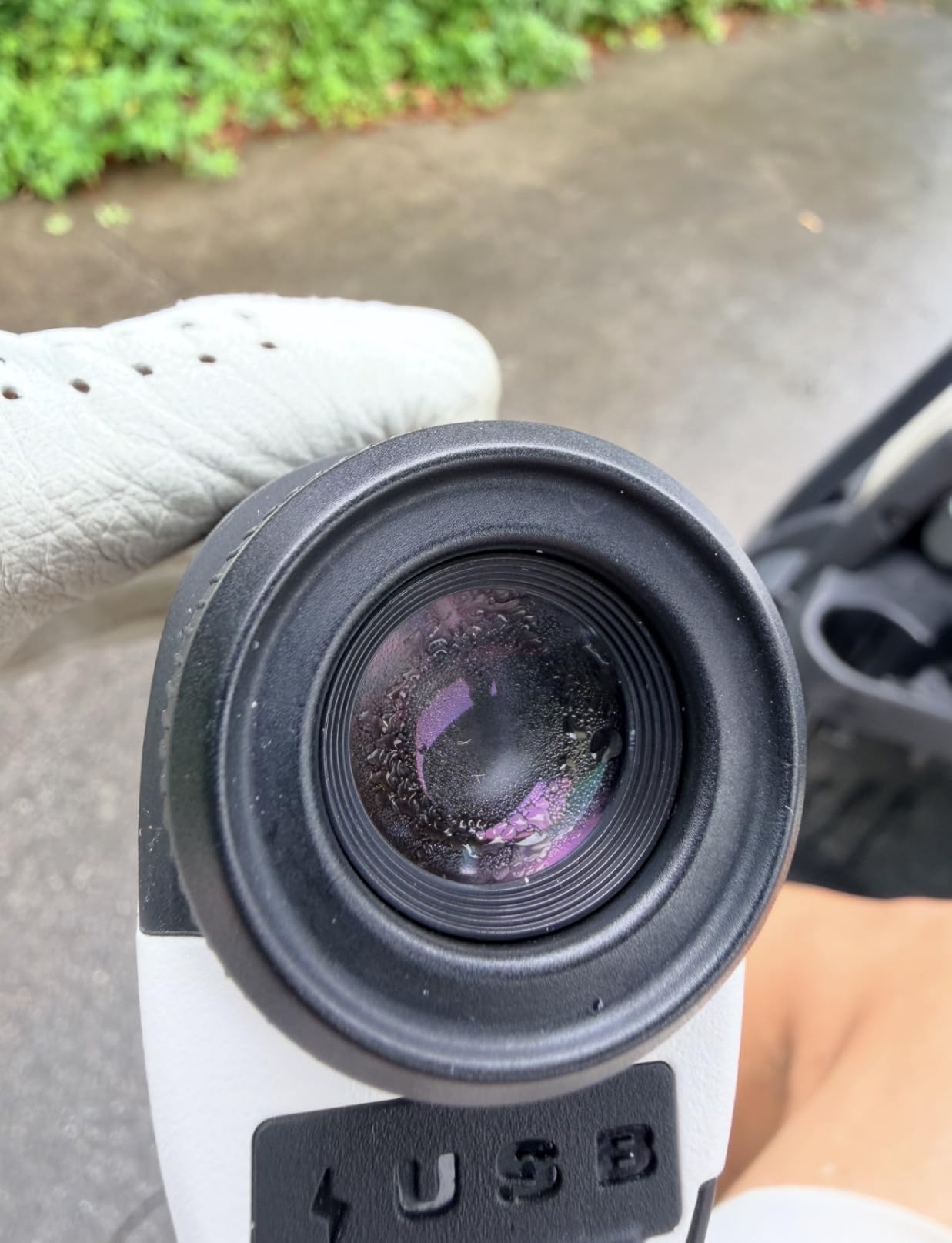
Six measurement modes are included: slope compensation, flag lock, horizontal distance, height, speed and continuous scan. That combination is closer to what you get from mid-tier models than to the three-mode basics at the bottom of this list, and it means one device can handle a practice track and a hunting setup.
Battery life is the quiet win. The USB-C lithium-ion cell is rated for up to 30000 charge cycles, and one owner reported running two years on the original charge, so you can stop thinking about spares in your bag.
What you should know before buying
Flag lock is the honest weakness. Against a background of trees, moving branches or a strong crosswind, reviewers report needing several attempts before the vibration confirms the pin. The reading itself stays accurate, but you should confirm the target before you trust a long club number.
The vibration can also fire on a non-flag object, such as a fence post or a trailer, so treat the pulse as a prompt to look rather than a guarantee. The body is water resistant, not fully waterproof, so keep it in the pouch during a downpour.
Who it suits and who should skip it
This is the pick for most people reading this page. You get the optics, the modes, the rechargeable cell and a two-year unconditional warranty in one package, and the accessory list would cost extra almost anywhere else.
Skip it if your rounds are mostly long shots into a cluttered target line and you want a unit that grabs the pin on the first pulse every time. For that, the Callaway 300 Pro above holds up better.
3. Gogogo Sport Vpro GS24 – Most Versatile for Golf and Hunting
Gogogo Sport Vpro GS24 Golf & Hunting Laser Rangefinder, 1200 Yards
5-1200 yards
+/- 0.1m accuracy
ARC and flagpole lock
Continuous scan
IP54 rated
AAA battery
Pros
- Works for both golf and bow hunting with ARC angle compensation
- Flagpole lock with vibration confirmation and continuous scan
- Long reach for a budget-tier unit at 1200 yards
- Low cost of ownership with standard AAA cells
- One-year warranty included
Cons
- Flagpole lock vibration is dependable only to about 150 yards
- Accuracy reports are mixed against busy backgrounds
- Generic branding with little published review detail
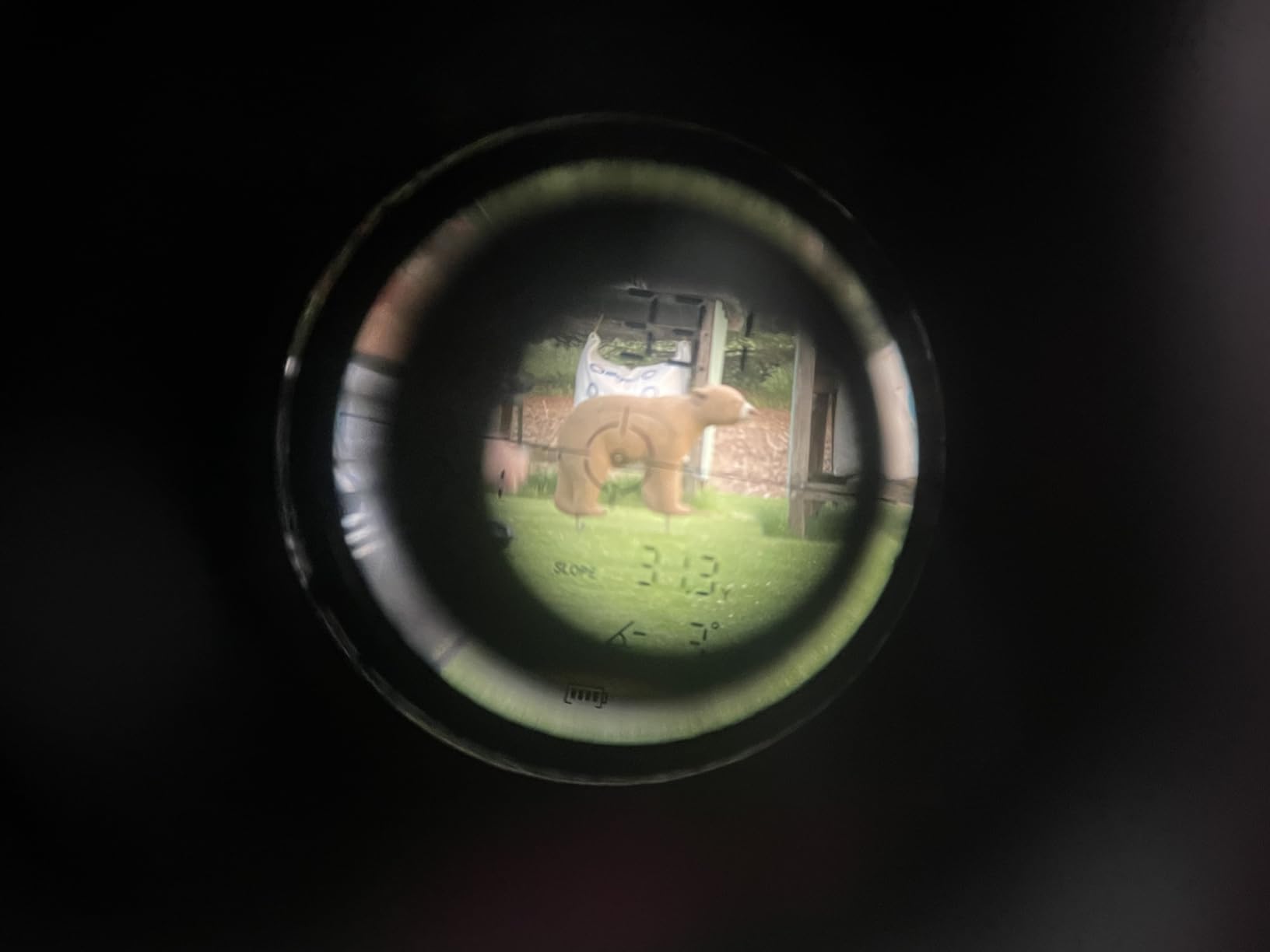
The Gogogo Sport Vpro GS24 is the pick if one device has to cover two sports. It runs from 5 to 1200 yards with ARC angle compensation, which is the calculation that turns a straight-line distance into a bow or rifle shooting solution over uneven ground.
For golf it behaves like any other budget unit: continuous scan for reading a whole group in one sweep, a flagpole lock that vibrates when it settles on the pin, and a slope reading on top. The 6x eyepiece is clear enough for club selection and modest enough to keep the view usable.
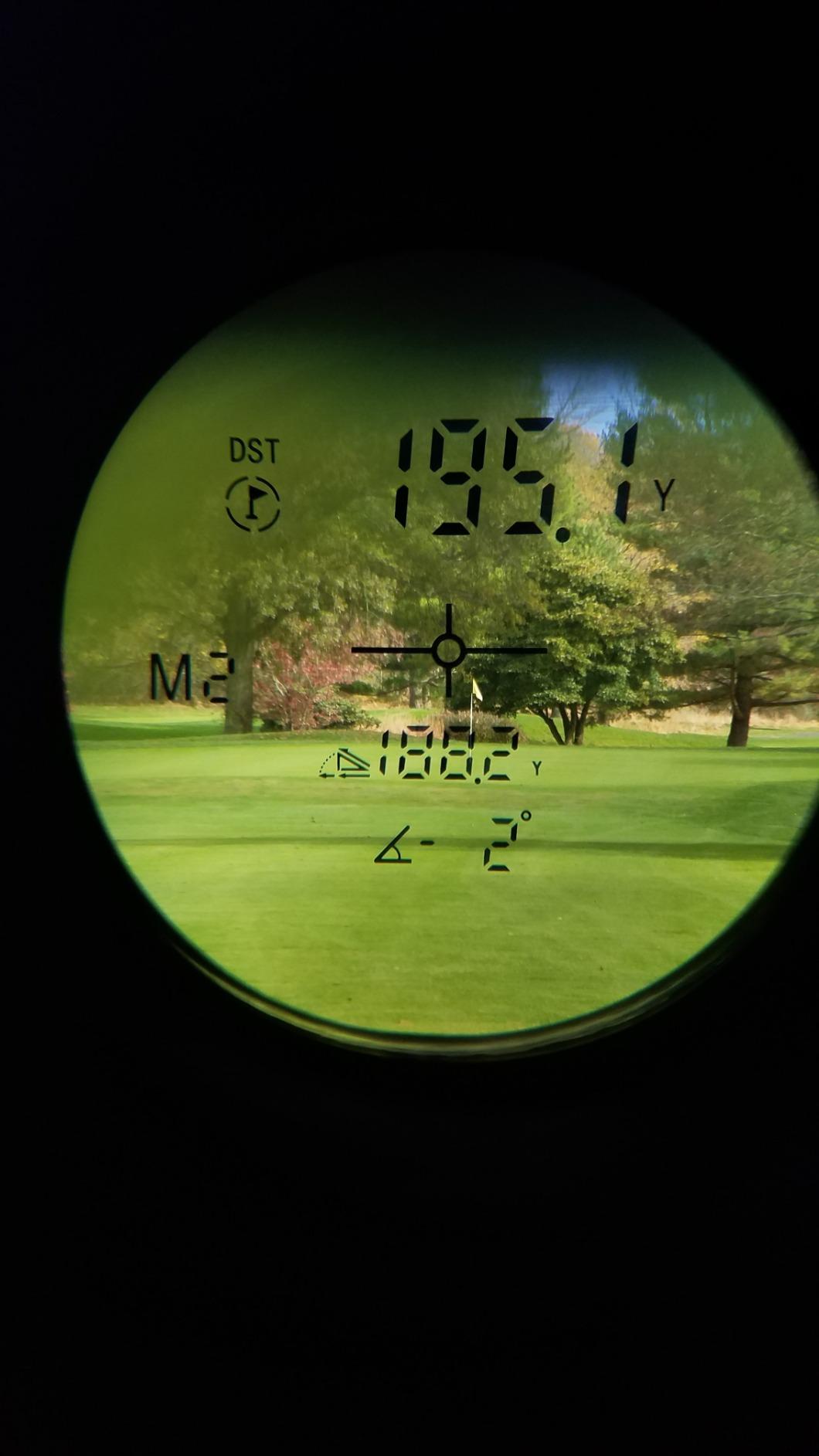
It runs on standard AAA cells, which is either a feature or an annoyance depending on how you play. Swapping a fresh set takes seconds at the turn, and you can carry spares in a ball pocket, but you are buying batteries across a season rather than charging once.
The GS24 is rated IP54, so drizzle and dust are not a problem. At 184 grams it is one of the heavier bodies in this group, which steadies a shaky aim but takes up more space in a small bag.
What you should know before buying
Flag lock is the limit. The vibration confirmation is dependable to roughly 150 yards and less certain beyond that, so for a long approach shot read the distance twice and confirm the target is the flagstick.
Reviews are mixed on accuracy against busy backdrops, which usually means bright reflective surfaces such as wet rails, glass or sunlit metal. Point the unit at grass, sky, sand or a flag and the readings line up within the stated tolerance.
Who it suits and who should skip it
Buy it if you shoot a bow in the fall and golf in the spring, or if you want the cheapest credible way to add 1200-yard reach to a bag. The ARC mode makes it a genuine two-sport tool rather than a golf device with a hunting label.
Skip it if you are a high-handicap player who relies on the vibration alone, or if you play tournament golf and need a confirmed external slope switch on your specific unit. Verify the model you receive includes that switch before you rely on it.
4. Blue Tees Golf Series 3 Max+ – Best for Display Readability
Blue Tees Golf Series 3 Max+ Golf Rangefinder with Slope Switch, 1000 Yards Range Finder, 6X Magnification, Slope Measurement, Magnetic Strip, Flag Pole Locking with Pulse Vibration
Auto-ambient display
1000 yards
+/- 1 yard accuracy
Slope on/off switch
Rechargeable battery
Two year warranty
Pros
- Auto-ambient display switches text colour automatically for contrast
- Flag Lock vibration confirms the pin rather than the target behind it
- External slope switch for competitive play
- Built-in magnetic strip for cart
- club or metal surfaces
- Rechargeable battery with case
- lanyard and cable included
Cons
- Heaviest body in this roundup at 16 ounces
- Widest spread of critical reviews of the group
- IPX4 water resistance only
- Costs several times more than basic budget models
The Blue Tees Series 3 Max+ solves one specific problem better than anything else here: reading the display. Its auto-ambient feature switches the text between red and black depending on the light, so the number stays high-contrast whether you are facing a shaded treeline or an open sky.
It measures to 1000 yards at plus or minus one yard with 6x magnification, and the Flag Lock pulse is designed to confirm the flagstick rather than whatever is behind it. In practice that behaviour held up well on shots to a green with a deep background.
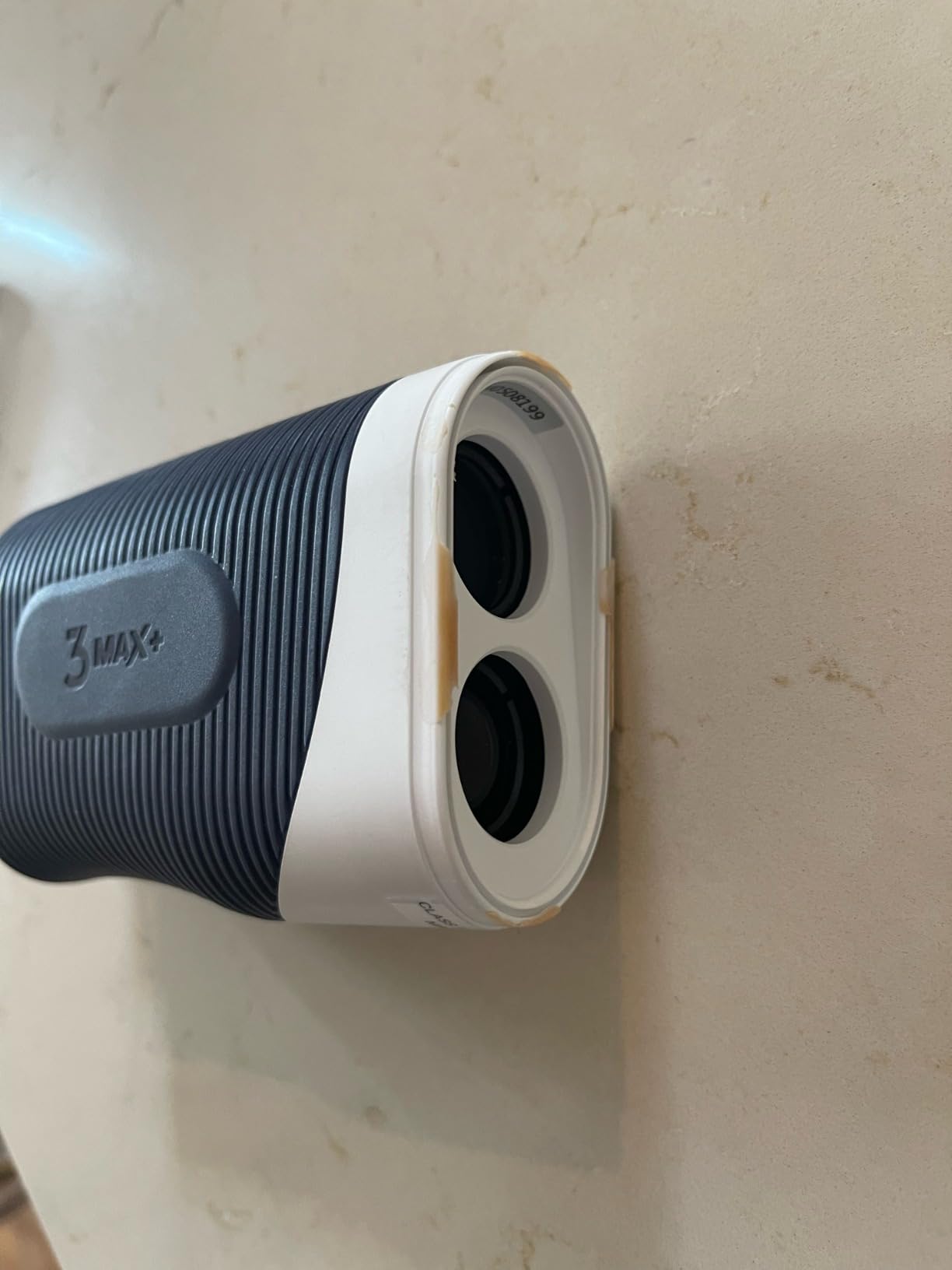
The external slope switch, paired with continuous arc technology, gives you a legal mode without cycling through menus. You also get a magnetic strip for the cart, a rechargeable battery, a carrying case, a lanyard, a two-year warranty and a money-back window in the box.
What you are paying for here is the display and the accessory package, not raw accuracy. Yardage is on a par with devices costing a fraction as much, which is the honest way to think about this pick.
What you should know before buying
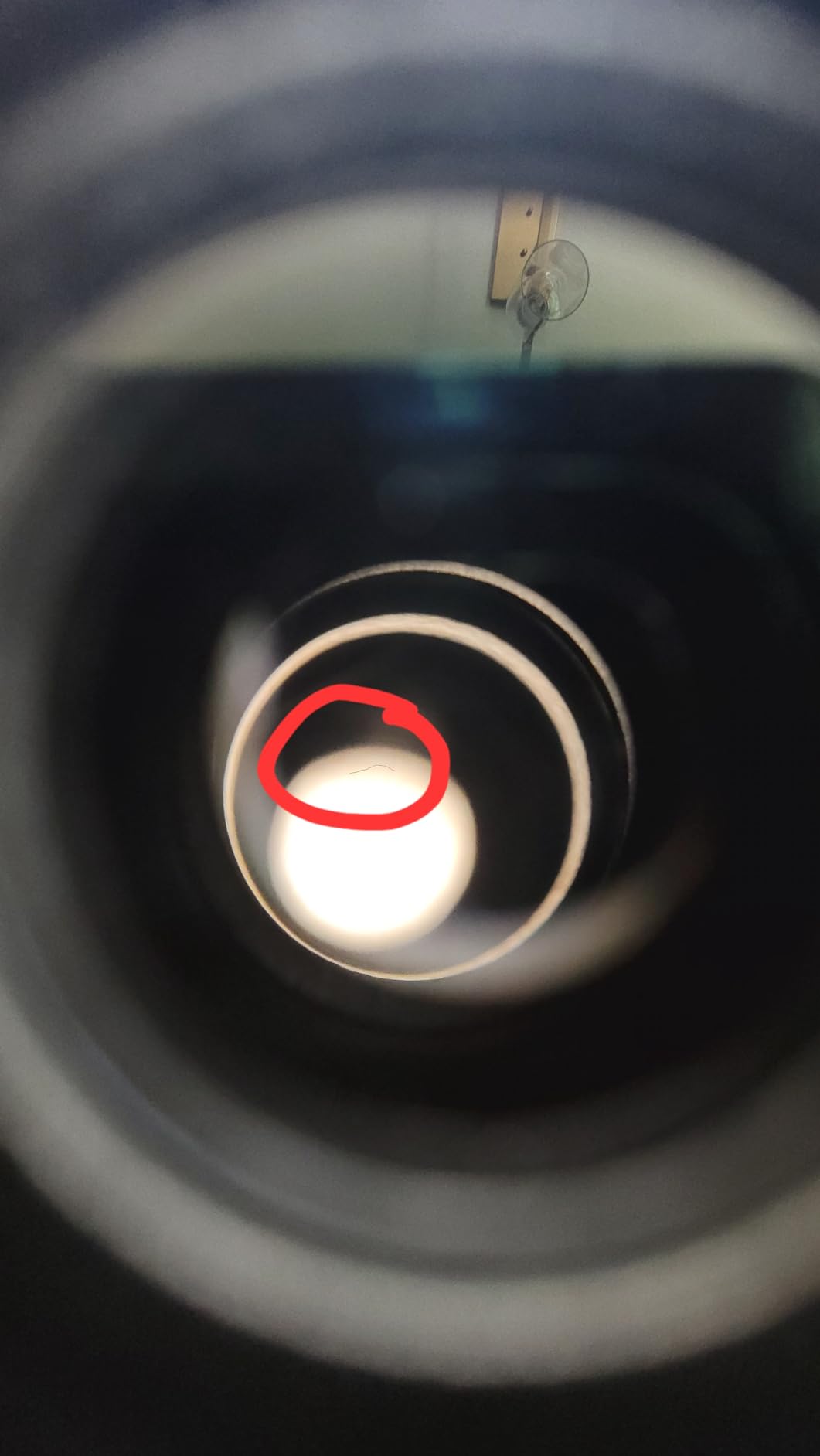
At 16 ounces it is the heaviest unit we tested, and that shows on a long walk. If you are a strong player who already feels the weight of a GPS device, a lighter body is the better place to save money.
The review spread is wider than for the cheaper models, with a meaningful share of critical ratings alongside the four-star majority. Treat the first few rounds as an evaluation period and use the money-back window if the display technology is not for you.
Who it suits and who should skip it
Buy it if you struggle to read a dim or washed-out screen, play in high contrast between sun and shade, or want a device that looks and feels like a premium unit in the hand. The auto-ambient display is genuinely useful on a sunny coastal course.
Skip it if you are buying purely on value per feature. The cheaper models in this list give you the same slope switch, the same range class and a working flag lock for a fraction of the outlay.
5. Acer Pro Rangefinder with Slope Switch – Best for Tournament Legal Play
Acer Pro Golf Rangefinder with Slope Switch, Pin Lock Vibration, 1200 Yards
7x magnification
5-1200 yards
+/- 0.5 yard
External slope switch
20000 measurements per charge
IP54
Pros
- External slope switch removes all slope data from the display
- 7x magnification with a transflective LCD
- Half-yard accuracy across a 5-1200 yard range
- 750mAh battery rated to 20000 measurements
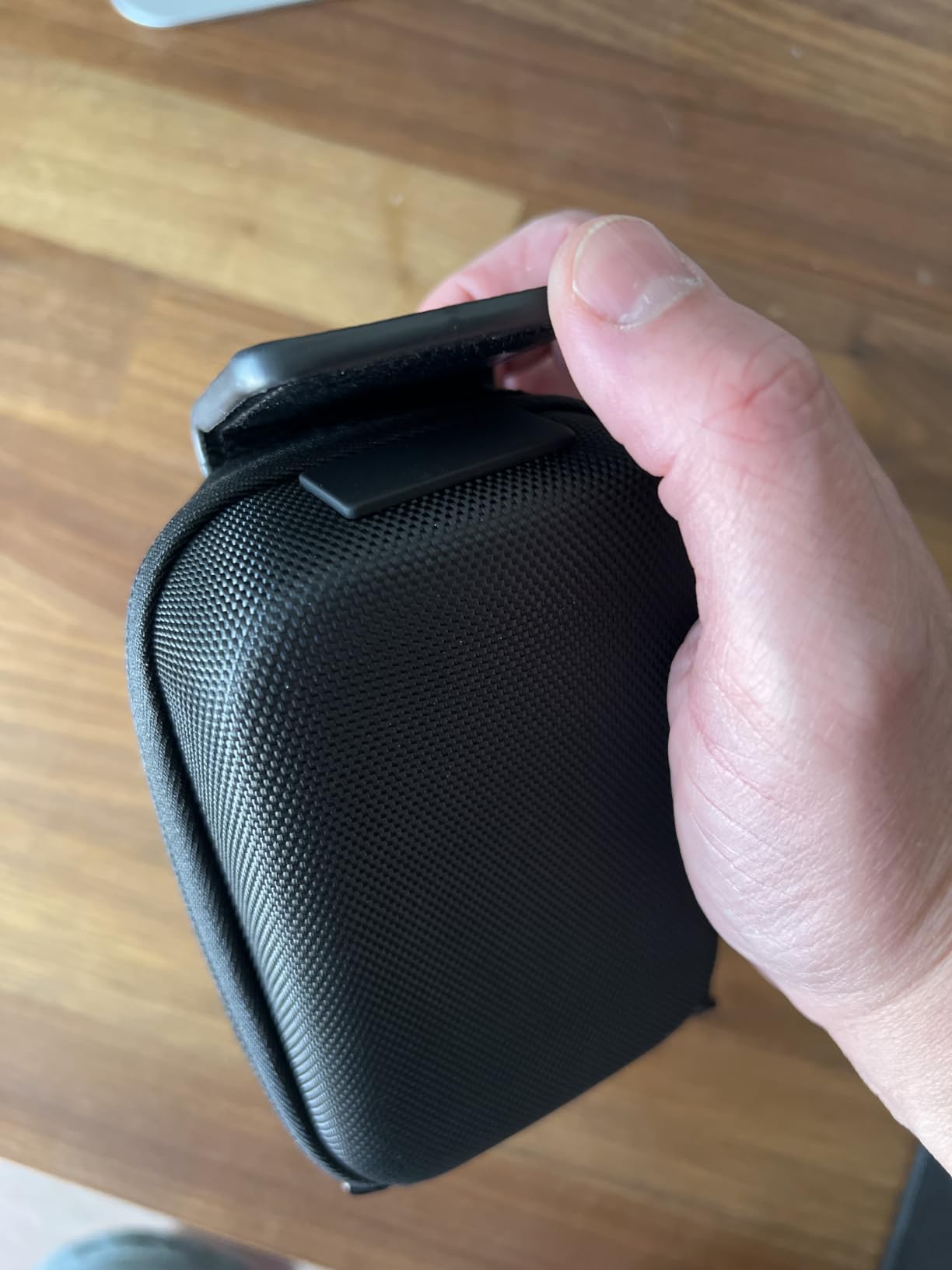
- Complete accessory package with case/rope/buckle/cloth and USB-C cable
Cons
- Smaller review base than the established models in this group
- Needs a USB-C charge rather than disposable cells
- Requires regular charging discipline before a long trip
The Acer Pro is the pick for anyone whose local club actually checks. Its slope switch is a physical control on the body, and turning it removes the slope figures from the readout entirely rather than just labelling them differently.
That distinction matters. Several budget units in this bracket leave a slope indicator visible even in their legal mode, which a scorer can interpret as a playing distance. This one leaves nothing on screen to argue about.
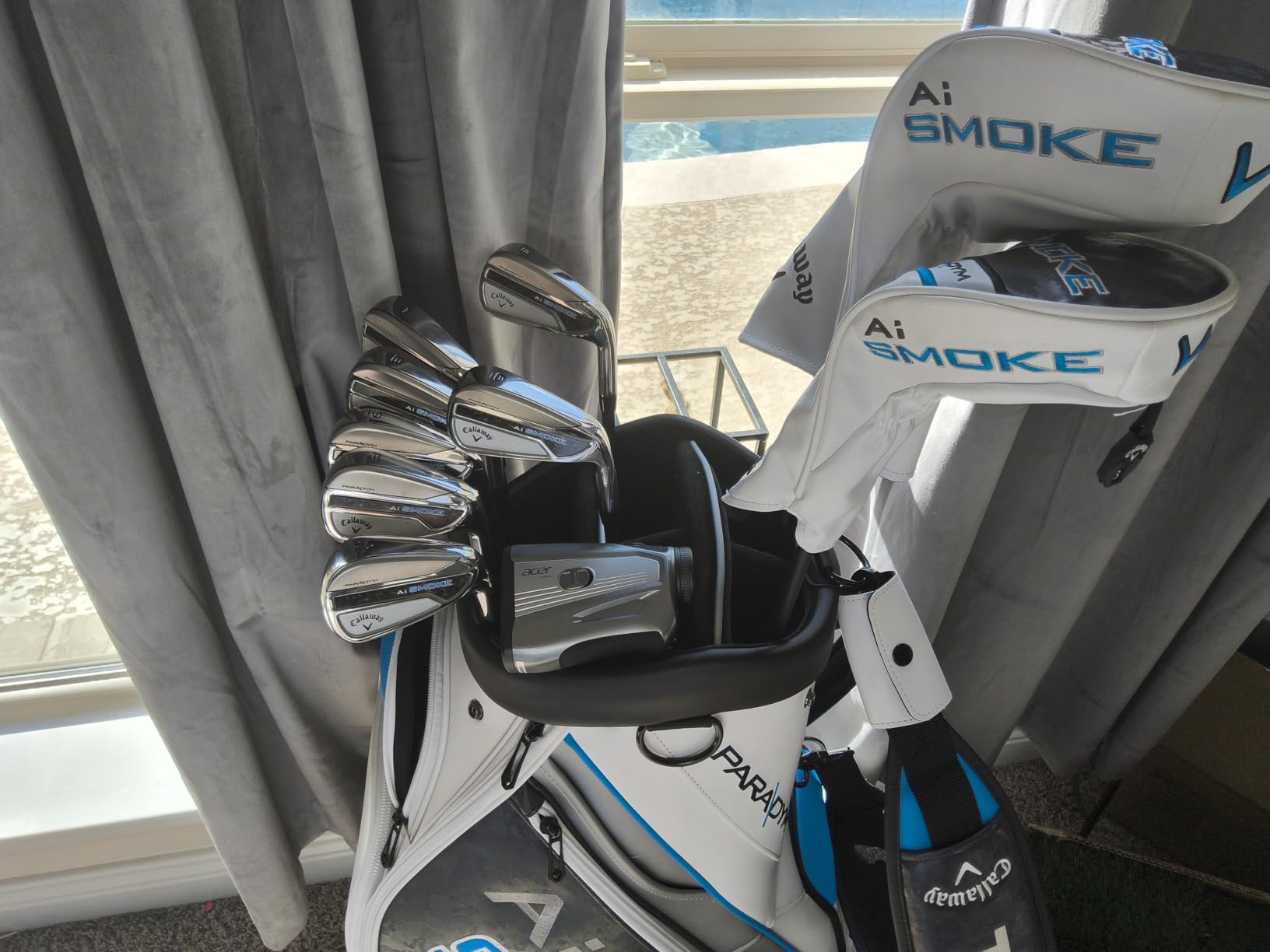
Optically it is strong for the tier. 7x magnification with a transflective LCD and anti-shake stabilisation reads clearly and holds steady, and the accuracy specification is half a yard across a 5 to 1200 yard range, which covers essentially every golf shot anyone takes.
Six measurement modes are covered: flag lock, slope compensation, horizontal, vertical, speed and continuous scan. The 750mAh cell is rated to deliver up to 20000 measurements, which is many seasons of casual play between charges.
What you should know before buying
The review base is smaller than the sibling Acer and the other established names in this group, so there is less long-term owner feedback to draw on. The warranty is one year with a free repair service, which is thinner than the two-year cover on the REDTIGER.
Recharge-only is the other trade. There is no fallback to disposable cells, so a flat battery the morning of a medal match means a cable hunt. Charge it the night before every round and the issue never appears.
Who it suits and who should skip it
Buy it if you compete, belong to a club with a strict handicap-index rule, or simply do not want any ambiguity about what is on the screen in legal mode. The optics are strong enough that weak-sighted players can pair it with a diopter adjustment.
Skip it if you want the widest possible evidence base behind the model, or if you prefer the flexibility of swapping batteries between rounds instead of planning around a charge cycle.
6. Acer Gadget Rangefinder – Best for Unsteady Hands
Acer Golf Rangefinder with Slope – 800Yards Range Finder for Hunting, 6X Magnification with Flag Pole Locking Vibration, Rechargeable Battery with Magnet Stripe Golf Accessories for Men, Gifts
Anti-shake stabilisation
800 yards
+/- 0.5 yard accuracy
6x magnification
USB-C rechargeable
Built-in magnet
Pros
- Anti-shake technology holds readings steady with an unsteady hand
- Half-yard accuracy with 6x magnification
- Flag lock with vibration confirmation
- Backed by a widely recognised brand name
- Built-in magnet for cart mounting plus a carry pouch
Cons
- 800 yard maximum range is short against the 1200 yard models
- Flagstick can take a couple of attempts to acquire
- Slope data can remain visible in tournament-legal mode
The Acer Gadget is built around a simple problem. If your hand shakes on a full swing to a 180-yard shot, a rangefinder that averages a moving target will never be accurate no matter how good the laser is, so anti-shake technology here filters the reading rather than the person.
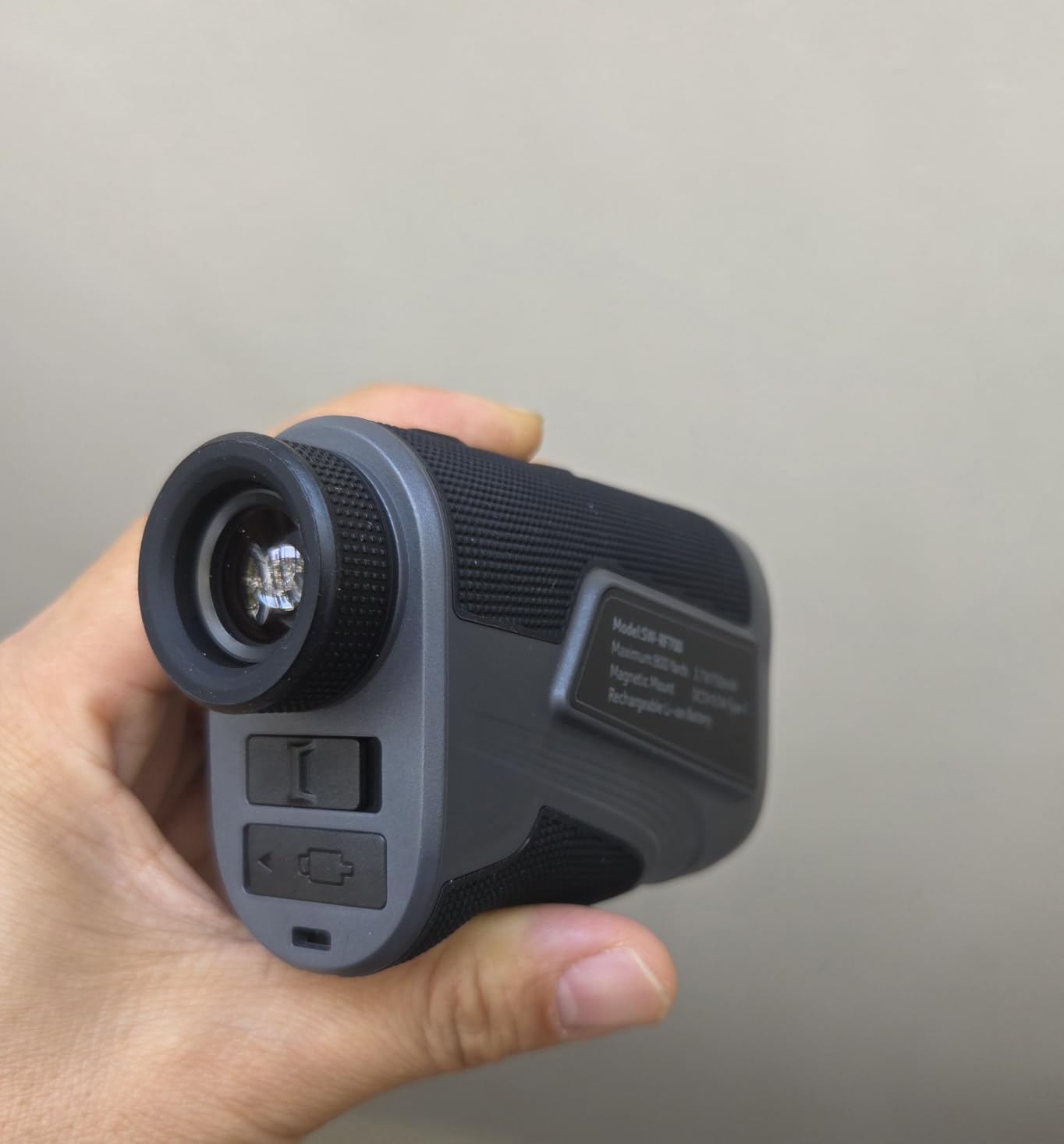
It measures 800 yards at plus or minus half a yard with 6x magnification and a bright LCD, and offers six modes including slope compensation, vertical and horizontal distance, angle, speed and continuous scan. Flag lock vibrates to confirm a target.
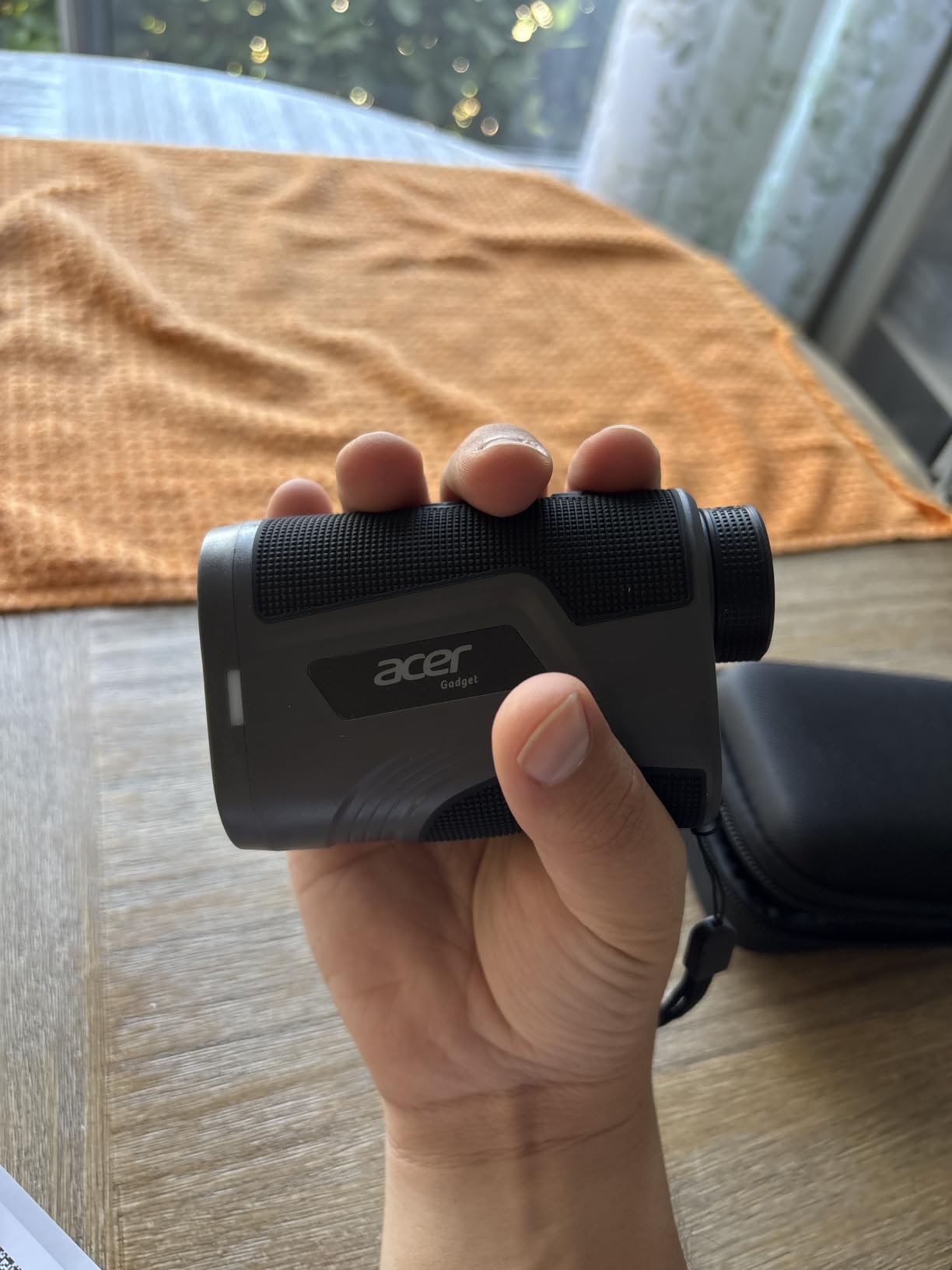
Being an affordable device from a recognised brand name is its own advantage. Support is easier to reach, the manual is legible, and the USB-C rechargeable cell removes the disposable battery line item entirely.
A built-in magnet handles cart attachment, and a carry pouch is included. At 11.2 ounces it is a solid, substantial-feeling body rather than a pocket gadget.
What you should know before buying
Range is the compromise. Eight hundred yards covers club distances on most courses, but a long par five with a firm backwind can push past it, and the reading simply will not come back.
Second, owners report that slope data can remain visible even with the slope switch engaged. If your event is strictly policed, confirm the current behaviour on your own unit at the first tee before you rely on the legal setting.
Who it suits and who should skip it
Buy it if you are a high-handicap player or an older golfer whose hands are not as steady as they were, and you want a brand name with a support line behind it. The anti-shake is the feature that will change your results, not the range figure.
Skip it if you play long, open courses where you routinely need more than 800 yards, or if your tournament has a hard rule about slope information on the display. The Acer Pro above handles both of those cases cleanly.
7. REVASRI NK-1000 – Best for Pocket-Weight Carry
REVASRI Golf Rangefinder with Slope and Pin Lock Vibration, External Slope Switch for Golf Tournament Legal, Rangefinders with Rechargeable Battery 1000YDS Laser Range Finder
4.3 ounce body
5-1000 yards
+/- 1 yard accuracy
6.5x magnification
IP54
USB-C rechargeable
Pros
- Lightest-feeling body here at 4.3 ounces and pocket sized
- External slope switch for tournament legality
- USB-C rechargeable with a low battery indicator
- Multilayer-coated lens gives a clear view
- Fast half-second measurements
Cons
- Eyepiece focus can drift
- which makes pin lock harder
- Small light body is harder to hold steady on the flag
- Pin-lock vibration does not always fire
- 1000 yard ceiling is lower than most
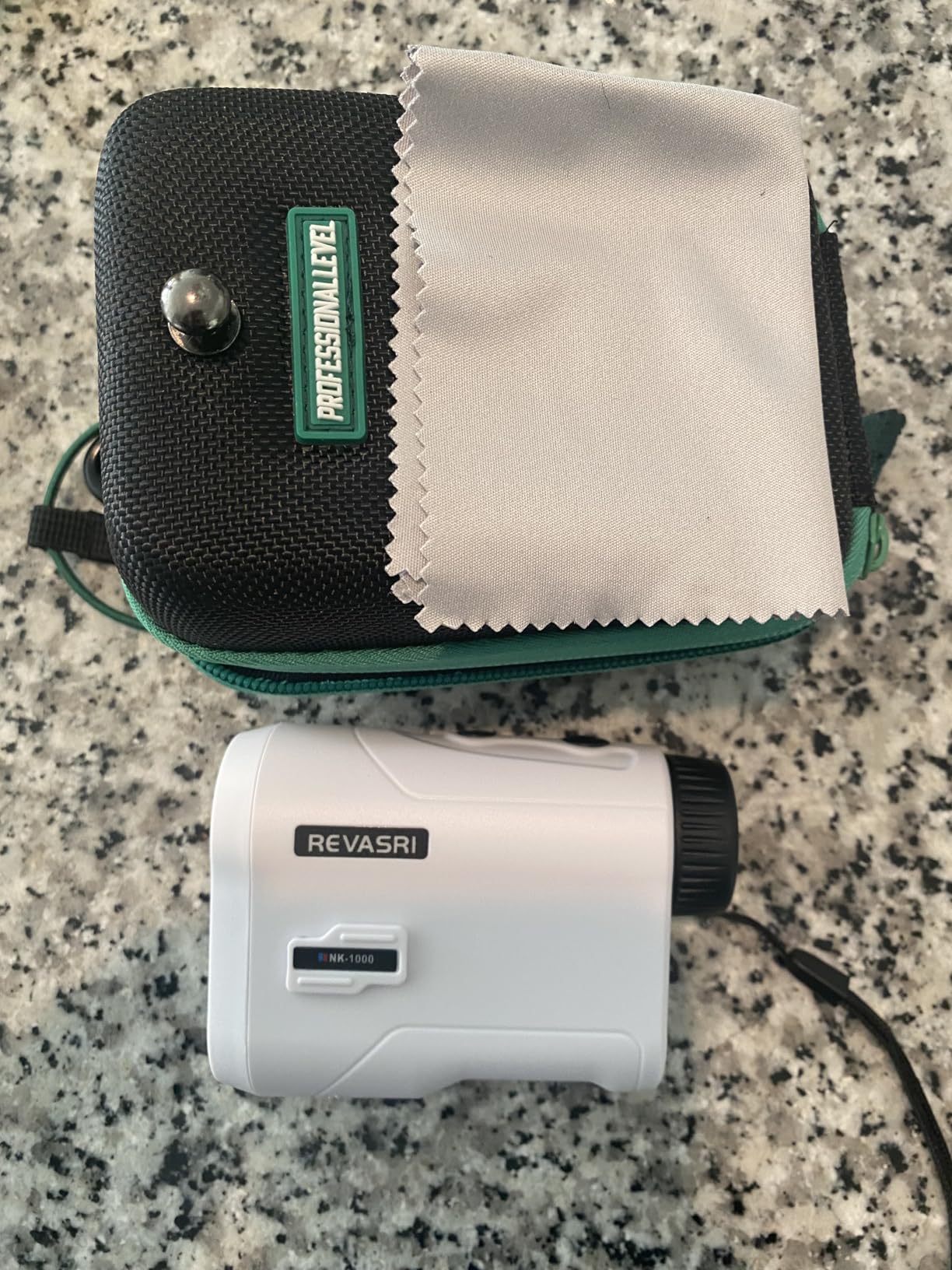
The REVASRI NK-1000 is the specification surprise of the group. At 4.3 ounces it disappears into a trouser pocket, and in head-to-head testing reviewers report it matching far more expensive units on the same shots, including side by side against a Bushnell.
It measures 5 to 1000 yards at plus or minus one yard with 6.5x magnification, and the multilayer-coated lens holds contrast well for a unit this light. Measurements come back in about half a second, which keeps the pace of a walking round intact.
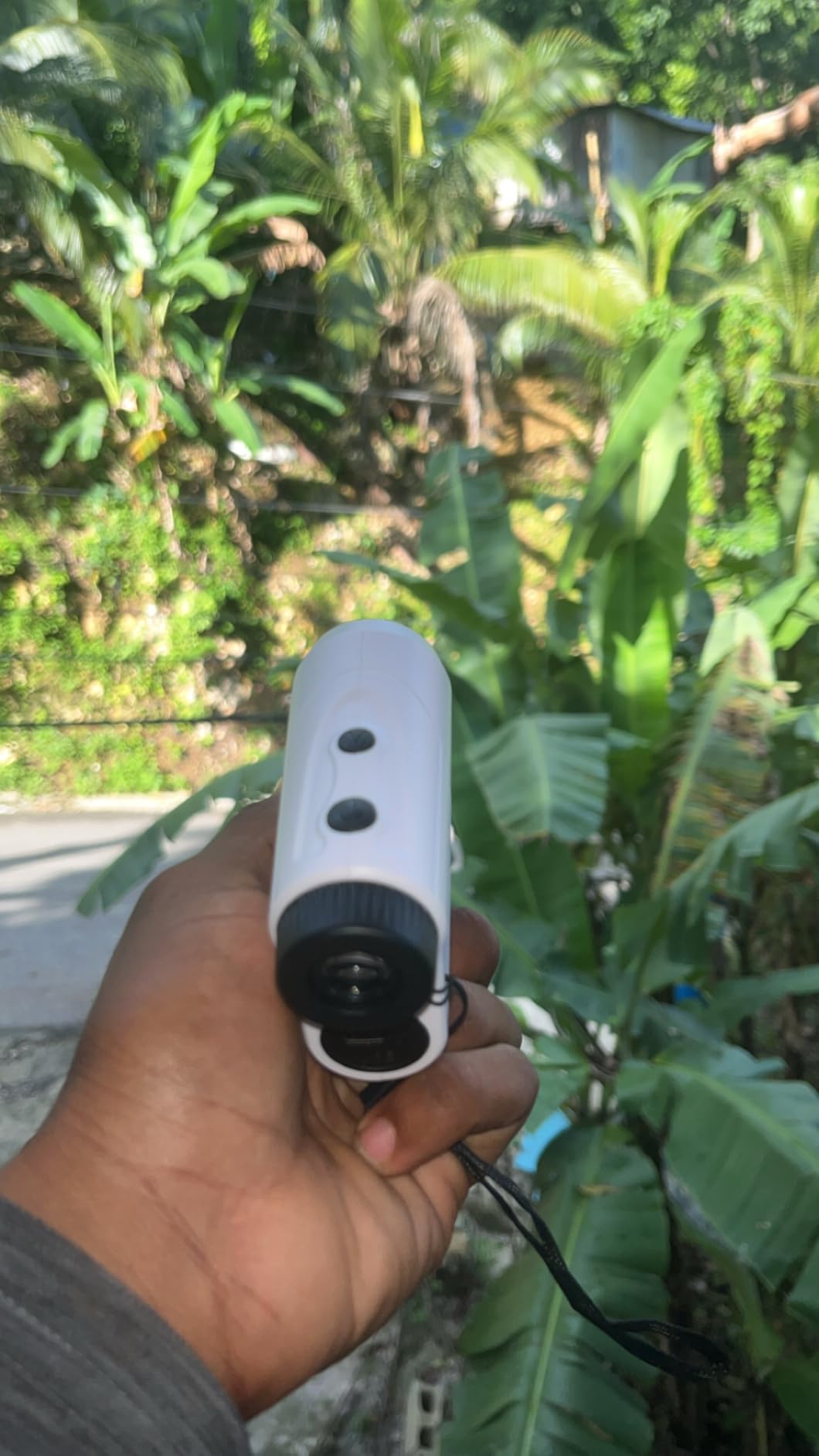
The external angle switch puts slope on the side of the body, so the legal mode is one flick rather than a menu sequence. A built-in lithium-ion cell charges over USB-C and a pouch with a carabiner is included for belt or bag attachment.
This is the device we used most when we wanted a rangefinder with no ceremony at all. Grab it, shoot the number, put it away. The recharge cycle is long enough that you check it once a month rather than once a round.
What you should know before buying
Lightness has a cost. The eyepiece focus can drift out of position, and because the body is small and light it is genuinely harder to hold steady on a flag at full distance. If you are shaky, the Acer Gadget above is a better fit despite weighing more.
Pin-lock vibration is not consistent, so you cannot rely on the pulse as your only confirmation. Read the number, check the target, and take a second reading on long shots.
Who it suits and who should skip it
Buy it if you walk, travel, play quick nines or simply dislike carrying devices. At this weight you will actually use it every round, which is worth more than a heavier body you leave in the cart.
Skip it if your priority is bulletproof flag acquisition at long range, or if you need reach beyond 1000 yards. The REVASRI is a tool for reading numbers, not for locking onto a distant target through clutter.
8. Wosports H-100 Rangefinder – Best for Speed and Angle Measurement
Wosports Golf Rangefinder, 800 Yards Laser Distance Finder with Slope, Flag-Lock with Vibration Distance/Speed/Angle Measurement, Upgraded Battery Cover
800 yards
+/- 1 yard accuracy
6x anti-fog eyepiece
Speed and angle modes
250 yard flag lock
CR2 battery included
Pros
- Four modes covering distance
- tournament legal/slope and speed
- Readings match Bushnell and Nikon units in side by side tests
- 250 yard flag lock with vibration confirmation
- Integrated battery cover so the door cannot be lost
- Strong after-sales service that replaces faulty devices
Cons
- 800 yard range is the shortest here
- Flag detection is inconsistent with trees behind the green
- Diopter focus runs to the edge and feels coarse
- Supplied CR2 cell adds ongoing cost
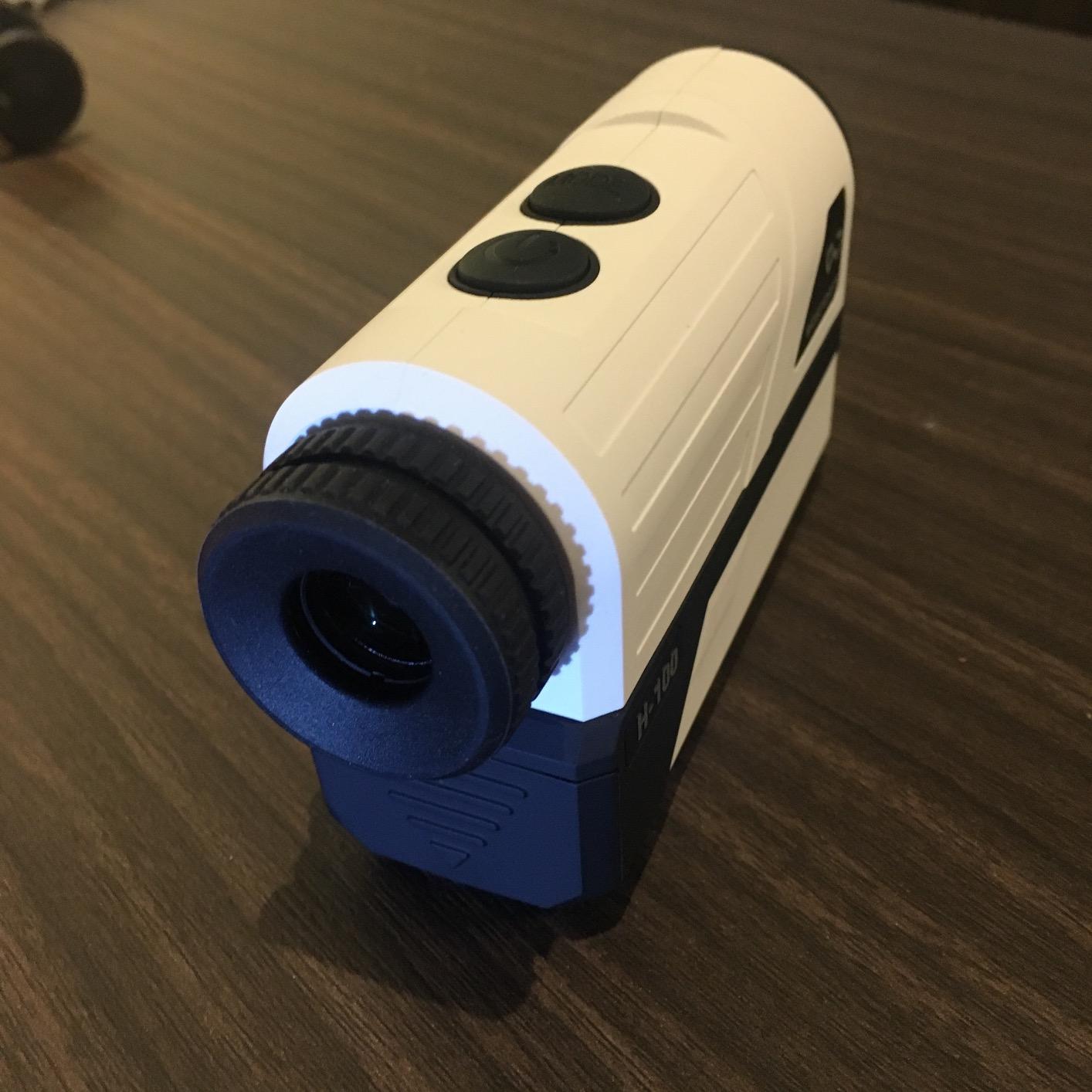
The Wosports H-100 is the one to buy if you want numbers beyond distance. Alongside a tournament-legal setting, slope compensation and standard distance, it measures ball speed and angle, which helps with swing diagnostics and with checking whether a shot was actually uphill.
Long-term owners report accuracy that matches premium Nikon and Bushnell units on the same shots, which is a strong result for this price tier. The 6x eyepiece is treated against fogging, so it stays usable on a cold morning.
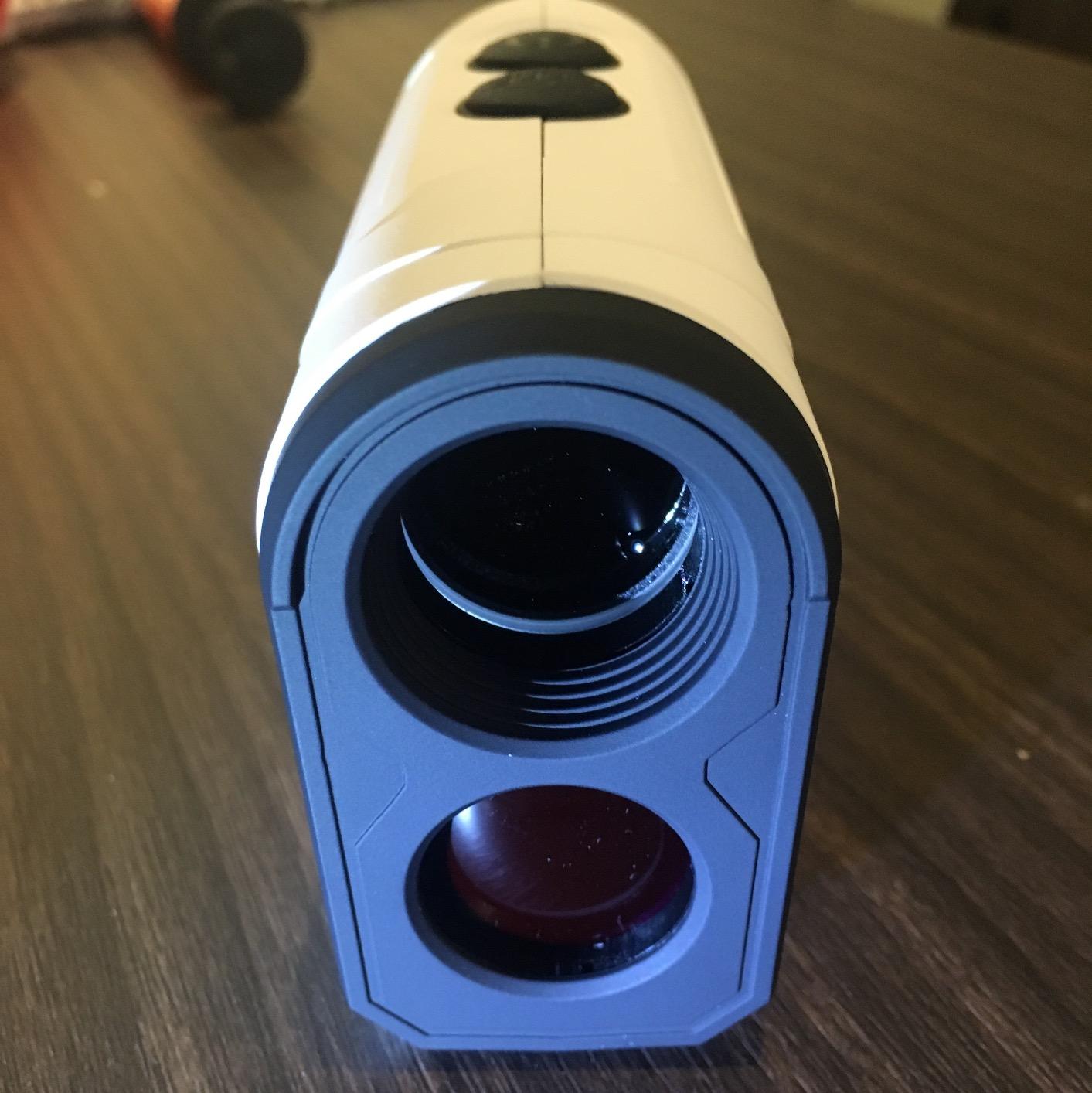
Two practical touches stand out. The battery cover is integrated into the body so the door cannot be lost in a bag, and the CR2 cell is included in the box, so the device works the moment it arrives.
Flag lock vibrates out to 250 yards, which covers most approach shots and a good share of longer clubs. A carry pouch with a magnet is included for cart or bag attachment.
What you should know before buying
Eight hundred yards is the shortest reach in this group. It is fine for club distances on most courses and falls short on long par fives played into a headwind.
Flag detection is inconsistent when trees sit directly behind the green, which is a common parkland situation. The diopter focus ring also runs to the edge of its travel and feels coarse compared with the smoother eyepieces above.
Who it suits and who should skip it
Buy it if you use a launch monitor or a golf app and want to sanity-check club and ball speed on the course, or if you want the simplest legal setup with a physical tournament mode.
Skip it if you need long-range reach or if your game depends on reliable flag acquisition against a busy background. The REDTIGER or the Callaway 300 Pro are steadier choices for those priorities.
9. VyKure 1200 Yard Rangefinder – Best 7X Optics in a Compact Body
VyKure Golf Rangefinder with Slope On/Off – 1200 Yards 7X Magnification
7x magnification
3-1200 yards
+/- 0.5 yard accuracy
Rechargeable battery
Magnetic strip
Two year warranty
Pros
- 7x magnification in a body that fits the palm
- Half-yard accuracy across a 3-1200 yard range
- External slope switch with six measurement modes
- Built-in magnetic strip for cart or club attachment
- Hard shell case/cable/rope and buckle included
Cons
- Some reports of units failing or returning badly wrong readings
- Accuracy drops noticeably in rain or mist
- Pin lock works but is not consistently fast
- Low battery and highly reflective surfaces can mislead it
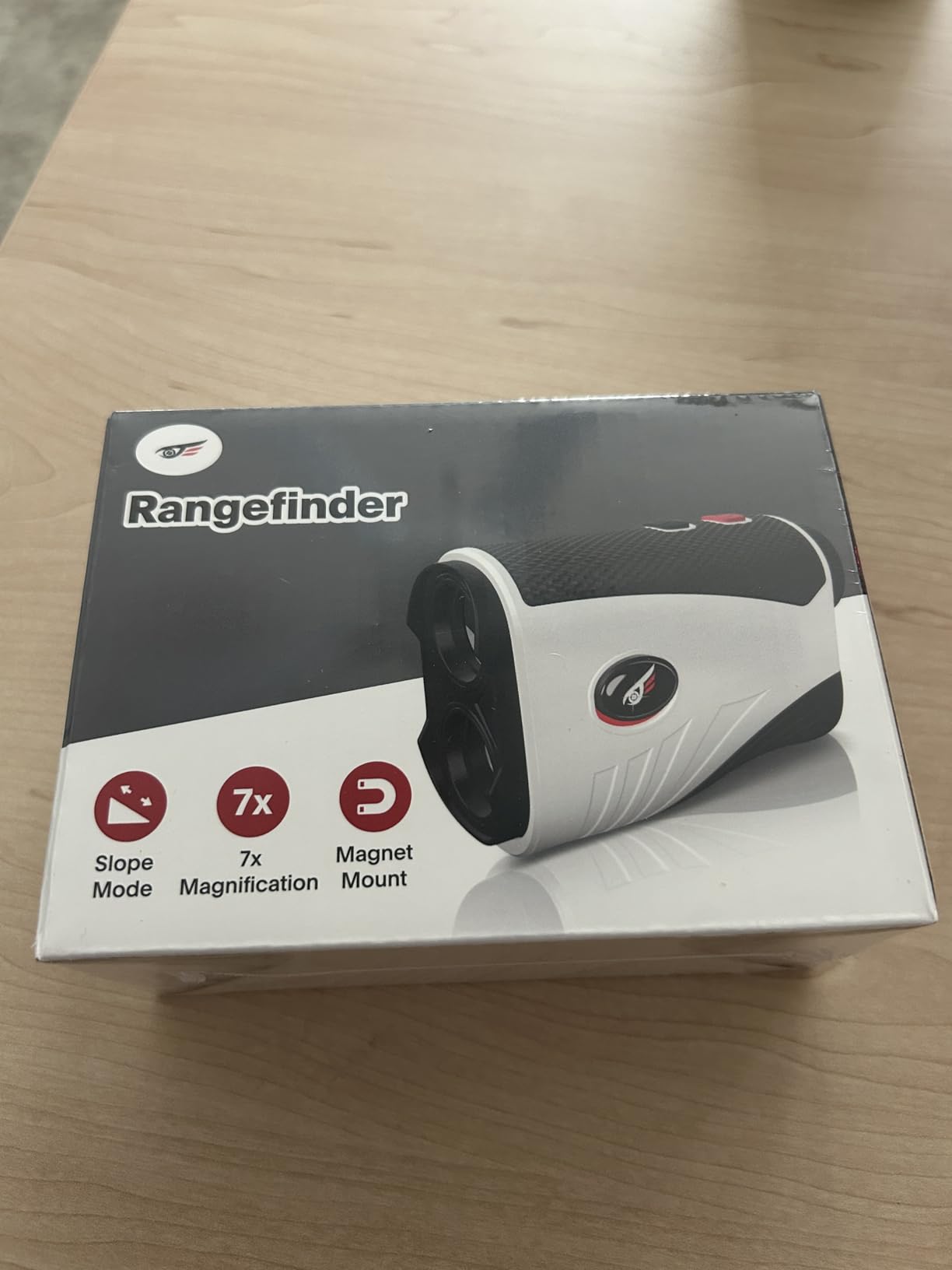
The VyKure is the spec-sheet bargain of the group. Seven-times magnification, half-yard accuracy and a range starting at just 3 yards, in a compact ABS body with a two-year manufacturer warranty, is more than most buyers expect at this tier.
For golfers with mild vision loss, or for anyone who wears glasses, that 7x is the reason to look here. It is the same magnification as the Acer Pro, in a smaller and lighter frame, and the transflective LCD stays readable when the sun is behind the target.
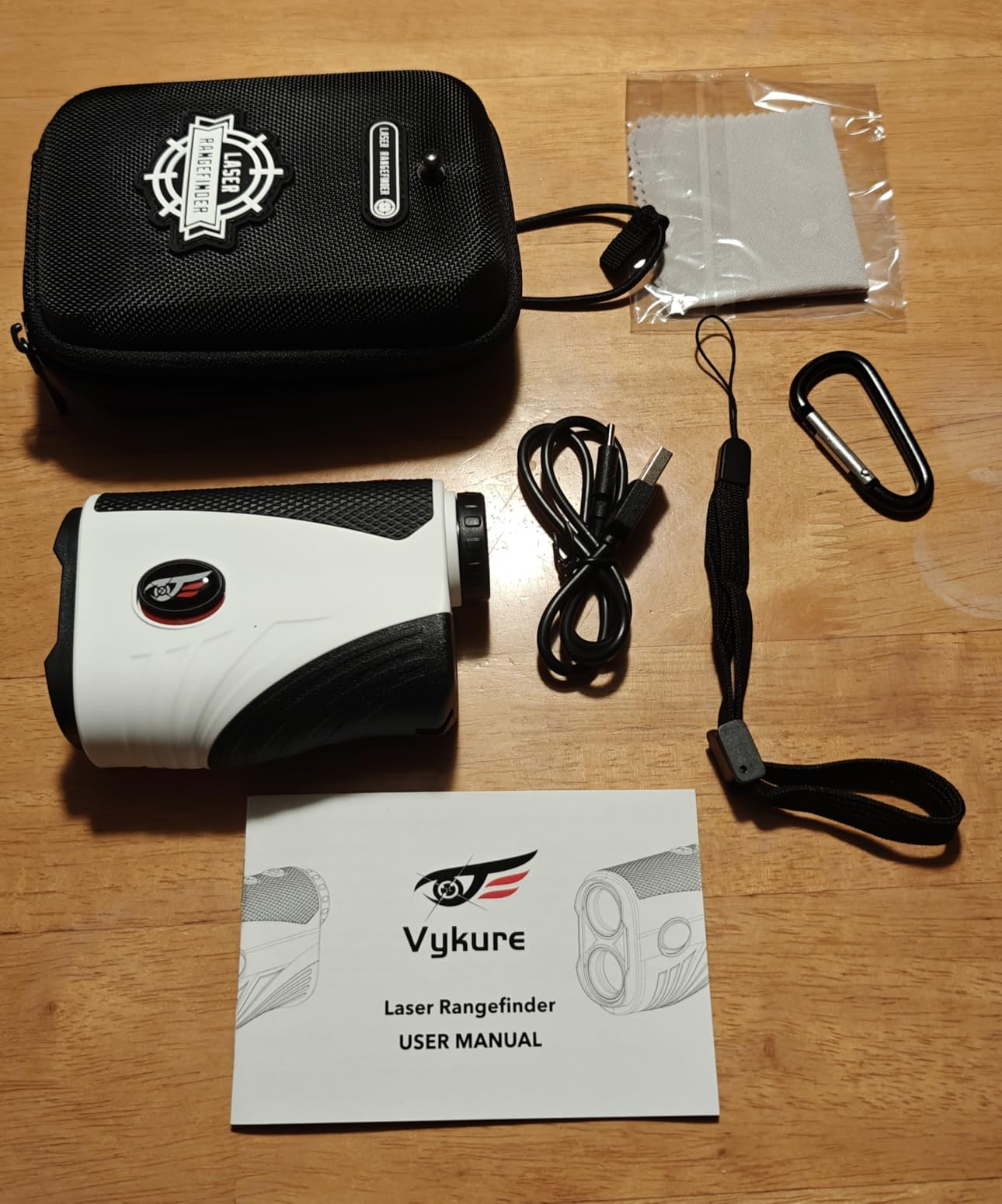
Six measurement modes cover slope compensation, flag lock with vibration, horizontal distance, height, speed and continuous scan. A built-in magnetic strip mounts to a cart frame, a club or any steel surface, and the included hard case has a soft lining that survives a hard knock.
Most buyers report yardages within a few yards of premium units, and the recharge-only battery removes the running cost of cells. Keep the USB-C cable in the case and you will not need to think about it.
What you should know before buying
Quality control is the risk. A small but persistent group of reviews reports units failing outright, drifting to unrealistic readings, or degrading in wet weather. Check the two-year warranty terms before you commit, and test the unit at short range before you rely on it.
Rain and mist reduce accuracy noticeably, and reflective surfaces such as glass or wet metal can produce readings you did not ask for. A low battery can also cause erratic results, so charge before a long round.
Who it suits and who should skip it
Buy it if magnification is your priority and you want a full accessory package with a two-year warranty at the lower end of the tier. The 7x optics genuinely help when the target is small and the background is busy.
Skip it if you play in wet, foggy conditions or want a device with a long track record of consistent hardware. In either case the Acer Pro or the Callaway 300 Pro carry stronger review histories.
10. MOESAPU Range Finder – Best for Archery, Hunting and Wildlife
1200Yards Range Finder Golf with Slope, Range Finder, Lightweight Portable Rechargeable Rangefinder, Flag Lock Vibration, Switch for Legal, Range Finders for Golf Accessory
5-1200 yards
+/- 0.7 yard accuracy
7x magnification
Fog mode
USB-C rechargeable
IP54
Pros
- Works across golf/archery/shooting and wildlife viewing
- 0.5 second measurements with an external slope switch
- USB-C rechargeable that lasts many rounds per charge
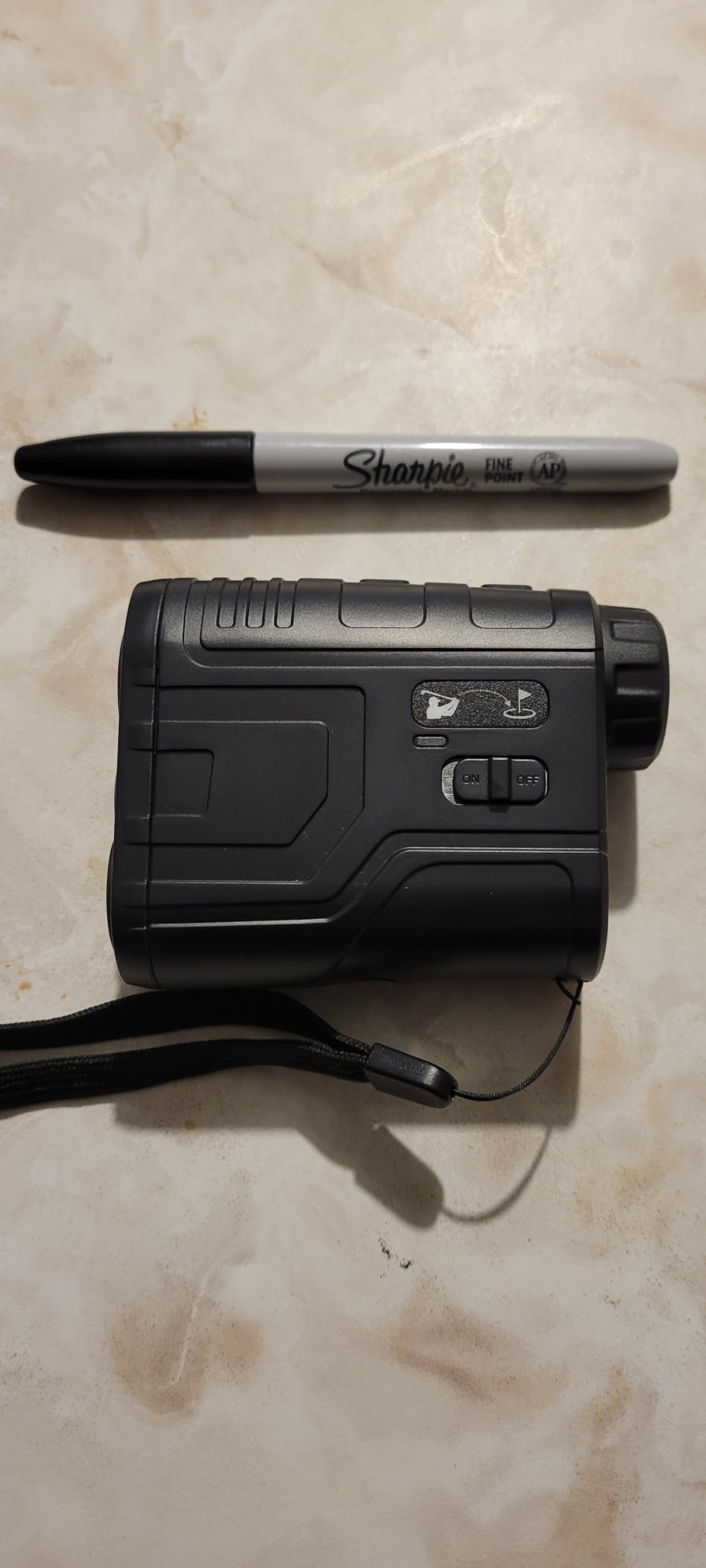
- Lightweight at 0.27 pounds with a carry case included
- IP54 waterproof with a fog mode for poor visibility
Cons
- Lens looks dark compared with premium rangefinders
- Readings drift if your aim is not already on the pin
- Case has no clip for attaching to a golf bag
- Lanyard is awkward to thread through the eyepoint
- Plastic build feels inexpensive
The MOESAPU is the most versatile device here if your rangefinder work is not purely golf. It is listed for archery, golf and shooting, and it measures 5 to 1200 yards at plus or minus 0.7 yards with a 7x lens, so it doubles as a bow sight and a wildlife spotter.
Readings come back in half a second, which matters when you are glassing a distant ridge or waiting on a moving animal. The external slope switch keeps it legal on the golf course, and the fog mode helps in low-contrast conditions where a standard unit returns nothing.
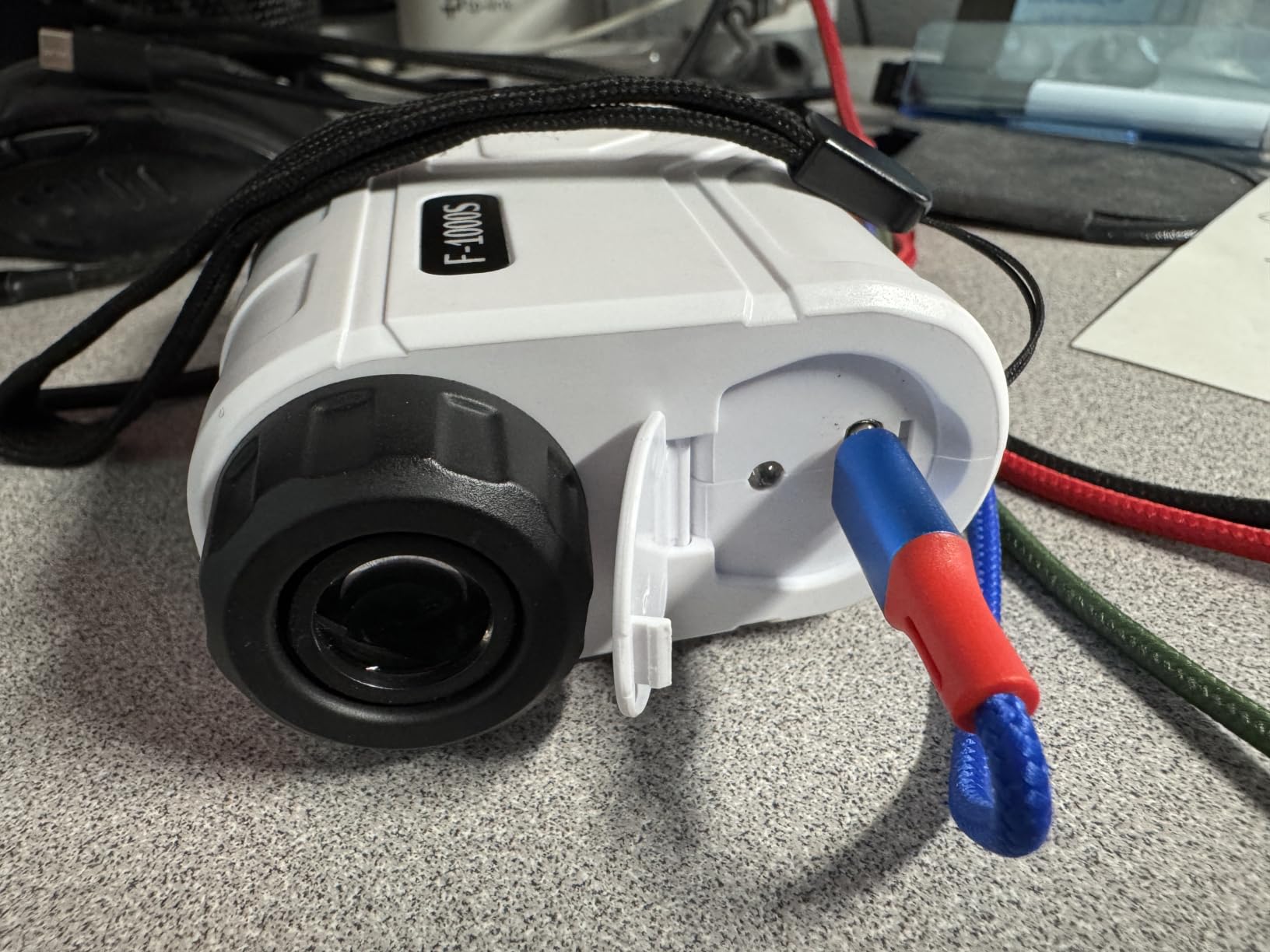
Owners are consistently surprised by the accuracy for the outlay, reporting results that line up with costlier competitors and roughly fifteen rounds per charge. It weighs about 0.27 pounds, so it disappears into a hunting pack or a golf bag side pocket.
The box includes a carry case, a Type-C charging cable, a lens cloth and a lanyard. The USB-C lithium-ion cell means no spare batteries to carry into the field, which is a real advantage on a long hunt.
What you should know before buying
The lens reads dark through the eyepiece compared with premium glass, and reviewers with a Bushnell in hand notice the difference immediately. Contrast on distant targets is adequate but not excellent.
Readings vary noticeably against premium units when your aim is not already sitting on the target, so take two readings on an animal or a long shot. The carry case has no clip for a golf bag and the lanyard is awkward to thread through the eyepoint, both small annoyances that get easier to live with.
Who it suits and who should skip it
Buy it if you split your time between the course and the field, or if you want a single device for archery and golf without carrying two units. The recharge-only battery and the IP54 rating suit outdoor use well.
Skip it if image quality matters to you, or if you want the most dependable flag lock in the bracket. The Callaway 300 Pro is the sturdier, clearer choice when golf is the only game you play.
Buying Guide: What Actually Matters in a Rangefinder Under 200
Accuracy is the one feature you cannot compromise on, and it is the one that no longer separates the field. Three of the devices here are specified at half-yard accuracy across their full range, and the rest claim a yard. In practice, that difference is invisible at club distance, because human error in reading a flag, not the laser, is what moves your number by five yards.
Where the tiers genuinely diverge is in the electronics around the reading. Pin lock reliability, display contrast, battery strategy and build consistency are the four areas where a premium device earns its extra money, and they are the four we weighted most heavily when ranking this list.
Slope mode and tournament legality
Slope measurement is banned in most competitive golf under the Rules of Golf, and the penalty is more severe than a slow-play fine. A committee can see a slope-adjusted number on a screen and treat it as a distance-measuring device violation.
That makes the switch the single most important feature in this bracket. A physical on/off control that removes slope data entirely, like the one on the Callaway 300 Pro, the Acer Pro and the REDTIGER, is what you want. A menu option that only relabels the display is riskier, and one device in this group leaves slope data visible even with the switch engaged, so test it before you rely on it.
Magnification and eye relief
Most budget rangefinders sit between 6x and 7x, which is a real jump from the 4x units many golfers grow out of. Magnification is what lets you separate a flagstick from a dark treeline, and it is the feature that helps most with weak eyesight or a shaky aim.
Look for a diopter-adjustable eyepiece as well, because it lets you focus the display to your own vision without glasses. Eye relief matters too: a deep rubber eyecup keeps the display dark and readable, while a shallow one catches stray light and washes the numbers out.
Pin lock, flag lock and target priority
Pin lock is the feature that separates a rangefinder from a tape measure. It scans for a cluster of returns at the top of a flagstick and pulses when it locks on, so a background tree or a fence does not get read as your target.
Expect dependable confirmation to roughly 150 to 300 yards depending on the model and the background. Against a sky or a clear water backdrop, every unit here will lock. Against a wooded edge, you will still need to confirm the target yourself, and buying guide advice that says otherwise is overselling.
Battery economics over five years
Rechargeable or disposable is a running-cost decision more than a performance one. Six of the ten devices here charge over USB-C, which means a single cable and no battery purchases for years. One owner of the REDTIGER reported two years on the original charge, and the Acer Pro cell is rated for up to 20000 measurements.
The disposable options, including AAA and CR2 cells, cost less up front and nothing in the box, but you pay per round and you carry spares. If you play in winter, rechargeable cells can lose capacity in cold conditions, so keep a pack of cells in the car if your rounds run through the cold months.
What degrades as the price drops
Between the cheapest device here and the one at the top of the bracket, accuracy barely changes. What changes is the flag lock algorithm, the display technology, the size and weight of the body, the accessory package and the warranty. The cheapest unit we tested is specified at a yard and carried a coated lens, which is entirely usable.
Where the low end gets genuinely weaker is consistency. Reports of units failing outright, or of readings drifting in rain and mist, cluster at the bottom of the price range. A two-year warranty and a two-year record of reviews are worth real money precisely because they remove that risk, which is why our top pick sits where it does.
Rangefinder or phone GPS app?
A golf app on your phone gives you a map, shot tracking and playing suggestions for no extra hardware, and it is the right choice if you already carry a phone on the course. Its weakness is that it tells you distances to every point on a hole rather than measuring whatever you happen to be looking at.
A dedicated rangefinder is faster, works with one hand, needs no signal, and gives you a number for a tree, a wall or a rock you want to lay up to. For most golfers who do not use an app, a budget device in this bracket is a better buy than an annual software subscription.
Where to spend an extra hundred if you can
If you are near the top of the bracket, the money is best spent on a 7x transflective display and a rechargeable cell rather than on extra modes. Modes are cheap to add and rarely used. A brighter, more contrasty screen is used on every single shot, and it makes the biggest difference in bright sun.
We test budget gear in the same bracket for the same reason, and the same logic applies to the rest of your bag and garage. If you are also choosing a partner device for the yard, our pole saws under 200 guide takes the same approach outdoors, and our espresso machines under 200 guide is the same method applied to a very different shelf.
Frequently Asked Questions
What is the best laser rangefinder under $200?
The Callaway 300 Pro is the best rangefinder under 200 dollars in our testing. It pairs 6x magnification with a 5-1000 yard range, plus or minus one yard accuracy, a physical slope on/off switch for tournament legality and a pin acquisition lock that stays dependable to about 300 yards. If you want more magnification and a rechargeable battery instead of a hard case, the Acer Pro with 7x optics is the alternative worth considering.
Are cheap range finders any good?
Yes. The budget models in this guide all read yardage within about a yard, and several are specified at half a yard across their full range. What you give up at the low end is flag lock consistency, display contrast and build quality rather than raw accuracy. For club distances under 250 yards on most courses, a cheap rangefinder is genuinely indistinguishable from a premium one.
Which rangefinder is the best value for money?
The REDTIGER with slope on and off and 7x magnification is the strongest value in this bracket. It gives you a tournament-legal external slope switch, a 5-1200 yard range at half-yard accuracy, a transflective LCD that reads in direct sun, six measurement modes, a USB-C rechargeable battery and a two-year warranty, plus a full accessory package in the box.
Can you use a rangefinder with slope in a tournament?
Not in most competitive events. The Rules of Golf prohibit distance-measuring devices, and a slope-adjusted number on the screen is treated as one. Only use a device with a physical switch that removes slope data from the display, and confirm the setting with your group leader or tournament committee at the first tee before you play a stroke.
Is a rangefinder better than a GPS app?
It depends on how you play. A golf app maps the whole hole and tracks shots, which is useful if you already carry your phone. A rangefinder measures whatever you are looking at, works with one hand, needs no signal and will give you a number for a tree or a layup you have never played. For most casual golfers who do not use an app, a budget device is the better value.
The Verdict: Which Budget Rangefinder Should You Buy
After all of that, the best rangefinders under 200 dollars come down to a short list. The Callaway 300 Pro is the one we recommend to most people: the most dependable pin lock in the group, clear 6x optics, a hard slope switch you can use at the tee, and the deepest owner history of any device here. Its magnet is strong enough to lose it, so clip it on properly and it will serve you for seasons.
Buy the REDTIGER if you want the most complete feature list per dollar spent, including 7x magnification, a transflective screen that reads in sun, and a rechargeable cell that ends the battery line item. Buy the Gogogo Sport Vpro GS24 if one device has to cover golf and bow hunting on a tight budget, and accept that the flag lock is a short-range feature on that one.
Everything else on the list is a specialist answer to a specific need: the Blue Tees for display contrast, the Acer Pro for tournament legality, the Acer Gadget for unsteady hands, the REVASRI for pocket carry, the Wosports for speed and angle data, the VyKure for 7x optics in a small body, and the MOESAPU for archery and field work.
Whichever you choose, test it on the range before the first round. Read the same flag five times, check the spread, and confirm the legal mode before you play a stroke. That ten-minute habit is worth more than any feature on any of these spec sheets.