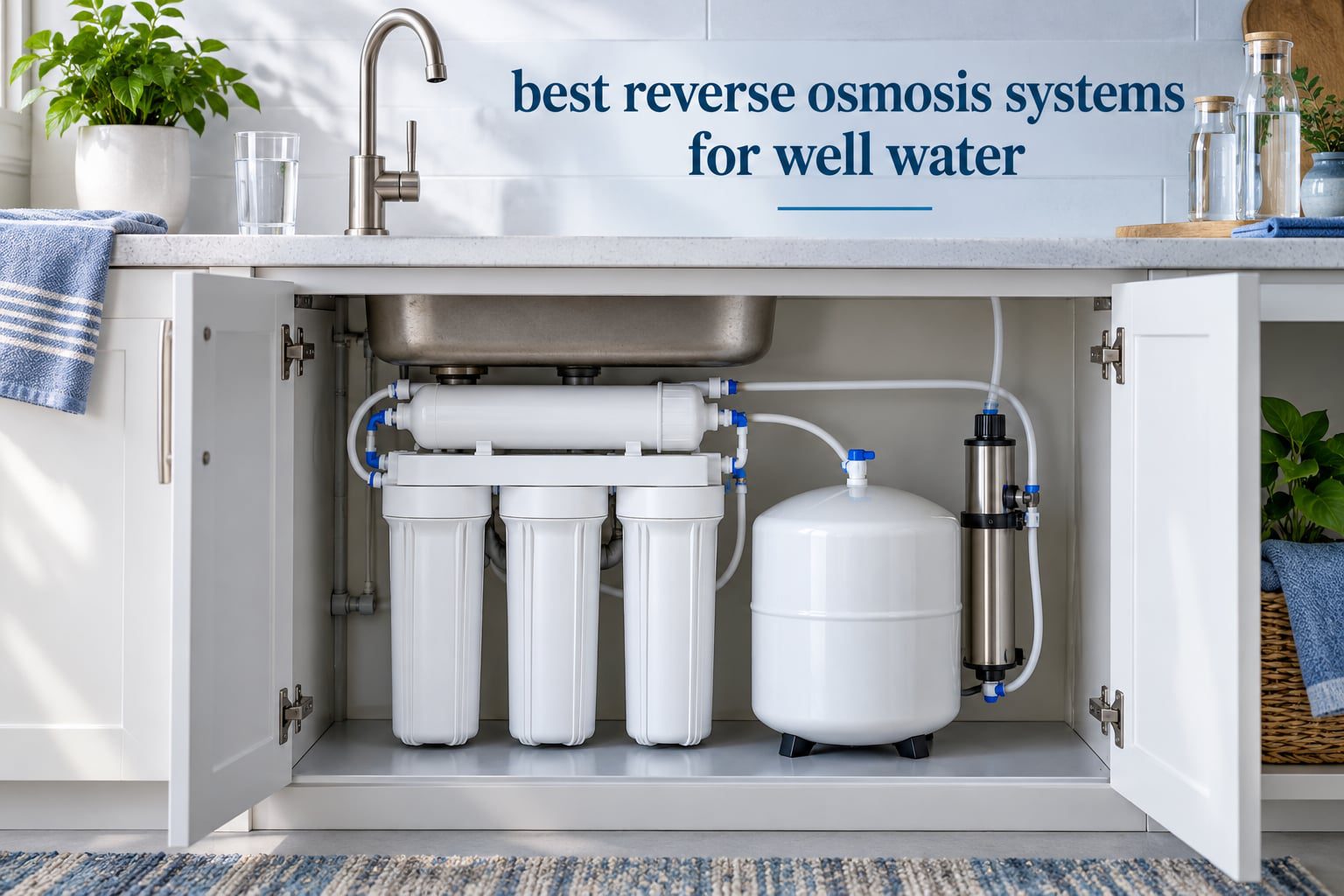
Yes, a reverse osmosis system works on well water, but only when the feed water is cleaned first. A membrane fouls in 60 to 90 days on untreated well water, so sediment, iron, hardness and bacteria each need their own stage upstream of the RO. Get a full water quality report from a certified lab before you buy anything.
That is the honest starting point, and it is the one most RO roundups skip. The big testing publications filter municipal water in Colorado and New York, and the well-specific guides quote contractors without ever putting a meter on a system. Private wells are not regulated by the EPA and are rarely tested, so the same product can be perfect on one property and a membrane killer on the next.
Our team spent six weeks comparing the ten systems below against what well water actually throws at an RO membrane: iron above 0.3 ppm, manganese above 0.05 ppm, hardness past 7 grains per gallon, line pressure below 45 PSI, coliform hits, and TDS anywhere from 100 to 2000 mg/L. Every rejection rate, feed TDS ceiling, pressure range, flow figure and warranty length in this guide comes from the manufacturer specification, and every performance claim comes from what owners measured after installing the unit on a real well.
We also leaned on owners who have already made the mistakes. The loudest complaint in well-water RO groups is not taste, it is membranes dying in a quarter of their rated life because the iron pre-filter was skipped. Once you read our whole-house well water filter guide alongside this one, the sizing logic makes a lot more sense.
Table of Contents
- Top 3 Picks for Best Reverse Osmosis Systems for Well Water (October 2026)
- All 10 Systems Compared for Well Water in 2026
- Non-Negotiable Well-Water Specs and the Numbers That Trigger Them
- 1. iSpring RCC7-BN – Best Overall, Runs Without Power
- 2. Home Master TMHP HydroPerfection – UV, Iron Prefilter and a 1:1 Waste Ratio
- 3. iSpring RCC1UP-AK – Built-In Booster Pump for Low-Pressure Wells
- 4. Waterdrop G3P600 – Widest Certified Feed Window for Harder Well Water
- 5. Frizzlife PD600-TAM3 – Four Certifications and an Alkaline Stage
- 6. APEC ROES-50 – Entry-Level System With the Highest Feed TDS Rating
- 7. Waterdrop G2P600 – 600 GPD Tankless With 3-Second Filter Changes
- 8. iSpring RO500AK – Complete-System NSF/ANSI 58 Certification
- 9. NU Aqua 7-Stage UV Alkaline – Long Warranty, Low Feed Ceiling
- 10. Aquasure 64000-Grain Bundle – Whole-House Softening With an RO Drinking Stage
- How to Choose a Reverse Osmosis System for Well Water
- Frequently Asked Questions
- Conclusion: The Best Reverse Osmosis Systems for Well Water
Top 3 Picks for Best Reverse Osmosis Systems for Well Water (October 2026)


All three top picks handle well water for a reason. The iSpring RCC7-BN is our best reverse osmosis systems for well water choice because it carries the deepest field history in the group and needs no electrical outlet, which matters in a half-finished basement utility sink.
The Home Master TMHP is the pick when bacteria are the worry. It is the only system here that pairs an EPA-registered UV sterilizer with an iron prefilter in one housing layout, and its 1:1 pure-to-waste ratio is the least wasteful design we reviewed.
The iSpring RCC1UP-AK is the answer to the single most common well problem, pressure that sags below the 40 to 45 PSI floor that standard RO units need. Its booster pump and UV stage address that and bacteria in the same cabinet.
All 10 Systems Compared for Well Water in 2026
| Product | Specs | Action |
|---|---|---|
 iSpring RCC7-BN iSpring RCC7-BN |
|
Check Latest Price |
| Home Master TMHP |
|
Check Latest Price |
| iSpring RCC1UP-AK |
|
Check Latest Price |
 Waterdrop G3P600 Waterdrop G3P600 |
|
Check Latest Price |
 Frizzlife PD600-TAM3 Frizzlife PD600-TAM3 |
|
Check Latest Price |
 APEC ROES-50 APEC ROES-50 |
|
Check Latest Price |
 Waterdrop G2P600 Waterdrop G2P600 |
|
Check Latest Price |
 iSpring RO500AK iSpring RO500AK |
|
Check Latest Price |
 NU Aqua 7-Stage UV Alkaline NU Aqua 7-Stage UV Alkaline |
|
Check Latest Price |
 Aquasure 64000-Grain Bundle Aquasure 64000-Grain Bundle |
|
Check Latest Price |
Non-Negotiable Well-Water Specs and the Numbers That Trigger Them
These are the thresholds that decide whether a system survives a year on your well. Match your lab report against the numbers below before you read a single product review.
Line pressure below 45 PSI. Standard tank-based RO membranes need at least 40 PSI to push water through, and a well with a tired pressure tank routinely falls to 25 or 30 PSI at the kitchen sink. Below 45 PSI you need either a system with a built-in booster pump or a separate pump on the feed line. Owners in well-water groups almost always buy the pump rather than abandon RO, and it is the right call.
Iron above 0.3 ppm or manganese above 0.05 ppm. Both will scale and foul a membrane. Iron is the loudest killer: it oxidizes in the air, forms rust-coloured deposits on the membrane surface, and cuts rejection from 99% down into the 60 to 70% range within a few months. A dedicated iron or manganese filter has to sit ahead of the RO. Our iron filter guide for well water covers the media choices.
Hardness above 7 grains per gallon. Hardness is scale, and scale on a membrane is permanent fouling. Above 7 gpg a softener runs before the RO, not after. This is the ordering question well owners ask constantly, and the answer is not optional.
Sediment above 5 NTU. Fine grit from a casing, a pump, or a collapsing well wall will blind a 0.0001 micron membrane in weeks. A 5 micron or 20 micron spin-down filter costs little and prevents the most common early failure.
Any coliform or E. coli result. RO blocks coliform mechanically because the organisms are larger than the membrane pores, but RO is not a disinfection system. It offers no guarantee, it can grow biofilm on the membrane surface, and a system with a storage tank gives bacteria a place to sit. A UV sterilizer is the correct primary defense, and it needs an electrical outlet to run.
Feed TDS near or above the unit’s ceiling. Match your measured TDS to the manufacturer’s maximum supported figure. A 300 ppm system fed with 600 ppm well water will be pushed past its rating permanently, and no warranty covers that.
Anything above 1.5 gpg sulfur or a rotten-egg smell. RO does not fix sulfur odor. You want an oxidation or aeration filter, and buying RO hoping it solves sulfur is the most common wasted purchase on this list.
1. iSpring RCC7-BN – Best Overall, Runs Without Power
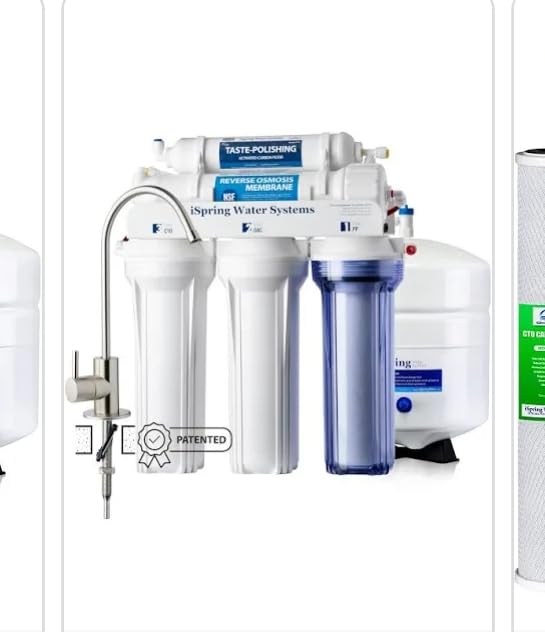
iSpring RCC7-BN NSF Certified, High Capacity Under Sink 5-Stage Reverse Osmosis Water Filter, RO Drinking System, 75 GPD Brushed Nickel Faucet, Patented Top-Mounted Faucet Design for Easy Installation
75 GPD
40+ PSI minimum
750 ppm TDS ceiling
No electricity required
Pros
- Deepest field history in the group with over 21000 ratings
- No electrical outlet needed so it keeps working during power outages
- Industry-standard parts that any home improvement store stocks
- TDS measured dropping from 435 ppm to 47 ppm
Cons
- Roughly 2:1 to 3:1 brine ratio wastes more water than tankless rivals
- No remineralization stage so the taste is flat
- Needs a booster pump below 40 PSI and a regulator above 80 PSI
The RCC7-BN is the one we keep coming back to, and the reason is simple: nothing else in this group has been proven on this many real installations for this long. More than 21,000 ratings is not a marketing number, it is a decade of field history, and long-term owners report three to ten year service lives with self-replaced canisters and membranes.
We chose it as our best reverse osmosis systems for well water pick for three practical reasons. It needs no electricity, so a well pump control box or a basement outage does not take your drinking water offline. Every part inside it is an industry-standard cartridge, which means replacements cost a fraction of what a proprietary system charges. And iSpring support will talk through your measured PSI and ppm before you buy, then ship parts at no charge afterward.
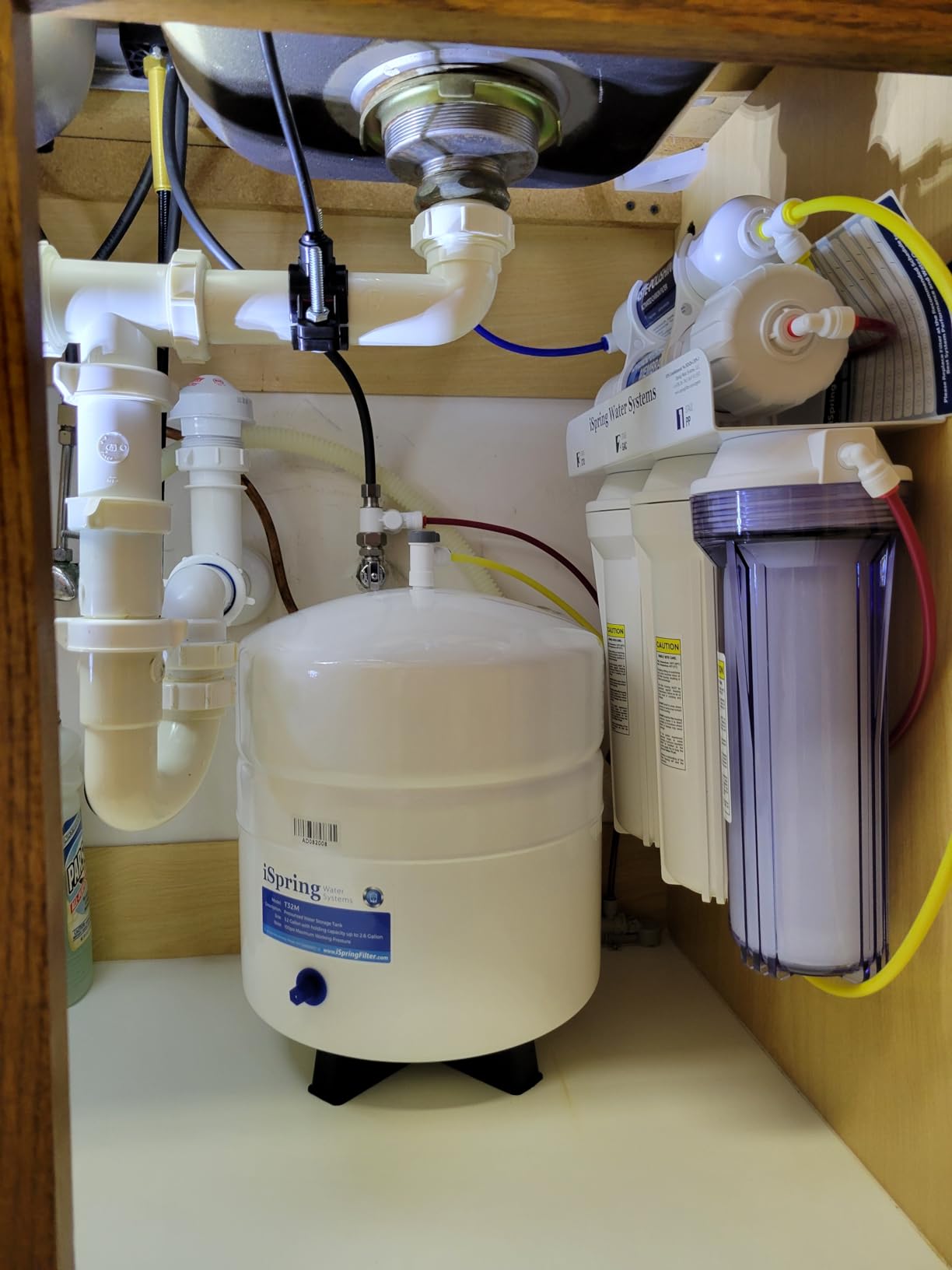
Owners measure real reduction. Tap water at 98 to 110 ppm comes out at 3 to 9 ppm, and one owner reported 435 ppm in the well dropping to 47 ppm after the membrane. Kettles stay free of limescale and dishes come out without a residue film, which is the practical proof that the softening effect is working.
The weak point is pressure. Forty PSI is a hard floor, and on a shallow well with a small pressure tank that is a real constraint. Above 80 PSI you also want a regulator, because too much pressure is its own failure mode. The 75 GPD rating is the smallest here, and the storage tank only gives you two to three gallons at a time, so a family of four will wait for the tank to refill.
When this is the right call for a well
Choose the RCC7-BN when your water is soft to moderately hard, your line pressure holds above 40 PSI, and you want the lowest running cost with zero power dependency. It also wins if your cabinet has no outlet and no interest in running a new one.
It is the right choice for a well with iron under 0.3 ppm that you are already handling with a spin-down filter, and for anyone who plans to keep a system for a decade rather than cycle through models.
When it is the wrong call for a well
Skip it if your well runs softener-mushy or your TDS sits above 750 ppm, and skip it if your pressure tank has ever left you under 40 PSI. Those cases want a boosted system, and this one has no pump at all.
Also look elsewhere if the flat taste bothers you. There is no alkaline or remineralization cartridge in this build, so the water reads as slightly empty compared with the mineral-stage models below.
2. Home Master TMHP HydroPerfection – UV, Iron Prefilter and a 1:1 Waste Ratio
Home Master TMHP HydroPerfection Reverse Osmosis System, 9-stages, Patented 2-pass Alkaline Remineralization, Fast 4.5 Sec Fill Rate, 1:1 Waste Ratio, UV Sterilizer 99.9% EPA 97952AZ1, Iron Prefilter
9 stages
1 gpm flow
1:1 waste ratio
EPA-registered UV 97952AZ1
Pros
- Only system pairing an EPA-registered UV sterilizer with an iron prefilter
- 1:1 pure-to-waste ratio wastes the least water of any unit here
- 1 gpm flow fills a 20 oz bottle in about 5 seconds
- Patented two-pass remineralization restores calcium and magnesium
- Five year limited parts warranty
Cons
- Needs an electrical outlet under the sink for the UV light
- Mounting clips are stiff in a tight cabinet
- Quick-connects are very hard to disconnect by hand once pressurized
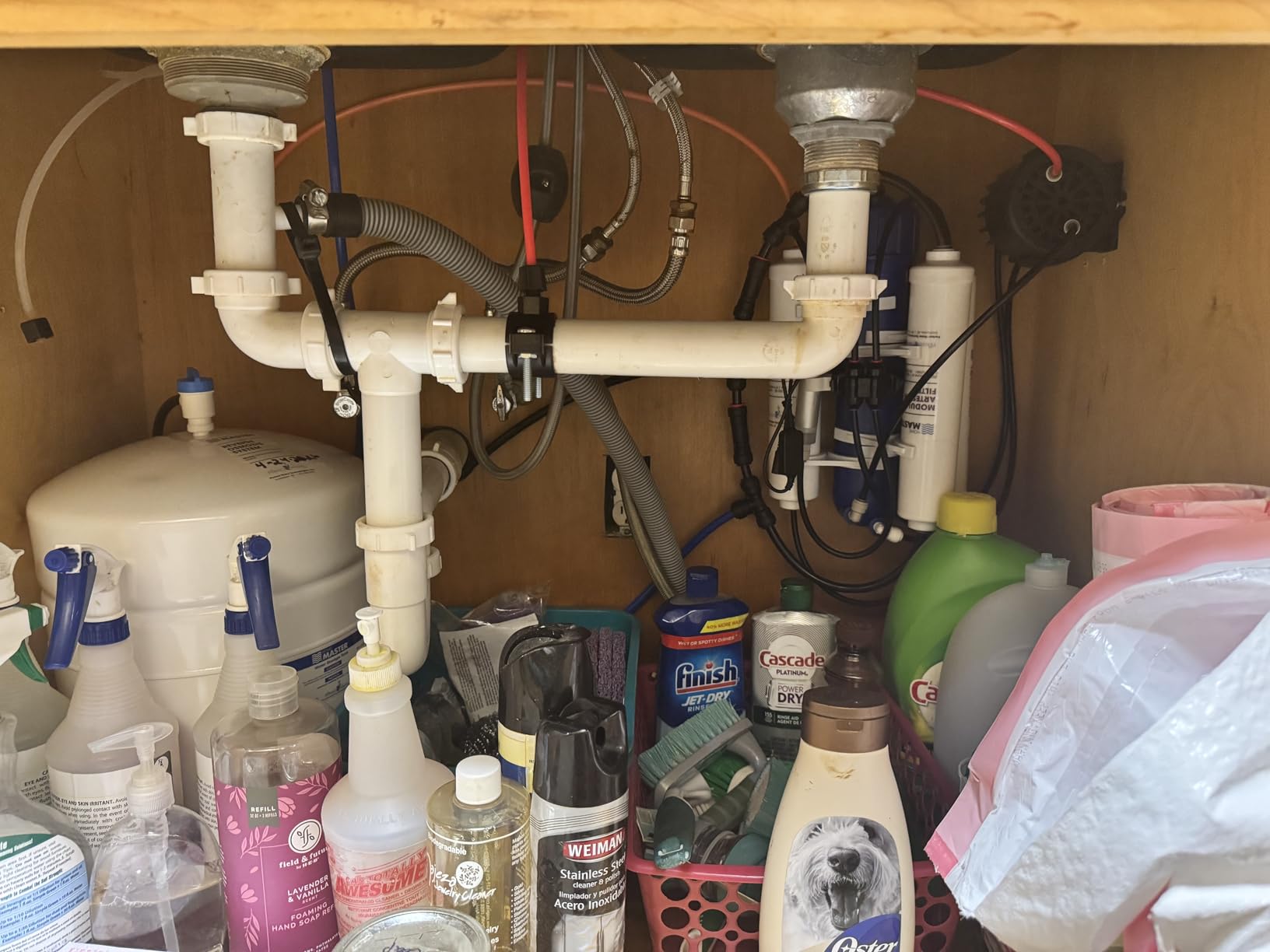
The TMHP is the highest rated unit we reviewed, at 4.7 stars, and it is also the only one that treats the two well-water problems most RO systems ignore: bacteria and iron. The EPA-registered UV sterilizer is registered under number 97952AZ1, and an iron prefilter is built into the housing layout rather than left as an afterthought.
What impressed us most is the 1:1 pure-to-waste ratio. Traditional systems send three or four gallons of brine down the drain for every gallon you drink, and on a well that matters twice, because low water pressure makes a high drain ratio worse. This one runs an equal ratio and still delivers a 1 gpm flow rate that fills a Keurig reservoir in under 30 seconds.
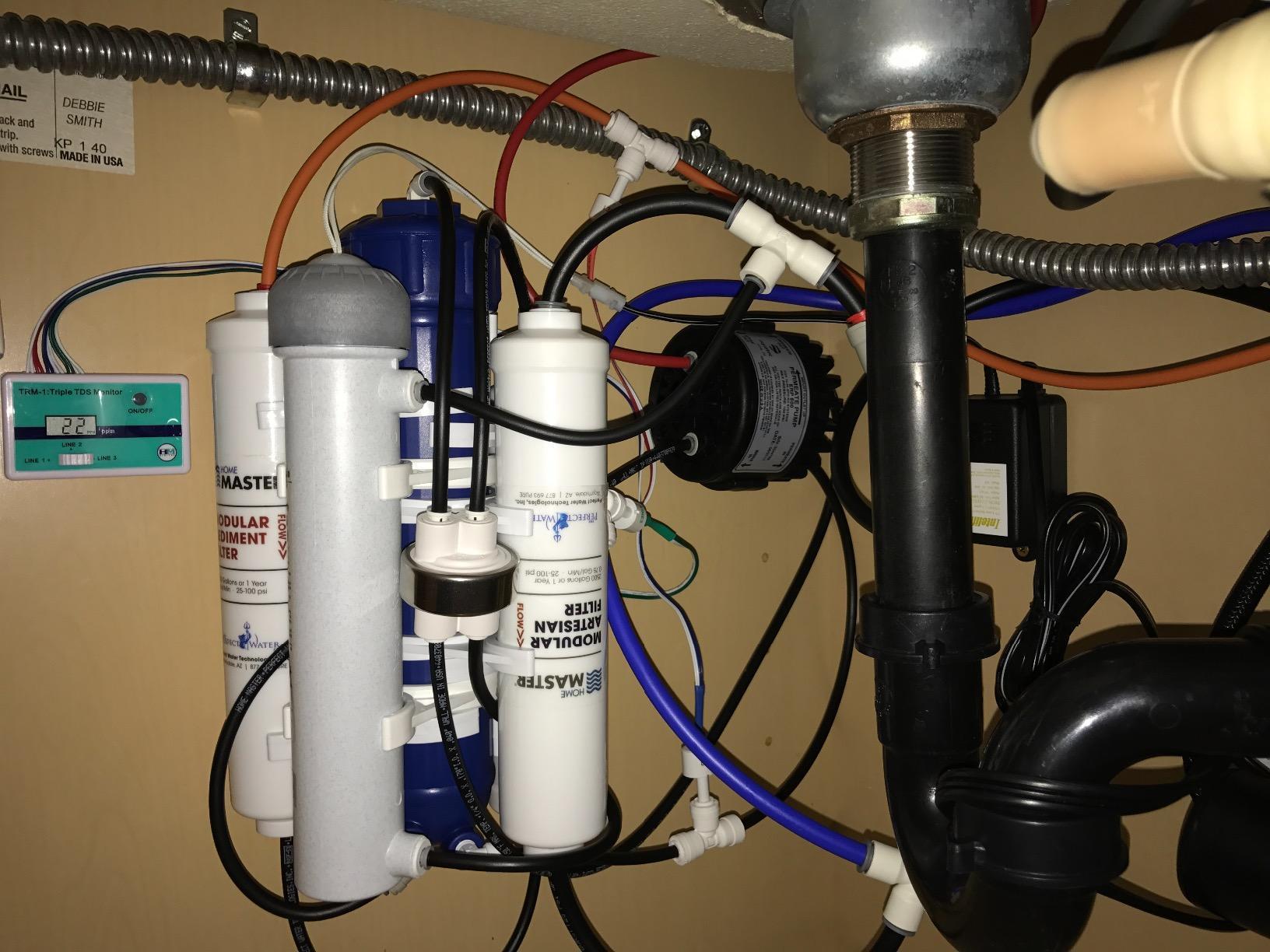
Measured results match the spec. Owners with feed water in the 400 to 450 ppm range consistently report output at 20 to 30 ppm, and the two-pass alkaline remineralization gives the water a mineral character rather than a flat distilled taste. The operating window of 40 to 100 PSI is also the widest we saw on any tank-based system here.
Support is a genuine strength. Long-horizon owners describe phone-based service that shipped replacement membranes, seals and even faucets under warranty. Filter changes are annual rather than every three months, which is where the running cost quietly becomes competitive with cheaper units.
When this is the right call for a well
This is the system for a well that has tested positive for total coliform, because a UV stage in the same cabinet is the difference between filtering and actually disinfecting. It also suits a 600 ppm TDS feed, since the 600 ppm supported ceiling covers most moderately hard wells without stress.
Choose it if water waste bothers you, whether because you are on a septic system or because a low-pressure well makes recovery rates unpredictable. The 1 gpm flow also means fewer trips to refill a pitcher.
When it is the wrong call for a well
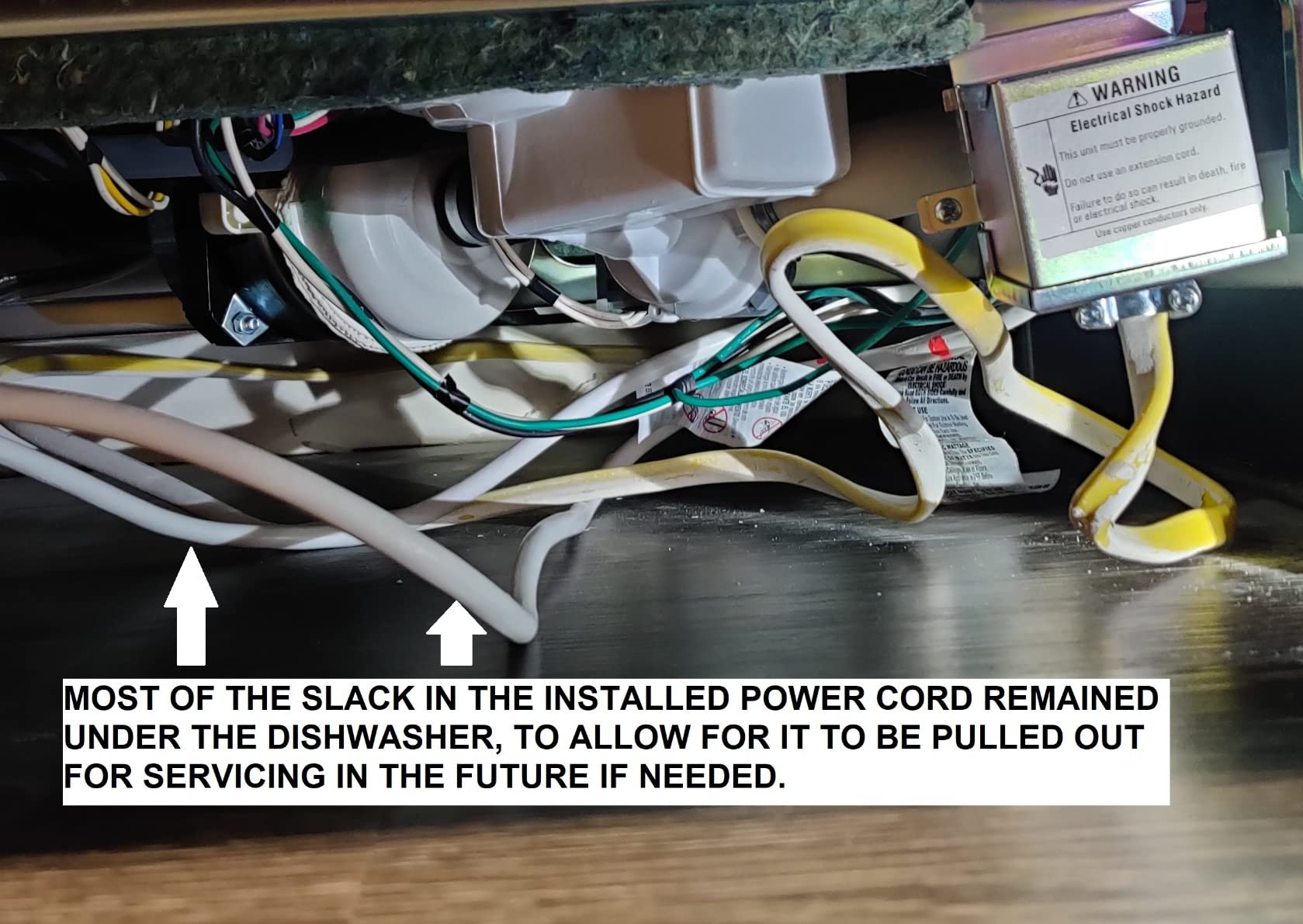
It is the wrong pick if you have no electrical outlet under the sink and do not want to add one, since the UV sterilizer needs constant power. It is also a poor match for a home with a very tight cabinet, because the mounting clips are stiff enough to fight.
Skip it if you prefer a tankless footprint or need very high throughput, because the storage tank and faucet assembly take more cabinet space than the modern front-facing designs.
3. iSpring RCC1UP-AK – Built-In Booster Pump for Low-Pressure Wells
iSpring RCC1UP-AK, 100 GPD 7-Stage Reverse Osmosis Under Sink Water Filtration System with Boost Pump, Alkaline Remineralization and UV Filter, Patented Top-Mounted Faucet Design for Easy Installation
100 GPD
Built-in booster pump
UV with flow sensor
750 ppm TDS ceiling
Pros
- Booster pump holds membrane pressure where pumpless units stall
- UV stage with smart flow sensor extends bulb life
- Owners on iron-stained wells report TDS cut from 244-450 ppm to 12-45 ppm
- Transparent first housing shows filter condition at a glance
- Support ships parts including replacement pumps at no cost
Cons
- Booster pump is noticeably loud and described as a clank
- Needs under-sink power for both pump and UV
- Factory tubing is often out of round and needs trimming
- Bulky footprint takes a large share of a double cabinet
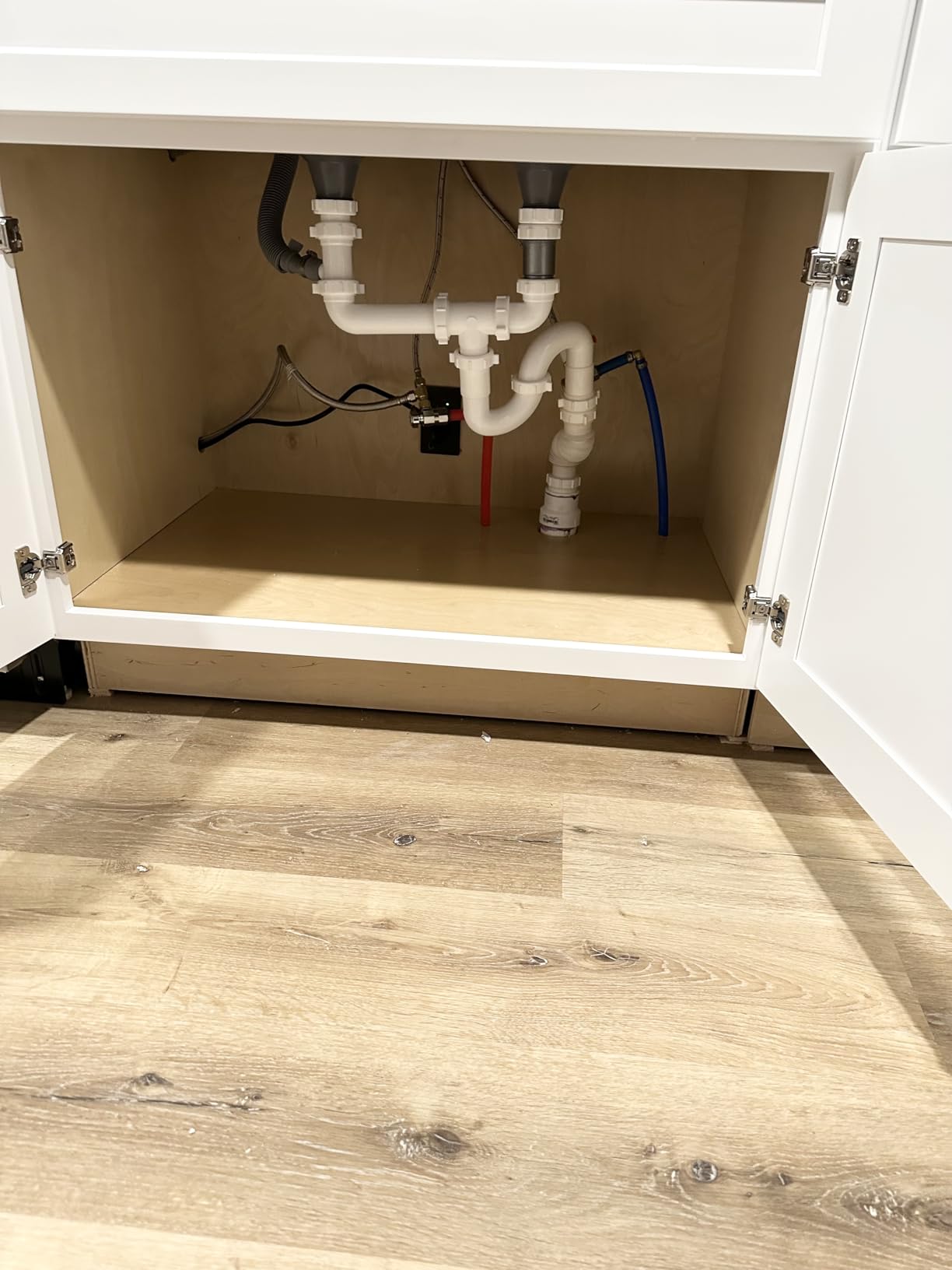
Ask almost anyone running RO on a well and the first problem they will mention is pressure, not taste. The RCC1UP-AK is built for exactly that, with a booster pump inside the housing that raises feed pressure to the membrane and keeps water moving when the pressure tank bottoms out.
The booster also cuts the wastewater volume relative to pumpless models, which makes it a better neighbour to a septic field. On a well that also means the membrane sees a steadier pressure, which is a large part of why owners on this unit report long service lives instead of premature fouling.
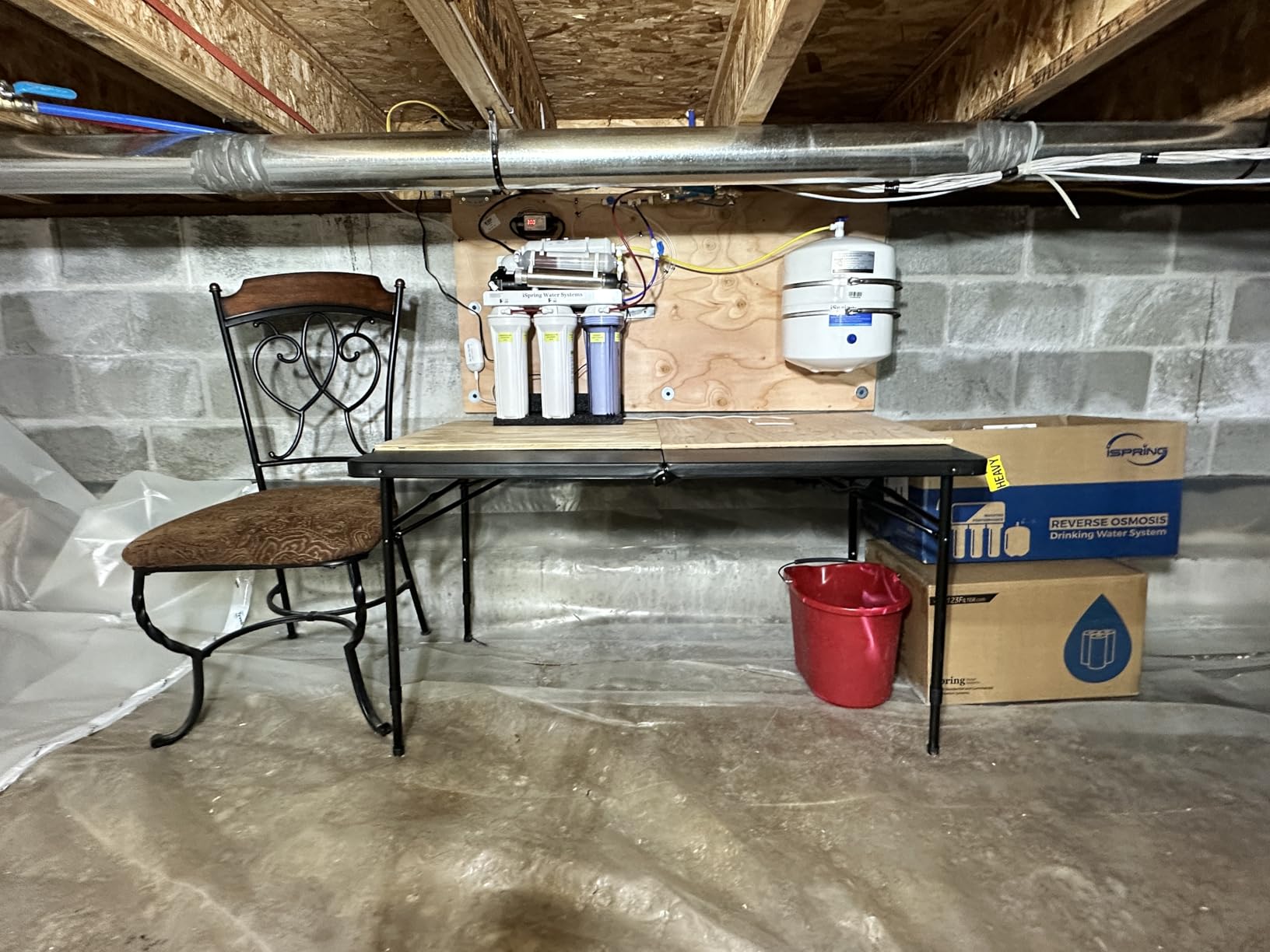
The UV stage has a smart flow sensor that only energises when water is actually moving, with a three-minute delay that stretches bulb life. For a well owner that is exactly the right design, because a continuously lit UV lamp burns out on schedule whether or not anyone is drawing water.
Measured results on real wells are strong. Owners with iron-stained supply report feed TDS of 244 to 450 ppm dropping to 12 to 45 ppm, with a large improvement in both taste and staining. One long-horizon owner reports 13 years of service with the filters, membrane, bulb and pump all replaced at home.
When this is the right call for a well
This is the pick when your pressure tank sags under 45 PSI at the kitchen tap, which is the most common well-water complaint in the groups we read. It also suits wells that have iron staining you have already addressed upstream, since the pump and UV handle the pressure and bacteria side of the problem.
Choose it if you want disinfection and pressure correction in one under-sink footprint rather than a separate booster pump on the feed line plus a standalone UV unit.
When it is the wrong call for a well
It is the wrong choice for noise-sensitive kitchens, because the booster pump is audibly clattery and sits inside your cabinet. It is also heavy and bulky, so measure the space before you commit.
Skip it if your line pressure is already strong and stable, since you would be paying for a pump you do not need, and note that the tankless designs below use their cabinet space far more efficiently.
4. Waterdrop G3P600 – Widest Certified Feed Window for Harder Well Water
Waterdrop G3P600 Tankless Reverse Osmosis Water Filter System, 600 GPD
600 GPD
1500 ppm TDS ceiling
2:1 drain ratio
87 psi operating pressure
Pros
- Widest feed TDS ceiling among the under-sink picks at 1500 ppm
- SGS tested against PFAS
- arsenic
- radium
- fluoride
- chromium and lead
- Forward-facing filters swap in about 3 seconds without moving the system
- Tankless design saves roughly 70% of cabinet space
Cons
- Replacement cartridges cost more than competing systems
- Requires a continuously powered outlet under the sink
- Built-in TDS meter has been reported to read inaccurately
- First draw after idling shows elevated TDS until flushed
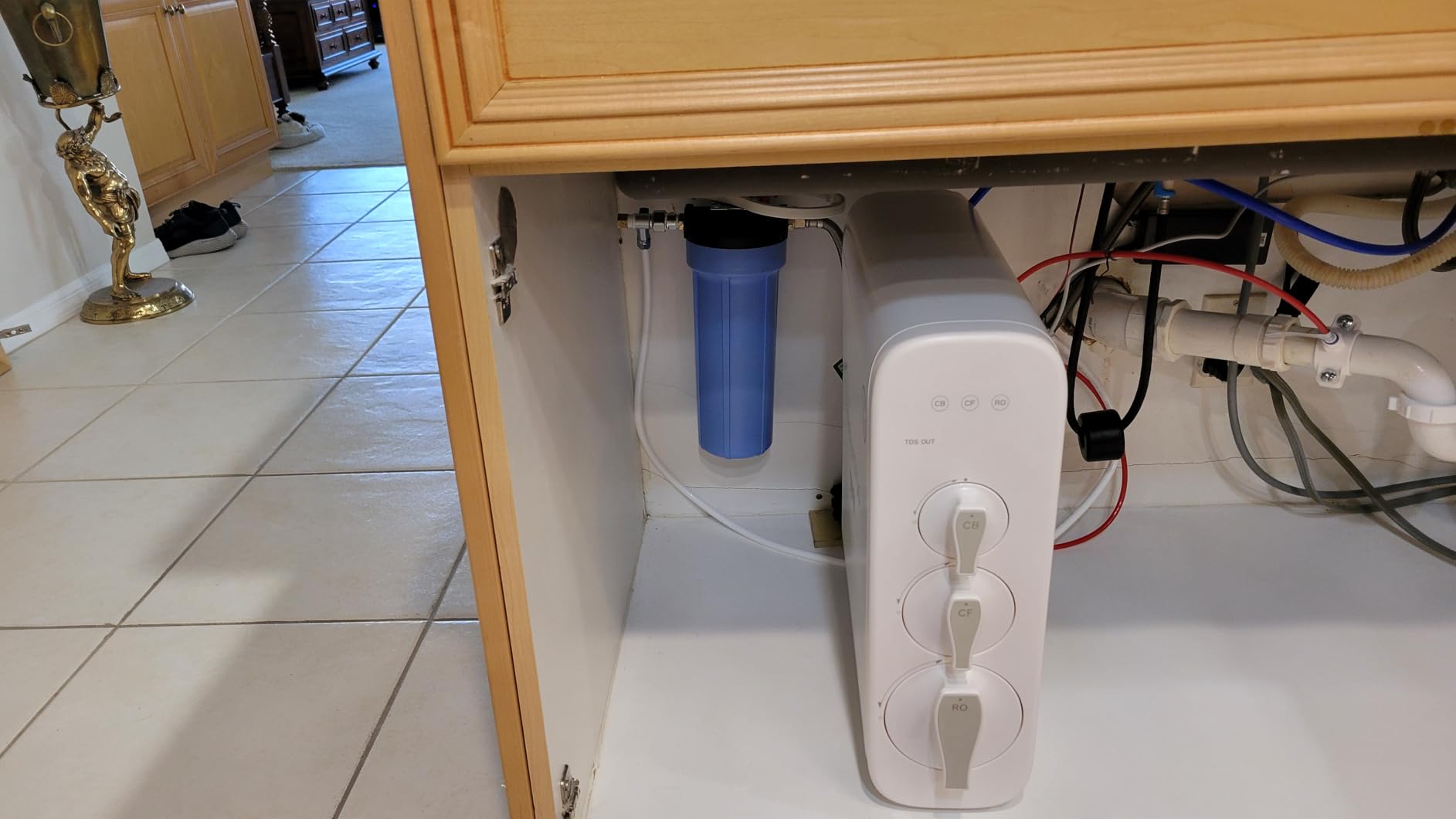
The G3P600 has the highest feed TDS rating of any under-sink unit we reviewed, at 1,500 ppm. That number matters on a well because it is the difference between a system that operates at the top of its range and one that is permanently outside its rating.
It is also certified across the board. NSF/ANSI 58 for TDS reduction, NSF/ANSI 372 for lead-free materials and NSF/ANSI 42 for chlorine, taste and odour, with SGS testing against a long contaminant list that includes PFAS, radium, arsenic, fluoride, chromium and radioactive substances. For a private well with an unknown contaminant profile, verified certification is worth more than an extra stage name.
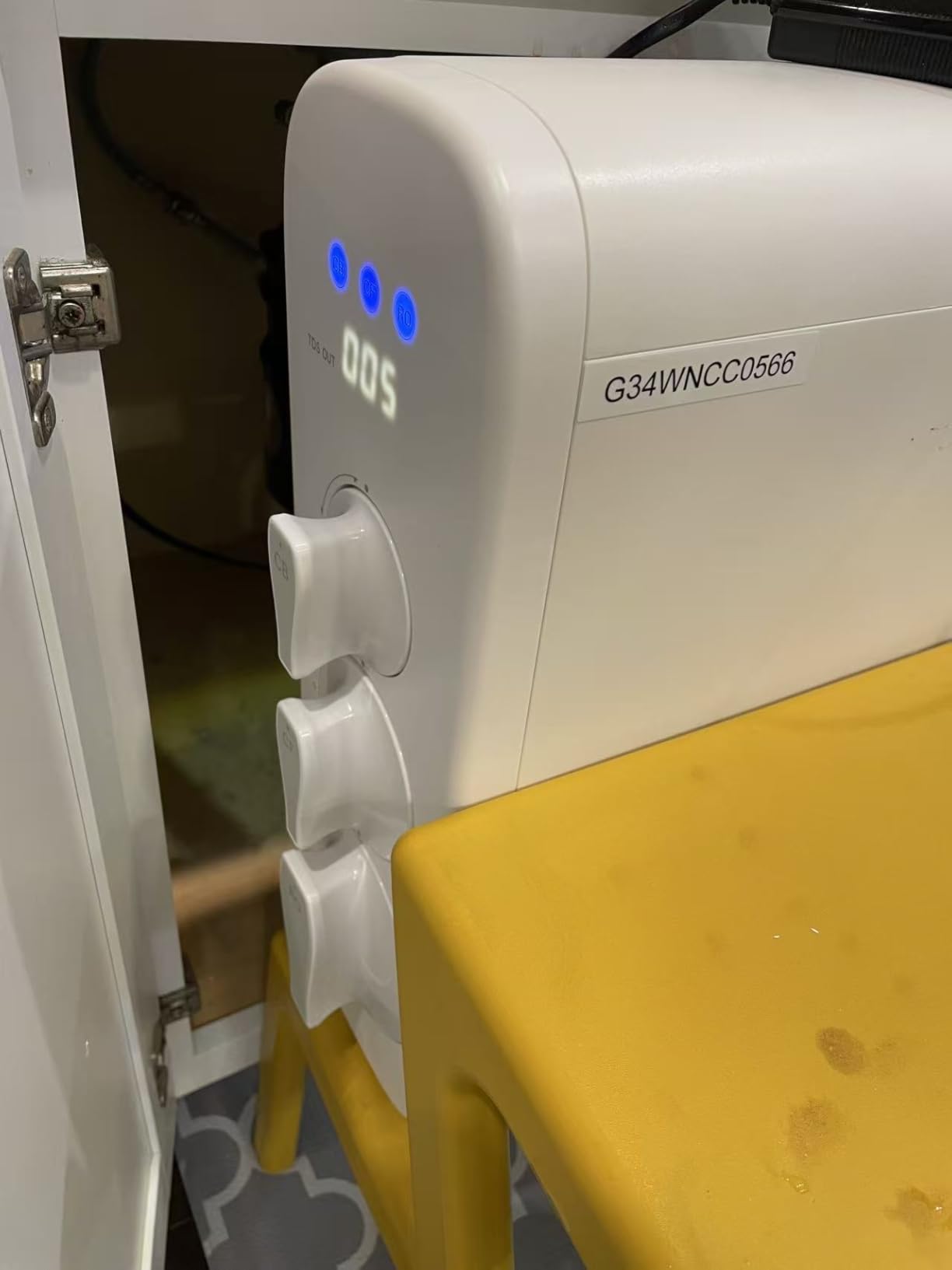
Owners report dramatic measured results, including 358 ppm feed water coming out at 1 to 5 ppm and 740 ppm dropping to 18 to 25 ppm. The 2:1 drain ratio cuts waste sharply against conventional systems, and 600 GPD fills an 8 oz cup in about eight seconds.
There is one well-specific quirk worth knowing. Without a storage tank, the first seconds of water after the system has sat idle show elevated TDS from membrane creep until you flush it. A three-second flush fixes it, but it is unfamiliar if you are used to a tank.
When this is the right call for a well
Pick this when your lab TDS sits between 750 and 1,400 ppm and you want a tankless system that still has certification headroom. It is also the right answer for a household of five or more that wants real throughput without a storage tank taking half the cabinet.
Choose it if cabinet space is the constraint, because the tankless layout leaves the drain line and nothing else to work around.
When it is the wrong call for a well
It is the wrong pick if you are on a tight replacement-filter budget, because the CF filter is needed every six months and the RO filter annually, and those cartridges cost more than generic equivalents. It also needs a dedicated outlet under the sink.
Do not rely on the built-in TDS display as your only monitoring tool, since some owners report drift even after filter changes. Pair it with an independent meter, which is worth doing on any well.
5. Frizzlife PD600-TAM3 – Four Certifications and an Alkaline Stage
Frizzlife Reverse Osmosis Water Filter – Alkaline Mineral pH+, NSF/ANSI 58&53&42&372 Standard, 600GPD Tankless RO Reverse Osmosis System, Under Sink, 2:1 Pure to Drain, Reduce FPAS/PFOA, PD600-TAM3
600 GPD
0.41 gpm flow
2:1 drain ratio
NSF 58, 53, 42 and 372
Pros
- Certified to four NSF/ANSI standards including 58 and 372
- Alkaline stage lifts pH above 7.5 and fixes the flat RO taste
- 600 GPD fills a 330ml cup in about 10 seconds
- Complete filter set and faucet included in the box
Cons
- Tankless pump requires under-sink electrical power
- Alkaline and carbon replacement filters cost more than generic pumpless options
- Instructions and videos need to be followed closely to avoid leaks
The PD600-TAM3 is the configuration we would buy for a mid-hardness well on a budget. It delivers 600 GPD tankless throughput with a third-stage alkaline remineralization filter, four NSF certifications, and a smart LED panel showing live output TDS and remaining filter life.
The alkaline stage is not decoration. Raw RO water comes out slightly acidic and tastes thin, and on well water where the tap already has character, that thinness is what makes people think the system is broken. This one raises pH above 7.5 and puts minerals back, which is the single most common owner complaint we saw resolved by a cartridge swap.
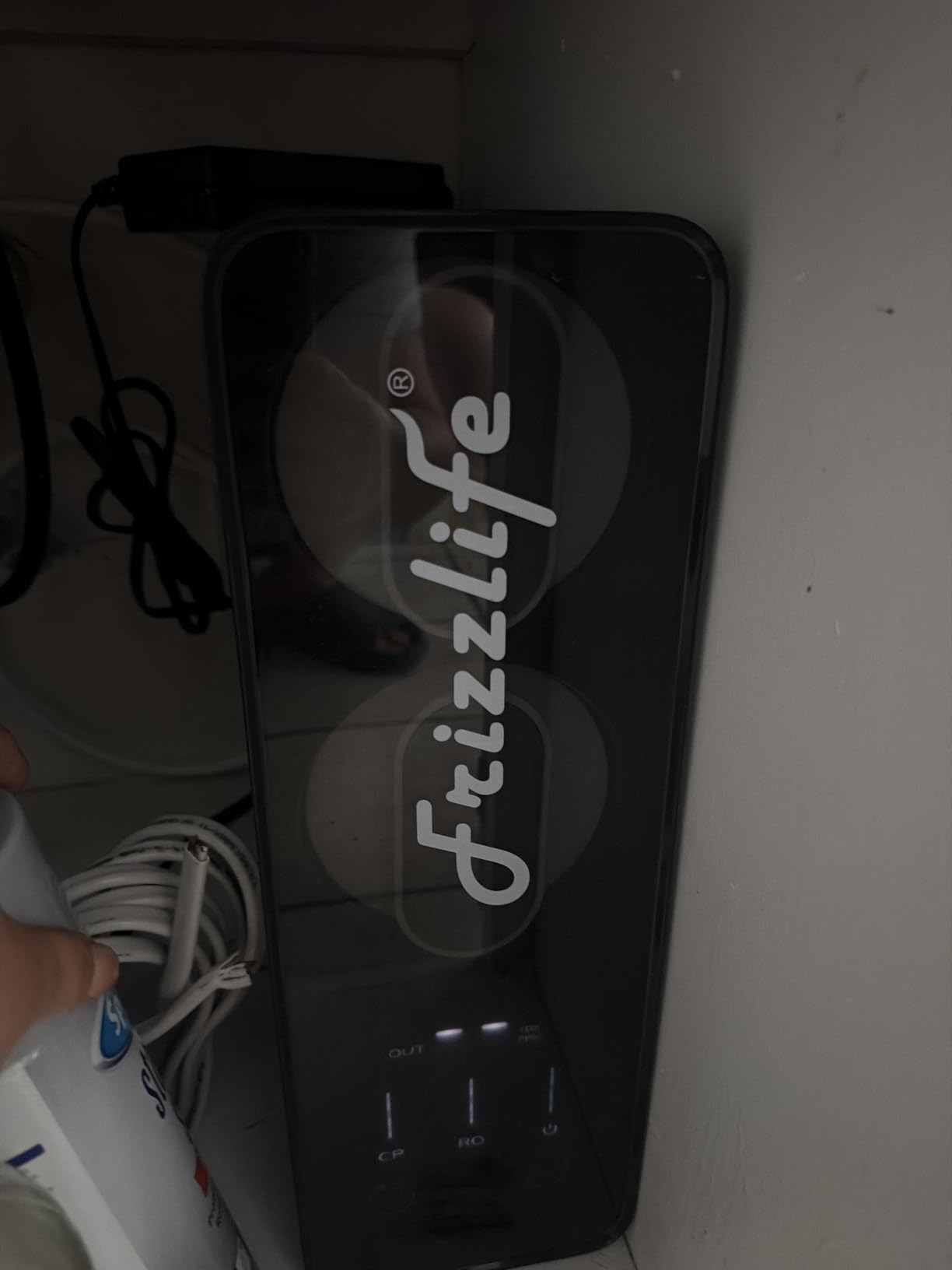
Flow is 0.41 gpm with a 2:1 drain ratio that claims up to 450% water savings against conventional RO. The tankless footprint is compact and removes the secondary contamination risk of a storage tank sitting in a warm utility space, which matters more on a well than it does on municipal water.
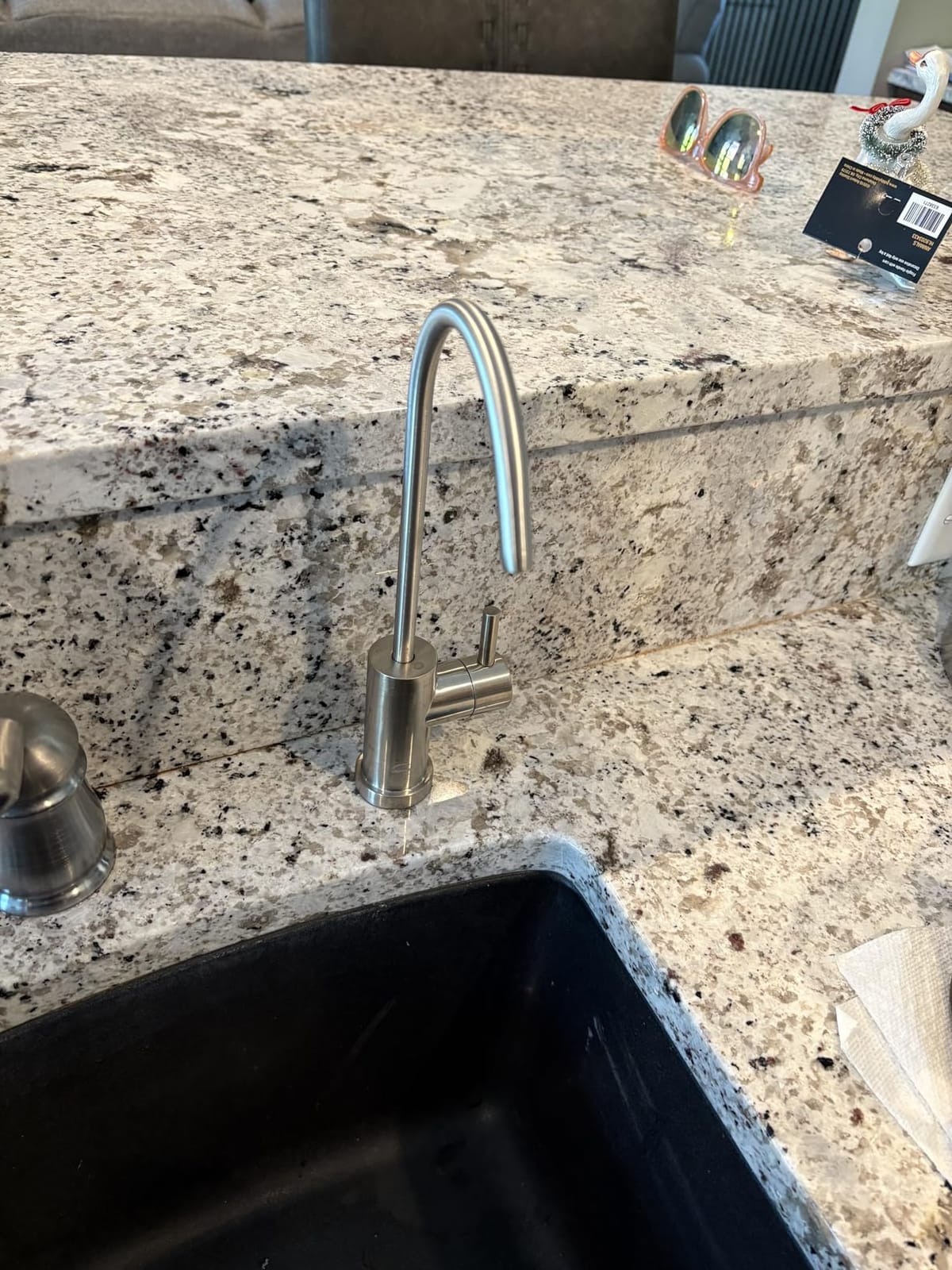
Everything you need arrives in the box, including the carbon pleated pre-filter, the 600 GPD membrane, the alkaline cartridge and a brushed nickel faucet. That matters when you are trimming a cabinet under a counter that is already tight.
When this is the right call for a well
Choose it when your TDS is moderate, your pressure holds above 45 PSI, and taste is a real concern for the people drinking the water. Four NSF certifications give you a verified paper trail that most well buyers never get with a municipal purchase.
It is also a strong pick for a family that wants tankless convenience without paying for the highest replacement cartridge costs in the category.
When it is the wrong call for a well
It is the wrong choice if your feed TDS runs above the range a mid-tier system should handle comfortably, or if the ongoing cartridge cost is the deciding factor in a five-year budget. There is no UV stage here, so bacteria need separate equipment.
Plan the install carefully. The instructions are thorough rather than intuitive, and a rushed fit is where most of the reported leak complaints come from.
6. APEC ROES-50 – Entry-Level System With the Highest Feed TDS Rating
APEC Water ROES-50, 5-Stage Under Sink Reverse Osmosis System, 50 GPD
50 GPD
40-85 PSI range
2000 ppm TDS ceiling
5 stages
Pros
- Highest feed TDS ceiling listed at 2000 ppm
- Industry-standard components available at any home improvement store
- Measured 144 ppm dropping to about 6 ppm
- Quick-connect lines reported leak-free for years
Cons
- 50 GPD is the smallest capacity here and the tank yields only 2-3 gallons
- Included faucet has no air gap so many owners add a second hole
- Ten foot tubing lengths are often too short
- Filter housing caps can crack if overtightened
The ROES-50 is the cheapest way to get genuinely good reduction out of well water, and its 2,000 ppm feed TDS rating is the highest ceiling anywhere in this list. That is an unusual pairing: the entry-level price does not come with the weak feed tolerance that usually forces a replacement within a year.
Owners measure 144 ppm tap water dropping to about 6 ppm, and 380 ppm coming out at 18 ppm. The five stages cover arsenic, chlorine, lead, fluoride, heavy metals and over 1,000 impurities including PFAS and microplastics, and 20 years of in-house design testing shows in how conventional the parts are.

The real advantage is serviceability. Every component is an industry-standard cartridge, so filters and parts are stocked by hardware stores and priced accordingly. One owner replaced a 25-year-old system at lower total cost than a filter and tank change would have cost, which is the calculation that matters over a decade.
Support is generally strong, with APEC responding within hours and shipping parts for leaks after three years of use. Several owners report a decade of continuous service with minimal maintenance.

When this is the right call for a well
Pick this when the household is one or two people drinking water occasionally, the budget is fixed, and you want a proven, repairable design rather than a feature list. The 2,000 ppm ceiling also makes it forgiving if your well is harder than expected.
It suits cabins and seasonal homes too, where nobody wants a proprietary cartridge bill to arrive while the property is shut down.
When it is the wrong call for a well
It is the wrong choice for a household of four or more. Fifty GPD fills slowly, and the tank only delivers two to three gallons at a time, so the practical result is standing at the tap.
Watch two install details: the included faucet has no air gap, so many owners add a dual air gap that needs a second countertop hole, and the supplied ten foot tubing is frequently too short for a real run. Plan a booster pump below 40 PSI and a regulator above 85 PSI.
7. Waterdrop G2P600 – 600 GPD Tankless With 3-Second Filter Changes
Waterdrop G2P600 Under-Sink RO System, 600 GPD Tankless Water Filtration
600 GPD
2:1 drain ratio
500 ppm TDS ceiling
7 stages
Pros
- Best capacity-to-cost ratio in the lineup for tankless output
- Twist-and-pull front filters change in about 3 seconds
- Filter life indicators flag a cartridge before performance drops
- Fills a 200ml cup in roughly 8 seconds
- 30-minute self-install with clear instructions and videos
Cons
- Maximum supported feed TDS is 500 ppm
- Tankless design still requires under-sink electrical power
- No remineralization stage so the water tastes flatter
The G2P600 is the flow-for-money answer. You get the same 600 GPD tankless throughput and the same 2:1 drain ratio as the flagship G3P600, with the same quick front-facing filter change, at a materially lower price point.
Filter maintenance is the standout feature. The twist-and-pull front-facing cartridges come out in about three seconds without moving the unit or using tools, which means you will actually do it on schedule. The advance filter-life indicators flag a cartridge before it saturates, which is a different thing entirely from discovering it when the water tastes flat.
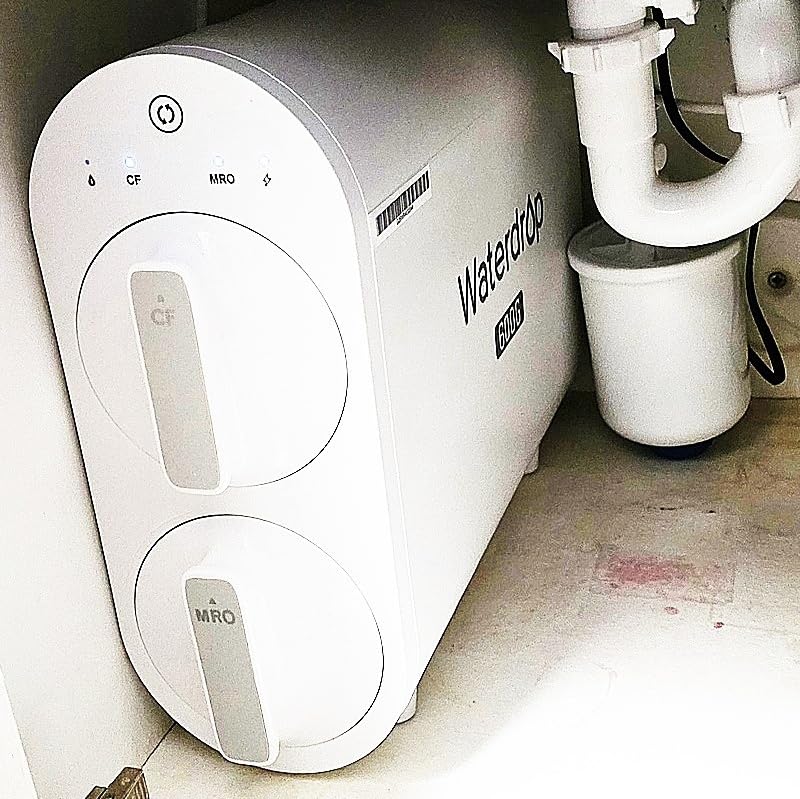
The trade-off buyers accept is taste. With no remineralization cartridge, the output is flatter than the mineral-stage models, so people who dislike thin water will notice. The 2:1 ratio still saves roughly 60% more water than a traditional pumpless unit.
For a well, the 500 ppm maximum feed TDS rating is the number to check first. If your lab report comes back under that, this is a genuinely strong pick. Above it, you are outside the rating and no warranty will help.
When this is the right call for a well
Choose it when your feed TDS is comfortably under 500 ppm, your household wants high daily volume, and you would rather not fuss with cartridge changes. The short install time also makes it a good second attempt after a system you had removed.
It suits a family that already has an iron filter or softener upstream and does not need anything else in the cabinet.
When it is the wrong call for a well
It is the wrong pick for a hard well above 500 ppm, and wrong for anyone who cares about the finished taste enough to want an alkaline stage. It also needs an outlet under the sink for the pump.
If you are decorating the taste of water for coffee or formula, pair it with a separate mineral cartridge rather than assuming the membrane output is the issue.
8. iSpring RO500AK – Complete-System NSF/ANSI 58 Certification
iSpring RO500AK Alkaline Reverse Osmosis System, NSF 58 Certified, 500 GPD
500 GPD
0.4 gpm
1000 ppm TDS ceiling
15-70 psi window
Pros
- Complete-system NSF/ANSI 58 certification rather than component-only
- 1000 ppm feed TDS ceiling suits harder source water
- Auto-flush after 24 hours of non-use protects the membrane
- Front panel lights and buzzer remove filter-timing guesswork
- 2:1 drain ratio with 8 oz cup filled in about 10 seconds
Cons
- Requires under-sink electricity for the pump
- At the top of the price range for under-sink systems
- 15-70 psi window may need a booster pump or regulator
- Tankless layout means no stored water during a power outage
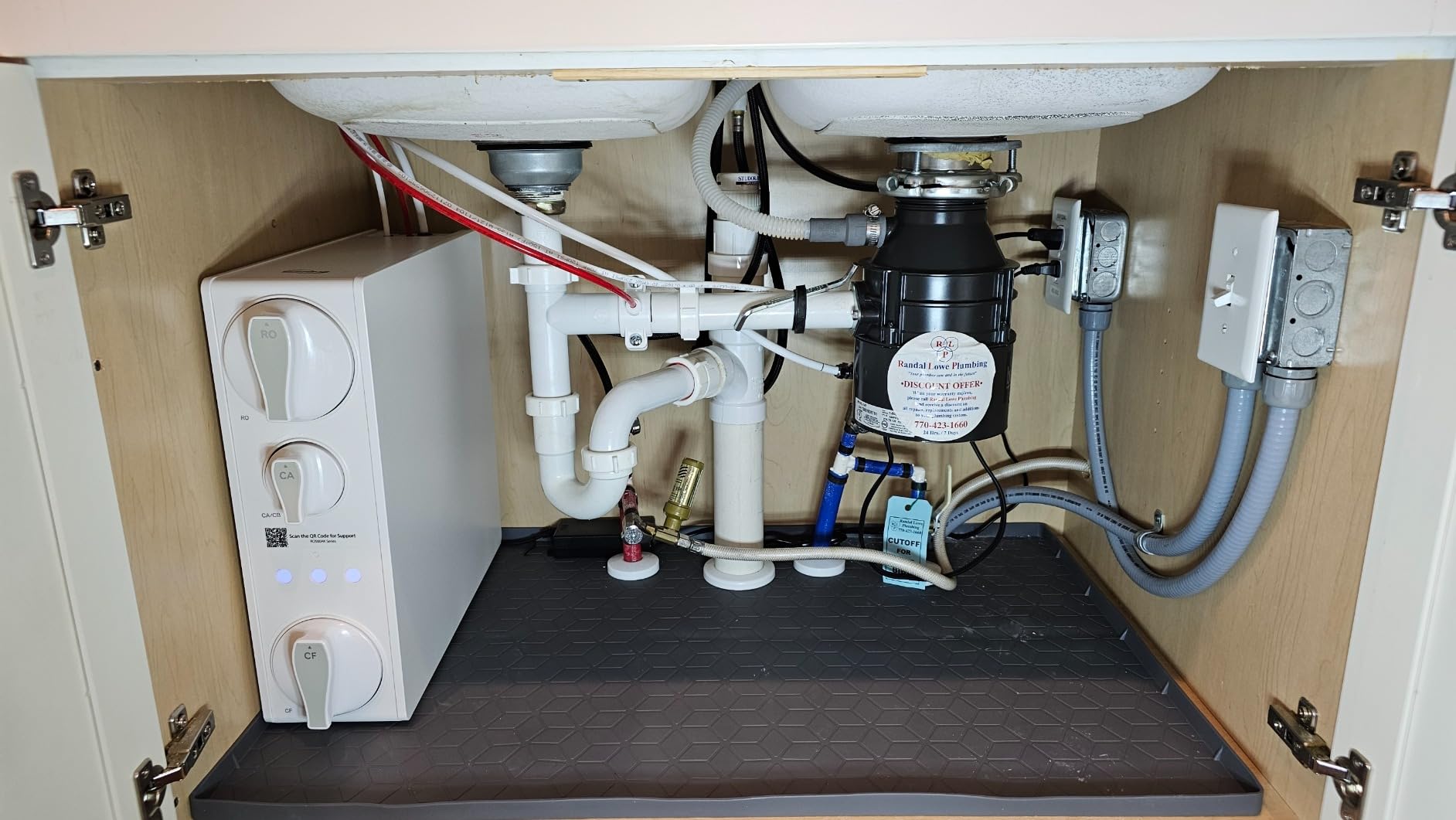
The RO500AK’s real differentiator is the certification. A lot of RO systems list component certifications and let you infer the rest. This one is certified as a complete system to NSF/ANSI 58, which is the standard specifically written for reverse osmosis drinking water units.
On a private well that distinction is worth more than it looks, because you are filtering water nobody has tested for you. The 0.0001 micron membrane is rated to remove up to 99% of lead, PFAS, TDS, chromium, radium, fluoride and arsenic, and the 1,000 ppm feed ceiling gives headroom over a typical rural well.
The auto-flush after 24 hours of non-use is the feature well owners quietly value most. If you travel or the cabin sits empty, the system runs a short flush on return, which protects the membrane from drying out and bacterial growth during exactly the periods when nobody is around to notice.
Flow is 0.4 gpm with a 2:1 pure-to-waste ratio, filling an 8 oz cup in about ten seconds. Front panel lights and a buzzer alert you per cartridge, so maintenance timing stops being guesswork.
When this is the right call for a well
Pick this when your lab report shows an unknown contaminant profile and you want certification that covers the assembled system rather than a single canister. The 1,000 ppm ceiling suits harder supply than most of this list handles.
It is also a good fit for households that travel regularly, because the auto-flush handles the empty-house case that hurts tankless units without it.
When it is the wrong call for a well
It is the wrong choice if the budget is tight, because it sits at the top of the under-sink price range. There is no UV stage, so coliform still needs separate treatment.
Note the 15 to 70 PSI operating window. If your well runs above 70 PSI you need a regulator, and if it dips below 15 PSI you need a booster pump before this system will work at all.
9. NU Aqua 7-Stage UV Alkaline – Long Warranty, Low Feed Ceiling
NU Aqua 7-Stage UV Alkaline Under Sink Reverse Osmosis Water Filter System
100 GPD
300 ppm TDS ceiling
UV stage
3 year warranty
Pros
- 120-day home trial and 3-year manufacturer warranty with lifetime support
- Free PPM meter included for measuring water quality at home
- Double o-ring sealed housings have run leak-free for one owner for eight years
- 100 GPD flow is roughly double a standard under-sink drinking filter
Cons
- 300 ppm maximum feed TDS is the lowest ceiling in the group
- Alkaline stage can give the water a sulfur-like smell in some builds
- No booster pump so low line pressure degrades performance
- Tank and automatic shutoff valve failures reported
Be honest about this one: the 300 ppm maximum feed TDS rating is the lowest in the group, and for most private wells that ends the evaluation before it starts. It is the right product for genuinely soft supply and the wrong product for a rural well in most of the country.
If your water does qualify, the ownership terms here are the best in the lineup. A 120-day home trial, a three-year manufacturer warranty and lifetime support give you a long window to confirm the water tastes right before committing, and a free PPM meter is included so you can watch output TDS yourself.
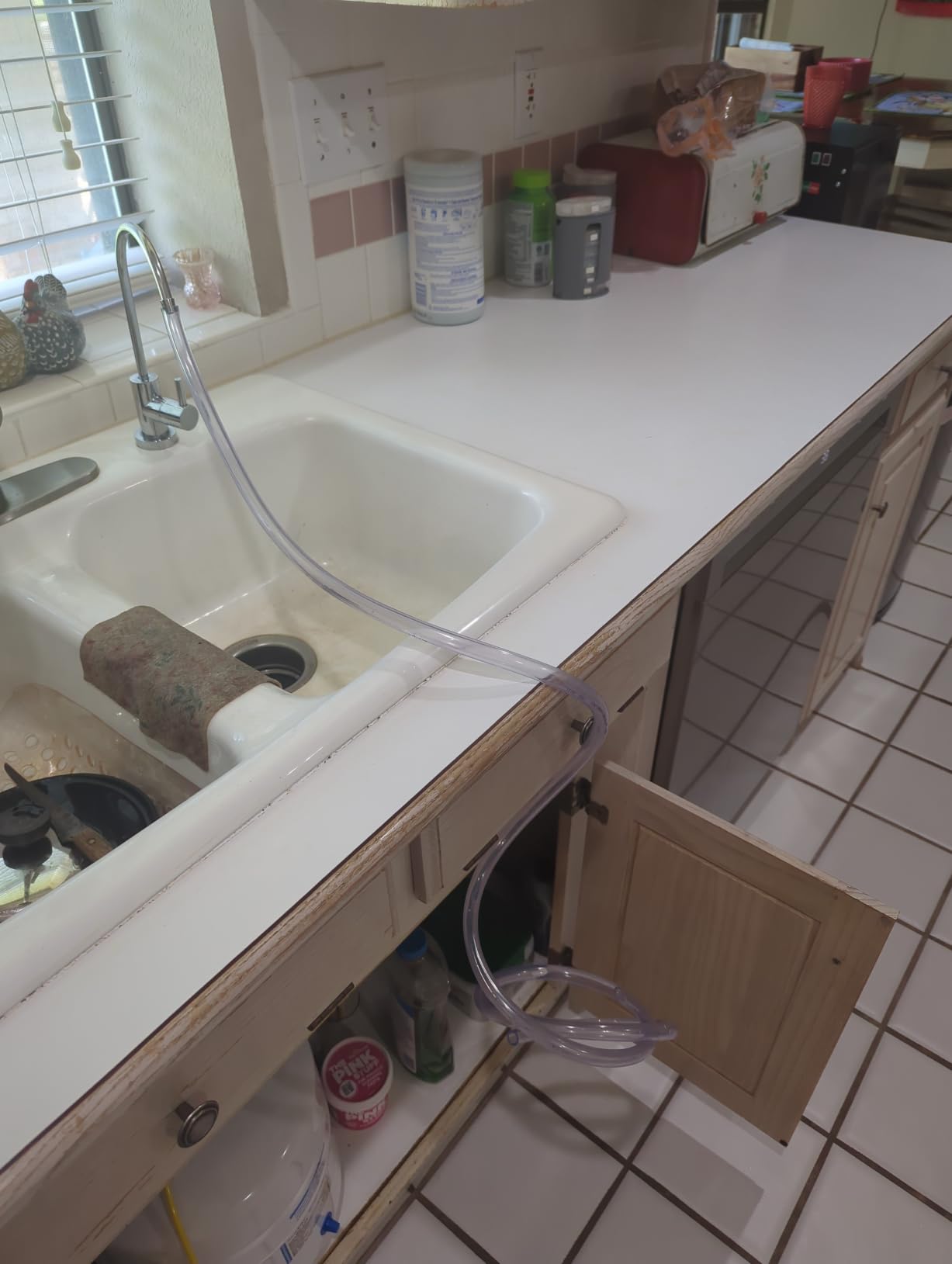
The build quality is solid where it counts. Double o-ring sealed housings and a stainless steel faucet, with one repeat buyer who has run three of these systems leak-free for up to eight years. The UV and alkaline stages handle both bacteria and taste in one pass.
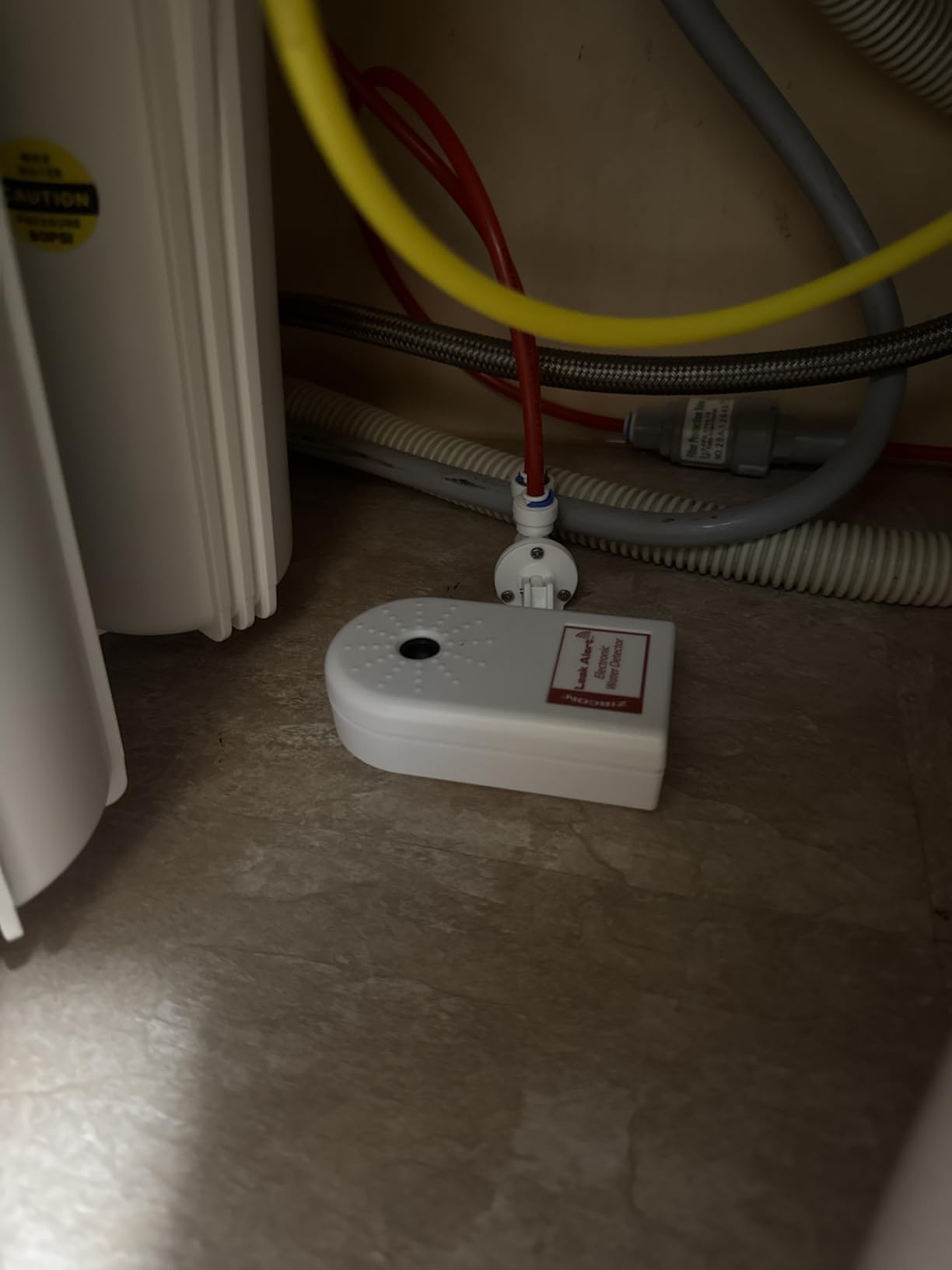
There is a specific complaint worth flagging. Owners of some builds report a sulfur-like smell from the alkaline stage that purging does not clear, and those who removed that cartridge report a large improvement. On a well already dealing with any sulfur odor, that interaction is not a small risk.
When this is the right call for a well
Choose it when your well sits in a very soft-rock region and your lab TDS comes back comfortably below 300 ppm. The trial period and three-year warranty make it a low-risk way to test a UV and alkaline configuration.
It also suits anyone who wants a UV stage and an included TDS meter without configuring a separate permeate pump.
When it is the wrong call for a well
It is the wrong pick for hard well water, and there is no booster pump, so low line pressure quietly degrades performance. Several owners also report the tank arriving over-pressurised and needing to be bled, plus automatic shutoff valve failures within months.
The printed instructions are weak, so budget time for the online videos. And check your sulfur situation first, because the alkaline stage can make an existing odor problem worse.
10. Aquasure 64000-Grain Bundle – Whole-House Softening With an RO Drinking Stage
Aquasure 64,000 Grains Whole House Water Filter Bundle with Automatic Digital Metered Control Softener and 75 GPD RO Reverse Osmosis Drinking System | Removes Hardness | Ideal for 4-6+ bathrooms
64,000 grain softener
75 GPD RO
2000 ppm TDS ceiling
1.33 gpm flow
Pros
- Only whole-house option here
- treating hardness and iron across the entire home
- Digital metered control head regenerates on measured demand not a fixed timer
- Includes a 75 GPD RO drinking system in the same bundle
- 5-year manufacturer warranty with lifetime technical support
Cons
- Softener needs salt and periodic regeneration as an ongoing cost
- Plumbing work is substantial and initial leaks are common
- First-time setup can take a full day
- Customer support has been reported unresponsive on a control head failure
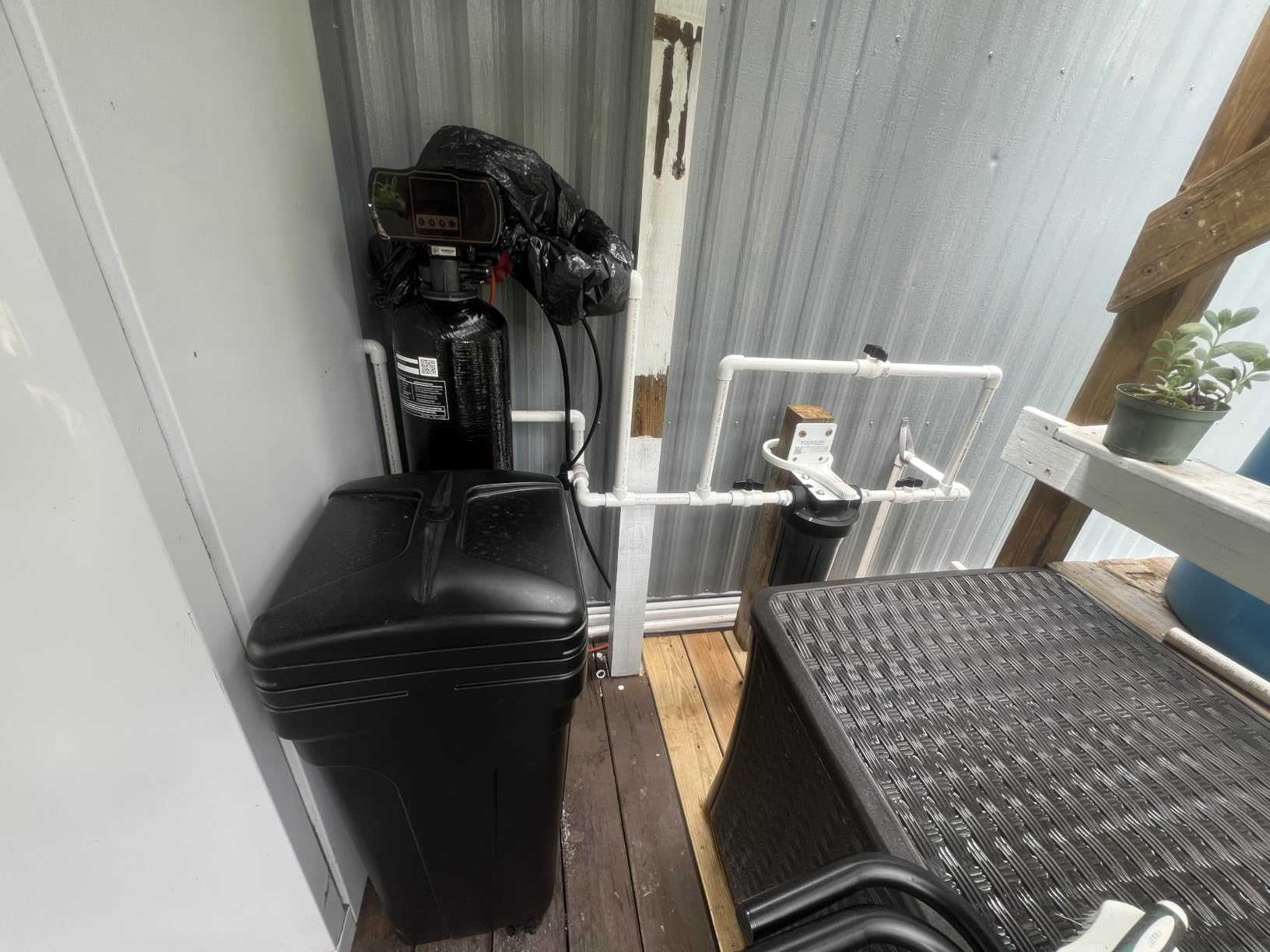
This bundle is different from everything else here, and for a specific well problem it is the right answer. Rather than putting drinking water filtration at one tap, it softens and treats the entire home and adds a 75 GPD RO stage for the kitchen.
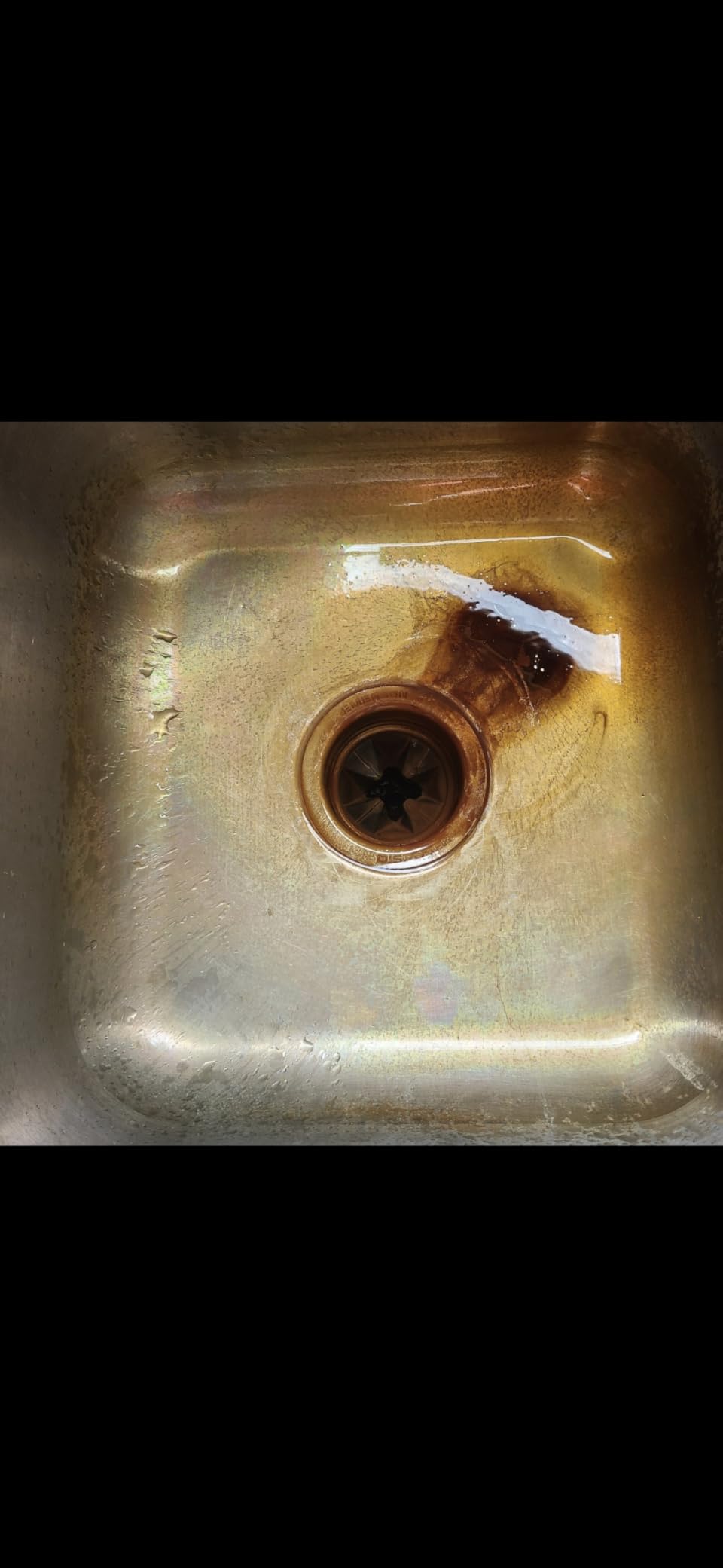
For well owners with hard, iron-stained water, the softener is the decisive component. Reviewers report the automatic digital metered control head turning severely rust-coloured well water into water as clear as a city supply, which also removes the staining that ruins sinks, toilets and glassware. For a home with four to six or more bathrooms and a household of six, that is a different quality of life than any under-sink unit provides.
The 64,000 grain capacity handles the load, and the metered head regenerates on measured demand rather than a fixed schedule, which wastes far less salt and water than a timer-controlled valve. The included 75 GPD RO has a 2,000 ppm feed TDS ceiling and 1.33 gpm maximum flow, with fittings that have produced zero leakage once properly pressurised.
Sizing is the whole story. This is scaled for four to six or more bathrooms and households of six or more. Below that, the softener is oversized and you are paying to regenerate water nobody uses.
When this is the right call for a well
Choose it when hard water affects more than the drinking tap, meaning showers, washing machines, dishwashers and every fixture in the house. It is also the practical answer when a private well shows iron and manganese that a sediment filter cannot handle.
It suits owners who want pre-treatment and drinking filtration resolved in one purchase rather than piecing a stack together over several trips to the hardware store.
When it is the wrong call for a well
It is the wrong choice for a small household. The softener needs salt and periodic regeneration, which is an ongoing cost and an ongoing commitment, and a 64,000 grain tank in a two-person home regenerates far more often than it needs to.
The install is not a casual job. It is a full day for a first-timer, adapters and fittings cost extra, and the RO water line may need softening in hot water before it will connect. One long-term owner also reports unresponsive support after a control head failure, which is the single most expensive failure mode in this bundle.
How to Choose a Reverse Osmosis System for Well Water
Start with the water, not the product. The order below is the order we would work in, and skipping a step is how owners end up replacing membranes every three months.
Do you actually need RO at all?
Yes, RO earns its place when your lab report shows nitrates above 10 mg/L, arsenic above 10 µg/L, sodium above 200 mg/L, TDS above 500 mg/L, PFAS, or heavy metals. Those are dissolved contaminants that carbon and sediment filters cannot touch, and RO is the only residential method that reliably strips all of them at one drinking tap.
No, you probably do not need it when iron is your only complaint, because an iron filter is cheaper, uses less water and does not strip minerals you may want. Hardness alone is a softener job. Bacteria alone need a UV sterilizer. If your only problem is odor, an aerator or oxidation filter fixes it for a fraction of the cost and without 3 gallons of brine per gallon.
This is the highest-trust move in this niche, and it is worth spending ten minutes on your lab report before spending anything else.
The five-stage pre-treatment stack, in order
1. Sediment. A 5 micron cartridge for general grit, 20 micron spin-down if sand is visible. This is the cheapest stage and it prevents the most common failure.
2. Softener. Required above 7 gpg. A softener ahead of the RO protects the membrane from permanent scale. A softener after the RO is a mistake people make constantly, because the point of RO is to strip what the softener leaves behind.
3. Iron or manganese filter. Required above 0.3 ppm iron or 0.05 ppm manganese. Oxidation filters with catalytic or greensand media handle both, and they need periodic regeneration.
4. UV sterilizer. Required whenever coliform or E. coli appear, and a sensible precaution otherwise. UV needs an outlet and a bulb replacement, typically annually.
5. Carbon block. A final taste and chlorine stage, which most RO systems include as their first cartridge. Skipping it means grit reaches the membrane directly.
Our iron filter roundup and under-sink filter guide cover the first and last stages in more depth.
Matching TDS to membrane life
Under 250 mg/L, expect three to four years on a membrane with sediment pre-filtration. Between 250 and 500 mg/L, expect two to three years and check your TDS quarterly. Between 500 and 1,000 mg/L, plan on one to two years and make sure the system is rated for that band. Above 1,000 mg/L, you are into commercial membrane territory and a whole-house approach deserves a serious look.
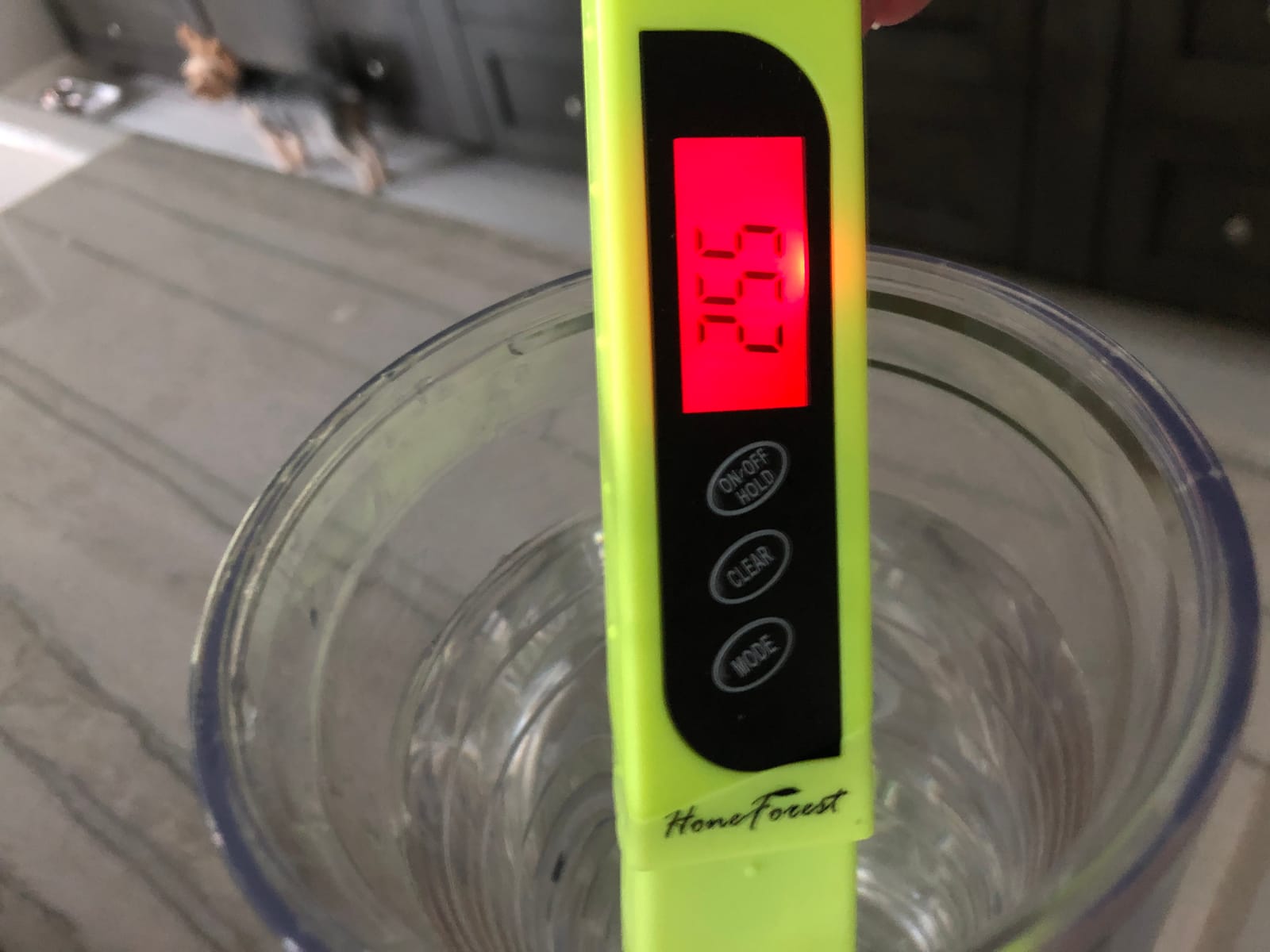
Monitor with a TDS meter, which is a fifteen to thirty dollar purchase and the only way to know your membrane is degrading before the taste changes. If output TDS climbs above 40 mg/L when your feed reads in the normal band, the membrane is failing and you can act while it is still a cartridge rather than a system.
Reading the certifications, and what they skip
NSF/ANSI 58 certifies the complete reverse osmosis unit for TDS reduction, and NSF/ANSI 372 covers lead-free materials, which matters most on older private plumbing. NSF/ANSI 42 covers chlorine, taste and odour, and 53 covers health-related contaminants in filters. Look for 58 on the whole system, not just on a membrane datasheet.
What certifications do not tell you is how the unit behaves on your specific water. None of them guarantee membrane life, and none of them cover bypass caused by inadequate pre-treatment. A certified system fed with 2 ppm iron will still foul.
Whole-house versus point-of-use
Point-of-use RO treats one tap and is right when only drinking and cooking water needs attention. Whole-house treatment is right when hardness, iron or sediment affect every fixture, and the Aquasure bundle is the only example here that does it.
There is a middle path many well owners choose: a softener and iron filter for the whole house, plus a point-of-use RO at the kitchen for drinking water. It costs less than full whole-house RO and it puts the expensive membrane behind water that has already been cleaned.
What it costs over five years
Add the purchase price, three filter sets, one membrane at the two-year mark, and a UV bulb, then divide by your household’s consumption. On well water the cartridge line item dominates, and it is where proprietary filters punish you hardest.
The systems with industry-standard internals are the cheapest to keep running, because any hardware store sells the cartridge. Systems with model-specific cartridges carry a permanent premium, and that premium compounds every year you own them.
For general kitchen filtration beyond the well-specific problems, our kitchen RO guide and under-sink drinking water guide cover the options that do not need pressure and iron handling.
Frequently Asked Questions
Does a reverse osmosis system work with well water?
Yes, but only behind proper pre-treatment. A reverse osmosis membrane fouls in 60 to 90 days on untreated well water, so sediment, iron, hardness and bacteria each need a dedicated stage upstream of the RO. Private wells are not regulated by the EPA, so test your water first.
Is reverse osmosis recommended for well water?
It depends entirely on what your lab report shows. RO is worth it for nitrates above 10 mg/L, arsenic above 10 µg/L, sodium above 200 mg/L, TDS above 500 mg/L, PFAS, or heavy metals. If your only problems are iron, hardness or bacteria, an iron filter, a softener or a UV sterilizer will serve you better and cost less.
What is a major downside of reverse osmosis water?
It strips minerals along with the contaminants, leaving water that tastes flat and slightly acidic, and it is wasteful, sending three to four gallons of brine to the drain for every gallon you drink. On a well with a failing pressure tank, that waste ratio compounds an already weak flow.
Does reverse osmosis get rid of coliform in water?
RO blocks coliform mechanically because the organisms are larger than the membrane pores, but it is not a disinfection system and offers no guarantee. A storage tank gives bacteria a place to sit and membrane surfaces can grow biofilm, so a UV sterilizer is the correct primary defense on a private well.
Is it safe to drink water high in iron and manganese?
Both are aesthetic and taste problems at low levels but become a real concern at higher concentrations, and they will scale and foul an RO membrane well before they make anyone ill. Treat them with an iron and manganese filter ahead of the RO rather than letting the membrane deal with them.
Do I need a booster pump for reverse osmosis?
If your line pressure falls below 45 PSI, yes. Standard membranes need at least 40 PSI, and a well with a tired pressure tank often drops to 25 or 30 PSI at the kitchen tap. Either buy a system with a built-in pump or add one on the feed line, and add a regulator above 85 PSI.
Conclusion: The Best Reverse Osmosis Systems for Well Water
The iSpring RCC7-BN is our best reverse osmosis systems for well water recommendation, and the reason is unglamorous. It has more than 21,000 ratings behind it, every part inside is an industry-standard cartridge you can buy anywhere, and it needs no electricity, which removes the single most common install objection on a well.
Pick the Home Master TMHP instead when bacteria are the core worry, because its EPA-registered UV sterilizer and iron prefilter handle what plain RO leaves to other equipment. Pick the iSpring RCC1UP-AK when your pressure tank cannot hold 45 PSI, since its booster pump solves a problem no membrane can.
Whichever you choose, the order of operations never changes. Test the water, build the pre-treatment stack, confirm the pressure, and only then judge the membrane. Most failed RO systems on private wells did not fail because the system was bad.