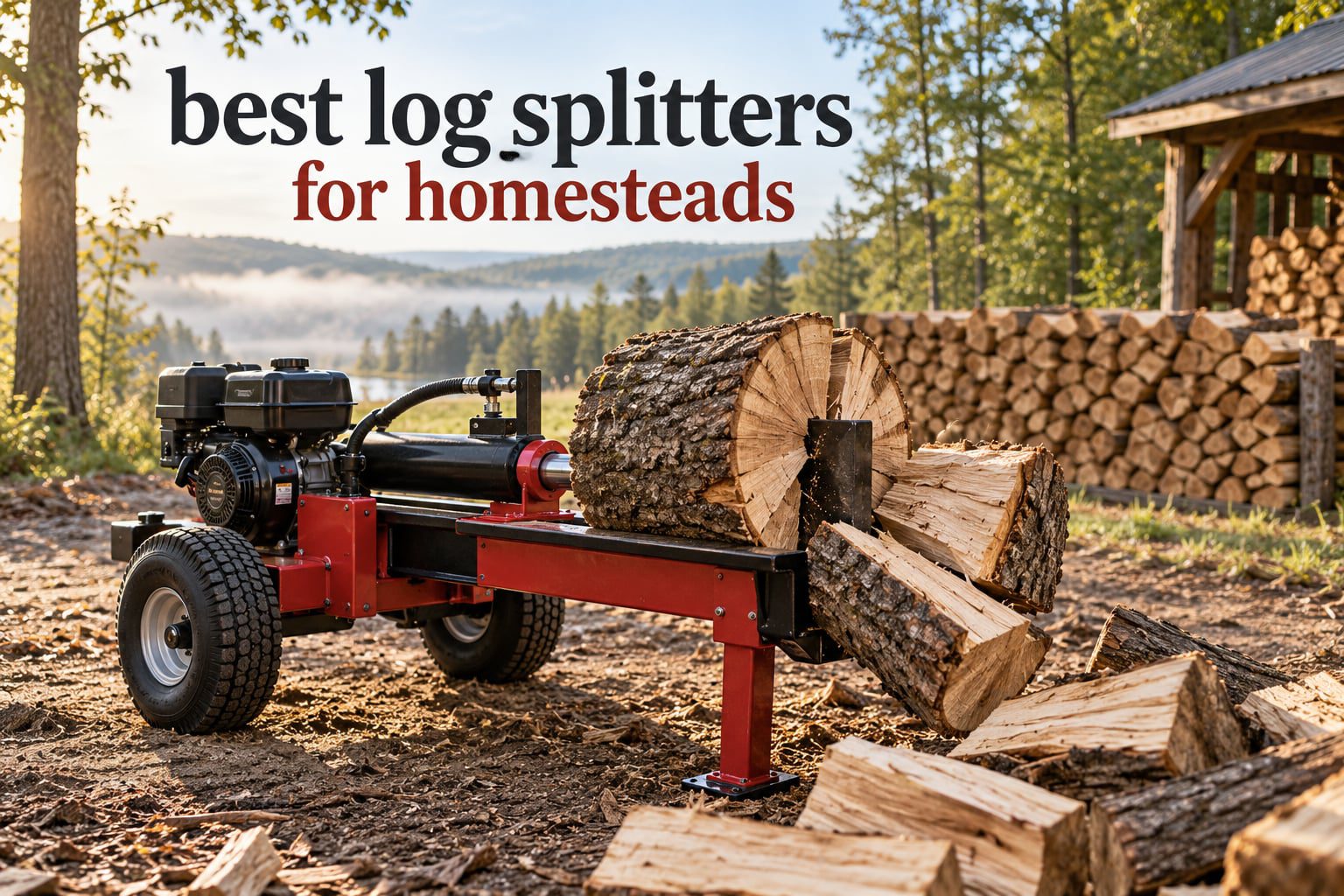
If you heat a farmhouse with a wood stove, run a boiler for the milk house, or clear storm-fallen timber off your acreage, the wood pile sets your schedule. The best log splitters for homesteads are the machines that turn a multi-week chore into a Saturday. I have worked through this list by type — manual, electric, and gas — so you can match a machine to the volume of wood you actually burn rather than the biggest number on the box.
On a homestead, the honest sizing question is cords per year, not tonnage. A household burning two cords a year does not need a 40-ton towable, and a family heating an outbuilding and a shop through winter will regret an underpowered splitter long before they regret a large one. Owners on firewood forums agree on one thing: log size limits you more than the advertised splitting force, and a good wedge plus a log lift changes daily throughput far more than a few extra tons.
Below, I cover twelve picks, from a hand wedge that costs less than dinner to full-beam towable splitters that handle rounds you would not try by hand. Each one has a two-hand safety guard or faceguard in mind, and each has real owner feedback behind it. We also added guides on tonnage sizing, power source, splitting-day safety, hydraulic maintenance, and an honest look at when a splitter is not worth owning at all.
If you are still narrowing the field, our guides on the best log splitters for firewood and the best electric log splitters for home use break the same market down from two other angles.
Table of Contents
- Top 3 Picks for the Best Log Splitters for Homesteads in 2026
- All 12 Best Log Splitters for Homesteads at a Glance in 2026
- 1. Estwing E-5 Splitting Wedge — The Tool That Earns the Editor’s Choice
- 2. Landworks 20-Ton Gas Log Splitter — Best Value for a Working Homestead
- 3. KABIN Kindle Quick Manual Splitter — Budget Pick for Kindling and Cleanup
- 4. PROYAMA 7T Electric Log Splitter — Best Fit for a Small Cabin With Power
- 5. SuperHandy 20-Ton Hydraulic Splitter — Best for Knotty Wood and Burls
- 6. YARDMAX YS0650 Electric Log Splitter — Top Rated Budget Electric
- 7. BILT HARD 6.5 Ton Log Splitter — Best for Raising the Beam and Saving Floor Space
- 8. Timber Tuff 44 Inch Manual Log Splitter — Best for Big Rounds by Hand
- 9. BILT HARD 27-Ton Towable Gas Splitter — Best for Woodlots and Acreage Cleanup
- 10. PowerSmart 6.5-Ton Electric Splitter — Best for Light Duty and Short Rounds
- 11. BILT HARD 40-Ton Gas Splitter — Best for Maximum Force on the Toughest Wood
- 12. SuperHandy 25-Ton Gas Splitter — Best for 24 Inch Rounds at 90 Pounds
- How Many Tons of Splitting Force Do You Actually Need?
- Gas vs Electric vs Manual Log Splitters for a Homestead
- Safety on Splitting Day
- Maintenance, Hydraulic Bleeding and Off-Season Storage
- When a Splitter Is Not Worth It
- Frequently Asked Questions
- What is the best residential log splitter?
- How many tons is a good log splitter?
- What is the best wood splitter machine for home use?
- What is the best American-made log splitter?
- Do I need a 22 ton or 25 ton log splitter?
- How do I bleed air out of a hydraulic log splitter?
- How long does it take to split a cord of wood?
- Conclusion: The Best Log Splitters for Homesteads in 2026
Top 3 Picks for the Best Log Splitters for Homesteads in 2026

Estwing E-5 Splitting Wedge
- 5 lb solid steel
- Fin design adds outward spread
- Made in Rockford IL

Landworks 20-Ton Gas Splitter
- 20 tons splitting force
- 7.5 second auto return
- Splits 20 in long rounds

KABIN Kindle Quick Splitter
- Cast steel kindling cracker
- Slanted teeth reduce jams
- Bolts to a stump
All 12 Best Log Splitters for Homesteads at a Glance in 2026
The table below covers every pick in this roundup, with the specs that actually change your decision: splitting force, power source, log capacity, and cycle time where the manufacturer publishes it. Scan the power column first, because where you can run the machine dictates everything else.
| Product | Specs | Action |
|---|---|---|
| Estwing E-5 Splitting Wedge |
|
Check Latest Price |
| Landworks 20-Ton Gas Log Splitter |
|
Check Latest Price |
| KABIN Kindle Quick Manual Splitter |
|
Check Latest Price |
 PROYAMA 7T Electric Log Splitter PROYAMA 7T Electric Log Splitter |
|
Check Latest Price |
 SuperHandy 20-Ton Hydraulic Splitter SuperHandy 20-Ton Hydraulic Splitter |
|
Check Latest Price |
 YARDMAX YS0650 Electric Splitter YARDMAX YS0650 Electric Splitter |
|
Check Latest Price |
 BILT HARD 6.5 Ton Log Splitter BILT HARD 6.5 Ton Log Splitter |
|
Check Latest Price |
 Timber Tuff 44 Inch Manual Splitter Timber Tuff 44 Inch Manual Splitter |
|
Check Latest Price |
 BILT HARD 27-Ton Towable Gas Splitter BILT HARD 27-Ton Towable Gas Splitter |
|
Check Latest Price |
 PowerSmart 6.5-Ton Electric Splitter PowerSmart 6.5-Ton Electric Splitter |
|
Check Latest Price |
 BILT HARD 40-Ton Gas Splitter BILT HARD 40-Ton Gas Splitter |
|
Check Latest Price |
 SuperHandy 25-Ton Gas Splitter SuperHandy 25-Ton Gas Splitter |
|
Check Latest Price |
1. Estwing E-5 Splitting Wedge — The Tool That Earns the Editor’s Choice
ESTWING Sure Split Wedge, 5lb Solid Steel Wood Splitting Wedge, E-5
5 lb solid steel wedge
Fin design on both sides
Hand sharpened edge
9 in long
Made in Rockford IL
Pros
- Adds outward spread plain wedges cannot match
- Works with any standard 4 to 5 lb hand sledge
- Hand sharpened edge holds an established groove
- American alloy steel that resists chipping
Cons
- Wedge can pop back out of very large flexible rounds
- Bulky finned design needs more force to reset
- 5 lb head feels light on large butt rounds
This is not a machine, and I want to be clear about that before anything else. It is a 5 lb solid steel splitting wedge that goes into a partly split round and finishes the job a hydraulic ram started. With 6294 reviews behind it, it has more real-world owner feedback than any powered machine in this roundup, and that is exactly why it takes the top spot.
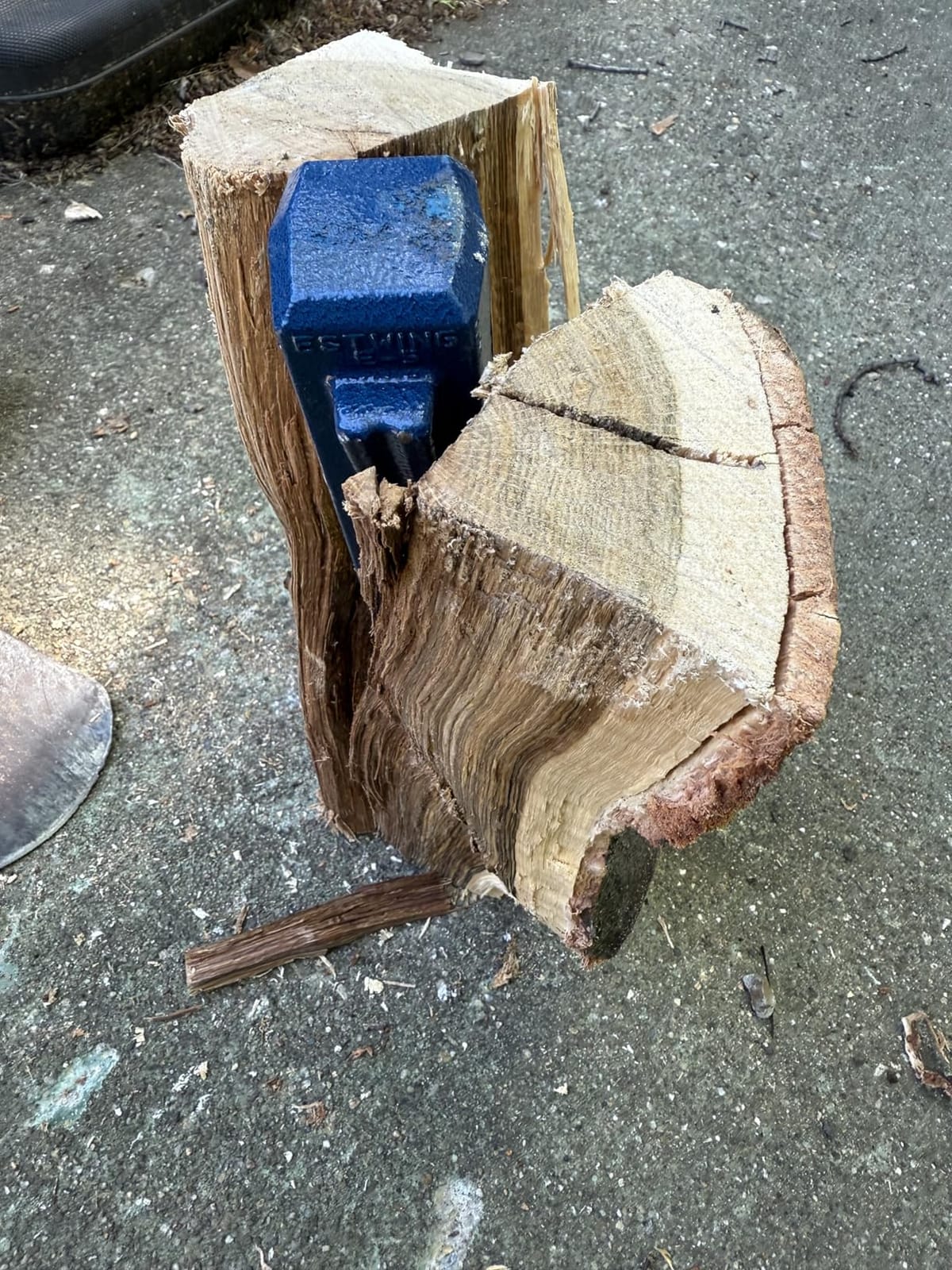
The fin design on each side is the reason it outperforms a plain steel wedge. When you drive the wedge into the wings of a stubborn round, those fins push outward as they travel, so the log opens along the grain rather than just absorbing the blow. Owners pair it with an ordinary hand sledge, and it does the work of finishing splits that would otherwise sit half-open.
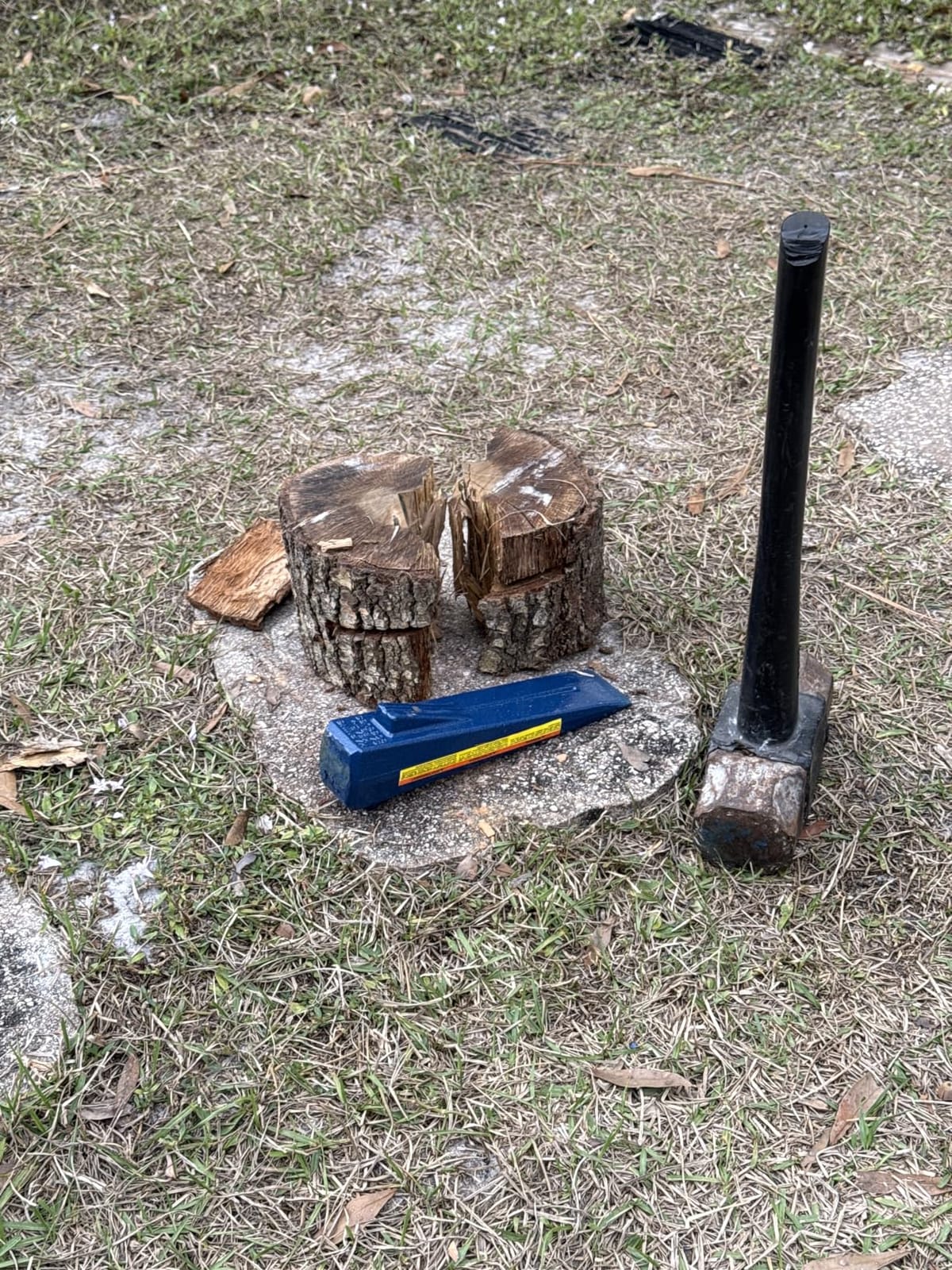
The edge is hand sharpened at the base of the wedge, which is the part that does the cutting, and it holds a groove through repeated sessions rather than rounding off after a few cords. Owners doing storm cleanup and yard waste work mention that the steel resists chipping when it contacts a nail or a buried bolt in a round.
Weighing in at 4.1 lb with a 5 lb head, it stays in the truck bed all year and comes out when the ram gives up on a twisted crotch piece. A larger splitter handles the bulk; this finishes what the machine cannot.
What to check before you buy it
Confirm you already own or will buy a hand sledge in the 4 to 5 lb range. The wedge is a driving tool, not a standalone splitter, and it will not break a green round on its own. If your splitting method is axe and maul, this fits as a finishing step; if you have no sledge at all, budget for one alongside it.
Plan on pairing it with a second, plain wedge. Several owners note the finned wedge can bounce back out once it reaches the wings of a large or flexible round, and a conventional wedge driven in alongside holds the split open while you clear the first one.
Who should skip it
Skip it if your wood volume is high enough that you split every round by hand anyway — nobody burns 15 cords a year with a sledge. It is also the wrong tool for a first cut out of a big green round; a hydraulic wedge penetrates far deeper on the initial stroke.
Avoid pairing it with very soft, wet green wood at the round ends, where a finned profile can ride up over the growth rings instead of tracking. Seasoned or well-dried wood gives the fins something to bite into.
2. Landworks 20-Ton Gas Log Splitter — Best Value for a Working Homestead
Landworks Portable 20-Ton Gas Log Splitter, 7 HP, Rapid Auto Return
20 tons splitting force
7HP gas engine
7.5 second cycle
Splits 20 in by 16 in
148.7 lb
Pros
- Plenty of power for hard grain like sweetgum and red oak
- Light enough to move where larger machines cannot go
- Starts on the first pull for most owners
- About an hour of assembly with hardware included
Cons
- Manual understates hydraulic fluid capacity
- No hitch for moving it across uneven property
- Push plate stops short of the wedge
- Weld-on wedge is not easily replaceable
Twenty tons at 148.7 lb is the ratio that makes this the value pick. Bigger splitters in this list weigh three times as much, and owners on small acreage consistently report that weight matters more than tonnage once you are moving the machine to the far fence line or the back corner of the wood lot.
The Rapid Auto Return cycles in 7.5 seconds, which keeps the ram moving fast enough that you are not waiting on it between rounds. A 2-Stage Bucher hydraulic gear pump feeds a horizontal full beam steel wedge design, and the published capacity is logs up to 20 in long by 16 in diameter — more diameter headroom than most machines in this price class.

Owners call out the power-to-weight ratio, weld quality, and powder coating as the standouts. A 7HP gas engine handles dense, difficult grain without bogging, and start reliability is good enough that most people report a first-pull start after sitting for months over winter.
Setup takes roughly an hour with all hardware included, but the manual understates how much hydraulic fluid the reservoir actually takes — closer to two gallons than the stated amount. Work the ram through several full cycles to purge air before you judge the splitting force, because an airlogged system reads weak.
What to check before you buy it
Measure the biggest rounds you plan to feed it. The 16 in diameter rating is generous, but the push plate stops short of the wedge, so very long rounds can tear rather than split all the way through. Cutting rounds to about 20 in first keeps the result clean.
Plan the fluid and oil purchase before delivery day. You will need roughly two gallons of hydraulic fluid beyond anything shipped, plus engine oil, so budget that as part of the purchase rather than a surprise.
Who should skip it
Skip it if you burn more than about eight cords a year, because a 7.5 second cycle and a 20-ton ram will not keep pace with that volume and you will end up splitting on weekends you wanted for other work. Owners handling knotty and burl-heavy wood tend to like it more, not less.
Also skip it if your property is hilly or rough. With no hitch and only 10 in transport wheels, moving this machine across uneven ground takes two people and some improvisation.
3. KABIN Kindle Quick Manual Splitter — Budget Pick for Kindling and Cleanup
KABIN Kindle Quick Compact Log Splitter – Manual Splitting Tool – Steel Wedge Point Splits Firewood Like A Boss Safely & Easily
Cast steel with coating
6.03 lb
Slanted alternating teeth
Bolt holes for anchoring
11.89 in package
Pros
- Far safer than swinging an axe or maul
- Turns a long job into a quick kindling task
- Sturdy cast steel body handles hardwood
- Integrated handles and crate base carry easily
Cons
- Only handles logs within a limited diameter
- A few owners report teeth arrive unsharpened
- Slot must be kept clean or the log jams
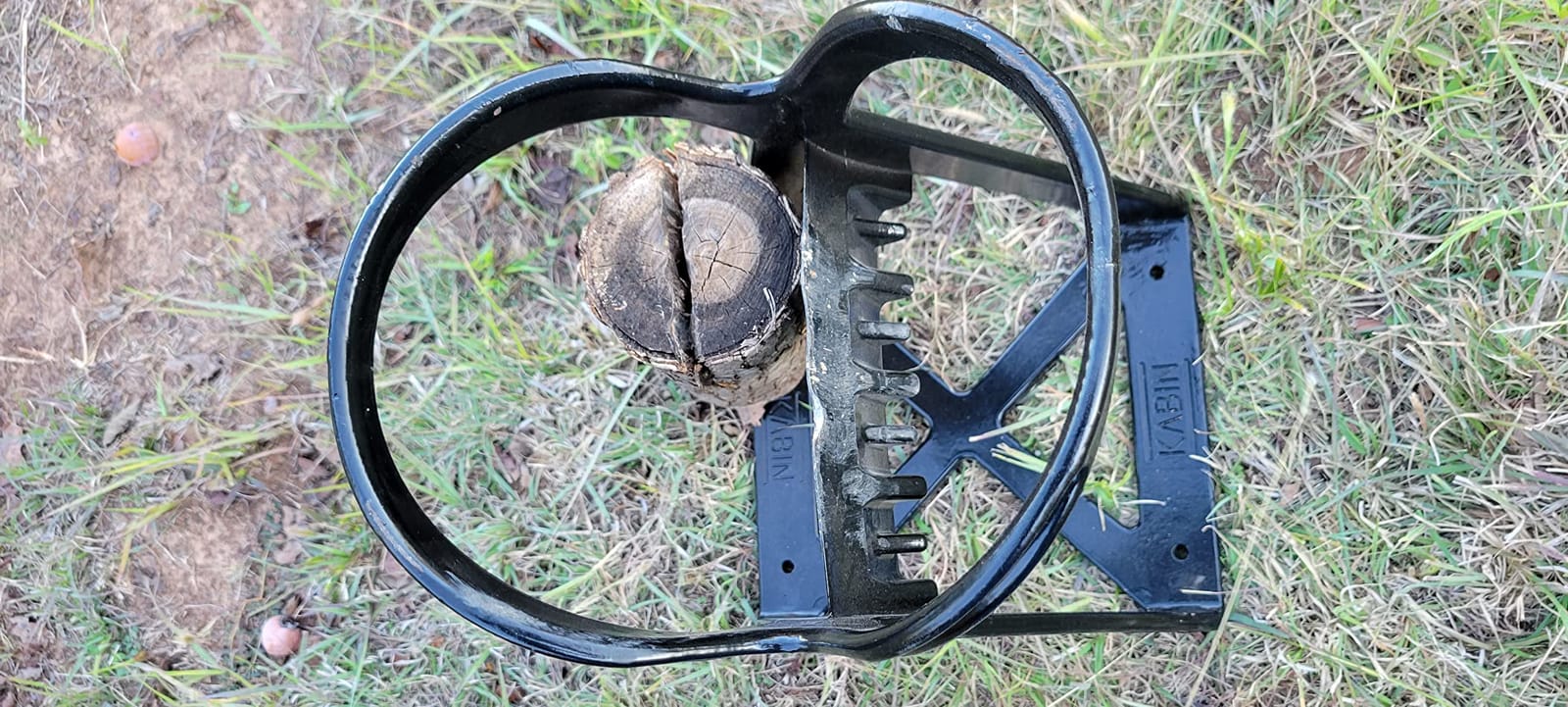
The KABIN Kindle is the cheapest way into mechanical splitting on a homestead. You bolt it to a stump or a heavy post, drive it with a sledge, and the patented kindling cracker design with slanted alternating teeth splits the round at an angle instead of jamming straight down the grain.
At 6.03 lb it is heavier than the wedge tools and noticeably more stable under a sledge blow. The extra wide mouth takes wider logs, the tall base cuts longer ones, and the X-style base keeps it from shifting on the stump. The base doubles as a carrying crate, so moving it between the wood pile and the house is one trip.
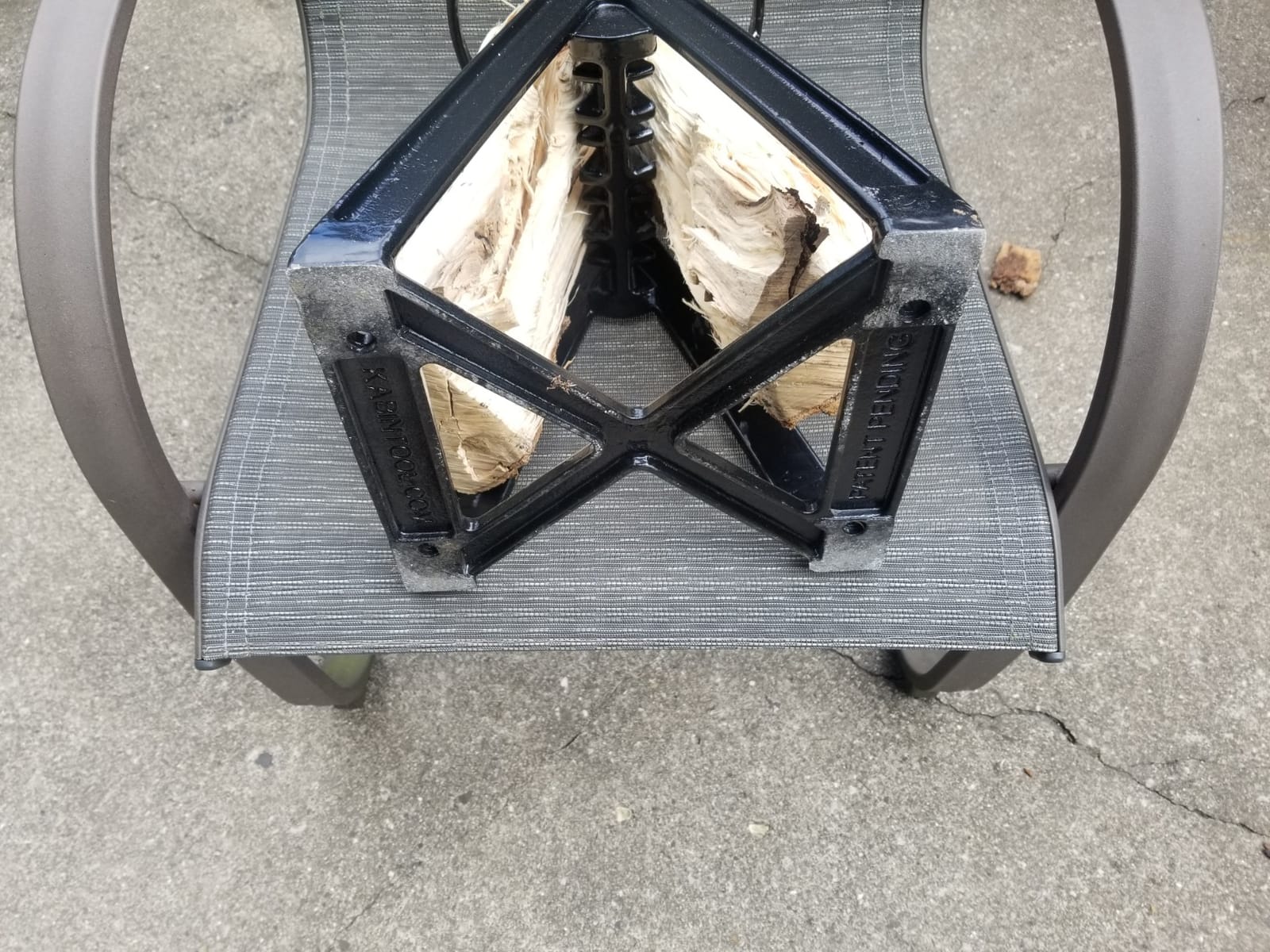
Owners describe it as a fast, safe and inexpensive way to make kindling, and the cast steel body is widely called very sturdy. Several note that once it is set, they can move through a pickup bed of branch wood in an afternoon without swinging anything overhead.
Bolt holes in the base let you anchor it to a stump permanently or to a portable post, which matters on rough ground. That anchoring is what makes it a genuine splitter rather than a toy — an unanchored tool walks and wastes the round.
What to check before you buy it
Check the log diameter limits before you plan a season of work with it. Logs that are too thick, or that carry protruding branch stubs, will not seat properly, and a round that jams costs you more time than an axe would have.
Take a file to the teeth on day one. A small number of owners report the teeth arriving unsharpened, and the one-star share of reviews reflects that split. A few minutes of sharpening on the delivery date prevents the most common complaint.
Who should skip it
Skip it if you are processing full cords of stove wood. This is a kindling and cleanup tool, and a homestead burning five or more cords a year will be standing over it for entire weekends.
Skip it for storm-fallen Y-shaped limbs and crotch pieces. Anything with a branch stub is exactly the geometry that jams the slot, and the round gets ruined rather than split.
4. PROYAMA 7T Electric Log Splitter — Best Fit for a Small Cabin With Power
PROYAMA 7T Electric Log Splitter, 15A Motor Wood Splitter with Cross Wedge
7 tons splitting force
2700W 15 amp motor
10 in by 20.5 in capacity
110 lb
Fume-free
Pros
- Quiet enough to run in a residential area
- Splits hardwood rounds larger than its rating
- Arrives fully assembled with clear instructions
- No gas or oil handling at all
Cons
- Two-hand controls put your face close to the action
- Rounded ram lets round logs shift
- Narrow footprint tips without the optional stand
- Wedge faces ship with heavy paint
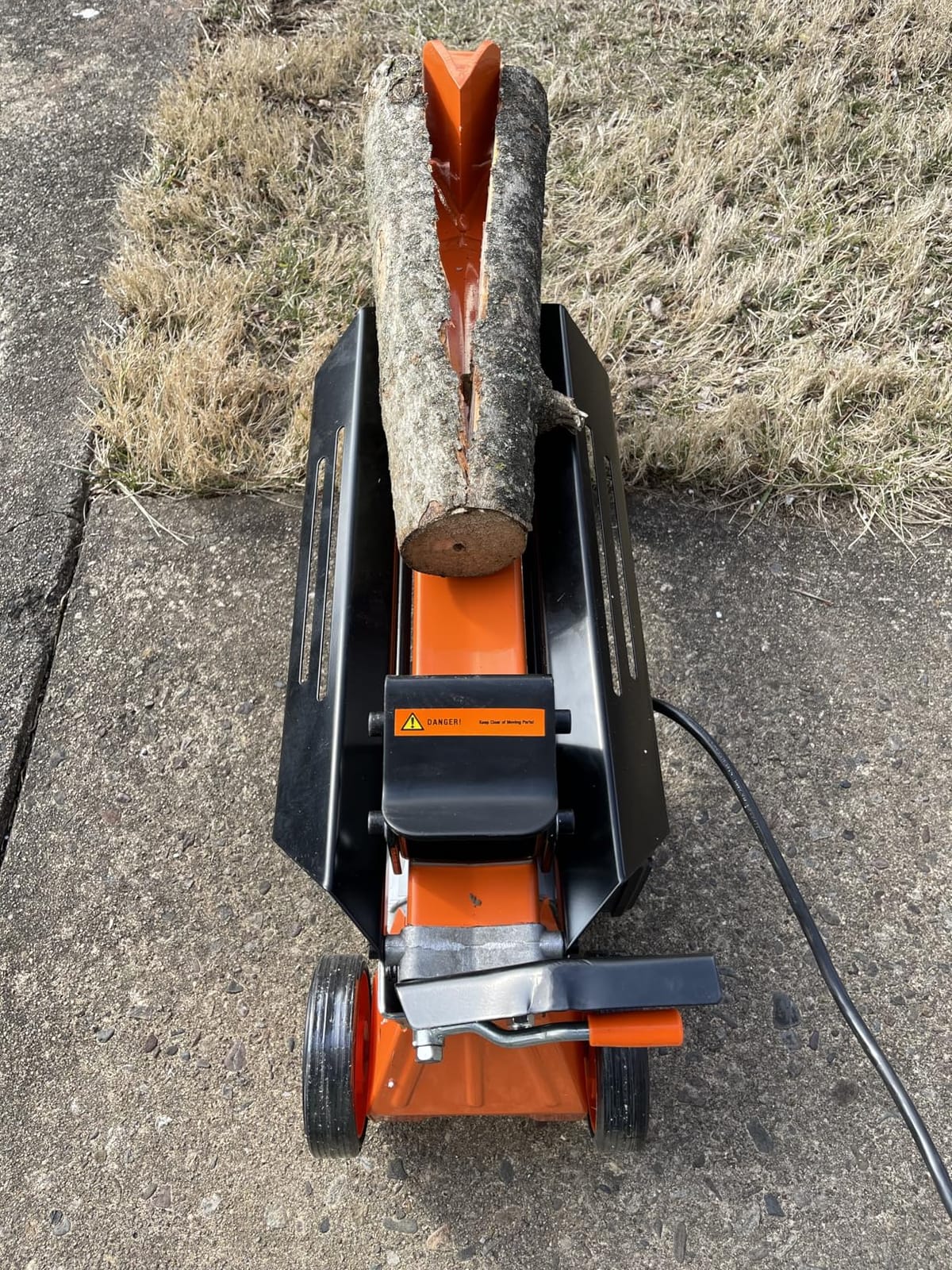
A 2700W motor at 15 amps is the biggest power draw of the electric machines here, and it buys you more than the 7-ton label suggests. Owners report it splitting rounds noticeably larger than the rated 10 in diameter, which makes this the electric option for a cabin that heats steadily through winter rather than an occasional blaze-up.
Two-hand safety controls are fitted, along with an onboard handle and 5.5-inch never-flat wheels. It works with or without the optional 34-inch stand, which matters if you want to raise the beam off the ground instead of crouching over it for a long session.
The quiet, fume-free operation is the headline for a homestead near the house. No fuel mixing, no exhaust drifting into a garden, and neighbors do not hear it. Buyers consistently praise the plug-and-play setup, though they stress bleeding the hydraulic air before running and sharpening the wedge faces.
Capacity is 10 in diameter by 20.5 in long, and the machine weighs 110 lb. That is heavy enough to feel solid under load and light enough that one person can reposition it on a level surface.
What to check before you buy it
Check your circuit before delivery. A 15 amp draw at 2700W needs a heavy-gauge extension cord on long runs, and an overloaded household circuit is the number one complaint owners report about electric splitters generally.
Plan on sharpening the wedge faces out of the box. They ship under heavy paint, and a painted wedge slips on the first rounds until you remove it. Budget twenty minutes with a file or angle grinder before your first real session.
Who should skip it
Skip it if you have no reliable power at the wood lot, because you cannot run it a long way from an outlet. It is also the wrong machine for a homestead clearing acreage — a gas splitter with a tow hitch handles brush and storm timber that you would be unplugging and moving for this one.
Be cautious with the two-hand control on short rounds. Several reviewers describe it as awkward or unsafe when the log is small, since the handles sit close to the splitting line. Test the geometry with scrap wood before your first full load.
5. SuperHandy 20-Ton Hydraulic Splitter — Best for Knotty Wood and Burls
SuperHandy Hydraulic Log Splitter, 20 Ton, Firewood Wood Splitter
20 tons splitting force
7HP AlphaWorks OHV engine
7.5 second cycle
20 in by 16 in capacity
Pros
- More than enough force for knots
- burls and knotty juniper
- Starts reliably after sitting for months
- About 30 minutes of assembly
- Light and portable for one person
Cons
- Cycle time is slow for very high cord volumes
- Filler cap and dipstick threads leak slightly
- Low profile means working bent over
- Cotter pin shipped too short
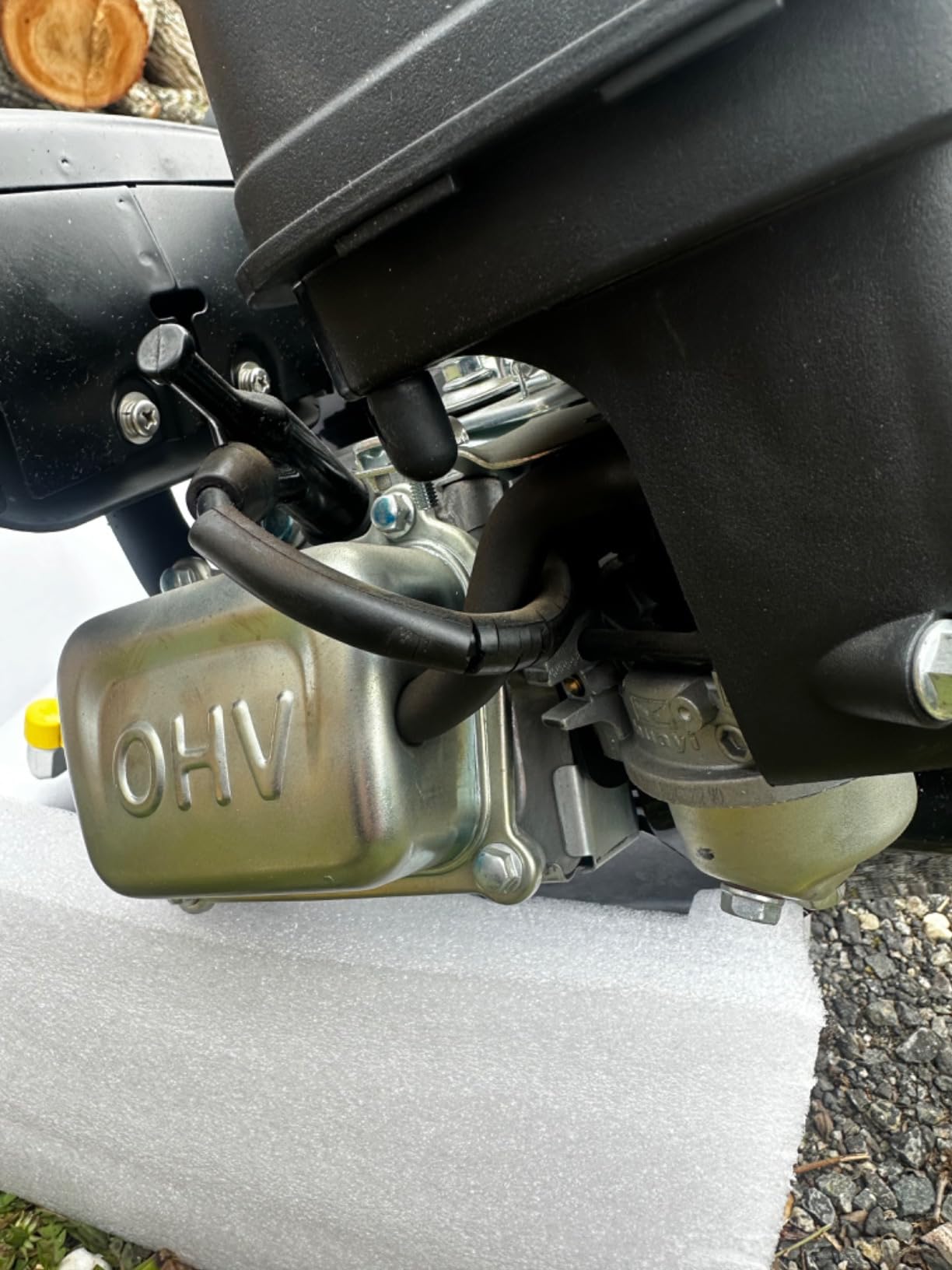
If your wood lot is juniper, mesquite or anything with burls in it, this is the 20-ton machine to buy. Owners single out its ability to push through knotty and burl-heavy wood that stops cheaper splitters, and a 7HP AlphaWorks 4-stroke OHV engine has the torque to keep pressure on without bogging down.
The horizontal full beam steel wedge design takes logs up to 20 in long by 16 in diameter, and the 2-Stage Bucher hydraulic gear pump feeds a 7.5 second cycle. Ten inch tubeless polyurethane wheels plus a folding handle make it portable enough for one person to move between wood piles.
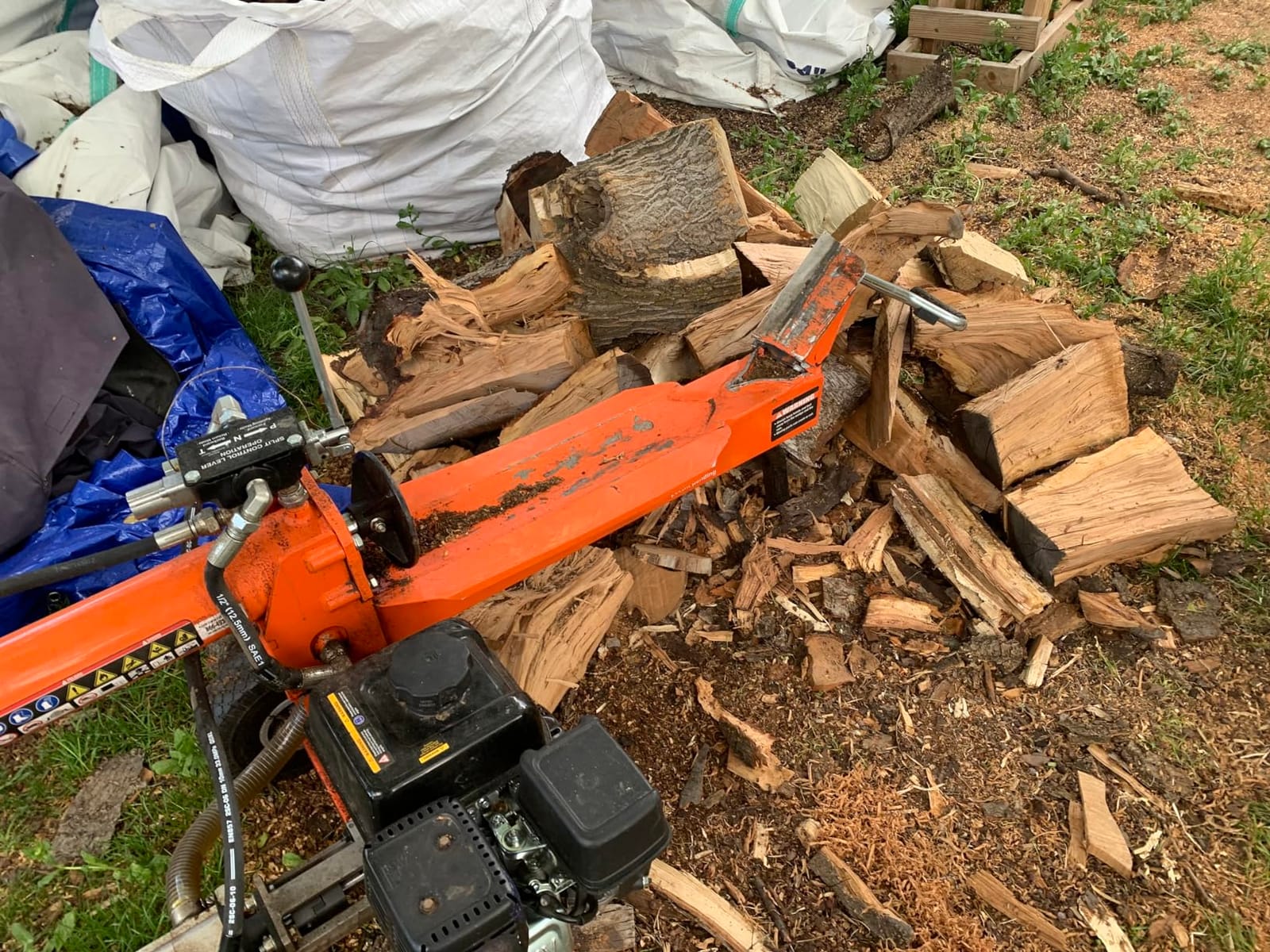
Start reliability comes up repeatedly and favorably. Owners report it starting on demand after sitting through the off-season, which is the single most common complaint about lesser gas splitters, and a 4-stroke engine avoids the fuel-mixing routine entirely.
Assembly takes roughly 30 minutes, with all fluids added separately. That means buying at least 1.5 gallons of hydraulic fluid and engine oil before you can run it, so plan the purchase as one order rather than two trips to the parts store.
What to check before you buy it
Check the beam height against your back. The low profile is comfortable for a small machine, but on a 20-ton frame you are bent over for every round. If you already have back issues, budget for a lifting aid or plan shorter sessions.
Inspect the filler cap and dipstick threads at setup and again after the first hour of running. Owners report a slight weep at those threads, and catching it early keeps fluid out of the frame rather than on your gravel.
Who should skip it
Skip it if you burn 12 cords or more a year. The slow cycle is the limiting factor, not the tonnage, and the same money in a faster machine with a log lift will produce more finished wood per Saturday.
Skip it if you are not comfortable adding hydraulic fluid and engine oil yourself. Fluids are not included, and an under-filled reservoir reads as a weak splitter for the first few hours of use.
6. YARDMAX YS0650 Electric Log Splitter — Top Rated Budget Electric
YARDMAX YS0650 6.5 Ton Electric Log Splitter
6.5 tons splitting force
10 in by 20.5 in capacity
104.7 lb
Auto shutoff
Quiet motor
Pros
- Quiet compared with any gas splitter
- Handles 10 to 12 in rounds despite the rating
- Durable for years of homeowner use
- Auto shutoff protects the machine on tough pieces
Cons
- Just over 100 lb with narrow plastic wheels
- Short power cord needs an extension
- Cannot be stored on end
- Slow oil dipstick reading
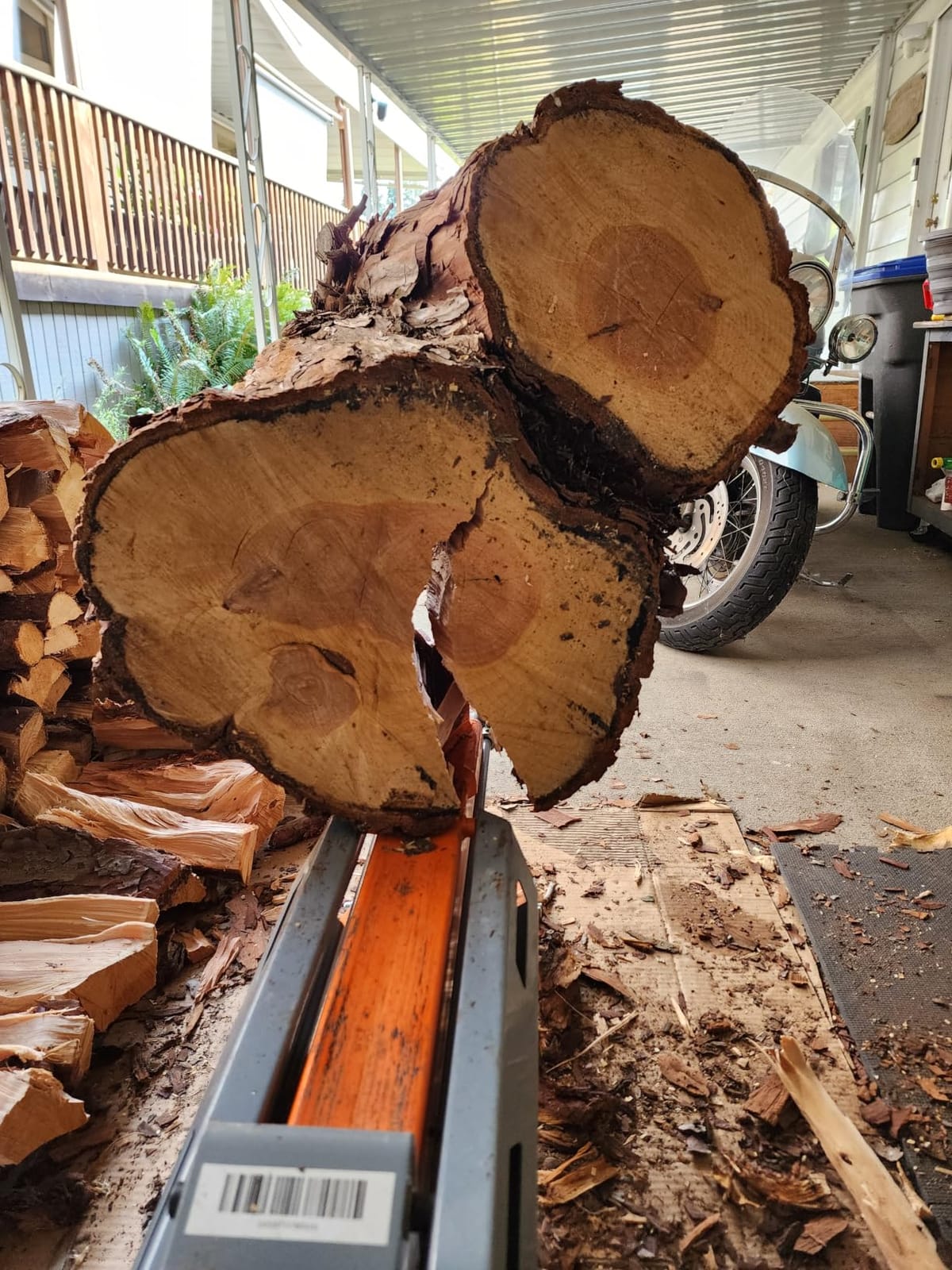
The YS0650 is the electric splitter owners were most surprised by. Buyers who expected a small machine report it cutting through 12 inch rounds and splitting logs completely with minimal ram penetration, and the quiet motor has no exhaust and no fuel to store through winter.
Auto shutoff kicks in when log resistance exceeds the 6.5-ton capacity, which protects the machine when a limb or bolt surprises you mid-stroke. Rated capacity is 20.5 in long by 10 in diameter, and the machine weighs 104.7 lb.
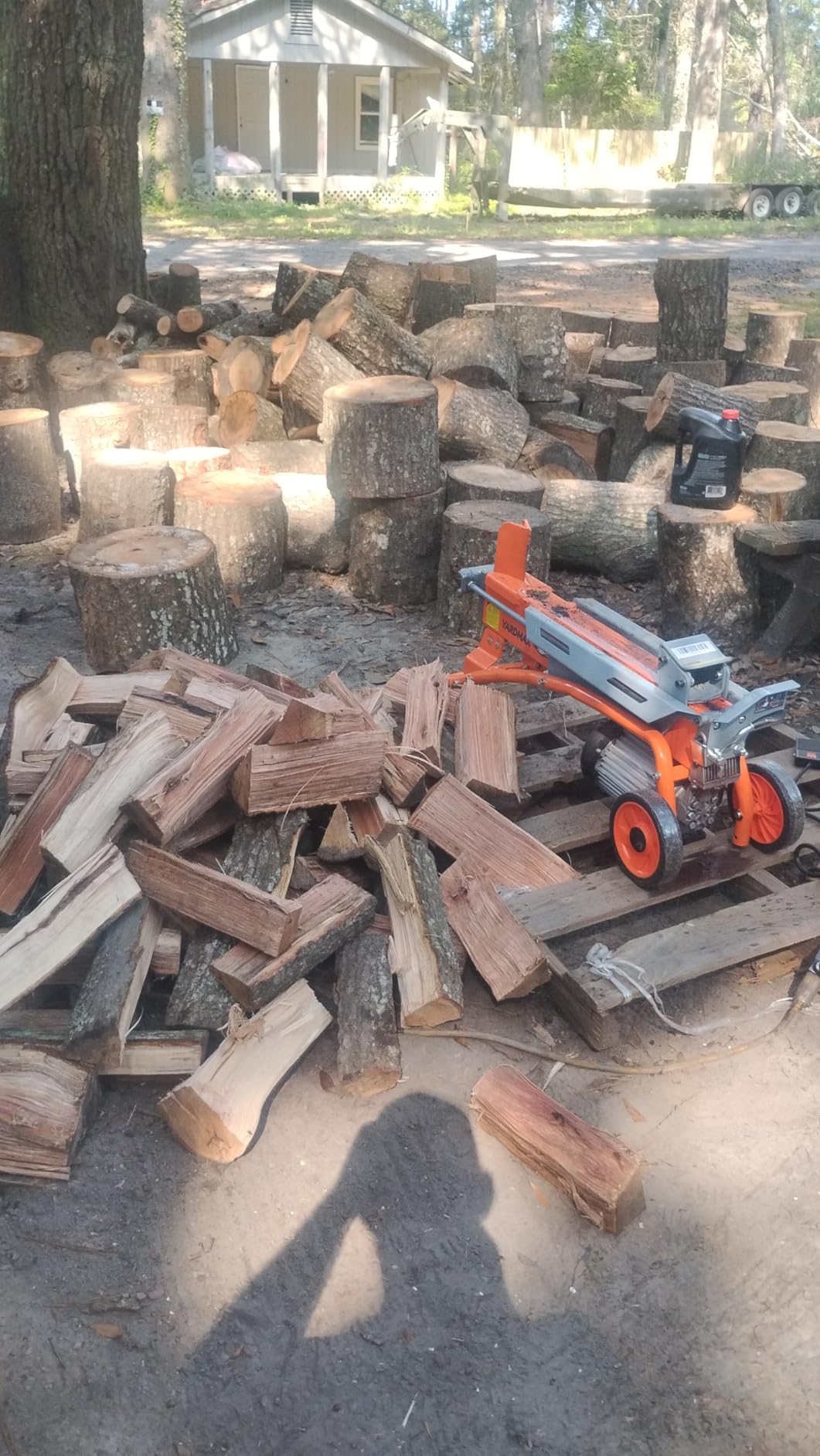
Build quality comes up more than expected for the class, with owners describing it as solid after years of homeowner use. One-handed operation is an option, and value comparisons against repeated equipment rental are common in the reviews and consistently favor buying.
Because it has been available since 2016, there is a longer owner history here than for most electric splitters, and that history is largely positive. That longevity matters on a homestead where a machine has to survive a decade of seasonal use.
What to check before you buy it
Check your storage space carefully. The split lever is on one end, so the machine cannot be stored standing on end, and at just over 100 lb it is not something you want to drag across a garage floor every time. Plan a dedicated low spot on the floor for it.
Budget for an extension cord. The cord is approximately 6 ft, which is short enough that most setups need more, and combining two light-gauge cords is a good way to trip the breaker mid-load.
Who should skip it
Skip it if you work on uneven ground or gravel. The narrow plastic wheels tip on irregular surfaces, and a splitter that tips with a ram under load is a real hazard rather than an inconvenience.
Skip it if your rounds routinely exceed 12 in or contain branch stubs. Past that diameter the 6.5-ton ram is working at the edge of its rating, and a gas machine in the same class will simply keep going.
7. BILT HARD 6.5 Ton Log Splitter — Best for Raising the Beam and Saving Floor Space
BILT HARD 6.5 Ton Log Splitter, Wood Splitter, Portable Firewood Splitting Machine
6.5 tons splitting force
Full beam steel wedge
9.8 in by 20.5 in capacity
5.7 in rear wheels
Pros
- Plows through 12 in hardwood and eucalyptus cleanly
- Raised working height saves you from squatting
- Well built
- Stores upright to free up floor space
Cons
- Two-handed switch is cumbersome for small pieces
- Small wheels and light axle on rough ground
- Logs can shift as the ram approaches
- Arrives in two separate boxes
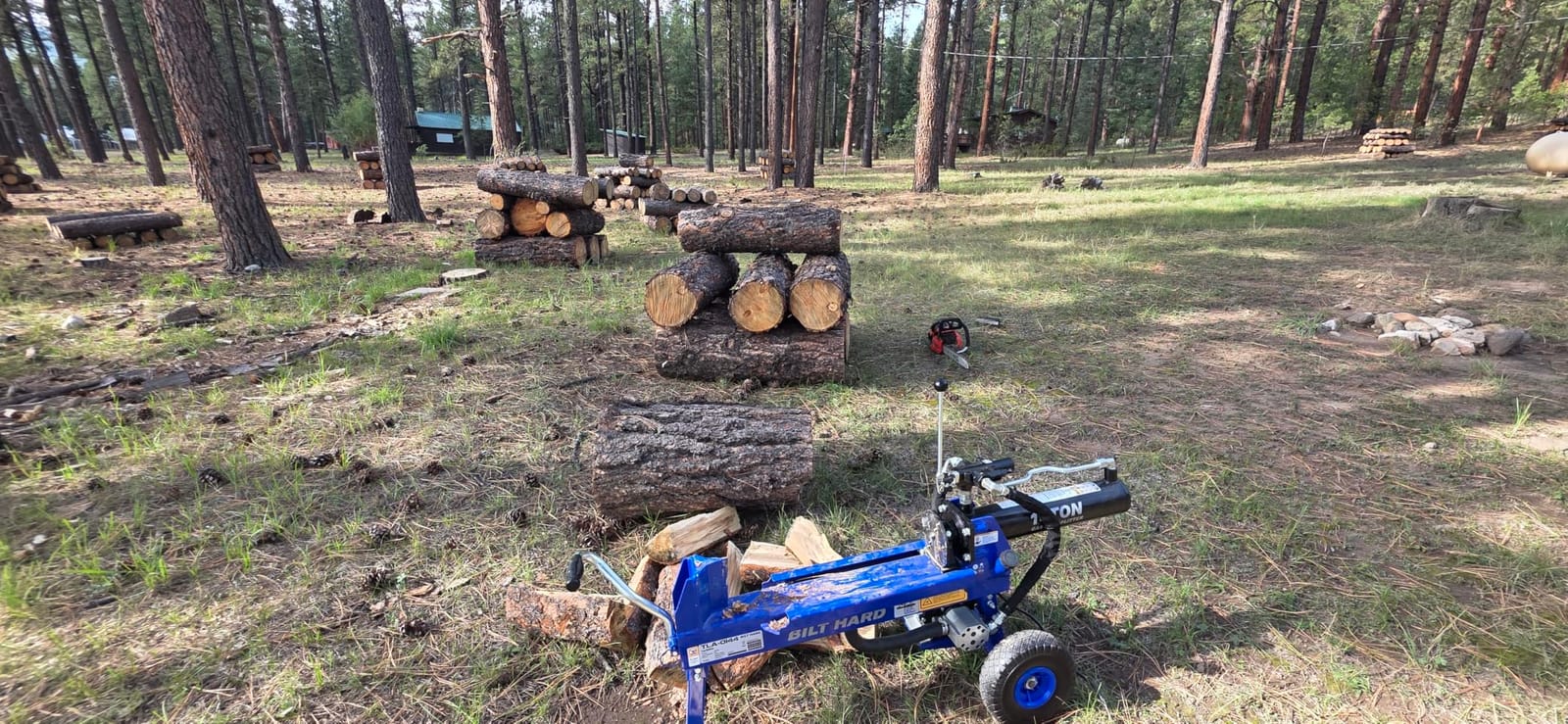
Two design choices separate this from the other 6.5-ton electric machines. The raised working height means you are not squatting over every round, and the full-beam frame with a hefty piston on guide rails delivers straight, even pressure so the ram does not wander off line on an uneven log.
Owners report it plowing through rounds larger than the 9.8 in rated diameter, including 12 in hardwood and eucalyptus. Rated capacity is 20.5 in long, and the integrated handle plus 5.7 in rear wheels make it manageable for one person to reposition.
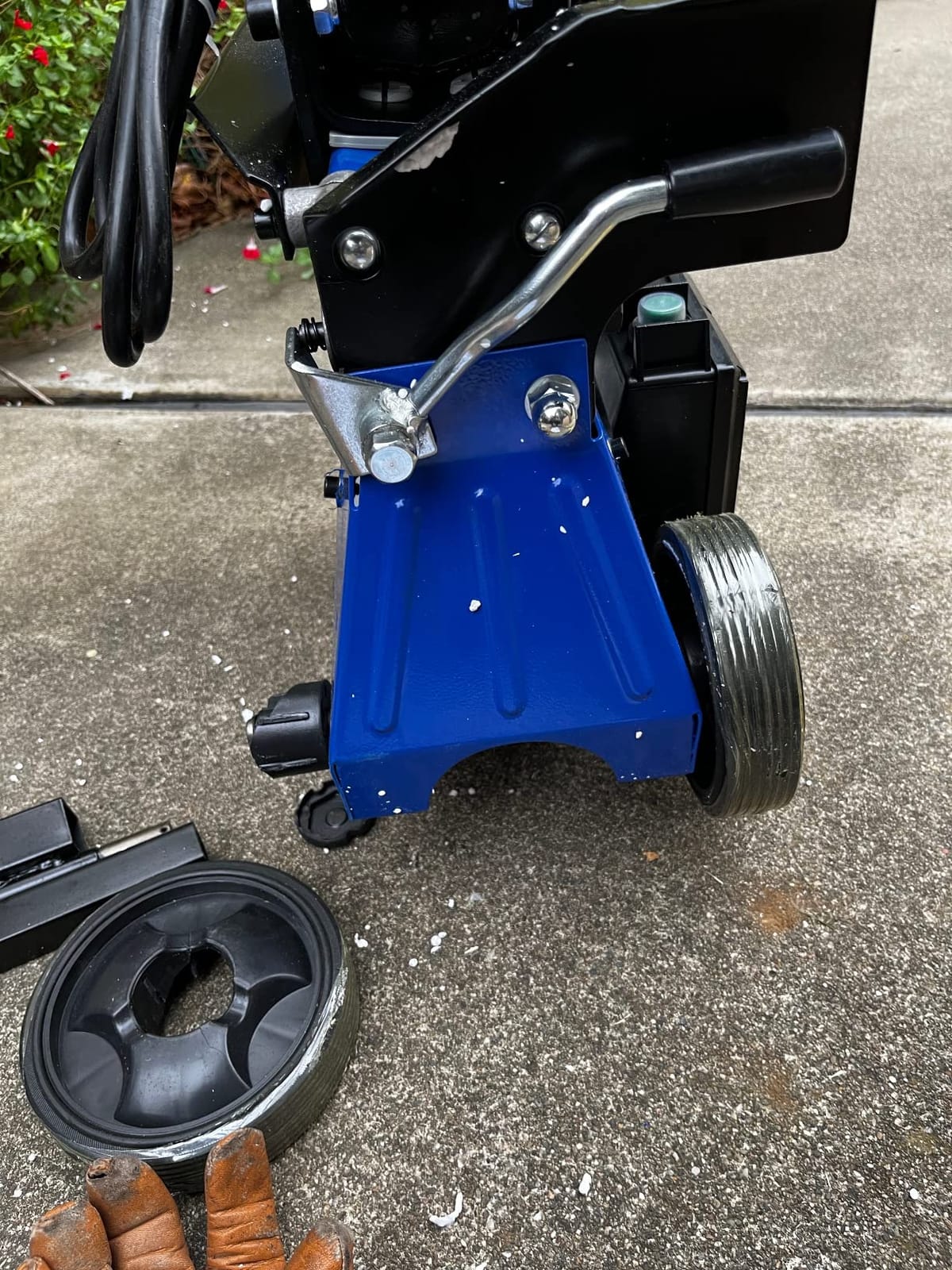
The two practical advantages here stand out. Upright storage keeps the machine against a wall instead of across the middle of the garage floor, which on a small homestead shop is a genuine space saving, and the guided piston keeps the ram tracking straight through gnarly grain.
Company responsiveness is well documented in the reviews, including a warranty replacement unit after a bent piston rod. That kind of service record matters more than a spec line when you are five years into a machine’s life and hunting for a part.
What to check before you buy it
Measure the round length before you commit. Twenty inches is the useful limit, and longer rounds need to be cut down first or they will sit on the beam unsupported and the ram will drive them along the bed rather than into the wedge.
Check the delivery cartons. This machine arrives in two boxes that a tracking system may not link together, so if only one shows up on the day, check the delivered shipments before assuming the second is missing.
Who should skip it
Skip it if your terrain is rough gravel or a sloping lot. The 5.7 in rear wheels and light axle are the most common complaint about this machine, and moving it cross-country is more effort than the price difference versus a wider-wheeled model would suggest.
Skip it if you mostly split small kindling. The two-handed switch operation is cumbersome on short pieces, and a manual kindling tool like the KABIN is faster for that job.
8. Timber Tuff 44 Inch Manual Log Splitter — Best for Big Rounds by Hand
Timber Tuff Manual Log Splitter with Steel Slide Hammer, 44 Inch, Green
44 in tall
8.8 lb slide hammer
Heat treated steel
13.73 lb
1 year warranty
Pros
- Much easier on your back and joints than a maul
- Gravity slide splits a log in three or four drops
- Handles 24 in knotty oak rounds
- Doubles as a wedge extractor and pry bar
Cons
- Welded joint on the slide rod can break
- Transport lock screw must be removed before use
- Very loud impact noise
- Rubber handle cover cracks over time
The Timber Tuff is a gravity slide splitter: an 8.8 lb hammer rides up the rod, you reverse the handle, and gravity drops it onto the anvil. Enthusiasts who process several cords a year describe it as faster and far kinder to the body than swinging a maul, because the energy comes from the drop rather than from your shoulders.
At 44 in tall it takes rounds that will not fit under a short drop tool, and owners specifically mention handling large, knotty, branch-stubbed rounds including 24 inch oak. It also serves as a wedge extractor and pry bar, which makes it a genuinely useful addition to any splitting setup.
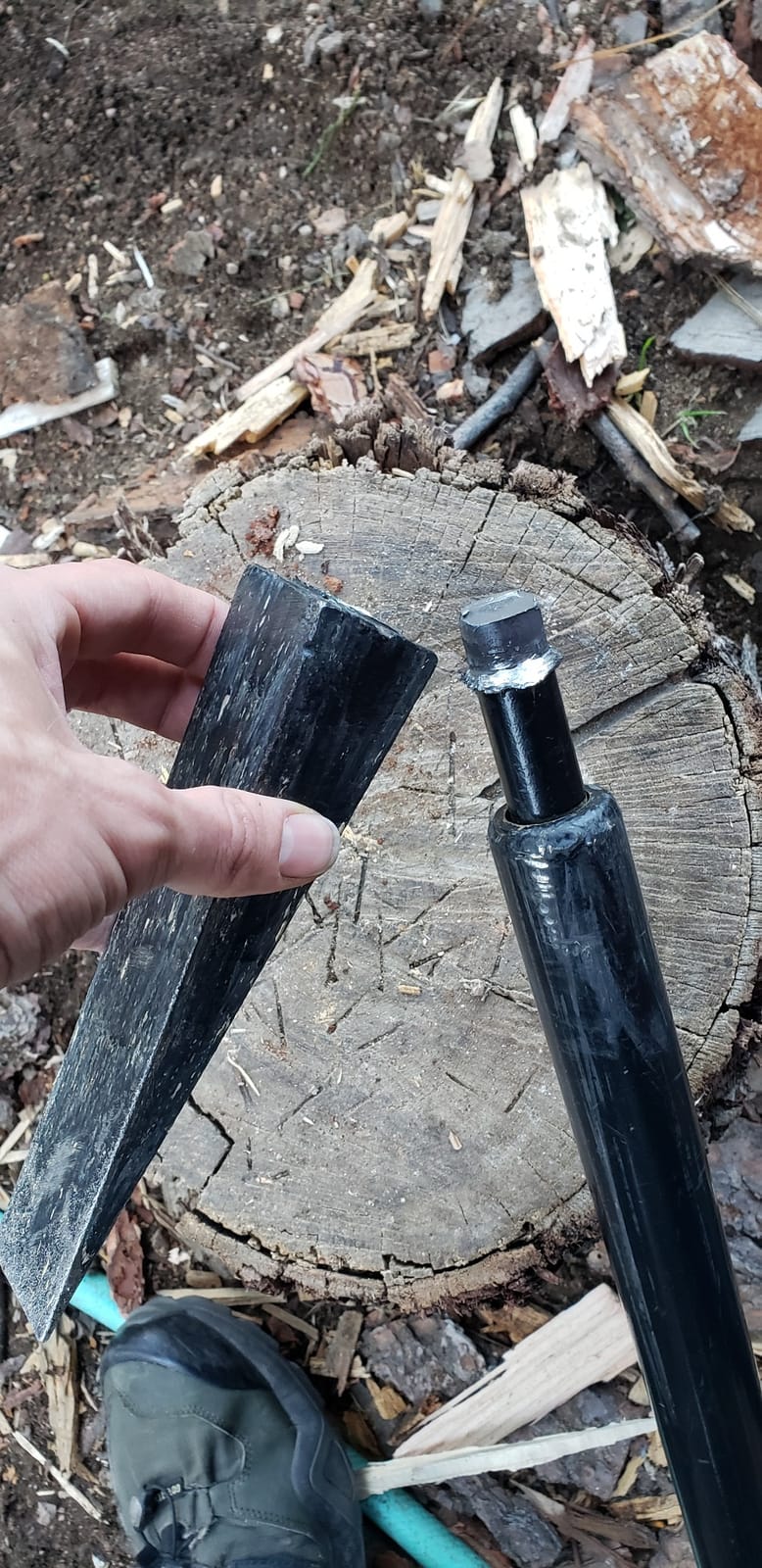
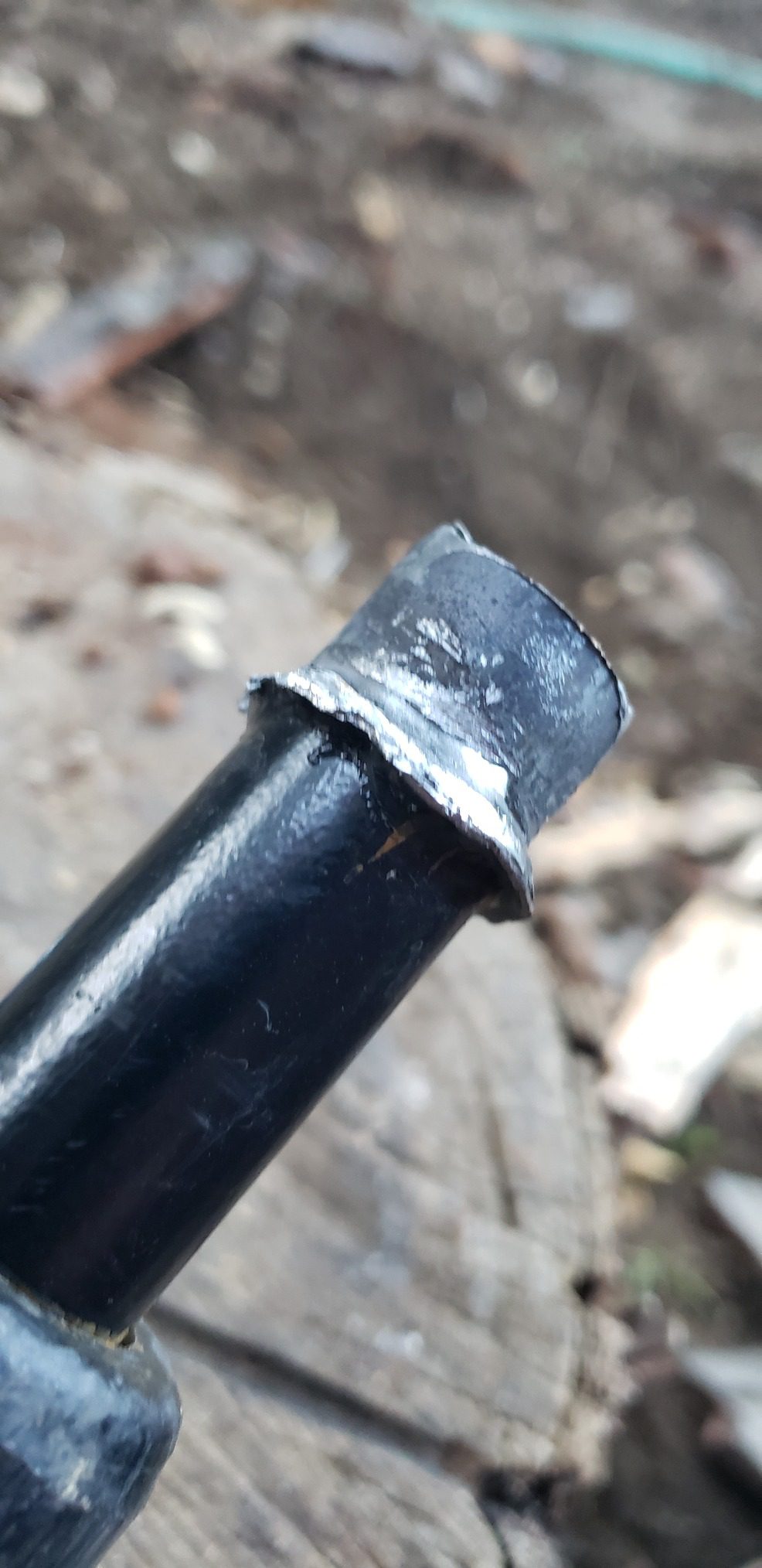
It has been available since 2011, which means a deep pool of long-term owner feedback, and that feedback is sharply split. Enthusiasts rate it highly on speed and body comfort; a recurring negative theme documents the welded slide-rod end breaking, sometimes within a year or two of heavy use.
One step matters more than any other: remove the transport lock screw before the first use. Owners report that leaving it in place can strip the handle channel, and the reverse-stroke wedge retrieval trick is worth learning early because it is how you free a deeply embedded wedge.
What to check before you buy it
Check the height clearance where you plan to set it up. At 44 in it needs vertical room and a solid base, and it is not a tool for splitting rounds on the tailgate of a truck without something to stand it on.
Inspect the welded end of the slide rod before you commit. That joint is the documented failure point, so if your volume is heavy — several cords a week rather than several cords a year — a powered machine is the better investment.
Who should skip it
Skip it if you process more than a few cords a season. Owners doing multi-cord years describe the manual cycle as satisfying but tiring, and the 8.8 lb hammer generates noise loud enough to be unpleasant over a long session.
Skip it if a loud work environment bothers you. The impact of hammer on anvil is described as very loud, which is a real issue next to a house on quiet acreage.
9. BILT HARD 27-Ton Towable Gas Splitter — Best for Woodlots and Acreage Cleanup
BILT HARD 27-Ton Towable Gas Powered Log Splitter, Horizontal & Vertical Wood Splitter Gas Powered with 209cc OHV Engine & 2-Stage Pump, 16″ DOT Tires & 2″ Ball Coupler Firewood Splitting Machine
27 tons splitting force
209cc 7HP OHV engine
13 second cycle
7 in wedge
6 gallon reservoir
Pros
- Very heavy duty build with thick powder coat finish
- Splits large heavy rounds with no visible strain
- Fast 13 second cycle supports high volume
- Arrives in well padded reinforced boxes
Cons
- Two people needed to lift the body during assembly
- Engine can be hard to start with trapped pressure
- A pre-installed hydraulic line was not tightened
- Wheeled frame is awkward on rough ground
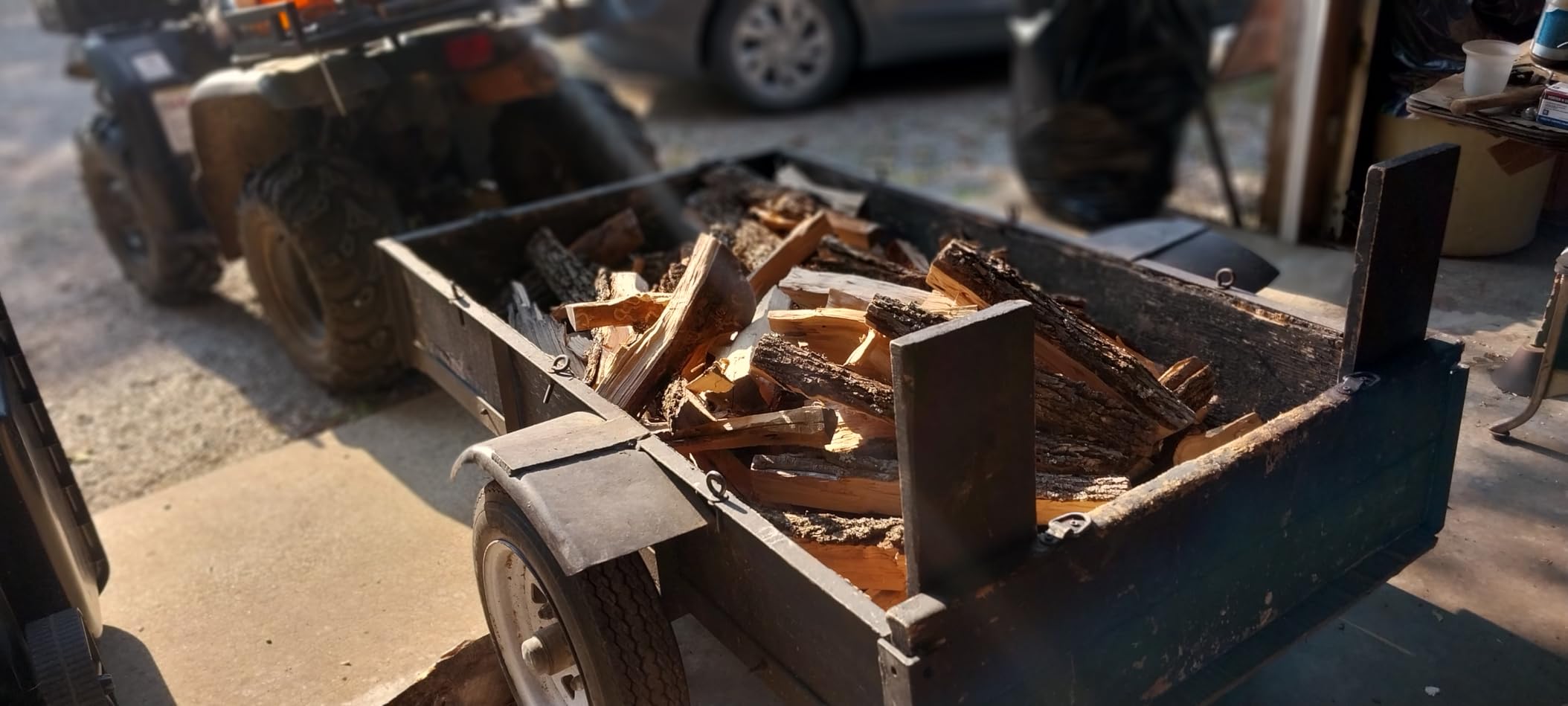
This is the machine for a homestead that also manages a woodlot. A 2-inch ball coupler with 35-inch safety chains and 16-inch DOT-approved tires rated to 45 MPH means you can drag it behind an ATV, UTV or truck directly to the pile instead of carrying fuel and rounds back to the shed.
Horizontal and vertical dual-position operation is the second feature owners praise most. Vertical splitting lets you drop a heavy round onto the wedge without lifting it, which removes the worst back injury in the whole job, and the 7-inch hardened steel wedge handles logs up to 24 in long.
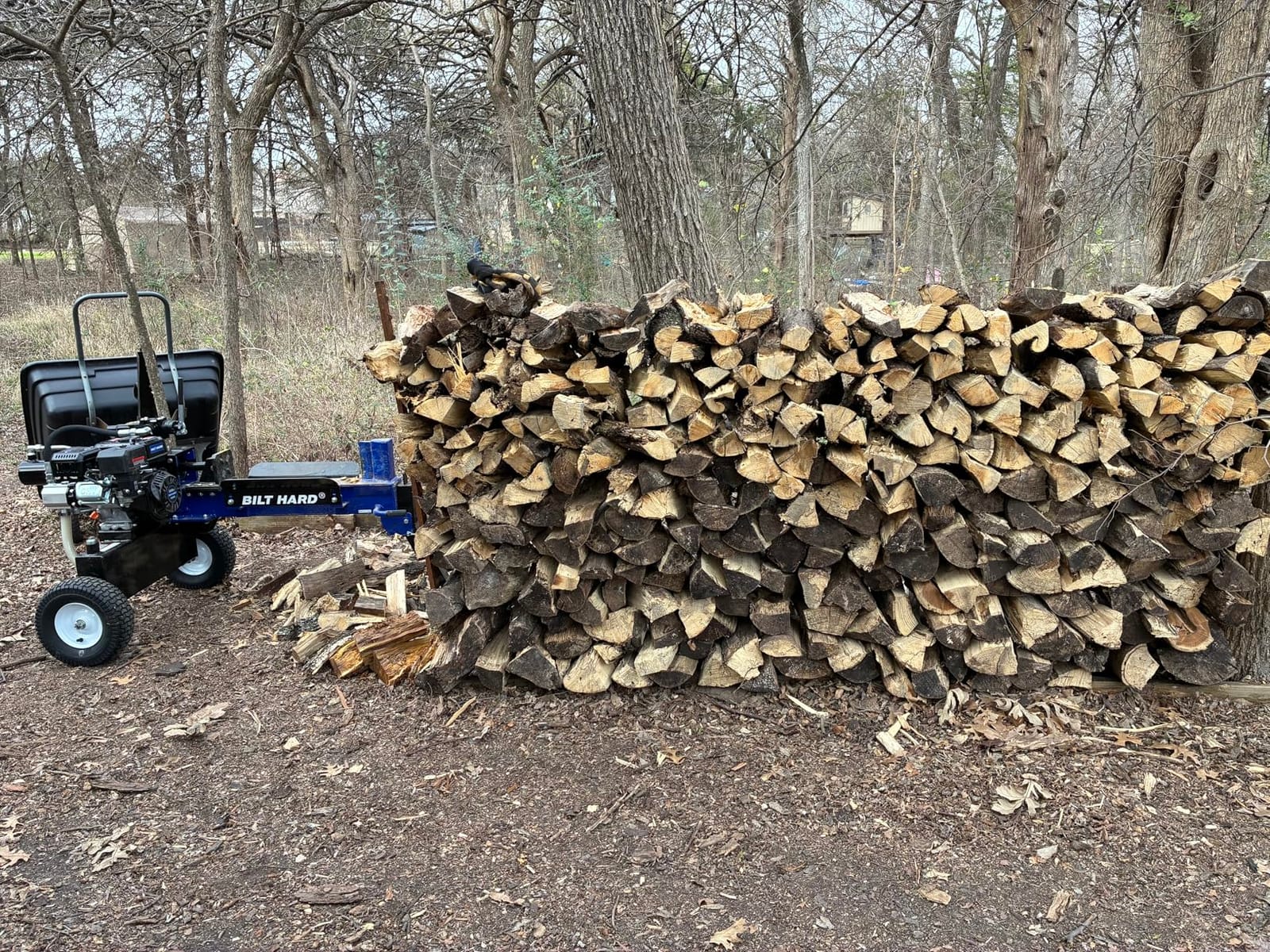
A 209cc 7HP OHV engine with 9.14 ft-lb of torque and a 2-stage 11 GPM pump produce a 13 second cycle and a 6 gallon reservoir. Owners describe it as a machine that powers through large rounds with no visible strain on the engine, and reports cover thousands of cords of use without complaint.
Hydraulic oil and engine oil are included, which removes the most common first-day surprise, and an assembly video and manual are in the box. Customer service is reported as responsive, including resolving missing cartons and a start issue.
What to check before you buy it
Check that you have a vehicle and a helper for delivery day. The machine body is heavy enough that two people are needed to lift it during assembly, and it is awkward to move across rough ground on its own wheels.
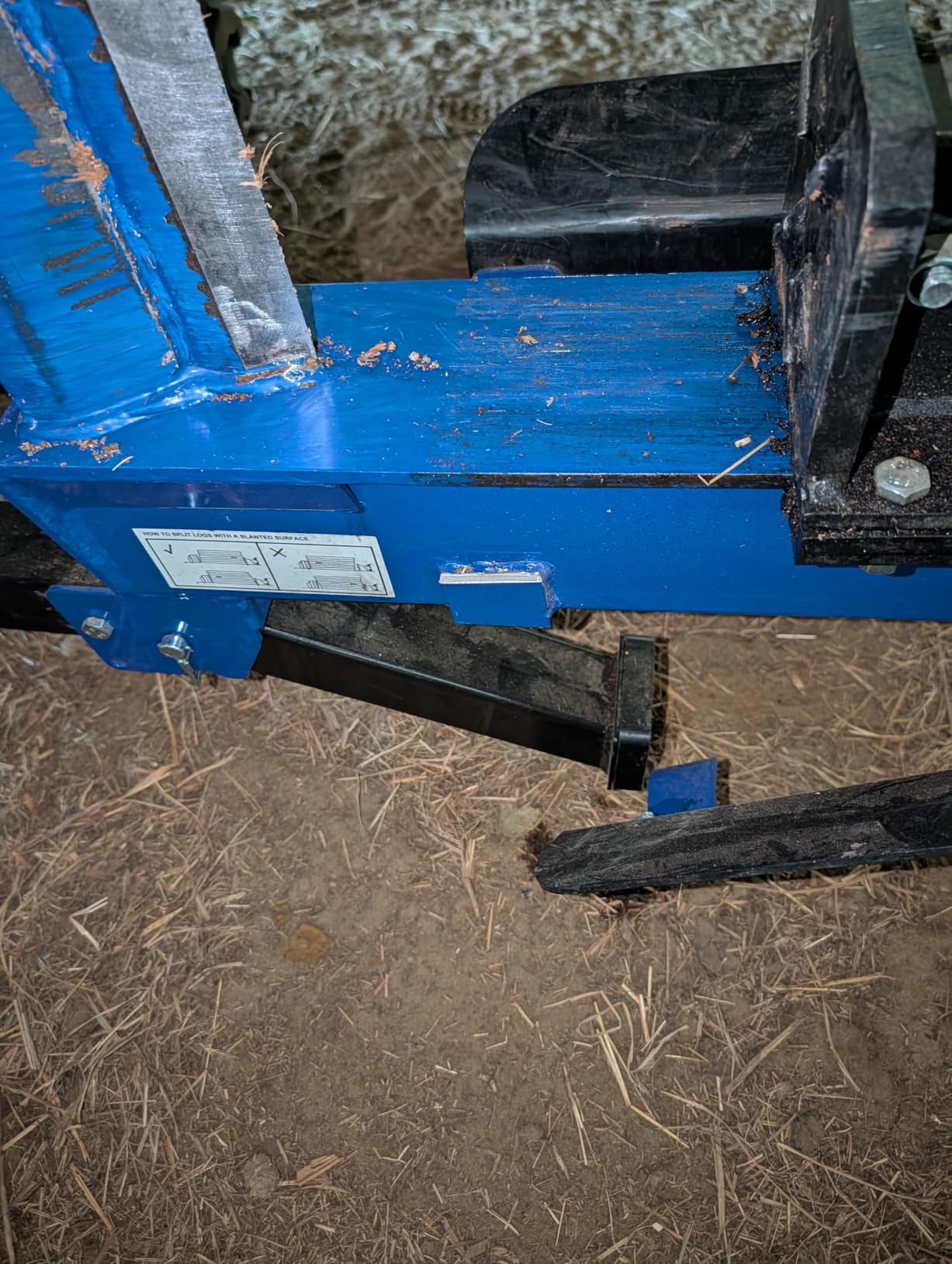
Check the hydraulic lines before the first start. A small number of owners found a pre-installed line that was not tightened at assembly, and a few needed to clear trapped hydraulic pressure before the engine would turn over. Inspect fittings with the engine cold.
Who should skip it
Skip it if you split fewer than about four cords a year or if you have no towing vehicle. The towable frame is the main reason this machine is heavy, and without an ATV or truck you are lifting 494 lb of splitter by hand.
Skip it if your rounds are all small. At 27 tons this is far more force than 10 inch seasoned rounds require, and the fuel and handling overhead is wasted on light work.
10. PowerSmart 6.5-Ton Electric Splitter — Best for Light Duty and Short Rounds
PowerSmart Electric Log Splitter, 6.5-Ton with 15 Amp Motor
6.5 tons splitting force
15 amp 3450 rpm motor
20 second cycle
108 lb
Two year warranty
Pros
- Steady 3450 rpm induction motor
- 20 second cycle resets quickly
- Compact footprint with wide rear wheels
- Two year warranty with responsive support
Cons
- Only 52 reviews
- thin long term feedback
- 12 percent one-star share
- Short stroke compared with full beam machines
The PowerSmart DB6406 is the compact option when you split a few cords of already-seasoned firewood and nothing more. A 15 amp induction motor at 3450 rpm gives steady, consistent pressure, and the 20 second cycle resets quickly enough for a short session without feeling sluggish.
Its horizontal full beam steel frame handles logs up to 20 in long by 10 in diameter, and the unit weighs 108 lb. Wide rear wheels and a strong carry handle are specified for terrain such as sand and mud, which is a real advantage if your wood lot sits on soft ground.
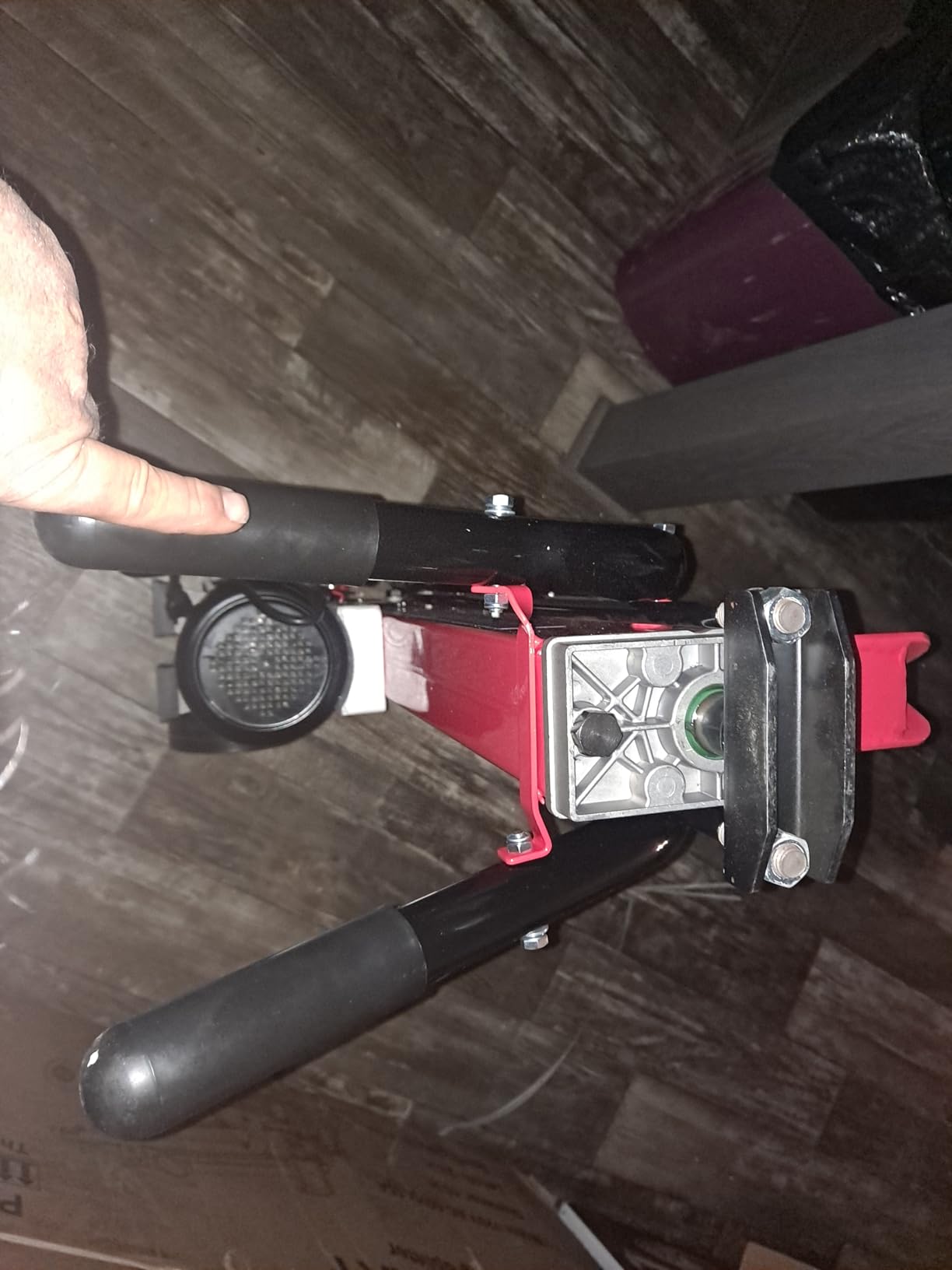
Owner feedback here is thin at 52 reviews, so treat durability claims as preliminary rather than proven. The sentiment split is wide: 70 percent five-star alongside a 12 percent one-star share, which tells you most people are happy and a meaningful minority are not.
The two-year warranty is longer than several competitors in this class offer, and support has been reported as responsive. For a light-duty machine that will not be run for decades, that warranty is a reasonable substitute for a long review history.
Who should skip it
Skip it if you want a machine with a proven long-term record. The review base is too small to give you confidence about what fails at year five, and a homestead machine needs to survive a decade.
Skip it if you process knotty or green wood regularly. A 6.5-ton ram with a short stroke is fine for seasoned rounds and frustrating on anything with a crotch or a knot cluster.
11. BILT HARD 40-Ton Gas Splitter — Best for Maximum Force on the Toughest Wood
BILT HARD 40-Ton Gas Powered Log Splitter, Horizontal/Vertical Full Beam Wood Splitter with Auto Return, 4-Cycle 389cc OHV Engine, 2 Stage Gear Pump, Gas Firewood Splitting Wood Machine
40 tons splitting force
389cc 13HP OHV engine
16 second cycle
8 in wedge
7 gallon reservoir
Pros
- 40 ton ram handles the toughest hardwood rounds
- Vertical mode avoids lifting heavy rounds
- 16 second cycle supports high volume production
- Towable at highway speeds behind a truck or UTV
Cons
- Only 43 reviews
- limited long term data
- 10 percent one-star share
- Heaviest and costliest option here
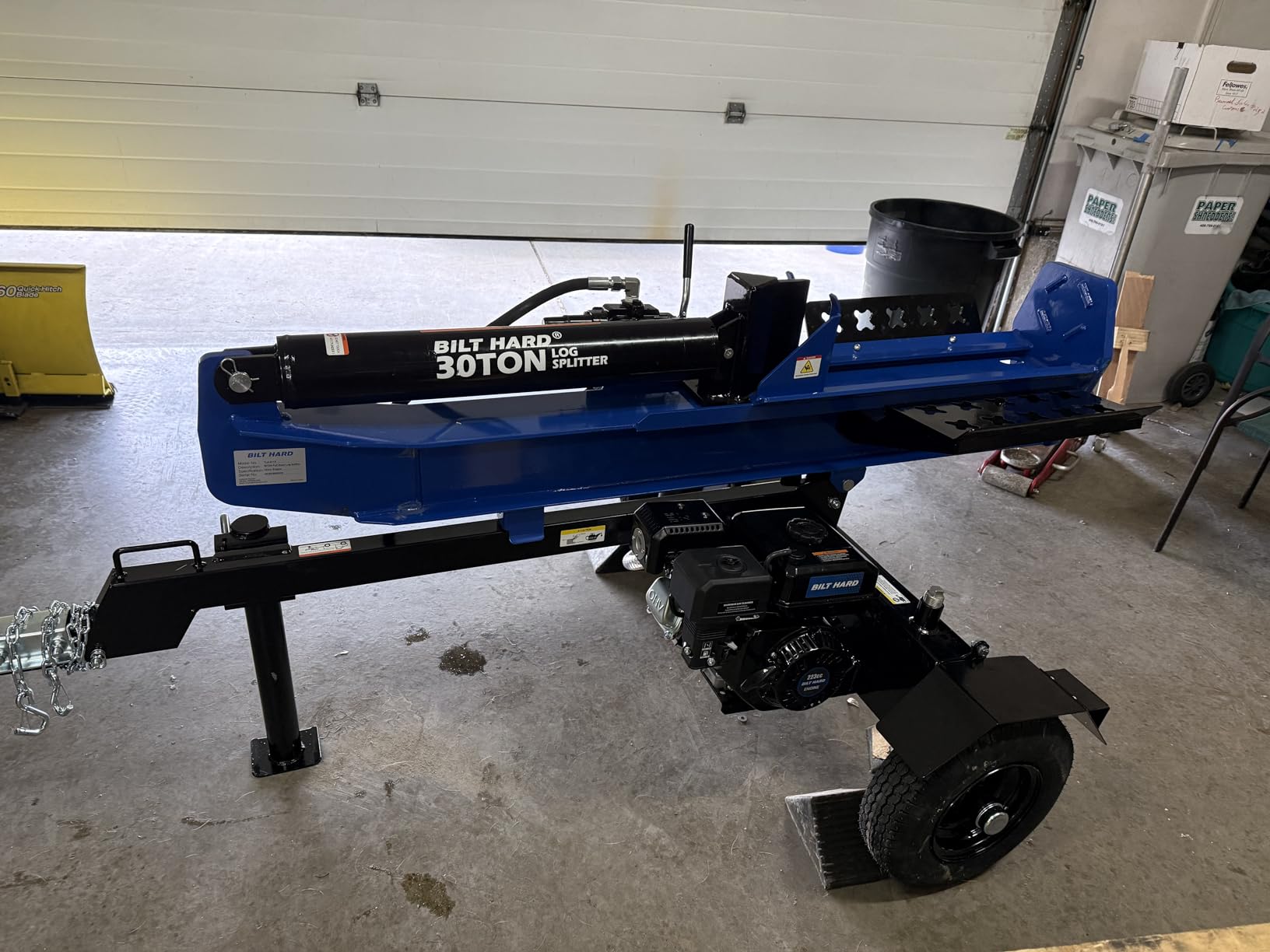
When 25 tons is not enough, this is the ceiling in our roundup. The 40-ton ram comes from a 389cc 13HP single-cylinder OHV engine with 16.96 ft-lb of torque feeding a 2-stage 14 GPM gear pump, and the 8-inch hardened steel wedge takes logs up to 24 in long.
Auto return with a 16 second cycle keeps throughput up despite the tonnage, and full beam design with horizontal and vertical operation means you can split a 24 inch round without lifting it. The 2-inch ball coupler, 24-inch safety chains and 16-inch DOT-certified tires are rated to 45 MPH for towing behind an ATV, UTV or truck.
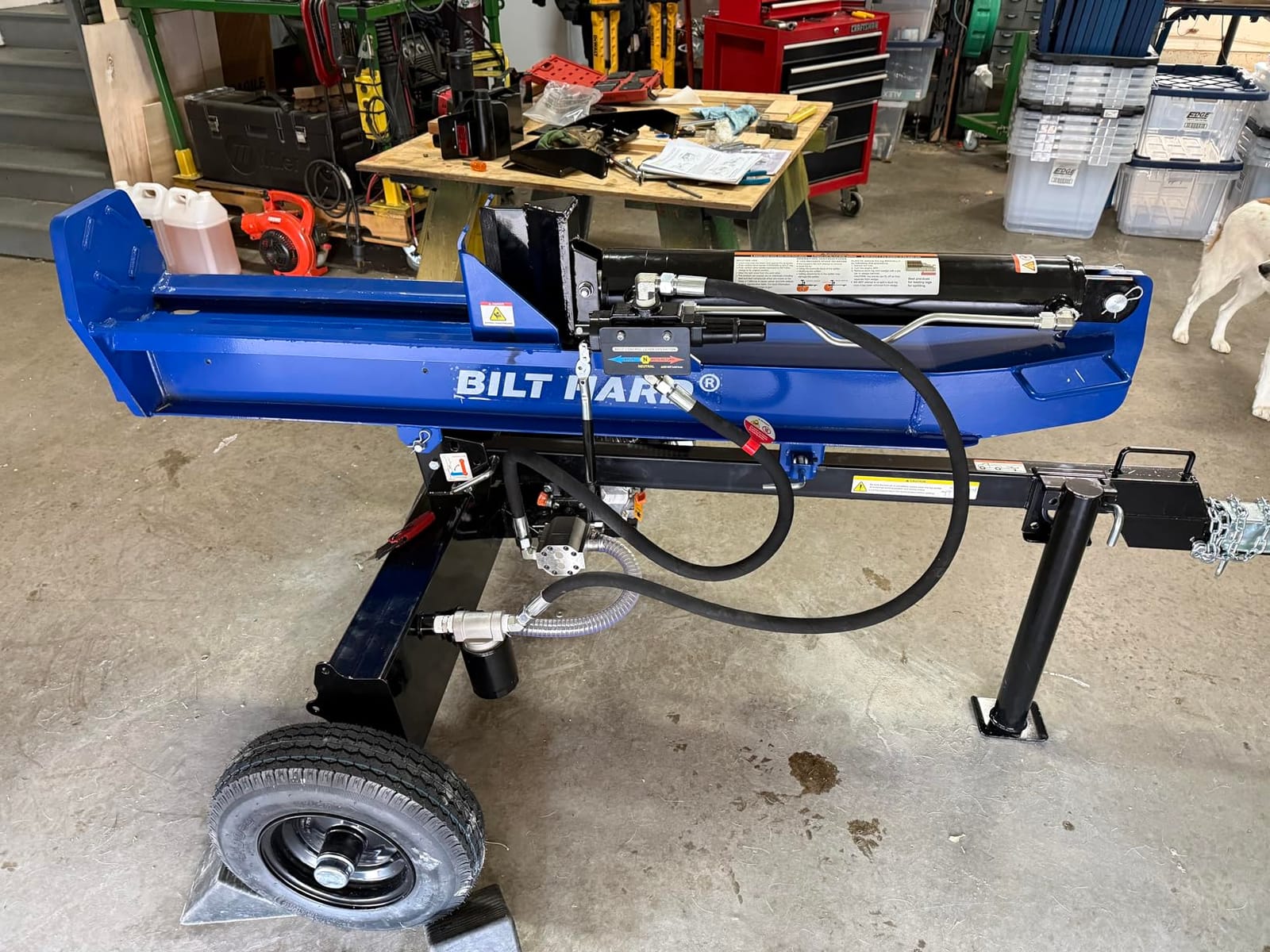
Review volume is only 43, so read owner feedback as preliminary. The 4.4 average is solid with 79 percent five-star, and the split falls between owners satisfied with the power and those landing in the 10 percent one-star group. Nobody in our research has ten years of data on this machine yet.
Hydraulic and engine oil are included and a 7 gallon reservoir cuts the number of refills during a long day. The assembly video and manual are in the box, which helps given the size of the frame.
What to check before you buy it
Check whether you have anywhere to keep it. This is the heaviest and costliest option in the roundup, and the full beam plus 389cc engine combination is a large footprint. Measure your shed or trailer bay before you commit.
Check that your largest rounds justify 40 tons. If your wood is mostly under 16 in diameter and well seasoned, the extra force is unused, and a 25-ton machine will run your volume at lower fuel use.
Who should skip it
Skip it if your volume is under about ten cords a year. At this size you are buying capacity you will not exercise, and the smaller 27-ton towable in this roundup covers the same hard wood with less to move.
Skip it if you have no towing vehicle. Unlike a wheeled frame, this machine is not designed to be muscled across a yard by two people on rough ground.
12. SuperHandy 25-Ton Gas Splitter — Best for 24 Inch Rounds at 90 Pounds
SuperHandy Portable 25 Ton Gas Log Splitter with 7HP Engine, Bucher Gear Pump, and Horizontal/Vertical Half Beam Steel Wedge for Firewood Splitting and Forestry Harvesting
25 tons splitting force
7HP AlphaWorks engine
12 second cycle
24 in diameter capacity
90 lb
Pros
- Half beam design keeps weight to 90 lb at 25 tons
- Fast 12 second cycle for high volume
- Horizontal and vertical configuration
- Folding handle and 10 in wheels move easily
Cons
- Only 40 reviews
- limited long term evidence
- Hydraulic fluid not included
- Half beam limits the toughest rounds
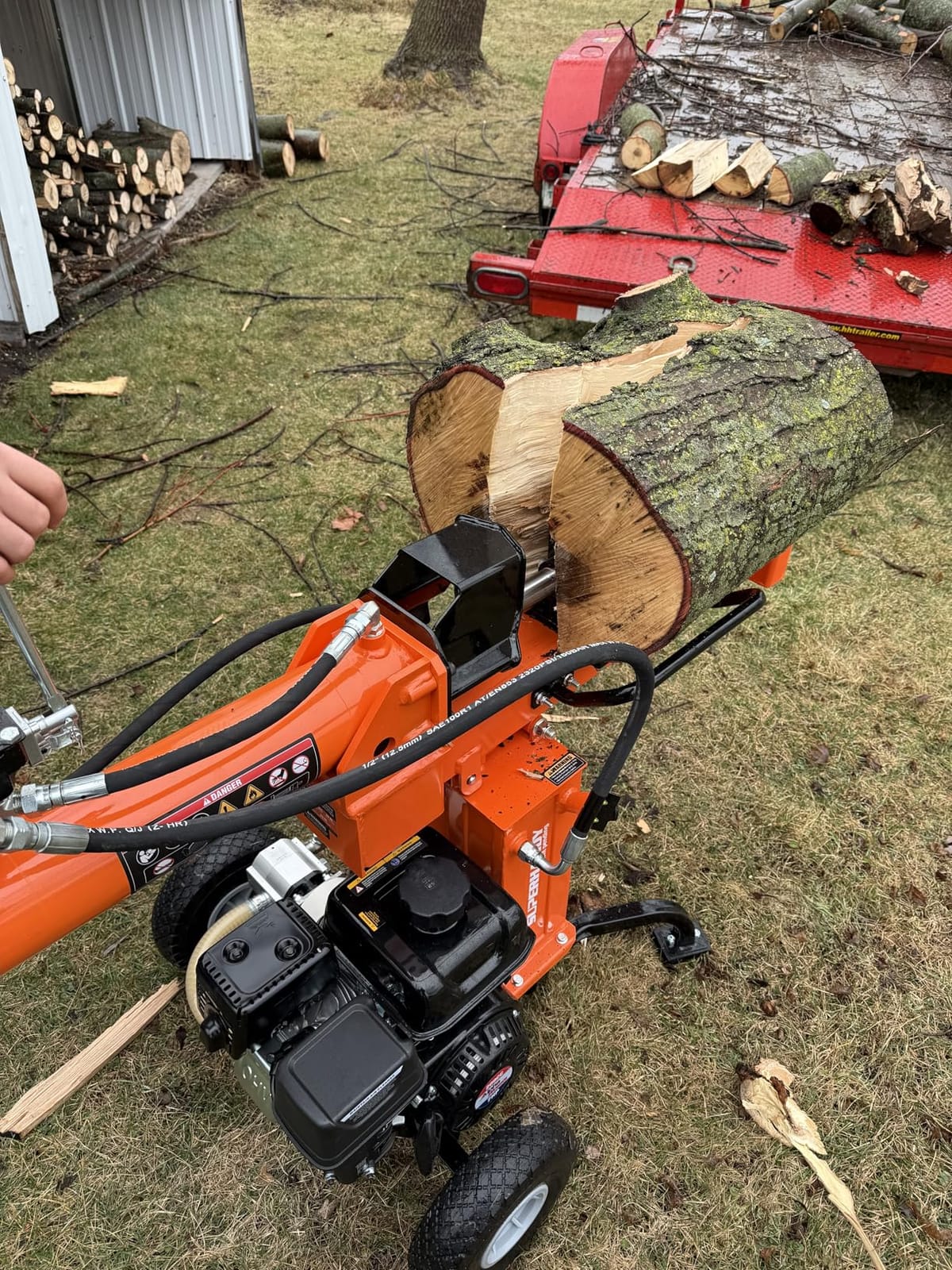
At 90 lb, this is the lightest 25-ton splitter we found, and that weight is the entire reason to look at it. A half-beam frame with a steel wedge drops the mass dramatically, which means one person can move it between wood piles and up to the back of the property without recruiting help.
It still claims 25 tons from a 7HP AlphaWorks gas engine feeding a 2-Stage Bucher hydraulic gear pump, and the 12 second cycle is the fastest among the high-tonnage machines in this roundup. Published capacity is logs up to 20 in long by 24 in diameter, which is unusually wide for a portable unit.
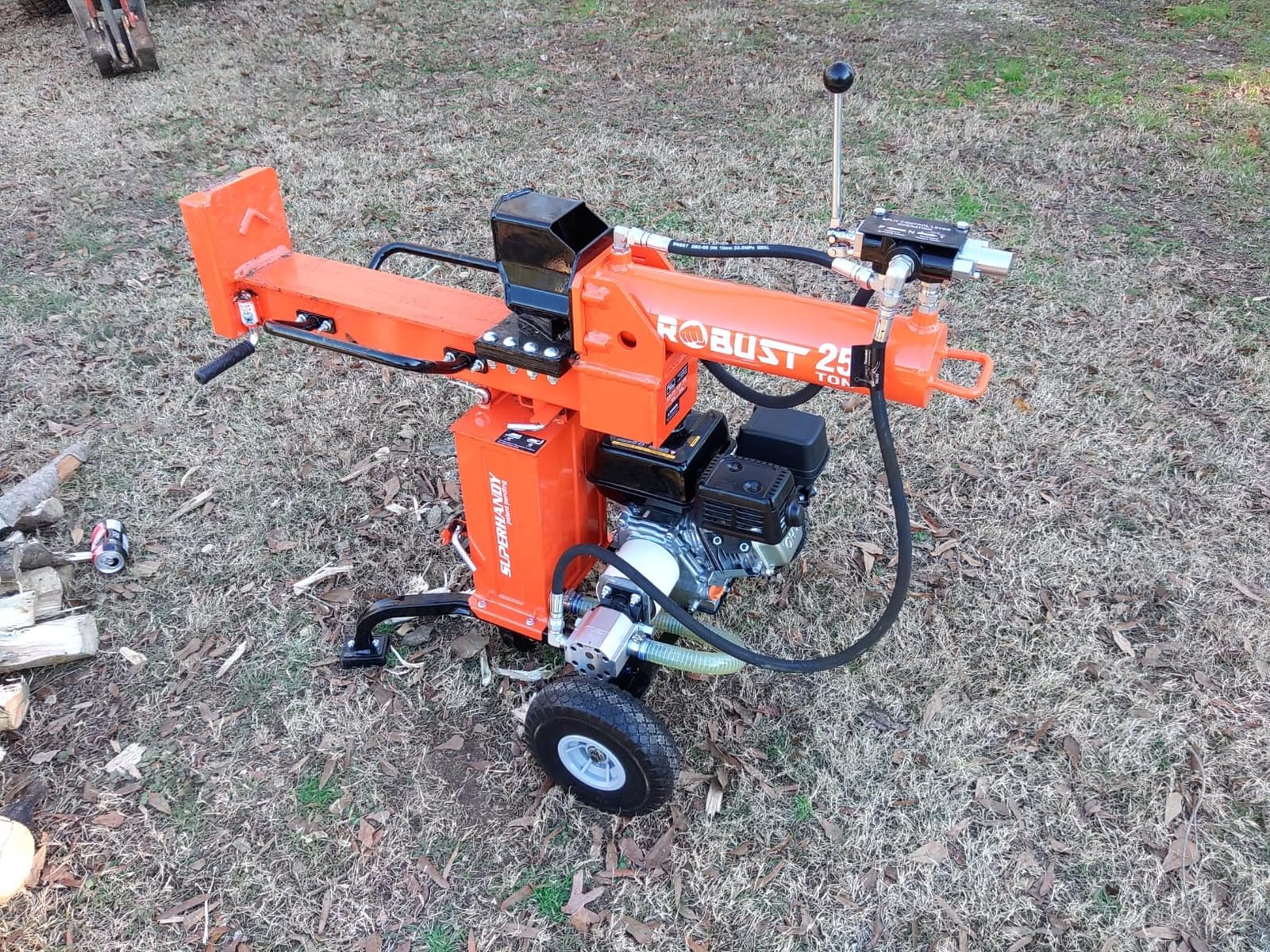
Horizontal and vertical half-beam configuration adds flexibility, and an ergonomic folding handle with 10 inch polyurethane wheels makes moving it between piles straightforward. Owners who use it for forestry harvest work rate the portability as the deciding factor.
Review volume is 40, so the durability picture is not established. Sentiment is positive at a 4.5 average, but there is simply not enough owner history yet to say how the half-beam frame holds up over a decade of homestead use.
What to check before you buy it
Order hydraulic fluid on the same day you order the machine. Fluid is not included, AW32 is recommended, and running it under-filled is the fastest way to convince yourself the 25-ton rating is exaggerated.
Measure the widest round you expect to feed it. A 24 in diameter capacity is only useful if your saw can actually cut and roll a round that size onto the bed without you lifting it.
Who should skip it
Skip it if you split the hardest wood on your property. Owners note the half beam limits it on the toughest rounds compared with a full-beam machine, so if your wood is dense hardwood or burl-heavy, step up to a full beam instead.
Skip it if you plan to run it into the third year and beyond without a parts plan. Forty reviews is not enough history to buy a long-term machine on, and this one costs more than the entry gas options.
How Many Tons of Splitting Force Do You Actually Need?
Most homesteads need far less tonnage than the marketing suggests. The number that matters is cords per year, and the table-style breakdown below maps annual volume to the class of machine that fits it. Owners on firewood forums argue about this constantly, and the consensus is that log size limits you more than tonnage.
Under 2 cords a year: a splitting wedge or a manual kindling tool is the right call. Owners doing this volume consistently say a machine is overkill, and the setup time of unboxing and filling hydraulics exceeds the time saved.
2 to 5 cords a year: a 6.5 to 7 ton electric splitter covers it. This is the volume where quiet operation and simple maintenance matter more than force, and both electric options in this roundup handle 10 to 12 inch rounds despite their ratings.
5 to 10 cords a year: a 20-ton gas splitter is the sweet spot. This is the most common homestead volume, and the machines in this class handle the twisted crotch pieces and knot clusters that stop a smaller ram.
10 to 20 cords a year: 25 to 27 tons, with a log lift and a towable frame. Owners at this volume consistently say the lift and wedge configuration change throughput more than the extra tons do, so factor those into the purchase.
20 cords and up, or a woodlot: 40 tons and a full beam. This is production work, and the fuel, storage and moving logistics of a machine this size need to be planned alongside the purchase.
A useful rule: buy the smallest tonnage that reliably splits your largest round, then add a better wedge. Many owners report 22 tons struggling with Y-shaped and twisted crotch pieces while 25 tons handles them without drama, so the jump from 22 to 25 is where the difference becomes obvious — but the jump from 25 to 40 is mostly headroom.
Gas vs Electric vs Manual Log Splitters for a Homestead
The power source decides where you can work, what you have to store, and how loud your Saturday is. For most homesteads the answer is straightforward, and the forums reach the same conclusion: electric for light volume near power, gas for everything else, manual for kindling and small jobs.
Electric splitters run quietly with no exhaust, no fuel storage, and no oil changes on the engine. The three here range from 6.5 to 7 tons, all handle 10 to 12 inch seasoned rounds, and all need a heavy-gauge extension cord on a long circuit. The trade-off is diameter: past 12 inches and a gas ram simply keeps pushing.
Gas splitters deliver the tonnage range that real homestead wood demands, from 20 tons up to 40. The costs are fuel, oil changes, noise, and a machine heavy enough to need a second person or a tow vehicle. In exchange, you can take it to the wood lot, run it all day, and split green and twisted timber an electric ram will stall on. Our electric log splitter guide covers that side in more depth if you are leaning electric.
Manual tools — a 5 lb wedge, a kindling cracker, or a 44 inch slide hammer splitter — cost little, store anywhere, and keep your hands away from a swinging edge. Their limit is volume, and it is a firm one. Multiple owners processing several cords a year report the manual method is more economical at their volume than owning a machine.
For a homestead that has no reliable power at the wood lot, gas is the only realistic option above a few cords. For a cabin under 3 cords a year with an outlet in the garage, electric wins on every practical measure except maximum diameter.
Safety on Splitting Day
A log splitter removes the swing of an axe and replaces it with a machine that will not miss. The single most important safety device is the faceguard or hand guard, and it should be in the down position over the splitting area every single cycle.
Wear eye protection and hearing protection. Steel wedges throw bark chips and split hardwood sends fragments sideways, and a gas engine adds noise levels that damage hearing over a full day of work. Steel-toe boots matter because rounds roll unpredictably on the beam.
Keep both hands on the controls and behind the guard plane. Several owners of electric models describe solving awkward two-hand geometry on short rounds with sticks or a foot pedal modification, which is a reasonable workaround but worth practicing on scrap wood first rather than under load.
Load rounds from the side, not over the beam. A round that slips off the top of a moving ram is the most common serious injury in this job, and vertical splitting mode removes the need to lift a heavy round onto the wedge at all.
Work in loose layers, not a stacked pile. A full stack at the end of the beam can push back against the ram, and the machine will fight you with no useful result. Split the front row, move it, then work the next one.
Never reach into the beam to adjust a log while the ram is pressurized. Move the control to neutral, let the ram return, and only then clear the area. This is the rule that prevents the majority of hand and forearm injuries reported on splitter forums.
Maintenance, Hydraulic Bleeding and Off-Season Storage
Most hydraulic complaints on a new splitter come from air in the lines, not from a bad pump. Bleed the system on day one and after any hose work, and the machine will perform as advertised for years afterward.
Bleeding a hydraulic log splitter in six steps:
1. Set the splitter on level ground with the wedge end raised, per the manual, so air collects at the high point of the reservoir.
2. Fill the reservoir to the marked level with the specified hydraulic fluid, and check the fill cap and dipstick threads are seated and clean.
3. Start the engine and release the control to run the ram fully forward against the wedge.
4. Reverse the control and let the ram return fully, then stop the engine and check the fluid level again.
5. Repeat the forward and return cycle three or four times, topping the fluid up between cycles until it stops dropping.
6. Check every fitting and hose for weeping with the machine cold, and tighten any pre-installed fittings that a shipping process may have loosened.
Change hydraulic oil on the schedule in your manual, and expect the first change to be earlier than people assume because factory fill is not always the fluid you want running through your pump for a decade. Owners report the dipstick is hard to read on several of these machines, so clean it before and after checking rather than trusting a dark-looking sample.
For off-season storage, drain the fuel or run it dry, run the engine until it dies, and store the machine covered and dry. A 4-stroke engine with fuel stabilizer will start after months of sitting, and a carbureted one with old fuel may not. Do not store a splitter with a log on the beam, and do not leave hydraulic fluid in a reservoir exposed to freezing ground if you can avoid it.
A 5-minute pre-season check saves a wasted morning: oil level, fuel, air filter, hydraulic level, tire pressure, wedge condition, guard operation, and a look at every hose and fitting. Checking the wedge especially matters, because a dull or paint-covered wedge face is the most common cause of a splitter that suddenly seems underpowered.
When a Splitter Is Not Worth It
The honest answer for a lot of homesteads is that a powered splitter does not pay for itself. If you burn one or two cords a year, an electric unit’s setup time, oil changes and storage footprint cost you more effort than the axe did, and that conclusion shows up repeatedly in owner discussions.
Set a threshold at three to four cords a year. Below that, a good splitting wedge with a hand sledge, plus a manual kindling tool for the small stuff, will handle your volume and take up no floor space. Several small homesteaders report making this exact switch and never looking back.
A second reason to skip: log size. If your rounds are under 10 inches and already seasoned, tonnage above 20 is unused capacity. The honest limiter on any splitter is the size of the wood you can cut and the shoulder you have left at the end of the day, not the number stamped on your ram.
For context on the rest of a homestead’s power equipment, our guides to the best chicken plucker machines for homesteads and the best goat milking stands for homesteads cover the other half of the property.
Frequently Asked Questions
What is the best residential log splitter?
The best residential log splitter is a 20 to 25 ton gas unit for most homesteads burning 5 to 15 cords a year. It handles twisted crotch pieces and knotty hardwood that stop smaller machines, and the horizontal full beam design keeps rounds at a workable height. If you burn under 4 cords, a 6.5 to 7 ton electric splitter or even a manual wedge is the smarter buy.
How many tons is a good log splitter?
For a homestead, 20 to 25 tons covers the vast majority of real wood. Under 2 cords a year, 6.5 to 7 tons is plenty. Between 5 and 10 cords, 20 tons is the sweet spot. Between 10 and 20 cords, go to 25 to 27 tons and add a log lift. Above 20 cords a year or for woodlot work, 40 tons and a full beam. Buy the smallest tonnage that reliably splits your largest round, then invest in a better wedge.
What is the best wood splitter machine for home use?
A 20-ton gas splitter with a full beam steel wedge and rapid auto return is the best all-round choice for home use. It splits logs up to 20 inches long by 16 inches in diameter, starts reliably after winter storage, and is light enough for one person to reposition. Below 4 cords a year, an electric 6.5-ton unit is quieter and needs less upkeep.
What is the best American-made log splitter?
Among the picks here, the Estwing E-5 splitting wedge is made in Rockford, Illinois using American steel, and it carries more owner review history than any other product in this roundup. For powered machines, engine brand matters more than assembly location, so choose a unit with a reputable OHV engine you can get parts for a decade from now rather than filtering on country of origin alone.
Do I need a 22 ton or 25 ton log splitter?
If your wood includes Y-shaped limbs, twisted crotch pieces, or dense knotty hardwood, step up to 25 tons. Owners report 22 tons stalling on exactly that wood while 25 tons pushes through without struggle. If your wood is mostly straight, seasoned rounds under 12 inches, 20 to 22 tons is genuinely enough and the extra 3 tons will rarely be used.
How do I bleed air out of a hydraulic log splitter?
Set the machine on level ground with the reservoir at the high point, fill to the marked level, then run the ram fully forward against the wedge and fully back with the engine running. Repeat that cycle three or four times, topping the fluid up between cycles until it stops dropping. Finally, check every fitting and hose for weeping with the machine cold, and tighten any fittings that may have loosened in shipping.
How long does it take to split a cord of wood?
By hand with a maul, a cord typically takes about three hours for an experienced person. A 6.5-ton electric splitter brings that down to roughly an hour, and a 20 to 25 ton gas machine with a fast auto return gets closer to 45 minutes. A 40-ton full beam with a log lift is the fastest, but only pays for itself above about 20 cords a year.
Conclusion: The Best Log Splitters for Homesteads in 2026
After working through all twelve, the best log splitters for homesteads come down to volume. The Estwing E-5 splitting wedge takes our Editor’s Choice because it carries the deepest owner history in the group and finishes the splits a ram cannot. For a working homestead in the 5 to 10 cord range, the Landworks 20-Ton gas splitter is the value pick, and the BILT HARD 27-Ton towable is the right call once you are clearing a woodlot.
Below 4 cords a year, an electric splitter in the 6.5 to 7 ton class handles seasoned rounds quietly with almost no maintenance. Above 20 cords, size up to a full beam and add a log lift. Above that, or below it, let annual volume decide rather than tonnage marketing, and check the current listing for the machine that fits your wood and your season.