
If you have five or more people under one roof, the usual advice about whole house water filters quietly falls apart. A unit marketed as a one-year, 100,000-gallon system was almost certainly sized for a family of four washing machine loads on a weekend, not a household running two showers, a dishwasher and a laundry cycle at the same time on a Tuesday morning. That mismatch is the single most common reason a big household ends up with weak shower pressure and a cartridge that gives out in four months.
So this roundup is organized differently. Every system below is judged against what a large family actually needs: published service flow in gallons per minute, rated capacity in gallons rather than vague years, real pressure drop, and the honest replacement interval. We also flag what each one cannot do, because most of these systems are certified for taste, odor and chlorine only and make no verified lead or PFAS claim. If your water has a specific contaminant problem, start with our whole house filter guide for well water before you read the reviews.
Below you will find 12 systems spanning three-stage cartridge manifolds, central carbon tanks, a UV reactor, and well-specific iron media. Each one is rated, sourced, and matched to a scenario. The short version: if you want one unit that handles a busy municipal home without drama, the iSpring WGB21B is our top pick. If you have a private well with iron, skip ahead to the Home Master three-stage system. And if your priority is the fewest service calls per year, the A. O. Smith central tank changes the math entirely.
Table of Contents
- Top 3 Best Whole House Water Filters for Large Families (October 2026)
- Best Whole House Water Filters for Large Families in 2026
- How We Evaluated Whole House Filters for Big Households
- 1. iSpring WGB21B 2-Stage System Review
- 2. Express Water 3-Stage Whole House System Review
- 3. iSpring WGB32B Commercial-Grade 3-Stage Review
- 4. Waterdrop WHF21-PG 2-Stage Review
- 5. A. O. Smith Whole House Filter 600K Review
- 6. iSpring UVF55FS Whole House UV Filter Review
- 7. 3M Aqua-Pure AP904 Review
- 8. Home Master HMF2SmgCC Two-Stage Review
- 9. Home Master Three-Stage Well Water System Review
- 10. HQUA WF3-01 Three-Stage Filtration Review
- 11. Max Water Three-Stage City Water System Review
- 12. Waterdrop WHF3T-PG Three-Stage Review
- What Flow Rate Does a Family of Six Need?
- City Water vs Well Water: Match the Media to the Problem
- What the NSF/ANSI Numbers Actually Mean
- Pressure Drop: How Much Is Normal and How to Fix It
- Tank Systems vs Cartridge Systems for High-Use Homes
- When to Skip a Whole House Filter
- Frequently Asked Questions
- What flow rate does a large family need on a whole house filter?
- How much water pressure drop is normal for a whole house filter?
- What is the highest rated whole house water filter?
- Which water filter removes the most contaminants?
- What are the disadvantages of a whole house water filter?
- Do I need a plumber to install a whole house filter?
- Final Verdict for Large Families in 2026
Top 3 Best Whole House Water Filters for Large Families (October 2026)
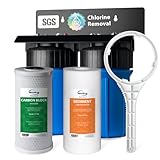
iSpring WGB21B 2-Stage System
- 15 GPM max flow
- 50
- 000 gallon capacity
- 5-micron PP plus CTO carbon block

3M Aqua-Pure AP904
- Up to 20 GPM flow
- 100
- 000 gallon capacity
- Tool-free Sanitary Quick Change
Those three cover the widest range of real household situations. The 3M leads on raw throughput, the iSpring three-stage leads on sediment capacity, and the two-stage WGB21B is the balance of flow, price-to-spec, and review depth that made it our first choice. All three sit comfortably above the review-count median in this list, so you are not buying on a thin data set.
Best Whole House Water Filters for Large Families in 2026
| Product | Specs | Action |
|---|---|---|
| iSpring WGB21B 2-Stage Whole House Filtration |
|
Check Latest Price |
 Express Water 3-Stage Whole House System Express Water 3-Stage Whole House System |
|
Check Latest Price |
 iSpring WGB32B Commercial-Grade 3-Stage iSpring WGB32B Commercial-Grade 3-Stage |
|
Check Latest Price |
 Waterdrop WHF21-PG 2-Stage System Waterdrop WHF21-PG 2-Stage System |
|
Check Latest Price |
 A. O. Smith Whole House Filter 600K A. O. Smith Whole House Filter 600K |
|
Check Latest Price |
 iSpring UVF55FS Whole House UV Filter iSpring UVF55FS Whole House UV Filter |
|
Check Latest Price |
| 3M Aqua-Pure AP904 Whole House System |
|
Check Latest Price |
 Home Master HMF2SmgCC Two-Stage Filter Home Master HMF2SmgCC Two-Stage Filter |
|
Check Latest Price |
 Home Master Three-Stage Well Water System Home Master Three-Stage Well Water System |
|
Check Latest Price |
 HQUA WF3-01 Three-Stage Filtration HQUA WF3-01 Three-Stage Filtration |
|
Check Latest Price |
 Max Water Three-Stage City Water System Max Water Three-Stage City Water System |
|
Check Latest Price |
 Waterdrop WHF3T-PG Three-Stage System Waterdrop WHF3T-PG Three-Stage System |
|
Check Latest Price |
Two entries deserve an immediate warning. The Max Water system is rated at 1-10 GPM on 3/4-inch ports, which is tight for a four-bathroom house, and the A. O. Smith has the longest cartridge life in the group but the lowest flow rating at 7 GPM. Both can work in the right home. Neither is a default recommendation for a large family.
How We Evaluated Whole House Filters for Big Households
Our first rule was simple: no system makes the list unless we can verify its flow rating and capacity from the manufacturer data rather than a marketing headline. A claim like “removes 99.99% of contaminants” without a named certification number told us nothing, so we discarded it.
Second, we weighted published service flow heavily, because that is the number that determines whether your morning routine feels normal. Third, we preferred capacity stated in gallons over capacity stated in years, since a one-year claim quietly assumes a specific household size that most families reading this guide exceed. Finally, we read the critical reviews looking specifically for pressure complaints, leak patterns, and how long people actually went between cartridge changes.
One thing we did not do is recommend a system for a contaminant you have not confirmed. Whole house filters are excellent at sediment, chlorine taste and odor, and some metals. They are not a substitute for a certified test of your own water.
1. iSpring WGB21B 2-Stage System Review
iSpring WGB21B 2-Stage Whole House Water Filtration System, 50000 Gallons
Max flow 15 gpm
Capacity 50,000 gallons
1-inch inlet and outlet
80 psi operating pressure
Pros
- 15 GPM handles simultaneous showers and laundry
- Substantial housings hold a heavy sediment load
- Reversible flow direction fits existing plumbing
- US-based support provides replacement parts quickly
Cons
- NPT fittings need careful Teflon sealing
- Does not reduce TDS
- 50000 gallons is a short interval at high use
Our overall pick for large families is the iSpring WGB21B, a two-stage system rated at 15 GPM with one-inch inlet and outlet ports. The spec that matters most here is the port size. One-inch ports on a 15 GPM housing are the combination that lets a four-bathroom home run two showers and a washer without the pressure sag that shows up in cheaper three-quarter-inch manifolds.
Stage one is a 5-micron polypropylene sediment cartridge that captures dirt, sand, silt, dust, rust and scale. Stage two is an CTO carbon block rated at removing over 90% of chlorine plus VOCs. The system measures 26 by 19 by 11 inches, weighs 11.7 kg, and needs no power, which means no control valve to fail and no electricity to wire.
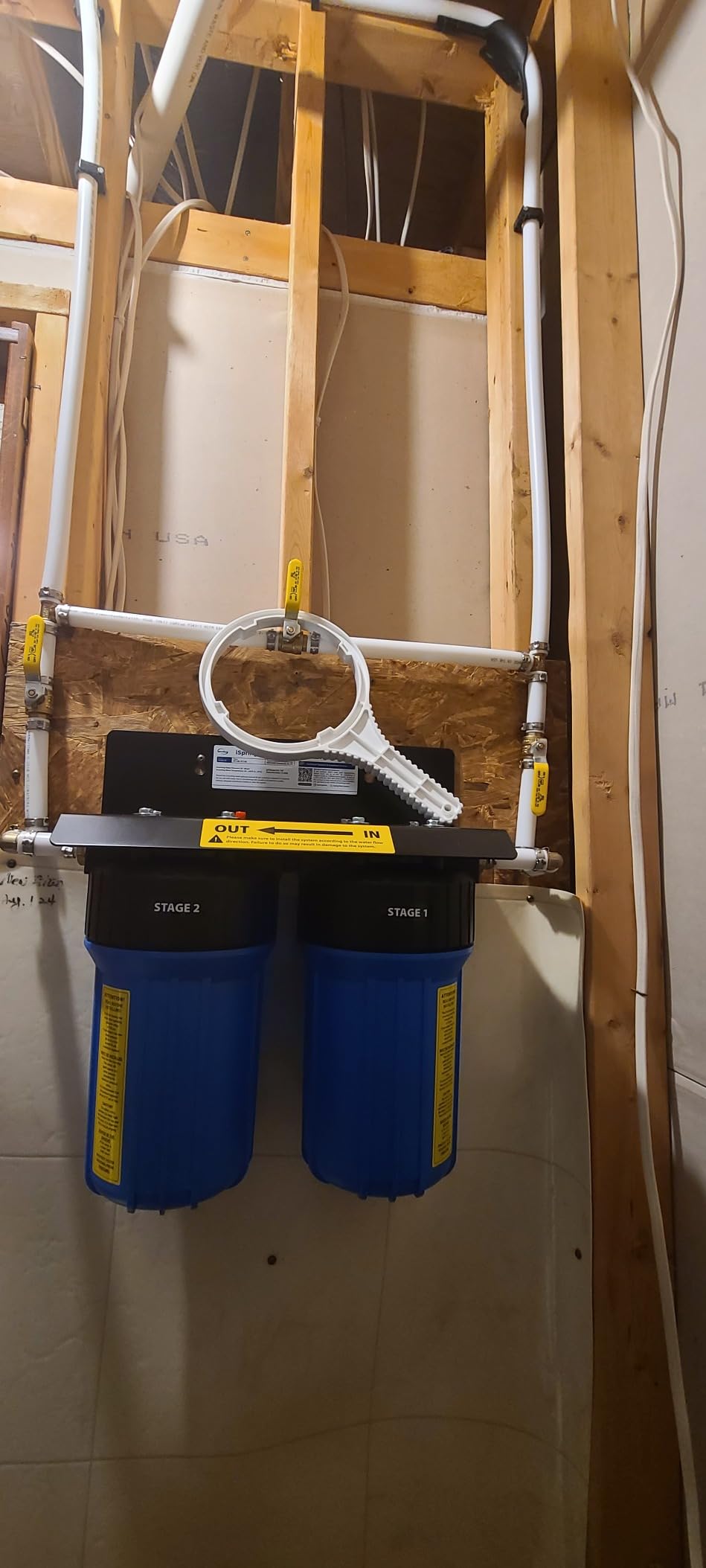
The honest wrinkle is the 50,000-gallon rating. iSpring describes that as about one year for a family of four. A large family running four people plus guests through three bathrooms will get through that considerably faster, and you should plan on cartridge swaps somewhere between every four and eight months rather than annually. Budget for it before you buy, not after the first surprise order.
Reviewers consistently report a clear improvement in taste and odor and noticeably less spotting on dishes. Several owners on sediment-heavy municipal water describe the system keeping indoor water visibly clear through rain events, when the city main picks up stirred-up sediment. That sediment capture is the part we trust most, because it is a physical filtration claim rather than a chemical one.
Support is also worth noting for a household that does not want to hunt down parts. iSpring is based in Atlanta, and owners repeatedly report replacement parts sent quickly and at no charge, including manifolds and canisters that arrived damaged. For a family that would rather not call a plumber for a minor part, that responsiveness has real value.
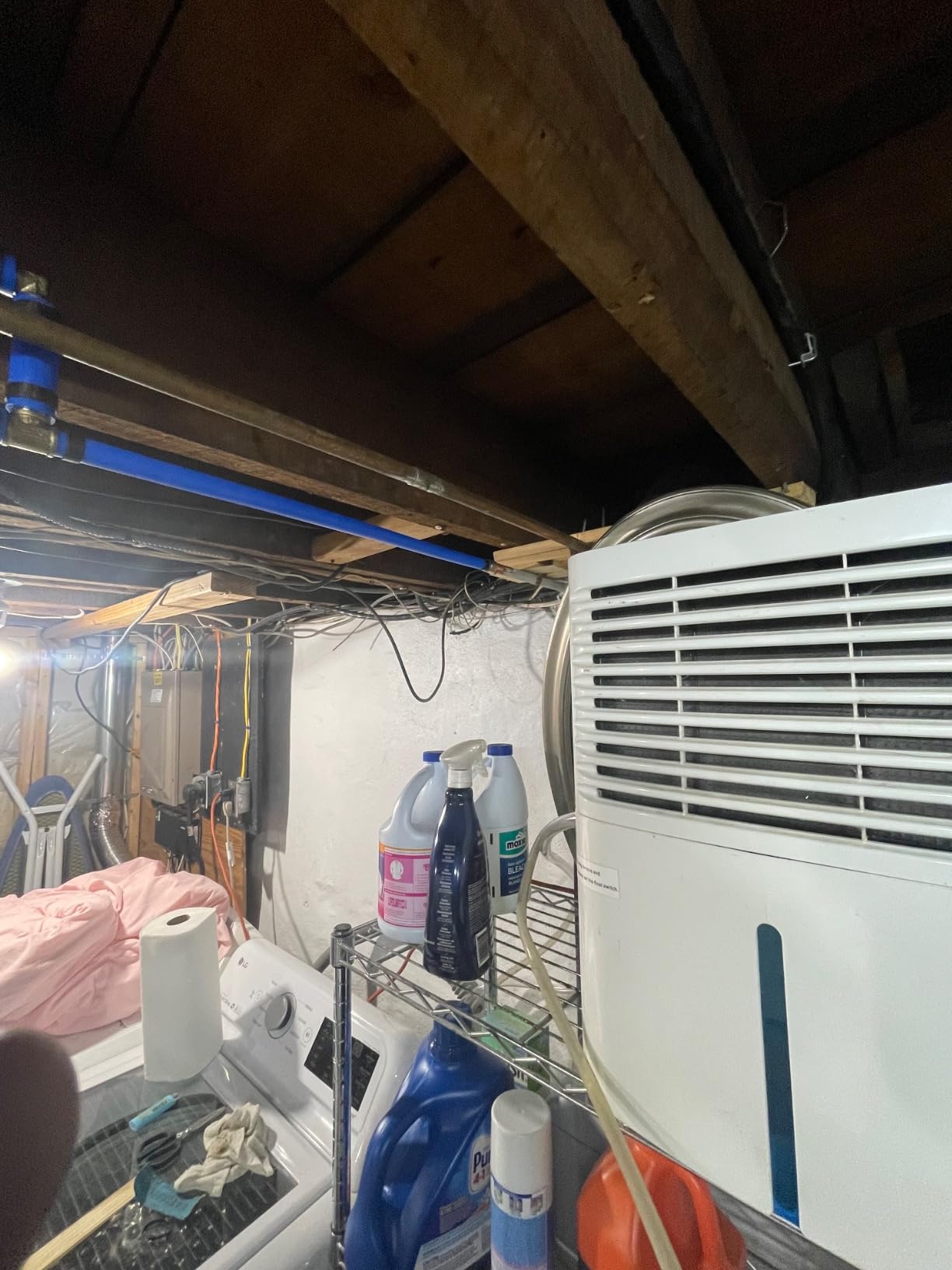
What flow rate and capacity look like day to day
At 15 GPM with one-inch ports, this system sits in the range most plumbing can actually deliver. Typical household fixtures do not pull 15 GPM at once, so the practical effect is that pressure holds steady while the laundry runs during a shower. In our comparison of the twelve systems here, only the 3M Aqua-Pure AP904 publishes a higher maximum flow at up to 20 GPM.
The 5-micron first stage does real protective work before the carbon sees anything. That matters because carbon blocks foul faster when they are catching grit. If your local water is cloudy during heavy rain, the sediment stage is what keeps the carbon stage alive long enough to be worth having.
It also retains dissolved minerals, which is a genuine advantage over reverse osmosis for a whole house install. Families who dislike the flat taste of RO drinking water will not have that complaint here.
Where it falls short for a large household
The NPT fittings are the most repeated caveat in the reviews, and it is a mechanical one rather than a filtration one. Owners report that the threaded joints into the housing can weep unless you use generous Teflon tape and tighten carefully. Budget twenty minutes of extra care at install time and it is a non-issue, but do not rush that step.
Do not buy this for TDS reduction, iron, or sulfur. It is a sediment and chlorine system, and pairing it with well water that carries dissolved iron will disappoint you regardless of how well it is installed. For an iron-bearing well, look at the Home Master three-stage unit later in this guide.
Finally, a pressure release valve is included for cartridge changes along with a filter wrench, so you can service it yourself between filter swaps. A pre-filter is not included, and adding one is cheap insurance if your water runs dirty.
2. Express Water 3-Stage Whole House System Review
Express Water Whole House Water Filter System, Ultimate Protection, 3-Stage
Max flow 17 gpm
Capacity 100,000 gallons
Operating pressure 20-80 psi
Item weight 63 pounds
Pros
- 17 GPM is among the highest rated flows here
- Stainless steel frame resists manifold flex
- Three pressure gauges show per-filter loading
- Polyphosphate stage protects water heaters
Cons
- Filter life listed at roughly 6 months
- 30 inches tall and 63 pounds needs solid mounting
- Consumable cost adds up at high household use
The Express Water WH300SCKP is the three-stage option to beat when you want maximum rated flow on municipal water. At 17 GPM with a free-standing stainless steel frame, it handles the widest simultaneous-demand scenario of the cartridge systems in this guide and looks the most like a permanent installation.
The three stages are a sediment filter, a KDF/GAC stage for heavy metal reduction including lead, arsenic, mercury, chromium and cadmium, and a polyphosphate anti-scale stage. That polyphosphate stage is the sleeper feature for a large family, because scale in a water heater is what shortens its life, and scale on dishwashers and washing machines shows up as a repair bill.
Three pressure gauges and per-filter pressure release buttons are the details that make this system easier to live with than most. When a large household is burning through media, you can see which housing is loading up instead of guessing from water quality alone. That visibility cuts down on unnecessary cartridge changes, which is the main cost of a high-flow household.
What the extra flow actually buys you
17 GPM is meaningful in a home where two showers can run at once. It is one of only two systems in this roundup rated above 15 GPM, which is why we rate it as a strong second-tier option for very large homes. The stainless frame also matters: plastic manifolds flex, and flex is what makes cartridge housings crack at the threads.
Operating pressure range is 20 to 80 psi, which is wide. Units rated only for 25 psi minimums will struggle in homes with low well pressure. This one tolerates a much broader band.
Reviewers report noticeably cleaner-tasting water and reduced scale on fixtures, and they repeatedly cite the stainless frame and the three gauges as the practical quality markers that justified their purchase.
Where it falls short for a large household
The filter life is listed at roughly 6 months. For a family of five or six that is probably optimistic, and the three-stage format means three cartridges to replace. This is the cost-shock problem that owners in home improvement forums complain about most: multi-stage systems need multiple cartridges on separate schedules, and those cartridges are sold separately from the housing.
Size is the other issue. The unit is 30 inches tall and weighs 63 pounds, so it needs real clearance above and around it and mounting that is anchored to a stud or a board. Do not plan on drywall anchors for this one.
Also note the maximum supported TDS level of 800 ppm. On a well or a high-mineral municipal supply, that ceiling is worth checking against your own test results.
3. iSpring WGB32B Commercial-Grade 3-Stage Review
iSpring WGB32B Commercial-Grade Whole House Water Filter System
Max flow 15 gpm
Capacity 100,000 gallons
Three 20 inch x 4.5 inch housings
Operating pressure 25-80 psi
Pros
- Highest rated option in this group at 4.7 stars
- Large housings hold heavy sediment before pressure drops
- Two carbon stages after the sediment stage
- Support replaces leaking manifolds at no charge
Cons
- 45 pounds dry needs stud or board mounting
- Threaded manifolds and release buttons can need extra sealing
- Some reports of thread wear and pinhole leaks at 80 psi
At 4.7 stars across more than 2,200 ratings, the iSpring WGB32B is the highest-rated system we evaluated, and for a large family the reason is physical size. It uses three industrial 20 by 4.5 inch Big Blue housings instead of the standard 10-inch units, and that extra media volume is exactly what a high-consumption household needs.
Stage one is a 5-micron sediment filter. Stages two and three are coconut shell CTO carbon blocks, so you get two carbon passes after the sediment stage rather than one. Capacity is 100,000 gallons, and inlet and outlet are 1-inch NPT rated up to 15 GPM.
Reviewers describe dramatic visible improvement in water clarity, particularly on discolored municipal water and on iron-heavy well water. Several describe the water in the loaded sediment filter as literally muddy, which is a good sign that the first stage is doing the work the manufacturer claims.
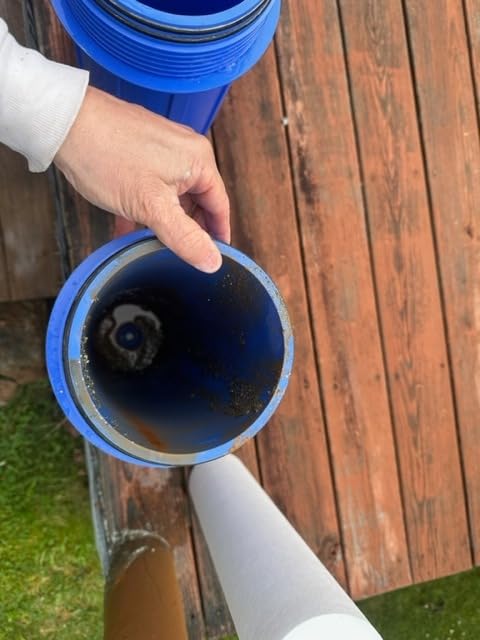
That 100,000-gallon figure is roughly a year of supply for a typical household. For a large family, treat it as two changes per year and monitor the pressure gauges or the water clarity rather than trusting a calendar. The doubled media volume buys you flexibility here, not immunity from frequent changes.
Reviewers also highlight the individually wrapped cartridges, which preserve freshness in storage, and the fact that iSpring’s support repeatedly replaces damaged or leaking manifolds and canisters at no charge. For a household that expects to open these housings several times a year, that support record matters more than it would for a single-stage unit.
Maximum supported TDS is 300 ppm, which is lower than several competitors in this list. That is a real constraint on hard-water regions, and it is worth weighing against a salt-free conditioner if you are in a hard area.
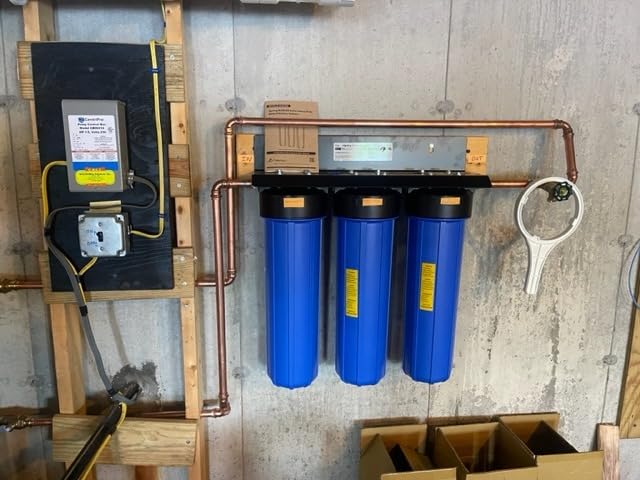
Why the 20 inch housings matter more than the label
Media volume is the quiet differentiator in high-consumption homes. A 20-inch Big Blue housing holds several times what a 10-inch housing holds, which means it takes longer to reach the pressure-drop point that forces a change. For a family that would otherwise be swapping cartridges every four months, that translates directly into fewer service interruptions.
The 4.7 rating is not close to the top of the pack on review count, so you are not looking at a statistically thin result. It sits well above the median review volume across the twelve systems here.
Installation is rated as DIY, and the manual plus video guides cover it. Plan on mounting into studs rather than drywall given the 45-pound dry weight.
Where it falls short for a large household
Weight and mounting are the two practical problems. At 45 pounds dry with three full housings, the unit needs to be anchored into studs or a plywood backer, and the footprint is 24.5 by 8 by 28 inches. Plan the location before you buy, not after.
The recurring complaint is minor leaking at the threaded manifold ends and at the pressure release buttons. Owners report this resolves through iSpring’s support replacing the manifold free of charge, but plan on towels under the unit for the first month either way.
At 80 psi and above, some users report canister thread wear or pinhole leaks over time. If your municipal pressure regularly exceeds that, ask about pressure regulation before installing.
4. Waterdrop WHF21-PG 2-Stage Review
Waterdrop WHF21-PG 2-Stage Whole House Water Filter System, NSF/ANSI 372
Max flow 15 gpm
Capacity 50,000 gallons
Operating pressure 25-90 psi
10 inch by 4.5 inch housings
Pros
- Compact 14 inch footprint for tight utility spaces
- Coconut shell GAC improves taste and odor
- 100000+ water hammer testing on housings
- 15 GPM flow on one-inch ports
Cons
- Cartridge change interval of 3-6 months for the PP stage
- Replacement cartridges must be bought as a matched set
- Best suited to municipal water
The Waterdrop WHF21-PG is our budget pick, and the reason is that it does not cheap out on the port size. You get 15 GPM rated flow through one-inch inlet and outlet ports for a two-stage footprint of just 14 by 7.5 by 15.5 inches, which is the smallest high-flow unit we evaluated.
Stage one is a polypropylene sediment cartridge rated at 5 microns. Stage two is a GAC coconut shell carbon filter. Together they reduce particles above 5 microns plus chlorine, lead, benzene, mercury, sand and rust, according to the manufacturer.
The housings are tested from 25 to 90 psi and through more than 100,000 water hammer tests, which is a meaningful durability claim given how much work a whole house unit does. The manufacturer explicitly positions this model for municipal water, which is where the cartridge service life holds up best.
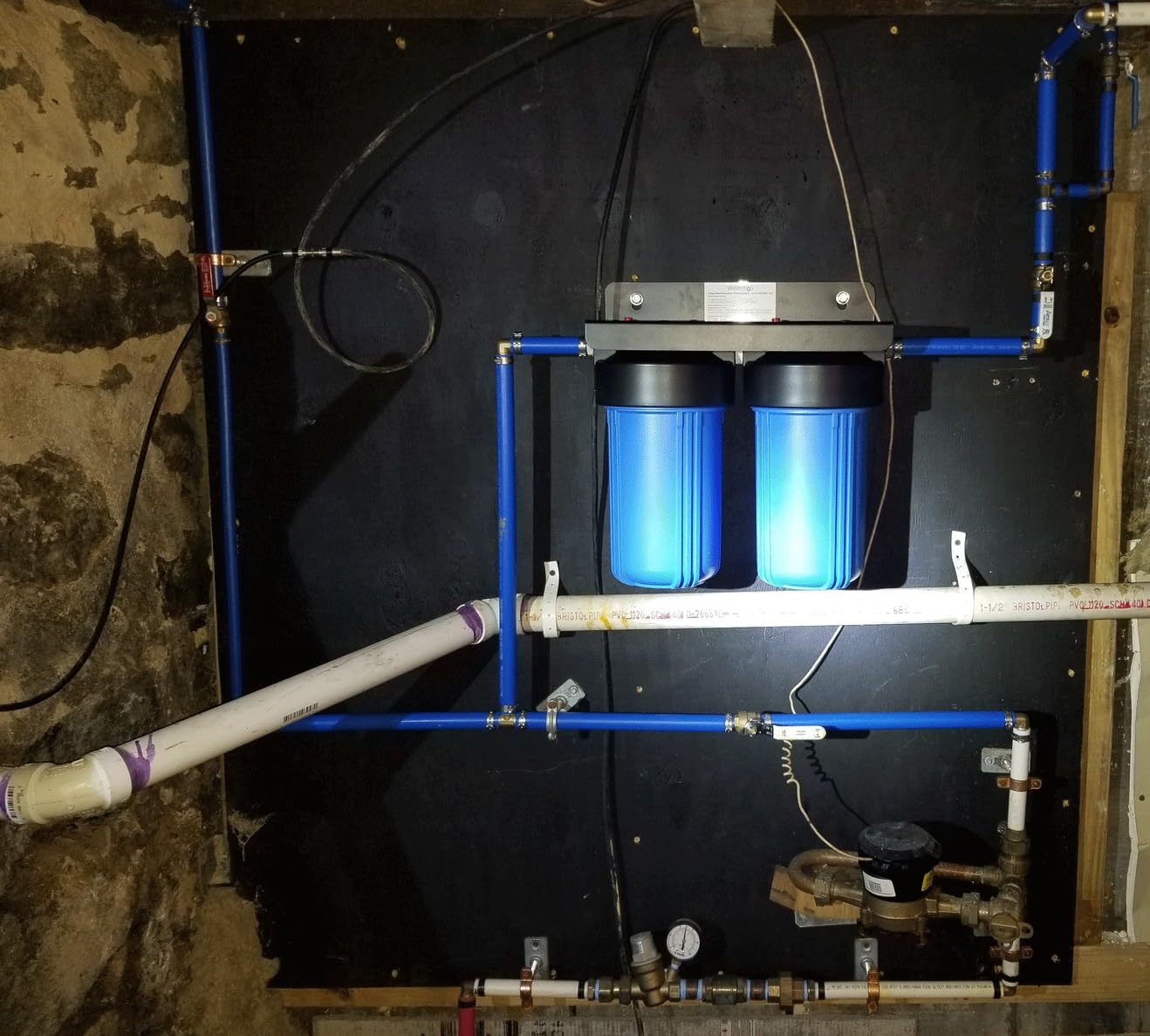
The 50,000-gallon capacity and 6-month cartridge life are the numbers to plan around. A large family of five or six will move through the GAC cartridge faster than the 6-month figure assumes, and the PP stage is on an even shorter 3-to-6-month clock. Plan on two service visits a year minimum and buy replacement sets in pairs so you are not caught short.
Reviewers, 1,578 of them averaging 4.4 stars, highlight strong chlorine, taste and odor reduction for the money and confirm straightforward DIY installation. The GAC carbon is a genuine coconut shell media, not a thin carbon-impregnated sleeve, which is where the value is.
No power is required, and a replacement wrench and expansion screws are included, so the install is a single afternoon with a basin wrench and Teflon tape.

When a two-stage system is the right call
Two stages are enough when your problem is taste, odor, and sediment, which is the most common situation on a chlorinated municipal supply. Adding a third carbon stage costs money and adds a change interval without fixing a problem you do not have. This system spends its budget on flow rate and port size instead, which is the smarter allocation for a large home.
At 15 GPM, it matches the two-stage WGB21B on throughput while taking up noticeably less wall space. In a finished basement or a utility closet with an awkward corner, that footprint difference is real.
The 25-to-90 psi operating window is wide enough to cover most municipal supplies, and the 100,000-plus water hammer testing is reassuring for a unit that will be plumbed directly into the main.
Where it falls short for a large household
The maintenance cadence is the real cost. Three to six months on the PP stage, and the replacement cartridges must be bought as a matched set rather than individually, which raises the ongoing spend and removes the option of replacing just the spent stage.
This is also the model we would not put on a private well. On well water the cartridge life shortens further, and if your well carries iron or sulfur you would be paying to replace a carbon cartridge that was never the right media for the problem. Our well water filtration picks cover that case properly.
One more thing to watch: the manufacturer states the best results are on municipal water, so treat the 50,000-gallon number as an upper bound rather than a promise.
5. A. O. Smith Whole House Filter 600K Review
A. O. Smith Whole House Water Filter System | 600K Gal | AO-WH-Filter
Max flow 7 gpm
Capacity 600,000 gallons
Filter life up to 6 years
3/4 inch inlet and outlet
Pros
- Longest service interval in this roundup at 6 years
- No drain line/backflushing or water waste
- DIY installable with included valve and fittings
- 6-year limited warranty and spare part availability
Cons
- 7 GPM and 3/4 inch ports are the lowest throughput here
- Does not reduce TDS
- sulfur or iron
- Manufacturer recommends a separate pre-filter
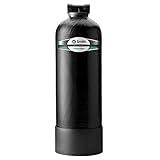
The A. O. Smith AO-WH-Filter is the outlier in this roundup, and if your household is tired of changing filters it deserves a serious look. It is a central activated carbon tank rated at 600,000 gallons or up to 6 years of service life, with no drain line, no backflushing, and no water waste.
It is NSF/ANSI 42 certified and reduces 96.9% of chlorine taste and odor at every tap. It works with both city and well water, and it will not reduce TDS, sulfur, or iron. Knowing that boundary in advance saves a lot of disappointment later.
The console-shaped fiberglass tank measures 30.2 by 9.5 by 9.4 inches, and installation is genuinely DIY with the included shut-off valve, nipple and hose adapter. A 6-year limited warranty comes with 6-year spare part availability, which is unusually long in this category.
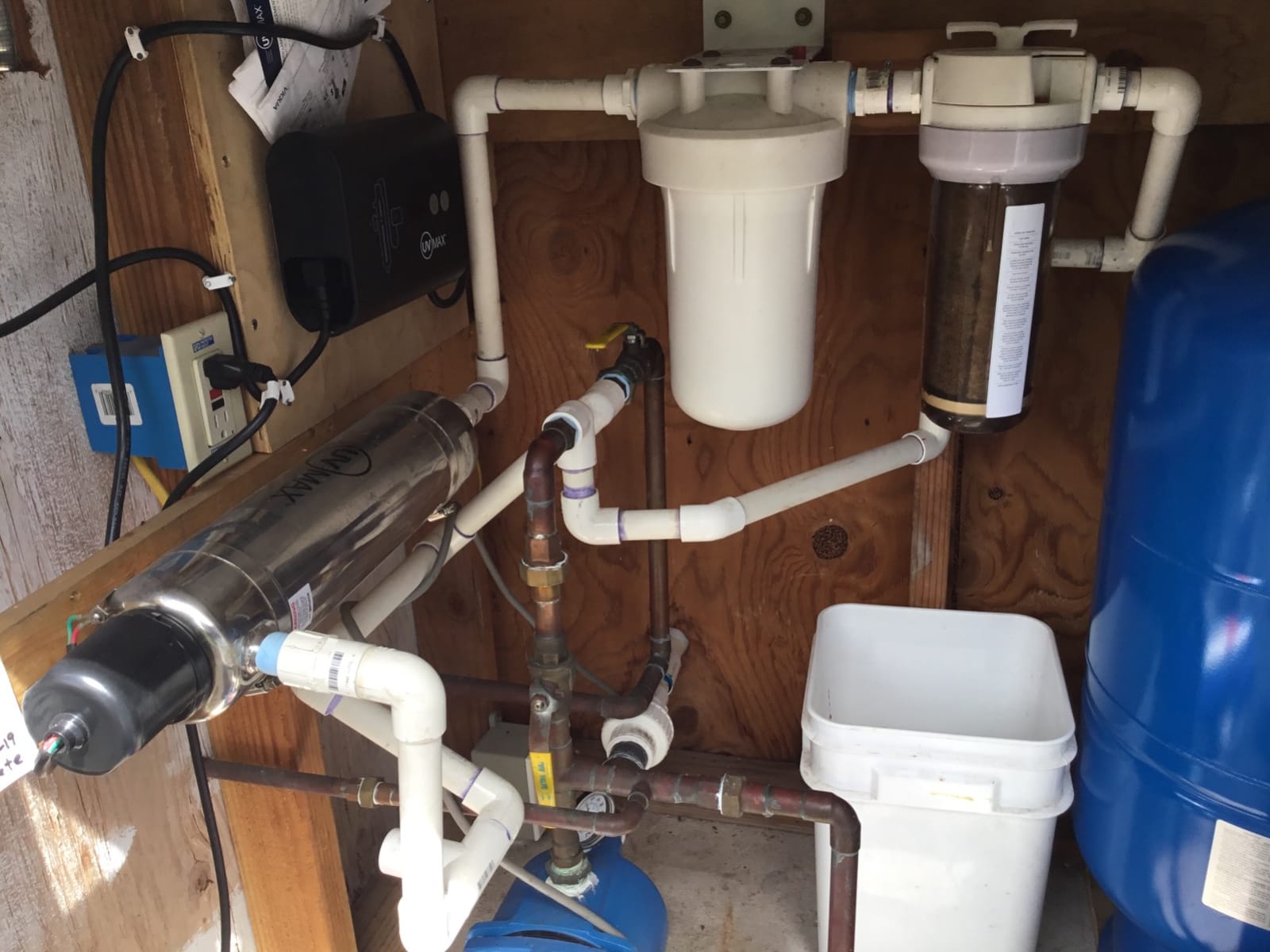
Here is the tradeoff stated plainly: the 7 GPM rating and 3/4-inch ports are the lowest throughput of any system in this guide. A four-bathroom home running two showers simultaneously can feel that limit. Reviewers mention the flow ceiling and the port size repeatedly as the reason they rate it 4.3 rather than higher.
For a family of five in a two-and-a-half-bath home on municipal water, the flow is generally adequate. What you gain in exchange is roughly a quarter of the service calls. Owners praise it as set-and-forget, and several recommend pairing it with a spin-down or sediment pre-filter to protect the central tank.
Because the tank runs on a schedule rather than on gallons consumed, more people in the house does not shorten the cartridge life the way it does with a flow-based system. That is the real argument for it in a large household.
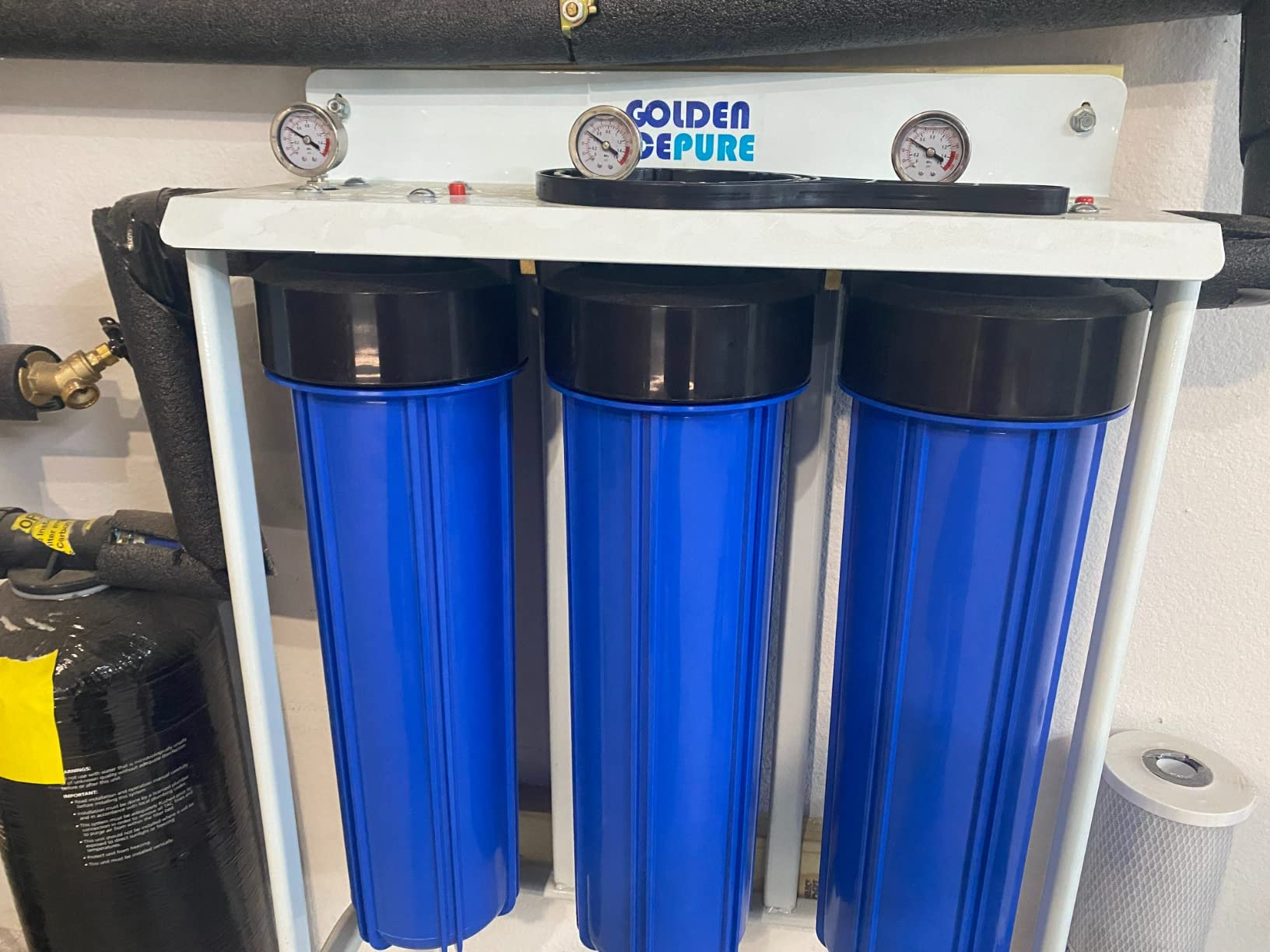
How maintenance compares month to month
Every other system in this roundup runs on a cartridge clock of three to twelve months. This one runs on a six-year clock. Over a ten-year horizon in a busy home, that difference is larger than any specification on the other cards, and it is the reason we included a system this flow-modest in a guide for large families.
No backwash cycle means no drain line to install and no water to waste on every cycle, which also makes it easier to place in a basement or garage where a drain is not convenient.
The manufacturer recommends a pre-filter, and that recommendation is sound if your water carries sediment. Adding one is straightforward and protects the tank.
Where it falls short for a large household
Flow is the honest limitation. Seven GPM is roughly half what the 15-to-20 GPM systems in this guide handle, and a household with three or more bathrooms plus a laundry room will feel the difference during peak morning use.
It is also a filter, not a softener or an oxidation system. If your water is hard, it will not reduce scale by softening, and the manufacturer is clear that it does not address sulfur or iron. For a well with iron, choose a well-specific media instead.
With 1,969 reviews averaging 4.3 stars and 72% five-star ratings, the satisfaction data is solid. The criticisms are about scope, not quality.
6. iSpring UVF55FS Whole House UV Filter Review
iSpring UVF55FS Whole House UV Water Filter, 1″ MNPT Inlet/Outlet, 12 GPM
Rated flow 12 gpm
55 watt UV lamp
Quartz sleeve rated 9,000 hours
40 inch stainless steel chamber
Pros
- Chemical-free pathogen inactivation with no taste impact
- Flow sensor switch protects lamp burn hours
- 304 stainless reactor and quartz sleeve are premium parts
- Light 7.5 pound body is simple to mount
Cons
- Not a standalone filter
- must follow sediment and carbon stages
- Annual lamp replacement plus 6-12 month sleeve cleaning
- 40 inch chamber needs clearance
The iSpring UVF55FS is a UV disinfection reactor rather than a filter, and calling it a whole house filter would be misleading. It is the add-on stage that large families on well water install after their sediment and carbon stages, to inactivate bacteria, viruses and similar microbes without chemicals.
It uses a 55-watt lamp in a 37.5-inch 304 stainless steel reactor chamber, rated at 12 GPM through 1-inch MNPT inlet and outlet with minimal pressure loss. The quartz sleeve is rated for up to 9,000 hours of bulb life.
The flow sensor switch is the feature that sets this model apart. It triggers at 0.66 GPM and offers Auto, Move and Stop modes, so the lamp only runs when water is actually moving through the chamber. On a household that uses water in short bursts all day, that protects lamp life considerably better than a unit that idles on.
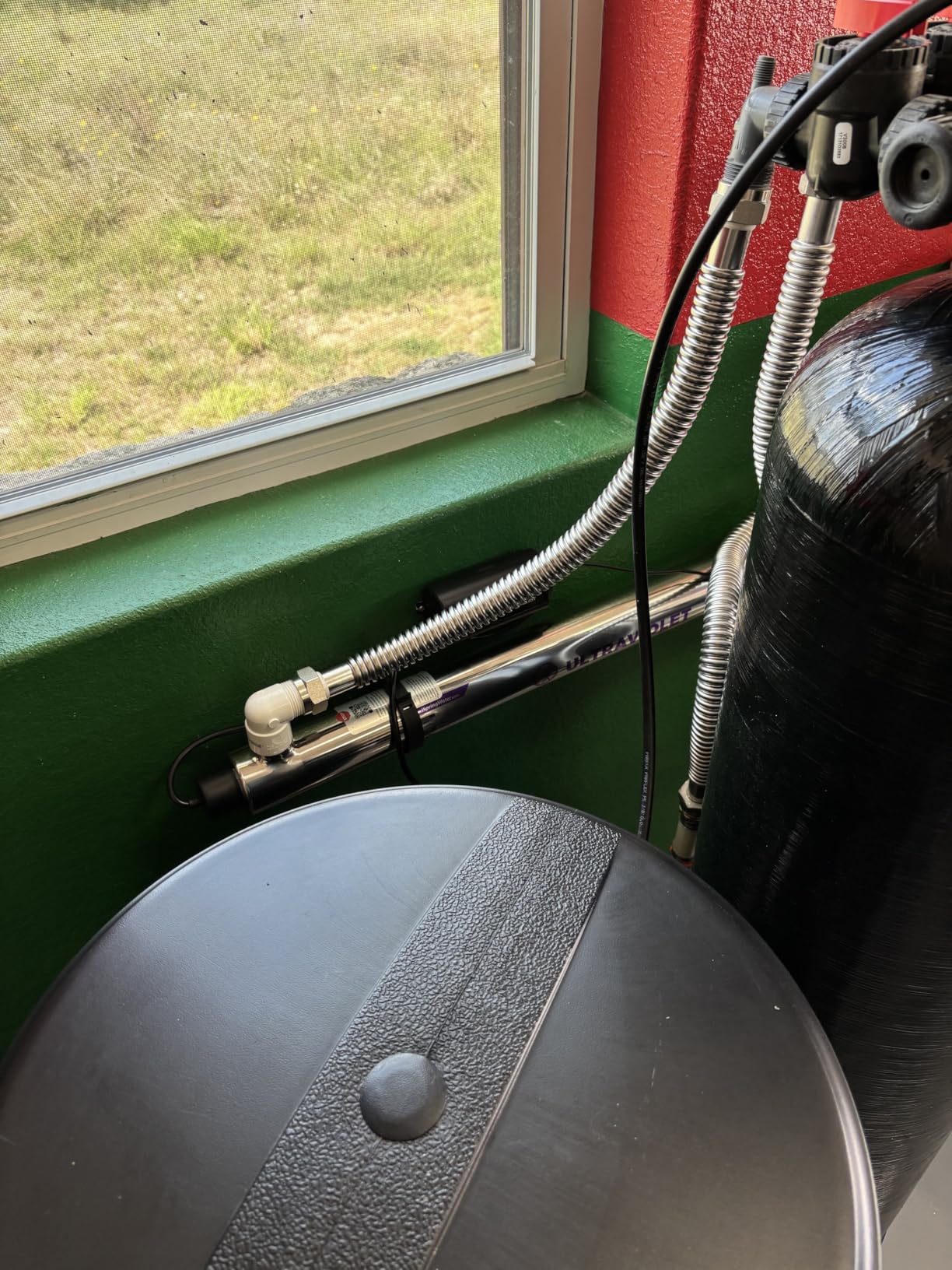
Owners across 615 reviews value the chemical-free approach and the smart flow sensor. There is no taste or odor impact on the water and no chemical byproducts, and power draw is low. The stainless body and quartz sleeve are also premium components compared with typical add-on reactors.
At 7.5 pounds with mounting clips, it is the easiest unit in this guide to physically install. The 40-inch chamber length is the only real space requirement, and horizontal clearance in a utility room is usually easier to find than floor space.
For a large family, the sizing logic works in your favor here. A high-consumption household keeps the flow sensor active more often, which means better lamp utilization per dollar of bulb life.
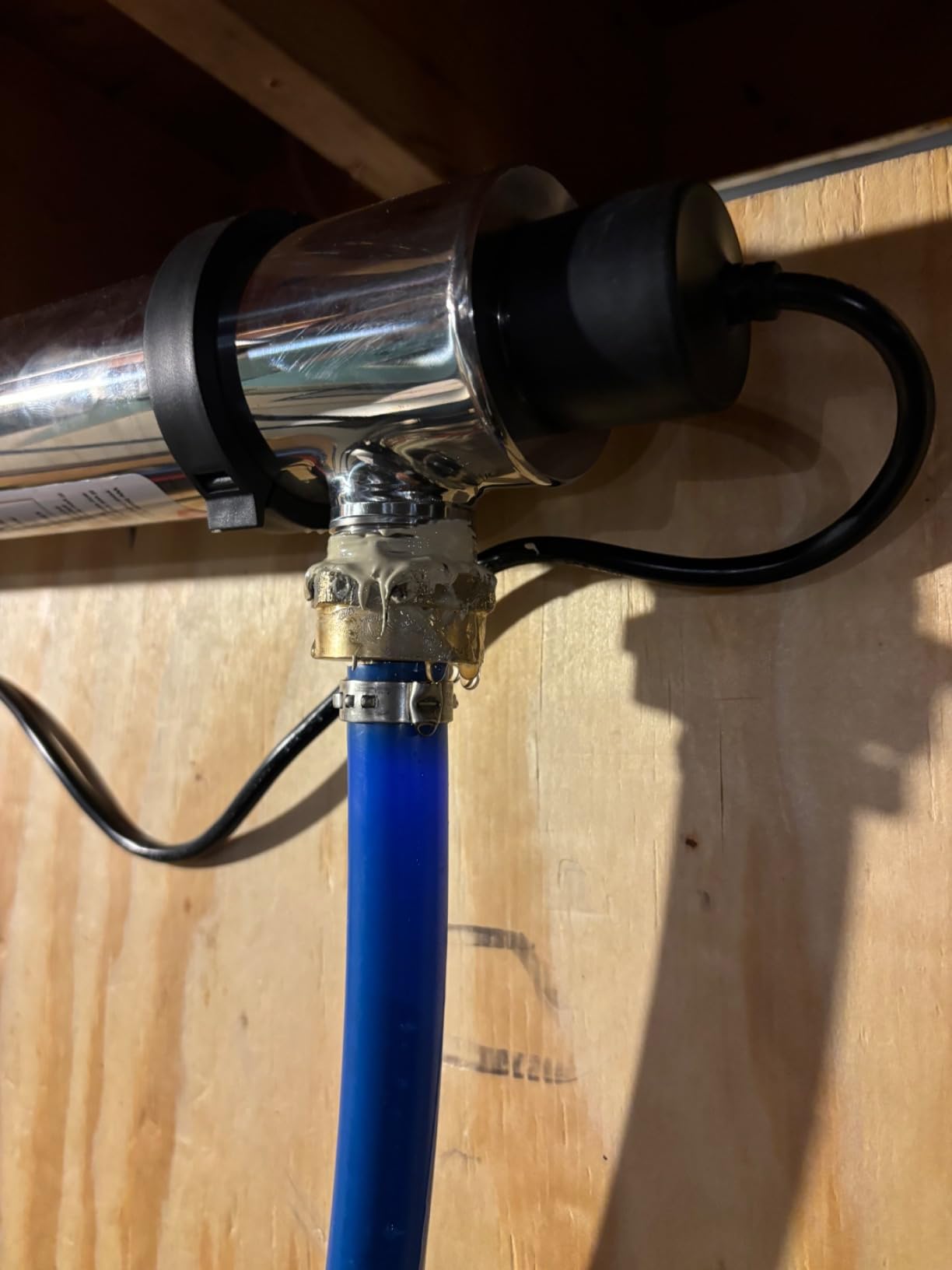
When a UV stage earns its place
If your water is on a municipal supply and your Consumer Confidence Report shows consistent disinfection, this stage is optional. If you are on a private well, or you have an immunocompromised household member, it becomes considerably more valuable, because the risk it addresses is one that municipal treatment cannot fully guarantee against.
Because UV is a final step, your sediment and carbon stages do the mechanical work of keeping the water clear enough for the lamp to function. The manufacturer is explicit that it is designed as the last stage, not a standalone pre-filter.
Across 615 reviews averaging 4.4 stars, 76% rate it 5 stars. The chemistry-free treatment is the most commonly cited benefit.
Where it falls short for a large household
It removes nothing. UV inactivates microbes and leaves dissolved contaminants, sediment, and metals exactly as they were. If you buy this expecting filtration, you will be disappointed regardless of the rating.
Maintenance is annual for the lamp plus quartz sleeve cleaning every 6 to 12 months. Skipping the sleeve cleaning reduces effectiveness in a way you cannot see, which is the main drawback of a chemical-free system.
At 12 GPM rated flow, it also sits below the 15-to-20 GPM systems here, so it is sized for most homes rather than for the largest of them. Budget for a lamp annually as ongoing cost.
7. 3M Aqua-Pure AP904 Review
3M Aqua-Pure AP900 Series Whole House Water Filtration System AP904
Flow up to 20 gpm
Capacity 100,000 gallons
NSF 42 and NSF/ANSI 372 certified
304 stainless steel filter head
Pros
- Highest rated flow in this roundup at up to 20 GPM
- Sanitary Quick Change makes cartridge swaps tool-free
- Slim 4.5 inch housing needs very little wall space
- Stainless head with strong certification credentials
Cons
- Single cartridge has no staged sediment then carbon separation
- Not intended to reduce iron
- Replacement cartridges are proprietary to the AP900 series
The 3M Aqua-Pure AP904 publishes the highest flow rating in this roundup at up to 20 GPM through 1-inch inlet and outlet connections. If your home has three or four bathrooms and you are sizing purely on peak simultaneous demand, that number is the reason this unit is on the list at all.
It is a single-housing system: sediment, chlorine taste and odor, and scale inhibition in one AP917HD-S cartridge, with a 100,000-gallon capacity and up to 1 year of filter life. The AP900 series configuration uses non-woven pleat media paired with an activated carbon block inside a 304 stainless steel head.
It carries NSF Standard 42 and NSF/ANSI 372 certification, which is the lead-free materials standard. The head measures 4.5 inches in diameter and 25.06 inches tall, and the whole assembly weighs 10.4 pounds, so it is the smallest wall footprint in this guide by a wide margin.
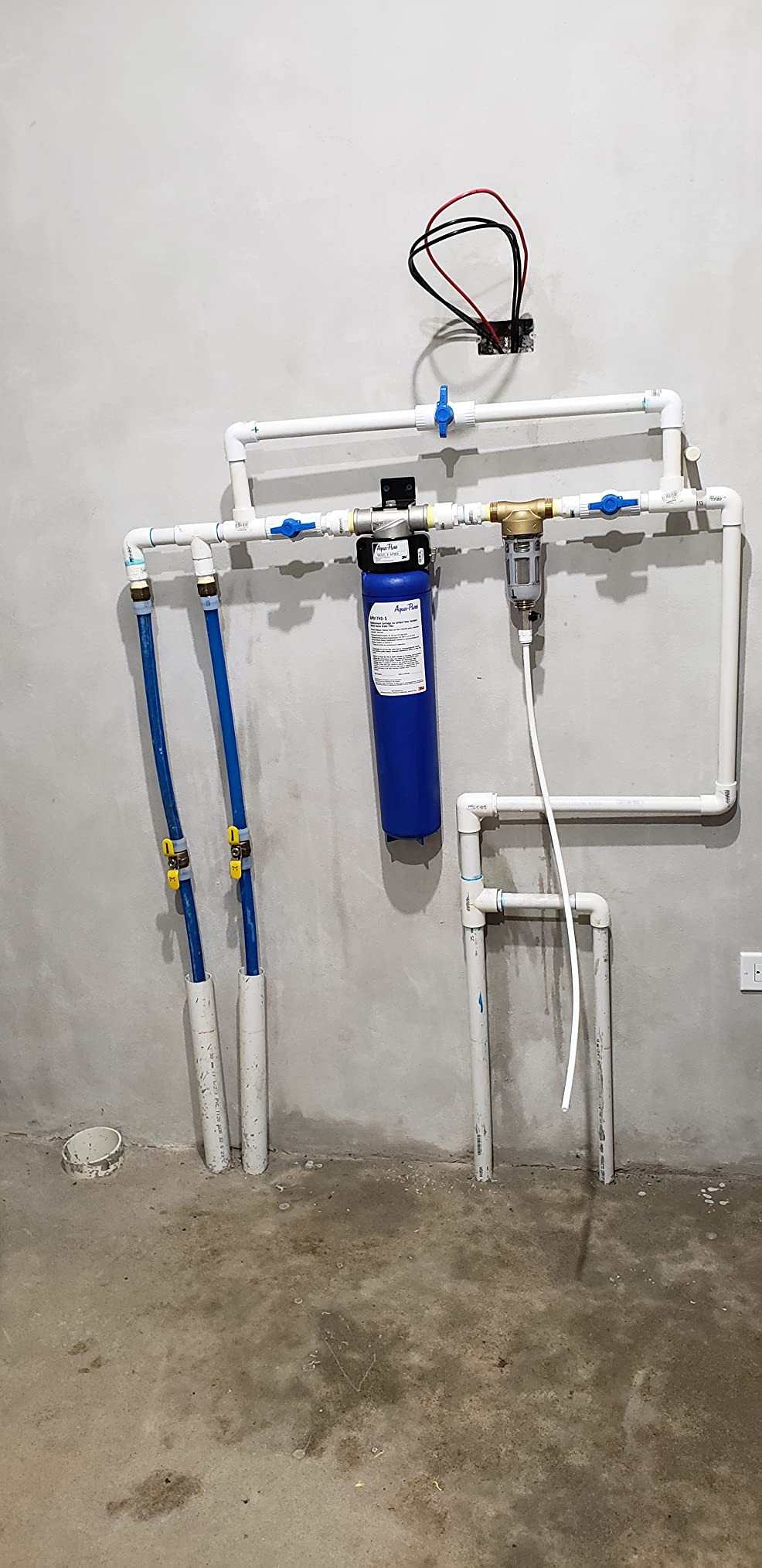
The Sanitary Quick Change cartridge system is the feature owners love most. You twist and pull the spent cartridge out and press a new one in, with no filter wrench and no wrestling with housing caps in a dark utility room. In a household where the filter changes twice a year, that ergonomics difference is worth more than it sounds.
Reviewers, 452 of them at a 4.3-star average with 71% five-star ratings, favor this model for its 20 GPM throughput and its tool-free cartridge swap. It is also the only system here explicitly noted as working on both chlorinated municipal and non-chlorinated well water, though it does not address iron.
Scale inhibition is the feature that protects your water heater and appliances, which in a large household is where the money is.
How 20 GPM compares to the rest of the field
Typical household fixtures do not draw 20 GPM at once, so the practical question is headroom. A 20 GPM rating means the unit is not the bottleneck when two showers, a dishwasher and a washer draw simultaneously. Of the twelve systems here, only this one publishes a rating above 17 GPM.
Headroom also protects against pressure drop as the media loads. As a pleat cartridge fills with sediment, flow restriction rises. Starting with a higher rating leaves more margin before your household notices a change in morning shower pressure.
The certification pairing is strong for a single-stage design. NSF 42 covers taste, odor and chlorine, and NSF/ANSI 372 confirms the materials themselves are lead-free, which matters in older homes with legacy plumbing.
Where it falls short for a large household
Single cartridge means there is no separate sediment stage protecting the carbon. Coarse sediment loads shorten carbon life, so on a high-sediment supply you may be changing the single element sooner than a year. If your water runs visibly dirty, a staged three-stage system is a better long-term choice.
Replacement cartridges are proprietary to the AP900 series. There is no third-party alternative, so your ongoing cost is fixed by the manufacturer for the life of the unit. Plan for that rather than assuming generic 4.5-inch cartridges will fit.
It is a filter, not a softener, and it will not reduce iron. For a hard-water household, pair it with a salt-free conditioner rather than expecting scale reduction from this unit alone.
8. Home Master HMF2SmgCC Two-Stage Review
Home Master HMF2SmgCC Whole House Water Filter, 4-layer sediment filter 25 to 1 micron, Powerful Up-Flow KDF85 & Catalytic Carbon 10gpm, 1” NPT ports, Patented heavy steel bracket fits 16” wall studs
Flow 10 gpm
Capacity 95,000 gallons
25 to 1 micron multi-gradient sediment
1 inch NPT ports
Pros
- KDF85 plus catalytic carbon handles chloramine and chlorine
- Multi-gradient 25 to 1 micron sediment outlasts flat elements
- Heavy gauge steel bracket fits 16 inch studs
- Reviewers report only 3-5 psi pressure drop
Cons
- Bulky at 36.4 pounds needing studs or masonry
- O-rings pop out of the housing groove during changes
- Instructions are thin
- Replacement cartridge packaging is weak
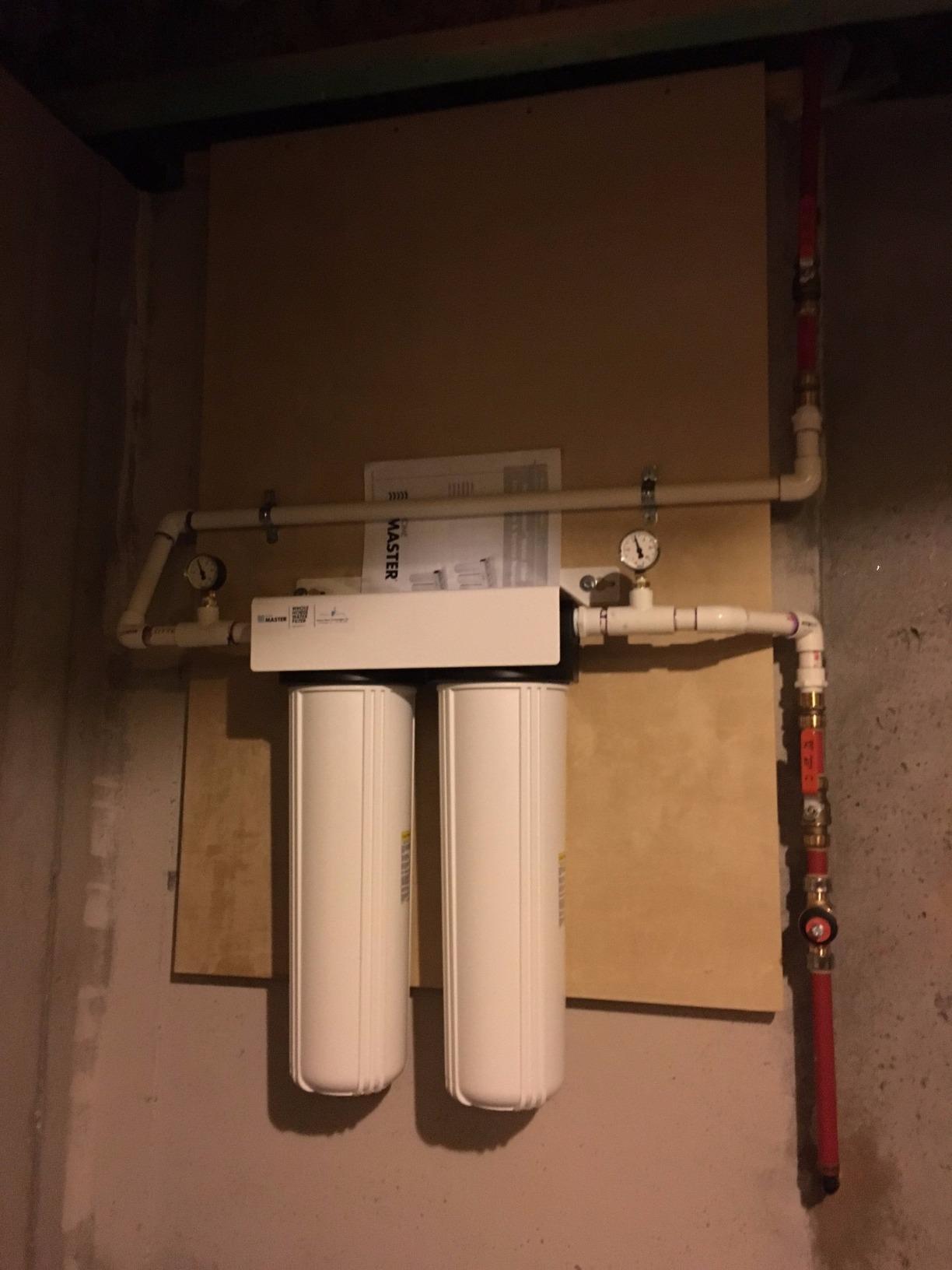
The Home Master HMF2SmgCC is the one in this roundup with specific catalytic carbon media, and that matters if your municipal utility uses chloramine rather than chlorine. Chloramine is tougher to break down than free chlorine, and standard GAC carbon is noticeably less effective against it.
Stage one is a four-gradient density sediment filter graded from 25 microns down to 1 micron nominal, which is the most interesting engineering choice in this guide. Coarse particles never reach the fine pores, which is why owners report it lasting far longer than a flat 5-micron element on the same water.
Stage two combines up-flow KDF85 media with catalytic carbon in a replaceable 95,000-gallon cartridge. The manufacturer states up to 95% removal of sediment, chloramines, chlorine, chemicals and heavy metals, across a 10 GPM flow rating with 1-inch NPT ports.
That 3-to-5 psi pressure drop figure, which reviewers report directly, is the number that separates this unit from most of the field. It is squarely inside the normal range and reflects the low-density sediment design not choking the flow as it loads.
Reviewers also praise the patented heavy gauge steel bracket, which fits within standard 16-inch wall studs and reduces flex compared with plastic brackets. Made in the USA with heavy, premium-feeling media, it feels like a fixture rather than an accessory.
Maximum supported TDS is 2,000 ppm, the highest ceiling in this roundup, and the operating pressure range of 20 to 100 psi is the widest of the cartridge systems here.
Why the multi-gradient sediment stage earns its cost
On a municipal supply, the size of the particles is what determines how quickly a sediment filter clogs. A flat 5-micron element catches everything above 5 microns at the same depth, so large grit loads up the surface and the whole element slows early. A graded 25-to-1-micron design traps the big particles in the outer layers and keeps the fine pores open longer.
For a large household, that translates into a longer interval between changes, which is the main ongoing cost driver in a high-use home. It is the single most repeated reason owners say this unit outperforms cheaper systems on similar water.
The 2-year limited warranty on parts is short by the standards of this roundup, so factor replacement media cost into any comparison. A 4-layer 25-10-5-1 micron element like this is also a pricier cartridge than a flat 5-micron.
Where it falls short for a large household
Ten GPM is the lowest adequate flow rating in this guide. For a family of five or six with multiple bathrooms, especially during peak morning use, that is the binding constraint. If you have three or four bathrooms running simultaneously, look at a 15-to-20 GPM system instead.
Physical size is the second issue. At 36.4 pounds and 9 by 18 by 25 inches, it needs stud, concrete or masonry mounting and generous clearance on both sides for cartridge changes.
O-rings are a persistent leak source. Owners report they lose diameter with use and pop out of the housing groove during changes. Keep a spare set and lubricate generously. The written instructions are also thin, and the manufacturer does not clearly flag that the bleach step applies only to well water installs.
9. Home Master Three-Stage Well Water System Review
Home Master Whole House Three Stage Water Filtration System with Fine Sediment, Iron and Carbon, Blue
Flow 15 gpm
Capacity 100,000 gallons
Iron and manganese to 3 ppm combined load
4-layer 25-10-5-1 micron sediment
Pros
- Purpose-built for well water with radial flow iron media
- 15 GPM through 1-inch ports supports multiple fixtures
- 4-layer sediment stage holds a large dirt load
- Owners report better water pressure after install
Cons
- O-rings pop out and cause leaks during changes
- Pre-sediment stage is effectively required on high-sediment wells
- Copper-to-plastic fittings can crack near soldered joints
- Fixed cartridge labels make staging order easy to get wrong
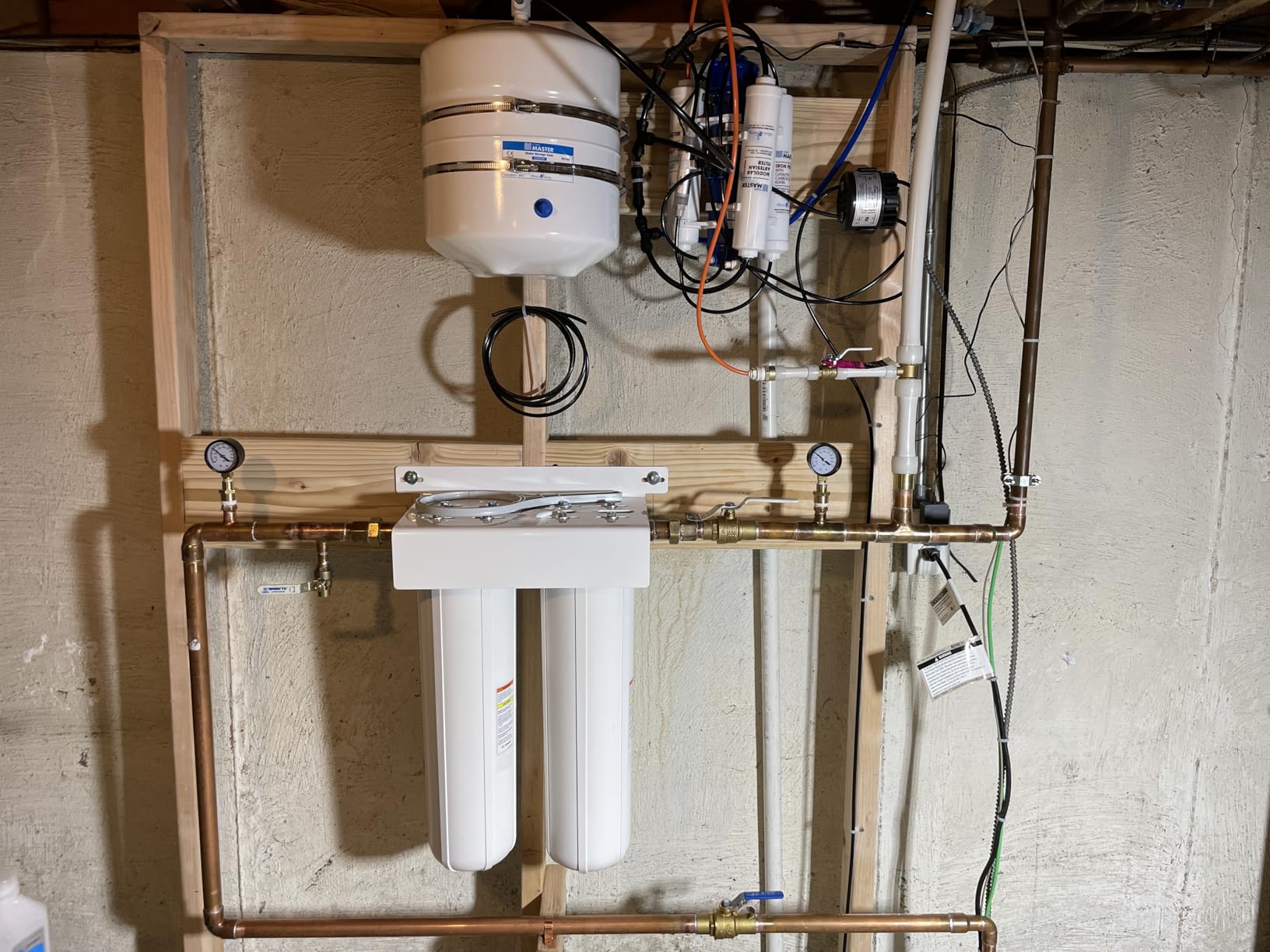
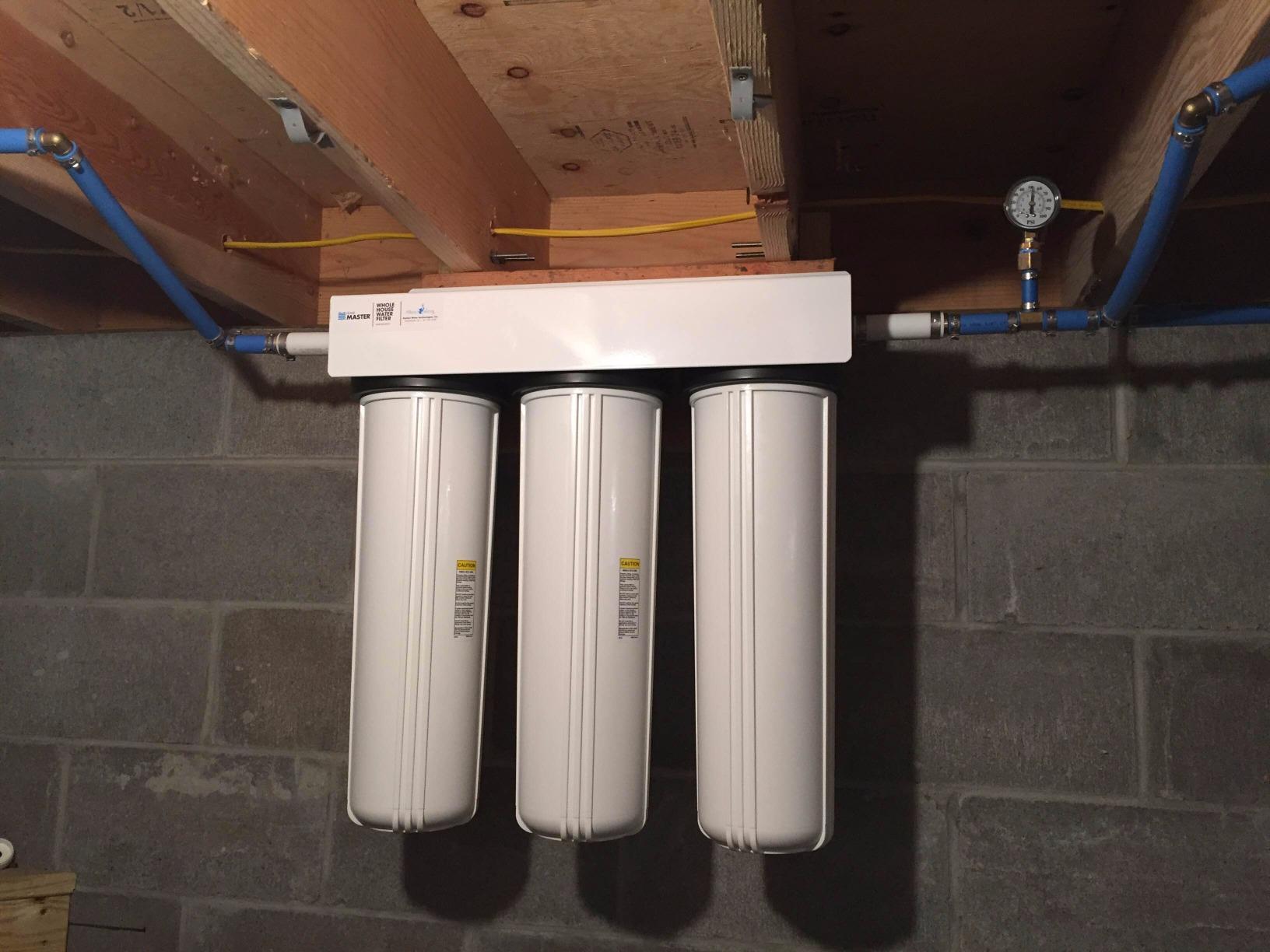
If your home is on a private well with iron, manganese or hydrogen sulfide, this is the system to look at first. The Home Master three-stage uses radial flow iron and manganese filtration rated to a 3 ppm combined load, which is a genuinely different media type from the carbon systems everywhere else in this roundup.
Stage one is a 4-layer 25-10-5-1 micron replaceable sediment filter with high dirt holding capacity. Stage two is the radial flow iron and manganese media. Stage three is a carbon stage for taste, odor and chlorine chemicals. Capacity is 100,000 gallons at 15 GPM through 1-inch ports.
Owners consistently confirm it eliminates orange staining and rust discoloration, and several report a measurable drop in iron content after installation. A few report better water pressure after install rather than just maintained pressure, which is unusual feedback in this category.
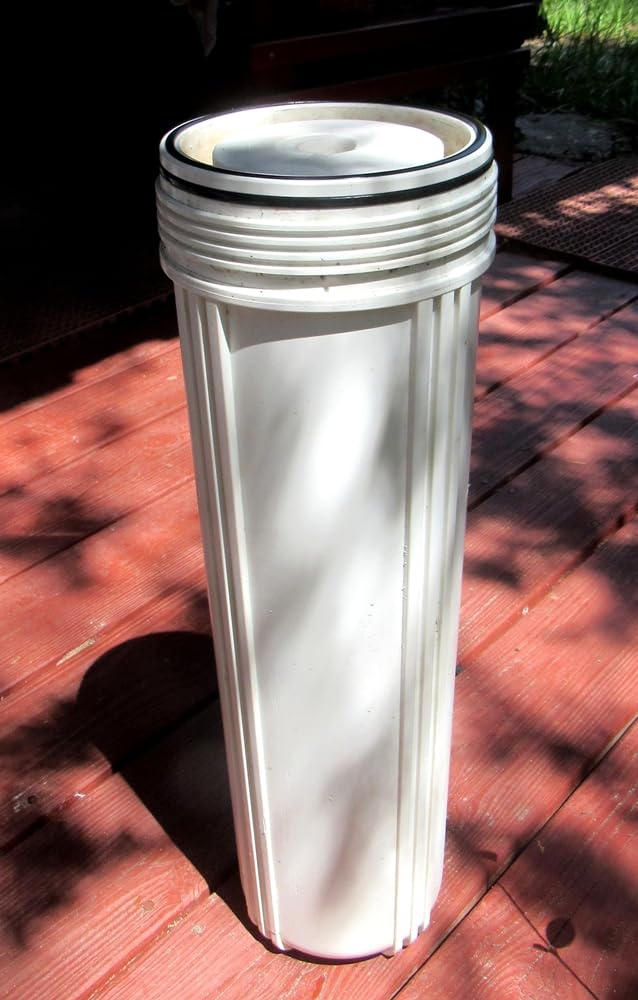
The manufacturer is direct about who this is for: it is designed primarily for well water, and city water users are pointed to the HMF2SmgCC model instead. That kind of explicit positioning is refreshing, and it is why we did not try to force this unit into a municipal recommendation.
At 48 pounds and 24 by 9 by 27 inches, this is the heaviest system in the roundup. Mount it into studs or a plywood backer and plan the location carefully. Operating pressure runs 20 to 95 psi and maximum supported TDS is 2,000 ppm.
Across 207 reviews at a 4.4-star average, the well water satisfaction data is consistently positive. The recurring cautions are all about installation order and pre-filtration, not about filtration performance.
Why a well needs different media than a city line
Iron and manganese are dissolved minerals, not particles. A sediment filter cannot remove them, and neither can standard activated carbon, which is exactly why well owners end up disappointed with a carbon tank they bought for the wrong problem. Oxidation-based media convert dissolved iron into a form that a sediment stage can then trap.
That is why the sequencing here matters. Water flows sediment stage first, then the iron and manganese stage, then carbon. Reversed order means the iron stage gets fouled with grit immediately. Well owners in home treatment forums consistently recommend running a 30-micron pleated cartridge ahead of the main system on high-sediment wells.
Our well water filter guide covers the full pretreatment stack, which matters more than any single model choice.
Where it falls short for a large household
A spin-down or sediment pre-filter is close to mandatory on a high-sediment well, and that adds cost and another maintenance item to a household that already has more water users than a typical family.
O-rings lose diameter with use and pop out of the housing groove during cartridge changes, which is the most persistent leak complaint across Home Master reviews in this roundup. Keep spares.
Copper-to-plastic fittings can melt or crack if a plumber solders nearby, so the install should happen before the water heater work. The cartridge labels are also fixed and cannot be repositioned, which makes it easy to install the stages out of order if you are not paying attention.
10. HQUA WF3-01 Three-Stage Filtration Review
HQUA WF3-01 3-Stage Whole House Water Filtration System, Reduces Heavy Metals (Lead, Mercury, Arsenic, Cadmium, Chromium), Chlorine, Sediment, Odor, and VOC’s
Flow 15 gpm
Capacity 100,000 gallons
Brass threaded ports
Operating pressure 25-116 psi
Pros
- Brass ports instead of plastic
- which owners credit for leak resistance
- 15 GPM holds pressure over months of use
- Per-filter pressure gauges
- drain valves and 180-day timers
- Most complete accessory kit in this roundup
Cons
- Instructions omit that each housing needs two O-rings
- Fixed cartridge labels are hard to orient
- Brass threads occasionally weep at very high line pressure
- 44 pounds needs a plywood backer
The HQUA WF3-01 is the most thoughtfully engineered system in this roundup when it comes to the details that cause leaks. It uses three 20 by 5.5 inch housings with brass threaded connection ports, and owners specifically credit that choice with eliminating the cracking and leaking they experienced with plastic-port manifolds.
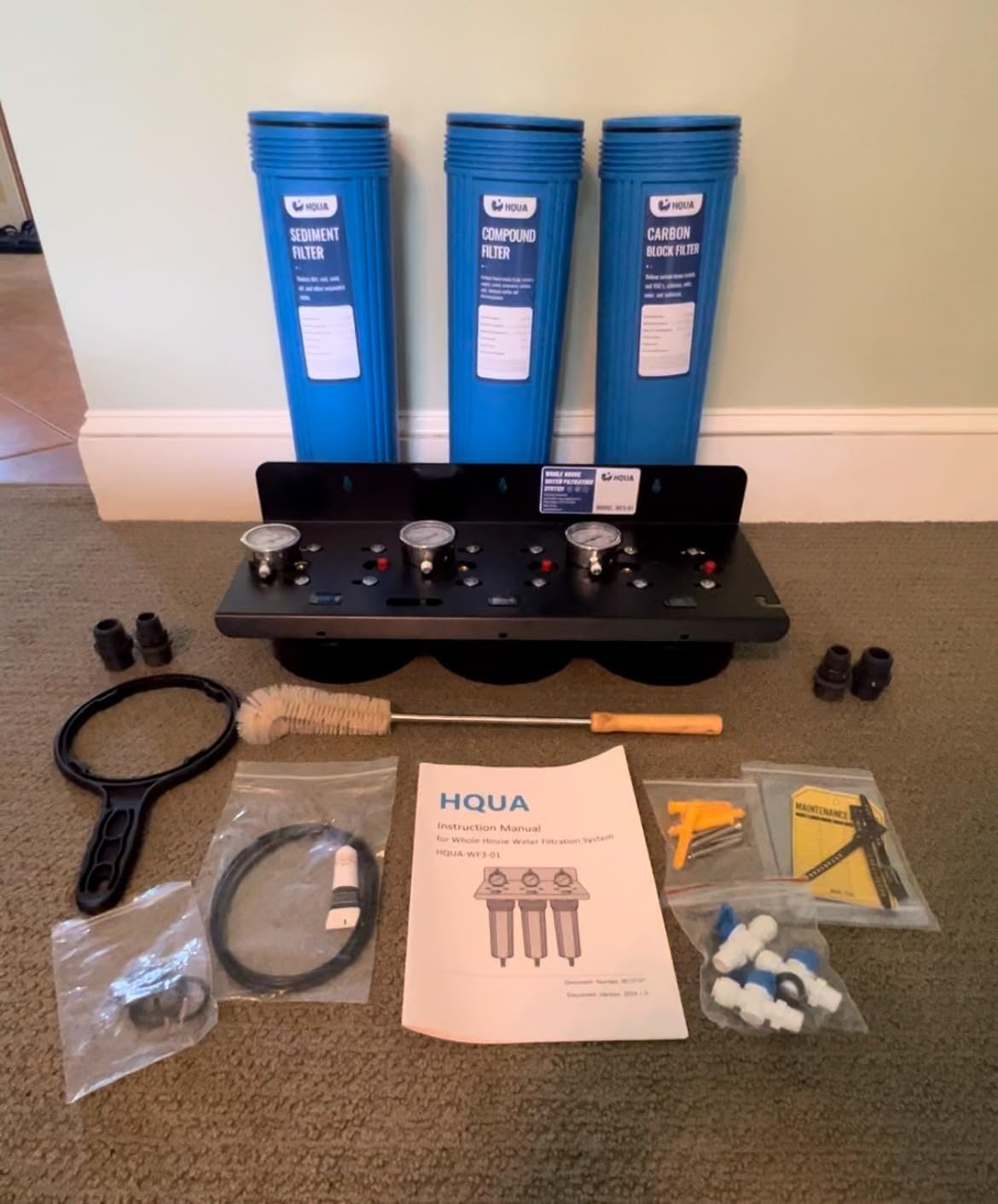
The three stages are a PP sediment cartridge, a compound GAC and KDF stage, and a carbon block. The KDF stage is the heavy metal component, rated by the manufacturer to reduce lead, mercury, arsenic, cadmium, chromium and chlorine. Capacity is 100,000 gallons at a sustained 15 GPM.
Each housing carries an oil-filled pressure gauge, its own drain valve and pressure relief button, plus 180-day cartridge countdown timers. Reversible in and outlet flow makes retrofitting to existing plumbing far simpler, and the accessory kit includes a housing cleaning brush, extra gaskets, silicone lubricant and both 3/4-inch and 1-inch adapters.
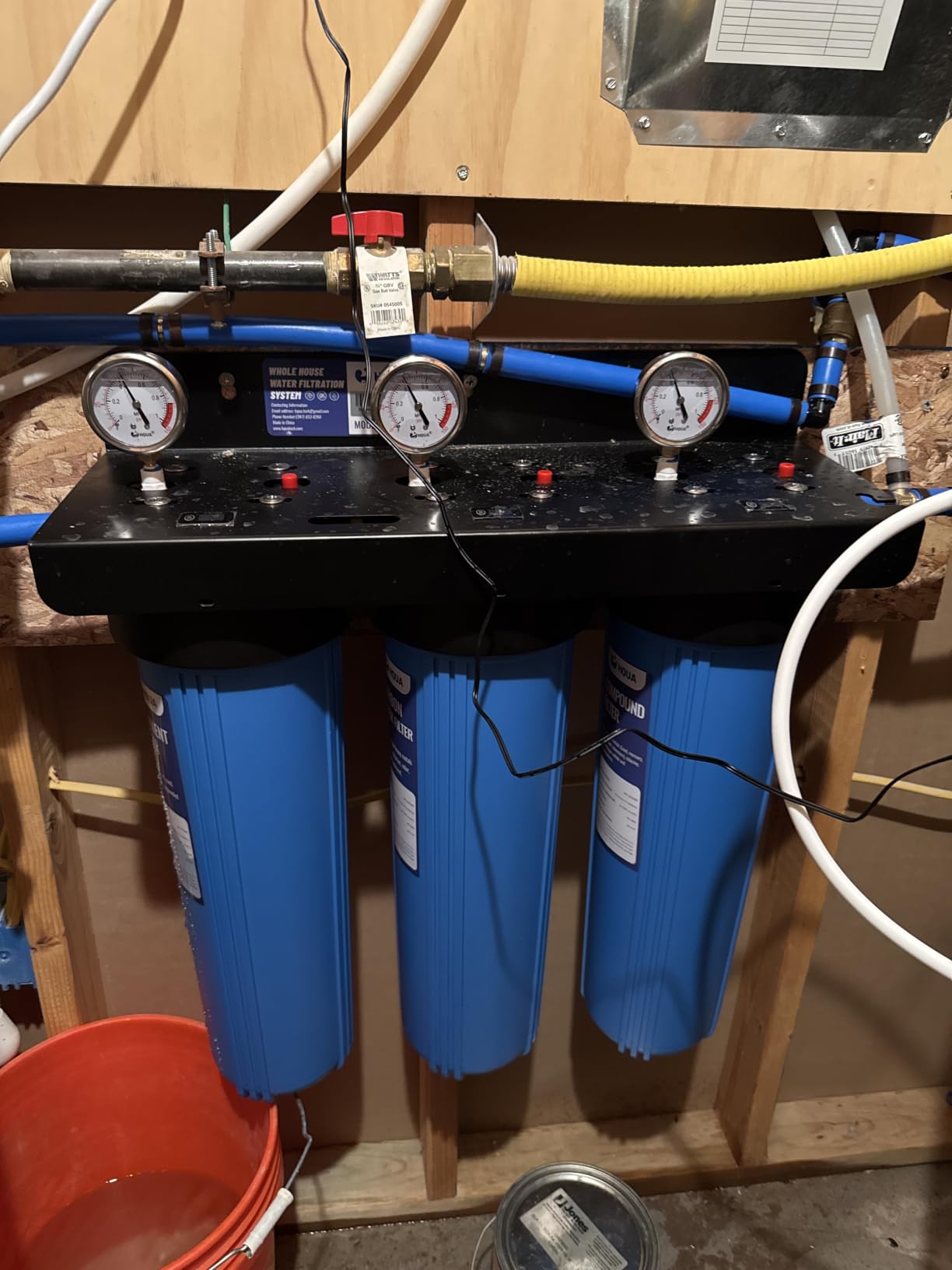
At 198 reviews averaging 4.6 stars with 81% five-star ratings, this has one of the strongest rating profiles here even though its review volume sits below the middle of this list. We include it because the brass-port decision solves a problem several competitors still have.
Operating pressure of 25 to 116 psi is the widest range in the roundup, which makes it tolerant of high municipal pressure. Maximum supported TDS is 500 ppm and upper temperature rating is 125 degrees F.
The timers are genuinely useful in a busy household because they remove the guessing from a maintenance schedule that would otherwise drift, which is one of the most common complaints from owners of multi-stage systems.
Why brass ports and per-filter gauges matter
Threaded plastic ports crack, and a cracked port at 80 psi means water on a basement floor. Several systems in this roundup have exactly that complaint in their reviews, and in a few cases it means flooding. Brass costs more at the manufacturer and eliminates the failure mode entirely.
Per-filter gauges add something a single gauge cannot: visibility into which stage is loading. When a large household starts seeing a pressure change, you can identify the housing responsible in seconds rather than swapping cartridges one at a time and hoping.
One caution on scope. The KDF and GAC compound stage reduces heavy metals, but this is not NSF/ANSI 53 certified in the data we verified, and a reduction percentage without a certification number is not a verified claim. If you have documented lead in your water, treat this as one step in a treatment plan rather than the whole plan.
Where it falls short for a large household
The documentation has a real gap. Each housing requires two O-rings, but the main instructions mention only one, which produced leaking on first install for several buyers. Read the manual carefully and install two per housing.
At 44 pounds and 31 inches tall by 23 wide by 8 deep overall, it needs a plywood backer and stud mounting for a solid install. Cartridge labels are fixed and difficult to orient toward the front, which is a small annoyance that matters more in a tight utility space.
Brass threads still occasionally weep at very high line pressure, so keep a drip pan under the assembly for the first month.
11. Max Water Three-Stage City Water System Review
Max Water Whole House Water Filter System 3 Stage 10″ x 2.5″ for City Water
Flow 1-10 gpm
Capacity 10,000 gallons
Three clear 10 inch by 2.5 inch housings
3/4 inch NPTF ports
Pros
- Compact 14 inch footprint and 11 pound weight
- Clear housings let you see filter loading at a glance
- Works on chlorine and chloramine
- Stainless steel bracket with pressure release buttons
Cons
- 1-10 GPM on 3/4 inch ports constrains large families
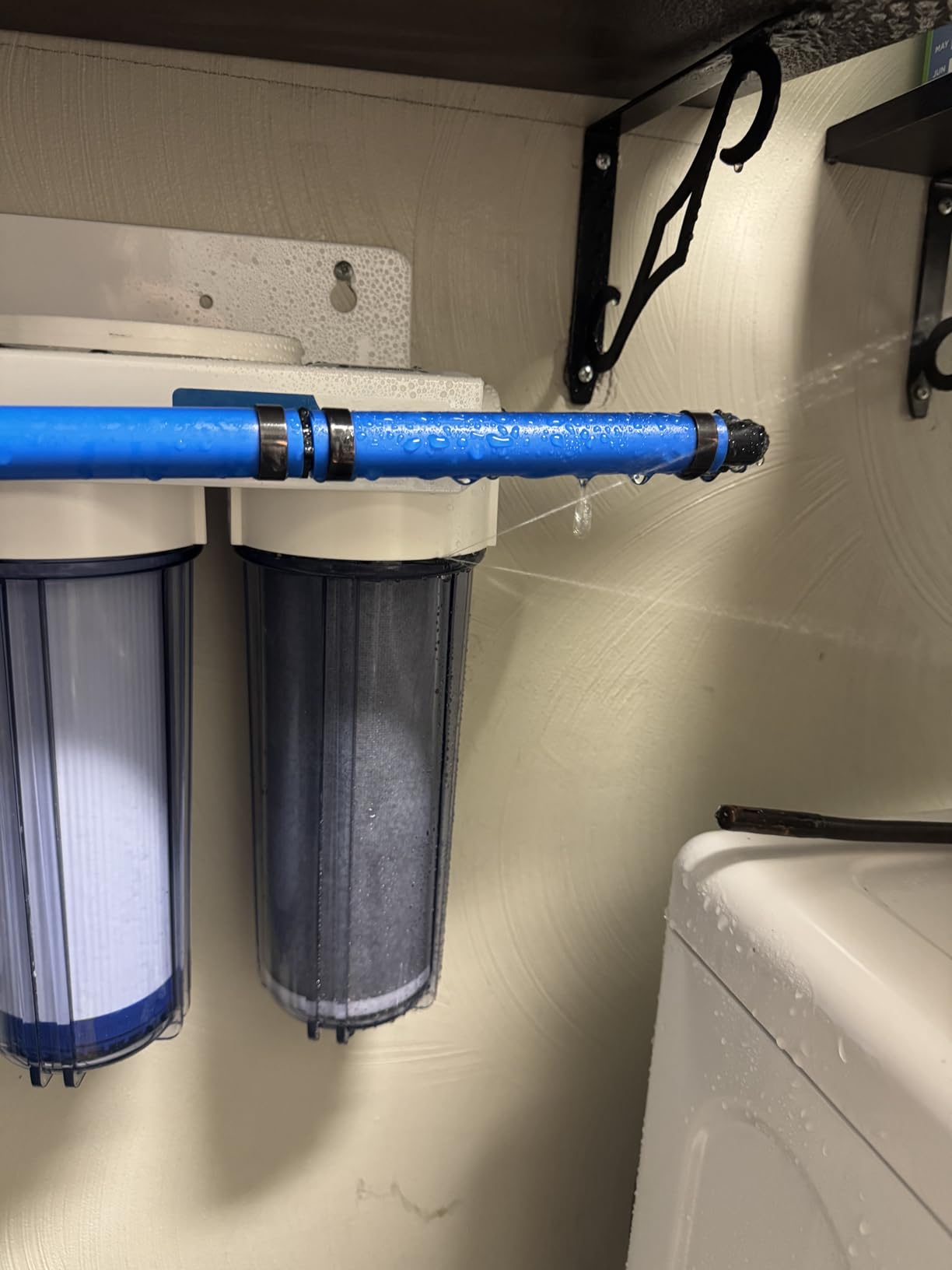
- O-ring failures on the third housing have caused flooding
- Housings criticized as cheap plastic
- Flat rubber washers are easy to lose
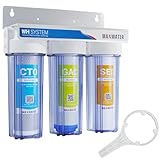
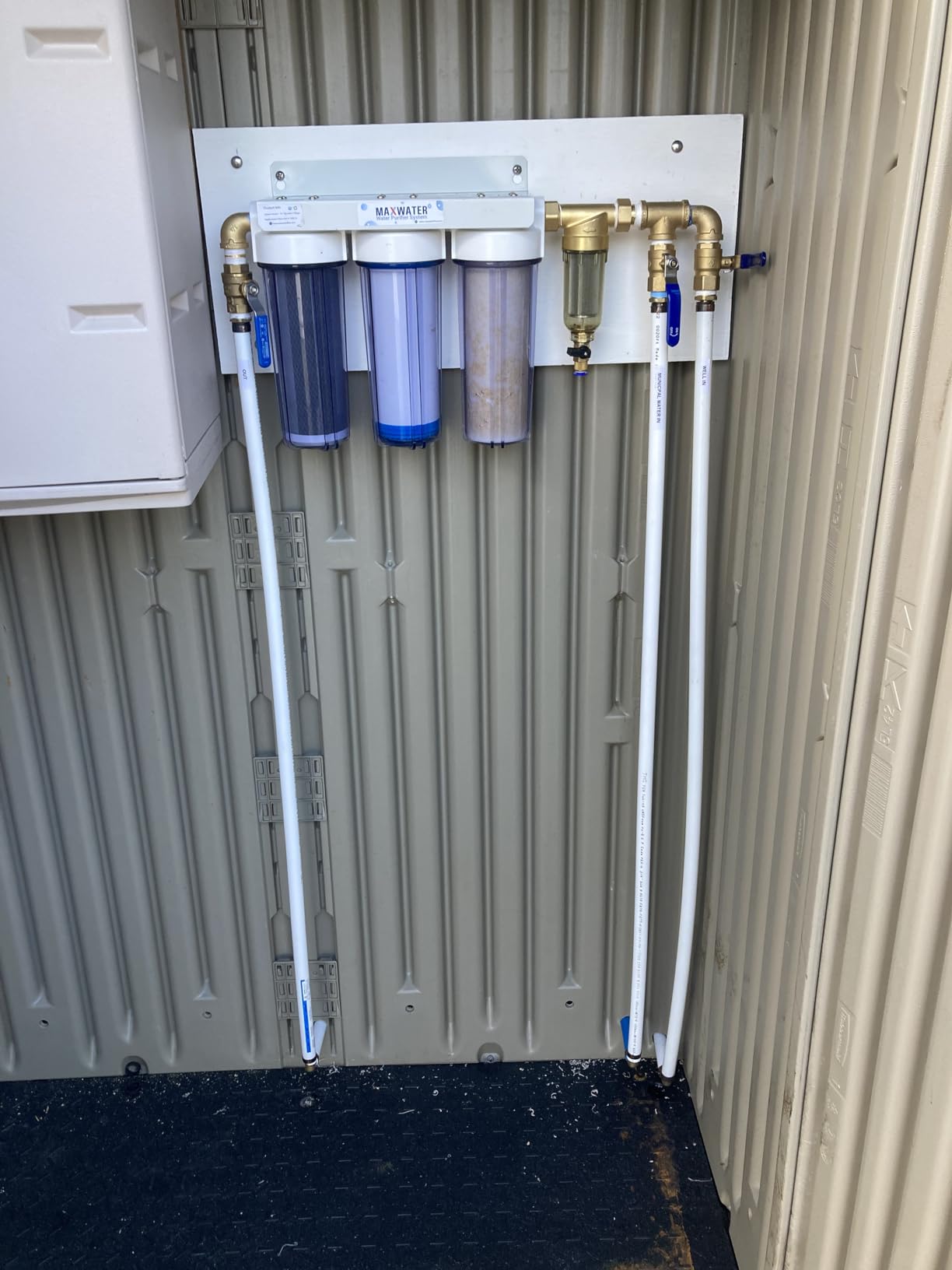
The Max Water WH-SC2 is the smallest three-stage system in this roundup, and its clear housings are genuinely useful: you can see how loaded the cartridges are without opening anything. For a family that has to squeeze a filtration system into a tight closet, that is a real advantage.
It uses three 10 by 2.5 inch clear housings with a stainless steel bracket. Stage one is a 5-micron PP sediment, stage two is GAC carbon, and stage three is a 5-micron CTO carbon block, with a stated filtration equivalent of seven stages across the three elements.
The catch is the flow rating. This system is rated 1 to 10 GPM on 3/4-inch NPTF ports, and those are the lowest throughput figures in this roundup. Capacity is also listed at 10,000 gallons, which is the smallest here by a wide margin.
We include it here with a clear caveat rather than as a large-family recommendation. A 10 GPM ceiling on quarter-inch fittings is a real constraint in a home with three or more bathrooms, and the 10,000-gallon capacity implies frequent cartridge changes that raise the cost per gallon in a busy household.
What it does well, owners confirm, is chlorine smell and taste reduction, including on chloraminated water, and it works on high-sediment municipal supplies. Several owners use it as a second-stage add-on alongside an existing system rather than as their primary filter, which is a reasonable way to deploy it.
At 323 reviews averaging 4.3 stars with 72% five-star ratings, the performance data on taste and odor is solid. The durability data is not.
Where a compact three-stage system still makes sense
Footprint is the legitimate reason to choose this. At 14.25 inches square and 11 pounds, it mounts on almost any wall in almost any orientation, in a space where a 30-inch stainless frame simply will not fit.
Clear housings are also more useful than they sound. Being able to look at a cartridge and see brown buildup tells you it is time to change, rather than waiting for a taste complaint or a pressure drop that could have a dozen causes.
The stainless steel bracket with pressure release buttons is a better mounting solution than most plastic manifold systems at this size, and the 1-year manufacturer warranty is standard for the category.
Where it falls short for a large household
The 1-to-10 GPM rating on 3/4-inch ports is the deal breaker for most of the households this guide targets. If two showers can run at once in your home, this is not the system. Our top pick handles that scenario at 15 GPM on one-inch ports.
Hardware durability is the second issue and it is serious. Multiple owners report O-rings escaping the housing and flooding rooms, and reviewers describe the housings themselves as cheap plastic. Support response in those cases is also criticized, which matters in a high-use home where leaks are more likely.
Flat rubber washers are easy to lose during cartridge changes and cause leaks when missing. Keep a spare set on hand from day one. A 3/4-inch NPT to 3/4-inch garden hose adapter is also required and not included.
12. Waterdrop WHF3T-PG Three-Stage Review
Waterdrop WHF3T-PG 3-Stage Whole House Water Filter System, 5 Micron
Flow 15 gpm
Capacity 100,000 gallons
12 month cartridge life
NSF/ANSI 372 certified
Pros
- 12-month cartridge life is the longest among multi-stage options
- 15 GPM and 1-inch ports handle a 2600 sq ft two-story home
- Brass-lined inlet and outlet housings
- NSF/ANSI 372 certified lead-free materials
Cons
- Three-filter bracket can bend and make cartridge removal awkward
- Fittings can weep even after heavy sealing
- All three cartridges must be replaced as a set
- 100000 gallons is realistic only for moderate use
The Waterdrop WHF3T-PG is the system to consider if you want a three-stage manifold without a six-month service interval. It publishes a 12-month cartridge life, which is the longest stated among the multi-stage options in this roundup, and it pairs that with 15 GPM steady flow through one-inch ports.
Stage one is sediment. Stages two and three are a KDF composite filter and a GAC carbon fiber filter, together rated at 97.72% chlorine reduction. The manufacturer describes the three housings as delivering seven-stage filtration performance across them.
It is NSF/ANSI 372 certified for lead-free materials, which is the certification that matters most in older homes with legacy plumbing, and the housings passed more than 100,000 water hammer tests. Maximum supported TDS is 1,000 ppm.
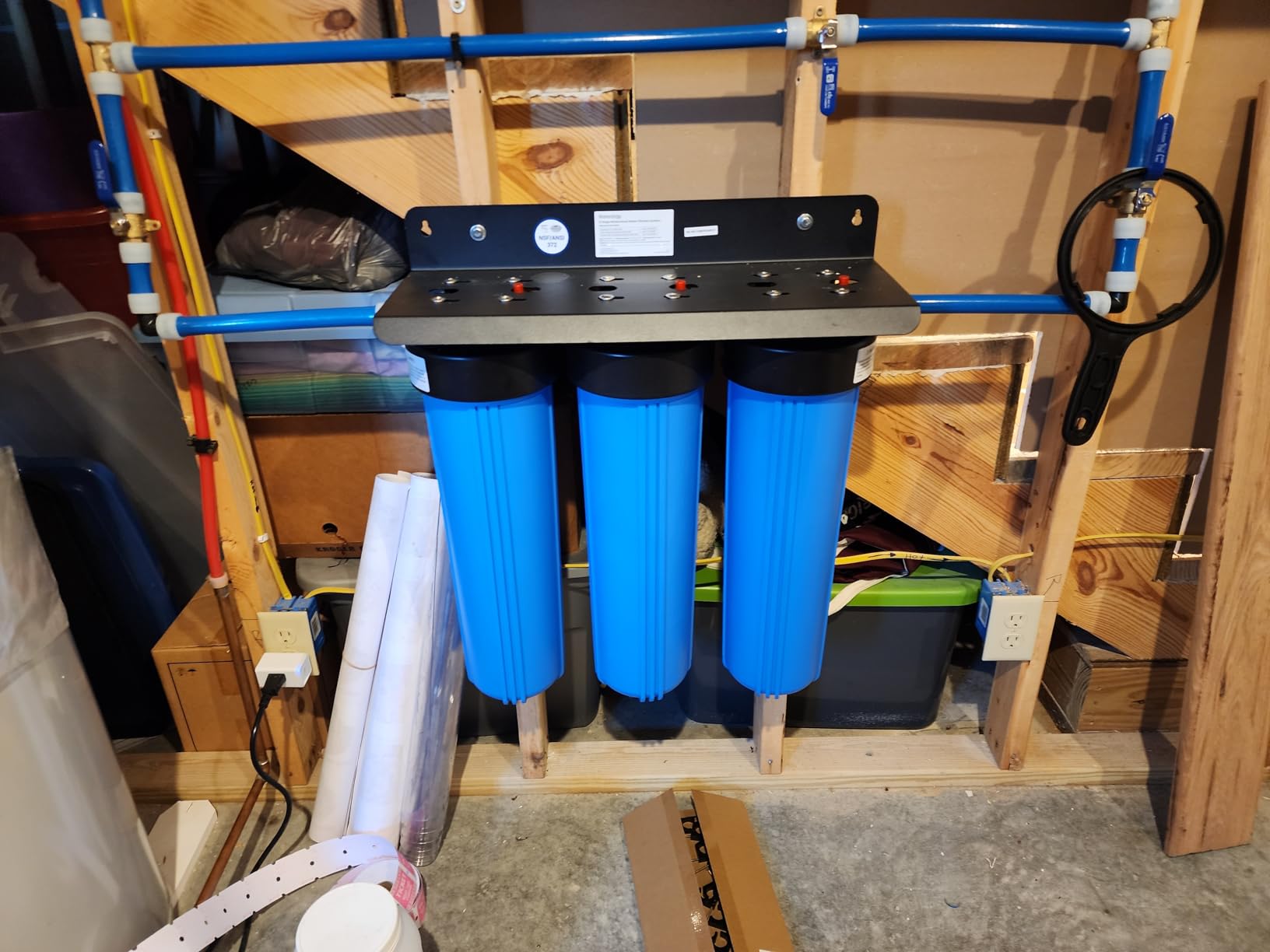
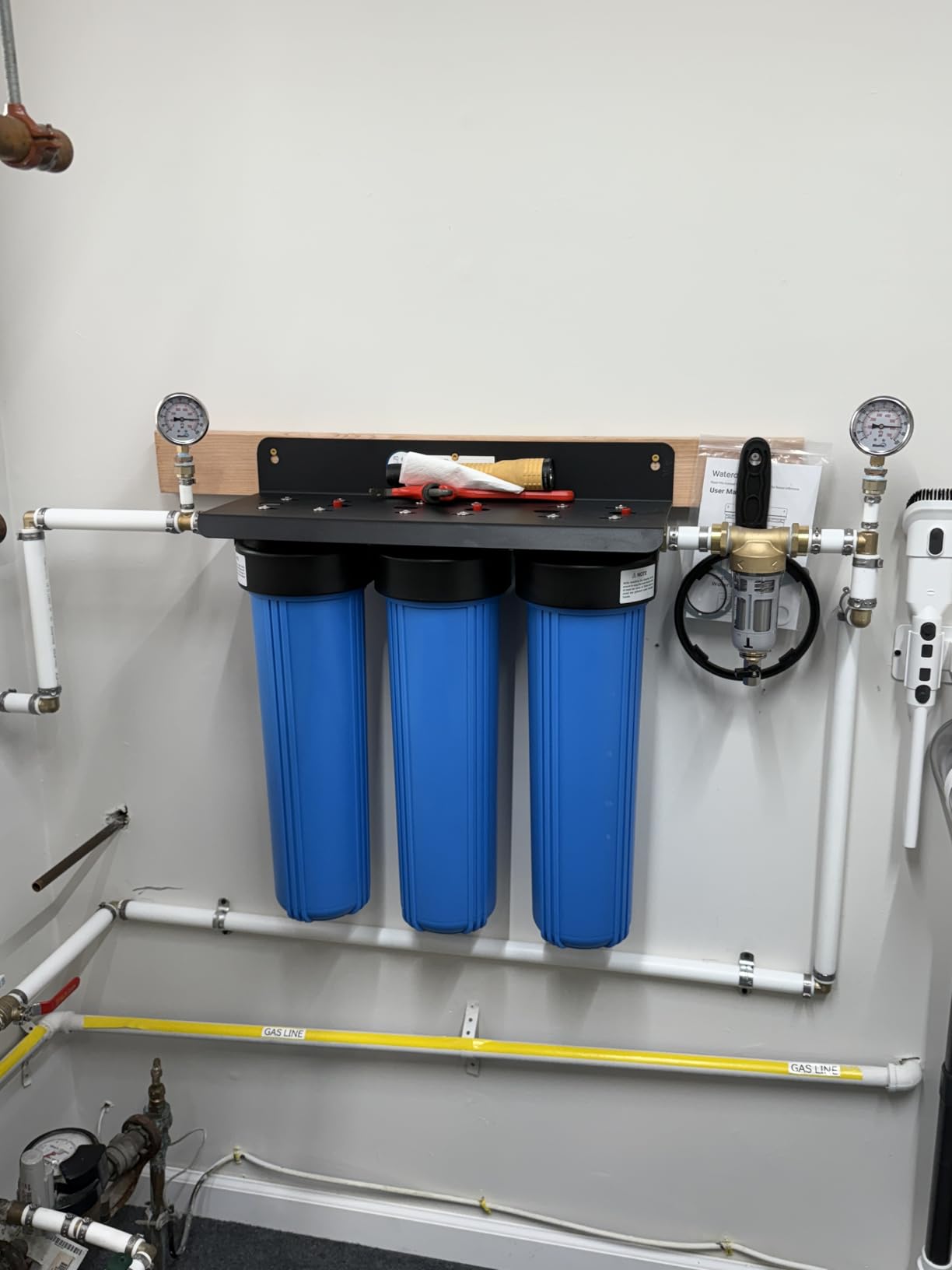
Owners report strong chlorine smell removal within the first month, along with noticeable improvements to skin, hair and laundry freshness, and several cite the brass-lined housings as a build-quality step up. Multiple owners specifically note that 15 GPM and 1-inch ports handle a two-story, 2,600 square foot home without issues.
With 144 reviews averaging 4.5 stars and 72% five-star ratings, the ratings are strong but the volume sits at the bottom of this list. That is worth weighing: a smaller review base means less evidence for the durability claims, particularly for a bracket that owners report flexing.
Operating temperature range is 40 to 100 degrees F, and it should not be operated below 40 degrees F, which matters if it sits in an unheated garage or crawlspace in a cold climate.
What the 12-month interval really means for a big family
The 100,000-gallon and 12-month pairing is a useful combination, but they are separate claims and a large household pulls on both. Six people using showers, laundry and dishwashers together will consume gallons faster than the 100,000-gallon figure assumes, so treat 12 months as the ceiling rather than the expectation.
The real advantage here is that the stated life is longer than the 3-to-6-month interval on the two-stage systems in this roundup. For a household that dreads filter changes, that difference is worth paying for even if you end up changing a bit sooner than the label suggests.
On 15 GPM and one-inch ports, it has the flow headroom to be a sensible choice for a two-story home with two or three bathrooms, which covers most large-family situations.
Where it falls short for a large household
The bracket supporting the three filters is reported to bend, which leans the housings against the wall and makes cartridge removal awkward. That is a mounting problem, not a filtration problem, but it is annoying enough to plan for with a wider mounting surface.
Fittings can weep even after heavy Teflon tape and pipe joint compound, so expect to check the joints periodically in the first few months.
All three cartridges must be replaced as a set, and individual filters are not sold separately. Combined with a large household’s higher consumption, that pushes the true cost per gallon higher than the 12-month headline suggests. If your priority is a staged filter you can service one stage at a time, the Express Water three-stage system in this guide is the better fit.
What Flow Rate Does a Family of Six Need?
Here is the sizing logic most guides skip. Average daily use is not what matters, because no filter runs at average demand. What matters is peak simultaneous demand, which is the sum of every fixture that could be open at once. A typical shower pulls 2 to 2.5 GPM, a standard laundry faucet about 1.5 GPM, a dishwasher fill cycle around 1.5 GPM, and a toilet about 1 GPM.
Run the math on a large family morning: two showers, a washer filling, and a dishwasher starting is roughly 6 to 8 GPM of instantaneous demand, and that is before anyone runs a hose or a shower. Household consumption commonly lands around 50 to 80 gallons per person per day indoors, and a family of six burns through 300 to 480 gallons a day.
Map that against typical homes: a 1-to-3 person household with two baths needs roughly 5 to 8 GPM. A 4-to-6 person household with three baths needs 10 to 12 GPM. A household of six or more with four or more bathrooms, or with two showers and a laundry room on the same floor, should target 15 to 20 GPM, which is why most of the systems in this roundup carry 15 GPM or better.
Do not size a filter by tank dimensions or by grain capacity the way you would size a water softener. The number that matters is published service flow in GPM, and it should be stated with the pressure drop condition it was measured at.
One more variable for big households: line size. A 3/4-inch supply line will not deliver 20 GPM no matter what the filter is rated for. If your home is on 3/4-inch lines, the 3M Aqua-Pure AP904 at up to 20 GPM and the top pick at 15 GPM are realistic targets, and anything above that is theoretical.
City Water vs Well Water: Match the Media to the Problem
Buying a heavy metals filter for a chlorine problem wastes money and still misses the contaminant. Start with a test. For municipal water, your utility publishes a Consumer Confidence Report each year that lists the contaminants detected in your system. For a private well, use a state-certified laboratory, because a well’s water chemistry can shift with drought, flooding and nearby land use.
On chlorinated municipal water, the problem is usually taste, odor and sediment, and carbon block or GAC handles it well. If your utility uses chloramine, look for catalytic carbon rather than standard GAC, which is why the Home Master HMF2SmgCC is the pick in this roundup for chloramine reduction.
On a well, dissolved iron and manganese need oxidation-based media such as the radial flow stage in the Home Master three-stage system, and hydrogen sulfide needs its own treatment approach. Buying a carbon tank for an iron well is the most common and most expensive mistake we see, and it is why the Home Master well system is the only well-specific unit here.
Scale is a separate conversation again. None of the filtration systems in this guide soften water. For hard water, a salt-free conditioner or an ion-exchange softener is a separate component, and the sequence on the main line usually runs shutoff valve, spin-down pre-filter, softener if needed, then the main filtration tank.
What the NSF/ANSI Numbers Actually Mean
Consumer Reports does not currently test whole house filtration systems, so if you have seen that question asked, the honest answer is that there is no Consumer Reports ranking to point to. NSF/ANSI certification is the equivalent proxy, and it is the standard the water treatment industry itself relies on.
NSF/ANSI 42 covers aesthetic claims: taste, odor, and chlorine reduction. Most systems in this roundup stop here, which is why we are explicit that they make no verified lead or PFAS claim. NSF/ANSI 53 covers health-related contaminant reduction, including lead, mercury, arsenic and chromium, and it is the number to look for when someone claims a system removes heavy metals. The 3M Aqua-Pure AP904 and the Waterdrop WHF3T-PG carry NSF/ANSI 372, the lead-free materials standard that matters in older homes.
NSF/ANSI 61 covers material safety for drinking water system components, and NSF/ANSI 44 covers ion-exchange water softeners specifically. NSF/ANSI 55 is for UV microbiological water purifiers, which is the standard relevant to the UVF55FS, and NSF/ANSI 58 covers reverse osmosis. P473 is the emerging standard for emerging contaminants including PFAS.
For context on why these claims matter, EPA limits include lead at 15 parts per billion and 10 ppb under the 2024 Lead and Copper Rule Improvements, PFOA and PFOS at 4 parts per trillion, nitrate at 10 mg/L, and arsenic at 10 ppb. A percentage reduction without a certification number against a specific standard is marketing, not a guarantee. This is the point home treatment forums make constantly, and they are right.
Pressure Drop: How Much Is Normal and How to Fix It
A properly sized whole house filter typically causes only 1 to 5 PSI of pressure drop. Owners of the Home Master HMF2SmgCC, for example, report 3 to 5 PSI under typical demand, which is at the top of that range but still unnoticeable.
Large families notice pressure drop more than small households for one reason: you have more fixtures demanding flow at once. A drop that is invisible when one shower is running becomes obvious when a second shower starts and the laundry is mid-cycle. The most common real-world complaint on home improvement forums is exactly this, and it usually means one of three things.
First, an overdue cartridge. Media loading raises restriction continuously, so a filter that was fine at install can quietly cost 5 to 8 PSI six months later. Checking a system with per-filter pressure gauges, like the Express Water or HQUA units, catches this early. Second, an undersized system, where the rated flow was always below your peak demand. A 10 GPM unit in a 15 GPM house will always feel it, and no amount of maintenance fixes that. Third, 3/4-inch ports or 3/4-inch supply lines, which cap throughput before the filter is even involved.
Four things help. Match the system to peak demand using the numbers above. Use one-inch ports throughout, which most of our top picks do. Change media on a schedule rather than waiting for a taste complaint. And make sure you have a bypass valve, which lets you isolate the filter for service without shutting off water to the whole house. A pre-filter ahead of the main unit also keeps grit out of the carbon and sediment stages, which keeps pressure steadier over the long run.
Tank Systems vs Cartridge Systems for High-Use Homes
This is the tradeoff that decides the question for most large families, and it is worth being blunt about. Cartridge systems give you staged filtration and precise contaminant removal, and they are the right answer for iron, heavy metals, and chloramine. What they do not give you is throughput headroom or long service intervals. Every cartridge in this roundup is rated between 3 and 12 months, and a family of six will often beat the shorter intervals.
Central tank systems, represented here by the A. O. Smith unit, run on gallon capacity and a multi-year service life. The 600,000-gallon, 6-year rating is the lowest ongoing cost in this roundup by a wide margin, and more people in the house does not shorten the life the way it does with a flow-based cartridge. What you give up is staged filtration, contaminant-specific media, and flow headroom, since that unit is rated at 7 GPM.
There is a middle path worth considering for high-consumption homes: pair a well-suited cartridge system with a spin-down pre-filter and a salt-free conditioner downstream. The pre-filter protects the main media from grit, which extends cartridge life, and the conditioner handles scale so the carbon stage is not fighting mineral deposits.
For most large families on municipal water, we would take the cartridge system and budget for the media honestly. The iSpring WGB32B, with its 20-inch housings and doubled media volume, buys back as much interval as a cartridge system can.
When to Skip a Whole House Filter
If your concern is a specific verified contaminant like lead or PFAS, a whole house filter is the wrong tool. Certified point-of-use reverse osmosis under a sink is the verified fix for those, and it costs a fraction of a whole house system. The systems in this guide are honest about what they do not reduce, and pretending otherwise is the main reason people feel misled after buying.
A second case is hard water. No filter in this roundup softens water, and a filter sold as a scale solution is not one. If your goal is soft water for skin, hair and appliance life, an ion-exchange softener rated to NSF/ANSI 44 is the correct purchase, sized by grain capacity.
A third case is a very small household. If you live alone and nothing runs simultaneously, a 10 GPM system is more than enough and you will rarely notice the difference. Our kitchen-focused whole house filter picks cover lighter-use situations, and an under-sink guide exists for single-tap needs.
Frequently Asked Questions
What flow rate does a large family need on a whole house filter?
A household of five or six with three or more bathrooms should target 15 to 20 GPM of rated service flow. A 4 to 6 person home with three baths needs at least 10 to 12 GPM. Size for peak simultaneous demand rather than average daily use, and use one-inch inlet and outlet ports so the plumbing does not become the bottleneck.
How much water pressure drop is normal for a whole house filter?
A properly sized system typically adds only 1 to 5 PSI of pressure drop. A larger drop usually means an overdue cartridge, a system rated below your household’s peak demand, or 3/4-inch ports and supply lines. Changing media on a schedule and using one-inch ports keeps pressure steady.
What is the highest rated whole house water filter?
The iSpring WGB32B is the highest rated system in this roundup at 4.7 stars across more than 2,200 reviews. It uses three 20 inch by 4.5 inch Big Blue housings rated at 15 GPM with 100,000 gallons of capacity, which gives a large family more media volume before pressure drops.
Which water filter removes the most contaminants?
No single whole house filter removes everything. Carbon block and GAC systems handle chlorine taste and odor, KDF plus catalytic carbon targets chlorine, chloramine and heavy metals, and oxidation media is the only reliable option for dissolved iron and manganese on well water. Match the media to a water test result rather than to a marketing claim.
What are the disadvantages of a whole house water filter?
The main drawbacks are added maintenance cost, possible pressure drop if the system is undersized or overdue, and installation complexity at the main line. Multi-stage cartridge systems need several cartridges replaced on separate schedules, and most are certified for taste, odor and chlorine only, so they do not address lead, PFAS or hard water.
Do I need a plumber to install a whole house filter?
Most systems in this roundup are rated for DIY installation on the main line with an included wrench, shut-off valve and fittings. Units weighing 40 pounds or more should be anchored into studs or a plywood backer, not drywall, and any soldered copper work should be completed before plastic fittings are in place.
Final Verdict for Large Families in 2026
For a large family on municipal water, the iSpring WGB21B is our pick. Fifteen GPM through one-inch ports handles two showers and a laundry cycle at once, the two-stage layout keeps maintenance to a single housing pair, and 4.6 stars across 4,271 reviews is the deepest data on any recommendation here. If you want raw headroom instead, the 3M Aqua-Pure AP904 at up to 20 GPM with tool-free cartridge swaps is the alternative.
Match the system to the water instead of the budget. Chloramine on a city line points to the Home Master HMF2SmgCC with its catalytic carbon. Iron on a private well points to the Home Master three-stage radial flow system, ideally behind a spin-down pre-filter. The lowest possible service calls point to the A. O. Smith central tank, provided 7 GPM is enough for your fixture count.
And size for peak demand, not for average use. That one decision prevents the pressure complaints and the premature cartridge changes that make people conclude whole house filters do not work for families. Use the GPM guidance above, confirm your port size, and set a service interval you will actually keep. That is the whole difference between a system that works for a large family and one that frustrates it.