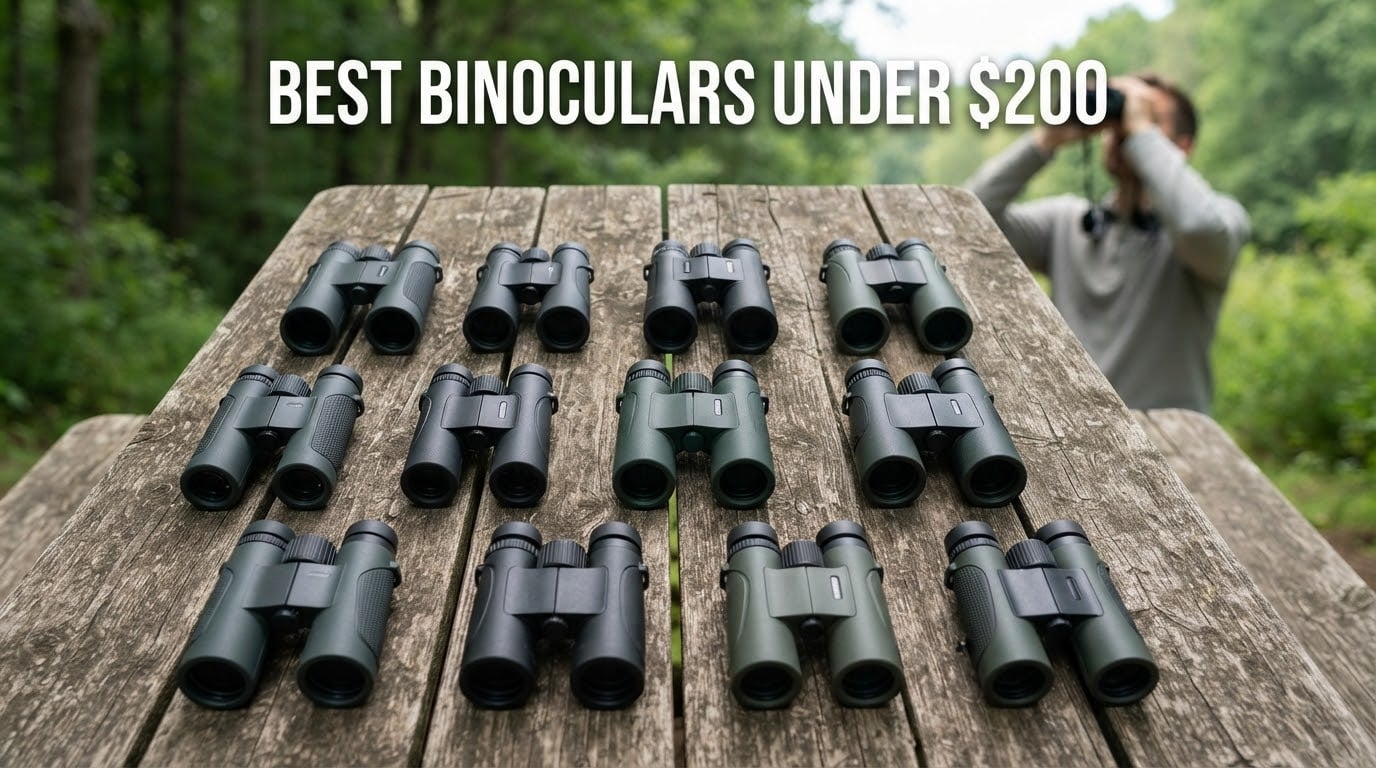
Binoculars are two joined telescopes that magnify distant subjects and let you use both eyes, which is far easier on your neck and your focus than squinting through a single spotting scope. A phone camera at 20x digital zoom gives you a rectangle of pixels; glass binoculars give you a bright, sharp, edge-to-edge image you can hold steady on a warbler fifty feet away.
The best binoculars under 200 dollars right now are the Vortex Crossfire HD 10×42 for most people, the Celestron Nature DX 8×42 for bird watchers who want a wider, steadier view, and the Vortex Triumph HD 10×42 if you want the same everyday shape for less money. All three are waterproof, fully multi-coated roof prism models with a lifetime or near-lifetime warranty behind them.
That price cap matters, and we treat it as a hard rule. Every pick below sat under 200 dollars when we compiled this list, and we deliberately left out the 300-to-600 dollar glass that most “best binoculars” roundups mix in. Our job was to find the best of what you can actually buy inside your budget, not to pad the list with gear you cannot afford.
We also did not limit ourselves to a single use case. A first pair for a nine-year-old on a family hike has almost nothing in common with 15×70 astronomy glass you set on a tripod, so this roundup covers general birding, hunting, stadium sports, stargazing, travel, concerts, and phone-adapter use. Each pick gets its own section with the real specification numbers, what owners like about it, and what they complain about after living with it.
One note before we start, since it shapes everything below: the difference between 100 dollars of binoculars and 200 dollars of binoculars is not magic. It is coatings, prism glass, and tolerances. At this budget the honest expectation is sharp, colorful, daylight-capable glass that holds up in rain, not the luminous low-light performance of a flagship fluorite objective. If you need to identify a warbler in a shaded canopy at dusk, save your money and read the low-light notes in each review.
Start with the top three below, then work down the list. Every model also sits in the at-a-glance comparison further down, so you can scan magnification, glass, and weight side by side before you commit to reading a full review.
Table of Contents
- Top 3 Picks for the Best Budget Binoculars Under 200 Dollars in 2026
- All 12 Best Binoculars Under $200 in 2026
- 1. Vortex Crossfire HD 10×42 Binoculars – The Best All-Rounder Under $200
- 2. Celestron Nature DX 8×42 – Best Binoculars Under $200 for Bird Watching
- 3. Vortex Triumph HD 10×42 – Best Value Binoculars Under $200
- 4. Nikon PROSTAFF 3S 10×42 – Best for Close-Range and Backyard Viewing
- 5. Celestron Outland X 8×42 – Best Budget Binoculars for Beginners
- 6. Bushnell H2O Xtreme 10×42 – Best Waterproof Binoculars Under $200 for Hunting
- 7. Bushnell PowerView 2 20×50 – Best for Stadiums and Distance Viewing
- 8. Nikon PROSTAFF P3 10×42 – Best for Eyeglass Wearers and Bright Light
- 9. Celestron SkyMaster 15×70 – Best Binoculars Under $200 for Stargazing
- 10. Bushnell Falcon 10×50 – Best for Concerts, Events and Casual Sightseeing
- 11. GIGAPENGUIN 15×52 HD Binoculars – Best with a Phone Adapter
- 12. Occer 12×25 Compact Binoculars – Best Travel and Binoculars for Kids
- How to Choose Budget Binoculars Under 200 Dollars: What Actually Matters
- Frequently Asked Questions
- What are the best binoculars for under 200 dollars?
- Is 8×42 or 10×42 better for bird watching?
- What is better, 12×50 or 10×42 binoculars?
- Which is better, Bushnell or Vortex binoculars?
- What are the best budget 10×42 binoculars?
- What are the best 8×42 binoculars for the money?
- Can you use binoculars while wearing glasses?
- Who makes the best hunting binoculars for the money?
- What binoculars do bird watchers recommend for beginners?
- How much do good binoculars cost?
- The Best Binoculars Under 200 Dollars in 2026: Final Word
Top 3 Picks for the Best Budget Binoculars Under 200 Dollars in 2026
These three cover the majority of buyers. The Crossfire HD is the default answer, the Nature DX is the birding specialist with a wider field and softer ride at 8x, and the Triumph HD is the value pick for anyone who does not need the premium glass in the Crossfire.

Vortex Crossfire HD 10×42
- 10x42 HD optics
- Fully multi-coated
- Waterproof and fogproof
- Lifetime VIP warranty


Vortex Triumph HD 10×42
- 10x42 HD optics
- Rubber-armored build
- GlassPak harness
- Lifetime VIP warranty
The Crossfire HD earns the top spot on the strength of a 4.8 average across more than 4,000 reviews, a 325-foot field of view at 1,000 yards, and a build that shrugs off weather. The Nature DX pulls the opposite trade: less magnification in exchange for a 7.4-degree field and 17.5mm of eye relief, which is why it is the pair we hand to people who track moving birds for hours. The Triumph HD does the same job as the Crossfire with slightly less transmission, and it does it for noticeably less money.
All 12 Best Binoculars Under $200 in 2026
Every pick in this roundup, in one block. Magnification, glass type, and sealing are the three columns that matter most when narrowing a list this long.
| Product | Specs | Action |
|---|---|---|
| Vortex Crossfire HD 10×42 |
|
Check Latest Price |
| Celestron Nature DX 8×42 |
|
Check Latest Price |
| Vortex Triumph HD 10×42 |
|
Check Latest Price |
 Nikon PROSTAFF 3S 10×42 Nikon PROSTAFF 3S 10×42 |
|
Check Latest Price |
 Celestron Outland X 8×42 Celestron Outland X 8×42 |
|
Check Latest Price |
 Bushnell H2O Xtreme 10×42 Bushnell H2O Xtreme 10×42 |
|
Check Latest Price |
 Bushnell PowerView 2 20×50 Bushnell PowerView 2 20×50 |
|
Check Latest Price |
 Nikon PROSTAFF P3 10×42 Nikon PROSTAFF P3 10×42 |
|
Check Latest Price |
 Celestron SkyMaster 15×70 Celestron SkyMaster 15×70 |
|
Check Latest Price |
 Bushnell Falcon 10×50 Bushnell Falcon 10×50 |
|
Check Latest Price |
 GIGAPENGUIN 15×52 GIGAPENGUIN 15×52 |
|
Check Latest Price |
 Occer 12×25 Occer 12×25 |
|
Check Latest Price |
Two things jump out of that table. First, the two models with the most owner feedback by a wide margin are the Occer 12×25 and the SkyMaster 15×70, which tells you they have been bought and re-bought as casual first pairs for years. Second, the serious birding glass clusters at 8×42 and 10×42, which is not a coincidence and is the subject of the buying guide below.
1. Vortex Crossfire HD 10×42 Binoculars – The Best All-Rounder Under $200
Vortex Crossfire HD 10×42 Binoculars
10x42
HD glass, fully multi-coated
Nitrogen purged, O-ring sealed
15mm eye relief
Tripod adaptable
Pros
- Excellent clarity and light transmission for the class
- Well-machined rubber armor grip
- Center focus and diopter feel smooth
- 325 ft field suits birding and travel
- GlassPak harness and strap in the box
Cons
- Yellow and purple fringing at the field edge
- Longer body than most 10x42 models
- Close focus around 8 feet
- Hand shake at 10x if held one-handed
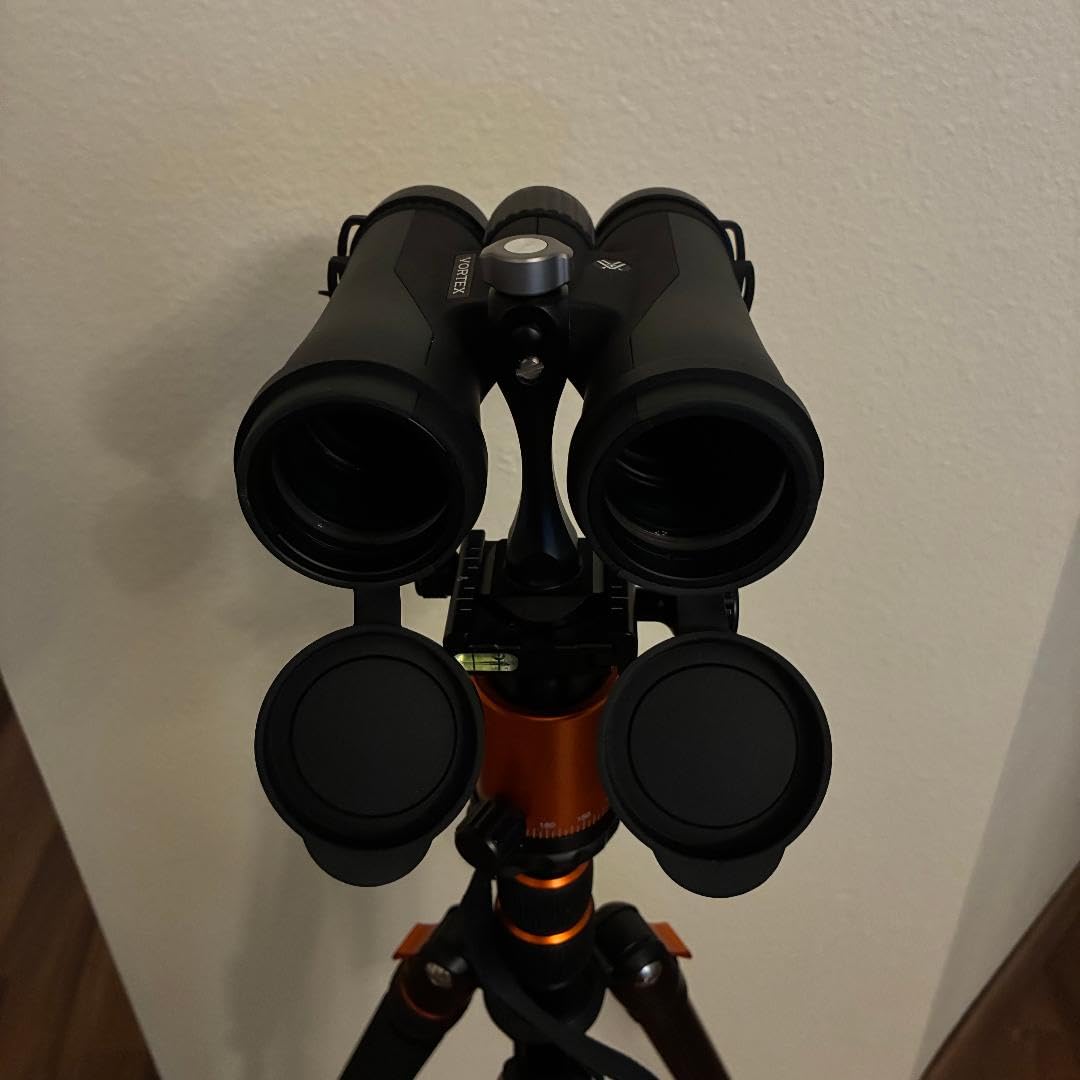
The Crossfire HD is the pair we reach for when someone asks for one recommendation and nothing else. It is a 10×42 roof prism with HD glass, fully multi-coated optics, and a 325-foot field of view at 1,000 yards, which is wide enough to follow a sparrow across a clearing without constantly re-centering. Owners on r/Binoculars describe it as the natural step up from cheap glass, and after looking at the aggregate feedback, that framing holds up.
What you get for the money is a body that feels expensive. The rubber armor has a genuinely non-slip texture, the center focus wheel moves smoothly, and the right-eyepiece diopter clicks into place without fuss. The box includes a GlassPak harness, a neck strap, a rainguard eyepiece cover, and a lens cloth, which is more in the way of included gear than most rivals manage.
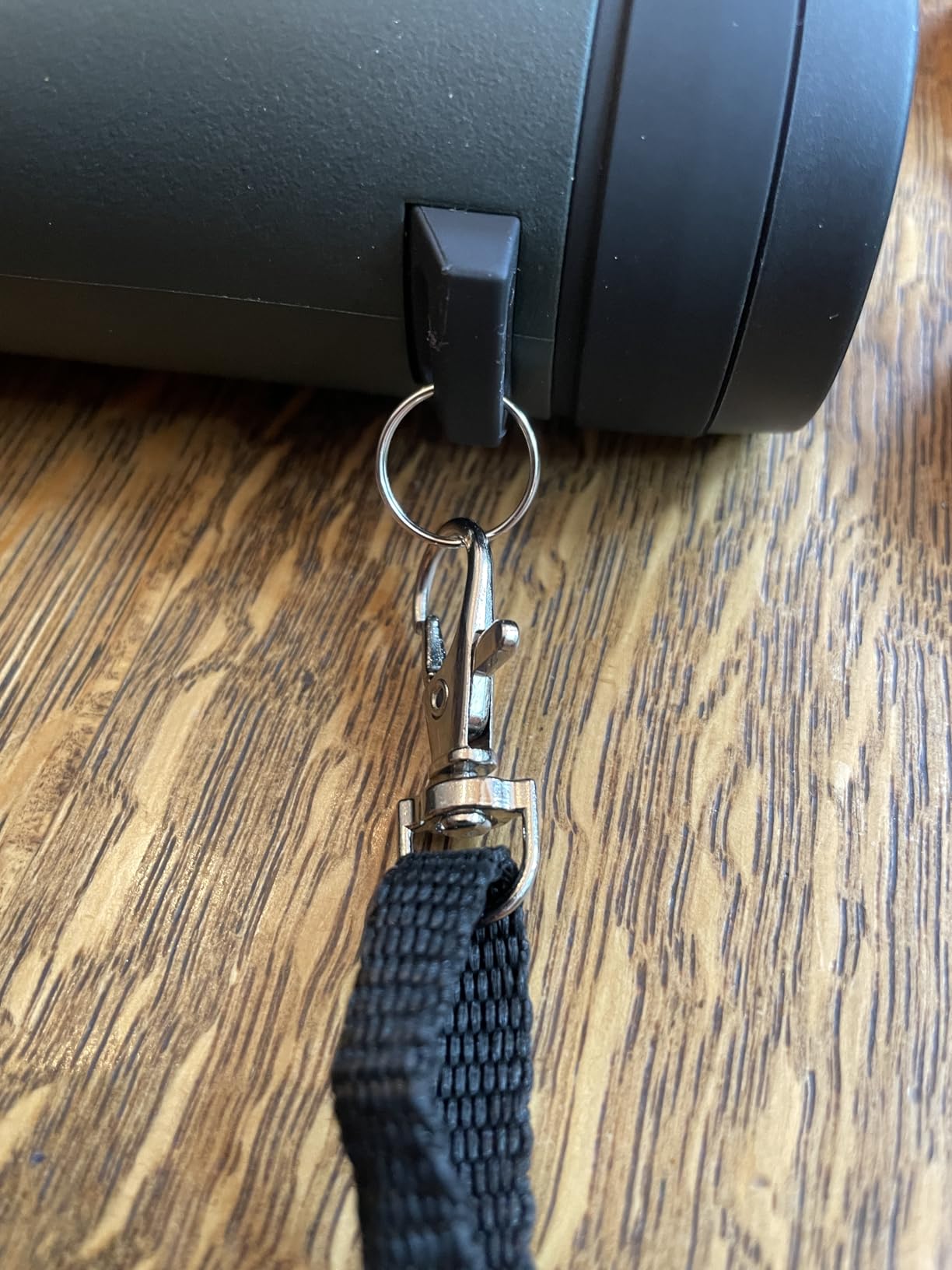
Technically it is a straightforward modern binocular: roof prism, 4.2mm exit pupil, 15mm eye relief, tripod adaptable, nitrogen purged and O-ring sealed. That sealing is what earns it a place on a list where the outdoor life is supposed to be half the reason for owning a binocular. Owners consistently report fogging resistance in cold, damp mornings, which is where cheaper pairs give up.
The honest criticisms are real but small. Some reviewers see yellow and purple fringing near the edge of the field, which is normal for non-ED glass at this price. The body is longer than most 10×42 models, and the close focus distance lands nearer 8 feet than the marketing suggests, so it is not the tool for photographing a butterfly. At 10x, a one-handed grip shows visible shake, which is simply what a fixed 10x binocular does.
Who the Vortex Crossfire HD suits
This is the pick for a first serious pair, and it works for a wide range of outdoor jobs. Backyard bird feeding, park walks, wildlife scanning from a vehicle at a distance, general sightseeing, and casual stargazing of the moon and bright planets all fall comfortably inside what this glass can do. The 325-foot field is generous enough that you will not lose a bird at the edge of frame.
Travellers who pack light will find 1.4 pounds and a threaded tripod socket a good combination, since it can sit on a small tripod for extended observation and fold into a daypack otherwise. Hunters and anyone working near water will care more about the sealing than the magnification, and this has both.
Where the Crossfire HD falls short
If you wear glasses and need more than 15mm of eye relief, this is not the most comfortable option in the list, and the twist-up eyecups are not especially deep. The Celestron Nature DX and the Nikon PROSTAFF P3 both give you more room between the eyecup and the glass. If you are a heavy eyeglass wearer, look at those before ordering this one.
Low light is the other limit. It is a bright, contrasty binocular in overcast daylight, but it will not compete with ED glass when you are trying to sort a bird out in deep shade. The 10x also asks for a steadier hand than an 8x, so if you know you will be scanning from a boat deck or a windy ridge, the 8x options may suit you better.
2. Celestron Nature DX 8×42 – Best Binoculars Under $200 for Bird Watching
Celestron Nature DX 8×42 Waterproof Binoculars for Bird Watching & Outdoors
8x42
Phase-coated BaK-4 roof prism
17.5mm eye relief
Waterproof, nitrogen purged
Pros
- Comfortable image for long sessions
- Wide 7.4 degree field for tracking birds
- Compact for a full-size binocular
- Works well with eyeglasses
- Smooth individual focus
Cons
- Dimmer and softer in low light than ED glass
- Eyecup screws reported backing out
- Weak included neck strap
- Focus wheel can feel stiff
The Nature DX exists because 8x is genuinely better than 10x for a lot of birding, not because it is a compromise. At 8x magnification the image shakes less in your hands, the 5.25mm exit pupil passes more light per shake, and the 388-foot field at 1,000 yards is a full 7.4 degrees across. That width is the difference between following a warbler in a hedge and constantly losing it off the side of the view.
Celestron put phase-coated BaK-4 prisms in a rubber-armored polycarbonate housing, fully multi-coated on the lenses, with individual focus plus a diopter ring. The result is the kind of binocular you can hold up for a two-hour session without fatigue, which is precisely what an all-morning birding walk demands. The focus is described as buttery, and the eye relief of 17.5mm is among the most generous here.
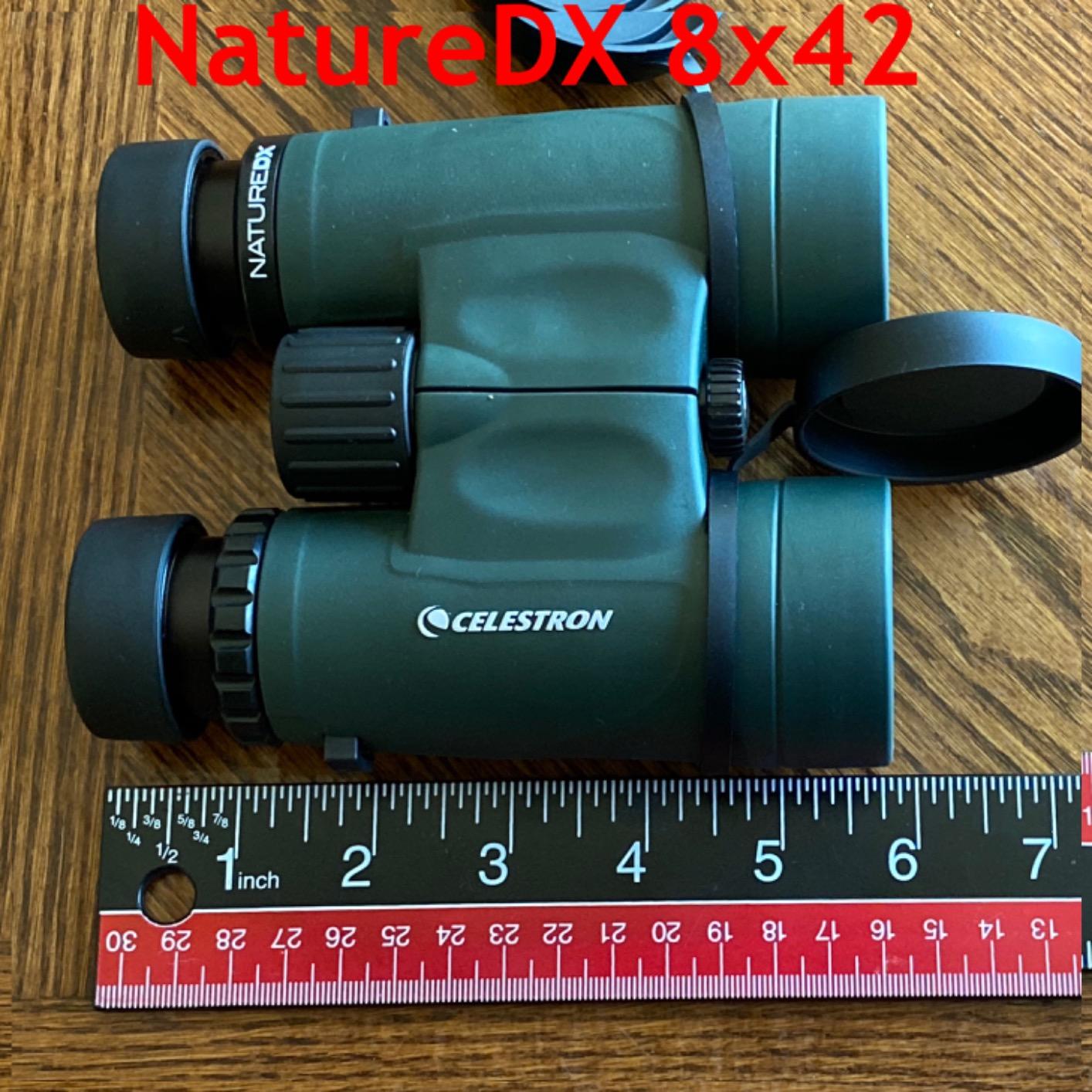
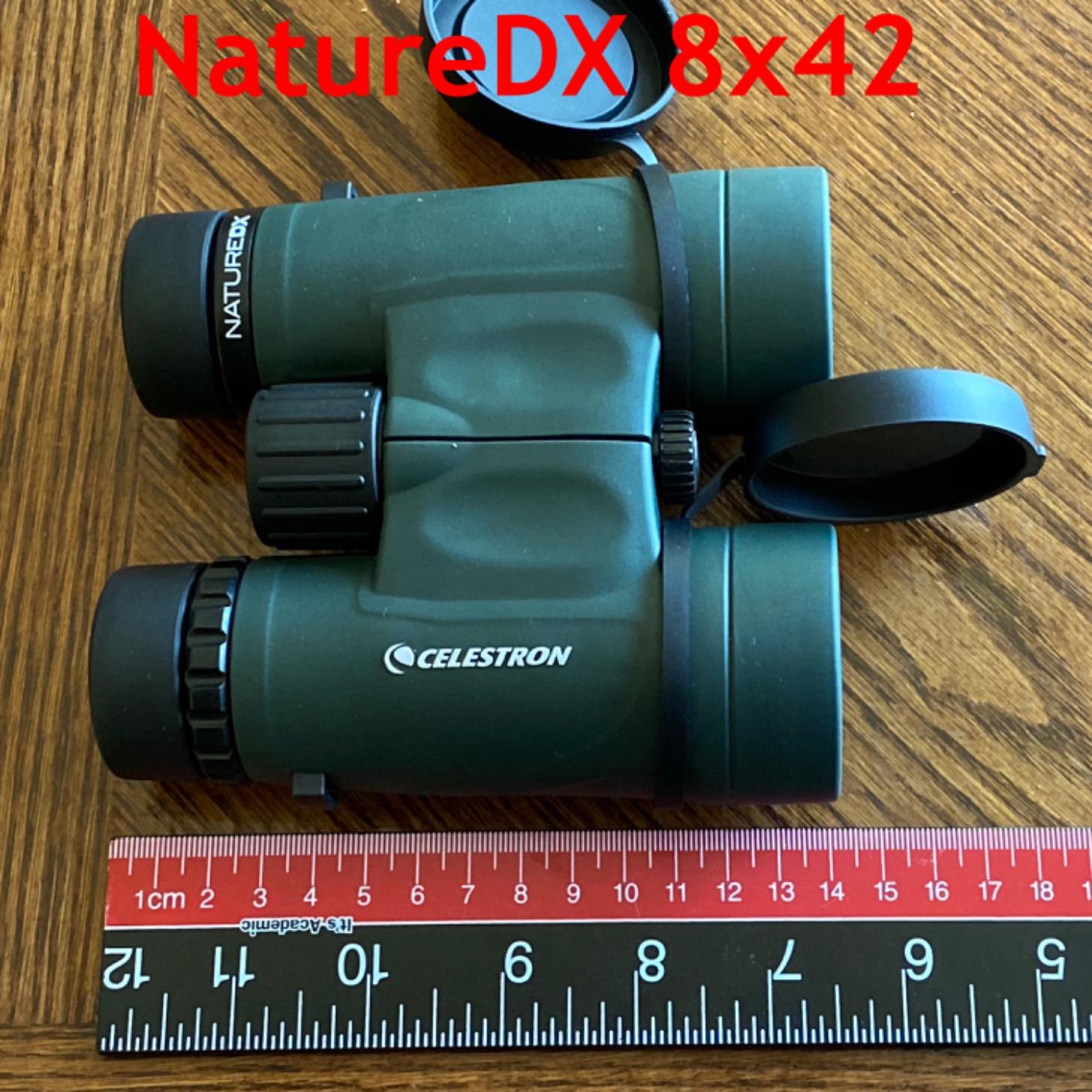
It weighs 1.8 pounds and measures 4.5 by 4.3 inches, so it is smaller than most full-size binoculars and easy to keep on a neck strap for hours. A built-in tripod adapter socket is molded into the body, though the threaded adapter itself is not included. You also get a carrying case, neck strap, rainguard, and lens cloth.
The clear limitation, stated plainly by owners who have used it for years, is low light. Without ED glass the image is noticeably dimmer and less detailed at dawn and dusk than the HD and ED models higher on this list. If your birding happens at sunrise in deep woodland, this is the wrong tool. In open habitat, overcast parks, and gardens, it is excellent.
Who the Celestron Nature DX suits
Bird watchers are the obvious answer, and the wide field plus the low shake of 8x is the whole reason. It also suits anyone who spends long periods scanning slowly, because an 8x image is far more comfortable to hold than a 10x when you are not braced against anything. Families watching a backyard feeder will find the 8x image surprisingly detailed at that range.
Glasses wearers get a real advantage here. With 17.5mm of eye relief and twist-up eyecups, you can pull the eyecup down and still see the full field, which is the single most common complaint people have about cheap binoculars. The waterproof, nitrogen-purged body means a light shower or a walk in wet grass is not a problem.
Where the Nature DX falls short
Low-light performance is the main compromise, and the difference is real rather than marginal. Some owners also report that the small internal eyecup screws on the body can back out over time, which is a minor durability annoyance rather than a functional failure. The supplied neck strap is widely considered too thin for the weight, so budget for a proper strap or a harness if you carry these all day.
There is also no ED glass here, so expect some color fringing at the edge of the field on high-contrast subjects like a bird against bright sky. For most backyard and park birding this never becomes a problem in practice. It becomes a problem when you are trying to identify a small bird at 80 feet in flat, gray light.
3. Vortex Triumph HD 10×42 – Best Value Binoculars Under $200
Vortex Triumph HD 10×42 Binoculars
10x42
HD optical system
Fully multi-coated
Nitrogen purged, waterproof
Rubber-armored polycarbonate
Pros
- Sharp and bright with good color accuracy
- Balanced 10x42 for birding and wildlife
- Smooth focus and diopter
- Backed by unconditional lifetime warranty
- Harness and case included
Cons
- Some units report white haze and noisy focus
- 10x needs a steady hand
- Bulky body for travel
- Field of view listing varies between sources
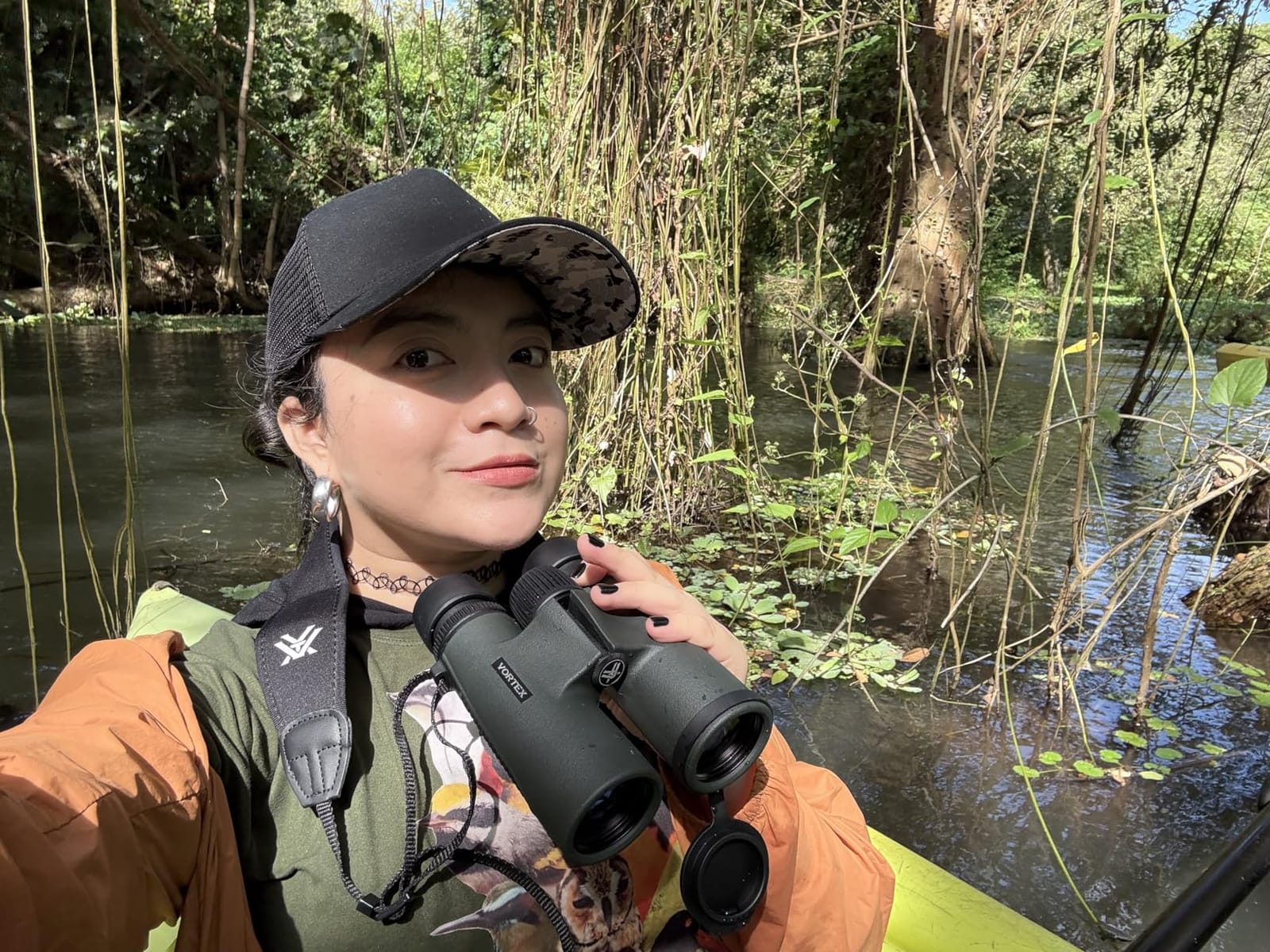
The Triumph HD is the answer to a simple question: how much do you give up by not buying the Crossfire? Less than you would expect. It carries the same 10×42 configuration, the same fully multi-coated HD optical system, the same 4.2mm exit pupil, and 17mm of eye relief rather than 15mm, and it costs meaningfully less. The chassis is polycarbonate with full rubber armor instead of the Crossfire’s machined feel, which is where the price difference actually shows up.
Owners consistently describe the image as sharp, bright, and accurate in color, including at dawn and dusk, and the 10×42 pairing is the standard for both birding and general wildlife. It ships with a GlassPak harness, neck strap, tethered lens covers, and a cloth, and it is tripod adaptable. The unconditional lifetime warranty with responsive parts service is the quiet reason many people buy this model.
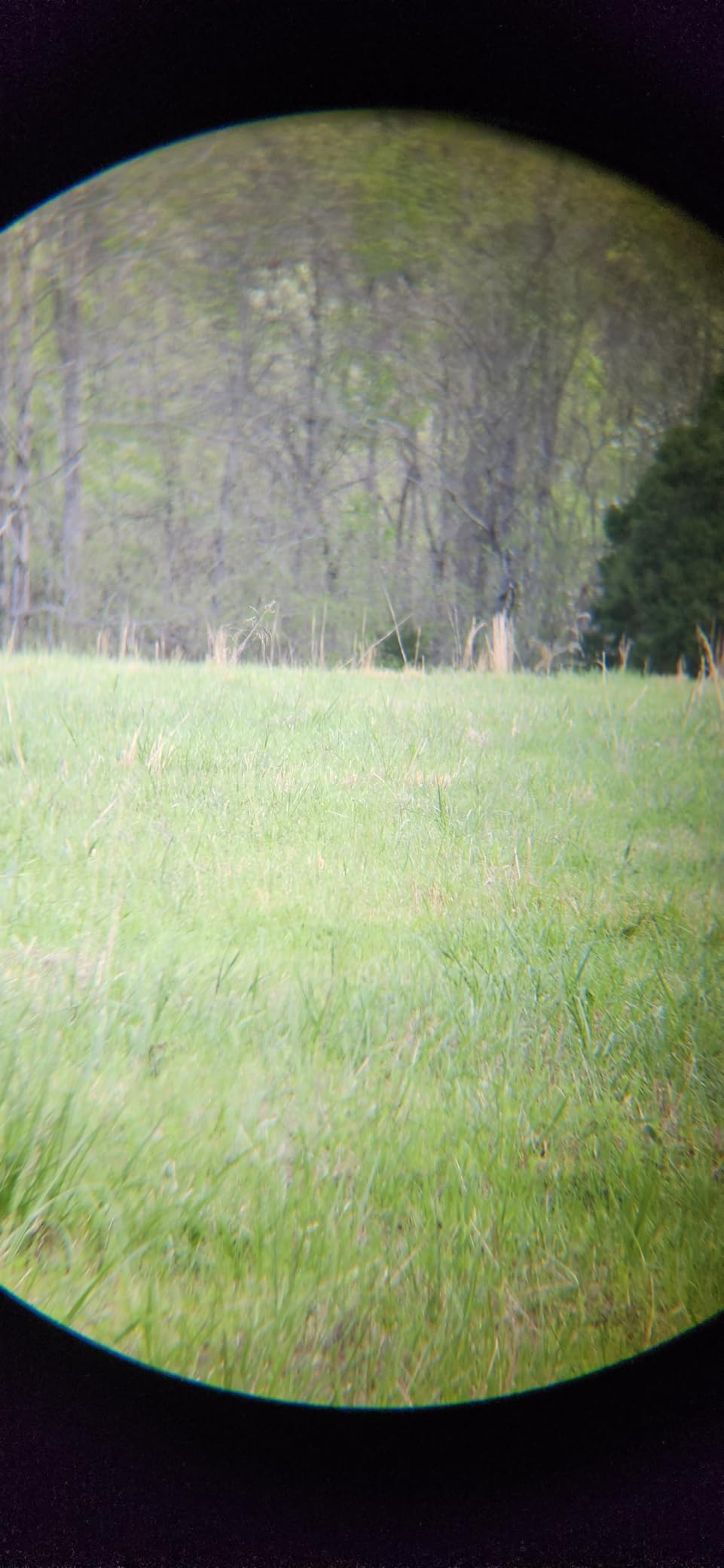
There is one quality-control note worth repeating. A minority of buyers report a white haze in the image and a noisy focus ring on units from a particular production run, and the pattern suggests a run of units rather than a single bad sample. It is not widespread enough to sink the model, and the lifetime warranty is the reason it stays on this list, but it is a fair warning to check the image carefully on arrival and use the warranty promptly if you see it.
At 2.3 pounds and 6.1 by 5 inches, this is a full-size binocular with a full-size footprint. It is not a pack-it-and-forget travel glass. The published field of view figure is also inconsistent between listings, so treat any specific number for that spec with caution and judge the view in person where you can.
Who the Vortex Triumph HD suits
This is the pick for anyone whose budget sits comfortably below the top of the range but who still wants a properly sealed, warranty-backed binocular rather than a supermarket special. Casual bird watchers, weekend hunters, dog owners scanning a field, and anyone moving up from a generic first pair all land here.
It also suits people who travel by car more than by backpack. The bulk is fine in a glove box or a daypack, and the included harness means it stays around your neck instead of living in a glove compartment. The 17mm eye relief is a step better than the Crossfire for glasses wearers, though not the best here.
Where the Triumph HD falls short
The reported white haze and focus ring noise are the deciding issue if you are sensitive to defects. Beyond that, the trade is straightforward: slightly less transmission and slightly less refined machining than the Crossfire HD, in exchange for a lower price and the same warranty. If you are buying under a tight budget and intend to keep the binoculars for a decade, that is a good deal.
At 10x it shakes if you hold it one-handed, and the body is not compact enough for serious travel use. If your use is a backpack, a cruise, or a kid’s field trip where size rules, the Celestron Nature DX or the Occer 12×25 will serve you better than more power.
4. Nikon PROSTAFF 3S 10×42 – Best for Close-Range and Backyard Viewing
Nikon PROSTAFF 3S 10×42
10x42 roof prism
Multilayer-coated with silver-alloy prism
15.7mm eye relief
Nitrogen filled, O-ring sealed
Pros
- Clear sharp images with strong light gathering
- Light and well balanced in the hand
- Excellent close focus on small nearby subjects
- Fogs less in cold damp conditions
- Comfortable with strong prescriptions
Cons
- Colors can read flat and muted
- Loose rear eyepiece cover falls off
- Objective caps are untethered and easily lost
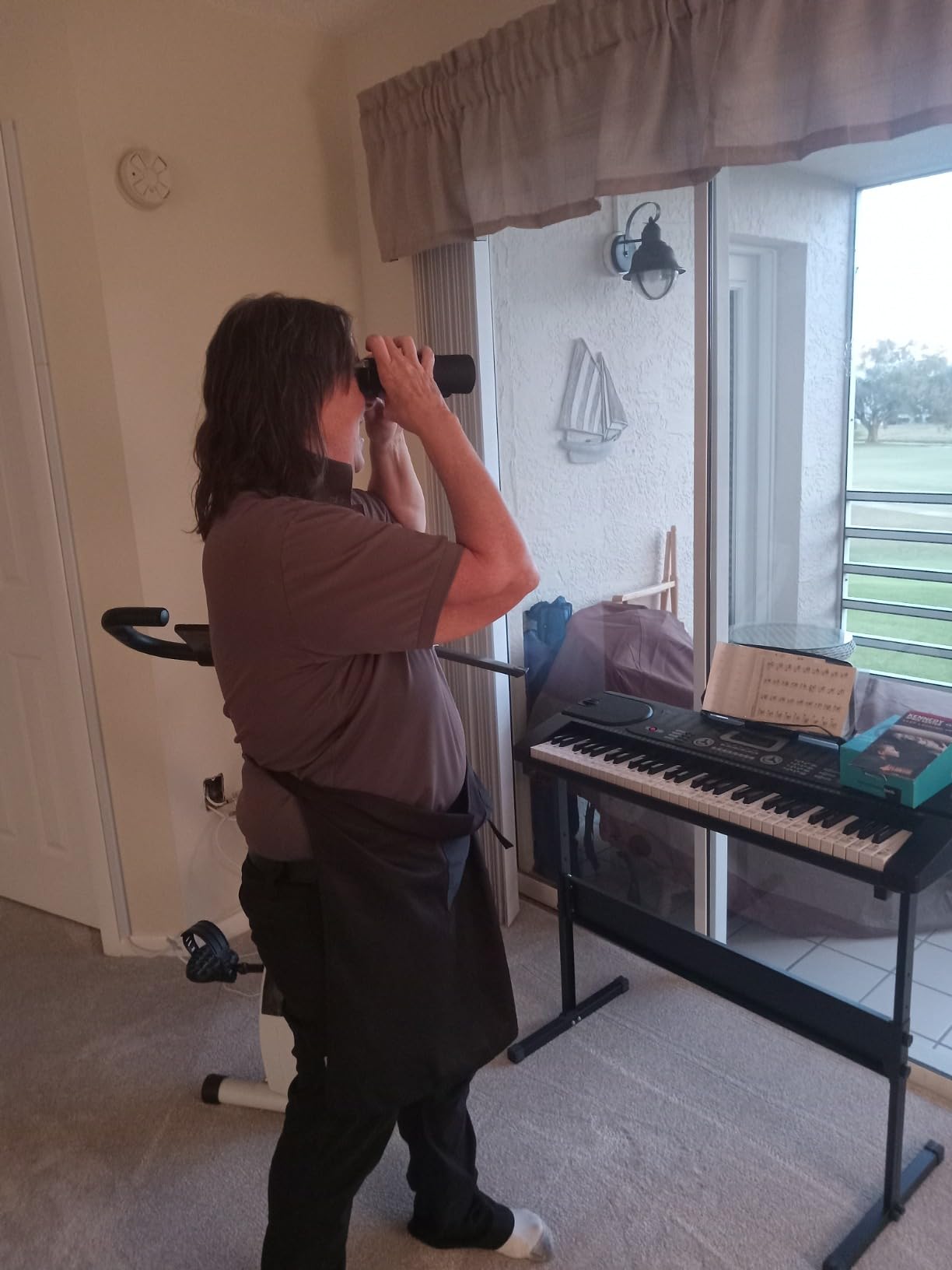
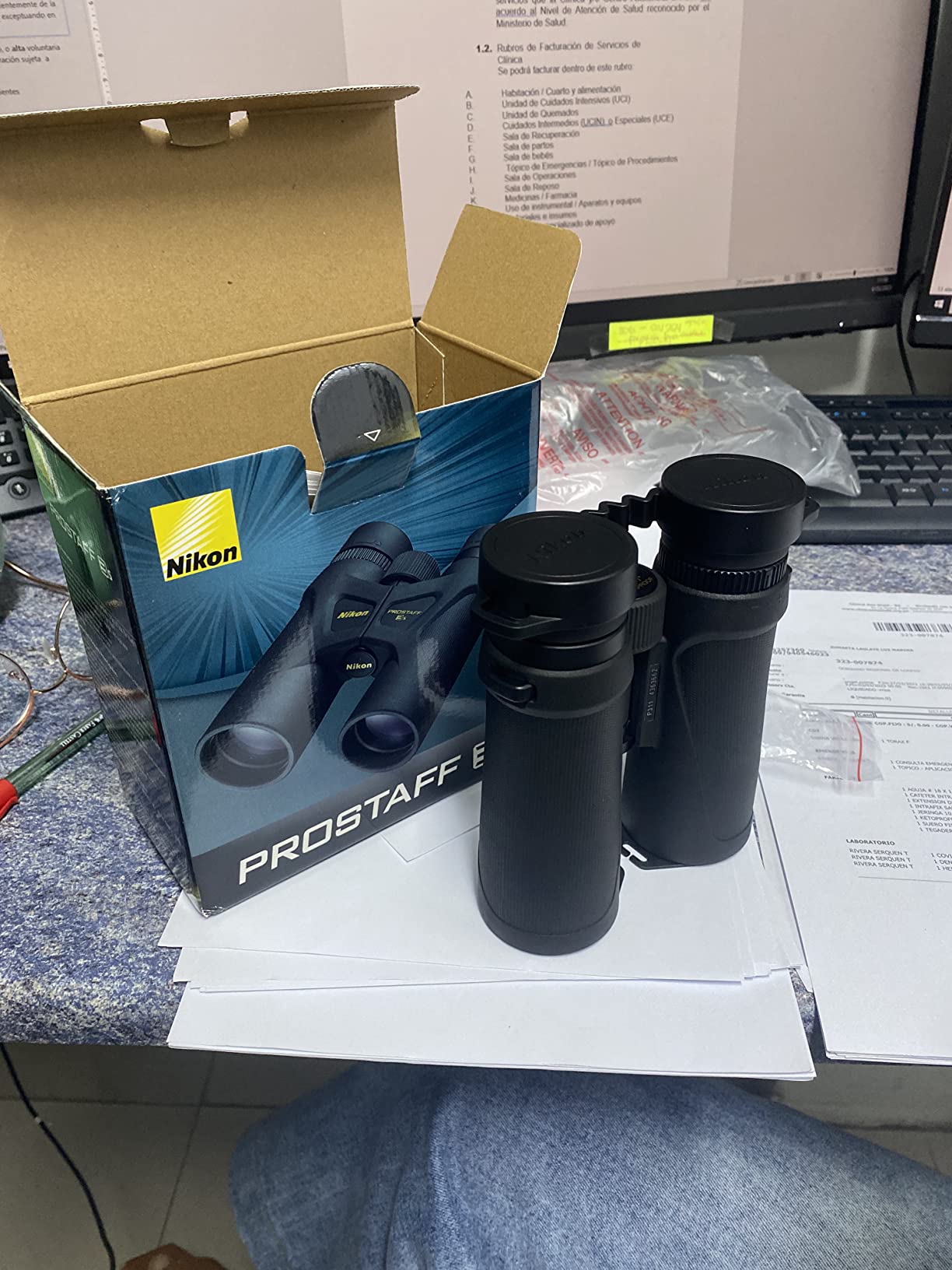
The PROSTAFF 3S is the pair to look at if most of your viewing happens close to home. Its standout feature in owner feedback is close focus: it will pull in on small subjects at genuinely short range, which is what makes it a favourite for garden watching, inspecting a nest box, or reading a trail map at your feet. The close focus is a practical advantage that no spec sheet in this roundup matches at this weight class.
Lightness is the second story. At just under 0.3 kg this is one of the lightest full-size 10×42 binoculars here, and reviewers repeatedly single out how easy it is to hold steady even with shaky hands. The glass is multilayer-coated with a high-reflectivity silver-alloy mirror coating on the prisms, and owners describe the image as clear and sharp with strong light gathering for a budget pair.
The build is a roof prism in a compact body, waterproof and fogproof, with nitrogen filling and O-ring sealing. Owners report it resisting internal fogging in cold, damp conditions noticeably better than cheaper units, which matters if you are the kind of person who is outside before sunrise. The turn-and-slide rubber eyecups with 15.7mm of eye relief work well with strong eyeglass prescriptions.
The criticisms cluster around small parts and colour. Some users find the colour rendition slightly flat and muted next to more saturated budget rivals, which is a matter of taste as much as optics. The rear eyepiece cover fits loosely enough to fall off if you turn the binoculars upside down, and the front objective caps have no tether and go missing. Neither issue affects performance.
Who the Nikon PROSTAFF 3S suits
Backyard and garden watchers get the most out of this model. The close focus and low weight make it the binocular you will actually pick up without thinking, and the light body means you can hold it for a whole morning without your arms complaining. Families with a kid who wants to look at everything within a hundred yards will find this easy to use and hard to lose.
Anyone with a strong glasses prescription is also well served. 15.7mm of eye relief plus adjustable multi-click eyecups is enough to see the whole field without removing glasses, and reviewers with strong prescriptions call it comfortable. Lightweight travel and long walks are fine as long as you are not stuffing it into a jacket pocket.
Where the PROSTAFF 3S falls short
It is not ED glass, so some colour fringing appears on high-contrast subjects, and the muted colour rendition is a matter of opinion. Serious low-light work is not the strength here. If you are scanning a marsh at last light for a flight of teal, the brighter fully multi-coated and HD models higher on this list will serve you better.
Two smaller things work against it. The untethered lens caps will be lost within a season of regular use, and the compact body, while light, does not have the deep eyecup some users want for maximum eye relief. If you are a glasses wearer who wants the most generous fit available, look at the 17.5mm Nature DX or the 20mm Occer.
5. Celestron Outland X 8×42 – Best Budget Binoculars for Beginners
Celestron Outland X 8×42 Binoculars for Birding & Nature Viewing
8x42
BaK-4 roof prism, multi-coated
7 degree field of view
17.8mm eye relief
Waterproof, nitrogen purged
Pros
- Lightweight and compact for travel and hiking
- Balanced magnification field and brightness for birding
- Waterproof and nitrogen purged
- Works with eyeglasses
- Sharp enough to read signs and plates
Cons
- Light gathering a step below the Nature DX
- Eyecup diopter is very sensitive
- Rusty eyepiece click springs reported
- Branding decal wipes off
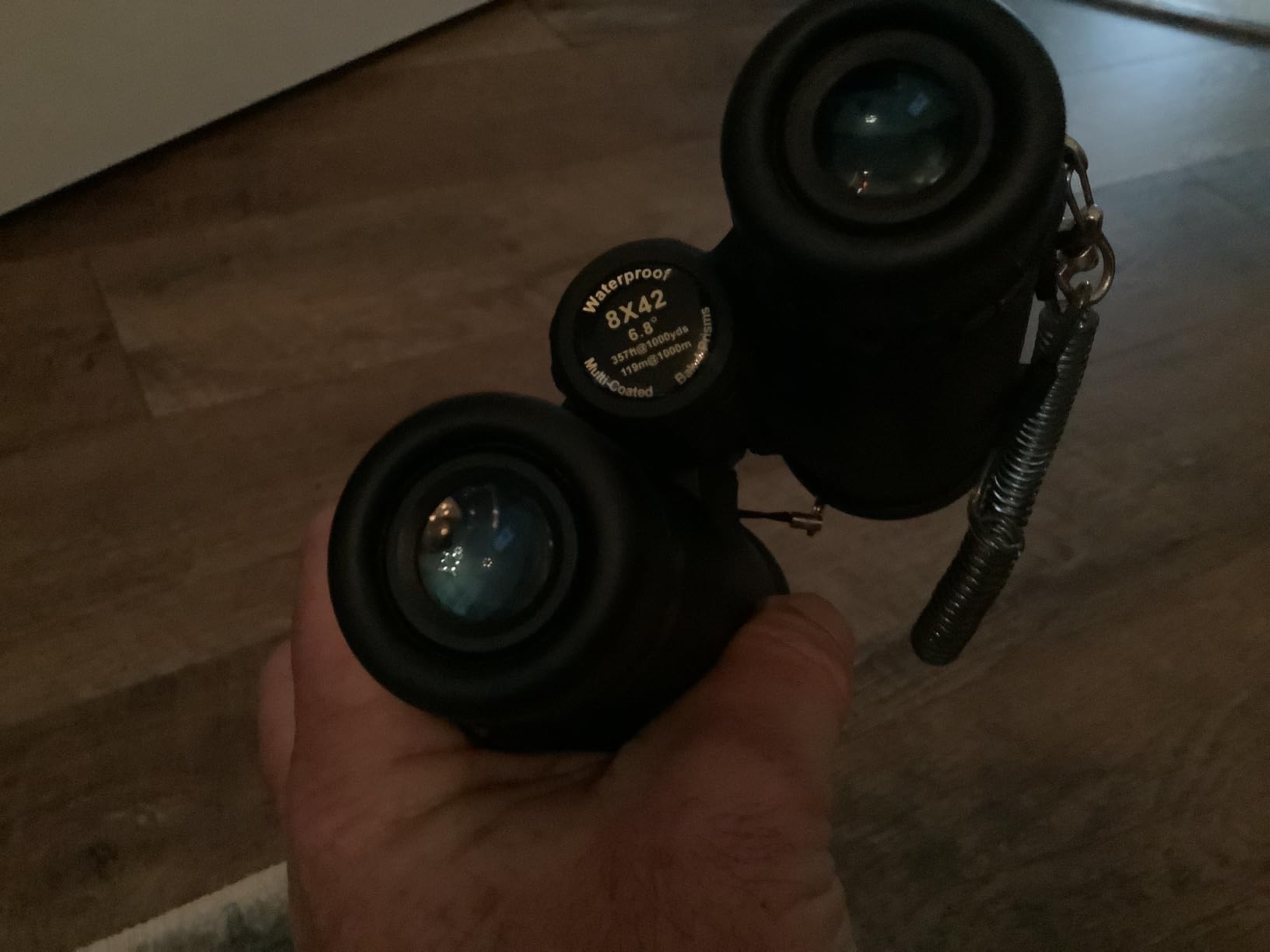
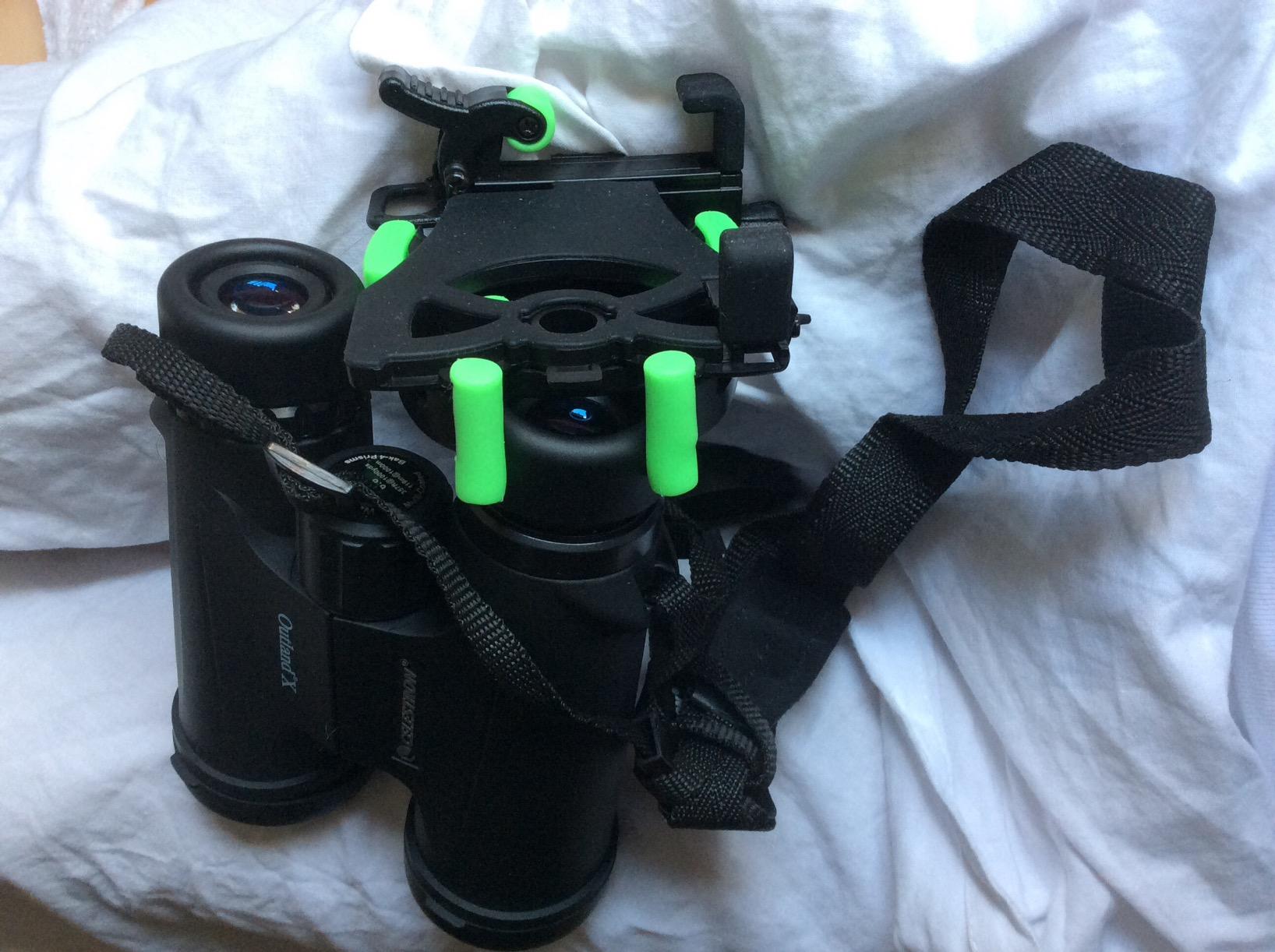
The Outland X is the model we would hand to someone who has never held a real binocular and is nervous about wasting money. It is an 8×42 with BaK-4 prisms and multi-coated lenses in a rubber-armored, waterproof, nitrogen-purged housing, and the 7-degree field of view is wide enough to find things and follow them. Owners report many years of use out of these, which is the kind of track record a first pair should have.
It weighs 1.8 pounds and measures about 7 by 3 inches, light and compact enough for hiking and travel, and the adjustable eyecups make it workable with glasses. Sharpness is good enough to read signs and license plates at moderate distance, which tells you the centre of the field is cleaner than the price suggests. Tripod threads are built into the body.
Where it sits in the lineup is a step below the Nature DX on light gathering, and reviewers who own both say so. The BaK-4 prisms help, but the coatings are multi-coated rather than fully multi-coated, and the result is a slightly dimmer picture in poor light. In daylight and overcast conditions the difference is minimal and most buyers never notice it.
Two mechanical quirks come up repeatedly. The eyecup diopter adjustment is very sensitive and can be knocked out of position by a bump, which is mildly annoying when you have glasses with a strong prescription. Some units have also had a small eyepiece click spring rust and drop out, and the branding decal on the hinge nut wipes off with a pocket.
Who the Celestron Outland X suits
First-time buyers, students, and anyone who wants a set for each family member without overspending. The 8x magnification is forgiving, the field is wide, and the image is stable without bracing, which means a child can be handed these and actually see the bird rather than the shake. It is also a solid pair for park walks, garden work, and casual sightseeing.
Travellers who want full-size capability without full-size bulk will appreciate the light weight. The included carrying case, neck strap, objective caps, rainguard, and cloth make it a complete package, and the built-in tripod threads mean it can be mounted for a longer watch when a stable subject is more important than a moving one.
Where the Outland X falls short
The main gap is low light. If you bird at dawn, scout at last light, or hunt before the sun is fully up, step up to a fully multi-coated or HD model. The light gathering here is a visible step below the Nature DX and well below the HD glass at the top of this list.
The sensitive eyecup diopter is the second issue and it disproportionately affects glasses wearers, because a diopter that moves when you bump the barrel is annoying when you rely on it to correct one eye. If you wear strong glasses, the Nature DX or the Nikon PROSTAFF P3 have more stable adjustments. Otherwise, this remains one of the most dependable entry points in the category.
6. Bushnell H2O Xtreme 10×42 – Best Waterproof Binoculars Under $200 for Hunting
Bushnell H2O Xtreme 10×42 Waterproof Binoculars
10x42 roof prism
Premium BaK-4 prisms, fully multi-coated
IPX7 waterproof, O-ring sealed
Nitrogen purged
Pros
- Clear bright image from full multi-coating
- IPX7 rated sealing that actually holds
- Soft non-slip grips stay secure when wet
- Compact and light enough to travel
- Bushnell Ironclad warranty
Cons
- Included carrying case is basic
- 17mm eye relief is modest for glasses
- 6.8 degree field is narrower than 8x models
The H2O Xtreme is the pick when the weather is part of the problem. Its optical system is IPX7 rated and O-ring sealed, which is a specific and testable claim about water rather than the vague waterproof wording most brands use. It is nitrogen purged so it will not fog internally after a cold morning in the field, and the soft rubber grips stay secure when your hands are wet. For hunting, boating, and open-country scouting, that combination is the reason to pick it.
Optically it is a 10×42 roof prism with premium BaK-4 prisms and fully multi-coated glass, which is a better spec sheet than most of the 10x42s in this price range. Owners describe the image as clear and bright, and Bushnell upgraded this model specifically over the standard H2O series with better prism glass. Eye relief is 17mm and the field of view is 6.8 degrees.
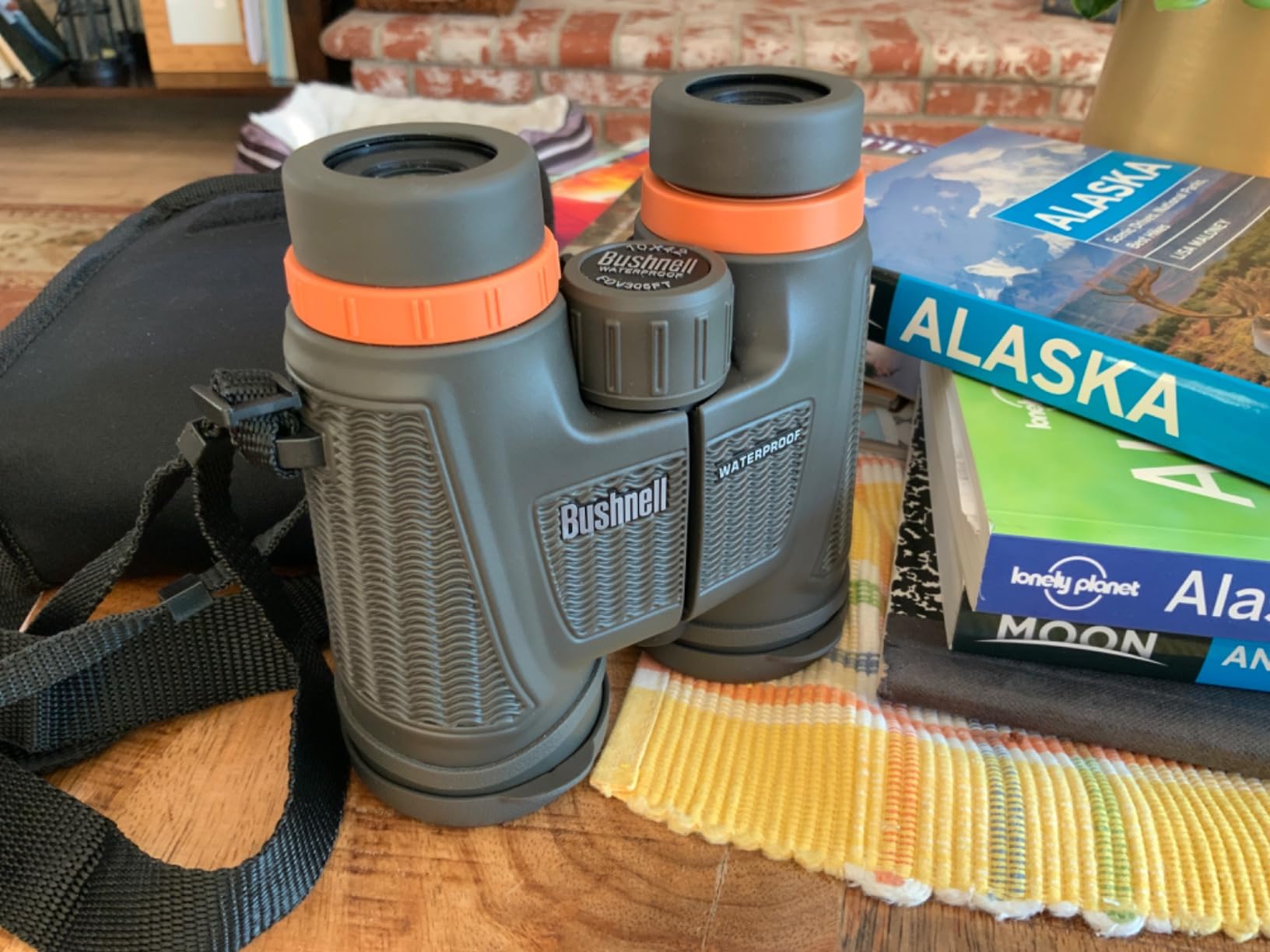
The body is rubber-armored and packs down reasonably well for travel, at around 709 grams. Strap, carrying case, and both ocular and objective covers are in the box, and the binoculars are tripod mount compatible. The Bushnell Ironclad warranty backs the build, which matters for a tool that lives in a truck bed.
The complaints are modest and mostly about the accessories. The supplied carrying case is basic, and with 6.8 degrees of field the view is narrower than an 8x model of similar size, so tracking a running deer or a fast bird takes more deliberate scanning. Eye relief of 17mm is fine for most people but is not generous for a strong glasses prescription.
Who the Bushnell H2O Xtreme suits
Hunters, anglers, boaters, and anyone who works outdoors in bad weather will get the most from this pair. The IPX7 rating is a real differentiator when you are in heavy rain, on a boat at dawn, or watching a muddy field where a lesser seal would eventually let water into the barrels. Fully multi-coated glass also helps in exactly the flat, overcast light that defines autumn scouting.
It also works well as an all-purpose travel binocular since the weight is manageable and the build is rugged enough to survive a bag. Anyone moving up from a wet-weather-avoiding first pair will notice the difference in confidence immediately, even before the optics do.
Where the H2O Xtreme falls short
The 6.8-degree field is the real limitation. Compared with a 7.4-degree 8×42, the narrower view plus higher magnification means more shake and more scanning to keep a moving subject centred. If you are a bird watcher rather than a hunter, the Nature DX or the Outland X will let you find and follow things more easily.
For glasses wearers with strong prescriptions, 17mm of eye relief is adequate rather than generous. The included case is thin-walled and will not protect the glass in a hard fall, so a padded case is a worthwhile add-on. Otherwise this is a well-built, properly sealed tool that does the job it is sold for.
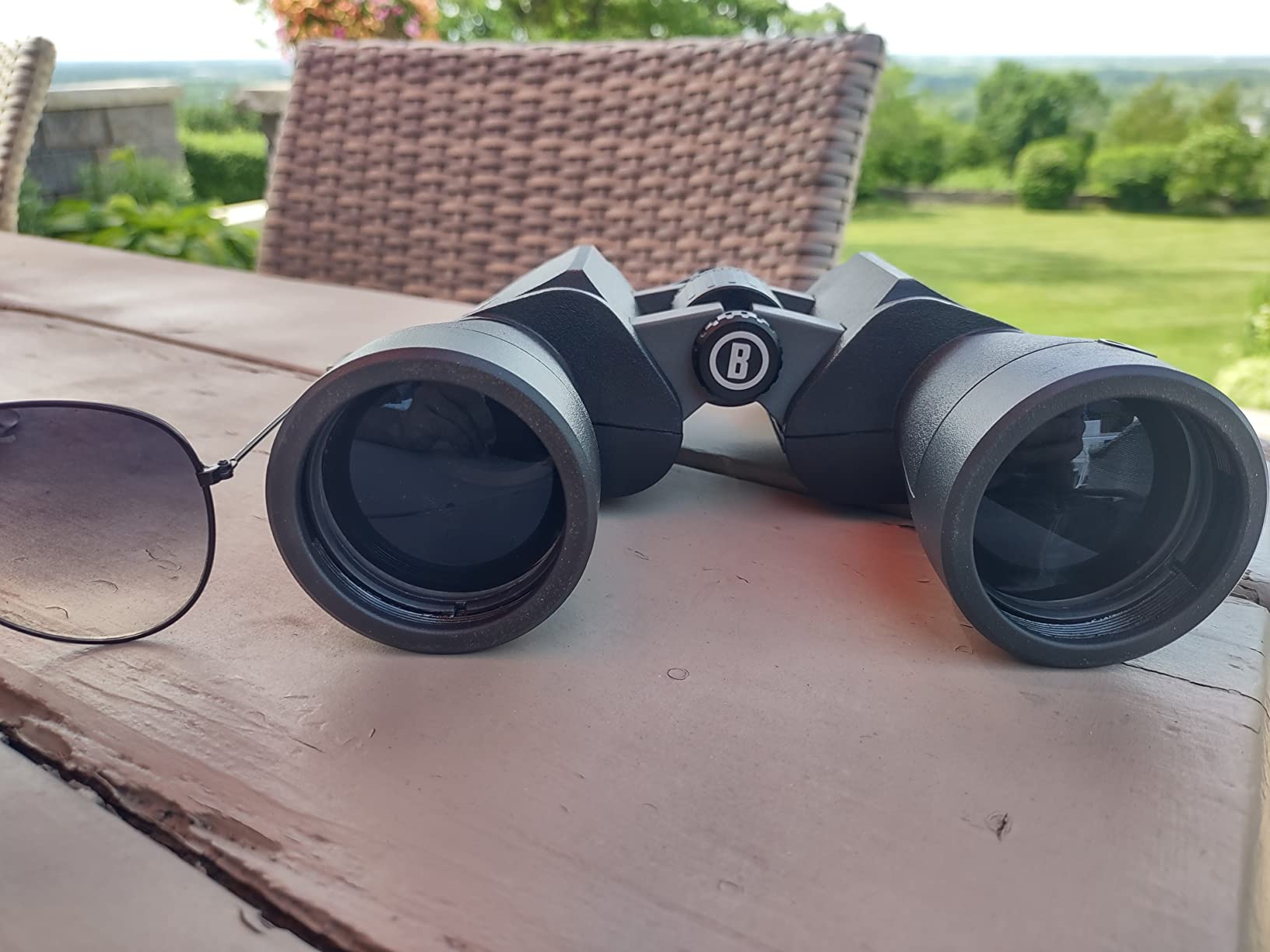
7. Bushnell PowerView 2 20×50 – Best for Stadiums and Distance Viewing
Bushnell PowerView 2 20×50 Binoculars
20x50 Porro prism
Multi-coated optics
Aluminum alloy chassis
12mm eye relief
Not water resistant
Pros
- High 20x power reaches distant subjects
- Durable aluminum alloy chassis feels solid
- Images bright and sharp when tuned
- True to its stated magnification
- Good for sports and casual stargazing
Cons
- Not water resistant
- Heavy and shaky when held up long
- Clarity and field trail premium glass
- Narrower field than 10x or 12x
- Included case feels cheap
The PowerView 2 20×50 answers a question most budget lists ignore: what if you want power? At 20x with 50mm objectives it reaches things a 10×42 simply cannot, and reviewers specifically note that the magnification is honest rather than inflated, which is not something you can say about every high-power binocular at this price. Baseball, motorsport, and long-distance sightseeing are the natural use cases.
It is also the only pair here built on an aluminum alloy chassis rather than polycarbonate, and that difference is visible in the hand. The soft-touch rubber has an easy-grip texture for one-handed handling, and the ultra-smooth focus wheel is quick to acquire a subject. Owners describe the image as bright and sharp once focus and diopter are set properly. Bushnell backs it with a lifetime Ironclad warranty.
The trade-offs are severe and worth stating clearly. The exit pupil is only 2.5mm, which means the image is dim compared with an 8x or 10x model in anything but good light, and 12mm of eye relief is tight for glasses wearers. The Porro prism gives a pleasant, deep, well-corrected image at the centre of the field, but the edge quality and contrast fall away quickly.
Weight is the other problem. At 805 grams plus 20x magnification, hand-held use becomes genuinely tiring and shaky, and a tripod or monopod is close to mandatory. The chassis is also not water resistant, so this is not a binocular for rain, boat decks, or mud. The included carrying case feels cheap for a tool this size.
Who the Bushnell PowerView 2 suits
Sports spectators get the most obvious benefit. At 20x you can pick out individual players from the upper deck, follow a car on a circuit, or read a distant fairway marker. The smooth focus wheel matters here because acquiring a moving subject quickly is the whole job, and the rubber grip keeps it secure with one hand while you point.
It also works for casual stargazing of larger deep-sky objects and for reading signs at a distance, as long as you have a tripod or a solid rest. The same solid construction appeals to anyone who is hard on gear and wants a chassis that will not crack if it gets dropped.
Where the PowerView 2 falls short
Everything about handheld use. Twenty power magnifies your heartbeat as much as it magnifies the subject, and at 805 grams you will not hold this one-handed for a full event. If you are looking at a field rather than a stadium, plan on a tripod, a window mount, or a car door to rest on.
The 2.5mm exit pupil produces a dim image at dusk, and the narrow field makes scanning for wildlife frustrating. It is also the least weather-ready pair in this roundup. If your priority is seeing rather than reaching, an 8×42 will be a better binocular for twice as many situations.
8. Nikon PROSTAFF P3 10×42 – Best for Eyeglass Wearers and Bright Light
Nikon PROSTAFF P3 10×42 Binocular | Waterproof, fogproof, rubber-armored Full-Size Binocular, wide field of view & long eye relief | Official Nikon USA Model
10x42 roof prism
Multilayer-coated with silver-alloy prism
Nitrogen filled, waterproof and fogproof
Turn-and-slide eyecups
Pros
- Sharp image with good color and brightness
- Excellent close focus for garden viewing
- Long eye relief is comfortable with glasses
- Lightweight rubber-armored build
- Wide field for tracking wildlife
Cons
- Focus can be touchy and finicky
- Included lens covers are flimsy
- Not ED glass so some edge fringing
- Heavier than compact 10x42 options
The PROSTAFF P3 is the one to shortlist if you wear glasses and have been disappointed by binoculars before. Nikon’s turn-and-slide eyecups with long eye relief let you fold the rubber down and still see the whole field, which is exactly the problem eyeglass wearers hit with cheap models whose eyecups stand too proud. Combined with a fiberglass-reinforced polycarbonate body and rubber armor, it is the most confidence-inspiring fit in this roundup.
Optically it is a 10×42 roof prism with advanced multilayer lens coatings and a silver-alloy prism coating, rated at 367 feet of field at 1,000 yards, which is among the widest here. The large objective gathers abundant light, and owners single out brightness and colour fidelity in low light, including at dawn and dusk, as the model’s strongest quality. Close focus is also excellent for backyard and garden work.
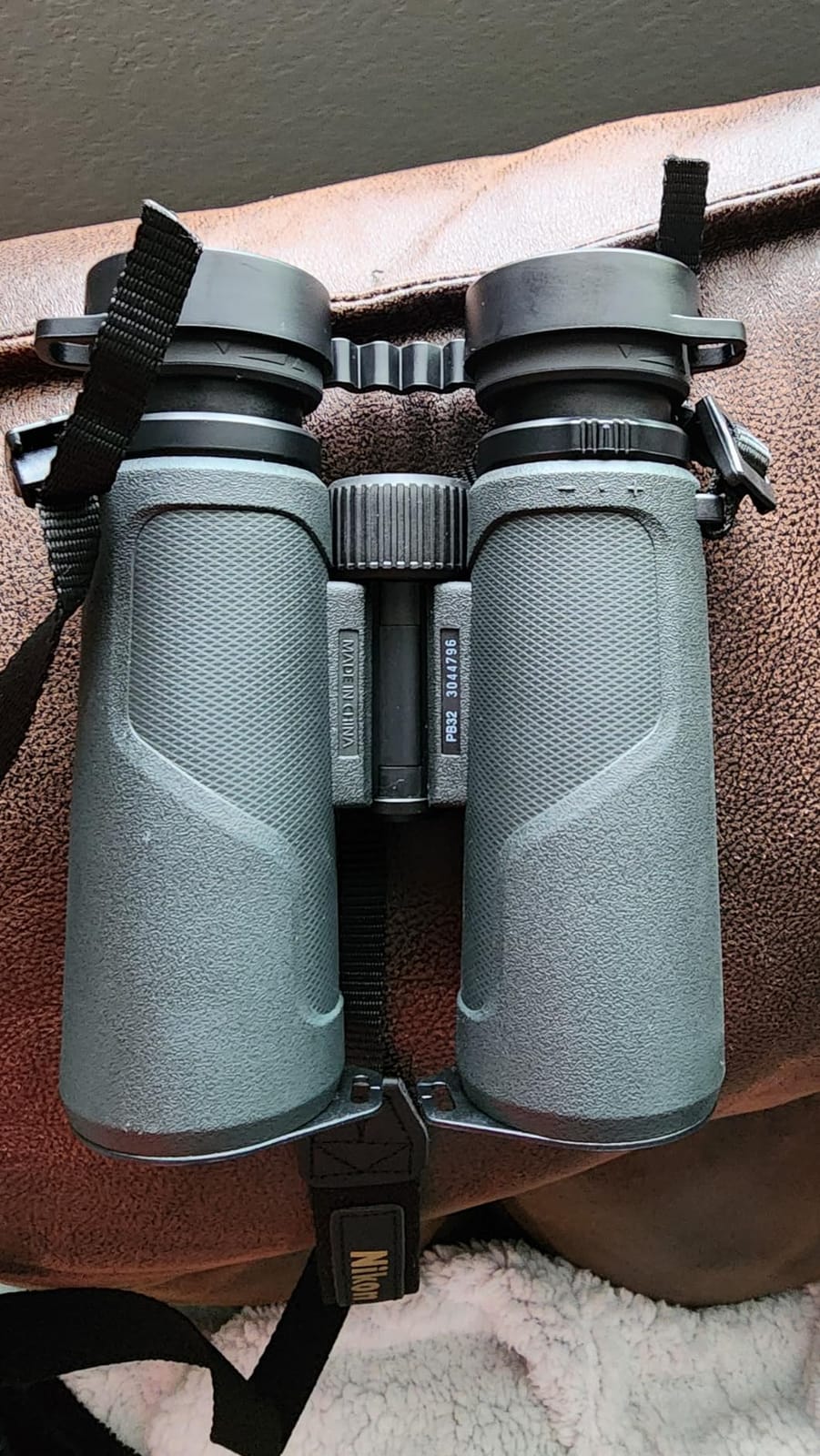
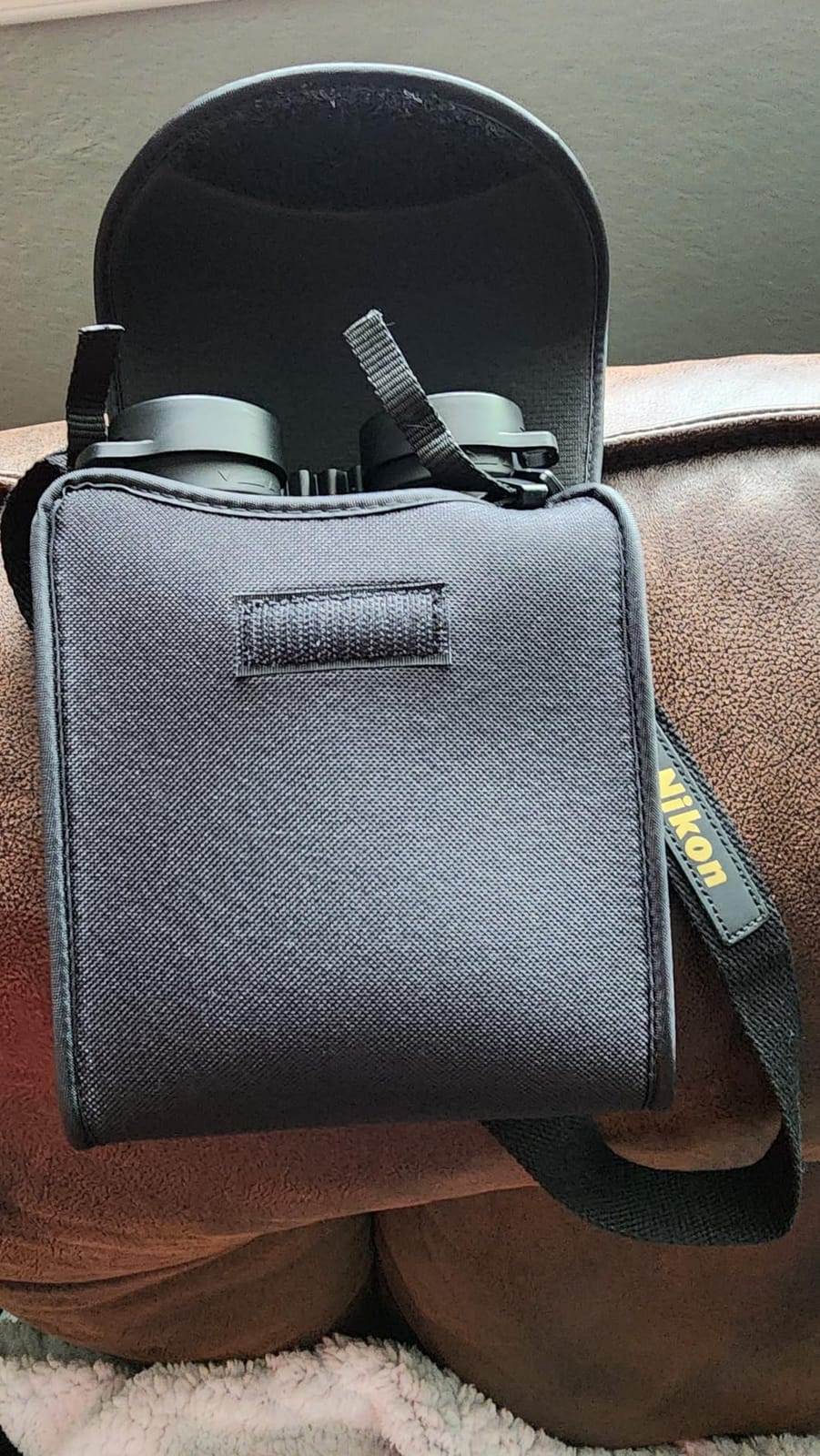
Sealing is proper: O-ring seals and nitrogen gas purging handle water and fog, and the eco-glass optics are lead- and arsenic-free. The body measures about 5.9 by 5.1 inches at roughly 1.3 pounds, and a case, neck strap, and lens caps are included. Nikon’s limited lifetime warranty covers defects for the life of the product.
The main mechanical gripe is that dialing in focus can be touchy and finicky, which is a real drawback on a binocular you might hand to a child or use with cold hands. The included lens covers are widely described as flimsy and effectively useless, so buy a proper tether set. It is also not ED glass, so expect some edge fringing at high magnification.
Who the Nikon PROSTAFF P3 suits
Eyeglass wearers come first, particularly anyone with a moderate or strong prescription who has struggled with eye relief in cheaper models. The wide field means a bird entering the frame is captured without a fast sweep, and the low-light brightness gives you a usable image in the early morning hours that flatter the non-ED models.
Backyard and garden watchers will use the close focus constantly, and the 1.3-pound body is light enough for long sessions. It is a comfortable, do-everything pair for people who mostly bird within a few hundred yards and want one tool that never feels awkward in the hand.
Where the PROSTAFF P3 falls short
The finicky focus is the honest drawback. A focus ring that needs careful dialling is a nuisance in cold, wet conditions or when a child is using the binoculars, and it is the single most common reason people move up a model. The bundled lens covers are the other complaint and are easy to replace.
At 1.3 pounds it is heavier than genuinely compact 10×42 options, so it is not a pack-it-all-day travel binocular. And while brightness is good for a non-ED model, it does not match dedicated ED glass in a shaded canopy at last light. If your birding is all twilight work, save toward a higher tier.
9. Celestron SkyMaster 15×70 – Best Binoculars Under $200 for Stargazing
Celestron SkyMaster 15×70 Astronomy Binoculars for Stargazing and Deep-Sky
15x70 Porro prism with BaK-4
BaK-4 prisms, multi-coated
Built-in 1/4-20 tripod adapter
18mm eye relief
Water resistant
Pros
- Reveals thousands of stars and Saturn
- Bright high-contrast image from BaK-4 glass
- Intuitive focus for this much power
- Easy alternative to learning a telescope
- Reads plates and signs at a mile
Cons
- Too heavy for all-day handheld birding
- Tripod or monopod required
- Supplied plastic adapter is flimsy
- Collimation can be out on some units
- Fine daytime detail is soft
The SkyMaster 15×70 has more owner feedback than anything else in this roundup by a wide margin, and that is not accidental. It is the most common first telescope alternative in the hobby because it does one thing immediately: it shows you a large, bright, high-contrast patch of sky with no setup, no alignment, and no learning curve. Open clusters, the Andromeda galaxy, Jupiter with its moons, and the rings of Saturn are all within reach from a dark driveway.
The specification is what makes it work. At 15x with 70mm objective lenses, the exit pupil is a generous 4.7mm, the BaK-4 prisms maximise light throughput in exactly the dim conditions that matter, and 18mm of eye relief makes it one of the more comfortable pairs to use. A 1/4-20 tripod adapter is built into the body, and the rubber-armored housing is water resistant. Adapter, neck strap, rainguard, and cloth are included.
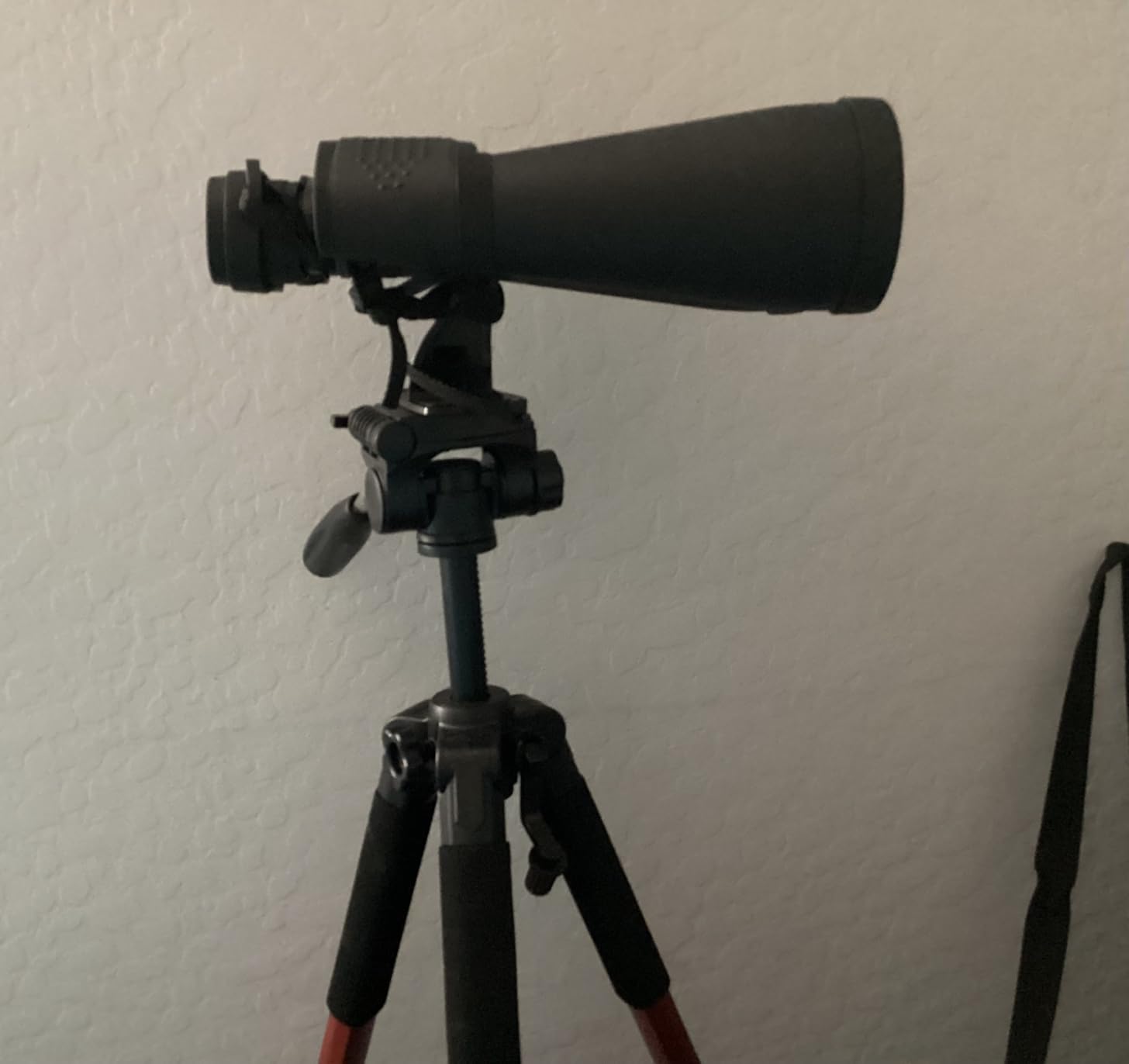
At 3.3 pounds, this is the heaviest pair here, and that is the entire point. Nothing about 15×70 makes sense handheld, but on a tripod it is a genuinely capable observing instrument that many amateurs started with. Owners consistently describe focus as easy and intuitive for a binocular of this power, which is not something you can say about most high-power glass.
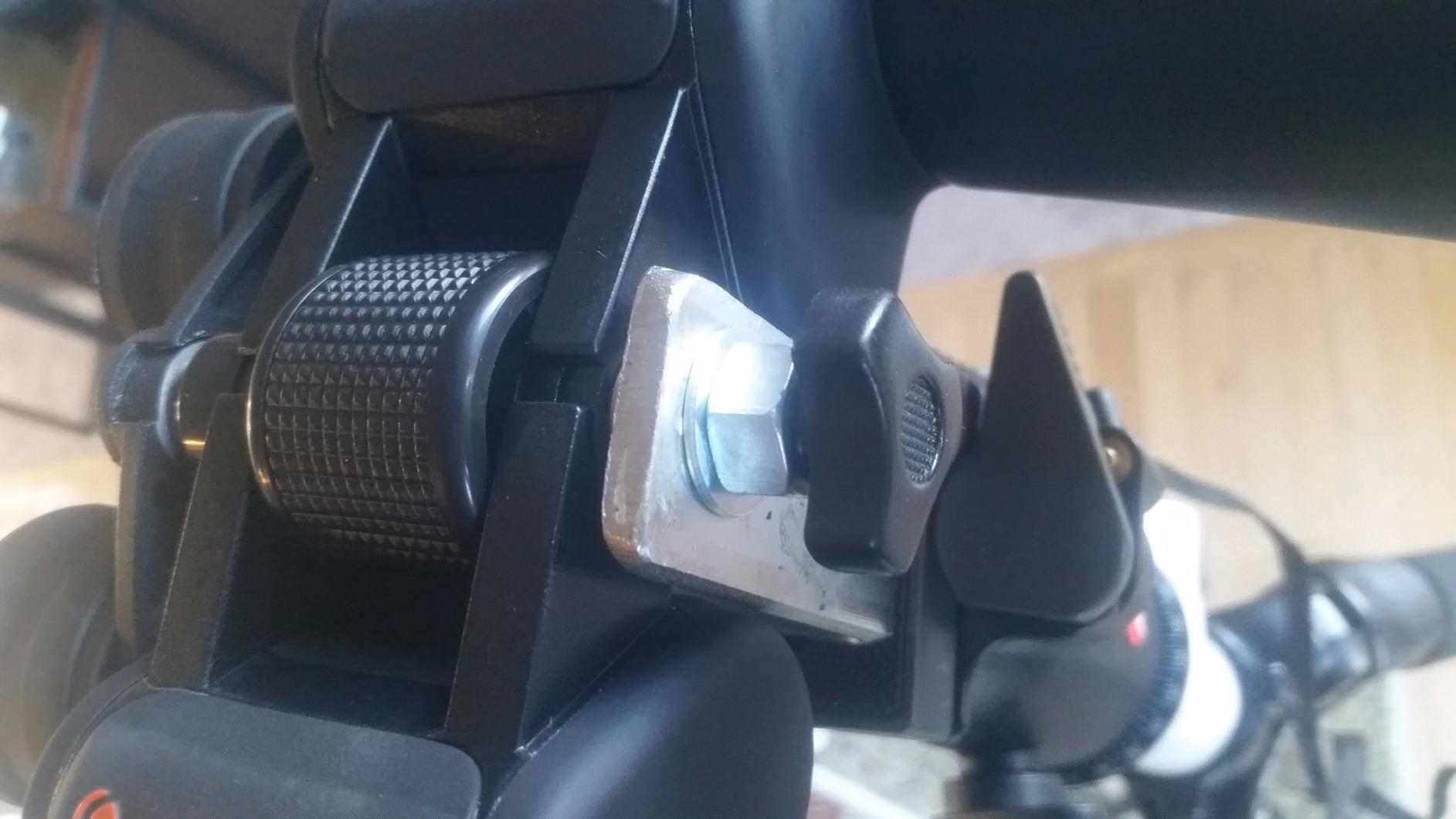
Collimation is the issue to know about. Some units arrive with the prisms knocked out of alignment, which shows as a permanent softness or double image at the edge of the field, and owners have had to fix it themselves. The included plastic tripod adapter is also criticised as flimsy under this weight, so a metal one is a sensible add. Fine daytime detail at the centre of the field is softer than the 10x42s.
Who the Celestron SkyMaster suits
New stargazers who want to see a lot on their first night without buying a telescope. It is forgiving, immediate, and forgiving of mistakes, which is why it has such a large following among families. People who already own a telescope often keep one of these for wide-field views and quick looks, and the built-in tripod adapter makes that painless.
It also works as a long-range spotting glass for daytime use, reading signs and plates at roughly a mile. Anyone who wants a single instrument that does both astronomy and distance viewing at a high magnification will find that dual role genuinely useful rather than a compromise.
Where the SkyMaster falls short
It is not a birding or wildlife binocular at all. 3.3 pounds at 15x is painful after twenty minutes of handheld scanning, the 4.4-degree field is narrow, and the daytime centre-of-field softness means fine plumage detail will disappoint. If nature viewing is half your intent, the Nature DX or Crossfire HD will serve you better for far less effort.
Water resistance is not waterproofing, so leave it in the car during a downpour. And if you buy it, check the collimation on arrival by looking at a distant straight edge near the centre of the field and then at the edge. If the image smears or doubles at the edge, the warranty is the route to a fix, not DIY.
10. Bushnell Falcon 10×50 – Best for Concerts, Events and Casual Sightseeing
Bushnell Falcon 10×50 Wide-Angle Binoculars
10x50 Porro prism with BK7 glass
Fully coated optics
InstaFocus slide lever focus
Waterproof with grip pads
Pros
- Clear bright Porro prism image for casual viewers
- InstaFocus lever is fast and easy to set
- Large 50mm objectives gather plenty of light
- Durable with a lifetime warranty
- Comfortable for wildlife and sports
Cons
- Only 9mm eye relief is awkward with glasses
- Eyepiece caps fit loosely and fall off
- InstaFocus lever sounds crunchy and can wear
- Fixed-focus design limits manual control
- Heavier than the previous Falcon
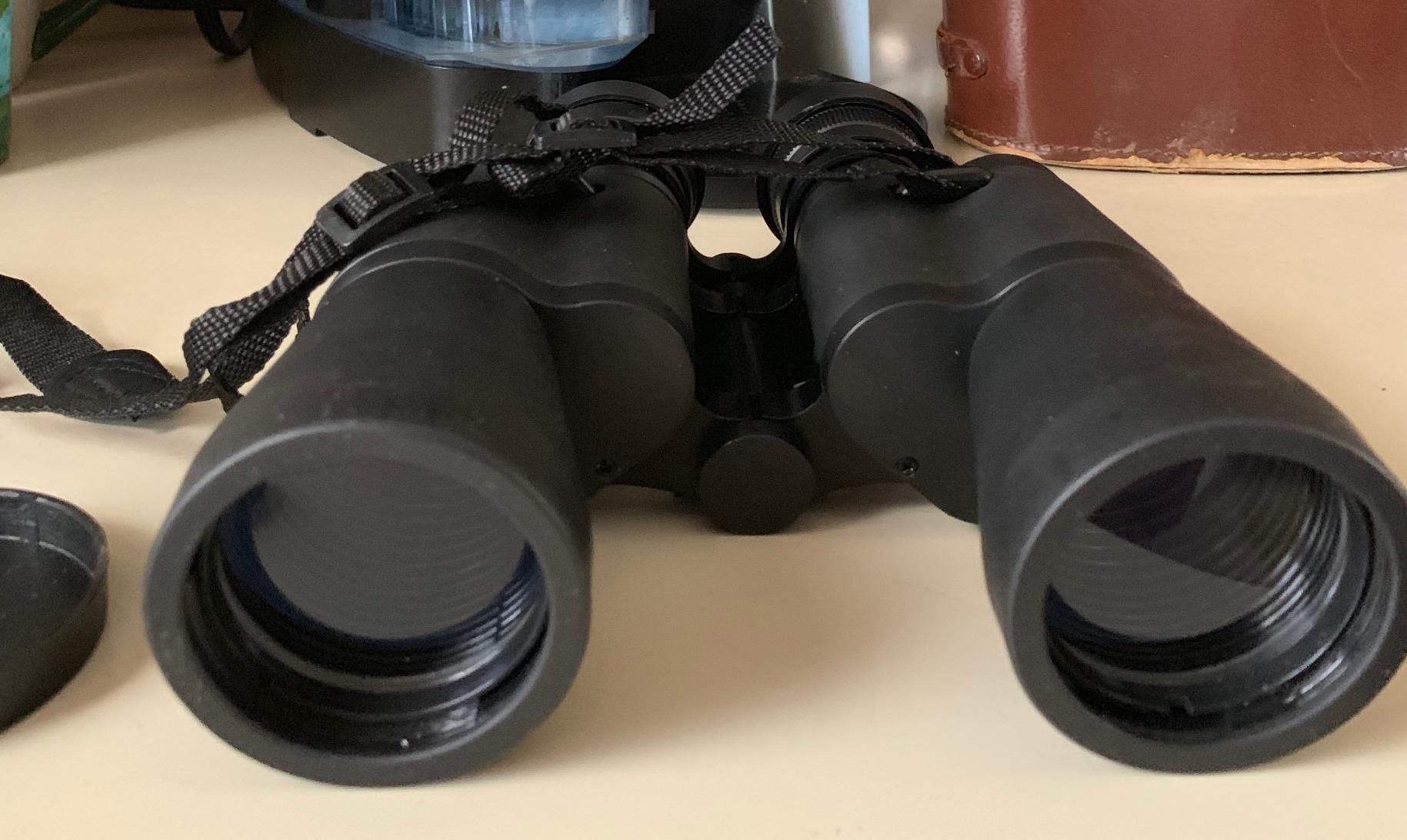
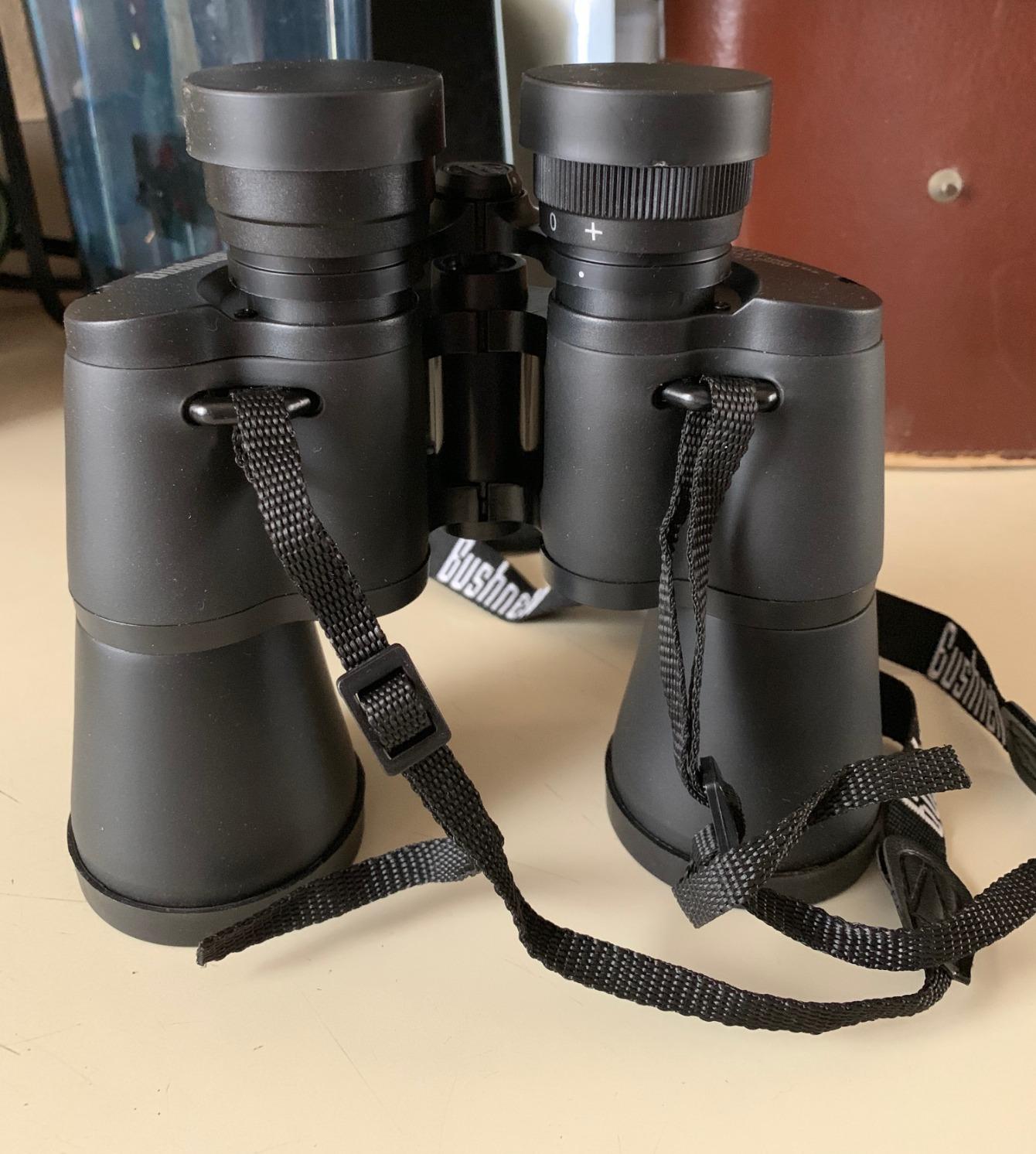
The Falcon has been in continuous production for decades and a lot of owners have kept one for twenty years or more, which tells you something about reliability that no spec sheet can. It is a 10×50 Porro prism with fully coated optics, and the Porro design gives a deep, well-corrected image that casual viewers describe as clear and bright. The large 50mm objectives also make it a serviceable inexpensive star binocular.
What makes it different is the InstaFocus sliding lever, which you push from fixed-focus to individual focus and then dial in. For a spectator at a concert or a parent on the sidelines it is the fastest path to a usable image with no diopter fiddling, and reviewers consistently call it simple and quick. All-weather non-slip rubber grip pads, fold-down eyecups, a carrying case, and a neck strap round out the package.
Sealing is the sleeper feature: the body is listed as waterproof with all-weather grip pads, which is more than most 10x42s at this level can claim. That makes it a reasonable pick for outdoor events where weather turns, and the Porro prism’s forgiving nature means it is forgiving of imperfect collimation in a way roof prism designs are not.
Eye relief is the problem. At 9mm this is the tightest in the roundup, and eyeglass wearers consistently report it is awkward to get a full view without removing glasses or pressing in uncomfortably. The eyecup caps fit loosely and fall off, and the InstaFocus lever makes a flimsy crunching sound that owners report wearing over time.
Who the Bushnell Falcon suits
Spectators get the most out of it. Concerts, outdoor theatre, races, and sporting events are all situations where you want to find a subject quickly and hold it, and the slide-lever focus does that with less fiddling than a conventional centre focus. The forgiving Porro image and the wide-open feel of the view suit long sessions of passive watching.
It is also a good family and travel choice for casual use where the 50mm objectives gather enough light to make casual stargazing fun without a tripod. Generations of owners keep the Falcon for general wildlife watching and sightseeing, and it is a rare budget binocular still in active use decades later.
Where the Bushnell Falcon falls short
Do not buy it if you wear glasses. 9mm of eye relief is the tightest figure here and it is the single most cited complaint in owner feedback. If eyeglass compatibility matters at all, choose the Celestron Nature DX, the Nikon PROSTAFF P3, or the Occer, all of which have far more room between the eyecup and the glass.
The InstaFocus design is also a compromise. The slide-lever mechanism gives up fine manual focus control, so at extended distances the final image is not as precisely focused as a traditional centre focus. And the body is heavier and bulkier than the previous Falcon, which matters if you planned to use this as a walking binocular.
11. GIGAPENGUIN 15×52 HD Binoculars – Best with a Phone Adapter
15×52 HD Binoculars for Adults High Powered with Upgraded Phone Adapter
15x52 roof prism
Phase-corrected BaK-4 with dielectric coating
22mm eyepiece for a large image circle
18mm eye relief
Pros
- 15x52 reaches farther than most compact glass
- 22mm eyepiece gives a big detailed image circle
- Strong low-light result for overcast dawn and dusk
- Phone adapter is versatile and holds firm
- Long eye relief works with glasses
Cons
- Heavy hand shake at 15x without support
- Small 3.47mm exit pupil dims the dusk view
- Some softness and fringing at the field edge
- Bulkier than compact 10x42s for hiking
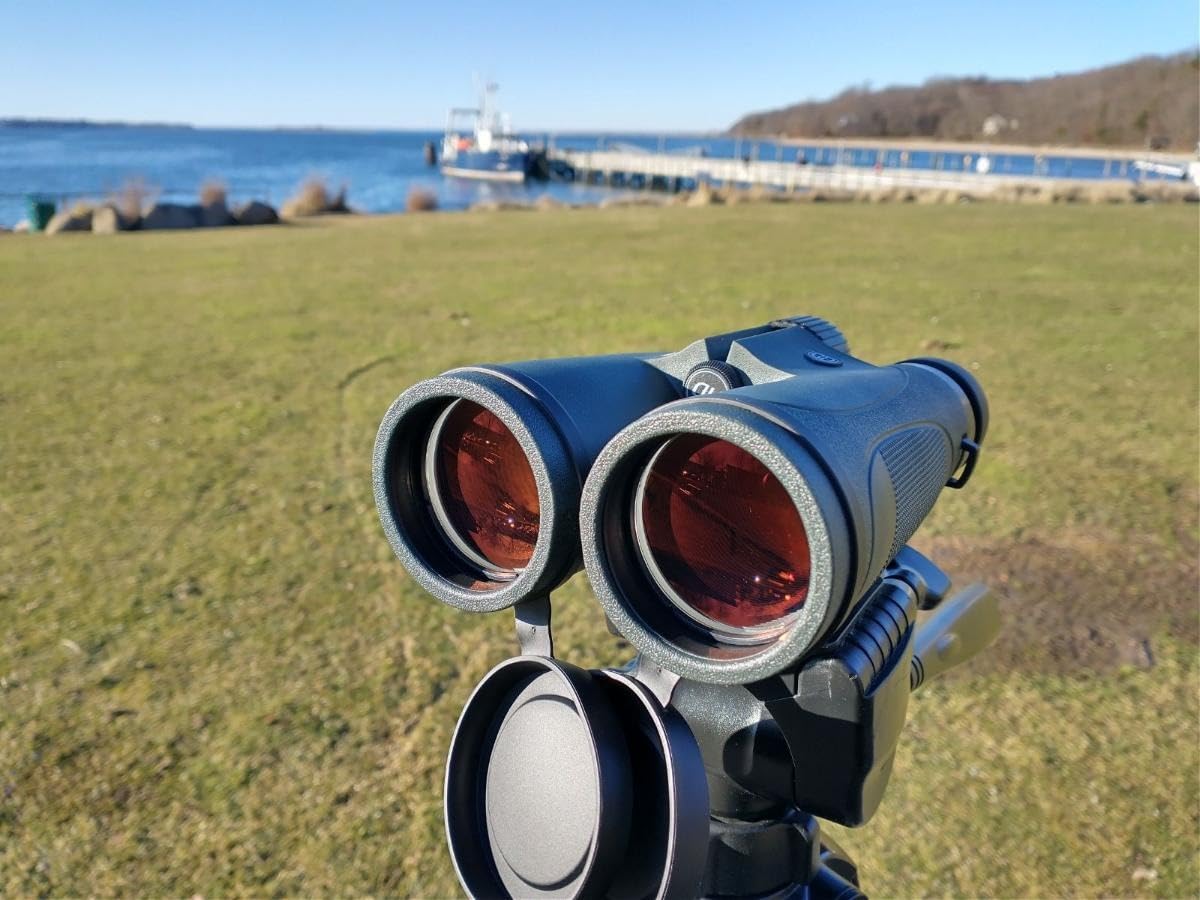
The specification that sets this model apart is the 22mm eyepiece. A conventional eyepiece of this class is 16mm, and the larger element here produces an image circle roughly one and a half times bigger, which is why owners describe the image as noticeably bigger and more detailed than competing 15x models. If you want the reach of 15x with an image that does not feel like a pinhole, this is the pair.
Optically it is a roof prism with phase-corrected BaK-4 glass and full multicoating plus a dielectric prism coating, and the 52mm objective gives a 3.47mm exit pupil. Owners report strong low-light performance for overcast days, dawn, and dusk, with high contrast and good colour fidelity, which is unusual for an unknown brand at this price. Eye relief is 18mm with twist-down rubber eyecups, and the body is a waterproof aluminum chassis.
The bundled universal smartphone adapter is the practical hook. It uses anti-slip rubber and screw locks, and reviewers find it holds a phone firmly rather than wobbling, which is the usual failure with cheaper adapters. A neck strap, case, warranty card, and the adapter itself are in the box, and the warranty is lifetime.
The trade-offs are all about 15x. Hand shake is heavy without a tripod, and a 3.47mm exit pupil means the image is dimmer at dusk than an 8x or 10x model, because the light is spread over a larger magnification. Some users report softness and fringing at the field edge, and the body is bulkier than compact 10x42s for long hikes.
Who the GIGAPENGUIN 15×52 suits
Wildlife watchers who need reach more than brightness will like this. A 15×52 pulls detail out of a distant ridge that a 10×42 simply cannot resolve, and the larger image circle means the extra magnification is not wasted on a tiny, dark dot. Hunters scanning open country and travellers photographing distant scenes through the included phone adapter get real value from the combination.
Travel users who want to shoot through their phone will find the screw-locked adapter more dependable than most clip-on designs. The aluminum chassis also feels more substantial than the plastic bodies at this price, and the 18mm eye relief is comfortable with glasses, which is rare at this power level.
Where the GIGAPENGUIN 15×52 falls short
Hand shake is the dominant issue. At 15x you will need a tripod, a window mount, or a braced grip to see anything steady, and that rules it out as a casual walking binocular for children or for scanning while moving. The dim 3.47mm exit pupil also means it loses to the 10x42s at first and last light despite the larger objective.
Edge softness and fringing are reported by some users, and there is no mention of ED glass, so high-magnification views of distant birds will not hold as much detail as a dedicated ED model. If you are undecided between seeing and reaching, an 8×42 is the safer purchase. Choose this one when the subject is genuinely distant and steady.
12. Occer 12×25 Compact Binoculars – Best Travel and Binoculars for Kids
Occer 12×25 Compact Binoculars for Adults and Kids
12x25 with BaK-4 prism
Broadband FMC coating, blue FMC eyepieces
20mm eye relief
Compact 4.4 by 4 inch body
Pros
- Pocket-size and light for travel
- Image owners rate as clear and crisp
- 20mm eye relief works with or without glasses
- Solid well-made feel
- Simple centre focus and diopter
Cons
- Real magnification feels closer to 8x
- 25mm objective is dim in shade and fog
- Not nitrogen purged so internal condensation forms
- Pocket glass loses detail to full-size models
- Best for casual use rather than serious birding
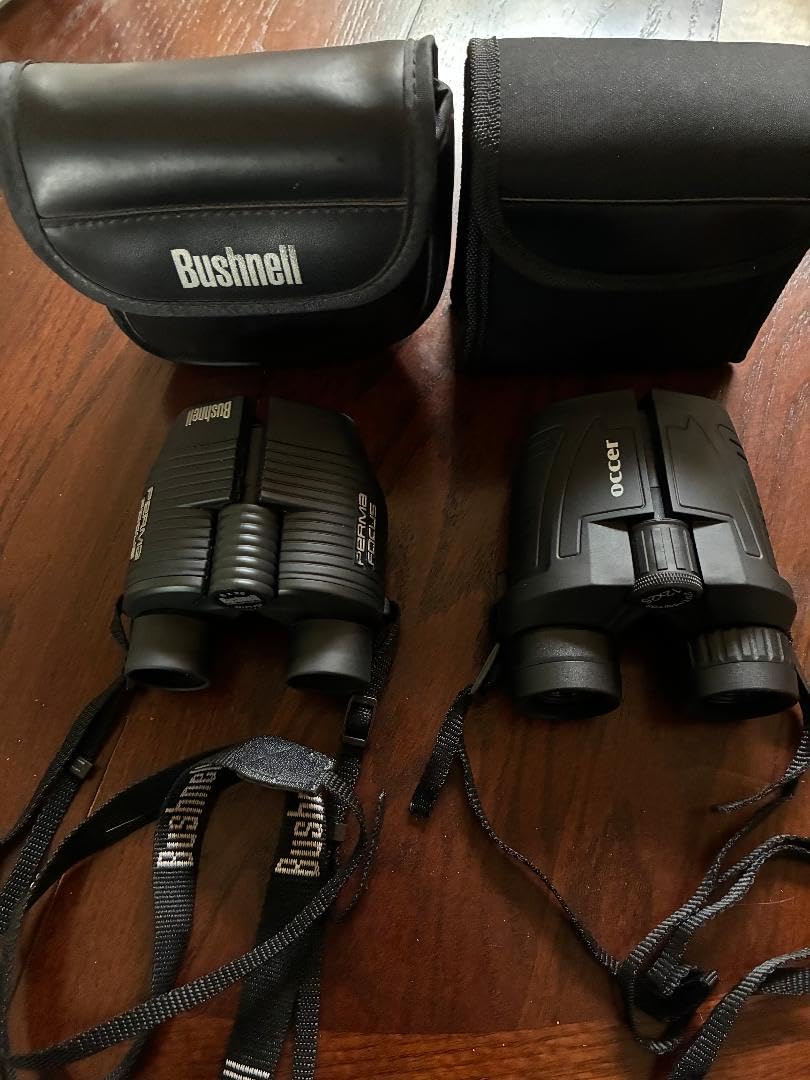
The Occer 12×25 is the most widely owned binocular in this roundup, and it earns that by being the one that fits in a jacket pocket. At 4.4 by 4 by 1.9 inches and about 0.39 kg, it is genuinely pocketable in a way no full-size pair here is, and it is the one we would hand to a child, a cruise passenger, or anyone who wants a pair permanently in a bag rather than a case at home.
The optics are better than the format deserves. It uses a BaK-4 prism with broadband multi-coating and 15mm eyepieces, which are larger than the typical travel binocular eyepiece and produce a wider, clearer image than the category average. Eye relief is 20mm, the most generous in this roundup, and the pull-down rubber eyecups suit wearers and non-wearers alike. Owners describe the build as solid rather than toy-like, and several rate the image a match for far costlier 10x42s in good light.
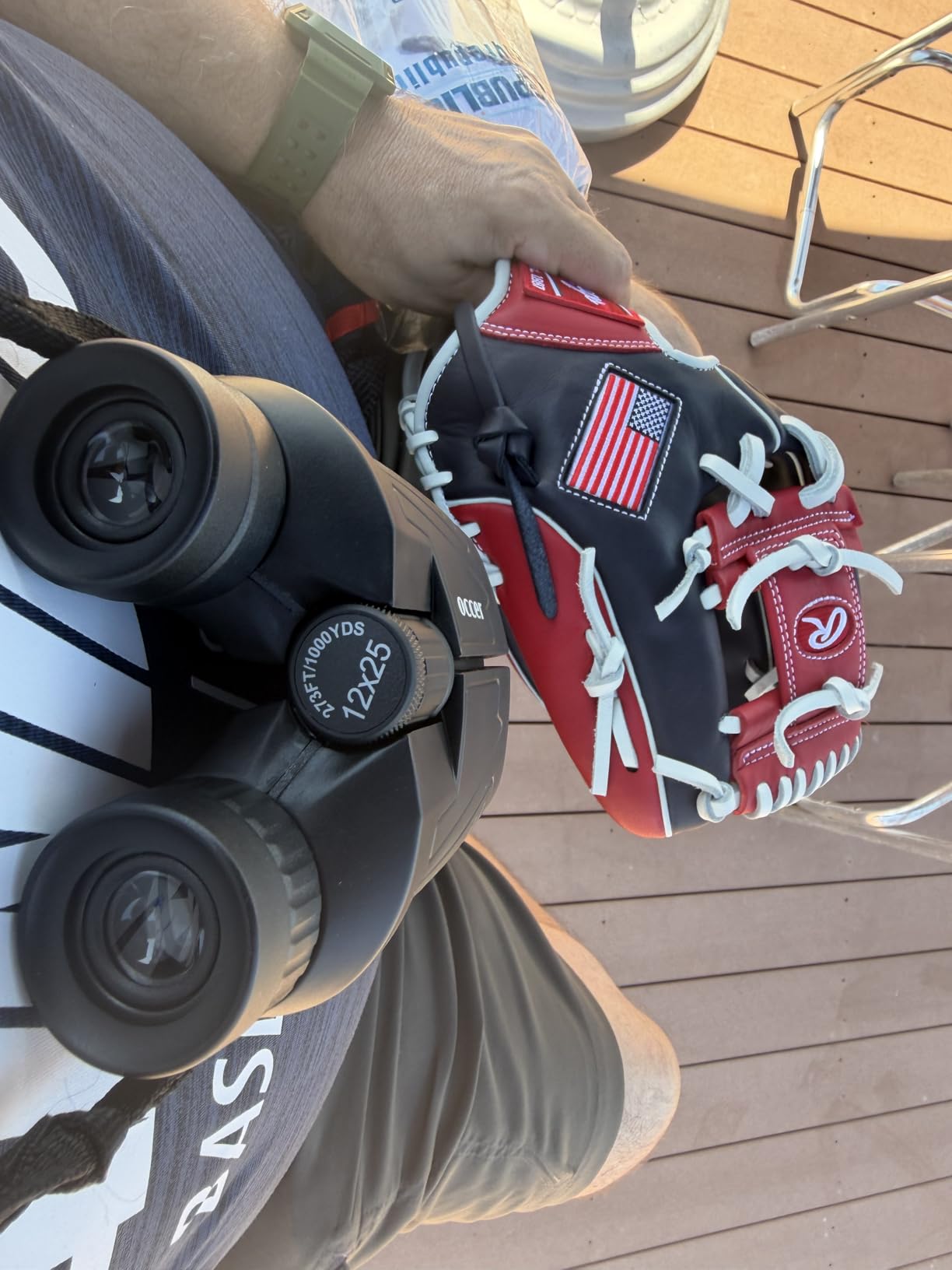
Where it falls short is arithmetic rather than quality. The 25mm objective gives a 2.5mm exit pupil, so the image is dim in heavy shade, fog, and cloud, and it is not nitrogen purged, which means internal condensation can form in damp conditions. The body is listed as waterproof but is not fog-sealed, so the distinction matters on a humid trip.
Owners also repeatedly note that real-world magnification feels closer to 8x than the stated 12x, which is common for pocket binoculars in this class. That is not a defect, just a gap between the label and the experience. Use it for landmarks, distant scenery, and casual wildlife, and accept that it will not resolve fine plumage detail.
Who the Occer 12×25 suits
Travelers and families get the most value here. A cruise passenger, a hiker, or a parent at a national park can carry a working pair of binoculars without thinking about weight or space, and a child old enough to handle a centre focus and diopter will find it simple to set up and satisfying to use. A neck strap is included, and no case is needed if you are careful.
It also works as a secondary pair. Many owners keep a full-size binocular for birding and a pocket pair for everything else, which spreads the cost of two tools without buying two expensive ones. Spectators at outdoor events, and anyone who wants a pair that cannot be left behind because it costs almost nothing to lose, will find this genuinely useful.
Where the Occer 12×25 falls short
Light gathering is the hard limit. A 2.5mm exit pupil in a 25mm barrel is dim in anything but good daylight, so woodland birding, dawn trips, and overcast coastal watching are all compromised. Being not nitrogen purged, internal condensation is a real possibility in humid conditions and it does not clear the way a sealed body would.
Detail resolution is also well below a full-size 42mm binocular at the same price. If you are shopping for serious bird identification rather than travel convenience, spend the difference on one of the 8×42 or 10×42 models earlier in this list. The Occer is a genuinely good travel binocular, and it is not a substitute for one.
How to Choose Budget Binoculars Under 200 Dollars: What Actually Matters
The specs that matter most, in order, are magnification and objective diameter, then eye relief if you wear glasses, then sealing, then everything else. The rest is preference. Here is how to read the numbers on any listing, including the ones not in this roundup.
Is 8×42 or 10×42 better for bird watching?
8×42 is better for bird watching if you track moving birds, watch for long sessions, or hand the binoculars to someone else. 10×42 is better if you want more detail on distant or stationary subjects and can hold still. Magnification multiplies your own hand shake, and it also shrinks your field of view, so 10x shows more detail on a far-off warbler while 8x makes it easier to find and follow one in the first place.
The other half of the equation is the objective lens, the number after the x. A 42mm objective on an 8x pair gives a 5.25mm exit pupil, while the same 42mm on a 10x pair gives 4.2mm, and both sit comfortably inside a dark-adapted human pupil. That is why both configurations are so common. Go to 50mm or 70mm only when you need more light or more power, and accept the extra weight.
A quick rule for use cases. Birding, general wildlife, and everyday use point to 8×42. Birding at distance, hunting, and stargazing with a tripod point to 10×42. Spectating and casual viewing point to 8×42 again. Very long distances and astronomy point to 15x and up, always with support. If you are still torn, the Nature DX and the Crossfire HD sit on opposite sides of that line and both are in this list.
What the extra spending between price bands actually buys
Under 100 dollars, you are buying size, sealing, and decent optics in a package. The Occer 12×25, the Celestron Outland X, and the Vortex Triumph HD all live here, and all three are genuinely usable rather than toy-grade. The limitation is light transmission, which shows up as a dim, softer image at dawn and dusk.
Between 100 and 150 dollars, you start seeing fully multi-coated optics, BaK-4 prisms, and better armour. This is where the Celestron Nature DX, the Bushnell H2O Xtreme, and the Nikon PROSTAFF P3 sit, and it is the band we would point most first-time buyers toward. The jump from here to the top of the range is about refinement, not capability.
Between 150 and 200 dollars, you get more precise alignment, better control feel, and sometimes ED glass, but the Vortex Crossfire HD at the top of this list shows that a 200-dollar price does not automatically mean an ED objective. The honest truth, which forum regulars repeat constantly, is that at 200 dollars you are buying durability, sealing, and warranty rather than premium low-light performance. If low light is your priority, the money is better saved for a higher tier.
Roof prism or Porro prism, and does coating matter?
A roof prism folds the light path so the barrels stay straight, which makes the binocular compact and durable, and it is what you want in 8×42 and 10×42 form. A Porro prism uses offset barrels, which usually gives a deeper, more forgiving image with more natural colour, at the cost of bulk. Most full-size pairs here are roof prism, and the high-power and value models are Porro.
Coatings matter more than most buyers expect. Multi-coated means some surfaces are coated. Fully multi-coated means every air-to-glass surface is, and you will see a real difference in brightness and contrast. Phase coating or phase correction on the prisms aligns the light waves and reduces the faint loss of contrast that cheap prism glass shows. BaK-4 is a higher-index prism glass than BK7, and it transmits more light for the same size. When two otherwise identical pairs differ in price, coatings and prism glass are usually why.
Eye relief for eyeglass wearers
Eye relief is the distance between your eye and the front of the eyecup, and it determines whether you can see the whole field with glasses on. Anything at or above 15mm is workable, 17mm and above is comfortable, and 20mm is generous. Below 10mm, as on the Bushnell Falcon, glasses wearers will struggle to see the edge of the field.
Look for twist-up or turn-and-slide eyecups that fold down, since they let you bring your eye closer to the glass when you need to. A binocular that also has a locking diopter ring will not lose its focus correction in a bag. The Nature DX, the Outland X, the PROSTAFF P3, and the Occer are the four to look at first if you wear glasses.
Waterproofing, fogproofing, warranty, and accessories
Waterproof and fogproof are different claims. Waterproof means the body resists water ingress, and a specific rating such as IPX7 is more meaningful than the word alone. Fogproof means nitrogen purging or a dry seal that prevents internal condensation, which is what you actually care about on a cold morning. A binocular can be waterproof without being fogproof, and the Occer is exactly that example.
Warranty length is a genuine value driver at this price. An unlimited unconditional lifetime warranty means the manufacturer replaces or repairs a broken unit for the original owner for as long as they own it, and Vortex offers this on both of its picks here. Limited lifetime warranties cover defects but not accidental damage, which is the standard on the Celestron, Nikon, and Bushnell models. Bushnell’s Ironclad warranty is the broadest of the lot.
Accessories are a real tiebreaker. The Crossfire HD and Triumph HD both ship with a GlassPak harness, which is a better way to carry a binocular than a neck strap, and it is worth counting. Note that most pairs here have tripod threads or a socket built in, but the actual adapter is often not included, so check before you plan an evening of stargazing.
Five buying mistakes to avoid in budget binoculars
First, avoid zoom binoculars at this budget. Owners and reviewers agree almost universally that a fixed 10x gives you better glass per dollar than a variable 3x to 10x, because the zoom mechanism costs money and takes it out of the optics. Buy a fixed pair and, if you need more reach, add a second pair later.
Second, skip no-name marketplace glass. Owners who moved up from generic binoculars describe the step in sharpness, colour, and mechanical precision as night and day, and the frustration is a common theme in forums. The brands in this list all have published specifications and real warranty departments behind them.
Third, do not over-buy magnification. The jump from 8x to 12x to 20x mostly adds shake and weight, and the field of view shrinks with every step. If you cannot hold it steady, you are paying for a blur. Fourth, check the return window on collimation. High-power and large-objective models are the most likely to arrive misaligned, so make sure you can send one back.
Fifth, do not ignore eye relief if you wear glasses, and do not expect ED glass at this budget. A handful of models here deliver colour with a hint of fringing at the edge, and that is normal for the tier. If you know you will be doing serious low-light work, budget for a step up rather than expecting a 200-dollar pair to behave like a 600-dollar one.
Frequently Asked Questions
What are the best binoculars for under 200 dollars?
The best binoculars under 200 dollars are the Vortex Crossfire HD 10×42 for most people, the Celestron Nature DX 8×42 for bird watchers who want a wider steadier view, and the Vortex Triumph HD 10×42 for value. All three are waterproof, fully multi-coated roof prism models.
Is 8×42 or 10×42 better for bird watching?
8×42 is better for tracking moving birds and long sessions because it shakes less and gives a wider field of view. 10×42 is better when you want more detail on distant or stationary birds and can hold the binoculars steady. Most bird watchers who scan constantly prefer 8×42.
What is better, 12×50 or 10×42 binoculars?
10×42 is the better general-purpose pair because it is lighter, has a wider field of view, and shakes less. 12×50 gathers more light and reaches further, which helps at dawn and dusk or for distant subjects, but it is heavier and needs a steadier hand. Choose 12×50 for long-range or low light, 10×42 for everything else.
Which is better, Bushnell or Vortex binoculars?
At this budget Vortex generally offers better optics per dollar with fully multi-coated HD glass and an unlimited unconditional lifetime warranty. Bushnell offers stronger physical builds, true IPX7 sealing on the H2O Xtreme, and higher power options like the 20×50. For birding value Vortex leads, for rugged wet-weather use Bushnell is competitive.
What are the best budget 10×42 binoculars?
The best budget 10×42 binoculars in this roundup are the Vortex Triumph HD, the Celestron Nature DX, and the Nikon PROSTAFF P3. The Triumph HD is the cheapest route into a sealed 10×42 with a lifetime warranty, the Nature DX is the most comfortable, and the P3 has the best eye relief for glasses wearers.
What are the best 8×42 binoculars for the money?
The best 8×42 binoculars for the money are the Celestron Nature DX with its 7.4-degree field and 17.5mm eye relief, and the Celestron Outland X as a lighter, cheaper option. Both use BaK-4 prisms and are waterproof and nitrogen purged, and both suit bird watchers who prefer a wider, steadier view.
Can you use binoculars while wearing glasses?
Yes, as long as the eye relief is at least 15mm and the eyecups fold down. Models with 17mm or more of eye relief, such as the Celestron Nature DX, the Nikon PROSTAFF P3, and the Occer 12×25, work best with glasses. Avoid very tight designs like the Bushnell Falcon, which offers only 9mm.
Who makes the best hunting binoculars for the money?
The Bushnell H2O Xtreme 10×42 is the strongest hunting pick under 200 dollars because of its true IPX7 sealing, nitrogen purging, and wet-grip rubber armour. The Vortex Crossfire HD 10×42 is a strong all-round alternative with a wider field of view, and the Bushnell PowerView 2 20×50 reaches further if you can use a tripod.
What binoculars do bird watchers recommend for beginners?
Most bird watchers starting out recommend a fixed 8×42 or 10×42 roof prism with a wide field of view and at least 15mm of eye relief. The Celestron Nature DX 8×42 and the Celestron Outland X 8×42 fit that brief for beginners, while the Vortex Crossfire HD 10×42 suits people who want more detail on distant birds.
How much do good binoculars cost?
Useful, reliable binocular glass starts around the 100 dollar mark and improves steadily up to about 200 dollars, where you get fully multi-coated optics, better prisms, sealing, and a real warranty. Below that you are buying portability rather than image quality, and above it you start paying for ED glass and low-light performance.
The Best Binoculars Under 200 Dollars in 2026: Final Word
The Vortex Crossfire HD 10×42 is the pick, and it stays the pick because a 4.8 average across more than 4,000 reviews, a 325-foot field, and full weather sealing rarely combine at this price. Buy the Celestron Nature DX 8×42 instead if you are a dedicated bird watcher who wants a wider view and less hand shake, and buy the Vortex Triumph HD if you would rather keep the change in your pocket. Everything else on this list is a specialist: sealed glass for weather, high power for stadiums, 15×70 for stars, and a pocket pair for travel.
Whatever you choose, check the collimation on arrival while you are still inside the return window, and do not expect premium low-light performance from a pair at this price. Get outside and use them. A binocular that stays in a drawer is a worse buy than the one you would have ordered. For the rest of our tested picks under the same ceiling, see our guides to the best charcoal grills under 200 and the best lightweight strollers under 200.