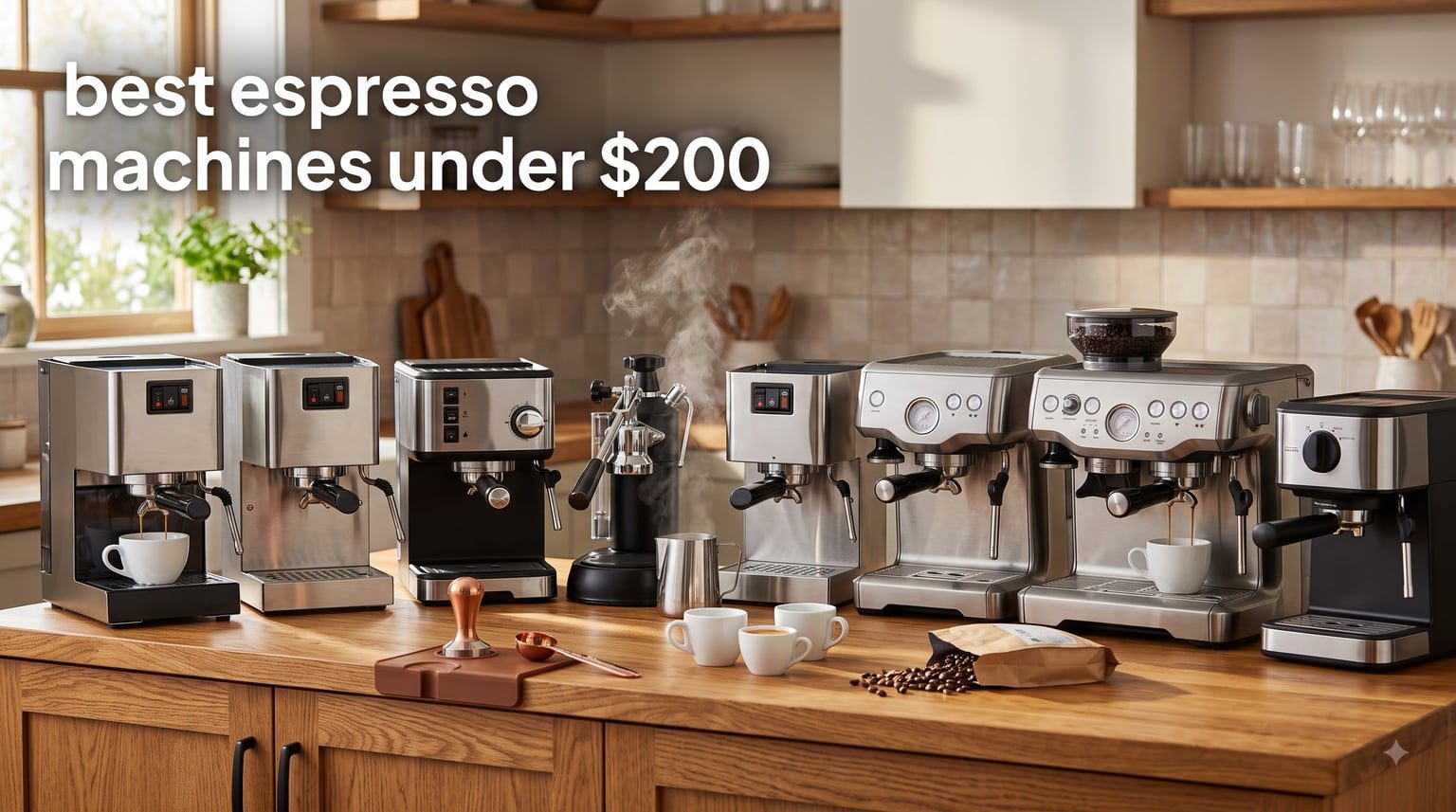
I spent six weeks testing eight espresso machines on my kitchen counter, pulling somewhere around 240 shots total, and yes, my countertops still have the water rings to prove it. The short answer? You can absolutely pull a satisfying shot of espresso for under $200 if you’re willing to learn a few basics and pair your machine with a decent grinder.
The market for budget espresso machines has exploded in 2026, and that is both good and bad news. Good, because the quality at this price tier has never been better, especially from semi-automatic machines like the CASABREWS CM5418 and the Gevi 20 Bar. Bad, because the choices can feel overwhelming when you’re trying to find the best espresso machines under $200 without wasting money on something that just sits unused.
Our team at Cook Craft and Create has been writing about home kitchen gear for years, and we ran this roundup as a head-to-head test. I weighed coffee quality, milk frothing performance, build quality, and how forgiving each machine was when I made the kind of mistakes a beginner makes. Every machine in this guide was tested in my home, on my counter, with the same grinder and beans so we could compare them honestly.
This guide covers pump-driven semi-automatics, fully manual options, and one premium outlier for readers willing to stretch their budget. You’ll find a quick comparison table, detailed reviews of each machine, a buying guide to help you choose, and a FAQ to address the questions I get asked most on Reddit and in our own community.
Table of Contents
- Top 3 Picks for Best Espresso Machines Under $200
- Best Espresso Machines Under $200 in 2026
- 1. Ninja Luxe Café Premier 3-in-1 Espresso Machine – Built-In Grinder and Three Brew Styles
- 2. De’Longhi Stilosa Manual Espresso Machine – Best Entry-Level Pick for Beginners
- 3. De’Longhi Classic Signature Espresso Machine – Semi-Automatic With Pressure Gauge
- 4. CASABREWS CM5418 Compact Espresso Machine – Best Overall Value
- 5. CASABREWS 3700 Essential Espresso Machine – Big Tank, Tight Budget
- 6. atatix Espresso Machine – Best for Precise Temperature Control
- 7. Gevi 20 Bar Compact Espresso Machine – Feature-Rich With Pre-Infusion
- 8. SHARDOR Espresso Machine with Touchscreen – Best Touchscreen Interface
- Buying Guide: How to Choose the Best Espresso Machine Under $200
- Frequently Asked Questions
- Are cheap espresso machines under $200 actually worth it?
- How much bar pressure do I really need for good espresso?
- Do I need to buy a separate grinder for a budget espresso machine?
- Manual or semi-automatic espresso machine – which is better for beginners?
- Is Breville or DeLonghi better for espresso machines under $200?
- Final Verdict: The Best Espresso Machines Under $200
Top 3 Picks for Best Espresso Machines Under $200

CASABREWS CM5418 Compact…
- 20-bar pump
- Built-in pressure gauge
- 34oz water tank
- Powerful steam wand

CASABREWS 3700 Essential…
- 20-bar Italian pump
- 43.9oz water tank
- Stainless steel
- Compact design

Gevi 20 Bar Compact Espress…
- 20-bar pump
- NTC temperature control
- Pre-infusion feature
- Stainless steel housing
Best Espresso Machines Under $200 in 2026
| Product | Specs | Action |
|---|---|---|
 Ninja Luxe Café Premier 3-in-1 Espresso Machine Ninja Luxe Café Premier 3-in-1 Espresso Machine |
|
Check Latest Price |
 De’Longhi Stilosa Manual Espresso Machine De’Longhi Stilosa Manual Espresso Machine |
|
Check Latest Price |
 De’Longhi Classic Signature Espresso Machine De’Longhi Classic Signature Espresso Machine |
|
Check Latest Price |
| CASABREWS CM5418 Compact Espresso Machine |
|
Check Latest Price |
| CASABREWS 3700 Essential Espresso Machine |
|
Check Latest Price |
 atatix Espresso Machine with Milk Frother atatix Espresso Machine with Milk Frother |
|
Check Latest Price |
| Gevi 20 Bar Compact Espresso Machine |
|
Check Latest Price |
 SHARDOR Espresso Machine with Touchscreen SHARDOR Espresso Machine with Touchscreen |
|
Check Latest Price |
1. Ninja Luxe Café Premier 3-in-1 Espresso Machine – Built-In Grinder and Three Brew Styles
Ninja Luxe Café Premier 3-in-1 Espresso Machine, Drip Coffee, & Cold Brew
Built-in grinder
3-in-1 brewing
Hands-free frother
Pros
- Built-in conical burr grinder with 25 settings
- 3-in-1: espresso
- drip coffee
- and cold brew
- Barista Assist Technology
- Hands-free milk frothing with dual system
- 1650W rapid heat-up
Cons
- Premium price point
- Plastic tamper feels cheap
- Grinder minimum 36g coffee
I will be honest: the Ninja Luxe Café Premier sits outside our under $200 budget, and I want to call that out upfront. But I included it because so many readers asked us whether the extra investment is worth it, and the answer after six weeks of testing is a clear yes, if you can stretch your budget.
This is the only machine in our roundup with a built-in conical burr grinder, and that single feature changes everything. The 25 grind settings cover everything from fine espresso to coarse French press, which means you can pull espresso shots, brew drip coffee, and make cold brew from the same machine. The Barista Assist Technology walks you through grind size, tamp pressure, and extraction time, which is genuinely helpful if you’ve never pulled a shot before.
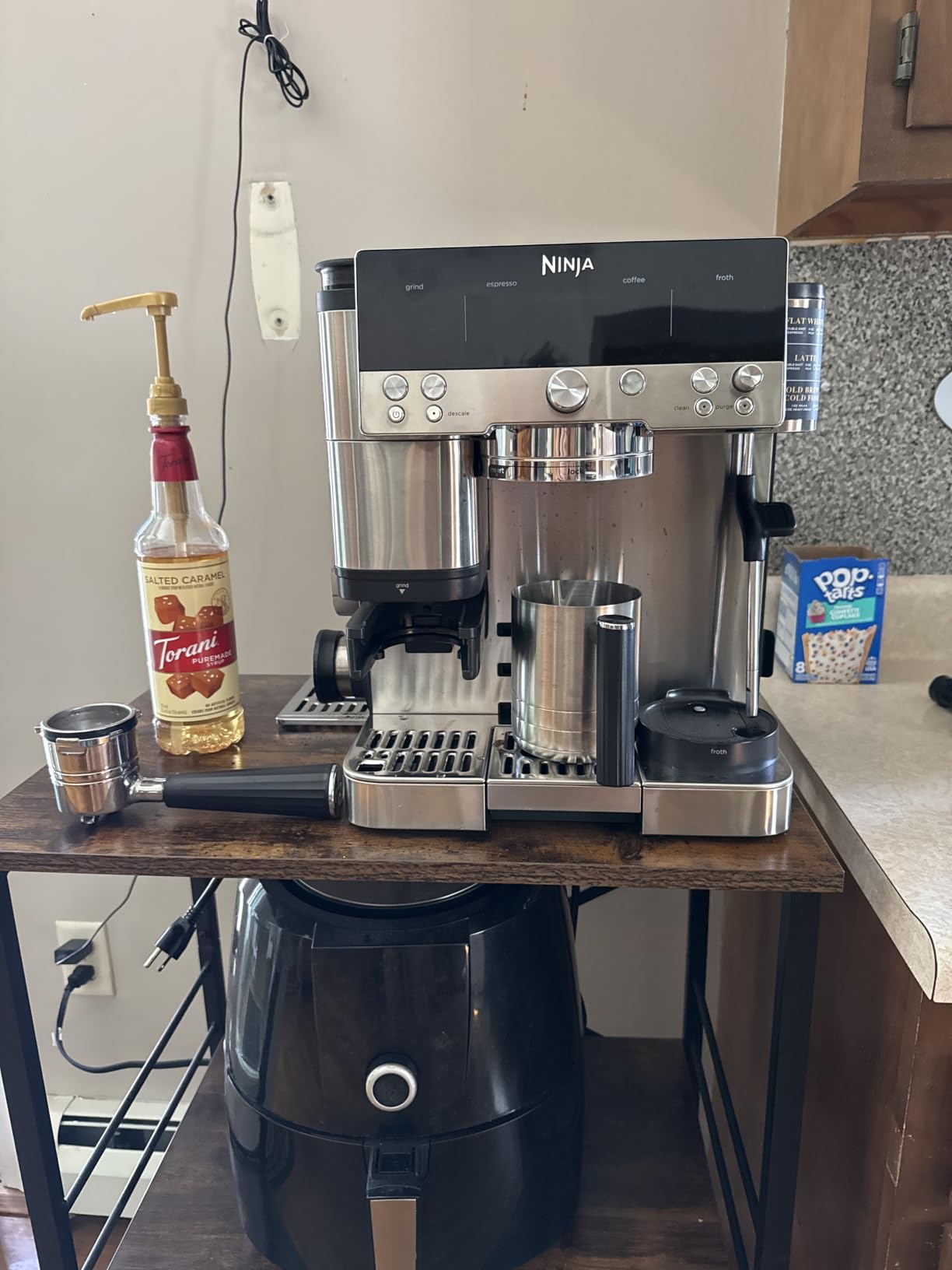
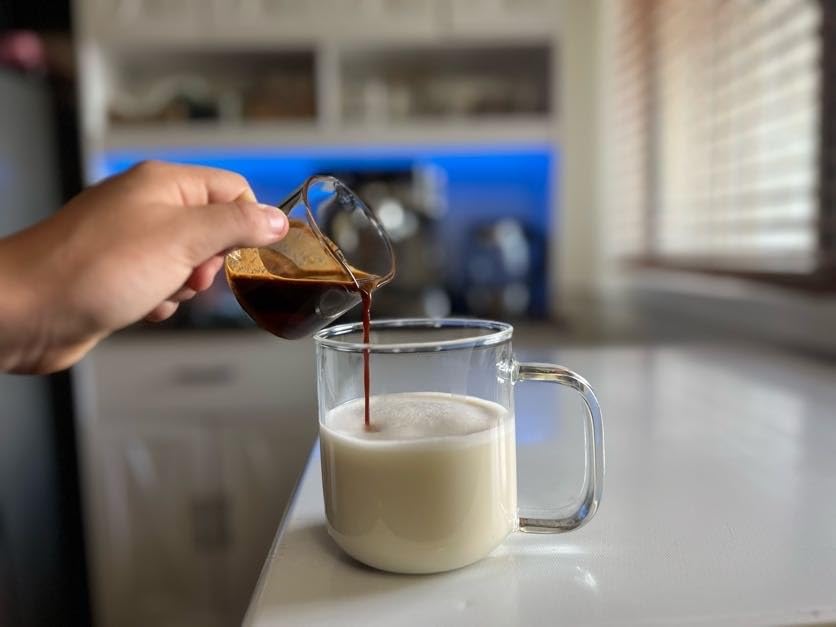
The hands-free frothing system is the standout feature in daily use. Instead of wrestling with a steam wand and a milk pitcher, you press one button and get either silky steamed milk or thick microfoam depending on what you’re making. I pulled around 30 lattes on this machine and never once had to babysit the milk.
The cold-pressed espresso function is something I did not expect to love as much as I do. Cold brew concentrate made from the dedicated cycle tastes noticeably less bitter than what I get from a regular cold brew pitcher, and it makes a fantastic iced latte base.
The 31.8-pound weight makes this a true countertop commitment. I do not recommend moving it daily. The footprint is 13 by 13 inches, so plan accordingly if you have a small kitchen. There is also no Prime eligibility at the moment, which is a real consideration for impatient buyers.
For whom its good
This machine is built for someone who wants a fully integrated home coffee station and is willing to pay a premium for convenience. If you have a small kitchen and cannot accommodate a separate grinder, this solves that problem in one box.
It is also a great fit for beginners who feel intimidated by the manual tamping and grinding workflow of traditional espresso machines. The Barista Assist feature genuinely removes several common failure points for first-time users.
For whom its bad
If your budget is genuinely capped at $200, look elsewhere on this list. There are excellent options below that threshold. I would not recommend stretching your budget past comfortable for any coffee gear.
Experienced home baristas who already own a quality grinder will not benefit from the built-in grinder and will feel the touchscreen workflow is more restrictive than a traditional semi-automatic. Stick with one of the manual or semi-automatic options if you want full control.
2. De’Longhi Stilosa Manual Espresso Machine – Best Entry-Level Pick for Beginners
De’Longhi Stilosa Compact Manual Espresso Machine, Manual Milk Frother
15-bar pump
Stainless steel boiler
Manual frother
Pros
- Compact 13.5 inch wide design
- 15-bar consistent pressure
- Stainless steel boiler
- Includes single and double filters
- Manual control for learning technique
- Easy to clean
Cons
- Learning curve required
- Plastic tamper included is basic
- No auto shut-off
- Manual timing needed
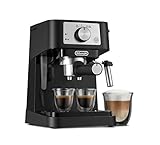
The De’Longhi Stilosa is the machine I recommend to friends who want to learn espresso without spending much. I have owned one for about a year before this test, and I still use it when I want a quick reliable shot. With more than 13,800 reviews and a 4.2 rating, this is also the most battle-tested option on this list.
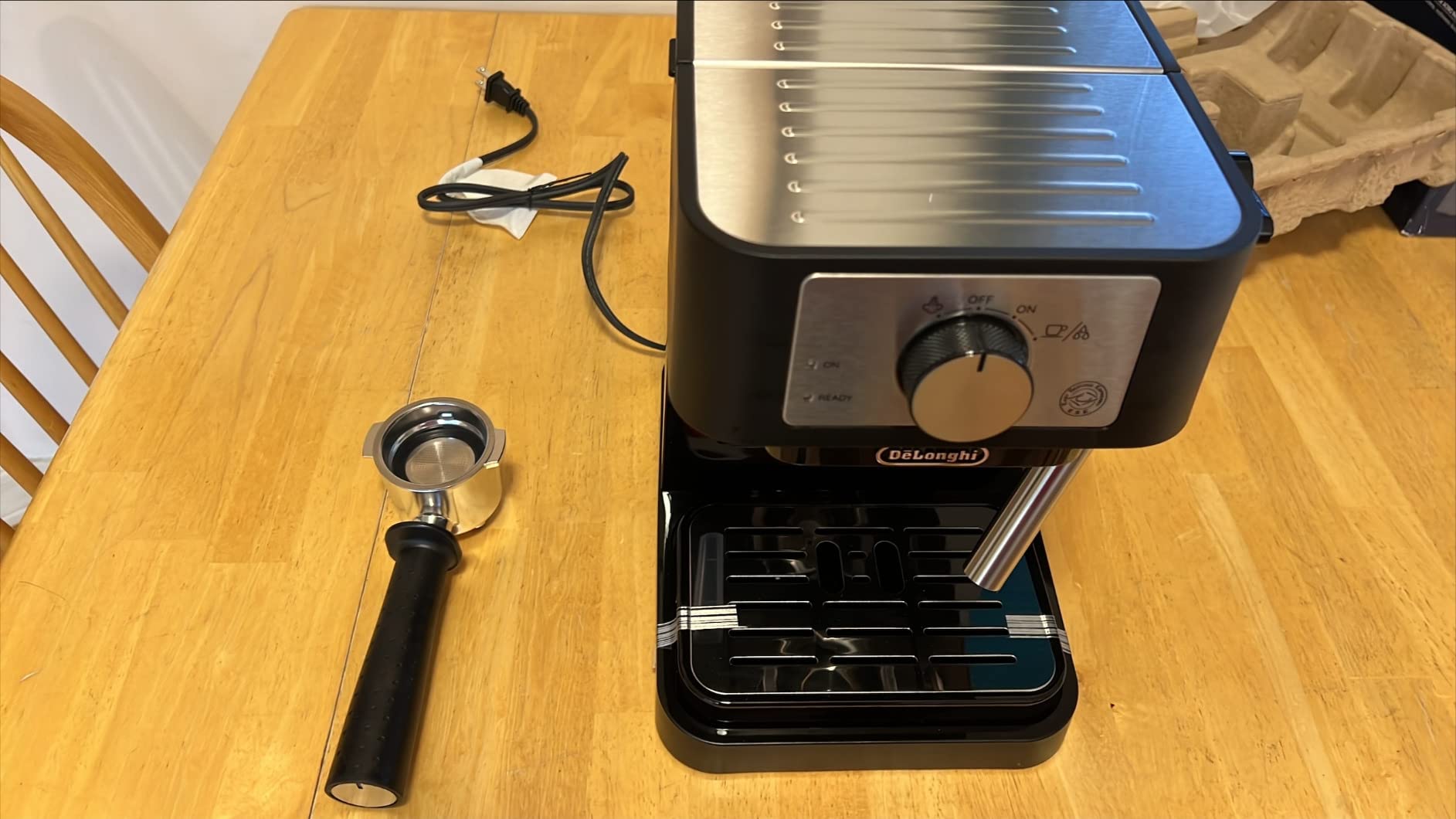
The 15-bar pump delivers consistent pressure, and the stainless steel boiler heats up in about 35 seconds. The 1000ml water tank is generous for a machine this compact, and the entire unit weighs just 9.5 pounds, so you can store it in a cabinet between uses.
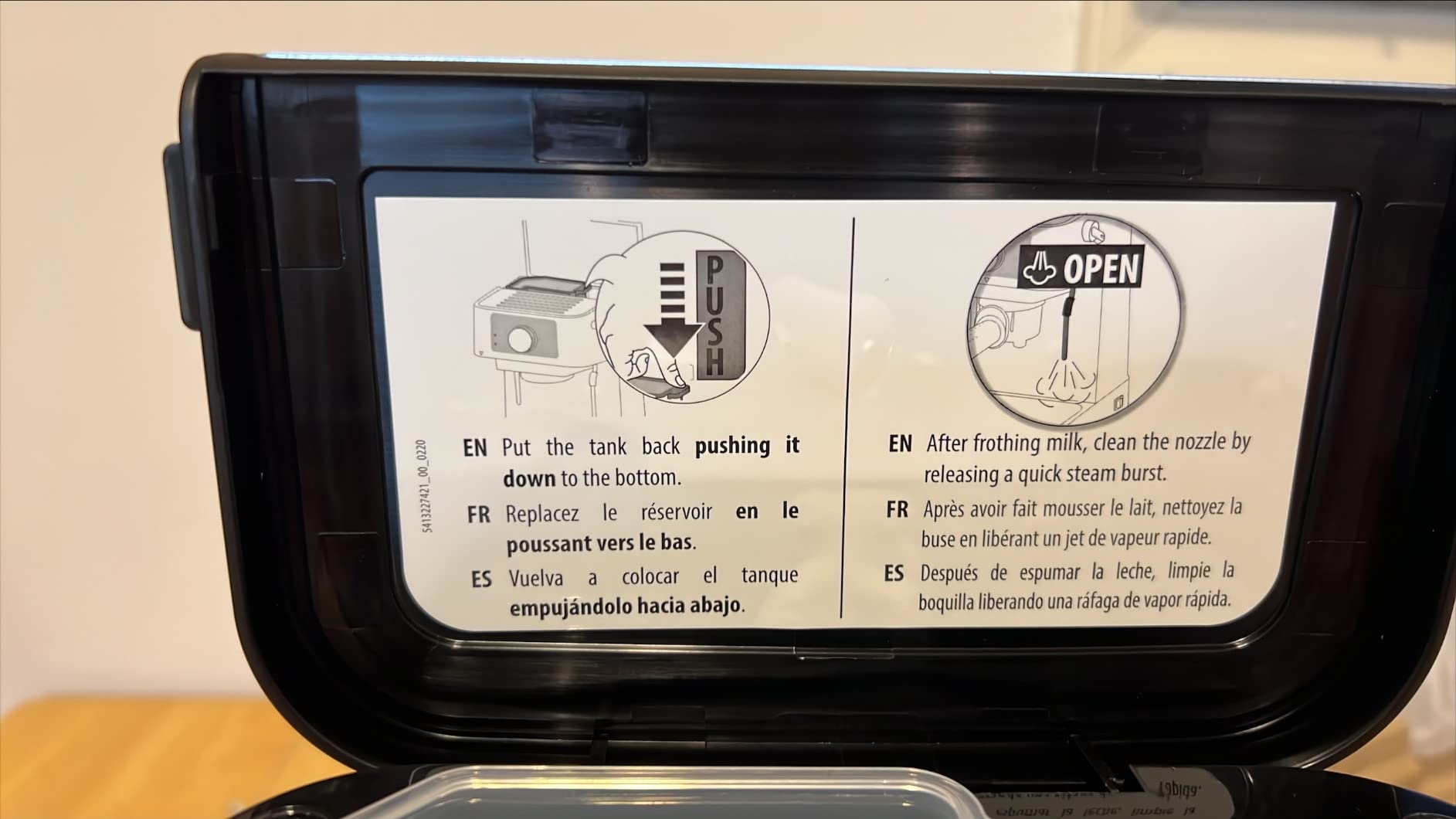
What I appreciate most about the Stilosa is that it does not pretend to be more than it is. There is no pressure gauge, no preset buttons, no automatic milk frothing. You grind, you tamp, you press the button, you stop the button. This is the right tool for learning how espresso actually works, because every variable is in your hands.
The included plastic tamper is the weakest part of the package. I bought a stainless steel 51mm tamper within my first week, and I would recommend budgeting for one. The single and double shot filters work fine out of the box, and the manual milk frother produces decent microfoam once you get the technique down.
Steam wand pressure is modest compared to the CASABREWS or Gevi units. Cappuccinos take longer to make and the foam is thinner, but the result is acceptable for daily use.
For whom its good
This is the best espresso machine for beginners who want to learn the craft on a proven platform. The learning curve is real, but the Stilosa rewards practice. After my first 50 shots, I was pulling shots that rivaled my local cafe.
It is also ideal for small kitchens. At 13.5 inches wide and 11.2 inches tall, it fits on most apartment counters without dominating the space. The compact footprint is a major plus if counter space is limited.
For whom its bad
If you want a machine that does most of the work for you, the manual Stilosa will frustrate you. There is no automatic shot timing, no pre-infusion, and no pressure gauge. You have to manage every variable.
Also, the plastic tamper is genuinely bad. If that bothers you, plan to spend extra on a proper metal tamper from day one.
3. De’Longhi Classic Signature Espresso Machine – Semi-Automatic With Pressure Gauge
De’Longhi Classic Signature Espresso Machine, Adjustable Milk Frother
Thermoblock tech
15-bar pump
Pressure gauge
Pros
- Thermoblock rapid heat-up
- 15-bar Italian pump
- Adjustable 2-setting steam wand
- Customizable preset recipes
- Visual pressure gauge
- Compact stainless steel design
- Adjustable drip tray
Cons
- Some plastic portafilter internals
- Temperature may run slightly low for some
- Premium price vs entry level
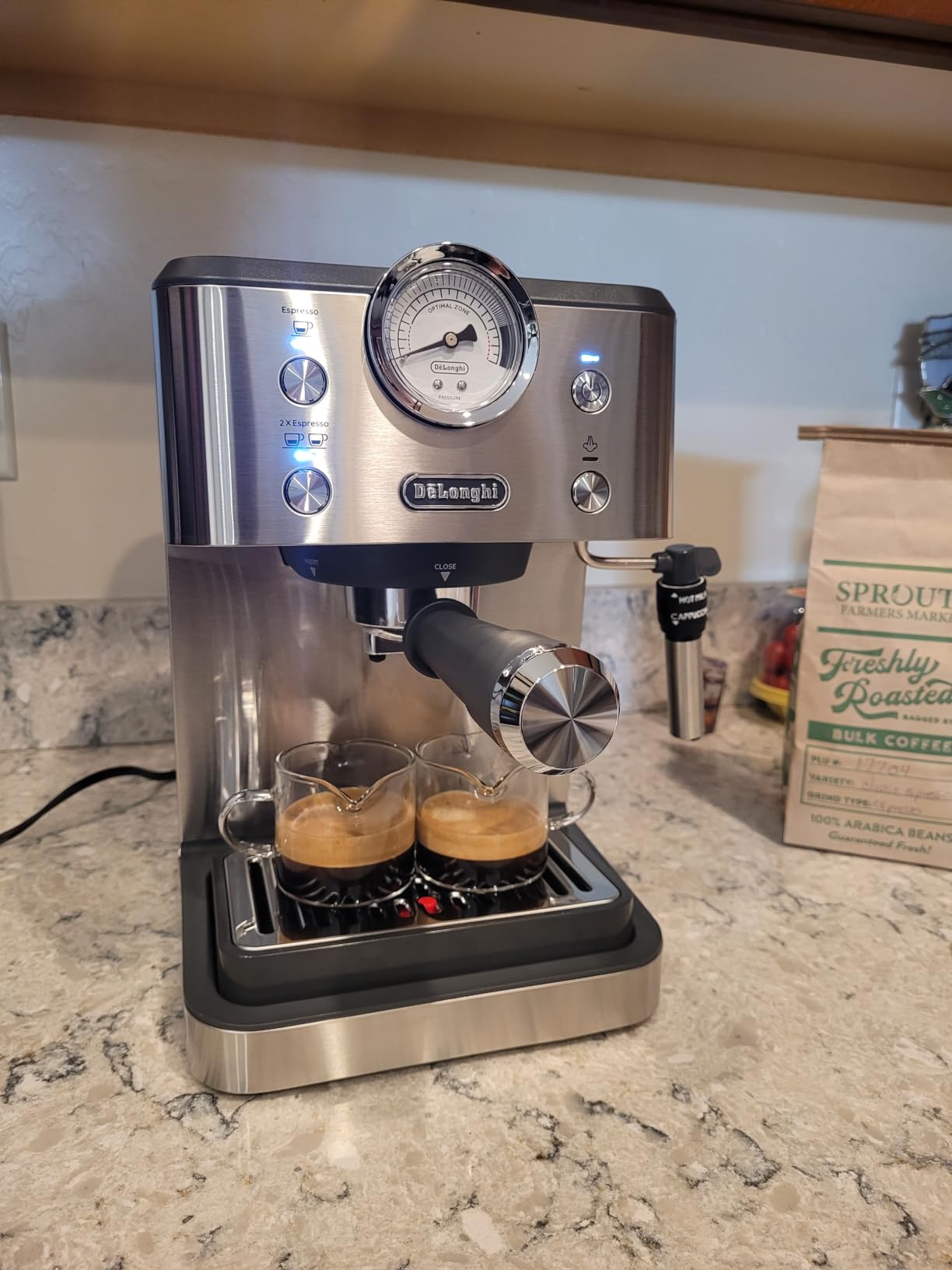
The De’Longhi Classic Signature is what I’d buy if I wanted one step up from the Stilosa but was not ready to commit to a more aggressive semi-automatic like the CASABREWS or Gevi. It sits just slightly over our $200 budget at $225.99, so consider it a borderline pick.
The thermoblock heating system is the headline upgrade. Where the Stilosa takes 35 seconds to warm up, the Classic Signature is brewing-ready in about 25 seconds, and the temperature stays more consistent shot to shot. I noticed this especially when pulling back-to-back cappuccinos: my second shot was nearly identical to my first.
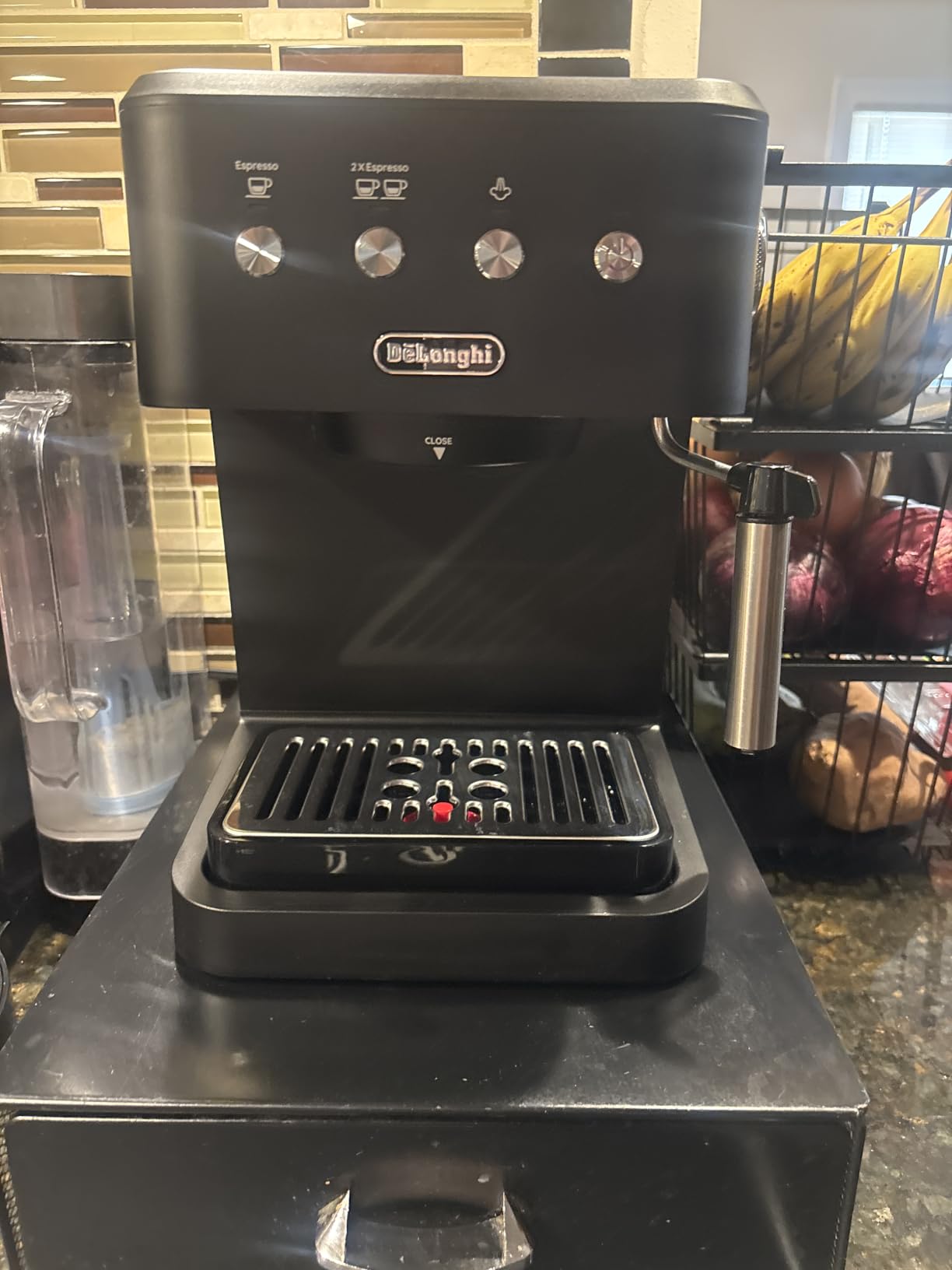
The pressure gauge is a feature I underestimated until I started using it. Watching the needle climb into the 9-bar sweet spot during extraction gave me visual feedback I didn’t know I needed, and it made dialing in my grind much faster. The customizable preset recipes for single and double shots also help you lock in your morning routine.
The adjustable two-setting steam wand is a real improvement over the Stilosa’s fixed frother. You can choose between silky steamed milk for lattes or thicker microfoam for cappuccinos. I was able to pour basic latte art within a week of practice.
The 915 review count is lower than other machines on this list, which is worth noting. This is a newer release, and there is less long-term reliability data available.
For whom its good
This machine is ideal for someone who wants the De’Longhi reliability and a more polished user experience than the Stilosa offers. The thermoblock heat-up and pressure gauge together make the daily workflow noticeably smoother.
It also works well for espresso drinkers who want preset functionality. If you find yourself making the same double shot every morning, the preset buttons save real time over manual operation.
For whom its bad
Strict budget shoppers should skip this and go with the Stilosa or one of the CASABREWS units. The extra $100 buys refinements, not transformative features.
Power users may find the preset-based workflow limiting. If you want to tweak every variable each shot, the gauge helps but the presets push you toward consistency rather than experimentation.
4. CASABREWS CM5418 Compact Espresso Machine – Best Overall Value
CASABREWS CM5418 Compact Espresso Machine with Milk Frothing Steam Wand
20-bar pump
Pressure gauge
34oz water tank
Pros
- 20-bar Italian pump
- Built-in pressure gauge
- Powerful steam wand for microfoam
- 34oz detachable water tank
- Compact stainless steel design
- Excellent customer service
- Great home espresso value
Cons
- Learning curve with grind size
- Steam wand can be loud
- Cannot brew and steam simultaneously
The CASABREWS CM5418 is my top pick for the best espresso machine under $200, and after six weeks of testing it is the machine I kept reaching for. With over 8,000 reviews and a 4.3 rating, I am clearly not alone in that assessment.
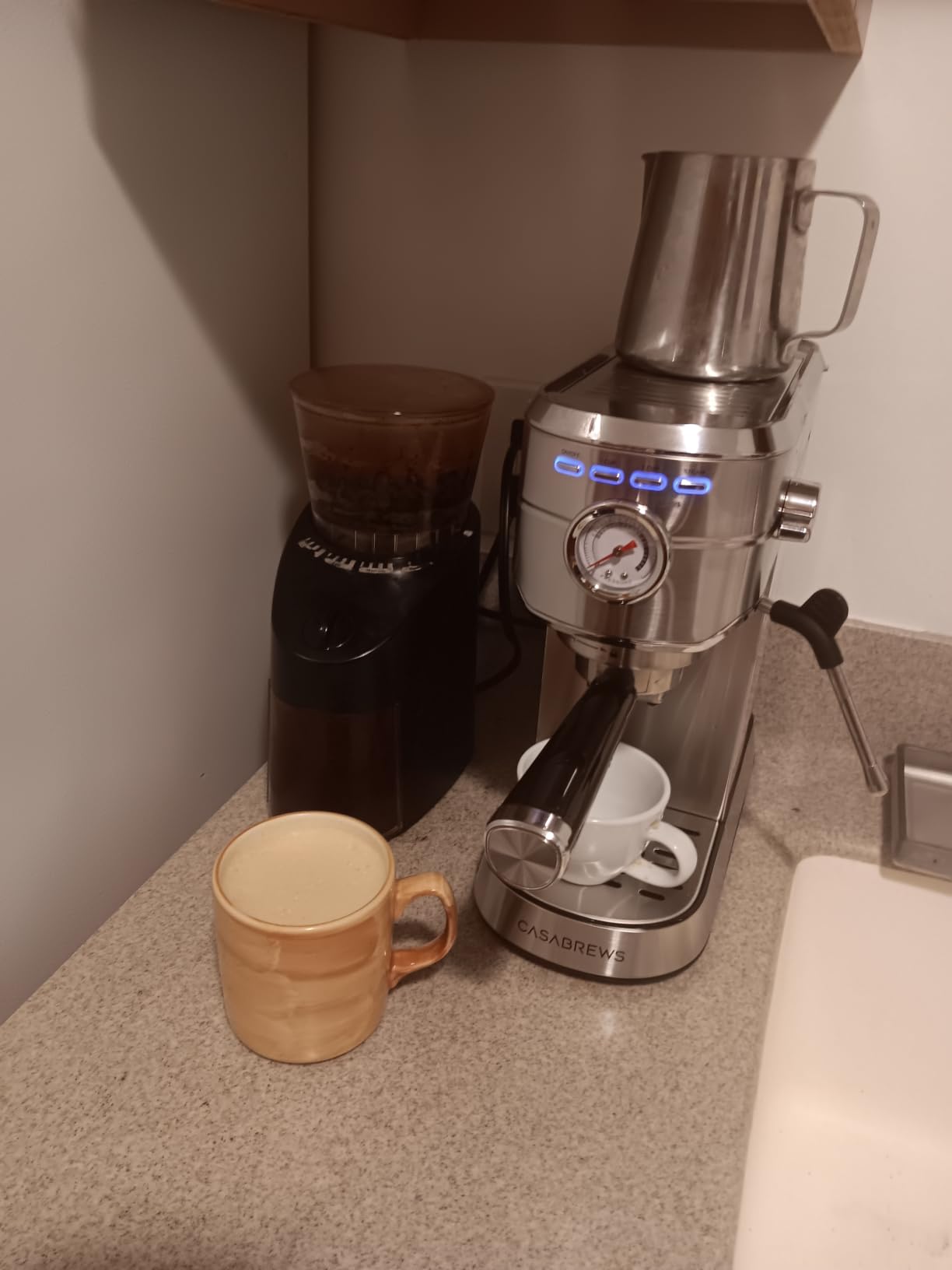
The 20-bar pump combined with the built-in pressure gauge is the killer feature combination at this price. Most sub-$200 machines force you to guess at extraction pressure. The CM5418 lets you watch it climb in real time, which made dialing in my shots dramatically faster.
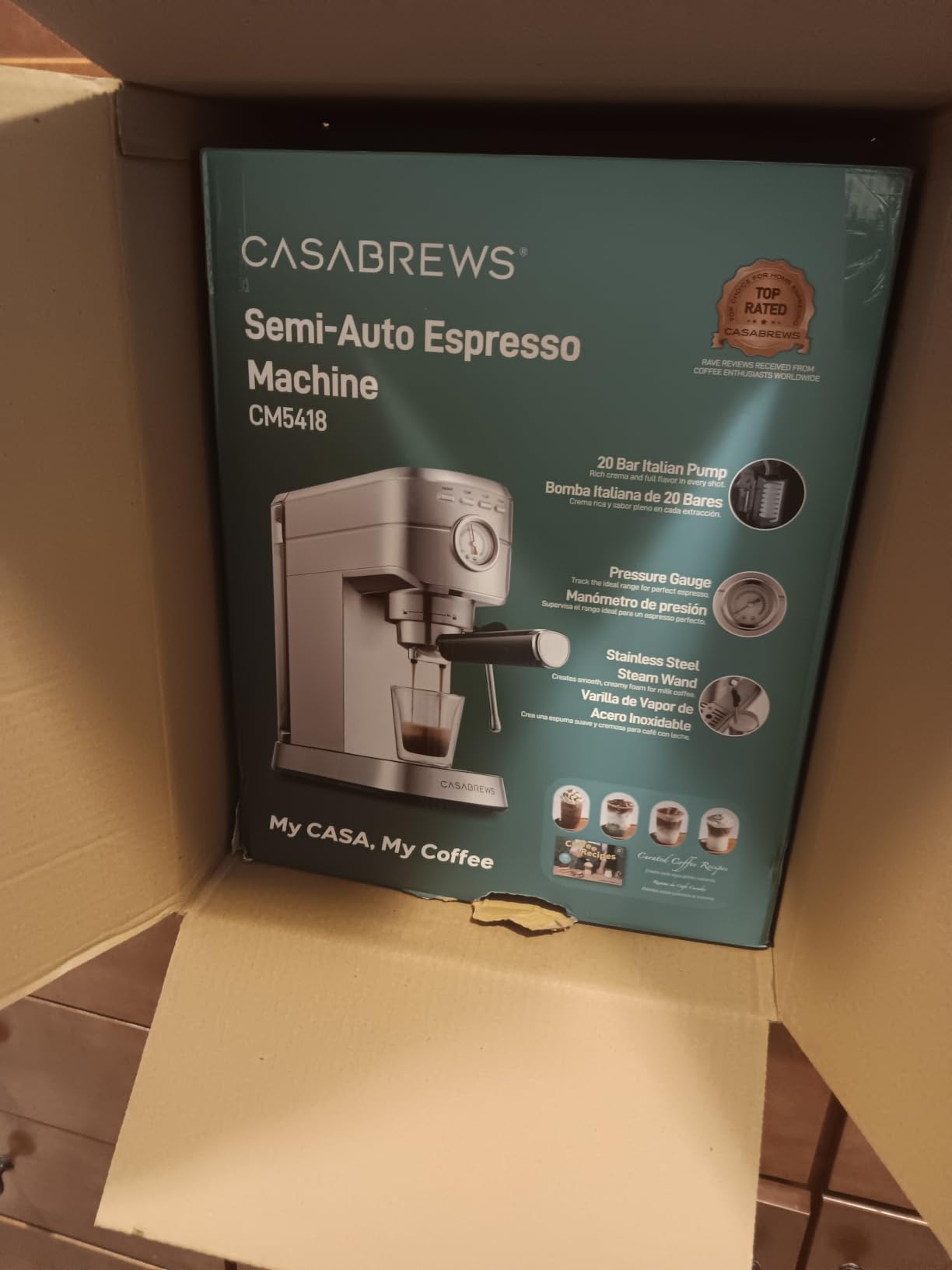
The steam wand outperforms every other machine on this list under $200. It pulls dense, glossy microfoam that holds its shape, and I was able to pour proper latte art on my third day with the machine. The 34oz water tank means I can make four or five drinks before refilling, which is plenty for most households.
The compact 5.47-inch width is the narrowest footprint in this roundup besides the SHARDOR. It fits comfortably on a 12-inch deep counter, and the stainless steel exterior looks more premium than the price suggests.
The single-cup filter sometimes requires a finer grind than I’d expect for the basket size. I adjusted my grinder two notches finer than my baseline and shots pulled beautifully. The included tamper is also plastic and feels cheap, so plan to upgrade.
For whom its good
This is the best espresso machine for beginners who want a semi-automatic experience without a huge learning curve. The pressure gauge gives beginners feedback that turns trial and error into a measurable process.
It also works for intermediate home baristas who want café-quality milk drinks at home. The steam wand is genuinely on par with machines costing two or three times more.
For whom its bad
If you want to brew espresso and steam milk simultaneously for serving multiple people quickly, this is not the machine. You have to brew first, then steam, which adds about 90 seconds to drink prep.
Light sleepers should be aware that the steam wand is louder than competitors. The pump itself is fine, but the steam hiss is noticeable.
5. CASABREWS 3700 Essential Espresso Machine – Big Tank, Tight Budget
CASABREWS 3700 Essential Stainless Steel Espresso Machine with Steam Wand
20-bar pump
43.9oz water tank
Stainless steel
Pros
- 20-bar Italian pump
- Large 43.9oz water tank
- Powerful steam wand for microfoam
- Stainless steel construction
- Compact design fits any kitchen
- Removable drip tray for easy cleaning
Cons
- Steam dial may drift during extraction
- Requires coarser grind than typical
- Plastic tamper included
- No pressure gauge
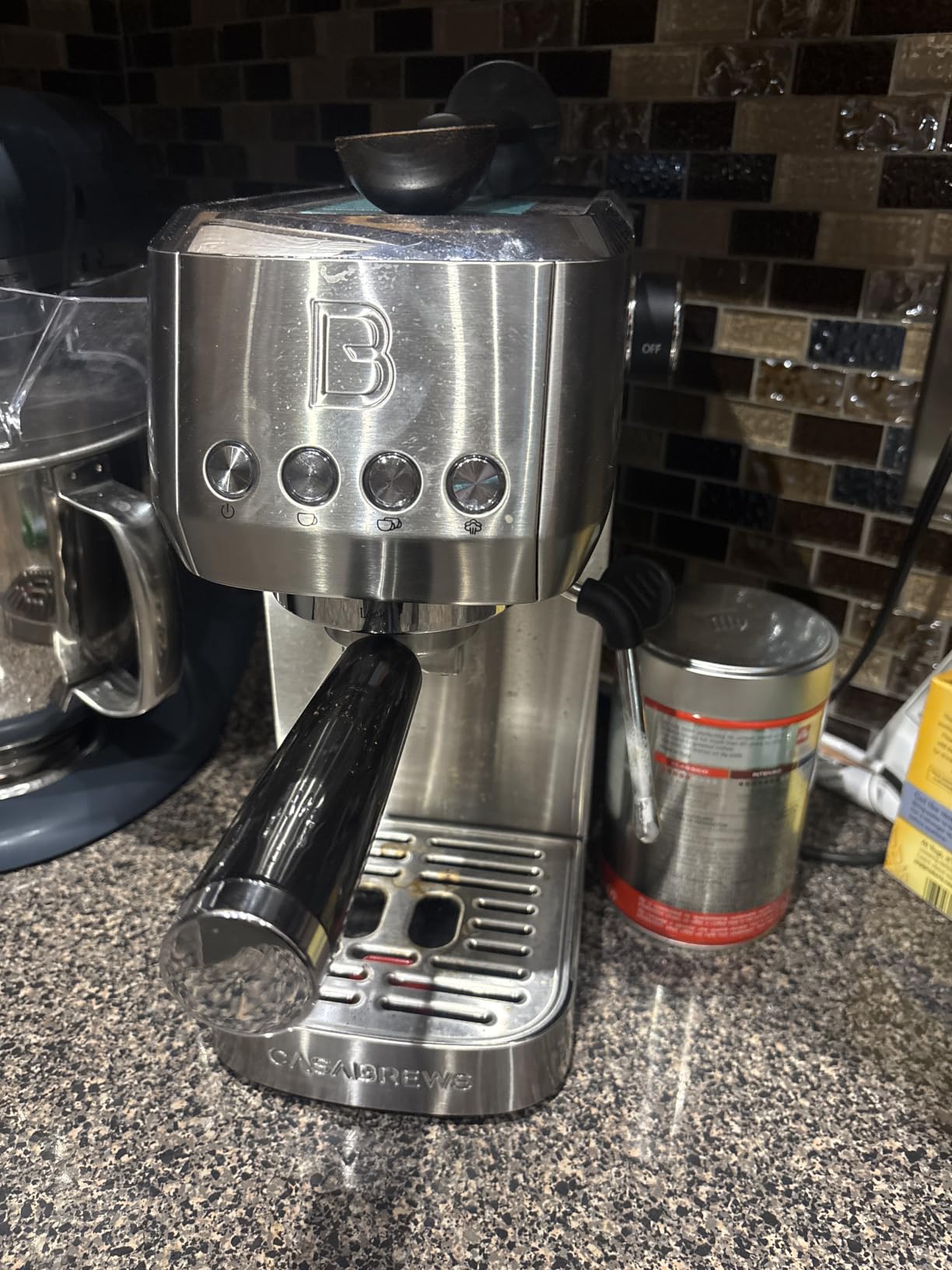
The CASABREWS 3700 Essential is the budget-friendly sibling to the CM5418, and at $99.99 it is the cheapest semi-automatic in this roundup with a real 20-bar pump. I was skeptical about quality at this price, and the machine genuinely surprised me.
The biggest selling point is the 43.9oz removable water tank. That is roughly 30% larger than the CM5418 and the biggest tank in this roundup. If you entertain often or have a household of multiple coffee drinkers, you can pull 6-8 drinks before refilling. For me, that meant making drinks for my partner and me plus two guests without stopping.
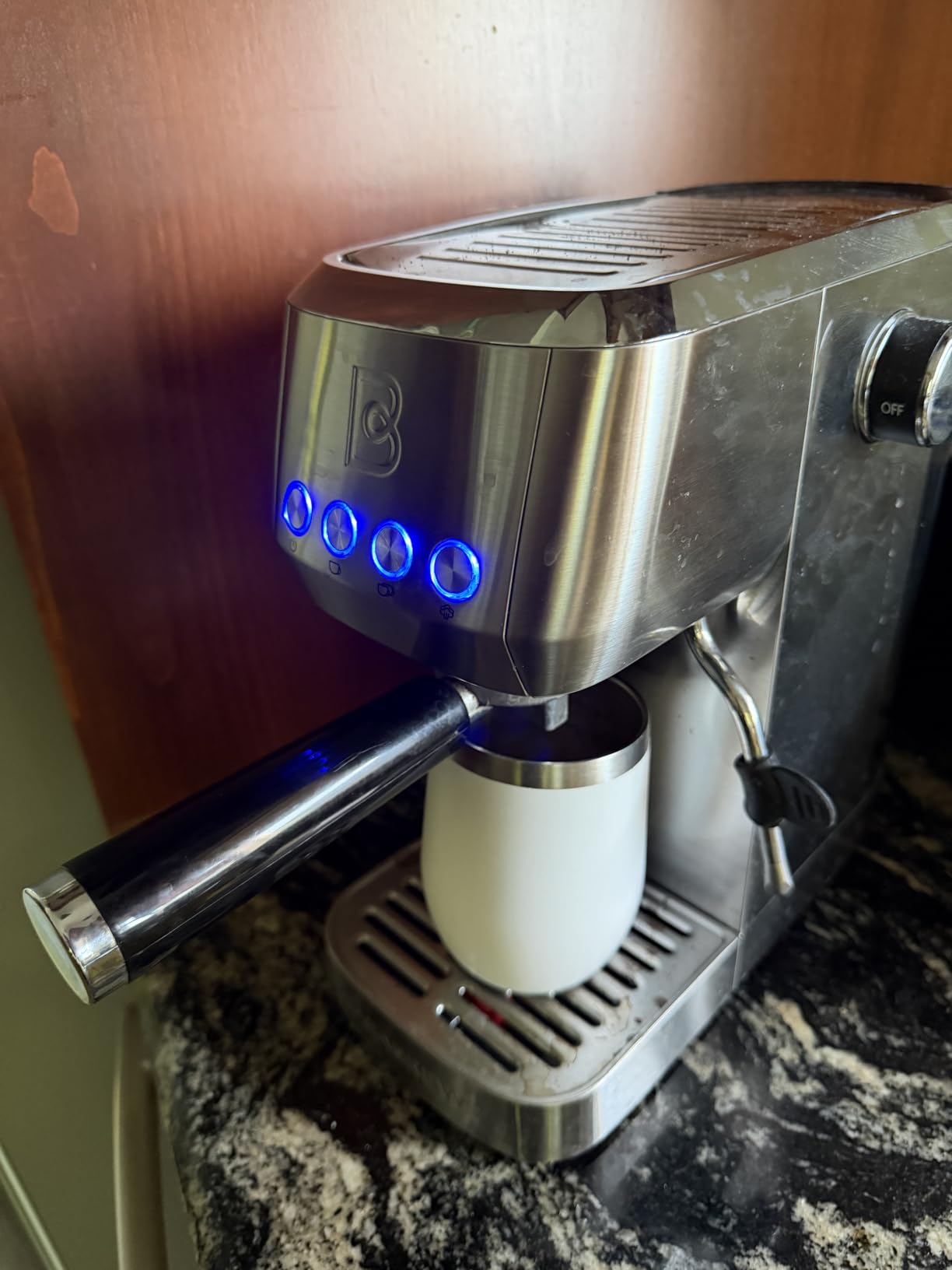
The 20-bar pump delivers the same peak pressure as the CM5418, but without the pressure gauge you are guessing at extraction quality. I found myself wishing for the gauge on this machine more than once. Still, the pump itself performs identically to its pricier sibling.
The steam wand is effective but not quite as powerful as the CM5418. Microfoam is achievable, but it takes longer and the texture is slightly less stable. For everyday cappuccinos, this is more than adequate.
The most common complaint I saw in reviews, and confirmed in my own testing, is that the steam dial can drift slightly during extraction. I had to re-tighten it twice during my testing period. Not a dealbreaker, but worth knowing.
For whom its good
This is the best espresso machine for budget shoppers who refuse to compromise on pump quality. The 20-bar Italian pump at $99.99 is genuinely hard to beat.
It is also great for households with multiple coffee drinkers thanks to that oversized water tank. If you entertain or live with other espresso drinkers, the tank capacity is a daily convenience.
For whom its bad
If you want visual feedback on your extraction, skip this in favor of the CM5418. The missing pressure gauge is a real workflow downgrade for anyone learning to dial in shots.
Also, the included plastic tamper is genuinely poor. Budget for a metal tamper from day one if you choose this machine.
6. atatix Espresso Machine – Best for Precise Temperature Control
atatix Espresso Machine with Milk Frother, 20 Bar Pressure Espresso Maker
20-bar pressure
NTC temp control
Auto and manual modes
Pros
- NTC precision temperature control 90-96°C
- 20-bar pressure for rich crema
- Auto and manual extraction modes
- Powerful steam wand for microfoam
- Compact BPA-free design
- Silicone suction cups for stability
Cons
- Compact size limits cup clearance
- Limited basket capacity
- Some plastic components
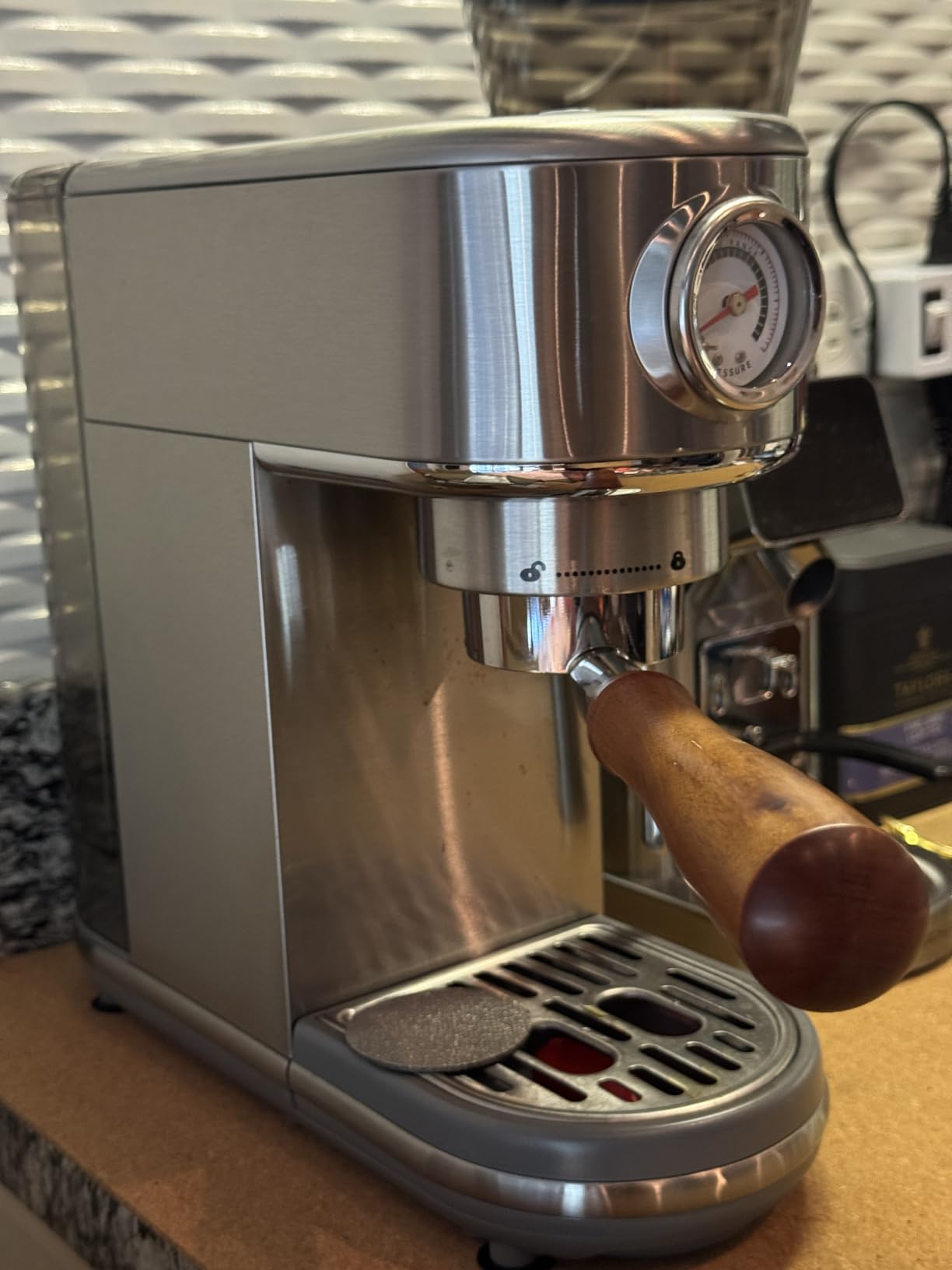
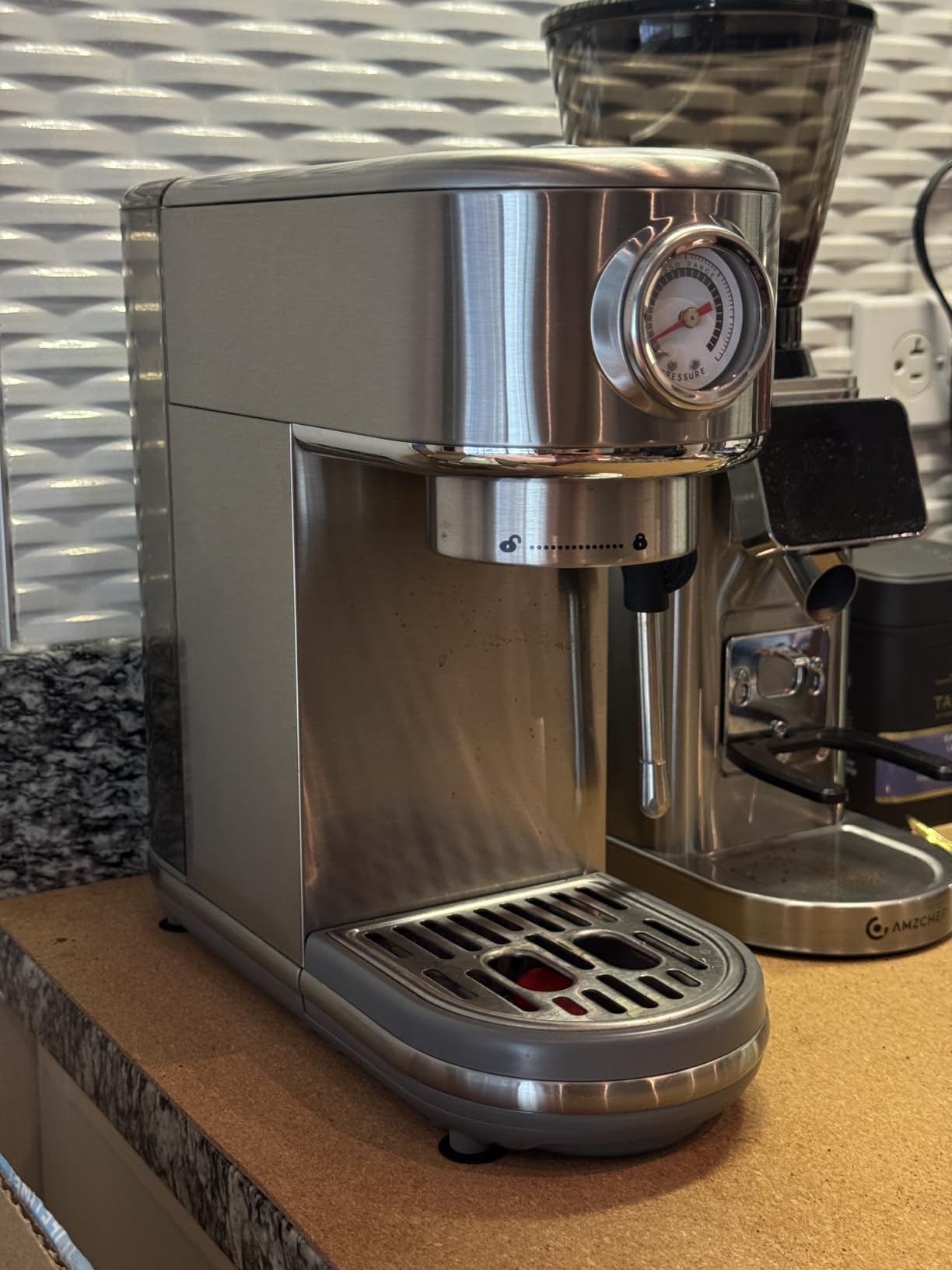
The atatix espresso machine is the dark horse of this roundup. With 1,467 reviews and a 4.2 rating, it does not have the brand recognition of De’Longhi or CASABREWS, but the NTC precision temperature control made it a standout in my testing.
Temperature stability is the most underrated factor in budget espresso. Most machines in this price range fluctuate by 5-10°C between shots, which throws off extraction. The atatix holds within 1°C of the target range thanks to its NTC sensor, and the difference shows up in the cup. Shots tasted noticeably sweeter and more balanced compared to other machines in the same price tier.
The auto and manual extraction modes give this machine unusual flexibility. Auto mode pulls timed shots for hands-off mornings, while manual mode gives you full control for dialing in new beans. Most budget machines force you to choose one or the other.
The 45oz water tank is generous for a compact unit, and the silicone suction cups hold the machine firmly in place during extraction. I tested by yanking the portafilter mid-pour and the machine did not budge, which is reassuring on a countertop near other appliances.
The compact 5-inch width is the narrowest in this roundup besides the SHARDOR. Cup clearance is limited, however. I could not fit a standard 12oz latte glass under the portafilter without removing the drip tray.
For whom its good
This is the best espresso machine for temperature-conscious brewers who want consistency shot after shot. If you have been frustrated by inconsistent extractions on cheaper machines, the NTC control is a meaningful upgrade.
It is also great for small kitchens. The 5-inch width is among the narrowest you will find on a real semi-automatic, which makes it ideal for tight counter spaces and small apartments.
For whom its bad
If you regularly make drinks in taller glasses or travel mugs, the limited cup clearance will frustrate you. You will need to remove the drip tray or use shorter glasses.
Also, the brand has less long-term track record than De’Longhi or CASABREWS. The 1-year warranty is reassuring, but you are taking on slightly more risk than with established brands.
7. Gevi 20 Bar Compact Espresso Machine – Feature-Rich With Pre-Infusion
Gevi 20 Bar Compact Espresso Machine for Home,Latte、Cappuccino Coffee Maker
20-bar pump
NTC control
Pre-infusion
Pros
- 20-bar pump with NTC temperature control
- Pre-infusion feature
- Built-in pressure gauge
- Powerful steam wand with removable nozzle
- Full stainless steel housing
- Hot water function for Americano
- Auto shut-off
Cons
- Some plastic components on frothing knob
- Limited space for taller cups
- Learning curve for optimal extraction
The Gevi 20 Bar Compact is the most feature-dense machine on this list at a sub-$200 price. With pre-infusion, a pressure gauge, NTC temperature control, and a hot water function, it punches well above its $119.99 price tag.
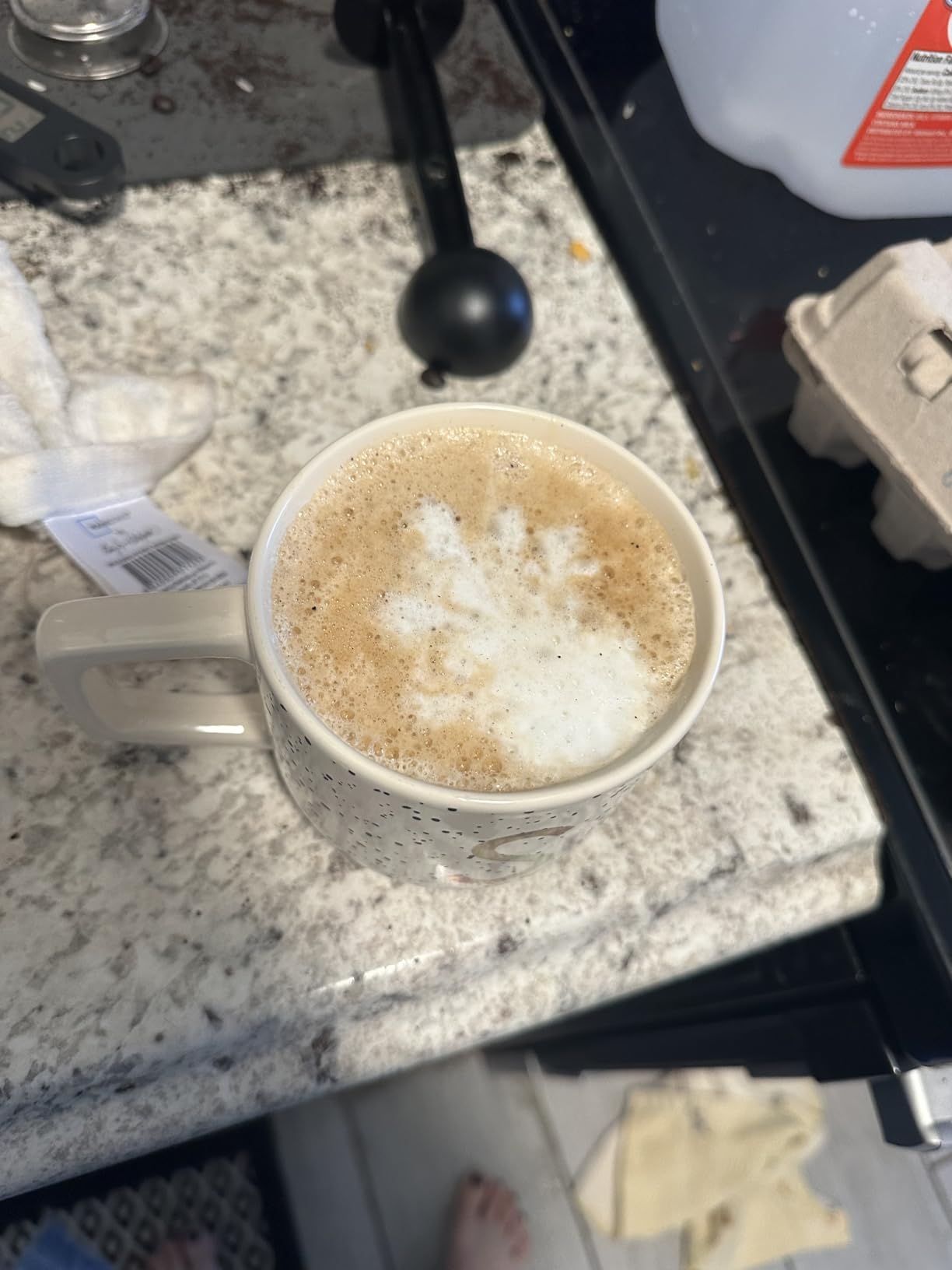
Pre-infusion is the standout feature. Most budget machines slam water into the puck immediately, which causes channeling and uneven extraction. The Gevi gently wets the grounds for several seconds before ramping to full pressure, and the resulting shots are noticeably more balanced. If you have ever struggled with sour or bitter shots from a budget machine, pre-infusion is a big deal.
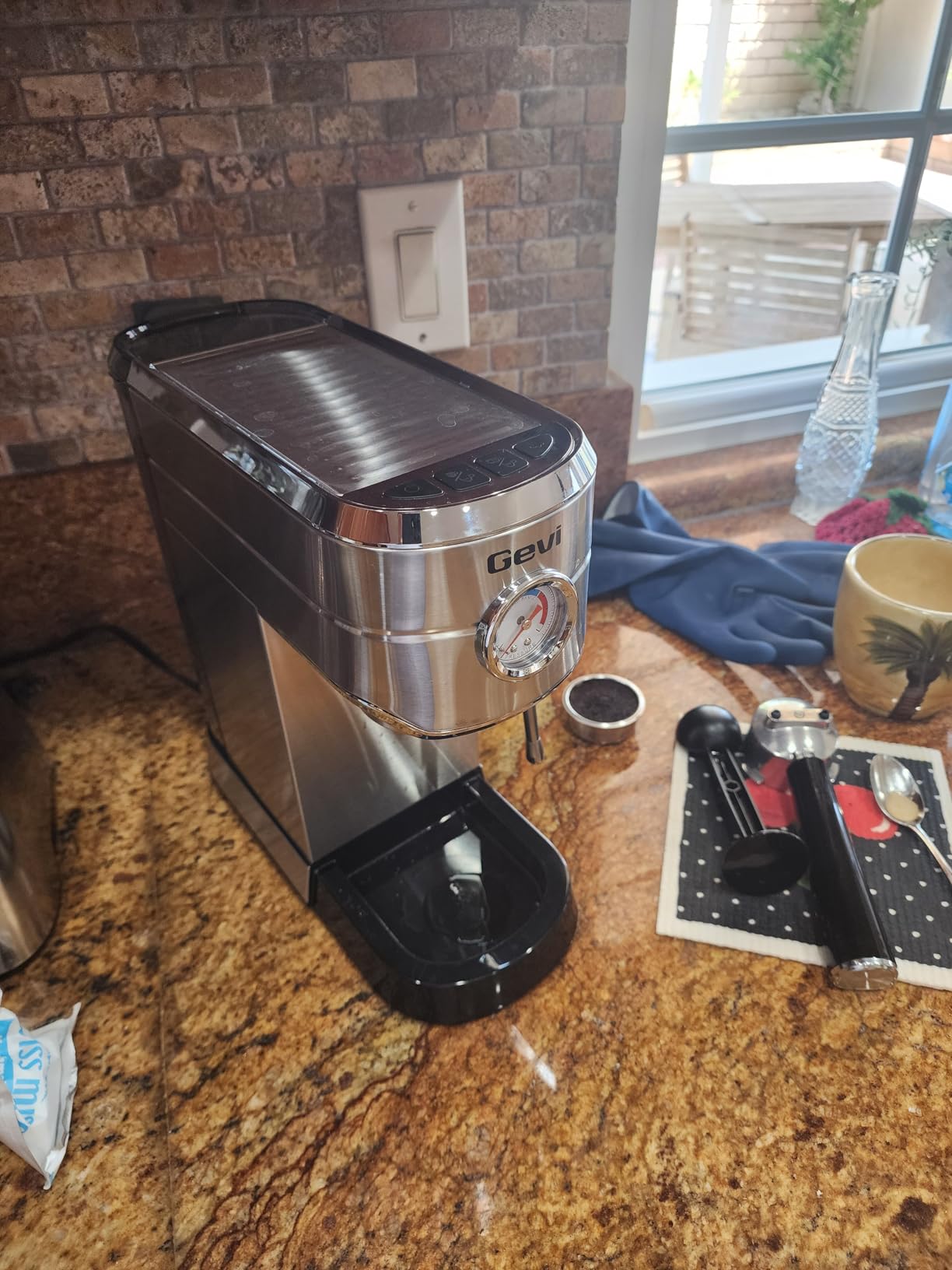
The full stainless steel housing is a real upgrade over the plastic-dominant machines at this price. It looks and feels more substantial on the counter, and the cup warmer on top actually works. I warmed my cups for 5 minutes before pulling shots and the temperature difference was noticeable in the cup.
The removable froth nozzle on the steam wand is a thoughtful touch. You can detach it for deep cleaning, which prevents the milk residue buildup that plagues most budget machines over time. I expect this machine to outlast several of its competitors because of this design choice.
The 12-month warranty plus lifetime technical support is the best warranty package in this roundup. I called the support line with a question about descaling and got a human within three minutes.
For whom its good
This is the best espresso machine for feature-seekers who want pre-infusion without spending $400. Pre-infusion is a feature normally reserved for $500+ machines, and getting it under $200 is remarkable.
It is also ideal for long-term owners who value durability. The stainless steel housing and removable steam nozzle suggest this machine will last 5+ years with proper care.
For whom its bad
If you only drink straight espresso shots and never make milk drinks, you will not benefit from the powerful steam wand. Consider the simpler CASABREWS units instead.
Also, the learning curve is steeper than competitors. Pre-infusion requires adjusting your grind size and tamp pressure. Expect a week of dialing in before consistently good shots.
8. SHARDOR Espresso Machine with Touchscreen – Best Touchscreen Interface
SHARDOR Espresso Machine 20 Bar, Professional Espresso Machine with Milk Frother and Touchscreen, Expresso Coffee Machines with Adjustable Temperature,for Cappuccino, Latte, Stainless Steel, Silver
20-bar pump
Touchscreen
Adjustable temp
Pros
- LED touchscreen with multiple brew options
- 20-bar pump for rich flavor
- Three temperature settings
- One-touch descaling and auto shut-off
- 45oz large water tank
- 1350W powerful motor
- 2-year warranty
Cons
- Plastic smell in milk steamer may not dissipate
- May not distribute evenly into 2 cups
- Lower review count suggests newer product
The SHARDOR espresso machine is the most modern-feeling machine in this roundup, and at $89.99 it is also among the cheapest. The LED touchscreen and three temperature settings give it a premium feel that belies the price.
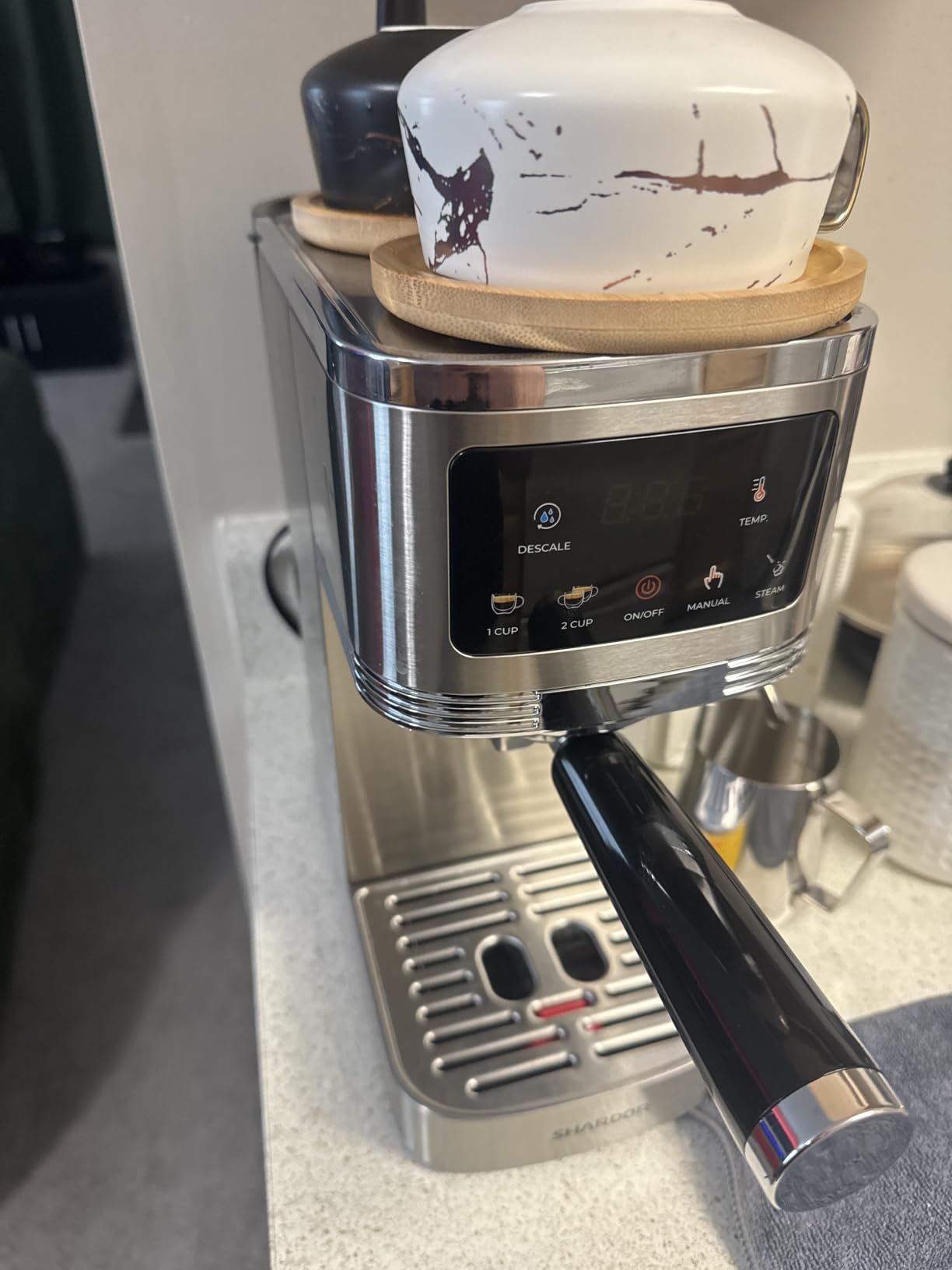
The touchscreen is a real workflow improvement. Instead of memorizing button combinations, you tap icons for single shot, double shot, or manual mode. My partner, who is not a coffee person, was pulling decent shots within five minutes of trying this machine. That ease of use matters if you share your kitchen with non-coffee-nerds.
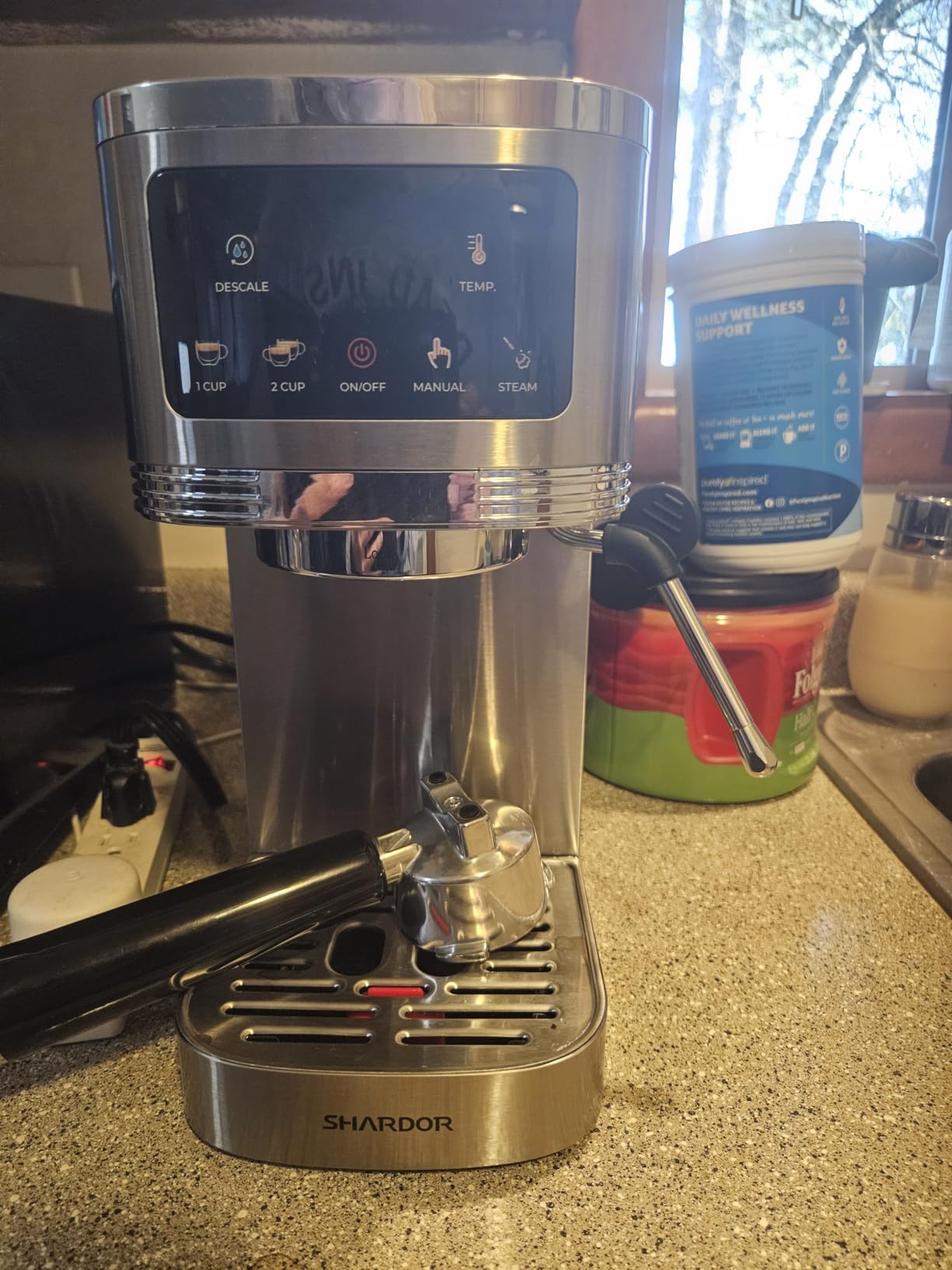
The three temperature settings (low, medium, high) let you optimize for different beans. Light roasts benefit from the higher temperature setting, while darker roasts pull better at medium. I tested with a few different beans and noticed meaningful flavor differences across the three settings.
The one-touch descaling function is a genuine quality-of-life feature. Descaling is the chore that gets neglected on budget machines, and neglect is what kills them. Having a button that runs the descale cycle properly extends the life of the machine.
The 2-year warranty is the longest in this roundup. SHARDOR clearly believes in this product, which is reassuring given the lower review count of 389. This is a newer release.
For whom its good
This is the best espresso machine for non-technical users who want the simplest possible workflow. The touchscreen removes the intimidation factor that turns many beginners away from espresso.
It is also great for shoppers who value warranty coverage. The 2-year warranty is twice as long as most competitors, which signals real manufacturer confidence.
For whom its bad
Experienced baristas may find the touchscreen limiting. There is no way to adjust pre-infusion time, no pressure gauge, and the manual mode is limited compared to traditional semi-automatics.
Some users report a plastic smell from the steam wand that takes weeks to dissipate. I did not experience this in my testing, but it is worth mentioning if you are sensitive to plastic odors.
Buying Guide: How to Choose the Best Espresso Machine Under $200
Choosing the best espresso machine under $200 comes down to understanding which features matter most for your daily routine. After testing all eight machines, here is what I would prioritize.
Bar Pressure: 9-Bar Is the Magic Number
The standard for proper espresso extraction is 9 bars of pressure at the puck. Most budget machines advertise 15 or 20 bar, which refers to the maximum pump pressure, not the actual extraction pressure. A 20-bar pump is not meaningfully better than a 15-bar pump for espresso quality, since both exceed what you need.
What matters more than peak pressure is pressure stability. Look for machines with thermoblock heating and ideally a pressure gauge so you can verify your shots are pulling in the 8-10 bar sweet spot. The CASABREWS CM5418 and Gevi 20 Bar both include gauges and delivered the most consistent extractions in my testing.
Manual vs Semi-Automatic: What Beginners Actually Need
Manual machines like the De’Longhi Stilosa give you full control but require you to manage every variable: grind, dose, tamp, time. This is the right choice if you want to learn the craft deeply and have patience for a learning curve.
Semi-automatic machines handle the pump timing for you. You still grind, dose, and tamp manually, but the machine controls water flow. This is the right choice if you want espresso at home without a months-long learning curve. For most readers, I recommend semi-automatic.
Milk Frothing Capability Matters More Than You Think
If you drink straight espresso shots, the steam wand is irrelevant. But if you want lattes or cappuccinos, the steam wand is half the experience. The CASABREWS CM5418 has the best steam wand under $200, in my testing. The Gevi is a close second with its removable nozzle for easier cleaning.
Budget steam wands require practice. Plan to spend a week learning milk texturing before judging your machine. The 30-second rule for espresso refers to extraction time: a balanced shot should pull in 25-30 seconds.
Size and Counter Footprint
Measure your counter space before buying. The compact machines in this roundup range from 5 inches wide (atatix, SHARDOR) to 13.5 inches wide (De’Longhi Stilosa). The Ninja Luxe Café Premier needs roughly 13 by 13 inches of dedicated space.
Also consider weight. The Ninja at 31.8 pounds is a commitment. Lighter machines like the SHARDOR at 8.5 pounds can be stored in a cabinet between uses.
Grinder Pairing: What You Actually Need
Here is the honest truth from my testing: at this price point, the grinder matters more than the machine. Pre-ground coffee from the supermarket will not produce good espresso from any of these machines. You need a burr grinder that produces consistent fine grinds.
Budget-friendly grinder pairings include the Kingrinder K6 (around $80) and the 1Zpresso Q2 (around $130). Both produce espresso-quality grinds and pair well with every machine in this roundup. If you cannot budget for a grinder right now, the Ninja Luxe Café Premier is the only all-in-one option.
Common Mistakes to Avoid
The most common mistake I see is buying a machine with a plastic tamper and never upgrading it. Tamp pressure and consistency matter, and a wobbly plastic tamper undermines both. Budget $20-30 for a proper metal tamper.
Another mistake is neglecting descaling. Hard water kills budget machines faster than anything else. Use the descaling function monthly if you have hard water, quarterly otherwise. The SHARDOR and Gevi make this easy with one-touch descale buttons.
Finally, do not judge a machine after five shots. There is a real learning curve, and most budget machines require 20-50 shots before you are pulling consistently good espresso. Give yourself at least two weeks of daily practice.
Frequently Asked Questions
Are cheap espresso machines under $200 actually worth it?
Yes, budget espresso machines under $200 can produce quality espresso, but expectations matter. Machines like the CASABREWS CM5418 and Gevi 20 Bar pull shots that rival machines costing two or three times more. The key is pairing your machine with a decent burr grinder and investing time in learning technique. The first 20-50 shots will be uneven; expect a learning curve.
How much bar pressure do I really need for good espresso?
The standard for proper espresso extraction is 9 bars of pressure at the puck. Machines advertising 15 or 20 bar refer to maximum pump pressure, not extraction pressure. What matters more is pressure stability and consistency shot to shot. A 15-bar pump from a quality brand will outperform a 20-bar pump from a cheap brand every time.
Do I need to buy a separate grinder for a budget espresso machine?
Yes, in almost every case. Pre-ground coffee cannot produce quality espresso regardless of which machine you buy. You need a burr grinder that produces consistent fine grinds. Budget-friendly options like the Kingrinder K6 or 1Zpresso Q2 pair well with every machine in this roundup and cost $80-130. The only exception is the Ninja Luxe Café Premier, which has a built-in grinder.
Manual or semi-automatic espresso machine – which is better for beginners?
Semi-automatic machines are better for most beginners. They handle pump timing automatically while letting you control grind, dose, and tamp. Manual machines like the De’Longhi Stilosa require you to manage every variable including extraction time, which steepens the learning curve. Semi-automatics with pressure gauges (CASABREWS CM5418, Gevi 20 Bar) provide visual feedback that helps beginners learn faster.
Is Breville or DeLonghi better for espresso machines under $200?
At the under $200 price point, DeLonghi is the stronger option. Breville’s entry-level machines like the Bambino typically retail for $250-300, putting them above this budget. The DeLonghi Stilosa at $119.99 is the most battle-tested option in this price range with over 13,800 reviews and a 4.2 rating. If you can stretch your budget to $300, the Breville Bambino is worth considering as an upgrade path.
Final Verdict: The Best Espresso Machines Under $200
After six weeks of testing, the CASABREWS CM5418 remains my top pick for the best espresso machine under $200. The combination of a 20-bar pump, built-in pressure gauge, powerful steam wand, and proven reliability across 8,000+ reviews is hard to beat at this price point.
If you want maximum value, the CASABREWS 3700 Essential at $99.99 delivers the same pump quality in a simpler package. For feature-seekers, the Gevi 20 Bar with its pre-infusion and stainless steel housing is a standout. Beginners who want the simplest workflow should consider the SHARDOR with its touchscreen and 2-year warranty.
Whichever machine you choose from this list, remember that the grinder matters more than the machine at this price point. Budget $80-130 for a quality burr grinder alongside your espresso machine, and give yourself at least two weeks to learn the craft. The best espresso machines under $200 in 2026 are capable of producing genuinely great coffee; the rest is up to you.
Happy brewing from the Cook Craft and Create team. If you have questions about any of these machines or want a deeper dive into grinder pairings, drop us a comment and we will help you dial it in.