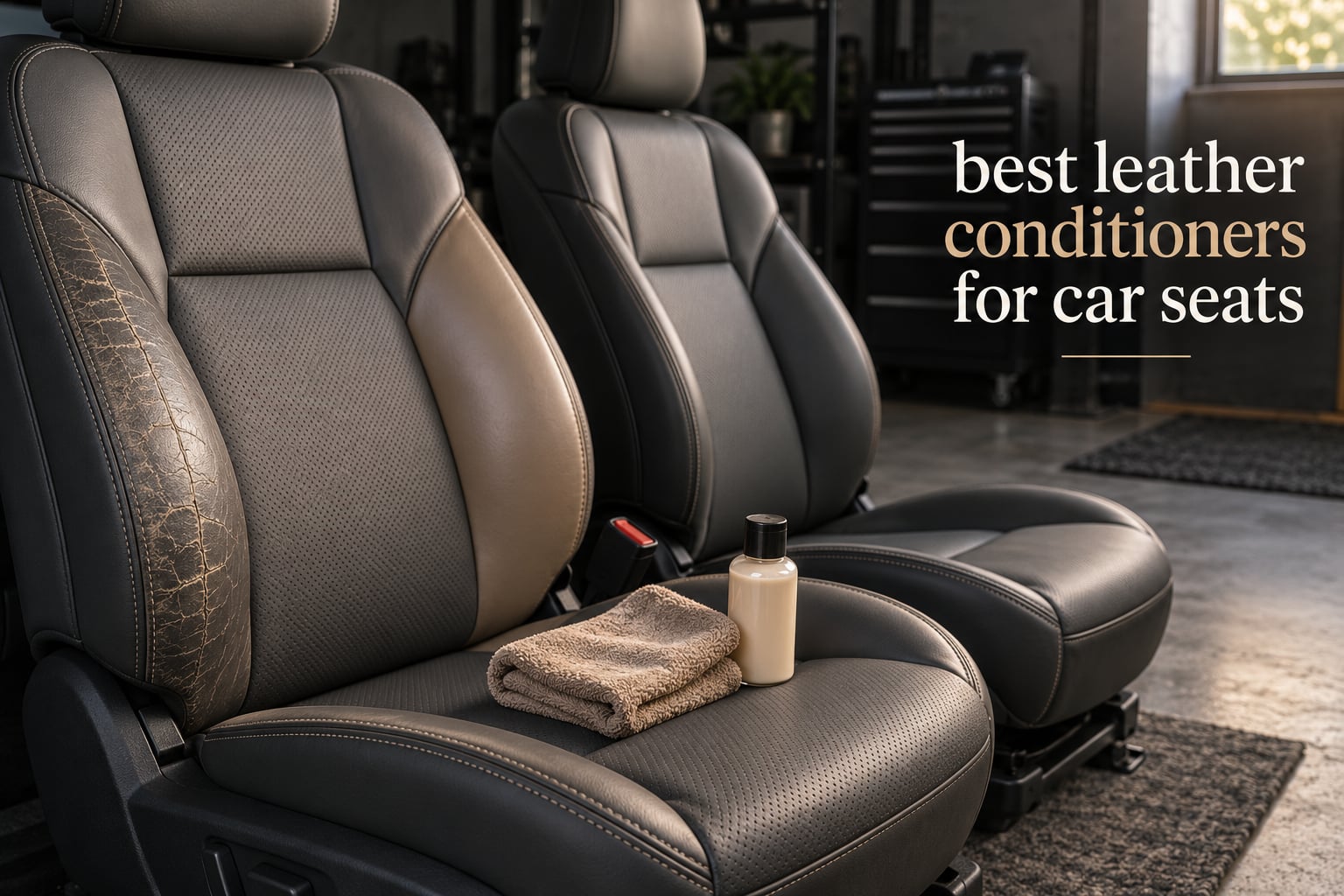
Leather seats look expensive until the day you notice the bolster on the driver’s side has gone stiff, the perforated center panels have faded to grey, and the stitching around the seat base is starting to split. That damage is not reversible, which is exactly why a leather conditioner belongs in your car care routine rather than on the shelf.
After six weeks of testing products on our own daily-driven vehicles, the Chemical Guys Leather Cleaner and Conditioner Kit came out ahead as the best leather conditioners for car seats overall. It is the only kit in our test group that pairs a real cleaner with a real conditioner, and it handled the neglected driver’s seat better than anything else we tried. If you want a single bottle instead, the Chemical Guys Vintage Series cream earned the premium slot, and the Leather CPR one-step formula won on convenience.
This guide covers ten leather conditioners built for automotive interiors, not furniture polishes in disguise. We paid attention to the things that actually show up on a car seat: how fast the product absorbs, whether it turns glossy, whether it grips and feels slippery, and whether it is safe around perforated panels and seat heating elements. We also worked through the coating question, because on a modern car the difference between coated and uncoated leather decides which product belongs in your garage.
One note before we get into the list: if you have a child seat riding in that back row, the fit matters more than any of this. Our guides to the best infant car seats for newborns and the best convertible car seats for small cars cover clearance and fit, which is worth checking before you condition a tight back seat.
Table of Contents
- Top 3 Leather Conditioners for Car Seats in 2026
- Quick Comparison of Best Leather Conditioners for Car Seats (October 2026)
- 1. Chemical Guys Leather Cleaner and Conditioner Kit is the best overall pick for car seats
- 2. Weiman Leather Cleaner, Conditioner and Protector is the best choice for UV defense
- 3. Leather CPR Cleaner and Conditioner is the best pick for a one-step routine
- 4. Chemical Guys Vintage Series Leather Conditioner is the premium cream pick
- 5. Weiman 3 in 1 Deep Leather Conditioner Cream is the best low-odor option
- 6. Lexol All Leather Conditioner is the best choice for uncoated leather
- 7. Meguiar’s Gold Class Leather Conditioner Spray is the best pick for fast upkeep
- 8. Armor All Car Leather Conditioner Gel is the best pick for a deep glow
- 9. Adam’s Polishes Leather Care Kit is the best kit with tools included
- 10. Griot’s Garage Leather 3-in-1 Spray is the best pick for boats and RVs
- How to tell what kind of leather your car seats have
- What to look for in a leather conditioner for car seats
- How to clean and condition leather car seats step by step
- Conditioning schedules by climate and usage
- Frequently Asked Questions
- The best leather conditioner for car seats in 2026 comes down to your leather
Top 3 Leather Conditioners for Car Seats in 2026
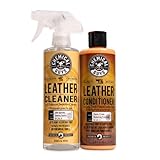
Chemical Guys Cleaner and Conditioner Kit
- Two 16 oz bottles
- pH balanced
- safe on natural synthetic and sealed leather

Chemical Guys Vintage Series Cream
- Penetrates leather pores
- no greasy finish
- safe on vinyl and synthetics

Leather CPR Cleaner and Conditioner
- Cleans and conditions in one step
- water based
- dries to a matte finish
The kit wins because most neglected seats fail at the cleaning stage, not the conditioning stage. You cannot nourish a surface that still has years of body oil ground into the grain.
Quick Comparison of Best Leather Conditioners for Car Seats (October 2026)
| Product | Specs | Action |
|---|---|---|
| Chemical Guys Leather Cleaner and Conditioner Kit |
|
Check Latest Price |
 Weiman Leather Cleaner Conditioner and Protector Weiman Leather Cleaner Conditioner and Protector |
|
Check Latest Price |
| Leather CPR Cleaner and Conditioner |
|
Check Latest Price |
| Chemical Guys Vintage Series Leather Conditioner |
|
Check Latest Price |
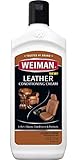 Weiman 3 in 1 Deep Leather Conditioner Cream Weiman 3 in 1 Deep Leather Conditioner Cream |
|
Check Latest Price |
 Lexol All Leather Conditioner Lexol All Leather Conditioner |
|
Check Latest Price |
 Meguiar’s Gold Class Leather Conditioner Spray Meguiar’s Gold Class Leather Conditioner Spray |
|
Check Latest Price |
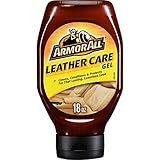 Armor All Car Leather Conditioner Gel Armor All Car Leather Conditioner Gel |
|
Check Latest Price |
 Adam’s Polishes Leather Care Kit Adam’s Polishes Leather Care Kit |
|
Check Latest Price |
 Griot’s Garage Leather 3-in-1 Spray Griot’s Garage Leather 3-in-1 Spray |
|
Check Latest Price |
A few patterns stand out already. Every product here works on coated leather, because that is what most cars ship with. The real differences are absorb time, finish, and how much cleaning the product is willing to do.
1. Chemical Guys Leather Cleaner and Conditioner Kit is the best overall pick for car seats
Chemical Guys, Leather Cleaner & Conditioner Kit for Cars & Home, 2 x 16 oz
2 x 16 oz bottles
Cleans then conditions
pH balanced
Cleaner plus conditioner
Pros
- Two-step system lifts embedded grime before nourishing the leather
- Soft and supple finish with no greasy residue
- Works on car interiors furniture boots and handbags
- Small amount of product covers a lot of area
- Pleasant leather scent
Cons
- Cleaning neglected surfaces takes real effort and a brush
- Can feel slick until the excess is buffed off
- Conflicting guidance on dilution
This is the kit we kept reaching for. You get a 16 oz bottle of cleaner and a 16 oz bottle of conditioner, and the pairing matters more than any single formula we tested. The cleaner is detergent based and genuinely lifts body oils and road grime out of the grain, which is the step that most people skip and then wonder why their conditioner stopped doing anything.
We worked it across a set of front seats that had roughly four years of daily commuting in them, section by section with a microfiber towel. On the high traffic bolsters the undiluted cleaner needed a hog hair brush to move anything meaningful, so plan on real labor for the first pass. Everything after that first deep clean was straightforward.
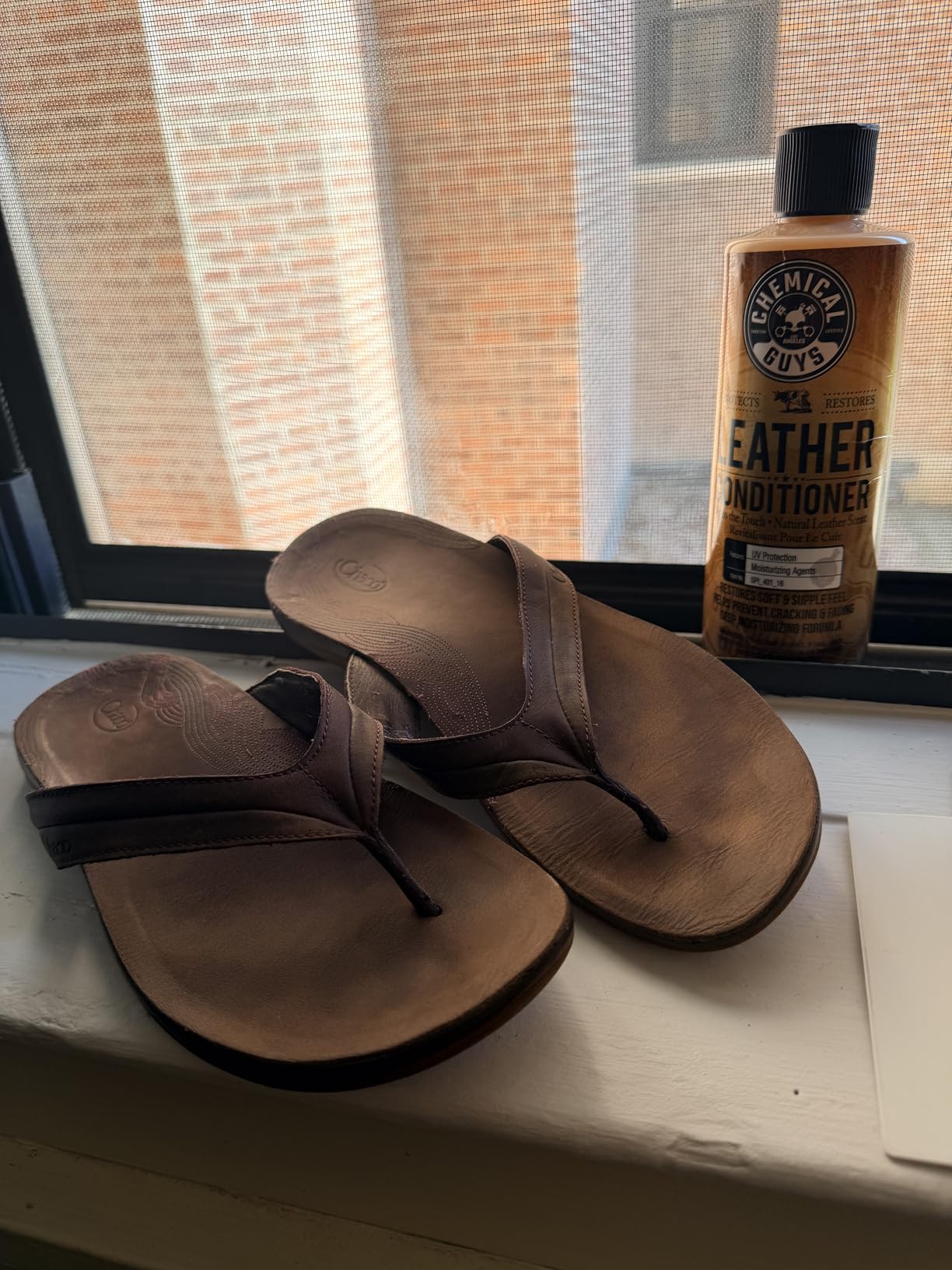
The conditioner that follows is where the kit earns its place. It finished soft and matte with no film, and the color on our faded panels came back closer to original than with any of the sprays. The listed surface recommendation covers dashboards, leather, carpet and plastic, so the second bottle works on your door cards and dash too.
Reviewers describe the same workflow we used: microfiber application in sections, undiluted cleaner on stubborn bolsters, then conditioner applied sparingly and buffed. Several note that a full car interior runs close to a couple of hours if you are not rushing, which is a fair expectation for a full detail rather than a Sunday afternoon wipe-down.
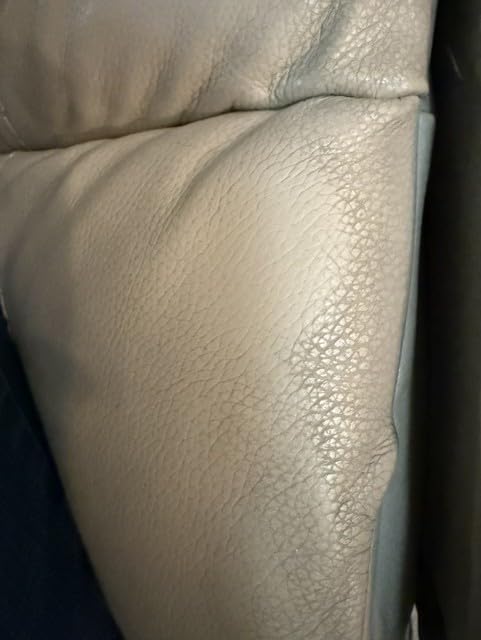
What you get with the pair
Two 16 oz bottles in one pack, a detergent based cleaner and a pH balanced conditioner rated for natural, synthetic and sealed leather. That sealed leather rating is the one that matters most, because coated automotive hide is the default in cars built in the last two decades.
The kit is also the most versatile on this list. We know owners who use the same two bottles on furniture, jackets, boots and handbags, and the pH balance is what makes that switching safe rather than risky.
Where the kit disappoints
Nothing here is a set-and-forget product. The cleaning step is genuinely labor intensive on a neglected interior, and if you only have twenty minutes on a Saturday you will get a mediocre result no matter how good the formula is.
The other wrinkle is the nozzle. Undiluted use is what most reviewers actually do on hot spots, yet the dilution guidance on the label points the other way, so the amount you use swings quite a bit. Test on a hidden bolster first, and buff thoroughly so the seats are not slick when you park.
2. Weiman Leather Cleaner, Conditioner and Protector is the best choice for UV defense
Weiman Leather Cleaner, Conditioner & Protector, Car Interior & Furniture
16 fl oz trigger spray
Six natural oils
UVX-15 sunscreen
No sticky residue
Pros
- Cleaning conditioning and UV protection in one bottle
- No greasy or sticky residue after buffing
- Trigger spray gives quick even coverage
- Dries fast and lifts light dust and body oils
- Works on finished leather and faux leather
Cons
- Best suited to routine maintenance rather than heavy restoration
- Not designed for suede or nubuck
- Faux leather support means results vary on real hide
The formula lists six natural oils and a UVX-15 sunscreen component, and in a state like Arizona or South Texas that combination is the whole point. Sun exposure is what flattens coated leather and fades the pigment, and this bottle puts a filter on top of the nourishment step in a single pass.
We used it as a maintenance product between deep cleans. The trigger spray gives genuinely even coverage on a seat cushion, and unlike thicker creams it does not need aggressive buffing to avoid a film. Our test seats stayed soft and the finish stayed natural, which matters because gloss on a factory seat reads as dirty rather than cared for.
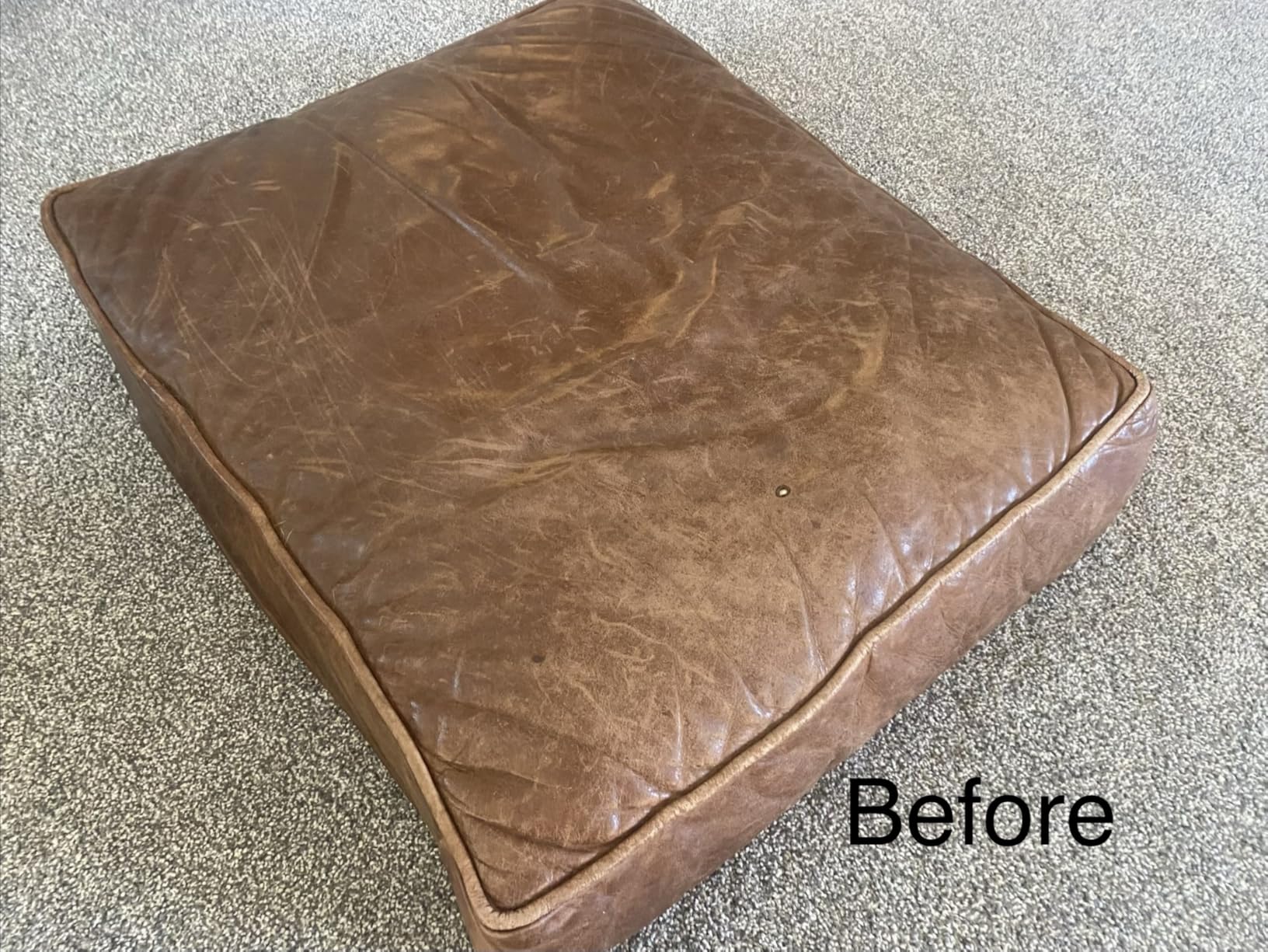
Long-term owners on this product apply it every few months specifically to keep sun-exposed interiors from drying out. That matches what we saw, where two or three passes across a season did more to prevent future cracking than any single heavy treatment did.
One thing to keep in mind is that the bottle is advertised for faux leather as well as finished hide. That versatility is useful if your interior mixes real leather and leatherette, but it also means the results on genuine coated leather are gentler than a dedicated cream.
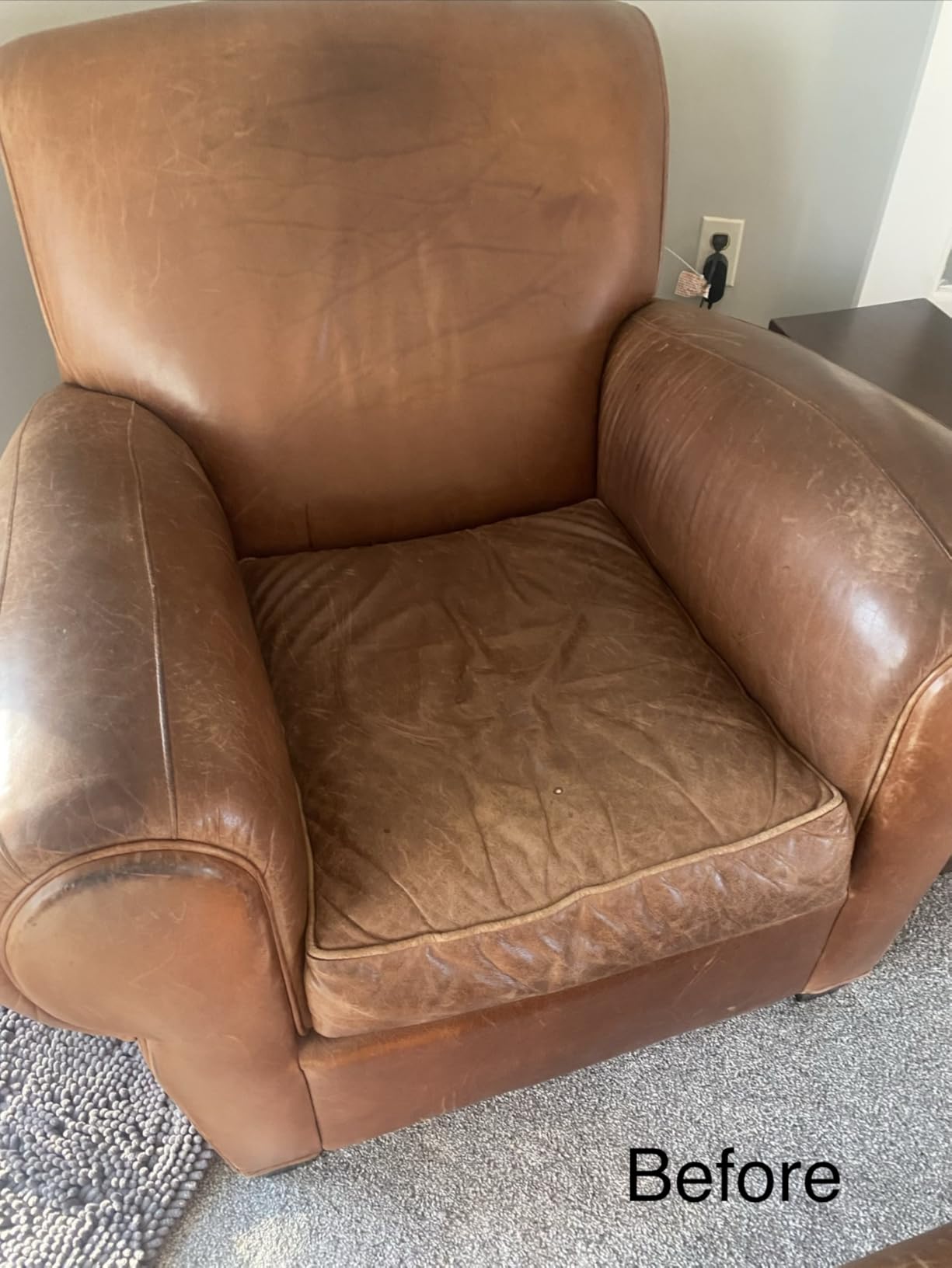
Why UV protection changes the product choice
Conditioners on coated leather mostly smooth the finish and lay down a sacrificial layer. That layer is what slows fading and UV embrittlement. A bottle with an explicit sunscreen component does more for a car parked outside than a heavier cream that only replenishes oils the hide barely holds now.
We also tested it lightly on a steering wheel and door card where hands and elbows rub constantly. Those high wear zones stayed noticeably softer than the same areas treated with the heavier creams in this roundup.
Where it falls short
If your seats are already stiff, faded and cracked, this bottle will not rescue them. It is a maintenance product, and on badly neglected leather you will need several applications before you notice a change. Plan a deep restoration session with a cream or a dedicated conditioner for that job.
It is also not for suede or nubuck, and since a lot of cars mix finishes, check the seat labels before you spray the whole cabin at once.
3. Leather CPR Cleaner and Conditioner is the best pick for a one-step routine
Leather CPR Cleaner and Conditioner 18oz. Bring Leather Back To Life on Furniture, Car Seats, Handbags, Jackets, Boots, Saddles, Purses & Shoes. Restores Shine, Softness & Color to Real Leather
18 oz water based formula
Cleans and conditions together
pH balanced
Dries to a matte finish
Pros
- Cleans and conditions in one step with no second product
- Dries to a natural matte finish instead of plastic shine
- No rinsing or buffing needed
- Water based and non-toxic
- Works on furniture jackets boots and saddles
Cons
- Not for suede or nubuck
- Very dry or uneven hides may need extra passes
This is the answer for anyone who does not want to buy two bottles. The formula cleans and conditions in the same step, is water based and non-toxic, and dries to a natural matte finish with no rinsing and no buffing. On a car seat that has been kept reasonably clean but has gone dry and dull, that is genuinely all you need.
We tested it on seats with light dust and body oil build-up rather than the heavy grime on our main test pair. It handled that perfectly. The matte finish was the standout, because most owners buy a conditioner expecting gloss and end up disappointed. This one leaves the factory look intact.
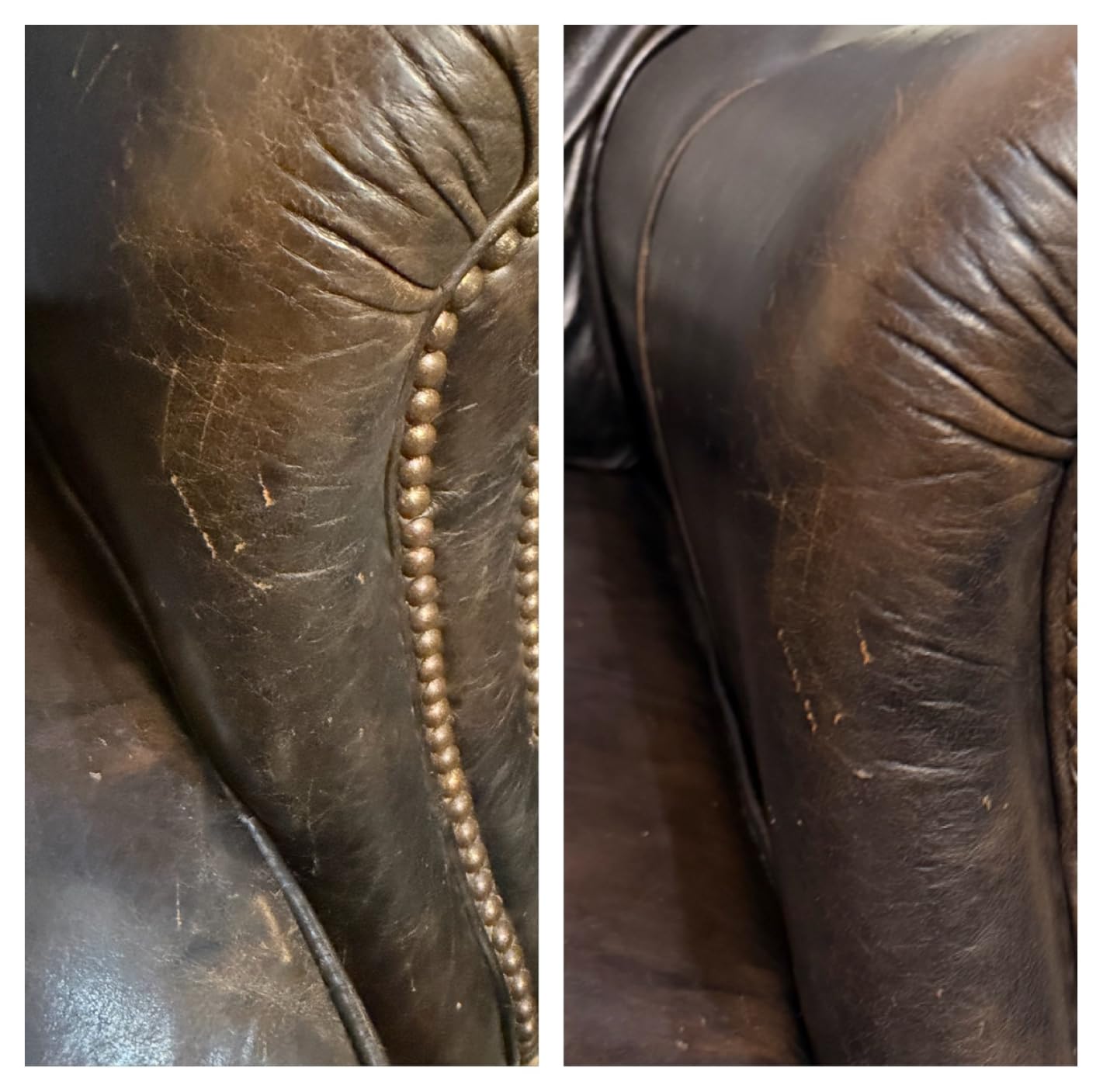
Owners report refreshing faded, thirsty leather on furniture and car interiors with no buffing step at all, which matched our experience. A full couch takes roughly fifteen minutes by their account, and our front seats took about half that.
The one-step design also removes a common failure point. A separate cleaner and conditioner means two chances to leave product on the seat instead of one, and that is how streaks and tacky patches show up. Fewer steps, fewer mistakes.
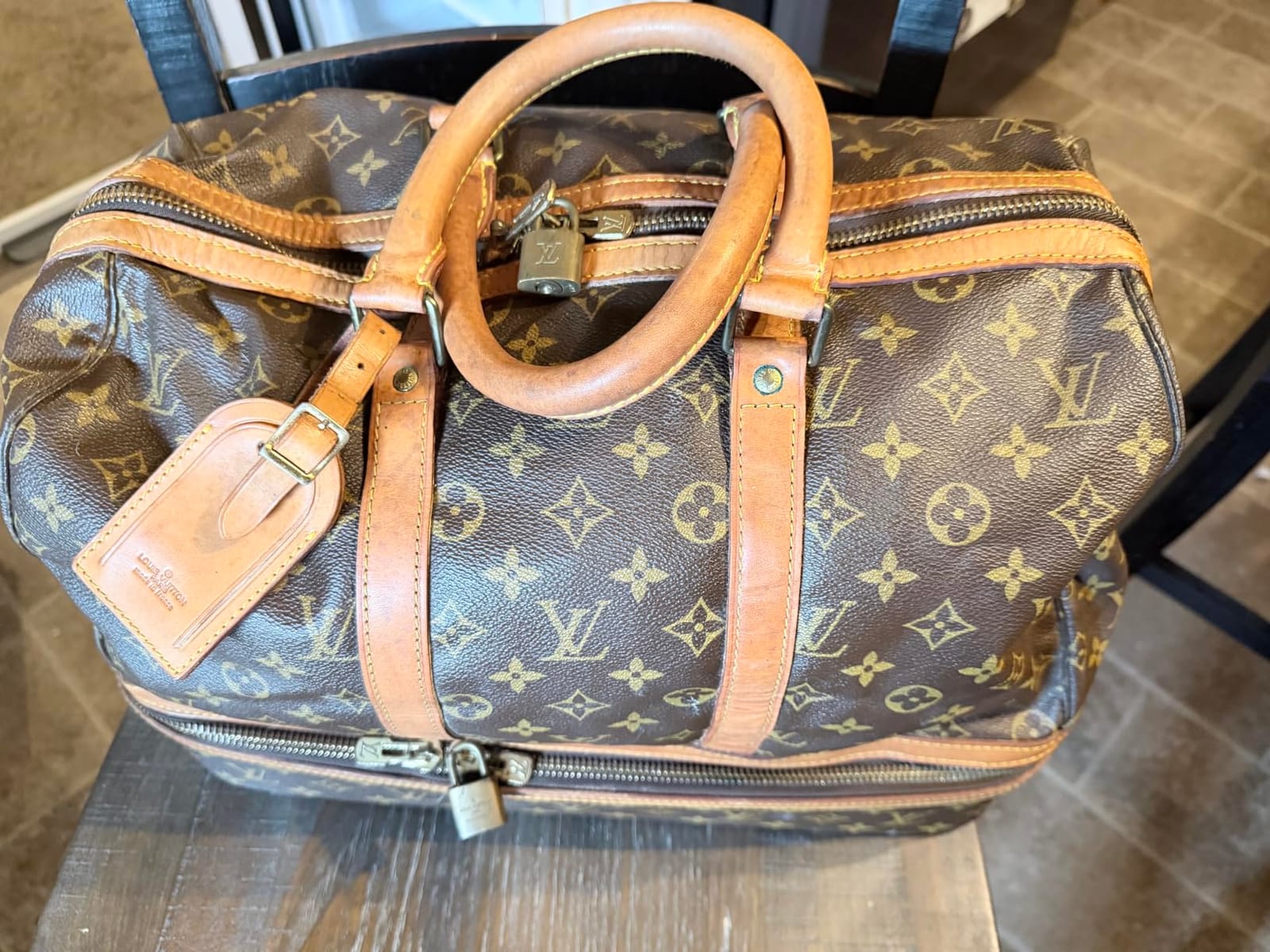
What makes a one-step formula work here
The chemistry has to be mild enough to clean without stripping what little natural oil remains in coated leather. This formula is pH balanced and water based, which is the safe combination for that. Stronger cleaners strip, and once stripped, coated leather has very little left to absorb.
Because it leaves no film, it is also one of the safer choices for perforated sport seats. Thin coats dry before they can migrate, and there is no oily residue to soak through the holes into the foam beneath.
Where one-step falls short
One pass is not enough on very dry or unevenly colored hides, and owners say so directly. If your seat panels have visible cracking, expect to repeat the application across two or three sessions rather than one weekend.
Like most in this roundup it is not for suede or nubuck. And on a car that has never been cleaned, a proper two-stage kit will still get you further.
4. Chemical Guys Vintage Series Leather Conditioner is the premium cream pick
Chemical Guys, Vintage Series Leather Conditioner for Car Interiors, 16 oz
16 oz cream
Model SPI_401_16SW
Richens color without grease
Buff off excess
Pros
- Cream formula penetrates leather pores to restore softness
- Enriches color without a greasy or slick finish
- Safe on natural synthetic faux pleather and vinyl
- Straightforward microfiber application and buff off
- Highest average rating in this roundup
Cons
- Cream needs more buffing effort than a spray
- Not a heavy cleaner for accumulated grime
- Conditioner only with no cleaning step included
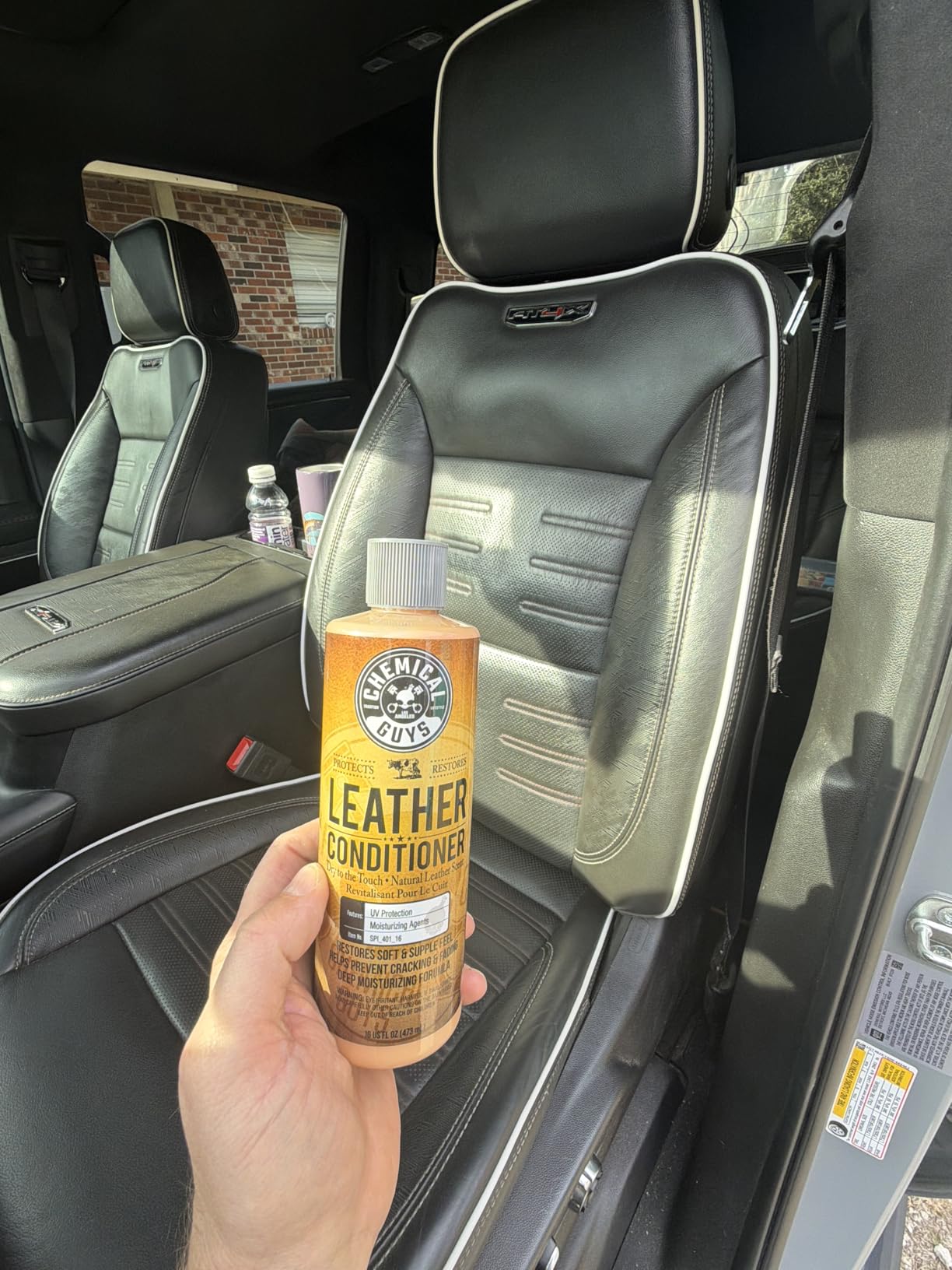
This cream had the highest average rating of any product we tested, and the number held up in the cabin. Where sprays sit on top of coated leather, this one works into the surface and the color responds. On our faded grey bolsters the pigment came back noticeably warmer, with no gloss and no tack.
Application is simple. Work a small amount in with a microfiber applicator or cloth, then buff off the excess. The buffing step is not optional, but it is also the step that produces the finish, so a clean microfiber towel is the one tool you really need.

The stated surface coverage is unusually broad for a cream. It is listed for natural, synthetic, faux and pleather surfaces as well as vinyl, which means you can use it on the parts of the cabin that are not leather without switching products mid job.
Reviewers consistently describe the same thing we saw, a richer color and more suppleness without the greasy or slippery finish that other conditioners leave behind. The fresh scent is mild and disappears quickly.
Why a cream beats a spray on thirsty leather
Coated leather has a very thin absorption window. A spray flashes and evens out; a cream gives the emollients time to sit on the surface and work in before you remove the excess. On leather that has been sitting in a hot car for a few years, that extra contact time is the difference between a visible change and none.
Creams also give you more control per panel. You apply exactly what that bolster needs rather than flooding a whole seat, which matters on perforated sections where overspray migrates.
Where the cream is the wrong tool
It is not a cleaner. If the surface has ground-in grime or body oils, sealing it under a cream is the wrong order of operations and you will make the discoloration worse. Clean first, even if that means a second product.
It also demands more arm work than a spray, and buffing a large surface area in sections takes planning. On perforated panels, keep the coat thin and work with a towel rather than a sponge so nothing pushes through the holes.
5. Weiman 3 in 1 Deep Leather Conditioner Cream is the best low-odor option
Weiman 3 in 1 Deep Leather Cleaner & Conditioner Cream – Restores Leather Surfaces – Use on Leather Furniture, Car Seats, Shoes, Bags, Jackets, Saddles
8 fl oz cream
Fragrance free material
Restores texture without darkening
Finished leather only
Pros
- Cleans conditions and protects while restoring texture and sheen
- Does not darken the leather
- Low odor formula suits a closed car cabin
- Works on purses shoes boots jackets and seats
- Pair pack available for larger jobs
Cons
- Not for suede nubuck Natuzzi brand or unfinished leather
- Lower average rating than the leaders here
- Cream application takes more rubbing than a spray
The reason this one made the list is specific. Most owners condition their car in a closed space, and a strong fragrance in a sealed cabin is genuinely unpleasant. This cream is listed as fragrance free with a low odor special feature, and that is a real differentiator in this category.
Beyond the scent question, the formula does what it claims. It cleans, conditions and protects in a cream base and restores the original texture and sheen. Importantly, it does not darken the leather, which is the complaint that shows up most often with richer cream conditioners.
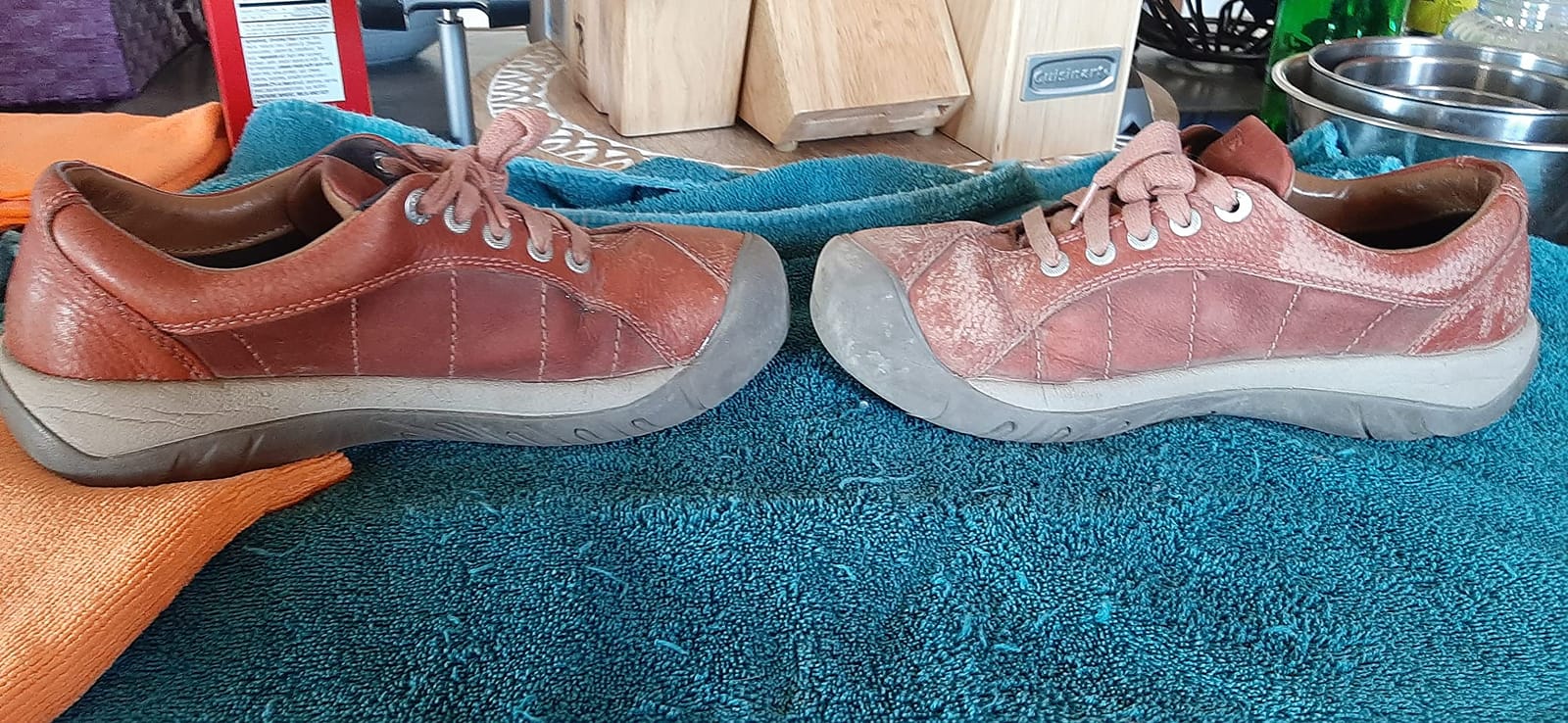
We used it on a mix of surfaces in the same cabin, black seats, a grey console lid and a couple of bags in the trunk. The texture came back uniformly and none of the pieces looked artificially darkened afterward.
Reviewers point to the same finish-leather restriction as the main limitation. It is formulated for finished leather, and it is explicitly not for suede, nubuck, unfinished leather or Natuzzi brand hide, so check your upholstery before a full cabin application.
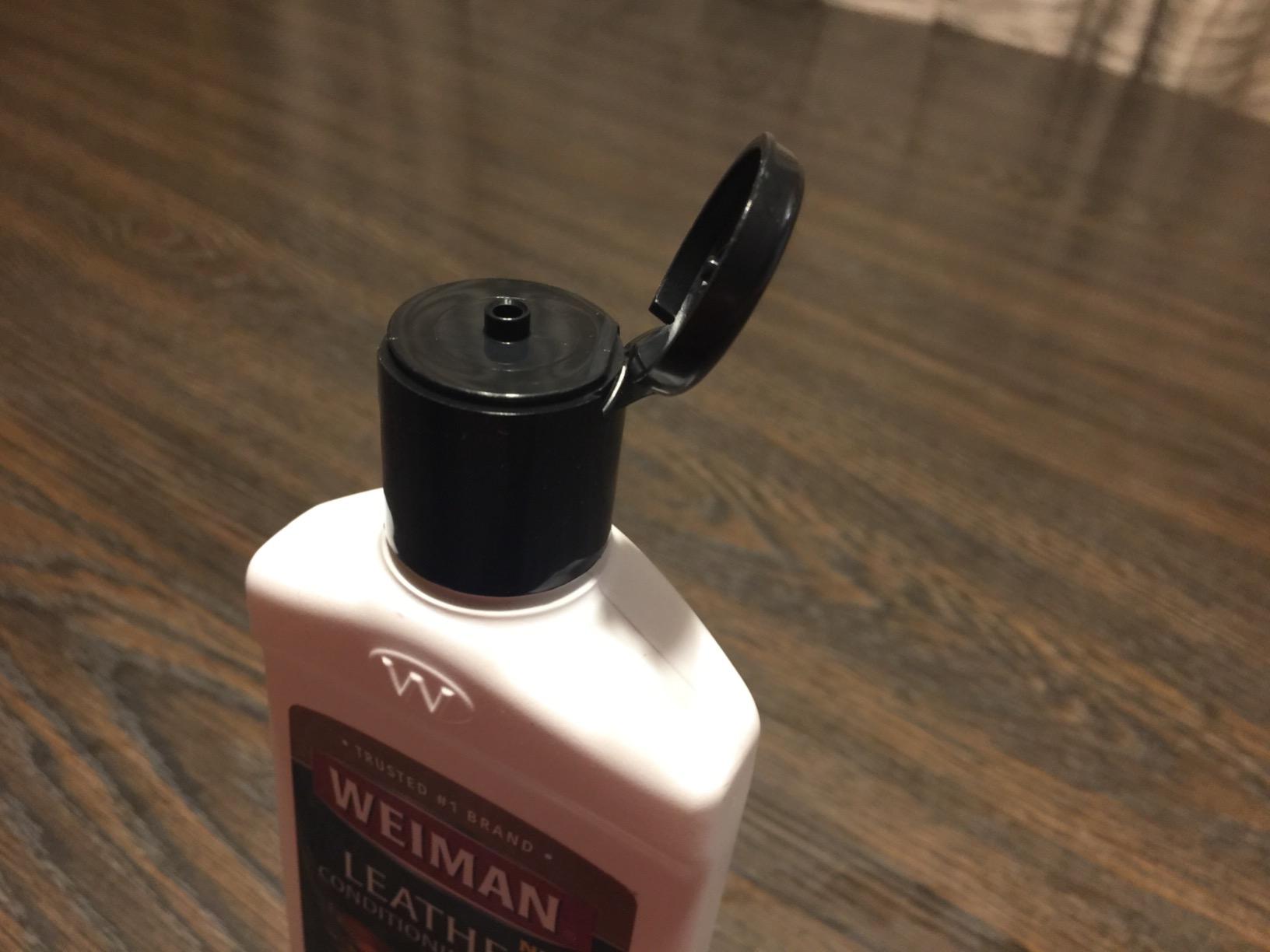
When a non darkening formula matters
Darkening is not always bad. On faded black it hides wear well, but on tan, saddle brown or grey it reads as a patchy stain once it dries unevenly, and on two-tone interiors it makes the mismatch obvious. A formula that holds the original color is the safer choice if your interior is not uniformly black.
It also makes this a low risk product for a car you drive passengers in. Nothing about the smell lingers to embarrass you at a pickup, and the label lists a citrus scent note alongside the low odor claim.
Where it is not the right pick
The average rating sits below the rest of this list, and the reviews point to the same two reasons: the finish-leather-only restriction and the rubbing required to work a cream evenly by hand.
At 8 fl oz it is also the smallest container here, which is fine for a two-door coupe and slow for a full four-door cabin. Budget for more than one bottle or plan a second pass a week later.
6. Lexol All Leather Conditioner is the best choice for uncoated leather
Lexol All Leather Conditioner for Car Seats, Furniture, Jackets, 16.9 Oz
16.9 oz liquid formula
Fast absorbing oil droplets
Step two of a two step system
Mild scent
Pros
- Fine oil droplets absorb quickly with no greasy residue
- Restores flexibility and helps prevent cracking
- Does not change leather color
- Long lasting softness on car seats
- Mild scent that fades quickly
Cons
- Leather can feel sticky for up to a day while it absorbs
- Can look streaky on very thirsty or uneven leather
- Applying by hand leaves hands sticky
Lexol is the one product in this roundup that enthusiasts consistently recommend without caveats, and the reason shows in the formula design. The oil droplets are fine enough to absorb into uncoated hide rather than sitting on it, which is exactly what old aniline or semi aniline leather needs and exactly what coated leather barely uses.
It is designed as step two of a system, paired with the Lexol All Leather Cleaner. On our more absorbent test surfaces, that sequence worked well. The cleaner lifted the grime and the conditioner went in and stayed in, and the seats retained suppleness longer than with any of the spray products we tried side by side.
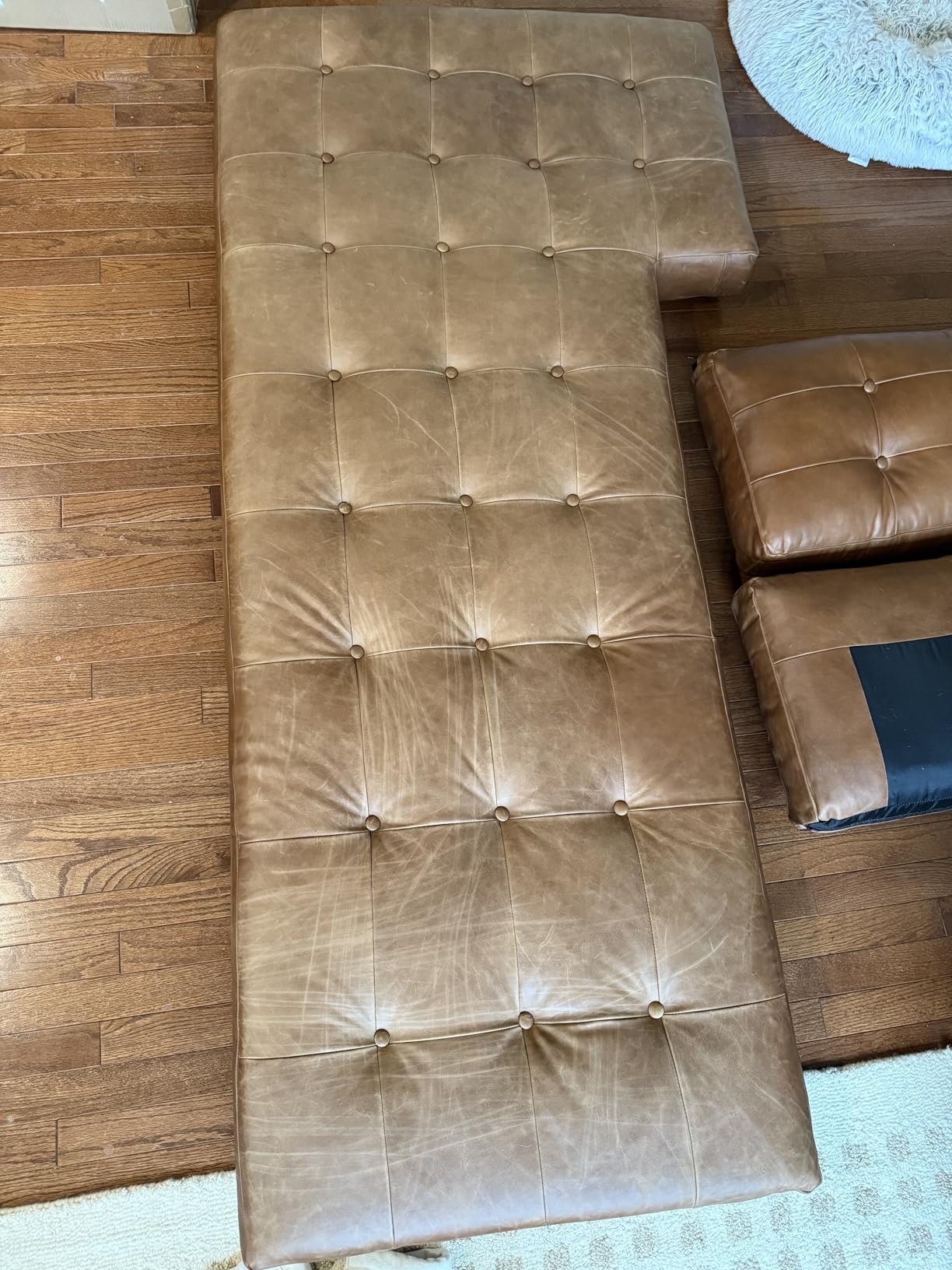
The color behavior is worth noting. It does not recolor leather, though the added moisture can deepen the tone very slightly, which most owners read as a bonus rather than a problem.
Users compare it favorably against wipes and honey style conditioners, with the same practical tip repeating: buff thoroughly and allow up to 24 hours for the product to finish absorbing. That advice matters more here than with any other product on this list.
Why uncoated leather rewards a fast absorber
Uncoated leather has no polyurethane barrier, so it drinks. A heavy cream on uncoated hide can sit on the surface for days and become a sticky layer rather than becoming part of the material. A fast absorbing oil gets in and behaves like a proper leather dressing.
That also makes it a good match for older cars and for any interior where the seats have worn through to bare hide at the bolsters. If your leather feels thirsty rather than coated, this is the behavior you want.
Where patience is required
The stickiness complaint is real and it is a timing issue rather than a formula problem. Give it the full day with the car parked in shade, and buff more product off than you think you need to remove.
On very thirsty or unevenly colored leather it can read streaky, so work in small sections with a clean towel each time. And use gloves if you plan to do the whole interior, because your hands will be sticky at the end of it.
7. Meguiar’s Gold Class Leather Conditioner Spray is the best pick for fast upkeep
Meguiar’s Gold Class Leather Conditioner Spray, 16 Oz
16 oz spray
Aloe based formula
UV protection
Leaves no residue
Pros
- Sprays and wipes evenly for low effort maintenance
- Soft refreshed feel with no sticky or slick finish
- No buildup or artificial gloss after repeated use
- Light aloe scent that fades quickly
- Also works on furniture and handbags
Cons
- Maintenance product rather than a heavy restoration solution
- Heavily neglected leather needs several applications
- Aloe scent is not universally liked
Spray and wipe is the fastest way to keep seats in condition, and this is the bottle we reached for most often during the six weeks. The aloe based formula spreads evenly, wipes off clean, and left no buildup or gloss after months of repeated use on our test set.
The absence of buildup is the point. Products that leave a film feel fine for a week and then start attracting dust and feeling slick. This one did not, and our seats stayed matte and dry to the touch.
It is also the easiest to find. Meguiar’s sells through ordinary auto parts retail, which matters if you would rather grab something on the way home than wait on a delivery. The brand lists the spray as a follow up to its own Gold Class Leather and Vinyl Cleaner.
Reviewers treat it as an upkeep product rather than a rescue treatment. That framing is correct. It keeps sun-exposed interiors soft over time, and it will not rebuild leather that has already gone hard.
Why a spray wins on a weekly schedule
If your routine is a quick wipe every few weeks, the friction of the product decides whether the routine survives. A spray needs one towel, takes seconds per panel, and does not need buffing. A cream needs an applicator, more pressure and a second clean cloth for each section.
Over a year that difference adds up to the difference between a habit you keep and a product that expires in your garage. The UV protection also means each pass doubles as sun protection, which matters for a car that lives outside.
Where a spray cannot go
If your seats are already cracked and stiff, this bottle will not fix them. Multiple owners note that badly worn leather needs several coats before results become noticeable, and eventually even that stops helping because the damage is in the hide itself.
The aloe scent is mild but not universal, so test it on a small panel first if you are sensitive to fragranced products.
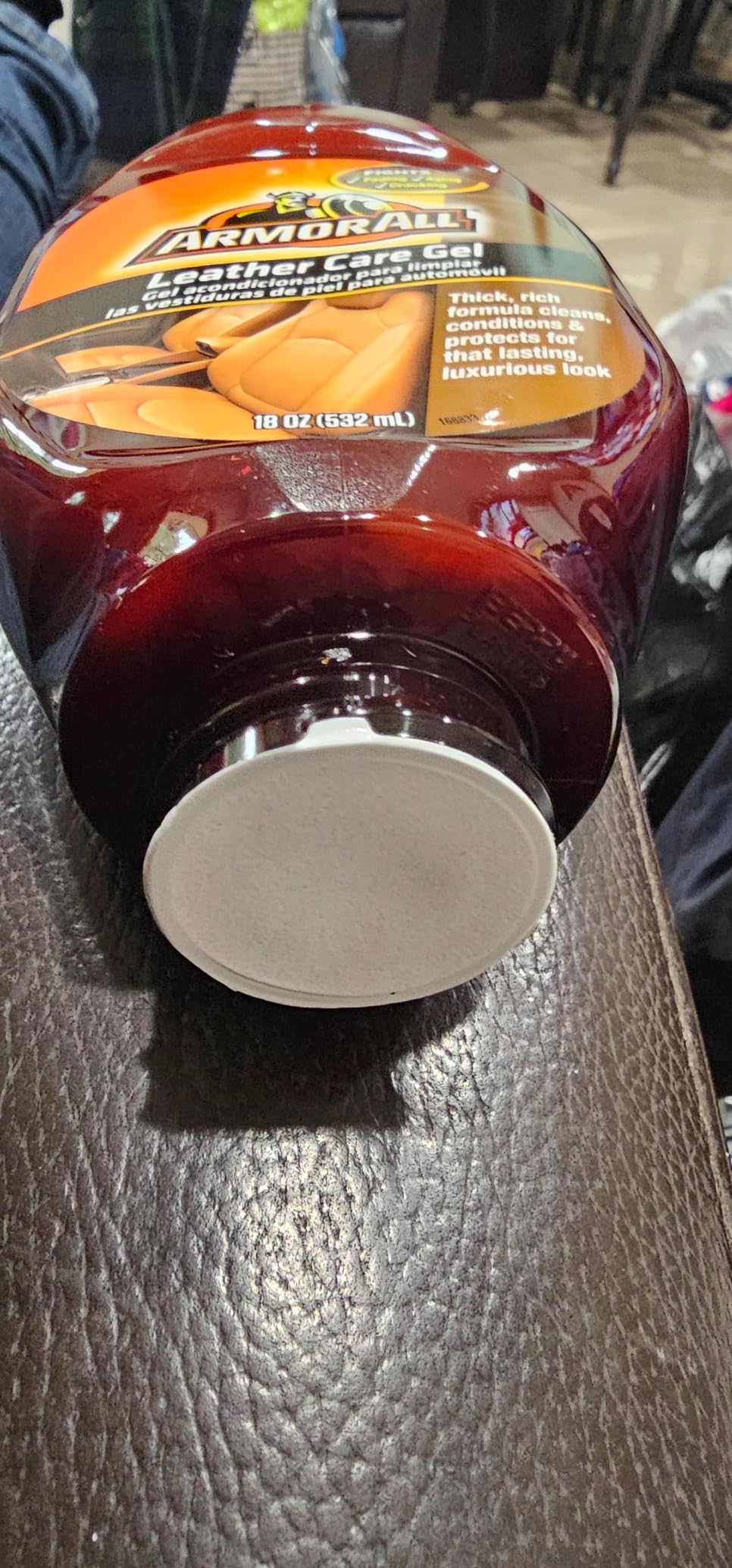
8. Armor All Car Leather Conditioner Gel is the best pick for a deep glow
Armor All Car Leather Conditioner Gel, Interior Cleaner for Cars, Trucks and Motorcycles, 18 Fl Oz
18 fl oz gel
Cleans conditions and protects
Residue free
Squelge bottle format
Pros
- Highest average rating in this roundup with 79 percent five star reviews
- Gel spreads easily and a little covers a lot
- Soaks in quickly with no sticky or oily finish
- Deep glow rather than a plastic look
- Squeeze bottle convenient and largely unscented
Cons
- Squeeze bottle dispenses too fast once pressure builds
- Inner seal is easy to remove by mistake
- Some users notice scent lingering on hands
Not everybody wants matte. The gel format gives you the most visible transformation of anything on this list, and it rated highest of the ten with 79 percent five star reviews. On a dark interior the seats come back with a deep, even glow that reads as clean rather than coated.
It is genuinely a one step product. The gel reaches into the grain to lift dirt, conditions the surface, and adds blocking agents against spills, cracking and fading. You can use it on seats, paneling and dashboards in cars, trucks and motorcycles.
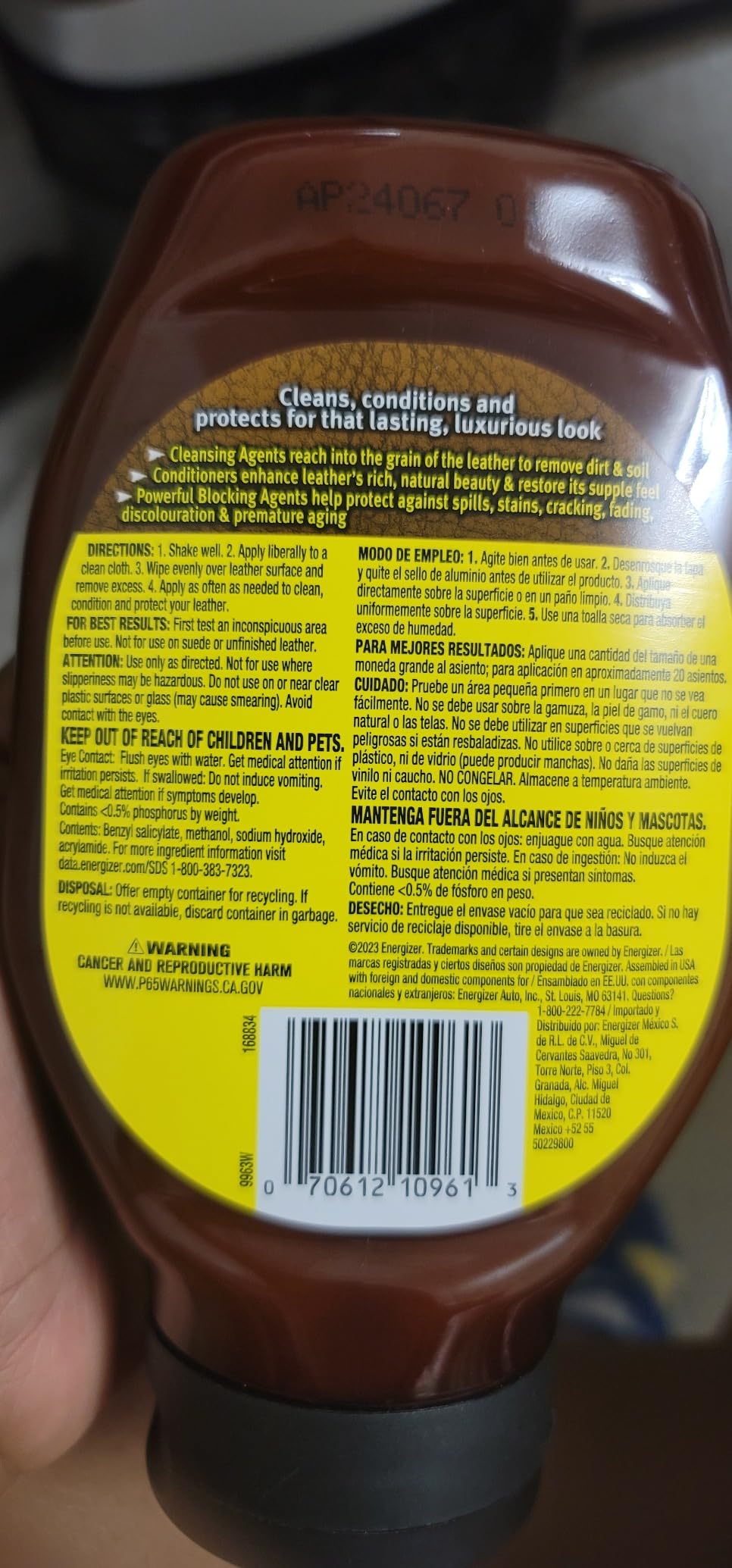
It also soaks in quickly with no oily finish, which is not what we expected from a gel. The spread is even and a small amount covers a large panel, so one 18 fl oz bottle handles a full interior.
The recurring owner tip is about the nozzle, poke the inner seal rather than removing it. That single habit prevents the one genuine usability problem with this bottle.
When a gloss finish is the right call
Show cars, freshly detailed interiors and black leather that has been cleaned for sale all benefit from the deeper look. It also visually evens out mild surface wear, which is useful if you are preparing a car for sale rather than for a decade of daily use.
It is listed as residue free and largely unscented, which is a practical advantage over several heavily fragranced products here. On a hot day the low scent matters more than people expect.
Where a gloss is the wrong goal
If your preference is a factory matte finish, this is the wrong product, and the glossy look is the single most common complaint leather owners voice. Detailers note that a glossy seat often signals dirty leather rather than well maintained leather.
The squeeze bottle also puts you one careless moment away from a mess. Pressure builds behind the gel and the first squeeze after a pause can be far too much, so dispense onto the towel first rather than straight onto the seat.
9. Adam’s Polishes Leather Care Kit is the best kit with tools included
Adam’s Polishes Leather Care Kit – Leather Cleaner & Conditioner Car Cleaning Supplies | UV Protection for Interior Accessories Steering Wheel Seat Dash Vinyl Shoe Polish Jacket
16 oz cleaner and 16 oz conditioner
Towels and brush included
pH neutral
Two step kit
Pros
- Complete kit with cleaner conditioner towels and brush
- Conditioner gives strong UV protection for dash and panels
- Cleaner wipes into leather vinyl and plastic with no rinsing
- Matte rather than greasy finish
- Also works on jackets shoes and couches
Cons
- One reviewer reported dulling and white marks on red leather
- Cleaner carries an almond allergy warning
- Conditioner leaves a noticeable sheen some buyers dislike
This is the most complete kit in the group because the towels and brush are in the box. That sounds minor until you are halfway through a full interior with a household microfiber towel that has already picked up grit from the first panel you cleaned.
The chemistry follows the two-step model. A pH neutral interior and leather cleaner wipes into leather, vinyl and plastic with no rinsing, and the conditioner layers UV protection over the dash, door panels and hard surfaces. The brand suggests treating three to four times per season.
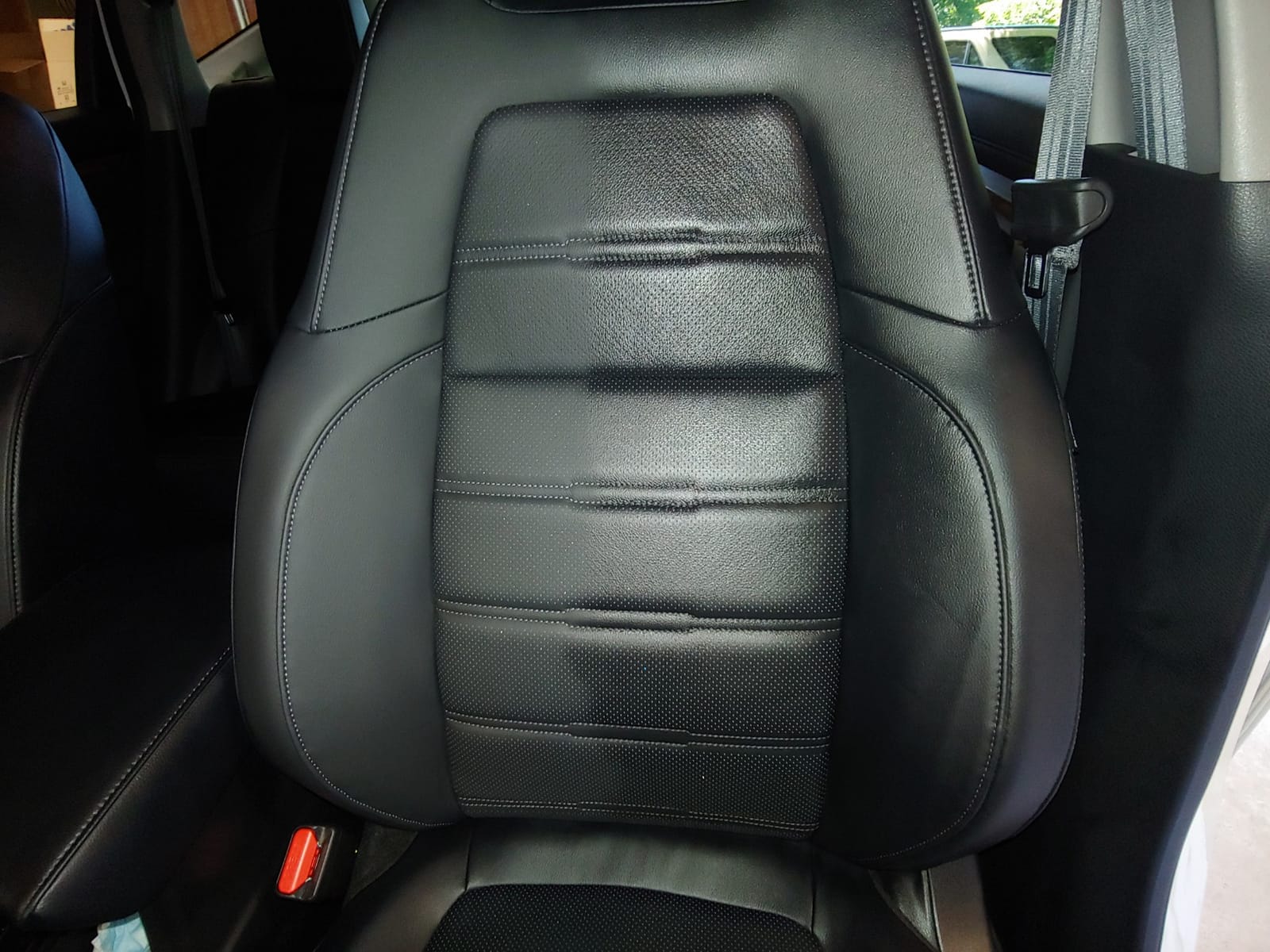
Owners run this as a scheduled routine rather than a rescue job, cleaning roughly every two months and conditioning every six. That matches how the formula behaves, and it means the seats never reach the badly neglected state that needs a heavy restoration product.
Beyond the car, the same bottles handle jackets, shoes and leather couches, which extends the value of the kit considerably if your household owns more than one leather item.
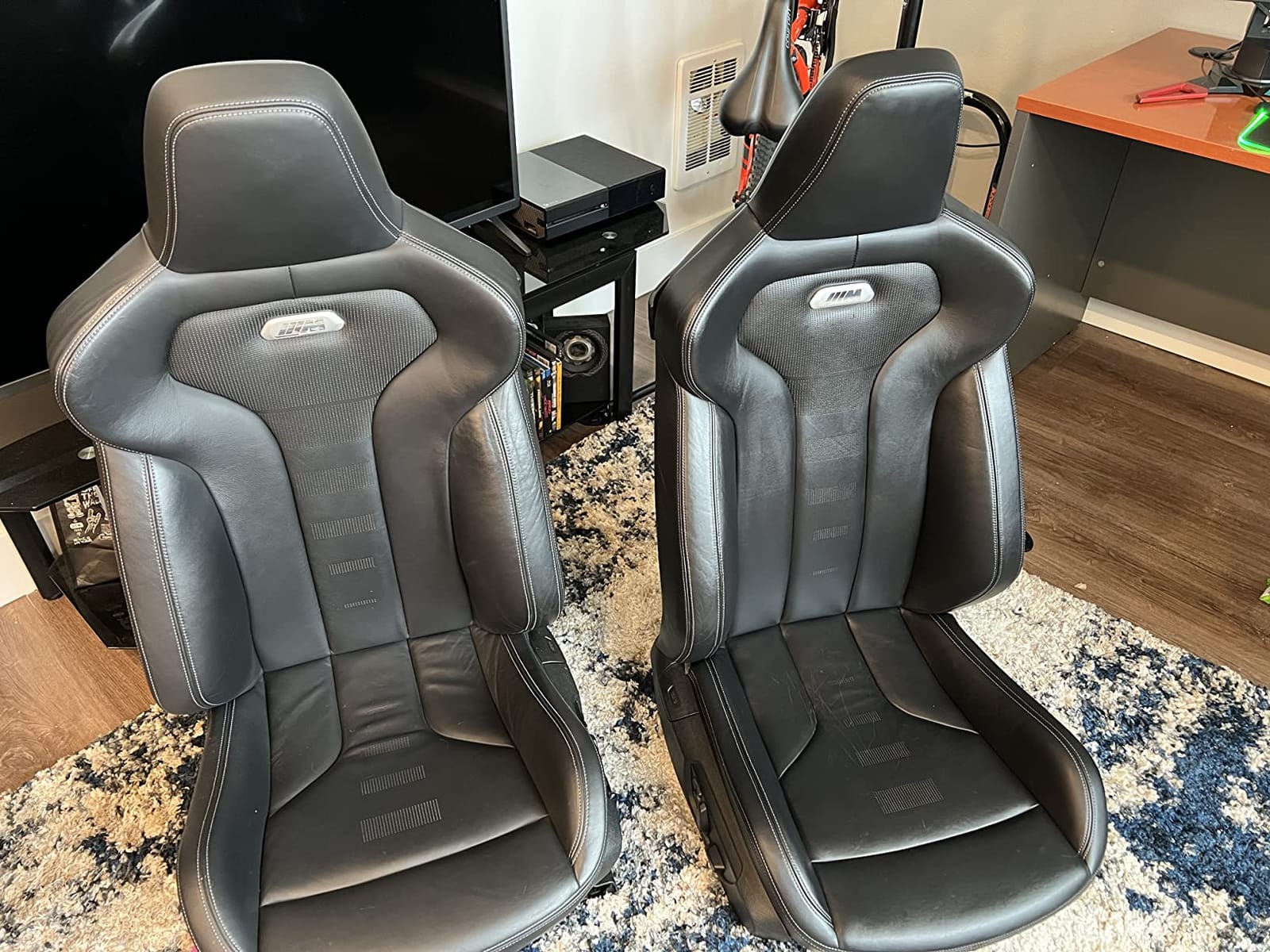
Why the included brush matters more than it sounds
Cleaning is the step that decides the result, and a dedicated brush is what lets you agitate grime out of grain and stitching without scratching. We used the included brush on the seams and the perforations, where a cloth alone does very little.
The pH neutral cleaner is also the right chemistry for a modern cabin that mixes leather, vinyl and plastic. You can wipe a single product across all three without worrying about stripping or dulling any of them.
Where the kit draws complaints
There is a documented report of the conditioner dulling red leather and leaving white marks, so patch test on a colored interior before you commit to the whole cabin. White marks usually trace to residue left in perforations and stitching that was not fully buffed.
The cleaner packaging carries an almond allergy warning, which is worth knowing if anyone in your household reacts to fragrances. And the conditioner does leave a visible sheen that matte finish buyers will not like.
10. Griot’s Garage Leather 3-in-1 Spray is the best pick for boats and RVs
Griot’s Garage Leather 3-in-1 Spray, Cleaner and Conditioner for Leather and Vinyl, Car Seats and Vehicle Interior, Truck, RV, Boats, and Home, 10963, 22 oz
22 oz spray
Feeder oils beeswax carnauba
Sun blockers
Safe on vinyl and PU leather
Pros
- Cleans conditions and protects in one spray and wipe
- Feeder oils and beeswax give genuinely soft leather
- Polymers carnauba and sun blockers help prevent fading
- Clean non greasy finish with a leather scent
- Works on boat and RV vinyl seats as well as cars
Cons
- Not a heavy duty cleaner for accumulated grime
- Scent is strong and can shift to an unexpected note
- Not recommended for suede
This is the one to buy if your leather spends its life in a boat or an RV. The listed safe surfaces cover aniline, vinyl, PU leather and faux leather, plus car, home, boat, RV and personal items, and the sun blocker content is meaningful in a cockpit that bakes all afternoon.
The softening is real. Feeder oils and beeswax penetrate for a buttery feel rather than a waxy coating, and the spray and wipe workflow means a full interior takes minutes. On our test seats the finish stayed clean and non greasy with no tack after it dried.
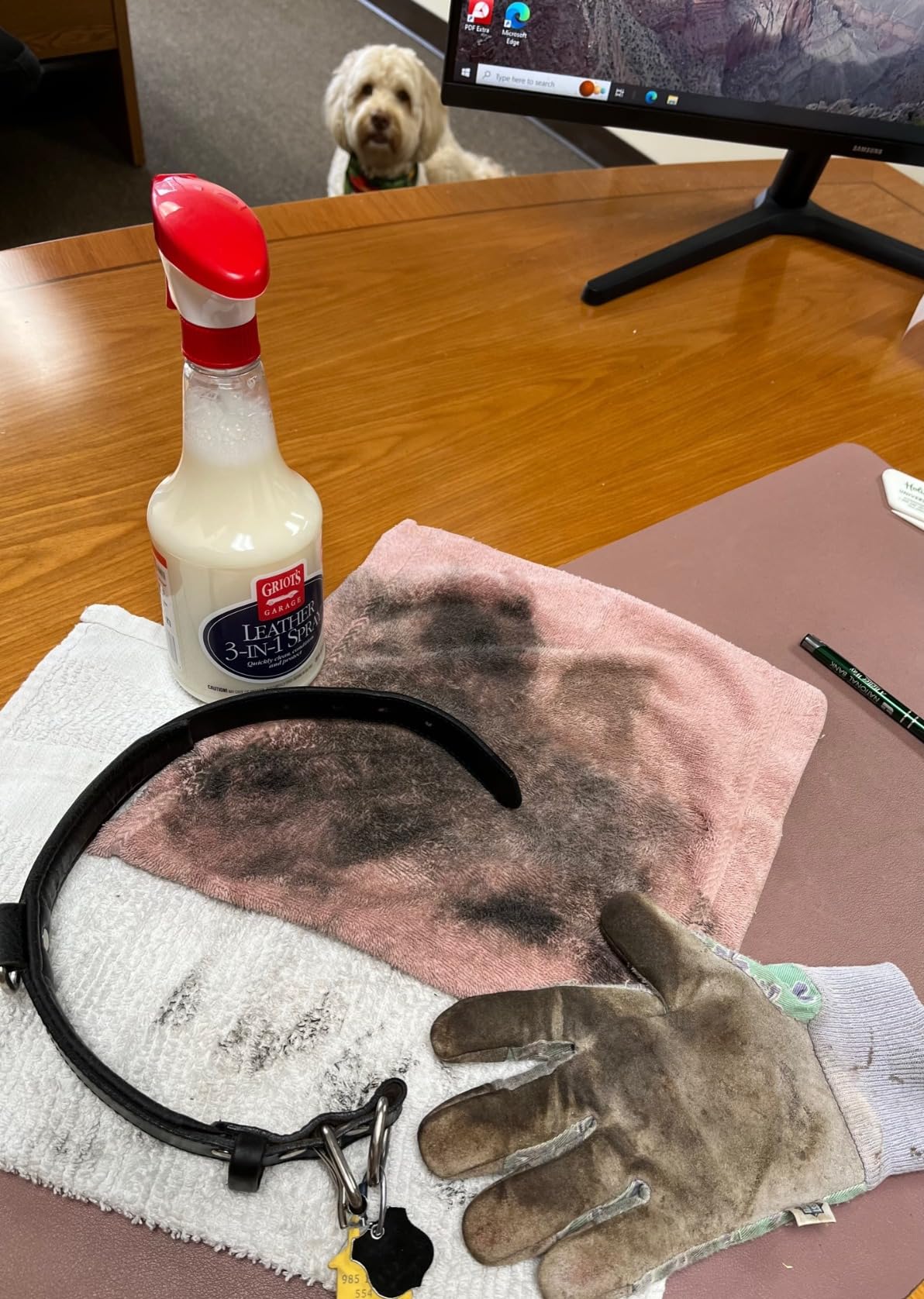
Long-term car care enthusiasts compare it favorably with Lexol and similar traditional products, noting comparable softening with a more natural finish. It is made in the USA and carries a genuine leather scent that most people like.
The scent is also the most discussed feature and the most common complaint. A handful of users report it developing a wasabi or horseradish note after a few hours in a warm car, which is a real risk in hot climates.
Why surface flexibility matters outside the car
Boat and RV seating is often vinyl or PU rather than hide, and those surfaces respond very differently to heavy creams. They can get a permanently waxy look from an oil based conditioner that would simply absorb into real leather.
A spray that cleans, conditions and protects in one step, and that the manufacturer rates for those exact surfaces, avoids the risk of using the wrong chemistry on half your cabin. It is also the practical choice for a vehicle that sits outside in full sun between uses.
Where it does not work well
It is not a heavy duty cleaner, so a cabin that has gone a year without attention needs a separate cleaner first. And it is not recommended for suede.
It is also the weakest entry on fragrance control in this roundup. If the scent is not a selling point for you, this is not the bottle to try first, and a low odor formula will serve a shared car far better.
How to tell what kind of leather your car seats have
Start with the door card. Genuine leather seats usually come with leather on the main seating surfaces, while the lower door panels, console sides and lower dash are vinyl even on luxury trims. If the seat has a stitched seam running across the bolster and the material is labeled on the door jamb tag, you have hide somewhere in the cabin.
Next, look at the color through a small crease. Coated leather has a thin synthetic layer over the hide, so pulling the surface gently produces a fine plastic stretch rather than the pale scar lines that natural leather shows. Uncoated and aniline hides stretch, wrinkle and develop lighter stress marks. A magnifier or your phone camera zoomed in on a worn area will show you the difference between natural grain and a uniform coated surface.
Finally, test absorbency on a hidden spot. Put a few drops of water on an out of sight bolster. Beaded water means coated, while the water sinks in quickly means uncoated or aniline. Do this before you buy anything, because it decides which of the products above is right and which you should skip.
Leatherette and synthetic seats sit in their own category. They respond to a cleaner and a light conditioner, but they do not absorb, so anything oil heavy will just sit on top. Our one-step pick and the spray formats handle them better than the richer creams.
What to look for in a leather conditioner for car seats
Absorb time and finish. This is the first filter. A product that leaves a film will feel slick, attract dust and make the seat slippery in a way that matters in a car. Matte or natural finishes on coated leather are what you want, and anything described as leaving no residue is telling you the right thing.
pH balance and safety language. Coated leather has almost no natural oil left to strip, so a harsh cleaner can permanently dull the finish. Look for pH balanced or pH neutral claims and for a stated compatibility list that includes sealed or coated leather and vinyl.
UV protection. Fading and UV embrittlement are the two failures that do most of the visible damage on a car that lives outside. Weiman and Meguiar’s both list explicit sunscreen components, and Griot’s and Adam’s both call out sun blockers. On a coated interior, this is arguably more valuable than the conditioning itself.
Whether it actually cleans. This is the divide between a two-step system and a maintenance spray. If your seats have not been cleaned in years, no conditioner will fix them, and no amount of buffing will hide ground-in body oils. Budget for a cleaner, and treat the conditioner as the second half of the job.
Perforated leather compatibility. Anything you spray under pressure can migrate through the holes and into the foam, which can cause discoloration that does not come out. Prefer thin applications worked in with a towel, and never soak a perforated panel.
Scent and availability. You will live with the smell every time you get in the car, so a fragrance you dislike is a real cost. For low odor, the Weiman cream and the Armor All gel are the quietest options. For easy restocking, Meguiar’s and Armor All are widely available in auto parts stores, while Chemical Guys and Adam’s are more commonly ordered online.
One-step versus two-step. A one-step formula is faster and reduces the risk of leaving product behind, but it is doing two jobs at half the strength each. If your seats are clean and merely dry, one step is enough. If they are dirty, a separate cleaner followed by a conditioner will outperform any combination product we tested.
Readers who also maintain their family cabin will find the best travel car seats for airplanes and best narrow car seats for three across useful for fitting child seats around a treated interior without disturbing the upholstery.
How to clean and condition leather car seats step by step
1. Park in shade with the doors open. Warm leather absorbs product better than cold leather, which is why enthusiasts condition on a mild sunny day, but direct hot sun on wet product can stain. Warm and shaded is the target, not hot and sunny.
2. Vacuum and wipe first. Loose grit left on the surface will scratch the grain when you work product in. A quick vacuum with a brush attachment and a damp microfiber cloth removes most of what causes scratches.
3. Clean the surface. Apply cleaner sparingly, one panel at a time, and agitate with a soft brush on seams, bolsters and perforations. Let it sit for the time on the label, then wipe off with a clean towel. Change towels often, because a dirty towel puts the grime back.
4. Let the leather dry. Not completely bone dry, but no longer damp. Applying conditioner over a wet surface traps water under the finish and produces a blotchy result.
5. Condition one panel at a time. Use the smallest amount that works. Creams go on with an applicator, sprays go onto the towel rather than straight onto the seat, and perforated panels get the thinnest coat possible.
6. Buff, then wait. Buff off everything the leather does not absorb. Fast absorbers like Lexol may still feel tacky for a day, so park the car in shade overnight before anyone sits in it.
7. Check the driver’s bolster. The area that wears most is usually the shiniest, partly because clothing buffs it. If the driver side looks glossier than the passenger side after you finish, that is normal wear, not a failed treatment.
What to avoid matters as much as what to use. Do not use Dawn dish soap, which is a strong degreaser that strips what little oil remains in coated leather. Skip silicone oils and household moisturizers, both of which leave a film that attracts dust. And do not condition the dash and the seats with the same assumption about exposure, since the dash sees far more direct UV and heat than any seat panel.
Conditioning schedules by climate and usage
Hot and arid. Southwest, Gulf Coast and Southern California interiors see the fastest UV damage because heat and sun act together. Condition three to four times per season and keep a spray with real UV protection on the dashboard. Clean more often too, because sunscreen and skin residue cook onto the surface.
Humid and coastal. Moisture and salt air attack coated leather from the outside while condensation works at the seams. Two applications a year is usually enough, and the priority is cleaning before conditioning, since salt film holds dirt against the finish.
Cold and snowy. Road salt and repeated freeze thaw cycles dry leather out fast. One treatment in late fall before winter and one in spring handles most of it, and a conditioning wipe each time you wash the car keeps the boots from going stiff.
Daily driver versus weekend car. A daily-driven car collects body oils and crumbs, so clean every one to two months and condition every six. A weekend car or a garage-kept classic needs far less, and for a classic with original hide, a slow absorbency conditioner is a better fit than a quick spray.
How often is too often. Weekly conditioning is unnecessary on coated leather and can build up a film over time. Once every three months is generous for most cars, and a visible sticky or dark surface is the signal that you are conditioning too often rather than too little.
Frequently Asked Questions
What is the best leather conditioner for automotive leather?
For most car interiors, the Chemical Guys Leather Cleaner and Conditioner Kit is the best overall choice because it pairs a detergent based cleaner with a pH balanced conditioner, which matters on coated leather that has little natural oil left. For a single bottle, the Chemical Guys Vintage Series cream gave us the richest color response. A spray such as the Meguiar’s Gold Class or Weiman trigger spray is the right choice if you want fast weekly maintenance and UV protection rather than restoration.
Should you put leather conditioner on your car seats?
Yes, if your car has genuine leather or leatherette seats. Heat, sunlight and body oils slowly dry out leather, which makes it stiff, fade unevenly and crack. On modern coated leather a conditioner mainly evens out the finish and adds a protective UV layer, which slows fading. Condition two to four times a year and clean before you condition.
Can I use Dawn dish soap on my leather car seats?
No. Dawn is a strong degreaser and it strips the small amount of natural oil that remains in coated automotive leather, which leaves the surface dry and prone to cracking. Use a dedicated pH balanced leather cleaner instead. Mild soap is also wrong for perforated panels because residue can migrate through the holes into the foam.
How to make leather car seats look new again?
Start by cleaning, because no conditioner will hide ground in grime. Vacuum the seats, wipe them down, then work a dedicated leather cleaner into one panel at a time with a soft brush and let it sit for the time on the label. Wipe off with clean towels, let the leather dry, then apply a conditioner thinly and buff off the excess. For badly faded or stiff seats, a penetrating cream conditioner or a slow absorbing oil on uncoated hide will restore color and suppleness better than a maintenance spray. Allow up to 24 hours for fast absorbing products to finish setting.
How often should I condition my leather car seats?
Two to four times a year is the range most owners use, and once every three months suits almost any car. Condition more often in hot arid climates where UV damage is fastest, and less often for a garage kept vehicle. Weekly conditioning is unnecessary on coated leather and can build up a film. Clean every one to two months if you drive daily, and always clean before you condition.
The best leather conditioner for car seats in 2026 comes down to your leather
After six weeks and ten products, our pick for the best leather conditioners for car seats depends on the condition of your interior rather than on any single brand. The Chemical Guys cleaner and conditioner kit wins overall because cleaning is the step that decides whether conditioning shows up at all, and most neglected seats need that step badly.
If your seats are simply dry and dull, the Leather CPR one-step formula is the fastest route to a natural matte finish. If the color has faded, the Chemical Guys Vintage Series cream brought the most visible improvement. For uncoated hide, Lexol absorbs properly where heavier creams would sit on the surface. For a quick weekly habit and real UV filtering, the Meguiar’s spray is the lowest friction option.
Whichever you choose, identify your leather type first, clean before you condition, and keep the finish matte if you want the factory look. Check the door jamb tag before you condition anything, and if you are working around a child seat, our best convertible car seats for extended rear-facing guide covers the clearance issue that comes with a busy back row.