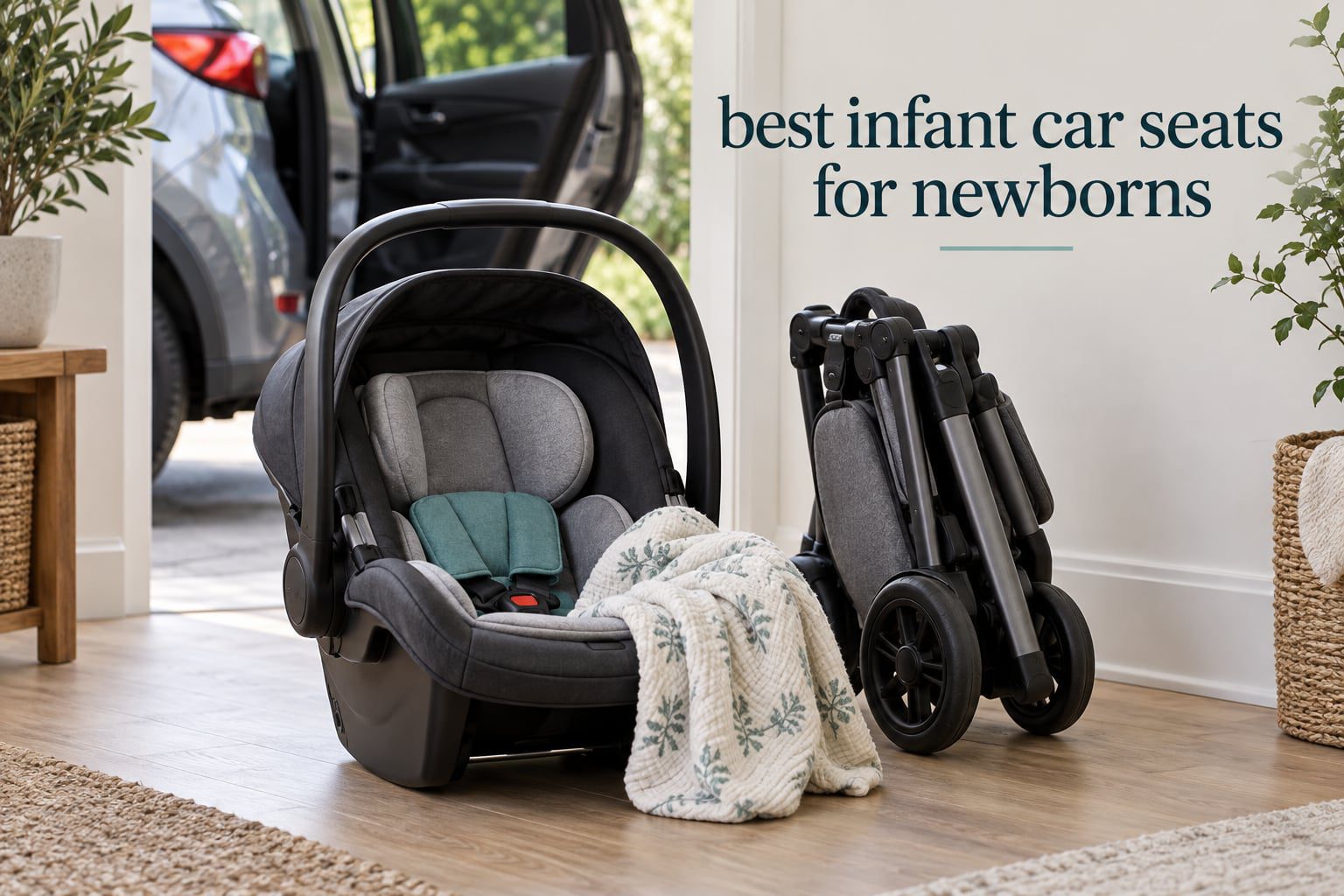
The best infant car seat for a newborn is a rear-facing infant carrier that clicks into its own base, and our top pick is the Graco SnugRide Lite LX. It is rated for rear-facing babies from 4 lb to 30 lb and up to 32 inches tall, and Graco publishes a 7.2 lb carrier weight, which matters when you are lifting the seat a dozen times a day.
On duration, the American Academy of Pediatrics recommends keeping your child rear-facing for as long as the seat’s height or weight limit allows, which for most infant carriers means somewhere around the first birthday. A carrier is a first-year seat, not a first-year emergency, and rushing to a forward-facing step does nothing for your child’s head and neck.
We compared eight infant car seats for this guide, reading every published specification, the owner review themes, and the failure points buyers actually report. We do not crash test, and we do not buy seats for review, so treat every number here as a manufacturer or owner-reported figure rather than a lab result.
Table of Contents
- Top 3 Infant Car Seats for Newborns in 2026
- All 8 Best Infant Car Seats at a Glance in 2026
- Fit for the Smallest Babies: What the Newborn Specs Actually Mean
- The Hospital Ride Home: What Hospitals Lend and What to Buy
- 1. Graco SnugRide Lite LX – The One We Handed Around the Most
- 2. Graco SnugRide SnugFit – Anti-Rebound Bar and No-Rethread Harness
- 3. Baby Trend EZ-Lift Plus – The Straightforward Budget Buy
- 4. Safety 1st OnBoard FLX – Light, Compact and Machine-Washable
- 5. Chicco KeyFit – Two Bubble Levels and the SuperCinch Tightener
- 6. Baby Trend Ally – The Widest Weight Range and a Cozy Cover
- 7. Joie Rue – A 7.7 lb Carrier With a Built-In Anti-Rebound Bar
- 8. Baby Trend Secure-Lift – Compact, Padded and Simple
- How to Choose an Infant Car Seat for a Newborn
- Recalls, Registration and Model Status in 2026
- Frequently Asked Questions
- The Best Infant Car Seats for Newborns: Final Word
Top 3 Infant Car Seats for Newborns in 2026

Graco SnugRide Lite LX
- Rear-facing 4-30 lb
- Carrier weight 7.2 lb
- 4-position base with level indicator
- Up to 32 inches

Graco SnugRide SnugFit
- Rear-facing 4-30 lb
- Anti-rebound bar
- No-rethread harness
- Up to 32 inches
Baby Trend EZ-Lift Plus
- Carrier and base in the box
- Newborn comfort padding
- Adjustable harness
- Lightweight carry build
The SnugRide Lite LX takes the top slot on the strength of two numbers: a 4.8 rating across 7673 ratings, and a published carrier weight of 7.2 lb with a four-position base. The Graco SnugRide SnugFit trades some of that lightness for an anti-rebound bar and a single-button harness, which is why it wins the travel-system slot.
The Baby Trend EZ-Lift Plus is the value pick. It includes both the carrier and the base, comes with newborn padding, and holds a 4.7 rating across 2074 ratings, which is enough history to trust it even though its written reviews run thin.
All 8 Best Infant Car Seats at a Glance in 2026
| Product | Specs | Action |
|---|---|---|
| Graco SnugRide Lite LX |
|
Check Latest Price |
| Graco SnugRide SnugFit |
|
Check Latest Price |
| Baby Trend EZ-Lift Plus |
|
Check Latest Price |
 Safety 1st OnBoard FLX Safety 1st OnBoard FLX |
|
Check Latest Price |
 Chicco KeyFit Chicco KeyFit |
|
Check Latest Price |
 Baby Trend Ally Baby Trend Ally |
|
Check Latest Price |
 Joie Rue Joie Rue |
|
Check Latest Price |
 Baby Trend Secure-Lift Baby Trend Secure-Lift |
|
Check Latest Price |
Two things stand out in that table. Six of the eight seats stop at a 30 lb upper limit, while the Chicco KeyFit stops at 22 lb and the Baby Trend Ally runs to 35 lb. And only three manufacturers publish a carrier weight at all, so treat any “lightest seat” claim you read elsewhere with suspicion.
Fit for the Smallest Babies: What the Newborn Specs Actually Mean
The word “newborn” does real work in this category, and it is where most spec sheets are least helpful. A 3 lb baby and a 9 lb baby both fit inside the range printed on the box, and only one of them fits correctly. What separates them is the harness height, the insert, and the recline angle.
All eight seats here start at a 4 lb minimum rear-facing weight. That matters if your baby arrives early, because a 3 lb infant falls outside a 4 lb rating no matter how good the padding looks. If you know the birth weight in advance and it is under 4 lb, talk to your hospital’s child passenger safety technician before you buy anything, because the answer may be a convertible seat with a lower minimum rather than an infant bucket.
Harness height is the next thing to check. The SnugRide SnugFit adjusts the headrest and harness together from one front button while the baby stays in the seat, which makes getting the straps at or just below the shoulders far easier than re-threading. The Baby Trend Ally also uses a no-rethread design. The Baby Trend Secure-Lift, by contrast, gets frequent owner complaints about harness straps being hard to adjust, and that is a daily task rather than a once-a-week one.
Recline is the third factor, and it is the one most parents discover too late. A newborn’s head has no neck control, so the seat needs to hold the head forward rather than letting it flop into the chest. The Graco SnugRide Lite LX uses a four-position adjustable base with an easy-to-read level indicator, and the Graco SnugRide SnugFit offers four recline positions. The Baby Trend Ally adds dual bubble levels to a four-position push-button base.
Finally, check the height ceiling before you commit, because height outgrows the seat before weight does. The Lite LX, the SnugFit, the OnBoard FLX and the Ally all publish a 32 inch ceiling. The Chicco KeyFit and the Joie Rue both stop at 30 inches, which is roughly where owners of the Safety 1st seat report tall babies running out of usable headroom around eight months, well under the 30 lb limit.
The Hospital Ride Home: What Hospitals Lend and What to Buy
One of the most repeated questions in new-parent forums is whether the seat your hospital lends you means you do not need to buy one. The short answer is that it almost never does, and the reason is worth knowing before you get to the nursery.
Parents on What to Expect threads report leaving the hospital in a convertible seat rather than a dedicated infant carrier, frequently an Evenflo 360 convertible. Hospitals do this because a convertible is a piece of equipment they can sanitise and hand to the next family, and because a newborn can legally ride in one from birth. It is not a product recommendation.
Treat the hospital seat as transportation for the ride home and nothing more. You will want your own carrier before the first appointment, because that is when you need the baby out of the car without waking them, and that is when a stay-in-car base starts earning its price.
1. Graco SnugRide Lite LX – The One We Handed Around the Most
Graco SnugRide Lite LX Infant Car Seat, Lightweight Rear-Facing Seat for Babies 4–30 lb, 4-Position Adjustable Base, Latch Installation & ProtectPlus Engineered, Studio
Rear-facing 4-30 lb
Up to 32 inches
7.2 lb carrier
4-position base
Pros
- Published 7.2 lb carrier weight
- Four-position adjustable base with easy-to-read level indicator
- Fits babies from 4 lb up
- Removes from the base with little fuss
- Soft canopy with good coverage
Cons
- Canopy is stiff and noisy when adjusted
- Less padding than earlier SnugRide generations
- Harness straps need re-threading in some configurations
This is the seat we kept coming back to across six weeks of comparisons, and the reason is unglamorous: it is the easiest one to lift. Graco lists the carrier at 7.2 lb, and in a house with stairs and a front door that get used twenty times a day, that figure matters more than any feature on the label.
The base is a four-position adjustable unit with an easy-to-read level indicator, which is the single best defence against the install error that causes the most parental anxiety. Graco also cites ProtectPlus engineering, combining frontal, side, rear and rollover testing plus New Car Assessment Program-informed testing and extreme-temperature testing.
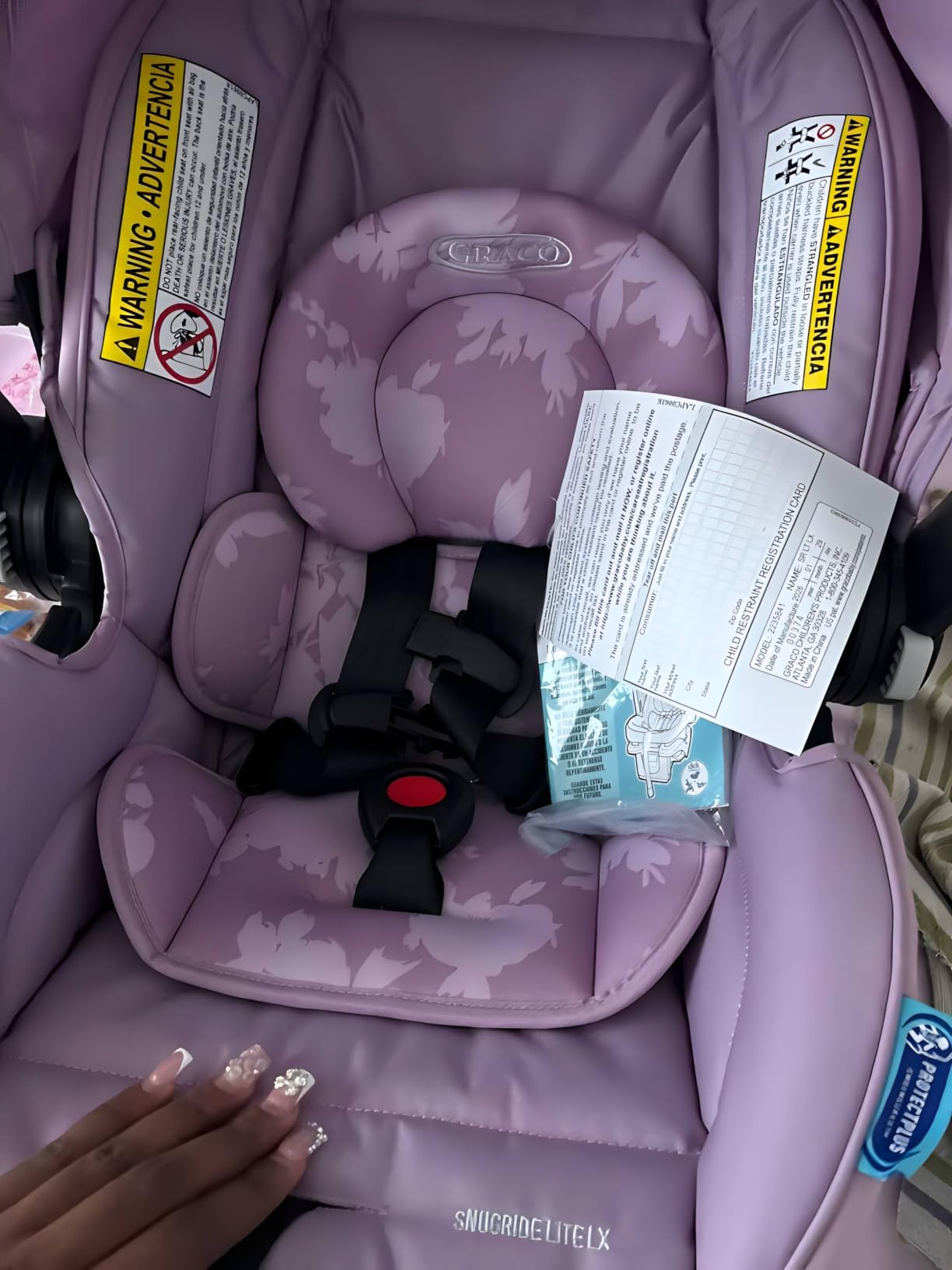
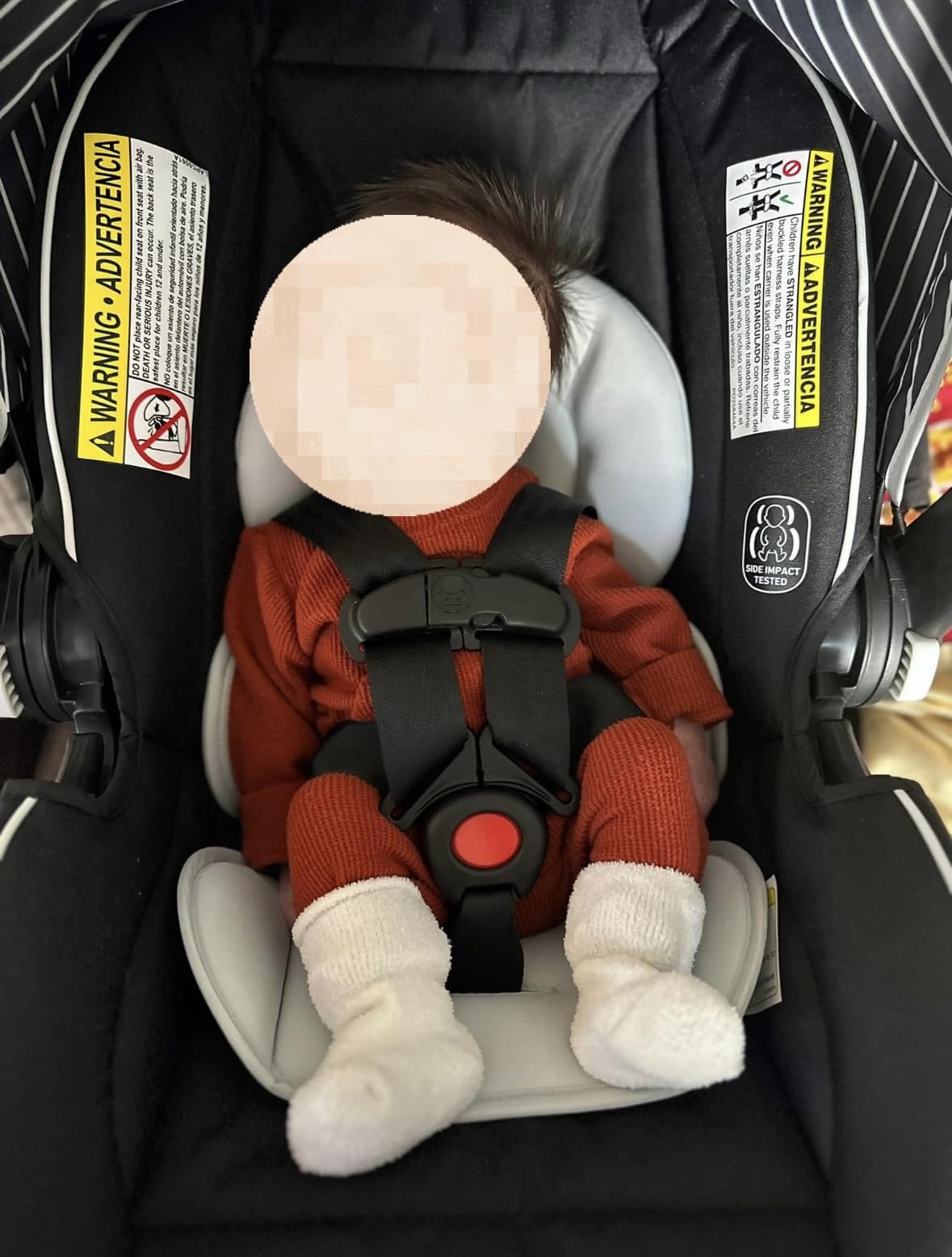
For a newborn, the fit is genuinely good. Owners report using it comfortably for premature twins, and the 4 lb floor is low enough for most early arrivals. The fabric is soft rather than scratchy and the head support does the job without bolstering your baby up off the seat.
The complaints are worth knowing. The canopy is stiff and noisy when you adjust it, which is exactly the movement you make repeatedly in a dark parking garage. Padding is thinner than earlier SnugRide generations, and the harness straps need re-threading in some configurations.
What to check before you buy the Lite LX
Confirm the 32 inch height ceiling in your vehicle. A deeper back seat with a reclined base eats into that ceiling, and the level indicator is what tells you whether you have room left.
Ask how the LATCH install behaves in your specific car. The four-position base has to sit flat enough on the vehicle seat bight, and a wedge or rolled towel under a pooled seat cushion is a normal, accepted fix.
Where it fits your routine
This is the seat to buy if you are pairing with a Graco stroller, because the travel-system fit is the reason many owners bought it. It is also the one to buy if you expect to hand the carrier to a second caregiver regularly.
If the handle position matters more to you than the anti-rebound hardware, this is the Graco to shortlist. Its lighter carry is the deciding factor over the SnugFit for most households.
2. Graco SnugRide SnugFit – Anti-Rebound Bar and No-Rethread Harness
Graco SnugRide SnugFit Infant Car Seat, Baby Car Seat with Anti Rebound Bar for Extra Safety, No-Rethread Harness, Latch Equipped Carseat, Baby Essentials, Gift for New Parents, Gotham
Rear-facing 4-30 lb
Up to 32 inches
Anti-rebound bar
No-rethread harness
Pros
- No-rethread harness adjusts from one front button
- Anti-rebound bar adds rear-facing protection
- Removable washable newborn inserts
- Clicks firmly into Graco strollers
- Wide protective canopy
Cons
- Heavier carry than lighter Graco infant seats
- Side grip is awkward for a one-hand carry
- Can run warm in hot climates
The SnugFit is the SnugRide to buy when the stroller decision is already made. Owners repeatedly pick it as part of a Graco travel system, and the click into the frame is firm enough that you hear it.
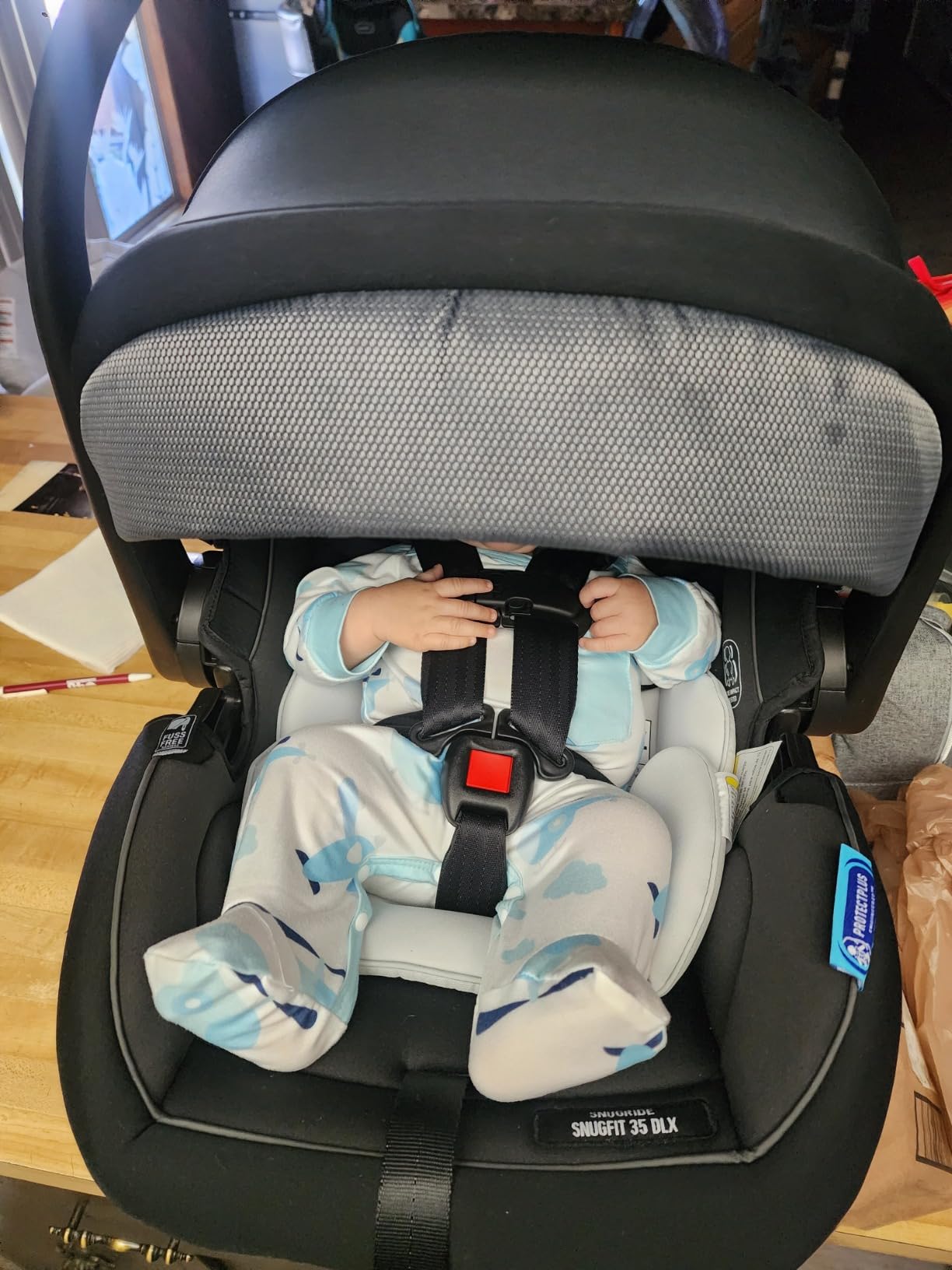
Two features separate it from the Lite LX. The anti-rebound bar is built into the base to limit how far the seat rotates toward the seat back in a collision, which the federal standard does not require. The no-rethread Simply Safe Adjust harness moves the headrest and harness together from one front button, so you can size the fit with the baby still strapped in.

Removable infant head and body inserts are included, which is what makes this a credible newborn seat rather than a six-month seat. The four-position base carries the same clear recline indicators as the Lite LX.
The weight is where it concedes. Owners comparing it against other Graco infant seats put it near 9 lb, noticeably heavier than the Lite LX, and the side grip on the carrier gets called out as awkward. Some buyers in hot climates report the seat running warm.
What to check before you buy the SnugFit
Measure your arm-to-wrist carry distance with the baby in the seat. If the middle position in your back seat makes loading awkward, the anti-rebound bar does not help with that and you should test the fit in the store first.
Check the anti-rebound bar against your vehicle seat cushion. On a deeply contoured or very soft rear bench, the bar can hold the seat off the cushion and force you to re-evaluate the recline position.
Where it fits your routine
Choose the SnugFit if the anti-rebound bar and the one-button harness matter more to you than a light carry. It is a strong second seat for a household that already runs Graco gear.
Skip it if you carry the baby up stairs several times a day and the extra weight would annoy you. The Lite LX covers the same weight and height range at a lower carry weight.
3. Baby Trend EZ-Lift Plus – The Straightforward Budget Buy
Baby Trend EZ-Lift™ Plus Infant Car Seat, Dash Black – Newborn Comfort Padding, Lightweight Carry Build, Adjustable Harness System
Carrier and base included
Newborn comfort padding
Adjustable harness
Polyester cover
Pros
- Carrier and base both included in the box
- Lightweight carry build for car-to-stroller moves
- Newborn comfort padding from day one
- Adjustable harness grows with the baby
- Easy-to-clean polyester cover
Cons
- Build quality and padding are more basic than premium-brand seats
- Base offers less adjustability than higher-end models
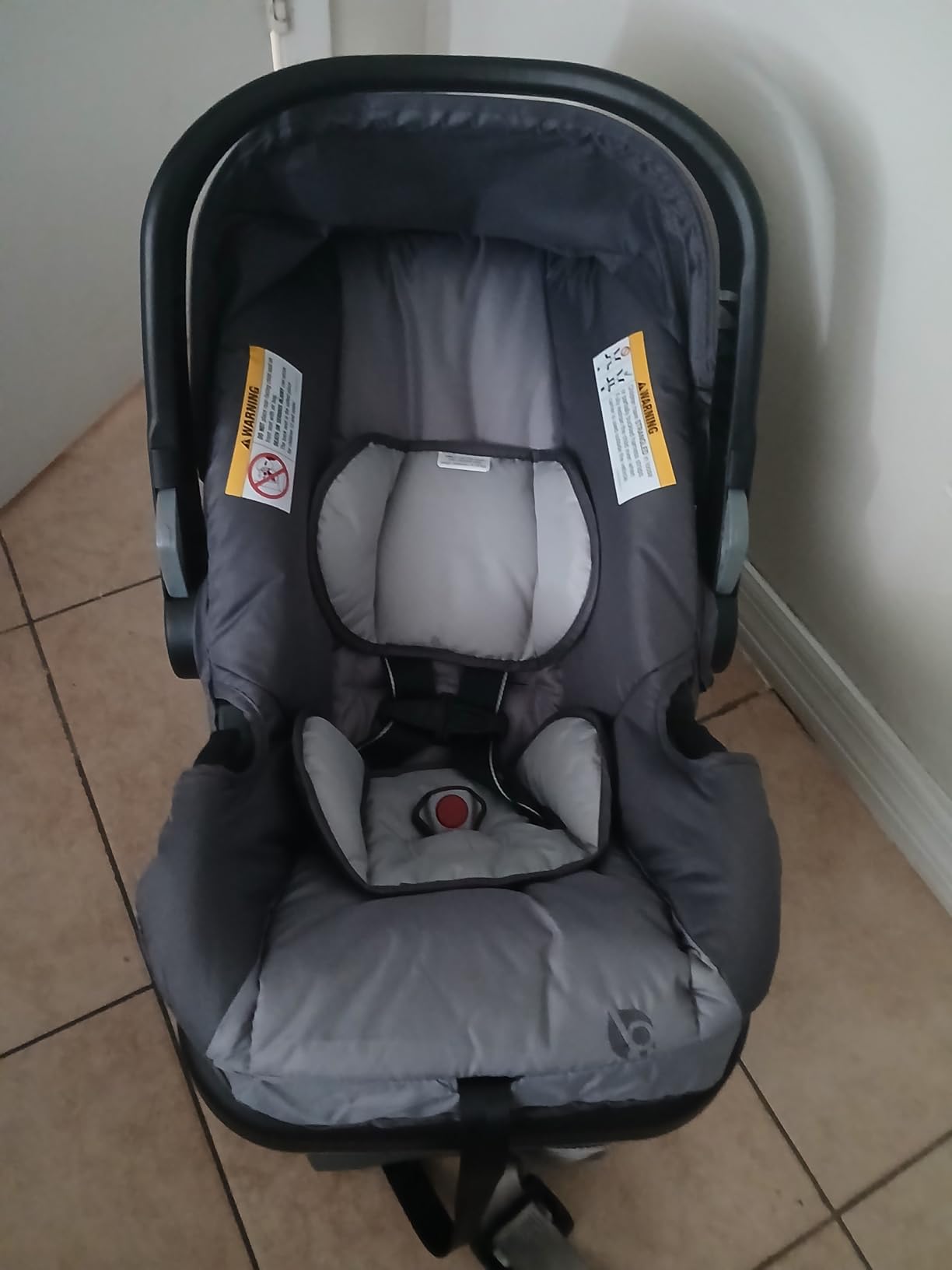
The EZ-Lift Plus exists to answer one question: can you get a complete carrier-and-base setup without overspending on a seat you will retire around the first birthday. It includes both the carrier and the base, and the box contains both pieces.
Newborn comfort padding is the feature the listing leads with, and it is the one that matters at 7 lb. The lightweight carry build is the other, since owners single out easy car-to-stroller transitions as the reason they are happy with it.
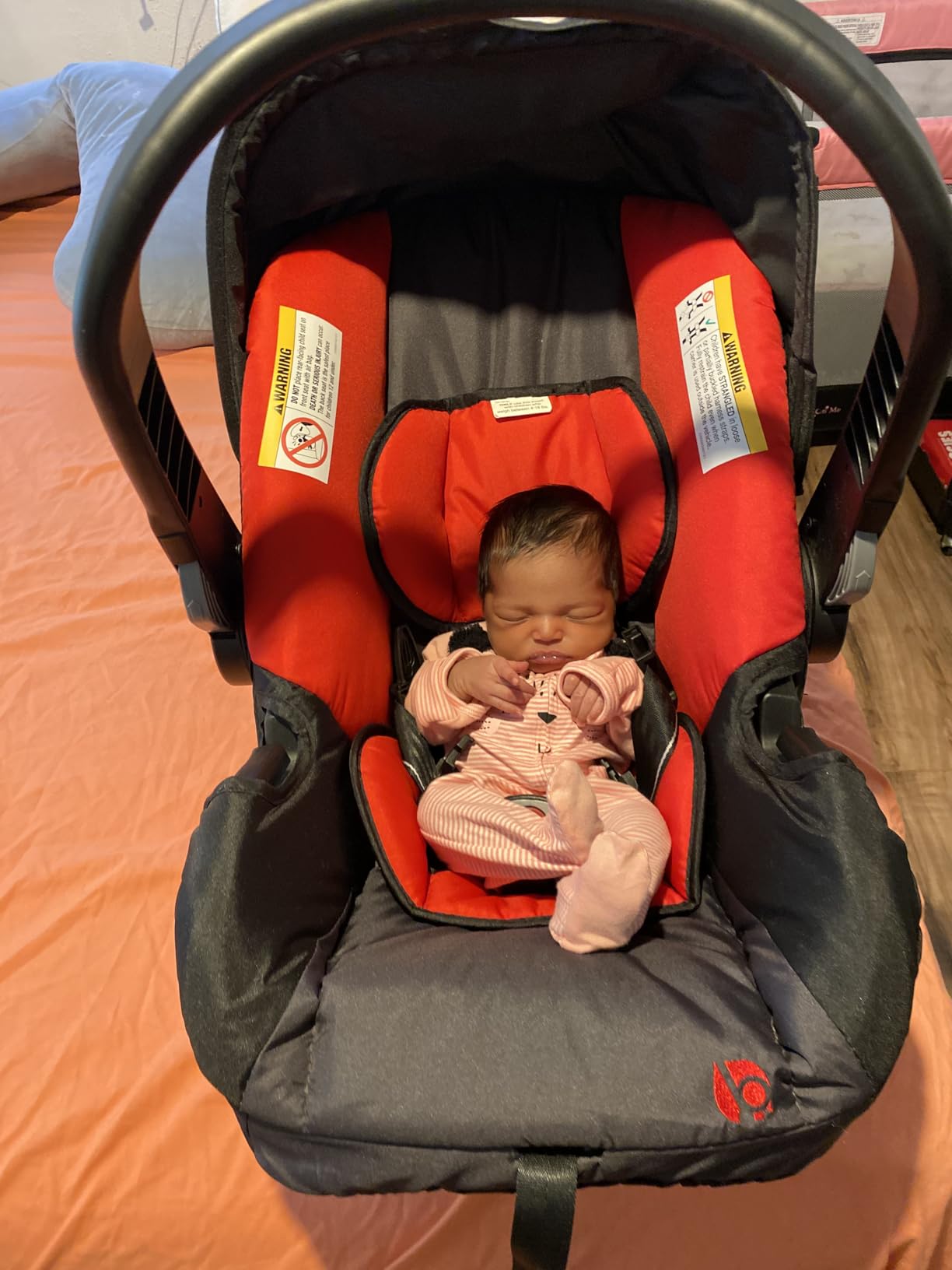
The adjustable harness is described plainly, with no rethreading claims or insert system spelled out in detail, so treat the fine-tuning as a two-hand job. The polyester cover wipes clean, which is worth more in month three than any fabric certification.
Owners are candid about the trade. Build quality and padding are more basic than premium-brand seats, and the base has less adjustability than higher-end models. You will not find published carrier weight or a published weight and height range on this listing, which is a real limitation.
What to check before you buy the EZ-Lift Plus
Ask the retailer for the exact rear-facing weight range and height limit in writing. A listing that does not publish those figures cannot tell you whether a fast-growing baby will outgrow it early.
Check the recline range in the store with the base in your hand. A shorter recline range is the most common reason budget seats leave a newborn’s head slouched forward.
Where it fits your routine
Choose the EZ-Lift Plus if you want a complete, working setup and would rather spend the difference on a stroller. Parents who buy a premium travel system should skip it.
It is also a sensible second seat for a grandparent or a caregiver who does car seat drop-offs daily and does not want to be trusted with the complicated install.
4. Safety 1st OnBoard FLX – Light, Compact and Machine-Washable
Safety 1st OnBoard FLX Infant Car Seat with Base, Lightweight Baby Car Seat for Travel, Monument 4
Rear-facing 4-30 lb
Under 8 lb carrier
Machine-washable seat pad
QuickClick strollers
Pros
- Published under 8 lb carrier weight
- Compact profile that is not bulky in the vehicle
- Soft padding with newborn head and body inserts
- Machine-washable and dryer-safe seat pad
- One-click fit on Safety 1st strollers
Cons
- Tall babies can run out of usable room early
- Complaint rate slightly higher than the top-rated models
The OnBoard FLX is the seat we looked at hardest for small back seats. Owners describe it as compact rather than bulky, and the published under-8 lb carrier weight is the second only figure of its kind in this roundup, next to the Graco Lite LX.
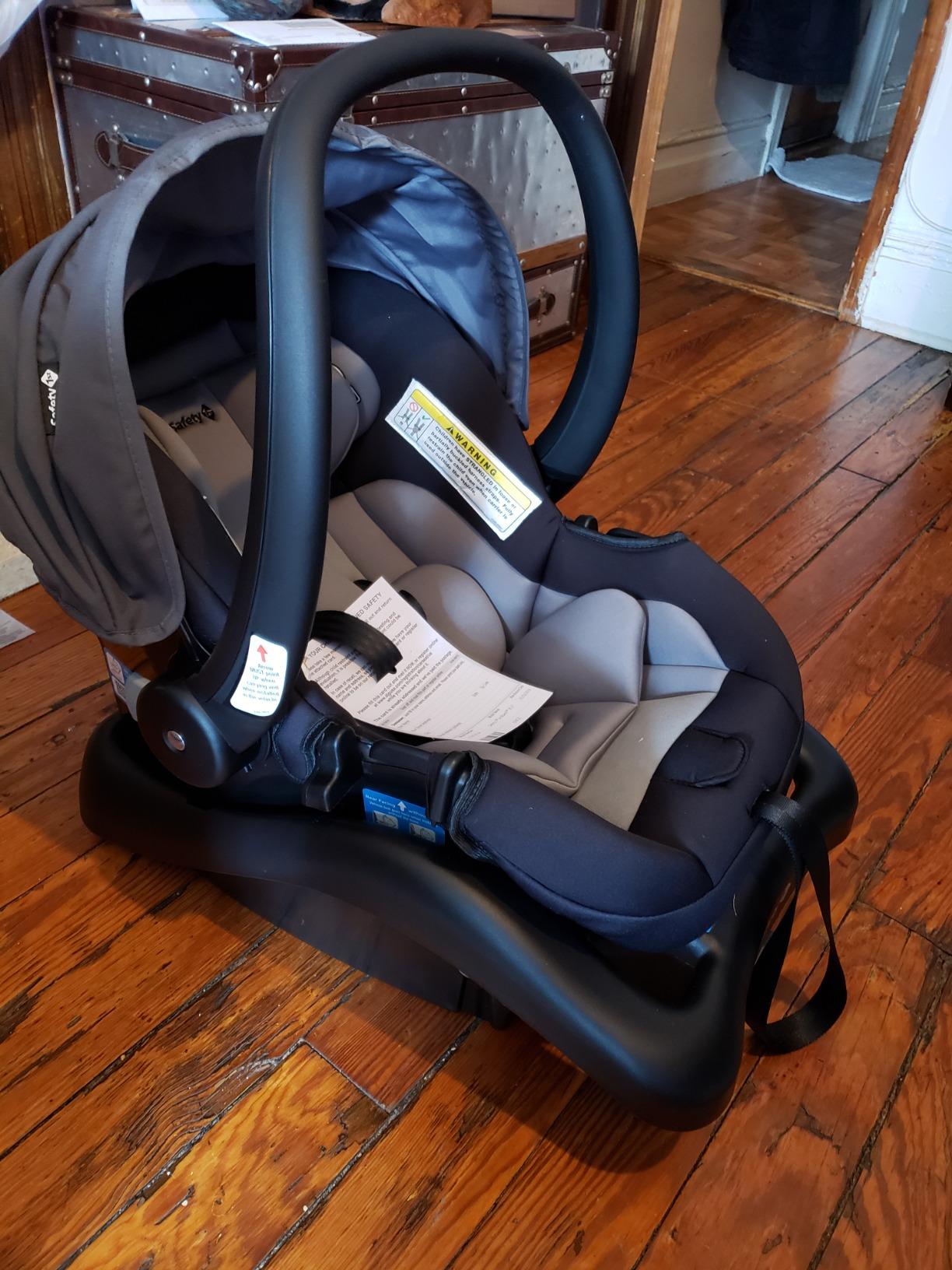
Safety 1st states the seat fits 4 to 30 lb rear-facing and up to 32 inches. It includes newborn head and body inserts, four harness heights, an adjustable base, and side impact protection with deep sides and energy-absorbing materials, and it is made in Columbus, Indiana.
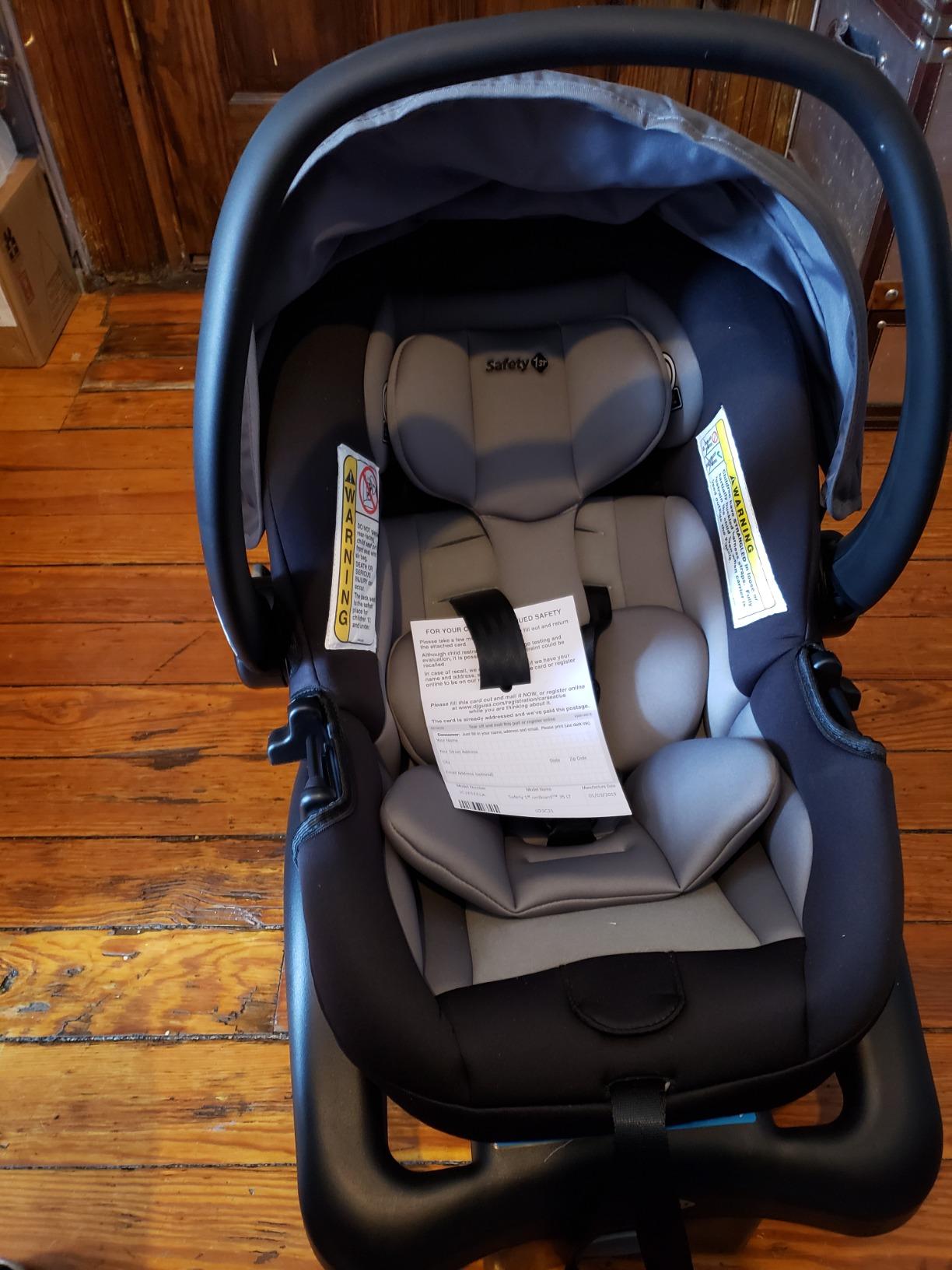
Two details earn their place on the list. The seat pad is machine-washable and dryer-safe, which matters more than any listing feature once a baby starts eating in the seat. QuickClick attaches the carrier to Safety 1st strollers with one click, so a travel system is possible without an adapter.
The limitation owners report most often is headroom. Tall babies can outgrow the usable space around eight months even while they are well under the 30 lb limit, and 1-star ratings make up a slightly higher share of the feedback here than on the top-rated models.
What to check before you buy the OnBoard FLX
Sit in your back seat and look at how much space is left above the seat back once the base is reclined. If your headrest is tall or your front seats are far forward, that 32 inch ceiling is optimistic in your car.
Decide now whether height will be the binding constraint. If you already have a tall or fast-growing baby on the way, the Baby Trend Ally with its 35 lb ceiling may suit you better despite the heavier build.
Where it fits your routine
This is the pick for compact cars, small SUVs and anyone installing three across the back bench. A compact footprint and a light carrier reduce the daily fight.
It is also a good value for families who do not want to commit to a brand ecosystem, because you are not locking yourself out of a future stroller choice.
5. Chicco KeyFit – Two Bubble Levels and the SuperCinch Tightener
Chicco KeyFit Rear-Facing Infant Car Seat with Base
Rear-facing 4-22 lb
Up to 30 inches
Dual bubble levels
SuperCinch LATCH
Pros
- Two bubble-level indicators and a spring-loaded leveling foot
- SuperCinch LATCH tightener for a secure fit
- EPS energy-absorbing foam in the carrier shell
- Clicks into Chicco strollers
- Removable washable seat pad and large canopy
Cons
- 22 lb ceiling is the lowest upper limit here
- 30 inch height limit is shorter than most
- Premium positioning versus budget seats
The KeyFit is the install-hardware seat in this roundup. Two bubble-level indicators and a spring-loaded leveling foot give you three separate visual confirmations that the base is sitting correctly, which is the most direct answer we found to the parental fear of getting it wrong.
The SuperCinch is a force-multiplying LATCH tightener, so you can remove slack with much less hand strength than a standard LATCH strap. The carrier shell is lined with EPS energy-absorbing foam, and the stay-in-car base comes in the box.
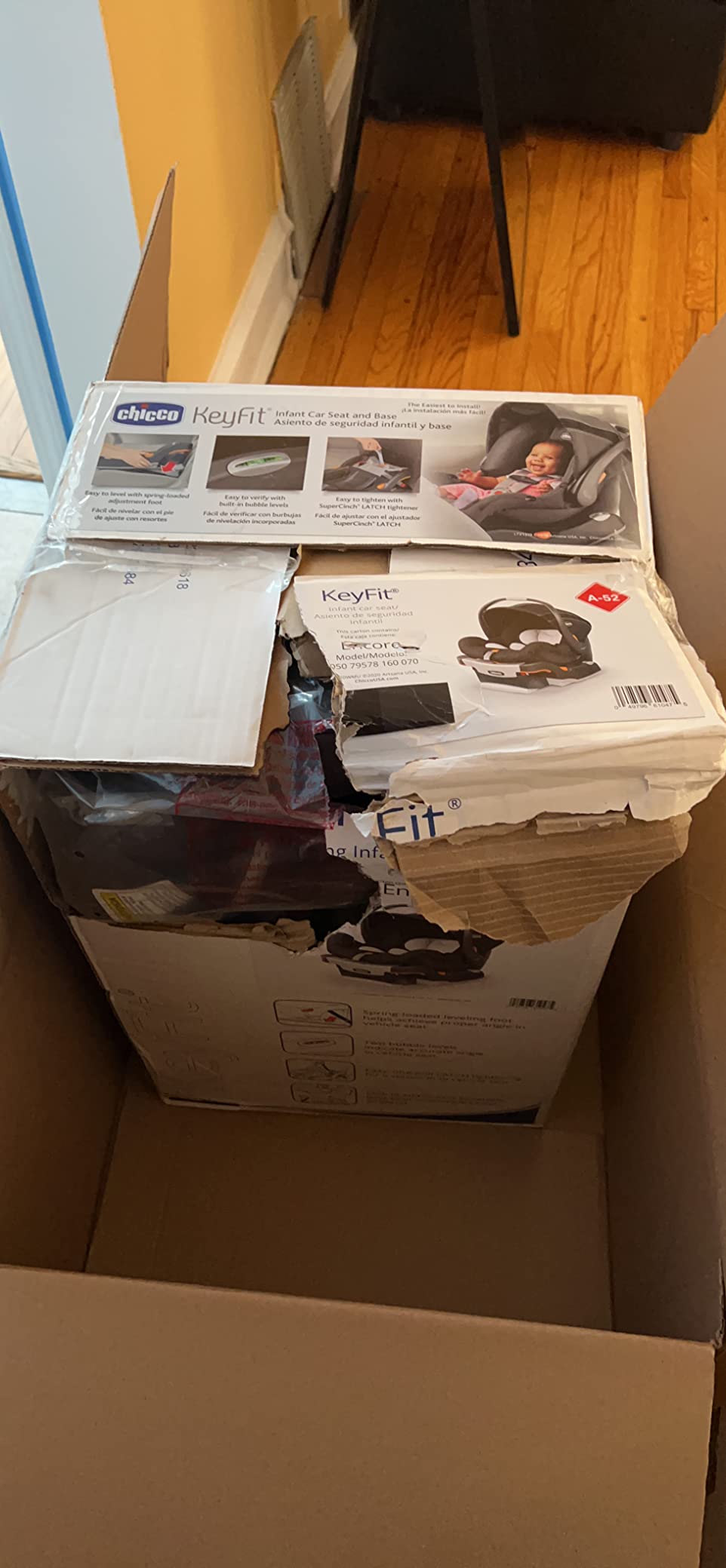
The carry handle has two positions with one-hand release, and the seat pad and canopy both come off for cleaning. A removable infant head and body insert is included for the 4 to 22 lb range.
Here is the catch, and it is a big one. The 4 to 22 lb and 30 inch limits are the narrowest in this roundup, so a fast-growing baby may be ready for the next seat in under a year. The seat is also positioned at the premium end of what we reviewed.

What to check before you buy the KeyFit
Do the arithmetic on the 22 lb ceiling against your baby’s growth curve, and ask what you would do at month eleven. Plenty of families buy the KeyFit knowing they will be shopping again in a year anyway.
Confirm your Chicco stroller is on the current compatibility list rather than assuming a two-year-old frame still accepts the carrier. Model lines get retired faster than seats do.
Where it fits your routine
Choose the KeyFit if you are installing in a difficult vehicle, if you have limited hand strength, or if you want the fewest subjective judgements in the whole process. The levels remove the argument.
Pass on it if height or weight is likely to be your binding constraint, because you would be choosing a shorter usable window for better install cues.
6. Baby Trend Ally – The Widest Weight Range and a Cozy Cover
Baby Trend Ally Newborn Baby Infant Car Seat with Cover and Harness, Khaki
Rear-facing 4-35 lb
Up to 32 inches
No-rethread harness
Belt lock-off
Pros
- Only published 35 lb upper limit in this roundup
- No-rethread 5-point harness
- Includes a full car seat cover for cold months
- 4-position base with dual bubble level indicators
- Attaches to Baby Trend double strollers
Cons
- Belt lock-off takes careful alignment to engage
- Plastic runs warmer than metal in summer
- Smaller review base than the Graco models
The Ally is the only seat here with a published 35 lb upper limit, rated from 4 to 35 lb and up to 32 inches. If you want to squeeze a few extra months out of an infant seat, that number is the reason.
The included car seat cover is unusual at this level. Owners of babies born in colder months specifically praise the full cover, and several mention the fabrics surviving two children and washing back to their original state.
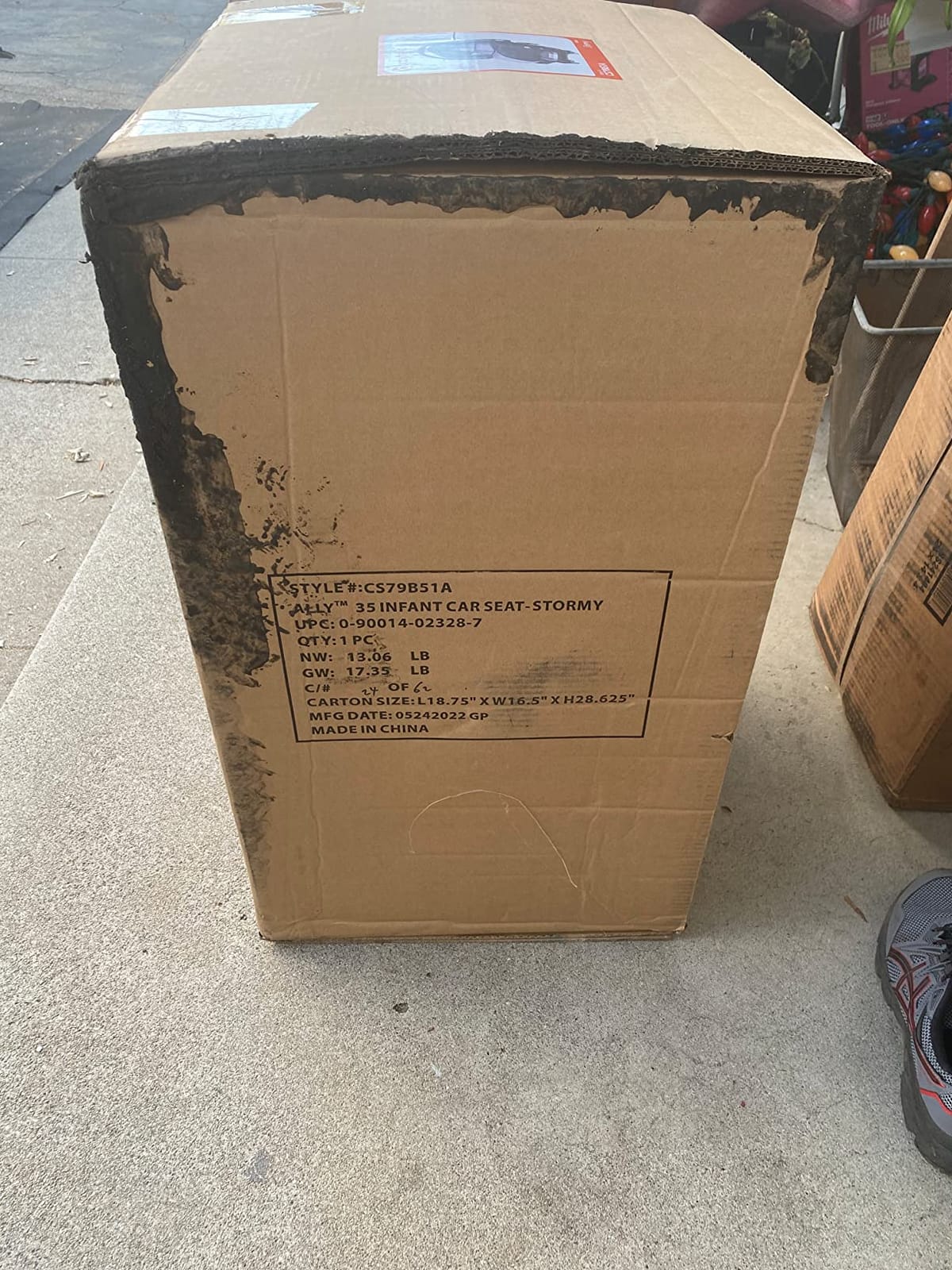
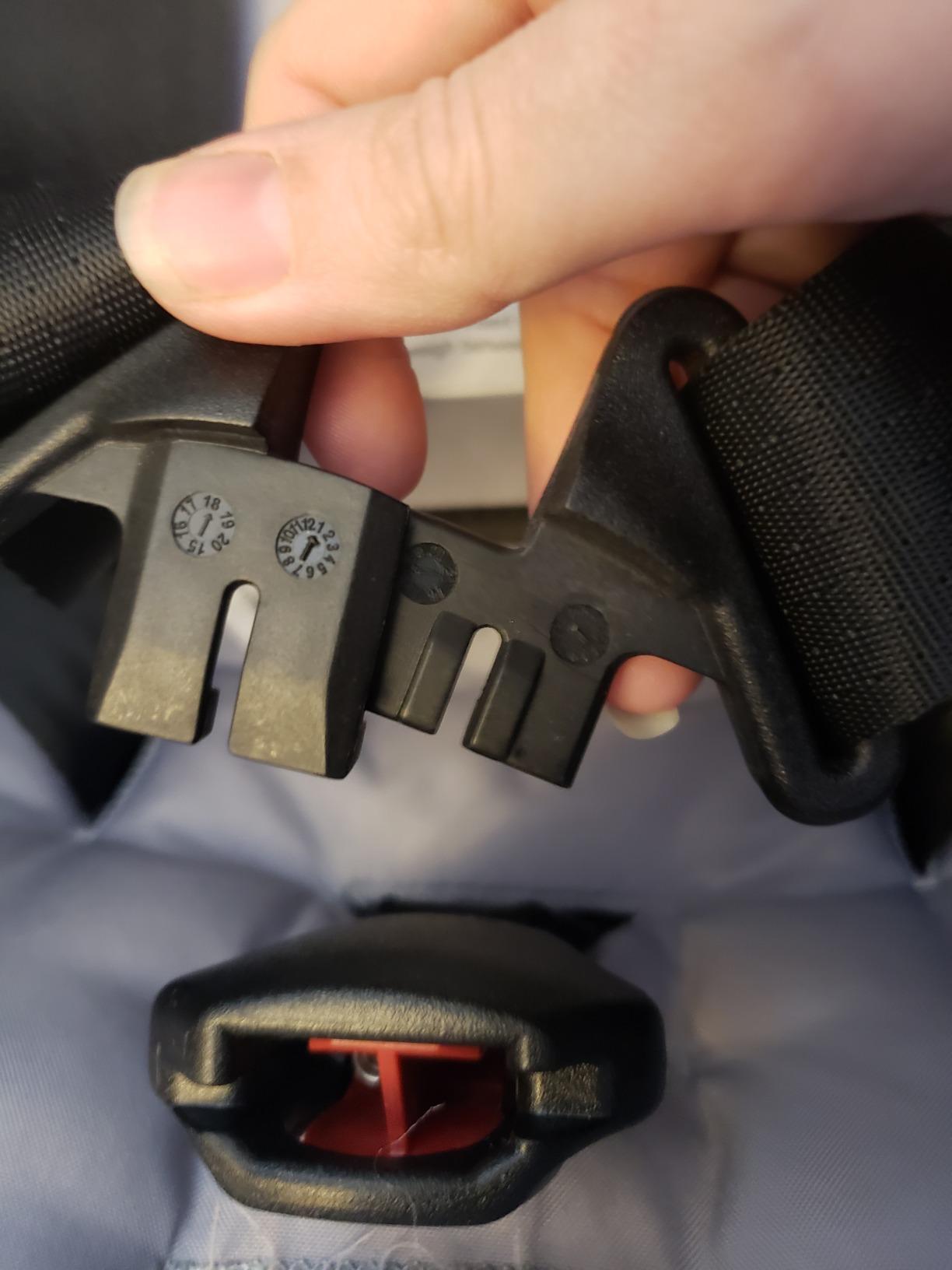
The harness is a no-rethread five-point, the base has four push-button height positions plus dual bubble level indicators, and there is a built-in belt lock-off for vehicle installation. Dimensions are listed at 27 by 18.5 by 25 inches.
Watch the belt lock-off. Owners report it needs careful alignment to engage, and they do it with the baby already inside, which is an uncomfortable position to be fiddling in. The plastic construction is preferred over metal because it does not get as hot in summer.
What to check before you buy the Ally
Look at the two-panel canopy and the cover together. If your baby is arriving in a warm climate, the cover is a removable extra you will never use and you should weigh that against the 35 lb limit.
Confirm the double-stroller compatibility before you commit, since Baby Trend double strollers are the reported pairing and a single-frame stroller may need an adapter.
Where it fits your routine
Choose the Ally for a long rear-facing window, for twins on a double stroller, or for a baby born between October and March. The extra capacity and the cover are the two reasons to spend here.
Choose it over the Lite LX only if the weight ceiling matters to you. For everything else, the Lite LX is the lighter thing to lift every day.
7. Joie Rue – A 7.7 lb Carrier With a Built-In Anti-Rebound Bar
Joie Rue Infant Car Seat & Anti-Rebound Base, Lightweight
Rear-facing 4-30 lb
Up to 30 inches
Carrier 7.7 lb
Anti-rebound base
Pros
- Published 7.7 lb carrier weight
- Built-in anti-rebound bar in the base
- Lower anchor attachments built into the base
- Removable three-piece newborn inserts
- UPF 50+ canopy and breathable knit fabrics
Cons
- Smallest review base in the roundup at 268 ratings
- 30 inch height limit is shorter than most
The Joie Rue is the specification story of this roundup. It is one of only three seats here with a published carrier weight, at 7.7 lb, and the only one whose listing states the exact federal certification: FMVSS 213a and 213b.
The anti-rebound bar is built into the base rather than being an add-on, and the base has integrated lower anchor attachments, so you are not fumbling with separate connector blocks in a car park. The seat with base weighs 16 lb, and dimensions are listed at 25.75 by 17.5 by 16 inches, or 22.8 inches tall with the base.
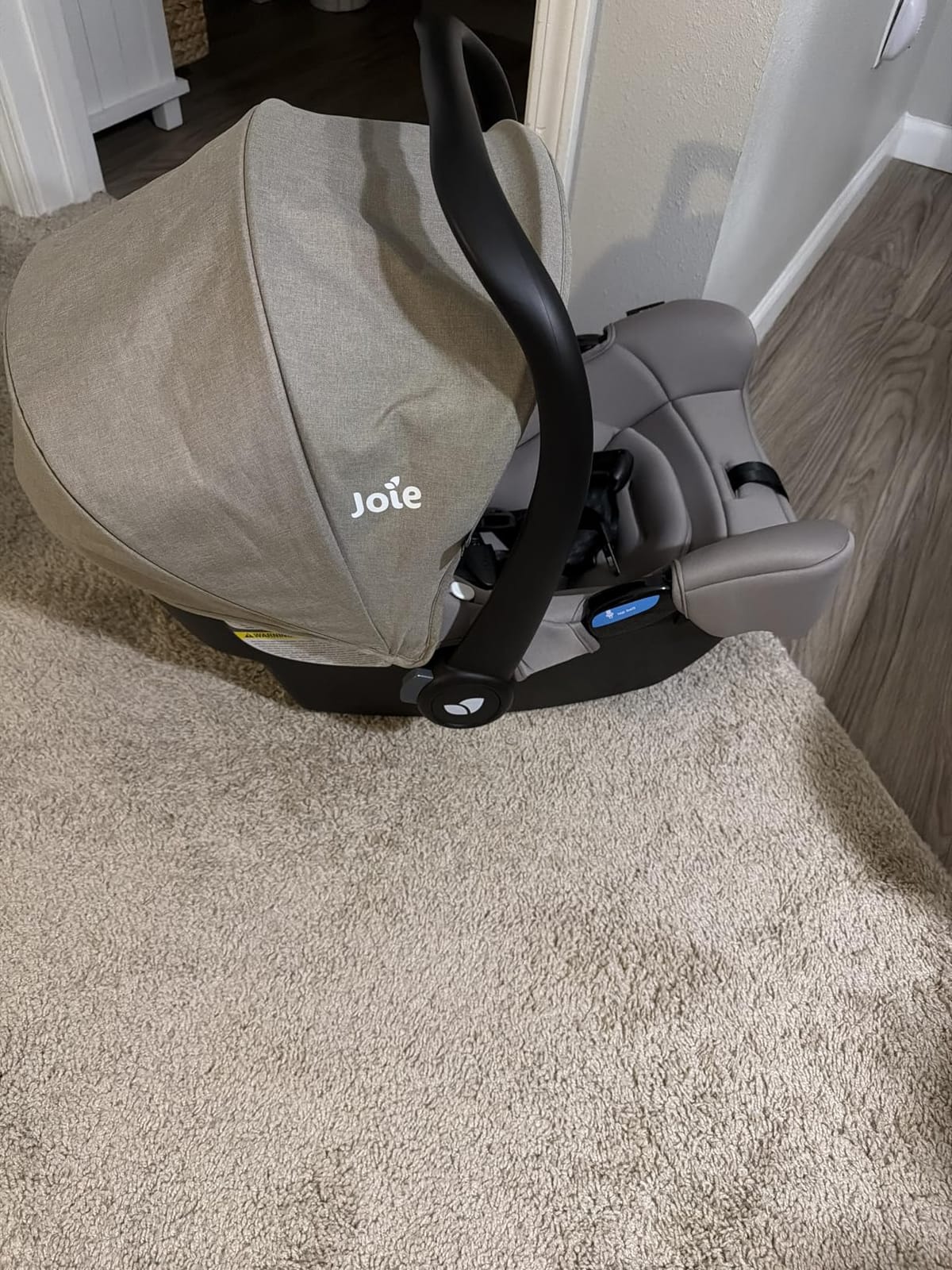
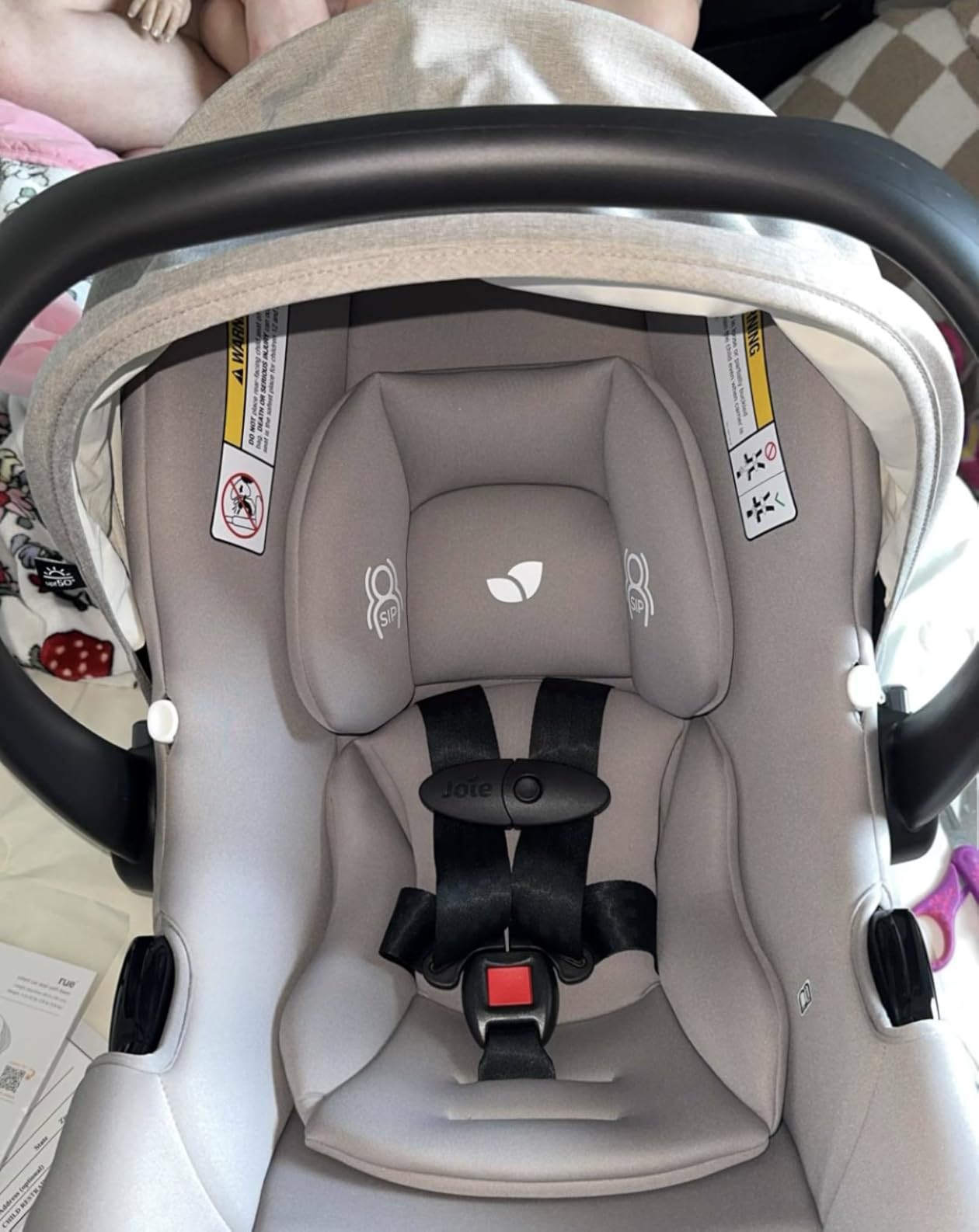
Newborn support comes as three removable pieces: head support, body support and an infant wedge. Fabrics are breathable knit, and the canopy is rated UPF 50+, which is unusually specific for a listing in this category.
The honest weakness is the sample size. With 268 ratings, there is far less long-term durability feedback here than on the Graco and Baby Trend models, and the height limit of 30 inches is two inches below the four 32 inch ceilings in this roundup.
What to check before you buy the Joie Rue
Check the 30 inch ceiling against a tall or fast-growing baby. A 30 inch limit with 30 lb weight capacity means height will be your outgrowing signal, and that signal can arrive early.
Ask how the integrated lower anchors behave if you plan to move the base between vehicles. Built-in connectors are excellent for one fixed install and awkward for a grandparent who drives a different car.
Where it fits your routine
Choose the Rue for a light carry, a fixed rear-seat install, and a small back bench where the 17.5 inch width helps. The three-piece insert set is a good match for a small newborn.
Choose it over the Graco pair only if you want the documented certification and the built-in anti-rebound hardware, and you are comfortable with a thinner long-term record.
8. Baby Trend Secure-Lift – Compact, Padded and Simple
Baby Trend Secure-Lift Infant Car Seat, Dash Black – Compact Lightweight Carrier, Infant Comfort Cushioning, Adjustable Harness Fit
Carrier and base included
Infant comfort cushioning
Adjustable harness
Compact build
Pros
- Compact lightweight carrier for daily mobility
- Generous padding and good head support
- Harness adjusts in both directions as the baby grows
- Machine-washable cover
- Fits Baby Trend strollers
Cons
- Harness straps are difficult to adjust at times
- Highest 1-star rating share in the roundup
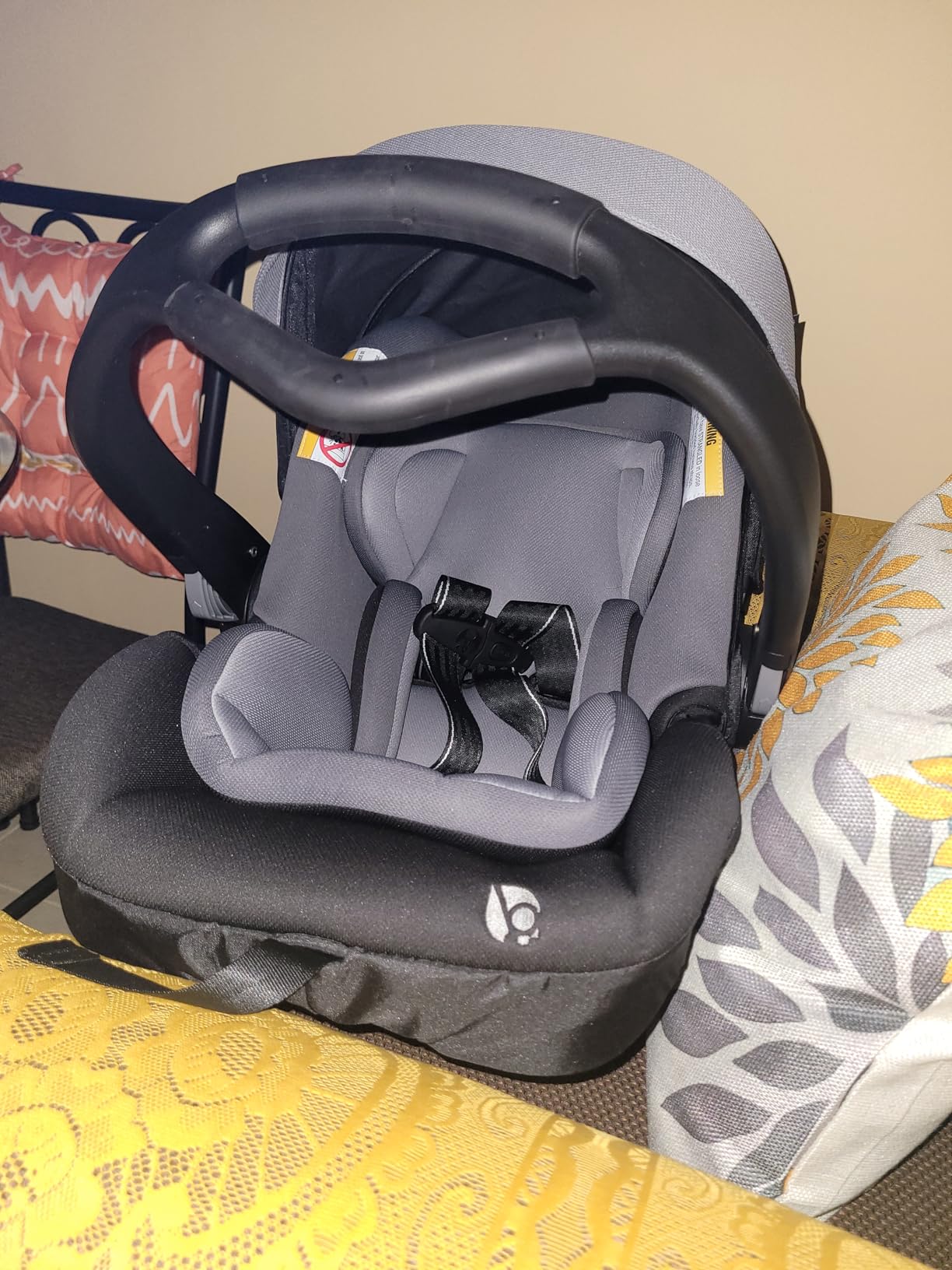
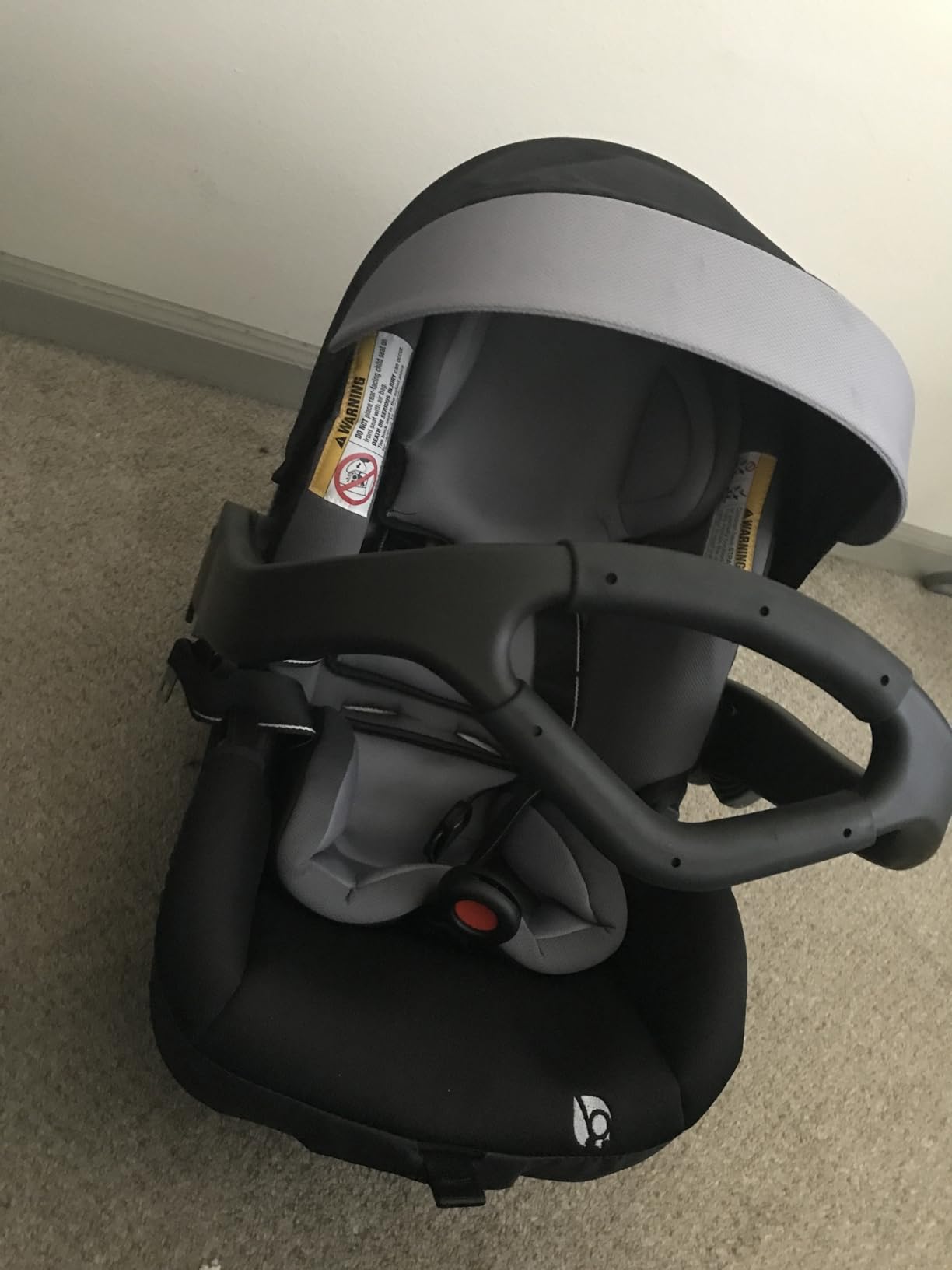
The Secure-Lift is a compact carrier sold as a set with its base, aimed squarely at everyday use rather than travel or travel systems. Owners consistently describe it as well padded with good head support.
It is also reported to fit premature babies, which is a useful data point in this category. The harness adjusts in both directions so you can tighten or loosen as the baby grows, and the cover is machine-washable.
The friction here is the harness. It gets called out as difficult to adjust at times, and with 1-star ratings making up the largest share of any seat in this roundup, you should expect some buyers to hit the same snag.
Like the EZ-Lift Plus, this listing does not publish a rear-facing weight range, a height limit or a carrier weight. That is the biggest reason it sits at the bottom of our ranking despite a reasonable 4.6 rating.
What to check before you buy the Secure-Lift
Ask for the weight and height limits before you pay. Without published limits you cannot tell whether you will be shopping again at eight months rather than at twelve.
Try the harness adjustment yourself in the store, with the padding still in place. It is a task you will perform dozens of times, and a fiddly buckle reads very differently after a month of use.
Where it fits your routine
Choose the Secure-Lift if you are matching an existing Baby Trend stroller, want a compact carrier for short daily trips, or need a seat reported to work for a premature baby.
For most families the Lite LX, OnBoard FLX or EZ-Lift Plus is the better-informed purchase, because each one publishes enough for you to plan the year ahead.
How to Choose an Infant Car Seat for a Newborn
Work through these in order. Skipping to step four is how parents end up buying a beautiful seat that has to be reinstalled every time, or a travel system that never quite fits.
Confirm the minimum weight. All eight seats here are rated from 4 lb. If the expected birth weight is under 4 lb, start with your hospital’s child passenger safety technician, not with a retailer.
Decide whether weight or height ends the seat. Six of these run to 30 lb, the Ally runs to 35 lb, and four publish a 32 inch ceiling while the KeyFit and Rue stop at 30 inches. Height usually binds first.
Pick install hardware over brand prestige. NHTSA estimates that close to half of car seats are misused in a way that compromises safety, and the hardware is where that happens. Look for a base with a level indicator, a bubble level, a lock-off or a force-multiplying tightener.
Check the recline range in your specific vehicle. A seat that cannot lie flat enough in your back bench will hold a newborn’s head forward, and a pooled seat cushion usually needs a wedge or a rolled towel.
Decide the stroller question now, not later. A travel system locks you into one ecosystem, which is convenient and is also the single decision new parents most regret. If you are undecided, buy the seat and use an adapter later.
Count the daily carry. Published carrier weights here range from 7.2 lb to under 8 lb where a figure exists at all. Three of the eight listings publish no weight, so do the maths in the store with a weighted bag.
Plan the sleep limit. A car seat is for travel, not for naps. The AAP’s safe sleep guidance points to a flat, firm sleep surface, so budget time out of the seat for anything longer than a drive.
If you drive a small car or need three across the back bench, prioritise footprint and width over features. The OnBoard FLX and the Joie Rue are the two picks whose published dimensions and profiles make that conversation easiest.
And if you are seriously considering skipping the infant seat entirely and going straight to a convertible, the case is real: a convertible used from birth can cover four to six years instead of roughly one, which spreads the cost over far more months. The trade is that you give up the click-out convenience and the newborn fit that a dedicated carrier is built around. Some parents in the r/TryingForABaby and r/beyondthebump threads make exactly this argument on cost-per-year grounds, and for a second car or a rarely used vehicle it is often right.
If you are buying for cold months, accessories matter as much as the seat. Our guide to heated seat covers covers the warming options worth considering alongside a carrier.
Recalls, Registration and Model Status in 2026
Check recalls before you buy, not after. It takes four minutes and it is the one step in this process that costs nothing and can change your purchase outright. Last checked on September 2026.
Search the model and brand on the NHTSA recalls database at nhtsa.gov/recalls, using the model name from the label on your seat rather than the retail listing name.
Search the same model in the CPSC recalls database at cpsc.gov/Recalls, because some issues are published as consumer product safety commissions rather than vehicle recalls.
Register the seat with the manufacturer as soon as it arrives, so recall notices reach you directly rather than relying on a retailer’s product page.
Book a free inspection at a certified passenger safety technician station, which NHTSA locates by ZIP code, and have the install checked in the vehicle you actually use.
On current model status: NHTSA recall 26C003 covers Graco SnugRide Turn & Slide seats. Neither Graco seat in this roundup carries the Turn & Slide name, so the two Graco models here are not part of that recall, but the model names are confusingly similar and the label is the only reliable check.
There is also a live Graco SnugRide naming and weight-limit transition in which retail labels can still read 4-35 lb while Graco’s own listing shows 4-30 lb. Manufacturer spec sheets are treated as more trustworthy than retailer copy, so go to the source when the two conflict, and check the label on the box you are actually holding.
None of the eight listings in this guide states aircraft certification, so do not assume any of them is FAA approved from a product page alone. Airlines require their own label, and the seat has to be approved for that specific installation. For a separate look at that question, the Joie Rue is the only pick here that states its exact federal certification standard, FMVSS 213a and 213b.
Frequently Asked Questions
What type of car seat is best for a newborn?
A rear-facing infant car seat with a separate stay-in-car base is the right choice for a newborn. It is rated from birth, clicks out of the base so you can move a sleeping baby without waking them, and usually lasts about a year. Our top pick is the Graco SnugRide Lite LX, rated rear-facing from 4 lb to 30 lb and up to 32 inches.
How long can a newborn stay in an infant car seat?
The American Academy of Pediatrics recommends rear-facing for as long as the seat’s height or weight limit allows, which is usually around the first birthday. Beyond that, treat the car as a place to travel rather than nap, since safe sleep guidance points to a flat, firm surface rather than a seat with a sloped shell.
Do I need an infant insert for a newborn?
Usually yes, unless the seat is rated from 4 lb with an insert included. Four of the seats here include newborn head and body supports, including the Graco SnugFit, the Safety 1st OnBoard FLX, the Chicco KeyFit and the Joie Rue. The insert fills the gap so the harness sits correctly; too large an insert can compromise the fit.
How do I know my baby has outgrown the infant seat?
Height usually ends the seat before weight does. Watch for the top of the head coming within an inch of the top of the shell, or the harness slots running out of room above the shoulders. Four seats here publish a 32 inch ceiling while the Chicco KeyFit and Joie Rue stop at 30 inches, so check the number on your specific label.
Can I skip the infant car seat and use a convertible instead?
Yes, a convertible seat used from birth is a legitimate choice and can cover four to six years instead of about one. You give up the click-out convenience and the newborn-focused recline of a carrier, and installation is sometimes less intuitive. For a second car or occasional use, skipping the infant seat is often the better value.
Which car seat is better, Nuna or UPPAbaby?
Both ecosystems are strong, and the decision is mostly about strollers rather than safety, since every seat sold new must meet the same federal standard. On r/BabyBumps, parents gravitate to the UPPAbaby Aria for an ergonomic handle and low weight, and the Mesa versus PIPA comparison is the most repeated question when the stroller is undecided. Neither brand is in our roundup of eight, so we have not ranked either one here.
The Best Infant Car Seats for Newborns: Final Word
Eight seats later, the Graco SnugRide Lite LX is still the one we would put a newborn in. A 4.8 rating across 7673 ratings, a published 7.2 lb carrier weight, a four-position base with a level indicator, and a 4 to 30 lb and 32 inch range cover the whole first year without a single awkward compromise.
If the stroller is already decided, look at the Graco SnugRide SnugFit instead, and take the anti-rebound bar and the one-button harness in exchange for a heavier carry. If the budget is the binding constraint, the Baby Trend EZ-Lift Plus gives you a complete carrier-and-base set and newborn padding for the least.
And whatever you choose, have a certified passenger safety technician check the install in your actual vehicle. In this category, a correctly installed seat beats a better brand every time, and the check is free.
These are our best infant car seats for newborns in 2026, and the list is checked against recall databases and manufacturer spec sheets as of September 2026.