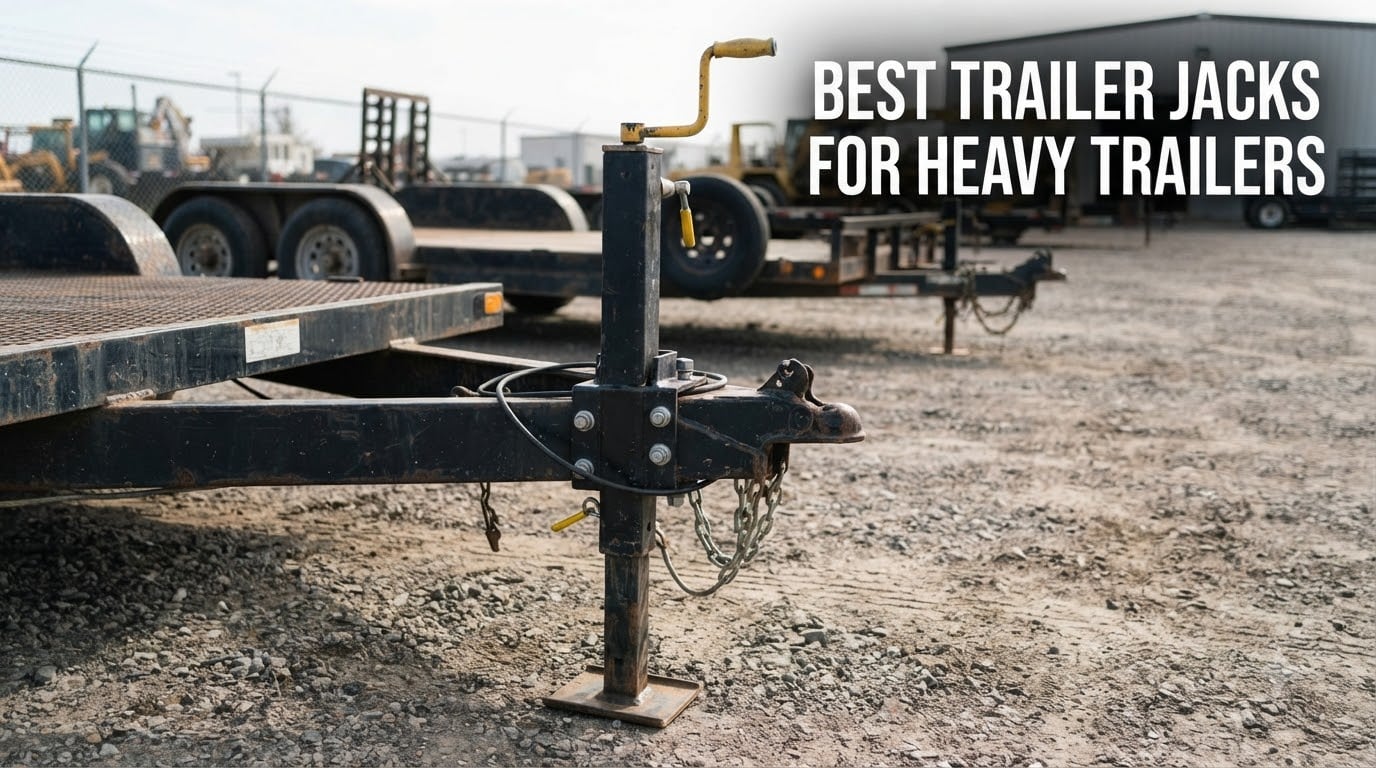
There is one number that decides which jack you need, and it is not the trailer weight printed on the VIN plate. It is the weight sitting on your ball. Loaded tongue weight on a well-balanced trailer runs 10 to 15 percent of the gross trailer weight, which means a 10,000 lb trailer can still put 1,500 lbs on the coupler, and that load sits on the jack every single time the trailer is uncoupled. Pick a jack rated comfortably above that number and the rest of the decision is about travel, mounting, and how much cranking you want to do in the rain.
We went through the current heavy duty trailer jack listings line by line, pulled the capacity, travel, mounting style, and warranty figures straight from the manufacturer data, and read the owner reviews for the failure stories. The result is this roundup of the best trailer jacks for heavy trailers in 2026, covering everything from 7,500 lb electric tongue jacks to a 12,000 lb direct-weld square jack. If you are also building out a shop or garage around heavy work, our picks for heavy duty gear that earns its counter space and sturdy storage for the parts tend to come from the same buy-rarely-regret category.
Before the picks, one clarification that trips up a lot of buyers. A tongue jack raises the coupler and holds tongue weight. It is not a bottle jack or scissor jack, and it is not meant to lift a trailer corner, a tandem axle, or the whole trailer off the ground for tire work. If that is your goal you want a different tool entirely, and we cover that in the buying guide below. What follows is the tongue jack, which is the single most load-bearing part of your trailer when it is parked.
Table of Contents
- Top 3 Picks for Best Trailer Jacks for Heavy Trailers (October 2026)
- All 10 Picks at a Glance
- 1. VEVOR TJD-7000S 8000 lbs Direct Weld Square Jack
- 2. FZZD HZ-05 8000 lbs Long Travel Jack
- 3. VEVOR 721100 8000 lbs Swivel Bolt-On Jack
- 4. YOMILINK 8000 lbs Bolt-On Long Travel Jack
- 5. TYT TTJ-003 8000 lbs Square Weld-On Jack
- 6. Curt 28512 12000 lbs Side Wind Square Jack
- 7. SEALIGHT 7500 lbs Electric Tongue Jack
- 8. KYX 7500 lbs Electric Tongue Jack
- 9. Kohree 8000 lbs Drill-Powered Jack
- 10. VEVOR HH7500 7500 lbs Electric Jack with Remote
- How to Size a Jack from Tongue Weight
- Manual, Electric, Drill-Powered, or Hydraulic
- Bolt-On vs Weld-On Mounting
- Travel, Retracted Height, and Working Height
- Drop Legs, Base Plates, and Corrosion
- Known Failure Modes and Parts Availability
- Installation, Wiring, and Maintenance
- Frequently Asked Questions
- What is the best brand of trailer jack?
- What size jack for 10,000 lb trailer?
- What kind of jack do I need for a trailer?
- Why won’t my electric trailer jack work?
- What are the disadvantages of using a hydraulic jack?
- How do you lubricate a trailer tongue jack?
- Which brand of hydraulic jack is considered the best?
- What is the 60/40 rule for trailers?
- Conclusion
Top 3 Picks for Best Trailer Jacks for Heavy Trailers (October 2026)


Curt 28512
- 12000 lbs tongue weight
- 10000 lbs lift
- Side-wind handle
- Limited lifetime warranty
All 10 Picks at a Glance
Every jack below is rated for tongue weight in the heavy range, but they differ sharply in travel, mounting style, and drive type. Read this table first, then jump to the full review for the one that matches your trailer’s frame.
| Product | Specs | Action |
|---|---|---|
| VEVOR 8000 lbs Direct Weld Square Jack |
|
Check Latest Price |
| FZZD 8000 lbs Long Travel Jack |
|
Check Latest Price |
 VEVOR 8000 lbs Swivel Jack VEVOR 8000 lbs Swivel Jack |
|
Check Latest Price |
 YOMILINK 8000 lbs Bolt-On Jack YOMILINK 8000 lbs Bolt-On Jack |
|
Check Latest Price |
 TYT 8000 lbs Square Weld-On Jack TYT 8000 lbs Square Weld-On Jack |
|
Check Latest Price |
| Curt 28512 Side Wind Square Jack |
|
Check Latest Price |
 SEALIGHT 7500 lbs Electric Jack SEALIGHT 7500 lbs Electric Jack |
|
Check Latest Price |
 KYX 7500 lbs Electric Tongue Jack KYX 7500 lbs Electric Tongue Jack |
|
Check Latest Price |
 Kohree 8000 lbs Drill-Powered Jack Kohree 8000 lbs Drill-Powered Jack |
|
Check Latest Price |
 VEVOR 7500 lbs Electric Jack VEVOR 7500 lbs Electric Jack |
|
Check Latest Price |
1. VEVOR TJD-7000S 8000 lbs Direct Weld Square Jack
VEVOR 8000lbs Heavy-Duty Square Direct Weld on RV Jack, 15-1/4 Inches Lift, Adjustable Drop Leg, for Lifting RV, Horse, Utility, Yacht Trailers, TJD-7000S
8000 lbs capacity
15-1/4 in lift
24.88 in minimum height
Adjustable drop leg
Pros
- Square tube resists side loading
- Direct weld mount is strong and simple
- Adjustable drop leg for leveling
- Galvanized inner tube and powder finish
Cons
- Weld-only mount with no bolt holes
- A few reports of loose internal clearance
- One review noted a missing part
This is the jack we keep coming back to for anyone building a tilt-deck, a dump trailer, or a horse trailer from scratch. The square tube is the point. Round-tube jacks flex under side load when you get the trailer nose-high on a bad site, and a square tube with overlapping inner and outer sections holds its shape when it is fully extended. That rigidity is why square designs dominate commercial trailer builders even though round tubes cost a few dollars less.
Capacity is rated at 8000 lbs with 15-1/4 inches of lift, and the minimum height of 24.88 inches means the retracted package still fits under most A-frame and utility trailer frames. The adjustable drop leg takes out the fine height differences so you are not relying on the screw for coarse leveling. Owners welding it onto a 17 ft tilt-deck report no complaints with the install itself, and the included crank handle, mounting parts, and manual make it a complete job in one box.
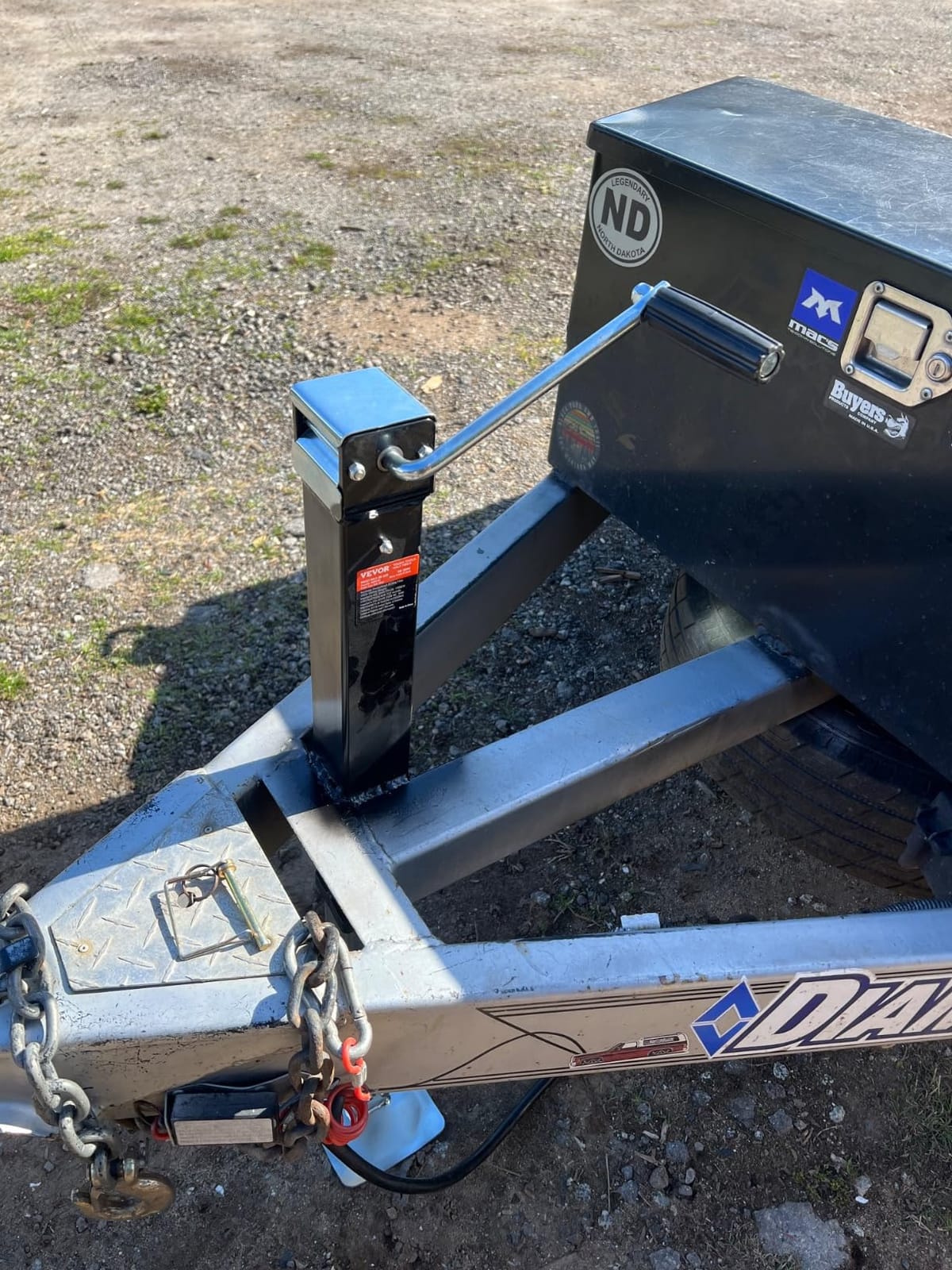
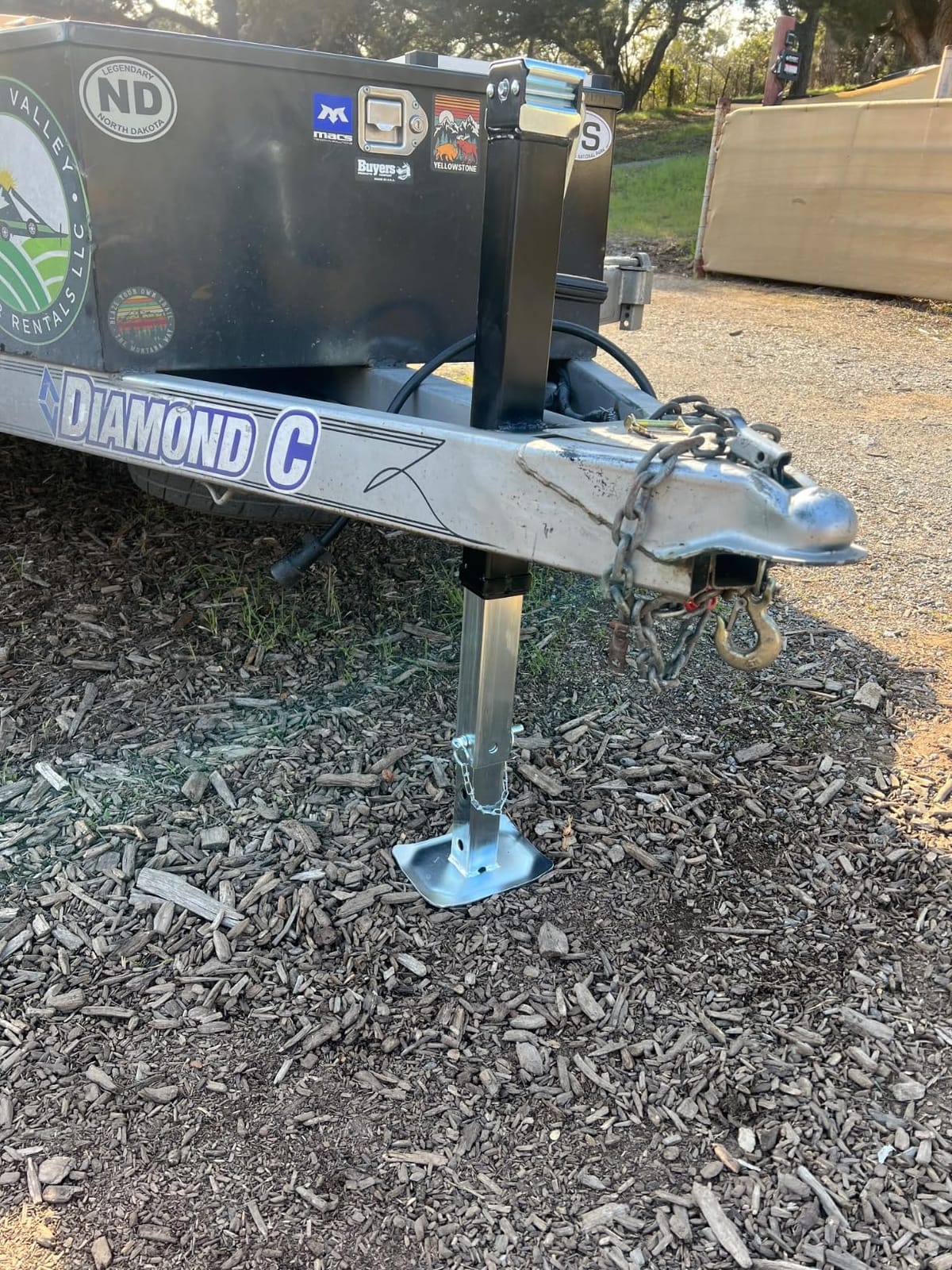
Corrosion protection is where the details matter outdoors. The inner tube is galvanized and the outside carries a powder finish, so mud and road spray do not sit on raw steel. If you launch boats in saltwater, that combination is the minimum you should accept, and it is worth a look at how other finish options compare before you commit. The 23.4 lb weight is reasonable for a jack this stout, and the black finish hides scuffs that would show on a bare zinc part.
The honest weakness is the direct-weld mount. There are no bolt holes, so the jack is permanent once the beads cool. That is a feature on a purpose-built trailer and a mistake on a trailer you expect to reconfigure, and there is no bolt-on variant in this product line. The other recurring note, from a small number of owners, is a slightly loose internal clearance that gives a grinding feel through the stroke even after greasing. It is a fit-and-finish issue rather than a strength issue, and at 419 reviews with a 4.7 average the feedback base is deep enough that I would treat it as a minor characteristic rather than a defect pattern.
What to check before you weld it on
Measure the underside of your frame where the jack will live. The mounting flange needs a flat, continuous surface, and frame welds, gussets, and cross members all complicate a direct weld. Weld quality at the frame beats weld quality at the jack, because that joint carries the whole tongue load every time the trailer sits parked.
Confirm your required lift before cutting. 15-1/4 inches is generous for a fixed trailer frame and tight for anything on a suspension or a drop-neck gooseneck. If your coupler height changes day to day, a longer-stroke model is the smarter buy even if it costs more.
Where this jack is the wrong choice
Skip it if you need to move the jack between trailers or if your frame is thin angle iron rather than solid steel. Weld-on only means one bad fit and you are back at the fabricator, and thin wall sections distort instead of gripping the flange.
It is also the wrong pick for anyone who wants to jack from the cab. There is no motor here, just a handle, so every lift means walking to the tongue. If cranking is the thing you most want to stop doing, look at the electric section further down.
2. FZZD HZ-05 8000 lbs Long Travel Jack
FZZD 8000 lbs Heavy Duty Trailer Jack, 28.6″ Vertical Travel
8000 lbs capacity
28.6 in vertical travel
4.7-33.3 in range
5-level adjustment
Pros
- Highest average rating in this group at 4.8
- 28.6 in travel covers high and low trailers
- Textured extended handle improves leverage
- Ships with installation bolts
- Strong salt-air corrosion performance
Cons
- Slight grinding feel reported after greasing
- Utilitarian galvanized pipe construction
- Included components not clearly listed
This is the travel champion of the group and the highest rated jack in the roundup at 4.8 across 169 reviews. Where most 8000 lb jacks give you 12 to 15 inches of stroke, this one moves 28.6 inches across a 4.7 to 33.3 inch range. That number is what makes it work on both a high A-frame and a low utility trailer without swapping parts.
The five-level height adjustment works together with the long stroke, which means coarse positioning happens at the base and fine positioning happens on the screw. The extended textured side handle is longer than most and gives you real leverage, which matters on a loaded tongue. Installation bolts and instructions are in the box, and the side-mount design bolts on or welds on depending on your frame.
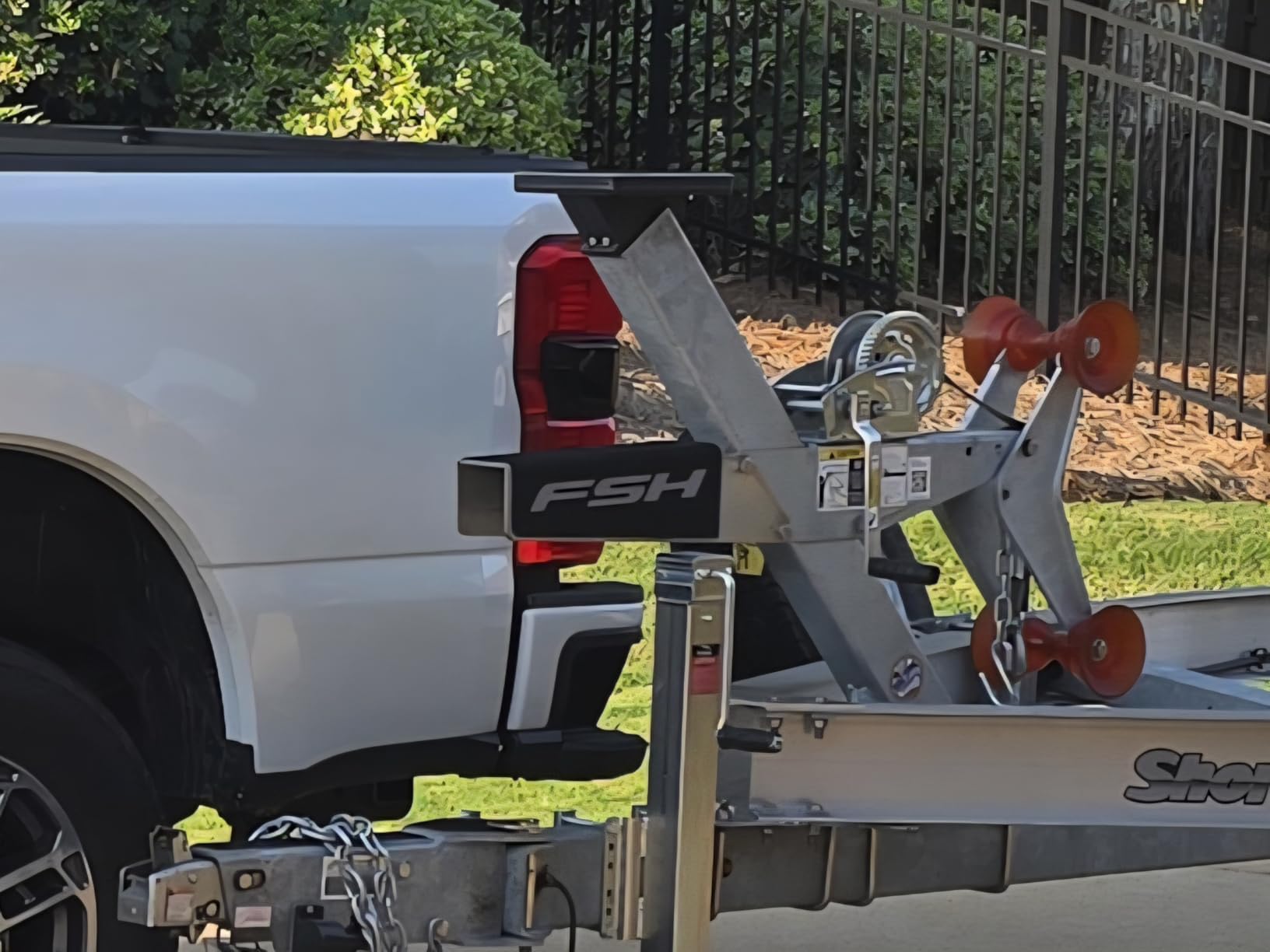
Several owners replaced factory or seized jacks with this unit on boat, sled, and utility trailers, and one specifically called out how it held up in a salty Texas coastal environment. That is the saltwater durability claim that matters most, and it lines up with the galvanized steel pipe construction. The oversized base plate adds footprint on soft ground, where a narrow jack foot tips the trailer while you are cranking.
The common complaint across reviews is a slight grinding sensation during cranking that persisted after lubrication. It appears alongside otherwise enthusiastic feedback, so treat it as noise in the gear rather than a sign of a failing screw. Build quality is described as utilitarian rather than refined, and at 28 lb the jack is substantial. The one-year warranty is the shortest structural commitment in this roundup, which is worth weighing against a 12,000 lb alternative that carries a limited lifetime term.
Why the long stroke is worth more than raw capacity
Capacity only matters if the jack can reach coupler height. A 12,000 lb jack with 12 inches of travel is useless on a trailer whose tongue sits low, and an 8000 lb jack with 28.6 inches of travel fits both ends of the spectrum. If you are unsure of your setup, travel is the safer place to spend.
Long travel also means fewer repositioning headaches. If you tow with different trailers or run the same unit on a boat trailer and a utility trailer, the wide range removes the guesswork entirely.
What to look at before ordering
Check your frame height against the 4.7 inch minimum retracted figure. A side-mount jack needs clearance below the frame to fully retract, and a shallow channel leaves the screw permanently extended.
Plan on grease. The screw is the highest-wear part and this is a galvanized steel build with no mention of a factory-packed lubricant, so a zerk service at every season boundary is sensible.
3. VEVOR 721100 8000 lbs Swivel Bolt-On Jack
VEVOR Heavy Duty Swivel Trailer Jack, 8000 lbs Static Load Capacity, 28.5″ Lift Jack Stand with Handle for RV, Horse, Utility, and Yacht Trailers
8000 lbs static load
28.5 in lift
7.6-39.5 in range
Swivel bolt-on base
Pros
- Ranks high in RV Jacks and Stabilizers
- Owners lift dual-axle flatbeds and large boats
- Multiple pre-drilled base holes fit different frames
- Zerk fitting and top gear cap for servicing
Cons
- Dynamic capacity is 5600 lbs not 8000
- Included bolts can be too long for some frames
- Some installs need new holes drilled
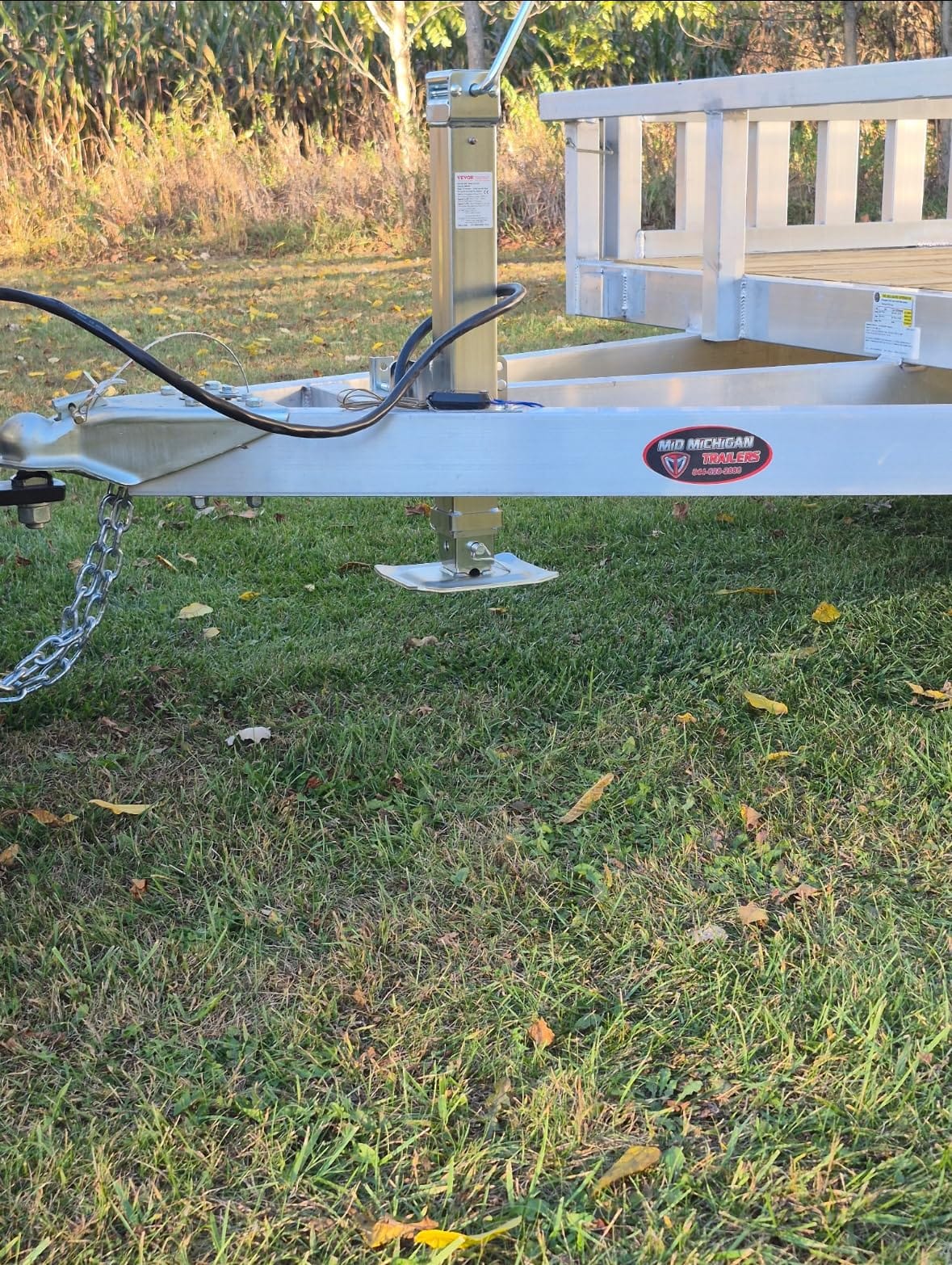
The swivel base is what separates this from a fixed-mount jack. The mounting plate rotates so you can position the foot toward the side of the tongue when ground clearance is tight, which is the situation on a boat trailer launching off a ramp. Combined with 28.5 inches of lift across a 7.6 to 39.5 inch range, it covers an unusually wide band of tongue heights.
Owners report lifting genuinely heavy loads with little effort. That includes dual-axle flatbed trailers carrying 3,000 lb boats parked on a slope, and 6,000 lb boat trailers. The multiple pre-drilled base holes let it adapt to different frame widths, and the wide base plate gives stability on uneven ground. A zerk fitting and a top gear cap make routine servicing straightforward, which is exactly what you want on a jack that lives outside.
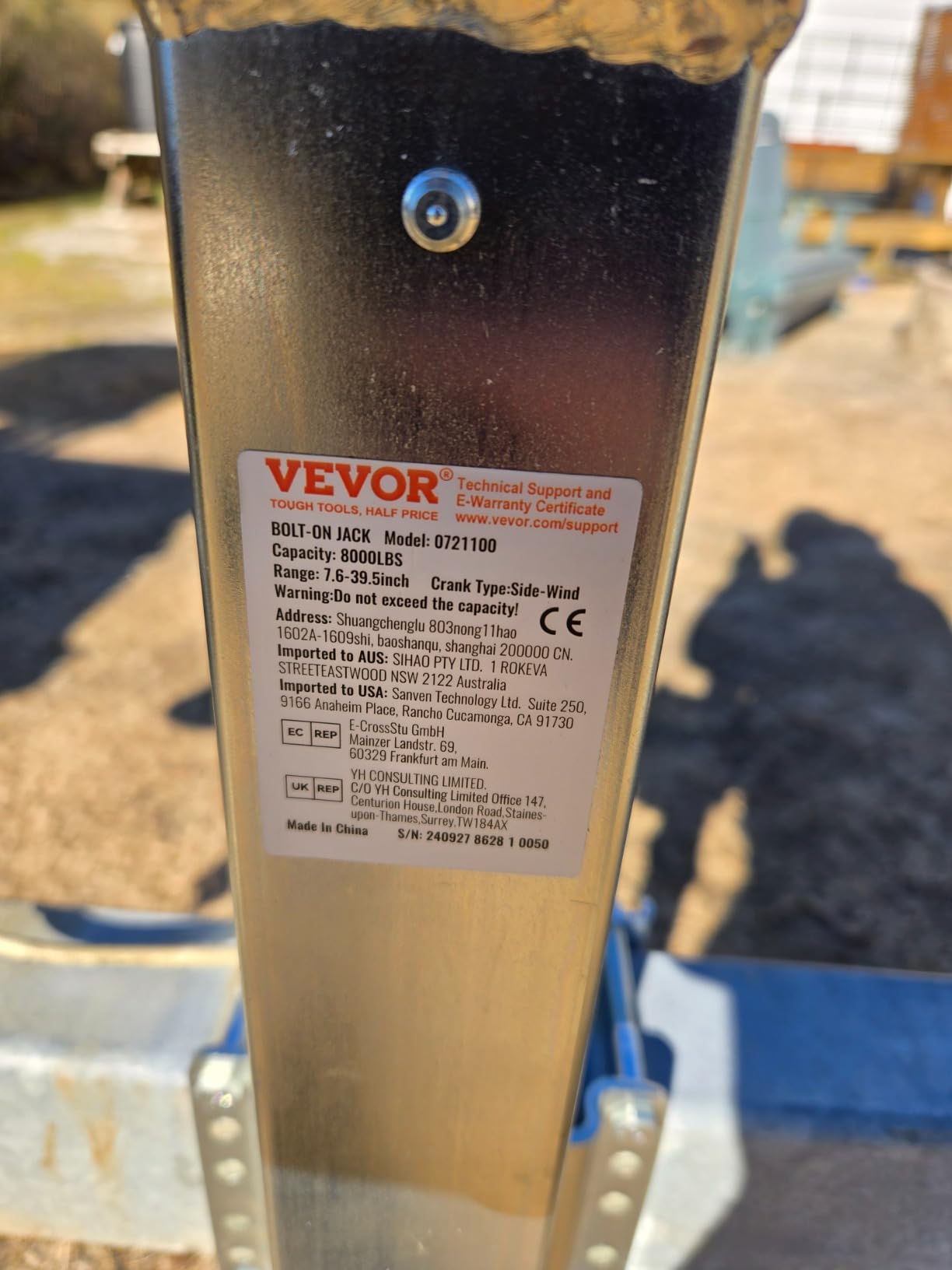
Read the capacity numbers carefully because this is where buyers misread specs. It is rated at 8000 lbs static and 5600 lbs dynamic. Static means holding a parked load. Dynamic means actively lifting through the stroke, and the lower figure is the honest number for a jack you will crank under load. Owners lifting fully loaded boat trailers still report easy operation, but a 5600 lb dynamic rating is a real constraint on a heavy tongue.
The practical gripe is hardware. The supplied bolts can be too long for angle-iron or pipe frames, so some buyers substituted their own fasteners or drilled new mounting holes. Finish quality is consistently described as good, with no rust reported after several months of use, which is a good sign for the galvanized coating on carbon steel. At 141 reviews the feedback base is moderate, and the sales rank in the RV jacks category suggests it is moving steadily.
Static versus dynamic capacity, explained
Most listing headlines quote the static figure because it is the bigger number. The dynamic figure is what applies while the screw is turning under load, and it is closer to how you will actually use the jack. Rule of thumb: plan around the dynamic number, and treat static as headroom.
This matters most on heavy tongue weights. If your trailer puts 1,400 lbs on the coupler, an 8000 lb static and 5600 lb dynamic jack gives you a healthy margin on both readings. If you are near the dynamic figure, a jack with a higher dynamic rating is the safer buy.
What to verify on your frame
Measure your frame width and compare it against the pre-drilled base hole spacing. The pattern is generous, but the bolts are the variable, and swapping to your own grade-appropriate hardware takes ten minutes and removes a whole class of problems.
Also confirm the jack can swing clear of whatever is below the tongue. A swivel foot that rotates into a frame brace or a fuel line at full extension is a problem you will only discover at 3 am in a campground.
4. YOMILINK 8000 lbs Bolt-On Long Travel Jack
YOMILINK 8000 lbs Trailer Jack, Bolt-On, 28.6″ Vertical Travel
8000 lbs capacity
28.6 in vertical travel
4.5-33.4 in range
Alloy steel
Pros
- 8000 lb capacity with 28.6 in of travel
- Textured extended handle reduces cranking effort
- Galvanized coating resists corrosion
- Oversized base plate for stable footing
- Installs by bolt or weld
Cons
- Heaviest unit here at 30 lb
- Thinner review base at 103 reviews
- Listing style field reads hydraulic though it is manual
This is the same basic long-stroke architecture as the FZZD, with the same 28.6 inches of vertical travel and a five-level adjustable base, but the emphasis here is on the oversized base plate and base support. Buyers comment on how stable it feels on soft or uneven ground, which is the failure mode that actually drops a trailer nose onto a trailer jockey.
The extended textured side handle is designed to reduce cranking effort, and the adjustable drop leg adds fine height control on top of the stroke. It bolts on or welds on depending on the frame, and the galvanized coating on the heavy-duty steel pipe handles weather exposure without complaint.
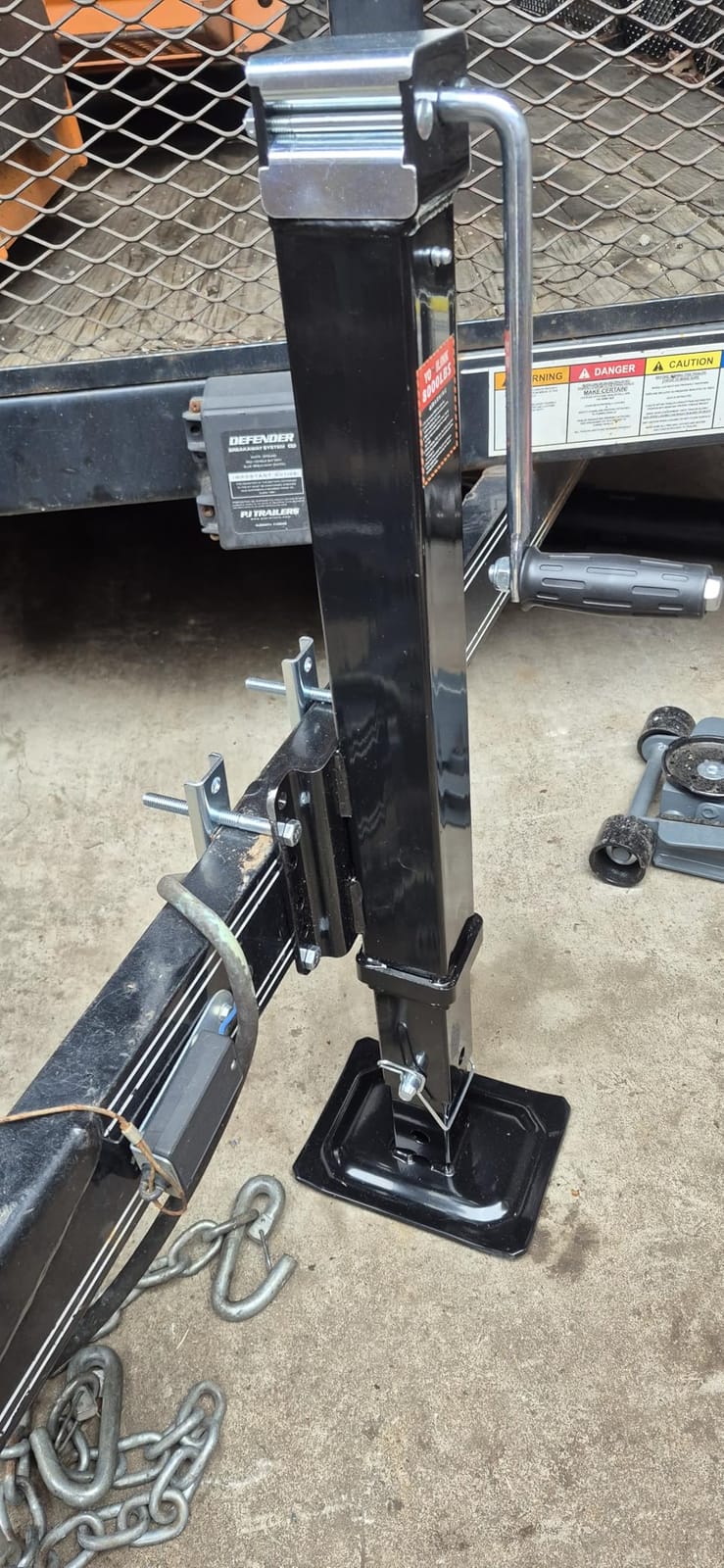
Sentiment is positive and centered on the long travel, the grippy handle, and the stable base. Buyers report it bolting on cleanly and handling heavy tongue weights without drama. At 103 reviews the feedback base is thinner than the leaders in this roundup, so treat the owner comments as encouraging rather than conclusive. The 30 lb weight is the heaviest of the manual 8000 lb units we reviewed, which is noticeable when you are carrying it across a shop floor.
One oddity worth flagging honestly: the style field in the listing reads hydraulic, but the jack is a manual crank unit. If you are filtering listings by drive type, check the product type rather than the style field. The adjustable drop leg here is worth noting against the manual approach too, since it is what lets you level a trailer without fighting the screw threads.
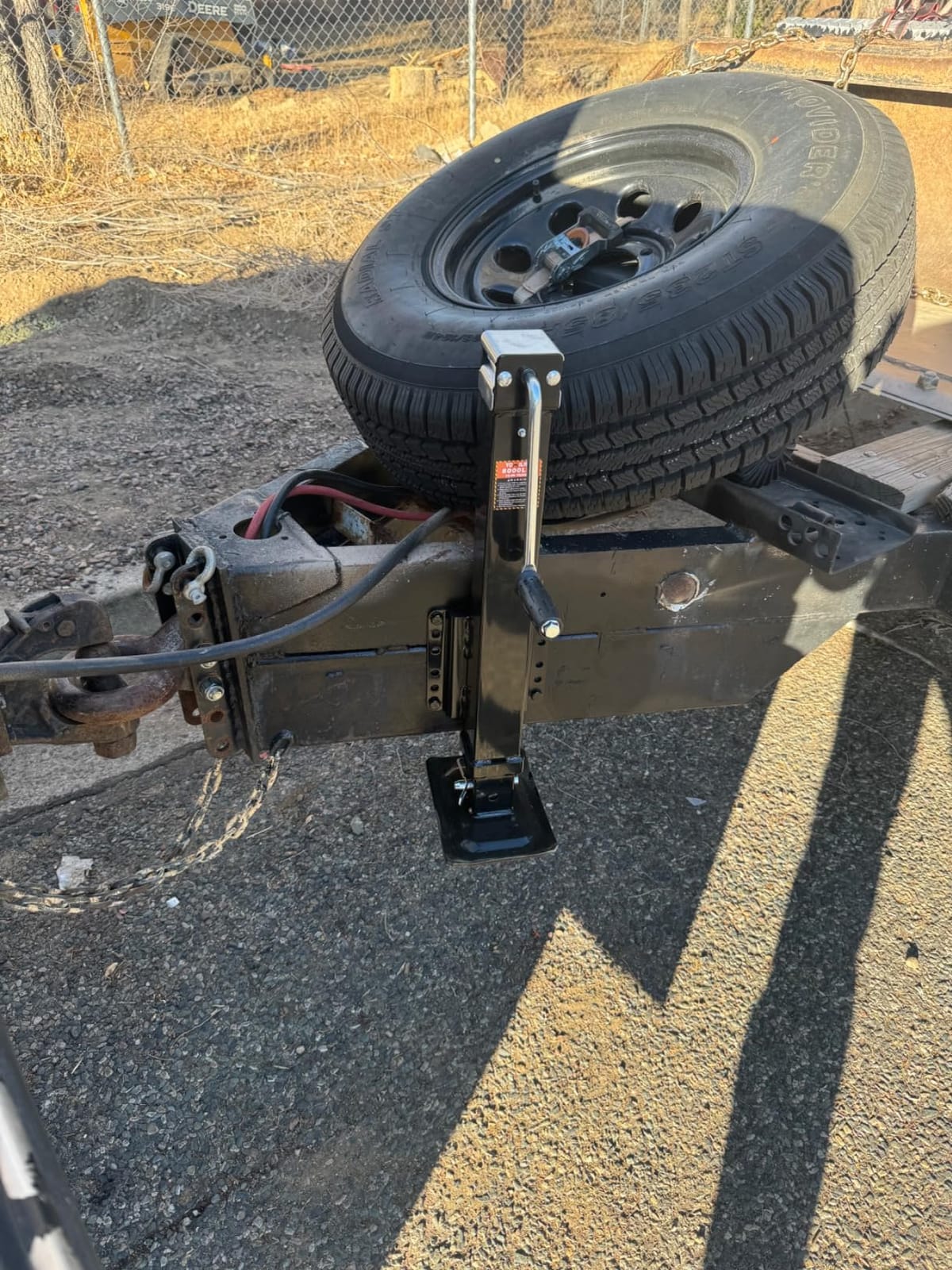
How it fits against a factory bolt pattern
Side-mount bolt-on jacks install against the side of the frame channel, so the two things that decide fit are frame height and available side clearance. Measure the channel height and confirm the mounting flange has a flat face without a factory weld bead right where the bolts land.
Because it can be welded instead of bolted, you are not locked into one installation. Some owners bolt for flexibility, others weld for permanence, and a jack that accepts both is more useful across a mixed trailer fleet.
What to consider before you commit
Thirty pounds is real weight to move around, and if you plan to swap jacks between trailers this is not the one. If it is going onto a single frame and staying there, the weight mostly disappears as a non-issue.
Check that you are comfortable with a shorter warranty story. One year of coverage is common in this price band, and it is a meaningful difference if you keep trailers in service for a decade.
5. TYT TTJ-003 8000 lbs Square Weld-On Jack
TYT 8000lbs Square Direct Weld Heavy Duty Trailer Jack, 15 Inches Lift Side Wind Square Jack, with 13 Inches Adjustable Drop Leg for Camping Trailer, Boat Trailers, RV Trailers, Black
8000 lbs tongue rating
7000 lbs lift
15 in lift
13 in adjustable drop leg
Pros
- Square tube resists side loading when extended
- 13 in drop leg speeds leveling
- Side-wind handle works from the side
- Weather-resistant coating and zinc inner tube
- Lightest 8000 lb direct-weld unit at 23 lb
Cons
- 15 in of travel is the shortest in this group
- Weld-only with no bolt holes
- Lower category sales rank than the VEVOR units
The distinguishing detail on this one is the side-wind handle. Instead of cranking from directly above or below, the handle enters from the side, so you can raise and lower the jack while standing beside the tongue rather than lying down under it. On a horse trailer or an enclosed cargo trailer where you need access to wheels and bearings while the tongue is up, that geometry is genuinely useful.
Rated at 8000 lbs of trailer tongue weight with a 7000 lb lift capacity, this is an honest rating pair, and the two numbers being close is a quality signal compared to listings where the headline figure runs far ahead of the lift number. The 13-inch drop leg with a pin and clip retainer makes coarse leveling fast. The outer tube carries a weather-resistant coating over a zinc inner tube, which is the right pairing for a trailer that lives outside in rain and mud.
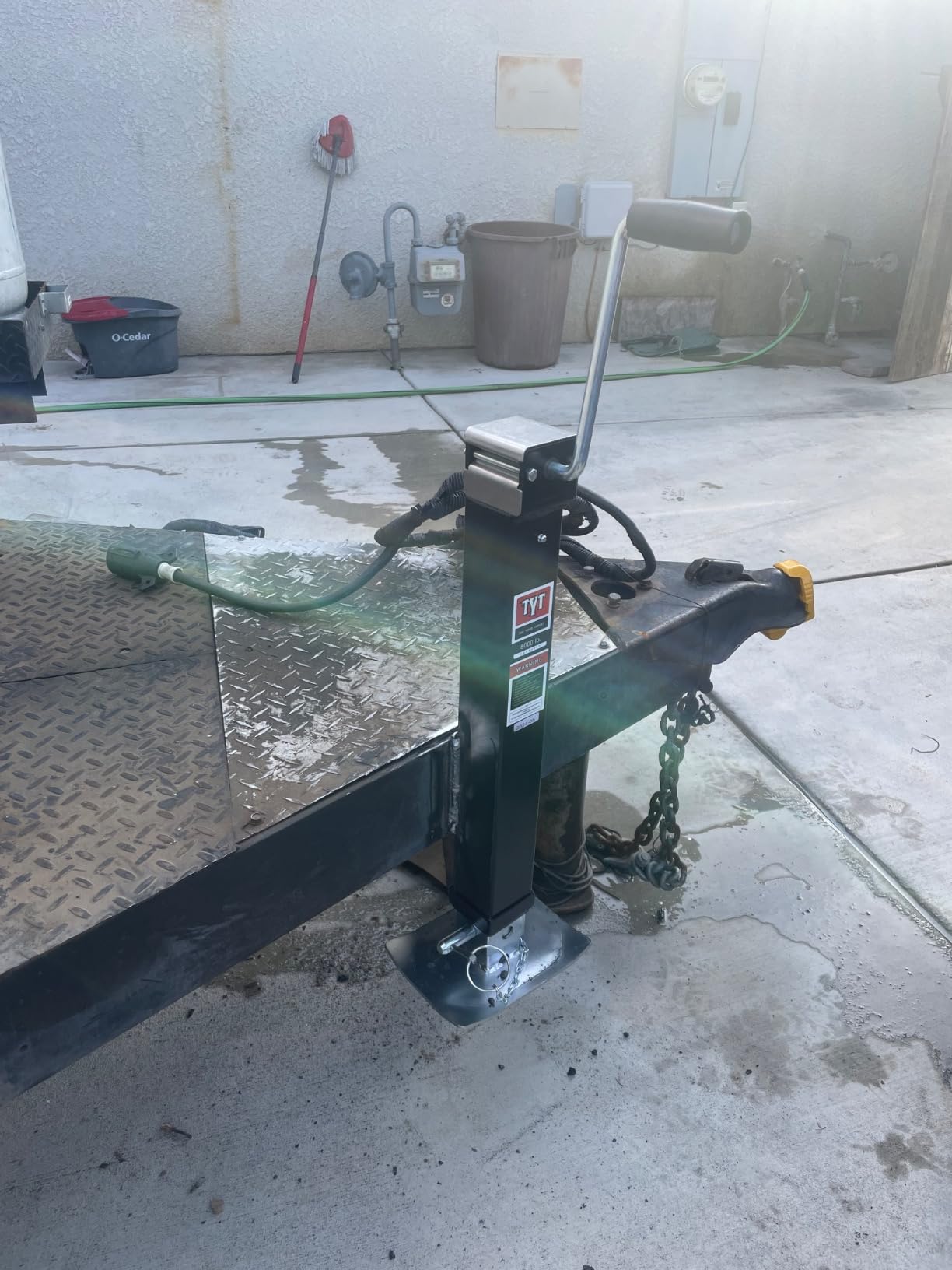
Owners appreciate the stiffness of the square tube, particularly the overlapping inner and outer tubes that resist side loading when the jack is fully extended, and the pin-and-clip drop leg. The cluster is a notch below the top-scoring 8000 lb jacks, with the limited 15 inches of travel as the main trade against longer-stroke models. The outer tube diameter is 2.6 inches and the unit weighs 23 lb, making it the lightest direct-weld 8000 lb jack here.
Retracted height is 24-1/4 inches and total extended height is 39-1/4 inches, so confirm those figures against your coupler height before welding. Weld-only installation is the other hard constraint, and there are no bolt holes to fall back on. If your frame is angle iron rather than solid steel, direct welding is a poor choice regardless of brand.
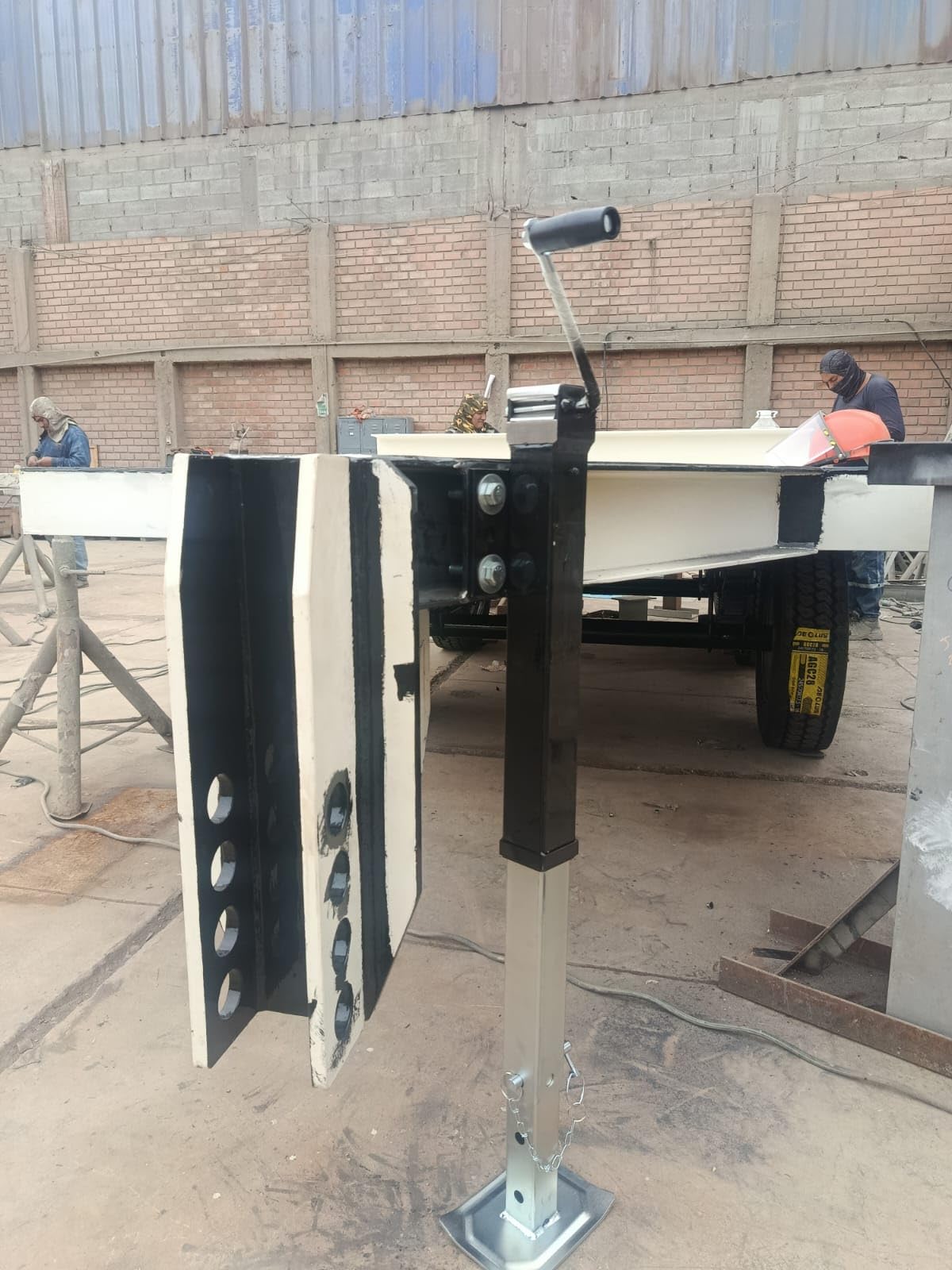
When a side-wind handle earns its place
Side-wind operation pays off when you work on the trailer while the tongue is raised. Wheel bearing service, brake inspection, and tire changes all put you beside or underneath the trailer, and a handle that needs a kneeling position to operate is an awkward combination with a loaded trailer.
It also matters for drop-leg handling. A side handle gives you leverage to pull the drop-leg pin with the same tool and one hand, rather than reaching over the top of a loaded frame.
Where the short stroke becomes a problem
Fifteen inches of travel is fine on a fixed-frame trailer with a known coupler height. It becomes a genuine limitation on drop-neck goosenecks, adjustable-height hitches, and any trailer you tow at different angles. Measure the highest and lowest coupler positions you will see, not just the parked one.
If the numbers are tight, move up to a 28-inch-stroke bolt-on model rather than fighting the height with a drop leg alone. Coarse adjustment at the base cannot substitute for stroke on a high-range setup.
6. Curt 28512 12000 lbs Side Wind Square Jack
Curt 28512 Side Wind Heavy Duty Square Jack
12000 lbs tongue weight
10000 lbs lift
12-3/8 in travel
Limited lifetime warranty
Pros
- Highest capacity here at 12000 lbs tongue weight
- Limited lifetime warranty on the jack
- Side-wind handle with integrated grip
- Black powder coat resists water and road salt
- Established part number for replacement
Cons
- Shortest travel in the group at 12-3/8 in
- Heaviest at 61.6 lb
- Weld-only and hardware not included
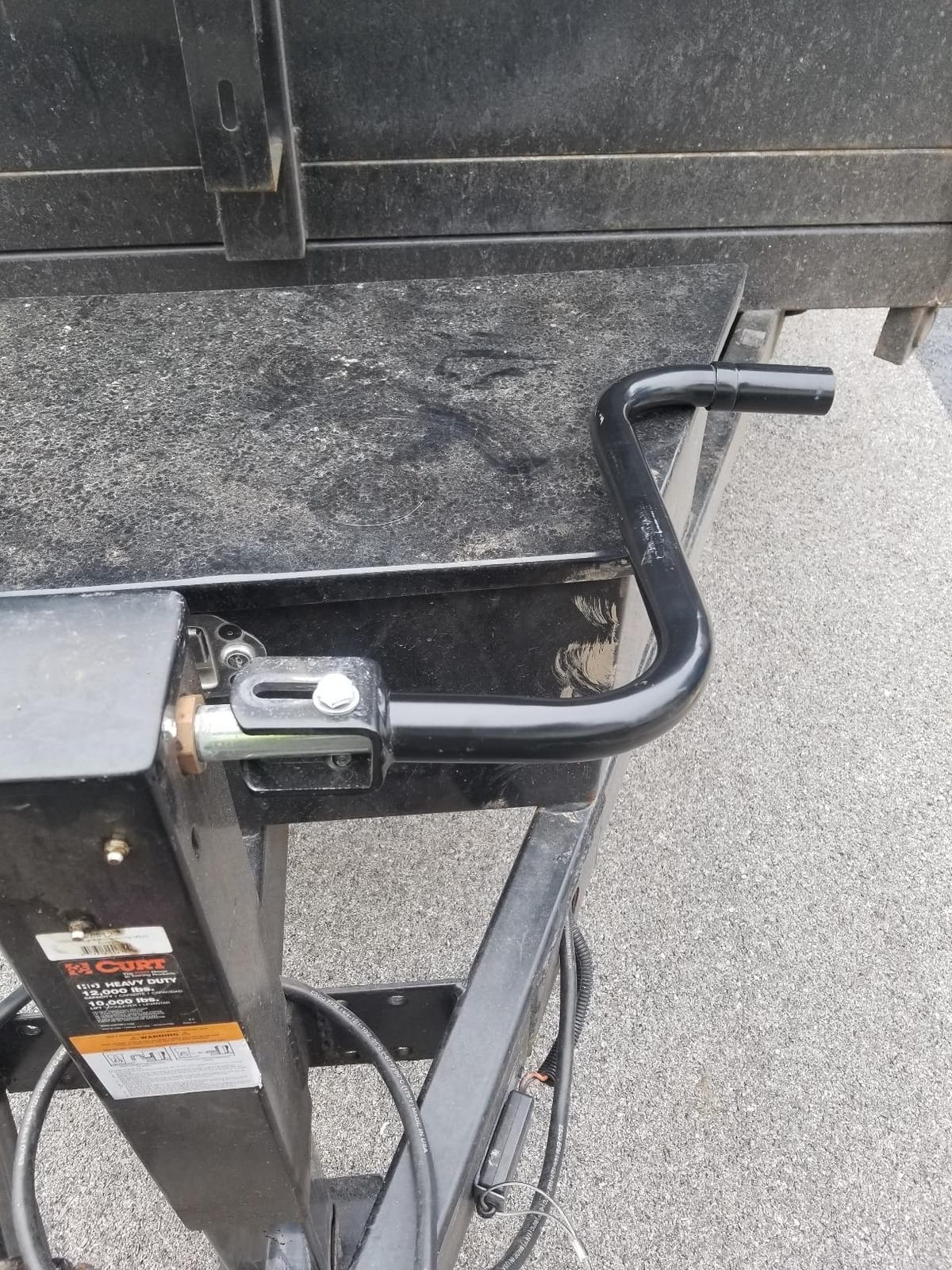
This is the capacity answer in the roundup, rated at 12,000 lbs of trailer tongue weight with a 10,000 lb lift capacity. That headroom is real and it is the reason to buy this jack. If you run a gooseneck dump trailer, a heavy equipment hauler, or a combination trailer that regularly carries dense material, an 8000 lb jack leaves you sizing to the edge of its rating instead of comfortably inside it.
It is also the only unit here with a limited lifetime warranty, backed by a one-year finish and one-year parts term. Owners treat it as a buy-it-for-life replacement and cite the steel construction and the rating as the reasons. The side-wind handle has an integrated grip, which makes coupler positioning comfortable on a heavy tongue where you are holding the trailer at an angle. The black powder coat stands up to water, dirt, and road salt.
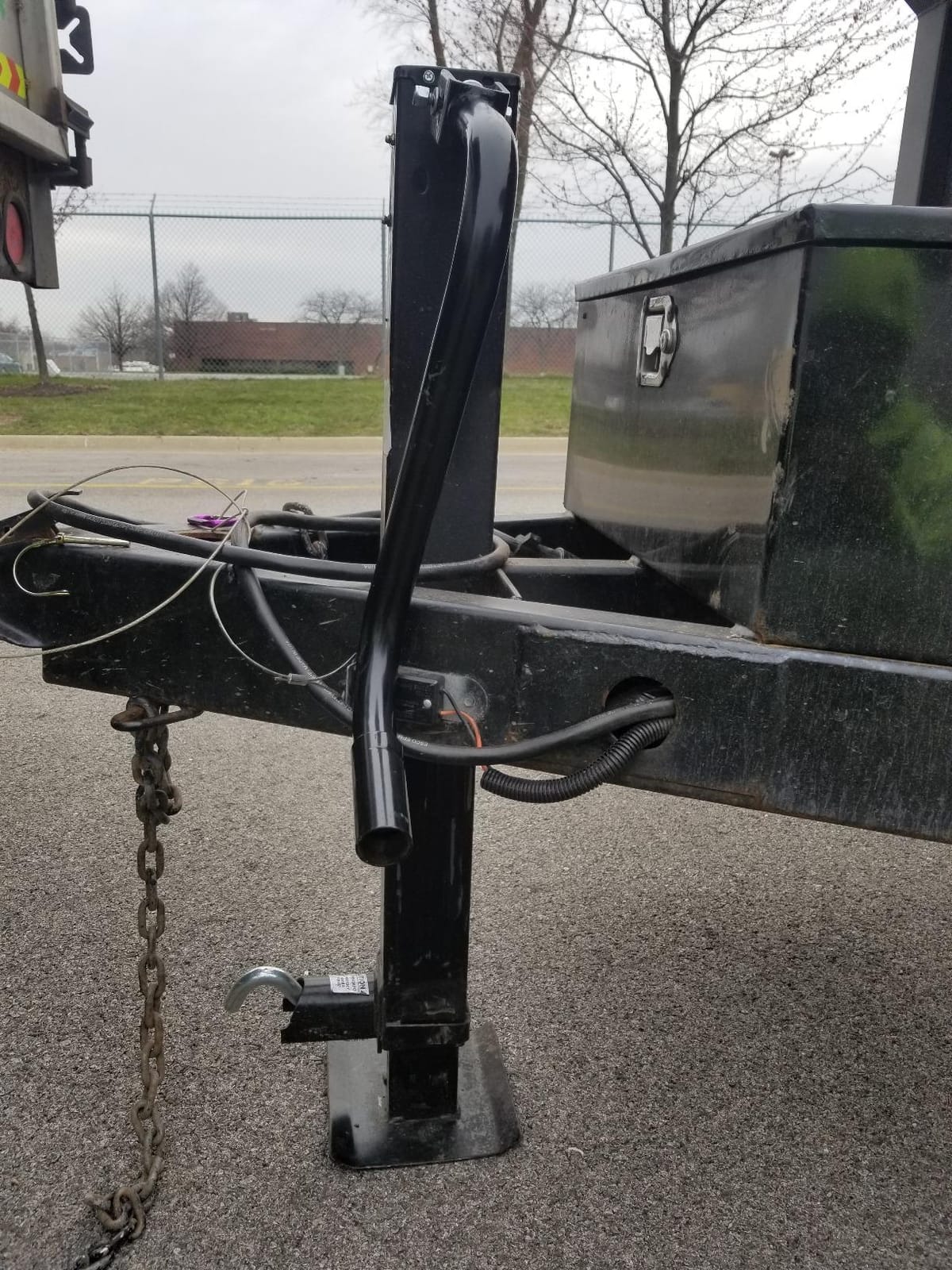
Now the trade-offs, and there are real ones. Travel is 12-3/8 inches, the shortest in the group, and retracted height is 28 inches, so the package is tall. At 61.6 lb this is by far the heaviest jack we reviewed, and it is a two-person lift in most shop settings. Installation is direct weld only and the mounting hardware is not included, so the fabricator supplies the fasteners.
Those constraints make it a poor match for trailers needing frequent height changes or for anyone who wants to move jacks around. The tall retracted height also costs ground clearance on trailers that need to clear an obstacle. But for a fixed heavy-haul frame with high tongue loads and a long service life, the capacity and the warranty term are hard arguments against.
When 12,000 lb of tongue weight rating is justified
Work the math from loaded trailer weight. At 15 percent tongue weight, a 10,000 lb loaded trailer asks roughly 1,500 lbs of support. Multiply that by four and you are at 6,000 lbs of jack, which is where the 8000 lb units land. A jack in the 12,000 lb class makes sense when your loaded weight climbs into the 25,000 to 40,000 lb range, or when the load is dense enough that tongue weight runs well above the 10 to 15 percent average.
Dense cargo is the hidden factor. A trailer of steel, gravel, or loaded pallets carries a higher tongue percentage than a trailer of camping gear or hay, and the same GVWR number can mean very different jack requirements.
Where the weight and short travel hurt
Sixty-one pounds is the constraint that will shape your install. Plan the lift path, get help or a lifting device, and make sure you can set the jack on a workbench rather than on the trailer frame. Bolting is not an option here, so you are committed to a permanent mount from day one.
The 12-3/8 inch stroke also means the drop leg and the base mounting position do the coarse work. If your trailer sits on a drop neck or adjustable coupler, that geometry has to be right before the jack goes on.
7. SEALIGHT 7500 lbs Electric Tongue Jack
SEALIGHT Electric Trailer Jack 7500lbs, Waterproof for A-Frame&RV Trailer
7500 lbs capacity
12V DC motor
9.84-33.85 in lift range
LED light and breaker
Pros
- Wide height range fits many A-frame tongue heights
- Hand crank included for power outages
- LED lighting for night work
- Built-in circuit breaker with thermal cut-off
- Carbon steel shell with waterproofing
Cons
- Slowest powered travel in this group per owners
- Cover screws strip easily
- One owner reported failure at 34 days with no support response
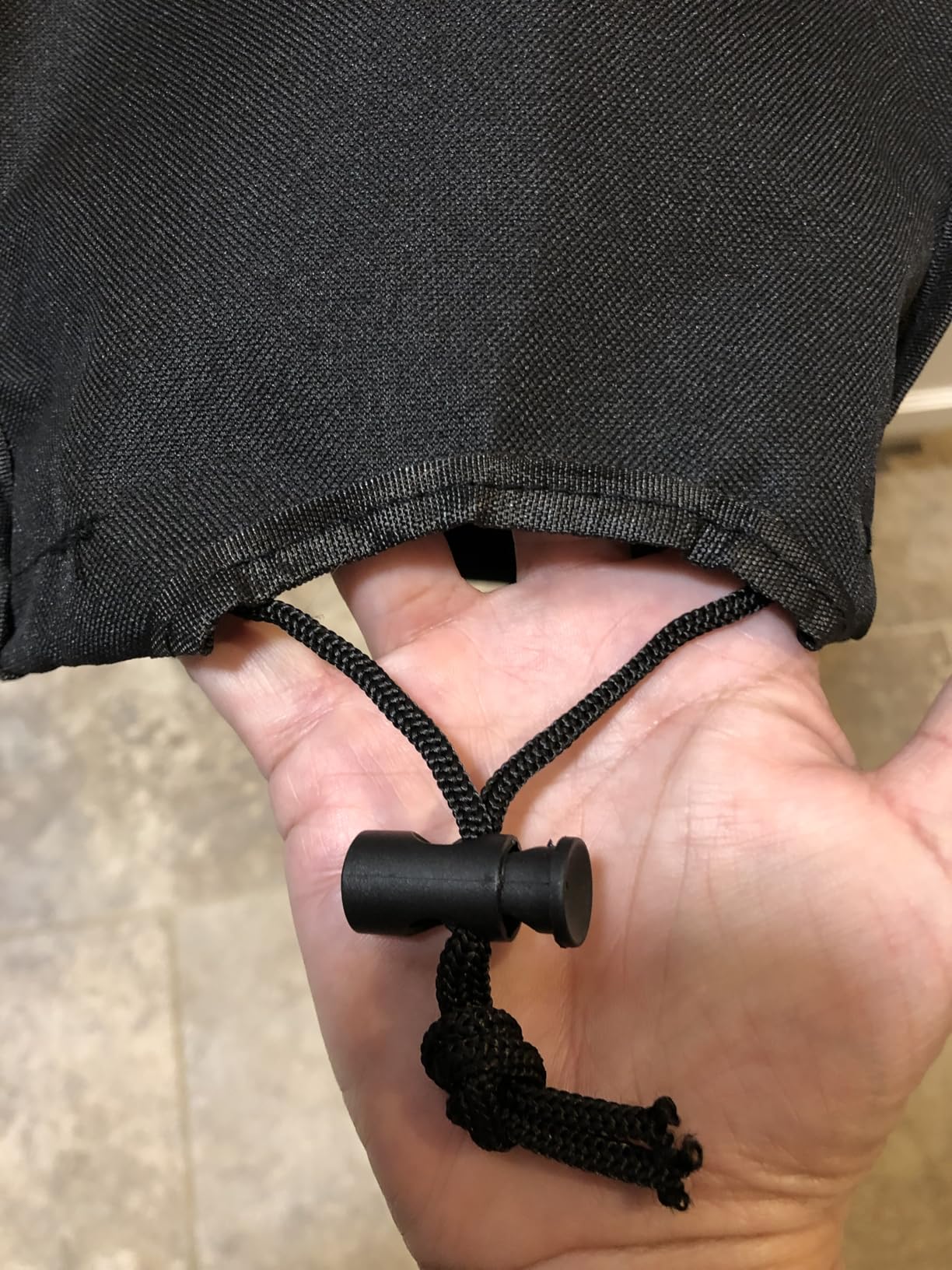
This is a straight tongue jack to electric conversion for A-frame and RV trailers, and the wide 9.84 to 33.85 inch lift range is the reason it fits where many electrics do not. The carbon steel shell carries an anti-rust coating and waterproofing, and the included protective cover is what keeps water off the motor and electronics over a long outdoor life.
Night work is handled by the built-in LED lights, and the built-in circuit breaker with thermal cool-down protects the motor if you cycle it repeatedly under load. The hand crank is a genuinely valuable inclusion. If your trailer battery is flat, the jack still works, and on a heavy trailer that is the difference between a ten-minute fix and a roadside recovery.
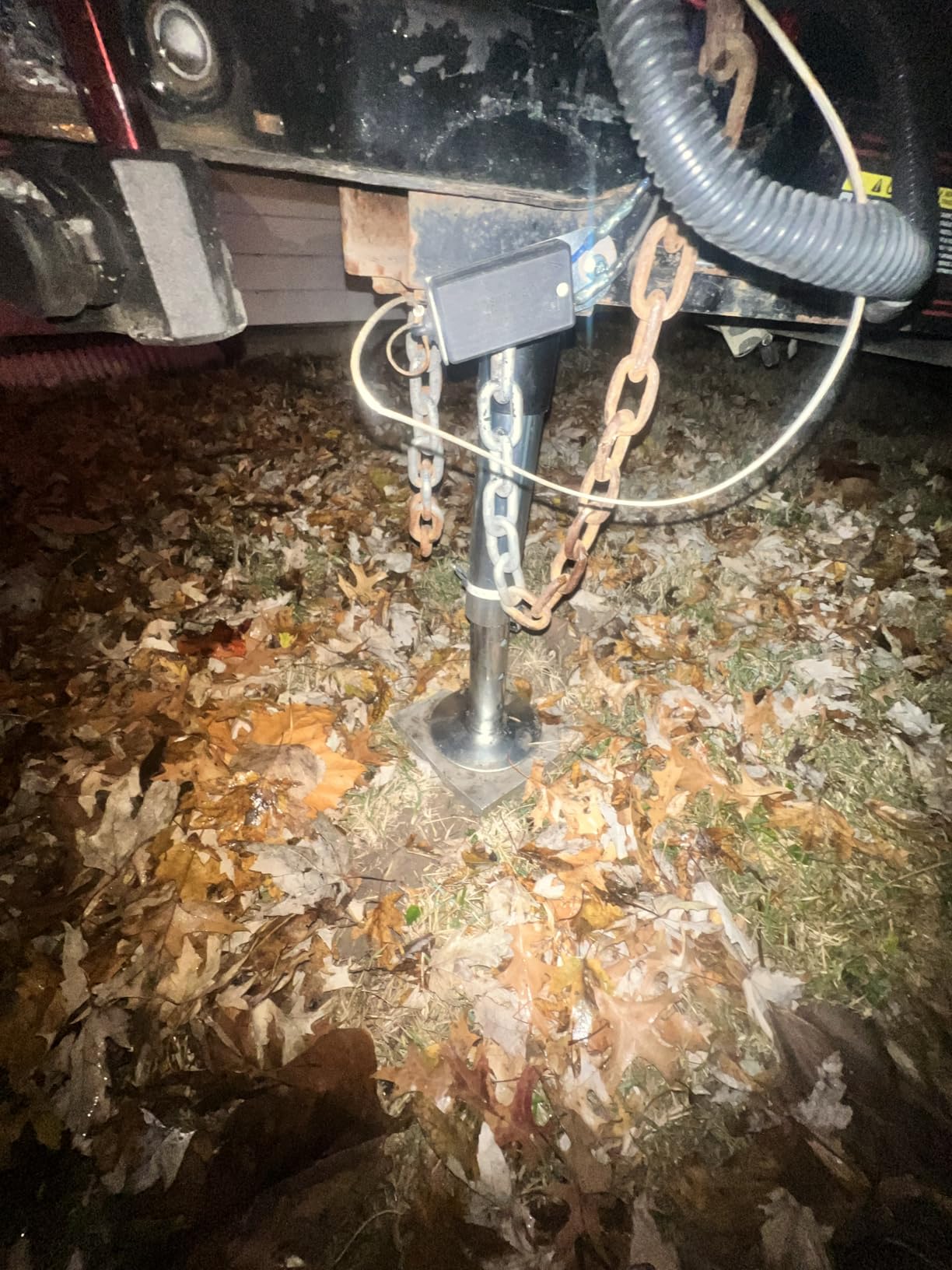
There is a real durability concern here and I want to be direct about it. One owner reports the jack stopped extending after about 34 days and describes being unable to get support, a return, or warranty help. That single account is not a pattern on its own, but when a manufacturer support path is part of the complaint, it changes the calculation. The 4.3 average with 114 reviews also includes a relatively high share of one-star ratings.
Practical negatives: owners report the slowest powered leg travel in this group, and the motor and wiring housing is held by four small screws that strip easily, which is frustrating if you ever need to open it. Weight and full dimensions are not published on the listing, so check the fitment before ordering. The one-year manufacturer warranty is the shortest term among the electric units we looked at.
What to check before converting to electric
Confirm your 7-pin connector is live at the tongue and that you have a fused circuit available. Electric tongue jacks draw significant current, and an unfused feed straight to the battery is the fastest way to find a problem the first cold morning.
Measure your A-frame clearance. The 9.84 inch minimum height assumes the jack can fully retract inside the frame. If your frame rails are lower or the coupler box is shallow, the screw stays extended and you lose clearance permanently.
Where this conversion disappoints
If you are the kind of owner who wants the trailer to work when nothing else works, buy the one with the strongest manufacturer backing rather than the lowest sticker. Support and parts availability are the real failure mode on electric jacks, and the hand crank only covers a dead battery, not a failed motor or a lost brake.
Slow powered travel is a daily irritation rather than a defect. If you cycle the jack many times a day, factor that into your patience budget before you commit.
8. KYX 7500 lbs Electric Tongue Jack
KYX Electric Trailer Jack 7500LBs,Electric Jack with Waterproof Cover
7500 lbs capacity
12V DC motor
9.84-33.85 in range
32 in max lift
Pros
- Largest review base among the 7500 lb electric jacks
- Three-bolt swap from a manual jack
- Remote fob versions adjust height from the cab
- Overload protection auto-restarts after cooling
- Hand crank included for outages
Cons
- One owner reports a snapped screw drive after about 10 uses
- Raise and lower switch can stick and fit loosely
- Slow powered travel
- Wiring arrives as bare leads without connectors
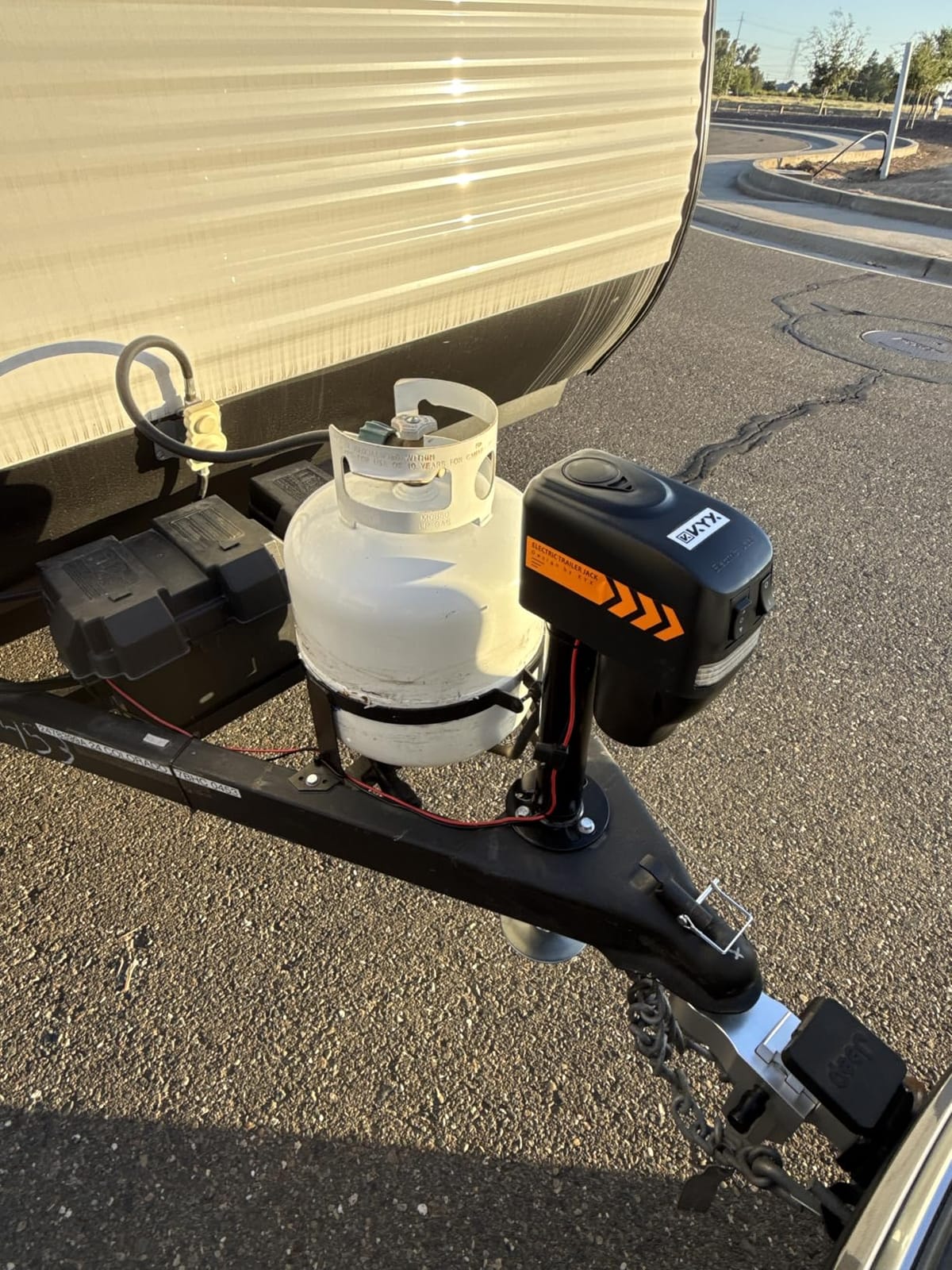
At 939 reviews this is the most thoroughly owner-tested electric jack in the roundup, and that sample size matters on a category where failures are the main thing you are trying to rule out. Most owners see it as a good-value electric conversion. The swap itself is remarkably quick, with owners replacing a manual jack with three bolts in minutes, which is a big deal if your factory jack is seized and you want the trailer back in service the same afternoon.
The remote fob variants are the feature owners request most. Being able to nudge the height from inside the cab matters on a sloped driveway, where getting under the tongue to work a switch in the dark is unpleasant. The built-in overload protection shuts the motor down and auto-restarts once it cools, which is the right behavior for a jack that sees sustained heavy cycles. Range is 9.84 to 33.85 inches with 32 inches of maximum lift, and the same model family is offered in 3500 lb and 5000 lb variants.
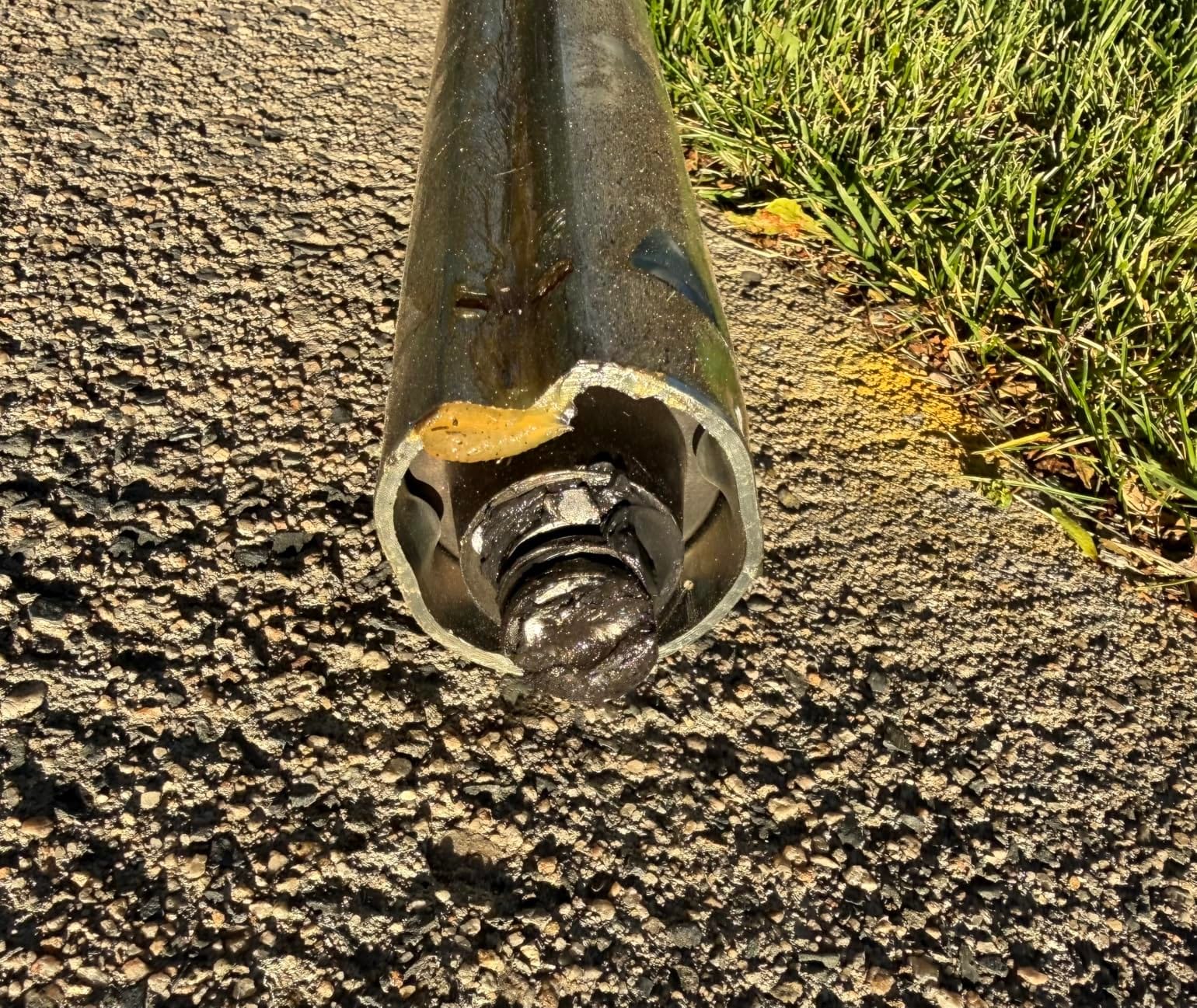
There is one serious durability report. A detailed review documents the screw drive snapping after about 10 uses on a trailer carrying under 2,000 lb of tongue weight. That is the most serious complaint in the electric category, and the fact that it happened well under the jack’s rating is what makes it notable. Recurring negatives are otherwise about ergonomics: powered travel is slower than manual cranking, the raise and lower switch sometimes sticks and fits loosely, and the wiring arrives as bare leads with no battery terminal connectors or lugs, reported around 12 inches too short.
Some variants ship without mounting bolts or wire lugs, so budget a small parts run before the install. The warranty is one year. If you are comfortable adding your own terminals and connectors, this is a capable 7500 lb electric with the widest owner evidence base here.
What makes an electric swap easy
The install is a bolt pattern, a 7-pin connection, and a fuse. That simplicity is the main argument for an electric jack over anything else, because there is no acme screw to seize, no gear train to strip, and nothing to lubricate. If your existing jack is a manual unit, the conversion is measured in an afternoon.
Remote control changes the workflow more than the motor does. Sloped sites, dark driveways, and a second person walking ahead to check clearance are all problems a fob removes.
Where it falls short
Snapped screw drives and loose switches are the two things to watch. Before installing, check that the screw is properly greased and that the mounting bolts are torqued, because a threaded drive under load with dry threads is where failures start.
Buy the terminal lugs separately. Bare leads without ring terminals are an easy shortcut that leaves a high-current connection exposed, and those are the connections that fail on a cold morning with a flat battery.
9. Kohree 8000 lbs Drill-Powered Jack
Kohree 8000 lbs Trailer Jack Heavy Duty, 20-24V Electric Drill–Operated
8000 lbs capacity
4.7-33.4 in height range
5-level adjustable base
Drill socket operation
Pros
- 8000 lb capacity and long travel without a wired electric
- Works with a 20-24V cordless drill you already own
- Detachable handle allows manual backup
- Oversized foot plate and galvanized tubes
- Bolt-on install with hardware included
Cons
- Requires a separate 20-24V cordless drill not included
- Trailer frame height must be under 5 in
- Smallest review base here at 97 reviews
- Cannot be run from inside the cab
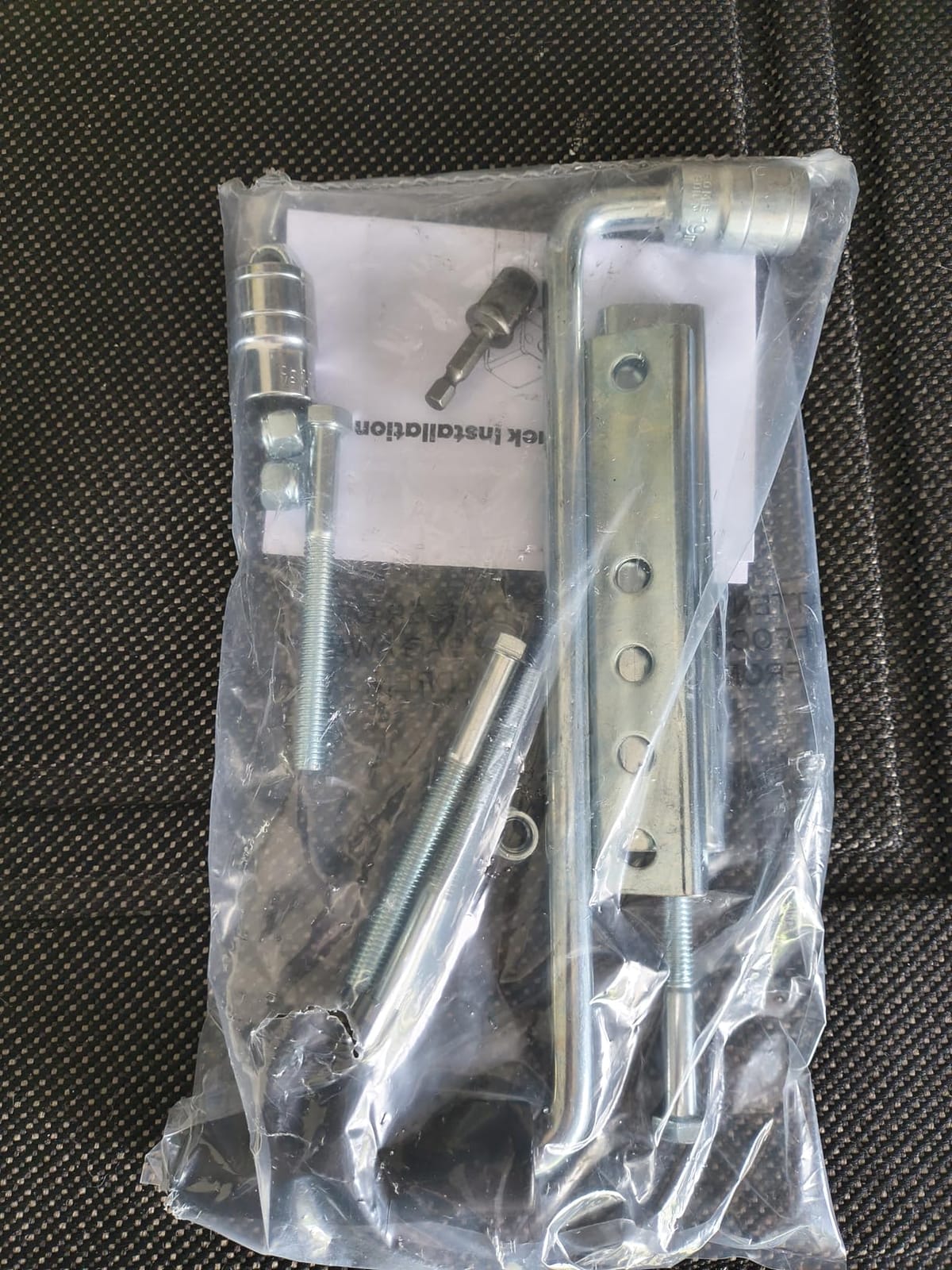
This is the option nobody is pitching and everybody with a drill should consider. The jack has a socket that accepts any 20-24V cordless drill, and the manufacturer claims it cuts cranking time and effort by around 70 percent. You get 8000 lb of capacity and a 4.7 to 33.4 inch range across five base levels, which is long-travel capability normally reserved for wired electric units. No wiring, no 7-pin connector, no battery drain on the trailer.
The detachable non-slip extended handle is the safety feature. If the drill battery dies mid-lift, you reinsert the handle and finish the stroke by hand. That redundancy is why I like drill-powered jacks as a middle ground: you get powered convenience for the routine case and manual capability for the edge case. The oversized foot plate and thickened galvanized tubes handle stability and corrosion.
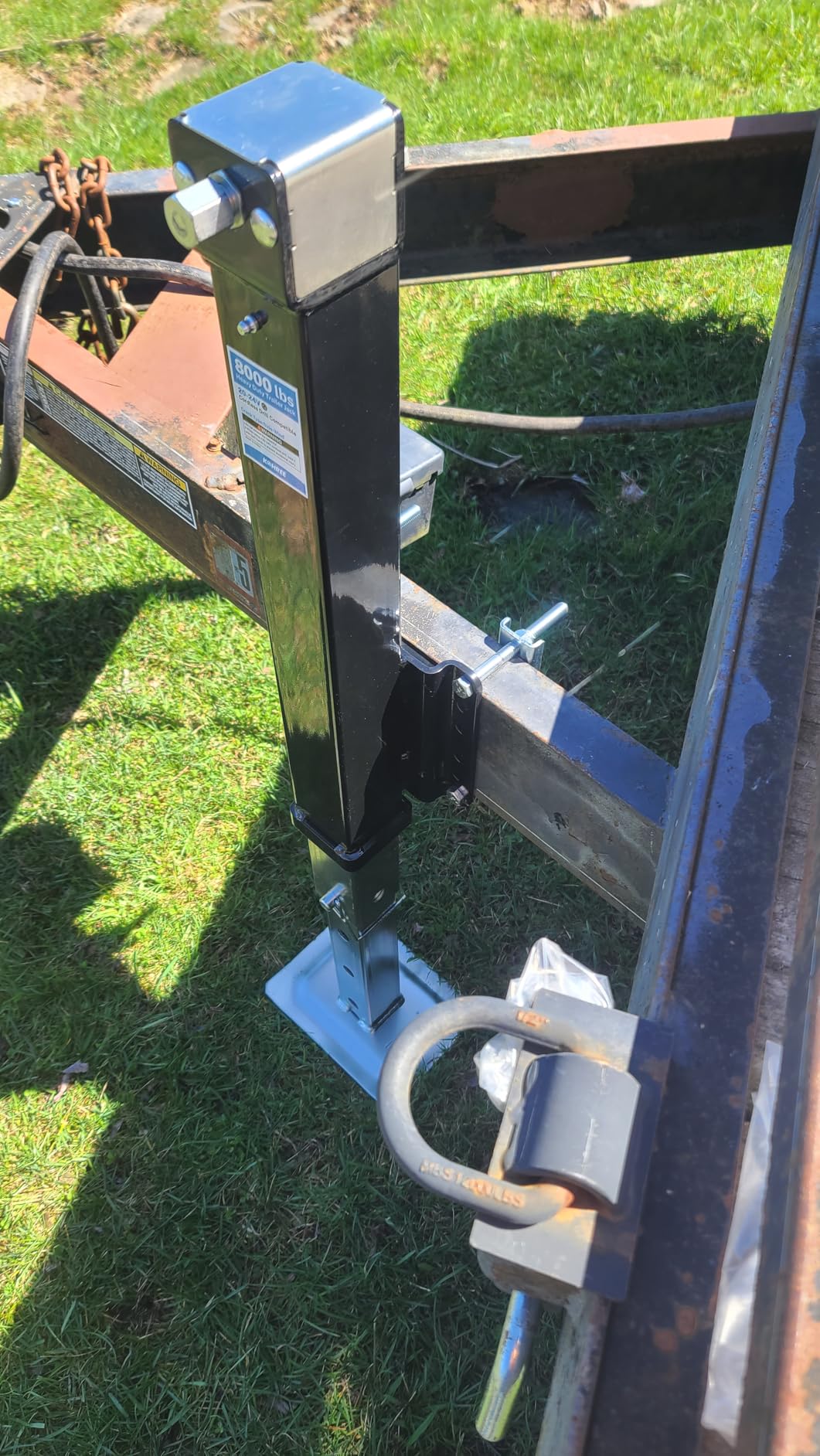
The real constraint is fitment. The bolt-on mount requires the trailer frame height to be under 5 inches. That is a genuine restriction and it is the single most important thing to check before you order, because a jack that will not clear your frame rail is a return. The drill itself is not included, and if you do not already own a 20-24V cordless tool, add that to the cost calculation.
At 97 reviews the owner feedback base is the thinnest in this roundup, though it is consistently positive. The most common theme is exactly the appeal described earlier: heavy capacity and long travel without paying for a wired electric install. Compared with a powered tongue jack, the tradeoff is clear. You cannot level from inside the cab, and you need the drill in your hand, but you also cannot drain the trailer battery or deal with a failed motor.
When a drill socket beats a motor
The drill approach wins when the trailer battery is already committed to other things or is not maintained. Nothing about a drill jack touches the trailer electrical system, so there is no fuse to size, no connector to corrode, and nothing to flat overnight.
It also wins for shops. One drill drives a 20-24V socket, so a single tool serves every jack in the yard rather than each trailer carrying its own motor and wiring harness.
What to verify before you buy
Measure your frame height. The under-5-inch requirement is the make-or-break number on this model, and it interacts with the jack mounting position on the side of the frame rail.
Confirm the base hole pattern lines up with your existing tongue holes. Bolt-on is a big advantage over the weld-only designs, but only if the pattern matches or you are willing to drill and fill.
10. VEVOR HH7500 7500 lbs Electric Jack with Remote
VEVOR Electric Trailer Jack, 7500 lbs Capacity, Electric Power Tongue Jack with Waterproof Protective Cover & LED Light for Travel Trailer, Camper, RV, 9.84-33.85 in Lift, 12V DC with Wiring, Black
7500 lbs capacity
12V DC with wiring
Rocker switch and handheld remote
5-position drop leg
Pros
- Largest review base here at over 1170 reviews
- Dual-mode controls with switch and remote
- 90-degree clockable base holes clear a tailgate
- 2-year manufacturer warranty
- Weather cover LED light and top manual crank
Cons
- Published lift figures conflict between 9.84-33.85 and 9.84-27.84 in
- Highest one-star share of the electric group
- Wiring required with no connector details published
The feature that stands out is the 90-degree clockable base. The mounting holes rotate a quarter turn so the base plate clears a pickup tailgate without drilling or modifying the frame. On a half-ton truck with a tailgate down, that is the difference between a two-hour install and a quick job, and owners single it out as the practical reason to pick this over a generic electric jack.
Dual-mode controls give you a rocker switch at the jack and a handheld remote for distance operation, so you can raise and lower from the cab or from the trailer. The 5-position drop leg adds 6 inches of quick travel for uneven sites and varied coupler heights. The 2-year manufacturer warranty is the longest in this roundup, and there is a top manual crank for lifting during a power loss, plus a weather cover and an LED work light.
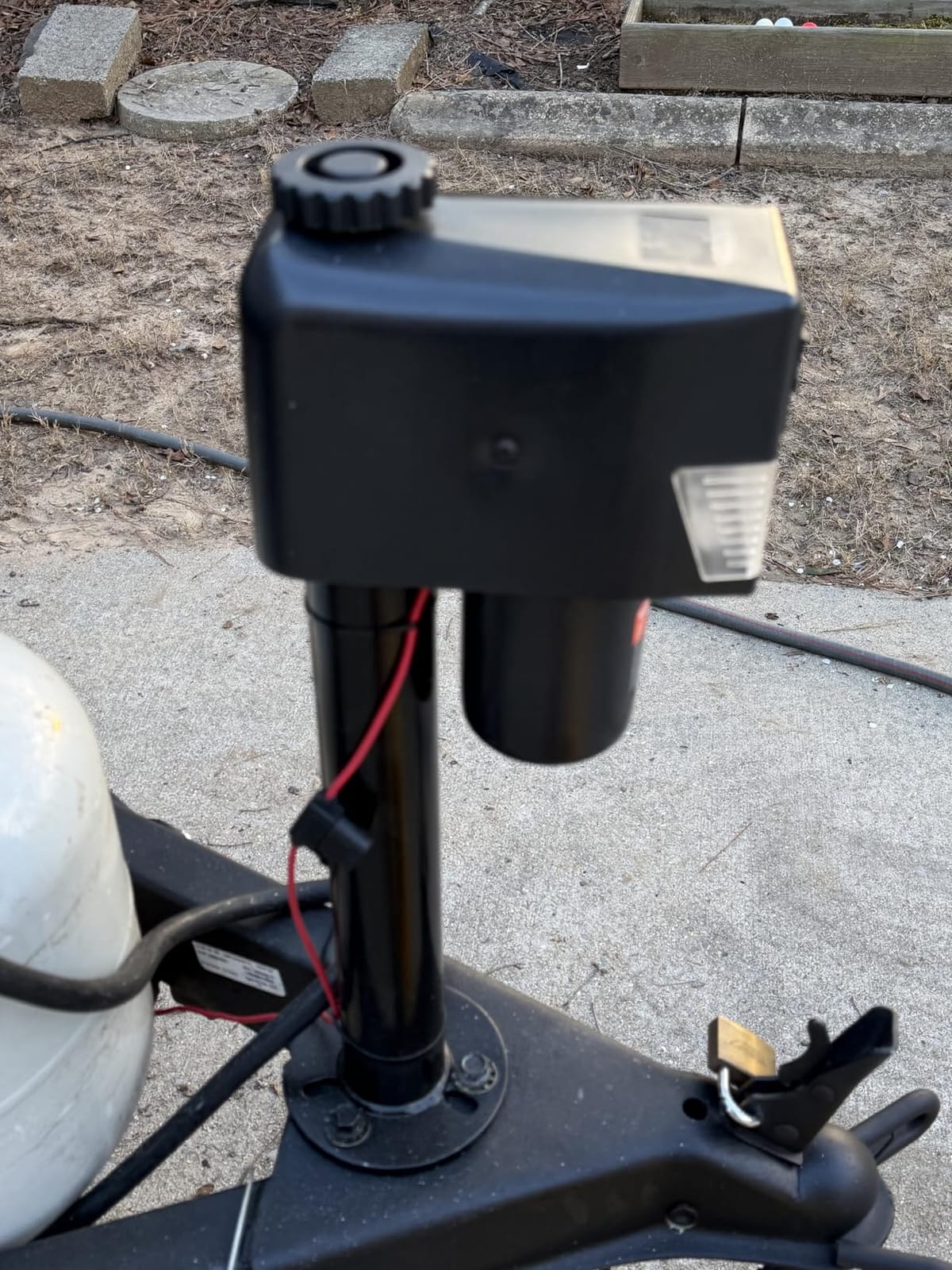
Be aware of a published inconsistency before you buy. The feature list gives a 9.84 to 33.85 inch lift range while the item type name says 9.84 to 27.84 inches. If your coupler height falls in the 28 to 34 inch band, that gap decides whether this jack reaches your hitch, so measure before ordering. The one-star share is the highest among the electric units here at 9 percent, against 73 percent five-star ratings.
Wiring is required and the listing does not publish connector details, so plan on adding your own terminals and fuse hardware. The coated inner and outer tubes handle corrosion, and the weather cover is what keeps water off the electronics during long outdoor storage. The unit weighs 28.7 lb, which is manageable for a single person with two hands.
What to check before wiring an electric jack
Confirm the drop leg positions cover your coupler height before you think about power. The 6 inches of drop leg adjustment plus the stroke is what has to span the range you actually tow through, and adding a jack that is one inch short is a common and expensive discovery.
Check the 90-degree base orientation against your truck. Rotate the base holes so the plate clears a lowered tailgate, and verify the jack housing does not foul the hitch or the bumper.
Where it is the wrong pick
Skip it if you need more than 7500 lb of tongue rating, or if your coupler height sits above the 27.84 inch figure given in the item type name. Either way, a manual long-stroke jack handles the load without a wiring project.
It is also the wrong choice if you tow a lot of different trailers and want one jack for all of them. The fixed stroke and powered install suit a single dedicated trailer far better than a shared fleet.
How to Size a Jack from Tongue Weight
A heavy duty trailer jack should be rated above 15 percent of your gross trailer weight rating. Tongue weight is the share of loaded trailer weight that rests on the ball, and a properly balanced trailer puts 10 to 15 percent there. Buy above the 15 percent line and you have margin for uneven loading, road camber, and the odd heavy trip.
Use these steps to size your jack. First, find the GVWR on the VIN plate or the certification sticker on the frame rail. Second, multiply it by 0.15. Third, round up to the next capacity class and buy the jack rated above that figure, not equal to it.
That gives you the quick bands. Up to 7,000 lb GVWR asks for a jack in the 2,000 to 3,000 lb class, which is outside this roundup. From 7,000 to 15,000 lb GVWR, a 5,000 to 8,000 lb jack is the working range. From 15,000 to 25,000 lb, step up to 10,000 or 12,000 lb tongue weight rating. Above 25,000 lb loaded, you are into commercial and gooseneck territory where hydraulic support is common.
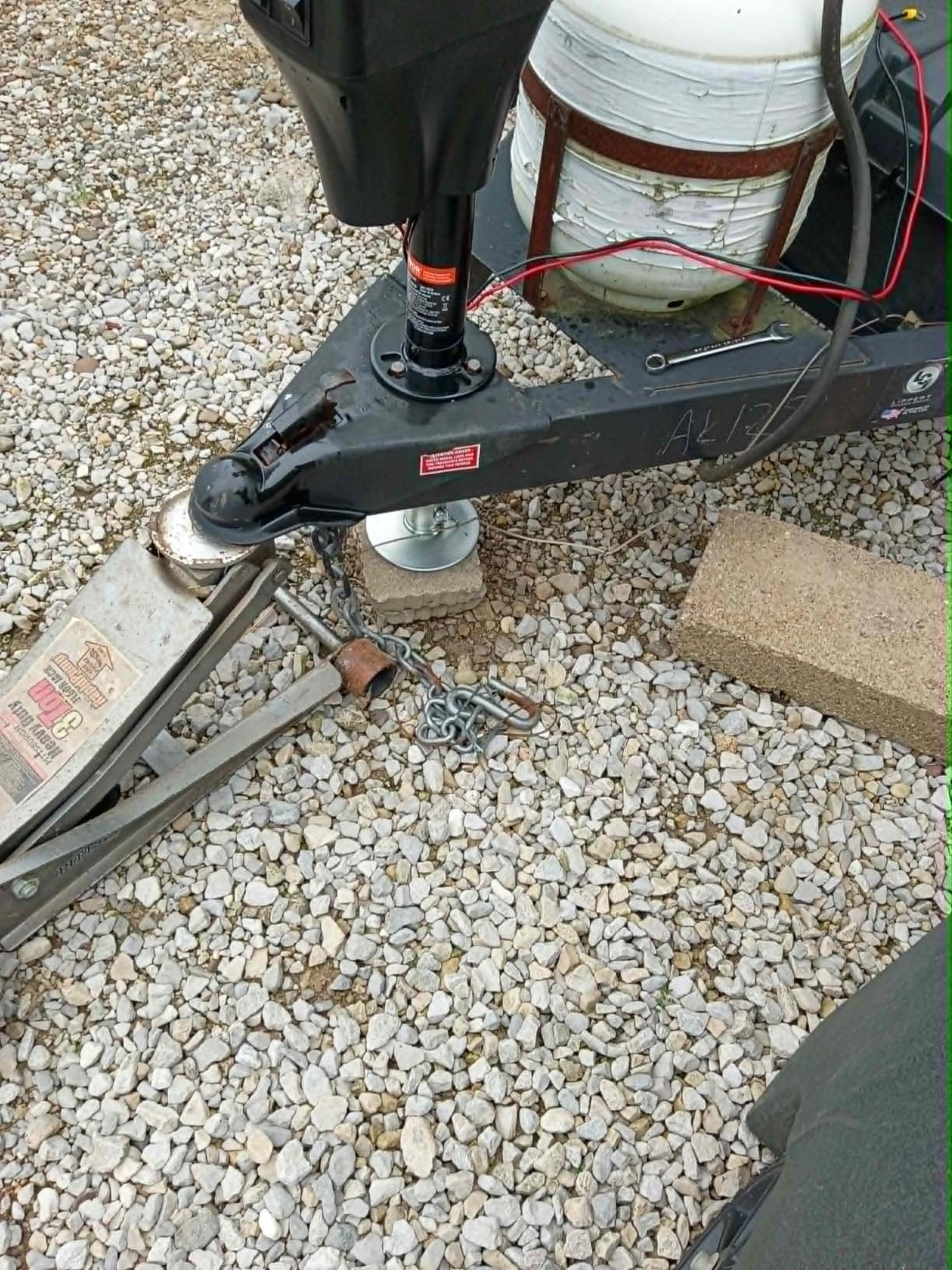
Now the part most roundups skip. The jack capacity number is a tongue weight rating, not a rating for lifting the whole trailer. A 12,000 lb tongue weight rating cannot lift a 12,000 lb trailer, and no jack sold for a tongue is designed to. If you need to lift a trailer corner, change a tandem-axle tire, or get a wheel off the ground, you need a separate bottle jack or scissor jack working with a drive-on dolly. Owners on RV forums treat a 6-ton bottle jack on a jiffy jack as the standard cheap answer for tire work, and that is a different purchase entirely.
You can also measure tongue weight at home without a certified scale, using a pipe-and-beam rig. Park the trailer on level concrete with a length of rigid pipe under the coupler and a scale or lever on the other side of the pipe. The pipe carries the load like a fulcrum and the scale reading gives you the actual load. Repeat it with the trailer loaded the way you tow it, not empty, because tongue weight changes with what is in the box.
While you are setting up a proper shop to do this work, our guides to heavy duty equipment that handles real abuse and workshop storage for bulky loads cover the rest of the garage. The jack is the part of your trailer most likely to drop something on you, so it deserves a clean, well-lit work area.
Manual, Electric, Drill-Powered, or Hydraulic
Manual jacks are the simplest, most durable option and the easiest to service. A crank handle drives a gear set that turns a threaded screw, and the screw is self-locking, so the load stays where you put it with no brake, no motor, and no wiring. They fail slowly and they are repairable with basic tools. The cost is physical effort on every hitch and unhitch.
Electric jacks add a 12V motor and a holding brake, and they remove the cranking entirely. They require a fused 7-pin connection, they draw battery power, and their failure modes are less forgiving: a seized motor or a brake that will not hold puts a loaded trailer on the ground. Every electric unit in this roundup ships with a hand crank, and that is not a coincidence.
Drill-powered jacks sit between the two. You keep the manual self-locking screw and the manual handle, and you add a socket for a 20-24V cordless drill. There is nothing to wire and nothing to fail electrically, which makes this the strongest choice for someone who wants less effort without taking on trailer wiring.
Hydraulic jacks are the heavy-haul answer, and they are not really in the same product class. They deliver far more force with less mechanical advantage, which is why they appear on gooseneck and dump trailers carrying dense loads. The disadvantages are real: they cost more, they leak, they need fluid and hose maintenance, they have no holding brake so you need a mechanical lock or a stand to keep a load up, and the power unit is another thing to store and service. They earn their place on commercial loads, not on a 10,000 lb trailer.
So for heavy trailers, the practical ranking is: manual for durability and simplicity, drill-powered for effort without wiring, electric for convenience if you keep the manual crank and your battery maintained.
Bolt-On vs Weld-On Mounting
Bolt-on mounting keeps the jack removable, which means you can move it between trailers, replace it without a welder, and reuse it when the trailer is sold. It also means the strength of the joint depends on the fasteners and the frame. Use the grade-appropriate bolts the listing includes, and if the supplied hardware is the wrong length for your frame, buy the correct size rather than forcing it.
Weld-on mounting is the standard on purpose-built commercial trailers because a continuous weld is stiffer and lighter than a bolted flange. The trade-off is permanence and the need for a competent welder. A direct-weld jack also refuses to forgive a distorted frame, so the flange has to sit flat on clean steel.
Measure two things before either. The frame height under the tongue, which decides whether the jack can retract, and the frame width, which decides whether the base bolt pattern lines up. If your jack is a side-mount, the clearance along the side of the channel matters too, and it is the dimension people most often forget.
Travel, Retracted Height, and Working Height
Travel is how far the screw moves the foot through its stroke. Retracted height is how tall the whole jack is when fully collapsed. Working height is where the foot needs to sit to bring your coupler to ball height. These are three different numbers and mixing them up is the most common sizing mistake.
Measure your coupler height with the trailer fully loaded, sitting on level ground, and add clearance for the tow vehicle’s height over the tongue. Then confirm the jack’s minimum height plus its base adjustment positions bracket that measurement, and that the extended height at your target stroke clears what it needs to.
Long travel is worth paying for. A 28-inch stroke handles tall A-frames and low utility trailers on the same jack, and it gives you room on sloped sites where you cannot level the ground. Short travel, like the 12-3/8 inches on the Curt, is fine on a fixed frame with a known height and frustrating on anything adjustable.
Drop Legs, Base Plates, and Corrosion
A drop leg is a telescoping inner leg below the jack that adjusts in fixed steps. It does the coarse height work so the screw only handles fine positioning, which means the screw stays cleaner and the gear train sees less load. On a long-travel jack the drop leg is almost redundant, but on short-stroke designs it does a lot of the work.
Front-pull drop legs pull toward the front of the trailer and stay clear of the crank. Side-pull drop legs pull outward to the side and are easier to reach on some frames. Match the pull direction to the space available next to the tongue.
Base plates matter more than buyers think. A wide foot plate resists tipping on soft ground, and a small foot on gravel or a sloped driveway is how trailer jacks bend frames. Oversized plates are a genuine feature on the models in this roundup, not a cosmetic add-on.
For corrosion, galvanized steel and powder coat are the two options you will see. Galvanizing protects the base metal and holds up well in salt air, which is why owners with coastal trailers single it out. Powder coat resists water, dirt, and road salt and looks better, but a chipped powder finish exposes steel. Neither one saves you from washing the jack down after a salt-heavy winter, and a stainless hardware pack on the fasteners is cheap insurance.
Known Failure Modes and Parts Availability
The most serious reported failure in the electric jack category is a brake releasing under load. On a Dutchmen Owners thread, a Husky Brute 4500 electric jack lost its brake and let the camper free-fall to the ground, and the owner could not get parts for a jack that was only three years old. That is exactly the scenario buyers are trying to avoid, and it is why a self-locking manual screw is often preferred over a powered brake.
Parts availability is the deciding factor for a lot of owners. When a brand has neither replacement parts nor a support path, a failed jack becomes a full trailer outage. Before you buy, search the part number for a replacement gearset, motor, or switch, and confirm the manufacturer still lists it. A brand that has been discontinued quietly is a bad bet on a ten-year trailer.
On the manual side, failures are more predictable. A stripped gear inside the housing, a seized screw from missing grease, or a bent crank pin. These are repairable, and the parts are generic enough that most manufacturers use the same internals. For heavy ag and farm trailers, owners on AgTalk repeatedly name Bulldog as a reliable pick and mention Holland jacks when they go heavier than stock duty, which is a useful signal about which brands service the heavy end of the market.
Electric motors that simply stop are the other common complaint, and the practical defense is the hand crank. Every electric in this roundup includes one. Keep it accessible, keep it lubricated, and know how it engages before you need it in a parking lot at dusk.
Installation, Wiring, and Maintenance
Start with the mount. For a bolt-on jack, seat the base plate flat and tighten the fasteners evenly in a cross pattern so the flange does not cock. One owner detail worth keeping: the bottom plate should sit nearly flush with the frame when the jack is fully raised, or you lose ground clearance and risk striking an obstacle. For a weld-on jack, weld continuously around the flange and check for twist before the beads cool.
For an electric jack, three things matter. Fuse the circuit properly rather than running an unfed wire straight to the battery. Use an inline fuse sized to the jack’s draw, and use a breaker or resettable protection at the battery end so a fault does not take the whole trailer circuit. And add a battery isolation switch if the trailer sits for weeks, because an electric tongue jack left connected overnight is a slow, repeated battery drain that will leave you with a dead trailer and a dead coupler light.
For maintenance, grease is the whole job. Put a shot of grease on the screw and a zerk service at every season boundary, and always before a period of storage. If a jack has a grease fitting or a top gear cap, use them. Clean the threads with a degreaser and dry them before re-greasing, since grit and rust on an acme screw is the single most common cause of a jack that will not move.
Before every hitch, run a short check. Chocks in place, the drop leg pinned and clipped, the foot plate fully seated, the jack holding the coupler and not creeping, and on electrics the fob and the switch both responding. It takes a minute and it is the difference between a safe departure and a trailer on its side in a parking lot.
Frequently Asked Questions
What is the best brand of trailer jack?
For heavy trailers, Bulldog and Curt are the two names owners most often trust, and Curt 28512 stands out for a 12,000 lb tongue weight rating with a limited lifetime warranty. Big Horn, Reese, Fulton, and Quick Products are widely used below 5,000 lb. Choose on capacity above all else, then mounting style, then parts support.
What size jack for 10,000 lb trailer?
Multiply the 10,000 lb by 0.15 for a 1,500 lb tongue weight figure, then buy a jack rated comfortably above that. In practice that means an 8,000 lb capacity jack, which is the class most of this roundup sits in. Above 15,000 lb loaded, step up to a 10,000 or 12,000 lb tongue weight rating.
What kind of jack do I need for a trailer?
Most trailers need a tongue jack that mounts at the front, raises the coupler to ball height, and holds the tongue weight while parked. Bolt-on if you want it removable, weld-on if the trailer is purpose-built. A jack is not a tire jack; lifting a corner or a tandem axle needs a separate bottle or scissor jack.
Why won’t my electric trailer jack work?
Work through four checks. Confirm the 7-pin connector is fully seated and the fuse is intact. Listen for the motor; no sound usually means a blown fuse or a dead motor. A motor that runs without moving usually means a stripped gear train or a seized screw that needs penetrating oil. A jack that moves but will not hold points at the brake, and the hand crank is your fallback.
What are the disadvantages of using a hydraulic jack?
Hydraulic jacks cost more, can leak at the seals, and need fluid and hose maintenance over time. They have no holding brake, so a mechanical lock or stand is required to keep a load up. They also need a power unit to store and service. On heavy gooseneck and dump work the force pays for itself, but on a typical heavy trailer a manual or electric jack is simpler.
How do you lubricate a trailer tongue jack?
Degrease the exposed screw threads first, dry them, then apply a heavy-duty waterproof grease along the full length. Use the zerk fitting or top gear cap if the jack has one, and hit the grease points at the mount. Do it at every season change, before storage, and any time the jack starts to grind or feel rough. Never grease a brake surface.
Which brand of hydraulic jack is considered the best?
For tongue-mounted hydraulic support on heavy trailers, owners most often point to the established ag and towing names rather than jack-specific brands, with Bulldog, Holland, and Reese appearing repeatedly in owner discussions of heavy ag and dump work. Pick on rated pressure, hose and seal quality, and whether replacement cylinders and seals are actually available for the model.
What is the 60/40 rule for trailers?
The 60/40 rule is about weight distribution inside the trailer, not about jack ratings. It describes keeping roughly 60 percent of the cargo weight ahead of the axle and 40 percent behind it so the tongue carries its intended share. Load distribution changes tongue weight, which is why you should size a jack on a fully loaded trailer rather than an empty one.
Conclusion
The best trailer jacks for heavy trailers in 2026 come down to one number, your loaded tongue weight, and one habit, buying above 15 percent of your gross trailer weight rating. Get that right and the choice between the rest is about how you want to lift and how you want to mount.
For a purpose-built commercial frame where you are welding anyway, the VEVOR TJD-7000S square jack is the one we would put on our own tilt-deck. For the widest fit across different tongue heights, the FZZD long-stroke model handles both ends of the range. For a bolt-on frame where the ground is uneven, the VEVOR swivel base rotates clear of obstacles. For genuinely heavy gooseneck and dump loads, the Curt 28512 is the only unit here with 12,000 lb of tongue weight rating and a limited lifetime warranty behind it.
And if the thing you most want to stop is cranking, the KYX and VEVOR electrics both come with a hand crank as a backup, while the Kohree drill-powered jack gets you most of the way there with nothing to wire at all. Check your frame height, check your travel, grease the screw twice a year, and the jack will still be holding the tongue a decade from now.