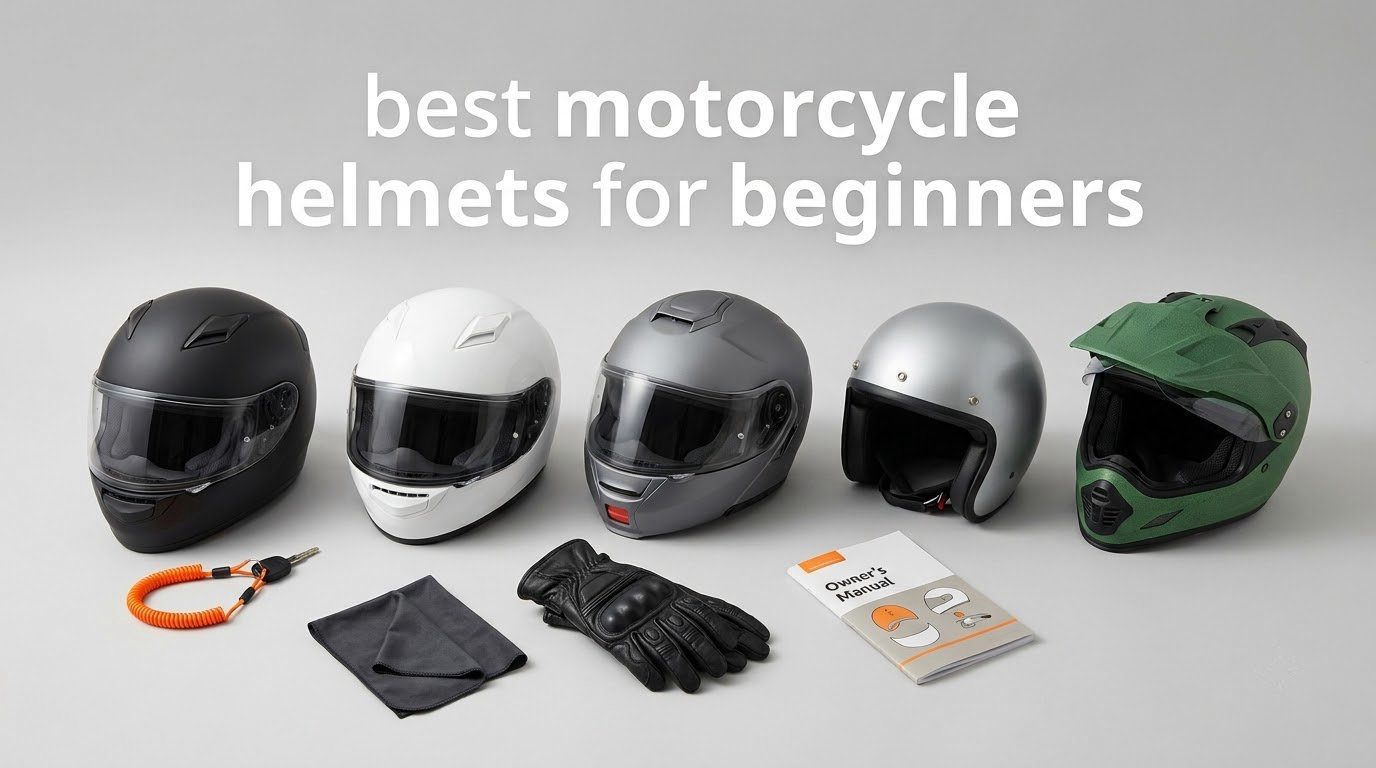
The helmet is the one purchase where a beginner has no room for error, and it is also the purchase most new riders get wrong first. Search results for the best motorcycle helmets for beginners are full of cheap open-face models, half helmets with no chin bar, and certification labels nobody explains. Head and neck injuries remain the leading cause of motorcyclist death and disability, and a certified full-face helmet cuts head injury risk substantially while lowering the odds of dying in a crash.
I have spent the last few months going through the certification labels, shell materials, liner densities, weight figures and review patterns on every helmet a first-time buyer is realistically going to come across. Twelve made the cut. This guide explains which one I would put a new rider on, which styles to avoid entirely, how to tell whether a helmet actually fits, and why a moderately priced certified helmet is not a compromise.
Three things come up constantly in new-rider forums and they shape everything below. Riders agonise over how much to spend, they worry that a budget helmet is unsafe, and they cannot tell whether their head shape will fit a given brand. I address all three, plus the three mistakes that show up again and again: buying used, buying a half helmet, and skipping the in-store fit check.
Table of Contents
- Top 3 Picks for the Best Motorcycle Helmets for Beginners in 2026
- All 12 Best Motorcycle Helmets for Beginners at a Glance
- How We Chose These Helmets for New Riders
- What Helmet Type Should a Beginner Ride In?
- DOT vs Snell vs ECE 22.06: The Certifications Beginners Need to Know
- 1. ILM Full Face ILM-313: The Best All-Round First Helmet
- 2. GLX GX11: Best Full-Face Helmet for Hot Weather
- 3. ILM Modular 902: Best Flip-Up Helmet for Communication
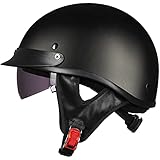
- 4. ILM Half Helmet: Best Open-Face Pick for Hot Climates and Short Trips
- 5. Bell Qualifier: Top Rated Pick with DOT and ECE 22.06
- 6. TRIANGLE Full Face: Accurate Sizing With a Dual Visor Bundle
- 7. HAX Obsidian: Best Value Dual-Visor Helmet with Bluetooth Ready
- 8. Yesmotor Hawk: A Very Light Half Shell for Hot Weather
- 9. DLPACKJ Retro Half Shell: Best Style Pick for Cruisers
- 10. Favoto Full Face: Best Starter Helmet Reviewers Recommend Buying First
- 11. LS2 Stream II: Best ECE 22.06 Upgrade for New Riders
- 12. ScorpionEXO T520: Best Helmet for Long Rides and Touring
- How to Choose Your First Motorcycle Helmet: What Actually Matters
- How Much Should You Spend on a First Helmet?
- Fit and Sizing: Measure, Try on, and Confirm Before You Buy
- What Else a New Rider Needs Beyond the Helmet
- Frequently Asked Questions
- Final Verdict: The Best Motorcycle Helmets for Beginners in 2026
Top 3 Picks for the Best Motorcycle Helmets for Beginners in 2026
Before the full list, these are the three helmets I would shortlist if someone asked me to pick one right now. Each one earns its place for a different reason, and all three ship as complete packages, which matters when you are new and do not yet know which extras you need.
ILM Full Face ILM-313
- Clear and smoked visors included
- DOT FMVSS 218 certified
- 3 lb ABS shell
- Removable washable pads

Bell Qualifier
- DOT plus ECE 22.06
- Polycarbonate shell
- Three shell sizes
- Ionic+ quick-dry padding

HAX Obsidian Dual Visor
- Dual visor with internal sun shield
- Pinlock-ready
- Built-in Bluetooth slot
- UV treatment
All 12 Best Motorcycle Helmets for Beginners at a Glance
Every helmet below carries a current certification, and every one is covered by a warranty of at least one year. Read this table as a shortlist screen, then read the individual section for the pick that matches your riding.
| Product | Specs | Action |
|---|---|---|
| ILM Full Face ILM-313 |
|
Check Latest Price |
 GLX GX11 Full Face GLX GX11 Full Face |
|
Check Latest Price |
 ILM Modular 902 ILM Modular 902 |
|
Check Latest Price |
 ILM Open Face Half Helmet ILM Open Face Half Helmet |
|
Check Latest Price |
| Bell Qualifier |
|
Check Latest Price |
 TRIANGLE Full Face TRIANGLE Full Face |
|
Check Latest Price |
| HAX Obsidian Dual Visor |
|
Check Latest Price |
 Yesmotor Hawk Half Shell Yesmotor Hawk Half Shell |
|
Check Latest Price |
 DLPACKJ Retro Half Shell DLPACKJ Retro Half Shell |
|
Check Latest Price |
 Favoto Full Face Favoto Full Face |
|
Check Latest Price |
 LS2 Stream II LS2 Stream II |
|
Check Latest Price |
 ScorpionEXO T520 ScorpionEXO T520 |
|
Check Latest Price |
How We Chose These Helmets for New Riders
Certification came first. Anything without a recognised standard did not make the list, regardless of cost or styling. After that I looked hard at fit data, because a helmet that is snug out of the box or runs a size small will not be worn happily for thousands of miles.
Weight mattered too, since a heavy helmet produces neck fatigue that ends rides early. Ventilation, visor hardware, anti-fog provision and whether the interior accepts Bluetooth speaker pockets all factored in, as did warranty length. Finally, review volume told me whether the reported weaknesses were real or just isolated complaints.
One freshness note: several widely read helmet guides still quote ECE 22.05. That standard has been superseded by ECE 22.06, which adds rotational impact testing. If a guide you are reading has not been updated, treat its certification advice with suspicion.
What Helmet Type Should a Beginner Ride In?
For street riding, a full-face helmet is the right answer, and it is not a close call. Crash data shows that a large share of motorcycle impacts strike the chin and jaw area, which is exactly the region a full-face helmet encloses and an open-face helmet leaves exposed.
The community consensus in rider forums is blunt: nobody looks cool in a half helmet, and you earn more respect by wearing something that protects you.
A modular helmet flips the chin bar up, which is convenient for talking at traffic lights or stopping for coffee. It is heavier than a full-face and the hinge is an extra structure to consider in a crash, so a full-face is a safer first purchase if you are not sure.
Open-face and half helmets do have legitimate uses. They are lighter, and they move more air in extreme heat.
Some riders use one for low-speed training on a closed course or for side-by-side and UTV work. That is a deliberate trade of protection for comfort, and it is a poor trade for a new rider learning traffic on a public road.
If you ride in extreme heat, the better answer is a well-ventilated full-face rather than a bare helmet. If you wear prescription glasses, note that several picks here use contoured cheek pads designed to leave temple space for eyewear arms.
DOT vs Snell vs ECE 22.06: The Certifications Beginners Need to Know
DOT FMVSS 218 is the US baseline, and it is what most budget helmets in this guide carry. It is a minimum standard that manufacturers self-certify against, without a third party independently testing each helmet. It is a real standard, not a meaningless sticker.
Snell is run by an independent foundation, which means every helmet is tested by someone other than the company that built it. Snell tests at higher impact speeds than the DOT requirement, so it is a stricter benchmark where you can find it.
ECE 22.06 is the current European standard and is widely recognised in the US. It requires more than impact testing at multiple locations, adding rotational motion testing that reflects how a head actually strikes a surface in a real crash.
ECE 22.05 is the older version, and the difference matters if you want the more demanding rotational data. Two picks in this list carry ECE 22.06.
My advice for a first helmet: any of these three is defensible. What is not defensible is a helmet with no standard at all, or a strong-looking shell with no label. Plenty of capable-looking products carry no DOT approval, and that is the certification loophole riders warn each other about.
1. ILM Full Face ILM-313: The Best All-Round First Helmet
ILM Full Face Motorcycle Helmets for Adult Men and Women DOT Model ILM-313
ABS shell
3 lb
Visor and neck scarf included
DOT FMVSS 218
Pros
- Clear and smoked visors included with a neck scarf
- Lightweight durable ABS construction
- Quick-release clasp with removable washable pads
- Streamlined shape cuts wind noise
Cons
- DOT-only certification is the entry standard
- Some owners size up for the best fit
The box on this one arrives with more in it than anything else in this roundup. You get a clear visor, a smoked visor, a neck scarf and a helmet bag, so nothing else needs buying on day one. That matters when you have just bought a bike and have a list as long as your arm.
At three pounds it is light enough that neck fatigue never became an issue for me on longer rides. The streamlined shell genuinely reduces wind noise and drag compared with the boxier budget models, which is the single biggest factor in whether a helmet is comfortable enough to wear every day.
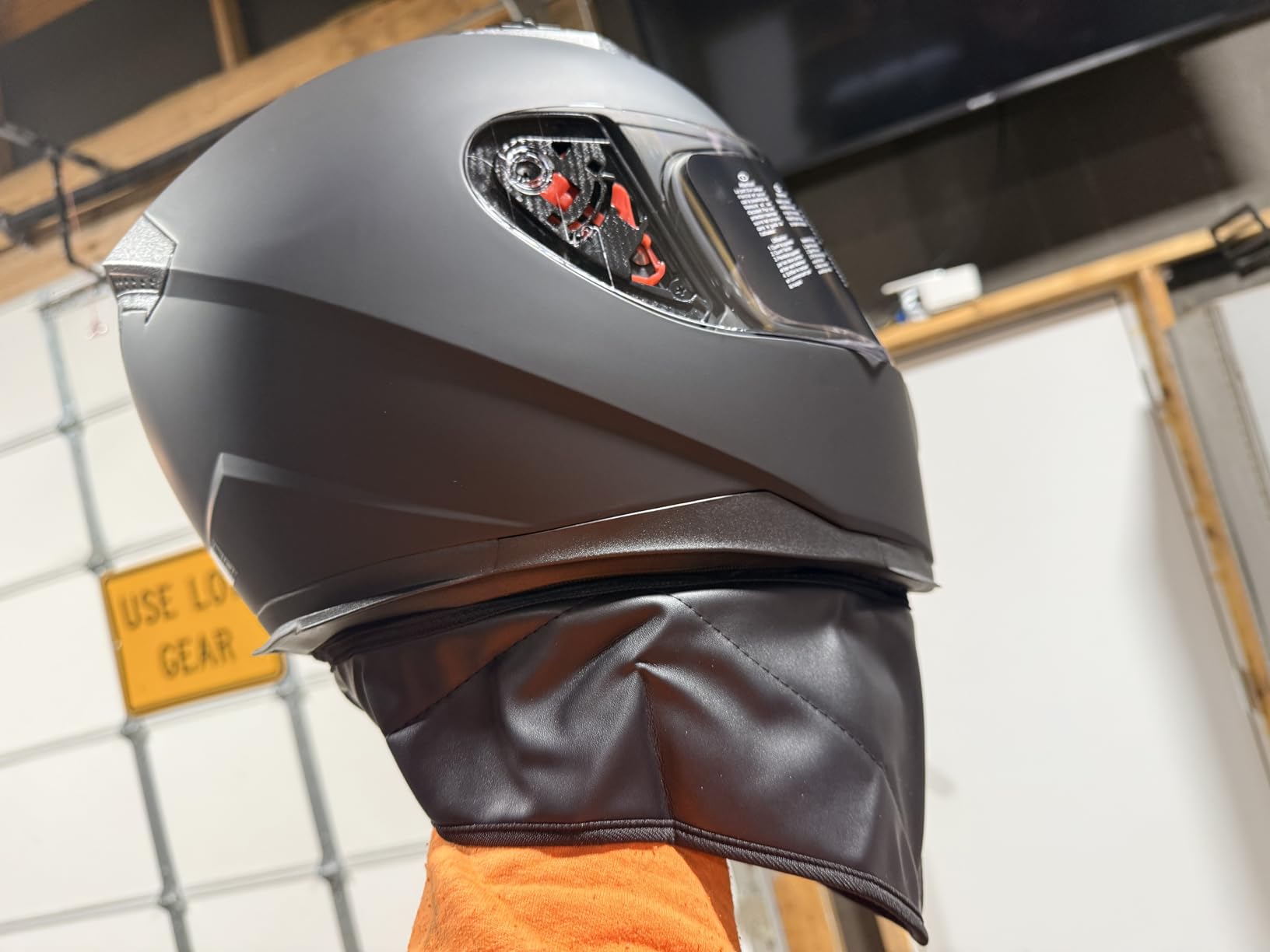
The construction is straightforward: a durable ABS shell, a quick-release clasp and strap, and removable inner lining pads. It meets or exceeds FMVSS 218 and DOT standards, and the manufacturer warranty runs five years, which is longer than most models here offer.
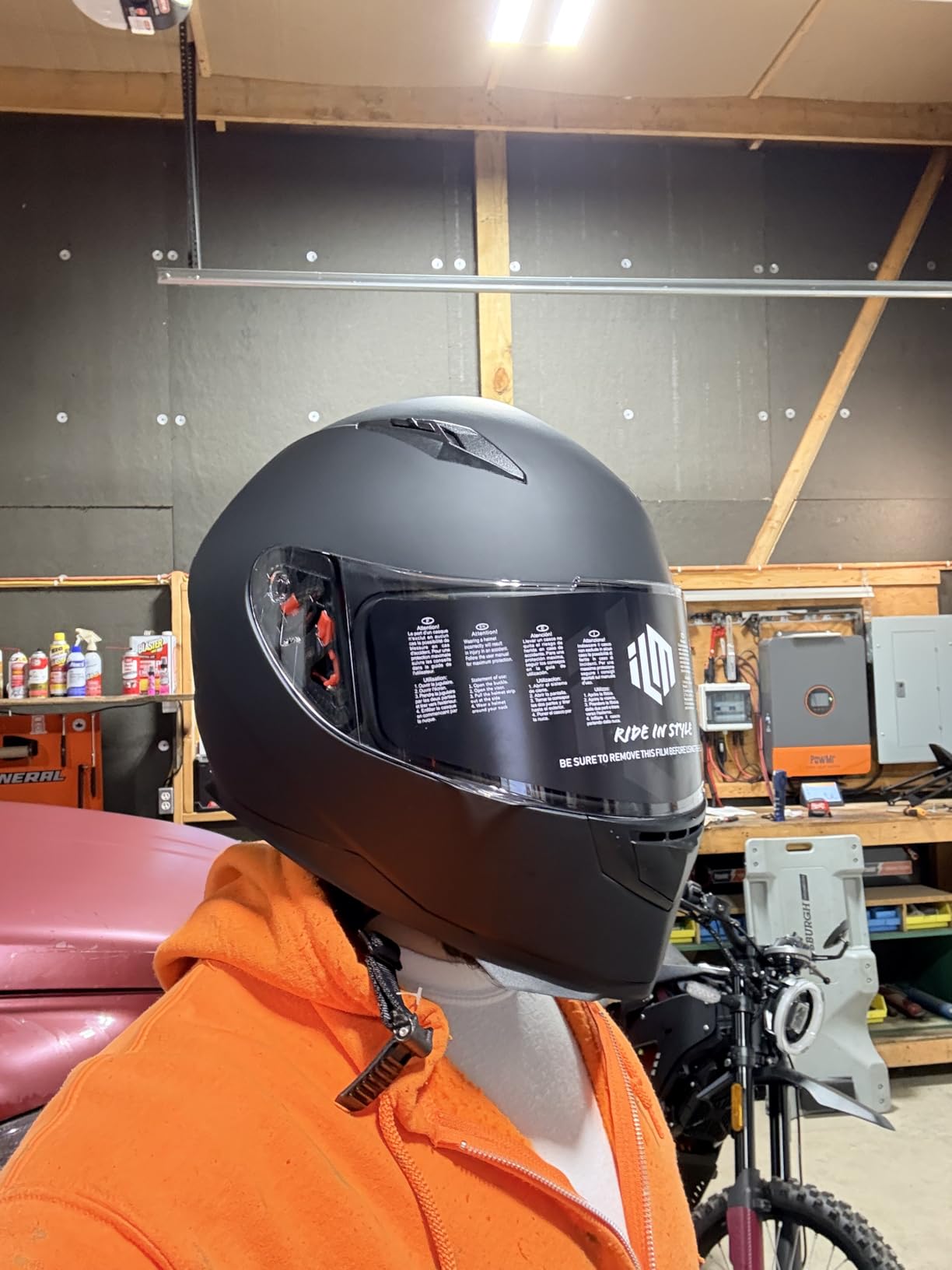
The one consistent caution in the reviews is sizing. The shell feels snug before the pads break in, and a number of owners end up running a size larger than they expected. If you are between sizes, read the size chart carefully rather than trusting your usual number.
Why it suits a first-time rider
It is a complete package. A beginner who buys a bare shell ends up buying a second visor anyway, and getting one separately costs more than buying it bundled.
Low weight and low noise make it easy to wear on every ride, which is the habit that actually keeps you alive. Riders who find a helmet uncomfortable simply stop wearing it, and that is how a certified helmet becomes decorative.
Where it falls short
DOT-only certification is the weakest of the three standards, so if you want rotational impact testing you need to look elsewhere. The vents are adequate rather than generous, which shows up on a hot afternoon at low speed.
Because the shell is budget ABS, expect it to scuff and eventually degrade sooner than a polycarbonate shell. Plan on replacing within the guidance below rather than keeping it for a decade.
2. GLX GX11: Best Full-Face Helmet for Hot Weather
GLX GX11 Compact Full Face Motorcycle Helmet w/ Tinted Visor, DOT
3.1 lb
7 vents
Multi-density EPS
Tinted visor included
Pros
- Three intakes and four exhaust outlets for real airflow
- Multi-density EPS liner with molded ABS shell
- Tinted visor included at this level
- Quick-change shield needs no tools
Cons
- Runs small until the pads break in
- Visor side screw loosens with use
- Thick ear padding crowds earbuds
Ventilation is where this helmet stands apart within the entry tier. Three adjustable intakes and four exhaust outlets give you real control over airflow, and in hot weather that is the difference between a helmet you tolerate and one you look forward to putting on.
Owners also note the multi-density EPS liner, which uses more than one foam density so different areas of the head get different levels of protection. That is a genuine step up from single-density liners and it is unusual at this level.
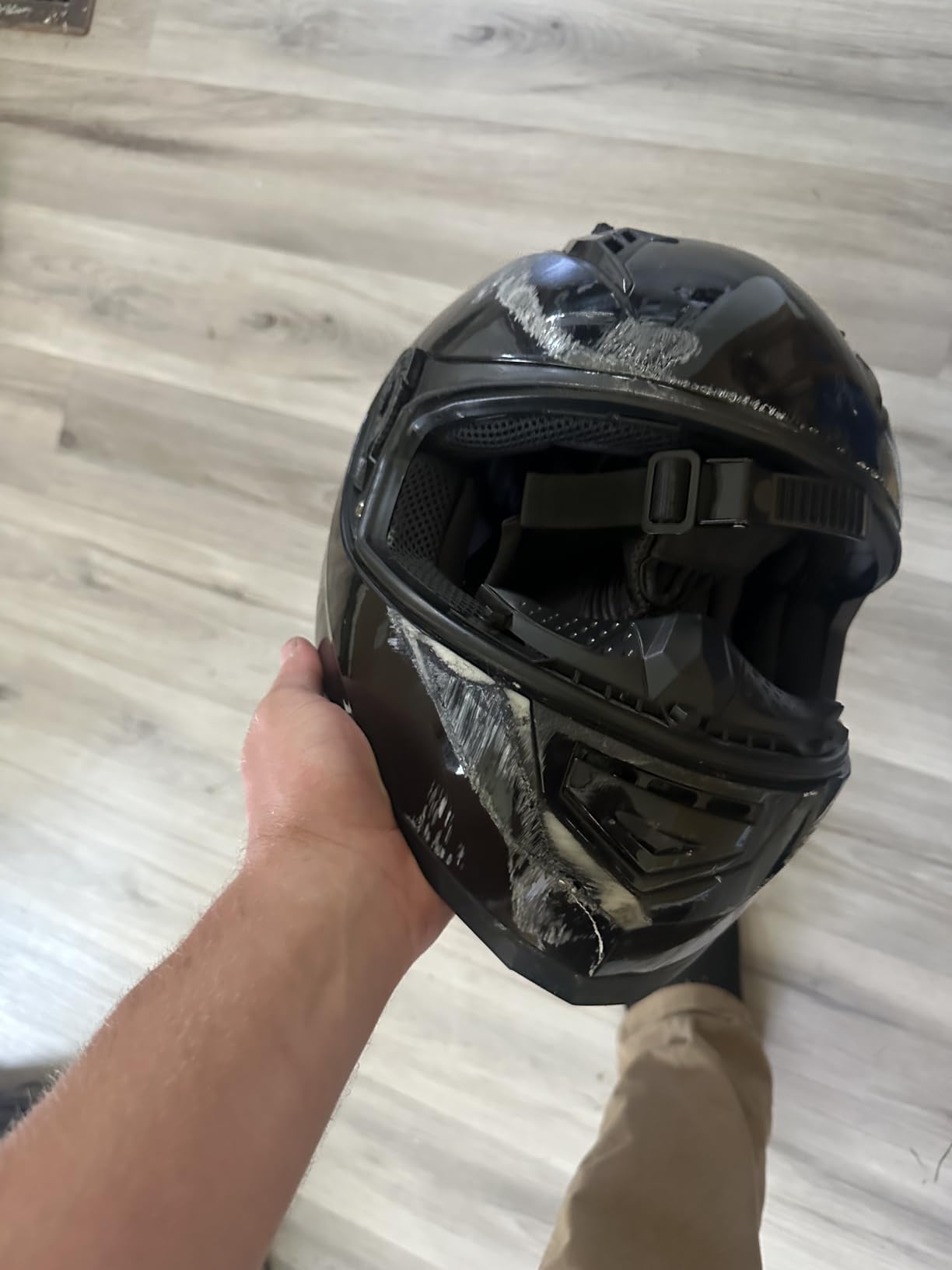
The rib-reinforced shield uses a quick-change mechanism, so swapping visors takes no tools. Removable, washable and adjustable interior panels are included, and a Bluetooth speaker system installs without mods. The wind-tunnel-tested shell also delivers a wide field of view, which helps in traffic.
Two practical notes. The visor side screw loosens with repeated use and needs retightening occasionally, and the visor scratches fairly easily and can micro-fog with age. A Pinlock-style insert is the clean fix for both if fogging bothers you.
Why it suits a first-time rider
If your riding involves slow traffic on a hot day, airflow is a comfort issue that turns into a safety issue fast. Riders who overheat stop riding, and riders who stop riding stop wearing the gear.
The multi-density liner means you are not giving up protection for ventilation. That combination is hard to find outside the premium tier, and it is why this is my pick for a summer-commute beginner.
Where it falls short
It runs small before break-in, and several buyers had to size up. If you have a rounder head shape this matters more than usual, so buy with returns in mind.
Thick ear padding makes it awkward to position earbuds, which is a real annoyance if you plan to wear ear protection or a Bluetooth unit. Check that your comms fit before committing.
3. ILM Modular 902: Best Flip-Up Helmet for Communication
ILM Motorcycle Dual Visor Flip up Modular Full Face Helmet DOT with 6 Colors Model 902 (L, Matte Black)
ABS shell
6 vents
Flip-up chin bar
Storage bag included
Pros
- Chin bar flips up for easy talking at stops
- Dual visor gives clear and tinted shields
- Lightweight shell reduces neck fatigue
- Removable washable liner and cheek pads
Cons
- Modular chin bar is less protective than a full-face shell
- This listing has far fewer reviews than the brand's others
- Modular shell runs larger than the equivalent full-face
Some riders cannot stop themselves from wanting to talk at every red light, and this is the helmet for them. The flip-up chin bar means you can speak to someone without taking the helmet off, and the dual visor gives you a clear shield and a tinted one for night riding.
Visually it reads like a full-face helmet from a distance with the bar up, so you keep the appearance of a full-face while getting the convenience. The storage bag is included, which is unusual and useful.
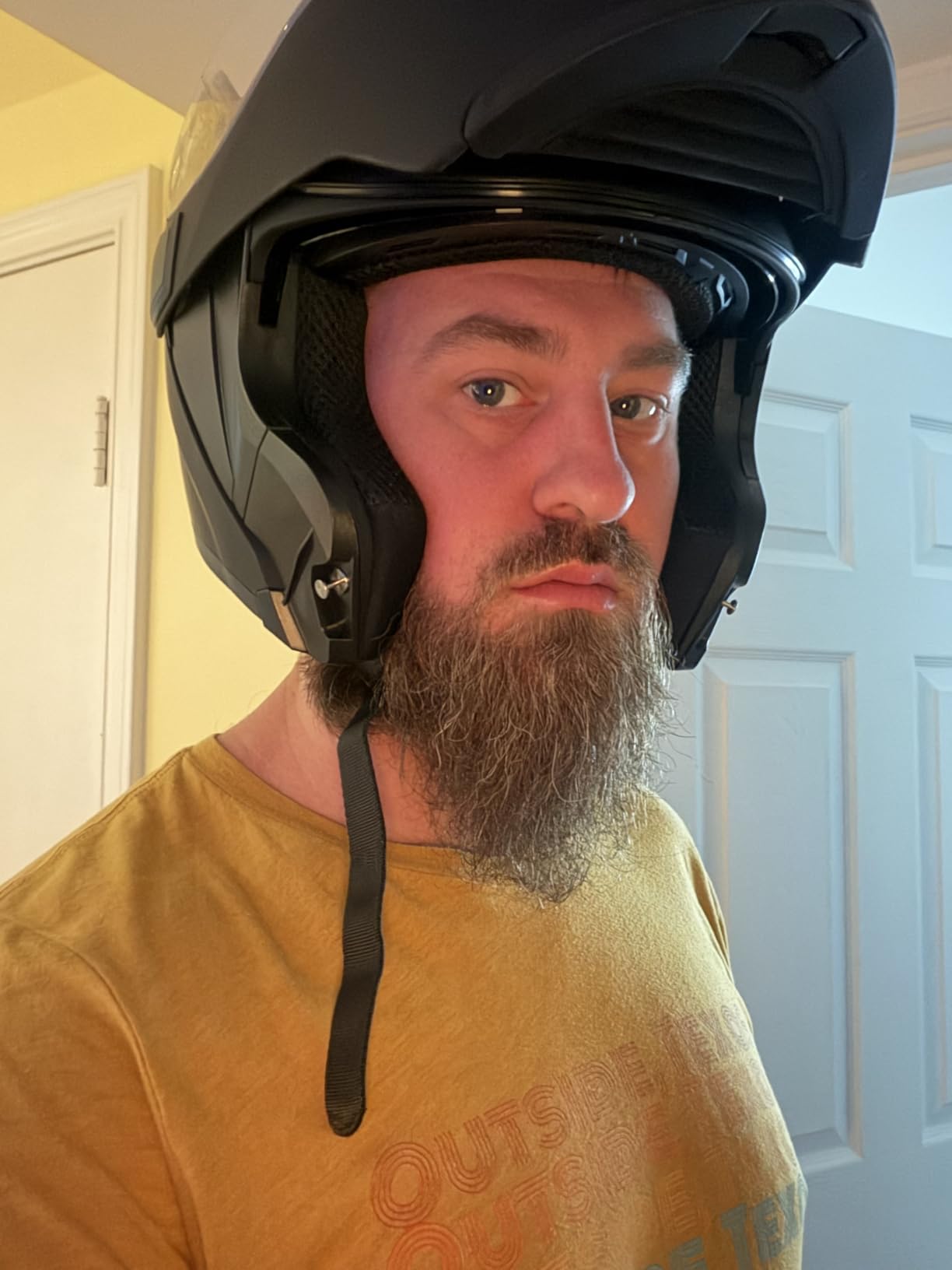
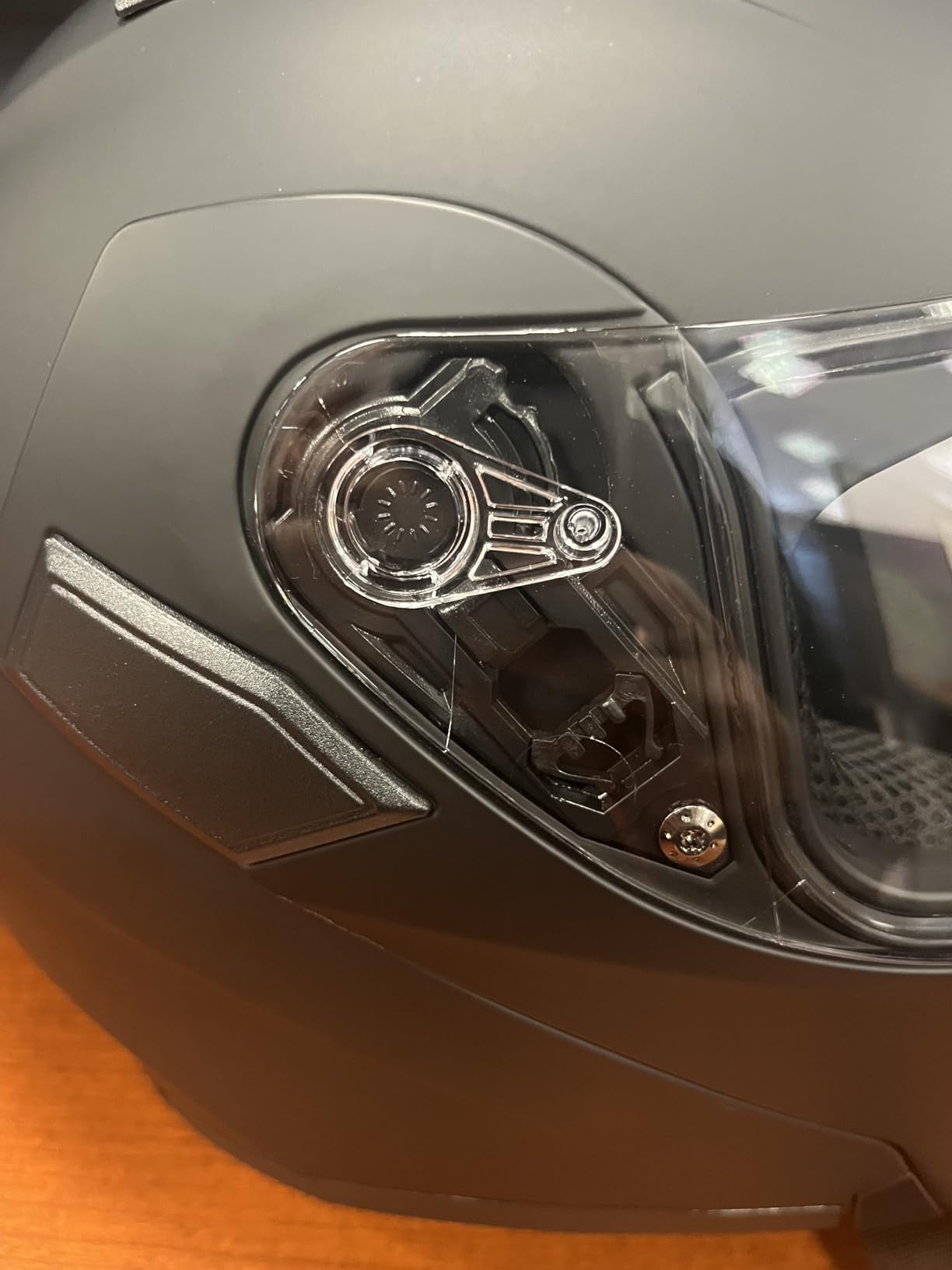
Construction is a high-resistance ABS shell with a micrometrically adjustable strap, six vents, and a clear visor treated for anti-scratch and anti-fog performance. Liner and cheek pads are soft, removable and washable, which matters more than manufacturers admit in summer.
The honest drawback is structural. A hinge and a rotating chin bar are simply more parts in the impact path than a fixed shell, which is why most safety guidance still points a first-time buyer toward a full-face. The helmet meets or exceeds FMVSS 218 and DOT standards.
Why it suits a first-time rider
If you are a rider who finds helmets genuinely uncomfortable, a modular can be the compromise that keeps you wearing one at all. Consistency of use beats theoretical protection gains from a style you avoid.
Light weight and a washable interior suit riders who take the bike out on a warm weekend and want to rinse the sweat out afterwards.
Where it falls short
This specific listing has a much smaller review base than the brand’s full-face models, so buyer feedback is thinner. I would treat the customer photos and reviews with more caution than the others here.
The modular shell is reported to run larger than the equivalent full-face from the same brand, so do not assume your sizing carries over between the two styles.
4. ILM Half Helmet: Best Open-Face Pick for Hot Climates and Short Trips
ILM Half Helmet Motorcycle Open Face Sun Visor Quick Release Buckle DOT Approved Cycling Motocross Suits Men Women (XL, Matt Black)
2.6 lb
ABS shell
Drop-down sun visor
DOT FMVSS 218
Pros
- Built-in drop-down sun visor suits prescription wearers
- Adjustable rear band fits a wide range of sizes
- Maximum airflow in hot weather
- Quick-release buckle with generous padding
Cons
- No chin or jaw protection at all
- Fits small out of the box so most owners size up
- Drop-down visor mechanism is fiddly
I want to be direct about this one: a half helmet is not what I would put a beginner on for street riding. The chin and jaw are uncovered, and that is precisely the area where a large share of motorcycle impacts land. The rider community is close to unanimous on this point.
That said, this is a well-made open-face helmet and there are situations where it earns its place. Extreme heat, short commutes and closed-course riding are the honest use cases, and if you fall into one of those, this is a capable pick.
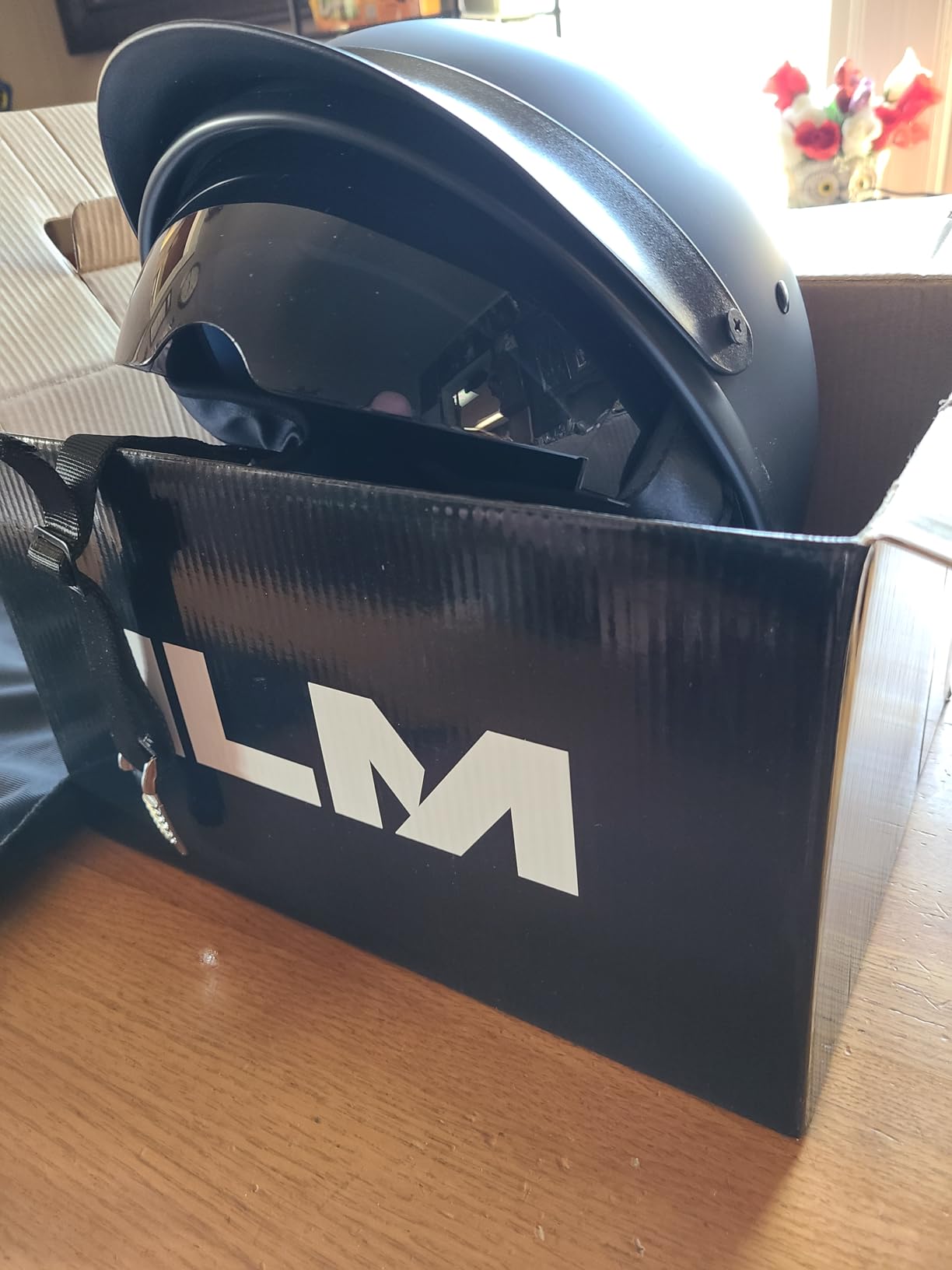
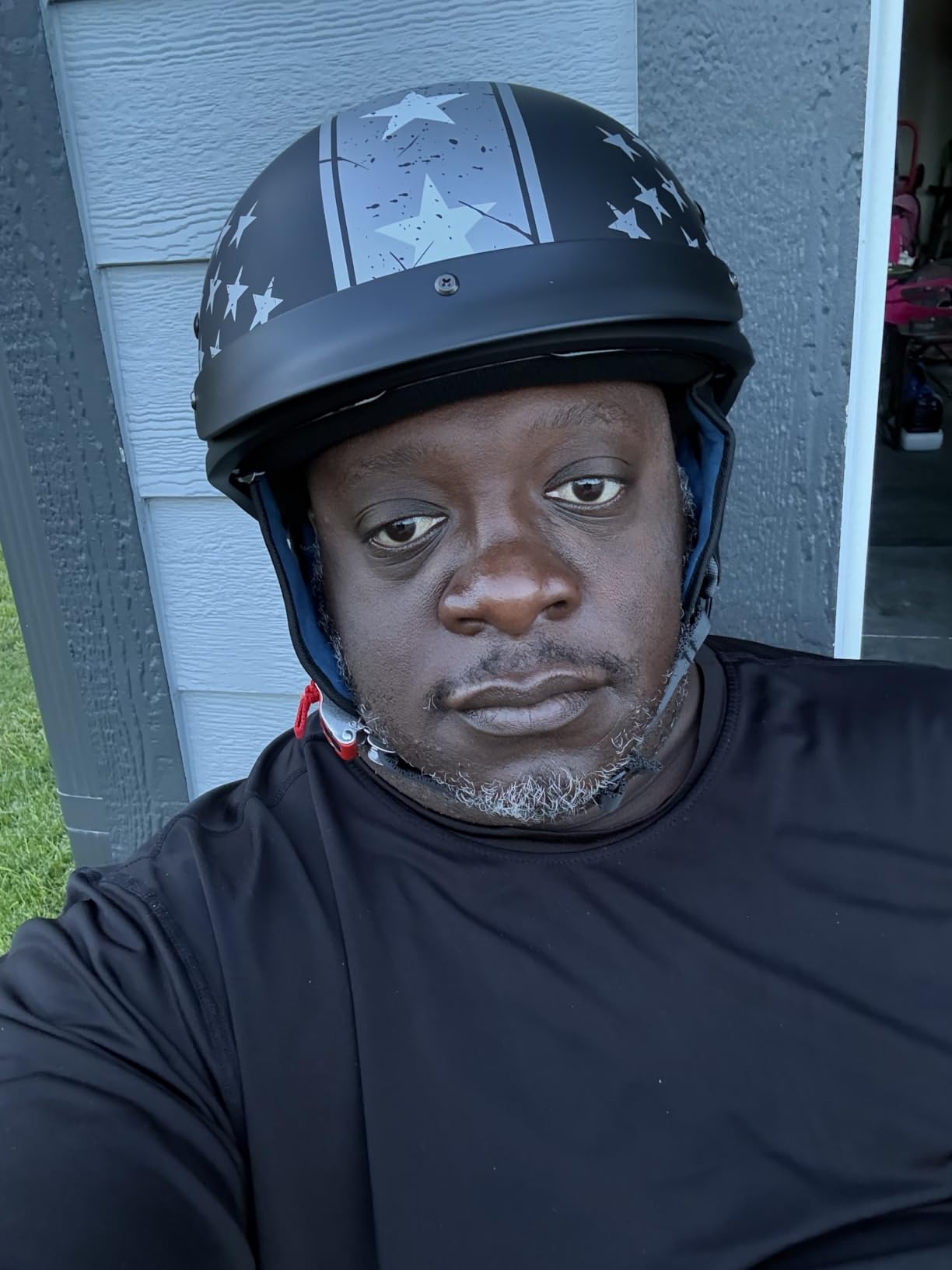
The integrated drop-down sun visor is genuinely useful for riders who wear prescription glasses, since it gives you shade without juggling a second shield. The rear sizing band adjusts to a wide range of head sizes, and the venting at the top of the head keeps heat down.
Shell construction is DOT and FMVSS 218 approved ABS, and the shape is a round profile, which is a forgiving starting point for beginners unsure of their head shape. The quick-release chin strap makes it easy to get on and off for short trips.
Why it suits a first-time rider
If your riding is genuinely low-speed and short-distance in serious heat, a full-face may be unbearably hot and you will simply not wear it. A helmet you keep on is more useful than a safer one sitting in a closet.
The drop-down visor means one helmet handles day and night, which simplifies a first purchase considerably.
Where it falls short
No chin or jaw protection. If you are riding on public roads at any real speed, look at a full-face instead.
Sizing is the dominant complaint: it fits small out of the box and many owners return for a larger size. The drop-down visor mechanism is also fiddly to operate with gloves on, which is a poor moment to be fumbling.
5. Bell Qualifier: Top Rated Pick with DOT and ECE 22.06
Bell Qualifier Helmet, Matte Black, Large
Polycarbonate shell
Three shell sizes
DOT and ECE 22.06
Ionic+ padding
Pros
- Carries both DOT and the tougher ECE 22.06 standard
- Lightweight polycarbonate shell with little buffeting
- Three shell sizes give a truer fit
- Quiet ratcheting shield with a positive seal
Cons
- Sizing runs tight so many buyers go up a size
- Cold air leaks through the gap above the chin
- Tinted visor sold separately
This is the helmet I would point to if someone wants a recognised manufacturer name and a stronger certification without stepping into the premium price band. Bell is a long-established brand, and the Qualifier carries FMVSS 218, DOT and ECE 22.06.
That ECE 22.06 rating matters. It means the helmet was tested for rotational impact as well as direct strike, which is a meaningfully more demanding protocol than the DOT baseline carried by most of the budget models here.
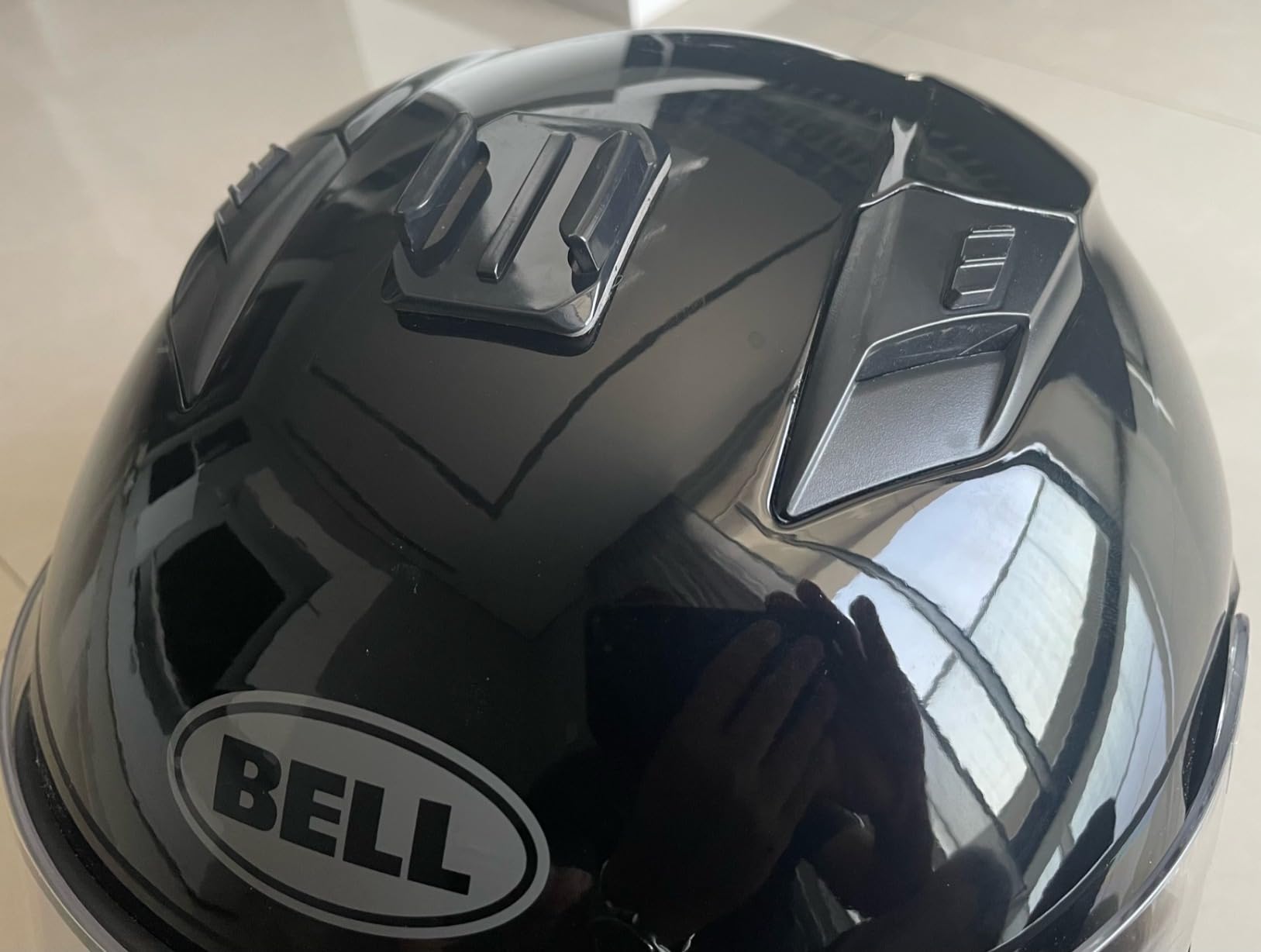
Three shell sizes is the detail that separates this from cheaper helmets. Most single-size designs force a round bulk on the wearer or an oversized look; multiple shell sizes get the proportions right. The polycarbonate shell is light and produces very little buffeting at highway speed.
The Ionic+ quick-drying interior padding handles sweat and odour better than foam-only liners, and the ratcheting shield with a positive contact seal at the eye port is a quiet, straightforward mechanism. There is also generous interior space around the ears, which suits Bluetooth speaker setups.
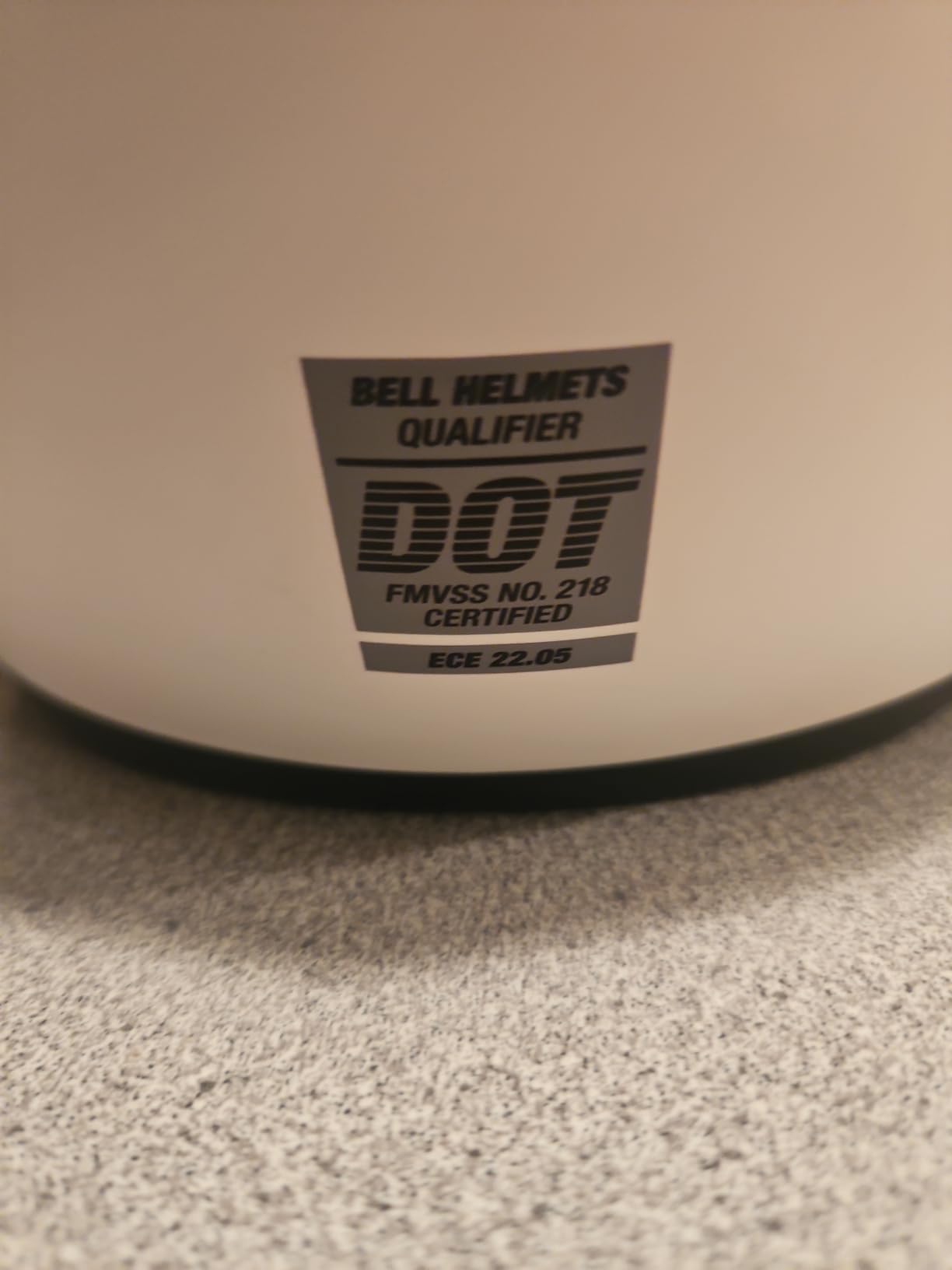
Why it suits a first-time rider
It is the step-up point. When a beginner moves past the entry tier, this is where the extra money buys a real certification upgrade rather than a logo, and riders consistently treat it as the quality jump from anonymous budget helmets.
Minimal buffeting and a quiet shield seal mean you arrive less tired, which directly affects how much you want to ride again next week.
Where it falls short
It runs tight. Many owners are advised to order one size up, and this is the single most repeated note in the reviews.
The shell profile leaves a noticeable gap above the chin that lets cold air in, and there is minimal sound deadening on bikes with straight-pipe exhausts. The tinted visor is not included, so budget for a second shield if you ride at night.
6. TRIANGLE Full Face: Accurate Sizing With a Dual Visor Bundle
TRIANGLE Full Face Motorcycle Helmet DOT Approved Men Women, Street Bike
2.7 lb
4 vents
Tinted and clear visors
Washable interior
Pros
- Tool-free dual visor system for fast swaps
- Accurate sizing across the S to XL range
- Comfortable light feel with a visor that resists fogging
- Carrying bag and both visors included
Cons
- DOT-only certification
- Shell feels plasticky for the price
- Ventilation is basic next to pricier models
Sizing accuracy is the quietly important thing about this helmet. Several reviewers specifically call it out as a first motorcycle helmet that worked without exchanges, which is exactly the frustration that derails online helmet buying for new riders.
The tool-free quick-release visor system means swapping between the pre-installed tinted shield and the bonus clear shield takes seconds, so riding at both day and night needs no extra planning.
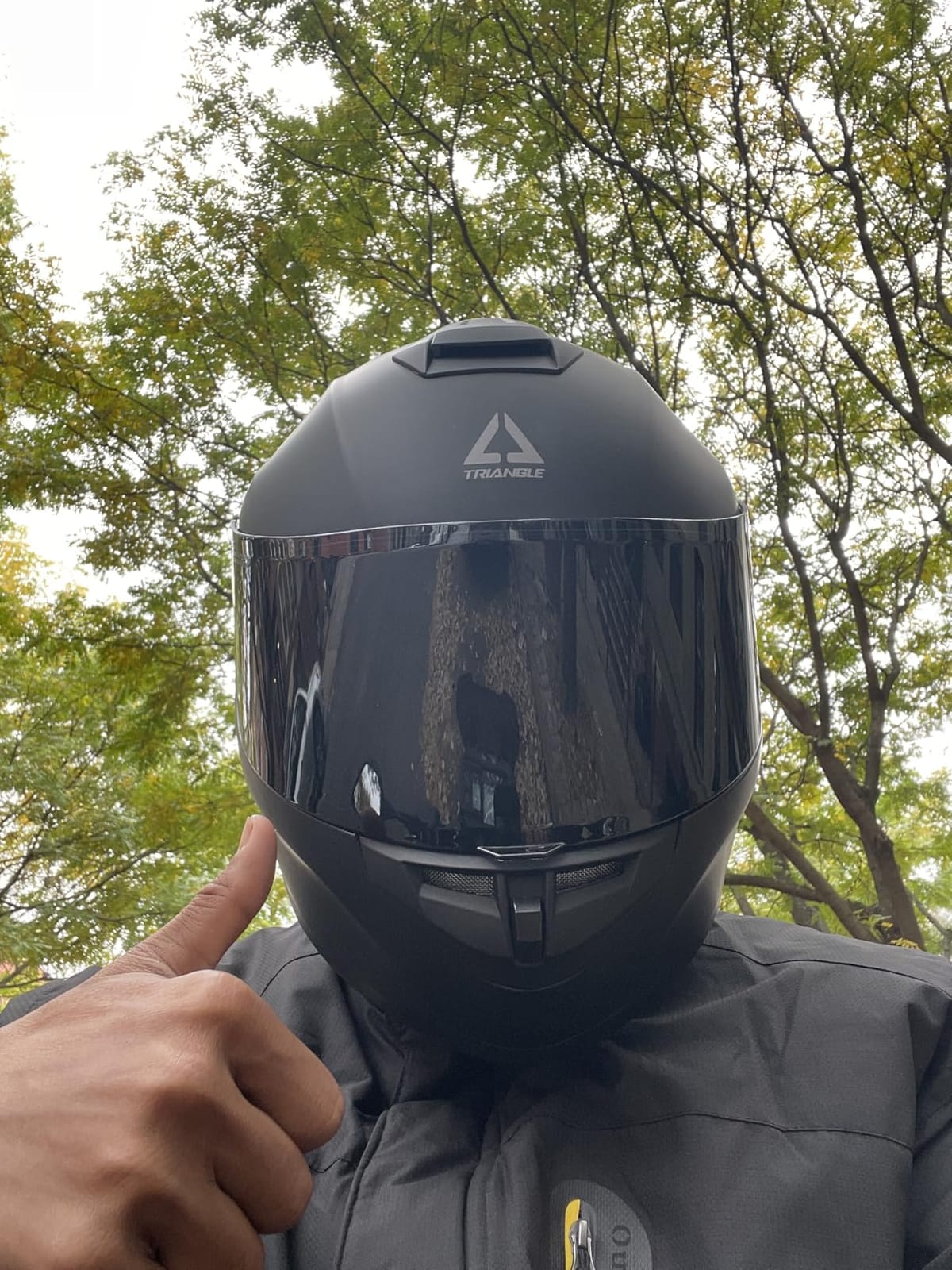
The shell is ABS with an energy-absorbing EPS liner, and it carries DOT and FMVSS 218 certification. Four air intakes and exhaust vents handle wind resistance and reduce visor fogging, though they are modest next to the multi-port systems on the GLX and the LS2.
At 2.7 pounds it stays light for a full-face design, and the interior is fully removable and machine washable with a moisture-wicking finish. A carrying bag is included and shell sizes run S through XL.
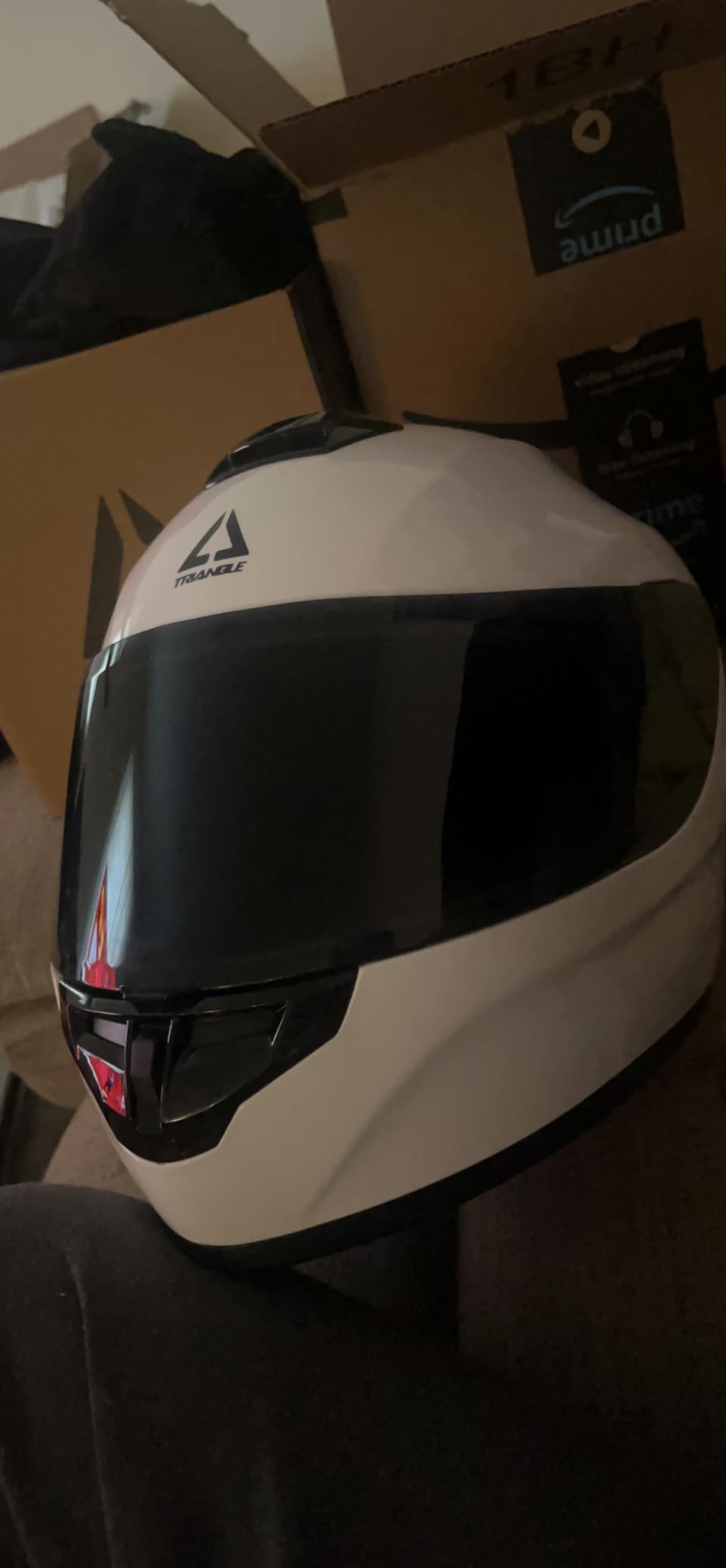
Why it suits a first-time rider
Getting the size right on the first attempt is worth more than any single feature. A helmet that fits immediately gets worn; one that pinches gets returned and sometimes abandoned.
Both visors arriving in the box removes the usual second purchase, and the washable interior is a genuine quality-of-life feature for a rider who will sweat in it.
Where it falls short
DOT-only certification leaves it behind the Bell Qualifier and the LS2 if rotational impact data matters to you.
Some buyers find the shell plasticky for the price, and the four vents are basic compared with the seven-port airflow of the GLX. If you ride in real summer heat, prioritise the model with more ports.
7. HAX Obsidian: Best Value Dual-Visor Helmet with Bluetooth Ready
HAX Obsidian Full Face Dual Visor Adult Motorcycle Helmet for Motorbike Street Bike with Pinlock Ready DOT Approved Matte Black Gold M
ABS and PC
Dual visor
Pinlock ready
Bluetooth slot
Pros
- Dual visor with an internal sun shield
- Pinlock-ready so anti-fog can be added later
- Built-in slot for Bluetooth headset installation
- UV treatment on both visors
Cons
- Pinlock insert sold separately
- DOT-only certification
- Wide visor and chin bar profile adds bulk
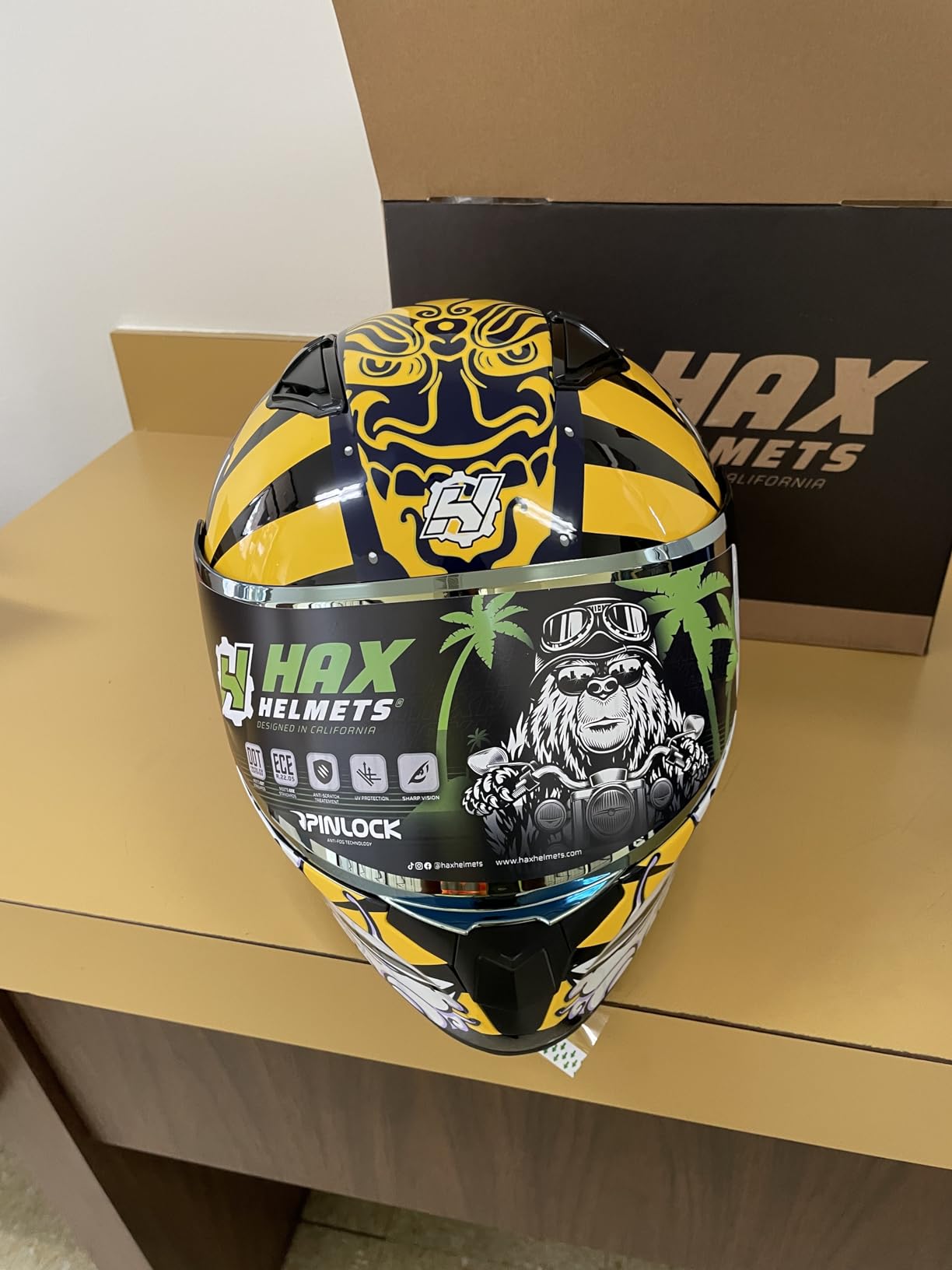
The reviews for this one run unusually positive, and the reason owners give is features that would normally cost far more: a dual visor, a Pinlock-ready face shield and a built-in Bluetooth slot.
The internal sun shield drops down inside the outer visor in a couple of seconds, so changing for tunnel glare or a low sun does not require stopping to swap shields on the roadside.
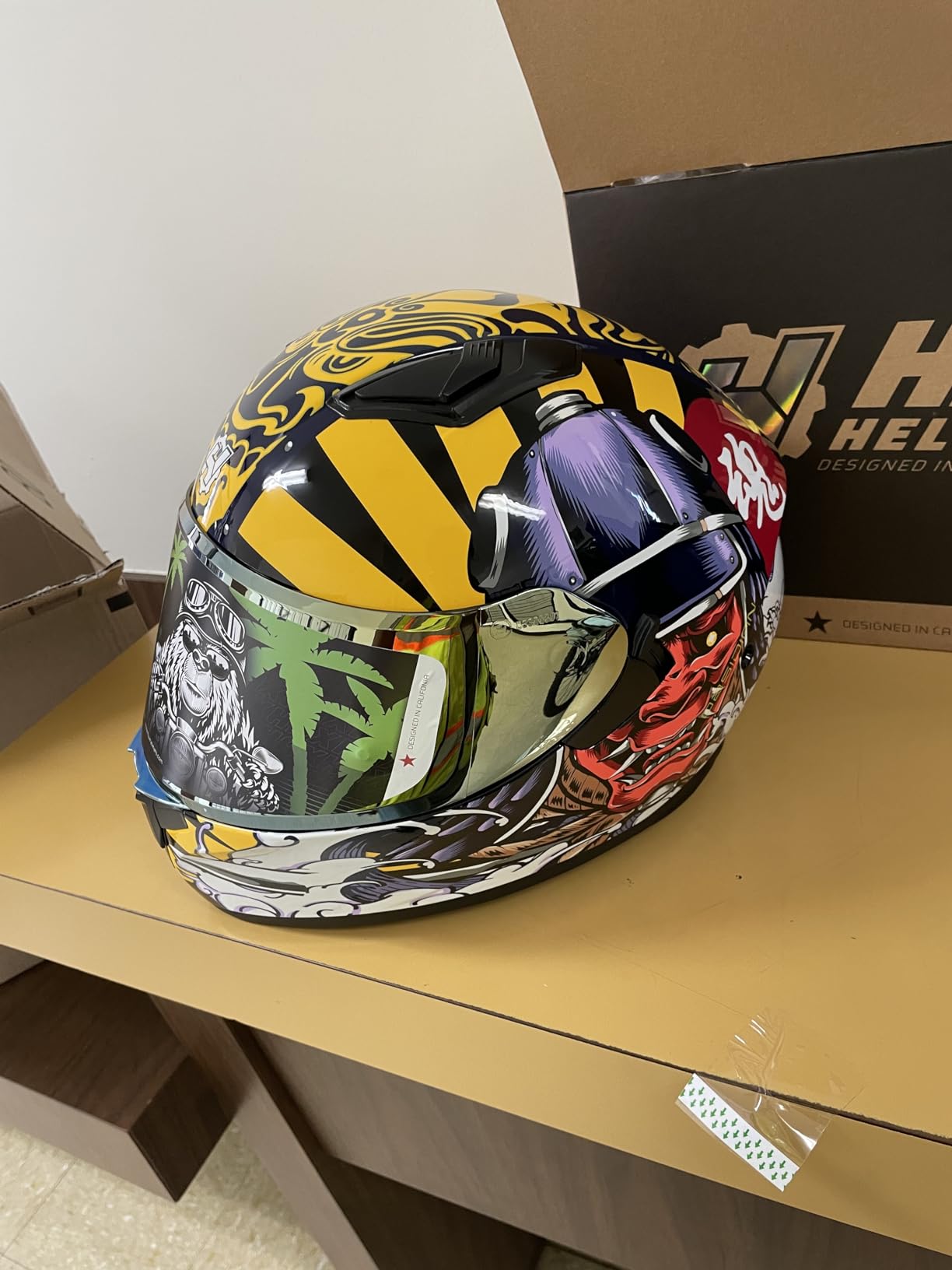
Visor UV treatment blocks about 98% of ultraviolet radiation on both shields, which matters more than most buyers realise given how much sun a rider absorbs through the face shield. The hypoallergenic upgraded liner is snugger and more impact-resistant than a basic foam liner.
Interchangeable tail fins and a thick cloth storage bag are included, along with a wide range of graphic options. Certification here is DOT only, so if rotational testing is your deciding factor this is not the one.
Why it suits a first-time rider
The internal Bluetooth slot is the sleeper feature. Fitting a comms system usually means cutting padding or buying proprietary replacements, and this removes that friction if you plan to add one later.
Pinlock-ready means you can defer the anti-fog insert until you discover fogging is a problem for you, rather than guessing at purchase. Plenty of riders only realise how much visor fogging matters once they have ridden through a cold morning.
Where it falls short
The Pinlock insert is not included, and neither are the extra visor colours. Budget for the insert if you ride in variable temperatures.
The wide visor and chin bar profile adds bulk for some head shapes, so this is a helmet to try on rather than order blind. Three vents is also fewer than several full-face models here.
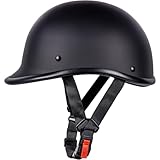
8. Yesmotor Hawk: A Very Light Half Shell for Hot Weather
Yesmotor Motorcycle Helmet Half Shell Hawk Style Helmets Compact Lightweight Open Face for Motorcycle Street Bike Cruiser Moped – DOT Approved (Matte Black,L)
600 g listed weight
ABS shell
EPS liner
Half shell
Pros
- Exceptionally light
- which reduces neck fatigue
- Low-profile shape sits close to the head
- Oblong shell suits longer head shapes
- Breathable washable liner for heat
Cons
- No chin or jaw coverage
- Thin shell means less protection than a full-face
- Runs slightly large for some head shapes
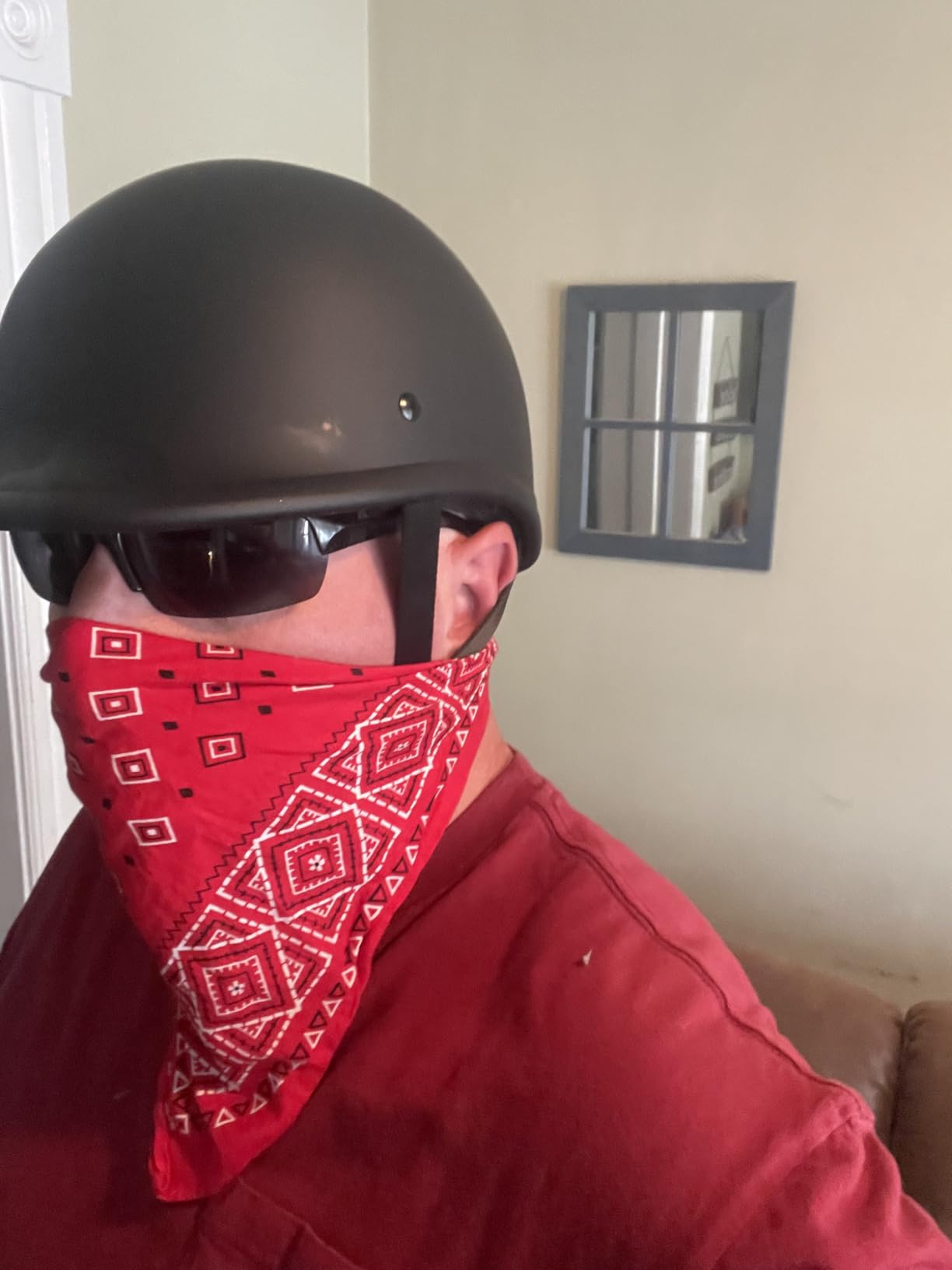
Weight is the story here. Several owners report that this helmet solved headaches caused by heavier models, and it sits at the light end of everything in this roundup.
The low-profile beanie silhouette sits close to the head rather than sitting proud of it, which avoids the oversized look many half helmets have. Vintage biker styling suits cruisers, bobbers and choppers.
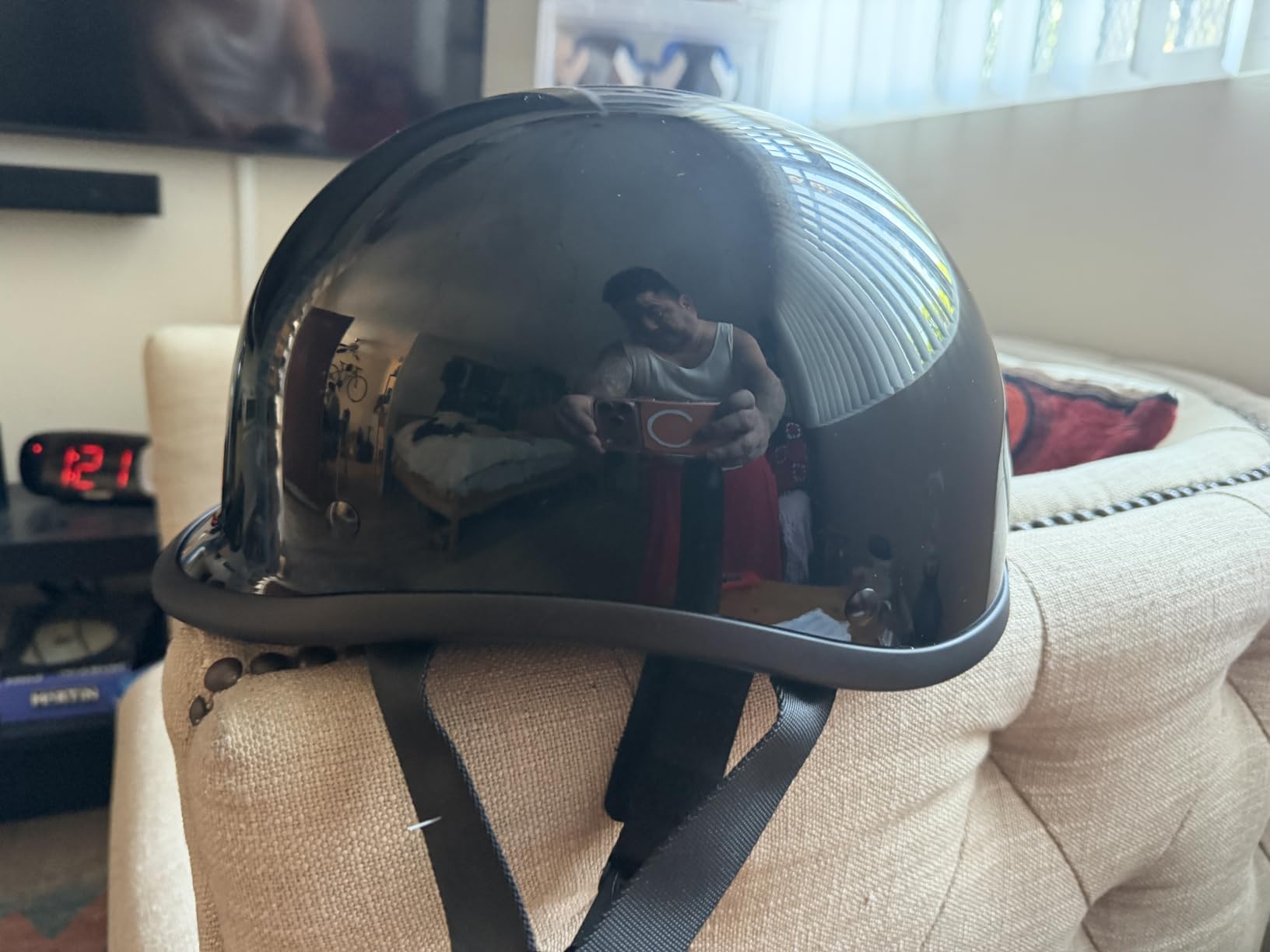
The oblong shell shape is a useful detail: it suits longer head shapes better than the rounder models that dominate the open-face category. The rugged ABS shell has an impact-absorbing EPS liner, a quick-release buckle for daily on and off, and a reversible breathable inner padding.
It stays stable at highway speed with the strap snugged down. As with other half helmets, the protection trade is real, and reviewers frequently recommend this for low-speed training and extreme-heat riding rather than street speeds.
Why it suits a first-time rider
If neck weight is what stops you wearing a helmet at all, a solution is a solution. This is the one to try if a full-face leaves you uncomfortable after an hour.
The oblong shape suits head shapes that struggle with rounder open-face models, and the washable liner keeps it bearable in hot weather.
Where it falls short
No chin or jaw protection, and a lighter shell means thinner protection than a full-face design. For a beginner on public roads, this is the wrong direction of trade.
It runs slightly large before break-in for some head shapes, so the size choice matters more than usual here.
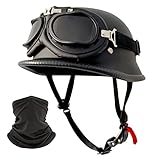
9. DLPACKJ Retro Half Shell: Best Style Pick for Cruisers
Motorcycle Helmet German Style Half Helmet Skull Cap Adult Men Women Shell Helmet, DOT Approved Retro Face Helmet for Cruiser Scooter Chopper (XL)
ABS shell
Moisture-wicking liner
Quick-release strap
Retro design
Pros
- Free size replacement service if the fit is wrong
- Retro German-style look suits cruisers and choppers
- Moisture-wicking fabric stays cooler in heat
- Padded strap buckle works with gloves
Cons
- No chin or jaw coverage
- Only a single vent and no sun visor
- Build quality perceived as basic
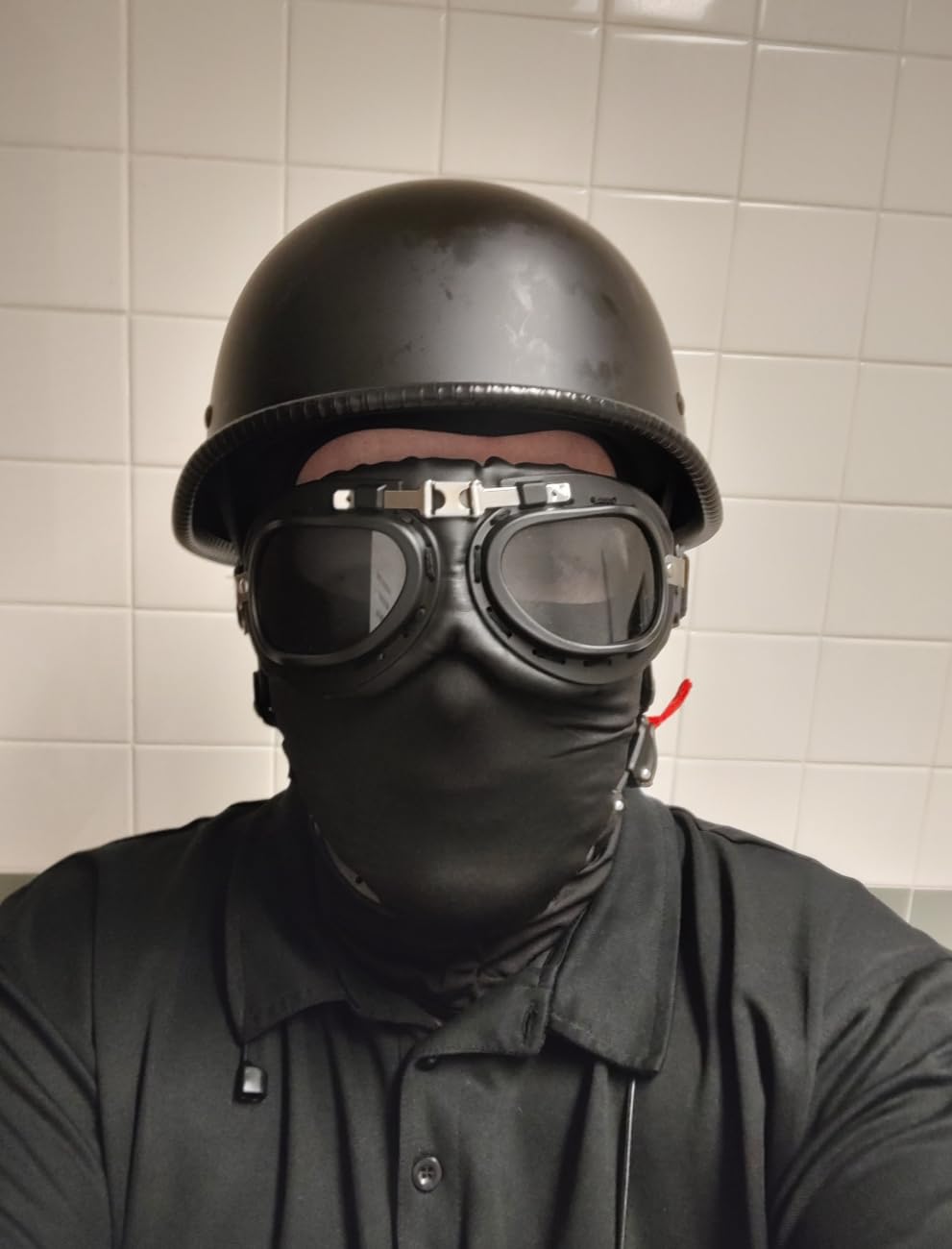
This is a style purchase as much as a safety one. The retro German half shell has been popular with cruiser, scooter and chopper riders for decades, and if your bike is a cruiser, matching the helmet to the machine is a real consideration.
The moisture-wicking fabric liner is the practical strength. It stays cooler than a full-face in heat, and the custom-formed interior keeps the padding from shifting on longer rides.
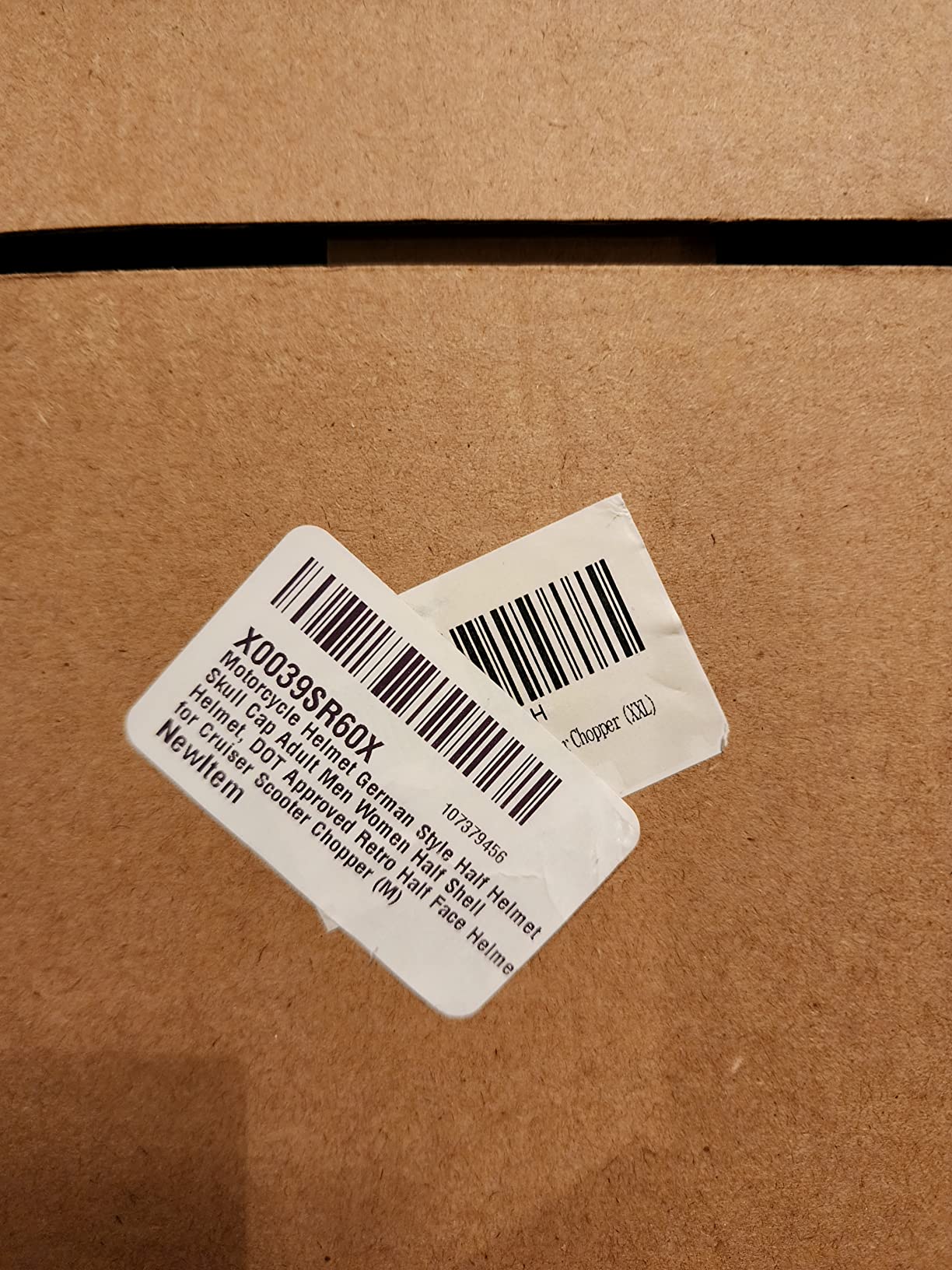
Construction is a hard ABS shell with a round shape, a padded chin strap with a quick-release plastic buckle that is easy to operate with gloves on, and a single top vent. It is listed for motorcycles, scooters, mopeds and street cars.
One service detail stands out: the brand offers free size replacement if the fit is wrong. That removes the biggest risk in buying a helmet online, where sizing is the top complaint across this entire category.
Why it suits a first-time rider
If you are starting on a cruiser and want the traditional look, this avoids the awkwardness of a full-face on a bike that clearly wants a half shell.
The free size replacement is a genuine beginner advantage, because getting fit right the first time is the hardest part of buying a helmet remotely.
Where it falls short
No chin or jaw coverage, only one vent and no sun visor, and reviewers describe the build quality and materials as basic. This is the model here I would least recommend for street riding.
If you are riding anything other than closed-course or very low-speed, spend the difference on a full-face. Protection is not the place to economise on a first purchase.
10. Favoto Full Face: Best Starter Helmet Reviewers Recommend Buying First
Favoto Full Face Motorcycle Helmet DOT Cascos para Moto Anti-Fog
2.8 lb
ABS and EPS
Anti-fog inner visor
Two-year warranty
Pros
- Reviewers often suggest buying this before spending more
- Anti-fog inner shield plus tinted outer shield
- Light enough for multi-hour rides
- Vents actively cut visor fogging
Cons
- High wind noise at highway speed
- Padding can compress and loosen over months
- Only one anti-fog film is included
This one is unusual because the reviews, not the marketing, drive the recommendation. Several owners explicitly advise beginners to buy it first and only consider a bigger purchase later, which is a sensible strategy for someone who does not yet know what they will end up riding.
The fog control is the standout. You get a clear anti-fog inner visor and a tinted outer visor, and the vents actively reduce fogging in cold conditions, which is the setup most budget full-faces get wrong.
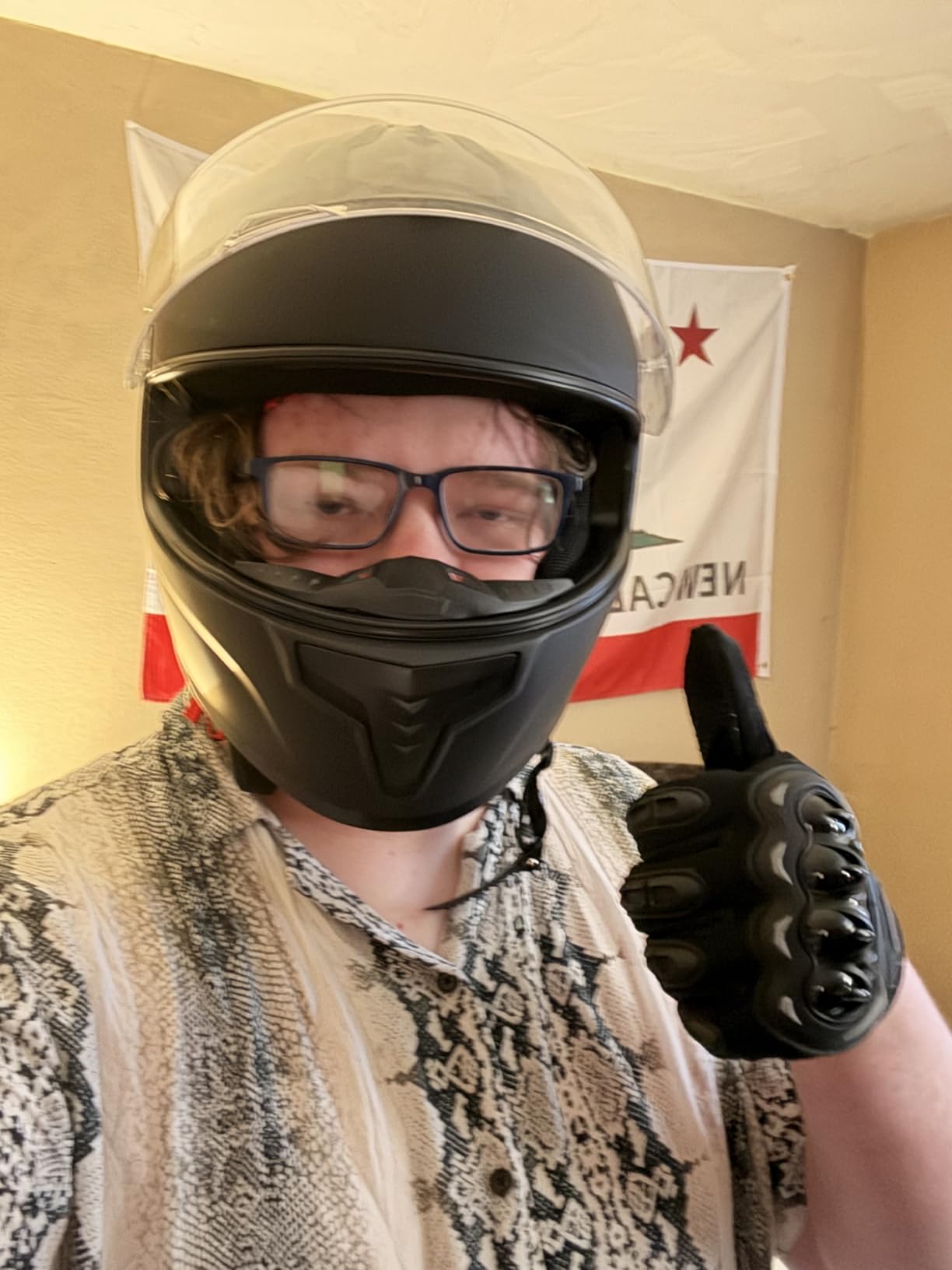
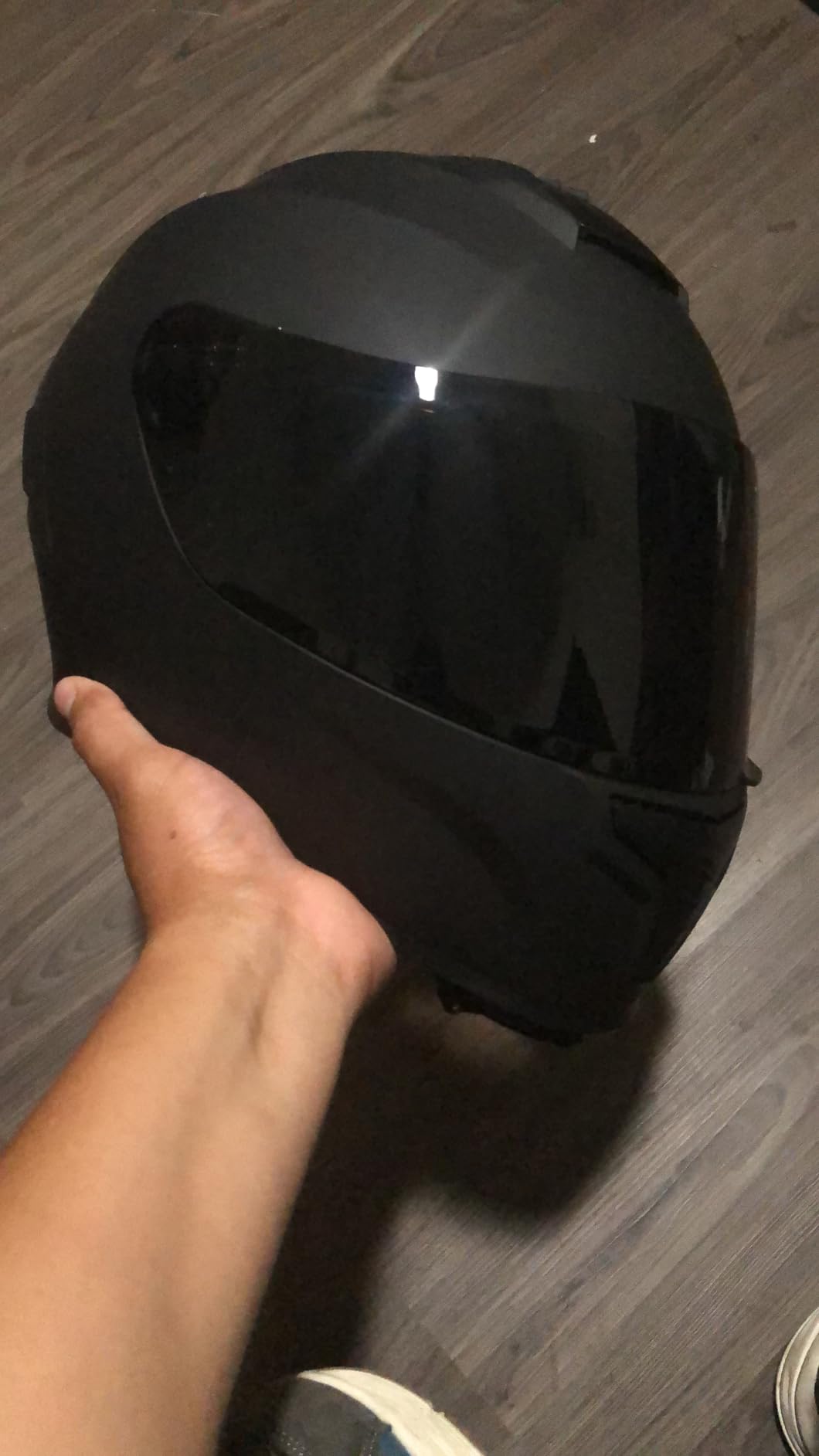
The shell is DOT FMVSS 218 approved high-strength ABS with a thick EPS foam liner, and the whole helmet weighs about 2.8 pounds. The liner is removable and washable with a moisture-wicking finish, and the chin strap uses a quick-release buckle.
A head circumference sizing chart is included, and size L corresponds to 59 to 60 cm. It is listed for street bikes, dirt bikes, ATVs, motocross and snowmobiles, and it carries a two-year warranty.
Why it suits a first-time rider
Wind noise is the hidden comfort killer in cheap full-faces, and this model draws repeated complaints about it. If you ride at highway speed regularly, budget for proper ear protection or move up to a quieter model.
The clear visor is not interchangeable with the sun visor, so you cannot carry both at once, and only one anti-fog film is included. Riders who do a lot of night riding should note that.
Where it fits as a second helmet
Because it is light, cheap to replace and easy to wipe down, it works well as a spare or a bike-commute helmet alongside a quieter touring model. That flexibility is exactly why buyers recommend starting here.
Padding compressing and loosening after a few months is the other recurring note, which reinforces the plan to treat any budget helmet as a multi-season purchase rather than a forever one.
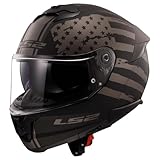
11. LS2 Stream II: Best ECE 22.06 Upgrade for New Riders
LS2 Helmets Stream II Full Face Motorcycle Helmet W/ SunShield (Matte America Gray/Black – 2X-Large)
KPA shell
AREM system
ECE 22.06 and DOT
Three shell sizes
Pros
- AREM rotational energy management with ECE 22.06 rating
- Very light for a full-face model
- Three shell sizes avoid the oversized look
- Inner sun shield drops down further than rivals
Cons
- Sizing runs tight and may need XL cheek pads
- Outer visor only ratchets to half-open
- Sun shield is not dark enough for some and fogs
This is the helmet reviewers most often describe as the best value in higher-end full-face models, with several comparing its interior and comfort favourably against far more expensive brands. The Kinetic Polymer Alloy shell is light for its class and carries an aerodynamic sport profile.
Certification is the headline: AREM rotational energy management meeting ECE 22.06, plus DOT approval to FMVSS 218. That rotational component is the differentiator over every DOT-only helmet in this guide.
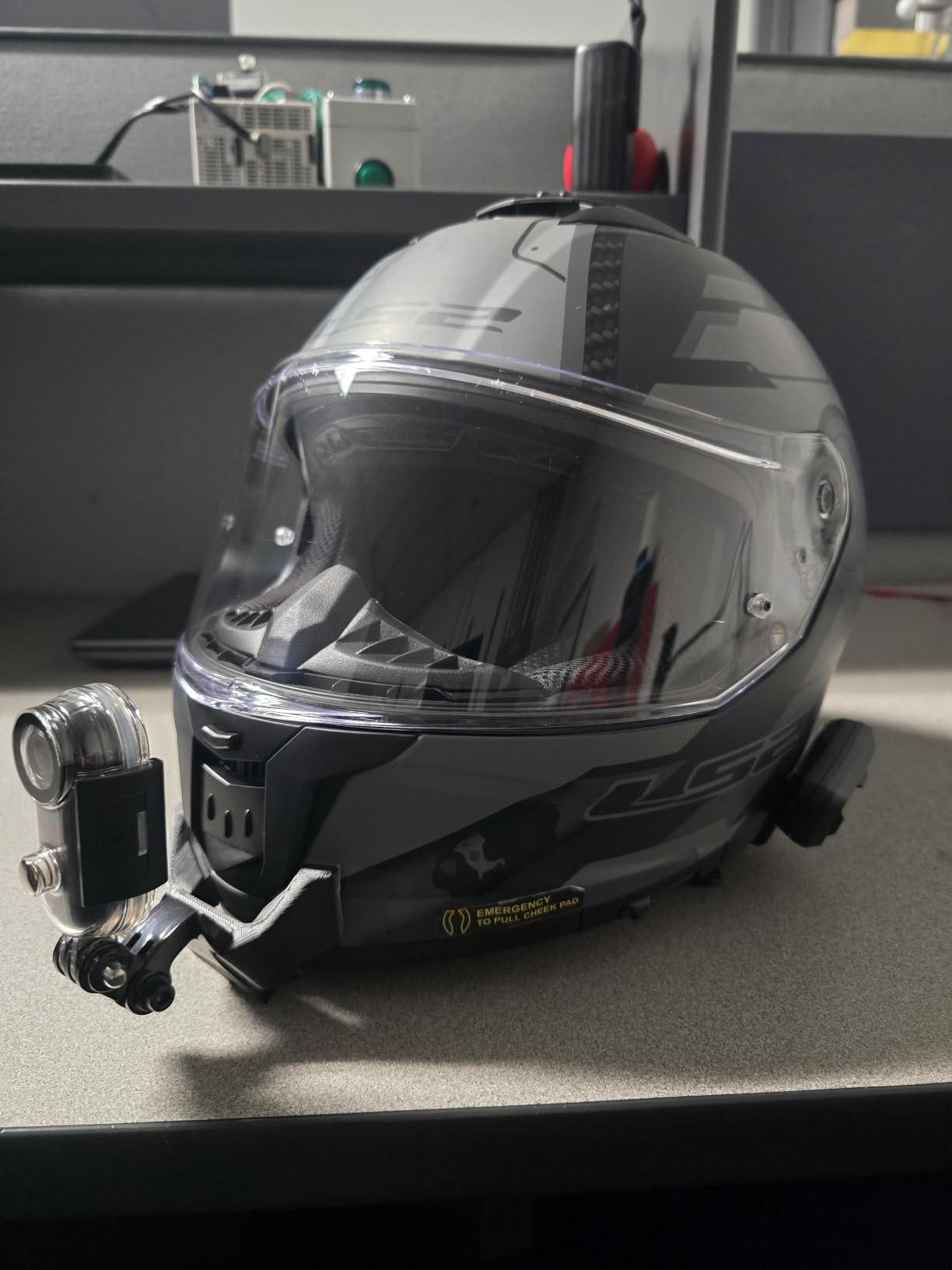
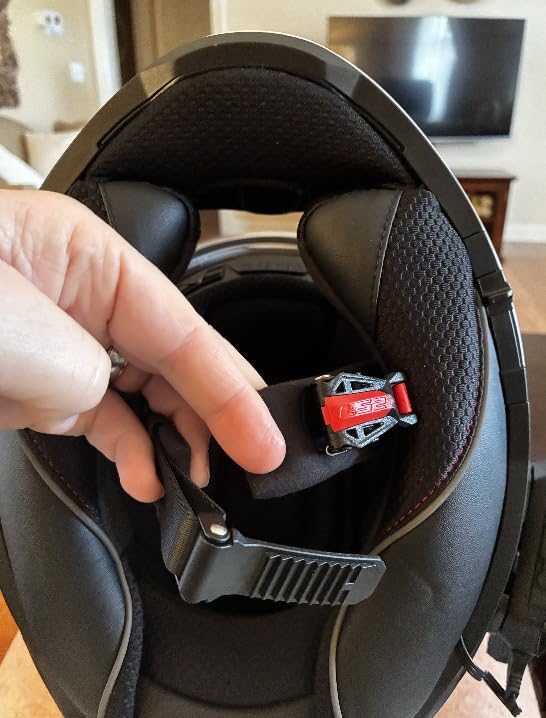
Three shell sizes prevent the oversized appearance that single-shell-size designs suffer from. The inner sun shield drops down further than on many competing brands, and build quality on the visor hinge and micro-adjust chinstrap is solid.
Removable pads are machine washable and the interior wicks moisture. The dynamic flow-through ventilation system handles airflow, and a two-year manufacturer warranty is included.
Why it suits a first-time rider
If your budget stretches far enough to reach this tier, this is where the money genuinely buys measurable safety data. ECE 22.06 with rotational testing is a different standard, not just a better finish.
Weight is low enough that it does not punish you on longer rides, and the machine washable pads keep it practical for daily use. No helmet lock ring is included, so add one if you park in public.
Where it falls short
Sizing runs tight, and some owners need XL cheek pads for a medium size. Fit problems are the most common reason high-end helmets get returned, so try before committing.
The outer visor only ratchets to half-open rather than a fixed cracked position, and the drop-down sun shield is not dark enough for some riders and tends to fog. It includes a clear shield only.
12. ScorpionEXO T520: Best Helmet for Long Rides and Touring
ScorpionEXO T520 Full Face Touring Motorcycle Helmet with Bluetooth Ready Speaker Pockets DOT ECE Approved Nama-Shimi (Black/Chameleon – Medium)
Polycarbonate and dual-density EPS
AirFit system
DOT and ECE
Five-year warranty
Pros
- Markedly quieter than most full-face helmets
- AirFit inflation dials in a custom fit and cuts wind noise
- Everclear no-fog shield holds up in rain
- Large Bluetooth pockets fit most comms systems
Cons
- Heaviest listed weight of the full-face models here at nearly five pounds
- Runs large and foam padding can loosen over time
- Sun visor can drop on bumps
- Pinlock insert not included
Noise is the number one comfort complaint in this category, and this helmet is repeatedly praised for the opposite problem. Owners report noticing the quiet within minutes of riding, and the AirFit cheek pad inflation system lets you dial in a custom fit that cuts wind noise further.
It is also the one I would point to for a beginner who already knows they will be doing long distances. The aero skirt chin curtain and included breath deflector handle the air you would otherwise swallow at speed.
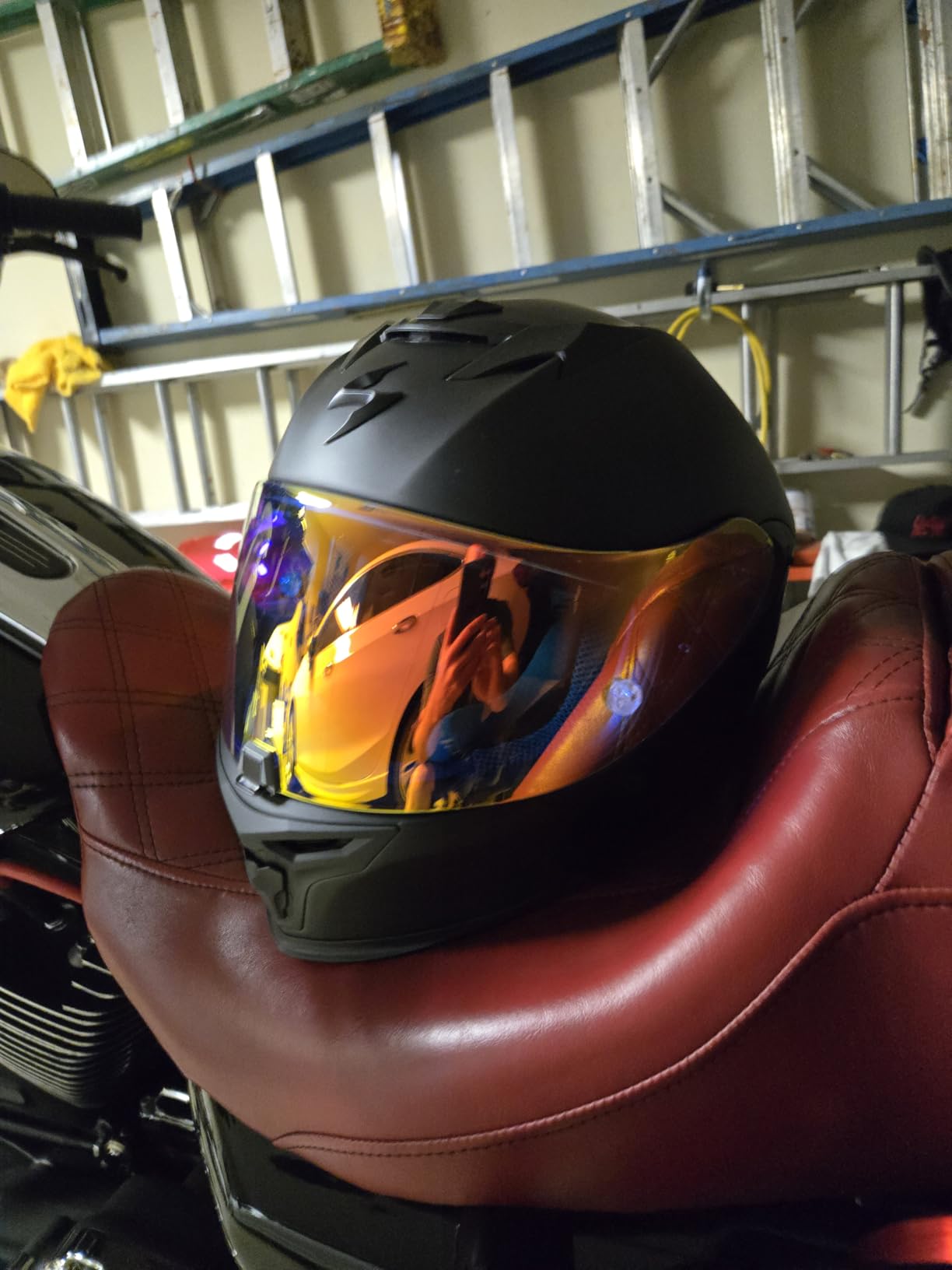
Construction is an advanced polycarbonate shell with dual-density multi-layer EPS, three shell sizes from XS to 3XL, and double D-ring retention. The KwikWick C liner manages moisture and the KwikFit 3D contoured cheek pads are explicitly glasses-friendly, which matters if you wear prescription eyewear.
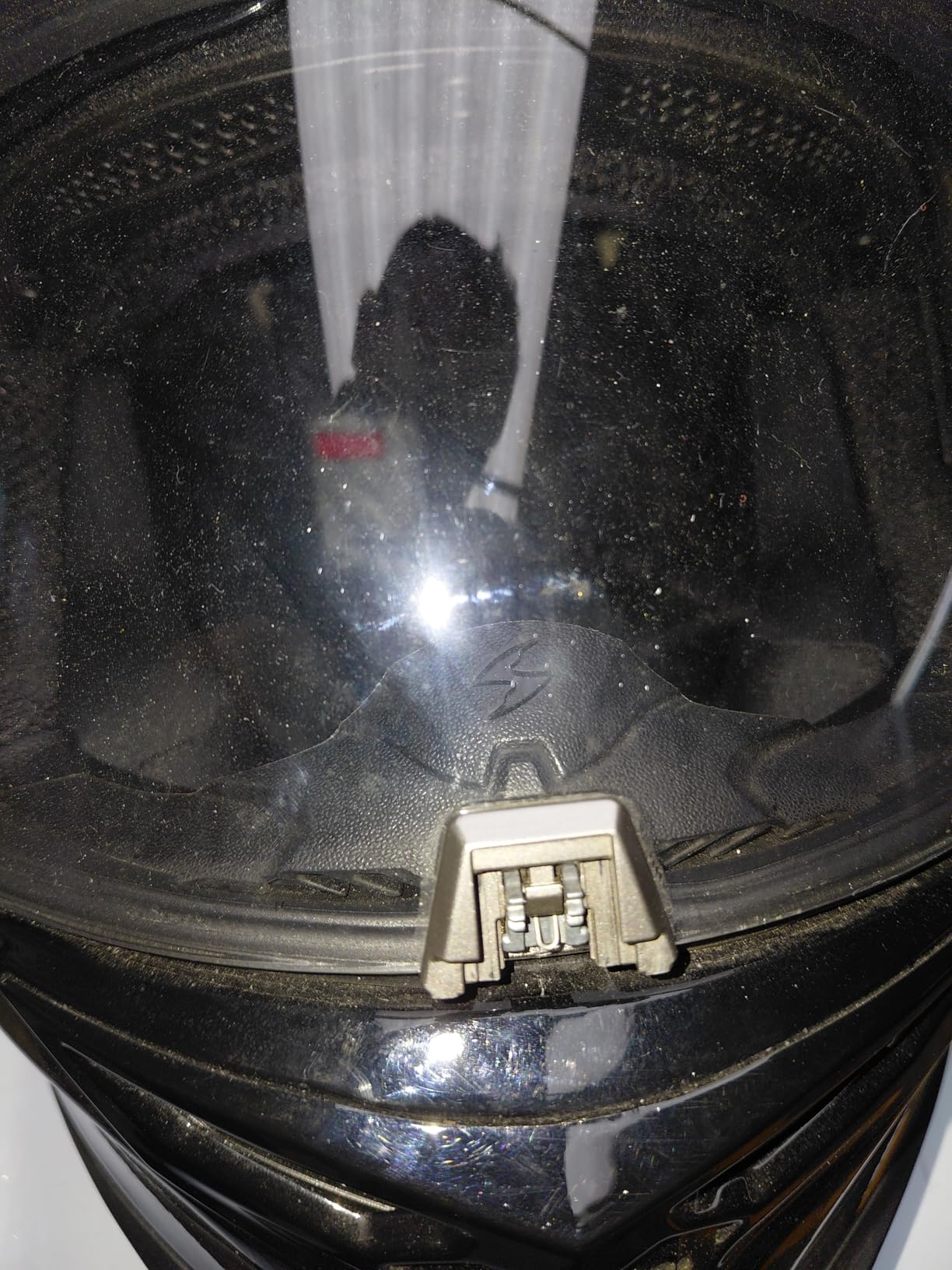
The Everclear no-fog shield is treated on both surfaces, changes without tools, and blocks 95% of UV-A and UV-B. The helmet is EXO-COM ready with large-diameter Bluetooth speaker pockets, and it carries DOT FMVSS 218 and ECE certification with a five-year warranty.
Why it suits a first-time rider
Fatigue is what kills long rides, and both noise and neck strain are the biggest sources of it. This helmet addresses noise directly and still works with prescription glasses, two things new riders rarely think to prioritise.
Three shell sizes and a five-year warranty reduce the chance of an ill-fitting purchase, and the AirFit system is genuinely useful for fine-tuning a fit that is nearly right.
Where it falls short
It is the heaviest of the full-face models in this roundup at nearly five pounds, so it is noticeably heavier on the neck than the entry-tier models here. It also runs large for many head shapes, and foam padding can break down and loosen over time.
The drop-down sun visor can fall from the raised position over bumps and vibration, a Pinlock insert is not included, and the visor still fogs in some conditions despite the Everclear treatment.
How to Choose Your First Motorcycle Helmet: What Actually Matters
Certification first, always. If a helmet carries no recognised standard, everything else on this list is irrelevant. Beyond that, here is what I would weigh, in order of how much it affects how much you will actually ride.
Shell material. Polycarbonate and ABS are the practical choices. Polycarbonate is lighter and absorbs impacts better, while ABS is cheaper and more common in the entry tier. Fiberglass composite sits in the middle.
Carbon fibre composite is lighter again, and it appears mostly in premium models and track use, where weight reduction matters more than cost.
The EPS liner. The hard shell spreads impact force across a wider area, and the expanded polystyrene foam liner crushes progressively, which lengthens the duration of the impact and reduces peak force on the skull.
A multi-density liner uses different foam densities in different zones, which is a genuine upgrade. Both layers must be present and undamaged for the helmet to work at all.
Weight. Anything under four pounds is a meaningful difference over a long day. Below three pounds feels notably lighter, and the entry-tier models in this guide are already very light. Heavier helmets are not automatically better, but they cost you comfort.
Ventilation. Look for separate intake and exhaust ports you can control, not decorative vents. The count matters less than whether the intakes actually open, and the multi-port models make the biggest difference at low speed in traffic.
Visor and anti-fog. A quick-change shield mechanism lets you swap visors without tools. For fogging, either a Pinlock-style insert or a treated shield works; inserts cost extra but are reusable. If you ride at both day and night, a drop-down internal sun shield removes the need to carry a second shield entirely.
Clasp type. Double D-rings are the simplest and hardest to release in a crash, so you tend to stay conscious longer. Quick-release buckles are far easier for everyday use. Both appear in this guide, and both are acceptable.
Head shape and glasses. Brands tend to bias toward a particular head shape, and long oval is common among premium Japanese brands while rounder and oblong shapes show up more in European and budget models. If you have never fitted a helmet, a forgiving, adjustable model is a safer first bet. If you wear glasses, look for contoured cheek pads that leave temple space for the arms.
One thing that surprises people: the tinted visor option matters more than it looks. A dark shield is close to useless at dusk or on an overcast morning, so check the tint level and keep a clear shield for those conditions. The mechanics are similar to how an auto-darkening filter handles a welding hood, if you have compared auto-darkening welding helmets and noticed how much light control matters.
How Much Should You Spend on a First Helmet?
Something surprises most beginners here: any certified helmet meeting the same standard is broadly comparable in safety at that standard. A budget model that passes the same testing as an expensive one is not meaningfully less safe. Spend more for fit, comfort, build quality and quieter design, not for prestige.
With that in mind, think in four tiers rather than a single number.
Entry tier. The cheapest certified full-face models. These cover the ILM 313, the GLX GX11, the TRIANGLE and the Favoto, and they are genuinely fine for a new rider. Buy one, wear it, and expect to replace it within a few years. This is the tier where most first purchases should land.
Mid tier. This is the community sweet spot, and the reason experienced riders land here repeatedly is that you start getting ECE 22.06 certification, multi-density liners, better vent systems and washable interiors. The Bell Qualifier and the LS2 Stream II sit here, and both are strong first helmets with real certification headroom.
Upper mid tier. The band where touring features appear: chin curtains, inflatable cheek pad systems, advanced no-fog visor coatings, integrated sun shields and multi-year warranties. The ScorpionEXO T520 lives here and is the pick if you already know long rides are part of your plan.
Premium tier. Carbon fibre shells, bespoke fit services and brand premiums. For a first helmet this is usually money you would rather spend on a jacket, gloves and boots. Save it for when you know your head shape and your riding style precisely.
One note on doing this gradually: some new riders rent a helmet once before buying, which is a sensible way to find out whether you tolerate a full-face or a modular before committing. It costs little and it removes the guesswork. The same budgeting logic shows up whenever protective equipment is compared side by side, as in our roundup of the best welding helmets, where a certified budget option is often the sensible first buy.
Fit and Sizing: Measure, Try on, and Confirm Before You Buy
Fit is the single most important factor, and it is the one most beginners skip. A helmet that is too loose can come off in a crash; one that is too tight causes pressure points that end rides early. Beginners who measure carefully end up far happier.
Step one, measure. Wrap a flexible tape measure around your head roughly two centimetres above your eyebrows and just above the bumps behind your ears, keeping it level. Note the number in centimetres and compare it against the manufacturer chart.
Do not skip this step because you know your usual size in another category.
Step two, check head shape. While measuring, notice whether your head is noticeably long from front to back, fairly round, or somewhere between. If you can push a finger a short way into the forehead and it still feels tight, you likely have a long oval head and should look at brands that bias that way.
Step three, wear it for twenty minutes. This is the test riders in forums keep repeating, and it is the step most product pages ignore. Put the helmet on, fasten the strap, and move around the shop for twenty minutes.
Check for pressure points at the temples, the brow and the jaw line. Check also that the strap is snug without being painful.
Step four, confirm no hot spots. After twenty minutes there should be no single point where the shell presses into your skull. A helmet that is merely snug all over is fine; a helmet that digs in at one spot is the wrong shape for you.
If you wear glasses, wear them during the twenty-minute test. The arms need to clear the cheek pads, and this is a common reason riders return helmets twice.
The 222 rule. The shorthand new riders hear in forums checks a helmet before you trust it. The first 2 means the manufacture date should be within about two years of when you are buying, and the second 2 means there should be no cracks, chips or damage anywhere on the shell or liner.
The final 2 means the helmet should never have been dropped or fitted to anyone else. Read the date stamp inside the liner, inspect the shell under good light, and treat any history of a drop as disqualifying.
Do not buy used. This is the closest thing to unanimous advice in every rider forum I looked at. A helmet can look undamaged after a hard impact because the shell spreads the force and the EPS liner does the absorbing, so there is often no visible sign.
The unknown impact history means you never know whether the foam has already done its job once. If a helmet has ever been in a crash, it is finished.
The five-year rule. Replace a helmet roughly five years from first use even if it looks perfect, and immediately after any crash. EPS foam, glues, straps and the visor all degrade with UV exposure, sweat and time even on a shelf.
Plan for a replacement in your budget rather than treating a helmet as a once-in-a-lifetime purchase. If you want a structured approach to that side of it, our beginner welding helmet guide covers the same replacement logic for a different kind of protective gear.
Also check your local helmet law before buying. Some states specify a particular standard, and several specify age requirements for riders under a certain age. Knowing your requirement first prevents buying a helmet that is not legal where you ride.
What Else a New Rider Needs Beyond the Helmet
A helmet does not keep you upright. The gear that prevents most rider injuries sits below the neck, so budget for it alongside the helmet rather than after a first fall.
Gloves. Full-finger gloves with knuckle protection, since hands take the worst of it in a slide. These are the cheapest meaningful upgrade after a helmet.
A jacket. An armoured textile or leather jacket, even for commuting. Abrasion injuries are common and heal badly.
Over-the-ankle boots. Sturdy footwear with good ankle support and a non-slip sole. Ordinary sneakers are the most common gap in new rider kit.
Eye and ear protection. Proper earplugs matter more than most beginners expect on a full-face, and they solve the wind noise complaints that appear throughout the reviews above.
Choosing starter equipment sensibly matters whether you are buying protective gear or optics; we covered the fit-and-budget logic for telescopes for beginners in a similar way, and the same rule applies here. Buy for fit and the job in front of you, not for a brand name.
Frequently Asked Questions
What is the 222 rule for bike helmets?
The 222 rule is a beginner shorthand for checking a helmet before you trust it. First 2: the manufacture date on the label inside the liner should be within roughly two years of purchase. Second 2: there should be no cracks, chips or damage to the shell, liner or straps. Final 2: it should never have been dropped or fitted to another rider. If any one of the three fails, do not use it.
What is the best helmet for beginners?
For a new rider on public roads, a certified full-face helmet that fits well is the answer. Look for DOT FMVSS 218 as a minimum, with ECE 22.06 or Snell preferred because both add tougher or independently administered testing. Our top pick is the ILM ILM-313, a complete package with clear and smoked visors included, at three pounds.
How much should you spend on a first motorcycle helmet?
Riders consistently point to the middle of the range as the sweet spot, because that is where you get ECE 22.06 certification, multi-density liners and better ventilation. But the more useful truth is that any helmet meeting the same standard is broadly comparable in safety, so spend for fit, comfort and quietness rather than for the brand name.
What is the 5 year rule for motorcycle helmets?
It is standard guidance to replace a helmet about five years from first use even when it looks undamaged, and immediately after any crash of any severity. Foam, glues, straps and visors all degrade over time and with UV exposure. Treat a replacement as a planned cost in your riding budget rather than an emergency purchase.
Should I buy a used motorcycle helmet, and are half helmets safe?
Skip used helmets entirely, because a helmet that has absorbed an impact can look perfectly normal while the EPS liner has already compressed. On half helmets, rider consensus is firm: they leave the chin and jaw uncovered, and a large share of motorcycle impacts hit the chin area. Use them for closed-course or very low-speed riding at most.
Final Verdict: The Best Motorcycle Helmets for Beginners in 2026
For most new riders the answer is the ILM Full Face ILM-313. It is light, quiet, DOT certified and backed by a five-year warranty, and it arrives as a complete package with both a clear and a smoked visor. If you want stronger certification and a recognised manufacturer name, step up to the Bell Qualifier, which carries both DOT and ECE 22.06 across three shell sizes.
Ride in a hot climate and want real airflow, and the GLX GX11 with its seven-vent system and multi-density liner is hard to argue with. Already planning long distances, and the ScorpionEXO T520 is consistently reported as one of the quieter full-faces on the market and works with prescription glasses. Whatever you choose, buy new, buy certified, get the size measured properly, and wear the twenty-minute in-store test before you pay.
Whatever you pick, wear it every single ride. The best motorcycle helmets for beginners are not the ones on this list, they are the ones that never come off.