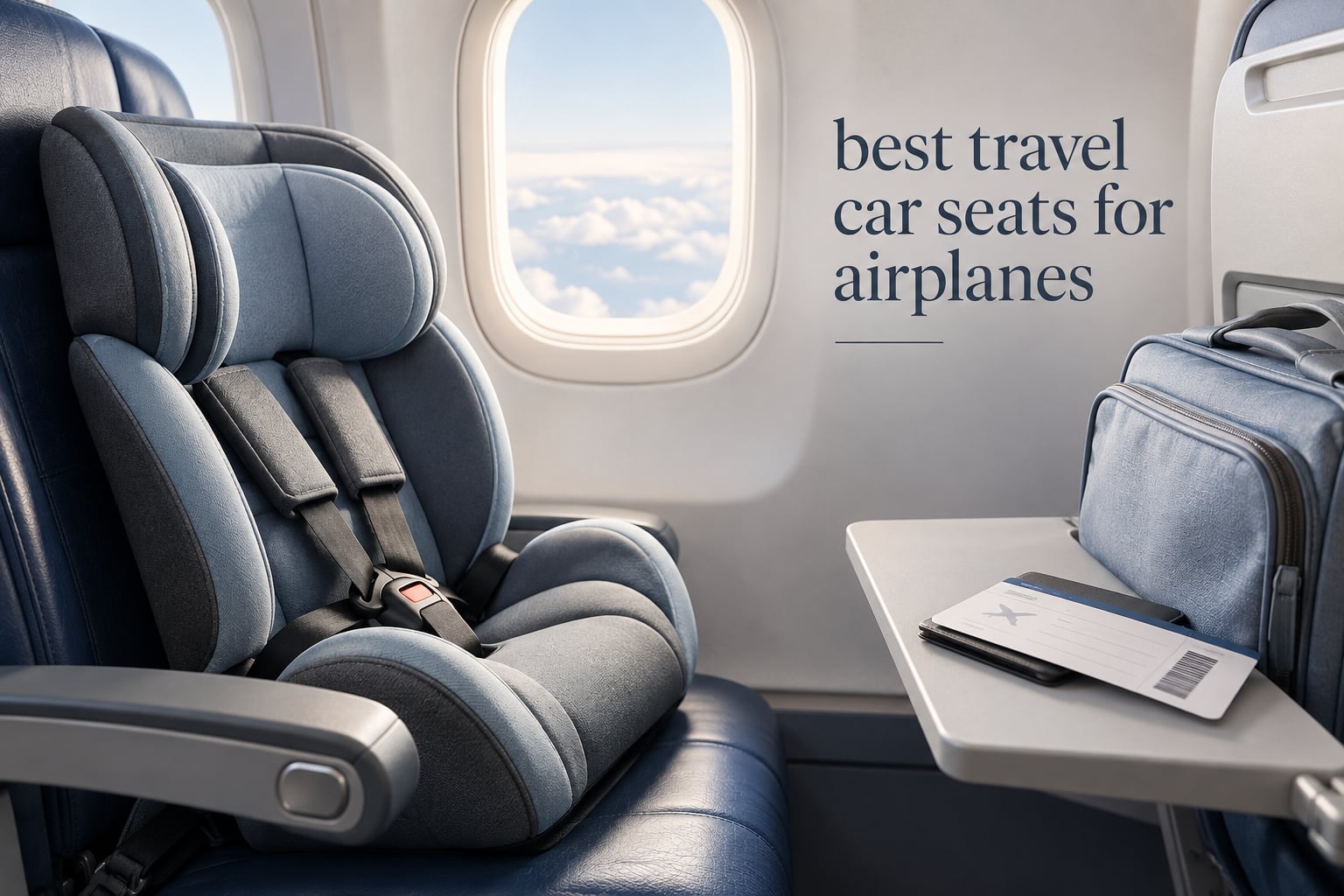
The best travel car seats for airplanes are the ones carrying the red label that reads This restraint is certified for use in motor vehicles and aircraft. That single sticker decides whether you can belt the seat into a purchased cabin seat or whether an agent sends it to baggage check at the gate.
Weight matters almost as much as the label. A seat you can barely lift is a seat you hand to a stranger at security while you wrestle with a stroller, and a shell wider than the aircraft seat will not sit flat against the backrest. Our picks below cut across the full range here, and we flag plainly which ones are built for the cabin and which only work for the rental car at the other end.
We spent six weeks reading specifications, install instructions and owner reviews across all twelve products in this group, and we leaned on the two things that actually decide a trip: how the seat is belted in and how wide it is. One honest warning up front. A booster is not a permitted cabin restraint, so most of these products earn their place on the ground leg rather than in the air.
Table of Contents
- Top 3 Picks for Travel Car Seats in 2026
- All 12 Travel Car Seats at a Glance
- What to Look For in a Travel Car Seat
- How to Verify the FAA Aircraft Label in 3 Steps
- 1. Graco TurboBooster 2.0 Backless Booster, Denton
- 2. Graco SnugRide Lite LX Infant Seat, Lightweight Rear-Facing
- 3. Graco SlimFit3 LX 3-in-1 Convertible Seat, Kunningham
- 4. Diono Radian 3R 3-in-1 Convertible Seat, Jet Black
- 5. Mifold Comfort Grab-and-Go Backless Booster
- 6. Hiccapop UberBoost Inflatable Booster Seat
- 7. BubbleBum Inflatable Travel Booster, Narrow Backless
- 8. CARES Child Airplane Travel Harness
- 9. Mifold Hifold Adjustable High Back Booster
- 10. Safety 1st Ellaris 3-in-1 Convertible Seat, London Blue
- 11. Baby Trend Protect 2-in-1 Folding Booster, Aqua Tech
- 12. Baby Trend Trooper Slim 3-in-1 Convertible, Dash Grey
- How to Install a Travel Car Seat on an Airplane
- Gate-Check vs. Carry-On: Getting the Seat Through the Airport
- Do You Need a Second Travel Seat?
- International Flights, ECE Rules and the Ride at the Other End
- Frequently Asked Questions
- Which Travel Car Seat Should You Book With?
Top 3 Picks for Travel Car Seats in 2026

Graco TurboBooster 2.0…
- Ages 4-10
- 40-100 lbs
- up to 57 in
- Height-adjustable armrests
- ProtectPlus crash testing

Graco SnugRide Lite LX…
- Rear-facing 4-30 lbs
- Weighs 7.2 lb
- 4-position adjustable base
- Level indicator
Diono Radian 3R Convertible
- 5-120 lb across four modes
- Rear-facing to 50 lb
- Folds flat
- Steel-reinforced shell
All 12 Travel Car Seats at a Glance
Every seat below meets the same federal crash standard in a vehicle. What separates them for air travel is the aircraft label, the shell weight and whether it is a harness seat at all.
| Product | Specs | Action |
|---|---|---|
| Graco TurboBooster 2.0 Backless |
|
Check Latest Price |
| Graco SnugRide Lite LX Infant Seat |
|
Check Latest Price |
 Graco SlimFit3 LX Convertible Graco SlimFit3 LX Convertible |
|
Check Latest Price |
| Diono Radian 3R Convertible |
|
Check Latest Price |
 Mifold Comfort Backless Booster Mifold Comfort Backless Booster |
|
Check Latest Price |
 Hiccapop UberBoost Inflatable Hiccapop UberBoost Inflatable |
|
Check Latest Price |
 BubbleBum Inflatable Booster BubbleBum Inflatable Booster |
|
Check Latest Price |
 CARES Aviation Safety Harness CARES Aviation Safety Harness |
|
Check Latest Price |
 Mifold Hifold Folding High-Back Mifold Hifold Folding High-Back |
|
Check Latest Price |
 Safety 1st Ellaris 3-in-1 Safety 1st Ellaris 3-in-1 |
|
Check Latest Price |
 Baby Trend Protect 2-in-1 Baby Trend Protect 2-in-1 |
|
Check Latest Price |
 Baby Trend Trooper Slim 3-in-1 Baby Trend Trooper Slim 3-in-1 |
|
Check Latest Price |
What to Look For in a Travel Car Seat
Six filters decide whether a seat works in an aircraft row. Check them in this order, because the first one can end the conversation instantly.
The red aircraft label. Look for the exact wording This restraint is certified for use in motor vehicles and aircraft on a sticker on the shell. No sticker, no cabin use.
Harness only, not a booster. Belt-positioning boosters and backless boosters are not permitted as a cabin restraint, however good they are in a car.
Shell weight under about 10 to 15 pounds. You carry this thing through security, up a jet bridge, and down an aisle that is already crowded.
Width under about 17 inches. Below that number, three shells fit across a standard back seat and a single shell sits properly in an economy row.
A seat-belt lock-off or a clearly marked belt path. Many aircraft belts have no locking retractor, and international carriers are the least consistent.
A washable cover. Parents on Reddit repeatedly say a machine-washable pad mattered more than expected after one long-haul flight.
One number deserves a warning. Parents on Reddit threads describe everyday convertibles like the Nuna Rava as huge and heavy to lug through an airport, and that experience is why a dedicated travel seat exists at all.
How to Verify the FAA Aircraft Label in 3 Steps
Verification takes under a minute, and it is worth doing before you leave home rather than at the aircraft door with a queue behind you.
Find the sticker. Turn the shell over and look for a red label on the back, the base, or the side near the belt path. The label states certification for motor vehicles and aircraft.
Read the whole line. A label that mentions vehicles alone is a vehicle-only seat, which is common on parts sold as booster accessories.
Confirm it is a harness restraint. If the only way to secure your child is by routing a vehicle lap belt over a booster, it is a ground seat and the gate agent will treat it that way.
Here is the part most roundups skip. The FAA does not test or certify individual models. Manufacturers self-certify and print the label themselves, so the sticker is a manufacturer’s legal claim rather than a government stamp, and that is exactly why reading the line matters.
1. Graco TurboBooster 2.0 Backless Booster, Denton
Graco TurboBooster 2.0 Backless Booster Car Seat, Denton
Ages 4-10
40-100 lbs
Up to 57 in
Backless format
Pros
- Largest review base in this group at over 12000 ratings
- Height-adjustable armrests add real comfort
- ProtectPlus testing covers frontal
- rear and rollover cases
- One seat covers a wide stretch of the big-kid years
Cons
- Backless design gives no head or shoulder support
- Not a permitted cabin restraint
- Does not convert to a harness seat as the child grows
I keep coming back to this booster because of the review volume rather than the design. At more than 12,000 ratings it has by far the largest owner history in this group, and 87 percent of those ratings sit at five stars, which tells you the design is not polarizing in the way the format sometimes is.
Height-adjustable armrests are the detail that separates it from cheaper backless boosters. Your child gets a real elbow rest rather than a perch, which matters on a long drive after a long flight when everyone is tired and irritable.
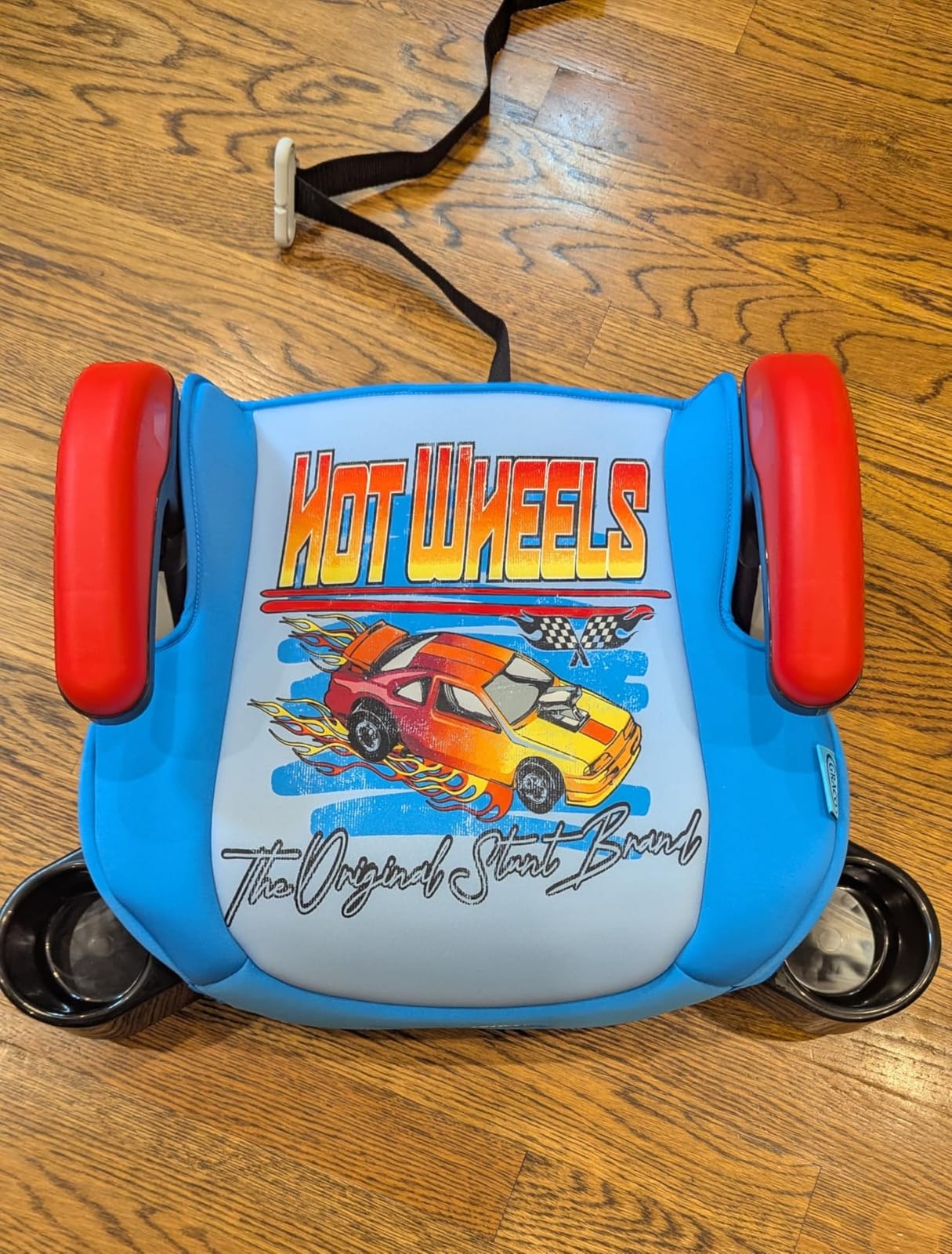
The ProtectPlus engineering is the reason this is on the list. That is a combination of frontal, rear and rollover crash testing, plus additional testing based on the New Car Assessment Program and extreme interior temperatures, which is more than the baseline requirement covers.
The honest drawback is structural, not a defect. A backless booster has no head or shoulder support and no harness, so it only makes sense once your child is properly over five and sitting well in a belt. It also does not convert to a harness seat later, so it has a defined end point.
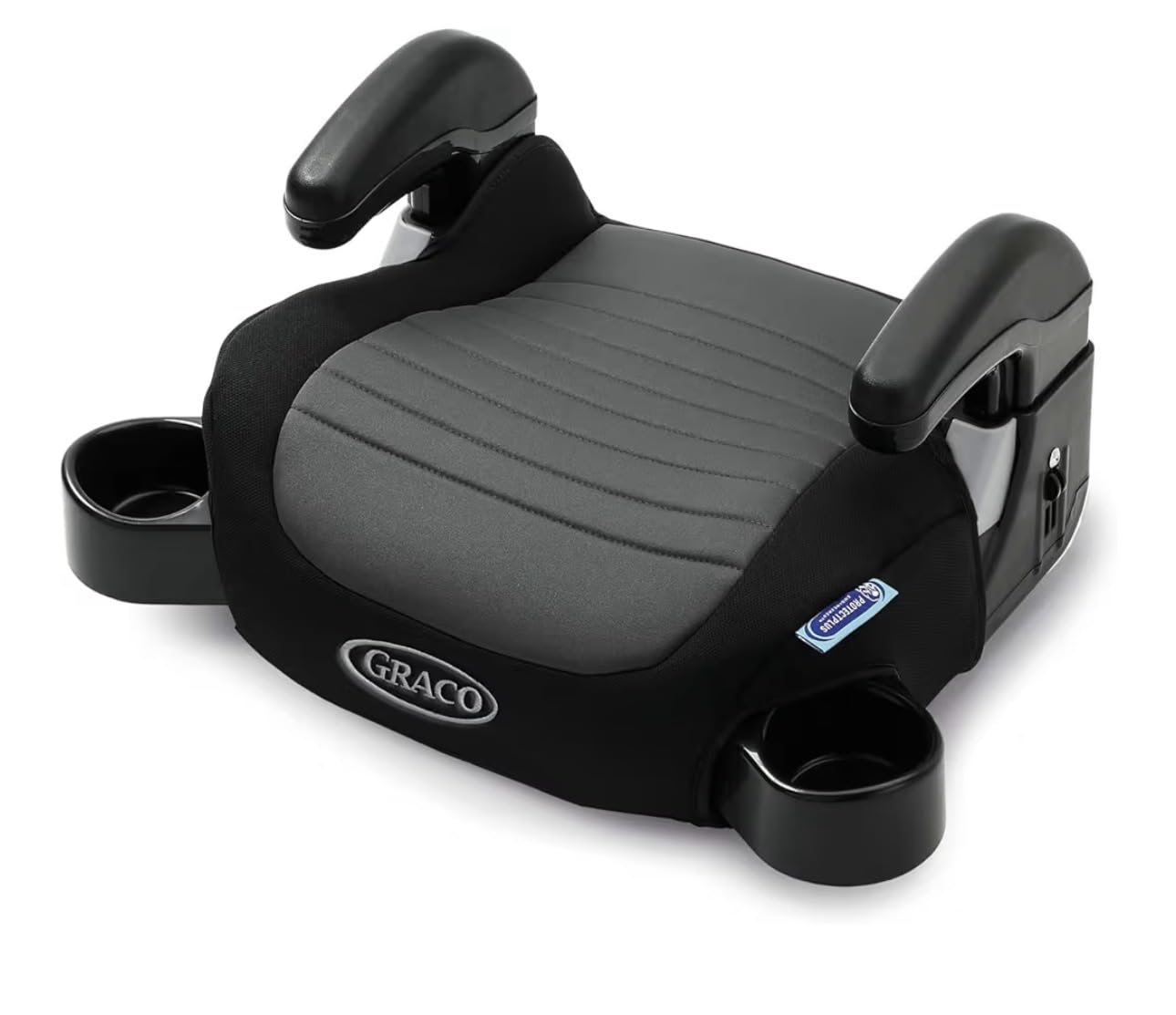
Where this booster earns its place
The rental car at the destination, the taxi rank outside it, and the drive home from wherever you land. Installation takes seconds because the vehicle belt does all the work, and the adjustable armrests make a long transfer drive bearable.
It also solves the rideshare problem cheaply. Parents mention using one permanently in the family car so every vehicle has something for a small child without passing a heavy shell between drivers.
Where it will disappoint you
Anyone hoping to use it in the cabin. A belt-positioning booster is not an acceptable restraint for takeoff, and trying it is how families get separated at the gate with a bag to reassemble at baggage claim.
A child who slumps or cannot hold a lap belt correctly will not be positioned by it. Backless means backless, with no high-back shell to catch a sleepy head on a long road.
2. Graco SnugRide Lite LX Infant Seat, Lightweight Rear-Facing
Graco SnugRide Lite LX Infant Car Seat, Lightweight Rear-Facing Seat for Babies 4–30 lb, 4-Position Adjustable Base, Latch Installation & ProtectPlus Engineered, Studio
4-30 lbs rear-facing
Up to 32 in
7.2 lb
LATCH base
Pros
- Weighs just 7.2 lb
- the lightest shell here with a published weight
- Level indicator removes install guesswork
- Detaches from the base for airport transfers
- Handles very small babies including preemies
Cons
- Canopy is stiff and noisy to adjust
- Thinner padding than earlier SnugRide models
- Rear-facing only until 30 lbs and 32 in
At 7.2 pounds this is the seat I would hand to a parent of twins. It is the only product here with a published weight under 8 pounds, and that number is the whole reason it appears in a travel roundup at all.
Reviewers name weight as the deciding factor over and over. Parents of preemies around 5 pounds carried two of these through a whole airport day and still describe the load as manageable, which tells you how much difference two pounds makes at a security checkpoint.
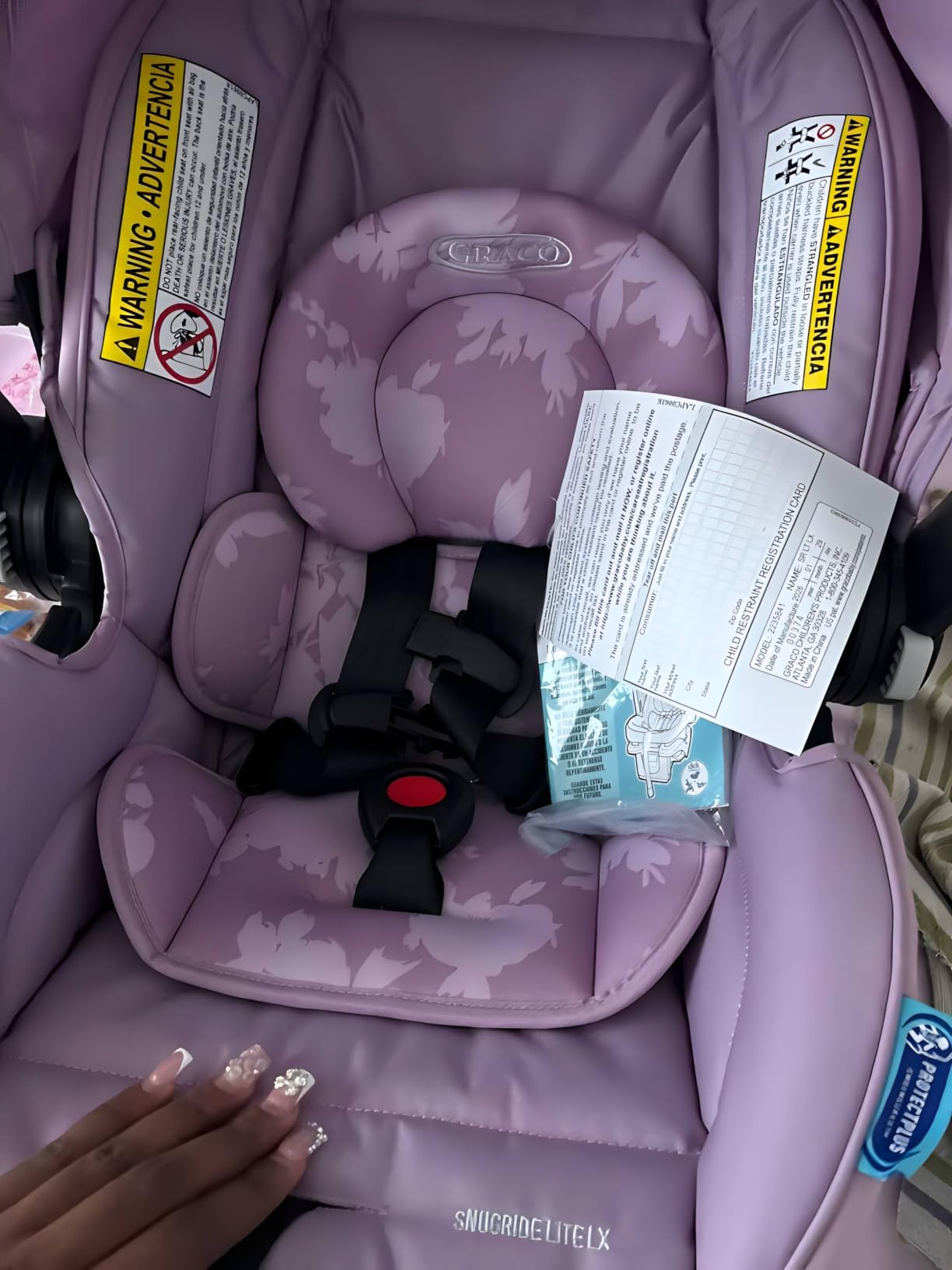
The 4-position adjustable base is what makes it forgiving of different seats. A rear-facing install that fits one aircraft seat back can sit too upright in another, and moving the base rather than rebuilding the install is how you get a correct recline on a plane.
ProtectPlus testing here covers frontal, side, rear and rollover, plus NCAP and temperature testing. The easy-to-read level indicator is the part you will use most, because on an aircraft there is no level reference like the floor of a car.
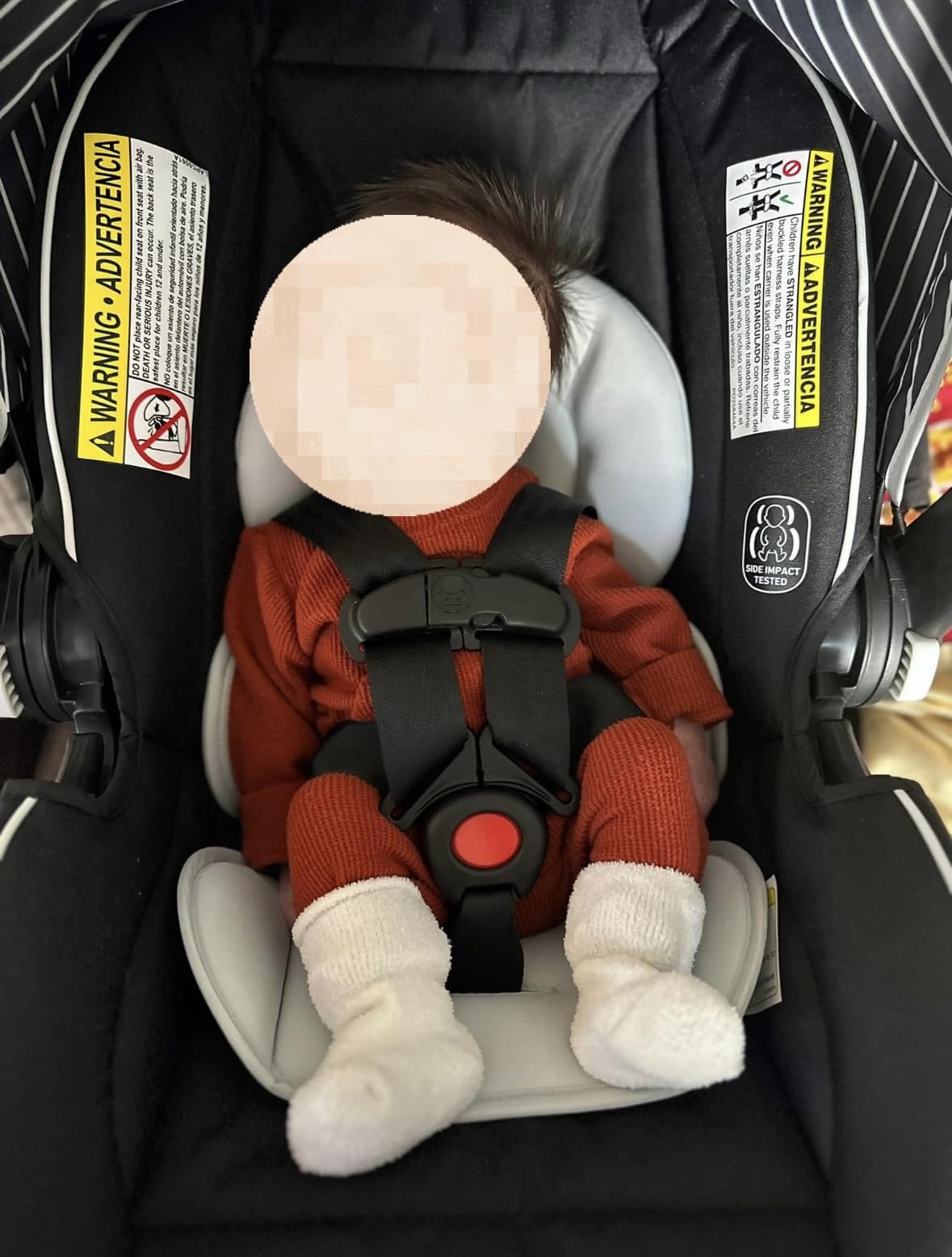
Why the weight difference is the whole story
A rear-facing seat is the hardest thing in this group to move, because a baby is strapped into it. Every hand-off at a gate, every cart, every boarding queue is a lift of your child and the seat together.
At 7.2 pounds you can carry this and a diaper bag in one hand while holding a toddler’s hand in the other. That is a real difference at the jet bridge.
The limits you should plan around
It is rear-facing only, and the ceiling is 30 pounds and 32 inches. Plan the purchase as an infant-stage seat rather than the seat that grows with your child.
Reviewers also mention a stiff canopy that rattles when adjusted, and padding that is thinner than earlier SnugRide versions. Neither is a safety issue, but both show up on a long flight where your child is looking out of the window.
3. Graco SlimFit3 LX 3-in-1 Convertible Seat, Kunningham
Graco SlimFit3 LX 3-in-1 Convertible Car Seat, Kunningham
5-40 lb rear-facing
26.5-65 lb forward-facing
16.7 in wide
3-across fit
Pros
- 16.7 inch width is one of the slimmest here
- Three seats fit across a back seat
- No-rethread harness adjusts in 10 positions
- Machine-washable removable covers
Cons
- Side vents blow cold air onto legs
- Runs warm in hot weather
- Some movement with a vehicle belt install
Width is the number that unlocks this seat for flying, and 16.7 inches puts it in the range where a single shell sits properly against an aircraft seat back instead of hanging over the armrest.
That slimness comes from a design built around three-across installs, and it is why the manufacturer fits three of these across a standard back seat. Families with more than one harnessed child will find that useful in a compact car and at the destination.
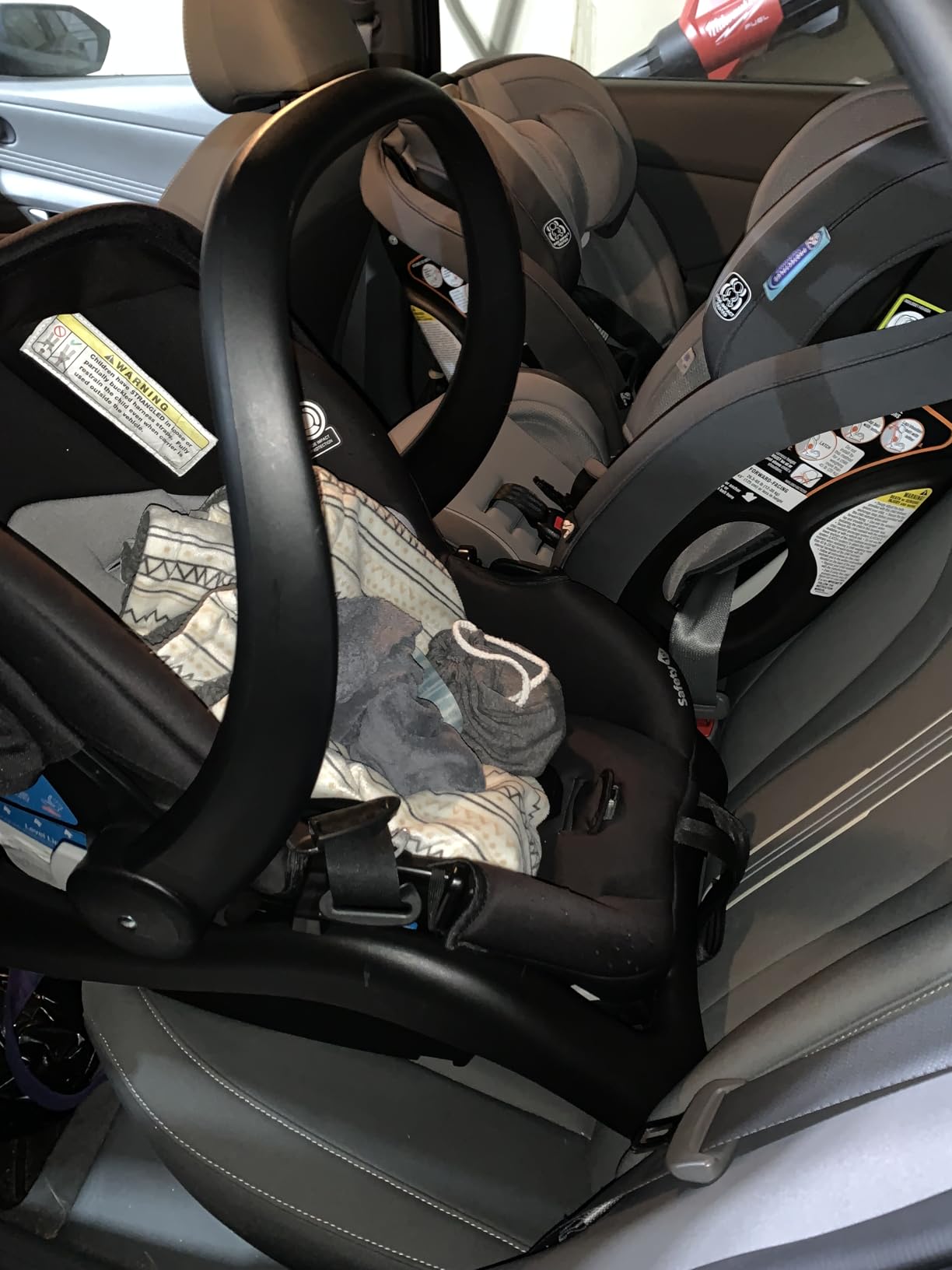
It is a genuine 3-in-1: rear-facing harness from 5 to 40 pounds, forward-facing harness from 26.5 to 65, and high-back booster from 40 to 100. That is the rarest combination in a seat thin enough to travel well.
Owners bought it specifically as a travel seat, which is a good sign for a listicle. Several report the anchors held the rear-facing seat tight with no sliding, and the 10-position No-Rethread Simply Safe harness means the headrest and straps move together as your child grows in the air.
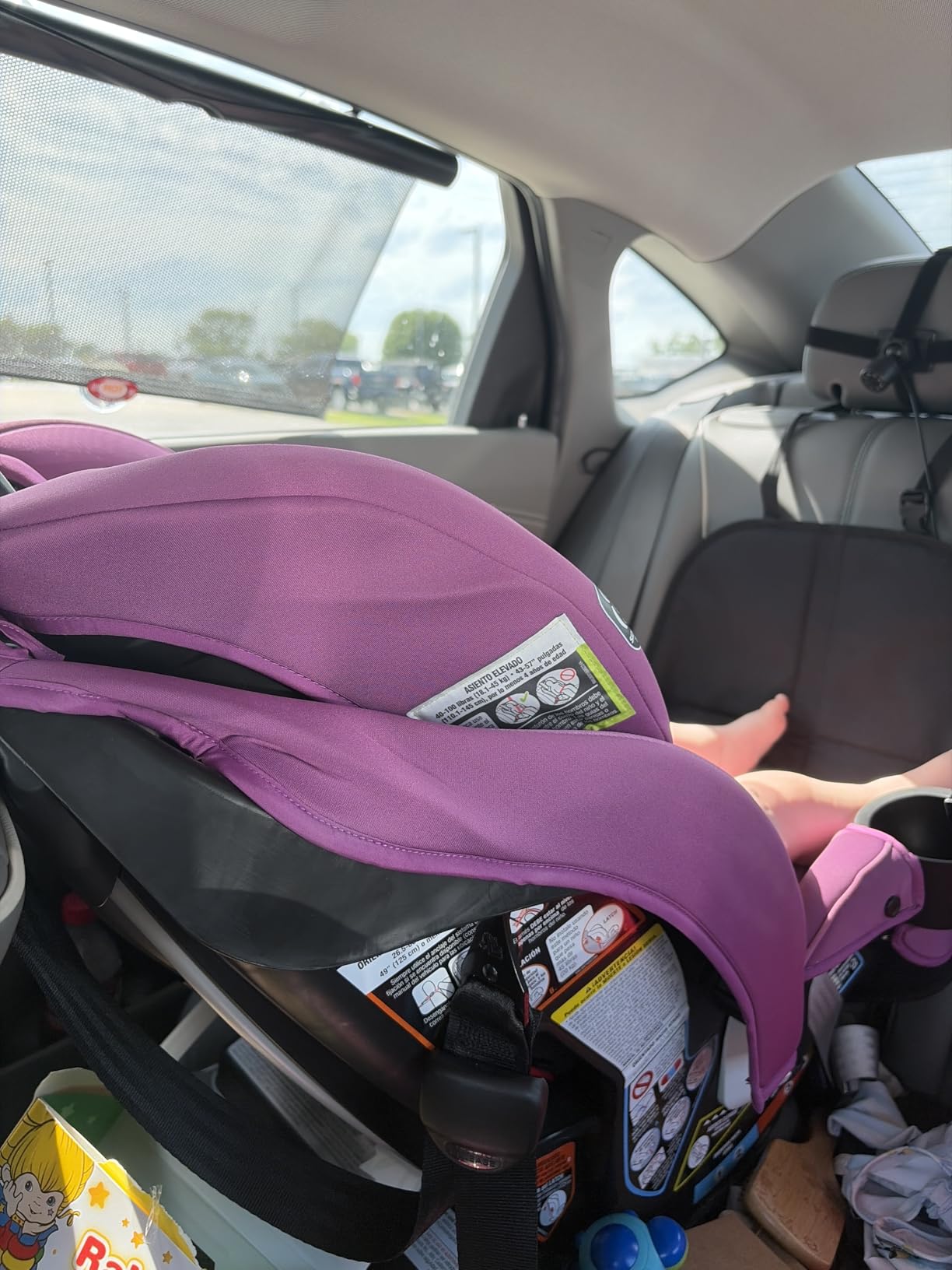
Is 16.7 inches narrow enough for a plane
It is at the slim end of what is available, and that matters more than the weight figure for a family installing into a purchased seat. Ask for an aisle or window position with a pitch that comfortably exceeds the shell width.
Rear-facing is the harder direction. A deeply reclined rear-facing seat needs room in front of it, and a narrow coach row may not have it, which is why a window seat is the safer rear-facing position.
Where owners report friction
Heat. Reviewers mention the side vent openings blowing cold air onto the child’s legs while the seat itself runs warm in hot weather, and children sweating in the padding.
Some owners also report a little movement when installing with the vehicle seat belt rather than LATCH. On an aircraft you have only the belt, so check the one-inch rule at the belt path before takeoff rather than after.
4. Diono Radian 3R 3-in-1 Convertible Seat, Jet Black
Diono Radian 3R, 3-in-1 Convertible Car Seat, Rear Facing & Forward Facing, 10 Years 1 Car Seat, Slim Fit 3 Across, Jet Black
5-120 lb across four modes
Rear-facing to 50 lb
Folds flat
Steel core shell
Pros
- Aircraft approval stated for airline use
- Folds flat for travel and storage
- Fits three across in compact cars
- Automotive-grade steel core shell
Cons
- Heavy and tiring to move between cars
- Installation and mode switching are complex
- Deep rear-facing recline needs the front seat moved
This is the only full convertible in the group with aircraft approval for airline use stated in its specifications, and it also folds flat, which is a rare pairing. That makes it the seat for a parent who wants one harness restraint that handles both the flight and the drive.
It is also the heaviest thing on this list, and I want to be straight about that. A steel-reinforced shell with a 10-year service life is not a grab-and-go seat, and you will feel it in your arms at the far end of a long concourse.
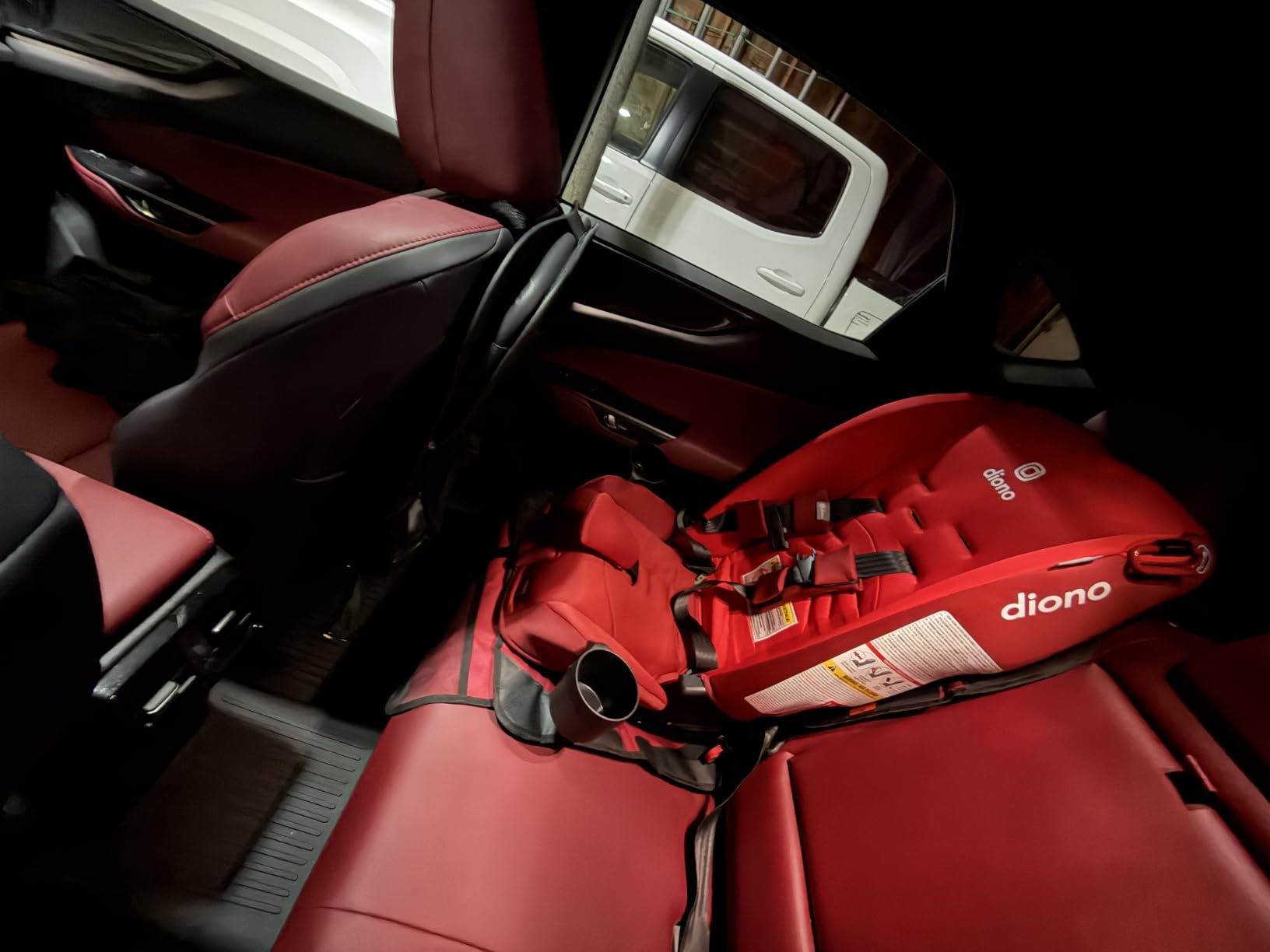
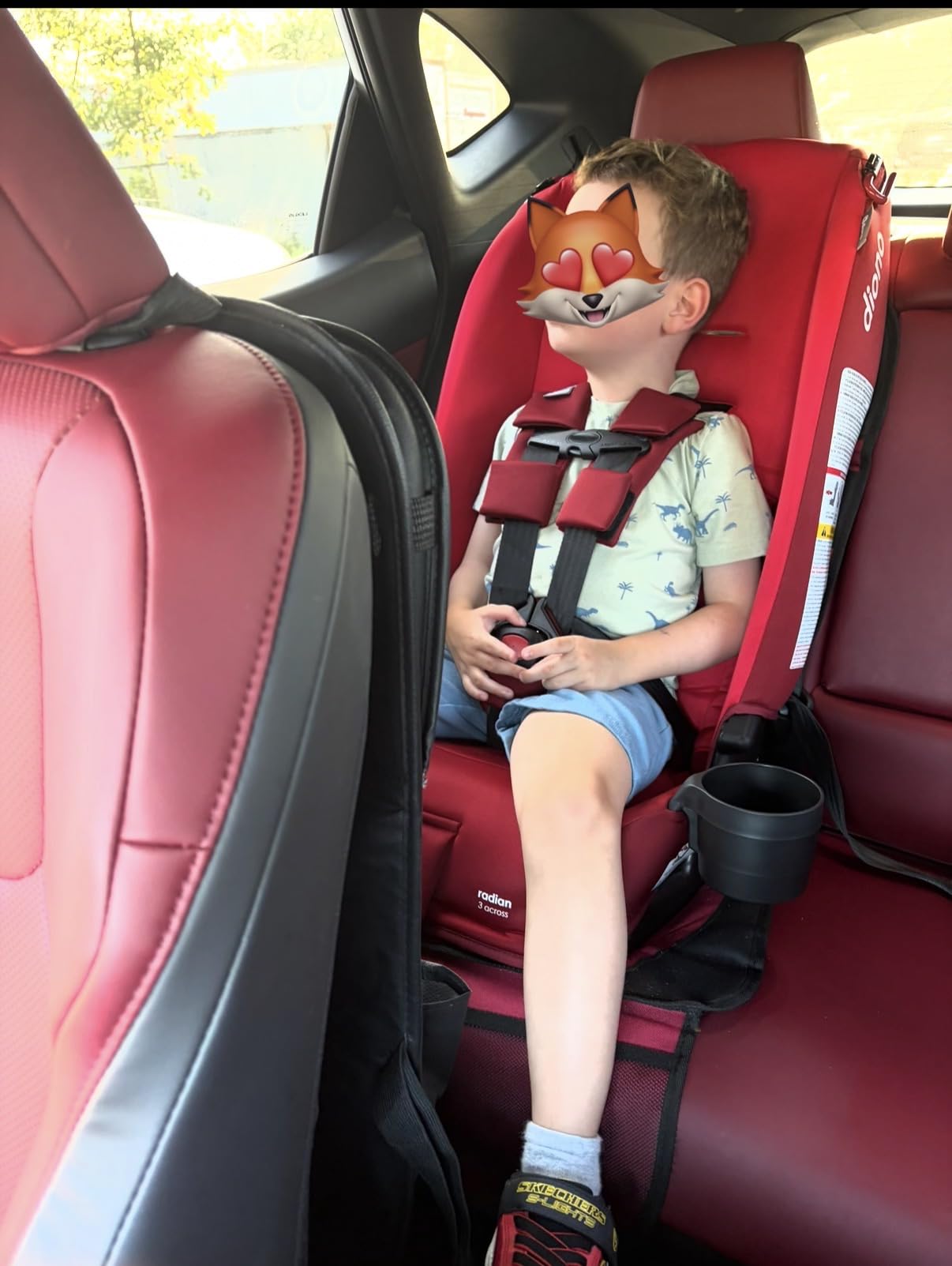
The range is the argument. Four modes cover 5 to 120 pounds, rear-facing up to 50, with SuperLatch and standard LATCH for vehicles and a slim footprint that owners confirm fits three across.
ComfortPlus memory foam is included, which matters more than it sounds on a long-haul flight. Harness straps tighten and loosen smoothly rather than needing constant readjusting, and the covers are machine-washable.
Who this seat fits perfectly
Families with one child and a long flight, or a multi-child family whose three harnessed seats need to fit across one back seat. The three-across claim is the most repeated owner report in the reviews.
Anyone planning to keep one seat for the whole childhood. Buying once at birth and using it to 120 pounds removes the airport hunt that follows a family through three separate seat stages.
The complexity you should expect
Installation and switching modes are more involved than most seats here, and a certified Child Passenger Safety Technician check is recommended before you fly. A former CPST reviewer describes it as the most unusually difficult seat they have worked with.
Two further quirks. The rear-facing mode has a very deep recline that requires moving the front seat forward, and center-position rear-facing installs are limited by fixed headrests. Practice the install at home, not in a parking garage.
5. Mifold Comfort Grab-and-Go Backless Booster
New Mifold Comfort Grab-and-go Car Backless Booster Seat-Compact and Portable for Every Day, Carpooling, Travel, Charcoal Grey
Ages 4+
40-100 lbs
43.5-59 in
Backless format
Pros
- Packs into a regular backpack
- No hardware
- works with any 3-point belt
- Compact Comfort padded cushion
- Anti-slip pads hold on varied upholstery
Cons
- Lowest average rating among the well-reviewed seats here at 4.2
- No head or shoulder support
- Fit depends on hitting the 43.5-59 in window
There is no other product here that disappears into a backpack. For a child in carpool, rideshare and travel mode, that portability does more for daily life than any extra feature on a larger seat.
Installation is genuinely zero. It works with a standard 3-point belt, the shoulder belt guide routes the belt down to the correct fit for the child, and the padded cushion stops a backless booster from feeling like a bare plastic perch.
The updated shell adds real support with anti-slip pads underneath, which matters on cloth and vinyl seats where a slick plastic base slides. Many owners keep one permanently in the family car for exactly that reason.
Its 4.2 average with 3942 ratings is the lowest among the seats here with a large review base, and 8 percent of ratings are one star. That is worth taking seriously rather than glossing over.
When packing size beats everything
City trips with a lot of taxis, flights with a tight carry-on allowance, and any situation where the booster needs to live in a bag rather than in a trunk. Nothing else on this list stores that small.
It is also the simplest answer for a second car used occasionally, since there is no hardware to install and nothing to transfer between vehicles.
Where the rating holds it back
The one-star reviews concentrate on two things, and both are format issues. A backless seat offers no head or shoulder support, and fit problems are common at the edges of the 43.5 to 59 inch window.
There is no harness either, so a child who cannot sit properly in a vehicle belt still needs a harness seat. And like every booster here, it is not a permitted cabin restraint.
6. Hiccapop UberBoost Inflatable Booster Seat
UberBoost Inflatable Booster Seat for Car, Travel Booster Seat, Black/Gray
Inflates in under 20 sec
FMVSS 213 compliant
Backless format
Packs to a bag
Pros
- Inflates by mouth in under 20 seconds
- Deflates into its own travel bag
- No pump or hardware needed
- Narrow enough for three across
Cons
- Air cushion needs leak checks over time
- No harness or head support
- Inflation by mouth is awkward in public
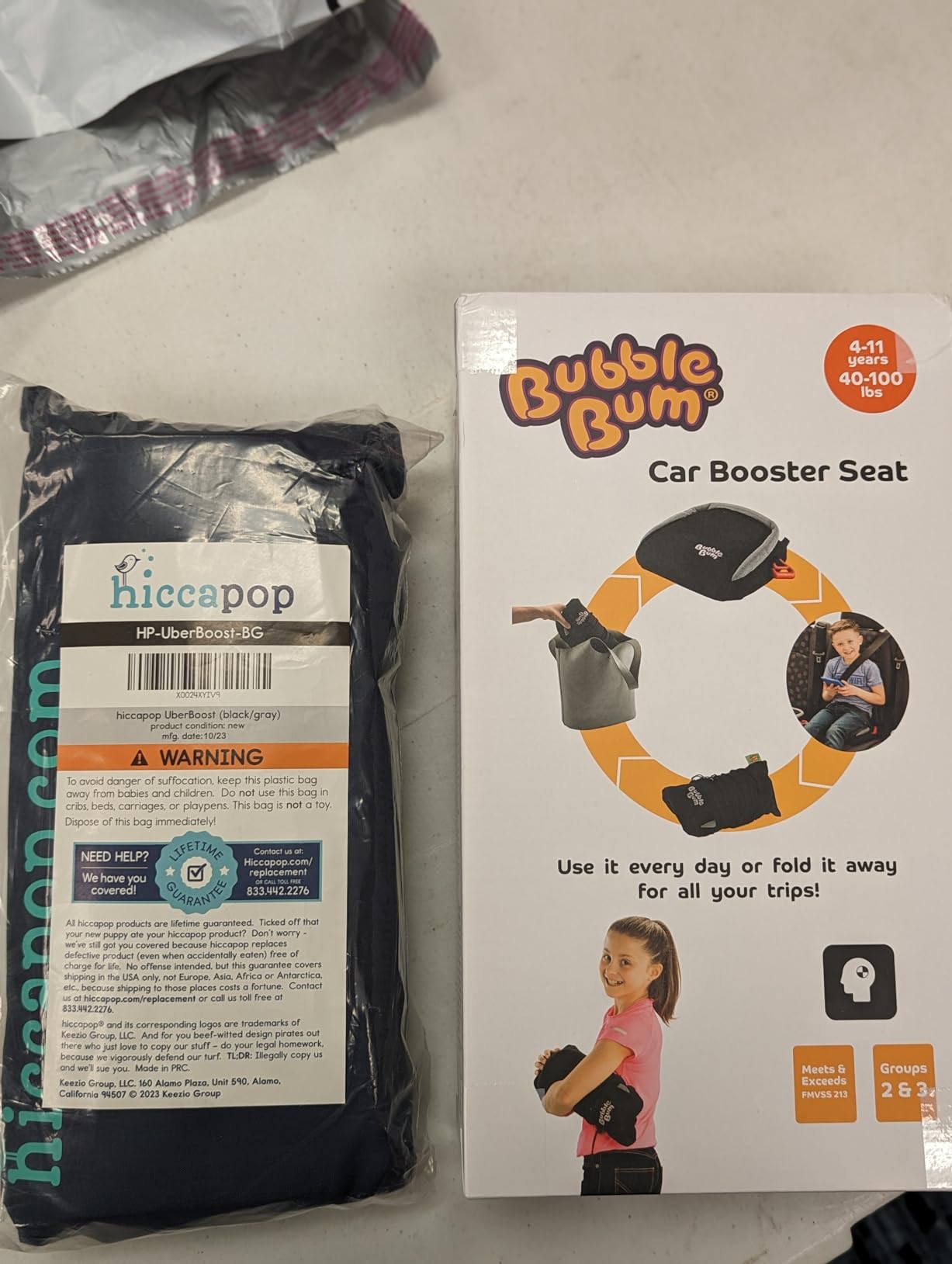
The speed of this thing is the pitch. Under 20 seconds by mouth, no pump, no hardware, no vehicle modification, and it rolls into its own bag small enough for a carry-on or a large backpack.
That speed is why owners reach for it in taxis and rental cars specifically. A family lands, collects bags, and has a booster positioned before the rideshare driver has finished loading the trunk.
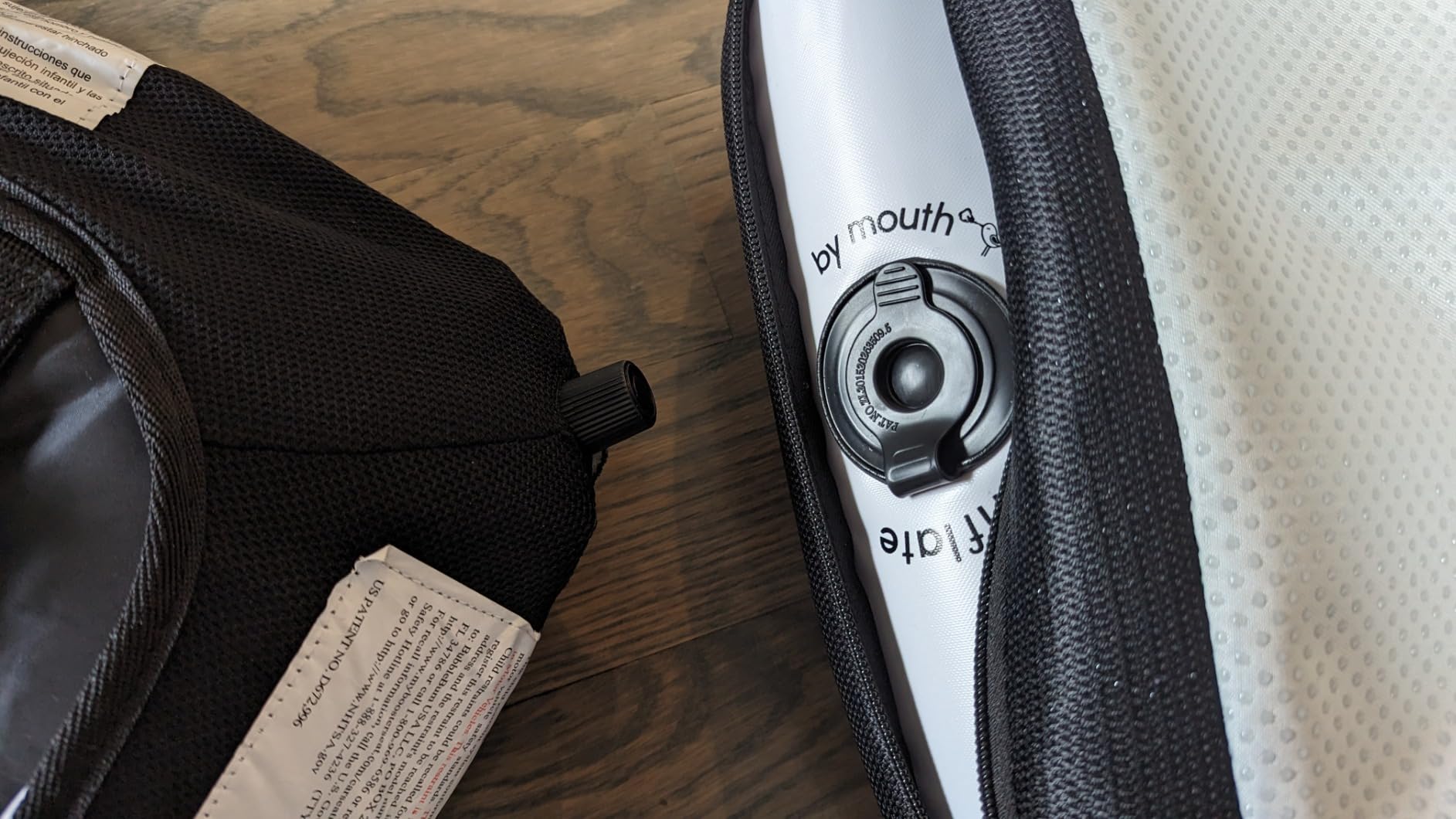
It meets or exceeds FMVSS 213, the federal standard for child restraints, and the non-skid base is designed to grip leather, vinyl or cloth so it does not wander on a long drive.
Positioning clips keep the lap belt off the child’s stomach, which is the detail that separates a decent inflatable from a bad one. The narrow profile also fits three across or between two traditional car seats.
Best moment to use it
Any trip with a car at the end. Cross-country drives, airport-to-hotel transfers, and vacation rentals where nobody else has a booster. Seventy-eight percent of ratings sit at five stars, and the convenience is the reason.
It is also the easiest to hand to another adult. There is nothing to install, so a grandparent or a babysitter can do it correctly on the first attempt.
The maintenance reality
An air-filled cushion needs checking for leaks over time, and pressure drops between uses. Treat it like a pool toy and top it up when you notice the base feeling soft.
Inflating by mouth is fine in a parked car and awkward in a public terminal. Some owners find it unhygienic, and the belt positioning still depends on the child being in the right size range, with no head support to help.
7. BubbleBum Inflatable Travel Booster, Narrow Backless
BubbleBum Inflatable Travel Booster Car Seat – Narrow Backless
40-110 lbs, ages 4-11
Deflates to 12 x 6 x 4 in
FMVSS 213 exceeded
Narrow profile
Pros
- Widest weight range here at 40-110 lb
- Deflates to 12 x 6 x 4 in for carry-on packing
- Independently crash tested to exceed FMVSS 213
- Fits three across in compact vehicles
Cons
- No head or shoulder support
- Air pressure drops and needs periodic re-inflation
- Belt fit varies with the child and vehicle
The number that sets this one apart is 110 pounds. At 40 to 110 pounds and ages 4 to 11, it carries a heavier child than any other inflatable booster in this group, which extends its usable life well past the 100-pound ceiling of the others.
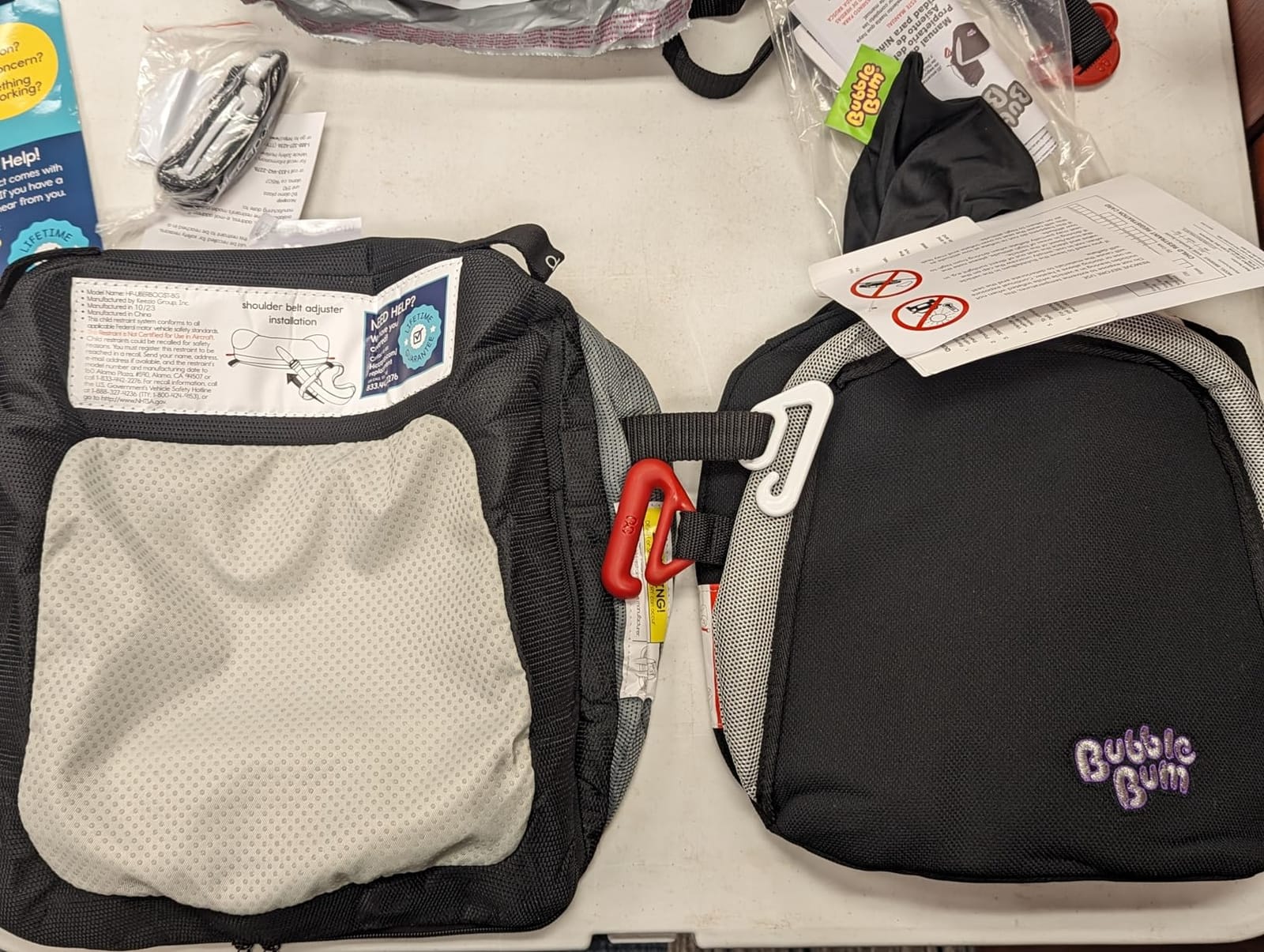
It inflates in about 20 seconds and deflates just as fast to 12 by 6 by 4 inches, so it disappears into a suitcase or carry-on. The wipe-clean cushion survives a holiday without a wash cycle.
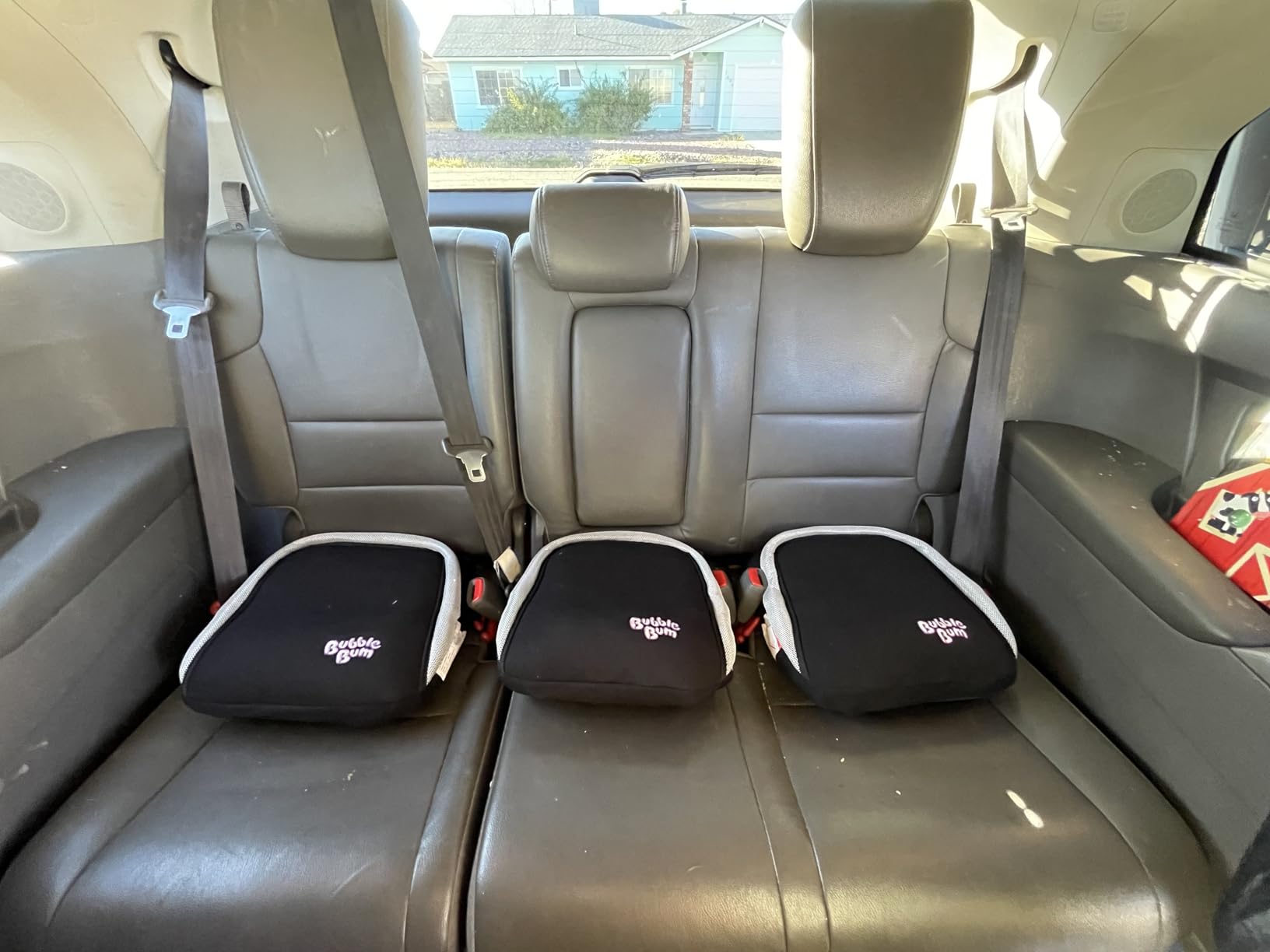
Installation is the vehicle 3-point belt with no LATCH required, which is exactly what a rental car gives you. The slim profile fits three across in compact cars, SUVs and minivans, so multi-child families are covered.
It was independently crash tested to exceed FMVSS 213. With 6866 ratings this is a long-established listing, and owners consistently frame the value around carpool, cross-country travel and pack-flat size rather than features.
Where it beats the alternatives
Older children, mostly. A 105-pound kid is outgrowing a 100-pound booster every year, and this is the one here that will not force that conversation next summer.
It is also the simplest one to justify owning if you take one long-haul trip a year, since it costs nothing in luggage allowance weight and nothing in trunk space when deflated.
What the mixed reviews say
Ratings are more mixed on long-term air retention and on whether a backless format gives an older child enough positioning support. Both complaints are about the format, not the build.
Booster seat laws also vary by state, so check the local rules before you rely on it at the destination. And once again, this is a ground seat, not a cabin restraint.
8. CARES Child Airplane Travel Harness
Child Airplane Travel Harness – Cares Safety Restraint System – The Only FAA Approved Child Flying Safety Device
Aviation child restraint
FAA approved for air travel
Attaches to a cabin seat
Fits carry-on
Pros
- Designed and approved for use in the aircraft seat itself
- Far lighter than any full car seat
- Installs and removes in minutes
- Keeps a toddler positioned during turbulence
Cons
- Airline rules vary and some require a car seat for takeoff
- No restraint on the ground without a separate car seat
- Must be requested from the flight attendant
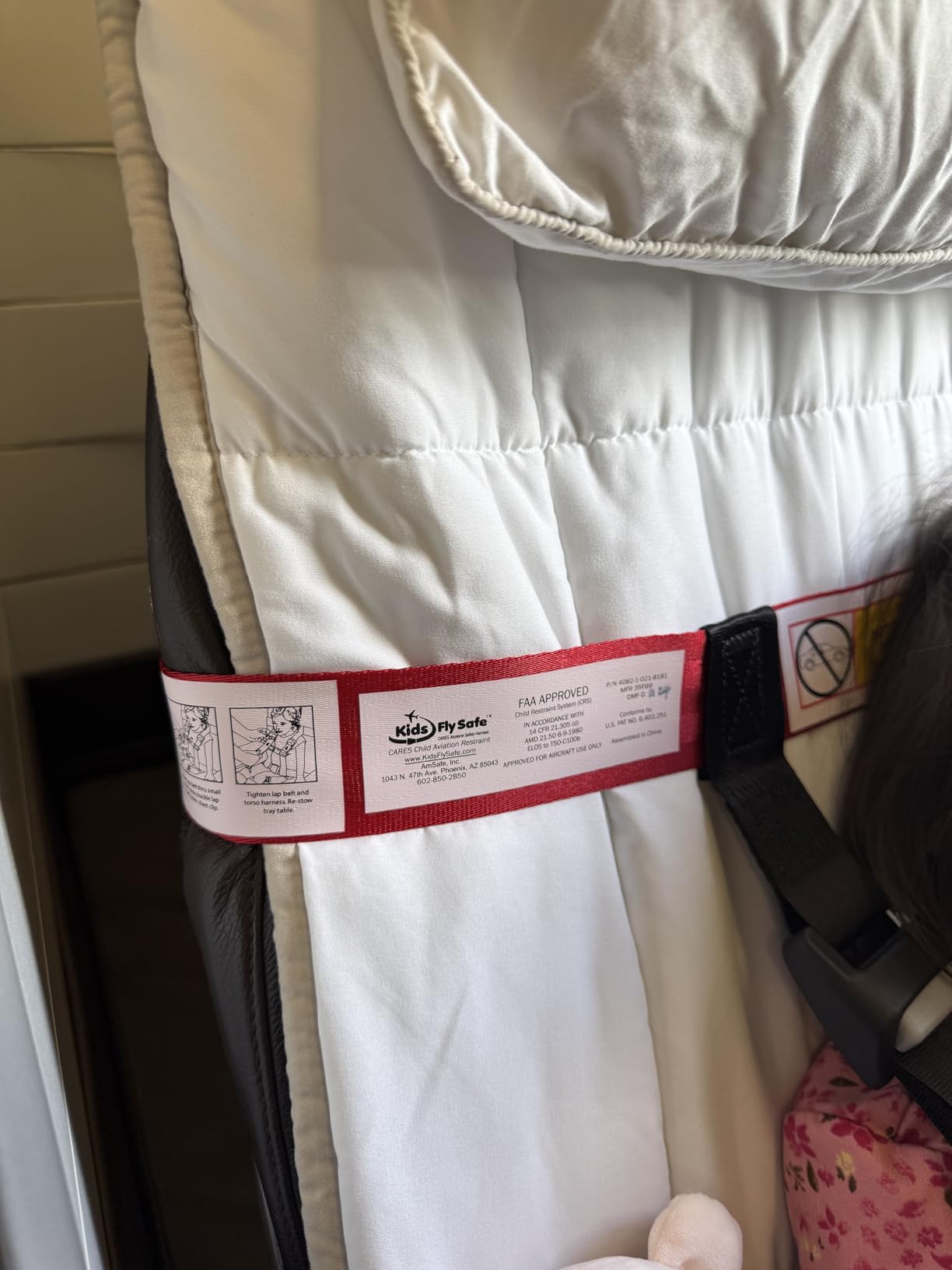
This is the only item in the entire group designed to attach to an airplane seat, and it is FAA approved for air travel. If your child can legally fly on your lap but you do not want to rely on that, this is the one product here built for the problem.
Compare it to the rest of this roundup and the advantage is immediate. No gate check, no baggage carousel, no seat to install while a queue builds behind you at the aircraft door.
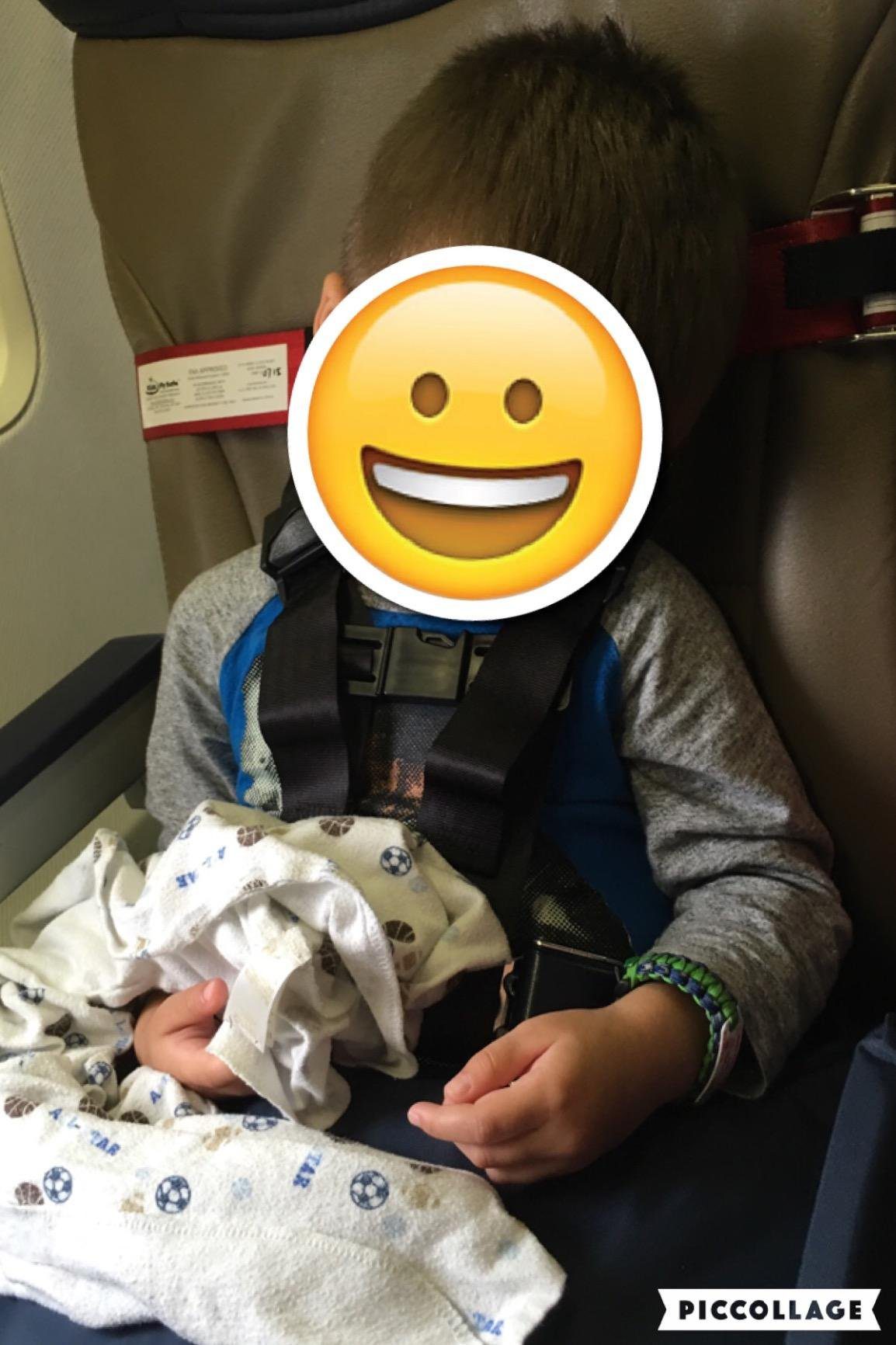
It fits in carry-on luggage, a backpack or a diaper bag, and installation is quick with no complicated setup. The intent is straightforward: hold a child in position through takeoff, landing and turbulence.
Reviewers point out that avoiding gate-check baggage is the single biggest practical win, because a gate-checked seat has to be reassembled from scratch in a baggage hall, often at night.
When this is the right answer
Short or medium flights with a toddler who is still under the lap-seat age, and any trip where you are already managing carry-on bags for two. It removes an entire layer of airport friction.
It is also useful as a backup idea for families flying with a bigger child in a full car seat, because you can hand the toddler to the harness while you install the shell in the seat.
Where it falls short
Airline rules vary, and some carriers will not accept a harness for takeoff, in which case a car seat is still required. You request it from the flight attendant and install it at the gate.
It also does not recline or adjust like a convertible seat, and it provides no restraint once you land. You still need a real car seat for the ride from the airport.
9. Mifold Hifold Adjustable High Back Booster
Mifold Hifold Adjustable Kids High Back Booster Car Seat with Strap – Slate Grey
Ages 4-12, 40-100 lbs
43.5-59 in
Weighs 10 lb
Folds to 10.7 x 13.5 in
Pros
- High back gives head and torso support
- Folds small and weighs 10 lb with a carry strap
- 243 individual adjustment settings
- Substantial build versus inflatable boosters
Cons
- Heaviest booster here at 10 lb
- Folded unit is bulkier than an inflatable booster
- Seven percent of ratings are one star
A high back is the reason to look at this one. Every other booster in this group except the Baby Trend is backless, and a high back gives a child head and torso support on a long road or a lap that falls asleep before you reach the hotel.
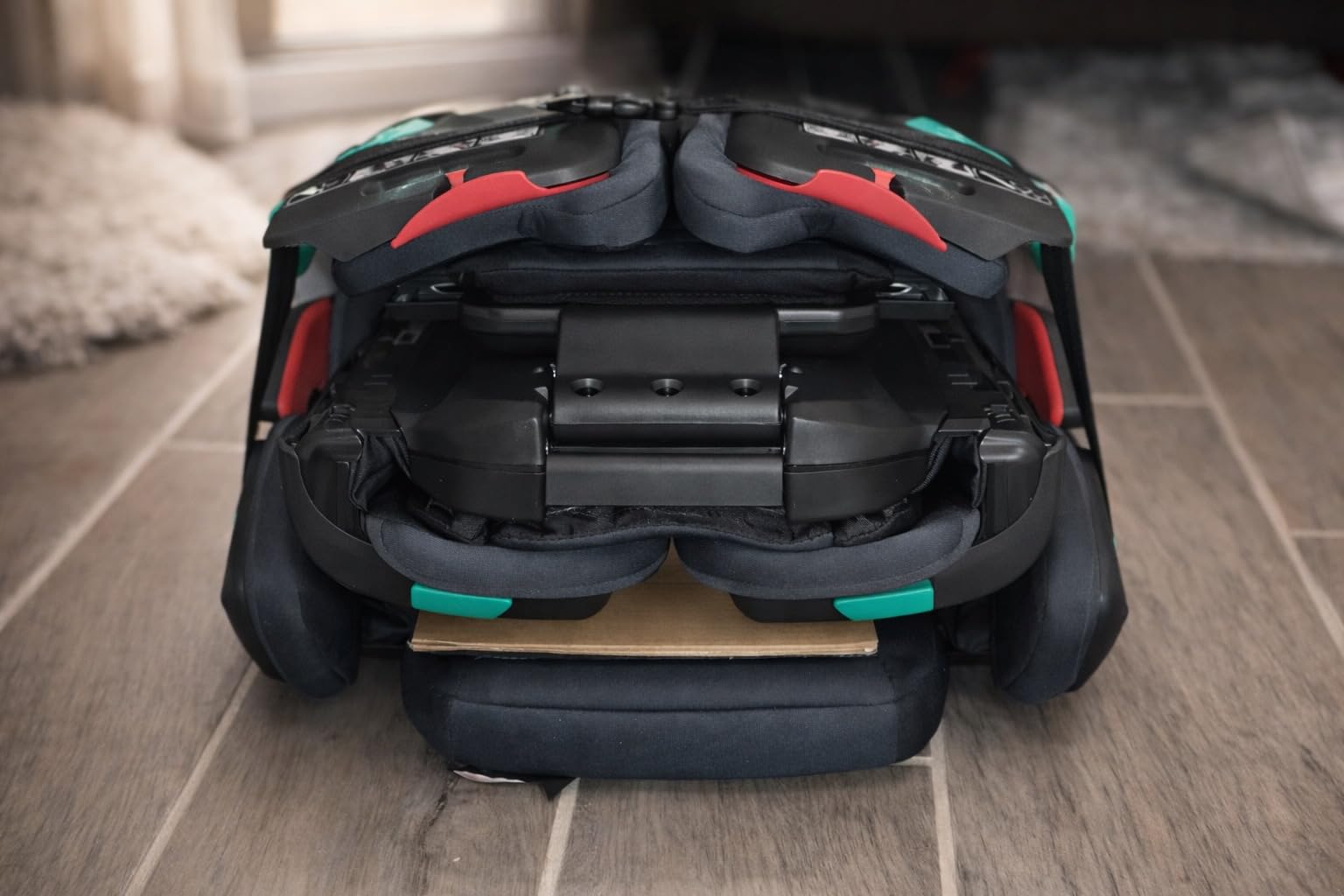
It folds to 10.7 by 13.5 inches, unfolds to 24.7 inches high by 12.8 wide, and weighs 10 pounds with a built-in carry strap. That is a real pack-down for a high-back booster.
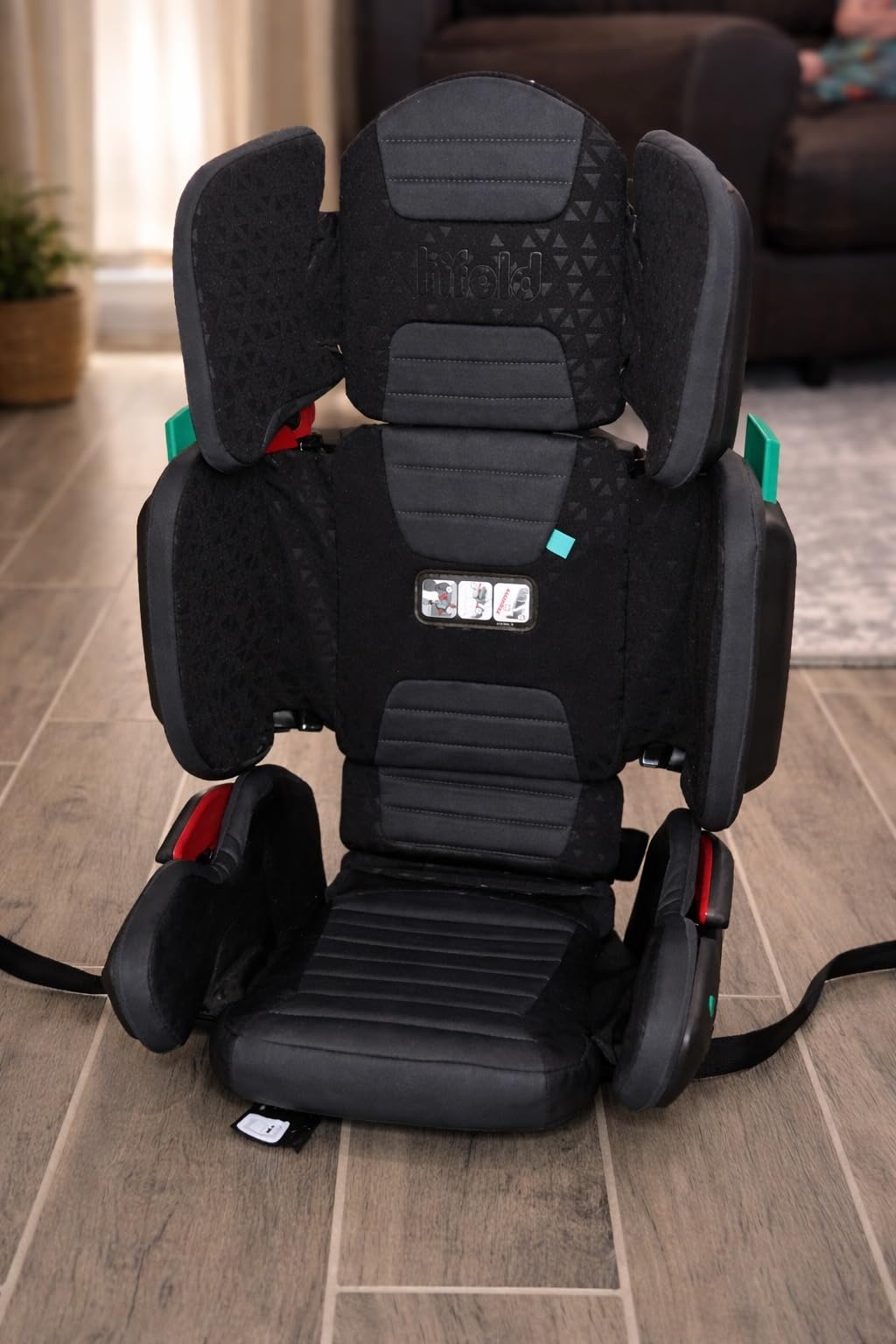
Multi-Fit technology provides 243 individual adjustment settings across the seat, body, head width and height. As a child grows you change four areas rather than hunting for one strap.
It is approved for use worldwide except Australia and Taiwan, which makes it the one seat here with genuinely international paperwork. It meets or exceeds NHTSA FMVSS 213b, and light EPE foam handles impact.
Who pays off the high back
Younger booster-age children, and any child who still needs a shoulder guide because they slump in a vehicle belt. High back and backless are not the same product at different sizes, they are different products.
It is also the booster to pack when you are flying to a country where you will be relying on local transport, since international approval is stated.
What you trade away
It weighs 10 pounds, the heaviest booster in this group, and the folded package is still bulkier than a deflated inflatable, so it needs a car boot or a large bag rather than a backpack.
Seven percent of ratings are one star, higher than most seats here, and the range starts at 40 pounds and 43.5 inches, so it will not fit a smaller child. It also does not convert to a harness seat.
10. Safety 1st Ellaris 3-in-1 Convertible Seat, London Blue
Safety 1st Ellaris 3-in-1 Convertible Car Seat, Slim Fit Design, Rear & Forward-Facing, 5-Position Headrest, Travel-Friendly with Machine-Washable Seat Pad, London Blue
5-30, 30-40, 30-65 lb modes
5-position headrest
Airplane-ready
LATCH install
Pros
- Slim design leaves more back seat room
- Three modes cover rear-facing infant to forward-facing harness
- Machine-washable and dryer-safe pad
- Dishwasher-safe removable cup holders
Cons
- Highest share of one-star ratings here at 8 percent
- No booster mode so it is outgrown at 65 lb
- Forward-facing harness stops at 65 pounds
On Reddit threads, parents and technicians single this one out as a strong value pick, and the reasoning is specific: a 65 pound forward-facing harness limit is generous for the money, and a slim profile fits more back seat than a standard convertible.
Its specifications describe it as airplane-ready with a straightforward hook-style LATCH, so check the red label on your specific unit before you rely on that in the cabin. The slim fit design is the reason to keep looking at it.
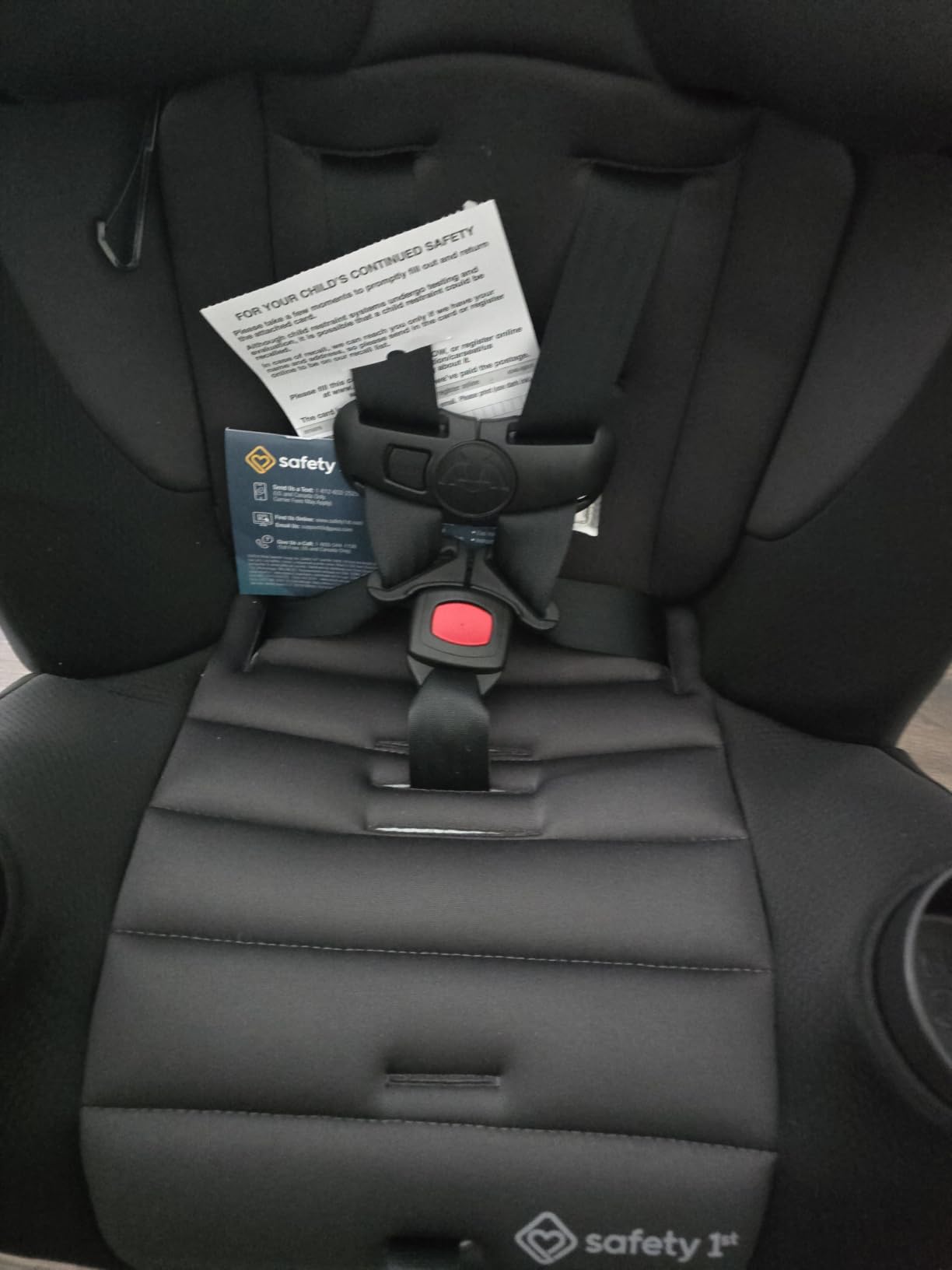
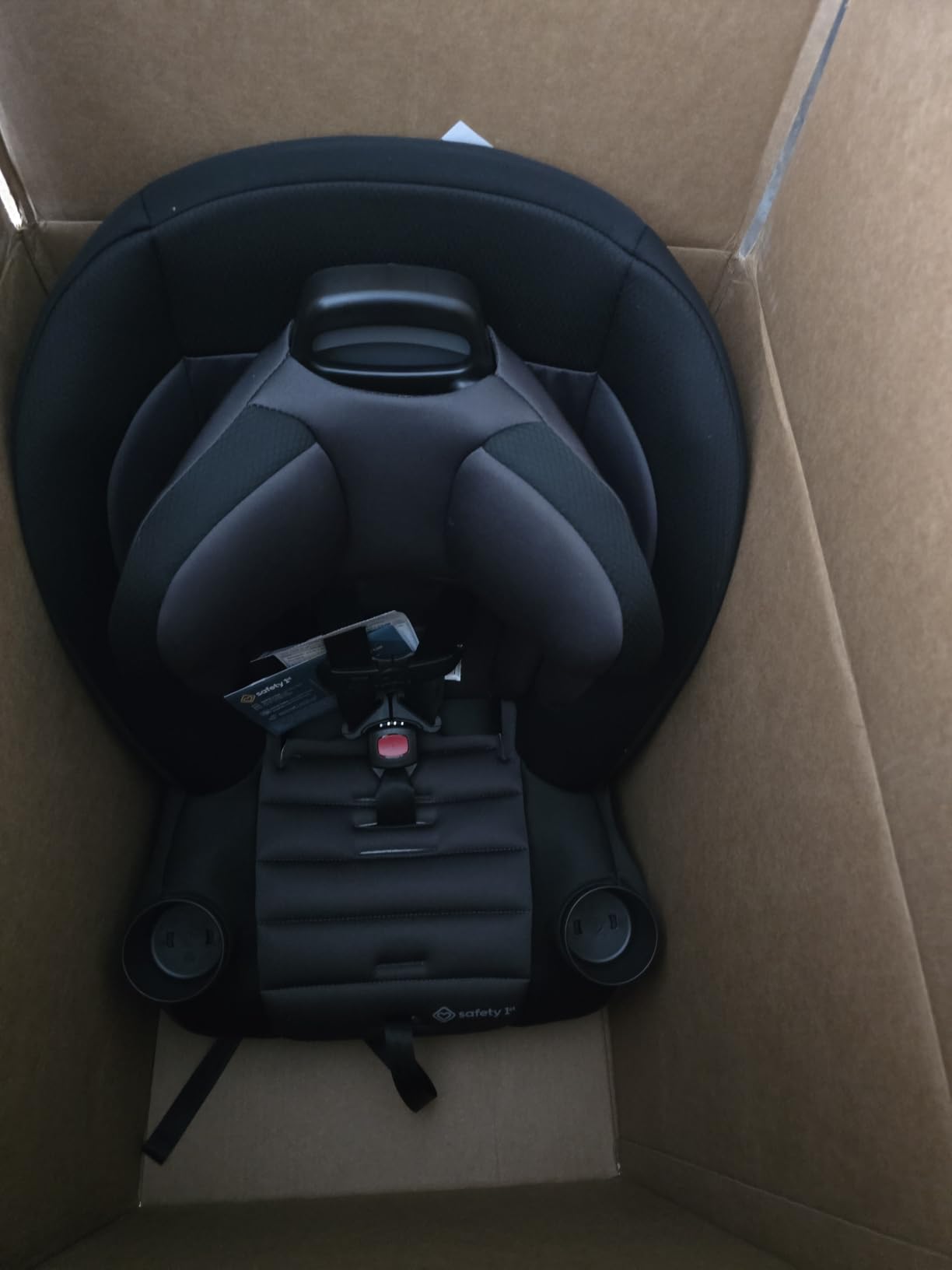
Three modes cover rear-facing infant from 5 to 30 pounds, rear-facing toddler from 30 to 40, and forward-facing harness from 30 to 65. The 5-position headrest is straightforward to adjust at the gate.
It meets or exceeds federal motor vehicle safety standards including the side impact standard. The seat pad is machine-washable and dryer-safe, and the two cup holders are removable and dishwasher-safe, which matters more than it sounds after one long-haul flight.
Where parents rate it highest
Value for a full three-mode convertible, and the easy-clean pad. A backless booster solves the ground leg for a few dollars, but only a convertible gets you through the rear-facing stage in a slimmer shell.
If you already have a car seat at home, a spare convertible that stays in a travel bag and doubles as the rental car seat removes an entire category of decision.
Where the complaints sit
Eight percent of ratings are one star, the highest share among this group, and the dissatisfaction clusters around fit and installation friction in specific vehicles rather than around safety.
It has no high-back booster mode, so it is outgrown at 65 pounds sooner than a true 3-in-1. Budget for the next stage sooner than you expect to.
11. Baby Trend Protect 2-in-1 Folding Booster, Aqua Tech
Baby Trend Protect 2-in-1 Folding Belt-Positioning Booster Seat, Aqua Tech
Folding belt-positioning booster
Converts high-back to backless
Built-in cup holder
Belt install only
Pros
- Folds flat like a sandwich
- Very light comparable to a small grocery bag
- Two cup holders that stay attached
- Back section removes to convert to backless
Cons
- Folded size is still larger than an inflatable booster
- Armrest is short for older children
- No LATCH anchors so belt installation only
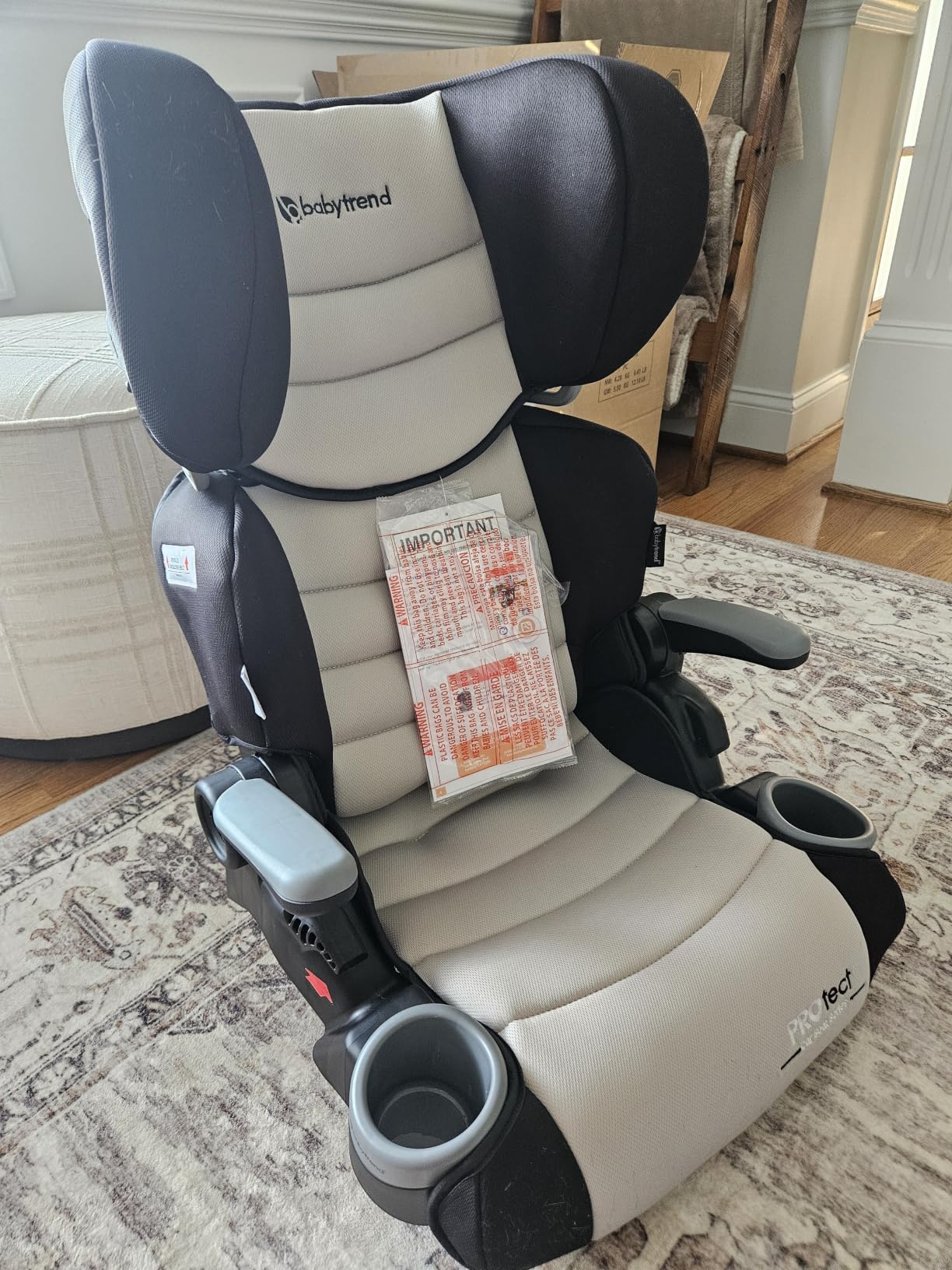
The fold-flat design is the draw for families without a car who need a booster they can carry every day. It folds like a sandwich, and reviewers describe the weight as comparable to carrying a small grocery bag.
It converts from high-back to backless by removing the back section, so it covers both booster stages in one unit. Two durable cup holders stay attached when it folds, which is unusual and useful on a long road.
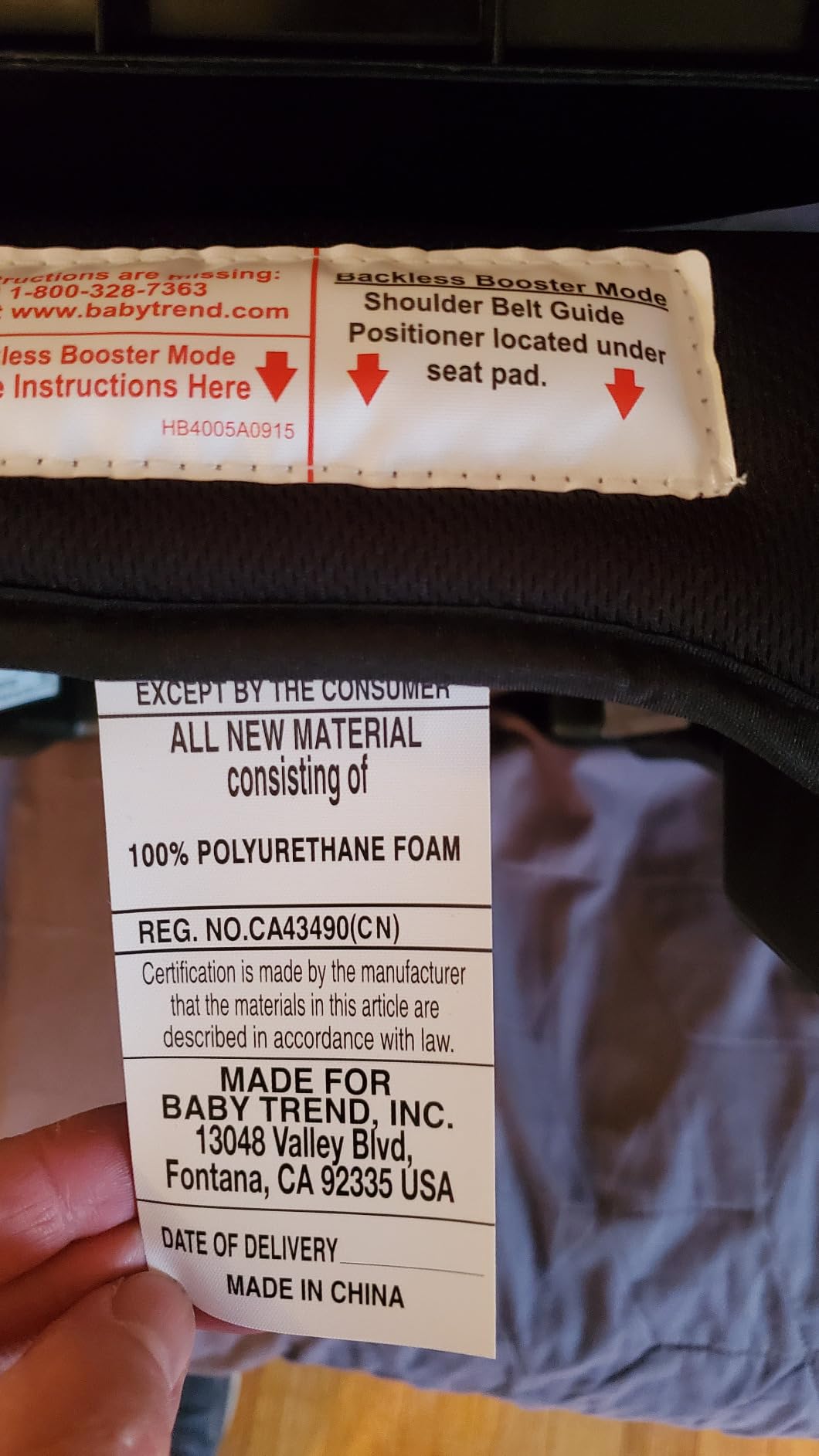
The compact footprint lets it sit in the middle or at the end of a vehicle, and the belt-positioning support guides the vehicle lap and shoulder belt into place without any hardware.
Seventy-seven percent of ratings are five stars. The most common specific complaint is the armrest, which younger reviewers found fine and older reviewers found too short for a full elbow rest.
Where fold-flat beats inflatable
For anyone who wants the belt guide and cup holders of a real booster but no air to manage. A folding booster never needs checking for leaks and never goes soft in a hot trunk.
It is also better suited to a child who is still working up to a high-back position, since the back section is removable rather than the seat being backless from the start.
The honest drawbacks
The folded size is still larger than a deflated inflatable, so it needs its own bag rather than slipping into a backpack. The armrest is short enough that an older child only gets a partial elbow rest.
There are no LATCH anchors included, so installation is belt-only, and at 572 reviews this has the second-smallest review base here, so long-term feedback is thinner than the numbers above suggest.
12. Baby Trend Trooper Slim 3-in-1 Convertible, Dash Grey
Baby Trend Trooper™ Slim 3-in-1 Convertible Car Seat, Dash Grey – Slim Fit, 3-in-1 Growth Modes, Lightweight Design, Adjustable Comfort Padding
Rear, forward and booster modes
Slim profile
Lightweight build
Adjustable padding
Pros
- Slim profile fits well with multiple car seats
- Lightweight enough to move between cars easily
- Three growth modes extend seat life
- Adjustable headrest
- harness and comfort padding
Cons
- Lowest average rating here at 4.1
- Eleven percent of ratings are one star
- Smallest review base at 284
- Convertible seats are bulkier than boosters
The slim profile is the point of this seat. When you are fitting three restraints across a back seat, every inch of shell width decides whether the job is possible, and a lightweight build means you can move it between vehicles without much effort.
Three growth modes cover rear-facing, forward-facing and booster, with an adjustable headrest, harness and comfort padding that extend the life of the seat as your child changes.
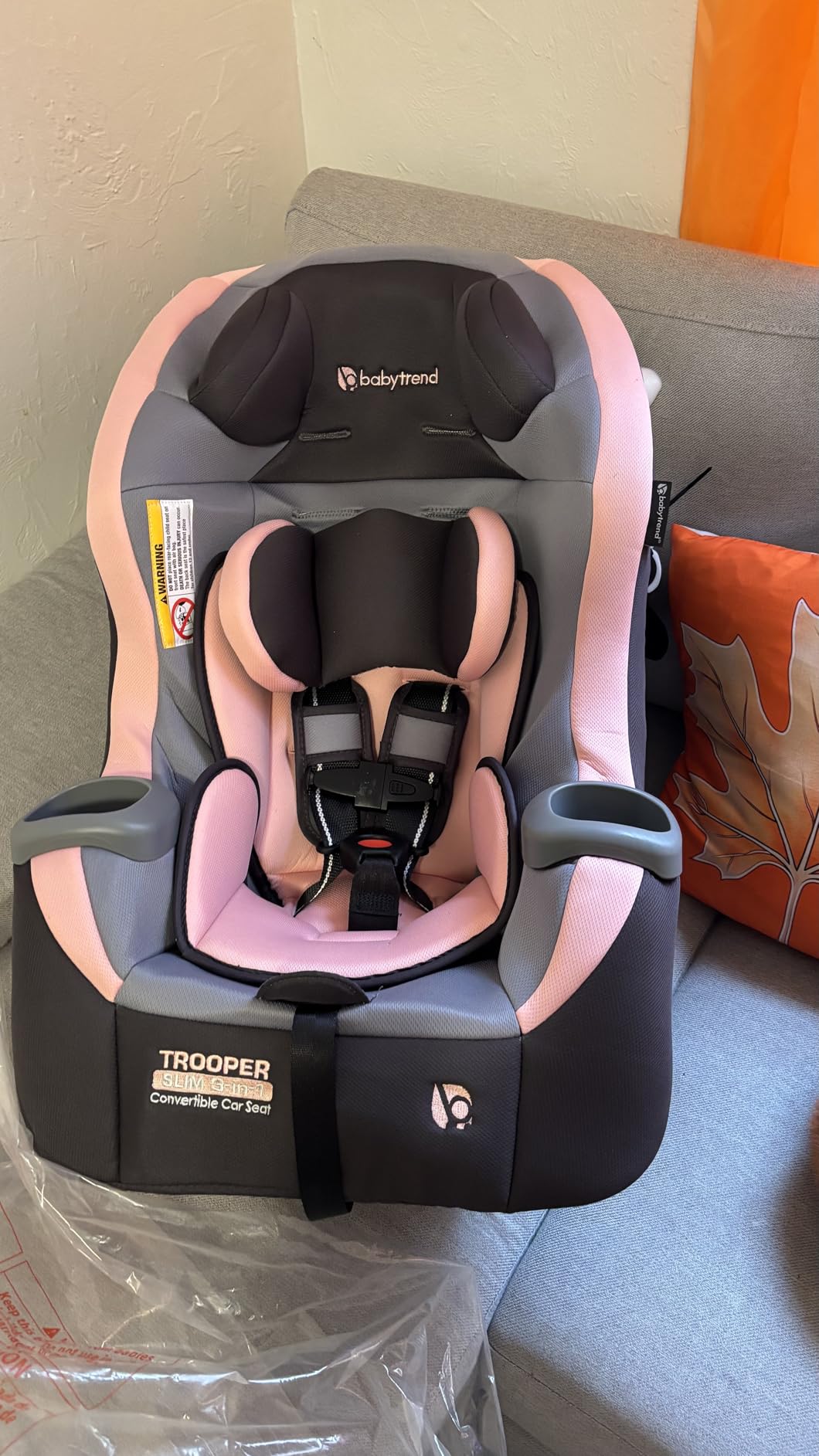
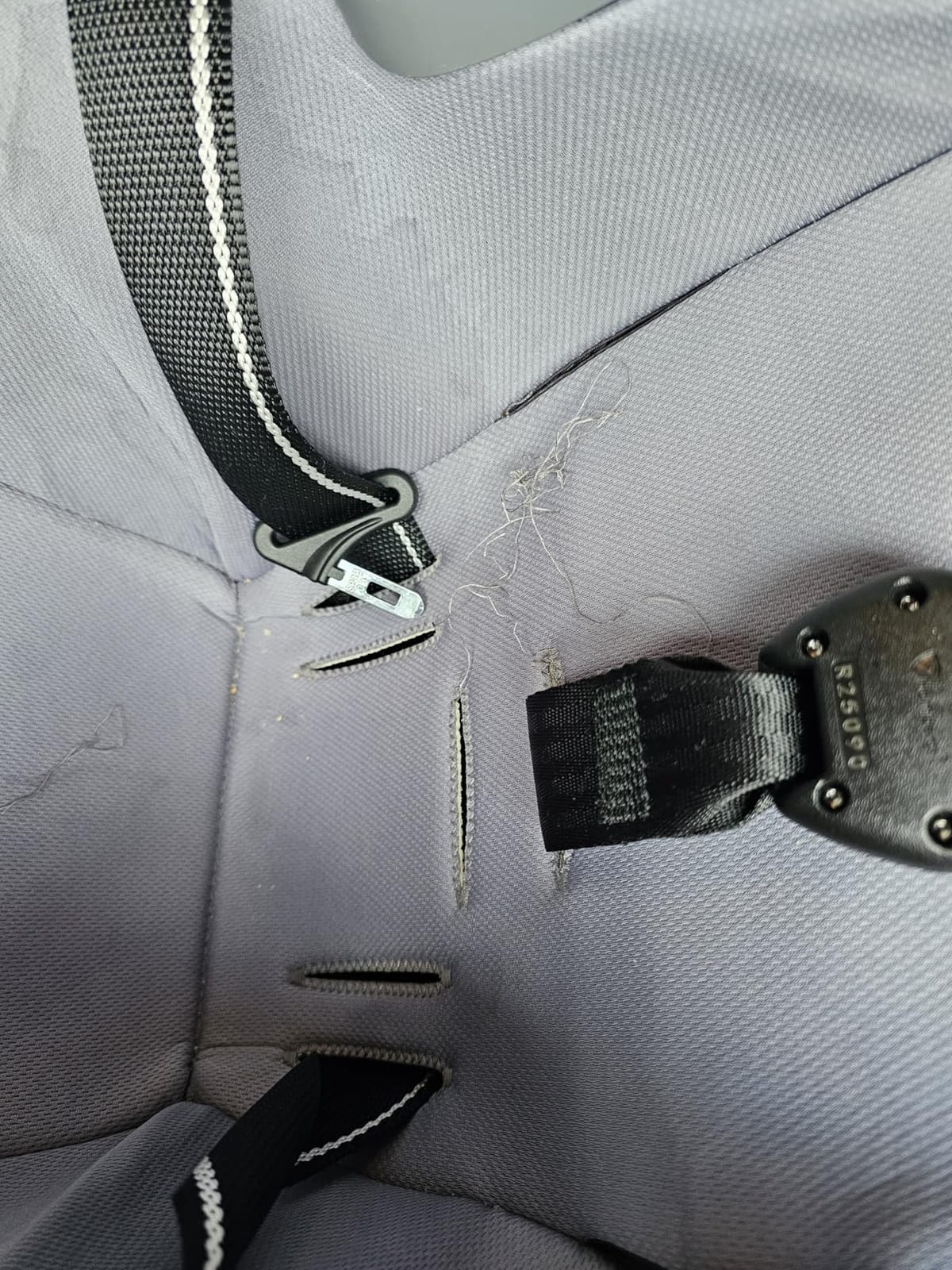
It is the newest and least-reviewed listing in this group at 284 ratings, and its 4.1 average is the lowest here. Eleven percent of ratings are one star, which on a young product usually reflects a developing fit rather than a defect.
I would treat it as a product to check in person before buying, particularly the harness fit for your child, and I would confirm the red aircraft label in person if you intend to use it in the cabin.
Where the slim profile pays off
Multi-seat installs in a compact vehicle, and any family moving between cars regularly. A convertible that is easy to lift is a convertible you will actually use at the destination rather than leave in the trunk.
It is a reasonable third option when two of the narrower convertibles on this list will not fit across your back seat alongside another restraint.
Why I ranked it last
The review base is thin at 284 ratings, so there is not a long owner history to draw on, and an 11 percent one-star share is the highest in this group. That combination earns a recommendation to inspect before purchase.
Also remember that convertible seats are heavier and bulkier than the dedicated boosters on this list. If your child only needs ground-leg boosting, one of the backless options carries the same job in a fraction of the space.
How to Install a Travel Car Seat on an Airplane
There are no lower anchors in an aircraft cabin, so a seat belt is your only installation method. That changes the technique completely, and it is worth practicing at home first rather than in the jet bridge.
Buy an extra seat. A lap infant on your lap is legal but is not a restraint. Turbulence is unpredictable and arms are not a safety device.
Thread the belt through the marked belt path. Use the path labelled for aircraft use where the shell provides one, and follow the arrows rather than your vehicle habit.
Buckle, then pull the belt all the way out. This is the step people miss. Extending the belt fully switches many retractors into locking mode, which is what grips the belt.
Feed the slack back while pressing the seat down. A closed belt path keeps the aircraft buckle from pressing into the child’s back, which is uncomfortable over a long flight.
Check for less than one inch of movement at the belt path. Tighten until the movement at the belt path is under an inch. If your belt has no locking mode, ask the flight attendant for a belt extender.
Two placement rules. Rear-facing belongs in a window seat, because you need clearance in front and cannot lean the seat against an armrest. And no child restraint goes in an exit row, whatever the seat allows.
Gate-Check vs. Carry-On: Getting the Seat Through the Airport
Most families learn this lesson the hard way. Flying with a car seat is only convenient when you know how the airport treats it, and the two options are not equivalent.
A gate check is free on every major US carrier and means you hand the seat over at the jet bridge and collect it, with its harness and padding removed, at baggage claim. The risk is damage, and families describe hard drops and scuffed shells with real concern. After a rough one, inspect the shell and the belt path carefully, and replace a seat whose structure looks bent rather than trusting it.
To avoid the carousel entirely, carry it aboard. Our most consistent tips from parent forums: strap the seat to a rolling carry-on, use a backpack-style travel bag so your hands stay free, and lean it onto a stroller frame through the terminal. One more while you wait: fill a bottle and check the seat again before the gate, because the queue at the aircraft door moves fast.
While you are packing, our travel mug roundup covers the small gear that actually makes a long flight easier, and a filled bottle matters more than any cup.
Do You Need a Second Travel Seat?
Most families do not, and this is the decision nobody makes clearly. Start by measuring the seat you already own and checking its width against an economy seat pitch you can confirm on your airline.
If your current seat is under about 17 inches wide, carries the red aircraft label and is not too heavy to carry, take it. The rule of thumb is that a second shell only earns its place when the first one fails the label check, the width check or the weight check.
Buy a dedicated travel seat when the seat at home is a wide convertible you describe as huge and heavy, when it is outgrown, or when you fly often enough that carrying one object is simpler than reading a stranger’s manual at the gate. A fold-flat booster covers the ground leg at the destination without solving the cabin problem at all, so decide which leg actually needs the seat.
International Flights, ECE Rules and the Ride at the Other End
Outside the US, look for the ECE R44 or R129 approval mark, not the red FAA label. The Mifold Hifold is approved for use worldwide except Australia and Taiwan, which makes it the one seat here with genuinely international paperwork, and most European and Asian carriers accept ECE-marked restraints while still applying their own seat restrictions.
Some international carriers also restrict where a restraint may sit, and the belt extender request is the standard fix when an aircraft belt has no locking retractor. Ask the flight attendant early, not after you have fought the belt for ten minutes.
At the destination, remember that booster laws vary by state in the US and by country elsewhere, and that a rental car will usually include at least one child seat you can request ahead of time. If you are relying on taxis or rideshares, a backless booster that fits in a backpack is the most portable option in this roundup.
For a broader look at what to pack for a long trip, we also keep a running list of tested travel essentials that survive a security queue.
Frequently Asked Questions
What kind of car seats are acceptable for use on airplanes?
Only child restraints that carry the red label stating This restraint is certified for use in motor vehicles and aircraft. That means harness seats, rear-facing or forward-facing. Belt-positioning boosters, backless boosters and travel vests are not permitted as cabin restraints.
How do I tell if my car seat is approved for a plane?
Turn the shell over and look for a red label on the base, back or side near the belt path. If the wording names motor vehicles and aircraft, it is approved for cabin use. If it mentions vehicles alone, it is not. You can also confirm with the manufacturer using the model number and date on the seat label.
Can I bring a booster seat on a plane?
No. Booster seats are not permitted in the aircraft cabin, and gate agents will send one to baggage check. A booster is useful at your destination in a rental car or rideshare, but for the flight itself your child needs a harness seat or the aviation harness designed for aircraft seats.
Is it worth bringing a car seat on a plane?
The FAA does not require one for a child under two, but a belted-in restraint keeps your child positioned through turbulence, lets them sleep through the descent, and gives you a safe seat in the rental car or taxi at the other end. It is a question of how much you value all three.
How do I install a car seat in an airplane seat?
Buy an extra seat, thread the aircraft lap belt through the marked belt path, buckle it, then pull the belt all the way out to engage locking mode. Feed the slack back while pressing the seat down, and check for less than one inch of movement at the belt path. There are no lower anchors in a cabin.
Do booster seat laws apply to airplanes?
No. Booster laws govern vehicle use, not air travel. On a plane, a child over the age and size for a harness is simply seated with the aircraft lap belt in a purchased seat, or on an approved aviation harness for younger lap children.
Which Travel Car Seat Should You Book With?
If you want one answer rather than three, the Graco TurboBooster 2.0 is our stand-out pick in this group: the largest owner base in the list, the widest big-kid range and adjustable armrests that make the ground leg easy. Choose the Graco SnugRide Lite LX instead when the cabin itself is the hard leg, since at 7.2 pounds it is by far the easiest shell to carry, and pick the CARES harness when you want the only purpose-built aviation restraint we found.
Beyond that, start by picking the leg of the trip that is actually hard. If it is a convertible that travels, the Diono Radian 3R is the one with stated aircraft approval and a fold-flat design. If it is the ride home, the TurboBooster handles the biggest range of big kids with the largest owner base to back it up.
Either way, check the red label before you leave the house, and practice the belt install once at home. That single habit removes most of the stress people associate with flying with a car seat in 2026.