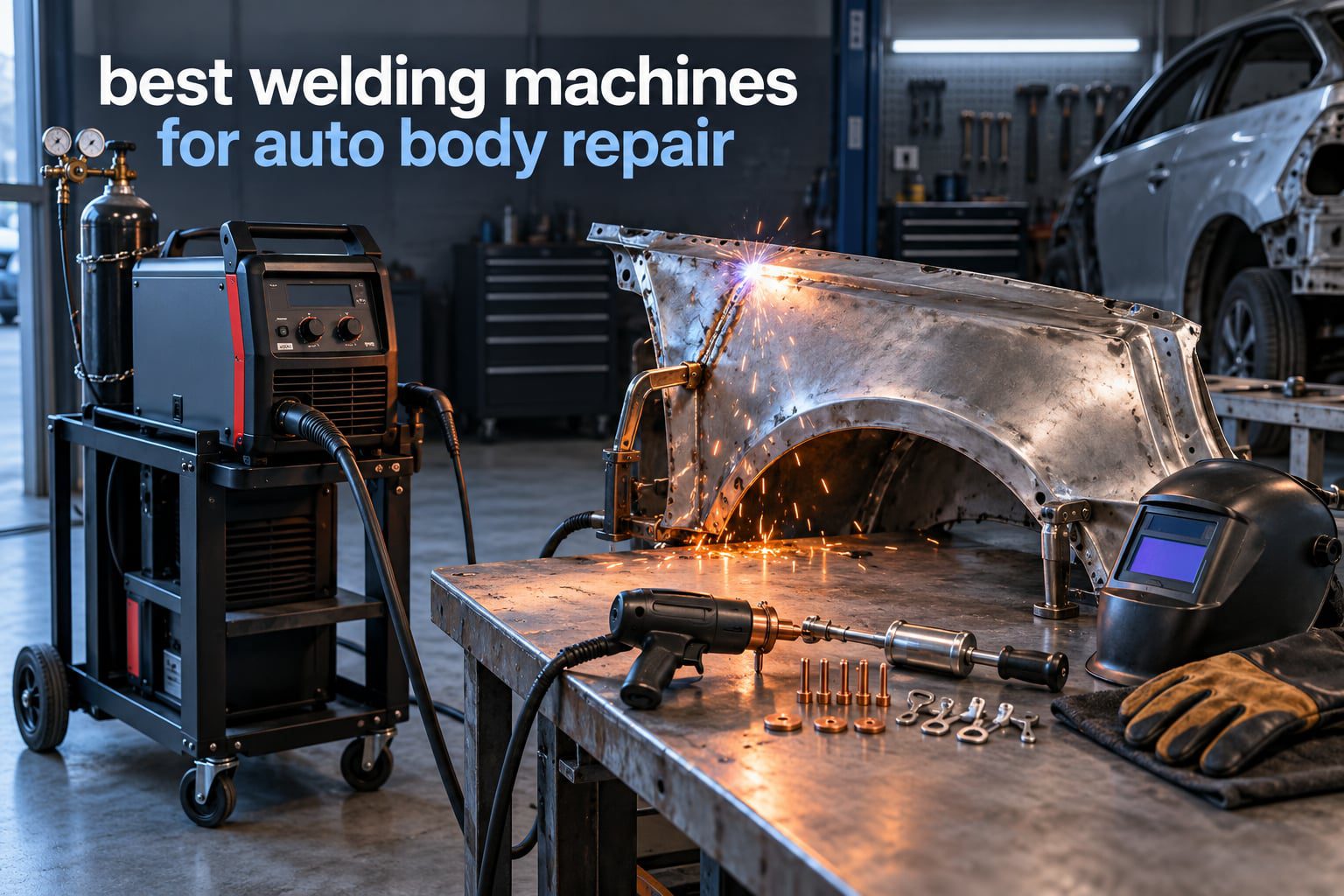
If you do one repair job on a car this year, the answer to “what welder is best for car repairs?” is almost always a MIG welder. The selection rule that comes up again and again on the body-work forums is simple: look for a machine that plugs into 110V, reaches down to roughly 30 amps for thin 24-gauge panel, and tops out near 140 amps for patch panels and brackets.
That rule shapes every pick in this roundup of the best welding machines for auto body repair. We looked at amperage range first, then duty cycle at that amperage, then whether the machine can actually run shielding gas rather than gasless flux core only, and finally how easily you can buy tips, liners and parts in five years.
A word on process. MIG (GMAW) handles the bulk of vehicle sheet metal because it is fast, forgiving on out-of-position work overhead under a dash, and easy to unjam mid-job. TIG earns its place on aluminum and on thin, heat-sensitive panels. Spot and stud welders do the job a MIG cannot: replicating factory spot welds on a modern unibody panel. Our lineup covers all three jobs, because a real repair bay needs more than one tool.
Every product below was assessed on published specifications and on the pattern of what owners report back after living with the machine. Nothing here is a sponsored placement, and where owners repeatedly report the same weakness, we say so. If you are still building out your shop, our welding helmet picks for beginners cover the safety gear you will need before the first arc.
Table of Contents
- Top 3 Picks for Best Welding Machines for Auto Body Repair (October 2026)
- Every Machine in the Roundup at a Glance
- How We Chose These Machines
- 1. ARCCAPTAIN MIG200 6-in-1: The All-Round Body Shop Machine
- 2. ARCCAPTAIN TIG200PACDC: Best for Aluminum Panel Work
- 3. FEMEROL MIG 250PRO: Best for Heavy Steel and Aluminum
- 4. VEVOR 90E Stud Welder Kit: Best for Dent Pulling
- 5. Bestauto 5500 Stud Welder Kit: Budget Dent Kit
- 6. Stark USA 55009: Best for OEM-Style Spot Welds
- 7. YESWELDER FLUX-135PRO: Budget Pick Gasless Starter Welder
- 8. VEVOR 1.8KW PRO Stud Welder: Best for Mobile Repair
- MIG vs TIG vs Stick for Auto Body Work
- 110V vs 220V: Which Circuit Do You Need?
- Duty Cycle: The Sizing Rule Nobody Explains
- Flux Core vs Shielding Gas and Wire Diameter
- What a Body Shop Actually Uses
- The Rest of Your Setup: Helmet, Gloves, Gas and Wire
- Buying a Used Welder Without Buying Regret
- Frequently Asked Questions
- Final Verdict: Which Welding Machine for Auto Body Repair Should You Buy?
Top 3 Picks for Best Welding Machines for Auto Body Repair (October 2026)

ARCCAPTAIN MIG200 6-in-1
- Gas and gasless MIG
- 110V and 220V
- spot weld mode
- synergic settings
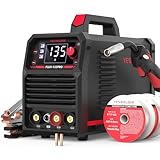
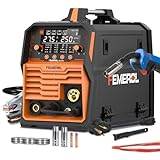
The ARCCAPTAIN MIG200 takes the top slot because it is the only machine here that covers the whole body-work range in one box: gas-shielded MIG with fine low-end control for panel work, gasless flux core for dirty rust holes, a dedicated spot weld mode, lift TIG, stick, and dual 110V/220V input.
The YESWELDER FLUX-135PRO earns the value badge on proof of durability rather than spec sheet ambition. With 2985 owner reviews behind it, it is the most battle-tested budget machine in the category, and it is the one most first-time car restorers finish their first patch panel on.
The FEMEROL MIG 250PRO rounds out the top three for anyone whose work goes past sheet metal. A genuine 250A output at a 60% duty cycle plus aluminum capability makes it the strongest of the multi-process units on paper, and owners have verified the output with a shorting bar.
Every Machine in the Roundup at a Glance
| Product | Specs | Action |
|---|---|---|
| ARCCAPTAIN MIG200 6-in-1 |
|
Check Latest Price |
 ARCCAPTAIN TIG200PACDC ARCCAPTAIN TIG200PACDC |
|
Check Latest Price |
| FEMEROL MIG 250PRO |
|
Check Latest Price |
 VEVOR 90E Stud Welder Kit VEVOR 90E Stud Welder Kit |
|
Check Latest Price |
 Bestauto 5500 Stud Welder Kit Bestauto 5500 Stud Welder Kit |
|
Check Latest Price |
 Stark USA 55009 Spot Welder Stark USA 55009 Spot Welder |
|
Check Latest Price |
| YESWELDER FLUX-135PRO |
|
Check Latest Price |
 VEVOR 1.8KW PRO Stud Welder VEVOR 1.8KW PRO Stud Welder |
|
Check Latest Price |
How We Chose These Machines
Six criteria decided this list, and they are in priority order rather than alphabetical order.
Minimum output. The lowest amperage the machine can hold steady. A welder that bottoms out at 60 amps will blow a hole in 24-gauge panel every time. Roughly 30 amps is the practical floor for auto body sheet metal.
Maximum output at your voltage. A machine advertised at 200 amps that only reaches that figure on a 240V plug is a 140-amp machine in your garage.
Duty cycle at the amperage you will use. Stated at full output, the number is meaningless. We look at what it can do at 100 to 140 amps.
Process coverage. Gas-shielded MIG matters for finish panels. Gasless flux core is fine for structure and rust. TIG matters for aluminum.
Parts and consumable availability. Tweco-style contact tips, liners, drive rolls and ground clamps have to exist in five years.
Portability and power draw. A 53 lb machine with a short cord is a shop tool, not a garage tool.
1. ARCCAPTAIN MIG200 6-in-1: The All-Round Body Shop Machine
ARCCAPTAIN 200A MIG Welder 110V 220V 6 in 1 Aluminum Welding Machine MIG200
6-in-1 multi-process
110V and 220V input
Synergic MIG with 10 setting slots
Large LED parameter readout
Pros
- Covers gas MIG/flux core/stick/lift TIG and spot weld in one unit
- Dual voltage lets you move between a garage outlet and a shop circuit
- LED readout is readable through a welding helmet
- Ten memory slots make repeat panel jobs fast
- Comes with extra MIG consumables and multiple drive roll styles
Cons
- Several drive rollers ship without a groove for 0.035 in wire
- Power cable and torch strain relief feel light duty
- Synergic mode needs amperage set manually with no chart in the door
This is the machine I keep reaching for when a job starts as a quarter panel and turns into a floor pan. The MIG200 covers six processes: gas and solid wire MIG, gasless flux core, stick, spot welding, lift TIG, and spool gun readiness when aluminum shows up.
The synergic control matches current and wire feed speed to the wire diameter and gas you pick, and the machine stores ten parameter groups. That matters more than it sounds on body work, because the difference between a good quarter panel weld and a burn-through is often just reproducing the same settings three more times.
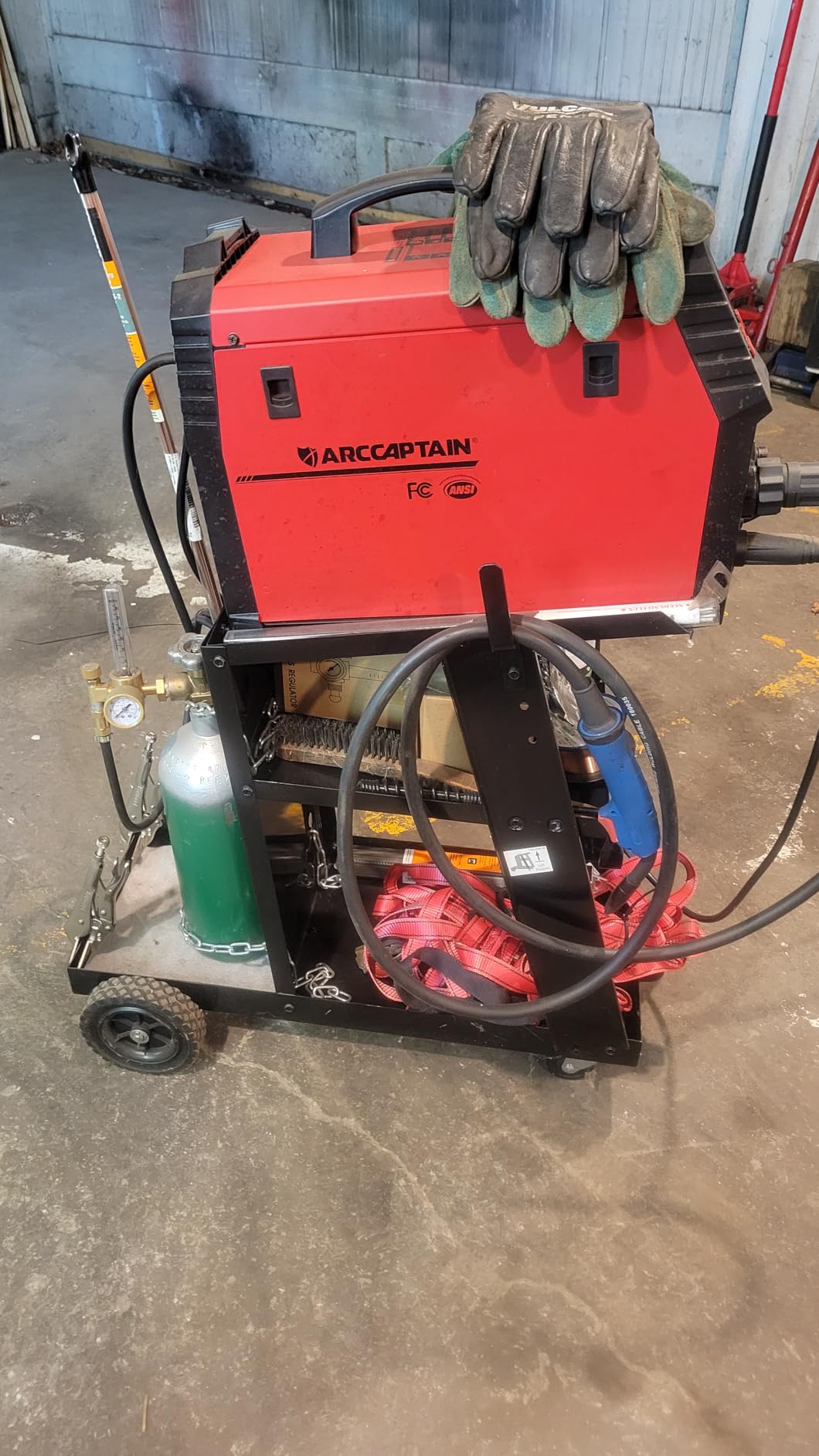
Wire capacity covers .023, .030 and .035 solid wire, .030 and .035 flux core, and .035 and .040 aluminum. Owners report successful body panel, floor panel and exhaust work, with several confirming it handles 1/8 and 3/16 in steel reliably. It carries a 2-year manufacturer warranty.
The cooling fan runs only on demand, which keeps background noise down in a residential garage. That is a small detail that matters when you are working a car in a driveway at 9 pm.
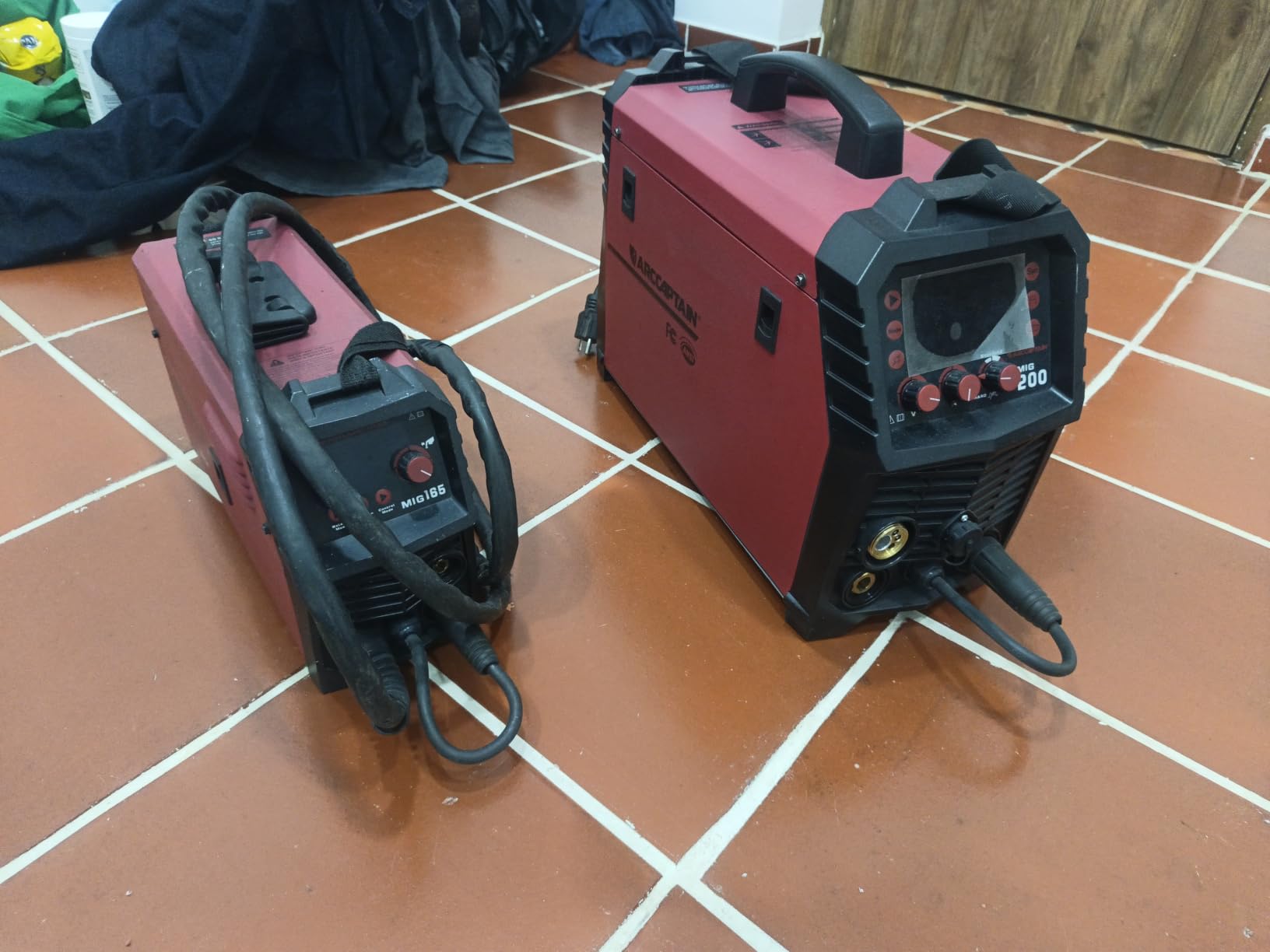
How it handles thin panel work
The auto-set behavior here is genuinely useful on 24- and 26-gauge metal because you can dial the synergic mode to the wire and gas, then trim with the burn-back and crater controls rather than rebuilding the whole program from scratch.
Owners do flag that some of the included drive rollers lack a groove sized for .035 in wire, so check the rollers before you load a spool. It is a five-minute fix with a standard kit part, not a reason to skip the machine.
Where it falls short
The thin power cable and light-duty torch strain relief are the most common complaints. Several owners upgrade the torch cable and mains lead early, which is cheap insurance on a machine that gets moved constantly.
It also arrives wired for 110V with an adapter cable for 220V rather than a native 240V cord. For occasional high-amperage work that adapter approach is acceptable, but if you plan to run 220V work regularly, plan on replacing the cord set.
2. ARCCAPTAIN TIG200PACDC: Best for Aluminum Panel Work
ARCCAPTAIN TIG Welder AC/DC 200A with Pulse 7 in 1 Aluminum Welding Machine
AC and DC TIG with pulse
Square and triangular waveforms
Aluminum 0.5 to 5 mm
Other metals to 10 mm
Pros
- AC output with square and triangular waveforms cleans aluminum oxide and controls heat
- Pulse function improves heat control and filler cadence on thin material
- Full manual control of pre-flow/peak
- base and crater current without a crowded interface
- Out of the box it includes torch/flow meter
- ground clamp and consumables
- Stable easy-to-strike arc with a large clear LED display
Cons
- Some units arrive with a cracked gas connection or damaged power cord
- Included ground clamp can overheat under sustained use
- Foot pedal uses a proprietary connector so third-party pedals are hard to source
Modern vehicles are full of aluminum, and aluminum punishes a machine that cannot control heat. This TIG runs seven modes: DC TIG, DC pulse, AC TIG, AC pulse, AC pulse square wave, AC pulse triangular wave, stick, and spot TIG.
Square wave handles aluminum oxide without the electrode contamination you get on plain AC. Triangular wave is the gentler option and is what you want on a thin hood skin where heat input controls warping.
Weld capacity runs 0.5 to 5 mm on aluminum and 0.5 to 10 mm on other metals, which covers anything from a gauge or two of skin down to a cast bracket. The digital control gives you pre-flow time, initial, peak, base and crater current, up and down slope, pulse duty, AC frequency, AC balance and pulse frequency.
Beginners and hobbyists consistently describe this as the best budget AC/DC TIG they have used, particularly for aluminum, with a smooth arc and clean results. It includes the torch, flow meter, ground clamp and a consumables set, so nothing extra is needed for a first aluminum panel.
Why pulse matters on thin aluminum
Pulse TIG alternates between a high peak current that melts the metal and a low base current that lets it cool. On a hood or a roof skin that is the difference between a flat panel and a panel that ripples as it cools.
Owners also like that the parameter readouts stay readable rather than buried in a menu system. On a slow shop job, not fighting an interface is worth more than it seems.
What to inspect before first use
The complaint cluster on this unit is about accessories rather than welding. Some units arrive with a cracked gas connection or a damaged cord, and the included ground clamp can overheat and melt its cable casing under sustained work.
The foot pedal uses a proprietary aviation-style connector, which means third-party pedals are hard to source if it fails. Check all three items in the first ten minutes. It is a 12 kg unit with a carry handle, so moving it around a garage is manageable.
3. FEMEROL MIG 250PRO: Best for Heavy Steel and Aluminum
FEMEROL 250A MIG Welder,6 in 1 Gas MIG/Gasless Flux Core/Stick/Lift TIG/Spot Welding/Spool Gun Compatible Aluminum Welding Machine Large LED Display 110V/220V Multi Process Welder
250A at 60 percent duty cycle
110V and 220V dual input
Spot mode for thin gauge
Aluminum via Teflon liner or spool gun
Pros
- Owners verify near-full 250A output with a shorting bar
- Spot weld mode has adjustable feed
- amps and time for thin sheet attachment
- Weldable from 24 gauge up to 1/2 in steel plus aluminum through the included Teflon liner
- Long torch/ground and stick cables at roughly 9.5 feet
- Dual voltage with an intuitive layout and a readable manual
- Two-year manufacturer guarantee
Cons
- Cooling fan runs constantly and is noticeably loud
- Shipped 120V plug and cord are undersized for the output
- Lift TIG has no amperage foot control and no AC or pulse
This is the machine for the person whose projects include more than cosmetic sheet metal. Rated 250A across MIG, MMA and TIG at a 60% duty cycle, and owners have verified that output with a shorting bar rather than trusting the label.
Wire capacity is wide: .023, .030 and .035 solid, .023, .030 and .035 flux core, and .035, .040 and .045 aluminum. Weld capacity reaches 14.0 mm plate, which covers 1/2 in steel.
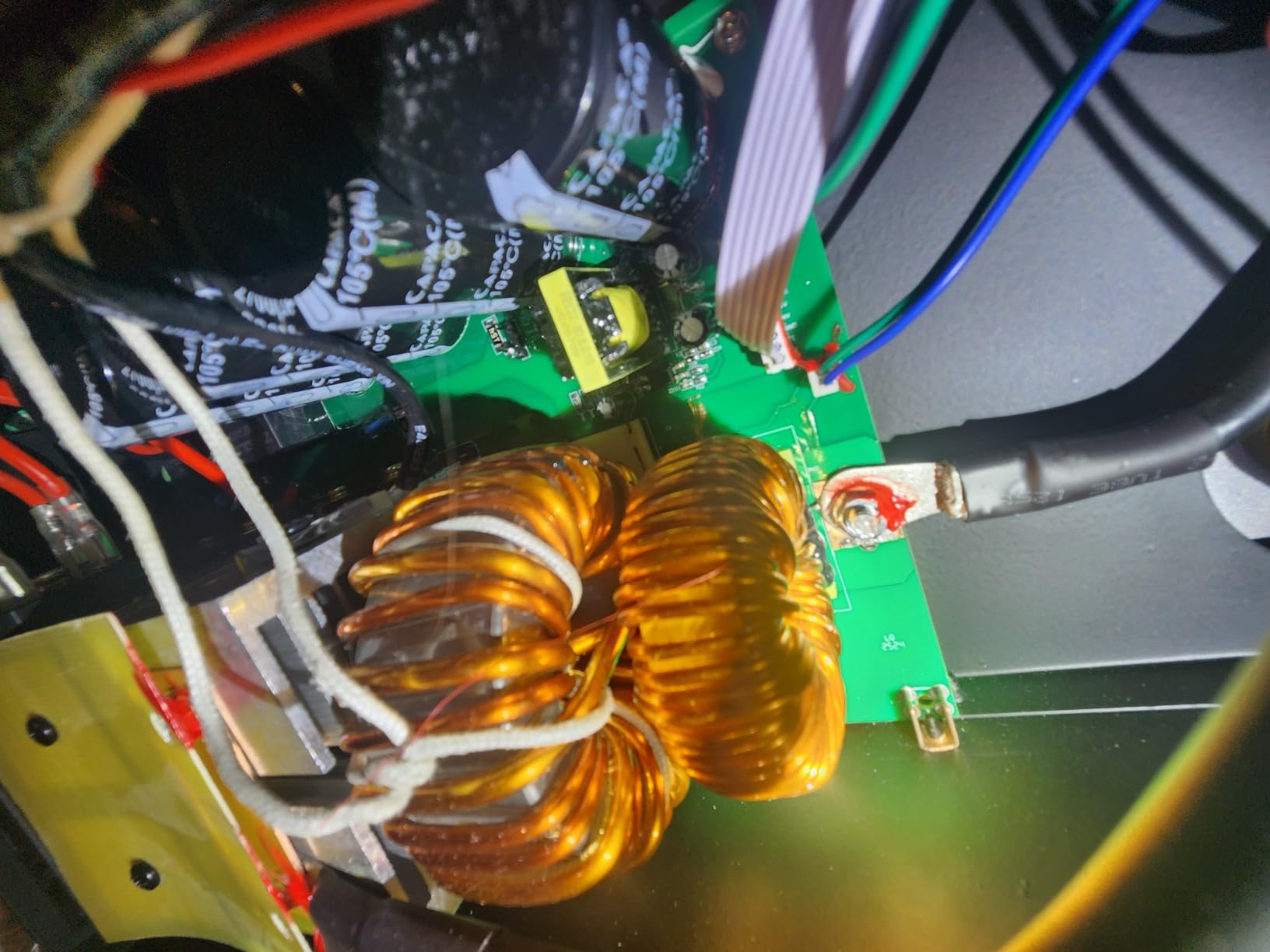
The spot welding mode has adjustable feed, amps and time, which is what you want for attaching a patch panel or a bracket without melting through the sheet. Synergic control matches current and wire feed to wire size and gas, and there is a large LED display.
Experienced fabricators rate it as a genuinely capable low-cost alternative to a name-brand lunch-box welder, citing stable arc and clean aluminum work with the Teflon liner. Several buyers own a second unit so they can keep two wire setups loaded at once.
What the 250A actually buys you
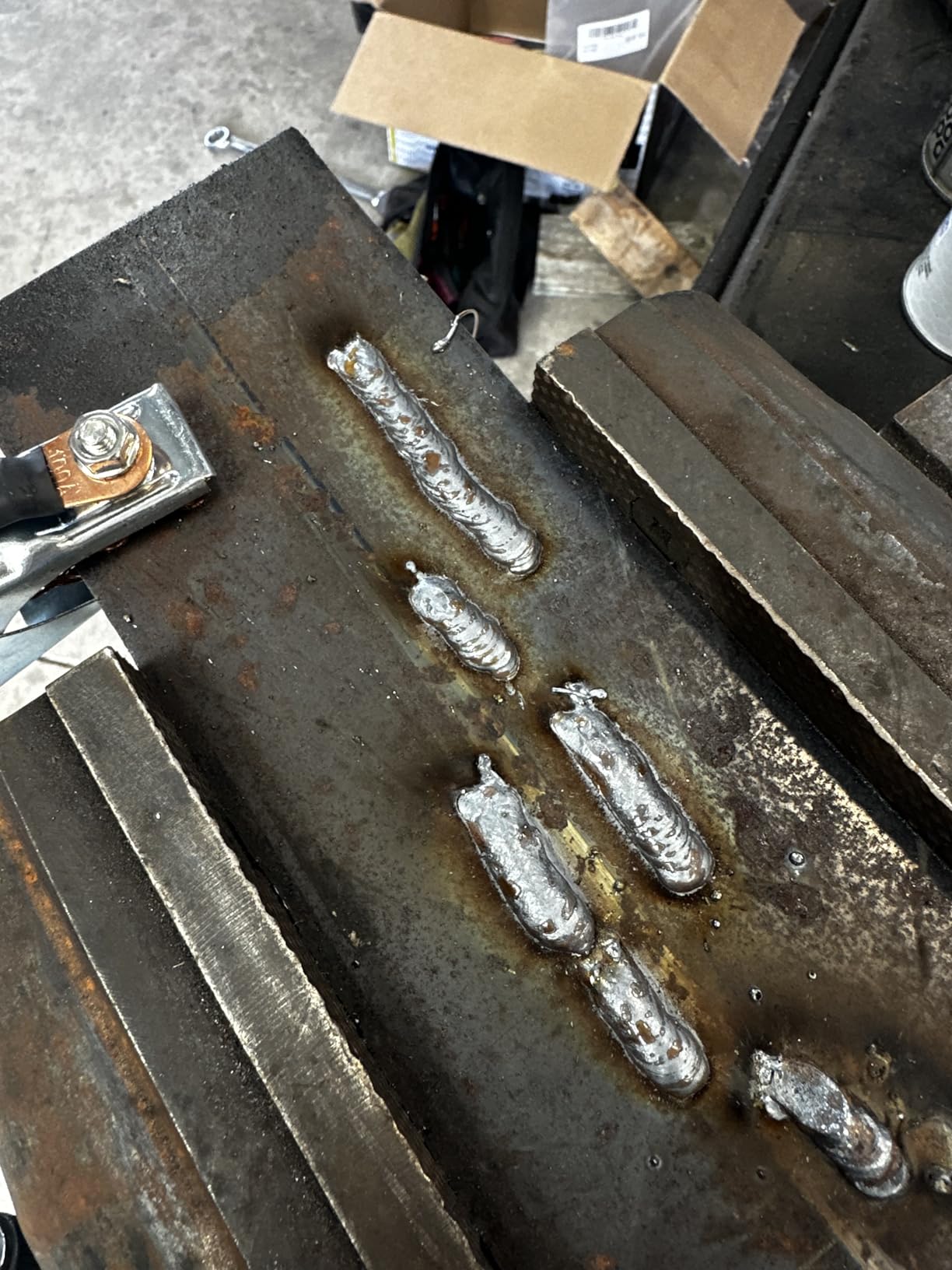
Amps above 140 mostly matter for chassis and structural work, hitches, exhaust hangers and thicker steel brackets. For 24-gauge panel, this machine is overkill and you will have to trim hard at the low end.
The spot mode is the sleeper feature here. Reproducing a factory tack-welded spot pattern on a patched panel before final welding is a real technique, and having feed, amps and time under your control makes it repeatable.
Where it falls short
The cooling fan runs constantly and is noticeably loud, which is tiring in a small garage. Several buyers recommend a name-brand machine as their first welder and this one as a shop second unit, which is a sensible way to think about it.
The 120V plug and cord that come with it are undersized for the machine’s output; owners commonly move up to 10-gauge wire with a 50A plug. The torch, ground clamp and cable lugs also feel light. Lift TIG has no amperage foot control and no AC or pulse, so aluminum TIG is not this machine’s job.
4. VEVOR 90E Stud Welder Kit: Best for Dent Pulling
VEVOR 90E Stud Welder Dent Repair Kit
3000W stud and spot welder
7 selectable weld modes
Single-sided 0.6 and 1.2 mm welds
Complete accessory toolbox
Pros
- Fast/precise dent pulling that body men and hobbyists call professional grade
- Small weld footprint preserves back-side coating and paint on the panel
- Seven welding modes plus auto mode make stud attachment forgiving for beginners
- Complete accessory set including a wiggle wire for directional pulling
- Compact enough for shop or mobile use
Cons
- Heavy at 53.8 lb and hard to hold steady with the slide hammer attached
- Short cords force the unit onto a cart close to the work
- Instructions are thin so operation has to be learned by trial and error
- Can punch holes in thin panels if power is raised
Stud welding is the answer when a panel is too thin or too distorted to hammer flat, or when you want to pull a dent without hammering paint and creating a high spot on the back side. You weld a stud or tab to the panel, then stretch it with a slide hammer or a wiggle wire.
The 90E offers seven welding modes to match different stud types, and single-sided welds of 0.6 and 1.2 mm produce small, low-damage spots. The kit covers everything from minor dings to larger flat and curved panels.
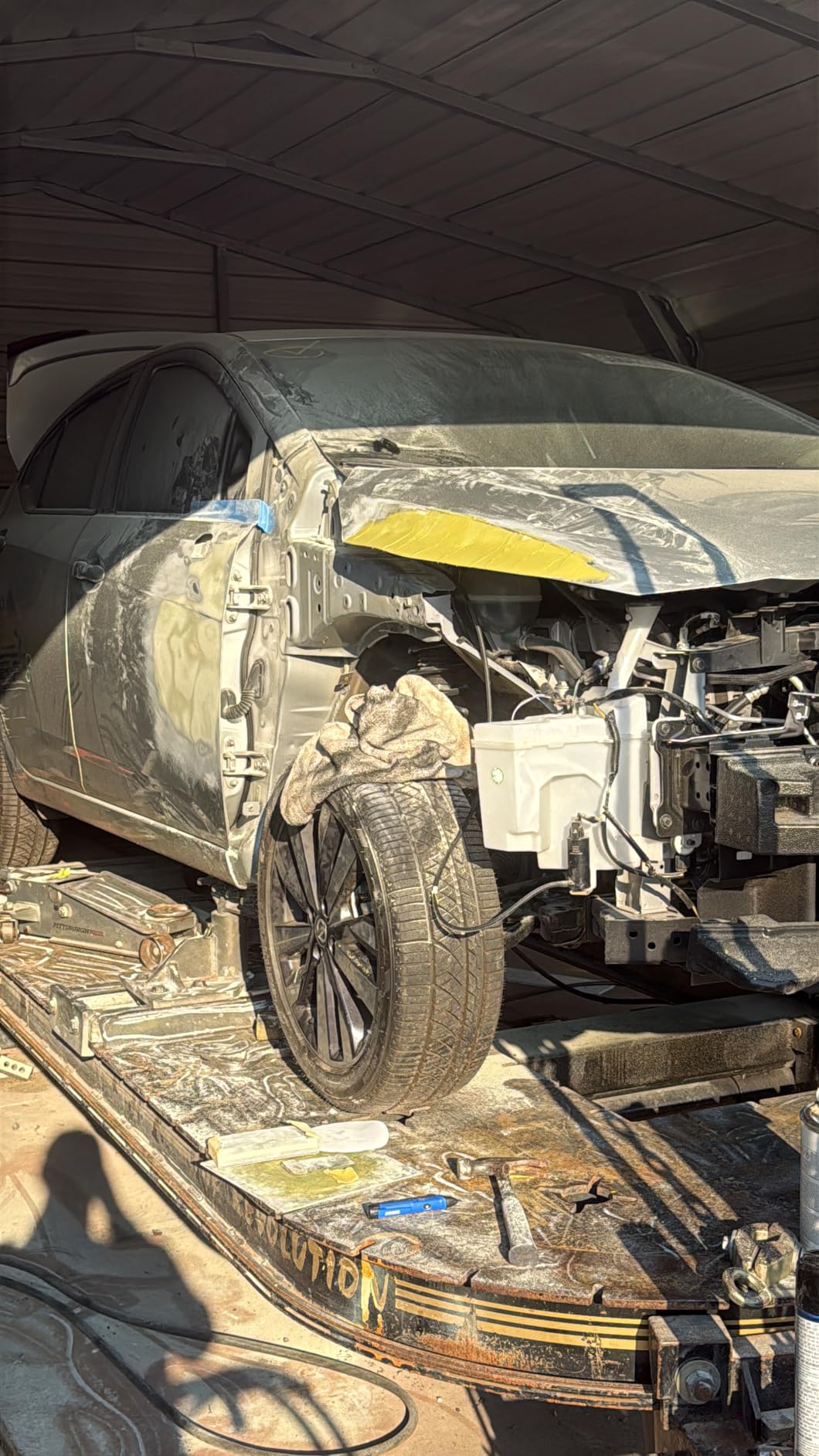
Most owners report it does what it promises for panel dent repair, with the auto weld mode and small single-sided weld spots as the standout features. Several describe using it on racing and collision repairs. About 85% of ratings are five-star.
The accessory set is genuinely complete and lives in a portable toolbox, which includes multiple stud types, a slide hammer and a wiggle wire for directional pulling.
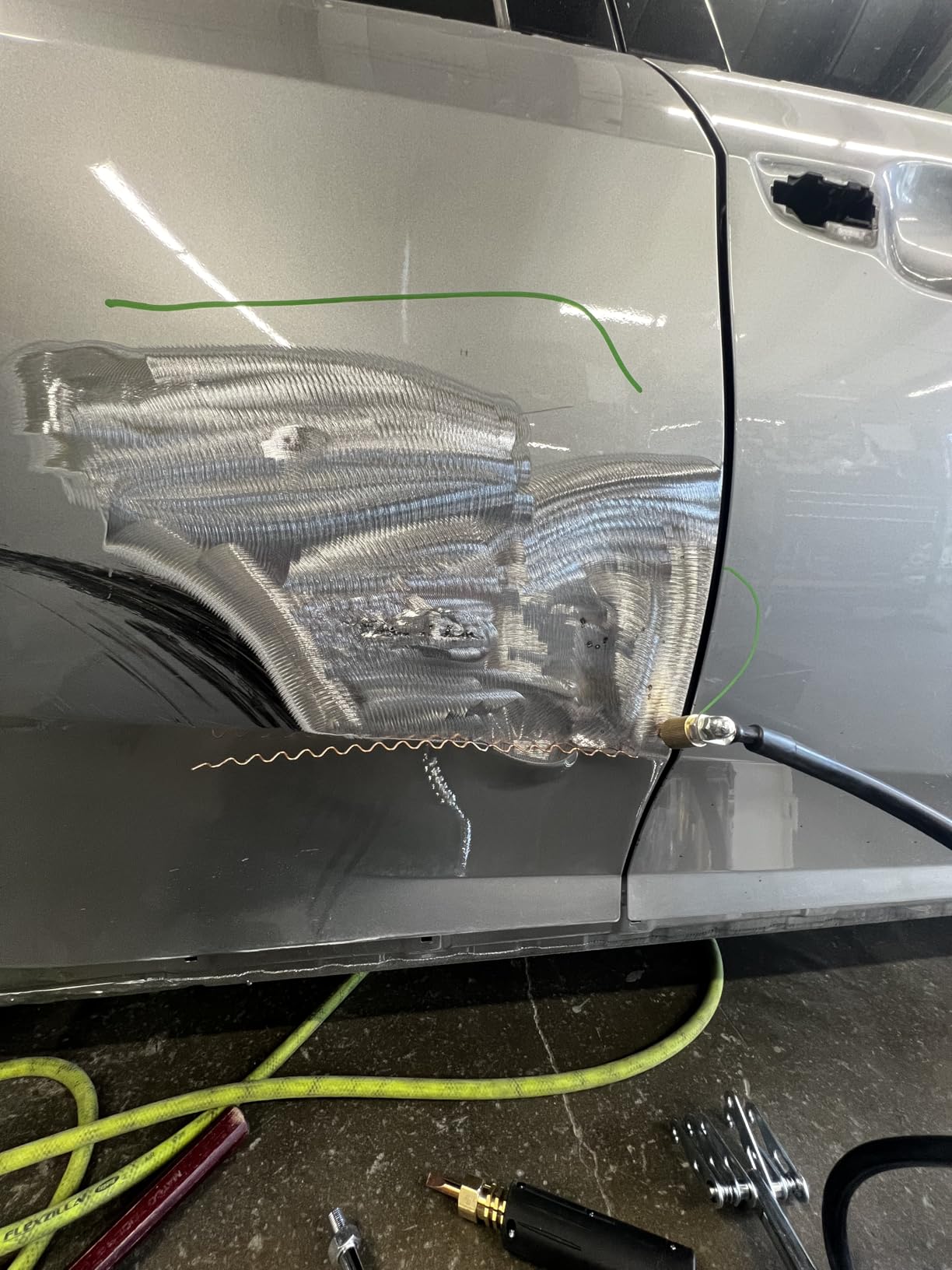
Where dent pulling beats hammer and dolly
Hammer and dolly work well on shallow damage in thick panel. They work badly on the thin, hardened or previously repaired sheet common on modern cars, because every strike work-hardens the metal and makes the next strike less effective.
A stud welder pulls instead of pushing. The panel stretches rather than deflects, and the small weld footprint means you rarely burn through or grind a hole on the back side.
What to know before you buy
At 53.8 lb, this is heavy, and owners report it is very hard to hold steady with the slide hammer attached. Plan to run it from a cart positioned close to the work rather than carrying it around the panel.
Holds can be inconsistent on heavier-gauge metal, and raising power on thin panels will punch through. Practice on scrap of similar gauge first. Thin instructions mean most of the setup knowledge comes from trial and error, which is worth knowing up front.
5. Bestauto 5500 Stud Welder Kit: Budget Dent Kit
VEVOR Stud Welder Kit, 5500 Stud Welder Dent Repair Kit, 800VA Spot Welder Stud, 110V Welder Stud Kit, Stud Gun Dent Puller Kit with Complete Accessories, Dent Welder Repair for Auto Body Repairing
110V stud welder dent puller
Thermal protection at 95 degrees C
One-handed touch-switch welding
1000 nails and pads included
Pros
- Complete consumable kit with 1000 nails
- wavy wires/pads and a pulling hammer
- One-handed touch-switch operation makes stud attachment straightforward
- ABS shell and copper electrode movement built for high-temperature stability
- Overheat protection allows extended welding sessions
- Toolbox packaging keeps accessories organized and portable
Cons
- Not for thick or heavily reinforced panels because studs pop off on heavier gauge
- Zero output fuse is not included which owners flag as an obvious omission
- Short cords limit where the unit can be positioned
- Instructions are minimal so settings must be worked out by trial
This is the entry point into stud welding, and it is not a compromise the way you might expect. The 5500 kit is rated for 110V corded use with an ABS shell and pure copper electrode movement, and thermal protection trips at 95 degrees C transformer temperature.
Operation is about as simple as dent repair gets: press the trigger to weld the stud, then switch to the pull hammer to stretch the panel. The heavy-duty quick-release chuck, cast iron slide hammer and non-slip vinyl handle make it workable one-handed.
The consumable kit is the reason to look here. It includes 500 nails at 2.5 mm, 500 nails at 2.0 mm, 50 mesh pads, 50 straight pads, wavy wires and a multi-functional pulling hammer, so you can run a long series of small dents before ordering anything.
Buyers like the completeness of that kit and the simple workflow for light-gauge dent work. Rating distribution here is the weakest in this roundup, with 66% five-star and a 16% one-star share, so manage expectations accordingly.
What you get out of the box
For someone fixing a hail-damaged hood or a handful of grocery-cart dings, having 1000 nails and 500 pads on the shelf removes the single most annoying part of stud work, which is running out of consumables mid-job.
The overheat protection is what allows a longer session than a small machine without protection would manage, and the one-handed touch switch speeds up attaching studs on a panel with many dings.
Where it falls short
This is not a machine for thick or heavily reinforced panels. Owners report studs popping off on heavier gauge, which means it is a light-sheet dent tool and nothing more.
The zero output fuse is not included, and owners flag that as an obvious omission. Short cords also limit where you can position the unit, and the instructions are minimal enough that you will be working out settings by trial. If you need repeatability on a professional bench, spend up to the 90E.
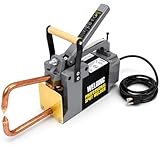
6. Stark USA 55009: Best for OEM-Style Spot Welds
Stark USA Portable Spot Welder 1/8″ Electric Single Phase Handheld Welding Tip Gun Handle Weld Spot 110V 6″ Throat Depth Metal Sheet Spot Welding Machine
6600W handheld resistance welder
Up to 5500A maximum output
6 inch throat depth
Copper welding tips
Pros
- Simple lever action makes it usable by beginners without training
- Copper tips deliver consistent welds across light and heavy-gauge sheet
- Compact and light enough to carry between job sites
- 6 inch throat reaches into confined and awkward panel areas
- Suited to both light industrial and home-shop use
Cons
- Fixed 110V single-phase input limits where it can be plugged in
- Only lever-trigger control with no adjustable weld timing or current settings
- Single-gun design requires repositioning the unit for each weld
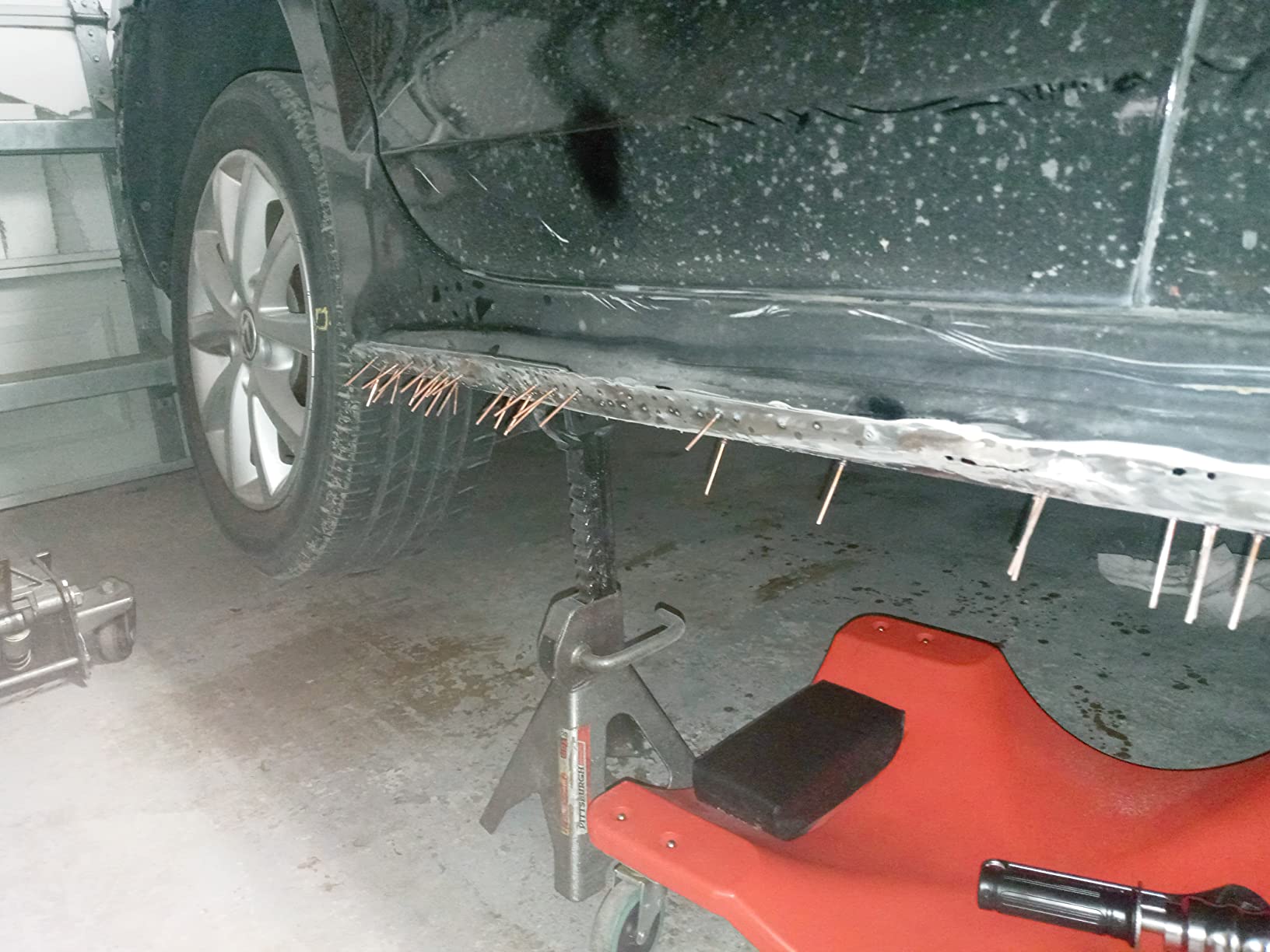
Resistance spot welding is how the factory joined your panels. Two copper electrodes clamp the sheet, current passes through, and the metal fuses at a single spot with the coatings, adhesives and hem flanges intact. It is the closest you can get to an OEM bond on a home bay.
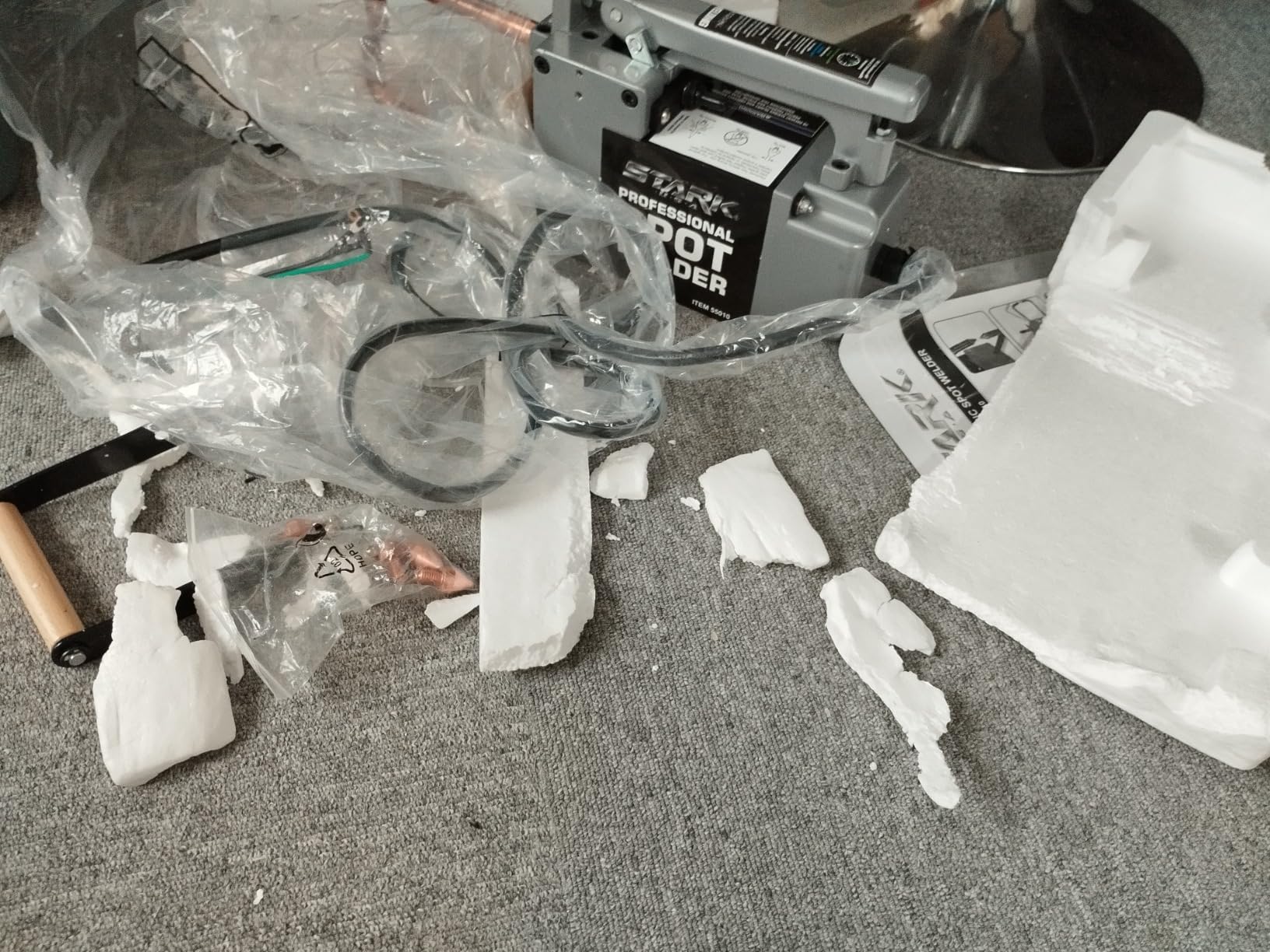
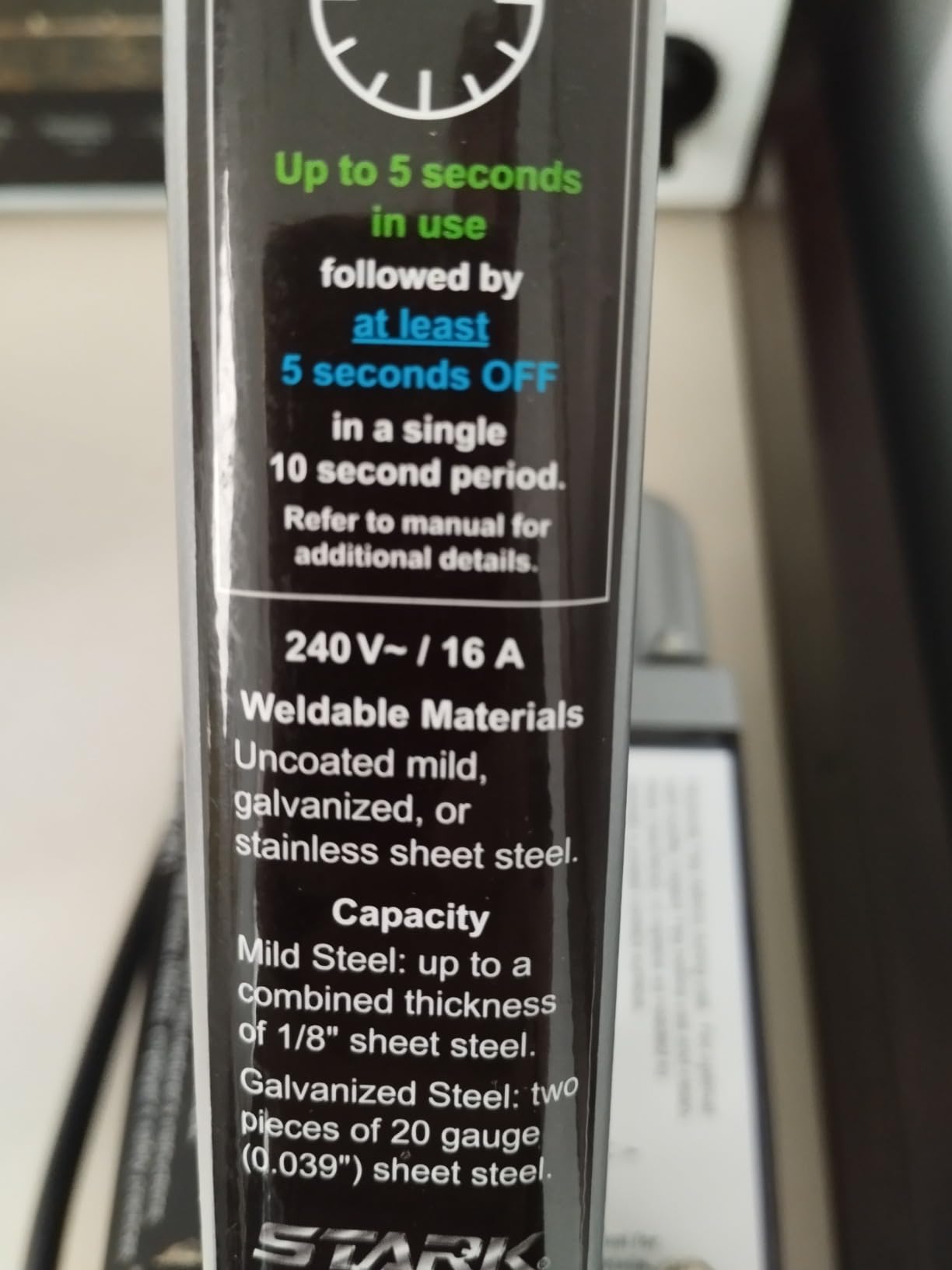
The Stark 55009 is rated at 1.5 kVA input with up to 5500A maximum output current, driven by a 6600 watt handheld pencil gun with a 6 inch throat depth.
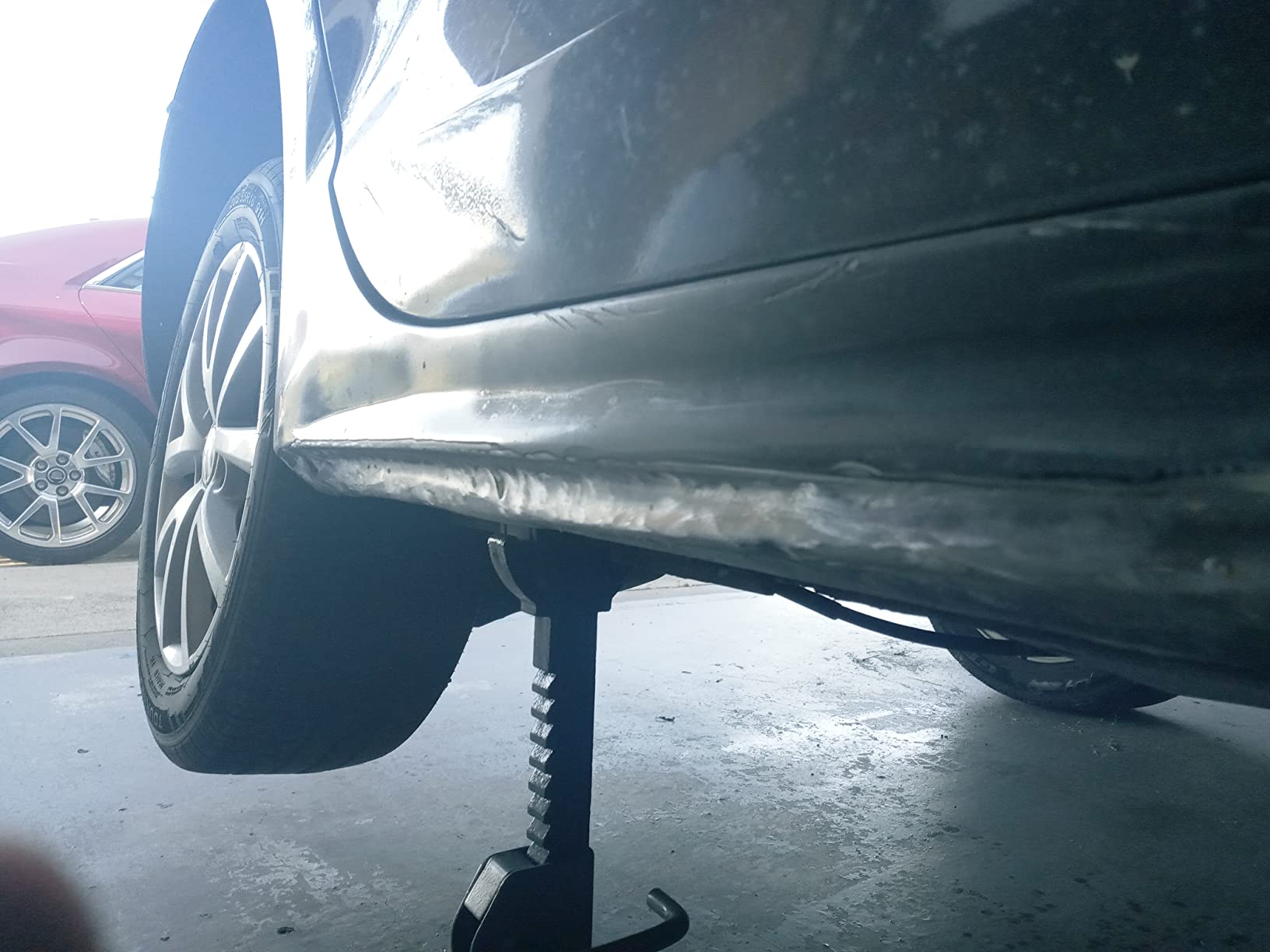
That throat depth is the detail that matters on a car. It lets the gun reach between a quarter panel and an inner fender, or into the corner of a trunk floor, without removing the part you are repairing.
Owners value the no-fuss lever operation, the copper tip durability, and being able to carry the gun to different job sites rather than wheeling a machine around. Distribution is solidly positive with 71% five-star.
Why factory-style spot welds matter on modern cars
Modern unibody panels are hemmed, then bonded and spot welded. A continuous MIG seam down a hem flange is weaker and can fail inspection-style standards that a real body shop works to.
A spot welder reproduces the factory joint. It also preserves the back-side coating and e-coat, because the heat stays local to a single spot rather than running the length of a seam.
What you give up
There is no adjustable weld timing or current on this gun. You get lever-trigger control only, so consistency comes from technique and pressure rather than from a setting.
The 110V single-phase input is fixed, so it needs a dedicated circuit rather than a general-purpose outlet. And because it is a single-gun design, you reposition the unit itself for each weld rather than only moving the gun.
7. YESWELDER FLUX-135PRO: Budget Pick Gasless Starter Welder
YESWELDER 135A MIG Welder, 110V Flux Core Gasless MIG/Lift TIG/Stick 3-in-1
135A gasless flux core at 110V
Welds mild steel up to 3/32 in
Synergic with plus or minus 3V trim
Weighs 11.4 lb
Pros
- Most reviewed machine in this roundup with a wide base of long-term owners
- Synergic control gives a good starting point and the 3V trim helps on thin panel
- Weighs about 11.4 lb and stores easily in a small garage
- Includes two spools of E71T-GS flux core wire so it is ready to weld
- No gas cylinder needed so it works outdoors and in wind
Cons
- Cannot set voltage directly in flux core mode because it is synergic only with trim
- Spool holder
- wire tensioner
- stinger and ground clamp are inexpensive parts
- 125A stinger rating means maxed settings can burn the gun
- Thin sheet needs short overlapping spot welds rather than a continuous bead
This is the machine most first-time car restorers finish their first patch panel on, and it earns that place on volume alone: 2985 owner reviews is more than every other machine in this roundup combined.
It is a 3-in-1 package running gasless flux core MIG, stick, and lift TIG on 110V, with 135A output and mild steel capability to 3/32 in. Synergic control matches voltage to wire feed speed with plus or minus 3V of micro-adjustment, which is the setting you actually use to keep a bead off 24-gauge panel.
Thousands of owners report it paid for itself on exhaust, hitch and thin panel repairs, with better penetration and less spatter than the budget machines they replaced. It comes with two spools of E71T-GS flux core wire, so you can weld the day it arrives with no gas bottle, no regulator and no trip to a supplier.
That gasless convenience is also its main safety net outdoors. Flux core makes no shielding gas, so wind does not ruin your bead, which matters for field repairs and driveway work.
How to run it on thin body panel
Experienced users are direct about the technique: thin-gauge sheet needs short, overlapping spot welds rather than one long continuous bead. The 3V trim lets you creep the heat down until the puddle just wets the edges of both panels without cutting through.
For panel fit-up, hold the ground clamp on bare, cleaned metal inside the panel or on a structural member. Poor grounding is the number one cause of the arc chatter people report on this class of machine.
Where it falls short
In flux core mode you cannot set voltage directly. It is synergic only, with the 3V trim as your adjustment, so if you want full manual control of the arc you need a different machine.
The spool holder, wire tensioner, stinger, electrode holder and ground clamp are inexpensive parts, and the 125A stinger rating means cranking every setting to maximum can burn the gun. A small tail of reviews also covers quality control issues, including a missing or recessed power switch and units stopping because no fuse was included. Check the fuse on day one.
8. VEVOR 1.8KW PRO Stud Welder: Best for Mobile Repair
VEVOR Stud Welder Dent Repair Kit, 1.8KW Spot Welder Dent Puller with Auto/Manual Welding & 7 Versatile Modes, 110V Auto Body Spot Welding Dent Puller Machine for Car, Truck Dent Repair
1.8 kW stud and spot welder
Auto and manual welding modes
7 weld modes and 5 stud types
Portable toolbox kit
Pros
- Auto mode attaches tabs quickly while manual mode allows fine tuning on intricate dents
- Seven weld modes and five stud types cover most common dent sizes
- Owners call it a fraction of the price of comparable machines while performing well
- Toolbox storage keeps the full accessory set organized and portable
- Suitable for both DIYers and professional mechanics
Cons
- Limited power on some units as tabs tack on but pop off before a dent can be pulled
- Instructions are almost non-existent and poorly translated
- Studs must be re-cleaned to bare metal before they will fuse again
- Standard kit is steel-focused so aluminum pulls need separate rings and an aluminum ground tip
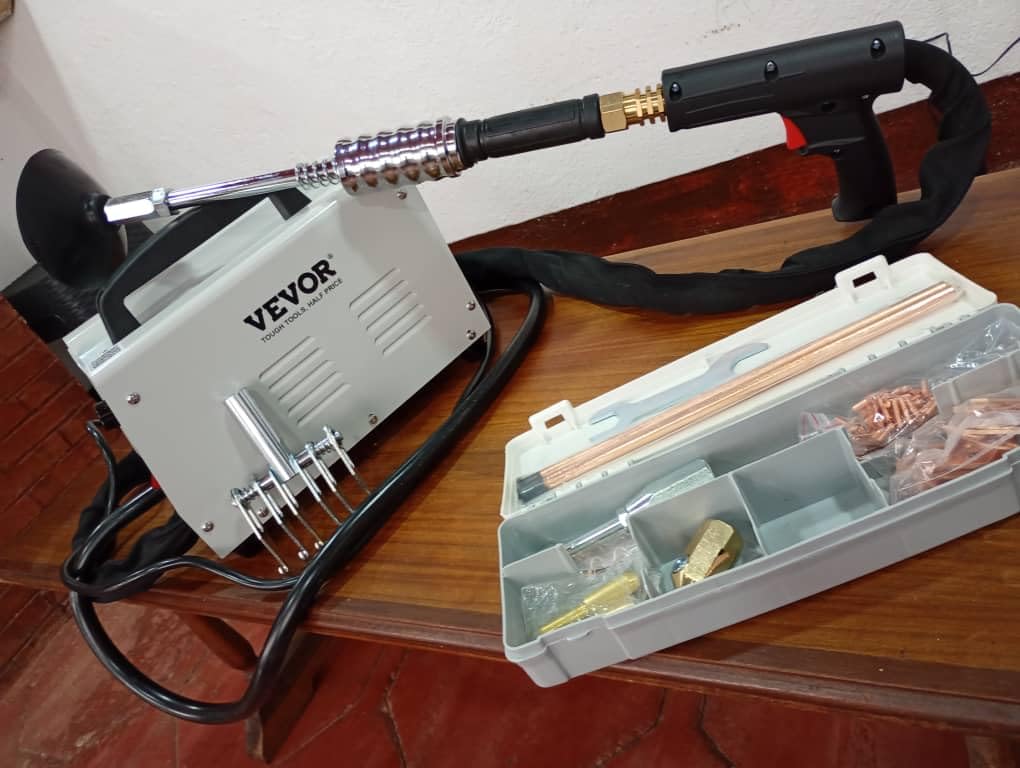
The 1.8 kW PRO splits welding into two modes. Auto mode attaches tabs fast for large dents, and manual mode lets you fine-tune on intricate work where a full auto cycle would put too much heat into a small dent.
Seven default welding modes and five stud types cover the common range, and the whole accessory set lives in a portable toolbox rather than a pile of loose consumables.
Most owners report the machine works well for the money and speeds up dent work, with the auto and manual split as the most-praised feature. The toolbox format is what makes it genuinely portable, which is the reason to pick it over a bench machine if you work on other people’s cars.
It sits at 43.2 lb and includes a carry handle. Owners describe using it on both DIY projects and professional mechanic work, which tells you the useful range of this kit.
Auto versus manual weld mode
Auto mode fires a fixed pulse suited to a tab on flat, reasonably thick steel. It saves time when you have a row of hail dings across a hood.
Manual mode puts the timing under your finger, which is what you want on a small dent near a body line where the heat budget is measured in fractions of a second.
Where it falls short
Limited power is the main criticism. Some units tack tabs on successfully but cannot hold them through a larger pull, which is frustrating because the failure happens after you have already committed to the repair.
Instructions are almost non-existent and poorly translated, so the modes have to be learned by experiment. Studs also need re-cleaning back to bare metal before they will fuse again, and the standard kit is steel-focused, meaning aluminum pulls need separate rings and an aluminum ground tip.
MIG vs TIG vs Stick for Auto Body Work
MIG welding is the default for vehicle sheet metal because it is fast, easy to learn, and holds up well on overhead and out-of-position work. It deposits a lot of metal in a short time, which is what makes a long floor pan seam practical in one session.
TIG welding wins on aluminum and on thin, heat-sensitive panels where MIG cannot hold the puddle. It gives you independent control of amperage and filler rod cadence, at the cost of much slower deposition and a steeper learning curve.
Stick welding is the odd one out for body work. It is the least controllable of the three on thin sheet and produces the most spatter, but it is the most forgiving process when you are outside in the cold welding a bracket in an unheated driveway.
Gas welding still turns up on classic restorations for authenticity and for certain trim work, but it needs a torch, a bottle of fuel gas and real skill, so it rarely belongs in a home garage.
Our rule of thumb: MIG for 95% of a garage, TIG when aluminum is on the schedule, stick for weather and rack work. If you want a deeper look at the gasless option, we covered it in our flux core welders for auto body work guide.
110V vs 220V: Which Circuit Do You Need?
110V is the right answer for most home garages. A 110V machine plugs into a normal household circuit, runs on the outlet you already have, and if you buy a dual-voltage unit you can still move it to 220V later for heavier work.
220V is the right answer when you regularly weld 1/8 in and thicker, run production work, or want longer duty cycles at higher amperage. Higher voltage means more current for the same machine, and a 220V welder holds its rated output far longer before tripping on thermal protection.
Either way, put the welder on a dedicated circuit. A 110V welder pulling serious current will share an outlet with a freezer or a shop vac and cause you nothing but nuisance trips.
110V: dedicated 25A to 30A breaker, household outlet, machine output is typically capped lower than the advertised figure.
220V: dedicated 30A or 50A double-pole breaker depending on machine output, and an electrician-installed circuit if one does not exist.
Watch for this: machines advertised as dual-voltage often only reach their headline amperage on the 240V leg. Check the 120V output chart before you buy.
If your garage has space for it, a proper workbench matters as much as the machine. Our best welding tables for garages covers height, thickness and grounding options in detail.
Duty Cycle: The Sizing Rule Nobody Explains
Duty cycle is how long a welder can run at a given amperage over a ten-minute period, expressed as a percentage. A machine rated 60% duty cycle at 250 amps can sustain that output for six minutes, then needs four minutes to cool.
The catch is that duty cycle is almost always quoted at the machine’s maximum output. Read the label at the amperage you will actually use. A 140-amp machine rated 20% at 140 amps can run for two minutes straight, which covers a patch panel seam but not an entire floor pan in one pass.
One line from the forums gets repeated more than any other in this category: you cannot weld with amps you did not buy. Someone running a 220V 200-amp machine on a single thin-gauge panel spends the whole job fighting the machine to make it stop melting through, because the low end of that range is not designed for 24-gauge.
That trade-off is worth stating plainly. A high-output machine has more range, but the operator has to find the low-end sweet spot. A machine built for sheet metal has less range and is forgiving by default.
Flux Core vs Shielding Gas and Wire Diameter
Gasless flux core wire carries flux inside the wire that forms its own shield. You need no bottle, no regulator and no hose, it works in any wind, and it burns hotter with more penetration, which is why it is the right choice for structure, exhaust and dirty rust holes.
Shielding gas MIG uses an argon and CO2 blend to protect the weld pool from the air. The result is a cleaner, cooler, more stable puddle with far less spatter, and it is the process that belongs on a visible finished panel.
Many shops accept more spatter from flux core on non-visible seams because the speed and the lack of gas handling make up for it. Panel finishing is the line where you should switch.
Wire diameter is the other half of clean sheet metal work:
0.023 in for 24- through 26-gauge panel and tabs. Lowest amperage, lowest heat, most control.
0.030 in for patch panels and typical body fabrication. The general-purpose choice.
0.035 in for thicker steel, frame-adjacent work and structural repairs. Higher amperage, deeper penetration.
Buy 0.023 and 0.030 to start. Having a smaller and a larger wire loaded means you can dial the heat down for a floor pan seam and back up for a bracket without rebuilding the whole setup.
What a Body Shop Actually Uses
Professional shops rarely run one machine. The typical bay has a MIG welder for panel and structural work, a TIG machine for aluminum and stainless, a stud welder for dent repair, a resistance spot welder for OEM-style panel bonding, a plasma cutter for trimming, and a proper extraction setup.
Every machine on that list also needs consumables. Contact tips, gun liners, drive rolls, contact tip holders, a ground clamp that does not cook its own cable, shielding gas, and a wire brush plus spatter hammer for cleanup.
A poor ground clamp is the quiet cause of arc chatter on a vehicle. Scrape the paint off to bare metal inside the panel or clamp to a structural member, and clean it back before every job.
Grinding and finishing spot welds and knock-downs is where show-quality results come from. Practise the sequence on scrap of similar gauge: grind the stud flush, then blend the surrounding area with a flap disc, then finish with a dual-action sander before primer.
The Rest of Your Setup: Helmet, Gloves, Gas and Wire
The machine is maybe half of what a first repair costs. Budget for a helmet, welding jacket or sleeves, gauntlet gloves, safety glasses, a ground clamp, a regulator and flow meter, a gas cylinder, wire, contact tips and a wire brush.
A gas cylinder and regulator is a line item people forget and then remember when the gun keeps sputtering. If you plan to run gas MIG at all, budget for a proper cylinder and a gauge that lets you read flow at the machine.
Spatter cleanup is a hidden labour cost. A job done with flux core on a visible seam takes noticeably longer to grind and finish than the same job with shielding gas, and that time is part of the real cost of a body repair.
A useful check before you start: your car battery or a known-good charger, since a MIG welder on a car battery is a fast way to cook a battery. Keep the work area clear of fuel containers and solvents, and check with a multimeter that your circuit is sound before the first arc.
One safety note from the forums worth repeating: do not practise structural frame welding on your own project car. People describe it as a real liability to themselves and to whoever drives the car next, because a frame weld that goes wrong fails silently.
Buying a Used Welder Without Buying Regret
A used machine can be the best value in the category, since the budget units on this list are new-entry machines that were sold into the wrong hands. Here is a short inspection sequence.
Check the model number against the parts catalog. If the brand is discontinued, there will be no wire feed rollers, gun liners or boards in five years. That single check rules out most bad buys.
Read the output label. Confirm the amperage range on 110V, not just the marketing number. A 140-amp machine that only makes 90 amps on 120V is not what you think it is.
Look for thermal damage. Discoloured or brittle wire insulation near the torch, a scorched power cable, or a ground clamp lug that has melted are signs the machine was run past its limits.
Run a short arc on scrap. On a new spool of wire, not whatever wire came with it. An arc that spits, wanders or trips quickly is a drive or torch problem, not a machine problem.
Confirm consumable fit. Gun thread, tip size and liner diameter have to match a consumable line that still exists. This is where many imported machines lose their value overnight.
On brand longevity, owners consistently treat the big four names as the safe long-term purchase because parts, manuals and service centers exist in most cities, while discontinued budget brands are effectively disposable. For the brands in this roundup, the practical question is whether you can still buy a drive roll for it locally.
Frequently Asked Questions
What welder is best for car repairs?
A 110V-capable MIG welder with roughly 30 to 140 amps and at least a 20 percent duty cycle at its top amperage is the standard answer. MIG is the fastest and most forgiving process for vehicle sheet metal. Add a stud or spot welder if you plan to pull dents or replicate factory spot welds.
What type of welding is used for auto body?
Gas metal arc welding, usually called MIG, does the majority of auto body sheet metal work. Resistance spot welding replicates the factory bonds on modern unibody panels. TIG handles aluminum and thin heat-sensitive metal, and stud welding handles dent pulling.
Is it better to weld with 110 or 220?
For a home garage doing mostly sheet metal, 110V is the right choice and matches the outlet you already have. Choose 220V when you regularly weld 1/8 inch steel or thicker and want longer duty cycles. Either way, use a dedicated 25A to 30A breaker at minimum.
What gauge wire should I use for body panels?
Use 0.023 inch wire for 24 to 26 gauge body panel and small tabs, and 0.030 inch for patch panels and typical fabrication. Move to 0.035 inch only for thicker steel. Running a smaller wire lets you lower the amperage and avoid burn-through.
Do I need shielding gas for body work?
No, not if you run flux core wire. Gasless flux core needs no cylinder and works in any wind, but it deposits more spatter and a hotter puddle. For visible finished panels, an argon and CO2 blend gives the cleanest, most controllable result.
Final Verdict: Which Welding Machine for Auto Body Repair Should You Buy?
If you want one machine that covers the most auto body work with the least guesswork, buy the ARCCAPTAIN MIG200. It is the only unit in this roundup that runs gas MIG for clean panels, gasless flux core for rust holes, and a dedicated spot weld mode, all on dual voltage with a 4.6 rating across 974 reviews.
For the smallest budget, the YESWELDER FLUX-135PRO is the proven choice with 2985 owner reviews behind it, and it comes with wire. For aluminum, add the ARCCAPTAIN TIG200PACDC. For heavy steel, the FEMEROL MIG 250PRO gives verified 250A output at a 60% duty cycle.
For dent work and factory-style panel bonding, the VEVOR 90E and Stark USA 55009 cover the two techniques a MIG cannot reproduce. Read our flux core welder guide if you want a second opinion before you commit, then pick your machine and get on with the repair.