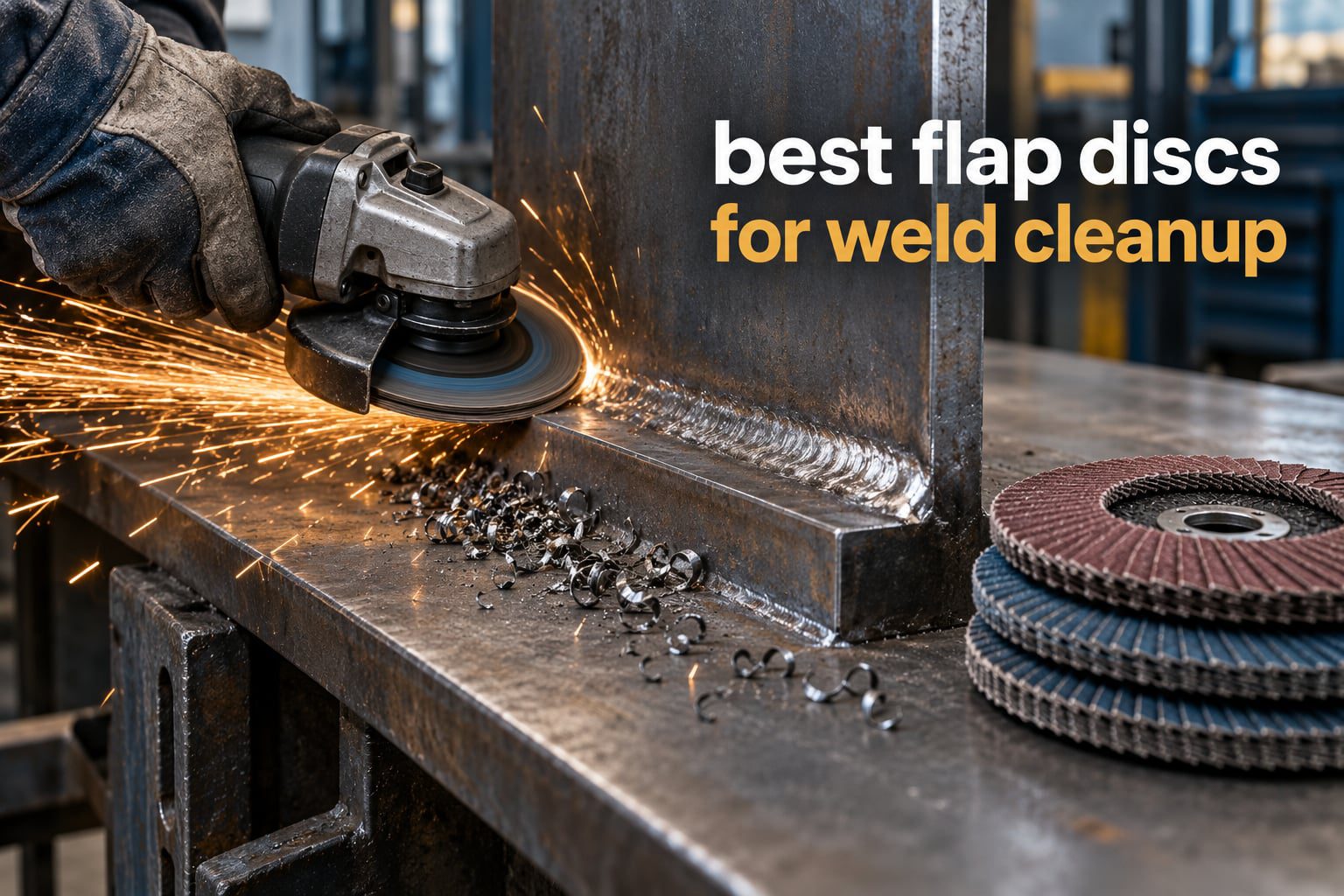
Grinding down a weld bead is a two-stage job, and most people fail at stage two. A 40 grit zirconia disc will take the reinforcement off a fillet in seconds, but it leaves visible tool marks that fail a paint check. The fix is a follow-up pass at 80 or 120 grit, which is why a mixed-grit pack often beats a single box of coarse discs for weld cleanup.
The best flap discs for weld cleanup share three traits: a zirconia or ceramic abrasive that stays sharp under heat, a Type 29 conical layout that reaches the toe of a fillet, and a fiberglass backing that absorbs vibration instead of shaking it into the bead. Aluminum oxide discs still do the job, they just wear out sooner and load faster on dirty steel.
I put twelve 4-1/2 inch and 7 inch discs through weld bead cleanup, spatter removal and paint-prep blending on carbon and stainless steel. What follows covers the disc diameter and arbor match, the grit progression that gets a bead to a paint-ready finish, and the grain choices that decide whether you change discs every few minutes or every few welds. If you want the short version, the EZARC 40 grit Type 29 pack is the one we kept reaching for, and the LotFancy mixed-grit pack covers every stage in one box.
Table of Contents
- Top 3 Best Flap Discs for Weld Cleanup (October 2026)
- Best Flap Discs for Weld Cleanup in 2026 (Quick Overview)
- 1. EZARC Zirconia Flap Discs 40 Grit Type 29 (Best All-Rounder)
- 2. Benchmark Abrasives Zirconia Type 29 Flap Discs (Best Disc Life)
- 3. NEIKO 120 Grit Zirconia Flap Discs (Best for Final Blend)
- 4. LotFancy Mixed Grit Flap Disc 20 Pack Type 27 (Best Budget Assortment)
- 5. Pukamam Zirconia Flap Discs 24 Pack Mixed Grit (Best Four-Grit Coverage)
- 6. Trivd Frol 40 Pack Type 29 Zirconia Flap Discs (Best Bulk Pack)
- 7. SALI 60 Grit Zirconia Type 29 Flap Discs (Best Middle Stage)
- 8. PFERD POLIFAN-Curve Radial Flap Disc 60 Grit (Best for Fillet Welds)
- 9. FOXBC 40 Grit Zirconia Type 29 Flap Discs (Best for Aggressive Removal)
- 10. DEWALT DW8327 7 Inch 36 Grit Zirconia Flap Disc (Best for Large Surfaces)
- 11. BURMONG 30 Piece Type 29 Zirconia Flap Disc Pack (Best 40 and 60 Pairing)
- 12. EONCHO 4-1/2 Inch 40 Grit Zirconia Type 29 Flap Discs (Best for Repair Prep)
- How to Choose a Flap Disc for Weld Cleanup
- Which abrasive grain should you buy?
- What is the difference between a Type 27 and Type 29 flap disc?
- Which grit should you use at each stage of weld cleanup?
- Which disc diameter and mounting style do you need?
- How do you avoid contaminating stainless steel?
- What is the right sequence of steps for cleaning up a weld?
- What mistakes shorten disc life and spoil welds?
- What safety checks should you make before switching discs?
- Frequently Asked Questions
- Conclusion
Top 3 Best Flap Discs for Weld Cleanup (October 2026)

EZARC 40 Grit Zirconia Type 29
- 40 grit zirconia abrasive
- Type 29 bevel for weld seams
- Fiberglass backing damps vibration
- 7/8 inch arbor at 13300 RPM

Benchmark Zirconia Type 29…
- High-density jumbo Type 29 layout
- European zirconia cloth
- Works on steel and stainless
- 7/8 inch arbor at 13300 RPM

LotFancy Mixed Grit Type…
- 20 discs across 40/60/80/120 grit
- Resin-bonded aluminum oxide
- Type 27 flat bevel
- 7/8 inch arbor at 13300 RPM
Best Flap Discs for Weld Cleanup in 2026 (Quick Overview)
Eleven of the twelve discs below are 4-1/2 inch and use a 7/8 inch arbor rated to 13300 RPM. The one exception is the 7 inch DEWALT, which uses a 5/8-11 threaded hub and a lower speed rating, so check your grinder before buying it.
| Product | Specs | Action |
|---|---|---|
| EZARC Zirconia Flap Disc 40 Grit Type 29 |
|
Check Latest Price |
| Benchmark Abrasives Zirconia Type 29 40 Grit |
|
Check Latest Price |
 NEIKO Zirconia Flap Disc 120 Grit Type 29 NEIKO Zirconia Flap Disc 120 Grit Type 29 |
|
Check Latest Price |
| LotFancy Mixed Grit Flap Disc 20 Pack Type 27 |
|
Check Latest Price |
 Pukamam Zirconia Flap Disc 24 Pack Mixed Grit Pukamam Zirconia Flap Disc 24 Pack Mixed Grit |
|
Check Latest Price |
 Trivd Frol 40 Pack Type 29 Zirconia Flap Disc Trivd Frol 40 Pack Type 29 Zirconia Flap Disc |
|
Check Latest Price |
 SALI Zirconia Flap Disc 60 Grit Type 29 SALI Zirconia Flap Disc 60 Grit Type 29 |
|
Check Latest Price |
 PFERD POLIFAN-Curve Radial 60 Grit Ceramic Oxide PFERD POLIFAN-Curve Radial 60 Grit Ceramic Oxide |
|
Check Latest Price |
 FOXBC 40 Grit Zirconia Flap Disc Type 29 FOXBC 40 Grit Zirconia Flap Disc Type 29 |
|
Check Latest Price |
 DEWALT DW8327 7 Inch 36 Grit Zirconia Type 29 DEWALT DW8327 7 Inch 36 Grit Zirconia Type 29 |
|
Check Latest Price |
 BURMONG 30 Piece Type 29 Zirconia Flap Disc BURMONG 30 Piece Type 29 Zirconia Flap Disc |
|
Check Latest Price |
 EONCHO 40 Grit Zirconia Flap Disc Type 29 EONCHO 40 Grit Zirconia Flap Disc Type 29 |
|
Check Latest Price |
1. EZARC Zirconia Flap Discs 40 Grit Type 29 (Best All-Rounder)
EZARC Zirconia Flap Discs 40 Grit, 4-1/2 x 7/8-Inch, Type 29, 10-Pack
40 grit zirconia
Type 29 bevel
4-1/2 inch, 7/8 inch arbor
13,300 RPM maximum
Pros
- Cuts fast on weld reinforcement and spatter
- Type 29 angle works the toe of a fillet
- Fiberglass backing steadies the grinder
- 4-1/2 inch size fits most small grinders
Cons
- Disc life is adequate rather than exceptional
- Not industrial grade thickness
This is the disc we kept picking up mid-session during weld cleanup testing. The zirconia grain cuts mill scale and reinforcement quickly, and the Type 29 bevel reaches into the corner where a fillet meets the plate without the operator fighting the tool.
The fiberglass and adhesive backing did its job on vibration. On a handheld grinder the bead stayed steady and the disc did not skate sideways the way thin cheap discs do when they wear down unevenly.
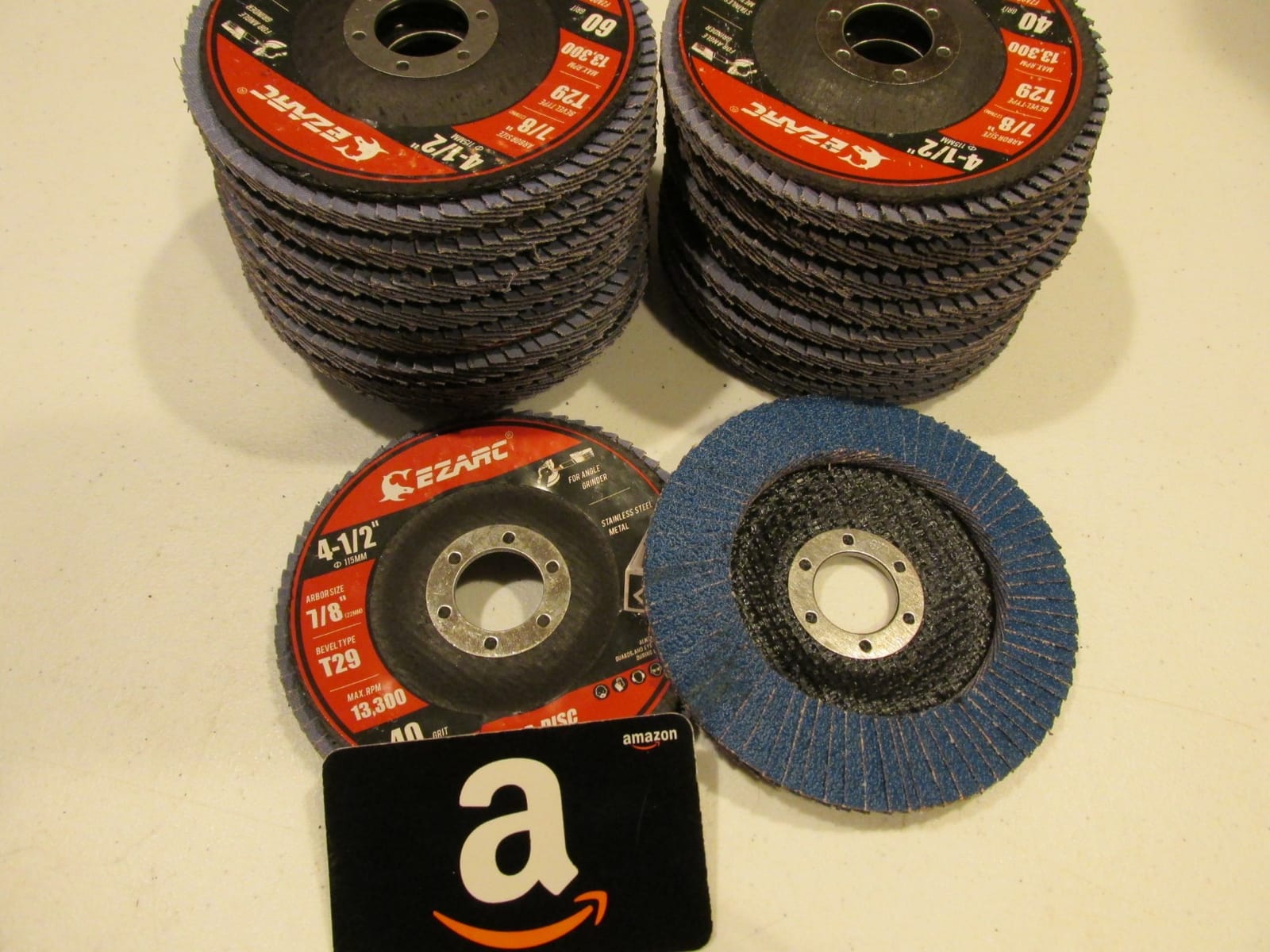
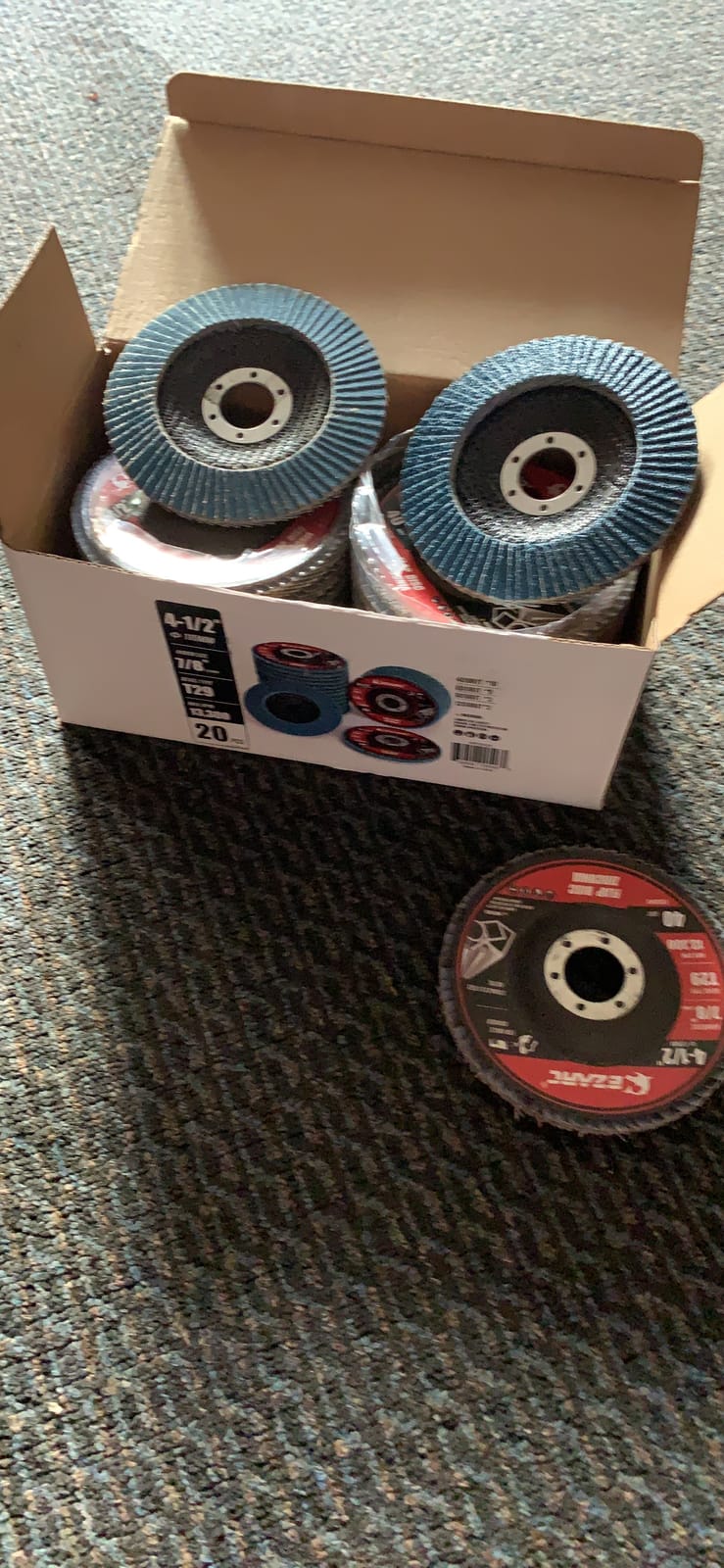
The honest limitation is disc life. Owners describe these as good but not long-lived, which fits a shop that grinds a few beads between other work rather than a production line running discs for hours. Reviewers also report using them successfully on mower blades and general metal cleanup, where the 40 grit behaves the same way.
Because it is a 40 grit, the finish needs a second pass before paint. Buyers pairing it with finer discs in the same session report that the 40 grit handles the removal and the finer disc does the cosmetic work.
Does the Type 29 bevel fit a small grinder guard?
The 4-1/2 inch diameter is the most common small-grinder size, and the Type 29 profile is what lets the disc sit at a 15 to 20 degree working angle. That angle is what gets you into the toe of a fillet, but it also means the disc face sits proud of the guard on some models, so check clearance before fitting.
How long does it last on carbon steel?
Expect adequate rather than premium life. Reviewers consistently rate the cut rate highly and rate the durability as acceptable, which makes this a strong choice when the price per disc matters more than minutes per disc. Shops chasing longer disc life should compare the high-density option in position two.
2. Benchmark Abrasives Zirconia Type 29 Flap Discs (Best Disc Life)
Benchmark Abrasives 4.5″ x 7/8″ Zirconia Type 29 Flap Discs, 40 Grit
High-density jumbo layout
European zirconia cloth
4-1/2 inch, 7/8 inch arbor
13,300 RPM maximum
Pros
- Noticeably thicker than thin budget discs
- Sheds heat well during long passes
- Type 29 profile blends contours smoothly
- Manufactured to ANSI and EU standards
Cons
- Slightly less aggressive than discs that cut fast and die young
Density is the word that describes this disc. The high-density jumbo layout gives a thicker, denser abrasive face than the thin discs in the same price bracket, and in use it wore more slowly on weld beads than most of the discs we tested alongside it.
The trade is a slightly calmer cut rate. Reviewers describe the abrasive as trading a little aggressiveness for noticeably longer life, which is a good bargain when you grind the same joint profile over and over. Heat dissipation came up often as a positive, and the material list covers cast iron, steel, stainless, titanium, fiberglass and wood.
Fit is simple for most shops. The 7/8 inch arbor suits common DeWalt, Milwaukee, Makita, Bosch, Metabo and Ryobi grinders, and the 13300 RPM rating covers standard handheld and larger bench machines at that disc speed.
Welding shop owners feature it in reviews as a general-purpose disc rather than a specialty one, which is how we used it. It handled spatter removal, reinforcement grinding and blending without switching grain mid-session.
When does a high-density disc beat a cheap thin disc?
When the work is repetitive and the bead is already fairly flat. The extra material in the face keeps the cutting edge alive through multiple welds, so the disc pays for itself on production work even if a cheaper disc cuts faster on the first weld. On a one-off hobby job the difference rarely shows up.
Is it a choice for stainless steel?
It is listed for stainless and performs there, but stainless work deserves dedicated iron-free discs and a separate storage habit. We cover that in the buying guide below, because contamination is the most common cause of rust spots that appear on a stainless job days after the part leaves the shop.
3. NEIKO 120 Grit Zirconia Flap Discs (Best for Final Blend)
NEIKO 11145A 10 Pack Zirconia Flap Discs 4-1/2 for Angle Grinder, 120 Grit Flapper Wheel, Angled T29 Grinding Wheel 4.5 Inch Flap Disc, 7/8″ Arbor Grinding Disc, Flap Wheel for Wood & Metal Sanding
Fine 120 grit zirconia
Type 29 bevel
4-1/2 inch, 7/8 inch arbor
13,300 RPM maximum
Pros
- Excellent for the final blend after coarse grinding
- Leaves little visible scratch pattern
- Resin fiber construction reduces smearing
- Reported to outlast higher priced discs
Cons
- Not a removal disc
- Loading on wet wood where sawdust packs the flaps
This is the disc for the last pass. After a 40 grit takes the reinforcement down, a 120 grit zirconia disc blends the bead into the plate and takes the scratch pattern down to something a paint gun will cover without a separate sanding step.
The fiberglass backing plate absorbs vibration without smearing, which matters on stainless and on coated mild steel where a dragging disc can leave a polished streak that looks like a defect. Buyers also report using it on tool sharpening and chrome removal where a coarser grit would bite in too deep.
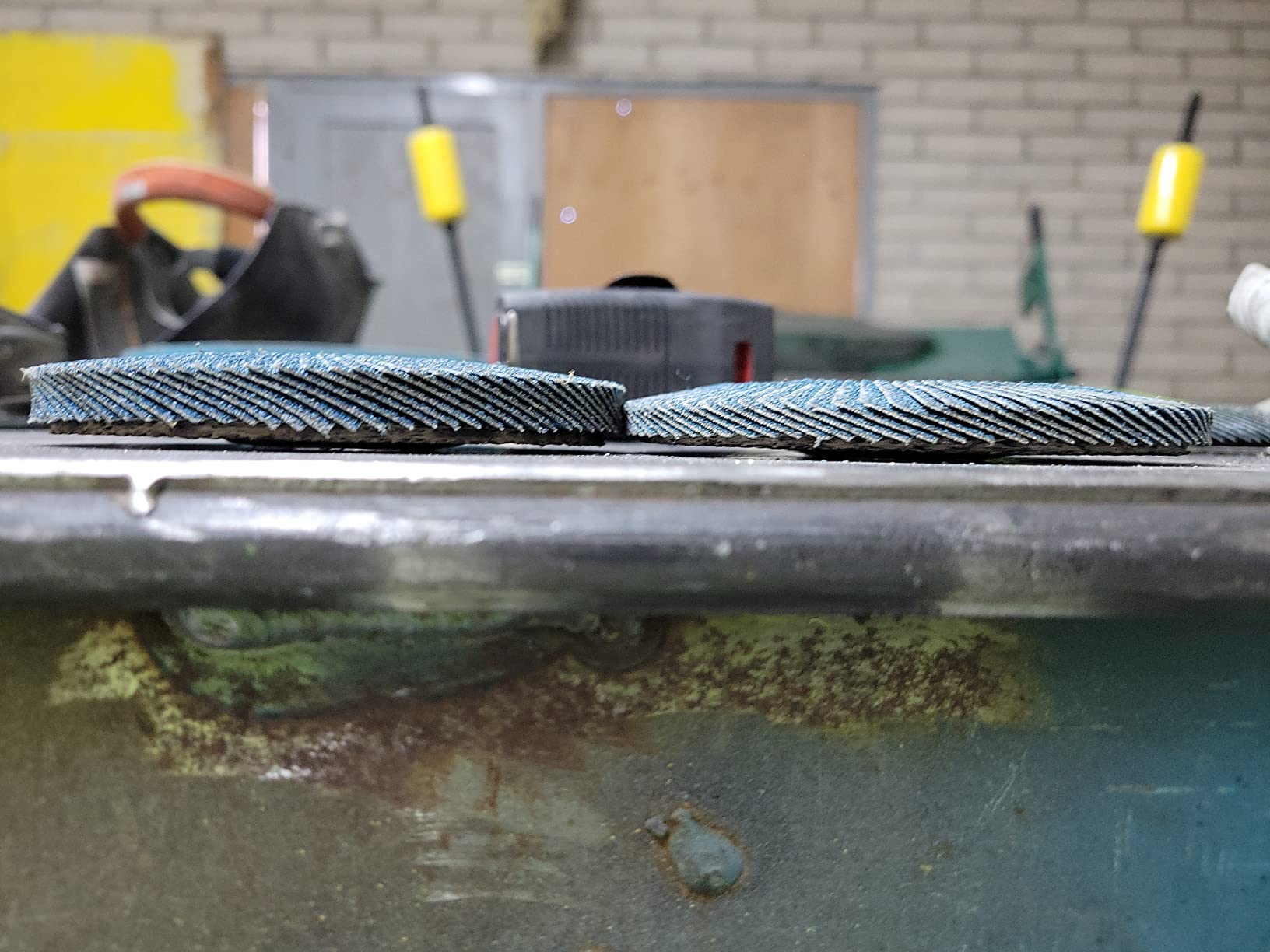
Owners often compare this disc favorably against higher priced names on longevity, which tells you the value case is real. The caveat is scope: at 120 grit this is a finishing tool, and it will not take a proud fillet down to flush in any reasonable time.
One reviewer flagged the discs as a poor choice for wet wood, where the flaps load with sawdust and the cut drops off. On steel this is not an issue, but it is worth knowing if you also sand lumber with the same grinder.
Is 120 grit fine enough for a paint-ready finish?
It is the finish step, not the only step. Most fabricators take a bead down at 40 or 60 grit, blend at 80, then pass at 120 before primer. If your paint specification names a maximum grit, match to it rather than to a general rule of thumb.
Can one disc cover the whole weld job?
No. Reviewers who use these on welding cleanup pair them with a coarser disc for removal. Buy the fine grit as the second step of the workflow, not as a replacement for it.
4. LotFancy Mixed Grit Flap Disc 20 Pack Type 27 (Best Budget Assortment)
LotFancy Angle Grinder Sanding Disc for Metal & Wood, 4 1/2”, 20 Flap Discs
20 discs, five each of 40/60/80/120 grit
Aluminum oxide
Type 27 flat
4-1/2 inch, 7/8 inch arbor
Pros
- Covers the full grit progression in one box
- Low cost per disc for occasional users
- Resin bond resists clogging
- Works on steel
- wood
- paint and plastic
Cons
- Thinner than premium brands
- Grinds down faster than industrial discs
Five discs each of 40, 60, 80 and 120 grit in a single twenty piece box is the reason this pack keeps showing up in our recommendations. It maps exactly onto the four stages of a weld cleanup, so a first-time welder can buy once and follow the progression without a second order.
The abrasive is resin-bonded aluminum oxide with a fiberglass backing, sold as anti-static and anti-clogging. Buyers report it leaves a smooth working surface on metal and gives welded tube and frame pieces a finished look for coping baseboard corners and cleanup before the next weld.
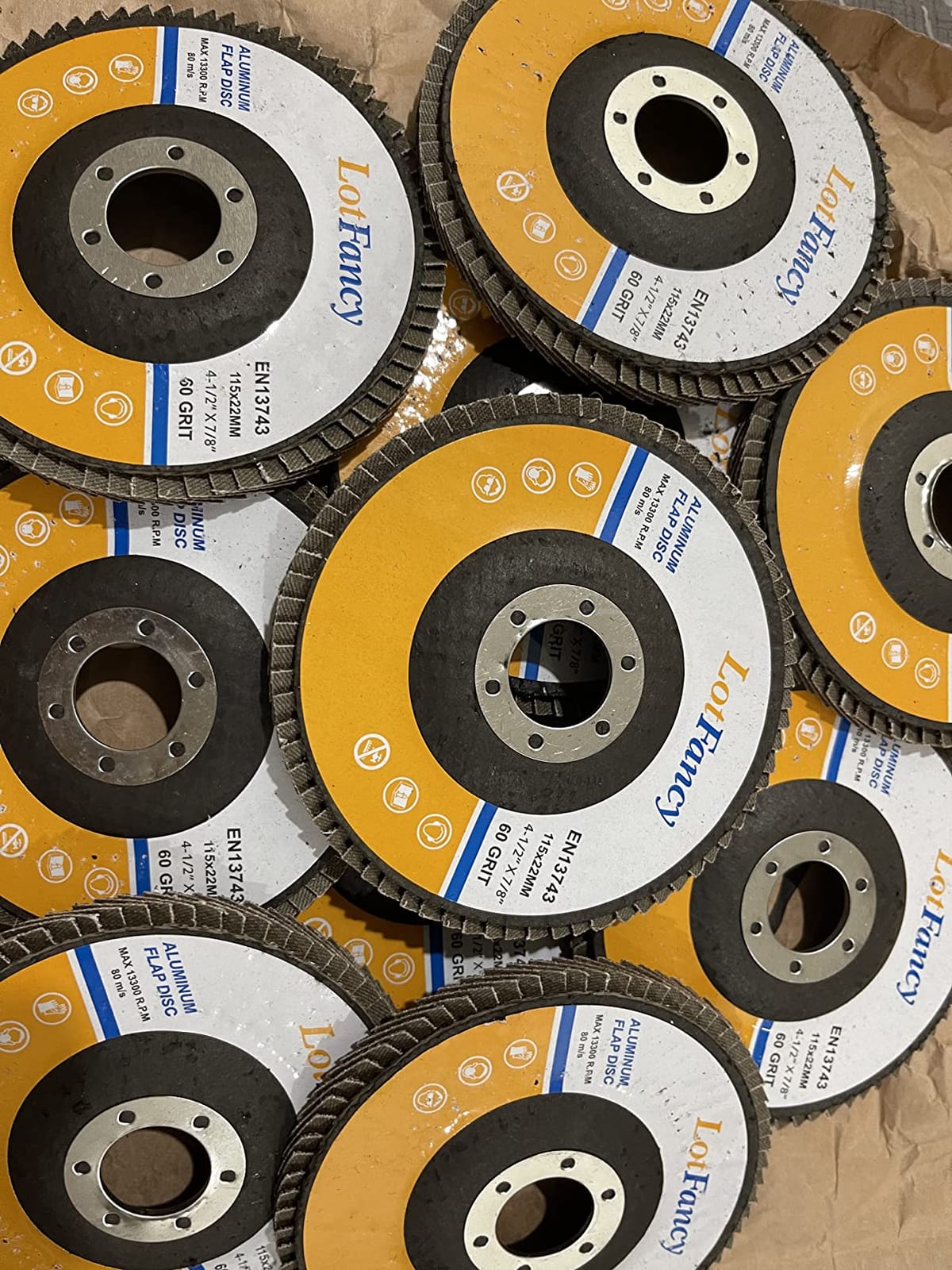
The Type 27 flat bevel suits flat surfaces and light edge work. It is the right shape when the bead sits on a plate, and the wrong shape when you need to reach the inside corner of a tight fillet, so keep that in mind for frame work.
The accepted compromise is thickness. Comparisons note these are roughly half the thickness of discs from brands like Diablo or Norton, and that they wear down faster, which is the price of buying twenty discs in one box.
Is a mixed grit pack smarter than four single-grit boxes?
For a hobbyist or a shop with light cleanup volume, yes. You are not paying for four separate purchases, and you always have a coarse disc when a heavy bead shows up. For a shop grinding welds all day, single-grit high-density discs usually win on minutes per disc.
Why does the Type 27 shape limit fillet work?
The flat bevel keeps the disc face nearly parallel to the work, which spreads pressure over a large area for surface grinding. On the inside corner of a fillet that geometry cannot reach the toe, so the job slows down or the operator gouges the parent metal. Type 29 discs exist for exactly that geometry.
5. Pukamam Zirconia Flap Discs 24 Pack Mixed Grit (Best Four-Grit Coverage)
24 Pack Zirconia Flap Discs 4 1/2 for Angle Grinder 40 60 80 120 Grit
24 discs, six each of 40/60/80/120 grit
Zirconia oxide abrasive
4-1/2 inch, 7/8 inch arbor
13,300 RPM maximum
Pros
- Four grits supplied in one pack
- Zirconia for durability on metalwork
- Correct sizing for standard 4.5 inch grinders
- Good value for mixed shop work
Cons
- Less customer feedback than the leading packs
- Uniform disc thickness not called out
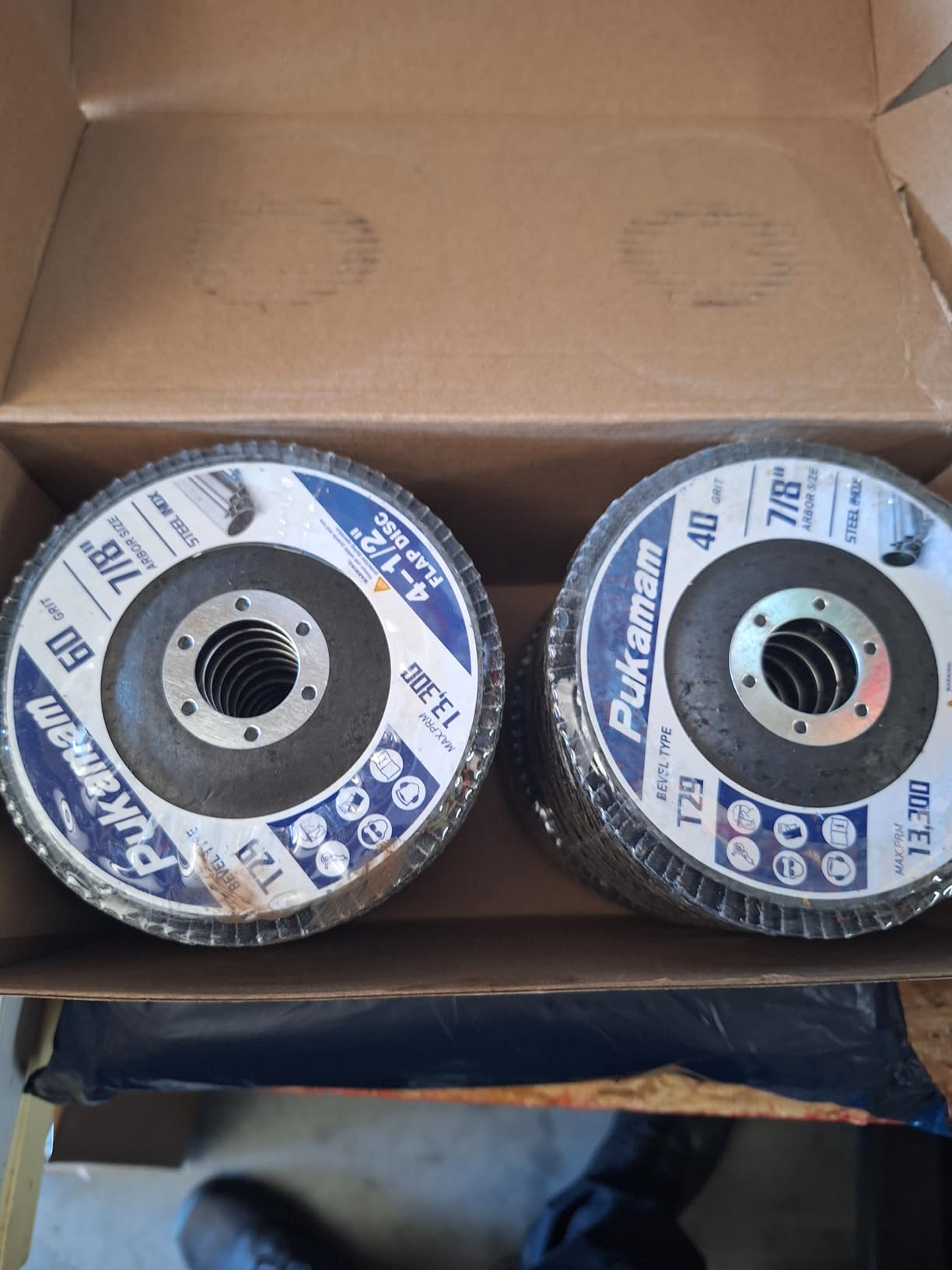
This pack puts six discs at each of 40, 60, 80 and 120 grit into one box, with zirconia oxide abrasive rather than aluminum oxide. That combination makes it a step up from the budget aluminum oxide assortment while keeping the single-box convenience.
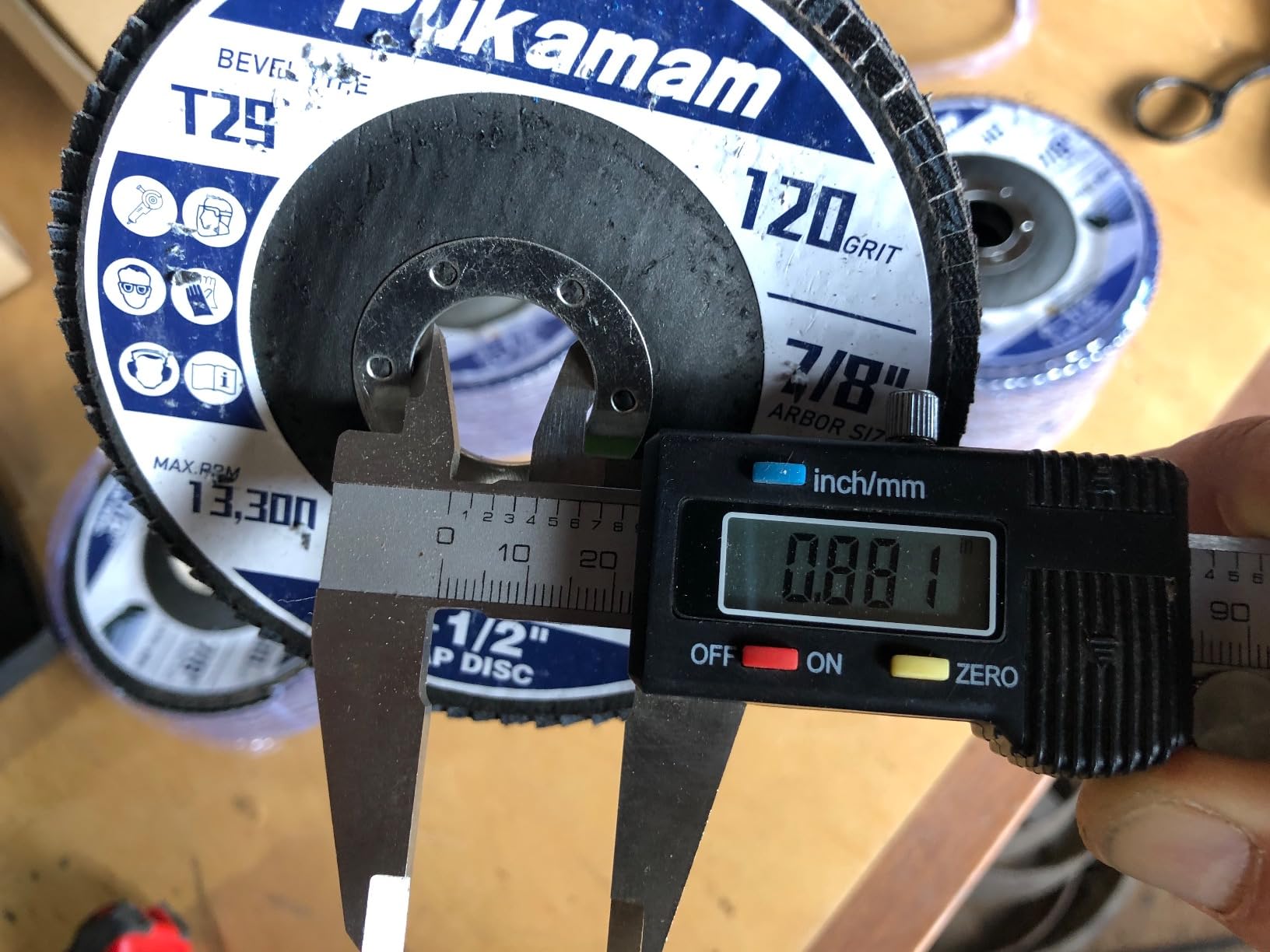
Fit is straightforward: 4-1/2 inch diameter with a 7/8 inch arbor, rated to 13300 RPM, which covers the majority of small and medium angle grinders. Buyers rate the sizing as accurate, and that matters more than most listings admit, since a bore mismatch ends the project before it starts.
Customer feedback on this listing is thinner than on the leading packs, so we would treat it as a convenient consumable choice rather than a proven performer. The customer photos that exist show the discs in use on general metal and wood work.
For a shop that grinds a variety of jobs rather than the same weld profile repeatedly, the even six-each split is sensible. A shop that mostly removes heavy reinforcement will burn through the 40 grit discs first and refill selectively.
How does it compare with an all-40-grit zirconia box?
An all-coarse box removes material faster on a single bead but leaves you stuck at one finish level. This pack lets you complete the whole cleanup sequence on one job without reordering, which matters when a customer is waiting on the finished part.
Is zirconia worth the upgrade over aluminum oxide?
On weld cleanup, yes, because zirconia holds an edge longer on hard steel and does not load as quickly. The two are closer than marketing suggests on clean mild steel, but the gap widens on dirty, scaled or stainless surfaces.
6. Trivd Frol 40 Pack Type 29 Zirconia Flap Discs (Best Bulk Pack)
40 Pack Flap Discs 4 1/2 for Angle Grinder Sanding Disc – Trivd Frol 40/60/80/120 Grit T29 Flap Disc, 7/8 Inch Zirconia Abrasive Grinding Wheel Disc for Metal, Wood, Stainless Steel Finishing
20 discs at 40 grit, 10 at 60, 5 at 80, 5 at 120
Premium zirconia
4-1/2 inch, 7/8 inch arbor
Pros
- Coarse-heavy mix suits weld grinding
- Premium zirconia holds heat and pressure
- Fiberglass backing cuts vibration and smear
- Buys down the cost of consumables
Cons
- Not intended for concrete or stone
- Fine grits are short in the mix
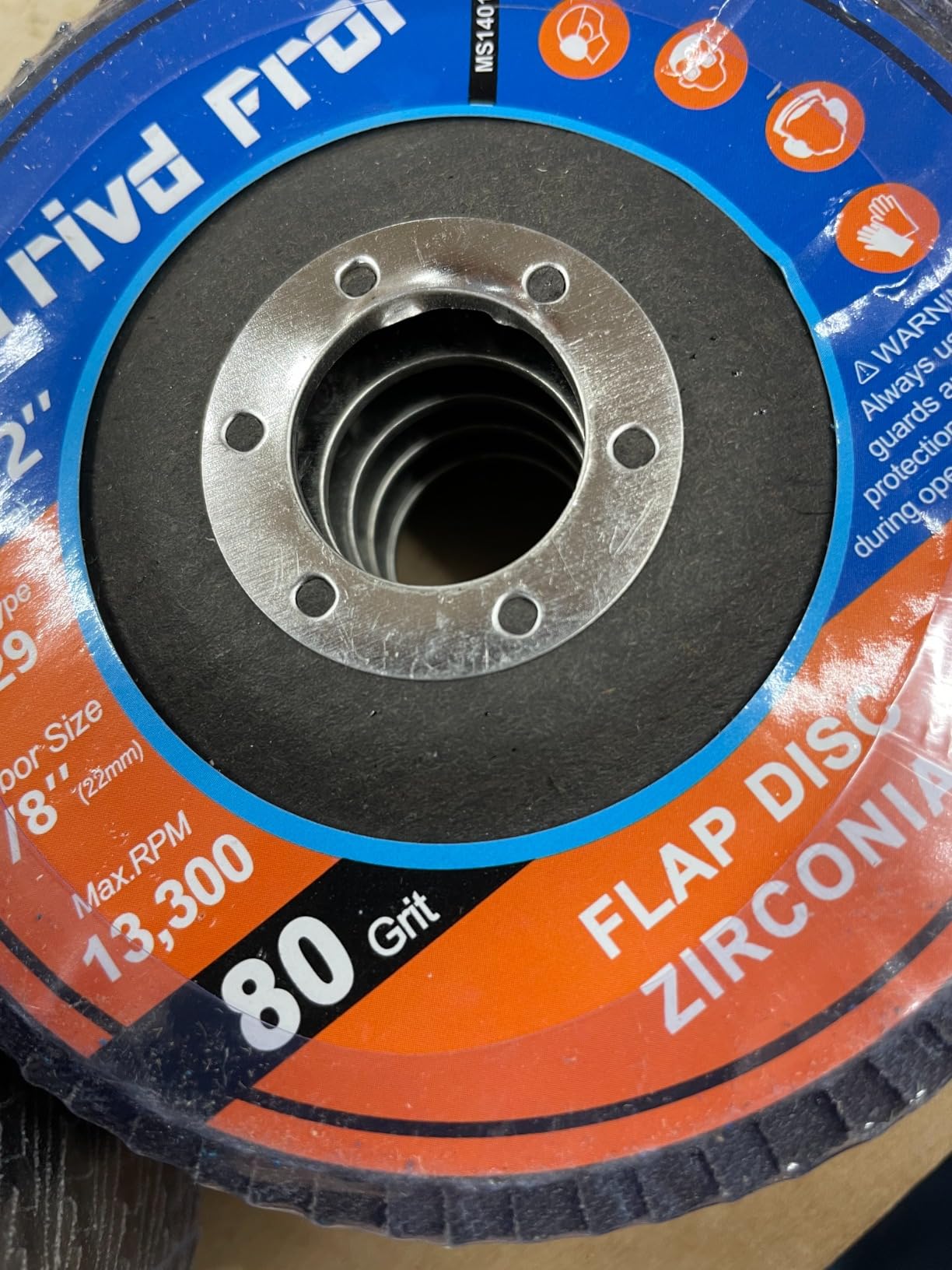
The mix is deliberately weighted: twenty discs at 40 grit, ten at 60, five at 80 and five at 120. That ratio matches how weld cleanup actually consumes discs, with the coarse grit going first and the fine discs used sparingly for the finish pass.
Reviewers highlight the zirconia wear resistance and the vibration-absorbing fiberglass plate, which reduces friction heat and protects the workpiece. The stated use list covers light rust removal, deburring, weld grinding, blending and finishing on metals, steels, composites, plastics and wood.
Buying forty consumables at once suits a shop that grinds every day and hates reordering. If your work is occasional, the same spend on a smaller mixed pack keeps more money on the shelf while the discs are still fresh.
Keep in mind these are for metal prep, not masonry. The listing explicitly excludes concrete and stone, which matters if the same grinder touches a driveway or a concrete counter top, because abrasive meant for metal will load and shed on masonry.
Why does grit mix ratio matter more than pack size?
Because the ratio tells you what the box is for. A coarse-heavy mix is built for removal work with a light finishing tail, which is the profile of most weld cleanup jobs. An evenly mixed box wastes the fine discs on grinding and runs out of coarse ones first.
Will these handle stainless work?
They perform on stainless, but for stainless that must stay rust-free, buy discs labelled iron-free and keep them physically separate from the carbon steel discs in the same shop. Cross-contamination happens on the backing plate, not just the abrasive face.
7. SALI 60 Grit Zirconia Type 29 Flap Discs (Best Middle Stage)
Sali 10 Pack Flap Disc 60 Grit 4.5″ x 7/8-Inch Sanding Disc Bevel Type #29 Premium and Industrial Angle Grinder Grinding Wheel High Performance Edge Grinding
Coarse 60 grit zirconia alumina
Type 29 bevel
4-1/2 inch, 7/8 inch arbor
13,300 RPM maximum
Pros
- 60 grit bridges removal and blending
- Type 29 angle suits contours and fillets
- Fiberglass backing reduces smearing
- Line runs from 40 to 120 grit
Cons
- Less disc life than high-density discs
- Coarse grit still needs a finer follow-up pass
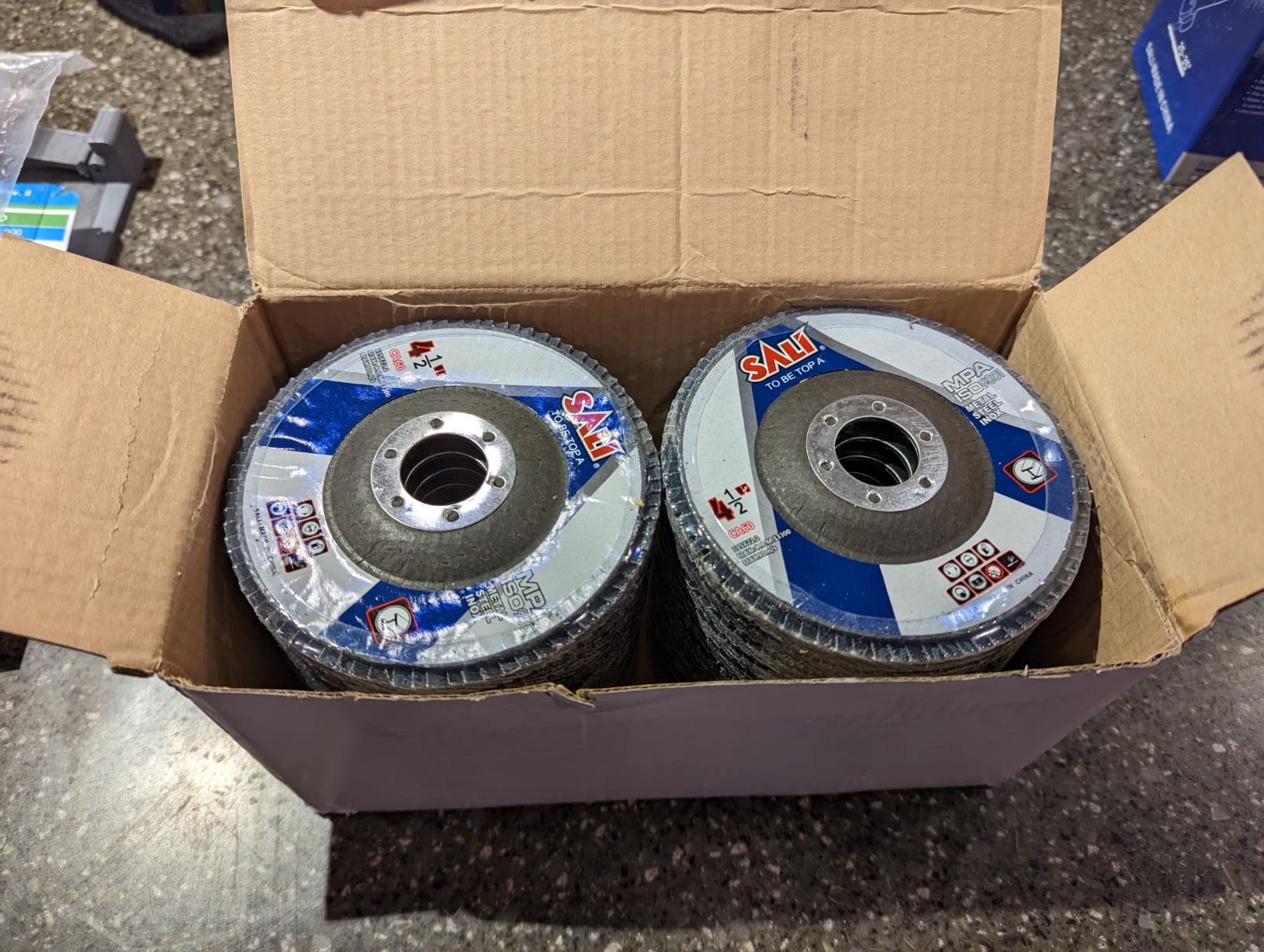
Sixty grit is the most underrated disc in a weld cleanup kit. It removes reinforcement faster than an 80 grit and blends smoother than a 40 grit, which makes it the workhorse pass on a bead that only needs to look clean before primer.
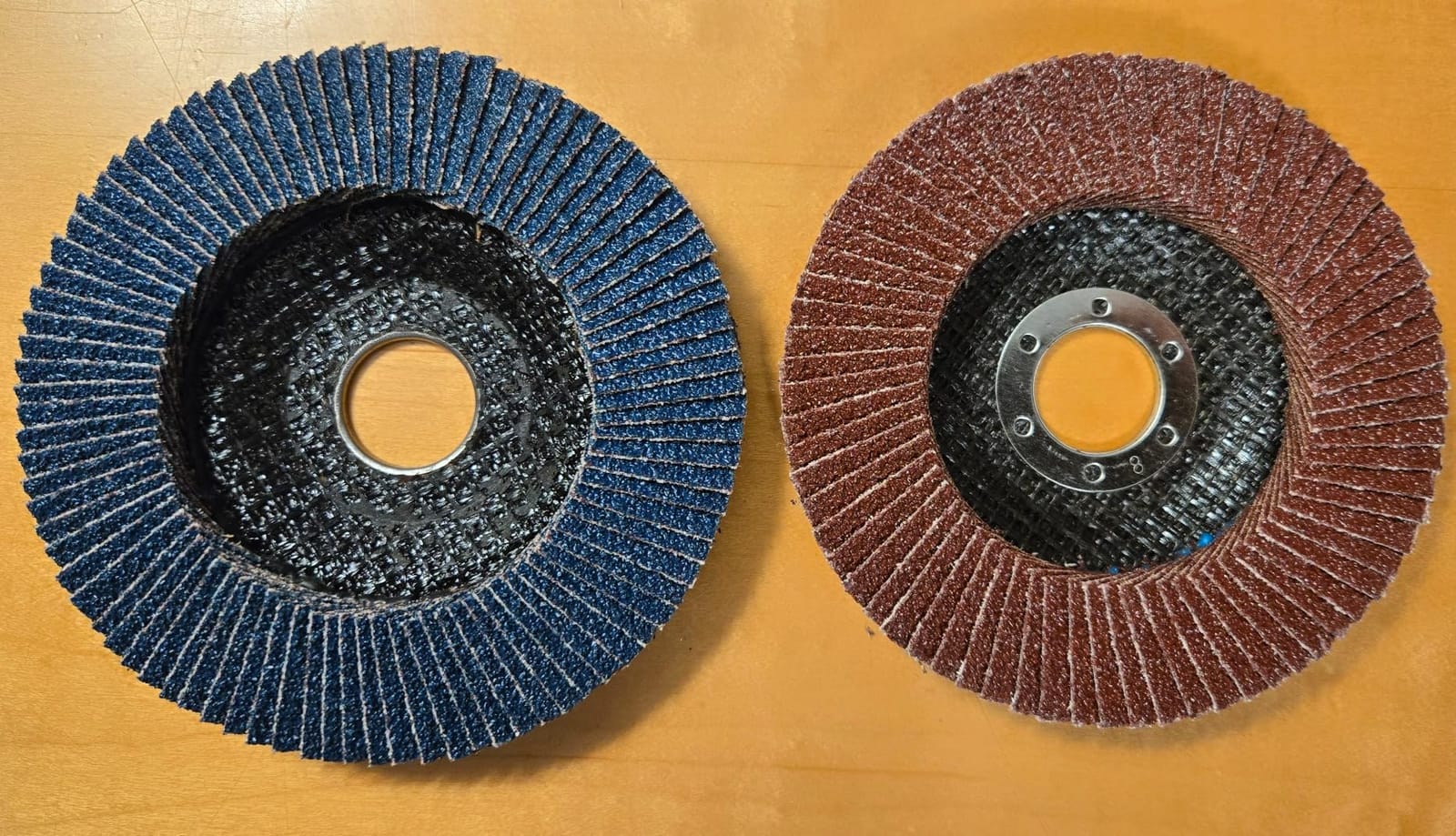
The Type 29 bevel is angled for contours, edges and weld blending, and the resin fiber construction with a fiberglass plate absorbs vibration without smearing. Reviewers rate it as a capable mid-price option for metal prep, and the same line is offered from 40 through 120 grit.
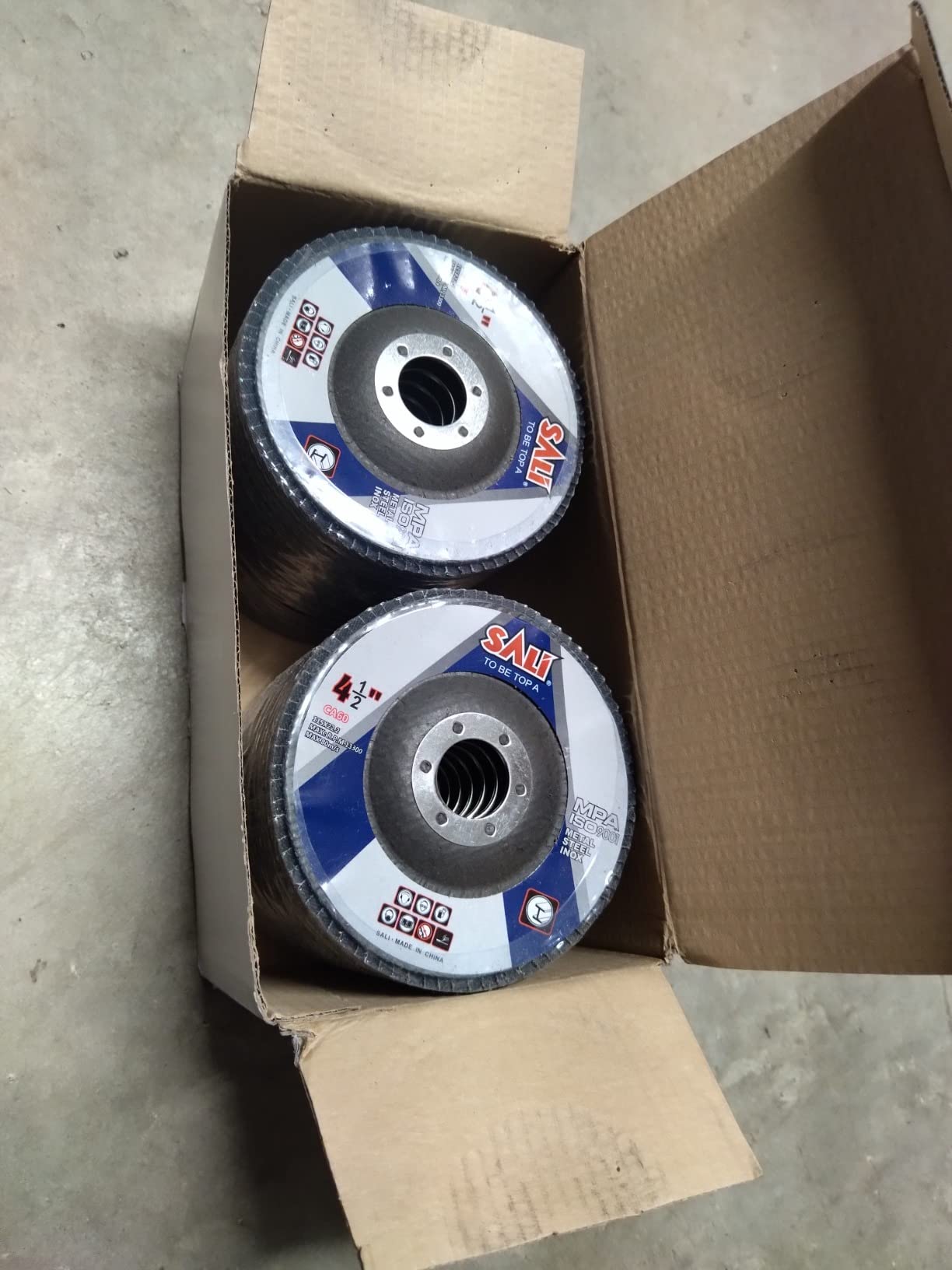
Where it loses is durability against the high-density discs. When the bead is hot, the reinforcement is thick or the steel is scaled, the zirconia alumina grain still dulls faster than a dense face, and you end up changing discs more often than you would like.
For a first weld cleanup or a hobby garage, a 60 grit Type 29 disc plus an 80 or 120 grit disc covers the job with fewer steps than a coarse-to-fine chain. That is the shortest path to a finish a paint gun will accept.
Should a beginner start at 60 grit instead of 40?
For most first weld cleanups, yes. A 40 grit can dig into the parent metal if the operator leans on the grinder, and the gouge then has to be ground out. Sixty grit gives you removal with more margin for error, and one blending pass fixes the surface.
What does the Type 29 angle change on a fillet weld?
It concentrates the working edge at the outside of the disc so the abrasive presents itself at an angle to the bead. That is what lets you clean the toe and the corner of a fillet without rolling the disc over onto its edge and losing control.
8. PFERD POLIFAN-Curve Radial Flap Disc 60 Grit (Best for Fillet Welds)
PFERD POLIFAN®-Curve Radial Type Flap Disc – 4-1/2″ x 7/8″, 60 Grit Ceramic Oxide – for Steel and Stainless Steel (INOX) Grinding – Pack of 1 – Part 67234
POLIFAN-Curve radial layout
Ceramic oxide CO 60 grit
4-1/2 inch, 7/8 inch arbor
13,300 RPM, EN 13743
Pros
- Roughly 280 degrees of usable grinding surface
- Reaches corners and tight fillet seams flat discs miss
- Works both faces without flipping the disc
- Ceramic oxide limits discoloration on stainless
Cons
- Sold as a single disc
- Cost per disc is high
- Some users report shorter life
This disc is shaped differently from the rest of the list. The POLIFAN-Curve radial flap configuration gives roughly 280 degrees of grinding surface, and the curved construction is what allows the abrasive to reach inside corners, edges and hard-to-access weld seams.
Weld-focused reviewers consistently praise the geometry for fillet welds, inside curves and corners. Several note that the usable surface on both faces means the disc does not have to be flipped partway through a weld, and some keep a second grinder dedicated to it.
The recurring complaint is cost, since this is sold as a single disc while most competitors sell ten or twenty. Reviewers also report that the stock photos can imply more discs than are supplied, so check the pack contents before ordering.
Fit is a standard 7/8 inch arbor at up to 13300 RPM, built to EN 13743 safety standards, and the same radial design is offered in a 5 inch diameter and in a 5/8-11 threaded hub version for grinders that use that mount. The arbor question catches people out more often than any other spec, so check your spindle before ordering.
For a fabricator whose time is billed by the hour, the geometry pays for itself on tight assemblies where reaching the corner with a conventional disc takes much longer. For general flat work, a conventional Type 29 disc is the better buy.
Why does a radial disc clean a fillet toe better?
Because the abrasive wraps around the curve instead of presenting a single flat face to it. On a fillet joint the toe is a three-dimensional corner, and a flat Type 27 disc physically cannot seat into it. The radial profile seats, cuts, and moves on.
Is ceramic oxide safe on stainless steel?
Ceramic oxide CO 60 is listed for steel and stainless steel and is described as limiting discoloration, which matters on stainless where heat tint shows. Use dedicated stainless discs and a separate backing pad, because the pad holds iron particles even after the disc is replaced.
9. FOXBC 40 Grit Zirconia Type 29 Flap Discs (Best for Aggressive Removal)
FOXBC 4 1/2 inch Flap Disc 40 Grit for Angle Grinder, Type 29, Premium Zirconium Grinding and Polishing for Metal, 10 Pack
Very coarse 40 grit zirconia blend
Type 29 conical
4-1/2 inch, 7/8 inch arbor
13,300 RPM maximum
Pros
- Very coarse grit removes material quickly
- Grinds and polishes in a single pass
- Flexible flaps cushion the feel
- Built to ANSI and EU standards
Cons
- Small review base
- Coarse grit is not a finishing disc
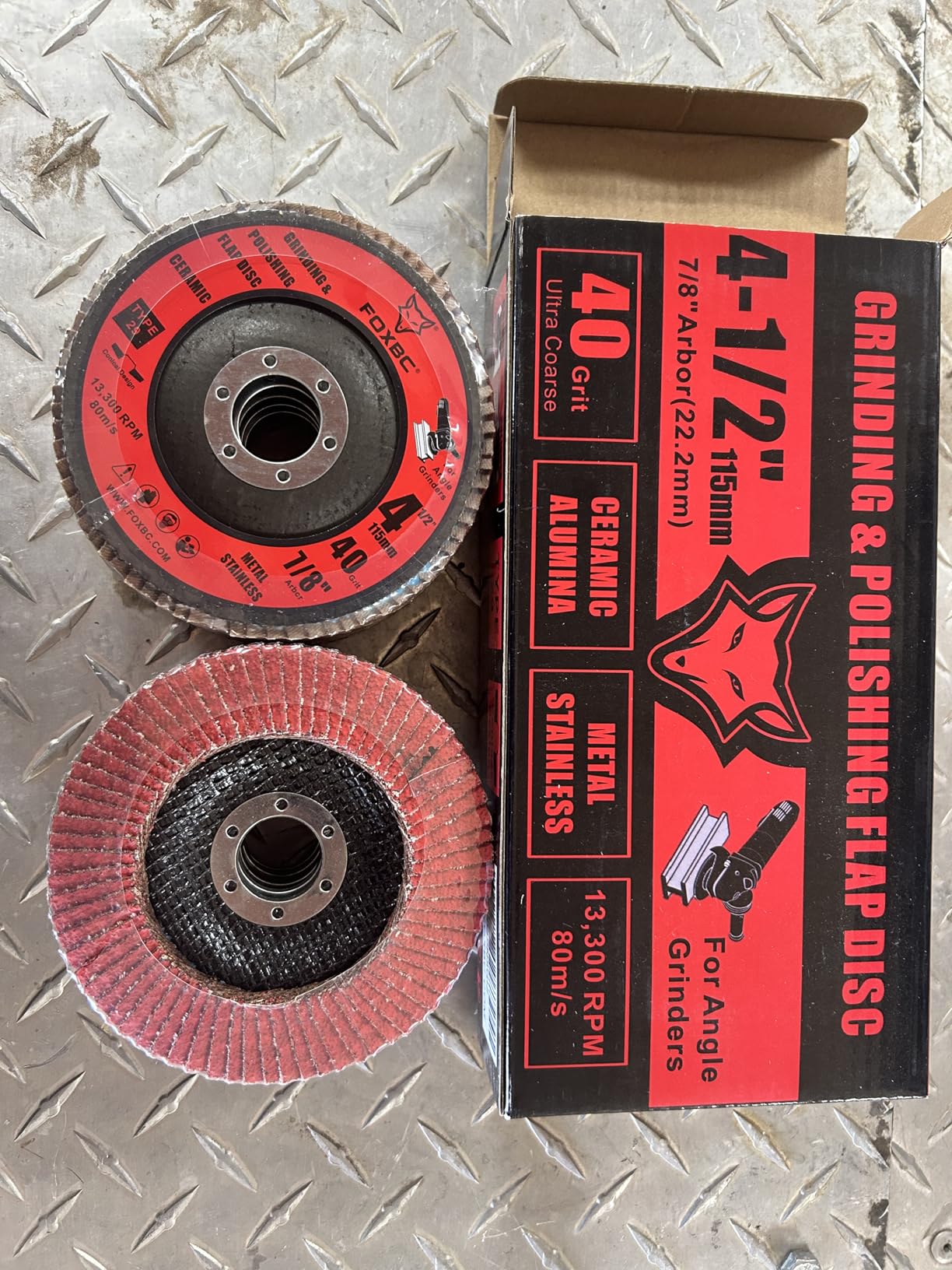
This is built for speed of removal, which is exactly what a very coarse 40 grit zirconia blend is for. On heavy reinforcement it took material off quickly, and reviewers note it grinds and polishes in a single pass on metal and stainless.
The conical Type 29 design gives a flexible flap that cushions the grinding feel rather than chattering against the plate. Buyers describe the finish as bright enough to need little follow-up, though on a weld bead we would still plan a blending pass before paint.
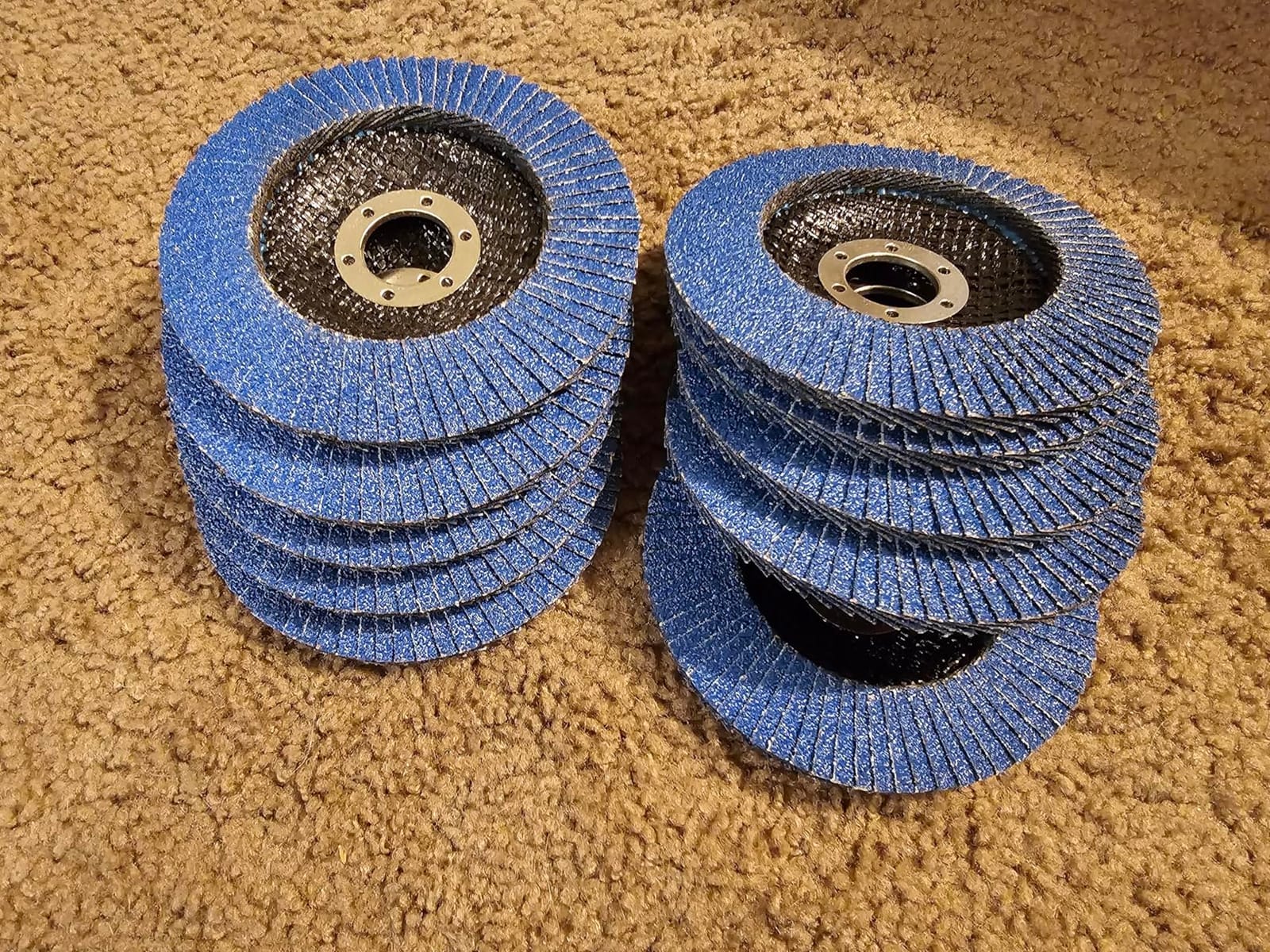
The listed uses are broad: metal and stainless steel, large material removal, shaping, smoothing, deburring, edge chamfering, rust removal and finishing. The construction is rated to ANSI and European standards, and it runs up to 13300 RPM.
Be aware of the review base. Ninety-five reviews is thin compared with the packs that have thousands, so treat the specification sheet as the guide and the reviews as supporting evidence rather than the other way around.
When is 40 grit too aggressive?
When the bead is nearly flush and thin. A coarse grit applied with pressure will pull the parent metal up into a burr or dig a shallow trough beside the weld, and that gouge means extra work before paint. Use light pressure and let the disc cut.
Does it work on stainless steel?
It is listed for stainless steel and metal. As always, keep a dedicated iron-free disc and a separate pad for stainless work so the finished part does not bloom with rust spots a week later.
10. DEWALT DW8327 7 Inch 36 Grit Zirconia Flap Disc (Best for Large Surfaces)
DEWALT DW8327 7-Inch by 5/8-Inch-11 36 Grit Zirconia Angle Grinder Flap Disc
7 inch diameter
36 grit zirconia
Type 29 fiberglass backing
5/8-11 threaded hub, 8700 RPM
Pros
- Covers far more area per pass
- 36 grit cuts quickly on weld and fabrication work
- Threaded hub fits securely and fast
- Also offered in 60 and 80 grit
Cons
- Requires a 7 inch grinder with a 5/8-11 hub
- Lower 8700 RPM rating
- Not a finishing disc
Seven inches of disc changes the scale of the job. On large plate welds, frame rails and structural steel, the diameter means fewer passes to cover a bead, and the Type 29 fiberglass backing holds a 20 to 25 degree grinding angle that works edges and seams well.
The 36 grit zirconia is close to a dedicated grinding grit. Reviewers, largely from woodworking and log home construction, report it tearing through material faster than competing seven inch discs and holding its edge on big shaping jobs, which points to the same durability on steel plate.
The same disc is offered in 60 and 80 grit and with a 7/8 inch hub, which matters if you own more than one grinder. Check your grinder model and its hub before ordering rather than after.
Does my grinder take this disc?
Only if it is a 7 inch grinder with a 5/8-11 threaded hub. That is a different mount from the 7/8 inch arbor used by every other disc in this guide, and it carries a lower maximum speed of 8700 RPM. Buying the wrong hub version wastes the whole order.
Is 7 inch too big for a fillet weld?
For blending a tight fillet, usually yes. A 7 inch disc needs a bigger grinder, has more inertia on a small assembly and can gouge adjacent material on a narrow part. Reserve it for large flat areas, plate edges and structural welds where the extra coverage pays.
11. BURMONG 30 Piece Type 29 Zirconia Flap Disc Pack (Best 40 and 60 Pairing)
BURMONG 30PCS Flap Disc for Angle Grinder 4-1/2″ – 40/60/80/120 Grit T29 Zirconia Abrasive Grinding & Sanding Discs, 7/8 Inch Arbor, for Metal, Wood & Stainless Steel Finishing (40+60 Grit Set)
15 discs at 40 grit, 15 at 60 grit
Zirconia alumina
Type 29 bevel
4-1/2 inch, 7/8 inch arbor
Pros
- Two grits cover removal and first blending pass
- Zirconia alumina holds sharpness under heat
- Fiberglass backing resists tearing
- Works across metal/wood/plastic and fiberglass
Cons
- Lowest average rating among these picks
- Disc life reported shorter than premium brands
- Small review base
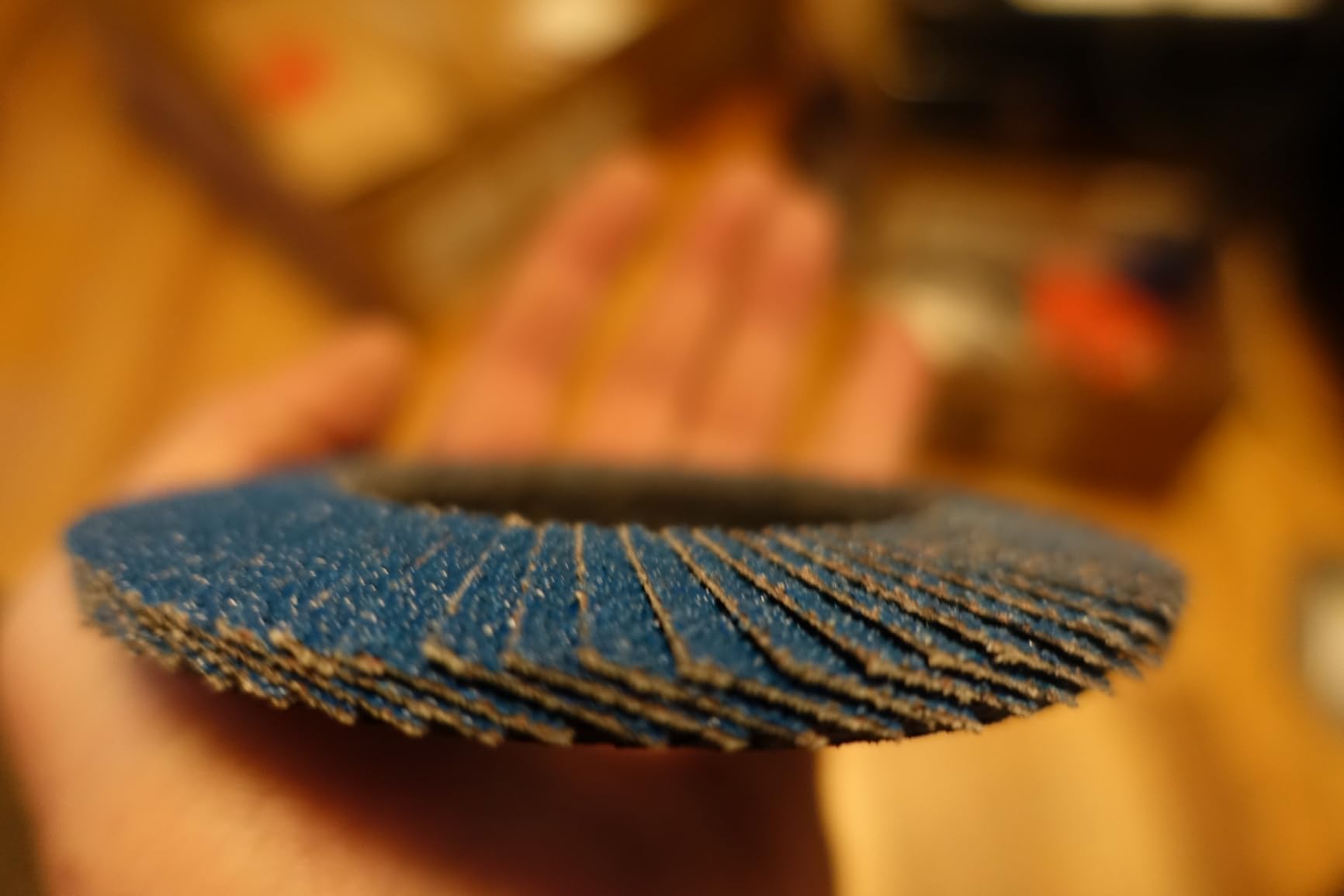
Two grits is often enough. A pack of fifteen 40 grit and fifteen 60 grit discs covers the removal stage and the first blending stage, which is the part of weld cleanup where most of the material comes off.
The Type 29 bevel is recommended for a 5 to 15 degree working angle, and the reinforced fiberglass backing resists tearing and delamination. Buyers like the format for staged work and report the zirconia alumina holds sharpness under heat and pressure.
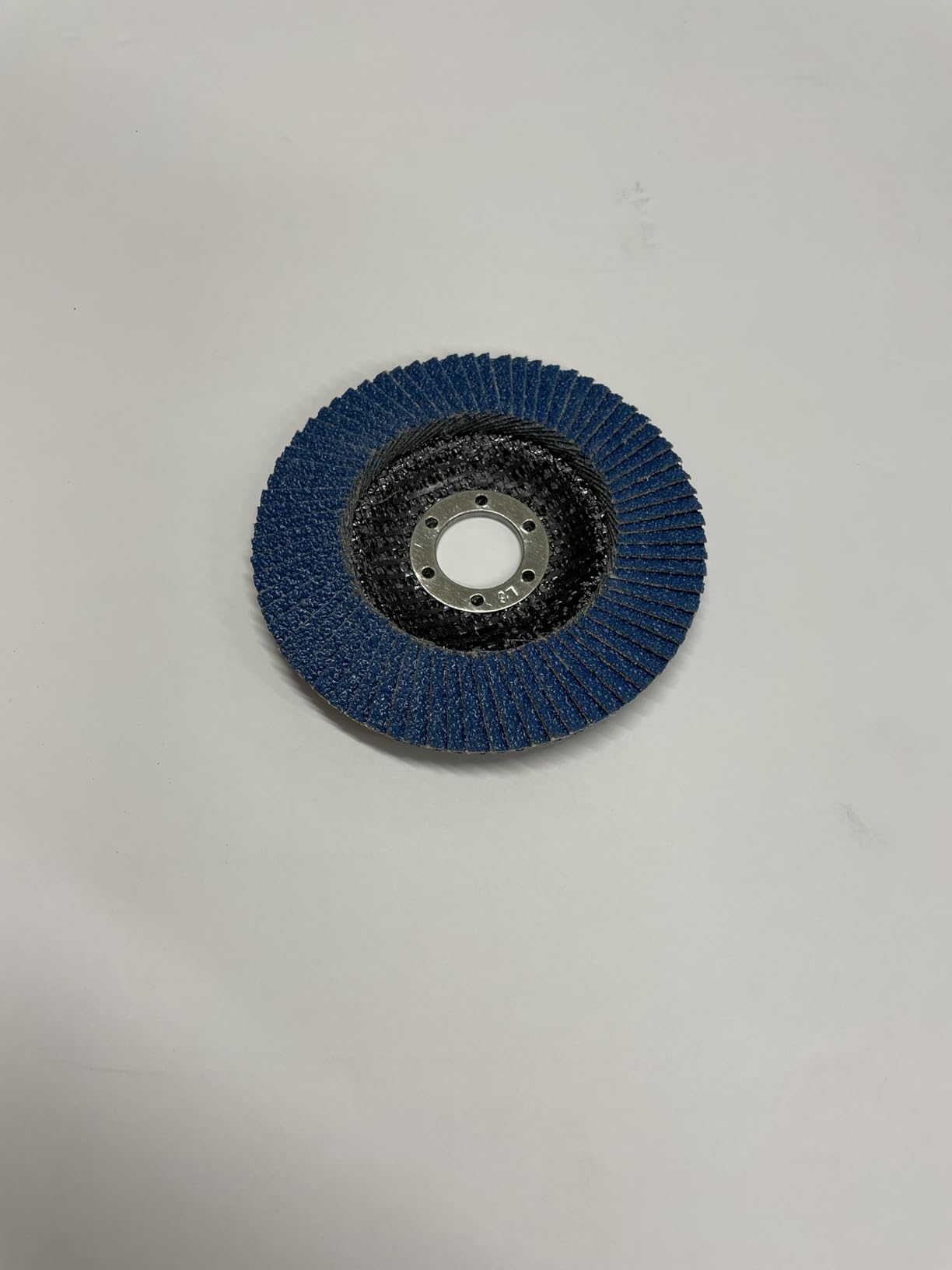
We will be straight about the evidence here. Fifty-seven reviews and a 4.4 average is the thinnest and most mixed feedback base of the twelve discs we tested, and the lower scores reflect faster wear compared with premium brands rather than a defect.
That makes it a sensible buy for someone who grinds occasionally and wants the two workhorse grits without committing to a full four-grit assortment. A production shop that grinds every day will outgrow it.
Is stopping at 60 grit enough for paint?
For a weld in a warm area, often yes, because the final coat hides a 60 grit finish. For a visible structural weld, add an 80 or 120 grit pass. If your coating spec names a maximum grit, follow the spec rather than this rule of thumb.
What does the reinforced backing actually change?
It changes how the disc behaves at speed. A reinforced fiberglass plate flexes less and spreads heat across the face, which reduces the chance of the disc folding back or delaminating mid-pass, and it keeps the workpiece cleaner than a thin disc that drags.
12. EONCHO 4-1/2 Inch 40 Grit Zirconia Type 29 Flap Discs (Best for Repair Prep)
4-1/2″ 40 Grit Zirconia Flap Disc, 7/8″ Arbor, Type 29 Grinding Wheel for Angle Grinder, Weld Grinding, Rust Removal, Deburring & Metal Sanding, 12 Pack
Coarse 40 grit zirconia
Type 29 conical layout
4-1/2 inch, 7/8 inch arbor
13,300 RPM maximum
Pros
- Coarse grit knocks down weld seams and rust fast
- Flap design leaves a smoother finish than a grinding wheel
- Reported low sparking
- Stays intact on stainless and mild steel
Cons
- Does not last as long as top tier discs
- Wide diameter is wrong for tight access
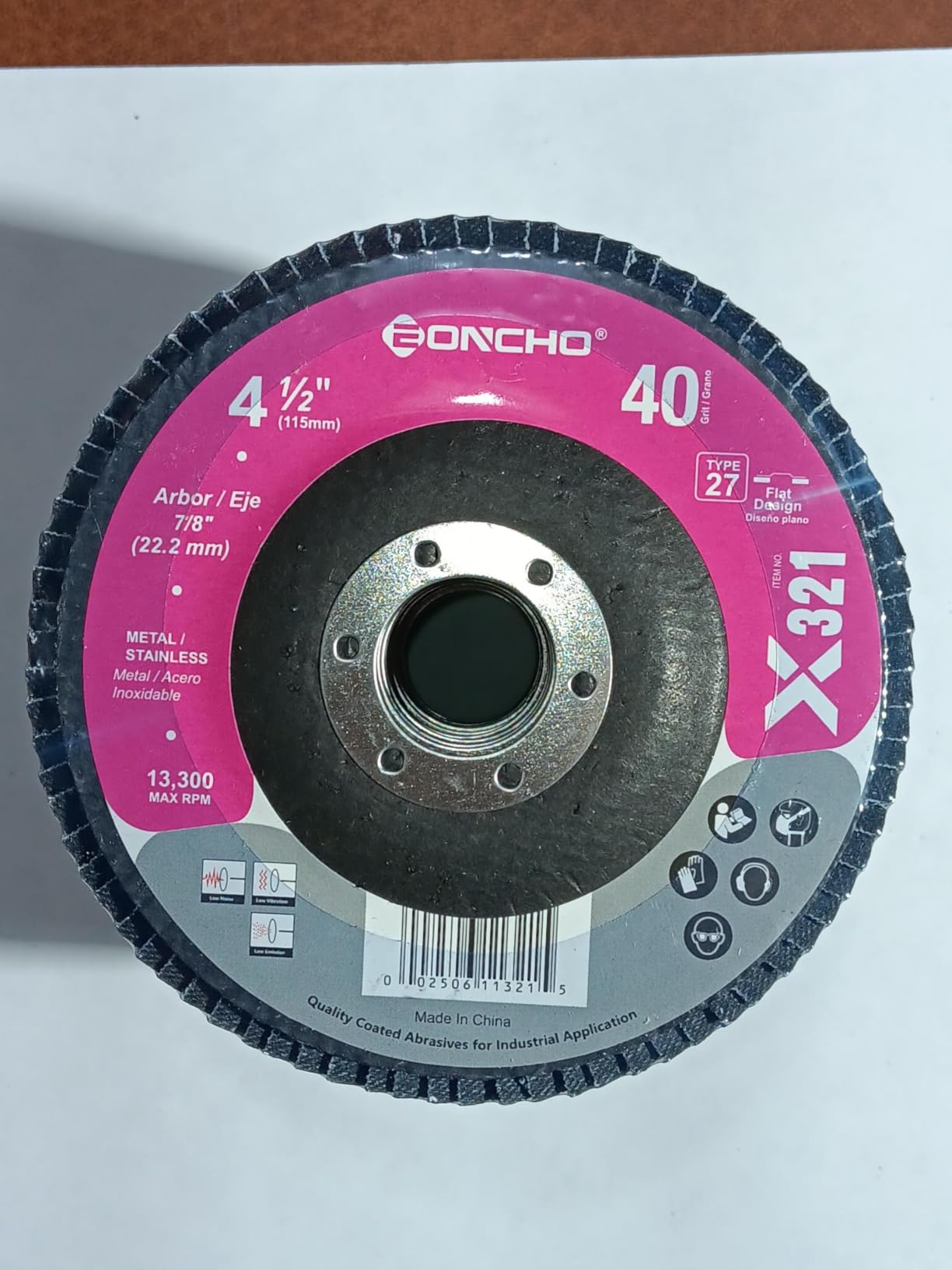
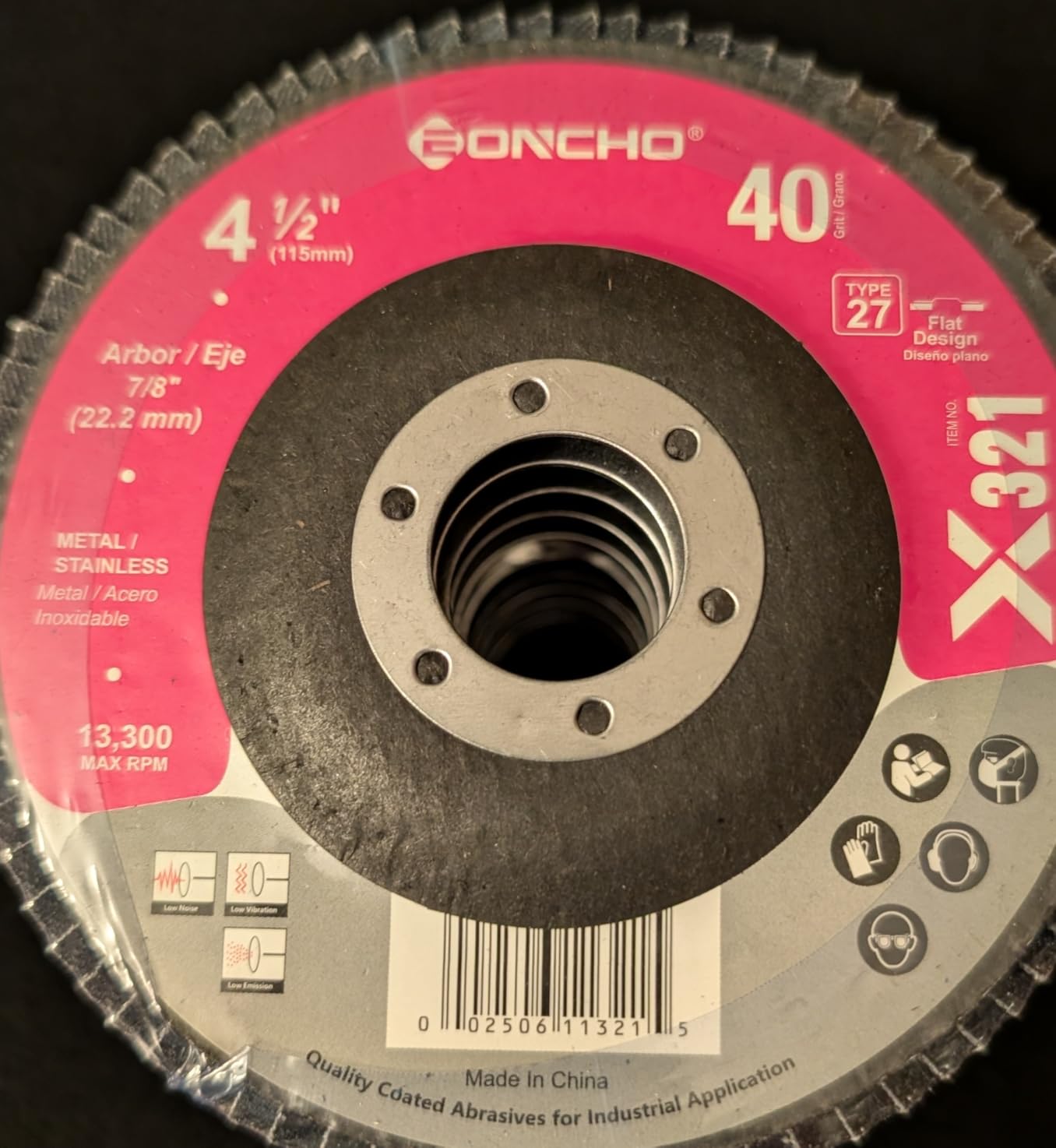
This one shows up in repair and fabrication work rather than finish work. Users report the coarse 40 grit zirconia removing weld seams, rust, burrs and surface buildup quickly, with low vibration from the thick fiberglass backing.
Two details stand out in the feedback. Owners note that the flap design leaves a smoother finish than a hard grinding wheel, which reduces the follow-up work, and several mention low sparking compared with other discs on the same job.
The main reservation is durability. Reviewers place it below top tier Cubitron style discs in longevity, so expect to change it sooner when you are grinding continuously rather than doing a few welds between other work.
It mounts directly on a standard 7/8 inch arbor grinder and is listed for stainless steel, carbon steel and cast iron, rated to 13300 RPM. Twelve discs make it a reasonable trial quantity for someone moving from a grinding wheel to flap discs.
Is it safe on stainless steel?
It is listed for stainless and users report it holds up without disintegrating or shedding grit early. For stainless work that must stay rust-free, use discs marked iron-free and keep them separate from the carbon steel discs and pads in the shop.
How does it compare with a grinding wheel for the same weld?
It removes material more slowly but finishes in one step instead of two, and it will not gouge the parent metal the way a rigid wheel can. On thin plate or a nearly flush bead, that trade usually comes out ahead.
How to Choose a Flap Disc for Weld Cleanup
Which abrasive grain should you buy?
Zirconia alumina is the right default for weld cleanup. It holds its edge longer than aluminum oxide on hard steel, resists loading on scaled or dirty surfaces, and costs little more per disc. Aluminum oxide is fine for soft, clean mild steel and for occasional hobby work, but it dulls faster. Ceramic alumina is the longest lasting option on hard alloys and stainless, at a higher cost per disc.
Grit number alone does not tell you how a disc will perform. The same 40 grit number can cut very differently depending on grain shape, coating density, backing and bond, which is why a dense zirconia disc and a thin aluminum oxide disc sharing the same number feel nothing alike. Judge by cost per finished part rather than cost per disc.
What is the difference between a Type 27 and Type 29 flap disc?
Type 27 discs are flat with a roughly 0 to 15 degree working angle, spreading pressure over a large face for surface grinding and blending. Type 29 discs are conical, presenting an angle of roughly 15 to 25 degrees so the abrasive reaches into edges, corners and the toe of a fillet weld. For weld cleanup, Type 29 is usually the correct answer because the bead and its surrounding plate form a three-dimensional corner rather than a flat surface.
Which grit should you use at each stage of weld cleanup?
40 grit removes weld reinforcement, heavy spatter and mill scale, and takes proud beads down toward the plate.
60 grit blends the bead and removes the pattern left by the 40 grit. This is the most useful single grit in the set.
80 grit refines the surface ahead of paint, primer or powder coat.
120 grit produces the final fine finish for visible welds and for stainless work where the surface will be inspected closely.
A 40 grit flap disc is used for coarse metal removal: taking reinforcement off a fillet, stripping spatter and knocking back mill scale. It is a removal tool, not a finishing tool, and it will leave marks that need a finer disc to take out.
Which disc diameter and mounting style do you need?
Most home and shop grinders take a 4-1/2 inch disc with a 7/8 inch arbor, which is why so many of the picks above are that size. Seven inch discs cover more area per pass on large plate and structural work but need their own grinder and, in the case of the DEWALT here, a 5/8-11 threaded hub. Check three things before ordering: the diameter your guard accepts, the bore or thread your spindle uses, and the maximum speed printed on your grinder.
The bore question trips people up more than anything else. A 7/8 inch bore will not slip onto a 5/8-11 threaded hub without an adapter, and a disc rated above your grinder speed is not usable no matter how good the abrasive is.
How do you avoid contaminating stainless steel?
Keep iron-free discs for stainless work and physically separate them from the carbon steel discs used on the same bench. Use a dedicated backing pad, because iron particles embed in the pad and transfer to the next part even if the disc is fresh. Wipe the finished area with a dedicated cloth, since stainless picks up iron from the shop floor and from other people’s tools more often than from the abrasive itself.
What is the right sequence of steps for cleaning up a weld?
Grind the reinforcement with a 40 or 60 grit Type 29 disc, using light pressure and letting the abrasive cut rather than pushing.
Blend the bead at 60 or 80 grit, keeping the disc moving along the bead to avoid digging a trough into the plate.
Finish at 80 or 120 grit for visible welds and before paint, primer or powder coat.
Inspect and clean the surface, wiping heat tint and checking that the guard was in place for every pass.
Welding forum threads describe a common pattern: cutting the bead off with a thin cut-off disc, then switching to a quarter inch grinding or flap disc for removal. The same discussions frequently point out that a grinding wheel does not deflect and removes material faster, which is why a thick weld may need a wheel before a flap disc takes over the finish.
What mistakes shorten disc life and spoil welds?
Three habits cause most problems. Pressing hard instead of letting the disc cut generates heat, loads the abrasive and dulls the grit faster. Holding the disc at the wrong angle gouges the parent metal, which then needs grinding out before paint. And using a carbon steel disc on stainless puts iron on the part, which shows up as rust spots later.
Two more are worth naming. Running a coarse grit over a whole job because the box only holds one grit wastes discs and still leaves a finish that fails inspection. And working near a corner with a 7 inch disc on a small assembly is how you lose the adjacent material.
What safety checks should you make before switching discs?
Confirm the maximum speed on the disc matches or exceeds your grinder rating, check that the backing pad is in good condition, make sure the guard is fitted, and wear eye and face protection. Never fit a disc larger than the guard it came with, and let the grinder reach full speed before touching the work. Angle grinder accidents are common enough that this section is not optional.
Frequently Asked Questions
What is the best disc to use for grinding down welds?
A 40 or 60 grit zirconia alumina Type 29 flap disc is the best tool for grinding down weld reinforcement. The conical Type 29 profile reaches the toe of a fillet at a 15 to 25 degree working angle, while zirconia holds its edge longer than aluminum oxide on hard steel. Follow it with an 80 or 120 grit disc to blend the bead flush before paint.
What grit flap disc is best for welding prep?
Start at 40 grit to remove reinforcement, spatter and mill scale, move to 60 grit to blend the bead, then finish at 80 or 120 grit before paint, primer or powder coat. Sixty grit is the most useful single grit because it both removes and blends. Match the final grit to your coating specification when one is specified.
Which brand of flap discs is considered the best?
There is no single winning brand, but the well reviewed families in this category are zirconia and ceramic alumina lines sold by 3M, Norton, Weiler, Walter, Klingspor, Tyrolit and Pferd. Among the value-priced 4-1/2 inch options tested here, EZARC and Benchmark Abrasives led on rating and review volume, while Pferd stood out for fillet weld geometry.
What is a 40 grit flap disc used for?
A 40 grit flap disc is a coarse removal tool. It takes weld reinforcement down toward the plate, strips spatter, knocks back mill scale and cuts heavy surface buildup. It is too coarse to produce a paint-ready finish, so weld cleanup normally continues with 60, 80 or 120 grit discs.
What is the difference between a Type 27 and Type 29 flap disc?
A Type 27 flap disc is flat and works at roughly a 0 to 15 degree angle, spreading pressure over a large face for surface grinding and blending. A Type 29 flap disc is conical and works at roughly 15 to 25 degrees, so it reaches into edges, corners and the toe of a fillet weld. Weld cleanup usually calls for the Type 29 shape.
Are ceramic flap discs better than zirconia ones?
Ceramic alumina discs last longer on hard alloys and stainless and cut with less heat, so they are the better choice for production work and stainless contamination control. Zirconia alumina is the better value for most weld cleanup because it holds its edge well on carbon steel at a lower cost per disc. Aluminum oxide remains acceptable for soft, clean mild steel.
Conclusion
After working through twelve discs on weld beads, spatter and paint prep, the EZARC 40 grit zirconia Type 29 pack came out ahead as the best flap discs for weld cleanup pick for most shops, with the Benchmark high-density zirconia discs close behind when disc life matters more than cut rate. For a single purchase that covers every stage, the LotFancy mixed-grit Type 27 pack is the practical choice, and fillet-heavy fabricators should look at the Pferd radial design instead of a conventional disc.
The workflow matters more than the brand. Remove at 40, blend at 60, finish at 80 or 120, keep the guard on, and give stainless its own iron-free discs and backing pad.