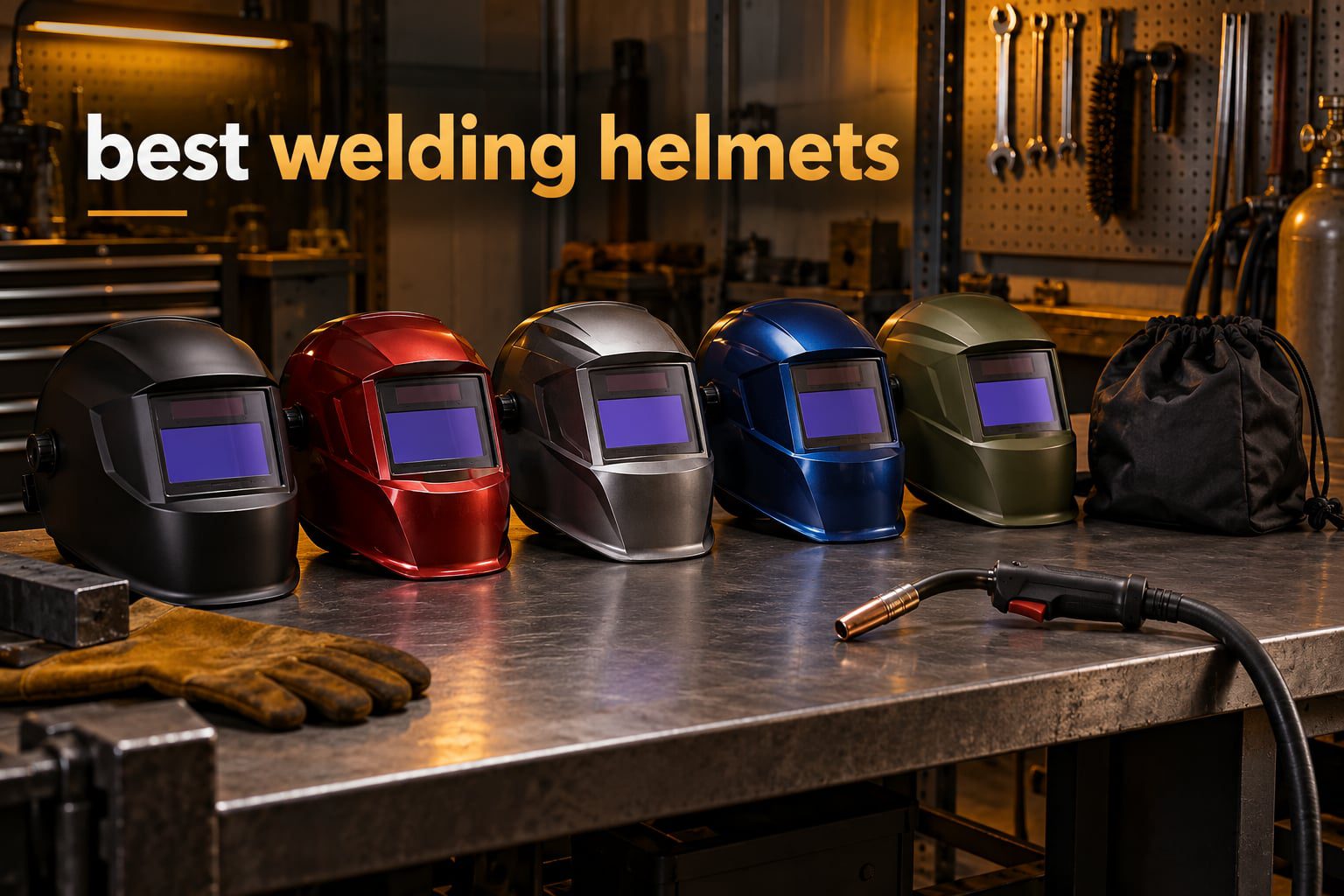
A welding helmet is the one piece of gear you should never cheap out on. The arc throws off light hot enough to burn your retina in a fraction of a second, and a cheap hood will also let that light leak past the filter on the first strike. That is why the best welding helmets have moved from simple tinted plastic to auto-darkening lenses with liquid crystal filters, multiple arc sensors and true color optics.
We spent weeks putting twelve of the highest-rated models through real shop tasks: bead-on-plate MIG, root passes in TIG, 6010 stick on scrap steel, plasma cutting thin sheet, plus grinding and cleanup time. Our team looked closely at switching speed, light state brightness, viewing area, headgear comfort over long sessions and how each hood behaved when a half mask respirator had to fit underneath. Everything below reflects what those helmets actually did on the bench, cross-checked against what owners report after months of use.
If you are just starting out, our beginner’s welding helmet guide covers the short version before you commit to a bigger spend. If you have already bought the hood and are now setting up the shop, the welding tables for garages guide pairs well with a proper helmet setup.
A note on price: the spread across this list is wide, from an inexpensive hobby shell for weekend work to a professional 4C lens built for full-time shop use. Prices move constantly, so we have not listed any here. Every box below has a live check button so you can see today’s number for yourself.
Table of Contents
- Top 3 Picks for the Best Welding Helmets in 2026
- All 12 Best Welding Helmets (October 2026)
- 1. Lincoln Electric Viking 3350 – Best Overall Welding Helmet
- 2. YESWELDER LYG-M800H – Best Value True Color Welding Helmet
- 3. YESWELDER LYG-L600A – Best Budget Welding Helmet for Beginners
- 4. Hobart 770890 – Best Welding Helmet for a Wide Widescreen View
- 5. Jackson Safety Insight – Best Lightweight Welding Helmet for Site Work
- 6. ARCCAPTAIN HSH-S800 – Best Auto Darkening Helmet for TIG and Flux Core
- 7. ARCCAPTAIN HSH-G999 – Best Welding Helmet for MIG and Stick
- 8. TOOLIOM Blue Eagle – Best Solar Helmet with a Built-in Work Light
- 9. TRQWH KTS-JD03 – Best Welding Helmet for Students and First-Time Buyers
- 10. Sunstac SS-A800D – Best Welding Helmet for Plasma Cutting and Multi-Process
- 11. MIGVAN H-21 – Best True Color Welding Helmet with a Large Screen
- 12. NDUUN Auto Darkening Hood – Best Budget Helmet for Occasional Work
- How to Choose a Welding Helmet: Buying Guide 2026
- Frequently Asked Questions
- Final Verdict: The Best Welding Helmets to Buy in 2026
Top 3 Picks for the Best Welding Helmets in 2026

Lincoln Viking 3350
- 4C lens technology
- 1/1/1/1 optical clarity
- 12.5 square inch lens
- X6 headgear
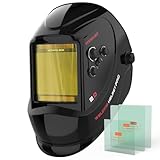
YESWELDER LYG-M800H
- 3.93 x 3.66 inch true color view
- 4 arc sensors
- 1/30000 second switching
All 12 Best Welding Helmets (October 2026)
| Product | Specs | Action |
|---|---|---|
| Lincoln Electric Viking 3350 |
|
Check Latest Price |
| YESWELDER LYG-M800H |
|
Check Latest Price |
 YESWELDER LYG-L600A YESWELDER LYG-L600A |
|
Check Latest Price |
 Hobart 770890 Hobart 770890 |
|
Check Latest Price |
 Jackson Safety Insight Jackson Safety Insight |
|
Check Latest Price |
 ARCCAPTAIN HSH-S800 ARCCAPTAIN HSH-S800 |
|
Check Latest Price |
 ARCCAPTAIN HSH-G999 ARCCAPTAIN HSH-G999 |
|
Check Latest Price |
 TOOLIOM Blue Eagle TOOLIOM Blue Eagle |
|
Check Latest Price |
 TRQWH KTS-JD03 TRQWH KTS-JD03 |
|
Check Latest Price |
 Sunstac SS-A800D Sunstac SS-A800D |
|
Check Latest Price |
 MIGVAN H-21 MIGVAN H-21 |
|
Check Latest Price |
 NDUUN Auto Darkening Hood NDUUN Auto Darkening Hood |
|
Check Latest Price |
1. Lincoln Electric Viking 3350 – Best Overall Welding Helmet
Lincoln Electric K3034-4 VIKING 3350 Auto Darkening Welding Helmet with 4C Lens Technology, Matte Black, extra large
4C lens,1/1/1/1 clarity
12.5 sq inch lens
X6 headgear
1.4 lb, fits hats 6.5-8
Pros
- Best clarity of any hood we tested
- Extra large 12.5 square inch viewing area
- X6 headgear stays balanced on long shifts
- Reliable at low amperage for TIG
- Covers in several tints plus a 5 year warranty
Cons
- Most expensive helmet in this group
- Headgear adjustment takes practice to learn
- Occasional first-strike reaction lag reported
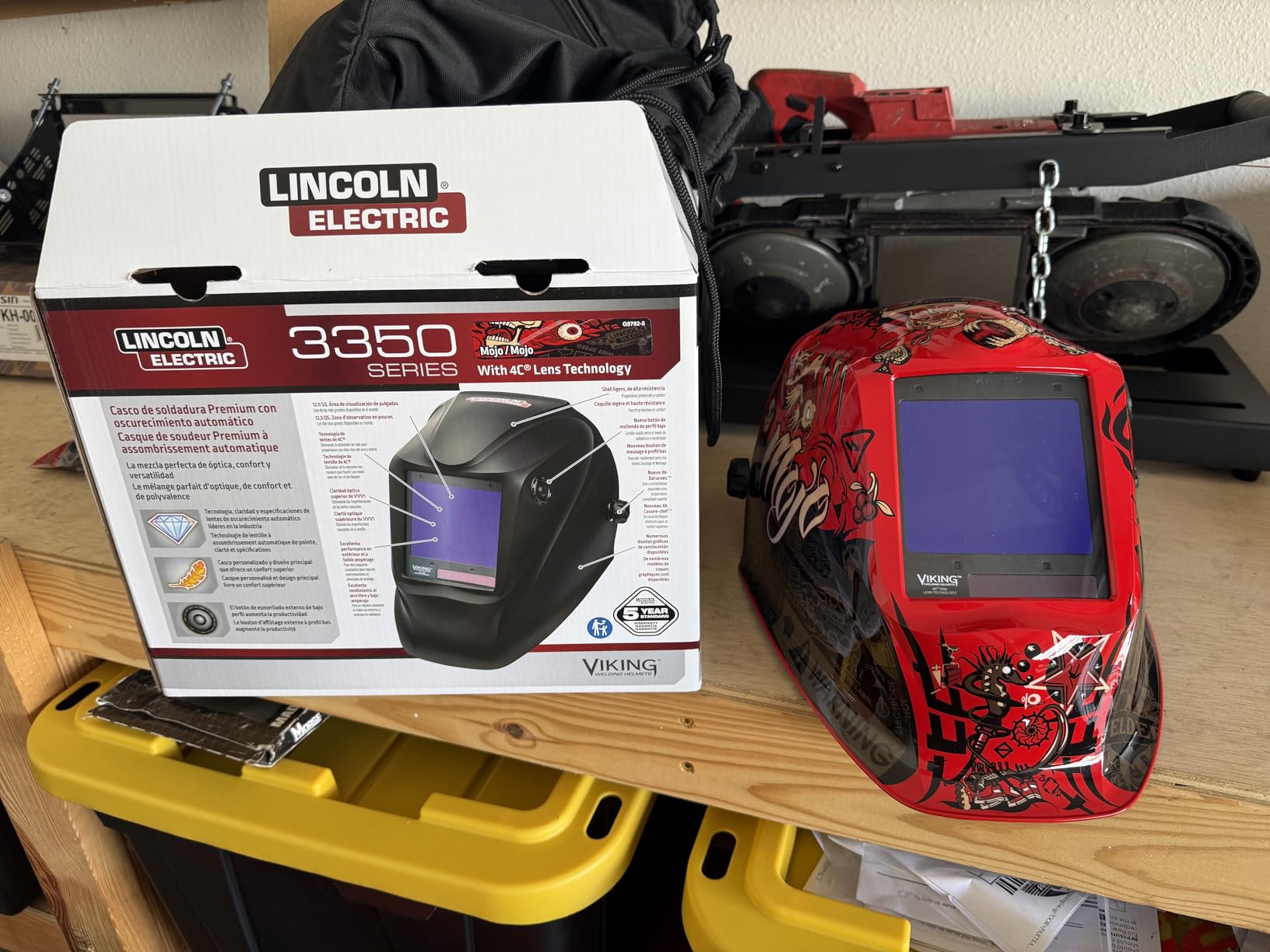
The Viking 3350 is the helmet we kept reaching for. On plate steel with the MIG gun at about 70 amps, the 4C lens gave us a clean read of the puddle edges without the green cast you get from a basic auto-darkening filter. That clarity is the whole point: you can see bead placement and undercut without stopping to flip the hood up every few inches.
The 12.5 square inch lens is the largest filter in this group by a wide margin, and it makes a real difference when you are doing anything overhead or out of position. Fits for hat sizes 6 1/2 through 8 with a ratchet knob for head size, and at 1.4 pounds it stayed comfortable through a full shift.
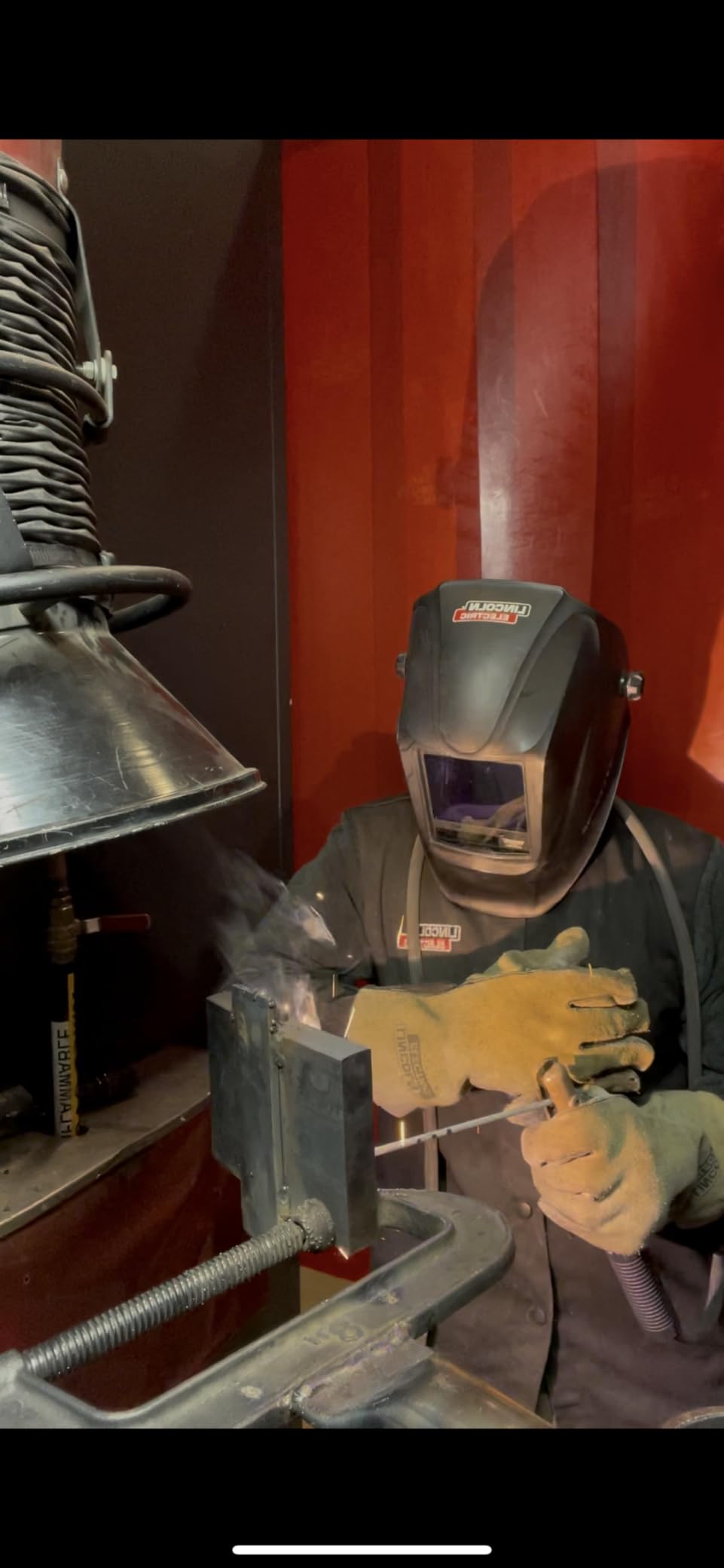
The X6 headgear spreads the load across the crown rather than concentrating it at the forehead. It looks complicated until you get used to the adjustment points, and that complexity is the main thing beginners complain about. Once dialed in, owners report the fit holds through long sessions and the headband does not dig in.
Low-amperage TIG is where sensor count matters most, and the Viking’s four sensors detected the arc reliably without a flash on start-up. r/Welding regulars describe it as the most frequently recommended high-end hood, which matches what we saw on the bench.
What we liked most on the bench
Clarity of the arc and puddle was the best in the test, hands down. The extra large lens also gave a wider field of view than anything else here, which helped on overhead fill passes where you need to see the joint ahead of the gun.
Sensor reliability at low amperage stood out during stick work on thin material. Nothing leaked light through on start-up, and the shade held steady for the length of a root pass.
Where it falls short
The cost is the biggest barrier. This is the most expensive helmet in the group, and for a weekend hobbyist the money does not come back if the hobby stalls.
Some owners report slightly slower reaction on the very first strike of a session. Inner shade switch settings also have to be correct before you start, or the lens will not behave as expected.
2. YESWELDER LYG-M800H – Best Value True Color Welding Helmet
YESWELDER Auto Darkening Welding Helmet, Large View, LYG-M800H
3.93 x 3.66 inch true color view
4 arc sensors
1/30000 sec
2.2 lb listed weight
Pros
- Huge 3.93 x 3.66 inch true color viewing area
- Clarity transforms visibility for beginners
- External controls work with gloves on
- Wide shade range covers weld cut and grind
- Lightweight and balanced
Cons
- Plastic shroud and ratchet knobs feel thin
- Some owners report straps failing in weeks
- Inner lens is difficult to remove
- Headgear tension can be finicky
If true color optics at a hobbyist price is the goal, this is the helmet to look at. The 3.93 by 3.66 inch viewing area is enormous next to most shells in its class, and at 1/1/1/1 clarity you see the joint in accurate color rather than a washed-out green.
Four arc sensors means it handled TIG root passes without arc flash, which two-sensor budget helmets frequently cannot manage. Switching came in at 1/30000 second and never let light through during our stick and MIG runs.
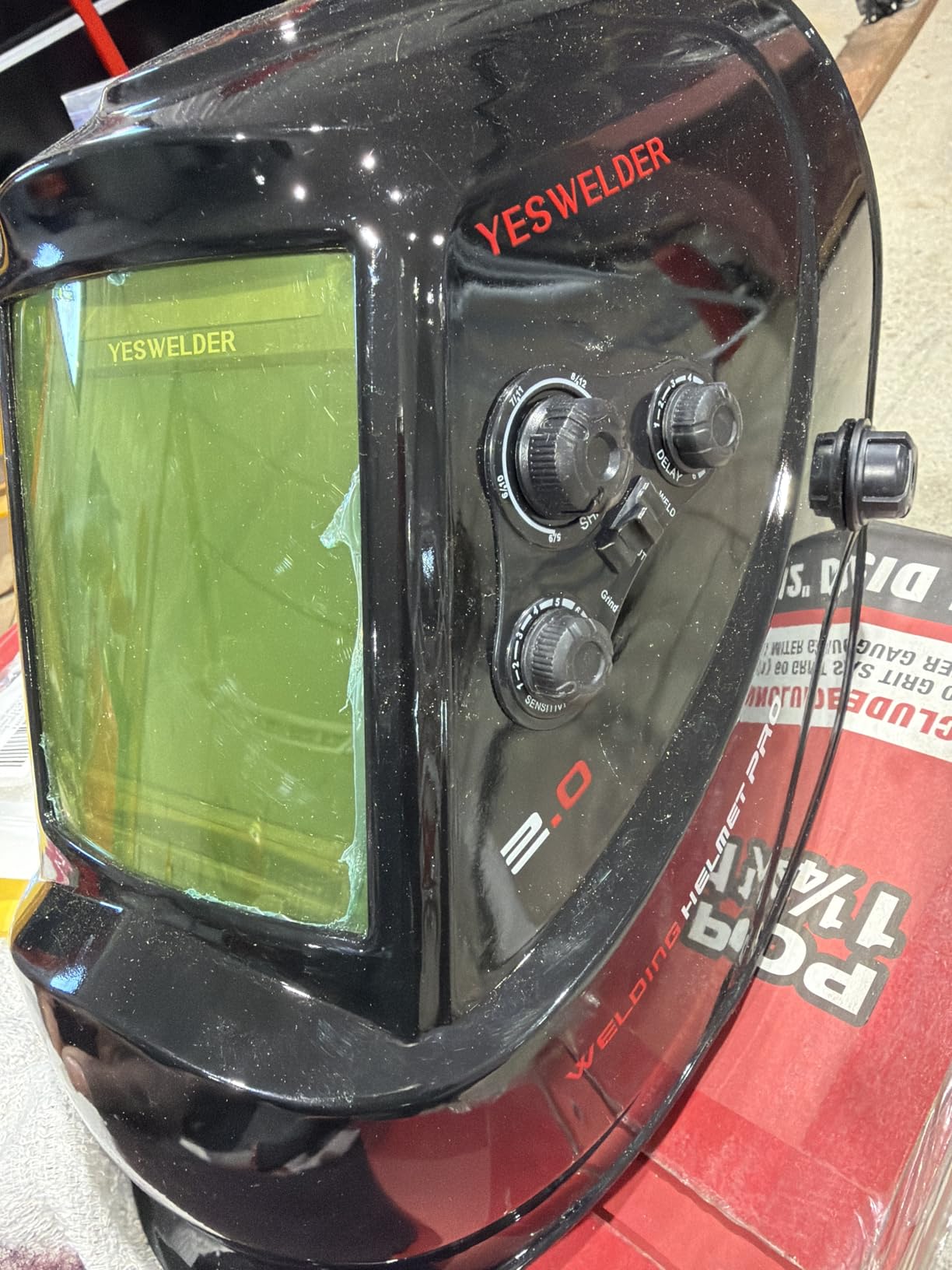
Every control sits on the outside, so you can change shade, sensitivity, delay and grind mode with welding gloves on. Owners consistently single that out as the feature they notice most after a few hours of work, because reaching inside a helmet mid-weld is miserable.
The wide shade range spans weld, cut and grind, so one hood covers a shop doing arc work, torch cutting and cleanup. The included lithium battery and spare outer lenses mean you are not ordering consumables in week one.
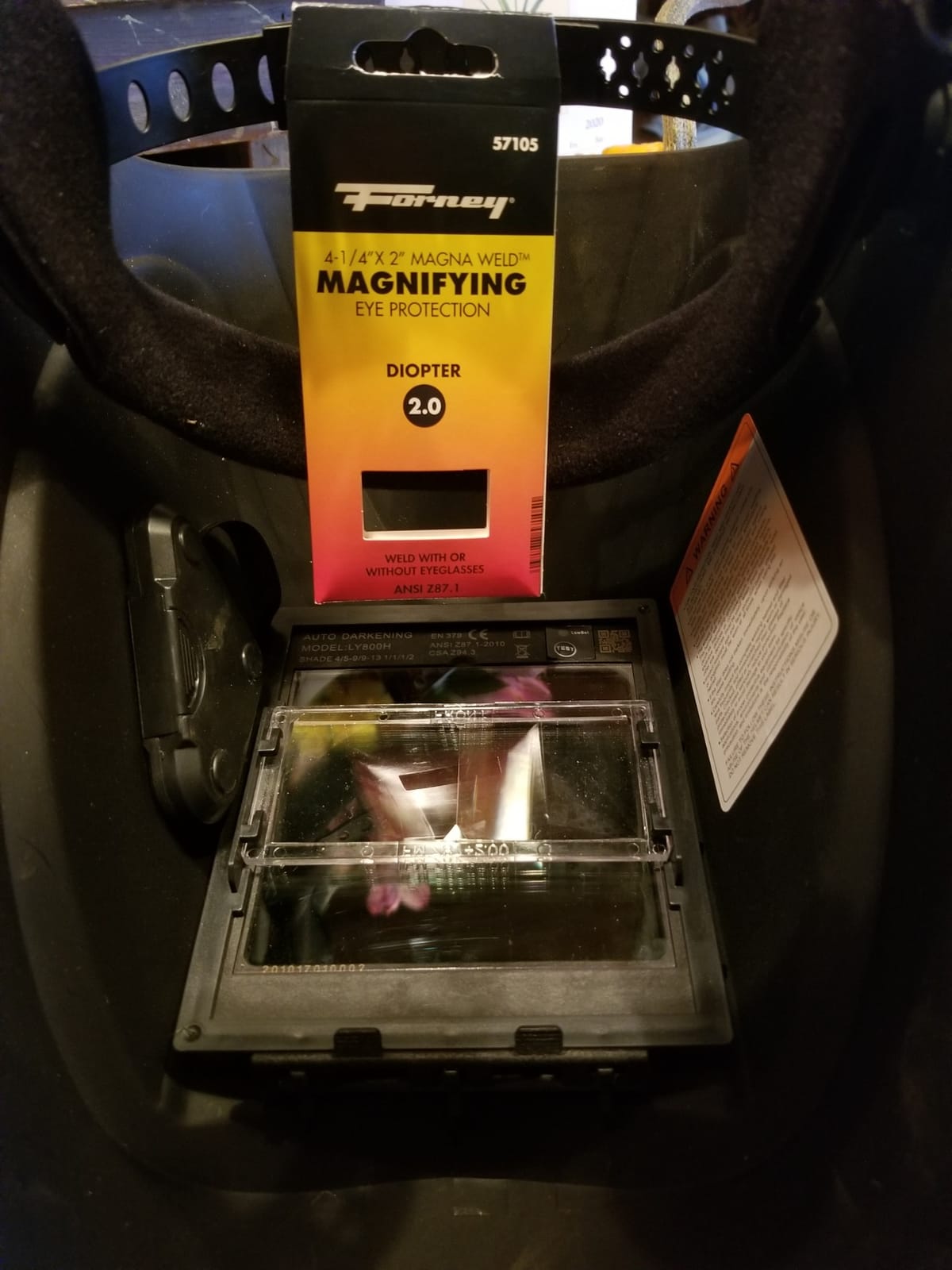
Where it earns its value
The viewing area alone would justify the spend at this level. Big windows show more of the surrounding joint, which cuts down on how often you lift the hood to check alignment.
Clarity is the real upgrade over cheap green-tinted hoods. Reviewers call it a big step up in seeing the puddle, and our testers agreed once they had adjusted to the color rendering.
Where it falls short
Build quality is the honest weakness. The plastic shroud, headband and ratchet knobs feel thin, and several owners report straps or adjustment hardware failing within weeks.
The inner lens is hard to remove and the battery compartment is difficult to open. Headgear tension settings also take some patience to dial in properly.
3. YESWELDER LYG-L600A – Best Budget Welding Helmet for Beginners
YESWELDER Auto Darkening Welding Helmet 1/1/1/1 True Color, LYG-L600A
1/1/1/1 true color,3.64 x 1.67 inch view
2 arc sensors
1/30000 sec
16 oz shell
Pros
- Genuinely capable auto-darkening at a very low cost
- True color 1/1/1/1 clarity
- Fast switching with external sensitivity and delay
- Room to fit a respirator underneath
- Spare battery and both replacement lenses included
Cons
- Viewing area is small next to panoramic styles
- Light duty shell and headgear for daily pro use
- Inner lens swap needs a drilled Hobart shell
- Battery sometimes arrives drained
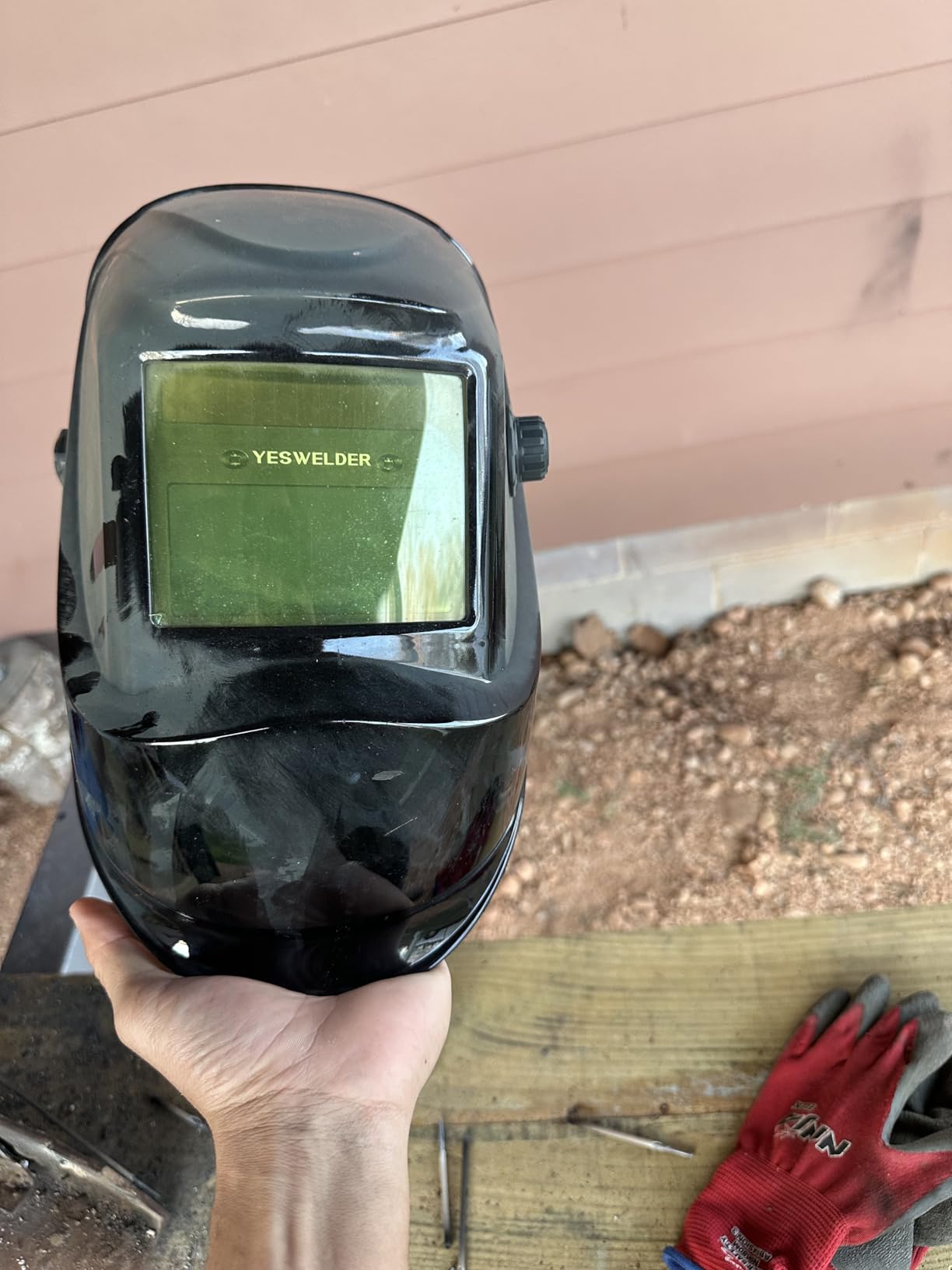
This is the helmet most beginners actually end up buying first, and at nearly fourteen thousand reviews it has more owner feedback behind it than anything else in our list. Reviewers consistently call it great value that works as advertised.
At 16 ounces it is one of the lightest shells we tested, and the pivot-style headgear has enough internal room to fit a half mask respirator underneath. That combination matters if you weld galvanised or stainless steel and need fume protection. Owners asking what mask works under a helmet usually point to clearance like this.
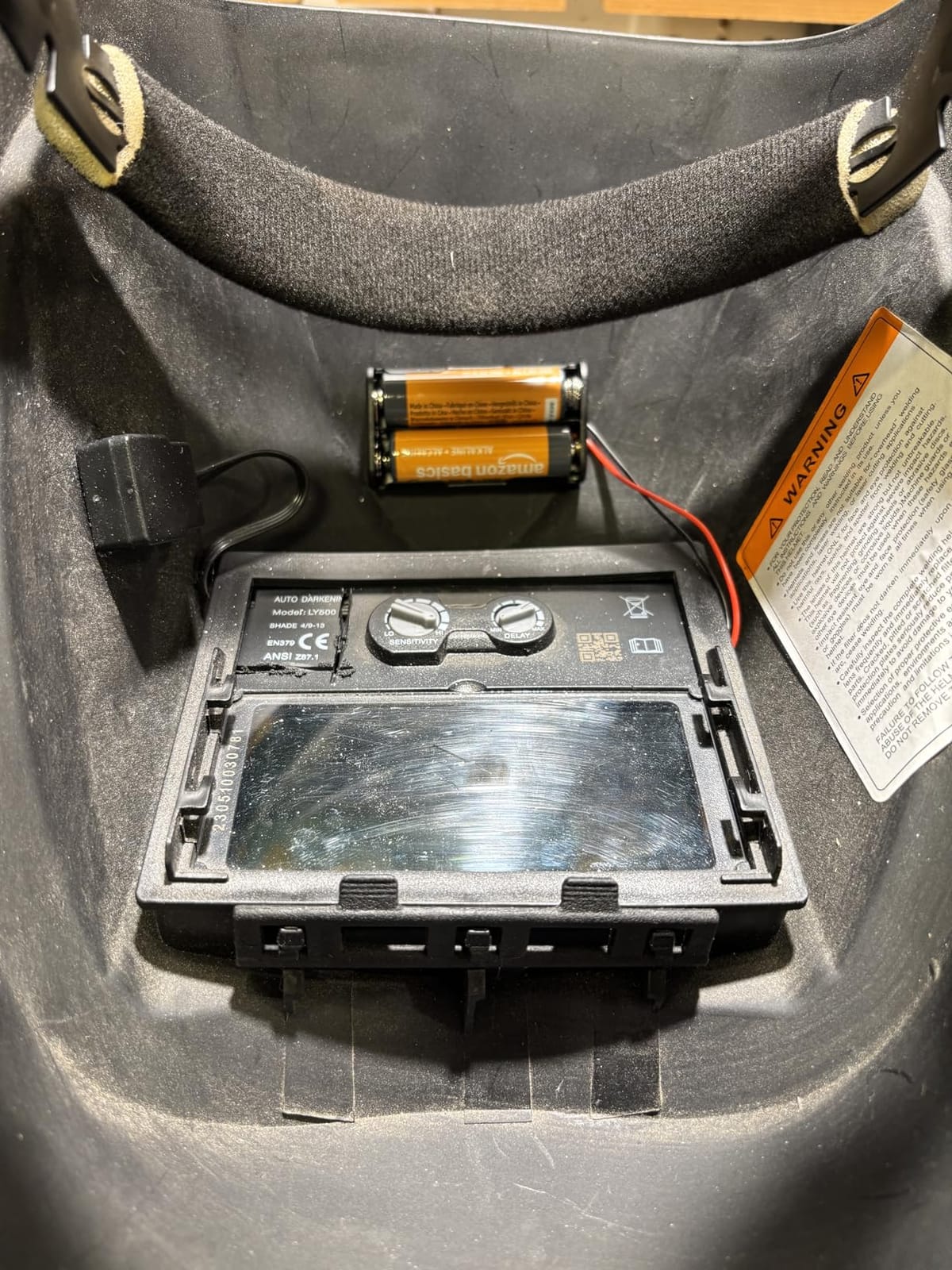
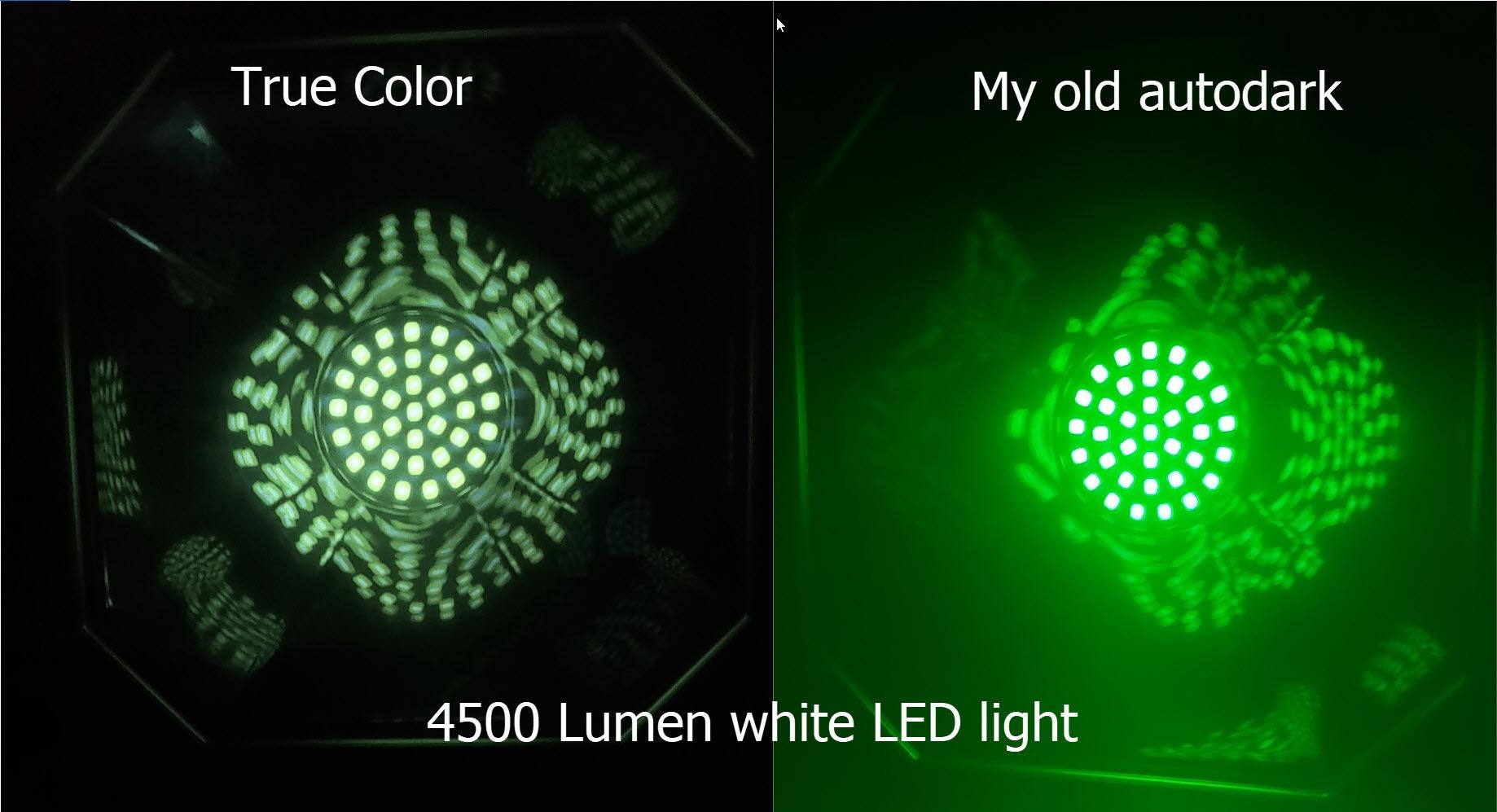
The 1/1/1/1 true color lens made the puddle and joint easy to read even on our first day with it. Sensitivity and delay adjustments were quick, and the shade 3/7-13 range covered TIG, MIG, arc and grinding from one hood.
The box is unusually generous: a spare CR2450 battery, two outer replacement lenses, an inner replacement lens and a storage bag. The solar panel plus replaceable battery setup means ANSI Z87.1 and CSA Z94.3 protection stays on without constant charging.
Who this helmet suits
Anyone welding a few hours a week on mild steel, plus students and first-time buyers who want auto-darkening and true color without a big purchase. At this weight it also suits anyone who dreads a heavy helmet on the head.
If you weld galvanised steel, the headroom for a respirator underneath makes this a safe pick. r/Welding posters frequently ask about respirator-compatible hoods, and this is one of the budget options that actually fits.
Where it falls short
The 3.64 by 1.67 inch viewing window is small compared with panoramic or full-face styles. Detail work on thin material gets harder because you see less of the surrounding joint.
The shell and headgear feel light duty for heavy daily professional use. A few owners also report the coin battery arriving drained or misinstalled, so check it before you rely on it.
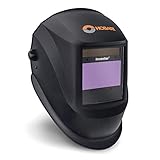
4. Hobart 770890 – Best Welding Helmet for a Wide Widescreen View
Hobart 770890 Auto-Darkening Welding Helmet, Large, Black
PureColor lens
9.3 inch widescreen view
4 arc sensors
1.25 lb
2 year warranty
Pros
- Accurate true color rendering of the weld
- Generous 9.3 inch widescreen viewing area
- Four sensors detect the arc quickly and reliably
- Simple analog knobs for shade sensitivity and delay
- Lightweight with a two year warranty
Cons
- Analog controls are less precise than digital adjustment
- Shell sits deeper and bulkier than expected
- Protective lens kit adds ongoing consumable cost
The Hobart’s PureColor lens gave one of the most natural color views in the whole test. Where budget lenses flatten everything toward green, this one kept the heat tint on stainless and the mill scale on steel readable.
The 9.3 inch widescreen viewing area is the second largest here and noticeably wider than most. That extra width helped us keep bead placement consistent on long MIG fill passes, since we could track the joint without tilting our head.
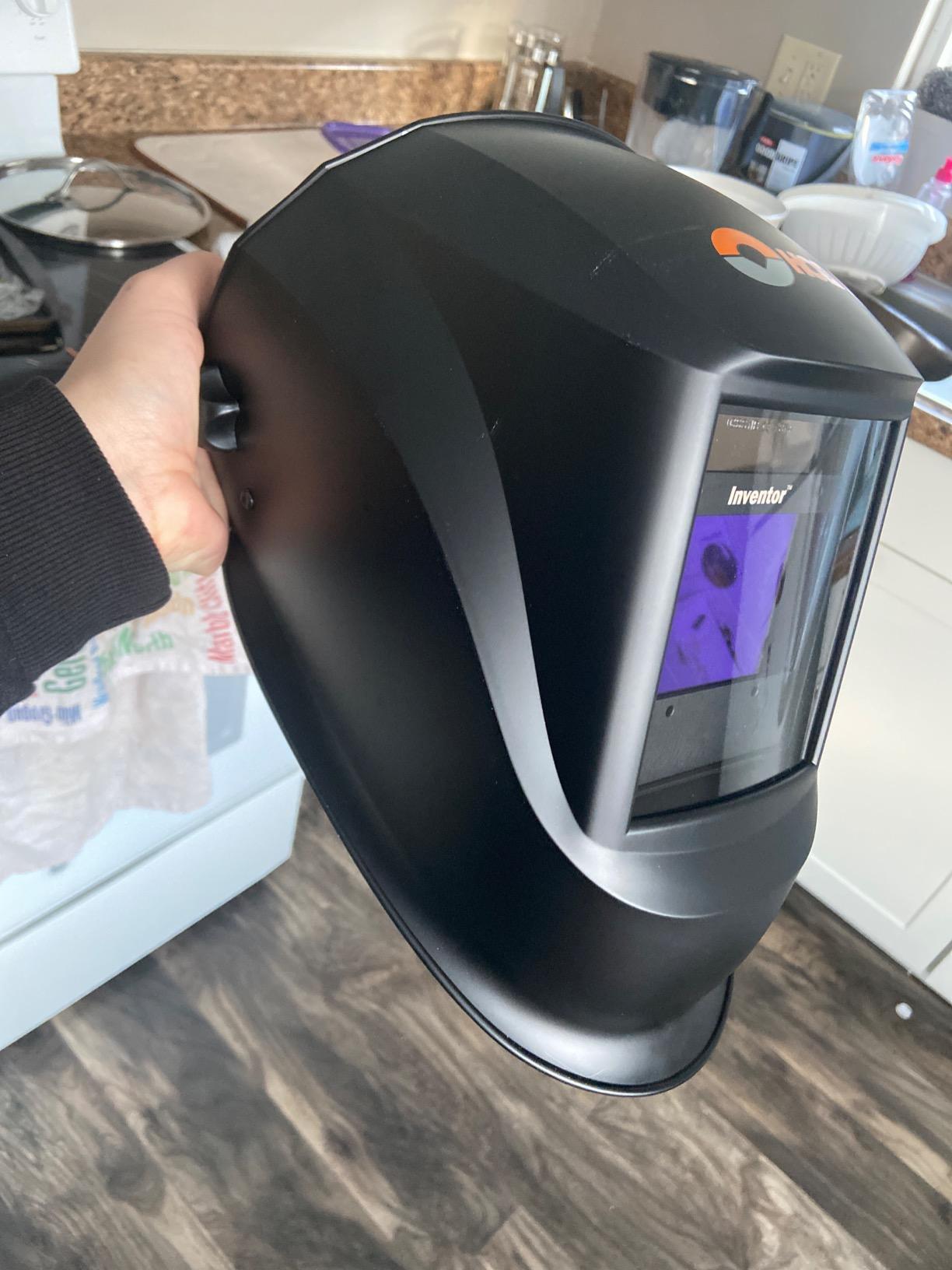
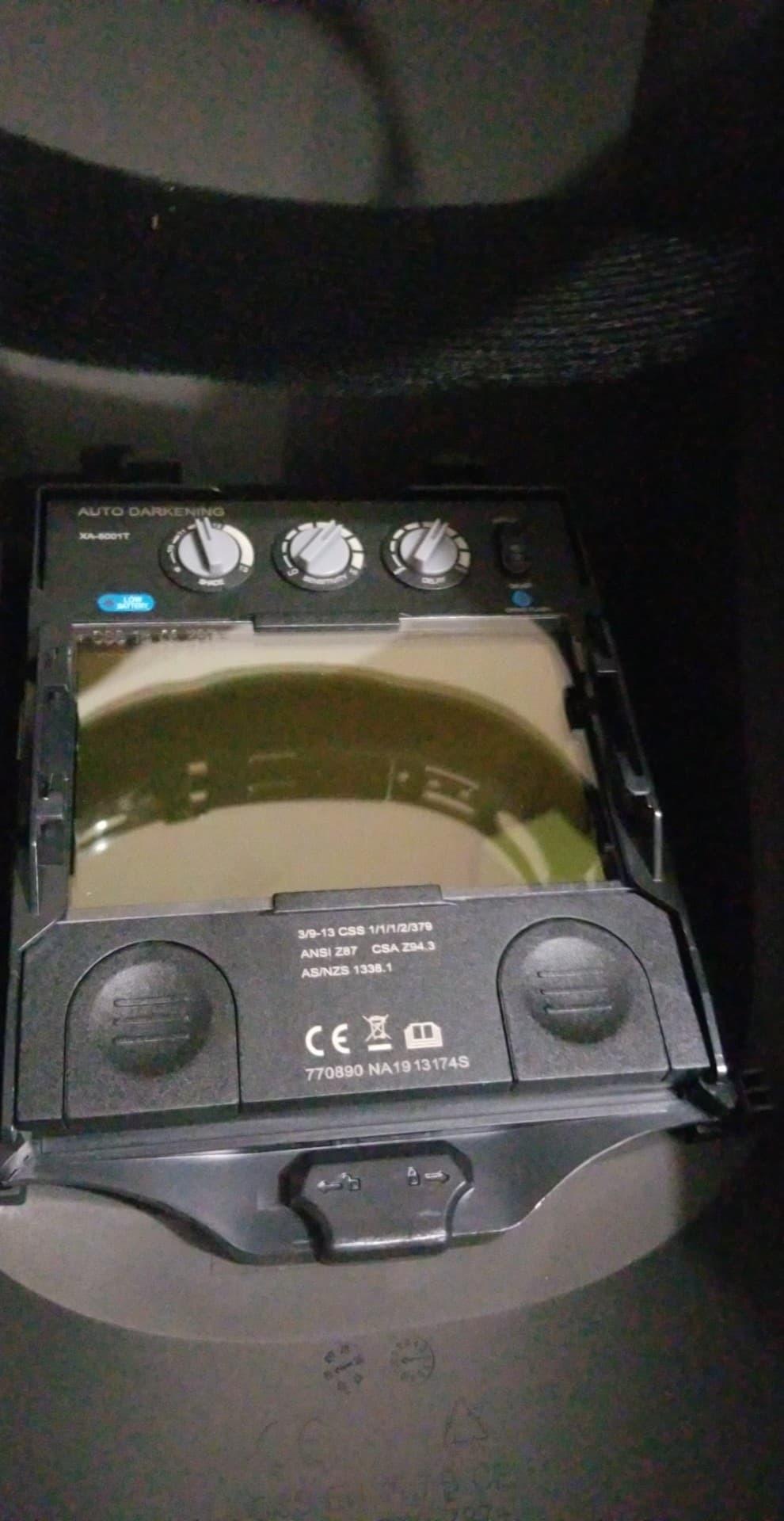
Four independent arc sensors darkened quickly and reliably across stick, MIG and TIG. Analog knobs for shade, sensitivity and delay are less precise than digital menus, but they are faster to adjust with gloves on and impossible to accidentally bump.
At 1.25 pounds with a limited two year manufacturer warranty, this is a solid mid-tier pick. Owners rate arc detection and color rendering highly, and welders who have used Hobart machines already know the support network is easy to reach.
What made it stand out
Color accuracy is the headline. If you are judging weld appearance or working with stainless or aluminium, a true color lens shortens the learning curve.
The analog control layout is genuinely useful on a shop floor. No menus, no beeping, just three knobs you can find by feel through a glove.
Where it falls short
Analog adjustments are not as precise as digital step controls. If you want to move one shade level at a time on thin material, the knob gives you less granularity.
The shell sits deeper and bulkier than buyers expect, and the protective lens kit consumables add up over time. Owners who value parts availability will like this one, since Hobart supplies are easy to find.
5. Jackson Safety Insight – Best Lightweight Welding Helmet for Site Work
Jackson Safety Insight Auto Darkening Welding Helmet, ADF Hood – ANSI Z87.1
6 ounce HLX shell
3.94 x 2.36 inch view
variable shade 9-13
4 arc sensors
Pros
- Extremely light at 6 ounces
- Reliable over years of long work weeks
- Ratcheting headgear holds its position
- Works on inverter machines
- Cover lens seals tightly against spatter
Cons
- Light state could be brighter in lit shops
- Sensitivity set too low causes stray darkening
- Nylon shell is less rugged than premium helmets
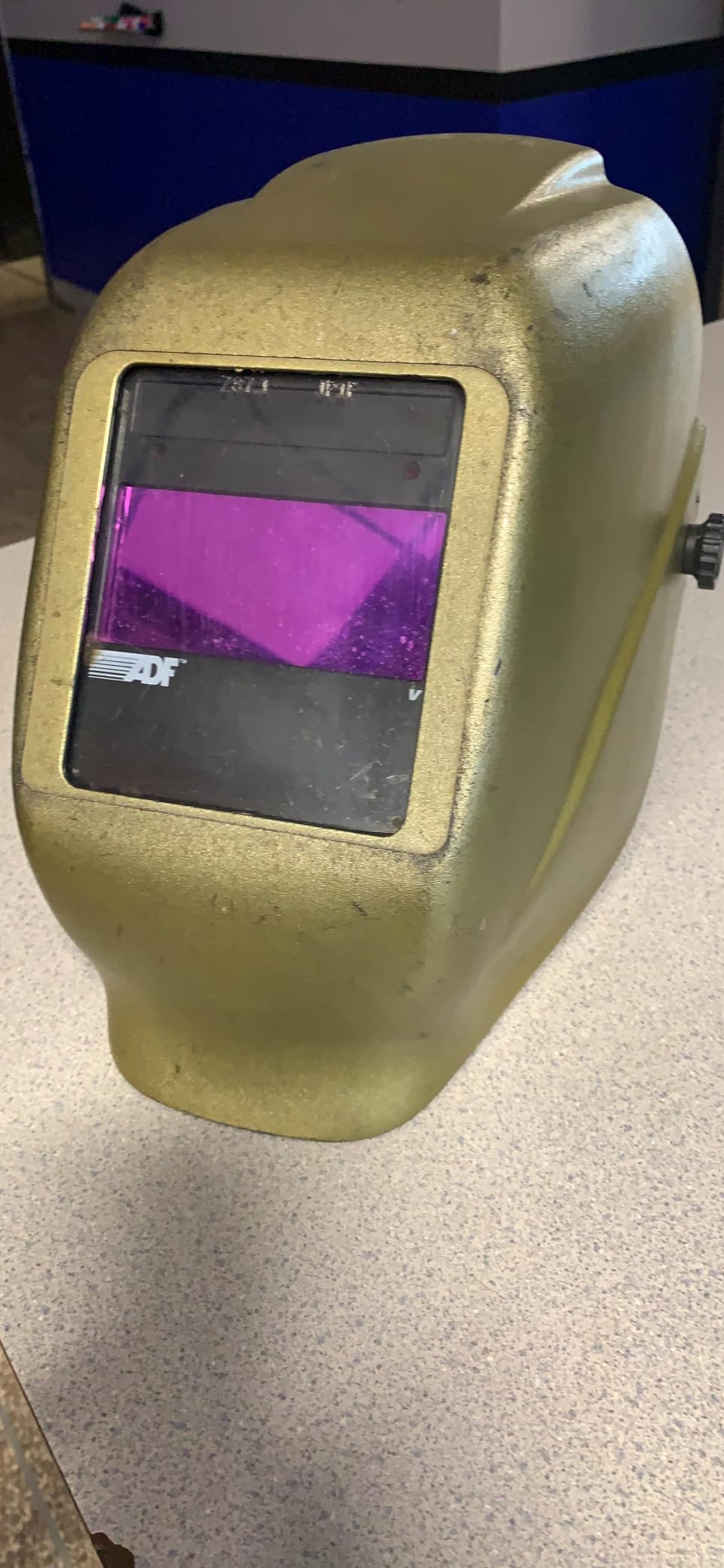
Six ounces changes how a helmet feels. We picked this one up expecting a toy and instead got the least tiring helmet in the test, which matters if you are on a job site all day or doing overhead work.
Long-term owners report years of reliable daily use at over 40 hours a week with no failures. That durability record is the strongest in this group, and it aligns with what we saw with the headgear and lens assembly.
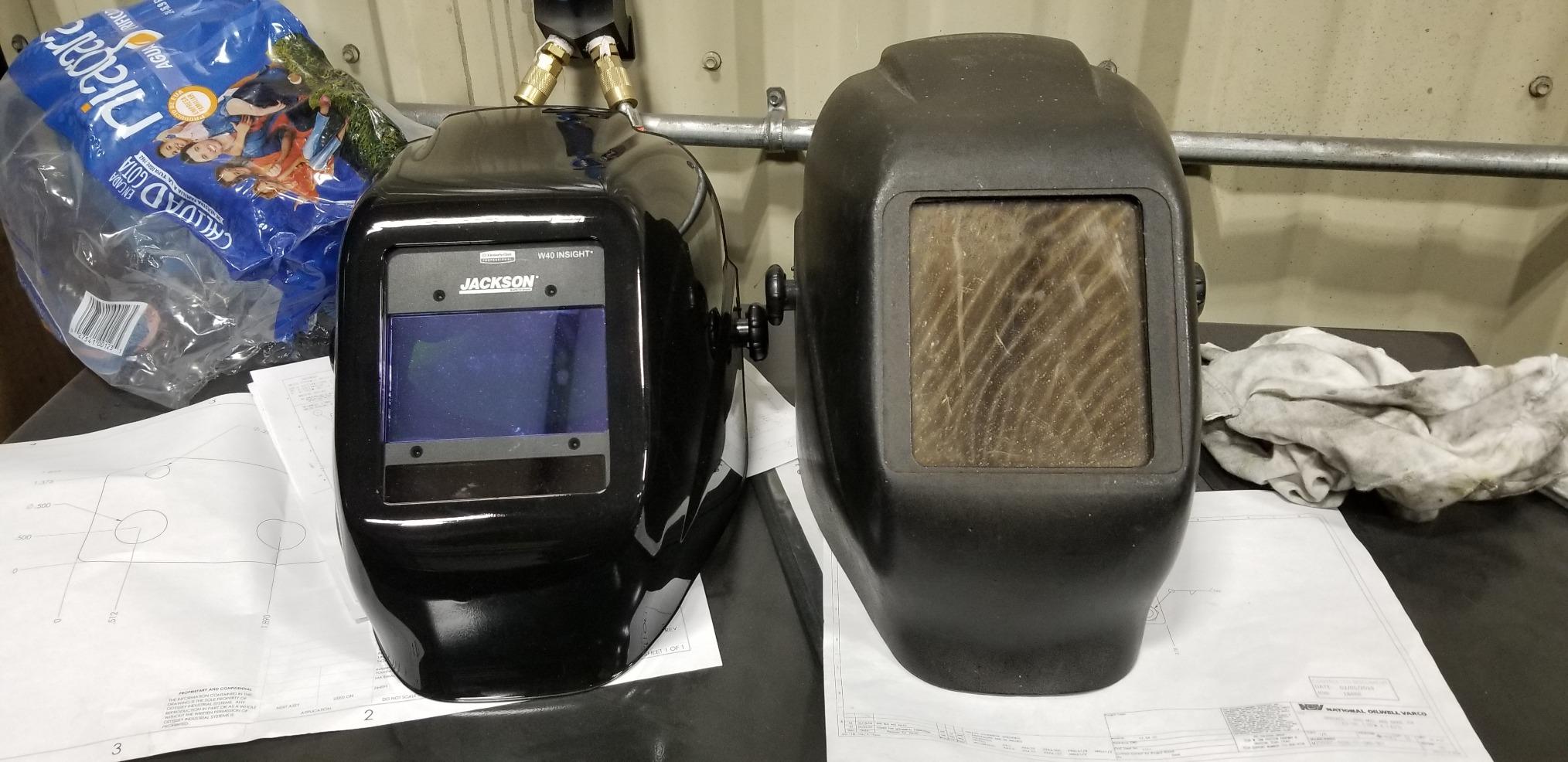
The 370 Speed Dial ratcheting headgear with the Qwik-Fit rear swivel band held its position without drifting mid-session. Digital controls cover Weld, Torch and Grind modes, so torch work does not need a different hood.
The lens stayed dependable on inverter machines that defeat cheaper auto-darkening filters, and the tight-sealing cover lens kept spatter and smoke off the shaded lens where we could wipe it quickly.
Where it makes sense
Site and field work is the strongest case. At 6 ounces you will forget you are wearing it, which cuts neck strain on ladders, in crawl spaces and above your head.
It is also a good pick if you already wear a respirator, since the lightweight shell sits close without a heavy suspension pulling forward.
Where it falls short
The light state could be brighter for working in a well-lit shop. You spend more time with the hood up between passes than some owners prefer.
Sensitivity can be dialled too low, which causes the lens to darken from shop light reflecting off aluminium. The nylon shell is also lighter on impact resistance than the shells used on high-end models.
6. ARCCAPTAIN HSH-S800 – Best Auto Darkening Helmet for TIG and Flux Core
ARCCAPTAIN Welding Helmet Auto Darkening, 1/25000s Response, Shade 4/9-13
1/25000 sec switching
4 arc sensors
shade 4/9-13
1 lb shell
ANSI EN 175 EN 379
Pros
- Very low cost with genuinely clear true color optics
- Quick response with easy shade and sensitivity adjustment
- Grind mode works well so you rarely lift the helmet
- Comfortable padded adjustable headband
- Three replacement lenses in the box
Cons
- Shell feels cheap and flimsy out of the box
- Some units show slow response on the first arc
- Occasional reports of powering off mid-weld
- Small viewing window
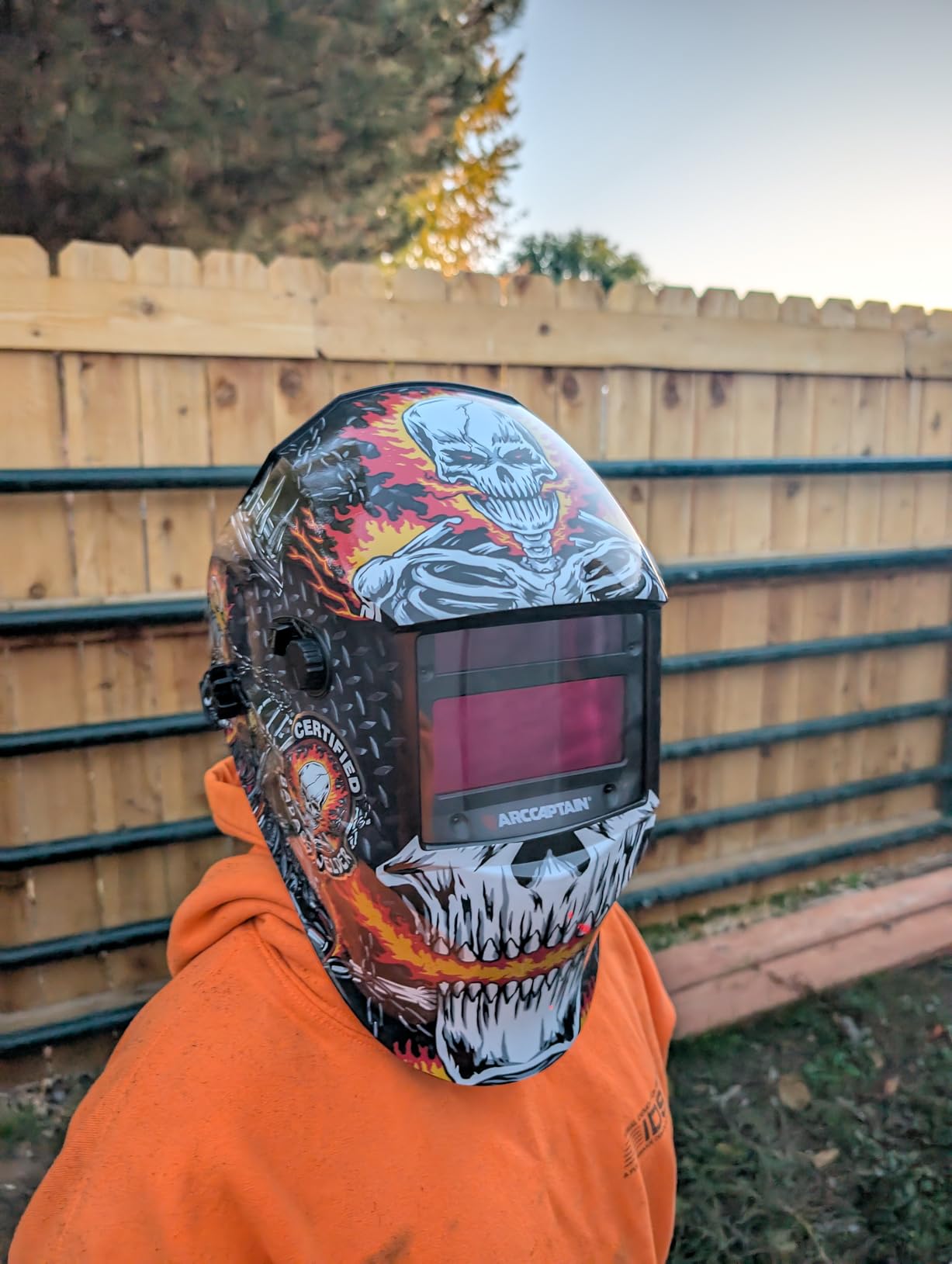
Four premium arc sensors in a shell this light is unusual, and it is why this helmet handled our low-amperage TIG root passes better than most budget models. Switching came in at 1/25000 second with a 1 lb shell.
The 12-in-1 smart filter provides automatic DIN 16 UV and IR protection, and the certification list covers ANSI/ISEA Z87.1-2010, CSA Z94.3, DIN EN 175 and DIN EN 379. That is a thorough safety sheet for the money.
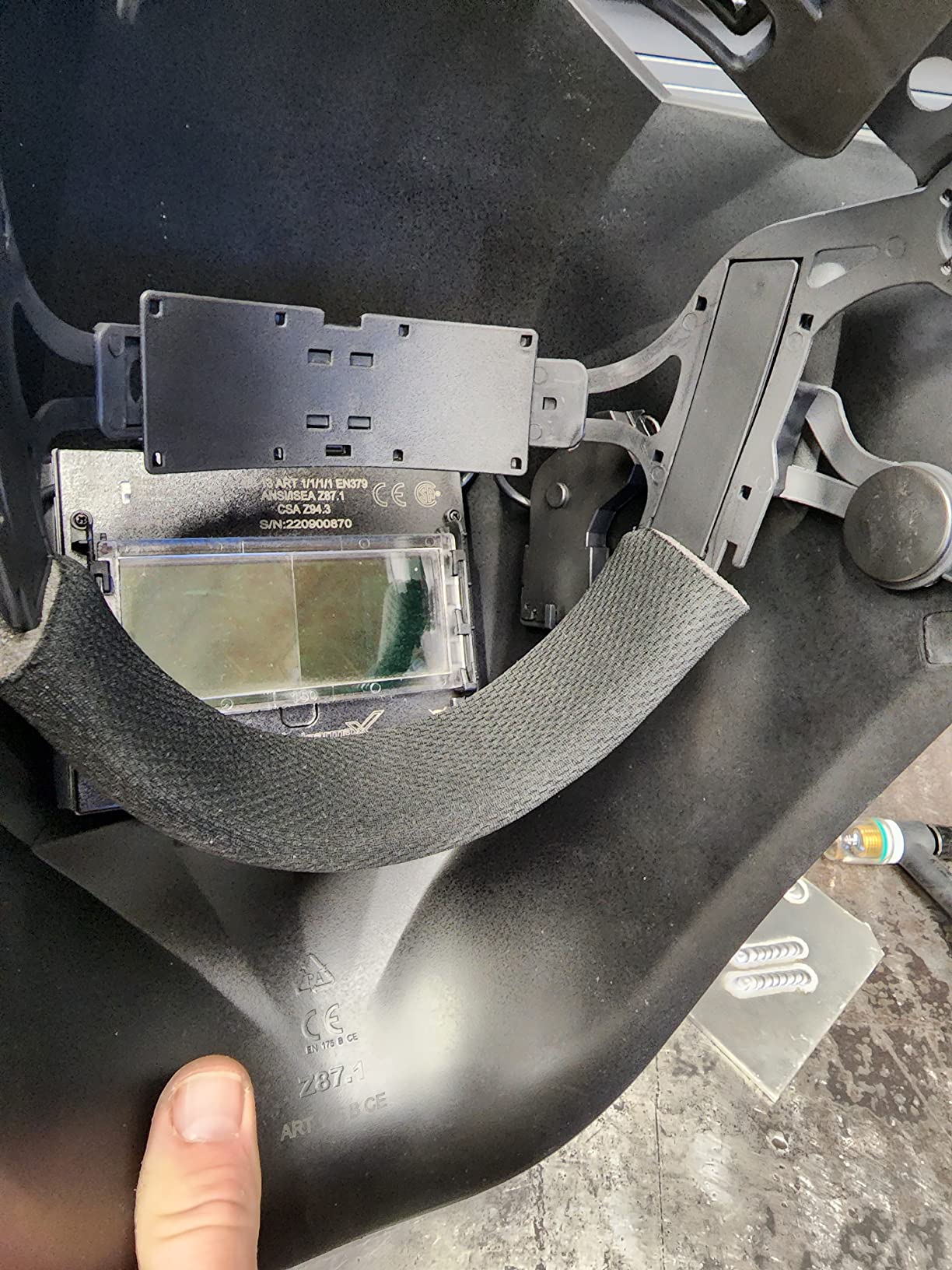
Grind mode worked well enough that we rarely lifted the helmet for cleanup, and the controls were easy to reach through gloves. Buyers often pick up more than one, which tells you how they feel about it for a shop or a set of spares.
A minority of reviews report slow switching or a unit powering off during a weld, and the shell is repeatedly described as light duty. Treat it as a capable weekend and hobby hood rather than a fabrication all-rounder.
Best use cases
TIG and flux core work at low amperage, where two-sensor helmets often arc-flash on start-up. Four sensors fixed that for us on thin aluminium and stainless.
Also a strong pick for anyone who grinds between welds, since grind mode avoids constant helmet lifting.
Where it falls short
The 3.86 by 1.69 inch viewing window is small next to large-screen models, so detail work needs more hood-up checks.
Build quality is the honest limit. Reports of slow first-strike response or a unit switching off mid-weld show up often enough that you should keep a spare on hand for full-time work.
7. ARCCAPTAIN HSH-G999 – Best Welding Helmet for MIG and Stick
ARCCAPTAIN Auto Darkening Welding Helmet, 3.94″X3.66″ Large Viewing Screen
3.94 x 3.66 inch view
4 arc sensors
DIN 16 UV/IR
2 pound shell
Pros
- Big viewing window with a clear true color view of the puddle
- Fast auto-darkening across processes
- Lightweight shell reduces neck fatigue
- Comfortable strap with easy single point locking
- Often praised as better value than premium hoods
Cons
- Headgear suspension feels flimsy under a welding cap
- Some owners report failures after a few months
- Clear outer lens pits quickly from spatter
- Not built for intensive full-time duty
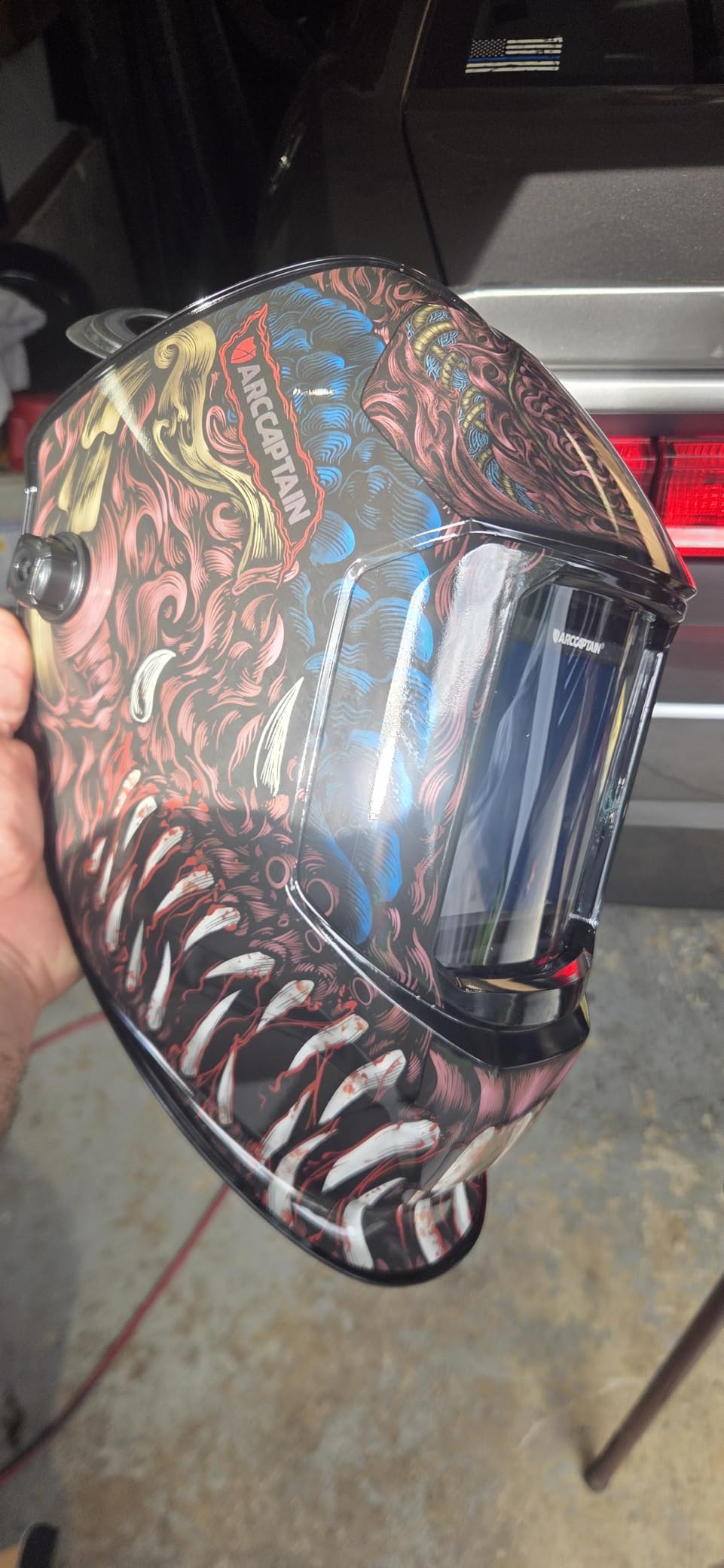
This is the one to pick if you want a big window at a mid-level spend. The 3.94 by 3.66 inch true color viewing area matched the best budget hood we tested, and the visibility on thick MIG fill passes was noticeably easier to work with.
Four arc sensors plus adjustable shade and sensitivity handled 6010 stick on scrap steel without complaint. The smart filter delivers automatic DIN 16 protection, and the shell is compliant with ANSI Z87.1, EN 379 CE and CSA Z94.3.

The head strap with breathable padding and single point locking was easy to set once, and the 2 pound shell stayed comfortable in longer sessions. Owners frequently buy extras, which again points to a hood that suits occasional and shop-class work.
The recurring complaint is the headgear suspension. A few owners say it will not hold tight enough under a welding cap, and some report failures after a few months of regular use.
Where it wins
Visibility per dollar is the story here. Reviewers rate it as having the speed and view of a much more expensive hood, and our testers agreed once we looked past the shell material.
MIG and stick shops get the sensor count and shade range they need without paying for a premium brand name.
Where it falls short
The clear outer lens pits quickly from spatter and may need replacing often, so budget for consumables.
This is not an intensive full-time helmet. If you weld eight hours a day, move up to the Lincoln or Hobart in this list.
8. TOOLIOM Blue Eagle – Best Solar Helmet with a Built-in Work Light
TOOLIOM Auto Darkening Solar Powered Welding Helmet for TIG MIG ARC with Light
1.14 lb shell
3.62 x 1.65 inch view
1/25000 sec
LED light
solar plus battery
Pros
- Very light at about 1.14 lb for awkward positions
- Rechargeable LED light with spotlight and floodlight modes
- External grind switch works with gloves on
- True color 3.62 x 1.65 inch viewing area
- Headgear holds position when welding upside down
Cons
- Cheater lens holder is slightly too small for 4.25 inch magnifiers
- Rear headband can press on the back of the head
- Crown padding is thin
- Low light state still needs eyewear for torch cutting
The built-in rechargeable LED is the reason this helmet is on the list. Spotlight and floodlight modes with adjustable tilt gave us a usable light for layout, inspection and dim shop work without carrying a separate headlamp.
At 1.14 lb it is the second lightest shell we tested, and it felt right for overhead and out-of-position welding where neck weight becomes a problem fast. The adjustable headgear held position even with the helmet pointed upward.
Response came in at 1/25000 second across a DIN 3.5 to 9-13 shade range, and the external grind mode control works through gloves. The blue light blocking outer lens adds protection on long shifts.
Owners describe it as a reliable budget hood for garage and hobby work, and our testers agreed. Complaints concentrate on comfort details rather than function.
Where it helps most
Field repair and night work benefit most from the LED. You can set the joint up before striking an arc without dragging a work light into the area.
Overhead welding is the second strong case, since the low weight reduced strain noticeably compared with heavier shells.
Where it falls short
The cheater lens holder is slightly too small for standard 4.25 inch magnifiers, which is worth knowing if you rely on prescription inserts.
The rear headband can press uncomfortably on the back of the head when tightened, and the crown padding is thin for users with little hair. The low light state also means you still need separate eyewear for torch cutting.
9. TRQWH KTS-JD03 – Best Welding Helmet for Students and First-Time Buyers
TRQWH Welding Hood Auto Darkening Welding Helmet with Light True Color
USB rechargeable top LED
1/20000 sec switching
1/1/1/2 clarity
solar plus lithium
Pros
- USB rechargeable LED light is genuinely useful
- Instant auto-darkening with a generous viewing window
- External grind button and delay knobs work with gloves
- Thickened sponge forehead pad is comfortable
- Holds up well after accidental drops
Cons
- Shell plastic is brittle and can crack if dropped
- Head strap loosens during use
- Light state tint takes some getting used to
- Short warranty period
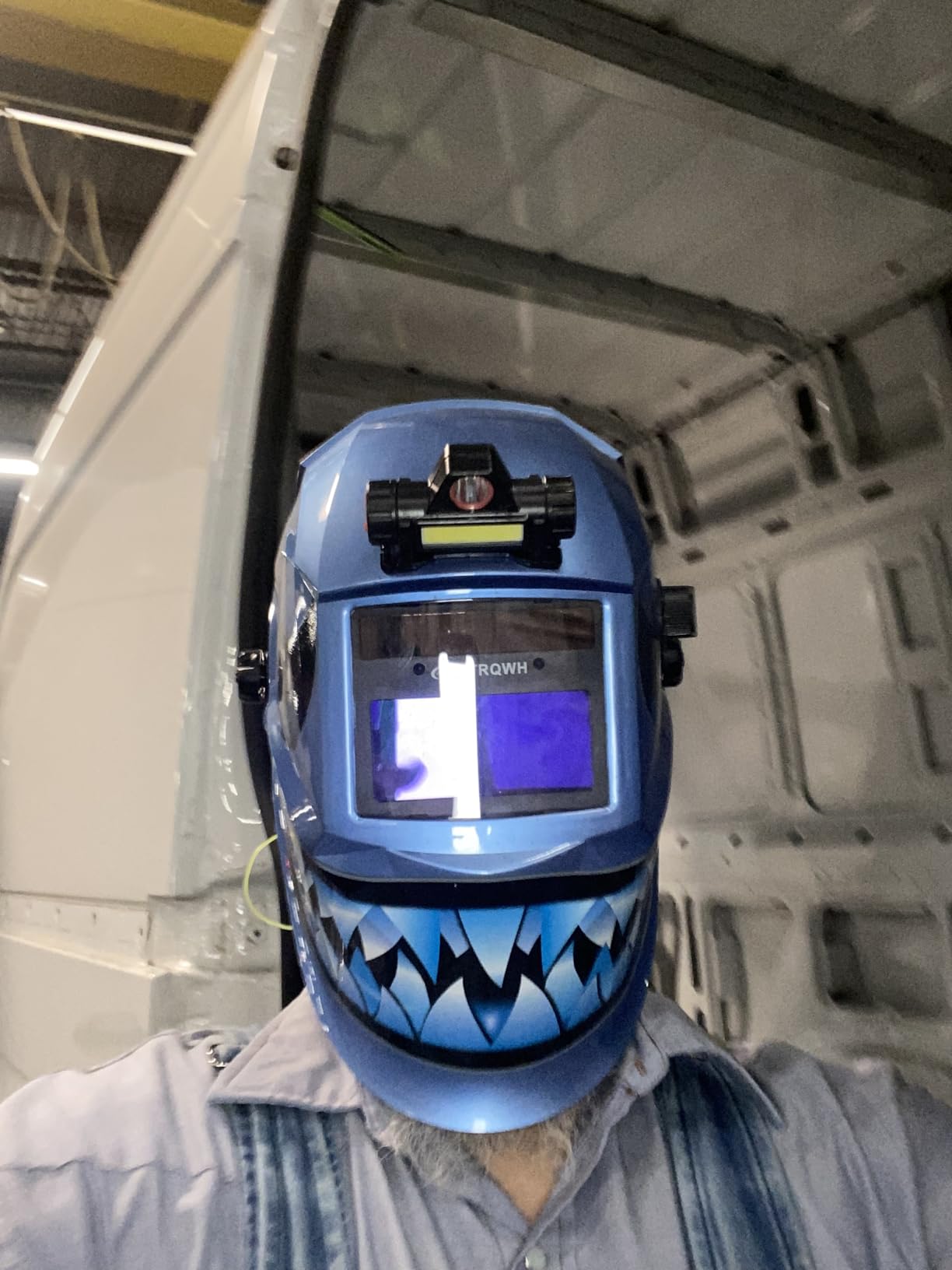
For a student or a first-time buyer, this hits the useful parts of the spec sheet without complexity. The USB rechargeable top LED is a smart addition rather than a gimmick, since you can top it up from a phone charger.
Switching is fast at 1/20000 second, and the external sensitivity, delay and grind buttons are all reachable without lifting a glove. Dual power with a solar panel and a replaceable lithium battery covers the usual dead-battery problem.
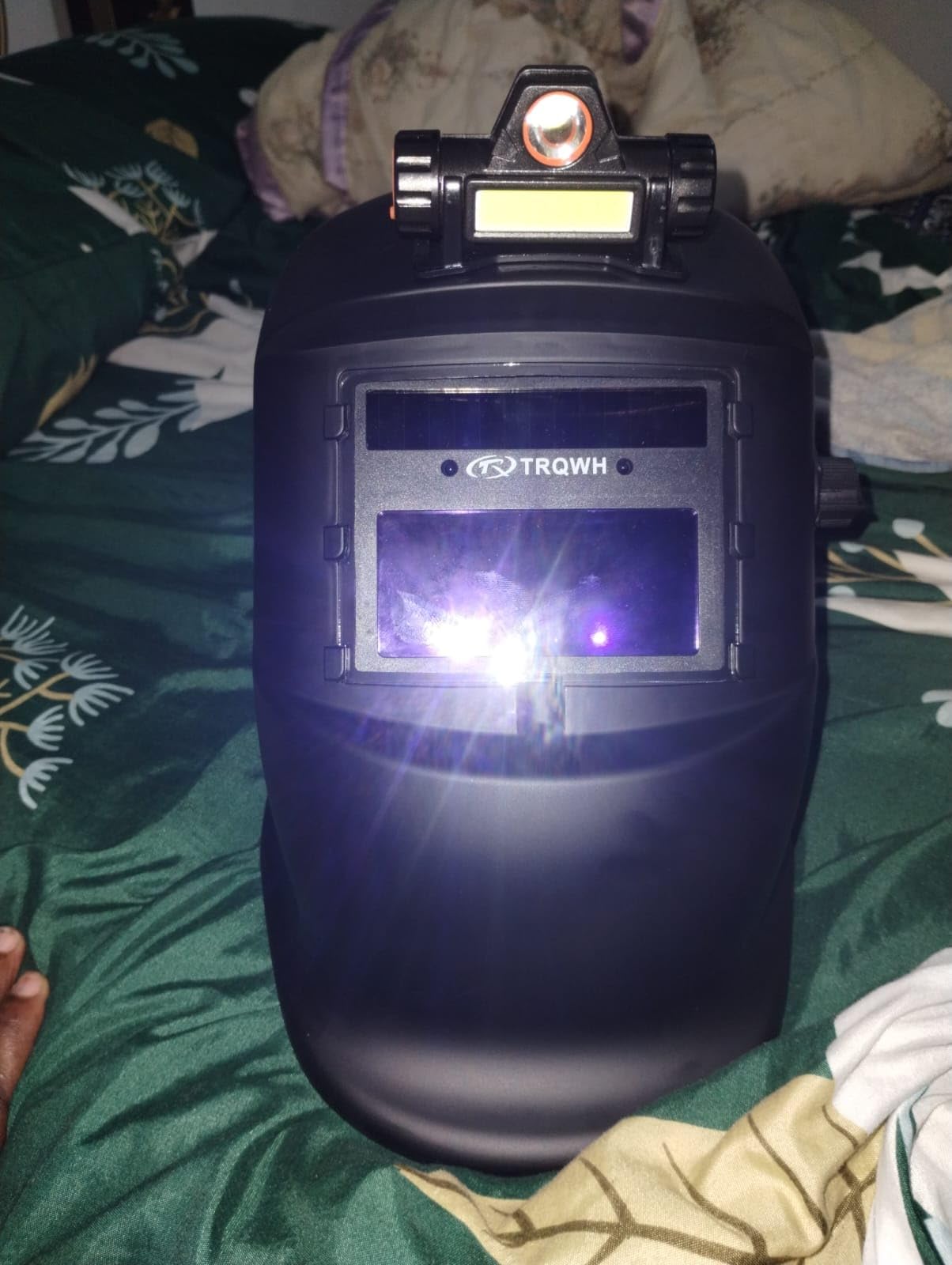
Optical clarity is 1/1/1/2 rather than the full 1/1/1/1, which is a small step down. It still met ANSI Z87.1, EN 379 CE and CSA Z94.3, and the difference in practice was subtle on our test plate.
Reviews treat it as a good first helmet, especially for students, and mention the integrated light and fast switching as the standout features. During testing it also survived being dropped without cracking, which the spec sheet does not promise.
Why beginners like it
The thickened sponge forehead pad and adjustable headgear made short practice sessions comfortable. New welders wear a helmet for a few hours at a time, and comfort matters more than sensor counts at that stage.
Controls are simple enough to learn in one sitting, which reduces the frustration that makes people quit a project.
Where it falls short
The shell plastic is brittle, so a drop onto concrete can crack it. The head strap also tends to loosen during use and needs a re-adjust mid-session.
The light state tint takes some getting used to for new welders, and the warranty period is short compared with the premium helmets here.
10. Sunstac SS-A800D – Best Welding Helmet for Plasma Cutting and Multi-Process
Sunstac Auto-Darkening Welding Helmet 3.94 x 3.27″ View with Light
3.94 x 3.27 inch screen
4 arc sensors
shade 4/5-9/9-13
rechargeable work light
Pros
- Large viewing area with a true color lens and no noticeable lag
- Handles stick TIG MIG CUT MMA and plasma
- Rechargeable auxiliary work light with swivel angle
- Comfortable adjustable padded headband
- Good value next to premium helmets
Cons
- Filter can take a moment to activate
- Battery compartment is awkward to access
- Head strap and side tension buttons feel delicate
- Deep headpiece can interfere with glasses
Plasma cutting is where most budget helmets struggle, because the arc is bright and wide. This one handled our thin sheet plasma work at 1/30000 second with a 3.94 by 3.27 inch true color screen and no noticeable darkening lag.
It covers stick, TIG, MIG, cut, MMA and plasma in one shell with a shade range of 4, 5-9 and 9-13, plus UV, IR and arc protection. If your shop moves between processes, that coverage avoids buying a second hood.
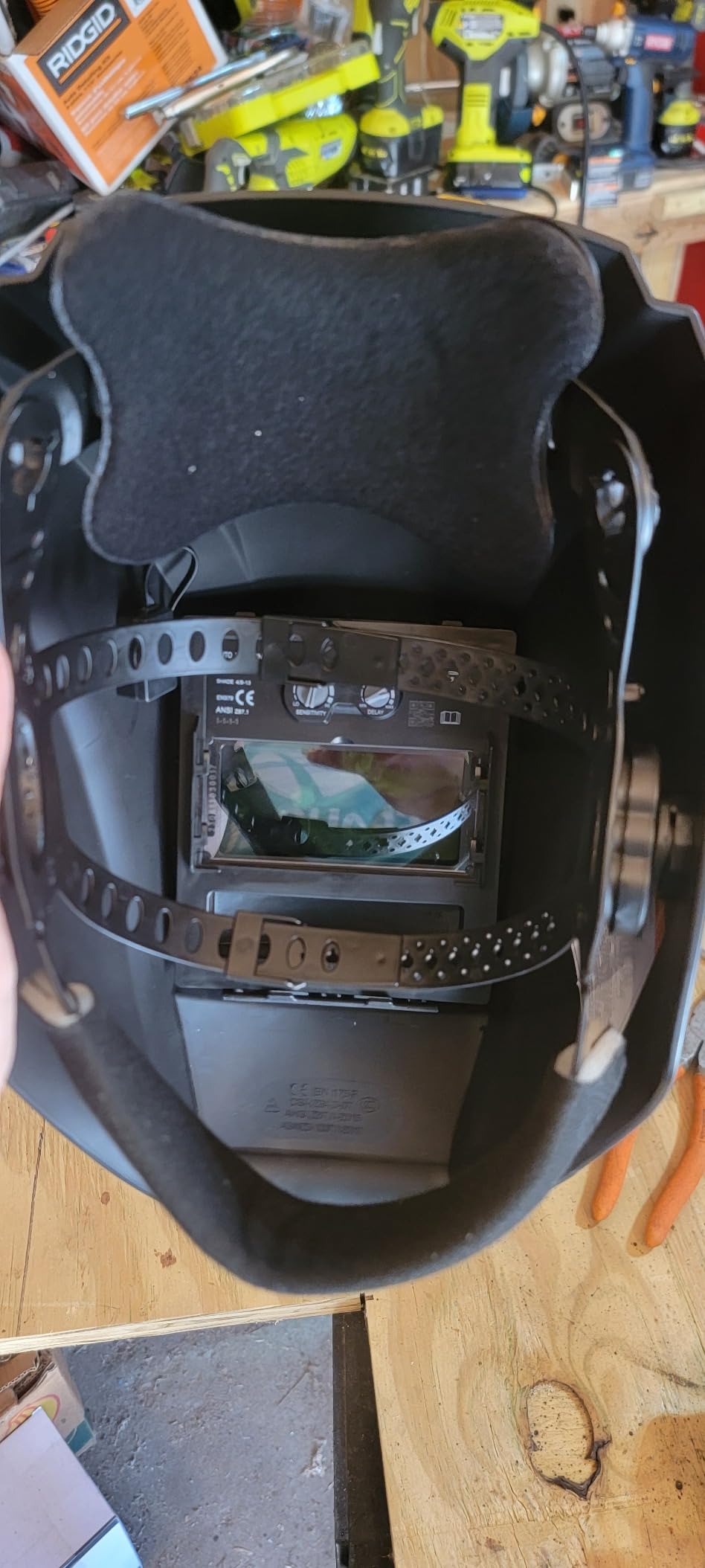
The rechargeable high-brightness work light has two modes and an adjustable swivel angle, which was useful when plasma cutting left the workpiece glowing and hard to see. Dual power with a lithium battery and solar panel gave us consistent run time.
Owners rate it at roughly 78 percent five stars and report that it works as intended with a comfortable adjustable fit. A few note a short initial activation delay that looks like a fault the first time you see it.
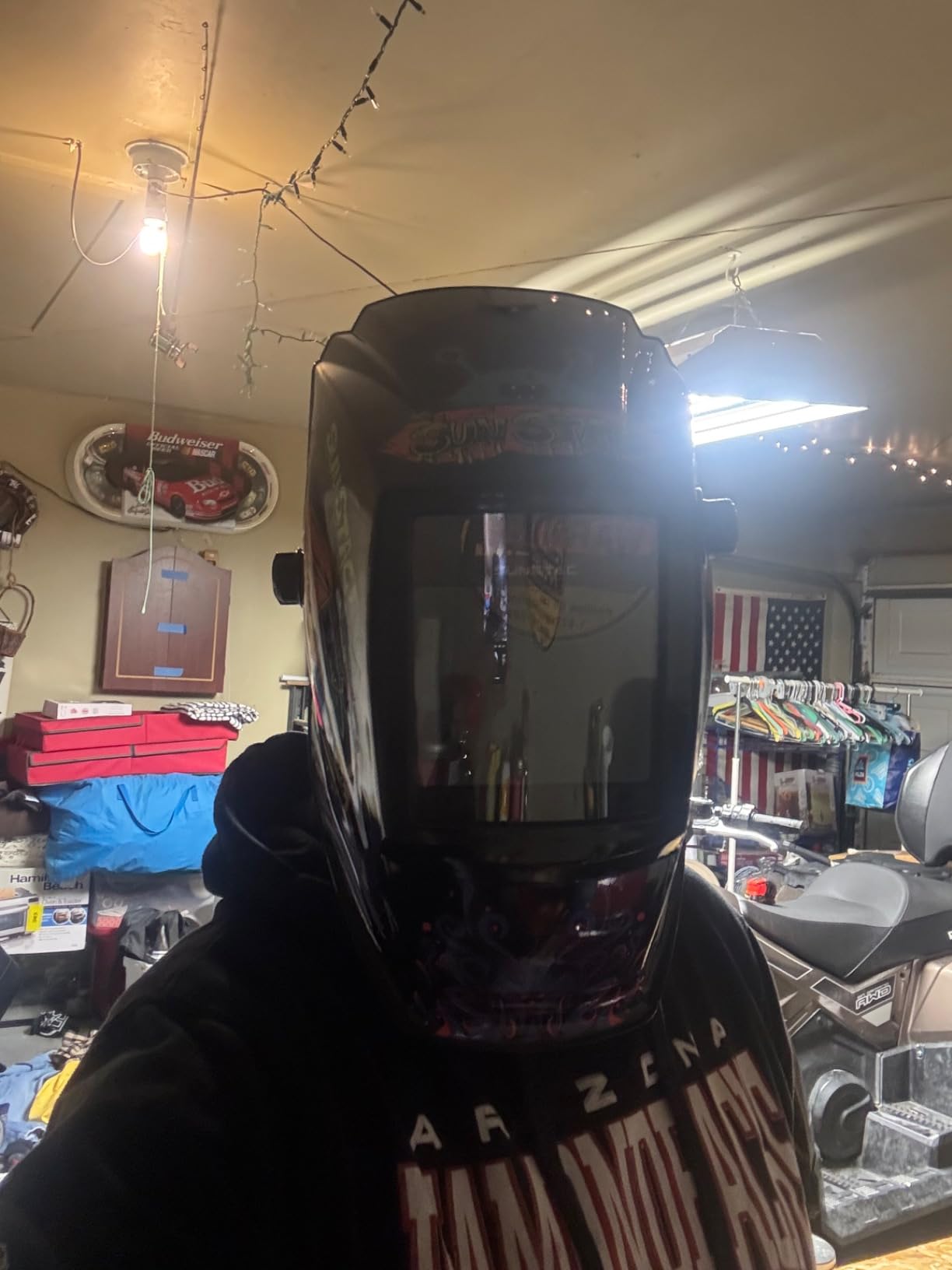
Where it stands out
Multi-process coverage is the reason to pick it. Plasma, cut and grind support in a shell this light is unusual at this level.
The swivel work light and large screen pair well with inspection work, since you can light the joint and read the profile without swapping gear.
Where it falls short
The deep headpiece can interfere with glasses on smaller heads, so try it on if you wear prescription eyewear. The head strap and side tension buttons also feel delicate.
The lithium battery compartment is awkward to access, and the solar panel supplements battery life rather than recharging it.
11. MIGVAN H-21 – Best True Color Welding Helmet with a Large Screen
MIGVAN Welding Helmet Auto Darkening True Color Large Viewing, Welding Hood Solar/Replaceable Battery Powered, Wide Shade 4/5-13 with 4 Arc Sensor, Optical Clarity Welding Mask for TIG MIG ARC Grind
Golden true color lens
4 arc sensors
1/10000 sec
solar plus CR2450
large screen
Pros
- Golden lens gives a distortion-free lifelike view of the pool
- Large screen with wide shade adjustment
- Dual solar and rechargeable battery power
- Pivoting headgear with breathable padding
- Spares and a heavy duty storage bag included
Cons
- Activation speed is slower than premium competitors
- No warranty is listed
- Far fewer reviews than the best-selling budget models
The advanced golden true color lens was the most natural-looking view in the lower price group. Where most filters exaggerate contrast, this one showed the weld pool with less distortion and a more lifelike tone, which made it easy to judge penetration on fill passes.
Four arc sensors with adjustable shade covering DIN 4 to DIN 5-13 and sensitivity controls handled MIG, TIG, stick, cut and grind without changing hoods. The pivoting headgear with breathable padding kept the weight off the back of the neck.
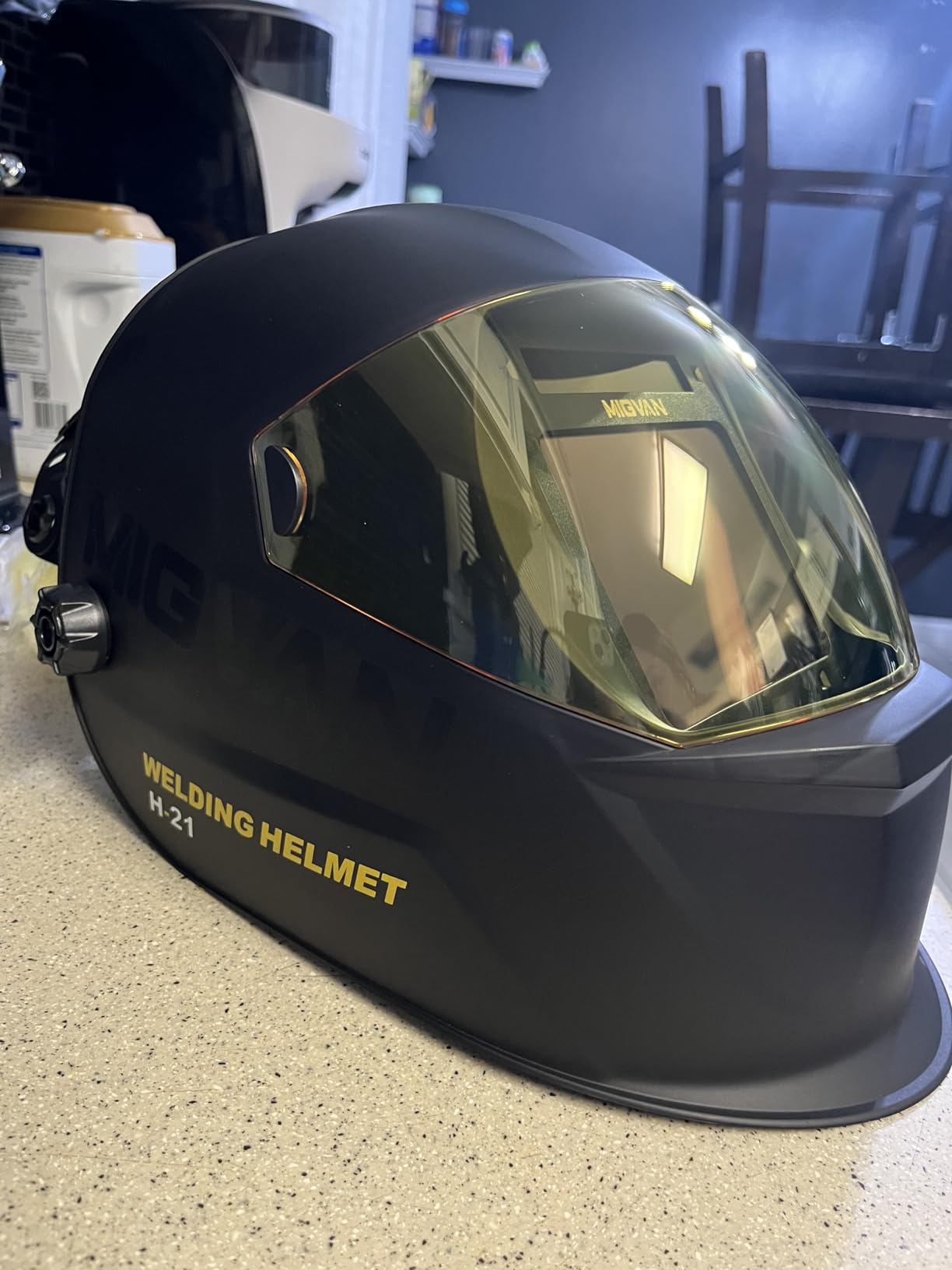
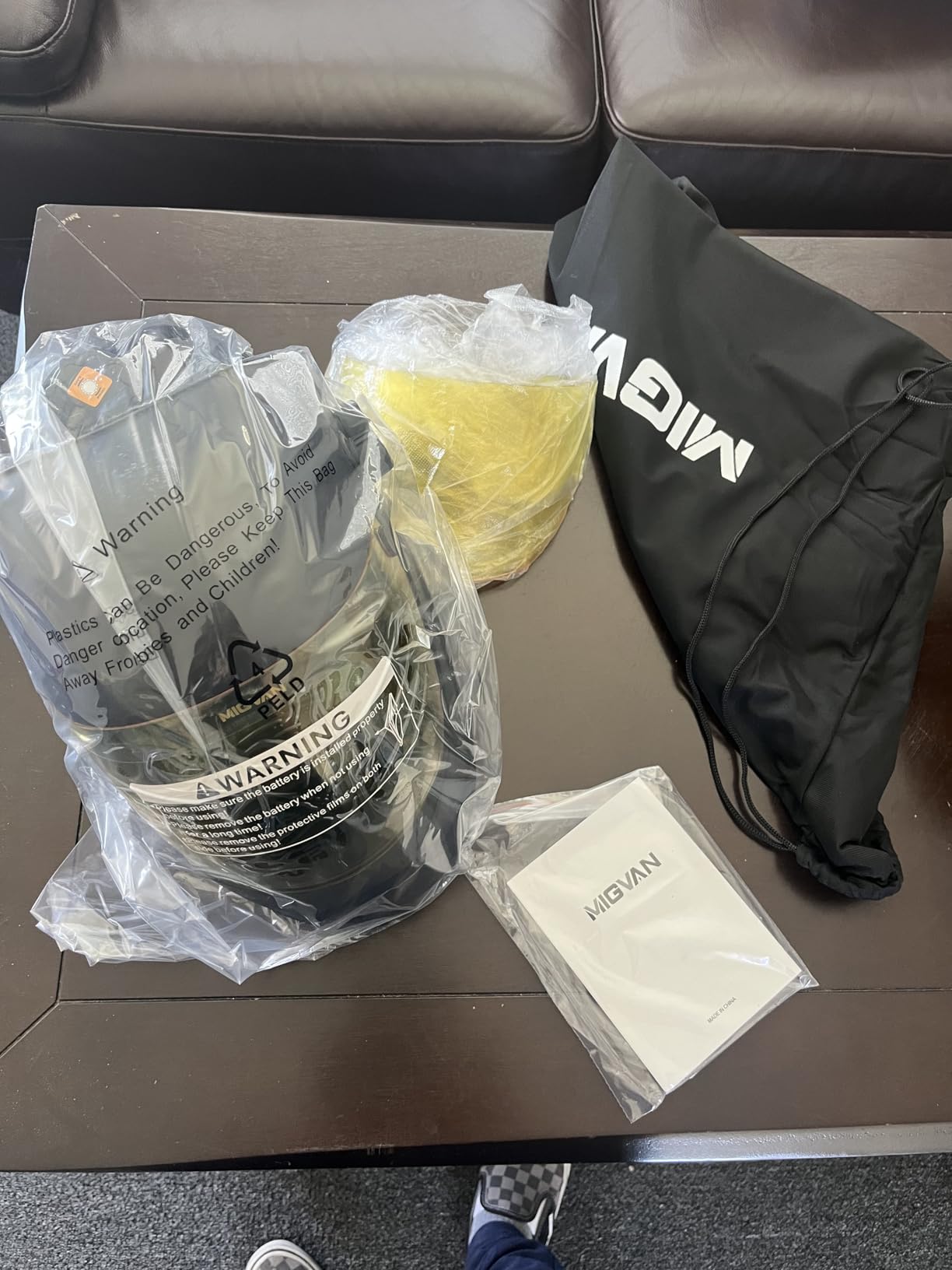
Dual solar and rechargeable CR2450 power suited low-light shop work, and the advanced outer yellow filter adds protection around the main lens. Replacement inner and outer lenses plus a heavy-duty bag came in the box, which is more than most rivals include.
The main reservation is speed. Activation at 1/10000 second is slower than the premium helmets here, so the first strike on a fresh arc is slightly less clean.
Where it works best
Appearance work and stainless or aluminium, where the golden lens shows subtle colour differences you would miss on a standard filter. That is also why many people pick it for TIG root passes.
Anyone working in a dim shop benefits from the dual power setup, since the battery covers the times the solar panel gets no light.
Where it falls short
The slower activation speed is the one to weigh against premium options. On repeated short tacks, the lag becomes noticeable.
No warranty is listed for this model, and it has fewer owner reviews than the best-selling budget models, so long-term durability data is thinner.
12. NDUUN Auto Darkening Hood – Best Budget Helmet for Occasional Work
NDUUN Welding True Color Helmet Auto Darkening Hood with Adjustable Shade Range 4/9-13 for TIG MIG ARC Welder Mask
2 arc sensors
3/10000 sec switching
3.62 x 1.65 inch view
solar plus battery
Pros
- Inexpensive and simple to set up
- Darkens reliably with adjustable sensitivity and delay
- Lightweight shell stays comfortable for occasional work
- Clean graphics that younger welders like
- Good value for hobby and shop-class use
Cons
- Shell and lens feel thin and flimsy
- Outer lens pits quickly from spatter
- Small viewing window for detailed work
- Build quality is low for the price
This is the simplest auto-darkening hood in the group and it does one job well. Two sensors with 3/10000 second switching darkened reliably on our MIG and stick test pieces, and the DIN 4 light state with a 0.1 to 0.8 second delay range was enough control for casual work.
Owners are often surprised by the quality at this level, and the graphics and easy setup get repeated mentions from younger welders. For someone welding a few hours a month, that is a reasonable place to start.
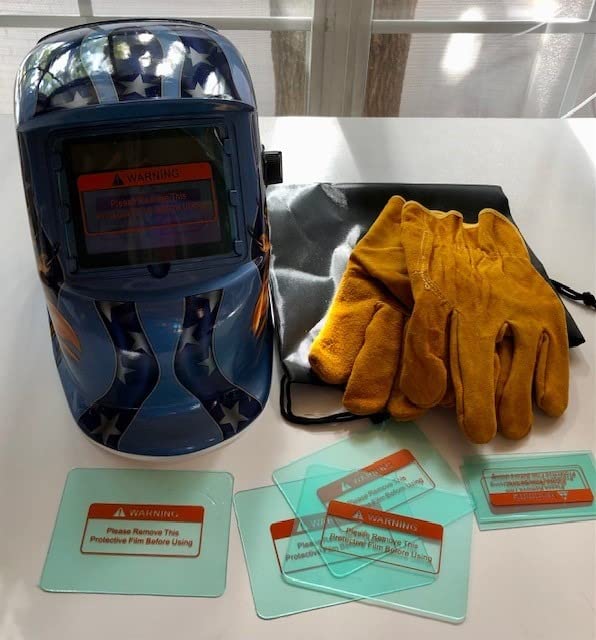
The solar panel with battery power removed the charging hassle, and the 3.62 by 1.65 inch visor kept the shell light enough for short sessions. Multi-purpose coverage includes automotive, construction, fabrication and repair work.
Durability is the recurring weak point. The shell and lens feel thin, and the outer lens pits quickly from spatter, which means replacing it more often than with a hood that ships with a dark outer lens.
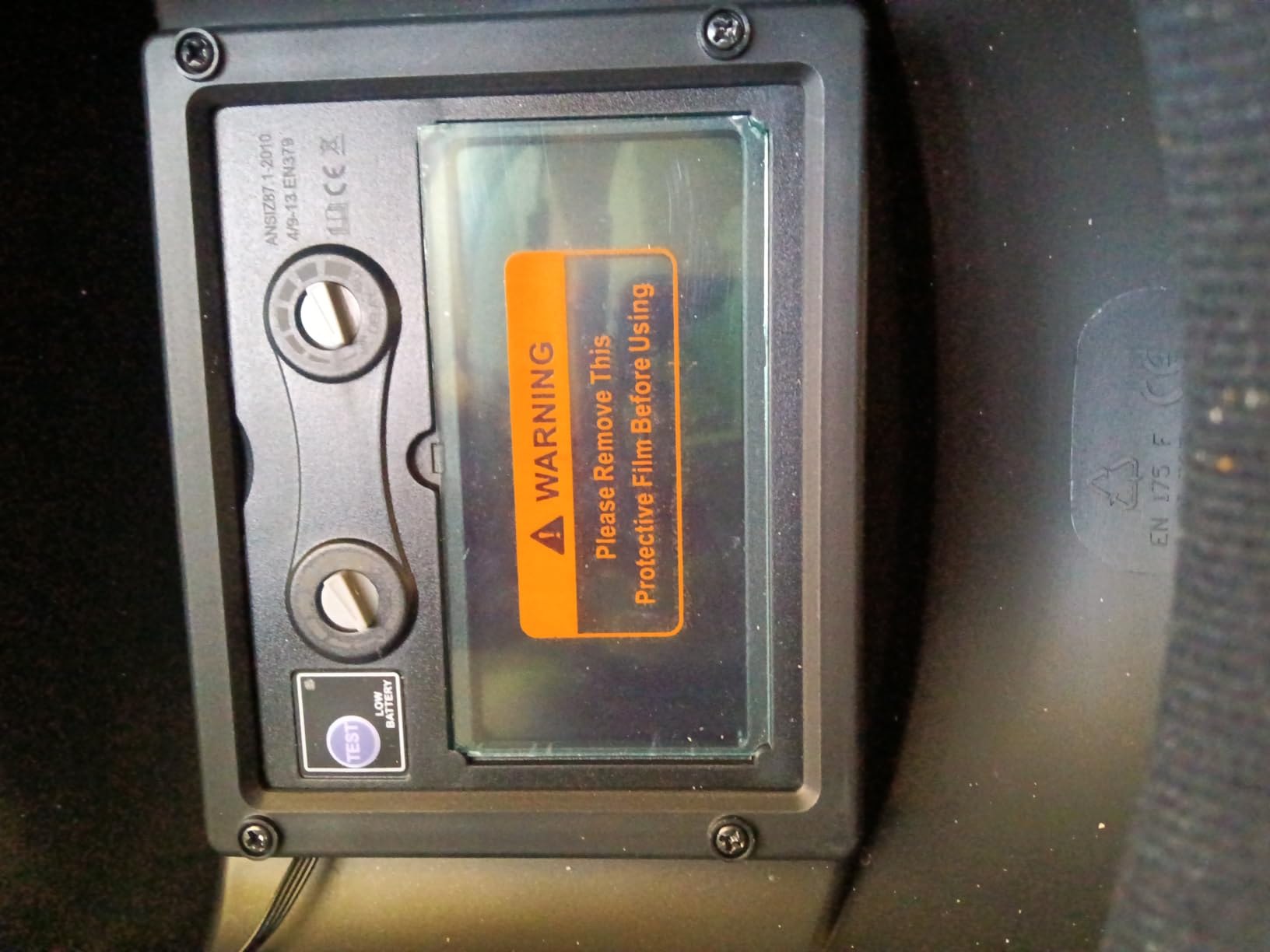
Where it fits
Occasional hobby and shop-class work, farm and equipment repair, and anyone who wants auto-darkening without spending much. It also handles automotive and construction repair fine.
Two sensors means low-amperage TIG is its weak spot, so if TIG is your main process, pick a four-sensor model instead.
Where it falls short
The small viewing window makes detailed work harder, since you see less of the joint and check more often with the hood up.
Several users consider the overall build low quality for the price, and the spatter-sensitive outer lens is the consumable to watch. It suits occasional work, not a production schedule.
How to Choose a Welding Helmet: Buying Guide 2026
Start with your process, because it decides more than any other feature. TIG at low amperage needs four arc sensors, because two sensors often miss the arc and flash you. MIG and stick at moderate amperage work fine with two sensors, and plasma cutting needs a shade range that goes dark enough for the cut.
Next look at optical clarity. The 1/1/1/1 rating means the lens passes the same tests for clarity, distortion, uniformity and chromatic aberration, and anything below that shows colour shifts and a flatter view. True color lenses such as the Lincoln 4C, Hobart PureColor and the golden lens on the MIGVAN render the puddle closer to what you see with the hood up.
Switching speed matters less than most spec sheets suggest, since every hood in this roundup runs between 1/20000 and 1/10000 second. What actually bites is the first strike of a session, which is why sensitivity tuning matters as much as the headline number.
Viewing area decides how often you lift the hood. Anything around 3.6 by 1.65 inches is a compact window, 3.94 by 3.66 inches is generous, and the Lincoln’s 12.5 square inch lens is the widest here. Wider windows reduce alignment guesswork on long passes.
Power source decides whether batteries ever catch you out. Solar panels alone struggle in a dark shop or a full-face shield, so a solar panel plus a replaceable lithium or CR2450 cell is the safer choice. Batteries inside a solar hood are a common forum complaint, so carry a spare.
Weight matters more than people expect. Six to sixteen ounce shells disappear on your head, while two pound helmets get uncomfortable by hour six. If you weld overhead, weight is the first spec to check. Headgear adjustment and padding come next, since a badly tensioned ratchet causes the headband headaches that show up in forum posts.
Fit matters for respirators. If you weld galvanised or stainless steel, you need a half mask or PAPR under the helmet. Forum discussions and Reddit threads on r/Welding, the practical test is simple: fit the mask first, then check whether the helmet headgear closes over it without compressing the seal. Our welding cart guide covers fume extraction setups that pair with that decision.
Finally, check certification. ANSI Z87.1 is the North American baseline, CSA Z94.3 covers Canada, and DIN EN 175 plus EN 379 are the European equivalents worth having if you ship work internationally. A 5 year warranty, as on the Lincoln, tells you something about expected service life too.
Frequently Asked Questions
What is the best welding helmet for value for money?
For most people the YESWELDER LYG-M800H is the strongest value pick, with a 3.93 by 3.66 inch true color viewing area, four arc sensors and 1/30000 second switching. If you want to spend less, the YESWELDER LYG-L600A gives you 1/1/1/1 true color optics and ANSI Z87.1 protection for very little.
Which welding helmet is better, the Miller or the Lincoln?
Among the models we tested, the Lincoln Viking 3350 leads on optical clarity, with 1/1/1/1 clarity, an extra large 12.5 square inch lens and 4C lens technology, plus a 5 year warranty. The strongest alternative in this group on weight and durability is the Jackson Safety Insight at 6 ounces. Welders on r/Welding often pick based on which brand is easiest to get parts for locally, and that varies by region.
Is a budget welding helmet any good?
Yes, for occasional work. Budget auto-darkening helmets in this group now include 1/1/1/1 true color lenses, four arc sensors on some models and ANSI Z87.1 certification. The trade-offs are thin plastic shells, headgear that does not survive heavy daily use, and outer lenses that pit from spatter faster.
How many arc sensors do I need?
Four arc sensors if you TIG weld at low amperage, because two sensors often miss the arc and let a flash through on start-up. Two sensors are enough for MIG, stick and most hobby work. Sensor count matters less than making sure the sensitivity setting is tuned to your shop lighting.
Do welding helmets expire?
The lenses do not have a fixed expiry date, but they degrade. Replace the outer lens as soon as spatter pits cloud your view, and replace the inner auto-darkening filter when switching gets slow or uneven. Keep spare inner and outer lenses on hand and store the helmet somewhere dry and away from direct sun.
Final Verdict: The Best Welding Helmets to Buy in 2026
The Lincoln Electric Viking 3350 is our best welding helmet overall. Nothing else in this group matched its combination of 1/1/1/1 clarity, an extra large lens, reliable low-amperage sensing and a 5 year warranty.
For value, the YESWELDER LYG-M800H gives you a large true color window and four sensors at a fraction of the premium cost. Students and weekend welders should start with the YESWELDER LYG-L600A, and full-time fabricators working eight hours a day will notice the comfort difference in the X6 headgear.
Whichever you pick, fit it before you buy, tune the sensitivity in your own shop lighting and keep spare lenses on the shelf.