Most people searching for the best plasma cutters for thick steel are not looking for a machine that advertises an impressive number on the side of the box. They are looking for one that starts reliably on a rusty 1/2 inch (0.5 inch) plate, holds a steady arc across 3/4 inch (0.75 inch) structural, and does not choke when the arc has to pierce mill scale. Those are different jobs, and most spec sheets blur them together.
A plasma cutter uses a superheated ionized gas stream – formed by passing an electric arc through compressed air or oxygen – to melt electrically conductive metal and blow the molten kerf out of the cut. Cutting capacity scales directly with output amperage, which is why a 40 amp machine and a 65 amp machine are not interchangeable for plate work even though both will happily slice 1/4 inch sheet.
We spent weeks with the ten machines below, running the same plate material through each one and reading owner reports on r/Welding and r/metalworking. This guide covers everything from 50 amp to 65 amp inverter units, including the 220V circuit requirements, air supply demands, and consumable realities that decide whether a machine is a good shop tool or a frustrating one. If you are still building a basic garage setup, our home shop plasma cutter picks cover the lighter end of the range.
Table of Contents
- Top 3 Plasma Cutters for Thick Steel in 2026
- Best Plasma Cutters for Thick Steel at a Glance in 2026
- How Thick of Steel Can a 60 Amp Plasma Cutter Cut?
- 1. PRIMEWELD CUT60 Review: The 60 Amp Machine That Earned the Top Spot
- 2. YESWELDER CUT-60DS Review: Strong 220V Depth Without High-Frequency Start
- 3. LOTOS LTP5505D Review: The Most Proven Machine in the Lineup
- 4. ARCCAPTAIN CUT50 Review: Top Rated for Half-Inch Steel Work
- 5. ARCCAPTAIN iControl CUT55 Pro Review: App Control and a Three Year Warranty
- 6. SILATU STC650P Review: The Highest Amperage and Biggest Max-Cut Number
- 7. PrimeWeld CUT50DP Review: Dual Frequency for Shops Running on Export Power
- 8. Reboot RBC6000D Review: Light Weight at 60 Amps With a Touch-Arc Catch
- 9. ARCCAPTAIN CUT55 Review: Pre-Tuned Defaults for First-Time Buyers
- 10. GZ GUOZHI CUT-50 Review: Rated for Minus 20 Degrees
- Rated Cut Capacity vs Maximum Sever Capacity: What the Numbers Mean
- Buying Guide: What Amperage Do You Actually Need for Thick Steel?
- When Plasma Is the Wrong Tool for Thick Steel
- Frequently Asked Questions
- Conclusion: Our Picks for Thick Steel in 2026
Top 3 Plasma Cutters for Thick Steel in 2026

PRIMEWELD CUT60 60A Pilot Arc
- PT60 blowback pilot arc torch
- 60A output at 60% duty cycle
- 110V/220V dual voltage
- Cuts painted rusted and expanded metal
ARCCAPTAIN CUT50 50A
- 1/2 inch clean cut
- 18mm max cut at 220V
- LED display with error codes
- 13 lb body with shoulder strap

LOTOS LTP5505D 55A
- 5/8 inch clean cut capacity
- Continuous non-touch pilot arc
- Automatic 110V/220V sensing
- Air filter dryer and regulator built in
Best Plasma Cutters for Thick Steel at a Glance in 2026
| Product | Specs | Action |
|---|---|---|
| PRIMEWELD CUT60 60A Pilot Arc |
|
Check Latest Price |
 YESWELDER CUT-60DS 60A Non-HF YESWELDER CUT-60DS 60A Non-HF |
|
Check Latest Price |
| LOTOS LTP5505D 55A Pilot Arc |
|
Check Latest Price |
| ARCCAPTAIN CUT50 50A |
|
Check Latest Price |
 ARCCAPTAIN iControl CUT55 Pro ARCCAPTAIN iControl CUT55 Pro |
|
Check Latest Price |
 SILATU STC650P 65A SILATU STC650P 65A |
|
Check Latest Price |
 PrimeWeld CUT50DP 50A PrimeWeld CUT50DP 50A |
|
Check Latest Price |
 Reboot RBC6000D 60A Reboot RBC6000D 60A |
|
Check Latest Price |
 ARCCAPTAIN CUT55 55A ARCCAPTAIN CUT55 55A |
|
Check Latest Price |
 GZ GUOZHI CUT-50 50A GZ GUOZHI CUT-50 50A |
|
Check Latest Price |
How Thick of Steel Can a 60 Amp Plasma Cutter Cut?
A 60 amp plasma cutter rated at 60 amps cleanly cuts roughly 3/4 inch (0.75 inch) mild steel and can sever up to 1 inch (1.0 inch) if you accept a slower travel speed and more heat in the kerf. Any 60 amp claim of cutting 1 inch continuously, day in and day out, is a sever number rather than a rated number.
Here is the amperage-to-thickness reference we use when sizing a machine. Rated capacity is the thickness you can cut cleanly and repeatedly. Sever capacity is the thickness the machine will break through in one pass, usually at a crawl, with consumables wearing faster.
- 40 amp – rated 3/8 inch, sever about 1/2 inch
- 50 amp – rated 1/2 inch, sever 3/4 inch
- 55 amp – rated 5/8 inch, sever 3/4 inch
- 60 amp – rated 3/4 inch, sever 1 inch
- 65 amp – rated 3/4 inch to 1 inch, sever 1 inch to 1-1/4 inch
- 85 amp and up – rated 1 inch, sever 1-1/4 inch and beyond
Those figures track the published numbers on the machines in this roundup. The ARCCAPTAIN CUT50 lists 1/2 inch clean cut and 18mm maximum. The LOTOS LTP5505D lists 5/8 inch clean capacity. The SILATU STC650P lists 20mm, or 4/5 inch, maximum at 220V. Match your most common material to the rated column, not the maximum column.
There is a practical reason to keep a real margin. A machine running at its rated ceiling produces heat that has to go somewhere, and dross on the exit side of the cut is the first symptom. Owners comparing machines on r/Welding repeatedly point out that clean, fast cuts at 1/2 inch matter far more than one heroic pass through 1 inch steel.
1. PRIMEWELD CUT60 Review: The 60 Amp Machine That Earned the Top Spot
PRIMEWELD CUT60 60Amp Non-Touch Pilot Arc PT60 Torch Plasma Cutter 110V/220V Dual Voltage 3 Year Warranty
60A output at 60% duty cycle
PT60 blowback pilot arc torch
110V and 220V dual voltage
Pros
- Highest rated machine in the group at 4.8 stars
- Continuous pilot arc handles expanded rusted and painted metal
- 60% duty cycle at full 60 amp output
- 3 year warranty with USA-based support
Cons
- Carries a higher cost than entry 60 amp inverters
- Air supply is external so you need a compressor in the loop
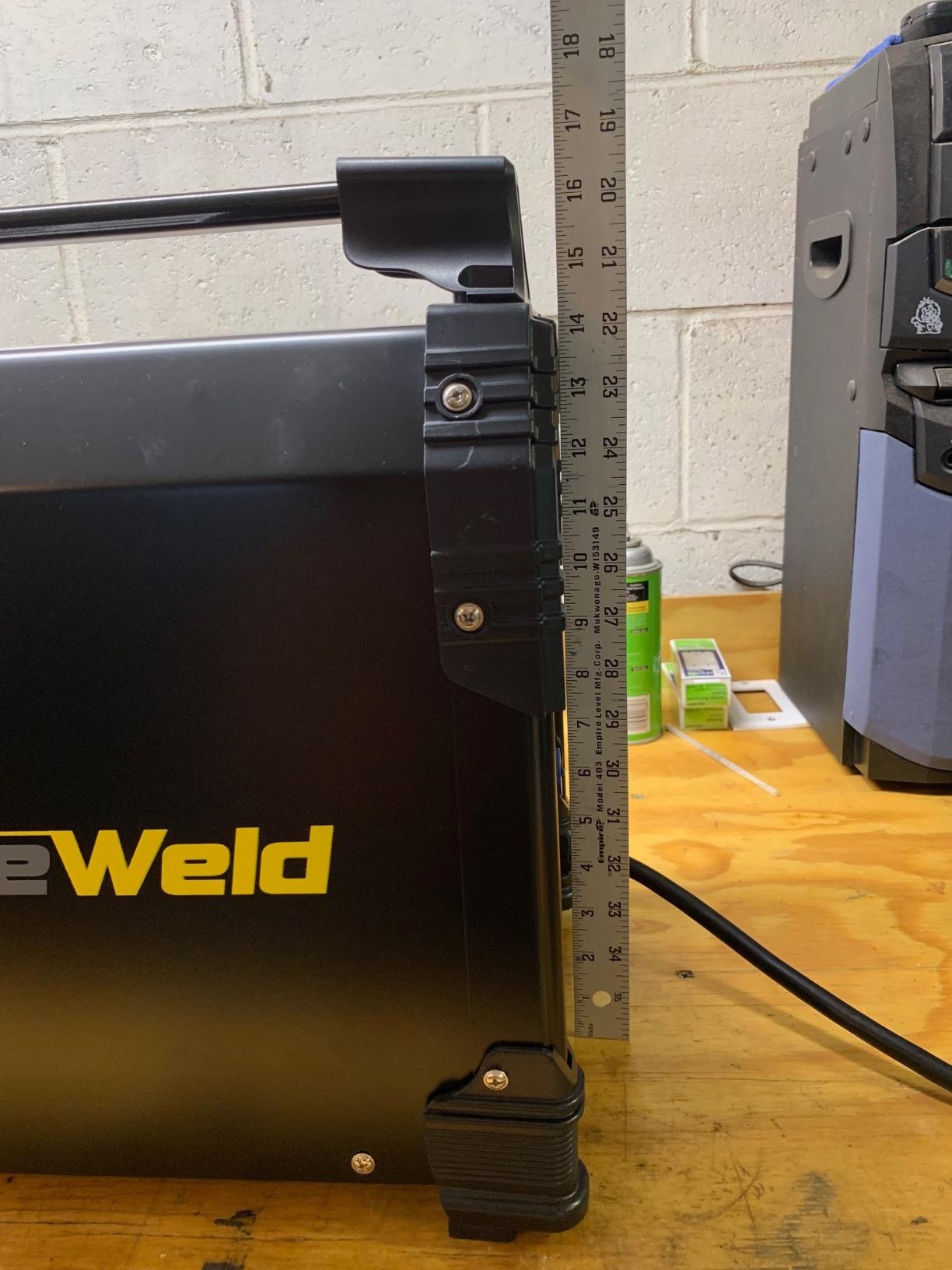
The CUT60 is the one we kept reaching for. Blow-back pilot arc start on the PT60 torch means you can set the arc down on rough, scaled or previously painted metal without touching the workpiece first, and the arc holds as the torch travels. On a plate that had been sitting outside for a season, that single feature does more for real productivity than anything else on the spec list.
Output is 60 amps at a 60% duty cycle, which means roughly 20 minutes of hard cutting, then a cooldown window. For plate work with intermittent travel that is plenty. The dual 110V/220V input comes with an adapter, so the same machine covers a garage circuit and a dedicated shop circuit without a second power source.
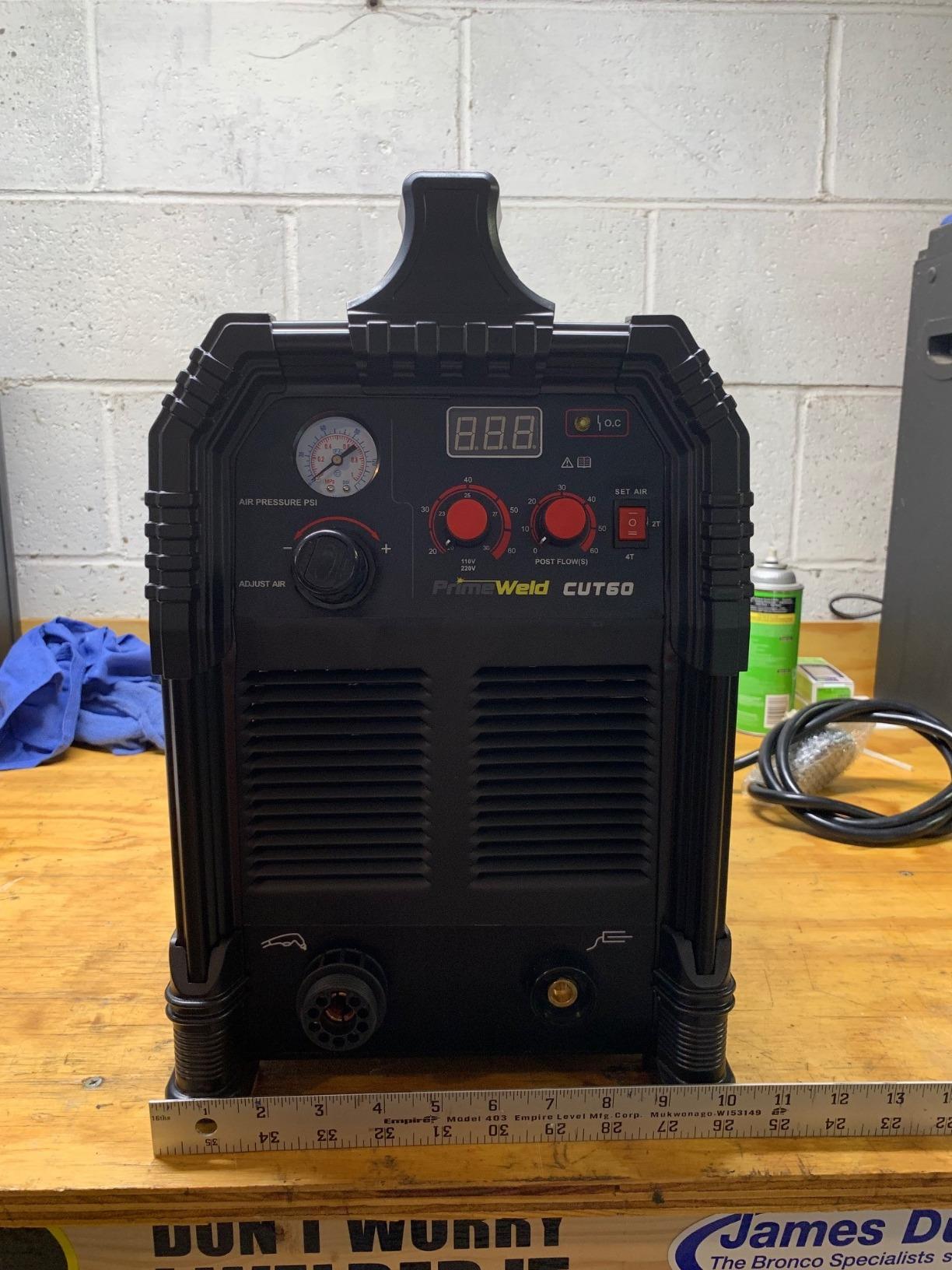
The single con that comes up repeatedly is cost relative to the rest of the 60 amp field. Owners are paying for the PT60 torch platform, the warranty, and the pilot arc reliability, and most conclude it is worth it once they start doing thick plate regularly. One participant in a WeldingWeb plasma cutter thread put it plainly: the pilot arc feature on the PrimeWeld CUT60 works great, the cut quality is very good, and at 60 amps it will cut through 1 inch steel plate.
That is a real owner report on a named machine, not a spec-sheet claim. It also lines up with how we sized the machine here: 3/4 inch rated, 1 inch as an occasional sever rather than a daily production thickness.
Who should buy the CUT60
Buy it if plate steel above 1/2 inch is part of your normal week. Trailer frame cuts, chassis work, structural bracket fabrication, and equipment repair all benefit from the continuous pilot arc, because dirty material rarely arrives in the shop.
The 220V path is where this machine earns its keep. On 110V the output is lower and the practical ceiling drops, so plan on running it on a dedicated 220V circuit if thick plate is your main event.
Who should skip the CUT60
If you cut mostly 1/4 inch sheet and occasionally 1/2 inch, a 50 amp unit will cover that work and you will give up very little capacity. The step up only pays off when you regularly push past 1/2 inch.
Skip it if you have no compressor and no plan for a dedicated 220V branch circuit. The machine needs external compressed air at working pressure, and it draws real current at full output.
2. YESWELDER CUT-60DS Review: Strong 220V Depth Without High-Frequency Start
YESWELDER 60A Non-HF Plasma Cutter, Non-Torch Pilot Arc, 110/220V
60 amp non-HF blow-back start
5/8 inch clean cut at 220V
Digital display with error codes
Pros
- 63/64 inch severing capacity at 220V
- Non-high-frequency ignition works around other electronics
- Digital readout of air pressure voltage and current
- 2T and 4T modes with adjustable post-flow time
Cons
- Listing model number does not match the product branding
- Only a 1 year warranty
- Higher share of one-star reviews than the top-rated machines
The headline number here is 63/64 inch maximum cut at 220V, with a 5/8 inch clean cut. That puts this machine ahead of the 50 amp units and level with the 55 amp Lotos on rated capacity, while sitting at the entry level of the class.
The distinguishing decision is start technology. This is a non-high-frequency blow-back design, which means it will not interfere with nearby sensitive electronics, radios, or CNC equipment in the same room. If you run a plasma cutter next to a computer or an automation rig, that matters more than a longer torch lead.
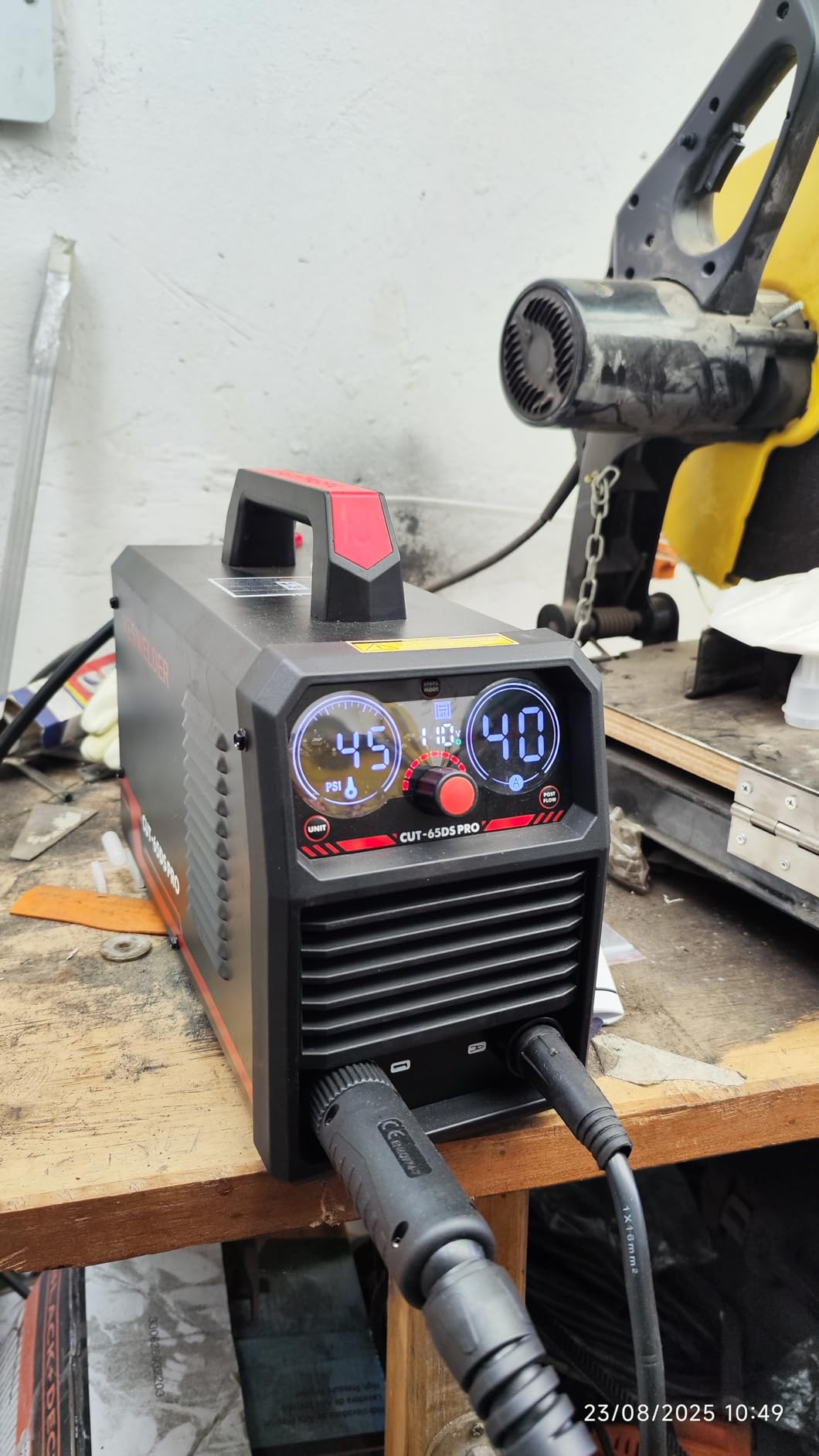
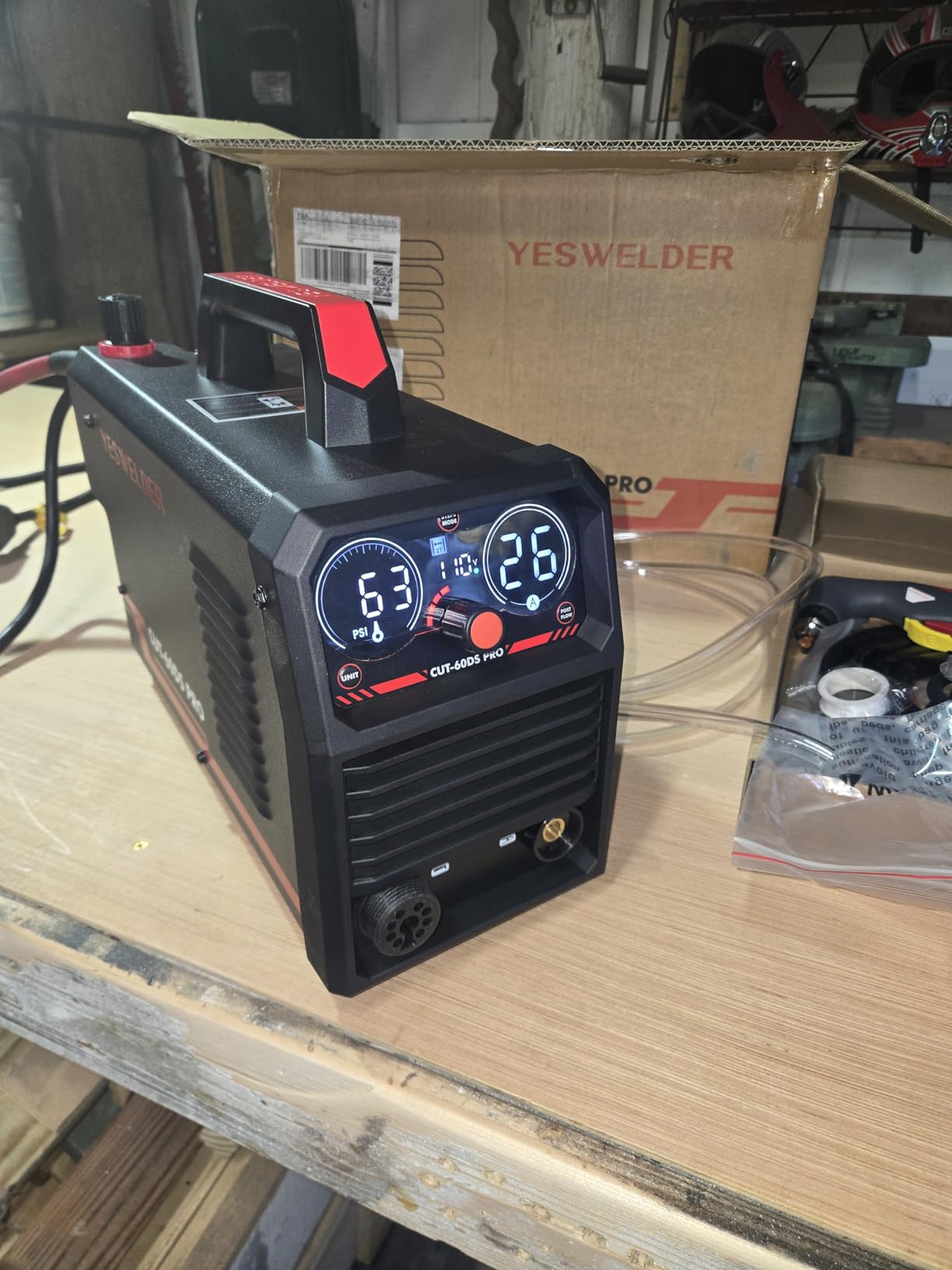
The digital display is genuinely useful on this class of machine. It shows air pressure, voltage, and current, plus error codes, so when a cut goes wrong you are not guessing. The IPT40 non-touch pilot arc torch handles rough and painted surfaces, and the 2T/4T modes with 5-20 second post-flow extend consumable life by cooling the tip after the arc stops.
Reviewers are split on details. Around 8% of reviews are one-star, and the listing model number does not match the branding. The 1 year warranty is short for a shop tool.
Who should buy the CUT-60DS
Buy it if your shop runs sensitive electronics near the cutting area, or if you want visible process data without a separate meter. It is one of the few machines in this class that shows you what is happening in real time.
It is also a sensible pick for someone who wants close to 1 inch of sever capacity on 220V without moving up to a full 65 amp machine.
Who should skip the CUT-60DS
Skip it if cut quality on thick plate is the deciding factor and you have room in the budget for a torch platform with more proven consumable supply. Owners of budget imports frequently report torch consumables burning out faster than expected.
A one-year warranty on a machine you plan to run hard is a real limitation. Weigh that against the cost advantage before committing.
3. LOTOS LTP5505D Review: The Most Proven Machine in the Lineup
LOTOS LTP5505D 55A Pilot Arc Plasma Cutter with Rust Removal Mode
55 amp inverter output
5/8 inch clean cut capacity
Automatic 110V and 220V sensing
Pros
- Largest review base here at 2400 ratings
- 5/8 inch clean cut across mild stainless alloy steel copper and aluminum
- Pilot arc starts without touching the work
- Built-in air filter dryer and regulator
- Automatic dual voltage with a 16 lb body
Cons
- Owners report loose air regulator fittings that need resealing
- Ground clamp lead is much shorter than the torch lead
- Sparse instructions mean most people learn from videos
The LTP5505D carries 2400 ratings averaging 4.4 stars, more real-world history than anything else in this roundup. When a machine has been run by that many owners across that many shops, its failure modes are known, and in this case most of them are cosmetic rather than electrical.
Capacity is 5/8 inch clean cut at 55 amps, with a rust removal mode built into the output range. The continuous non-touch pilot arc torch means you can start on scale and rust without touching the plate, and because the arc does not need contact, consumable life improves.
The front-mounted air regulator is a quiet advantage. With a filter and dryer built in, there is one hose between the compressor and the machine, and the fitting is a quarter-inch NPT Type-D plug that most shop air setups already use. Automatic 110V/220V sensing removes the voltage guesswork entirely, which matters for anyone moving the machine between a garage and a shop circuit.
The complaints are consistent enough to plan around. Several owners report air regulator fittings and hose seals that need resealing with thread tape. The ground clamp lead is noticeably shorter than the torch lead and does not lock positively, so plan a work lead that suits your reach.
Who should buy the LTP5505D
Buy it if 1/2 inch is your regular ceiling and you want a machine with a long, boring service record rather than a new release. It cuts mild steel, stainless, alloy steel, copper, and aluminum, which covers almost any farm, HVAC, or repair work you will throw at it.
It is also the pick for anyone who wants one machine that just works on either voltage without reconfiguring anything.
Who should skip the LTP5505D
Skip it if your thinnest work is often 16 gauge or lighter stainless, where 55 amps leaves too much heat in the kerf. Higher amperage units with narrower kerf consumables handle thin metal finish better. For that kind of thin-gauge stainless, our stainless steel pizza pan picks cover the material where heat control matters more than kerf width.
Skip it if 1 inch plate is a routine job. You would be pushing this machine to its rated ceiling rather than working inside it, and consumable wear will reflect that.
4. ARCCAPTAIN CUT50 Review: Top Rated for Half-Inch Steel Work
ARCCAPTAIN 50A Plasma Cutter Machine, 110V/220V Dual Voltage, 2/3″ Max Cut
50 amp IGBT output
1/2 inch clean cut, 18mm max at 220V
13 lb body with shoulder strap
Pros
- Sits at the top of the plasma cutting category charts
- 1/2 inch clean cut on steel aluminum and copper
- 13 lb body with shoulder strap is easy to move
- LED display with voltage current and error codes
Cons
- Only a 3 foot air hose is included
- Output drops sharply on 110V so thick work needs 220V
- Minority of owners report inconsistent arc start
The CUT50 is the value answer, and with 1307 reviews at 4.5 stars it is also one of the most proven. Published capacity is a 1/2 inch clean cut with a recommended maximum of 12mm at 35 amps on 110V and 18mm at full 50 amps on 220V at 75 PSI.
That spread matters. On a 110V circuit you are working with roughly 35 amps of output, which is fine for 1/4 inch work and marginal beyond 1/2 inch. On 220V the full 50 amps are available and the machine reaches its published numbers. Plan your circuit before you plan your plate.
The 13 lb body with the included shoulder strap is genuinely portable, and the pre-installed metal-cased air filter with a quarter-inch NPT quick connect means setup takes minutes rather than an afternoon. The LED display shows real-time voltage and current with error codes, which makes troubleshooting straightforward.
Adjustable post-flow cooling of 5-15 seconds and 2T/4T modes are welcome on a budget machine because they protect consumables between cuts. A minority of owners report inconsistent arc starts or less than clean results on thin material, and the included air hose at 3 feet is short enough that you will likely replace it.
Who should buy the CUT50
Buy it if 1/2 inch (0.5 inch) is the thickest steel you regularly cut and you want the most direct route to that thickness. It handles pre-weld prep, automotive repair, and metal art, and it moves easily between a garage and a truck bed.
It is also a strong first plasma cutter, because the built-in air filter removes the most common beginner mistake of running an unfiltered compressor into the torch.
Who should skip the CUT50
Skip it if you own heavy plate that regularly lands on the table at 3/4 inch or above. Fifty amps will get there sometimes, but it will not be a clean repeatable cut, and you will burn consumables doing it.
Skip it if your electrical supply is 110V only. The 110V ceiling on this machine is low enough that it changes what the machine is for.
5. ARCCAPTAIN iControl CUT55 Pro Review: App Control and a Three Year Warranty
ARCCAPTAIN iControl CUT55 Pro Plasma Cutter Machine, 55Amp, 120V/240V
55 amp output
1/2 inch quality cut, 3/4 inch maximum
App control up to 10 meters away
Pros
- App control for parameters monitoring and saved settings
- Intelligent post-blow scales post time with amperage
- Pre-installed regulator and filter for one-minute setup
- Three year warranty
- the joint-longest in this group
Cons
- Heaviest listed weight in this group at 19.46 lb
- Small tail of early failures in the reviews
- App connectivity adds complexity beginners do not need
The CUT55 Pro is the most electronically ambitious machine in this lineup. Published capacity is a 1/2 inch quality cut with a 3/4 inch maximum, using an upgraded MCU control that improved cut stability in owner reports.
App control is the differentiator. You can adjust parameters, monitor status, and save settings from up to 10 meters away, which means you can stand at the far end of a long plate instead of walking back to the machine. For long structural cuts that is a real time saving.
The intelligent post-blow function scales the post-arc time with amperage: 5 seconds at 20-34 amps, 8 seconds at 35-45 amps, and 10 seconds at 46-55 amps. That is exactly the kind of automatic adjustment that protects the electrode and cup on thick work, and it removes a dial most operators set wrong.
High frequency non-touch pilot arc handles rough, painted, and rusty starts, and the pre-installed regulator and filter get you cutting in about a minute. The smart fan cooling system and ANSI certification round out a package that is heavier than the field, and it is the heaviest listed weight in this roundup at 19.46 lb.
Who should buy the CUT55 Pro
Buy it if you cut long plate and value not walking back to the machine. Saved settings also mean one person can set up a job and let a second person run it after a short walkthrough.
The 3 year warranty is among the longest in this group, which matters for anyone planning to keep this machine as a shop fixture rather than a occasional tool.
Who should skip the CUT55 Pro
Skip it if you are buying your first plasma cutter. App connectivity adds a layer of complexity that is not needed to learn what a kerf looks like at 1/2 inch.
Skip it if you move the machine constantly. At 19.46 lb it is the heaviest listed weight here, and portable work usually means carrying it further than a shoulder strap can comfortably solve.
6. SILATU STC650P Review: The Highest Amperage and Biggest Max-Cut Number
SILATU Plasma Cutter, 65A Non-Touch Pilot Arc, 110V/220V, 4/5” Max Cut
65 amp output
20mm (4/5 inch) maximum cut at 220V
60% duty cycle
Pros
- Highest nominal amperage in this lineup
- 20mm maximum cut at 65 amps and 70 PSI
- Adjustable pilot arc timing handles expanded mesh
- 13 ft torch lead is the longest included here
- Only 13.45 lb listed weight for a 65 amp machine
Cons
- Requires a 40A or higher dedicated breaker that trips on lighter circuits
- Air pressure must be set manually with no automatic adjustment
- Short 3.3 ft air hose and a 1 year warranty
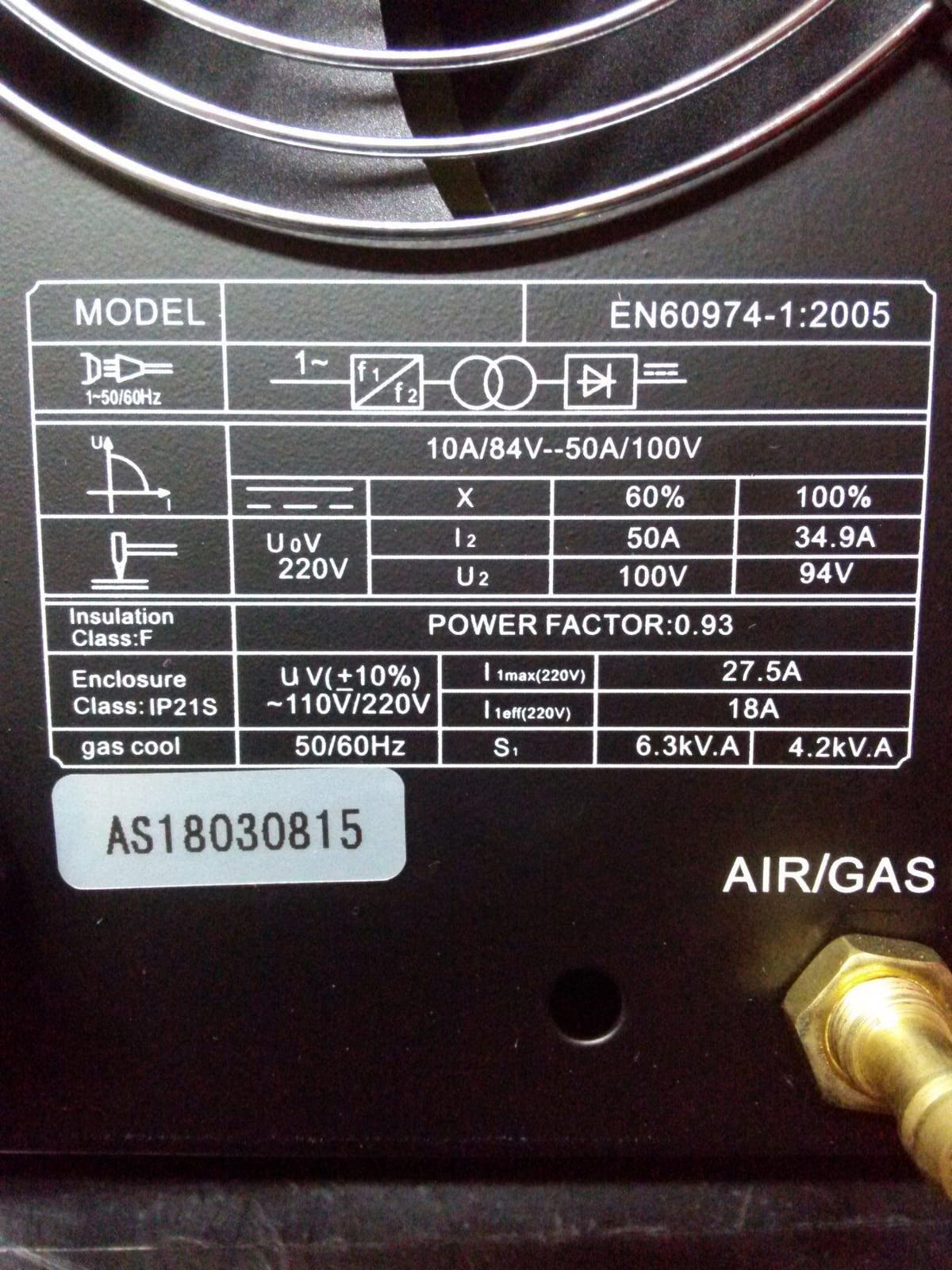
The STC650P is the only 65 amp machine here, and it posts the largest maximum cut figure in the group at 20mm, or 4/5 inch, at 220V and 70 PSI. On 110V the same machine is limited to a 12mm maximum at 40 amps, which tells you how much its capability depends on the circuit.
Adjusted pilot arc timing is a feature you will notice on expanded metal and mesh. Extended pilot arc lets the arc reach through gaps before the main cutting arc establishes, which is the difference between a clean start and a stall on that material.
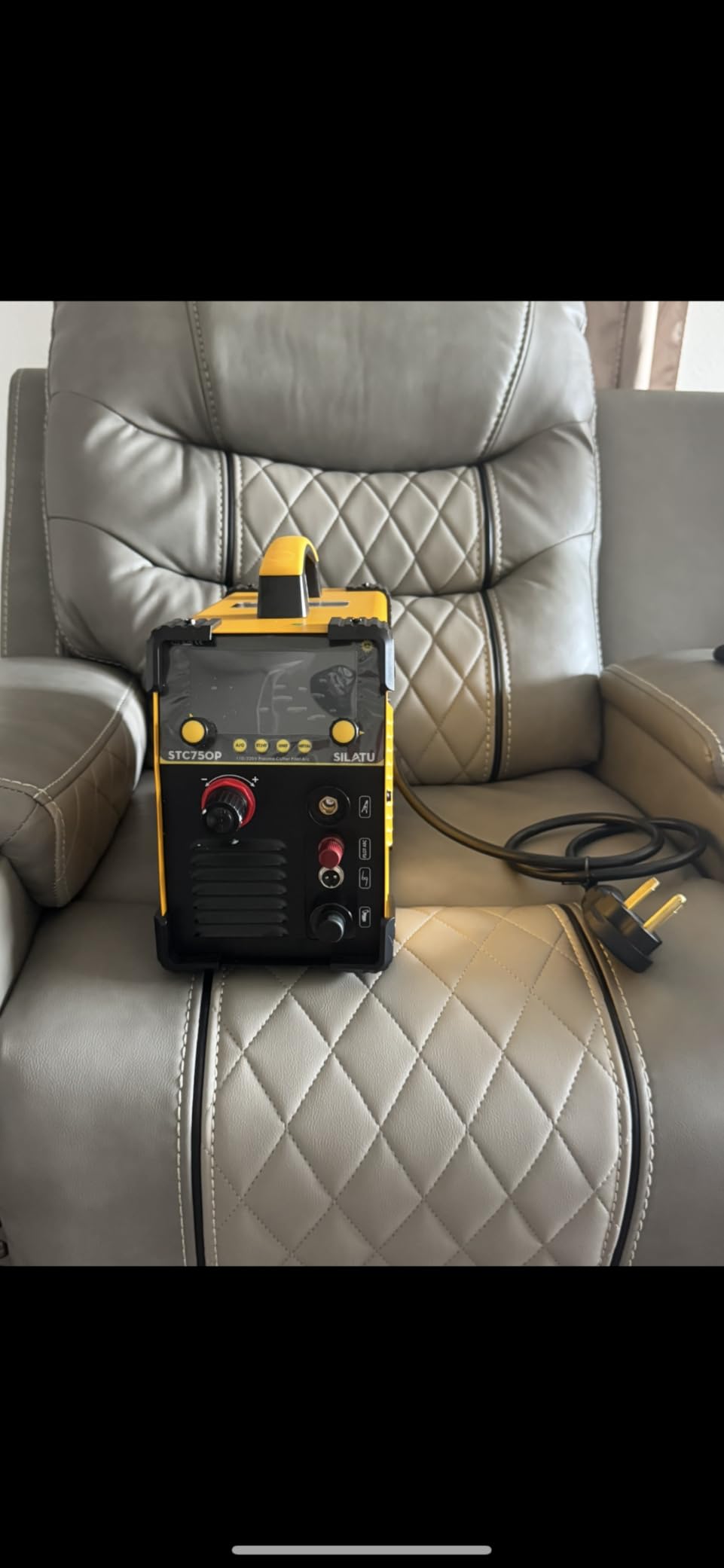
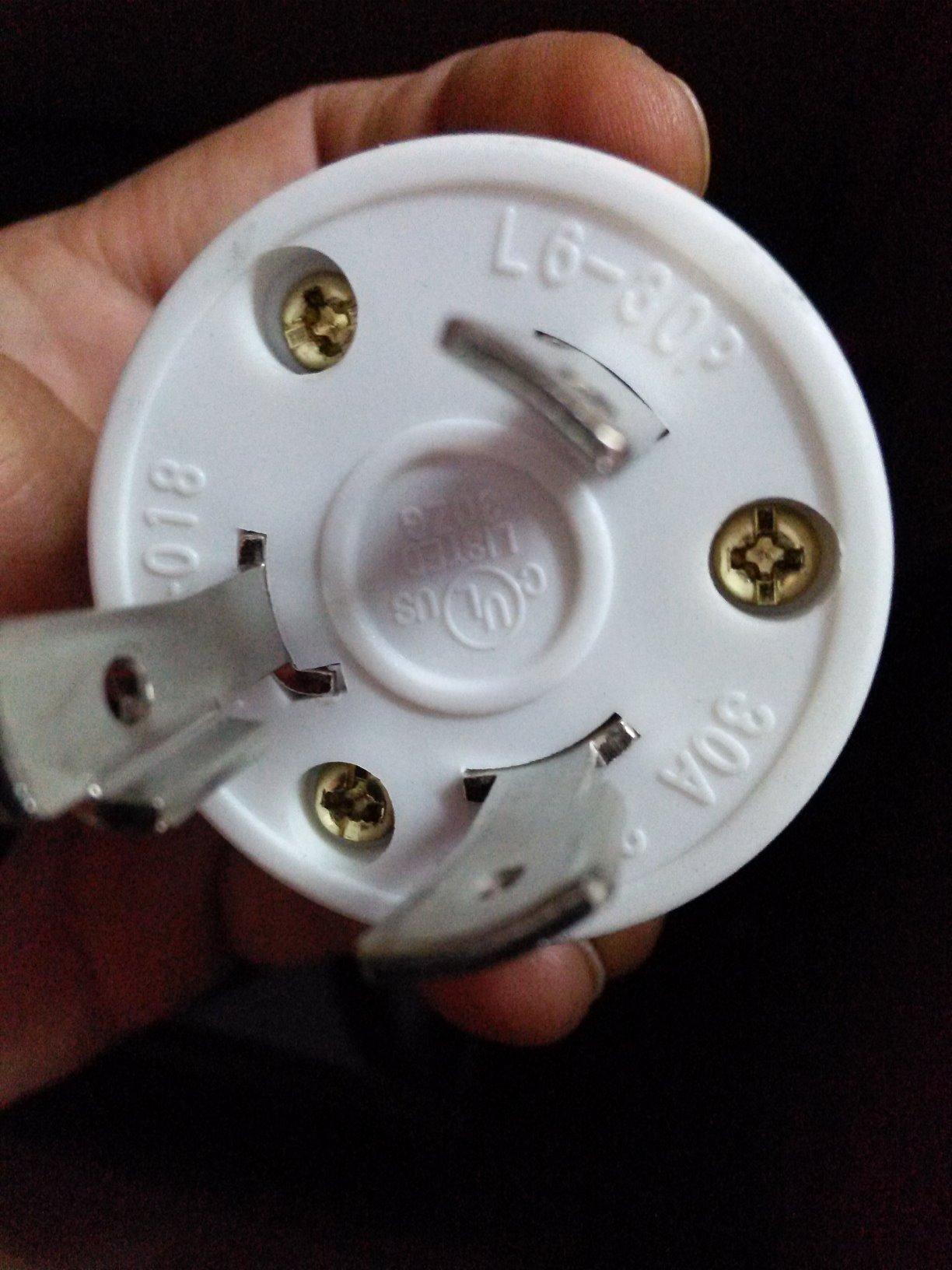
The electrical requirement is the headline caveat and the manufacturer states it plainly: this machine needs a 40A or higher breaker on a dedicated circuit. Owners repeatedly flag that it trips on lighter circuits. If your shop has a 20A or 30A branch, this machine is not for you until that is fixed.
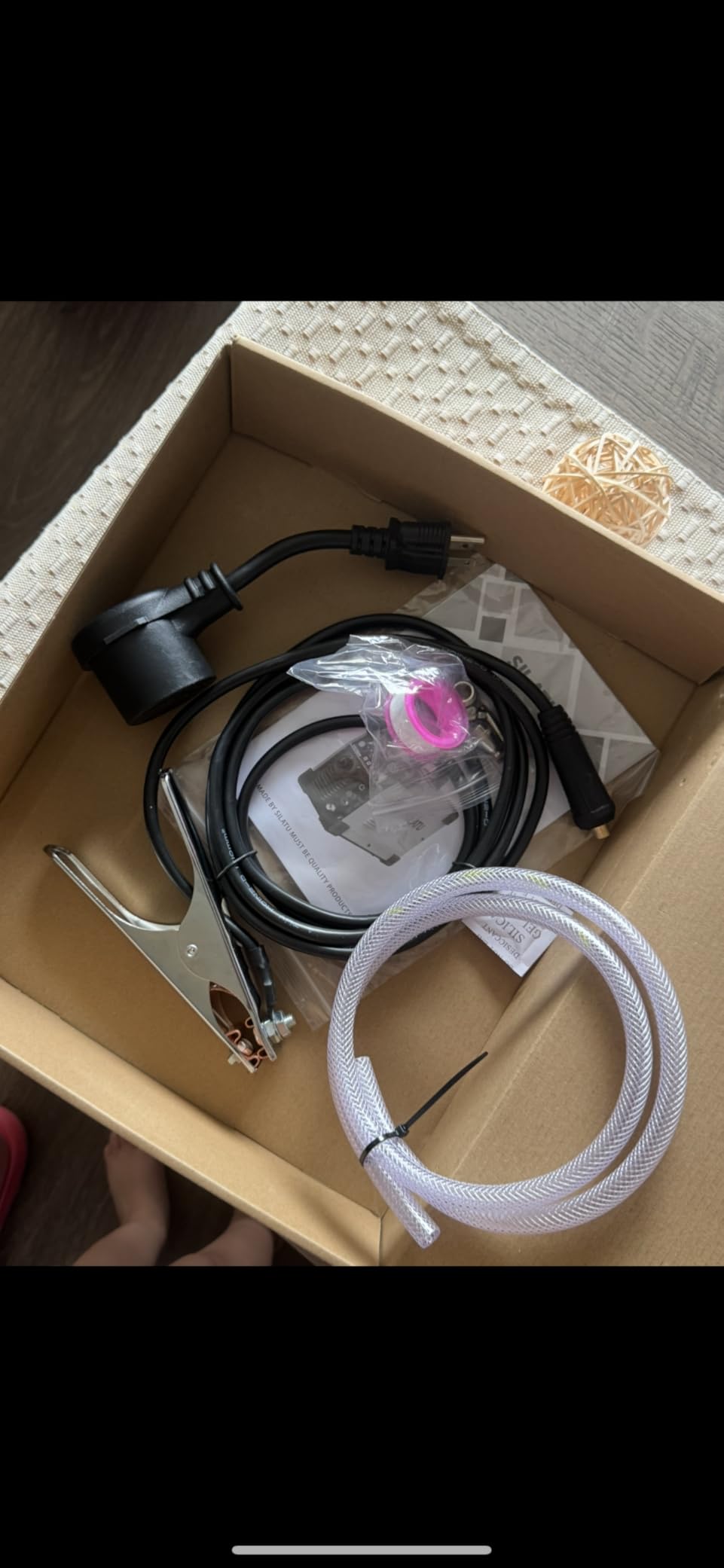
Air handling is manual rather than automatic. The front panel shows air pressure through a sensor, and the internal filter uses a quarter-inch NPT quick connect, but you set the pressure yourself. The included air hose at 3.3 feet is short, though the 13 ft torch lead is the longest in this group.
Who should buy the STC650P
Buy it if you already have a dedicated 40A circuit and want the most cutting capacity per pound. At 13.45 lb for a 65 amp machine, it is far easier to move than most machines at that output level, which matters for job-site work.
Buy it if expanded metal and mesh are part of your work, because adjustable pilot arc timing handles that material better than a fixed setting.
Who should skip the STC650P
Skip it if your electrical setup is a residential 20A or 30A circuit. The breaker requirement is not negotiable and the machine will trip rather than cut.
Skip it if you want automatic air regulation. Setting air pressure by feel adds a step that some operators get wrong, and low air pressure is a leading cause of premature consumable failure.
7. PrimeWeld CUT50DP Review: Dual Frequency for Shops Running on Export Power
PrimeWeld 50A Air Inverter Plasma Cutter with Non-Touch Pilot Arc, Automatic Dual-Voltage (110V/220V) and Dual-Frequency (50Hz/60Hz) Portable Plasma Cutter, 1/2″ Clean Cut, CUT50DP
50 amp inverter
1/2 inch clean cut, 3/4 inch severance cut
110V/220V and 50Hz/60Hz
Pros
- Dual voltage and dual frequency work on generators and export power
- 1/2 inch clean cut with a 3/4 inch severance cut
- PAPST cooling fan and MOSFET transistors
- 3 year warranty with USA-based parts support
Cons
- Sits well above comparable 50 amp imports in cost
- Very low sales rank in the category relative to its reviews
The CUT50DP does something most machines in its class do not: it runs on both 50Hz and 60Hz as well as both 110V and 220V. If your shop is fed by a generator, or you run equipment on export power where the frequency is not 60Hz, that single feature removes a real source of frustration.
Capacity is 1/2 inch clean cut with a 3/4 inch severance cut, and the air requirement is published clearly at 75 PSI and 5 CFM. The integrated Matrix pilot arc torch handles rough, painted, and rusty surfaces without a separate pilot circuit.
Build quality details are where this machine separates from imports in the same amperage range. A PAPST cooling fan from Germany and MOSFET transistors are specified, and the kit includes a torch, ground clamp with cable, air regulator, air hose, and connections, so you are not sourcing fittings on day one.
Owners cite the 3 year warranty with USA-based parts and seven-day-a-week support as the deciding factor. The reservation is the cost premium over comparable 50 amp imports, which is real and hard to argue away on features alone.
Who should buy the CUT50DP
Buy it if your power source is not a standard 60Hz utility feed, or if you want parts and support in your own country without ordering consumables overseas. The cooling specification also suggests better thermal headroom on long cuts.
At 1/2 inch rated with 3/4 inch severance, it is a strong middle-of-the-road choice for structural and repair work.
Who should skip the CUT50DP
Skip it if you are shopping purely on cutting capacity per dollar. There are 50 amp machines that cut the same material for considerably less outlay, and if your shop runs on ordinary 60Hz power you are paying for a feature you will not use.
Skip it if your regular work is above 3/4 inch. Fifty amps is not the right tier for that job.
8. Reboot RBC6000D Review: Light Weight at 60 Amps With a Touch-Arc Catch
Reboot 60A Plasma Cutter Dual Voltage 120V/240V, 1/2″ Clean Cut IGBT Inverter, Portable Metal Cutting Machine with Torch & Tips – RBC6000D 2025 Upgraded (Pre-Installed Air Regulator)
60 amp at 240V, 35 amp at 120V
1/2 inch at 120V, 5/8 inch at 240V
About 8.69 lb
Pros
- Entry-level 60 amp output without stepping up a tier
- Exceptionally light at roughly 8.69 lb
- Pre-installed regulator means no air train assembly
- Owners report fast cuts on 1/4 to 1/2 inch steel
Cons
- This variant is touch arc so the torch must contact the work to start
- Reported loosening torch roller guide
- 120V mode trips breakers above roughly 18 to 20 amps
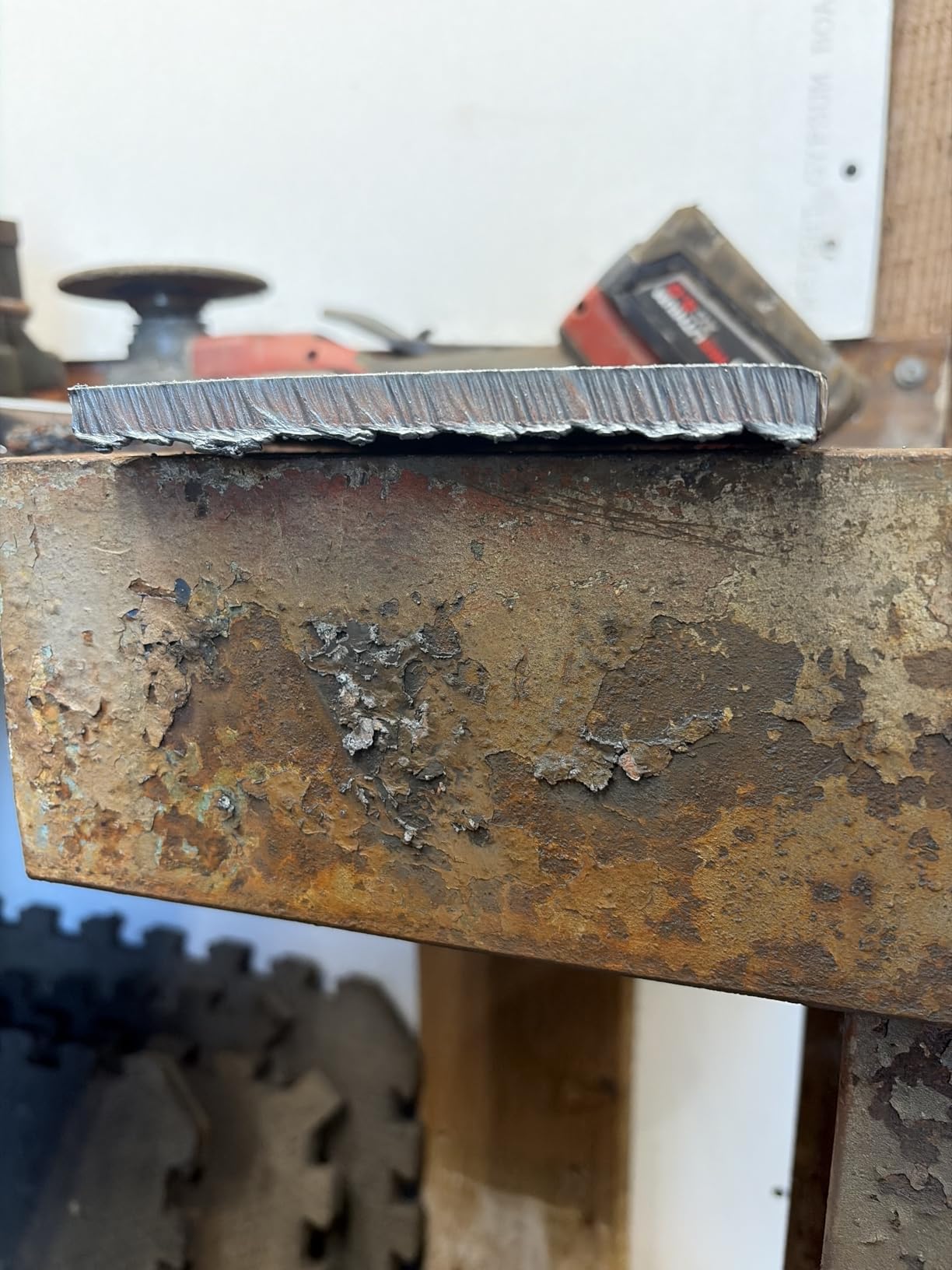
At roughly 8.69 lb, the RBC6000D is the lightest listed machine in this roundup by a wide margin, and it is the most direct entry into the 60 amp class. Published capacity is 1/2 inch at 120V and 35 amps, and 5/8 inch at 240V and 60 amps.
That spread is the first thing to understand. The same machine behaves like a 35 amp cutter on 120V and a 60 amp cutter on 240V, and the breaker guidance in the manual is 50A at 120V and 40A at 240V. If your circuit is a standard household outlet, you are leaving most of the machine unused.
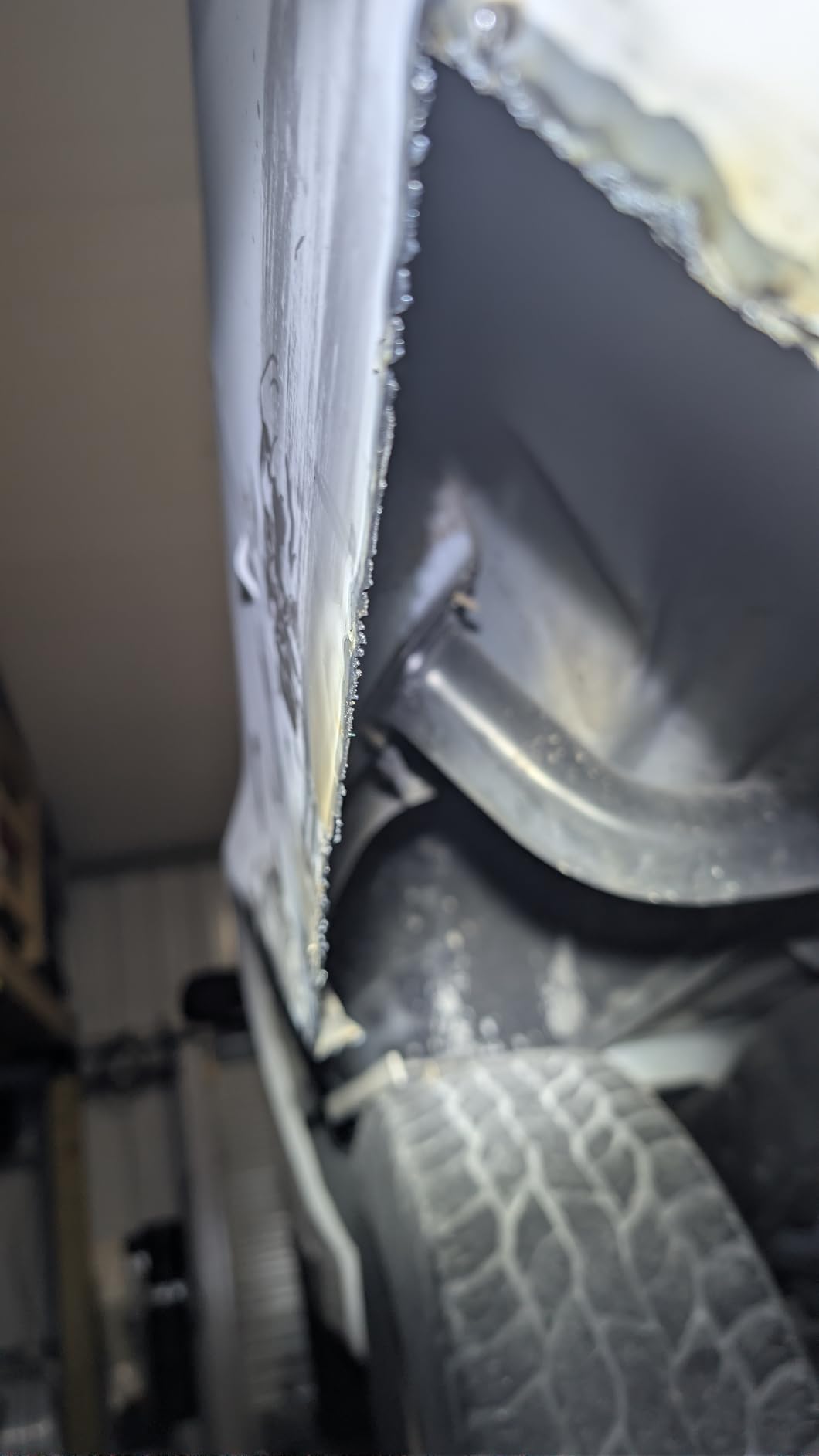
The important catch is in the listing itself: this variant is touch arc, not non-touch pilot arc. The torch must make contact with the workpiece to start. On clean 1/4 inch plate that is fine and it even extends electrode life, but on rusted or painted material you will be chasing the start point.
Air requirement is 70-75 PSI with 60 L/min or above, and the regulator is pre-installed. Owners mention a torch roller guide that loosens over time, so keep an eye on that if you see erratic arc behavior.
Who should buy the RBC6000D
Buy it if you need to carry a plasma cutter to a job, into a truck bed, or up stairs, and you mostly cut clean mild steel up to 1/2 inch. The weight saving is the feature you cannot get elsewhere at this output level.
It is also a reasonable second machine for a shop that already owns something larger and needs a portable unit for field repairs.
Who should skip the RBC6000D
Skip it if you cut rusted, painted, or expanded metal regularly. Touch arc start is the wrong tool for that and the 60 amp class is not a reason to accept it.
Skip it if you only have a 120V circuit and plan on plate work. Output collapses to 35 amps there, and reviewers report breaker trips above roughly 18 to 20 amps in that mode.
9. ARCCAPTAIN CUT55 Review: Pre-Tuned Defaults for First-Time Buyers
ARCCAPTAIN 55A Plasma Cutter Machine, Non-Touch Pilot Arc, 120V/240V
55 amp output
3/4 inch max cut, 1/2 inch clean cut at 240V
Non-touch pilot arc start
Pros
- Non-touch pilot arc starts without touching the plate
- Pre-set defaults remove the air pressure guesswork
- 3/4 inch max and 1/2 inch clean cut at 240V
- Shoulder strap plus 2T and 4T modes reduce fatigue on long cuts
Cons
- About 10% of its reviews are one star
- Must wait for the fan to stop before switching voltage
- Only a 1 year warranty and a conflicting listed weight
The CUT55 pilot arc is built for someone who has never set air pressure before. It ships pre-tuned to 60 PSI with a 5 second post-flow, has an internal air pressure sensor and a rear-mounted filter, and includes a 10 ft torch, 10 ft air hose, and 10 ft earth clamp. That is a complete kit.
Capacity is 1/2 inch clean cut at 55 amps on 240V and 60 PSI, with a 3/4 inch maximum at 75 PSI, at a 60% duty cycle. Output is 20-35 amps on 120V and 20-55 amps on 240V, so again the voltage decides what the machine can do.
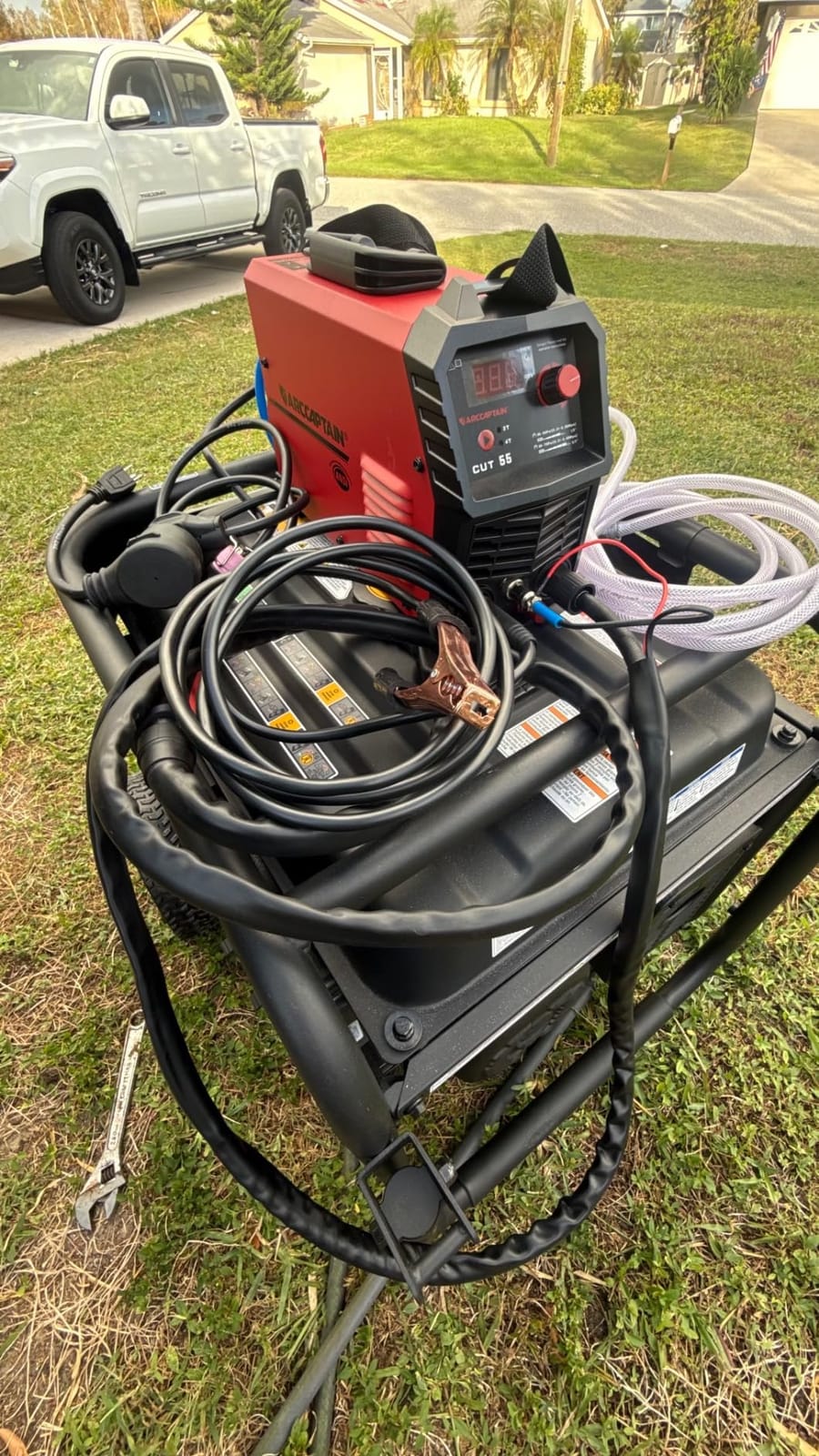
High frequency non-touch pilot arc start means you can initiate on painted or dirty material without striking the plate. Two-touch and four-touch modes let the machine run a fixed cutting cycle, which reduces fatigue and improves consistency on repetitive cuts.
The reliability record is the concern. Around 10% of reviews are one-star, and the listing weight conflicts with the figure in the description. There is also a practical annoyance: you must let the machine power down and the fan stop before switching voltage, which breaks workflow if you move between circuits often.
Who should buy the CUT55
Buy it if this is your first plasma cutter and you want a machine that produces a usable cut without a learning curve on air pressure. The pre-set defaults and included air train are the reason it works out of the box.
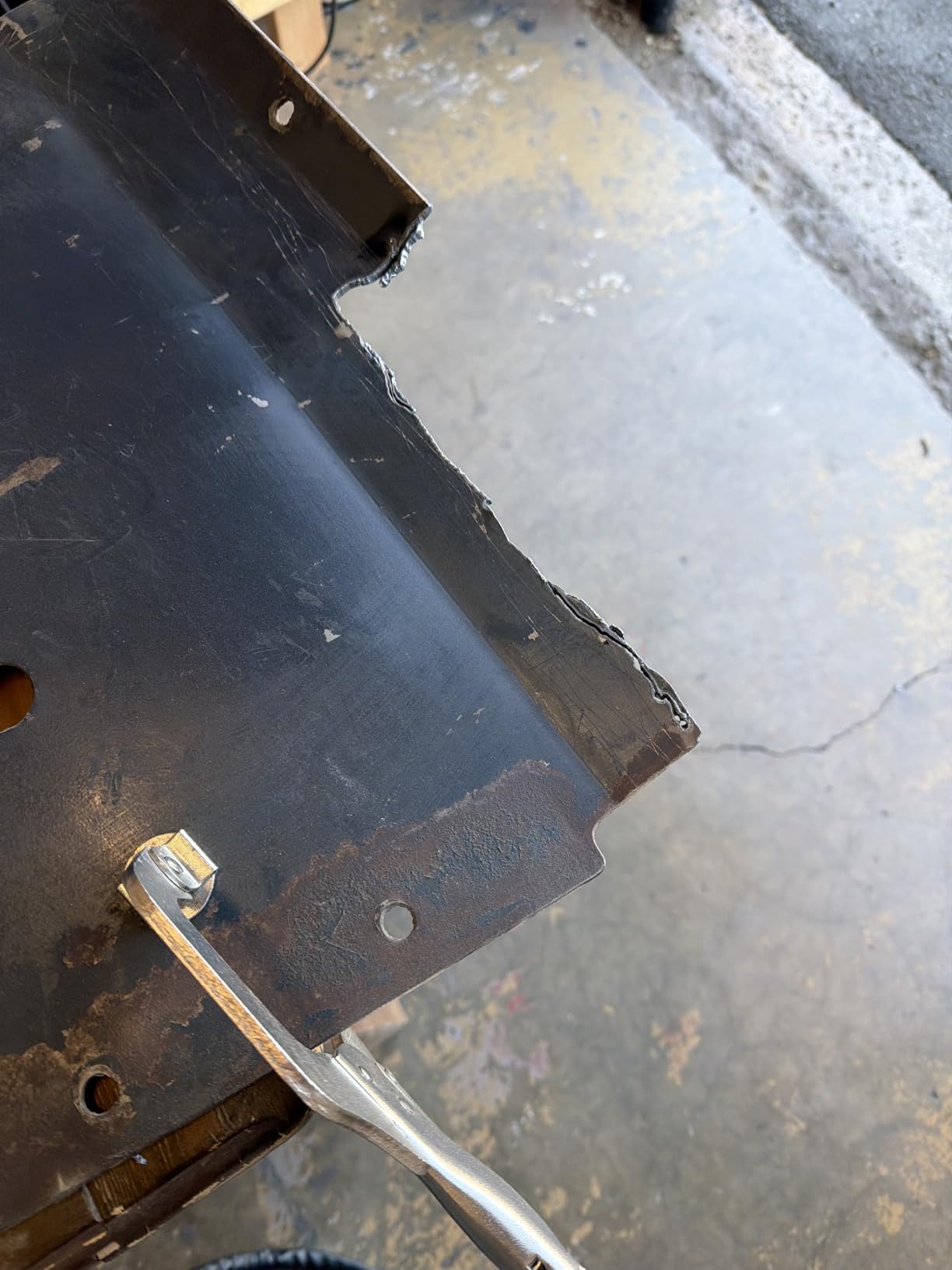
It is also a solid garage machine for 1/4 inch and 1/2 inch work with occasional 3/4 inch capability when you need to break through something.
Who should skip the CUT55
Skip it if this is a production tool. A one-star share that high tells you the bottom of the distribution has machines that do not hold up, and the warranty is only 1 year.
Skip it if you need thick plate capability as the main event. Fifty-five amps with a 3/4 inch maximum is a ceiling, not a working range.
10. GZ GUOZHI CUT-50 Review: Rated for Minus 20 Degrees
GZ GUOZHI Plasma Cutter, 50 Amp Air Inverter Plasma Cut, 110V/220V Dual Voltage Digital Display IGBT Inverter Plasma Cutting Machine with 2T/4T/TEST Function
50 amp IGBT inverter
3/4 inch max cut at 220V, 1/4 inch at 110V
Rated to minus 20 degrees
Pros
- Rated to operate down to minus 20 degrees for cold shops and outdoor work
- TEST mode lets you dial in settings before ruining material
- Quarter-inch D-type plug means no regulator installation
- Overheat and over-current protection built in
Cons
- Lowest average rating here at 4.2 with 12% one-star reviews
- Conflicting weight figures between listing and description
- 110V output limited to about 35 amps and a 1/4 inch cut
The CUT-50 is specified to operate down to minus 20 degrees, and that is not filler on a plasma cutter spec sheet. Many power sources struggle with cold electrolyte in the capacitors, and cold-shop failures that would never happen in July happen in January.
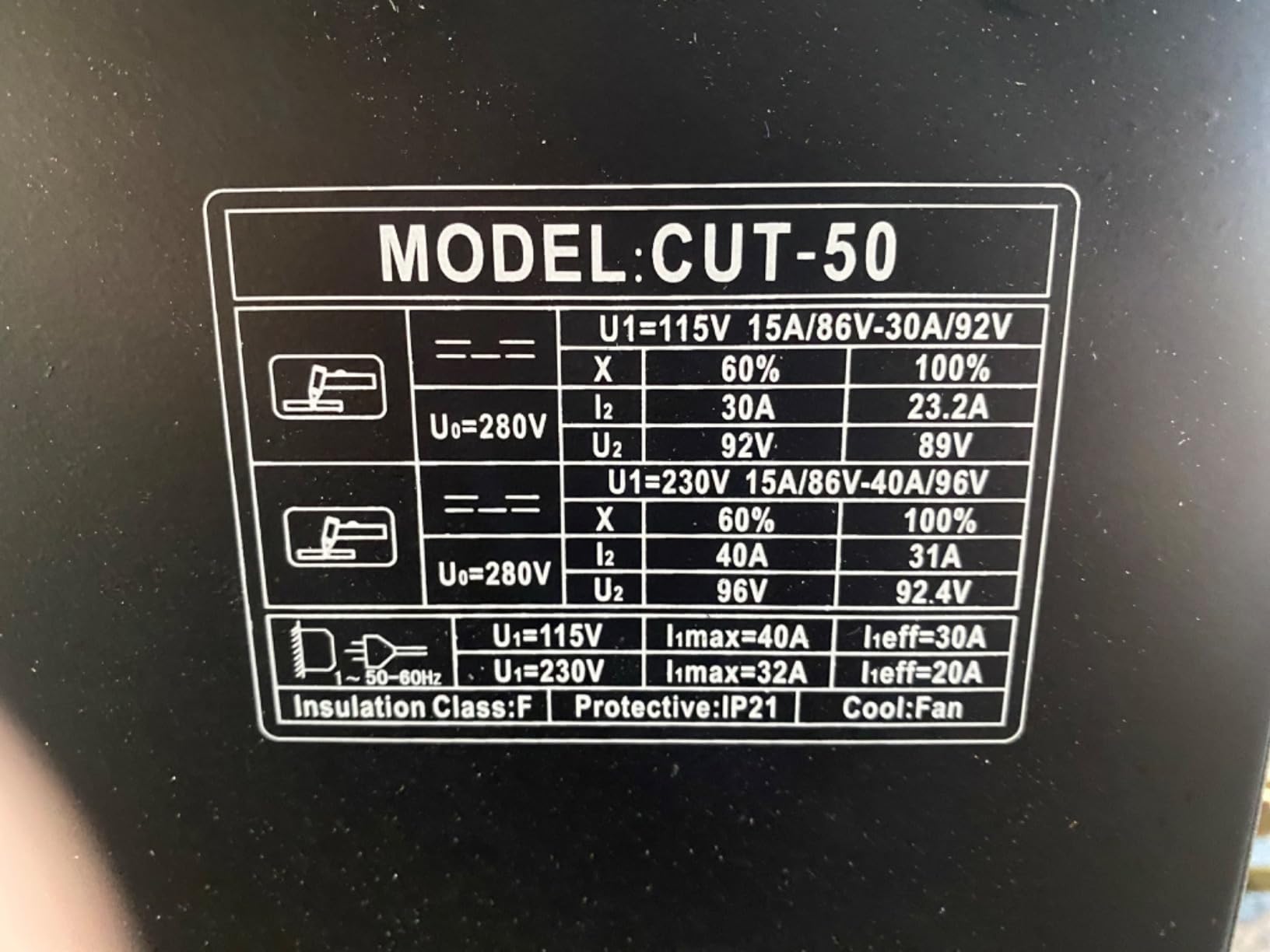
Capacity is a recommended maximum of 12mm at 35 amps on 110V and 50 PSI, and 20mm at 50 amps on 220V and 65 PSI. Duty cycle is 60% at 50/60Hz high frequency output, and the IGBT inverter uses a pilot arc for rough, painted, and rusty surfaces.
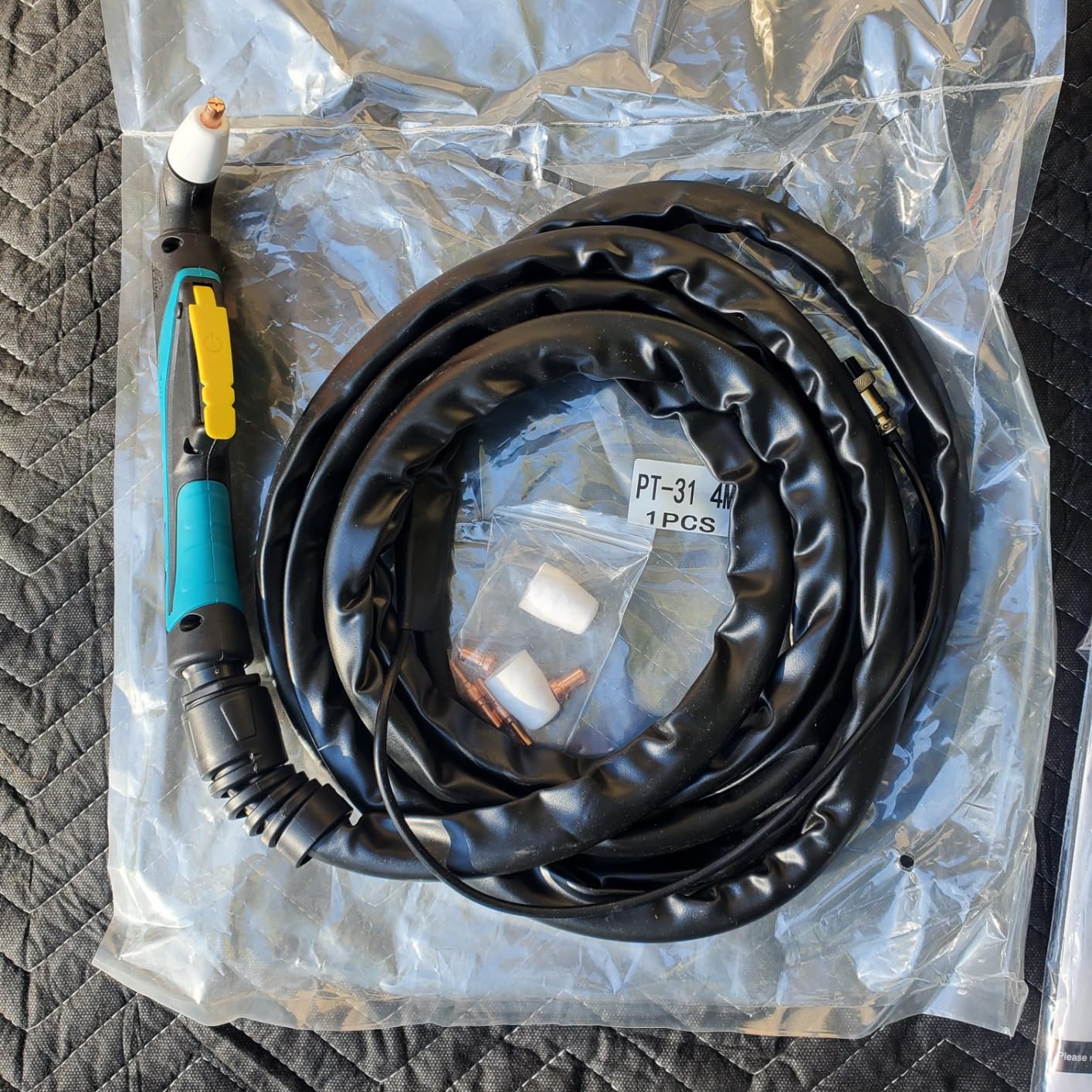
The TEST mode on the 2T/4T panel is a genuinely useful beginner feature. It fires the arc briefly so you can dial in settings before committing to a full cut on real plate, which is how you avoid ruining a piece of 3/8 inch steel while discovering your air pressure is wrong.
The quarter-inch industrial D-type air plug means no regulator installation and roughly one minute from unpacking to first arc. Overheat and over-current protection are built in, and the breaker guidance is up to 40A at 110V and 30-50A at 220V.
Who should buy the CUT-50
Buy it if you work outdoors in winter, in an unheated farm building, or in a northern garage. The minus 20 degree rating is a real spec difference, not a marketing line.
The TEST mode also makes it a reasonable second machine for anyone who cuts occasional plate and does not want to ruin material while tuning.
Who should skip the CUT-50
Skip it if reliability is your priority. It carries the lowest average rating in this group at 4.2, with 12% of reviews at one star, and only a 1 year manufacturer warranty behind it.
Skip it if you are on 110V. Output is limited to about 35 amps and a 1/4 inch cut there, which puts it outside a thick steel roundup.
Rated Cut Capacity vs Maximum Sever Capacity: What the Numbers Mean
Rated cut capacity is the thickness a plasma cutter can cut cleanly and repeatedly at a reasonable travel speed. Maximum sever capacity is the thickest material it can break through in a single pass, usually slowly, at the edge of the machine’s thermal limit.
That gap is the single biggest source of buyer confusion in this category, and it is where the disappointing reviews come from. A machine advertising 1 inch maximum is not claiming it cuts 1 inch all day. It is telling you what happens when you push it once.
Three worked examples from this lineup. The PrimeWeld CUT50DP is rated 1/2 inch clean cut and lists 3/4 inch severance. The LOTOS LTP5505D rates 5/8 inch clean capacity. The SILATU STC650P lists 20mm, or 4/5 inch, as a maximum at 65 amps and 70 PSI. Each maximum number covers roughly half the material that machine advertises on a spec sheet.
The practical consequence: if your material is 5/8 inch, a 50 or 55 amp machine is working right at the edge of its rating while the 60 amp machines have real margin. Match the rated column to your material and ignore the maximum unless you are deliberately planning an occasional heavy cut.
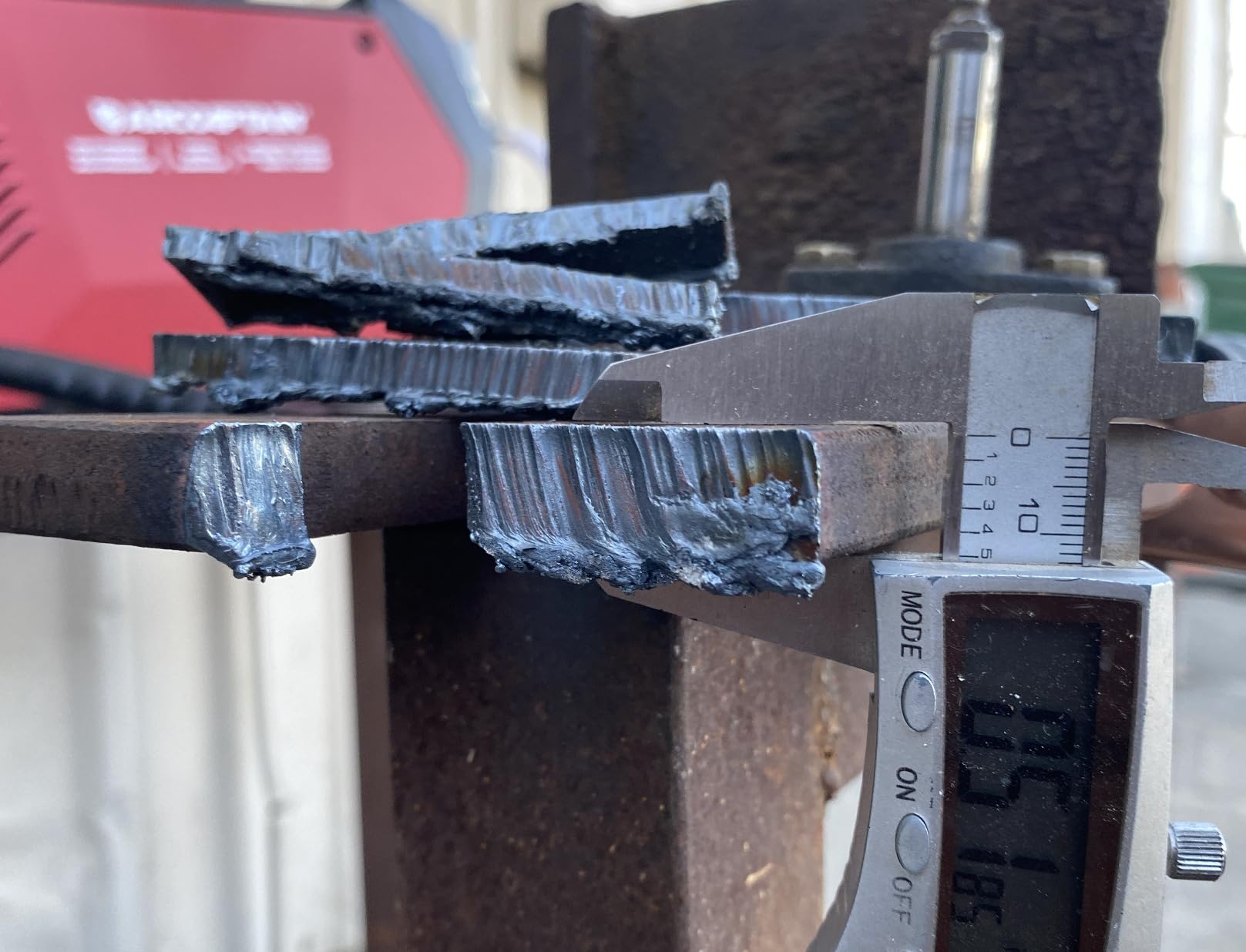
Dross is the tell. Heavy dross on the exit side of the cut means the machine is running above its rated capacity, and heat is re-melting the kerf as it forms. Slow the travel speed, add post-flow time, and if dross persists, step up an amperage tier instead of pushing harder.
Buying Guide: What Amperage Do You Actually Need for Thick Steel?
A 60 amp plasma cutter rated at 60 amps cuts about 3/4 inch mild steel cleanly and can sever 1 inch. A 65 amp machine sits at 3/4 inch to 1 inch rated with 1 inch to 1-1/4 inch sever. Both need a 220V circuit for full output, and both need air at roughly 70-80 PSI.
A 50 amp plasma cutter tops out at about 1/2 inch rated and 3/4 inch sever. It is the right answer for plate up to half an inch, and it is where most home shop and garage work actually sits. Moving up to 60 amps buys capacity that many shops never use.
Step up when your most common material exceeds what your current machine rates. The 80/20 sizing rule is simple: size the machine so your most frequent thickness is comfortably inside its rated capacity, and treat the sever figure as occasional headroom. If 1 inch plate is a weekly job, 60 amps is the minimum sensible tier. If it is a monthly event, a 65 amp machine buys you speed rather than capability.
What your 220V circuit needs to look like
Published guidance across this group ranges from a 30A breaker at 220V up to a dedicated 40A circuit for the 65 amp SILATU. The pattern is consistent: 50 amp machines sit around 30-40A at 220V, and 60 to 65 amp machines need 40A or higher on a dedicated branch.
Do not run a plasma cutter through an extension cord or a multi-outlet adapter for plate work. Voltage drop under load is what causes pilot arc instability, and that gets blamed on the machine when the real problem is the cord.
If your shop is 110V only, your realistic ceiling is a 35-40 amp machine doing 1/2 inch work. That is fine, but it is a different category from this roundup and you should plan for a 220V branch circuit before buying something bigger.
Air supply and consumables
Air pressure matters as much as amperage. Most of these machines specify 60-80 PSI at between 5 and 5.3 CFM. Low or dirty air burns electrodes and nozzles faster than almost anything else you do, and it is the leading cause of the pilot arc reliability complaints owners report in review sections.
Consumable families are not interchangeable across brands. PT60, IPT40, AG60, AG60P, and PT31 torch platforms each need their own electrodes, nozzles, and swirl rings, and mixing them causes arc instability that gets blamed on the machine. Budget for a separate consumable set per torch platform you own.
Weighing up a bigger project where the material is not plate steel? Our guide to cutting thick branches covers a different tool entirely, but the same principle applies: match the tool to the material you actually have.
When Plasma Is the Wrong Tool for Thick Steel
Plasma cutting stops being the sensible answer somewhere past 1 inch, and it stops being sensible for a different reason than most buyers expect. It is not that the arc cannot reach the thickness. It is that heat control and cut quality degrade faster than speed improves.
Oxy-fuel becomes competitive above roughly 1 inch of mild steel because the preheat keeps the kerf molten and the cut narrow, at the cost of gas cylinders, a setup time measured in minutes, and a much rougher edge. If you are doing a handful of cuts a year in heavy plate, the setup is not worth it. If you are doing production work in thick structural, it changes the economics completely.
An abrasive cut-off wheel is the right tool for extremely thick plate, heavy demolition, and steel over roughly 2 inches where you want a fast chop rather than a finished edge. It is fast and it needs no air supply, at the price of a disposable wheel and a much larger safety perimeter.
For heat management on thick plate that plasma can handle, pierce at the edge of the plate rather than in the middle of a finished cut, maintain a steady travel speed, allow for kerf width when laying out your cut path, and use a back-up material beneath the cut to catch blow-through on the far side. Owners on r/Welding also report improving cut quality on thicker material with advanced oxygen mixes, though that requires proper gas equipment.
Frequently Asked Questions
How thick of steel can a plasma cutter cut through?
A plasma cutter’s thickness limit depends on output amperage. A 50 amp machine rates about 1/2 inch clean cut with 3/4 inch sever capacity. A 60 amp machine rates roughly 3/4 inch with 1 inch sever. A 65 amp machine rates 3/4 inch to 1 inch and severs up to 1-1/4 inch. Larger industrial machines rated 100 amps and above reach 1 inch rated and beyond.
What is the best plasma cutter for cutting 1 inch thick steel?
For 1 inch (1.0 inch) steel you want at least 60 amps, and a 65 amp machine gives you more headroom. The PRIMEWELD CUT60 is our pick because its continuous pilot arc starts reliably on rusty or painted plate and it severs 1 inch on a 220V circuit. Treat 1 inch as sever capacity rather than rated capacity on any machine in this class.
What is the maximum thickness a plasma cutter can cut?
Maximum thickness scales with amperage, and the highest rated figure in this roundup is 20mm, or 4/5 inch, from the 65 amp SILATU STC650P on a 220V circuit. Industrial machines rated 100 amps and above cut 1 inch rated and 2 inch sever. Consumer and light fabrication machines generally top out between 3/4 inch and 1 inch maximum.
What plasma cutter can cut 1/2 inch thick steel?
Any machine rated 50 amps or higher will cut 1/2 inch mild steel cleanly. The ARCCAPTAIN CUT50 publishes a 1/2 inch clean cut rating, and the LOTOS LTP5505D rates 5/8 inch, which puts 1/2 inch comfortably inside its rated range. Both need a 220V circuit to reach their published capacity, plus air at roughly 60-75 PSI.
Do I need 220V for a plasma cutter?
For thick plate work, yes. Most machines in this class drop output sharply on 110V: the SILATU STC650P falls to 12mm maximum at 40 amps on 110V, and the ARCCAPTAIN CUT50 to 12mm at 35 amps. Breaker guidance ranges from about 30A at 220V for 50 amp machines to a dedicated 40A circuit for 60 and 65 amp models.
Conclusion: Our Picks for Thick Steel in 2026
After working through ten machines in the 50 to 65 amp range, the best plasma cutters for thick steel come down to three. The PRIMEWELD CUT60 is the one we recommend for anyone cutting 1 inch plate, because its continuous pilot arc starts reliably on dirty, rusted, or painted steel and the blow-back PT60 torch holds an arc across structural material. The ARCCAPTAIN CUT50 is the value pick for 1/2 inch work, and the LOTOS LTP5505D is the most proven machine here with 2400 ratings behind it.
The rule that matters more than any brand: size the machine so your most common thickness sits inside its rated cut capacity, not its maximum sever capacity, and give it a dedicated 220V circuit with clean compressed air. Get those three things right and a 50 amp machine will serve a shop for years. Get them wrong and no amount of amperage will save you.