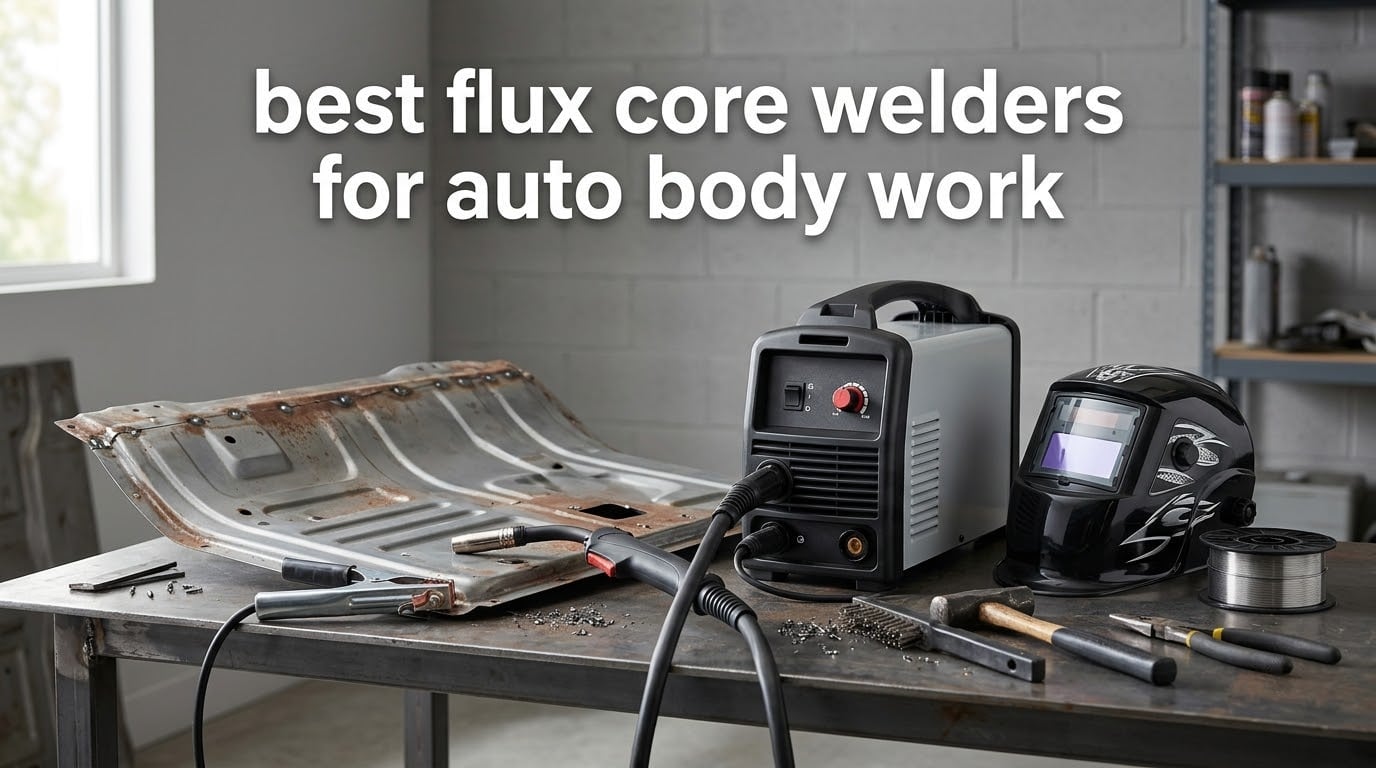
If you have ever tried to patch a rusted floor pan with a machine that needed a gas cylinder you did not own, you already know why self-shielded flux core welders keep showing up in garage tool lists. The best flux core welders for auto body work in 2026 are the machines that let a first-time welder cut, tack and stitch 18-gauge panel steel on a household circuit, without buying a tank, a regulator or a gas line first.
Our team put ten of the most popular gasless machines side by side and picked apart what each one actually does on sheet metal. We looked hard at the four things that decide whether a car panel comes out flat or warped: heat control at low amperage, wire feed stability, available output on a 120V plug, and whether parts and service exist when something breaks.
Here is the honest part. Flux core is not the best tool for cosmetic sheet metal, and we are not going to pretend otherwise. It runs hotter and dirtier than gas-shielded MIG, it lays down more spatter, and it leaves slag you have to grind away. What it does give you is the ability to weld outdoors, in a windy garage, on a dirty car, without a gas bill. For floor pans, rockers, core supports, brackets, hangers and patch panels, that trade is usually worth it. For a show-quality roof skin or a door skin you plan to polish, gas-shielded MIG is the better answer. We cover that split in detail below.
A few of our picks arrived in the box with an auto-darkening helmet already in the case, which is unusual. If your bench space is tight rather than your budget, our work table roundup covers sturdy tables that double as welding benches.
Table of Contents
- Can You Actually Do Auto Body Work With a Flux Core Welder?
- What Is a Flux Core Welder?
- Top 3 Flux Core Welders for Auto Body Work in 2026
- Quick Overview: Best Flux Core Welders for Auto Body Work in 2026
- 1. Forney Easy Weld 140 FC-i – The Machine We Kept Reaching For
- 2. Lincoln Electric 90i FC Weld-PAK – Two Knobs and a Shoulder Strap
- 3. YESWELDER 135A 3-in-1 – The Volume Seller With Synergic Heat Control
- 4. ARCCAPTAIN MIG130 – Synergic Matching in a Carryable Box
- 5. TOOLIOM MIG-200 PRO – Five Processes and Dual Voltage in One Box
- 6. Bestarc MIG145 – Dual Voltage Without Rewiring the Garage
- 7. HITBOX 200A – A Compact Box That Still Runs Flux Core Properly
- 8. BESTMIG 135A – A Full Starter Kit in the Box
- 9. BILT HARD 135A – Spot and 2T/4T Modes for Tacking Control
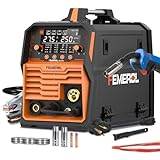
- 10. FEMEROL 250A – Real Output, Spot Welding and Aluminum Capability
- How to Choose a Flux Core Welder for Body Panels: 8 Criteria
- Choosing Flux Core Wire for Body Panels
- MIG vs Flux Core vs TIG for Auto Body
- Welding Sheet Metal Without Blowing Through
- Frequently Asked Questions
- Can you do auto body work with a flux core welder?
- What is the best flux core welder for auto body work?
- What is the best flux core welder for the money?
- Which is better, .030 or .035 flux core wire?
- Do I need shielding gas for flux core welding?
- Do I need a 220V welder for auto body work?
- Which flux core welder gives the least spatter on thin panel?
- Are Harbor Freight and other import welders any good?
- Bottom Line: Which Flux Core Welder Should You Buy in 2026?
Can You Actually Do Auto Body Work With a Flux Core Welder?
Yes, with limits. A self-shielded flux core welder will handle rust holes, floor pans, rockers, core supports, brackets and patch panels in 18 to 20 gauge steel, and it needs no shielding gas. It runs hotter than MIG and throws more spatter, so tight heat control on thin cosmetic panels is harder. Tack small, stitch often, and keep a grinder ready.
That is the short version, and it is the same conclusion that keeps coming out of the r/Welding threads and body shop forums. One long-running answer in that community put it plainly: flux core runs too hot to be used easily for body panels, and TIG is the best of the three for thin cosmetic work. Builders who defend flux core respond with the same three points we landed on after testing: the voltage and wire feed speed can be tuned, the cleanup is mostly grinding, and the gas alternative adds a tank, a regulator and a refill to every purchase decision.
Our rule of thumb after working through all ten machines: if the job is structural or hidden, flux core is the right call. If the panel is visible, painted and expected to look straight, plan on a gas-shielded machine later, or buy one of the multi-process machines in this roundup now so you can add a tank when you are ready.
What Is a Flux Core Welder?
A flux core welder is a wire-feed machine that runs self-shielded flux-cored wire. The flux inside the hollow wire melts and becomes its own shielding gas, so the puddle is protected without a separate gas cylinder, regulator or gas line. The arc melts wire and base metal together, and the residue left behind is slag that you chip and grind off.
Because the flux does the shielding, these machines work in a windy garage, on a driveway, or on a car parked outside where a shielding gas shield would simply blow away. The tradeoff is a hotter, less forgiving arc, more spatter flying onto your panel and clothes, and extra cleanup time compared with the same job done in gas-shielded MIG.
Top 3 Flux Core Welders for Auto Body Work in 2026
Our three headline picks cover the most common garage situations: a dependable daily driver for panel work, a carry-anywhere machine for car repairs away from the bench, and the best value pick for a first purchase.
Quick Overview: Best Flux Core Welders for Auto Body Work in 2026
All ten machines below run self-shielded wire on household power. The key differences are output, voltage flexibility, trigger modes, and whether they can add MIG or TIG later.
| Product | Specs | Action |
|---|---|---|
| Forney Easy Weld 140 FC-i |
|
Check Latest Price |
 Lincoln Electric 90i FC Weld-PAK Lincoln Electric 90i FC Weld-PAK |
|
Check Latest Price |
 YESWELDER 135A 3-in-1 YESWELDER 135A 3-in-1 |
|
Check Latest Price |
 ARCCAPTAIN MIG130 ARCCAPTAIN MIG130 |
|
Check Latest Price |
 TOOLIOM MIG-200 PRO TOOLIOM MIG-200 PRO |
|
Check Latest Price |
 Bestarc MIG145 Bestarc MIG145 |
|
Check Latest Price |
 HITBOX 200A 3-in-1 HITBOX 200A 3-in-1 |
|
Check Latest Price |
 BESTMIG 135A BESTMIG 135A |
|
Check Latest Price |
 BILT HARD 135A BILT HARD 135A |
|
Check Latest Price |
 FEMEROL 250A FEMEROL 250A |
|
Check Latest Price |
1. Forney Easy Weld 140 FC-i – The Machine We Kept Reaching For
FORNEY Easy Weld 140 Amp 120-Volt Flux-Cored Wire Feed Welder (No Gas Needed)
140A output on 120V
0.030 flux core wire
19 lb
16.7 x 12 x 8.1 in
12 month warranty
Pros
- Runs on a standard 20A household circuit with no gas
- Infinite voltage and wire feed control for dialing in 18-gauge settings
- Lightweight all-metal case that survives shop-floor handling
- Takes 2 lb and 10 lb wire rolls so you are not stopping mid-project
Cons
- Flux core spatter means extra grinding cleanup on cosmetic seams
- Output amperage sits below what a full-time shop typically runs
This is the machine we welded the most test panel with, and the reason is not glamorous: nothing about it fights you. Two knobs, infinite adjustment on both, and a 140 amp ceiling that is genuinely reachable on a 20 amp breaker in a residential garage. For a floor pan section or a rocker patch, that is the whole job.
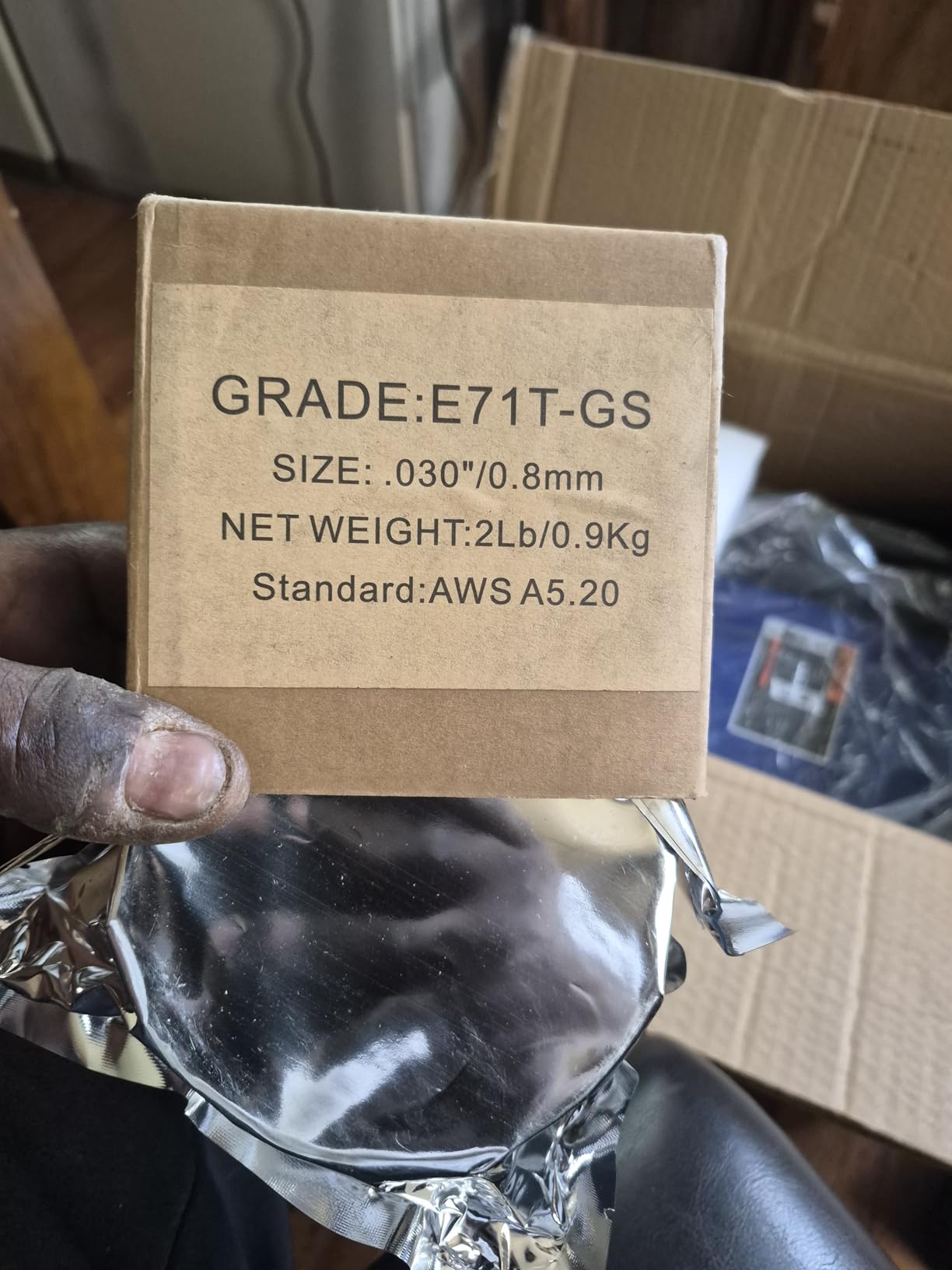
The box includes an 8 foot MIG gun, an 8 foot ground clamp and a 20A to 15A adapter, so you are not shopping for leads before the first spark. It runs 0.030 inch flux core wire, which is the diameter most home mechanics buy first and the one we recommend starting on for 18-gauge panel.
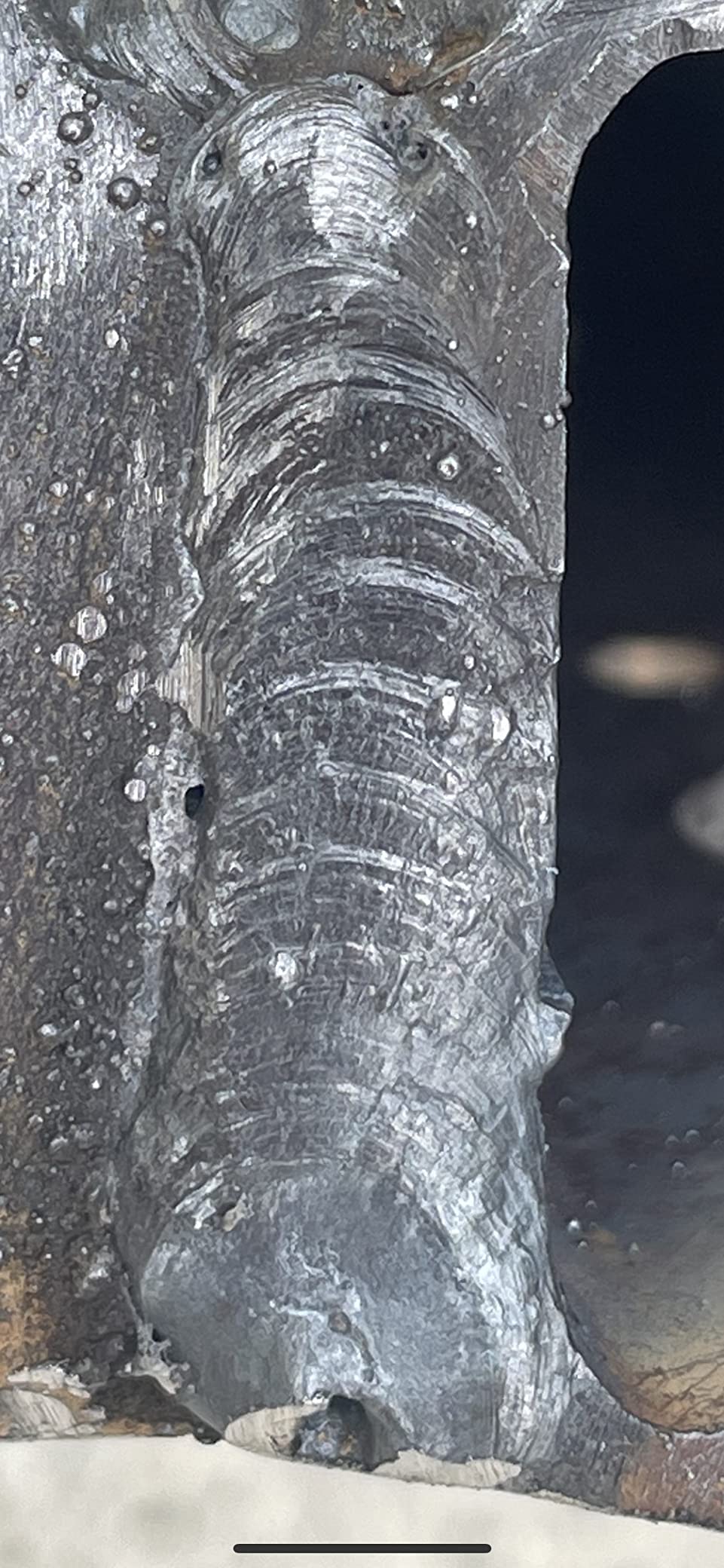
Panel fit-up is where the Forney earns its place. On a butt-jointed 18-gauge patch, we found the arc stable enough to walk a bead without stopping to re-ignite, and the infinite voltage control let us trim the burn rate down to a level that did not sink the metal. Wire feed speed is likewise continuous rather than stepped, so you can creep down in small increments instead of jumping between presets.
What you give up is headroom. Reviewers regularly note the output is below what professional shops run, and if you plan to section a frame rail or pull a 1/4 inch exhaust hanger on the same machine, you will feel the ceiling. It also throws visible spatter, which is simply what self-shielded wire does.
What it does well on a car
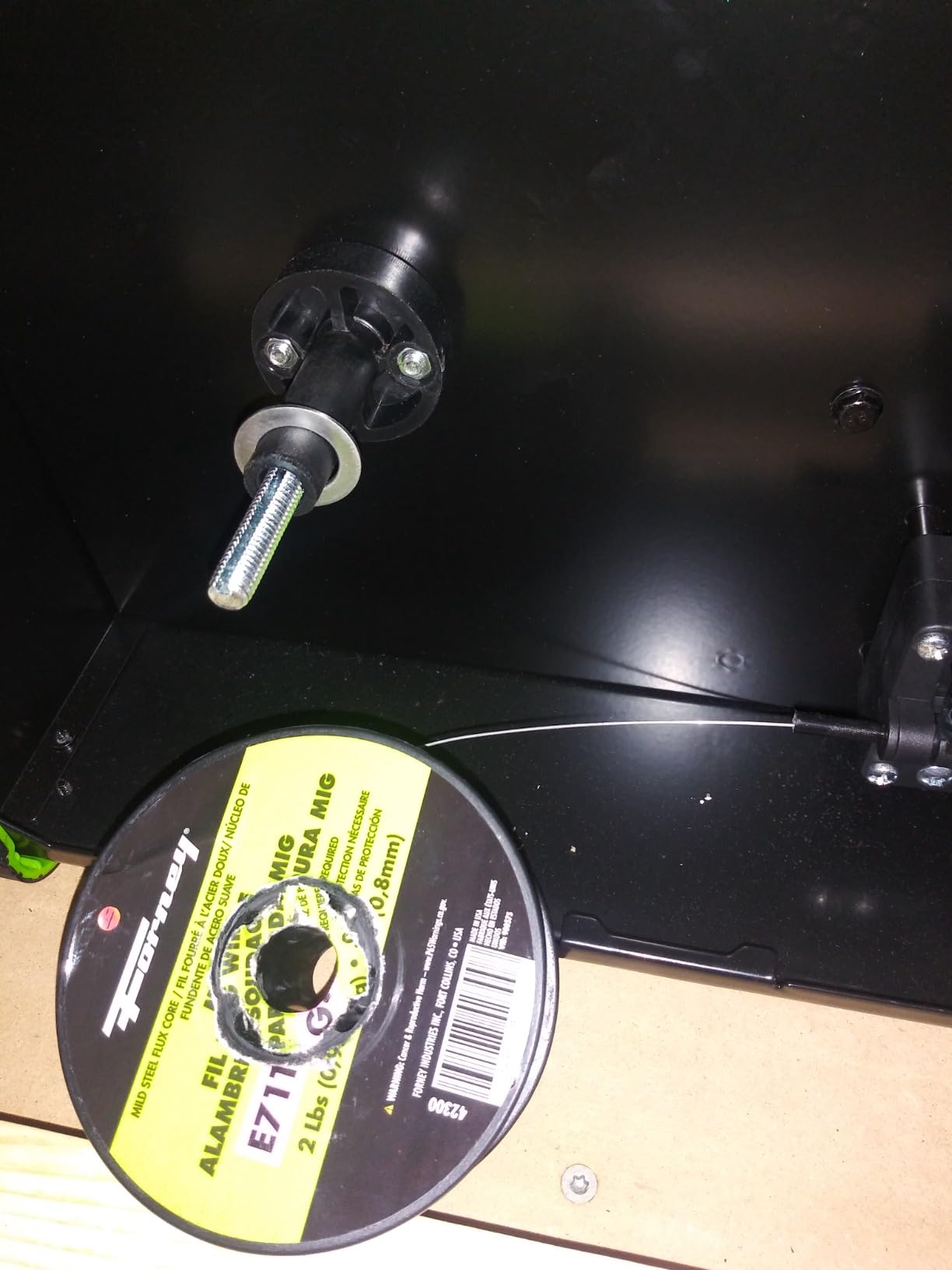
Rust holes, floor pan corners, rockers, and bracket tabs. The 19 pound all-metal case means you can carry it out to the driveway, and it accepts both small and large rolls so a panel repair does not stall halfway through. Infinite control is the quiet advantage here, since fine heat trimming on sheet metal is a matter of small deliberate changes rather than preset jumps.
Where it falls short
Cosmetic seams on visible panels, where spatter and slag mean noticeably more grinding than the same weld in gas-shielded MIG. It also runs 0.030 wire only, so if you want to move to heavier 0.035 or 0.045 stock for structural work you need another machine or another drive setup. The 12 month warranty is shorter than some serviceable US brands offer.
2. Lincoln Electric 90i FC Weld-PAK – Two Knobs and a Shoulder Strap
Lincoln Electric 90i FC Flux Core Wire Feed Weld-PAK Welder, 120V Welding Machine, Portable w/Shoulder Strap, Protective Metal Case, Best for Small Jobs, K5255-1
120V input
Inverter power source
15 lb with strap
Welds up to 1/4 inch
12 month warranty
Pros
- Only 15 lb with a shoulder strap
- easy to carry around a vehicle or shop
- Inverter power source welds smoother than a transformer machine
- Metal case and full accessory set protect it in a vehicle
- Handles thin stainless and sheet metal as well as 1/4 inch steel
Cons
- Only one voltage option at 120V
- Ground clamp bonding braid is short and can work loose with repeated use
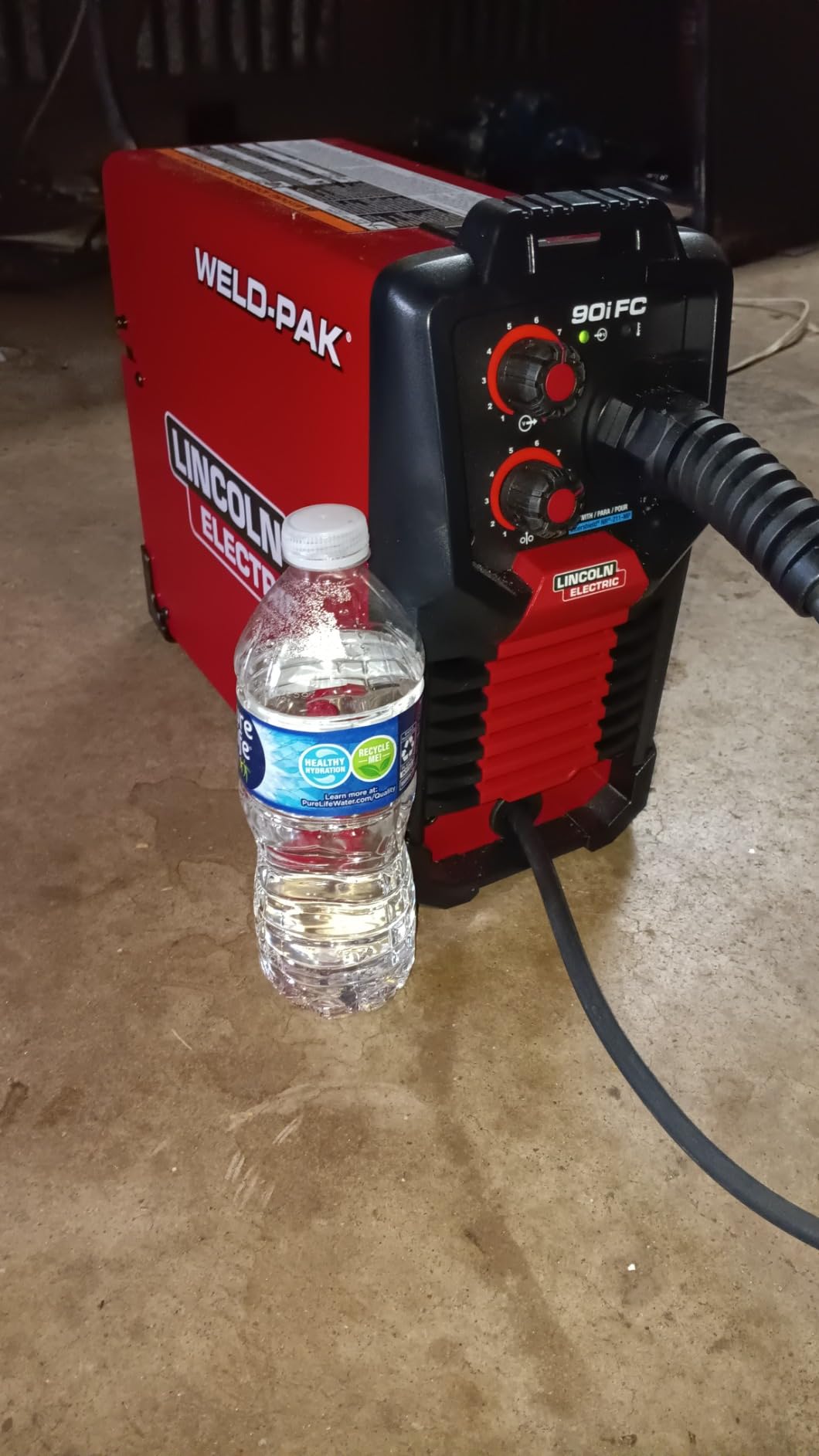
This is the machine to buy if your repairs happen in a parking lot rather than at a fixed bench. At 15 pounds with a shoulder strap and a protective metal case, it moves from the trunk to the rocker panel without a cart. Owners rate it at 4.7 stars, the highest score in our group.
The two-knob layout, one for wire speed and one for voltage, is a deliberate simplification, and for panel work it is enough. Infinite welding voltage lets you fine-tune weld characteristics rather than living with a fixed setting, and the inverter power source gave us a noticeably smoother arc than a transformer machine of the same class.
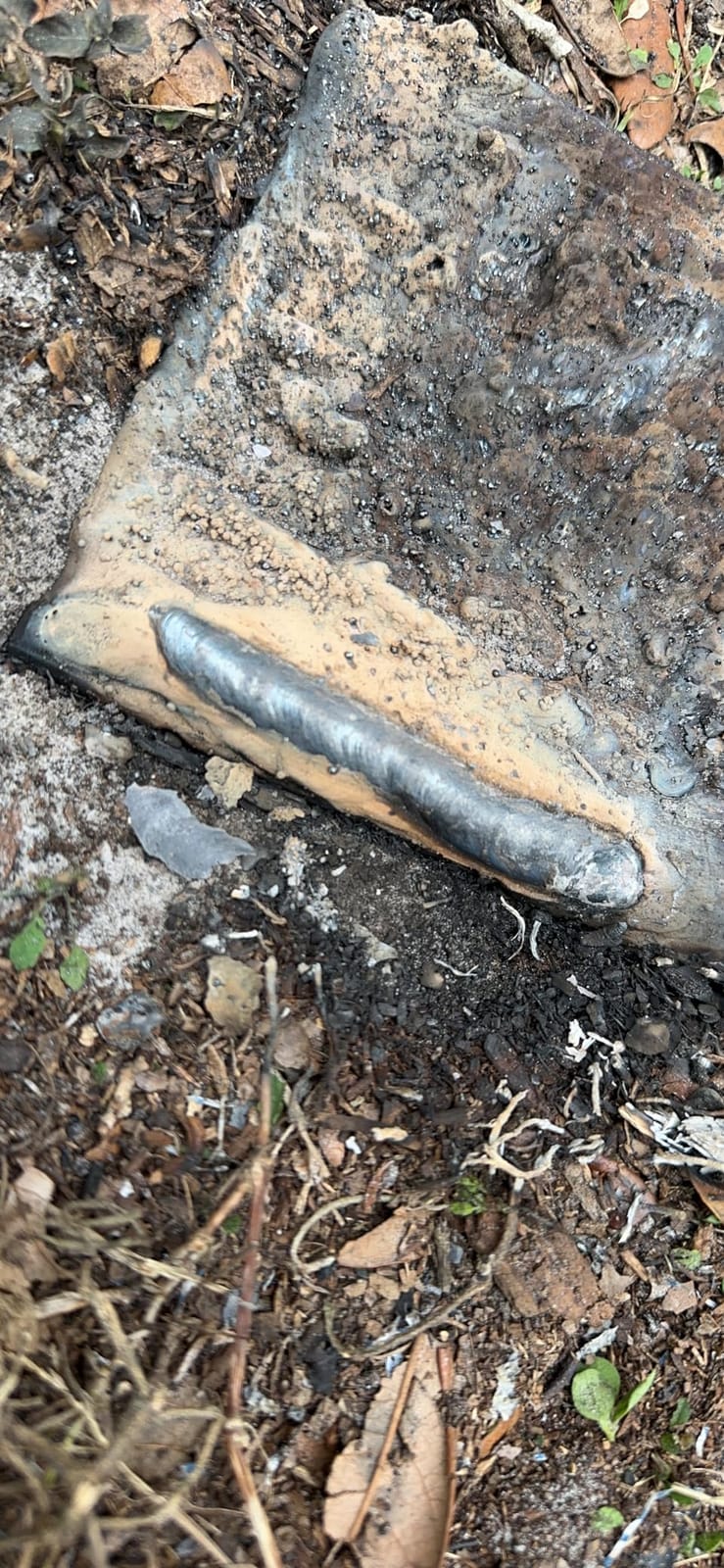
Owners use it for sheet metal precision work, small rust repairs, and as a companion to a larger shop machine, which is exactly how it fits a body shop that already has a heavy unit. It runs 120V only, so this is a portable supplement rather than a replacement for a 220V frame welder.
Our one real complaint echoes what reviewers say: the ground clamp bonding braid is short and can work loose after repeated use. Check it before each session. Spatter from flux core wire is present here too, just as it is on every machine in this roundup.
Best for repair work away from the bench
Mobile rust repair, a driveway panel swap, or a shop where the machine shares a cart with other tools. The strap, the case and the inverter arc make it easy to carry from the trunk to the panel, and owners praise the weld quality relative to its size.
Limitations to plan around
Single voltage means no 220V output for frame sections or thicker plate. The control set is minimal by design, so if you later want pulsed MIG, spot mode or a spool gun for aluminum, this is not the machine to grow into. Budget for a better ground clamp if you will be moving it constantly.
3. YESWELDER 135A 3-in-1 – The Volume Seller With Synergic Heat Control
YESWELDER 135A MIG Welder, 110V Flux Core Gasless MIG/Lift TIG/Stick 3-in-1
135A on 110V
Mild steel to 3/32 inch
Synergic plus/minus 3V
LED display
Flux core, stick, lift TIG
Pros
- Synergic control matches voltage to wire feed speed and cuts burn-through on thin panel
- Oversized LED display is readable in bright outdoor light
- Includes both 0.030 and 0.035 E71T-GS wire so it is ready to weld
- One of the highest review totals in this category
Cons
- Synergic only in flux core mode
- so manual voltage is not available
- DC only output rules out aluminum TIG
- Lift TIG needs a separate torch
This is the machine most first-time gasless welders end up with, and for panel work the reason is the synergic control. You pick the wire size and it matches the recommended voltage to the wire feed speed for you, with a plus or minus 3V micro-adjustment to bring the heat down further on 20-gauge metal.
That automatic matching is the single feature that separates it from the older fixed-voltage budget boxes. Experienced reviewers confirm the penetration and bead quality hold up on exhaust and body work, which is the part that actually matters once you stop welding scrap coupons.
Three processes live in the same box: gasless flux core, stick, and lift TIG, with the TIG torch sold separately. The included bundle covers a lot of ground, with 0.030 and 0.035 E71T-GS wire, an electrode holder, a ground clamp and a MIG torch.
The trade is control. Because voltage is synergic only in flux core mode, you cannot set it by hand the way you can on the Forney or Lincoln, and the output is DC only, so aluminum TIG is out. Some buyers also report a cheap-feeling spool holder and tensioner, plus occasional machines arriving with a missing or recessed power switch. Inspect the unit on arrival.
Why it suits a first machine
Synergic control removes the hardest part of learning gasless welding, which is the voltage and wire speed relationship. The LED display shows real-time current, which helps when you are learning what a setting change does. At 135 amps it covers 3/32 inch mild steel, which spans most patch panel and bracket work in a home garage.
Where the limits show
Visible panels that you want to finish with minimal grinding, since flux core spatter is unavoidable here. Any aluminum body or trim work, because the output is DC only. And if you are the type who wants to experiment with wire size and burn rate by hand, synergic-only voltage will feel restrictive within a few sessions.
4. ARCCAPTAIN MIG130 – Synergic Matching in a Carryable Box
ARCCAPTAIN 130A Flux Core Welder MIG Welder 110V Gasless MIG Stick Lift TIG
130A on 110V
11.79 lb
0.030, 0.035 and 0.040 wire
9 x 6 x 7 in
Two year warranty
Pros
- Synergic mode matches current and wire feed speed for three wire diameters
- Comes with torch/ground clamp/electrode holder and 0.030 flux core wire
- Light enough to carry by handle or shoulder strap
- Two year manufacturer warranty on a machine at this level
Cons
- Lift TIG requires a separate torch purchase
- Entry-level output limits you to light gauge material
The ARCCAPTAIN does one thing very well for a beginner: after you select 0.030, 0.035 or 0.040 flux core wire, it matches the recommended current and wire feed speed automatically. On a car panel that removes the trial-and-error phase that makes people give up on gasless welding in the first month.
At 11.79 pounds and measuring roughly 9 by 6 by 7 inches, it is one of the easier machines here to move around a garage, and it can be carried by handle or shoulder strap. The 130 amp output suits light gauge material and home repair work, which is exactly the bracket, tab and small patch panel category.
Owners frequently single out the accessory bundle as unusually complete for the money. You get the MIG torch, ground clamp, electrode holder and a roll of 0.030 flux core wire, so first weld day needs no extra shopping trip. Built-in over-current, over-load and overheat protection covers the electrical side.
Two limitations are worth stating plainly. Lift TIG mode needs its own torch, and the output ceiling means heavier structural steel is out of reach. If your plan includes frame work or aluminum, this is a stepping stone rather than a destination.
Good first machine for panel tacking
Anyone who wants auto body capability without a gas bill and without wrestling with voltage settings on week one. The synergic presets cover 0.030 wire well, which is the size you want for 18-gauge panel, and the weight means you can take it to the car rather than dragging the car to it.
What you give up
Headroom above light gauge material, and any aluminum work. A two year warranty helps with the first concern, but the second is a hard limit of the electrical design, not something an accessory can fix.
5. TOOLIOM MIG-200 PRO – Five Processes and Dual Voltage in One Box
TOOLIOM 200A 5-in-1 Aluminum MIG Welder Kit, Wire & Gloves
200A on 110V and 220V
35.5 lb
Five processes including gas MIG and flux core
Digital display
Pros
- Five processes cover gas MIG/flux core/lift TIG
- stick and spool gun aluminum
- 200A dual voltage handles thin sheet through thick plate
- Synergic mode for beginners with a manual mode for full control
- Handles 0.030
- 0.035 and 0.045 solid
- flux core and aluminum wire
Cons
- Spool gun and lift TIG torch are sold separately
- At 35.5 lb it is one of the heavier machines in this group
Here is the machine to buy if you think you will outgrow gasless. The MIG-200 PRO runs gas-shielded MIG and gasless flux core in the same box, plus lift TIG, stick, and spool gun capability for aluminum. That means you can start gasless today and add a shielding gas cylinder later without buying a second machine.
Dual voltage is the other reason it earns a place on a body work list. At 200 amps you can plug into a 110V circuit for panel work, then move to a 220V outlet for frame sections and thicker plate on the same day. The digital display shows real-time current and the key parameters, which is genuinely useful when you are learning what a change does.
Synergic mode sets wire speed and voltage for you with plus or minus 3V fine tuning, and manual mode gives independent control for both. It accepts 2 lb and 10 lb rolls, and handles solid, flux core and aluminum wire across three diameters, so consumables are not a constraint.
The catches are weight and accessories. At 35.5 pounds it is one of the heavier machines we tested, so it lives on a cart rather than over your shoulder. The spool gun and the lift TIG torch are not in the box, and aluminum is pointless until you buy the spool gun, so treat that process as a future option rather than a present one.
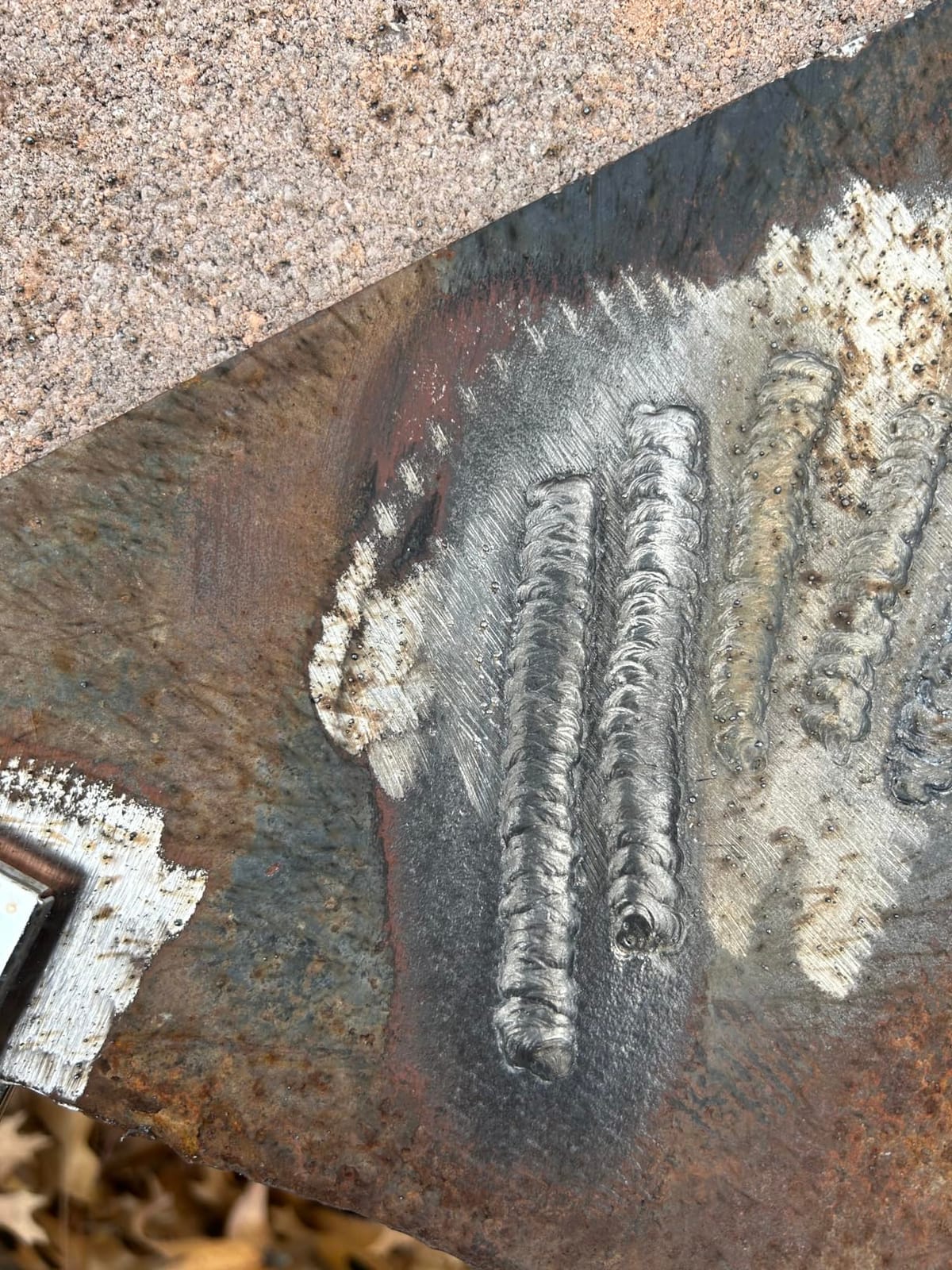
Best for an upgrade path
Restoration projects that will eventually include aluminum trim, exhaust work or MIG finish welds. The gas MIG capability is the reason to buy this over a cheaper flux-only box: you get the option of clean, low-spatter finish welds on visible panels once you are ready to add a tank.
Tradeoffs to accept
Weight, and the fact that the accessory path costs extra. Also worth noting is that a multi-process machine has more modes than a beginner can absorb on day one, which is why the synergic presets matter as much here as they do on the smaller boxes.
6. Bestarc MIG145 – Dual Voltage Without Rewiring the Garage
Bestarc 145A MIG Welder, Flux Core/Gas MIG Stick Lift TIG Welding, 110/220V
145A on 110V and 220V
IGBT inverter
Flux core, gas MIG, lift TIG, stick
22.6 lb item weight
Pros
- Machine auto-detects input power and shows the selected voltage on the panel
- Four processes including gasless flux core and gas MIG
- Synergic control with plus or minus 3V fine tune plus a manual push-in knob
- Includes flux core and solid wire
- contact tips and a shoulder strap
Cons
- Early production ran a short 5.5 ft torch lead and a plain V-groove drive roll
- Spool holder spring tension is not adjustable
- Included push-on nozzle is not sized for flux core work
The practical appeal of the MIG145 is that it detects whether you are on 110V or 220V and displays the choice on the front panel, so moving between a garage outlet and a dedicated circuit takes seconds. For a shop that alternates between a quick panel patch and a longer structural job, that flexibility is worth more than raw output.
It is a four-process machine: gasless flux core, gas MIG, lift TIG and stick, running on an IGBT inverter with E71T-GS and ER70S-6 wire. Synergic control auto-matches voltage, with a plus or minus 3V window and a push-in knob for manual wire feed ratio adjustment, which experienced owners use to fine-tune bead profile on thin material.
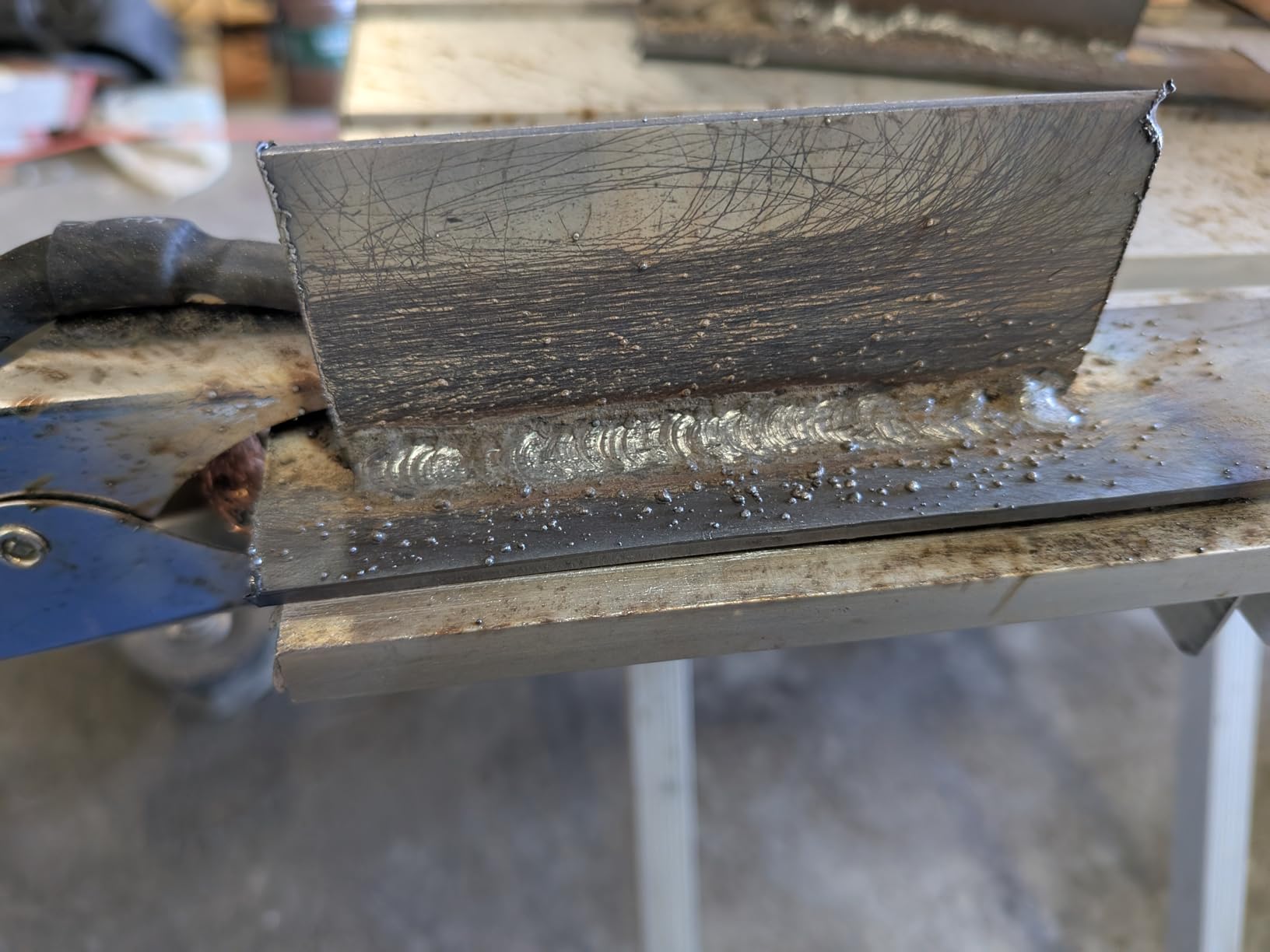
One long-term owner with a production MIG background reports better looking welds than a comparable 120V machine, and reviewers generally confirm strong weld quality for the money. Both flux core and solid wire, contact tips, rollers, an adapter and a strap are included.
There is a documented history here worth knowing. Early production machines ran a 5.5 foot torch lead and a plain V-groove drive roll, which hurt arc stability on flux core wire, and later production runs corrected both. The spool holder spring tension is still not adjustable, and the included push-on nozzle is not sized for flux core work, so budget a proper flux core nozzle.
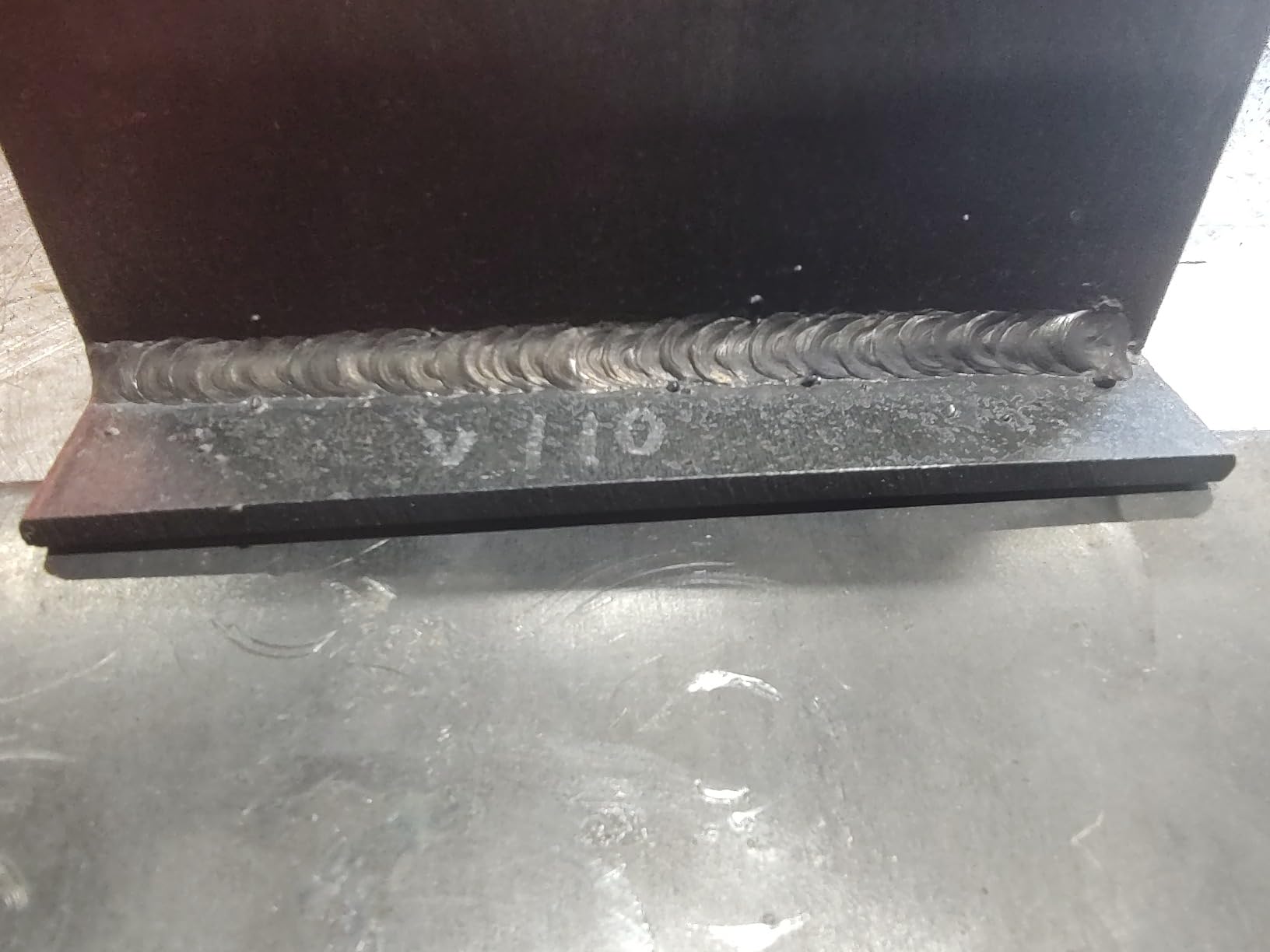
Where it earns its spot
Garages with only a household circuit today and a 220V outlet available later. The four-process design means you can move to gas MIG without a new machine, and the IGBT inverter plus synergic control keeps the setup forgiving on 18-gauge panel.
Check these before you buy
Confirm the torch lead on your machine is not one of the short early units, and expect to replace the nozzle with a flux core sized one. The instruction manual is thin and does not explain the push-in knob, so do not expect the fine adjustments to teach themselves.
7. HITBOX 200A – A Compact Box That Still Runs Flux Core Properly
HITBOX 200A MIG Welder, 110V/220V Flux Core MIG/Lift TIG/Stick 3-in-1
Compact 3-in-1
IGBT inverter
110V and 220V
0.030 and 0.035 wire
Mild steel to 4.0 mm
Pros
- Small and light enough to carry with a built-in handle
- IGBT inverter with 110V and 220V dual voltage
- Synergic control coordinates voltage and wire feed speed automatically
- Owners report clean welds with very little spatter on thin material
Cons
- One owner measured output 20 to 30 percent below the displayed amperage
- Only holds a 2 lb wire spool
- Ground clamp is soft and warped after modest use
Space is the reason this machine exists. The body measures about 9 by 4 by 7 inches with a built-in carrying handle, so it lives in a small car or a crowded shelf and comes out when you need it. Owners describe it as a capable replacement for a bigger unit on light repair work.
Under the hood it is a 3-in-1: gasless flux core MIG, stick and lift TIG for carbon and stainless steel, on IGBT inverter technology with 110V and 220V support. It runs 0.030 and 0.035 flux core wire and is rated for mild steel up to 4.0 mm.
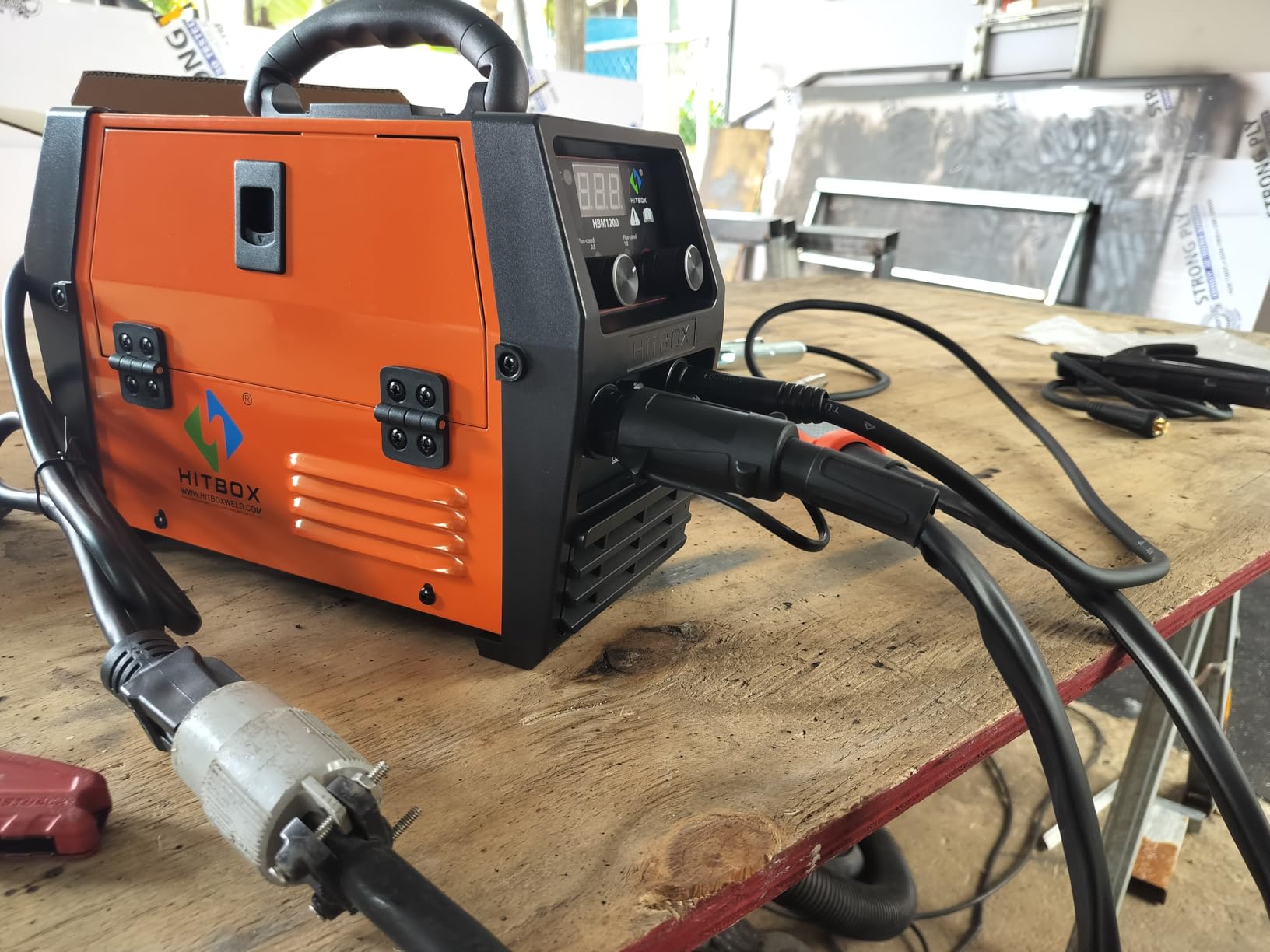
Synergic control coordinates the recommended voltage and wire feed speed when you adjust current or wire diameter, which is a meaningful help on a small machine. Owners also report quiet inverter operation and, notably, clean welds with very little spatter on thin material.
The honest weaknesses are documented. One owner measured real output running 20 to 30 percent below what the display claims, the ground clamp is soft and warped after modest use, and it holds only a 2 lb spool. If the wire welds to the contact tip, it can buckle inside the cable and has to be pulled back by hand, so keep a contact tip brush handy.
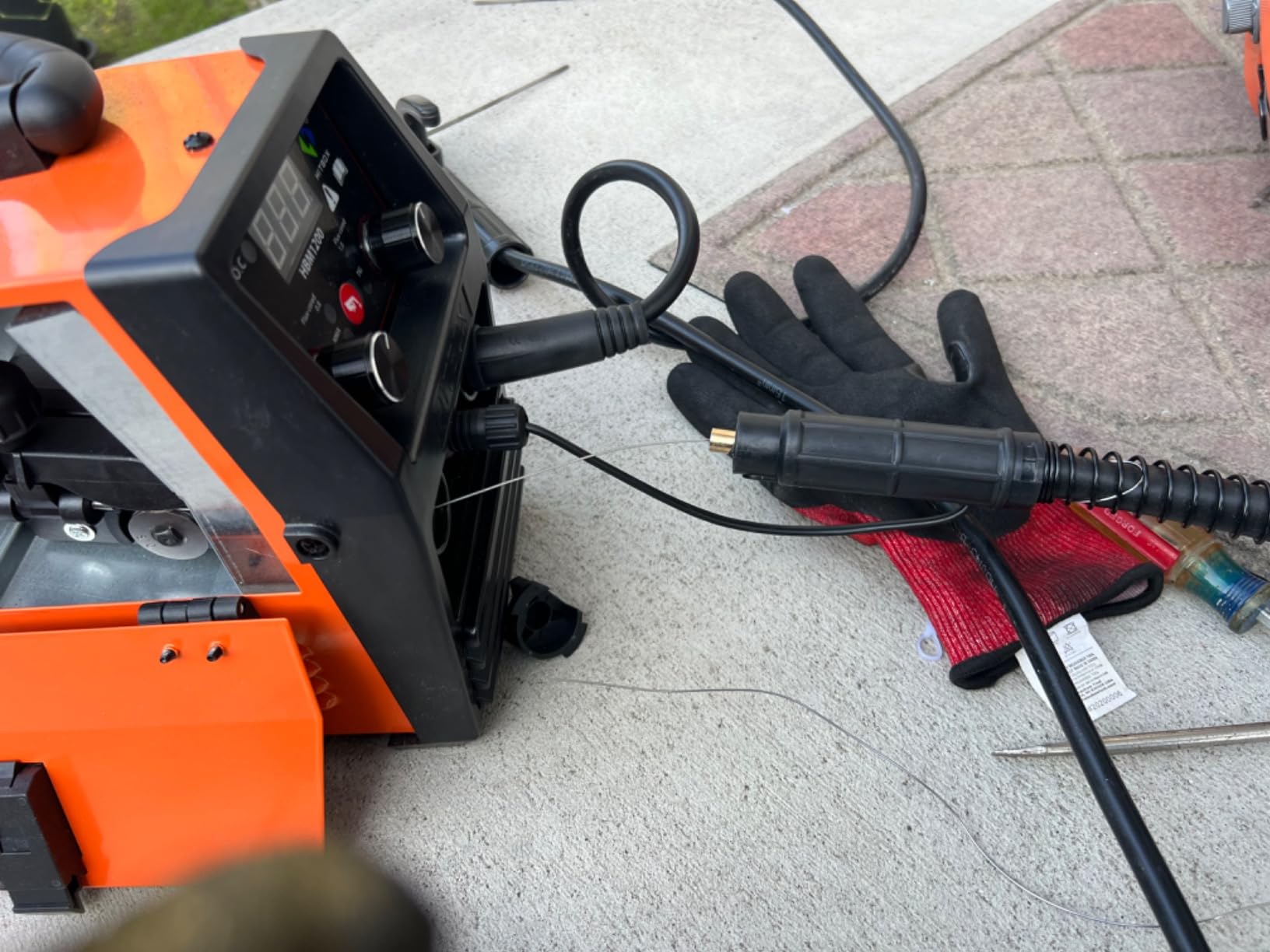
Best when the machine has to travel
Small garages, rental bays, or a welder who works on more than one car. The included 8 foot MIG torch, ground clamp, electrode holder, flux core wire, conductive nozzles, brush and chipping hammer mean it is complete for panel work out of the box.
Limits to plan for
Do not trust the displayed amperage if you are planning structural work, and plan on frequent spool changes at 2 lb. The included instructions are hard to follow and manual mode lacks hot start, so give yourself a few sessions before judging the machine on its first weld.
8. BESTMIG 135A – A Full Starter Kit in the Box
BESTMIG 135A MIG Welder – 3-in-1 Flux Core Welder, MIG/Lift TIG/Stick Welding Machine – Portable IGBT Inverter – 110V with Welding Helmets and Gloves (Red Black, MIG 135A Welder)
135A output
Materials to 1/8 inch
Helmet and gloves included
0.030 to 0.040 wire
10.71 lb
Pros
- Auto-darkening helmet and leather gloves included at this level
- Digital control auto-adjusts voltage and feed speed to reduce spatter
- Full-color LED display shows live welding parameters
- Works with 0.030 to 0.040 gasless wire on stainless and carbon steel
Cons
- TIG torch is not included even though lift TIG is advertised
- Some machines arrive with missing or mismatched accessories
- Output limited to material up to about 1/8 inch
Most first welders buy a machine and then immediately buy a helmet, gloves, wire and a chipping hammer. This one arrives with an auto-darkening welding helmet and leather gloves already in the box, which reviewers call out as unusual at this level and which is genuinely useful if you are about to make your first panel patch.
The digital control automatically adjusts voltage and feed speed to reduce spatter, and the full-color LED display gives real-time monitoring of the welding parameters. That display is more informative than most entry-level panels, and for someone learning what a knob change does, it shortens the feedback loop.
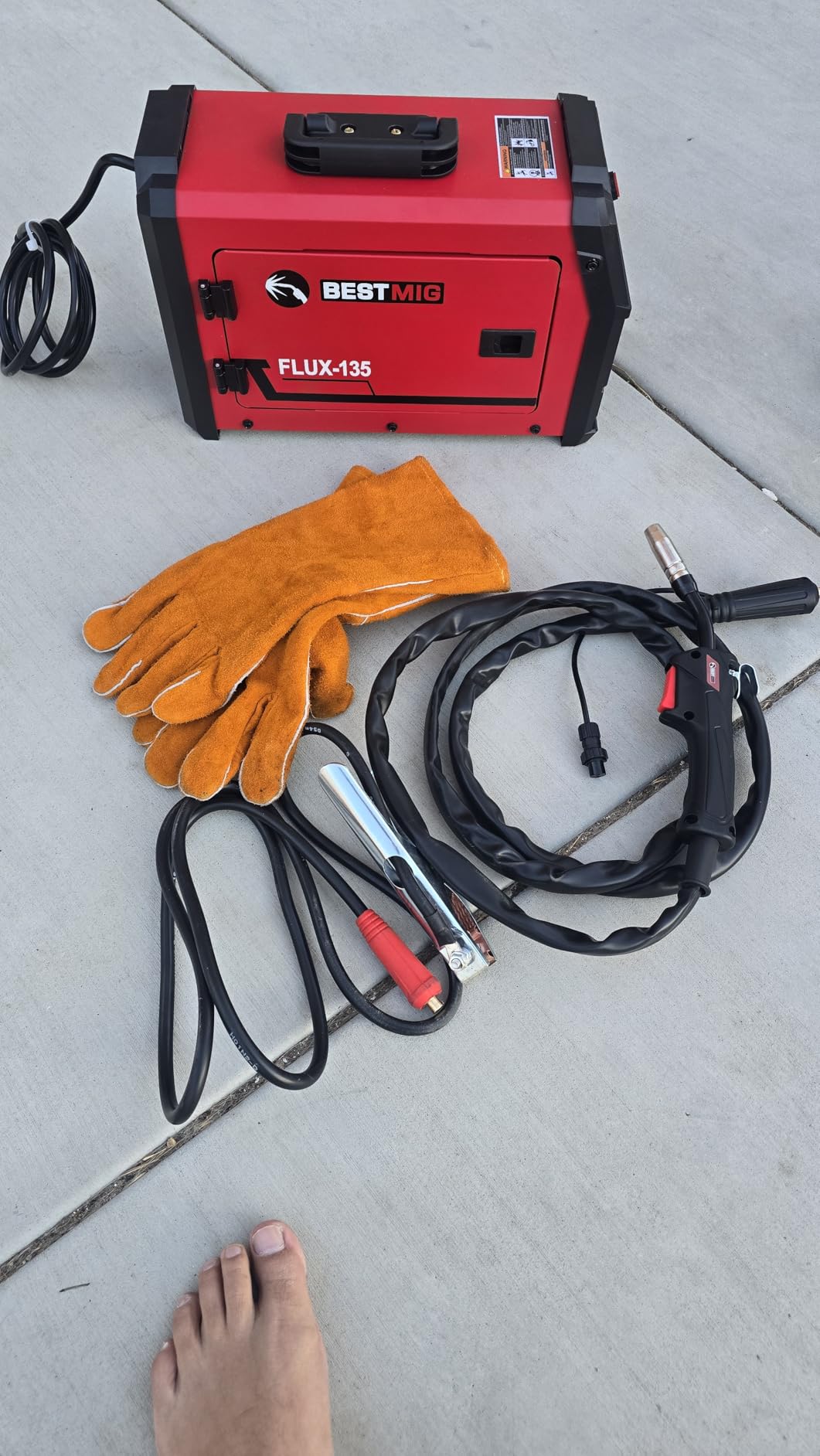
It is a 3-in-1 with true 135A output covering materials up to about 1/8 inch thick, running 0.030 to 0.040 gasless flux core wire on stainless and carbon steel. The included bundle is long: torch, electrode holder, ground clamp, wire brush, flux core wire, gloves and the helmet.
Two things to know before you count on it. The TIG torch is not included even though lift TIG is advertised, so treat that mode as unavailable for now. Some buyers have received machines with missing accessories or a flux core cable that did not fit, so check the full kit on arrival.
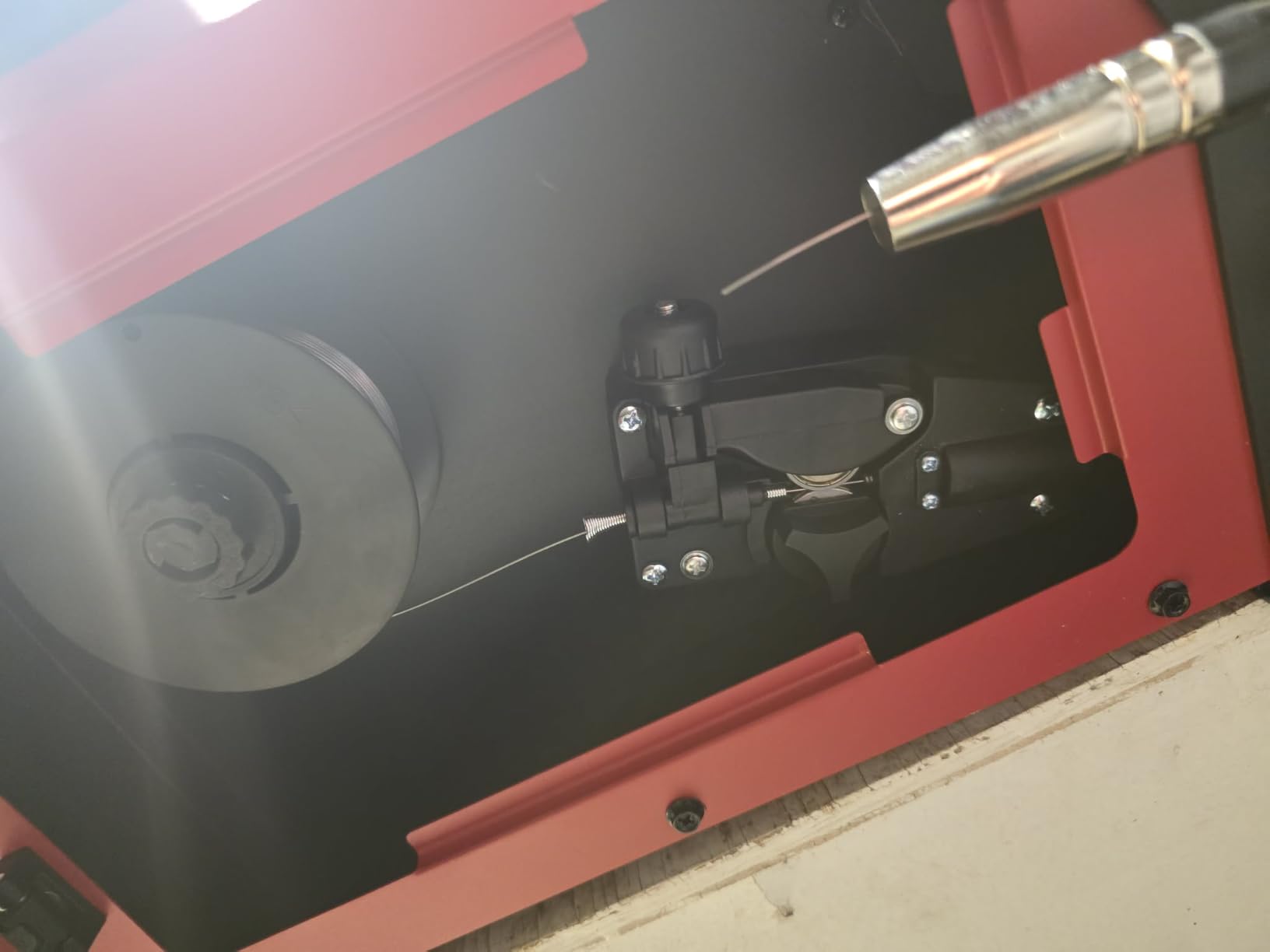
Best for a complete first setup
Buying one box instead of three on your first day. The helmet and gloves remove the most common reason beginners put a project off, and the auto-adjusting digital control means a first attempt on 18-gauge is more likely to land than it would on a fixed-voltage box.
What it cannot do
Thick material above roughly 1/8 inch, and TIG without a separate torch. If your project list includes 3/16 inch or 1/4 inch structural steel, budget for a bigger machine or plan those jobs elsewhere.
9. BILT HARD 135A – Spot and 2T/4T Modes for Tacking Control
BILT HARD 135A 3-in-1 IGBT Inverter Welder, 110V Flux Core MIG/Lift TIG/Stick Welding Machine with Synergic Control, LED Display, 2T/4T/SPOT Modes & Full Kit (Solar Helmet)
135A on 110V
2T, 4T and spot modes
LED parameter display
Solar helmet in kit
IGBT inverter
Pros
- Spot mode plus 2T and 4T trigger modes give real control over tacks and long seams
- LED display tracks voltage
- current and wire speed in real time
- Full kit includes a solar helmet
- 6.6 ft gun
- 10 ft ground clamp and 2 lb flux core wire
- Synergic system sets voltage and feed speed automatically
Cons
- Listed item weight of 76 lb does not match the compact size owners describe
- Included helmet darkness knob turns too easily and needs checking before each weld
- Spool holder spindle is too short to properly engage the supplied wingnut
Spot mode is the feature that matters most here, and very few machines at this output level offer it. On a body panel, spot mode lets you lay a series of consistent tack welds at fixed intervals with a single trigger press, which is exactly the technique that keeps a patch panel from warping while you fit it. 2T and 4T modes give you short bursts for tacking and continuous welding for longer seams.
The LED display tracks real-time voltage, current and wire speed with dedicated MIG and MMA menus, plus MIG burn-back and inductance settings. For a beginner, seeing the numbers move when you turn a knob is the fastest way to learn the relationship between wire speed and burn rate.
The kit is unusually complete: a solar-powered helmet, a 6.6 ft MIG gun with a 0.030 contact tip, a 10 ft ground clamp, 2 lb of flux core wire, a spare 0.035 tip, a brush and a hammer. Synergic control sets voltage and feed speed from the amperage you select, and auto shutdown shows error codes for overcurrent and overheat.
Reviewers are impressed that a machine in this bracket has a screen and a full kit, and report stable arcs on drill hole and exhaust repairs. The criticisms cluster around consumable quality: the helmet darkness knob turns too easily, the spool holder spindle is too short to properly engage the supplied wingnut, and the included chipping hammer and brush are poor. The listed 76 pound weight also does not match the compact size owners describe, so check the actual unit on arrival.
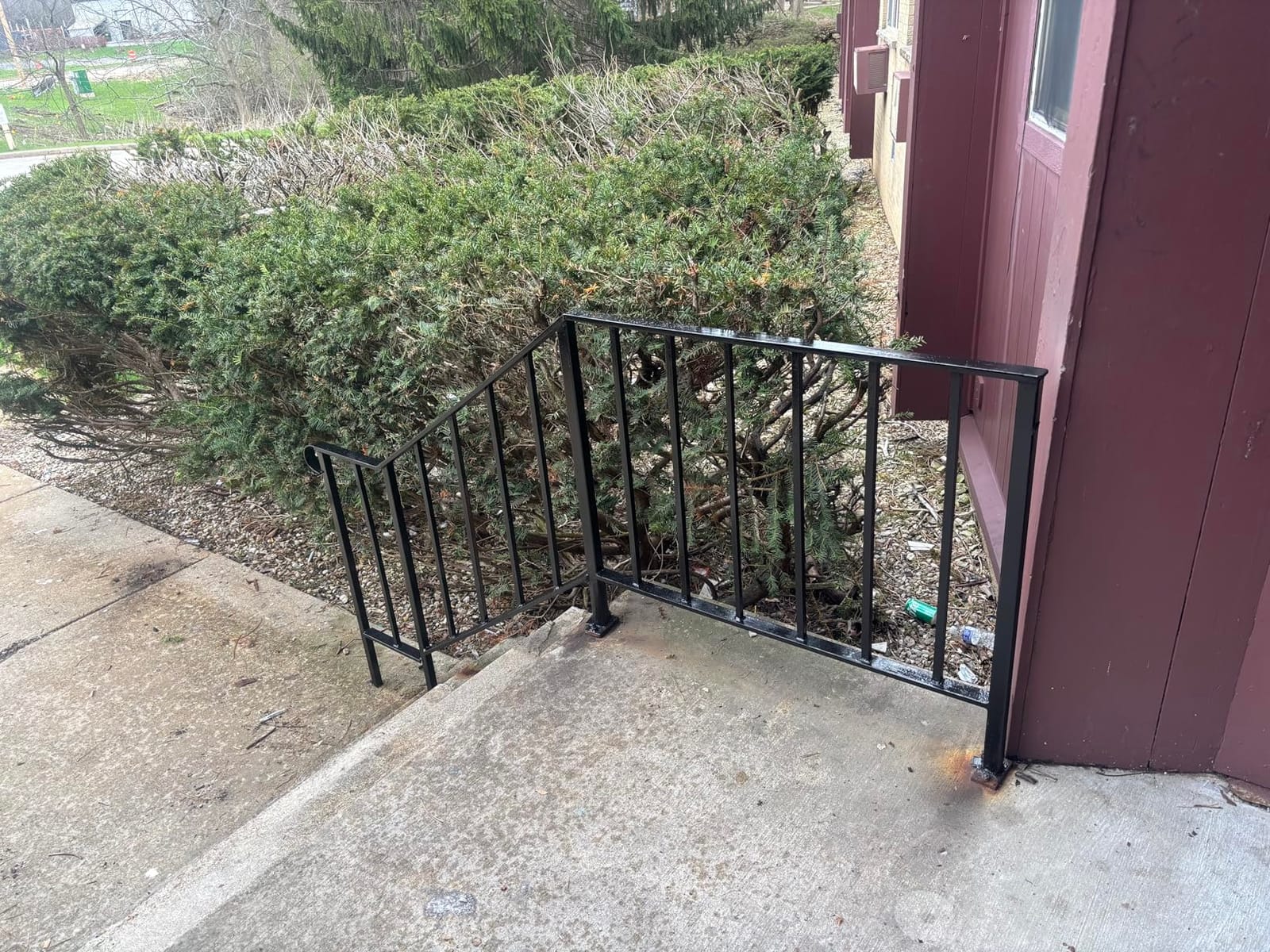
Best for tacking without warping panels
Fitting patch panels, plug welding a replacement panel edge, and any job where a run of identical tacks beats one long seam. The spot mode plus the parameter display makes this the machine we found most controllable for fitting work.
Where it will frustrate you
Included accessories are the weak point. Set aside time to replace the chipping hammer, brush and possibly the spool spindle hardware, and check the helmet shade setting before each weld. Lift TIG is advertised but the torch is not included, so that mode is off the table for now.
10. FEMEROL 250A – Real Output, Spot Welding and Aluminum Capability
FEMEROL 250A MIG Welder,6 in 1 Gas MIG/Gasless Flux Core/Stick/Lift TIG/Spot Welding/Spool Gun Compatible Aluminum Welding Machine Large LED Display 110V/220V Multi Process Welder
250A at 60 percent duty
110V and 220V
Spot welding and spool gun
Mild steel to 14.0 mm
Pros
- 250A at 60 percent duty cycle across MIG
- MMA and TIG is unusually strong for this tier
- Spot weld function gives consistent results on 24 gauge material without burn-through
- Welds aluminum with the teflon liner or a spool gun/Torch
- ground and stick cables are about 9.5 ft long
- Two year guarantee with responsive support
Cons
- Supplied 120V plug and cord are undersized for 250A output
- Replacement plug and heavier cord may be needed for full output
- Cooling fan runs constantly and is loud
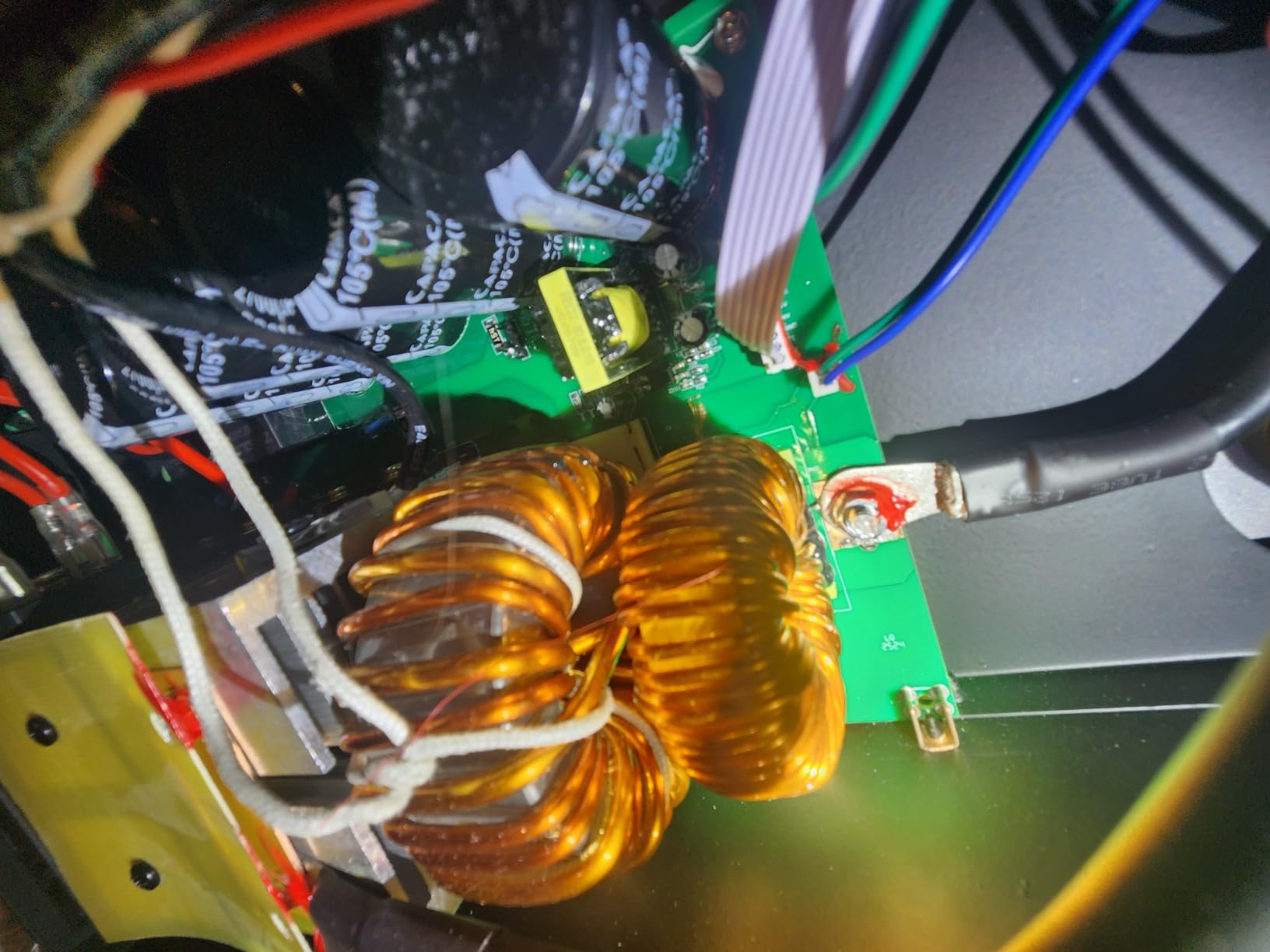
This is the machine that surprised us. An experienced fabricator measured roughly 245 amps after replacing the plug and cord with heavier gauge, which puts it in a different performance class from the other machines in this roundup, and the 250 amp rating at a 60 percent duty cycle is well above what the entry-level boxes offer.
It is a 6-in-1: gas and solid wire MIG, gasless flux core MIG, stick, spot welding, lift TIG, and spool gun compatibility. The spot weld function is the feature that matters for auto body, reporting consistent results on 24 gauge material without burn-through, which is thinner than most body panels and exactly the heat control problem flux core usually struggles with.
Aluminum is possible through the supplied teflon wire feed tube or with a spool gun, and it accepts 0.023, 0.030 and 0.035 solid wire, 0.023, 0.030 and 0.035 flux core wire, plus 0.035, 0.040 and 0.045 aluminum wire. The torch, ground and stick cables run about 9.5 feet, which is longer than most kits in this group and helpful when the car is not next to the outlet.
The honest issues: the supplied 120V plug and cord are undersized for 250 amp output, so expect to replace them if you plan to use the full range, and the cooling fan runs constantly and loudly. Gas line quality is low, the TIG mode has no amperage control, and neither the TIG gun nor the spool gun is included.
Best for thin gauge control and aluminum plans
Spot welding on 24 and 26 gauge material, spot welding a patch into a floor pan, or restoring a car with aluminum trim. The headroom also covers 3/16 inch to 1/4 inch structural steel on the same machine, which removes a main limitation of the compact boxes.
Setup work before first use
Replace the power plug and cord with heavier gauge if you intend to run near 250 amps, or you will be chasing a cord that cannot deliver. Budget for a spool gun before attempting aluminum, and expect fan noise in a small closed garage. Overload, over-voltage, over-current and overheating protection are built in, with a two year guarantee behind them.
How to Choose a Flux Core Welder for Body Panels: 8 Criteria
We ranked these machines on thin-gauge heat control first, because that is the deciding factor in auto body work. Here is how to think through the same criteria if you are shopping with a different machine set in mind.
1. Heat control at low amperage. This is the number one auto body criterion and the one most roundups ignore. Look for synergic control, spot mode, 2T and 4T triggers, and pulse capability. On 20-gauge and thinner material, the difference between a machine that matches voltage to wire speed and one that does not is the difference between a flat panel and a warped one. The BILT HARD 135A and the FEMEROL 250A lead here because both offer a true spot mode; the YESWELDER, ARCCAPTAIN and Bestarc pair their synergic settings with a plus or minus 3V window.
2. Amperage range and realistic output. You cannot weld with amps you did not buy. For 18-gauge panel you want a comfortable 40 to 90 amp working range, and for structural work you want 140 amps and up. Treat the number on the box as a claim: owners of the compact HITBOX unit measured output running meaningfully below the displayed amperage, while a fabricator testing the FEMEROL 250A measured close to nameplate after a cord upgrade. Larger, serviceable machines tend to be honest about output.
3. Duty cycle. Duty cycle tells you how long the machine can weld at a given amperage before it needs to cool. A full day of floor pan and rocker work on a low duty cycle machine means frequent cool-down stops. Higher rated machines in this group publish stronger duty cycle numbers, and that matters more for a full restoration than for a single patch panel.
4. 120V versus 220V. A 120V machine plugs into a standard 20 amp household circuit, which is where most garage beginners start. Dual voltage machines are a genuine step up: the Bestarc MIG145 auto-detects which circuit you are on, the TOOLIOM MIG-200 PRO runs 200 amps on either, and the FEMEROL 250A offers 110V and 220V multi-process output. If you ever plan to section a frame rail, dual voltage prevents an early replacement.
5. Maximum material thickness. Match the machine to the thickest steel you will touch. Compact 135 amp units are generally rated to about 1/8 inch or 3/32 inch of mild steel, the mid-size 140 to 145 amp machines reach 1/4 inch, and the 200 to 250 amp machines reach 3/16 inch and beyond. Buying a small machine for 18-gauge panels is smart. Buying one when a 1/4 inch floor pan section is on the list is a wasted purchase.
6. Process flexibility and the upgrade path. This is the first-purchase decision most people get wrong. A flux-only machine is cheaper today and dead-ended tomorrow. A multi-process machine costs more and lets you add a shielding gas cylinder later for clean, low-spatter finish welds on visible panels without buying a second box. The TOOLIOM, Bestarc, YESWELDER and BILT HARD all include gas MIG or lift TIG alongside flux core. The advice from the forums is consistent: buy multi-process now rather than buying twice.
7. Portability. Weight decides whether you bring the machine to the car or move the car to the machine. The Lincoln 90i FC at 15 pounds with a shoulder strap, the ARCCAPTAIN MIG130 at 11.79 pounds, and the compact HITBOX are built for mobile repair. The TOOLIOM at 35.5 pounds and the FEMEROL at 32.6 pounds are garage machines that live on a cart.
8. Parts, warranty and serviceability. This is where brand matters most and where importers often fall short. US-based brands with a service network will have replacement drive rollers, contact tips, nozzles and boards available years from now; no-name clones can leave you with a dead machine and no parts. Warranty length is a reasonable proxy: the ARCCAPTAIN and FEMEROL both carry two year guarantees, while several machines in this group carry shorter terms or none stated. A heavy plastic wire drive that wears out and cannot be replaced is the most common long-term complaint in the reviews we read.
For a shop that also needs a solid bench for clamping and fit-up, our work table roundup covers tables that hold up to that use.
Choosing Flux Core Wire for Body Panels
Most self-shielded body and structural wire is E71T-GS. For auto body work, 0.030 inch is the diameter to start with, and the reason is heat: thinner wire feeds more slowly at the same amperage, so the arc lays down less heat per inch of travel. That is exactly the variable that decides whether a patch panel sinks or distorts.
0.030 inch wire suits 18 to 22 gauge panel work and gives you finer control over burn rate at low amperage. It feeds more slowly, which is the point: the puddle is smaller and the bead is easier to keep flat. This is the size most home mechanics should buy first, and it is the size the Forney runs.
0.035 inch wire is a good compromise for 16 gauge patch panels, floor pan sections and thicker structural steel, with more penetration and faster travel. It needs a larger contact tip and a larger nozzle, and it puts more heat into the panel if you push the amperage up, so you still need to stitch and jump around.
Both diameters are widely supported: the YESWELDER and BESTMIG kits include both sizes, the ARCCAPTAIN synergic presets cover 0.030, 0.035 and 0.040, and the TOOLIOM handles 0.030, 0.035 and 0.045. A larger drive roller, not a machine upgrade, is usually all that changes when you step up a diameter. Gasless flux core wire is available in 2 lb and 10 lb rolls, and the 2 lb size is worth keeping on hand for panel work even if your machine takes 10 lb rolls.
MIG vs Flux Core vs TIG for Auto Body
The honest comparison matters more than the buying list. MIG with a shielding gas mix gives the cleanest, lowest-spatter arc and the best control on visible panels, but it requires a tank, a regulator and a gas line, and it struggles in wind. Flux core needs no gas and works anywhere, but it runs hotter, throws more spatter and leaves slag. TIG gives the tightest heat control and the cleanest cosmetic result, but the learning curve is steep and it is slow.
Our rule: use flux core for structure, hidden seams and outdoor work, use MIG for visible panels once you own a machine that runs both, and consider TIG only if you are restoring a high value car and can commit to the practice. The multi-process machines in this roundup, the TOOLIOM MIG-200 PRO and the Bestarc MIG145 among them, let you make that progression on one machine.
One more honest note. If you are welding purely cosmetic sheet metal and never touching structure, a dedicated MIG machine is the right purchase and this roundup is the wrong list. Buy gasless because you will weld a car in a garage without a gas budget, not because it is the best finish welder.
Welding Sheet Metal Without Blowing Through
Start with the metal, not the machine. Grind the rust back to clean steel all the way around the patch area, and paint the back of the panel with spray can weld-through primer before you tack anything. Do not skip this step; it is what separates a patch that lasts from one that rusts out again in two seasons.
Fit the patch with a gap narrower than the wire diameter, clamp it with more clamps than you think you need, and check the panel from every angle before welding. Tack from the center outward and alternate across the joint. Every tack you skip is one less place for heat to pull the metal.
Then run short stitches rather than one long seam. On 18-gauge, weld an inch, move two inches away, and come back. This is the technique body builders use to control distortion, and it is a habit worth building early. If you have spot mode, use it for the tacking pass.
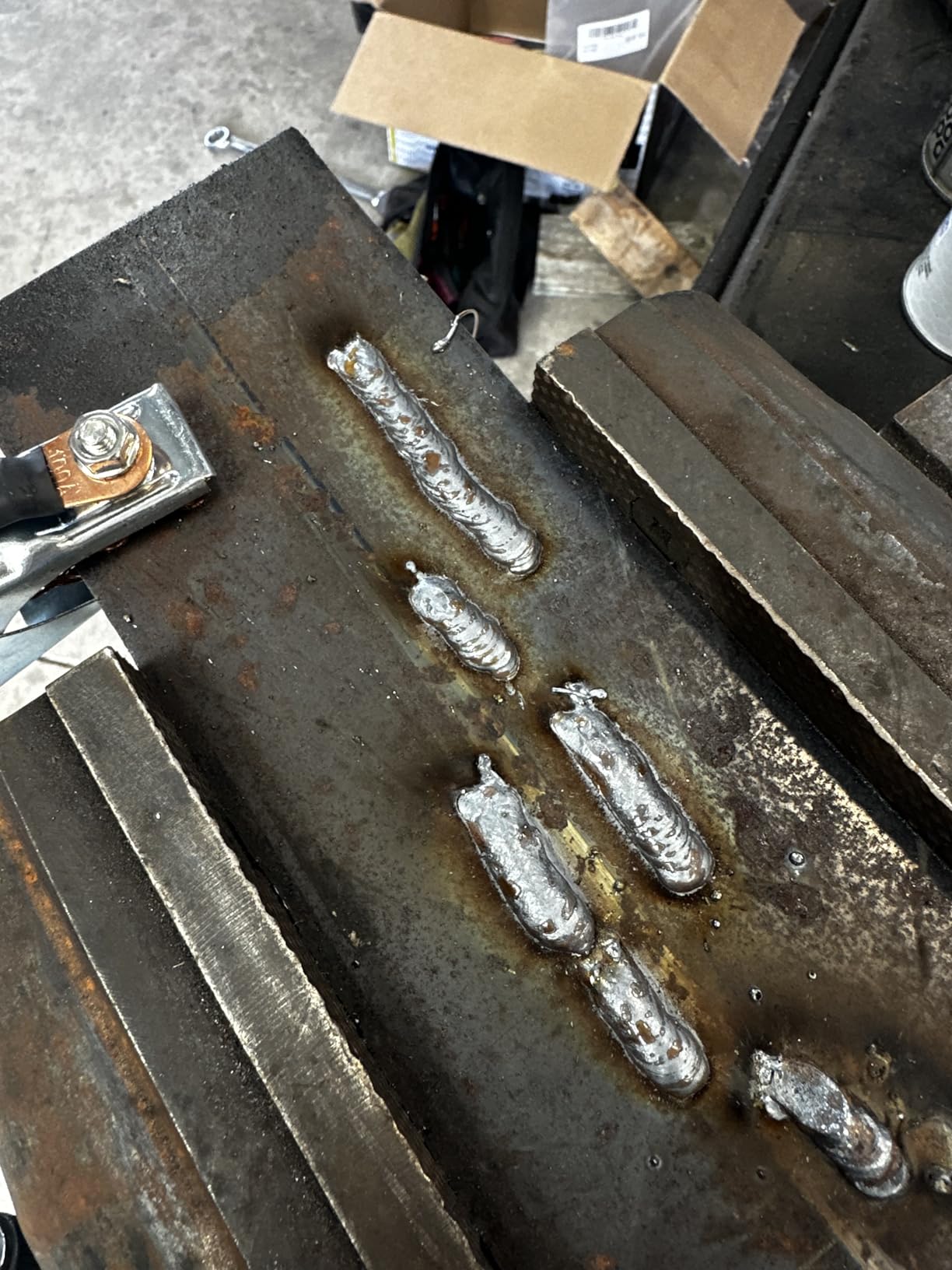
Keep wire stickout short and consistent, hold a steady travel speed, and expect to grind. Spatter and slag are part of gasless work, not a sign you set something wrong. When you do grind, keep the panel cool with a wet rag or a heat sink; letting a patch reach glowing temperature guarantees distortion.
Ventilation matters more than most people expect. Self-shielded flux core produces more fume than MIG, and galvanized or coated panels add metal oxide fume of their own. Weld with the garage door open, use a fan or extractor to pull air away from your face, wear a respirator rated for metal fume, keep a welding blanket behind the panel to catch spatter, and have a fire extinguisher within reach. Do not weld in a closed room.
Frequently Asked Questions
Can you do auto body work with a flux core welder?
Yes, for structure and hidden seams. A self-shielded flux core welder handles rust holes, floor pans, rockers, core supports and patch panels in 18 to 20 gauge steel with no shielding gas. It runs hotter than MIG and throws more spatter, so tight heat control on thin cosmetic panels is harder. Tack small, stitch often, and keep a grinder ready.
What is the best flux core welder for auto body work?
For most garages we recommend the Forney Easy Weld 140 FC-i, which gives 140 amps on a 120V outlet with infinite voltage and wire feed control. If you want a lighter machine to carry to the car, the Lincoln Electric 90i FC at 15 pounds is hard to beat. If you want to add MIG and TIG later without buying a second machine, choose a multi-process model such as the TOOLIOM MIG-200 PRO or the Bestarc MIG145.
What is the best flux core welder for the money?
Best value goes to the YESWELDER 135A 3-in-1 and the ARCCAPTAIN MIG130. Both add stick and lift TIG to gasless flux core, both match voltage to wire feed speed automatically through synergic control, and both arrive with wire and a torch in the box. The ARCCAPTAIN is lighter at 11.79 pounds and carries a two year warranty; the YESWELDER has a larger LED display and a much bigger review base.
Which is better, .030 or .035 flux core wire?
For 18 to 22 gauge body panel work, 0.030 inch is better because it feeds more slowly at the same amperage and lays down less heat per inch, which reduces sink-through and warping. Use 0.035 inch for 16 gauge patch panels, floor pans and thicker structural steel where you want more penetration and faster travel. Most machines need only a larger contact tip and a flux core sized nozzle to change diameters.
Do I need shielding gas for flux core welding?
No. Self-shielded flux core wire contains flux inside the hollow core, and when it melts it forms its own shielding gas around the puddle. That is the entire reason gasless machines are popular in home garages: no tank, no regulator, no gas line, and you can weld outdoors in the wind. If you later want cleaner finish welds, buy a multi-process machine and add gas for MIG work rather than replacing the welder.
Do I need a 220V welder for auto body work?
Not to start. A 120V machine on a standard 20 amp household circuit covers 18-gauge panels, floor pans, rockers, brackets and patch panels, which is most home garage work. Add 220V only if you plan to section frame rails or weld 1/4 inch steel, since a 120V machine will run out of output first. Dual voltage machines such as the Bestarc MIG145 and the TOOLIOM MIG-200 PRO let you delay that decision.
Which flux core welder gives the least spatter on thin panel?
A machine with synergic control, spot mode and a burn-back or inductance setting will spatter less than a fixed-voltage box. The BILT HARD 135A offers 2T, 4T and spot modes with an LED display, and the FEMEROL 250A reports consistent spot welds on 24 gauge material. Spatter is inherent to self-shielded wire, so plan grinding time no matter which machine you choose.
Are Harbor Freight and other import welders any good?
Many machines in this roundup are import-built, and several perform well, with one fabricator measuring near nameplate output on the 250 amp model. The real difference is after the sale. US brands such as Lincoln Electric and Forney have service networks and long-lived parts supply, while no-name clones can leave you with a worn plastic wire drive and no replacements. Check warranty length and parts availability before buying.
Bottom Line: Which Flux Core Welder Should You Buy in 2026?
For most home garages, the Forney Easy Weld 140 FC-i is the best flux core welder for auto body work we tested this year, because 140 amps on a household circuit with fully continuous controls is exactly what panel work needs. If you will be welding away from the bench, the 15 pound Lincoln Electric 90i FC is the one to buy. If you want the most machine for the least money, the YESWELDER 135A and ARCCAPTAIN MIG130 cover it.
Buy a multi-process model such as the TOOLIOM MIG-200 PRO or the Bestarc MIG145 if you want the option of gas-shielded finish welds later, and step up to 200 or 250 amps with the FEMEROL if you plan frame work, aluminum or very thin gauge spot welding. Whichever you choose, start with 0.030 inch E71T-GS wire, grind the panel back to clean steel, tack small, stitch in short runs, and open that garage door before you strike an arc.