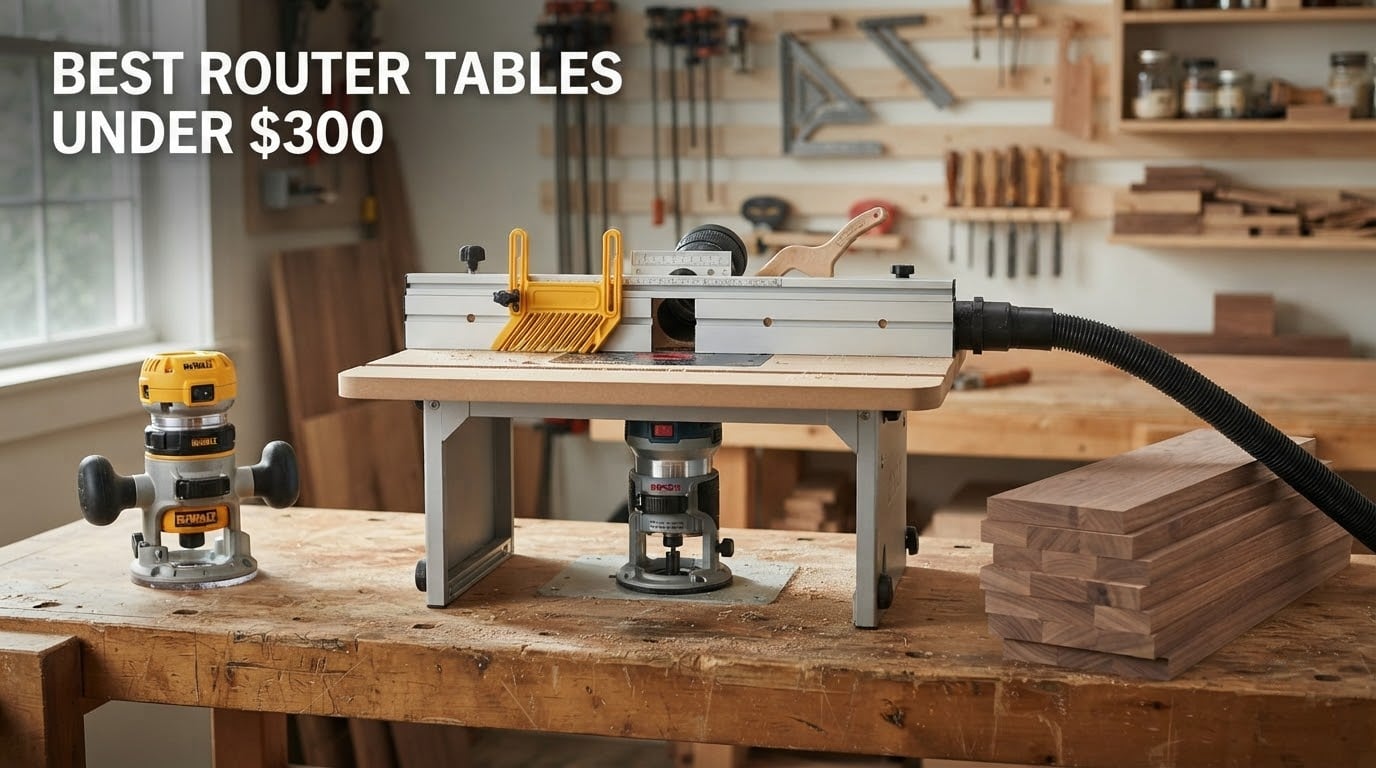
A 300 dollar ceiling buys you a genuinely capable benchtop router table, not a compromise. At that budget you get a rigid frame, a pre-drilled or self-drilling mounting plate, an adjustable fence with featherboards, and a dust port that accepts a standard shop vac hose. What you do not get is the multi-thousand-dollar cast-iron system with a lift, an incra-style rack-and-pinion fence and a 3HP plunge router. For a home shop or garage, the best router tables under 300 dollars cover the gap very well.
That matters because a router table turns a handheld tool into a fixed one. Instead of chasing a bit along a board, you push the board past the bit and let the fence set the reference. Edge jointing, flush trimming, molding profiles and repeat mortise-and-tenon work all become faster and far more accurate. If you already own a full-size fixed-base router, this is the single biggest upgrade you can make to it.
Is a router table worth it? For most home woodworkers, yes, once you start cutting joinery regularly. If you make one box a year, the money buys more in a good set of bits and a sharpening service. If you joint edges, cut molding, trim cabinet parts or build frames, the change in repeatability pays for the table within weeks. The forum consensus we found lines up exactly with that: people who bought a cheap table to dip a toe generally upgrade to a better fence or a bigger top next.
One thing no competitor page on this topic gets right: most router tables ship without a router. Only one of our eight picks is a bundle that includes one. Buy the wrong combination and you end up with a beautiful plate drilled for a router you do not own, which is the most common pre-purchase failure we heard about in the forums. We flag table-only versus kit on every review below.
The eight tables here are also the complete units in this budget range carrying 4.0 stars or better with enough owner reviews to trust. Below that line the category fills up with unbranded MDF benchtop plates rated in the low-to-mid 3s with single-digit review counts, and we left those out.
Table of Contents
- Top 3 Best Router Tables Under $300 (October 2026)
- Best Router Tables Under 300 Dollars at a Glance in 2026
- 1. Bosch RA1181 Review: the Best All-Round Router Table Under 300 Dollars
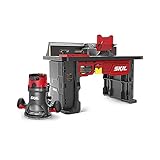
- 2. SKIL RT1323-01 Review: the Best Value Router Table Under 300 Dollars
- 3. POWERTEC 71402V Review: Steel Stand and Eight Point Leveling
- 4. SKIL SRT1039 Review: the Cheapest Complete Table in the Roundup
- 5. Kreg PRS2100 Review: the Most Precise Benchtop Router Table Here
- 6. RYOBI A25RT03 Review: Metal Build, Narrow Compatibility
- 7. Kreg PRS1025 Review: a Vibration-Damping Top for Custom Builds
- 8. JessEm Mast-R-Top Review: the Flattest Top Surface in the Roundup
- How to Choose a Router Table Under 300 Dollars
- Benchtop, portable or floor-standing: which size class you need
- The table components that change your results
- Aluminum, phenolic or MDF tops compared
- How to confirm your router fits the mounting plate
- Fixed-base or plunge router for table work
- Dust collection and chip control on a bench
- Where to spend the rest of your budget
- Frequently Asked Questions
- Final Verdict on Router Tables Under 300 Dollars
Top 3 Best Router Tables Under $300 (October 2026)
These are the three we would put on a bench first, with the rest of the roundup covering the budget, portability and component-only options.


Best Router Tables Under 300 Dollars at a Glance in 2026
All eight picks, with the specs that actually change how a table performs on the bench.
| Product | Specs | Action |
|---|---|---|
| Bosch RA1181 Benchtop Router Table |
|
Check Latest Price |
| SKIL RT1323-01 Router Table and 10 Amp Router Kit |
|
Check Latest Price |
 POWERTEC 71402V Benchtop Router Table POWERTEC 71402V Benchtop Router Table |
|
Check Latest Price |
 SKIL SRT1039 Benchtop Portable Router Table SKIL SRT1039 Benchtop Portable Router Table |
|
Check Latest Price |
| Kreg PRS2100 Bench Top Router Table |
|
Check Latest Price |
 RYOBI A25RT03 Universal Router Table RYOBI A25RT03 Universal Router Table |
|
Check Latest Price |
 Kreg PRS1025 Precision Router Table Top Kreg PRS1025 Precision Router Table Top |
|
Check Latest Price |
 JessEm Mast-R-Top 24 x 32 Phenolic Table Top JessEm Mast-R-Top 24 x 32 Phenolic Table Top |
|
Check Latest Price |
1. Bosch RA1181 Review: the Best All-Round Router Table Under 300 Dollars
Bosch RA1181 Benchtop Router Table
Aluminum top
Pre-drilled plate
2-1/2 in dust port
18 x 14.5 in
30 lb
Pros
- Large aluminum top stays flat and resists wear
- Extra tall aluminum fence with adjustable faceplates
- Standard dust port plus onboard vac outlet
- Extra tall featherboards for kickback protection
- Clear well-illustrated instructions
Cons
- Plastic base
- feet and switch fascia are the weak points
- Some examples arrive with a crowned top
- No 60mm holes for compact routers
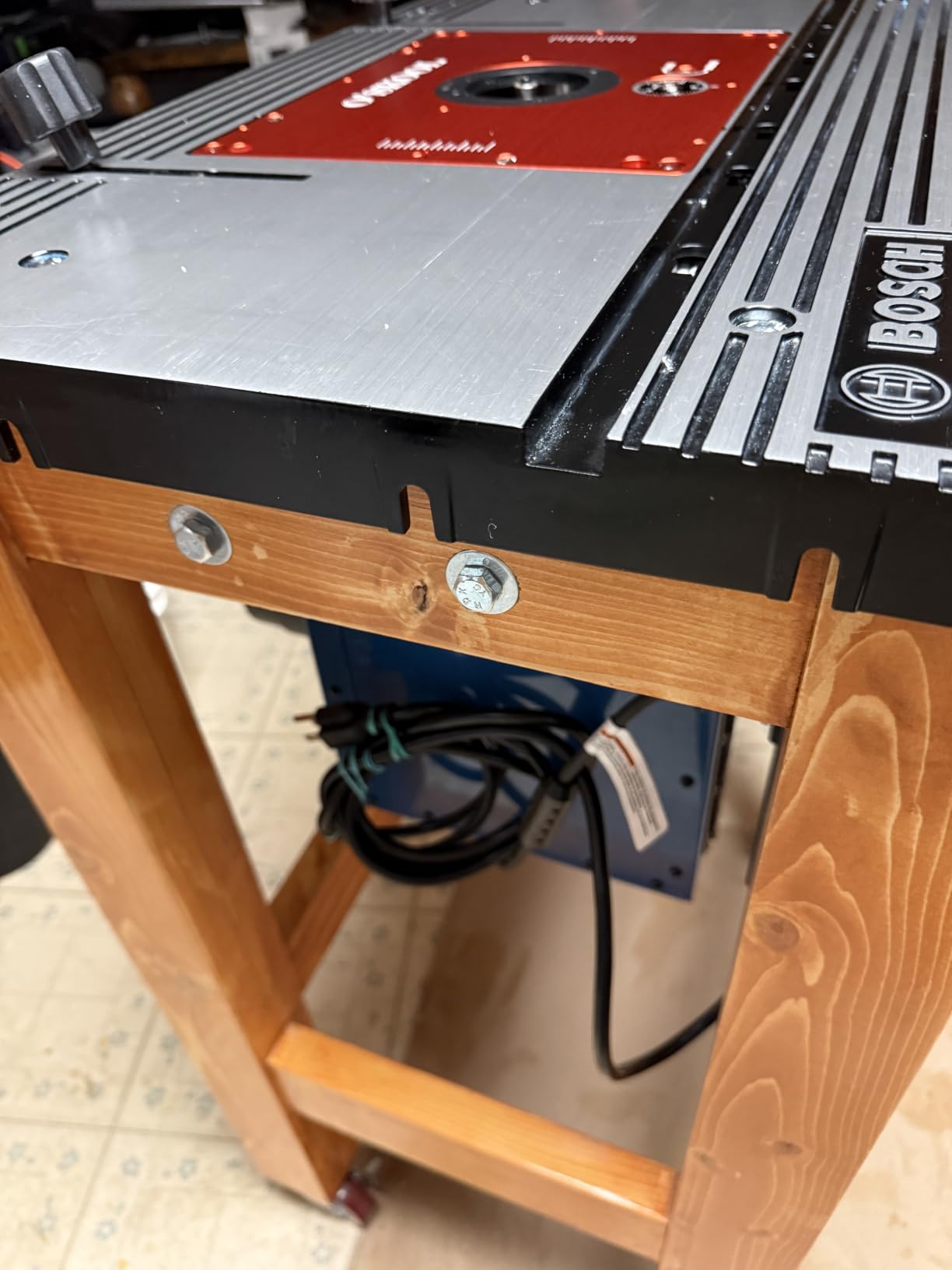
The Bosch RA1181 is the pick we keep coming back to after looking at everything in this budget range. With more than 5,000 owner reviews behind it, it is also the pick with the most accumulated evidence, and that evidence is consistent: the aluminum top stays flat, the fence holds its setting, and the plate leveling is straightforward if you follow the manual. It is a 30-pound benchtop unit at 18 inches wide by 14.5 inches high, which is a real footprint rather than a token shelf.
What separates it from the MDF competition is the top itself. Aluminum does not ring, does not swell at a sink, and shrugs off the scorched swarf that eats into melamine. Owners doing edge jointing report that the tall fence plus adjustable faceplates line up repeatably, and the extra tall featherboards do real work on tall stock. The accessory slot accepts featherboards and optional 3/4 inch accessories, and there is a storage pocket plus cord-wrap storage on the frame.
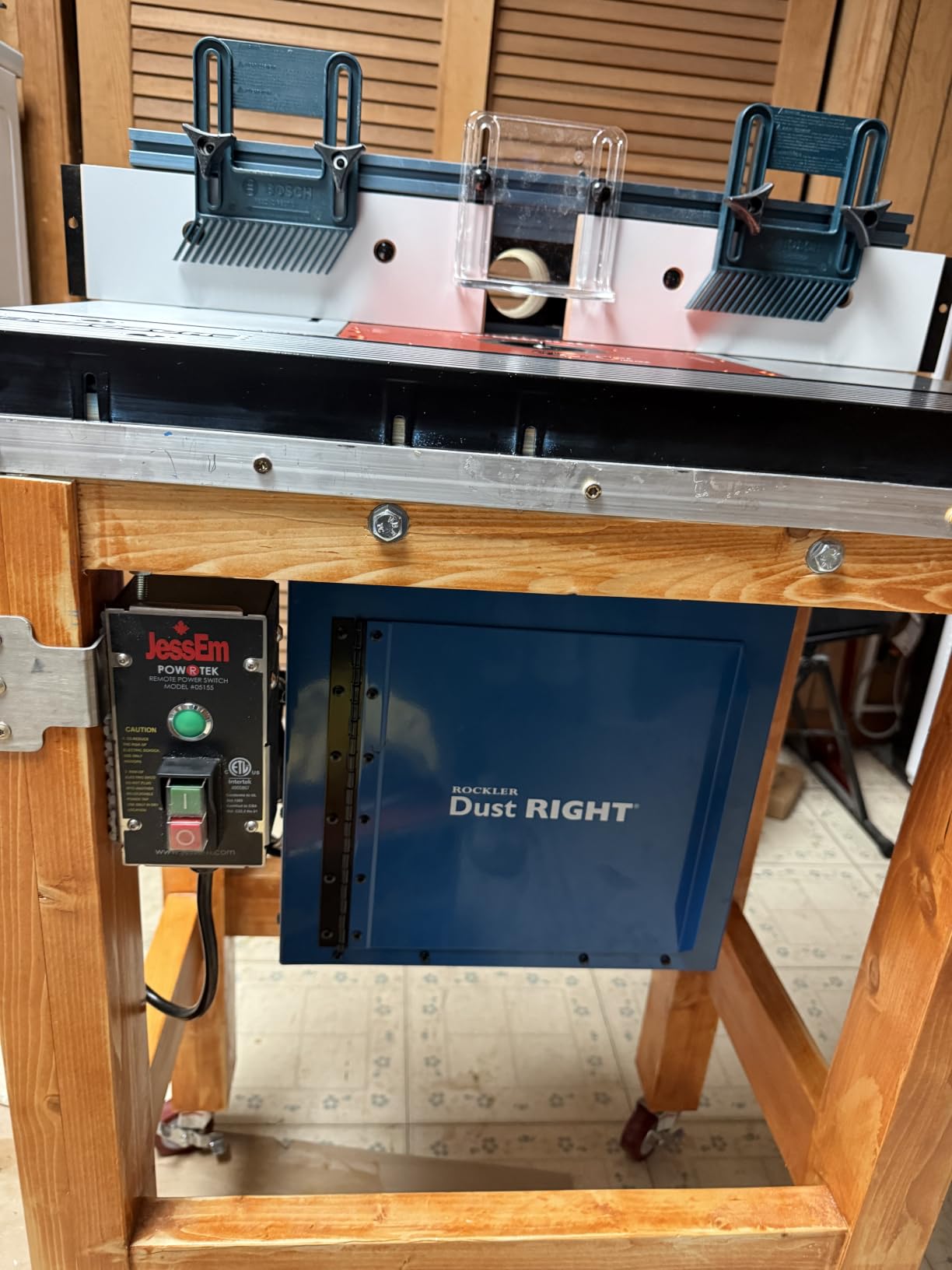
Dust handling is handled properly: a dedicated port fits a standard 2-1/2 inch vacuum hose, and there is an onboard outlet so a shop vac can be switched with the tool. Above-table height adjustment on the pre-drilled aluminum plate means bit changes do not require pulling the router out from underneath.
The honest weak points are the plastic base, the feet and the switch fascia, plus the fact that jointing relies on the included 1/16 inch shims rather than a proper two-part fence. A small number of owners report a crowned top on arrival, though Bosch support is described as responsive when that happens. The plate also has no 60mm pre-drilled holes, so trim and compact routers are out. And all the hardware arrives in one mixed bag, which slows assembly more than it should.
What works well on the RA1181
Edge jointing on long boards is where this table earns its place. The tall fence plus above-table adjustment means you dial a depth of cut once and work through a stack of stock, and the aluminum top keeps the bit from walking as pressure builds.
The aluminum plate is pre-drilled for a variety of common routers, which removes the single biggest headache in this category. Owners report plate leveling is easy when you follow the printed instructions, and the true-to-size hardware prints are genuinely helpful.
Where the RA1181 disappoints
Heavy cutting pressure on thick hardwood exposes the plastic base and feet as the least rigid parts of an otherwise metal-heavy design. If you regularly rip thick stock, put it on a solid bench rather than a lightweight stand.
There is no micro-adjust on the fence, so depth changes are made by repositioning the fence rather than by a fine screw. If fine depth dialing is a priority, read the Kreg review below before you commit.
2. SKIL RT1323-01 Review: the Best Value Router Table Under 300 Dollars
SKIL RT1323-01 Router Table and 10Amp Fixed Base Router Kit
Table plus 10 Amp 2.0 HP router
24 in fence
10,000-25,000 rpm
Includes featherboards and miter gauge
Pros
- Table and router in one box at a fraction of buying both
- 10 Amp 2.0 HP motor cuts hardwood without strain
- Soft start/speed control and live tool indicator
- Above-table adjustment plus integrated bit storage
- Quick-release router clamp and router mount
Cons
- Laminate-covered MDF fence flexes
- Switch box can block the dust port
- Original flat-head screws are a poor fit on the plate
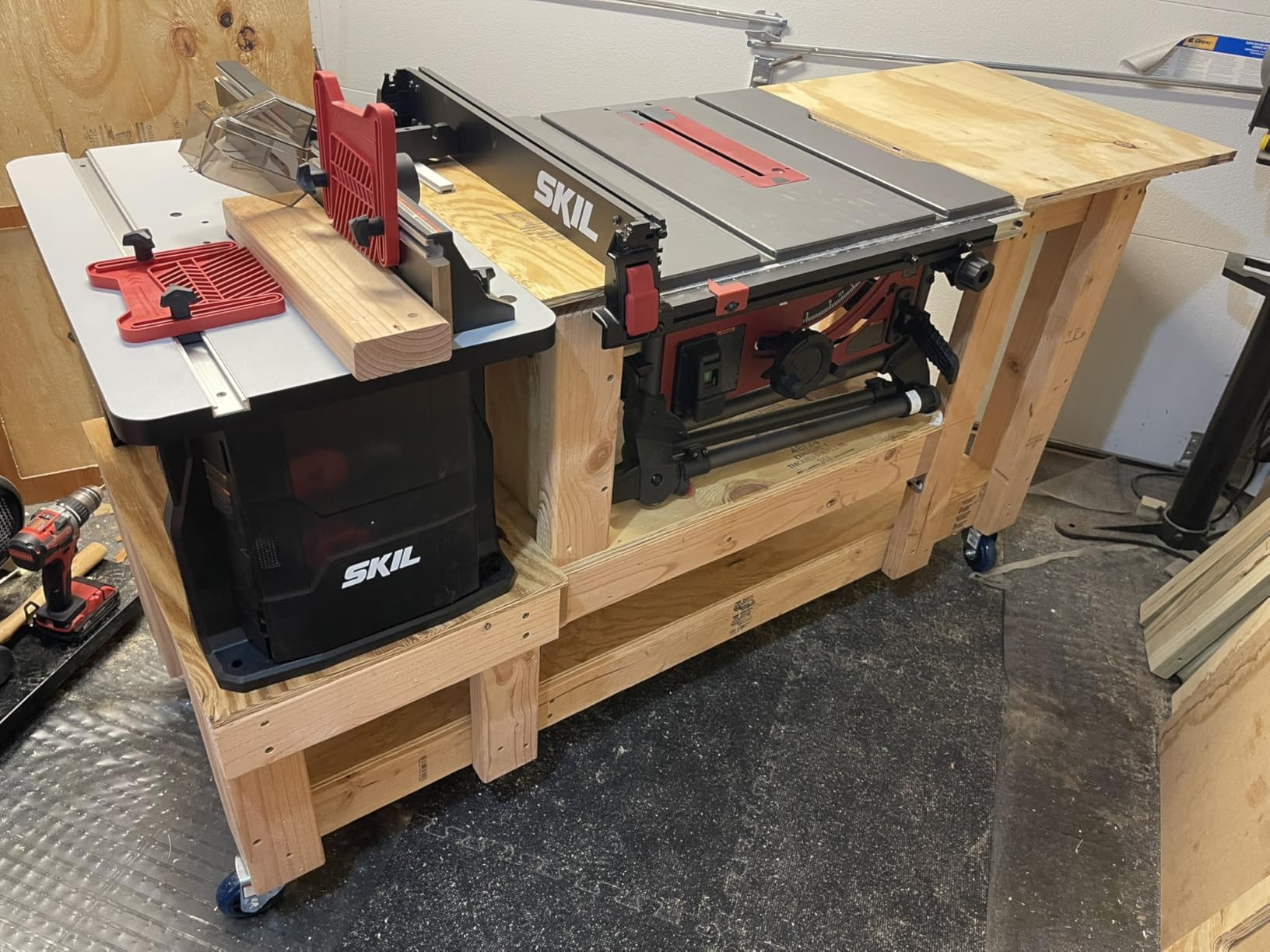
This is the answer for anyone starting from nothing. The RT1323-01 box contains the SRT1039 table and a 10 Amp fixed-base router rated at 2.0 HP, and buyers consistently note that the router alone approaches the price of a comparable table. If you need both, this is the straightforward buy in the whole category.
The motor is the surprise. A 10 Amp unit with soft start, speed control and a live tool indicator is more than most hobbyists expect at this budget, and owners say it handles hardwood without straining. Speed runs from 10,000 to 25,000 rpm. The table side adds above-table adjustment, dual-sided integrated bit storage, a starting pin, two featherboards, a miter gauge and a quick-release router clamp, so bit changes happen from the top of the table instead of underneath it.
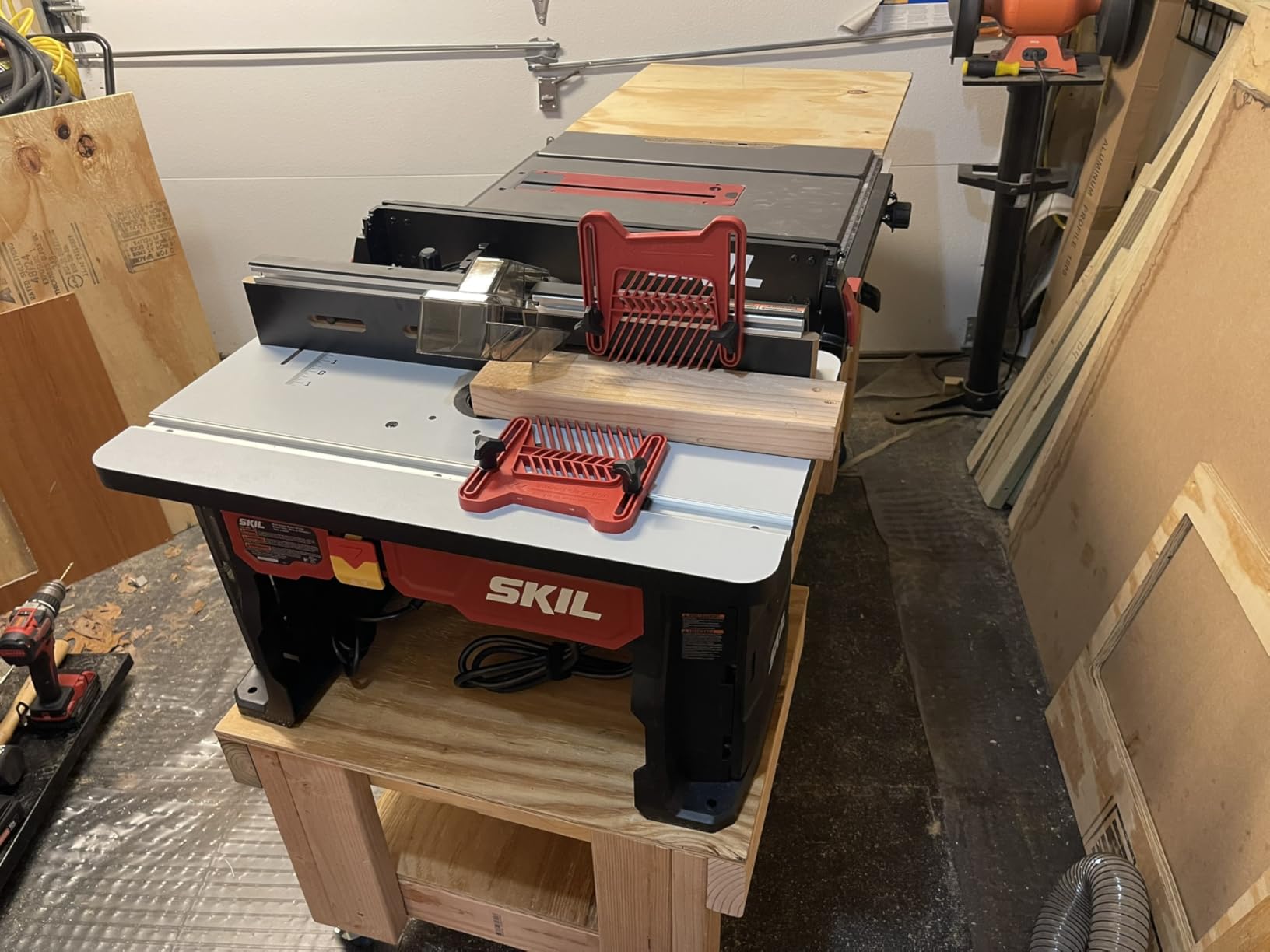
The fence is 24 inches wide with adjustable MDF face plates, a starter pin and a guard, and the table power switch can run the router and a shop vac together. That last feature is genuinely useful and rare at this price. Assembly is reported as easy for a first router table, which matters when you are buying a whole system at once.
The limitations are real but manageable. The laminate-covered MDF fence flexes, and owners say it is not ideal for serious jointing, so save this kit for shaping, trimming and profile work. The 1/4 inch collet nests inside the 1/2 inch collet rather than being a one-piece collet, which is a cost-saving shortcut. With the router mounted as instructed, the switch box can block the dust port. And side storage cubbies collect dust while holding accessories loosely.
Why this kit works for beginners
Nothing else in this list solves the two-part problem for you. If you do not own a full-size fixed-base router, this is the only pick under the ceiling that arrives complete and ready to cut.
Beginners on woodworking forums repeatedly recommend hardware-store bundles like this one as a sane first setup. One router is rarely great at both handheld palm-router work and table work, and this bundle sidesteps that whole argument.
Where the kit falls short
Buy this for shaping and trimming, not for jointing long boards. A flexing fence shows up as inconsistent depth of cut once the bit load gets high, and the MDF face plates do not lock as rigidly as aluminum.
Removing the router requires lifting the whole table in many setups, and the table sits high on a tall bench. Plan the bench height before you build the station around this kit.
3. POWERTEC 71402V Review: Steel Stand and Eight Point Leveling
POWERTEC Benchtop Router Table with Steel Stand and Adjustable Fence – 24″ x 16″ MDF Laminated Top, Insert Plate, 2-1/2″ Dust Port, Fence Stop, Featherboard & Additional Accessories (71402V)
24 x 16 in laminated MDF top
Steel stand
2-1/2 in dust port
27.5 lb
Pros
- Steel stand with vibration-absorbing rubber feet
- Eight leveling points for a flush plate
- Four tool-free reducing rings
- 24 in fence with bit guard and flip stop
Cons
- No template supplied for cutting the tabletop opening
- Insert hole pattern does not suit every router
- Thin fence securing rods
- Fence slot only reaches down to about 18 inches
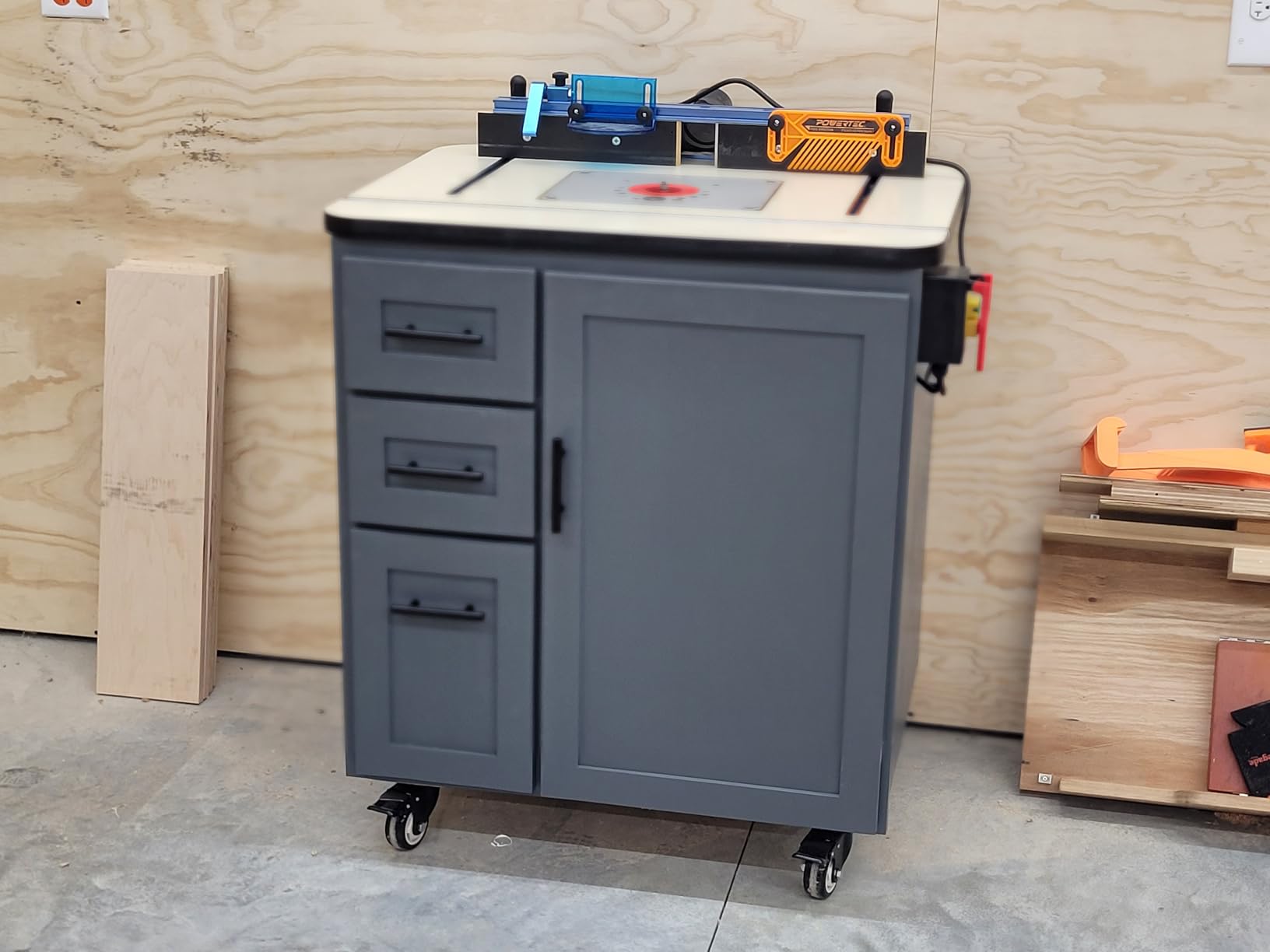
The POWERTEC 71402V is the one in this roundup built around a real steel stand rather than a plastic-legged benchtop frame, and you feel that immediately. At 27.5 pounds with vibration-absorbing rubber feet, it does not creep during a cut the way lighter MDF-and-plastic tables can. The top is 24 by 16 inches of laminated MDF, and the fence assembly is 24 inches wide with an adjustable bit guard, featherboard, reversible flip stop, an integrated 2-1/2 inch dust port and a measuring scale.
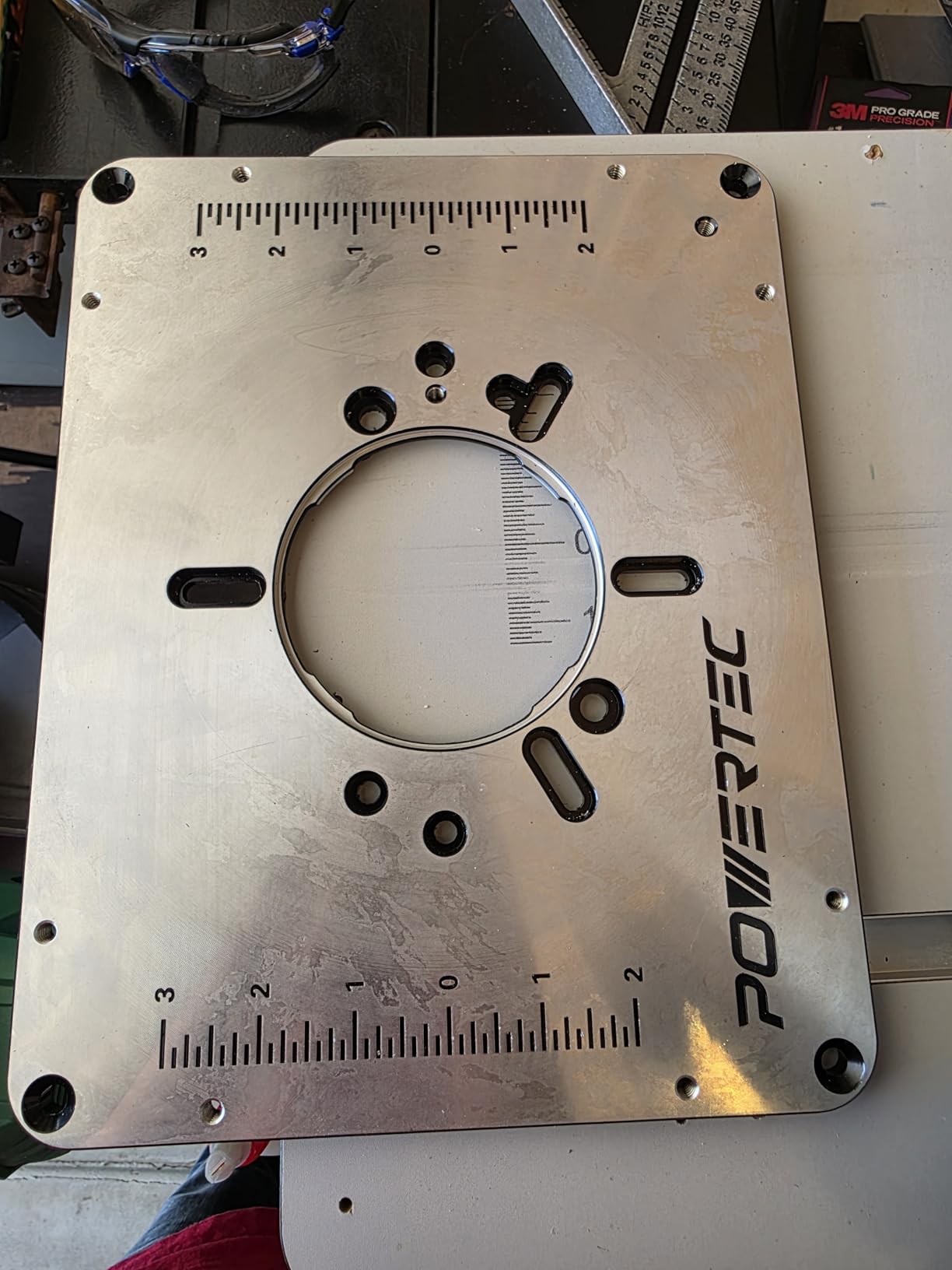
The detail that separates it from cheaper imports is the leveling. Eight leveling points, using 3/8 inch or 5/8 inch screws, let you tune the insert plate flush with the top surface, which is exactly what determines whether a fence-parallel cut stays parallel. Four insert rings (solid, 1 inch, 1-7/8 inch, 2-5/8 inch) swap with a tool-free ring wrench, so changing bit diameter does not mean hunting for the right ring.
Owners consistently rate the machining quality and finish as good for the money, and the integrated dust port is credited with noticeably improving collection. A starting pin is included for freehand profile work, and jointing rods are part of the box. That is a long accessory list for a table in this range.
The practical gaps are real. No installation template is supplied for routing the tabletop opening, so you need your own template or careful layout before assembly. The insert plate hole pattern does not suit every router brand, and the fence securing rods feel thin and are awkward to tighten by hand. The fence mounting slot also only spans down to about 18 inches, which limits how far back the fence can sit relative to the bit.
Where this table earns its place
Two things sell it: the steel stand and the eight-point leveling system. If your worry is drift or creep during a long cut, this is the table in the roundup built to resist that.
The flip stop and measuring scale make it good for repeatable profile work where you need the same depth on every piece, and the four reducing rings cover most common bushing sizes without extra parts.
What to plan for before assembly
Because there is no template for the tabletop opening, budget an evening and a sharp jig or template of your own. Rushing that cut is how a plate ends out permanently unlevel.
Check your router against the insert hole pattern before you commit, and confirm the fence slot depth suits the work you actually do. These are all fixable, but they cost time on day one.
4. SKIL SRT1039 Review: the Cheapest Complete Table in the Roundup
SKIL SRT1039 Benchtop Portable Router Table for SKIL Routers RT1323-00 & RT1322-00 (Router Not Included)
Table only
26 x 16 in MDF top
24 in fence
24.2 lb
Pros
- Lowest complete table option in this roundup
- Above-table router adjustment
- Integrated dual-sided bit storage
- Aluminum miter gauge slot
- Quick router clamp fits most major brands
Cons
- No router included
- No dust port listed on the fence
- MDF top and plastic legs less rigid than a steel stand
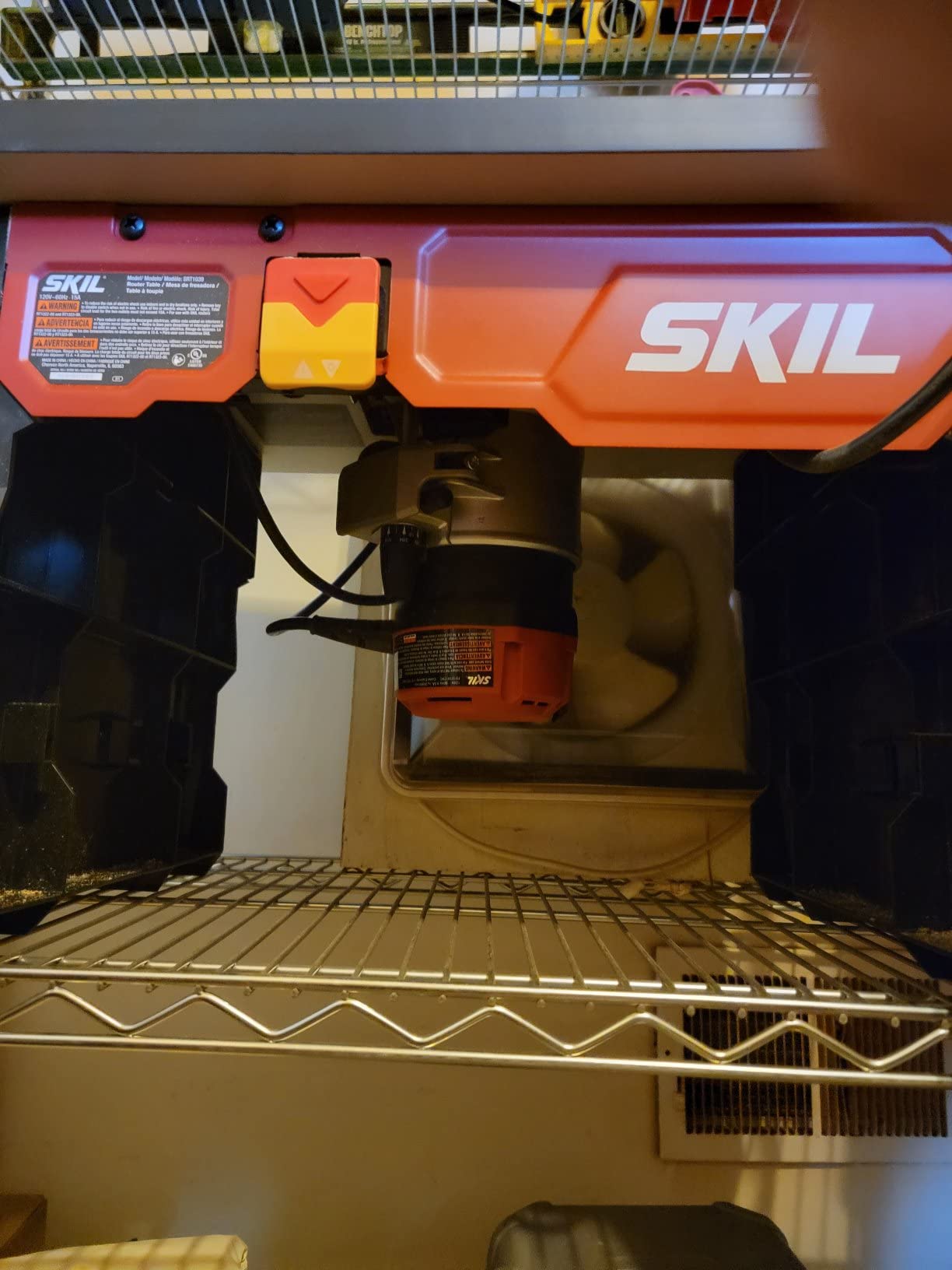
The SRT1039 is the table you buy when you already own a compatible router and want to spend as little as possible on getting it under a fence. It is the same table that comes inside the SKIL kit above, sold on its own, and it does the core job well: a 26 by 16 inch MDF top with a durable aluminum miter gauge slot, a router mounting plate, above-table router adjustment and dual-sided integrated bit storage with a quick-latch case.
The fence is 24 inches wide with adjustable MDF face plates, and two adjustable featherboards attach to the fence and the table for guidance and kickback protection. A router clamp fits most major router brands, so you are not locked into one manufacturer. Owners bought it primarily as a budget standalone top, and the bit storage plus above-table adjustment are the features they call out most.
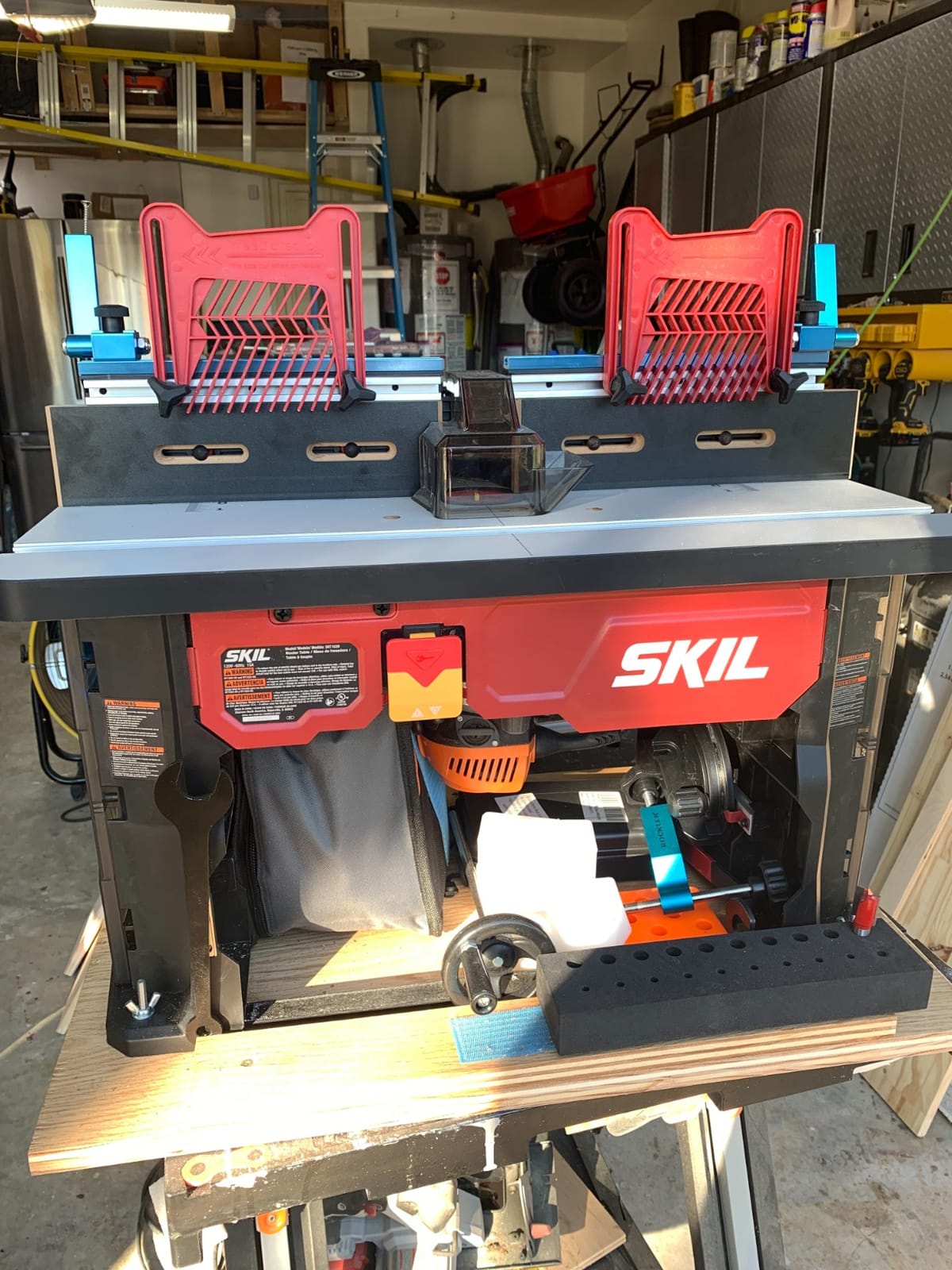
It also ships with a starting pin, a miter gauge, a hex key and three inserts, which is a more complete box than some competitors offer. If your router is a SKIL RT1323-00 or RT1322-00 the fit is ideal, and the clamp handles a good share of other brands as well.
There is no dust port listed on the fence, and that is the biggest functional gap here. You will be routing without extraction unless you add a shop vac adapter separately. The MDF top and plastic legs are also less rigid than a steel-stand table, so heavy cuts on thick stock will tell you about that flex.
Best use for the SRT1039
Pattern and profile routing on lighter stock, where a lighter frame does not matter. The starting pin and featherboards make it a good fit for freehand shaping and small batch work.
It is also the pick if your shop floor is the smallest constraint. At 24.2 pounds it is the easiest table here to move, reposition or store between jobs.
What you give up
No dust extraction out of the box, and no router. If you have neither, the SKIL kit above costs less than sourcing a table and a router separately, and we would steer you there.
Rigidity is the other trade. This is a benchtop MDF table with plastic legs, not a metal-stand unit, so it is not the choice for repeated jointing on thick hardwood.
5. Kreg PRS2100 Review: the Most Precise Benchtop Router Table Here
Kreg PRS2100 Bench Top Router Table – Full Size Portable Router Table for Workshops – Workbench Accessory – Holiday Home Improvement Gifts for Him
30 x 19.25 in low-friction MDF top
Aluminum fence with dust port
Level-Loc plate
12 kg
Pros
- Level-Loc system makes the insert flush and precise
- Jointing rods behind the fence for real edge jointing
- Steel construction and edge-banded MDF top run quiet
- Portable steel stand slides in and out
- Works with router lifts
Cons
- Arrives without an on/off switch or featherboards
- Assembly instructions and unlabeled bags are weak
- Plastic cam-lock fence hardware can loosen
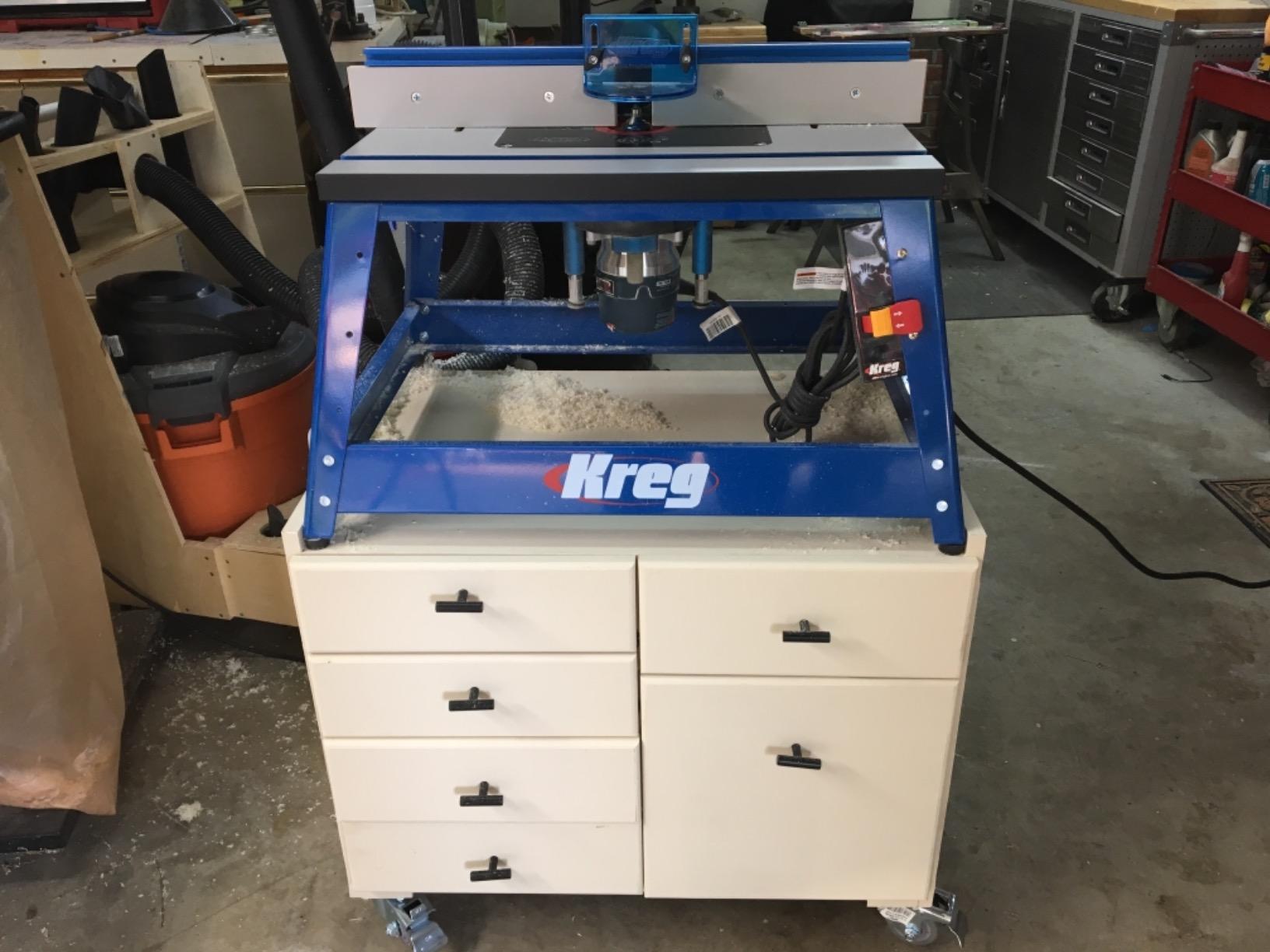
Owners treat the Kreg PRS2100 as the sturdiest and most precise benchtop table they have used, and the reason is the Level-Loc plate leveling system plus the jointing rods. Those rods behind the fence are what separate this from a pure shaping table: they support the workpiece on edge so you can run a flush trim or straight jointing pass without the board sagging off the fence face.
The top is 30 inches wide by 19.25 inches deep, so it is the largest surface in this roundup, and it is an edge-banded MDF top with a low-friction micro-dot skin that runs quieter and transmits less vibration than raw MDF. The aluminum fence includes a dust-collection port, a bit guard, plate levelers and the Level-Loc reducing rings. The steel stand slides in and out for storage, which matters in a small shop, and the top works with router lifts in both JessEm and Kreg formats.
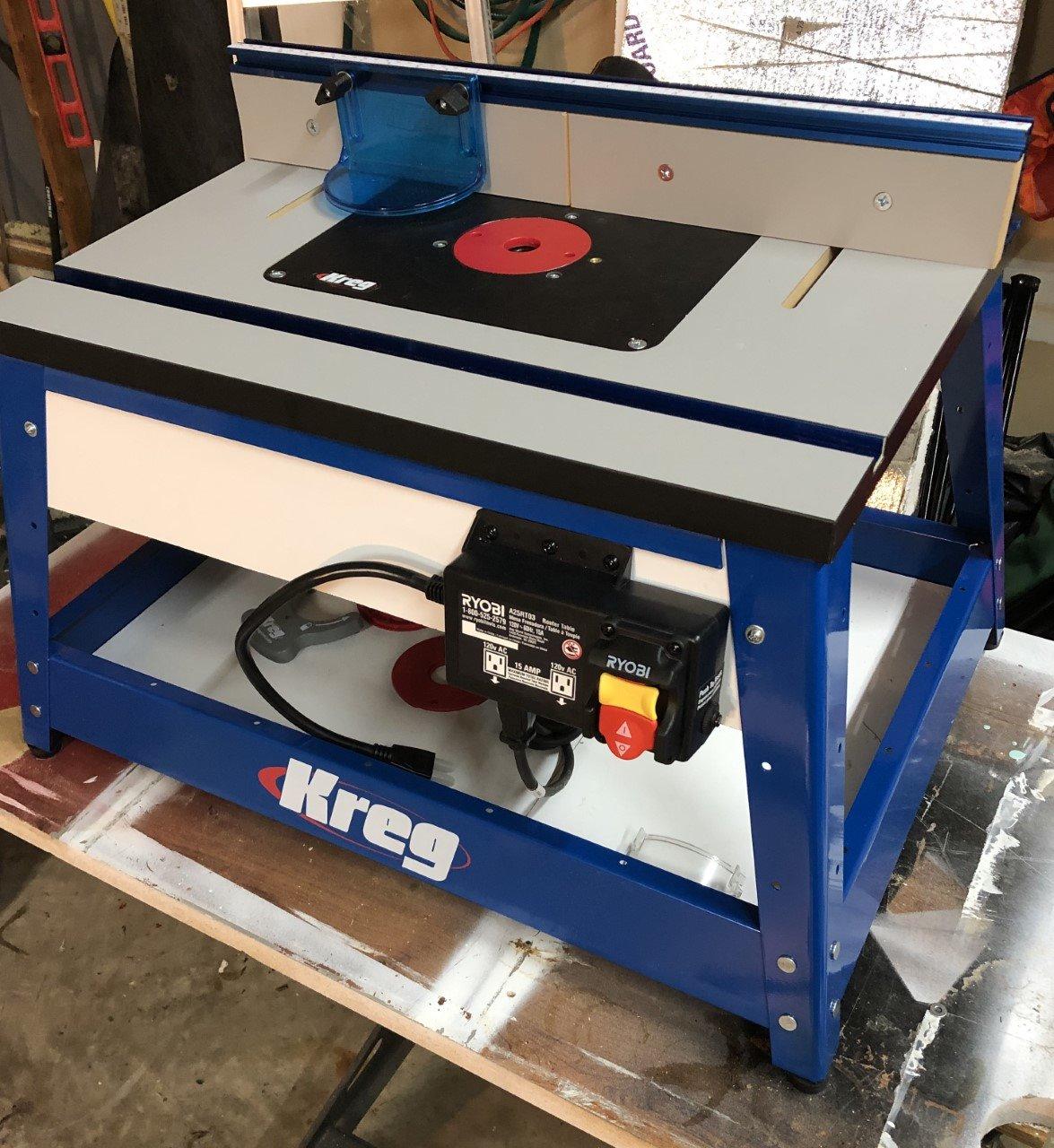
Owners report a decade-plus of service from the same unit, which says something about rebuildability. The miter slot accepts featherboards and the fence track takes add-on accessories, so the table can be upgraded over time rather than replaced.
The nearly universal complaint is the assembly experience. Instructions are weak, hardware arrives in unlabeled bags, and the table does not come with an on/off switch or featherboards, so the effective cost sits above the sticker price once you add them. Plastic cam-lock fence hardware can loosen and leave the fence slightly out of square, and there is no micro-adjuster on the fence. Miter track screws are long enough to protrude through the top if you overtighten them.
Why this is the precision pick
The Level-Loc system combined with the jointing rods is the most complete answer to consistent depth of cut in this group. If your work is edge jointing and flush trimming rather than shaping, that combination is worth more than any fence feature name.
The low-friction top surface also matters more than it sounds. A slippery laminate means less friction between the workpiece and the fence, so the workpiece is less likely to lift or shift on heavy cuts.
What you have to add yourself
Plan on buying an on/off switch and at least one pair of featherboards. Nearly every owner mentions this, and it is the reason the real cost lands above the shelf price.
Set aside a couple of hours for assembly with a socket set and good lighting. The parts are quality, but the documentation is the weakest part of the package.
6. RYOBI A25RT03 Review: Metal Build, Narrow Compatibility
RYOBI Universal Router Table A25RT03
Metal construction
Adjustable fence with featherboard and guard
Miter gauge included
28 lb
Pros
- Sturdy metal construction that feels solid
- Adjustable fence with featherboard and miter gauge
- Fits older corded RYOBI routers directly
- Sized for benchtop or stand mounting
Cons
- Compatibility is narrower than the name suggests
- Fence halves do not align perfectly
- One fence end can pivot because adjustment is centered
- Miter slot is slightly wider than standard 3/4 inch
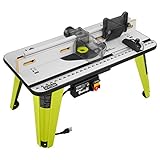
The RYOBI A25RT03 is a 28-pound metal table with an adjustable fence, and the accessory list is generous for the money: featherboard, miter gauge and a functional bit guard are all in the box. Owners like the solid metal feel and say it is sized sensibly for smaller shop projects, and it can sit on a benchtop or on a stand depending on your bench height.
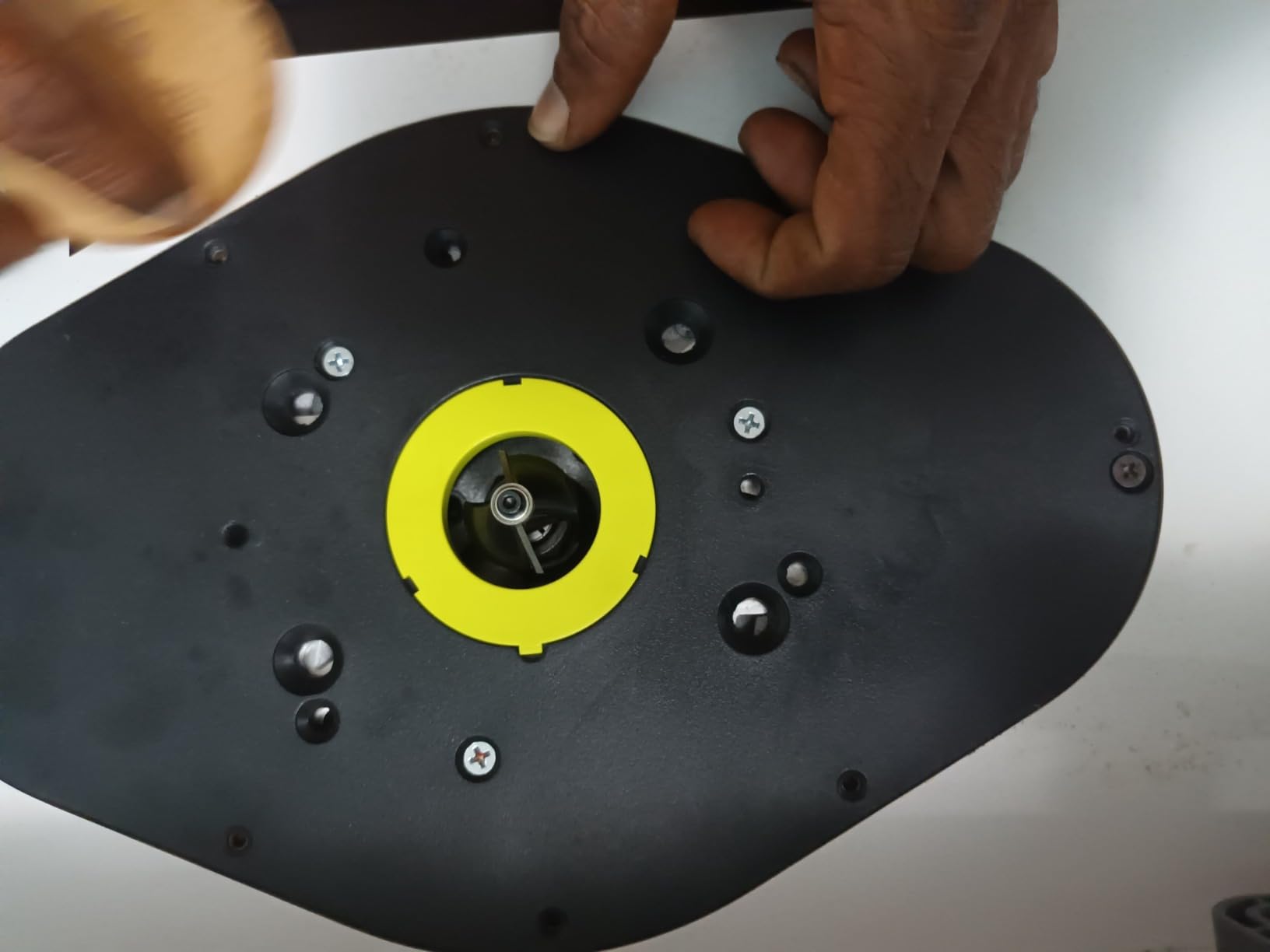
The compatibility warning is the important part here, and the dominant advice in owner reviews is to verify router fit before buying. Despite the universal name, some RYOBI One and Wen routers do not fit without modification. It fits older corded RYOBI routers directly.
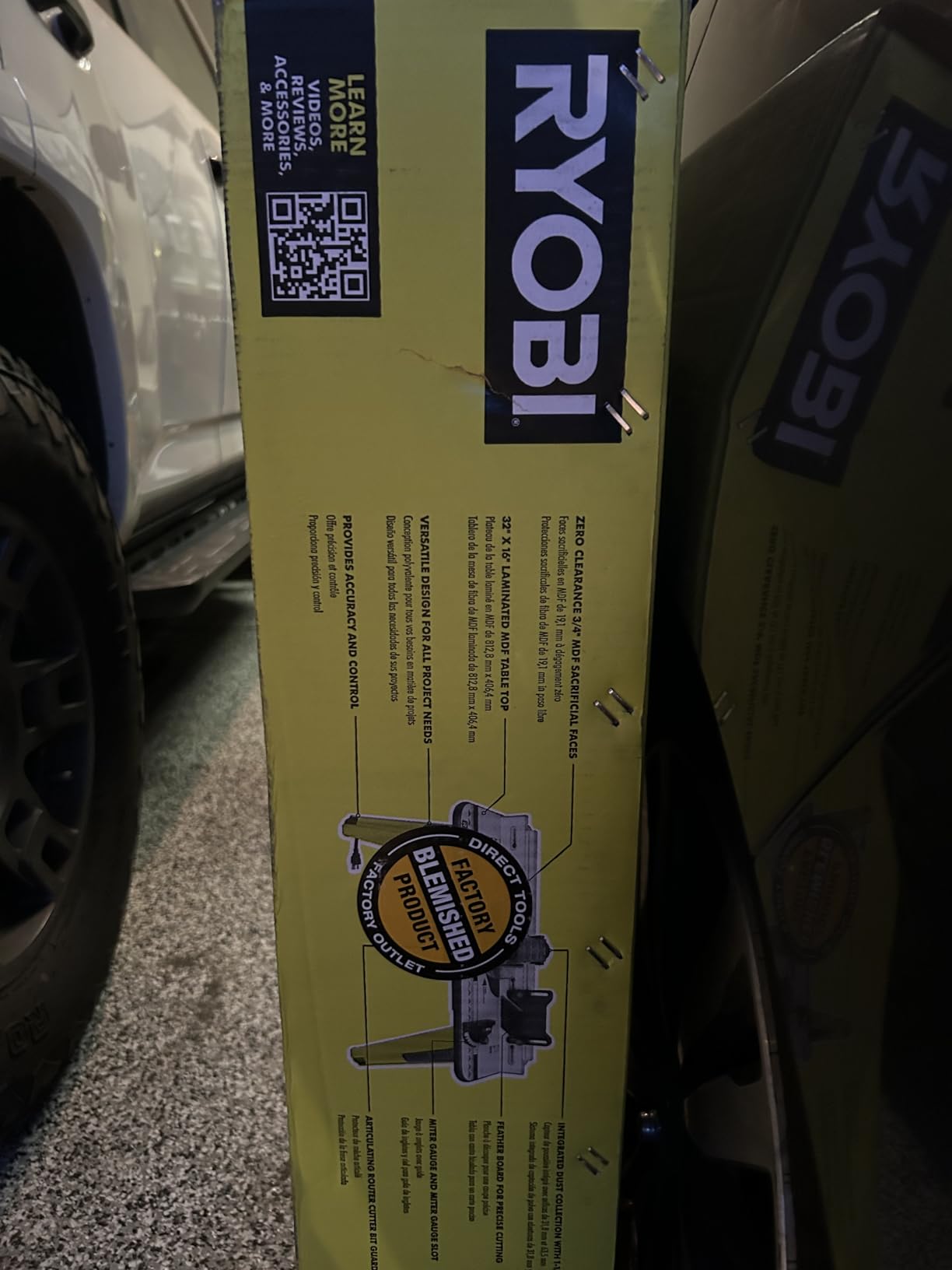
Two specific design flaws get cited repeatedly. The two fence halves do not align perfectly, and because the adjustment is centered rather than made at both ends, one end of the fence can pivot. The slide guide is also slightly wider than a standard 3/4 inch, so table-saw featherboards will not drop in and you need the supplied style instead.
There is no router in the box, and the switch lead cord is described as too short for convenient extension use. Plan on adding an extension or moving the outlet closer to where the table sits.
Where the metal frame helps
Metal does not flex the way MDF and plastic legs do, so the frame holds its geometry under load. Owners call it more capable than entry-level tables at a similar price, and the solidity is the reason people keep it.
The included miter gauge, featherboard and guard mean you can start cutting profiles without a second purchase, which is a genuine saving if you are outfitting a small shop from scratch.
When to skip it
Skip it if you do not own a compatible router. Drilling or modifying a plate on day one is the failure mode most owners warn about, and this table gives you the least margin for error on fit.
The centered fence adjustment is also a real accuracy limit. If fine depth control matters to your work, a table with a proper micro-adjuster or fence shim system suits you better.
7. Kreg PRS1025 Review: a Vibration-Damping Top for Custom Builds
Kreg Precision Router Table Top, Woodworking Router Table Top, PRS1025
MDF top with steel struts
Four insert-plate levelers
Miter gauge and T-slot track
26.8 lb
Pros
- MDF absorbs vibration from heavy routers for steadier cuts
- Steel reinforcing struts add rigidity to a 26.8 lb top
- Four precision insert-plate levelers
- Track accepts standard miter gauge guide bars
- Three Level-Loc reducing rings plus ring wrench
Cons
- Top only
- stand and fence are separate purchases
- Predrilled for levelers but not for every lift pattern
- Likely requires drilling for custom mounting holes
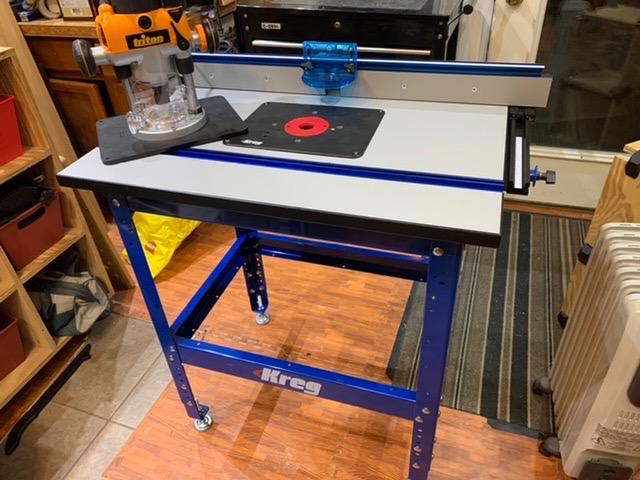
The Kreg PRS1025 is a table top rather than a table. It weighs 26.8 pounds and consists of an MDF surface with steel reinforcing struts, an Easy-Slide low-friction laminate, a combination miter-gauge and T-slot track and a 3/8 inch (9mm) insert plate with four precision insert-plate levelers. If you already own a stand or cabinet, this is an upgrade rather than a starting point.
The vibration story is the reason to choose it. MDF absorbs vibration from a heavy router, which owners credit with steadier cuts than a thin panel or a fully aluminum surface that rings. The four plate levelers keep the insert and the top flush, and three Level-Loc reducing rings (1 inch, 1-13/16 inch and 2-5/8 inch) plus a ring wrench cover the common bushing sizes. A brass starting pin and the low-friction surface are included.
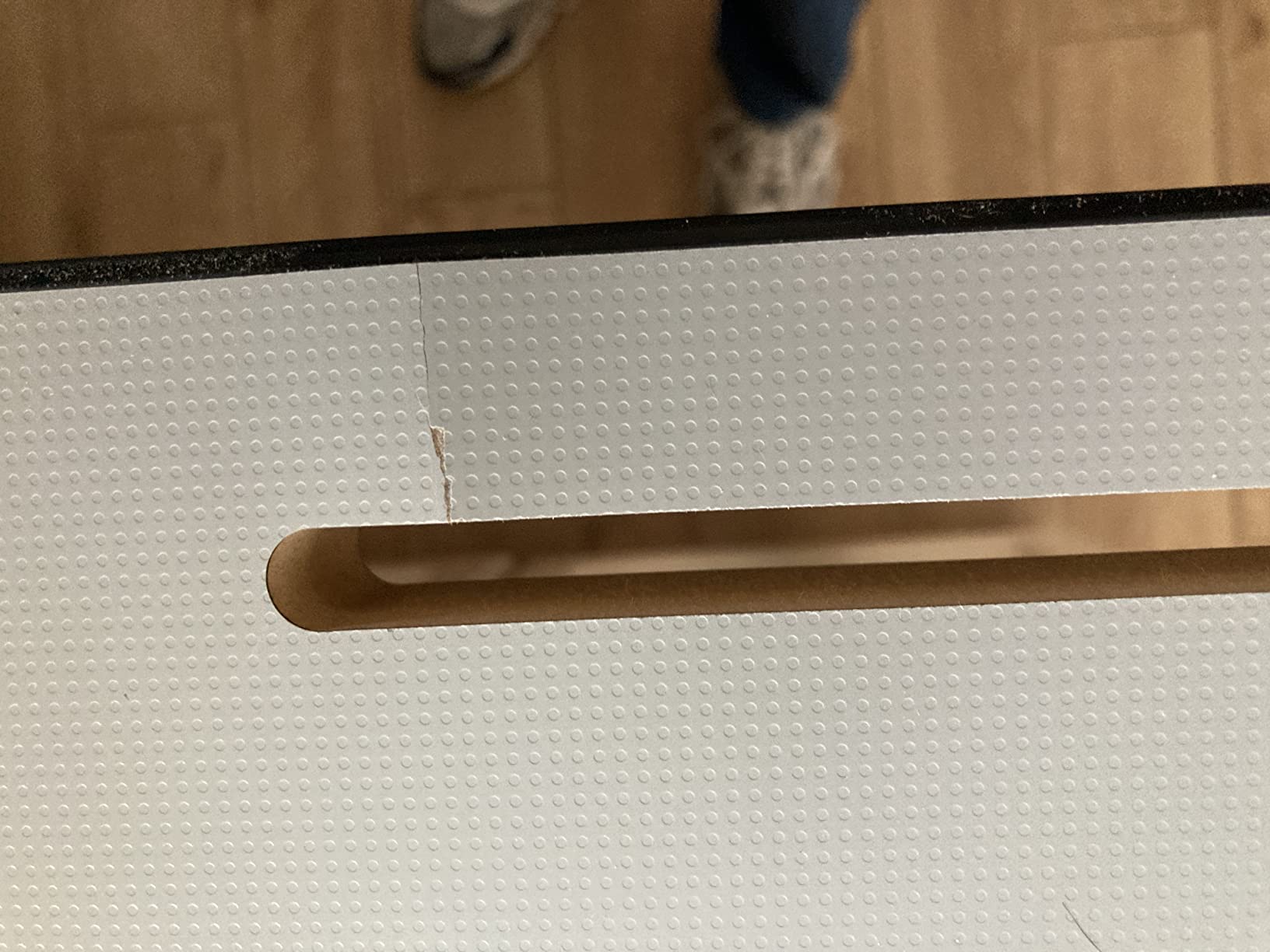
The combination track is the flexible part. The same aluminum extrusion accepts standard miter gauge guide bars and works as a T-slot, so you can mount a miter gauge, featherboards or accessories on one rail without hunting for the right hardware.
Buy this knowing what you are not getting. There is no stand and no fence in the box, so a finished setup means sourcing a base and a fence separately. The top is predrilled for levelers but not for every lift pattern, and depending on your stand you will likely need to drill custom mounting holes.
Why builders choose this top
The damped MDF surface and the steel struts together handle a heavy fixed-base router without the ringing you get from a thin aluminum plate. If your router is heavy and your cuts are long, that combination is worth the assembly work.
Owners report straightforward assembly once a suitable base is in place, and the T-slot track means the same extrusion covers miter gauge guide bars and accessories.
When it is the wrong buy
Wrong for a beginner with no stand. You will be buying a base and a fence before the first cut, and that combined cost leaves this budget quickly.
Also wrong if you want a router lift later. The predrilled leveler holes do not necessarily line up with your lift pattern, so check the hole layout against the lift you plan to use before committing.
8. JessEm Mast-R-Top Review: the Flattest Top Surface in the Roundup
JessEm Mast-R-Top 24″ x 32″ Phenolic Router Table Top, JessEm# 03006
3/4 in phenolic, 24 x 32 in
0.75 in thick
Rabbeted plate opening
26.2 lb
Pros
- Phenolic will not warp/sag/swell or corrode
- Verified flat to better than 0.004 inch and it stays flat under load
- 32 by 24 in surface with a centered router opening
- Extruded track gives a 1/4 in T-slot and a 3/4 in miter slot
Cons
- Top only
- a complete system runs well past four figures
- No precut slots to keep a fence square
- Underside holes arrive unthreaded and need hand tapping
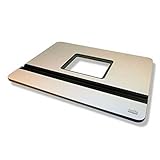
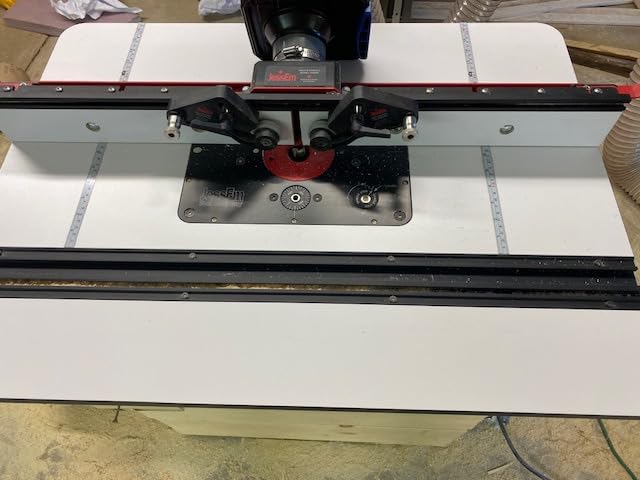
The JessEm Mast-R-Top is a component, not a table, and it is the most interesting piece in this roundup from a materials standpoint. It is a 3/4 inch thick phenolic top measuring 24 by 32 inches, and phenolic in this thickness will not warp, sag, swell or corrode. The rabbit 9-1/4 by 11-3/4 inch opening accepts most standard router plates and lifts.
What owners care most about is the flatness figure. Buyers checking with a straightedge report better than 0.004 inch deviation, and that flatness holds with a lift and a router installed. On a 32 by 24 inch surface with a centered router opening, you can push large workpieces across without fighting a dished top. The extruded aluminum track combines a 1/4 inch T-slot and a standard 3/4 inch miter slot in one rail, and the underside is predrilled for JessEm fences and the JessEm steel stand. Mounting screws and a Torx wrench are included.
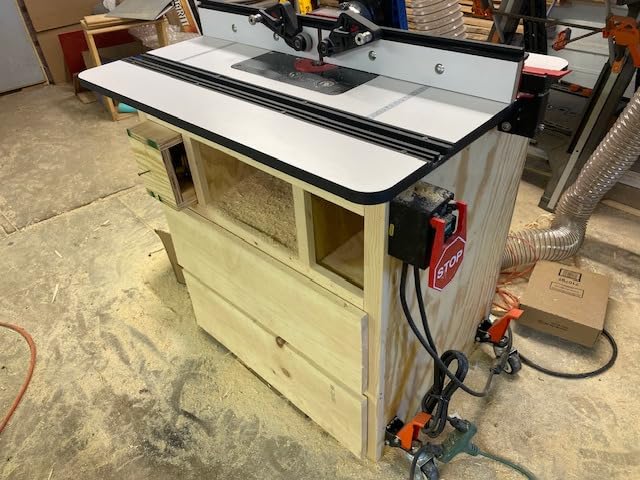
The catch is arithmetic. Fence, lift and stand are separate purchases, and the complete JessEm system runs well past a thousand dollars. Buying this top under the 300-dollar ceiling only makes sense if you already own the rest of the system, or if you are building a custom base yourself.
Two build details catch people out. There are no precut guide slots to keep a fence square, so alignment is your responsibility and you should check it before every session. The fence mounting holes are precut for JessEm fences only, and the predrilled underside holes arrive unthreaded, so plan on hand tapping them.
What you gain with phenolic
Nothing on this list resists moisture or swelling like phenolic, which matters if your shop is a basement or a garage with a concrete floor that sweats. It also resists corrosion, so a damp shop will not degrade it the way steel hardware and particle board can.
The combined T-slot and miter slot rail means one extrusion does the work of two, and the rabbeted opening is generous enough to take most standard plates and lifts rather than only the JessEm pattern.
The honest limitation
It is not a budget purchase in practice. The top is the cheap part of that system, and starting from zero with this top means your real spend lands far above the ceiling this roundup is built around.
Even for a custom build, fence alignment is on you. Without precut guide slots, a fence mounted a degree off will undo the flatness advantage you paid for.
How to Choose a Router Table Under 300 Dollars
Benchtop, portable or floor-standing: which size class you need
Everything in this roundup is a benchtop unit, and that is the right call for most home shops. The decision that actually matters is bench height. A table that sits at 34 inches forces you to work with bent arms; one that sits at 30 inches lets you stand or sit comfortably. Measure your bench before you order, and check whether the table needs to be lifted off to change bits or remove the router.
The two component-only picks here, the Kreg PRS1025 and the JessEm Mast-R-Top, are the exceptions. They are the route if you are building a stand or a cabinet to fit your exact bench height, and they are the wrong first purchase if you do not already own a base. If shop floor space is the blocker, the SKIL SRT1039 at 24.2 pounds is the easiest to move and store between sessions.
The table components that change your results
The fence is the first thing to examine. Look for adjustable face plates that let you square the fence to the plate, and for cam locks or levers that hold under load rather than creeping. Micro-adjustment is the most-complained feature across this category, and only a table with shimmed or rack-and-pinion adjustment lets you dial a depth of cut without moving the whole fence.
Next is plate leveling. The levelers that bring the insert plate flush with the top are what keep a fence-parallel cut actually parallel, and the POWERTEC with eight points and the Kreg Level-Loc systems do this better than a plate that just sits wherever it lands. Featherboards matter on tall stock and any cut where kickback is possible. A dust port sized for a standard 2-1/2 inch hose decides whether extraction is a two-minute setup or a weekend project.
Aluminum, phenolic or MDF tops compared
Aluminum, as on the Bosch, is stiff, resists wear and shrugs off heat and swarf. It can ring a little under a heavy router, and it dents rather than absorbs a blow. MDF, as on the SKIL and POWERTEC tables, absorbs vibration better and is kinder on a finished surface, but it swells if it gets wet and scars more easily.
Phenolic is the premium option and only appears here as the JessEm top. It does not warp, sag, swell or corrode, and it is the flattest surface in this roundup by a measured margin. Budget-wise, MDF is the sensible middle, aluminum is the durability play, and phenolic is for builders assembling a system they already own most of.
How to confirm your router fits the mounting plate
This is the number one pre-purchase mistake, and it is worth ten minutes before you order. Find the manufacturer’s mounting hole pattern diagram for your router model, then compare it against the plate pattern stated for the table. If the plate is described as pre-drilled for a variety of routers, check whether your specific model is on that list rather than assuming.
Watch for the 60mm hole pattern. Compact and trim routers mount with a different spacing and will not fit a plate drilled for full-size routers, which is exactly why the Bosch RA1181 rules them out. If a plate arrives undrilled or does not match, you can drill it yourself from the router’s template, but that is an evening of work and it puts cut accuracy on you from day one.
A quick related test: measure your router’s base diameter and check the insert ring sizes that ship with the table. The SKIL kit includes three inserts, the POWERTEC includes four reducing rings, and the JessEm top has a rabbeted opening wide enough for most plates. A plate with no rings forces you to buy them separately before your first cut.
Fixed-base or plunge router for table work
A fixed-base router is the right answer for table work. It mounts upside down, the depth is set once with the router out, and above-table adjustment on most of these tables lets you fine-tune without removing it. Plunge routers work mounted to a table, but adjusting one inverted is awkward, and plunge bases are usually shorter than the fixed-base bodies these plates are designed around.
One router rarely does both jobs well. Palm routers are excellent for handheld work on edges and small parts, while table work wants the full diameter and horsepower of a fixed-base machine. If you own only one, decide which job you want it for. If you are starting fresh, the SKIL kit bundles a 10 Amp fixed-base router so you never have to make that call.
Dust collection and chip control on a bench
Match the port to your extractor. A standard 2-1/2 inch hose fits a shop vac directly, which is what most of these tables provide, and that is enough to keep chips out of your motor housing and off your bench. A 2HP collector with a 4 inch hose needs an adapter, and forcing a larger hose onto a smaller port usually leaks at the gap.
Check the port before you buy. The Bosch, the POWERTEC, the Kreg PRS2100 and the SKIL kit all have extraction paths; the SKIL SRT1039 has no dust port on the fence, so budget for an aftermarket adapter or run extraction differently. Note that in the SKIL kit the switch box can sit in front of the port when the router is mounted as instructed, which is a small routing adjustment rather than a defect.
Where to spend the rest of your budget
With a fixed total, spend it in this order: table, then router if you do not own a full-size fixed-base one, then a decent fence, then dust extraction. Buying the table first and rushing the router is the most common regret pattern we see, because a table is only as good as the motor under it.
For a beginner, the SKIL kit is that order already executed. For someone who owns a good router, a pre-drilled table like the Bosch is the efficient buy. If you are still weighing a router table against a router lift, think about which half of the job is unfinished: a lift refines depth of cut on a table you already have, so it comes after the table, not instead of it.
Skip the router lift unless you already own a good router. A lift is a precision accessory for a table you have, not a substitute for one, and it is the first thing to add later if jointing accuracy becomes your bottleneck. Featherboards and an on/off switch are cheaper upgrades that matter sooner, and the Kreg PRS2100 needs both.
We apply the same strict sub-budget filtering to the rest of our tool coverage, including our microscope picks, our pressure washer guide and our cookware roundup, if you want to see how we handle a tight price ceiling on other gear.
Frequently Asked Questions
Which router table is the best value for money?
The SKIL RT1323-01 kit is the best value if you do not already own a full-size fixed-base router, because the box includes a 10 Amp 2.0 HP router alongside the table. If you already own a router, the Bosch RA1181 is the stronger buy: an aluminum top, a pre-drilled plate and a tall fence for a lower total outlay than buying a fence separately elsewhere.
Is it worth buying a router table?
For a home shop or garage, yes, once you cut joinery regularly. A table turns a handheld router into a fixed tool, so depth of cut and workpiece position become repeatable instead of something you chase by hand. If you make one small project a year, spend the money on bits and sharpening instead.
Which router table is better, Bosch or Kreg?
The Bosch RA1181 is easier: it arrives with featherboards and an on/off switch, has a pre-drilled plate and carries a 4.5 rating across more than 5,000 reviews. The Kreg PRS2100 is more precise, with Level-Loc plate leveling, jointing rods behind the fence and a larger top, but you must add a switch and featherboards yourself and expect a longer assembly.
Do router tables come with a router?
Usually not. Only one table in this roundup, the SKIL RT1323-01, includes a router. The Bosch, POWERTEC, Kreg PRS2100, RYOBI and SKIL SRT1039 are table-only kits, and the Kreg PRS1025 and JessEm Mast-R-Top are tops that do not even include a stand or fence.
Can I mount a plunge router to a table?
Yes, but it is awkward. A plunge router can be mounted upside down in a standard router plate, yet depth adjustment is inverted and the plunge body is usually shorter than the fixed-base bodies these plates assume. A fixed-base router is the better match for table work, and above-table adjustment makes bit changes far faster.
Which router table fence is the best?
Look for adjustable face plates that square the fence to the plate, plus cam locks that hold under load. Micro-adjustment matters most for jointing, and among these tables the jointing rods on the Kreg PRS2100 and the face plates on the Bosch RA1181 do the most to keep depth of cut consistent.
What size router table do I need for edge jointing?
A 24 inch or wider fence gives you room to run a full board, but jointing rods behind the fence matter more than width because they support the workpiece on edge. The Kreg PRS2100 includes them. Also check bench height before buying, since a table that sits too high will tire your arms during long jointing passes.
Final Verdict on Router Tables Under 300 Dollars
The best router tables under 300 dollars give you everything that actually matters on a bench: a rigid frame, a flush mounting plate, a fence that holds its setting and a featherboard for tall stock. The Bosch RA1181 is our pick because its aluminum top, pre-drilled plate and tall fence are proven across more than 5,000 owner reviews, and it arrives complete enough to cut on day one.
Buy the SKIL RT1323-01 kit instead if you have no router yet, since the bundled 10 Amp fixed-base is the fastest route to a working setup. Choose the Kreg PRS2100 when your work is edge jointing and flush trimming and you value precision over convenience. Set aside a small budget for featherboards, a switch and dust extraction, and check your router’s mounting pattern before you order.