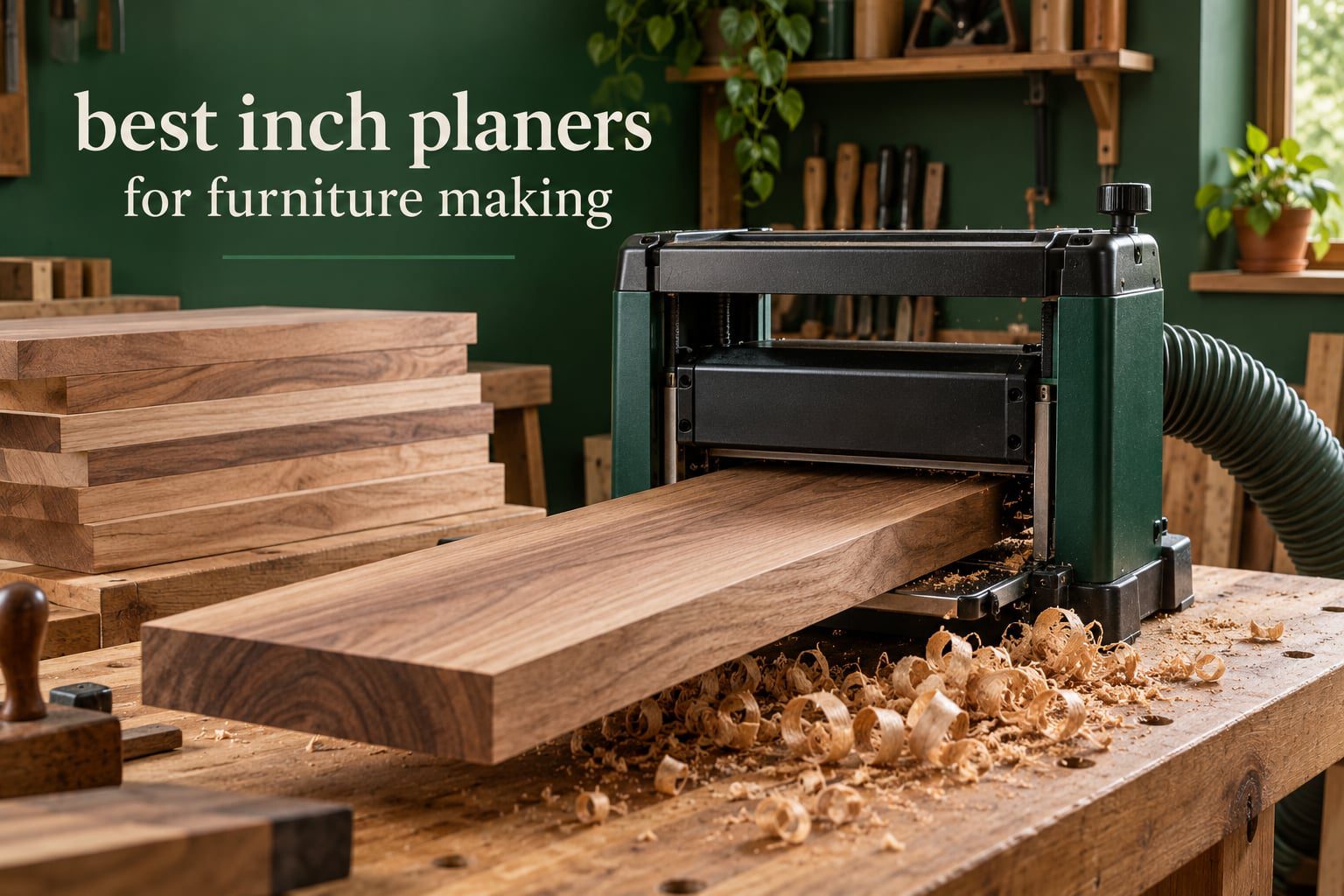
A 12 inch benchtop planer is the machine that turns a warped, rough-sawn board into a dead-flat component you can glue up. For furniture making it is the difference between two case sides that meet flush and two that do not. Tabletops, drawer fronts, table legs and glued-up panels all have to be identical in thickness, and no amount of hand sanding gets you there the same way twice.
If you want the short answer first: the DEWALT DW734 is the best planer for furniture making in 2026 because its three-knife cutterhead delivers 96 cuts per inch, its four-column carriage lock holds the head steady through the pass, and its 33-1/2 inches of table support keeps long boards from tipping. The WEN PL1252 also earns its place, with a cast iron body that damps vibration well.
We narrowed this list hard. Most of what gets called a 12 inch planer on shopping sites is actually a 13 inch machine or a planer/jointer combo, so we excluded anything whose real cutting width lands well past 12.5 inches. What is left are six benchtop thickness planers between 11.86 and 12.5 inches of cutting width. We worked through the published specifications, the feature lists, and thousands of owner reviews to compare cutterhead design, cut quality, snipe behavior, dust handling and how each one handles a full day of furniture parts.
One note before we start: nothing here carries a price, because prices move. Every listing below is linked, so you can check the current figure yourself. If your boards run wider than 12.5 inches, read our guide to planers for wide boards first.
Table of Contents
- Top 3 Picks for Best 12 Inch Planers for Furniture Making (October 2026)
- Best 12 Inch Planers for Furniture Making in 2026 at a Glance
- 1. DEWALT DW734: Best Overall 12 Inch Planer for Furniture Making
- 2. CRAFTSMAN CMEW320: Best Value 12 Inch Planer
- 3. Makita 2012NB: The Longest-Lived Planer in This Group
- 4. WEN PL1252: Best Budget 12.5 Inch Planer for a First Shop
- 5. VEVOR 12.5 Inch Planer: Best Stand-Included Planer for Rough Wood
- 6. CUTECH 40700H: Best 12 Inch Planer With a Spiral Cutterhead
- How to Choose a 12 Inch Planer for Furniture Making
- Start with width, and check it against the lumber you actually buy
- Cutterhead type is the biggest quality decision you will make
- Motor power and the circuit problem nobody warns you about
- Depth of cut, feed speed and finish quality
- Kill snipe with four setup steps before the first cut
- Dust collection and shop fit
- Plan for blade changes as part of the cost
- Frequently Asked Questions
- What is the best planer for furniture making?
- What is the best affordable thickness planer for woodworkers?
- Do I need a helical cutterhead for furniture?
- What is a planer snipe?
- Can a 12 inch planer handle a 12.5 inch glued-up panel?
- Do I need a dedicated circuit for a thickness planer?
- Why is it so hard to plane my wood?
- How long should planer blades last?
- The Verdict on the Best 12 Inch Planers for Furniture Making
Top 3 Picks for Best 12 Inch Planers for Furniture Making (October 2026)

DEWALT DW734 12-1/2 Inch
- Three reversible knives
- 96 cuts per inch
- four-column carriage lock
- 15 amp 20000 rpm motor

Makita 2012NB 12 Inch
- Quietest at 83 dB
- disposable double-edge blades
- four-post aluminum body
Best 12 Inch Planers for Furniture Making in 2026 at a Glance
All six machines below are true benchtop thickness planers in the 12 inch class. Scan the specs first, then read the individual write-ups for the finish and snipe behavior that specs cannot tell you.
| Product | Specs | Action |
|---|---|---|
| DEWALT DW734 12-1/2 Inch 3-Knife Planer |
|
Check Latest Price |
 CRAFTSMAN CMEW320 12.25 Inch Planer CRAFTSMAN CMEW320 12.25 Inch Planer |
|
Check Latest Price |
| Makita 2012NB 12 Inch Portable Planer |
|
Check Latest Price |
 WEN PL1252 12.5 Inch Two-Blade Planer WEN PL1252 12.5 Inch Two-Blade Planer |
|
Check Latest Price |
 VEVOR 12.5 Inch Planer with Stand VEVOR 12.5 Inch Planer with Stand |
|
Check Latest Price |
 CUTECH 40700H 12-1/2 Inch Spiral Head Planer CUTECH 40700H 12-1/2 Inch Spiral Head Planer |
|
Check Latest Price |
1. DEWALT DW734: Best Overall 12 Inch Planer for Furniture Making
DEWALT Benchtop Planer, 15-Amp, 12-1/2-Inch, 3-Knife Cutter, 20,000 RPM, Corded (DW734)
Width: 12.5 in
Motor: 15 A, 20000 rpm
Head: 3 reversible knives
Weight: 36.29 kg
Pros
- 96 cuts per inch from the three-knife head
- four-column carriage lock cuts snipe
- 33-1/2 inches of table support
- strongest hardwood removal in this group
- turret depth stop for repeat thicknesses
Cons
- Disposable blades add a running cost
- heaviest machine here at 36.29 kg so it needs two people to move
- blades need frequent checks on hardwood
The DW734 is the machine we keep coming back to after working through the specs of all six. It is also the most heavily reviewed machine in our group, with 2,759 ratings holding a 4.7 average and 83 percent of those ratings at five stars.
The number that matters most for furniture parts is 96 cuts per inch. That comes from a three-knife cutterhead turning at 10,000 rpm, and the practical effect is that the blade strikes so often along the board that a figured walnut tabletop comes off the machine without the scalloped surface straight knives leave behind. A two-knife head on the same board will feel noticeably coarser under your hand before you even get to the sander.
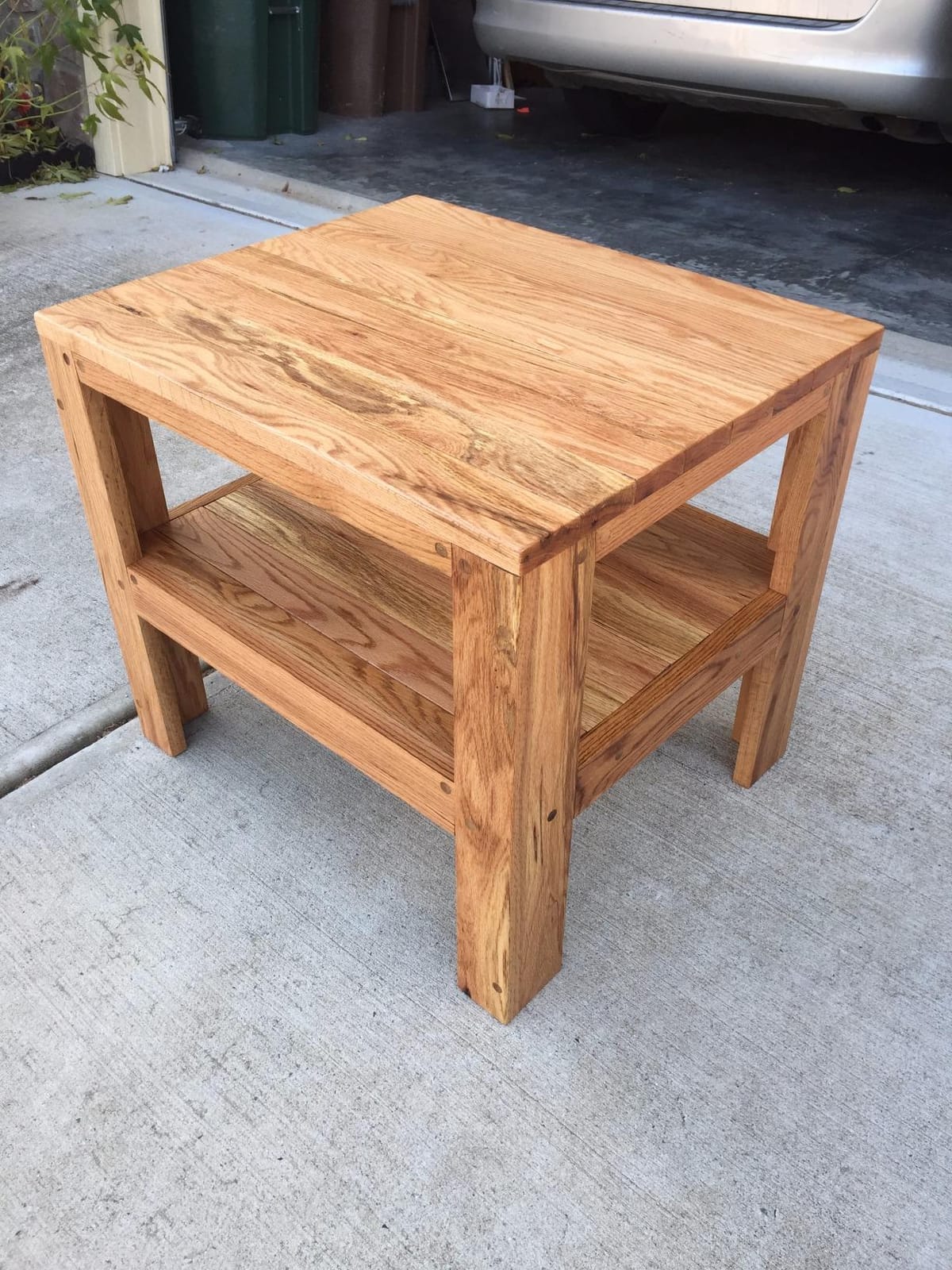
Snipe is the defect every planer owner complains about, and it is a shallow dip in the final few inches of a board where the workpiece deflects down as it comes off the rollers. The DW734 attacks it directly with a four-column carriage lock that holds the head from telescoping mid-pass. That does not eliminate snipe on very short stock, but on the 30 inch and longer parts typical of casegoods it keeps the end losses small enough to trim off and move on.
Motor power is where the DW734 separates itself from the machines around it. A 15 amp motor spinning to 20,000 rpm is what lets you take a real bite out of rough hardwood rather than creeping down a board in 1/32 inch passes. For the person who buys 6/4 walnut and resaw stock, that difference shows up in every session.
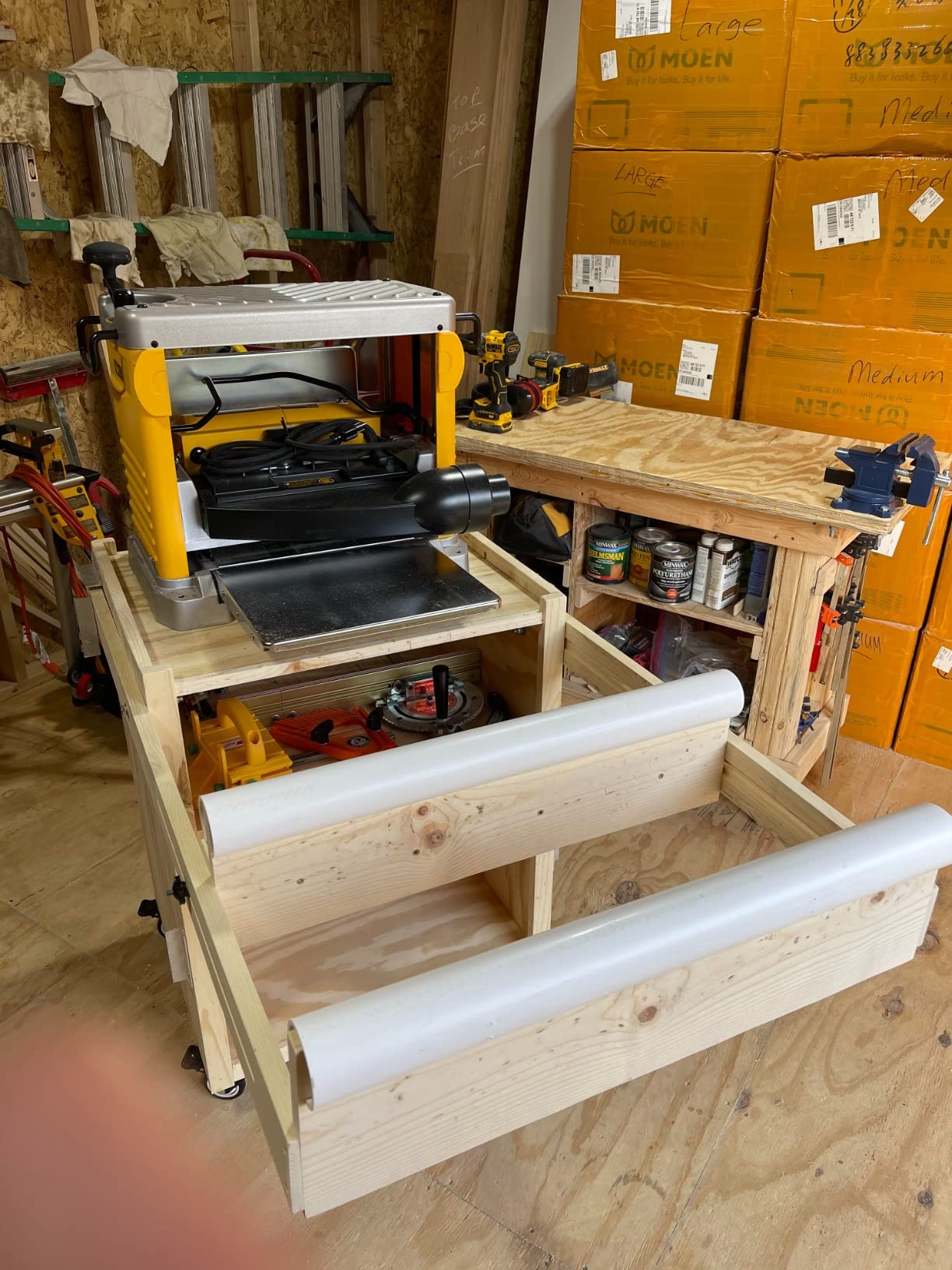
What the DW734 does well for furniture parts
Table tops and casegoods panels benefit most from the cut count and the table support. With 33-1/2 inches of infeed and outfeed material support, a 48 inch panel has its weight carried across the machine the whole way through instead of teetering on the exit end.
Drawer fronts and cabinet parts also benefit from the turret depth stop. Set a thickness once for a batch of identical rails or aprons, and the crank returns to that depth every time without you counting fractions of a turn.
Where the DW734 will disappoint you
It is the heaviest machine in this group at 36.29 kg. That is a feature if the planer lives in one corner of the shop, but it is a genuine problem if you plan to move it between a garage and a rented space. Plan for a stand with casters or accept a two-person lift.
The knives are disposable rather than resharpenable. They last 30 percent longer than the previous generation and changes are quick, but every change costs money and there is no sharpening bench in your future for this machine.
2. CRAFTSMAN CMEW320: Best Value 12 Inch Planer
CRAFTSMAN Planer, 15 Amp, For Benchtops, Two Knife Solid Steel Cutter Head (CMEW320)
Width: 12.25 in
Motor: 15 A
Head: 2 reversible knives, 8000 rpm
Weight: 27.71 kg
Pros
- Strong value entry point
- Poly-V cutterhead drive
- accurate thickness crank with fine increments
- vacuum port included
- base bolt holes for permanent fixing
Cons
- Two-knife head leaves end-of-board snipe
- knives wear faster on hardwood
- loud in operation and louder with a shop vac
- heavy at 27.71 kg
The CMEW320 is the answer to the question that comes up most often in the budget threads we read: is the cheaper machine any good. With a 4.6 average across 1,505 ratings, it is plainly good, and owners report running roughly 1,200 board feet through it without measurable degradation.
The 15 amp motor and Poly-V cutterhead drive handle both hardwood and softwood removal without stalling, which is not true of every machine in this class. Accuracy is the other repeated word in reviews: the thickness crank gives fine increments and reported measurements line up with the scale, which matters when you need six legs at the same diameter-adjacent thickness.
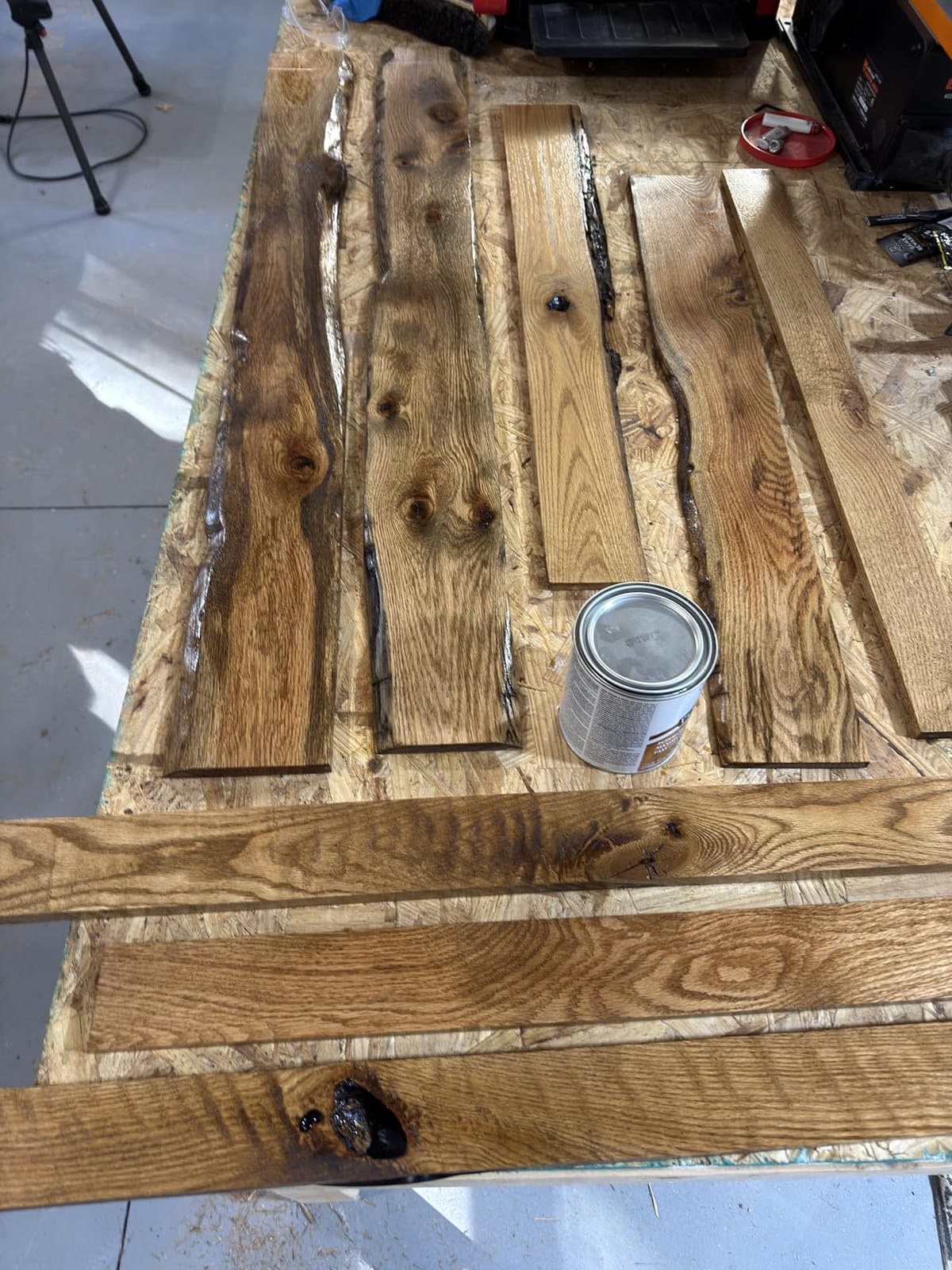
Two reversible high carbon steel knives are mounted on a quick-change solid steel cutterhead running on ball bearings at 8,000 rpm for 16,000 cuts per minute. That is a real cut count for furniture work, but it is roughly a third fewer strikes than the DEWALT’s 96 cuts per inch, and the finish is correspondingly coarser on figured stock.
The vacuum port is a genuine advantage in a small furniture shop. Many budget machines throw chips across the floor of a one-car garage; the CMEW320 lets you hook up a hose, and the carbon steel frame gives the machine enough mass to stay planted during a heavy pass.
Where the CRAFTSMAN fits your shop
This is the pick for someone building casegoods and drawer parts on a first machine, or a second machine for a shop where a jointer handles flattening and the planer only does final dimensioning. The accuracy holds up for matched parts, and the base has four bolt holes so you can fix it permanently to a bench or stand.
It is also a reasonable second opinion machine for a shop that runs mostly poplar, pine and paint-grade stock, where a two-knife head has less to prove.
Where the CRAFTSMAN will disappoint you
Snipe at the ends of boards is the recurring complaint and it is a direct consequence of the two-knife head. Trimming and tuning reduce it but do not fully remove it, so budget an extra inch or two at each end of every part.
Knife life on hardwood is shorter than on the machines with three knives, so more frequent changes are part of the ownership picture. At 27.71 kg it is also heavy enough that most owners put it on a cart, and the noise level climbs noticeably with a shop vac running.
3. Makita 2012NB: The Longest-Lived Planer in This Group
Makita 2012NB 12″ Portable Planer
Width: 11.86 in
Body: aluminum, four-post
Noise: 83 dB
Weight: 28.07 kg
Pros
- Owners report 15 to 20-plus years of professional use
- accurate to 0.002 to 0.003 inches across the full width
- quietest machine here at 83 dB
- works out of the box with no tuning
Cons
- Dust hood and port sold separately
- long boards need extra infeed and outfeed support
- disposable blades still change every few months
- small plastic safety key on the paddle is easily lost
The 2012NB is unusual in this group because the story is time rather than speed. Several owners describe daily professional use over 15 and even 20-plus years, still cutting accurately, through hardwoods as hard as ipe and as abrasive as azek. One long-term owner on a forum thread described replacing a 1994 machine with a newer model, calling the old Makita a good planer that was simply light and demanded snipe awareness.
Accuracy is the headline number: owners report the depth crank holding 0.002 to 0.003 inches across the full 12 inch width. That is the tolerance you want when you are matching a pair of thick table aprons or a set of cabinet face frames, because the alternative is shimming after assembly.
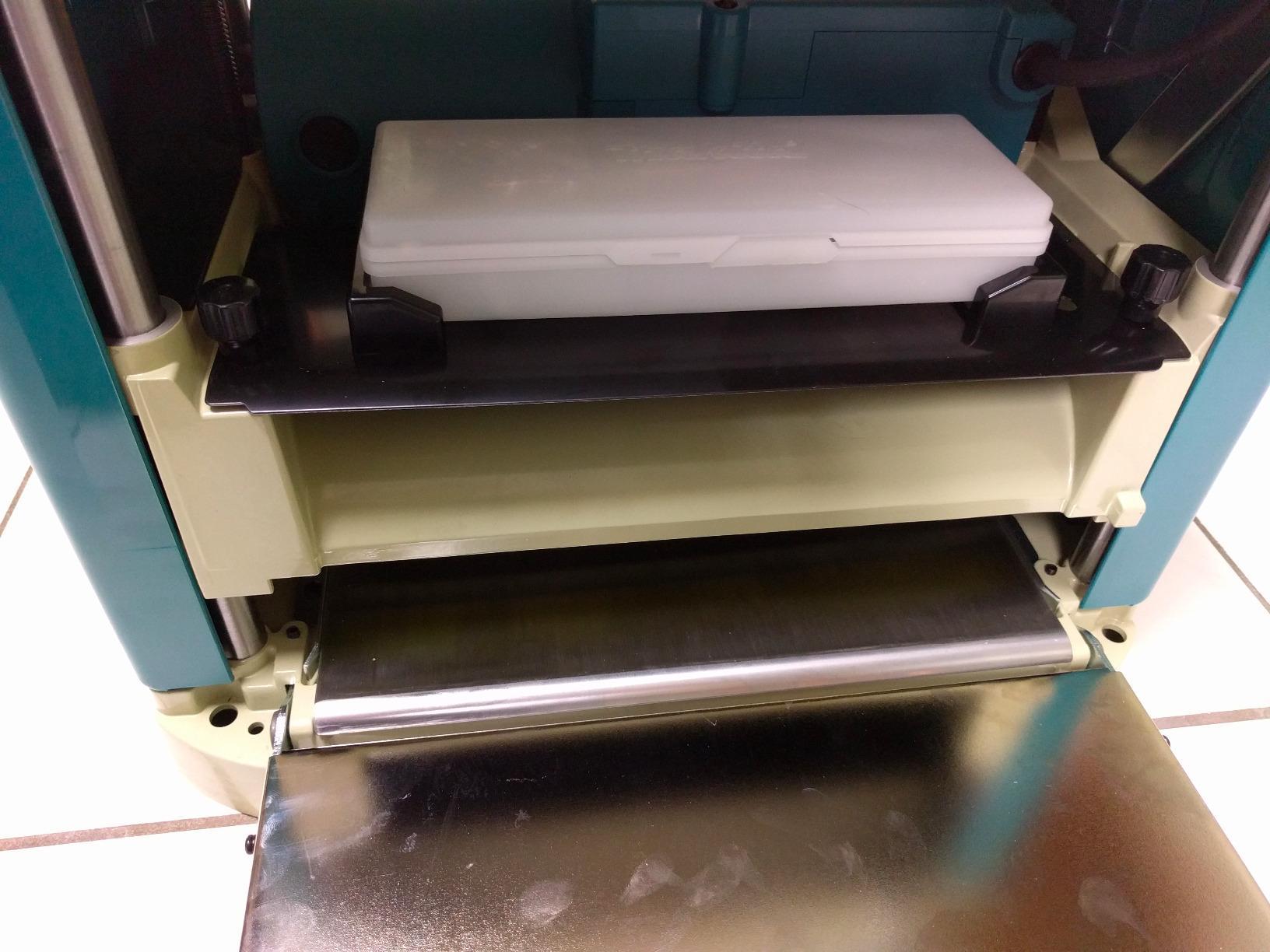
At 83 dB it is by a wide margin the quietest machine listed, which matters more than it sounds if your shop shares a wall with a bedroom or you run long sessions. The finish comes off clean and near-gloss on most species, and the blade change system uses disposable double-edge blades with the change tools stored inside the machine.
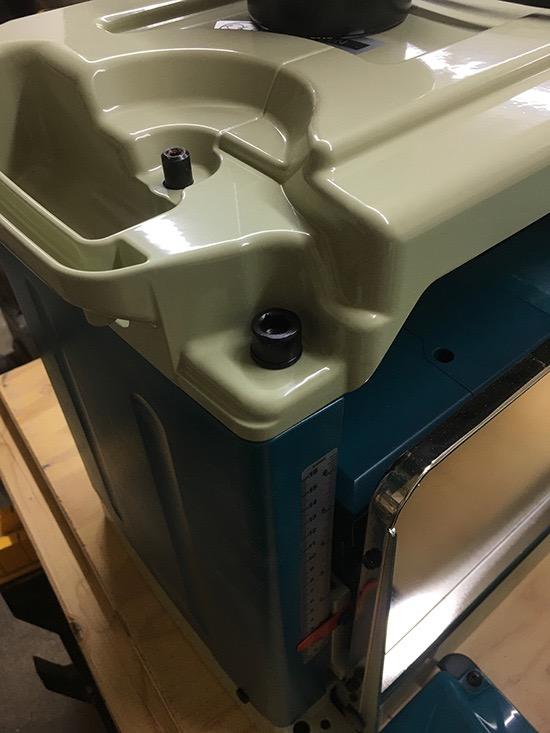
It also arrives ready to work. Owners report no tuning for snipe or chatter out of the box, which is not something you can say for every machine here. The four-post design with diagonal cross supports and large table extensions keeps wide boards stable in the field, and the aluminum base is a sensible choice for a machine meant to travel.
Why a furniture maker would buy this one
If your shop does contract casework or built-ins and the planer will see daily use for years, the longevity argument is the whole argument. A machine that holds tolerance in fifteen years costs far less over its life than a cheaper unit replaced twice.
The low noise also makes it the easiest machine here to run alongside a router or a dust collector on the same circuit without conversation, and the clean finish reduces sanding time on visible parts like table tops and drawer fronts.
Where the Makita is the wrong spend
The dust hood and collection port are sold separately. If you plan in an enclosed shop, add that cost and the adapter hose to your budget before you commit.
Its 11.86 inch cutting width is the narrowest here, so a genuine 12 inch panel needs jointing before planing. Long boards also need supplemental support at the infeed and outfeed ends or the planer leaves snap marks there. And with only a 1-year manufacturer warranty against three years on several rivals, the long-life case rests on build quality rather than a paper promise.
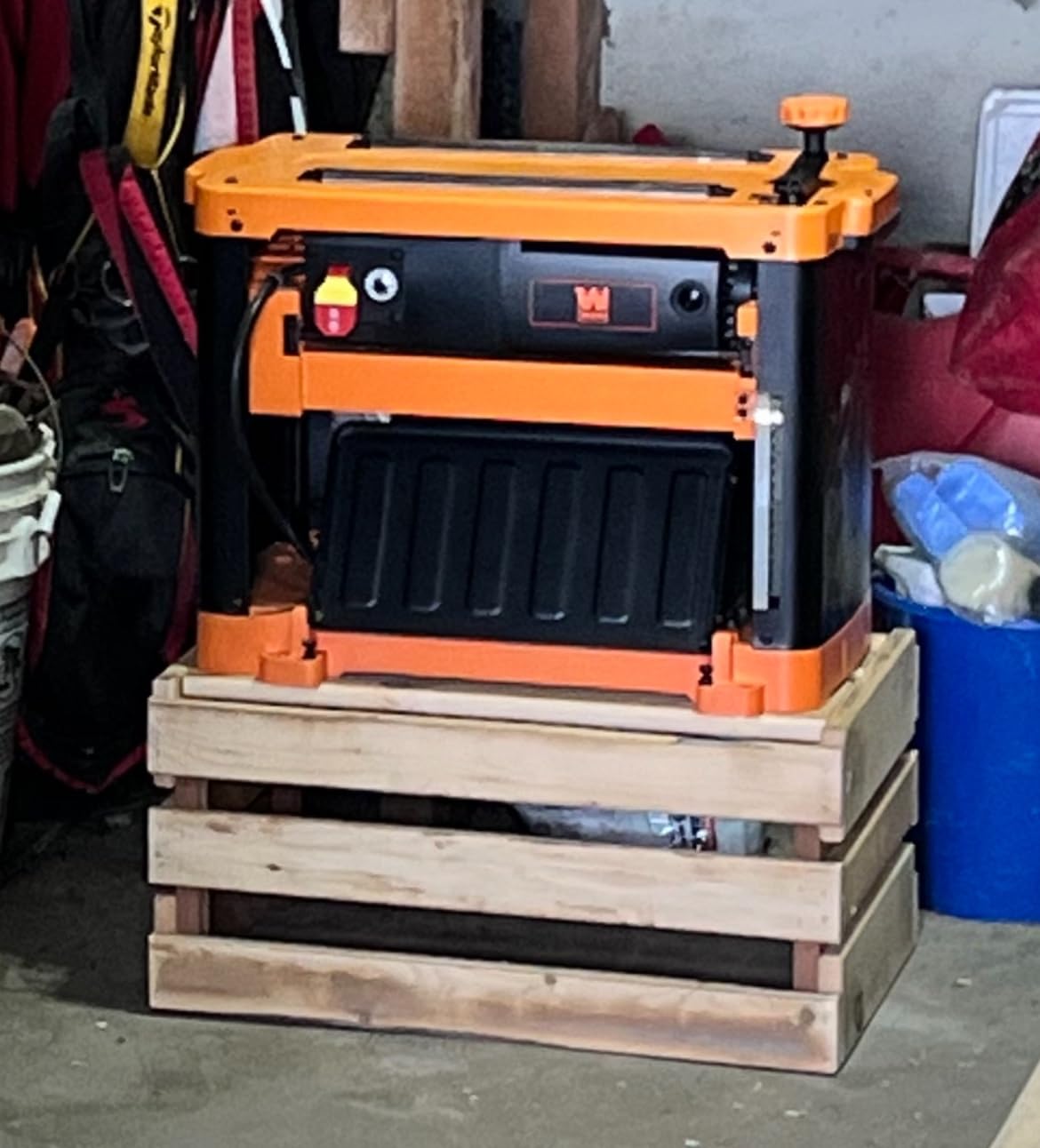
4. WEN PL1252: Best Budget 12.5 Inch Planer for a First Shop
WEN PL1252 15-Amp 12.5-Inch Two-Blade Benchtop Thickness Planer , Black
Width: 12.5 in
Motor: 15 A, 20000 rpm
Feed: 26 fpm
Blades: 2 reversible SK5
Pros
- Ready to run within minutes of unboxing
- cast iron base and steel panels damp vibration well
- smooth chip-free finish on dense hardwoods
- lighter than the DW734 for one-person handling
- inexpensive SK5 blades
Cons
- Two-blade head means a lower cut count on tough hardwood
- included blades look thin and wear faster
- motor not built for all-day commercial duty
- loud in operation
The PL1252 sits at the point where a first planer stops feeling like a compromise. Reviewers consistently describe it as a strong performer in the 12.5 inch class, and the pattern in the reviews is useful: owners were cutting within five minutes of opening the box, with a smooth chip-free result on dense hardwoods and less vibration than the machines they had been comparing it against.
The cast iron base and body do most of that work. Vibration is the enemy of a smooth planed surface, because a head that bounces leaves chatter marks you find later at the sanding stage, and a rigid cast iron body with steel side panels and a steel roller housing absorbs more of the motor’s energy than a plastic-bodied machine of the same class.
On paper the numbers are respectable: a 15 amp motor, 20,000 cuts per minute, a 26 feet per minute feed rate, and a depth adjustment of zero to 1/8 inch per pass. Boards up to 6 inches thick and 12.5 inches wide are handled, and two reversible 12.5 inch SK5 blades are included with the machine.
It is also lighter than the DW734, which reviewers who moved both machines around a shop appreciated. At 29.03 kg it is still not a one-hand carry, but it is a two-machine-per-week mover rather than a two-person job.
Where the WEN earns its place
For a maker building parts in poplar, walnut and everyday hardwoods on a part-time schedule, this is the machine to start with. The finish quality holds up, blade changes are simple with reversible SK5 blades that cost little, and the learning curve is close to flat.
It handles the standard furniture jobs well: flattening glued-up panels, jointing stock to width, and bringing rough boards to a consistent thickness before a final sanding pass.
Where the WEN falls short
Two blades give you a lower cut count than the three-knife machines, and the included blades look thin and are expected to wear faster under heavy or continuous use. Budget for replacement blades earlier than you would with the DEWALT.
The motor is not designed for all-day commercial duty cycles, and the depth crank handle is small enough that reviewers flag it as somewhat fragile compared with the heavier machines. Material wider than 12.5 inches has to be done in sections and joined afterward.
5. VEVOR 12.5 Inch Planer: Best Stand-Included Planer for Rough Wood
VEVOR Thickness Planer 12.5 inch Wood Planer Foldable 1500W Thickness Planer Woodworking 315″/min Feed Rate Double Cutter Benchtop Thickness Planer with Dust Exhaust Interface Stand for Woodworking
Width: 12.5 in
Motor: 1500W
Head: 2 double-cutter HSS, 8000 rpm
Weight: 78 lb
Pros
- Handles weathered
- chain-sawn and reclaimed wood well
- detachable stand and folding tables included
- return rollers and a scale ruler for setup
- two dust collection options
- over-current and power-off protection
Cons
- Weakest parts and support ecosystem in this group
- stand is light and can move during heavy passes
- short infeed table lets boards dip at the exit
- feed rollers wear smooth on hard or wet material/unclear manual
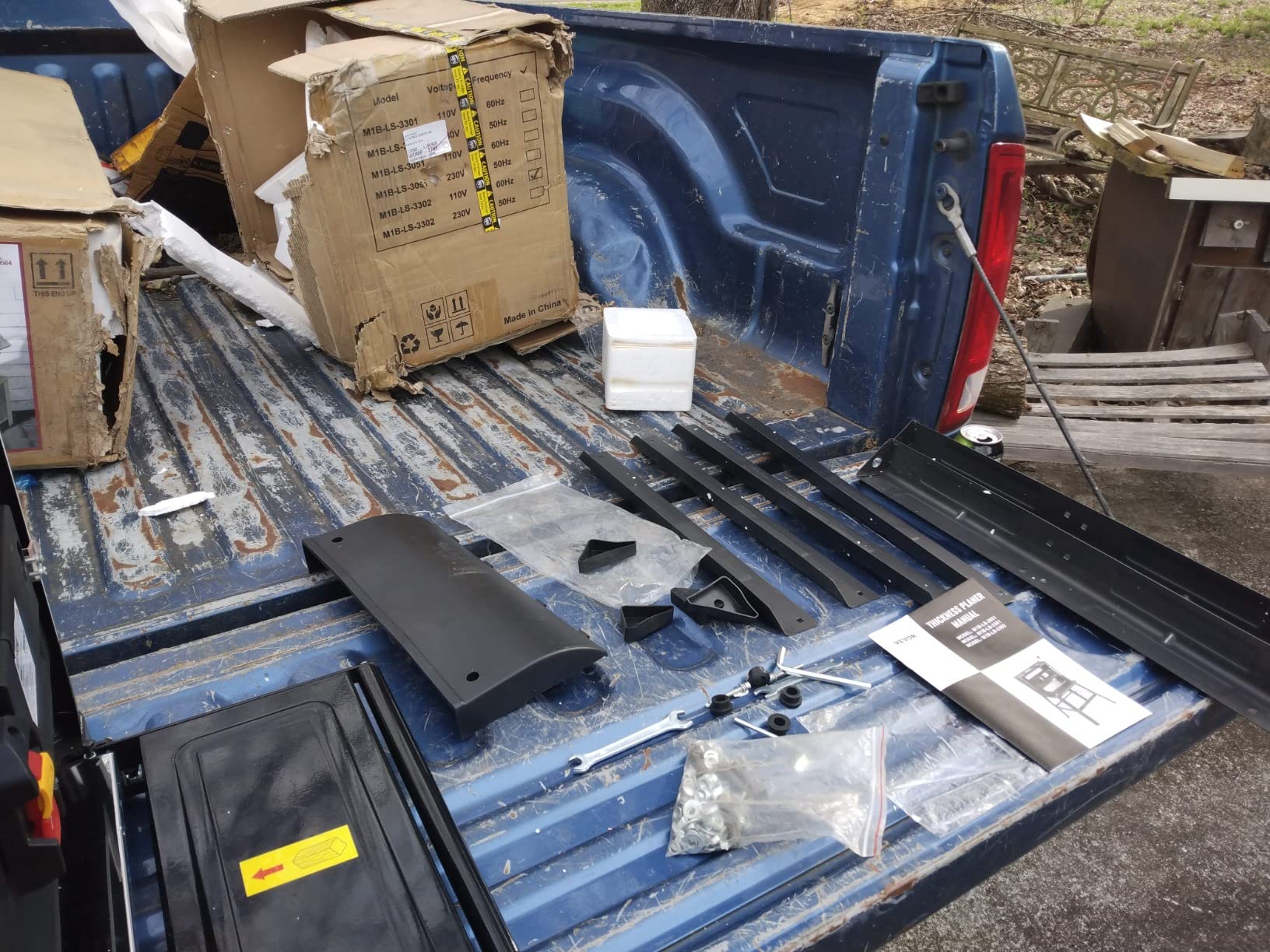
The VEVOR is the odd one out in this roundup, and it earns its place for a narrow but real job. It is built to take ugly wood: old fence boards, weathered barn lumber, chain-sawn stock. Owners who use it that way report good results, and the detachable stand plus folding extension plates mean it works as a standalone machine rather than a bench accessory.
The specification list is unusually complete for this end of the market: a 1500W motor, an 8,000 rpm blade speed, a 236 inches per minute feed rate, two double-cutter HSS blades finished with a multi-step honing process, and a cutting range from 0.2 to 6.3 inches thick. Two metal return rollers pass workpieces back for repeat passes, and a crank handle with a scale ruler handles thickness setup.
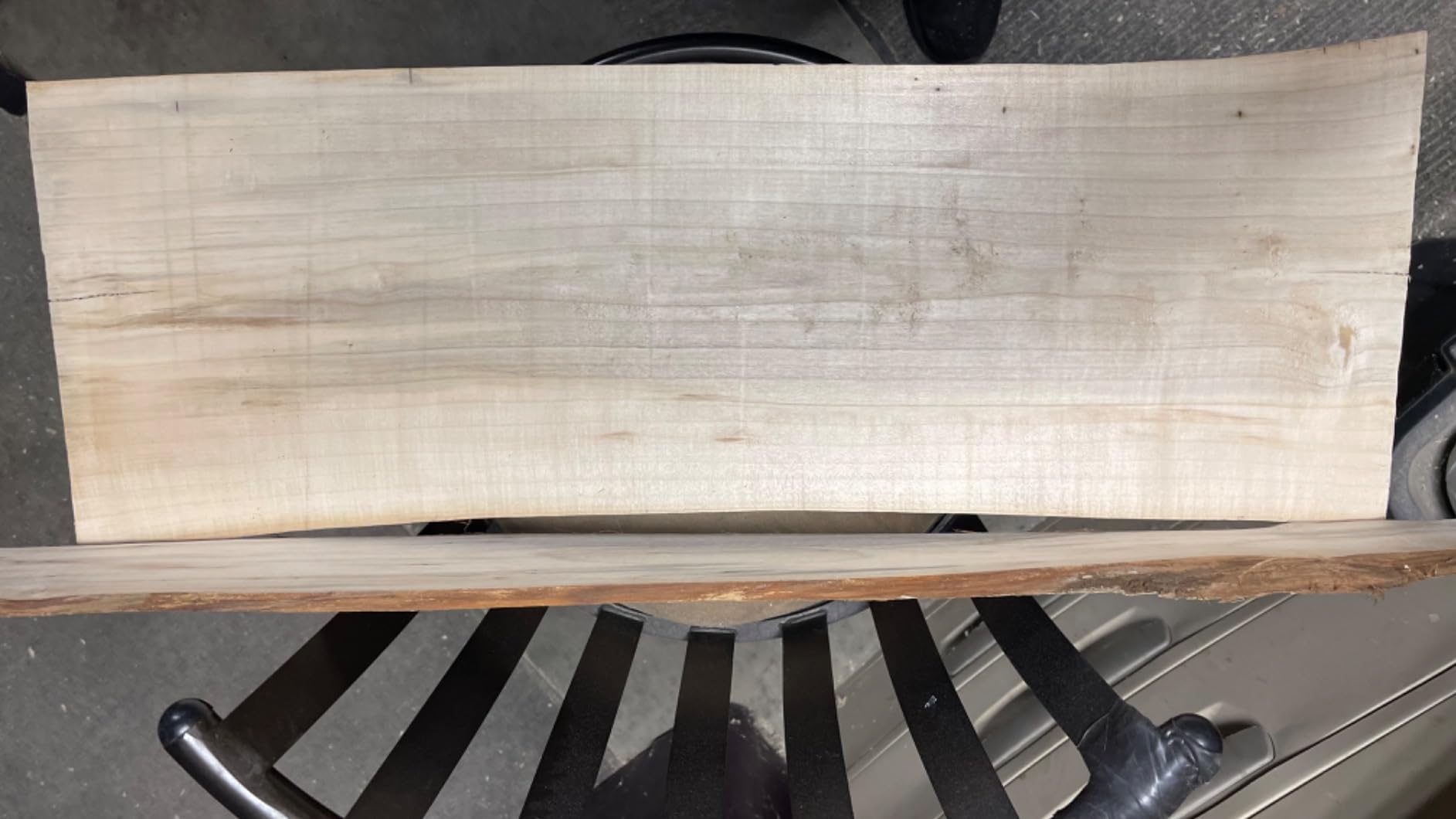
Dust handling gets two options, which is unusual at this end of the market. You can use the included collection pot or fit a collector through the 1.8 inch inner and 2 inch outer diameter exhaust interface, and a replaceable iron dust cover comes in the box. The over-current protector and power-off electromagnetic switch are sensible additions on a machine that will meet hard material.
Its 4.1 average from 103 ratings is the lowest here and the spread is wide, with 58 percent five-star against 10 percent one-star. That distribution tells you the machine is polarizing: it does one job well and its support is thin.
Where the VEVOR makes sense
If your furniture work starts with reclaimed lumber or you build from rough-sawn stock and want one machine that handles both the ugly cleanup and the finish passes, this does that with a stand included. None of the other machines listed includes a stand in the box.
It is also a reasonable roughing machine for a shop that later mills furniture-grade material on a bigger machine.
Where the VEVOR will cost you
Support is the real limitation. Replacement parts are not sold by the manufacturer and owners report the listed email address is unreachable, which matters a great deal when a feed roller wears smooth or you need a new cover.
The stand itself is light and can move during heavy passes, so many owners bolt or wheel their own. The infeed table is short enough that boards can dip out the back and leave a divot without an outfeed support, and the assembly manual is difficult to follow. Plan for more troubleshooting time and for dust extraction, because it produces a large volume.
6. CUTECH 40700H: Best 12 Inch Planer With a Spiral Cutterhead
Cutech 40700H 12½-Inch Spiral Cutterhead Benchtop Planer with Tungsten Carbide Inserts, Snipe Minimizer, and Board Return Rollers (12-1/2-Inch Single Speed)
Width: 12.5 in
Head: spiral, 6 rows of inserts
10000 rpm
Body: cast iron and aluminum
Pros
- Smoother finish than straight-knife machines at the same width
- two-sided carbide inserts resist skewing
- four lead screws and a patented coupling act as a snipe minimizer
- lower amp draw
- quieter running
- board return rollers and a front depth scale
Cons
- Only 25 ratings so long-term durability is not yet documented
- carbide inserts cost more per edge when they do need changing
- sensitive to very hard or dirty stock if maintenance is skipped
- heavy cast iron body is awkward to move alone
This is the only machine in our list with a spiral cutterhead, and for certain furniture work that single fact decides it. The head carries six rows of staggered tungsten carbide inserts, and because each insert enters the cut at a slightly different angle, the blade marks left on the surface overlap and read as a near-sanded finish rather than the scalloping a straight knife produces.
The inserts are two-sided, which is a meaningful upgrade over four-sided designs. A four-sided insert has to be thrown away at the first chip, while a two-sided insert flips to a fresh edge and stays aligned in the head. The non-cutting edge is designed to keep the insert from skewing while planing, which is the failure that turns a spiral head into a disappointment.
Snipe gets a dedicated solution here. Four lead screws and a patented coupling design form a snipe minimizer, so you do not need to buy and install a separate snipe lock to get the same result. Owners also single out the quieter running, which on a spiral head is a genuine change of character rather than a marketing line, and the lower amp draw compared with straight-knife machines.
Convenience details are handled well: a depth-of-cut indicator scale on the front of the machine and board return rollers mounted on top so you do not have to reach around the cutterhead to flip a panel for the next pass. Cast iron and aluminum construction give it the mass to stay planted.
Why a furniture maker would choose a spiral head
Figured and difficult hardwoods are the answer. Quartersawn walnut, curly maple, and any stock with interlocked grain that tears out on a straight knife leave you either sanding hard or re-cutting, and the spiral head largely removes that problem.
There is a second benefit that shows up in the shop rather than on the board. A spiral head does not need sharpening, so the maintenance rhythm is rotating inserts rather than dressing HSS knives, and it draws less current, which matters on the same circuits as a dust collector.
Where the CUTECH is the risky buy
The evidence base is thin. With 25 ratings the distribution is clean, 82 percent five-star and 18 percent four-star with nothing at three stars or below, but nobody has documented a decade of ownership on this head, and that is the entire case for a spiral machine.
Inserts cost more per edge than disposable double-edge knives when the time comes to change them, and the head is more sensitive to very hard or dirty stock if maintenance is skipped. The cast iron body also makes this a two-person machine to reposition, and the same manufacturer offers 13 inch single-speed and two-speed versions if you think you will outgrow 12.5 inches quickly.
How to Choose a 12 Inch Planer for Furniture Making
Start with width, and check it against the lumber you actually buy
The gap between 12 and 12.5 inches of cutting width matters less than most spec sheets imply, because furniture lumber is sold in random widths and most 6/4 and 5/4 hardwood arrives between 5.5 and 8 inches wide. Width only becomes decisive on glued-up panels, where the width of your machine decides how many boards go into a slab.
A 12.25 inch machine handles a glued panel built from two 6 inch boards with room to spare. If you routinely glue up a panel wider than 12.5 inches, a 12 inch machine cannot take it in one pass at all, and the joint has to run the other direction. Measure your widest glued assembly before you buy, not your widest single board.
Cutterhead type is the biggest quality decision you will make
Straight knife heads with two or three reversible HSS knives are cheaper to own and simpler to maintain, and they finish softwoods and clean-grained hardwoods perfectly well. For poplar, pine and paint-grade stock they are the sensible answer.
Helical and spiral heads hold staggered carbide inserts, each entering the cut at an angle, which produces a tear-free shear cut with far less noise and no sharpening. For figured maple, walnut and reclaimed wood they are worth the money. The tradeoff is insert cost and the fact that a spiral head needs a machine built around it.
Motor power and the circuit problem nobody warns you about
Several of these machines draw 15 amps, which is the full rating of a standard residential circuit. If a dust collector, a jointer, or a table saw shares that circuit, the planer can trip the breaker mid-pass. In a home garage with a single 15A outlet, that is a real blocker rather than a footnote.
If your shop has one 15A circuit, either run the planer alone while you use it or have an electrician add a dedicated line. A helical head helps here in a way people rarely mention, because the CUTECH 40700H draws noticeably less current than a straight-knife machine doing equivalent work.
Depth of cut, feed speed and finish quality
Take between 1/64 and 1/8 inch per pass on hardwood. A deeper cut is faster but leaves a rougher surface and pulls more current, which is where lighter budget machines bog down and burn a motor or trip a breaker.
Feed speed matters just as much. A slower feed produces more cuts per inch and a noticeably finer finish, at the cost of time. Several reviewers we read timed the same board through different machines and found the slow setting produced a finish close to hand-sanded, while the fast setting left visible marks. If you are planing walnut for a visible tabletop, use the slow setting.
Kill snipe with four setup steps before the first cut
Snipe is the shallow dip left in the final couple inches of a planed board when it deflects down as it comes off the rollers. It is the most common complaint among owners and it is mostly setup, not defects.
1. Set the folding infeed and outfeed tables about 1/8 inch higher than the center table. Out of the box they usually sit flush or low, which is wrong and causes both snipe and uneven thickness.
2. Check the bed rollers so pressure is even across the width of the machine. Uneven roller pressure shows up as a wedge-shaped board.
3. Run a sacrificial board and measure both ends with a caliper before you touch project lumber.
4. Trim the sniped ends before assembly, and pull up gently on the board as it exits rather than letting it drop away.
If snipe persists after that, look at the machine itself. The DW734 uses a four-column carriage lock to reduce it, and the CUTECH uses four lead screws and a coupling as an integrated snipe minimizer.
Dust collection and shop fit
A planer that throws chips instead of shavings means dull knives. Owners on woodworking forums describe wispy shavings as the sign of a good setup, and dust as the warning. Connect a vacuum or dust collector whenever possible: the CRAFTSMAN and VEVOR both include ports, the Makita sells its hood separately, and the DEWALT includes a dust hood in the box.
On weight, anything over about 25 kg belongs on a stand, and models with base bolt holes should be bolted down. Lightweight machines walk across the bench mid-pass and gouge the board, which is the fastest way to damage good furniture lumber.
Plan for blade changes as part of the cost
Disposable reversible HSS knives on the CRAFTSMAN, DEWALT, WEN and Makita need changing on a schedule that tightens with hardwood use, and the SK5 blades on the WEN are inexpensive to replace. Carbide inserts on a spiral head cost more per edge but do not need sharpening, and a two-sided insert simply flips.
Whichever machine you pick, treat a knife change as part of the maintenance calendar rather than a surprise. If you want to compare against machines beyond this width class, our guide to planers for wide boards covers the next step up.
Frequently Asked Questions
What is the best planer for furniture making?
For most furniture makers the DEWALT DW734 is the best planer for furniture making: its three-knife cutterhead delivers 96 cuts per inch for a fine finish, its four-column carriage lock limits snipe on long parts, and its 15 amp motor has the removal power for rough hardwood. Buy the CRAFTSMAN CMEW320 instead if you want a first machine at a lower outlay, or the CUTECH 40700H if you work figured maple and walnut and want a spiral cutterhead.
What is the best affordable thickness planer for woodworkers?
The WEN PL1252 and CRAFTSMAN CMEW320 are the strongest affordable options. The WEN gives you a cast iron body, a smooth finish on dense hardwoods and instant usability out of the box, while the CRAFTSMAN adds a 15 amp motor, a Poly-V cutterhead drive, a vacuum port and accurate depth settings. Both use two reversible HSS knives, so expect more end-of-board snipe and more frequent blade changes than a three-knife machine.
Do I need a helical cutterhead for furniture?
Not always. Straight knives finish softwoods and clean-grained hardwoods such as poplar and pine very well. A helical or spiral cutterhead earns its cost on figured and difficult stock, especially quartersawn walnut, curly maple and anything with interlocked grain that tears out on a straight knife. It also cuts quieter, needs no sharpening, and draws less current, which matters on a shared 15 amp circuit.
What is a planer snipe?
Snipe is a shallow dip in the last few inches of a board that dips as the workpiece deflects down coming off the rollers. Most of it is a setup problem, not a defect. Set the folding infeed and outfeed tables about 1/8 inch above the center table, check the bed rollers for even pressure, run a sacrificial board and measure it, then trim the ends before assembly. Machines with a four-column carriage lock or integrated snipe minimizer reduce what remains.
Can a 12 inch planer handle a 12.5 inch glued-up panel?
No, not in one pass. A planer can only ever accept material up to its stated cutting width, so a 12.25 inch machine handles a panel built from two 6 inch boards with room to spare, but a 12 inch machine cannot take a 12.5 inch panel at all. Glue the joint in the other direction, or step up to a wider class of machine. Measure your widest glued assembly before you buy rather than your widest single board.
Do I need a dedicated circuit for a thickness planer?
You often do. Several of these machines draw 15 amps, which is the entire rating of a standard residential circuit, so a planer sharing a circuit with a jointer, table saw or dust collector can trip the breaker mid-pass. In a home shop with one 15A outlet, run the planer on its own while you use it or have an electrician add a dedicated line. Spiral and helical heads draw noticeably less current than straight-knife machines.
Why is it so hard to plane my wood?
Four causes cover most cases. You are taking too deep a cut, which overloads a lighter machine and leaves a rough surface. Your feed speed is too high, which drops the cut count per inch below the finish you need. Your knives are dull, which shows up as dust instead of wispy shavings. Or your infeed and outfeed tables are set flush or low instead of roughly 1/8 inch above the center table, which causes snipe and uneven thickness.
How long should planer blades last?
It depends on species and cut count, and owners change them far more often on hardwood than softwood. On softwoods a set of reversible HSS knives can run for months; on walnut, maple and reclaimed lumber expect changes every few months on a busy machine. Two-sided carbide inserts on a spiral head last far longer because you rotate rather than replace them, and they never need sharpening. Check for dust instead of shavings as your signal that it is time.
The Verdict on the Best 12 Inch Planers for Furniture Making
After working through all six, the DEWALT DW734 remains our pick for the best 12 inch planers for furniture making in 2026. Its 96 cuts per inch, four-column carriage lock and 33-1/2 inches of table support cover the widest range of furniture jobs in one machine. Buy the CRAFTSMAN CMEW320 to spend less, the WEN PL1252 to start on the lightest budget, and the CUTECH 40700H if figured hardwood is your material.
Set the folding tables high, bolt the machine down, connect the dust port, and start with a light pass.