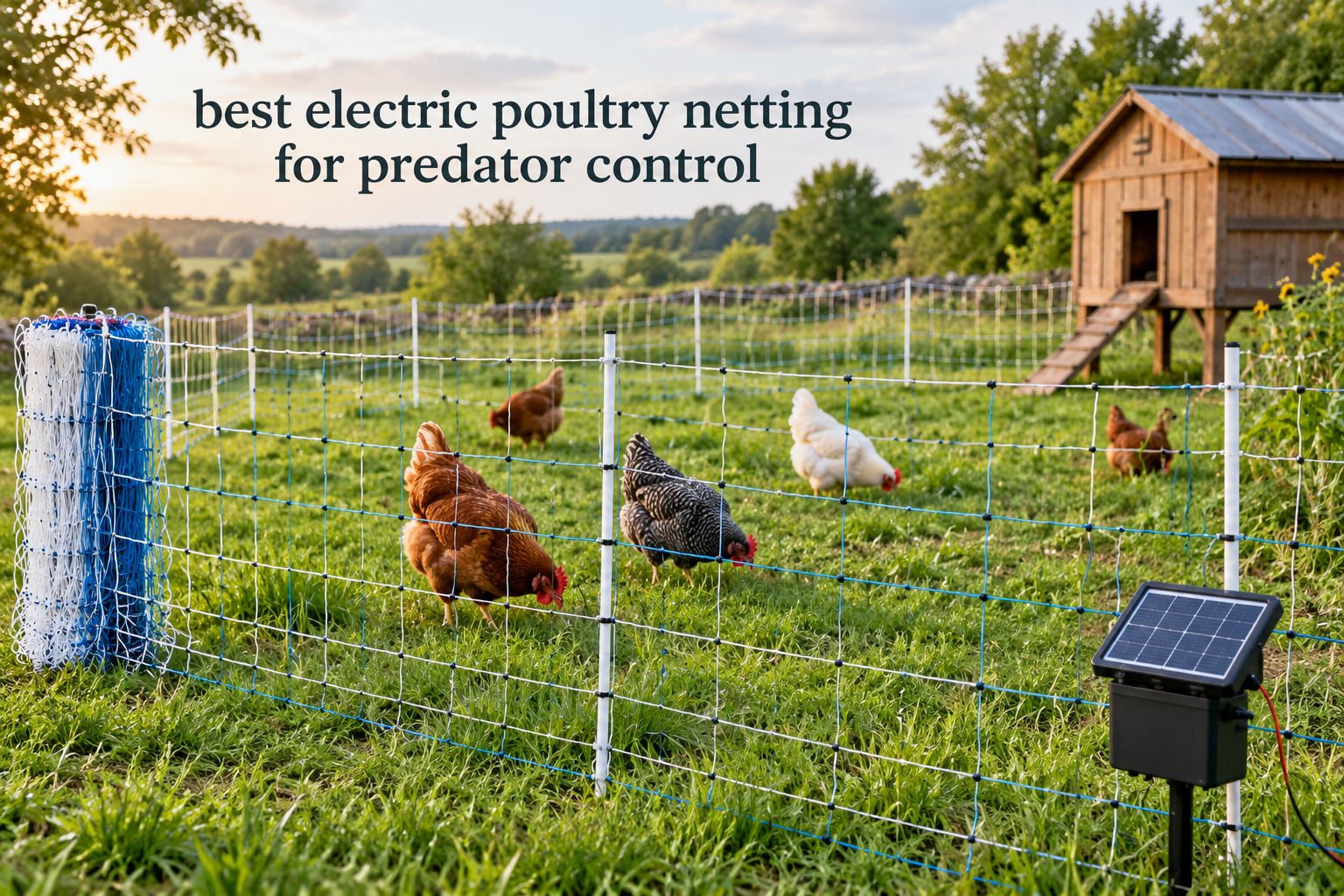
The best electric poultry netting for predator control in 2026 is the RentACoop 48 in x 168 ft net with triple-braided stainless steel and copper conductive wires, and the best budget option is the VEVOR 48 in x 168 ft kit. The one non-negotiable spec is the energizer: net manufacturers advise at least 0.25 joules for a full poultry net, and a lower output leaves the far end of the run dead.
Most backyard flocks are not lost to weak wire. A determined raccoon or fox will work at any static fence given enough nights, which is why so many keepers add an electric layer that gives an animal a memorable reason not to push. Electric poultry netting is portable, quick to move, and cheap per foot compared with hardware cloth, so you can rotate the flock onto fresh ground instead of pouring a permanent wall.
This roundup covers 10 net rolls compared against the same criteria: strand conductivity, post spacing, ground stake geometry, net height, and how each behaves when you roll it out over uneven ground. Every net here needs a separate energizer and a ground rod. None of them works on its own.
We leaned on owner reports from BackyardChickens and r/homestead throughout, because voltage readings posted by keepers are more useful than any spec sheet. If you are also managing tall grass along your fence line, our backpack sprayer picks cover clearing options that keep foliage off the mesh.
Table of Contents
- Top 3 Picks for Electric Poultry Netting in 2026
- All 10 Best Electric Poultry Netting (October 2026)
- 1. RentACoop 48 x 168 ft Net
- 2. Premier 1 PoultryNet 48 x 164 ft
- 3. Starkline 42 x 164 ft Net with 10/42/7 Strand Layout
- 4. Premier 1 PoultryNet Plus 48 x 100 ft
- 5. Starkline Standard 42 in x 164 ft Net
- 6. Pet and Livestock HQ 48 in x 164 ft Net
- 7. VEVOR 48 in x 168 ft Electric Poultry Netting Kit
- 8. PPOLB 164 ft x 41.5 in Portable Electric Net
- 9. FZIFZI 47.2 in x 164 ft Electric Netting
- 10. Starkline Premium Plus+ Braided 48 in x 100 ft Net
- How Electric Poultry Netting Deters Predators
- Which Predator Needs Which Barrier
- Energizer Sizing, Grounding and Vegetation Control
- How to Set Up Electric Poultry Netting
- Electric Netting vs Hardware Cloth
- Safety, Chicks and Night Lock-Up
- Frequently Asked Questions
- What is the best electric poultry netting?
- Is electric poultry netting worth it?
- What is the best type of chicken fence to keep predators out?
- How many joules is a good electric fence?
- How many joules should an electric fence have?
- How long does poultry netting last?
- How to put an electric fence around a chicken run?
- The Verdict
Top 3 Picks for Electric Poultry Netting in 2026
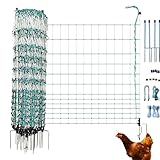
RentACoop 48 x 168 ft
- Triple-braided steel and copper wires
- FRP posts every 12 ft
- 48 in height
- Enclosed area near 1700 sq ft

Premier 1 PoultryNet
- 12 strands with 11 conductive
- Posts every 10 ft
- 48 in height
- Tool-free install under 15 minutes
PoultryNet Plus
- Posts every 6.8 ft
- Plastic struts cut sag
- 48 in height
- Installs in under 10 minutes
All 10 Best Electric Poultry Netting (October 2026)
| Product | Specs | Action |
|---|---|---|
| RentACoop 48 in x 168 ft Net |
|
Check Latest Price |
| Premier 1 PoultryNet 48 x 164 ft |
|
Check Latest Price |
 Starkline 42 in x 164 ft (10/42/7) Starkline 42 in x 164 ft (10/42/7) |
|
Check Latest Price |
| Premier 1 PoultryNet Plus 48 x 100 ft |
|
Check Latest Price |
 Starkline Standard 42 x 164 ft Starkline Standard 42 x 164 ft |
|
Check Latest Price |
 Pet and Livestock HQ 48 in x 164 ft Pet and Livestock HQ 48 in x 164 ft |
|
Check Latest Price |
 VEVOR 48 in x 168 ft Kit VEVOR 48 in x 168 ft Kit |
|
Check Latest Price |
 PPOLB 164 ft x 41.5 in Net PPOLB 164 ft x 41.5 in Net |
|
Check Latest Price |
 FZIFZI 47.2 in x 164 ft Net FZIFZI 47.2 in x 164 ft Net |
|
Check Latest Price |
 Starkline Premium Plus+ 48 in 100 ft Starkline Premium Plus+ 48 in 100 ft |
|
Check Latest Price |
1. RentACoop 48 x 168 ft Net
RentACoop Poultry Netting Electric Fence – 48″ H x 168′ L
48 in x 168 ft
Triple-braided steel and copper wires
FRP posts every 12 ft
28 lb
Pros
- Consistent current from triple-braided stainless steel and copper wire
- FRP posts pre-attached every 12 ft
- Encloses near 1700 sq ft in one roll
- Relocates quickly for rotational grazing
- Includes stakes/mini-posts/repair kit and warning sign
Cons
- Energizer sold separately
- Mesh sags between supports if tension is skipped
- No deterrence against aerial predators
This is the net I keep coming back to for whole-run coverage. One roll encloses roughly 1700 square feet, so a typical daytime free-range paddock comes out of a single purchase without daisy-chaining a second section.
The conductive path is the reason for its rating. Triple-braided stainless steel and copper wires give steadier current across the full 168 feet than single-core polywire, and owners running long connected runs report that steadiness is what holds roaming predators off.
Setup took one person and a couple of hours including staking. Double-spiked posts, metal stakes, mini-posts and corner guy lines are all included in the kit, and the FRP posts arrive pre-attached at 12-foot intervals, so you are unrolling and stepping rather than assembling hardware.
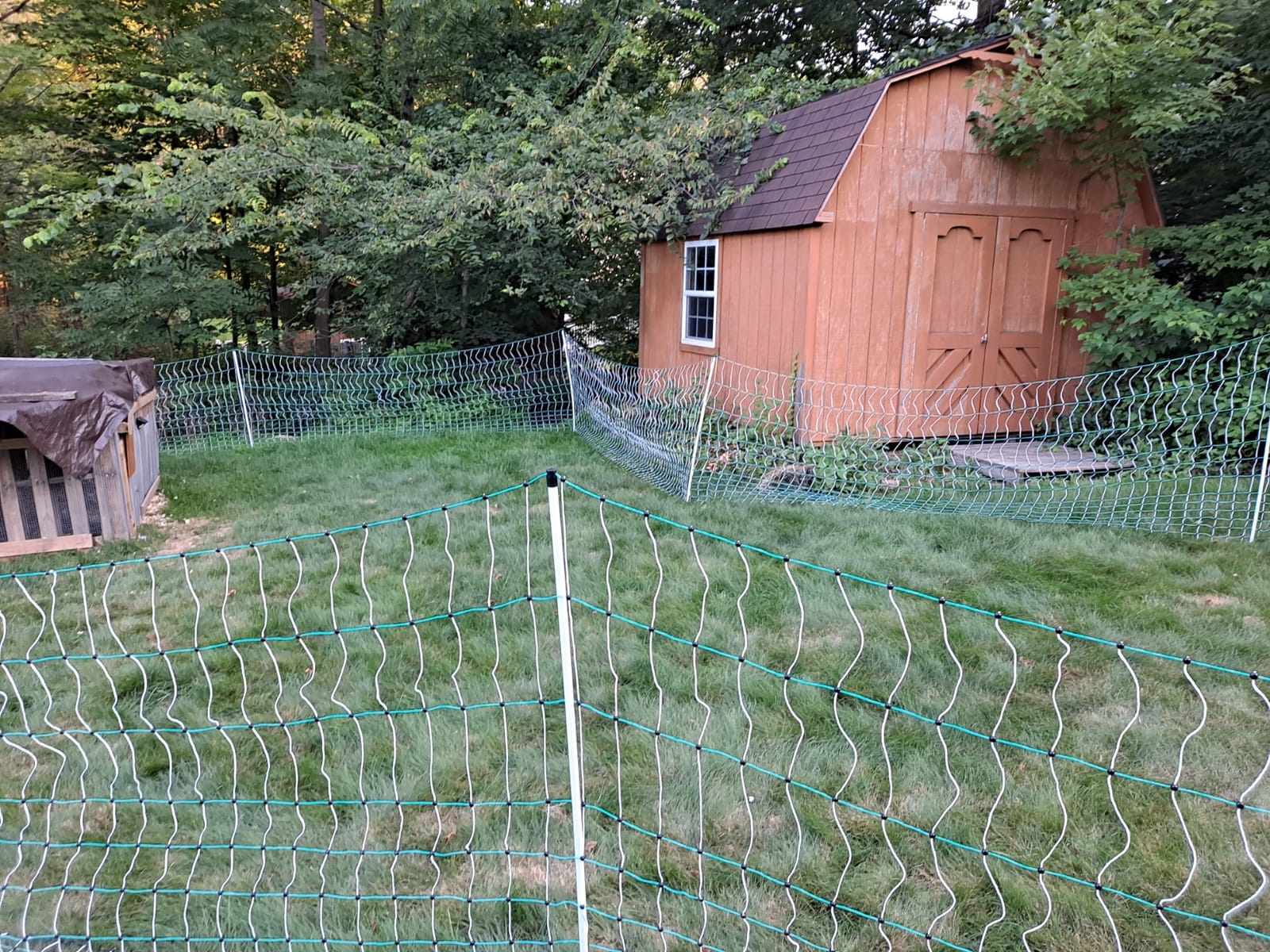
One thing the listings undersell: 12-foot post spacing means the net needs real tension. Owners who roll it out loosely report sag between supports, and a sagging net is a net whose bottom strands brush the grass, which is where the current leaks away. If you follow our weed clearance advice below and brace corners with T-posts, this is a non-issue.
Owners also report that the material tolerates falling limbs and repeated moves without fraying the mesh, which matters if you plan to rotate paddocks every week or two. Just budget for the fact that this is a net and a barrier, not a coop.
Who this suits best
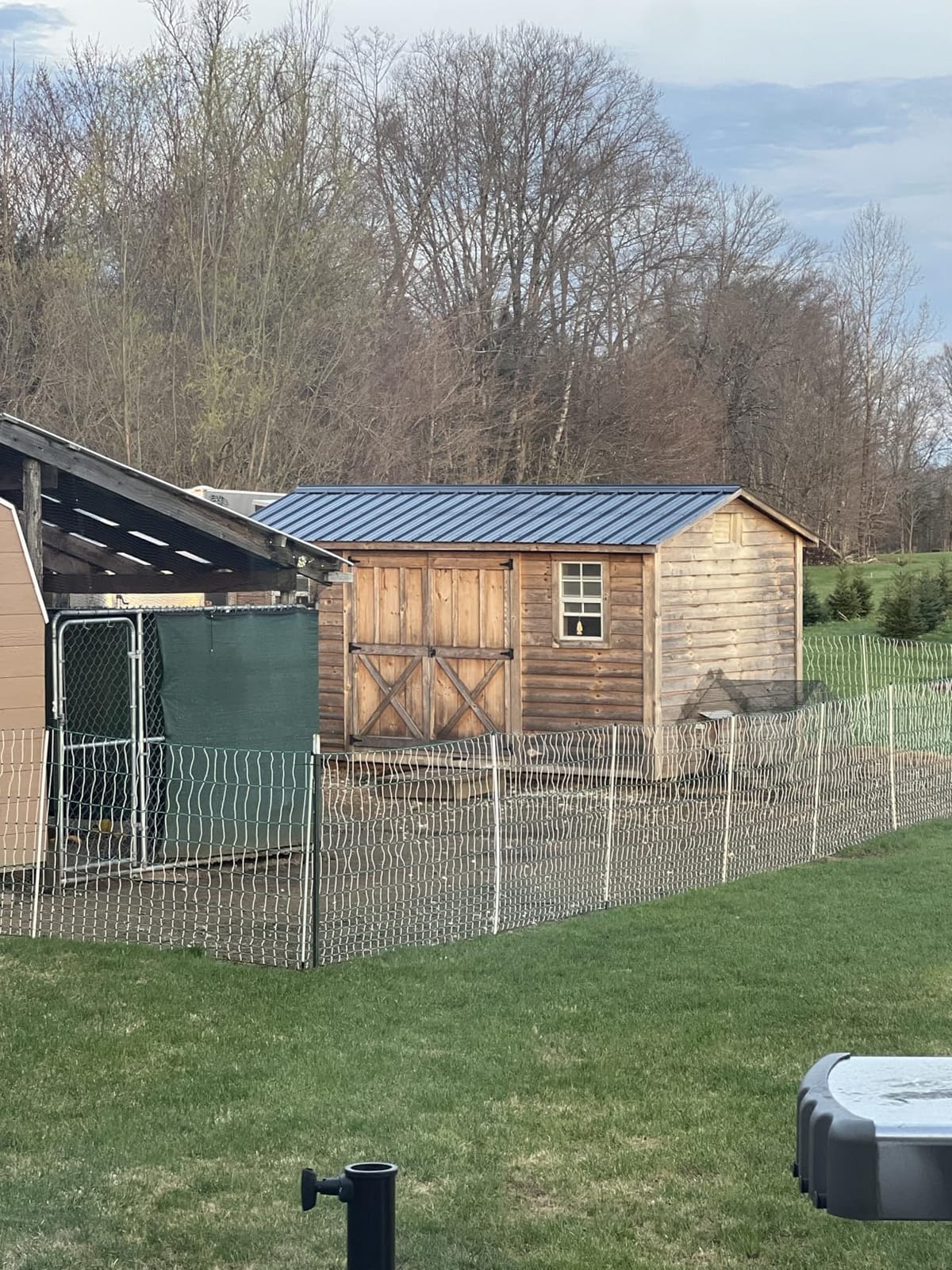
Anyone with a big single paddock, or a keeper who wants one roll to cover the whole run instead of joining two nets. At 48 inches it is also one of the better fits for a mixed flock, since the height and strand count handle birds that jump.
Where it falls short
It does nothing against hawks or owls, which need overhead coverage rather than a taller fence. The energizer, ground rod and clearance strip are separate purchases, so a first-time buyer needs to budget for them.
2. Premier 1 PoultryNet 48 x 164 ft
Premier 1 PoultryNet® Electric Fence for Chickens – 48″H x 164’L
48 in x 164 ft
12 strands, 11 conductive
Posts every 10 ft
24 lb
Pros
- Holds against coyotes/foxes/raccoons
- skunks and stray dogs
- Tool-free install in under 15 minutes
- Survives falling limbs and frequent moves
- Works for sheep/goats/cattle and guard dogs
Cons
- Energizer not included and must match low-impedance needs
- Sags between posts without braced corners
- Not a permanent fence and not suited to small goats
- No aerial predator protection
Premier 1 is the name that comes up most often in backyard forums, and this 164-foot roll is the reason. Eleven of its twelve horizontal strands are conductive, which puts it near the top of this list for current delivery and gives a predator touching the mesh very little dead space to aim for.
String verticals sit at 3-inch spacing and the built-in double-spiked line posts appear every 10 feet, a step closer than most competitors. Owners running 400-plus feet of connected netting report multiple years of service, including through weather damage, which is a longer track record than most nets in this roundup.
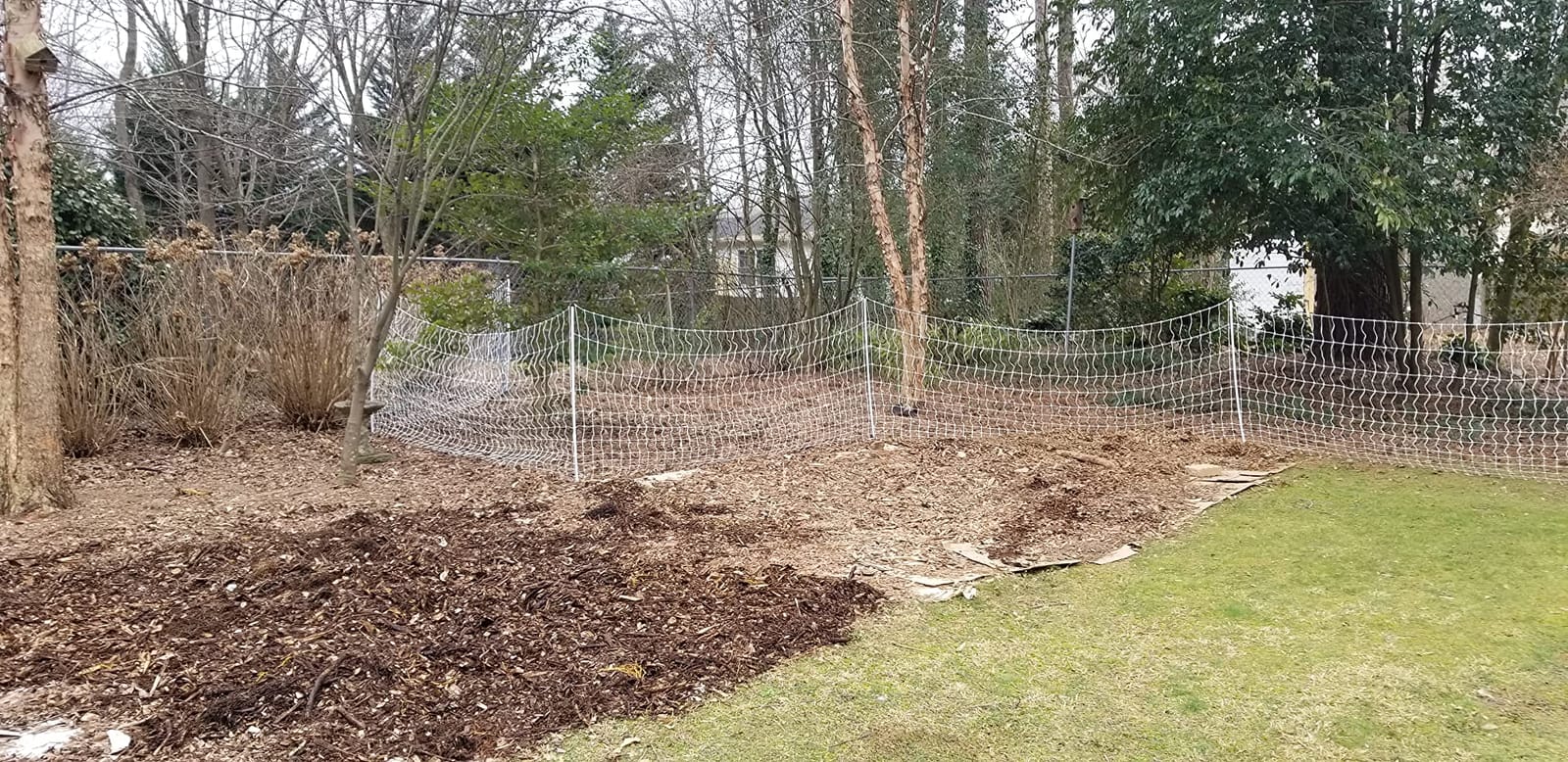
Installation genuinely needs no tools and takes under 15 minutes for a full roll. The material stands up to being dragged and re-staked, and the 48-inch height discouraged larger ground predators better for owners than shorter nets did.
Voltage is the real story here. BackyardChickens owners commonly report steady readings of 7000V to 9000V in half-shaded woodland, but only when nothing is shorting the fence. Same principle on any net here, and only with a matched energizer and sound grounding.
Who this suits best
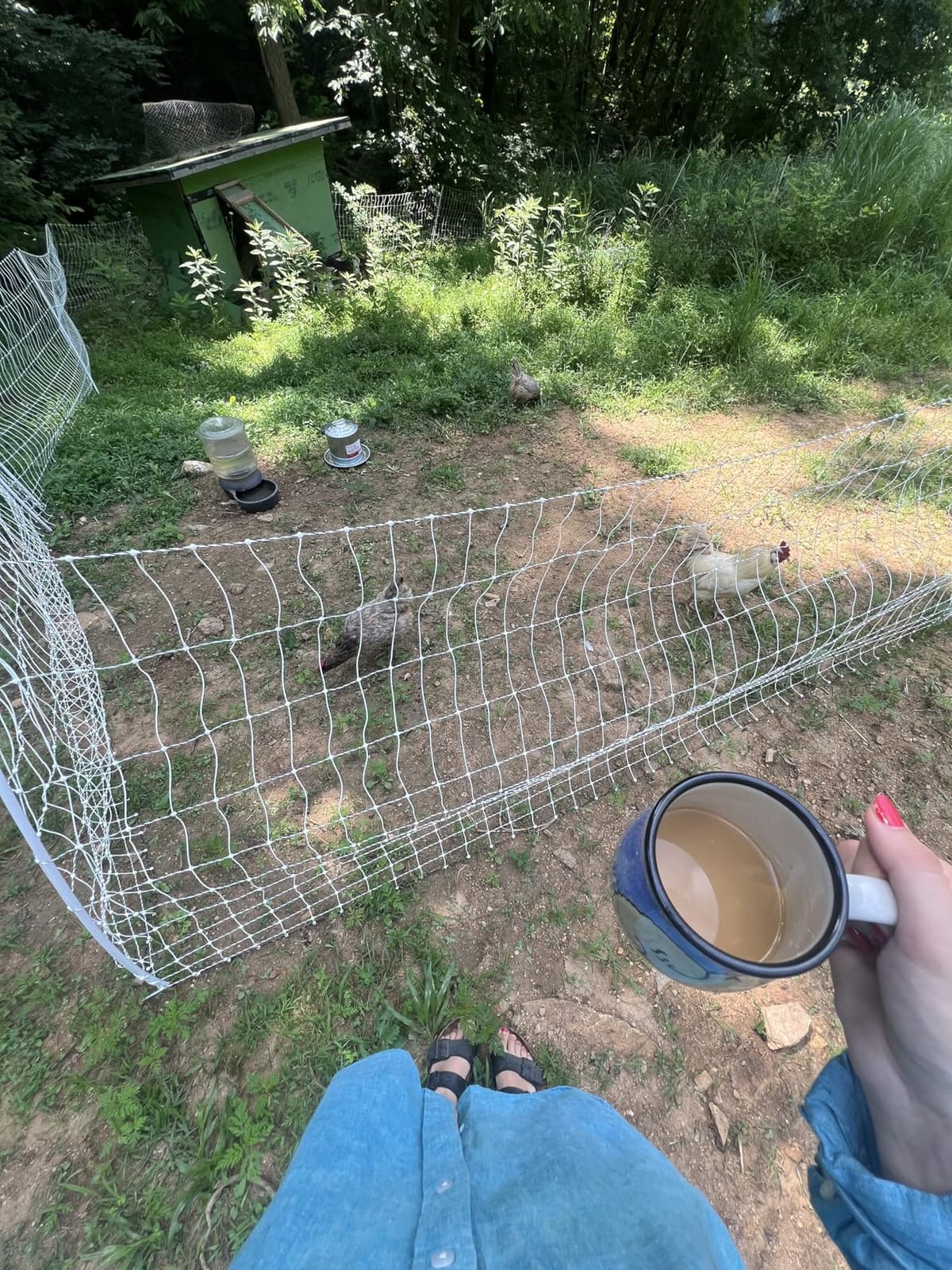
Keepers who want the most established name in the niche, and anyone running a net past poultry, sheep, goats or a guard dog. It is also a strong pick if you intend to link several rolls into a larger paddock.
Where it falls short
Sag between posts is the most common complaint, and the fix is corner bracing with T-posts rather than pulling harder on the mesh. It also is not a permanent fence, and small goats can entangle in the vertical strings.
3. Starkline 42 x 164 ft Net with 10/42/7 Strand Layout
Starkline Electric Netting (42″ x 164′) Electric Fence for Backyards, Homesteads, Gardens, Farms, and Ranches (10/42/7)
42 in x 164 ft
10 strands, 7 conductive
14 fiberglass posts
0.15 joule draw
Pros
- Rated for bears/coyotes/foxes/skunks
- raccoons and stray dogs
- 14 preinstalled fiberglass posts
- 7 in galvanized double-spiked stakes
- Low 0.15 joule draw per net
Cons
- Posts at 12 ft spacing allow sag on uneven ground
- 42 in height is less of a hurdle for large predators
- Energizer not included
This is the pick to look at if you live where bears are a real, recurring pressure. Starkline rates this net against bears alongside foxes, coyotes, stray dogs, skunks, raccoons and deer, and the r/homestead crowd raises bears often when mobile-coop questions come up, so having a manufacturer name them matters.
The hardware is the quiet strength. Fourteen fiberglass posts come preinstalled and stake into the ground with 7-inch galvanized double spikes, which is what you want when the ground is hard clay or stony. Install time is under 20 minutes by the maker’s count, and reviewers confirm the mesh is ready to work out of the box.
Starkline publishes a low power requirement of 0.15 output joules per 164-foot net, and owners like running it on modest power. Read that as the figure for one clean net on a single run, not as a licence to connect four of them across a wooded paddock in summer.
Twelve-foot post spacing is the trade. On flat, mown ground that is fine, but on rolling terrain the mesh develops slack that both snags and lets the bottom live strands touch weeds. If your site is not level, spend the time on corner supports.
Who this suits best
Wooded properties with bear pressure, and keepers on firm or stony soil who need longer ground spikes than the standard kit provides. The low power draw also suits a small solar setup.
Where it falls short
Forty-two inches of height is a shorter visual hurdle than 48 inches, and large predators can reach or leap it more readily. If your losses are raccoons climbing rather than bears wandering, the taller nets are a better wager.
4. Premier 1 PoultryNet Plus 48 x 100 ft
Premier 1 PoultryNet® Plus, Electric Fence for Chickens – 48″H x 100’L
48 in x 100 ft
Posts every 6.8 ft
Plastic struts cut sag
23 lb
Pros
- Closest post spacing in the range at 6.8 ft
- Plastic struts stiffen the mesh and cut sag
- Arrives as a complete preassembled fence
- Under 10-minute tool-free installation
- 4.7 stars from 200 reviews
Cons
- Energizer not included and must be matched
- 100 ft is a shorter run than most nets here
- Cannot be used with a continuous current energizer
This is the sag solution. Standard PoultryNet posts in every 10 feet; the Plus steps in to every 6.8 feet and adds plastic struts that hold the mesh square. Buyers single out that post density as the reason their fence feels stiff rather than loose.
At 4.7 stars from 200 reviews, it carries the highest verified rating among the picks with a substantial review history. That consistency matters for a fence you are trusting with a flock rather than decorating a garden.
Buyers also praise setup speed. It arrives as a complete preassembled fence and goes up in under ten minutes, which makes it the easiest option here if you are building a pen quickly and moving it later.
Who this suits best
Anyone tired of sag, and keepers on slopes or curves where loose mesh is the difference between a live fence and a shorted one. It also works for mixed-species containment, containing poultry while controlling sheep, goats, cattle and guard dogs.
Where it falls short
One hundred feet is a shorter run than most nets in this roundup, so bigger paddocks mean more purchases or more joins. And it will only work with an intermittent pulse energizer, never a continuous current unit, which rules out some cheap fence chargers.
5. Starkline Standard 42 in x 164 ft Net
Starkline Standard Electric Poultry Netting 42″ x 164′ (11/42/3) Electric Chicken Fencing for Backyards, Homesteads, Farms, and Ranches
42 in x 164 ft
11 strands, 3 conductive
Quick-install mesh
3 in grid
Pros
- Installs in minutes and relocates easily between paddocks
- Suited to free-range foraging and pasture rotation
- Works for backyard flocks and larger setups
- Light enough for frequent moves
Cons
- Only three conductive strands weaken the deterrent
- 42 in height is easy for large predators to clear or reach
- 4.0 stars is the lowest rating here with a 10 percent one-star share
This net exists for a specific job: moving birds onto fresh ground. The quick-install, easily movable design is the whole point, and owners use it to support free-range foraging, which tends to mean healthier birds and better eggs.
Reviewers like the deterrent effect against mink, raccoons, foxes, coyotes and skunks, and confirm it suits both backyard and professional setups. Installation takes minutes rather than an afternoon.
Here is the trade nobody advertises. Of the 11 horizontal strands, only 3 are conductive, which makes this a lighter shock than the 11-of-12 layouts higher in this list. That is fine against skunks and mink. It is thinner protection when you are losing birds to a determined raccoon or a coyote that has learned the mesh is soft.
The 4.0 average and 10 percent one-star share trace back to that same combination, alongside some durability complaints. Compare its 3 live strands to the 12-conductive layouts if predator pressure is your main reason for buying.
Who this suits best
Rotational grazers and anyone moving a paddock weekly. If your problem is ground predators testing a boundary rather than animals chewing through it, three live strands can carry the job.
Where it falls short
Forty-two inches of height and only three live strands make this the weakest predator deterrent in the lineup. It also does not carry the track record for durability that the better-reviewed nets do.
6. Pet and Livestock HQ 48 in x 164 ft Net
Pet & Livestock HQ Electric Fence Poultry Netting 48″ x 164′ – Portable Pre-Assembled Electric Net Fencing for Goats, Sheep, Lambs in Farms, Ranches, and Gardens (19 Posts, 2 Spikes)
48 in x 164 ft
14 strands, 12 conductive
19 posts every 9 ft
23.6 lb
Pros
- 19 fiberglass posts is the highest post count in this roundup
- Bottom 6 strands at 2 in spacing stop chicks escaping
- Bottom two strands are non-conductive to avoid weed shorting
- One person can install and move it
Cons
- Energizer and recommended solar charger not included
- Corner stability depends on fitting the included pegs and guy lines
- Posts every 9 ft can still show sag on long runs
This is the pick when chicks are in the picture. The bottom six strands sit at 2-inch spacing, and buyers point to that graduated spacing as the reason young birds stop squeezing out, a problem most nets here cannot claim.
It also has the most support hardware in the roundup at 19 preinstalled fiberglass double-spiked posts, one every 9 feet. Owners value the graduated spacing, the heavier post count than rivals and the fact that a single person can install and move it.
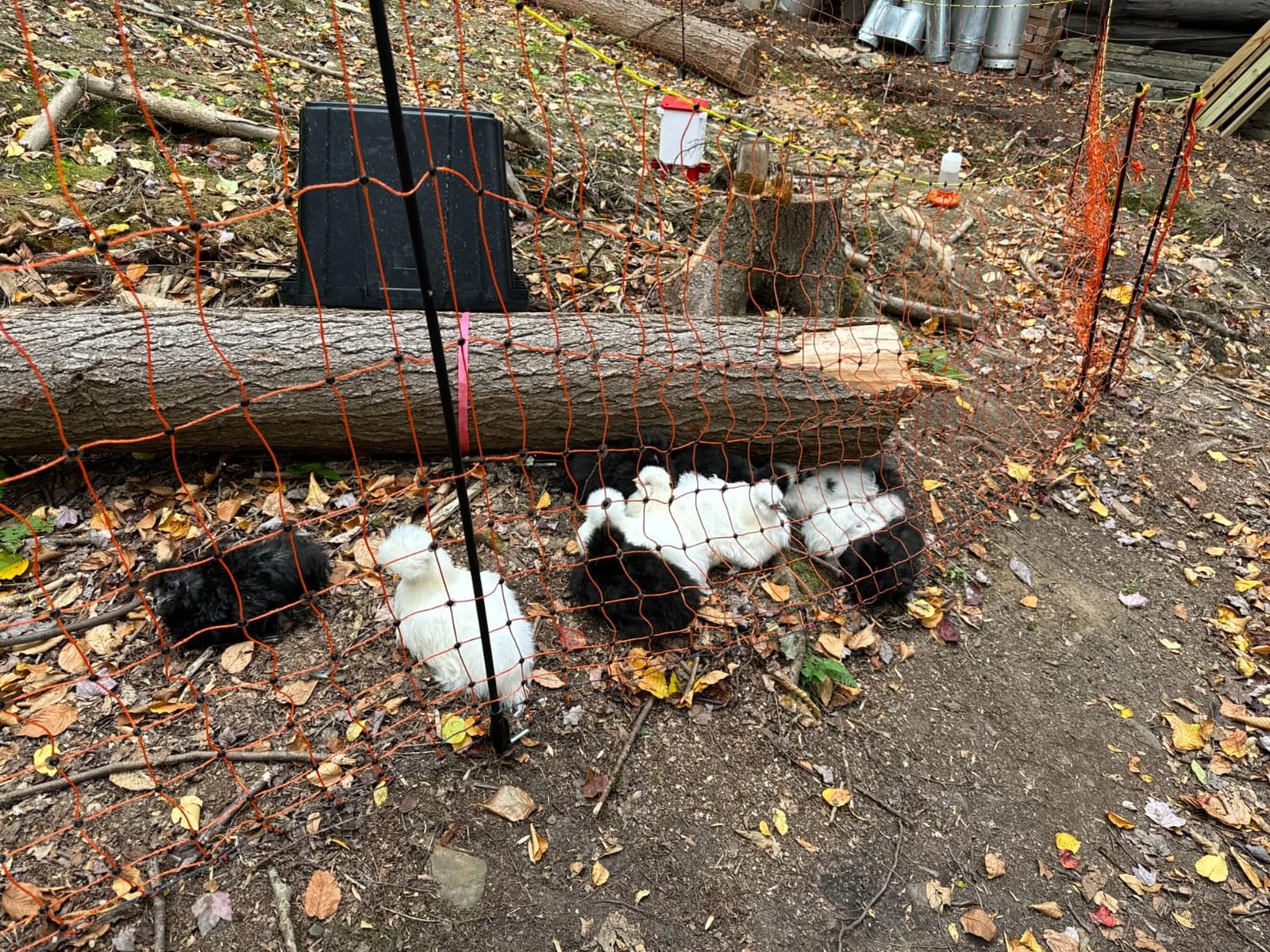
The clever detail is the two non-conductive bottom strands. Because the lowest live wires start higher, summer weed growth touching the base of the net shorts far less than it would on an all-live net, which solves a problem most keepers meet every August.
At 23.6 pounds it is light enough to be portable without feeling flimsy, and reviewers confirm it holds up in windy conditions. A 41-inch variant exists for keepers who want the graduated spacing at a lower profile.
Who this suits best
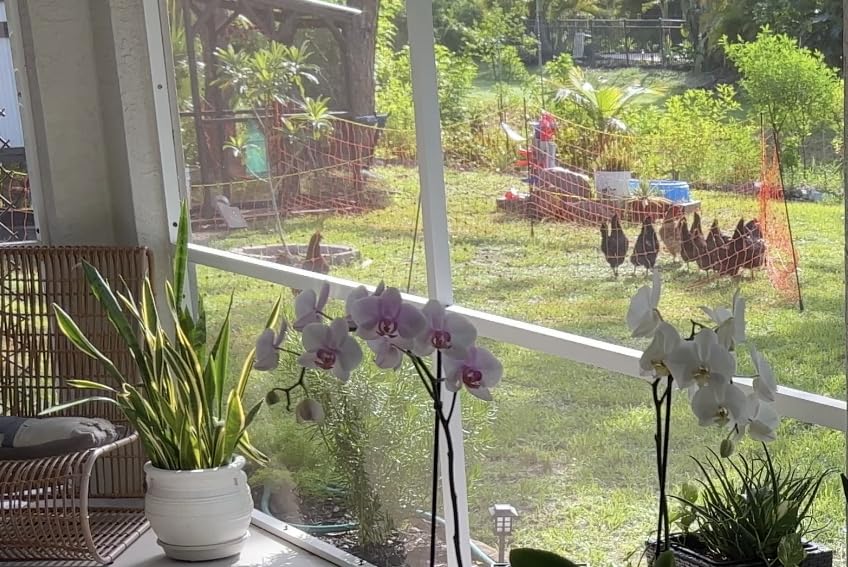
Flock owners raising chicks alongside adults, and anyone running ducks, geese or rabbits with poultry. It is also a sensible pick where summer weed growth is a recurring short.
Where it falls short
Corner stability only arrives once you fit the included pegs and guy lines, and posts every 9 feet can still sag over long runs. The energizer, including the solar charger the maker suggests, is a separate purchase.
7. VEVOR 48 in x 168 ft Electric Poultry Netting Kit
VEVOR Electric Poultry Netting, 48″ H x 168′ L, PE Net Fencing Kit with Posts & Double-Spiked Stakes, Utility Portable Mesh for Chickens, Ducks, Geese, Rabbits, Used in Backyards, Farms, and Ranches
48 in x 168 ft
Fiberglass posts, double spikes
Windproof kit
Repair kit included
Pros
- A 48 in by 168 ft run from a single roll
- Fiberglass posts and a windproof kit for all-weather use
- Repair kit and warning sign included in the box
- Works for chickens
- ducks
- geese and rabbits
Cons
- Energizer or power supply not included
- Listed item weight of 4.73 lb looks low for the shipped bundle
- Fewer reviews and less long-term durability history than the leading brands
The VEVOR kit gives you a 48-inch by 168-foot run with an evenly spaced grid, and it is the pick here if the cost of the whole project is the deciding factor. Buyers cite size for the money and weather-resistant fiberglass posts as the main draws.
Fiberglass posts with double-spiked steel stakes give a solid base, and the windproof kit stands up to weather. The box also includes a warning sign and a repair kit, which are cheap items that a lot of competitors leave out.
It also accepts AC110-240V external power, a solar panel or a DC supply, so the energizer can match whatever the site allows. The power source itself is not included.
Who this suits best
First-time buyers covering a large area on a budget, and anyone keeping ducks, geese or rabbits alongside chickens.
Where it falls short
Review history here is thinner than for the established names, so long-term durability claims are harder to verify. The listed item weight of 4.73 pounds also looks low for a bundle of this size, so plan for more heavy lifting than the number suggests.
8. PPOLB 164 ft x 41.5 in Portable Electric Net
PPOLB Electric Poultry Fence Netting – 164’L x 41.5″ H, Portable Movable Nets Mesh for Chickens, Ducks, Geese, Rabbits, Electric Fencing for Backyards, Homesteaders, Farms Ranches, and Gardens
164 ft x 41.5 in
11 strands, 9 conductive
Posts every 12.5 ft
0.25 joule advised
Pros
- Lowest cost per foot of any 164-foot net we reviewed
- Built-in fiberglass rods every 12.5 to 13.1 ft
- Low-impedance shock described as safe and humane for animals and handlers
- Lightweight and easy to relocate for rotational grazing
Cons
- Energizer
- grounding rod and connector clips all sold separately
- Only nine conductive strands
- 41.5 in height offers less resistance than a 48 in net
- Must not be used with continuous current energizers
PPOLB is the friendliest starter net here, mostly because it tells you what to pair it with. The listing recommends a 0.25 joule solar or AC/DC energizer, which is the correct number for a full poultry net and something many competing listings never state.
At 17.2 pounds it is a light 164-foot roll, which makes moving it between paddocks genuinely easy.
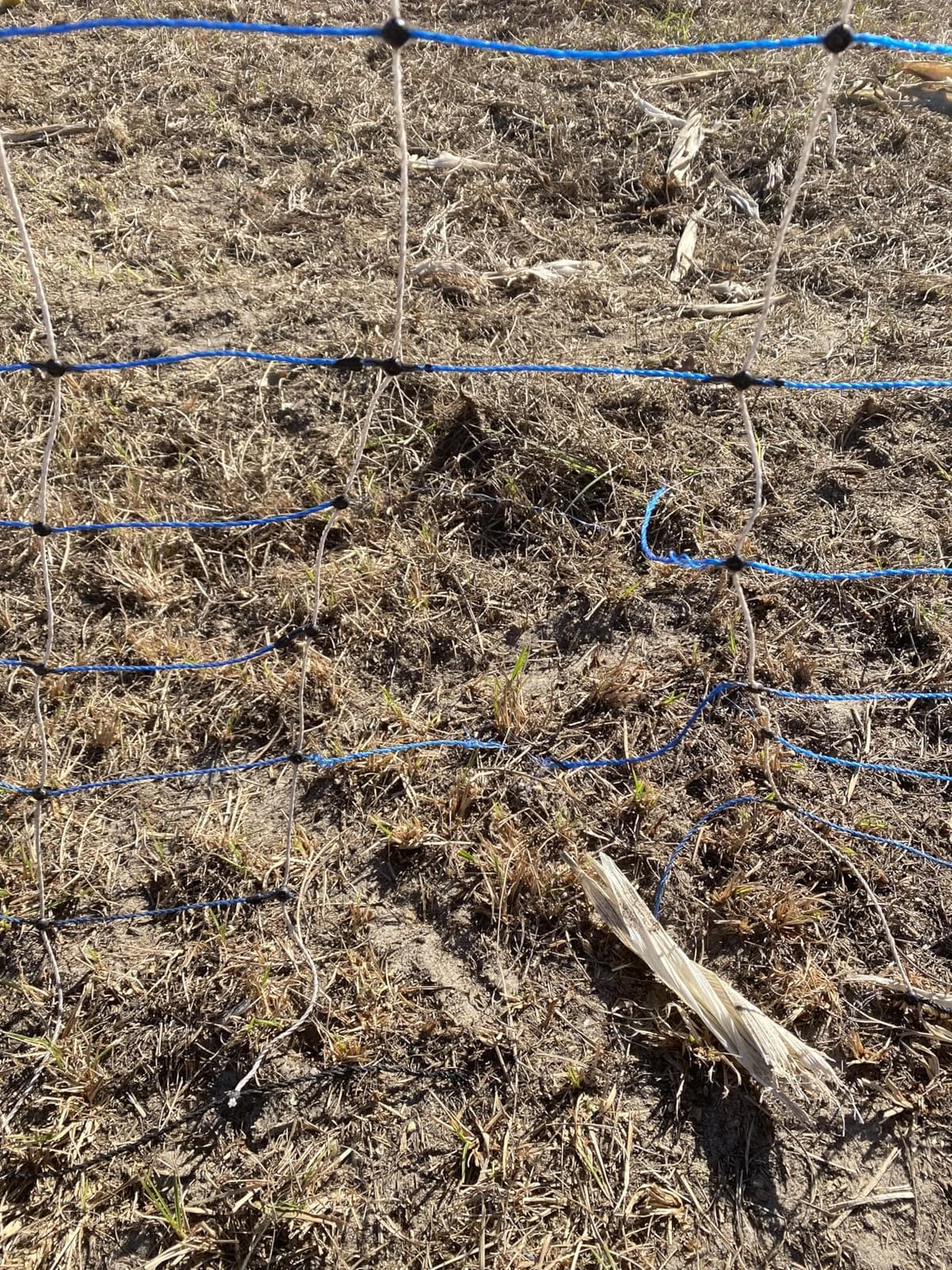
The wire is triple-braided stainless steel running through nine of eleven horizontal strands, and the built-in fiberglass rods appear every 12.5 to 13.1 feet.
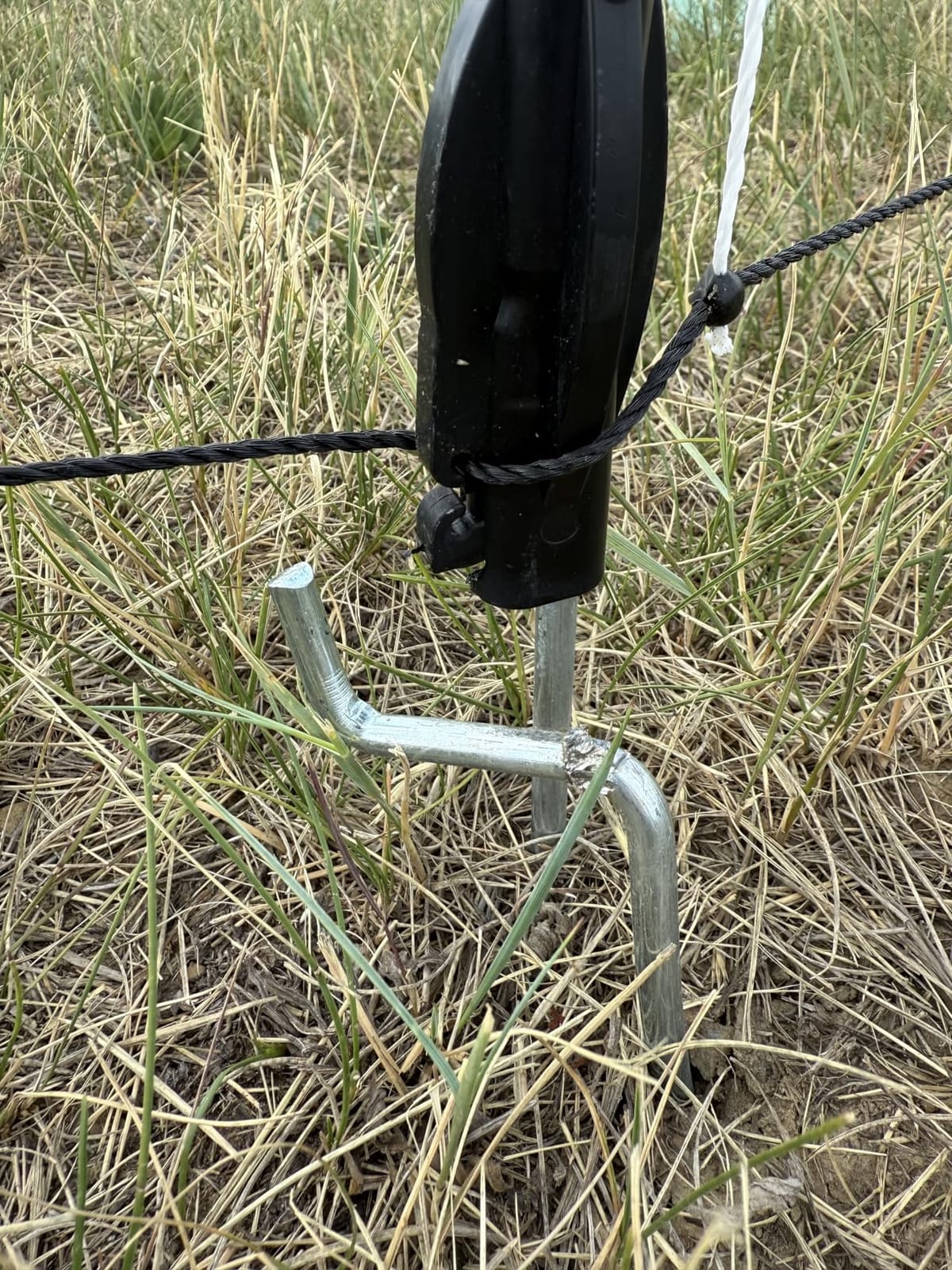
Reviewers treat it as a budget-friendly starter and describe the low-impedance shock as safe and humane for animals and handlers. Most note the same caveat: the energizer, the grounding rod and the connector clips are all extra items.
It also has variants at 49.6 inches and 35.4 inches for livestock setups, plus a 47.5-inch poultry version, so you can move up a height later without changing brands.
Who this suits best
New keepers who want clear guidance on the energizer pairing, and anyone who will be relocating the fence often. It also works for rabbits, ducks and geese in a mixed run.
Where it falls short
Nine live strands and 41.5 inches of height both sit below the premium nets, so this is not the pick for heavy raccoon or coyote pressure. And like the others here, it needs a separate energizer and cannot be run on a continuous current charger.
9. FZIFZI 47.2 in x 164 ft Electric Netting
Electric Poultry Netting,47.2″H x 164’L Electric Chicken Fence for Chickens
47.2 in x 164 ft
14 strands, 12 conductive
Posts every 12 ft
7 in steel stakes
Pros
- 14 pre-attached galvanized fiberglass posts
- 7 in heavy-duty double-pointed steel ground stakes for uneven terrain
- Sub-2 in bottom gap stops chicks escaping
- Chickens learned the boundary within about two weeks
Cons
- Can blow over in strong wind or heavy rain without extra anchoring
- Limited anchor lines mean hillsides need more supports
- Birds that fly can clear 47.2 inches
- Energizer not included
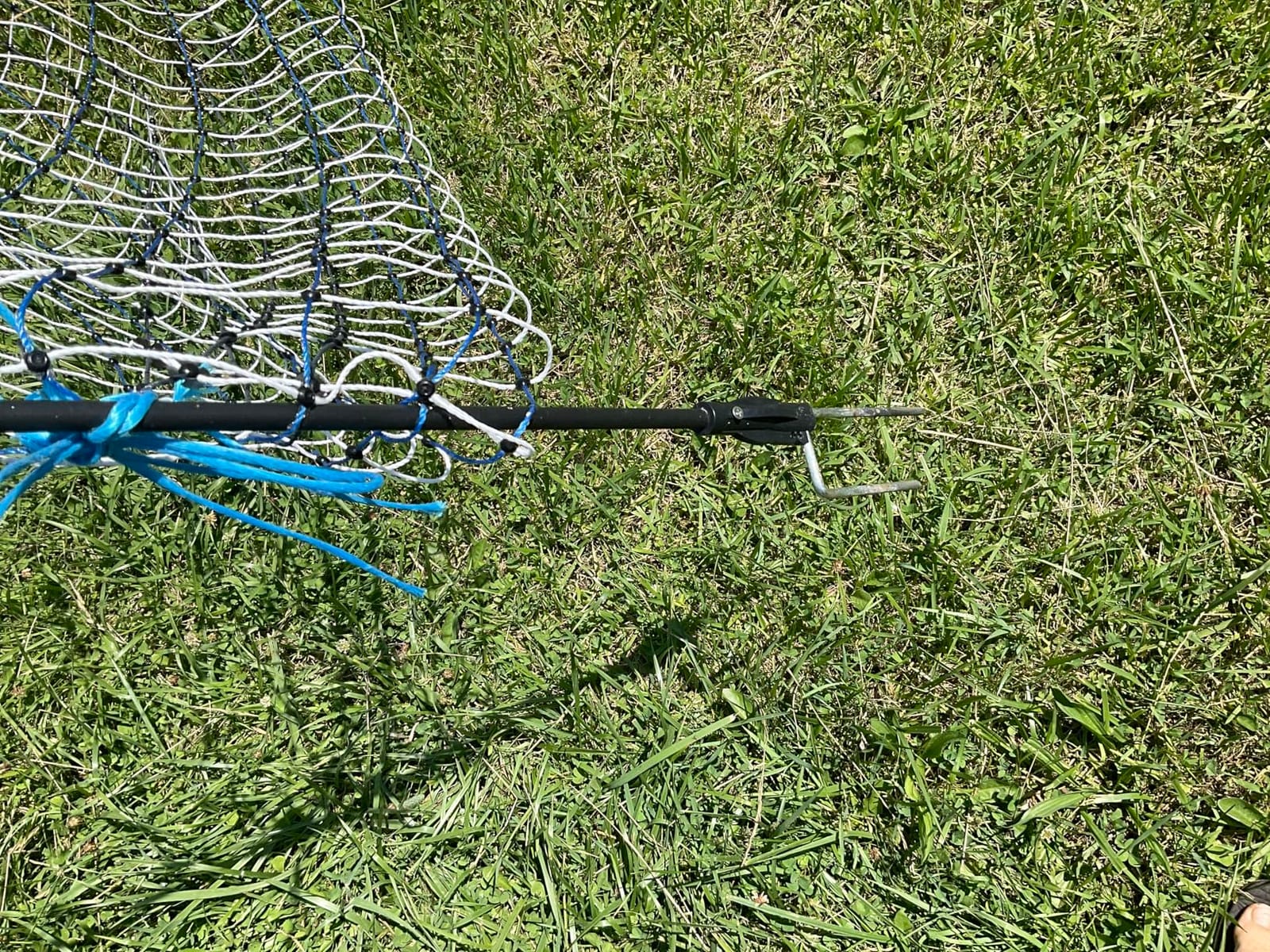
This net is the answer for rocky, sloped or awkward ground. Fourteen galvanized fiberglass posts are pre-attached at 12-foot intervals and drive into 7-inch heavy-duty double-pointed steel stakes, and buyers specifically credit those stakes with holding on uneven terrain.
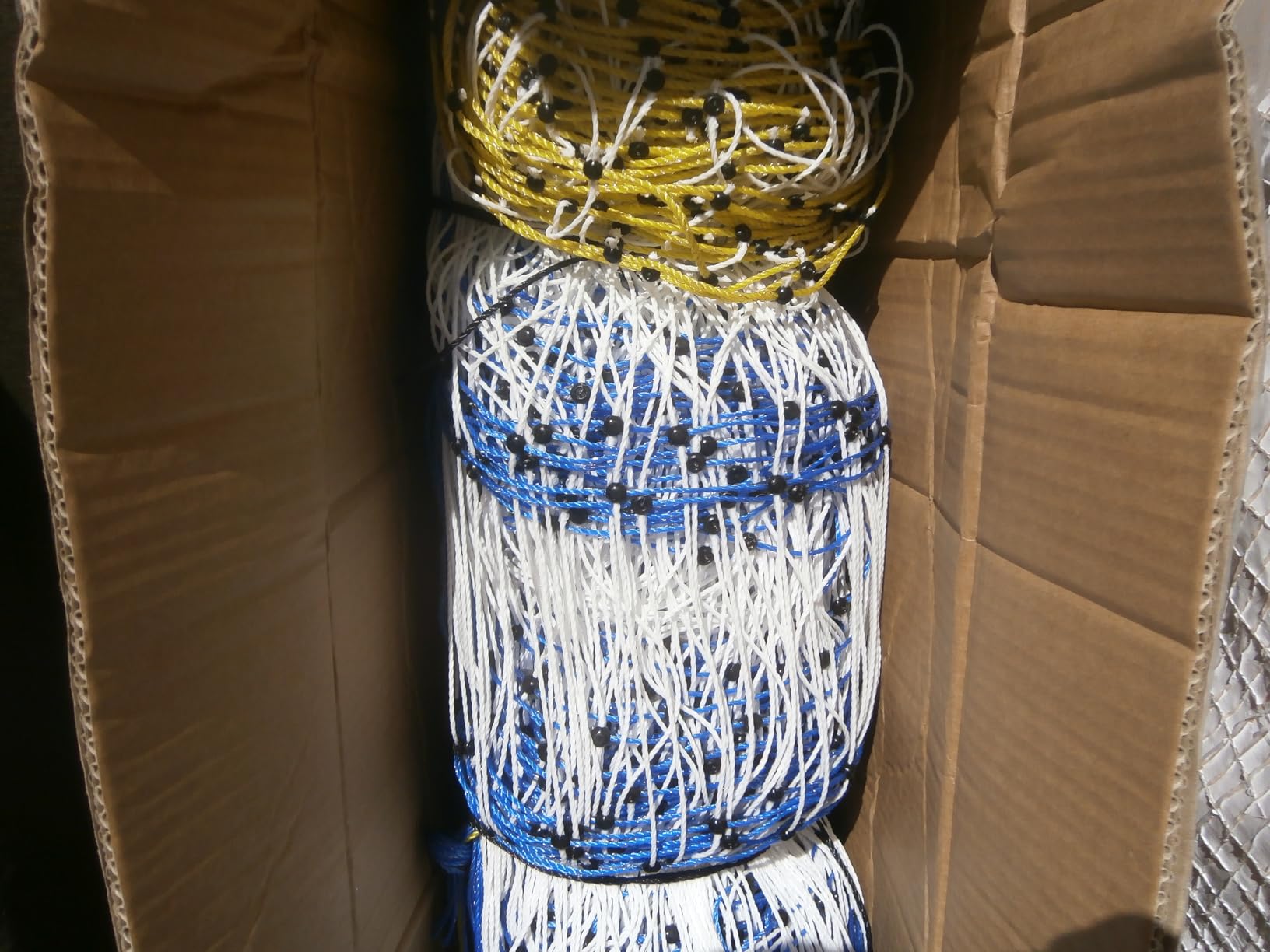
Of 14 horizontal wires, 12 are conductive, with the bottom two left dead, and the graded spacing puts the bottom gap under 2 inches so chicks cannot squeeze through.
Flock training was fast for recent buyers, with chickens learning the boundary in as little as two weeks after energizing. Several owners also report the net still doing useful work for a fully trained flock even when it is not switched on, which is not something we would plan a system around but is a useful safety margin.
The recurring complaint is anchoring. The supplied lines are limited, so on a hillside or an exposed site you will want additional supports. Wind and heavy rain are the other reported weak point.
Who this suits best
Keeps on rough, stony or sloping ground, and anyone raising chicks alongside adults who wants tight bottom spacing. It also suits keepers who want 12 conductive strands without moving up to a 48-inch frame.
Where it falls short
Budget more anchoring than the kit suggests if your site is exposed or sloped. At 47.2 inches, birds that fly can still clear the top, and the energizer is a separate purchase.
10. Starkline Premium Plus+ Braided 48 in x 100 ft Net
Starkline 48” x 100’ Premium Plus+ Braided Electric Poultry Netting (12/48/3) Electric Chicken Fencing for Backyards, Homesteads, Farms, and Ranches
48 in x 100 ft
Braided strands
3 conductive
Posts every 10 ft
Pros
- Braided strands resist snagging during frequent moves
- More conductive wire exposed than twisted net
- One person can build an ad hoc pen in four to six minutes
- Blue clips and wire spacing cue birds away from the fence
Cons
- 100 ft is the shortest run reviewed here
- Needs tensioning to avoid sagging and shorting the energizer
- Requires a fence energizer
- not included
- Hard ground makes the stakes hard to push in
This is the net to buy if you drag your fence constantly. Braided strands rather than twisted ones resist snagging when the roll is moved across rough ground, and because more conductive wire is exposed on a braid, current travels better than the strand count alone suggests.
It carries the highest star rating in this roundup at 4.8, with 85 percent of reviews at five stars. Buyers also report building an ad hoc pen in four to six minutes, single-handed.
The blue support clips and visible wire spacing do real behavioral work. Birds read the color and spacing as a boundary and settle behind it instead of leaning on the mesh, which reduces the constant pressure that causes sag.
Who this suits best
Mobile setups, chicken tractors and anyone who moves a pen several times a week. It is also a good short run for a small daytime paddock next to a permanent coop.
Where it falls short
One hundred feet is the shortest run here, so larger areas need more than one purchase. Sag has to be actively managed or the strands short the energizer, and the stakes are hard work in hard ground.
How Electric Poultry Netting Deters Predators
An energizer sends a brief, high-voltage pulse along the conductive strands every few seconds. When an animal touches the live net and completes the circuit through the soil, it gets a short shock and learns to avoid that boundary. The visible mesh is what teaches the animal where the line is; the pulse is what makes it remember.
That division of labour explains why netting works better than a bare wire. Predators hunt by feel and habit, and a soft, shapeless boundary gives them nothing to learn. A bright, taut, regularly pulsed mesh tells them the edge exists and that crossing it hurts.
It also explains why a net on its own feels useless. The system is the net, the energizer, the ground rod, the vegetation clearance and the fence condition together. Weak at any one of those and the shock drops below the level that teaches anything.
Which Predator Needs Which Barrier
Matching the barrier to the animal is the part of predator control most guides skip, and it matters more than the brand on the box. A net that stops a fox does nothing at all for a hawk, because the threat arrives from a different direction entirely.
Walking the list: mink and weasels are test-shy and low, and they respect a live bottom strand. Skunks operate at night along fence lines and learn quickly. Raccoons are climbers, so height and a visible top strand matter more than raw joules. Foxes and coyotes are smart generalists who need consistent voltage along the entire run. Loose dogs are bold and often need physical backup, and a device like a bark control unit addresses the same animal from a different angle. Bears are occasional but serious, and the strongest deterrent is a fence the bear cannot reach through or get a jaw around.
Then there are diggers. Raccoons, foxes and skunks will work under a net that is anchored lightly at the base, and no amount of current fixes an animal that never touches the wire. Weighted ground pegs at every corner and a hardware cloth skirt buried 12 inches deep do that job better than any energizer.
And aerial predators are the hard limit. BackyardChickens advice is consistent: hawks and owls need bird netting or a cover overhead, and rotating the configuration every week or so keeps raptors from learning one spot. Electric net does not touch that problem.
For an overhead run, something like the mesh on our mosquito netting picks illustrates the span and tension you need over a run, scaled up and fixed to poles.
Energizer Sizing, Grounding and Vegetation Control
Every net in this roundup requires a separate low-impedance, intermittent pulse energizer. Skipping that step is the single most common reason a new fence feels dead, and so is buying one that is too small.
Ignore the big number on the box. A 2-mile or 4-mile rating assumes clean, single-strand wire, and a poultry net with 9 to 12 conductive strands is a completely different load. Owners routinely buy a high-mileage charger and find the far end of the run dead.
The ladder that actually works: 0.12 joules for one 164-foot run that is short and clean, 0.25 joules as the manufacturer minimum for a full poultry net, 0.44 joules for 200 feet or more once vegetation is in play, and 2 joules for coyote, bear or sustained heavy predator pressure. Starkline publishes a 0.15 joule figure for a single 164-foot net, which fits the bottom of that range.
Grounding decides whether the current arrives at all. A 6 to 8 foot copper rod driven into damp soil gives the pulse somewhere to dissipate, and sandy or bone-dry ground needs a second ground rod to compensate. Keep the connection clean with anti-corrosion paste on every terminal.
Vegetation is the other half. Keep a mowed strip roughly 6 inches clear along the base and the shock stays where you put it. Where that strip is impractical, a line trimmer or a mower designed for tight ground works better than trying to fence around tall grass. Weak readings at dusk with a handheld fence tester are the fastest way to catch a developing short.
How to Set Up Electric Poultry Netting
Work through these in order and the fence will hold voltage on the first evening rather than the third weekend.
1. Measure the route and decide whether one roll covers it. If you need more, buy the extra roll rather than stretching a single net thinner.
2. Choose the height for your birds. 48 inches for active or flighty flocks, 42 inches if the pressure is ground predators and the birds are steady.
3. Roll the net out along the intended line in daylight so you can spot stones and dips before the posts go in.
4. Walk the ground and clear it. A 6-inch mowed strip along the base prevents the first weed short from ever happening.
5. Step the posts in at their factory spacing, and drive the ground stakes at an angle away from the flock so the net leans against rather than toward them.
6. Brace every corner. T-posts plus the included guy lines are what keep the net from ballooning outward and going slack.
7. Set the energizer where the sun reaches it if it is solar, and connect the lead wire to the net with the proper insulated connectors.
8. Drive the ground rod 6 to 8 feet into damp soil, and add a second rod if the ground is dry, sandy or rocky.
9. Mount the warning sign at the energizer, energize the fence, and test the voltage before turning the birds out.
Electric Netting vs Hardware Cloth
Hardware cloth wins on durability and on anything that digs. It does not sag, it does not short out when the grass grows, and a buried skirt defeats diggers completely. A serious fox, raccoon or bear problem is a hardware cloth problem first and an electric problem second.
Electric netting wins on coverage per pound of effort and on portability. A single 164-foot roll covers more ground than you would clad in one weekend, it relocates in minutes, and it lets you rotate onto fresh pasture. Over a three-year window, that portability is the argument that usually settles it for a small pastured flock.
The sensible setup layers them. Hardware cloth on the coop and buried under the run entrance, electric net as the outer daytime perimeter. That combination covers digging, climbing and roaming pressure at once.
Net plus energizer plus replacement stakes and a splice kit each year works out cheaper per 100 feet than repeated hardware cloth repairs, and the net can be reused across a different paddock each season while the cloth stays where it was installed.
Safety, Chicks and Night Lock-Up
Electric netting is designed to be unpleasant rather than injurious, and the short intermittent pulse on a low-impedance unit is what makes that true. Use only units specified for poultry, never a continuous current energizer, and never connect the system to household mains wiring.
Mount warning signs at the energizer and anywhere the fence borders a public path. The mesh looks like light garden netting, so visitors and delivery drivers have no visual cue that it is live.
Chicks are the real safety question in a poultry context. Adult birds learn the boundary in a couple of weeks, but chicks can slip under the bottom strands or get their heads caught in the vertical strings, which is the argument for a net with graded bottom spacing such as the Pet and Livestock HQ or the FZIFZI.
Ducks and geese are a different behaviour problem entirely. They push under and test low wires rather than jumping, so containment takes a bottom strand that is genuinely live and kept clear of weeds.
And be clear about what the net is for. It is a daytime, rotating outer layer. Birds still need to be locked in a secure, latched coop at night, because no amount of perimeter fencing covers the hours when the flock is stationary and easy to reach. Netting does not replace a predator-resistant coop.
Frequently Asked Questions
What is the best electric poultry netting?
The best electric poultry netting for predator control is a 48-inch roll with 10 or more conductive strands and posts spaced 10 feet or closer. The RentACoop 48 in x 168 ft net is our top pick for single-roll coverage, and the Premier 1 PoultryNet is the strongest all-round option. Whichever you choose, pair it with a low-impedance intermittent pulse energizer rated at 0.25 joules or higher and a 6 to 8 foot ground rod.
Is electric poultry netting worth it?
For a backyard flock under pressure from foxes, raccoons, mink, skunks, coyotes or stray dogs, yes. It covers far more ground than hardware cloth for the same effort, it relocates in minutes, and it adds a memorable deterrent layer. It is not worth it as your only defence: it does nothing against hawks and owls, does not stop determined digging, and cannot replace a secure night coop.
What is the best type of chicken fence to keep predators out?
There is no single answer, because each predator attacks differently. Predators that dig need buried hardware cloth, climbers need height and a visible top strand, fliers need overhead bird netting, and roaming mammals such as foxes, raccoons and coyotes are best handled by live electric netting combined with hardware cloth at the base.
How many joules is a good electric fence?
A 0.12 joule output is enough for one short, clean 164-foot run. 0.25 joules is the manufacturer minimum for a full poultry net and the safest starting point for most flocks. Step up to 0.44 joules for 200 feet or more once vegetation is involved, and to 2 joules when you are dealing with coyotes, bears or sustained heavy pressure.
How many joules should an electric fence have?
For poultry netting specifically, at least 0.25 joules. Older forum advice recommends 1 joule as a bare minimum, which reflects older heavier fence wire rather than modern multi-strand net. A higher rating does no harm on a clean short run, so if you can only find a 0.44 joule unit it will serve a single net comfortably.
How long does poultry netting last?
Expect three to five years of service for a well-supported net in normal conditions, with the life shortened by UV degradation, chewing and corrosion at connections rather than by ordinary wear. Budget for replacement stakes, splice kits and anti-corrosion paste as annual items, and expect a net that is moved often to last longer than one left stretched in full sun and weather.
How to put an electric fence around a chicken run?
Measure the route, clear a 6-inch mowed strip along the base, roll the net out in daylight, step the posts in at their factory spacing with the ground stakes angled away from the birds, brace every corner with T-posts and guy lines, connect a low-impedance intermittent pulse energizer, drive a 6 to 8 foot copper ground rod, then mount a warning sign and test the voltage before letting the flock out.
The Verdict
For most keepers the RentACoop 48 in x 168 ft net is the best electric poultry netting for predator control in 2026, because one roll covers a full paddock and the triple-braided wire holds current across the whole run. If sag bothers you more than coverage, the Premier 1 PoultryNet Plus at 6.8-foot post spacing is the firmer fence. If budget decides it, the VEVOR kit gives you the same footprint with a thinner review history.
Whatever you choose, budget three things the box does not include: an energizer rated at 0.25 joules or better, a 6 to 8 foot ground rod, and a maintained 6-inch strip along the base. Get those right and the net earns its place. Leave one out and you will spend a season wondering why a fence that looks right reads dead.
If the edge is overgrown, our robotic mower picks cover keeping a clean line without hand tools, and keeping that strip mowed is the single highest-value hour you will spend on this system.