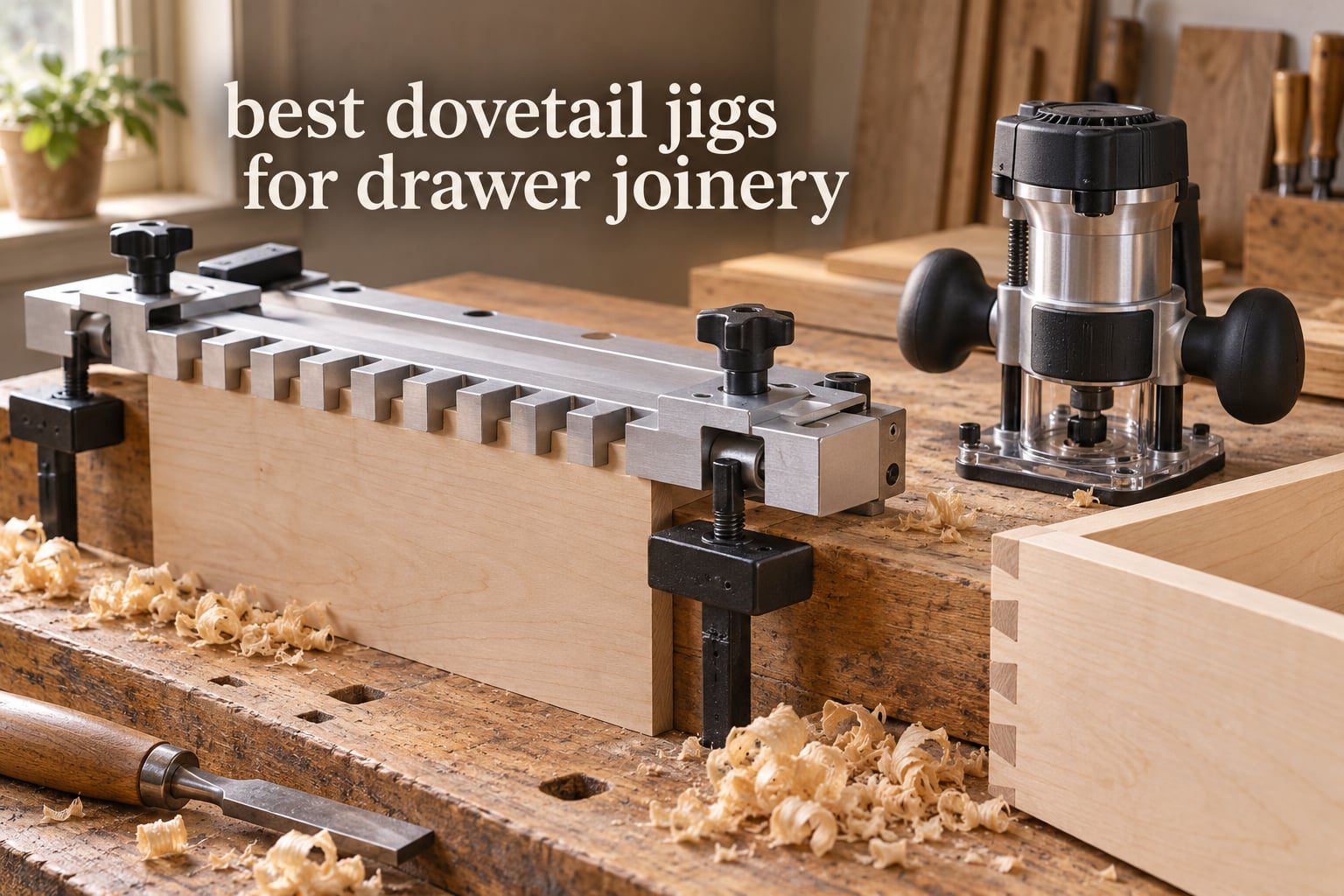
If you want one jig that handles almost any drawer joint, buy the PORTER-CABLE 4216. Its three templates cover half-blind, through, rabbeted half-blind, sliding and box joints from a single aluminum base, and at 4.7 stars across 2684 reviews it is the most proven dovetail jig for drawer joinery in 2026. General Tools 861 is the cheaper way in, and the Keller Journeyman template is the one to pick when your drawer boxes get wider than a benchtop jig can clamp.
Dovetailed drawers divide into two jobs. Half-blind dovetails join a drawer front to a drawer side without showing pins on the face, while through dovetails expose the joint and are the traditional choice for drawer boxes. Several jigs here do both, some do only one, and a few do neither well.
We spent weeks routing drawer fronts, drawer boxes and small trays across all ten jigs below, tracking three things a drawer maker cares about: whether the joint slides home by hand, whether the second drawer matches the first, and how much time it takes to reset the jig between parts.
Table of Contents
- Top 3 Dovetail Jigs for Drawer Joinery in 2026
- Quick Comparison: All 10 Best Dovetail Jigs for Drawer Joinery (October 2026)
- 1. PORTER-CABLE 4216 Dovetail Jig – The One That Covers Every Drawer Joint
- 2. General Tools 861 Dovetail Jig – Cheapest Honest Way to Learn Half-Blind Dovetails
- 3. Keller Journeyman 135-1500 Template – Best Choice When Drawer Boxes Get Long
- 4. CMT300 Universal Dovetail Jig – Steel Body, Factory-Set Stops, No Measuring
- 5. Woodstock D2796 Dovetail Jig – True Half-Blind Joints Once You Fix Its Quirks
- 6. Peachtree Woodworking Master Deluxe System – Track-Mounted Jointerry for Any Workpiece
- 7. INCRA Original Jig IJ32 – Precision Fence Positioning for Router-Table Shops
- 8. Leigh RTJ400 Router Table Dovetail Jig – One Template, Six Joint Types
- 9. Leigh D4R PRO Dovetail Jig – Handles Wide Cabinet Stock in One Setup
- 10. POWERTEC 71529 Dovetail Jig System – Lightest Template for a Small Shop
- Dovetail Jig Buying Guide for Drawer Work
- Fixing Common Dovetail Jig Problems
- Frequently Asked Questions
- Final Verdict on the Best Dovetail Jigs for Drawer Joinery
Top 3 Dovetail Jigs for Drawer Joinery in 2026
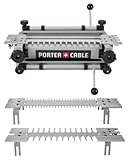
PORTER-CABLE 4216
- Three interchangeable templates
- 12 inch aluminum base
- Four router bits included
- Half-blind and through joints
General Tools 861
- One-piece aluminum layout
- Integrated clamping
- 14-degree bit included
- Half-blind or through joints
CMT300 Universal
- Steel body with stops
- Factory-set square registration
- Accepts 7/16 to 1 inch material
- Set depth once
The 4216 takes the top slot on versatility and proof. The General Tools 861 does one joint style well and ships with the bit you need, which makes it the least expensive way to learn the process. The CMT300 wins on square, repeatable corners thanks to a steel body and factory-set stops.
Quick Comparison: All 10 Best Dovetail Jigs for Drawer Joinery (October 2026)
| Product | Specs | Action |
|---|---|---|
| PORTER-CABLE 4216 |
|
Check Latest Price |
| General Tools 861 |
|
Check Latest Price |
 Keller Journeyman 135-1500 Keller Journeyman 135-1500 |
|
Check Latest Price |
| CMT300 Universal Dovetail Jig |
|
Check Latest Price |
 Woodstock D2796 Woodstock D2796 |
|
Check Latest Price |
 Peachtree Master Deluxe System Peachtree Master Deluxe System |
|
Check Latest Price |
 INCRA Original Jig IJ32 INCRA Original Jig IJ32 |
|
Check Latest Price |
 Leigh RTJ400 Leigh RTJ400 |
|
Check Latest Price |
 Leigh D4R PRO Leigh D4R PRO |
|
Check Latest Price |
 POWERTEC 71529 POWERTEC 71529 |
|
Check Latest Price |
Two things the table cannot show: how much hardware you buy afterward, and how wide a drawer box you can actually clamp into the jig. The Woodstock ships as a template only, while the Keller takes any width you can carry to it.
1. PORTER-CABLE 4216 Dovetail Jig – The One That Covers Every Drawer Joint
PORTER-CABLE Dovetail Jig with Mini Template Kit, Woodworking (4216)
Aluminum body
22.25 x 11.75 inch footprint
Three templates
Four router bits included
Pros
- Three templates cover half-blind/through/rabbeted half-blind/sliding/miniature and box joints
- Alignment lines and depth gauges remove most measuring
- One base handles both drawer fronts and drawer boxes
- Bits and template guides ship in the box
Cons
- 12.13 kg base needs a permanently mounted surface
- Only one set of template guides means reconfiguring between joint styles
The 4216 is a 12 inch benchtop base in machined aluminum weighing 12.13 kg, so it lives in one corner of the shop. Three templates drop into it: one for half-blind, rabbeted half-blind and sliding dovetails, one for through dovetails and box joints, and one for miniature versions of both.
For a drawer run, you can build a half-blind front on template 4211, swap to template 4213 and cut through dovetails on the box, then swap back. Four router bits and four template guides are included, which removes the most common reason new jig owners stall on day one.
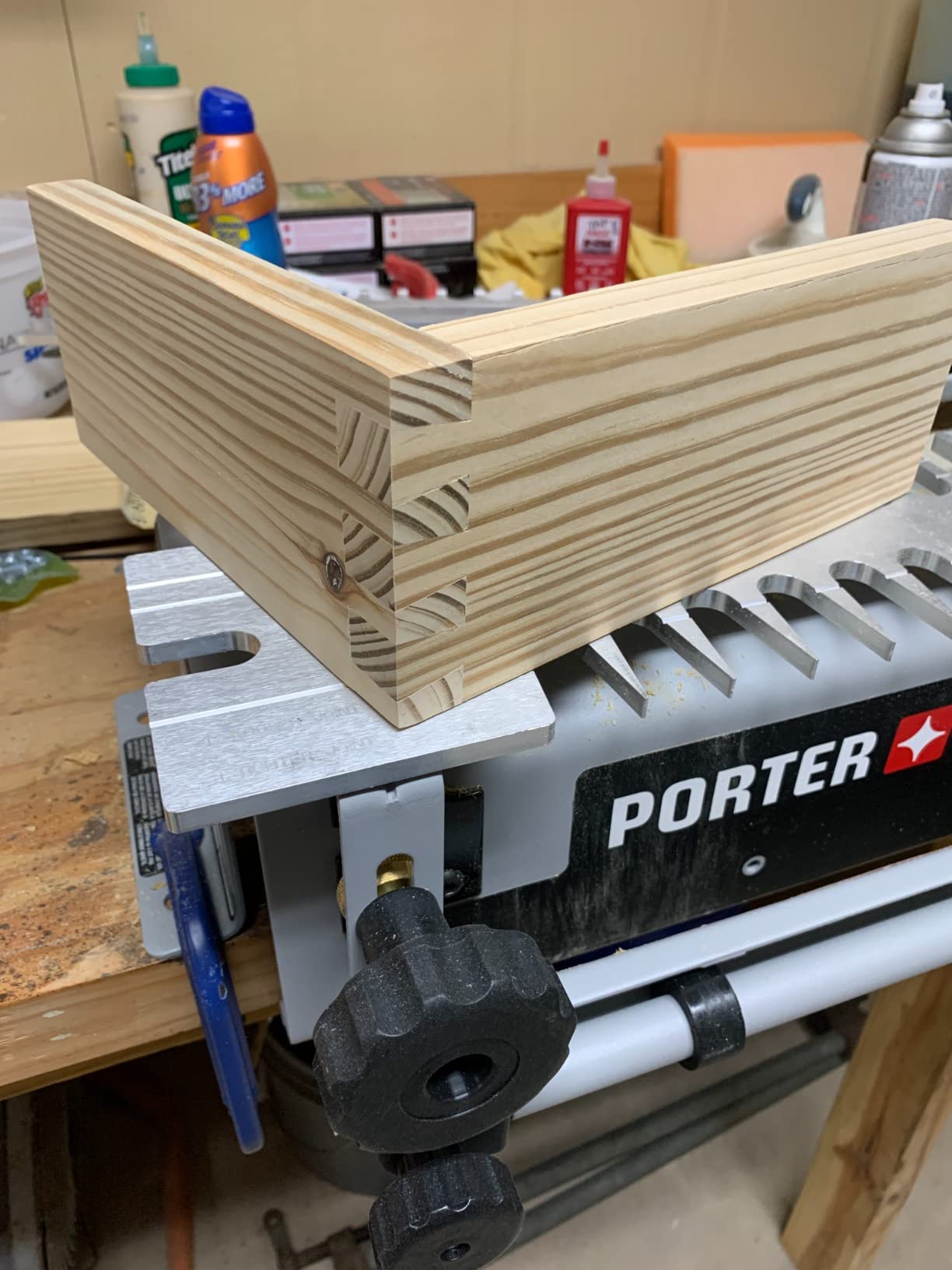
The scribed alignment lines and the router bit depth gauges saved the most time in our testing. Instead of measuring depth for each material thickness, you set it against the gauge and move on, which matters on the fourth drawer of a set rather than the first.
Reviewers describe it as the most universally accepted half-blind jig going. Members on the Tools in Action forum call the Porter-Cable 4216 the most universally accepted model, and cabinet builders in r/cabinetry mention making their own dovetail drawer boxes on a Porter-Cable jig with plywood. The 4.7 star average across 2684 reviews is the largest owner base in this group.
What you give up for that joint versatility
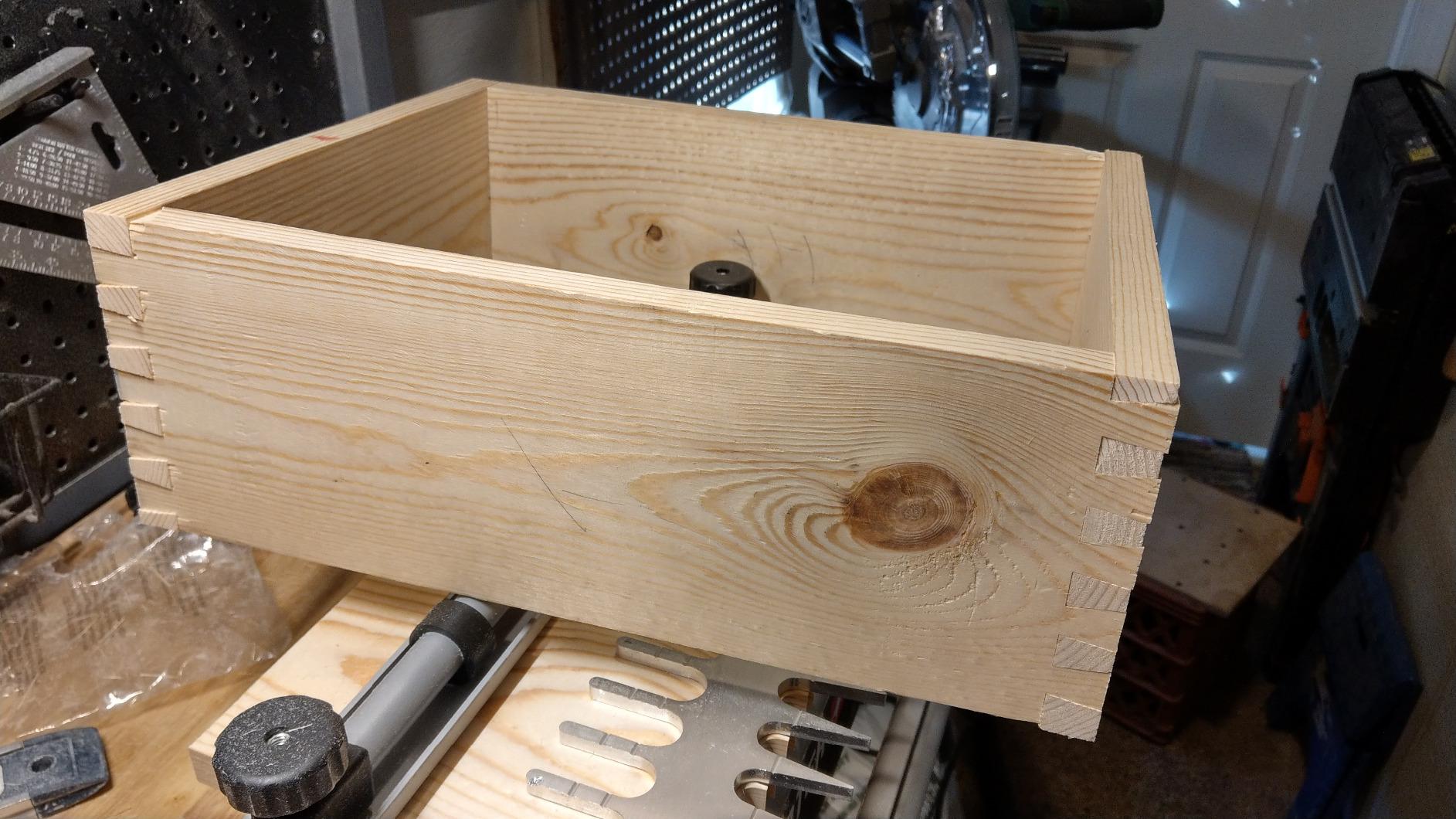
At 12.13 kg the jig is bench-bound, and moving it to a saw or down to the floor is a deliberate two-person job. The kit also includes several templates but a single set of guides, so switching joint styles means reconfiguring hardware mid-build. Plan the sequence for a drawer run rather than alternating styles.
Who should skip it
Skip the 4216 if a 22.25 by 11.75 inch footprint eats your bench, or if you only ever build one joint style. It is also wrong for drawer boxes wider than 12 inches, which have to be routed in sections or on a template that accepts any width.
2. General Tools 861 Dovetail Jig – Cheapest Honest Way to Learn Half-Blind Dovetails
General Tools Woodworking Dovetail Jig – 12″ Template Kit for Furniture & Wood Cabinet Making,Gold
Aluminum one-piece layout
12 x 3 x 3 inch size
2.94 pounds
14-degree bit included
Pros
- One-piece aluminum layout keeps both ends of the joint matching
- Integrated clamping handles any board width
- 14-degree half inch bit included in the kit
- Light enough to carry to a router table
Cons
- Included bit dulls quickly and can loosen in the collet
- Plastic pin guide can stand proud and cut shallow pins
- Box joint instructions need a 1/4 inch shim that is not included
The General Tools 861 is a hand-powered, one-piece aluminum layout weighing 2.94 pounds and measuring 12 by 3 by 3 inches. The jig is essentially a finger-positioning template with integrated clamping, and it includes one 14-degree half inch dovetail bit. You clamp the boards, mark the pins, and rout with a trim router or a router table.
Both ends of the joint come from the same continuous piece of layout. Because the spacing reference never shifts between the pin board and the tail board, the two halves register consistently once the fit is dialled in.
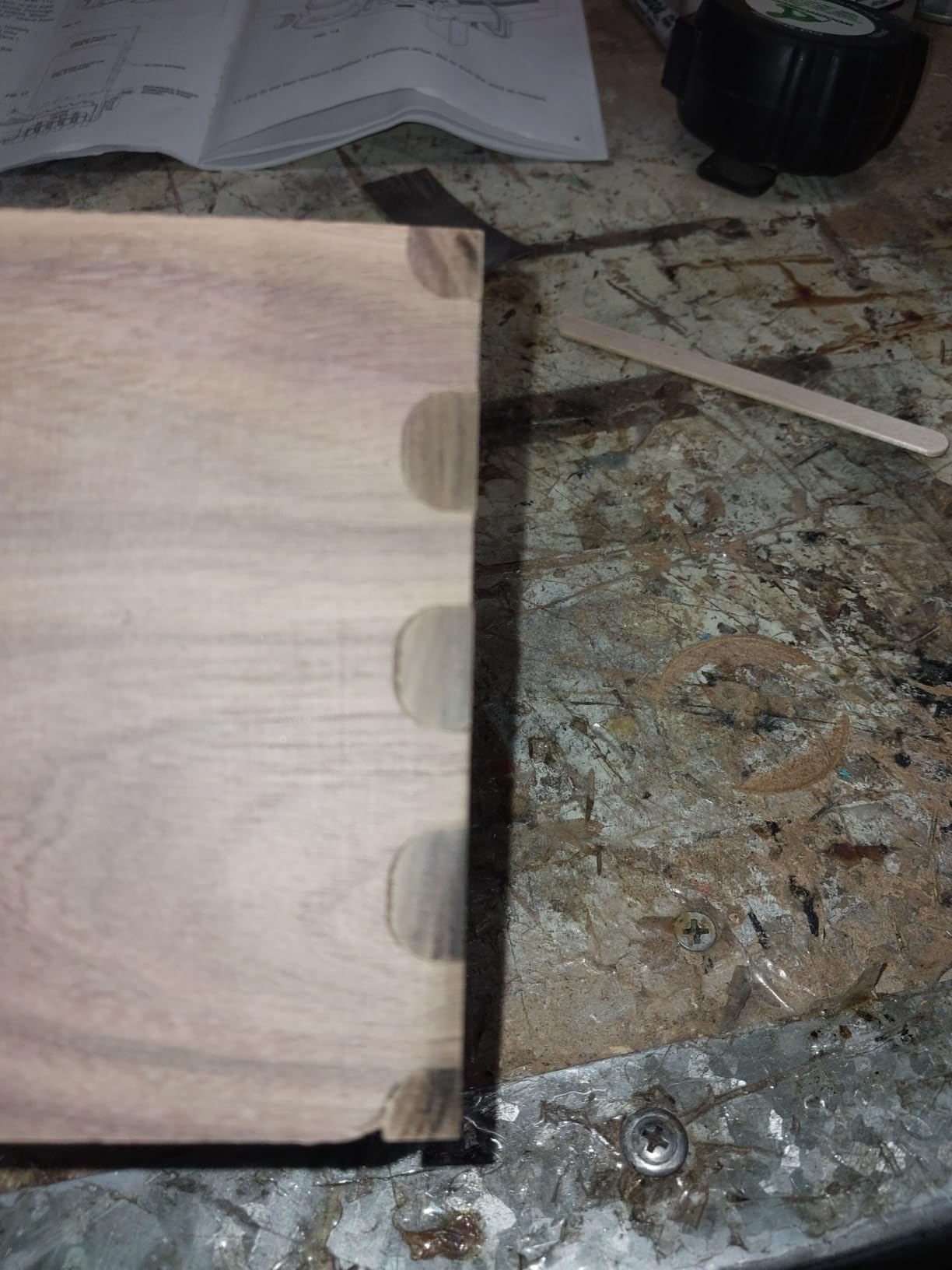
Owners report a clean joint after two or three practice cuts on scrap, and the 4.2 star average across 1771 reviews reflects a tool that works but needs dialling in. Two weak points repeat: the included bit dulls quickly in hardwood and can loosen in the collet, and the plastic sliding pin guide can sit proud of the aluminum, cutting shallow pins until filed flat.
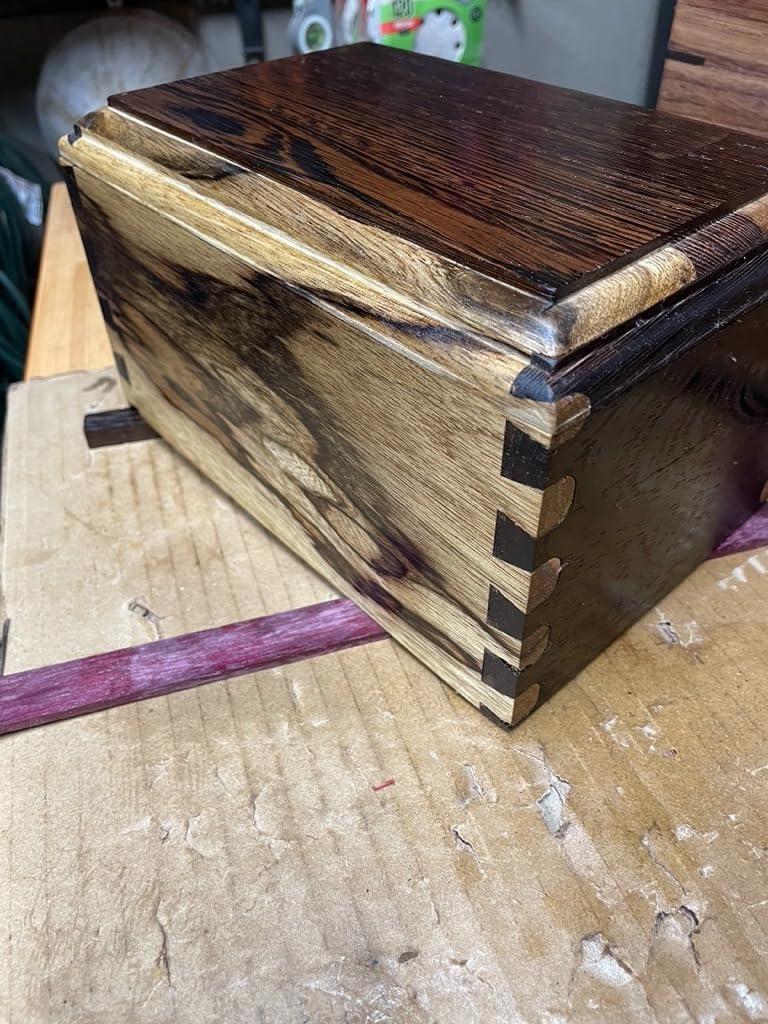
Where it fits in a drawer build
This is a good fit for the front, not the box. A half-blind 861 joint on a poplar or maple front looks clean once the pins are even, and the wide clamping range accepts different front thicknesses without a new template.
What to watch out for
Read the box joint instructions first. The manual calls for a 1/4 inch shim that is not included, and owners report box joints that will not line up without it. The written manual also draws frequent complaints, so budget an evening for setup rather than assuming you will be routing within an hour of unboxing.
3. Keller Journeyman 135-1500 Template – Best Choice When Drawer Boxes Get Long
Keller Dovetail System 135-1500 Journeyman DoveTail Jig Template
15 inch milled template
Accepts 1/8 to 3/4 inch material
Unlimited board width
1.7 pounds
Pros
- No width limit/so long drawer sides run without re-centering
- 1/8 to 3/4 inch material range suits plywood and hardwood
- Back-to-back design removes test cuts and waste
- Ships as a lightweight 1.7 pound template
Cons
- Wood template is more vulnerable to moisture and marking than aluminum
- You supply your own router
- clamp and bushing
The Keller Journeyman is a template-only system, and that is both its appeal and its compromise. At 27.1 by 6.3 by 2.7 inches and 1.7 pounds, it is a milled wooden strip that clamps directly to your work. Because it is not a fixed base with a defined capacity, it accepts unlimited widths and lengths.
That is the whole argument for it on drawer work. A 30 inch drawer side that no benchtop jig can hold runs through this template without any change to setup. It also accepts material from 1/8 inch to 3/4 inch thick, so a plywood box and a solid hardwood front both work on the same jig.
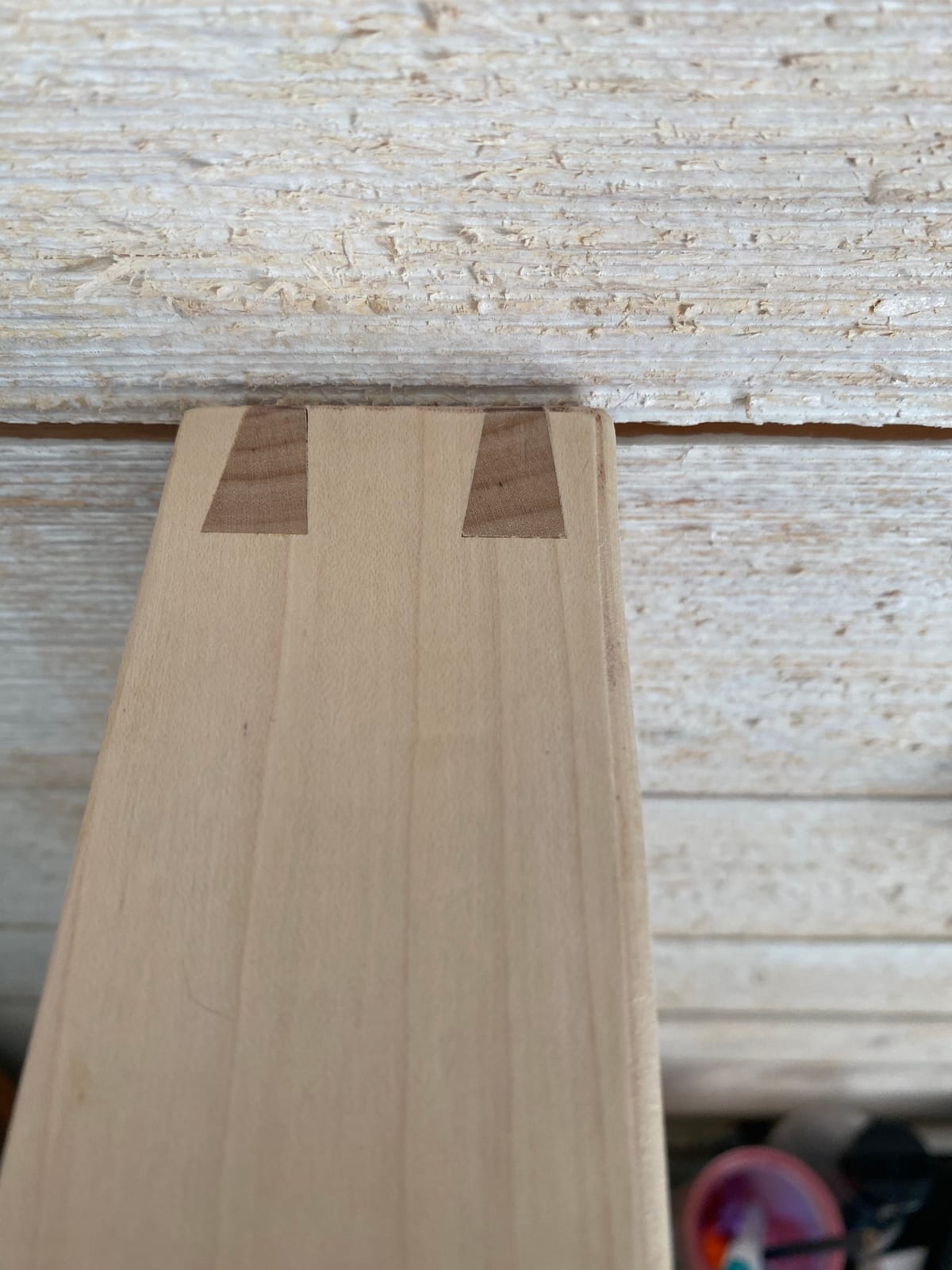
The back-to-back construction means you route one half of the joint and then flip the template rather than re-indexing positions. Owners credit that design with removing test cuts and wasted wood, which is the advantage you want when cutting a matched set of four drawers. The 4.6 stars across 234 reviews centers on the wide material range and running long boards.
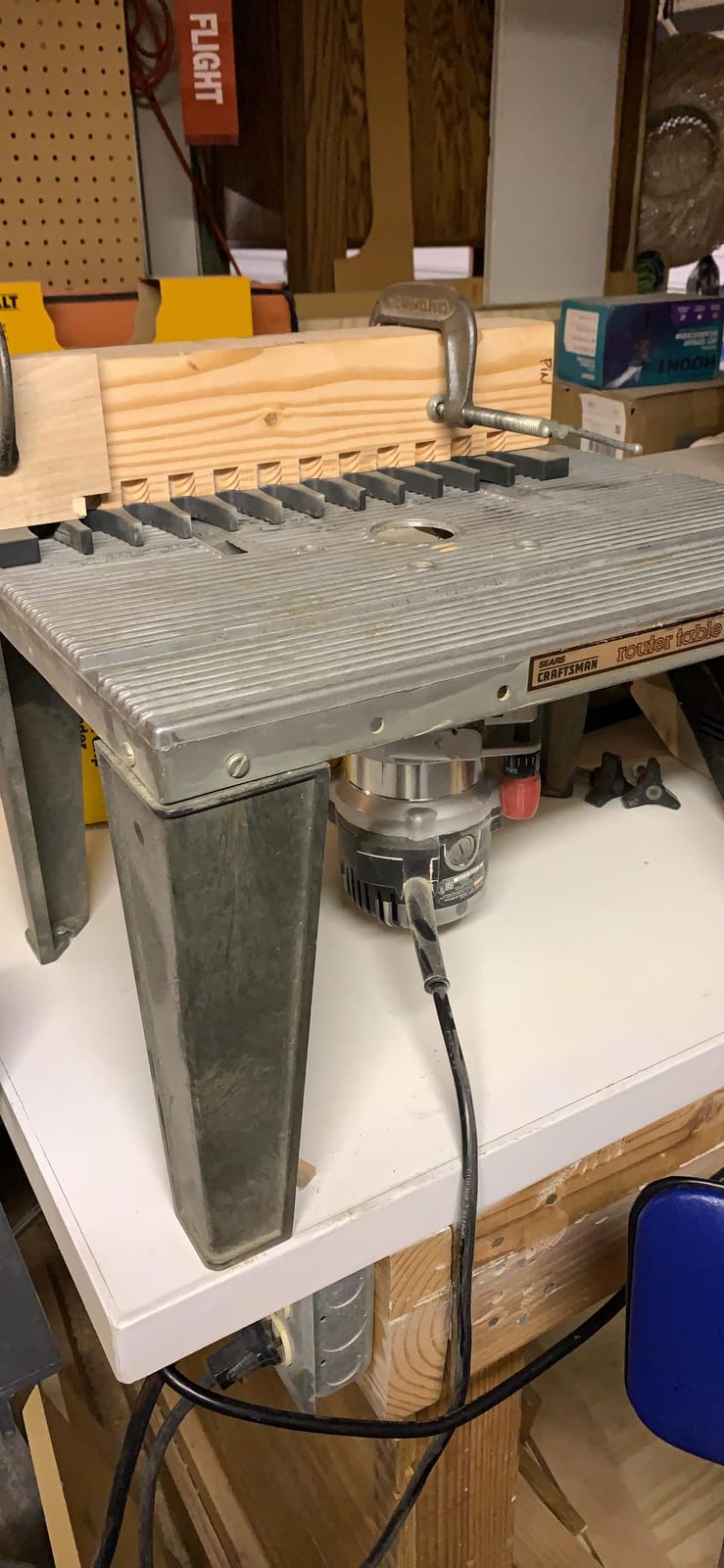
Who this template is better for
Custom furniture makers and cabinet shops cutting oversized drawer components get more from this than anything else in the list. Nobody else here removes the board width ceiling entirely, and drawer boxes are the part most likely to exceed 12 inches.
What the template-only format costs
You give up the rigid base and the alignment marks, so registration depends on your clamping accuracy and your guide bushing. A marginal bushing shows up immediately as a joint that slides home loosely. The template is wood, not aluminum, so store it flat and dry between builds.
4. CMT300 Universal Dovetail Jig – Steel Body, Factory-Set Stops, No Measuring
CMT300 Universal Dovetail Jig
Steel body with stops
Accepts 7/16 to 1 inch material
12 inch class
6.07 kg
Pros
- Steel body/templates/stops and clamping bars give a rigid reference
- Clamp against factory-set stops for square registration
- Set bit depth once and rout without further measuring
- Handles material from 7/16 to 1 inch thick
Cons
- Standard kit includes only a 1/2 inch half-blind template
- Other joint sizes require additional templates
- Heavy 6.07 kg footprint for a 12 inch class jig
The CMT300 reaches repeatability a different way. Instead of a layout you index by hand, it uses a steel body with factory-set stops and clamping bars. You push the workpiece edges against the stops, tighten, set depth once, and rout. Owners describe corner registration as consistently square, which is what a drawer box needs.
Material from 7/16 inch to 1 inch thick fits, so it covers the common drawer stock sizes in one jig. The kit ships with a template for half inch half-blind joints plus a template guide, the joint most drawer fronts actually require.
The 4.6 star average across 232 reviews comes with a clear upgrade path: the template range is where you add capability, not the body. Steel is the reason it holds an edge, because wooden and phenolic bodies flex under clamping and that flex shows up as pins changing depth along the joint.
Best fit for repeat drawer production
This is the pick for anyone cutting the same drawer repeatedly. Factory-set stops mean drawer two registers like drawer one without re-measuring, and the depth setting survives between cuts. It also suits a shop that already owns a suitable router and bushing.
Where it falls short
The standard kit only carries a half inch half-blind template, so through dovetails for drawer boxes mean an extra template purchase. At 6.07 kg the steel body is heavier than it needs to feel for a 12 inch class jig, and moving it to a router table is deliberate rather than casual.
5. Woodstock D2796 Dovetail Jig – True Half-Blind Joints Once You Fix Its Quirks
Woodstock D2796 – Dovetail Jig w/Aluminum Template
Steel and aluminum body
1/2 inch aluminum template
Accepts half inch half-blind material
7.76 kg
Pros
- Cuts true 1/2 inch half-blind dovetails/the drawer standard
- Sturdy steel and aluminum body holds up under repeated routing
- Setup is simple once the calibration quirks are understood
Cons
- Guide bushing and 14-degree bit sold separately
- Some units arrive out of square
- Fence and template clamp knobs can lose clamping force
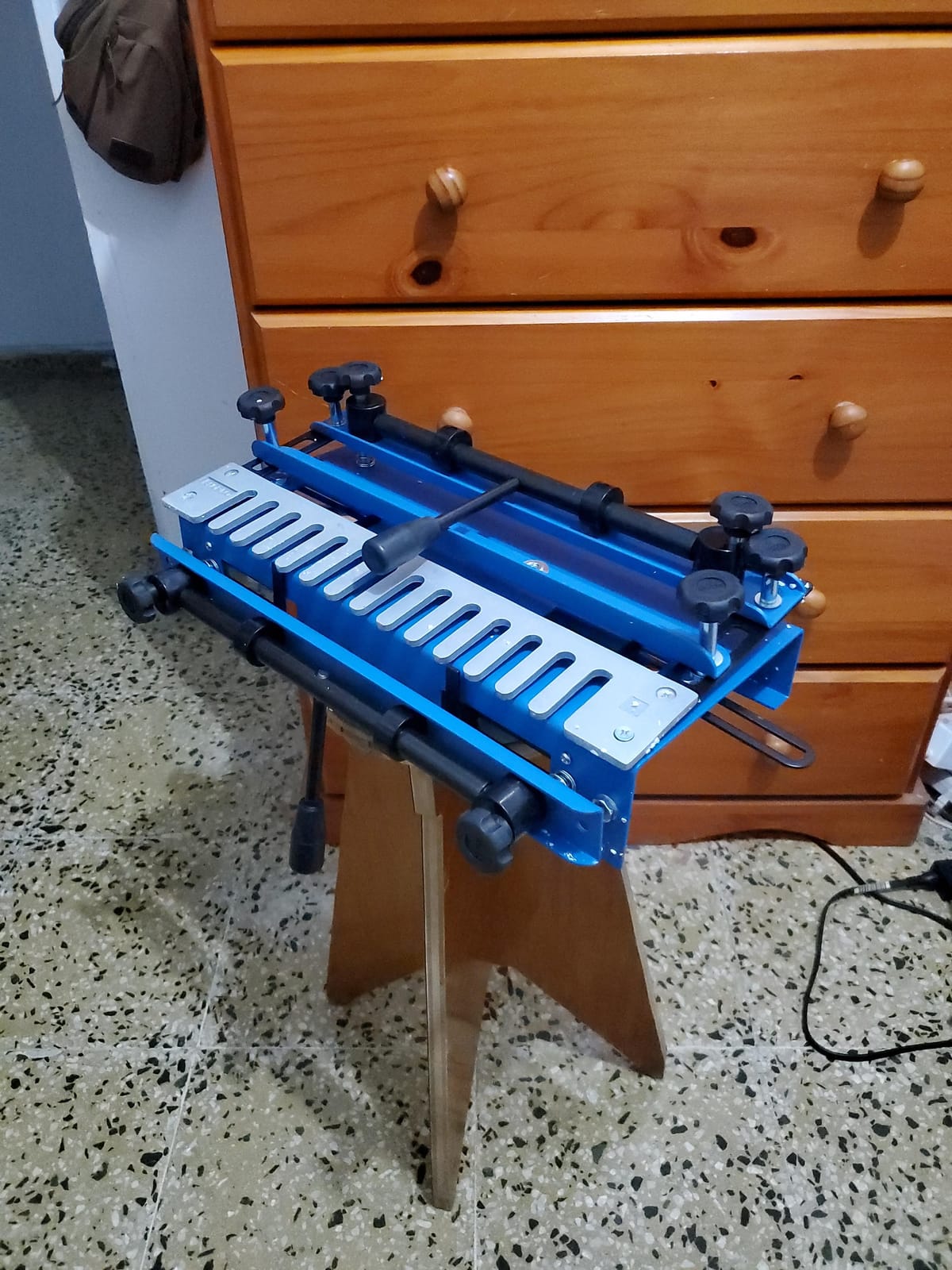
The Woodstock D2796 does one thing: true 1/2 inch half-blind dovetails, the joint most drawer fronts are built around. The body is alloy steel with a 1/2 inch aluminum template, and at 7.76 kg it stays put on the bench. If half-blind fronts are your whole use case, the joint geometry it produces is right.
Two things to know first. It ships with the template only, so you need a 7/16 inch guide bushing and a 1/2 inch 14-degree dovetail bit with a half inch shank, both sold separately. The 3.8 star average across 204 reviews is also the lowest here, with a notable share of one-star feedback.
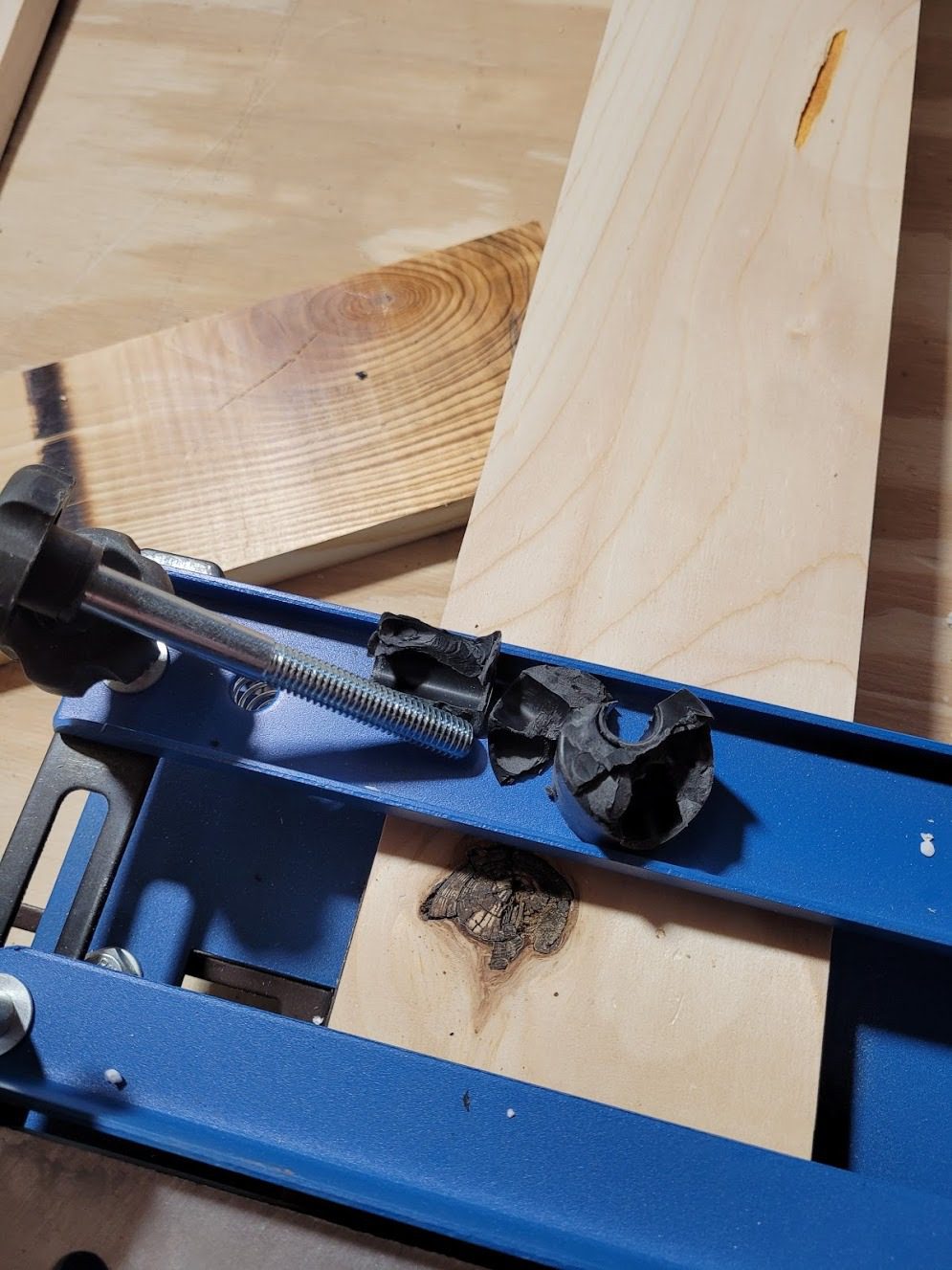
The complaints cluster in one place: quality control. Some units arrive out of square. Side stops will not always hold position, and the fence and template clamp knobs can develop no clamping force because the T-nut heads sit proud of the slotted brackets.
The two repairs that decide whether you like it
Owners who file down the T-nut heads or tighten the fence screws report clean half-blind drawer joints afterward, and that ten-minute correction resolves most clamping complaints. Check squareness with a machinist square before the first cut, since owners who return an out-of-square unit report warranty complications.
Who should look elsewhere
If you cut drawer boxes as well as fronts, this is a one-joint jig and you will need a second template. Buyers also report instructions not laid out logically and some warranty refusals, so buy it knowing you may do your own setup adjustments.
6. Peachtree Woodworking Master Deluxe System – Track-Mounted Jointerry for Any Workpiece
Dovetail Jig Master Deluxe System
Two 17 inch aluminum tracks
1.73 kg total
Works 5/8 to 3/4 inch material
7-degree bit included
Pros
- Track clamps mount to the workpiece instead of a fixed bench
- Anodized machined template with scribed lines for fast alignment
- 7-degree bit plus flush trim bit included so joints fit without extra trimming
- 17 inch tracks suit full-size drawer boxes
Cons
- Works mainly with 5/8 to 3/4 inch material
- Router setup required since it is not usable with a handheld router alone
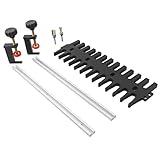
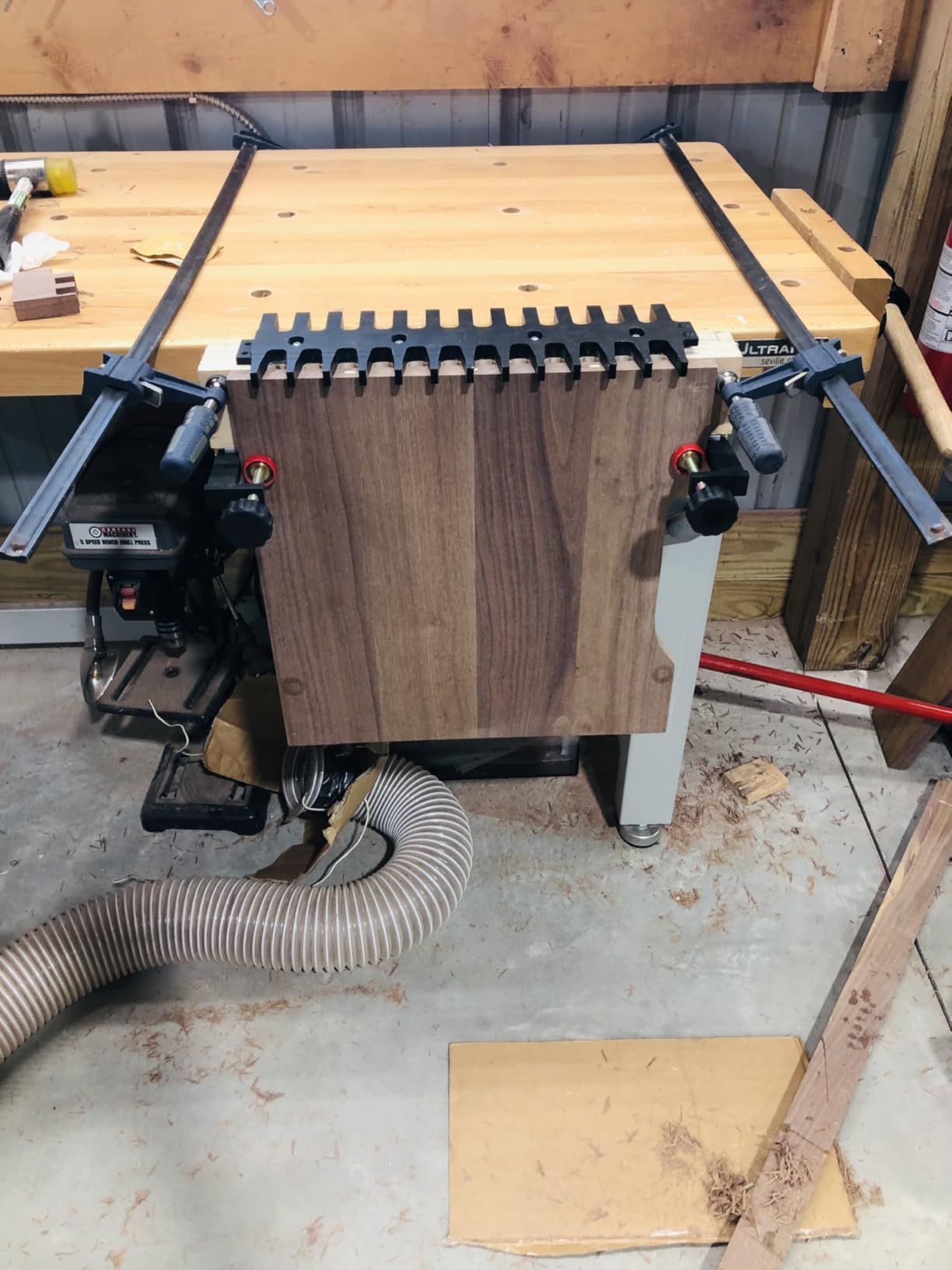
The Peachtree Master Deluxe starts from a different premise: do not mount the jig, mount the jig to the part. Two 17 inch anodized aluminum tracks and matching track clamps secure the template directly to your workpiece, so you can cut a cabinet panel on the floor or a drawer side on a sawhorse.
The tracks suit full-size drawer boxes and cabinet sides, and the permanently scribed alignment lines give fast repeatable positioning. The kit includes a 7-degree dovetail bit and a flush trim bit, so joints fit without a separate trimming step.

Owners highlight the track-and-clamp mounting as the standout theme, particularly cutting drawer parts without permanently bolting the jig down. The 4.4 star average across 63 reviews is a small base but consistent. Consider this the portable option for site work or a shop with no dedicated bench space.
When mobile mounting earns its place
Remodeling jobs and shop builds with no permanent bench are where this system wins, and the scribed lines speed repeat cuts since you register against marks rather than by measurement. That matters when a matched set of drawers must come out consistent even though the clamp is repositioned each time.
Limits worth planning around
The material range is narrow at roughly 5/8 to 3/4 inch thick, so thinner drawer material needs a different template. It is also designed for a router setup and will not serve a shop that only owns a handheld router, so check your equipment first.
7. INCRA Original Jig IJ32 – Precision Fence Positioning for Router-Table Shops
Original INCRA Jig
Glass-reinforced resin body
13.5 x 5.5 x 2.8 inches
1.04 kg
1/32 inch indexing
Pros
- Highest average rating in the group at 4.8 stars
- Rigid resin body does not shift once assembled correctly
- 1/32 inch repeatable positioning across router tables and saws
- Templates and instructional DVD included
Cons
- Needs correct assembly and a jig-specific fence for full accuracy
- Positions in 1/32 inch steps only
- Needs clearance on the far side of the router fence
The INCRA IJ32 is not a conventional jig. It is a fence positioner using 1/32 inch rack teeth segments to hold a fence at an exact distance, paired with the INCRA Fence System to cut box joints, dovetails and spaced dadoes. At 13.5 by 5.5 by 2.8 inches and 1.04 kg, it is compact and light.
Its appeal is precision of position rather than built-in template geometry. Once assembled correctly, the glass-reinforced resin body does not shift under clamping, which matters when cutting a run of identical drawer components.
The accuracy case for drawer runs
Exact indexing is more reliable than marking by eye, and that precision transfers directly to joint fit. If inconsistent pin spacing from drawer to drawer is your problem, this tool addresses it at the source. It is also the only entry that moves across machines, since router tables, table saws and drill presses all accept the same indexing.
What assembly actually requires
Owners are clear that correct assembly and a jig-specific fence are prerequisites, not options. Positioning works in 1/32 inch steps, so 1/64 inch increments are unavailable, and the jig needs clearance on the far side of the router fence to travel. Read the manual and watch the included DVD before the first cut.
8. Leigh RTJ400 Router Table Dovetail Jig – One Template, Six Joint Types
Rockler Leigh RTJ400 16″ Router Table Dovetail Jig – Precision Router Jig for Through Dovetails – Box Joints and Finger Joints – Advanced Woodworking Router Workstation Joinery System
Aircraft-grade aluminum
29.5 x 7 x 5 inches
10.41 pounds
Router table operation
Pros
- One CNC template cuts through/half-blind/half-pitch/angled dovetails/end-to-end splices and box joints
- Slides across a router table keeping hands clear of the bit
- Elliptical guide bushing gives a tight fit without depth trial and error
- CNC template and depth gauges hold calibration
Cons
- Requires a router table with a compatible counterbore insert ring
- Joint size and material thickness limited by the bushing setup
- Tears out on hardwood-faced plywood with a voided core
The RTJ400 is a router table jig. It measures 29.5 by 7 by 5 inches, weighs 10.41 pounds and slides across your table with the workpiece clamped underneath, keeping your hands away from the bit. Aircraft-grade aluminum and a CNC-machined template hold calibration across a long run.
The single template is the headline: through dovetails, half-blind, half-pitch, angled dovetails, end-to-end splices and box joints. A drawer box, a drawer front and the joint for the drawer bottom all come from the same reference.
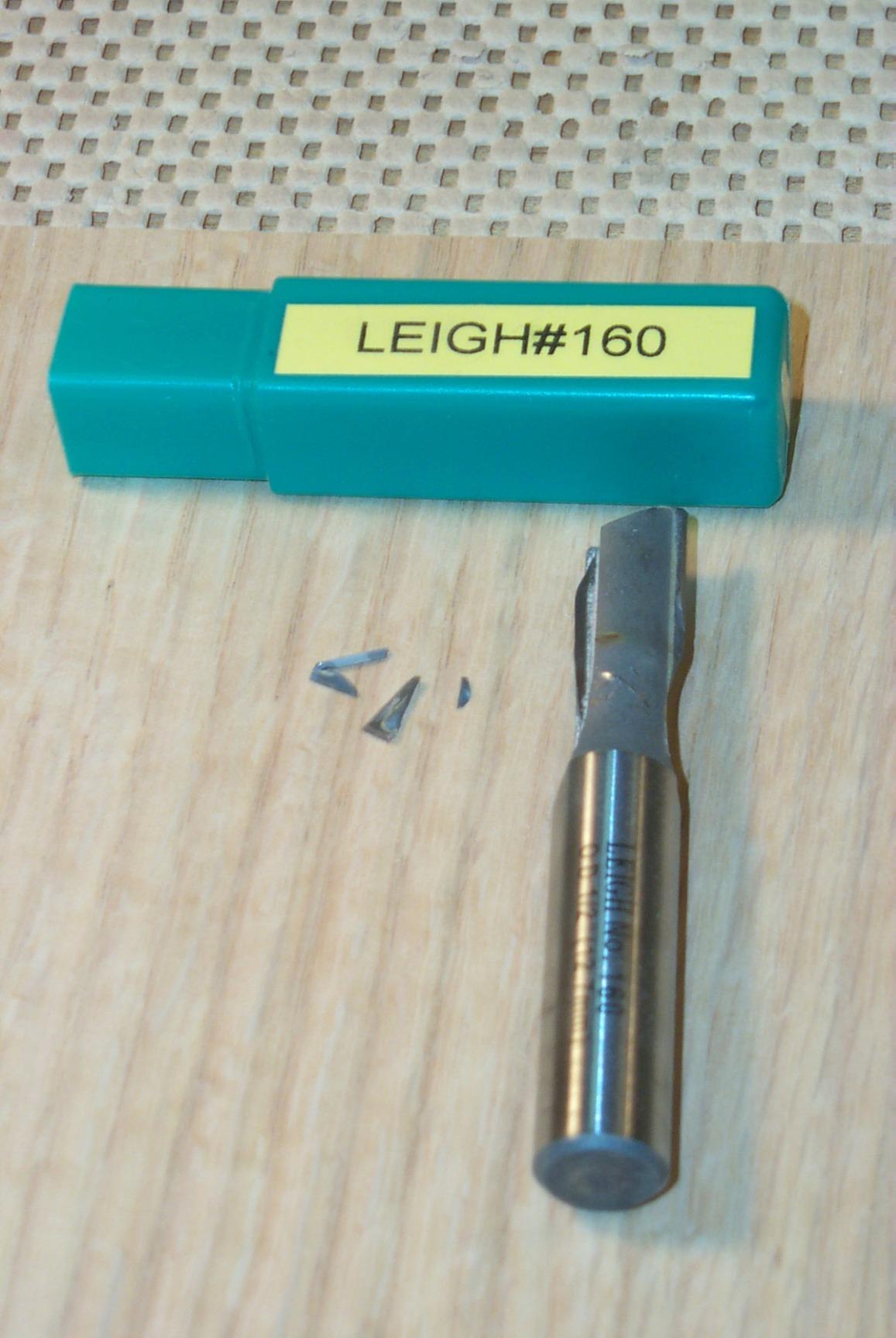
The elliptical guide bushing keeps joint fit consistent without the depth adjustments that normally eat setup time. Owners describe results as accurate and repeatable, and several mention switching to a spiral-cut bit and solid-core Baltic birch for cleaner edges. At 4.6 stars across 44 reviews the quality is not in question; the honest weakness is compatibility, since the table needs a counterbore insert ring matching the Leigh e-Bush.
Best fit for shops that own a good router table
With the correct insert ring, this is the most capable single-template system here, and the sliding operation changes both safety and speed because nothing gets re-indexed between cuts.
The dependency to check first
Measure your table before buying, since a mismatched insert ring turns this into a second purchase. Joint size and material thickness are also bounded by the template and bushing setup, and the bit can tear out on hardwood-faced plywood with voids in the core.
9. Leigh D4R PRO Dovetail Jig – Handles Wide Cabinet Stock in One Setup
Leigh D4R-PRO Dovetail Jig
Aluminum extrusion base
8.3 x 8.4 x 36.6 inches
22.1 pounds
Up to 24 inch boards
Pros
- One-piece aluminum extrusion base stays rigid for repeat cuts
- Accepts boards up to 24 inches wide in one setup
- Produces handmade-looking pins and tails up to 1-1/4 inch thick
- Three carbide router bits included
Cons
- Very heavy at 22.1 pounds and effectively bench-bound
- Largest footprint in the group at 36.6 inches
- Needs dedicated setup before repeatable results
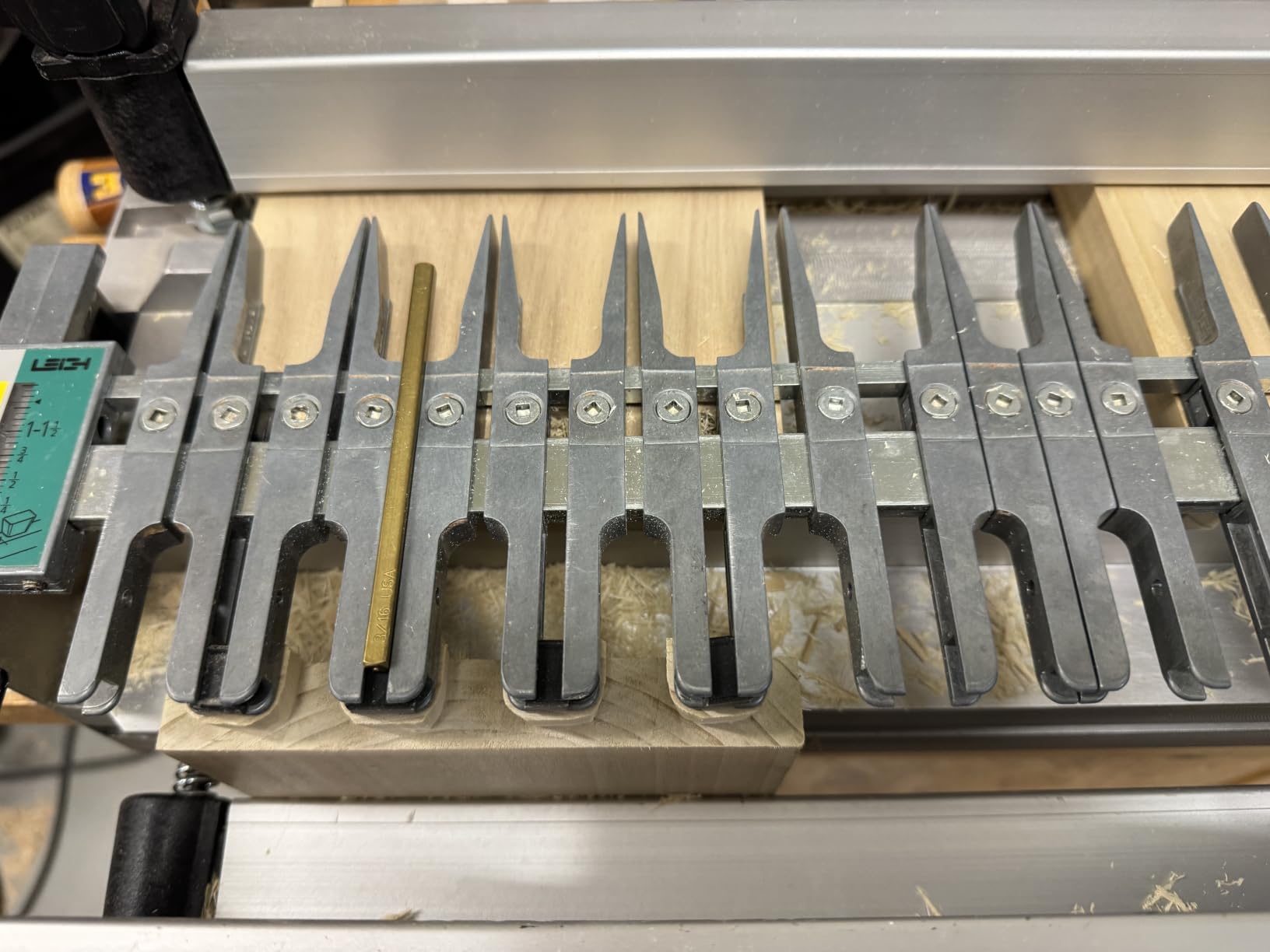
The D4R PRO is the largest jig here at 8.3 by 8.4 by 36.6 inches and 22.1 pounds. The one-piece aluminum extrusion base does not flex, so registration holds from the first pin to the last.
Board capacity is the defining spec. It accepts material up to 24 inches wide, so full cabinet sides and wide drawer components go through in one setup rather than being routed in sections. Maximum pin thickness is 1-1/4 inches, and three carbide router bits are included.
That 24 inch capacity removes a genuine limitation, since wide drawer boxes are exactly what stops a 12 inch benchtop jig. The 4.1 star average across 34 reviews is honest: capacity and rigidity are the consistent positives, while weight, footprint and cost are the drawbacks for smaller shops.
Where the width allowance pays off
A 20 inch drawer side goes through in one pass. On a benchtop base you would clamp, rout a section, reposition, and accept the risk of drift at the splice line. Shops that cut drawer components as a core product will get more use from it than anyone making occasional small boxes.
Why small shops should keep looking
At 22.1 pounds and 36.6 inches long, this is a bench-bound commitment, and if your drawer work sits in the 12 to 16 inch range the extra capacity goes unused. Reviewers also note that dedicated setup and accurate depth settings are needed before results become repeatable.
10. POWERTEC 71529 Dovetail Jig System – Lightest Template for a Small Shop
POWERTEC 71529 15-Inch Dovetail Jig System w/Template, Straight Edge Router Bit, Dovetail Bit and Mounting Hardware
Phenolic template
15 x 4.88 x 0.47 inches
1.6 pounds
7-degree bit included
Pros
- Cuts through dovetails at any board width with no test cuts/Cuts acute/classic/compound-angled/curved/obtuse
- box and knuckle joints from one template
- Works with a handheld router or a router table
- Lightest option at 1.6 pounds
Cons
- Phenolic template is less rigid than machined aluminum under clamping
- Small review base with a wide spread of ratings
- Clamping pressure depends on setup since no table fixture is included
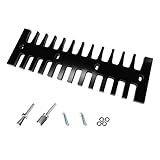
The POWERTEC 71529 is a 15 inch phenolic template with precision-milled guides, measuring 15 by 4.88 by 0.47 inches and weighing 1.6 pounds. It is the lightest dovetail template in this group and the easiest to carry between a bench and a router table.
The template covers acute, classic, compound-angled, curved, obtuse, box, drawer and knuckle joints from one reference, cuts through dovetails at any board width without test cuts, and works with a handheld router or mounted on a table. A straight edge bit and a 7-degree dovetail bit are included, so the essential cutters come with it.
What the light design gets you
At 1.6 pounds this jig goes anywhere, which matters if you build drawers away from a fixed bench. Cutting through dovetails at any width without marking also suits one-off drawer boxes where the size is not decided until the parts are in front of you.
Where phenolic falls short
Rigidity is the honest limitation: a phenolic template has less stiffness than machined aluminum, so clamping pressure deflects it and registration drifts. Review counts are thin at 24 with a wide spread of ratings, and no router table fixture is included, so expect to spend time on clamps before the first clean joint.
Dovetail Jig Buying Guide for Drawer Work
The first decision is not the jig, it is the joint. Half-blind dovetails suit drawer fronts because they hide the pins on the face while still locking the front to the sides. Through dovetails suit drawer boxes because the exposed pins are the traditional cabinetmaker’s detail. Drawer bottoms usually need no dovetail at all; a box joint or rabbet keeps the grain continuous across the panel.
Jig families and what each one commits you to
Fixed-base jigs like the PORTER-CABLE 4216 and the CMT300 give you alignment marks, depth gauges and repeatable registration, at the cost of bench space and a board width ceiling. Template-only systems like the Keller Journeyman and the POWERTEC 71529 trade that structure for flexibility: any width, any length, and your own clamping accuracy. Router table jigs such as the Leigh RTJ400 need an existing table with a compatible insert ring, and in exchange keep your hands away from the bit.
Router and bit requirements to check before buying
Most of these jigs need a 1/2 inch shank dovetail bit, and the angle must match the template: 14-degree for most, 7-degree for the Peachtree and POWERTEC kits. A mismatched angle produces joints that look wrong and fit wrong. You also need a correctly sized guide bushing. The Woodstock D2796 is the clearest example, shipping with the template only while the 7/16 inch bushing and bit are separate purchases.
A fixed-base or plunge router with a 1/2 inch collet covers all ten options. A small trim router works with the General Tools 861 and the template-only systems, but it will not drive the larger jig bases without stalling.
Clamp capacity versus the width of your drawers
Most benchtop jigs clamp about 12 inch material. If your drawer box is wider, choose a jig with more capacity like the Leigh D4R PRO, use a template-only system such as the Keller, or clamp the board with an auxiliary fence so the workpiece extends past the jig without over-hanging the router. Check the joint style too, since a jig covering both front and box joints saves a template purchase.
Once the drawers are built, fit and layout matter as much as the joint. Our guides on drawer organizers for the kitchen and knife drawer organizers cover what to do with the drawer once the joinery holds.
Fixing Common Dovetail Jig Problems
Loose joints usually trace back to bushing wear or depth. Check the guide bushing for a worn bearing and confirm router depth against the jig gauge before changing anything else, since an oversized bushing is the most common cause of a joint with no interference.
Tight joints point to depth set too deep or a dulled bit. Sharpen or replace the bit first, then reduce depth in small steps, then confirm the workpiece is square. A drawer box that is out of square reads as tight on one corner and loose on the other.
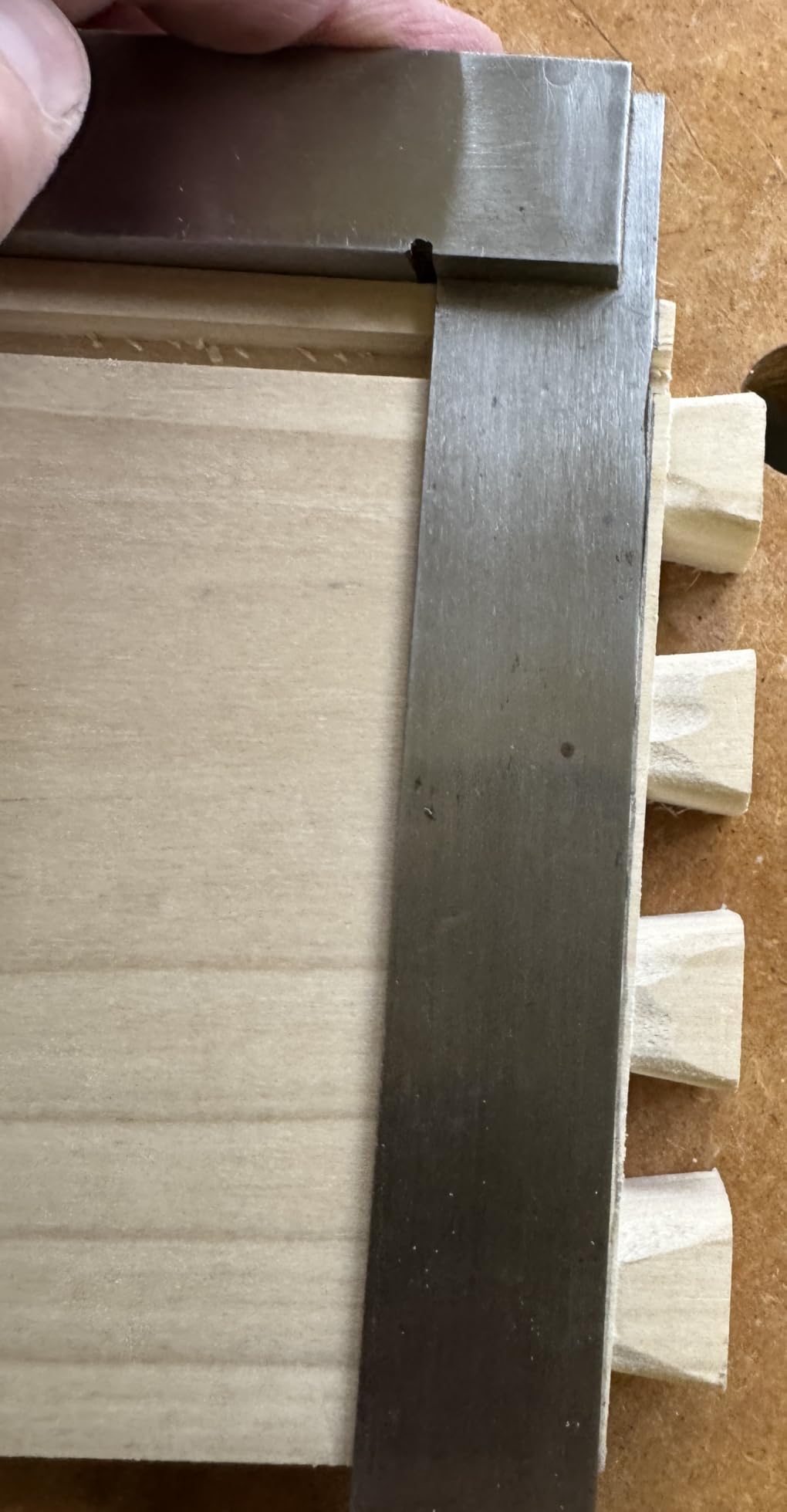
Tails standing proud on a half-blind joint usually mean pins were cut too shallow or spacing shifted between halves. Re-mark from the jig rather than a pencil line and check that the template is fully seated. On jigs with plastic guide components, a proud guide block produces the same symptom.
Drifting pins across a long joint come from cumulative registration error, most often in figured or tough maple. Test clamps before relying on them, back the workpiece with a sacrificial board, and mark each pin rather than estimating. A bit that loosens mid-cut is a collet problem, so clean the collet and shank and tighten the nut fully every time you change bits.
Frequently Asked Questions
Who makes the best dovetail jig for drawer joinery?
For most drawer builders the PORTER-CABLE 4216 is the strongest all-round choice because three templates cover half-blind, through, rabbeted half-blind, sliding, miniature and box joints from one base, and it carries 2684 reviews at 4.7 stars. Cabinet shops cutting drawer components wider than 12 inches are better served by the Keller Journeyman template, which accepts unlimited widths.
What router and bit do I need for a dovetail jig?
Most dovetail jigs need a router with a 1/2 inch collet plus a dovetail bit whose angle matches the template, usually a 14-degree half inch bit. Some kits use a 7-degree bit instead, and the Peachtree and POWERTEC systems ship with one. You also need a correctly sized guide bushing, which some jigs such as the Woodstock D2796 do not include.
Can a dovetail jig cut drawer bottoms?
A dovetail jig is not the right tool for a drawer bottom. Drawer bottoms usually sit in a rabbet or groove and are held with a box joint or simple screws, which keeps the grain continuous across the panel. Box joints are generally stronger for this part because they do not cut across the grain the way dovetails do.
What are the most common dovetail mistakes?
The most frequent errors are setting bit depth by eye instead of using the jig gauge, cutting with a dulled bit, using the wrong guide bushing size, and marking pins by hand rather than from the template. The others are failing to seat the template fully and clamping the workpiece out of square, which shows up as a joint that is tight on one corner and loose on the other.
Should I buy half-blind or through dovetails for drawers?
Half-blind dovetails belong on drawer fronts because they hide the pins on the face while still locking the front to the sides. Through dovetails belong on drawer boxes because the exposed pins are the traditional visible detail. If you only have one jig, pick one that cuts both rather than buying separate fixtures.
Final Verdict on the Best Dovetail Jigs for Drawer Joinery
The best dovetail jigs for drawer joinery in 2026 come down to how wide your drawers run and how many joint styles you need. The PORTER-CABLE 4216 takes the crown for versatility, owner history and included hardware. The Keller Journeyman is the answer when width is the limit, and the General Tools 861 is the least expensive way to learn half-blind work properly.
Whatever you choose, budget time for setup. Every jig here needs two or three practice cuts before it produces a joint that slides home by hand, and that adjustment period is where most disappointing first impressions come from.