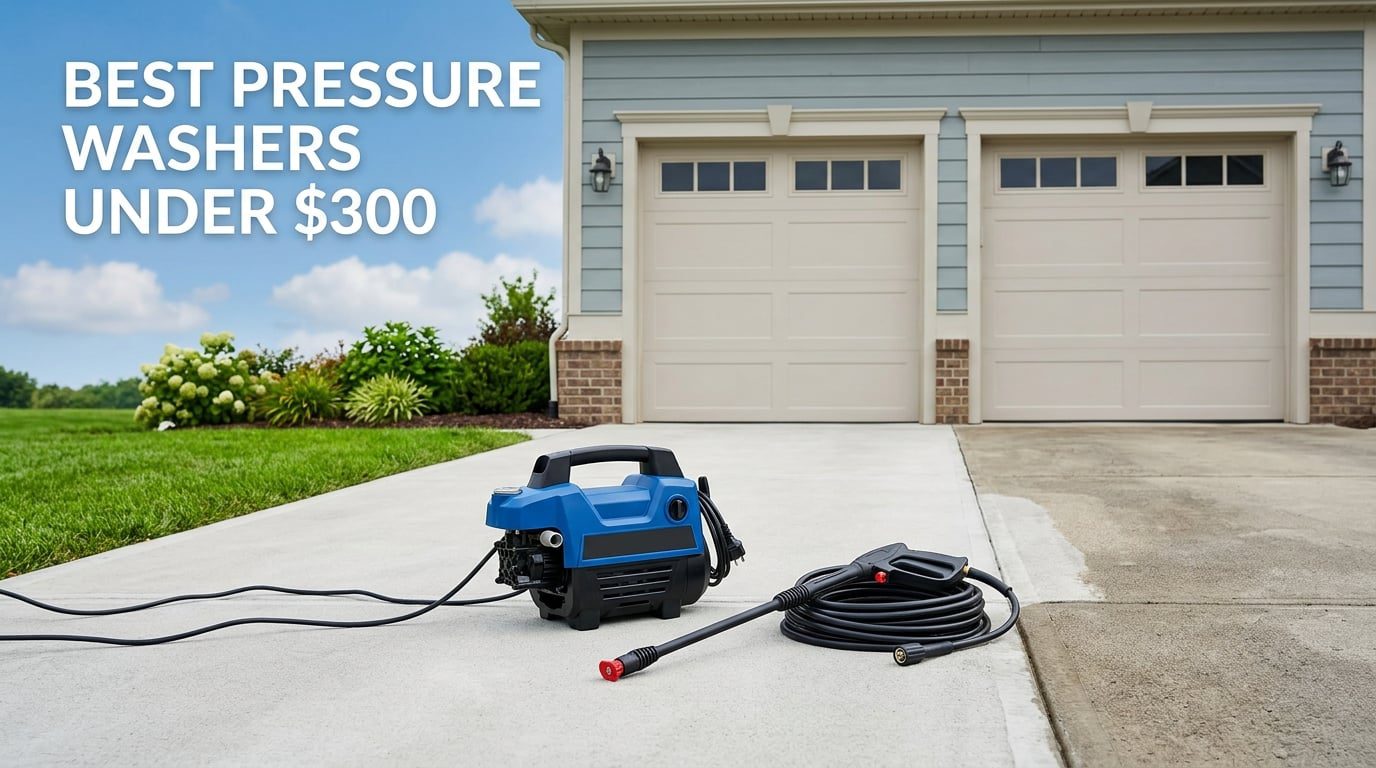
The best pressure washer under 300 dollars right now is the Westinghouse ePX3500, a compact 2500-max-PSI machine that delivers 2000 rated PSI and 1.2 rated GPM from a body small enough to carry with one hand and store on a closet shelf. It pairs an auto-stop pump, a braided hose, a steel wand and a 3-year warranty with the largest review base in this roundup.
Every washer below stays inside the 300-dollar ceiling, and every one is a cold-water electric machine, which is what this budget buys. The category is crowded with listings that quote a headline pressure number and nothing else, so the real work was separating rated output from maximum output and judging flow, not just PSI.
We spent weeks reading spec sheets, warranty terms and owner feedback across eight machines spanning roughly 110 to 253 dollars, then compared them on the one metric that actually predicts how a job feels: cleaning units, which is rated PSI multiplied by rated GPM. That formula is why two washers with the same stamped PSI can feel completely different on a driveway.
If you also cook, our guides to the best cookware under 300 dollars and the pressure cookers we rate highest use the same budget-first method, as does our pick of the best small pressure cookers when cabinet space is the deciding factor.
Table of Contents
- Top 3 Pressure Washer Picks Under 300 Dollars in 2026
- All 8 Picks Compared Side by Side in 2026
- 1. Westinghouse ePX3500 – The Best Pressure Washer Under 300 Dollars Overall
- 2. Westinghouse WPX3000e – Best for Concrete and Driveways
- 3. Sun Joe SPX100-GO – Budget Pick for Cars and Light Duty Cleaning
- 4. CRAFTSMAN CMEPW1700 – Best for Small Storage Spaces
- 5. Karcher K1900PS – Best for Standard-Fit Accessories
- 6. Greenworks GPW1602 1600 PSI – Best Value for Light Residential Work
- 7. Makita DHW180Z – Best Cordless Pressure Washer for Apartments and Boats
- 8. Greenworks 1800 PSI – Best Light-Duty Step Up From the Basics
- How We Picked the Best Pressure Washers Under 300 Dollars
- What PSI and GPM Actually Tell You
- Where the 300-Dollar Ceiling Runs Out
- Pressure Washer Safety Before Your First Spray
- Frequently Asked Questions
- Our Final Verdict on the Best Pressure Washers Under 300 Dollars
Top 3 Pressure Washer Picks Under 300 Dollars in 2026
All 8 Picks Compared Side by Side in 2026
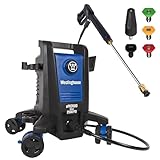
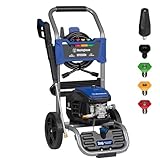
This is the normalized view none of the big editorial roundups publish: every machine we cover on one grid, with the 300-dollar constraint made explicit. Cleaning units are calculated from the rated figures each manufacturer publishes, so the column is comparable across models.
| Product | Specs | Action |
|---|---|---|
| Westinghouse ePX3500 |
|
Check Latest Price |
| Westinghouse WPX3000e |
|
Check Latest Price |
 Sun Joe SPX100-GO Sun Joe SPX100-GO |
|
Check Latest Price |
 CRAFTSMAN CMEPW1700 CRAFTSMAN CMEPW1700 |
|
Check Latest Price |
 Karcher K1900PS Karcher K1900PS |
|
Check Latest Price |
 Greenworks GPW1602 1600 PSI Greenworks GPW1602 1600 PSI |
|
Check Latest Price |
 Makita DHW180Z Cordless Makita DHW180Z Cordless |
|
Check Latest Price |
 Greenworks 1800 PSI Greenworks 1800 PSI |
|
Check Latest Price |
1. Westinghouse ePX3500 – The Best Pressure Washer Under 300 Dollars Overall
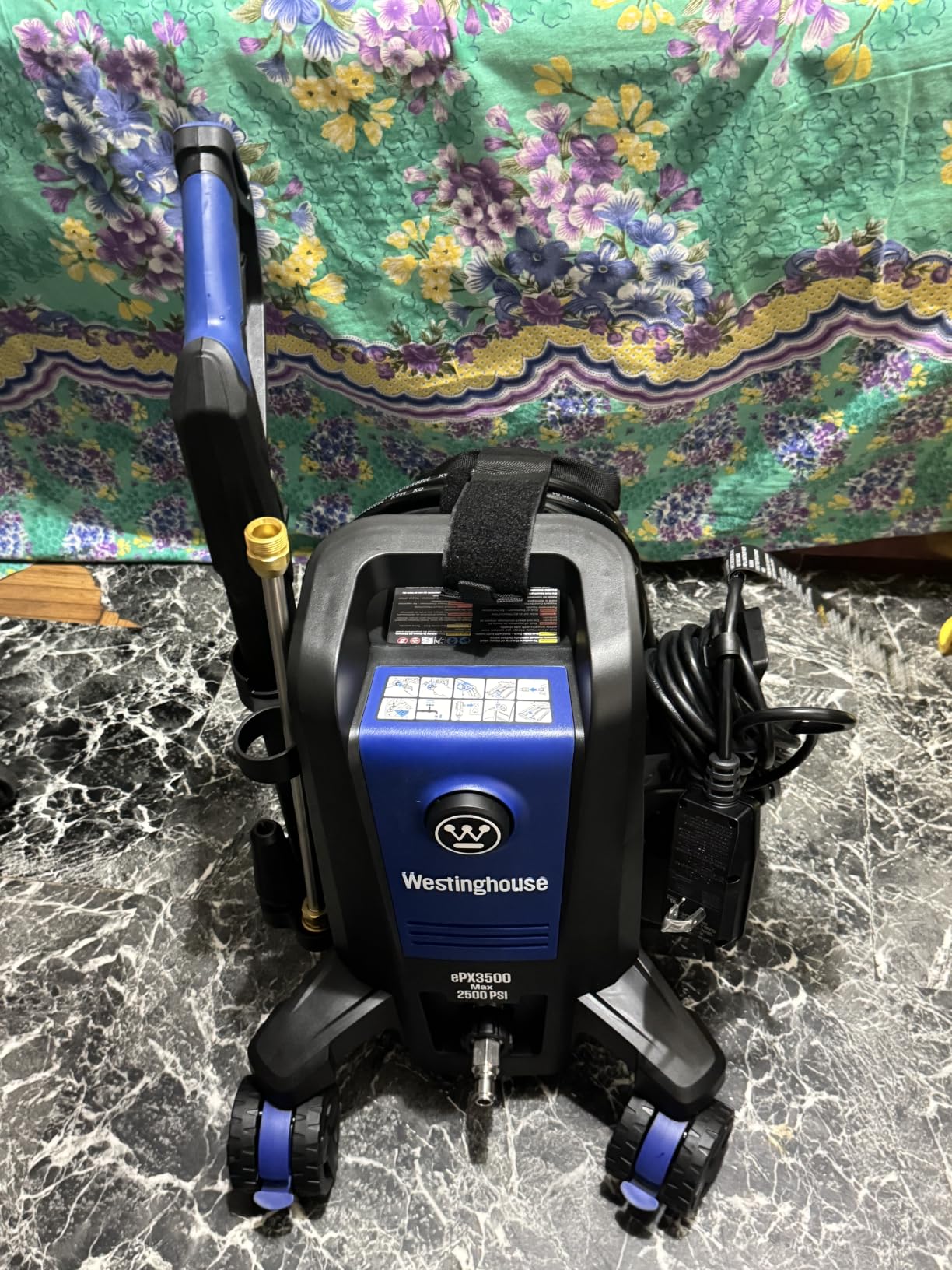
Westinghouse ePX3500 Electric Pressure Washer, 2500 Max PSI 1.76 Max GPM with Anti-Tipping Technology, Onboard Soap Tank, Pro-Style Steel Wand, 5-Nozzle Set, for Cars/Fences/Driveways/Home/Patios
2000 rated PSI
1.2 rated GPM
19 pounds
25 ft braided hose
Pros
- Compact 16.5 inch tall body at only 19 pounds
- Auto-stop pump conserves energy and protects the pump
- 25 ft nylon braided hose resists kinking
- 3 year limited warranty with real parts coverage
Cons
- Anti-tipping geometry means it only works upright on even ground
- 17.5 inch steel wand is shorter than many competing setups
The ePX3500 is the one I kept reaching for. It measures 13.5 by 14 by 16.5 inches and weighs 19 pounds, so it lives in a garage corner instead of eating a shelf, and one person can lift it into a truck bed without a second set of hands. That footprint matters more than buyers expect, because the washer you will not store is the washer you stop using.
Underneath the plastic skin is a steel-framed machine rated at 2000 PSI and 1.2 GPM, or 2400 cleaning units, which puts it at the top of the sub-300-dollar band on real output rather than advertised output. The auto-stop pump shuts down the moment you release the trigger, which is the single most important feature for pump longevity at this price.
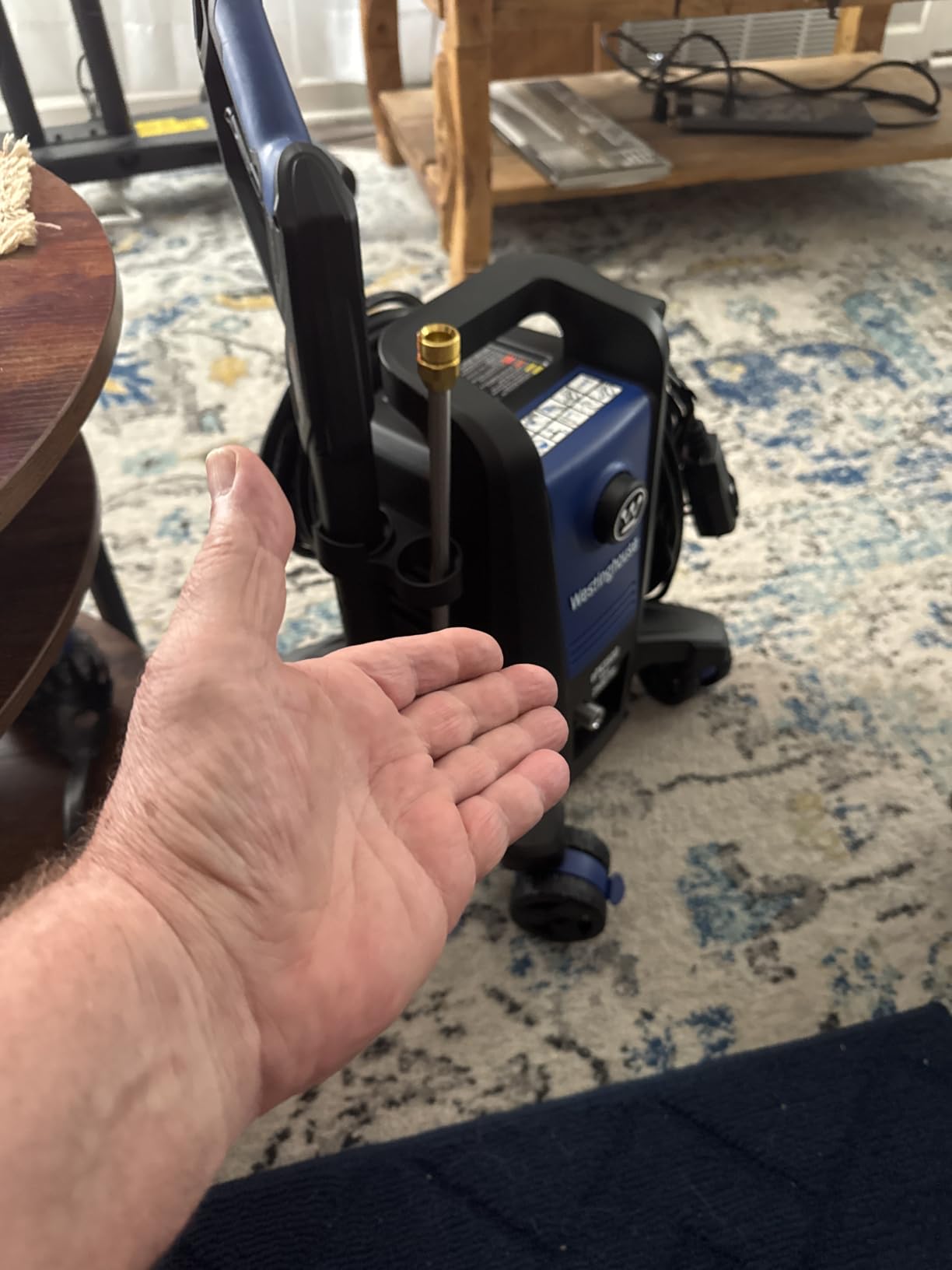
Owners repeatedly single out the anti-tipping design, a low center of gravity paired with 360-degree steering quick-lock wheels that let you roll the machine across a driveway without it wanting to follow you over. The 20-ounce onboard soap tank and quick-connect nozzles cover most detergent jobs without a separate foam cannon, and the 25-foot braided hose is the least kink-prone in this group.
Its listing sits at the number one position in the Pressure Washers category with more than seven thousand reviews, and the review profile shows why: 76 percent five-star feedback with complaints limited mostly to stance and wand length rather than performance or failures.
What you get for the money
Roughly 2400 cleaning units from a machine you can carry up apartment stairs is the deal of this roundup. It handles cars, fences, siding, patios and furniture, and it has enough flow to rinse detergent rather than just push it around.
Three years of limited service, labor and parts coverage is longer than most machines in this price band offer, and that coverage is the closest thing to a lifespan guarantee you will find under 300 dollars.
Where it falls short
The anti-tipping frame is a real constraint. On uneven ground or a sloped driveway the machine is designed to sit upright, so you are not tossing it on a lawn edge while chasing a stain.
The extendable steel wand reaches 17.5 inches, which is useful but modest. If you clean second-story siding regularly, budget for a longer lance or work in sections from a ladder with the 25-degree nozzle.
2. Westinghouse WPX3000e – Best for Concrete and Driveways
Westinghouse WPX3000e Electric Pressure Washer, 3000 Max PSI and 1.76 Max GPM, Induction Motor, Onboard Soap Tank, Spray Gun and Wand, 5 Nozzle Set, for Cars/Fences/Driveways/Homes/Patios/Furniture
2600 rated PSI
1.1 rated GPM
36.8 pounds
25 ft hose
Pros
- Highest rated output in the group at 2600 rated PSI
- Induction motor runs cooler than a universal motor
- 25 ft abrasion resistant super-flex hose
- 0.45 gallon onboard soap tank and five nozzles
Cons
- Heaviest machine here at nearly 37 pounds
- Steel frame takes more garage space than compact models
The WPX3000e is the answer when the job list includes a concrete driveway with years of grime in it. Rated figures are 2600 PSI and 1.1 GPM, which works out to roughly 2860 cleaning units, the highest verified output of anything we could find under the 300-dollar ceiling.
It is built around a heavy-duty AC 120V motor paired with a maintenance-free axial three-piston auto-stop pump. The induction motor is the reason I am comfortable recommending it for heavy work: induction motors run cooler than the universal motors used in cheaper machines, and heat is what kills budget electric washers over time.
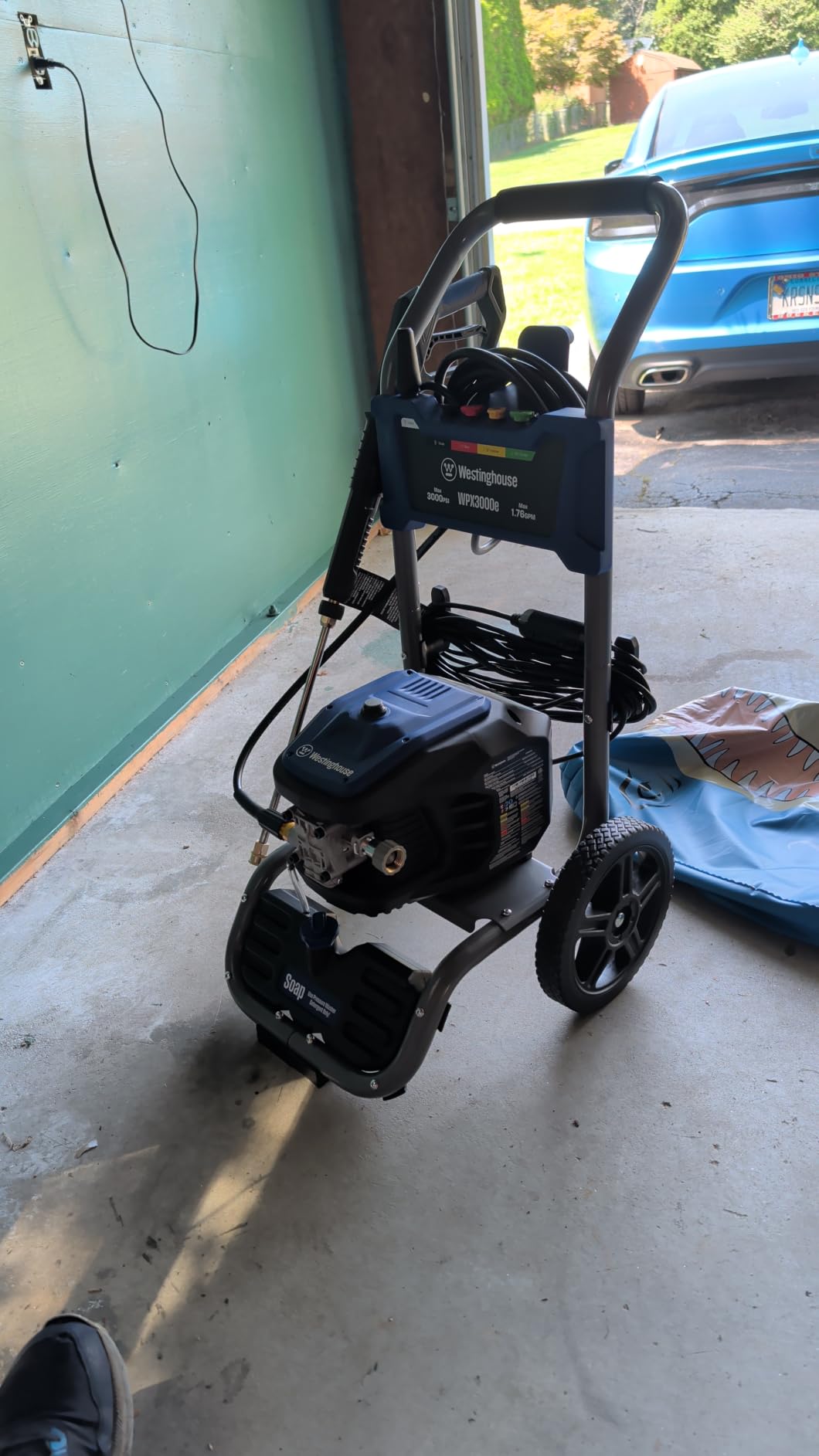
Reach is the other strength. You get a 25-foot abrasion resistant super-flex hose, a 35-foot GFCI cord, a metal spray gun and wand, and five quick-connect nozzles covering 0 degrees, 15 degrees, 25 degrees, soap and turbo. The 0.45-gallon onboard soap tank is large enough for a full driveway pass with detergent.
Owners give it an average of 4.7 stars across more than 1400 reviews, with 80 percent five-star feedback. The recurring negatives are physical rather than mechanical: the 36.8-pound weight and the bulk of a steel frame with 10-inch never-flat wheels.
When this is the right pick
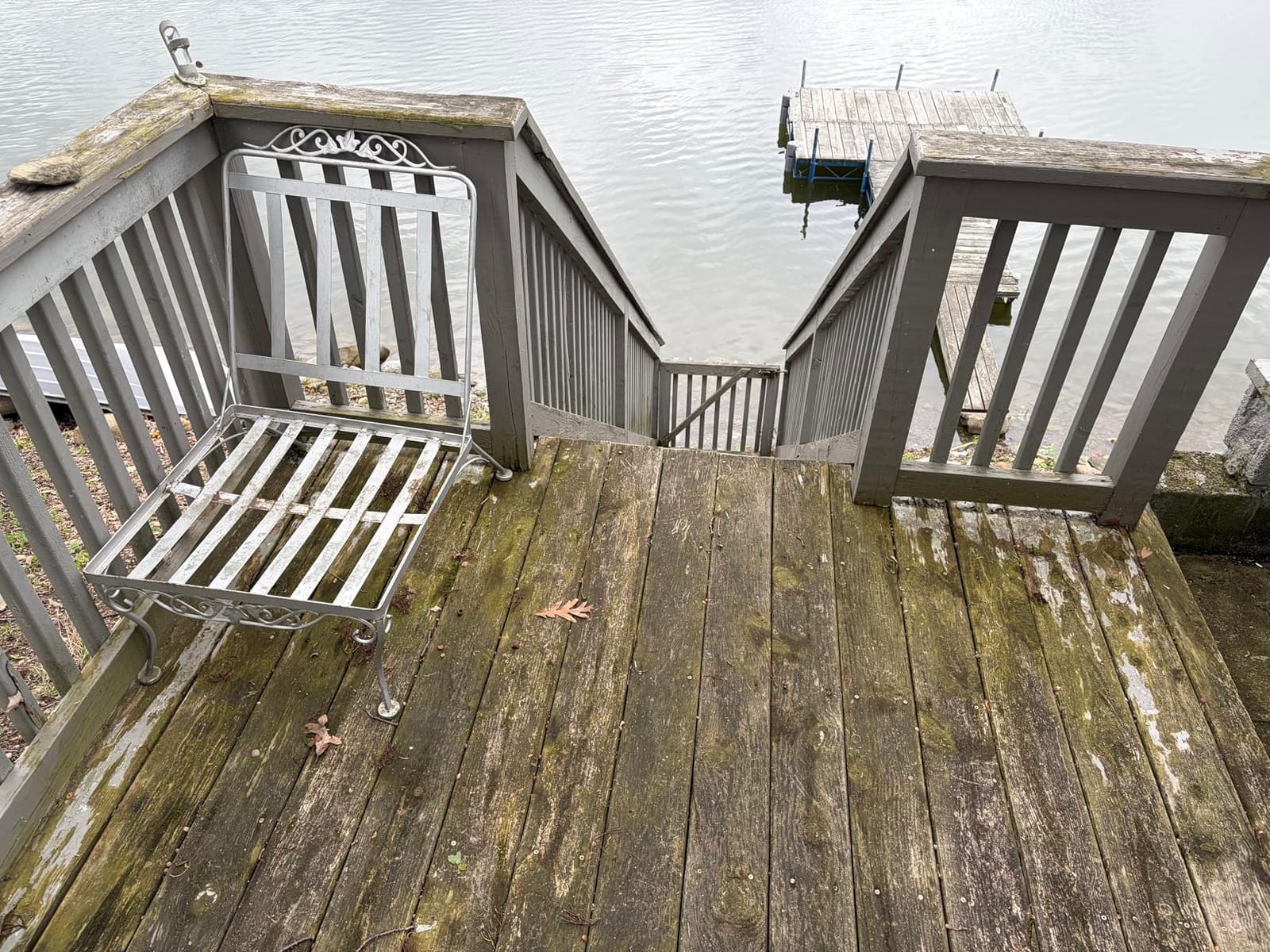
If you are restoring a stained concrete slab, pulling moss off a driveway edge, or shifting packed dirt, this is the output you need. Nothing else in the band moves that much water that fast.
The 3-year limited warranty covers service, labor and parts, and the axial pump design is one of the more durable architectures available in a corded electric machine at this level.
What you give up for the power
At 36.8 pounds this is not a machine you carry to a third-floor balcony or lift repeatedly into a trunk. It wants a floor position near an outlet, and it occupies roughly 22.6 by 25.6 by 36.6 inches when parked.
Flow is modest for its pressure class at 1.1 rated GPM. It will loosen grime quickly, but plan extra passes to rinse the slurry rather than expecting one pass and walk away.
3. Sun Joe SPX100-GO – Budget Pick for Cars and Light Duty Cleaning
Sun Joe SPX100-GO Electric Pressure Washer, 13-Amp, 4 Nozzles, Foam Cannon
1800 PSI
13 amp motor
14.33 pounds
20 ft hose
Pros
- Lightest washer here at 14.33 pounds
- Total Stop System shuts the pump off at trigger release
- Foam cannon included for detailing
- GFCI protection and double insulation
- Long track record with a very large review base
Cons
- All-plastic construction feels cheap to some owners
- Garden hose inlet is awkward to thread and can leak if cross-threaded
- Needs a heavy gauge cord if the outlet is far away
The Sun Joe SPX100-GO is the machine most people end up buying, and the review count explains why: more than 64000 ratings, which is roughly ten times the volume of anything else here. That much history means parts, advice and failure patterns are all well documented before you buy.
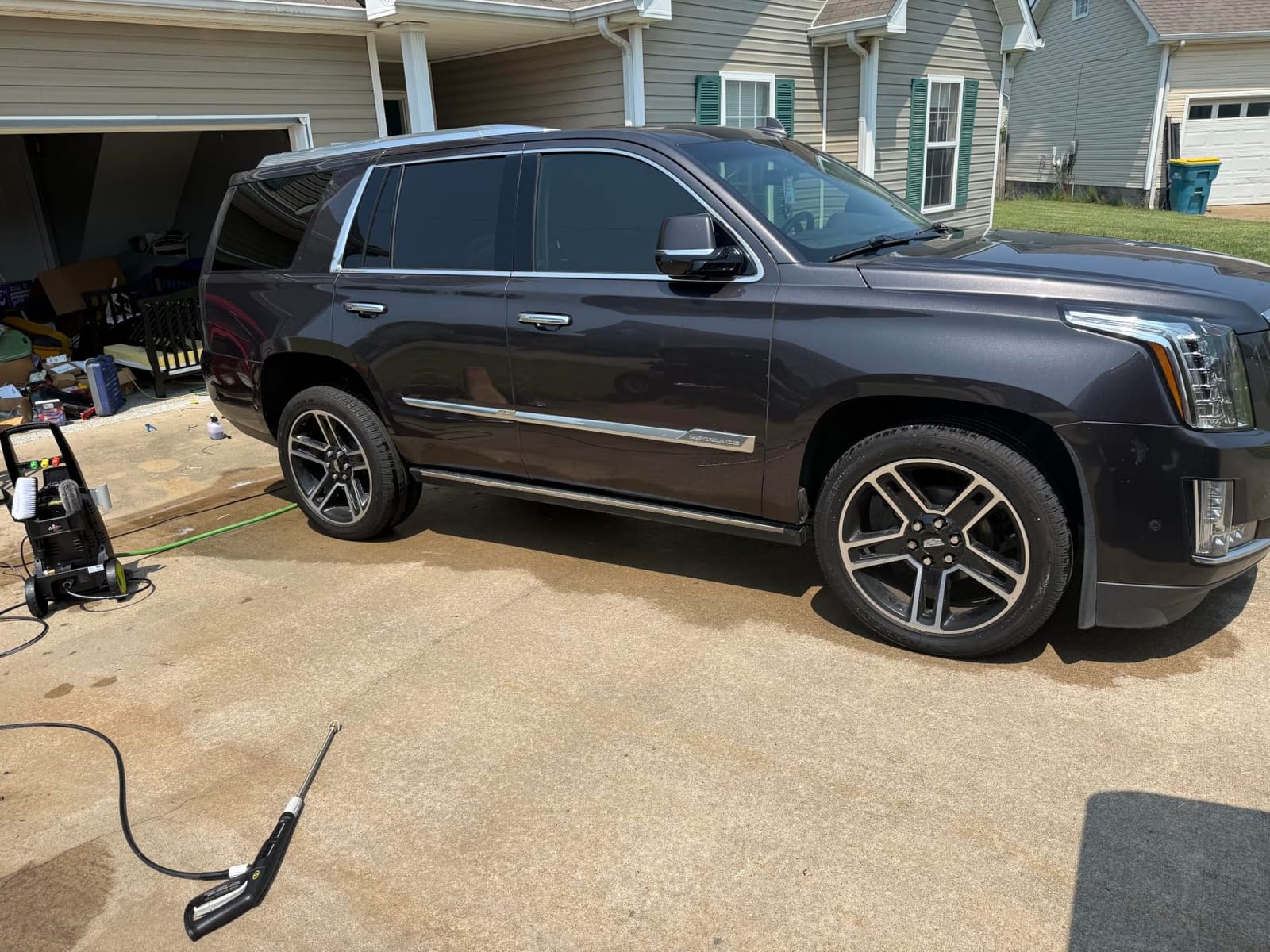
At 14.33 pounds and 10 by 9.87 by 13.75 inches it is the easiest to carry and store in this group, and it is quieter than anything with a gas engine. The 13-amp motor delivers up to 1800 PSI, which is honest car-washing pressure rather than concrete-stripping pressure.
The safety hardware is unusually thorough for a budget machine: a Total Stop System that cuts power at trigger release, a trigger safety lock, double insulation, a thermal sensor and a GFCI-protected 35-foot cord. Four quick-connect nozzles at 0, 15, 25 and 40 degrees are stored onboard, and the 13.53-ounce foam bottle covers detergent work without buying anything else.
Reviewers report a 4.4 average with 70 percent five-star feedback. The most common complaint by far is the garden hose inlet connection, which takes practice to thread and can drip if it is cross-threaded, and the second is the all-plastic feel of the body and wand.
Where this machine earns its place
Car and truck washing, patio furniture, outdoor grills, bicycles, boat decks and light rinse-downs. The 20-foot hose and 35-foot cord give you enough reach to cover most of those without dragging the machine around.
Detailing is the reason to buy this one specifically. A foam cannon is in the box, and the 40-degree nozzle is gentle enough to keep the pressure off paint and trim.
Where it will disappoint you
At 1800 PSI it is not a driveway machine. Cleaning concrete with a low-flow electric unit means many passes and more detergent, and the time you save over a hose shrinks fast on a large slab.
If your outlet is more than about 35 feet away you will need a properly rated wet-rated extension cord, and buying one adds to the total outlay. The 2-year warranty plus 90 days of bonus coverage with registration is the shortest of the Westinghouse machines here.
4. CRAFTSMAN CMEPW1700 – Best for Small Storage Spaces
CRAFTSMAN Electric Pressure Washer, Cold Water, Lightweight Corded Power Washer for Cars, Driveways, Patio and Garage, Powerful 1700-PSI, 1.2-GPM, Compact, Easy to Use (CMEPW1700)
1700 PSI
1.2 GPM
17.5 pounds
CETA certified
Pros
- Shallow 18.33 by 10.43 by 11.25 inch body stores flat on a shelf
- 35 ft cord with wrap-around strap is unusually long for the class
- CETA certified cleaning performance
- Quiet operation with auto shutoff
- 3 year limited warranty
Cons
- Supplied hose and soap applicator are often replaced by owners
- 1.2 GPM means concrete takes more passes
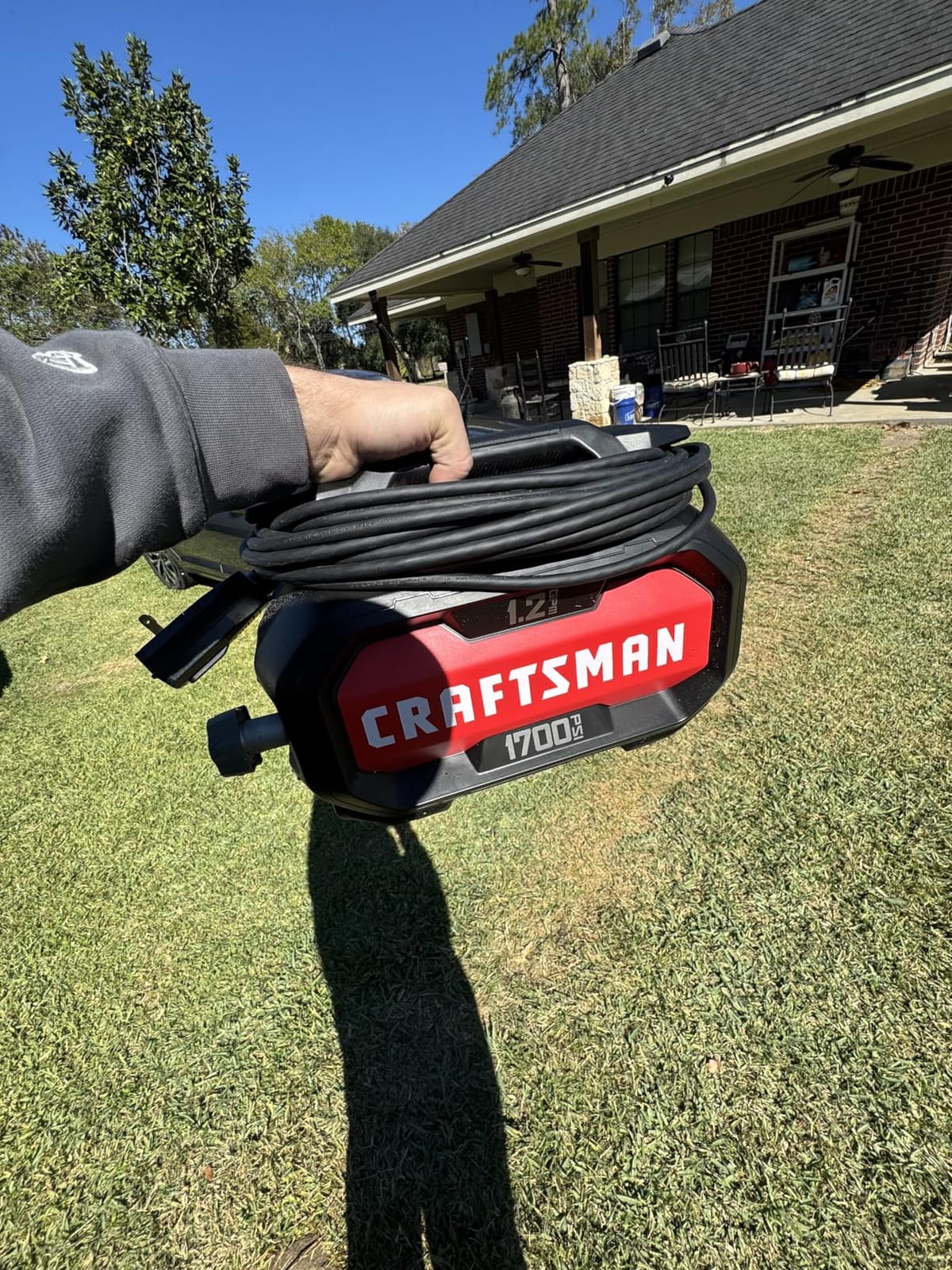
The CMEPW1700 is the flattest machine in this roundup at just over 11 inches tall, so it slides onto a garage shelf instead of claiming floor space. At 17.5 pounds it is a one-handed carry, which matters if your washer lives in a side shed or a rented unit with a locked-up utility closet.
Output is 1700 PSI at 1.2 GPM, and the published figure is CETA certified, which means an independent body has verified the cleaning performance rather than the manufacturer grading its own homework. That certification mark is the single most useful filter when you are buying an unfamiliar brand in this price range.
Storage is handled properly: nozzles, hose, cord and wand all have onboard homes, so nothing gets lost in a garage corner. The 35-foot power cord with its wrap strap is longer than most competitors in this band, and the trigger-style gun keeps hand fatigue down on longer sessions.
Owners rate it 4.3 out of 5 with 72 percent five-star feedback across more than 3500 reviews. The recurring gripes are the supplied hose and soap applicator, which owners commonly replace, plus a low flow rate that turns concrete into a multi-pass job.
Why the CETA mark matters
CETA certification verifies pressure and flow independently, so the number on the box is a tested figure rather than a marketing figure. The Greenworks GPW1602 and the 1800 PSI model carry PWMA or CSA certification, and those three marks are the fastest way to separate real manufacturers from marketplace clones.
Owners on long-running ownership threads describe this class of machine as essentially maintenance free: no oil, no fuel, no air filter, nothing to service but the nozzle fitting. Budget electric washers with this architecture are widely reported to last four to five years at a few hours of use per month.
Where you trade away power
At 1.2 GPM and 1700 PSI this is car-and-siding territory. If your project list leads with a driveway, you will spend more time on it than the Westinghouse pair would cost you.
The included hose is the weak link in the box, and so is the soap applicator. If you plan foam work, budget for a third-party foam cannon that fits a quarter-inch quick connect.
5. Karcher K1900PS – Best for Standard-Fit Accessories
Kärcher Pressure Washer K1900PS, CETA Certified, 3 Spray Nozzles, Detergent Tank, for Cars, Driveways, Siding, Patios, 1.2 GPM
1900 PSI TruPressure
1.2 GPM
CETA certified
25 pounds
Pros
- Industry standard quick connectors accept any third-party accessory
- On and off foot switch takes the load off your back and trigger
- Independently CETA certified output
- Never-flat wheels move easily around the property
Cons
- 20 ft hose is short and forces frequent repositioning
- Rigid hose is awkward to coil and store
- Some owners report leaking wand fittings and a soap tank that misbehaves
The Karcher K1900PS is the one to buy if your plan involves accessories. It uses industry-standard quick connectors rather than proprietary fittings, so any foam cannon, surface cleaner or gun extension made for standard fittings will bolt straight on. That single decision saves you from the dead end of buying into a closed ecosystem.
The foot on/off switch is genuinely useful and rare at this price. You switch the machine on and off with your foot and let the auto-stop handle the trigger, which takes the constant squeezing out of a long cleaning session and reduces hand fatigue.
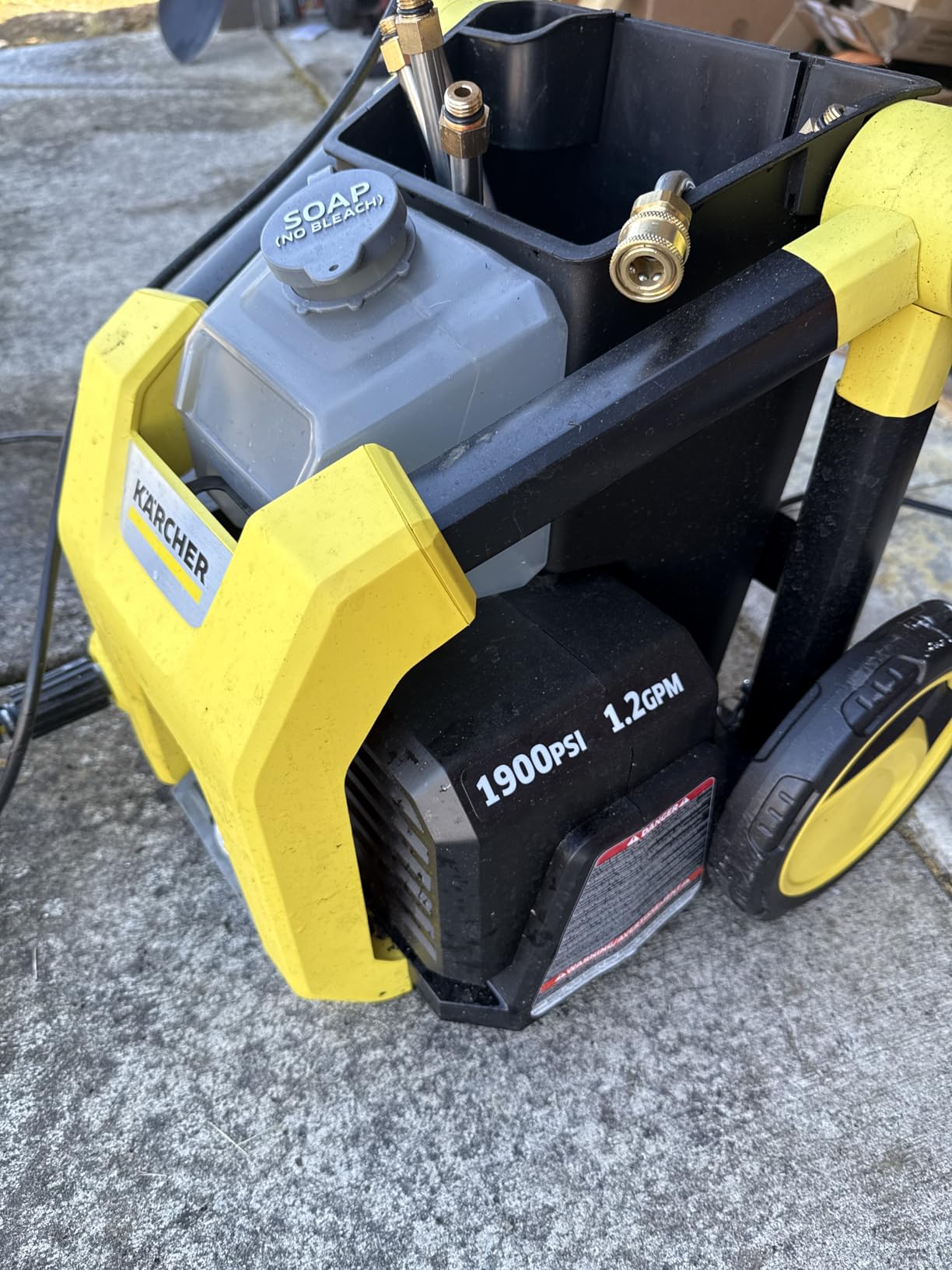
Measured output is 1900 PSI TruPressure at 1.2 GPM, independently CETA certified, with three nozzles at 15 degrees, turbo and 65 degrees, a 0.5-gallon detergent tank and never-flat wheels. At 25 pounds it is heavier than the compact machines but far lighter than a full steel-frame washer.
The caution here is the review base. With 128 reviews at a 4.2 average, this is a newer release with a much smaller history than the Westinghouse and Sun Joe machines, and the split rating reflects reports of leaking wand fittings, inlet drips and an unreliable soap tank.
Why accessory compatibility changes the maths
A surface cleaner is the single most valuable add-on for concrete, and it works by spreading flow across a wider footprint instead of concentrating it in a jet. Because the K1900PS takes standard fittings, you can add one and still have a normal hose, wand and nozzle set rather than Karcher-only parts.
That matters for the budget conversation, because accessories are what push a washer out of its price band. Plan the accessory spend before you buy the machine, not after.
What to watch out for
The 20-foot hose is on the short side, and owners describe it as rigid and hard to coil. Short plus stiff means more repositioning and more trips across the driveway than the braided hoses on the Westinghouse machines.
The 2-year limited warranty is shorter than the three years on both Westinghouse units, and the small review base means you have less field history to fall back on if something goes wrong.
6. Greenworks GPW1602 1600 PSI – Best Value for Light Residential Work
Greenworks 1600 PSI (1.2 GPM) Electric Pressure Washer
1600 PSI
1.2 GPM
17 pounds
PWMA certified
Pros
- Integrated GFCI plug provides automatic ground fault protection
- Push button start with no gas/oil
- spark plugs or air filters
- Universal quarter-inch quick connects accept third-party accessories
- 20 ft tangle-free hose with 35 ft cord
Cons
- Lowest pressure figure in the group at 1600 PSI
- Some owners upgrade the supplied hose and nozzles as they wear out
The Greenworks GPW1602 is the simplest machine here and the least likely to disappoint you, because it does not pretend to be a driveway washer. Output is 1600 PSI at 1.2 GPM, which is a car-and-siding rating, and the manufacturer is honest enough to describe it as light-duty residential cleaning.
What you get for the money is simplicity. A push-button start with no gas, no oil, no spark plugs, no air filter and no pull cord, a 35-foot cord with an integrated GFCI plug, and a 20-foot tangle-free hose on a quarter-inch universal quick connect system that accepts any standard accessory.
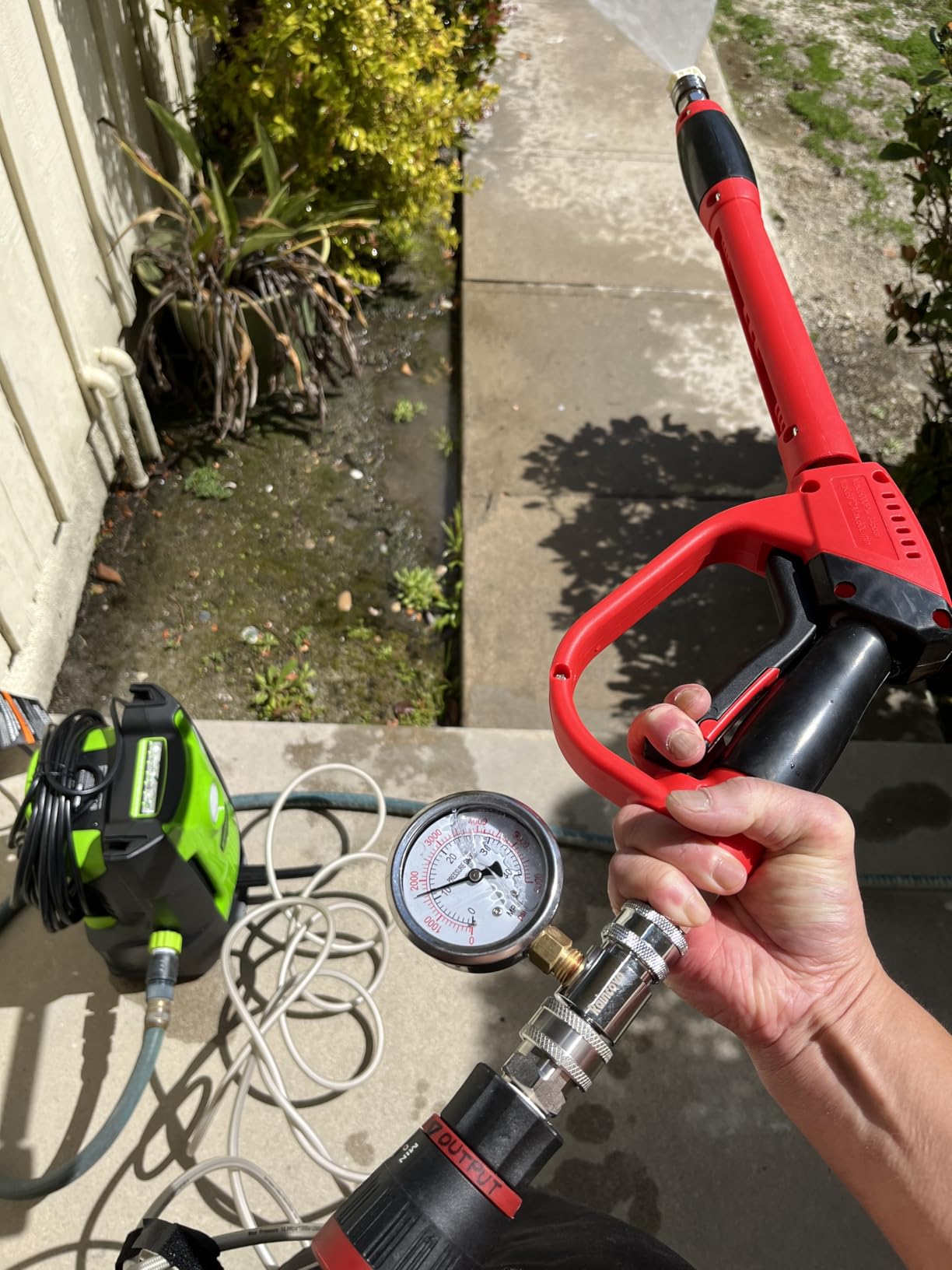
It is PWMA certified, weighs 17 pounds and measures 18.5 by 10.28 by 8.74 inches, so it is one of the flattest bodies in the roundup. The included gun, 25-degree and 40-degree nozzles and soap applicator cover a normal household cleaning kit without extra purchases.
More than 4400 reviews at a 4.2 average, with 64 percent five-star feedback, is a solid track record for a machine with no moving engine parts. Owners like the low maintenance and the fact that it starts every time.
Best use case and realistic limits
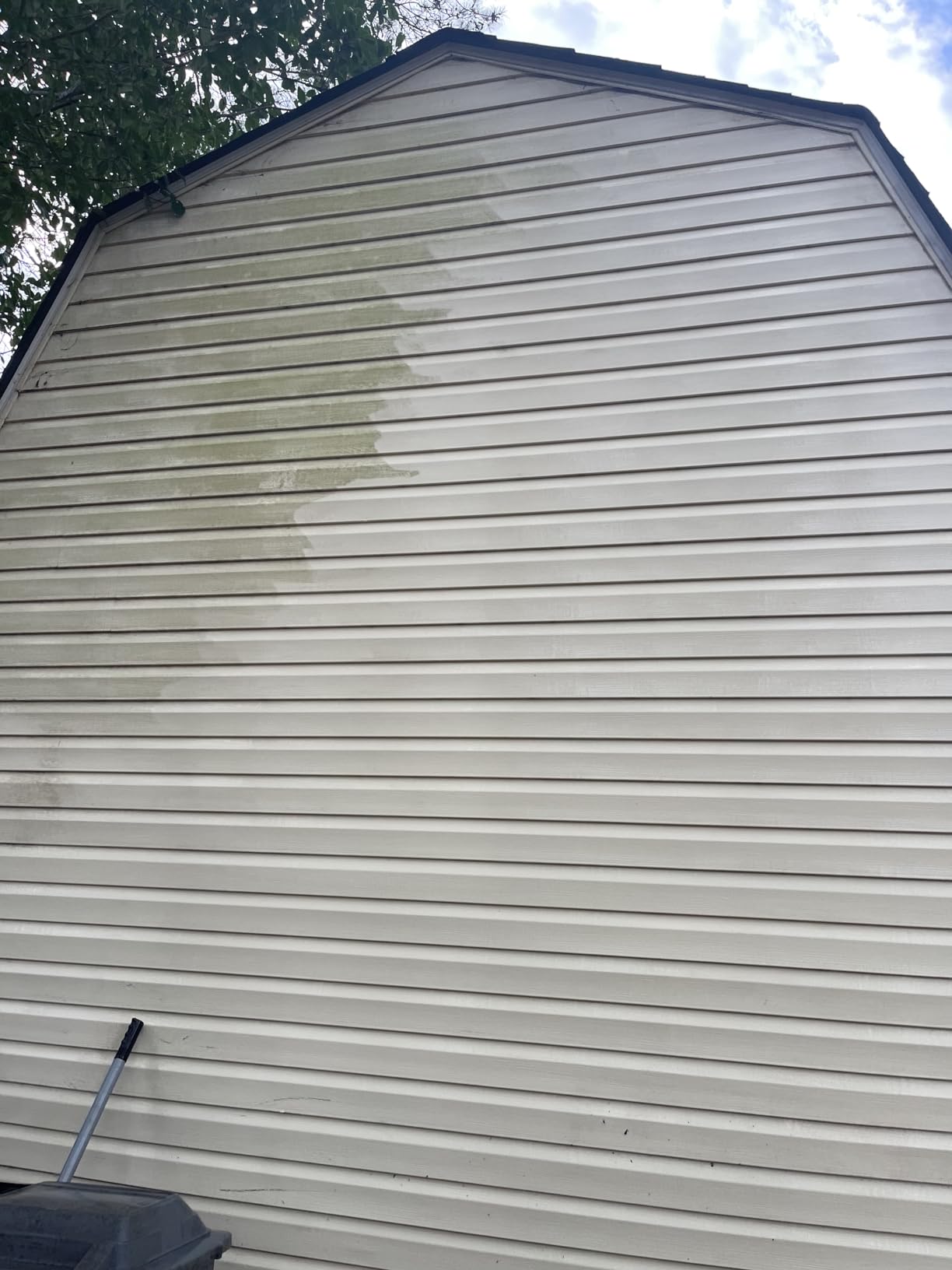
This is the washer for a car, a patio, a fence, siding, an outdoor sofa and a bin. It is also the one I would put in a rental where a machine might get moved around or not stored carefully, because there is very little that can break.
At 1600 PSI with 1.2 GPM you are working at the light end of the range. Cars, vinyl siding, fences and decks are all within reach.
Where you will feel the ceiling
Concrete is where it stops being fun. Low pressure plus low flow means a driveway takes repeated passes and a lot of detergent, and the time saved over a garden hose shrinks toward nothing.
Owners also note replacing the supplied hose and nozzles as they wear out, which is a normal cost of entry in this band. The 3-year limited warranty is a genuine plus against the shorter coverage on some rivals.
7. Makita DHW180Z – Best Cordless Pressure Washer for Apartments and Boats
Makita DHW180Z 18V Li-ion LXT Pressure Washer, Batteries and Charger Not Included
18V LXT cordless
2.4 bar high mode
2.2 kg
batteries not included
Pros
- No power cord and no trip hazards on decks or boat docks
- Only 2.2 kg so it moves between jobs easily
- Self-priming absorption filter simplifies the water connection
- Trigger lock allows continuous spray without holding the lever
- Plugs into a widely supported 18V LXT battery platform
Cons
- Pressure is far below corded electric machines
- Feed water temperature is limited to 40 degrees Celsius
- Batteries and charger are not included
The Makita DHW180Z answers a problem corded machines cannot: where there is no outlet. A boat dock, a balcony, a garden with no exterior socket, a camping site or an apartment with a shared courtyard all rule out a 35-foot cord, and this is the only washer here that runs on an 18V LXT battery.
Understand the trade before you buy. In high mode it delivers 2.4 bar, roughly 35 PSI, at 2.5 liters per minute. That is a gentle rinse, not a cleaning jet, and it is in a different category from the 2000-plus PSI corded machines in this roundup.
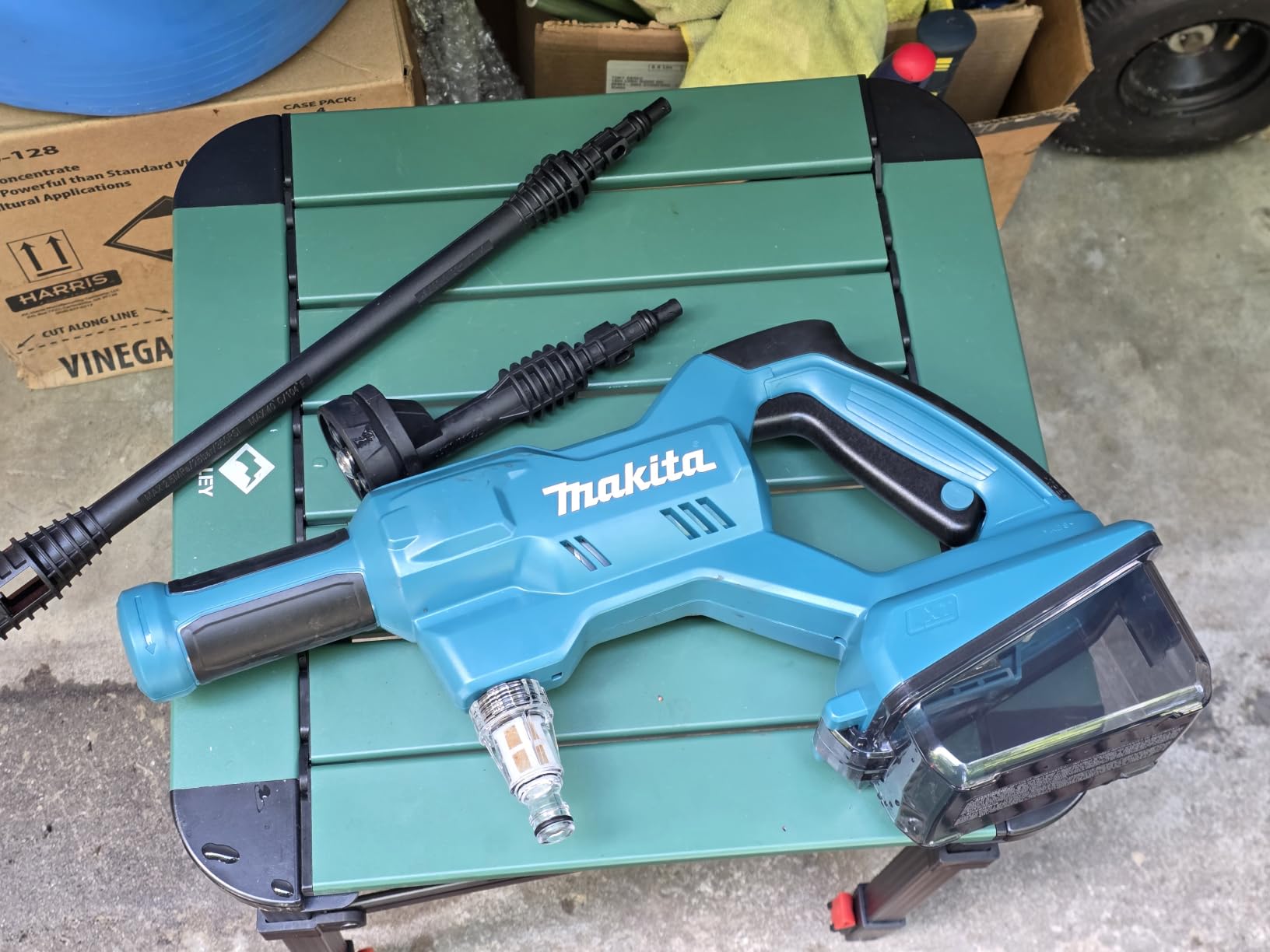
What you get for that is freedom. At 2.2 kg with the extension pipe attached to an overall length of 888 mm, it is light enough to carry with one hand, and the self-priming absorption connector with filter removes most of the priming ritual a corded washer needs. The trigger lock lets you spray continuously without holding the lever down.
The 516 reviews split at 4.2 stars, with owners praising portability and cord-free operation while noting the lower pressure, the need for a water source even when cordless, and a 9 percent one-star share citing early failures. Batteries and the charger are not included, so the real cost is higher than the listed figure.
When a cordless unit is the right tool
Rinsing a boat hull between trips, washing a car in a parking garage, cleaning outdoor furniture in a courtyard with no outlet, or any job where a cord across a walkway is a hazard. It is a supplement to a corded washer, not a replacement for one.
If you already own Makita 18V LXT batteries, the platform argument makes this an easy add-on because the packs you have already charge this machine.
What you give up
Dirt that has been sitting for months. This unit rinses and applies detergent; it will not lift baked-on concrete grime or strip a deck board, and no nozzle in the kit changes that.
Feed water is limited to 40 degrees Celsius, and the absence of included batteries and charger means you need a spare pack and a charger from the same platform before the first job.
8. Greenworks 1800 PSI – Best Light-Duty Step Up From the Basics
Greenworks 1800 PSI (1.1 GPM) Electric Pressure Washer PWMA Certified
1800 PSI
1.1 GPM
16 pounds
CSA certified
Pros
- 1800 PSI in a small body that handles cars
- driveways and fences
- Weighs 16 pounds with an integrated carry handle
- 35 ft cord with an integrated GFCI plug
- Universal quarter-inch quick connect system
- 3 year limited warranty
Cons
- Supplied wand hose is thin and kinks
- 1.1 GPM is the lowest flow figure in the group
- No trigger lock so the lever must be held on long jobs
The Greenworks 1800 PSI is the small-footprint option for someone who thinks 1600 PSI is a little light. It carries 1800 PSI at 1.1 GPM in a body that measures 10.63 by 9.06 by 12.8 inches and weighs 16 pounds, so the power gain over the GPW1602 costs you almost nothing in size.
It shares the same practical design as its sibling: push-button start, no gas or oil or engine maintenance, a 35-foot cord with an integrated GFCI plug, and a 20-foot tangle-free hose on quarter-inch universal quick connects that accept any standard attachment.
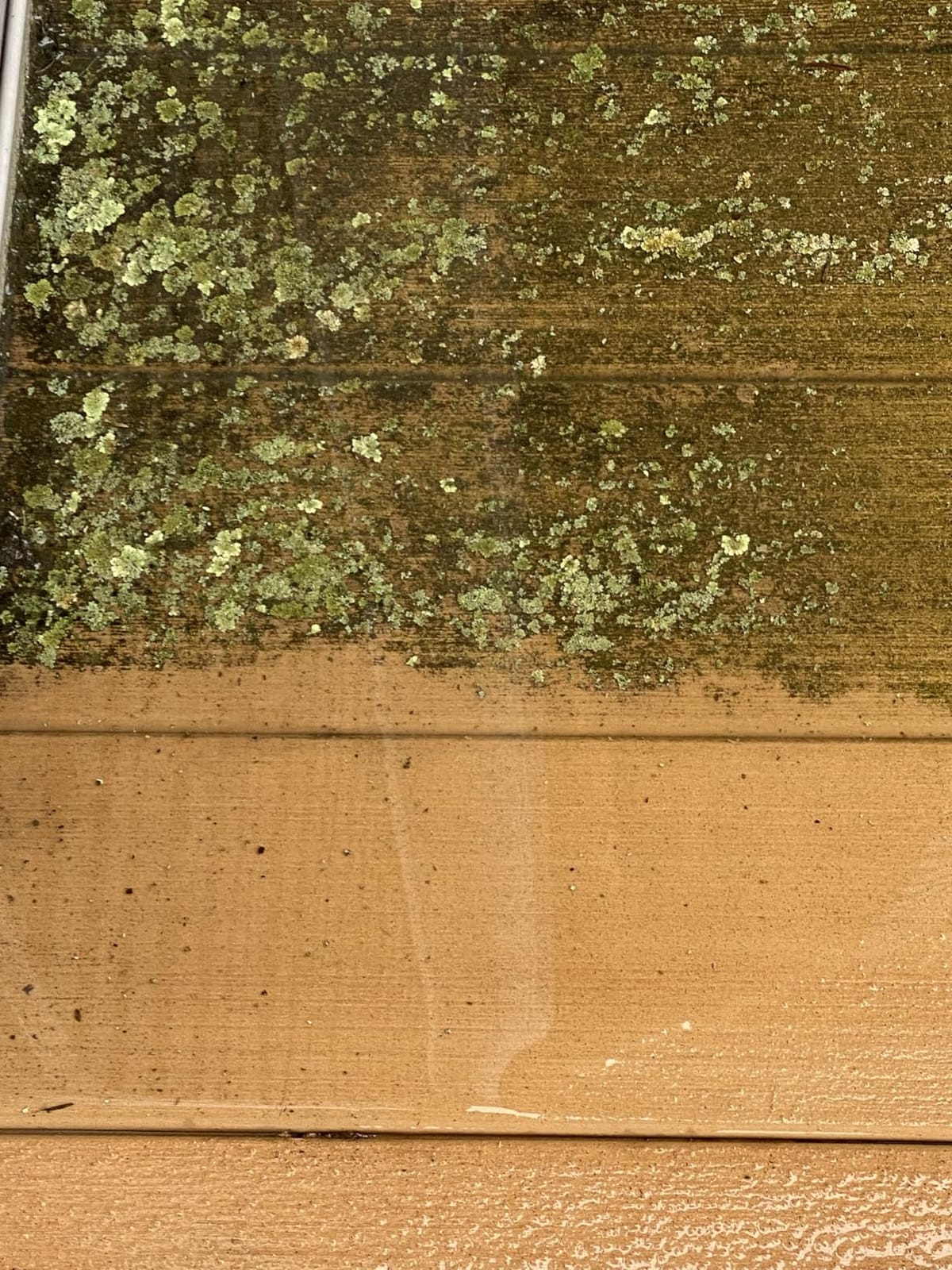
Owners report running it for three hours straight without overheating, and one reviewer notes it still works with a 100-foot auxiliary hose and gun extensions without a meaningful pressure drop. That is a useful data point for anyone with a long driveway or a detached garage.
The 4.4 average across 504 reviews comes with 73 percent five-star feedback. The most-cited drawbacks are the thin supplied wand hose, which many owners replace, the 1.1 GPM flow rating, and the absence of a trigger lock so the lever must be held for the whole job.
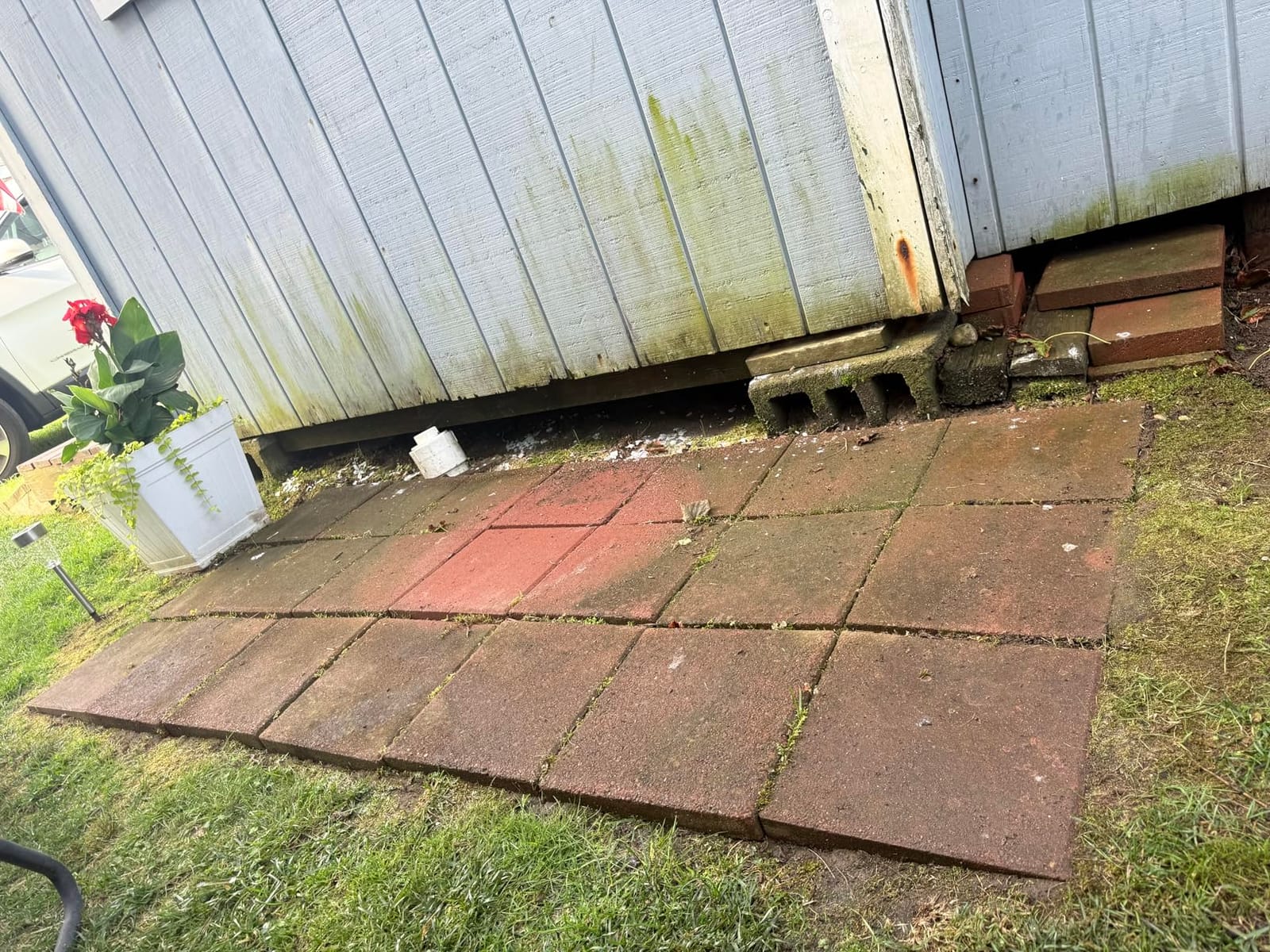
Who should choose this one
A homeowner with a car, a small driveway section, a fence and some siding who wants more pressure than a light-duty unit without a steel frame in the garage. At 16 pounds it is one of the easiest machines here to move from the car to the driveway.
The included gun, 40-degree gentle nozzle, turbo nozzle and soap applicator are a sensible kit, with a gentle nozzle and a turbo nozzle covering both ends of the range.
Where the limits show
Flow of 1.1 GPM is the lowest in this group, so large flat surfaces take more passes than the Westinghouse machines would. A surface cleaner attachment does more to fix that than any nozzle change.
Without a trigger lock you are holding the lever from first spray to last, which is exactly the fatigue complaint the Karcher foot switch was designed to solve. The 3-year limited warranty is solid for the band.
How We Picked the Best Pressure Washers Under 300 Dollars
Every machine in this roundup had to clear the 300-dollar line on its own, with no allowances for accessories or add-ons. Within that band we prioritized published rated output over maximum output, then weighed the review base, warranty length and physical design.
Rated versus max is the filter that reshuffles this list. A machine advertising 3000 max PSI at 1.76 max GPM may be rated at 2600 PSI and 1.1 GPM, and the rated pair is what you get when the trigger is pulled. We calculated cleaning units from rated figures wherever the manufacturer publishes them, which is why the Westinghouse ePX3500 at 2400 cleaning units outranks machines with higher headline numbers.
Review volume was the second filter, and it is where this budget band gets uncomfortable. The Sun Joe SPX100-GO has more than 64000 ratings and the Makita has 516, so the reliability of owner feedback differs by orders of magnitude. Where the review base is small, we leaned on certification and warranty terms instead.
Third-party certification came next. CETA, PWMA and CSA marks tell you an independent body verified the pressure and flow figures. In a category full of brands you have never heard of, that mark is the fastest credibility check available, and it is free to look for.
What PSI and GPM Actually Tell You
PSI is pressure, GPM is flow, and cleaning units is the two multiplied together. Pressure alone does not describe cleaning power, which is why a machine can win on a spec sheet and still feel weak. Cleaning units is the only cross-brand number that holds up in practice.
Is 300 PSI good for a pressure washer? Not in any meaningful sense for outdoor cleaning. A garden hose runs at roughly 60 to 80 PSI, so 300 PSI is only a modest step up from a hose. The units worth comparing start around 1600 PSI and the useful range under this ceiling runs from about 1900 to 3000 cleaning units depending on flow.
Max figures exist because the pump peaks briefly at nozzle startup. Rated figures are sustained output, and rated is the honest comparison. The same logic applies to GPM, and to detergent: a machine with strong pressure and weak flow will lift grime faster than it can rinse it away, which is why the 1.76 GPM figures on the Westinghouse machines matter as much as their pressure.
One more term worth knowing: the Total Stop System, also called auto-stop, shuts the pump down the instant you release the trigger. Without it, budget pumps sit under pressure while you move the wand around and wear out faster, so treat auto-stop as a requirement rather than a nice-to-have.
Where the 300-Dollar Ceiling Runs Out
Under 300 dollars you are buying cold-water electric power, and that ceiling has hard edges. Gas washers start well above this range and stay running longer per gallon, so a contractor cleaning several vehicles a day is not served by anything on this list.
Two specific gaps are worth naming. First, sustained high-volume work: an electric machine at 1.1 to 1.76 GPM refills slowly through a garden hose, and heavy use across a large property exposes the limits of a budget pump. Second, surface cleaners and foam cannons, which routinely add more than the washer itself and can push a mid-range machine past the ceiling.
Storage is the third constraint nobody budgets for. The machines rated for real power are the heaviest and largest, and if you have no room to park a 36.8-pound steel frame, the cheaper output is the output you will actually use.
Pressure Washer Safety Before Your First Spray
Water and electricity in the same tool makes the safety habits non-negotiable. Plug into a GFCI-protected outlet, which every machine here provides, and never use a standard extension cord. If you must bridge distance, use a heavy-gauge wet-rated cord rated for the machine’s amperage, and keep connections out of standing water.
Wear eye protection and closed-toe shoes every time. A 0-degree nozzle at 2600 rated PSI will cut skin, and debris comes off concrete faster than any garden hose can move it.
Respect the color-coded nozzles. The red 0-degree tip is the most powerful and the most dangerous, the yellow 15-degree is for heavy soil on hard surfaces, the green 25-degree is general purpose, and the white 40-degree is the gentle setting for paint, siding and vehicles. Start wide and work narrower, never the reverse.
Keep the spray away from electrical fixtures, windows, screens and unsealed wood, and never pressure wash a surface you have not tested in a hidden spot. On wood decks, hold the nozzle further away and work with the grain to avoid raising fibers.
Finally, run the pump dry. An axial pump running without incoming water cavitates and destroys itself in minutes, so connect the garden hose fully, open the faucet, and squeeze the trigger before you power up.
Frequently Asked Questions
What is the best pressure washer under 300 dollars?
The Westinghouse ePX3500 is the strongest all-round choice inside that ceiling. It delivers 2000 rated PSI and 1.2 rated GPM, about 2400 cleaning units, from a body that weighs 19 pounds and stands 16.5 inches tall, with a 25-foot braided hose, a 20-ounce soap tank, auto-stop pump and a 3-year limited warranty.
Is 300 PSI good for a pressure washer?
Not for outdoor cleaning. A garden hose already runs at roughly 60 to 80 PSI, so 300 PSI is only a modest step up. Useful corded electric pressure washers start near 1600 PSI, and the meaningful comparison under a 300-dollar ceiling is 1900 to 3000 cleaning units, which is rated PSI multiplied by rated GPM.
What is the difference between PSI and GPM?
PSI is the pressure pushing water out of the nozzle, and GPM is how much water flows through it. Cleaning power depends on both together, expressed as cleaning units, or CU, calculated by multiplying rated PSI by rated GPM. A machine with high PSI and low GPM lifts dirt quickly but rinses it slowly.
What is a good inexpensive pressure washer?
At the low end, the Greenworks GPW1602 at 1600 PSI and 1.2 GPM and the CRAFTSMAN CMEPW1700 at 1700 PSI and 1.2 GPM are the dependable inexpensive picks. Both carry third-party certification, both weigh under 18 pounds, and both suit cars, siding, patios and fences rather than concrete.
How long does an electric pressure washer last?
Owners on long-running forum threads commonly report four to five years from a budget electric washer with a wobble or axial pump used a few hours per month. The three things that shorten that life are running the pump without water, leaving the machine under pressure with no auto-stop, and heat, which is why induction-motor designs like the Westinghouse WPX3000e tend to last longer.
Our Final Verdict on the Best Pressure Washers Under 300 Dollars
The Westinghouse ePX3500 is the best pressure washer under 300 dollars for most people, because 2400 rated cleaning units, a 19-pound frame and a 3-year warranty rarely appear together below this ceiling. Buy the Westinghouse WPX3000e instead if concrete is on your list and you have floor space for a 36.8-pound frame, and take the Sun Joe SPX100-GO if you wash cars and patios and want the included foam cannon at the lowest outlay.
Check current pricing before you commit, because this category discounts heavily and often. Pick the machine that matches your surfaces, add a surface cleaner or foam cannon to the budget rather than the sticker figure, and always confirm the rated PSI and rated GPM rather than the headline maximum.