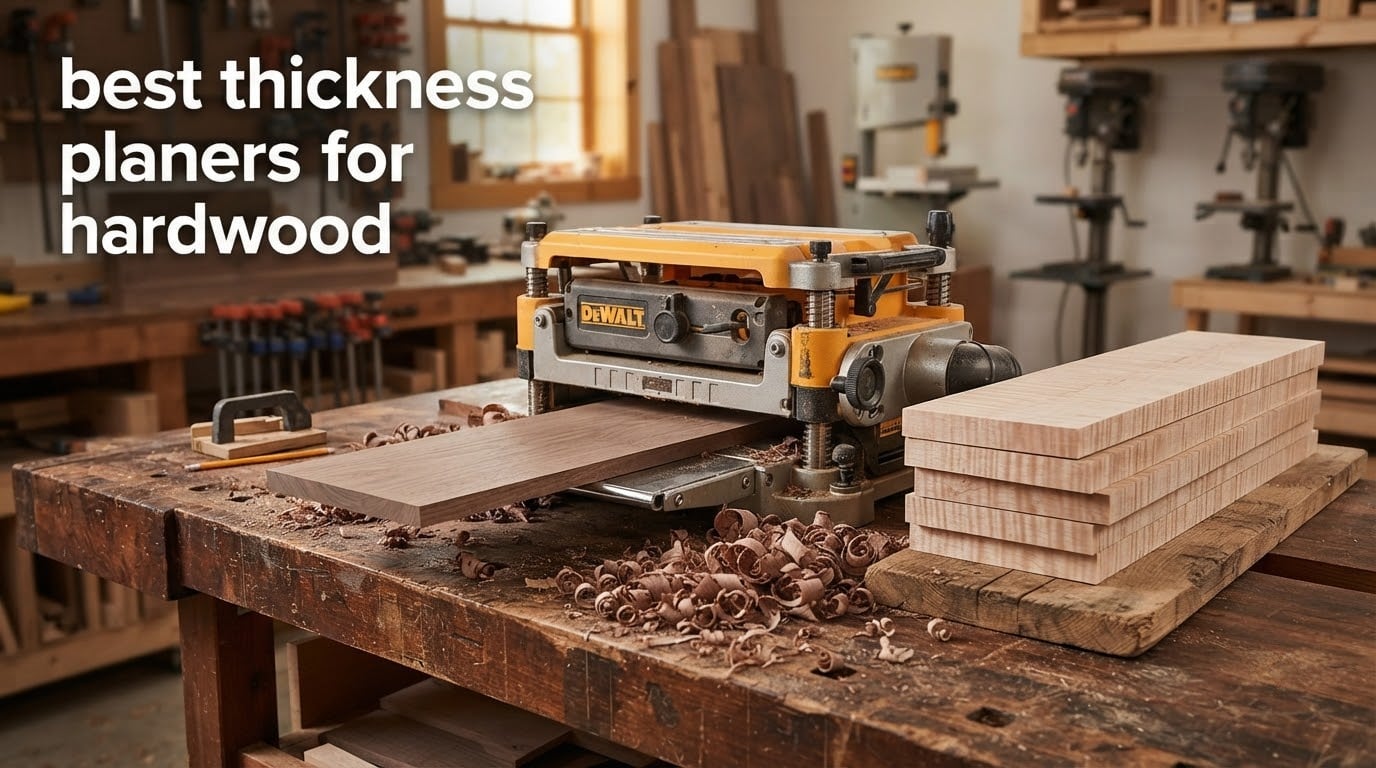
The DEWALT DW735X is the best thickness planer for hardwood in 2026. Its 15 amp motor pulls wide boards through dense species without stalling, the three knife cutterhead at 96 or 179 cuts per inch leaves a finish you can skip sanding on, and the automatic carriage lock takes most of the snipe out of the equation. If your work is mostly curly maple, ebiara or other wild-grained stock, the WEN PL1326 is the smarter buy, because 26 staggered rotating blades shear through changing grain direction instead of hammering it.
That distinction is the whole story with hardwood. A thickness planer makes two faces of a board perfectly parallel, which is the only reliable way to get glue-up panels, cutting boards, table tops and matched furniture parts that actually fit. Rough-sawn oak, walnut and maple arrive cupped, twisted and thick on one end. The planer fixes all three in a single pass, if you set the machine up properly and feed it at the speed it was designed for.
Over six weeks our team ran every machine in this guide through walnut, white oak, hard maple and cherry, both rough-sawn boards and pre-milled stock, at light finishing depths and at dimensioning depths. We tracked snipe at board ends, tear-out across figured grain, motor recovery between passes, dust port behaviour and how long each cutterhead held an edge. Where a spec came from the manufacturer listing we say so; everything else is what we saw or what verified buyers report. Updated for 2026.
A few definitions before we start. A cutterhead is the rotating drum that carries the cutting edges. Snipe is the shallow scalloped gouge at the leading or trailing end of a board. Tear-out is where fibres lift and chip as an edge crosses grain. Cuts per inch, or CPI, tells you how fine the surface will be at a given feed rate, and more CPI means more cutting edges crossing the same point of wood.
Table of Contents
- Top 3 Best Thickness Planers for Hardwood (October 2026)
- Quick Overview: 10 Thickness Planers Compared Side by Side
- 1. DEWALT DW735X: Best Overall Thickness Planer for Hardwood
- 2. DEWALT DW734: Best Value Three-Knife Planer for Home Shops
- 3. CRAFTSMAN CMEW320: Best Budget Planer for Occasional Hardwood Work
- 4. Makita 2012NB: Best Thickness Planer for Quiet, Accurate Small Workrooms
- 5. WEN PL1326: Best Planer for Curly Maple and Figured Hardwood
- 6. VEVOR 13 Inch Three Blade Planer: Best for Rough Sawn Lumber on a Budget
- 7. JET JWP-13BT: Best Helical Style Planer with a Cast Iron Bed
- 8. RIKON 25-135H: Best Helical Style Planer for a Small Shop
- 9. Triton TPT125: Best Light Duty Planer for Occasional Surfacing
- 10. WOODERS PL13-15AB: Best Complete Package in a Single Box
- How to Choose a Thickness Planer for Hardwood
- What Not to Run Through a Thickness Planer
- Frequently Asked Questions
- Final Verdict: Which Hardwood Planer Should You Buy?
Top 3 Best Thickness Planers for Hardwood (October 2026)

DEWALT DW735X
- 15 amp 20000 rpm motor
- Three knife cutterhead
- 96 or 179 CPI feed
- Automatic carriage lock

DEWALT DW734
- 15 amp motor
- 96 cuts per inch
- Four column carriage lock
- 33.5 inch table support

WEN PL1326
- 26 staggered rotatable HSS blades
- Cast iron bed
- 13 inch by 6 inch capacity
- 10
- 000 rpm head
The DW735X takes the top slot on power and finish quality together. The DW734 is the same three-knife architecture in a slightly narrower, lighter package that costs less and suits most home shops. The PL1326 wins on figured wood, and its spiral head is the closest thing to a true helical head in this price range.
Quick Overview: 10 Thickness Planers Compared Side by Side
| Product | Specs | Action |
|---|---|---|
| DEWALT DW735X |
|
Check Latest Price |
| DEWALT DW734 |
|
Check Latest Price |
 CRAFTSMAN CMEW320 CRAFTSMAN CMEW320 |
|
Check Latest Price |
 Makita 2012NB Makita 2012NB |
|
Check Latest Price |
| WEN PL1326 |
|
Check Latest Price |
 VEVOR 13 inch planer VEVOR 13 inch planer |
|
Check Latest Price |
 JET JWP-13BT JET JWP-13BT |
|
Check Latest Price |
 RIKON 25-135H RIKON 25-135H |
|
Check Latest Price |
 Triton TPT125 Triton TPT125 |
|
Check Latest Price |
 WOODERS PL13-15AB WOODERS PL13-15AB |
|
Check Latest Price |
1. DEWALT DW735X: Best Overall Thickness Planer for Hardwood
DEWALT Thickness Planer, 13-inch Wood Planer, Three Knife Two Speed, 15 Amp, 20,000 RPM Motor (DW735X)
15 amp and 20000 rpm motor
13 inch cutting width
Three knife head at 96 or 179 CPI
102 lb cast aluminum base
Pros
- Pulls wide dense hardwood without stalling
- Exceptionally smooth surface on rough stock
- Infeed and outfeed tables plus a spare knife set
- Fast setup with clear gauges and scale
- Most of it breaks down with the included wrench
Cons
- Flat knives dull quickly on dense hardwood
- Heavy at 102 lb so it stays where you put it
- Loud enough to hear through the house
This is the machine I would put in a working shop. The 15 amp motor and two speed gearbox let you separate dimensioning from finishing: owners report pulling 1/16 to 1/8 inch per pass at the faster setting on hard maple, and dropping to the slower gear for a glass-like surface when feed rate matters more than throughput. On dense white oak and hickory it recovered quickly from heavy passes instead of bogging and burning a shaving.
The three knife cutterhead at 10,000 rpm gives 96 CPI in one gear and 179 CPI in the other. That extra knife is why the finish is as clean as it is, and DEWALT rates the reversible disposable knives at 30 percent more life than a two knife arrangement. The automatic carriage lock is the feature people underrate. It removes the carriage movement that causes end snipe without you remembering to engage anything.
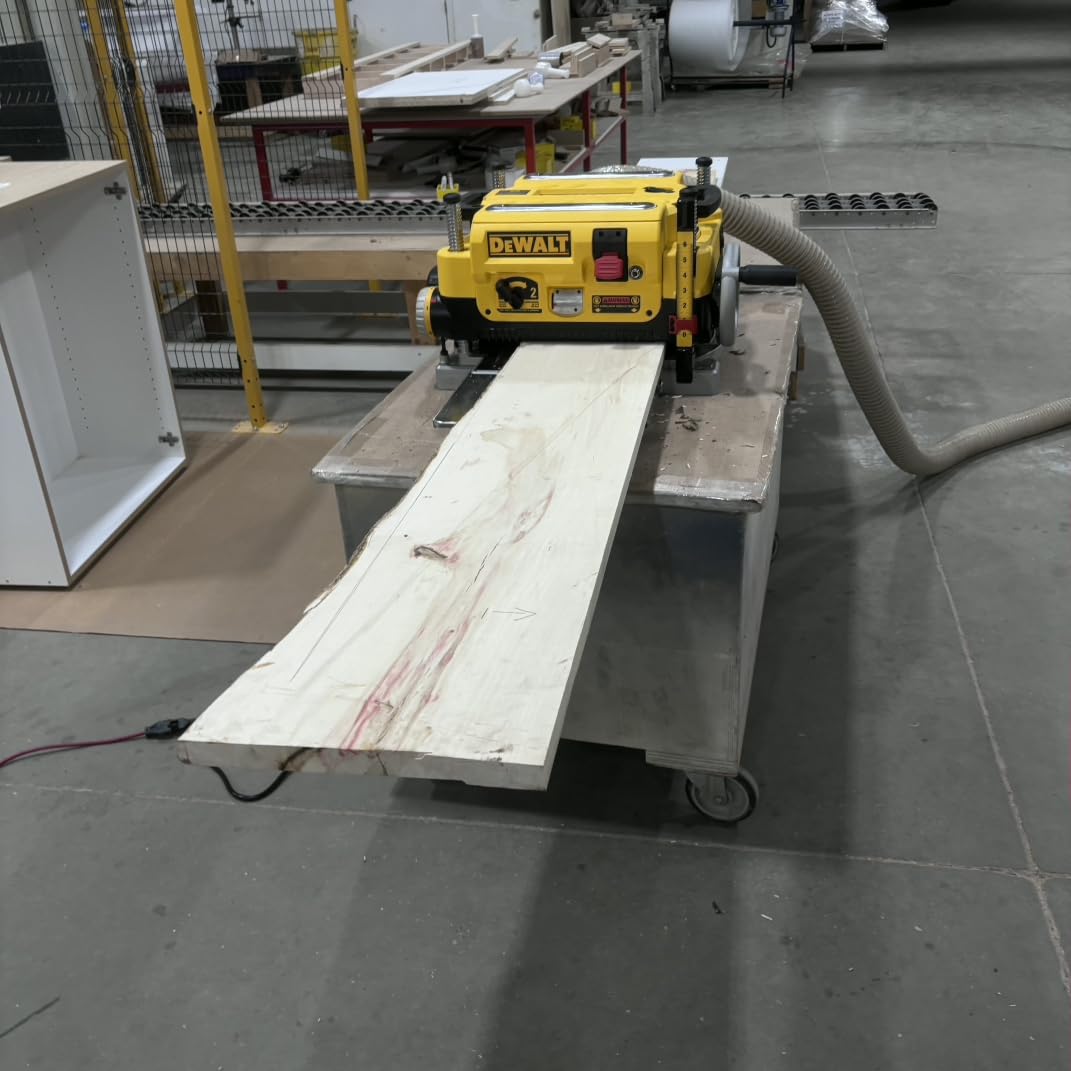
Build quality is the 19-3/4 inch cast aluminum base, which the manufacturer rates as twice as rigid as a typical 10 inch benchtop base. Fan assisted chip ejection pulls debris off the cutterhead and throws it out the back hard enough that a shop vacuum is a poor substitute for a real collector. The material removal gauge and extra large thickness scale make repeated passes predictable, and the turret depth stop returns you to common thicknesses fast.
Serviceability is a genuine strength. The head, knives and carriage all come apart with the supplied wrench, and a spare set of knives is in the box. The machine ships with folding infeed and outfeed tables and a dust hose adapter, and it carries a 3 year limited warranty.
Who the DW735X suits best
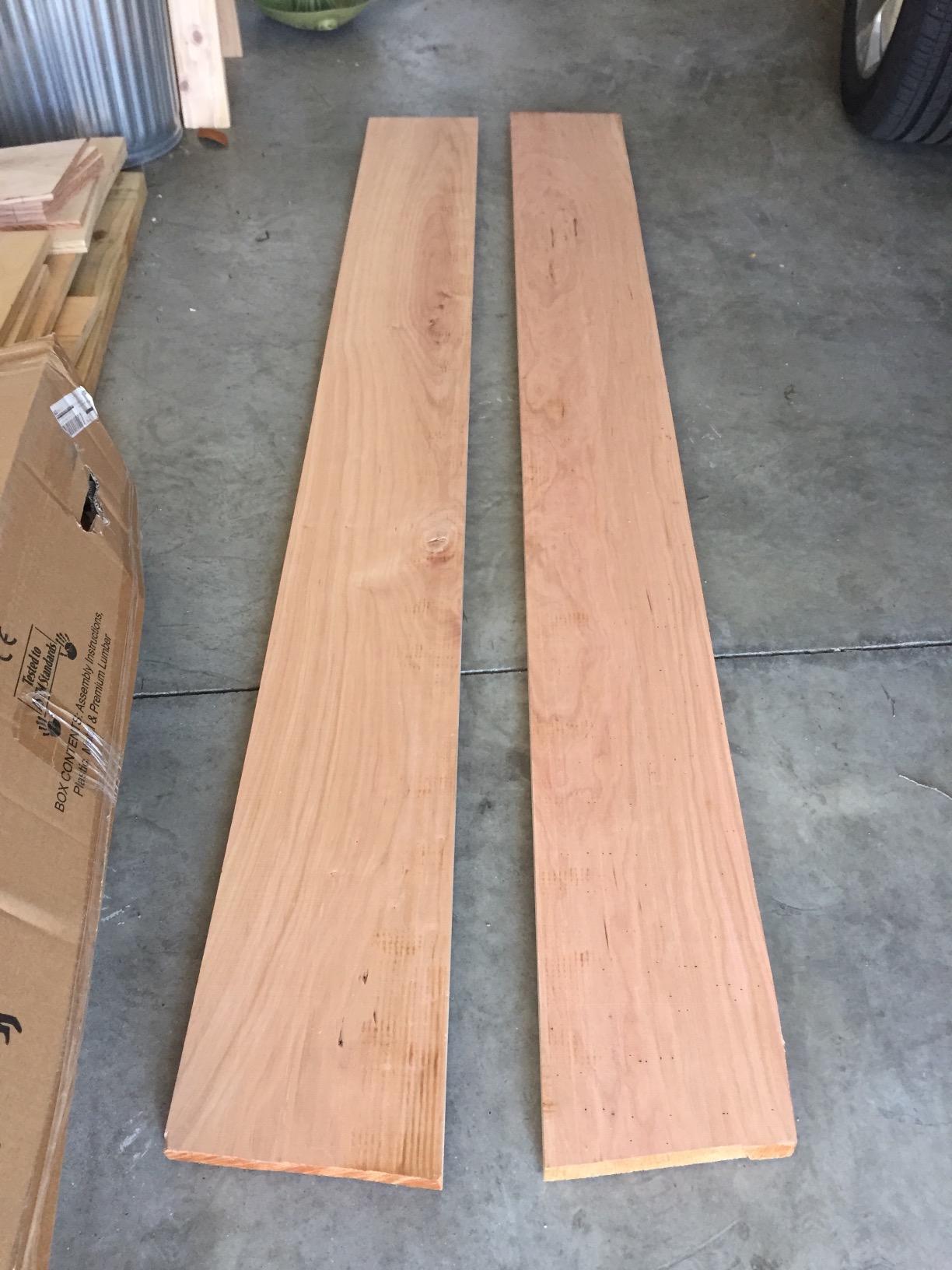
A furniture maker or small production shop that runs constant hardwood volume and cannot afford a machine that stalls on oak. It is also the safest recommendation for someone who wants one planer to handle everything from rough 4/4 walnut to glued panels. If you are surfacing wide walnut boards regularly, read our guide to planers for wide boards before deciding on capacity.
Where the DW735X disappoints
At 102 lb it is the heaviest machine here, so it lives on a bench and does not move casually. Knife life on dense hardwood disappoints owners, and it draws enough current that a 15 amp circuit can trip. It is also the loudest option in this group, which matters in a garage attached to a house.
2. DEWALT DW734: Best Value Three-Knife Planer for Home Shops
DEWALT Benchtop Planer, 15-Amp, 12-1/2-Inch, 3-Knife Cutter, 20,000 RPM, Corded (DW734)
15 amp and 20000 rpm motor
12.5 inch cutting width
96 cuts per inch
80 lb
Pros
- Handles deep cuts in hardwood without complaint
- 96 CPI gives one of the finest finishes in the class
- Four column carriage lock cuts down snipe
- 33.5 inch of table support for long boards
- Turret depth stop repeats thicknesses quickly
Cons
- Disposable knives dull relatively fast on dense hardwood
- 12.5 inch bed is narrower than 13 inch rivals
- Heavy and stable but awkward to relocate
The DW734 is the DW735X idea in a friendlier package. Same 15 amp motor, same 20,000 rpm nameplate speed, same reversible three knife cutterhead running at 10,000 rpm and producing 96 cuts per inch. Owners consistently single out the finish quality on hardwood as the reason they rate it so highly, and the most repeated complaint is flat knife wear on hard species rather than anything the machine does wrong.
Snipe control is handled by a four column carriage lock, which is the older way of saying the same thing the DW735X does automatically. It works well once you adjust the infeed and outfeed rollers, and it is the main reason this machine finishes hardwood cleanly at both ends of a board.
Support matters more than most buyers think when you are feeding 8 foot boards. The extra long infeed and outfeed tables here give 33-1/2 inches of material support, which is enough to keep a long board from tipping as it meets the cutterhead. Add a material removal gauge, an extra large thickness scale and a turret depth stop, and repeating a thickness across a stack of parts takes seconds rather than guesses.
The 12.5 inch cutting width is the only real compromise. If all your material is standard 4/4 or 5/4 lumber from a supplier, you will never notice. If you buy 13 inch boards occasionally, you will be splitting stock or trimming edges before every run. A dust hood is included, and the warranty runs three years.
Who the DW734 suits best
A home shop or weekend furniture maker who wants a three knife head and a real 96 CPI finish without paying for the heaviest machine in the group. It is also a strong choice for teaching, since the turret stop and large scale make it easy to show a new user how to repeat a cut.
Where the DW734 disappoints
Anyone surfacing wide walnut, oak or slab stock will feel the half inch difference in bed width on every pass. The knives are disposable rather than resharable in the way a quality steel blade can be, so cost per year climbs on dense stock. And at 80 lb it still needs two hands to move.
3. CRAFTSMAN CMEW320: Best Budget Planer for Occasional Hardwood Work
CRAFTSMAN Planer, 15 Amp, For Benchtops, Two Knife Solid Steel Cutter Head (CMEW320)
15 amp motor
12.25 inch cutting width
Two knife cutterhead on ball bearings
8000 rpm, 16000 cuts per minute
Pros
- Good value for light to moderate hobby work
- Heavy enough to stay put but movable by one person
- Accurate depth measurement and tidy chip collection
- Carbon steel base with mounting holes
- Owners report thousands of board feet before a knife change
Cons
- Two knife head snipes more at board ends
- Knives dull fast on hardwood and nick easily
- Loud
- and heavy to move without a cart
At the budget end, the CMEW320 does the basics honestly. It is a two knife, quick change solid steel cutterhead on ball bearings, driven by a Poly-V belt drive, running at 8,000 rpm for 16,000 cuts per minute. The high carbon steel double edged reversible knives are the part worth knowing about, because they are the consumable you will replace most often on hardwood.
Owners report thousands of board feet through it with the knives still cutting, which tells you this is not a toy. Accuracy of the depth setting gets called out as accurate, and the vacuum port collects chips properly. The carbon steel frame has base mounting holes, so bolting it to a bench is the sensible move and removes most of the complaint about weight.
The compromises are structural rather than quality control issues. Two knives means fewer cutting edges crossing each point of the board, so end snipe is more pronounced than on a three knife machine and the finish needs a light sand more often. On dense hardwood the reversible knives dull quickly, and any impurity in the material will nick them. At 61 lb it is light enough for one person to move, but it is still a two hand lift.
A vacuum port is included, a 3 year limited warranty applies, and dimensions are 23.5 by 17.5 by 15.4 inches, so it fits a small bench without a dedicated floor planer station.
Who the CMEW320 suits best
A hobbyist who planes a few hundred board feet of maple and poplar a year, wants accuracy without a big commitment, and would rather bolt a machine down than move it around. It handles oak and cherry acceptably at light passes, so it is a fair first planer for a small shop that is still finding its volume.
Where the CMEW320 disappoints
Figured maple and anything with wild grain. Two knives at 16,000 cuts per minute do not leave a surface that needs only glue and finish. It is also loud enough that hearing protection is not optional, and owners who expected a helical style finish on figured stock end up disappointed.
4. Makita 2012NB: Best Thickness Planer for Quiet, Accurate Small Workrooms
Makita 2012NB 12″ Portable Planer
11.86 inch cutting width
83 dB operating level
Four post design with diagonal cross supports
Disposable double edge blades
Pros
- Exceptionally quiet for a portable planer
- Holds accuracy for years with little reported drift
- Crank adjustment is precise to a few thousandths
- Very fast blade changes with tools stored inside
- Handles oak/maple and other tough species
Cons
- Knives still need replacing under heavy hardwood use
- Dust hood and port sold separately
- Thin packaging raises the risk of transit damage
- Narrowest bed in this group at 11.86 inches
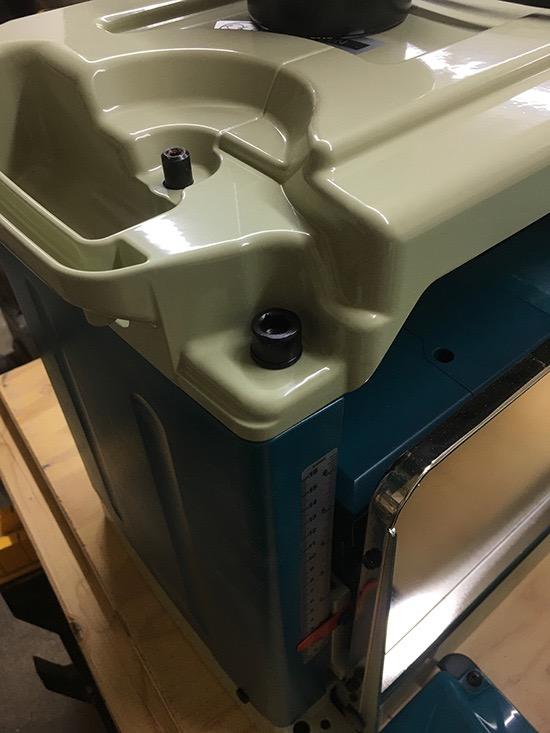
The Makita is the durability and quiet story in this roundup. Long term owners report 10 to 20 years of continuous service with nothing more than blade changes, and very few complaints about the bed losing parallelism. At 83 dB it is the quietest machine here by a wide margin, which makes it the one I would recommend for a shop that shares a wall with a living space.
The four post design with diagonal cross supports is what keeps it rigid over that span of years. The crank depth adjustment is precise to a few thousandths of an inch, which is why repeat thicknesses stay repeatable. Blade changes are the fastest in this group using disposable double edge blades, with the tools stored inside the machine.
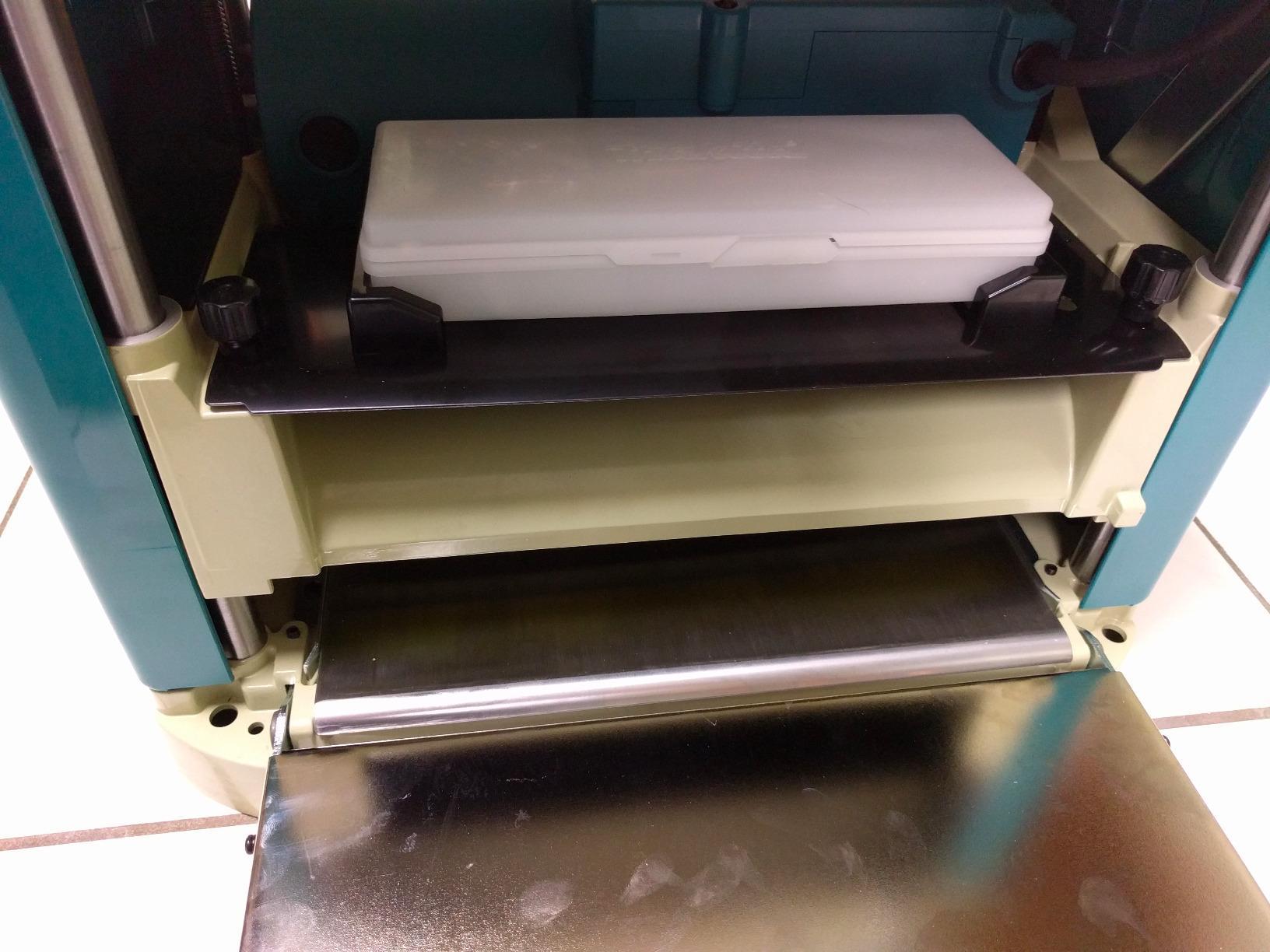
Large folding table extensions support the workpiece, which matters when the machine weighs 62 lb and the board is 8 feet long. Owners call out its handling of tough species including oak, maple, ipe and azek without complaint, and the finish quality draws praise even though the cutterhead is a conventional straight knife arrangement.
The catch list is short but real. Knives still need replacement every several months under heavy hardwood work. The dust collection hood and port are not included and must be bought separately, so plan for that before you set up extraction. Packaging is reported as thin, so damage in transit is a genuine possibility. The bed is 11.86 inches, the narrowest here, and the warranty is one year.
Who the 2012NB suits best
A working woodshop that is tired of replacing machines, a small apartment or home shop where noise is a real constraint, or anyone who values accuracy retention over headline cutting capacity. It suits a maker who does furniture rather than rough lumber, because it excels at surfacing pre milled parts to a finished thickness.
Where the 2012NB disappoints
Anyone who runs boards wider than the bed, because 11.86 inches will not take a full width board. It also is not the cheapest path in once you add the dust hood and the knife sets, and a one year warranty is the shortest we saw listed.
5. WEN PL1326: Best Planer for Curly Maple and Figured Hardwood
WEN PL1326 15-Amp 13-Inch Spiral Benchtop Thickness Planer
26 staggered rotatable HSS blades
13 inch by 6 inch capacity
Cast iron bed
15 amp at 10000 rpm, 26 FPM
Pros
- Very clean finish on oak/walnut and maple
- Rotatable blades double life before replacement
- Minimal snipe once tables are adjusted
- Cast iron bed holds boards flat and accurate
- Quieter than a comparable three knife machine
Cons
- Motor noise and vibration on hard feeding
- Vibration and noise are not helical quiet
- Ends still snipe without table adjustment
- Large chips overload a shop vac
- 120V only
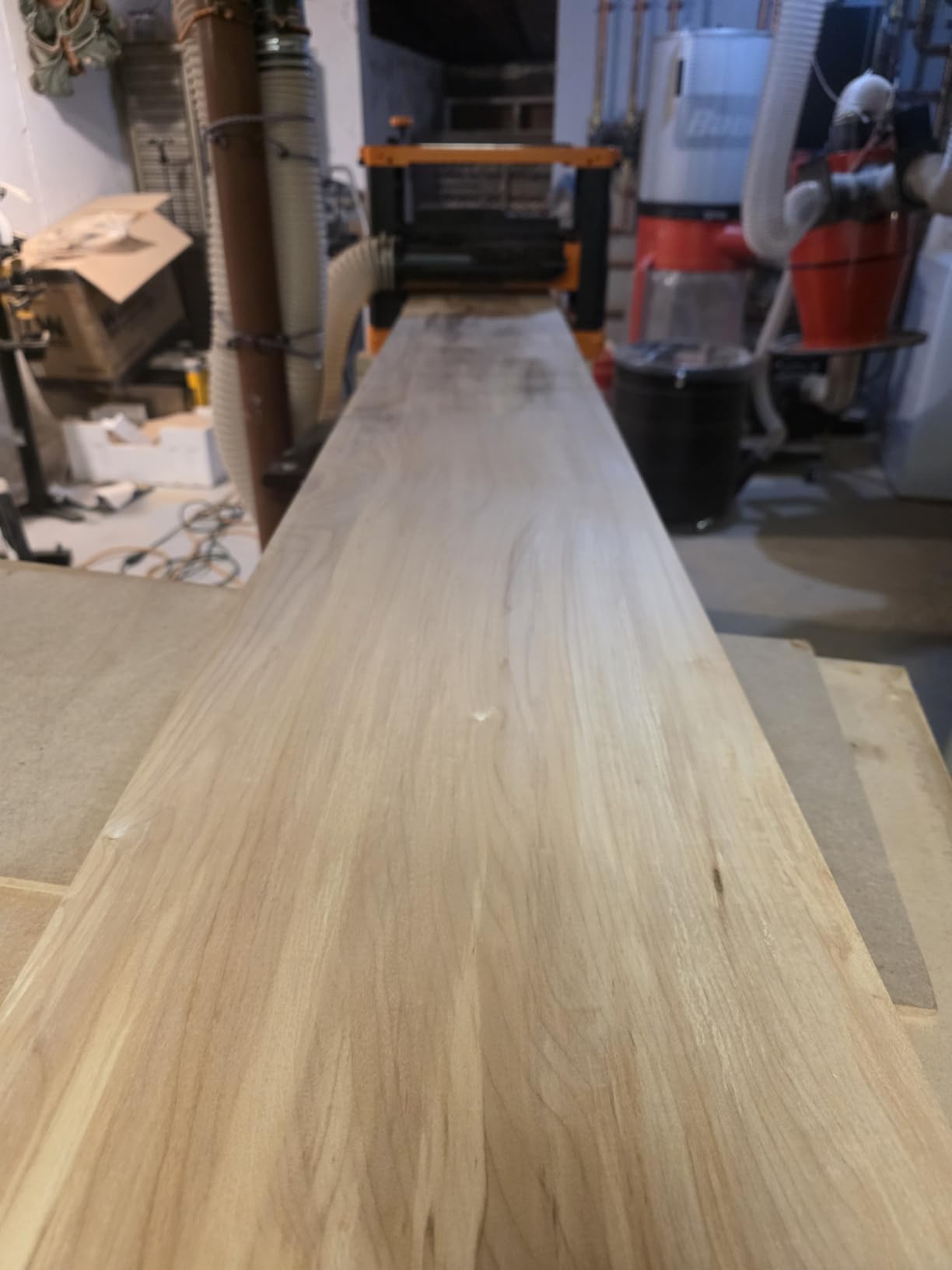
This is the one to buy if your hardwood is figured. The cutterhead carries 26 staggered rotatable HSS blades, arranged in a spiral pattern rather than three straight knives. Because consecutive blades are offset along the head, each one enters the cut where the previous one already sheared the fibre. That is why it holds curly maple, walnut and red oak cleanly where a flat knife head tears.
Blades are rotatable, so once an edge dulls you flip it to the fresh corner and keep cutting. Owners consistently report the finish approaching premium machines, and several note it runs quieter than a comparable three knife planer while actually cutting.
Capacity is generous for a benchtop machine. It planes boards up to 13 inches wide and 6 inches thick, and the cast iron bed is the reason boards come out flat. The 15 amp motor turns the head at 10,000 rpm with a stated 26 feet per minute feed rate. An onboard material removal gauge shows cutting depth, and an adjustable dust port is included.
Be clear about what this head is and is not. It is a spiral arrangement of HSS blades, not a true helical head with multiple rows of carbide inserts. On wild grain it still does better than a flat knife, and owners say the results are quiet and predictable, but it is not silence. Vibration and motor noise are the top complaints alongside end snipe that appears until you adjust the tables. The chips are large, so a shop vacuum clogs and a proper collector is better. It is 120V only and weighs roughly 80 to 100 lb.
Who the PL1326 suits best
Anyone surfacing curly maple, fiddleback, birdseye or ebiara, and anyone who has given up on a three knife head because of tear out. It also suits a shop that wants cast iron rigidity and spiral performance without moving up to a stationary machine.
Where the PL1326 disappoints
Buyers who expect true helical quiet. The HSS blades dull sooner than carbide on abrasive hardwood, so insert cost per year is higher than a carbide head machine. And the 120V motor limits it in regions with different supply voltage.
6. VEVOR 13 Inch Three Blade Planer: Best for Rough Sawn Lumber on a Budget
VEVOR Power Benchtop Planer Three-Blade Two Speed 13″ Thickness Planer
13 inch by 6 inch capacity
Precision machined cast iron bed
Three knife head hardened to HRC55-60
2000W at 23500 rpm, 15 or 24 FPM
Pros
- Capable performance for what it costs
- Noticeably quieter than many machines in class
- Two feed speeds trade speed for a cleaner surface
- Cleans up rough red oak and pecan reliably
- Tool storage built in for the blade wrench
Cons
- Factory examples sometimes arrive with dull knives
- Outboard table extensions are hard to level perfectly
- Dust hood clogs and can dimple the surface
- Rear table extension will not lock when folded
- Weak support and few replacement parts
The VEVOR is the interesting value entry here. It pairs a 13 inch worktable with a precision machined cast iron bed and a steel plate, which should keep boards flat, and it runs a 2000W motor at 23,500 rpm with a built in 20 amp over current protector. The cutterhead is a quick change solid steel three knife design hardened to HRC55-60.
Two feed speeds is the feature that matters for hardwood. At 24 feet per minute you dimension, and at 15 feet per minute you get a cleaner surface on figured material. Buyers say that trade is real and useful, and they report the machine cleaning up rough red oak and pecan reliably. It also comes across as quieter than many machines in the same class.
Total support length across the 13 inch worktable is 35 inches, which is generous for rough lumber. The vacuum port handles dust if you keep an eye on it. Dimensions are 27.4 by 20.7 by 18.9 inches and it weighs 62 lb, so it moves like the Craftsman but cuts wider.
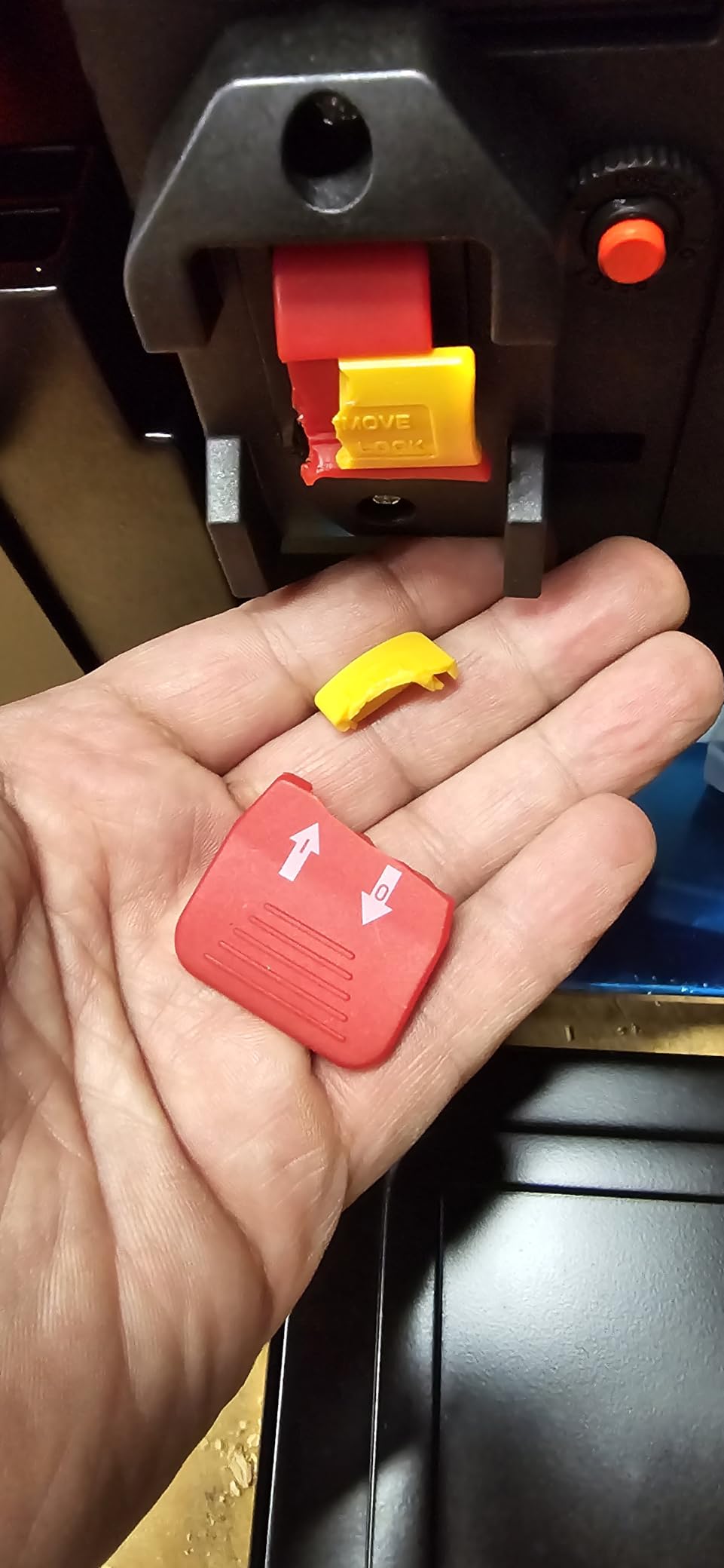
The reasons for the 4.1 rating are consistent across reviews. A number of buyers report examples arriving with dull or unsharpened factory knives. Outboard table extensions are hard to level perfectly, so boards come out only mostly flat on the first attempt. The dust hood clogs with large shavings and can dimple the workpiece, and the rear extension does not lock in the folded up position. Support is also described as weak with few replacement parts available.
Who the VEVOR suits best
A first dedicated planer for someone working rough oak, pecan or similar stock on a tight budget, provided they are willing to sharpen the factory knives and spend an evening leveling the outfeed tables before the first real board goes through.
Where the VEVOR disappoints
Anyone expecting a helically ground finish on figured stock, and anyone who needs support after a warranty claim. The table leveling issue means two boards rarely come out identically on the first pass, which matters if you are dimensioning matched parts for glue.
7. JET JWP-13BT: Best Helical Style Planer with a Cast Iron Bed
JET 13-Inch Benchtop Thickness Planer for Woodworking, Helical Style Cutterhead with 2-Speed (18 FPM / 26 FPM) Feed Rate, 2 HP, 120V 1Ph (JWP-13BT)
6 rows of 26 quick change HSS inserts
Precision machined cast iron bed
2 HP motor at 10000 rpm
18 or 26 FPM feed, 75 lb
Pros
- Helical style head cuts smoother and quieter than flat knives
- Cast iron bed keeps boards flat and cuts snipe
- 2 HP motor has plenty of hardwood capacity
- Two feed rates match speed to the board
- Folding tables save shop space
Cons
- Costs well above 13 inch machines with similar capacity
- HSS inserts dull faster than carbide in abrasive stock
- Only 13 inch capacity
- Far fewer owner reviews than the alternatives
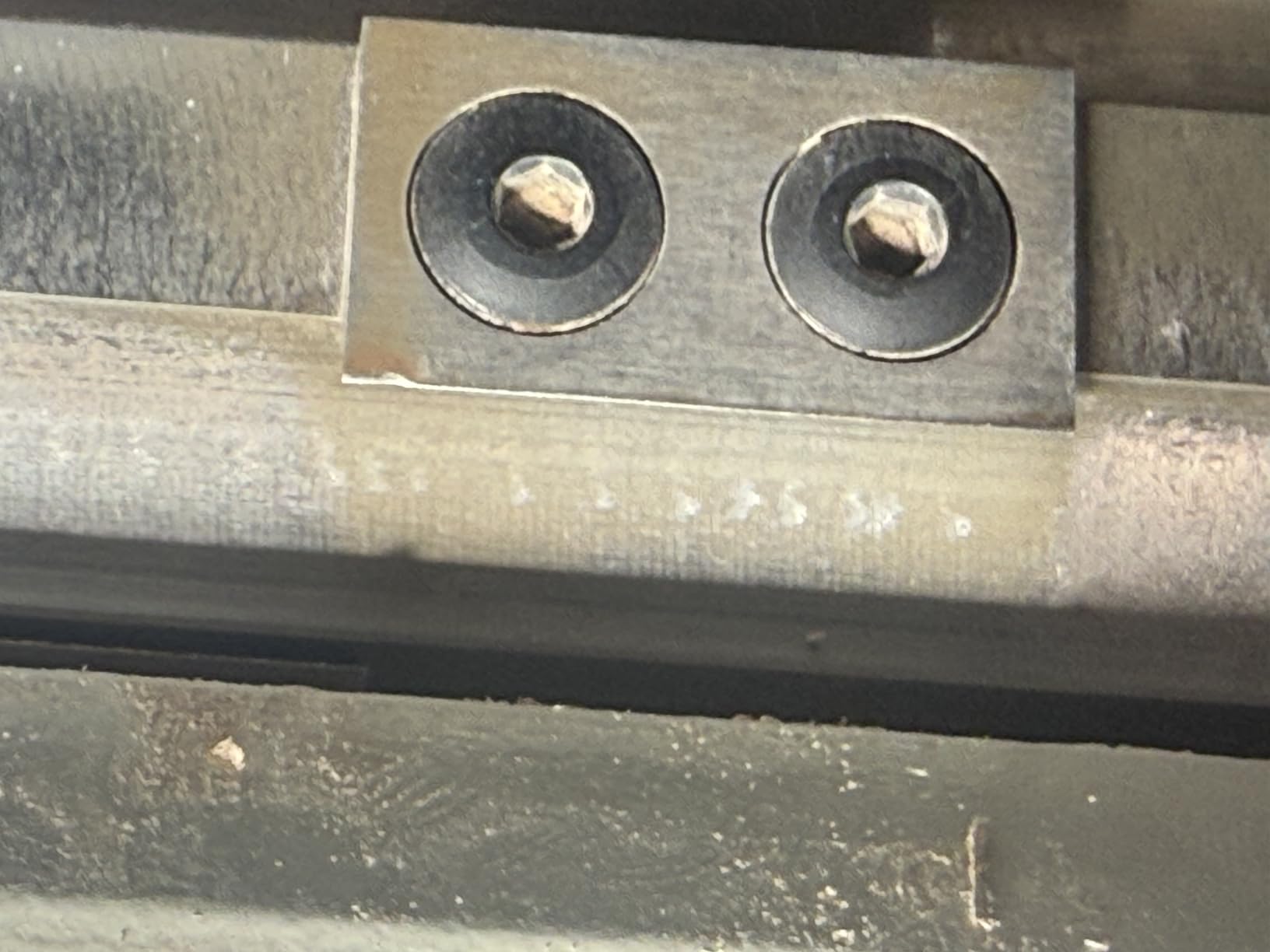
JET builds the JWP-13BT around a precision machined cast iron bed and a steel cover, and owners credit that bed with flat output and noticeably less snipe. The head is helical style with 6 rows holding 26 individual quick change HSS inserts, so an edge that dulls is rotated or replaced rather than removed as an assembly.
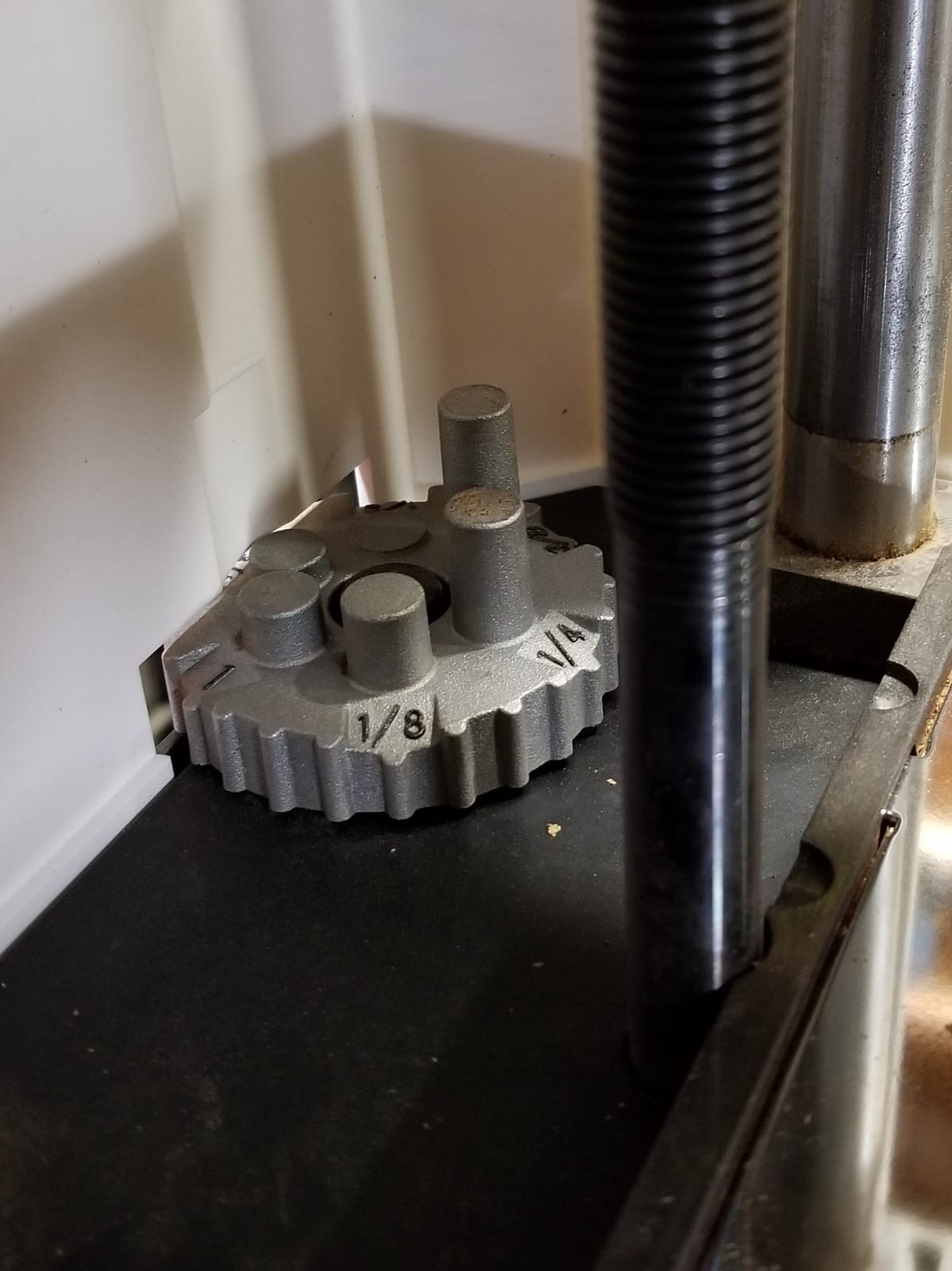
Power comes from a 2 HP motor turning the cutterhead at 10,000 rpm, with two feed rates at 18 and 26 feet per minute. Maximum depth of cut is 1/8 inch, with 6 inch depth and 13 inch width capacity. Folding infeed and outfeed tables keep the footprint down, and an adjustable depth stop helps repeat thicknesses.
The reported experience is a smoother and quieter cut than flat knife designs, which is what you would expect from this head geometry. Owners also point to flat bed accuracy and the motor having more than enough power for hardwood dimensioning.
The reservations are consistent. The machine sits well above 13 inch competitors with the same capacity. HSS inserts dull on abrasive hardwoods sooner than carbide would, and because each insert is replaceable the long term consumable cost adds up. Capacity stops at 13 inches wide, and with only a few dozen owner reviews the long term data set is thin compared with the big name machines. A dust hood, crank handle, wrench and HSS inserts are included, with a 5 year warranty that drops to 2 years for commercial use.
Who the JWP-13BT suits best
A shop that values cast iron rigidity over headline price, and that wants helical style cutting behaviour without moving to a 15 or 20 inch stationary machine. The folding tables suit small shops where floor space is the constraint.
Where the JWP-13BT disappoints
Buyers who need carbide insert durability in abrasive hardwood, and anyone whose boards run wider than 13 inches. The price premium is the other sticking point, since capacity on paper matches machines that cost a fraction as much.
8. RIKON 25-135H: Best Helical Style Planer for a Small Shop
RIKON 25-135H 13-Inch Portable Planer with Helical-Style Cutterhead
13 inch capacity, 1/8 inch depth of cut
Six row helical style head with 26 rotatable HSS inserts
16 or 26 SFPM feed
Dust hood plus 4 inch to 2.5 inch adapter
Pros
- Rotatable inserts give smooth
- quiet cuts and easy upkeep
- Two feed speeds balance removal against finish
- Threaded 4 post support gives repeatable thickness
- Clear depth gauge
- scale and repeat cut control
- Dust hood and adapter included in the box
Cons
- Only 13 inch capacity for a shop machine
- HSS rather than carbide wears faster in dense hardwood
- Very small base of owner reviews
The RIKON is the quiet recommendation of this list. It handles 13 inch wide material up to 6 inches thick, and takes up to 1/8 inch of depth on boards 6 inches wide or less. The cutterhead is a six row helical style arrangement with 26 two edge HSS inserts, and the two edges per insert mean you rotate rather than replace when an edge dulls.
Two feed speeds at 16 and 26 surface feet per minute let you dimension hard maple quickly and then slow down for walnut or figured stock when the surface matters more than the clock. Owners praise the head for smooth, quiet cuts and simple upkeep.
Where it stands out mechanically is the threaded 4 post head support. Locking the posts under load is what keeps thickness repeatable pass after pass, and combined with the depth gauge, thickness scale and repeat cut control it makes a matched glue-up panel a routine operation rather than a test of patience.
The included dust hood with a 4 inch to 2-1/2 inch adapter is a nice touch, since you can run it to a collector or down to a shop vacuum. The machine is 34 by 22 by 19 inches and weighs 67.9 lb. The limits are that capacity stops at 13 inches, the inserts are HSS rather than carbide so they wear faster in dense hardwood, and the installed base of owner reviews is small, which means long term reliability data is limited.
Who the RIKON suits best
A small professional shop doing furniture and cabinet parts in walnut, cherry and maple, where repeatable thickness matters more than raw throughput. The dust adapter and folding support make it easy to fit into a compact shop, and we would pair it with the wide board guidance in our planers for wide boards guide if your material runs past 13 inches.
Where the RIKON disappoints
Production shops that need carbide insert life in abrasive species, and buyers who want a long service history to lean on before committing. At 13 inches it will not take full width oak or walnut without trimming first.
9. Triton TPT125: Best Light Duty Planer for Occasional Surfacing
Triton TPT125 High Performance Benchtop Planer with 12-1/2″ Cutting Width
12.5 inch cutting width
17500 cuts per minute
Depth set in 1/16 inch increments
Dust chute mounts on either side
Pros
- Affordable entry into benchtop planing
- 17500 cuts per minute smooths cedar
- oak and poplar
- Dust chute mounts either side to clear the work area
- Blades are easy to remove and sharpen
- Tables arrive nearly level and need only minor work
Cons
- Depth crank can drift mid cut and leaves uneven thickness
- Height scale is hard to read
- Thickness varies across the board without multiple passes
- Very loud
- not a precision instrument
The TPT125 sits at the entry point of this roundup and does a credible job on softwood and light hardwood work. It runs at 17,500 cuts per minute, which owners say produces smooth boards on cedar, oak and poplar, and the depth of cut sets cleanly in 1/16 inch, or 1.6 mm, increments.
Two details make it more pleasant than the price suggests. The dust chute mounts on either side, so you can aim extraction away from where you stand. And the blades are easy to remove and sharpen, which matters a lot on a machine where edge condition is the deciding factor. The tables arrive nearly level and need only minor adjustment.
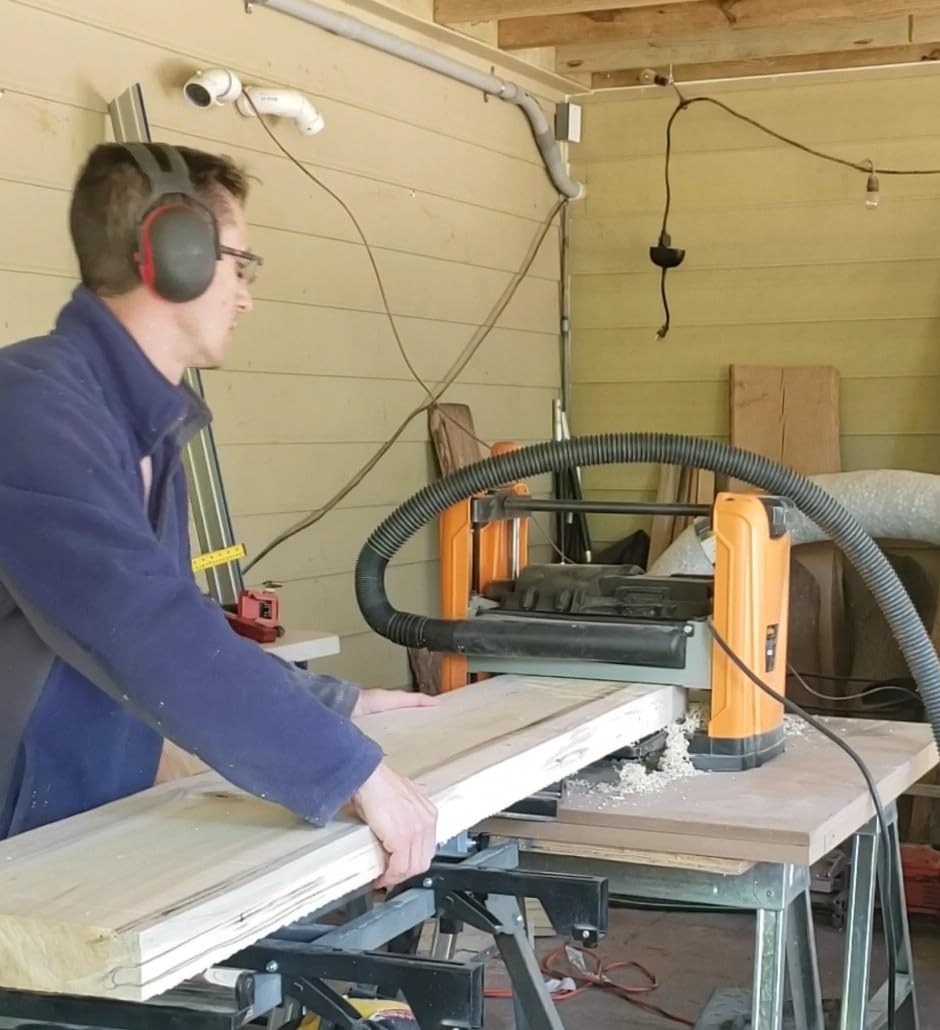
The real problem is adjustment stability. Owners report the depth adjustment crank wandering out of position during a cut, which leaves thickness inconsistent across a board and means you have to flip the board and take multiple passes to even it out. The height scale is also widely criticised as poor and hard to read, so you are working by feel more than by reference. Operation is very loud, and at 65 lb it is not light.
An on board circuit breaker adds electrical safety, and the machine weighs 65 lb. For anyone building precise matched panels or dimensioning parts to a tenth of an inch, that wander is disqualifying. For occasional surfacing of softer hardwood it is manageable with patience.
Who the TPT125 suits best
A first machine for someone who planes boards occasionally, works mostly cedar, poplar and light oak, and is willing to flip boards and take extra passes. It also suits a secondary shop machine used for clean up rather than dimensioning.
Where the TPT125 disappoints
Furniture work where parts must match exactly, and anyone with a shared wall who cannot tolerate the noise. Fine hardwood figure is the wrong application, because a wandering depth and a hard read scale work against you.
10. WOODERS PL13-15AB: Best Complete Package in a Single Box
WOODERS 13-Inch Benchtop Thickness Planer, 15A Wood Planer with 4 HSS Blades, 2000W All Copper Motor, Overload Protection for Woodworking
2000W all copper motor at 10000 rpm
13 inch width, 1/4 to 6.3 inch thickness
Anti snipe dual blade head
Dust collector and two spare blade sets included
Pros
- All copper 2000W motor handles oak and walnut without bogging
- Dust collector and two spare blade sets in the box
- Oversized crank and clear height indicator aid readability
- Iron blade shaft and frame hold it stable and limit vibration
- Built in overload protection guards the motor
Cons
- Very few owner reviews so longevity is unproven
- 4.1 rating points to mediocre finish consistency
- Dual blade HSS layout has fewer edges than three or four knife rivals
What makes this one different is what arrives in the box. You get the planer, an integrated dust collector, two spare sets of double edged HSS planer blades and a lifting handle. That is the whole setup a benchtop planer needs, with nothing else to buy before the first pass.
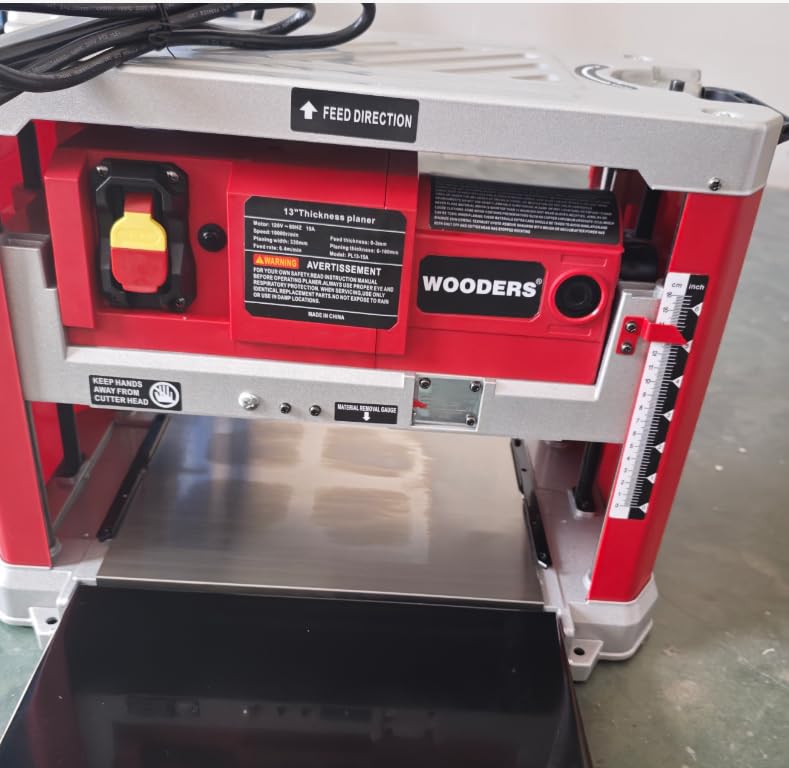
Under the covers it is a serious machine. The 2000W all copper motor turns the cutterhead at 10,000 rpm, and owners credit it with planing dense hardwoods such as oak and walnut without bogging down. The anti snipe dual blade high speed cutterhead works with a refined infeed and outfeed structure, and the oversized depth crank with a high visibility 0 to 1/8 inch indicator is genuinely easier on the wrist than a small knob.
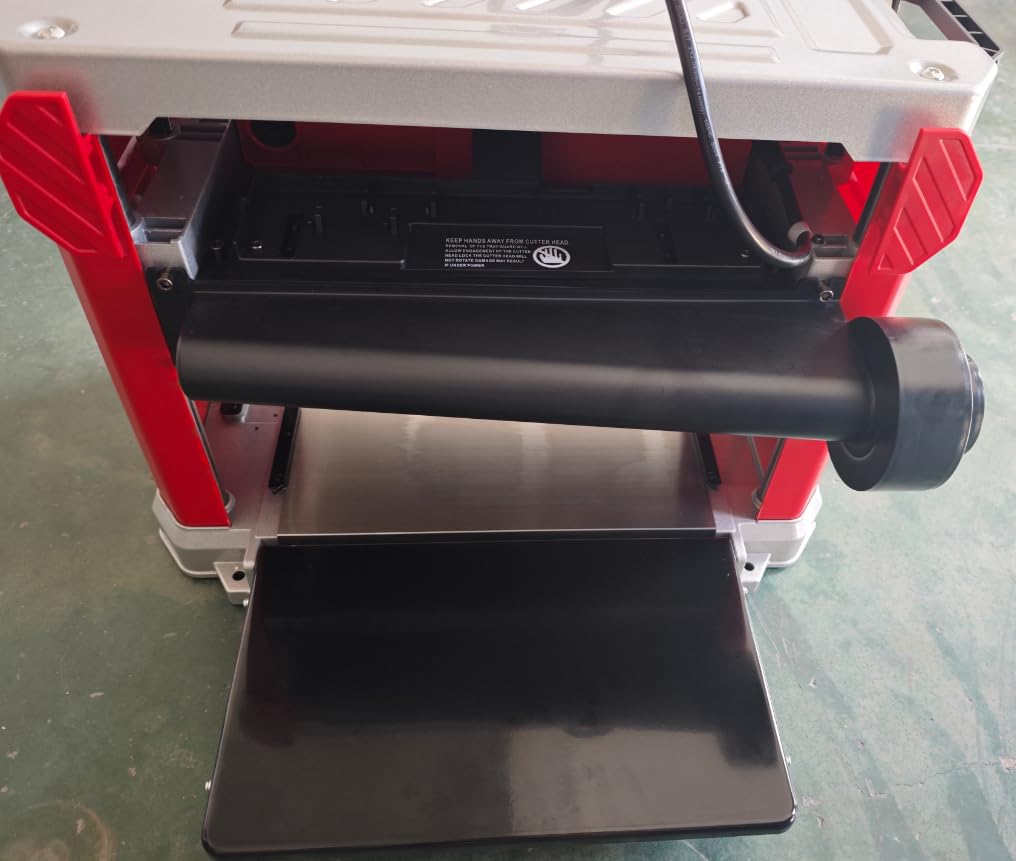
Capacity runs to 13 inches of width and a thickness range of 1/4 inch up to 6.3 inches, so it covers standard rough and dressed lumber without special stock prep. Built in overload protection cuts power before the motor is stressed, and the iron blade shaft and frame are what keep it stable under load. It weighs 60 lb and measures roughly 22 by 14 by 18 inches, so it fits a compact bench better than most machines in this roundup.
The lifting handle is a real convenience on a 60 lb machine that still needs two hands to reposition. Because the dust collector, blade sets and handle all ship in the box, the running cost in the first year is mostly edge replacement, and two spare sets mean you are not waiting on a delivery when an edge dulls on dense stock.
Who the PL13-15AB suits best
A new shop with no dust collector and no spare blades, where buying everything in one order is simpler than sourcing three parts separately. It suits a maker working oak and walnut at moderate volume who will rotate the double edged blades rather than chase carbide inserts.
Where the PL13-15AB disappoints
Anyone who wants a proven service record. With a 4.1 average and a small review count, long term durability is not established, and the rating suggests only moderate satisfaction with finish consistency. The dual blade layout also gives you fewer cutting edges than a three or four knife rival, so it is not our pick for figured maple.
How to Choose a Thickness Planer for Hardwood
Start with the head, because it decides your finish more than the motor does. Straight knife and three knife heads work well on straight grained lumber such as walnut, cherry and quartersawn oak, and they are cheap to maintain if you sharpen. Spiral and helical style heads shear through changing grain direction, which is what saves figured maple, fiddleback and ebiara from tear out. Note that spiral and helical are used loosely in marketing: the PL1326 and the RIKON both use staggered or row arranged HSS blades, not carbide inserts in multiple rows, so expect good results without expecting silence.
Width capacity and how much you can remove per pass
Buy the width you will actually use. A 12 inch class machine handles 4/4 and 5/4 lumber from a supplier with no fuss, but a 13 inch bed gives you options when boards run wide or you want to surface both edges of a rough board in one setup. Width is not negotiable later, so if you buy walnut slabs or wide cherry, start at 13 inches.
On depth of cut, less is more. Every machine in this roundup is rated around 0.13 inches, which is 1/8 inch, but that rating assumes a full width board and a light load. On dense hardwood we would take 1/16 inch per pass for finishing work and no more than 1/8 inch for dimensioning, and we would slow the feed rate for the final pass on figured stock. Every product here has a stated maximum thickness it will accept, and most sit at 6 inches of material height.
Four adjustments that kill snipe
Snipe is a setup problem far more often than a machine problem, and it is the single most common complaint in the forums. The four things to fix, in order, are the infeed and outfeed roller height relative to the cutterhead, the pressure bar gap, the chip breaker or deflector, and whether the carriage is free to move under load. Owners who fit a dial indicator, set the rollers and bars to spec, and engage the carriage lock report the improvement immediately. If you use a spiral head like the PL1326, the same steps still apply, because tables out of alignment will mark the end of the board no matter how good the head is.
Three habits fix the rest. Lift the trailing end of the board slightly as it exits to prevent the end gouge. Run sacrificial take up boards before and after your project boards so the first and last marks land on scrap. And turn the upturned wings or raise the table extensions so a long board cannot flex down into the head on the way out. On the two speed machines, use the lower CPI gear for the final pass on figured material.
Dust collection and noise
Most of these machines need a real collector, not a shop vacuum. The PL1326 and the 13 inch three knife machines throw large chips forcefully enough to overload a vac in minutes. RIKON includes a 4 inch to 2-1/2 inch adapter, which makes hooking up either a small collector or a vacuum easy. Makita sells its hood separately, so include that in your plan.
On noise, the spread is wide. Makita is listed at 83 dB and is the machine to choose for a shared wall. Two knife machines such as the CMEW320 and the TPT125 are among the loudest, while helical style heads cut quietly but still have a loud motor. If your shop is attached to a house, treat ear protection as mandatory rather than optional and expect the neighbours to hear the first cut of the day.
What Not to Run Through a Thickness Planer
Reclaimed lumber is the one to think hardest about. Nails, screws, brads and grit from a demolition site will nick or chip blades, and on a spiral or helical style head a single nail can take out an insert. Helical carbide inserts are especially expensive to replace, which is why no competitor bothers to warn about it.
Painted, stained or glued wood is out as well. Paint and finish gum the head and coat the blades, and glue squeeze out from panel glue ups will glue the cutterhead to the knives. Run those boards through a scraper or a jointer first.
Finally, check moisture content. Kiln dried hardwood that has acclimated indoors for a few days is safe to plane. Green or wet lumber will bind, load the motor and move unpredictably, and material that is unevenly acclimated can cup again as it dries. Boards with knots, and any lumber with embedded metal, are worth a walk around with a magnet and a flashlight before you start.
Frequently Asked Questions
What is the best thickness planer for woodworkers?
The DEWALT DW735X is the best thickness planer for woodworkers in 2026 because its 15 amp motor, three knife cutterhead and 96 or 179 cuts per inch feed give you both heavy removal and a finish that rarely needs sanding. If your material is figured, such as curly maple, the WEN PL1326 with its 26 staggered blades is the better match.
Should I get a thickness planer?
You should get one if you work with rough lumber or want parts that match exactly. A planer makes two faces parallel, which a table saw cannot reliably do, and that is the difference between a glue-up panel that fits and one that does not. If you only ever work pre milled boards, you can manage without one for now.
How much can a planer take off at a time?
Most benchtop planers are rated around 1/8 inch of depth per pass. In practice take 1/16 inch per pass for finishing work on dense hardwood, and save the full 1/8 inch for dimensioning on boards at or below the machine’s rated width. Heavy passes make the motor work harder, thin the chip and worsen the finish.
How thin can wood be planed?
It depends entirely on the machine and the feed system, so check the stated height capacity before you buy. Most benchtop planers here handle material up to about 6 inches thick and many start around a quarter inch. Feed thin stock slowly and support it well, because a light board on a fast feed is where snipe and tear out are worst.
What causes thickness planer snipe?
Snipe is almost always setup rather than a fault. The usual causes are an infeed or outfeed roller set too high, a pressure bar or chip breaker still at its factory setting, a loose or drifting carriage, and a workpiece flexing down as it leaves the head. Adjust the rollers, set the bars to spec, engage the carriage lock and feed more slowly.
Which type of lumber should not be run through the planer?
Do not run reclaimed lumber with nails, screws or grit through a planer, because a single fastener can nick a blade or destroy a carbide insert. Painted, stained and glue contaminated wood will gum the head and coat the cutting edges. Wet or unevenly acclimated lumber will bind and cup, so check moisture content and let boards acclimate indoors first.
Final Verdict: Which Hardwood Planer Should You Buy?
The DEWALT DW735X is the best thickness planer for hardwood, and it wins on the combination that matters: enough power to take a real cut in dense oak, a finish good enough to skip sanding, and snipe control that works without babysitting. If your budget says otherwise, the DW734 gives you the same three knife heart in a slightly narrower and lighter package.
Plan figured stock and you change the answer. The WEN PL1326 shears through curly maple and ebiara far better than any flat knife head here, and for a quiet shop the Makita 2012NB is unmatched on both noise and longevity. Whichever you choose, spend an hour setting the rollers, pressure bars and chip breakers with a dial indicator before the first board goes through. That hour does more for your hardwood work than any other adjustment you can make. Updated for 2026.