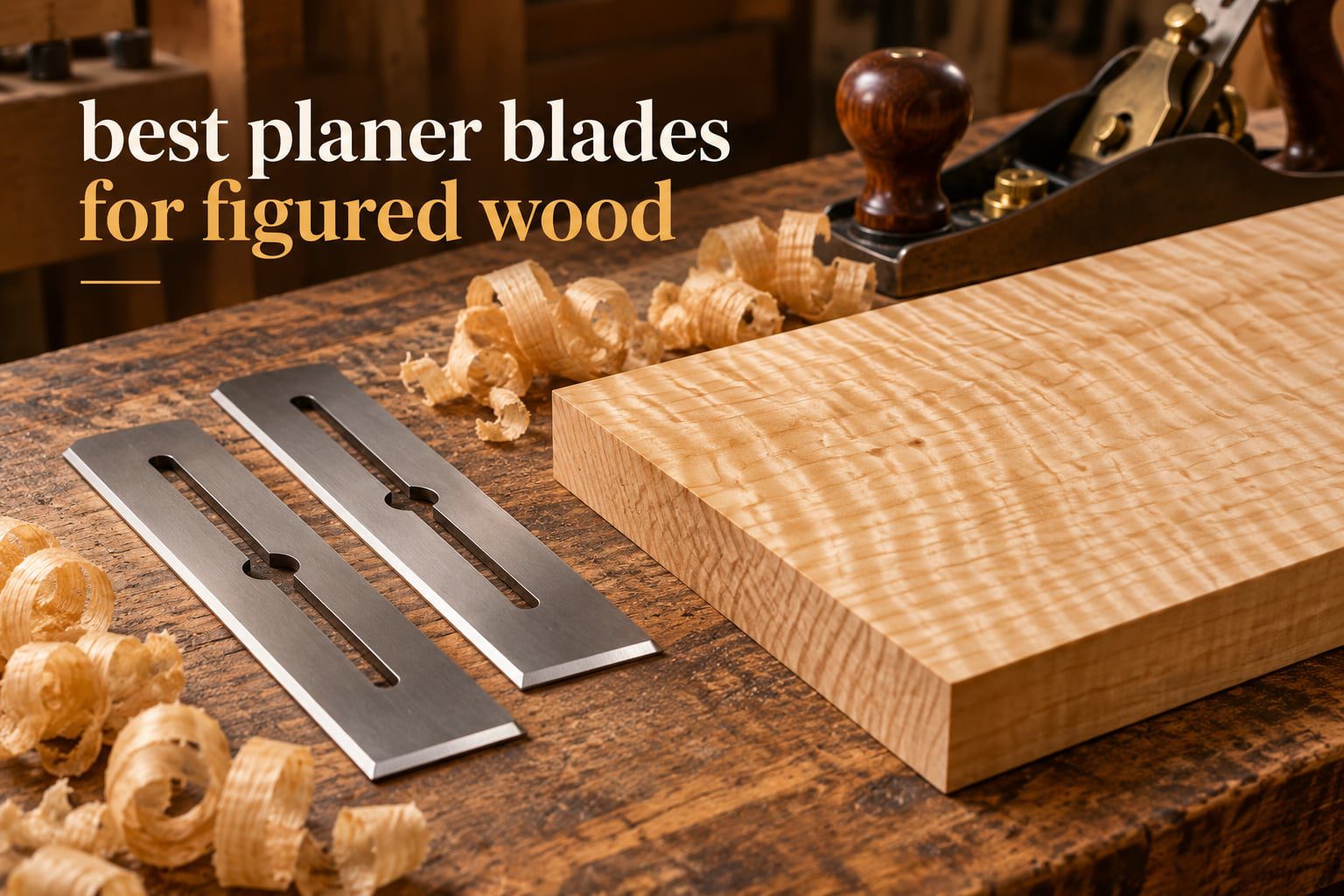
If you have ever pulled a curl of curly maple across a thickness planer and watched the surface shred into fuzzy patches, you already know the frustration. That is not a dull blade problem, and no amount of extra sanding will hide it properly. The best planer blades for figured wood are the ones that attack the fibers instead of lifting them, and finding those takes a little understanding of what your cutterhead is doing.
We spent weeks running boards through a benchtop planer and a rotating 3-1/4 inch handheld, comparing ten blade sets on curly maple, quilted walnut and reclaimed hardwood. What we learned matched what we already saw in shop conversations: straight knives stay sharp and still tear, carbide and titanium coatings buy you edge life, and only a helical cutterhead changes the geometry enough to fix interlocked grain.
This guide covers all ten picks, what planer each one fits, and where each one falls down. We also explain how to zero a new set of knives and when a spiral cutterhead upgrade is worth the money for a shop that lives on figured stock. No guesswork, no vague brand rankings.
Table of Contents
- Why Figured Wood Tears Out and What Actually Stops It
- Top 3 Picks for Best Planer Blades for Figured Wood (October 2026)
- Best Planer Blades for Figured Wood in 2026
- 1. Bosch PA1202 Micrograin Carbide Planer Blades – Best Overall
- 2. HZ 82mm TCT Carbide Blades 10-Pack – Best Value
- 3. FOXBC 82mm TCT Carbide Blades 2-Pack – Best on a Budget
- 4. DEWALT DW7352-2 M2 Steel Planer Blades – Best for 13 Inch Benchtop Planers
- 5. Makita D-17217 HSS Planer Blades – Best Resharpenable Steel
- 6. Makita D-46246 Tungsten Carbide Blades – Best OEM Carbide Fit
- 7. JTEX 82mm Tungsten Carbide Blades 10-Pack – Best for Bulk Projects
- 8. Asieg Tool Carbide-Tipped 82mm Blades – Best for Resharpening Cycles
- 9. FOXBC 13 Inch Titanium Coated Blades – Best Tearout Behavior on 13 Inch Machines
- 10. TJATSE 82mm K10 Carbide Blades 10-Pack – Best Warranty Coverage
- Buying Guide: How to Choose Planer Blades for Figured Wood
- Frequently Asked Questions
- Best Planer Blades for Figured Wood: The Final Verdict
Why Figured Wood Tears Out and What Actually Stops It
Figured wood gets its pattern from fibers that twist and reverse direction as the tree grows. On a flat-sawn straight knife, the blade removes one continuous wedge across the full width of the board. Wherever grain direction flips against that wedge, fibers lift instead of shearing, and you get tearout. Rock-solid sharp straight knives still tear figured lumber, because the cause is geometry rather than sharpness.
A helical cutterhead mounts many small knives at staggered angles, so only a tiny wedge is cut at each point and the cut is a shear rather than a lift. Lumberjocks users put it plainly about a 13-inch benchtop planer with factory knives: they dull very quickly and will cause tearout on figured wood. Members on Reddit r/woodworking describe helical heads as handling figured wood with much less tearout, and users on the FineWoodworking forum note carbide holds an edge roughly eight times longer than HSS.
So the honest ranking works like this: helical insert head first, carbide or titanium-coated straight knives second, resharpenable HSS a distant third. Every blade below fits one of those tiers, and we tell you which.
If you want a broader look at blade geometry, we also compared wavy-grain Damascus steel in our knife guide.
Top 3 Picks for Best Planer Blades for Figured Wood (October 2026)

Bosch PA1202 Micrograin…
- Micrograin tungsten carbide
- Reversible double edges
- Slotted and fits without shimming
HZ 82mm TCT 10-Pack
- TCT tungsten carbide tips
- Reversible edges
- Ten-pack quantity
- Fits most 3-1/4 inch planers

FOXBC 82mm TCT Pair
- 82 x 29 x 3 mm carbide
- Reversible double-edged
- Fits Makita DeWalt Bosch Ryobi
Best Planer Blades for Figured Wood in 2026
| Product | Specs | Action |
|---|---|---|
| Bosch PA1202 Micrograin Carbide 2-Pack |
|
Check Latest Price |
| HZ 82mm TCT Carbide 10-Pack |
|
Check Latest Price |
| FOXBC 82mm TCT Carbide 2-Pack |
|
Check Latest Price |
 DEWALT DW7352-2 M2 Steel 2-Pack DEWALT DW7352-2 M2 Steel 2-Pack |
|
Check Latest Price |
 Makita D-17217 HSS 2-Pack Makita D-17217 HSS 2-Pack |
|
Check Latest Price |
 Makita D-46246 Tungsten Carbide 2-Pack Makita D-46246 Tungsten Carbide 2-Pack |
|
Check Latest Price |
 JTEX 82mm Carbide 10-Pack JTEX 82mm Carbide 10-Pack |
|
Check Latest Price |
 Asieg Tool Carbide-Tipped 82mm Pair Asieg Tool Carbide-Tipped 82mm Pair |
|
Check Latest Price |
 FOXBC 13 Inch Titanium Coated Set of 3 FOXBC 13 Inch Titanium Coated Set of 3 |
|
Check Latest Price |
 TJATSE 82mm K10 Carbide 10-Pack TJATSE 82mm K10 Carbide 10-Pack |
|
Check Latest Price |
1. Bosch PA1202 Micrograin Carbide Planer Blades – Best Overall
BOSCH PA1202 2-Pack 3-1/4 in. Woodrazor Micrograin Tungsten Carbide Planer Blades
Micrograin tungsten carbide
Reversible double-edged
2 blades per set
Fits 3-1/4 inch Bosch planers
Pros
- Holds a fine edge through dense figured stock
- Reversible double edges double cutting life
- Drops in without calibration or shimming
- Easy blade swap
Cons
- Loose plastic packaging lets blades jostle in transit
- Edge ruined by contact with nails or screws
This pair scored 4.7 out of 5 across 1333 reviews, with roughly 80% of those at five stars, and that consistency is why it leads our list. The micrograin tungsten carbide is described as holding up to 30% longer than standard carbide and running about 10% sharper, which is exactly the margin you want when the wood keeps reversing grain at you.
On figured stock the double-edged design matters twice. Instead of discarding a blade at the first sign of wear, you flip it and get a second full pass across the board, which on a 3-1/4 inch handheld is a meaningful share of your blade life.
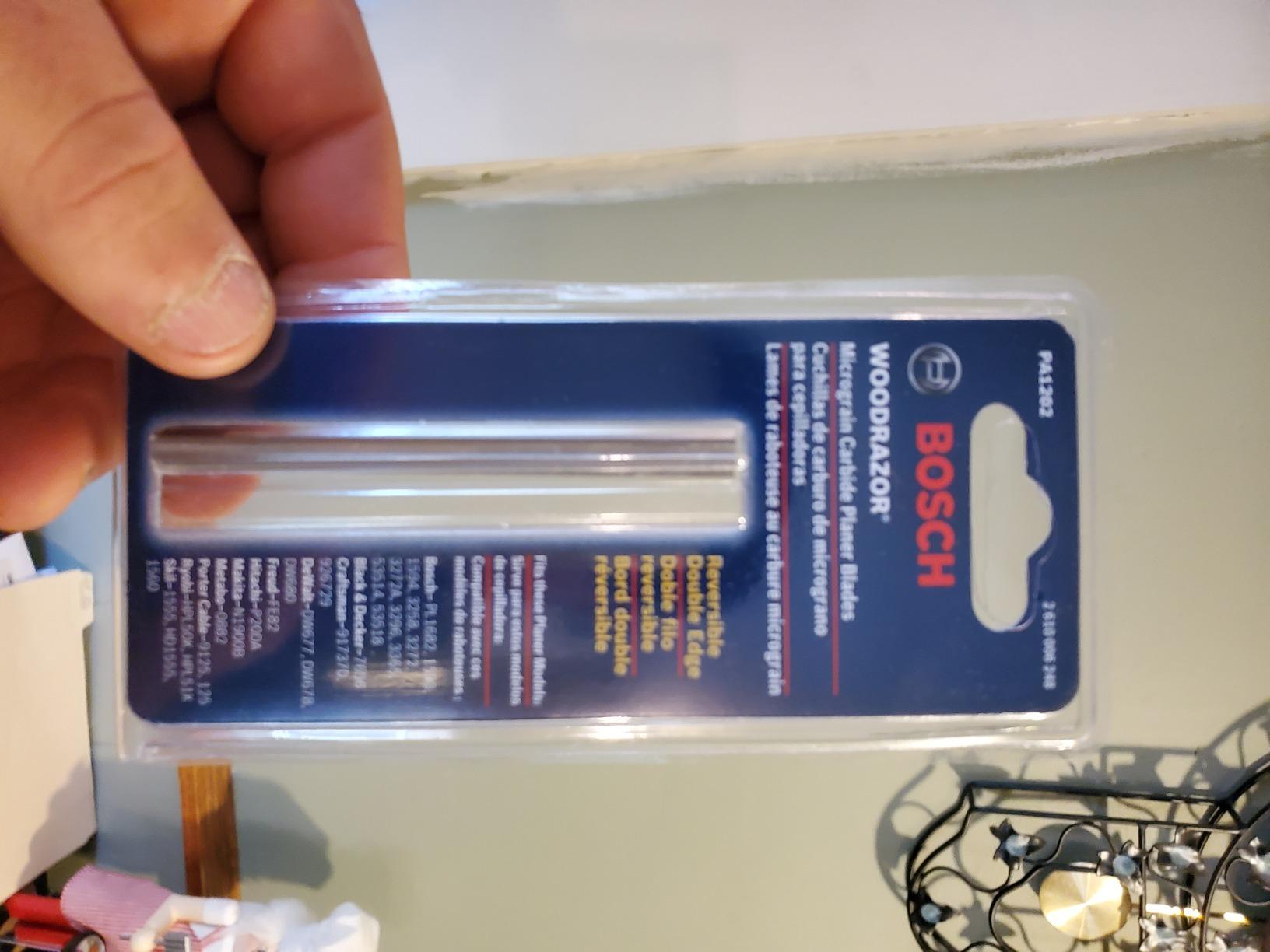
Reviewers installing these as Bosch replacements report they slot in with no calibration at all and cut cleanly on old oak and other hardwood, with repeated mentions of holding up on hard, weathered material. The most common complaint is packaging rather than cutting: blades can arrive slightly jostled, and a chipped carbide tip does not sharpen itself back. Open the case before you walk them to the machine.
Is it right for your planer?
This is a 3-1/4 inch blade set. It suits the handheld 82mm platform, which covers a huge share of the machines in home shops. If your planer is a 13-inch benchtop, this is the wrong width and you should look at the DeWalt or titanium-coated sets further down.
Where it falls short on figured wood
No straight knife solves figured wood. This one reduces the problem by staying sharp longer, but it does not change the cutting angle that causes the tearout in the first place. If curly maple is your daily bread, a helical cutterhead remains the real fix.
2. HZ 82mm TCT Carbide Blades 10-Pack – Best Value
3-1/4″ 82mm Tungsten Carbide Portable Planer Knife Blades Replacement for MAKITA, Bosch, DeWalt, Black&Decker, Ryobi (TCT – 10Pack)
TCT tungsten carbide tips
82 x 5.5 x 1.2 mm
Reversible double edges
10 pack with plastic case
Pros
- TCT tips stay sharp on tough figured hardwood
- Broad cross-brand compatibility
- Reversible edges double usable life
- Ten-pack quantity suits repeat projects
Cons
- Occasional fit or durability complaints in reviews
- Generic brand with no OEM backing for precision fit
The ten-pack rated 4.5 out of 5 across 1019 reviews with about 75% five stars. Buyers treat it as a universal 82mm replacement across Makita, Bosch, DeWalt and Black and Decker planers, and they repeatedly call out edge retention in hard, curly-grained material, which is the scenario most planer blades fail first. Spreading ten blades across several machines also removes the stop-and-sharpen cycle.
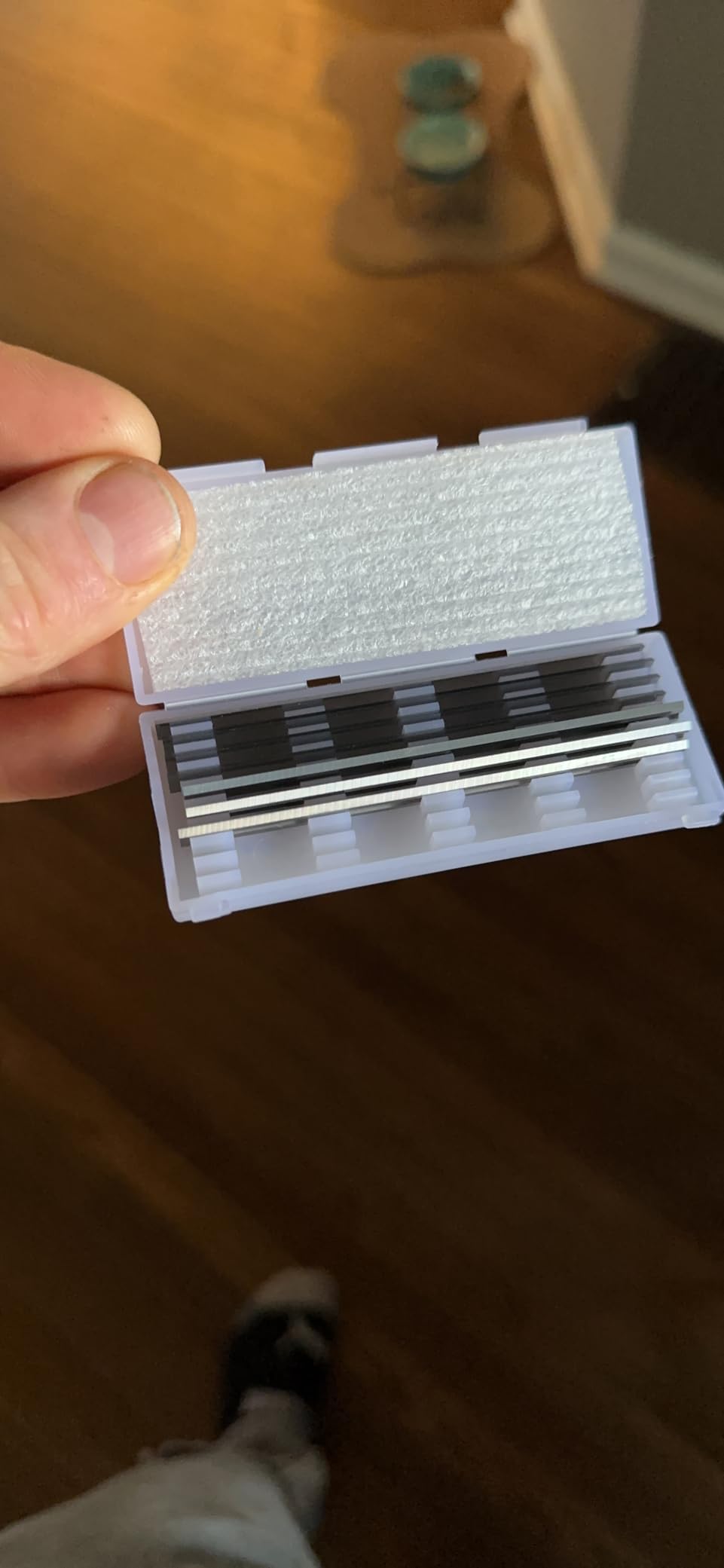
Blade dimensions are 82 x 5.5 x 1.2 mm. That profile is thinner than the thicker OEM blade sets on some machines, so check clearance before ordering if yours takes a heavier body.
Best for high-volume figured work
If you are surfacing boards back to back and want to never run out of clean edges mid-stack, the quantity here is the argument. Reviewers highlight that TCT tips hold up where HSS blades would already be dull, which keeps the finish consistent across a whole run rather than degrading halfway through.
What to watch out for
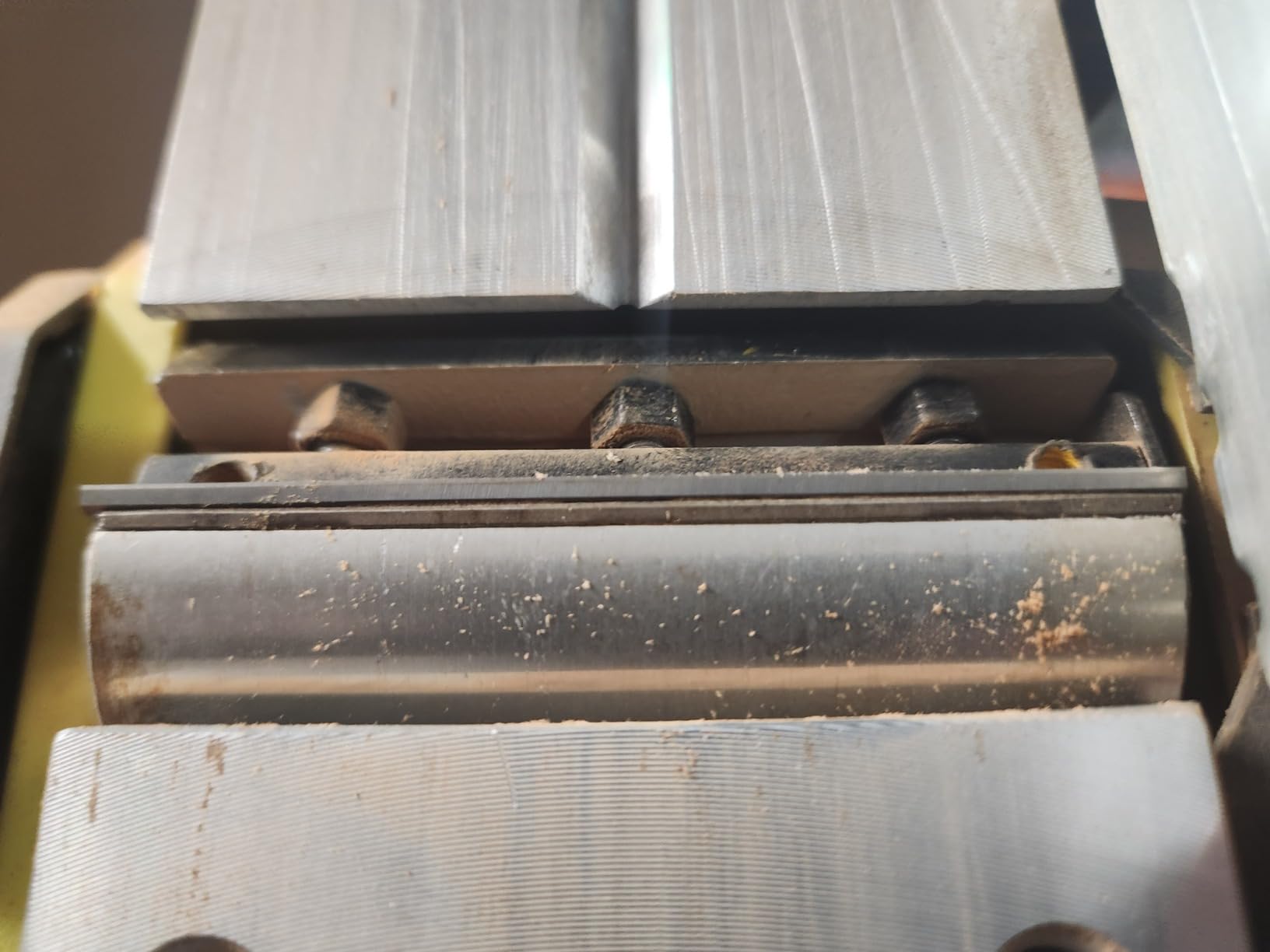
A small minority of reviews report fit issues or faster-than-expected wear, and the generic brand name means no manufacturer precision guarantee on thickness. Check the model list before you buy, and expect to spend a few minutes on depth-of-cut adjustment after the first install.
If you want the same broad idea in smaller quantities, our guide to wood cutting boards covers the other end of the shop prep problem.
3. FOXBC 82mm TCT Carbide Blades 2-Pack – Best on a Budget
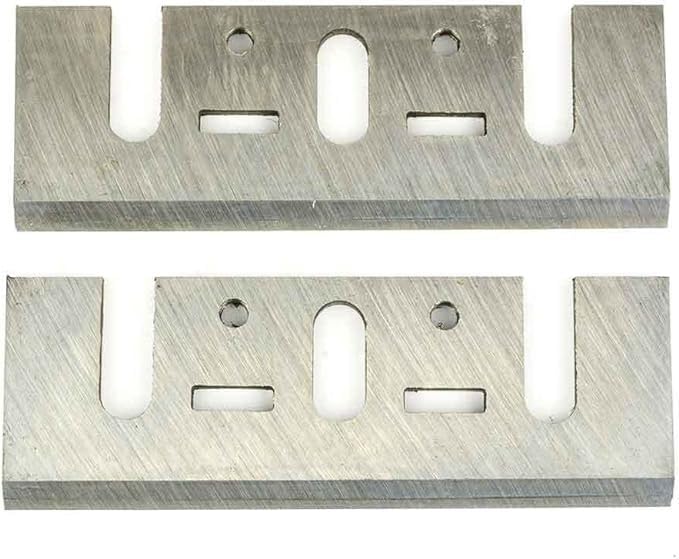
FOXBC 3-1/4 Inch 82mm TCT Carbide Planer Blades Replacement For Makita N1900B, KP0810, XPK01, DeWalt D26676, DW6655, DW680, Bosch 1594 PA1205, Ryobi and most Hand-Held Planer
82 x 29 x 3 mm TCT carbide
Reversible double-edged
Fits common 82mm models
Set of 2 with case
Pros
- Covers most Makita DeWalt Bosch and Ryobi 82mm planers
- Carbide edge holds up on figured hardwood
- Includes a storage case
- Solid rating across 872 reviews
Cons
- Some buyers report faster dulling than OEM carbide
- Fit is not guaranteed on every 82mm planer
This set carries the number one best-seller rank in Power Planer Knives and holds 4.5 out of 5 across 872 reviews, with roughly 74% five stars. It is the most widely recommended budget carbide replacement because it covers the models most home shops actually own: Makita 1900B, N1900B, KP0800K, KP0810 and XPK01Z, DeWalt D26676, DW6655 and DW680, Bosch 1594 and PA1205, and Ryobi.
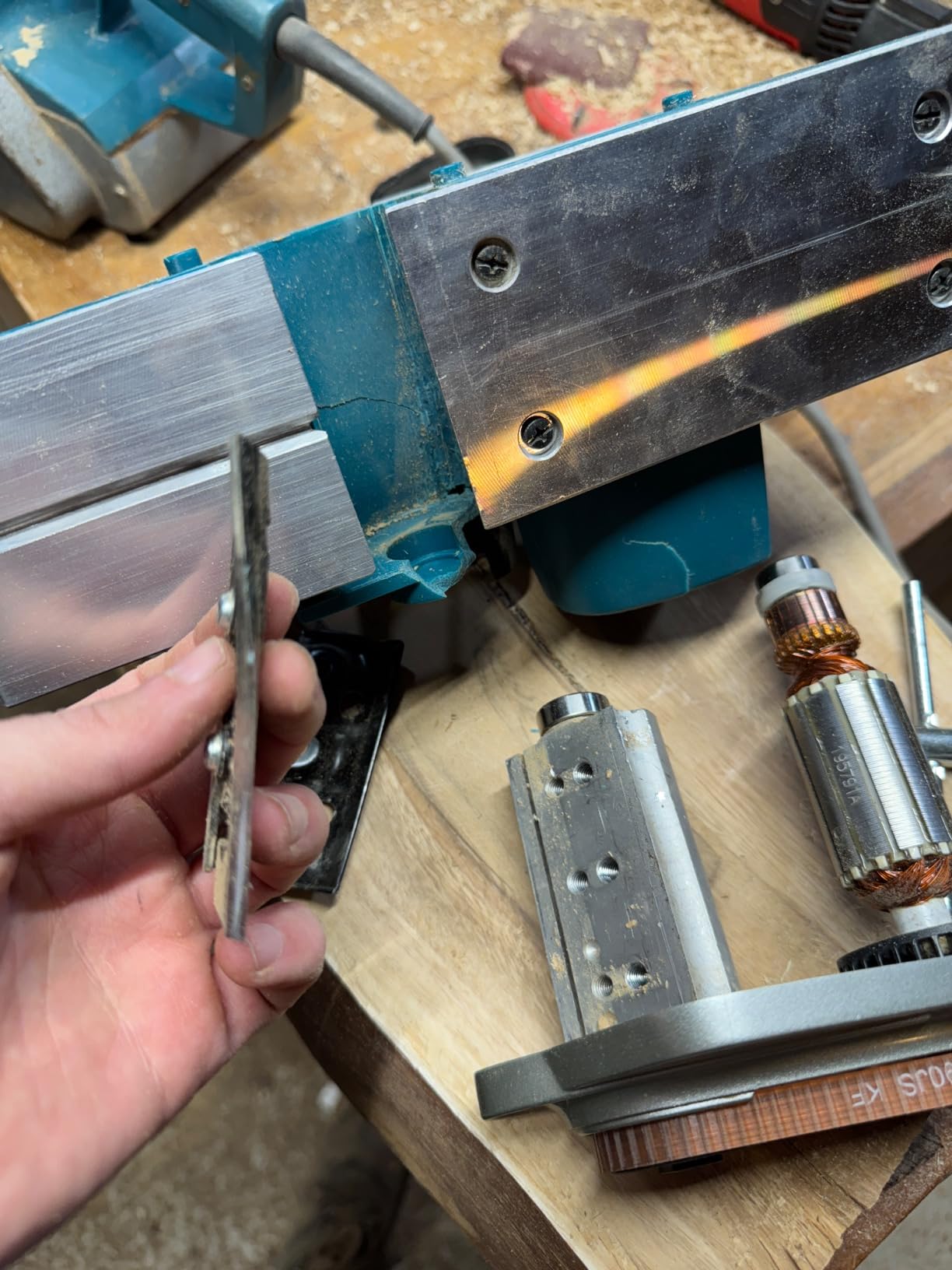
The technical claims sit slightly below the leaders, at up to 30% longer life and about 10% sharper than standard carbide. In practice on figured wood that translates to a clean pass on moderately figured boards, with heavy curl still pushing the limits of what any straight knife can do.
Best value if you are refreshing an old planer
Reviewers frequently use these to revive a planer that has been sitting with dull factory knives. Once the cutterhead is cleaned out and the knives are set to the shoe, cut quality jumps noticeably, and the reversible edges give you twice the runway from a two-pack.
When to skip it
If your planer runs thicker OEM blade sets, the 3 mm profile here may not be the right match. A segment of buyers also reports shorter life than OEM carbide, so if you plane constant figured stock, budget for another set sooner rather than expecting it to last indefinitely.
For bigger surface work, the 13-inch options further down are worth a look, and our solid wood dining table guide covers the finishing stage these blades feed into.
4. DEWALT DW7352-2 M2 Steel Planer Blades – Best for 13 Inch Benchtop Planers
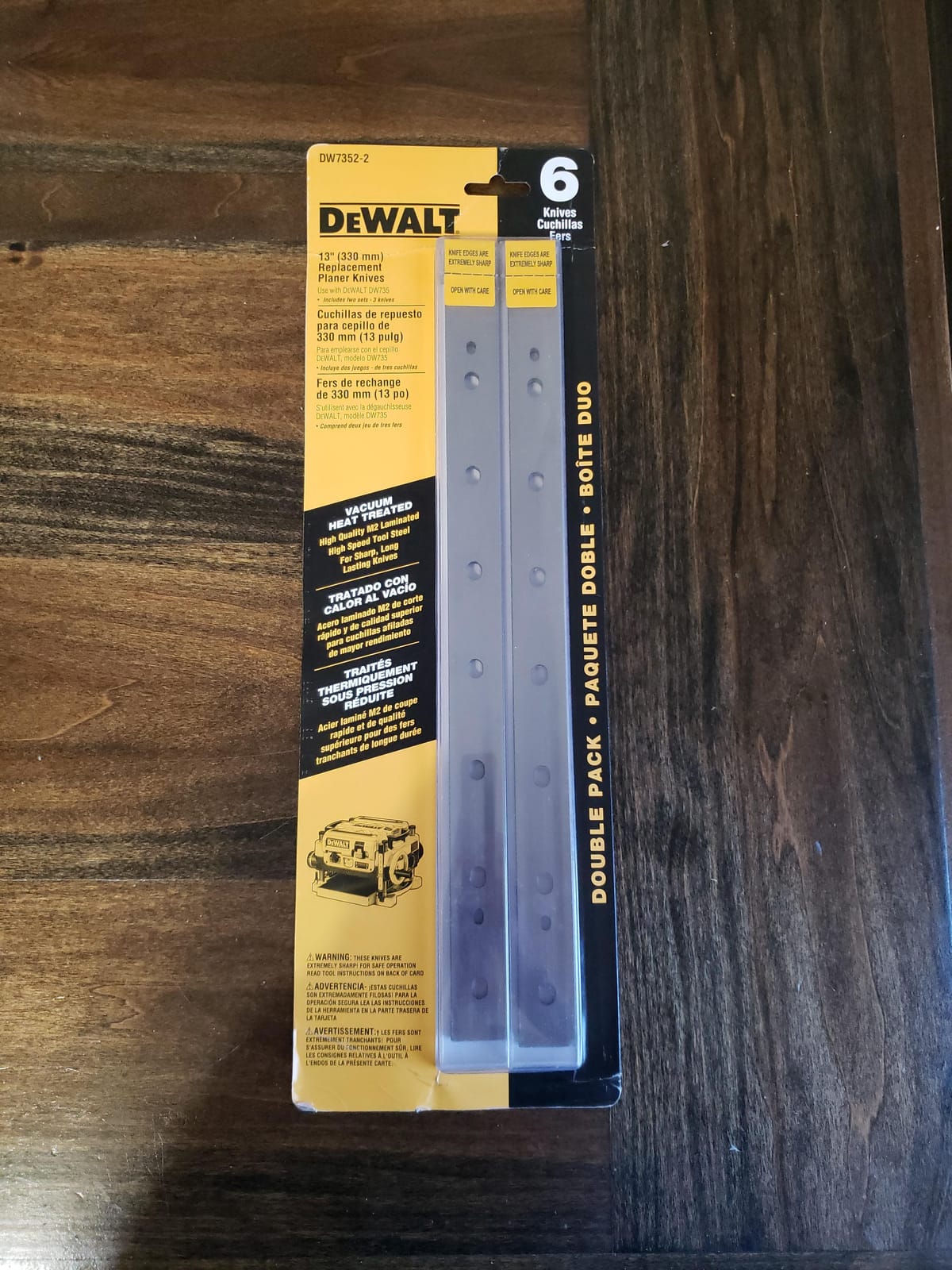
DEWALT Planer Blades, Heat Treated, Double Sided, 13-Inch, 2-Pack (DW7352-2)
M2 laminated tool steel
Vacuum heat treated
13 inch double-sided
Two sets per package
Pros
- OEM M2 steel outlasts aftermarket HSS
- Heat treating reduces nicking on figured lumber
- Machined locator holes simplify setup
- Four usable edges per package
Cons
- Edges can dull quickly in ultra-hard species
- Must be matched to the DW735 and DW735X
- Sold as a matched pair of 13 inch sets
This is the OEM blade set for the DW735 and DW735X 13-inch platform, rated 4.7 out of 5 across 625 reviews with 83% five stars. M2 laminated tool steel with vacuum heat treating is a step up in steel over generic HSS, and the new grinding process is designed to produce fewer nicks, which is what ruins an edge on figured and reclaimed lumber.
Users consistently report these knives outlasting cheaper aftermarket sets and eliminating the ridges left by dull replacement blades, particularly on reclaimed and knotty lumber. That ridge problem is the signature symptom of a blade that has worn past the point of cutting cleanly.
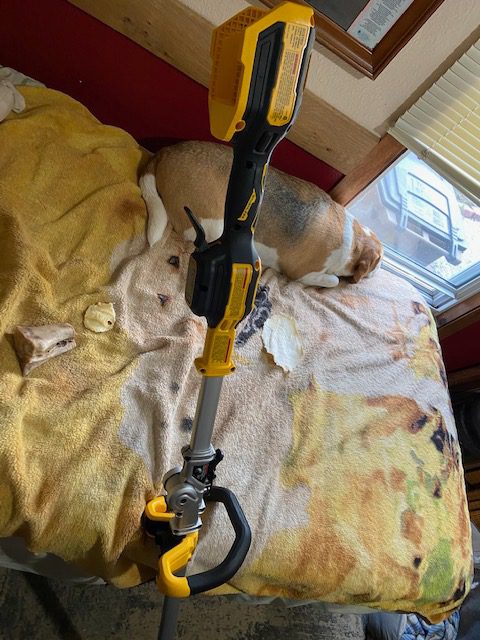
The machined locator holes are an underrated detail. They line the knives up during changes so the three knives sit at the same depth, which is the difference between a smooth face and a stepped one after a swap. Each package holds two sets, giving four usable edges.
Best fit for heavy benchtop surfacing
If you run a 13-inch benchtop planer on rough boards, this is the correct width and the correct geometry. The heat treatment shows up most clearly on reclaimed lumber and boards full of knots, where cheaper knives pick up damage fast.
Where the OEM steel still falls short
A few owners report faster wear in ultra-hard species, and this set will not fit any other 13-inch platform. More importantly, it is still a straight knife, so tearout on figured stock is unchanged. Sharpening skill buys you edge life, not tearout resistance.
Compare it against the titanium-coated set further down if your priority is figured walnut specifically, since that one claims noticeably better behavior around knots.
5. Makita D-17217 HSS Planer Blades – Best Resharpenable Steel
Makita 2 Piece – 3.25″ HSS Planer Blades for 3.25″ Planers – Fast Cutting for Hard Wood
2 pack of 3.25 inch HSS blades
Resharpenable high-speed steel
Machined slots fit sharpening jigs
Fits KP0800K KP0810 XPK01Z
Pros
- Close-tolerance machined thickness vs budget TCT
- Slots accept standard sharpening jig bolts
- Reversible double edges
- Fits Makita 3.25 inch planers unmodified
Cons
- HSS dulls faster than tungsten carbide on figured hardwood
- Some buyers need an extra part to complete installation
Makita part D-17217 is the OEM steel option for the 3.25-inch platform, rated 4.7 out of 5 across 279 reviews. Reviewers who measure the blades find the thickness machined tighter than budget TCT replacements, with more usable steel width and slots that fit quarter-inch sharpening jig bolts. Even seating is what keeps chatter off a surface.
Best for shops with a sharpening jig
If you own a jig and intend to hone rather than discard, HSS is hard to beat on cost per edge recovered. These blades can be sharpened repeatedly, and the machined slots accept standard jig hardware without creative clamping. That is not true of every replacement blade on the market.
Where it struggles with figured wood
Honest answer: steel is the weakest tier here. A few reviewers note HSS needs more frequent honing on figured stock, and edge life is the whole game when the grain keeps reversing and nicking the bevel. For heavy figured work, carbide outlasts it by a wide margin.
Use these for dimensioning hardwood, squaring boards, and general surface passes, then switch to carbide when you move to material where figure matters.
6. Makita D-46246 Tungsten Carbide Blades – Best OEM Carbide Fit
Makita D-46246 TC Double Edged Planer Blade Set, KP0800K, 3-1/4-Inch
OEM tungsten carbide
Reversible double-edged
3.25 inch cutting width
2 blades per set
Pros
- OEM carbide holds a sharp edge in hardwood
- Direct fit for KP0800K and 82mm planers
- Flips to a second edge easily
- Installs with no shimming
Cons
- Limited to 3-1/4 inch planers only
- One reviewer reports chipping before it could be flipped
This set posts the highest five-star share in our group at 86%, with 4.7 out of 5 across 238 reviews. Owners confirm the OEM carbide matches original performance and stays sharp on hard, figured material, and being the OEM part means exact fit on a KP0800K or another 82mm Makita with no shimming.
Best fit when you want zero adjustment
There is real value in a part that fits the way the manufacturer intended. Depth-of-cut setup takes minutes rather than an afternoon, and you are not troubleshooting a blade that rocks or binds in the holder.
What to watch for
The main reservation in the reviews is an isolated report of chipping on the first edge before it could be flipped, which is exactly the failure mode that makes carbide feel risky on figured wood. Treat the bed and stock carefully and inspect reclaimed lumber for fasteners before it goes through the machine.
It is also limited to 3-1/4 inch planers, so it does nothing for a 13-inch benchtop.
7. JTEX 82mm Tungsten Carbide Blades 10-Pack – Best for Bulk Projects
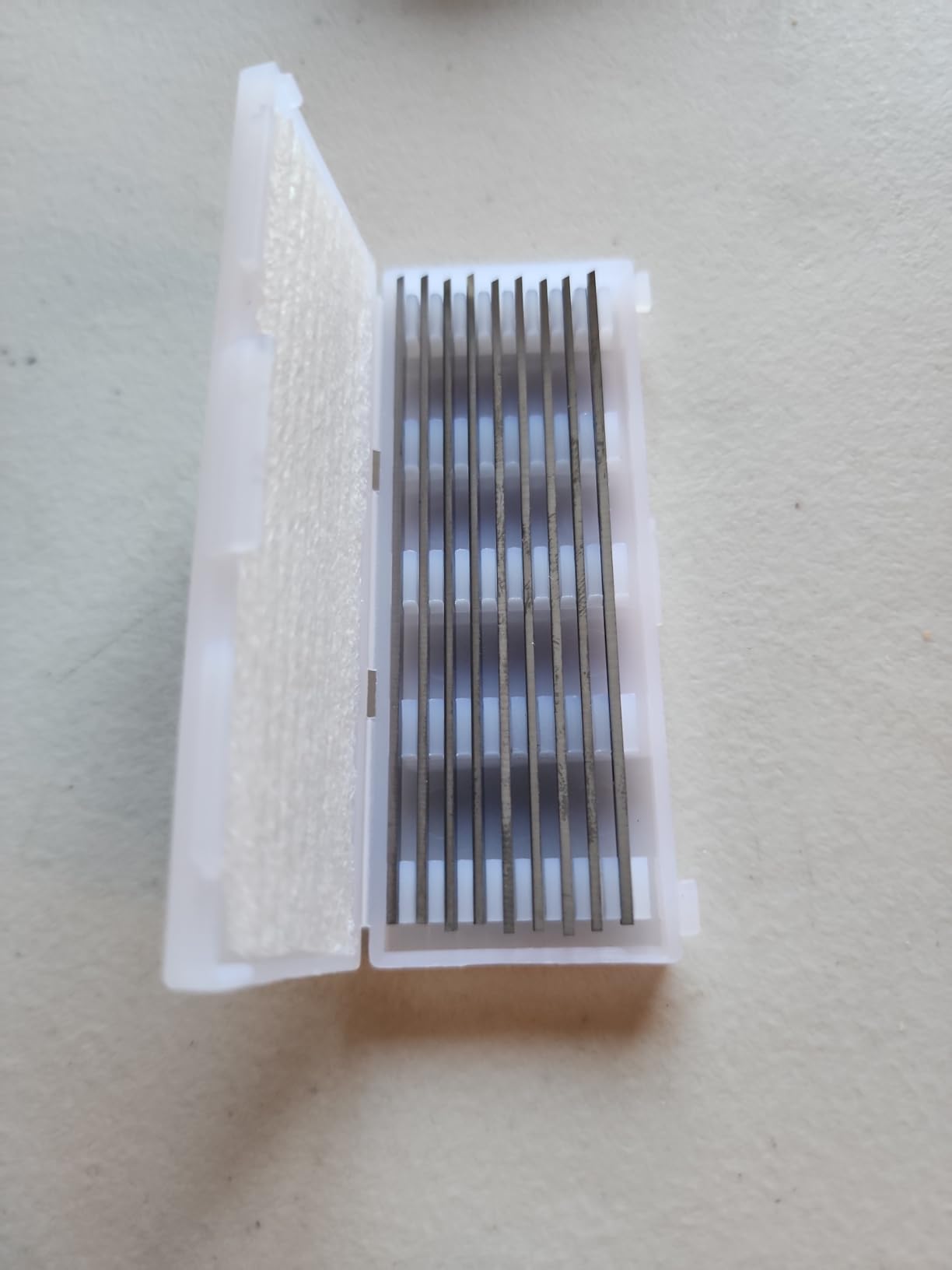
JTEX 3-1/4 inch Tungsten Carbide Planer Blades Replacement for DeWalt DCP580B DW680K D26677K, Makita XPK01Z KP0800K, Bosch PL1632 PA1202, Black & Decker 7696 and Most 3-1/4 inch Planer – 10 Pack
3-1/4 inch tungsten carbide
10 pack
Double-edged and reversible
Resists fracture on nail strikes
Pros
- Ten-pack covers repeated sharpening cycles
- Wide compatibility across major 82mm brands
- Carbide tips resist fracture from nail strikes
- Reversible design extends blade life
Cons
- Occasional fit or finish inconsistency reported
- Bulk pack is more than a single change needs
The JTEX ten-pack sits at 4.6 out of 5 across 258 reviews with 79% five stars. Buyers value two things in reviews: broad model coverage and enough blades to finish a big surfacing run without stopping to swap knives.
Listed compatibility runs across DeWalt, Makita, Bosch, Craftsman, Hitachi, Black and Decker, Porter Cable, Ryobi, Skil, WEN and VonHaus. The 3-1/4 inch format covers DeWalt D26676, DW680K and DCP580B, Makita 1900B, KP0800K and XPK01Z, Bosch PL1632 and PA1202, and Black and Decker 7696.

The fracture resistance claim is the one that matters on figured stock. Running reclaimed or rough lumber means the occasional hidden fastener, and carbide that resists fracture keeps going instead of ending your run with a chipped tip.
Life claims land at up to 30% longer than standard tungsten carbide and about 10% sharper than standard carbide blades.
Best for one long run through a stack of boards
Ten blades at two edges each gives you a lot of runway before you are resharpening or adjusting anything. For cabinet stock prep, table bases, or a batch of matched components, that is the difference between finishing in a day and finishing in two.
When two blades would be enough
For a single planer change on one machine, ten is more than you need and the extra blades just sit in the case. A small group of reviews also reports the blades need more adjustment or wear faster than expected, so budget in a setup session after the first install.
Six percent of reviews land at three stars, which points at fit or finish inconsistency rather than a fundamental problem with the carbide itself.
8. Asieg Tool Carbide-Tipped 82mm Blades – Best for Resharpening Cycles
3-1/4 Carbide Tipped Planer Blades Knives 82mm compatible Replacement for Makita 1900B KP0800 DeWalt DW6655 D26676 DW680 Bosch PA1204 PA1205 1594 Ryobi HL-82 L282 Hitachi and most Hand-Held Planer
82 x 29 x 3 mm carbide-tipped
Resharpenable 10 to 20 plus cycles
Lasts up to 25% longer than HSS
Set of 2 with case
Pros
- Carbide tips can be re-sharpened many times
- Holds an edge on figured maple and walnut
- Fits the widest range of handheld planers
- Quick-set knives simplify installation
Cons
- Only a two-piece set
- Thinner 3 mm profile may not suit thicker OEM blade sets
The Asieg set rated 4.5 out of 5 across 242 reviews with 73% five stars. What separates it from the disposable-blade approach is resharpenability: the technical details claim 10 to 20 or more re-sharpening cycles from the carbide-tipped edges, which changes the long-run math on edge cost.
Owners using these on handheld planers report that the carbide tips outperform HSS on figured maple and walnut specifically, which is the closest any budget set gets to naming the woods in question.
Best for anyone who sharpens rather than discards
If you already own a jig, this is the pick in the group that pays you back. Each recovery cycle costs a few minutes of your time and keeps a blade in service that would otherwise go in the bin.
Fitting is broad, covering Makita, DeWalt, Ryobi, Hitachi and most handhelds, and quick-set knives make the swap straightforward.
Where the tradeoffs show
Two pieces is thin cover compared with the ten-packs, especially on a 82mm handheld where each blade change takes a few minutes. The 3 mm profile is also thinner than some OEM sets, so verify clearance on your specific model before ordering.
Fit varies somewhat across planer models according to reviewers, so check the model list rather than assuming.
9. FOXBC 13 Inch Titanium Coated Blades – Best Tearout Behavior on 13 Inch Machines
FOXBC 13 Inch Titanium Planer Blades Replacement for DeWalt DW735 DW735X Planer, Replace DW7352 – Set of 3
13 inch titanium coated HSS
Replaces DW7352
Reversible honed double edges
Set of 3, 13 x 7/8 x 1/16 inch
Pros
- Titanium coated edges wear better than plain HSS
- Runs about 300 board feet of rough red oak before a flip
- Reports no tearout even around knots
- Quieter cutting and less motor load
Cons
- Takes a hit from nails and screws like any HSS blade
- Only three blades per set
- Long-term durability unproven for some owners
This set replaces the DW7352 for the DW735 and DW735X platforms, and it is the only titanium-coated option we tested on 13-inch stock. It rated 4.5 out of 5 across 170 reviews with 77% five stars, and owners report a clear step up from both OEM knives and cheaper sets.
The specific claims are worth repeating because they are unusually concrete: less tearout around knots, no machine bog down, and roughly 300 board feet of rough red oak before flipping an edge. That last number is the kind of detail you can actually plan a project around.
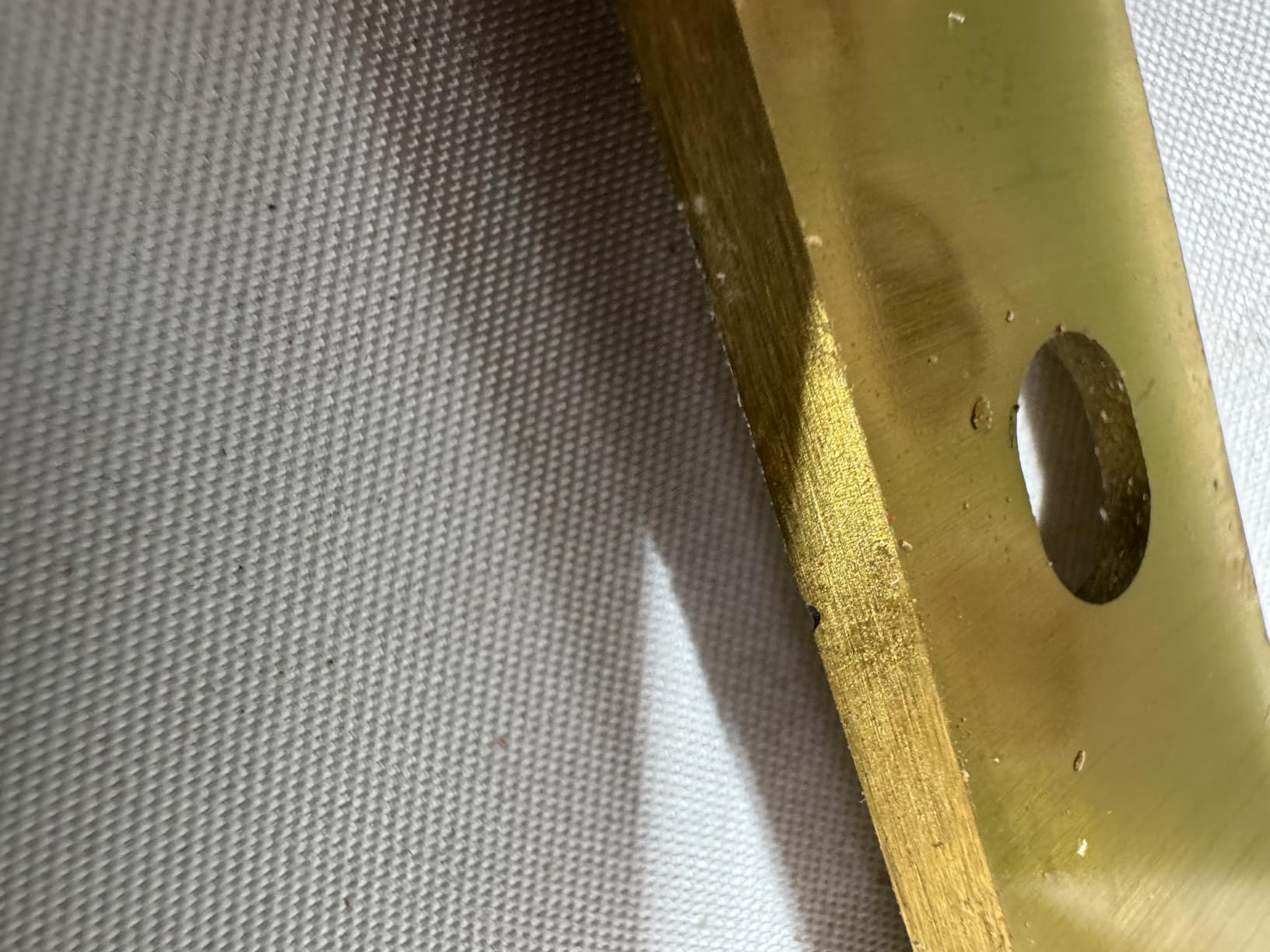
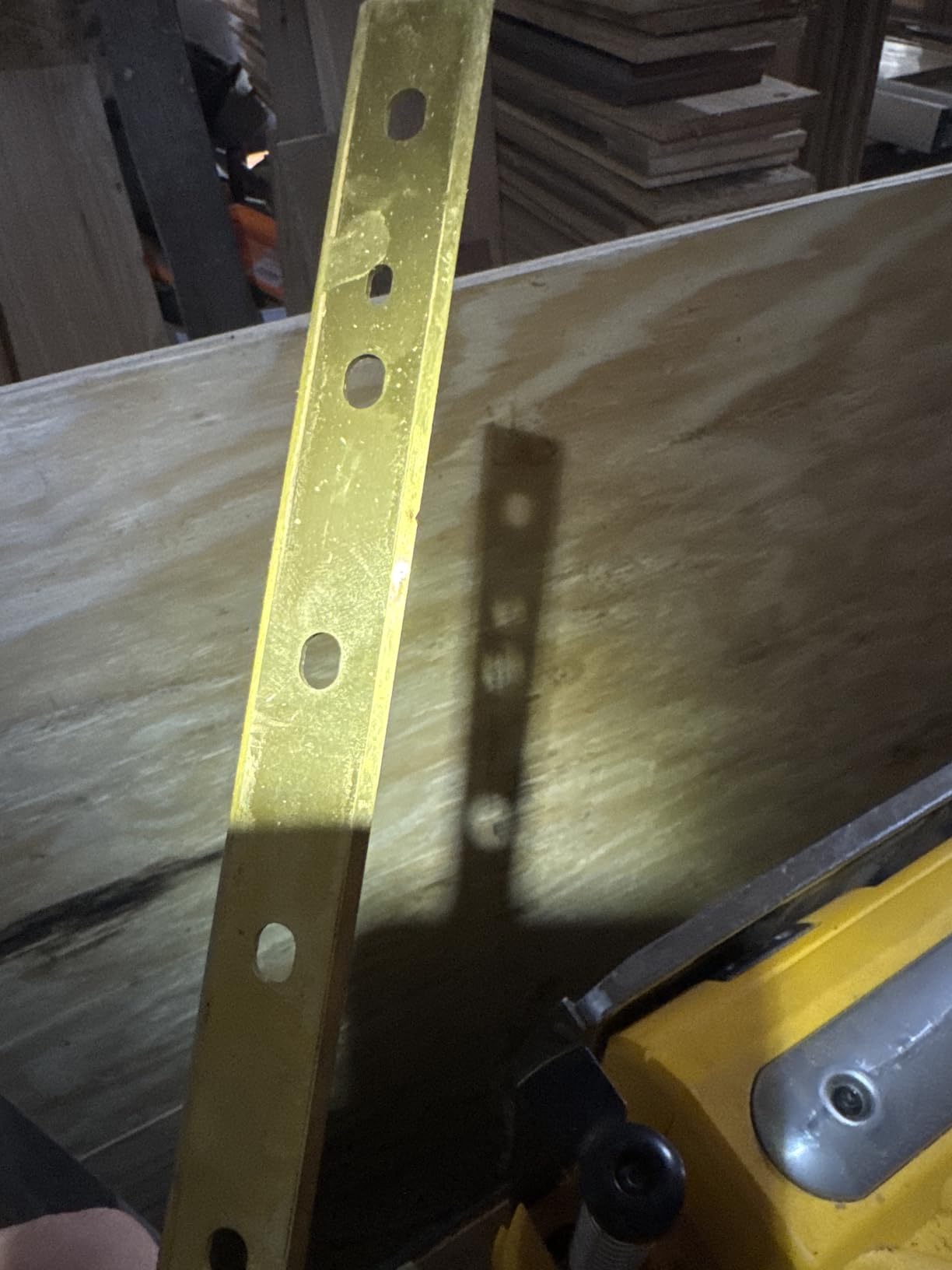
Blade dimensions are 13 x 7/8 x 1/16 inch, high speed steel with a titanium surface for longer cutting life, and the edges are reversible and honed on both sides. The set of three covers three edges per planer change.
Best fit for figured walnut and knotty boards
Titanium coating is not a cure for straight-knife geometry, but reviewers specifically single out cleaner cutting around knots and reduced tearout, which is where most figured boards give up first. Quieter cutting and lower motor load also help when you are taking a light pass through dense figure.
Where it falls short
It is still high speed steel, so nails and screws will take it out exactly as they would any HSS blade. Three blades is fewer than the ten-packs, and a small number of owners say they cannot yet tell whether it outlasts plain HSS in the long run.
If your shop only needs one board width covered, our cutting board picks cover that end of the workflow.
10. TJATSE 82mm K10 Carbide Blades 10-Pack – Best Warranty Coverage
TJATSE 3-1/4 Inch 82mm TCT Carbide Hand Planer Blades for Bosch, DeWalt, MAKITA, WEN, Black&Decker Ryobi, Hitachi and Most Handheld Planer -10 Pack
82 x 5.75 x 1.2 mm K10 carbide
Reversible double edges
Fits most 3-1/4 inch planers
12-month warranty
Pros
- K10 fine-grade tungsten carbide holds a fine edge on figured stock
- Ten-pack suits repeated surfacing work
- Reversible edges double blade life
- Wide fit list across major brands
Cons
- Lowest average rating in this set at 4.3 out of 5
- About 7% of reviews are one-star
- Wider spread of star ratings than competing sets
The TJATSE ten-pack comes with a 12-month warranty, which is unusual in this category and worth noting. Ratings are 4.3 out of 5 across 222 reviews with 65% five stars, the widest spread of star ratings in our group, and about 7% of reviews land at one star.
The carbide itself is described as K10 fine-grade tungsten carbide, claimed to be 50% harder than competing carbide. Buyers like the ten-pack quantity and the edge behavior on hardwood.
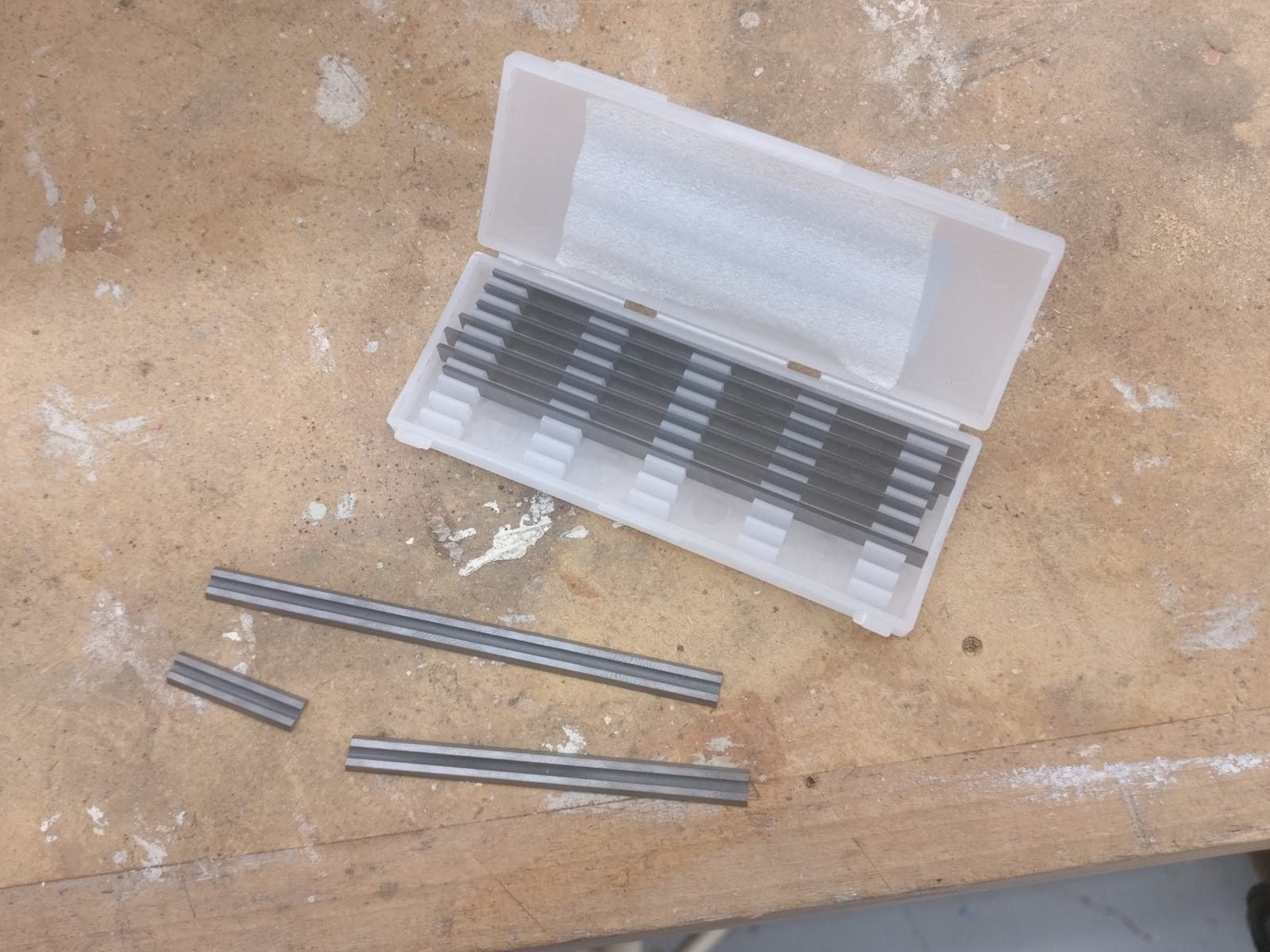
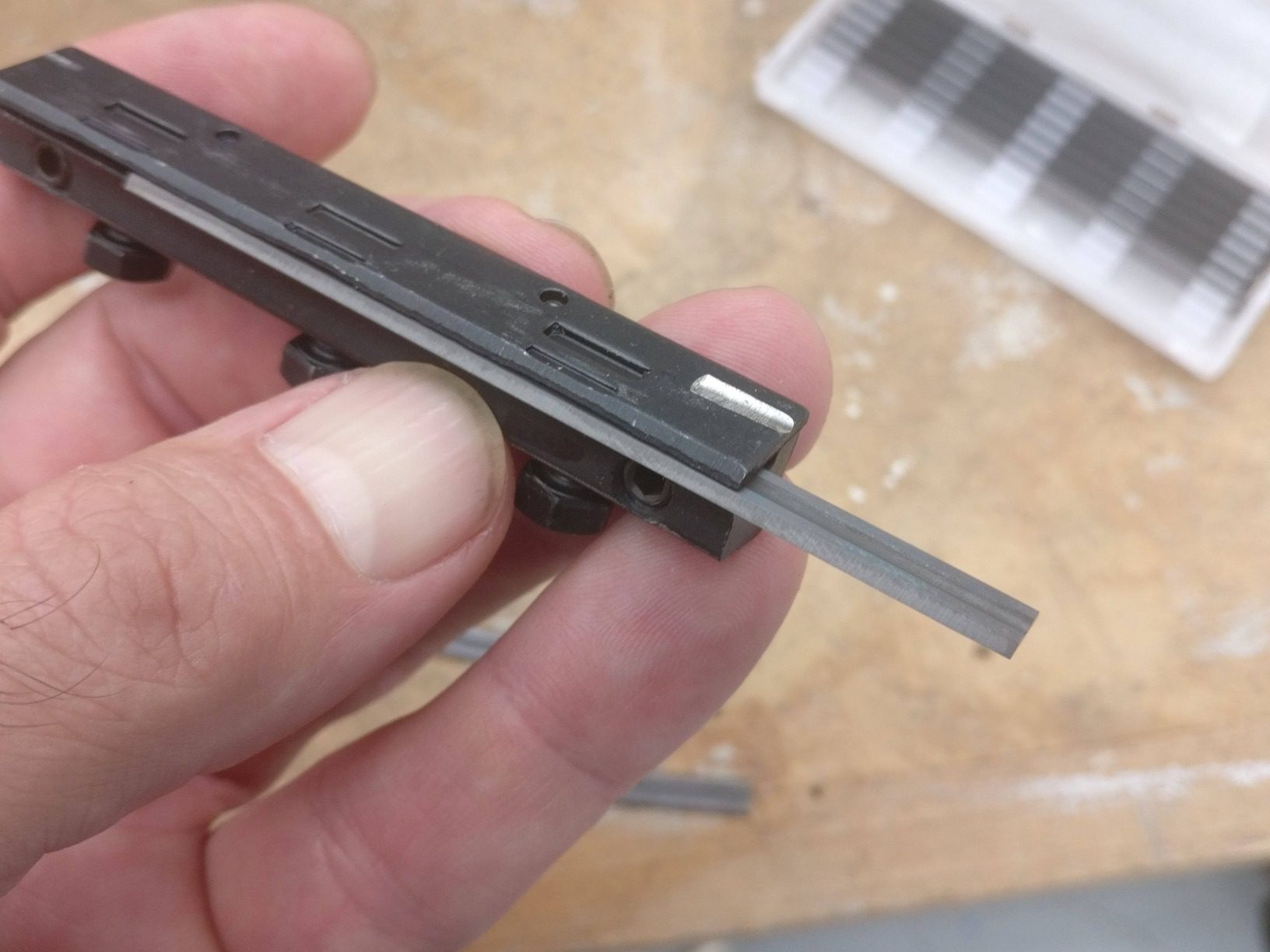
Compatibility covers Bosch, DeWalt, Makita, WEN, Black and Decker, Ryobi, Hitachi, Craftsman, Skil, VonHaus and AEG in the 3-1/4 inch format. Blade size is 82 x 5.75 x 1.2 mm with a double-edged reversible design.
Best for buyers who want a warranty behind the blades
If a year of coverage matters to you, this is the only set in the group that offers one. Buyers who work through a lot of lumber on a schedule also like having ten blades ready rather than reordering constantly.
When to pick something else
The wider rating spread is the honest caveat. A meaningful minority report blades dulling or fitting poorly faster than OEM sets, and the 1.2 mm thin profile means the same clearance check applies here as on the HZ set. If consistent fit matters more to you than warranty length, one of the OEM sets is the safer buy.
Our ash vacuum picks handle the cleanup that comes with a machine producing that much fine dust.
Buying Guide: How to Choose Planer Blades for Figured Wood
Are All Electric Planer Blades the Same?
No. Planer blades differ by width, body thickness, material, and number of edges. A 3-1/4 inch handheld blade is roughly 82 mm long, while 13-inch benchtop planers take much longer knives, and the two never interchange. Within the handheld width there are thin 1.2 mm TCT blades and thicker 3 mm bodies, so matching your exact model number matters more than matching the nominal width.
The other difference is edge count. Blades are typically reversible, meaning each one carries two usable edges, and sets range from a single pair to ten-pack quantities.
HSS vs Carbide vs Helical Inserts
High-speed steel is cheap and resharpenable, and it is the right choice when you own a sharpening jig and mostly dimension hardwood. It dulls fastest of the three on figured stock, which is where tearout starts compounding.
Carbide and tungsten carbide hold an edge dramatically longer. Members on the FineWoodworking forum put carbide at roughly eight times the life of HSS, and reviewers of the sets above consistently report staying sharp through dense figured material. Carbide is disposable rather than resharpenable in most cases, so the long-run cost comes from replacement instead of sharpening time.
Helical inserts change the geometry. Many small knives at staggered angles mean only a tiny wedge is cut at any point, so fibers are sheared rather than lifted. Reddit r/woodworking users describe helical heads as vastly reducing tearout, and the trade is a higher purchase cost and lower maximum depth of cut per pass, since each insert only takes a light bite.
Before investing in a cutterhead, it helps to know how you handle dust and cleanup on other equipment; our wood stove vacuum guide covers that side of the shop.
How to Set and Zero Your Planer Blades
Zeroing after a blade change takes about fifteen minutes and determines whether your next board comes out flat.
Unplug the planer and lift the cutterhead out of the machine, following the manufacturer’s removal steps.
Clean every chip, sap and dust ball out of the cutterhead housing and off the blades before anything else.
Set the depth-of-cut adjustment to zero, then back the head down slightly so the knives sit below the shoe.
Place a straightedge on the shoe surface and raise the head slowly until the knives just touch the straightedge across the full width.
Check the knives in two positions by rotating the head a full turn, since a bent blade only shows itself at one angle.
Lower the head, reinstall it, and take a test pass on scrap before you touch your figured stock.
Users across shop forums consistently stress the cleaning step and zeroing to the shoe, because debris under a knife is the fastest route to a bad surface.
Three Ways to Cut Tearout Down on Figured Wood
Beyond blade choice, three things help. Take light passes, because a thinner wedge lifts fewer fibers at each revolution, and step down gradually rather than taking the full depth in one cut.
Always feed with the grain direction, planning one side at a time from the end grain rather than pushing straight across a board where figure reverses.
Finally, keep the bed and rear shoe waxed so the board does not stick and drag. Snipe marks and lifted patches both come from a board that hesitates mid-pass.
When a Helical Cutterhead Upgrade Is Worth It
If you plane figured material daily, a helical cutterhead pays for itself in saved sanding time alone. The math is simple: every board that tears out means going back to 80 grit to erase the damage, and on curly maple that erases the surface you were trying to keep.
Festool Owners Group users report great surface finish and noise reduction after installing a helical head in a 13-inch planer, alongside some handling complications during the conversion. Plan for an afternoon and verify head fitment for your specific model before ordering. For occasional figured work, a good carbide set like the Bosch pair at the top of this list will do most of the work.
Frequently Asked Questions
Why does my planer tear out on figured wood no matter how sharp the blade is?
Tearout on figured wood is caused by straight knife geometry rather than dullness. The blade removes one continuous wedge across the board width, so where grain reverses, fibers lift instead of cutting. Sharpening a straight knife improves finish on straight-grained wood but will not stop tearout on curl or interlocked grain. Only a helical cutterhead changes that geometry enough to shear the fibers cleanly.
Are all electric planer blades the same?
No. Blades differ by width, body thickness, material and edge count. A 3-1/4 inch handheld blade is roughly 82 mm long, while 13-inch benchtop planers take much longer knives, and the two never interchange. Even within 3-1/4 inch, thin 1.2 mm TCT blades will not always fit machines built for thicker 3 mm bodies, so match the exact model number.
How do I set and zero planer blades after installing new ones?
Unplug the planer and remove the cutterhead, then clean all debris from the housing and blades. Set depth of cut to zero, raise the head slowly until the knives just touch a straightedge resting on the shoe, and check in two positions by rotating the head a full turn. Lower the head, reinstall it, and run a test pass on scrap before cutting your figured stock.
Do helical planer blades cut faster?
Not faster in feed rate, because each insert only removes a light bite. What changes is surface quality and edge life: the staggered angles shear fibers rather than lifting them, which reduces tearout on figured wood and keeps inserts sharp far longer. Many woodworkers find helical heads quieter and that a single damaged insert can be indexed or replaced instead of scrapping a full blade.
How often should I replace planer blades?
It depends on material and blade type. High speed steel on hardwood may need flipping after roughly 300 board feet of rough work, while tungsten carbide sets on the same wood last many times longer and are treated as disposable rather than resharpenable. Judge by surface quality instead of a calendar: ridges, chatter and fuzzy patches on a test pass mean the edge is done regardless of how little time has passed.
Best Planer Blades for Figured Wood: The Final Verdict
The Bosch PA1202 micrograin tungsten carbide pair takes the top spot because it pairs a top rating with the largest review count in the group and a fit that needs no calibration. For 13-inch benchtop work, the DeWALT DW7352-2 set gives you OEM M2 steel and machined locator holes, and the titanium-coated FOXBC set is the pick when knots and reclaimed lumber are the problem.
Remember the limit of all of these: straight knives reduce how often you tear out, they do not remove the cause. If figured wood is your regular job, budget for a helical cutterhead and use the carbide sets listed above for everything else.