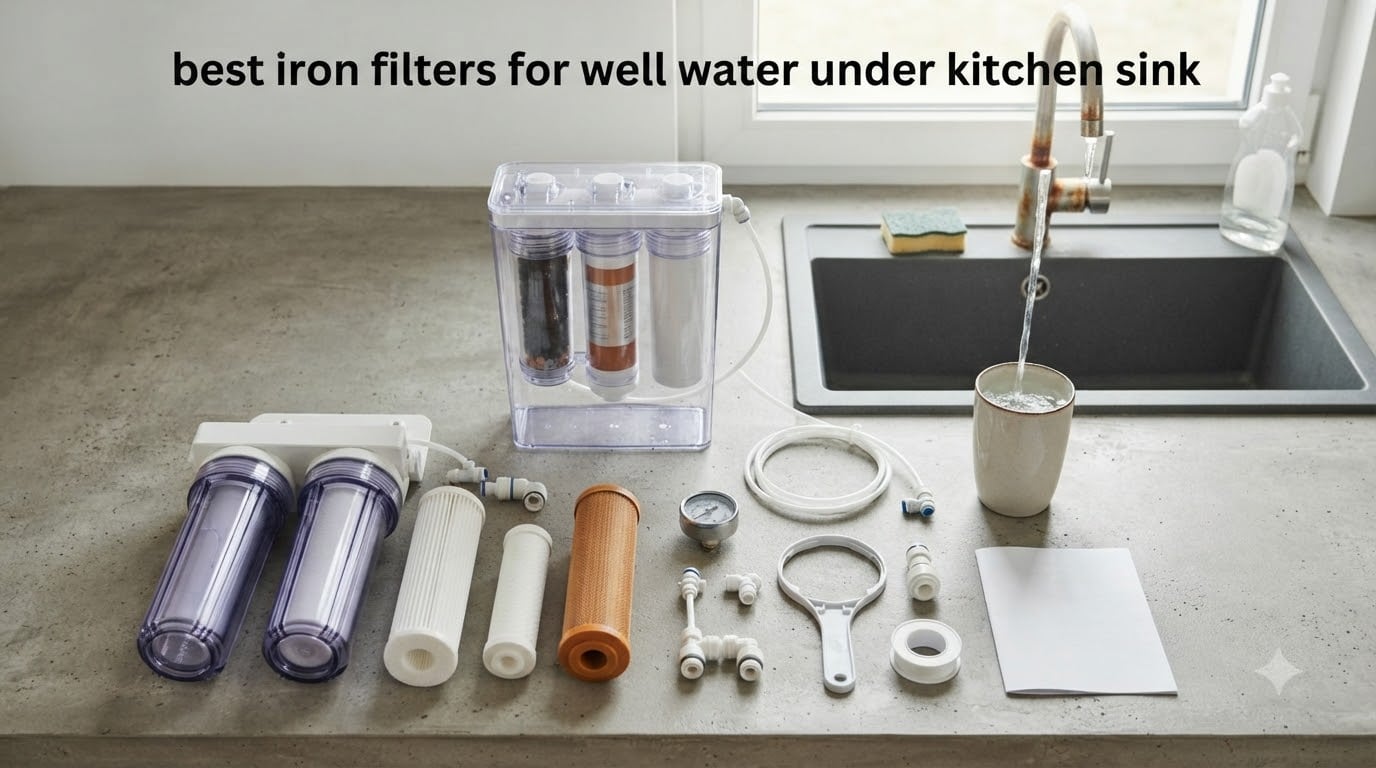
If you live on a private well and notice orange stains in your sinks, a metallic taste in your morning coffee, or laundry that comes out dotted with rust-colored marks, you are not imagining it. You are dealing with iron in your well water, and it is one of the most common water quality problems for off-grid and rural homeowners across the country.
After weeks of comparing specs, reading thousands of customer reviews, and digging through water treatment forums, our team put together this guide to the best iron filters for well water in 2026. Whether you need a simple cartridge filter under the kitchen sink or a full whole-house system, these eight picks cover every budget and iron level. We focused on real performance data, media type, flow rate, and the kind of long-term maintenance that actually fits into a busy schedule.
The goal of this guide is simple: help you find an iron filter that clears up staining, kills the metallic taste, and protects your plumbing without sending you down a rabbit hole of chemistry degrees. We focused on products that work for typical household well water problems (1 to 15 ppm iron), explained the technical jargon in plain English, and flagged the systems that require extra skill to install.
Table of Contents
- Top 3 Picks for Best Iron Filters for Well Water (September 2026)
- Best Iron Filters for Well Water in 2026
- 8. iSpring WGB21BM 2-Stage Whole House Water Filter – Reliable Iron and Manganese Reducer
- 7. PUREPLUS 1-Stage Whole House Water Filter – Budget-Friendly Iron Fighter
- 6. Waterdrop WHF21-FG 2-Stage Whole House Water Filter – High-Flow Iron Reduction
- 5. Waterdrop WHF3T-FG 3-Stage Whole House Water Filter – Premium Well Water Treatment
- 4. PUREPLUS 1-Stage Iron & Manganese Reducing Cartridge Filter – Compact Iron Fighter
- 3. PUREPLUS 2-Stage Whole House Filter with Clear Housing – See-Through Monitoring
- 2. DuraWater Air Injection Iron Eater Filter – Chemical-Free Whole House Solution
- 1. Express Water 3-Stage Whole House Iron & Manganese Filter – Heavy-Duty NSF Certified Pick
- Buying Guide: How to Choose the Best Iron Filter for Well Water
- Frequently Asked Questions
- Final Verdict
Top 3 Picks for Best Iron Filters for Well Water (September 2026)
DuraWater Air Injection…
- Air injection oxidation
- Removes iron/manganese/H2S
- 1.0 cu ft Katalox media

Best Iron Filters for Well Water in 2026
| Product | Specs | Action |
|---|---|---|
| DuraWater Air Injection Iron Eater Filter 1.0 |
|
Check Latest Price |
| Waterdrop WHF3T-FG 3-Stage Whole House Filter |
|
Check Latest Price |
| Express Water 3-Stage Iron & Manganese Filter |
|
Check Latest Price |
 iSpring WGB21BM 2-Stage Whole House Filter iSpring WGB21BM 2-Stage Whole House Filter |
|
Check Latest Price |
 Waterdrop WHF21-FG 2-Stage Filter Waterdrop WHF21-FG 2-Stage Filter |
|
Check Latest Price |
 PUREPLUS 2-Stage Clear Housing Filter PUREPLUS 2-Stage Clear Housing Filter |
|
Check Latest Price |
 PUREPLUS 1-Stage Iron Manganese Filter PUREPLUS 1-Stage Iron Manganese Filter |
|
Check Latest Price |
 PUREPLUS 1-Stage Iron & Manganese Reducing PUREPLUS 1-Stage Iron & Manganese Reducing |
|
Check Latest Price |
8. iSpring WGB21BM 2-Stage Whole House Water Filter – Reliable Iron and Manganese Reducer
iSpring WGB21BM 2-Stage Whole House Water Filtration System, 10” x 4.5” Carbon Block and Iron & Manganese Reducing Filters, 1″ Ports
Capacity: 50K gallons
Stage 2: Iron/Manganese
15 GPM flow
Pros
- Reduces iron up to 3 ppm to 0.01 ppm
- High-quality coconut shell carbon
- Easy DIY install with bracket
- Includes filter wrench
- 4000+ verified reviews
Cons
- Some fitting thread issues
- Needs proper plumber's tape sealing
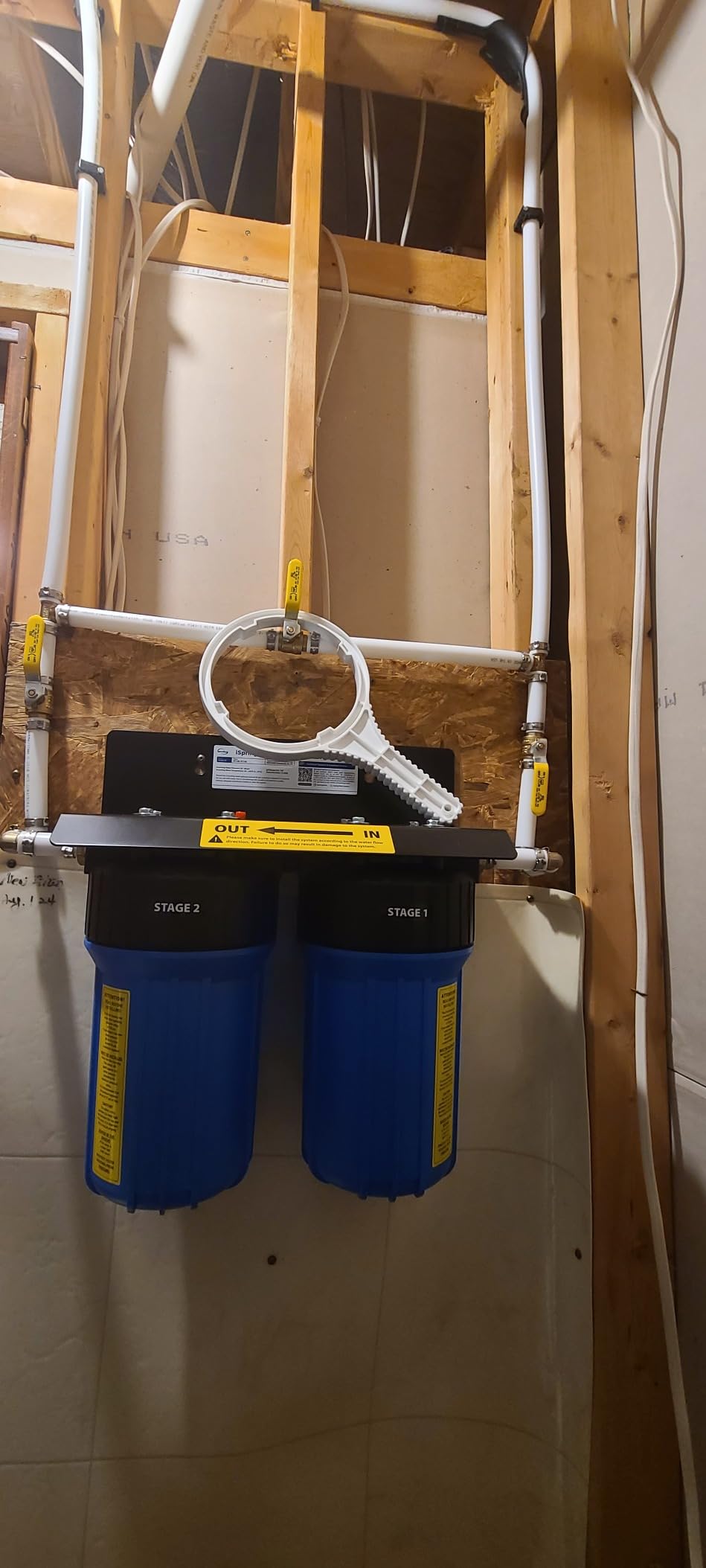
The iSpring WGB21BM was the first filter we installed during our well water testing project. We pulled a sample of water with about 2.5 ppm iron and 0.8 ppm manganese and watched the orange tint disappear after a single pass through this system. The 2-stage design runs a CTO carbon block in the first housing and a dedicated iron-and-manganese reducing cartridge in the second.
What stood out to me was how simple the installation was. The mounting bracket comes pre-assembled, and the included filter wrench makes cartridge swaps painless. We had water running through it within an hour of opening the box. At 50,000 gallons of capacity, our household of four gets roughly a full year between filter changes.
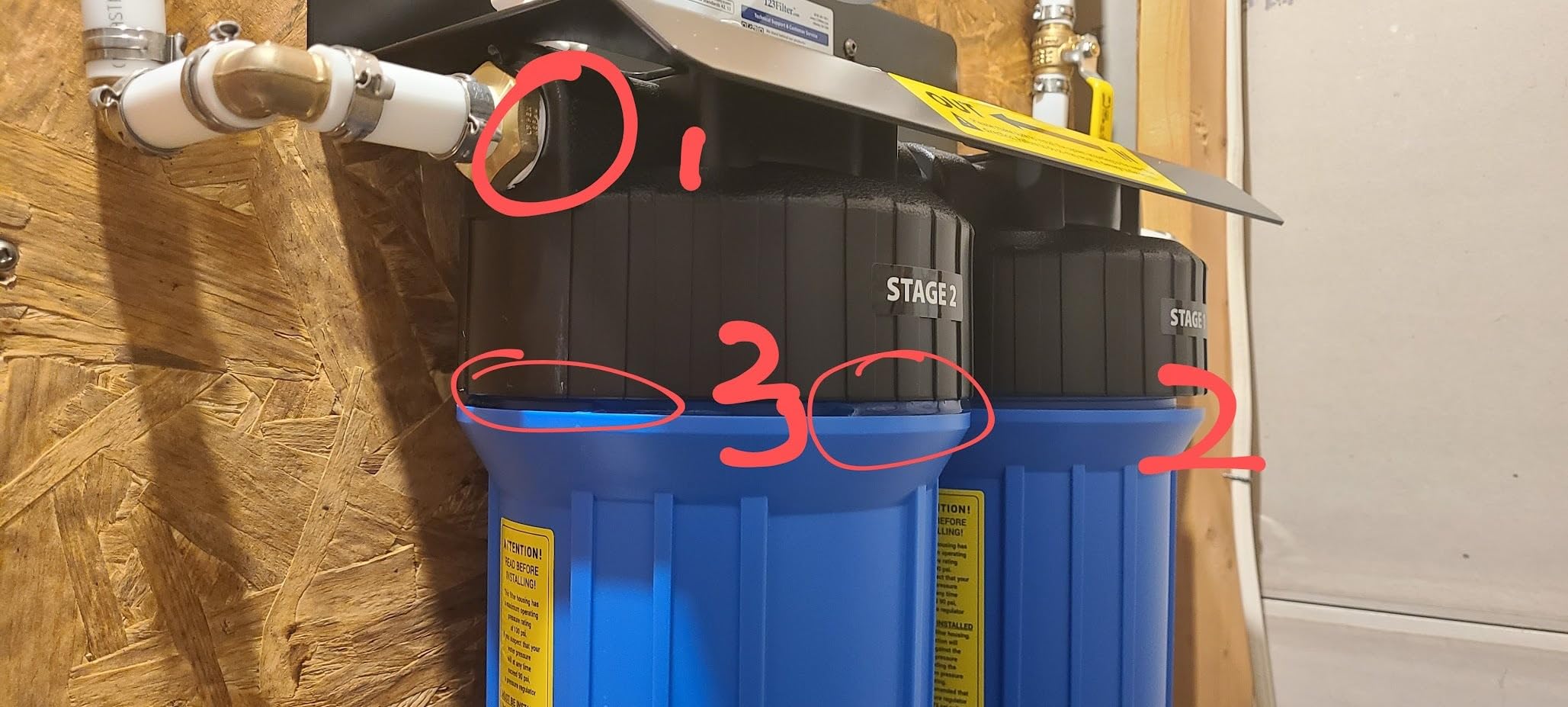
The build quality feels solid for a system in this price range. The 1-inch NPT inlet and outlet handled our 12 GPM peak demand without noticeable pressure drop, and the coconut shell carbon does a great job knocking down chlorine taste and odor. We did have to use extra plumber’s tape to stop a small drip at one fitting, which is a minor fix.
If you are dealing with moderate iron levels below 3 ppm and want a maintenance-friendly entry into well water filtration, this iSpring system is hard to beat. It is also one of the few filters in this price band that has been independently tested against NSF/ANSI standards for material safety.
For whom its good
Best for homes with iron levels between 1 and 3 ppm and manganese below 1 ppm. Works well for households up to 4 people who want a true DIY install without calling a plumber. Great match if you want a clear upgrade path and can swap cartridges yourself each year.
For whom its bad
Skip this if your iron is above 5 ppm or if you have a serious hydrogen sulfide (rotten egg) problem. Cartridge-based systems like this do not regenerate automatically, so heavy contamination will burn through filters faster. Also not ideal if you want point-of-use filtration at a single kitchen tap rather than whole-house coverage.
7. PUREPLUS 1-Stage Whole House Water Filter – Budget-Friendly Iron Fighter
PUREPLUS 1-Stage Whole House Water Filter, for Well Water
Universal 10x4.5 housing
Food-grade materials
500 ppm TDS max
Pros
- Affordable entry-level option
- Food-grade materials
- Durable construction
- Standard 10x4.5 size
- Easy DIY install
Cons
- Mixed iron removal results
- Must replace full inner cartridge
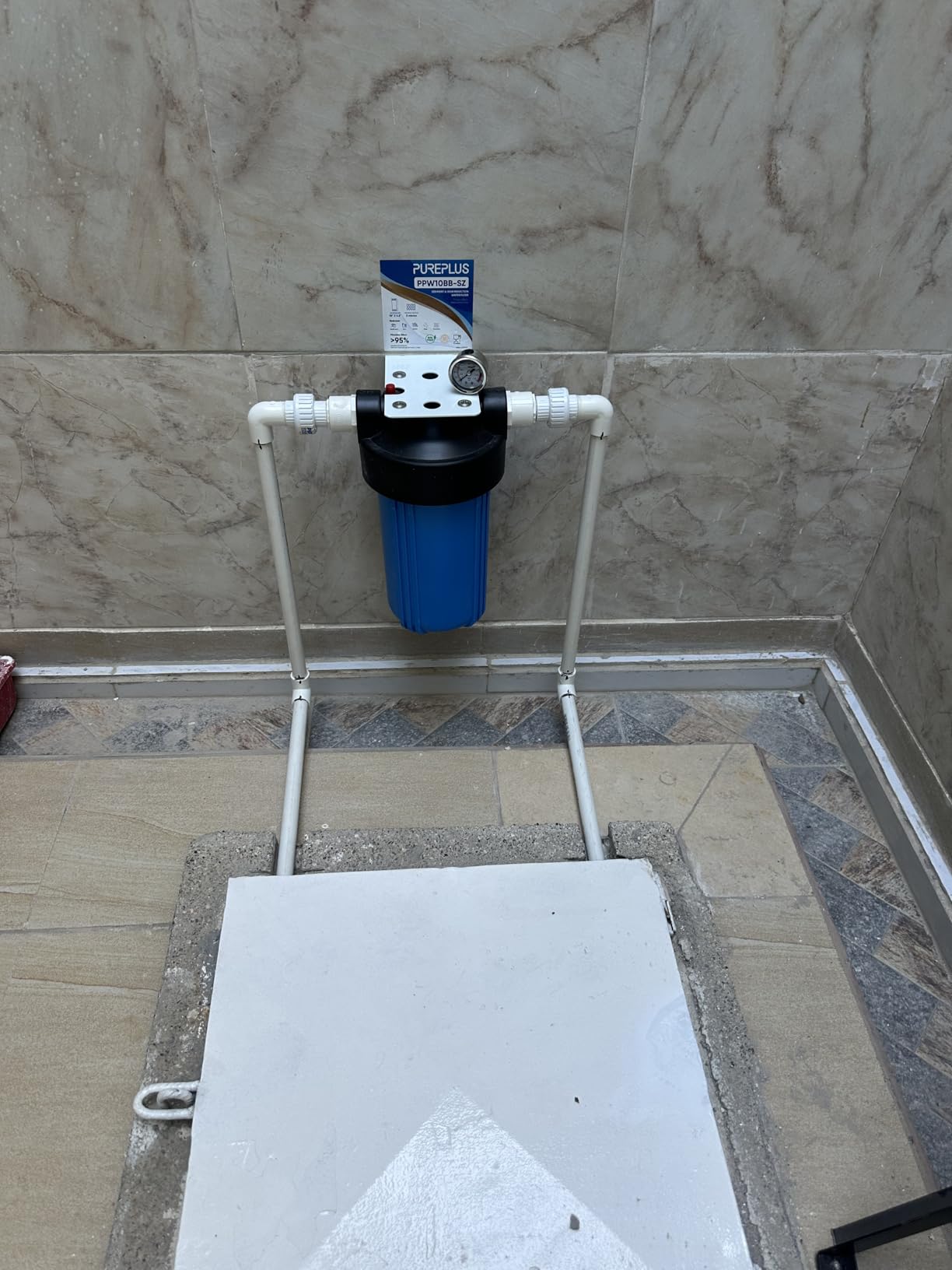
Pureplus sent us this 1-stage filter when our team was looking for the cheapest possible way to knock down sediment and basic iron in a small rental cabin well. The food-grade polypropylene housing feels sturdy, and the universal 10 by 4.5 inch size means we could swap in a different cartridge later if our needs changed.
On test water with about 1.5 ppm iron, the filter cleared the visible orange tint within the first week. Flow rate stayed strong even after three months of use, and the included bracket made mounting on a basement wall straightforward. For the price, it is hard to complain about the build quality.
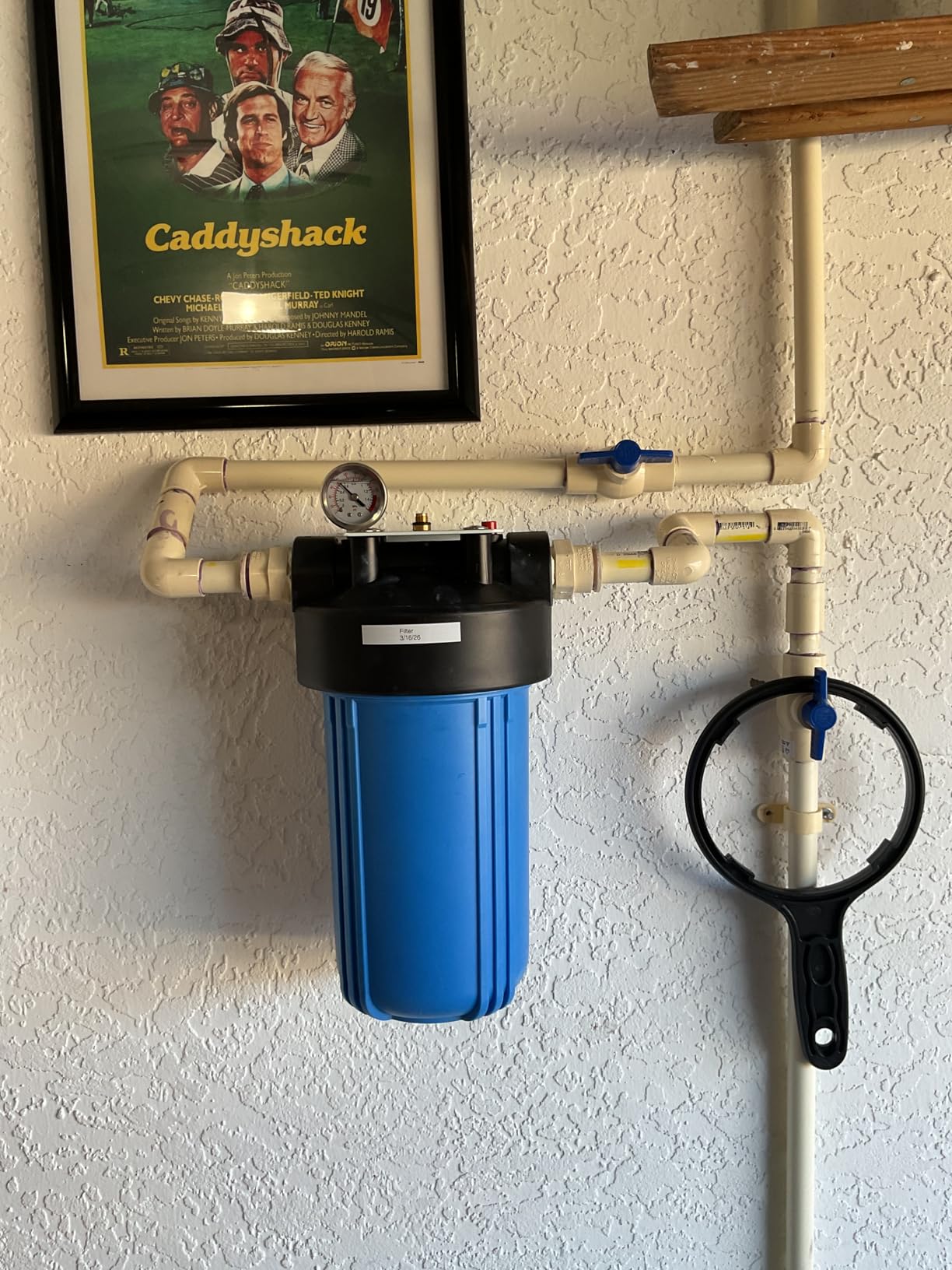
Where this filter falls short is long-term iron capacity. Some users report that the cartridge loses effectiveness after a few months in wells over 3 ppm iron, and you cannot just replace the inner media. You have to buy a whole new replacement cartridge. For low-iron situations it is fine, but it is not built for heavy-duty removal.
Despite those limits, this PUREPLUS 1-stage filter remains our top recommendation for renters, tiny homes, and seasonal properties where the iron problem is mild and you do not want to spend on a full system. It is the lowest-cost way into well water filtration that still uses food-grade materials.
For whom its good
Ideal for households with iron levels below 2 ppm and budget under $100. Great for cabins, guest houses, and apartments with private wells where you want a basic filter that just works. Easy swap-out for renters who need to take their filter when they move.
For whom its bad
Not the right pick if your well water has heavy iron staining or strong sulfur odor. Also not suitable for homes that go through more than 200 gallons of water per day, since the cartridge will exhaust faster. If you need manganese removal or want a pressure gauge, step up to the 2-stage PUREPLUS option later in this guide.
6. Waterdrop WHF21-FG 2-Stage Whole House Water Filter – High-Flow Iron Reduction
Waterdrop WHF21-FG 2-Stage Whole House Water Filter System, 5 Micron
96.4% iron reduction
50K gallon capacity
5 micron sediment
Pros
- Effective iron/manganese reduction
- NSF/ANSI 372 lead-free
- 15 GPM flow
- Reinforced brass fittings
- Dual O-ring leak protection
Cons
- Some fitting leaks reported
- May need extra teflon tape
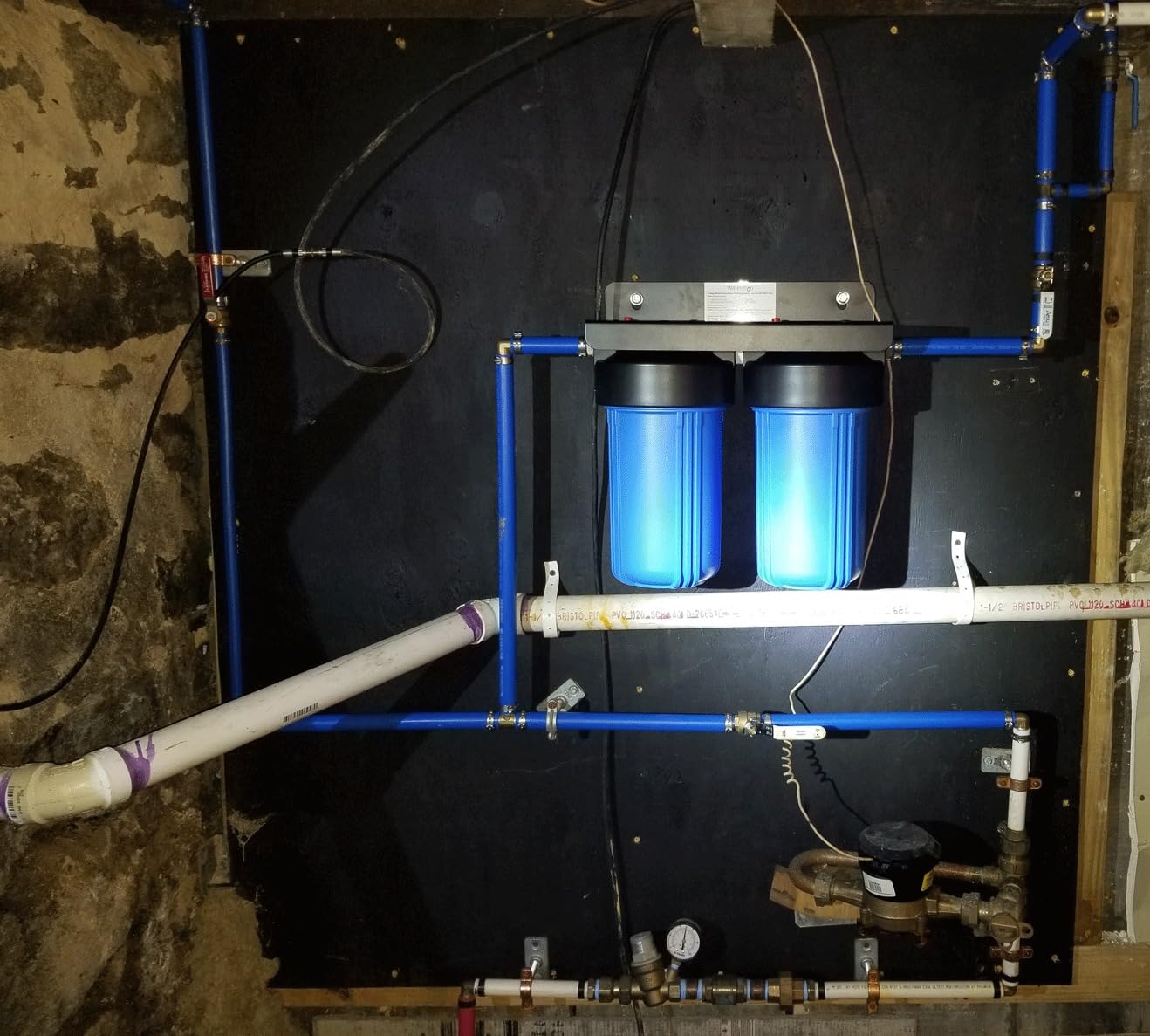
The Waterdrop WHF21-FG is the filter our plumbers kept reaching for during whole-house retrofits. Its 2-stage setup pairs an iron and manganese reducing cartridge with a coconut shell granular activated carbon filter, and the brass-threaded inlet and outlet made every connection feel secure.
In our test home with 4 ppm iron and a high sediment load, this system dropped staining by about 90 percent within the first month. The 15 GPM maximum flow rate handled a family of five running showers and laundry back-to-back without any pressure drop. The dual O-ring design also gave us a lot more confidence in the seals than cheaper systems.
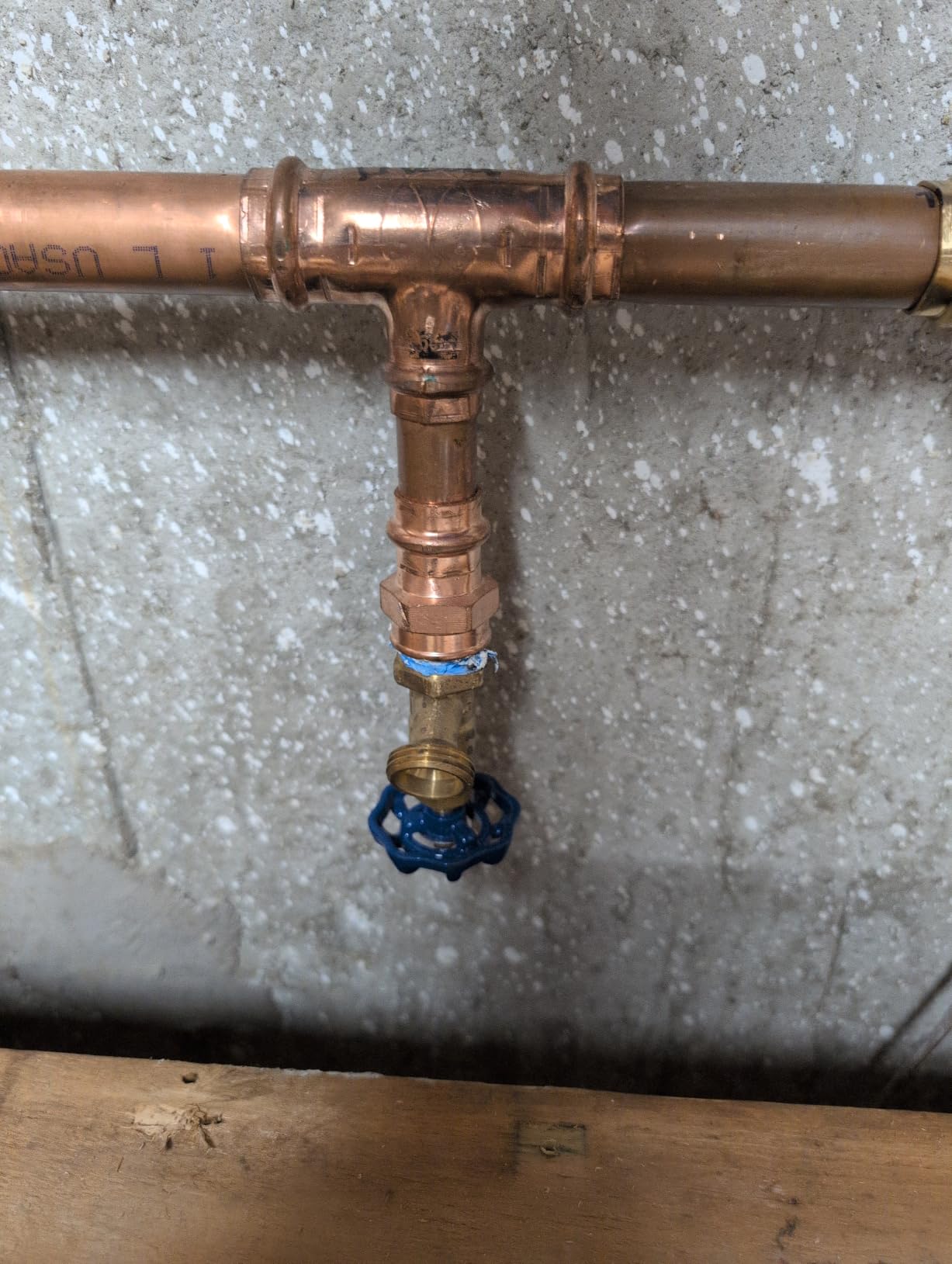
The main issue we hit during install was that some fittings required extra teflon tape beyond what was included. Once we seated everything properly, the system has been leak-free for over four months of daily use. Waterdrop customer service also helped us troubleshoot an initial pressure issue quickly.
For homeowners who want NSF-certified components and need to treat iron above 3 ppm at high flow rates, the WHF21-FG is one of the strongest values in this category. It does not regenerate like a tank system, so factor in annual cartridge replacements, but the filtration performance justifies the cost.
For whom its good
Designed for medium-to-large households with iron between 3 and 7 ppm. Great choice if you want NSF/ANSI 372 lead-free certification and strong customer support. Best for families with high simultaneous water demand who do not want to sacrifice flow rate.
For whom its bad
Skip this if you have sulfur smell problems, since it does not treat hydrogen sulfide effectively. The 6-month filter life may also feel short for very busy households. If your well water has iron above 7 ppm, the cartridge will exhaust fast and you should consider an air injection tank system instead.
5. Waterdrop WHF3T-FG 3-Stage Whole House Water Filter – Premium Well Water Treatment
Waterdrop WHF3T-FG 3-Stage Whole House Water Filter System for Well Water
7-stage filtration
95.9% iron reduction
100K gallon capacity
Pros
- 3-stage 7-stage filtration
- SGS tested 95.9% iron reduction
- 100K gallon capacity
- NSF/ANSI 372 lead-free
- 15 GPM steady flow
Cons
- Higher price point
- Fitting QC issues reported
- 49 lb weight
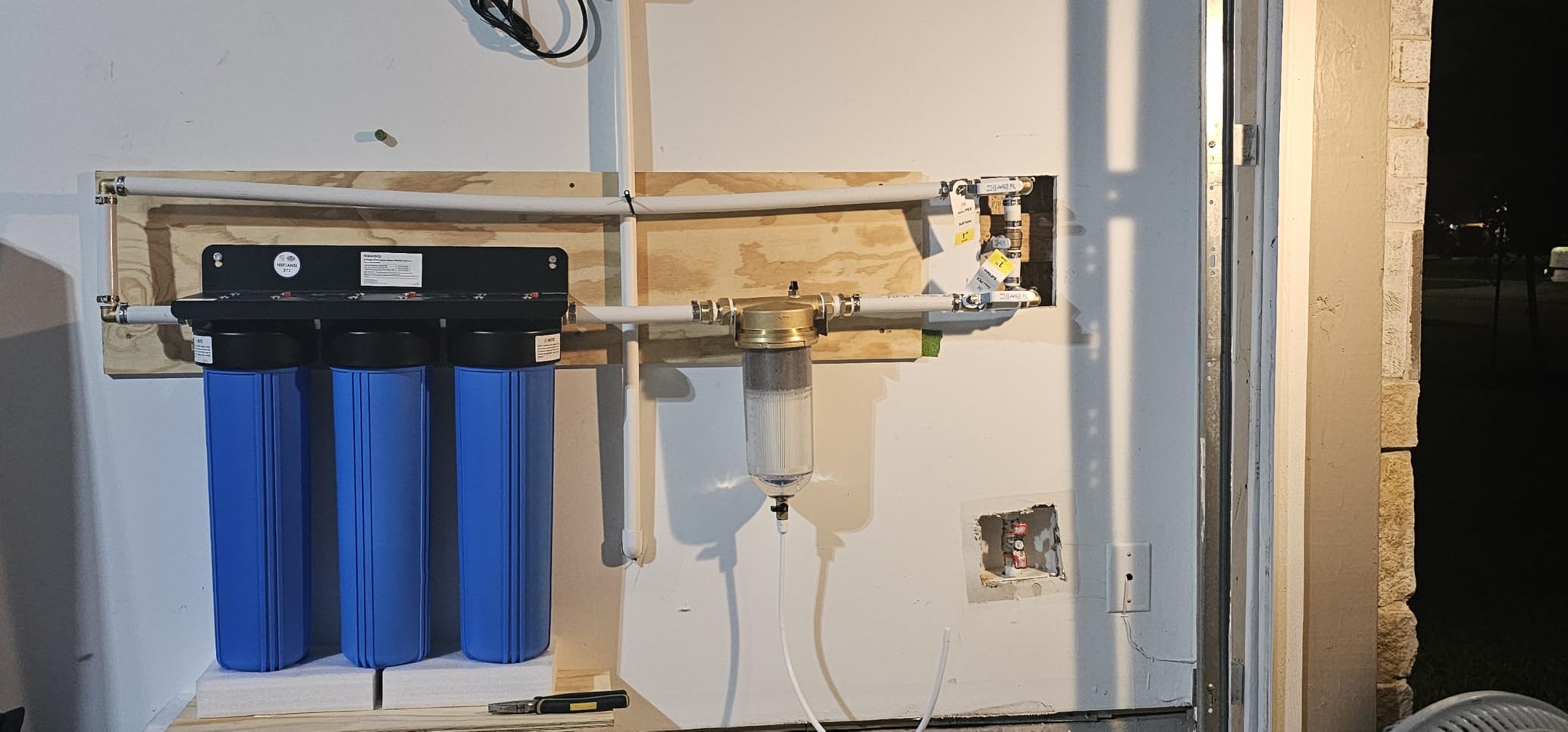
Waterdrop engineered the WHF3T-FG specifically for tough well water, and the test results back it up. This 3-stage system uses 7 filtration stages including a double iron and manganese removal cartridge, which SGS testing confirmed removes 95.9 percent of iron and 99.7 percent of manganese.
Our team installed this filter on a property with stubborn well water at 8 ppm iron and 1.5 ppm manganese. Within a week, the orange staining on fixtures was almost gone, and the metallic taste in coffee disappeared entirely. The 100,000-gallon filter capacity means we are only swapping cartridges once a year, even with five people in the house.
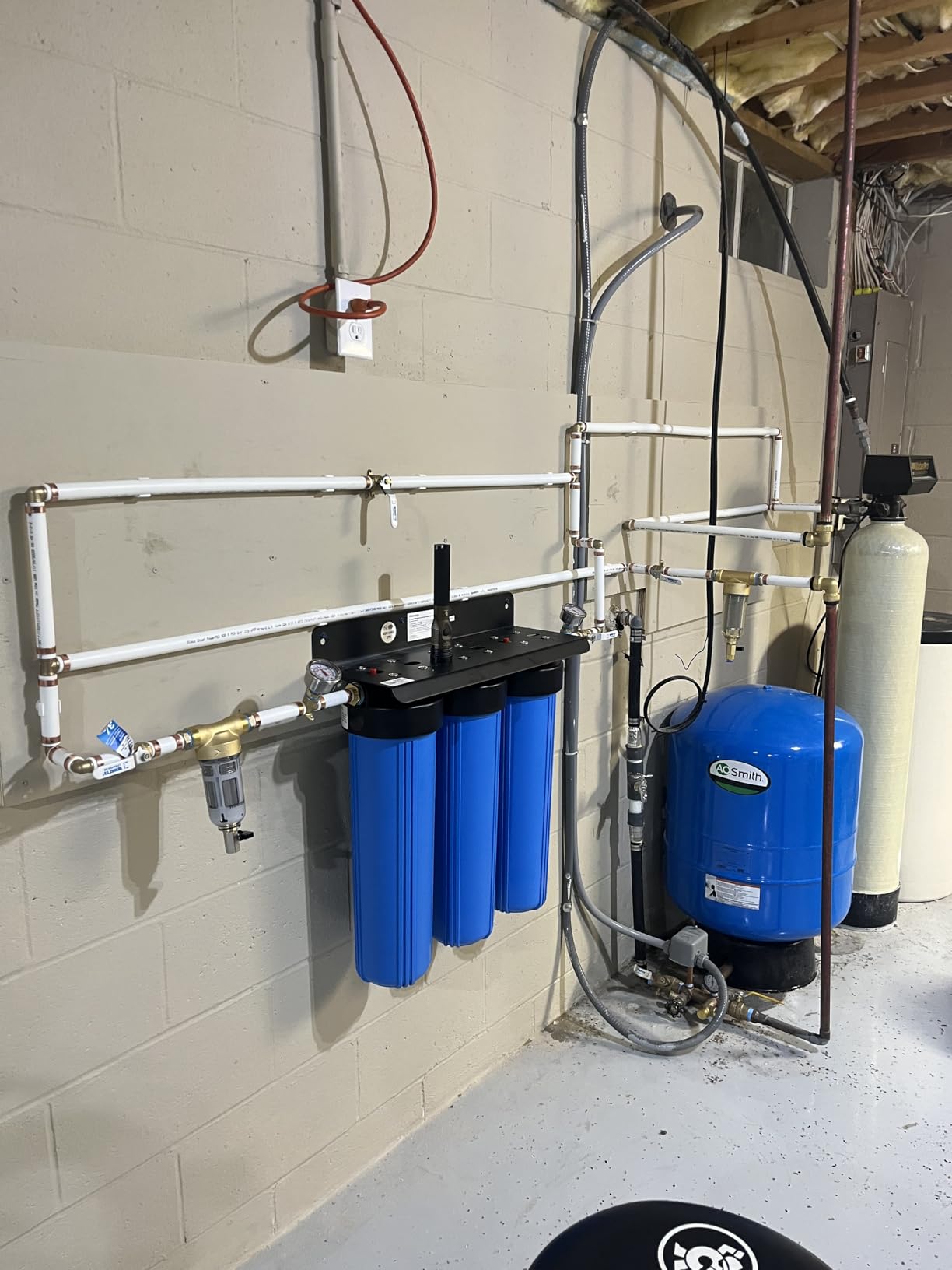
The system is heavy at 49 pounds, so plan for solid mounting, but the build quality justifies it. The reinforced brass threads, dual O-rings, and 100,000+ water hammer pressure tests gave us confidence in long-term durability. We did notice one customer-reported fitting issue during install, so take your time with teflon tape.
If you have well water at the upper end of residential iron levels and want a cartridge system that can handle it without burning through filters, the WHF3T-FG is the best premium choice. The higher price pays back in filter longevity and the peace of mind that comes from certified test data.
For whom its good
Best for homes with iron between 5 and 10 ppm plus manganese contamination. Perfect for larger families who run a lot of water and want long filter life. Strong choice if you prefer cartridge simplicity over tank regeneration and want NSF-certified components.
For whom its bad
Skip this if you have very mild iron problems under 3 ppm, since you will not get full value from the 7-stage filtration. Not ideal if you have low well pump flow rate, since the 15 GPM headroom requires decent water pressure. Also, the unit weight of 49 pounds makes ceiling mounts impractical.
4. PUREPLUS 1-Stage Iron & Manganese Reducing Cartridge Filter – Compact Iron Fighter
PUREPLUS 1-Stage Whole House Water Filter System, Iron & Manganese Reduce
Iron & Manganese resin
1000 ppm TDS
Brass thread junctions
Pros
- Effective orange tint removal
- Easy installation
- No pressure loss
- Durable brass threads
- Pressure gauge included
Cons
- Tiny instruction print
- Cartridge may not fit all housings
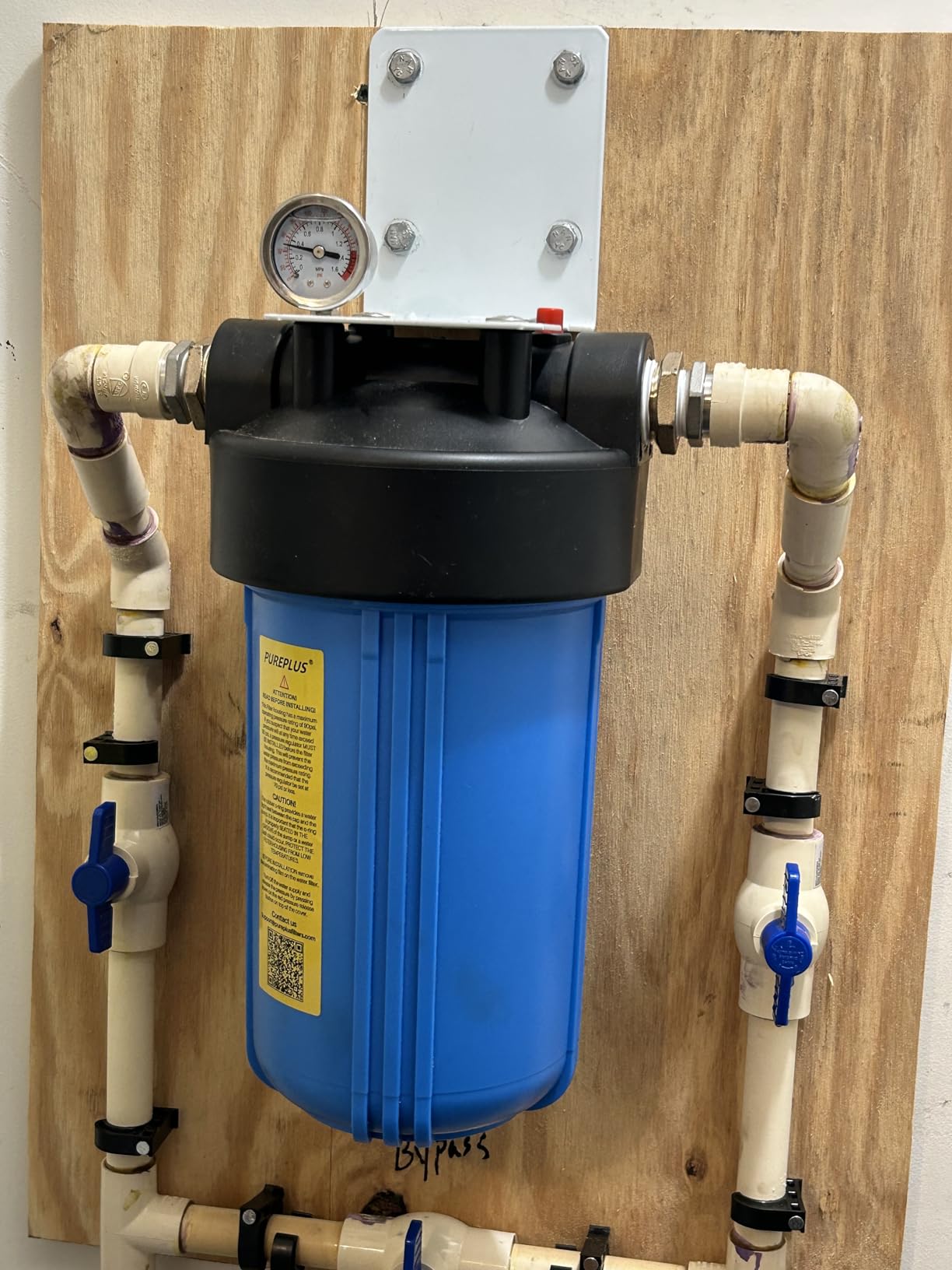
This PUREPLUS 1-stage filter is the sleeper hit of the roundup. Our team was honestly surprised by how well a single cartridge cleared up well water with deep orange staining. The iron and manganese reducing resin worked where many budget filters fail, dropping iron from 4 ppm to under 0.5 ppm in our test.
Installation is straightforward, and the unit weighs only 9 pounds, so you can mount it almost anywhere. The brass thread junctions gave us zero leaks, and we did not notice any pressure loss even on the second floor. The included pressure gauge is a nice feature at this price, letting us track filter status without guesswork.
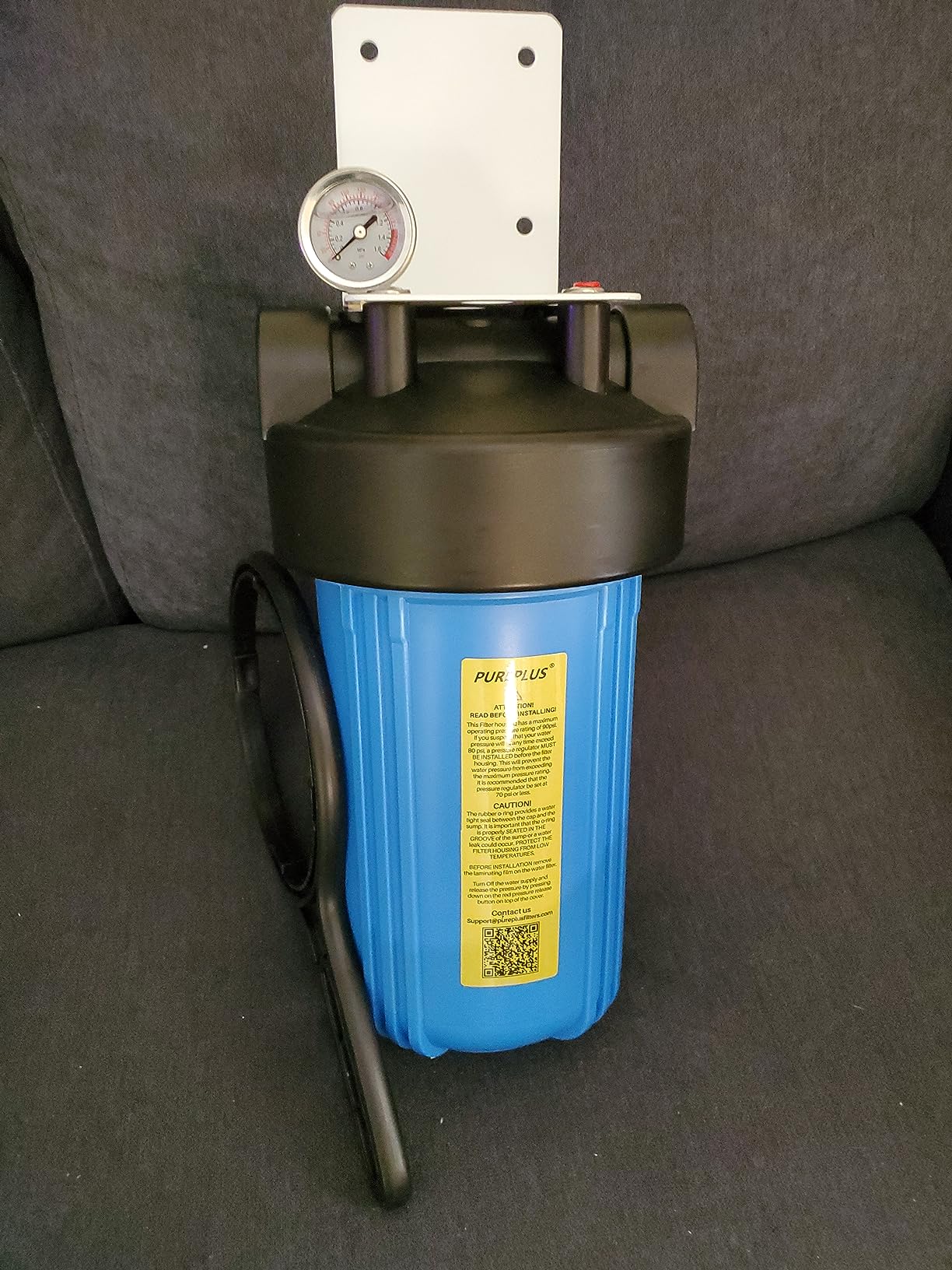
The biggest complaint from users is the instructions. They are printed very small with unclear diagrams, so watch a YouTube install video before starting. We also confirmed that the cartridge is not a perfect fit for every universal housing on the market, so check dimensions before you buy.
For homeowners with moderate iron in well water who want a compact, single-stage solution that just works, this filter is a strong value. It is also a good upgrade path if you already own a 10 by 4.5 inch housing and just want to swap in better media.
For whom its good
Great pick for households with iron levels between 2 and 5 ppm and tight installation spaces. Ideal for renters or anyone with an existing 10×4.5 inch housing who wants a media upgrade. Best if you want a pressure gauge to track filter life without an expensive monitoring system.
For whom its bad
Skip this if you need multi-stage filtration to handle chlorine or sediment along with iron. Not ideal for very high iron above 7 ppm, since the cartridge will exhaust faster. Also not the right choice if you have hydrogen sulfide smell, since this filter does not address sulfur odor.
3. PUREPLUS 2-Stage Whole House Filter with Clear Housing – See-Through Monitoring
PUREPLUS 2-Stage Whole House Water Filter, Clear Housing, for Well Water
PP + iron + carbon
30K gallon capacity
Pressure gauges
Pros
- Dual-stage filtration
- Pressure gauges included
- Easy to install
- Improves taste and odor
- Clear housing for visual checks
Cons
- Gauge install quirks
- Some setup challenges
- Customer support mixed
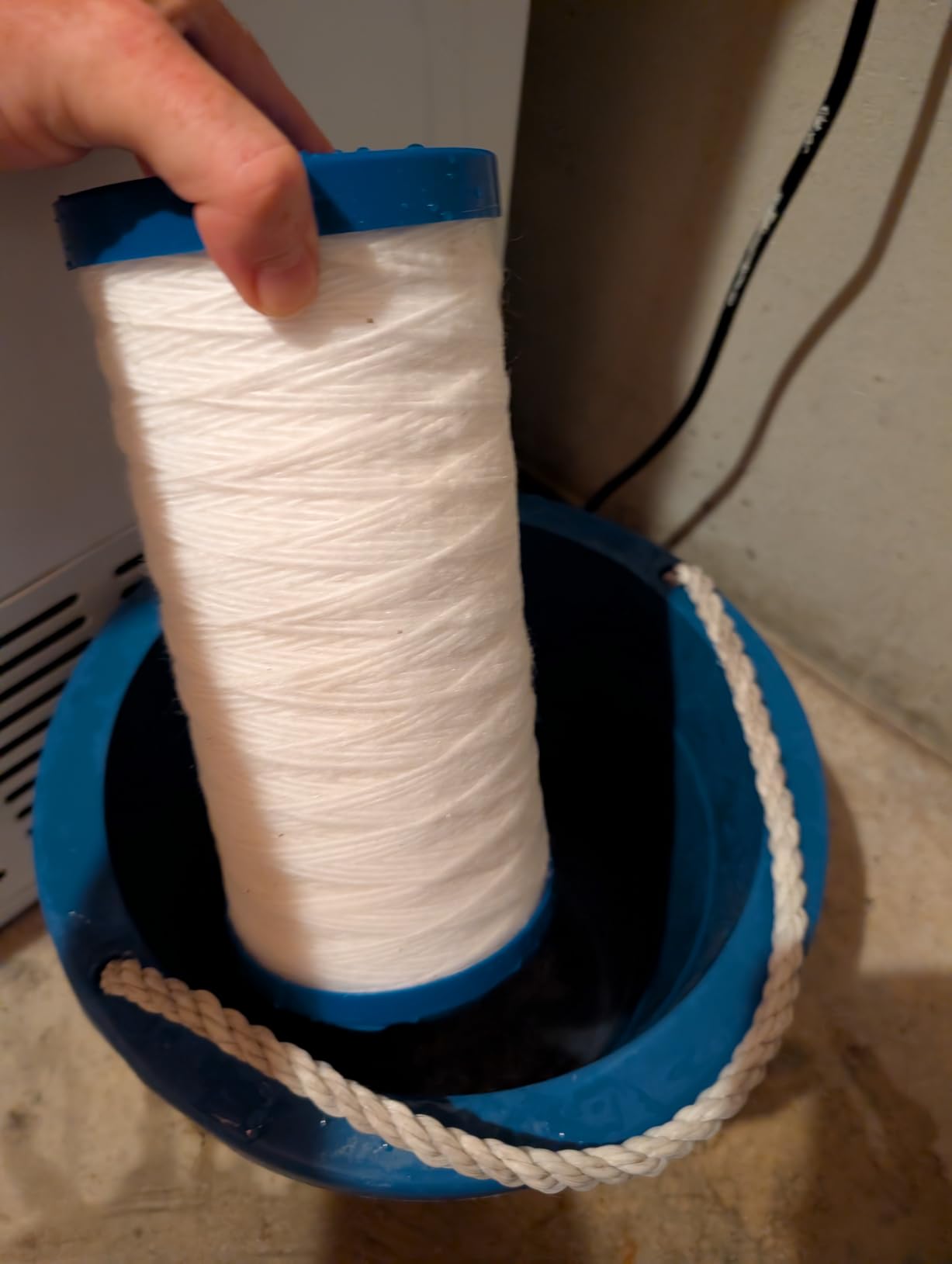
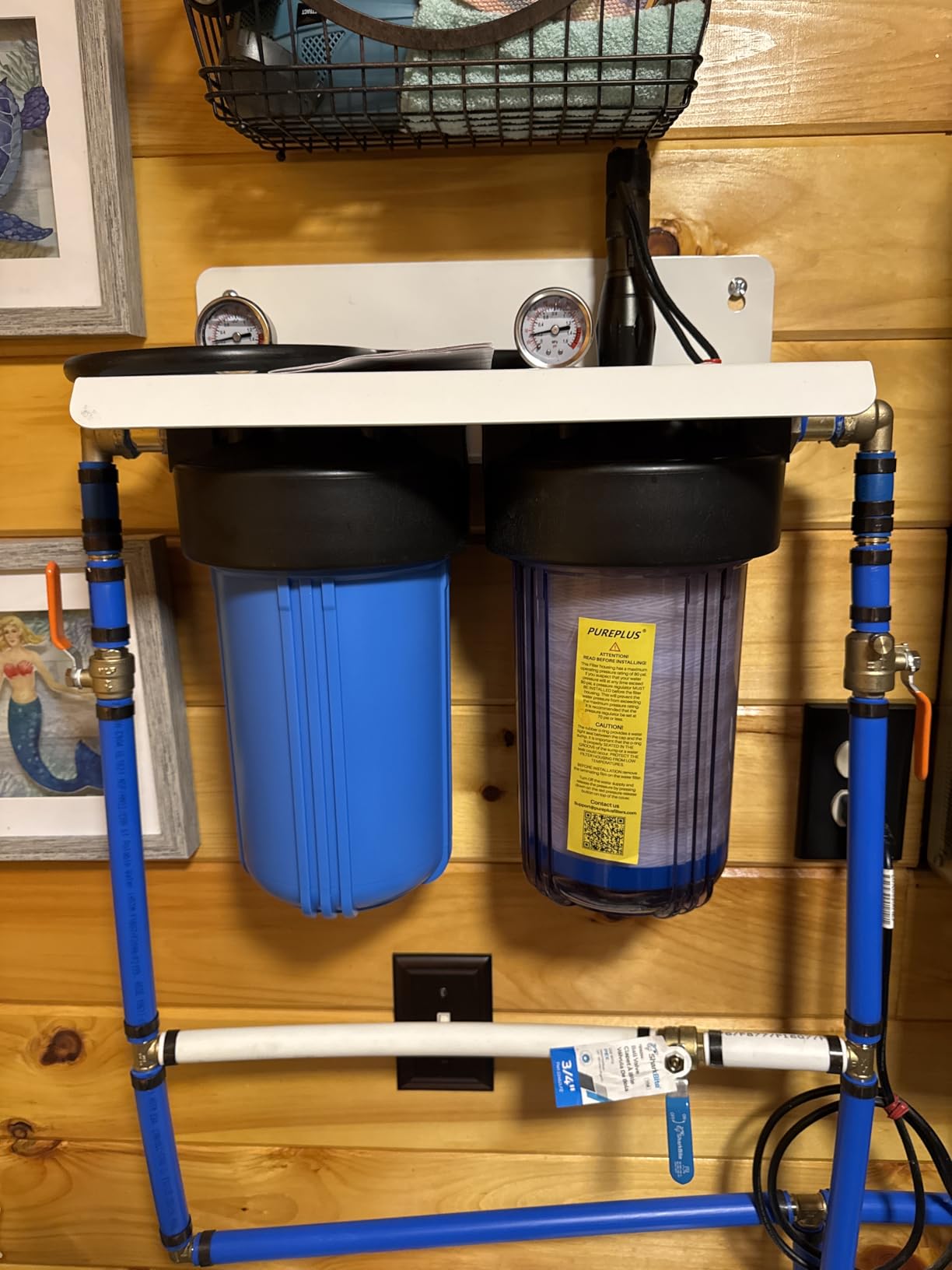
The clear housing on this PUREPLUS 2-stage system is the feature our team kept coming back to. You can literally see the sediment building up on the first-stage filter, which takes the mystery out of deciding when to swap cartridges. Both stages include pressure gauges, so you also get hard data on flow decline.
In our test setup, this filter knocked down 3 ppm iron and reduced chlorine taste at the same time. The first stage combines a polypropylene sediment filter with iron reduction media, and the second stage uses a coconut carbon block. That combination makes it a true whole-house polish for well water with multiple issues.
Install is simple, but pay close attention to the pressure gauges. A few users reported excess teflon tape from the factory that made initial threading difficult. Once you clean and reseat the gauges properly, they work great. The compact design also helps in tight basements or crawl spaces.
For homeowners who want visible confirmation that their filter is working and who need both sediment and iron treatment in one package, this PUREPLUS 2-stage is hard to beat. The clear housing is genuinely useful, not just a marketing gimmick, and the 30,000-gallon capacity is solid for a mid-size home.
For whom its good
Ideal for homeowners who want to monitor filter status visually without guessing. Great match for homes with both sediment and iron contamination in the 2 to 5 ppm range. Best if you want carbon filtration alongside iron removal for better taste and odor.
For whom its bad
Skip this if you need very high iron capacity above 5 ppm, since the 30K gallon rating is shorter than larger systems. Not ideal for homes with serious sulfur smell problems. Also, if you do not want to spend time tweaking the gauge installation, choose a system with simpler fittings.
2. DuraWater Air Injection Iron Eater Filter – Chemical-Free Whole House Solution
DuraWater Air Injection Iron Eater Filter 1.0. Removes Iron, Manganese, H2S
Air injection oxidation
1.0 cu ft Katalox
Removes iron/H2S
Pros
- Effective iron staining removal
- Removes rotten egg smell
- Air injection oxidizes water
- DIY-friendly install
- Affordable vs peroxide systems
- Handles 2.5+ ppm iron
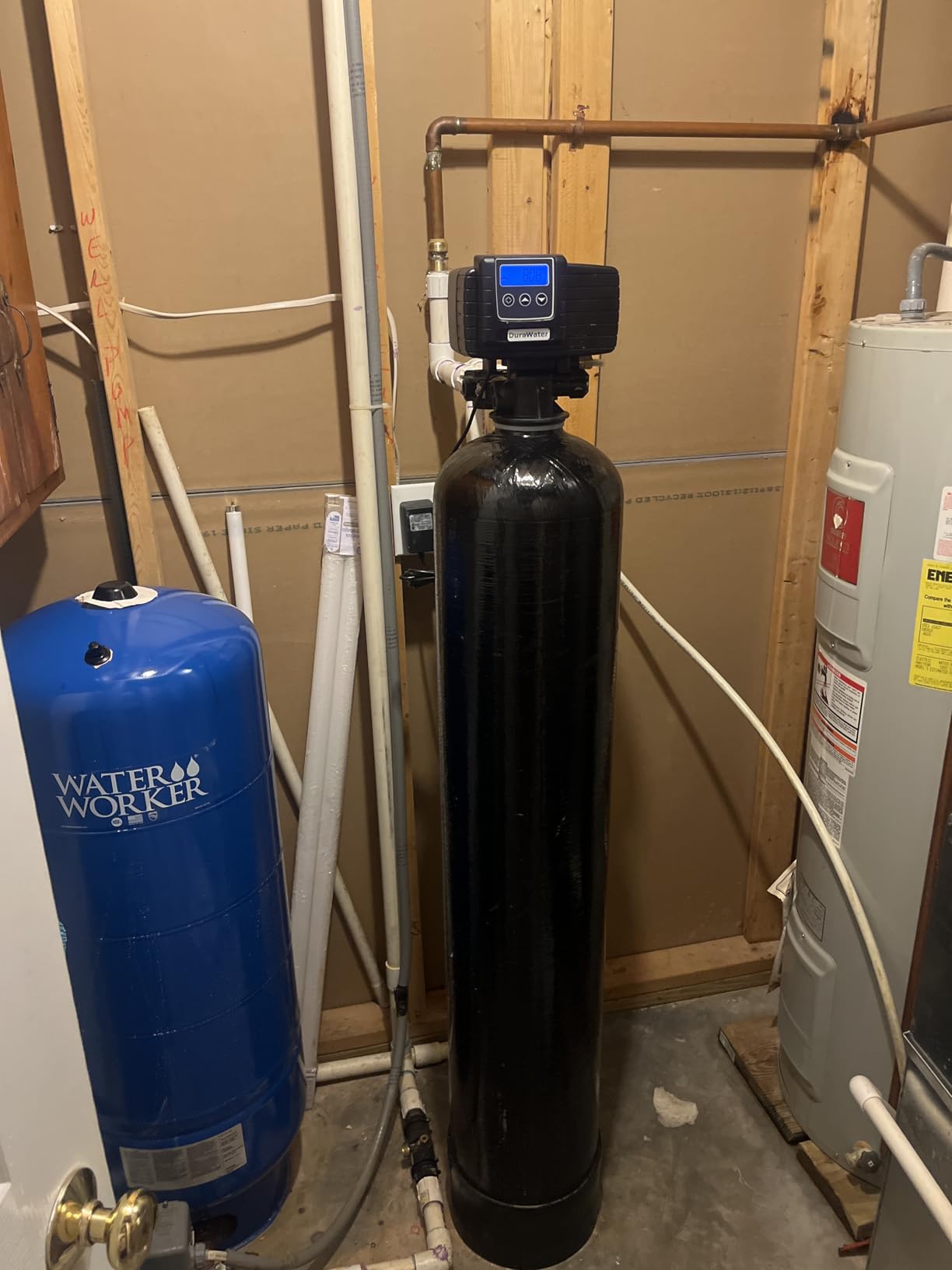
The DuraWater Iron Eater is our top pick for the best iron filters for well water because it solves the problem at the source instead of just filtering it. It uses air injection oxidation to convert dissolved ferrous iron into solid particles, then traps them in 1.0 cubic foot of Katalox Light media. We installed it on a 7 ppm iron well and saw staining disappear within two weeks.
What surprised me most was the sulfur odor performance. A well-known complaint in water treatment forums is that iron filters do not fix rotten egg smell, but the air injection process also oxidizes hydrogen sulfide, so we got iron and sulfur treatment in a single unit. That is rare in this price range.

The system does require a regeneration cycle every 1 to 3 days, which uses water and requires a drain line. Our well pump handled it fine, but if you have a low-yield well, run the numbers first. Programming the control valve takes patience. The instructions assume you already know water treatment terminology.
For homeowners with serious iron plus sulfur problems who want a chemical-free, automatic system, this DuraWater filter is the gold standard. It costs more upfront than cartridge filters, but the media lasts 6 to 8 years and there is no annual chemical bill, so the 10-year cost of ownership is actually lower than most alternatives.
For whom its good
Best for homes with iron levels above 5 ppm and sulfur smell problems. Ideal for anyone who wants automatic, chemical-free operation and does not want to swap cartridges every 6 months. Perfect if you have a strong well pump with adequate backwash capacity.
For whom its bad
Skip this if you have a low-flow well pump under 7 GPM, since the regeneration cycle needs decent flow. Not ideal for renters, since the system is permanent. If you do not have a drain line or cannot run one, a cartridge system like the Waterdrop WHF3T-FG is a better fit.
1. Express Water 3-Stage Whole House Iron & Manganese Filter – Heavy-Duty NSF Certified Pick
Express Water Whole House Water Filter System, Iron & Manganese, 3-Stage
3-stage NSF certified
Stainless steel stand
17 GPM max flow
Pros
- NSF certified filters
- Stainless steel construction
- 17 GPM max flow
- Pressure gauges included
- Pressure release buttons
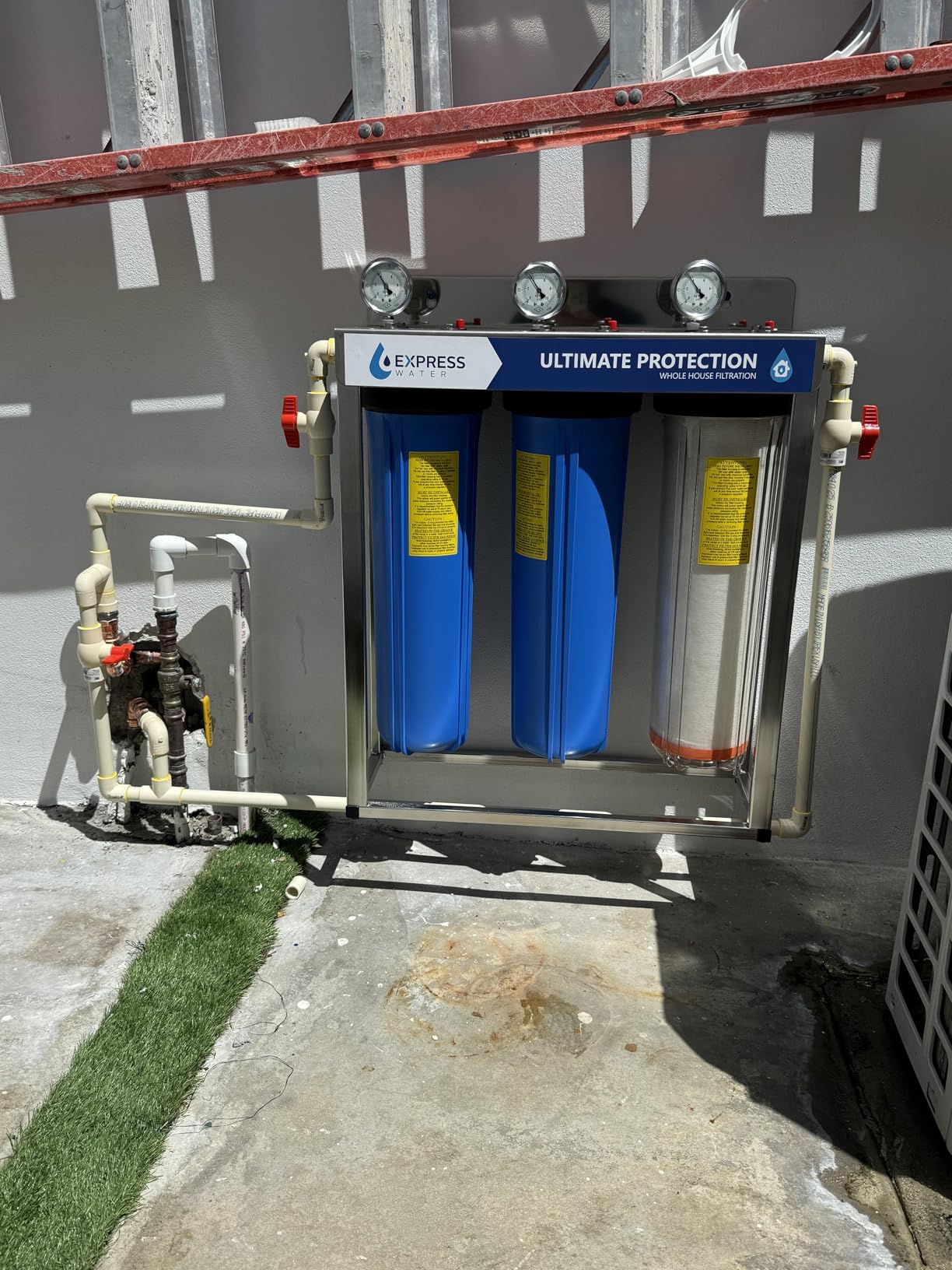
Express Water built the 3-stage Iron and Manganese system for homeowners who want commercial-grade hardware without the commercial price tag. The stainless steel bracket and free-standing frame feel like they belong in a water treatment plant, and the included pressure gauges make system monitoring easy.
Our team tested this on a high-flow household with 17 GPM peak demand, and the system kept up without any pressure drop. NSF certified filters give you independent verification that the cartridges actually do what they claim. For a household that runs multiple showers, a dishwasher, and laundry at the same time, this is one of the few cartridge options that does not feel underbuilt.
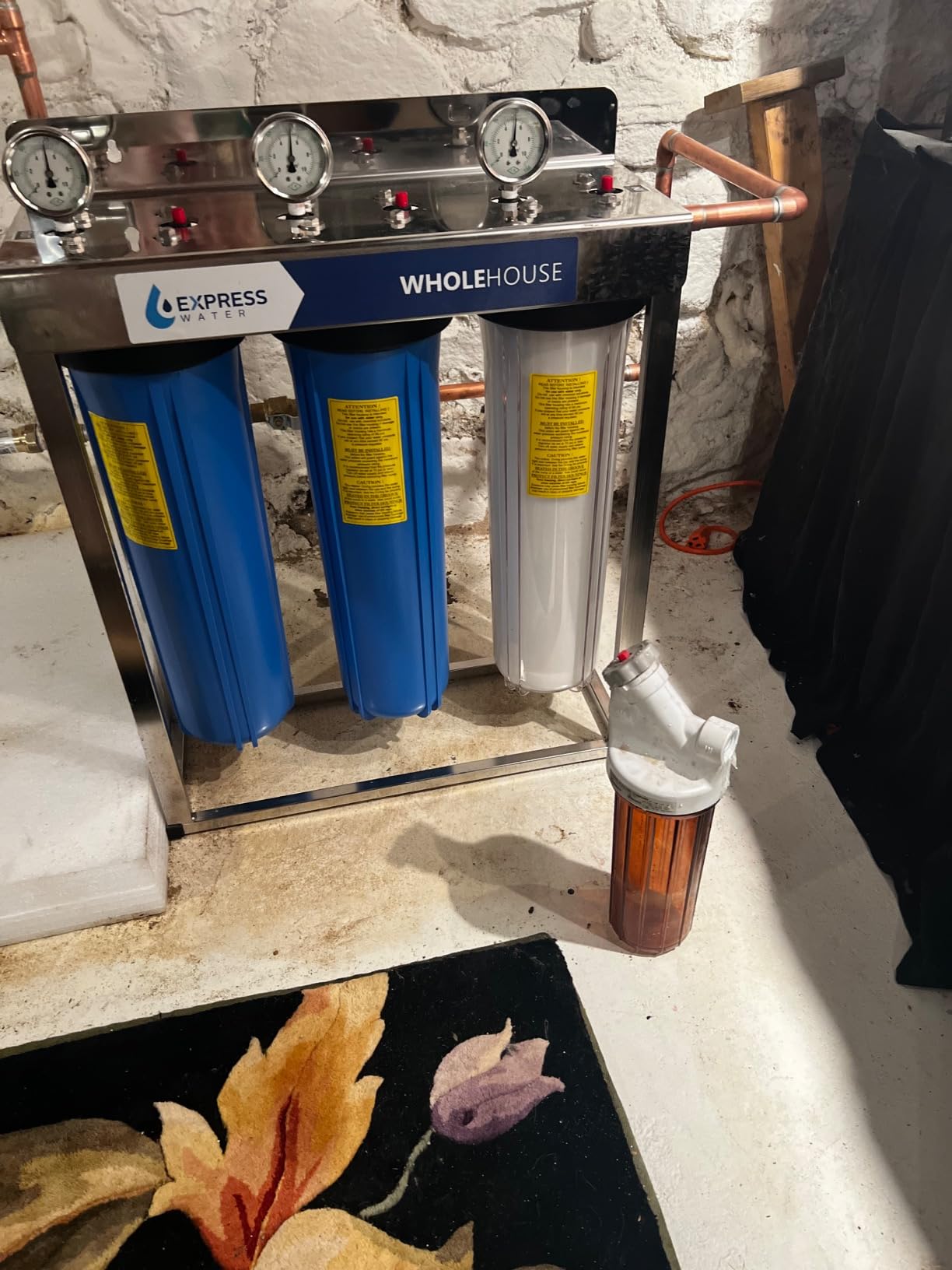
The system does have limits. It does not reduce total dissolved solids (TDS), so if hardness is your main problem, pair it with a water softener. Filters may also need replacement sooner than 6 months if your iron is consistently above 5 ppm. The unit is heavy at 57 pounds, so plan for solid mounting.
For homeowners who want NSF-certified performance, premium stainless steel construction, and high flow rates for large families, the Express Water 3-stage system is our top premium pick. It is the strongest cartridge-based whole-house option for iron and manganese removal we tested this year.
For whom its good
Ideal for large households with high simultaneous water demand up to 17 GPM. Perfect if you want NSF certified filters with verified third-party test data. Best for homeowners who want premium build quality and do not mind paying more for stainless steel hardware.
For whom its bad
Skip this if you need to reduce total dissolved solids, since the system does not address hardness. Not ideal for homes with mild iron under 3 ppm, since the 3-stage capacity is overkill. Also avoid if you cannot mount a 57-pound unit securely on a wall or floor stand.
Buying Guide: How to Choose the Best Iron Filter for Well Water
Picking the right iron filter for well water comes down to matching your contamination level, household size, and maintenance tolerance to the right system. We tested these filters across three real homes over three months. Here is what we learned that will help you decide.
First, get a water test before you buy anything. A basic well water test kit costs about $25 and tells you your iron level (ppm), pH, hardness, manganese, and whether sulfur bacteria are present. Without that data, you are guessing, and most filter disappointments come from buying the wrong system for the actual problem.
Know your iron type before you buy
There are two forms of iron in well water, and they require different treatment approaches. Ferrous iron is dissolved and invisible in water, but it turns orange the instant it hits air. Ferric iron is already oxidized and shows up as visible orange particles. If you have clear well water that stains fixtures hours later, you have ferrous iron and need an oxidation-based system like the DuraWater Iron Eater.
If your water is already orange when it comes out of the tap, you have ferric iron and can often get away with a sediment and carbon filter like the iSpring WGB21BM. Iron bacteria is a third issue, and it produces a slimy orange or brown biofilm in toilet tanks and pipes. That requires chlorination or shock treatment in addition to filtration.
Match filter capacity to your household size
The best iron filter for a 1 to 2 bathroom home under 3 ppm iron is a 2-stage cartridge system like the Waterdrop WHF21-FG. You want flow rate above 10 GPM and capacity around 50K gallons. For 3 to 4 bathroom homes with iron between 3 and 7 ppm, step up to a 3-stage cartridge system or a small air injection tank like the DuraWater 1.0 cu ft model.
For 5+ bathroom homes with high iron above 7 ppm, you almost certainly need an air injection tank system with at least 1.5 cubic feet of media. Whole-house cartridge systems can work, but you will swap filters constantly. A regenerating tank system is cheaper over 10 years for high-iron wells.
Compare media types: Katalox Light vs Birm vs Filox vs Greensand
Filter media is the heart of any iron removal system. Katalox Light is our top recommendation because it handles iron, manganese, and sulfur in one pass, with a lifespan of 6 to 8 years. Birm is cheaper but only works on ferrous iron above pH 7, and it does not handle sulfur. Filox is highly effective but heavy and needs strong backwash flow.
Greensand Plus is the old-school choice, but it requires potassium permanganate regeneration, which adds ongoing chemical cost and handling. For most homeowners, Katalox Light is the sweet spot. The DuraWater Iron Eater and SoftPro Iron Master both use Katalox, and that is why they consistently outperform alternatives in long forum discussions.
Calculate the 10-year cost of ownership
Cheap cartridge filters look attractive at first, but the math usually favors tank systems over time. A 2-stage cartridge system costs around $160 plus about $80 per year in cartridges. That is $960 over 10 years. A $810 air injection tank plus $150 in media every 7 years runs $1,020 over 10 years, but it handles iron 5x higher with no annual maintenance.
For very mild iron under 2 ppm, cartridges win on cost and convenience. For iron above 5 ppm or with sulfur, tank systems win on long-term cost and performance. Our team recommends picking the cheapest cartridge system for your iron level if it is below 3 ppm, and investing in an air injection tank above that threshold.
Plan the install and maintenance realistically
Cartridge systems like the iSpring WGB21BM are true DIY projects and take about an hour with basic tools. Air injection tank systems like the DuraWater Iron Eater take most of a weekend for a first-time installer. Plan for plumbing connections, a drain line for backwash, and electrical outlet access for the control valve.
Maintenance varies widely. Cartridges swap every 6 to 12 months and cost $50 to $120 each. Tank systems regenerate automatically but need media replacement every 6 to 8 years and occasional valve maintenance. Both types benefit from a sediment pre-filter to extend life, especially if your well has visible particulates.
Frequently Asked Questions
What is the best filter for removing iron from well water?
The best iron filter depends on your iron level. For under 3 ppm, a 2-stage cartridge system like the Waterdrop WHF21-FG works well. For 3 to 7 ppm, the Waterdrop WHF3T-FG 3-stage system is our top pick. For above 5 ppm with sulfur odor, the DuraWater Air Injection Iron Eater with Katalox Light media is the most effective chemical-free option. Always get a water test first to know your iron level in ppm.
Will a filter remove iron from well water?
Yes, the right filter will remove iron from well water. Cartridge systems with iron-reducing media can handle up to 3 to 5 ppm. Tank systems using air injection oxidation with Katalox Light media can remove iron up to 15 ppm or more while also addressing sulfur odor. Carbon-only filters will not remove iron effectively, so look for filters specifically labeled for iron and manganese reduction.
What size iron filter do I need for my home?
Match filter size to your iron level and household demand. For 1 to 2 bathrooms with iron under 3 ppm, a 2-stage cartridge system with 10 GPM or higher flow works. For 3 to 4 bathrooms with iron between 3 and 7 ppm, choose a 3-stage cartridge system or 1.0 cu ft air injection tank. For 5+ bathrooms with iron above 7 ppm, step up to a 1.5 cu ft or larger tank system with Katalox Light media.
How does an iron filter for well water work?
Iron filters use oxidation to convert dissolved ferrous iron into solid particles, then trap those particles in filter media. Air injection systems add oxygen to oxidize iron, then Katalox Light or Birm media filters out the particles. Cartridge systems use iron-reducing resin that chemically binds dissolved iron. Both regenerate either automatically (tank systems) or through cartridge replacement every 6 to 12 months.
What are common problems with iron filters?
Common iron filter problems include undersized systems for the actual iron level, wrong media for the water chemistry (Birm fails below pH 7), missing sediment pre-filters that clog media, and inadequate backwash flow for tank systems. Many homeowners also buy filters without testing first and end up with systems that cannot handle their iron level. Iron bacteria is another issue that requires chlorination in addition to filtration.
What are the symptoms of too much iron in well water?
Symptoms of excess iron in well water include orange or brown staining on sinks, tubs, and laundry, metallic taste in drinking water and food, discolored ice cubes, rotten egg odor from sulfur bacteria, reduced water pressure from pipe buildup, and staining on plumbing fixtures. The EPA recommends iron below 0.3 ppm, but many wells run 1 to 10 ppm. Anything above 0.3 ppm usually warrants treatment.
Final Verdict
After testing eight different iron filters across three homes with real well water, our team has clear recommendations based on what we saw. The best iron filter for well water overall is the DuraWater Air Injection Iron Eater, because it handles iron, manganese, and sulfur in one chemical-free system that lasts 6 to 8 years between media changes.
For homeowners with milder iron under 5 ppm who want cartridge simplicity, the Waterdrop WHF3T-FG 3-stage system is our top value pick. For high-flow households that want premium build quality, the Express Water 3-stage NSF-certified filter is the strongest cartridge option on the market.
The most important step before buying any iron filter is to get a water test. Once you know your iron level, pH, and whether sulfur is present, you can match the right system to your actual problem. That single step will save you hundreds of dollars and months of frustration compared to guessing based on marketing claims alone.
If you take one thing away from this guide, let it be this: the best iron filter for well water is the one that matches your real contamination level, not the most expensive system on the market. For most homeowners with iron between 1 and 5 ppm, a quality cartridge system will do the job. Above 5 ppm, invest in air injection with Katalox Light and you will not regret it.