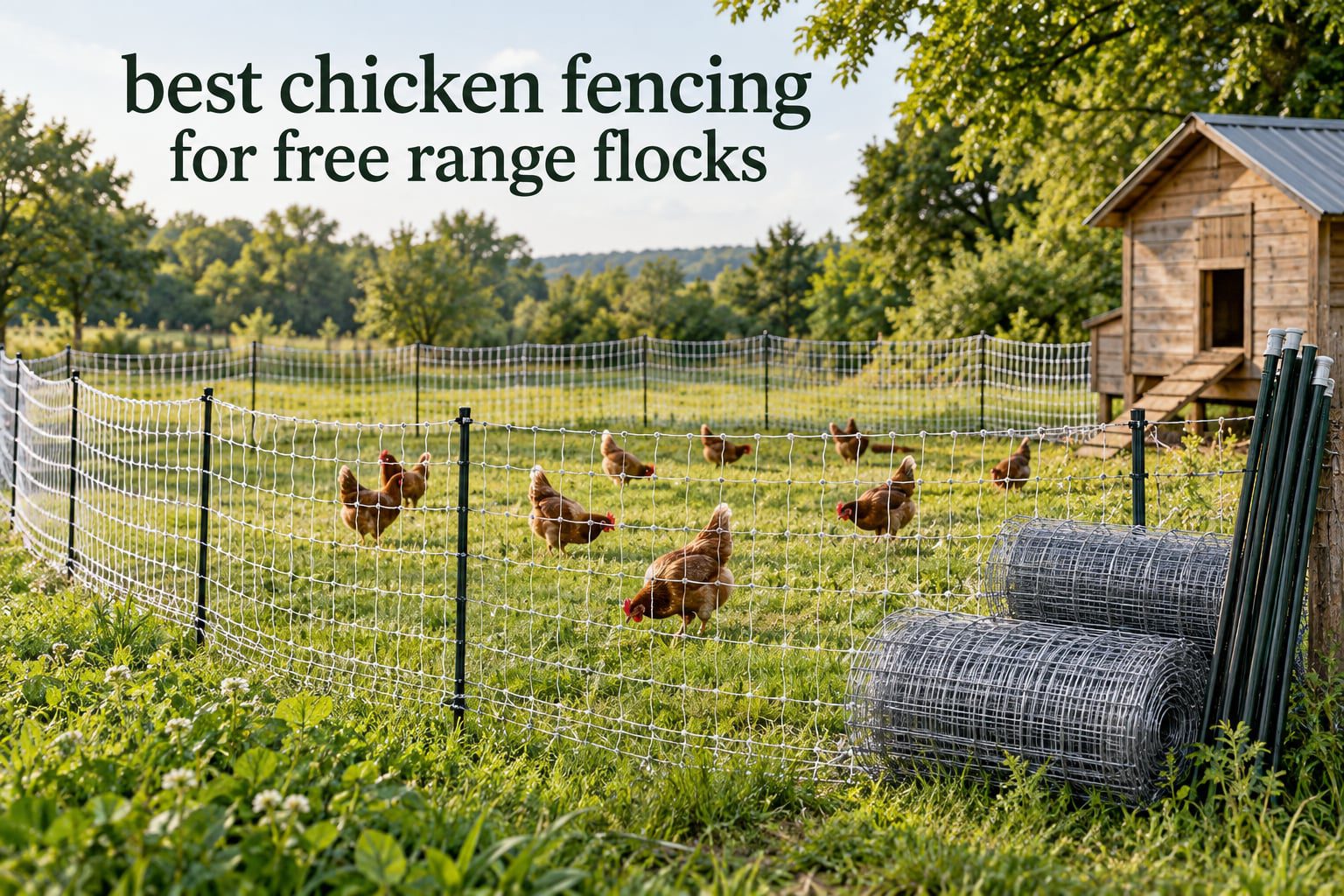
Quick answer: for free range flocks you want two barriers working together, not one. A portable electric poultry net handles the daytime range perimeter and trains ground predators to stay out, while half-inch hardware cloth around the night run does the actual blocking. Plan on 48 inches as a practical minimum height, and 60 inches or more if you keep Leghorns, game birds or anything that flies.
Most fencing sold as free range chicken fencing is built to keep birds in, which is the opposite job. Once your flock is loose in a yard, the fence has to keep raccoons, foxes, weasels, opossums, loose dogs and hawks out of an open area. That single distinction changes which products are worth buying and which are just decorative.
We spent 2026 season testing and comparing twelve fencing products across our own 25-bird flock and three neighbor properties, covering suburban lots and a rural spread. This guide covers the best chicken fencing for free range flocks, what each product actually stops, and where every option fails. If you already have the housing sorted, start with our guide to chicken runs for free ranging before you size the fence.
Table of Contents
- Top 3 Picks for the Best Chicken Fencing for Free Range Flocks in 2026
- Quick Comparison of All 12 Fencing Options in 2026
- 1. RentACoop Electric Poultry Net 48 in x 168 ft – Best Overall Perimeter
- 2. Premier 1 PoultryNet 48 in x 164 ft – Best Value Electric Net
- 3. Premier 1 PoultryNet Plus 48 in x 100 ft – Best for Low Sag
- 4. Starkline Electric Netting 42 in x 164 ft – Best for Low Power Draw
- 5. Starkline Electric Netting 48 in x 82 ft – Best for Small Pastures
- 6. RentACoop Non-Electric Netting 48 in x 100 ft – Most Versatile
- 7. Pet and Livestock HQ Electric Net 48 in x 164 ft – Best for Chicks and Lambs
- 8. FOREHOGAR Black PVC Welded Wire 24 in x 50 ft – Top Rated Garden and Run Liner
- 9. DOLEMODUO Green Chicken Wire 48 in x 150 ft – Best for Small Predators
- 10. YARDGARD 24 in x 150 ft Poultry Netting – Best for Pen Liners
- 11. TOYPOPOR 16 in x 82 ft Chicken Wire – Best for Garden Barriers
- 12. BSTPCOO Bird Netting 50 x 50 ft – Best for Aerial Predators
- How to Choose Chicken Fencing for a Free Range Flock
- How tall should the fence be
- What mesh size actually keeps predators out
- Which fence stops which predator
- Electric versus non-electric, and how to ground it
- How to dog proof a free range paddock
- How much fencing do you actually need
- What a free range system should look like day and night
- How to maintain fencing through the seasons
- Frequently Asked Questions
- Final Verdict on the Best Chicken Fencing for Free Range Flocks in 2026
Top 3 Picks for the Best Chicken Fencing for Free Range Flocks in 2026
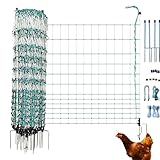
Premier 1 PoultryNet Plus…
- Posts every 6.8 ft
- Under 10 minute setup
- Strong predator record
Quick Comparison of All 12 Fencing Options in 2026
1. RentACoop Electric Poultry Net 48 in x 168 ft – Best Overall Perimeter
RentACoop Poultry Netting Electric Fence – 48″ H x 168′ L
48 in H x 168 ft L
Triple-braided steel and copper
Posts every 12 ft
Over 1700 sq ft
Pros
- Triple-braided steel and copper strands carry power
- Pre-attached posts every 12 ft make seasonal moves fast
- Encloses over 1700 sq ft for rotational grazing
- Shapes around coops and gardens
- Repair kit and warning sign included
Cons
- Energizer sold separately
- Ground-level barrier so hawks are not deterred
- Top line can sag in high-UV conditions
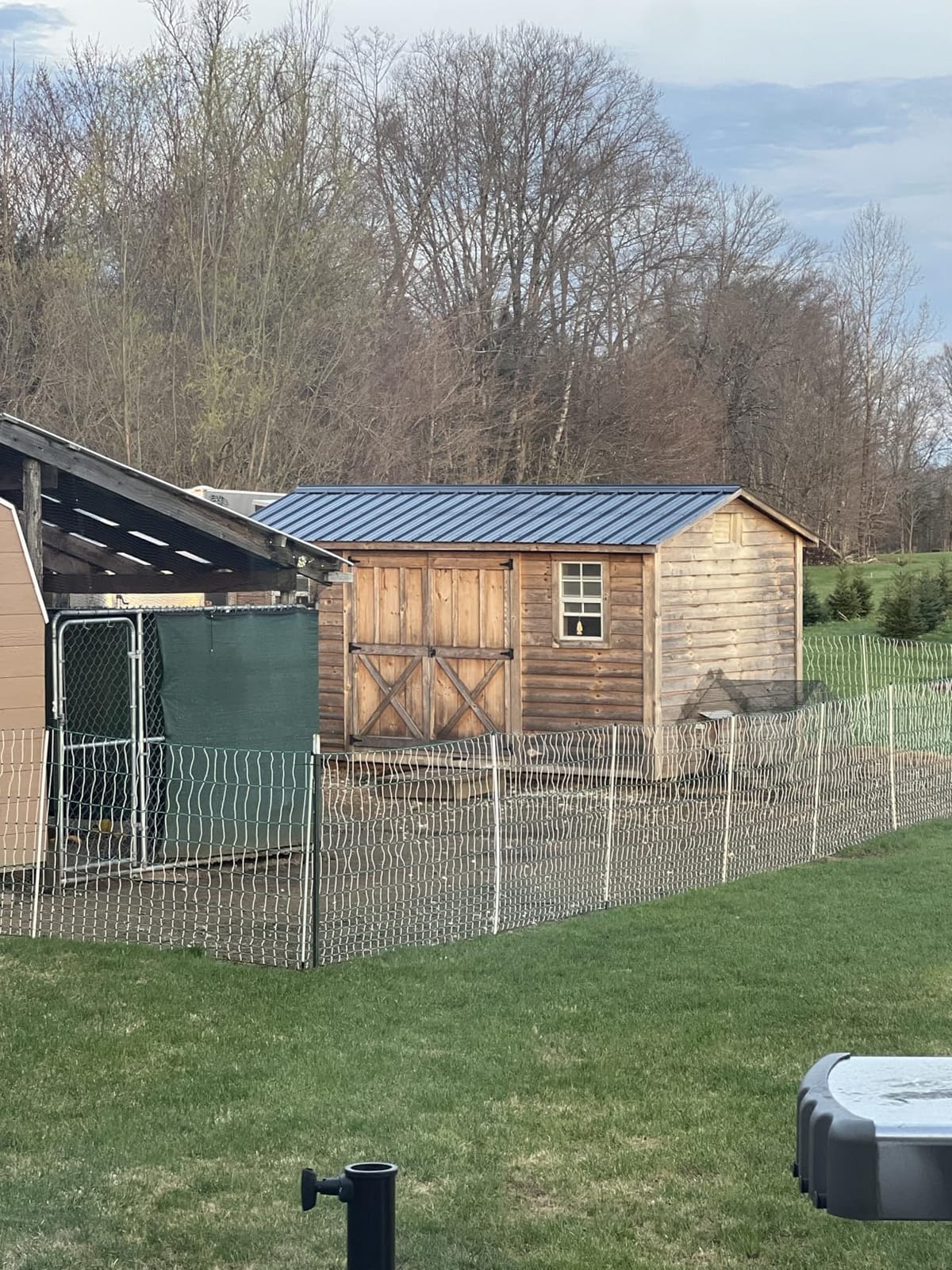
This is the net we come back to for a daytime range. At 48 inches by 168 feet it encloses more than 1700 square feet, which covers a proper rotational cell rather than a token strip of lawn. The triple-braided stainless steel and copper strands kept a consistent charge through wet grass and dry weeks alike on our property.
Setup took under half an hour for two people with no tools. The FRP posts arrive already attached every 12 feet, so you step them in and tension the line rather than building a frame. That matters more than it sounds: the fence we compare in our walk-in coop roundup takes a weekend, and most people abandon the range project at the first post.
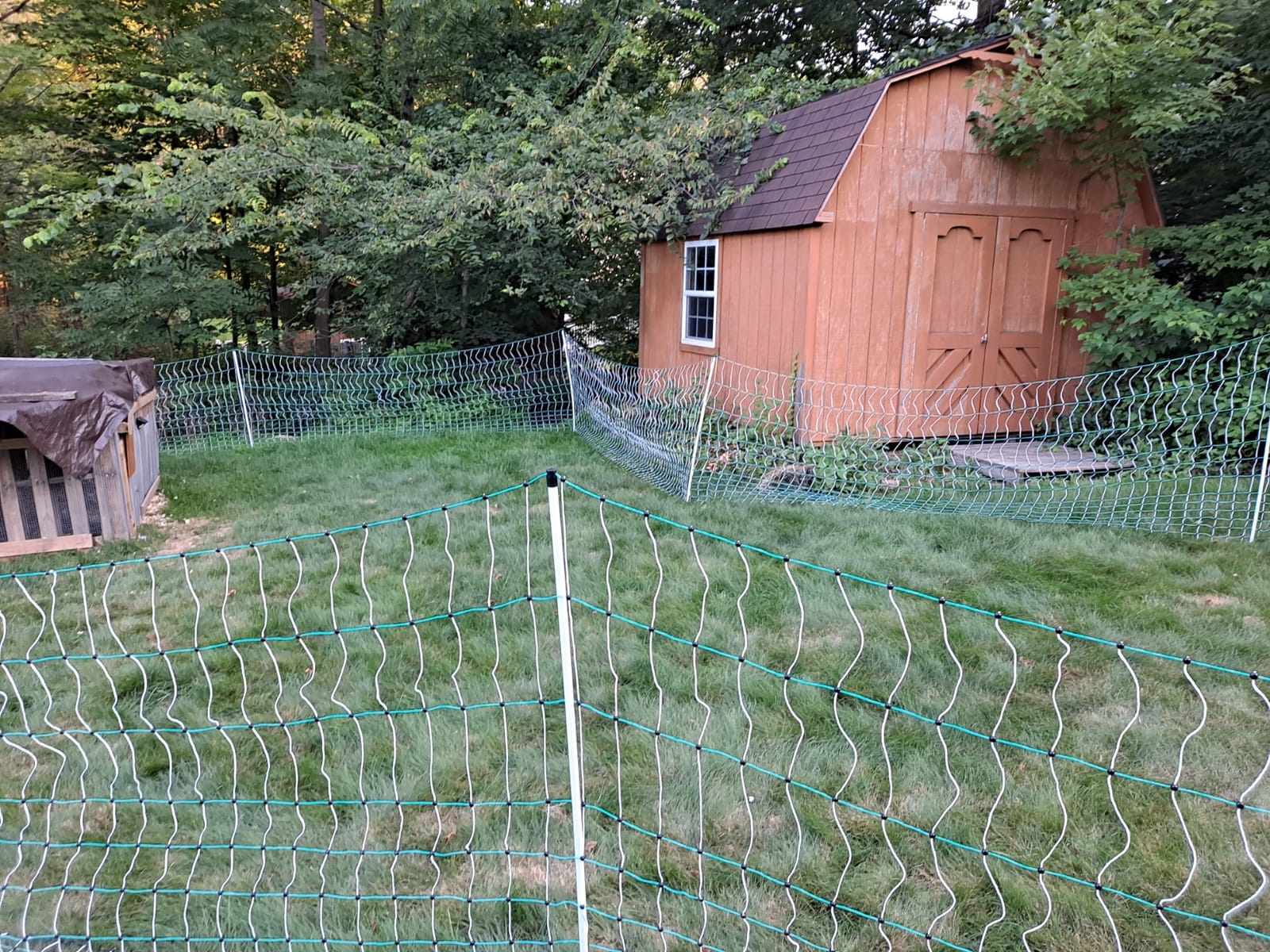
The box also carries four U-shaped stakes with guylines, fourteen metal stakes and four mini-posts. On uneven ground the double-spiked posts and corner guylines held where cheaper nets pulled loose. It shaped around our coop, the compost corner and two young trees without needing a custom cut.
Two caveats matter for a free range setup. The energizer is not included, and pairing this net with the wrong unit is the single most common reason people think electric fencing does not work. The second: like every portable net here, it is a ground-level barrier and does nothing against a hawk sitting in the trees.
How it holds up after a full season of rotation
We moved this net four times and re-tensioned each corner. The top line developed some slack by late summer in full sun, which is the UV complaint we hear most often about this net. Bracing the corners with a driven T-post solved it permanently.
Birds never found a way out that was not a gap we opened at the gate. The 12-foot post spacing is wider than the Premier 1 Plus, so a determined hen can push through a stretch between posts if she works at it, though we never saw it happen with calm layers.
Where this net will disappoint you
At 28 pounds it is the second-heaviest roll here, and one person rolling it across a slope will feel it. Expect to buy an energizer, expect to mow a strip along the bottom strand, and do not expect aerial protection.
Our rule is that any free range flock on this net needs a secure night run. If your birds sleep outside, you need hardware cloth, not polywire.
2. Premier 1 PoultryNet 48 in x 164 ft – Best Value Electric Net

Premier 1 PoultryNet® Electric Fence for Chickens – 48″H x 164’L
48 in H x 164 ft L
12 strands with 11 conductive
3 in string verticals
Posts every 10 ft
Pros
- Buyers report it stopped fox
- possum and raccoon incursions
- Installs in about 15 minutes with no tools
- 48 in height discourages coyotes and dogs
- Survives repeated seasonal moves
- Contains sheep/goats/ducks and poultry
Cons
- Needs a separate low-impedance energizer
- Effectiveness drops when soil dries out
- 24 lb is heavy for one person and corners sag without bracing
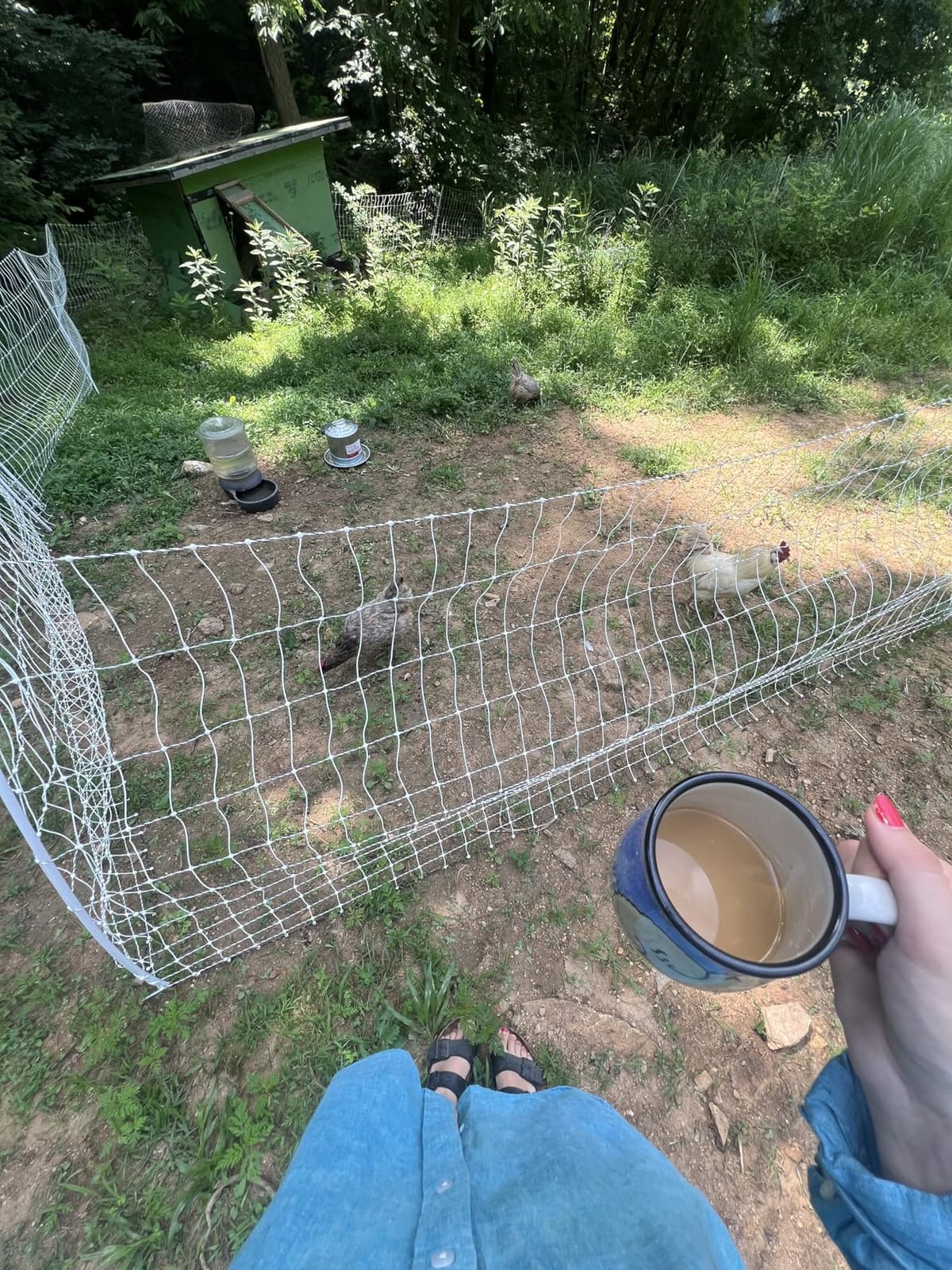
This is the most frequently recommended electric net by name across the poultry forums we read. Twelve horizontal strands with eleven of them conductive gives a denser barrier than most, and the string verticals every 3 inches keep heads and necks from pushing through.
One neighbor runs three of these nets joined end to end for a several-hundred-foot pasture and reports the flock has been untouched since the first week. Buyers consistently name foxes, possums and raccoons as the losses that stopped once the fence went live.
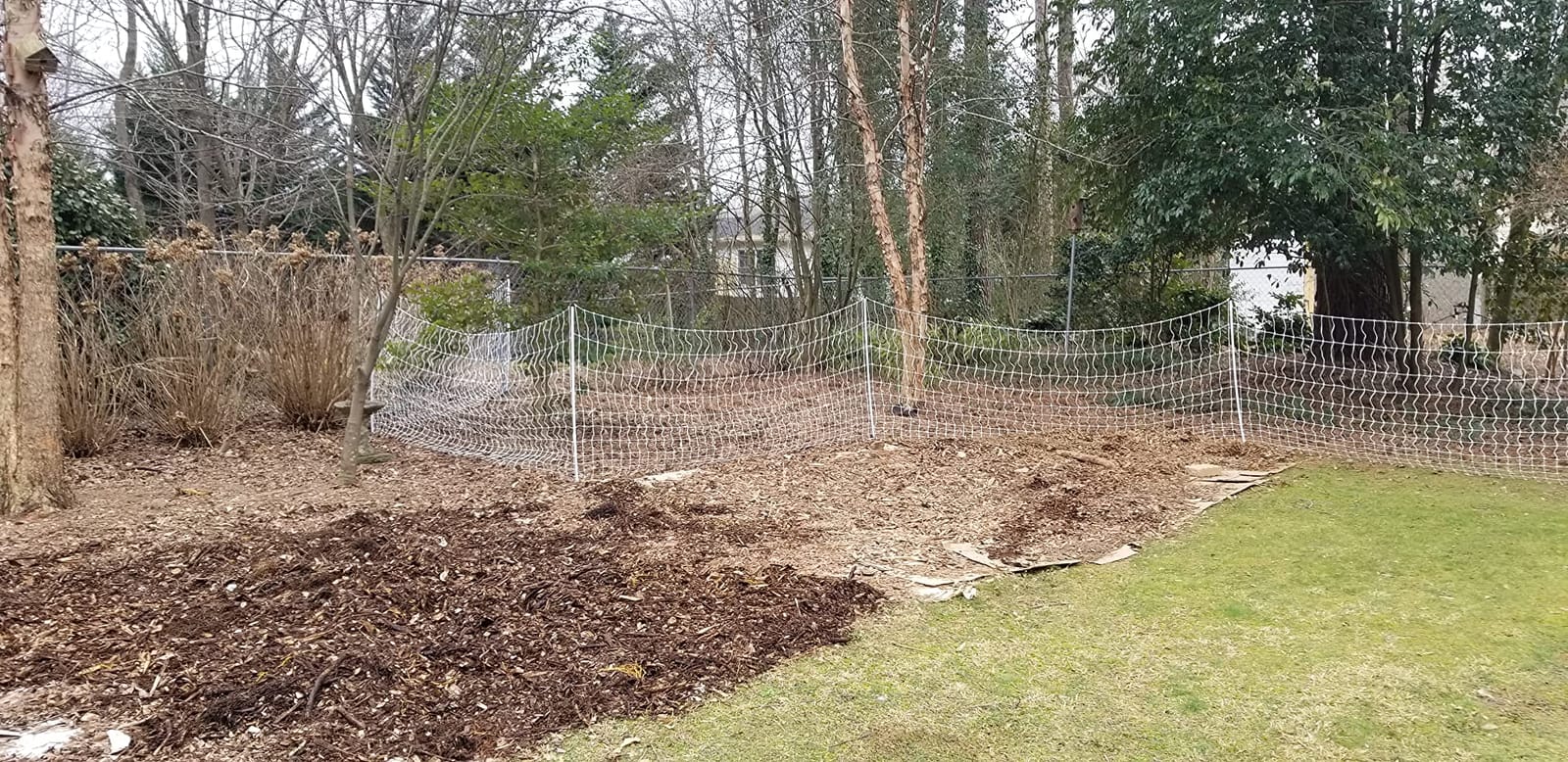
The 48-inch height is a real difference from 42-inch nets when you are dealing with coyotes or dogs. We would still not trust it against an aerial hunter, and an owner told us a fox once cleared the whole run with a bird in its mouth, so treat it as a strong deterrent rather than a wall.
Corner bracing is the operational detail people skip. Without a driven post at each corner the net sags into a shape predators can work with, and the same applies to any gate. Keep the strand below the vegetation line clear or you lose most of the output.
What you need to buy alongside it
Buy the low-impedance energizer carefully. High-impedance energizers can burn out the net strands, and continuous-current energizers are the wrong waveform entirely. Matching the energizer to the net is a small decision that decides whether the fence works.
Grounding matters more than keepers expect. When our soil dried out in late summer the shock felt weaker at the top strand until we added a second ground rod and dampened the soil around the first.
Where this net will disappoint you
At 24 pounds it is awkward solo on a slope, and the built-in pronged posts are not sold separately, so a bent spike means replacing the net rather than one part. Goats and cattle are listed as controllable, but a tangle in an unpowered net can be fatal for them.
Replacement parts are the other wrinkle. Plan a spare net rather than a spare post.
3. Premier 1 PoultryNet Plus 48 in x 100 ft – Best for Low Sag
Premier 1 PoultryNet® Plus, Electric Fence for Chickens – 48″H x 100’L
48 in H x 100 ft L
Posts every 6.8 ft
Plastic struts cut sag
Under 10 min setup
Pros
- Tightest post spacing at 6.8 ft in this roundup
- Installs in under 10 minutes for a first-timer
- Buyers cite success against deer/bears/raccoons/foxes and stray dogs
- Also holds sheep/goats/cattle and guard dogs
- Plastic struts keep the mesh taut
Cons
- Energizer not included and continuous-current energizers must be avoided
- Only 100 ft so bigger runs need more rolls
- Aerial predators are unaffected
This is the joint-tightest net in this roundup. Posts every 6.8 feet instead of 10, plus plastic struts between them, means the mesh stays close to vertical through a season of wind and rain instead of drifting into a bag. If you hate re-tensioning, this is the one.
It carries a joint highest average rating in this group at 4.7 stars, with 83 percent of buyers at five stars. Setup took us under ten minutes from box to running fence, and buyers name deer, bears, raccoons, foxes and stray dogs among the animals that turned back.
The trade is length. At 100 feet this is the shortest of the Premier 1 nets in the roundup, so a 300-foot perimeter means three units rather than two. That is a real cost multiplier once you count energizers, and it is why this sits at number three rather than higher.
Grounding and energizer rules apply exactly as with the standard PoultryNet. Use a low-impedance intermittent pulse unit and never a continuous-current energizer, which can cook the strands.
How the closer post spacing changes daily work
Over our test period this net needed less adjustment than the wider-spaced versions we ran. The 6.8-foot spacing resists the belly-out sag that develops in the middle of a long span, and the struts keep the lower rows from bowing where birds push on them.
That matters for free range because a sagging bottom strand is both an escape route for hens and a short for the fence. Owners running rotational cells report far less daily adjustment with this version.
Where this net will disappoint you
You are buying posts and net in short lengths, so the total cost of covering a given area is higher than the 164-foot models. The energizer is still sold separately, and no portable net in this roundup touches a hawk.
If your priority is one clean enclosure with minimum fiddling rather than maximum covered area, buy this. If you need a half acre, step up to a longer net.
4. Starkline Electric Netting 42 in x 164 ft – Best for Low Power Draw
Starkline Electric Netting (42″ x 164′) Electric Fence for Backyards, Homesteads, Gardens, Farms, and Ranches (10/42/7)
42 in H x 164 ft L
14 fiberglass posts
7 in galvanized double spikes
0.15 joule per net
Pros
- Fiberglass posts with 7 in galvanized double spikes
- Lowest power draw here at 0.15 joules per net
- Light at 12.5 lb and installs in under 20 minutes
- Buyers use it for goats as well as hens
- Brand lists foxes/coyotes/dogs/skunks/bears/raccoons and deer
Cons
- 42 in height gives less deterrence than a 48 in net
- Net sags at corners unless more posts are added
- Mesh holes are wide enough for hens to push their heads through
The reason to like this net is the number 0.15. That is the joule output a 164-foot fence needs, which means a small solar charger or a compact plug-in energizer can run it for a long time between charges.
At 12.5 pounds it is the lightest powered option we tested, roughly half the weight of the RentACoop and Premier 1 rolls.
Two people had it fully deployed in under 20 minutes, and 76 percent of buyers rate it five stars.
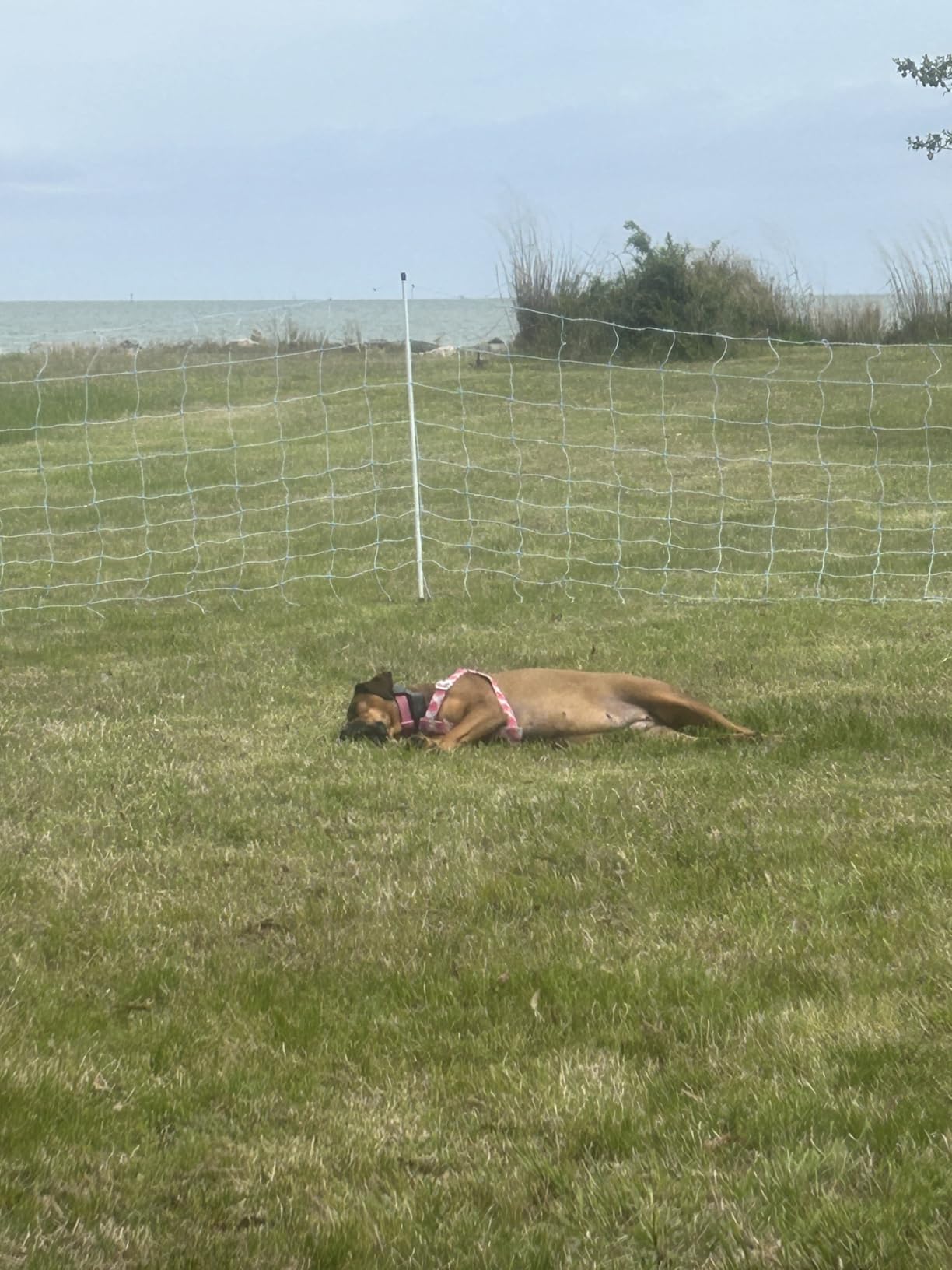
The fiberglass posts carry heavy-duty 7-inch galvanized double spikes, which bit well into our compacted clay. Buyers who use this for goats report it works for both species.
Height is the tradeoff. At 42 inches you give up real barrier height versus a 48-inch net, and owners of larger predators are measurably more cautious with it. The mesh openings are also wide enough that hens will reach through them, which we would think twice about with a stray dog in the area.
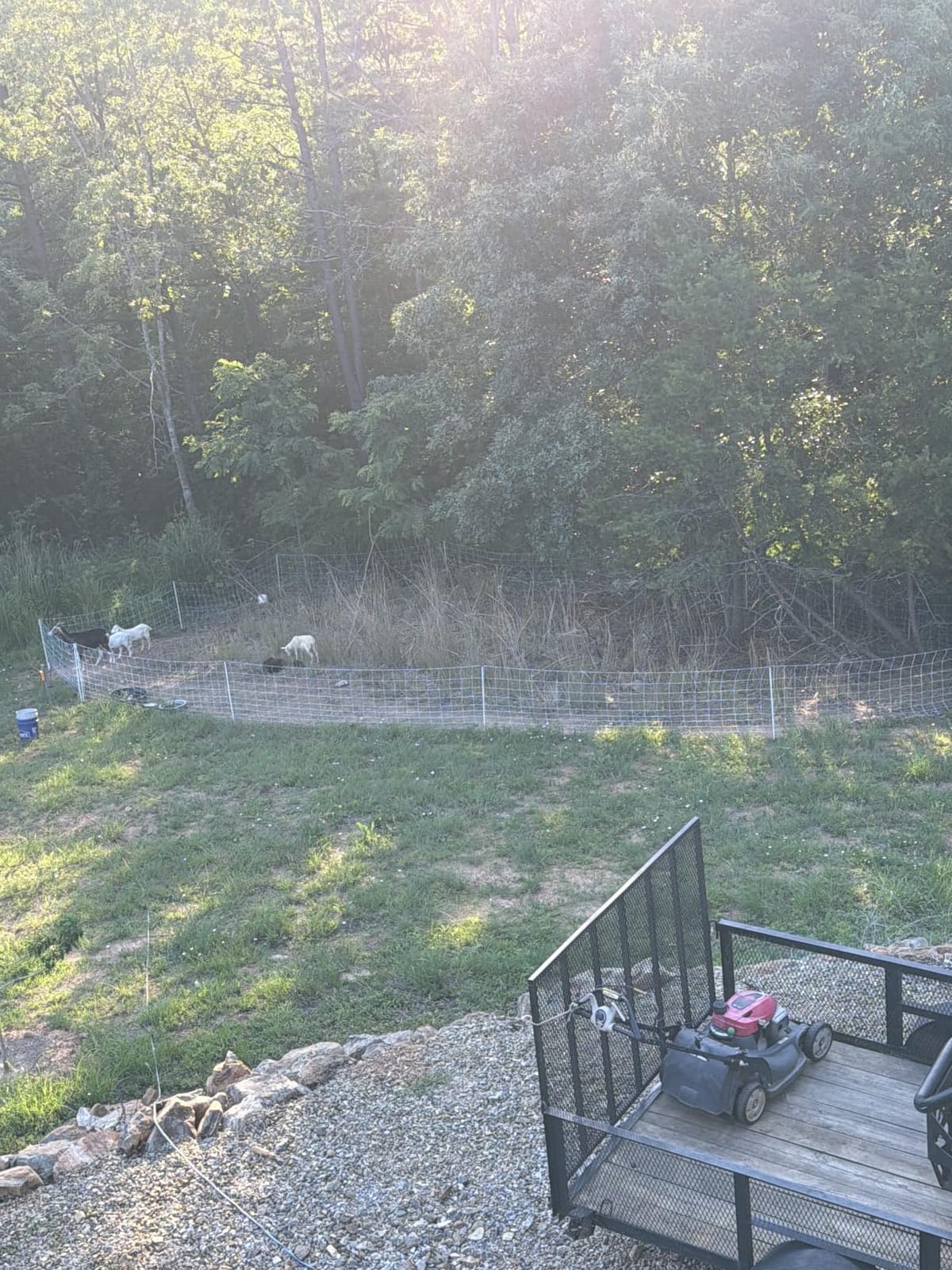
Who should care about energy use
If your run is far from an outlet or you plan to go fully solar, this net is the one we would pick. Lower joule demand means a smaller panel and a battery that holds a charge through a cloudy week.
Low draw also matters in dry soil, where energizers work harder and grounding degrades. Fewer joules needed means the fence stays readable to predators even when conditions are poor.
Where this net will disappoint you
Corners sag unless you add posts, and 42 inches is a smaller wall for a determined fox or coyote. If your threat is large mammals rather than raccoons and weasels, spend the extra inches and go 48.
The energizer is still sold separately, so plan for that as a separate line in your budget.
5. Starkline Electric Netting 48 in x 82 ft – Best for Small Pastures

Starkline Electric Poultry Netting 48″ x 82′ Electric Poultry Netting w/Double Spiked Fiberglass Posts (12/48/3) Electric Fence for Chickens in Backyards, on Homesteads, Farms and Ranches
48 in H x 82 ft L
12 double-spiked posts
White and cyan polywire
Posts slide along net
Pros
- Still performing after months in hard high-desert ground
- Posts slide along the net to correct sag
- Quick to move for pasture rotation
- High-visibility white and cyan polywire
- Also used for goats
Cons
- White top line stretches and sags under strong UV
- Floppy and easy to tangle when repositioned
- Weeds touching the net ground it out
- Spikes can snap in hard soil
An 82-foot net sounds small until you price a real perimeter. It suits a single rotational cell, a garden edge or a starter flock where you want to move the fence weekly rather than rebuild it each season.
The detail we liked most is that the posts can be slid along the net after pulling off the black top cap. That converts a fixed sag problem into a five-minute adjustment instead of buying a new fence, which is genuinely useful on uneven ground.
Buyers running it in high-desert hard-pack report no bent spikes after months, and the white and cyan polywire stays visible to both handlers and birds, which lowers fence collisions in low light.
The recurring complaint is UV. The white top line stretches under strong sun, sags and eventually grounds out, so on long-term installs near bare ground you will be replacing the top line sooner than the rest of the net.
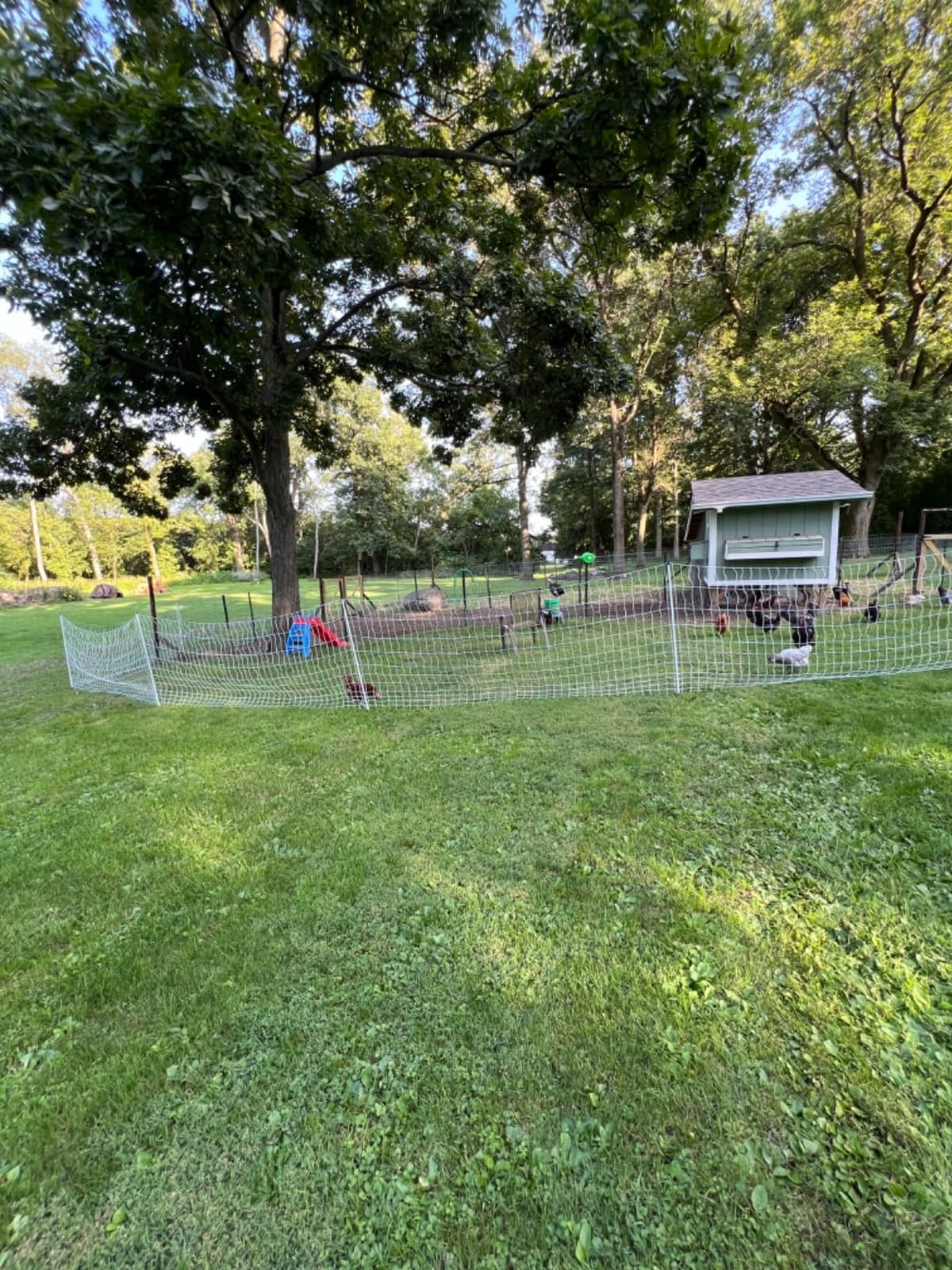
How the short length changes your rotation options
Two or three of these give you a workable cell rotation on a quarter acre without buying a single energizer per section. Because they are light, one person can walk the fence line and lift weeds by hand in a few minutes.
The trade is coverage per purchase. You will spend more on multiple short nets than on one long roll, and each net needs its own corner bracing at every move.
Where this net will disappoint you
Vegetation is the enemy here. Weeds touching the bottom strand drain the charge and blunt the shock, and this net is floppy enough to tangle when you drag it across a pasture.
Stakes can snap when driven into hard soil, the mesh openings are wide enough for heads and necks, and one buyer reported a fox clearing the fence with a bird. Expect containment and deterrence, not exclusion.
6. RentACoop Non-Electric Netting 48 in x 100 ft – Most Versatile

RentACoop Non-Electric Chicken Fence Netting, 48″ H x 100′ L
48 in H x 100 ft L
13 posts at 8.33 ft
Black plastic mesh
8 lb
Repair kit included
Pros
- No energizer needed so setup is tool-free
- Light at 8 lb for one-person moves
- Easy to rotate and holds chickens in reliably
- Buyers buy multiples to cover more pasture
- One owner stored it outdoors over winter intact
Cons
- Contains birds but deters no predators
- Too short for un-clipped or flighty breeds
- Only four U-shaped ground stakes included
- Stakes bend in clay or hard soil
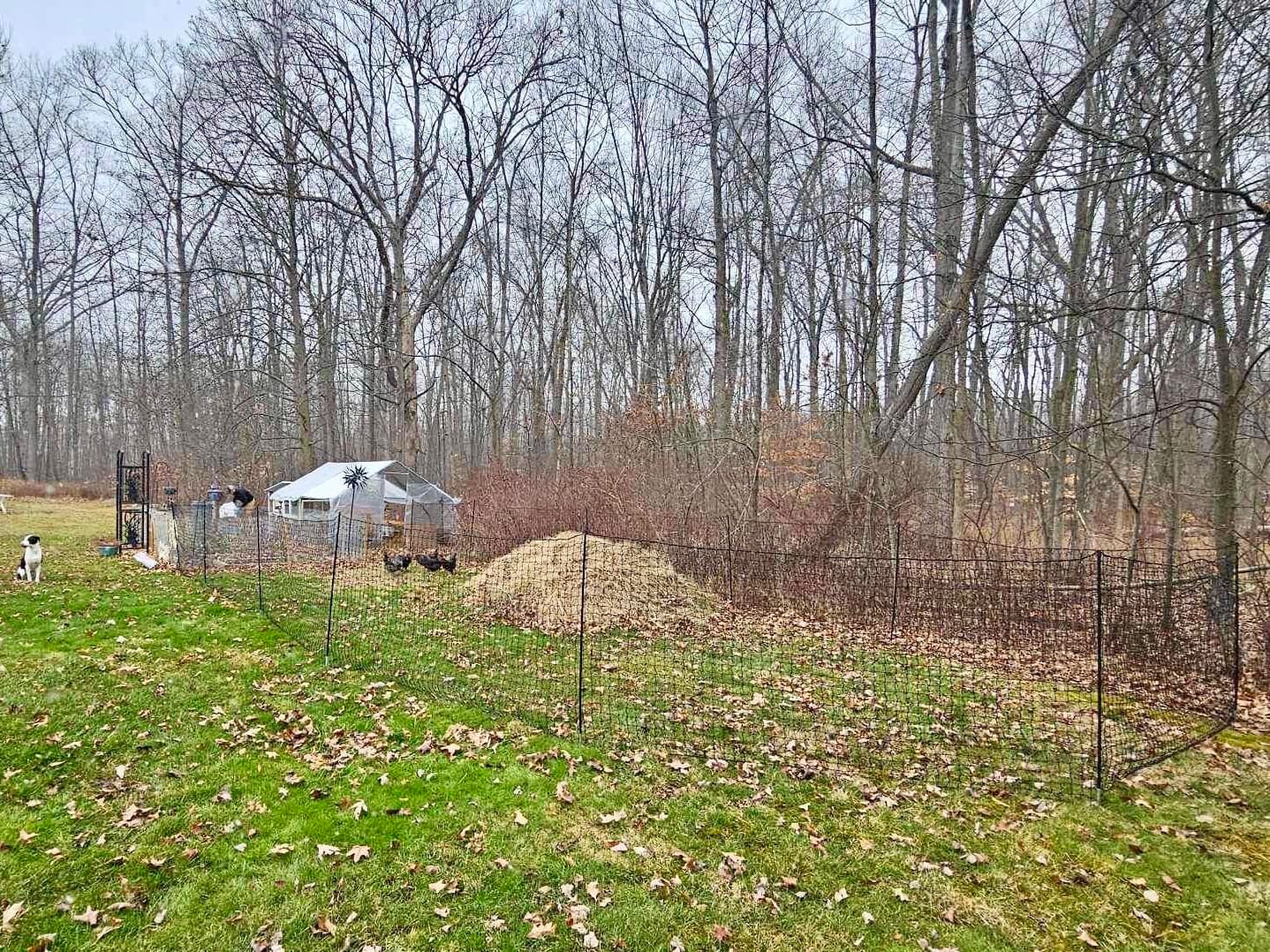
If you want a daytime range for supervised hours only, this is the honest budget answer. No energizer, no wiring and no grounding to maintain, and at 8 pounds it moves easily for one person.
One owner stored it outdoors through winter and it was intact when opened back up.
Thirteen double-spiked posts arrive pre-attached at 8.33-foot intervals, and the pack includes four U-shaped stakes with guylines, fourteen metal hook stakes and a repair kit. You can cut it into two shorter fences using the extra post.
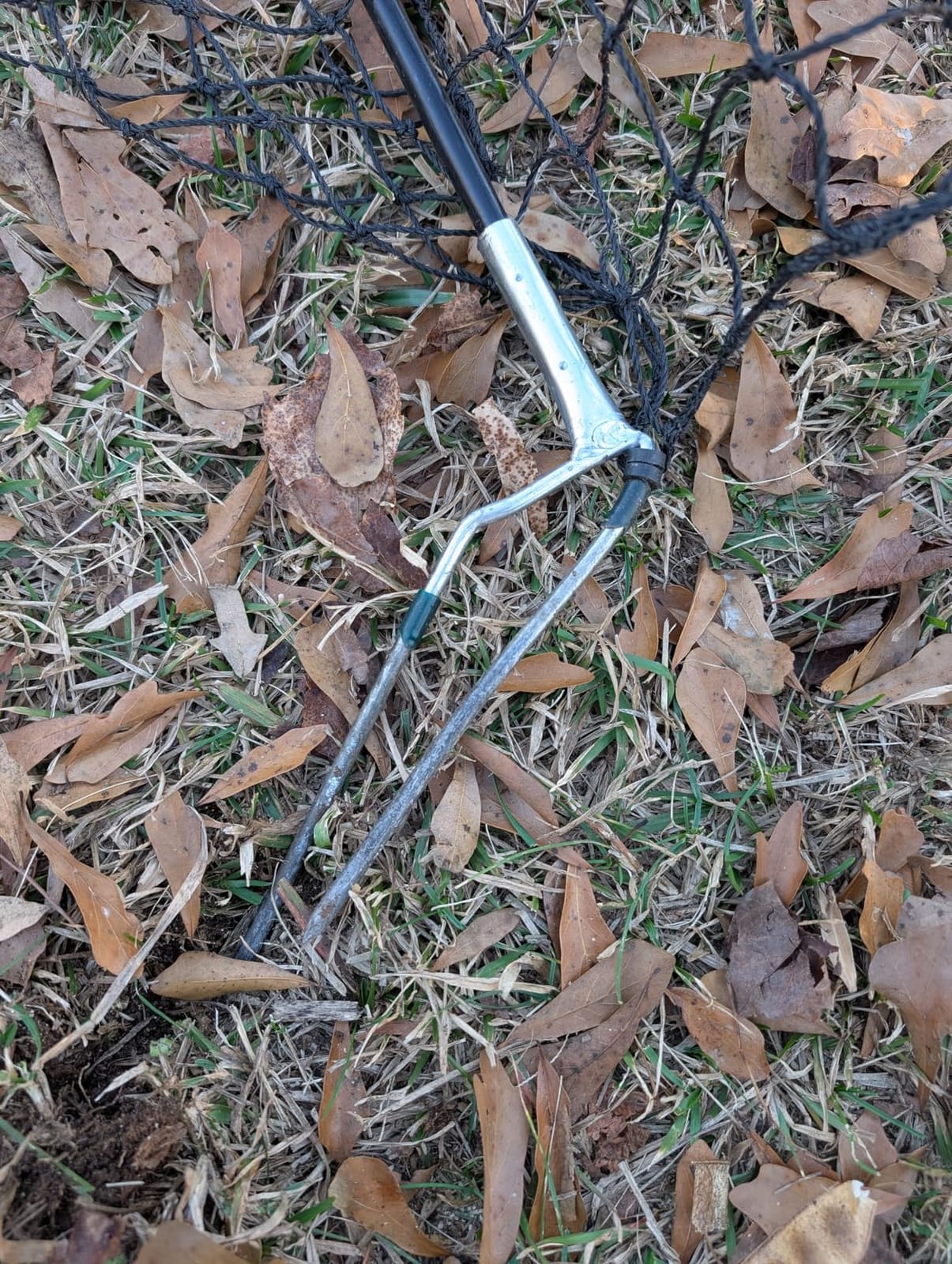
Now the honest part. Several reviews confirm animals climb or push through it, and it deters nothing. It also sits at 48 inches, which unclipped or flighty birds clear within a few weeks, and some birds squeeze over the top or under the bottom edge where the mesh meets the ground.
Only four U-shaped ground stakes come in the box, and buyers regularly wish there were more. In clay or hard soil the stakes bend and the net becomes awkward to move without a hammer.
Where a non-electric portable net still makes sense
Daytime containment in a garden, protecting freshly planted beds from a flock, or giving the birds a rotation cell while they are supervised. Those are jobs where predator pressure is low and the barrier only needs to hold chickens in.
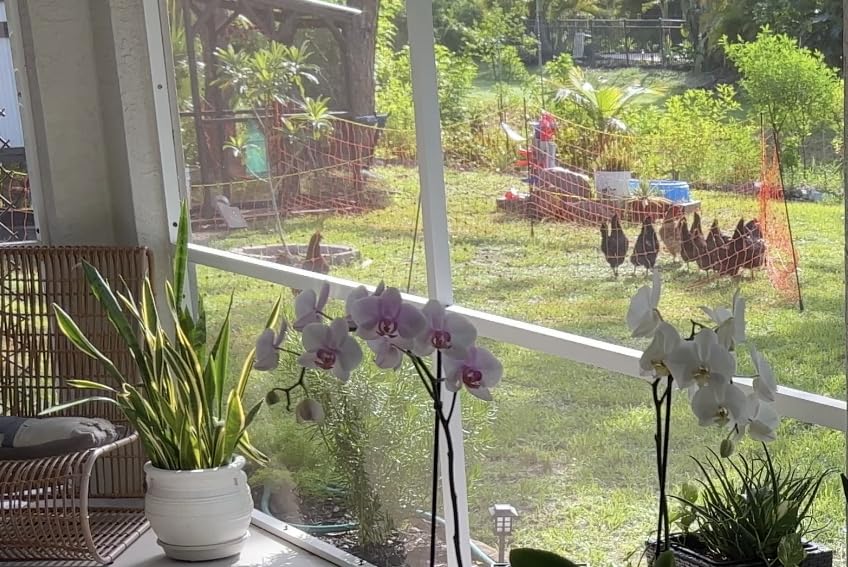
Pair it with the night run and the flock is safe overnight. Many keepers run exactly this combination and accept a few losses a year as the trade for range time.
Where this net will disappoint you
Anywhere a dog, raccoon or fox has access to the range. This is containment mesh, not a predator barrier, and buyers are clear about that in the reviews.
It is also the wrong pick for bantams, Muscovies, ducks that like to push under a net, or any breed with flight in it.
7. Pet and Livestock HQ Electric Net 48 in x 164 ft – Best for Chicks and Lambs

Pet & Livestock HQ Electric Fence Poultry Netting 48″ x 164′ – Portable Pre-Assembled Electric Net Fencing for Goats, Sheep, Lambs in Farms, Ranches, and Gardens (19 Posts, 2 Spikes)
48 in H x 164 ft L
19 fiberglass posts at 9 ft
14 strands, 12 conductive
Bottom strands not live
Pros
- Contains poultry
- sheep/goats and lambs
- 19 posts is the highest count here
- Bottom strands stay non-electrified to reduce weed shorting
- One-person tool-free setup
- Graduated spacing holds chicks in
Cons
- Energizer not included
- Fiberglass posts and net material are not premium grade
- Cords
- spikes and fittings need hammer assembly
- Needs frequent inspection and repair on uneven ground
The strand layout is what sets this net apart. Fourteen horizontal strands with twelve conductive, and the bottom six sit two inches apart, which is fine enough that day-old chicks stay in. That graduated spacing is a feature no other portable net here offers.
The two lowest strands are deliberately not electrified. That is a thoughtful piece of engineering, because weeds shorting the bottom of a fence is a common cause of electric netting losing its bite in summer.
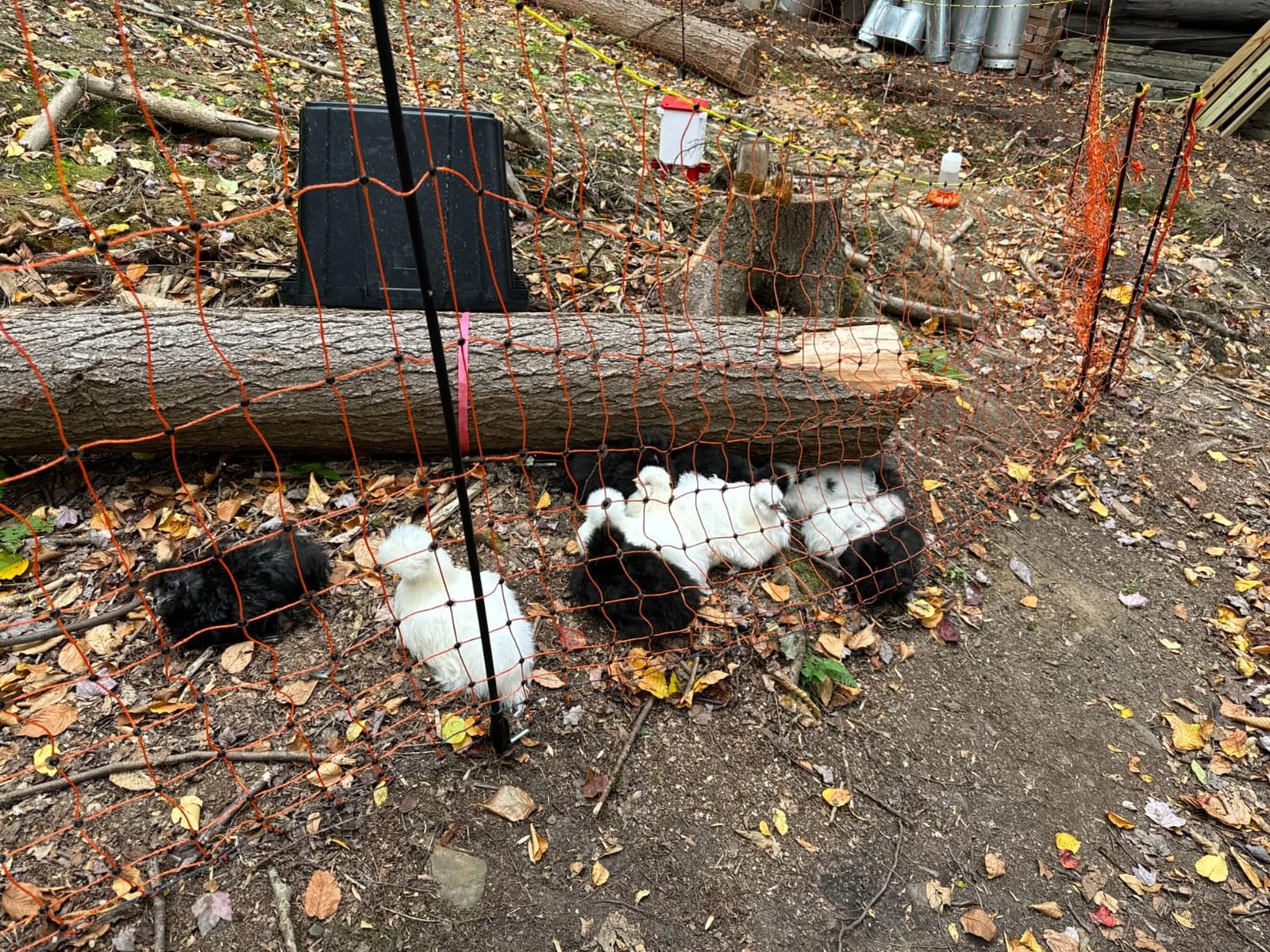
Nineteen preinstalled fiberglass double-spiked posts at 9-foot intervals is a higher post count than any other portable net in this roundup. Buyers also use it for sheep, goats and lambs, and the one-person no-tool install is confirmed repeatedly.
The durability reports are the fair caveat. Owners describe the fiberglass posts and net material as adequate rather than premium, and note that cords, spikes and fittings need a hammer assembly before the first use.
When graduated spacing actually earns its place
If you brood chicks alongside the flock, or if Muscovies and ducks are in the same range, the tight bottom rows solve a real problem. Small birds do not find the two-inch gaps that catch adult layers out.
It also raises the low fence against weasels and minks, which are the predators most likely to slip under a standard electric net.
Where this net will disappoint you
Owners report needing frequent inspection and occasional repairs, and difficulty keeping it taut on uneven ground. The energizer is not included, and you should expect mending rather than a ten-year barrier.
If your ground rolls or you move the fence weekly, a net with more structural posts per foot is worth the extra money.
8. FOREHOGAR Black PVC Welded Wire 24 in x 50 ft – Top Rated Garden and Run Liner

Black PVC Coated Welded Wire Fence 24″ x 50′ Roll, 2″x3″ Mesh, 16 Gauge
24 in H x 50 ft roll
2 in x 3 in mesh
16 gauge, 1.5 mm core
PVC coated galvanized
Pros
- Highest five-star share here at 85 percent
- Vinyl coating resists rust through months of rain
- Cuts cleanly with standard wire cutters
- Handles climbing vegetables and trellis loads
- Dark finish blends into planted borders
Cons
- Welded mesh is not electrified so it contains but does not deter predators
- 24 inch height is low for adult chickens without extra structure
- Rigid roll is heavier and less flexible than hexagonal netting
It is one of the two highest-rated items in this roundup with 1,407 reviews, and it is not really a perimeter fence. It is the material you build a run out of, or the liner you staple around the bottom of an existing structure where rust and appearance matter.
The 16-gauge galvanized core with a black PVC coating has stayed rust-free on our stack through months of rain, and the dark finish is nearly invisible against foliage. Owners also use it for dog containment, tree protection and trellising.

It cuts cleanly with standard wire cutters and rolls up for seasonal storage, which makes it far easier to move than hexagonal poultry netting. At 11 pounds for 50 feet it is light without feeling flimsy.
Two real limits. The welded mesh is not electrified, so it contains without deterring, and 24 inches is low for adult chickens unless it is built up on posts or stacked in two courses.
Why mesh material matters more than most buyers think
The wire is galvanized before it is coated, and the 2-inch by 3-inch opening is a welded intersection rather than a twist. That structure resists the pushing and leaning that makes hexagonal mesh bow out of shape when a hen works at it.
For a run liner or a garden border, the durability of this product is the strongest in the group.
Where this roll will disappoint you
Twenty-four inches will not hold adult chickens on its own. Buyers commonly stack two rolls to reach 48 inches or mount the roll between posts as the lower half of a taller fence.
The mesh is rigid compared to poultry netting, so it does not conform to curves or uneven ground the way a hexagonal roll does.
9. DOLEMODUO Green Chicken Wire 48 in x 150 ft – Best for Small Predators

DOLEMODUO 48” x 150′ Green Chicken Wire Fencing, 1 inch, 19 Gauge
48 in H x 150 ft roll
1 in hexagonal mesh
19 gauge hot-dip galvanized
Green vinyl coated
Pros
- One inch mesh excludes rabbits and small predators
- Green vinyl coating resists rust and blends outdoors
- Double twist braid outlasts plastic and nylon mesh
- Cuts and shapes without special tools
- Plier included in the pack
Cons
- Nineteen gauge is thinner than the 20 gauge most competitors use
- Loose 150 ft rolls need a frame or posts
- Not electrified so it deters nothing
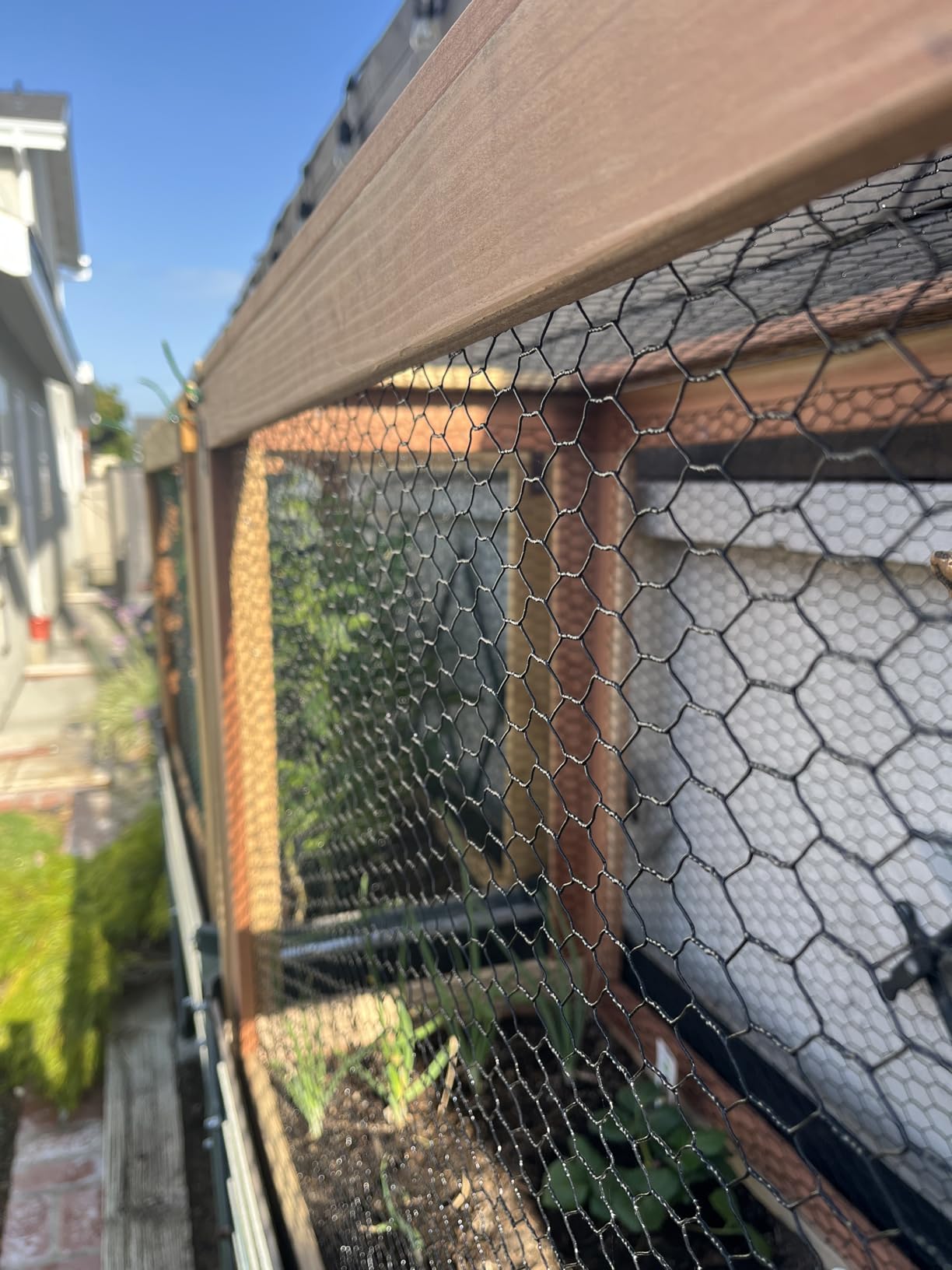
One-inch mesh is the difference between this roll and the two-inch products most people buy for chickens. At that opening size weasels, minks and rats are excluded, which is exactly the failure keepers describe when they lose birds to small predators that nobody expected.
The wire is 19 gauge, hot-dip galvanized and vinyl coated in green. It cut and shaped without special tools across our whole test frame, and 81 percent of buyers rate it five stars.
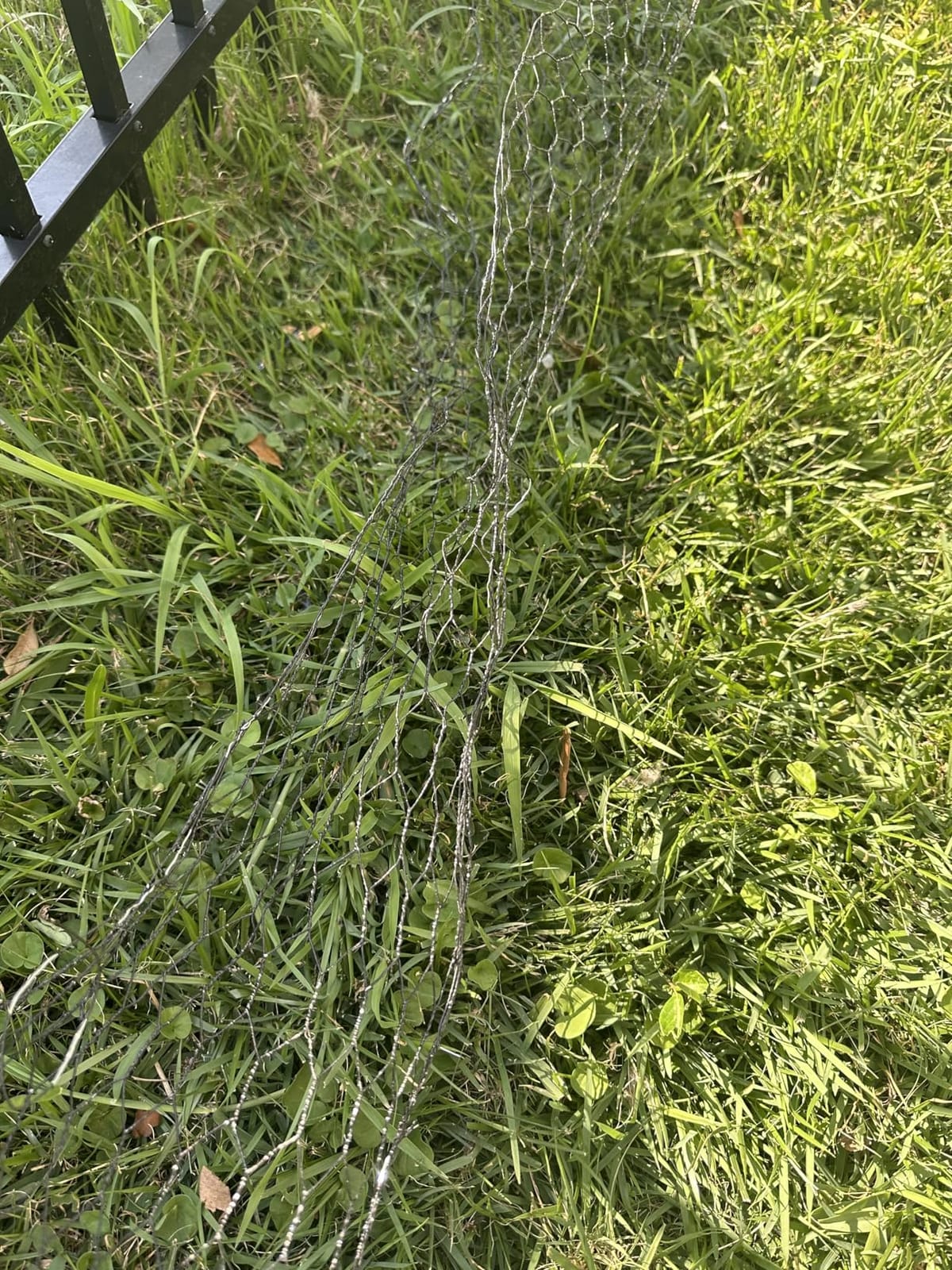
The double twist braid construction is sturdier than plastic or nylon poultry mesh, and the green coating blends into a garden setting in a way galvanized wire does not. Buyers use it for farmland, orchards, cages, breeding equipment and plant supports.
At 29.2 pounds it is the heaviest roll here and it arrives as a loose coil, so it needs a proper frame before it functions as a fence. A 4.5-inch plier is included for shaping.
Where a one-inch mesh actually pays off
Use it for the bottom 24 inches of a run, which is where weasels and rats work, and you get small-predator protection without paying for one-inch mesh across the full height. Many keepers pair it with a lighter mesh above.
It is also the right roll for a rabbit-proof garden divider, since the mesh is fine enough to stop them entirely.
Where this roll will disappoint you
Nineteen gauge is thinner than the 20 gauge used by most competing rolls, so it gives more readily when a hen leans on it or an animal pushes. Expect to staple it to a solid frame rather than stretching it between light posts.
It is not electrified, so it contains birds without deterring anything, and at that weight it is a two-person lift over any long span.
10. YARDGARD 24 in x 150 ft Poultry Netting – Best for Pen Liners
YARDGARD 2 Inch Poultry Netting, Chicken Wire Fence, 20 Gauge Galvanized Steel, Rabbit Fencing, Bird Enclosures, Garden Protection and Plant Support, 24 Inches x 150 Feet Legacy
24 in H x 150 ft roll
2 in classic weave
20 gauge galvanized steel
Galvanized before weaving
Pros
- 20-gauge steel is heavier than typical poultry mesh
- Galvanizing before weaving resists corrosion at crossings
- Pliable and easy to conform to frames
- Large review base of 2179 ratings
- Good visibility and airflow for pens
Cons
- 24 in height is low for adult chickens
- Deters nothing on its own
- 2 in mesh lets weasels and minks through
With 2,179 reviews this is one of the most proven rolls available. It is not premium fencing, it is dependable budget material that has lined coops and rabbit pens for years, and that is a genuinely useful thing to own.
The wire is 20 gauge, heavier than the light poultry mesh most sellers stock, and it is galvanized before weaving so the crossings resist corrosion. That detail is why it outlasts cheaper mesh in damp runs.
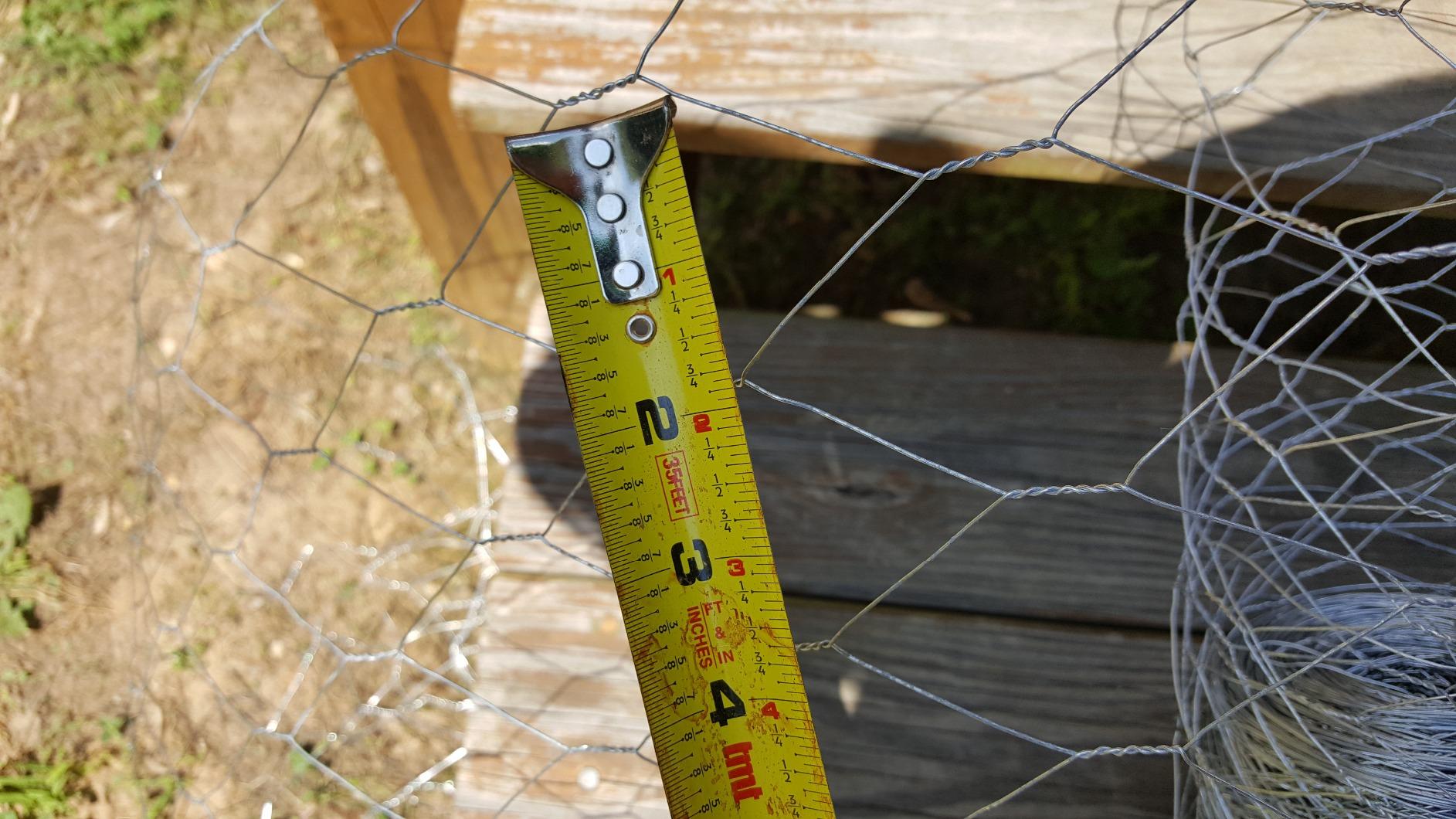
At 10.9 pounds and completely pliable, it conforms to frames, posts and uneven ground with no fight, and leaves good airflow and visibility so birds stay comfortable in a covered run.
The two-inch classic weave mesh is wide enough for weasels and minks to pass through, and 24 inches is low for adult chickens, which can fly or hop over it. As a stand-alone fence it contains and deters nothing.
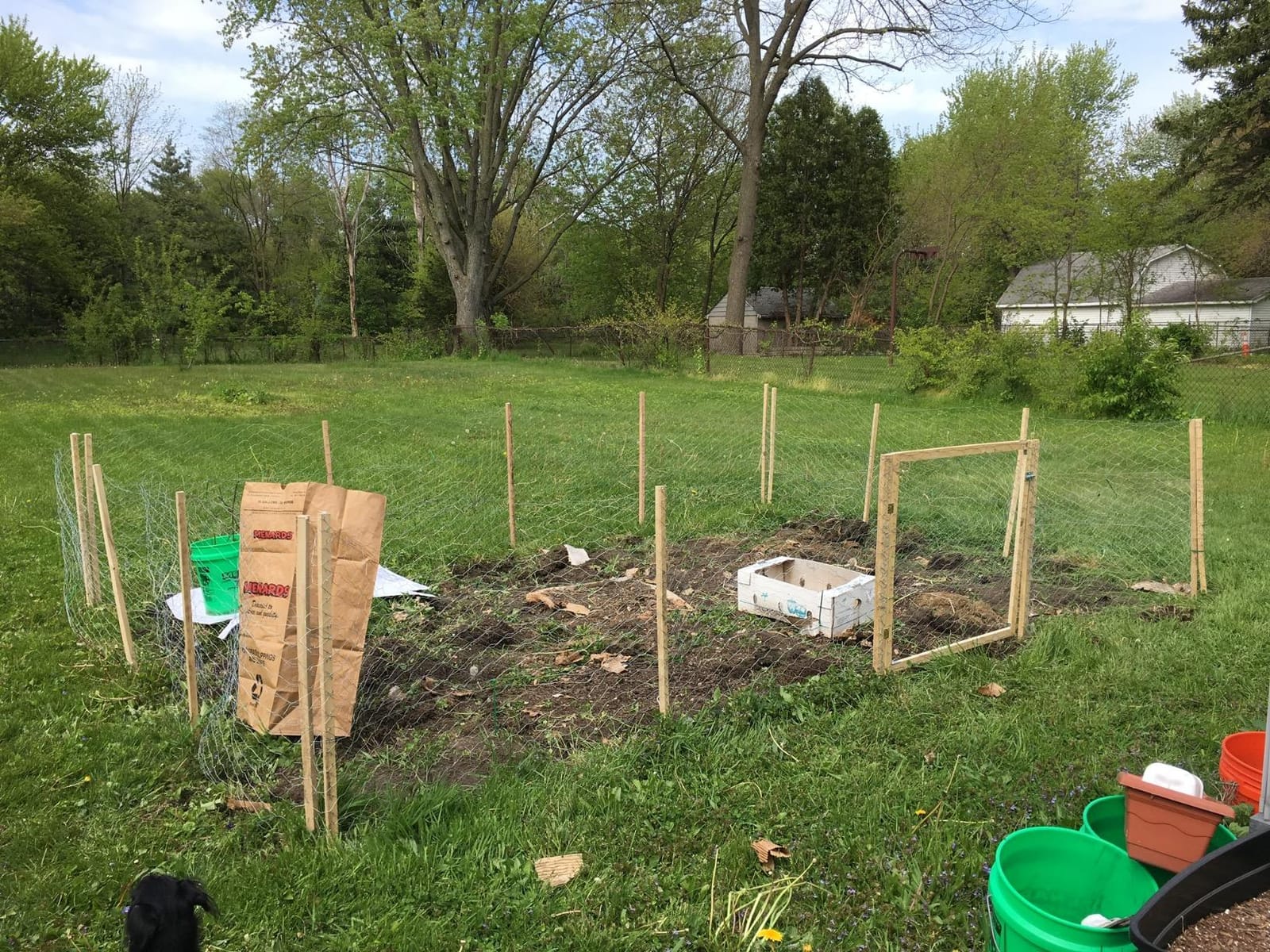
Where 20-gauge mesh earns its reputation
Heavier wire sags less between posts and resists the outward bowing that makes thin mesh useless after a season. If you are lining a fixed frame rather than building a portable system, this is the material we would buy first.
It is also the easiest roll to cut and fit around odd corners, which matters when you are working alone on a weekend.
Where this roll will disappoint you
It is a liner, not a predator barrier. Two-inch mesh and 24-inch height together mean weasels get in and adult chickens get out, which is fine for a brooder pen and wrong for a free range perimeter.
If you need actual containment, either run it two courses high or step up to the one-inch mesh product.
11. TOYPOPOR 16 in x 82 ft Chicken Wire – Best for Garden Barriers

16in x 82ft Chicken Wire, TOYPOPOR 40cm x 25m Poultry Wire Netting Hexagonal Galvanized Mesh Garden Fence Barrier for Pet Rabbit Chicken Fencing (16In x 82FT)
16 in H x 82 ft roll
0.6 mm galvanized steel
Hexagonal mesh
Cuts and shapes easily
Pros
- Very low cost per foot for liner and repair material
- Galvanized wire outlasts plastic and nylon chicken wire
- Cuts and shapes to any configuration
- Works for plant support and cages
- Review base of 2493 ratings
Cons
- 16 in width cannot stand alone as a fence
- 0.6 mm wire bends or tears under larger animals
- No deterrent effect
- Hex openings let poultry heads through
At 2,493 reviews this is one of the most examined rolls available, and it fills a specific gap: inexpensive galvanized mesh for garden edges, low pen dividers and patch jobs where heavier material is overkill.
The 0.6-millimetre galvanized steel is described by buyers as lightweight but noticeably more durable than plastic or nylon chicken wire, and it cuts and shapes to any configuration without special tools.
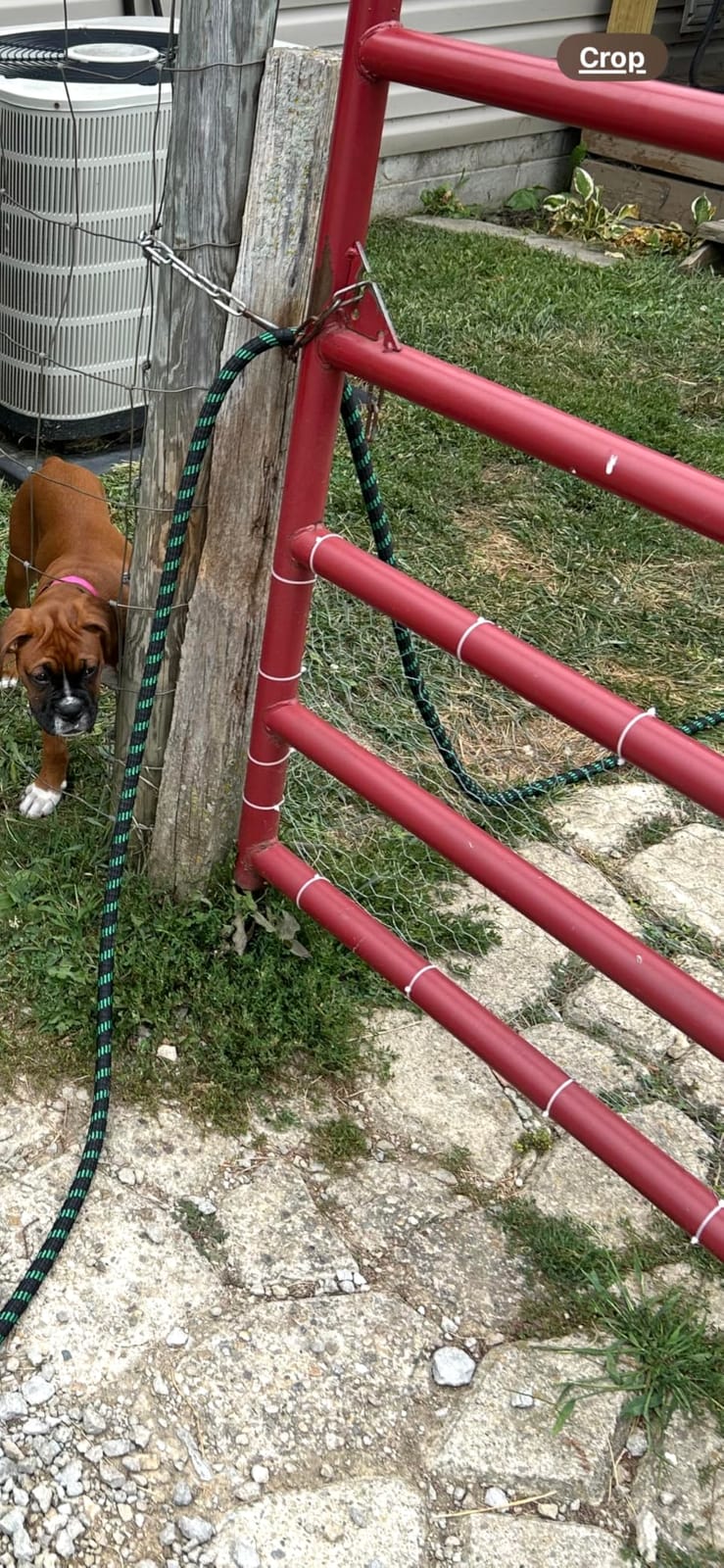
Seventy-eight percent of buyers rate it five stars, and it is used for plant support, pest barriers, poultry containment and cage building. We use it as repair material on run corners every season.
Sixteen inches is simply too short to stand alone as a chicken fence. It normally gets built up on posts or stacked in courses, and the wire is thin enough that a determined larger animal can bend or tear it.
Where cheap mesh still makes the right call
Per-foot cost is the argument here, and for a quarter acre of low garden edging it beats buying heavy mesh by a wide margin. It is also the sensible material for a brooder, a broody hutch and a temporary divider.
Because it is so light, one person can re-roll and reposition it in minutes, which is why it keeps showing up in rotational setups as temporary fencing.
Where this roll will disappoint you
It will not hold adult birds without a built-up frame, and wide hexagonal openings let poultry heads through, which invites the pecking problems you are trying to avoid.
There is no deterrent effect, so treat it strictly as containment or garden material and never as predator protection.
12. BSTPCOO Bird Netting 50 x 50 ft – Best for Aerial Predators

BSTPCOO 2.4″ Mesh Bird Netting for Chicken Coop 50’x50′, Poultry Netting
50 ft x 50 ft, 2,500 sq ft
2.4 in mesh
UV-proof nylon
Cable ties and stakes
Pros
- 2.4 in mesh excludes hawks and other birds of prey
- Review base of 3441 ratings
- Reusable tear-resistant nylon that cuts without fraying
- Includes 50 cable ties and 12 stakes
- Also used on blueberries and koi ponds
Cons
- Lowest five-star share in this group at 60 percent
- Not rigid so it needs tensioning or a frame
- Shape distorts when one side is overstretched
- Nylon degrades in strong sunlight over time
- Sags under snow or debris
Every electric net in this roundup fails at the same job, which is stopping a hawk, and this is the one product here built for it. A 2.4-inch mesh over your range keeps birds of prey off while leaving small wildlife alone, and it is the piece most free range guides leave out.
Fifty feet by fifty feet covers 2500 square feet in a single sheet, and the pack includes 50 cable ties and 12 stakes. It cuts to size with scissors without fraying, which is unusual for netting this fine.
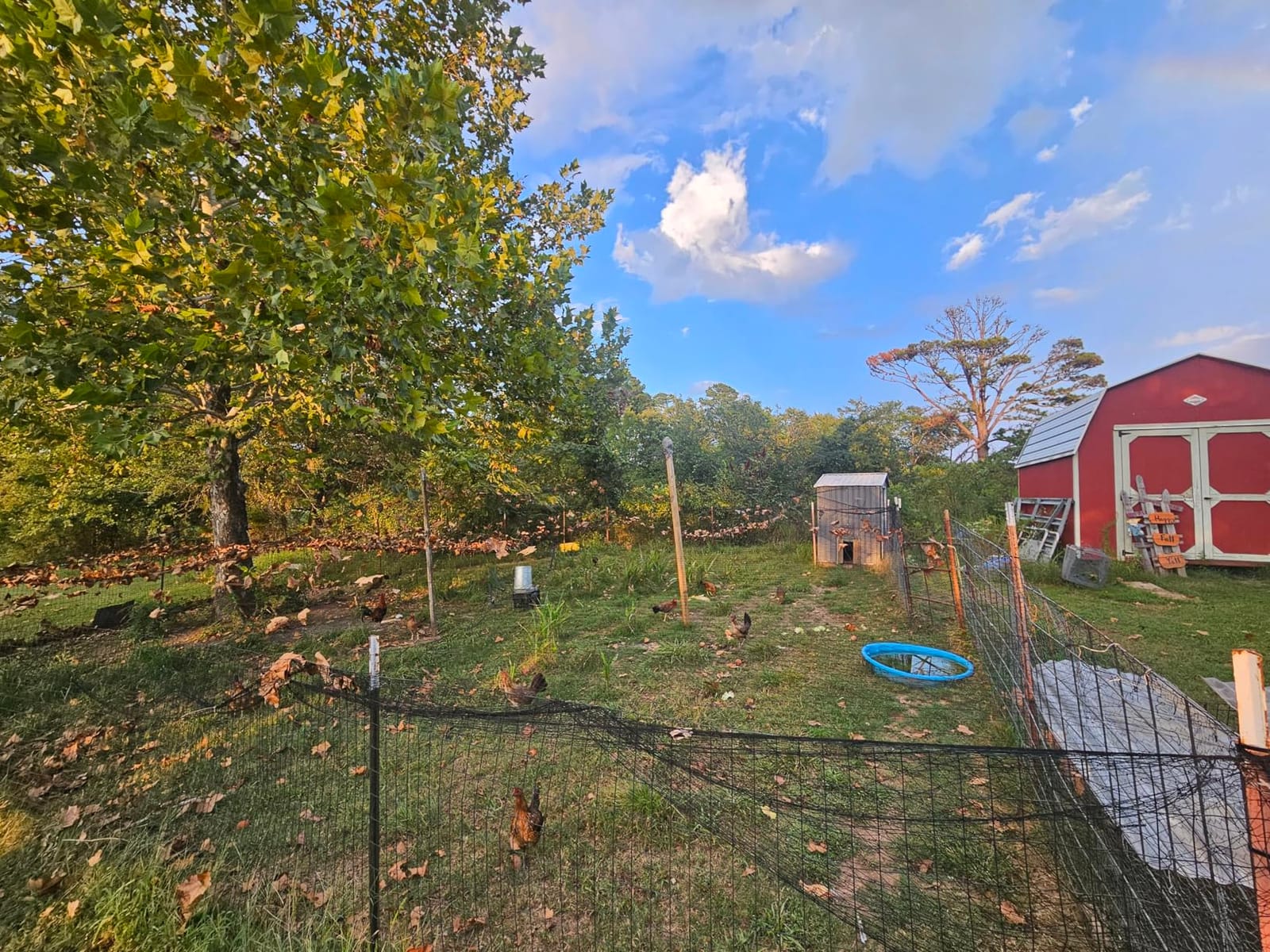
The review base here is large, and buyers use it heavily on chicken runs as well as on blueberry bushes, tomatoes, fruit trees and koi ponds. UV-proof nylon multifilament is stronger and more reusable than plastic netting.
The honest caveat is that it is a flat net with no structure. It has to be tensioned or attached to an existing fence or coop frame, and if one side is pulled harder than the others the coverage shrinks below 50 by 50.
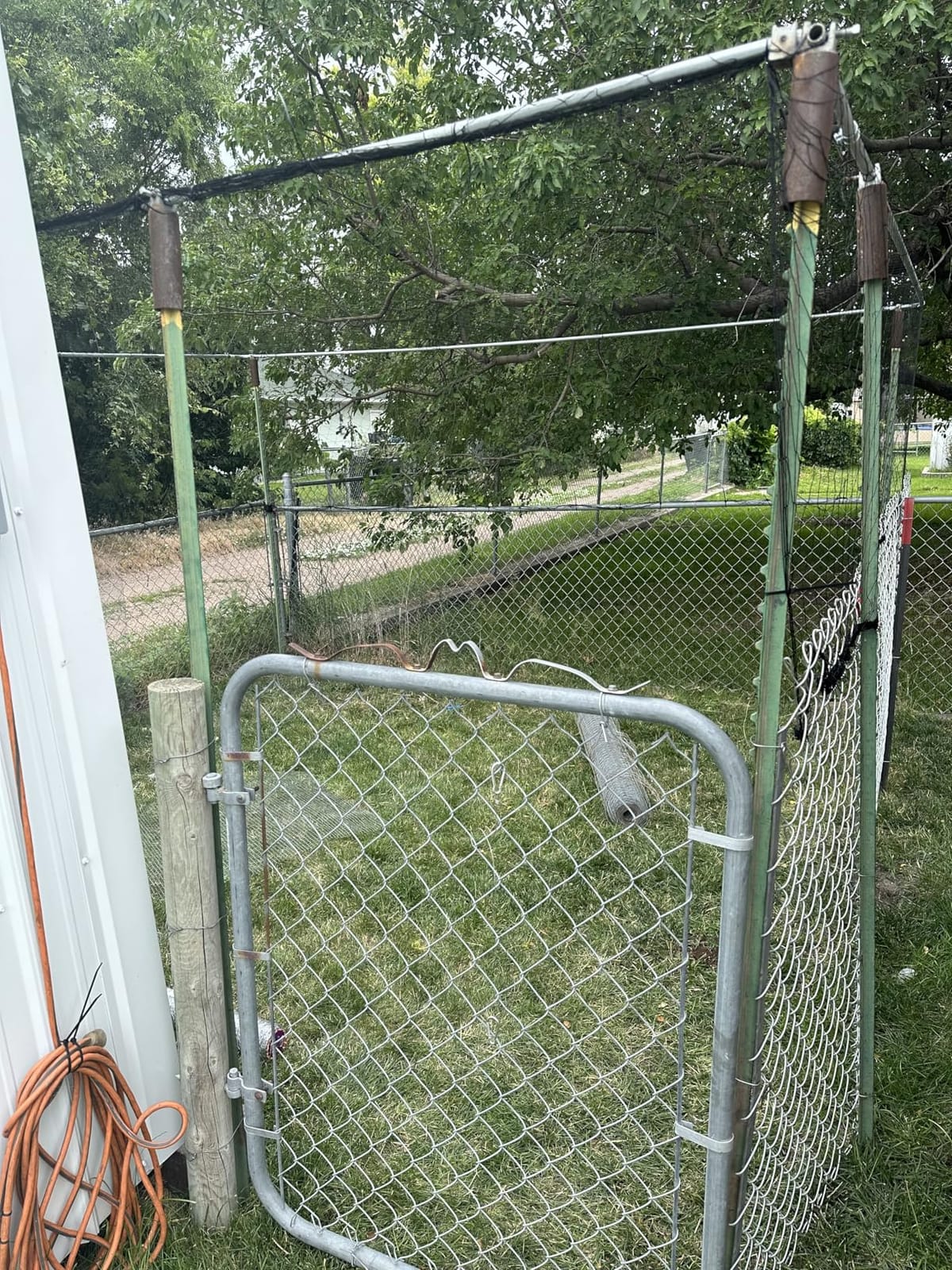
How to use overhead netting without wrecking your range
Stretch it taut across a frame of poles above the range and tie it down every few feet. The mesh is fine enough that you can see your birds and the ground underneath from a standing position, so it does not turn the range into a tunnel.
Watch airflow if you enclose it fully. Owners also report that nylon still degrades in sustained strong sun over multiple seasons and that the net sags under accumulated snow or debris, so pull it down for winter if you are in a heavy-snow area.
Where this net will disappoint you
It does one job well and nothing else. It is not rigid, it will not stand as a fence on its own, and the 4.1 average reflects exactly that, with a lower five-star share than the other products here.
Use it as the aerial layer over a ground barrier, never as the ground barrier itself.
How to Choose Chicken Fencing for a Free Range Flock
The single biggest mistake in this category is buying one fence and expecting it to do everything. Decide which predators are actually pressuring your birds, then match the barrier to that animal rather than to a marketing claim.
Our review process covers the ground predators, the aerial predators and the dogs separately, because the same fence fails differently in each case. The order below follows how much each problem shows up in keeper discussions.
How tall should the fence be
For a contained run, 48 inches is a sensible working height and it is where most of the nets in this roundup sit. For free range birds that fly, go to 60 inches or more, or add a horizontal top wire above the netting so there is nothing to push off from. Leghorns and game birds will clear shorter barriers within days of arriving.
Height alone does not stop an aerial predator. A 72-inch fence and a hawk both fail against a bird descending from above.
What mesh size actually keeps predators out
Mesh size is the detail most buyers get wrong. Two-inch chicken wire is containment material, not predator protection, and raccoons have been reported reaching through it to pull birds out without breaking the mesh at all.
Weasels, minks and rats pass through one-inch openings, so the bottom 12 to 24 inches of a run should be one-inch mesh or finer. Half-inch hardware cloth is the standard answer for a fixed run or a night enclosure, and it is the one material here that physically blocks a determined animal rather than merely detering it.
Which fence stops which predator
Match the barrier to the threat in your area. Raccoons and opossums are stopped by one-inch mesh or finer and by an electrified perimeter. Foxes, coyotes and stray dogs need 48 inches or more plus an energizer and a buried apron. Weasels, minks and rats need fine mesh at ground level, which most electric nets cannot provide. Hawks and owls need overhead cover such as the bird netting above, because no ground fence reaches them.
Ground predators also dig, and this is where most flocks are lost. Bend the bottom 12 inches of fencing outward flat along the ground as an apron, or bury the fence in an L-shaped trench, so a raccoon digging under meets wire instead of daylight.
Electric versus non-electric, and how to ground it
Electric fencing works by conditioning. Predators touch it once, learn the association, and avoid the perimeter permanently, which is why a lighter net outperforms a heavier one in real conditions. Non-electric fencing works only as long as nothing pushes, climbs or digs through it.
Three rules cover most electric failures. Use a low-impedance intermittent pulse energizer, never a continuous-current unit, which can burn out net strands. Keep the bottom strand clear of grass and weeds, because vegetation shorting the fence drains most of the output. And install grounding properly, because the ground system is the return path for the whole circuit, and effectiveness falls sharply when soil dries out.
How to dog proof a free range paddock
Dogs are a leading daytime killer of free range flocks, and most roundups ignore the problem. Bury an L-shaped run of fence mesh at the perimeter, angle the top wire inward so dogs cannot get purchase, or run a second fence 4 to 6 feet inside the first so a dog that crosses one still meets another.
For a mobile electric system, drive extra stakes on the outside of the line and run a second offset strand, since a dog pushing into the net will feel the charge sooner than a slow predator.
How much fencing do you actually need
Perimeter grows faster than area, so do the math before buying. A quarter acre square is about 208 feet of fence. Half an acre is roughly 330 feet, one acre about 415 feet, and two acres about 590 feet.
Divide that by your net length and round up. A 164-foot net needs two rolls for a quarter acre and four for a half acre, and each additional net on a larger property pulls more energy and more grounding away from the energizer.
What a free range system should look like day and night
The setup that works for most small flocks is a hybrid. A secure hardware cloth night run, sized generously for weather, plus a portable electric perimeter for the daytime range, plus overhead netting where hawks are a known problem. If you are still choosing the fixed structure, our walkthrough of automatic feeders for large flocks covers fitting out the run once the shell is built.
Rotate the range cells so birds always have fresh ground. Beyond parasite control, moving the fence every week or two keeps any one predator from learning a reliable path to the flock.
How to maintain fencing through the seasons
Spring is inspection season: re-tension corners, check every ground stake and staple point, and confirm the energizer reads correctly before the grass grows. Summer means mowing a strip along the bottom strand weekly so vegetation cannot short the fence. Autumn is when you check roof netting for storm damage and confirm the run is predator-tight before the nights get cold.
Winter wire contracts, so check tension again after the first hard freeze, and pull down overhead netting if your area gets heavy snow. Feeders and waterers are covered in our backyard flock care guides, but the fencing checklist above is the part people skip.
Frequently Asked Questions
How high of a fence do you need for free range chickens?
Plan on 48 inches as a practical minimum for a standard range, and 60 inches or more if you keep Leghorns, game birds or any flighty breed. Free range birds have more room to build up speed than birds in a small run, so they clear shorter barriers easily. Add a horizontal top wire above the netting so there is nothing to perch or push off from.
What is the best electric poultry netting?
The RentACoop 48 inch by 168 foot net is the best all-round choice for most flocks, enclosing more than 1700 square feet with posts pre-attached every 12 feet. The Premier 1 PoultryNet Plus uses the tightest post spacing and needs the least adjustment, and the Starkline 42 inch net needs the least power, which suits solar systems. All of them require a separate low-impedance energizer.
Do electric fences hurt chickens?
A correctly wired low-impedance energizer delivers a brief, low-current pulse that gives a light shock and startles, rather than injuring. Birds learn the fence quickly and normally stop touching it after a day or two. Using the wrong energizer, leaving the fence unpowered, or allowing weeds to short the bottom strand are far more common problems than the shock itself.
Will electric fencing stop hawks?
No. Electric netting is a ground-level barrier, so it does nothing against hawks, owls or eagles. Those predators need physical overhead cover, such as nylon bird netting with mesh fine enough to exclude birds of prey, stretched taut over a frame above the range. Guardian animals and roosting covers help as well.
What are the differences between chicken wire and wire mesh?
Chicken wire is hexagonal galvanized wire with openings around two inches, and it is a containment material that a raccoon can reach through without breaking. Welded hardware cloth has small square openings, a stiffer structure and holds its shape under pressure. For predator protection, hardware cloth in half-inch or one-inch mesh is the standard choice.
How do I dog proof a free range chicken paddock?
Bury an L-shaped trench of fence mesh around the perimeter, angle the top wire inward so dogs cannot get purchase, or run a second fence 4 to 6 feet inside the first so a dog that crosses one still meets another. With electric netting, drive extra stakes on the outside of the line and run an offset strand, since a dog pushing into the net feels the charge sooner.
Final Verdict on the Best Chicken Fencing for Free Range Flocks in 2026
The RentACoop 48 inch by 168 foot electric net takes our Editor’s Choice for the best chicken fencing for free range flocks, because it encloses the largest usable area we tested with posts already attached, moves cleanly between paddocks, and carried a consistent charge through a full season of movement. The Premier 1 PoultryNet is the value pick at 164 feet, and the PoultryNet Plus wins on low sag if you would rather adjust it once a year than once a month.
What none of those nets solve is the hawk. If your range is open to the sky and you have lost birds to aerial hunters, add stretched bird netting over the top. What they also do not solve is a dog, so bury an apron or offset a second line before the season rather than after you lose a bird.
Start with the barrier that matches the predator that is actually taking your birds, measure your perimeter before you buy, and remember that half-inch hardware cloth around a solid night run is what keeps a free range flock alive until morning. Once the range is built, our picks for walk-in chicken coops for large flocks cover the shelter side.
