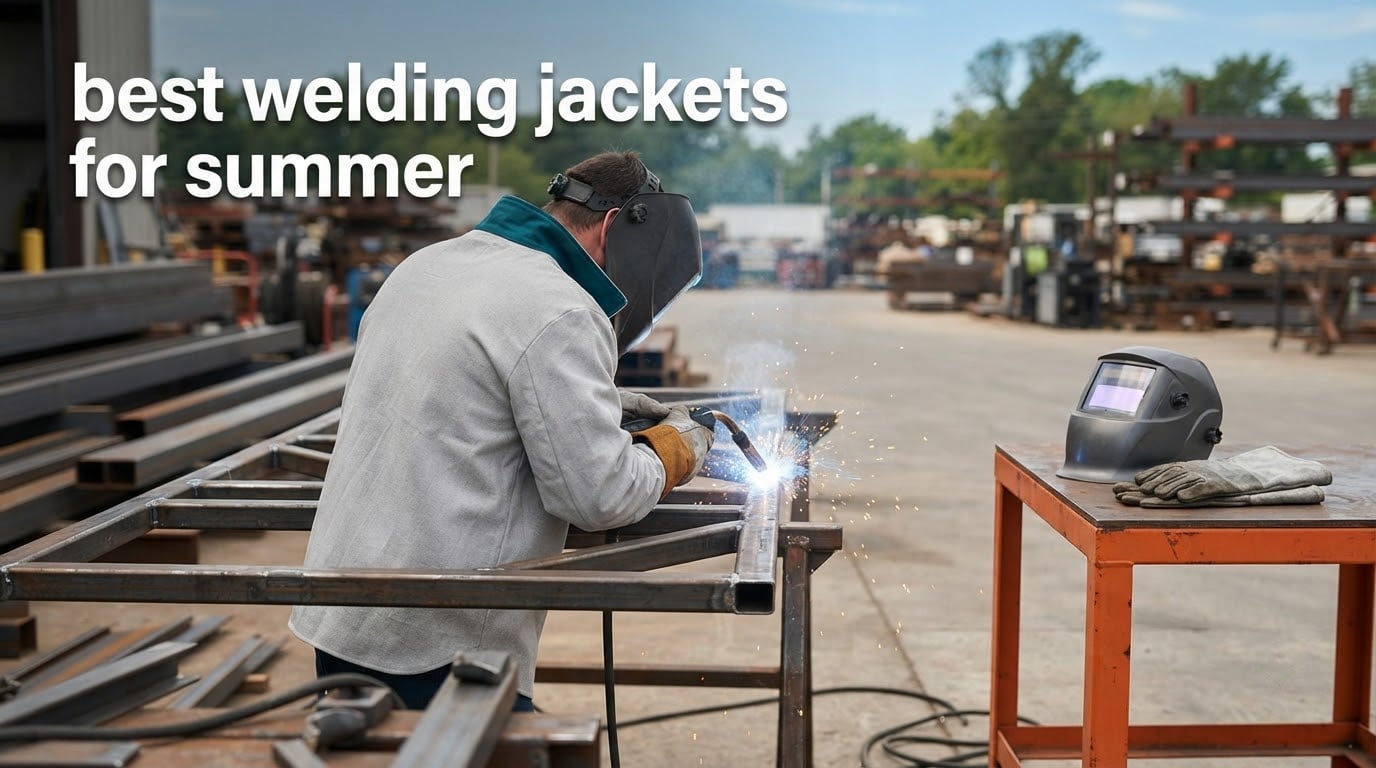
The best welding jacket for hot weather is a lightweight 9 ounce flame-resistant cotton coat with a welder’s collar and snap-close cuffs, not a leather jacket. Leather is the safest choice when you are welding overhead or handling heavy slag, but a certified FR cotton model moves air far better and stays closer to body temperature. If your shop runs hot and your work is flat and downhand MIG, TIG or light stick, a cloth jacket is the correct answer.
That is the short version of a question that welders argue about constantly. Threads on WeldingWeb, r/Welding and ShopFloorTalk all circle the same frustration: leather becomes a sauna past about 85 degrees, and sweat soaked into cowhide turns a jacket stiff, cracked and eventually useless. Meanwhile the cloth jackets get dismissed by older shops as decoration, even though several of the picks below carry NFPA 2112 or ASTM D6413 certification and are rated for 50 commercial wash cycles.
We pulled ten of the best welding jackets for summer onto one list and read every spec sheet and review set behind them. Nine are cloth or cloth-blend, one is a cotton and cowhide hybrid, and they span 9 ounce light fabric through 11 ounce heavy cotton. Every jacket here is rated for sparks, spatter and radiant heat rather than arc flash, and the rating printed on the label is the rating you must actually work within. For our other summer content, we keep a running list of summer recipe ideas and cold drink recipes going for the same reason: the long hot weeks are easier when you plan for them.
Table of Contents
- Top 3 Picks for Welding Jackets That Beat the Summer Heat
- All 10 Welding Jackets Compared for 2026
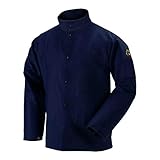
- 1. Black Stallion FN9-30C: The Best All-Round Summer Welding Jacket
- 2. Lincoln Electric K2985: Best for Maximum Airflow
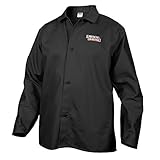
- 3. Lincoln Electric Black FR Cloth Jacket: Best Value Daily Driver
- 4. Revco Black Stallion BSX 9 oz Contoured: Top Rated for Coverage
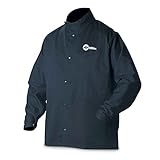
- 5. Miller Classic Cloth 9 oz Navy: Best for Job-Site Mobility
- 6. Ironcat FR Treated Cotton Sateen: Budget Pick for High-Visibility Work
- 7. QeeLink NFPA 2112 FR Cotton: Best for Documented Certification
- 8. ARCCAPTAIN 11 oz FR Cotton: Best Heavy Cloth Protection
- 9. Miller Cotton Nylon Cloth Jacket: Best Lightweight Layering Coat
- 10. QeeLink Split Leather Sleeve Hybrid: Most Versatile for Overhead Work
- How to Choose a Welding Jacket That Survives July
- Frequently Asked Questions
- The Verdict: Which Welding Jacket Earns a Place in Your Shop Bag
Top 3 Picks for Welding Jackets That Beat the Summer Heat
Three picks stand out once you sort the field by how well each one handles heat while keeping the protection rating intact. The rest of the list expands on the trade-offs.
All 10 Welding Jackets Compared for 2026
Scan this table first if you are short on time. The material and weight columns do most of the work: 9 ounce FR cotton is the summer default, 11 ounce cotton buys extra spark protection at the cost of airflow, and any jacket with leather on the sleeves trades some heat for overhead work.
| Product | Specs | Action |
|---|---|---|
| Black Stallion FN9-30C 9 oz FR Cotton |
|
Check Latest Price |
 Lincoln Electric K2985 Premium FR Cotton Lincoln Electric K2985 Premium FR Cotton |
|
Check Latest Price |
| Lincoln Electric Black FR Cloth Jacket |
|
Check Latest Price |
 Revco Black Stallion BSX Contoured FR Revco Black Stallion BSX Contoured FR |
|
Check Latest Price |
 Miller Classic Cloth 9 oz Navy Miller Classic Cloth 9 oz Navy |
|
Check Latest Price |
 Ironcat FR Cotton Sateen 9 oz Ironcat FR Cotton Sateen 9 oz |
|
Check Latest Price |
 QeeLink NFPA 2112 FR Cotton QeeLink NFPA 2112 FR Cotton |
|
Check Latest Price |
 ARCCAPTAIN 11 oz FR Cotton ARCCAPTAIN 11 oz FR Cotton |
|
Check Latest Price |
 Miller Cotton Nylon Cloth Jacket L Miller Cotton Nylon Cloth Jacket L |
|
Check Latest Price |
 QeeLink Split Leather Sleeve Hybrid QeeLink Split Leather Sleeve Hybrid |
|
Check Latest Price |
1. Black Stallion FN9-30C: The Best All-Round Summer Welding Jacket
Black Stallion FN9-30C 30″ 9oz. Navy FR Cotton Welding Jacket, Large
9 oz. flame-resistant treated cotton
30 inch body length
Leather-reinforced snaps on every closure
Pros
- Light 9 oz. FR cotton that reviewers call comfortable in warmer weather
- Leather-reinforced snaps including cuff snaps that close under gloves
- Holds up through long shifts without burn-through on light welding work
- Scribe pocket and inside pocket for tools and small items
- Runs true to size for most wearers
Cons
- Not thick enough for sustained overhead stick welding where heavy slag can burn through
- 30 inch body length can feel short on taller wearers
- Runs slightly loose through the shoulders so some size up for arm length
This is the jacket we hand to a welder who walks into a hot shop and asks for one thing: something that stops spatter without cooking them. At 9 ounces of flame-resistant treated cotton with a welder’s collar and six leather-reinforced snap buttons, it does exactly that and almost nothing more. There is no lining to trap heat, no leather body panels, and no stretch gussets adding bulk, so nothing in the build works against airflow.
The detail that tells you this was designed by people who have actually welded is where the leather reinforcement goes. Every snap carries a leather backing, including the cuff snaps, which means the wrist closures still work when your hands are inside gauntlet gloves. Reviewers call that out more than any other feature, because a cuff snap that will not open under a glove is a reason people leave sleeves off.
The pocket layout is unusually generous for a light jacket. A scribe pocket across the front holds welding pencils, soapstone and paint markers, and a separate inside pocket keeps small items away from spatter. In practice that scribe pocket is where most welders keep a soapstone, which matters if you mark your own stainless work the way a lot of shop TIG welders do.
Across roughly 3400 reviews the praise repeats consistently: light weight, a fit that works for most bodies, and no burn-through on light MIG and TIG. The rating sits at 4.6 out of 5, which is high for a category where fit complaints are the norm.
What you should know before you buy this
The main limitation is process, not heat. Multiple reviewers point out that 9 ounce cloth is not enough for sustained overhead stick work, where heavy slag can sit against the fabric long enough to burn through to skin. If your work is flat, downhand or position-one, that is not your problem. If you spend your days overhead on pipe or structural steel, move up to the hybrid in slot ten or to genuine leather.
The second thing to check is body length. At 30 inches from shoulder to hem it reads short on wearers above roughly six feet, and a short jacket also means less coverage when you are kneeling. The shoulders run slightly loose, which some buyers fix by sizing up one size for arm length, though that adds bulk in the chest.
Who should skip it
Skip this jacket if you need certified arc-flash or electrical-hazard protection. It is a spark and radiant heat garment, not an arc-rated one, and the difference matters on pipeline, refinery and utility work where a clothing category rating is written into the safety plan. If your employer specifies a category arc-rated suit, no cloth jacket on this list substitutes for it.
2. Lincoln Electric K2985: Best for Maximum Airflow
Lincoln Electric Premium Flame Resistant (FR) Cotton Welding Jacket | Comfortable | Black | Medium | K2985-M
ASTM D6413 compliant 9 oz. FR cotton
Anti-static coating
Machine washable to 50 commercial cycles
Pros
- Lightweight FR cotton engineered for airflow and cooling in hot conditions
- ASTM D6413 flame resistance that holds through 50 commercial wash cycles
- Anti-static coating adds longevity
- Chrome-plated cuff snaps and flip-up collar for wrist and neck coverage
- Large internal pocket for protected storage
Cons
- Light cloth fabric is intended for spatter and spark protection rather than heavy slag or overhead arc work
- Cuts a narrower dressier silhouette than bulkier work jackets
Lincoln Electric built this one for heat specifically, and the spec sheet says so in plain language. The listing describes lightweight breathable FR material designed to allow consistent airflow, which is unusual phrasing from a manufacturer and a fair signal that hot-weather work drove the design. The fabric is 9 ounce ASTM D6413 compliant black cotton with an anti-static coating, and the whole point is that it moves air.
Black cotton has a practical summer advantage people rarely mention. It absorbs less visible heat than a light blue or tan jacket in direct sun, and it hides the soot staining that makes a light cloth look ruined after a week of stick work. For outdoor field repair or any job with real sun exposure, that is worth more than a gram of weight.
The labelling here is among the most specific in this group. ASTM D6413 is the standard that governs flame-resistant textile performance, and this jacket is rated to survive 50 commercial wash cycles while retaining its flame-retardant properties. That means it is a jacket you can own for years of daily shop work instead of a year.
Where this one earns its place
This is the pick for a welder doing full-time flat and downhand work in a hot shop who wants a machine-washable jacket on rotation. The 50-cycle rating means a laundry schedule is realistic, and the anti-static coating adds both longevity and a second layer of safety around spatter and grinding dust.
Cuff protection is handled by chrome-plated metal snaps at each wrist, and the flip-up collar covers the neck from arc rays, spatter and sparks. Those two features together are the difference between a jacket that protects your forearms and one that protects your forearms and neck, and neck coverage is where a lot of summer scabs come from.
Where it falls short
The silhouette is the complaint to anticipate. This is a narrower, dressier cut than the bulkier work jackets in this list, which is pleasant under a welding helmet but restricts reach if you work in tight quarters or constantly overhead. Reviewers also repeat the same caution: this is spatter and spark protection, not heavy slag or overhead arc protection.
3. Lincoln Electric Black FR Cloth Jacket: Best Value Daily Driver
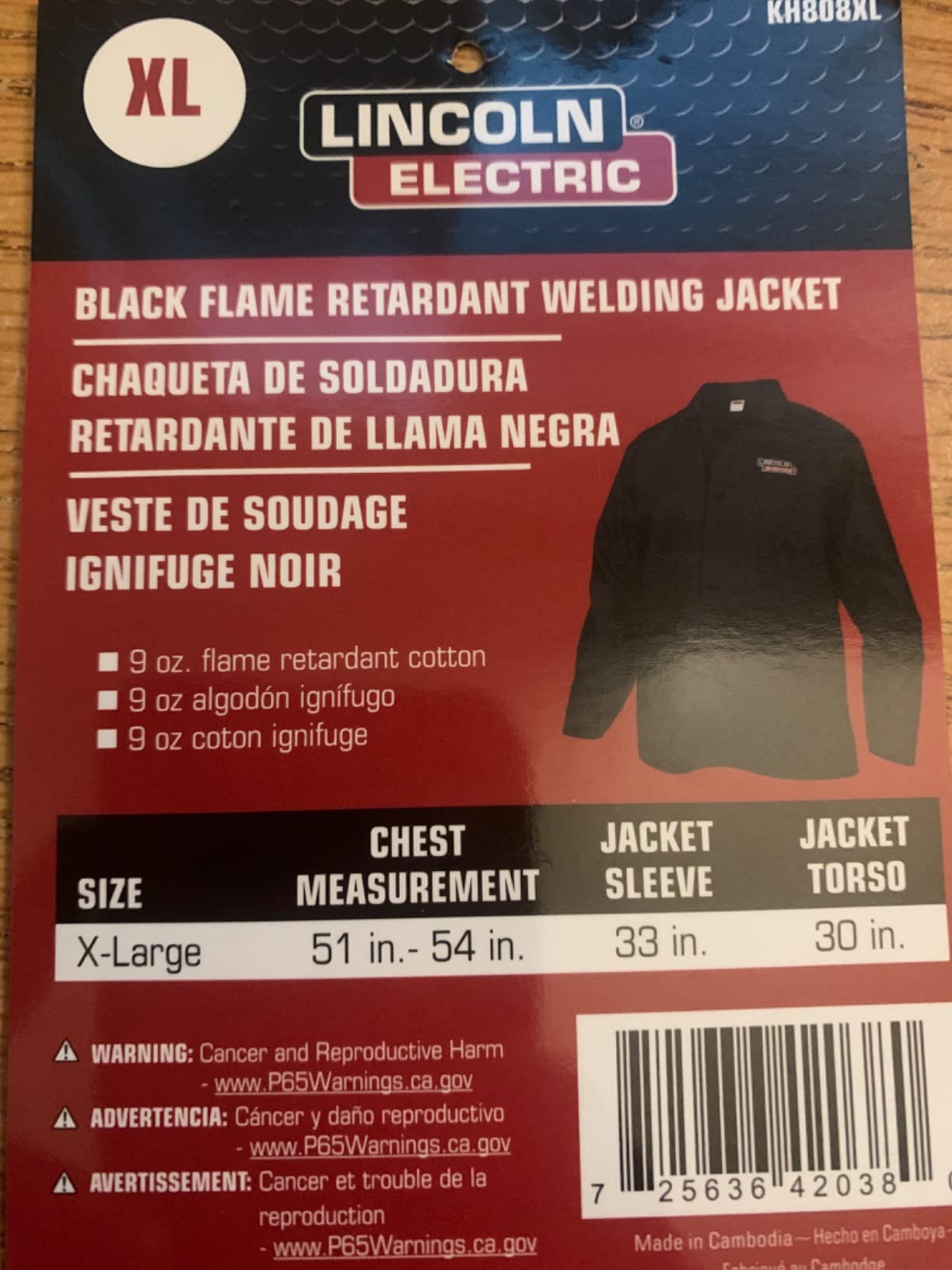
Lincoln Electric Black X-Large Flame-Resistant Cloth Welding Jacket,KH808XL
9 ounce flame-resistant cotton cloth
Snap sleeve cuffs for a wrist seal
Interior pocket
Pros
- Cotton construction buyers describe as thin enough for hot-weather welding
- Holds up over months of daily shop use without burn holes on flat and downhand work
- Black cloth hides soot and spatter and looks professional
- Snaps are solid and sleeves cinch down at the cuffs
- Roomy cut that works for larger frames
Cons
- No exterior chest pocket for pens or small tools
- Runs slightly small so larger wearers need to size up
- Light cloth is not adequate protection for overhead welding
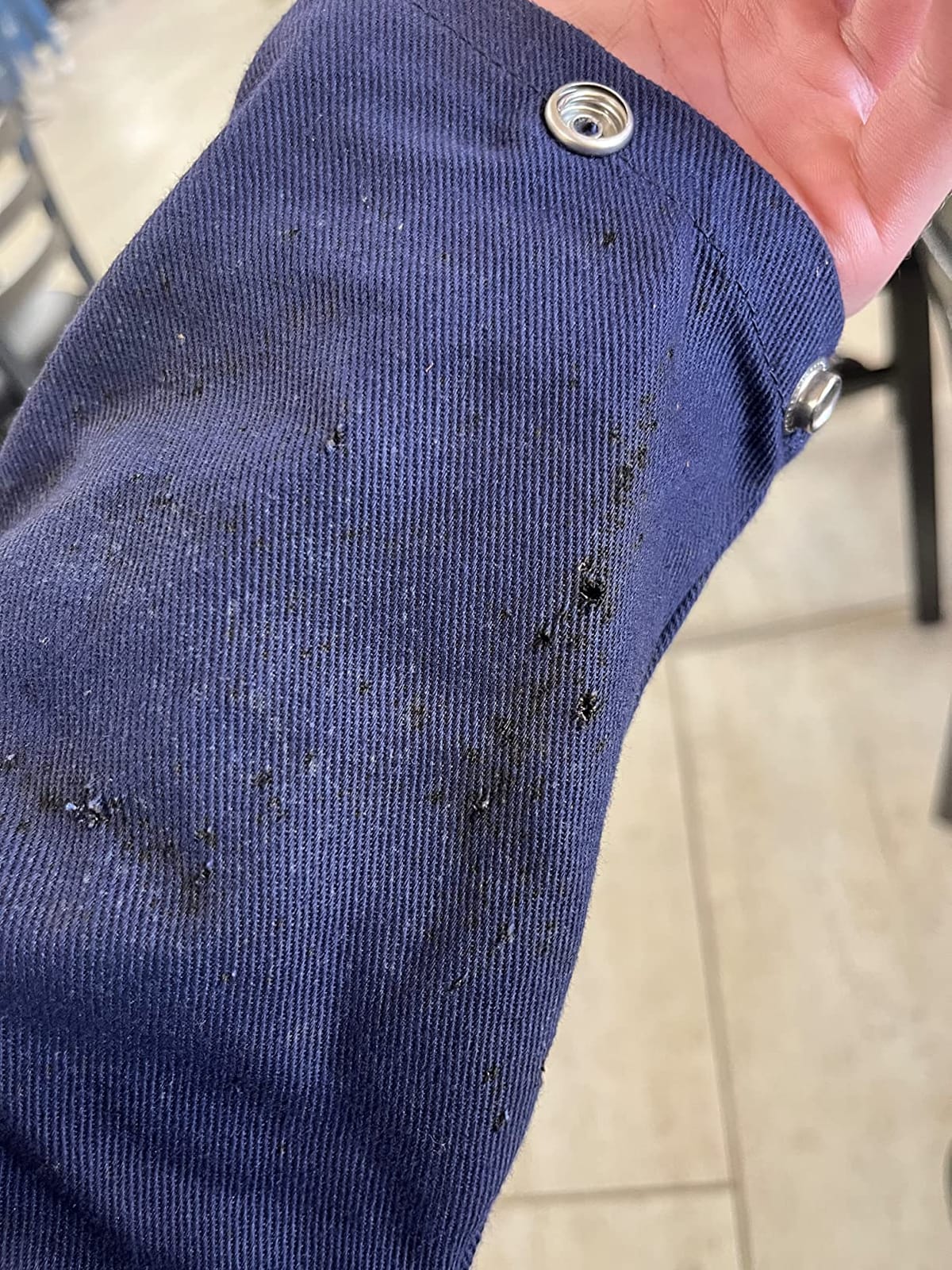
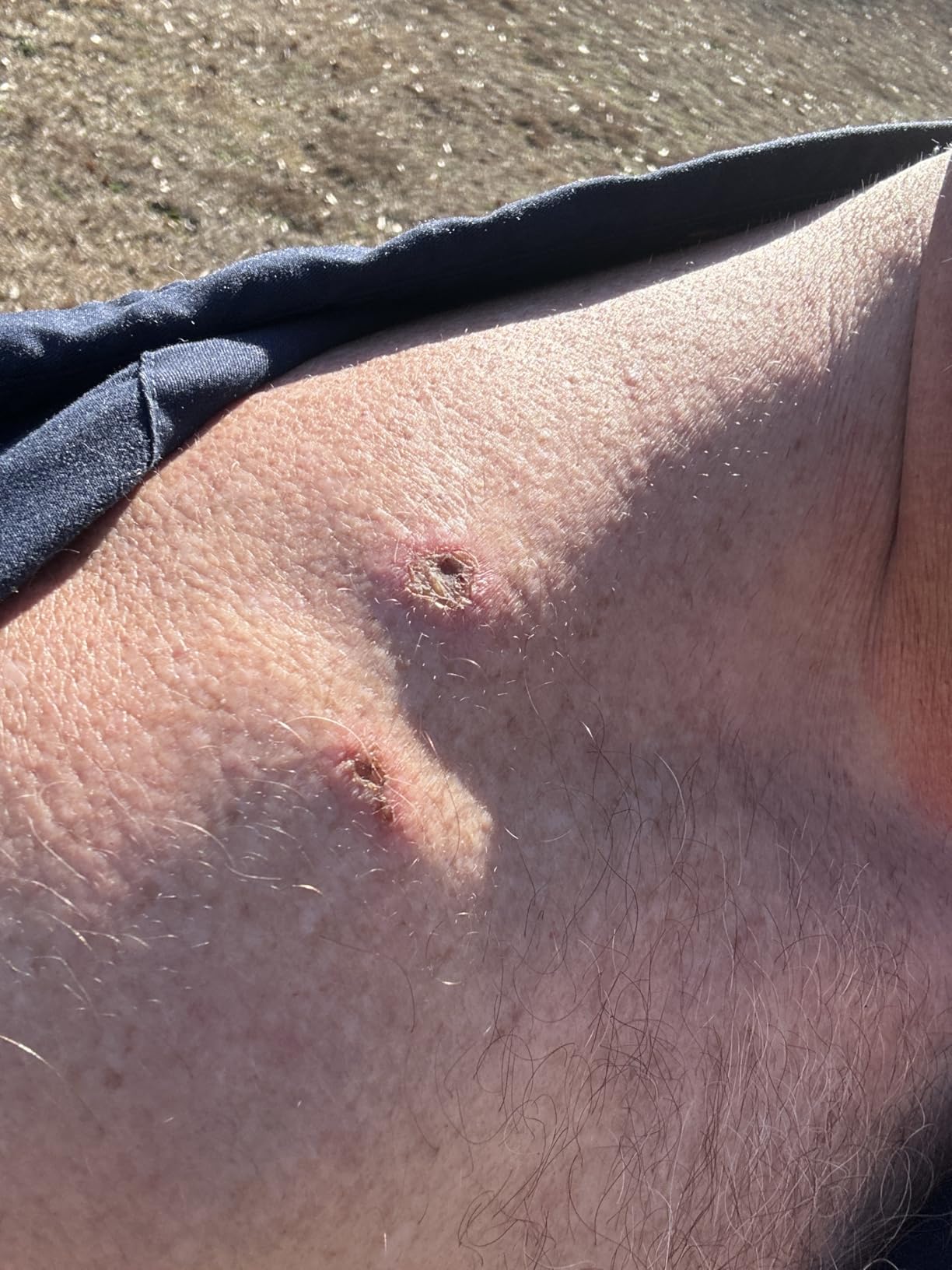
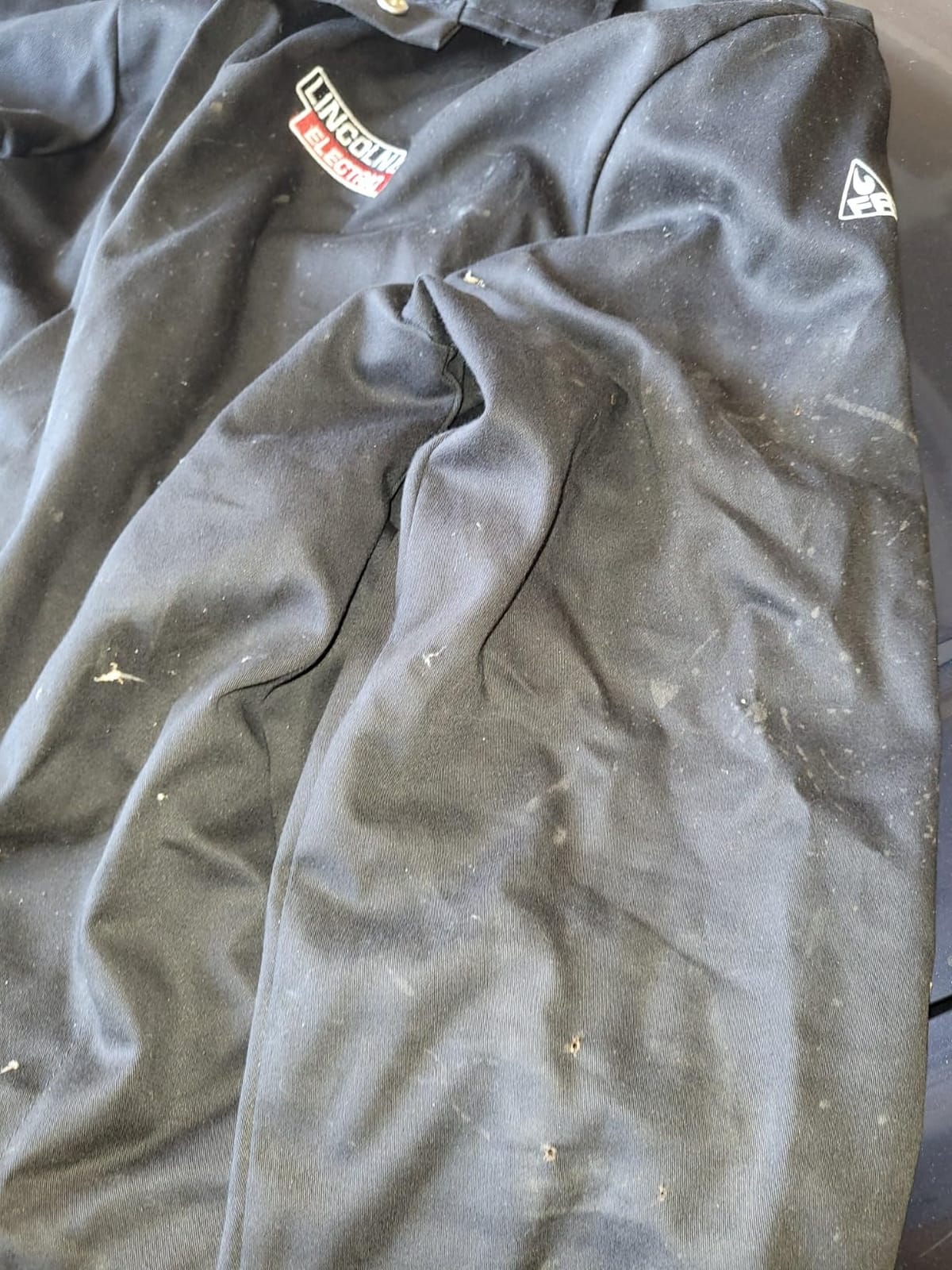
This is the jacket to buy when you weld every day on flat and downhand work and you are tired of paying for leather you do not need. Reviewers describe the cotton as thin enough for hot-weather welding, and across nearly 1900 reviews the durability story holds up: months of daily shop use without burn holes. At 4.6 stars it is one of the strongest rated options here.
The listed purpose is protection for arms and torso from welding spatter and heat, and the construction is straightforward: 9 ounce flame-resistant cotton, snap sleeves for form-fitting cuffs, and an interior pocket for protected storage. That is it. No lining, no gussets, no stretch panels, which is exactly why it stays cool.
Black cloth is the right colour for a working jacket. Soot and spatter disappear into it, which matters if you care about looking presentable in a shop that does customer-facing work. Several buyers mention that the jacket looks enough like a normal jacket that it works for inspection visits and client demos without looking like PPE.
One pattern in the reviews is worth repeating because it is a genuinely sensible setup: many welders use this as their daily cloth layer and keep a heavier leather coat on the rack for overhead work. That two-jacket system solves most of the heat-versus-protection tension without buying a hybrid.
What to check before ordering
Sizing runs slightly small in this line, so larger wearers should step up a size. That matters more than usual with an unlined cloth jacket, because there is no give in the fabric once it is soaked with sweat. If you are layering over a thick base layer, order for the base layer rather than for your summer T-shirt size.
There is also no exterior chest pocket. If you rely on carrying a scribe pencil or a marker in a chest pocket, you will be using the interior pocket instead. It is a small thing, but it is the feature reviewers mention most as a wish.
Who should skip it
Do not use this jacket overhead. Light cloth of this weight is not adequate protection for overhead welding, and several reviewers say so directly. Anyone doing stick work in a position where slag lands on the shoulder or upper arm should choose the 11 ounce ARCCAPTAIN in slot eight or the hybrid in slot ten.
4. Revco Black Stallion BSX 9 oz Contoured: Top Rated for Coverage
Revco Black Stallion (BXRB9C) BSX 9 oz Contoured Flame-Resistant Cotton Welding Jacket, Welder’s Collar, Dual Scribe Pockets, Leather-Reinforced Snaps, X-Large, Royal Blue
9 oz. FR treated cotton
32 inch extended front with waist straps
1.7 pound weight
Pros
- Chemically treated cotton that resists ignition and slows flame spread
- Extended-length body gives extra torso coverage
- Dual sleeve scribe pockets plus left inside and zippered right inside pockets
- Adjustable waist snaps allow a trimmer fit over bulky clothing
- 4.7 star average from 985 reviews
Cons
- Hand wash only which is less convenient than machine-washable FR jackets
- Runs true to size rather than roomy so layering over thick shirts can feel snug
The joint highest-rated jackets in this group are also the ones with the most coverage, which is an unusual combination. At 4.7 stars across 985 reviews with 81 percent of those reviews at five stars, the Revco Black Stallion BSX Contoured is the one buyers qualify least. The jacket weighs 1.7 pounds and the front panel runs to 32 inches.
That extra length is the feature that separates it from the other 9 ounce jackets. A 32 inch front with a 30 inch shoulder-to-hem measurement covers more torso when you are kneeling, crouching or working inside a trailer or boat. Coverage is exactly what is missing when a shorter jacket rides up and exposes the lower back to spatter.
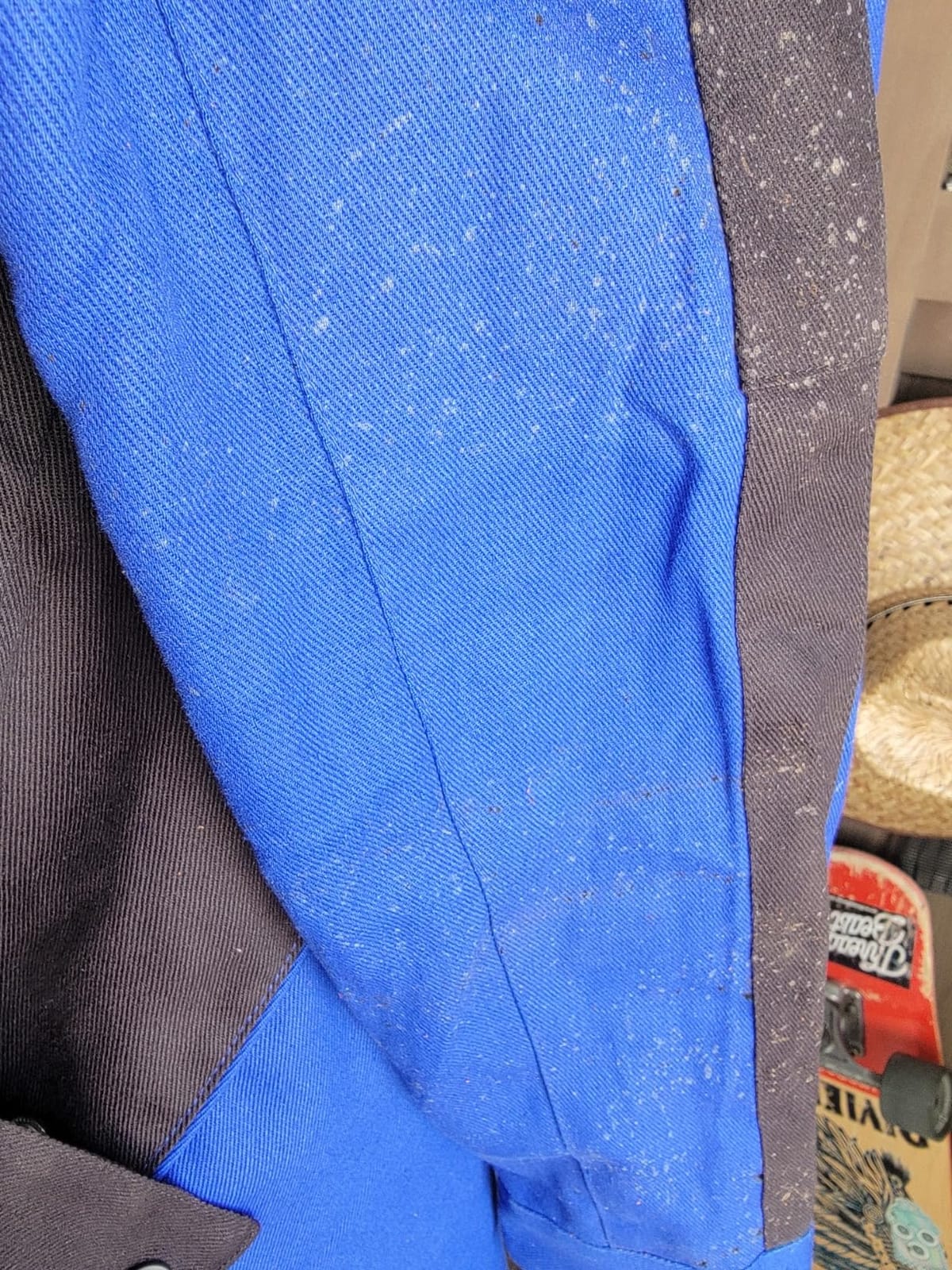
Pocket count is the other headline. Dual sleeve scribe pockets give you a place on each arm for a soapstone or pencil, and there is an inside pocket plus a separate zippered inside pocket. The zip is the detail that matters, because a snap pocket on the right side opens when you lean into a weld.
Adjustable waist snaps in two positions let you cinch the jacket over bulky clothing and cut the loose fabric that holds sweat against you. That is a small piece of hardware doing real work on a hot day, and few jackets in this range include it.
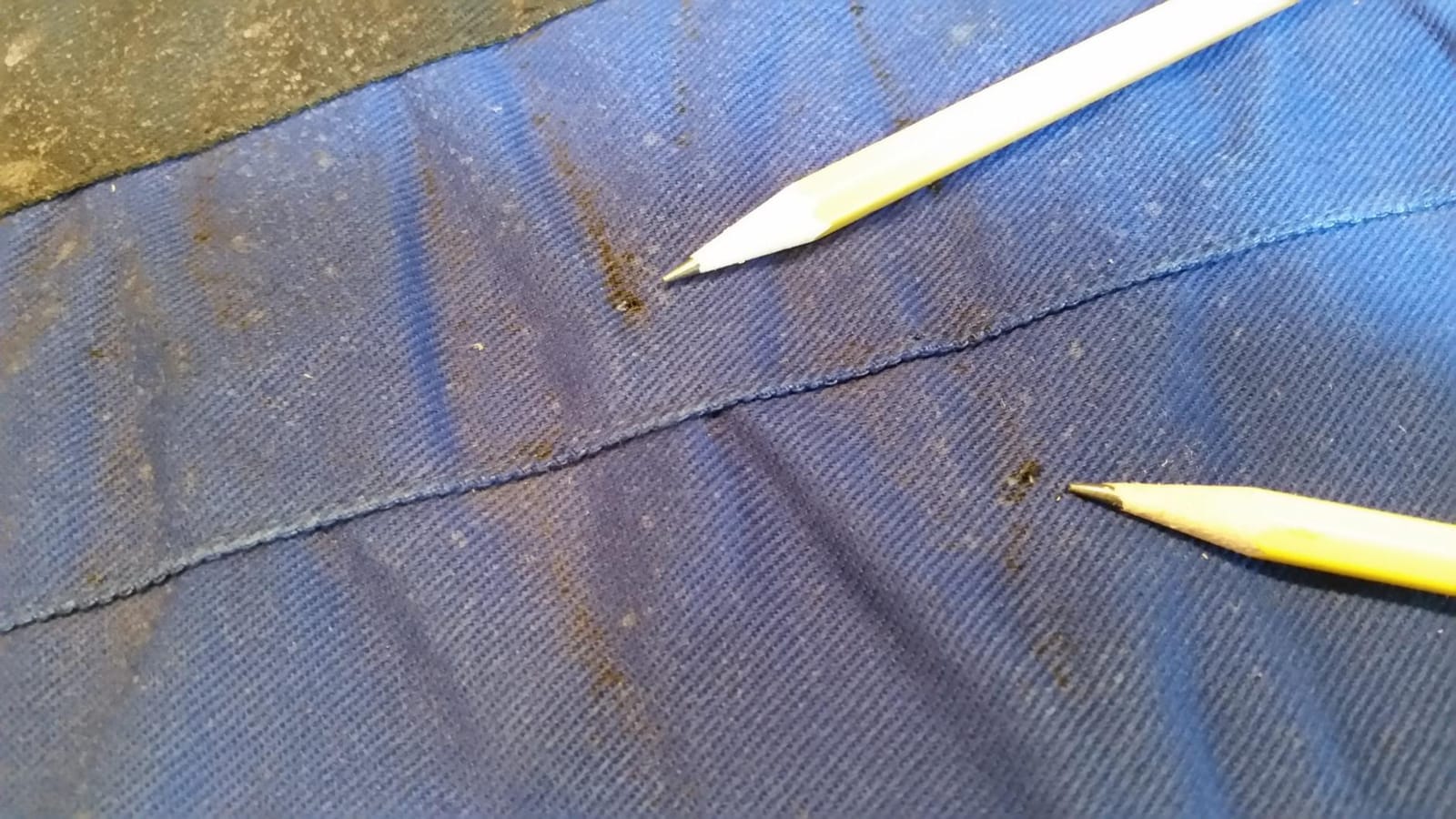
The sizing and care details that catch people out
It is hand wash only. That is the single most common care complaint, and it matters in summer because a jacket you cannot machine wash is a jacket that goes unwashed. Sweat-soaked cotton left in a bag is how jackets start to smell and how fabric finishes degrade faster than their rating suggests.
The cut runs true to size rather than roomy, so layering a thick base layer underneath can feel snug. If your plan is to wear a moisture-wicking long sleeve under the jacket, buy the size that fits over it rather than the size that fits over a T-shirt.
Where it is not the answer
This is a 9 ounce cotton jacket, so it shares the ceiling of the rest of the cloth picks: light spatter and sparks, not heavy slag or sustained overhead work. It is also the wrong choice if you want a lined, insulated garment for cold months, since there is no lining here by design. For winter you would layer over it rather than look for warmth in it.
5. Miller Classic Cloth 9 oz Navy: Best for Job-Site Mobility
Miller Classic Cloth Welding Jacket, 9oz Navy Cotton, XL, Flame Resistant
9 oz. pre-shrunk FR cotton at 1.5 pounds
Barracuda-style stand-up collar
XL fits a 54 inch chest
Pros
- Lightweight and breathable enough for welding in hot surroundings
- Packs down small so it fits inside a welding helmet for transport
- Long sleeves cover the skin fully even with welding gloves on
- Snaps are tight and easy to open and close
- Looks like a normal jacket so it works for customer-facing work
Cons
- Light cotton can burn through on larger sparks and heavy grinding spatter
- Roughly a five-month lifespan for users who grind heavily
- Hand wash only
At 1.5 pounds it is among the lightest jackets in this roundup, and it is built from 9 ounce pre-shrunk cotton with a Barracuda-style stand-up collar. Pre-shrunk matters more than it sounds: it means the sleeves will not shrink onto your forearms after the first wash and leave exposed skin between cuff and glove.
Fold-in sleeve snaps are the detail that makes this jacket good for real work. The cuff folds inward and snaps closed, sealing the wrist so sparks cannot travel up the sleeve. Reviewers consistently mention that the sleeves still cover the skin fully even with welding gloves on, which is the exact failure that causes forearm burns.
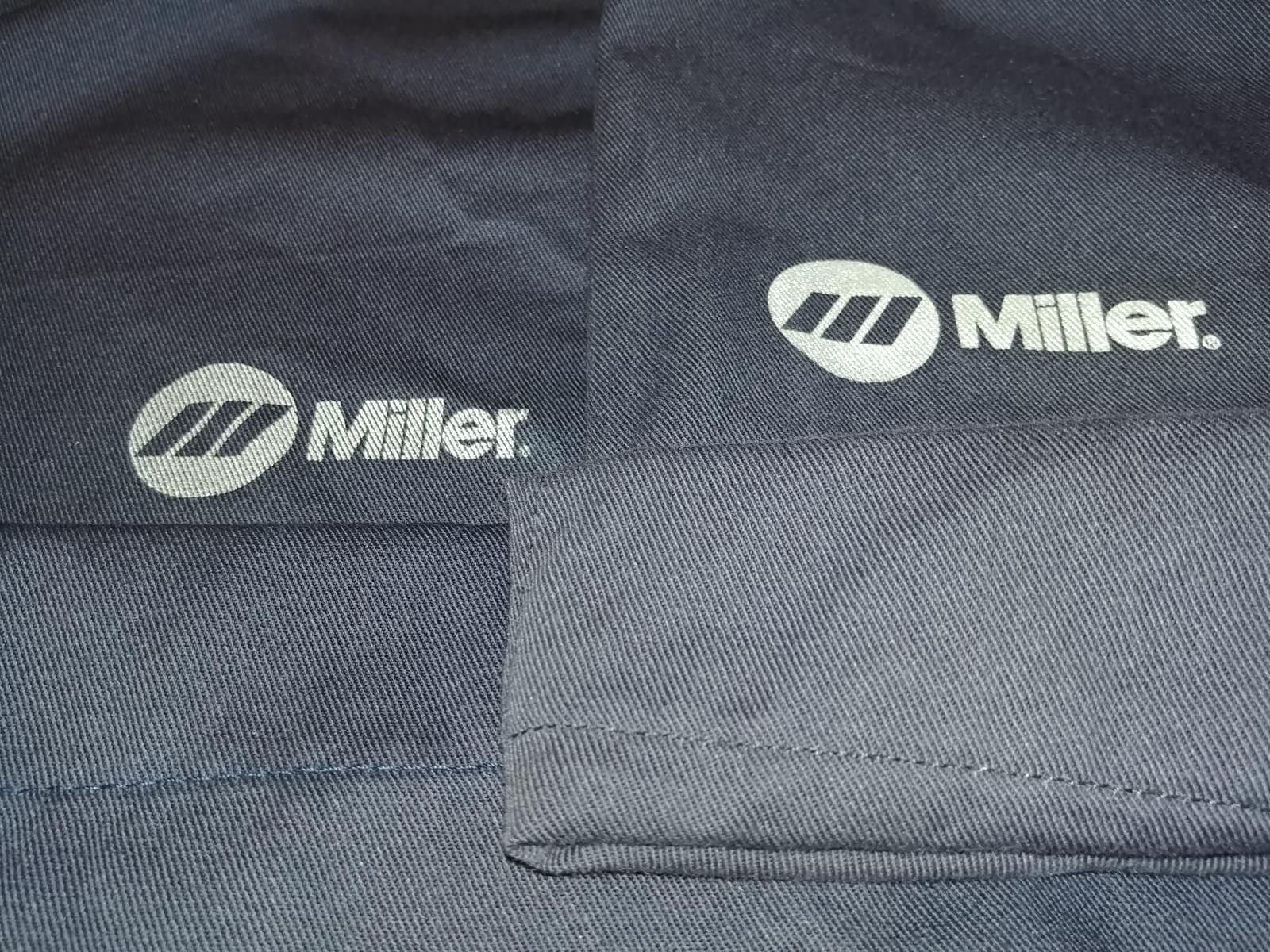
The sizing is documented more clearly than on most jackets here. The XL measures a 54 inch chest, 20 inch shoulders, 34 inch sleeves and 30 inch torso length, and the same jacket is built from S through 5XL across the line. In a category where a Medium in one brand behaves like a Large in another, published measurements are worth real money.
It also packs small. Reviewers point out that it folds down enough to fit inside a welding helmet for transport, which is how many field and maintenance welders carry protection to a job site without carrying a second bulky bag.
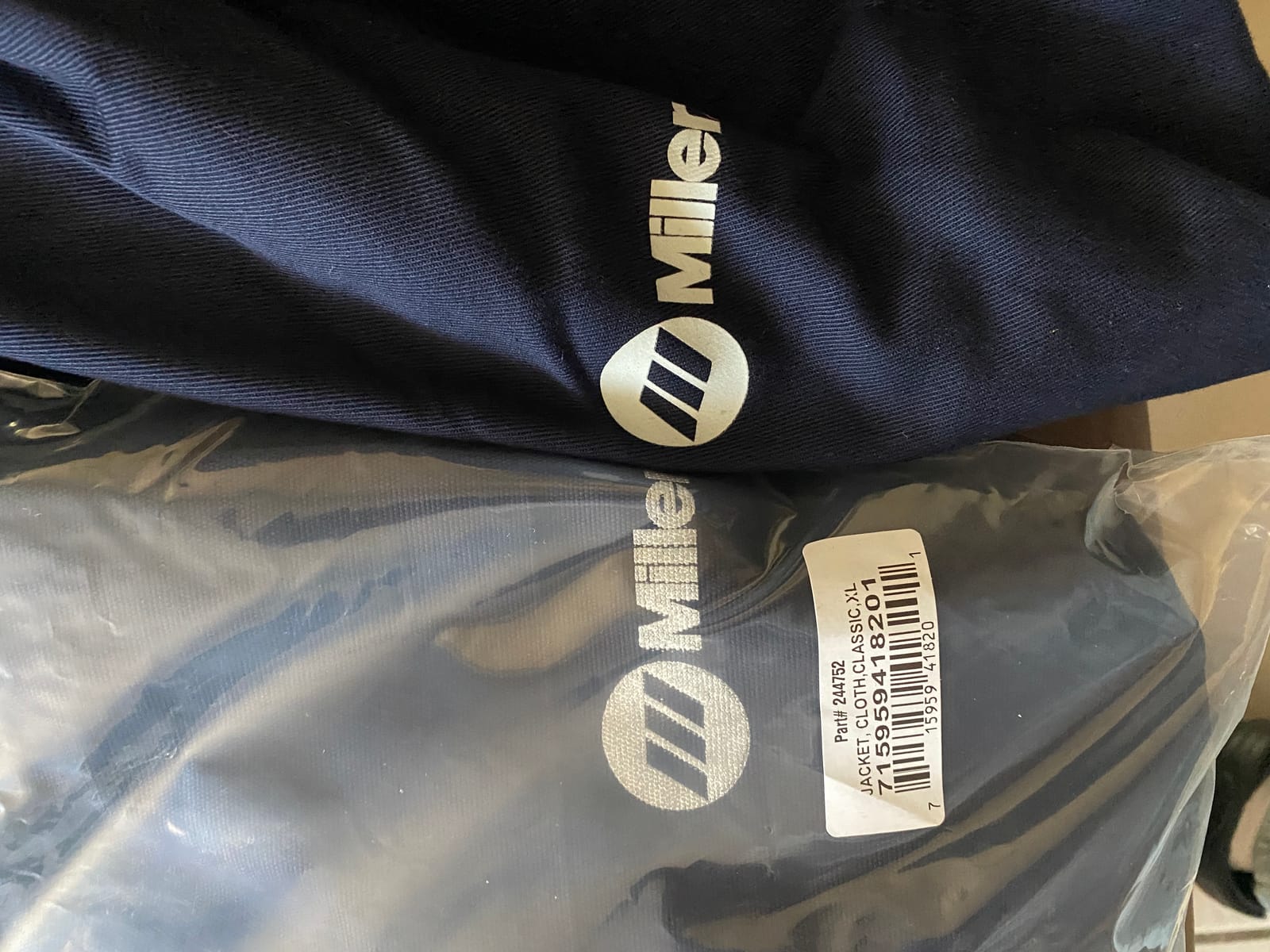
Where the weight savings come from
The Barracuda-style stand-up collar gives neck protection without the bulk of a full fold-over collar, which means you can leave it open in the shop and still cover the throat when a pass throws sparks. That balance is why this jacket rates so well for heat while still scoring 4.7 stars.
It is also a more presentable option than most in this list. Several buyers mention that it looks like an ordinary jacket, so it works for customer-facing fabrication work where a visibly branded PPE coat would not suit the job.
Limits to plan around
Light cotton burns through on larger sparks and on grinding spatter, and heavy grinders are where its life gets short. One reviewer reports roughly a five-month lifespan for someone grinding heavily every day, which is honest information you should weigh if grinding is a big part of your week.
It is also hand wash only, like several others in this category. If you weld daily in this jacket, plan a wash routine that does not depend on a machine.
6. Ironcat FR Treated Cotton Sateen: Budget Pick for High-Visibility Work
Ironcat FR Treated Cotton Sateen Jacket, 9 oz., Anodized Snaps, Interior Pocket, Pop-up Welders Collar, Scribe Pocket, Green, 2X-Large (7050/2XL)
9 oz. FR-treated cotton sateen
Anodized leather-reinforced snaps
Pop-up welder's collar
Pros
- Lightweight treated cotton that keeps burns off skin and clothing
- Pop-up welder's collar with snap closure keeps sparks out from the neck
- Interior pocket and scribe pocket for storage
- Spans a wide colour and size range including high-visibility options
- Backed by 669 reviews across size runs
Cons
- Runs small so sizing up is usually needed
- Inside elbow fabric can wear through and tear with heavy overhead welding
- A noticeable chemical treatment smell on arrival that needs airing out
Ironcat makes this jacket through WestChester Protective Gear, and at 4.4 stars across 669 reviews it is the most affordable option in the group without being a toy. The fabric is 9 ounce cotton sateen treated for flame resistance, listed for steel mills, shipyards, manufacturing, automotive, gas welding and torch work. That is a broad process list for a cloth coat at this level.
The anodized snaps with leather reinforcement are worth noting on an entry-level coat. Corrosion resistance matters in summer because sweat is mildly acidic and will pit untreated hardware within a season, and the leather backing stops flashback from reaching the fabric behind each snap.
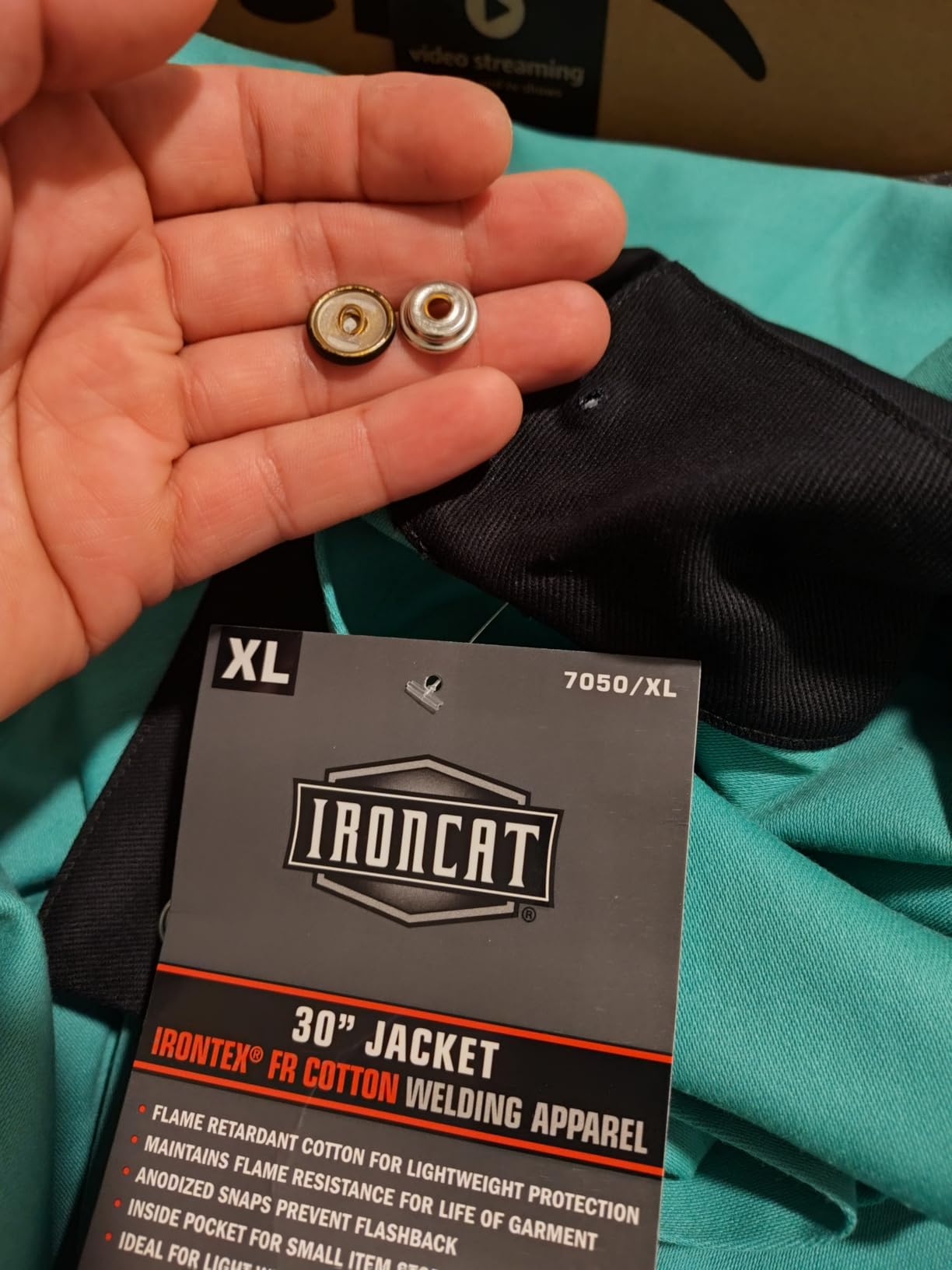
The black pop-up welder’s collar folds up and snaps closed to protect the neck, and it works well. Reviewers single it out as a feature that genuinely keeps sparks out from behind, which is a common gap in lighter jackets.
It is also made by WestChester, a manufacturer that supplies industrial workwear rather than hobby gear. That is why the listed applications read like a mill supply catalogue instead of a marketplace listing, and it is a reasonable signal of where the jacket was designed to be used.
What the budget tier actually gives you
You get the two things that matter most at this level: FR-treated cotton and reinforced hardware. Everything else is trimmed. There is no lining, no waist adjustment and no stretch panel, so the fit is a straight work shirt with a collar rather than a shaped garment.
The wide colour and size range including high-visibility options is genuinely useful for crews working near traffic or outdoors, where a navy FR coat is easier to lose track of than a bright one.
The drawbacks worth weighing
It runs small. Most buyers end up sizing up, and on an unlined jacket that is easy to do and does not cost you much in heat terms. The inside elbow is the weak point, and fabric there wears through with heavy overhead welding, which is the same ceiling the other 9 ounce jackets have.
Expect a chemical treatment smell when it arrives. It needs airing out before the first wear, and while it fades it is unpleasant in a closed vehicle. A small share of buyers also report front snaps failing, so check them on arrival.
7. QeeLink NFPA 2112 FR Cotton: Best for Documented Certification
QeeLink Welding Jacket – Premium Flame Resistant (FR) Cotton Welding Clothes – Light Weight Welder Jacket for Men & Women (X-Large, Black)
NFPA 2112 certified 9 oz. FR cotton
Anti-static treatment
Snap-button adjustable cuffs
Pros
- Lightweight and breathable enough that users report not overheating on hot days
- Anti-static NFPA 2112 certified 9 oz. FR cotton
- Machine washable without loss of shape
- Large stitched logo and emblem on the upper back
- Holds up against plasma cutting
- MIG and grinding work
Cons
- Runs small with multiple buyers recommending sizing up two sizes
- Light fabric burns through in spots with heavy grinding or angle grinder work
- Not rated for electric arc flash or direct sustained flames
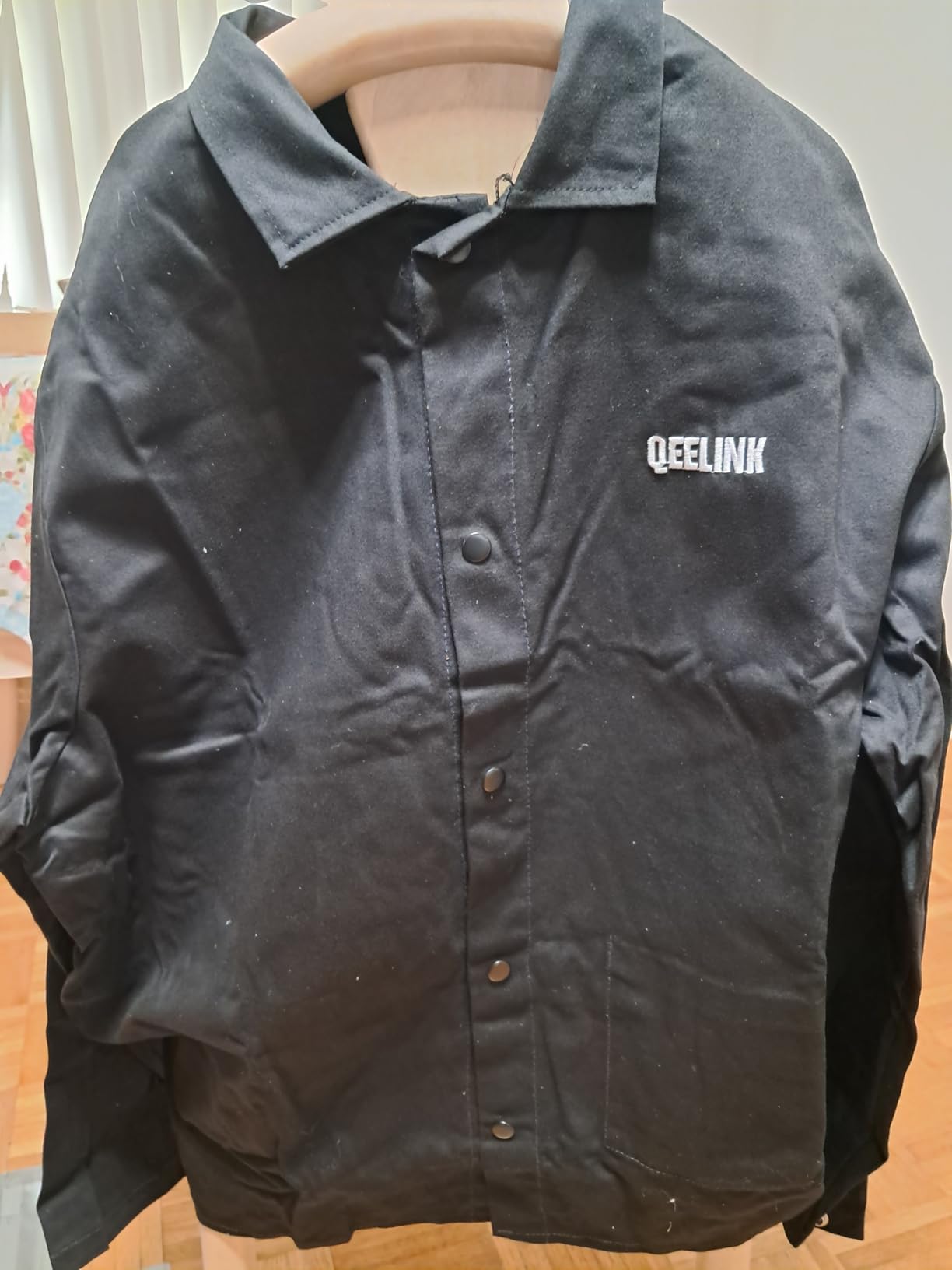
QeeLink prints NFPA 2112 certification on the label rather than describing the fabric as flame-resistant and leaving you to trust it. If you work somewhere that asks you to point at a certification, this is the jacket to buy. The fabric is 9 ounce flame-resistant cotton with anti-static treatment.
The listing is unusually honest about limits. It says the jacket is intended for brief, intermittent exposure to sparks, spatter and radiant heat and is not for arc flash or firefighting. That sentence is worth more than any marketing adjective, because it tells you exactly which jobs it covers.
Construction details are sensible for hot work. Snap-button adjustable cuffs close the wrist so debris and sparks cannot enter, and the stainless steel snaps use an anti-release design that resists gumming up and binding in sweat. That cuff control is a small upgrade that costs nothing at runtime and adds real seam-side comfort over a long shift.
Across 458 reviews at 4.5 stars, the most repeated piece of advice is simple: size up. Buyers consistently say the jacket runs small, and several recommend going up two sizes.
Who this suits best
School welding programs, apprentices and hobby welders come up repeatedly in the reviews for this jacket, and the reason is simple. It is unisex from S through 4XL, it is machine washable without losing shape, and the certification is printed where a teacher or supervisor can check it.
It is also listed as holding up against plasma cutting, MIG and grinding work, which makes it a broader daily driver than some of the 9 ounce jackets here that are really only rated for flat and downhand welding.
Where it falls down
The light fabric burns through in spots with heavy grinding or angle grinder work, and the small sizing means several buyers are wearing it a size larger than intended. That combination makes it a poor fit for a production grinding bay and a strong fit for a welder who alternates between short TIG passes and cleanup.
The stated lack of arc-flash rating is not a flaw so much as a boundary. Never treat an NFPA 2112 garment as an arc-flash garment.
8. ARCCAPTAIN 11 oz FR Cotton: Best Heavy Cloth Protection
ARCCAPTAIN Welding Jacket, 11oz Flame Resistant Cotton Welding Jackets
11 oz. (310 g) NFPA 2112 FR cotton
Reflective strips for low-light work
Two-level cuff adjustment
Pros
- Heaviest cloth weight in this group at 11 oz which blocks sparks and resists melting
- Reflective strips improve visibility in dim shops and at nighttime field repairs
- Four pockets including a protected inner pocket and chest pen holder
- Two-level cuff adjustment seals out slag or opens up for airflow
- Snaps operate with gloves on and stay closed after repeated use
Cons
- Heavier 11 oz cloth is noticeably less breathable than the 9 oz jackets here
- Lowest average rating in this set at 4.3 with an 8 percent one-star share
If you want to stay in cloth but want more spark protection than 9 ounce gives you, this is the one. At 11 ounces, roughly 310 grams, it is the heaviest cloth jacket in this roundup and it is NFPA 2112 certified for MIG, TIG and cutting. The fabric is described as blocking high-temperature sparks and resisting melting, which is the specific failure mode that sends light cloth jackets to the scrap heap.
Two features set it apart from most of the other cloth picks. Reflective strips improve visibility in dim shops and at night during field repairs, and two-level cuff adjustment lets you seal the wrist against slag on one setting or open it up for airflow on the other. That is a genuinely useful summer control that no other jacket here offers.
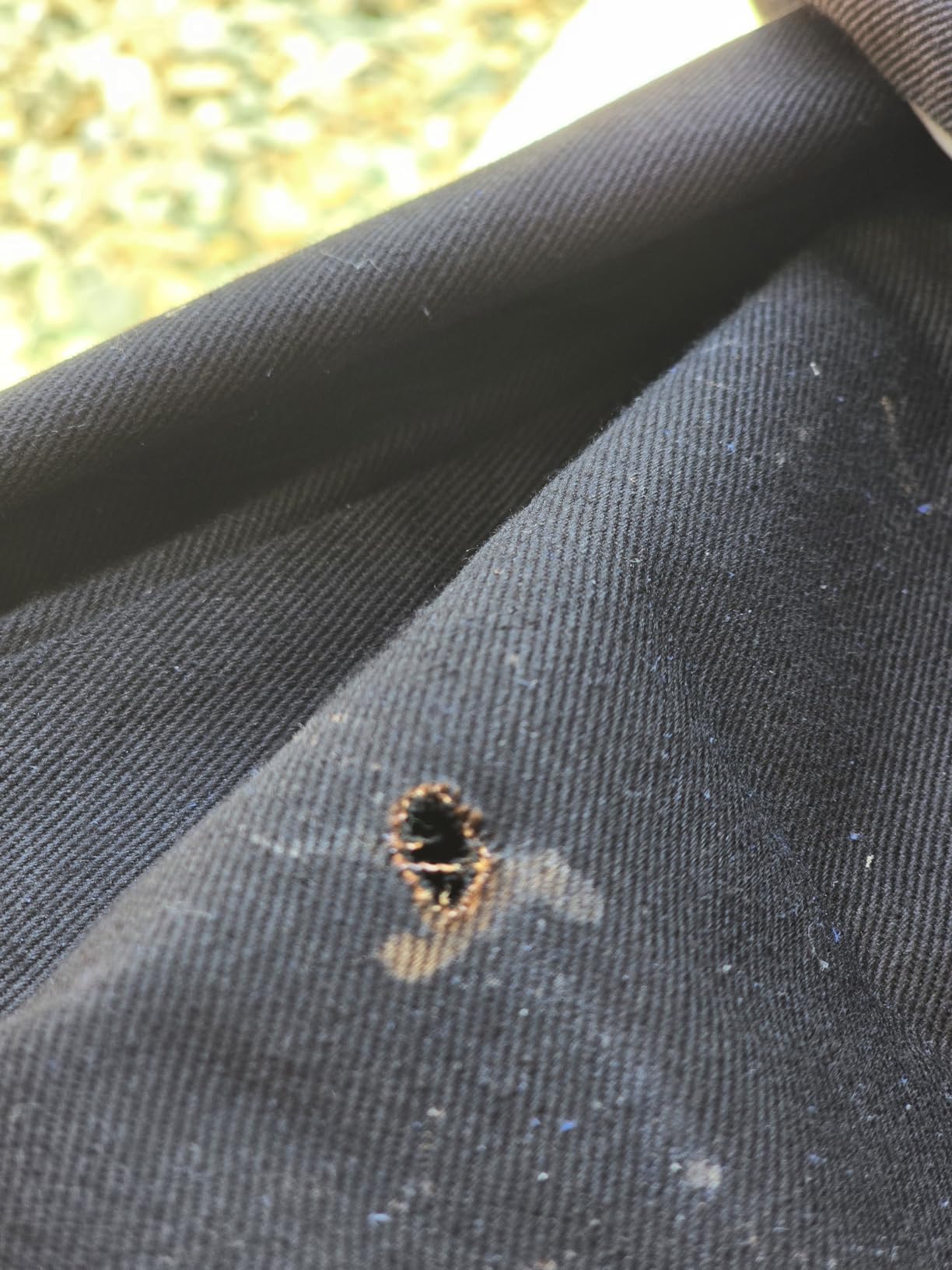
The rest is practical. Snap button closure works while wearing gloves and stays closed through repeated use, and there are four multi-purpose pockets including an inner pocket and a chest pen holder, which answers the complaint about missing chest storage that shows up with several other cloth jackets.
Sizes run S through 4XL. At 4.3 stars from 321 reviews it is the lowest rated and least reviewed pick here, so treat the durability picture as thinner evidence than for the established brands, and read recent reviews before committing.
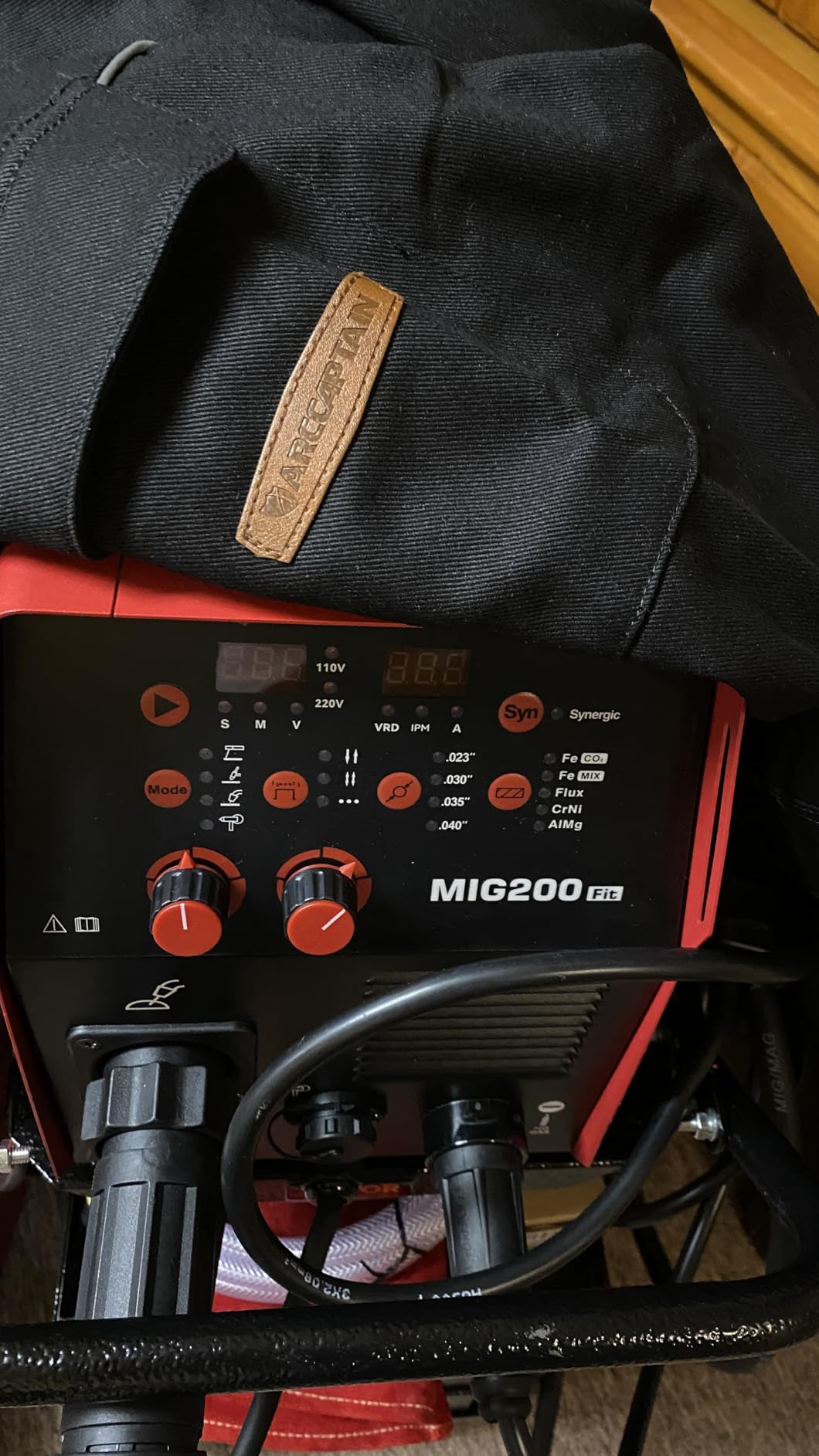
How to use the cuff adjustment properly
On a 90 degree day, run the cuffs open on the first snap position and seal them fully when you start a bead that throws spatter. That two-position adjustment is the reason this jacket can work in summer despite being the heaviest cloth option in the list, and most buyers never discover the feature exists.
The reflective strips matter more than they sound if you weld in a dim shop or do night field work. They are not a substitute for a hi-vis vest on a roadside, but they make you easier to see at a distance.
Why it is not the top pick
Heat comfort is the issue. Eleven ounce cloth simply does not move air like 9 ounce cloth does, and on a hot shop floor the difference between the two is exactly the difference between a jacket you tolerate and one you look forward to putting on.
The 4.3 rating and the eight percent one-star share suggest some early quality variation, which is common with a jacket whose listing is newer than the others here. Buy it when you need heavier cloth protection; do not buy it when you are mainly trying to stop sweating.
9. Miller Cotton Nylon Cloth Jacket: Best Lightweight Layering Coat
Welding Jacket, Navy, Cotton/Nylon, L
88 percent cotton and 12 percent nylon
1.4 pounds in size Large
Snap closure with fold-in cuff snaps
Pros
- Cotton-rich 88/12 construction keeps the jacket breathable in warm conditions
- At 1.4 pounds it is one of the lighter jackets in this roundup
- Fold-in cuff snaps seal the wrist to keep sparks out
- Durable construction with reinforced stitching
Cons
- The cotton and nylon blend is not labelled flame-resistant so it is a light spatter jacket rather than certified FR PPE
- Large sizing runs close to a 46 inch chest so size up for layering
The Miller jacket is among the lightest garments in the roundup at 1.4 pounds, and that weight comes from a cotton-rich 88 percent cotton and 12 percent nylon construction. Cotton moves moisture and breathes, nylon adds durability, and together they produce a coat that stays comfortable in warm conditions without the clammy feel of an all-polyester shell.
The build is conventional and proven. Snap button closure, fold-in cuff snaps to seal the wrist, reinforced stitching through the stress points, and a 30 inch shoulder-to-hem length. The Large is measured at a 46 inch chest.
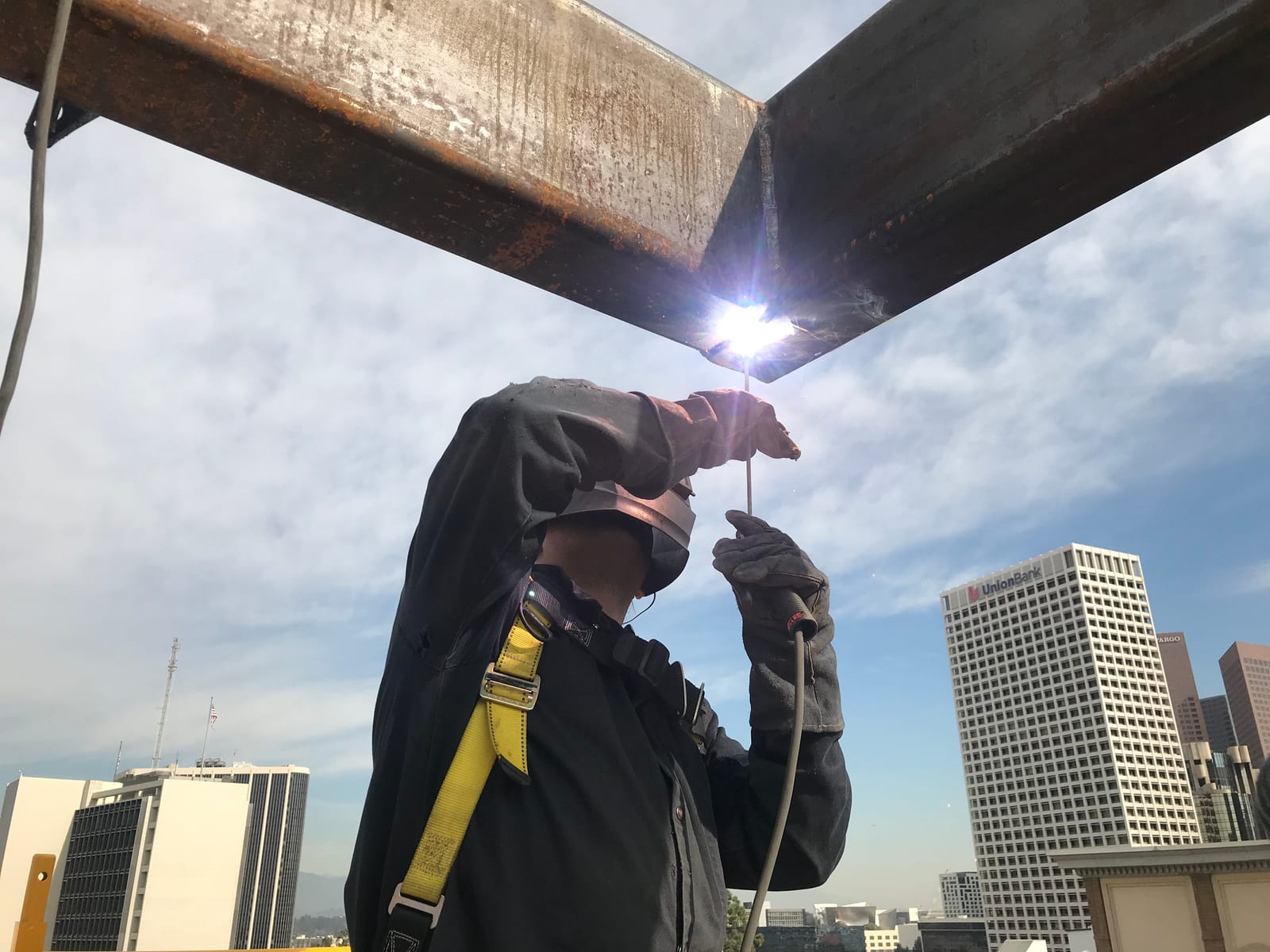
The important thing to understand before you buy is what this jacket is. The listing does not label the cotton and nylon blend as flame-resistant, so it functions as a light spatter jacket rather than certified FR personal protective equipment. Reviewers treat it that way, using it as a breathable everyday layer rather than safety-critical gear.
That is a completely reasonable use for it, and at 4.6 stars from 652 reviews the fit and comfort scores are strong. It just needs to be the jacket you know what it is.
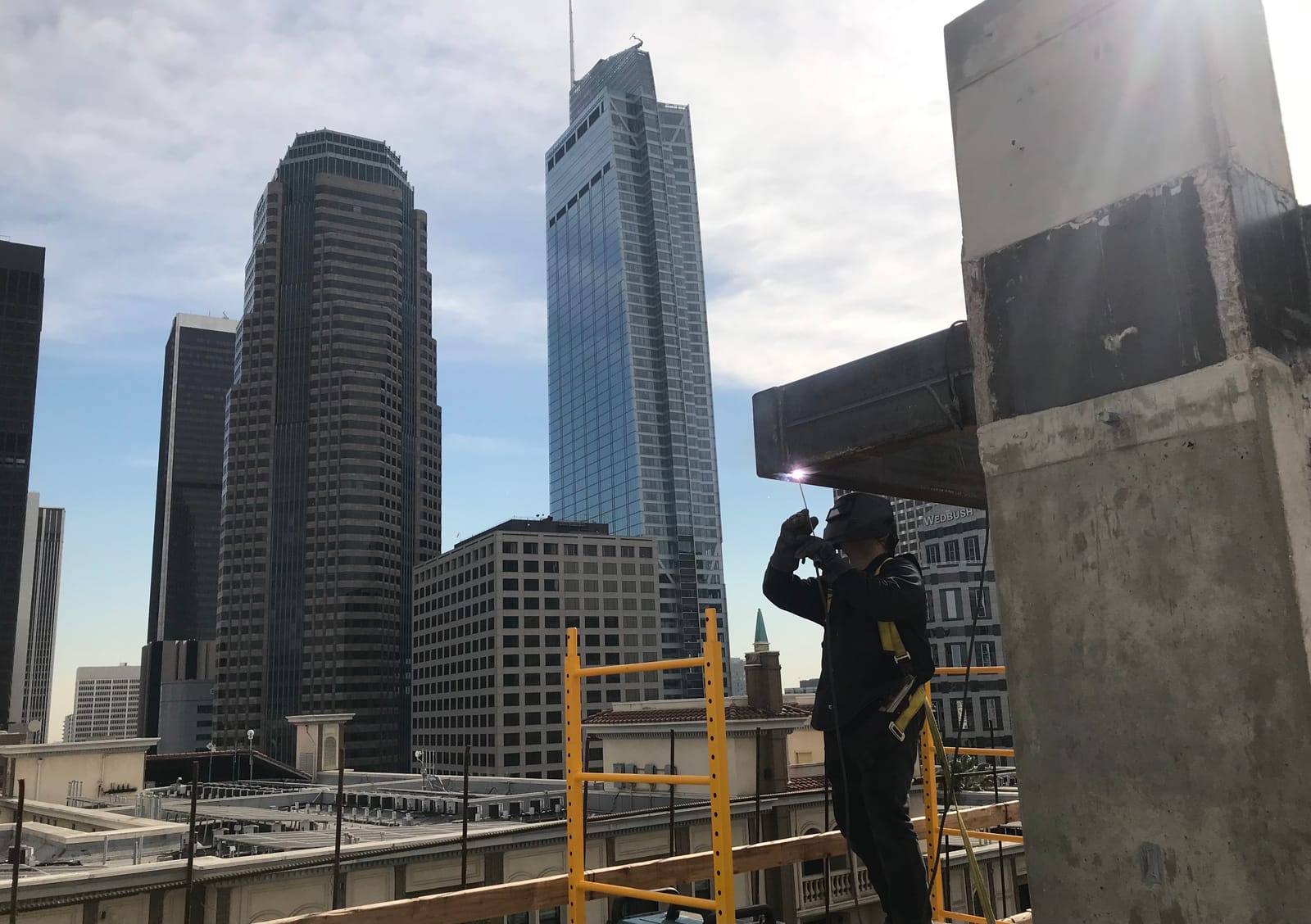
Where it makes sense
Use this as the jacket you wear between welds, during layout and grinding-adjacent setup, or as an outer layer over an FR garment on cooler days. Because the blend is not FR-labelled, it also works for customers who need something that looks like workwear without carrying a PPE rating.
The cotton weight means it handles sweat far better than the leather options here, which makes it a better warm-weather outer shell than the hybrid or any leather coat.
When not to rely on it
Do not treat this as your only jacket on any job where sparks, slag or radiant heat are present in volume. Without an FR rating it has no certified burn performance, and many workplaces will require a labelled garment for exactly the work you might want to do in it.
The Large also runs close to a 46 inch chest, so size up if you plan to layer a thicker garment underneath.
10. QeeLink Split Leather Sleeve Hybrid: Most Versatile for Overhead Work
QeeLink Welding Jacket Split Leather Sleeves | Premium Flame Resistant Cotton Body Hybrid Welder Jackets Clothes, Medium
Split cowhide leather on sleeves, shoulders and chest
10 oz. FR cotton body
Kevlar thread throughout
Pros
- Leather sleeves
- shoulders and chest give real overhead and in-position protection without a full leather coat
- 10 oz. FR cotton body stays cooler than an all-leather jacket
- Stitching quality consistently praised including over a full school year of use
- Adjustable neck
- cuffs and waist keep debris out
- Holds up against heavy flux-cored and MIG spatter
Cons
- Still runs hot in summer and one reviewer describes it as heavy in hot weather
- Leather sleeves can be stiff and uncomfortable at the inner elbow fold when new
- The FR cotton body burns through faster than the leather panels
This is the only jacket in the roundup with genuine leather on it, and the placement is deliberate. Split cowhide covers the sleeves, shoulders and chest, which are the zones that take overhead spatter and in-position slag, while a 10 ounce FR cotton body handles everything else. You get leather where it matters without wearing a full cowhide coat in July.
The build details are the ones a shop welder would ask about. Heat-resistant US Kevlar thread throughout, corrosion-resistant rivets in the high-stress areas, and adjustable neck, cuffs and waist so debris cannot find a way in. Listed applications include blacksmithing, steel mills, shipyards, manufacturing, automotive, gas welding and torch work.
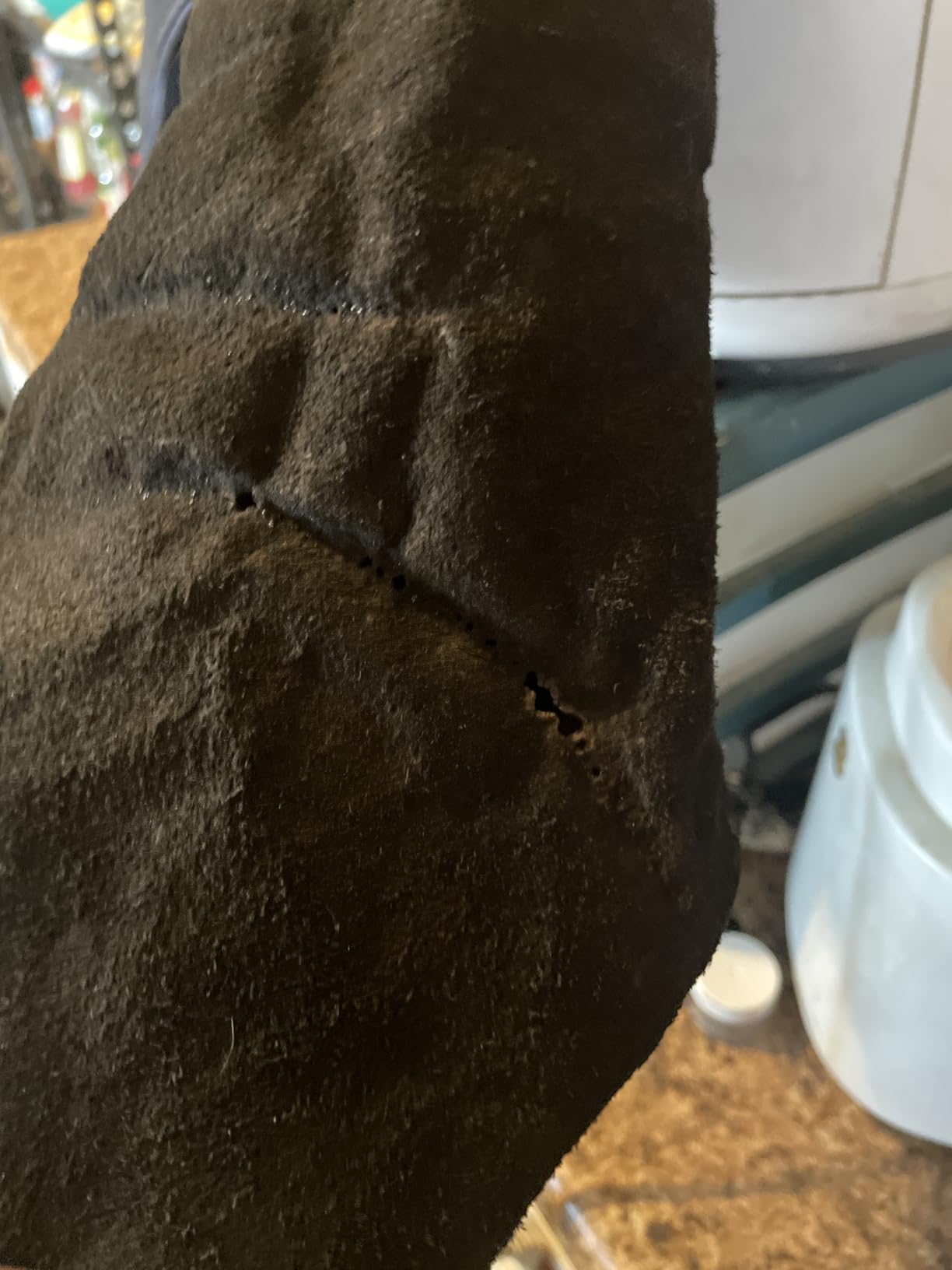
Stitching is what reviewers praise most consistently, including one buyer who used it through a full school year. On a hybrid jacket the seams are the weak link, because you are stitching two different materials that behave differently under heat, and weak thread gives out at the armhole first.
Across 842 reviews at 4.4 stars, the protection feedback is strong for overhead and tight-space work, and so is the heat feedback: this is still a heavy garment compared with the cloth picks.
Who this hybrid is for
This is the pick for a welder who works overhead or in tight positions but still wants more airflow than a full leather coat allows. The leather sleeve handles the worst exposure on the arms and chest, and the cotton body moves air through the torso where heat builds fastest.
If you do a mix of flat work in summer and overhead work year-round, this is the jacket that lets you stop switching between a cloth coat and a leather coat depending on the day.
The heat trade-off nobody should hide
It still runs hot. One reviewer is blunt about it being heavy in hot weather, and any jacket with leather sleeves will feel heavier than every cloth option in this list. If your shop is consistently above 90 degrees with no airflow, a cloth jacket remains the more honest choice for flat work.
Two smaller notes: the leather sleeves start stiff and can be uncomfortable at the inner elbow fold until they break in, and the FR cotton body panel will burn through sooner than the leather does. Treat the burn-through points as a sign to rotate jackets rather than to keep pushing through them.
How to Choose a Welding Jacket That Survives July
The single biggest mistake welders make in summer is choosing by price or by brand loyalty instead of by process. A 9 ounce FR cotton jacket and a full-grain cowhide coat are not competing products; they protect against different things. Decide what your work throws at your body first, then pick the fabric that handles it.
FR cotton versus leather: what actually stops a spark
Flame-resistant cotton does not melt. That is the entire argument, and it is why certified FR fabric is trusted in oil and gas work despite the stereotype. Treated cotton chars instead of melting, self-extinguishes, and keeps protecting after a brief exposure. Leather does not char, it simply insulates and burns slowly, which is excellent for heavy slag and terrible for a 90 degree afternoon.
Polyester and other synthetics are the real danger. A Facebook welding group thread put it bluntly about plastic: it melts, and it sticks to skin. Never wear a synthetic shell for welding.
The practical mapping is straightforward. FR cotton handles sparks, spatter and radiant heat on flat and downhand work. Leather sleeves or a leather coat handle overhead work, heavy slag, position welding and grinding spatter. A hybrid puts leather exactly where the exposure is and cotton everywhere else.
How to stay cool while welding in summer
- Pick the lightest fabric your process allows. 9 ounce FR cotton is the practical floor for cloth. Only move heavier when you are welding overhead or handling large slag.
- Wear a moisture-wicking base layer. A long sleeve synthetic or merino base pulls sweat off your skin before it soaks through the jacket. It does not compromise the FR rating of the outer garment.
- Use sleeves instead of a jacket for short jobs. Beginners welding occasionally are usually steered toward a pair of welding sleeves rather than a full coat, and for a ten-minute repair in a hot garage that is the correct answer.
- Work in cycles rather than continuously. Arc for twenty minutes, then step outside or into a fan for a break. Welders who pace their heat survive July better than welders who push through.
- Hydrate before you are thirsty. Heat stress in a poorly ventilated shop or inside a trailer with no airflow is the real hazard of summer welding, not the jacket.
- Time the heavy work to the cooler hours. Scheduling overhead and production welding for early morning is a bigger heat win than any jacket choice.
Add cold drinks and something salty to the cooler at the same time. We keep a summer drink and snack recipe list for exactly this reason, because hydration only works if there is something worth drinking at hand.
What to wear under the jacket
This is the least covered topic in this category and the one that changes your summer experience most. A cotton T-shirt under a welding jacket traps sweat against your skin and holds it against you the entire shift. A moisture-wicking base layer moves that moisture outward where the outer fabric can evaporate it, which is the difference between a damp shirt and a soaked one.
Long sleeves are better than short sleeves for two reasons. They stop sparks reaching bare forearms when a cuff rides up, and they wick sweat from the arm where a lot of heat collects. Some welders also add a thin FR undershirt so the layer against their skin is flame-resistant too.
If you are buying a new jacket for summer, buy it one size larger than you would for a bare-armed fit. The extra room is what lets air move through the jacket instead of pressing it flat against damp skin.
Fit and sizing: the brands do not agree
A Medium in one welding brand can behave like a Large in another, and forum threads about this never end. The fix is to measure, not to guess. Chest, shoulder-to-hem length, and sleeve length from shoulder to cuff are the three numbers worth having before you order.
One jacket in this roundup publishes full garment measurements, which is why it is worth checking before you order anything else. When a listing gives you a 54 inch chest and 34 inch sleeves, you can compare it against a jacket you already own and get the fit right the first time.
Fit is a safety feature, not a comfort preference. Sleeves that are too long bunch at the elbow and expose the wrist when you reach overhead. Jackets that are too loose let sparks reach the gap at the hem when you kneel. A jacket that gapes at the neck leaves the throat exposed.
Washing FR cotton and conditioning sweat-damaged leather
Most buyers are afraid to wash FR jackets because they assume the treatment washes out. On the two jackets here that are machine washable and rated for 50 commercial cycles, the rating is designed to survive laundering. Wash them cold, tumble dry low or hang them, and skip the fabric softener, which coats the fibers and reduces the FR performance of the finish.
For jackets marked hand wash only, cold water and mild soap with air drying is enough. Do not dry a FR cotton jacket on a hot surface, and do not send it through a dryer on high heat.
Leather needs different treatment, and this is where the cracking complaint starts. Salt from sweat left in cowhide dries out and stiffens the fibres, which is why a jacket that gets sweated in and then stored hard will crack along the elbows. Wipe sweat off with a damp cloth at the end of a shift, and condition the leather a few times a year with a purpose-made leather conditioner. Never oil a welding jacket with kitchen oil or automotive dressing.
Match the jacket to your welding process
- TIG. Least spatter of any process. A 9 ounce FR cotton jacket is more than sufficient, and a short jacket is fine because there is little slag.
- Light MIG and flat fabrication. 9 ounce FR cloth handles spatter well. This is the best case for the cloth picks in slots one through seven.
- Stick welding. Slag is heavier and hotter. Step up to 11 ounce FR cotton, a hybrid with leather sleeves, or a leather coat if you are vertical or overhead.
- Production work. Continuous duty means durability matters more than heat. Leather sleeves, Kevlar thread and reinforced seams pay for themselves here.
- Field and outdoor work. Dark FR cotton in direct sun beats a light blue jacket for radiant heat. Add reflective strips if you work near traffic or at night.
- Enclosed spaces. Trailers, boats and tanks with no airflow are the worst case. Sleeves plus a light FR shirt is the honest choice, paired with forced ventilation and frequent breaks.
For more on managing heat across a long season, our summer meal ideas are the other half of a good hot-weather work plan. If you weld too hot, you get metal defects, distorted parts and a fatigue problem long before you get a burn injury.
Frequently Asked Questions
What is the best welding jacket for hot weather?
A lightweight 9 ounce flame-resistant cotton jacket with a welder’s collar and snap-close cuffs is the best choice for hot weather. Cotton moves air better than leather and it does not trap heat the way an insulated cowhide coat does. It suits flat and downhand MIG, TIG and light stick work. Welders doing overhead work with heavy slag need leather sleeves or a leather coat instead.
What do welders wear in the summer?
Most welders wear a FR cotton jacket on hot days, or a pair of welding sleeves over a moisture-wicking long sleeve base layer when the job is short. Leather is usually reserved for cold months, overhead work and heavy slag. A FR work shirt works for layout and cleanup between welds. The base layer matters as much as the jacket, because sweat soaked into cotton against your skin does not dry all day.
How do you stay cool while welding in the summer?
Wear a moisture-wicking base layer under the lightest fabric your process allows, and use welding sleeves instead of a full jacket for short jobs. Work in twenty minute cycles with breaks in the shade or near a fan, and hydrate before you feel thirsty. Schedule overhead and production welding for the coolest part of the day. When welding in an enclosed space with no airflow, treat heat stress as the real hazard rather than the jacket.
Why do welders wear leather?
Leather is worn because it handles heavy slag, spatter and radiant heat better than cloth. It does not char and self-extinguish like FR cotton does; it simply insulates and burns very slowly. That makes leather the right choice for overhead welding, position work, heavy stick and grinding spatter. It is also far more durable in those conditions. The cost is heat, since leather holds sweat and becomes stiff if it is not conditioned.
Are welding jackets flame-resistant?
Some are, and you have to check. Look for an NFPA 2112, ASTM D6413 or NFPA 2113 label on the jacket itself, not just the word flame-resistant in a listing. Cotton and nylon blends sold as light work jackets are often not certified FR at all. An FR garment resists ignition and self-extinguishes, but it is not an arc-flash garment and it will not protect you from electrical hazards.
How should a welding jacket fit?
It should be close enough to the body to move freely but loose enough to allow air to flow, which usually means one size larger than your streetwear fit when you layer a base layer underneath. Sleeves must reach your wrist and stay there when you reach overhead, and the hem must cover your lower back when you kneel. Never let a jacket gap at the neck. Measure chest, sleeve length and shoulder-to-hem before ordering, since sizing differs between brands.
The Verdict: Which Welding Jacket Earns a Place in Your Shop Bag
The Black Stallion FN9-30C is our pick for the best welding jackets for summer because it does the one thing a hot-shop jacket has to do: stop spatter without adding weight, lining or leather panels that trap heat. Nine ounces of treated cotton, a welder’s collar and leather-reinforced cuff snaps that still work with gloves on. If your work is flat and downhand, it is the jacket to buy first.
Match it to your day instead. Reach for the Lincoln Electric K2985 when you want the strongest certification and a washable jacket on rotation. Choose the Revco BSX Contoured when extra torso coverage and the joint highest rating in the group matter most. Pick the QeeLink split leather sleeve hybrid when you weld overhead but cannot justify a full cowhide coat in July.
Whatever you choose, wear a moisture-wicking base layer, drink more water than you think you need, and treat heat stress as the real hazard of summer welding. Nothing on this page is an arc-flash garment, so follow your own site safety plan over anything a roundup says.