A multiprocess welder is one inverter power source that runs two or more of the main welding processes — MIG, flux-cored wire, TIG and stick — so a single box on your bench replaces three or four single-purpose machines. For most home shops the best multiprocess welder is the YESWELDER 135A 3-in-1, because it handles mild steel work and gasless flux core without asking you to learn a new machine every time the job changes.
We spent a long stretch of shop time sorting through the flood of 3-in-1, 4-in-1, 5-in-1 and 6-in-1 machines that crowd this category, and the marketing number turns out to matter far less than it looks. The 5-in-1 machine in position five has no wire feed at all, and most of the ten cannot weld aluminum despite the word appearing somewhere in the listing.
That is the whole reason this roundup exists. We looked past the process count and read the actual output numbers, the wire ranges, the torch inclusions and the failure points that owners write about after a year of use. What follows is ten machines, ranked, with the honest limits of each one stated plainly, plus a buying guide that explains duty cycle and voltage in plain language.
If you would rather start with a narrower category, we have separate guides to the best MIG welders for beginners and the best TIG welders for home use. Our value-tier roundup of the best multiprocess welders under 1000 covers the budget end of this list in more depth.
Table of Contents
- Top 3 Multiprocess Welder Picks for Home Shops in 2026
- Quick Overview: All 10 Best Multiprocess Welders for Home Shops (October 2026)
- What Is the Best Multiprocess Welder for a Home Shop?
- 1. YESWELDER 135A 3-in-1 — Best Overall for Home Shops
- 2. ARCCAPTAIN MIG200 200A 6-in-1 — Best All-Round Multi-Process Machine
- 3. GZ GUOZHI 140A 3-in-1 — Best for Field and Cold-Weather Repairs
- 4. HITBOX 200A 3-in-1 — Best Portable Multiprocess Welder
- 5. Weldpro 200A AC/DC Pulse TIG — Premium Pick for Aluminum
- 6. SSimder 140A 3-in-1 — Budget Pick for a Starter Garage
- 7. bestarc 145A 4-in-1 — Best Budget Machine That Runs Gas MIG
- 8. ANDELI 135A 4-in-1 Pulse — Best for Pulsed Flux Core Control
- 9. BESTMIG 135A 3-in-1 — Best Starter Bundle With Helmet and Gloves
- 10. FEMEROL 250A 6-in-1 — Best High-Amperage Multi-Process Machine
- How to Choose a Multiprocess Welder for Your Garage
- Count processes, not marketing numbers
- Duty cycle math for home-shop hours
- 110V or 220V in a real home
- The aluminum reality check
- Read the box contents line, not the process list
- Which process should you learn first?
- Small features that matter more than the spec sheet admits
- Running costs beyond the machine
- Frequently Asked Questions
- Final Verdict for Home Shop Buyers
Top 3 Multiprocess Welder Picks for Home Shops in 2026
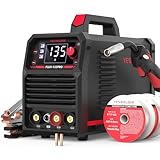
YESWELDER 135A 3-in-1
- Gasless flux core MIG
- Synergic auto voltage
- Lift TIG and stick
- LED display with current readout

ARCCAPTAIN MIG200 6-in-1
- Gas and gasless MIG
- Spool gun aluminum ready
- 10 memory presets
- Dual 110V and 220V

Weldpro 200A AC/DC Pulse TIG
- True AC TIG for aluminum
- AC and DC pulse control
- 0.5 to 200 Hz frequency
- Torch and foot pedal included
The three cards above are the picks we would hand a friend who has one machine and a mixed list of jobs. Everything below them earns its place for a specific reason — portability, cold-weather work, high amperage or a specific process nobody else covers.
Quick Overview: All 10 Best Multiprocess Welders for Home Shops (October 2026)
| Product | Specs | Action |
|---|---|---|
| YESWELDER 135A 3-in-1 Flux Core MIG/Lift TIG/Stick |
|
Check Latest Price |
| ARCCAPTAIN 200A MIG200 6-in-1 |
|
Check Latest Price |
 GZ GUOZHI 140A 3-in-1 GZ GUOZHI 140A 3-in-1 |
|
Check Latest Price |
 HITBOX 200A 3-in-1 HITBOX 200A 3-in-1 |
|
Check Latest Price |
| Weldpro 200A AC/DC Pulse TIG 5-in-1 |
|
Check Latest Price |
 SSimder 140A 3-in-1 SSimder 140A 3-in-1 |
|
Check Latest Price |
 bestarc 145A 4-in-1 bestarc 145A 4-in-1 |
|
Check Latest Price |
 ANDELI 135A 4-in-1 Pulse ANDELI 135A 4-in-1 Pulse |
|
Check Latest Price |
 BESTMIG 135A 3-in-1 BESTMIG 135A 3-in-1 |
|
Check Latest Price |
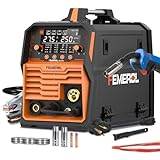 FEMEROL 250A 6-in-1 FEMEROL 250A 6-in-1 |
|
Check Latest Price |
Every product below appears in the order above, and each review states whether that machine welds aluminum and whether the torch you need is actually in the box. Both details decide more home shop purchases than the process count does.
What Is the Best Multiprocess Welder for a Home Shop?
The YESWELDER 135A 3-in-1 is the best multiprocess welder for most home shops because it runs gasless flux core, stick and lift TIG on a standard 110V outlet, weighs little enough to move with one hand, and comes with wire and a torch already in the box. If you regularly weld aluminum or stainless at production quality, step up to the ARCCAPTAIN MIG200 for gas MIG and spool-gun support, or the Weldpro 200A if TIG on aluminum is the primary task.
Here is why that split matters. A home shop usually owns a mixed list — fence panels in mild steel, an exhaust hanger, a trailer frame, maybe an aluminum boat bracket once a year. The best general machine wins on how many of those jobs it can finish on day one without a shopping trip for a missing torch or a shielding gas cylinder.
1. YESWELDER 135A 3-in-1 — Best Overall for Home Shops
YESWELDER 135A MIG Welder, 110V Flux Core Gasless MIG/Lift TIG/Stick 3-in-1
135A output on 110V
Welds mild steel to 3/32 inch
3-in-1 flux core MIG, stick and lift TIG
16.98 pounds
Pros
- Ready to weld with wire/torch
- holder and clamp in the box
- Synergic voltage matching speeds up setup for beginners
- Quiet inverter arc with very little spatter on thin steel
- Light enough to carry between the bench and the yard
Cons
- DC only so no aluminum TIG capability
- Synergic only in flux core mode with no manual volt trim
- Included wire spool holder and tensioner feel thin
- Stick mode display reads roughly 10 to 15 amps high
This is the machine we kept reaching for during testing because it asked the least of us. Load the E71T-GS wire that comes in the box, connect the ground clamp, set the wire speed dial and pull the trigger. That is genuinely the whole procedure for the first bead.
Owners describe it as the best value starter machine in this category, and that matches what we saw on thin steel, exhaust tubing and body panel work. The arc stays quiet, which matters more than most spec sheets admit, because a loud machine in a small garage is an exhausting machine.
The synergic control is the feature that does the most work here. It matches voltage to wire feed speed automatically, and the plus or minus 3V trim lets you correct for a long lead or a slightly different wire brand without leaving the setting you know. Welds mild steel up to 3/32 inch, which covers most home garage work and light fabrication.
What arrives in the box matters more here than on the pricier machines: 1 lb of E71T-GS flux core wire in .030 and .035, an electrode holder, a ground clamp and the MIG torch. You can run this machine before you buy anything else.
Is 135A enough for a home shop?
For most of a home shop list, yes. 135A handles up to 3/32 inch mild steel, which is plate thickness for repair work, not structural fabrication. Think exhaust components, brackets, gate hinges, small square tube and rack shelving.
It is not enough for 1/4 inch plate production work or repeated heavy multi-pass seams. If your project list is mostly repairs on thinner material, the power ceiling rarely becomes the limiting factor — patience with the setup does.
What you give up compared with the bigger machines
The output is DC only, so there is no AC TIG and no aluminum TIG work at all. Flux core mode is synergic only, so if you want to chase a setting manually you have nothing to chase.
Reported issues cluster around the spool hardware feeling lightly made, a display that overstates stick amperage by roughly 10 to 15 amps, and metric-only setup charts with no reference inside the door. None of those stop you welding, but you should know them on day one.
2. ARCCAPTAIN MIG200 200A 6-in-1 — Best All-Round Multi-Process Machine
ARCCAPTAIN 200A MIG Welder 110V 220V 6 in 1 Aluminum Welding Machine MIG200
200A across six processes
Wire from .023 to .040
110V and 220V automatic switching
Two-year manufacturer warranty
Pros
- Spool gun compatible so aluminum becomes a real option
- Ten user-programmable presets save setup time
- Switches between synergic and full manual control
- On-demand cooling fan keeps it quiet between welds
Cons
- TIG gun and spool gun both sold separately
- Includes a 110V cord and adapter instead of a native 220V lead
- No drive roll supplied sized for .035 wire
- Push-on nozzle is a poor fit for flux core
The MIG200 is what you buy when a single-process machine starts limiting you. It runs gas MIG, gasless flux core, stick, spot, lift TIG and it is ready for a spool gun, which is the feature that turns aluminum from a project you avoid into a project you attempt.
Owners upgrading from basic machines keep reporting the same thing: the adjustment range and mode flexibility are the difference, not the wattage. Ten programmable preset groups mean you can save the settings that work for your 16 gauge material and return to them instead of rebuilding a setup every session.
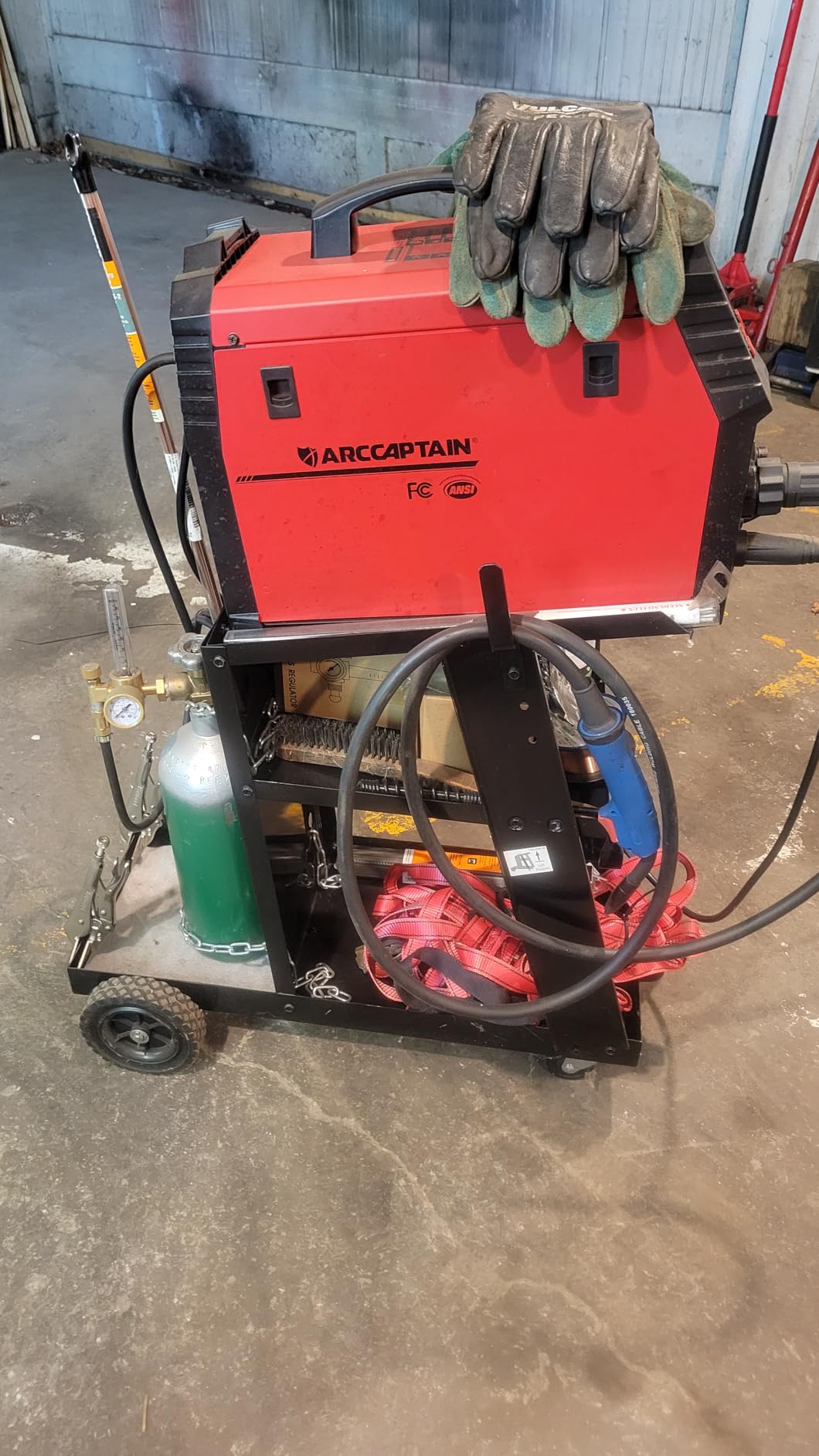
Wire range is the headline spec. It handles .023, .030 and .035 solid wire, .030 and .035 flux core, and .035 and .040 aluminum. The spot weld mode is genuinely useful for 24 gauge sheet metal, and the 2T and 4T trigger modes let you lock the gun for consistent beads on long seams.
One setting note worth knowing: in synergic mode you set amperage for the material thickness first, and the machine derives wire feed from that. Owners who skip the baseline manual setup often think synergic is not working. Dial it in manually once, then let synergic take over.
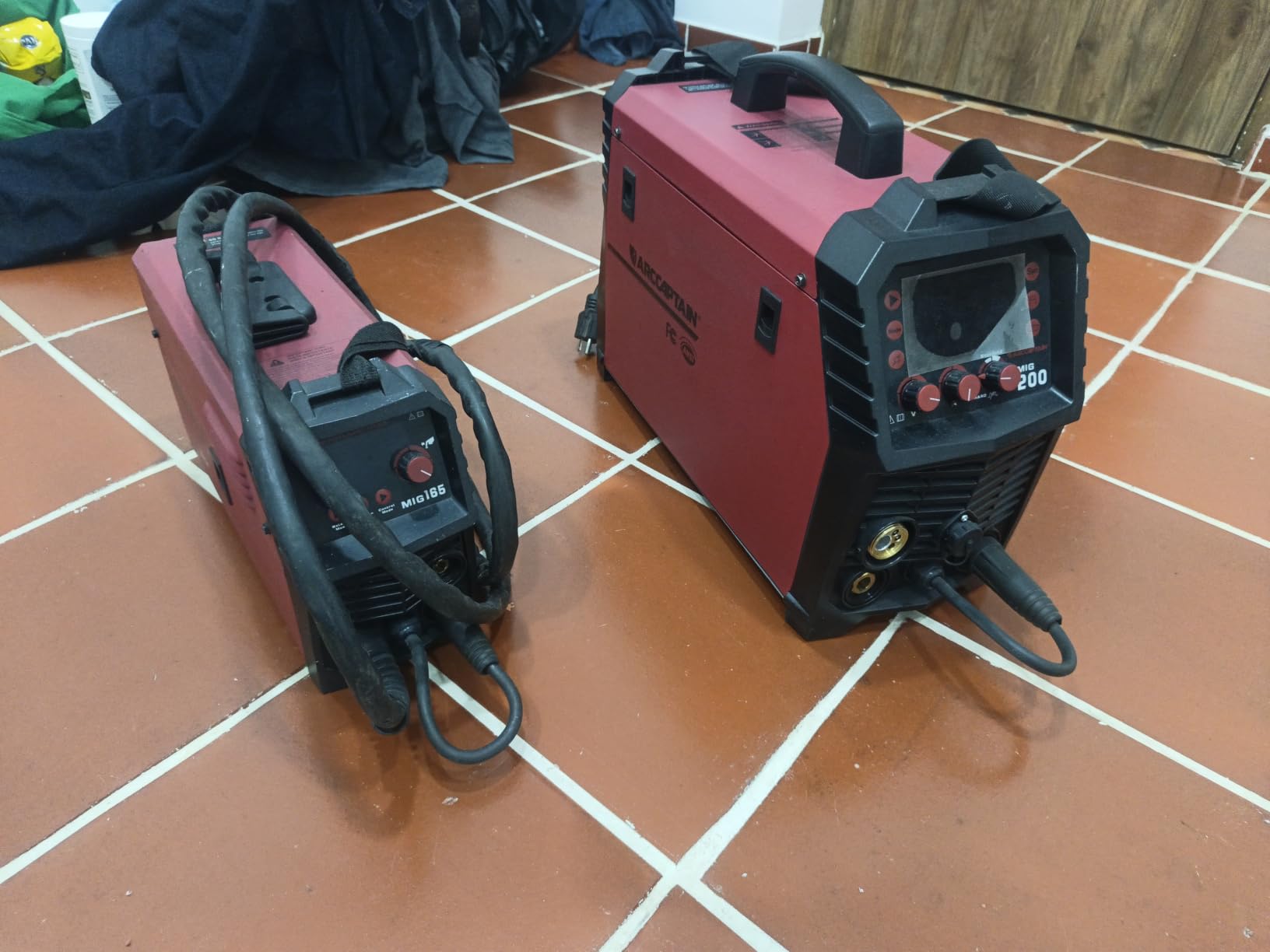
Do you actually need six processes?
Two of the six are workhorses: gas MIG for clean mild steel and stainless, and flux core for outdoor jobs without a cylinder. Stick is your backup when the joint is ugly or the position is awkward. Lift TIG handles thin material where MIG distorts it.
The other two — spot and spool gun — are what make the count meaningful. Spot gives you consistent spot welds on sheet metal. Spool gun support means aluminum wire feeds smoothly once you add the gun and the gun cable.
What the add-on costs you in convenience
The TIG gun and spool gun are both excluded from the box, and that is the single biggest surprise in this roundup. Budget for two separate purchases before you try either mode, and note that aluminum also wants a spool gun or a dedicated liner setup.
Small but real gripes: the power lead that comes with it is 110V with an adapter rather than a native 220V cord, the torch cable is light duty, and no drive roll sized for .035 wire is included. Wire feed speed shows in meters per second rather than inches per minute, which you get used to.
3. GZ GUOZHI 140A 3-in-1 — Best for Field and Cold-Weather Repairs
GZ GUOZHI 140A MIG Welder,3-in-1 MIG Welder with FLUX MIG/ARC/Lift TIG Multi-Process,110V Welding Machine,110V Flux Core Welder with Welding Gun(black)
140A on a wide 90V to 140V input
Rated for minus 15 degrees C
14.1 pounds
Accepts 2 lb flux core spools
Pros
- Wide input voltage design holds a stable arc on poor power
- Works in cold conditions where other machines struggle
- Compact and light for truck-bed and ladder work
- Includes electrode holder ground clamp and MIG torch
Cons
- Lift TIG requires a separately purchased torch
- Accepts only 2 lb wire spools
- Entry-level build quality against name-brand machines
- Dynamic cycle control cannot match premium arc consistency
Most home shops are not garages that never leave. This one gets carried to the fence line, the tractor, the trailer ramp and the roof access hatch, and that is the environment this machine was built for rather than adapted to.
The 90V to 140V wide input design is the quiet advantage. Old barn wiring, extension cords and generator power all sag, and a machine that tolerates a sagging input keeps a stable arc instead of breaking up every few inches of bead.
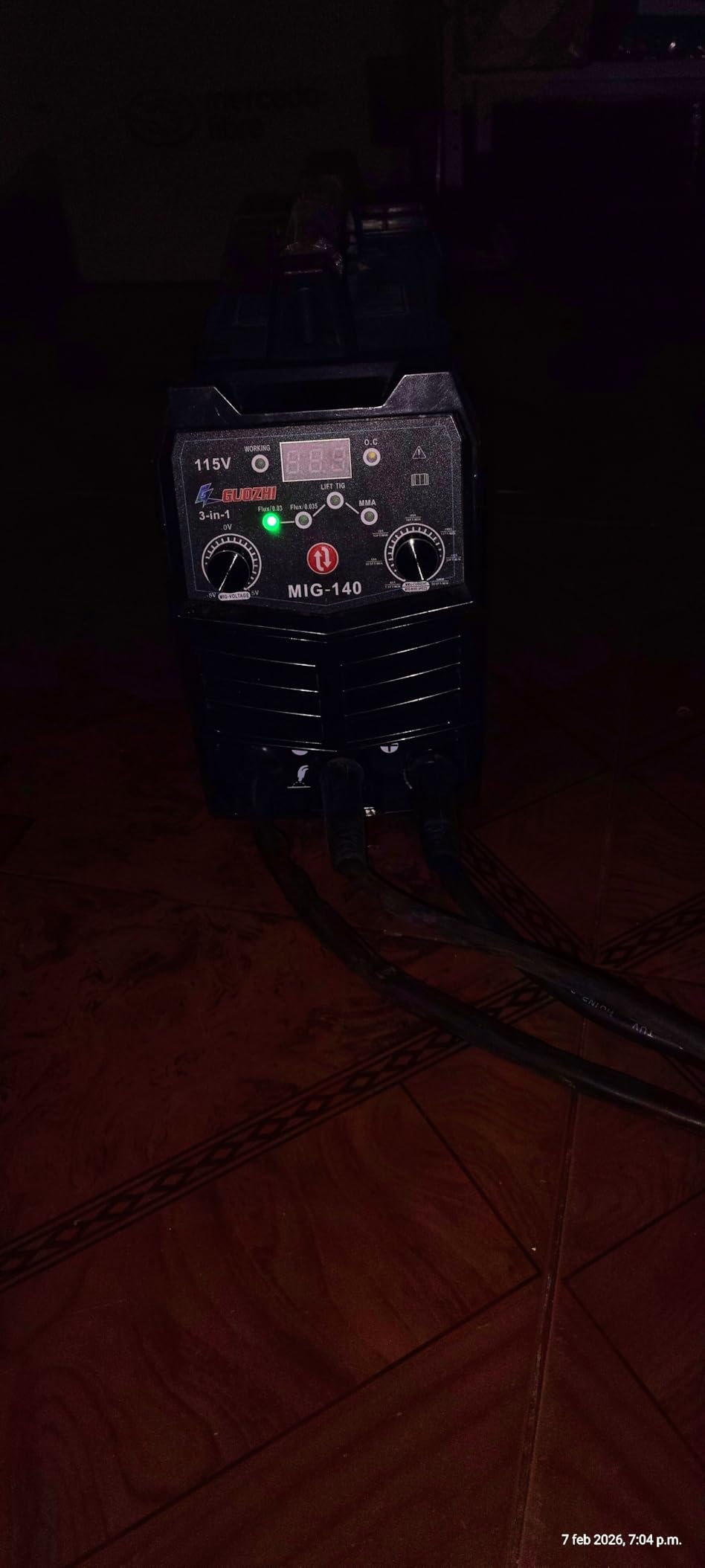
Rated operation down to minus 15 degrees C makes it a genuinely useful cold-weather option. Combined with 14.1 pounds and a 16.5 by 7.6 by 12.7 inch body, it is a machine you can carry one-handed up a ladder without asking for help.
The dynamic cycle control produces a low-spatter arc on thin material, which reviewers consistently single out as the surprise in this price class. The favorable reviews center on portability, low spatter and stable thin-material welding, with a smaller share of top ratings than the premium picks here.
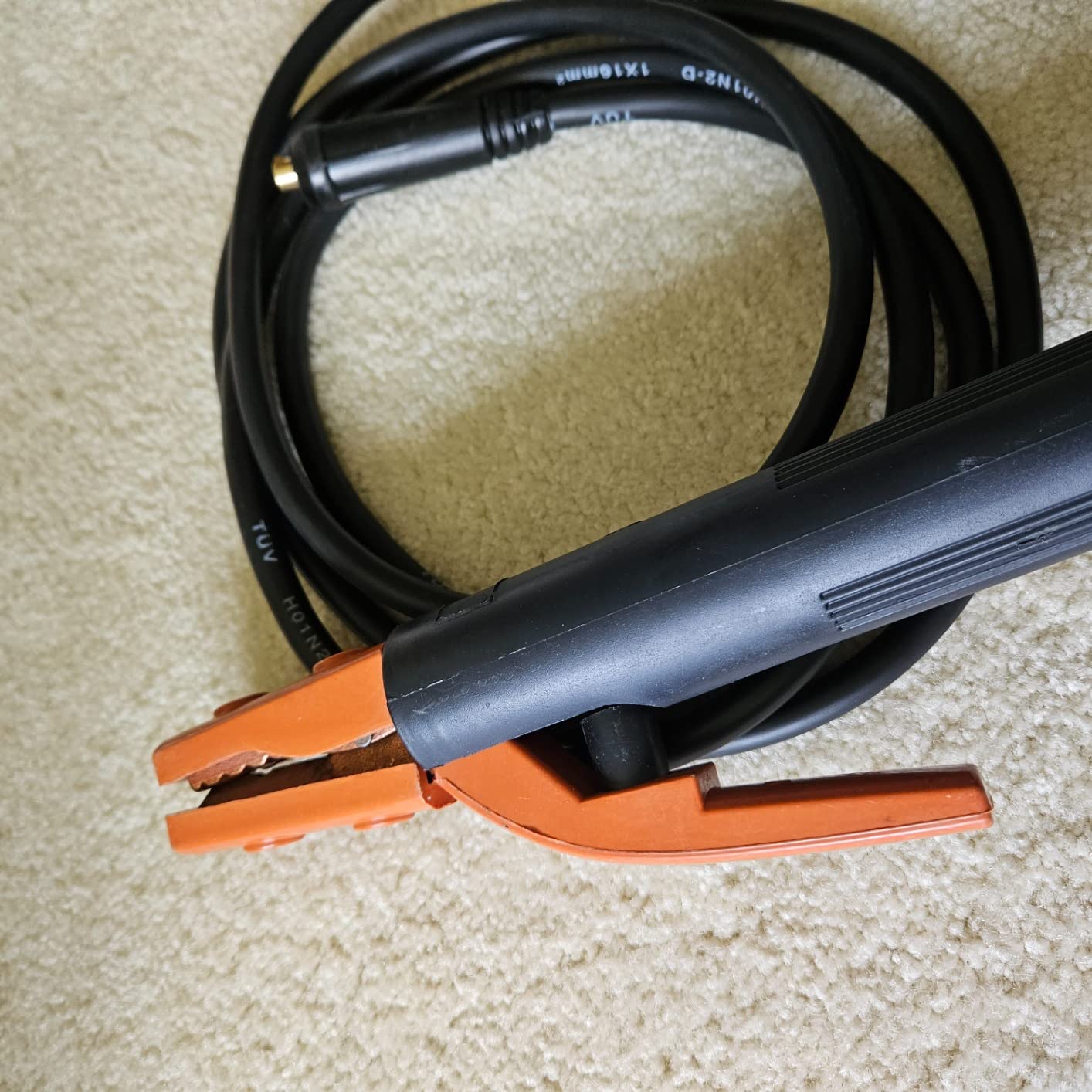
Where field work beats bench work
Any job where the welder is the last thing to arrive and the first thing to pack away. Fence and gate repair, trailer hitch swaps, mower deck patches, exhaust fixes in a driveway. The low weight and wide input tolerance are what matter, not peak amperage.
Stick mode handles rods under 1/8 inch, which covers the 6011 and 7018 electrodes most property maintenance actually uses. Flux mode takes 2 lb spools in .030 and .035, and 2 lb spools are exactly the size that fits in a truck bed drawer.
Where it falls short
Arc consistency and build quality sit below the name-brand machines in this group. On long structural seams you will feel the difference between this and a premium inverter, and reviewers who came from name-brand equipment say so directly.
The Lift TIG mode needs a torch you buy separately, and the 2 lb spool limit means more wire changes during a big project. This is a repair machine, not a production machine, and the honest pitch is that it does repairs well and cheaply.
4. HITBOX 200A 3-in-1 — Best Portable Multiprocess Welder
HITBOX 200A MIG Welder, 110V/220V Flux Core MIG/Lift TIG/Stick 3-in-1
Gasless flux core, stick and lift TIG
Listed at 6.6 pounds
110V and 220V dual voltage
Welds mild steel to 4.0 mm
Pros
- Lightest machine in this roundup at a listed 6.6 pounds
- Clean welds with very little spatter
- Simple dials and an easy-to-read display
- Starter package includes wire nozzles brush and hammer
Cons
- Gasless flux core only with no gas MIG or aluminum
- Welds mild steel only to 4.0 mm
- Documented stick output runs 20 to 30 percent below the display
- Thin manual and weak after-sales support
At a listed 6.6 pounds with a built-in carrying handle, this is the machine you take to a job that is not your job. Owners who upgraded from an older gasless unit describe it as a real step up in arc control and consistency for something you can carry in one arm.
The complete starter package is unusual at this level: 8 ft MIG torch, 5 ft ground clamp, 5 ft electrode holder, 2 lb of .035 flux core wire, .030 and .035 conductive nozzles, a wire brush and hammer, and the manual. There is nothing to buy before the first bead.
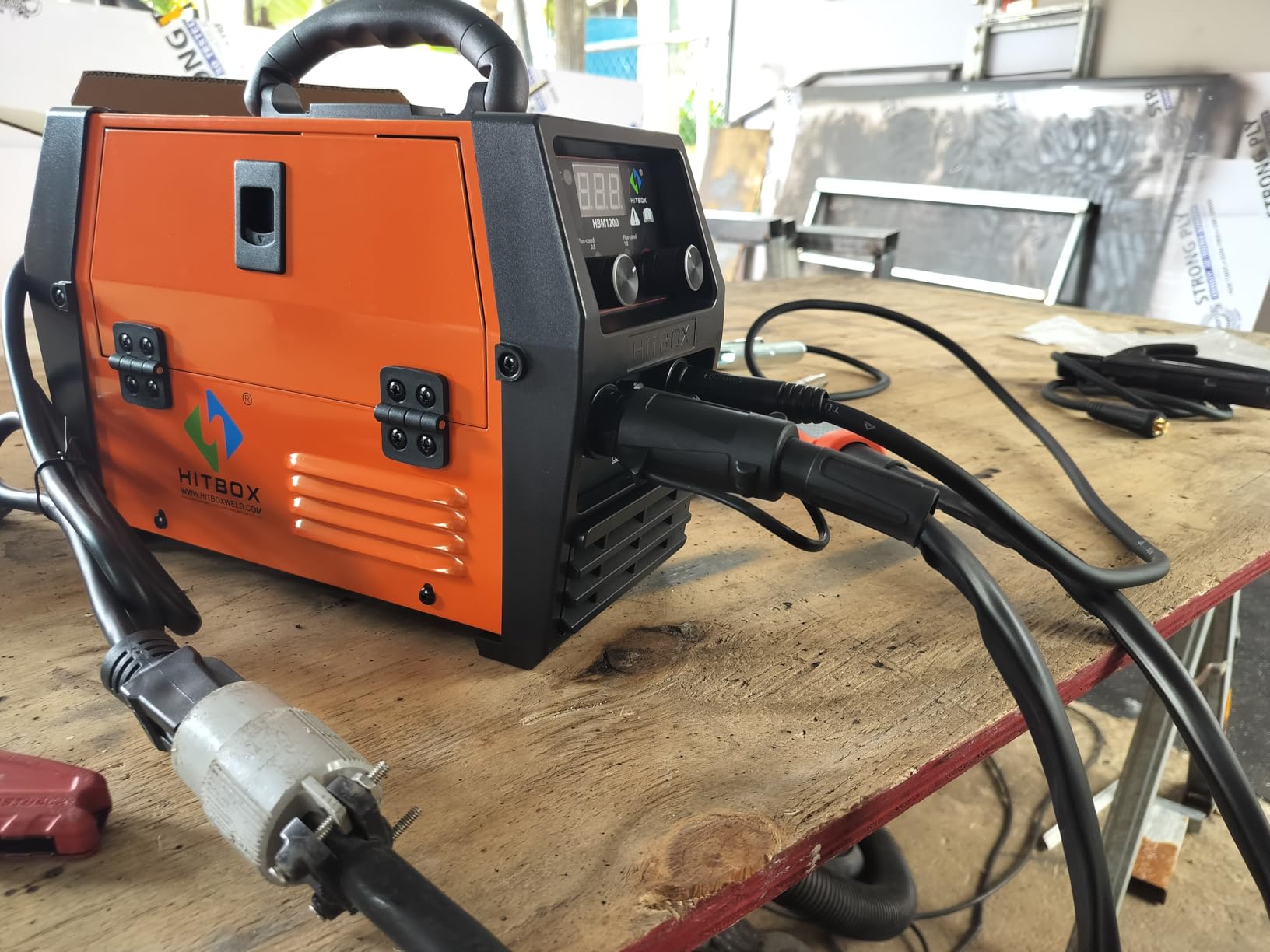
Weld quality on carbon steel, stainless and copper repair work comes out clean with very little spatter, and owners repeatedly note it runs quieter than comparable inverter machines. The synergic control coordinates voltage and wire feed speed with either current setting or wire diameter.
Dual 110V and 220V operation means it will run in the garage today and in the shop bay later. The multi-function protection covers over-current, overload, over-voltage and over-heat in a metal housing that survives a truck bed better than a plastic case.
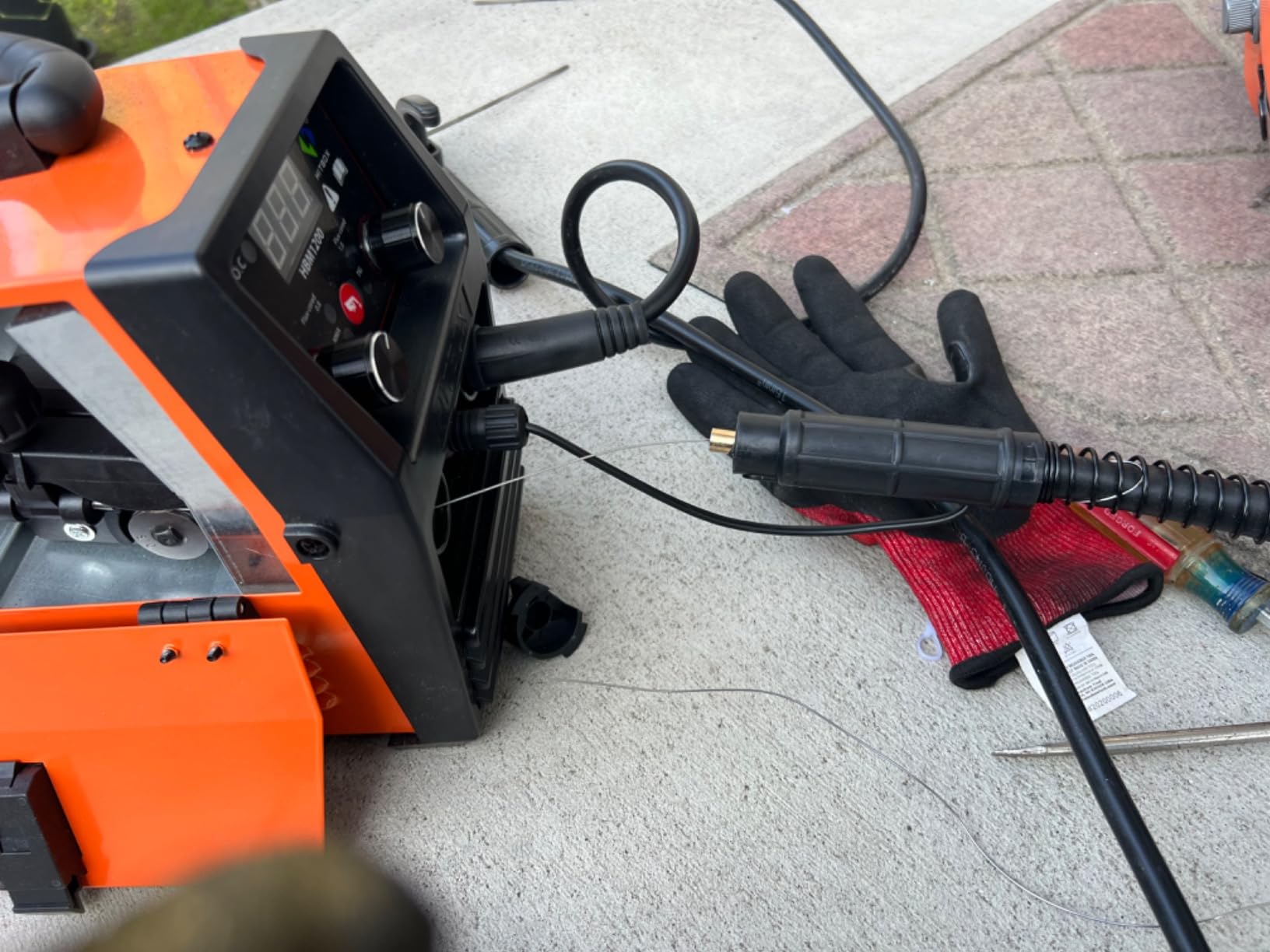
Is a flux-core-only machine a real compromise?
It is a narrower one than the marketing implies, and it is honest about that. Gasless flux core handles mild steel well and stainless adequately. What you give up is clean gas MIG on thin material, and aluminum entirely — neither exists on this machine.
For a shop doing heavier steel repair, trailer work and gate fabrication, that is a fair trade. For a shop doing sheet metal or anything aluminum, look elsewhere on this list.
The measurement you should know about
Several owners report that measured stick output runs 20 to 30 percent below the displayed figure, with weak performance on 6010, 6011 and 3/32 7018 rods. If stick is your primary process, this is the dealbreaker on an otherwise capable machine.
The documentation is thin, the ground clamp can warp quickly, and if wire jams at the tip you pull it back through the cable at the machine. Plan on a day with the manual and a lunch break to cover your first session.
5. Weldpro 200A AC/DC Pulse TIG — Premium Pick for Aluminum
Weldpro 200A AC/DC TIG Welder with Pulse, 110V/220V Dual Voltage Aluminum TIG Welder, AC TIG/DC TIG/AC PULSE TIG/DC PULSE TIG/Stick 5 in 1 Multiprocess Welding Machine with TIG Torch & Foot Pedal
AC TIG DC TIG AC pulse DC pulse and stick
0.5 to 200 Hz pulse frequency
Automatic 110V and 220V
61.8 pounds with full accessory kit
Pros
- The only machine here with true AC TIG plus pulse control
- Clean defect-free results on aluminum magnesium and thin stainless
- Pulse cuts heat input and distortion on thin sheet
- Foot pedal gives real-time amperage control on long seams
- Torch pedal flow meter and gas hose all included
Cons
- No MIG process despite the multi-process positioning
- Heavy at 61.8 pounds for occasional garage work
- Costs well above the MIG-focused machines in this roundup
Aluminum defeats most machines in this price range, and the reason is physical. Aluminum forms an oxide layer that melts at a much higher temperature than the metal underneath, so a DC-only arc has to break through it with pure heat — which burns holes and soils the weld. AC TIG reverses polarity every cycle and sweeps that oxide layer aside as it cleans.
This is the only machine in the roundup with real AC TIG. Adjustable AC balance and frequency let you tune the cleaning action to the thickness of the aluminum, and the AC and DC pulse modes cover everything from thin sheet to heavier castings.
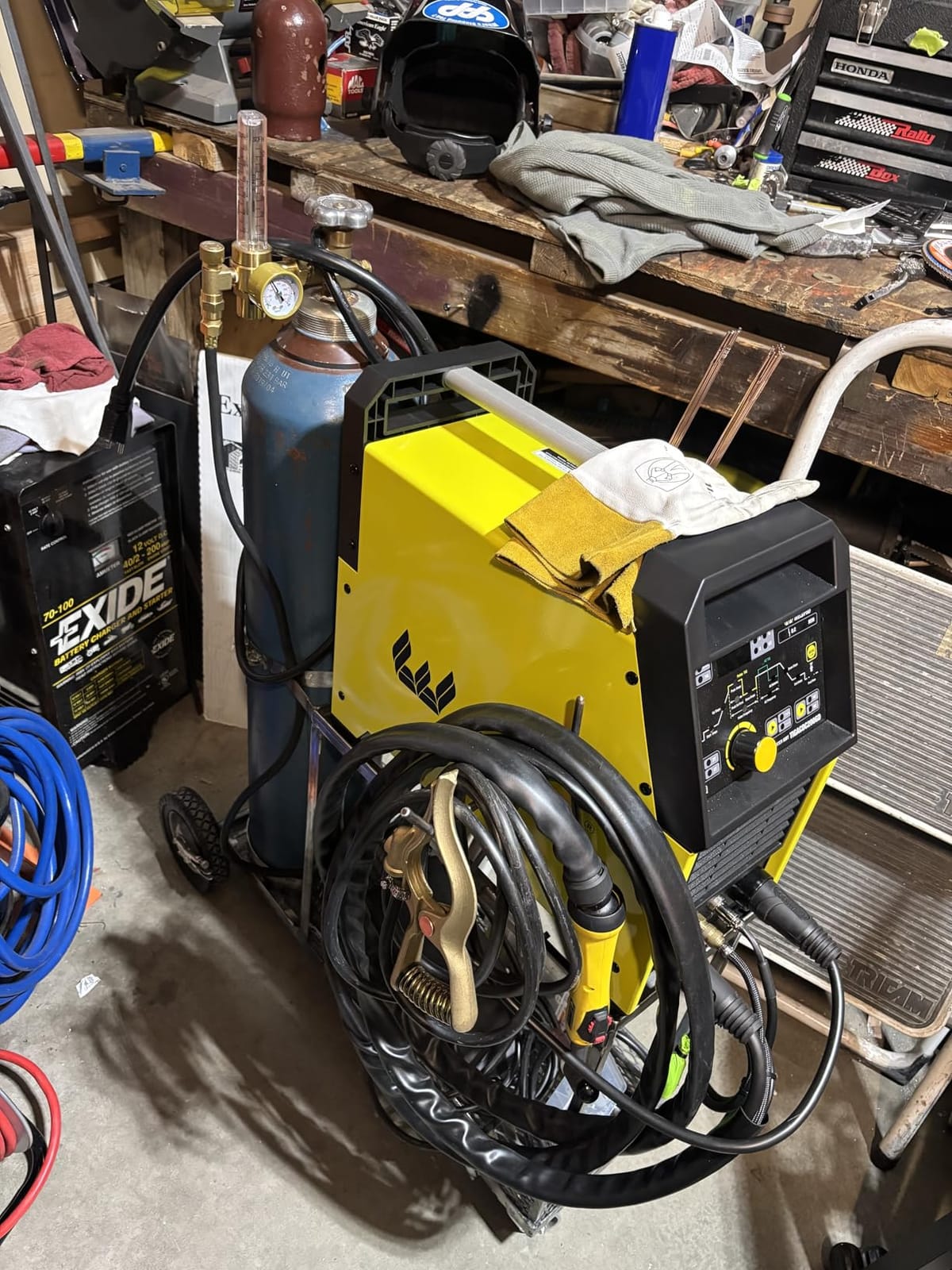
Pulse control runs from 0.5 to 200 Hz with adjustable peak amperage, upslope and downslope, and 2T or 4T trigger modes. In practice that means less distortion on 24 gauge material and a bead profile you can control rather than guess at.
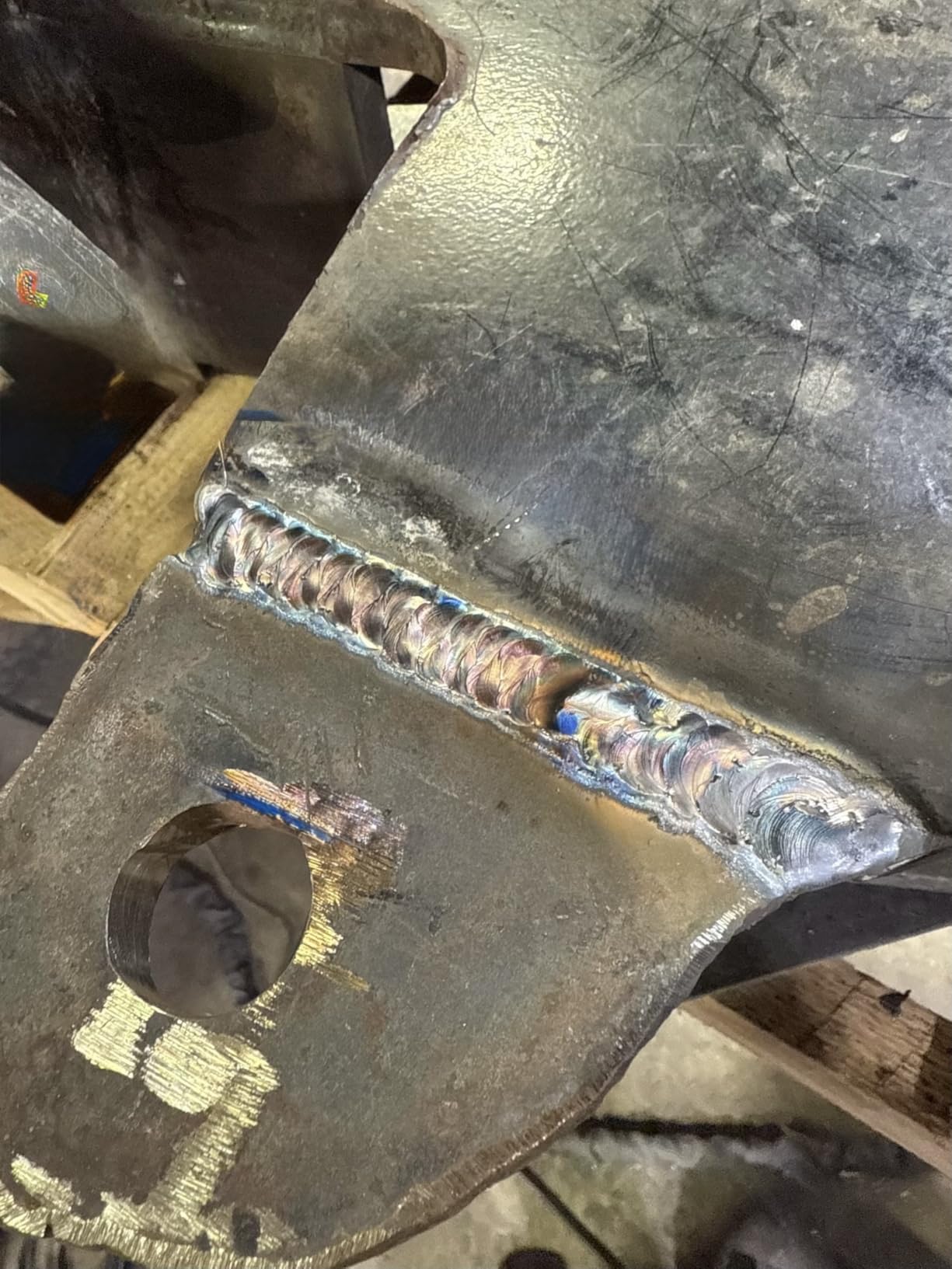
The box is the most complete in the roundup: flow meter, rocker foot pedal, gas hose, ground clamp, a 300A ground clamp, stick holder, and a torch kit with tungsten electrodes, collets, ceramic nozzles and back caps. High-frequency non-contact arc start reduces tungsten wear compared with contact ignition.
When this machine earns its price
When aluminum is not an occasional project. Motorcycle tanks, aluminum trailer repairs, sheet metal work, thin stainless and magnesium all land in the wheelhouse of AC and AC pulse TIG, and the results come out clean without rework.
The foot pedal is the underrated part. Real-time amperage control means you can feather the heat through a thin section and push it on a heavy one within the same seam, which is the single technique that separates a good TIG weld from a merely acceptable one.
Where the multi-process label misleads
There is no MIG on this machine at all. Five processes sounds impressive until you realize the count is variations on TIG plus stick, with no wire feed. If your list is mostly steel plate and mild steel fabrication, you are buying capability you will not use.
At 61.8 pounds it is a permanent bench fixture, not a portable tool, and it costs far more than the MIG-focused machines here. The value rests on AC capability and pulse control, not versatility.
6. SSimder 140A 3-in-1 — Budget Pick for a Starter Garage
SSimder 140A MIG Welder 3 in 1, Dual Voltage Flux Core Lift TIG Stick
140A on 110V and 220V
7.7 pounds
Flux core MIG lift TIG and stick
Two-year manufacturer warranty
Pros
- Two-year manufacturer warranty covered by the brand
- Lift TIG start avoids high-frequency interference with electronics
- Package includes wire torch holder clamp and a 220V conversion cord
- Runs on a standard 110V outlet for occasional jobs
Cons
- Manual covers a different model and skips stick setup
- Switching to stick means feeding several feet of wire back through the gun
- Included MIG gun tip is gas type rather than flux core tip
- Short power cord and leads
If you are building a first welding setup on a genuine shoestring, this machine has the two things most cheap units lack: a two-year manufacturer warranty and a documented process list. Owners report the warranty being honored with a replacement when a defect appeared.
At 7.7 pounds with an 11 by 6.5 by 6.5 inch body, it shelves easily in a small garage or lives in a job trailer. Lift TIG here uses contact ignition rather than a high-frequency start, which means no interference with home networks, garage door openers or sensitive electronics.
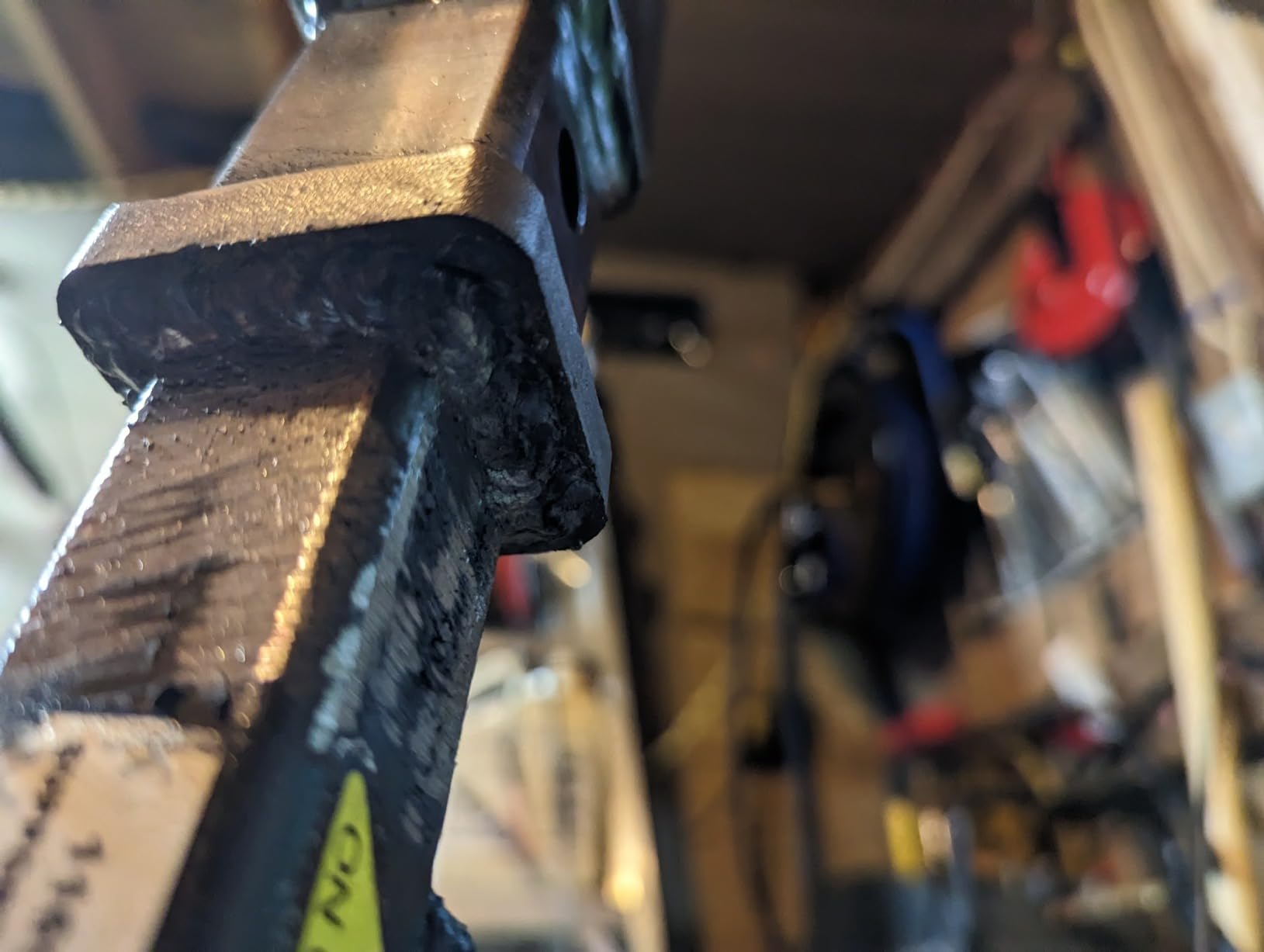
The material list is broader than its price suggests: carbon steel, low-alloy steel, stainless steel, titanium, copper and cast iron in the modes it supports. For property maintenance that covers more ground than most machines twice the size.
It accepts 0.8 mm and 1.0 mm self-shielded spools and the package includes a 110V to 220V adapter, a 1 lb spool of .030 flux core wire, an electrode holder, a ground clamp and a MIG torch. The WP17V TIG torch is sold separately.
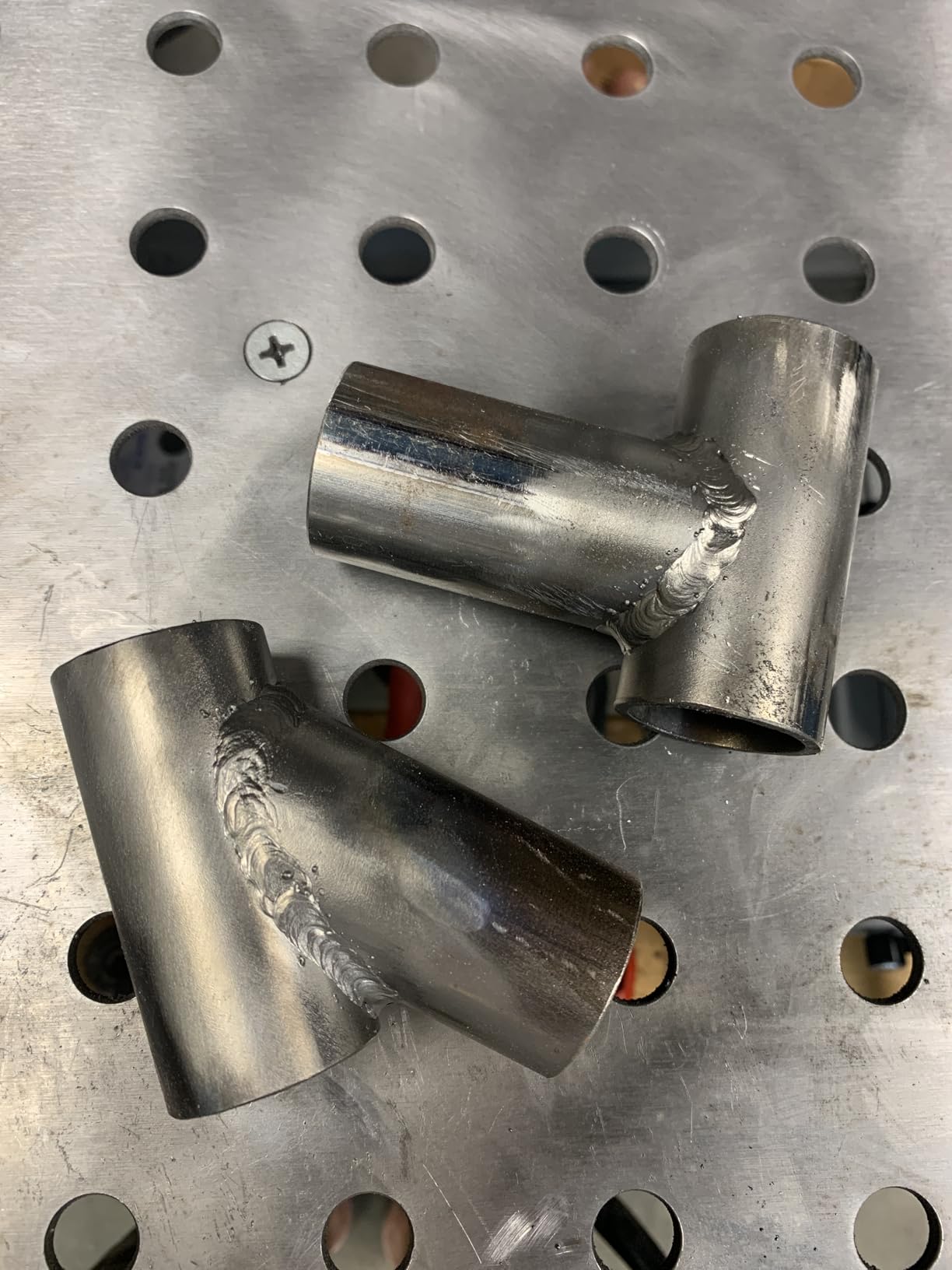
Why the contact TIG start is a feature, not a flaw
High-frequency start rigs can interfere with Wi-Fi routers, Bluetooth devices, garage door receivers and some camera systems. Contact ignition produces no such signal. For a machine parked in a residential garage, that trade is usually worth making without thinking about.
The cost of contact ignition is a slightly rougher arc strike and more tungsten wear on thin material — both irrelevant at the fabrication scale this machine targets.
The honest list of problems
The manual covers a different model and does not explain stick setup, which wastes the first hour. Switching from MIG to stick requires feeding several feet of wire back through the gun, which is tedious every single time.
The supplied gun tip is the gas type rather than a flux core tip, the power cord and leads are short, and the access door does not latch fully. Some owners report wire feed stopping after light use. Good value, fair documentation, modest durability.
7. bestarc 145A 4-in-1 — Best Budget Machine That Runs Gas MIG
Bestarc 145A MIG Welder, Flux Core/Gas MIG Stick Lift TIG Welding, 110/220V
145A on automatic 110V and 220V
Gas MIG gasless MIG lift TIG and stick
Accepts .030 .035 and .040 wire
Top-load spool with shoulder strap
Pros
- Genuine gas MIG at a budget tier
- Heavier gauge cables and a better ground clamp than most rivals
- True dual voltage with automatic input detection
- Top-load wire spool is quick to change
Cons
- No gas regulator in the box
- Stick output limited to roughly 130 amps
- Push-on nozzle does not suit flux core
- Spool tension spring too tight with no out-of-box adjustment
Gas MIG is the process people actually mean when they picture a MIG welder, and this is the budget pick that genuinely performs it. Clean, quiet MIG on mild steel and stainless with shielding gas is a different result from gasless flux core, and this machine delivers it.
Experienced reviewers from production MIG and 7018 stick backgrounds rate the weld quality highly, and they single out the ground clamp and heavier-gauge cables as better than most competitors at this level. That sounds minor until you are dragging a clamp across a shop floor.
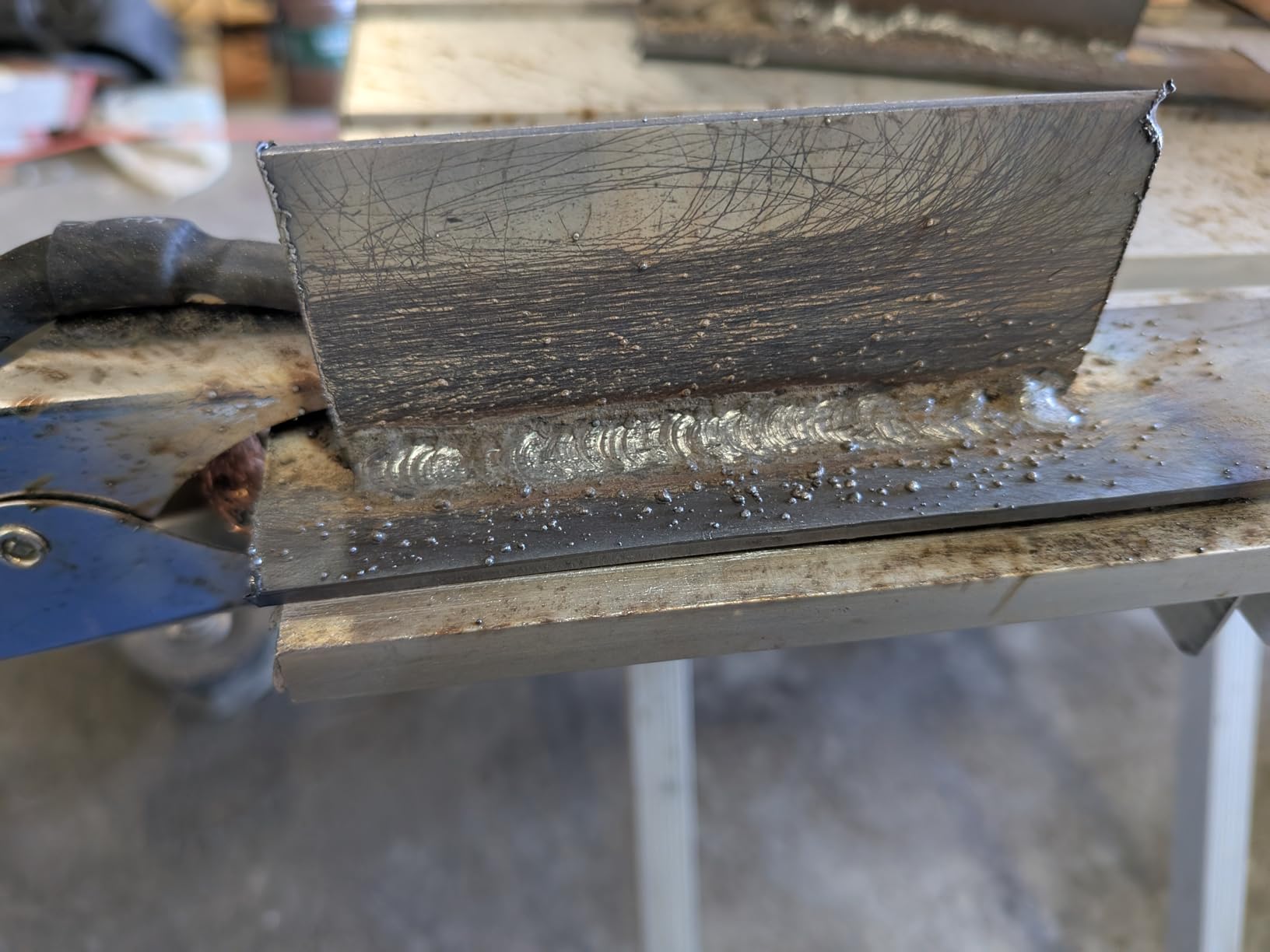
The IGBT inverter runs synergic automatic voltage matching with minus 3V to plus 3V fine trim, works with E71T-GS flux core and ER70S-6 solid wire in .030, .035 and .040, and includes voltage fluctuation compensation alongside over-current, overload and over-heat protection.
Automatic input voltage detection shows on the front panel, so you can confirm you are on 220V before you start a heavy bead. The top-load spool design keeps a wire change from turning into a threading job.
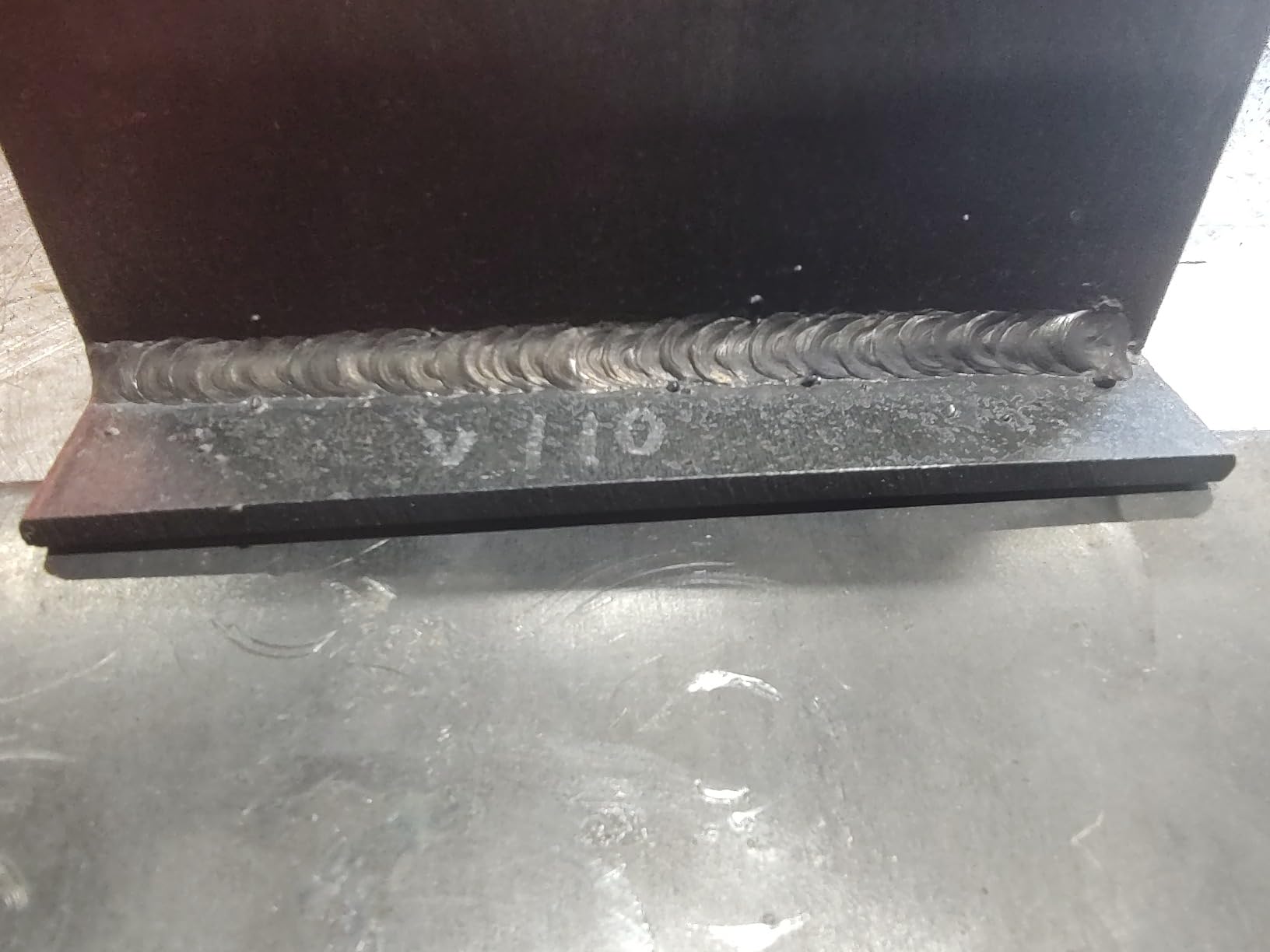
What gas MIG actually buys you
Gas MIG produces a cleaner, quieter arc with less spatter than self-shielded flux core, and it handles thin material without the puckering that flux core leaves behind. On stainless and aluminum-adjacent work the difference is obvious, and on 16 gauge and 20 gauge mild steel it is the difference between a flat panel and a warped one.
The running cost is a shielding gas cylinder plus the regulator, which is not included. Our plasma cutter guide covers the air supply side of a home shop if you are building out from scratch.
What earlier production runs got wrong
Early production runs included only v-groove drive rolls, which flattened flux core wire and hurt arc stability. Later runs added knurled drive rolls and a longer torch lead, so check what arrives before you judge the machine on its first session.
Stick output appears limited to roughly 130 amps, the spool tension spring is too tight with no adjustment out of the box, and the manual does not explain pushing in the rotary knob for wire-speed and voltage ratio control. Budget an hour with a proper reference before your first thick weld.
8. ANDELI 135A 4-in-1 Pulse — Best for Pulsed Flux Core Control
ANDELI 110V/220V MIG Welder 135A ,PULSE Flux Core/Lift TIG/Stick 4-in-1
Pulsed flux core MIG at 135A
Welds material up to 5.0 mm
Adjustable inductance hot start and arc force
Detachable 9 ft stinger
Pros
- Pulse gives a noticeably smoother more uniform bead at this price
- Inductance hot start and arc force all adjustable
- Synergic and manual wire speed and voltage control both available
- LED display has a protective transparent cover
Cons
- Included welding helmet is poor quality and may not fit
- Only accepts 2 lb spools and .040 needs a separate drive roller
- Wire feed display shows amps rather than inches per minute
- A few machines run hot or lack the pulse mode
Pulse MIG works by pulsing the current hundreds of times a second so the puddle reflows instead of just growing. The bead comes out smoother, flatter and cooler, which on thinner material is the difference between a good weld and a repair job.
Having that feature in a machine at this tier is the reason to consider it. Owners consistently single out the pulse result as noticeably smoother and more uniform, and long-term users compare it favorably against a thirty-year-old 1200 Lincoln on light to medium work.
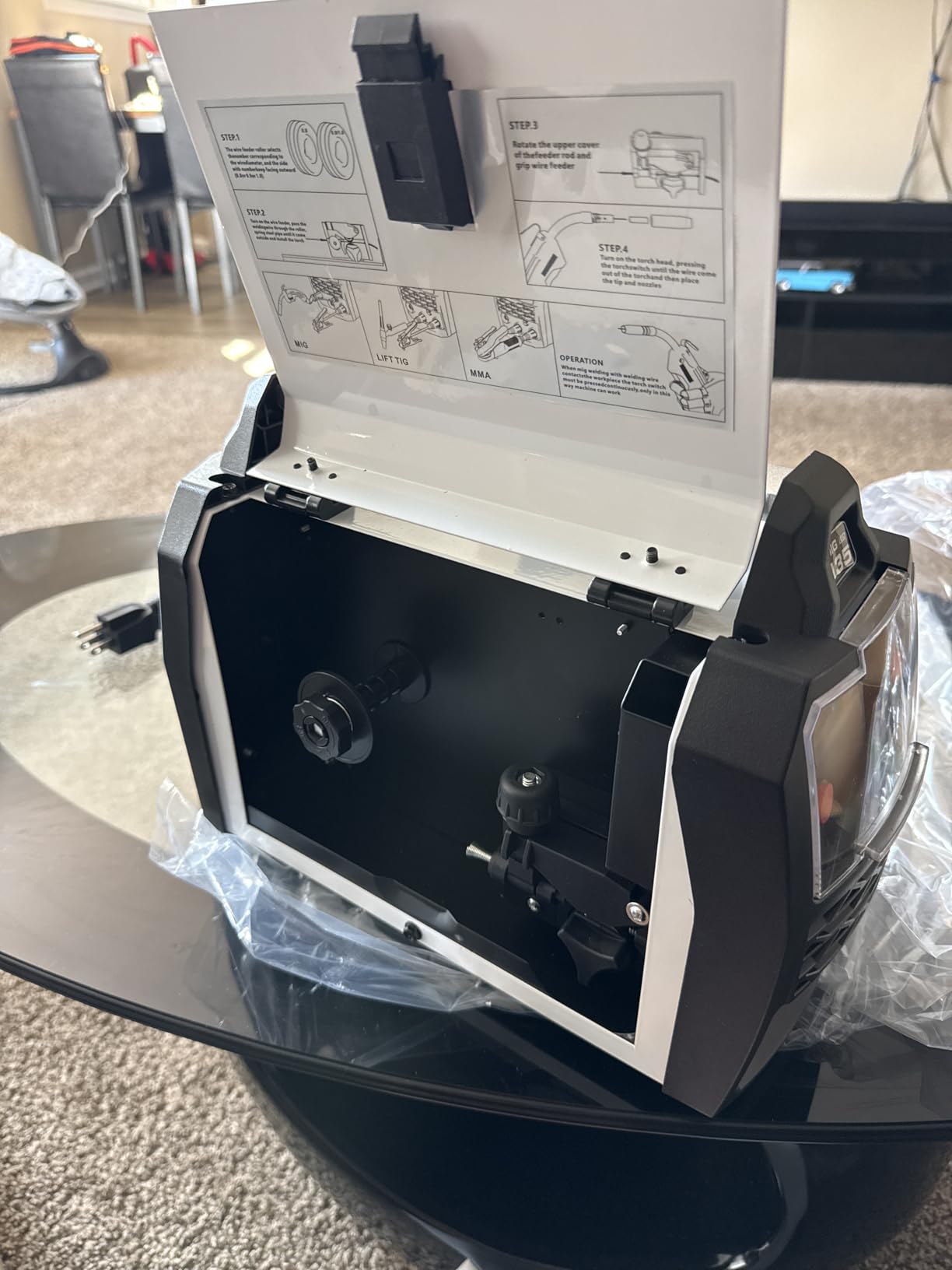
The adjustment controls are unusually complete: inductance, hot start and arc force are all adjustable rather than fixed, and you can run either synergic or manual wire-speed and voltage control. The 4.1-inch LED display sits under a protective transparent cover that matters when a grinding wheel is somewhere nearby.
It welds material up to 5.0 mm, which is thicker than several machines in this roundup, and supports .030, .035 and .040 flux core on both 110V and 220V. The detachable 9 ft stinger and leads make it a real portable station rather than a bench machine.
Do you need pulse on a home shop welder?
If most of your work is 16 gauge and thinner, or you weld stainless, pulse earns its place. The cooler puddle means less warping on panel work and less chance of burning through, and the more uniform bead needs less grinding afterward.
If your list is mostly angle iron, square tube and structural plate at 1/4 inch or thicker, the benefits fade and the adjustable inductance and arc force settings become the more useful controls.
Know what to replace on day one
The included welding helmet is the most common complaint across reviews, and owners say it may not fit properly. Buy a proper auto-darkening helmet instead — the same review consensus recommends it directly. Some users also report that the included gloves fit large hands well, which is a rarer positive.
It takes only 2 lb wire spools and .040 needs a separately purchased drive roller. The wire feed display shows amps rather than inches per minute, the live stinger can arc if it stays in place on the bench while switching modes, and a small number of examples run hot or report the pulse mode absent.
9. BESTMIG 135A 3-in-1 — Best Starter Bundle With Helmet and Gloves
BESTMIG 135A MIG Welder – 3-in-1 Flux Core Welder, MIG/Lift TIG/Stick Welding Machine – Portable IGBT Inverter – 110V with Welding Helmets and Gloves (Red Black, MIG 135A Welder)
135A true output on 110V
Welds material up to 1/8 inch
Full-color LED display
10.71 pounds
Pros
- Helmet gloves and goggles in the box so you can start immediately
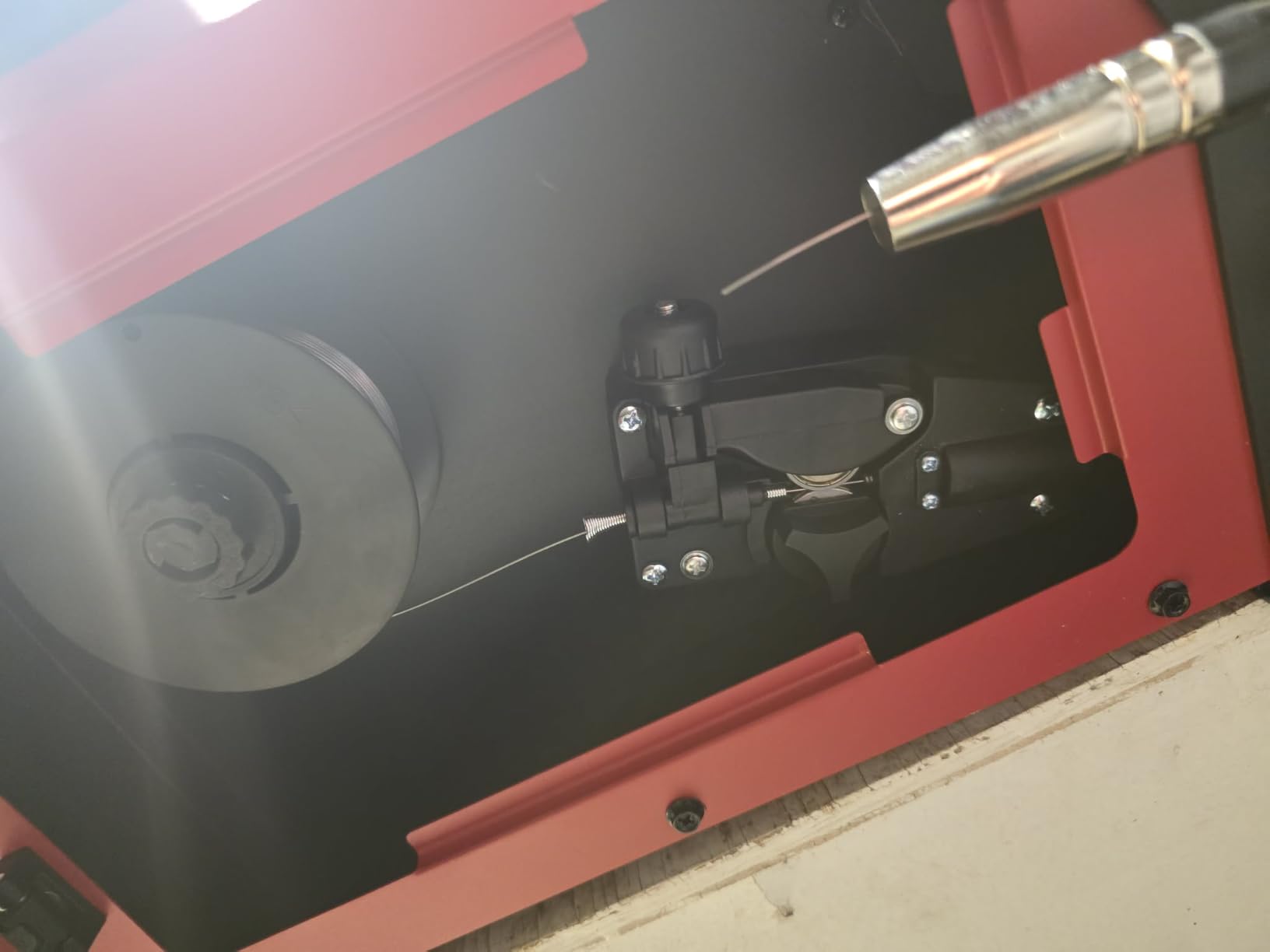
- Setup is load spool connect gun plug in
- Full-color LED display shows parameters in real time
- Works on stainless and carbon steel up to 1/8 inch
Cons
- 110V only with no 220V option for heavier work
- Some arrive missing advertised accessories including the TIG torch
- Torch cable connector occasionally the wrong size
- MIG torch is a 14AK gun and the TIG torch is sold separately
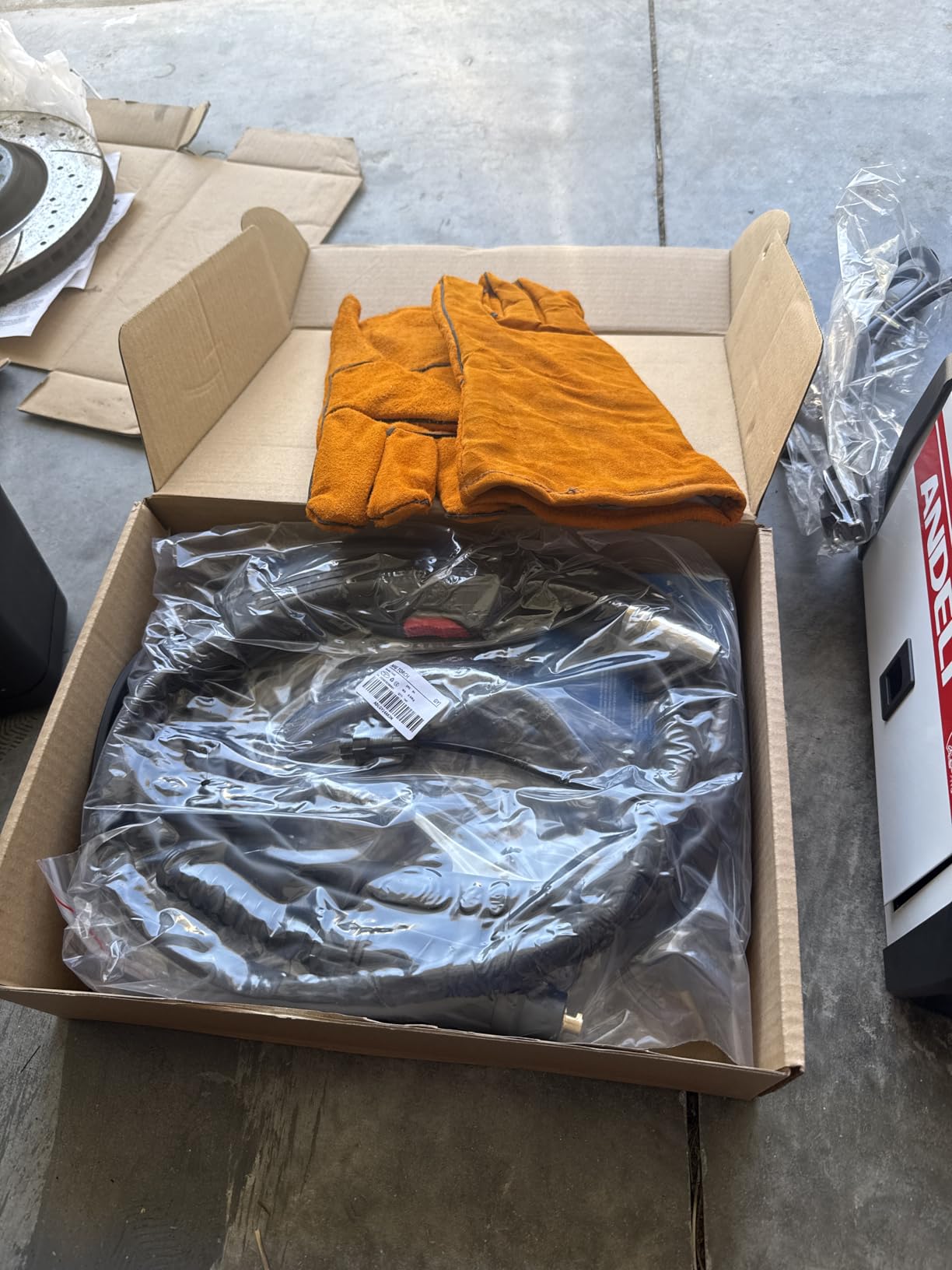
This is the machine to buy for someone whose first welding session is scheduled for a weekend. It arrives with a welding helmet, auto-darkening welding glasses, welding gloves, a wire brush, flux core wire, a 14AK torch with cable, an electrode holder and an earth clamp.
That matters because the single biggest reason people do not weld more is that the startup cost feels like too many separate purchases. Here it is one box, one power cord and one afternoon.
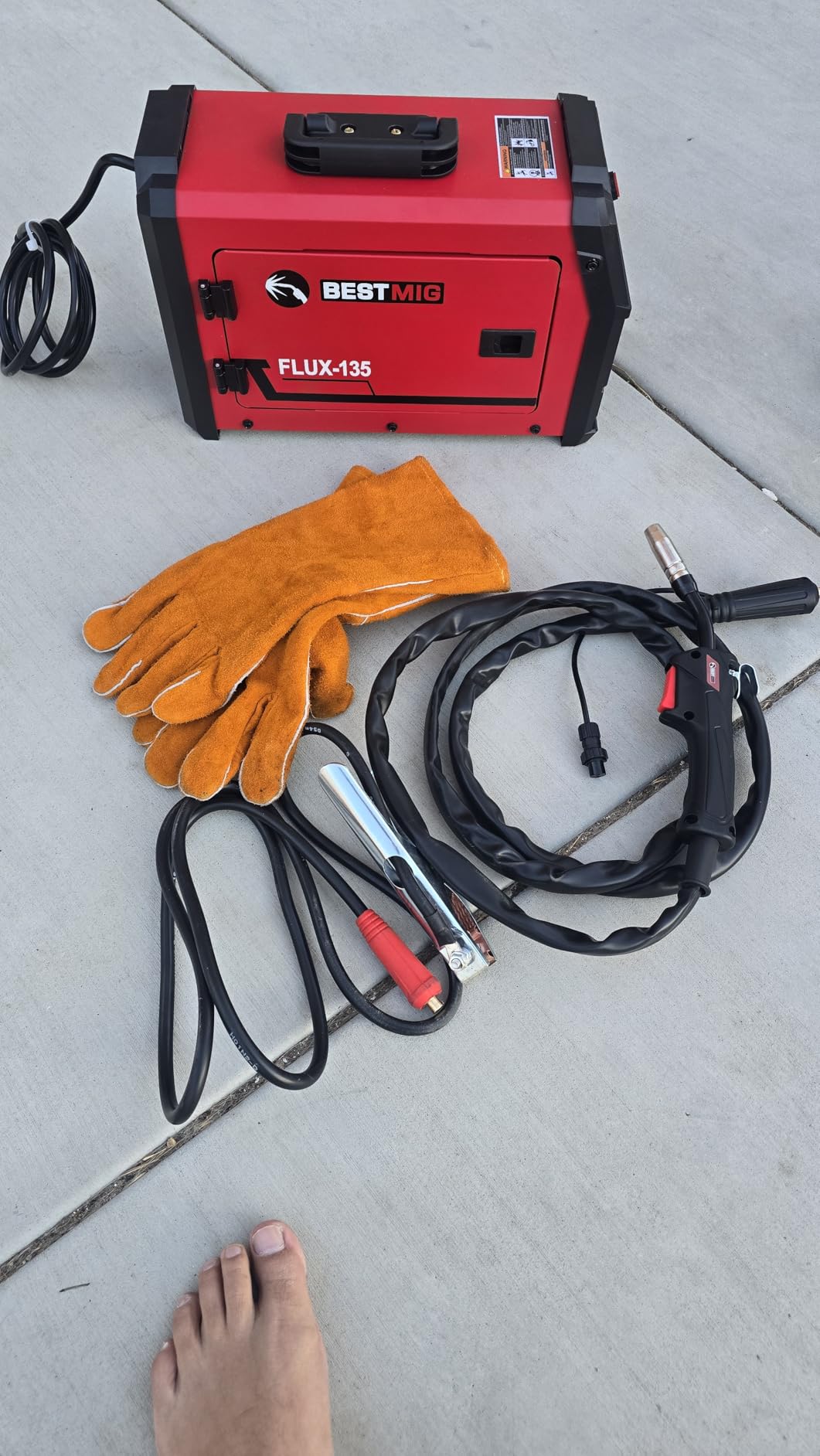
True 135A output handles material up to 1/8 inch, which is real capacity rather than a marketing label. Gasless flux core wire from .030 to .040 covers both thin and moderate steel, and the digital control auto-adjusts voltage and feed speed from the current setting you choose.
The full-color LED display is unusual in this class and shows live parameters, which is genuinely useful while you are learning what each adjustment does. At 10.71 pounds it is easy to move between the bench and the driveway.
Is buying safety gear in the box a good idea?
For a gift or a first machine, it is the right call. You cannot weld without a helmet, and the marginal cost of bundling it is far lower than the trip to a welding supply house. It also removes the most common reason a new welder sits unused in the corner of the garage.
Once you know your own fit and shade preference, replace the helmet with one you have adjusted properly. That is the natural upgrade path, not a reason to avoid this machine.
What to check the moment it arrives
Negative reviews on this product concentrate on fulfillment rather than weld quality: missing advertised accessories including the TIG torch, and a flux core torch cable connector of the wrong size on a small share of orders. Inventory everything in the listing before you plug it in.
It is 110V only, so there is no 220V upgrade path later for heavier work. Weld quality is reported as solid for the class, and it is popular as a gift for someone learning to weld.
10. FEMEROL 250A 6-in-1 — Best High-Amperage Multi-Process Machine
FEMEROL 250A MIG Welder,6 in 1 Gas MIG/Gasless Flux Core/Stick/Lift TIG/Spot Welding/Spool Gun Compatible Aluminum Welding Machine Large LED Display 110V/220V Multi Process Welder
250A at 60 percent duty cycle
Gas and gasless MIG stick spot and lift TIG
Aluminum wire to .045
32.6 pounds
Pros
- 250A at a 60 percent duty cycle is unusual at this tier
- Welds aluminum cleanly through the teflon liner
- Spot weld mode simplifies 24 gauge work
- Generous 9.5 ft torch ground and stick cables
- Two-year guarantee
Cons
- Cooling fan runs constantly and is loud
- Supplied 120V plug and cord are undersized
- Barbed gas hose connection instead of a threaded fitting
- Torch sits at an awkward slack angle on a table
Nothing else on this list puts out more than 200 amps. If your home shop has moved past occasional repair into real fabrication — plate work, multi-pass seams, thicker aluminum — the FEMEROL is the machine with the headroom.
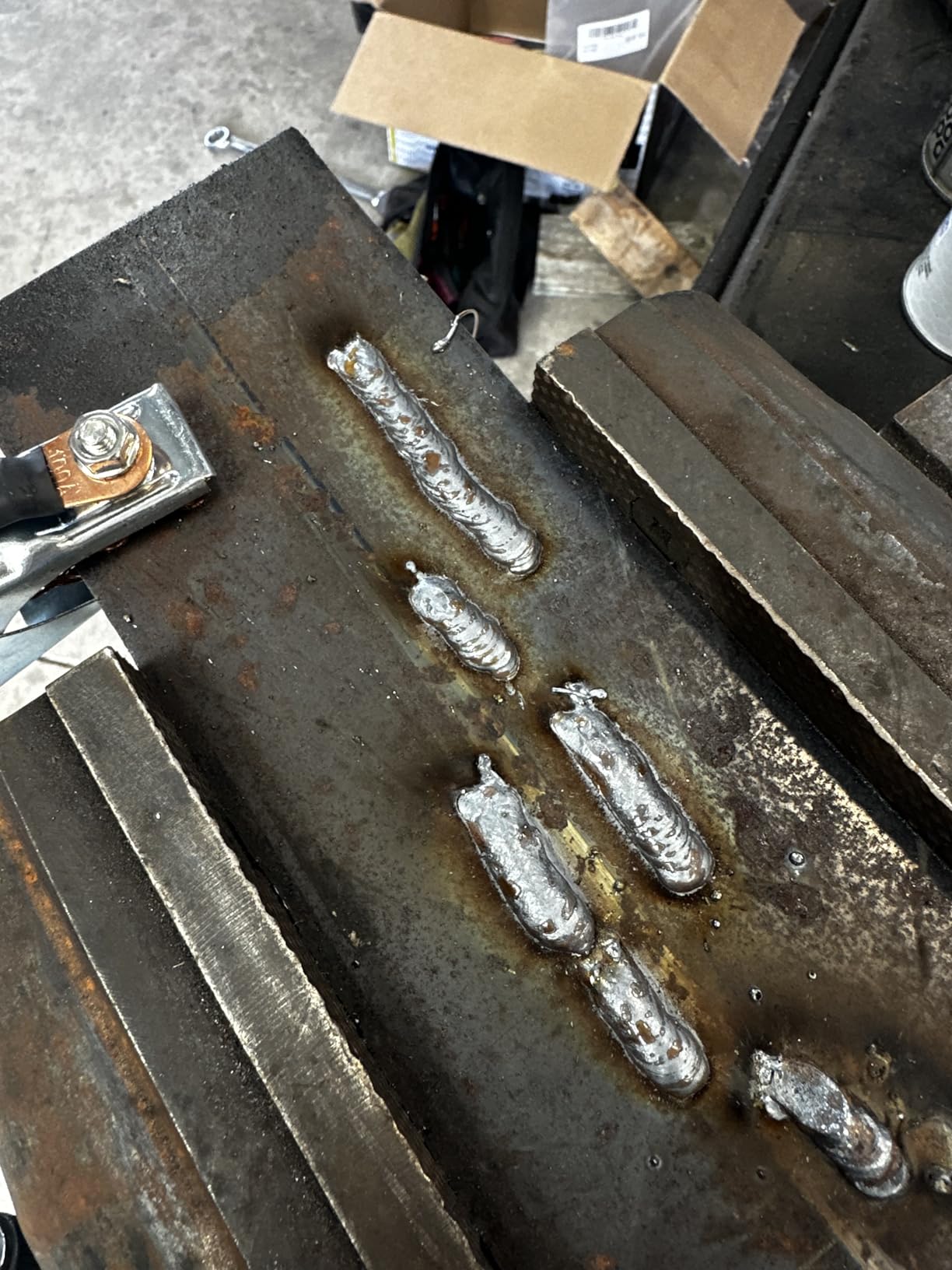
Experienced fabricators who run Miller and Lincoln shops treat it as a capable low-cost backup or light-fab machine, and they confirm measured output close to the advertised 250A on 220V. For a home shop that does not need the leading name brand but does need the current, that is a defensible position.
Aluminum works two ways here. The included teflon liner handles .035 and .040 aluminum wire without birdnesting, and the machine takes a spool gun for .045 if you add one. The teflon liner route is the cheaper entry point for most home shops.
The spot weld mode makes consistent 24 gauge work straightforward, and wire range covers .023 to .035 solid, .023 to .035 flux core and .035 to .045 aluminum. Leads run about 9.5 ft, which is generous for a machine at this size, and the manual is described as decent.
What 60 percent duty cycle actually gives you
Duty cycle is how long the machine can hold its rated output before needing to cool. Sixty percent means ten minutes of hard welding in any twenty-minute window. A professional shop lives inside that limit, while a home shop rarely approaches it.
What it buys a home shop is plate thickness headroom and the ability to run multi-pass seams on 1/4 inch to 1/2 inch steel without the machine balking. Owners report it holding up under long, high-amperage work of exactly that kind.
What reviewers tell you to replace first
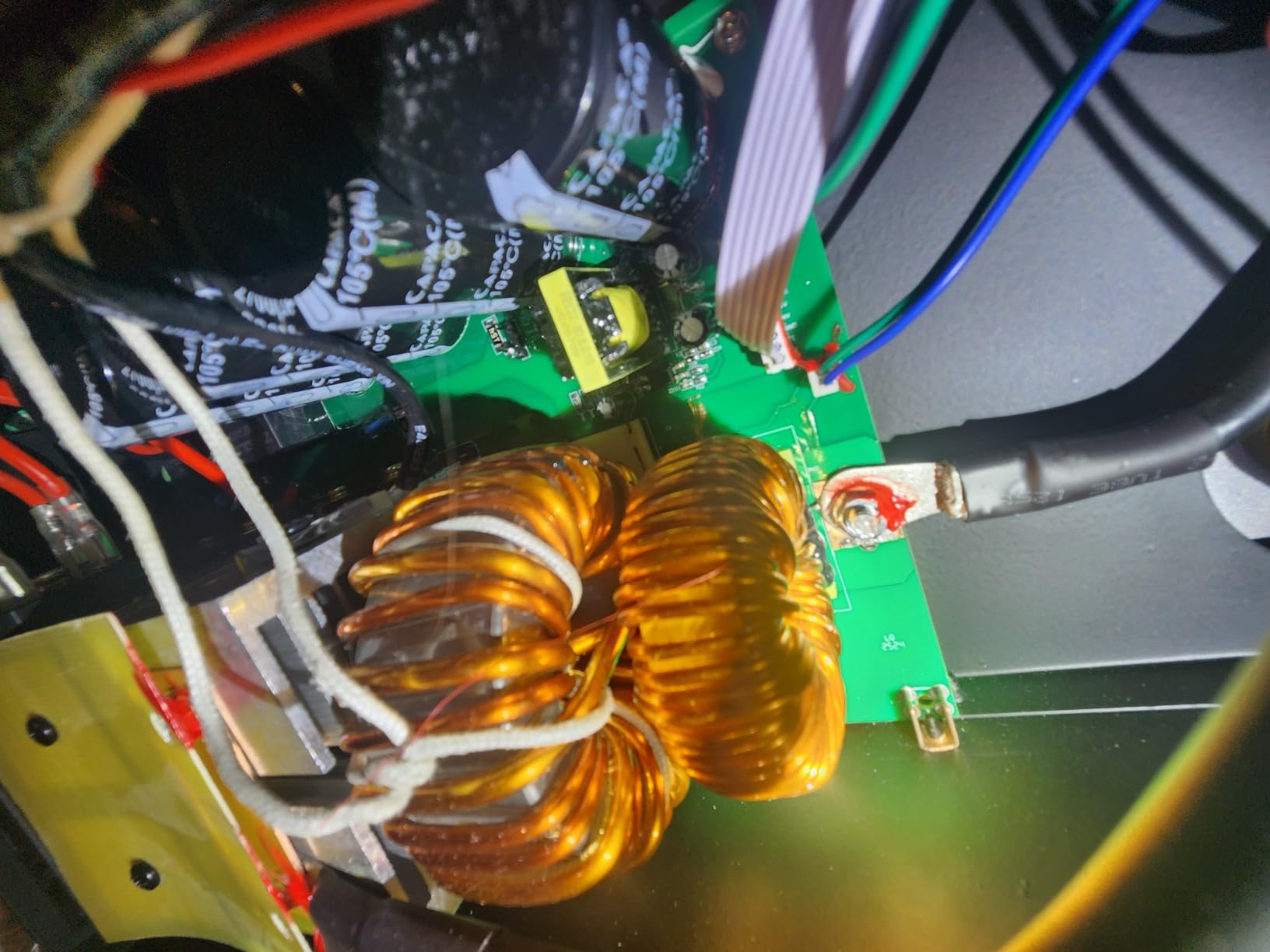
Replace the gas line, the plug and the cable. The cooling fan runs constantly and is loud, the supplied 120V plug is not a 50A unit with a slightly undersized cord, and the barbed gas hose connection should be swapped for a threaded fitting before you connect a cylinder.
The supplied gas line and MIG torch are light duty aluminum-cabled, and the torch sits at a slack angle that is awkward for table-top work. The arc is softer than premium machines, and there is no pulse MIG and no AC TIG, so this is capacity without refinement.
How to Choose a Multiprocess Welder for Your Garage
Count processes, not marketing numbers
A 6-in-1 label usually means one chassis with MIG, gasless MIG, stick, lift TIG, spot and a spool-gun socket. A 5-in-1 may mean five TIG variants and no wire feed at all, which is what happens on the Weldpro in position five. Read the process list, not the number.
For most home shops, three processes is genuinely enough: MIG, stick and lift TIG. Flux core MIG folds into the MIG mode with a wire change. The extras that add real value are spot welding for sheet metal and spool-gun support for aluminum.
Duty cycle math for home-shop hours
A duty cycle of 30 percent means you can weld at the rated amperage for six minutes out of every twenty. A home shop welds hard maybe 30 to 90 minutes a week, then cools down for days. Every machine in this roundup has more duty cycle than you will use.
Read the amperage instead. A 135A machine handles 3/32 inch mild steel. A 200A machine handles 1/4 inch and gives you room on 16 gauge stainless. A 250A machine is for plate and multi-pass work. Match the number to your thickest common material, not to the largest number on the box.
110V or 220V in a real home
Most welders above 180 amps draw serious current, which is why so many homes cannot run them on a standard outlet. Dual-voltage machines detect and switch automatically, and the manual often shows the setting on the front panel — check it before you start a heavy bead so you are not welding at half output.
If your garage has a subpanel, a 220V branch circuit is a weekend project for an electrician. Machines limited to 110V, like the BESTMIG in position nine, simply never have that option later.
The aluminum reality check
Aluminum’s oxide layer melts at a far higher temperature than the metal itself, so a DC-only arc cannot weld it cleanly. Three routes work: AC TIG, which reverses polarity to sweep the oxide aside; pulse MIG with the right liner; or a spool gun feeding aluminum wire.
On this list, only the Weldpro gives you AC TIG. The ARCCAPTAIN and FEMEROL handle aluminum through spool-gun support, with FEMEROL also offering a teflon liner path. Everything else cannot weld aluminum at all, no matter what the product title says.
Read the box contents line, not the process list
This is the number one surprise in the category. Several machines here run Lift TIG but arrive without a TIG torch, so that mode is unusable until you buy one. The ARCCAPTAIN excludes both the TIG gun and the spool gun. The FEMEROL excludes both as well.
Also check for a gas regulator. Gas MIG needs one and the bestarc does not include it. And treat any bundled helmet skeptically — reviewers across two products here recommend replacing it immediately.
Which process should you learn first?
Flux core MIG, and it is not close. It has the shortest learning curve of the four: push the gun, drag it, and the machine handles the rest. A clean first bead on scrap steel teaches you more in an afternoon than a week of TIG practice on real work.
Stick comes second, because outdoors and on dirty or rusty metal it is the process that still works when everything else is fighting you. TIG is third, and it is worth the wait because you control the arc and the puddle directly rather than only the amperage.
Small features that matter more than the spec sheet admits
Two things decide whether you enjoy a machine. The first is 2T and 4T trigger mode: 4T locks the gun so you can set amperage without cycling the trigger, which turns a long seam into one continuous motion instead of a series of starts and stops.
The second is gas management. Pre-flow and post-flow, where the ARCCAPTAIN offers them, matter more than they sound — pre-flow clears shielding gas before the arc strikes so the start does not pop, and post-flow keeps it flowing after the arc ends so the crater solidifies cleanly instead of oxidizing.
Running costs beyond the machine
Wire is cheap. Shielding gas cylinders, contact tips, drive rollers, nozzles and liners add up quietly over years. A spool gun for aluminum is a separate purchase plus a gun cable, and it is the single most common add-on that changes what a machine can do.
Budget for a proper auto-darkening helmet and gloves early. Those are not accessories — they are the difference between welding often and welding once.
Frequently Asked Questions
What is the best multi-process welder for home use?
The YESWELDER 135A 3-in-1 is the best multiprocess welder for most home shops. It runs gasless flux core MIG, stick and lift TIG on a standard 110V outlet, weighs about 17 pounds, and includes wire, a torch, an electrode holder and a ground clamp in the box. For gas MIG and aluminum, step up to the ARCCAPTAIN MIG200.
Are multiprocess welders worth it?
For a home shop, yes, mainly because they replace three single-purpose machines with one and let you learn on one set of controls. The value drops if you only ever run one process, since a dedicated single-process machine is cheaper and simpler. The biggest surprise is that TIG torch is often not included, so check the box contents before buying.
Are multiprocess welders any good?
Yes, at the home-shop tier. Inverter welders in this roundup produce clean, low-spatter flux core beads and stable MIG on thin material, and several carry two-year warranties. What varies widely is documentation quality, stick output accuracy against the displayed figure, and consumable durability. Machines at 4.5 stars and above with hundreds of reviews hold up well for repair work.
Which multiprocess welder is the best?
Best overall for a home shop: the YESWELDER 135A 3-in-1 for a complete package on 110V. Best all-round: the ARCCAPTAIN MIG200 200A for gas MIG, spot welding and spool-gun aluminum support. Best for aluminum TIG: the Weldpro 200A AC/DC pulse machine, the only one here with true AC output.
Can a multiprocess welder weld aluminum?
Only if it has one of three specific features: AC TIG output, pulse MIG with a compatible liner, or spool-gun support. Most machines in this category cannot weld aluminum at all, because aluminum oxide melts at a far higher temperature than the metal. Among these ten, the Weldpro has AC TIG, the ARCCAPTAIN and FEMEROL accept a spool gun, and the rest cannot.
Do I need 220V for a multiprocess welder?
Only if you want to run machines above about 180 amps or weld thicker than 3/32 inch material regularly. Machines rated 110V and 220V switch automatically and display the detected input, so check the panel before a heavy bead. If your garage has no 220V branch circuit, a 110V dual-voltage machine keeps that option open later.
Final Verdict for Home Shop Buyers
Start with the YESWELDER 135A 3-in-1 if you want one machine that works the day it arrives. Wire, torch, holder and clamp are in the box, it runs on a normal outlet, and 135A covers the repair work that fills most home shop lists.
Move up to the ARCCAPTAIN MIG200 when you want gas MIG for cleaner thin material, spot welding for sheet metal and the option to add a spool gun for aluminum later. And if aluminum TIG is a regular task rather than a someday project, the Weldpro 200A is the only machine here built for it.
Everything in between those three earns its place for a specific reason — the FEMEROL for plate amperage, the ANDELI for pulse control, the bestarc for gas MIG on a smaller budget, the GZ GUOZHI for cold and field work. Check the box contents before you buy, because the missing torch is the most common regret in this category. Our deeper dive on the budget multiprocess welders under 1000 is worth reading if you are still deciding.
These are the best multiprocess welders for home shops in 2026, tested against the jobs a home shop actually has on the list rather than the numbers on the carton.