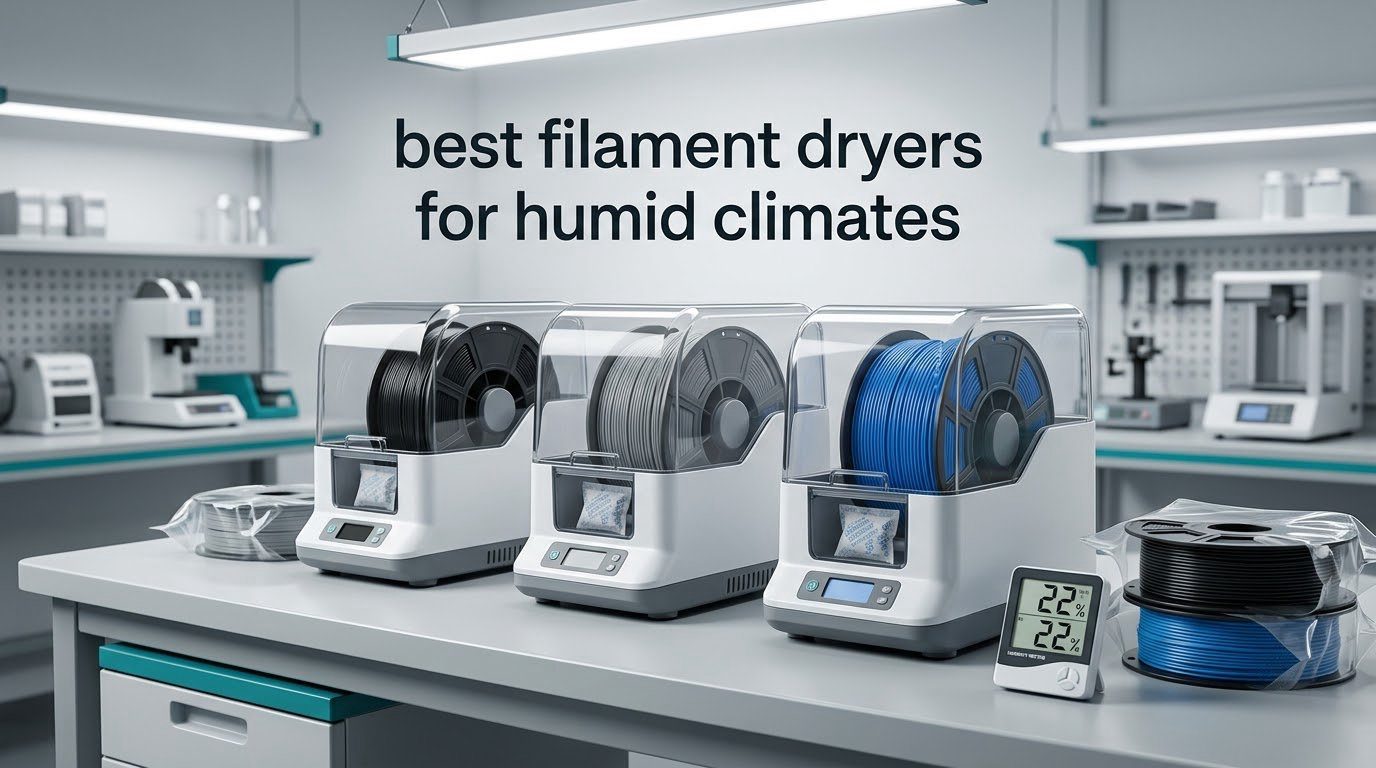
If you print in a place where the air never really dries out, picking the right filament dryer is less about brand and more about three numbers: how many spools the chamber holds, how hot it can actually get, and how well it seals. Those three specs decide whether a box rescues a damp PETG spool or leaves you with a stringy mess in a coastal or tropical workshop. I compared the 8 most-reviewed filament dryers on the market and read what owners say after living with them through wet seasons.
The short version for anyone who wants the best filament dryers for humid climates right now: the Comgrow 2-Spool Filament Dryer Box is the pick most people in a humid home should buy, because it handles two 1kg spools, feeds filament straight to a printer while drying, and carries the deepest review base of any box here. The Creality Space Pi X4L is the one to buy if you print multi-material or run several spools at once, since it dries four spools in two independently controlled chambers up to 75 C. The Comgrow SH02 is the value pick, hitting 70 C with one-key presets for nine filament types and a 98-hour timer.
I also want to be upfront about the humidity math, because that is what the rest of this guide is built on. Below roughly 40% ambient relative humidity, filament barely needs attention. Between 55% and 70%, PLA and PETG start picking up moisture quickly enough that drying matters within days. Above 80%, which describes a lot of summer weeks in Florida, the Gulf Coast, and the tropics, you should expect to dry spools on a schedule rather than as a rescue, and you want a dryer that can actually verify its own chamber humidity.
One more thing that shaped every verdict below: drying is only half the battle. A spool you dry at 55 C for six hours will absorb that moisture straight back out of the air unless it goes into a sealed box, a vacuum bag with desiccant, or the dry chamber of a multi-material unit. I have seen owners report a steady 10% RH inside a sealed AMS after fitting 3D-printed desiccant holders, and others holding below 20% RH in gasketed boxes for weeks. Plan for storage before you buy a dryer.
Table of Contents
- Top 3 Filament Dryers for Humid Climates in 2026
- All 8 Best Filament Dryers for Humid Climates in 2026
- What Humidity Level Is Too High for Filament?
- 1. Comgrow 2-Spool Filament Dryer Box – Best Overall for Humid Homes
- 2. Creality Space Pi X4L – Four Spools and Two Independent Chambers
- 3. Comgrow SH02 Filament Dryer Box – Fast Heat and Nine Presets
- 4. SUNLU S1 Plus – The Simplest Way to Protect PLA in Damp Air
- 5. SUNLU FilaDryer S2 – 70 C on a Single Spool
- 6. Creality Space Pi SE Dry Box Pro – Small Footprint and a 65 C Ceiling
- 7. SUNLU FilaDryer S4 – Four Spools, Three Fans, Eight Exit Holes
- 8. Creality Space Pi – Twelve Filament Presets and a 48-Hour Timer
- Drying Schedules That Reach Below 20% RH
- How to Choose a Filament Dryer for a Humid Climate
- Food Dehydrator or Toaster Oven vs a Dedicated Filament Dryer
- How to Keep Filament Dry After Drying
- Is It Really Moisture? A Humid-Climate Troubleshooting Checklist
- Frequently Asked Questions
- What humidity level is too high for filament?
- Is it possible to 3D print in 60% humidity?
- How to tell if PLA is too humid?
- What humidity to dry filament?
- Is it worth getting a filament dryer?
- Can I use a food dehydrator as a filament dryer?
- What is the best way to keep filament dry?
- Do you really need a filament dryer for PLA?
- The Verdict for Humid Climates in 2026
Top 3 Filament Dryers for Humid Climates in 2026
These three cover the majority of humid-climate situations: a general household pick, a multi-spool workhorse, and the strongest budget option. Every pick below the top three handles a narrower case, and I explain which one in its own section.

Comgrow 2-Spool Filament…
- 2 x 1kg spools
- 40-50 C range
- 6-12 hour timer
- Feed-through filament outlet

Creality Space Pi X4L
- 4 spools
- Two independent chambers
- Up to 75 C
- 360 degree air circulation

Comgrow SH02 Filament Dryer…
- 2 x 1kg spools
- 40-70 C range
- 9 filament presets
- Up to 98 hour timer
All 8 Best Filament Dryers for Humid Climates in 2026
Here is every dryer in this roundup side by side. The columns that matter most above 70% ambient humidity are temperature ceiling, chamber capacity, and whether you can dry while printing. Note that no box in this group has a properly sealed chamber with a working moisture exit path; owners across the board report propping lids or cracking seals to let steam out during a dry cycle.
| Product | Specs | Action |
|---|---|---|
| Comgrow 2-Spool Filament Dryer Box |
|
Check Latest Price |
| Creality Space Pi X4L |
|
Check Latest Price |
| Comgrow SH02 Filament Dryer Box |
|
Check Latest Price |
 SUNLU S1 Plus Filament Dryer SUNLU S1 Plus Filament Dryer |
|
Check Latest Price |
 SUNLU FilaDryer S2 SUNLU FilaDryer S2 |
|
Check Latest Price |
 Creality Space Pi SE Dry Box Pro Creality Space Pi SE Dry Box Pro |
|
Check Latest Price |
 SUNLU FilaDryer S4 SUNLU FilaDryer S4 |
|
Check Latest Price |
 Creality Space Pi Filament Dryer Creality Space Pi Filament Dryer |
|
Check Latest Price |
What Humidity Level Is Too High for Filament?
Filament is hygroscopic, which simply means it pulls water vapor out of the surrounding air and holds it. Above roughly 55% to 60% ambient relative humidity, PLA and PETG absorb moisture fast enough to change print behaviour within days. Above 70%, TPU, Nylon, and ABS begin failing consistently, and a dryer stops being an optional accessory. Above 80%, assume you will be re-drying on a schedule all summer.
Here is how ambient humidity bands translate into what you will actually see at the nozzle:
Under 40% RH: Filament stored in a reasonably closed box stays usable for months. A dryer is a nice-to-have, not a need, and desiccant in a sealed container is enough.
40% to 55% RH: PLA prints cleanly straight from a dry box. PETG, TPU, and Nylon still need attention if a spool has been sitting open for more than a week or two.
55% to 70% RH: The band where most humid-climate problems begin. PLA starts stringing and bubbling after a week or two of open storage, and PETG develops a rough, matte surface that ruins layer adhesion. Dry once, then store sealed.
Above 70% RH: Expect frequent failures across every material. TPU goes from soft and sticky to brittle, Nylon and any fiber-filled variant bubble visibly at the hot end, and ABS loses layer adhesion. A heated dryer with a real temperature ceiling is now necessary.
80% RH and above: Owners in this band report drying on a routine schedule rather than reacting to symptoms. Storage discipline matters as much as the dryer: sealed bags with desiccant, or a gasketed chamber that you verify with a small RH meter.
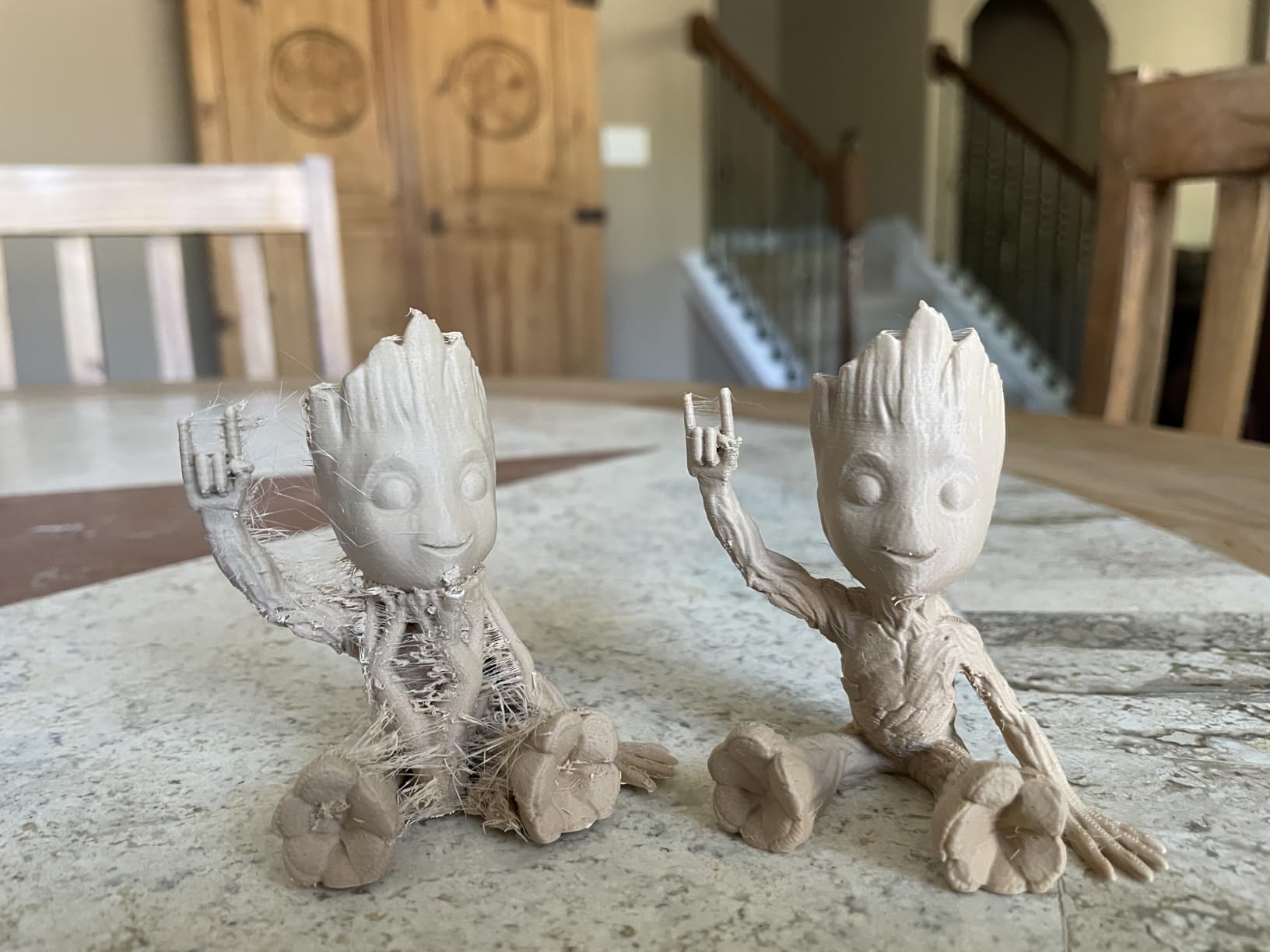
One important correction to the way moisture is usually discussed. A user in a dry winter climate observed that filament from a dry box stays dry far longer at 40% RH than the same filament would in an 80% RH room. The problem is not printing in humidity, it is storage in humidity. A room at 60% RH is perfectly workable for PLA and PETG if the filament is dried beforehand and sealed afterward.
Community evidence supports that reading. A Snapmaker U1 owner at roughly 60% ambient humidity manages fine with filament stored properly, and a Bambu Lab owner in a humid region keeps filament in vacuum-sealed bags with desiccant after use and reports dryers as essential. Both are the same conclusion from opposite directions.
1. Comgrow 2-Spool Filament Dryer Box – Best Overall for Humid Homes
Comgrow 3D Printer Filament Dryer Box, Comgrow 3D Filament Storages, Keeping Filaments Dry During 3D Printing, Compatible with 1.75mm/2.85mm PLA ABS Material, Filament Dehydrator, Spool Holder
2 x 1kg spools
40-50 C range
6-12 hour timer
2-inch LCD with RH
Feed-through outlet
Pros
- Holds two 1kg spools and feeds filament to a printer while drying
- Recovers damp spools with noticeably smoother prints
- Transparent body for quick spool checks
- Compact at 1.5 kg and quiet in operation
Cons
- 50 C ceiling is marginal for PETG and higher-temp materials
- Not hermetically sealed so it is a dryer not a storage cabinet
- Hot external power brick can mark sensitive surfaces
The Comgrow 2-Spool box is the one I recommend to most people in a humid home, and the reason is the feed-through design. The sealed silicone cable sheath and Teflon tube outlet let the box dry two 1kg spools while pushing filament straight into a printer, so a long multi-day print runs on filament that is being dried at the same time. At 4683 reviews and a 4.4 rating, it also has by far the deepest owner history in this group, which means its quirks are well documented rather than a surprise.
In use, the common report is that it measurably improves print consistency and rescues spools that have been sitting open in humid air. The 2-inch LCD shows temperature and humidity in real time, the timer runs 6 to 12 hours, and the transparent body means you can check a spool without opening the chamber. It weighs 1.5 kg and runs quietly enough to sit beside a printer on a bench.

The 50 C ceiling is the honest limitation, and in humid climates it matters. At 50 C you are comfortably drying PLA, and most of the benefit for PETG, but you are not reaching the 65 C that practitioners report is needed to bring PETG below 20% RH. If your whole workflow is PLA, that ceiling rarely becomes a problem. If you live in TPU or Nylon, it does.
Two more practical notes from owners. There is no dedicated compartment or documented location for desiccant packets, and the unit is not airtight, so treat it as an active drying tool rather than a dry cabinet you can store filament in for weeks. The touch controls also need the drying mode set before it will run at all, which trips up first-time users more often than the spec sheet suggests.
When the Comgrow 2-Spool Box Is the Right Buy
Buy this box if you print PLA and sometimes PETG, run one or two printers, and want filament dried while it prints rather than in a separate overnight batch. In a home at 60% to 75% RH, the improvement in layer adhesion and surface finish is usually visible within the first spool. It is also the sensible pick for anyone who wants a second dryer for a multi-material unit or a second printer without dedicating a large bench footprint.
When to Skip It
Skip it if your work is TPU, Nylon, ABS, or any fiber-filled material, because 50 C is simply not enough headroom. It is also the wrong tool if your plan is long-term storage of opened spools, since the chamber is not hermetically sealed. If you need four spools drying at different temperatures at once, the Space Pi X4L does that job and this box cannot.
2. Creality Space Pi X4L – Four Spools and Two Independent Chambers
Creality Filament Dryer Box 4 Spools, Space Pi X4L Filament Storage Box
4-spool capacity
Dual 200W PTC chambers
Up to 75 C
360 degree air circulation
Single/dual energy modes
Pros
- Only dryer here that dries four spools in two independently controlled chambers
- 75 C ceiling is the highest in this group
- Single-chamber mode cuts energy use noticeably
- 360 degree circulation also regenerates desiccant
Cons
- Bulky and heavy at 4.8 kg so it needs dedicated bench space
- Dual-chamber mode draws noticeably more power
- Overkill for a single-spool household
The Space Pi X4L is the most capable machine here and the only one with two genuinely independent temperature zones. Each chamber has its own 200W insulated PTC heater reaching 75 C, so you can dry a PETG spool at 65 C in one chamber and a PLA spool at 55 C in the other at the same time. For anyone running multi-material or multi-color workflows in a humid room, that independence is the whole point of the design.
It dries four spools at once, matching the top capacity in this group, and the 360 degree hot-air circulation is not just marketing here. Even circulation means moisture leaves the filament evenly rather than migrating to one side of the spool, and the same airflow will regenerate desiccant packs, so you can use the box to bring your desiccant back to life instead of discarding it.
The energy numbers are worth understanding before you commit. Creality rates single-chamber mode at 0.095kWh per hour at 75 C against 0.165kWh in dual mode. In a humid climate the difference is more than a spec-sheet curiosity, because the realistic workflow is running both chambers most of the day through the wet season, and that is the mode with the higher draw.
Owners also report the physical reality plainly: 4.8 kg and a bulky footprint means this is not a shelf unit. It needs a dedicated spot near your printers, and you should confirm the bench can take the weight and that the power circuit has headroom.
Who the X4L Suits Best
This is the right pick for a small production shop, a classroom, or a serious hobbyist who cycles through four or more filament types and hates stopping a print to swap spools. If you regularly print TPU alongside PLA, or need Nylon dry on one setting while ABS dries on another, the dual chambers remove a daily friction that no single-chamber box on this list can fix. It is also the safest choice here for anyone printing fiber-filled filament such as PA-CF, since 75 C gives you real headroom.
Where It Falls Short
It is the heaviest and priciest box in the roundup, and dual-chamber power draw is meaningful if you are running printers, heated enclosures, and a dryer on one UPS or circuit. It is also overkill for a household that prints two spools a month of PLA, where the answer is a sealed box and a small single-spool dryer instead.
3. Comgrow SH02 Filament Dryer Box – Fast Heat and Nine Presets
Comgrow Filament Dryer Box, SH02 Dry Box Filament Sealed Storage Box 3D Printer 2 Spools Holder with PTC Fast Heater, Filament Dehydrator with Touch Screen Compatible with PLA PETG TPU ABS 1.75/2.85mm
2 x 1kg spools
40-70 C
Reaches 70 C in 25 min
9 filament presets
98 hour timer
Pros
- Reaches 70 C in about 25 minutes
- One-key presets for nine filament types remove guesswork
- 98 hour timer suits long humid-climate cycles
- Two PTFE feed-throughs and multi-point sealing rings
Cons
- Louder fan than smaller single-spool boxes
- Touch screen needs practice to learn
- Heavier and larger than the single-spool options
The SH02 is the box I point people toward when they want a real 70 C ceiling without moving up to a multi-spool cabinet. The 150W PTC heater hits 50 C in seven minutes and 70 C in about 25, which matters in a humid climate because it means a full drying cycle is not an all-day commitment. With two 1kg spool positions and two PTFE feed-throughs, it also dries while printing.
My favourite detail is the preset system. One-key temperature settings cover nine filament types, including PLA, TPU, PETG, ABS, ASA, PVA, PC, PA, and PP, with the drying temperature and time preloaded. In an 80% RH room, guessing is a bad idea, and presets remove that risk for most materials before you need to learn the science.
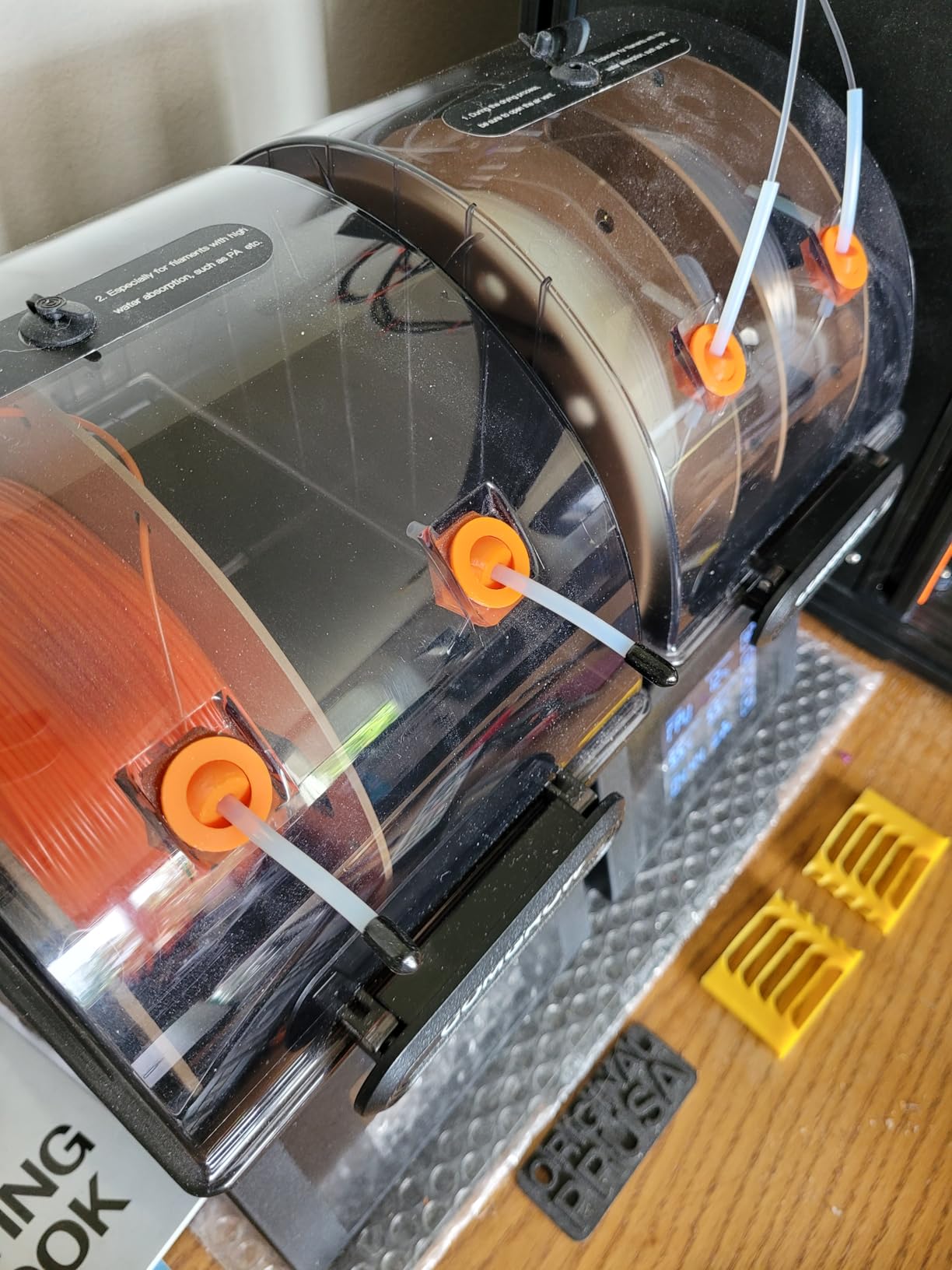
The 98-hour maximum drying time is genuinely useful here. When a spool has been sitting in a garage or a car through several humid weeks, an eight-hour cycle will not do it, and this box lets you set a long overnight or multi-day programme without babysitting it. The multi-point sealing ring design on the upper and lower covers, outlet holes, and bottom plate is a clear step up in moisture sealing from the cheaper budget boxes.
Safety features are unusually thorough for the category: heating cuts off above 130 C and resumes below 90 C, and there is an audible alarm if the fan stops. In humid conditions that matters more than it looks, because a stopped fan means moisture is condensing back onto the spool with no way to leave the chamber.
Where the SH02 Shines
Pick the SH02 if you print a mix of materials, live somewhere with consistently high humidity, and want to dry two spools at once with reliable heat. It handles PETG, TPU, ABS, ASA, and PA comfortably at its 70 C ceiling, and the presets make it approachable if you have never set a drying profile yourself. It is also a strong second unit for a multi-material chamber that does not dry aggressively enough on its own.
Where It Falls Short
The fan is louder than smaller single-spool boxes, so it is a poor choice for a bedroom or a quiet office. It weighs 4.4 pounds and is physically larger than the compact boxes, so a small shelf is out. And if your real requirement is drying four spools at two different temperatures simultaneously, the preset system is not a substitute for independent chambers.
4. SUNLU S1 Plus – The Simplest Way to Protect PLA in Damp Air
SUNLU Filament Dryer Box 2026 New Upgrade S1 Plus, Black
Single spool
35-55 C
Built-in fan
2-inch LCD with humidity display
1.2 kg
Pros
- Lowest cost entry into active filament drying
- Holds one 210 x 89mm spool
- Built-in fan discharges moisture faster
- Quiet and light at 1.2 kg
- Recovers spools left open for weeks
Cons
- Two-button interface with no clear instructions
- Readings run optimistic with internal temps lower than displayed
- 55 C setting is effectively closer to 40-45 C inside
- Little air exchange so the lid must be cracked
The S1 Plus is the box to buy if your entire problem is humid air slowly ruining PLA and you are not ready to spend much to fix it. It holds a single 210 x 89mm spool, has a built-in fan to push moisture out, and the 2-inch LCD shows temperature, timer, and humidity. Owners in hot southern climates report using it to dry while feeding filament directly to a printer, and it is light enough at 1.2 kg to move between benches.
It also quietly recovers old spools. Several owners describe printing noticeably smoother after an overnight dry on a spool that had been open in humid air for weeks, which is exactly the failure mode that makes people go looking for a dryer in the first place.
Now the honest part, and it matters more for this box than any other. Its 8% one-star share is the highest in the group, and the complaints cluster on two things: sensor accuracy and airflow. Multiple owners measured internal temperatures 10 to 15 degrees below the displayed figure, and the sensor sits close to the heater, so a 55 C setting is effectively closer to 40 to 45 C inside the chamber. That is fine for PLA. It is not fine for PETG or ABS.
There is also very little air exchange, so moisture has to leave by cracking the lid open, which means the box is not doing quite as much as the display suggests. The included humidity plug tends to fall out easily and can end up loose inside the unit or near the vent.
Who Should Buy the S1 Plus
Buy it if you print mostly PLA, you have one printer, and you want a low-cost way to stop spools sitting open in humid air from ruining themselves. It is also a smart choice as a second or third dryer for a multi-material unit or a multi-printer setup, where you need several small boxes rather than one big cabinet. In that role its single-spool simplicity is a feature.
Who Should Pass
Pass if you print PETG, TPU, Nylon, or ABS as your main materials, because a real 40 to 45 C internal temperature will not bring those below 20% RH. The two-button interface also has no clear instructions or manual, so if you dislike learning controls by trial and error, the touch-screen boxes will be less frustrating. If you cannot realistically crack the lid open during cycles, the airflow complaints will show up in your results.
5. SUNLU FilaDryer S2 – 70 C on a Single Spool
SUNLU Official Filament Dryer S2, for PLA PETG ABS Filament, Black
Single spool
Up to 70 C
Dual heating sheets plus fan
4.6-inch touch screen
Humidity and countdown display
Pros
- 70 C ceiling is far more useful for PETG and nylon than 35-55 C boxes
- Large 4.6-inch touch screen readable at a glance
- Runs near-silently
- Effective in humid basements when the lid is propped open
- Can recharge desiccant packs
Cons
- Relative humidity reading is often inaccurate and stalls when idle
- Closed-loop chamber requires manually lifting the lid to vent
- Fan is weak enough that a 1kg spool takes about 5 hours
- Short power cord exits from the back
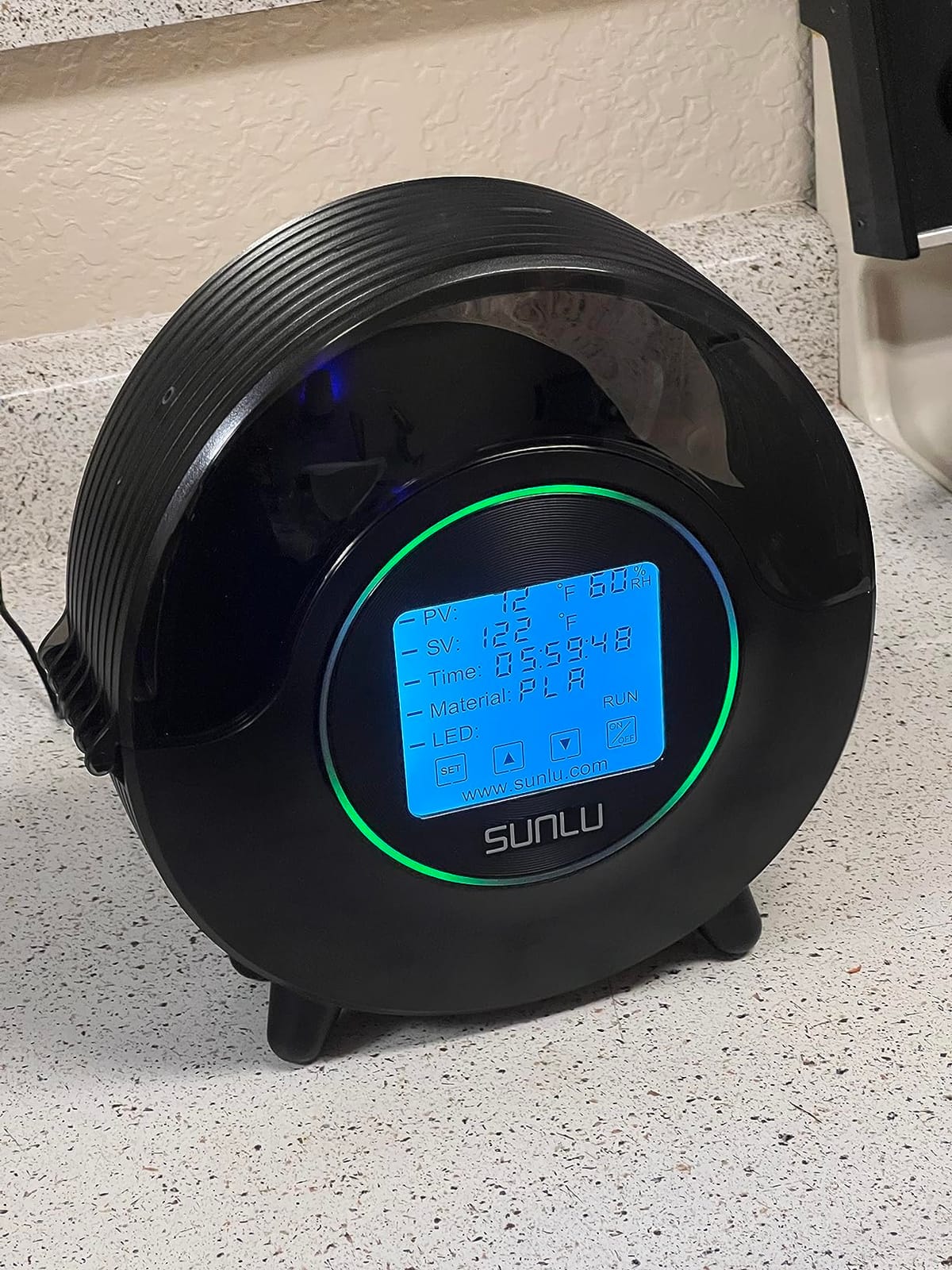
The S2 is the single-spool answer for anyone whose problem is a 70 C ceiling, not capacity. Dual heating sheets plus a fan deliver 360 degree heating roughly 30% faster than a single-element design, and the 70 C maximum is the difference between drying PETG properly and drying it halfway. For humid-climate users who print one material at a time, that matters more than holding extra spools.
Owners who print in humid basements describe a specific workable technique: prop the lid slightly so steam escapes during the cycle. The 4.6-inch touch screen is large enough to read from standing height, it shows temperature, time, humidity, filament type, and a countdown, and it runs near-silently compared with most competing boxes. One user also uses it to recharge desiccant packs.
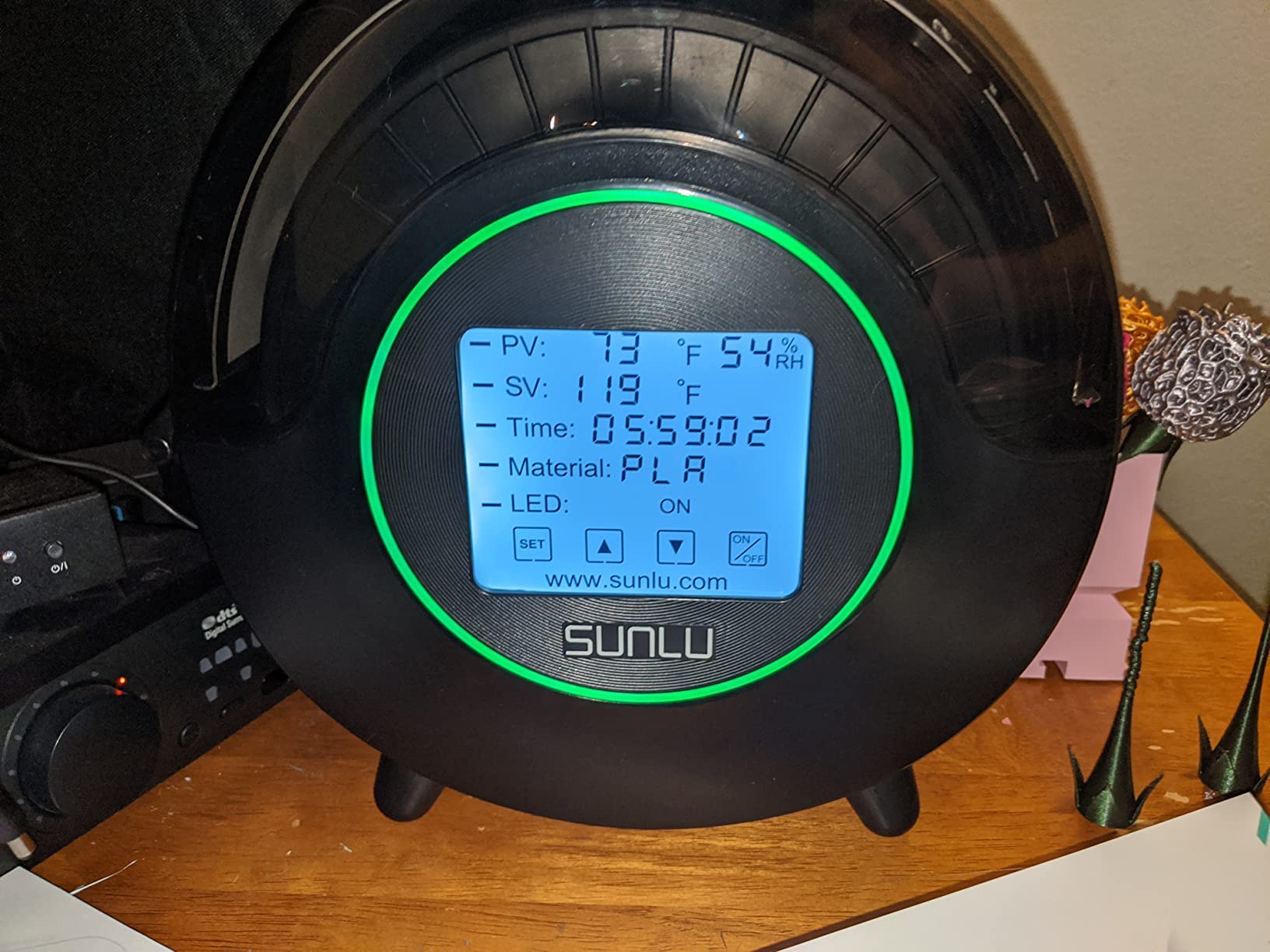
Its weak point is the same weak point most sealed boxes share, and here it is specifically the humidity sensor. Owners report the relative humidity reading is frequently inaccurate and does not update when the heater is idle, so the number on screen should be treated as a rough indicator rather than a measurement you can act on. If verifying actual chamber humidity matters to you, buy a small standalone RH meter instead of trusting the display.
The closed-loop design also means moisture has no obvious exit, so you need to lift the lid periodically, and the fan is weaker than ideal, with a full 1kg spool taking roughly five hours to dry through. The 2 to 3 foot power cord exits from the back, which is worth checking against your bench layout before ordering.
When the S2 Is the Right Call
Pick the S2 if you print PETG, TPU, or Nylon on a single printer and want a genuine 70 C cycle in a box that is quiet and compact enough for a domestic workspace. It is also a solid second dryer for a basement workshop where humidity is the standing problem and you want something that will not announce itself across the house. For someone with a long ownership report on this class of box, quietness and screen readability are the two things that get mentioned most.
When to Choose Something Else
Choose the SH02 or the Space Pi instead if you need a real moisture vent path rather than manual lid-cracking, or if the 48-hour-plus drying window matters for very damp spools. Skip it if accurate humidity verification is a requirement, since the sensor is the least reliable part of an otherwise well-built machine. And if you run two printers, the single-spool S4 or the X4L will save you daily swapping.
6. Creality Space Pi SE Dry Box Pro – Small Footprint and a 65 C Ceiling
Creality 2026 New Upgrade Filament Dryer Box Pro, Space Pi SE with High PTC Efficiency & Precision Sensor for 1KG Spools 45~65℃, 3D Printer Filament Dehydrator for PLA PETG ABS ASA TPU
Single spool
45-65 C
80W PTC with fan
Reaches 65 C in 15 min
1 kg unit weight
Pros
- Reaches 65 C in 10-15 minutes in owner measurements
- Very quiet
- quieter than the printer's own fans
- Small at 1 kg and doubles as a spool holder
- One owner reported better PA12-CF success rates after using it
Cons
- Hygrometer reading bottoms out at 15 percent and stalls when the heater is off
- No lid seal or clamp so the wobbly hinge is not a true dry box
- Knob interface can behave erratically
- 24 hour timer cap is short for very damp spools
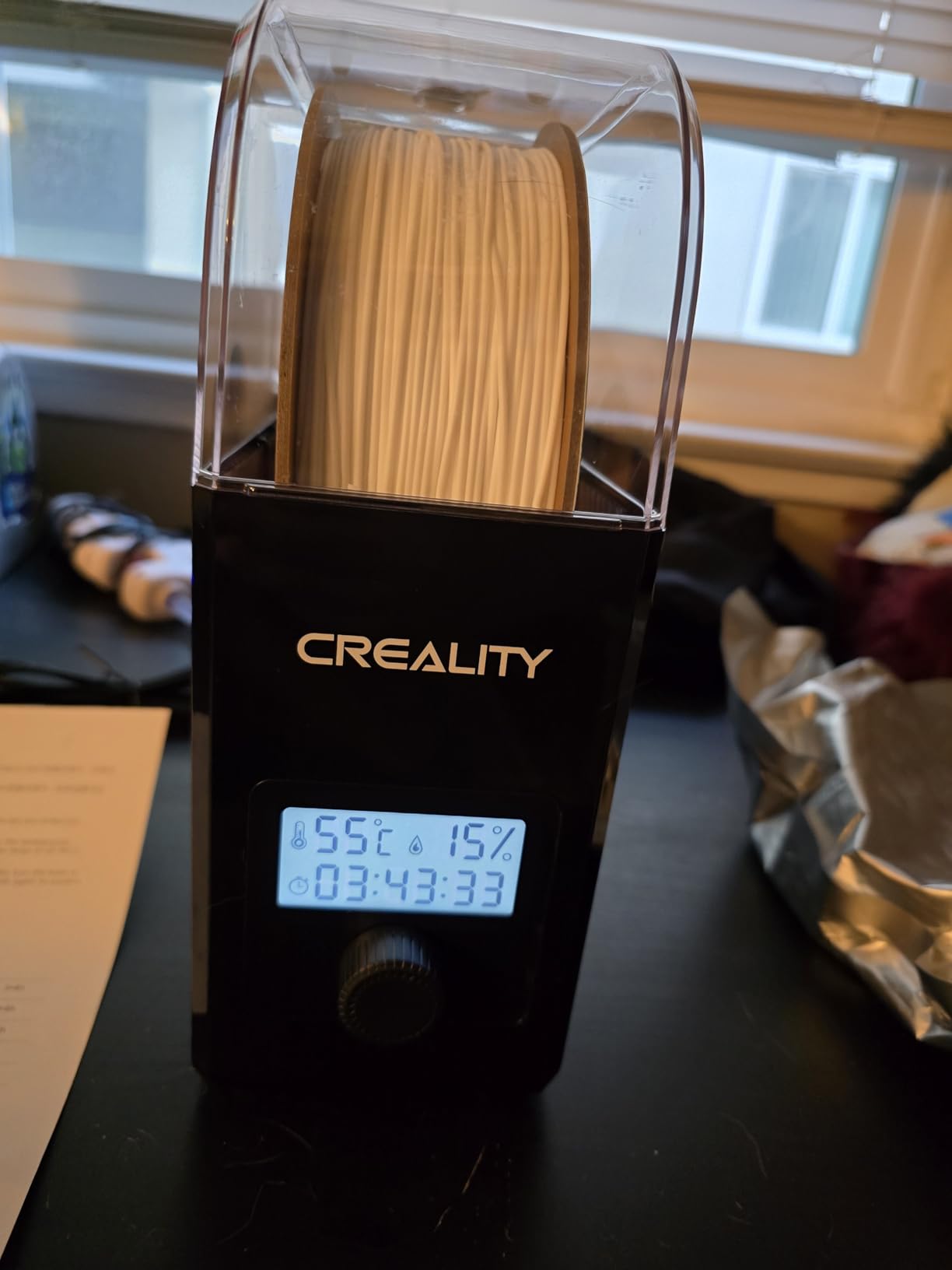
The Space Pi SE is the box for a desk, a small shelf, or a printer enclosure where space is genuinely tight. It weighs 1 kg, holds a single 1kg spool in 1.75mm or 2.85mm diameters, and it is quiet enough that owners run it in a living room without complaint. The 80W PTC heater with a built-in fan reaches 65 C in about 10 to 15 minutes according to owner measurements, which is quick for a unit this small.
Despite the budget size, it does real work on tough hygroscopic materials. One owner reported noticeably better PA12-CF success rates after switching to it, which is a more demanding test than PLA or PETG. The inner-wall thermal insulation cotton retains heat and reduces scalding risk when the box sits right next to a running printer, and the temperature range of 45 to 65 C with a 0 to 24 hour timer covers most everyday needs.
Its limitations are consistent across detailed reviews and you should know them before buying. The hygrometer reading floors at 15 percent and does not refresh unless the heater is running, so it is a coarse indicator. The lid has no seal or clamp, and the hinge is described as wobbly, which means this is not a dry box you can store filament in over a humid week.
The knob also behaves erratically enough that some owners spin it before the unit registers a press, and there is no moisture venting, so the lid has to be propped open during drying. The 24-hour timer cap is the real constraint in a coastal climate: a spool that has been open for weeks may need two consecutive cycles.
Where the SE Works
Choose it if your printer lives on a desk, you are mostly printing PLA, PETG, or TPU on one machine, and noise matters because the printer runs in a shared room. It is also a good value comparison point for anyone weighing a small unit against building a DIY dry box, where owners generally rate the SE as the better outcome for less effort.
Where It Falls Behind
Skip it if you need accurate humidity readings to make storage decisions, or if you want a box that can hold dried filament for weeks. The single-spool limit and the 24-hour timer both bind in humid climates, and the 65 C ceiling leaves less headroom for Nylon, PA-CF, or PC than the SH02, the S2, or the X4L. For engineering filament, the temperature ceiling is what should drive your choice.
7. SUNLU FilaDryer S4 – Four Spools, Three Fans, Eight Exit Holes
SUNLU S4 3D Printer Filament Dryer, Black
4-spool capacity
35-70 C
350W PTC with three fans
8 exit holes
99 hour timer
Pros
- Four-spool cabinet suited to multi-printer and multi-material setups
- 350W PTC heater with three circulation fans heats evenly
- Eight filament exit holes feed multiple printers at different angles
- Longer drying timer than the smaller boxes here
- up to 99 hours
- 4.5 rating with 80 percent five-star reviews
Cons
- Large cabinet footprint takes significant bench space
- One owner reported a unit that would not power on
- Entry-level guidance is thin for a box this complex
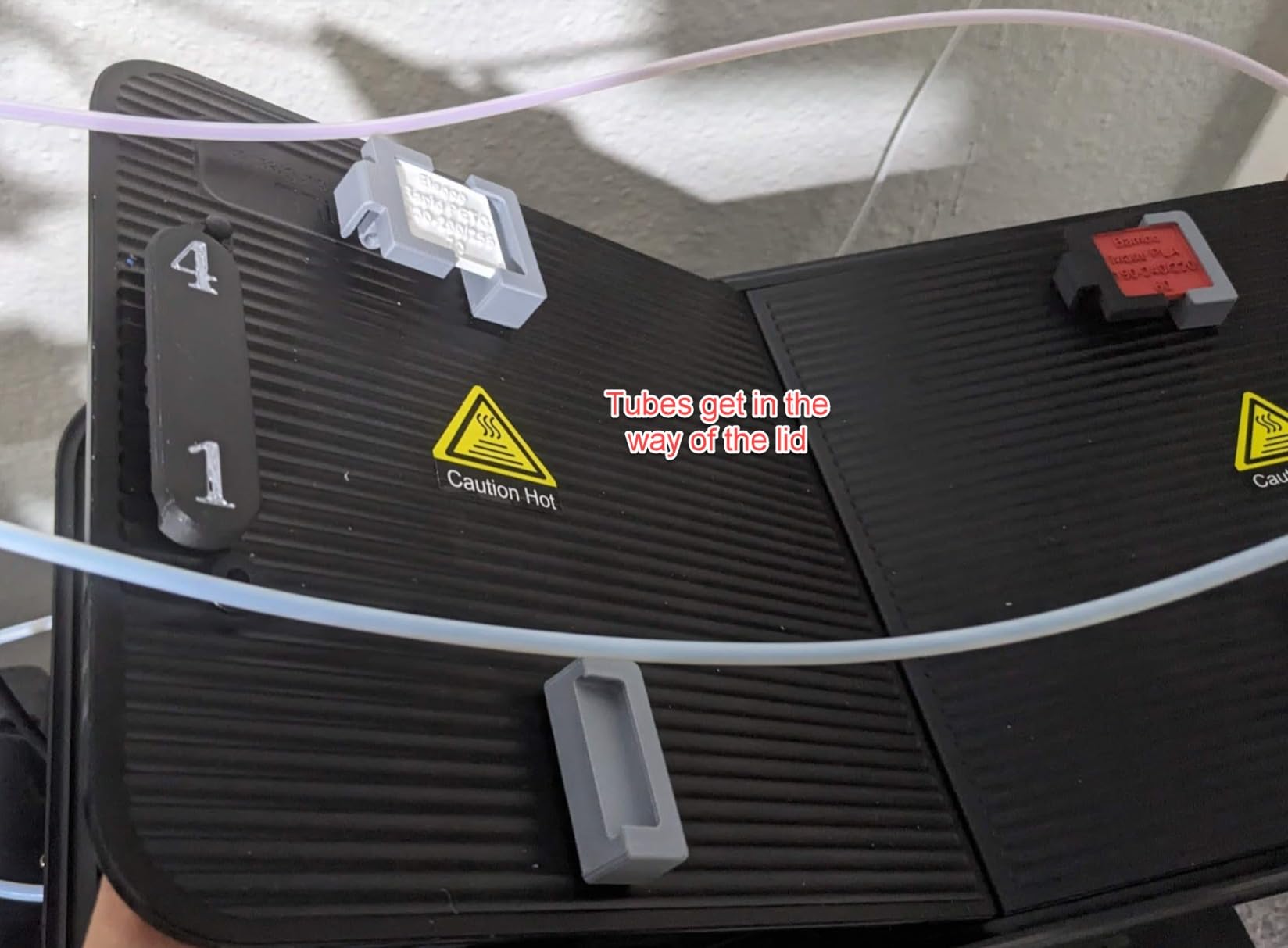
The S4 is a full cabinet rather than a single-spool box, and it is the one built for running several machines at once. It dries up to four 1kg spools, including while printing, and the eight filament exit holes exist so you can feed multiple printers from different loading angles. If you have two printers and an appetite for multi-material work in a humid room, no other box in this group serves that layout as directly.
Heat comes from a 350W PTC element that Creality and SUNLU rate at roughly 50% higher heating efficiency than the FilaDryer S2, driven by three circulation fans for 360 degree surround heating. The 35 to 70 C range and 0 to 99 hour timer give you a long drying window for a single-brand box, and it accepts 1.75mm, 2.85mm, and 3.00mm filament including PLA, PLA Plus, PLA Meta, PETG, ABS, TPU, PA, PC, and Nylon.
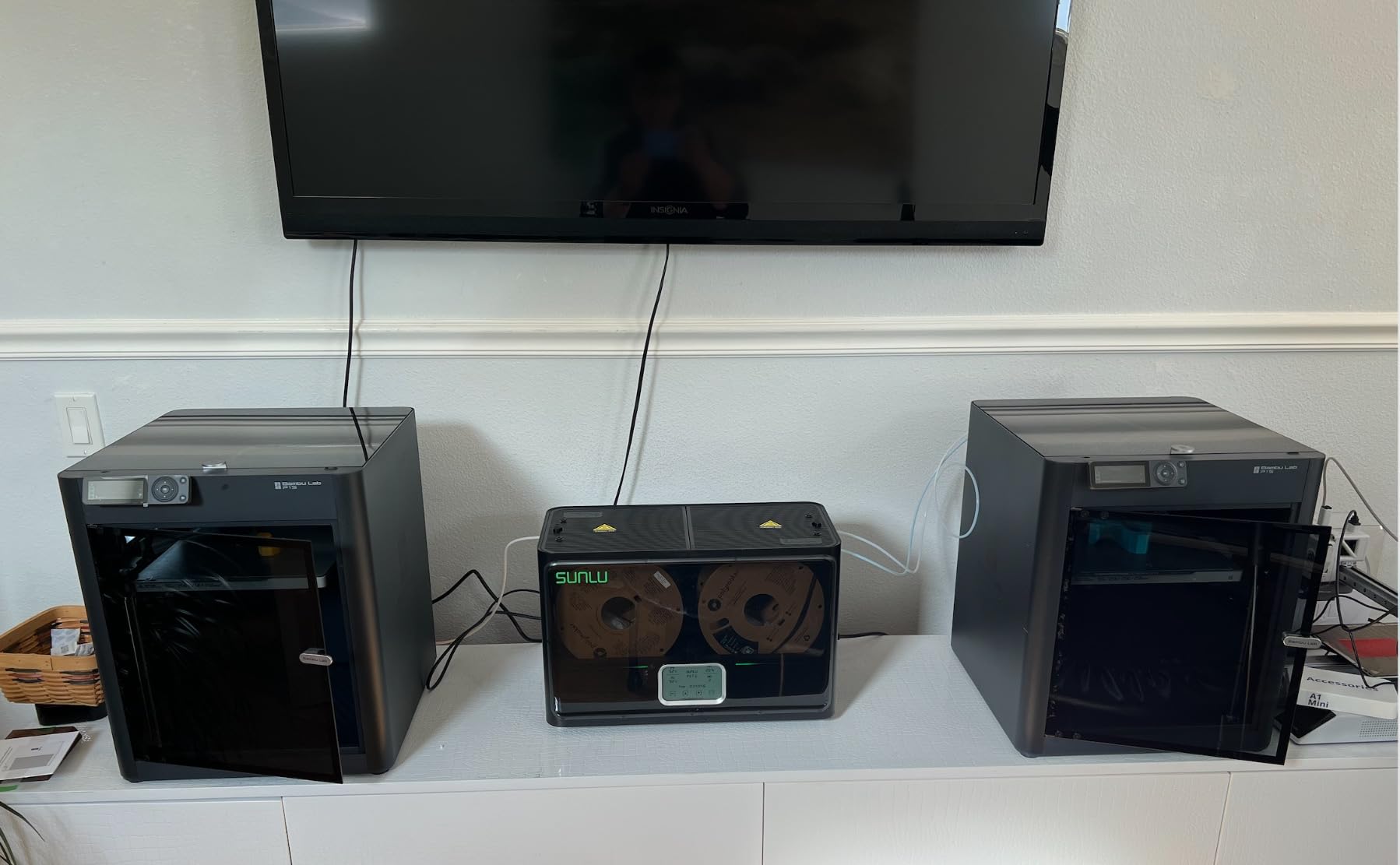
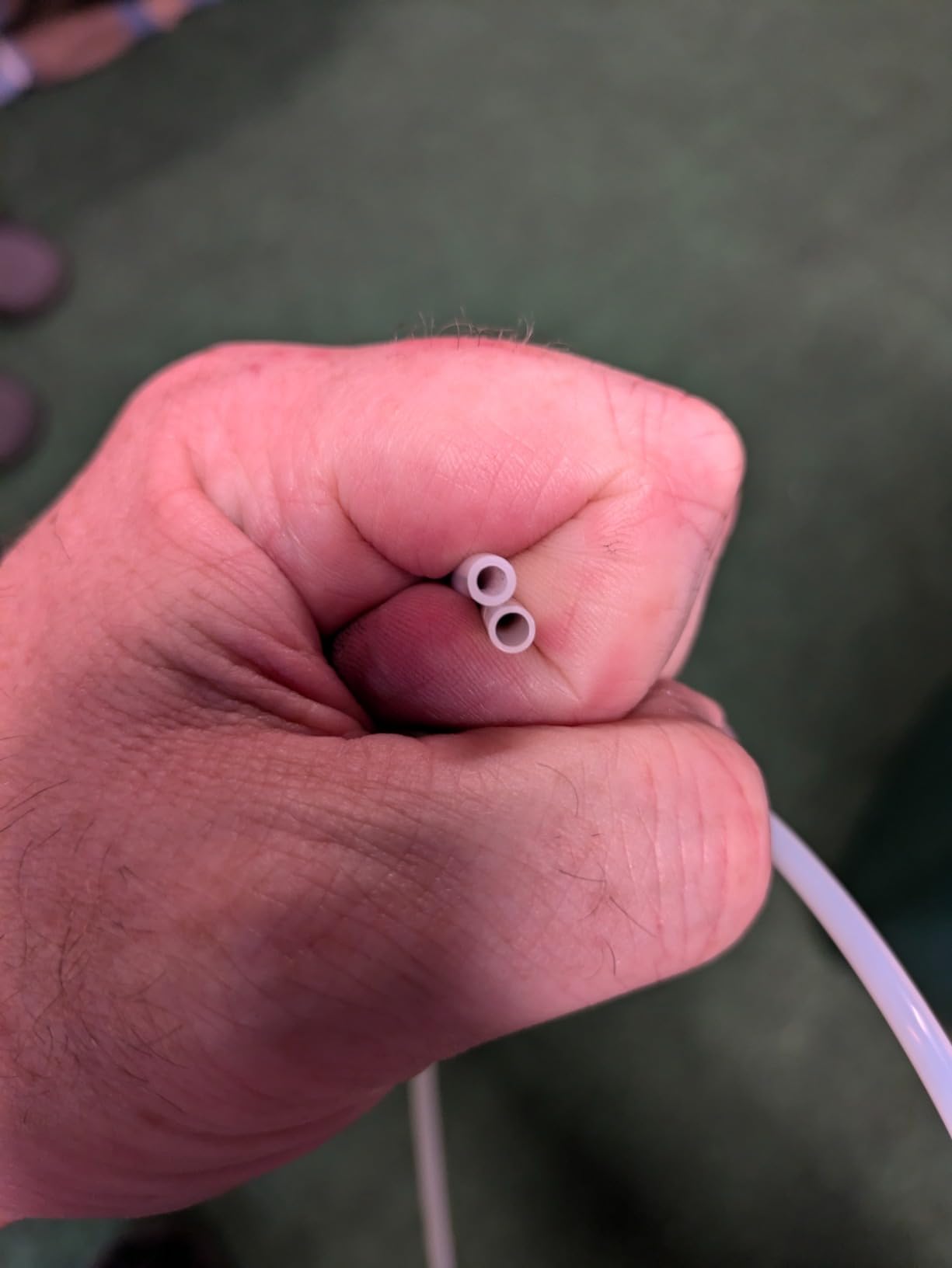
The review profile supports that: a 4.5 rating with 80% of reviews at five stars. Buyers consistently point at the four-spool capacity, the even heating from three fans, and the exit holes. The box also includes four 8cm and two 100cm PTFE tubes plus clips and silicone plugs, so you can set it up for multiple machines out of the box.
It is also the most modifiable of the boxes here. Owners have converted the S4 to dry 3kg rolls or repurpose it as a shoe dryer, which is a reasonable sign of a chassis with more going on than a basic drying cycle. Externally it measures 460 by 220 by 310mm and weighs 4 kg, so plan the footprint before you commit.
Who the S4 Serves
The S4 is the pick for a workshop with two or more printers, a farm of small machines, or anyone who wants one box to cover PLA, PETG, TPU, and ABS without constant swapping. The 99-hour timer is the real humid-climate advantage: a spool that has been open through a wet month can run an extended recovery cycle unattended, which no shorter-timer box here can do.
Where It Costs You
The cabinet size is the honest trade-off. It takes real bench space, and the entry-level documentation is thin for a box with this much going on, so expect some setup learning. One owner also reported a unit that failed to power on at all, a small reminder that at this size you are buying more electronics than you are with a single-spool box. If you only need one spool at a time, this is more machine than the job requires.
8. Creality Space Pi – Twelve Filament Presets and a 48-Hour Timer
2026 New Creality Space PI Filament Dryer-Christmas Gifts, 3D Printer Filament Dryer Box with 360° Heating, Upgraded Filament Dehydrator Storage Box Support Nylon ABS PETG PLA TPU 1.75/2.85mm
Single spool
45-70 C
110W PTC with fan
12 filament presets
48 hour timer
3.7-inch touch screen
Pros
- One-key presets for 12 filament types including PLA-CF
- PA-CF and ASA
- PTC heater and fan dry more evenly than PI heating pad designs
- 48 hour timer handles very damp spools
- Power-off memory restores your material and temperature settings
- 3.7-inch touch screen with C/F switching
Cons
- Single spool only
- Moisture has to leave so crack the lid open while drying
- Costs more than other single-spool boxes
The Space Pi is the single-spool box with the deepest material library, and that is why it earns its place for composite filament. The one-key presets cover 12 filament types including PLA-CF, PA-CF, and ASA, and the manual range of 45 to 70 C with a 0 to 48 hour timer is enough headroom for both composites and engineering polymers. If you print carbon-fiber nylon in a humid room, guessing at a drying profile is exactly how you get a brittle, delaminating part.
The heating design is a real upgrade on older units. It uses a 110W PTC heater with a built-in fan for 360 degree circulation rather than a PI heating pad, and owners report more uniform and more energy-efficient results. The parameter power-off memory is a small feature that pays off in a humid climate, because it restores your material and temperature settings after an outage instead of dumping you back to defaults.
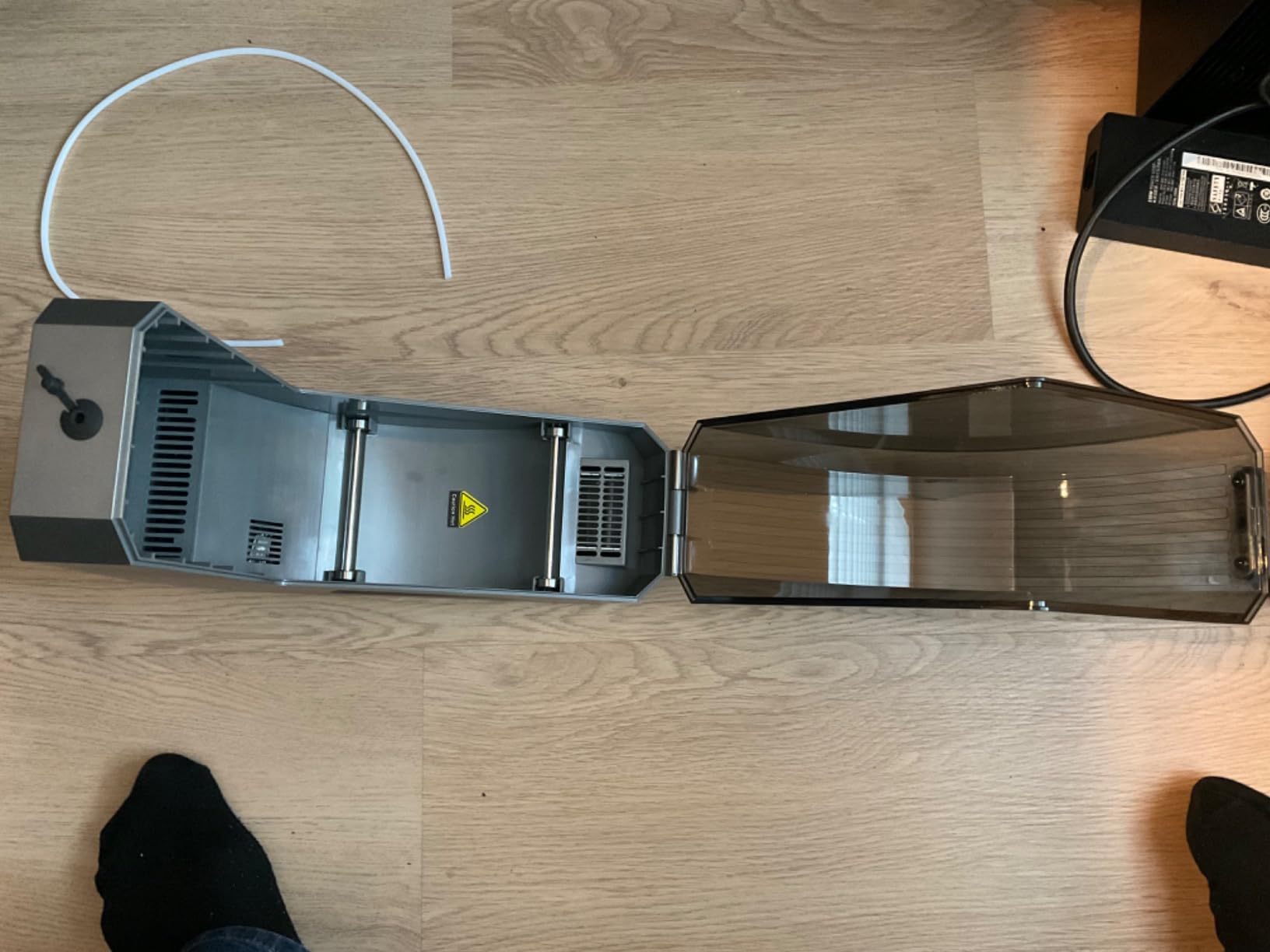
Its 48-hour timer is longer than most single-spool boxes in this roundup, which matters when a spool has been open in a garage through several wet weeks. The 3.7-inch LCD touch screen with C to F switching is straightforward to read, and the review profile is solid at 4.4 with 71% five-star ratings.
The same limitation shared by most sealed single-spool boxes applies here: moisture needs somewhere to go, so you need to crack the lid open while drying. That turns it into an active drying tool rather than a storage cabinet. It also carries a premium relative to cheaper single-spool alternatives, so you are paying specifically for the preset library and the timer length.
When the Space Pi Earns Its Price
Choose it if your material list includes composites or engineering polymers and you would rather not research a drying profile for each one. The 12 presets including PLA-CF, PA-CF, and ASA take the guesswork out of the process, and the 48-hour window gives you a realistic recovery option for badly damp spools. The power-off memory also suits anyone in a region with unreliable grid power.
When Something Cheaper Is Better
Buy a lower-cost single-spool box if you print PLA and PETG only, because the preset library is wasted capability in that case. Skip it if you run two printers, since one spool at a time becomes the bottleneck, and skip it if you want a sealed dry cabinet, because it is not one. For those readers, the S4 handles multiple machines and the X4L handles independent temperature zones.
Drying Schedules That Reach Below 20% RH
These numbers come from practitioner reports rather than manufacturer instructions, and they matter because the target is consistent: getting the chamber below roughly 20% relative humidity. Below that threshold, sealed filament stays stable. Above it, you are on a treadmill.
PLA: 55 C for 6 hours. PLA is the least demanding material and one long-time owner put it plainly: once it is dry and sealed, PLA really is not much of a concern.
PETG: 65 C for 8 hours. This is the schedule most often cited for reaching below 20% RH, and it is also the reason a 50 C ceiling is not enough for PETG.
TPU: 65 to 70 C for 8 to 12 hours. TPU in humid air goes from soft and gummy to brittle surprisingly fast.
Nylon and PA6: 80 C for 12 to 24 hours. Above the ceiling of every single-chamber box on this list, which is why people reach for a toaster oven.
PA-CF and other fiber-filled: 80 C for 12 to 24 hours, then dry use immediately. Fiber-filled filaments absorb less but the binder is hygroscopic.
ABS and ASA: 70 to 80 C for 8 to 12 hours. ASA holds up better outdoors, but it still needs drying before printing.
Two practical techniques speed everything up. The first is the internal fan: one experienced user noted that the fan is what makes a big difference to drying speed, and every cheap box without one needs longer cycles. The second is venting. Opening the unit once it is heated releases steam and pulls the chamber humidity down fast, and it is why owners of closed-loop boxes like the S2 and the Space Pi crack the lid during a cycle.
How to Choose a Filament Dryer for a Humid Climate
Five criteria matter, and in humid climates they rank differently than most buying guides suggest. Here is the order I would use.
Temperature ceiling against your material list. This is the criterion nobody should skip. A 50 C box is a PLA box. A 65 C box handles PETG and TPU properly. You need 80 C and a separate oven for Nylon, PA-CF, and PC. Community consensus is blunt that a 65 C ceiling is not enough for engineering-grade filament.
Spool capacity and chamber independence. One spool is fine if you print one material. Two spools is the sweet spot for most homes. Four spools only pays off if you actually cycle through them, and two independent chambers only matter if your materials need different temperatures at the same time.
Seal quality and a moisture exit path. Every box in this roundup needs the lid cracked or a vent opened during drying. A box with better sealing rings and a defined outlet, like the SH02, gets moisture out more reliably. Also check whether the chamber is genuinely airtight, because that decides if you can use it for storage afterwards.
Whether the humidity reading is trustworthy. A screen showing RH is only useful if the number is accurate. Multiple boxes here have sensors that stall when the heater is idle, sit next to the heater and read high, or floor at 15 percent. A cheap standalone RH meter is often a better investment than a display.
Feed-while-drying. A PTFE exit port means filament dries while it prints, which is genuinely useful for long jobs. It also lets you treat the dryer as a spool holder. It is not essential, but it is a real workflow difference between a night-time batch job and a continuous one.
Also plan for the electrical side. A dryer, a printer, and a heated chamber on one UPS is a real risk, and one owner noted that most affordable UPS units are rated around 900W, which a dryer plus a heated chamber can exceed. On mains power, the Space Pi X4L publishes its draw clearly: 0.095kWh per hour in single-chamber mode and 0.165kWh in dual mode at 75 C.
Food Dehydrator or Toaster Oven vs a Dedicated Filament Dryer
This gets asked constantly and the honest answer is that a kitchen appliance often wins. One owner running a food dehydrator reported that it does a much better job of drying filament than the SUNLU S1 and the Creality Space Pi he had bought specifically for the purpose. Another uses a toaster oven on the dehydrate setting at 180 F, which is 82 C, for 48 hours on PA6 and PC, fitting a 5kg spool or two 1kg spools.
The practical advantages are hard to argue with. The temperature ceiling is 82 C rather than 50 to 75 C, which is the difference between being able and not being able to dry Nylon. The volume is far larger, the cost is a fraction of a dedicated dryer, and it does not need to sit empty between uses. In humid climates, where drying is a routine chore rather than an occasional rescue, throughput matters more than elegance.
There are real limits worth knowing. Use a dedicated dehydrator rather than a toaster oven if you can, because crumbs and residue are difficult to get out of a unit that also heats food. Keep spools off the heating element and off the drip tray, and use a rack so air moves around them. Do not exceed the safe drying temperature for your material, and be aware of UV exposure, which degrades some polymers during a long cycle. Finally, none of these appliances show you the chamber humidity, so you still want a meter to confirm you reached target.
My read is that a dehydrator handles routine PLA, PETG, and TPU drying at a fraction of the cost, while a dedicated dryer wins on quieter operation, filament-path integration, and drying while printing. In a house where the printer is already in a spare room, the dedicated box is the more pleasant tool to live with. In a workshop that just needs throughput, the dehydrator is hard to argue against.
How to Keep Filament Dry After Drying
This is where most humid-climate setups quietly fail. Drying a spool and then leaving it open on a shelf in an 80% RH room undoes the work within days, and it explains why people buy dryers and still see stringing. The protocol has three parts.
Dry to below 20% RH, not just to a hot temperature. PLA at 55 C for 6 hours and PETG at 65 C for 8 hours are the schedules most often reported as reaching that target. Verify with a small RH meter if your dryer’s display is unreliable, which several of them are.
Seal it. A vacuum-sealed bag with desiccant is the most reliable option. A gasketed dry box with a desiccant pack works well, and a multi-material unit’s chamber is usually acceptable. One Florida-based user holds a steady 10% RH in a sealed plastic box with molecular sieve bags, and a Texas-based user measures the same inside an AMS fitted with 3D-printed desiccant holders and a mounted RH meter.
Recharge the desiccant, not the filament. Many heated boxes will regenerate desiccant as a side effect of a drying cycle, which is a good reason to keep it in rotation rather than discarding packs after a few months.
One clarification worth making, because it confuses people. Sealed is a relative term. A closed multi-material unit with a PTFE tube running to the printer counts as sealed for practical purposes unless it is literally raining in the room. What defeats you is a spool sitting open in a humid closet, not a slightly imperfect seal with filament threaded through it.
A wet or badly aged spool is usually recoverable, which is good news. Owners report successfully drying a two-year-old nylon spool back to usable condition, and a food dehydrator at 82 C for 48 hours is the common recommendation for that job. If the filament has already printed badly, test it on a known-good profile before buying anything else, because a mis-set slicer temperature profile produces the same symptoms as moisture.
Is It Really Moisture? A Humid-Climate Troubleshooting Checklist
Before you spend money, work through this list. A forum user blamed humidity for PETG problems that turned out to be a wrong temperature profile, and that misdiagnosis sent them shopping for a dryer they did not need.
Popping, crackling, or hissing at the hot end. Moisture boiling off inside the melt zone. This is the clearest moisture signal.
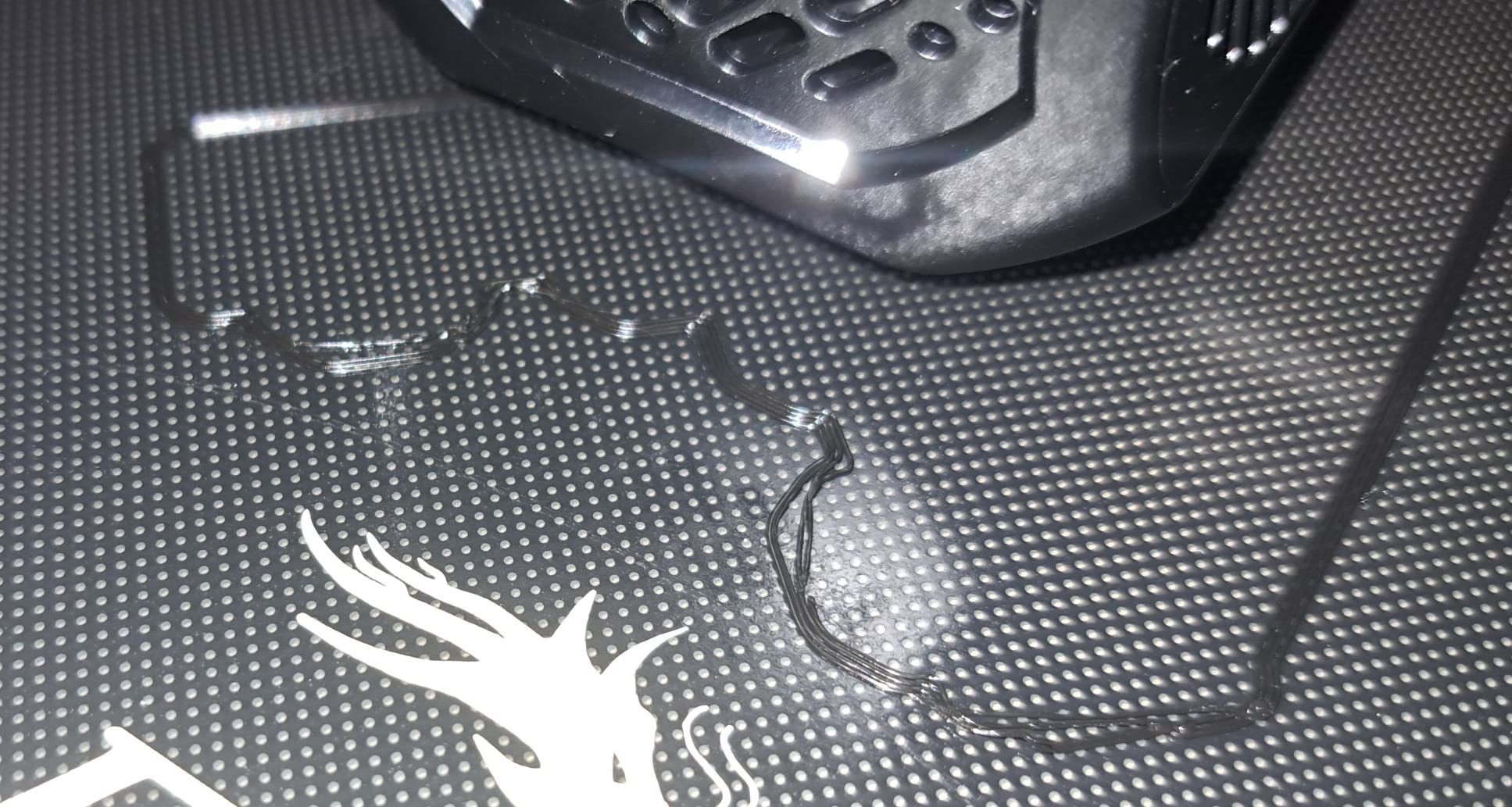
Bubbling on the surface of the extrusion. Steam trapped in the deposited line, often with visible blisters on top of the first layers.
Heavy stringing and a rough, matte surface. Both classic, but also both symptoms of an under-extruded hot end.
Poor layer adhesion and layer separation on tall prints. Water weakens the bond between layers, which is where humid-climate prints fail structurally.
Sudden failures on a spool that printed fine last week. The filament absorbed moisture while sitting open. This is the highest-signal symptom in a humid room.
The counter-check. Run a known-good profile on a known-dry spool. If the problem disappears, it was moisture. If it persists, it is your profile, your nozzle, or your hot end. A PETG profile set to PLA temperatures produces identical symptoms.
If the counter-check comes back dry, and you are in the 70% RH band or above, the fix is straightforward: buy a dryer, run the schedule for your material, and seal the spool afterward. If you are below 50% RH and the problem is intermittent, a desiccant box and a profile check will likely solve it for a fraction of the cost.
Frequently Asked Questions
What humidity level is too high for filament?
PLA and PETG stay printable up to roughly 55 to 60% ambient relative humidity if the filament is dried and stored sealed. Above 70% RH, TPU, Nylon, and ABS begin failing consistently and a dryer stops being optional. Above 80%, expect to re-dry on a routine schedule and verify storage conditions with an RH meter.
Is it possible to 3D print in 60% humidity?
Yes. 60% ambient RH is workable for PLA and PETG as long as filament is dried beforehand and stored sealed afterward. The problem in humid rooms is storage, not printing. Owners printing at around 60% RH report no problems once filament comes from a dry box or a sealed multi-material unit.
How to tell if PLA is too humid?
Look for popping or crackling at the hot end, bubbling on the surface of the extrusion, heavy stringing, a rough matte finish, and layer separation on tall prints. The counter-check matters: run a known-good profile on a known-dry spool before blaming moisture, because a wrong slicer temperature profile produces identical symptoms.
What humidity to dry filament?
Target below 20% relative humidity. Community-tested schedules are PLA at 55 C for 6 hours and PETG at 65 C for 8 hours, both reported to reach under 20% RH. TPU needs roughly 65 to 70 C for 8 to 12 hours, while Nylon, PA-CF, and PC need 80 C, which is above the ceiling of most single-chamber dryers.
Is it worth getting a filament dryer?
Above roughly 55 to 60% ambient RH, yes. It is also worth it if you print more than one spool type, if spools sit unused for weeks between prints, or if you print TPU, Nylon, or fiber-filled filament. In a dry climate with low volume it is usually unnecessary, and desiccant in a sealed box is enough.
Can I use a food dehydrator as a filament dryer?
Yes, and several community reports say it outperforms enclosed dryers costing several times more. A toaster oven or dehydrator on the dehydrate setting reaches 82 C, handles a 5kg spool, and covers PA6 and PC. Keep spools off the heating element, use a dedicated dehydrator rather than a toaster oven if possible, and do not exceed the material’s safe drying temperature.
What is the best way to keep filament dry?
Three steps: dry to below 20% RH, seal the spool in a vacuum bag with desiccant or a gasketed dry box or a multi-material unit chamber, then verify with a small RH meter. Drying is only half the battle, because a dried spool left open in a humid room absorbs moisture again within days.
Do you really need a filament dryer for PLA?
PLA is the least demanding material and needs drying mainly after sitting open, not before every print. Most PLA users in humid rooms are fine drying once and storing sealed. TPU, Nylon, ABS, and fiber-filled filaments genuinely require active drying, so if those are your primary materials the dryer matters far more.
The Verdict for Humid Climates in 2026
Start with your material list, because it decides the temperature ceiling and nothing else matters if that is wrong. PLA on one or two spools means the Comgrow 2-Spool box is the answer. Mixed materials, TPU, or anything at 70 C and above means the Comgrow SH02 or the SUNLU S2, depending on how many spools you cycle. Four spools or two printers means the Space Pi X4L for independent temperature zones or the SUNLU S4 for exit-port flexibility. Composites and engineering polymers point to the Creality Space Pi with its 12 presets, or to an 82 C toaster oven when you need 80 C on Nylon.
Then protect what you dry. A vacuum bag with desiccant, a gasketed box, or the chamber of a multi-material unit will hold below 20% RH far longer than any heated dryer on this list can, and a small RH meter is worth more than trusting a display that several owners have measured as inaccurate. Humidity is a storage problem that drying tools solve, not a problem that disappears once the spool is hot.
If your ambient humidity sits below 50% and you print one spool of PLA, none of this is necessary. But above 60%, a dryer is the difference between prints you keep and prints you troubleshoot. That is the honest answer to whether the best filament dryers for humid climates are worth it: they are, but only if the seal comes after the heat.