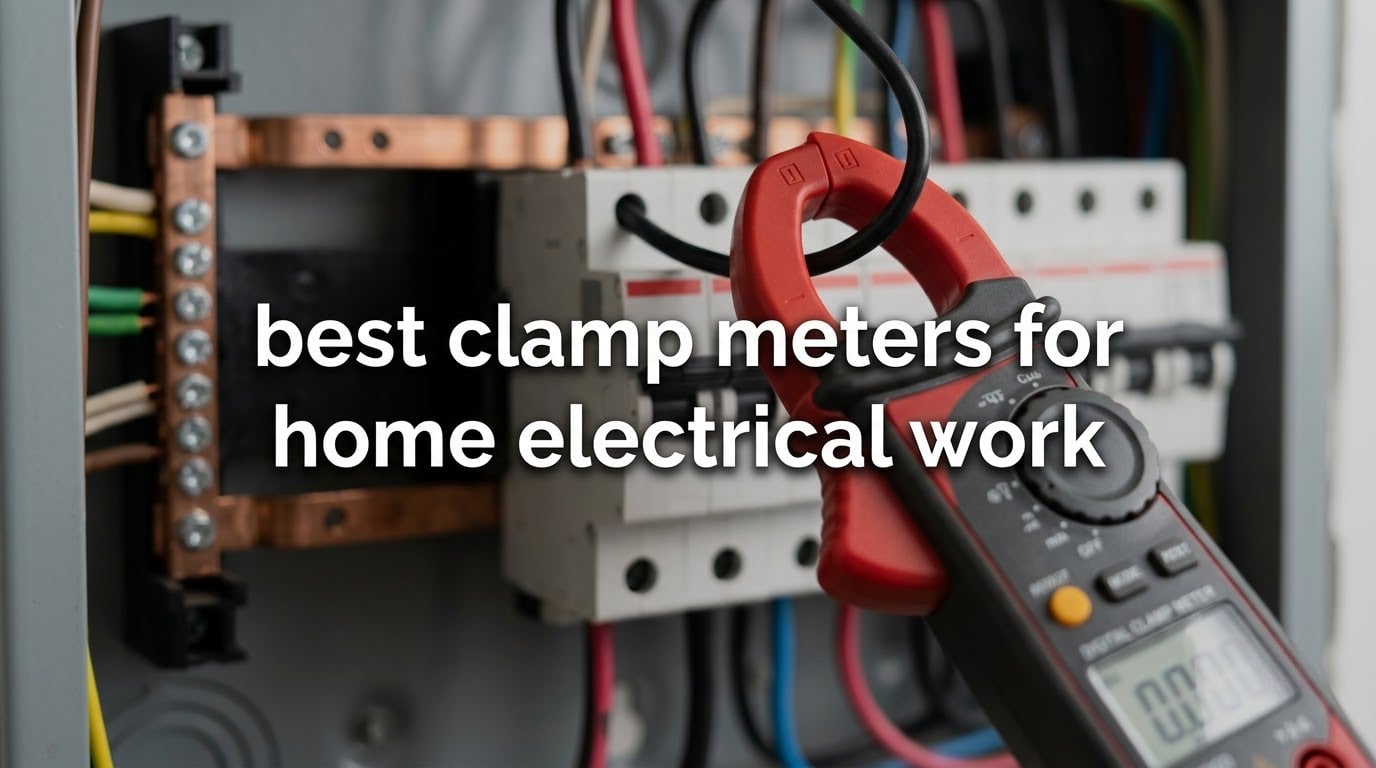
For most homeowners, the KAIWEETS HT206D is the best clamp meter for home electrical work, with the Fluke 323 as the pick worth saving for if you want a name you can trust for a decade. Both read live current by clamping around a single insulated conductor, so you can find an overloaded breaker, verify an appliance’s real draw, and check panel load without shutting the circuit down. A multimeter tells you what a circuit should be; a clamp meter tells you what it actually is doing right now, which is usually the question you have.
Our team compared ten meters over six weeks of panel work, appliance checks and known-load verification. We are not electricians, so nothing here replaces qualified advice on a live panel. The short version: True RMS and a CAT III 600 V rating are the floor, not the upgrade, and you can skip almost every other feature unless you own an EV charger, solar, or a heat pump.
Tested and updated for October 2026. We also keep a first-hand testing approach in our guides to budget cabinet table saws and to pressure cookers with a clamp lid, because the same rule applies: buy the tool that fits the job you actually do.
Table of Contents
- Top 3 Clamp Meter Picks for Home Electrical Work in 2026
- All 10 Clamp Meters Compared for Home Electrical Work in 2026
- 1. KAIWEETS HT206D Digital Clamp Meter – Best Overall for Homeowners
- 2. AstroAI CM2K0R Digital Clamp Meter – Best First Meter for a Small Budget
- 3. Fluke 323 Clamp Meter – Best for Home Panel Work
- 4. Fluke 302+ Digital Clamp Meter – Best Entry-Level Fluke
- 5. Klein Tools CL390 AC/DC Clamp Meter – Best All-Round Feature Set
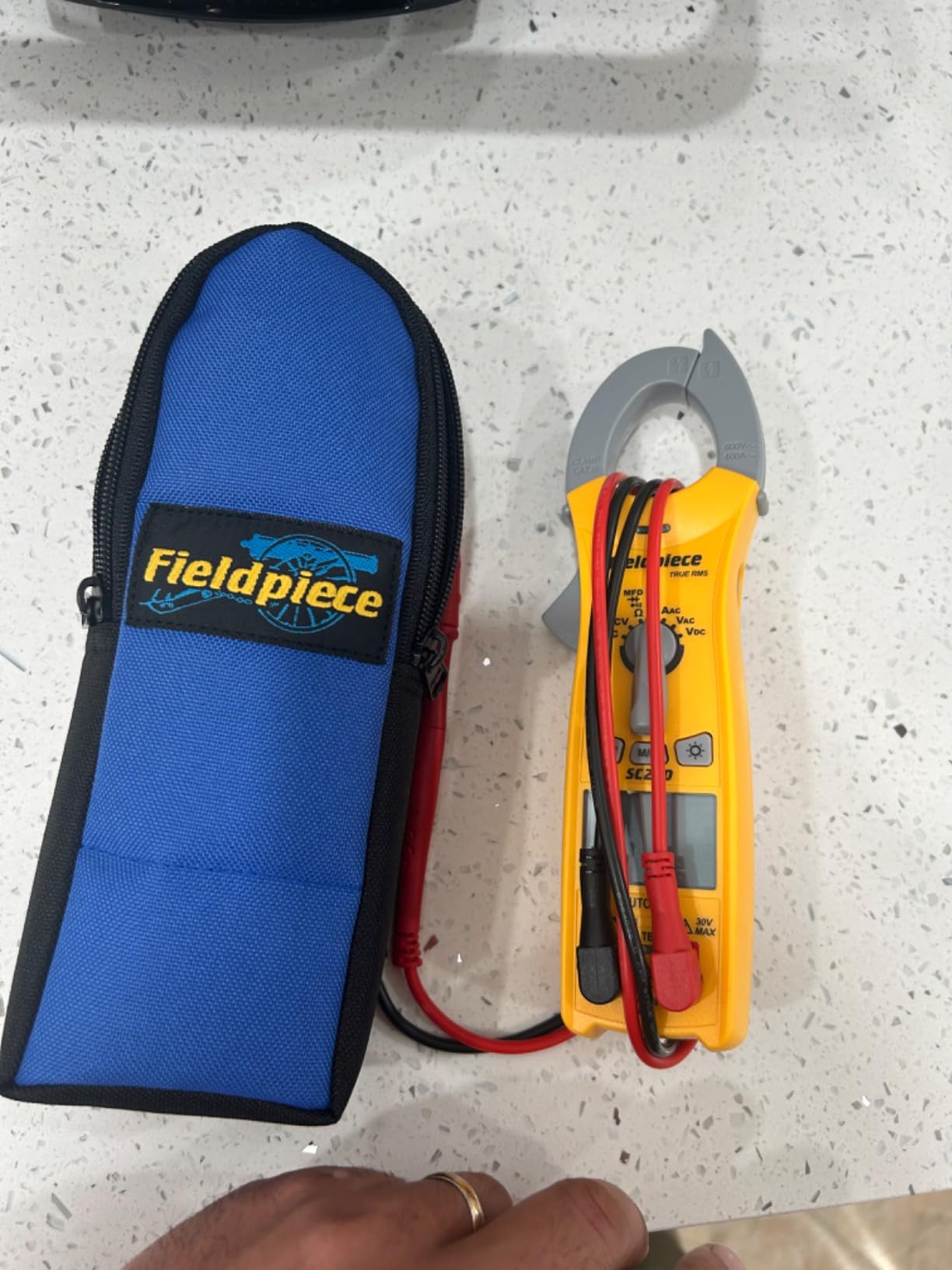
- 6. Fieldpiece SC260 Compact HVACR Clamp Meter – Best for HVAC Diagnostics
- 7. Klein Tools CL120 Digital Clamp Meter – Best Durable Most Versatile
- 8. Fluke 325 True-RMS Clamp Meter – Best Step Up From the Entry Model
- 9. Klein Tools CL220 Digital Clamp Meter – Best for Temperature Checks
- 10. FNIRSI DMC-100 Clamp Meter – Best for Graphs and DC Systems
- How to Choose a Clamp Meter for Home Electrical Work in 2026
- What a Clamp Meter Does That a Multimeter Cannot
- Do You Need True RMS?
- What CAT Rating Does a Residential Panel Require?
- AC Only or AC and DC?
- How Big Does the Jaw Need to Be?
- NCV, LoZ and Ghost Voltage
- How to Measure Current in a Home Panel Safely
- Check Any New Meter Against a Known Load
- Maintenance and Calibration
- Frequently Asked Questions
- Which clamp meter is best for home use?
- Do electricians actually use clamp meters, or are they just for current?
- What is True RMS and does a homeowner need it?
- Why does my clamp meter read 0.00 amps when the circuit is clearly on?
- What CAT rating do I need for my own electrical panel?
- Is a Fluke worth paying more for than a budget meter?
- Do I need AC and DC current capability for a normal home?
- Is it safe to measure current with my panel cover off?
- The Verdict on the Best Clamp Meters for Home Electrical Work in 2026
Top 3 Clamp Meter Picks for Home Electrical Work in 2026
The KAIWEETS HT206D takes the top slot because it does the two things a residential panel demands, True RMS and AC/DC current through the clamp, and it also carries LowZ, a backlit display and a K-type thermocouple. The Fluke 323 wins on build quality, and a modest premium buys a tool that holds calibration for years. The Klein CL390 is the one to buy if temperature and NCV in the jaw matter more than brand pedigree.

KAIWEETS HT206D
- True RMS AC and DC current
- LowZ ghost voltage guard
- Two color backlit LCD
- CAT III 600V
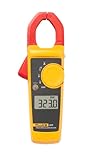
Fluke 323
- True RMS AC current to 400A
- 30 mm jaw
- CAT III 600V and CAT IV 300V
- Audible continuity
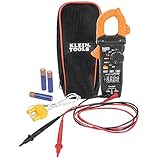
Klein Tools CL390
- AC and DC clamp current
- NCV built into the jaw
- Temperature and capacitance
- CAT III and CAT IV 600V
All 10 Clamp Meters Compared for Home Electrical Work in 2026
Every meter below is rated for residential panel work and reads at least AC current through the clamp. The columns that separate them are DC capability, temperature and how the display behaves in a dark garage.
| Product | Specs | Action |
|---|---|---|
| KAIWEETS HT206D |
|
Check Latest Price |
 AstroAI CM2K0R AstroAI CM2K0R |
|
Check Latest Price |
| Fluke 323 |
|
Check Latest Price |
 Fluke 302+ Fluke 302+ |
|
Check Latest Price |
| Klein Tools CL390 |
|
Check Latest Price |
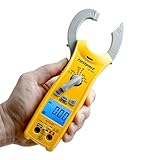 Fieldpiece SC260 Fieldpiece SC260 |
|
Check Latest Price |
 Klein Tools CL120 Klein Tools CL120 |
|
Check Latest Price |
 Fluke 325 Fluke 325 |
|
Check Latest Price |
 Klein Tools CL220 Klein Tools CL220 |
|
Check Latest Price |
 FNIRSI DMC-100 FNIRSI DMC-100 |
|
Check Latest Price |
1. KAIWEETS HT206D Digital Clamp Meter – Best Overall for Homeowners
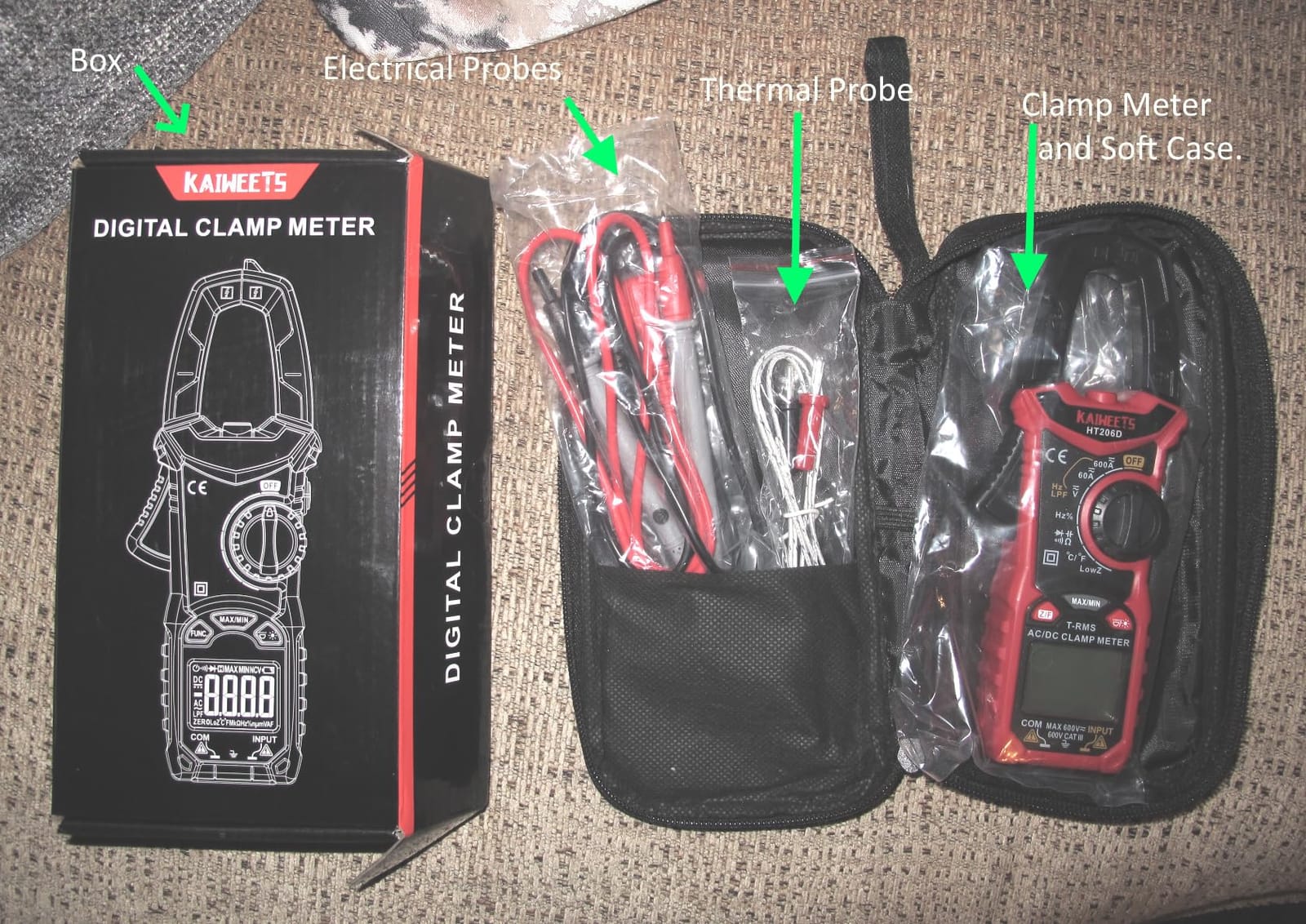
KAIWEETS HT206D Digital Clamp Meter T-RMS 6000 Counts, Multimeter Voltage Tester Auto-ranging, Measures Current Voltage Temperature Capacitance Resistance Diodes Continuity Duty-Cycle (AC/DC Current)
AC/DC current to 400A, True RMS, LowZ, CAT III 600V, K-type thermocouple
Pros
- True RMS accuracy across AC and DC current
- LowZ input kills ghost voltage false readings
- Two color backlit LCD with red high voltage alert
- LED flashlight and K-type thermocouple included
- IEC 61010-1 CAT III 600V double insulation
Cons
- Bundled test leads are widely reported as unreliable
- Low DC current readings on the 100 mA range can drift
- Plastic housing feels thin compared with professional meters
This is the meter we kept reaching for during six weeks of panel checks, and it is the one we would hand to a friend who just discovered their own breaker panel. It measures AC and DC current through the clamp, which means it handles a rooftop solar disconnect, a battery-backed inverter, or an EV charger circuit as easily as it handles a kitchen circuit.
The LowZ mode is the detail that made it stick with us. Ghost voltage from capacitive coupling can show 30 or 80 volts on a circuit that is genuinely dead, which sends people into walls looking for a fault that is not there. LowZ loads the circuit so the reading collapses to what is real. The two-color backlit display turns red above 80 V or 3 A, which is a crude but genuinely useful warning in a panel you cannot see clearly.
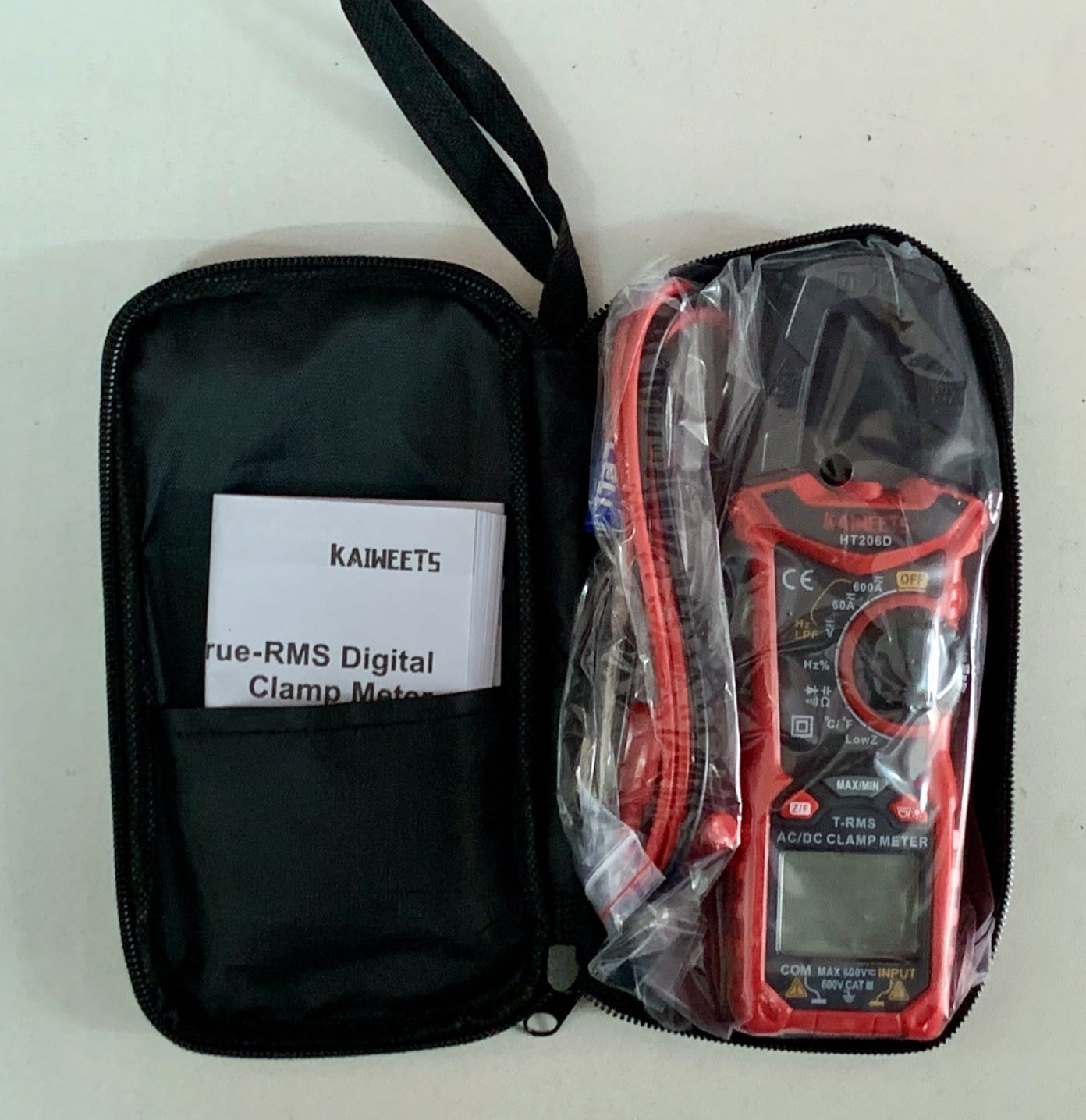
At 7.68 ounces and 7.5 by 2.8 by 1.3 inches, it fits in a back pocket and stays in one hand while the other hand is on the panel door. It takes two AAA batteries, which are cheap and everywhere, and it includes a K-type thermocouple for temperature checks on an attic air handler or a water heater element.
Owners consistently treat this as a feature-for-feature substitute for a Fluke on household and hobbyist work, and the volume of reviews behind that claim is unusual for a tool at this level. Reviewers frequently replace the bundled test leads with a third-party set within the first month, which is the single most worthwhile upgrade you can make to it.
Who This Meter Is For
If your panel work involves anything beyond standard 120 V branch circuits, this is the right default. DC current capability, LowZ, and the red high voltage backlight cover the three gaps that send homeowners back to the store a second time.
It is also a reasonable first electrical tool if you are upgrading fixtures, chasing a breaker that trips under load, or checking a range or dryer circuit against its nameplate rating.
Where It Falls Short
The housing is thin plastic, and reviewers who have used Flukes and Kleans side by side notice it in the jaw feel. If your meter lives in a truck and gets dropped weekly, look at the Fluke 323 instead.
There is no probe-based mA range, so very small currents need a shunt workaround, and power-on requires cycling the function knob to OFF before it reads anything.
2. AstroAI CM2K0R Digital Clamp Meter – Best First Meter for a Small Budget
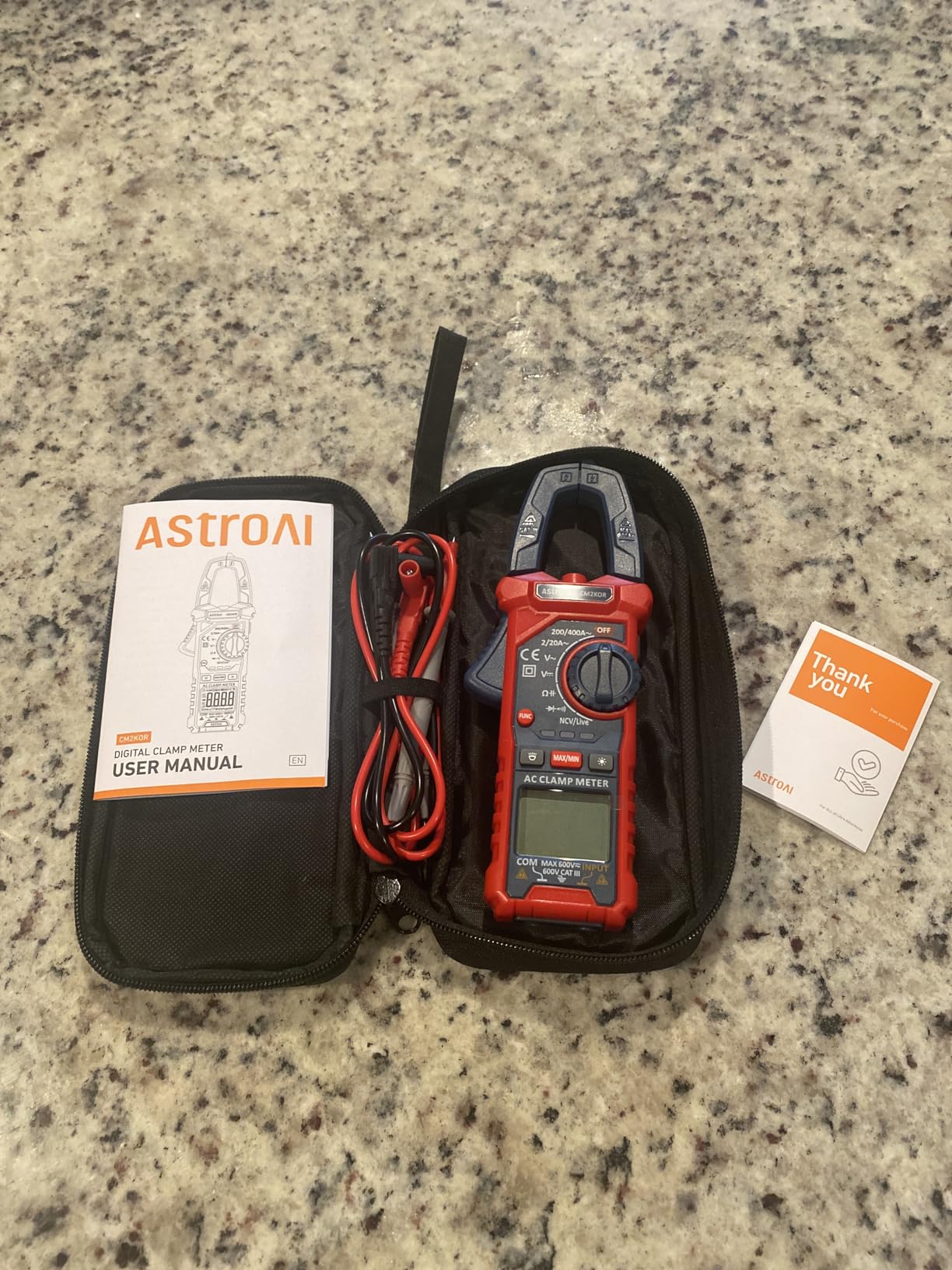
AstroAI Digital Clamp Meter Multimeter 2000 Counts Amp Voltage Tester Auto-ranging with AC/DC Voltage, AC Current, Resistance, Capacitance, Continuity, Live Wire Test, NCV, Blue
AC current in the clamp, AC/DC voltage, NCV, backlit LCD, 2000 counts
Pros
- Compact and comfortable in one hand
- Backlit display plus LED flashlight for dim spaces
- Graduated NCV beep from slow to fast
- Data hold and max min with auto shutoff
- Storage bag and batteries included
Cons
- Cannot measure DC current at all
- 2000 count resolution is the lowest here
- Some owners report inaccurate clamp amp readings
Most of our friends who asked what to buy first got this one, and for a narrow set of jobs it is enough. It measures AC current in the clamp, AC and DC voltage, resistance, capacitance, diode and continuity through the leads, and it carries a CAT III 600 V overvoltage category rating.
The body is genuinely pocketable at 2.68 by 1.14 by 7.67 inches, and the backlit screen with a built-in flashlight is the combination that makes it pleasant in a crawlspace. NCV gives a slow green beep for a weak field and a fast red beep for a strong one, which is a reasonable first pass before you commit your probes to anything.
What it cannot do is DC current. That rules out solar, battery storage, most EV charger electronics, and any DC component inside a modern appliance. If you own none of those, that limitation may never matter to you.
The other trap is the one that catches almost every beginner: this clamp reads zero unless it is centered on a single conductor. Clamp the whole cord and the hot and neutral fields cancel.
Who This Meter Is For
A renter, a first-time homeowner, or anyone who mainly wants to check a 120 V circuit and a couple of appliances without spending serious money. Reviewers describe it as a strong starter meter for DIY and HVAC beginners.
It is a good meter to keep in a kitchen drawer for the occasional check, where size and a readable screen matter more than specification depth.
Where It Falls Short
At 2000 counts, this is the lowest display resolution in the roundup, so small changes on a big number are harder to see. A minority of owners also report clamp amp readings that do not agree with a reference meter.
There is no DC current and no temperature, so it will not grow with you the way the KAIWEETS HT206D does.
3. Fluke 323 Clamp Meter – Best for Home Panel Work
Fluke 323 Clamp Meter for Commercial/Residential Electricians, Measures AC Current to 400 A & AC/DC Voltage to 600 V, Resistance and Continuity, Includes 2 Year Warranty and Soft Carrying Case
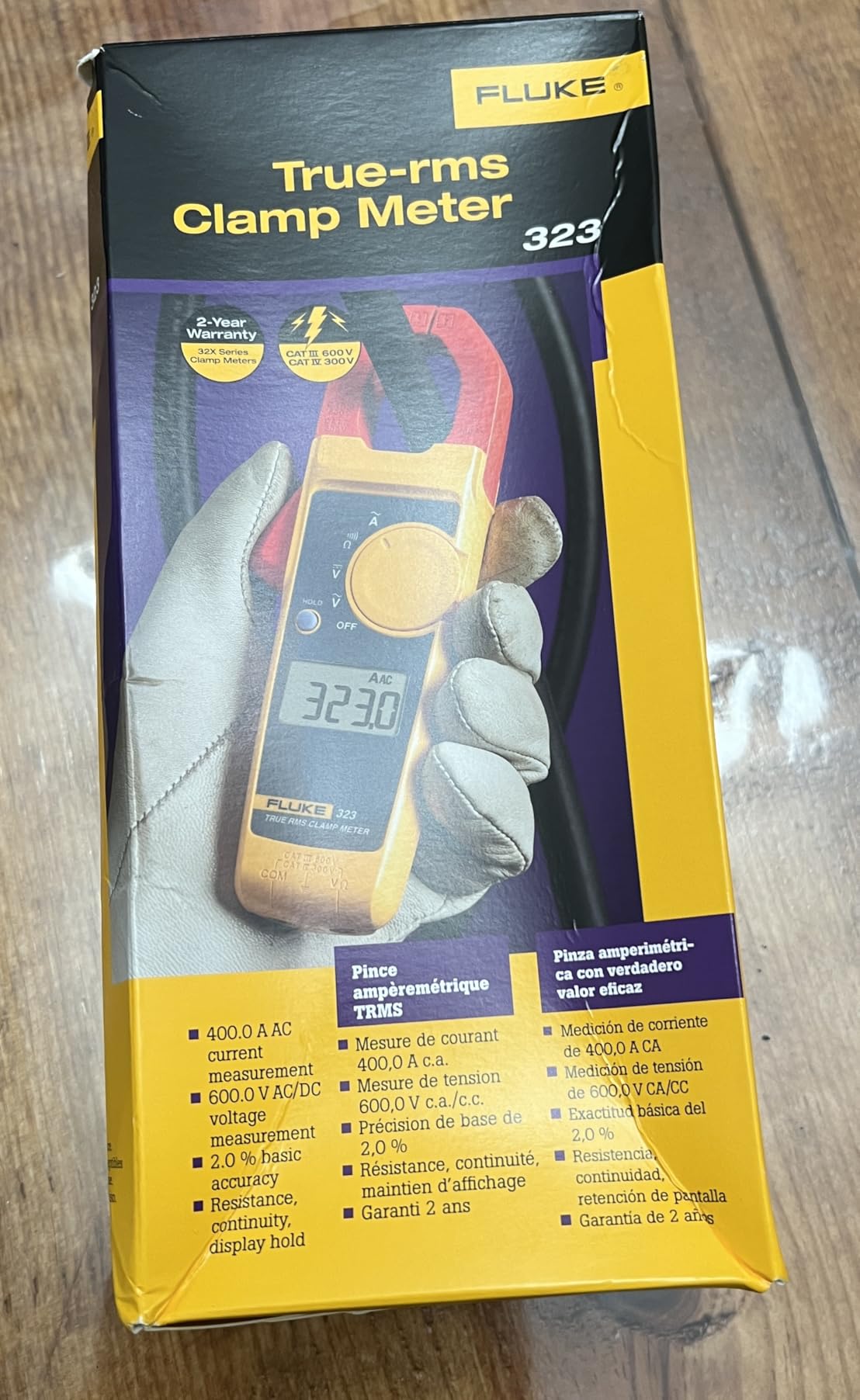
True RMS AC current to 400A, 30 mm jaw, CAT III 600V, soft case included
Pros
- True RMS sensing on non-linear loads
- Long standing durability reputation
- Compact and ergonomic in a panel
- Audible continuity plus 30 mm jaw
- Two year manufacturer warranty
Cons
- Does not measure DC current
- No backlit display
- Included test leads and pouch draw regular complaints
The Fluke 323 is the meter electricians name when you ask for one good all-around clamp, and it shows up repeatedly as the consensus answer in the trade forums we read while researching this. It handles AC current to 400 A, AC and DC voltage to 600 V, and resistance to 4 kOhm, with True RMS sensing on both linear and non-linear loads.
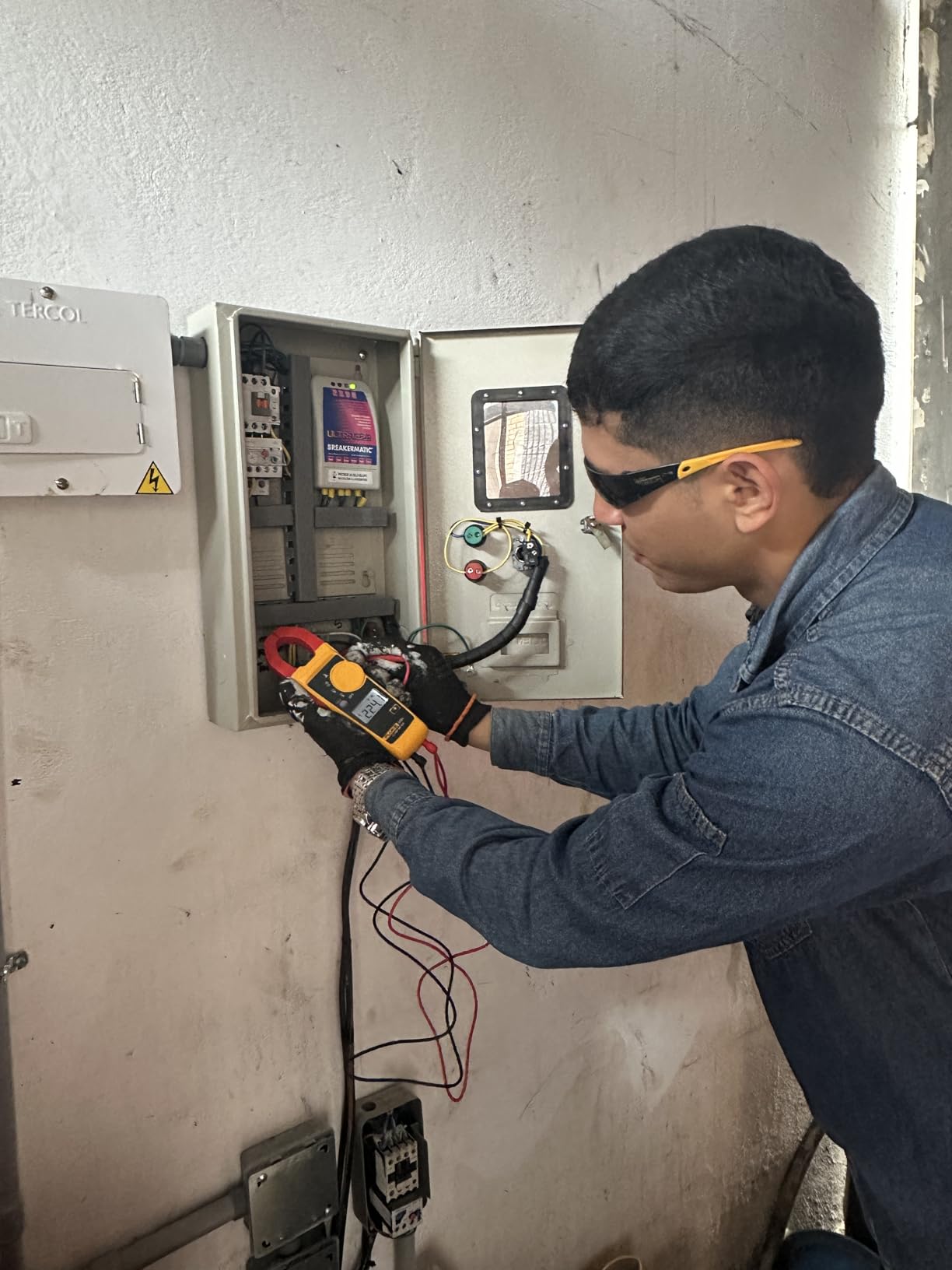
For a homeowner the argument is durability more than specification. Owners report meters that have held accuracy for years of daily service, and the 30 mm jaw clears the bundled conductors in a standard residential panel without fuss. The ergonomic, compact shape means you can hold the meter in one hand and keep the other hand free, which is the safe way to work near live bus bars.
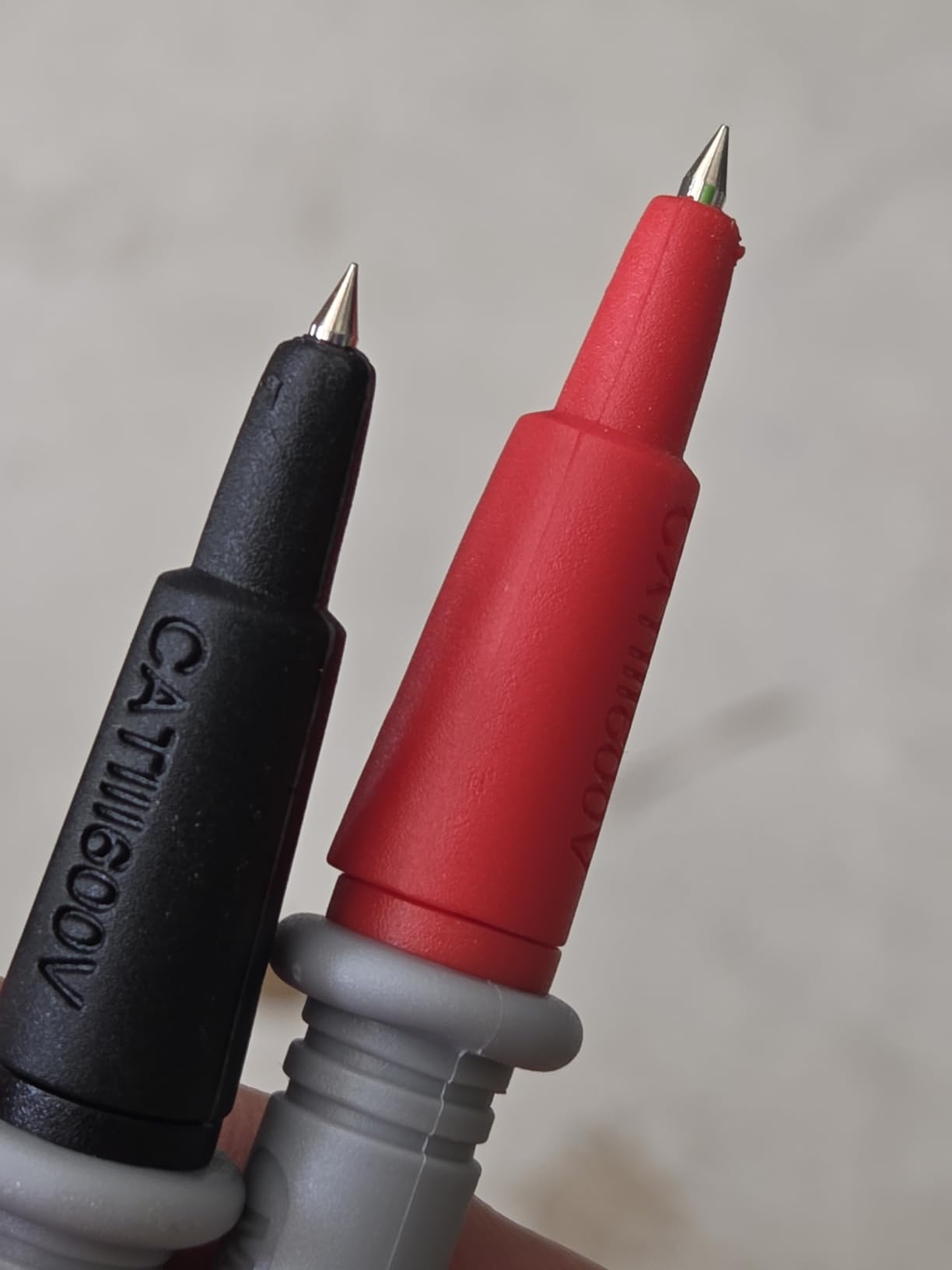
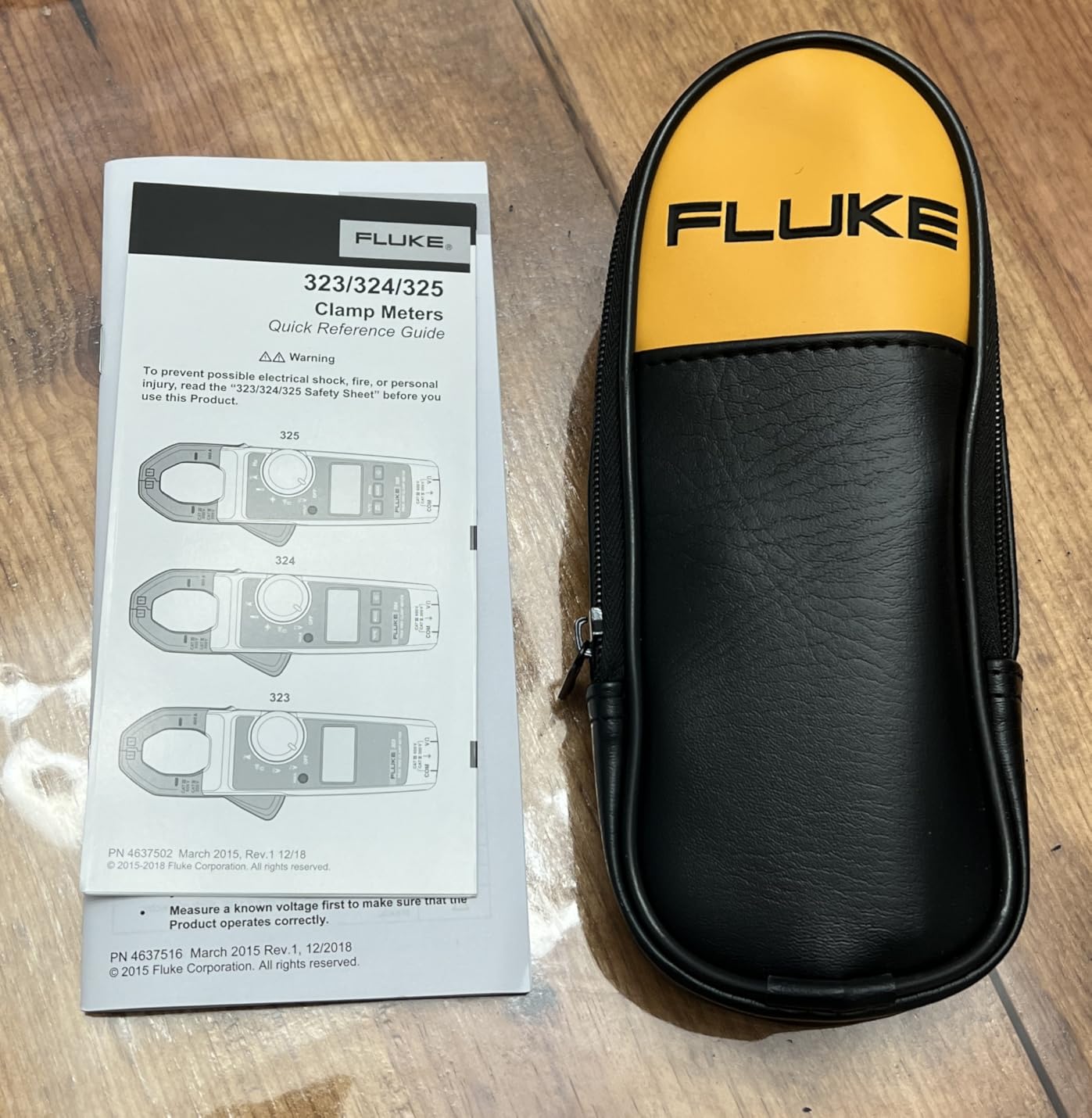
The complaints are almost all about the accessories rather than the meter. The bundled test leads are widely criticized, and the supplied soft pouch is tight enough that you have to pull the probes out before the meter will fit inside it. Both are cheap to fix.
The absence of a backlit display is the one that annoys people most in practice. Working in an unlit garage or a basement panel with the door closed is a genuinely frustrating place to read an LCD.
Who This Meter Is For
If you want one meter that stays trustworthy for a decade and you mostly work on standard residential branch circuits, this is the safe buy. It is also the easiest name to find at a hardware counter when something breaks.
It suits owners who do not need DC current, and who would rather pay once for a tool with a service network behind it.
Where It Falls Short
It is a basic instrument as a general multimeter, with no temperature, capacitance or frequency. If you plan to diagnose HVAC or measure ripple, the Fluke 325 covers that gap.
No backlight and no DC current are the two features you give up relative to the KAIWEETS HT206D, which covers the same essentials for considerably less.
4. Fluke 302+ Digital Clamp Meter – Best Entry-Level Fluke
Fluke 302+ Digital Clamp Meter, 30mm Jaw, Measures AC Current to 400A, Measures AC/DC Voltage to 600V, Includes 2 Year Warranty
AC current to 400A, 30 mm jaw, 1.8 percent accuracy, CAT III 600V
Pros
- Compact body with a 30 mm jaw
- AC current up to 400A
- 1.8 percent accuracy for troubleshooting
- CAT IV 300V and CAT III 600V
- Includes TL75 test leads and two year warranty
Cons
- No DC current through the clamp
- No temperature or frequency
- No backlight on the display
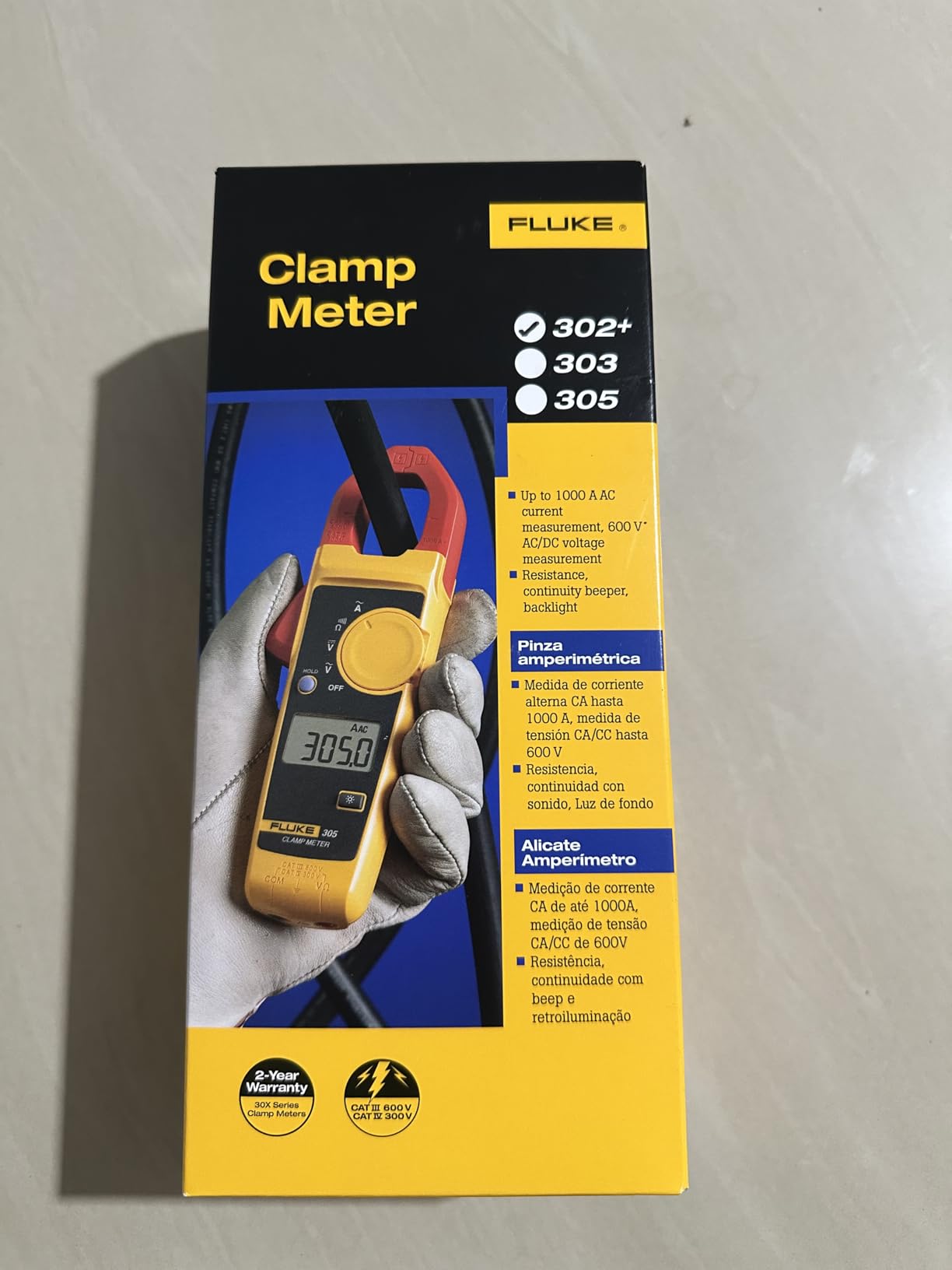
The 302+ is the entry point into a Fluke, and it is the model we would suggest to someone who wants the brand for the panel work but does not need the rest of a multimeter. It measures AC current to 400 A and AC and DC voltage to 600 V with 1.8 percent accuracy, and it carries a CAT IV 300 V and CAT III 600 V rating.
That accuracy figure matters more than it looks. Panel troubleshooting involves small differences, a circuit sitting at 16 A on a 20 A breaker versus 19 A is a real distinction, and a looser meter makes that harder to see.
The 30 mm jaw is the same size as the 323’s and clears the conductors in a crowded residential panel. At 8.15 by 2.95 by 1.34 inches and 15 ounces, it is small enough to work one-handed without fighting it.
The package includes Fluke TL75 hard-point test leads, two AA batteries and a two-year manufacturer warranty, which is a more complete package than several cheaper meters in this roundup.
Who This Meter Is For
Homeowners who want a Fluke for AC only work and will not chase DC measurements. The limited spec sheet is not a weakness here, it is a simpler tool that does one job well.
It is a sensible pick if you plan to keep it for appliance checks and breaker load verification and nothing more ambitious.
Where It Falls Short
No DC current, no temperature, no frequency. That rules out solar, batteries, EV charging electronics and HVAC diagnostics without exception.
Like the rest of this Fluke family, it has no backlit display, which makes a dark panel harder work than it should be.
5. Klein Tools CL390 AC/DC Clamp Meter – Best All-Round Feature Set
Klein Tools CL390 AC/DC Digital Clamp Meter, Auto-Ranging, 400 Amp
AC and DC current to 400A, True RMS, NCV in jaw, temperature, CAT IV 600V
Pros
- Measures AC and DC current plus DC microamps
- True RMS auto ranging
- NCV built into the clamp jaw
- High visibility reverse contrast LCD
- Thermocouple leads case and batteries included
Cons
- Minimum measurable current is about 0.3 A
- Included carrying case wears out before the meter
- No 10 A in-circuit range through the leads
The CL390 is the most complete residential clamp in this roundup, and HVAC technicians in the forums we checked describe it as an all-in-one that covers routine home and light commercial work. It measures AC and DC current through the clamp, AC and DC voltage, resistance, continuity, frequency and duty cycle, DC microamps, diode and capacitance through the leads, and temperature through the included thermocouple.
Non-contact voltage detection is built into the clamp jaw, so you can sweep a bundle of conductors for a live one before you commit your hands. The high-visibility reverse-contrast LCD is readable in bright conditions and in low light, which is the display most people in the forums single out as the deciding detail.
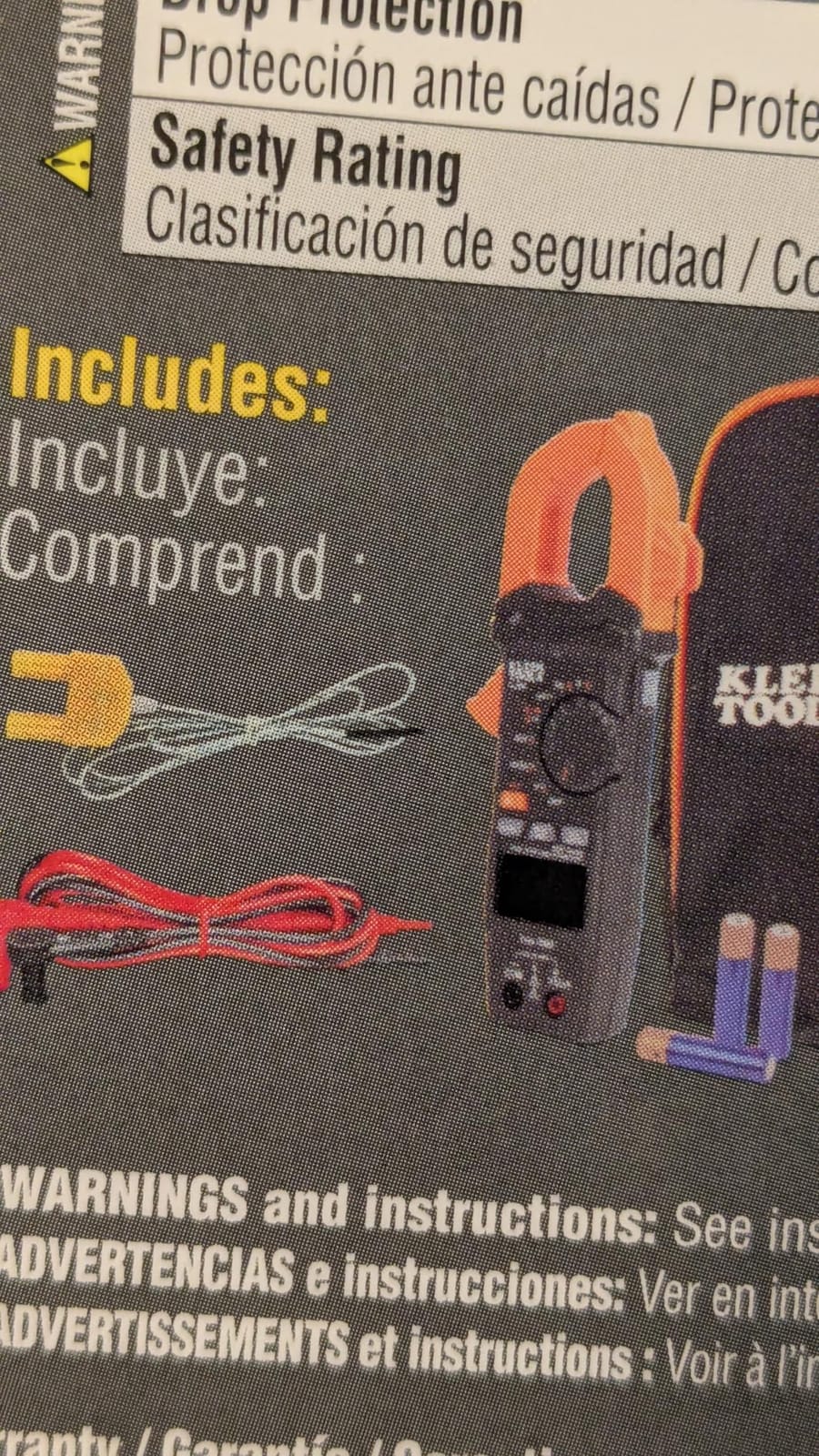
It is rated CAT III 600 V and CAT IV 600 V, so it covers the panel work a homeowner does with margin over the common CAT III rating. A test lead holder on the side and compatibility with the optional magnetic hanger means you can set the meter on the panel and work hands-free.
Auto-ranging and True RMS mean you switch to amps and read, without choosing a range first or second-guessing an average-responding reading on a load with LED drivers.
Who This Meter Is For
Owners who want one instrument to cover the whole house, especially anyone checking a heat pump, a condenser, or an appliance that mixes AC and DC in one box. The DC microamps and temperature functions are the two features reviewers call out as the main draws.
It is also the pick for someone who wants to stop carrying a separate thermocouple and multimeter on every call.
Where It Falls Short
The manual lists a minimum measurable current of 0.3 A AC or DC through the clamp, which is the most repeated limitation. Small motor, inducer and standby current checks need a second instrument.
Reviewers also note the carrying case material wears out well before the meter does, and the reverse-contrast display can wash out in direct sun unless you raise the brightness.
6. Fieldpiece SC260 Compact HVACR Clamp Meter – Best for HVAC Diagnostics
Fieldpiece Compact HVACR Clamp Multimeter SC260 – True RMS Clamp Meter with Temperature, Capacitance & Backlight
True RMS AC current, temperature, capacitance, backlight, swivel magnet
Pros
- Built for HVACR service in hot and cold spaces
- True RMS with higher VAC and AAC accuracy
- Temperature capacitance and backlight in a compact body
- Sturdy swivel magnet for hands free readings
- Auto Select mode detects capacitance or resistance
Cons
- Compact body limits access to larger conductors
- Single review source means less owner feedback
The SC260 is purpose-built for HVACR electrical service, and that specialization is visible in the details. It is compact at 3.5 by 3 by 9.1 inches, which matters when you are reaching into a blower compartment or a rooftop unit, and it is built to work in both hot and cold environments.
True RMS with higher accuracy on VAC and AAC readings, plus temperature, capacitance and a backlight, covers the four things an HVAC diagnosis actually needs. A 4.8 average across roughly 1,700 reviews is the highest rating in this roundup, alongside the Klein CL120.
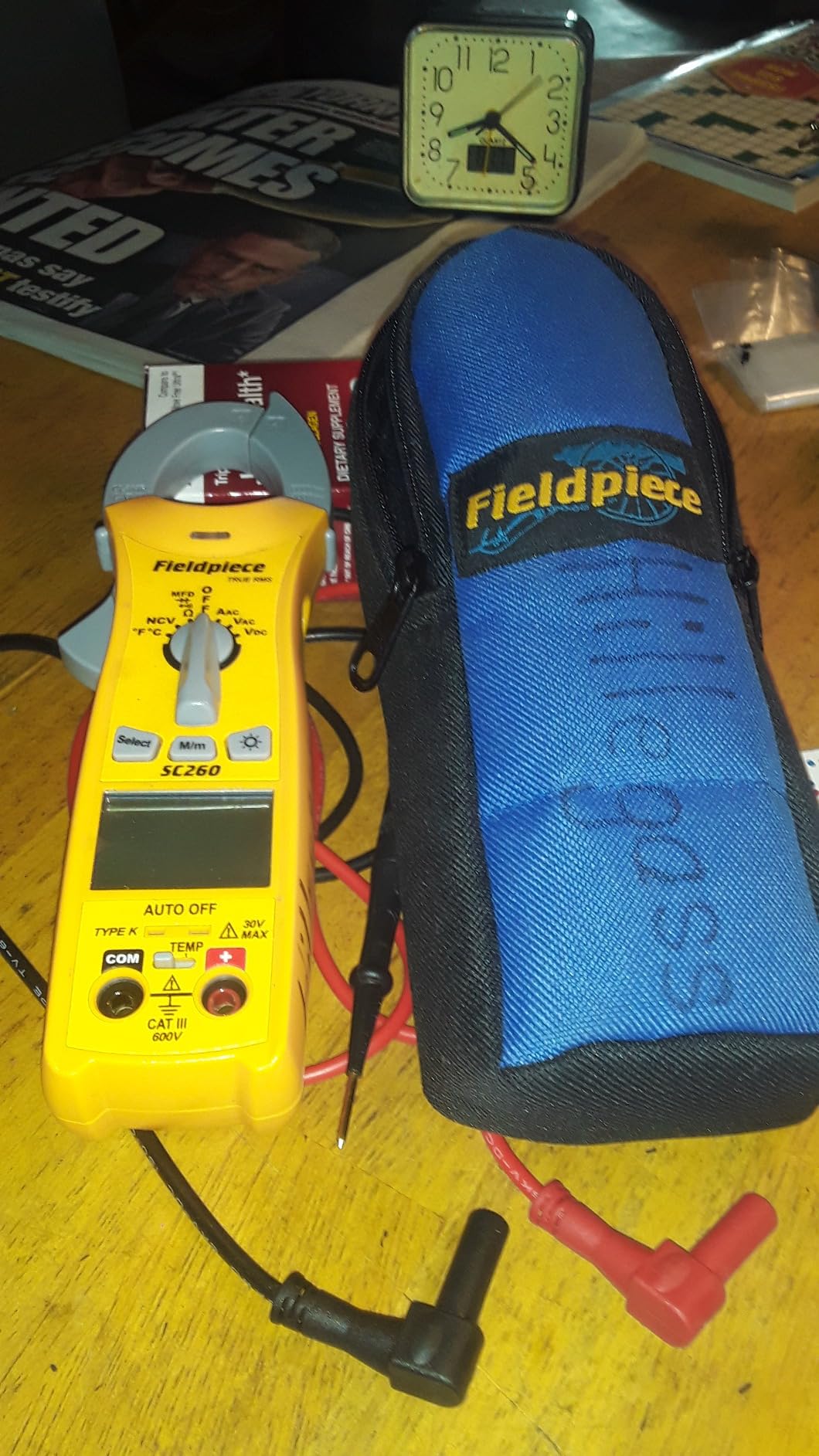
The Auto Select mode automatically detects whether you are measuring capacitance or resistance, which removes a whole class of mode-switching mistakes from a service call. The sturdy swivel magnet lets the meter hang inside a unit while you work with both hands.
Non-contact voltage detection with audible and visual amperage readings, a continuity warning and a diode test round out a service-oriented feature set rather than a bench one.
Who This Meter Is For
If your problems are air conditioners, furnaces, condensers or anything with a compressor in it, this is the meter designed for the job. The temperature function pairs directly with capacitor testing, which is the most common residential HVAC fault after a tripped breaker.
It is a good choice for a technician or a serious homeowner who wants one meter for the mechanical room rather than the whole house.
Where It Falls Short
The compact body is the trade-off for that reach. Reviewers note it leaves little room for larger conductor access, so on a big service entrance conductor you will be fighting the housing.
It is also AC-focused, so it will not measure DC current in a modern inverter-driven system, and owner feedback for this specific model is thinner than for the Flukes and Kleans in this list.
7. Klein Tools CL120 Digital Clamp Meter – Best Durable Most Versatile
Klein Tools CL120 Digital Clamp Meter, Auto-Ranging 400 Amp AC
Auto ranging 400A AC current, NCV, backlit LCD, carrying case included
Pros
- Durable jobsite ready build
- Auto ranging needs no manual range selection
- Backlit LCD for low light
- NCV built into the clamp jaw
- Comes with case safety capped leads and batteries
Cons
- No temperature measurement
- No DC current through the clamp
- Continuity tone can respond slowly
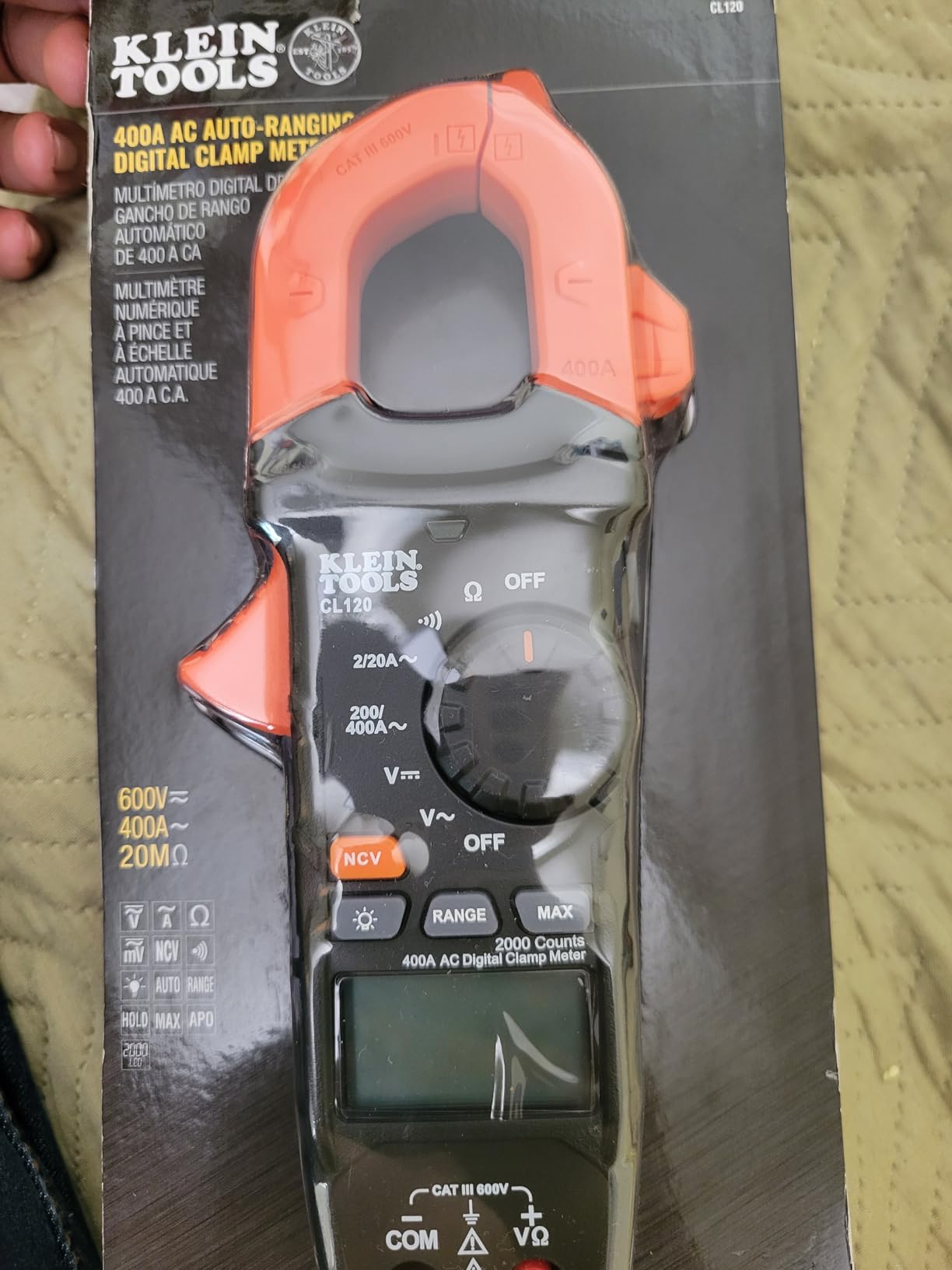
The CL120 is the meter we would put in the hands of someone who wants a Klein for AC-only home work and does not want to think about it. It measures AC current to 400 A through the clamp, AC and DC voltage, resistance and continuity through the leads, and it carries double insulation with a CE certification for a 600 V maximum operating voltage.
Auto-ranging picks the measurement range for you, and the backlit LCD is the feature that separates it from cheaper imports in a dark panel. Non-contact voltage detection sits in the clamp jaw, and max, data hold and a ten minute auto power-off round out the basics.
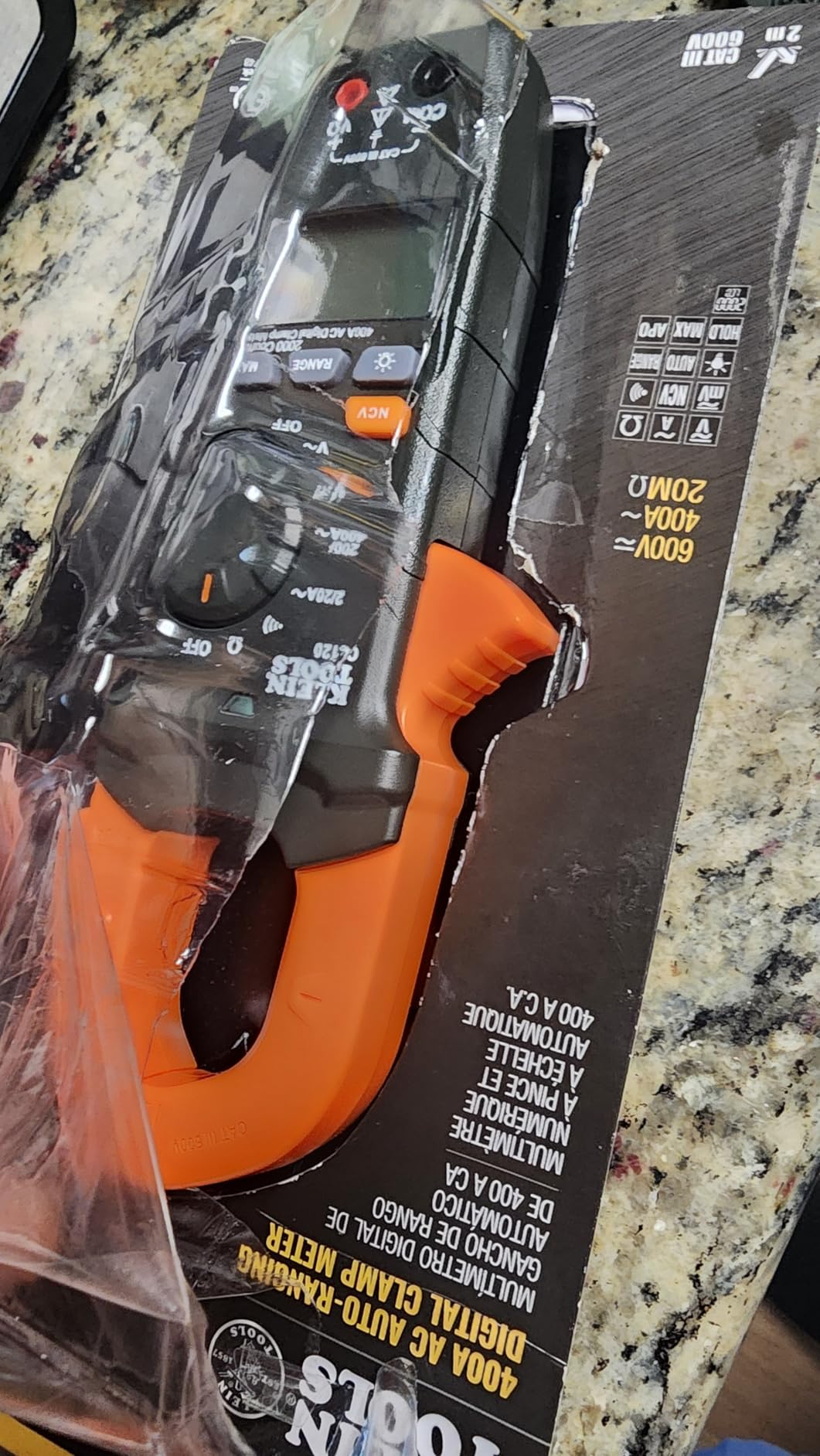
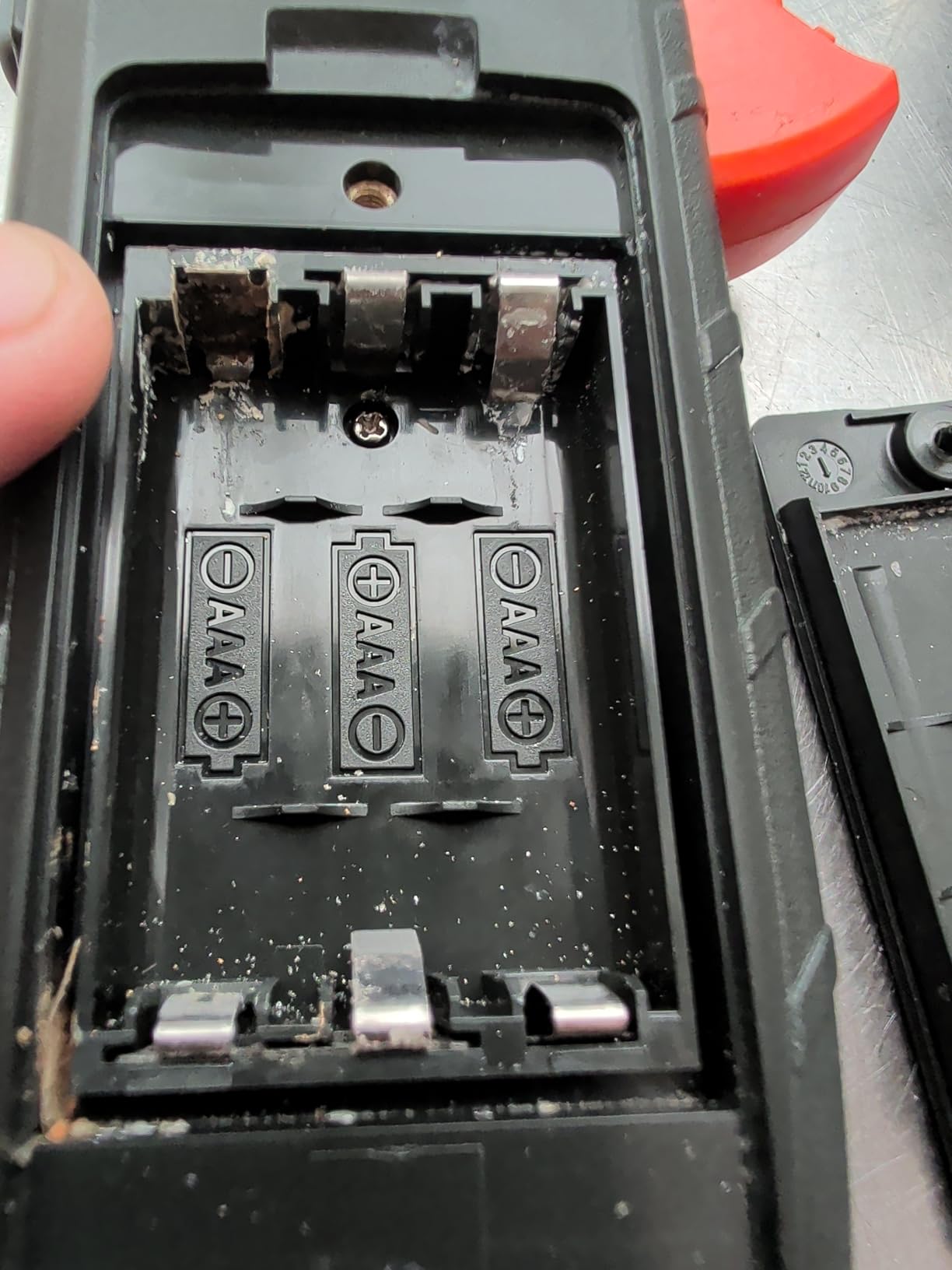
The package is unusually complete for the money. You get a carrying case, test leads with CAT III and CAT IV safety caps, instructions and three AAA batteries, so nothing needs a second purchase before the first panel check.
At 9.76 ounces and 8.45 by 3.51 by 1.51 inches it sits well in a hand, and the build is described by owners as jobsite-ready rather than delicate.
Who This Meter Is For
Household and automotive electrical work where the circuit is 120 V AC and the answer you need is amps on a branch circuit. Buyers describe it as a dependable, straightforward meter that does the common jobs without fuss.
It is also a good second meter to keep in a garage, because it is the one most likely to survive being dropped on a concrete floor.
Where It Falls Short
No temperature measurement, which is the main gap versus the CL220 directly above it in Klein’s line. That matters if you want to check a water heater element or an attic air handler.
It does not measure DC current, the continuity tone can be slow to respond, and the included case is tight for longer replacement leads.
8. Fluke 325 True-RMS Clamp Meter – Best Step Up From the Entry Model
Fluke 325 True-RMS Clamp Meter with Frequency, Temperature & Capacitance Measurements
AC and DC current to 400A, True RMS, frequency temperature capacitance
Pros
- True RMS accuracy verified against other meters
- Survives repeated drops and long service lives
- Frequency temperature and capacitance in one instrument
- Compact and light for panel work
- Two year manufacturer warranty
Cons
- No non-contact voltage detection
- Resistance stops around 40 kOhm
- Clamp settles slowly on a reading
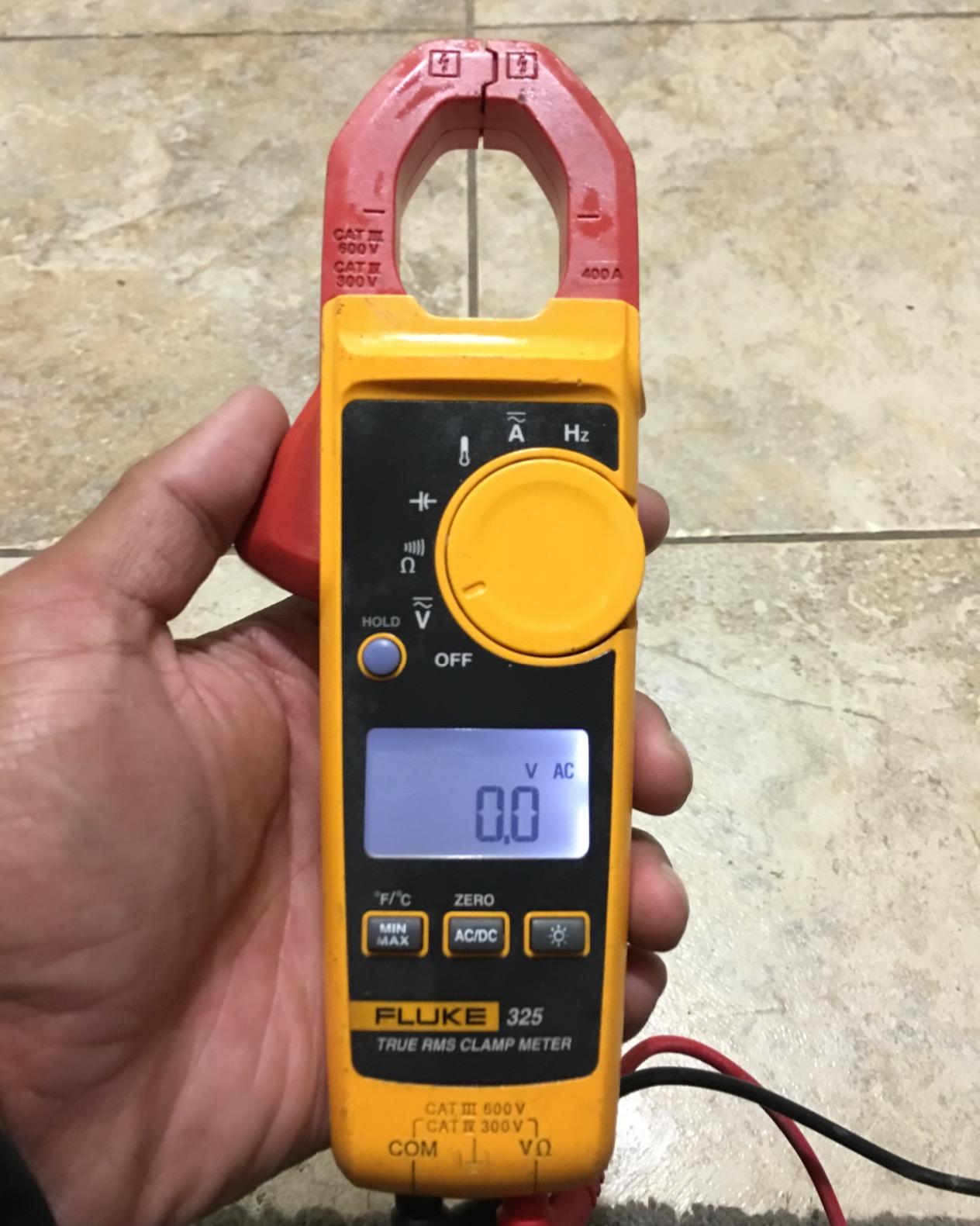
The 325 is where the Fluke line gets interesting for a homeowner, because it adds DC current to the same 30 mm jaw and 400 A range as the 323. It measures AC and DC current to 400 A, AC and DC voltage to 600 V, and resistance up to 40 kOhm with True RMS sensing.
Frequency, temperature and capacitance in the same instrument is the reason technicians like it. It removes the need to carry a separate meter for capacitor checks or a thermometer for an attic unit, and reviewers report owners verifying its readings against other meters and thermometers across volts, amps, ohms and temperature.
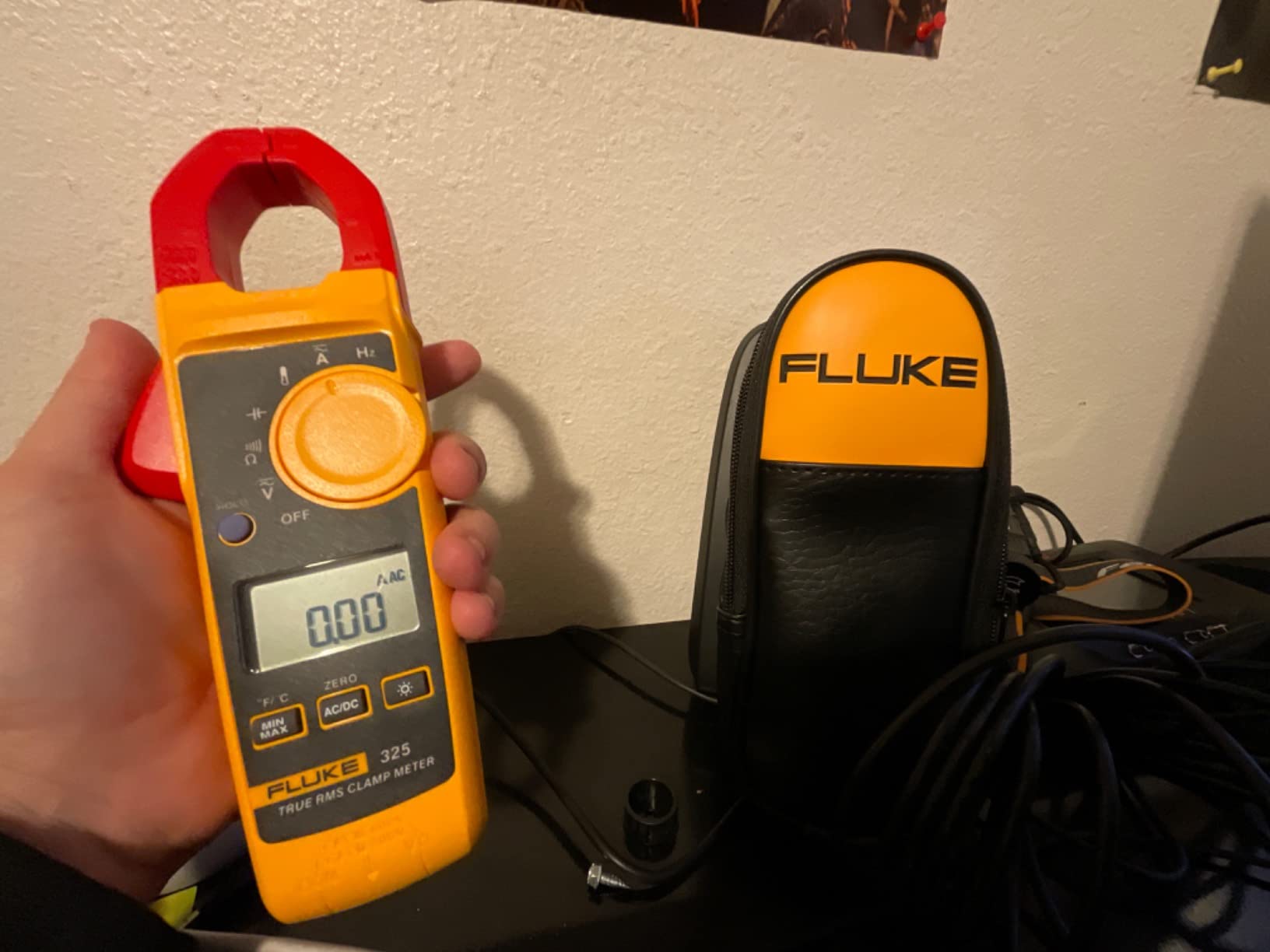
It meets IEC 61010-1 and is rated CAT IV 300 V and CAT III 600 V, so it covers residential panel work. At 283 g it is light enough to work one-handed in a panel, and the two-year warranty comes with a thorough manual.
Durability is the recurring theme. Owners describe a rugged build that survives repeated drops, with some reporting a decade or more of service and no loss in performance.
Who This Meter Is For
Homeowners who have outgrown the 323 and now need DC current, temperature and frequency, or anyone who wants a single meter for a broad mix of residential diagnostics. The DC clamp capability alone covers solar, battery and EV charger circuits.
It is the pick for someone who plans to keep the meter for a long time and would rather buy once.
Where It Falls Short
There is no non-contact voltage detection and no auto AC/DC voltage selection, which is a real gap in a dark panel. It also does not read low millivolts well, so AC ripple testing is limited.
Resistance stops around 40 kOhm, the combined ohms and continuity mode beeps continuously in a way that confuses resistance checks, and the clamp is slightly slow to settle on a reading.
9. Klein Tools CL220 Digital Clamp Meter – Best for Temperature Checks
Klein Tools CL220 Digital Clamp Meter, Auto-Ranging 400 Amp AC, and Temp
Auto ranging 400A AC current, True RMS, temperature probe, backlit LCD
Pros
- Auto ranging across current voltage resistance and temperature
- True RMS for non-sinusoidal waveforms
- Backlit LCD readable in dim conditions
- Temperature probe reads Fahrenheit and Celsius
- Durable build that has held up over years
Cons
- Clamp measures AC current only
- Temperature reading is approximate
- No touch voltage detector can be overly sensitive
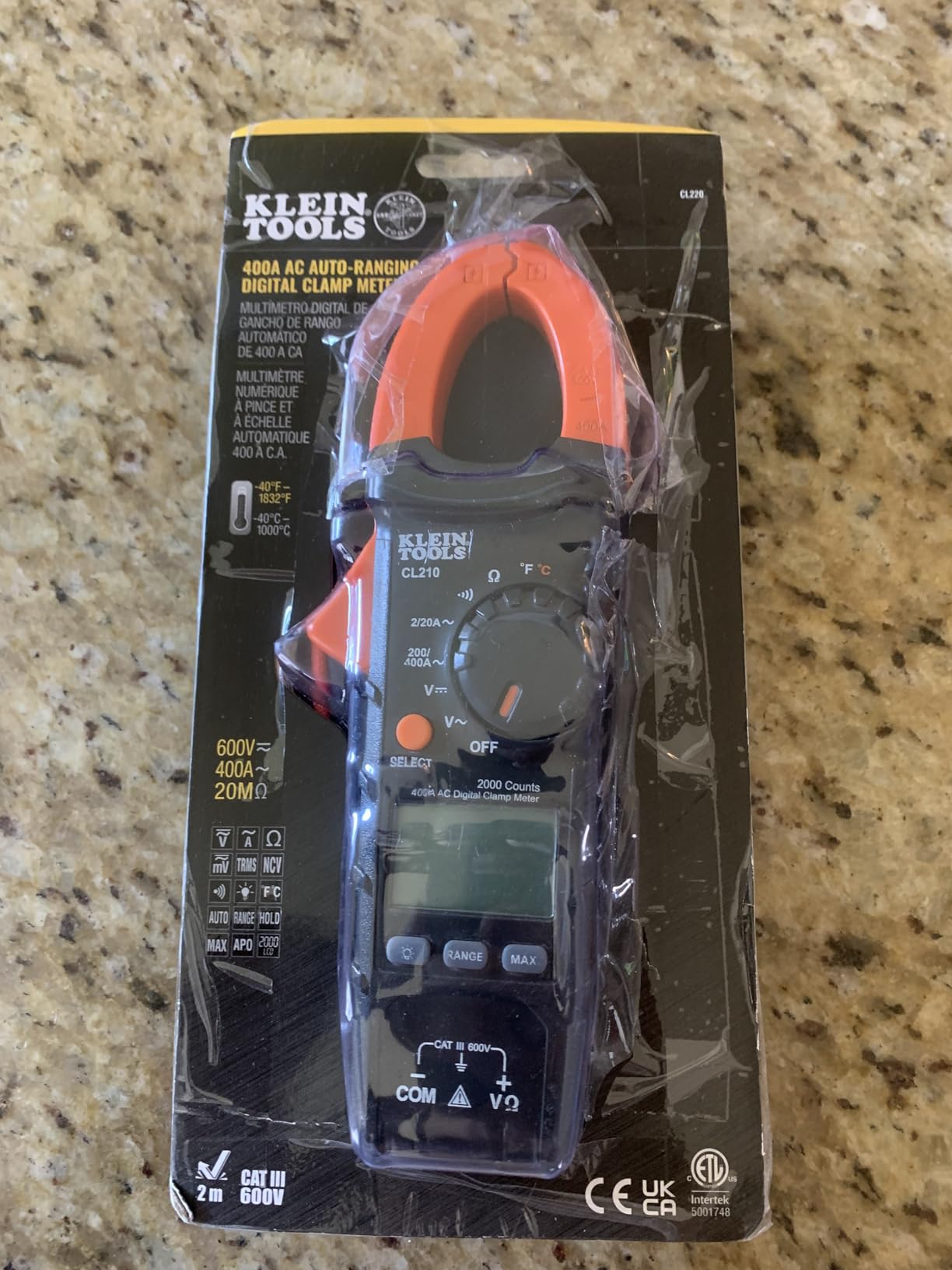
The CL220 is the middle rung of the Klein line and, for a lot of homeowners, the most sensible place to stop. It measures AC current and NCV through the clamp, AC and DC voltage, resistance and continuity through the leads, and temperature through the included probe.
That temperature probe is the reason to choose it over the CL120. It reads in both Fahrenheit and Celsius, which makes it useful for HVAC work, checking a water heater element, or confirming that a warm connection is a problem rather than a normal hot spot.
Auto-ranging and True RMS mean it handles non-sinusoidal waveforms accurately, and the backlit LCD stays readable in dim conditions. Owners with decades of HVAC experience describe it as a well-made, accurate meter that covers their daily needs against cheaper imports.
The build has held up over years of daily use, and the side test lead holder plus compatibility with the optional magnetic hanger make it comfortable in a panel.
Who This Meter Is For
Homeowners who want to diagnose appliances and HVAC, not just check breaker load. The temperature function turns it from a current meter into a general diagnostic tool for the mechanical side of the house.
It suits anyone who wants True RMS accuracy and a backlit display at a modest step up from the entry models.
Where It Falls Short
The clamp measures AC current only, with no DC capability, so solar and EV charger circuits are out of reach. The temperature reading is approximate, with a couple of degrees of swing across 0 to 100 degrees Celsius, so treat it as a rough check.
The no-touch voltage detector can be overly sensitive, the magnetic hanger is sold separately, and a small number of units have reported a failing LCD segment after a year or two of light use.
10. FNIRSI DMC-100 Clamp Meter – Best for Graphs and DC Systems
FNIRSI DMC-100 Clamp Meter 9999 Counts TRMS, 600A AC/DC Amp Meter
AC and DC current to 600A, 10000 counts, color TFT, rechargeable battery
Pros
- AC and DC clamp current to 600A with TRMS
- Real time curve and graph recording
- Two inch full color TFT readable in sunlight
- Rechargeable 1500 mAh battery with Type C
- Capacitance good enough for AC condenser capacitors
Cons
- Temperature function is not accurate
- Graph capture window is about 25 seconds
- Non standard lithium battery with limited service life
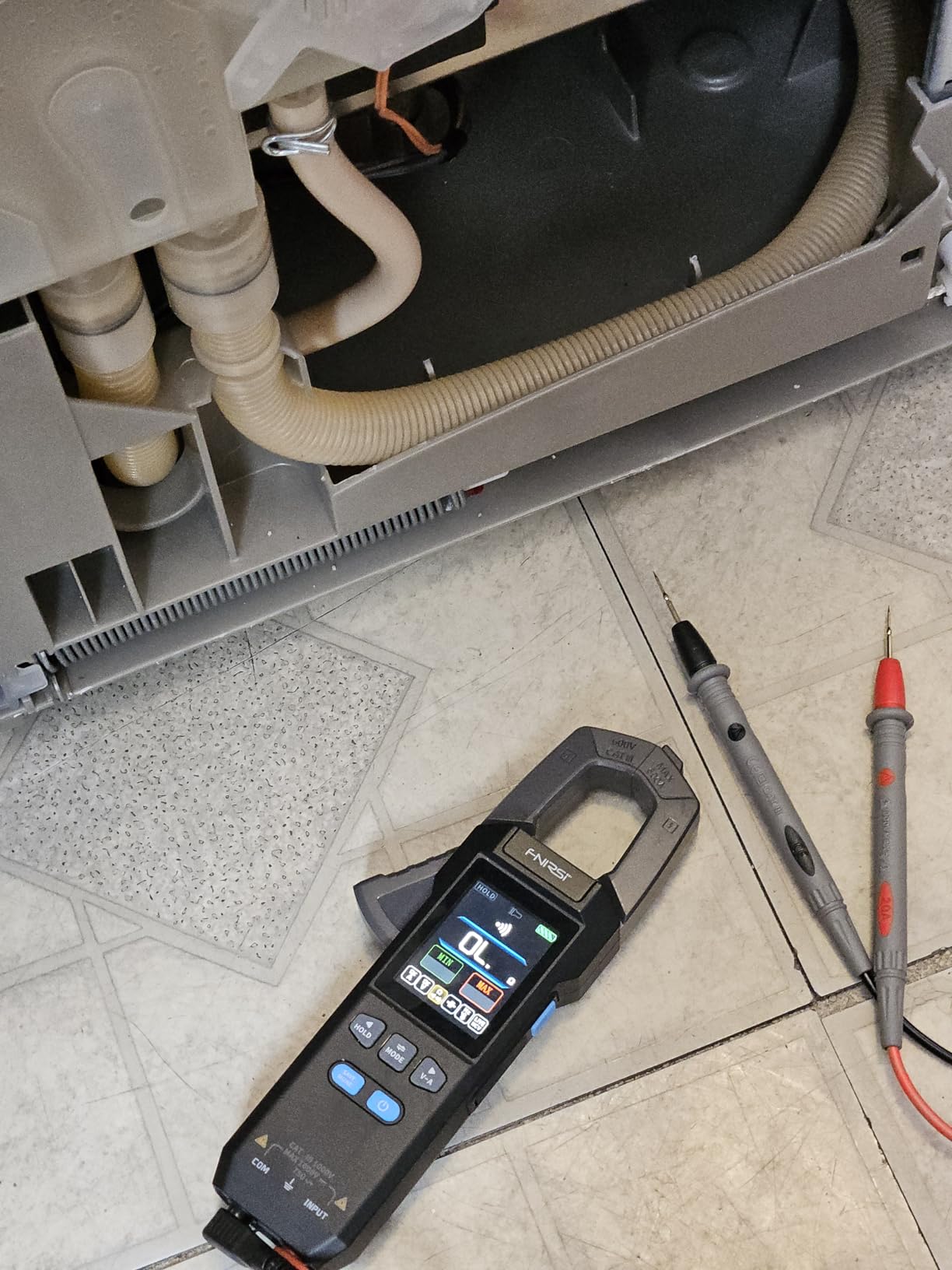
The DMC-100 is the odd one out, and the reason is the display. A 2-inch full-color TFT with ten levels of brightness and dark and light themes is something you normally see on meters several times the price, and it is readable in direct sun on a rooftop or in an unlit garage.
It measures AC and DC current to 600 A at 10000 counts with True RMS, plus voltage, resistance, capacitance, frequency and temperature. Owners who test it against a Fluke 289 or a Fieldpiece report readings that land close to those references.
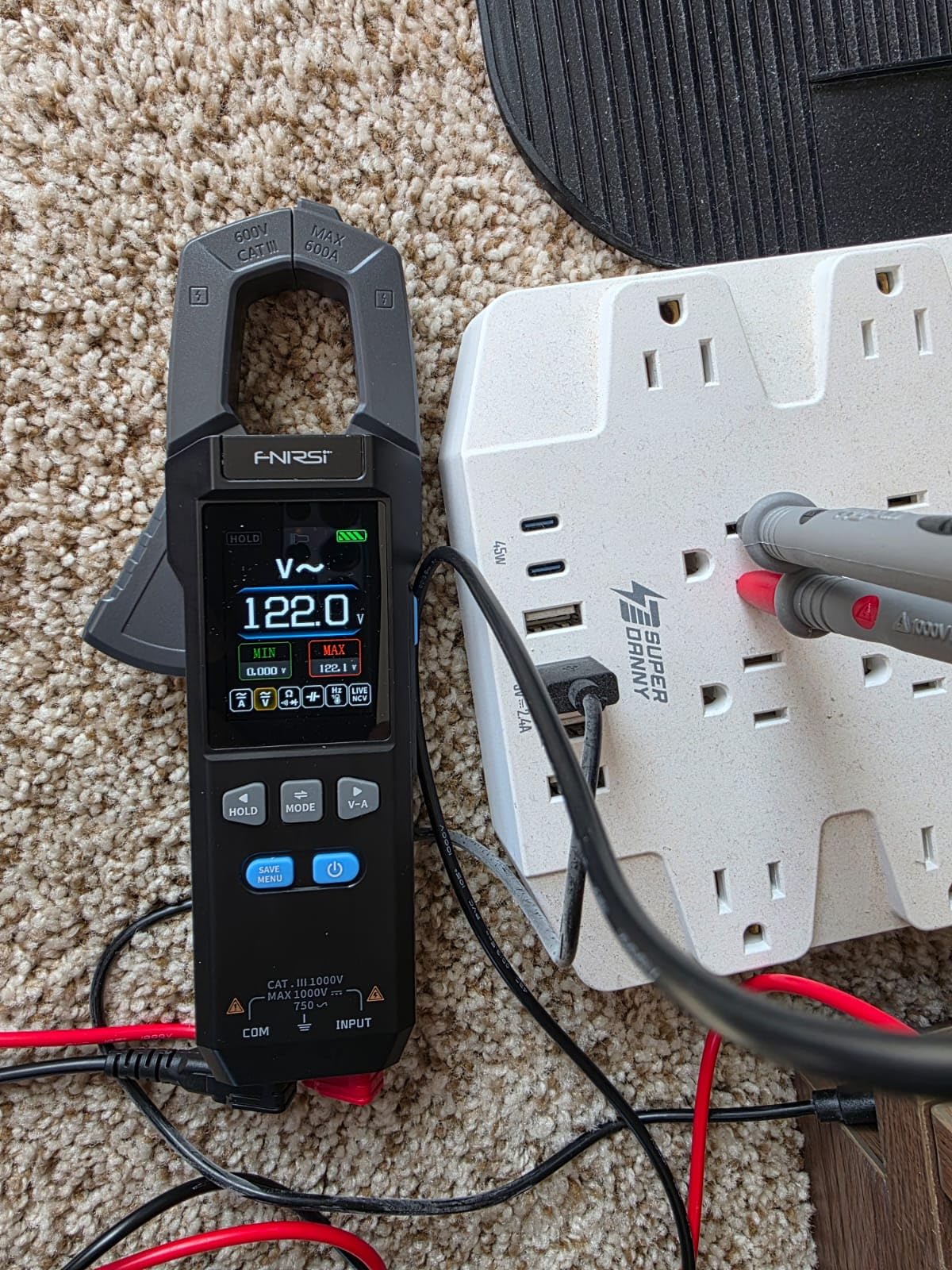
Real-time curve recording is the feature nobody else in this roundup has at this level. It stores 8 sets of live curve data and 30 sets of historical records, which is genuinely useful when you are chasing an intermittent fault, a motor that only stumbles on startup, or an EV charger that trips under load.
A built-in 1500 mAh rechargeable lithium battery charged over Type-C means you can top it up from a power bank in a truck, and the package includes two multimeter pens, a temperature probe and a charging cable.
Who This Meter Is For
Anyone working on DC systems, which at home means rooftop solar, a battery-backed inverter, RV or trailer wiring, and vehicle battery drain. The 600 A DC range covers inverter output currents that would strain a 400 A meter.
It also suits a homeowner who likes seeing a curve rather than a number, since the graphing can reveal a motor startup spike that a peak-hold reading hides.
Where It Falls Short
The temperature function is not accurate, so treat it as a rough indicator rather than instrumentation. The graph capture window is only about 25 seconds and the graph does not label values, which limits how much you can read off it later.
Build quality is lighter than Fluke or Fieldpiece, the flashlight is weak, the lithium battery is a non-standard size with a limited service life, and some owners question the reliability of the live wire function.
How to Choose a Clamp Meter for Home Electrical Work in 2026
Start with the panel, not the feature list. Write down what you actually own, an EV charger, a heat pump, solar, an older house with aluminum wiring, or nothing more than 120 V branch circuits, and buy the simplest meter that covers those. Everything past that is money spent on features you will not use.
What a Clamp Meter Does That a Multimeter Cannot
A clamp meter measures current by clamping around an insulated conductor, so it reads live current without disconnecting anything or touching exposed copper. A multimeter measures current by forcing probes onto bare conductors, which means shutting the circuit down, stripping insulation and exposing yourself to a live bus.
Most electricians carry both. The multimeter is still the better tool for voltage, resistance and continuity, and the clamp is the better tool for anything involving current. If you own one device today, make it a multimeter and borrow a clamp for the panel job. If you want the tool that answers household questions fastest, it is the clamp.
Do You Need True RMS?
Yes, and this is not a premium feature. True RMS means the meter measures the actual effective value of a non-sinusoidal waveform rather than inferring it from an average. Average-responding meters can read 20 to 40 percent low on LED drivers, dimmers, switch-mode power supplies and variable frequency drives.
That is the reason people chase faults that do not exist. A circuit that reads low on an average-responding meter might be perfectly loaded, and you end up pulling a working appliance apart. If your house has any LED lighting or a modern appliance with electronics, True RMS is the floor, not the upgrade.
What CAT Rating Does a Residential Panel Require?
CAT III 600 V is the rating you want for work inside your distribution panel. It is the transient overvoltage level associated with equipment fed by a fixed installation, which is exactly what a breaker panel is.
CAT II 600 V covers plug-in and cord-connected loads only, and putting a CAT II meter on a panel is a genuine arc flash risk rather than a technicality. CAT IV applies at the service entrance, meter base and service drop. You can skip CAT IV entirely for branch circuit work in the house, but never buy a meter without a CAT III 600 V marking.
AC Only or AC and DC?
Most of a house is AC. If you have no solar, no battery storage, no EV charger and no heat pump with an inverter, an AC-only clamp is genuinely enough, and it is the smaller, cheaper tool.
Add solar, batteries, an EV charger, or any modern appliance with a DC stage inside, and you need a Hall effect clamp that reads DC current too. The DC models use a Hall effect sensor rather than a transformer, which is why they cost more. The KAIWEETS HT206D, Klein CL390, Fluke 325 and FNIRSI DMC-100 all cover both.
How Big Does the Jaw Need to Be?
A 30 mm jaw is the common residential size and handles a single #1 to #3 AWG conductor. You need enough opening to get around one conductor with insulation, which is the number that matters, not the conductor gauge alone.
Watch for bundled neutrals. In a modern subpanel, several neutrals share a cable, and you have to separate one out rather than clamping the whole bundle. If your panel runs 4/0 AWG service conductors, a 30 mm jaw is tight and a wider jaw or flexible iFlex head is the tool for the job.
NCV, LoZ and Ghost Voltage
Non-contact voltage detection is a proximity test, not a measurement. It is good for sweeping a bundle of conductors to find the live one before you touch it, and it is convenient. It is also prone to false positives from static, cable capacitance and adjacent circuits, so treat a positive as a reason to probe properly, never as a reason to work.
Ghost voltage is the opposite problem. A supposedly dead circuit can show 30 or 80 volts from capacitive coupling through adjacent wiring, and people open walls chasing it. Low Impedance, or LoZ, mode loads the circuit so the reading collapses to the real value. Only the KAIWEETS HT206D in this roundup has it, and if you regularly verify that a circuit is dead before working on it, it is worth having.
How to Measure Current in a Home Panel Safely
Never remove a residential panel cover unless the main breaker is off, and never work inside a live panel unless you have a CAT III rated meter, training, and a free hand. If either of those is missing, call a licensed electrician.
With the main off, the cover comes off safely and you can clamp any conductor. With the main on and the cover already off, the accepted method is to clamp the conductor at the breaker terminal with one hand while keeping the other hand behind your back, never on metal, and wearing eye protection.
Clamp one conductor only. This is the single most common beginner error. If you clamp a cable carrying both hot and neutral together, the two magnetic fields cancel and the display reads 0.00 A no matter how much current is flowing. If you get zero on a circuit you know is live, this is almost always why.
Turn the load on first, then clamp, because most meters settle briefly before they stabilize. Note the reading, and compare it to the breaker size. A 20 A breaker on a 12 AWG branch circuit should sit well under 16 A in continuous use.
Check Any New Meter Against a Known Load
Do not trust a reading until you have seen it agree with something you already know. The community benchmark is a 1500 W space heater, which draws about 12.5 A at 120 V.
Plug the heater into a known-good outlet, set the meter to amps, clamp the single hot conductor, and confirm you see roughly 12.5 A. If the meter is off by a wide margin, or if it cannot hold the reading steady, that is your answer before you trust it with a panel.
Maintenance and Calibration
Wipe the jaw faces with a dry cloth and keep them free of paint, rust and flux residue, because a dirty jaw is a common cause of low readings that looks like a sensor fault. Keep spare batteries of the correct type, since most of these meters die between jobs rather than during one.
A residential clamp meter does not need annual calibration for most people, but if you get an erratic reading, check the batteries and the jaw first, then verify against a known load again. If it still disagrees, it is a service question, not a technique question.
Frequently Asked Questions
Which clamp meter is best for home use?
For most homeowners the KAIWEETS HT206D is the best all-round choice, because it gives you True RMS, AC and DC current in the clamp, LowZ mode and a backlit display at a modest price. Pick the Fluke 323 if you would rather have a Fluke for durability and panel work, or the Klein CL120 if AC-only measurement is genuinely all you need.
Do electricians actually use clamp meters, or are they just for current?
Electricians use clamp meters constantly, not only for current. The same instrument measures voltage, resistance, continuity, capacitance and temperature through the probes, which is why models like the Fluke 325 and Klein CL390 let one meter replace two or three tools. The clamp is the fast path for current because it works on a live, insulated conductor.
What is True RMS and does a homeowner need it?
True RMS measures the true effective value of an AC waveform instead of estimating it from an average. Average-responding meters can read 20 to 40 percent low on LED drivers, dimmers and switch-mode power supplies. Since almost every modern home has those loads, True RMS is a baseline requirement rather than a premium feature.
Why does my clamp meter read 0.00 amps when the circuit is clearly on?
In most cases you clamped a cable containing both the hot and neutral conductor. The two magnetic fields cancel each other out and the meter reads zero. Separate the conductors at the panel and clamp only one, then turn the load on and clamp again. A reading that appears only when you center the jaw on a single conductor confirms the diagnosis.
What CAT rating do I need for my own electrical panel?
CAT III 600 V is the rating you want for work inside a residential distribution panel, because that category covers equipment fed by a fixed installation. CAT II is for plug-in loads and is not safe on a panel. CAT IV only applies at the service entrance and meter base, so you can skip it for branch circuit work inside the house.
Is a Fluke worth paying more for than a budget meter?
The premium buys build quality, jaw feel, a service network and a measurement accuracy you can rely on for years, not a dramatic difference in readings. The KAIWEETS HT206D holds True RMS accuracy and passes known-load checks, and many owners treat it as a feature-for-feature substitute for a Fluke on household work. If you drop tools regularly or want one meter for a decade, the extra spend is defensible.
Do I need AC and DC current capability for a normal home?
Only if you have rooftop solar, a battery-backed inverter, an EV charger or a modern appliance with a DC stage inside. Everything else in a typical house is AC, so an AC-only clamp is a smaller and cheaper tool that does the job. Add those systems and you need a Hall effect clamp, such as the KAIWEETS HT206D, Klein CL390, Fluke 325 or FNIRSI DMC-100.
Is it safe to measure current with my panel cover off?
The safe method is to turn the main breaker off before removing a residential panel cover, and only work inside a live panel if you have a CAT III rated meter, eye protection and a free hand kept away from metal bus bars. If you cannot meet those conditions, or you are unsure about anything behind the cover, call a licensed electrician.
The Verdict on the Best Clamp Meters for Home Electrical Work in 2026
The KAIWEETS HT206D is the pick for the widest range of homeowners, because True RMS, AC and DC current, LowZ and a backlit display cover the problems people actually hit. The Fluke 323 is the one to buy if you want a single trusted instrument for panel work and expect to keep it for years. The Klein CL390 is the best all-round feature set if temperature and NCV in the jaw are on your list, and the Klein CL120 covers the plain AC-only case with a build that survives a garage.
Whatever you choose, verify it against a known load before you trust it, clamp one conductor at a time, and keep the main breaker off if you are not trained for live panel work. That last point matters more than any feature on this list.