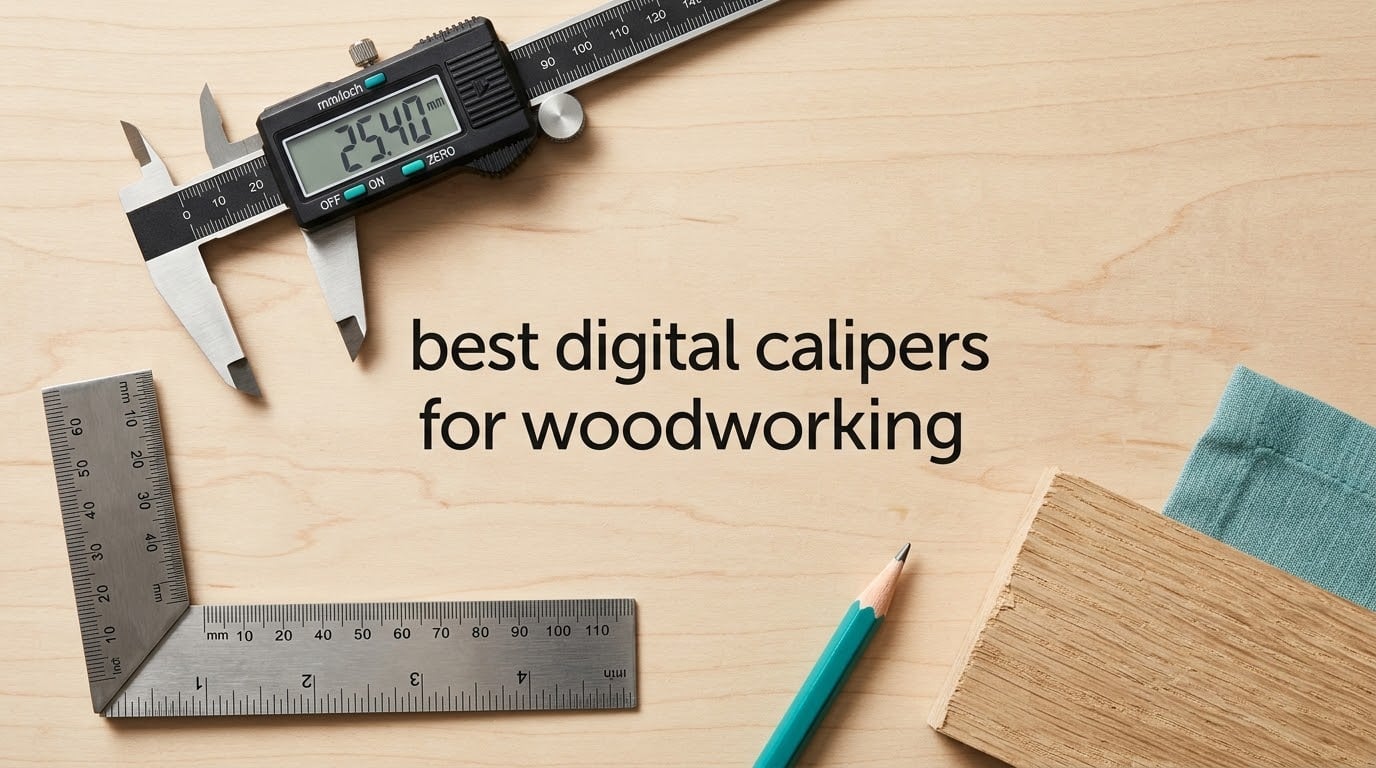
When someone asks me which digital caliper is best for woodworking, I usually give them a straight answer before I give them a list: most hobby shops do not need a professional tool, and a top-tier machine-shop caliper is overkill if you cut joinery rather than machine metal. What actually matters is whether the caliper holds its zero after it gets knocked on the bench, whether the display can show fractions, and whether the jaws survive being dropped in sawdust.
That last point is where most buying guides go wrong. They chase accuracy figures quoted to a thousandth of an inch, and they ignore the thing that actually ruins a caliper in a woodshop: a plastic body that flexes, a battery cover that pops off mid-measurement, and a fraction readout that shows you something like 53/128 inch when you wanted 1/16. Those are the failure modes our picks are built to avoid.
We compared ten digital calipers that cover the whole market, from a lightweight plastic body for occasional trim work to forged stainless steel with a data port for logging cabinet dimensions. We looked at published accuracy rather than advertised resolution, because those are two different numbers and only one of them tells you whether your mortise fits your tenon. If you also measure in the kitchen, our picks for the best digital meat thermometers and the best digital kitchen scales follow the same testing logic.
Below you will find our short list of the best digital calipers for woodworking in 2026, plus a buying guide that explains the terms the spec sheets throw at you, including absolute origin, ingress protection, and the difference between accuracy and resolution.
Table of Contents
- Top 3 Best Digital Calipers for Woodworking (October 2026)
- All 10 Digital Calipers at a Glance
- How We Chose These 10 Calipers
- 1. Adoric 0-6 Inch Digital Caliper – Our Overall Pick
- 2. Kynup 170-2 Forged Stainless Steel Caliper – Best Value
- 3. Jiavarry 20-F Steel Caliper – Best for Fraction Readout
- 4. iGaging IP54 0-6 Inch Caliper – Most Versatile for Aging Eyes
- 5. LOUISWARE Stainless Steel 6 Inch Caliper – Best for Rough Shop Work
- 6. iGaging Absolute Origin 0-6 Inch Caliper – Best for Logging Measurements
- 7. HARDELL 12 Inch Caliper – Best for Wide Boards
- 8. NEIKO 01409A 12 Inch Caliper – Best First Long Caliper
- 9. General Tools 147 Caliper – Best for Non-Marring Jaws
- 10. WEN 10761 6.1 Inch Digital Caliper – Budget Pick for Occasional Use
- Fractions vs Decimals: What Woodworkers Actually Want
- What to Look For in a Digital Caliper for Woodworking
- How to Check Your Caliper’s Accuracy Before You Trust It
- Frequently Asked Questions
- Which Digital Caliper Should You Buy?
Top 3 Best Digital Calipers for Woodworking (October 2026)
These three cover the cases most woodworkers fall into: a simple first caliper, a forged steel workhorse, and a step-up with a display you can read across a bench.

Adoric 0-6 Inch Caliper
- Four measuring modes
- 0.01 in resolution
- Inch and millimeter switch
- 5-minute auto-off

Kynup 170-2 Steel Caliper
- Forged steel body
- 0.001 in accuracy
- Inch metric and fraction
- Spare cells and a case
iGaging IP54 0-6 Inch Caliper
- 0.001 in accuracy
- 0.0005 in repeatability
- IP54 sealed
- Super large LCD
All 10 Digital Calipers at a Glance
Here is every pick in one place, with the features that separated them during testing.
| Product | Specs | Action |
|---|---|---|
| Adoric 0-6 Inch Digital Caliper |
|
Check Latest Price |
| Kynup 170-2 Forged Stainless Caliper |
|
Check Latest Price |
 Jiavarry 20-F Stainless Steel Caliper Jiavarry 20-F Stainless Steel Caliper |
|
Check Latest Price |
| iGaging IP54 0-6 Inch Caliper |
|
Check Latest Price |
 LOUISWARE Stainless Steel 6 Inch Caliper LOUISWARE Stainless Steel 6 Inch Caliper |
|
Check Latest Price |
 iGaging Absolute Origin 0-6 Inch Caliper iGaging Absolute Origin 0-6 Inch Caliper |
|
Check Latest Price |
 HARDELL 12 Inch Digital Caliper HARDELL 12 Inch Digital Caliper |
|
Check Latest Price |
 NEIKO 01409A 12 Inch Caliper NEIKO 01409A 12 Inch Caliper |
|
Check Latest Price |
 General Tools 147 Digital Caliper General Tools 147 Digital Caliper |
|
Check Latest Price |
 WEN 10761 6.1 Inch Digital Caliper WEN 10761 6.1 Inch Digital Caliper |
|
Check Latest Price |
How We Chose These 10 Calipers
We scored every caliper on five things, in this order. Published accuracy came first, because a caliper that is off by a thousandth will never tell you whether a drawer front fits its opening. Second was jaw and body material, since a plastic slider flexes and a steel one does not. Third was readout formats, with fraction mode treated as a near-essential for imperial woodworking. Fourth was ingress protection, framed around sawdust and damp basements rather than factory floors. Fifth was the pattern in owner reviews about zero retention, battery covers, and cases.
We also read the complaints as carefully as the praise. A tool that reads beautifully but has a loose thumb wheel and a battery cover that needs a screwdriver is a worse shop tool than a plainer one that you can pick up with dusty hands and use immediately, and that is why several picks here sit above fancier rivals in our ranking.
One note on our lineup: the NEIKO 01409A carries the lowest average rating in this group and still made the list, because a 12 inch fraction-capable caliper is a genuinely different tool rather than a worse version of the same one. We would rather show you where the weaknesses are than quietly drop the option and pretend 12 inch calipers do not exist.
1. Adoric 0-6 Inch Digital Caliper – Our Overall Pick
Digital Caliper, Adoric Calipers 0-6 Inch, Inch/mm Conversion, Large LCD
0-6 in / 0-150 mm
0.01 in resolution
Plastic body
Inside, outside, depth, step
Pros
- Inch to millimeter switch on one button
- Large LCD with 5-minute auto-off
- Four measuring modes including step
- Zero reset at any point on the scale
- Light enough to carry in a tool tote
Cons
- Plastic body loses zero more easily than steel
- No thumb wheel or lock screw to hold a set dimension
- Molded case tabs and bits reported fragile
I keep the Adoric KC24 in the tool tote that travels to job sites, because it weighs almost nothing and it covers inside, outside, depth, and step measurement in one body. For checking whether a picture frame cleat lines up, or whether a shelf board is close to the thickness you ordered, it does the job without ceremony. The one-button inch to millimeter switch is genuinely useful when a spec sheet arrives in metric.
What makes this our overall pick is the volume of owner feedback behind it, with 70% of ratings at five stars among more than 38k reviews. Buyers describe it as accurate enough for general measuring, and plenty of woodworkers and 3D-printing hobbyists use it daily. The 5-minute auto-off means it is rarely dead when you reach for it mid-build, which is a common complaint we heard about budget electronic tools.
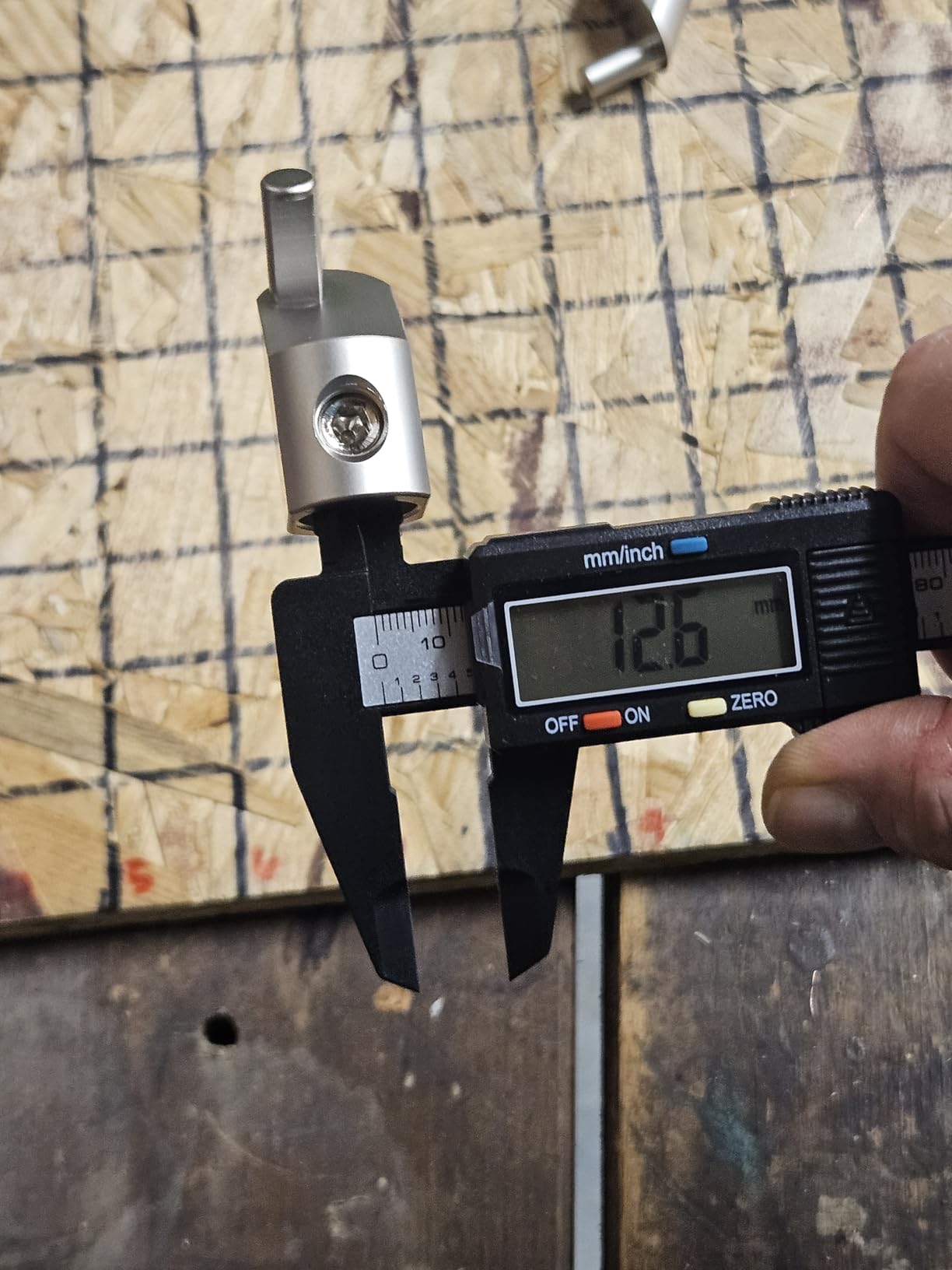
The honest limitation is the plastic body. Without a thumb wheel or a lock-down screw, the slider can be knocked out of position between one measurement and the next, and you have to re-zero before you trust the reading. That is a real annoyance when you are dialing in a dado depth and comparing three cuts in a row.
Where the Adoric KC24 earns its place
It covers the four measuring modes most joinery needs, inside, outside, depth, and step, which means one tool replaces a rule, a depth gauge, and a step gauge for basic layout. The zero reset at any point on the scale also lets you take differential readings, which is how you check whether a part matches a part rather than matching a number.
Where the Adoric KC24 falls short
It is a 0.01 inch resolution tool with a stated tolerance of plus or minus 0.01 inch, ten times looser than the steel calipers further down this list. That is fine for rough measurements and wrong for fine furniture joinery. The molded plastic case tabs are also reported to crack with repeated opening, so treat the case as a travel sleeve rather than storage.
2. Kynup 170-2 Forged Stainless Steel Caliper – Best Value
Kynup Digital Caliper, Caliper Measuring Tool, Stainless Steel Micrometer
Forged steel body
Plus or minus 0.001 in accuracy
Inch, metric and fraction
Hard case and spare cells
Pros
- Forged steel resists the warping plastic bodies show
- Holds zero without constant re-zeroing
- Fraction mode on an oversized LCD
- Smooth micro-adjust wheel and lock-down knob
- Kit includes spare cells plus a mini screwdriver and a hard case
Cons
- Included plastic case has a cheap hinge
- No backlight for very low light work
- Tiny battery cover screw is easy to lose
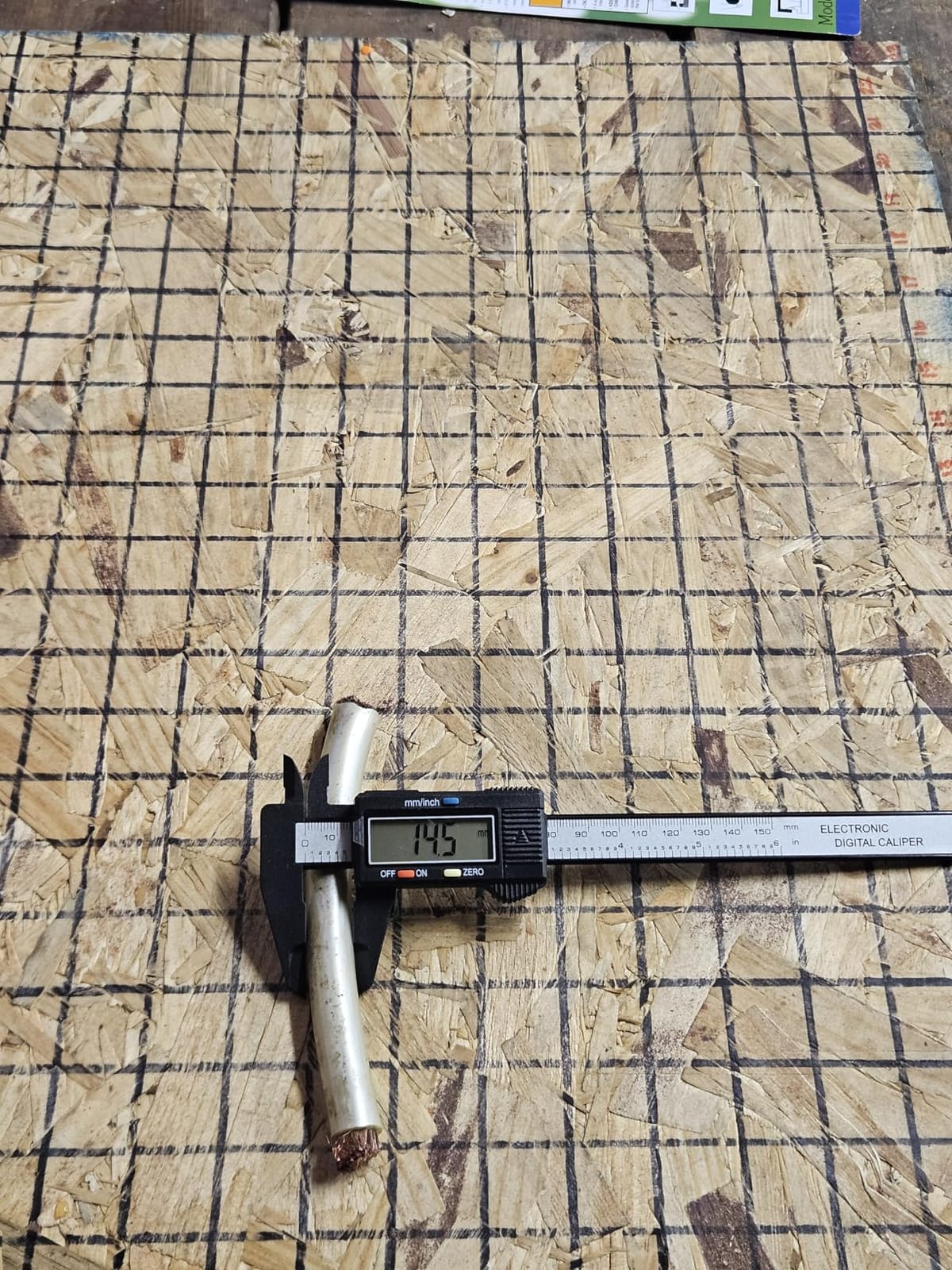
The Kynup 170-2 is the caliper we hand to anyone who has outgrown a plastic body but does not want to buy professional gear. Forged and polished stainless steel does not flex, so the jaws meet the way the spec sheet says they should, and the stated tolerance of plus or minus 0.001 inch is a real fit-checking figure rather than a marketing rounding. Owners comparing it against professional-grade tools for everyday shop measuring consistently find it more than adequate.
Around 77% of ratings sit at five stars, and the recurring theme in reviews is that this is the first steel caliper many woodworkers buy and then keep for years. The fraction mode matters more than most guides admit, and having inch, metric, and fraction on one oversized screen means you can read a dimension the way the drawing was written without doing mental arithmetic in the middle of a cut.
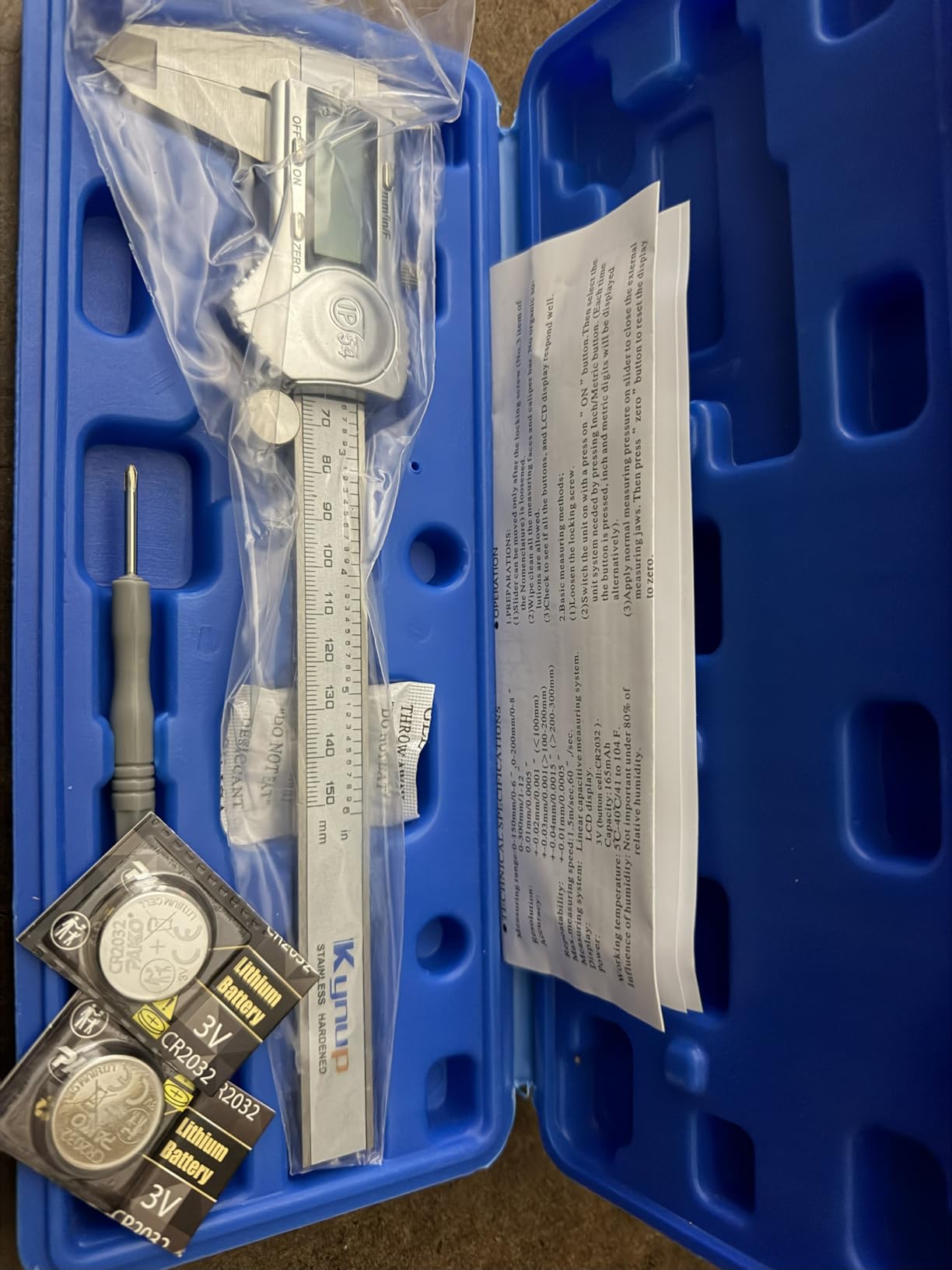
The micro-adjust wheel and lock-down knob are the details that set it apart from cheaper steel models. A fine thumb wheel lets you close the jaws on a tenon with consistent pressure instead of guessing, and the lock holds that setting while you mark the board. That repeatability is what turns a caliper into a layout tool.
Where the Kynup 170-2 fits a working shop
It is the pick for a small shop that measures board thickness, checks tenon and mortise fit, and verifies a glue-up closes properly. The included CR2032 cells, spare cells, and a mini screwdriver mean a dead battery mid-project is a thirty-second fix rather than a trip to the hardware store.
Where the Kynup 170-2 disappoints
There is no backlight, so the display is hard to read in a dark crawlspace or an unlit garage. The included plastic case has a cheap hinge that owners report cracking, and the battery cover is held by a very small screw that is genuinely easy to lose. Budget a proper case and a small parts tray if you care about the tool.
3. Jiavarry 20-F Steel Caliper – Best for Fraction Readout
Digital Caliper Measuring Tool, Stainless Steel Vernier Caliper Digital Micrometer with Large LCD Screen, Easy Switch from Inch Metric Fraction, 6 Inch Caliper Tool for DIY/Household
0-6 in / 0-150 mm
Hardened steel, 0.001 in accuracy
Inch, fraction and metric
Sunlight readable LCD
Pros
- Milled steel body holds zero far better than plastic
- Repeatability that held up in owner gage-block tests
- Fractions to 1/128 in plus metric to 0.01 mm
- Large digits readable without close inspection
Cons
- Sharp unsanded slider edges can mark workpieces
- Adjustment roller reported loose and wobbly
- No backlight and the housing fits imperfectly
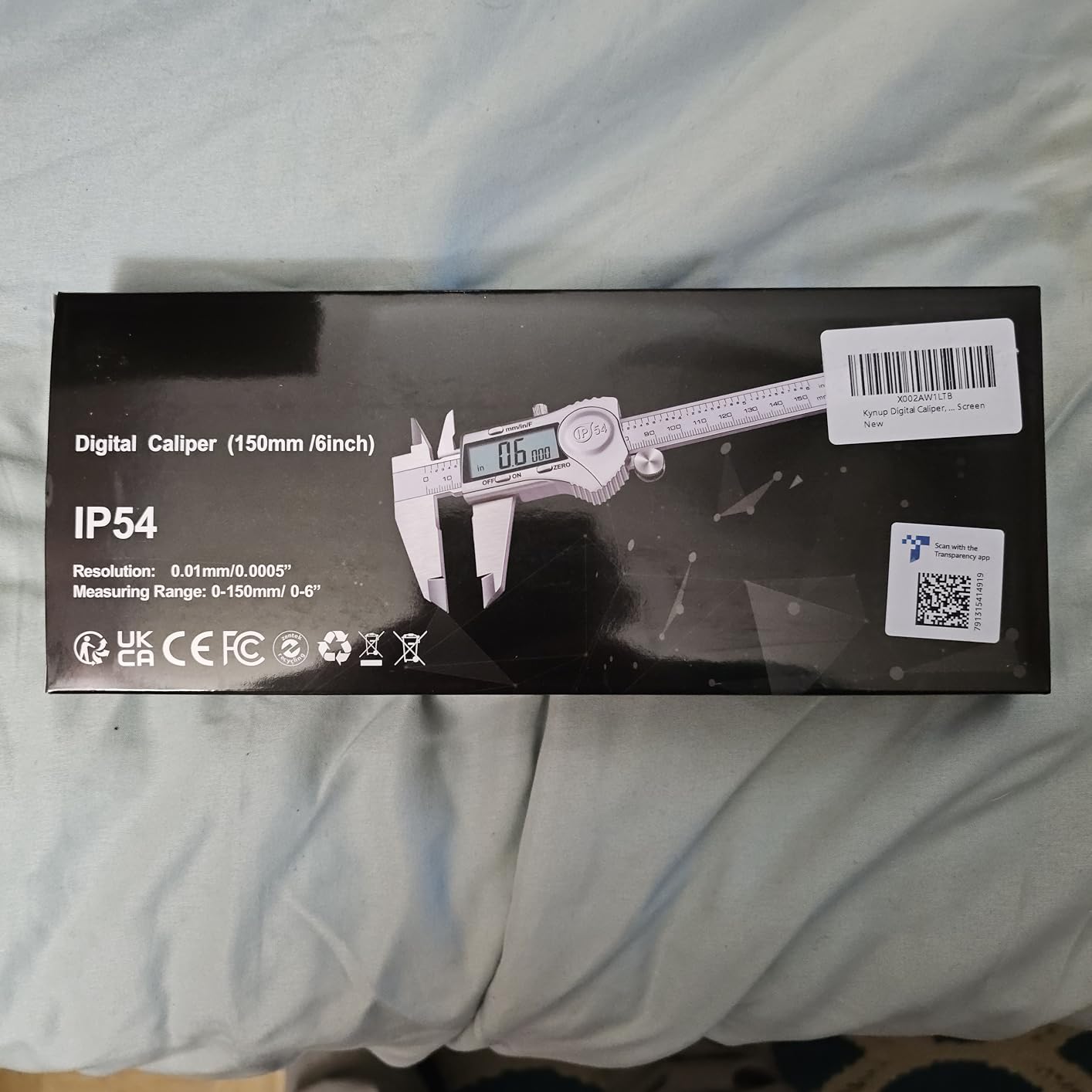
The Jiavarry 20-F is the fraction specialist of this group, and for imperial woodworkers that is not a gimmick. The display switches between inch, fraction, and millimeter in a single press, with fractions down to 1/128 inch and metric to 0.01 mm. When a drawing calls for a 1/16 inch reveal, this is a caliper that shows you a fraction rather than forcing you to convert a decimal in your head.
Around 76% of ratings are five stars, and the standout theme is how much better it holds zero than plastic-bodied tools. Several owners ran gage-block checks and reported repeatability that held up against tools costing several times more. For measuring a board before a crosscut or confirming a board came in at the thickness you specified, that repeatability is the whole point.
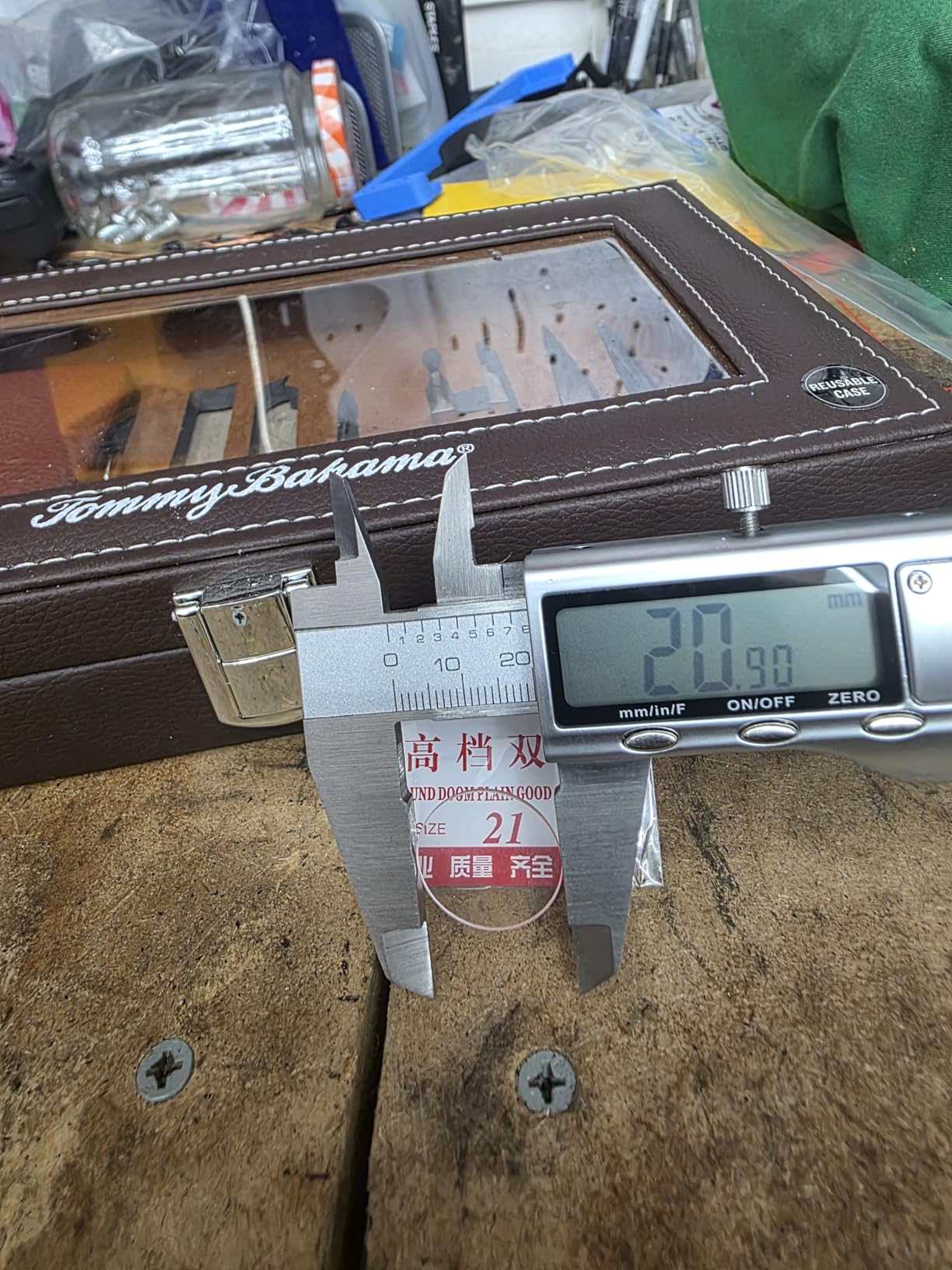
One thing we would fix before ordering: the edges along the slider are sharp and unsanded. Reviewers mention marking workpieces and scratching hands, so run a finger along the rail after unboxing and feel for burrs. The housing over the electronics also fits imperfectly, and the adjustment roller is reported loose and wobbly, sometimes rattling in the case.
Where the Jiavarry 20-F makes sense
It suits anyone working from fractional drawings, doing restoration on older furniture, or laying out dovetail and half-lap spacing. The large digits are readable in direct sunlight, which matters if you are measuring lumber outside rather than at a bench.
Where the Jiavarry 20-F is the wrong buy
If your workflow is in decimal inches or metric, the fraction mode is a feature you will never press and the sharp slider edges are a liability rather than a detail. A smoother-thumbwheel steel model is the better buy for you. The loose roller also makes fine differential measurements slower than they should be.
4. iGaging IP54 0-6 Inch Caliper – Most Versatile for Aging Eyes
iGaging IP54 Electronic Digital Caliper 0-6″ Display Inch/Metric/Fractions Stainless Steel Body
0-6 in range, 0.001 in accuracy
0.0005 in repeatability
IP54 sealed
Super large LCD
Pros
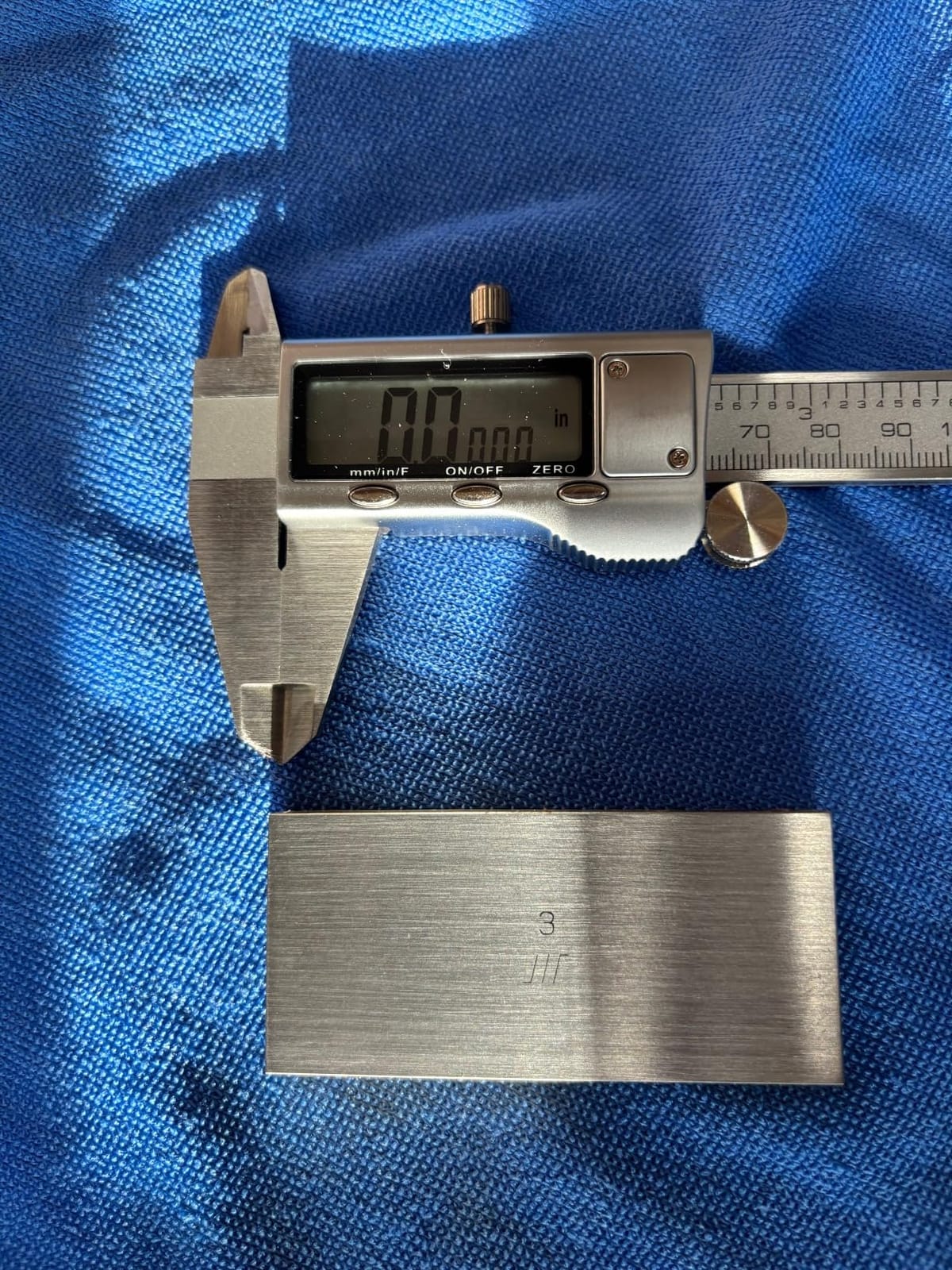
- Reads the same as a Mitutoyo against a 1-2-3 block
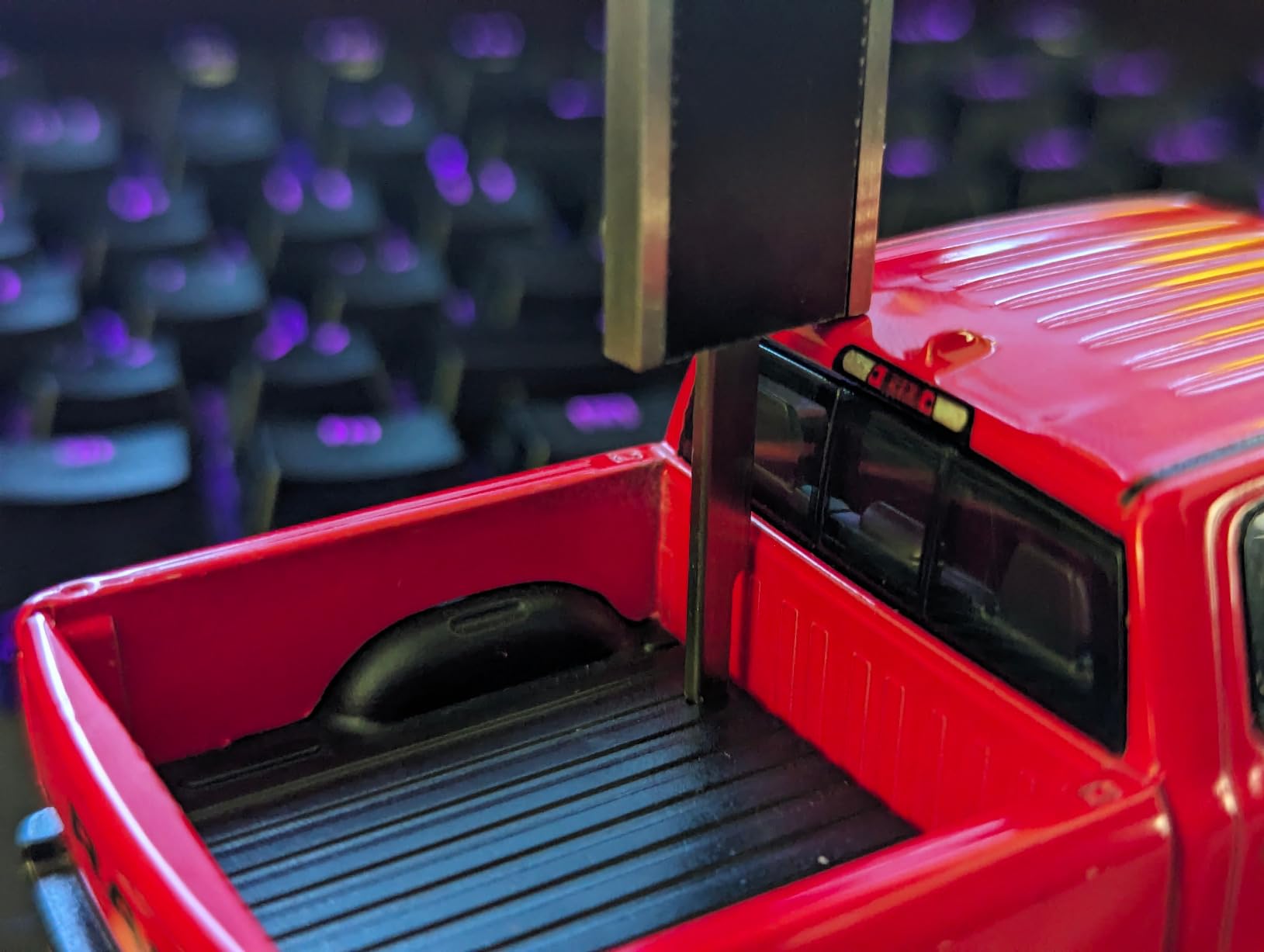
- Honed flush jaw tips that close with no light gap
- Super large display is easy on older eyes
- Includes spare screws plus a screwdriver and a foam case
Cons
- Thumb wheel has some play
- Battery compartment is fiddly and its guard awkward
- Upper inside jaws can be sharp enough to mark a workpiece
The iGaging IP54 0-6 inch is the pick we recommend when a caliper has to be read quickly, at arm’s length, in a shop where the lighting is not great. The display measures roughly 2-3/8 by 7/8 inch, a good deal larger than the screen on a typical 6 inch caliper, and that matters more with age than most people expect. It also carries a 0.001 inch accuracy rating with 0.0005 inch repeatability and an IP54 rating for splash, oil, and dust resistance.
Owners with long service records report checking it against a 1-2-3 setup block and getting readings that match professional references, and the honed flush measuring tips mate with no light gap when closed, which is the fastest visual sign of a well-finished jaw. About 79% of ratings sit at five stars, and several owners describe near-decade daily use.
The trade for that display and finish is a fiddly battery compartment. It is screwed rather than slotted, and the plastic battery guard is not convenient to work around, though the package does include spare screws and a screwdriver so you can replace one if you strip it. The thumb wheel also has some play that takes getting used to, and the upper inside jaws can be sharp enough to mark a finished surface.
Where the iGaging IP54 pays off
It is the pick for a workshop full of fine furniture where you measure tenon thickness, check a mortise depth, and verify a router fence setting without putting your face inches from a screen. The rigid case with a cut foam insert, the spare battery, and the spare compartment screws all say this is a tool meant to live in a van rather than a drawer.
Where the iGaging IP54 is not worth the step up
It sits above plain steel 6 inch models in the range, and the extra spend goes mostly on display size and finish quality rather than accuracy you would notice. If your eyes are fine and you measure rough lumber, a mid-tier steel caliper with a lock screw will serve you better for the money.
5. LOUISWARE Stainless Steel 6 Inch Caliper – Best for Rough Shop Work
Digital Caliper, Caliper Measuring Tool with Stainless Steel, Electronic Micrometer Caliper with Large LCD Screen, Auto-Off Feature, Inch and Millimeter Conversion (6 Inch/150 mm)
0-6 in / 0-150 mm
Plus or minus 0.001 in accuracy
Thumb roller and lock screw
4-minute auto-off
Pros
- Stainless steel body that resists oil and stains
- Locking screw and thumb roller for repeatable settings
- Covers internal/external
- height and depth work
- Large clear LCD in a dusty shop
Cons
- Spare coin cells included are tiny and awkward
- Listed inside a multi-item group so accessories vary
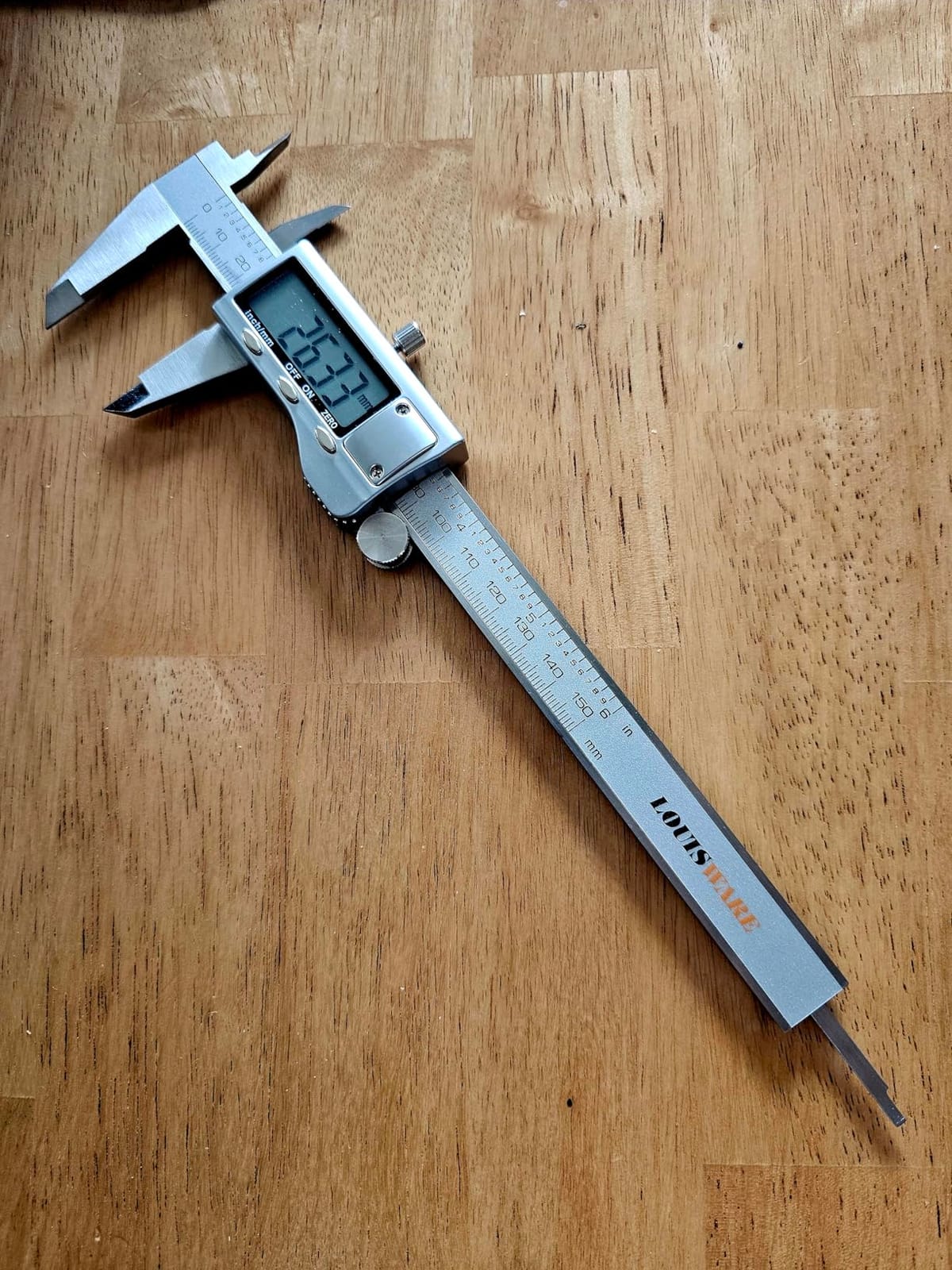
The LOUISWARE 6 inch is the value steel option, and its selling point is a combination most calipers at this level skip: a thumb roller and a locking screw. Those two features are what let you set a dimension once and duplicate it across a stack of parts, which is the difference between a measuring tool and a layout tool. The stated accuracy is plus or minus 0.001 inch, with 0.01 mm resolution.
About 78% of ratings are five stars, and buyers consistently describe a well-built, accurate general-purpose caliper with a readable display. The body is described as waterproof, stain-proof, and oil-proof, which is a fair claim for a shop tool that lives near a planer or a router. The 4-minute auto shutoff is shorter than most, but no owner reports treating it as a problem.
Two practical notes. The extra coin cells that come in the box are very small and awkward to handle with dusty hands, so keep a spare of the right type in the case rather than relying on the supplied one. And because the product is offered inside a multi-item listing, check what actually arrives with it, since the case and accessories are not always identical between variants.
Where LOUISWARE earns a spot in the drawer
It suits a garage shop or a hobbyist who measures in decimal inches and metric, wants a lock screw, and does not need fractions. The lock screw and thumb roller pair make it a good companion for checking a stack of identical spacers or setting a consistent reveal.
Where LOUISWARE falls short
It reads in inch and millimeter only, so a woodworker working from fractional drawings has to convert by hand. It is also one of the few picks here with no fraction mode, which matters if you plan to work from fractional drawings.
6. iGaging Absolute Origin 0-6 Inch Caliper – Best for Logging Measurements
iGAGING Absolute Origin 0-6″ Digital Caliper, IP54 Stainless Steel, SPC/USB Output Port, Inch & Metric Modes, Case, Manual
0-6 in / 150 mm, 0.001 in accuracy
Absolute Origin zero retention
SPC/USB data output
IP54 body
Pros
- Zero survives power-off so there is no re-zeroing
- SPC/USB port logs dimensions to a spreadsheet
- IP54 steel body suits damp and dusty shops
- High contrast LCD reads in low light
- Protective case and manual included
Cons
- Two C cells are bulkier than the coin cells rivals use
- Bulkier 6 inch body for pocket carry
- Sits above plain steel 6 inch models
Absolute origin is the feature to understand here. Most digital calipers measure relative to wherever you last zeroed them, so if you close the jaws, knock the tool, or let the battery die, the next reading is wrong until you re-zero. An absolute origin encoder remembers the true zero reference internally, so this caliper comes back from a full battery or a drop still reading correctly. In a working shop, that removes an entire category of silent mistakes.
The second reason to buy it is the SPC/USB output port, which exports measurements into CAD software or a spreadsheet. If you are measuring a run of cabinet parts and recording actual dimensions instead of nominal ones, that port removes manual data entry and the typos that come with it. Accuracy is rated at 0.001 inch on a 6 inch range, the body is IP54 rated for dust and moisture, and the high contrast LCD reads in low light.
Owners single out absolute origin and the data port as the two reasons to choose it over a generic steel caliper, with around 77% of ratings at five stars. The drawbacks are unglamorous: it takes two C cells, which are bulkier and less common in a drawer than the coin cells most rivals use, and the 6 inch body is larger than the plastic models you might be used to carrying.
Where Absolute Origin changes your workflow
It is the pick for anyone who measures repeatedly and cannot afford a wrong number: checking a stack of identical rails, verifying a batch of tenons, or recording actual board thicknesses for a build sheet. Zero retention means the tool is trustworthy the moment you pick it up, without a ritual of closing the jaws and pressing zero first.
Where Absolute Origin is overkill
If you measure a few boards a week and jot the number on a scrap of paper, the data port is dead weight and the C cells are an inconvenience. A simpler steel caliper with a lock screw will serve you just as well, and it is a simpler thing to own.
7. HARDELL 12 Inch Caliper – Best for Wide Boards
HARDELL Digital Caliper 12 Inch, Micrometer Calipers with Large LCD Screen
0-12 in / 0-300 mm
0.01 mm resolution, 0.0015 in accuracy
14 x 40 mm oversized LCD
Fraction mode
Pros
- 12 inch span covers wide boards and sheet goods in one pass
- Sturdier feel than plastic calipers of the same length
- Knurled thumb roller and locking screw
- Includes a ruler plus two cells and a case
- One year warranty from date of purchase
Cons
- Case has no compartment so the spare cell rattles
- Screwed battery cover needs a small screwdriver
- Long and awkward for small parts
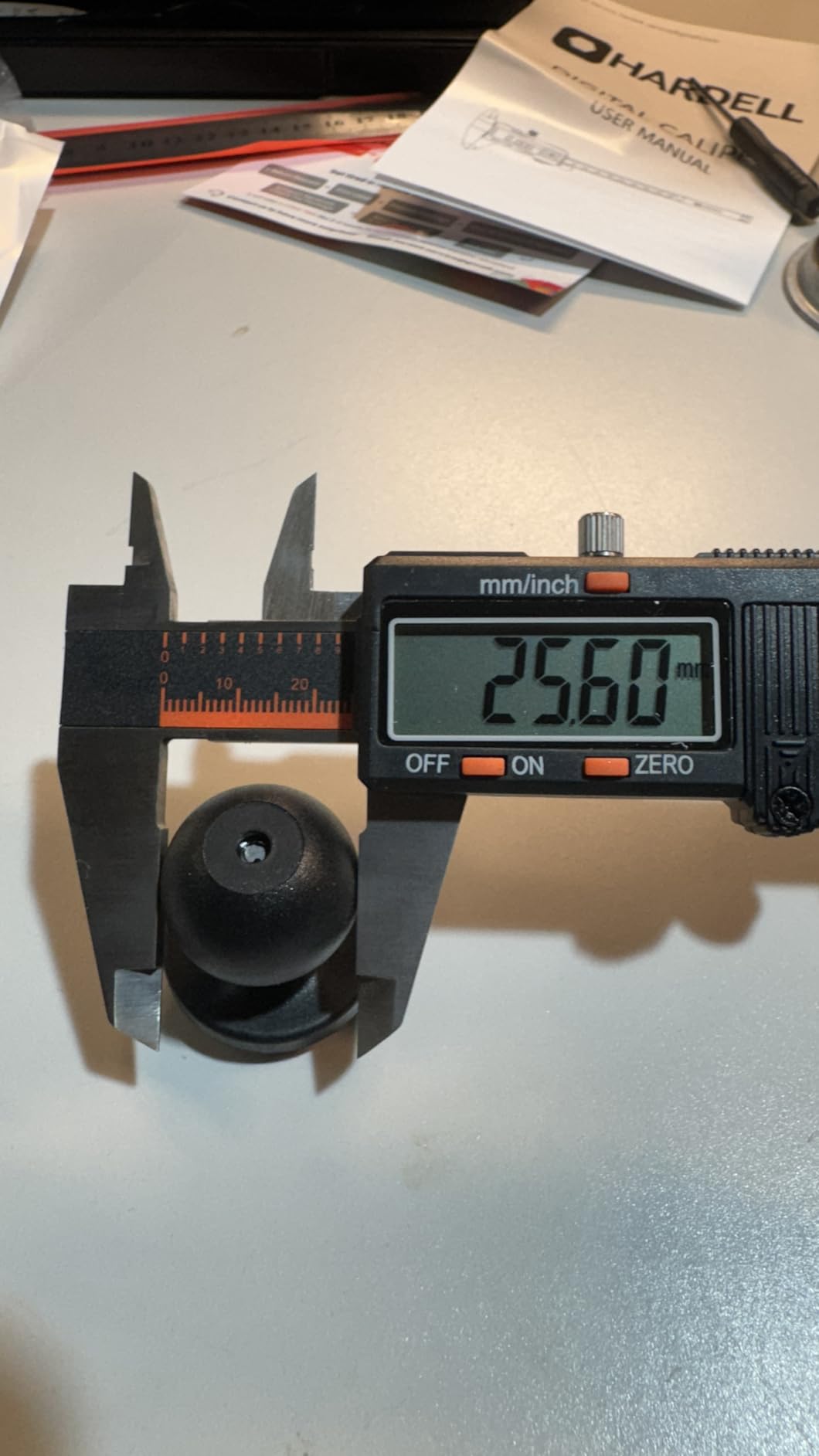
The HARDELL DC-12 measures 0-12 inches and 0-300 mm with a 14 by 40 mm oversized LCD, and the knurled thumb roller with a locking screw lets you dial in a firmer or looser closing tension depending on the part. If the widest board you handle tops out around 11 inches, this is the pick.
About 78% of ratings sit at five stars, and buyers who work with wide boards consistently call out the 12 inch capacity as the reason to choose it over a 6 inch model, with accuracy described as matching the advertised spec. The stainless frame is described as waterproof and rustproof, which suits a shop with a humid basement or an unfinished garage floor.
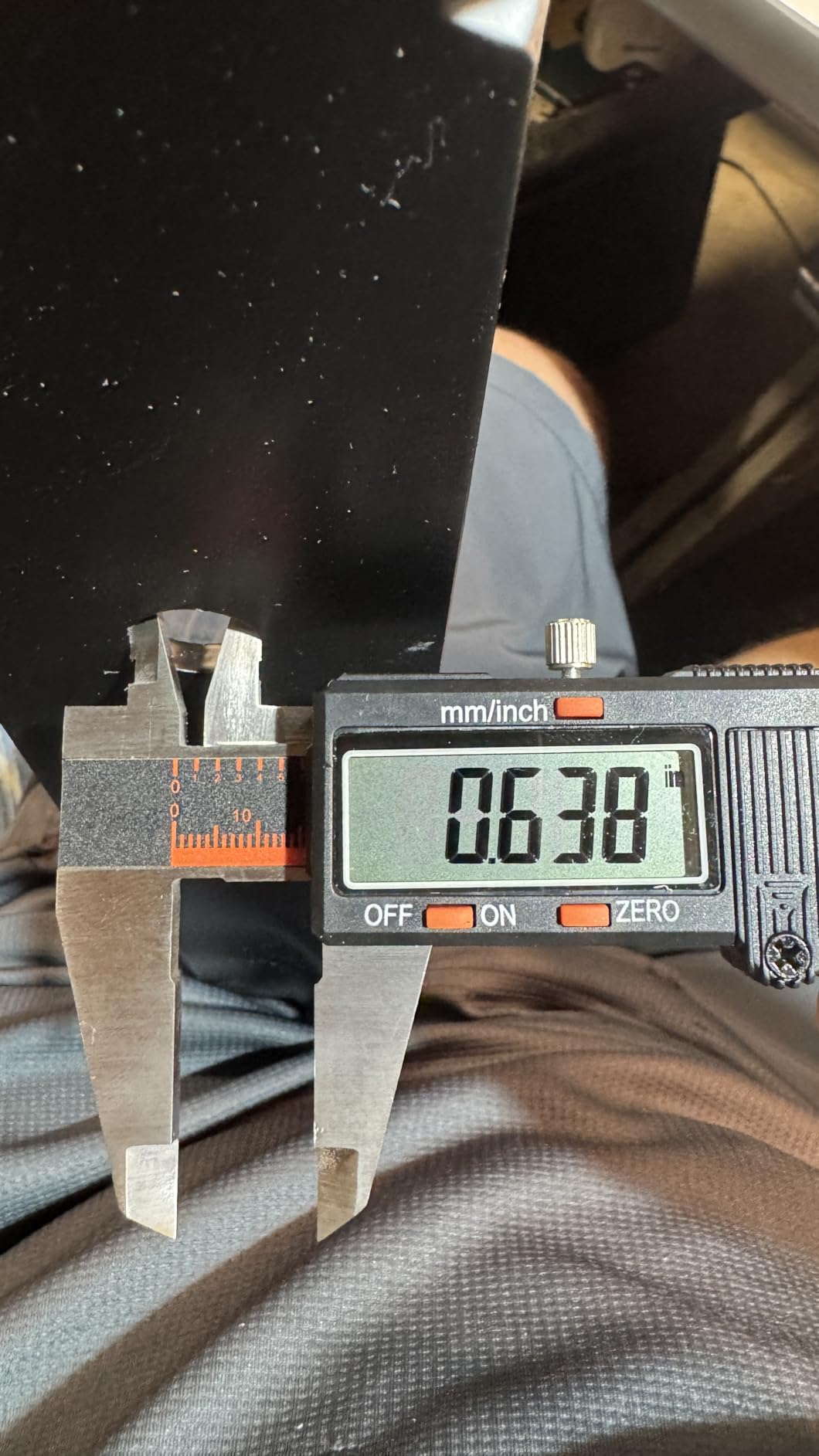
Accuracy is plus or minus 0.0015 inch, which is looser than the 0.001 inch steel models in this lineup. That is still fine for furniture work, but if you are checking a precision mortise against its tenon, look at a 6 inch tool with a tighter figure instead. One owner also reports the digital function erroring out after about a year, so keep a backup caliper in the shop.
Where the HARDELL DC-12 is the right tool
It suits cabinetmakers, installers, and anyone cutting door blanks, shelving, or wide panels. The included ruler, screwdriver, two cells, and drop-resistant case make it a complete kit, and the one year warranty covers the usual small-parts failures. Fraction mode is included, so fractional drawing work is covered.
Where the HARDELL DC-12 is awkward
At 12 inches the tool is long, and using it on a small drawer part is clumsy in a way a 6 inch caliper never is. The case has no compartment for the spare cell, so it rattles loose every time you open it, and the battery cover is screwed rather than slotted, so a small screwdriver comes out every time you change it.
8. NEIKO 01409A 12 Inch Caliper – Best First Long Caliper
NEIKO 01409A 12” Electronic Digital Caliper | Extra Large Display | 0-12 Inches | Inch/Fractions/Millimeter Conversion | Polished Stainless Steel
0-12 in / 0-300 mm
0.0005 in resolution, 0.001 in accuracy
Fraction mode
Extra large LCD
Pros
- 12 inch reach with a fraction mode owners use most
- Holds its shape at full 12 inch extension
- Rigid feel with a foam-lined case
- Spare cell has a place in the case
Cons
- About 17% of ratings sit at three stars or lower
- Bulky head and screen on a 12 inch body
- Auto-on drains coin cells in under a year
- Slider can slip when moved quickly
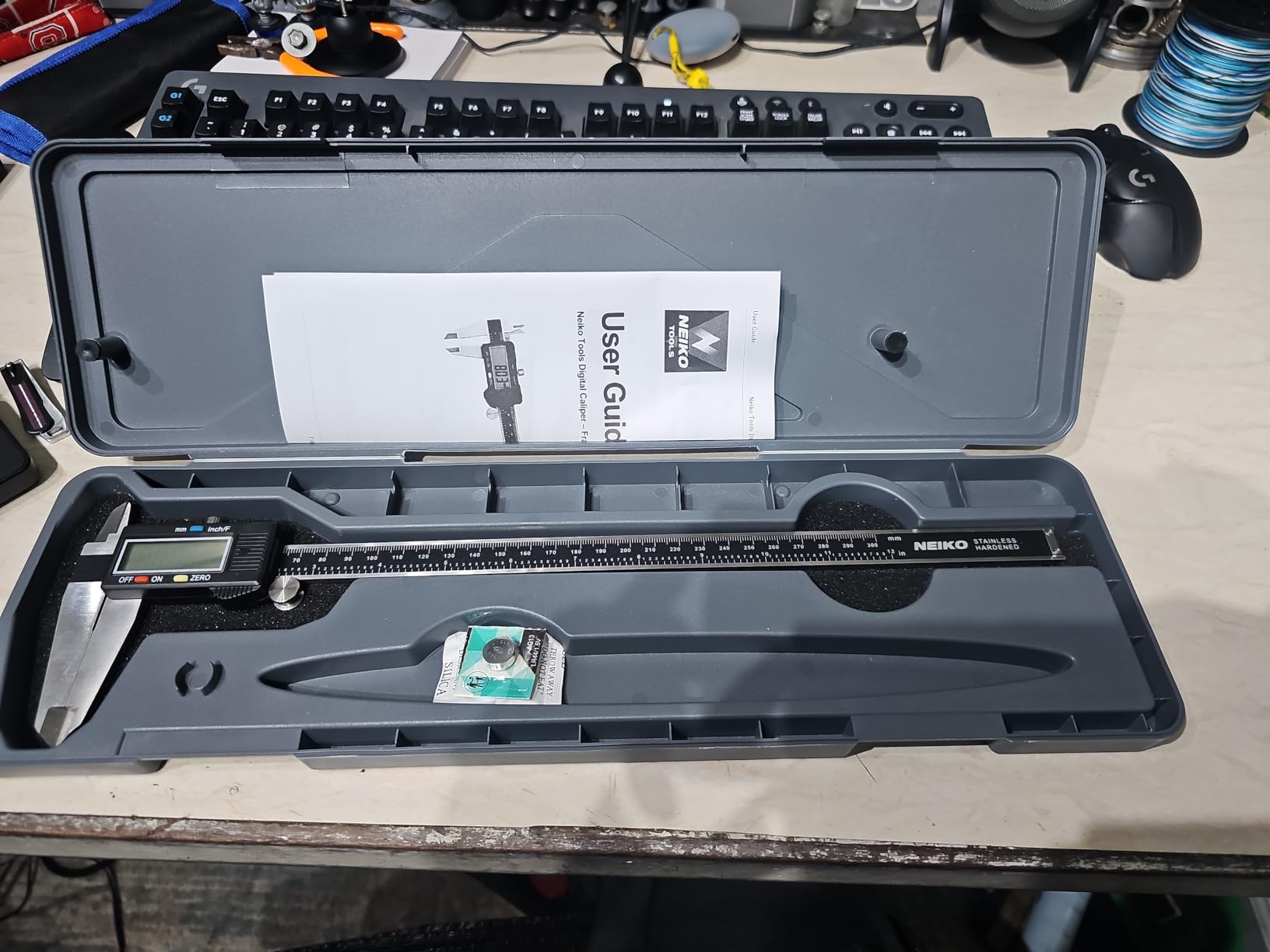
The NEIKO 01409A is unusual in this lineup because it combines a 12 inch reach with fraction conversion and 0.001 inch accuracy, a tighter figure than most long calipers manage. Owners working in fractional drawings say the fraction mode is the feature they reach for most, and several report it replacing a separate 6 inch caliper for everyday work. It also holds its shape without flexing at full extension, and comes in a foam-lined case with a spare cell that actually has a place to live.
We are including it with a clear warning because it carries the lowest average rating in this group, with about 69% five-star but a noticeable cluster at three stars or below. The criticisms are consistent: the slider can slip if you move it quickly without the thumb wheel, the adjustment wheel is loose, and the balance is off.
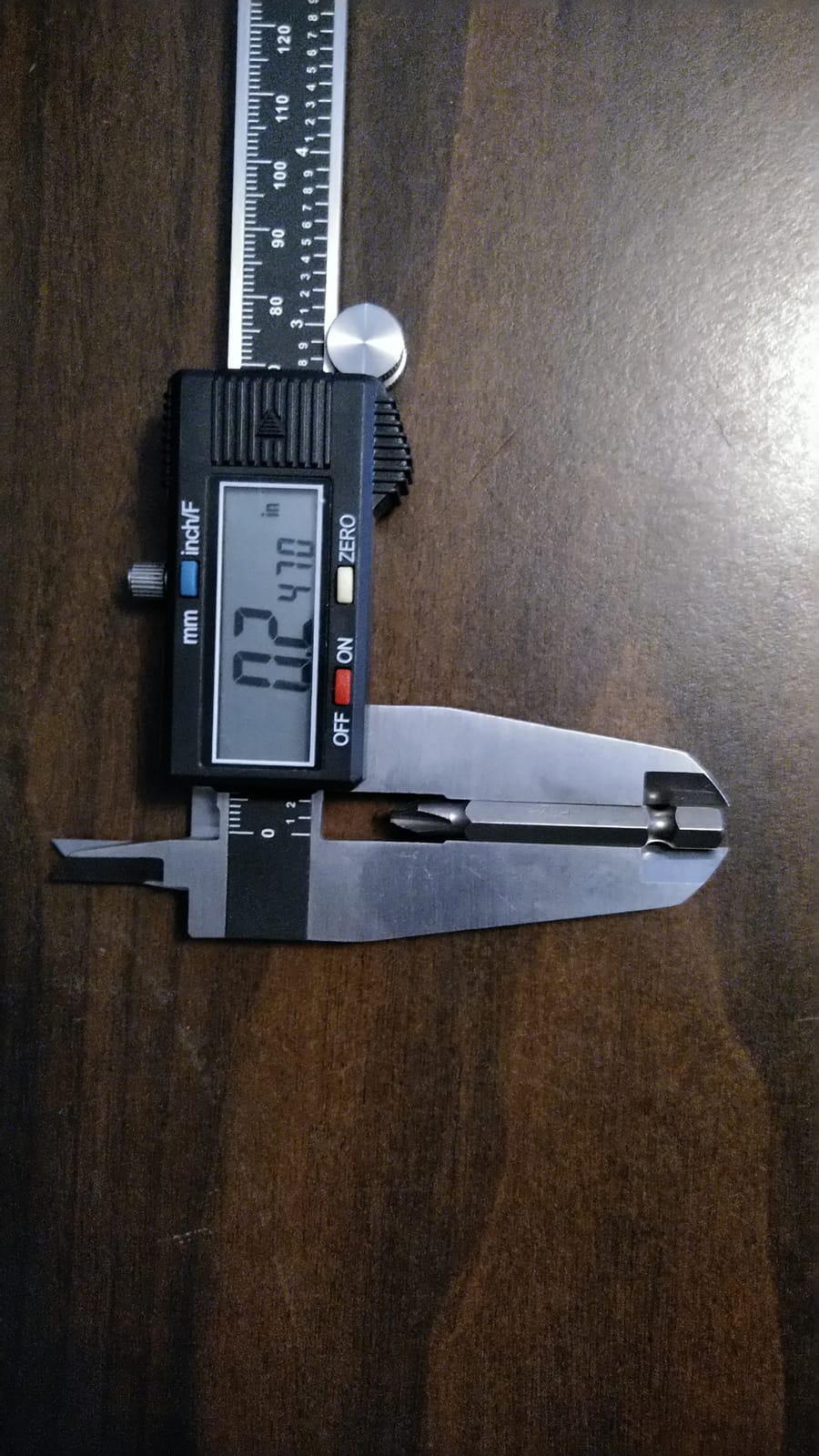
The battery behavior is the one to know before you buy. Because it switches on automatically, the coin cells drain even when the tool sits idle on the bench, giving under a year of life, and that is annoying in a shop where the caliper lives within arm’s reach. The head and screen are also much bulkier than a 6 inch model, because a 12 inch body is essentially a scaled-up version of the same tool.
Where the NEIKO 01409A shines
It suits a woodworker who measures wide lumber and wants fractions at the same time, a combination most 12 inch calipers do not offer. The extra large LCD, the knurled thumb roller, and the locking screw all help when you are working in a dim shop or setting a repeated dimension across several parts.
Where the NEIKO 01409A frustrates
If you set a dimension and then reach for a pencil, the slider can drift and give you a wrong number, which is exactly when a measuring mistake is most annoying. For precision layout work, a caliper with a firmer lock and a shorter body is a safer tool. One owner also reports the digital function failing after about a year.
9. General Tools 147 Caliper – Best for Non-Marring Jaws
General Tools Digital Caliper #147-6″ Precision Measuring Tool – Stainless Steel Ruler
0-6 in / 153 mm, 0.001 in accuracy
Non-marring carbon fiber jaws
All metal slider
Fraction and mm modes
Pros
- Non-marring carbon fiber jaws protect finished surfaces
- All metal body with no plastic housing on the slider
- Verified accurate against Starrett calibration rods
- Standard AAA cell that is easy to find
- Includes a foam-lined case plus a conversion chart
Cons
- Battery cover and its screw are not captive
- Heavier than plastic models in long sessions
- A few owners see minus 0.0005 in until re-zeroed
The General Tools 147 solves a problem the rest of this list mostly ignores: measuring a finished surface without marking it. Its jaws are heavy-duty stainless steel combined with non-marring carbon fiber, so you can set a caliper against a painted or finished panel without leaving a dent or a shine line. If you do restoration work, or you have ever ruined a nice board by clamping a steel jaw into it, that is worth more than another thousandth of accuracy.
It also carries the highest average rating in our lineup at 4.7, with 79% five-star and only 1% one-star, and owners report checking it against Starrett calibration rods and reading dead on. The build is all metal with no plastic housing on the slider, the extra-large LCD handles decimal inch, fractional inch, and millimeter, and it runs on a single standard AAA cell. Factor in the one year warranty and the foam-lined case, and this is a tool that ages well.
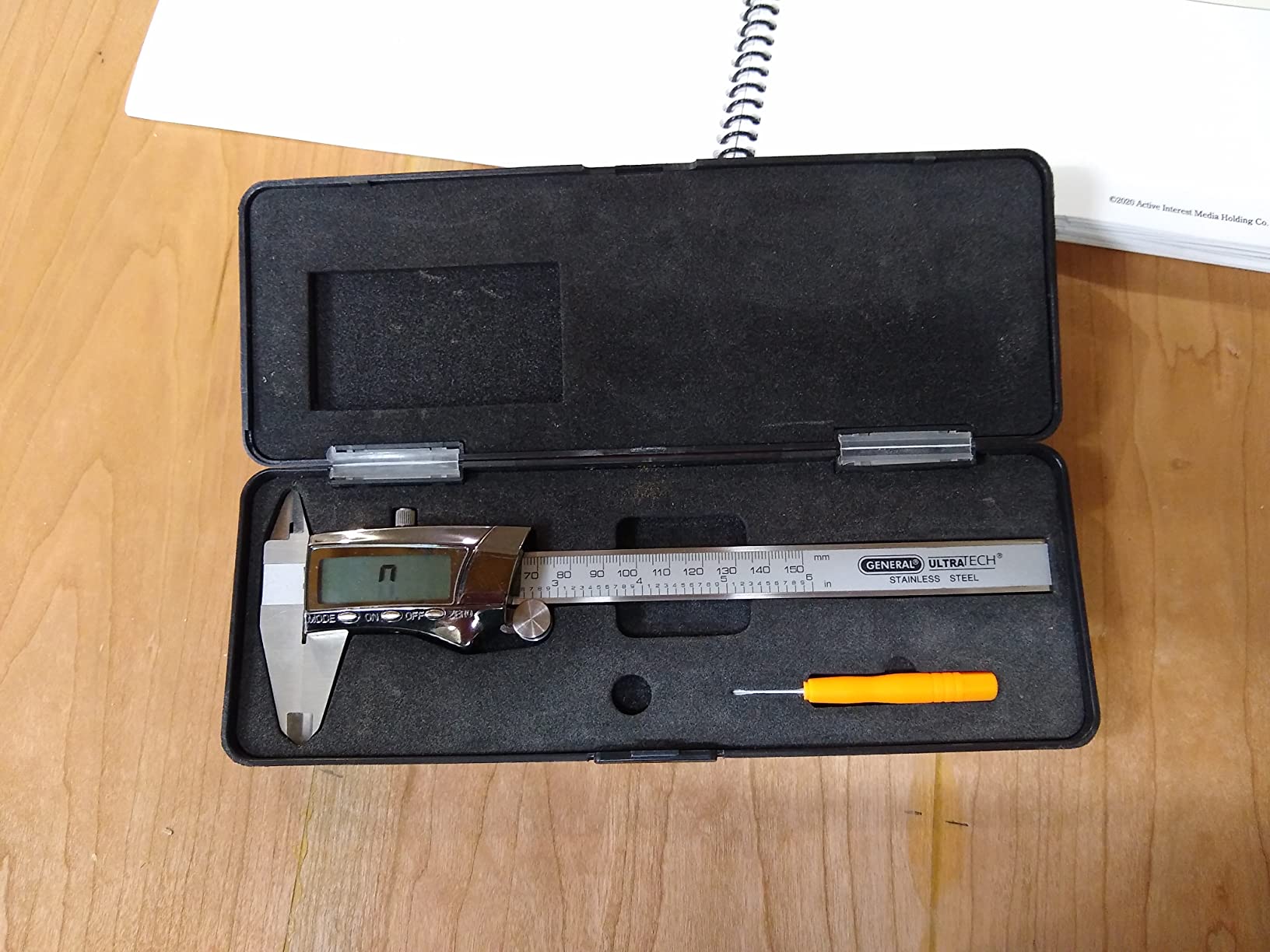
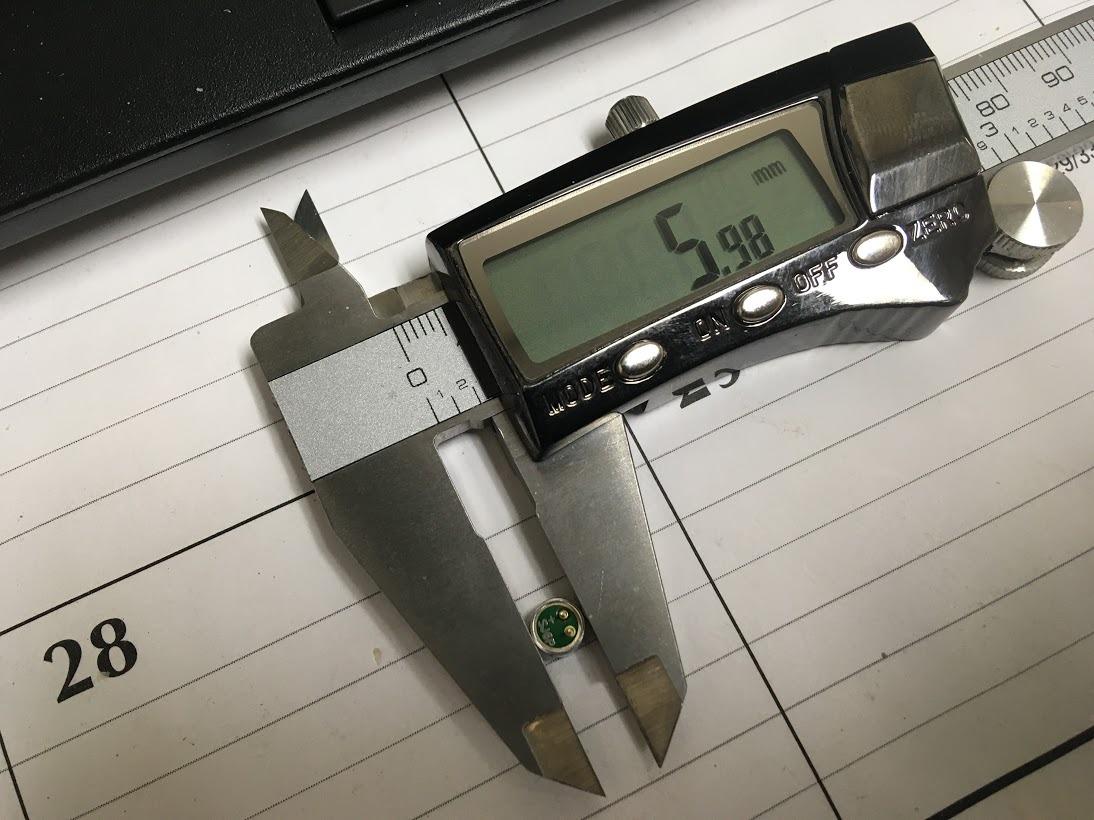
Two things to plan for. The battery cover and its screw are not captive, so both are easy to lose when you open the compartment, and a small screwdriver is included for exactly that reason. It is also heavier than plastic models, which some owners find tiring over a long session, and a few report the display briefly showing minus 0.0005 inch when fully closed until you re-zero.
Where the General Tools 147 is the smart buy
It suits furniture makers, restorers, and anyone measuring finished or veneered surfaces where a steel jaw would leave a mark. The same design is produced in 8 inch and 12 inch lengths if you want it at a longer reach.
Where the General Tools 147 is not for everyone
If you work mostly on rough lumber and never touch a finished face, the non-marring jaws are an unused feature and the extra weight is a cost with no benefit. It also carries a smaller review base than the fancier picks here, so the long service reports we rely on are fewer in number.
10. WEN 10761 6.1 Inch Digital Caliper – Budget Pick for Occasional Use
WEN 10761 Electronic 6.1-Inch Digital Caliper with LCD Readout and Storage Case
0-6.1 in range
0.0005 in, 1/128 in and 0.01 mm
SAE inch, fraction and metric
Storage case included
Pros
- Covers inch
- fraction and metric in one simple body
- 6.1 inch range suits cabinet and trim work
- Large LCD and a sturdy carrying case
- Very light at about 2.2 ounces
Cons
- Plastic body loses zero more easily than steel
- 9% of ratings sit at three stars
- No lock screw or thumb wheel for repeatability
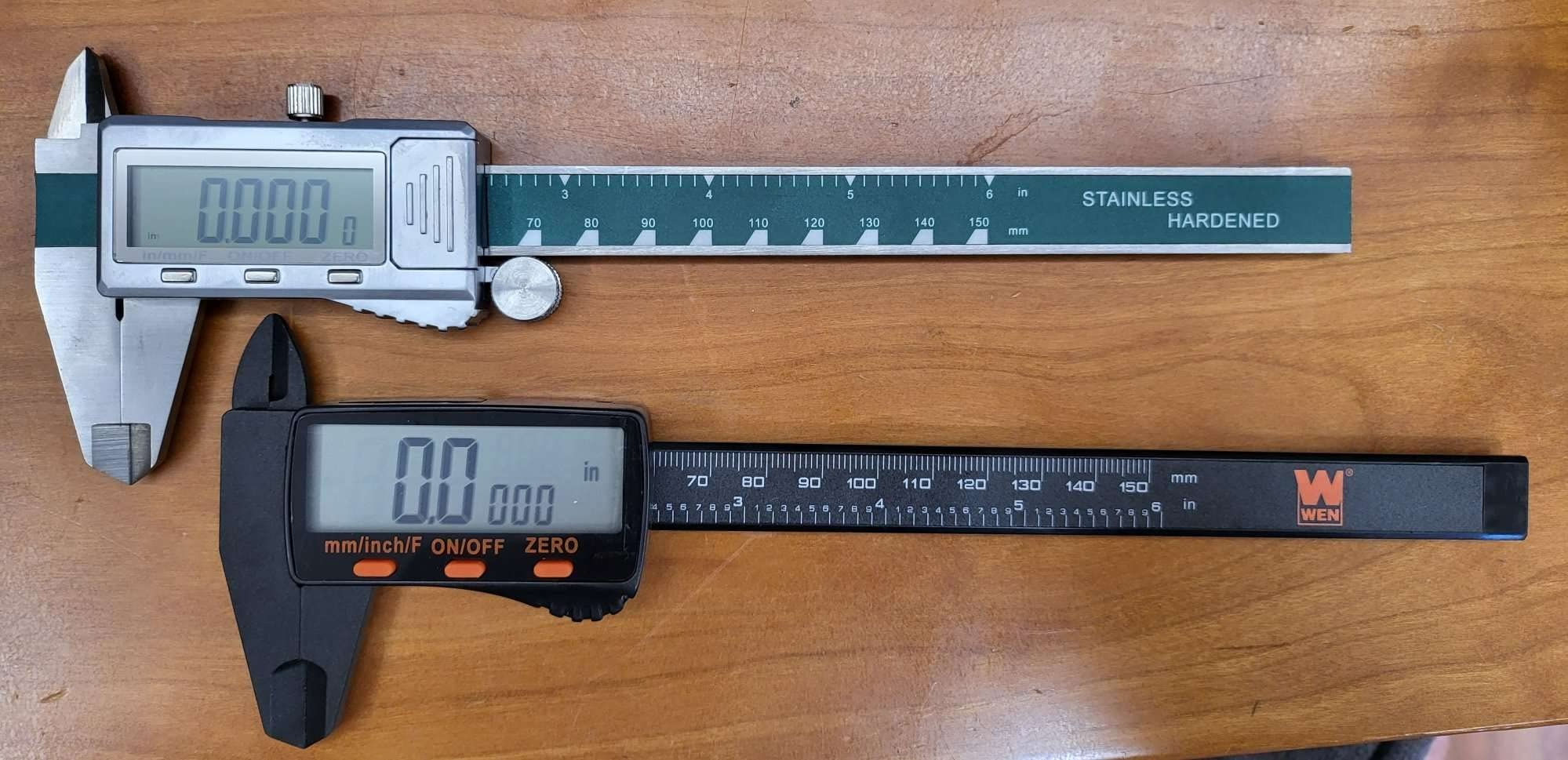
The WEN 10761 is here for the buyer who measures a few things a month and does not want to think about it. It switches between SAE inch, SAE fraction, and metric millimeter, measures up to 6.1 inches, and it comes with a CR2032 cell and a sturdy carrying case. At roughly 2.2 ounces it is light enough to keep in a tool tote, which is genuinely useful if your shop is a corner of a garage.
Roughly 66% of ratings sit at five stars, with 9% at three stars. The lower scores trace to the plastic construction and a lighter, less substantial feel than the steel models, rather than to measurement problems. For casual trimming and fitting, owners report it does the job.
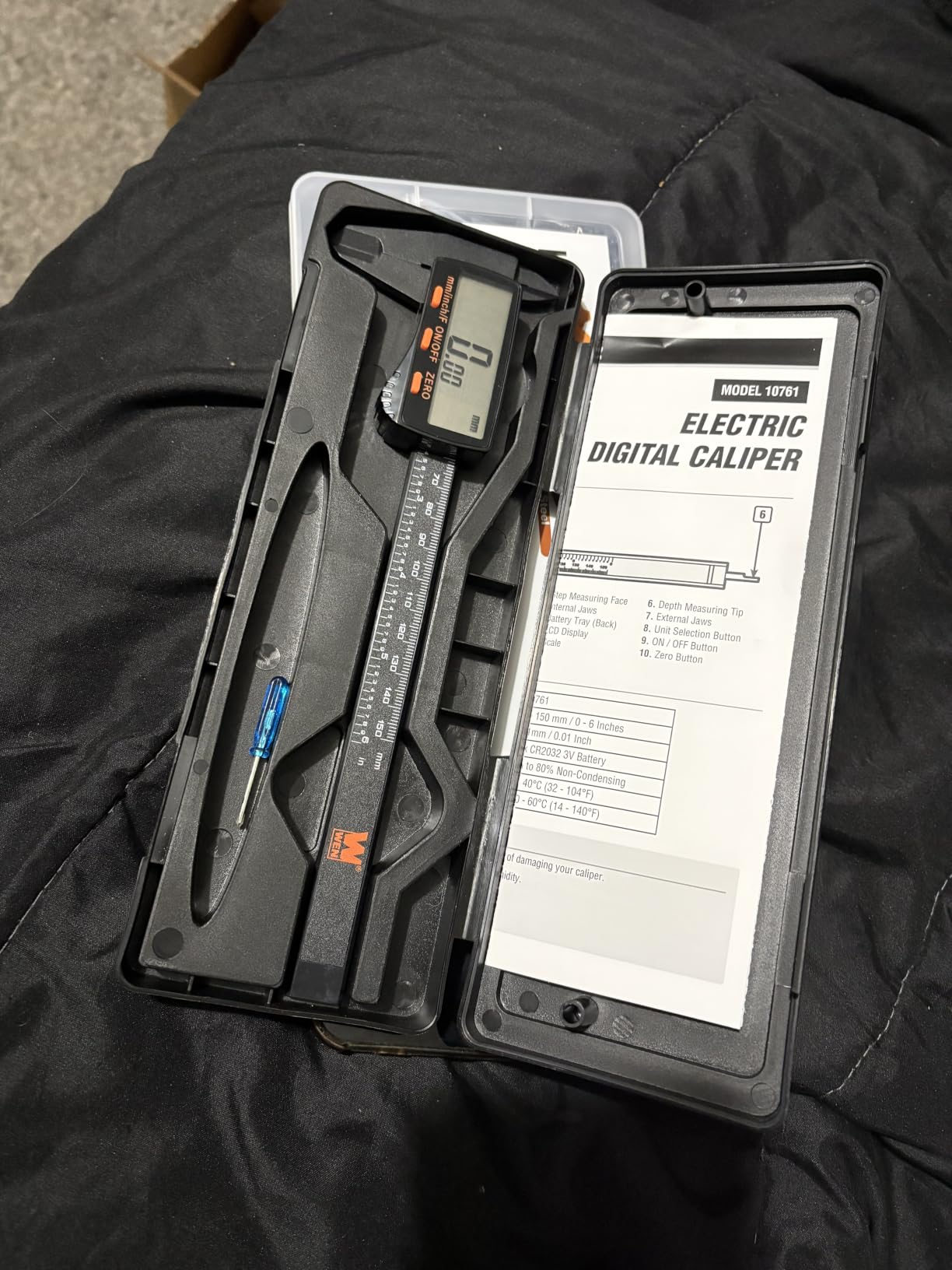
The missing lock screw and thumb wheel is the practical limitation. Without them, there is no way to hold a set dimension while you mark it, so every measurement is a fresh squeeze of the jaws. In a shop where you are dialing in a joint and re-measuring repeatedly, that is friction you will feel every time.
Where the WEN 10761 makes sense
It is the pick for a beginner, a student, or a second tool for a drawer you reach into rarely. The mode coverage in one inexpensive plastic body is unusual at this level, and the case means it does not live loose in a toolbox with the battery rattling against the jaws.
Where the WEN 10761 stops making sense
The moment you start cutting joinery to a marked dimension, a plastic body that loses its zero and a slider that will not lock stop being a convenience. At that point a steel caliper with a lock screw, like the Kynup or the LOUISWARE, is only a modest step up and removes the problem entirely.
Fractions vs Decimals: What Woodworkers Actually Want
This is the single most argued topic in every caliper forum we read, and the two camps make exactly opposite claims. One camp says a digital readout showing a raw fraction like 53/128 inch is useless because it forces mental conversion on every measurement. The other camp says that if you work from fractional drawings, a decimal-only caliper is the tool that makes you do the converting instead.
Both camps are describing the same feature, and the answer is simpler than the argument. A caliper with fraction mode that displays down to 1/128 inch is showing more precision than a woodworker can cut. What you want is the ability to read a 1/16 inch increment directly, and on a good digital caliper the display does that naturally because the fraction it shows is a normal 1/16 value, not an unwieldy 53/128.
There is a second option worth knowing about. Several experienced woodworkers in the FineWoodworking forum thread reported leaving digital calipers entirely and settling on a fractional dial caliper, with 1/16ths on the hour hand, 1/64ths on the minute hand, and decimals in the center. There is no battery and no zero to lose, and the reading is inherently in the increment you work in. If you cut a lot of imperial joinery and never log measurements to a spreadsheet, that is a defensible choice rather than a downgrade.
Our practical rule is this. If your work is in decimal inches or metric, ignore the fraction button entirely and buy on accuracy, lock screw, and build. If your drawings, your inherited furniture, or your teacher use fractions, make sure the caliper has a fraction mode, and check that it shows a clean 1/16 or 1/32 rather than a raw 1/128 value, because the difference determines whether you can read it at a glance.
What to Look For in a Digital Caliper for Woodworking
Published accuracy, not resolution. Resolution is the smallest change the display can show, such as 0.0005 inch. Accuracy is how close the reading is to the true value, such as plus or minus 0.001 inch. A tool can show 0.0001 inch and still be off by 0.005 inch. For fit checks, accuracy is the number that decides whether the caliper can do its job.
Absolute origin, explained. A relative caliper measures from wherever you last pressed zero, so closing the jaws or dropping the tool resets its reference. An absolute origin encoder remembers the true zero inside the case, so the caliper still reads correctly after the battery dies or the tool is knocked. For a shop where the caliper gets handled roughly, this quietly removes a whole class of wrong numbers.
IP54 versus IP67, in shop terms. IP54 means protection against dust ingress and splashing water: sawdust, plaster, a splash from a washdown, a damp basement wall. IP67 means dust-tight and able to survive immersion. For woodworking, IP54 is the meaningful threshold, because the enemy is fine sawdust packing into the slider and ordinary damp air, not a hose pointed at the tool.
Jaw material and non-marring options. Steel jaws are rigid and accurate but will mark a finished or veneered surface. Carbon fiber composite jaws trade a little rigidity for the ability to measure a painted panel without leaving a dent, which is why the General Tools 147 earns its place. Check whether the inside jaws are sharp too, because those are the ones that touch a workpiece edge.
A lock screw and a decent thumbwheel. A thumbwheel lets you close the jaws with even pressure instead of guessing, and a lock screw holds the setting while you mark the stock. Calipers with neither are measuring tools but not layout tools, and that distinction shows up the first time you need three identical spacers.
Range. A 6 inch caliper covers board thickness, joinery, and hardware. A 12 inch caliper spans wide boards, door blanks, and sheet goods, and several woodworkers keep one of each. If your largest project is a bookcase, 6 inches is plenty; if you build doors or work in sheet goods, the 12 inch reach earns its drawer space.
Battery type and readout formats. Coin cells such as CR2032 or LR44 are common and cheap, while two C cells are bulkier to carry but last longer between changes. Auto-off protects the battery; auto-on drains it while the tool sits idle. As for readout formats, the rule from the fraction section applies: buy for the increments you actually work in.
Calibration, care, and the case. Blow sawdust off the jaws after every session, keep the locking screw tight rather than forcing the jaws, and do not store the tool with a flat battery. A foam-lined case with a place for the spare cell is a small thing that decides whether the tool is still accurate in year three. If you want a sanity check before you trust a new caliper, the steps below take five minutes.
How to Check Your Caliper’s Accuracy Before You Trust It
Calibration certificates on the box are marketing as often as they are fact. A five-minute check against something you already know the size of tells you more.
Verify the zero. Close the jaws gently and confirm the display reads 0.0000 with no negative flicker. A reading that sits at minus 0.0005 inch is a re-zero problem, not necessarily an accuracy problem.
Use a known standard. A machinist gauge block set is ideal. A machined steel ruler or a precision-ground dowel of known diameter works just as well, as long as you know its true dimension.
Check at more than one point. Test at a small value, a mid value, and near the end of the range. An error that grows with opening is a different fault from one that is constant across the scale.
Test all four modes. Check outside, inside, and depth, plus the step measurement if you use it. Internal jaws are the least accurate part of most calipers.
Repeat each reading three times. A tool that gives you three different numbers at the same opening has a repeatability problem, and no amount of resolution fixes that.
Log the result and re-check later. Write down the error you found. Repeat the same test after three months and compare, because drift is the failure nobody notices until a joint does not close.
Frequently Asked Questions
Which digital caliper is the most accurate for woodworking?
Among the ten calipers we compared, several share the same 0.001 inch tolerance, so no single pick wins on accuracy alone. The iGaging IP54 and the Kynup 170-2 both rate plus or minus 0.001 inch with a hardened steel body, and the General Tools 147 matches that figure with non-marring jaws. For woodworking, pick on zero retention, lock screw, and fraction mode once accuracy is equal.
Are iGaging calipers good?
Yes, and multiple users on woodworking forums converge on them as the value tier in this class. The iGaging IP54 0-6 inch carries 0.001 inch accuracy, 0.0005 inch repeatability, an IP54 dust and splash rating, and a super large display, with owners reporting readings that match professional references when checked against a setup block. The Absolute Origin model adds zero retention and a USB data port for logging measurements.
What are the best calipers for the money?
The Kynup 170-2 is the strongest all-round value in our lineup: forged stainless steel, plus or minus 0.001 inch accuracy, inch, metric, and fraction readout, a smooth micro-adjust wheel, a lock-down knob, and spare batteries in the box. If you need a fraction readout, the Jiavarry 20-F is the alternative at a similar tier. The Adoric 0-6 inch is the simplest option for occasional measuring.
Do I need a fractional display for woodworking?
Only if you work from fractional drawings or inherited imperial furniture. A digital caliper with fraction mode can show a clean 1/16 inch value directly, which saves converting a decimal every time. Some woodworkers prefer a fractional dial caliper with 1/16ths on the hour hand and 1/64ths on the minute hand, because it reads in the increment they cut. If you work in decimal inches or metric, the fraction button is dead weight.
What type of caliper is the least accurate?
In this group, the plastic-bodied options carry the loosest figures. The Adoric KC24 states an accuracy of plus or minus 0.01 inch, ten times looser than the 0.001 inch steel models, and the WEN 10761 publishes resolution but no tolerance figure at all. Plastic bodies also flex, which is why they lose their zero more often when knocked.
Should I get a 6 inch or a 12 inch digital caliper?
A 6 inch caliper covers board thickness, joinery, and hardware, which is most furniture work. A 12 inch model spans wide boards, door blanks, and sheet goods, and the HARDELL DC-12 and NEIKO 01409A both offer fraction modes at that length. Serious shops often keep one of each, using the 6 inch for small parts and the 12 inch for wide lumber.
Which Digital Caliper Should You Buy?
Start with the Adoric 0-6 inch if you want an inexpensive tool with a long record of owner feedback behind it, and move up the moment you cut real joinery. The Kynup 170-2 is the one we would actually build a shop around, because forged steel, a lock-down knob, and fraction mode solve the three problems that show up fastest in a working woodshop. If your eyes or your lighting argue with small digits, the iGaging IP54 is the step up that earns its cost.
Buy a 12 inch model if you work in sheet goods or wide lumber, a fraction-capable model if you read fractional drawings, and one with absolute origin plus a data port if you log measurements for a build. Whatever you choose, check it against a known standard on the day it arrives, brush the sawdust off the jaws every week, and it will still be accurate in five years. Those are the best digital calipers for woodworking in 2026, and the right one depends far more on your shop than on the spec sheet.