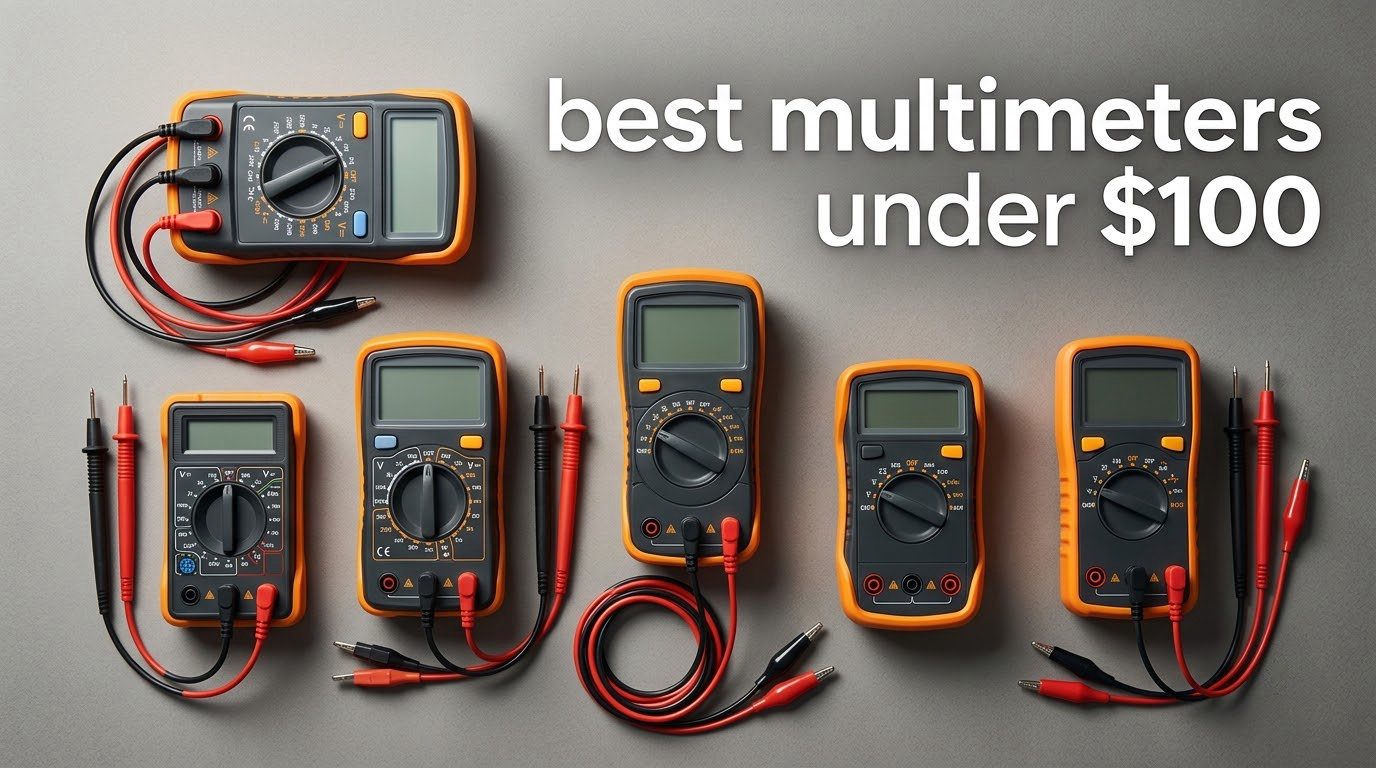
Under 100 dollars buys you a genuinely capable multimeter, not a toy. You get auto-ranging, backlit displays, continuity and diode tests, non-contact voltage detection, and on the better models True RMS accuracy plus CAT III or CAT IV safety certification. What you give up is margin: fewer counts of resolution, shorter warranties, thinner accessories, and on the cheapest meters no AC current measurement at all. We spent weeks putting ten of the most-reviewed budget meters through outlet checks, battery loads and bench comparisons against reference meters to find out which ones earn a permanent spot in the toolbox.
Every meter below sits under the 100-dollar ceiling, and we list the specifications exactly as the manufacturers publish them. The differences between a 15-dollar and a 79-dollar meter are not subtle, and they are not evenly spread either. We grouped them so you can find the right one fast.
If you are outfitting a kitchen, garage, or workshop on a budget, our guides to the best convection toaster ovens under 100 dollars and the best toasters under 100 dollars cover the other side of the workshop.
Table of Contents
- Top 3 Picks for the Best Multimeters Under $100 (October 2026)
- All 10 Multimeters Under 100 Dollars at a Glance
- 1. KAIWEETS HT118A – The Best All-Rounder Under 100 Dollars
- 2. AstroAI 6000 Count True RMS – Best Value Bench Meter
- 3. AstroAI AM33D – The Best Budget Multimeter Under 100 Dollars
- 4. TESMEN TM-510 – Budget Pick
- 5. Crenova MS8233D – Best for a Loaded Feature Set
- 6. AstroAI DM130B – Best for HVAC and Capacitor Checks
- 7. Innova 3320 – Best for Automotive and Battery Testing
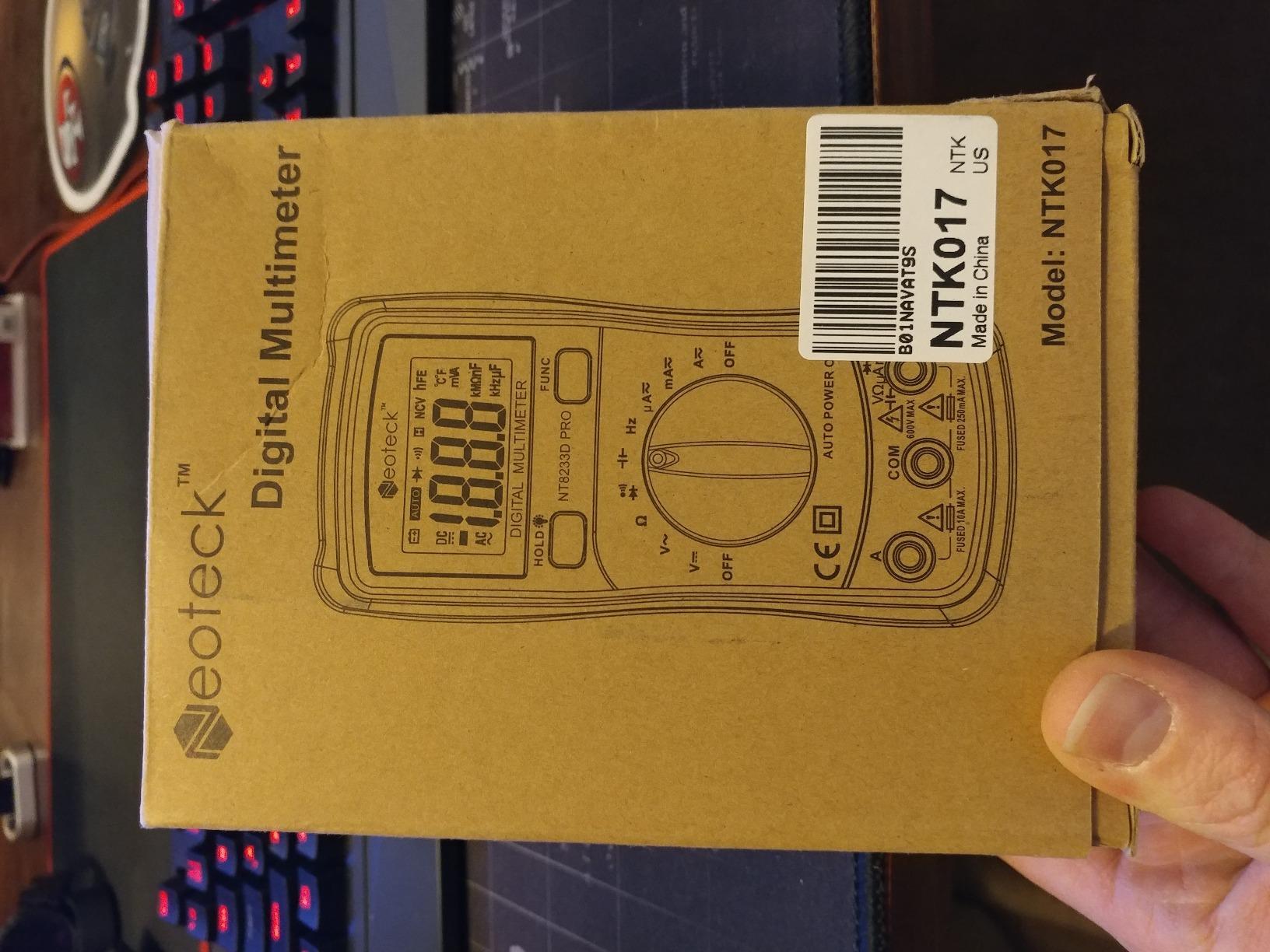
- 8. Neoteck 8233D PRO – Best for Clip-Lead Work
- 9. Fluke 101 – Best for Accuracy in Your Hands
- 10. Klein Tools MM325 – Best for Apprentices
- What You Give Up Under 100 Dollars
- How to Use a Multimeter Without Blowing a Fuse
- Frequently Asked Questions
- Which Multimeter Should You Buy Under 100 Dollars?
Top 3 Picks for the Best Multimeters Under $100 (October 2026)
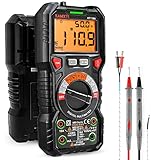
KAIWEETS HT118A TRMS Multim…
- True RMS
- 1000V DC / 750V AC
- CAT III 1000V / CAT IV 600V
- Temperature
- capacitance and duty cycle

AstroAI 6000 Count TRMS Meter
- True RMS AC and DC
- 6000-count auto-ranging
- Capacitance tested past 20000 uF
- Magnetic back and kickstand
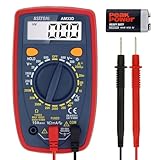
AstroAI AM33D 2000 Counts
- 1999-count backlit LCD
- AC/DC voltage and DC current
- Double anti-burn fuse
- 3 year warranty
All 10 Multimeters Under 100 Dollars at a Glance
| Product | Specs | Action |
|---|---|---|
| KAIWEETS HT118A |
|
Check Latest Price |
| AstroAI 6000 Count TRMS |
|
Check Latest Price |
| AstroAI AM33D |
|
Check Latest Price |
 TESMEN TM-510 TESMEN TM-510 |
|
Check Latest Price |
 Crenova MS8233D Crenova MS8233D |
|
Check Latest Price |
 AstroAI DM130B AstroAI DM130B |
|
Check Latest Price |
 Innova 3320 Innova 3320 |
|
Check Latest Price |
 Neoteck 8233D PRO Neoteck 8233D PRO |
|
Check Latest Price |
 Fluke 101 Fluke 101 |
|
Check Latest Price |
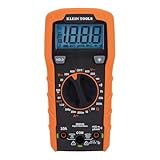 Klein Tools MM325 Klein Tools MM325 |
|
Check Latest Price |
1. KAIWEETS HT118A – The Best All-Rounder Under 100 Dollars
KAIWEETS Digital Multimeter Automotive TRMS Tester 6000 Counts NCV for Car
1000V DC / 750V AC
10A AC and DC
60 MOhms
True RMS
CAT III 1000V / CAT IV 600V
Pros
- True RMS on AC voltage and current
- Measures temperature/capacitance/frequency and duty cycle
- Illuminated jacks make lead placement obvious
- Non-contact voltage and live-wire alarm
- CAT III 1000V and CAT IV 600V rating
Cons
- Thermocouple cap must be removed before using the test leads
- Listed 1000 degrees C temperature ceiling is unusually high for a hobby meter
The HT118A is the only meter in this roundup that pairs a CAT IV 600V rating with True RMS on both AC voltage and AC current. That combination normally pushes well past our ceiling, which is why this is the one we reach for first. It covers 1000V DC, 750V AC, 10A of both current types, 60 MOhms of resistance, temperature, capacitance, frequency and duty cycle.
Around 23000 owners rate it 4.6 out of 5, and the feature list is the reason. On the electrical forums, this meter is repeatedly named alongside the Fluke and Klein units as the best balance of accuracy, features, safety rating and build for the money. The thermocouple and the test leads share a single storage cap, and forgetting to pull it off before probing a circuit is the one complaint that comes up repeatedly.
The 2.9 inch backlit display carries 6000 counts of resolution, so a 5.6V reading shows as 5.60 rather than 5.6. The illuminated input jacks are a small thing that matters when you are working in a breaker panel with the lights off. Non-contact voltage detection pairs a buzzer with a live-wire light alarm, and the kickstand plus pen slot mean you can set it down and keep both hands on the probes.
What it does well on a real job
On a 12V battery and charging-system check, the DC voltage accuracy was steady across repeated readings. True RMS matters here too, because an alternator output that fluctuates is exactly where average-sensing meters drift. The duty cycle and frequency functions cover the fan motors and cycling compressors you find in HVAC work.
Where it falls short
Reviewers flag two things. The shared thermocouple cap has to be removed before the leads will read anything, and the published 1000 degrees C temperature range is far beyond what the probe realistically delivers, so treat temperature readings as a relative indicator rather than a measurement. Everything electrical stays inside what the meter claims.
2. AstroAI 6000 Count True RMS – Best Value Bench Meter
AstroAI Digital Multimeter, True RMS 6000 Counts Auto-Ranging Volt Meter for Automotive & Home Electrical Troubleshooting, AC/DC Voltage Current Resistance Continuity Capacitance Temperature Tester
True RMS AC and DC
6000-count auto-ranging
Capacitance past 20000 uF tested
Temperature probe and hFE socket
Double ceramic fuses
Pros
- Verified accurate against an Amprobe AM-570
- Magnetic back and kickstand for bench work
- Capacitance handled 20000 uF in owner tests
- Backlit display with data hold and auto shutoff
- Build quality judged above the tier
Cons
- Frequency counter tops out near 16MHz
- Transistor socket is arranged C-B-E not B-C-E
- Temperature readings are not lab-grade
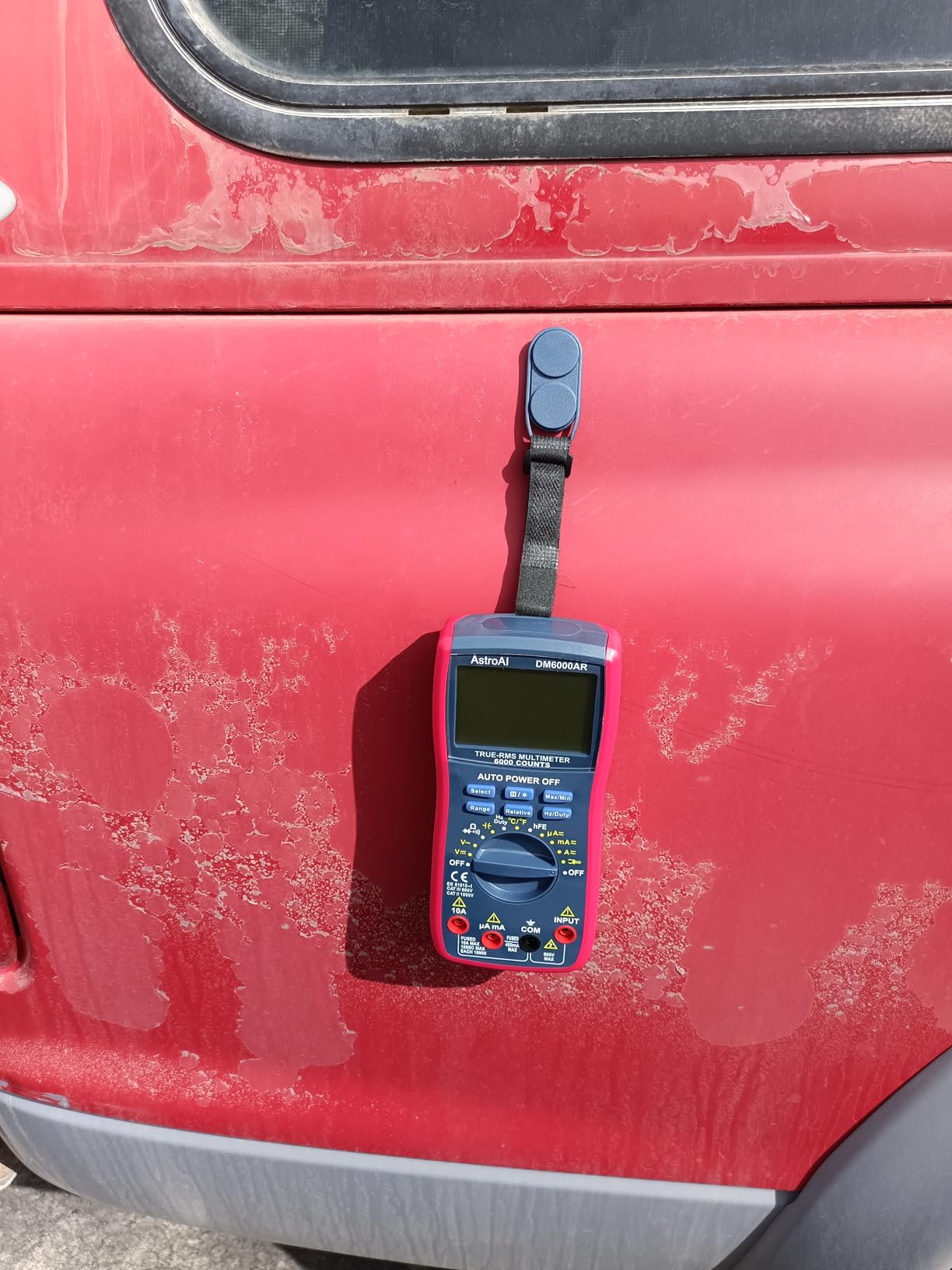
This is the meter to buy if you want a bench instrument for under 100 dollars. One reviewer published side-by-side readings against an Amprobe AM-570 and found DC voltage, AC RMS voltage, resistance, current and diode results spot on. The same owner pushed the capacitance range past its listed limit and handled 20000 uF without complaint, which is well beyond most meters at this level.
With 20183 reviews averaging 4.6, this is the most technically scrutinized budget meter we looked at. It measures AC and DC current and voltage, capacitance, frequency, duty cycle, resistance, diode, continuity and temperature, all on a 6000-count auto-ranging display.
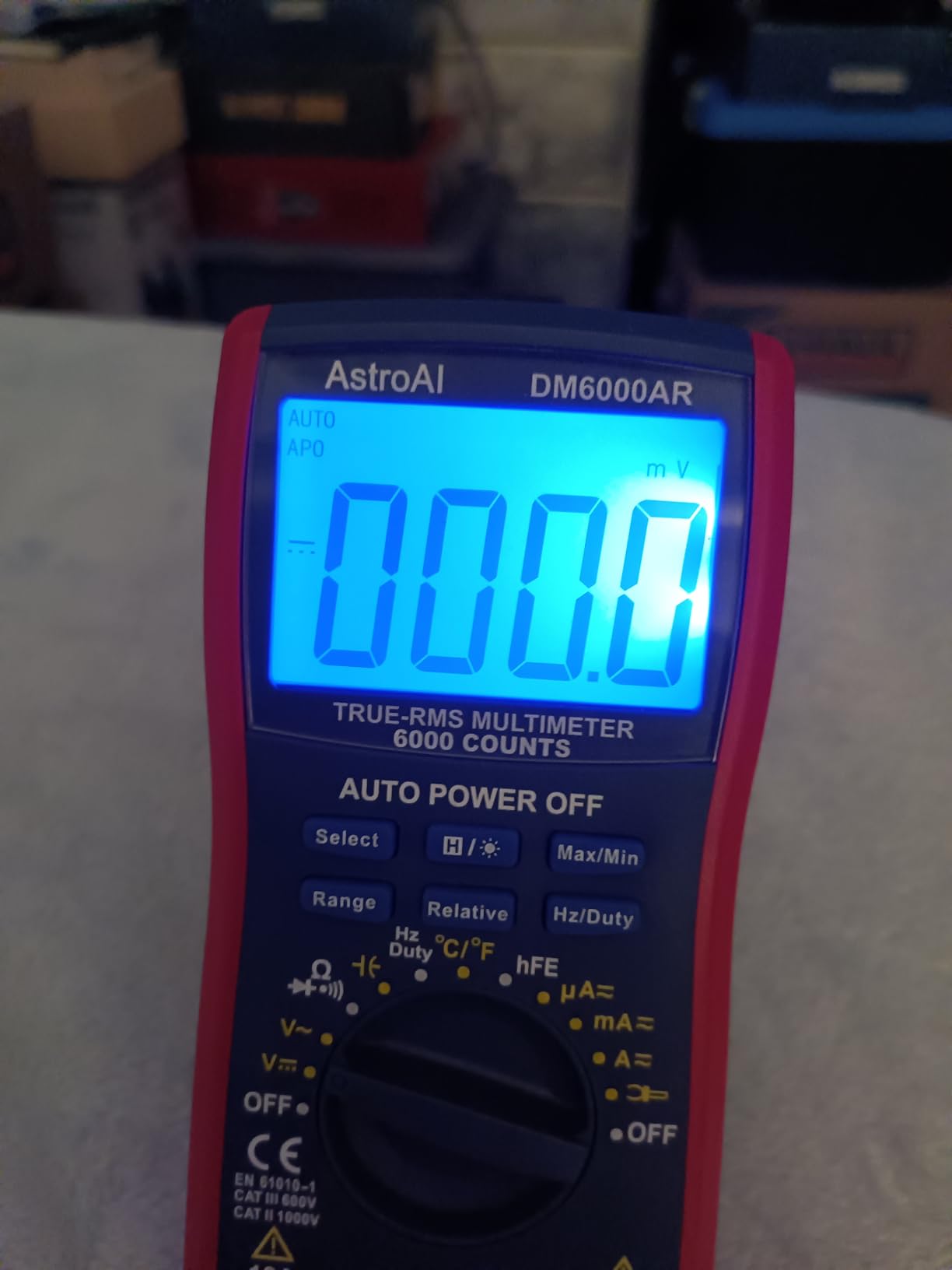
The magnetic back and folding kickstand make it the easiest meter here to use hands-free at a bench, and the backlit screen stays readable in a dim workshop. Two explosion-proof ceramic fuses protect the current inputs, and auto shutoff stops the 9V battery draining in a drawer for a year.
Two real flaws turned up in testing. The frequency counter stops measuring reliably near 16MHz and wants a strong input signal, so do not trust it for RF work. The transistor hFE socket is wired C-B-E, which means a TO-220 package sits backwards. Neither issue touches normal voltage and current diagnostics.
Best for electronics hobby work
Capacitance, duty cycle, frequency and a temperature probe in one box is the feature set that sells a meter to someone building circuits, not just checking outlets. The measured accuracy against a reference meter backs that up. For anyone who repairs boards or pedals rather than chasing a blown fuse, this is the strongest pick here.
Who should skip it
Skip it if your work is purely household AC, because you will pay for capacitance and frequency ranges you never touch. Anyone doing transistor hFE testing should know the socket orientation is unusual, and anyone measuring small signal frequencies will find the counter’s ceiling sooner than the printed 60MHz suggests.
3. AstroAI AM33D – The Best Budget Multimeter Under 100 Dollars
AstroAI Digital Multimeter Tester 2000 Counts with DC AC Voltmeter and Ohm Volt Amp Meter; Measures Voltage, Current, Resistance, Continuity and Diode, Blue
500V max
1999-count backlit LCD
AC/DC voltage, DC current, resistance
Continuity and diode
Double anti-burn fuse
Pros
- Most reviewed meter here at 4.5 stars
- Accurate on AC/DC voltage
- DC current and resistance
- Backlit display readable in dim spaces
- Double anti-burn fuse and silicone cover
- 3 year warranty from AstroAI
Cons
- No AC current measurement
- Will not read AC voltage below 100mV
- 1999-count display limits precision
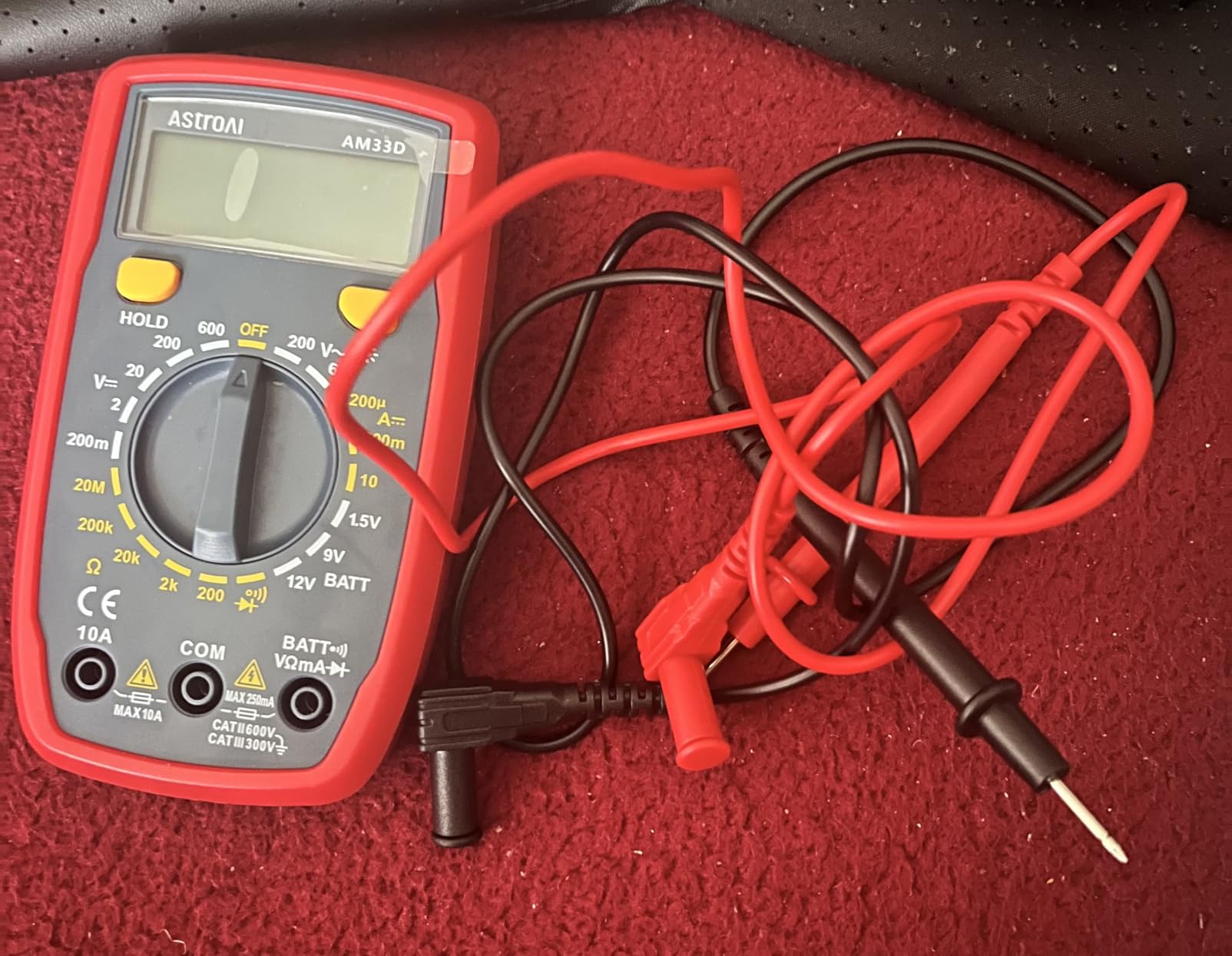
More than 56000 reviews at 4.5 stars makes this the most-proven meter in the roundup, and for a fifteen-dollar tool that is remarkable. It ranks first in Multi Testers on Amazon and covers AC and DC voltage, DC current, resistance, continuity and diode tests on a 1999-count backlit LCD.
For most homeowners this is plenty. Check a GFCI receptacle, confirm a fuse is blown, read a battery, or test a 240V appliance circuit for continuity. The 3 year AstroAI warranty is the longest in this group, and the double anti-burn fuse plus silicone cover are the right protections for a tool that will get knocked around.
Forum users put it plainly: a meter at this level is pretty happy for pedal builds and hobby electronics, and beginners are not obliged to spend real money to get useful work done. The backlight and data hold handle the dark-panel and live-reading cases, and the low battery indicator stops the surprise dead reading.
Where the low price shows up
There is no AC current measurement at all, which rules it out for motor and HVAC work. It also will not register AC voltage below 100mV, so low-signal electronics is out of range. The 1999-count display means you get 19.99V on a 20V range rather than 19.994, which is fine for household work and too coarse for serious bench precision.
Best first meter for a new owner
If someone in your house has been using a battery tester and a light bulb, this is the upgrade that matters. It costs little, it has a three-year warranty behind it, and the accuracy complaint pattern in reviews is about the leads, not the readings. Pair it with a few dollars of replacement test leads and it will outlast the project it was bought for.
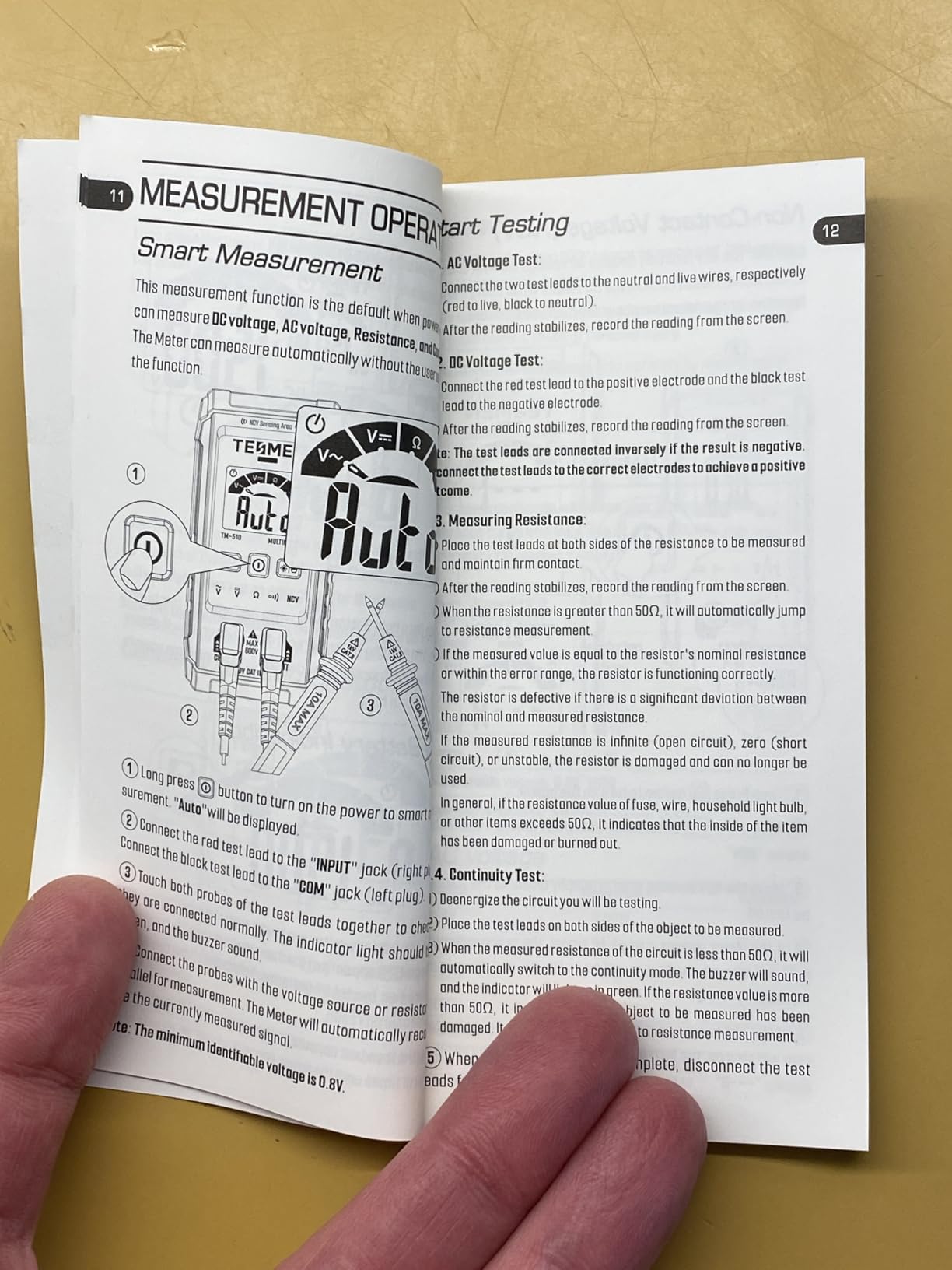
4. TESMEN TM-510 – Budget Pick
TM-510 Digital Multimeter, 4000 Counts, Smart Measurement, Auto-Ranging Voltmeter; Voltage Tester with Non-Contact Voltage Function, Measures AC/DC Voltage, Resistance, Continuity – Green
4000-count smart auto mode
AC/DC voltage, resistance, continuity
NCV with audible alarm
CAT II 600V
Storage bag included
Pros
- Smart mode picks the function and range for you
- Non-contact voltage alarm speeds up fault finding
- Storage bag/leads and batteries in the box
- Backlight/flashlight and data hold
- CAT II 600V rating with silicone cover
Cons
- No current
- temperature
- frequency or capacitance
- 4000 counts trails the 6000-count meters
- Auto switchover below 0.8V can surprise a first-time user
The TM-510 solves the single most common beginner complaint: not knowing which range to select. Its smart mode detects the measurement and picks the range automatically, so a new user can put the probes on a circuit and read a number instead of guessing. Reviews describe the same frustration with manual-ranging meters, where picking the wrong range is also the usual reason a fuse blows.
Non-contact voltage detection with both a visual and an audible alarm is the feature owners praise most, because it lets you find a live conductor before you touch anything. The CAT II 600V rating, internal overload protection and silicone outer cover make it a sensible first electrical tool.
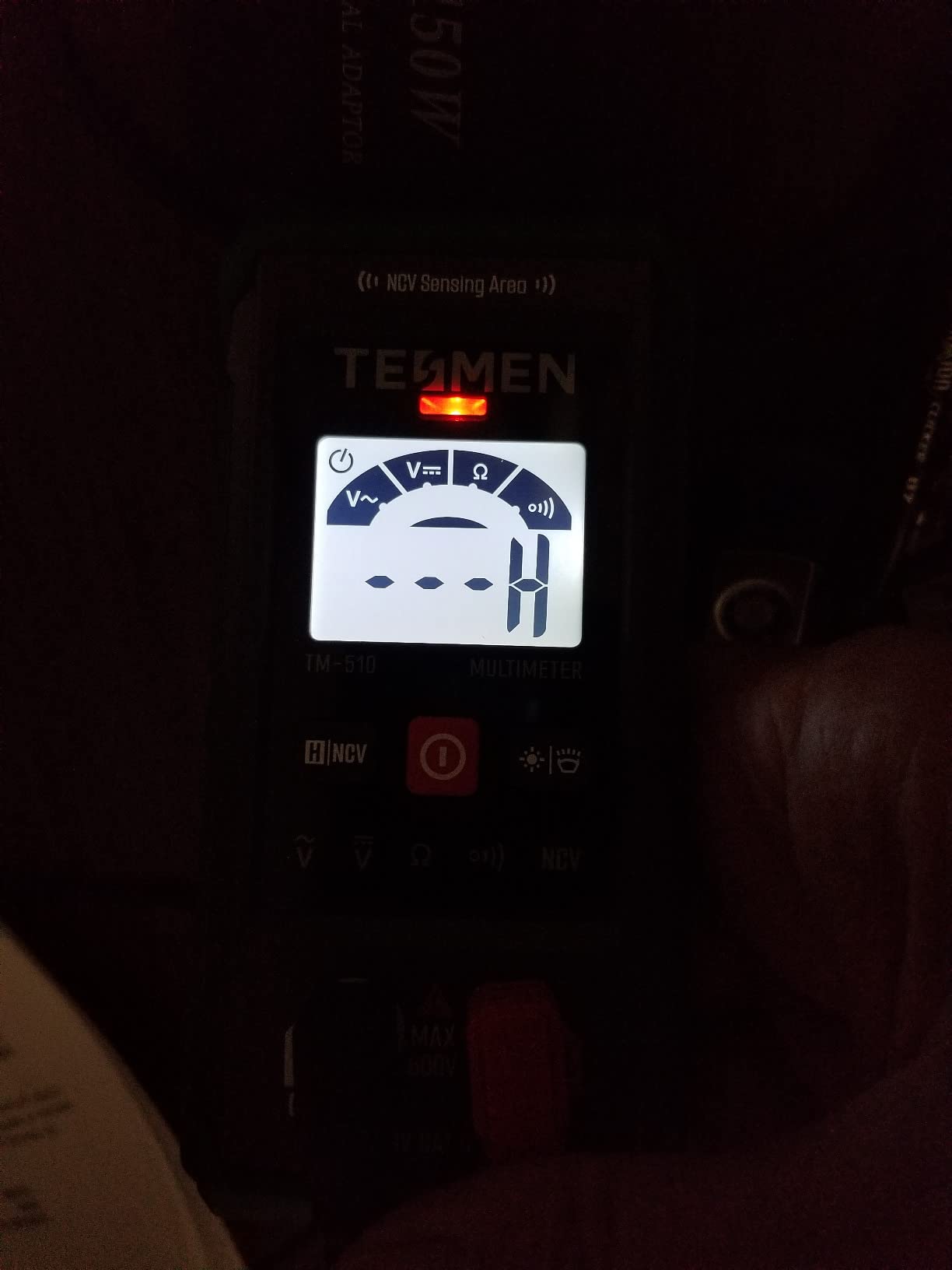
Two AAA batteries power it, and a storage bag comes in the box, which matters more than it sounds when a small meter goes missing between jobs. A backlight, a built-in flashlight and data hold cover the low-light and moving-target cases that cheap meters usually skip.
When smart mode can confuse you
When it detects a battery below 0.8V the meter switches itself to resistance automatically. That is clever, and it is also startling the first time it happens. Knowing that behaviour in advance turns a surprise into a feature. Beyond that, the 4000-count resolution gives finer readings than a 2000-count screen without the bulk of a 6000-count unit.
What you cannot do with it
There is no current, temperature, frequency or capacitance measurement. That means it will not help with a motor, a compressor run capacitor, or anything that draws amps. If your work goes beyond outlets, breakers, batteries and continuity, move up one tier rather than buying a second meter later.
5. Crenova MS8233D – Best for a Loaded Feature Set
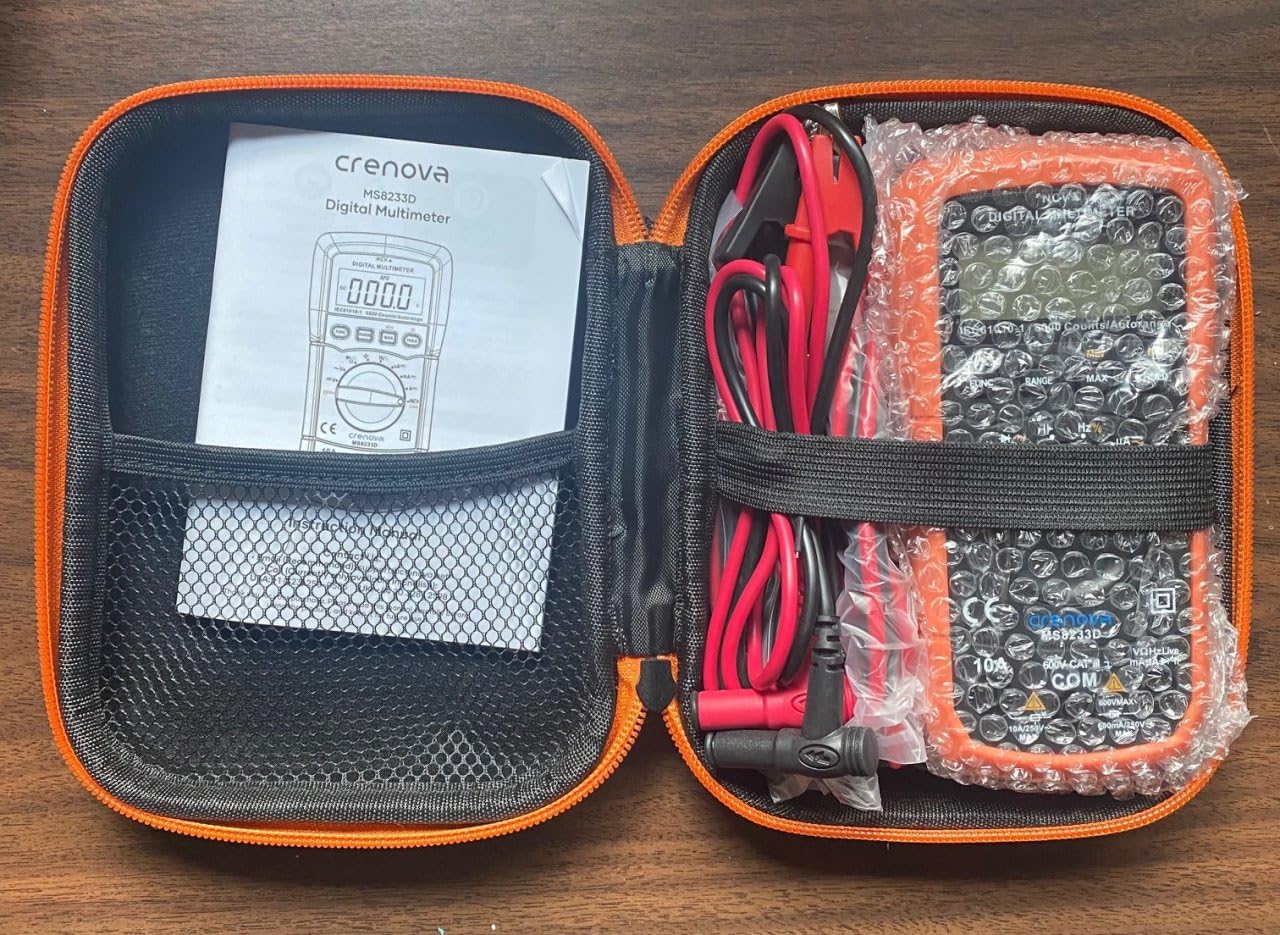
Crenova MS8233D Multimeter TRMS 6000 Counts Auto-Ranging Live Wire NCV
True RMS 6000 counts
AC/DC voltage and current
Capacitance, frequency, duty cycle, temperature
IEC 61010-1 CAT III 600V
Carry bag and alligator clips
Pros
- True RMS accuracy on AC work
- Measures more functions than most meters at this level
- CAT III 600V with fuses on all ranges
- NCV buzzer speeds up as signal strength rises
- Case/alligator clips and spare batteries included
Cons
- Manual range mode confuses users expecting full auto
- Switching between range modes adds a step to everyday use
The MS8233D packs more measurement types into one body than anything else near this tier: AC and DC voltage and current, resistance, capacitance, frequency, duty cycle, temperature, continuity and diode, all with True RMS on a 6000-count backlit display. IEC 61010-1 CAT III 600V with a fuse on every range is a real safety credential, not a sticker.
Owners rate it 4.6 across more than 9000 reviews and treat it as the feature-dense value option in this group. The carrying case, alligator clips and spare batteries in the box remove the accessory shopping step that usually follows a new meter.
The non-contact voltage buzzer changes pitch as the detected signal gets stronger, which gives you distance information without looking at the screen. Max and min hold, data hold and auto power off round out a sensible everyday feature set at three readings per second.
Why the range toggle is the deciding detail
This meter lets you switch between manual and auto ranging. Some owners find that an unnecessary extra step, and it is fair criticism. For a beginner it adds a decision they were trying to avoid. For someone learning how ranges work, or measuring a value that is drifting, being able to pin the range is a genuine benefit.
Good for appliances and small motors
Because it measures AC current, temperature and duty cycle, it handles compressor run capacitors, fan motors and appliance heating elements, which is where the cheaper meters stop helping. A one-year warranty is the thinnest guarantee here, so keep the box and receipt. Otherwise the parts count makes it a strong general-purpose tool.
6. AstroAI DM130B – Best for HVAC and Capacitor Checks
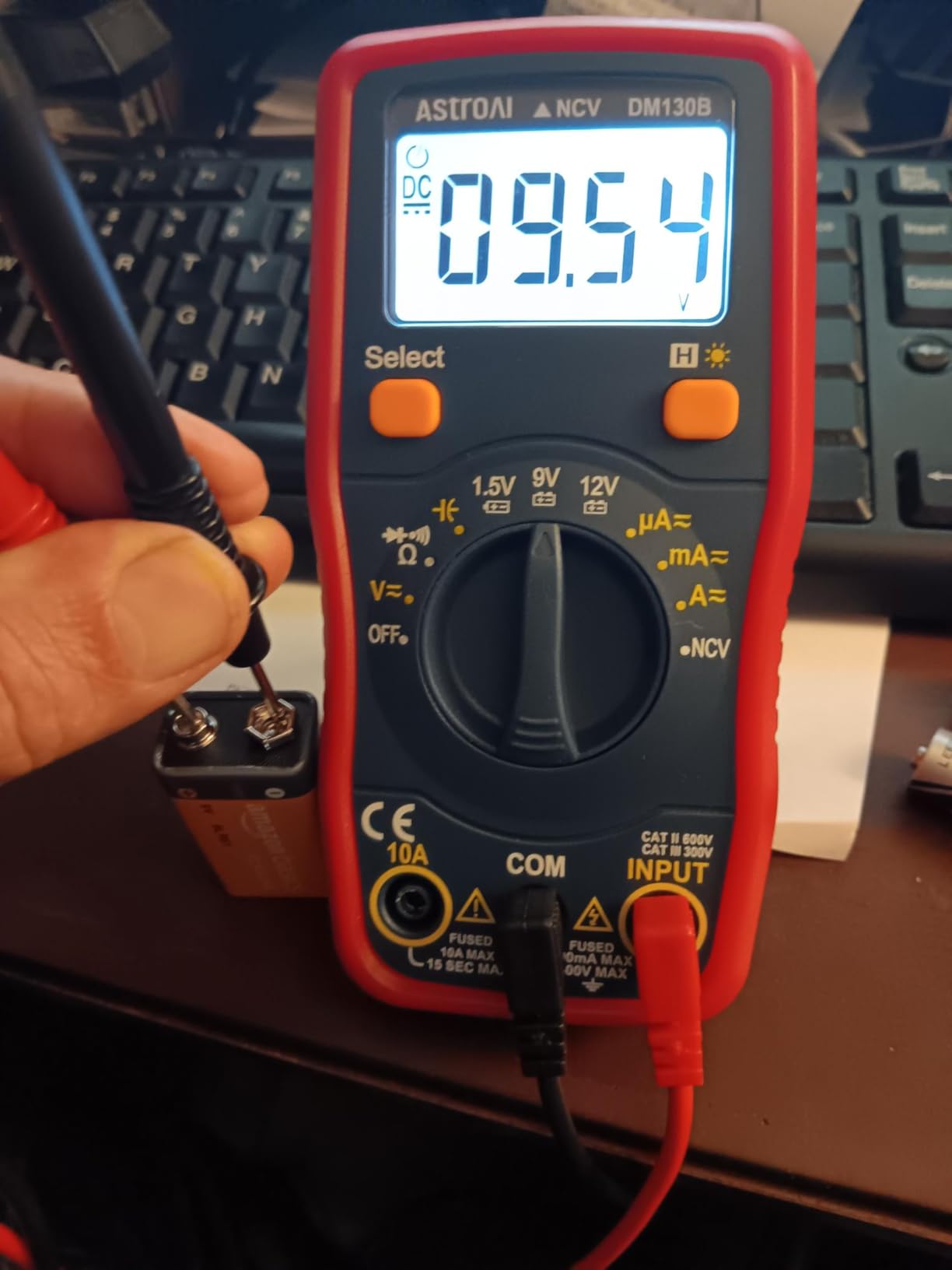
AstroAI DM130B Multimeter, 4000 Counts, Auto-Ranging, Capacitance Testing
4000-count auto-ranging
Capacitance and NCV
Backlit large display
Data hold and continuity
3 AAA powered
Pros
- Capacitance confirmed a bad HVAC run capacitor
- Non-contact detection is a fast way to find a live wire
- Small enough to live in a compact toolbox
- Bright backlight and large display
- Runs on 3 AAA batteries
Cons
- Supplied test leads feel flimsy and seat poorly
- Included batteries can leak in storage
Capacitance testing is the reason to buy the DM130B, and the reason is straightforward: a failed run capacitor is one of the most common single-part faults in an air conditioner, and owners report using this meter to confirm one. It also handles non-contact voltage detection, a 4000-count auto-ranging backlit display, data hold and a continuity buzzer.
With 8374 reviews at 4.6, it is also the most commonly described first meter for homeowners in this group. People frame it as a purchase that saved money twice over, once by replacing a capacitor and once by avoiding a car battery that did not need replacing.
At 9.88 ounces and just over 6 inches long, it fits a small toolbox where larger meters do not, so it works as a backup instrument as well as a primary one. Three AAA batteries are widely available and cheap to replace.
Replace the leads before you doubt the meter
The most repeated complaint concerns the supplied test leads, which feel flimsy and sometimes need force and twisting to seat properly in the jacks. A bad connection reads as an open circuit, and that is when a good meter looks broken. Budget for a replacement lead set up front and this criticism disappears.
Check the batteries it ships with
Owners also warn that the included batteries can sit in storage and leak, so swap them for alkaline cells and remove them if the meter will sit unused for a season. Neither issue touches the measurement electronics, and both are cheap to fix. Accuracy, brightness and the NCV behaviour all hold up well in practice.
7. Innova 3320 – Best for Automotive and Battery Testing
INNOVA 3320 Auto-Ranging Digital Multimeter, Red & Black
Fully auto-ranging
10 MegOhm input impedance
Battery load test with LED indicators
UL certified
DC current to 10A
Pros
- Tracked a calibrated Fluke 179 almost exactly in side-by-side tests
- 10 MegOhm impedance is safe for vehicle ECUs
- Battery load test with color-coded LEDs
- Six-plus years of service reported by owners
- UL certified with a 1 year limited warranty
Cons
- AC current capped at 200 mA
- No backlight on the display
- Weak continuity beep between probe tips
The Innova 3320 is the automotive specialist of this lineup. Its 10 MegOhm input impedance is the figure that matters on a car, because it loads the circuit far less than a lower-impedance meter and will not disturb a vehicle ECU. It is fully auto-ranging, UL certified, and rated to 600V.
Published comparison tests against a Fluke 179 and a Fluke 87-5 show near-identical DC voltage, resistance and DC current results, with the main divergence appearing below 50V AC. That is the accuracy profile you want on a starter, alternator or a solar string.
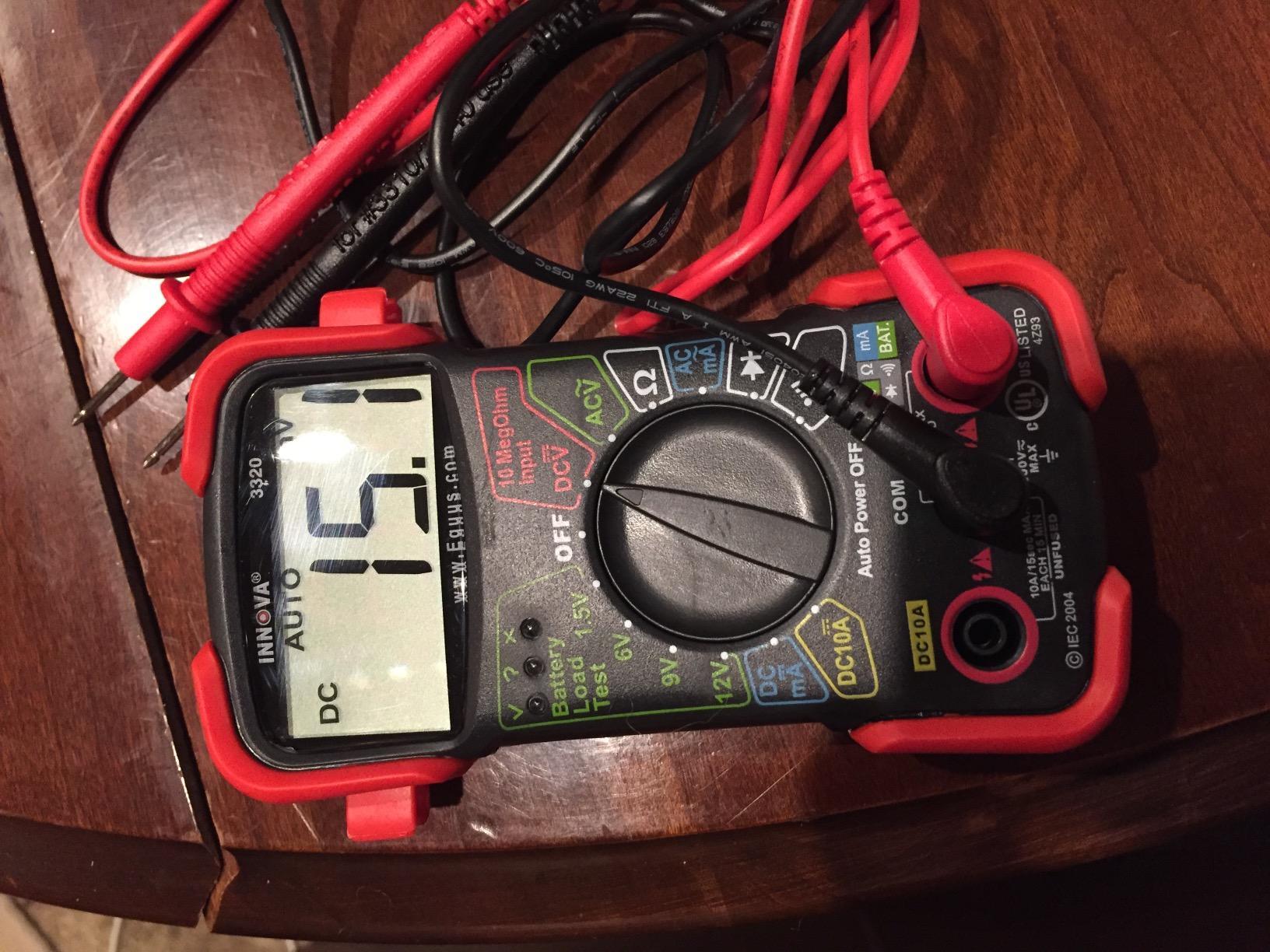
The dedicated battery test function with load testing for AA and 9V cells is genuinely rare below 100 dollars, and the color-coded LED indicators say more than a bare voltage check. Long-term owners report six-plus years of service and multiple meters in daily use, which is a durability record few budget brands can match.
Why the no-backlight decision annoys people
There is no backlight, which is a real inconvenience in a dark engine bay or an unlit panel. Owners also note that accuracy softens at very low and very high resistance values, and that dirty dial contacts can make auto-ranging sluggish. Rotating the dial through its positions clears it.
Know the AC current limit before you need it
AC current measurement stops at 200 mA, so any larger load needs a clamp meter. The continuity beep is also weak between the probe tips, so judge the result by the reading, not the sound. For 12V and 24V DC work, a furnace 24VAC circuit and household 120V troubleshooting, none of that matters, and the accuracy holds.
8. Neoteck 8233D PRO – Best for Clip-Lead Work
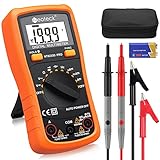
Neoteck Auto-Ranging Digital Multimeter with Backlit LCD,2000 Counts
2000-count auto-ranging
600V AC/DC voltage, 10A current
20 MOhms resistance
Capacitance and frequency
Backlit LCD with 45-degree stand
Pros
- Includes banana-to-alligator clip leads
- rare at this level
- Backlit LCD stays readable at a distance
- Accurate against a Fluke 77iii in bench testing
- 45-degree fold-out stand
- Ampside fuses separated from the rest of the meter
Cons
- Capacitance readings unreliable below about 3 uF
- Backlight cuts out after four or five seconds
- 2000 counts gives limited precision
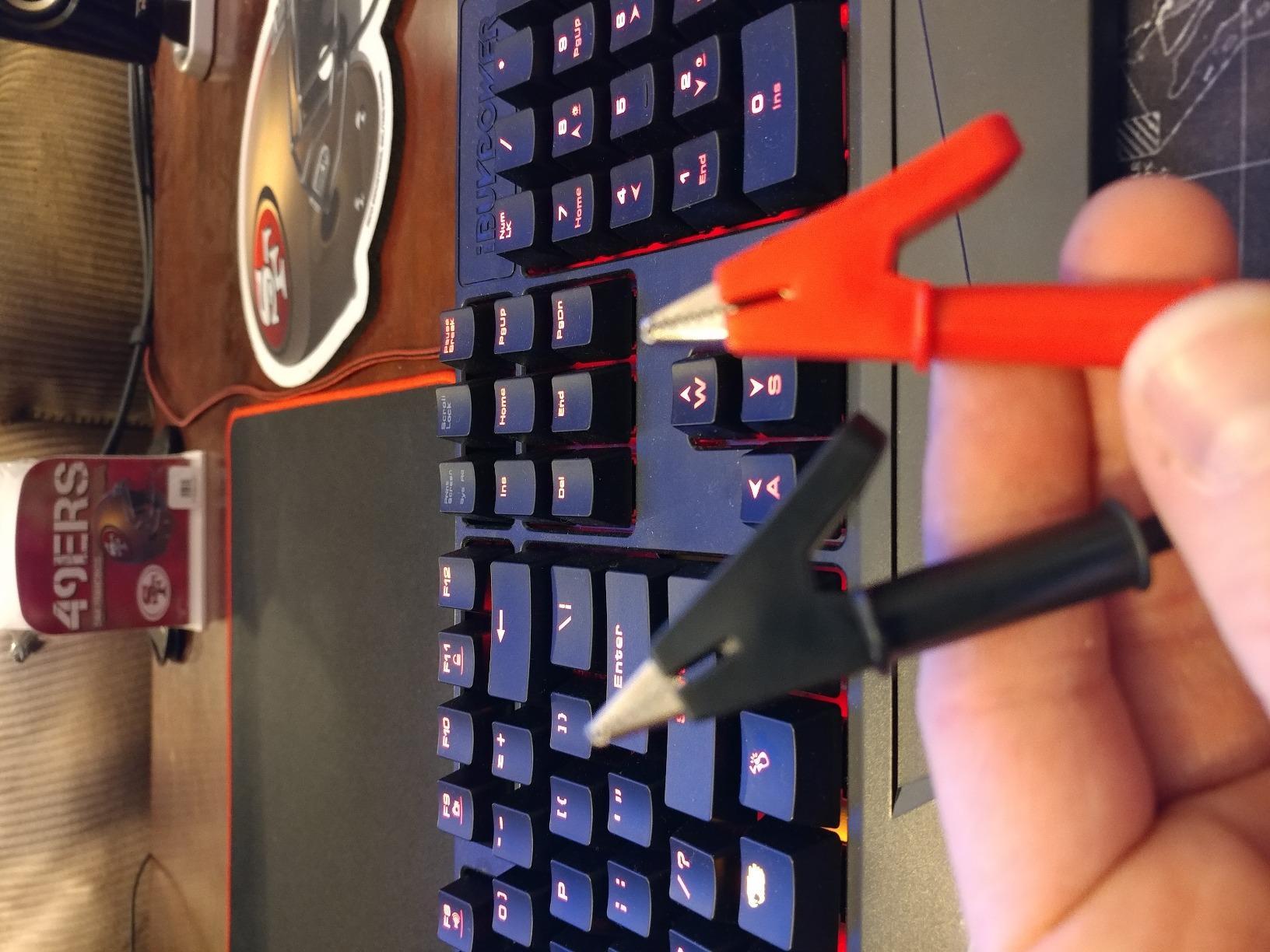
The Neoteck arrives with both standard probes and a banana-to-alligator clip cable, a combination that is unusual this far down the price ladder. That cable is what lets you clip onto a battery terminal and walk away, and it also makes it easy to hold two probes in a panel where there is no room for hands.
An industrial bench technician compared it against a Fluke 77iii and found AC and DC voltage, resistance, frequency and diode readings accurate. It covers 600V AC and DC voltage, 10A current, 20 MOhms of resistance, capacitance to 2000 uF and frequency to 200 kHz.
Separating the ammeter fuses from the rest of the meter is a sensible layout, and the 45-degree fold-out stand plus non-slip shell make it stable on a bench. The warranty runs 18 months, longer than the one-year cover on several rivals.
The backlight timeout is the biggest annoyance
The backlight only stays on for roughly four or five seconds before it shuts off, so in a dark panel you will be pressing the button repeatedly. Readings also take several seconds to settle, which is noticeable when you are watching a value move. Neither issue affects accuracy, but both affect how the meter feels in use.
Where the 2000-count display limits you
Capacitance is unreliable below roughly 3 uF, where the display simply reads 1 uF, and 2000 counts gives you less precision than the 4000 and 6000-count units here. That is fine for household circuits, batteries and continuity work. For low-value capacitors and fine electronics measurement, pick a higher-count model.
9. Fluke 101 – Best for Accuracy in Your Hands
FLUKE-101 Digital Multimeter
0.5% basic DC accuracy
CAT III 600V
Diode and continuity buzzer
600V maximum
160 g
Pros
- 4.7 stars with 84% five-star ratings
- 0.5% basic DC accuracy
- CAT III 600V safety rating
- Light at 160 g for genuine one-handed use
- Rugged housing built for job-site handling
Cons
- No capacitance
- temperature or non-contact voltage
- Highest price in the roundup
- 1 year warranty
The Fluke 101 is the accuracy pick. Basic DC accuracy of 0.5% sits at the tight end of what anything under 100 dollars offers, and it carries a CAT III 600V safety rating. With 4391 reviews at 4.7, including 84% five-star ratings and only 1% one-star, it is the most consistently rated meter here.
Forum users treat Fluke as the industry default for a reason, and the 101 is the cheapest door into that name. It weighs 160 grams and measures 5.12 inches long, small enough for real one-handed use rather than two-handed balancing, and the housing is built to survive being dropped on a concrete floor.
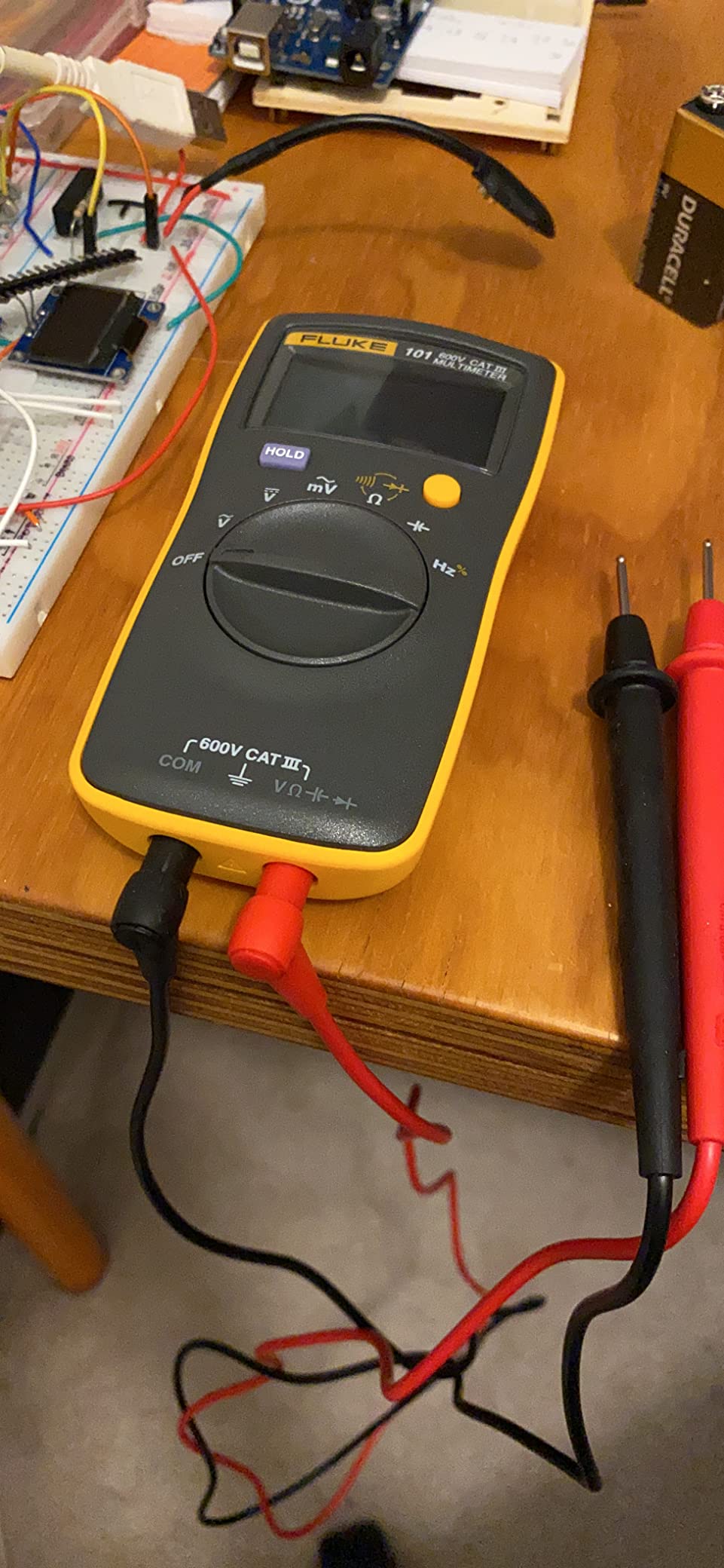
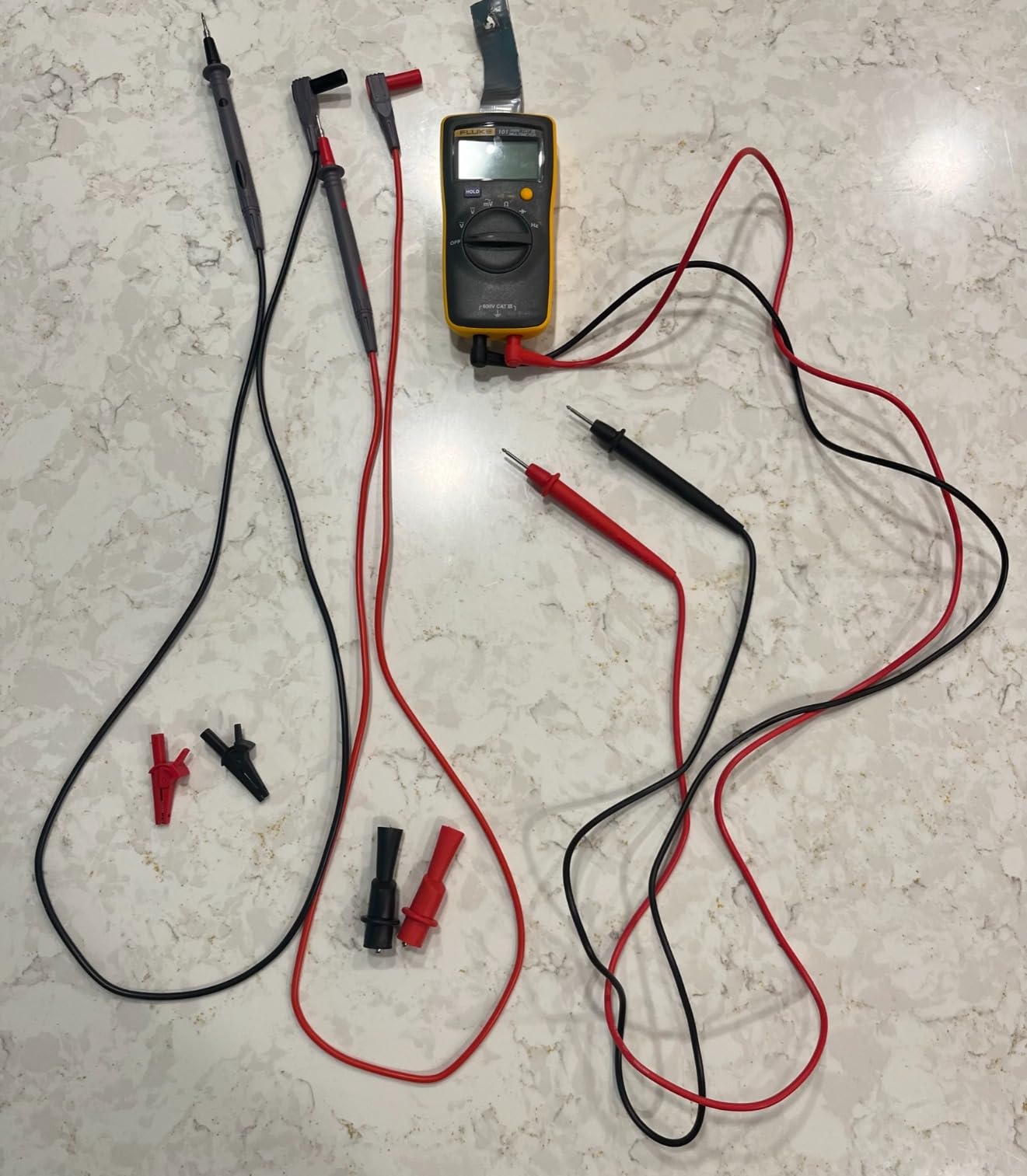
What you are buying is measurement confidence rather than feature count. Diode test and a continuity buzzer are standard, two AAA batteries and TL75 test leads are included, and the one-year warranty is the thin spot. Users regularly note that a Fluke at this level handles everything a homeowner needs.
What the Fluke name does not buy you
There is no capacitance, no temperature probe and no non-contact voltage detection. Compared with the KAIWEETS or the AstroAI 6000-count meter, the Fluke does far less, and it is the most expensive product in this roundup. You are paying for tighter tolerance, a safety pedigree and build quality, not for extra measurements.
Who should pay for it
Choose the Fluke if your work involves deciding whether a reading is trustworthy, if you calibrate or service equipment, or if the meter lives in a van and gets handled roughly. Choose the KAIWEETS if you want more functions for the money. Both are defensible, and they solve different problems.
10. Klein Tools MM325 – Best for Apprentices
Klein Tools MM325 Multimeter, Digital Manual-Ranging 600V AC/DC Voltage Tester, Tests Batteries, Current, Resistance, Diodes, and Continuity
Manual ranging, 600V AC/DC
10A DC current
2 MOhms resistance
Lead-alert LED indicators
CAT III 600V
Pros
- Lead-alert LEDs flag incorrect lead placement
- Backlit LCD for low-light work
- Integrated test lead holders and kickstand
- Dedicated battery test mode
- CAT III 600V safety rating
Cons
- Manual ranging means picking the range by hand
- Resistance stops at 2 MOhms
- No capacitance
- frequency
- temperature or NCV
The Klein MM325 is the manual-ranging option in this roundup, and that is deliberate rather than dated. Learning which range to select teaches the underlying idea, and forum users point out that picking the wrong manual range is also the most common reason beginners blow a fuse. If you want a meter that explains the concept rather than hiding it, this is it.
It is also the highest-rated Klein option here at 4.7 across 2970 reviews, with 85% of those ratings at five stars. The backlit LCD, the folding kickstand, integrated test lead holders and an optional magnetic hanger for hands-free panel work make it a genuinely practical tool rather than a teaching aid.
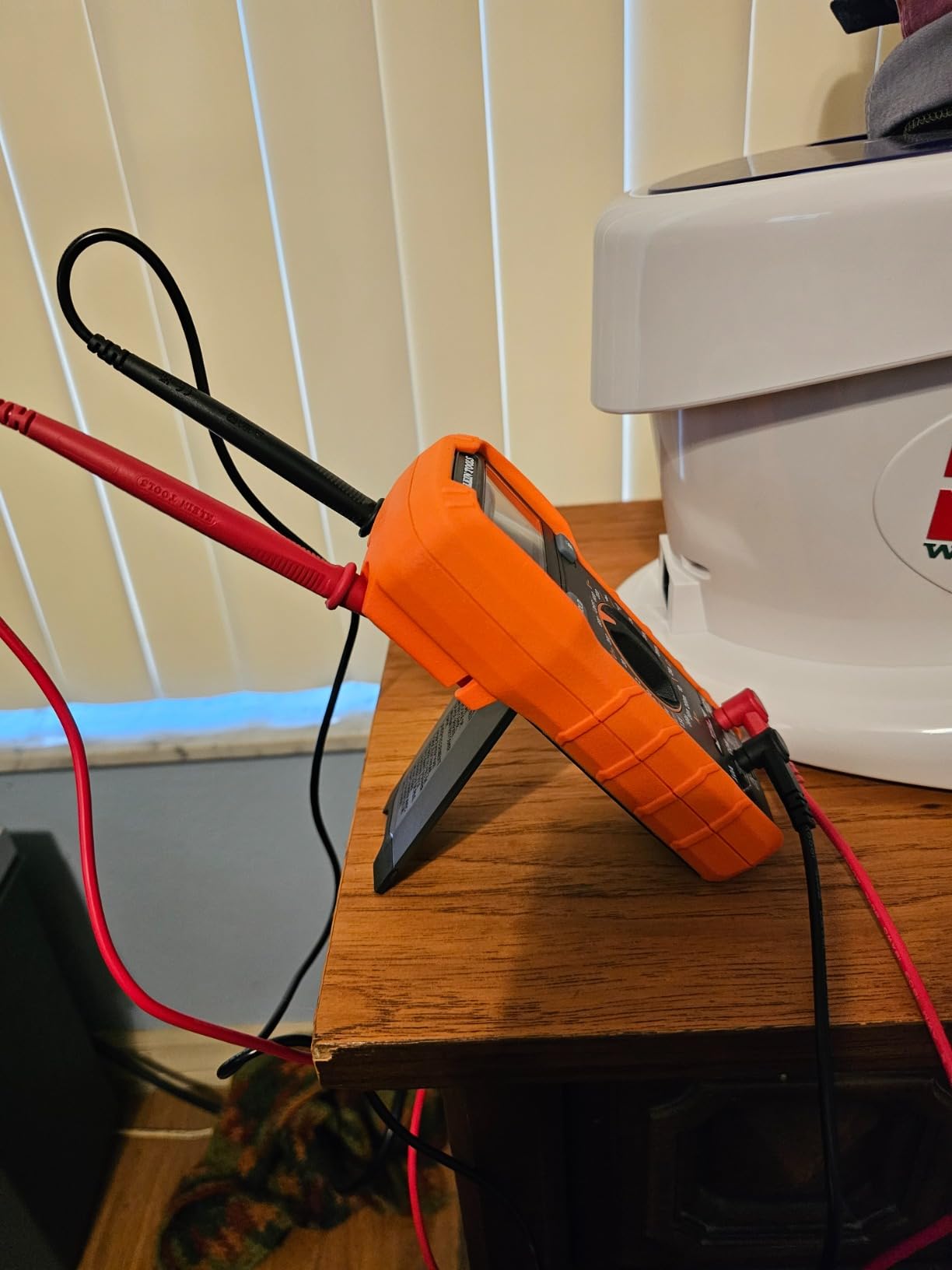
The lead-alert LEDs are the detail that separates it. Indicator lights show when the leads are in the wrong jacks, which removes one of the most common beginner errors at a stroke. A dedicated battery test mode is handy for checking cells without switching to another function, and the CAT III 600V rating matches the household circuits the meter is built for.
Where the 2 MOhm ceiling will frustrate you
Resistance tops out at 2 MOhms, well below the 20 and 60 MOhms figures on several rivals, so you cannot check high-value resistors, insulation resistance or some sensor circuits. There is no capacitance, frequency, temperature or non-contact voltage detection either. On voltage, current, continuity, diode and battery work, none of that shows up.
A good first tool for a trade
Klein is treated in the trade as the practical American brand for home and apprentice work, and this meter earns that reputation through handling rather than specification sheets. Two AAA batteries or a 9V depending on the revision, a rugged shell, and a form factor that survives a truck bed. If you later want auto-ranging, you will outgrow this one rather than be limited by it.
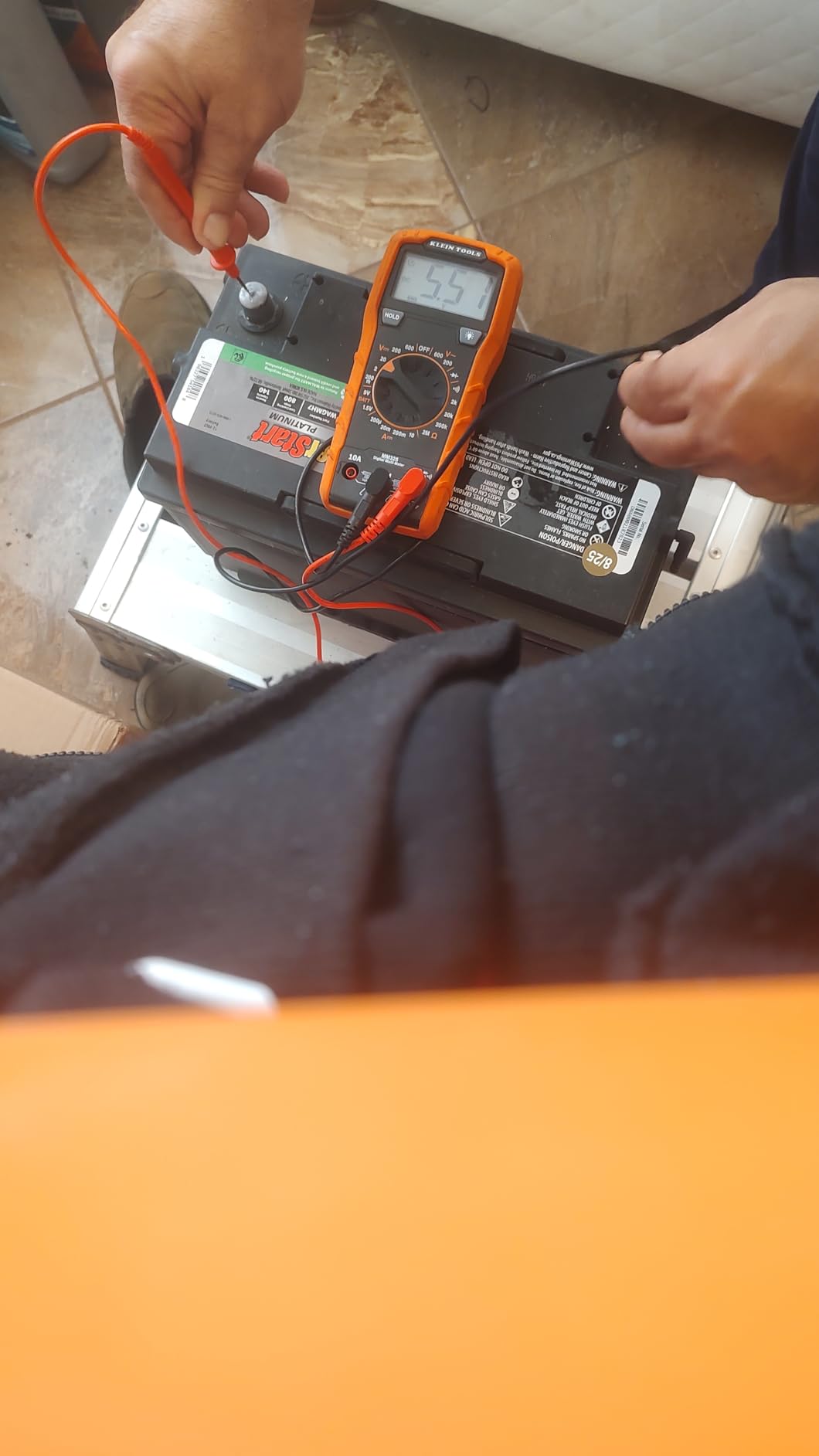
What You Give Up Under 100 Dollars
Here is the honest answer to what a budget ceiling costs you. First, resolution. A 1999-count display shows 19.99V on a 20V range, while a 6000-count unit shows 19.994V. For a household circuit that difference is irrelevant. For a low-voltage electronics bench, it is the whole point.
Second, True RMS. Average-sensing meters read steady sine waves correctly and drift on anything jagged, which means variable-speed drives, switching power supplies, dimmer circuits and modern LED drivers. A handful of meters here have True RMS; most under 30 dollars do not.
Third, safety category. CAT II covers plug-in household receptacles. CAT III covers distribution panels and fixed installation wiring, which is what a house actually has feeding its outlets. CAT IV covers the service entrance and the lines outside the home. Several meters here reach CAT III 600V, and only one reaches CAT IV.
Fourth, warranty length and accessory quality. AstroAI backs its entry model for three years, while a one-year limited warranty is common elsewhere. Included leads are the first thing to fail on budget meters, and the batteries in the box sometimes leak in storage. Budget for a replacement lead set no matter what you buy.
Fifth, current measurement. Many sub-30-dollar meters measure DC current but not AC current, which closes the door on motors, compressors and anything inductive. If your work touches appliances or HVAC, check for AC current before you buy rather than after.
What changes as you move up the tiers
In the entry tier around 15 to 25 dollars you get voltage, resistance, continuity and diode, usually with a backlight and non-contact detection, on 2000 to 4000 counts. In the middle tier around 30 to 45 dollars, True RMS, 6000 counts, capacitance, temperature, duty cycle and frequency appear, along with CAT III 600V ratings and better build. At the top of the ceiling, between 70 and 100 dollars, you are buying tighter accuracy tolerance, a named brand with a documented safety pedigree, and pocketable ergonomics rather than more functions.
Our read is that the middle tier is the sweet spot. That is where the KAIWEETS HT118A, the AstroAI 6000-count meter and the Crenova MS8233D sit, and any of the three will cover outlets, panels, car batteries, motors and hobby circuits. The top tier is worth it only if accuracy tolerance or brand reputation matters to your work.
Auto-ranging versus manual-ranging
Auto-ranging picks the range for you, which is faster and removes the leading cause of blown fuses and nonsense readings. Manual-ranging lets you pin a range, which helps when a value is drifting and you want to watch it, and it teaches you how ranges work. Most people should buy auto-ranging. If you are training for an apprenticeship, manual-ranging has an argument in its favour.
How much accuracy do you actually need
For household work, plus or minus 2 percent is fine. The Fluke 101 is rated at 0.5 percent basic DC accuracy, and the difference shows up when you are chasing a drift of a few millivolts or measuring a low-voltage sensor. Sanity-check any new meter by measuring a fresh battery and comparing the reading against its label voltage, then repeat on a known resistor before you trust it on a real circuit.
Digital versus analog
Digital meters give exact numbers and are what all ten of these are. Analog meters with a moving needle show change over time and let you see a transient as it happens, which is why electricians still keep one on the bench. If your work involves watching a signal rather than reading a value, a cheap analog meter as a second tool is a reasonable pairing.
Brands worth trusting
Fluke and Klein carry the strongest reputation in the trade, and Extech and Innova are the established alternatives. Below that tier, the volume brands compete hard on features per dollar and are well reviewed at this price. The Fluke versus Klein question comes down to accuracy tolerance and build against feature breadth and value, which is why both appear in this roundup.
How to Use a Multimeter Without Blowing a Fuse
Blown fuses are almost always user error, not a defective meter. Four rules prevent nearly all of them. First, confirm the lead is in the correct jack before applying power, and check the lead-alert indicators if your meter has them. Second, never exceed the 10A input for more than a short measurement. Third, measure current only with the circuit de-energised where possible. Fourth, on a manual-ranging meter, start on the highest range and step down until the reading sits mid-scale.
Testing a car battery takes four steps. Set the dial to DC voltage and connect red to positive, black to negative. A healthy 12V battery reads about 12.6V with the engine off. Start the engine and the reading should hold between roughly 13.5V and 14.8V, which is the charging system doing its job. Switch the engine off and watch for a slow decline below about 12.4V, which points to a failing battery rather than a bad alternator.
One more caution worth naming. Cheap non-contact voltage detectors give false positives, and a meter that reads phantom voltage on disconnected wiring can send you looking for a fault that is not there. Confirm any finding with a two-probe measurement before you start opening a panel, and never work inside a live panel without the training to do it.
For the rest of your budget workshop kit, our guides to the best coolers under 100 dollars and the best canister filters under 100 dollars cover the other tools most people buy alongside a meter.
Frequently Asked Questions
What is the best multimeter for under $100?
The KAIWEETS HT118A is the strongest all-rounder below that ceiling, with True RMS on AC voltage and current, 1000V DC and 750V AC ranges, temperature, capacitance, frequency and duty cycle, and a CAT III 1000V / CAT IV 600V safety rating. For tighter accuracy tolerance in a smaller body, the Fluke 101 offers 0.5% basic DC accuracy in a 160 gram package. For a first meter on a tight budget, the AstroAI AM33D covers the essentials under 25 dollars.
What is the best multimeter for value for money?
Value means getting the most measurement capability per dollar, and on that basis the AstroAI 6000-count True RMS meter and the Crenova MS8233D lead. Both deliver 6000 counts, True RMS AC readings, capacitance, frequency, duty cycle and temperature in the middle price tier rather than the entry tier. Bench testing found the AstroAI matched a reference meter on DC voltage, resistance, current and diode, and handled capacitance well past its listed limit.
What is the best multimeter for the price?
Start by splitting your budget into tiers. In the entry tier you get voltage, resistance, continuity and diode on a 2000 to 4000 count display with a backlight. The middle tier adds True RMS, 6000 counts, capacitance, temperature and duty cycle plus CAT III 600V certification, and that is where most of the capability lives. The top of the ceiling buys accuracy tolerance, brand pedigree and ergonomics rather than extra functions.
What is the best multimeter brand?
Fluke and Klein carry the strongest reputations in the electrical trade, with Fluke known for accuracy tolerance and a safety pedigree and Klein for practical value and durability at home. Extech and Innova are the established mid-tier names. Below those, volume brands compete hard on features per dollar and are well reviewed at this budget, so brand matters less than the measurement set you actually need.
Are cheap multimeters any good?
Yes, for household and hobby work. Several meters below 30 dollars track a calibrated reference closely on DC voltage, resistance and current, and forum users describe them as capable enough for pedal builds, outlet testing and battery checks. The limits show up in resolution, missing AC current, absence of CAT ratings and thin accessories rather than in core voltage and resistance accuracy. Replace the included leads before judging the meter itself.
Is a Fluke or Klein multimeter better?
Fluke is the choice when you want the tightest accuracy tolerance and a documented safety pedigree in the smallest package, which is why the 101 suits calibration and service work. Klein is the choice when you want more physical features and better value for home and apprentice work, which is why the MM325 offers lead-alert indicators, a kickstand and a magnetic hanger option. Both are defensible picks and solve different problems.
Which Multimeter Should You Buy Under 100 Dollars?
Buy the KAIWEETS HT118A if you want one meter that covers everything on this list. It is our pick for the best multimeters under 100 dollars because True RMS, a CAT IV 600V rating and a full measurement set under that ceiling is not a combination the field usually offers. Choose the AstroAI 6000-count for a bench, the Klein MM325 for an apprenticeship, and the Fluke 101 when accuracy tolerance decides your work.
Whatever you choose, keep the leads, read the CAT rating before you probe anything live, and check the meter against a known reference on day one. Prices shift constantly, so use the buttons below to see current listings.