A caliper lies to you more often than most people expect. Close the jaws on the same shaft three times and the number moves, because the measuring force changes with your hand. A micrometer removes that variable, which is why the best micrometers for hobby machinists are the tools that turn a tolerance from a hope into a measurement.
I have spent the last few years running between calipers and micrometers in a home shop full of small metalwork, and the difference shows up on turned spindles, tenon shoulders, dowel diameters and the fit checks that decide whether a 3D printed part drops into a hole or sits proud of it. What follows covers eight outside micrometers you can genuinely buy today, tested against the same criteria: readable graduations, repeatable measuring force, carbide measuring faces, and a range you will actually use.
Every pick below is a 0-1 inch class instrument, the range forum consensus calls the one you will reach for most. If you are still setting up your first tool drawer, our beginner hobby knife set guide covers the surrounding essentials so a micrometer is not the only thing in the box.
If your tolerances are plus or minus 0.005 inch or looser, a good caliper is genuinely enough and a micrometer will not fix a sloppy setup. The moment you need to repeat a dimension to a thousandth of an inch, you need one of the eight below.
Table of Contents
- Top 3 Picks: The Best Micrometers for Hobby Machinists 2026
- All 8 Best Micrometers for Hobby Machinists (October 2026)
- 1. REXBETI 0-1 Inch Digital Micrometer – Best Overall
- 2. Mitutoyo 103-137 0-25mm Micrometer – Best Mechanical Readability
- 3. Beslands Digital 0-1 Inch Micrometer – Best Value Digital
- 4. HDLNKAK 0-1 Inch Micrometer – Best Budget Micrometer
- 5. iGaging 0-1 Inch Digital Micrometer – Best for Data Logging
- 6. General Tools 102 Micrometer – Best for Learning the Craft
- 7. Fowler 52-253-001-1 Micrometer – Best Mechanical Pick
- 8. Beaiguna 4-Piece Micrometer Set – Best Multi-Range Coverage
- Do You Even Need a Micrometer?
- Micrometer Buying Guide for a Home Shop
- The Most Common Micrometer Mistakes
- How to Verify a New Micrometer Before the Return Window Closes
- Frequently Asked Questions
- Final Verdict: Best Micrometers for Hobby Machinists in 2026
Top 3 Picks: The Best Micrometers for Hobby Machinists 2026
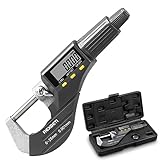
REXBETI 0-1 Inch Digital…
- Carbide-tipped faces
- 0.00005 inch resolution
- Inch and metric display


These three cover the realistic range of home-shop needs. The REXBETI wins on the strength of its review base, its carbide faces and the fact that it ends the thimble-reading problem entirely, the Mitutoyo wins on mechanical feel and readability, and the Beslands covers the case where you want a digital readout without paying for a pro reference tool.
All 8 Best Micrometers for Hobby Machinists (October 2026)
| Product | Specs | Action |
|---|---|---|
| REXBETI 0-1 Inch Digital |
|
Check Latest Price |
| Mitutoyo 103-137 0-25mm |
|
Check Latest Price |
| Beslands Digital 0-1 Inch |
|
Check Latest Price |
 HDLNKAK 0-1 Inch Analog HDLNKAK 0-1 Inch Analog |
|
Check Latest Price |
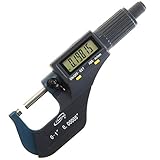 iGaging 0-1 Inch Digital iGaging 0-1 Inch Digital |
|
Check Latest Price |
 General Tools 102 Micrometer General Tools 102 Micrometer |
|
Check Latest Price |
 Fowler 52-253-001-1 Fowler 52-253-001-1 |
|
Check Latest Price |
 Beaiguna 4-Piece Micrometer Set Beaiguna 4-Piece Micrometer Set |
|
Check Latest Price |
1. REXBETI 0-1 Inch Digital Micrometer – Best Overall
REXBETI Outside Micrometer, Ultra-Precision Carbide Tipped Measuring Tool
0-1 inch range
0.00005 inch resolution
Stated accuracy 0.0001 inch
Carbide-tipped faces
Pros
- Largest review base of any pick here
- Digital LCD readout removes thimble reading errors
- 0.00005 inch resolution with stated 0.0001 inch accuracy
- Carbide-tipped measuring faces hold their geometry
Cons
- Digital gauge relies on batteries rather than a purely mechanical feel
- 0-1 inch range only so larger material needs a different tool
This is the micrometer I hand to anyone who asks me which one to buy first. It measures 0 to 1 inch, resolves to 0.00005 inch and 0.001mm, and the manufacturer states accuracy at plus or minus 0.0001 inch. That figure sits slightly loose against the resolution, and knowing that gap is the point I make later in this guide.
What wins it the top slot is the combination of a carbide-tipped pair of measuring faces with a digital display, backed by the largest body of owner feedback in this roundup. The faces resist the burrs and grit that come off cut steel, and a face that stays flat is what keeps your readings honest over years rather than months. The display handles the other half of the job, which is getting a number out of the gauge without squinting at a thimble under a bench lamp.
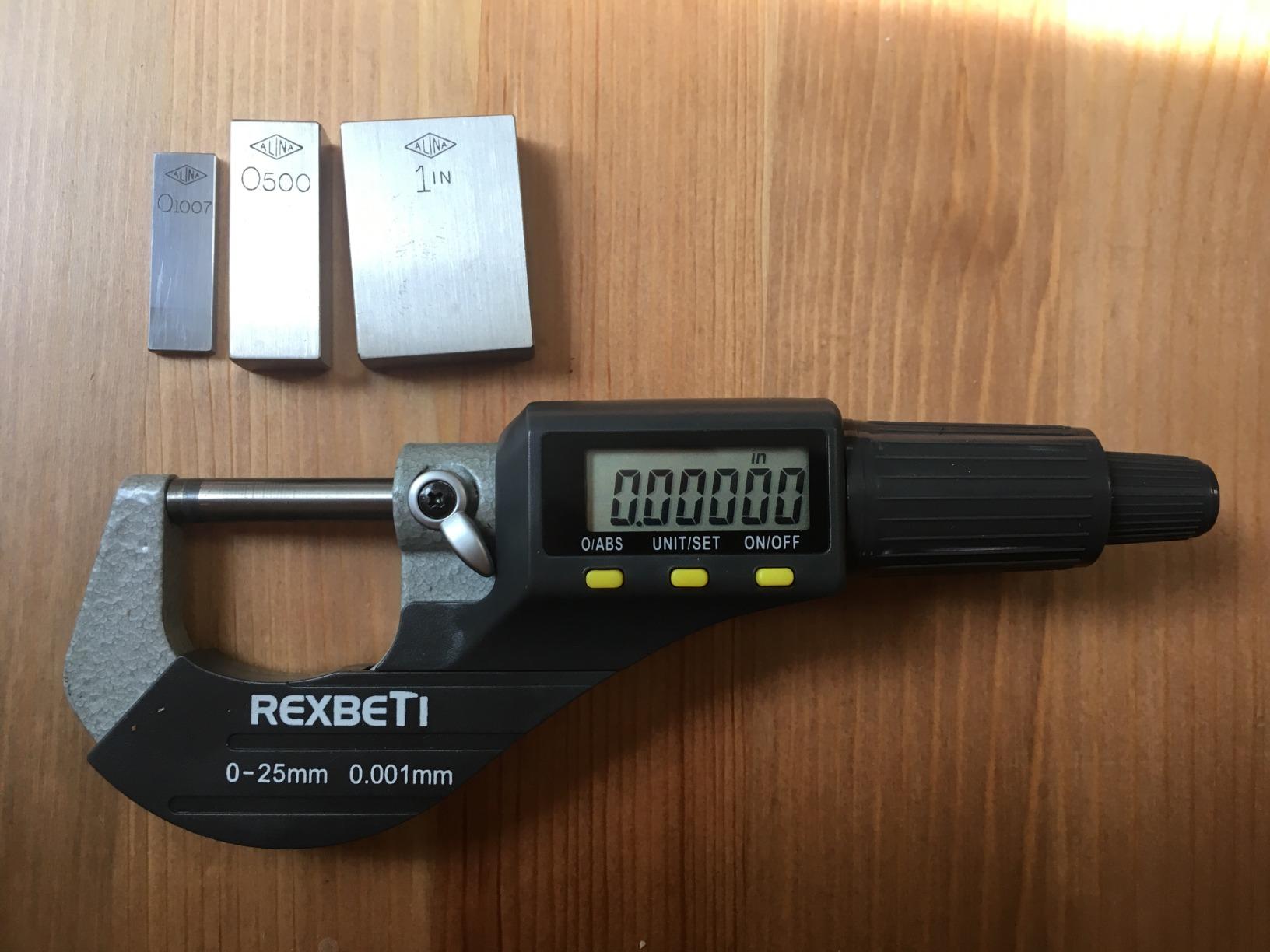
One thing to plan for is that there is no ratchet stop on this gauge, so the closing force is whatever your hand applies. On a round or smooth turned surface that matters very little, but if you are checking the same diameter twenty times in a row, a ratchet-equipped mechanical gauge will repeat more consistently.
The rating distribution matters here: 73 percent of more than 1400 ratings are five stars, and only 5 percent are one star. That is a healthier spread than most of the cheaper mechanical picks here, and it is the largest volume of owner feedback in this roundup. Two batteries are included, and the case keeps the faces off a steel bench.
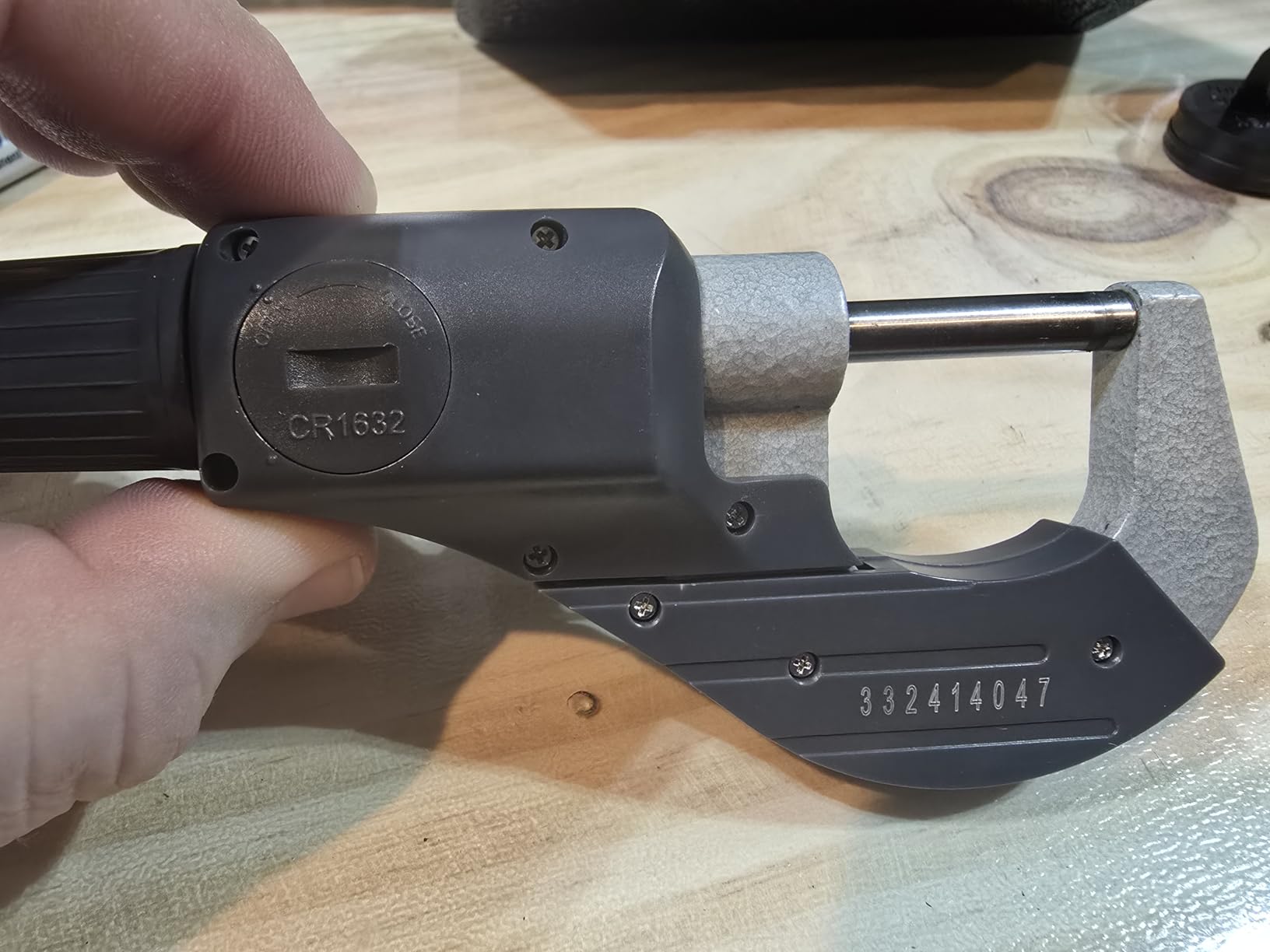
What tells you this one is right for your shop
The display ends the most common beginner failure, which is misreading a thimble under bad lighting. There is no vernier line to squint at, so a measurement takes seconds and the number is unambiguous.
Carbide faces plus a legible readout in one 0-1 inch body is the combination you will use on dowels, tenons, turned shoulders and bearing fits without thinking about it. Reviewers consistently single out the readable display and the included case as the reasons they keep buying from this brand.
When to buy something else
If you work in metric-only drawings and want a mechanical gauge, the Mitutoyo below is the calmer tool. And if you measure material wider than one inch often, a single 0-1 inch body will send you shopping sooner or later.
Reviewers who prefer the tactile feedback of a mechanical thimble tend to find the digital readout removes part of the satisfaction of the craft. That is a preference, not a defect, and it is the most common reason buyers move to the mechanical picks later.
2. Mitutoyo 103-137 0-25mm Micrometer – Best Mechanical Readability
Mitutoyo 103-137, 0-25mm X 0.01mm Outside Micrometer, Ratchet
0-25mm range
0.01mm resolution
+/- 0.002mm accuracy
Carbide spindle and anvil
Pros
- Highest rating in the roundup at 4.7 with 85 percent five star
- Carbide spindle and anvil resist wear
- Anti-glare satin-chrome graduations stay readable
- Ratchet stop thimble for uniform pressure
- Stainless steel body at 175 g
Cons
- Metric-only 0-25mm range with no inch scale
- No true vernier scale so the last decimal takes estimating
- Short span for larger dimensions
This is the instrument I reach for when I want to feel the measurement rather than read it. It carries the highest rating of any pick here at 4.7 across 489 ratings, with 85 percent of those coming in at five stars, and the review consensus describes the action as mechanical rather than merely functional.
Manufacturer-stated accuracy is plus or minus 0.002mm on a 0-25mm range, which is tighter in absolute terms than the stated accuracy on either entry-level digital gauge below. The ratchet-stop thimble applies the same closing force every stroke, and the satin-chrome graduations with anti-glare surfaces are genuinely easy to read under a bench lamp.
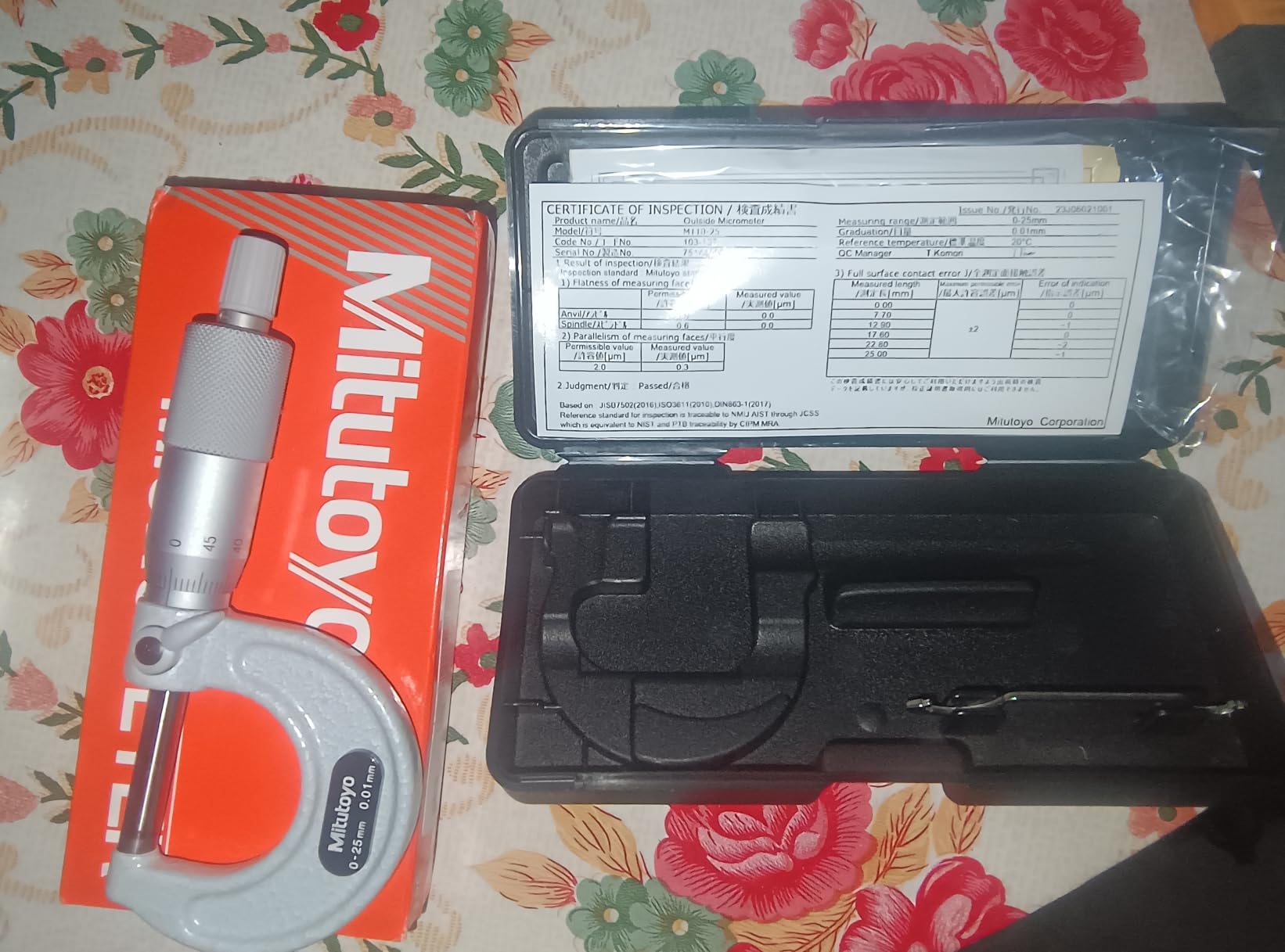
Carbide-tipped spindle and anvil surfaces are the detail that justifies the tier. Owners describe them holding their geometry under frequent use, which is the property that keeps an older gauge trustworthy in a home shop where tools get dropped and knocked about. A hobby metalworker on a Canadian machining forum described a Mitutoyo 0-1 inch gauge as better than anything they had owned and miles ahead of older general-shop instruments, which matches what I see in the fit and readability of this one.
The spindle and anvil are carbide, the body is stainless steel, and it weighs 175 grams with dimensions of about 5.39 inches long by 2.6 inches wide. That is a compact, balanced tool that stays comfortable through a long run of small measurements.
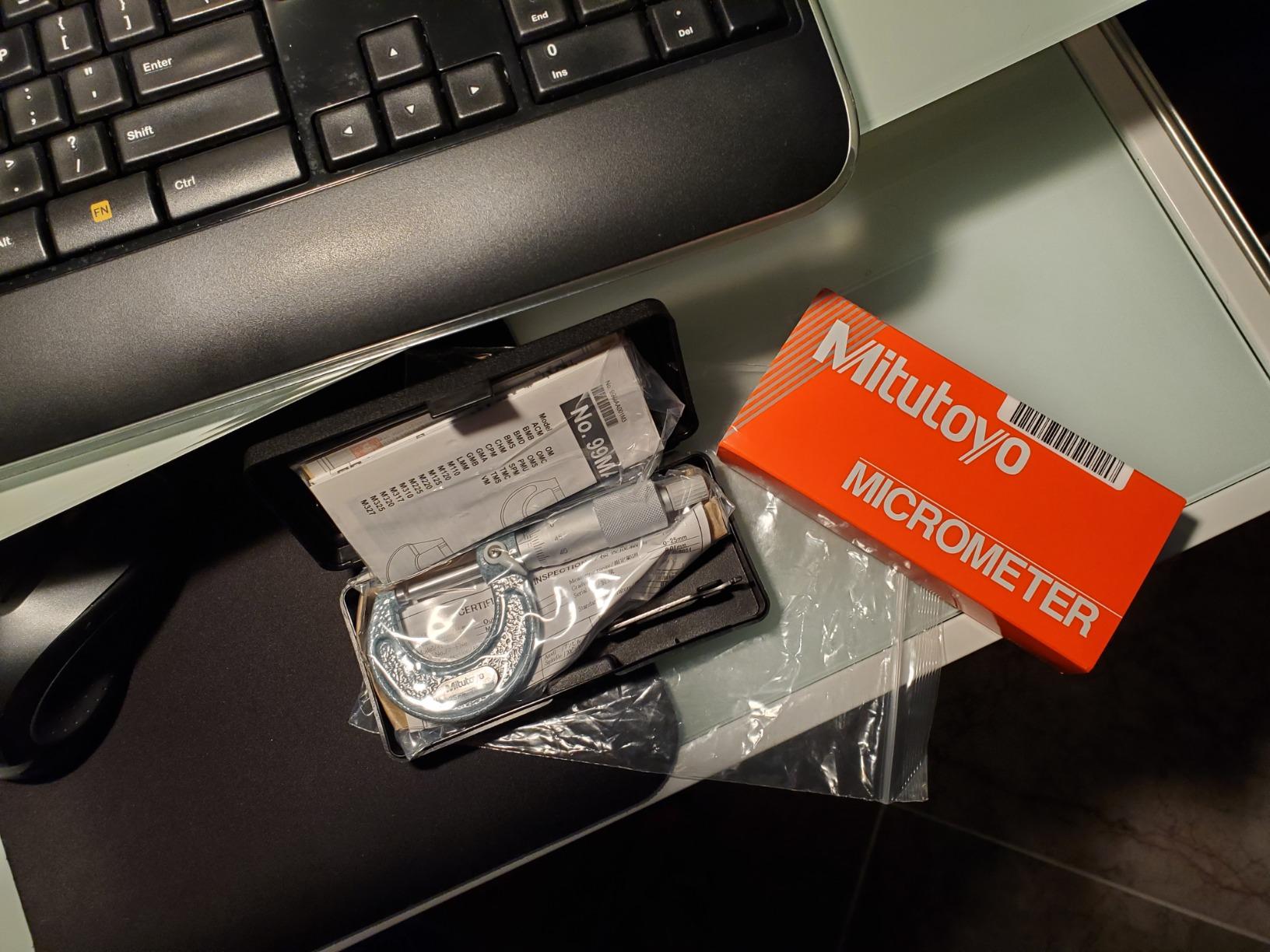
What tells you this one is right for your shop
If your hobby involves metric drawings, model engineering or imported hardware, a 0-25mm range with no inch scale is not a limitation. The vernier scale in metric units gives you 0.01mm readings directly on the sleeve.
Accuracy of plus or minus 0.002mm means this gauge holds up for work tighter than most hobby tolerances, and the anti-glare finish keeps the reference line visible in a cluttered shop. Owners consistently call it the reference entry point for metrology.
When to buy something else
If you work exclusively in inches, you will be converting constantly, and a dual-mode digital gauge will be faster day to day. The absence of a true vernier scale also means the final decimal must be estimated from the thimble, which slows careful work down.
The 0-25mm span is short. Parts approaching an inch wide fall outside it, so keep this as a precision companion rather than your only micrometer if you machine larger material.
3. Beslands Digital 0-1 Inch Micrometer – Best Value Digital
Beslands Digital Electronic Display Micrometer 0-1″ / 0-25mm Gauge 0.00005″ / 0.001mm Thickness Measuring Tools for Mechanics Inch/Metric Calipers, Machinist Micrometer, Protective Case with Battery
0-1 inch / 0-25mm range
0.00005 inch resolution
+/- 0.003mm accuracy
Spindle lock
Pros
- Large LCD makes readings quick
- 0.00005 inch and 0.001mm resolution
- Hardened 6.5mm spindle with lock mechanism
- Zero offset and incremental modes
- Protective case included
Cons
- Accuracy of plus or minus 0.003mm is looser than a calibrated mechanical gauge
- No ratchet stop so measuring force is up to you
- Electronics need occasional battery replacement
This is the pick for someone who wants a digital readout, a spindle lock and a case without paying for carbide tips. It covers 0 to 1 inch or 0 to 25mm, resolves to 0.00005 inch and 0.001mm, and states accuracy at up to plus or minus 0.003mm.
Those accuracy numbers tell you exactly where it sits. It is looser than the Mitutoyo and the REXBETI, which means it suits layout work, general shop checks and hobby finishing rather than inspection-grade metrology. Buyers largely agree, describing it as adequate for hobby work without overclaiming it.
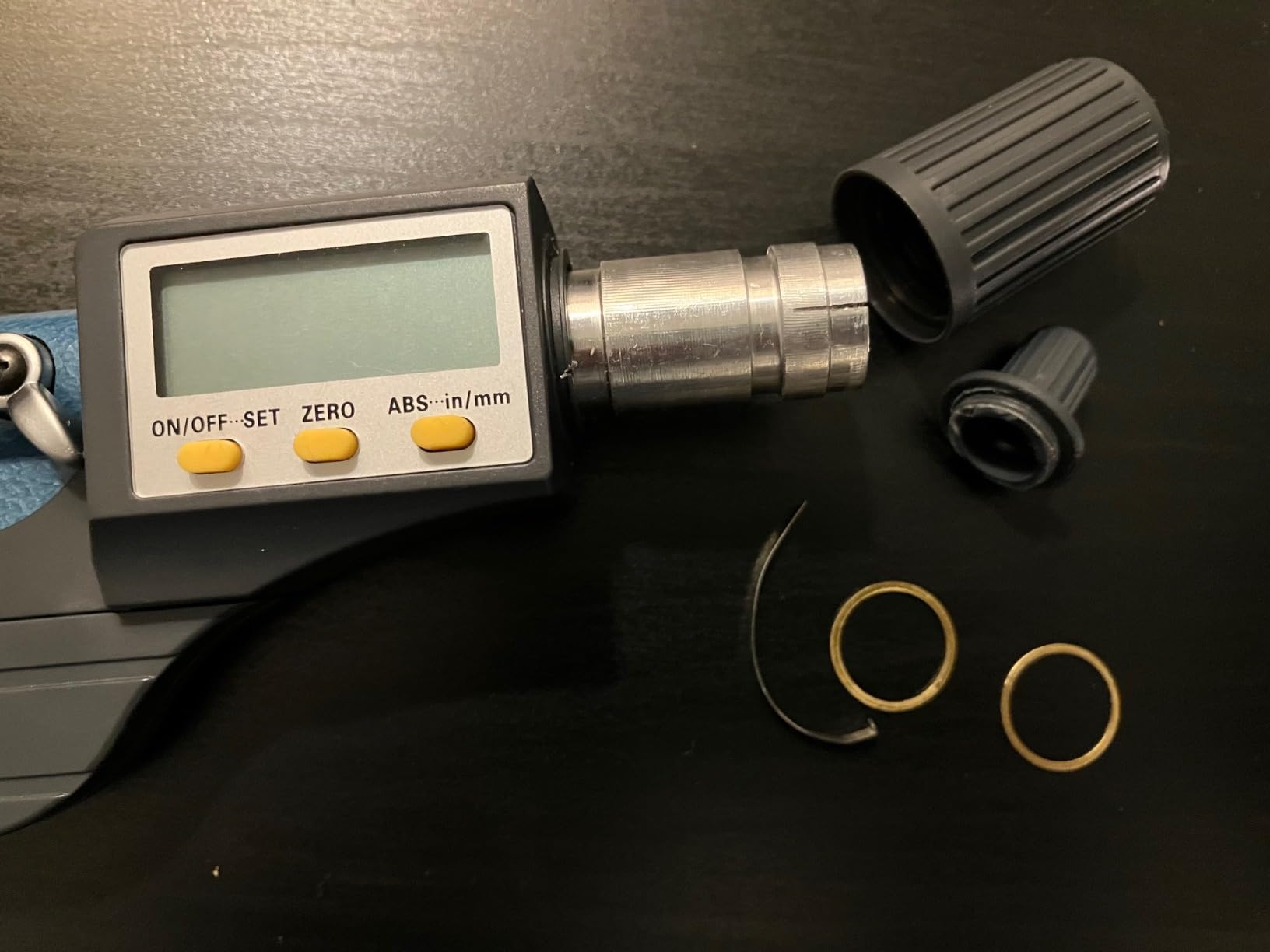
The 6.5mm hardened stainless steel spindle with a lock mechanism is the feature that gets used most. Locking the spindle lets you hold a setting while you position the part, which removes the frustration of a shrinking measurement on a round or angled surface. The stainless steel body measures roughly 6.3 inches long by 1.1 inches wide.
Power comes from a single coin cell, which is among the most common batteries in the world and easy to source anywhere. That matters more than it sounds: forum threads about digital micrometers are full of owners stuck with dead gauges because they cannot find the right cell.
What tells you this one is right for your shop
Inch and metric conversion, arbitrary zero setting, plus incremental and absolute modes cover nearly every workflow a hobby shop runs into. The large LCD is readable at arm length under mixed shop lighting.
If you want one gauge to cover layout, thickness checks and fit verification without fussing with a thimble, this is the straightforward answer. Owners single out the display and the useful zeroing functions as the reasons it earns its place.
When to buy something else
Without a ratchet stop, the measuring force is whatever your hand applies, so repeatability depends on technique. On tight-tolerance repeat work, that is a real weakness compared with the ratchet-equipped picks.
Accuracy of plus or minus 0.003mm means this is not the tool to verify gauge blocks with, and a few owners report needing a zero reset periodically. Buy it as a capable generalist, not as a reference standard.
4. HDLNKAK 0-1 Inch Micrometer – Best Budget Micrometer
HDLNKAK Outside Micrometer 0-1″, 0.0001″ Graduation Micrometer Set
0-1 inch range
0.0001 inch graduation
Clear engraved scale
Compact 8.8 oz frame
Pros
- Lowest cost entry into micrometer measuring
- 0.0001 inch graduation suits layout and hobby machining
- Lightweight at 8.8 ounces for a tool bag
Cons
- No ratchet stop so pressure consistency depends on technique
- Nine percent of ratings are one star
- the highest share in this roundup
- No published accuracy or flatness specification
This is the cheapest honest entry into the category, and for a first micrometer it does one job well: reading to 0.0001 inch on parts up to an inch across. The graduations are clear and engraved, and the frame weighs 8.8 ounces, so it lives comfortably in a tool bag rather than a drawer.
The distribution of ratings is the part to read carefully. Seventy-two percent are five stars and 9 percent are one star, the highest one-star share of any pick in this roundup. That tail tends to describe inconsistency of adjustment or inconsistent build finish, which is the argument for checking zero before every session.
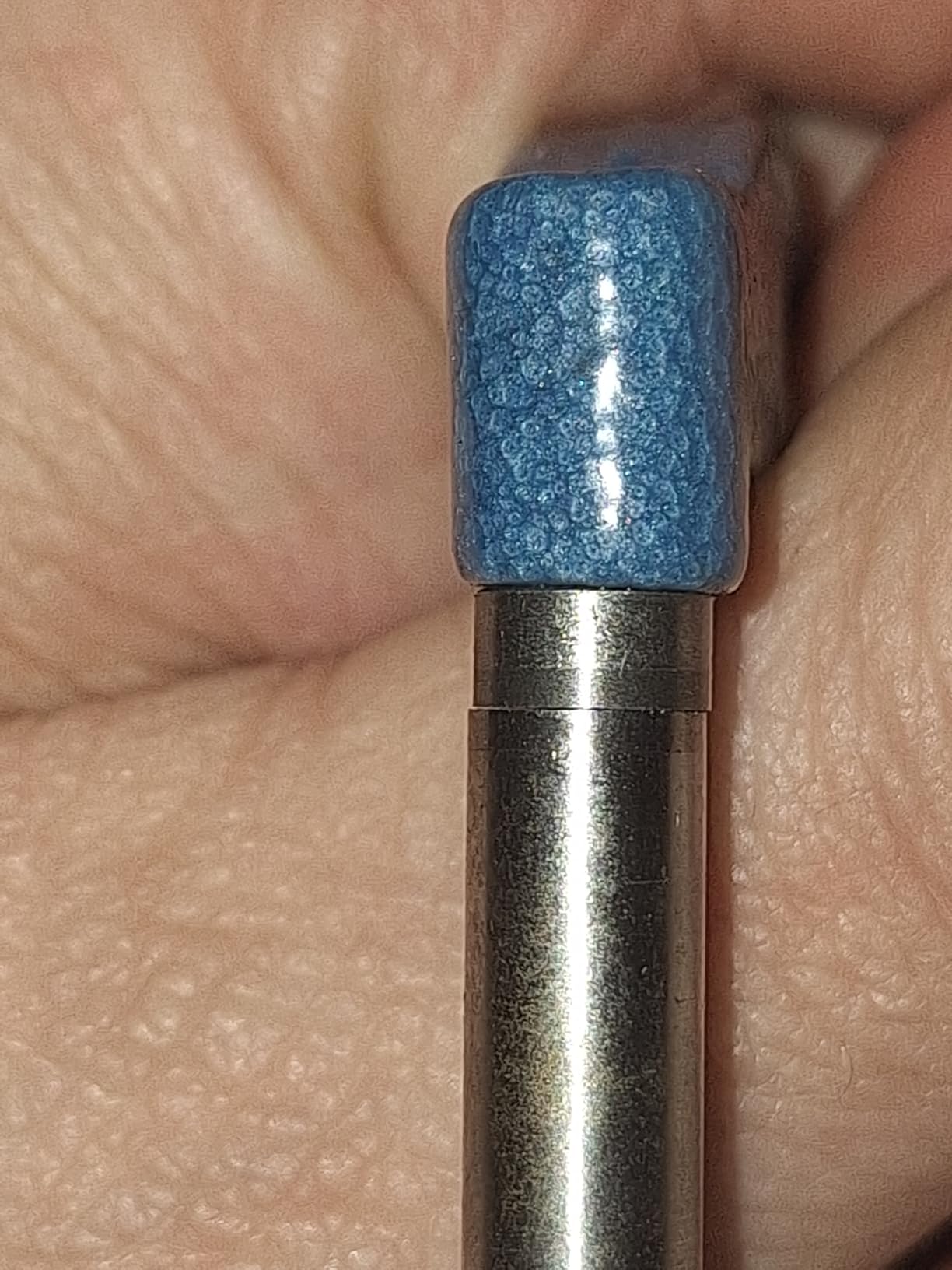
Where a cheap mechanical gauge usually disappoints is thread quality and anvil flatness, because those decide whether readings repeat. This one does not publish a flatness figure or an accuracy spec, so treat its 0.0001 inch graduation as resolution only. Nobody should read that number as an accuracy claim, and I would not use it to verify a gauge block.
There are wider-range versions of this gauge in the 0-3 inch, 0-4 inch and 0-6 inch formats, sold as sets. That is convenient, but a set spreads one uncertain measurement across several gauges instead of giving you one trusted reference.
What tells you this one is right for your shop
Light shop work, layout checks, sharpening setup and any place you need to confirm a thickness quickly. It currently sits near the top of the best-selling ranks in Outside Micrometers, which tells you other hobbyists made the same call.
The low cost also makes it a sensible spare or shop-rough instrument. Keeping one in the tool bag means you are not carrying your good gauge into coolant, swarf and bench clutter to answer a quick question.
When to buy something else
Skip it if the part in front of you has a tolerance tighter than a few thousandths, because the absence of a ratchet stop makes readings depend on how firmly you close it. And skip it if you intend to measure anything wider than one inch regularly.
The listing itself says little about steel grade, spindle finish or included standards, so you are buying the shape of a micrometer rather than documented performance. If you want a published accuracy figure, the Fowler below states one.
5. iGaging 0-1 Inch Digital Micrometer – Best for Data Logging
iGaging 0-1″ Digital Electronic Micrometer w/Large Display Inch/Metric
0-1 inch range
+/- 0.00016 inch accuracy
Large LCD
Inch and metric modes
Pros
- Large legible LCD for bench or shop lighting
- Dual inch and metric modes
- Absolute and incremental measurement modes
- Optional USB SPC output for logging readings off the gauge
Cons
- Replacement battery is a nonstandard cell
- Quoted accuracy differs between marketing and spec fields
- No ratchet stop for standardized measuring force
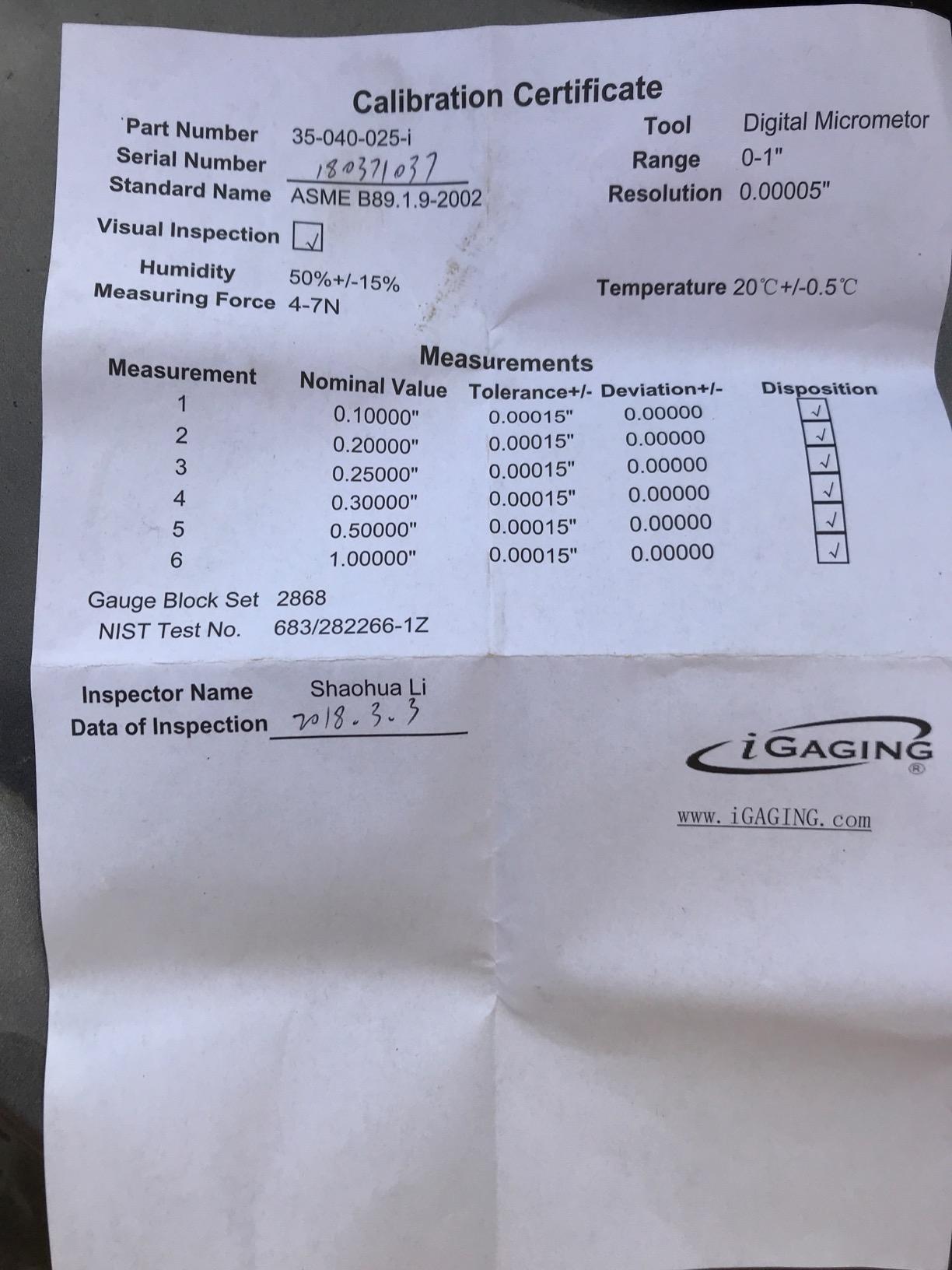
This is the pick for anyone who wants to capture measurements instead of typing them in. It covers 0 to 1 inch with a stated accuracy of plus or minus 0.00016 inch, switches between inch and metric, and supports both absolute and incremental measurement modes.
Incremental mode is the genuinely useful one. You zero on a reference surface, then read the difference directly, which is exactly how you check a part against a drawing dimension without writing down two numbers and subtracting them in your head.
The optional USB SPC output, available through a separate accessory, is what separates it from the other digital picks here. Owners building inspection records or logging a batch of parts can pull readings straight off the gauge. For a single hobby part that adds little, but for repeat measurements it saves real time.
Satisfaction centres on display readability, straightforward inch and metric switching and the zeroing functions. The metal body is what separates it from plastic-feeling budget gauges, and the box includes a case, battery and instructions.
What tells you this one is right for your shop
Anyone measuring the same feature across multiple parts, or checking a dimension repeatedly during a setup, gets value from the data side. Incremental mode alone justifies the choice for fit work on assembled mechanisms.
The large LCD stays legible under shop lighting, which is the complaint that retires most small digital gauges. At 4.4 stars across 394 ratings, the feedback is consistently positive about display and switching.
When to buy something else
The battery is a nonstandard cell rather than an SR44 or CR2032, and that is the most practical drawback. If you cannot source a replacement locally, a dead gauge becomes a paperweight until you order one.
There is also a discrepancy worth knowing: the marketing material quotes plus or minus 0.00016 inch while the specification field shows plus or minus 0.001 inch. Take the looser figure as the real limit. Without a ratchet stop, measuring force is still on you.
6. General Tools 102 Micrometer – Best for Learning the Craft
General Tools 102 0-Inch to 1-Inch .001-Inch Graduation Micrometer
0-1 inch range
0.001 inch graduation
Carbide measuring faces
Includes zero wrench
Pros
- Designed for beginners training and hobby use
- Ground and polished carbide faces at a low cost
- High-contrast black graduations on satin chrome
- Fully mechanical with no electronics to fail
Cons
- No ratchet stop so pressure depends on feel
- Coarser 0.001 inch graduation than the other picks
- Some listing fields conflict about material
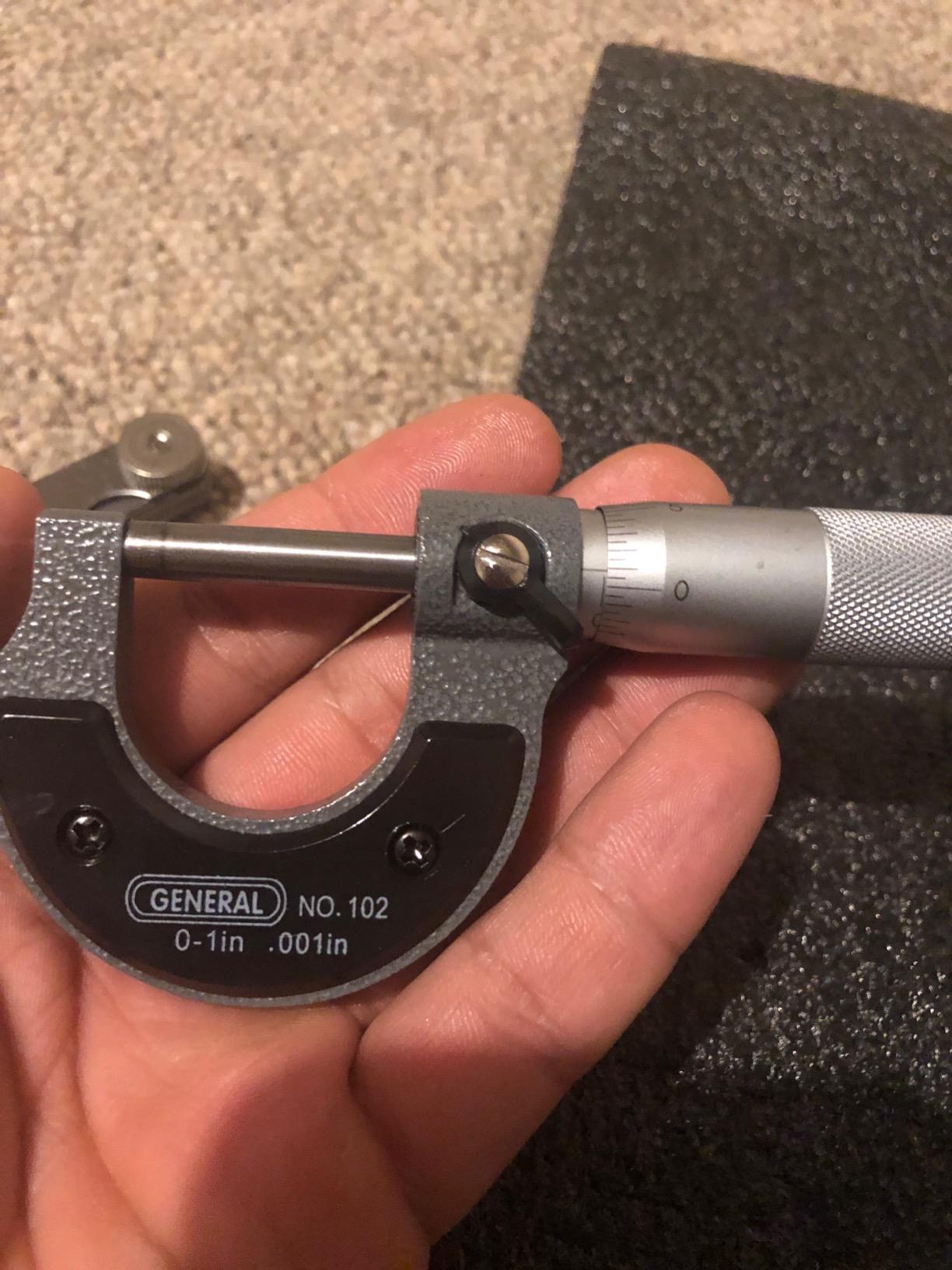
This one is built for exactly the person this article is written for. The listing describes it as suited to beginners, hobbyists, training programs and general toolroom use, and the design reflects that intention rather than trying to be a professional reference gauge.
The range is 0 to 1 inch with 0.001 inch graduation, which is coarser than the other picks. For learning to read a thimble, setting up a sharpening jig or checking a shaft against a 0.005 inch tolerance, that resolution is entirely adequate and it removes the temptation to chase false precision.
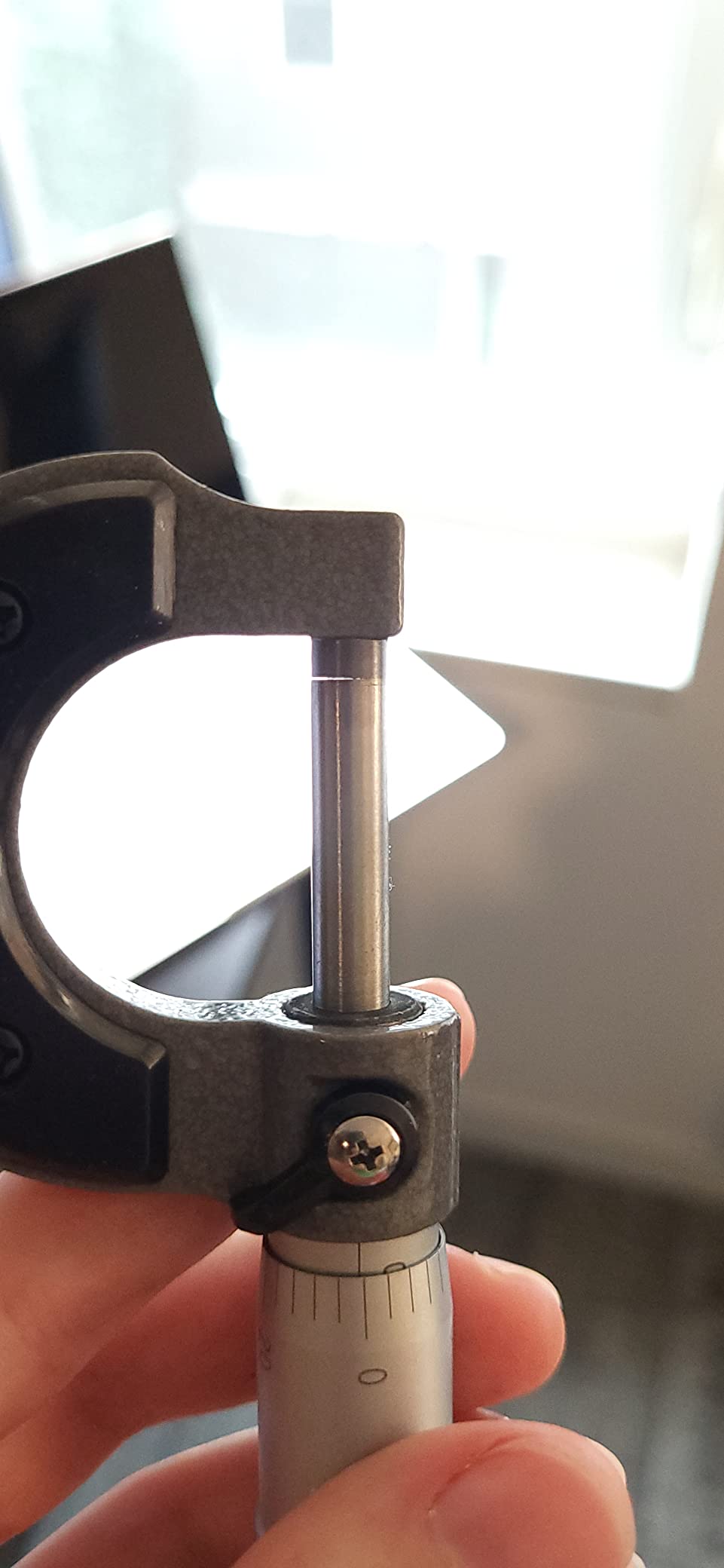
The measuring faces are ground and polished carbide, which is unusual at this level and is the single best feature here. Carbide holds its flatness through knocks and grit in a way that untreated steel does not, so the gauge stays consistent longer in a hobby environment.
A special wrench for simple zero adjustments comes in the box, along with a lock for repetitive measurement. Fully mechanical construction means no batteries, no firmware and no electronics to fail, which matters when the tool will sit in a drawer for six months between uses. Our hobby knife set guide for adults covers how to keep small tools organised and locatable in a drawer.
What tells you this one is right for your shop
Learning the skill of micrometer measurement properly. The 0.001 inch graduation gives a real but forgiving number, so a beginner builds confidence in reading the thimble before moving to four decimal places.
Satin chrome thimble and barrel with black contrasting graduations make the reading line easy to find, and the spindle lock helps you hold a setting while positioning thin material. It weighs 0.64 ounces, so carrying it around costs nothing.
When to buy something else
Do not buy it for tight-tolerance work. With no ratchet stop and 0.001 inch graduations, it cannot resolve anything under a thousandth, and a few reviewers are critical of mechanical consistency and fit-and-finish.
The listing data also has some internal conflicts, including a material field that lists plastic for what is plainly a steel micrometer. That does not affect the tool itself, but it is a reminder to verify zero and known dimensions on arrival before trusting it.
7. Fowler 52-253-001-1 Micrometer – Best Mechanical Pick
Fowler 52-253-001-1, Premium Outside Inch Micrometer with 0-1″ Measuring Range
0-1 inch range
0.001 inch vernier graduations
0.00016 inch accuracy
Friction thimble
Pros
- Documented 0.00003 inch flatness and 0.00008 inch parallelism
- Micro-lapped carbide-tipped anvil and spindle
- 0.00016 inch stated accuracy with a vernier scale
- Satin chrome resists rust and shop glare
Cons
- Friction thimble instead of a ratchet so pressure is user-controlled
- No tenth scale on the barrel
- Lowest review count among the mechanical picks here
The Fowler is the mechanical gauge I would buy if I wanted a documented standard rather than a hopeful one. It publishes its face geometry: micro-lapped measuring faces with 0.00003 inch flatness and 0.00008 inch parallelism. Very few tools at any price publish numbers that specific.
Stated accuracy is 0.00016 inch on a 0-1 inch range with microfine 0.001 inch vernier graduations. Experienced hobby machinists and engine builders compare it favourably with Starrett-brand gauges, and several owners report matching readings against a second gauge on test pins.
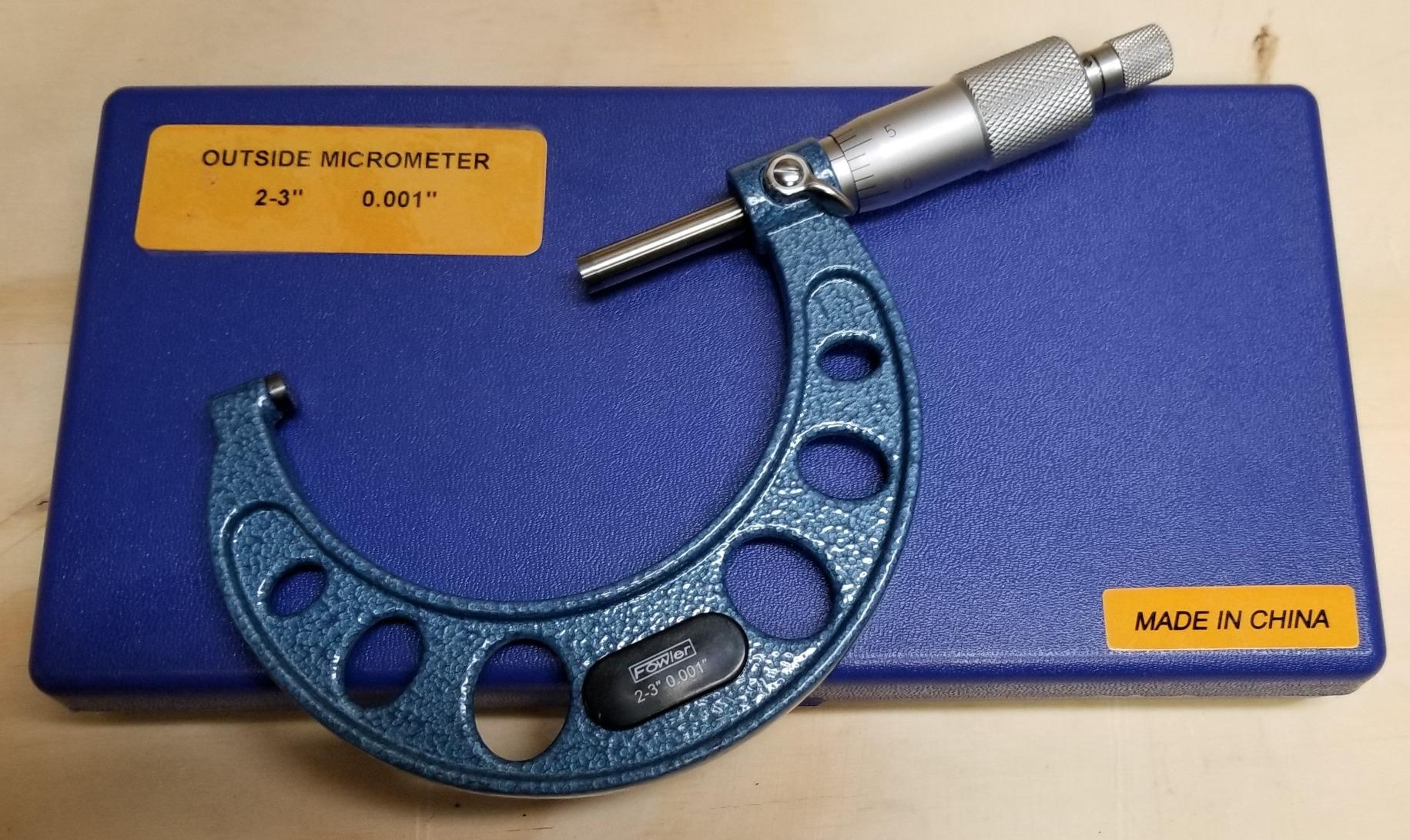
The anvil and spindle are hardened, precision-ground and carbide-tipped, which is the combination that keeps repeatability steady on hard steel. The satin chrome finish on the thimble and sleeve resists rust and cuts glare under bright shop lighting.
Two things to plan for. The thimble is a friction type rather than a ratchet, so the closing force is yours to control, and there is no tenth scale on the barrel, which means tenths must be estimated. Neither is serious, but both slow down a fast workflow.
What tells you this one is right for your shop
Engine building, bearing clearances and any fit work where the tolerance is a few thousandths and you want a number you can defend. Published flatness and parallelism mean you know the geometry of the surfaces touching your part.
A friction thimble gives finer control than a ratchet when you are learning to feel measuring force, and the vernier scale produces 0.001 inch readings without estimation. At 4.6 stars with 77 percent five star, it outscores every other friction-thimble option in this roundup.
When to buy something else
If you take many quick measurements in a single session, a ratchet-equipped gauge will be faster because you are not listening for the same feel every time. And if you need the tenths digit without estimating, look for a barrel with a tenth scale.
Clean the threads and oil them lightly before your first measurement, because grit and dried lubricant in the threads are exactly what causes an anvil and spindle to read inconsistently. It takes ten minutes and it is worth it on a gauge you have paid for at this level.
8. Beaiguna 4-Piece Micrometer Set – Best Multi-Range Coverage
Beaiguna 4PCS Micrometer Set, 0-1″/1-2″/2-3″/3-4″ Machinist Outside Micrometer Measuring Tool, Ultra-Precision 0.0001″ Graduation Micrometers, Professional Machinist Tools Set
0-1 to 3-4 inch coverage
0.0001 inch graduation
Carbide faces
Ratchet stop
Pros
- Covers 0-1 through 3-4 inch in one purchase
- Ratchet stop uncommon on budget micrometers
- Three calibration standards plus an adjustment wrench included
- Mirror polished carbide measuring faces
Cons
- Lowest review count here at 195 so durability is less proven
- Eight percent of ratings are one star
- No published accuracy figure to check the claim against
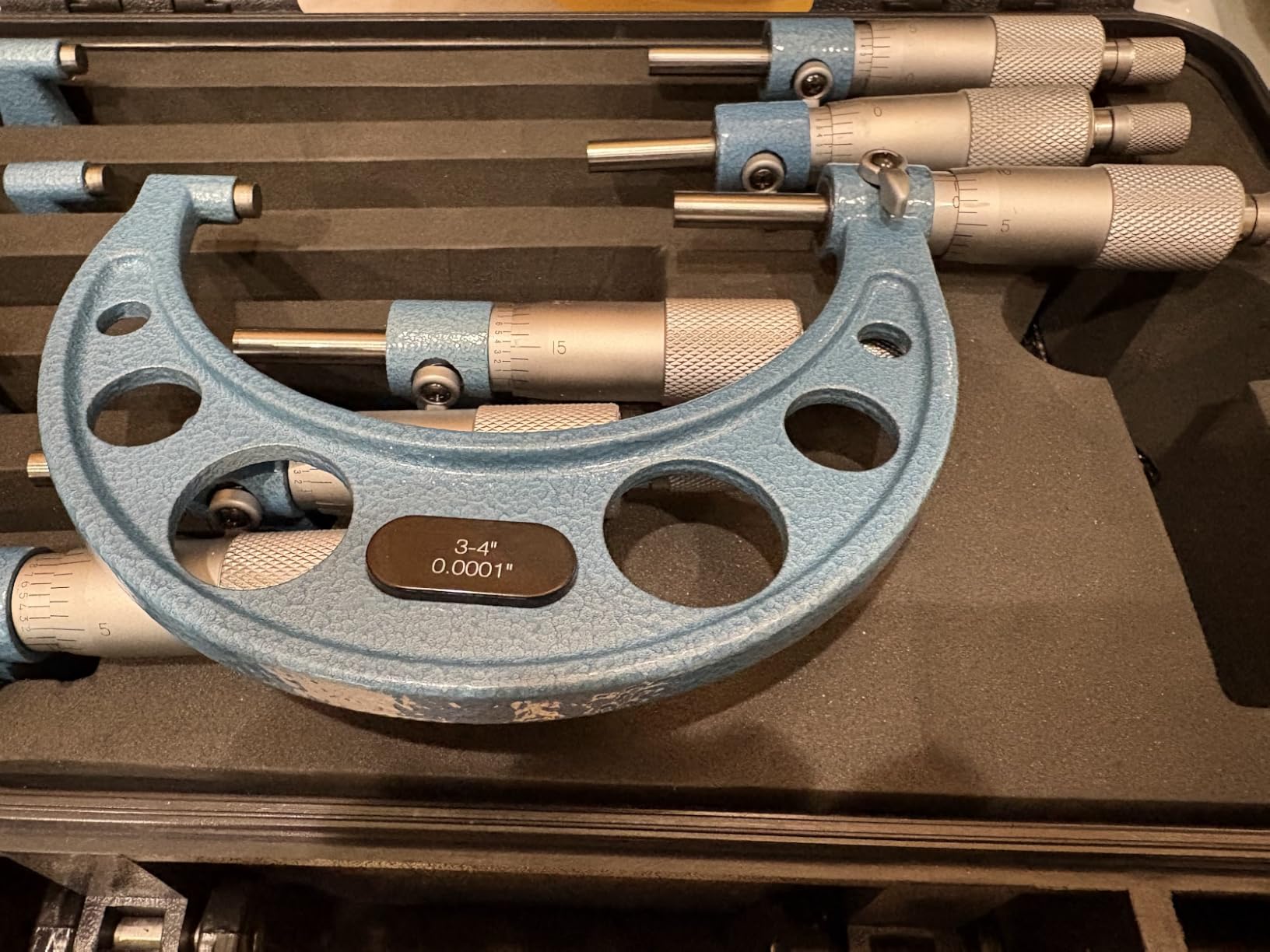
This set covers 0-1 inch, 1-2 inch, 2-3 inch and 3-4 inch, which makes it the broadest range coverage of anything in this roundup. It is the answer to the question hobbyists ask constantly about whether to buy one gauge or a multi-range set.
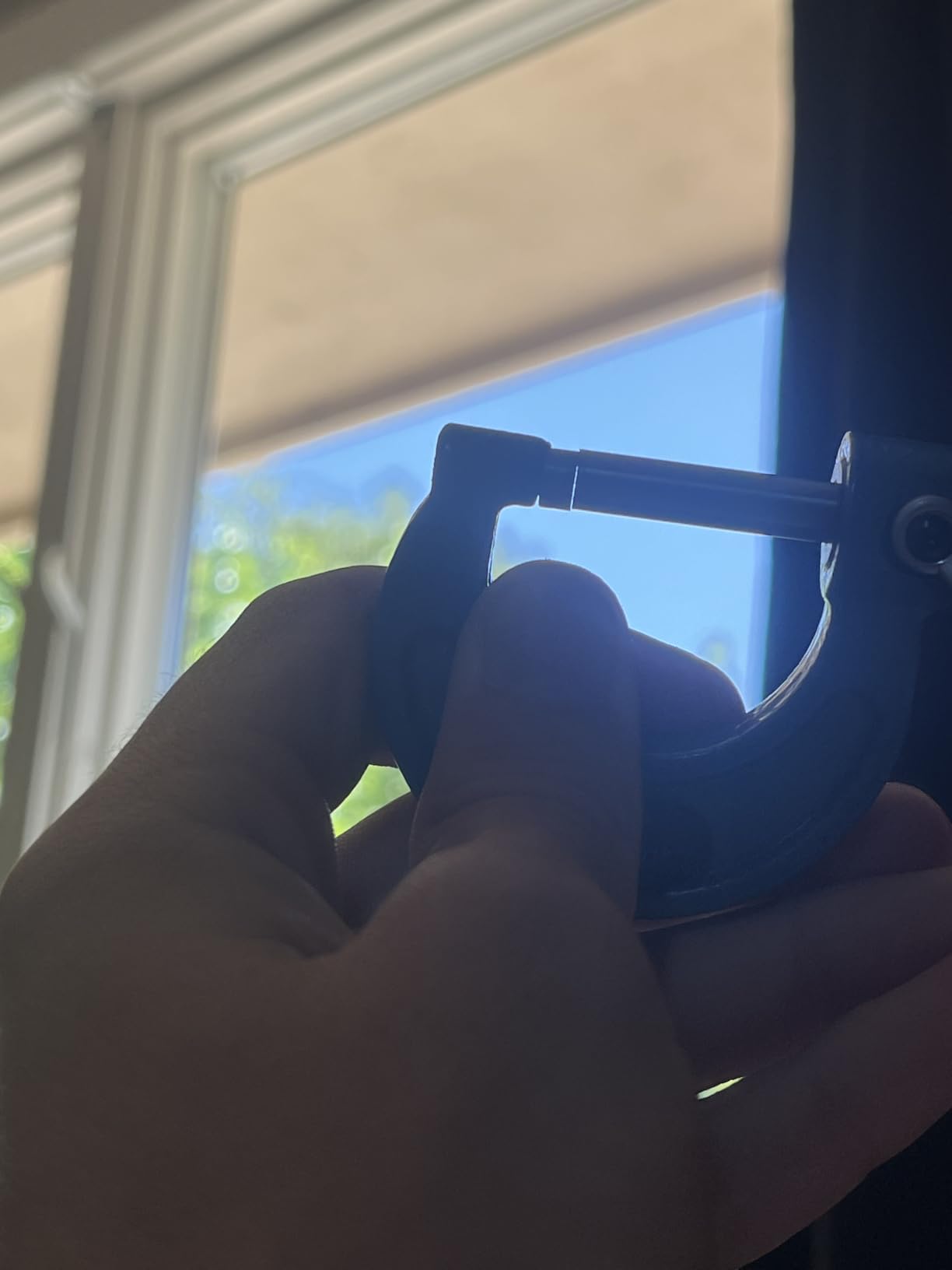
Each gauge reads to 0.0001 inch with mirror-polished carbide measuring faces. A ratchet stop is fitted, which is genuinely uncommon on budget mechanical instruments and is what makes these repeatable rather than feel-dependent.
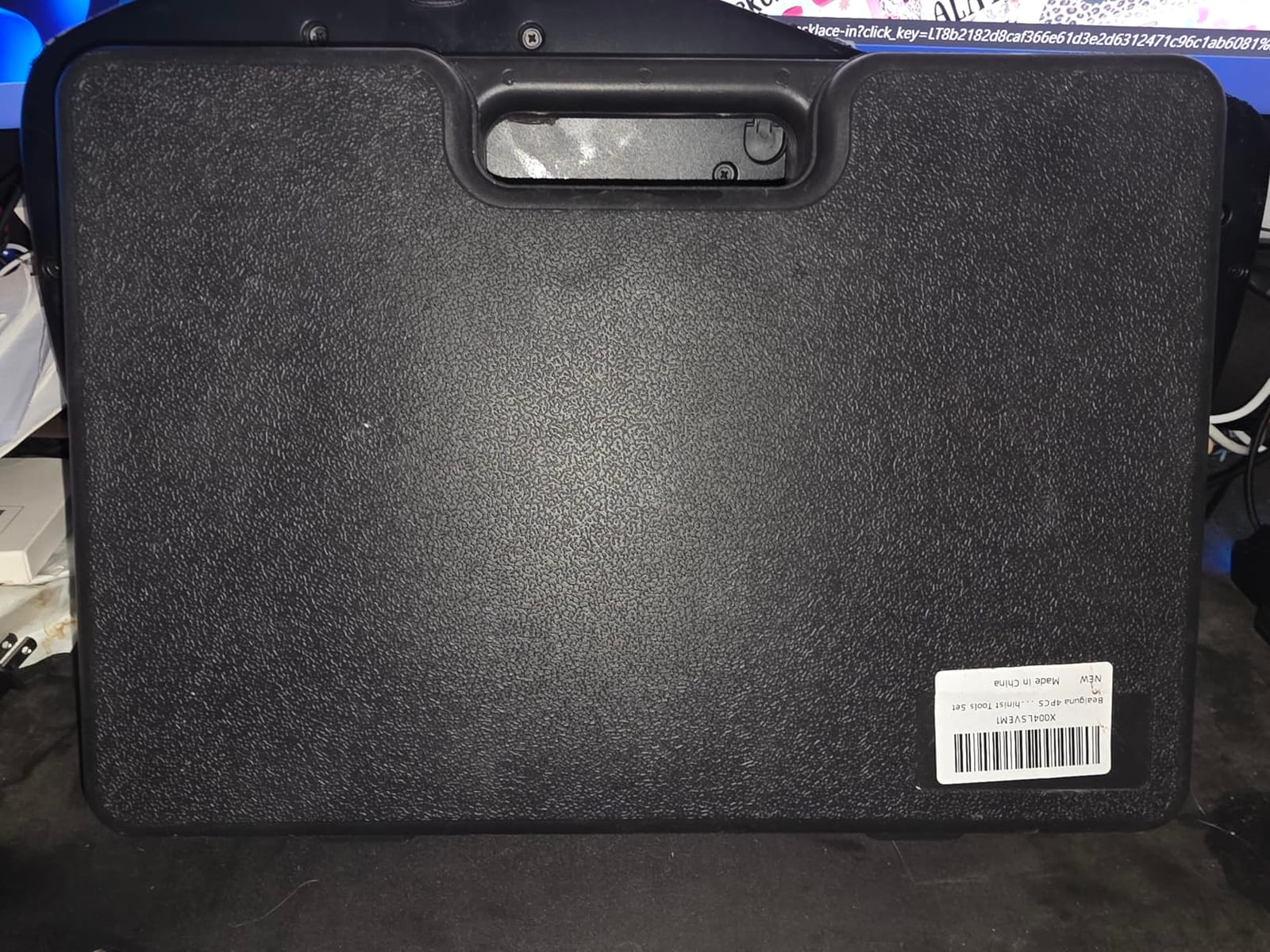
The kit includes three calibration standards, an adjustment wrench and a portable hard case. For a shop that machines larger material, having standards to check against matters more than it does when you only own one small-range gauge.
Two cautions. At 4.33 pounds with package dimensions of about 15.34 by 10.63 inches, the full case is noticeably heavy to carry around, so most people will leave the set at the bench. And with 195 ratings it is the thinnest feedback base here and among the newest listings in the category, so long-term durability is not yet demonstrated.
What tells you this one is right for your shop
Machinists and gunsmiths who measure rods, tubes and stock beyond an inch across value the coverage. Resetting between the four gauges quickly is the friction point in any multi-range set, and it is worth testing before you commit.
A ratchet stop combined with carbide faces is a pairing that usually forces a choice on entry-level mechanical instruments. Having both means the set suits repeat work rather than only occasional checks, and hobby machinists and gunsmiths report valuing exactly that pairing.
When to buy something else
Skip the set if your work stays under an inch. The 1-2 inch, 2-3 inch and 3-4 inch gauges would sit unused, which is the overbuying mistake forum readers warn about repeatedly.
The 8 percent one-star share reflects occasional complaints about zero drift and finish consistency, and there is no published accuracy figure to check the claim against. For single-gauge precision work, one documented instrument beats four undifferentiated ones.
Do You Even Need a Micrometer?
A micrometer wins on repeatability, not just precision. Calipers measure to a tenth of a thousandth but apply force by hand, so two readings on the same shaft can differ by several thousandths. A micrometer closes on a screw thread with a consistent force, which is what makes a plus or minus 0.001 inch tolerance mean something.
So the test is tolerance, not ambition. If your parts need to hold within 0.005 inch or looser, a good caliper is enough, and spending the money on a micrometer will not improve the result. If you need to repeat a dimension to a thousandth of an inch, you need a micrometer.
For measuring inside diameters, a depth micrometer or a small-bore gauge serves a different purpose entirely, and none of the eight outside micrometers here will do that job. Know which question you are asking before you buy.
Micrometer Buying Guide for a Home Shop
Resolution and accuracy are different numbers, and budget listings blur them constantly. Resolution is the smallest change the scale can show. Accuracy is how close the tool actually reads to the true value. A gauge that resolves to 0.0001 inch but only holds accuracy to 0.001 inch is still a 0.001 inch tool, and the Fowler is one of the few picks here that publishes both figures clearly.
Ratchet stop versus friction thimble is the second decision. A friction thimble uses a clutch that slips at a set torque, giving you fine control and feedback. A ratchet stop closes cleanly and repeats the same force every time, which is better for repeat work and worse for learning gentle touch. Forum readers routinely single out the ratchet as the feature that stops over-torqued readings.
Carbide tips matter more in a hobby shop than the price gap suggests. Steel faces dull and pit when they meet hot steel, swarf and grit. Carbide-tipped faces hold geometry longer and resist the burrs that cause repeatability to drift.
Range is where most hobbyists overbuy. Forum consensus across Practical Machinist and hobby machinist threads is that a 1 inch micrometer is the one you will use most and should be the best your budget allows. Resisting a 0-6 inch or 0-12 inch set until you actually have material that requires those ranges is the common wisdom, and it is correct.
On brand tiers, Starrett and Mitutoyo sit at the top for durability and repairability, with Mitutoyo frequently cited as best in class for availability of repair parts and exploded diagrams. Fowler and Brown & Sharpe carry a reputation for declining quality in current production, while older vintage examples are frequently reported as measurably better. For metric work outside the US, a 0-25mm body beats an inch body, and the reverse holds in the US. Our hobby knife set with case guide covers the storage side of keeping small tools organised.
The Most Common Micrometer Mistakes
One error accounts for most bad readings: closing the thimble with inconsistent force. Everything below is downstream of that.
1. Squeezing the thimble instead of using the ratchet. Cranking until the spindle stops produces different forces at different moments, and a friction thimble needs a light, consistent touch rather than a hard twist.
2. Not rocking the thimble on the part. On an imperfect surface, slide and rock the spindle gently so the anvil and spindle find their closest approach, which is the measurement. Without rocking you are reading how square your setup is, not how thick the part is.
3. Pinching the spindle sideways. Sliding the part off at an angle twists the spindle and skews the anvil against the work, which bends the reading and can wear the threads over time.
4. Parallax error. Reading a thimble from an angle instead of straight on puts your eye and the reference line out of plane. Look perpendicular to the sleeve line every time.
5. Forgetting to zero on a clean, flat surface. Dust, oil or a burr on the anvil stops the spindle short of the closing position and shifts every reading that follows. Close it on the anvil alone, with a soft cloth, at the start of every session.
How to Verify a New Micrometer Before the Return Window Closes
Cheap gauges arriving out of tolerance is the top fear in every machinist forum, and the fix is to test before the return window closes rather than after a part is scrapped.
1. Close the spindle on the anvil and confirm it reads exactly zero. Most digital models need an electronic zero; do this with the faces clean and dry.
2. Check a known dimension. If you own gauge blocks or a trustworthy reference pin, measure it and compare against the stated figure. The Beaiguna set includes three calibration standards for exactly this step, and it is the only pick here that ships with them.
3. Repeat at several points across the range. Check near zero, mid-scale and just under maximum. Cheap 0-25mm digital gauges are widely reported to drift as they approach full range, so the midpoint and the top of the range are where problems hide.
4. Repeat one measurement five times without re-zeroing. If the numbers walk, the spindle or anvil is not clean and consistent. Clean the faces, oil the threads lightly and repeat before drawing conclusions.
5. Compare against a second gauge. Owners who keep two 0-1 inch micrometers say this is how a drifting tool gets caught before it matters. It is the cheapest form of redundancy in a home shop.
Frequently Asked Questions
What is a good brand of micrometers?
For most hobby machinists, Mitutoyo, Starrett and Fowler are the three names worth trusting for long-term accuracy and repairability. INSIZE is a common mid-tier alternative. Be wary of no-name listings that publish a graduation figure but no stated accuracy, because resolution and accuracy are different numbers.
What is the number one cause of mistakes when using micrometers?
Closing the thimble with inconsistent force is the single biggest source of error. A friction thimble needs a light, consistent touch and a ratchet stop closes at a repeatable force. Rocker the thimble on the part, keep the spindle square, read perpendicular to the reference line, and zero on a clean anvil before every session.
Which is more accurate, a micrometer or a vernier caliper?
A micrometer is more accurate and far more repeatable. A vernier caliper resolves to a tenth of a thousandth but applies hand pressure, so repeat readings drift by several thousandths. A micrometer applies consistent force through a screw thread, which is what makes tight tolerances achievable in a home shop.
Do I need a ratchet stop micrometer?
If you take many measurements on the same dimension or work to tight tolerances, yes. A ratchet stop closes at the same force every stroke, so readings stay repeatable even when you are tired. A friction thimble gives finer tactile control, which is why it is preferred for learning the skill.
Should I buy a 0-6 inch micrometer set?
Not as a first purchase. Forum consensus is that a 0-1 inch micrometer is the range you will use most and should be the best one your budget allows. Buy larger ranges only once you regularly machine material that exceeds an inch, otherwise most of the gauges in a large set stay in the drawer.
How often should I check a micrometer for accuracy?
Check zero at the start of every session, and check against a known standard or gauge blocks monthly if you use it for fit work. After any drop, a knock to the spindle, or a period of heavy use, verify before trusting a tight-tolerance reading.
Final Verdict: Best Micrometers for Hobby Machinists in 2026
Buy the REXBETI 0-1 inch digital if you want one tool that covers most home-shop measuring with carbide faces and the largest base of owner feedback in this roundup. It is the pick I recommend to anyone starting out in 2026.
Buy the Mitutoyo 103-137 if you work in metric and prefer reading a thimble you can feel, and buy the Fowler 52-253-001-1 if you want a documented accuracy figure and published face flatness. Learn on the General Tools 102 if the skill matters more than the resolution, and check any new gauge against a known standard before you scrap a part over it.
Whatever you choose, zero it on a clean anvil at the start of every session and keep it in its case. That habit protects the tool more than any spec on the box.