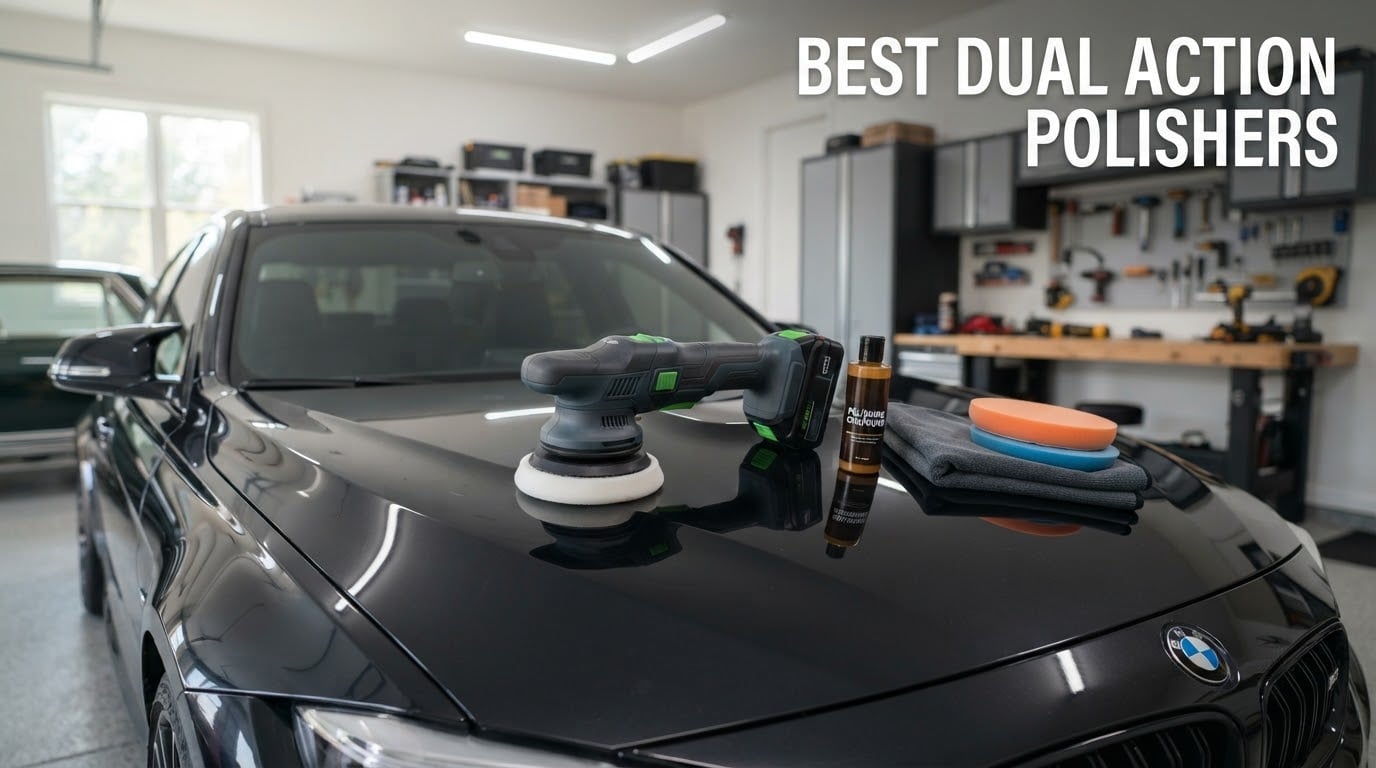
The scariest thing about buying your first machine polisher is not the price, it is the fear of putting a spinning pad against your clear coat and burning a hole through it. That fear keeps a lot of people stuck with hand polishing for years, and it is why most of the advice on this topic is written by people who already own four polishers.
We set out to remove that problem. We compared ten dual action polishers across every tier, from a cordless kit that weighs about as much as a kettle to a 1000W enthusiast machine, and we looked at the specs that actually decide how a tool feels in your hands: orbital throw in millimeters, motor output in watts, real speed ranges, weight, and what happens when you lean on the pad with a loaded compound.
That is what makes a dual action polisher, also sold as a DA or random orbital polisher, the safest way to remove swirl marks, hazing and light scratches by machine. This guide covers the motion differences that trip up most buyers, the throw sizes that matter, the corded-versus-cordless trade nobody explains honestly, and a review of all ten machines. If you also like testing-driven buying guides, our dual coffee maker roundup, dual basket air fryer rankings and dual boiler espresso machine guide follow the same format for a very different shelf.
Table of Contents
- What Is a Dual Action Polisher?
- Dual Action vs Random Orbital vs Rotary: Which Do You Need?
- Top 3 Best Dual Action Polishers (October 2026)
- All 10 Dual Action Polishers at a Glance
- How We Picked: What We Actually Checked
- 1. Chemical Guys TORQX 9-Piece Kit: Best Dual Action Polisher Overall
- 2. PORTER-CABLE 7424XP: Best Dual Action Polisher for Brand-Warranty Buyers
- 3. SPTA 5-Inch 750W Dual Action Kit: Highest-Rated Dual Action Polisher in the Group
- 4. AOBEN AT3501 6-Inch Buffer: Budget Pick Dual Action Polisher
- 5. BATOCA S3 Cordless DA Polisher: Best Dual Action Polisher for Cordless Beginners
- 6. BATOCA 1100W Corded DA Polisher: Best Dual Action Polisher for Heavy Cutting
- 7. Niusken 21V Cordless DA Polisher Kit: Best Cordless Kit for Light Work
- 8. AVID POWER AEP176 5/6-Inch Dual Action Kit: Best Long-Throw Dual Action Polisher on a Budget
- 9. LDHTHOPI 980W 5/6-Inch Dual Action Polisher: Best Value With Real Cutting Power
- 10. Griot’s Garage G9 Orbital Polisher: Best Dual Action Polisher for Enthusiasts
- How to Choose a Dual Action Polisher Without Regret
- Orbital throw: the spec that matters most
- Pad diameter: matching the machine to the panel
- Corded vs cordless: the honest trade
- Brushed vs brushless motors and carbon brush life
- Can a dual action polisher sand?
- What a kit should actually include
- Cost of ownership after the machine
- Beginner safety: how not to burn through clear coat
- Frequently Asked Questions
- The Verdict: Which Dual Action Polisher Should You Buy?
What Is a Dual Action Polisher?
A dual action polisher is a machine buffer whose backing plate both rotates on its axis and oscillates off-center at the same time, so the pad spins and wobbles together. That combined motion spreads compound over a wide area in random paths, removing swirls and hazing from car paint with far less risk of burning through clear coat than a straight rotary polisher.
Here is how it works mechanically. The motor turns the backing plate, and an offset bearing makes that plate wobble around a circular path. The diameter of that circle is called the pitch circle diameter, or orbital throw, and it is quoted in millimeters. A throw of 5mm to 9mm gives you a small, tight circle; a 15mm or 21mm throw gives you a wide circle that covers a lot of panel area with each pass.
Because the pad never sits in one place, no single spot gets the sustained friction that creates heat. That is where paint damage comes from, and it is why a DA machine is forgiving at speed. The trade is that you will not cut defects as fast as a rotary, and heavy compounds can still bog a small motor down.
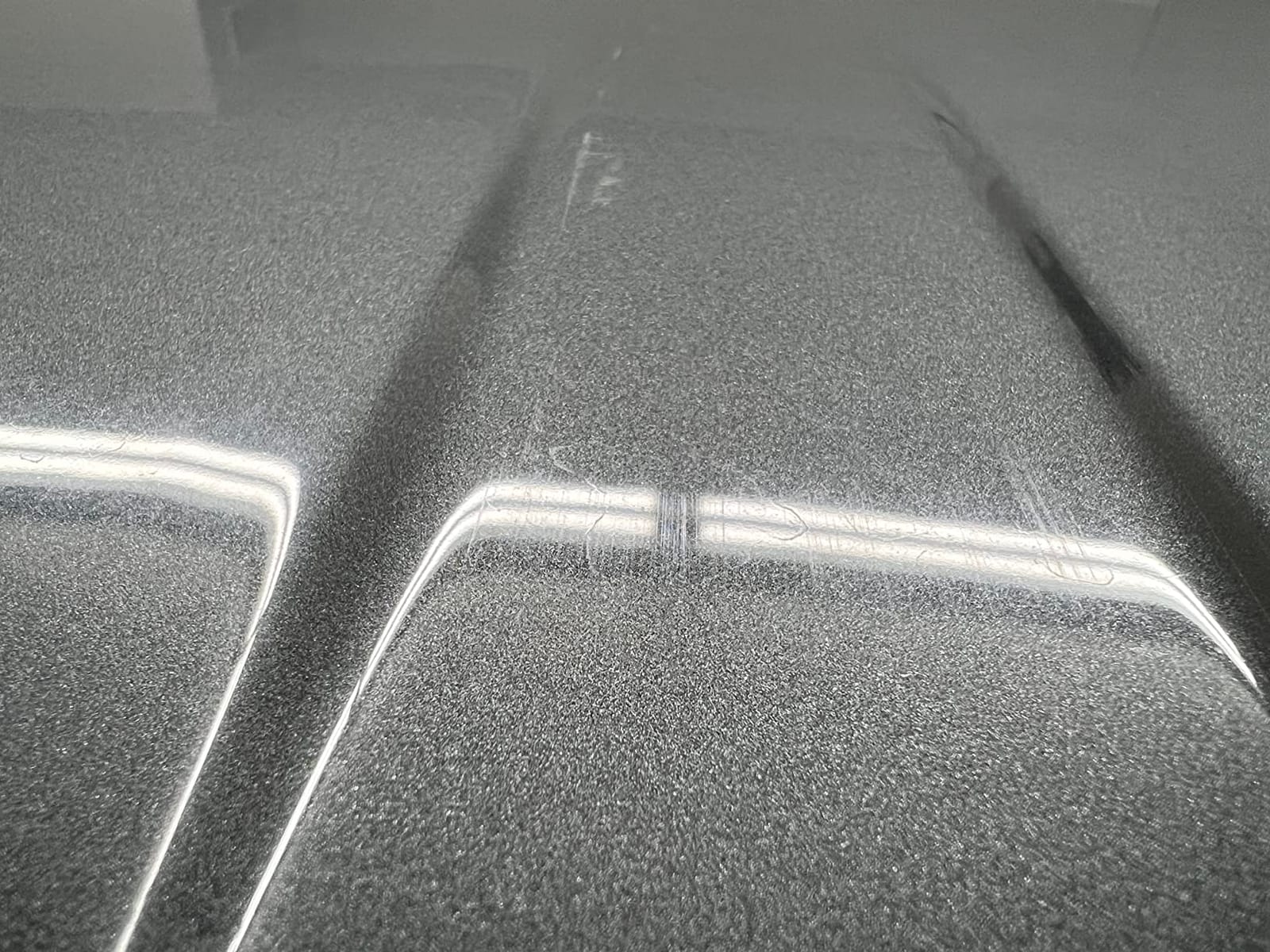
The defects this machine handles are the everyday ones. Swirl marks, the fine scratches that appear from hand washing and automatic car washes. Hazing, the dull, oxidised film on a car that has sat outside. Light oxidation, bird spotting etching, and thin marring from key rings or a fuel nozzle. Deep gouges, peeling clear coat and rust are not machine-polishing jobs.
Dual Action vs Random Orbital vs Rotary: Which Do You Need?
Buyers cannot tell these three apart, and retailers blur the terms constantly, so here is the plain answer. A dual action polisher has a fixed eccentric throw, meaning the wobble path is the same every revolution. A random orbital polisher uses a freely spinning bearing so the pad wanders in a changing pattern, which reduces the chance of any repeat track but also produces less consistent results on correction work.
A rotary polisher spins on a single axis with no wobble at all. It cuts the fastest and it will burn paint fastest, and it demands genuine technique. In practice the small household machines sold as dual action buffers are usually a lower-wattage DA, while the heavy professional machines are long-throw DAs that most pros actually use instead of rotaries.
Which one do you need as a first machine? Take a dual action. It handles the majority of real-world paint correction, it is the easiest motion to learn, and it has the lowest consequence for a beginner mistake. Add a rotary only if you move to professional correction and you already understand how heat builds in a panel.
The naming trap: many machines marketed as random orbital polishers are mechanically dual action with a free-spinning bearing. Read the throw specification, not the label on the box.
Top 3 Best Dual Action Polishers (October 2026)
If you want a short answer, these three cover the realistic range of buyer situations. We explain the reasoning in full further down.

All 10 Dual Action Polishers at a Glance
Every machine below sits in this roundup, with the same data visible for each one so you can rule options in or out quickly. The Check Latest Price button under each row opens the current listing.
| Product | Specs | Action |
|---|---|---|
| Chemical Guys TORQX 9-Piece Kit |
|
Check Latest Price |
 PORTER-CABLE 7424XP 6-Inch Orbital PORTER-CABLE 7424XP 6-Inch Orbital |
|
Check Latest Price |
 SPTA 5-Inch 750W Dual Action Kit SPTA 5-Inch 750W Dual Action Kit |
|
Check Latest Price |
 AOBEN AT3501 6-Inch Buffer AOBEN AT3501 6-Inch Buffer |
|
Check Latest Price |
 BATOCA S3 Cordless DA Polisher BATOCA S3 Cordless DA Polisher |
|
Check Latest Price |
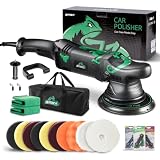 BATOCA 1100W Corded DA Polisher BATOCA 1100W Corded DA Polisher |
|
Check Latest Price |
 Niusken 21V Cordless DA Kit Niusken 21V Cordless DA Kit |
|
Check Latest Price |
 AVID POWER AEP176 5/6-Inch DA AVID POWER AEP176 5/6-Inch DA |
|
Check Latest Price |
 LDHTHOPI 980W 5/6-Inch DA LDHTHOPI 980W 5/6-Inch DA |
|
Check Latest Price |
 Griot’s Garage G9 Orbital Polisher Griot’s Garage G9 Orbital Polisher |
|
Check Latest Price |
How We Picked: What We Actually Checked
Every roundup claims testing. This one lists the criteria so you can judge how much weight to put on the ranking.
Stall behaviour under load. We want to know whether the machine holds its speed when a cutting compound is loaded onto the pad and the operator leans forward with pressure. A motor that bogs down and slows is the single most reported complaint among owners, and it is the first thing we look at.
Heat build-up. Heat is what ruins paint, and heat is what kills cheap machines. We paid attention to how quickly the body and the pad face warm up and whether the machine sheds that heat or traps it.
Control feel. Speed range, how the speed changes as pressure changes, whether a lock button works, and how obvious the controls are with one gloved hand.
Balance and weight. A machine that is front-heavy on a vertical panel is a genuinely different tool from a balanced one on a hood, so we weighted balance over the headline weight number.
Honesty of the bundle. Bundled pads and compounds get criticised constantly by owners. We count what is genuinely useful against filler, and we say so when a kit is padded out.
Warranty and support. Service terms and replacement policy influence how long a tool should last in your hands, so we treat warranty length as a value component rather than a footnote.
One caution about reading any roundup, including this one: we did not measure sound pressure in decibels, because we will not publish a number we did not record ourselves. Where noise comes up below, it comes from owner reports rather than our own measurement.
1. Chemical Guys TORQX 9-Piece Kit: Best Dual Action Polisher Overall
Chemical Guys, TORQX Random Orbital Polisher Kit, 800W Motor, 9-Piece
700W motor
8mm orbital throw
3.9 kg
Corded 120V
9-piece kit
Pros
- Highest review volume in the category at over 6400 ratings
- Complete 9-piece kit with pads compounds and polishes
- 8mm throw is forgiving and swirl-free at speed
- Handles light scratches oxidation and haze
Cons
- Heavier corded design tires the arm on long correction sessions
- Kit layout is wasted money if you already own pads and compound
The TORQX is the machine I recommend most often, and the reason is dull: it has more owner ratings behind it than anything else on this list by a wide margin. Over 6400 reviews at a 4.6 average is a much bigger evidence base than a four-star sample, and the rating spread is unusually top-heavy, with roughly 80 percent of owners giving it five stars.
Under the plastic shell sits a 700W motor turning an 8mm throw, and that combination is the sweet spot for a first machine. Eight millimeters is wide enough to cover a hood quickly and tight enough that a beginner can hold a controlled path on a quarter panel.
The kit ships as nine pieces: the machine, pads, polishes and compounds. That solves the real problem most first-time buyers hit, which is turning up with a polisher and no pads, no compound and no idea what pairs with what. Reviewers consistently describe the machine as balanced, with simple controls that do not get in the way during long sessions.
Because it is a 3.9 kg corded unit, I would plan your work around an extension lead. For a car on a driveway in daylight that is a non-issue, but if you are detailing in a garage at night with a single wall outlet, cordless convenience wins.
The honest weakness is weight over duration. This is not a machine you will hold one-handed on a roof for an hour. It suits panels, hoods and doors, and for vertical work you will want a good handle position and regular breaks.
Why the TORQX suits a first-time owner
The 8mm throw plus 700W output means the machine has power to spare at low and medium speeds, so you can spread a finishing polish across a whole panel without the pad slowing to a crawl. Owners report it clearing haze and light oxidation in a single pass, which is exactly the outcome that keeps a beginner motivated.
It is also the least ambiguous purchase in the roundup. The brand has been building polishers for decades, the machine is sold in a 9-item and a 13-item kit configuration, and a large accessory ecosystem means replacement pads are easy to source for years to come.
Where the TORQX falls short
It is a kit, and kits pad the box. If you already own foam pads, a wool pad and a couple of compounds, a good share of what you paid for is filler you will never open. Consider the bare-machine route only if you have a pad collection already, and check the kit contents carefully before you order.
It is also not the answer to very tight work. There is no 3-inch or 4-inch option in the range, so door sills, A-pillars and narrow trim need a small separate machine or careful hand work with a small pad adapter.
2. PORTER-CABLE 7424XP: Best Dual Action Polisher for Brand-Warranty Buyers
PORTER-CABLE Buffer Polisher, Car Polisher for Car Detailing, 6-Inch, Orbital, Variable Speed (7424XP)
4.5 amp AC motor
6-inch pad
2,500-6,800 OPM
5.8 lb
Pros
- Three-year limited warranty plus a free service contract
- Electronic speed dial covering 2500-6800 OPM
- Includes a 5-inch counterbalance for 6-inch pad use
- Compact 6-inch footprint suits smaller panels
Cons
- AC-only 4.5 amp motor lacks punch on heavy cutting compounds
- Analog dial with no digital speed readout
This is a power-tool machine from a power-tool company, and the difference shows up in the warranty rather than the marketing. The 7424XP carries a three-year limited warranty, a one-year free service contract and a 90-day money-back guarantee, which is a level of after-sales cover you simply do not get from most detailing-focused brands in this roundup.
Speed control is electronic, running from 2,500 to 6,800 orbits per minute across a front dial. That range is wide, and it lets you work sealant removal at the bottom of the range and defect cutting at the top without changing pads mid-task.
It weighs 5.8 pounds, which is heavier than the mid-size competition but balanced in a way that suits single-handed work on a door or a roof. The random orbit action produces the even, swirl-free finish owners consistently report, and the 81 percent five-star share tells you very few people regret the purchase.
The honest limitation is amperage. A 4.5 amp AC motor rated at 540 watts will get through a light polish all day. Loaded with a heavy cutting compound and leaned on hard, it will not have the recovery of the 980W or 1100W machines here, and that is the difference between a correction tool and a maintenance tool.
When this is the smarter buy
If your polishing is a few times a year, the motor gap matters far less than most buyers expect, and a three-year warranty on a simple machine is worth more than a fan-cooled counterbalance. Owners also like that it is a general shop tool rather than a detailing-specific device.
The included 5-inch counterbalance is a genuinely useful detail. It lets you run a 5-inch pad on a machine sold as a 6-inch unit, which is useful for a first machine because you will eventually want both pad sizes and the counterbalance is a small part to lose.
Where the 7424XP falls short
There is no digital readout, so you are counting dial positions rather than knowing an exact figure. On a machine with a wide range, that is a real precision loss when you are trying to reproduce a finish you liked.
It also has no soft start ramp to speak of and a single fixed speed dial, so there is no trigger control. If you are someone who modulates pressure constantly with a trigger, the transition to this machine is noticeable.
3. SPTA 5-Inch 750W Dual Action Kit: Highest-Rated Dual Action Polisher in the Group
Buffer Polisher, SPTA 5-Inch 125mm Dual Action Random Orbital Car Polisher,Car Detailing Kit, 4Pcs 5inch & 4Pcs 6Inch Polishing Pad,Packing Bag for Car Polishing and Waxing–DAPSET-US
750W 110V 6.5A
5-inch plate
2,000-5,200 RPM
24-piece kit
Pros
- Highest average rating in the group at 4.7 stars
- 6-speed dial spanning 2000-5200 RPM
- 24-piece kit covering pads compounds handles and sanding discs
- Detachable side and D-handles for different grips
Cons
- Lightweight plastic construction feels less premium than metal-bodied rivals
- Replacement carbon brushes may be needed over time
The SPTA DAPSET-US carries the highest average rating in this roundup at 4.7 stars, with roughly 83 percent of owners giving five stars. That is worth saying plainly, because a 4.7 average across 1872 ratings is a strong signal that the machine performs to spec out of the box.
The motor is a 750W, 6.5 amp brushed unit running on 110V, with a six-speed dial from 2,000 to 5,200 RPM. Owners highlight the smooth start and constant power delivery, which is what stops the pad bogging when you load it with compound.
The kit is the largest in the group at 24 pieces: compounds, a brush, an apron, backing plates, handles, sponges, a wool pad, sandpaper discs, gloves and towels, all in a carry bag. Both a side handle and a D-handle are included, so you can change grip style depending on the panel.
It also ranks near the top of its category for car care, which tells you the accessory support around it is active. For a buyer who wants one box that contains everything for a full correction, that is the argument for this machine.
Why the rating is so high
Most likely because the bundle removes every reason to delay a first job. An owner can open the box, clamp a pad and start correcting the same afternoon instead of ordering pads and compound separately, and that first successful session is what generates a five-star review.
The 5-inch plate size is a good choice for a first machine too. It covers most of a hood or door panel with fewer passes than a 3-inch, and it still fits comfortably along a side sill and around a badge.
Where the SPTA falls short
The plastic construction is the first thing owners mention. It is light, which helps on vertical panels, but it transmits more vibration than a metal-bodied machine and it does not dissipate heat as well, so keep speed in check on a single panel.
Carbon brushes are a consumable on any brushed motor, and this one will need them. Factor the replacement into your ownership budget rather than treating the machine as a one-time purchase.
4. AOBEN AT3501 6-Inch Buffer: Budget Pick Dual Action Polisher
AOBEN Car Buffer Polisher,6 inch Dual Action Polisher,Random Buffer Polisher kit with 6 Variable Speed 1000-4500rpm,Detachable Handle,4 Buffing Pads for Car detailing Polishing and Waxing
700W 120V
6-inch pad
1,000-4,500 RPM
6.8 lb
Pros
- Very strong sales volume for a budget machine
- 1000-4500 RPM across six speeds
- Swapable side and top handles cut hand fatigue
- Foam discs and a synthetic wool pad cover wax removal
Cons
- May stall at the lowest three speeds under heavy pressure
- Plastic head shell and 700W output limit heavy cutting
The AOBEN AT3501 is the one we would put in front of someone who wants to try machine polishing without a large commitment. It has moved through a lot of units, sits at the top of its category for sales, and carries 1697 ratings at 4.5 stars.
Output is 700W on 120V with six speeds running 1,000 to 4,500 RPM, and the low end of that range is genuinely useful. Owners use the bottom speeds for spreading wax and sealant without cutting through the layer, and the top speeds for finishing work.
Both a side handle and a top handle are included and interchangeable, which is the detail that reduces fatigue most on a 6.8 pound machine. The included foam discs and a synthetic wool pad cover the two most common jobs: wax removal and a light finishing polish.
It is also far more versatile than a car-only tool. Reviewers mention using it on boats, furniture, floors, pianos and metal, and for anyone who does not own a separate tool for each of those, a machine that handles more than a hood is better value.
What makes this the value pick
Six speeds, two handles, four pads and a 700W motor is a feature list that matches machines well above this tier. The cost sits at the budget end, which makes the entry point low and the downside if you decide detailing is not for you very small.
For a first correction on an older car with haze and oxidation, a machine like this does everything you need at speeds one to four, and those are the speeds you should be using for most of your early practice.
Where the AOBEN falls short
Stalling under pressure is the reported weakness, specifically at the lowest three speeds. That is a real pattern with 700W brushed motors in plastic shells, and it means heavy compound at high pressure is not what this machine is for.
That is not a defect so much as a boundary. Keep a single-ply finishing pad on it, use a light polish, and treat the machine as a maintenance and enhancement tool rather than a defect remover.
5. BATOCA S3 Cordless DA Polisher: Best Dual Action Polisher for Cordless Beginners
BATOCA S3 Cordless Car Polishers and Buffers, DA Orbital Polishing Machine
Battery powered
5mm orbit
2.4 lb
2,500-5,000 RPM
Pros
- About 3 pounds with a battery fitted
- Two 2.0Ah batteries and a fast charger allow swapping mid-job
- 5mm orbit gives a very uniform beginner-friendly finish
- Six speed levels with a three-colour battery indicator
Cons
- Cordless output is limited for sustained heavy correction
- ABS shell and small footprint suit small panels better than big ones
Removing the cord changes how you work more than any other single feature, and the BATOCA S3 is the most approachable way to try it. It weighs 2.4 pounds, which makes it the lightest machine in this roundup, and it comes with two 2.0Ah batteries and a fast charger.
Two batteries is the minimum that makes cordless polishing practical. One charges while you work with the other, so you are never standing at a wall waiting. A single-battery cordless machine becomes a one-panel-at-a-time tool, which is how a lot of people give up on them.
The orbit is 5mm, the tightest here, and that is the right call for a first cordless machine. A small throw gives a very uniform, low-risk finish, which is why this is a popular choice for wax and sealant work rather than cutting. Six speed levels run from 2,500 to 5,000 RPM, and a three-colour indicator shows remaining battery at a glance.
It is offered in several finishes, including graffiti, camouflage and carbon fibre patterns, which tells you something about the audience it was built for. This is a hobbyist and upgrade-focused machine, not a shop tool.
Why cordless is the sensible first upgrade
No extension lead means you can walk a car in a driveway, work in a multi-level garage, or reach the roof of an SUV without planning the cable route first. That freedom is what actually changes your workflow day to day.
At 2.4 pounds with a 5mm throw, it is also the least intimidating machine here. If your worry is paint damage, a light tool with a small throw that you can walk across a panel is the lowest-stress place to build the habit.
Where the S3 falls short
Battery output is the hard limit. Sustained heavy correction on a big hood will deplete a 2.0Ah pack, and the ABS shell means less heat dissipation than a metal-bodied corded machine running at 1100W. Plan on swapping batteries and taking a break rather than assuming all-day runtime.
Because the 12V pack is proprietary, you cannot share batteries with a tool collection you may already own. If you already have a 12V platform, check compatibility before you commit.
6. BATOCA 1100W Corded DA Polisher: Best Dual Action Polisher for Heavy Cutting
BATOCA 2026 New Dual Action Polisher Random Orbital Car Buffer 1100W
1100W pure copper motor
2,500-5,500 RPM
8 lb
110V corded
Pros
- 1100W copper motor holds speed under compound load
- Six speeds from 2500 to 5500 RPM with a smooth ramp-up
- Bundle includes D-handle straight handle pads wool pads and bag
- Eccentric shaft design reduces the risk of burning paint
Cons
- Weighs about 8 pounds
- heavier than most rivals here
- Corded design limits mobility around a vehicle
When you want the most cutting power per dollar in this group, the 1100W BATOCA is the answer. That output figure is the highest in the roundup, and it is what lets the machine keep a loaded pad moving when a 700W unit starts to bog.
Six speeds span 2,500 to 5,500 RPM, and the pure copper motor is paired with a carbon brush safety design plus a spare pair of brushes in the box. Owners note roughly a six-month replacement interval for those brushes, which is normal for a brushed motor of this output.
The bundle is generous: a D-handle, a straight handle, foam and wool pads, sanding papers, a microfiber towel, a carry bag and gloves. Two handle options on a machine this size matters, because the weight will be felt on a vertical panel.
The eccentric shaft design is a safety feature rather than a marketing line. It is intended to spread the heat load across the panel so a beginner is less likely to hold one spot long enough to burn clear coat.
When you actually need this much power
If you are removing deeper defects, cutting oxidation off a neglected car, or working through a two-step correction with a coarse compound, motor recovery is what you are buying. A machine that holds speed also means a flatter finish, because the pad keeps working across the panel instead of dragging.
Reviewers also use it beyond cars, on boats, motorcycles, marble and floors. If your correction work includes large flat surfaces rather than curved body panels, high output earns its keep.
Where the 1100W BATOCA falls short
Eight pounds is the heaviest machine here, and it is the most common complaint. It is manageable on a hood and unpleasant on a roof or a vertical door for an extended session, so budget in breaks and use both handles.
It is also corded with a fixed length of lead, which means the same mobility limits as any corded machine. Make sure you have a proper outdoor-rated extension lead and, ideally, a reel.
7. Niusken 21V Cordless DA Polisher Kit: Best Cordless Kit for Light Work
Niusken Cordless Car Buffer Polisher kit, DA Polisher with 2*21V Batteries
21V battery
8mm orbit
2,800-5,800 RPM
3.3 lb
Pros
- About 3.3 pounds with an ergonomic grip
- Two 21V 2000mAh batteries plus a fast charger
- LED screen shows live speed and battery level
- 8mm orbit covers wax and polish evenly at low noise
Cons
- Proprietary 21V packs are not compatible with other tool brands
- Shuts down after about 20 minutes of continuous high-speed use
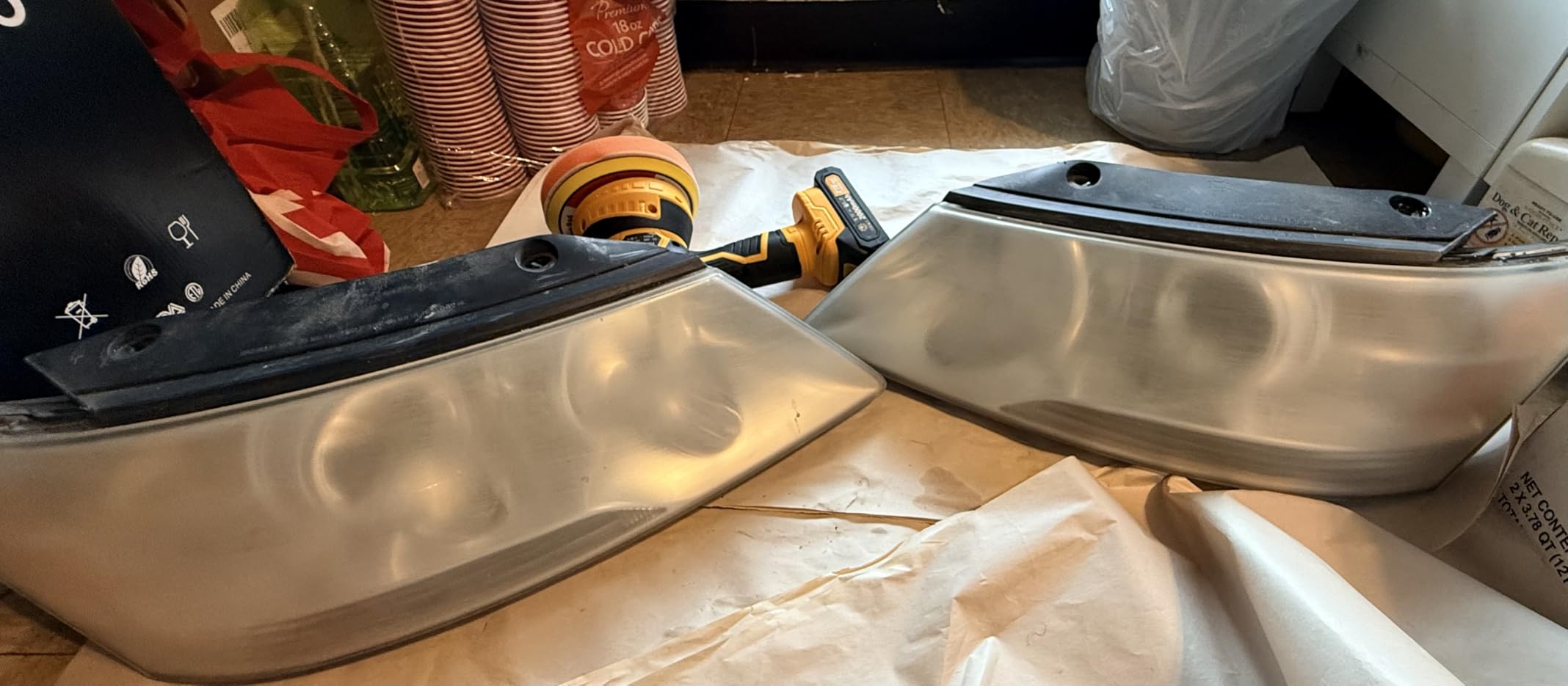
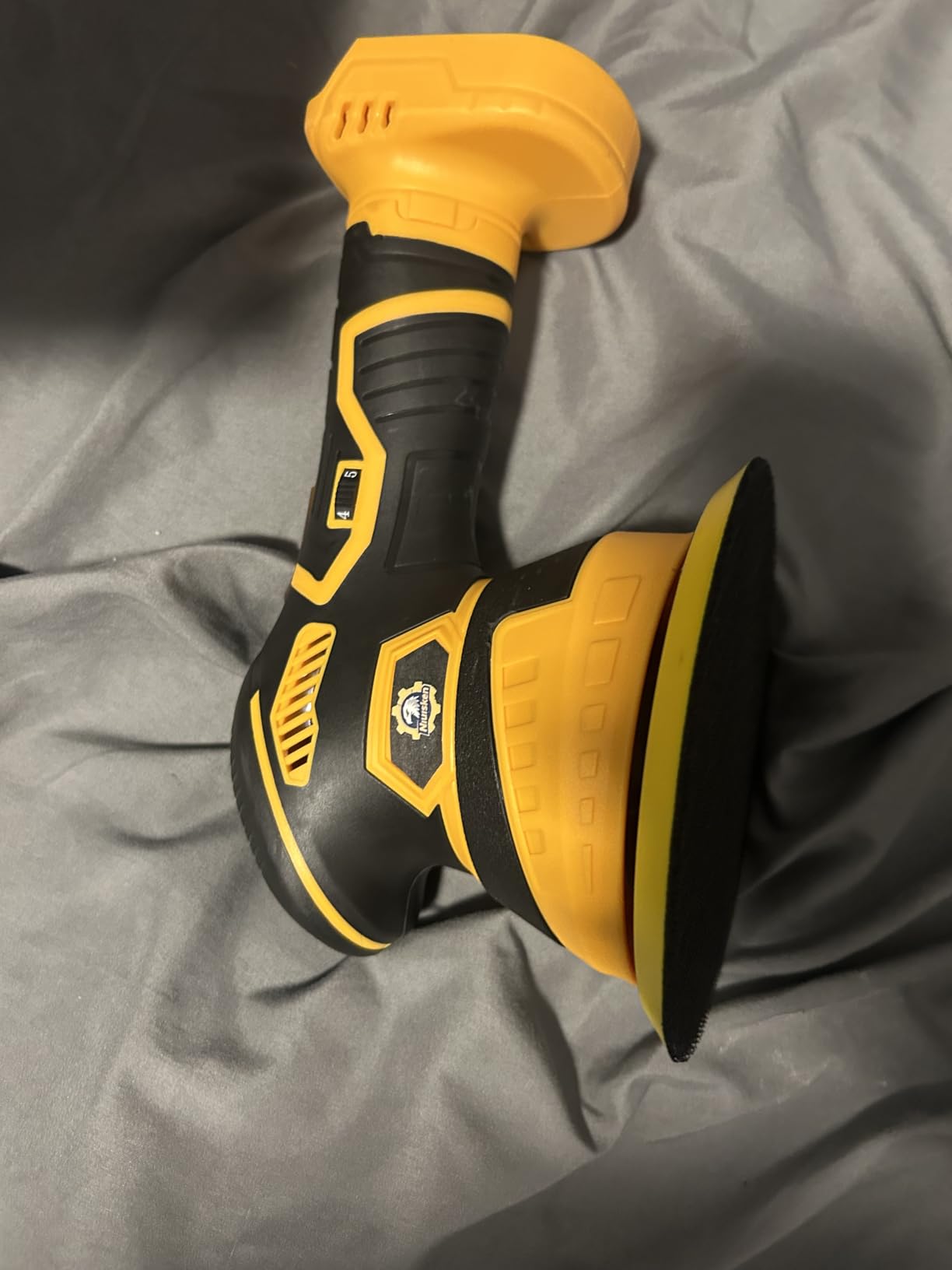
The Niusken kit solves a specific problem: getting a usable 8mm throw into a cordless machine without ending up with a brick. At 3.3 pounds it is the second-lightest here, and the 8mm orbit is wider than most cordless machines manage, which gives better coverage for wax and polish work.
Two 21V 2000mAh batteries and a fast charger are included, and the LED display shows both the current speed setting and the battery level. That display is a real advantage over a dial when you are trying to reproduce a finish you liked on a different panel.
The accessory list is wide: 5-inch and 6-inch flat sponge pads, wave sponge pads, two wool pads, microfiber bonnets, non-woven bonnets and six sanding discs, on a 5-inch backing plate. Across cars, boats, furniture, metal, wood, flooring, marble and ceramic, the same pads get reused constantly.
It is also the newest seller in the group, sitting at the top of its category for sales rank, which usually means the accessory supply will stay available.
Why the 8mm throw matters on a cordless machine
Small-throw cordless machines feel fussy because you have to make many passes to cover a panel. An 8mm orbit closes that gap, so a hood takes fewer passes and you spend less time reloading the same spot.
The overheating protection is the other useful part. When the motor runs hot it shuts down rather than cooking the pad and the panel, which is a sensible default for anyone learning the tool.
Where the Niusken falls short
The battery system is proprietary. It is not compatible with DeWalt or any third-party pack, so if you were hoping to justify the purchase by sharing batteries with tools you already own, that argument does not apply here.
Owners also report it shutting down after roughly 20 minutes of continuous high-speed use. Plan work in 20-minute blocks on this machine and swap packs, rather than expecting to finish a whole car at speed 6.
Who buys this machine
Someone who wants cordless freedom, an accurate speed readout, and a bundle heavy enough that nothing extra needs ordering. The 5-inch plate with that many pads and discs means you can do a full enhancement without a second purchase.
It suits a car that lives on a driveway with no power nearby, or a small detailing operation where working around a vehicle without dragging a lead is worth the compromise on sustained high-speed work.
Who should skip it
Skip it if you already own packs from a major tool platform, because the cost of a second incompatible battery ecosystem is the hidden expense that catches buyers here.
Also skip it for heavy correction. This is a maintenance and enhancement cordless machine, and a 980W or 1100W corded unit will out-cut it on any real defect removal.
8. AVID POWER AEP176 5/6-Inch Dual Action Kit: Best Long-Throw Dual Action Polisher on a Budget
AVID POWER 5″/6″ Dual Action DA Polisher Kit 6-Speed Random Orbital Buffer
6 speeds to 6,500 OPM
5-inch and 6-inch plates
5 A
120V corded
Pros
- Long-throw dual action motion lowers swirl risk
- Lockable trigger plus a thumb-reachable speed selector
- 5-inch and 6-inch backing plates and foam pads included
- Manufacturer support reported as fast and responsive
Cons
- Runs hot at higher speeds and becomes uncomfortable to hold
- Motor whine reported after extended high-speed use
- Lowest two speed settings sometimes fail to engage
The AEP176 is unusual for a budget machine because it ships with a long-throw dual action motion rather than a short throw. Longer throw means the pad covers a wider path per revolution, which is why owners report a lower swirl risk and good correction speed on a machine at this price level.
Speed range is 2,700 to 6,500 orbits per minute across a six-position dial, with a lockable trigger and a speed selector you can reach with your thumb. That combination lets you change speed mid-panel without stopping to set a dial, which is a genuine convenience on vertical work.
Both 5-inch and 6-inch backing plates come with foam pads, so you can start on a 5-inch for a first correction and move to 6-inch for large panels. The adjustable D-handle has five positions, which lets you set the angle to match the panel rather than fighting the tool.
Customer support is worth calling out here, because owners report fast, responsive help from the manufacturer. At a price where many machines are anonymous, that matters more than the accessory bundle.
Why long throw is the spec to look for
Throw size is the variable that determines how much panel you cover per pass. A long-throw machine moves the compound across a wider area, so a single pass does more work and you make fewer overlapping passes, which is where marring usually starts.
The trade is that a longer throw generates more heat for the same pressure and RPM. Combined with the heat complaints owners report on this model, the practical rule is to use the top speeds for short bursts rather than long slow passes.
Where the AVID POWER falls short
Heat management is the recurring theme. Owners report the machine running hot at higher speeds and becoming uncomfortable to hold, so build in speed reduction and pad changes on long passes.
Some units also report the lowest one or two speed settings failing to engage, and a motor whine developing after extended high-speed use. If you are polishing several cars a week, budget for a replacement sooner than the sticker list suggests.
Best use for this machine
A single-car correction on an older vehicle with hazing and light oxidation, where you want long-throw coverage without stepping up to a pro machine. Two plate sizes in the box cover both a first pass and a wider finish pass.
It is also a reasonable choice for a hobbyist who will polish a few times a year, since the main limitations on this machine show up under sustained load rather than in a careful single session.
Who should look elsewhere
If you are buying for an all-day detailing schedule, the heat and durability reports make a higher-output brushed machine a better investment. Motor whine and hot bearings are unpleasant at hour four of a working day.
If you want a polished finish rather than correction, this is more machine than you need. A lighter machine with a smaller throw will be easier to control for an enhancement-only workflow.
9. LDHTHOPI 980W 5/6-Inch Dual Action Polisher: Best Value With Real Cutting Power
LDHTHOPI Dual Action Polisher, 980W 5/6 Inch, 9MM Random Orbital Buffer Polisher for Car Detailing, 2800-5800RMP, 6 Variable Speed Buffer Polisher with 8 Detachable Pads
980W copper motor
9mm throw
2,800-5,800 RPM
3.4 kg
Pros
- 980W copper motor has ample power for swirls and scratches
- Six speeds from 2800 to 5800 RPM with smooth ramp-up
- Supports 5-inch and 6-inch pads for one-handed work
- Eight detachable pads plus sandpaper and a carry bag
Cons
- Included pads are basic and wear out quickly
- Builds noticeable heat that transfers to your arms
- Some units report early motor or carbon brush failure
At 980W the LDHTHOPI has more raw output than most machines costing several times more, which makes it the value pick for anyone who plans to actually cut defects rather than just maintain a finish. The 9mm throw sits in the middle of the range and is a good working number for a first correction.
Six speeds run from 2,800 to 5,800 RPM with a smooth ramp-up, and both a D-handle and a side handle are included with a speed lock. At 3.4 kg it is light enough for one-handed work on a door or a roof, which is unusual for a machine in this output class.
The bundle includes 5-inch and 6-inch adhesive pads, wool pads, flat sponges, rounded-corner sponges, ten 6-inch sandpaper sheets, a carbon brush set, a wrench, a cloth bag and a manual. It works on furniture, glass, wood, aluminium, steel, tiles and plastic as well as paint.
This is also the lowest-rated machine in the group at 4.3, and the rating spread shows it, with 8 percent one-star reviews. That is a durability signal rather than a performance one, and it is the reason this sits at number nine rather than higher.
Why the power-to-spec ratio is unusual here
Most machines at this output class weigh substantially more, and that weight matters more than wattage once you are on a roof. A light 980W machine can correct a panel and still leave your arm in good shape for the next one.
The 9mm throw also makes it a legitimate option for a two-step correction. Cut with a firm pad and a compound in the middle of the range, then refine at low speed with a soft finishing pad, all on the same machine.
Where the LDHTHOPI falls short
Heat transfers to your arms through the body, and owners call it out directly. Work in smaller sections, drop a speed setting when the machine gets hot, and do not leave a loaded pad sitting on one spot.
The included pads are the weakest part of the package and wear out quickly, so plan to buy your own pad set. There is also no variable-speed trigger, so speed is set by dial only, which removes one of the ways to manage heat on the fly.
Best use for this machine
A hobbyist who wants real correction capability and is willing to work in short sections. The light body and dual plate sizes make it comfortable on a roof and a door, which is where most people first lose the thread with a heavier machine.
It is also a sensible choice if the machine will be shared across materials. A motor that can handle a cutting compound on paint will not be fazed by a boat, a countertop or a stainless fitting.
Who should skip it
Skip it for high-volume work. The one-star reviews cluster around early motor and carbon brush failure, and if you are polishing multiple cars a week you want a machine with a warranty that covers that failure mode.
Skip it if heat in the tool is a dealbreaker for you, because no amount of good technique fully removes the sensation of a warm body against your forearm.
10. Griot’s Garage G9 Orbital Polisher: Best Dual Action Polisher for Enthusiasts
Griot’s Garage G9 Random Orbital Polisher, 1000 W, Variable Speed
1000W motor
9mm throw
2,000-6,400 OPM
5.3 lb
Corded
Pros
- 1000W motor holds speed under pressure without bogging
- Constant speed control keeps RPM steady as pressure changes
- Fan-cooled counterbalance and rubberized grip for long sessions
- Speed dial reachable by both left- and right-handed users
Cons
- Sold as polisher only
- so pads and compounds are a separate purchase
- 8.5 amp draw requires a grounded outlet
The G9 is the enthusiast choice, and the reason is control rather than raw power. A 1000W motor with a 9mm throw and a fan-cooled counterbalance delivers consistent speed, and consistency is what produces an even finish across a whole hood instead of a patchy one.
Speed control runs across six settings from 2,000 to 6,400 orbits per minute, and the dial is reachable by both left- and right-handed users. That sounds like a small detail until you are working a roof from both sides of the car and constantly moving your grip.
It weighs 5.3 pounds, comes with a 6-inch vented backing plate and a 10-foot quick-connect cord, and converts to a 5-inch pad system with the optional plate. The double-shot rubber grip and vented plate are what make it comfortable across a full day.
This is also the machine enthusiasts most often defend on warranty grounds. Owners in detailing communities repeatedly point to the brand’s replacement policy as a reason to stay with it, and that long-horizon confidence is a genuine part of the value even at a higher outlay than the budget tier.
Why enthusiasts end up on this machine
Constant speed under changing pressure is the technical headline. Most budget machines slow as you lean on the pad, and that speed loss is what causes uneven correction and haze left behind. This one holds its rate, so the result is repeatable.
The counterbalance is fan-cooled, which matters more than it sounds. Heat is the enemy of both paint and bearings, and a machine that moves air keeps both the panel and the gearbox closer to ambient temperature over a long session.
Where the G9 falls short
The base purchase is the polisher only, with a backing plate and cord. Pads, compound and polish are not included, so budget for a starter pad set and a compound before the first panel, and do not read the machine cost as the total.
It draws 8.5 amps, which means a properly grounded outlet and a cable you trust on a wet driveway. Plan your extension lead accordingly rather than using a household reel.
Best use for this machine
Multi-step correction on a car you care about, and all-day sessions where a fan-cooled body and a balanced grip reduce fatigue. The 5-inch conversion means you can move from a wide finishing pass to narrower trim work without a second machine.
It suits a buyer who intends to keep polishing. With pads and compounds, that is a long-term tool rather than something to replace when the next budget model appears.
Who should skip it
Skip it if you polish once or twice a year. The extra performance is real, but a hobbyist with occasional needs will not extract enough from it to justify spending more on the machine and then also buying pads and compounds.
Also skip it if you have no grounded outlet near where you work. The 8.5 amp draw makes an extension lead a necessity, not an optional accessory.
How to Choose a Dual Action Polisher Without Regret
Almost every regret we see in this category comes from choosing on the wrong axis. People buy on wattage, or on the size of the accessory bundle, when the variable that actually determines how the tool feels is orbital throw, followed by weight and balance.
Orbital throw: the spec that matters most
Orbital throw, the pitch circle diameter, is the distance the pad wobbles off its centre line. It is the number that determines both how much panel you cover per pass and how forgiving the machine is.
Here is how the tiers map to real use. A 5mm to 8mm throw gives the tightest, most uniform finish and the lowest heat, which suits wax, sealant and light enhancement, and it is the easiest place for a beginner to build control. A 9mm to 12mm throw is the general-purpose range that handles one-step correction on most vehicles. A 15mm throw covers large panels quickly and reduces marring from overlapping passes, and it is what enthusiasts usually choose. A 21mm throw maximises coverage per pass but generates the most heat, so it belongs to experienced hands doing longer correction sessions.
If you are choosing one number for a first machine, pick 8mm to 9mm. It is the point where the machines in this roundup overlap, and it gives you a good balance of coverage, forgiveness and heat behaviour.
Pad diameter: matching the machine to the panel
A 3-inch machine is an edge tool. Door sills, A-pillars, badges, narrow trim and the tight area behind a door are where small plates earn their place, and detailing communities treat them as a companion machine rather than a primary one.
A 5-inch plate is the general-purpose choice and covers most of a hood, door or roof with a manageable number of passes. A 6-inch plate reduces pass count on big panels, which saves time but demands more control near edges and in tight curves.
Two of the machines here ship with both 5-inch and 6-inch plates, which is the arrangement we prefer because it lets you start conservative and speed up once you know the machine.
Corded vs cordless: the honest trade
The honest summary is that corded wins on sustained power and cordless wins on freedom, and the deciding question is how much of your work happens away from an outlet.
Choose corded if you polish in a garage with a grounded outlet nearby, if you do long correction passes with a cutting compound, or if you already own extension leads and a reel. A 980W or 1100W corded machine will hold speed under load in a way that a small battery pack cannot.
Choose cordless if you work on driveways, in multi-level garages or on vehicles parked away from power, or if the freedom to move without planning a cable is what will make you polish at all. Two batteries are essential, and check the platform first, because the packs on the cordless machines here are proprietary and will not fit a tool collection you already own.
The most common battery mistake is buying a machine for the battery ecosystem you hope to buy later. If you already own packs from a major tool brand, verify compatibility before anything else, because a second ecosystem is an ongoing cost rather than a one-time one.
Brushed vs brushless motors and carbon brush life
Brushed motors use carbon brushes that wear down with use and need periodic replacement, and every machine in this roundup except where a brushless design is claimed is a brushed design. Brushless motors are more efficient, quieter and longer-lived, but they cost more.
For occasional users this matters little. For someone polishing multiple cars a week, treat the brushes as a maintenance item, keep a spare set, and expect to replace them on a schedule rather than after a failure.
Can a dual action polisher sand?
Yes, within limits. A DA polisher can cut and sand with the right abrasive disc, which is why several kits here include sanding discs, and it is useful for levelling a repair area, knockding down overspray or flattening a surface before refining.
What a DA is not good at is heavy stock removal. A rotary or a dedicated orbital sander removes material far faster, and pushing a DA to do that job generates heat and risks thinning thin panels. Use the sanding capability for preparation and refinement rather than for bulk removal.
What a kit should actually include
A useful kit contains a machine, at least one backing plate, a firm cutting pad, a soft finishing pad, a couple of compound or polish options, a side or D-handle, and a wrench. Anything beyond that is usually filler, and bundled pads from cheap kits are widely criticised as low quality.
The honest rule is to treat included pads and compounds as samples. They let you start immediately, which has real value for a beginner, but you will replace the pads and you should buy your own compound once you know what finish you want.
Cost of ownership after the machine
Budget for consumables from the start. Pads, compounds, microfiber cloths, carbon brushes, and replacement batteries on cordless machines all add up, and this running cost is where first-time buyers are most often surprised.
A firm pad, a soft pad and a bottle of compound will carry you a long way before anything else is needed. Add a second compound only once you know whether you are doing a one-step enhancement or a two-step correction.
Beginner safety: how not to burn through clear coat
Paint damage fear is the single biggest reason people never buy a machine, and it is largely avoidable. The rules are simple and they are the same for every machine in this roundup.
First, start slow. Use the bottom two or three speed settings, apply compound to the panel rather than the pad where you can, and use a clean section so you are not dragging previous grit across the paint. Keep the pad flat and moving, and never hold a loaded pad in one spot, because that is how heat builds. Watch for high spots that the pad can dig into on a used car, and lower speed over them rather than pushing through. Work in small sections and check the surface with clean fingers between passes, then drop a speed setting whenever the machine or pad gets hot. Finally, use a clean pad for every panel, because contamination is the most common cause of swirls people blame on the machine.
None of these rules are machine-specific. The machine decides how fast you work, not how carefully.
Frequently Asked Questions
Can a dual action polisher be used for sanding?
Yes, with the correct abrasive disc. A dual action polisher can cut, sand and refine, which makes it useful for levelling a repair area, knocking down overspray and flattening a surface before polishing. It is not a substitute for a rotary or a dedicated orbital sander when you need bulk material removal, because forcing a DA to do that job builds heat quickly and can thin a panel.
Is a DA or rotary polisher better?
A dual action polisher is better for most people, and especially for a first machine. Its combined spin-and-oscillate motion removes swirls, hazing and light oxidation with far less heat than a rotary, and it has the lowest consequence when a beginner applies too much pressure. A rotary cuts faster and can produce a deeper correction, but it demands technique and it burns paint faster. Most professionals reach for a long-throw DA rather than a rotary anyway.
What is the best cordless car polishing machine?
Among the machines reviewed here, the BATOCA S3 is the most approachable cordless start because it weighs about 3 pounds, ships with two batteries and a fast charger, and uses a 5mm throw that is very forgiving. If you want a wider 8mm throw and a speed readout, the Niusken 21V kit is the stronger option, at the cost of a proprietary battery platform. Either way, buy two batteries and check pack compatibility before you order.
What type of car polisher is best?
For most DIY owners and weekend users, a dual action polisher with a 5-inch or 6-inch backing plate and an 8mm to 9mm orbital throw is the best balance of correction ability, forgiveness and heat control. Add a small 3-inch machine later for door sills, A-pillars and edge work. Reserve a rotary for experienced users doing heavy correction, and a random orbital with a free-spinning bearing if you prefer minimal repeat tracking over maximum consistency.
How much orbital throw do I need?
For a first dual action polisher, aim for 8mm to 9mm. A 5mm to 8mm throw gives the tightest finish and lowest heat, which suits wax, sealant and light enhancement. A 9mm to 12mm throw handles one-step correction on most vehicles. A 15mm throw covers large panels faster and is a popular enthusiast choice, while a 21mm throw maximises coverage per pass but generates the most heat and suits experienced hands on longer correction sessions.
The Verdict: Which Dual Action Polisher Should You Buy?
The Chemical Guys TORQX is the best dual action polisher in this roundup and the one to buy. Its 700W motor, 8mm throw and 9-piece kit cover a first correction from a hazy hood to light defect removal, and the volume of owner feedback behind it is far larger than anything else we reviewed.
If your priority is warranty and a well-known tool brand behind the machine, the PORTER-CABLE 7424XP carries a three-year limited warranty and a service contract. If you want the most capability per unit of money, the SPTA kit holds the highest rating in the group at 4.7 with a 24-piece bundle. Cordless buyers should start with the BATOCA S3, and enthusiasts who plan to stay with machine polishing should look at the Griot’s Garage G9 for its constant speed control and fan-cooled balance.
Whichever you choose, buy a clean pad set and a compound before you buy the machine, start on the lowest speed setting, and keep the pad moving. That habit matters more than any specification on the box, and it is why a mid-range dual action polisher is all most people ever need. Use the Check Latest Price buttons above to compare the current listing for each machine.