The best router table fence for precision work is the one that holds its setting after you lock it down, not the one with the longest feature list. JessEm uses the heaviest base materials in this group, Woodpeckers offers the most refined adjustment, and the Taytools Deluxe gives you the most accuracy per dollar on an existing table.
That distinction matters more than anything else in this roundup. I have watched fences drift a few thousandths out of square halfway through a stack of identical rabbets, and no amount of premium hardware fixes a fence that creeps under load. So we judged all ten of these on squareness, repeatability, adjustment range, and whether they actually fit the table you already own.
The category spans a very wide range of hardware, from simple extruded aluminum fences that bolt to a rail in an afternoon to full table systems with a stand and top included. Everything below is a fence or a fence-and-table bundle, and each one lists its real specifications and its real complaints, including the ones owners rarely mention in the first week of use.
If you are still choosing the machine underneath, our work table testing notes cover the same squareness and support questions from the surface side. Flat, well-supported stock matters at least as much as the fence you clamp to it.
Table of Contents
- Top 3 Best Router Table Fences (October 2026)
- All 10 Router Table Fences Compared Side by Side in 2026
- Why Fence Precision Breaks Down Before You Do
- 1. Taytools 300015 Deluxe Router Table Fence
- 2. Kreg PRS1015 Precision Router Table Fence
- 3. JessEm Master Fence III Router Table Fence
- 4. SawStop RT-F27 27 Inch Fence Assembly
- 5. Peachtree Supreme Router Table Fence Kit PW1073
- 6. Kreg PRS1045 Precision Router Table System
- 7. Rockler ProMax Fence Kit with Micro-Adjustment
- 8. Woodpeckers SF-PRO Universal 36 Inch Router Table Fence
- 9. Rockler Pro Router Table Fence With Tool-Free Adjustment
- Pro Router Table Fence –Aluminum Frame Table Router Kit w/ 2-1/2” Dust Port –High-Quality T Track Fence w/Translucent Bit Guard –Comfortable T Knobs for Easy, Tool-Free Adjustment –Router Accessories
- Where the Rockler Pro Router Table Fence Works Best
- Where the Rockler Pro Router Table Fence Falls Short
- 10. Infinity Tools Professional Router Table Fence
- How to Test Your Router Table Fence for Accuracy
- What to Look For in a Precision Router Table Fence
- JessEm vs Woodpeckers vs Kreg Head-to-Head
- When You Do Not Need to Upgrade Your Fence
- Frequently Asked Questions
- What is the best router fence?
- Is the Kreg PRS1015 the best router table fence?
- How tall should a router fence be?
- Can a router table fence do flush cuts and jointing edges?
- Why does my router table fence drift out of square?
- How do I know if my fence is accurate?
- Do I need a micro-adjust router table fence?
- What is a router table fence versus a router edge guide?
- Our Final Verdict on the Best Router Fences for Precision Work
Top 3 Best Router Table Fences (October 2026)

Taytools 300015 Deluxe
- 32 inch anodized aluminum fence
- 3-1/2 inch tall
- Shim system for 1/32 and 1/16 inch outfeed offsets
- Integrated 2-1/2 inch dust collection port
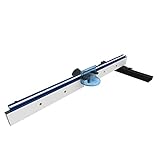
Kreg PRS1015
- T-square carriage for parallel alignment
- Micro-adjust wheel for fine positioning
- Adjustable MDF faces with jointing rods
- Integrated dust port and bit guard

JessEm Master Fence III
- Red phenolic base with stainless hardware
- Maple fence faces with shimming bars
- Built-in T-track rails
- Integrated dust collection
These three cover the realistic range for most shops. The Taytools Deluxe earned the top slot because it pairs a stiff machined extrusion with the largest verified owner base in this group. The Kreg PRS1015 wins on setup repeatability thanks to its T-square carriage, and the JessEm Master Fence III is the one to buy if you cut tight joinery and want fence faces you can shim and repair.
All 10 Router Table Fences Compared Side by Side in 2026
| Product | Specs | Action |
|---|---|---|
| Taytools 300015 Deluxe |
|
Check Latest Price |
| Kreg PRS1015 |
|
Check Latest Price |
| JessEm Master Fence III |
|
Check Latest Price |
 SawStop RT-F27 SawStop RT-F27 |
|
Check Latest Price |
 Peachtree Supreme Fence Kit Peachtree Supreme Fence Kit |
|
Check Latest Price |
 Kreg PRS1045 Table System Kreg PRS1045 Table System |
|
Check Latest Price |
 Rockler ProMax Fence Kit Rockler ProMax Fence Kit |
|
Check Latest Price |
 Woodpeckers SF-PRO Universal Woodpeckers SF-PRO Universal |
|
Check Latest Price |
 Rockler Pro Router Table Fence Rockler Pro Router Table Fence |
|
Check Latest Price |
 Infinity Tools Professional Fence Infinity Tools Professional Fence |
|
Check Latest Price |
Two things stand out when you line the specifications up. Only the Woodpeckers SF-PRO publishes a numerical adjustment figure and a lateral fit range, and only the JessEm Master Fence III replaces MDF faces with a solid hardwood insert you can plane down yourself. Everything else depends on shims or manual face adjustment, which is fine once you learn it.
Why Fence Precision Breaks Down Before You Do
Most fence problems are not manufacturing defects. They are physics showing up slowly over a session, and understanding the mechanism tells you which fence to buy before you spend anything.
Split fence versus uniform fence. A split fence has two independent halves, an infeed side and an outfeed side, each adjustable on its own. A uniform fence is one continuous face set tight to the bit. For flush trimming and edge work, a uniform fence keeps the entire board referencing a single surface, which is why some owners describe it as reducing damage to the front or ear edge of a board. A split fence wins for profile work, rabbets and dados, because you can open one side for full-bit clearance and keep the other side locked as your reference face.
MDF compression. Melamine-coated medium density fiberboard faces are cheap, flat and easy to trim, but they compress under clamping load. Set a fence hard against MDF with big knobs and you can flatten a few thousandths into the face. It stays flattened, so the measurement you took before clamping no longer holds. Solid aluminum and hardwood inserts resist this.
Humidity response. MDF and engineered board move with the season. A face that measured perfectly in January can sit a hair differently in July, and on an open stand with no frame the movement is not symmetrical. Fences built on a machined aluminum extrusion, like the Taytools Deluxe, are explicitly chosen by their manufacturers because they will not fluctuate with humidity.
Clamping force and cap deflection. Tall thin fence faces bow when you torque a knob near the center. On a fence standing three and a half inches tall this is usually invisible, but on a tall face holding a heavy workpiece you can bow the top of the face away from the bit and never notice. Wide spacing between the adjustment points, and more than one knob, reduces this.
Play in the lateral adjustment. The width of a fence face is set by where it sits on the rail. If the locating hardware has any slack, the face can rotate a fraction of a degree every time you release a knob. That is why fences with a T-square carriage, or one with a dedicated parallel reference to a miter gauge, tend to return to the same position after you move them back and forth.
This is the mechanism behind the most common complaint in woodworking forums: a fence that measured square at setup and is not square two hours later. It is why repeatability, not raw feature count, is the criterion I used throughout this roundup.
1. Taytools 300015 Deluxe Router Table Fence
Taytools 300015 Deluxe 32 Inches Long Router Table Fence 3-1/2 Inch Tall Anodized Aluminum with Feather Board, Bit Guard, Adjustable Stop and Dust Port
32 inch long
3-1/2 inch tall face
3/8 inch anodized aluminum body
9.28 lb
Dust port 2-1/2 inch OD, 2-1/4 inch ID
Pros
- Rigid straight anodized extrusion that resists humidity
- Extra tall knobs are easy to reach
- Feather board bit guard and adjustable stop included
- Shim system dials in the outfeed face
- Large dust port accepts a shop vac hose
Cons
- Melamine faces chip easily
- Mounting slots may not match a custom table track spacing
- Included T-slot bolts are undersized for standard T track
The Taytools 300015 Deluxe is the fence I keep coming back to for anyone upgrading an existing table. It is a 32 inch fence built on a 3/8 inch thick precision extruded anodized aluminum body, and that extrusion is the whole argument. Aluminum does not swell, it does not soften under clamping load, and it holds a straight line across a 32 inch span in a way that pressed steel and MDF cannot.
What I like most after repeated setup sessions is the shim arrangement. Two square aluminum bars sit in offset tracks on the outfeed side, letting you push the outfeed face in by 1/32 inch or 1/16 inch. That is exactly the correction you need for edge jointing and flush trimming, and it is a fixed, repeatable offset rather than a hopeful knob turn.
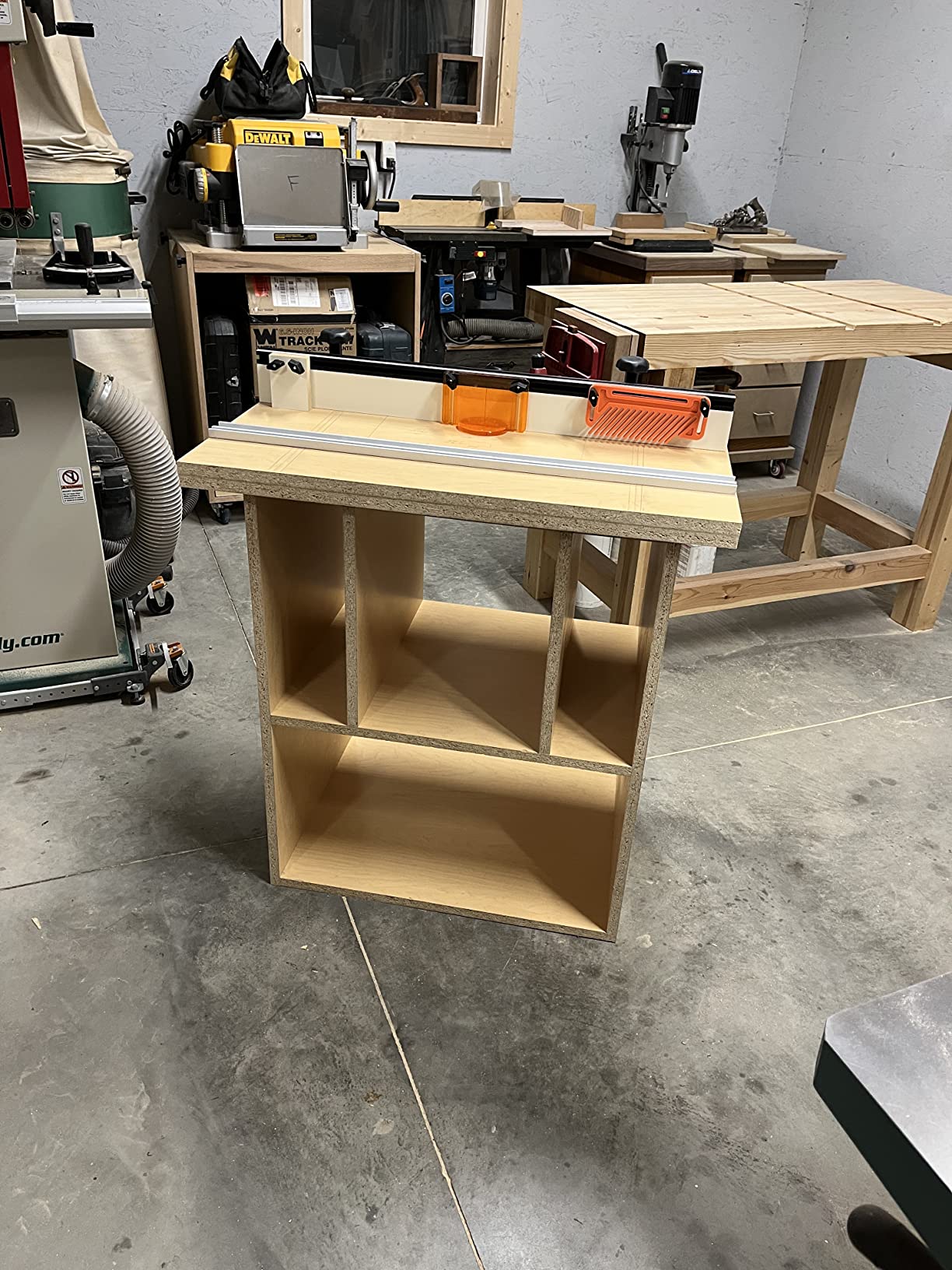
The faces are smooth melamine-coated MDF moved by four rear-mounted threaded knobs, and the knob spacing ranges from 6-1/2 to 10-3/4 inches or from 18 to 22 inches. Those extra tall knobs were the single most praised detail across the 178 reviews in this group, because you can reach them from a standing position without crouching behind the fence.
T tracks run along the top and the front face, so feather boards, stops and hold-downs all mount without hunting for a compatible hole pattern. The feather board, bit guard and adjustable stop all come in the box, which on its own saves you from buying three accessories after the fence is mounted.
Where the Taytools 300015 Deluxe Works Best
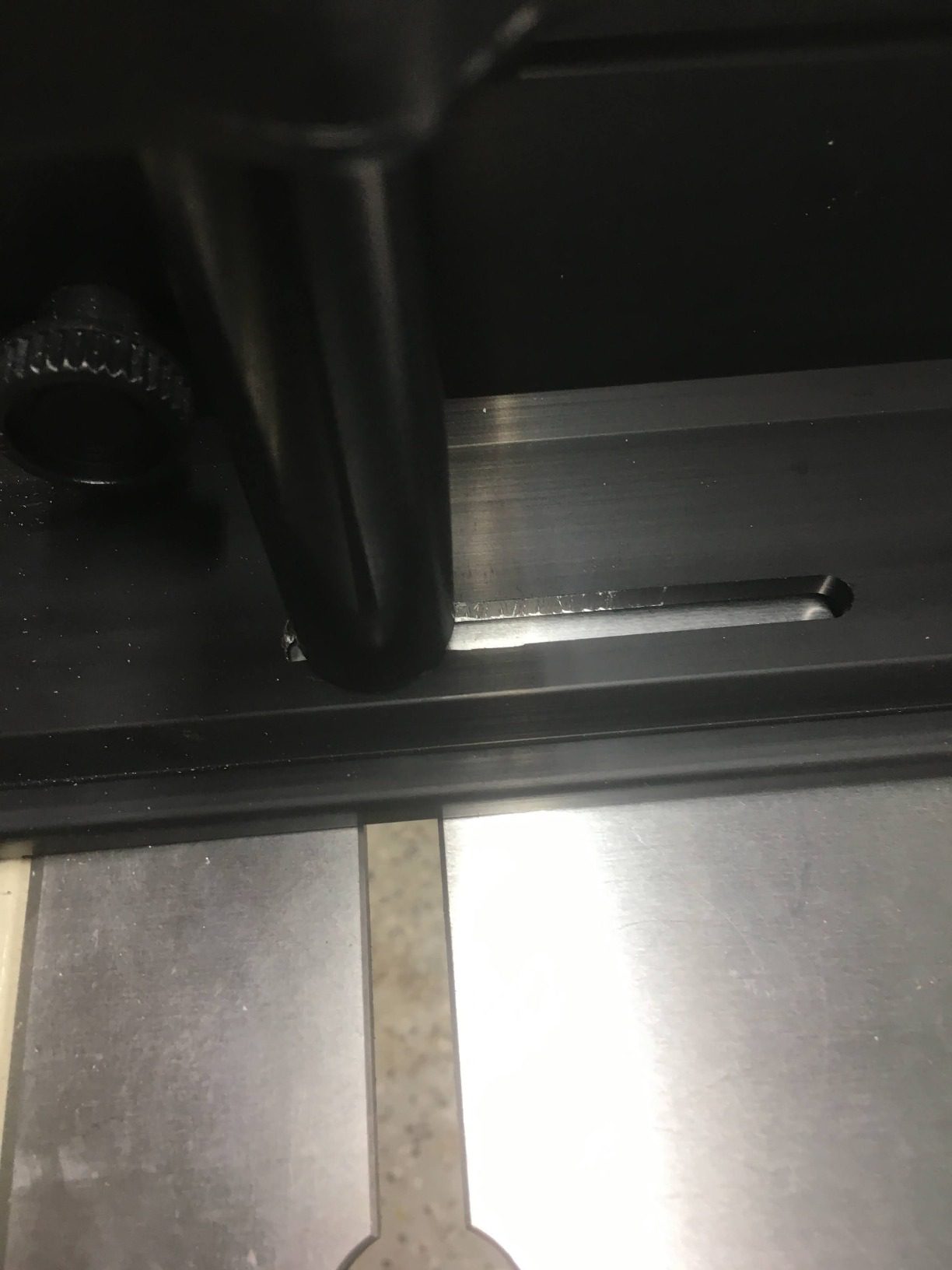
This is a universal mount rather than a table-specific one, and it bolts to a router table rail with drilled mounting slots. On a table whose track spacing differs from the factory spacing, owners report needing to re-drill. Measure your rail spacing before you commit, because that is the single most common reason a fence swap gets abandoned halfway.
The 2-1/2 inch OD dust port with a 2-1/4 inch ID opening is one of the more generous sizes in the category. A standard shop vac hose fits directly with no reducer, and owners report dust collection working consistently once seated.
Where the Taytools 300015 Falls Short
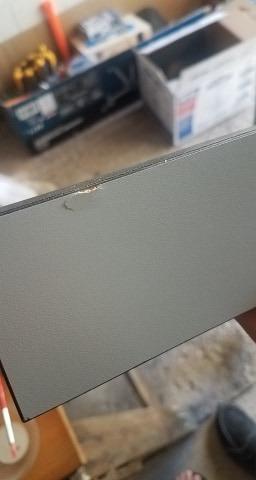
The melamine faces chip, and once a face is chewed up near the bit line it stays chewed. Treat them as sacrificial surfaces and keep a spare board flat against the face when routing plywood or melamine-faced sheet goods.
The included metric T-slot bolts have heads that are too small for standard T track and can bind as you slide the fence, and the machined slot in the base is narrow for typical T-slot hardware. Budget a few minutes and some hardware swaps on day one. A minority of owners also received fences whose faces were not coplanar, so check squareness the moment the box opens rather than after your first project.
2. Kreg PRS1015 Precision Router Table Fence
Kreg Precision Router Table Fence, Woodworking Router Table Fence, PRS1015
T-square style carriage
Micro-adjust wheel
6.5 lb
Aluminum body with adjustable MDF faces
Includes bit guard and jointing rods
Pros
- T-square carriage holds the fence parallel to a miter gauge
- Micro-adjust wheel handles fine in and out setup
- Slotted channels accept feather boards and stops
- Jointing rods included
- Light at 6.5 lb and easy to reposition
Cons
- Stock micro-adjuster is plastic and flimsy
- Face adjustment screws spin unless held with a screwdriver
- Dust port pulls off when a flexible hose contracts
The Kreg PRS1015 is the fence to buy when your real problem is setup repeatability rather than raw stiffness. Its defining feature is the T-square style saw carriage, which references the fence to the same geometry as a miter gauge. In practice that means the fence returns to parallel after you slide it in and out to change a rabbet depth, instead of landing wherever you last let go of the knob.
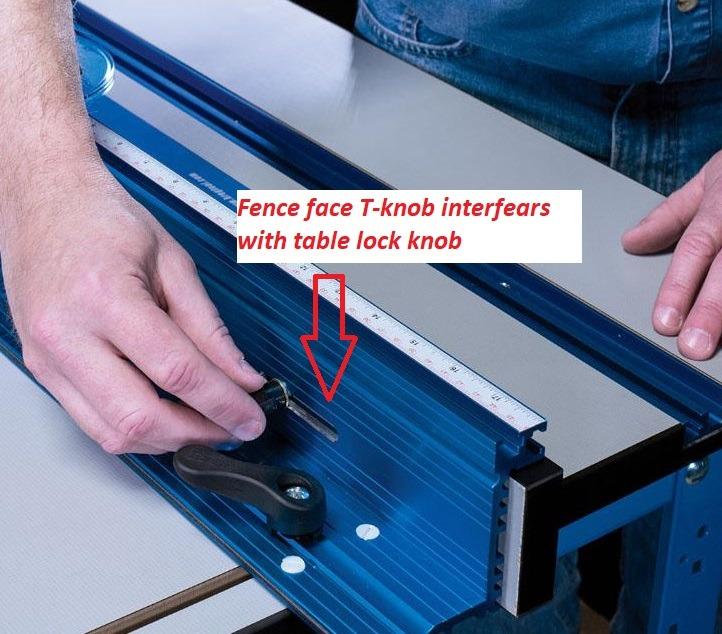
The fence slides one-handed and locks with both a paddle lock and a quarter-turn lock, which sounds redundant until you are working alone. You can carry a fence panel in one hand and tighten with the other, and you rarely have to hunt for a second knob position.
A measuring scale on the fence lets you dial position from the bit directly, and the micro-adjust wheel handles the fine range. It is a straightforward wheel rather than a micrometer dial, so you are reading increments off a rotating scale instead of a threaded pitch, but for rabbets and dados the resolution is more than adequate.
The package is unusually complete for a fence at this level: anodized aluminum body, adjustable faces, T-square carriage, micro-adjust wheel, jointing rods, a measuring tape, dust collection port, bit guard, assembly hardware and an owner’s manual. Slotted channels run along the fence for feather boards and stops.
Where the Kreg PRS1015 Works Best
This fence wants a dedicated rail mounted to your table. It is not a clamp-on design for an existing rail, and it will not fit a cast iron table saw extension. If you already own a Kreg router table, this is a like-for-like replacement. If you do not, plan on mounting a rail, which is a straightforward weekend job with a straightedge and a drill.
At 6.5 pounds it is the lightest of the fences here with a published weight, and that matters on a benchtop table where you move the machine around. Light also means less momentum when you slide it, which reduces the chance of a knock that shifts your setting.
Where the Kreg PRS1015 Falls Short
The supplied micro-adjuster accessory is plastic and flimsier than the rest of the assembly, and the face adjustment screws will spin free unless you hold them with a screwdriver. Neither is a deal breaker, but both are the kind of detail that makes a fence feel less refined than its price implies.
Owners also report that the dust port connection pulls off easily when a flexible hose contracts as it cools, and that front panel screws can catch on the rear knobs during assembly. Several buyers received incomplete hardware or rough packaging, although Kreg’s service is praised once contacted. Weigh the geometry advantage against the assembly fiddliness before you commit.
3. JessEm Master Fence III Router Table Fence
JessEm Master Fence III Router Table Fence (04400)
19 lb
Red phenolic base
Maple fence faces
Shimming bars included
Built-in T-track rails
Made in Canada
Pros
- Stays flat and square under clamping load
- Maple faces can be planed and repaired unlike MDF
- Shimming bars make edging offsets predictable
- Own T-track rails for jigs and stops
- Stainless steel hardware throughout
Cons
- Mounting on a custom outfeed table takes extra effort or improvisation
- Minor tearout at maple insert ends from factory milling
The Master Fence III weighs 19 pounds, and that heft is not vanity. It sits on a red phenolic base, which is one of the stiffest and most dimensionally stable base materials available for this application, and every piece of hardware in the assembly is stainless steel.
The detail that separates it from everything else here is the fence face material. Instead of MDF, you get solid maple inserts, plus a set of unique shimming bars for jointing and edging. When a face gets chewed up or needs to come down a few thousandths for a zero-clearance setup, you plane it. You cannot do that with melamine MDF.
Own T-track rails are built into the fence, so jigs, stops and hold-downs mount to the fence itself rather than to the table. That is a real advantage for template work, where you want a stop referenced to the fence rather than to a fixed point on the table.
The fence is made in JessEm’s Canadian manufacturing facility and carries a one year manufacturer warranty. Dust collection is integrated and connects directly to a shop vac hose without an adapter.
Where the JessEm Master Fence III Works Best
This is the pick for anyone doing tight joinery, dovetails, box joints or flush trimming on hardwood where a bowed face shows immediately. The maple inserts hold a flat reference through long sessions, and the shimming bars make the 1/16 and 1/32 inch edging offsets predictable instead of experimental.
Heft is the other quiet advantage. On a free-standing table, 19 pounds of fence does not walk when you slide it across the top, and the phenolic base stays put under clamping force where lighter fences creep.
Where the JessEm Master Fence III Falls Short
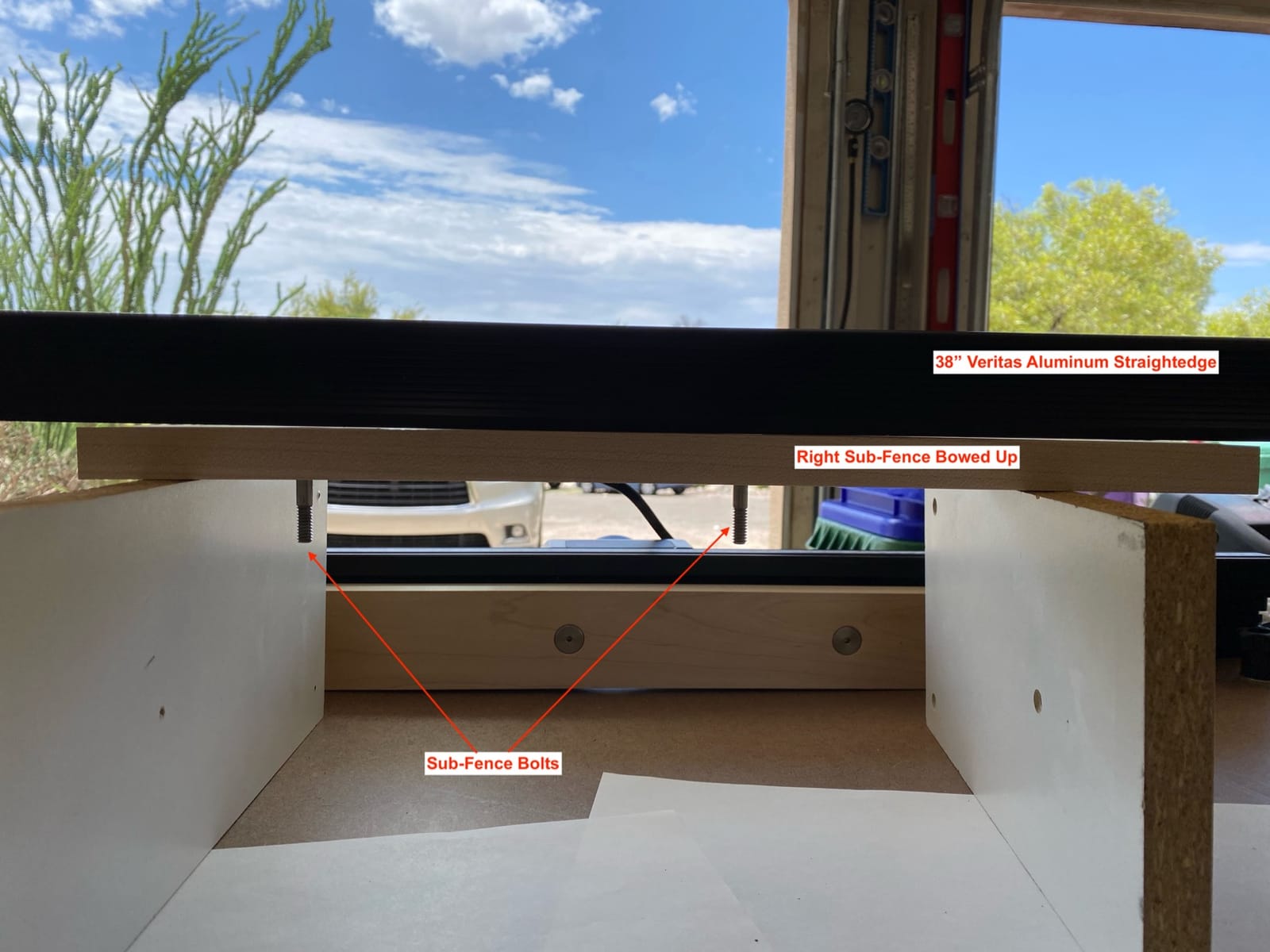
Mounting it to a custom outfeed table without the supplied brackets takes extra effort or improvisation, so budget an evening if your table is not a standard JessEm platform. There are also reports of minor tearout at the ends of the maple inserts straight from factory milling, and one owner traced tight joinery failures to a bow of 1/32 to 1/64 inch along a fence face. Check squareness across the full length when it arrives.
Finally, the owner base of 61 reviews is smaller than the Taytools or Kreg counts here, so long-term data is thinner. It is a heavier, more expensive commitment made on the strength of materials rather than a large volume of owner reports.
4. SawStop RT-F27 27 Inch Fence Assembly
SawStop RT-F27 27″ Fence Assembly For RT
27 inch fence assembly
Two adjustable faces with shims and scales
2.25 inch dust port
10 lb
Package 33 x 5 x 4 inches
Pros
- Dual adjustable faces with shims and readable scales
- Accepts standard feather boards and flip stops
- Standard 2.25 inch dust port size
- Purpose-built fit for SawStop router tables
Cons
- Sized for SawStop RT tables and less useful elsewhere
- Only 31 ratings so long term data is limited
If your router table is a SawStop RT, this is the fence that was designed for it, and there is no fitment guesswork. The 27 inch assembly includes two adjustable fence faces with shims and adjustable scales, which is more adjustment hardware than most fences in this price range provide, and it accepts standard feather boards and flip stops.
Shims plus scales is the combination worth noting. Shims give you coarse, repeatable offsets for edge work, and the scales let you read the position instead of guessing, which together cover both the rough setup and the fine one.
The 2.25 inch dust port is a standard size that fits common shop vac and hose combinations without a reducer. Installation hardware is included, and the whole assembly weighs 10 pounds, which is substantial without being awkward.
Where the SawStop RT-F27 Works Best
This fence suits builders who want a matched system rather than a retrofit. The scales on both faces make it a good candidate for repeat rabbet and dado production, because you can record a setting instead of re-dialing it. The 27 inch length is shorter than most fences here, which is fine on a compact table but limits very long workpieces.
Where the SawStop RT-F27 Falls Short
Its purpose-built sizing limits its usefulness on other router tables. And with only 31 ratings, there is limited long-term durability data to go on, along with very little written owner feedback. If your table is a SawStop RT, this is the safe choice. If it is anything else, you are giving up the universal fit that other fences in this roundup offer.
5. Peachtree Supreme Router Table Fence Kit PW1073
Peachtree Woodworking SUPREME ROUTER TABLE FENCE KIT – PW1073
32 inch pre-drilled aluminum fence
Two 16 inch extension sections
2-1/2 inch shop vac port
13 piece kit
Handles bits up to 3-1/2 inch
Pros
- Highest average rating among the fences reviewed here at 4.8
- Pre-drilled aluminum fence simplifies fitting to a table
- Complete kit with extensions featherboard stop and dust port
- Direct 2-1/2 inch shop vac hookup
Cons
- Only 14 reviews so the track record is thin
- Supplied featherboard is the small plastic type
- Limited insight into squareness over time
The Peachtree Supreme kit is the value answer here, and it carries the highest average rating among every fence in this roundup at 4.8. That number comes from only 14 reviews, so treat it as promising rather than proven, but the kit itself is unusually generous for the money.
You get a 32 inch pre-drilled aluminum fence, which is the feature that matters most here. Pre-drilled means the mounting holes are already there and you are not marking and drilling a rail blind, which is where most weekend fence swaps go wrong.
The rest of the kit includes a pair of 16 inch aluminum extension sections for wide material, a pair of dust port mounting blocks, a router dust port, a small plastic featherboard, a Uni-fence stop block and six quarter inch by 20 knob bolts. The dust port system accepts a 2-1/2 inch shop vacuum hose directly from the back of the fence.
Where the Peachtree Supreme Kit Works Best
This suits a first fence, a benchtop router table, or anyone who wants a complete workable setup without buying accessories separately. It handles bits up to 3-1/2 inch diameter, and the extension sections mean you are not immediately boxed in by a 32 inch reference width.
Aluminum construction at this level is unusual and it is why this kit punches above its tier on stiffness. If you are upgrading from a pressed steel or MDF fence, the change in how the reference face behaves is immediate.
Where the Peachtree Supreme Kit Falls Short
The featherboard included is the small plastic type rather than a heavy aluminum model, so plan on replacing it if you do real edge work. The 14 review pool gives you very little long-term data on whether the faces stay coplanar, and there is no fine adjustment mechanism, so all positioning is done with the fence body itself.
If you need micro-adjustment or shimming control, look elsewhere. This is a good first precision fence, not a finishing fence for production joinery.
6. Kreg PRS1045 Precision Router Table System
Kreg PRS1045 Precision Router Table System – Self-Squaring Fence System – Sits on Precision Router Table Top – Carpentry Tools & Accessories
24 x 32 inch top with insert plate
36 inch self-squaring T-square fence
Steel stand from 31 to 39 inches
24 inch W x 39 inch H
3 Level-Loc reducing rings
Pros
- Self-squaring T-square fence with micro-adjust wheel
- Table top insert plate and stand in one purchase
- Three Level-Loc reducing rings cover common router diameters
- Redesigned outfeed anchor frees up table space
- Stand height range fits many users
Cons
- Casters are sold separately
- Fence is integrated to the Kreg top so it does not move to other tables
- Far more costly than a stand-alone fence
The PRS1045 is a complete system rather than a fence, and that changes how you should judge it. You are buying a 24 x 32 inch router table top with an insert plate, a 36 inch self-squaring T-square fence, and a multi-purpose steel stand, all in one purchase.
The fence is the same design philosophy as the PRS1015 reviewed earlier. A T-square carriage references the fence to the same geometry as a miter gauge, and a micro-adjust wheel handles fine setup. Because the top and the fence are a matched pair, the squareness relationship between them is set at the factory rather than established by you on a Saturday afternoon.
Where the Kreg PRS1045 System Works Best
This is the pick if you are building out a router station from nothing rather than replacing one fence. The insert plate comes with three molded Level-Loc reducing rings that cover common router diameters, and the redesigned outfeed anchor frees up usable table space that older designs wasted.
The multi-purpose steel stand adjusts from 31 to 39 inches in height, which covers most users without a riser. Casters are not included, so factor that into the setup.
Where the Kreg PRS1045 Falls Short
You cannot move the fence to another table. It is integrated to the Kreg top, so if you later replace the table, the fence goes with it or becomes decoration. That single limitation is what separates a system from a fence, and it is why we do not rank this as the top precision choice.
With only 10 reviews the feedback base is very thin, and the total cost sits far above buying a stand-alone fence and mounting it to a table you already own. For an existing table, that difference does not buy you more accuracy.
7. Rockler ProMax Fence Kit with Micro-Adjustment
Router Table Fence with Micro-Adjustment Knob & Dust Port Set
11.97 lb
Micro-adjust knob
Two MDF sub-fences with joiner bars
2-1/2 inch integral dust port
Package 33 x 6.5 x 4 inches
Pros
- Micro-adjust knob makes rabbet and dado setup quick and repeatable
- Fits Rockler router tables exactly
- On-board storage for the adjustment hex wrench
- Includes a heavy-duty bit guard and jointer bars
- Accurate fit and finish on a custom tabletop
Cons
- One owner found the sub-fences out of alignment and could not shim them flat
- Accessories such as stops are not included
- Dust port can leak at the back without sealing
The Rockler ProMax kit is designed to fit all Rockler router tables, past and present, and builders confirm the fit is exact. If you own a Rockler table, that compatibility alone is worth a lot, because you are not adapting an extrusion to a rail spacing it was not designed around.
A single micro-adjust knob dials in the fence position, which makes rabbet and dado setup quick and repeatable. Two MDF sub-fences adjust for zero-clearance cuts, and jointer bars are included so you can support the workpiece and get snipe-free jointed edges. T tracks on the fence take stops and accessories.
The package includes the fence, dust port, a heavy-duty bit guard, a T-handle hex wrench, two MDF fences, two jointer bars and hardware. The adjustment hex wrench stores on-board, which is a small detail that prevents the classic lost-tool mid-setup problem.
The dust port is a pre-installed 2-1/2 inch custom unit rather than an add-on, so dust collection works from the first cut. Top-mounted fence knobs put the adjustment points where you can reach them from the front of the table.
Where the Rockler ProMax Kit Works Best
This suits Rockler table owners doing rabbets, dados and edge jointing, particularly if you intend to use a router plane or edge guide on the same table. The micro-adjust knob is the fast path to a repeatable setting, and the joiner bars let the same fence handle jointing work.
Where the Rockler ProMax Kit Falls Short
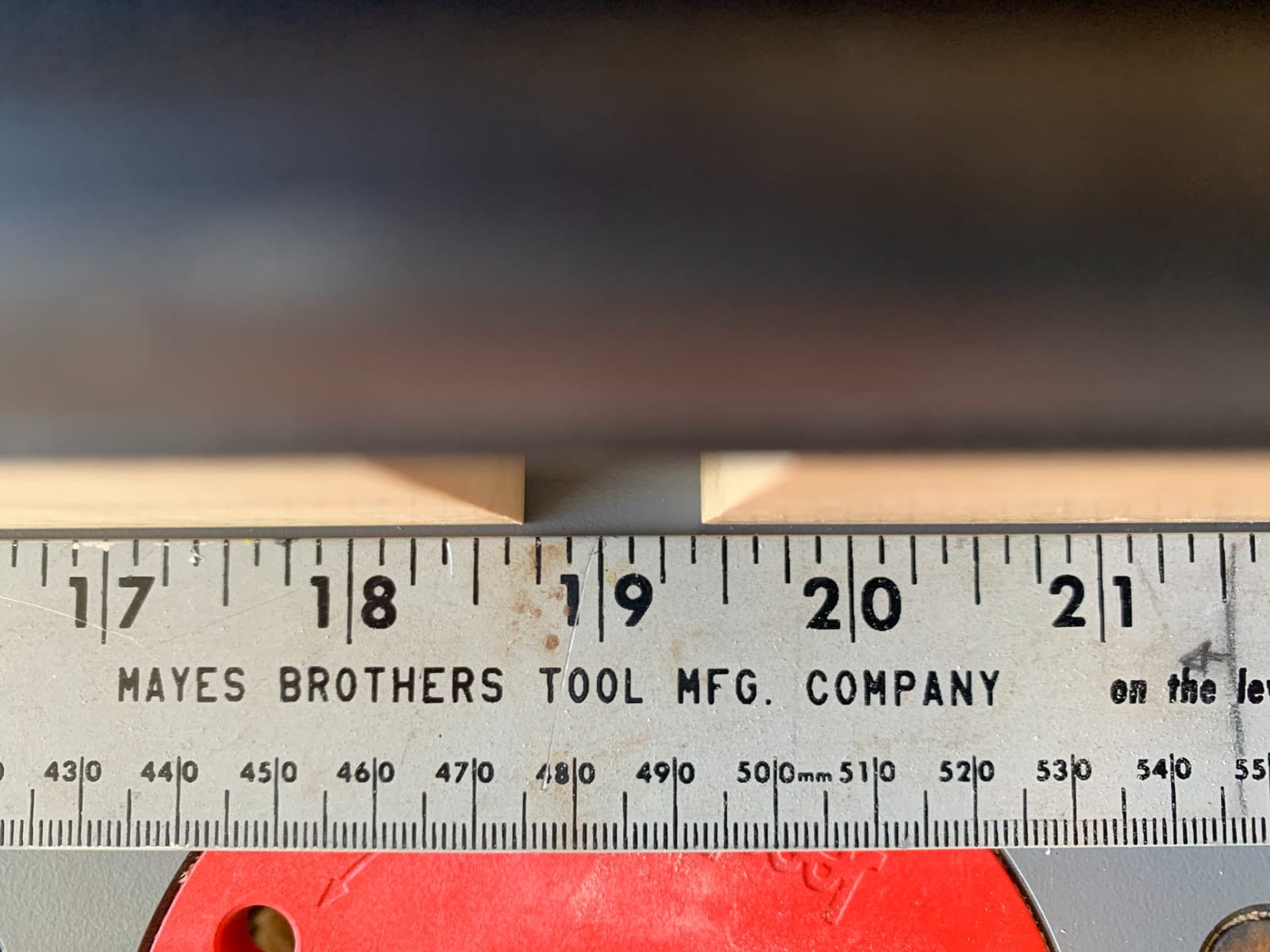
The most important caution here is squareness. One builder found the infeed and outfeed sub-fences out of alignment, measured 0.006 inch of outfeed face out of square, and found the supplied shims could not correct it, with alignment depending on how tight the knob was set. That is exactly the failure mode that ruins precision work, so check it on day one.
Accessories such as stops are not included despite the price, and the dust port can leak dust at the back without sealing. With 9 reviews, long-term data is limited.
8. Woodpeckers SF-PRO Universal 36 Inch Router Table Fence
Woodpeckers SF-PRO Universal 36-Inch Router Table Fence, USA Made, 3-Way Micro-Adjustment, Fits Most Edge-Rail and T-Track Router Tables and Shapers – SFPRO-U-25
Three-way micro-adjustment to .001 inch
Lateral fit from 16-3/4 to 33-1/4 inches
30 lb
Aluminum tracks, phenolic base, MDF sacrificial faces
Made in Ohio
Pros
- Independent three-way micro-adjustment on both sub-fences and the whole fence
- 1mm-pitch screw feed with micrometer dial graduations accurate to .001 inch
- Universal base fits edge-rail and T-track tables and shapers
- Dust port accepts both 2-1/4 and 2-1/2 inch hoses
- Sacrificial faces adjust for zero-clearance cuts
Cons
- Most expensive fence reviewed here
- Small slot clamp screws are difficult to handle
- Guide channel screws too short for some metal table tops
- Instructions need larger clearer photos
The SF-PRO Universal is the only fence in this roundup that publishes a real adjustment figure. Three-way independent micro-adjustment covers the infeed, the outfeed and the fence as a whole, driven by a 1mm-pitch screw feed with micrometer dial graduations, and the manufacturer states it is accurate to .001 inch, which is 0.025mm. Nobody else here publishes a number you can check against.
The universal base is the other headline. With adapter track nuts, the fence handles laterally from 16-3/4 to 33-1/4 inches and fits edge-rail and T-track style router tables as well as shapers. That range is wide enough that you are choosing the position rather than hoping it lands right.
Sacrificial MDF fence faces adjust for zero-clearance cuts, and the aluminum track fences accept Woodpeckers flip stops. A separate featherboard track takes the Woodpeckers variable pressure featherboard and bit guard. The dust port is fitted to accept 2-1/4 inch and 2-1/2 inch hoses, which solves the reducer problem outright.
At 30 pounds on a phenolic base with aluminum tracks, it is heavy in a way that helps. Owners report no deflection under cabinet-shop use, and the fence is manufactured and inspected in Strongsville, Ohio.
Where the Woodpeckers SF-PRO Works Best
This is for the builder doing repetitive setup who has been frustrated by nudging a fence into position. A micrometer dial reads out your actual offset, so a 1/8 inch rabbet does not depend on your eye or on remembering what you did last time. The three-way control also lets you square both faces independently, which is the adjustment that most fences cannot make.
If you want to read a technical detail precisely, the same idea shows up in our precision scale testing, where the difference between a good reading and a guess is the whole point.
Where the Woodpeckers SF-PRO Falls Short
It is the most expensive fence we reviewed. At that level, small handling details start to show: the slot clamp screws are difficult for anyone with reduced vision or limited dexterity, and the instructions need larger, clearer photos than they have.
The screws supplied for the guide channels were reported too short for a Rockler metal top, requiring substitute hardware, and buyers moving up from a JessEm fence may find the guide mounting hardware incompatible out of the box. With only 8 reviews, the long-term track record is still short for a product at this level.
9. Rockler Pro Router Table Fence With Tool-Free Adjustment
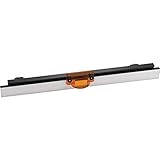
Pro Router Table Fence –Aluminum Frame Table Router Kit w/ 2-1/2” Dust Port –High-Quality T Track Fence w/Translucent Bit Guard –Comfortable T Knobs for Easy, Tool-Free Adjustment –Router Accessories
One-piece machined aluminum frame
Two melamine MDF fence faces
Front and rear T tracks
Tool-free T knobs
Bit guard and 2-1/2 inch dust port included
Pros
- Fully machined one-piece aluminum frame for flatness and squareness
- Front and rear T tracks give more accessory mounting options
- Tool-free T knob adjustment
- Bit guard and 2-1/2 inch dust port included in the kit
Cons
- Only 4 reviews so there is very little written feedback
- Melamine faces are the first surface to show wear
- No documented squareness or adjustment range data
The Rockler Pro Router Table Fence is built around a one-piece aluminum frame that is fully machined on the front and bottom surfaces for flatness and squareness. Machining both faces of a single extrusion, rather than assembling a face onto a body, is how you remove the coplanarity problems that show up on fences built from separate parts.
The adjustment is tool-free. Comfortable T knobs let you reposition the fence without hunting for a wrench, and two melamine-coated MDF fence faces adjust for both low clearance and zero-clearance routing.
Universal T tracks face both the front and the rear, which is more accessory mounting than most single-sided fences give you. Feather boards, stops and hold-downs can go on either side depending on the cut, and the kit includes a heavy-duty bit guard and a 2-1/2 inch dust collection port.
Where the Rockler Pro Router Table Fence Works Best
This suits builders who set their fence frequently and do not want tools for it. Tool-free adjustment is not just convenience. Removing the need for a wrench means you are less likely to overtighten a knob and compress an MDF face, which is one of the drift mechanisms described earlier.
Front and rear T tracks are genuinely useful for template work, where you want a hold-down on the outfeed side pressing down as the bit passes.
Where the Rockler Pro Router Table Fence Falls Short
The honest limitation is data. With only 4 reviews, there is very little written customer feedback, and no documented squareness or adjustment range figures are published. The rating of 4.7 is promising but thinly validated, so we would verify squareness carefully on arrival.
The melamine-coated MDF faces are the first surface to show wear, which is normal for this construction and worth planning for. There is no micro-adjustment stage, so the faces and the frame carry all the positioning.
10. Infinity Tools Professional Router Table Fence
Infinity Tools Professional Router Table Fence
Professional positioning
Compatible with most router tables
Aimed at precision and repeatability
Easy to install
Pros
- Lowest priced fence in the premium positioning tier
- Listed as compatible with most router tables
- Aimed squarely at precision and repeatability
Cons
- Only 1 review so there is no owner feedback to judge
- Listing publishes no weight dimensions or adjustment range
- No stated fence face material or dust collection detail
The Infinity Tools Professional Fence is positioned for both professional and hobbyist woodworkers, with the stated goal of improving routing precision and repeatability, and it is listed as compatible with most router tables and easy to install. On paper that is exactly the brief for this roundup.
In practice, the published specification is thin. There is no weight, no dimensions, no fence face material, no adjustment travel and no dust collection detail, so we cannot tell you how it adjusts or what it is made of. The only owner data point on file is a single review at a 4.0 average.
Where the Infinity Tools Professional Fence Works Best
This makes sense for a first router table, a spare fence for a shop with two machines, or a build where you want a simple second reference. If your decision criteria are broad compatibility and simple installation, the claims line up with what you need.
Where the Infinity Tools Professional Fence Falls Short
A single review is not enough signal to judge squareness, adjustment durability or how the faces wear. And with no published dimensions, you cannot check fit against your table’s rail spacing before ordering, which is the compatibility anxiety that derails fence upgrades more than any other factor.
We would verify fit and squareness before committing, and we would not choose this over a fence with published adjustment figures and a real owner base for any precision work.
How to Test Your Router Table Fence for Accuracy
Verify a fence before you cut a project with it, and again after any bit change. It takes about fifteen minutes and it tells you more than any spec sheet.
1. Check squareness with a machinist square. Set a square on the fence face at three points along its length, near each end and in the middle, and check the same on the table side. Consistent readings mean the fence is parallel to the table. A reading that changes along the length is a bow, not an alignment error.
2. Sweep with a dial indicator if you have one. Clamp the indicator to the fence face and slide it the full length, then repeat with the fence under clamping load. The difference between the loaded and unloaded readings tells you how much the face deflects, which is the number that separates a heavy phenolic-base fence from a light one.
3. Measure the lateral adjustment range. Push the fence fully to one stop and then fully to the other, measuring the reference width at each extreme. Compare that against the width of the workpieces you actually cut. A fence with limited travel forces you to reposition the workpiece, which reintroduces the error you paid to remove.
4. Run a repeatability test on scrap. Cut three identical rabbets in the same board without touching the fence between cuts, then measure each one. Three matching measurements means the fence holds its setting. Three drifting measurements means play in the lateral adjustment or compression in the face, and no amount of care at the setup stage will fix it.
5. Test after a bit change and after a week of use. Removing and refitting a bit, or changing the fence height for different stock, is when most fences lose their reference. Re-check at the start of a session rather than assuming last week’s setting survived.
What to Look For in a Precision Router Table Fence
Adjustment type matters more than adjustment existence. A plain knob gives you positional change. A micrometer dial on a fine-pitch screw feed gives you a readable, repeatable offset. Three-way independent adjustment, where the infeed, outfeed and whole fence each move separately, is what lets you square both faces rather than one.
Build material sets the ceiling. Anodized aluminum holds flat and will not move with humidity, but it is the first thing to scratch. Solid hardwood inserts can be planed and repaired indefinitely. MDF faces are the cheapest to replace and the easiest to trim for zero clearance, and they are the first surface to compress under clamping force and the first to chip at the bit line.
Fence height should match your tallest workpiece. A fence shorter than the workpiece gives you a reference over only part of the edge. Three and a half inches handles most profile work and edge material. If you build raised panel doors or cut tall cabinet parts, you want six inches or more, because a taller face needs a wider adjustment spacing to stay flat.
Check independent infeed and outfeed control. Split fences let you open one side for full-bit clearance while holding the other side as a fixed reference. That is the feature that makes one fence usable for both edge work and full-width routing.
Match the dust port to your hose. Ports come as 2-1/4 inch and 2-1/2 inch outside diameters, and a mismatch means a reducer or a leaky fit that loses suction. The Woodpeckers SF-PRO accepts both, which removes the problem entirely.
T-track access decides what you can attach. Tracks on the top, the front and the rear give you somewhere for feather boards, stops, hold-downs and templates. Fences with tracks only on the top limit you to accessories referenced to the fence face rather than the workpiece.
Lateral fit range versus your table. Measure the distance from your router bit to the table edge and the rail spacing before ordering. A universal base with a published range, like the SF-PRO’s 16-3/4 to 33-1/4 inches, removes the guesswork. A pre-drilled fence, like the Peachtree kit, removes the drilling.
Sacrificial sub-fences for zero-clearance work. Flush trimming and jointing require the fence face to sit close to the bit. Faces that adjust down to zero clearance let you make that cut without a separate setup.
JessEm vs Woodpeckers vs Kreg Head-to-Head
These three dominate the conversation in woodworking forums, and the honest comparison is less about which is best and more about which failure mode you can live with.
JessEm builds the most substantial hardware here. The Master Fence III pairs a red phenolic base with stainless steel hardware and solid maple faces that you can plane and shim, and it is the pick when a bowed reference face would show up in your joinery. The tradeoff is weight, mounting effort on non-JessEm tables, and a smaller owner base.
Woodpeckers builds the most refined adjustment. The SF-PRO is the only fence here with three-way independent micro-adjustment, a micrometer dial, a published .001 inch figure and a published lateral fit range, and the universal base solves fit anxiety on tables from other brands. The tradeoff is cost, small assembly screws, and guide hardware that may not suit the table you already own.
Kreg builds the best setup repeatability per dollar. The T-square carriage on both the PRS1015 and the PRS1045 references the fence to miter gauge geometry, so the fence returns to parallel after you move it. The tradeoff is that it wants its own rail, the micro-adjuster is plastic, and you are buying a system rather than a fence if you choose the PRS1045.
Choose JessEm if you need the reference face to stay flat through long sessions. Choose Woodpeckers if you need to read your settings precisely. Choose Kreg if you need the fence to return to the same place every time you move it.
When You Do Not Need to Upgrade Your Fence
If your table already has a fence, replacing it does not automatically make your cuts better. A few honest cases where the existing fence is good enough.
If you cut sheet goods and edge trim on plywood, the accuracy demands are modest and any fence with solid clamping will hold a reference edge through a full sheet. A new fence will not rescue an out-of-flat workpiece, and in our experience the sanding and the panel selection matter more.
If your work is dominated by template and jig routing where the fence is barely a reference, the upgrade does almost nothing. In that situation the quality of your template and your mounting plate is the entire accuracy story.
If your existing fence is a solid aluminum extrusion and it holds a square reading under a dial indicator, you are already at the ceiling that most fences reach. The gains from going further show up in edge jointing and flush trimming, not in general routing.
If you have never checked squareness, check it first. Owners who replace a fence and see no change usually had a fence that was already square and a problem that lived elsewhere, usually workpiece support, a worn bit, or material that was not flat.
Frequently Asked Questions
What is the best router fence?
The best router fence for precision work holds its setting after you lock it down. JessEm builds the most substantial fences, Woodpeckers offers the most refined adjustment with a micrometer dial, and the Taytools Deluxe gives the most accuracy per dollar. Judge on repeatability, not feature count.
Is the Kreg PRS1015 the best router table fence?
The Kreg PRS1015 is one of the strongest mid-tier choices because its T-square carriage references the fence to miter gauge geometry, so it returns to parallel after you move it. It needs its own mounted rail and its micro-adjuster is plastic, so it suits builders who want repeatable setup over maximum rigidity.
How tall should a router fence be?
At least as tall as the tallest workpiece you will run. Three and a half inches handles most profiles and edge stock, while six inches or more suits raised panel doors and tall cabinet parts. A taller face needs wider knob spacing to resist bowing.
Can a router table fence do flush cuts and jointing edges?
Yes, if the fence faces adjust down to zero clearance and you support the workpiece. The Rockler ProMax kit includes jointer bars for snipe-free jointed cuts, and fences with sacrificial MDF faces can be trimmed down for flush trimming. A machinist square on the joint verifies the result.
Why does my router table fence drift out of square?
Drift usually comes from four causes: MDF faces compressing under clamping load, humidity moving the faceplate, play in the lateral adjustment that lets the face rotate, and fence faces bowing when knobs are tightened near the center. Aluminum bodies and solid hardwood inserts resist all four.
How do I know if my fence is accurate?
Check squareness with a machinist square at three points along the fence, then cut three identical rabbets on scrap without touching the fence and measure each one. Three matching measurements means the fence holds its setting. Re-check after every bit change.
Do I need a micro-adjust router table fence?
You need one if you change setup frequently or cut the same thing repeatedly. A micrometer dial on a fine-pitch screw feed lets you read a repeatable offset instead of nudging the fence by eye. If you set up once a month and cut sheet goods, a plain adjustable fence is enough.
What is a router table fence versus a router edge guide?
A router table fence is a heavy reference face clamped to a router table for edge work, rabbets and joinery. A router edge guide is a lighter handheld or mounted guide for straight edges on a router without a table. A router plane is a different tool again, using a fixed bearing to cut a bevel.
Our Final Verdict on the Best Router Fences for Precision Work
The Taytools 300015 Deluxe is the best router table fence for most shops in 2026. A machined anodized aluminum body, a shim system for repeatable outfeed offsets, accessories in the box, and the largest verified owner base in this group make it the pick we would install on an existing table.
For the highest level of refinement, the Woodpeckers SF-PRO Universal is the one to buy when you need to read your settings rather than feel for them, with three-way micro-adjustment, a micrometer dial and a published lateral fit range. For tight joinery where a bowed face ruins the joint, the JessEm Master Fence III with solid maple inserts is the right call.
The Kreg PRS1015 covers the mid tier with setup repeatability that nothing cheaper matches. The Peachtree Supreme kit is the sensible first fence, and the Infinity Tools Professional Fence is a straightforward option for a second table.
And if your existing fence already passes a squareness check under a dial indicator, keep it and spend the time on workpiece support instead. That is where accuracy actually comes from.
