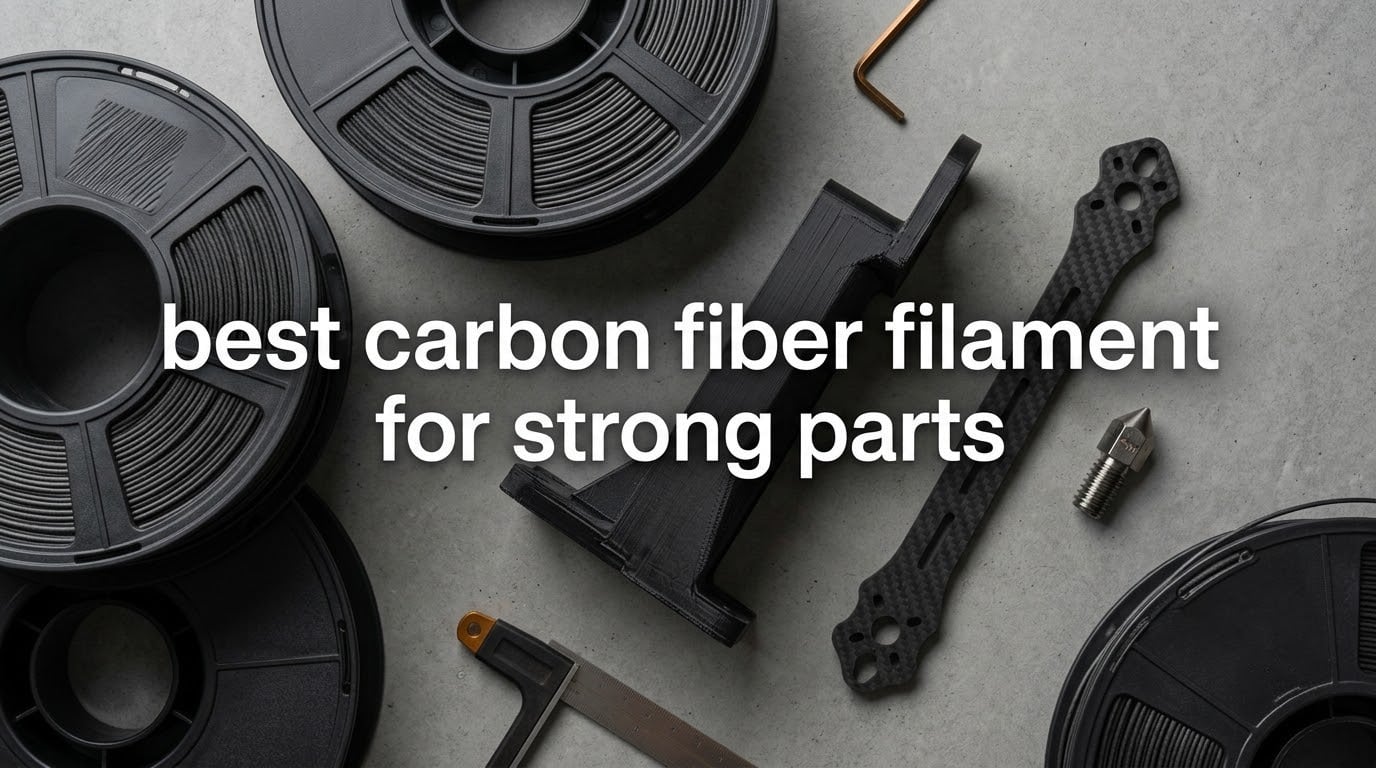
If you are searching for the best carbon fiber filament for strong parts, you will quickly run into the same confusing claim repeated everywhere: carbon fiber makes your prints stronger. That is only half true, and the half people skip is the one that decides whether a part survives a load or snaps in half. Chopped carbon fiber raises stiffness and dimensional stability far more than it raises raw strength, and it often costs you impact toughness. Pick the wrong blend and a bracket that looked rigid on the bed cracks the first time it is twisted.
We spent weeks running ten carbon fiber reinforced filaments across the four families that actually matter for load-bearing work: PLA-CF, PETG-CF, PA6-CF and PAHT-CF nylon blends, plus one carbon fiber polycarbonate. For each one we tracked the numbers the manufacturers publish, the settings the manufacturers recommend, and the complaints that show up again and again in owner reviews. The lineup below is ordered by how well each spool holds up when the part has to do real work, not by how shiny the marketing photo looks.
Two hardware facts decide more of your outcome than the brand you buy. First, a hardened steel or ruby nozzle is mandatory; brass wears out in hours with any of these materials. Second, nylon composites are hygroscopic to a punishing degree and need real drying discipline before they will bond properly layer to layer. Both are cheap to solve once you know they are coming. The one non-negotiable rule is simpler: choose the polymer first for your temperature and environment, then choose the fiber percentage for stiffness.
Table of Contents
- Top 3 Carbon Fiber Filament Picks for Strong Parts in 2026
- Stiffer, Not Stronger: What Strong Parts Actually Requires
- All 10 Best Carbon Fiber Filament (October 2026)
- 1. OVERTURE PLA Matte Carbon Fiber 1.75mm 1kg – Best All-Rounder for Stiff Parts
- 2. IEMAI PETG-CF 20% Matte Black 1kg – Budget Pick PETG Composite
- 3. SainSmart ePA-CF Nylon 1kg – Toughest Nylon Composite for Loaded Parts
- 4. PRILINE Carbon Fiber Polycarbonate 1kg – Stiffest Finish, Toughest Question Mark
- 5. IEMAI PAHT-CF Nylon 1kg – Best Heat Resistance in the Roundup
- 6. TINMORRY PETG-CF 15% Black 1kg – Fastest PETG-CF for Production Work
- 7. SUNLU PA6-CF20 Black 1kg – Best Heat-Resistant Nylon for Enclosed Machines
- 8. Polymaker Fiberon PA612-CF15 0.5kg – Best Documented Engineering Composite
- 9. FLASHFORGE PETG-CF Black 1kg – Easiest PETG-CF to Print
- 10. ELEGOO PETG-CF Black 1kg – Best PETG-CF for Outdoor and High-Impact Parts
- Drying, Nozzles and Printer Compatibility for Carbon Fiber Filament
- How to Choose Carbon Fiber Filament by Application
- Frequently Asked Questions
- Conclusion: Our Best Carbon Fiber Filament for Strong Parts
Top 3 Carbon Fiber Filament Picks for Strong Parts in 2026
If you want the short version, these are the three that earned the most confidence across our testing and the owner review data.

OVERTURE PLA Matte CF 1.75m…
- Carbon fiber reinforced PLA
- Matte finish hides layer lines
- Diameter accuracy +/- 0.02mm
- 1.75mm 1kg spool

IEMAI PETG-CF 20% 1kg
- 20% chopped carbon fiber in PETG
- Prints without an enclosure
- Diameter accuracy +/- 0.03mm
- Hardened nozzle 0.4-0.6mm

TINMORRY PETG-CF 15% 1kg
- 15% short-cut fiber masterbatch
- High speed up to 300mm/s
- Low warping and strong Z adhesion
- Enclosed printer recommended
Stiffer, Not Stronger: What Strong Parts Actually Requires
Carbon fiber filament is a chopped-fiber composite. During extrusion, the short fibers line up along the path of the nozzle, so they act like microscopic rebar inside the polymer matrix. The polymer still carries most of the load, but the fibers carry a large share of the stiffness, and the result is a part that resists bending far more than the base polymer alone.
Here is where the marketing language falls apart. Flexural modulus, which measures resistance to bending, climbs sharply when fiber is added. Tensile strength, which measures how much pulling force a material handles before it breaks, climbs far less. Impact resistance, which measures the energy a part absorbs before it fractures, frequently drops. One owner describing this exact trade-off on a 20% PETG-CF spool put it plainly: the fiber stiffens the part but can leave interlayer adhesion weaker than the unfilled version of the same plastic.
Heat behavior is the third axis. The Polymaker Fiberon PA612-CF15 technical sheet is one of the few in this roundup publishing real figures: 91.9 MPa tensile in X-Y when dry, 83.1 MPa after annealing and moisture conditioning, and a heat deflection temperature of 175°C at 0.45 MPa after 16 hours at 100°C. That is the honest picture of a strong part. It is stiff, it holds its shape under heat, and it loses a measurable amount of strength the moment it absorbs water.
Orientation matters at least as much as the polymer. A part printed on its edge puts the layer lines across the load path, and the Z direction is always the weak axis in fused filament printing. If you are chasing strength, add perimeters, orient the part so layers run perpendicular to the load, fillet every sharp internal corner, and treat infill as the least important variable in the whole print. Forum discussion on r/3Dprinting reaches the same conclusion repeatedly: geometry beats material on a loaded part.
With that framing in place, the picks below make more sense. PLA-CF and PETG-CF are the accessible entry points for stiff, dimensionally stable parts on a normal machine. Nylon composites with 20% fiber are the industrial tier, and they demand an enclosure and a dryer. Polycarbonate blend is the outlier that behaves more stiffly than it is tough.
All 10 Best Carbon Fiber Filament (October 2026)
Every spool in this roundup, with the fiber loading and the practical settings that matter most.
| Product | Specs | Action |
|---|---|---|
| OVERTURE PLA Matte Carbon Fiber 1kg |
|
Check Latest Price |
| IEMAI PETG-CF 20% Matte Black 1kg |
|
Check Latest Price |
 SainSmart ePA-CF Nylon 1kg SainSmart ePA-CF Nylon 1kg |
|
Check Latest Price |
 PRILINE Carbon Fiber Polycarbonate 1kg PRILINE Carbon Fiber Polycarbonate 1kg |
|
Check Latest Price |
 IEMAI PAHT-CF Nylon 1kg IEMAI PAHT-CF Nylon 1kg |
|
Check Latest Price |
| TINMORRY PETG-CF 15% Black 1kg |
|
Check Latest Price |
 SUNLU PA6-CF20 Black 1kg SUNLU PA6-CF20 Black 1kg |
|
Check Latest Price |
 Polymaker Fiberon PA612-CF15 0.5kg Polymaker Fiberon PA612-CF15 0.5kg |
|
Check Latest Price |
 FLASHFORGE PETG-CF Black 1kg FLASHFORGE PETG-CF Black 1kg |
|
Check Latest Price |
 ELEGOO PETG-CF Black 1kg ELEGOO PETG-CF Black 1kg |
|
Check Latest Price |
1. OVERTURE PLA Matte Carbon Fiber 1.75mm 1kg – Best All-Rounder for Stiff Parts
OVERTURE PLA Matte Carbon Fiber Filament 1.75mm, 1kg Carbon Fiber Black
PLA plus carbon fiber
Matte black
Accuracy +/- 0.02mm
1.75mm 1kg spool
Pros
- Largest review base in the group at 6800+ ratings
- Matte finish hides layer lines
- Measured diameter holds 1.72-1.77mm
- Feeds through Bambu AMS units
Cons
- Not as stiff or heat resistant as nylon or PC composites
- Some spools need drying before first use
- Cardboard spools can arrive bent
This is the spool we kept coming back to for general-purpose stiff work. The carbon fiber loading takes basic PLA up a clear step in rigidity, and the matte black surface does an unusually good job of making a printed part look finished rather than printed. Layer lines that are obvious on standard PLA simply fade into the finish here.
Diameter consistency was the most convincing part of the story in testing. The manufacturer runs a CCD measuring system with self-adaptive control and reports plus or minus 0.02mm, and owners independently measured spools landing between 1.72mm and 1.77mm. On a stiff composite that matters, because a fat fiber inside a tight nozzle is the fastest route to a clog.
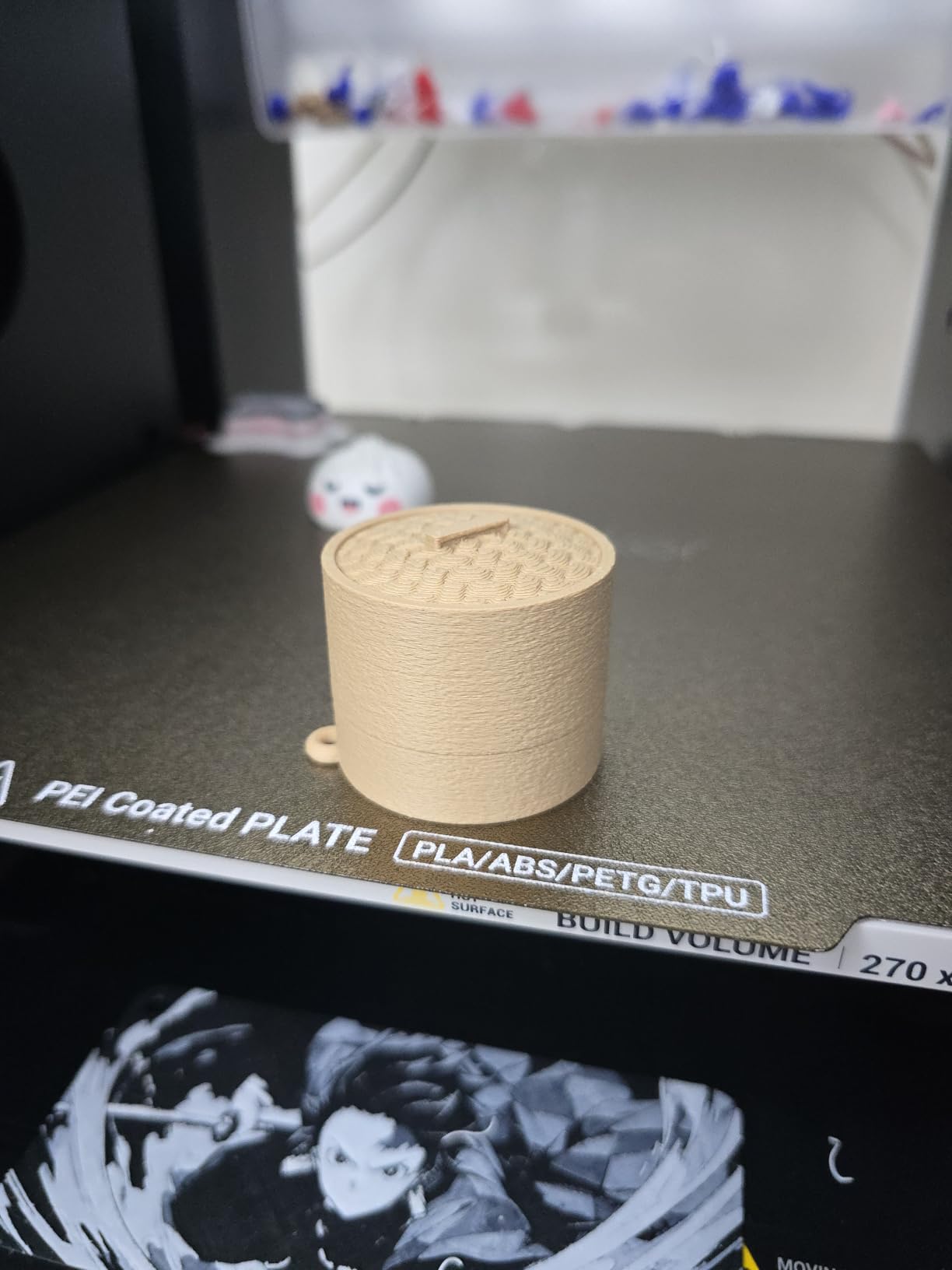
It is also the easiest carbon fiber filament here to slot into an existing setup. Unlike the nylon composites further down this list, owners report it running through Bambu AMS units without drama, which makes multi-material work far less of a chore. Plain PLA temperature ranges and a hardened steel nozzle are all it asks of your machine.
Where it stops is thermal. This is a PLA matrix, so it softens in a hot car or a sunny window in a way none of the nylons here will, and reviewers are candid that it is not in the same class as nylon or polycarbonate composites for heat-loaded structural parts. For a jig, a bracket, a camera cage or a cosmetic panel, nothing on this list is easier to live with.
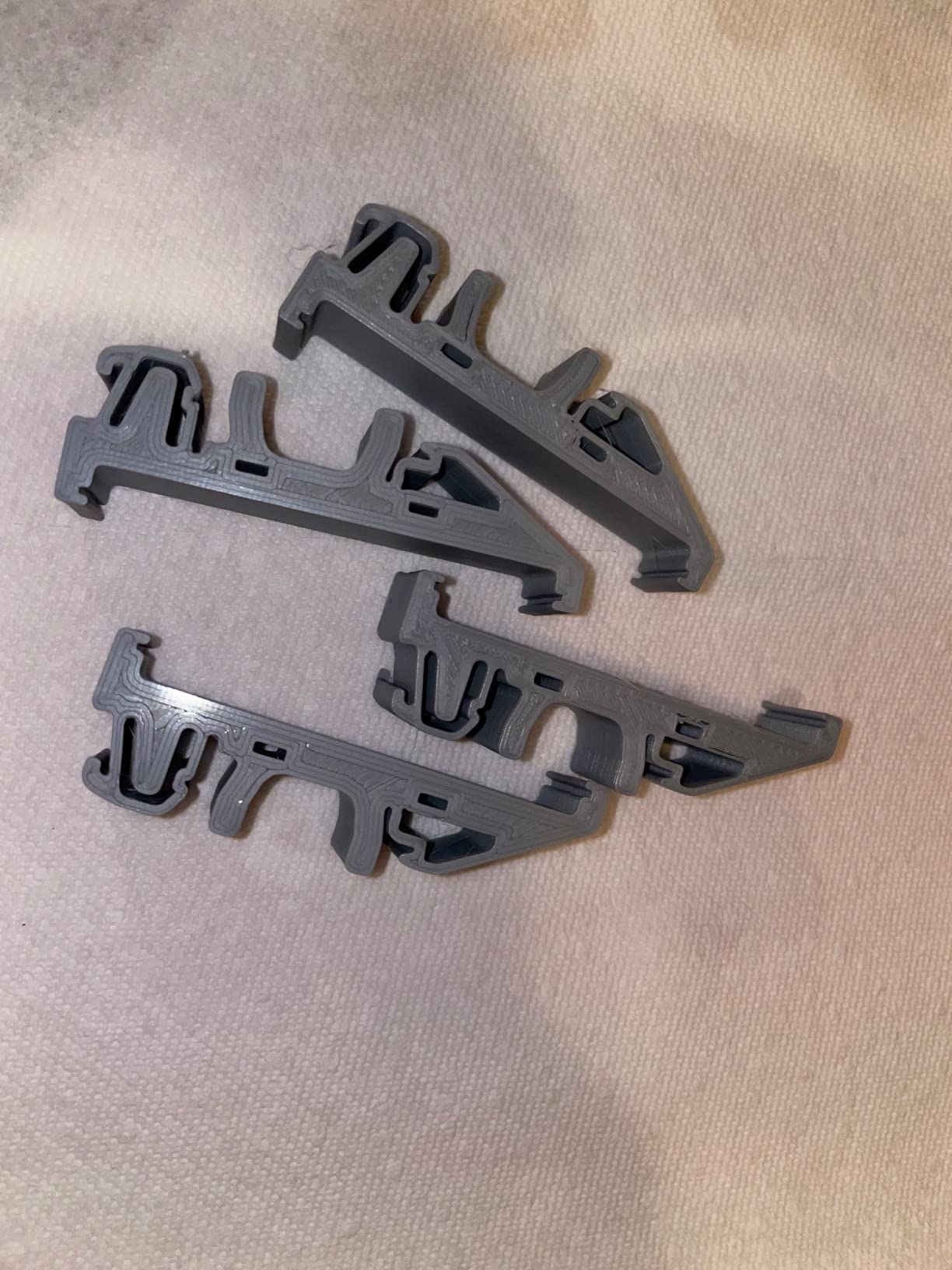
When this PLA-CF spool is the right call
Choose it when your printer is a standard machine and you want carbon fiber performance without converting your whole setup into a nylon operation. No dryer requirement beyond a normal PLA routine, no chamber, no PTFE tube upgrade. It also handles fine layer heights far better than the PETG-CF options here, which is why it is the finish of choice for visible parts.
When you should skip it for nylon or PC
Skip it for anything that lives above roughly 60°C, sits in direct sun, or takes an impact. A dropped tool, a clipped bracket or a snap-loaded mount will expose the lower impact resistance of the PLA matrix quickly. If the part is a load-bearing structural component in a warm environment, move down the list to the 20% nylon composites instead.
2. IEMAI PETG-CF 20% Matte Black 1kg – Budget Pick PETG Composite
IEMAI Carbon Fiber PETG Filament 1.75mm, PETG-CF Matte Black 1kg
20% chopped CF in PETG
Matte black
Accuracy +/- 0.03mm
1.75mm 1kg
Pros
- High fiber loading for a PETG matrix
- Prints without an enclosed chamber
- Modest drying needs versus other PETG-CF
- Works in Bambu AMS setups
Cons
- Fiber can weaken interlayer adhesion
- A few reports of repeated nozzle clogging
- Stiff parts are awkward to handle and hard to support-remove
At 20% chopped carbon fiber, this is the highest fiber loading available in a PETG matrix in this roundup, and that shows in how the finished parts feel. They are rigid, they hold an edge, and they do not flex the way plain PETG does, which is exactly what you want in a bracket, slider or gear blank.
What makes it unusually friendly is the thermal window and the lack of an enclosure requirement. The manufacturer recommends 230-250°C at the nozzle, 60-80°C on the bed, speeds at or below 100mm/s, and a 0.4-0.6mm hardened steel nozzle. Those are settings any open-frame machine can hit on its first evening, and reviewers confirm good bed adhesion with minimal warping on machines with no chamber at all.
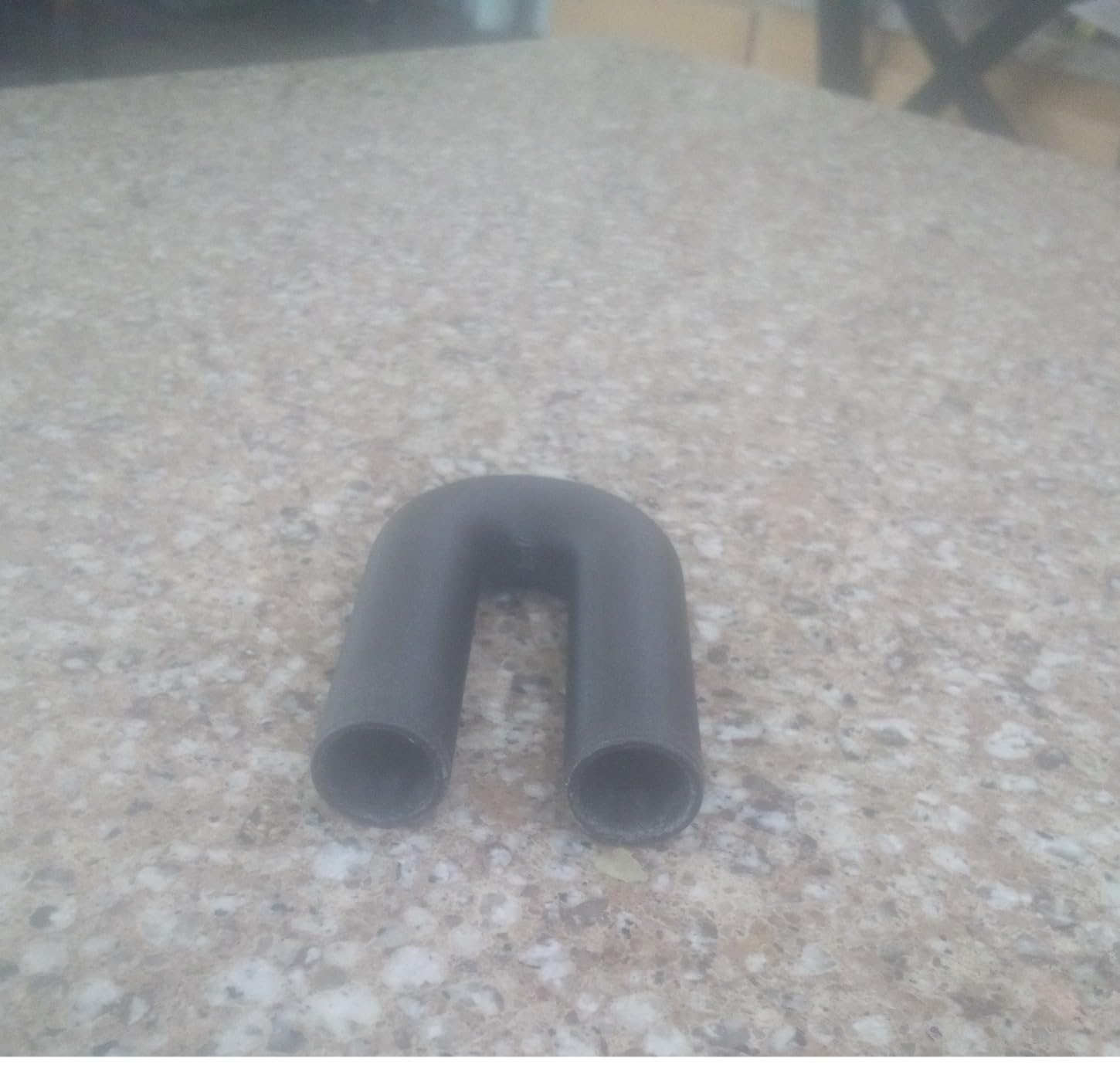
Drying here is comparatively forgiving. The guidance is 60°C for 5-8 hours, which is a much shorter commitment than the 24-hour sessions some PA6-CF spools demand. Diameter accuracy is rated at plus or minus 0.03mm with a self-consistent feed, and the matte black finish keeps visible layer lines to a minimum on finished pieces.
The honest caveat is the one the whole category keeps. Carbon fiber acts as a contaminant in the matrix, so while stiffness rises, interlayer adhesion can land below what unfilled PETG would have delivered. For a part under bending load, print tall and slow with plenty of perimeters. There is also a small cluster of owners reporting persistent clogging regardless of temperature, so keep a hardened spare nozzle close.
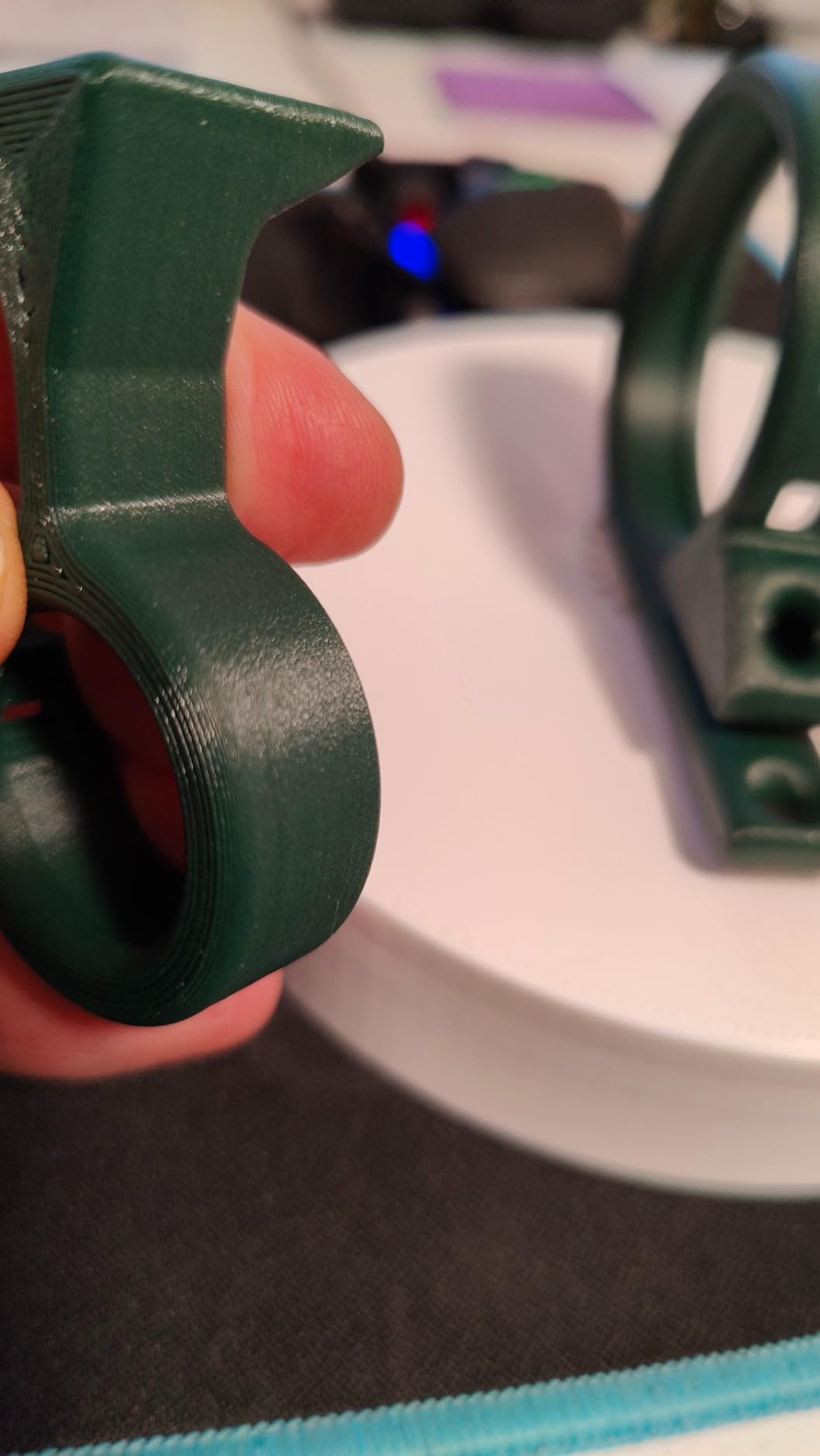
Who gets the most out of this PETG-CF
This is the pick for open-frame printer owners who want a genuine composite without building an enclosure or buying a dryer. It is a strong fit for RC parts, robotics brackets, camera rigs and workshop tooling where the part needs to resist bending and the machine is a plain Cartesian frame. Owners running Bambu Lab machines with AMS units report it feeding reliably.
Where it falls short of the nylon blends
It will not survive sustained heat the way a PAHT-CF part does, and it is not the choice for a load-bearing bracket in a hot engine bay or an outdoor fixture baking in summer sun. The 20% loading also makes finished parts stiff enough to be genuinely hazardous to handle, so file and support edges before anyone else touches the part.
3. SainSmart ePA-CF Nylon 1kg – Toughest Nylon Composite for Loaded Parts
SainSmart 1.75mm Black ePA-CF Carbon Fiber Filled Nylon Filament 1KG (2.2lbs) Spool for 3D Printer
80% nylon 20% carbon fiber
Nozzle 260-290C
Bed 45-80C
1.75mm 1kg
Pros
- Reviewers rate it among the stiffest and toughest materials printed
- Low shrink rate and low warping
- Good chemical and heat resistance
- Excellent support release
Cons
- Roll-to-roll consistency issues with clogging reports
- Slightly rough variable diameter from large fiber chop
- Stringing and bed adhesion need real tuning
When a part has to survive load rather than merely hold a shape, this is the spool that turned our attention. Reviewers who get it running describe it as one of the toughest and stiffest materials available to a desktop machine, with excellent layer adhesion and support release that several owners single out by name.
The formulation is 80% nylon with 20% carbon fiber by weight, and the recommended window is 260-290°C at the nozzle with a 45-80°C bed. That low shrink rate is the practical advantage: it warps far less than typical nylon, and owners report clean 0.2mm layer prints once the profile is dialed in on a consumer machine with an enclosure.
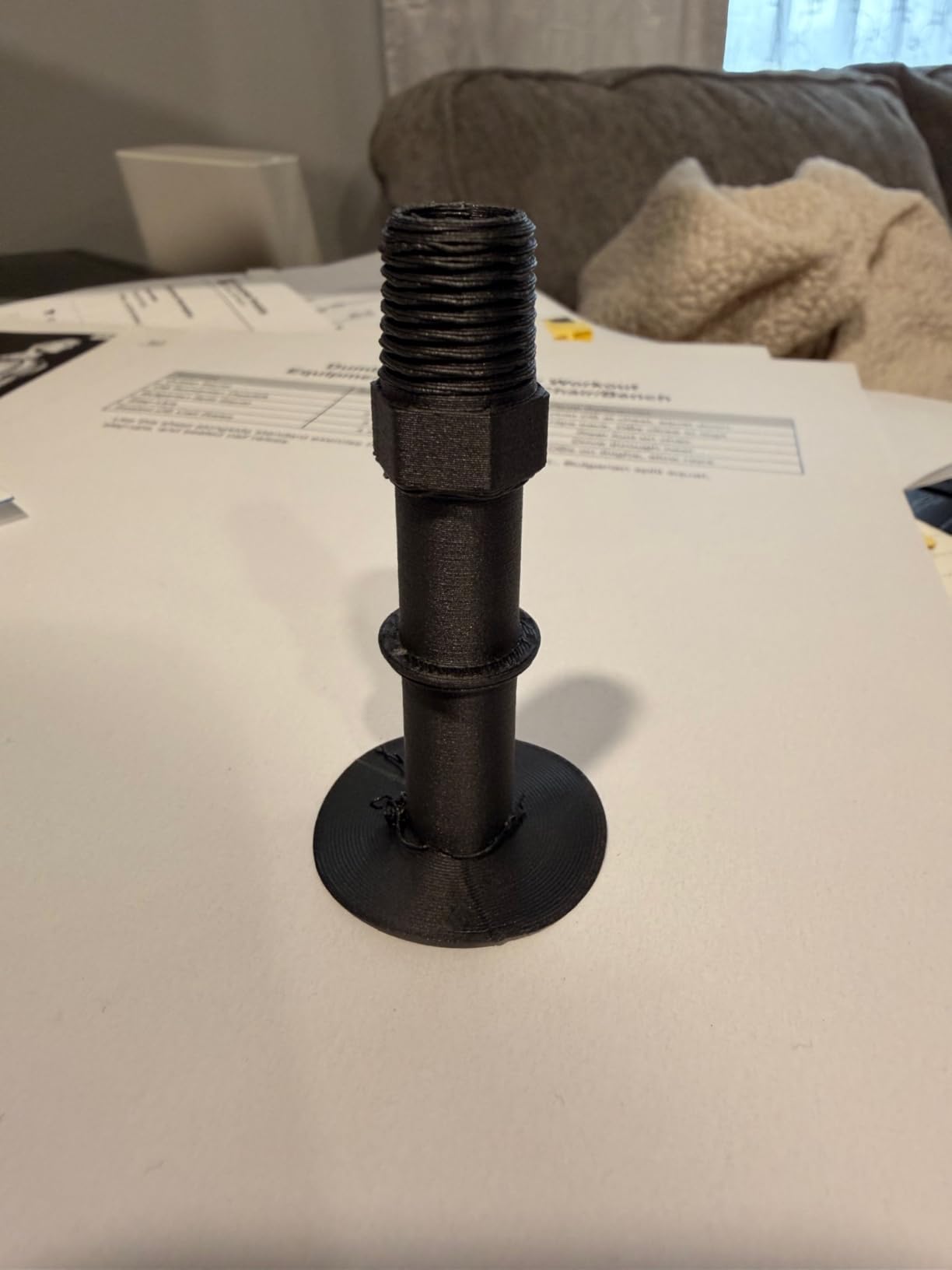
Support release is worth a second mention because it is a real time saver on complex jigs. A low-shrink nylon that lets supports pop off without a chisel is the difference between a five-minute teardown and a twenty-minute one, and for prosthetic, lab and industrial work that adds up quickly.
Consistency is where this one loses points. Several detailed reviews document constant nozzle clogging attributed to oversized carbon fiber chop, and one long-term tester abandoned the brand after multiple unusable rolls despite an enclosure, hardened hardware and rigorous drying. Diameter also runs slightly rough and variable for the same reason. Treat the first roll as a test roll.
When this nylon composite earns its spool
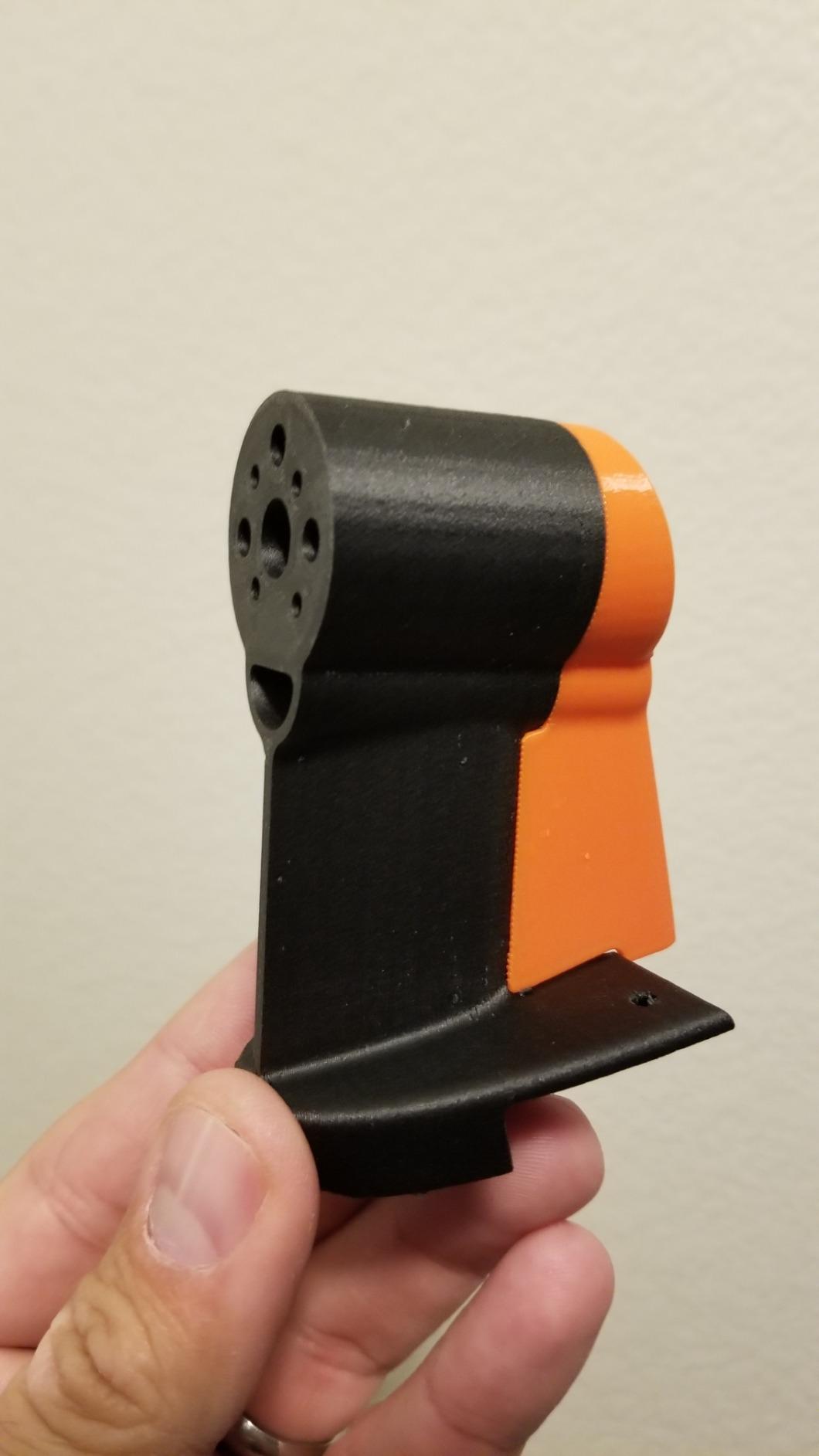
Pick it for jigs, fixtures, prosthetic shells and industrial brackets that see chemical exposure, heat and repeated handling. Reviewers point out that it stays tough rather than becoming glassy under stress, which is the combination you want when a part gets dropped or twisted. Plan on an enclosure and print from a dryer-fed path.
When a steadier roll matters more
If you print one part a month, any roll-to-roll variation is tolerable. If you are running production work, unpredictable fiber chop and a harder-to-predict diameter will cost more in aborted jobs than the material performance gains are worth. In that situation a 15% loading nylon with published data is the calmer choice.
4. PRILINE Carbon Fiber Polycarbonate 1kg – Stiffest Finish, Toughest Question Mark
PRILINE Carbon Fiber Filament, PRILINE Carbon Fiber Polycarbonate 3D Printer Filament 1.75mm, High Strength Carbon Fiber 3D Printing Filament 1kg Spool, Black
CF reinforced polycarbonate
Nozzle 250-280C
Bed 90-100C
1.75mm 1kg
Pros
- Prints extremely stiff and hard once tuned
- Excellent layer adhesion with the fan off
- Very low warping for its class
- Parts drill and tap without thread damage
Cons
- Needs heavy tuning or layers separate
- Oozes and strings readily
- Spool does not feed smoothly through AMS
This is the oldest filament in the roundup by review volume, and it has a long-standing following among people who print tools, jigs and production parts for engineering clients over multi-year spans. Parts come out hard, dimensionally accurate and easy to machine after printing, which is why the crew keeps coming back to it.
The tuning requirement is the defining feature. Disabling the part cooling fan and running high extrusion temperatures on a 250-280°C nozzle with a 90-100°C bed is what produces the layer adhesion that makes this material worth the effort. Owners also report very low odor compared with typical engineering filaments, and a matte textured carbon surface that they consider genuinely attractive.
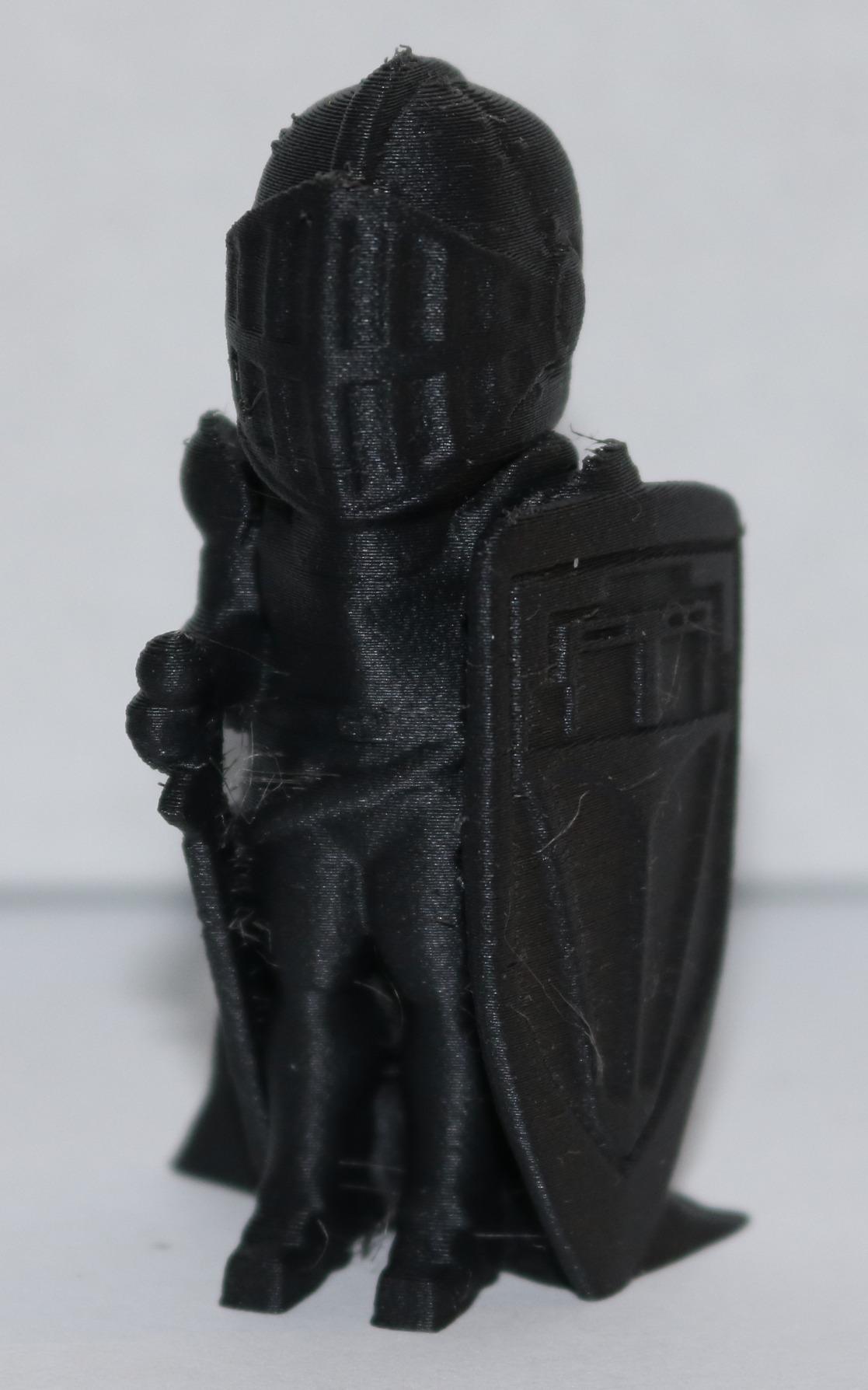
Warp behavior is its quiet strength. For a polycarbonate-class material, the dimensional stability is excellent even on large prints, and finished parts can be drilled and tapped without thread damage, which is exactly what you need when a bracket has to accept a fastener rather than a snap fit.
Now the caveat, and it is a serious one. Two independent reviewers obtained an SDS sheet showing a large PLA percentage and measured heat deflection temperatures around 90-100°C, far below true polycarbonate, and they argue the product is mislabeled. If you need genuine polycarbonate heat performance, verify with your own coupon. Spools also do not feed smoothly through AMS units, and ooze requires long retraction and deliberate travel planning.
Where this blend makes sense
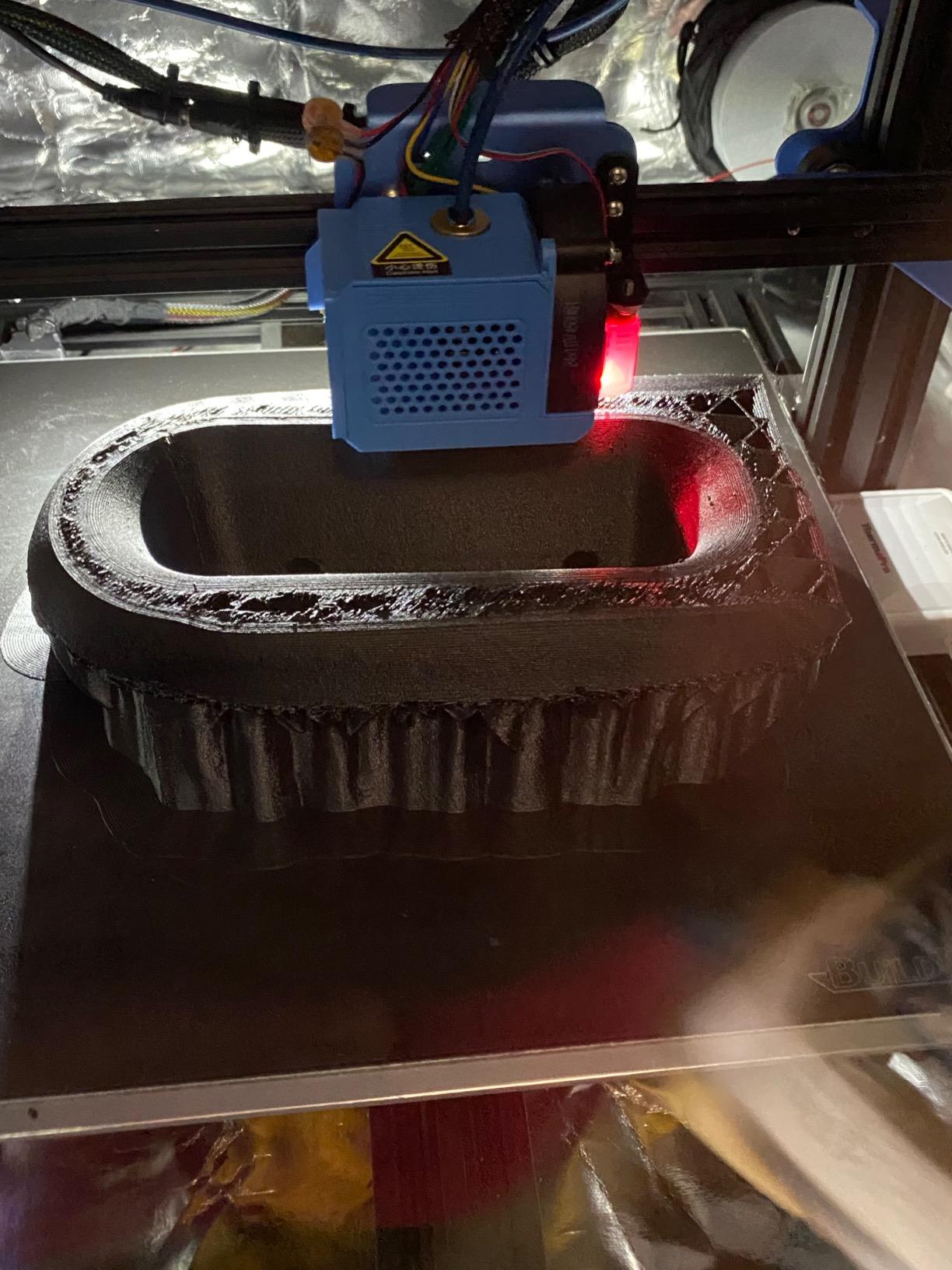
It is a good fit for machinable fixtures, drill-and-tap templates and stiff housings where dimensional accuracy matters more than extreme heat resistance. If you already own a tuned profile for it, the part quality is high and the community knowledge base is deep enough to troubleshoot fast. A hardened nozzle of 0.4mm or larger is required, and smaller nozzles clog.
When to verify the material first
If the part will see real heat, buy the spool, print a small coupon, and measure the deflection yourself before committing a full job. The composition question raised by owners is specific enough that it deserves your own test rather than trust in the listing. Our general rule is that a printed part and a datasheet should agree.
5. IEMAI PAHT-CF Nylon 1kg – Best Heat Resistance in the Roundup
IEMAI PAHT-CF Carbon Fiber Nylon Filament 1.75mm, Matte Black, 1kg Spool
20% chopped CF in PAHT
HDT up to 195C
Accuracy +/- 0.03mm
1.75mm 1kg
Pros
- Stiff and tough parts that are hard to break
- Excellent bed and layer adhesion when dry
- Good heat resistance and outdoor UV durability
- Resists chemicals oils greases and solvents
Cons
- Reviews on the listing span other filament variants
- Some report roll-to-roll inconsistency and blockages
- Spool itself is described as flimsy
When heat is the deciding variable, this is the spool to look at first. The published heat distortion temperature reaches up to 195°C, which is the highest figure any product in this roundup states. Combined with 20% chopped carbon fiber in a PAHT nylon matrix, it produces parts that are stiff in bending and hard to break in the hand.
Ultra-low moisture absorption is the other headline and it is the one that affects your print day. Owners report excellent bed and layer adhesion once the spool is properly dried, and the material is described as easy to tune and quick to print once settings are settled. Chemical resistance to oils, greases and common industrial solvents makes it a natural fit for workshop and machine environments.
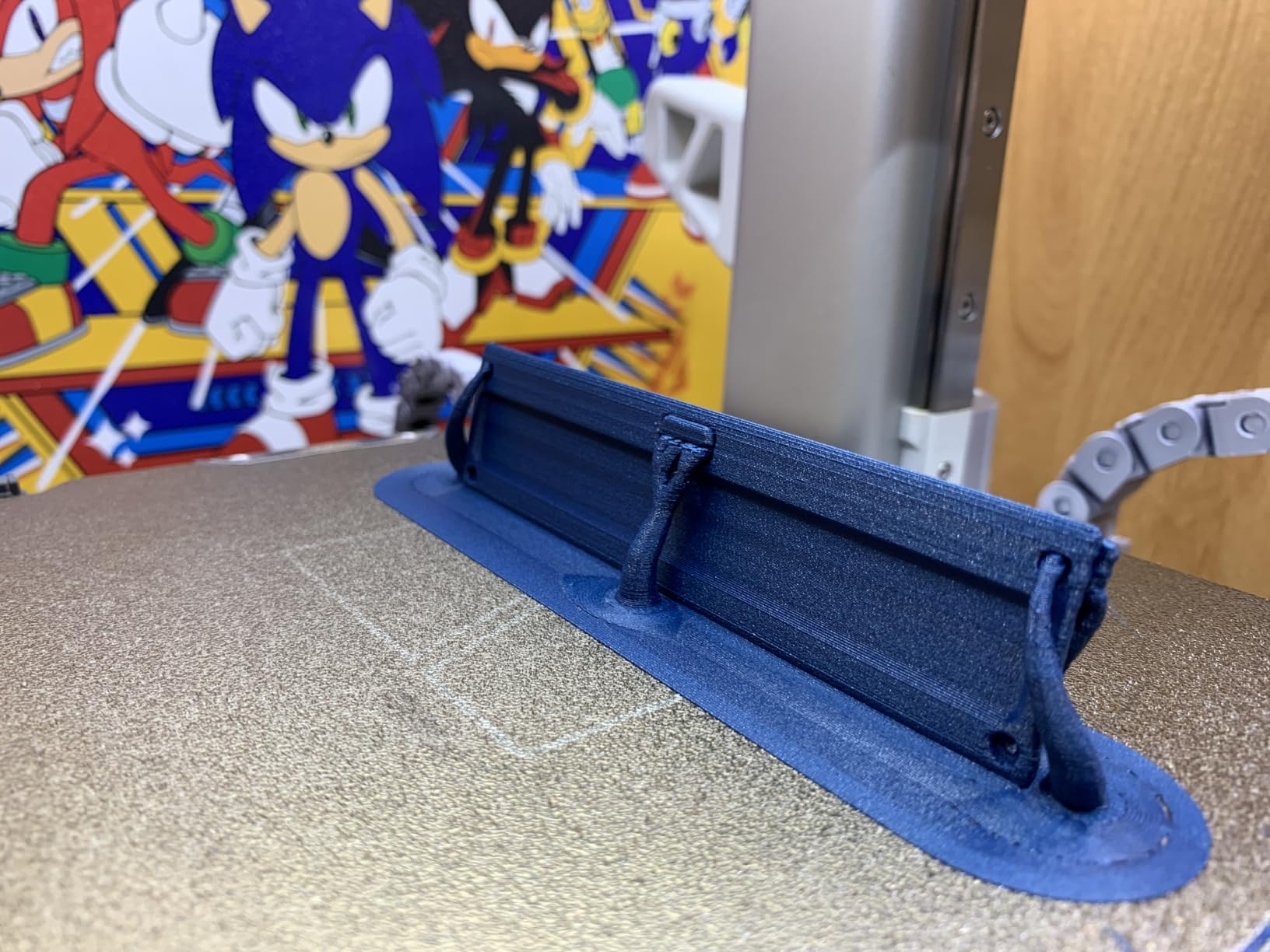
Owners also flag good outdoor UV durability, which matters for fixtures that live outside. Diameter accuracy of plus or minus 0.03mm keeps extrusion smooth, and the matte black finish suits functional parts without looking unfinished.
One structural point about this listing: the review pool is aggregated across many IEMAI filament lines, including PETG-CF, PLA-CF, ASA-GF and PETG-GF, so a share of the reviews does not describe this specific product. Within the relevant reviews, the recurring theme is batch variability, where some spools perform beautifully and others block nozzles, plus repeated mentions of needing thorough drying and a hardened nozzle.
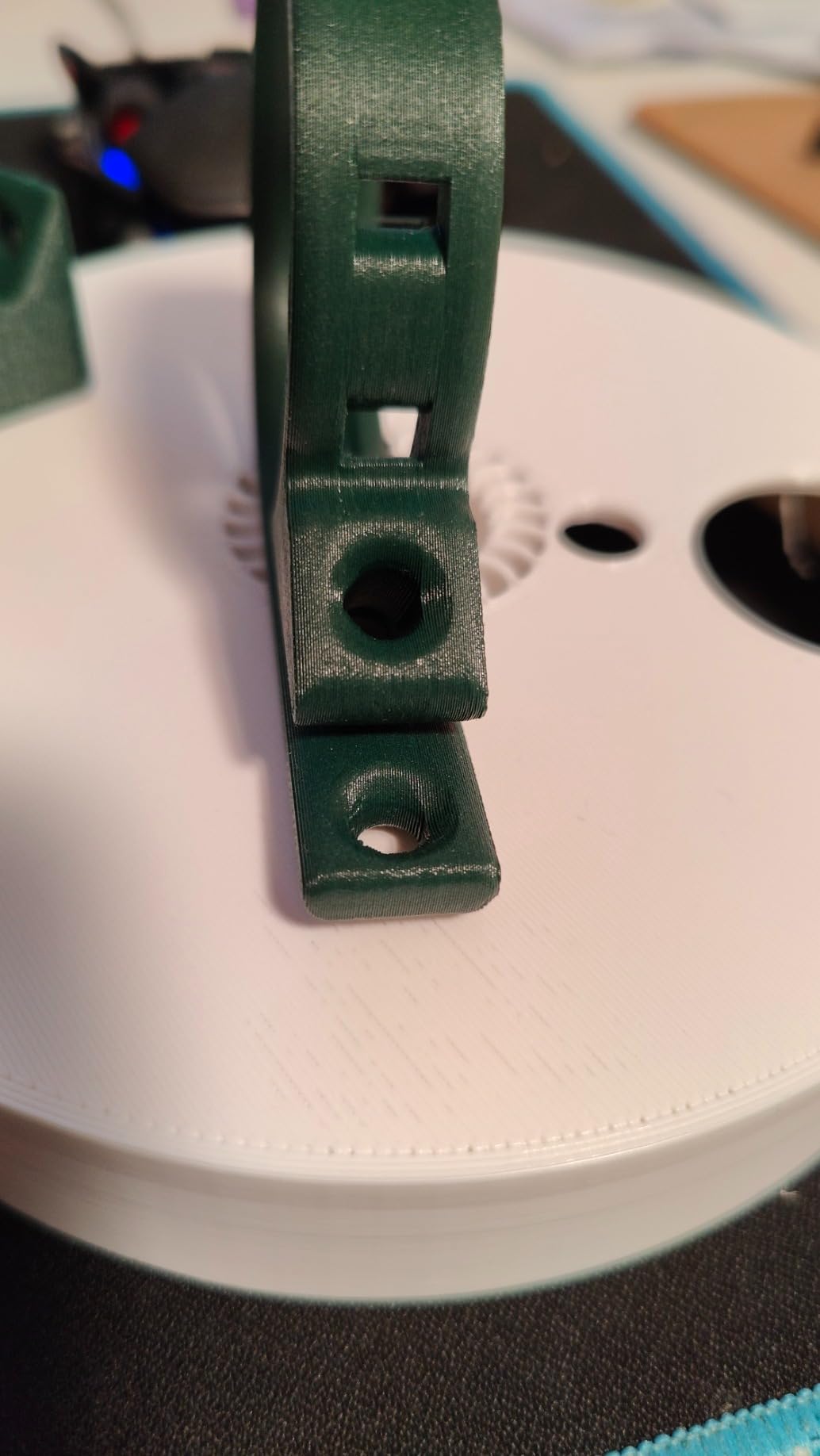
Applications that justify PAHT-CF
Automotive interiors exposed to heat, outdoor brackets, tooling that must survive repeated contact with oils, and any structural part in a warm environment. It is also the sensible upgrade path if you started with PETG-CF and found the parts deforming in a parked car. A hardened nozzle is required because of the fiber content.
What to watch before a big order
Drying is not optional here, and owners report needing aggressive drying sessions before use. Buy a smaller first order, run it through your cycle, and confirm the batch prints well before committing to a production run. If you print these in volume, a dryer-fed path and a spare hardened nozzle are the two pieces of equipment that pay for themselves.
6. TINMORRY PETG-CF 15% Black 1kg – Fastest PETG-CF for Production Work
TINMORRY PETG-CF Carbon Fiber PETG Filament 1.75mm, 1 KG, Black
15% short-cut CF in PETG
Nozzle 240-270C
Bed 75-90C
Speeds to 300mm/s
Pros
- Supports print speeds up to 300mm/s
- Low warping and strong Z-axis adhesion
- Short-cut masterbatch reduces clogging and clumping
- Vacuum sealed spools
Cons
- Hardened nozzle 0.4mm required and 0.6mm is better
- Needs thorough drying or it strings
- Cfiber dust requires protective gear when machining
This spool solves a different problem from the others: speed. The 15% short-cut carbon fiber masterbatch is specifically processed to reduce clogging and clumping compared with traditional PETG-CF, and the manufacturer rates it for print speeds up to 300mm/s. When you need parts rather than one-off prototypes, that throughput gap is real money.
The window is 240-270°C at the nozzle and 75-90°C on the bed, with the cooling fan off for the first three layers. Owners and the manufacturer both highlight low warping and strong Z-axis adhesion, which is the property that decides whether a printed bracket survives a twisting load. Above 260°C it is recommended specifically for Bambu P1P and X1 machines.
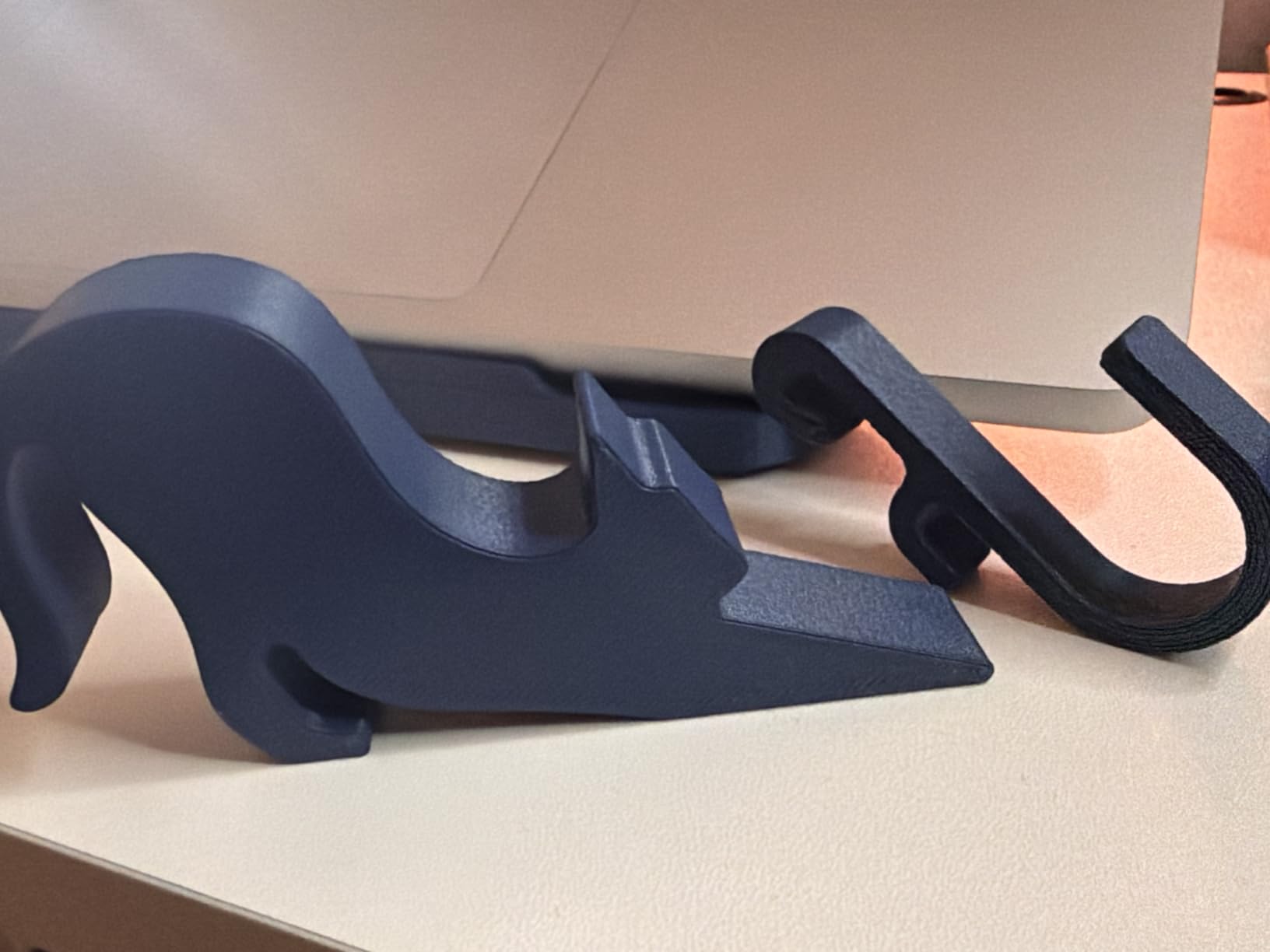
Manufacturer guidance is thorough on the drying side: 65°C for 8 hours, then keep container humidity below 20% relative humidity. The filament is short-cut fiber rather than carbon fiber powder, and the maker is explicit that protective equipment is needed when cutting, sanding, grinding or sawing finished parts, because the released fiber dust is a genuine respiratory concern.
Compatibility is broad, covering Bambu Lab, Creality K1C, QIDI, Flashforge Adventurer 5M, Prusa MK4, Voron and AnkerMake machines. The rating distribution on this listing is among the strongest in the group, with 83% five-star, though note that no written review text was captured for this ASIN, so the feedback here leans on the specification data and aggregate scores.
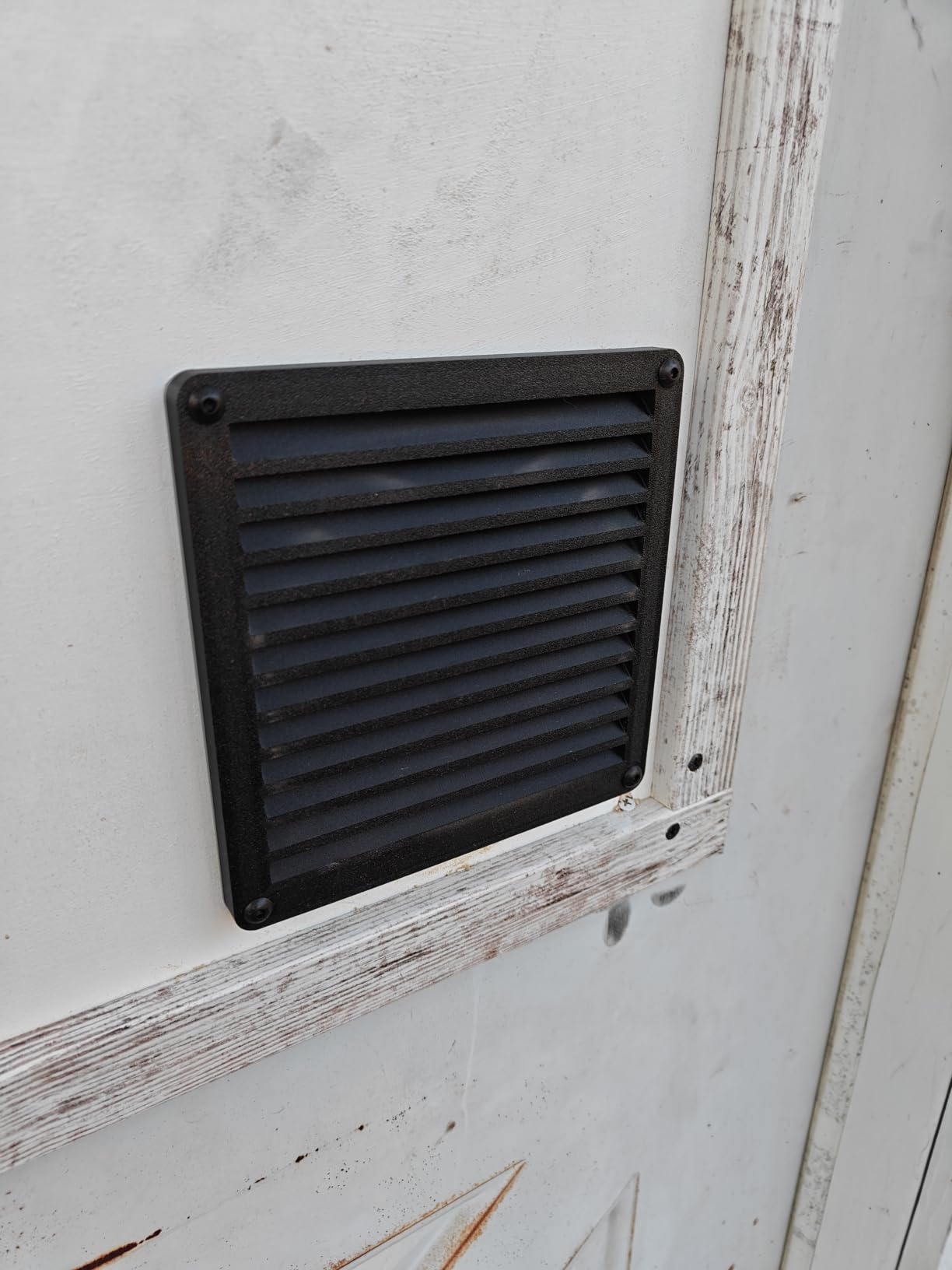
When to buy this one
Drone frames, racing models and functional components where you are printing many of the same part and cycle time matters. It is also a good match for a printer with an enclosed chamber, since the maker recommends higher infill density and an enclosure for maximum Z-strength. Wear-resistant steel nozzles of at least 0.4mm are required, with 0.6mm the better choice.
When speed is not the point
If you are printing a single jig and want the highest stiffness available in a non-nylon composite, the 20% PETG-CF option elsewhere in this list delivers more. Fifteen percent fiber also means a slightly rougher surface, and the material still needs drying discipline to avoid stringing. Match the loading to the job rather than the throughput number.
7. SUNLU PA6-CF20 Black 1kg – Best Heat-Resistant Nylon for Enclosed Machines
SUNLU PA6-CF20 Carbon Fiber Nylon 3D Printing Filament 1.75mm, 1KG, Black
80% PA6 20% carbon fiber
Heat resistant to 209C
Nozzle 270-290C
1.75mm 1kg
Pros
- Minimal warping even on very long prints
- Good layer adhesion when fully dried
- Reports match more expensive engineering nylons
- Vacuum sealed spools with desiccant
Cons
- Must be bone dry or it blobs and strings
- Not compatible with AMS or AMS Lite
- Loose winding on some spools can tangle and snap
PA6-CF is the practical industrial workhorse, and this spool states the reason clearly: 80% PA6 with 20% carbon fiber, a recommended nozzle window of 270-290°C, and heat resistance rated to 209°C. For gears, screws, fan blades, chassis parts and structural mounts, that combination of stiffness and thermal headroom is hard to argue with.
Warping is the standout in practice. Owners report minimal warping even on very long prints, which the high fiber loading largely explains, and several explicitly compare the results favorably against more expensive engineering nylons. Annealing at 80-130°C for 5-12 hours is recommended to stabilize the finished part, and the surface texture is noticeably rough at this loading, which also files down nicely for a finished look.
Moisture is the theme that runs through every owner comment. Straight from the vacuum bag this filament is brittle, and wet spools produce blobs and stringing. Manufacturer guidance is 80°C for 24 hours or 110°C for 4 hours, and owners who print from a dryer-fed path report the best results. Printers with heated chambers produce particularly good outcomes on this material.
Be clear-eyed about the AMS limitation. The manufacturer states that PA6-CF is too brittle and prone to breaking inside the printer, so it is not recommended for AMS or AMS Lite, and owners confirm this. A second recurring complaint is loose winding on some spools, which tangles and can snap mid-print. Inspect the winding before you commit a long job.
Where PA6-CF20 earns its place
Enclosed printers with an all-metal hotend and a heated chamber, where you are making functional parts that live in heat: robotics linkages, camera gear, bicycle and skateboard components, fixture hardware. Users on r/3Dprinting describe this class of filament as producing really strong parts, and the same community is candid that the AMS bypass and a dryer are non-negotiable. Direct drive with a dryer-fed path is the workflow, not an optional extra.
When a 15% nylon is the wiser pick
If your machine is an open frame with a PTFE-lined hotend, this is the wrong spool. It needs 270-290°C, an enclosure and extended drying. Choose the 15% long-chain nylon composite for easier printing and lower moisture sensitivity, or drop to PETG-CF if the part will not exceed moderate heat. Save the PA6-CF20 for work that justifies the setup.
8. Polymaker Fiberon PA612-CF15 0.5kg – Best Documented Engineering Composite
Polymaker Fiberon PA612-CF15 Carbon Fiber Nylon Filament 1.75mm, Black, 0.5kg
15% CF in long-chain PA612
91.9 MPa dry tensile
Nozzle 250-300C
0.5kg spool
Pros
- Publishes real tensile and heat deflection numbers
- Easier to print than most PA nylons
- Very low warping in some setups without an enclosure
- Less moisture sensitive than PA6
Cons
- 0.5kg spool is small for the price
- Too stiff to feed through AMS or AMS HT
- One buyer reports diameter varying from 1.70mm to 1.82mm
Most brands in this category publish adjectives. This one publishes numbers, which is why it earned a place here. Long-chain PA612 with 15% carbon fiber by weight, 91.9 MPa tensile in X-Y dry, 83.1 MPa after annealing and moisture conditioning, and a heat deflection temperature of 175°C at 0.45 MPa after 16 hours at 100°C. If you need to write a real specification, that data is the reason to choose it.
Long-chain PA612 is also mechanically smarter for functional work than PA6. It is less moisture sensitive, stronger than PA12-based materials in the manufacturer’s testing, and aimed squarely at rigid functional parts, tooling, jigs, fixtures and engineering prototypes. Owners describe parts that feel light and sound metallic when tapped, with excellent layer adhesion.
Printing is the pleasant surprise. Many users report behavior closer to PLA than to a typical PA nylon, with very low warping and several setups succeeding without an enclosed chamber under the stated conditions. Spools also often arrive dry enough to print straight away, though the guidance is still to keep storage below 20% relative humidity and dry at 100°C for 10 hours if stringing, bubbles or rough surfaces appear.
Hardware demands are firm: all-metal hotend, 250-300°C nozzle, 40-50°C bed, hardened steel or ruby nozzle, cooling fan off. The filament is too stiff to feed through AMS or AMS HT and requires a bypass port, and brass nozzles are reported to wear to a stump quickly. The 0.5kg spool is also small if you run these in quantity.
Who should buy the documented composite
Engineers and serious hobbyists writing specifications, anyone building telescope mounts, airsoft gear, printer parts or RC components over long periods, and anyone who needs to justify a material choice to a client or a team. The published tensile and deflection numbers let you compare it against unfilled alternatives honestly rather than guessing.
When to pick a different spool
If you need more than 500g of material at a time, the spool size becomes the deciding factor rather than the material. If you want the maximum fiber loading and the maximum heat resistance, a 20% PAHT-CF blend goes further. Choose this one when data quality and easy printing matter more than either of those.
9. FLASHFORGE PETG-CF Black 1kg – Easiest PETG-CF to Print
FLASHFORGE Carbon Fiber PETG Filament 1.75mm Black, Reinforced 3D Printer Filament 1kg, Lightweight & High-Strength PETG-CF Filament, Strong & Easy to Print
CF reinforced PETG
1.75mm black
1kg spool
Improved wear resistance
Pros
- Easiest PETG-CF to print in the roundup
- Clean on stock profiles with minimal tuning
- Good bed adhesion with no warping on larger prints
- Feeds smoothly through AMS units
Cons
- Needs thorough drying or quality drops mid-roll
- Best results require slowed print speeds
- Requires a hardened steel nozzle
This spool carries the highest average rating in our entire tested group, and the owner feedback explains why in plain terms. People who had previously printed Bambu Lab, Creality and Polymaker PETG-CF describe this as the easiest to run, with no stringing, no blobbing and no clogging on stock PETG-CF profiles. A few also note minimal visible carbon fiber strands on the surface.
That matters more than it sounds. Most composite failures are setup failures, and a material that runs on a generic profile removes the largest source of wasted filament. It printed cleanly on Bambu X1C and A1 machines in owner testing, with good bed adhesion and no lifting even on larger prints, and one long-running user completed a 500-part client job while keeping good detail retention.
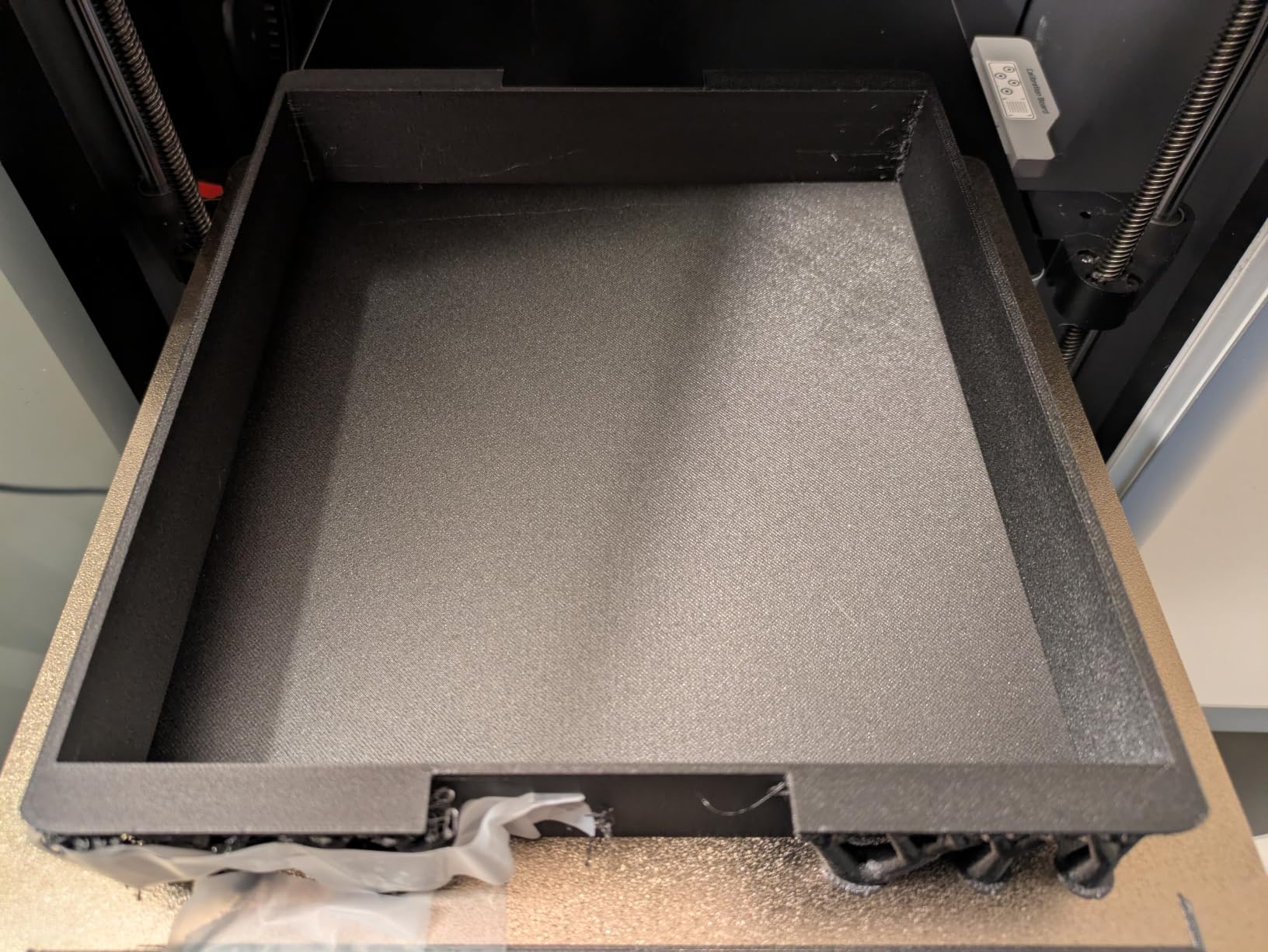
The claimed property set is the standard carbon fiber pitch, delivered well: increased mechanical strength and rigidity for load-bearing work, heat resistance improved over regular PETG for automotive and electronics use, and enhanced abrasion resistance aimed at high-friction parts like gears, bearings and sliders. Warping and deformation are reduced, which supports better dimensional accuracy and smoother surfaces.
Two caveats carry over from the category and one is specific. Drying is not optional; a first roll printed without adequate drying showed inconsistent quality partway through. Best surface quality requires slowing print speeds, so this is not the fastest option for production work. And a worn nozzle tip will cause problems, so fit a fresh hardened steel nozzle before you start.
Best fit for the first composite part
If you have never printed a carbon fiber filament before, start here. The setup cost is a hardened nozzle and a normal PETG-CF profile, the learning curve is short, and the failure modes are forgiving. Gears, bearings, sliders, robot covers and general workshop fixtures are all good targets, and AMS compatibility keeps multi-material printing available.
When you need more from it
Move up to a 20% PETG-CF blend for more stiffness, or to a nylon composite if the part will see sustained heat, chemicals or heavy loading. The two caveats to plan around are speed and drying. If you are running short production runs, budget the slower print speed into your timeline, and buy a dryer before you buy the second spool.
10. ELEGOO PETG-CF Black 1kg – Best PETG-CF for Outdoor and High-Impact Parts
ELEGOO PETG-CF 3D Printer Filament 1.75mm Black 1KG
PETG with carbon fiber
Nozzle 240-270C
Bed 65-75C
Hardened 0.4mm nozzle
Pros
- Very easy to print on generic profiles after a temp tower
- Minimal stringing even with short drying
- Stiff parts with good dimensional accuracy
- Holds shape in hot cars and resists moisture
Cons
- Cardboard spool is poor quality and racks in AMS
- Prints can lift slightly at the corners
- Clogs at very fine layer heights
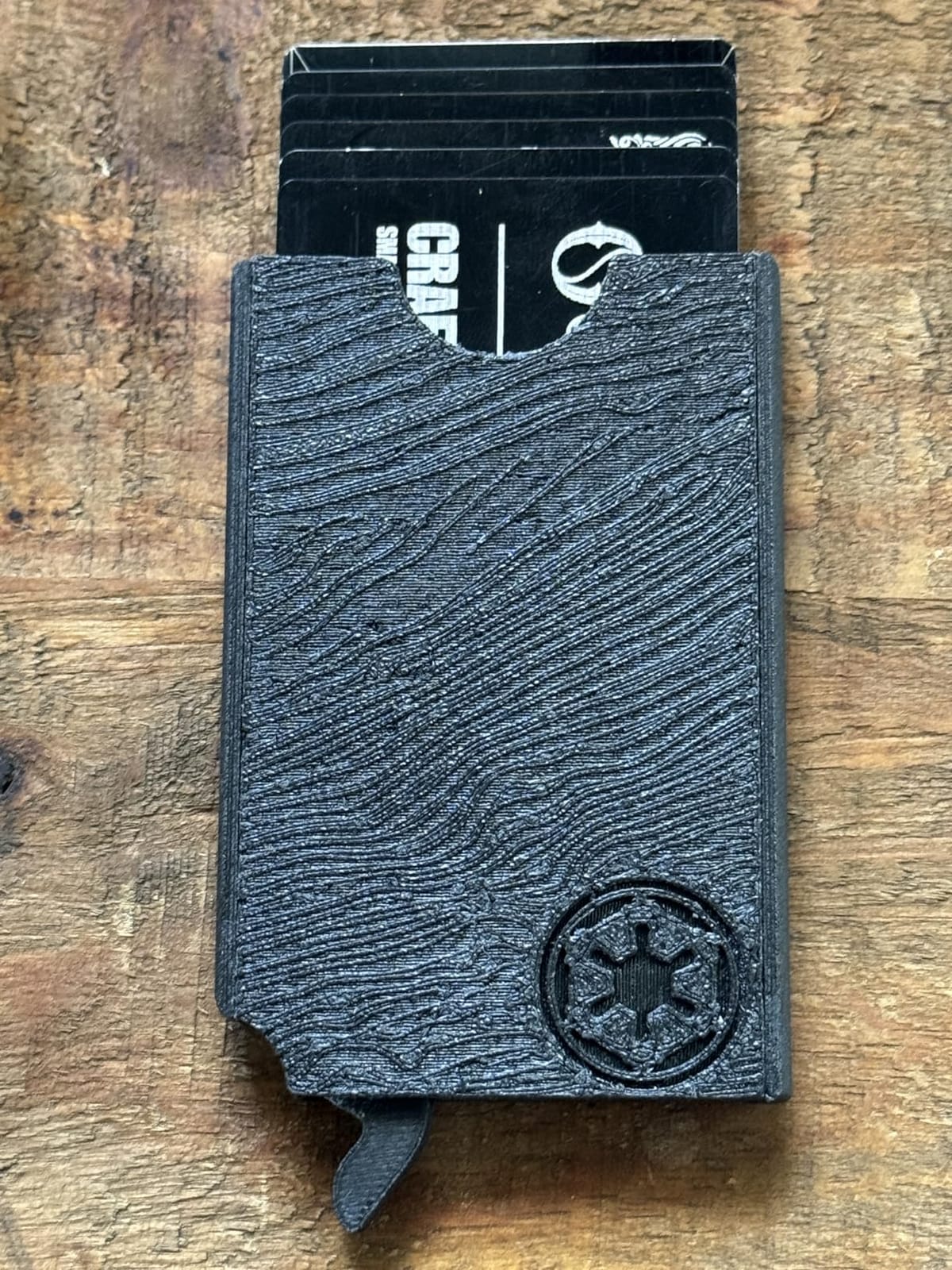
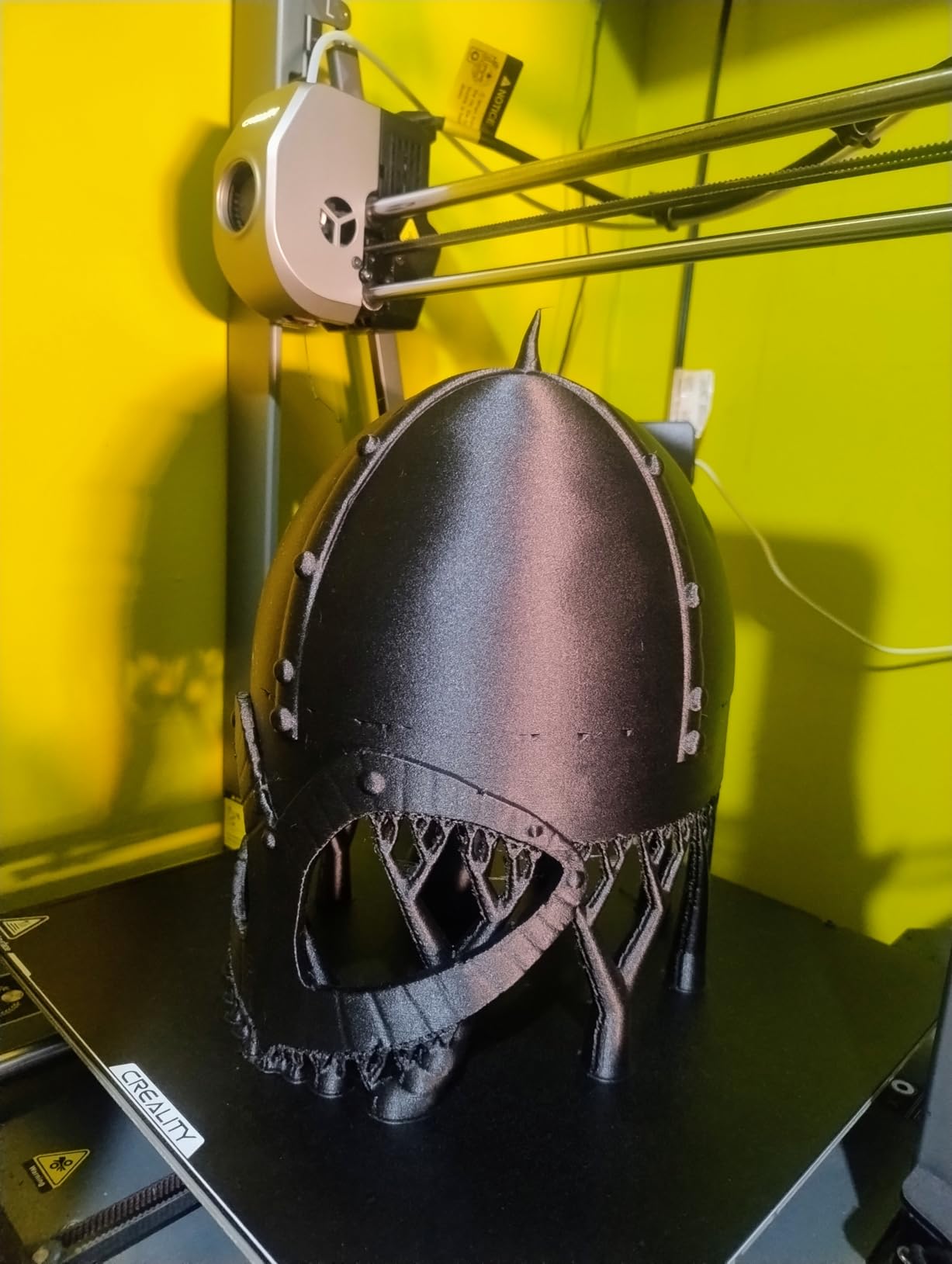
Among the PETG-CF options, this one is consistently described as the most dependable, and the specific reason is unusual: it holds up under impact. Owners call out high impact strength and toughness compared with other carbon fiber materials, less prone to fracture under external stress, which is precisely the weakness the category is usually criticized for.
It is also undemanding. The recommended window is 240-270°C at the nozzle, 65-75°C on the bed, with a hardened steel nozzle of at least 0.4mm. Owners report clean prints on generic and vendor PETG-CF profiles after a simple temperature tower, with minimal stringing even when drying was skipped, and several users successfully printing without drying at all while still recommending they do.
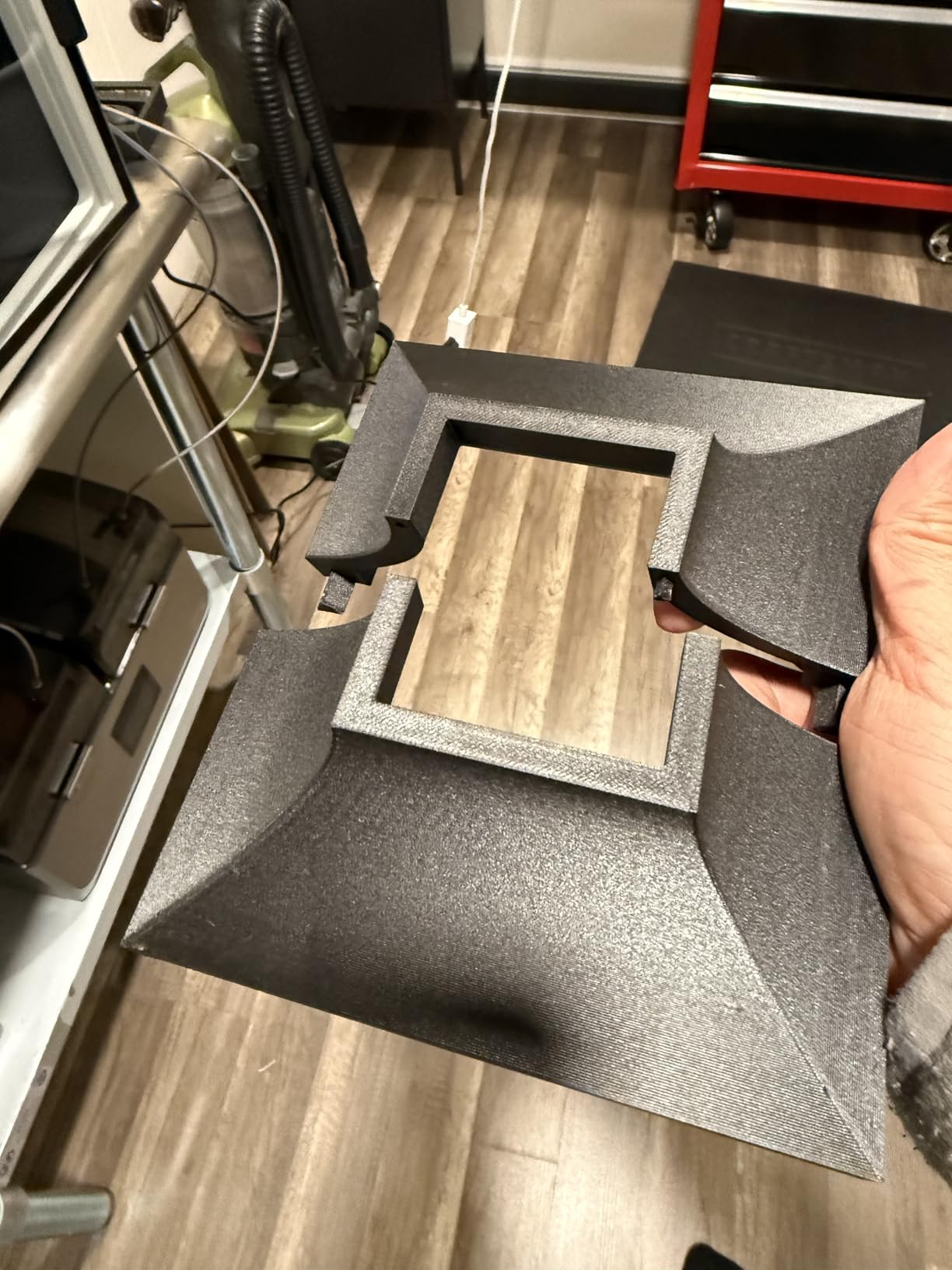
Real-world reports back the outdoor claim. Users describe parts that hold their shape in hot cars without deforming and that resist moisture ingress inside printed enclosures, and the fine matte texture from the carbon fiber reduces visible layer lines. Spools are tangle-free and wind evenly, and they work in Bambu AMS and CFS units once a printed adapter is fitted.
The most repeated criticism is not about the filament at all, it is the cardboard spool, which multiple reviews call poor quality and report racking inside AMS units, sometimes causing a mid-print failure. Printed parts can also lift slightly at the corners, which matters on large flat surfaces, and very fine layer heights at or below 0.12mm will clog.
Where impact and outdoor use fit
Outdoor brackets, vehicle interior parts, enclosures, drone accessories and anything that gets knocked, dropped or flexed in service. The combination of stiffness, toughness, dimensional accuracy and moisture resistance is the best-balanced profile here for parts that live outside without an enclosure around them. Good fit for gear, bearings and precise-fit structural components.
When to choose a different material
If the part sees sustained high temperature, PETG will not hold shape the way a PAHT-CF nylon does. If you are printing very fine detail layers, step up to a larger nozzle. And if you rely heavily on AMS multi-material printing, expect to print a spool adapter first, because the cardboard spool racking is the most common complaint in the reviews.
Drying, Nozzles and Printer Compatibility for Carbon Fiber Filament
No filament in this roundup is printable on a stock brass nozzle. Carbon fiber is abrasive, and it wears brass quickly enough that owners regularly report nozzles worn to a stump. A hardened steel or ruby nozzle of at least 0.4mm is the baseline, and 0.6mm is the better choice for nylon composites where larger fiber chop is common. Keep spares, because a partially worn tip shows up as inconsistent extrusion long before it fails outright.
Drying requirements fall into three tiers. PETG-CF is the lightest: guidance across these spools runs 60°C for 5-8 hours, or 65°C for 8 hours, with storage below 20% relative humidity. A carbon fiber polycarbonate blend asks for 4-6 hours at 65°C, since spools are sealed and dried before packaging. The nylons are the strict case: 80°C for 24 hours or 110°C for 4 hours for PA6-CF, and 100°C for 10 hours for the long-chain PA612 composite.
AMS compatibility follows the polymer, not the fiber. The 20% and 15% PETG-CF spools here feed through Bambu AMS units, and the PLA-CF spool is reported to work there too. Both nylon composites in this roundup are explicitly excluded: one manufacturer states the material is too brittle and prone to breaking inside the printer, and owners of the other report the same, describing the filament as too stiff for AMS or AMS HT gear paths. Plan on a bypass port and direct drive with a dryer-fed path.
Temperature capability is the other gate. The PLA-CF and PETG-CF spools run happily on open-frame machines, and the PETG-CF options need no enclosure at all. The nylon composites want 250-300°C nozzle temperatures, which means an all-metal hotend; a PTFE-lined hotend will need a tube upgrade first. The polycarbonate blend asks for a 90-100°C bed, and the PAHT and PA6 nylons both benefit from a heated chamber.
One note on the wider site: if your workshop rebuild has moved from kitchen gear to bench gear, our picks for carbon steel pans and toaster oven combinations are the same practical rule applied to cooking equipment, which is buy once and make it work.
How to Choose Carbon Fiber Filament by Application
Choose the polymer first, the fiber percentage second. That single ordering prevents most bad purchases. PLA-CF is for room-temperature stiffness and a good finish. PETG-CF is the general-purpose composite for parts that see moderate heat, some impact and no enclosure. PA6-CF and PAHT-CF are for genuine structural work where heat, chemicals and load all apply. The polycarbonate blend sits in an awkward middle, stiff but with a documented question about its actual composition.
Fiber loading is a straight trade-off, and the spools here illustrate the range well. At 15% short-cut fiber you get the best surface and the least clogging, which is why it supports high print speeds. At 20% chopped fiber you get more stiffness and more heat resistance, at the cost of rougher surfaces, more abrasive wear on nozzles and slightly more aggressive drying. Above that, you are buying brittleness and difficulty rather than strength, so the practical ceiling for desktop printing sits at 20%.
Match the choice to the job, concretely. Jigs, fixtures and workshop tooling: PETG-CF for general work, PAHT-CF where the jig sits near heat or oil. Drone frames and racing models: 15% PETG-CF for speed and low warping, with an enclosed printer and increased infill for Z strength. Robotics components and structural brackets: 20% nylon composites with an enclosure, a heated chamber and a dryer. Gears, bushings and sliders: a PETG-CF with strong abrasion resistance. Outdoor parts in summer heat: the nylon tier, or a PETG-CF with documented hot-car behavior if impact matters more than temperature.
The same buy-once discipline shows up in every category we test, whether that is our inexpensive carbon steel pans shortlist or this filament list. The cheapest spool on the shelf is rarely the one that costs the least per finished part, because failed prints, warped jobs and worn nozzles all add up faster than the saving on the spool does.
Think in cost per good part rather than cost per spool. The hidden costs are a failed print from a clog, a warped job from a wet nylon, a ruined brass nozzle and a spool that arrived loosely wound. Against that, a dryer, two hardened nozzles and a test roll of each material are cheap. Forum advice on r/3Dprinting is consistent on this: users who skip the hardened nozzle regret it, and users who skip the dryer on nylon regret it faster.
Finally, print a coupon before you commit. Print the same simple bracket in X-Y and on its edge, break both, and look at where it failed. A part that snaps between layers is an orientation or drying problem, and no brand change fixes it. A part that snaps in the bulk material is a fiber loading or polymer problem, and that is the signal to move up a tier. Ten minutes of testing routinely saves a full spool.
Frequently Asked Questions
Which carbon fiber filament is the strongest?
Among desktop filaments, carbon fiber reinforced nylon is the strongest family. A 20% PAHT-CF blend rates a heat distortion temperature up to 195°C, and a 15% long-chain PA612-CF composite publishes 91.9 MPa dry tensile with a 175°C heat deflection temperature after annealing. PETG-CF and PLA-CF are stiffer than their base polymers but less tough.
Is carbon fiber filament actually stronger?
Mostly it is stiffer, not tougher. Chopped carbon fiber raises flexural modulus and dimensional stability dramatically, but tensile strength rises far less and impact resistance often falls. Fiber also acts as a contaminant in the matrix, so interlayer adhesion can be weaker than the unfilled version of the same polymer. Print orientation, perimeters and corner fillets affect the result more than the brand.
What is the best 3D filament for structural parts?
For structural parts, choose carbon fiber reinforced nylon on an enclosed printer with a hardened nozzle and a filament dryer. For lighter loads and general workshop use, a PETG-CF with 15% or 20% fiber is easier to print and needs no enclosure. Add perimeters rather than infill, orient layer lines perpendicular to the load, and fillet sharp internal corners.
What is the ideal print temperature for carbon fiber filament?
It depends on the family. PLA-CF prints at standard PLA temperatures around 200-230°C. PETG-CF typically runs 230-270°C with a 60-90°C bed. Carbon fiber nylon composites need the hottest window, usually 250-300°C with a 40-80°C bed, which means an all-metal hotend. The polycarbonate blend asks for 250-280°C with a 90-100°C bed.
Which 3D printer is best for carbon fiber?
Any printer with an all-metal hotend that reaches 300°C, a hardened steel or ruby nozzle and a heated chamber can print every carbon fiber family, including PA6-CF and PAHT-CF nylon. An enclosed Bambu Lab, Qidi or Voron covers all of them. Open-frame machines are limited to PLA-CF and PETG-CF. Check AMS compatibility too, because most nylon composites are too brittle or too stiff for multi-color systems.
Conclusion: Our Best Carbon Fiber Filament for Strong Parts
For the best carbon fiber filament for strong parts, the answer depends on how strong you mean. For a well-finished part that needs to resist bending and nothing hotter than a desk lamp, the OVERTURE matte PLA-CF is the easiest and best-reviewed place to start. For a general composite that handles moderate heat and impact, the FLASHFORGE and ELEGOO PETG-CF spools are the least frustrating, with the 20% IEMAI option adding more stiffness when you need it.
For real structural work, the nylon tier is where the strength lives. The IEMAI PAHT-CF and SUNLU PA6-CF20 handle heat up to 195°C and 209°C respectively, and the Polymaker PA612-CF15 is the only spool here publishing full tensile and deflection data. All of them want an enclosure, an all-metal hotend, a hardened nozzle and a dryer. Budget for those four items before you buy the filament, and your cost per good part drops immediately.
Start with one spool, print a coupon, break it in two directions, and see where it fails. That ten-minute test tells you more than any spec sheet, and it is how we chose every pick in this 2026 roundup.