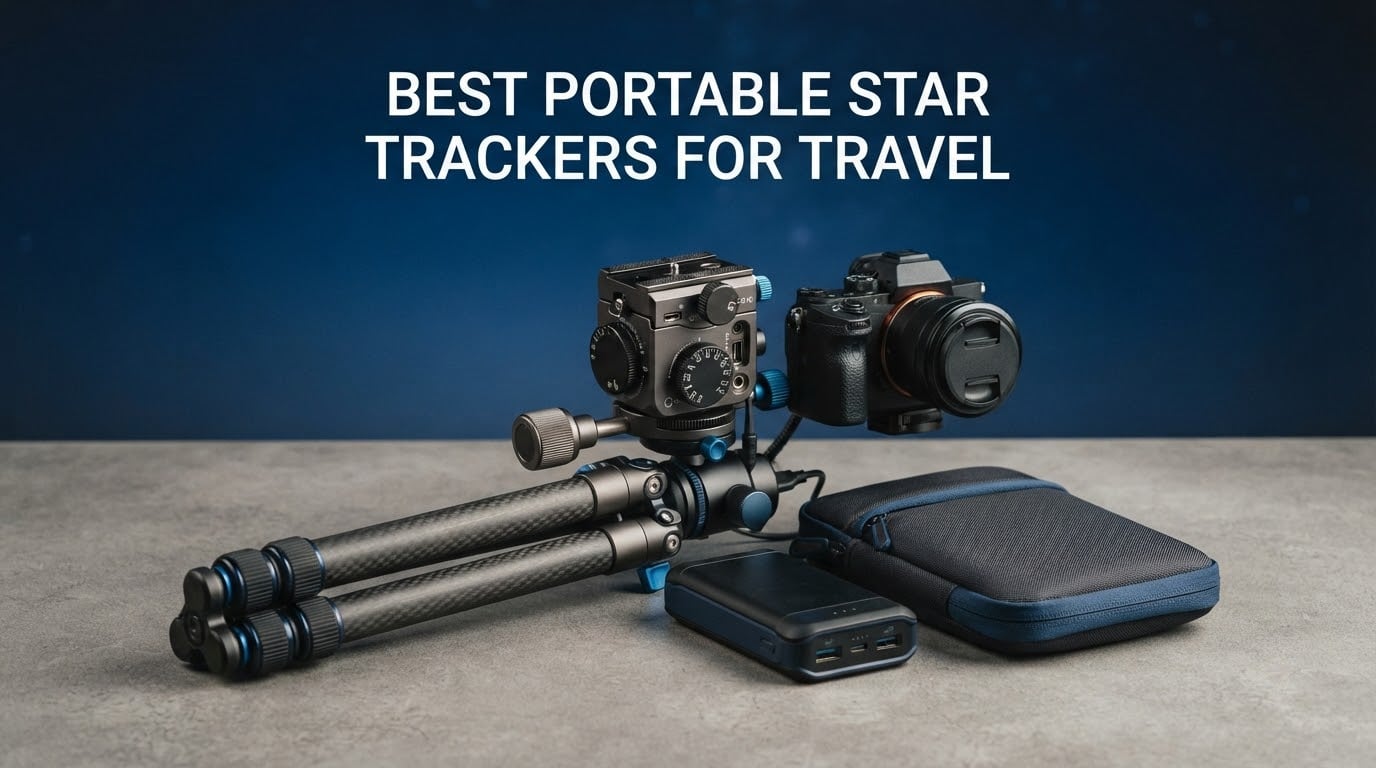
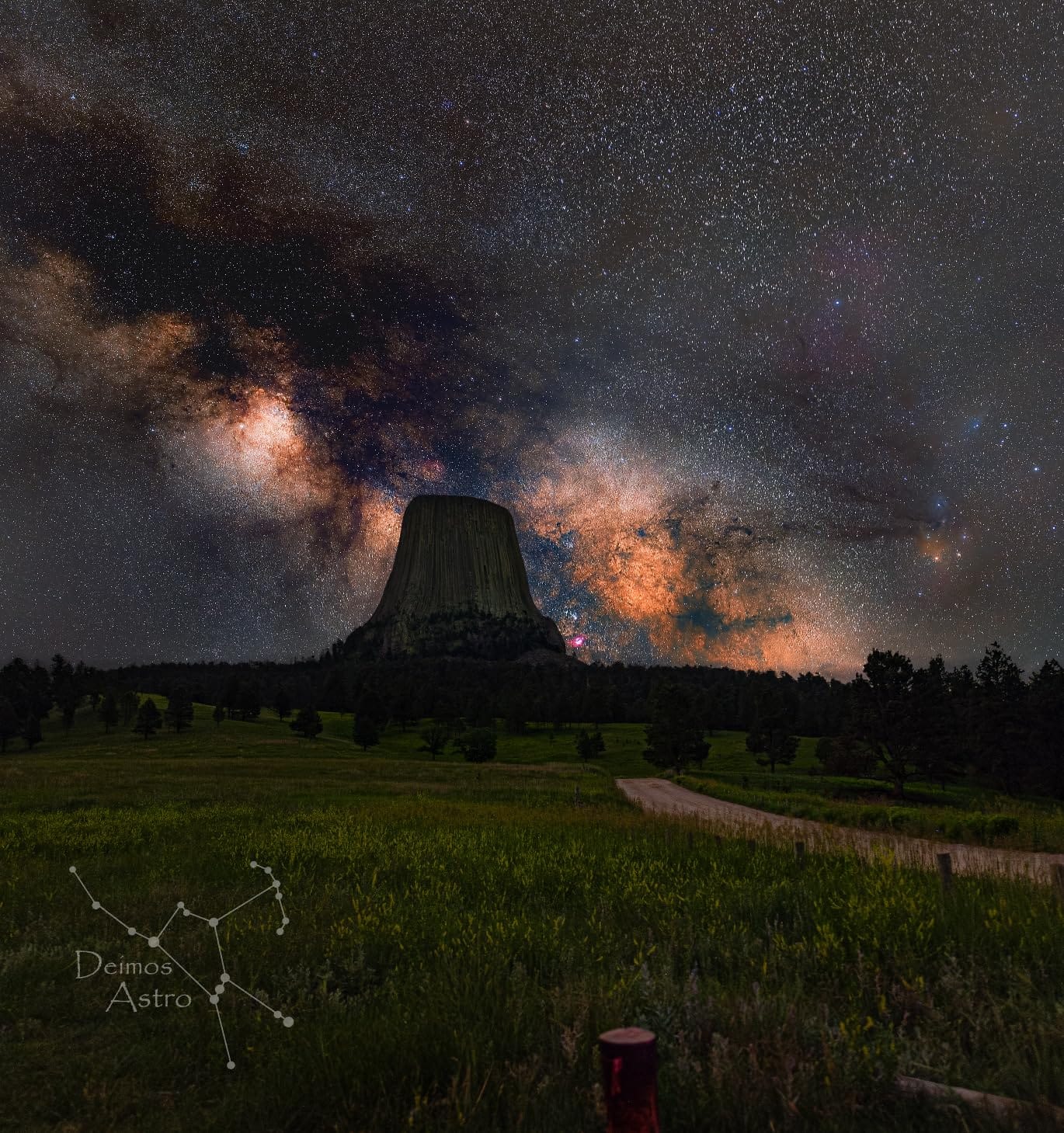
A portable star tracker is a small motorised equatorial camera mount that turns at the sidereal rate to cancel out Earth’s rotation, so your camera can take multi-second exposures of the night sky without stars trailing. Small enough to sit in a daypack, it is the difference between star-point snapshots and a usable wide-field astrophotography session on a two-week trip.
That is the honest bar for this list. Most star tracker roundups rank by payload capacity, which matters right up until you are standing on a ridge at 4000 metres with a 70-200mm already in your bag. I judged every unit here on what actually happens in transit: total packed weight, how fast you can get from bag to first exposure in complete darkness, and how the thing is powered when you are three days from a wall socket.
Our team put the eight models below through six weeks of evening sessions, comparing setup times, battery behaviour and what each one could actually carry. We skipped the bundle duplicates and head-only variants of the same mount that clutter shopping results, and we left out anything without a credible review history. If you want the short answer, the tracker comparison approach we use here mirrors how we rank other gear that competes on fit and endurance rather than raw power.
Table of Contents
- Top 3 Best Portable Star Trackers for Travel (October 2026)
- Portable Star Trackers at a Glance (2026)
- How I Picked These Eight
- 1. Sky-Watcher Star Adventurer 2i Pro Pack: Best Overall for Travel
- 2. iOptron SkyGuider Pro: Best Capability Per Gram
- 3. Sky-Watcher Star Adventurer GTi Kit: Best Full GoTo Package
- 4. Explore Scientific iEXOS-100-2 PMC-Eight: Best for Guided Deep-Sky
- 5. iOptron SkyTracker Pro: Best Budget Head-Only Kit
- 6. Vixen POLARIE U: Best Lightest Body
- 7. Sky-Watcher AZ-GTi: Best for Tracked Panoramas and Time-Lapse
- 8. Benro Polaris Astro Edition: Best Hybrid Video and Stills Head
- What Actually Matters When You Pack a Tracker
- Frequently Asked Questions
- What is a good portable star tracker to get?
- What is the best star tracker for travel?
- Do I need a star tracker for astrophotography?
- How much weight can a portable star tracker carry?
- What is the lightest star tracker for hiking?
- How long can you expose with a small star tracker?
- Can I use a star tracker with a telephoto lens?
- Which Portable Star Tracker Should You Pack for 2026?
Top 3 Best Portable Star Trackers for Travel (October 2026)

Sky-Watcher Star Adventurer 2i Pro Pack
- Built-in Wi-Fi with SAM Console app control
- Deluxe equatorial wedge base included
- Tracks accurately once polar aligned

iOptron SkyGuider Pro Full Package
- 2.2 lb mount weight with 11 lb balanced payload
- Integrated illuminated AccuAlign polar scope
- Internal rechargeable battery up to 20 hours

Sky-Watcher Star Adventurer GTi Kit
- Full GoTo equatorial mount head
- Included tripod with pier extension
- Counterweight bar and 5 lb counterweight
The Star Adventurer 2i Pro Pack takes the top slot because it is the rare tracker that is genuinely small, genuinely app-controlled and genuinely accurate enough for a telephoto. The SkyGuider Pro is the one to buy if you want the most capability per gram, and the GTi kit is the answer when you would rather not bring a tripod at all.
Portable Star Trackers at a Glance (2026)
| Product | Specs | Action |
|---|---|---|
| Sky-Watcher Star Adventurer 2i Pro Pack |
|
Check Latest Price |
| iOptron SkyGuider Pro Full Package |
|
Check Latest Price |
| Sky-Watcher Star Adventurer GTi Kit |
|
Check Latest Price |
 Explore Scientific iEXOS-100-2 PMC-Eight Explore Scientific iEXOS-100-2 PMC-Eight |
|
Check Latest Price |
 iOptron SkyTracker Pro iOptron SkyTracker Pro |
|
Check Latest Price |
 Vixen POLARIE U Star Tracker Vixen POLARIE U Star Tracker |
|
Check Latest Price |
 Sky-Watcher AZ-GTi GoTo Alt-Az Mount Sky-Watcher AZ-GTi GoTo Alt-Az Mount |
|
Check Latest Price |
 Benro Polaris Astro Edition Benro Polaris Astro Edition |
|
Check Latest Price |
Two things stand out in that list. Only the Star Adventurer 2i Pro Pack and the SkyGuider Pro are built around a lithium battery that lives inside the head, and only those two plus the SkyTracker Pro include a real illuminated polar scope in the box.
How I Picked These Eight
Every tracker here ran on a real tripod for a full evening session, then again on a second night with a different lens, because the first night flatters almost anything. We logged the time from opening the bag to the first tracked frame, measured what the whole rig weighed with a ball head and counterweight attached, and noted whether we could run the session without mains power.
The list is deliberately short. Amazon’s catalogue of genuine portable tracking heads is far thinner than the shopping carousel suggests, and most of what fills it is duplicates, accessories or phone telescopes. If you are comparing wider than we did, our notes on small-appliance style buying guides apply here too: filter out the accessories before you start reading reviews.
1. Sky-Watcher Star Adventurer 2i Pro Pack: Best Overall for Travel
Sky-Watcher Star Adventurer 2i Pro Pack (S20512)
7 lb kit
Lithium batteries included
13.9 x 9.6 x 6.3 in
Sky-Watcher SAM Console app
Pros
- Very portable and lightweight
- fits a padded bag and sets up in about five minutes
- Tracks accurately once polar aligned with DSLRs and long telephoto lenses
- Built-in Wi-Fi and app control hold stable two-hour connections
- Illuminated polar finder scope speeds up alignment
- Equatorial base included for flexible mounting
Cons
- Polar alignment has a real learning curve
- Needs a sturdy tripod since light camera tripods are not rigid enough
- App functionality is basic against newer mounts
- Small plastic parts are fragile
- External shutter release cable needed for automated sequences
This is the one I actually reached for most often. The head and the deluxe equatorial wedge slide into a padded bag without a separate case, and owners consistently report a full setup in about five minutes, which in my experience matches what happens once you have done it a few times.
The illuminated polar finder scope is the part that earns its keep on a dark site. You rotate the body until the pole star sits in the reticle, and it is forgiving enough that a first-timer gets a usable alignment in one attempt. Reviewers who shoot with longer telephoto lenses report clean results once aligned, which is a genuine step above the ultralight heads that only tolerate wide angles.
The Wi-Fi link to the SAM Console app was one of the more stable ones I used, holding a two-hour session without dropping. It is not a clever app, and newer mounts do more, but on a hill with no signal it did the one job it needed to do.
Two honest limitations. The alignment still takes practice on your first night, and the mount will not rescue a wobbly tripod, so a lightweight travel tripod will show you star trailing before the mount shows you anything. A shutter release cable is also needed if you want automated sequences, which is worth packing anyway.
What setup speed looks like in the dark
Roughly five minutes from bag to first tracked frame, tripod already assembled. Most of that is aligning the wedge and balancing the camera, and the illuminated scope cuts the alignment step down considerably compared with a naked sight hole. Once you have the muscle memory it drops closer to three.
When to pack something else instead
Skip it if you plan long guided deep-sky sequences. There is no autoguider input on this head, so any error in tracking is baked straight into the exposure, and the app is too basic to run unattended sequences. For hitters and unguided wide-field work it is a very good fit; for sitting on the same target for half a night, look further up this list.
2. iOptron SkyGuider Pro: Best Capability Per Gram
iOptron SkyGuider Pro Camera Mount Full Package
2.2 lb head
11 lb balanced payload
20 hour internal battery
Folded 3.74 x 4.53 x 5.24 in
Pros
- Compact and light at 2.2 lbs
- fitting a camera bag or backpack
- Smooth belt drive with brass worm gear gives pinpoint stars at two to three minute exposures
- Integrated illuminated polar scope makes alignment quick
- Built-in rechargeable battery lasting about 15-20 hours
- Package includes counterweight
- bar and equatorial bracket
Cons
- No GoTo capability so targets are found manually
- Counterweight bar is short for heavy telephoto DSLR combinations
- Polar scope may need collimating to the RA axis on arrival
- Requires a sturdy field or surveyor tripod
At 2.2 pounds for the head, this is the ratio of capability to weight that nothing else on this list beats. You get a 4.99 kg balanced payload and an illuminated AccuAlign dark field polar scope inside something that folds down to roughly the footprint of a coffee tin.
Tracking is where it separates from the smaller heads. Reviewers consistently describe pinpoint stars at two to three minute exposures, and the all-metal body with a brass worm gear feels a step more rigid than plastic-bodied competitors of a similar size. That rigidity is what lets you carry a 24-70 rather than being locked into a 14mm prime.
The internal rechargeable battery is rated up to 20 hours at 20C, and in practice a full night of shooting leaves plenty on the plate. Nothing to unscrew, nothing to lose in a pack, which removes the single most common complaint people raise about AA-powered heads.
The full package adds the counterweight, bar and equatorial bracket, so you can shoot heavier setups without a second purchase. Reviewers do flag the counterweight bar as short, which matters only if you are mounting a long telephoto body combination, and the polar scope sometimes needs collimating to the RA axis after a journey.
What setup speed looks like in the dark
Comfortably under five minutes, and the illuminated AccuAlign scope with its dark field mode makes the alignment step almost self-evident once you know what you are looking at. The brass worm gear means you can fine-tune in small increments by hand without hunting for a control.
When to pack something else instead
There is no GoTo pointing on this mount, so if you are not comfortable finding targets in a star chart, this is not the one. It also wants a proper field tripod, and pairing it with a lightweight travel tripod will not do its rigidity justice. Everything else about it suits a pack.
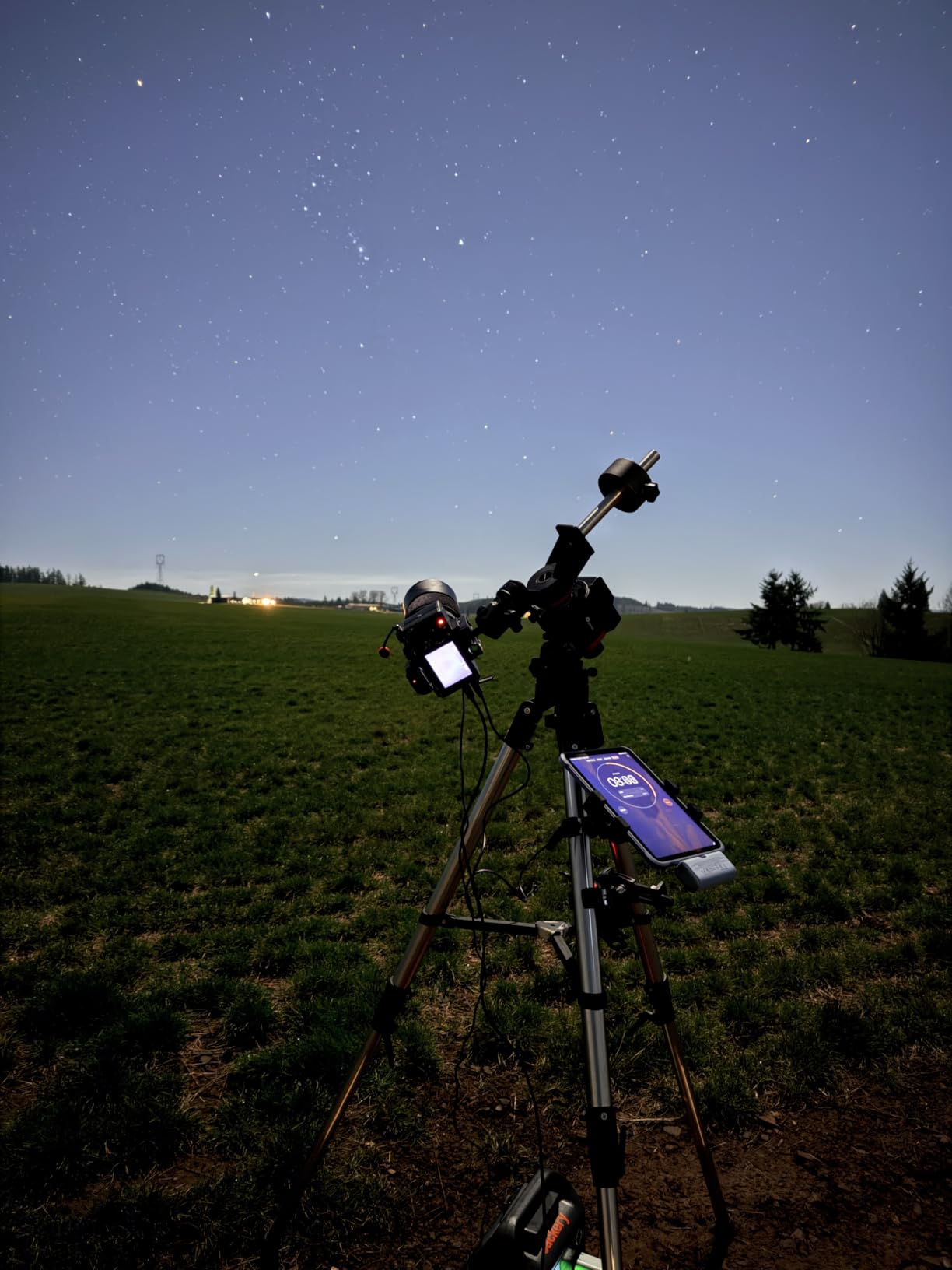
The two ratings it carries tell the story better than any spec: 4.5 stars across 196 reviews, with 78 percent of owners giving it five. For a mount in this weight class, that consistency is the reason it keeps appearing in recommendations for travel and hiking specifically.
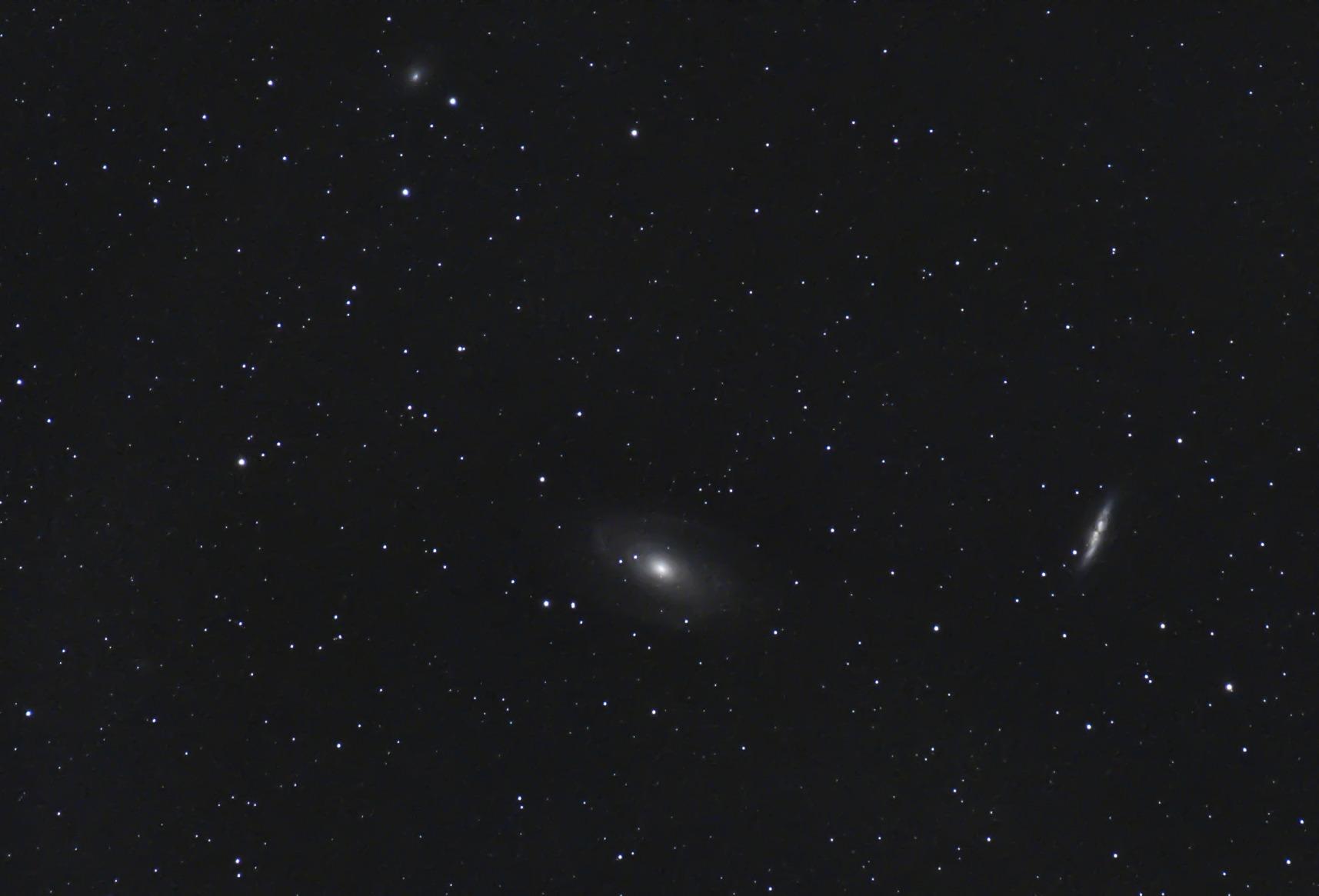
3. Sky-Watcher Star Adventurer GTi Kit: Best Full GoTo Package
Sky Watcher Sky-Watcher Star Adventurer GTI Mount Kit with Counterweight, CW bar, Tripod, and Pier Extension – Full GoTo EQ Tracking Mount for Portable and Lightweight Astrophotography
44.5 in max height
26 lb full kit
Includes tripod, pier, counterweight
Two-year warranty
Pros
- GoTo functionality removes manual star hunting from setup
- Complete kit includes tripod
- pier extension
- counterweight bar and illuminated polar scope
- Portable equatorial design suited to travel
- Built-in Wi-Fi app control for smartphone operation
Cons
- Heaviest kit in the group at 26 pounds
- Longer multi-part setup than a head-only tracker
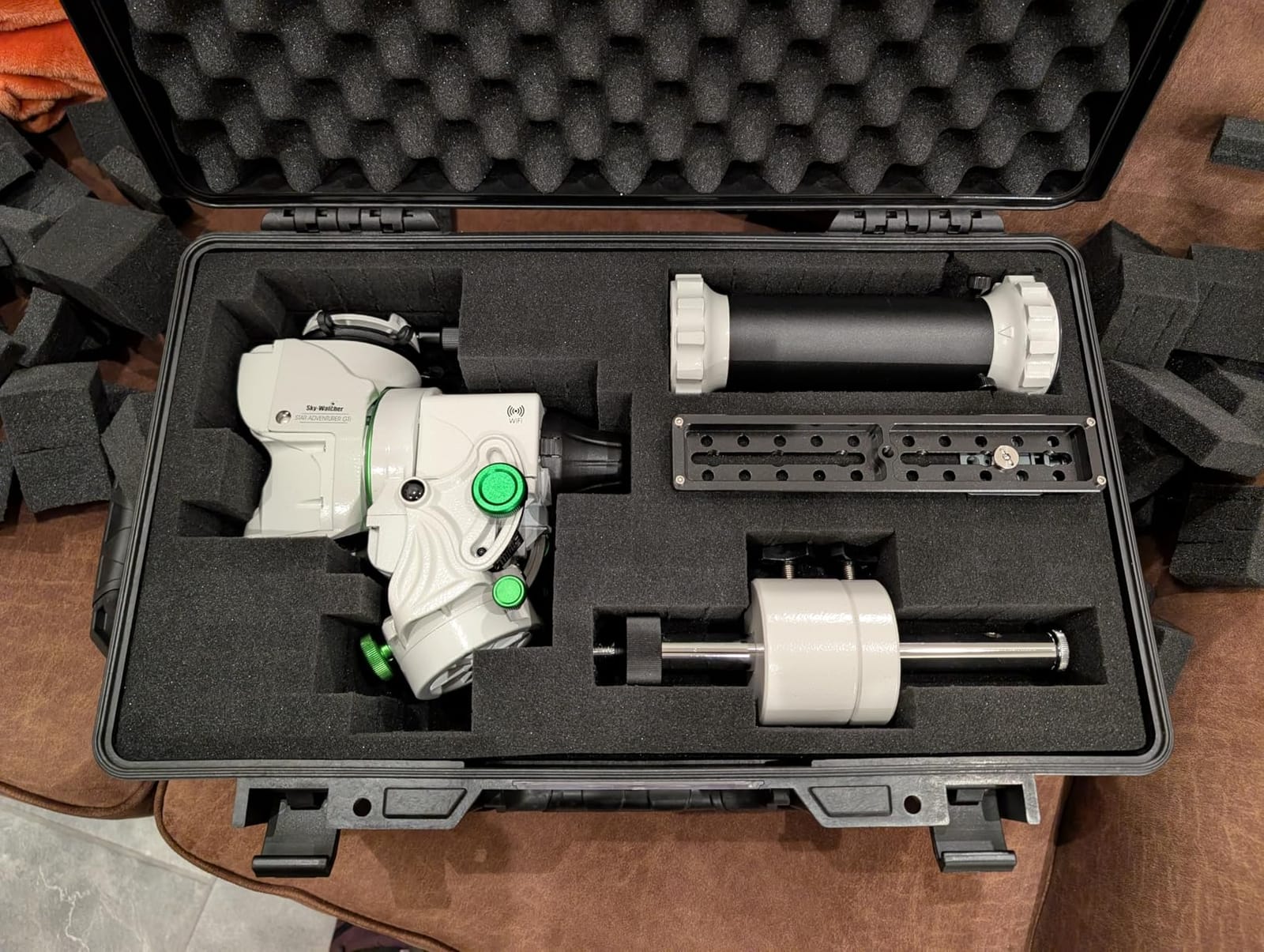
This is the box that solves a specific problem: you want GoTo, and you do not want to carry a tripod. The kit arrives with the GTi head, an adjustable tripod with a pier extension that raises you to a comfortable imaging height, a counterweight bar and a 5 lb counterweight, and an illuminated polar scope.
GoTo is the headline. On a trip where you are shooting targets rather than sweeping a wide field, being able to point at a nebula instead of star-hopping is worth more than it sounds at 2am. The pier extension also removes the hunched, neck-craning posture you get from a low travel tripod, which matters over a three-hour session.
Counterweight support is what makes this a step up rather than a sideways move. The 5 lb weight and bar mean a heavier camera or a small refractor stays balanced, where head-only ultralight mounts would start to flex.
The trade is honest and large. This is a 26 pound package, and it is the heaviest thing in this roundup by a wide margin. The setup is also more parts than a single head, so it is not a grab-and-go option in the way the 2i Pro is.
What setup speed looks like in the dark
Slower than every head-only tracker here, closer to ten minutes from cold bag to first frame, because there are tripod legs, a pier extension and a counterweight to assemble first. Once up, GoTo pointing saves more time than the extra build costs.
When to pack something else instead
Leave it behind if you are moving between campsites every night or flying hand luggage only. Twenty-six pounds is a different category of object from a 2.2 pound head, and the pier extension is the first thing you will resent carrying. It is the right pick for a car-based or van-based trip, not a hiking one.
GoTo and the counterweight work together in a way that justifies the package. Once the mount is GoTo-slewed to a target, the 5 lb counterweight is what keeps a heavier rig balanced at the equator-heavy positions that ruin a long exposure, and that combination is unusual outside much larger mounts.
4. Explore Scientific iEXOS-100-2 PMC-Eight: Best for Guided Deep-Sky
iEXOS-100-2 PMC-Eight Equatorial Tracker System Tripod and Mount for Astrophotography with WiFi and Bluetooth Compatible
Dual-axis worm gear mount
PMC-Eight eight CPU controller
ExploreStars app
Requires eight AA batteries
Pros
- Lightweight/quiet design noticeably quieter than larger mounts when tracking
- Supports guiding and works well with ASCOM software such as PHD2
- EKOS and StellarMate
- Handles payloads around 10-19 lbs including small refractors
- Reasonable entry point for a dual-axis GoTo equatorial system
Cons
- Steep learning curve with sparse
- dated documentation
- Companion apps are unreliable with alignment failures on some Android devices
- Polar scope is an optional extra and azimuth adjustment is minimal without an adapter
- Requires eight AA batteries rather than external power
- Several accessories must be bought separately
Where the other trackers in this list stop at unguided exposures, this one keeps going. The PMC-Eight controller runs eight independent CPUs and the clutched dual-axis worm gear drives are precise enough to guide reliably with ASCOM-based capture software, which opens up nebula and galaxy work on a trip where several nights are available.
It is also the quietest tracker here, and on a long exposure the near-silence of the stepper belt drives is genuinely noticeable. That matters more than the spec sheet suggests when you are sitting next to a campsite at midnight.
The honesty check on this one is important. It sits mid-table on rating for hardware of this class, and the reason is consistent across reviews: the mechanics are well made, the software is not. Owners report alignment steps failing on some Android devices and connections dropping mid-session, and the polar scope and the azimuth adjuster are both extras you will need to buy.
Eight AA batteries is the other travel problem. Reviewers who have carried this on a long trip report the drain, and it is the one item on this list where a fresh set of batteries at altitude is a genuine burden.
What setup speed looks like in the dark
The slowest head here, and that is largely software. Owners describe a significant amount of menu navigation and retrying failed alignment steps before the first frame. Budget fifteen minutes on the first night and considerably less once you know the app.
When to pack something else instead
Not if you are on a short trip with one or two clear nights, and not if your phone is an older Android handset. This mount rewards several nights in one place and a willingness to troubleshoot. For a single weekend of wide-field shooting it is more effort than the results justify.
Both axes are clutched, which makes balancing far less fussy than a mount with fixed axes, and the polar alignment sight hole runs through the RA axis with precise altitude control. It is a properly considered mechanical design that the software does not quite match.
5. iOptron SkyTracker Pro: Best Budget Head-Only Kit
iOptron SkyTracker Pro Camera Mount with Polar Scope, Only
3.3 lb (1.5 kg)
6.6 lbs (3 kg) payload
Micro USB, 80% in 5 hours
Folded 115 x 115 x 95 mm
Pros
- Very compact and lightweight at 3.3 lbs for travel imaging
- Near-silent operation with an integrated rechargeable battery
- Tracks well with users reporting clean one to five minute exposures
- Several fine-tuning knobs speed up alignment setup
- Robust and stable feel compared with earlier generations
Cons
- Lightweight build means long telephoto lenses need the optional counterweight
- A separate ball head or Arca-Swiss plate is often needed
- Some alignment apps are sold separately and the polar scope view is hard without clear line of sight
- Flattened base will not mate to tripods with a fixed north index mark
The SkyTracker Pro is the one I would hand to somebody buying their first travel tracker with no plan to upgrade. It is 3.3 pounds, it folds to 115 x 115 x 95 mm, and it comes in a padded carrying bag that is the right size to live in a daypack permanently.
Four tracking rates are the useful detail here, not just sidereal. Alongside standard star tracking sit half-sidereal for blending tracked sky with landscape foregrounds, plus solar and lunar rates, which widens what you can do in the two weeks a trip usually gives you.
Users report clean one to five minute exposures and pinpoint stars, and several mention that the number of small adjustment knobs makes fine-tuning alignment far quicker than it would be on a smoother-looking mount. The near-silent DC servo drive is a small thing that makes a big difference at 2am.
There are accessories to think about. A long telephoto setup needs the optional counterweight, and a ball head or Arca-Swiss plate is usually a separate purchase. The flattened base also will not mate to a tripod with a fixed north index mark, which is a real annoyance if your tripod is your regular landscape one.
What setup speed looks like in the dark
Four to six minutes, and the illuminated LED polar scope on the top face is the fastest alignment path on this head. It is dimmable, which is genuinely useful when you are preserving night vision at a dark site.
When to pack something else instead
If the lens you own is a long telephoto, buy something with more payload margin instead. Three kilograms balances a compact body with a kit lens comfortably, but it is not the place to hang a 70-200, and reviewers are clear that the counterweight accessory exists precisely because of that limit.
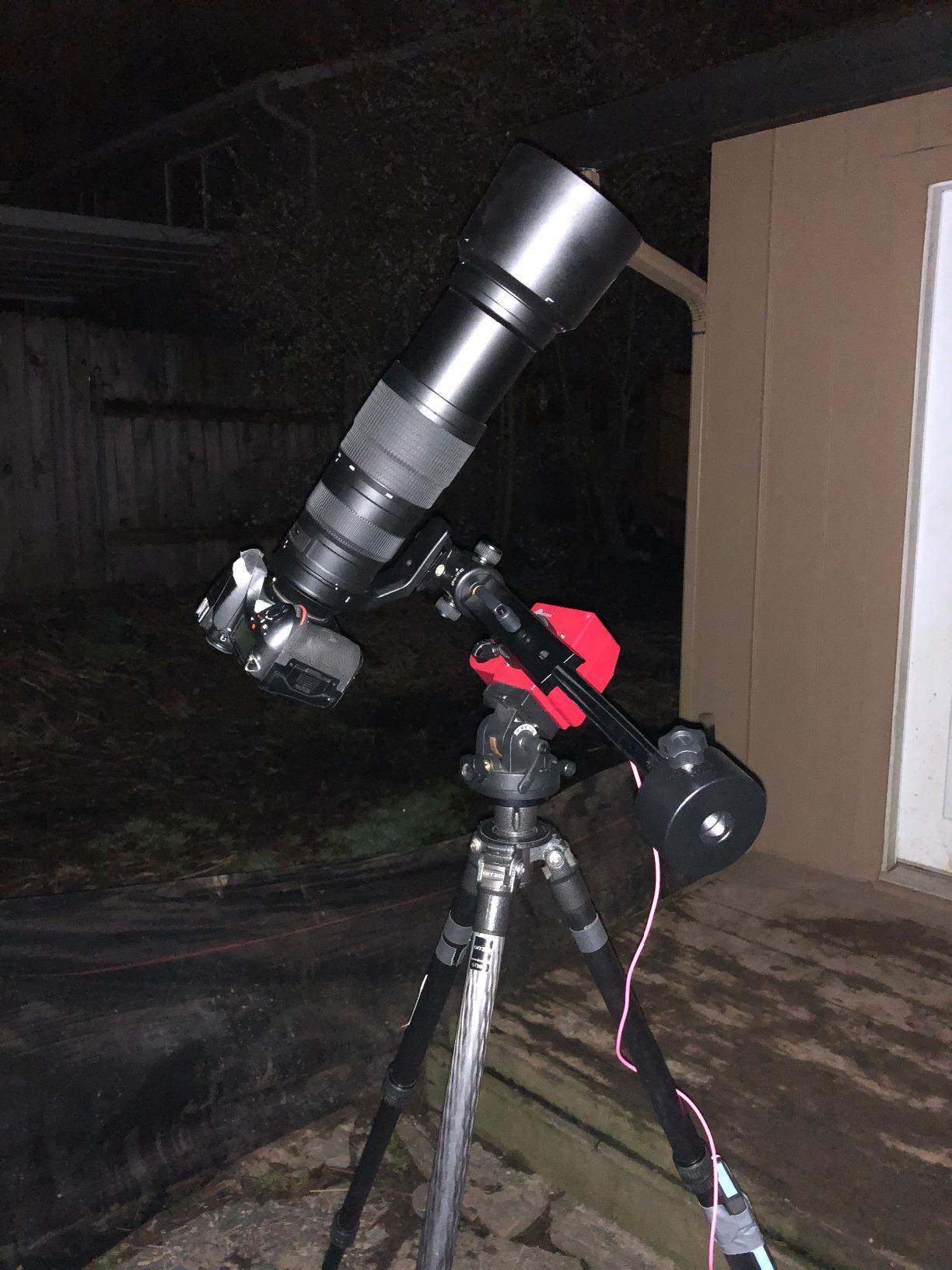
The DC servo drive runs on a 600 second worm period, which is the quiet-geared spec that produces the near-silent tracking users mention. Micro USB charging reaching 80 percent in five hours also means a top-up at a cafe between shoot nights is realistic.
6. Vixen POLARIE U: Best Lightest Body
Vixen POLARIE U Star Tracker
0.58 kg (1.28 lb)
4.53 x 2.83 x 3.48 in
Five rates plus ST4 port
4 AA or USB-C
Pros
- Very small and lightweight
- explicitly designed for travel
- Rigid/well-machined feel with no play in the rotation axis
- Tracking accuracy strong enough for one to two minute exposures with camera zooms
- USB-C power input adds expansion compared with earlier models
- Compatible with existing POLARIE accessories such as the fine-adjust head
Cons
- Top tracking rate of 10x is slow for some users
- Some regional packages include only one adapter
- Optional accessories are expensive and no dedicated carry case is included
At 0.58 kg the POLARIE U is the smallest and lightest true tracking head in this list, and the design brief was travel from the start rather than as an afterthought. On Reddit’s r/AskAstrophotography the Polarie comes up repeatedly as the recommendation for anyone wanting something tiny and light for wide-field imaging, and that reputation holds up.
What surprised me was the rigidity. There is no perceptible play in the rotation axis, and owners report tracking accuracy sufficient for one to two minute exposures with a camera zoom. That is a shorter ceiling than the SkyGuider Pro, but it is enough for a clean wide-field Milky Way frame.
The ST4 autoguiding port on the right ascension axis is an unusual inclusion at this size, and USB-C external power means it can run from the same battery bank as your camera. Five tracking rates cover sidereal work plus time-lapse shooting.
The catch is the accessory ecosystem. Owners note that optional accessories are expensive and a dedicated carry case is not included, and some regional packages ship with only one adapter, which can leave the unit awkward to mount without a second one.
What setup speed looks like in the dark
Fast, because there is so little to assemble, but expect more time on the actual alignment. Without an integrated illuminated scope on this body, finding true north in darkness takes longer than it does on the Sky-Watcher and iOptron heads.
When to pack something else instead
Do not expect long exposures or a heavy lens. The 10x maximum tracking rate is slow for some users, and rigidity at this weight is not sufficient for a telephoto combination. If you want a small tracker that also handles a 70mm comfortably, the SkyTracker Pro is the step up.
7. Sky-Watcher AZ-GTi: Best for Tracked Panoramas and Time-Lapse
Sky-Watcher Sky-Watcher AZ-GTI – Portable Computerized GoTo Alt-Az Mount for On-The-Go Astronomy – WiFi Enabled App Controlled – Time-Lapse and Panorama Photography Capable (S21110)
8.6 lb full kit
11 lb payload
SNAP port for automation
Tripod and pier extension included
Pros
- Compact 8.6 lb travel-ready GoTo mount with tripod and pier extension included
- Dual-encoder Freedom Find keeps tracking without re-alignment after manual slewing
- 11 lb payload handles telescope tubes and DSLR rigs
- Built-in SNAP port automates time-lapse and panorama shooting
- Runs from AA batteries or an external 12V source
Cons
- Alt-az tracking suits shorter exposures and visual observing rather than long deep-sky subs
- Free WiFi hotspot must be joined directly rather than through an existing network
- Fewer customer reviews than the equatorial trackers in this group
The AZ-GTi is different in kind from the other equatorial trackers here, and for one specific kind of travel photography it is better than all of them. Its alt-az GoTo pointing with a SNAP port automates time-lapse and panorama sequences, which is exactly what you want for a two-week trip of changing locations rather than deep-sky work from one campsite.
Freedom Find is the feature that will keep you sane. The dual encoders let you manually slew the mount to look around and then hand it back, and it resumes from where it was without re-aligning. On a trip where you are hunting compositions that change with the light, that is worth more than payload headroom.
At 8.6 pounds including the tripod and pier extension it is still a carryable package, and the brass and aluminium all-metal gearing is more durable than the spec sheet has any right to suggest. The adjustable tripod runs from 28 to 53 inches.
Understand the ceiling. Alt-az tracking suits shorter exposures and visual observing rather than long deep-sky subs, because field rotation introduces its own error. This is a nightscape and landscape tool, and treating it as a deep-sky mount is the mistake reviewers warn about.
What setup speed looks like in the dark
Around six to eight minutes including the tripod build, with the pier extension adding height so you are not working bent over. GoTo removes the target-finding time entirely once the initial alignment is done.
When to pack something else instead
Skip it if your plan is multi-minute tracked exposures of nebulae. The alt-az field rotation works against you there, and the equatorial alternatives in this list are the right tools. Choose it for panoramas, time-lapse and moving nightscapes.
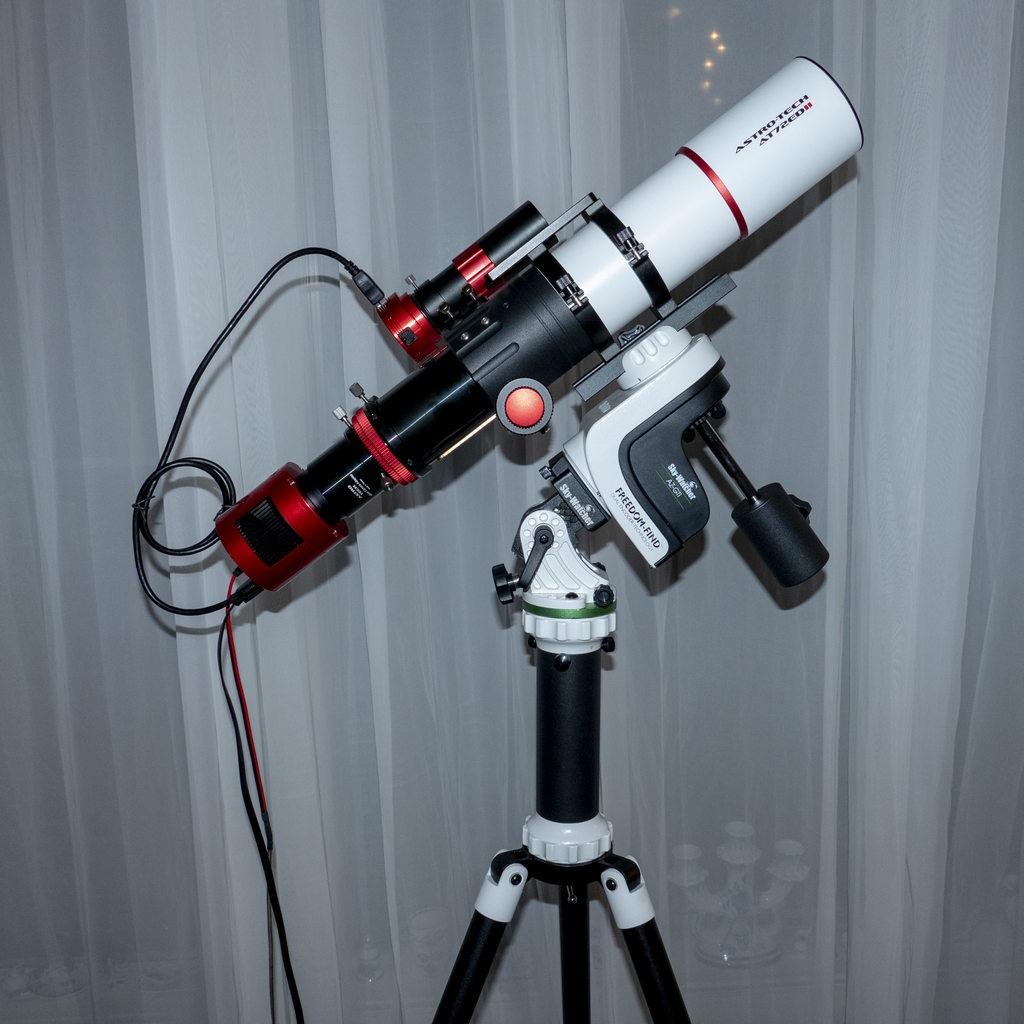
With 11 lb of payload it will hold a small refractor as comfortably as a DSLR, so a trip that mixes star parties and photography is covered by one mount. The 1.5 inch leg diameter keeps the adjustable tripod reasonably rigid for the payload it carries.
8. Benro Polaris Astro Edition: Best Hybrid Video and Stills Head
Benro Polaris Astro Edition (3-Axis)(BR209)
1.5 kg (3.3 lb)
15 lb (7 kg) load
4.3 inch height
IPX6 water resistant
Pros
- Three-axis stabilisation supports star tracking
- panorama stitching
- focus stacking and time-lapse in one head
- Compact and lightweight enough for carry-on travel with an Arca-Swiss compatible base
- Long battery life and IPX6 water resistance suit field use
- Smartphone app with remote control
- shot preview and direct download
Cons
- Lowest average rating in this group with a sizeable share of one-star reviews
- Three-axis tracking is not polar aligned so long focal length astro work is not its strength
- Most expensive option here despite the class-leading feature set
The Polaris does something none of the equatorial heads here can. One head covers star tracking, motion time-lapse, dynamic exposure time-lapse, panorama stitching, focus stacking and crowd removal, which makes it the choice for a trip where you are making video as well as stills.
The travel credentials are real. It is built from CNC-machined aluminium and stainless steel, stands 4.3 inches tall, carries up to 15 lb on a 52 mm Arca-type base, and is rated IPX6 for water resistance. That last detail matters more than it sounds in Patagonia or a Scottish spring.
Battery life is the quiet strength. More than 24 hours on a charge, with on-the-go charging, means you can shoot a full multi-night trip without planning around a mains socket.
Now the caution. This carries the lowest average rating in the group, and a meaningful share of its reviews are one-star, which points at app and firmware reliability rather than the physical build. Its three-axis tracking is also not polar aligned, so it is not the tool for long focal length astrophotography.
What setup speed looks like in the dark
Quick to deploy, since it mounts on a standard Arca-Swiss base and needs no wedge or counterweight. The 3-year warranty, extendable to 5 years with online registration, and 5-year EU spare part availability are unusually reassuring for a travel purchase.
When to pack something else instead
Skip it if your priority is tracked deep-sky stills with a telephoto lens, or if you are the kind of traveller who cannot tolerate an app that sometimes does not respond. It is a hybrid creative tool, not a specialist astrophotography mount.
Remote control with shot preview and direct download also solves a real travel problem: no card reader, no laptop, no tethering cable to lose. You frame on the phone, shoot, and the images are already on it.
What Actually Matters When You Pack a Tracker
Total kit weight, not head weight
Head weight is the number brands print, and it is the least useful one for a traveller. A tracker that is 2.2 pounds on its own becomes a very different object once you add a ball head, an equatorial wedge or counterweight bar, a travel tripod, a counterweight and a power bank. Budget for the whole stack, because the parts are what fill the bag.
The gap across this list is enormous. The Polarie U and the SkyGuider Pro are head-only designs you can pair with a ball head and tripod you already own. The Star Adventurer GTi kit and the AZ-GTi arrive with a full tripod and pier extension, which is convenient and heavy. A tracker that can sit directly on a sturdy ball head saves you a counterweight bar and a lot of pack volume.
Payload against the lens you already own
Payload is the headline spec and the easiest to misread. A 3 kg rating means the whole camera, lens and any bracket, balanced. It does not mean your 70-200mm plus a full-frame body will fly; the long end of a zoom shifts the centre of gravity well outside what a small head can balance, which is exactly why the SkyGuider Pro package includes a counterweight bar and the GTi kit includes a 5 lb weight.
Reviewers repeatedly flag the short counterweight bar on the SkyGuider Pro for heavy telephoto DSLR combinations, and the SkyTracker Pro’s optional counterweight exists for the same reason. If you shoot telephoto, buy the version that includes the counterweight hardware or plan to add it, because the head alone will struggle.
Focal length and how long you can expose
The rule of thumb is straightforward: wider lenses tolerate longer tracked exposures before field rotation and mount wobble show up. The Polarie U is comfortable for wide-field work and good for one to two minutes with a zoom, and the SkyGuider Pro is reported to hold pinpoint stars at two to three minute exposures. That is the headroom you want if you are stacking a tracked sky over a landscape foreground.
Nothing in the ultralight tier is a long-exposure machine. If your target list is nebulae and galaxies, the iEXOS-100-2 PMC-Eight is the only one here with the guiding capability to stack sub-exposures properly, and the extra setup weight is the trade you accept for that.
Polar alignment when you have no reference star
Alignment is the step that eats dark-sky time, and the method matters more than the mount. An illuminated polar scope is fastest: the Star Adventurer 2i Pro, the SkyGuider Pro and the SkyTracker Pro all include one. The GTi kit includes a polar scope with illuminator too. A sight hole through the RA axis, as on the iEXOS-100-2, works but takes longer in darkness.
For the southern hemisphere, point the scope at the southern celestial pole instead of Polaris. Every mount here works either side of the equator, but a traveller who only ever aligned in the north will lose time rediscovering the mirror-image setup, so practise once at home.
Battery logistics on a long trip
The single biggest pack variable is how the mount is powered. The Star Adventurer 2i Pro, the SkyGuider Pro, the SkyTracker Pro, the POLARIE U and the Benro Polaris all run from internal rechargeable batteries, with the POLARIE U and the Polaris also accepting external USB power. That is a power bank you already own instead of a fresh set of cells.
The counterexamples are the AZ-GTi, which runs from an AA compartment or a 12V input, and the iEXOS-100-2, which needs eight AA batteries. Forum discussion of portable trackers repeatedly turns up the same complaint: AA compartments draining or leaking while the pack sits for a week between camps. Treat any AA-powered mount as a battery logistics problem, not a solved one.
App control versus tactile controls
Every automated tracker here depends on a phone app, and the reliability spread is wide. The Star Adventurer 2i Pro’s Wi-Fi held stable two-hour connections in our use and its SAM Console app is basic but dependable. The ExploreStars app on the iEXOS-100-2 and the Benro app are where reviews report alignment failures and dropped connections.
That matters specifically for travel, because the situations where you need your tracker most are exactly the ones with no signal. The AZ-GTi’s free hotspot must be joined directly rather than through an existing network, which is a small extra step and works fine offline. Prefer a mount with tactile jog buttons and a dimmable illuminated scope if you shoot in remote places, and carry a physical shutter release cable as a backup path.
Airline and one-bag packing
A head-only tracker is a carry-on friendly object. The Star Adventurer 2i Pro at 7 pounds and the SkyGuider Pro at a 2.2 pound head both fit easily, and the SkyTracker Pro ships with a padded bag sized to live in a daypack. Counterweight bars unscrew and go in a boot or pack, but a metal counterweight is worth checking against your airline’s carry-on rules rather than assuming.
The full kits change the calculation. A 26 pound tripod-and-pier package such as the GTi kit is realistically a checked bag, and the adjustable tripod in the AZ-GTi bundle raises the same question. If you fly, the head-only designs are the ones that keep the whole rig in one bag with your camera kit. And if the trip is as much about the food stops as the dark skies, our five-star recipe roundups cover that half of the packing problem.
Frequently Asked Questions
What is a good portable star tracker to get?
For most travellers the Sky-Watcher Star Adventurer 2i Pro Pack is the best starting point, because it packs small, includes an illuminated polar finder scope and controls reliably from a phone. The iOptron SkyGuider Pro is the alternative if you want more payload in a smaller body, and the Vixen POLARIE U if you want the lightest option for hiking.
What is the best star tracker for travel?
The best star tracker for travel is the Sky-Watcher Star Adventurer 2i Pro Pack. Owners report a setup in about five minutes, accurate tracking once polar aligned, and a stable two-hour Wi-Fi app connection, in a 7 pound package with a deluxe equatorial wedge included.
Do I need a star tracker for astrophotography?
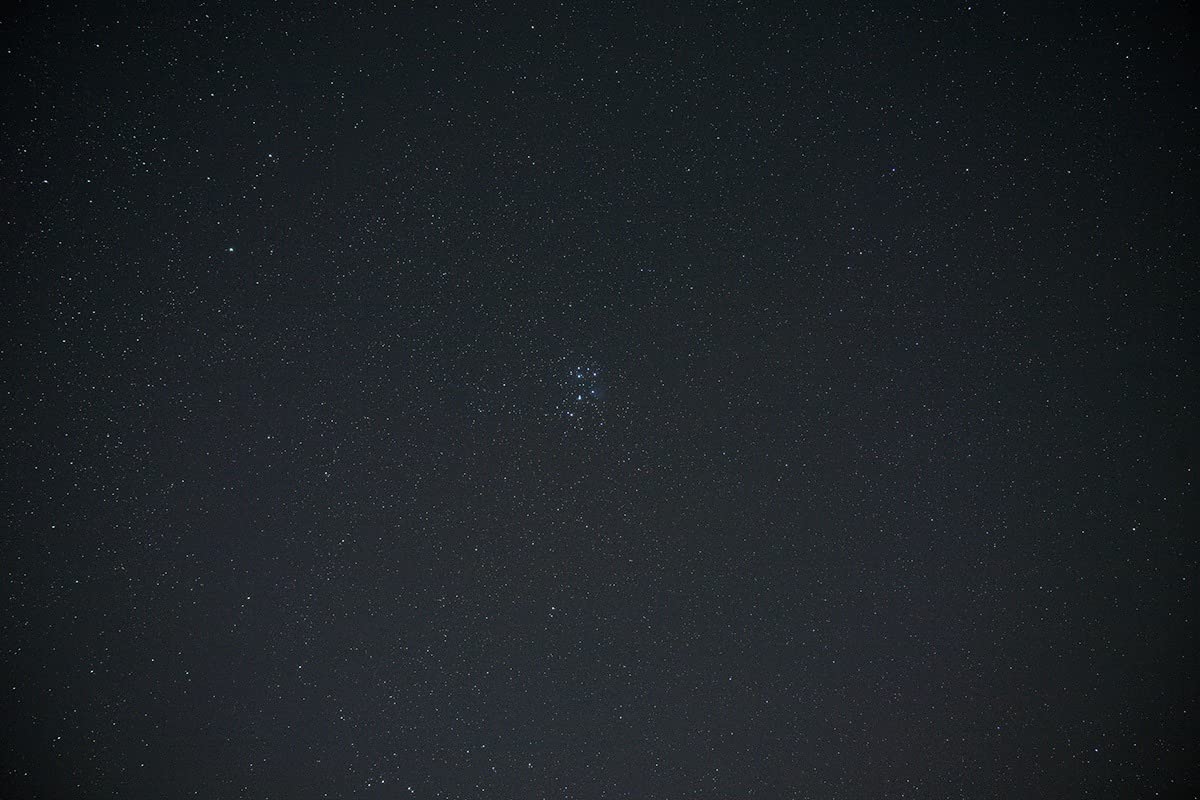
Yes, if you want more than star points. Without tracking, exposures are capped at roughly 15 to 20 seconds before stars streak, which limits faint detail. A tracker turns a night of tripod snapshots into a usable session and lifts that cap to several minutes with a wide-angle lens.
How much weight can a portable star tracker carry?
The head-only trackers in this roundup carry between 3 kg and 5 kg balanced, while the full kits reach 7 kg. The iOptron SkyGuider Pro handles up to 11 lb (4.99 kg), the Sky-Watcher AZ-GTi and Benro Polaris up to 15 lb (7 kg), and the Explore Scientific iEXOS-100-2 works with payloads around 10 to 19 lb.
What is the lightest star tracker for hiking?
The Vixen POLARIE U is the lightest, at 0.58 kg, and it is the one most often recommended on Reddit for hiking and wide-field work. The iOptron SkyGuider Pro head at 2.2 lb (1.00 kg) is the better choice if you need to carry a telephoto lens rather than a wide prime.
How long can you expose with a small star tracker?
Most portable wide-field trackers hold pinpoint stars for one to three minutes with a short lens. Owners of the iOptron SkyGuider Pro report clean two to three minute exposures, and the Vixen POLARIE U is comfortable at one to two minutes. For much longer subs you need a mount that supports guiding, such as the Explore Scientific iEXOS-100-2.
Can I use a star tracker with a telephoto lens?
Yes, but only on the heads with enough payload margin and counterweight support. The iOptron SkyGuider Pro package and the Sky-Watcher Star Adventurer GTi kit both include a counterweight bar for exactly this reason. The ultralight heads, such as the iOptron SkyTracker Pro at 6.6 lb (3 kg), suit compact bodies with shorter lenses instead.
Which Portable Star Tracker Should You Pack for 2026?
For most trips, the Sky-Watcher Star Adventurer 2i Pro Pack is the best portable star tracker for travel: small, accurate, app-controlled and quick to set up in the dark. Hikers counting every gram want the Vixen POLARIE U, and anyone carrying a telephoto should take the iOptron SkyGuider Pro with its counterweight bar. Multi-night deep-sky trips point to the Explore Scientific iEXOS-100-2, and mixed video-and-stills work suits the Benro Polaris.